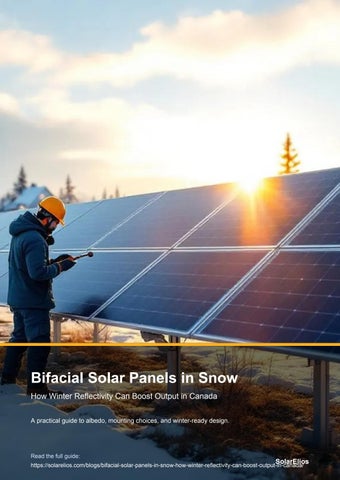
Bifacial Solar Panels in Snow
How Winter Reflectivity Can Boost Output in Canada
A practical guide to albedo, mounting choices, and winter-ready design.
Read the full guide:
https://solarelios.com/blogs/bifacial-solar-panels-in-snow-how-winter-reflectivity-can-boost-output-in-canada/
Snow is not always bad for solar
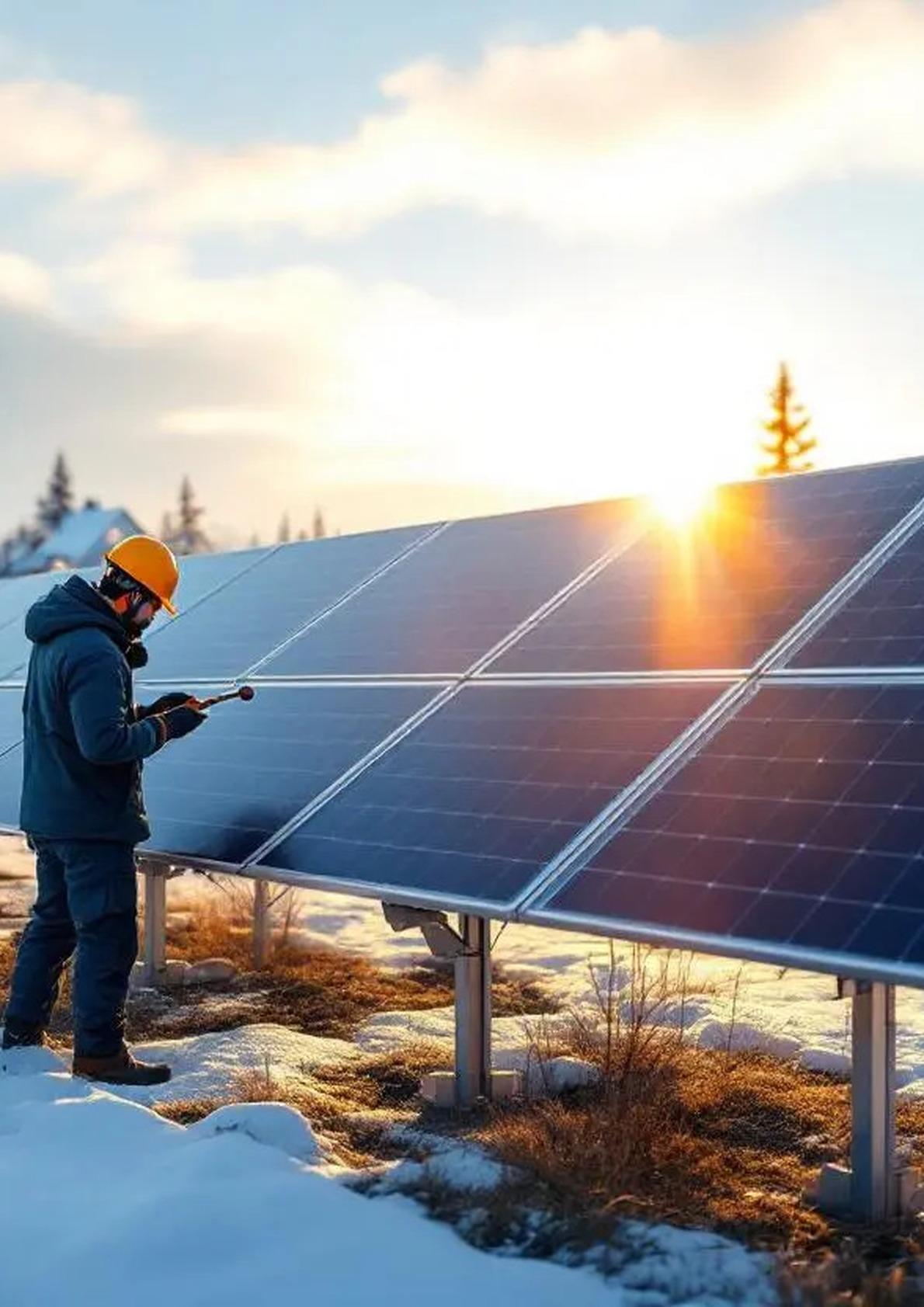
In Canada, winter usually means shorter days, low sun angles, and snow-covered sites. Traditional (monofacial) panels can lose output when snow blocks the front surface. But bifacial solar panels change the equation: they generate from both the front and the rear. When bright snow covers the ground, it can reflect sunlight onto the rear side, adding extra energy in the right layout.
Key idea
Snow on the front reduces output temporarily while it covers cells.
Snow on the ground can increase reflectivity (albedo) and support rear-side generation if the rear is exposed.
Full reference guide
https://solarelios.com/blogs/bifacial-solar-panels-in-snow-how-winter-reflectivity-can-boost-output-in-canada/
SolarElios | Winter Bifacial Guide https://solarelios.com/blogs/bifacial-solar-panels-in-snow-how-winter-reflectivity-can-boost-output-in-canada/
The science in simple terms
Albedo is a measure of how much light a surface reflects. Dark surfaces absorb more light (low albedo), while bright surfaces reflect more (high albedo). Fresh snow can be highly reflective, which is why winter sites can be favorable for bifacial systems.
Quick facts
Bifacial gain commonly ranges from 5% to 30% depending on reflectivity, mounting height, row spacing, and shading.
Gains vary widely by site, layout, and winter snow conditions. Conservative modeling is recommended.
What increases winter gain?
• Consistent snow cover around and under the array
• Adequate racking height so reflected light can reach the rear
• Row spacing to reduce winter rear shading
• Minimal rear-side obstructions (rails, conduit, equipment)
SolarElios | Winter Bifacial Guide https://solarelios.com/blogs/bifacial-solar-panels-in-snow-how-winter-reflectivity-can-boost-output-in-canada/
How bifacial gain from snow works
Think of the rear of a bifacial module as a second solar face that depends on reflected light. When the ground is covered in bright snow, sunlight that misses the front can bounce upward and reach the rear cells. Winter sun angles can also change how light bounces under arrays.
Plain-language steps
• Sunlight hits snow-covered ground
• Snow reflects a portion of that light upward
• Rear cells capture reflected light (if unshaded)
• Total production increases beyond front-side-only output
Design reminder
Rear-side contribution drops fast if the rear is shaded. Geometry and clearance matter as much as module selection.
SolarElios | Winter Bifacial Guide https://solarelios.com/blogs/bifacial-solar-panels-in-snow-how-winter-reflectivity-can-boost-output-in-canada/
Key design choices that enable winter gains
Snow reflectivity helps only when the system is designed to let reflected light reach the rear side. The main levers you can control are tilt, spacing, racking height, and rear-side shading.
1) Tilt and spacing
Tilt affects front-side winter capture and how reflected light reaches the rear. Row spacing reduces rear-face shading, especially when the sun is low in winter.
2) Racking height
Raising modules often improves rear exposure by giving reflected light more room to reach the rear surface and by reducing shading from adjacent rows. Many Canadian ground-mount designs start around 0.8 m to 1.5 m clearance and then adjust for wind, drifts, and access.
3) Avoid backside shading
• Keep conduit and wiring away from the rear plane where possible
• Avoid thick structural members that cast shadows on the rear
• Plan for vegetation and fence shadows during low winter sun
Warning
Higher racking height can increase bifacial gain but also raises wind loads and cost. Balance expected gains against structural limits and local codes.
https://solarelios.com/blogs/bifacial-solar-panels-in-snow-how-winter-reflectivity-can-boost-output-in-canada/
Roof vs ground vs pole mount
Roof installations are often constrained by roof geometry and limited clearance, which can reduce rear-side light capture. Ground mounts and pole mounts usually offer better opportunities for winter bifacial gain because height and spacing can be optimized.
Mount type Winter bifacial potential Typical constraints
Roof mount Low to moderate
Ground mount Moderate to high
Pole mount Moderate to high
Best use case in Canadian winters
Limited clearance, more rear shading, snow slides off roof quickly
Can optimize tilt/spacing; easier to set racking height for reflected light
Raised mounts reduce rear shading; higher cost and wind loading considerations
If winter performance is a priority, ground and pole mounts usually unlock stronger bifacial gains than roof mounts due to better control of height and spacing.
SolarElios | Winter Bifacial Guide https://solarelios.com/blogs/bifacial-solar-panels-in-snow-how-winter-reflectivity-can-boost-output-in-canada/