
Aesthetics vs Performance — what matters most
How the all-black look changes curb appeal
What actually affects output (and what doesn't)
Temperature coefficient and shade-tolerance checks
A quick checklist before you buy
Read the full guide: solarelios.com/blogs/all-black-solar-panels-in-canada-aesthetics-vs-performance/
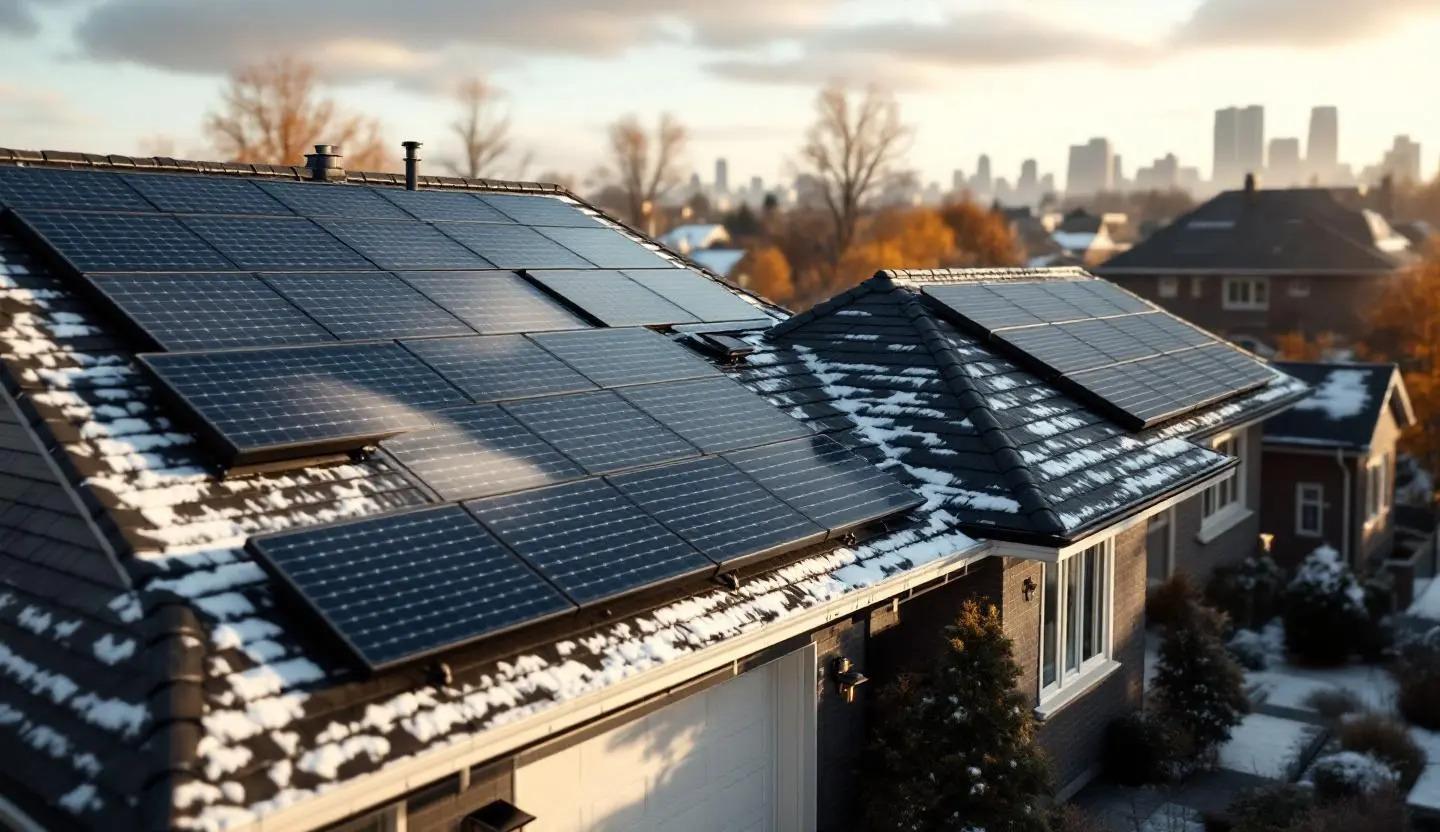
All-black panels are a premium aesthetic choice. In Canada, the performance difference is often small when you choose a quality module and design around roof layout, shading, and airflow.
Front-facing roof planes, urban streets, heritage-sensitive areas, and homes where curb appeal and approvals matter.
Performance checks that matter
Compare temperature coefficient, cell architecture (half-cut + bypass), and warranty terms. Color alone isn't the main driver.
Finish the whole system
Black rails, black fasteners, and clean cable routing often affect the final look as much as the panel color.
Rule of thumb
If your roof is highly visible, all-black can be the right choice. Protect performance by choosing shade-tolerant architecture and a strong temperature coefficient.
All-black (black-on-black) modules reduce contrast by removing silver frames and minimizing
Visible roofs benefit most from the black-on-black look — especially with matching black racking.
Front-facing roof planes and corner lots
Urban neighborhoods with strict design guidelines
Premium builds matching dark roof + trim
Projects where approvals depend on appearance
If you can, preview a sample panel on your roof. The same black module reads differently on dark asphalt vs light metal roofing, and racking color can change the final look dramatically.
Performance differences are driven by cell architecture, coatings, airflow, and shading — not frame color alone. Use the checks below to protect real-world yield.
1) Temperature coefficient
All-black surfaces can run slightly warmer in strong sun. Compare the temperature coefficient (power loss per degree Celsius above 25°C). Lower magnitude coefficients retain more output in summer roof heat.
Compare like this:
-0.30%/°C typically retains more power in heat than -0.45%/°C
2) Shade tolerance (urban reality)
Black-on-black does not change electrical shade sensitivity. Look for half-cut cells, strong bypass diode strategy, and consider optimizers or microinverters if shade is unavoidable (trees, chimneys, dormers).
3) System finishing matters
If you are choosing all-black for aesthetics, finish the entire install: black rails, black fasteners, and clean cable routing. The racking can be as visible as the modules on many roofs.
Real-world scenarios
Toronto: front-facing roof
All-black reduces visual contrast and can ease approvals in design-sensitive streets.
Fast checks before buying
Temperature coefficient (better = lower magnitude)
Half-cut cells + bypass diode layout
Warranty terms + manufacturer track record
Racking color + cable management plan
Calgary: dark metal roof
Choose a low temperature coefficient module to limit summer roof-heat losses.
Use this table as a fast decision aid for visible roof installs in Canada.
Feature
All-black (black-on-black) Standard framed panels
Looks Sleek, uniform, low-contrast look on visible rooflines.
Performance
Heat behavior
Best fit
Buyer goal
Usually small difference on premium modules; compare datasheet specs.
May run a bit warmer; temperature coefficient matters.
Front-facing roofs, urban installs, premium builds.
Curb appeal, approvals, cohesive exterior finish.
More contrast: frames and grid lines are noticeable.
Often slightly higher published efficiency for similar cells.
Sometimes marginally better heat dissipation.
Less visible roofs, value-focused installs.
Maximum dollars per watt, lowest installed cost.
Tip
If aesthetics is your priority, treat it as a full-system decision: black rails, black fasteners, and clean cable routing make the biggest difference on visible roofs.
Use this checklist to balance curb appeal and performance before you buy all-black modules.
Before you commit, verify:
Local design guidelines / HOA rules (for street-facing roofs)
Temperature coefficient, cell type, and warranty terms (datasheet)
Shade profile: trees, chimneys, dormers, nearby buildings
Inverter strategy: MPPT window, optimizers/microinverters if needed
Matching black racking + clean cable routing for the final look
Winter readiness: durability, PID resistance, snow considerations
SolarElios helps Canadian homeowners compare panels, match inverters and racking, and design for real-world roof conditions. If your roof is visible, we can help you balance aesthetics with performance and compatibility.
Link: solarelios.com/blogs/all-black-solar-panels-in-canada-aesthetics-vs-performance/