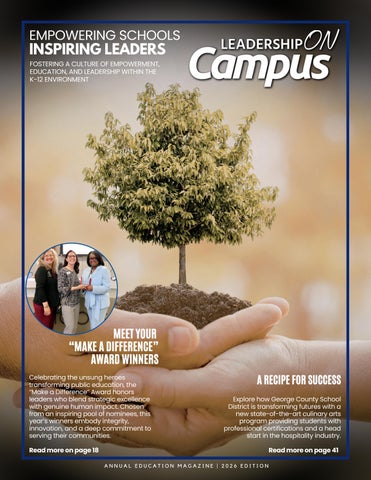
Leadership on Campus is an annual publication that celebrates the individuals and organizations driving innovation and excellence in school systems. It highlights the educators and leaders who are not only supporting but transforming education, while sharing stories, insights, and best practices to inspire collaboration and growth. Coined by late founder Steven Johnson, the vision of Leadership on Campus is to empower current and future leaders to make a lasting impact on their communities. Through this magazine, we strive to build a network of change-makers dedicated to advancing education across the Southeast.
Discover how the "Panther Pathways" framework aligns school culture, instruction, and leadership around the core commitments of achievement, collaboration, and engagement.
Learn how executive coaching and consistent leadership development drove significant academic gains and national recognition for a rural K-8 academy.
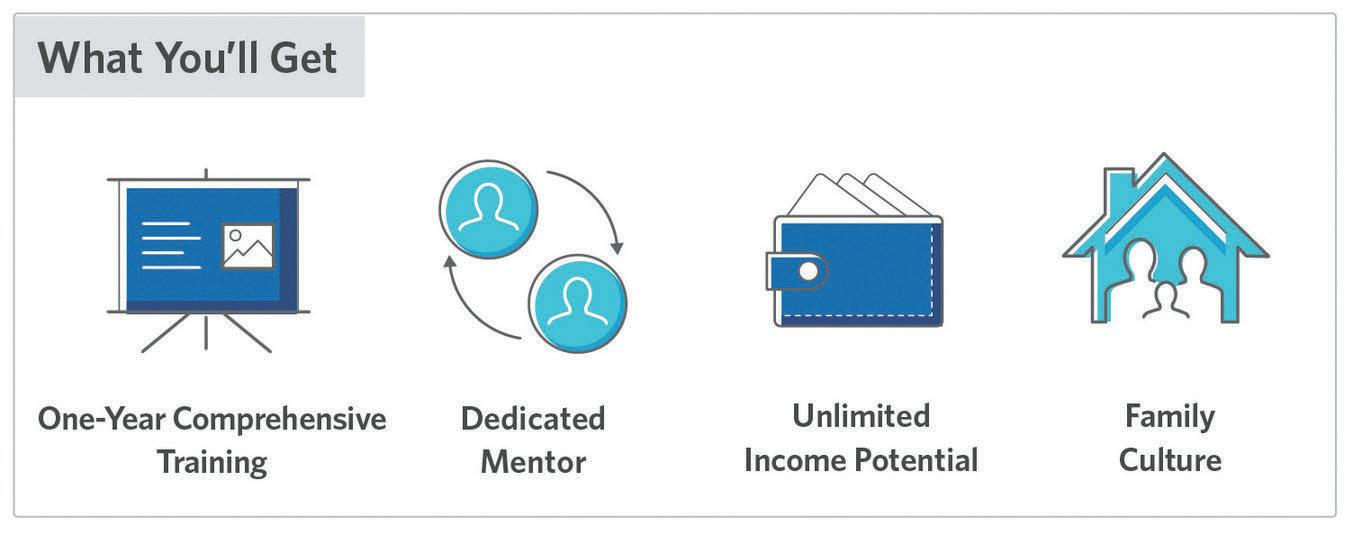
An overview of a year-long apprentice-style program that prepares early-career talent for professional sales through structured coaching and mentorship.
Explore the shift from symbolic diversity to systemic excellence by dismantling the subtle, traditional barriers that hinder BIPOC women in educational leadership
Examine how disciplined adaptability and a focus on access allow virtual schools to evolve alongside technology and artificial intelligence.
FromStrategytoStewardship
See how collaborative, data-driven budgeting transforms school finance into a strategic tool for supporting instructional priorities.
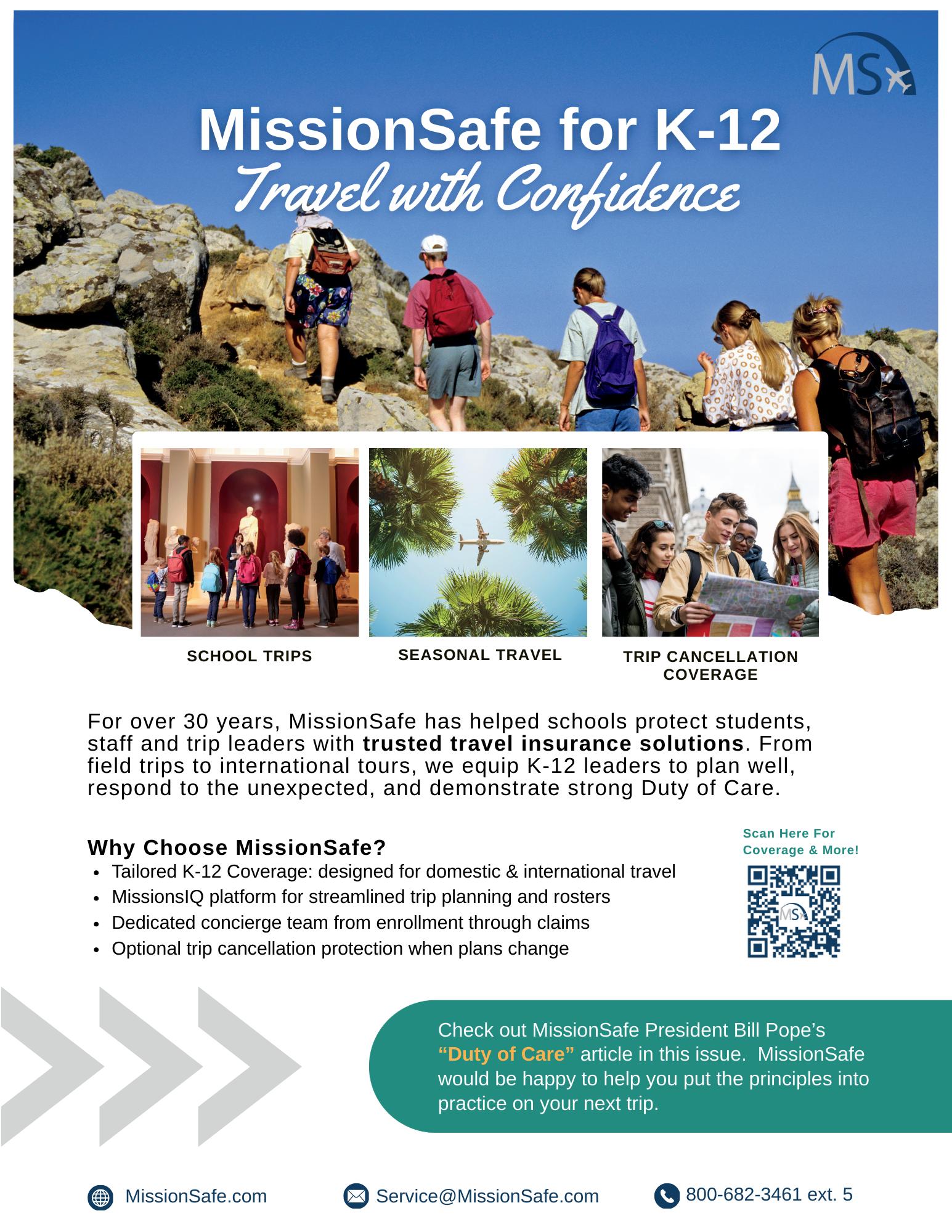
A practical guide for school leaders on managing risk and preparation for off-campus student activities and international
ARecipeforSuccess
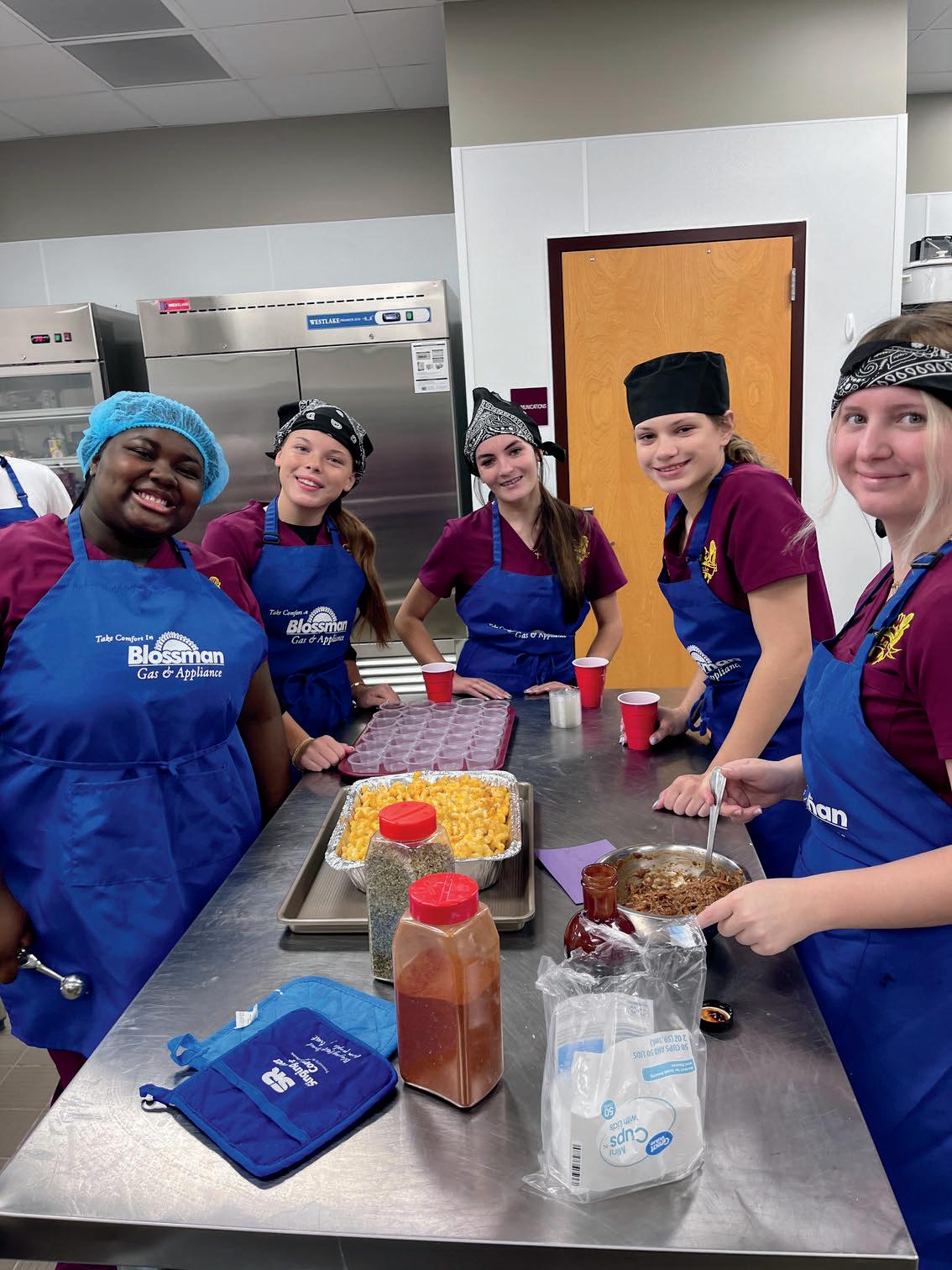
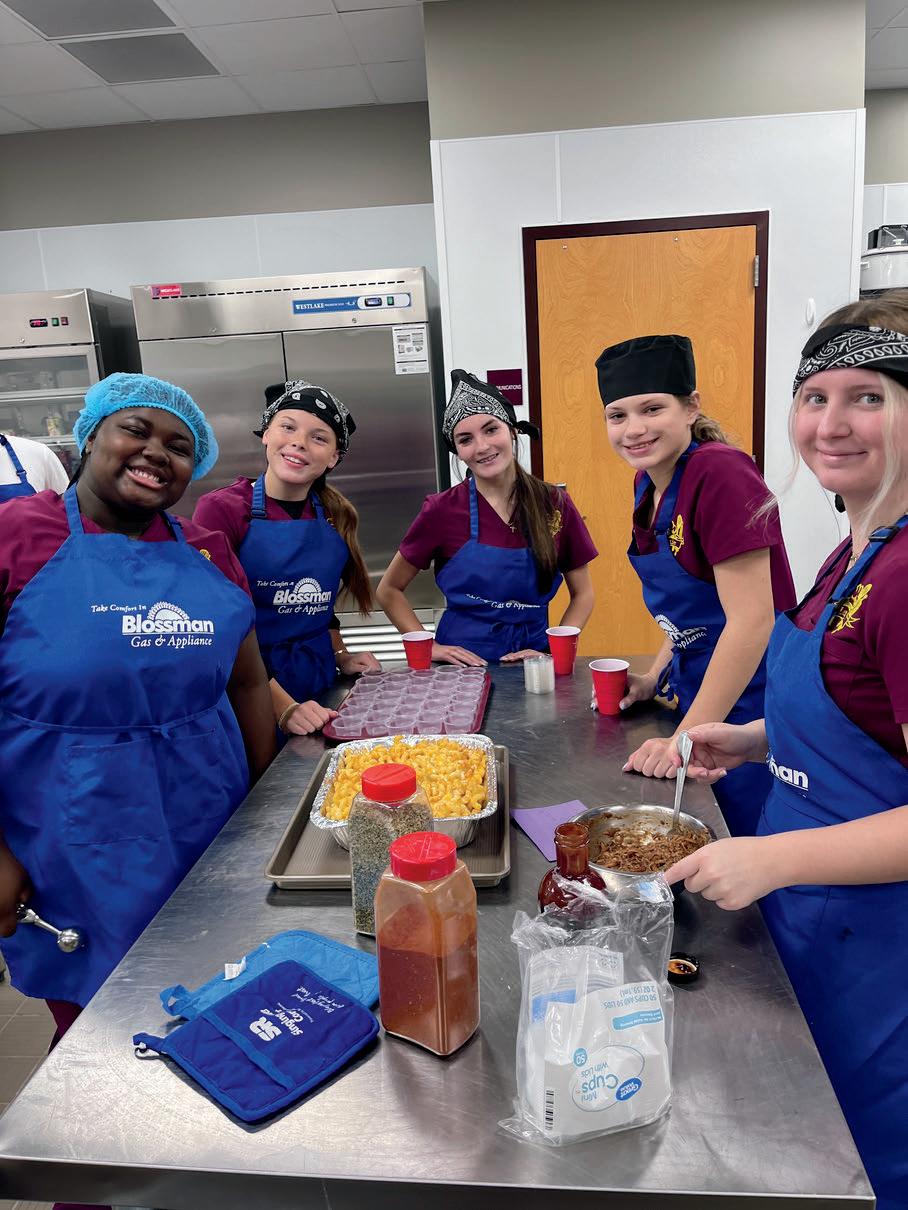
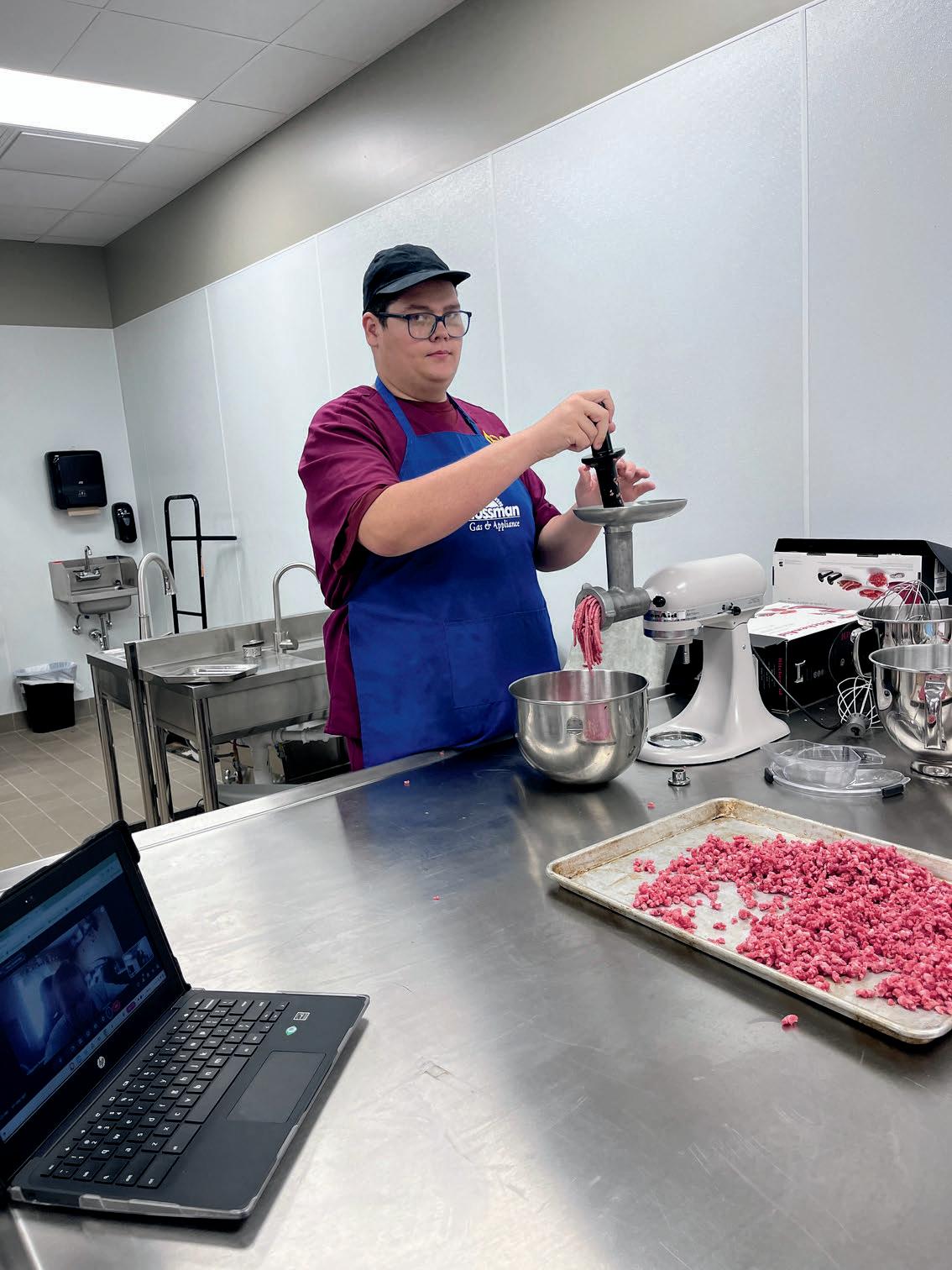
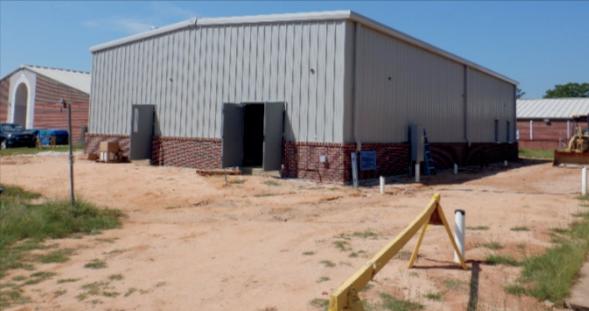
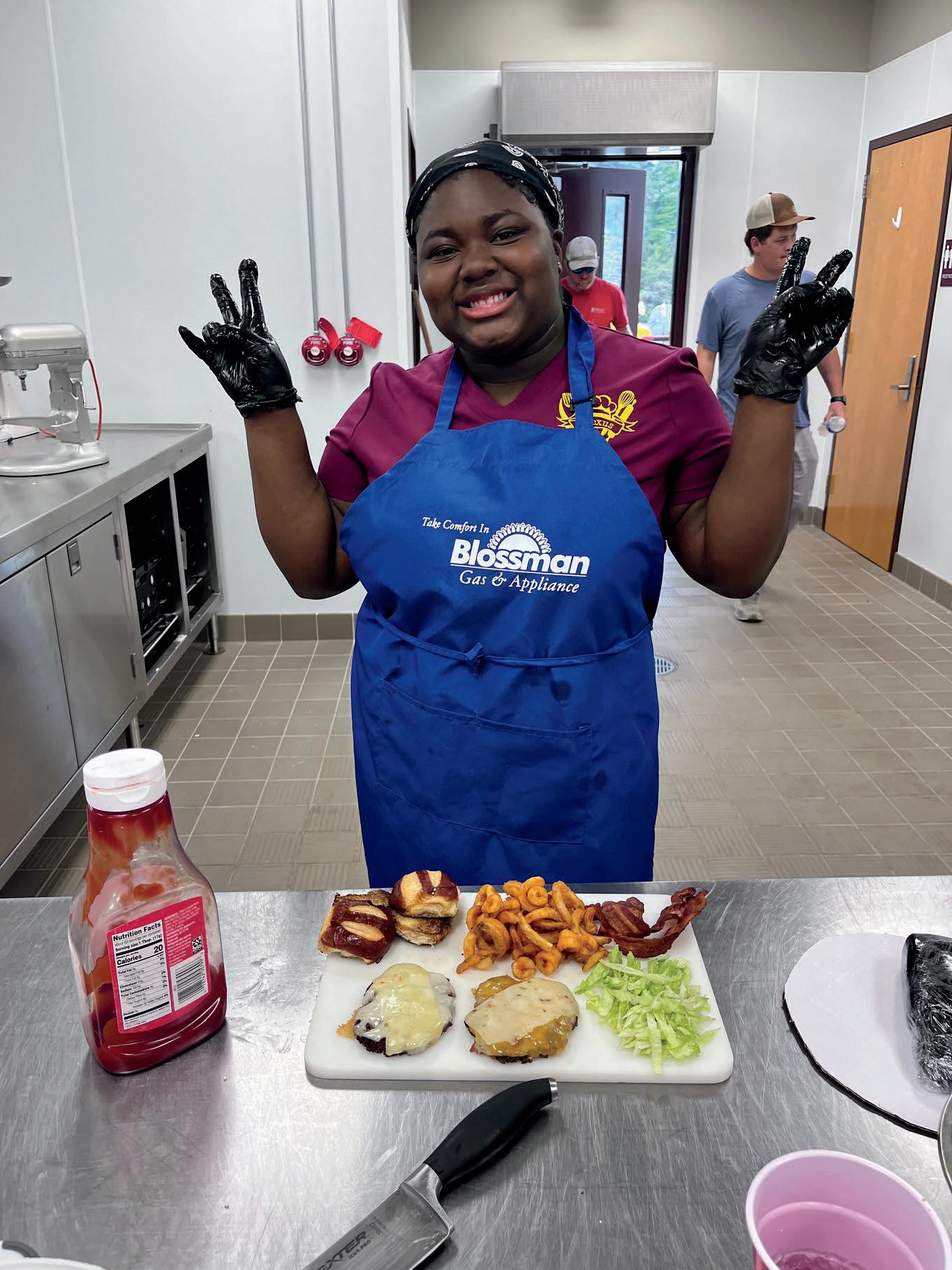
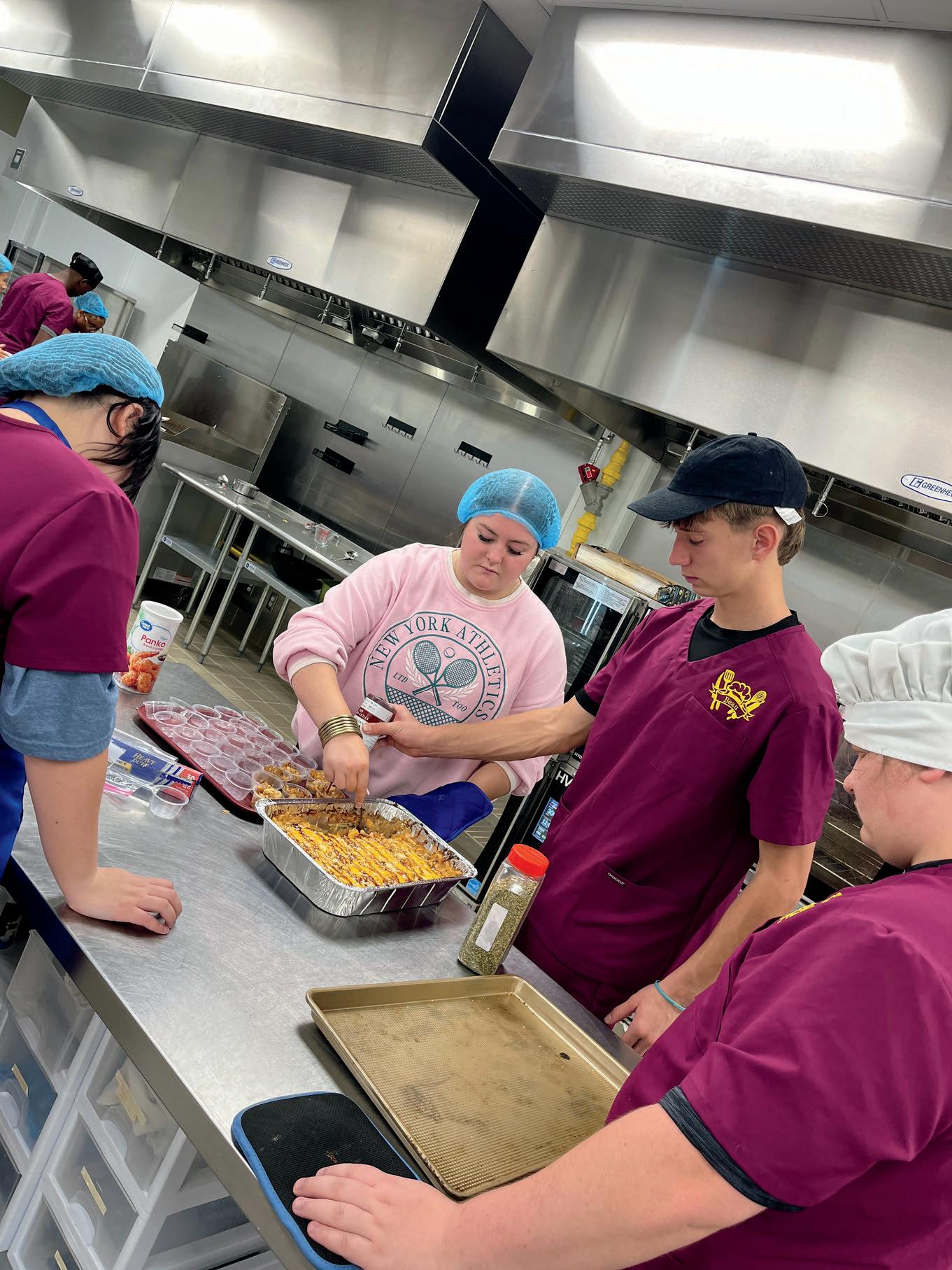
A look at how a state-of-the-art culinary arts program provides students with professional certifications and a head start in the hospitality industry
Discover a blueprint for cultivating a "Top Workplace" culture through small, intentional gestures and modernized employee systems
A B L E O F C O N T E N T
Explore how school districts can utilize the power of a consortium to offer modern, low-fee retirement savings options for all employees
BeyondTitles:LeadershipthatMultiplies
Make the case for shared leadership by intentionally cultivating teacher expertise to build more resilient and sustainable school systems.
Aligning Culture and Instruction Through a Schoolwide Leadership Framework
The Challenge
When I became principal at West Jackson Middle School (WJMS) two years ago, I stepped into a building filled with strong educators and students who cared deeply about their work. The commitment was there. Teachers were investing their time and energy, and students were engaged. Effort was not the problem; direction was.
Like many schools, we had strong initiatives underway. They included literacy efforts, PBIS (Positive Behavioral Interventions & Supports) systems, professional learning, and student leadership opportunities. Each one had value, and each reflected genuine dedication from our staff.
However, they often operated in parallel rather than reinforcing one another. Teachers and leaders were working hard, investing time. Yet I kept coming back to a simple question: Was all this work moving us toward the same purpose?
The Framework
Rather than launching another initiative, we decided to focus on alignment. Our goal was not to replace the good work already happening, but to connect it in a way that made our shared priorities clear.
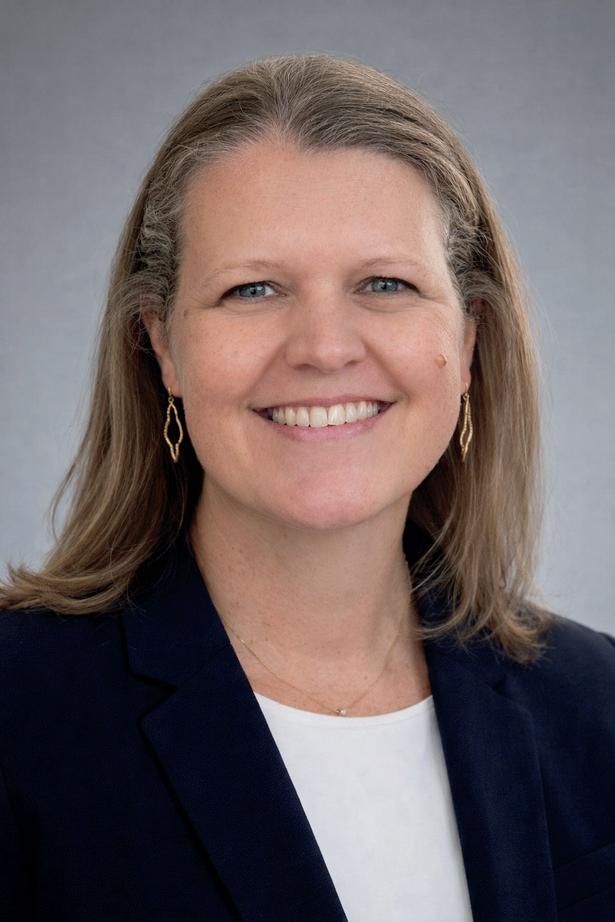
Written by Lucie Ausburn West Jackson Middle School Principal
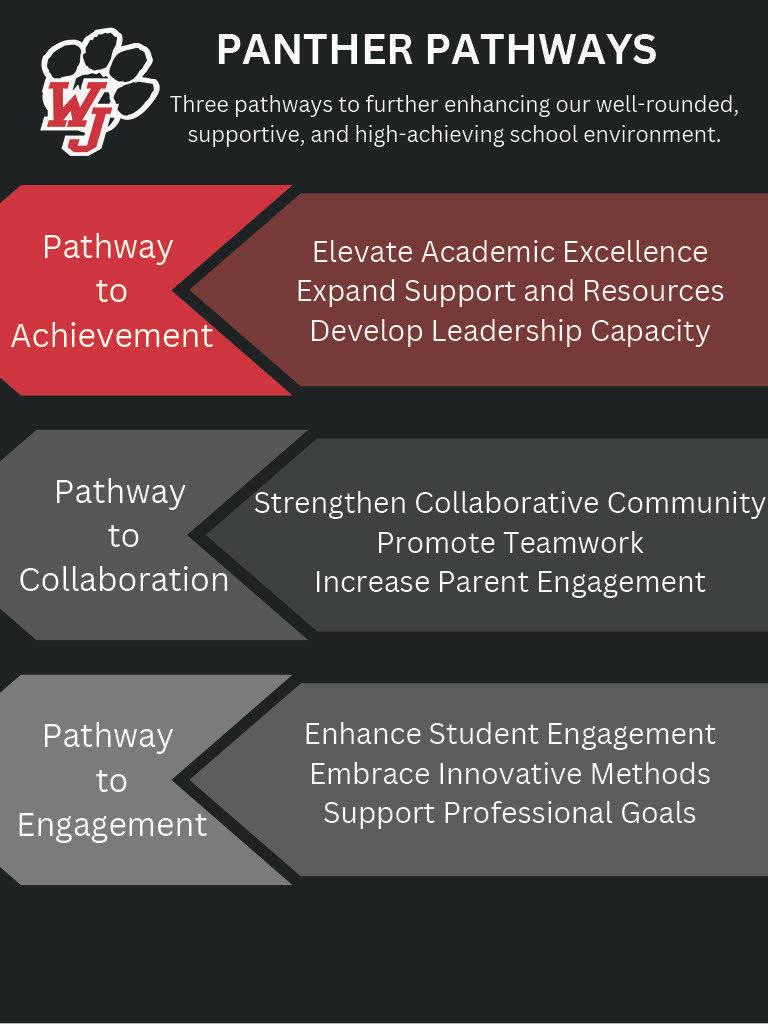
That effort became a schoolwide framework we call Panther Pathways, built around three core commitments: Achievement, Collaboration, and Engagement.
At first, Panther Pathways was simply a way to organize our thinking It gave us language to describe what mattered most and helped us see how our various initiatives could support those priorities.
Over time, it became something more. Panther Pathways evolved into the structure that guides how we align our culture, instruction, and leadership across the school
The Integration
Creating the framework was the first step. The real work came in making it visible in classrooms, conversations, and decisions throughout the building. For Panther Pathways to matter, it had to move beyond a document and become part of how we lead, teach, and support students every day.
Every administrative agenda is now structured around those three commitments. Our Instructional Leadership Team meetings follow the same format. When I meet with our Local School Council or speak with families, the conversation is organized similarly. Over time, that consistency has shaped how we prioritize and discuss our work. More important, the framework appears in classrooms.
Each semester we host a day called Visitors Welcome, when teachers observe one another during their planning periods. On the observation form, one column asks teachers to note which Panther Pathway they saw in action. Did the lesson strengthen achievement? Build collaboration? Increase engagement? That prompt keeps the framework directly tied to instruction and prevents it from only existing in leadership meetings.
At the end of the school year, each grade level recognizes three students, one who represents achievement, one for collaboration, and one for engagement. Students learn that success at WJMS goes beyond academic performance. It includes how you work with others and how you participate in your learning.
Our language reinforces this daily. Every morning, announcements begin with “Good morning, WJMS Panthers! At WJMS, our mission is success for every Panther through achievement, collaboration, and engagement.” Families see the same language in newsletters and social media posts. Over time, it has become part of how we describe who we are.
Panther Pathways also shapes adult growth. In addition to setting a professional goal connected to a school improvement priority, each teacher identifies a personal growth goal related to one of the pathways. Some focus on increasing rigor under achievement. Others strengthen team communication under collaboration or expand student voice under engagement. The framework reminds us that growth is shared work.
Before Panther Pathways, literacy efforts, PBIS systems, and instructional improvement sometimes felt like separate conversations. Now they connect more naturally. Achievement includes literacy across content and high expectations in every classroom. Collaboration includes how adults and students work together. Engagement includes positive behavior systems and meaningful participation.
Instead of asking, “What are we adding next?” we ask, “Does this support achievement, collaboration, or engagement?” That shift has helped reduce initiative fatigue and increase collective ownership.
The Impact
In the past two years, West Jackson Middle School has been recognized as a Blue Ribbon Lighthouse School, a Georgia Department of Education Math and Literacy Leader School, and a Georgia DOE PBIS Distinguished School Those recognitions are significant, but they are not the reason for the work; they reflect it
Two years ago, we did not need more programs. We needed a common direction Panther Pathways has strengthened our school not because it is complex, but because it is consistent. When leadership conversations, instructional practices, student recognition, adult growth, and community communication all focus on the same commitments, the work reinforces itself. In a school environment where energy and attention are limited, alignment matters
The Alignment Checklist
Audit Your Agendas: Structure administrative and Instructional Leadership Team meetings around your core commitments.
Spotlight Practice: Visitors Welcome
Each semester, West Jackson Middle School hosts a structured peer observation day called Visitors Welcome The purpose is simple: learn from one another
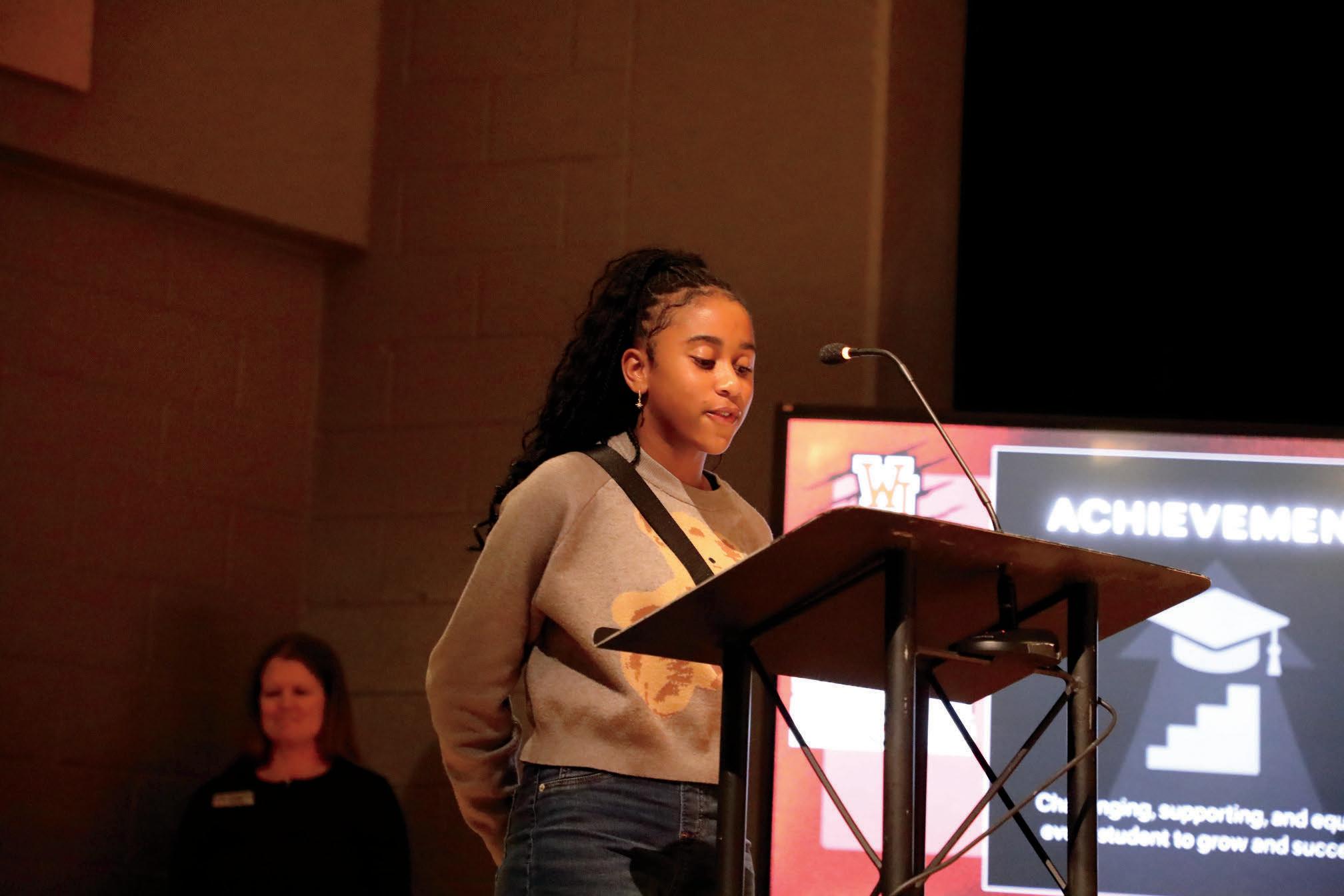
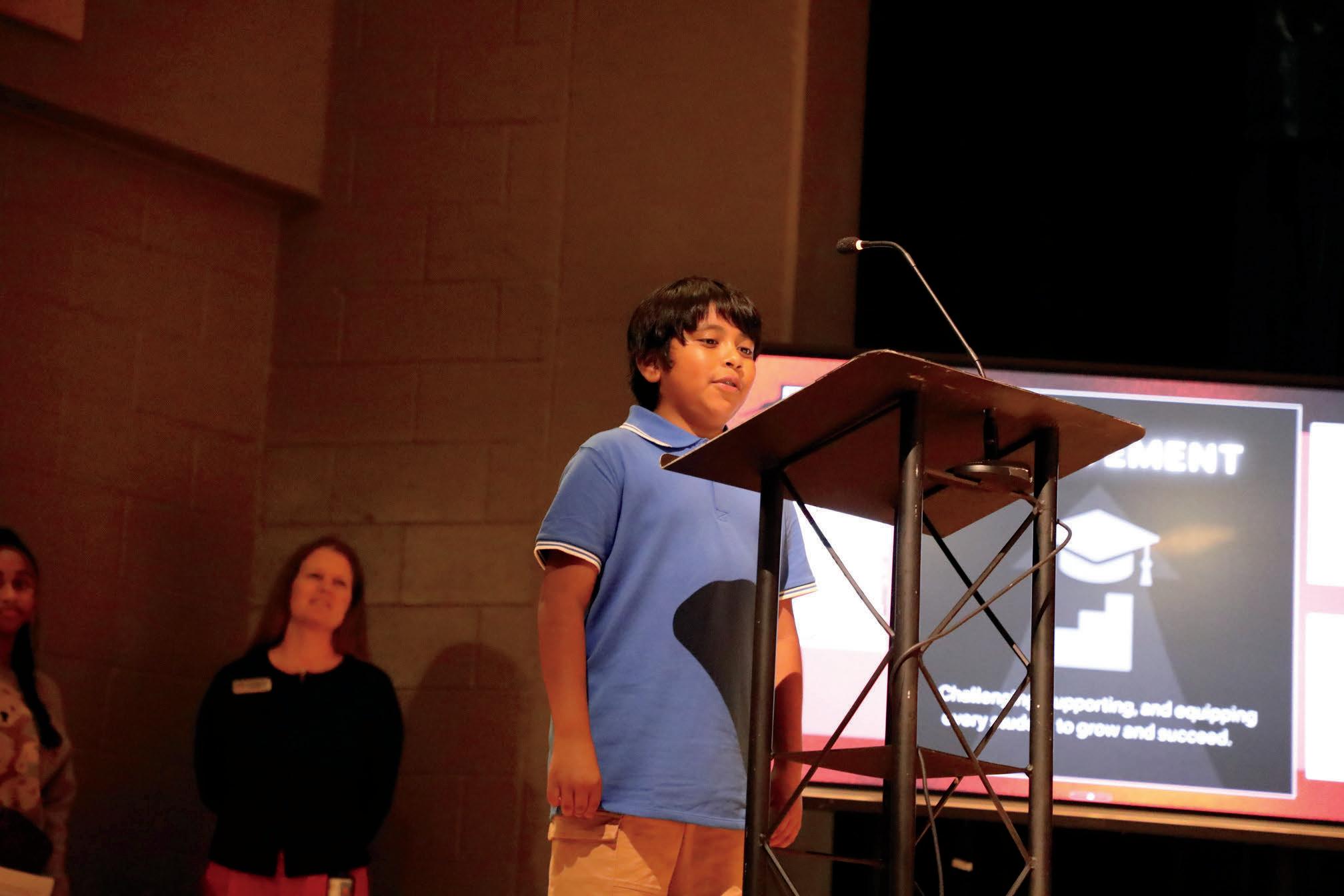
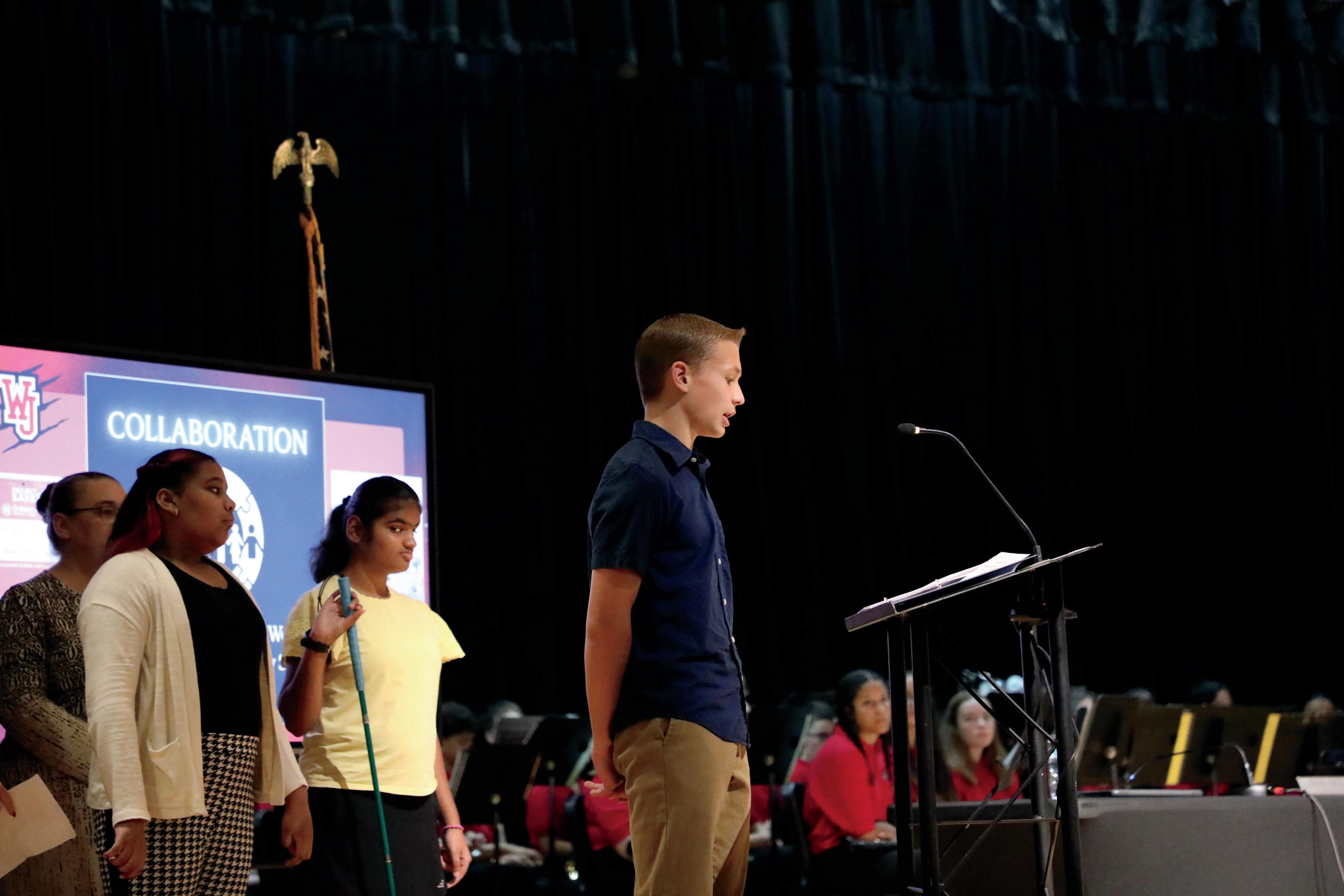
A WJMS student shares with the Jackson County Board of Education what participating as a peer facilitator in our special education adaptive PE class has taught him.
Before the visit, teachers complete a brief survey answering: “When colleagues visit your classroom, what type of feedback (if any) would you like to receive?”
Feedback options are aligned to instructional best practices and include areas such as formative data use, small group instruction, literacy strategies, writing using the CER (Claim-Evidence-Reasoning) framework, student collaboration, higher-order questioning, or general classroom engagement Teachers may also choose observation only
Standardize Your Language: Use the same mission-driven language in morning announcements, family newsletters, and social media.
Align Professional Growth: Require teachers to set personal goals that tie back to a specific pillar of your framework.
Make it Visible in Classrooms: Create structured opportunities such as peer observations or instructional walkthroughs that explicitly connect classroom practice to your core commitments. If the framework is not visible in instruction, it will remain a leadership idea.
Redefine Student Success: Ensure student awards recognize more than just grades; celebrate their contributions to culture and engagement.
Model the Framework as Adults: Expect staff and leadership teams to embody the same commitments you expect of students. Culture strengthens when expectations are shared across all levels.
The Elimination Test: Before adding a new program, ask: "Does this support our core pillars?" If not, it may be a distraction.
Teachers’ selected focus areas are shared in advance so colleagues can intentionally choose which classrooms to visit During planning periods, teachers observe one or two classrooms, leave brief reflections, and later share key takeaways during their next team meeting
Visitors Welcome is not evaluative; it is invitational Teachers control the feedback they receive and the practices they explore. The result is relevant, teacherdriven professional learning that strengthens instruction and reinforces our shared commitments to Achievement, Collaboration, and Engagement. Achievement. Achievement. Collaboration. Collaboration. Engagement. Engagement.
SMALLCOMMUNITIES,BIGGAINS:
How Coaching & Consistency Are Rewriting the Story for Rural Schools
In communities where Friday night lights shine brighter than city skylines and annual barbecue cookoffs bring the community together, schools remain at the center of local life, a quiet transformation is unfolding at Dooly County K-8 Academy. Across rural districts long challenged by limited resources, staffing shortages, and accountability pressures, a new narrative is taking shape—one built not on quick fixes, but on coaching, clarity, and relentless consistency.
Dooly County K-8 Academy consists of two schools, Dooly County Elementary and Dooly County Middle, serving over two-thirds of the students who attend public school in Dooly County.
Stepping into the Storm: A New Principalship Begins
When I stepped into the role of principal in February 2023 after previously serving as the school’s assistant principal, I believed I was prepared for the challenge ahead. The school had recently exited federal “needs improvement” status under the leadership of Dr. Sherrod Willaford, and I had the opportunity to serve alongside him during that time. Yet, as I assumed responsibility as the lead instructional leader, I faced an unexpected challenge. Dooly County Elementary School was newly designated as a Comprehensive Support and Improvement (CSI) school, while Dooly County Middle School was identified for Additional...
Written by Dr. Hollie Walters Dooly K-8 Academy Principal
Targeted Support and Improvement (ATSI), placing the entire K–8 campus back under heightened accountability.
I confronted challenges typical of many rural districts: limited resources, increasing accountability demands and competition from neighboring higher-performing systems. I also inherited a school community that had experienced five to six leadership changes over the previous decade, leaving trust fragile and staff morale diminished. Isolated by the weight of the role, I quickly discovered why the principalship is often described as “lonely at the top.”
A Superintendent’s Investment in Developing Leaders
Recognizing the urgency for additional support, Dr. Sherrod Willaford, now Superintendent of Dooly County Schools and former principal of Dooly K-8 Academy, encouraged me to participate in the Georgia Association of Educational Leaders (GAEL) Executive Coaching Program. His belief in continuous development, mentorship, and cultivating leaders from within guided that recommendation.
In Dooly, we believe that when leaders grow, everything around them grows. Executive coaching is not about remediation—it is about refinement. It is about investing in the people who shape the conditions for teaching and learning every day. Encouraging Dr. Walters to participate in the GAEL Executive Coaching Program was grounded in our strategic commitment to staff learning and growth. What we have witnessed at Dooly County K8 Academy affirms what we have always believed: when leadership capacity strengthens, teacher efficacy increases, systems become more coherent, and student achievement follows. Continuous improvement is not a slogan for us—it is a practice. Coaching is one of the ways we live out that belief and produce results across the system.”
— Dr. Sherrod Willaford, Dooly County Schools Superintendent
The Intervention I didn’t Know I Needed
GAEL’s newly launched Executive Coaching initiative was designed to support principals stepping into demanding leadership roles. My first introduction came through a conversation with Dr. Ricky Edmonds, who ensured I was thoughtfully paired with a coach whose experience and leadership style aligned with my needs.
I was soon introduced to Dr. Gwendolyn Taylor, a retired middle school principal from Houston County Schools and the connection was immediate. The two of us quickly established a rapport that I later described as a timely intervention I didn’t realize I needed.
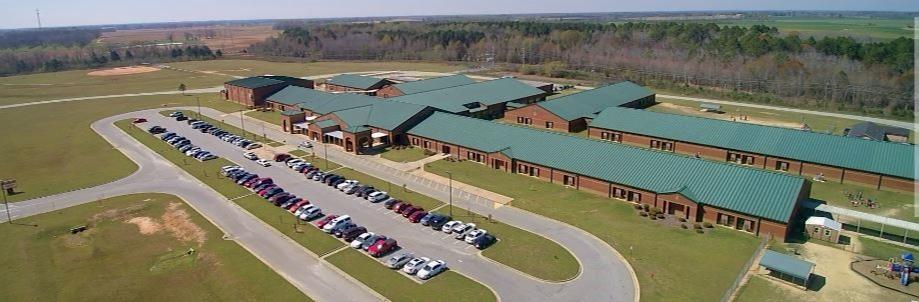
*Aerial View of Dooly K-8 Academy
Our monthly sessions were structured and strategic, focusing on building trust with faculty and staff, leading with transparency, aligning leadership goals, and strengthening instructional leadership practices. I approached the process with urgency, prioritizing strategic planning, managing organizational change, and strengthening teaching and learning through curriculum, instruction, and assessment.
Dr. Taylor reflected on the partnership:
Working alongside Dr. Walters has been one of the most meaningful experiences of my career.
From the outset, she approached the coaching process with humility, courage, and an unwavering commitment to her students and staff. Rather than avoiding reflection or difficult conversations, Dr. Walters leaned into them with intention and determination. What has impressed me most is not only her strategic growth as a leader, but also the authenticity and compassion Dr. Walters brings to her work each day. Watching her confidence strengthen and her vision take shape has been a true privilege. I am incredibly proud of the leader she has become and grateful to have been part of her journey.”
From the first year of our work together, I recognized the value of having a coach, someone focused not on evaluation, but on growth. The partnership encouraged deeper reflection, broadened my perspective, and sharpened my focus on both student achievement and staff development.
“I believe more than ever that when principals are supported, teachers are empowered, and leadership teams operate with shared vision, student success follows.” - Dr. Hollie Walters
— Dr. Gwendolyn Taylor, GAEL Executive Coach
Gains, Growth, & Emerging Trends
Over the next two years, the impact became unmistakable. Approximately ten teachers earned advanced degrees, instructional practices strengthened across departments, and student achievement accelerated at every level. Trend data indicated sustained improvement in content mastery, meaningful progress toward closing achievement gaps, and increased student readiness, as evidenced by course pass rates, attendance, and the proportion of students reading on grade level during the 2023–2025 school years.
Most notably, the school realized a 9.4point gain in 2025, as recognized by the Governor’s Office of Student Achievement, elevating its CCRPI score by nearly ten points and demonstrating sustained academic momentum.
The coaching experience also prompted me to recognize the importance of developing teacher leaders alongside my own growth. When given the opportunity to assemble a leadership team to guide the development of the school improvement plan, I chose to participate in Georgia Association of Secondary School Principals’ (GASSP) Plan Like a Champion at the University of Georgia. Through this experience, the team helped me identify priority needs and develop a comprehensive strategic improvement plan.
Through participating in this process, I was able to immediately implement practices within my school that strengthened collective understanding, fostered shared ownership, and cultivated a more cohesive leadership team that now collaborates closely with the principal with greater clarity of purpose and decision-making.
United & Moving Forward
The story of Dooly County K-8 Academy is not simply one of improved scores or stronger leadership structures; it is a testament to what becomes possible when investment in people is paired with clarity of purpose and sustained support.
Coaching did not provide quick answers; instead, it created space for reflection, accountability, and intentional growth. Combined with consistent instructional focus and the development of internal leadership capacity, it transformed both mindset and outcomes.
Today, the narrative at Dooly County K-8 Academy is no longer defined by challenges or designations, but by progress, pride, and possibility. It is proof that small communities can achieve big gains and that with the right coaching, collaboration, and consistency, rural schools can rewrite their stories and redefine success for their students and their futures.
If you are a district leader, consider how your onboarding for new principals mirrors the support provided in Dooly County. If you are a principal, what is one area where a coach could help you move from management to visionary leadership? Answering these questions can put you on the right track to achieving your goals.
Having an executive coach during my first three years as principal was exactly what I needed. I believe all new principals would benefit from having a dedicated executive coach to provide guidance that supports sustainability, strengthens student achievement, and promotes long-term district growth, especially in rural communities.
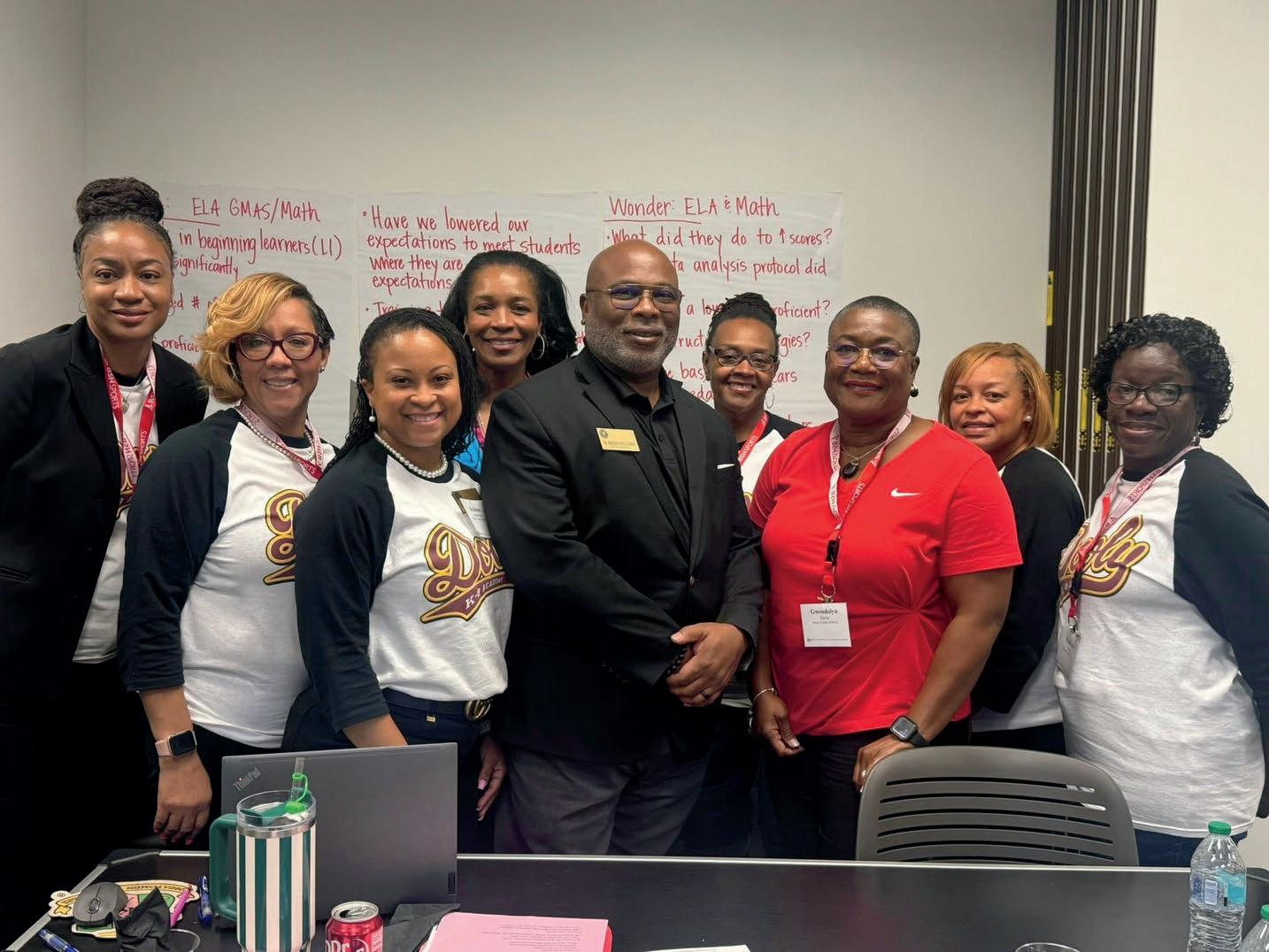
*Members of the school leadership team participating in GASSP’s Plan Like a Champion at the University of Georgia Pictured in the center is Superintendent Dr Sherrod Willaford Dr Gwendolyn Taylor, GAEL Executive Coach, is also pictured providing support alongside members of the school leadership team.
ACTIONABLEITEMS:
Prioritize Growth Over Evaluation: Establish coaching relationships where the focus is on refinement and vulnerability rather than highstakes assessment.
Cultivate Teacher-Leaders Early: Don't lead in isolation; build a leadership team to help co-author the school improvement plan to ensure shared ownership.
Schedule Protected Reflection Time: Set aside structured and strategic monthly sessions to move away from daily firefighting and toward long-term strategic planning.
MUTUAL OF OMAHA
SALES TRAINEE PROGRAM
PROGRAM STRUCTURE & TRAINING EXPERIENCE
Written by Mutal of Omaha
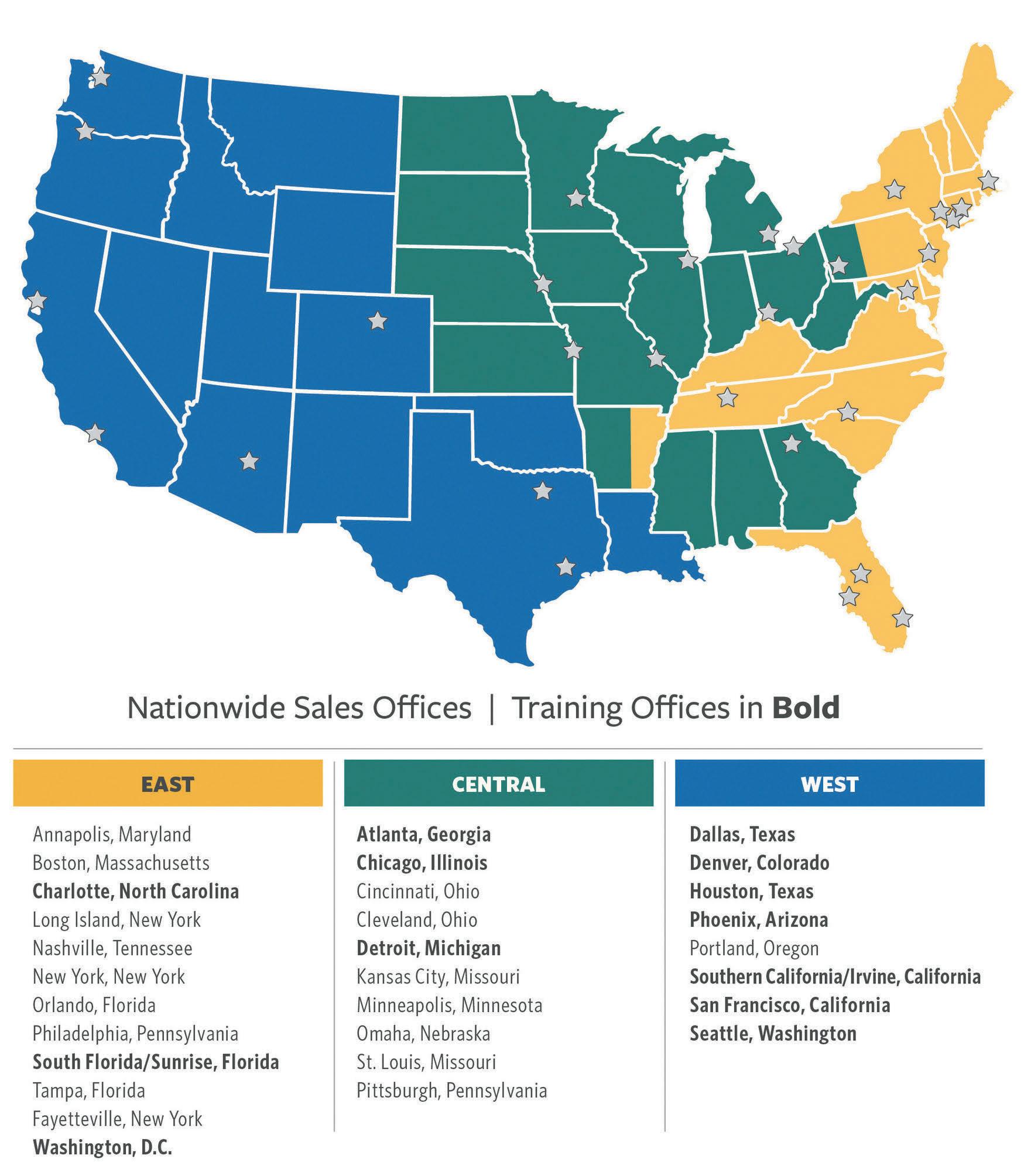
Mutual of Omaha’s Employee Benefits Sales Trainee Program is a launchpad for motivated, early-career talent who want more than a traditional entry-level sales role. Designed as a hands-on, apprentice-style experience, the program immerses participants in the real world of professional sales while surrounding them with structured learning, coaching, and mentorship. Trainees don’t just learn about sales they practice it daily, build confidence through experience, and develop the skills needed to succeed in a fast-paced, relationshipdriven business. By the end of the program, participants are prepared to step into full sales roles with a strong foundation in communication, problem-solving, and consultative selling.
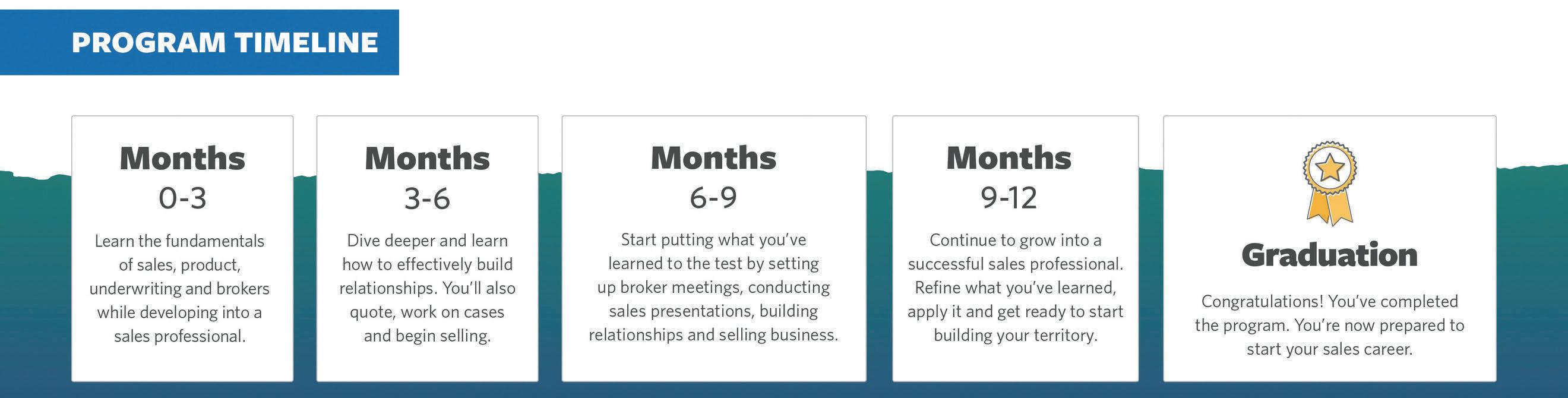
Participants move through a carefully sequenced curriculum that includes:
Mentorship through the Sales Leadership Academy (SLA), where experienced sales managers and reps guide trainees, provide coaching, and reinforce expectations Mentorship is central to program success and linked to higher long-term sales performance compared to external hires
Rigorous, end-to-end sales training that moves from core fundamentals to advanced, real-world execution, enabling trainees to enter the field with the skill set, confidence, and readiness to meet and often exceed the performance of seasoned sales representatives upon completion of the program
Weekly interactive virtual training with sales leaders, including sales skills development, role plays, real-life business scenarios, and life-skills discussions that prepare trainees for both professional success and long-term career growth.
Hands-on fieldwork with sales teams, broker interactions, territory development, and customer-facing activities.
Comprehensive life-skills development, guided by experienced sales leaders and an external life coach, designed to support growth not only as a sales professional but as a confident, well-rounded individual.
Graduates are prepared to step into a comprehensive sales role, equipped with the technical, interpersonal, and operational skills needed for consultative B2B sales within the employee benefits marketplace
Careers often include:
Managing broker relationships
Territory growth and strategic selling
Representing a Fortune 500 brand with national reach
The program is known for producing high-performing, long-tenured sales professionals, and is continually refined through leadership, coaching, and data-driven development initiatives.
IDEAL CANDIDATE PROFILE
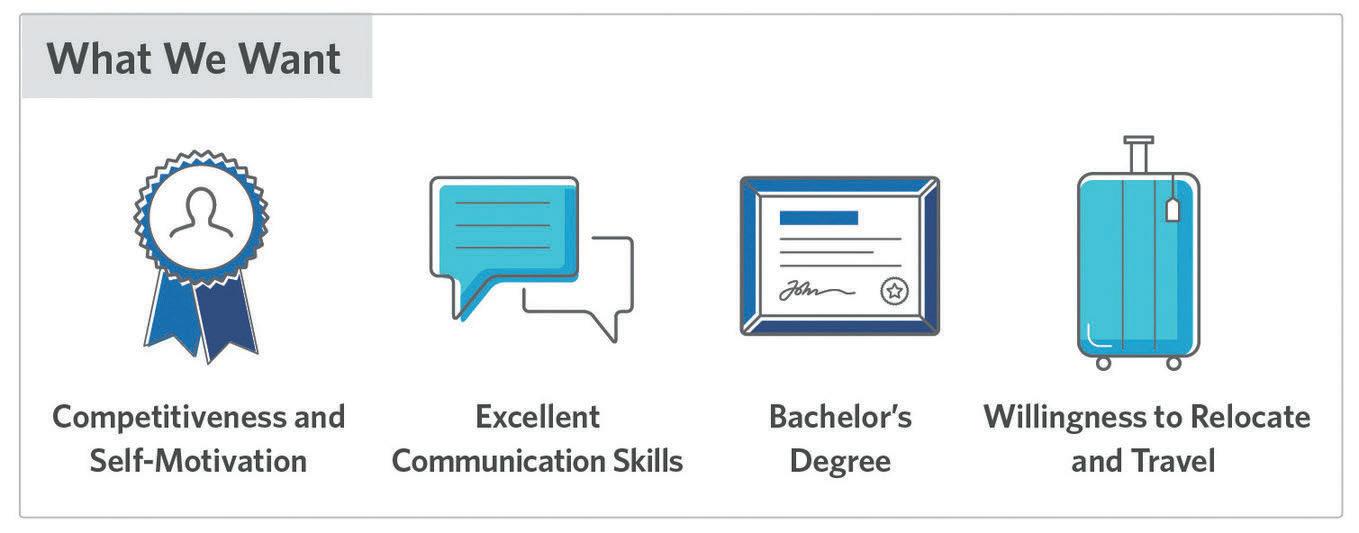
Successful sales trainees exhibit:
Competitive drive and high energy
Excellent communication and relationship building skills
Persistence, resilience, and comfort with ambiguity
The ability to think on their feet and solve problems in real time
Sound decision making skills and strategic thinking
Confidence working with numbers and managing multiple priorities
An entrepreneurial mindset and strong sense of personal accountability
These characteristics align with what current trainees and managers identify as critical for thriving in a demanding, relationship-driven career.
COMPENSATION & EARNING OPPORTUNITY
The Sales Trainee Program offers a competitive, stable starting salary paired with performancebased earning opportunities as trainees progress. This structure allows participants to focus on learning and development early, while also being rewarded for results as they gain experience. As trainees transition into full sales roles, compensation becomes increasingly performancedriven with uncapped earning potential growing in direct proportion to skill development, individual effort, and the strength of the relationships built, rewarding those who consistently invest in their growth and deliver results
RECRUITING FROM KEY UNIVERSITY PARTNERSHIPS
A core strength of the Employee Benefits Sales Trainee Program is its intentional recruiting strategy focused on key university partnerships. Mutual of Omaha has maintained a strong relationship with Georgia Southern University since 2014, and that partnership continues to be a cornerstone of our talent pipeline Since the relationship began, we have hired 38 students from Georgia Southern into our Sales Trainee Program since 2014, with 20 still employed at Mutual of Omaha in sales roles across the country today This represents a 53% retention rate over a 12‑year period, underscoring the long term success of talent developed through this partnership.
Georgia Southern’s sales curriculum and faculty are widely regarded as best in class, blending rigorous academics with real world sales application one of the primary reasons we continue to recruit from the program year after year. We also actively partner with the university’s Pi Sigma Epsilon sales and marketing fraternity, strengthening our connection to highly engaged, career focused students who are intentional about pursuing sales careers. Graduates from Georgia Southern consistently demonstrate a strong work ethic paired with a relationship driven mindset, aligning seamlessly with the consultative, broker focused nature of our B2B sales organization Together, the university’s education and Mutual of Omaha’s sales training and development program have shaped these students into highly successful, long tenured sales professionals
The Sales Trainee Program helps early-career professionals mainly coming straight out of college build a rewarding, financially meaningful lifestyle career Trainees gain skills that are transferable in a variety of sales careers, specific to group insurance: communication, time management, negotiation, customer service, and consultative selling The program also strengthens the organization’s overall sales pipeline, ensuring a consistent flow of trained, culturally aligned sales talent across the country
The Sales Trainee Program is a proven engine of long-term growth, with approximately 65% of the current sales force having been hired and developed through this program, making it a core driver of the Employee Benefits organization’s success to date. Each year, the program selects a highly competitive cohort of approximately 12–14 trainees, allowing for personalized development and close mentorship Historically, around 93% of participants successfully graduate into sales roles, underscoring the strength of the training model and its focus on preparing individuals for sustained success in a professional sales career.
Sales is more than a first job it is a profession that builds lifelong skills and opens doors to leadership, financial growth, and career mobility. Through the Sales Trainee Program, participants learn how businesses make decisions, how relationships drive outcomes, and how individual effort directly impacts success. The skills developed communication, resilience, strategic thinking, and accountability are valuable in sales and far beyond it For students and early-career professionals seeking a path that rewards initiative, offers real responsibility early, and provides opportunities to grow into leadership roles, sales represents a dynamic and sustainable career choice.
Breaking the Grass Ceiling
From the Front Lines to Systematic Excellence in the Southeast
Written by Dr. Alicia Conerly. Marion County School District Director of Federal Programs
Throughout my career, I have often walked into rooms where I was the “first” or the “only.” I was the first African American administrator in my building and the first African American woman in my district in Mississippi to be named Administrator of the Year Later, I became the youngest person ever elected and the only Mississippian ever elected President of the National Science Teaching Association (NSTA). I stood on a national platform carrying not just a title, but the weight of representation.
Here is what I have learned: while representation is a powerful starting point, it is not the finish line In the Southeast, we are standing at a crossroads Our region holds a rich cultural tapestry, deep faith traditions, resilient communities, and a complex educational history. Yet too often, diversity, equity, and inclusion (DEI) initiatives, (ironically the very theme of my NSTA presidency) are confined to awareness months, compliance training, or isolated workshops.
That is not transformation. That is maintenance. Our students deserve more than maintenance. They deserve systemic excellence.
Breaking the Grass Ceiling
From Boots on the Ground to the Balcony View
At the school level, the work of equity feels intensely personal. As a principal, I lived the day-to-day reality of leadership. I saw the faces of children who needed more than inspirational speeches They needed equitable access to advanced coursework They needed teachers who saw their brilliance before labeling their behavior They needed systems that did not quietly ration opportunity.
In a single building, equity looks like fighting for resources, advocating for staffing, coaching teachers through hard conversations and sitting with parents who feel unseen
When I transitioned from building-level leadership to district and national advocacy, my perspective widened. I began to see patterns. Policies. Pipelines. Budget decisions. Hiring practices. Board dynamics.
And I realized something profound; if equity does not live in the operating system, it will never survive in the classroom
We often talk about the glass ceiling, but in the Southeast, many of us face what I call the grass ceiling. It’s subtle. It’s local. It’s rooted in tradition, politics, and “the way we’ve always done things.” It’s not always loud opposition. Sometimes it’s quiet exclusion Let’s look at this further The grass ceiling isn’t a barrier found in a formal boardroom; it’s a thicket grown from a lifetime of shared history It’s rooted in who your daddy was, where you go to church, and which high school colors you wore on Friday nights While the glass ceiling is fragile and clear, the grass ceiling is resilient and messy; it’s built at Saturday morning tailgates and country club lunches where the real decisions are made long before the official meeting even begins.
In the South, politeness is the ultimate gatekeeping tool. It’s a culture of quiet exclusion where information circulates in private circles, never quite reaching the "outsiders " It’s the "Bless your heart" that really means "Stay in your lane," ensuring that opportunities consistently go to the safe legacy pick rather than the innovator
You don’t shatter a ceiling made of grass; you must outgrow it, even when the environment is designed to keep you mowed down to a traditional height
The grass ceiling tells BIPOC women in leadership:
You can serve but don’t disrupt.
You can represent but don’t restructure.
You can inspire but don’t redesign systems.
But here is the truth; when BIPOC women lead authentically, systems improve. Research and lived experience both confirm that diverse leadership teams: Make stronger fiscal decisions
Improve faculty retention
Increase community trust
Raise academic outcomes
This is not charity It is a strategy
From Symbolic Gestures to Systematic Excellence
Systemic excellence means equity is embedded in:
Recruitment and hiring practices
Leadership development pathways
Curriculum review processes
Discipline policies
Budget allocations
Board governance conversations
It means central office leaders stop asking, “Do we have diversity?” and start asking, “Do our systems produce equitable outcomes?” A diverse staff in an inequitable system will burn out. We cannot afford to keep losing brilliant educators because the structure was never designed to sustain them
The Resilient Pipeline: Scaling Equity Intentionally
If we are serious about transformation in Georgia, Florida, Alabama, and Mississippi, we must create a resilient leadership pipeline.
The Pipeline Should:
Identify talent early: Teacher leaders must see pathways beyond the classroom.
Provide mentorship that is not performative: Sponsorship matters more than advice
Ensure psychological safety: Leaders cannot innovate if they are constantly defending their legitimacy.
Measure retention as seriously as recruitment: Hiring diverse leaders without sustaining them is institutional harm.
Superintendents, board members, and HR directors must align this work. Equity cannot sit in a side office labeled “initiative.” It must live in governance.
Conduct Your Own Systematic Health Audit
Recruitment: Are we intentionally identifying talent early, or waiting for them to apply?
Governance: Is equity treated as an isolated, side-office initiative, or is it a primary driver of our board meeting discussions and budget allocations?
Retention: Are we merely celebrating how many diverse leaders we hire, or are we measuring how long they stay and whether they feel the psychological safety required to innovate?
Navigating Political Nuance Without Losing Conviction
The Southeast is politically complex Conversations about DEI can quickly become polarized
Here is where courageous leadership emerges: We must shift the narrative from “social justice language” to “system health language.”
When students thrive, communities prosper. When faculty retention improves, budgets stabilize. When trust increases, enrollment strengthens. Equity is not a partisan agenda. It is an operational imperative.
Faith, Purpose, and Leadership Integrity
For me, leadership has never been detached from purpose. My journey has been sustained by prayer, conviction, and the belief that systems can be healed. I believe that broken structures can be reconciled, and that communities can be made whole.
Transformation is not just technical; it is spiritual work. When we lead with integrity, and refuse to shrink in rooms where we are the “only,” we give permission for others to rise. Rising leaders change cultures.
What Systemic Excellence Looks Like in Practice
Imagine districts across the Southeast where: Equity audits are standard practice
Leadership development programs intentionally cultivate women of color
Data is disaggregated not to shame, but to improve.
Community forums are spaces of listening, not performance.
Budgets reflect student need, not political comfort.
The Invitation to Decision-Makers
To my peers across the Southeast superintendents, board members, policymakers, HR directors this is our moment We can maintain symbolic diversity; or we can redesign systems. The future of our region depends on whether we are willing to scale equity from the front lines to the foundation.
Breaking the grass ceiling is not about individual advancement It is about institutional transformation. When we empower BIPOC women to lead authentically, we do more than diversify leadership, we unlock innovation, resilience, and excellence for every child.
Representation opens the door Systemic excellence builds the house
The Southeast deserves a house strong enough for every student to thrive.
This is not idealism. It is attainable. However, it requires courage. It requires leaders willing to say: “We are not just diverse in appearance. We are equitable in outcome.”
The Leadership on Campus
“Make A Difference” Award
Make A Difference Award honors the legacy of Steven H. Johnson,
the visionary founder of Campus Benefits and Leadership on Campus With a career spanning over 35 years, Steven dedicated his life to serving public education, developing innovative strategies, and inspiring positive change.
Steven believed that, “Each one of us is born with a special gift….it is our duty to recognize that gift, nurture that gift, become passionate about that gift and then give it back to the One who gave it to us, so He can give it to the world.”
His philosophy centered on maintaining a great attitude, embracing one’s calling, and giving selflessly, continuing to inspire individuals to pursue excellence in both their personal and professional lives. It encourages individuals to maintain a 100% great attitude at all times, embracing positivity with the mindset of “I like myself, I love my family, I love my job.”
The “Make a Difference” Award is rooted in Steven’s favorite Leadership on Campus teachings, which emphasize positivity, purpose, accountability, continuous learning, and resilience. It will be presented to individuals who exemplify these principles, making a lasting difference through their dedication, integrity, and commitment to serving others.
Steven made an impact on all who knew him, and it is our wish to recognize those individuals who embody the principals of the “Make a Difference” lessons and their contributions to their communities. Through this award, we will celebrate their passion, perseverance, and impact, carrying forward Steven’s enduring legacy.
Help Us Recognize Outstanding Individuals
Submit a Nomination Today!
We invite you to help us recognize and honor individuals who embody the principles of personal and professional excellence within school system administration Individuals can hold any position level within the school system. This award will honor the unsung heroes who help keep a school system running and deserve to be recognized for their service.
For more information, or to nominate a colleague, please scan the QR code or visit our website.
Meet our 2025 Winners
The Leadership on Campus “Make a Difference Award” celebrates the unsung heroes who keep our school systems running through exceptional leadership This award recognizes individuals who pair strategic excellence with human understanding, driving positive changes in public education through their unwavering dedication and integrity.
This year we invited our community to help us recognize individuals who embody the highest principles of personal and professional excellence. The response was truly inspiring We received such an overwhelming number of incredible nominations that our committee faced an incredibly difficult task in selecting just three winners Reading through the stories of so many dedicated members of our school communities was a powerful reminder of the transformative, everyday leadership that drives public education forward.
Rooted in the core teachings of Leadership on Campus, the committee sought out individuals who make a lasting, measurable difference in their communities by exemplifying exceptional leadership qualities Specifically, we looked for nominees who maintain an inspiring and optimistic attitude during challenges, demonstrate purposeful and selfless service to support the success of others, and hold a deep, active passion for advancing public education. Additionally, these leaders must show a strong commitment to continuous learning and innovation by embracing new practices, all while leading by example with unwavering integrity, honesty, and accountability to the highest ethical standards
After careful deliberation, we are thrilled to honor three individuals whose leadership beautifully embodies these core values:
First Place: Dr. Gyimah Whitaker
As the Superintendent for the City Schools of Decatur, Dr. Whitaker is a visionary, inclusive, and equity-driven leader. Through strategic initiatives like the comprehensive implementation of the Science of Reading, she has transformed her district's culture and academic outcomes, proving that inclusive leadership yields sustainable growth.
Second Place: Mr. Jake Parmer
An 8th-grade mathematics teacher at Washington Middle School in Cairo, Georgia, Mr. Parmer is a transformative educator. He is reflective, data-driven, and deeply committed to designing instruction that is purposeful and engaging. His innovative teaching methods have not only elevated student confidence but also strengthened school culture and instructional collaboration.
Third Place: Dr. Alicia Conerly
Serving as the Federal Programs Director, MTSS Coordinator, Title IX Coordinator, EL Coordinator, and Foster Care P.O.C. for Marion County School District in Mississippi, Alicia is a passionate advocate for STEM and equitable education. From securing substantial grant funding to leading at the national level as the President of the NSTA-20242025, her career is a testament to the transformative power of mentorship and selfless service.
We invite you to turn the page and read further about each of these remarkable leaders. Their individual profiles detail their inspiring stories, their measurable impacts, and exactly why they were chosen to receive this prestigious honor.
A story of resilience and dedication, Dr Whitaker’s passion for public education is deeply rooted in her own lived experience Growing up as a gifted Black girl in Philadelphia in the 1980s, her home life was marked by instability due to her mother's struggle with schizophrenia Amidst these challenges, public education served as her only constant Following the tragic murder of her mother when Dr Whitaker was just 16 years old, it was a teacher who stood in the gap This teacher helped her navigate the application process to the University of Pennsylvania and secure the scholarships that made her future possible Because of this profound background, she is driven daily by the core belief that "Equity is the Vehicle to Excellence," viewing schools as transformative spaces that change lives
Measurable Community Impact
Under Dr Whitaker's visionary leadership, CSD has seen remarkable growth A defining project of her tenure has been the comprehensive implementation of the Science of Reading to improve literacy outcomes Her strategic oversight has yielded incredible results for the community, with CSD now ranking number one in the state of Georgia in ELA proficiency for grades 3, 5, 6, 7, and 8 Furthermore, the percentage of economically disadvantaged high school students reading at or above grade level has increased significantly from 38 4% to 63 1% Beyond her district, her compelling testimony before the Georgia House Education Committee was instrumental in the passage of House Bill 538, mandating evidence-based literacy instruction statewide
Exemplifying Leadership
Dr Whitaker was selected for this award because she consistently demonstrates core leadership values, beginning with a deeply ingrained positive attitude She embodies steady and genuine optimism, radiating positivity throughout every interaction with staff, students, and families This unwavering demeanor was and continues to be particularly evident when facing intense community pushback regarding the development of the new Early Childhood Learning Center By remaining calm, professional, and fact-based during heated public meetings, she serves as an anchor of optimism, allowing stakeholders to move past the noise and focus on achieving greater equity for students
FIRST PLACE CELEBRATING EXCELLENCE: DR. GYIMAH WHITAKER
It is with great excitement and admiration that we congratulate Dr Gyimah Whitaker for winning first place for the Leadership on Campus Make a Difference Award This prestigious recognition celebrates leaders who pair strategic excellence with human understanding, and Dr Whitaker exemplifies every quality this award was created to honor As the Superintendent for the City Schools of Decatur (CSD) since July 1, 2023, Dr. Whitaker has transformed the culture, outcomes, and systems of her district.
Service forms the true foundation of her leadership Dr Whitaker prioritizes engaging in purposeful service far beyond her day-to-day role as superintendent By utilizing her positions on the AASA Governing Board and the College Board Superintendent Advisory Council, she actively influences national policy and practices advocating for students at all levels This service is fueled by a profound and unwavering passion for public education She believes deeply in the transformative power of public schools and works daily to guarantee that all children, regardless of their background, identity, or circumstance, have equitable access to opportunity
A hallmark of Dr Whitaker's approach is her commitment to continuous learning and innovation Identifying "Learner" as one of her top five strengths, she approaches professional development not just to add credentials, but to acquire the specialized tools necessary to solve complex educational challenges She recently earned a Certificate in Education Finance through Georgetown University She immediately utilized this knowledge to implement concrete innovations in her district, such as explicitly tying the historic five-year budget presentation to student outcomes by fiscal year so the community could clearly see how resource allocations support achievement
Finally, her leadership is deeply marked by integrity, transparency, and high ethical standards When federal pandemic-era funding expired, leaving the district with an accumulating and fiscally unsustainable school nutrition debt, she faced a difficult ethical crossroads She successfully navigated the challenge of returning to a paid model while ensuring no child went hungry or was subjected to "lunch shaming" She achieved this through proactive communication and by directing her team to improve outreach for Free and Reduced Lunch applications, beautifully proving that compassion and accountability can coexist
Dr Whitaker’s extraordinary resilience, strategic vision, and unwavering dedication to student equity make her a profoundly deserving recipient of this honor We proudly congratulate her on winning the Leadership on Campus Make a Difference Award and thank her for her lasting impact on public education
Michelle Lowe (Nominator)
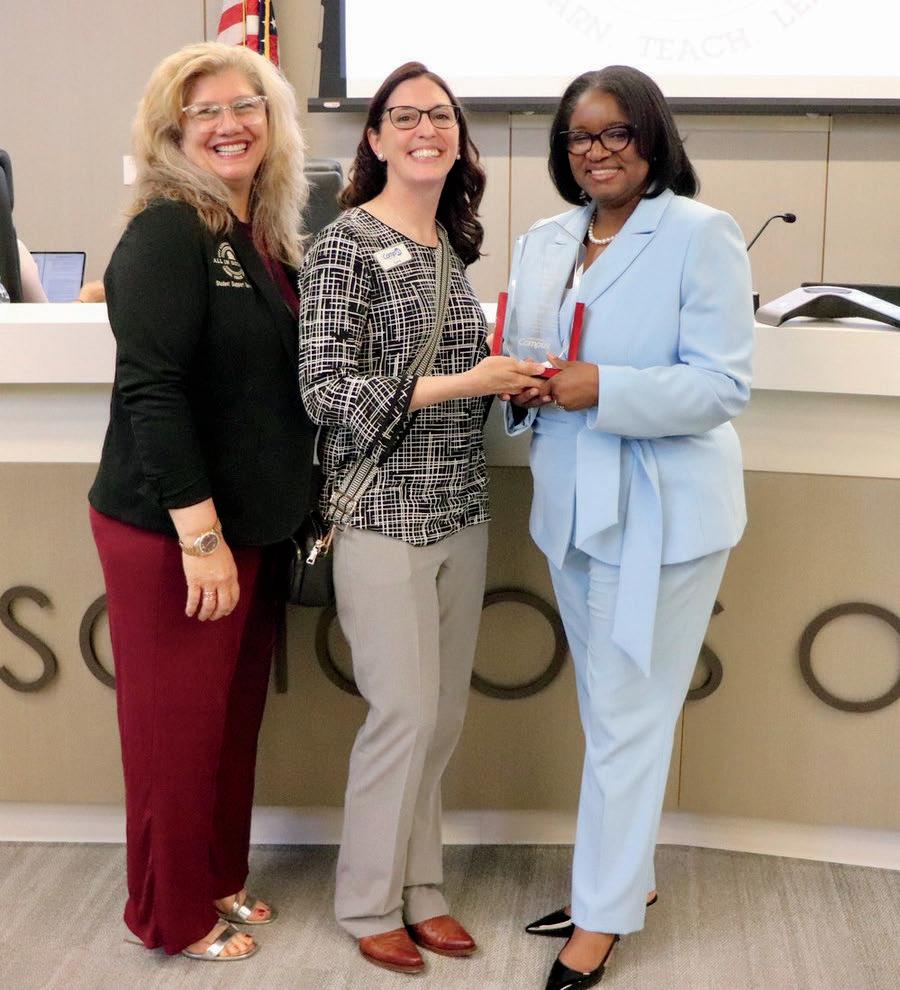
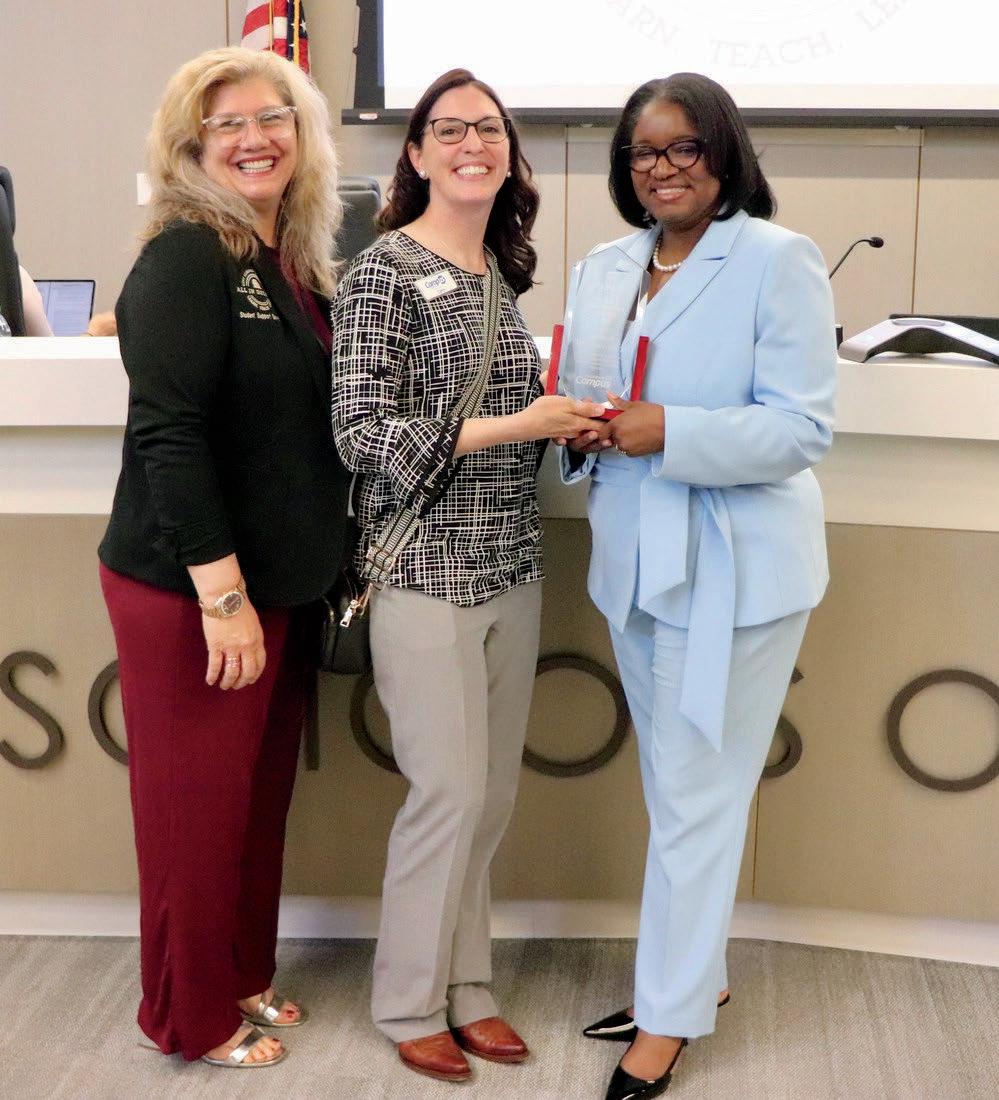
Carra Johnson (Leadership on Campus) Dr. Gyimah Whitaker (Award Winner)
SECOND PLACE JAKE PARMER
It is with great excitement that we congratulate Mr Jake Parmer on winning second place for the prestigious Leadership on Campus Make a Difference Award This award recognizes educators who exhibit extraordinary dedication, and Mr Parmer's work truly embodies these core values Currently in his third year as an 8th-grade mathematics teacher at Washington Middle School in Cairo, Georgia, Mr Parmer has quickly established himself as a dedicated, data-driven, and transformative educator
A Story of Community Impact and Academic Excellence
Mr Parmer’s impact on his students and the broader community is both measurable and profound Beyond impeccable local test scores, his innovative classroom environment captured statewide attention when it was selected to be featured in Georgia Public Broadcasting's Math in Action series Showcasing a "3-Act Task" centered around realworld data and problem-solving, this project not only elevated student engagement but also sparked increased instructional collaboration across his campus
EXEMPLIFYING LEADERSHIP
Mr Parmer was chosen for this award because he consistently demonstrates extraordinary leadership qualities, starting with an unshakeable positive attitude During a stressful state GMAS testing period when campus morale was low, Mr Parmer proactively shifted the energy in his classroom by designing a "Math Bootcamp" He intentionally celebrated small wins and highlighted growth over perfection, which resulted in highly motivated students who publicly cheered for one another's progress
This positivity is matched by his commitment to purposeful service Mr Parmer intentionally looks for ways to support his community beyond his direct classroom responsibilities, volunteering his time to share lesson materials and data tools with his fellow teachers to help reduce workload stress He actively extends this service to students and families by offering before-school tutoring and assisting with schoolwide initiatives like PBIS events and community outreach efforts
His service is deeply rooted in his passion for public education. Working in a Title I school, he is deeply inspired by the resilience, creativity, and determination of his students and is driven by the responsibility to help open doors for them He operates on the steadfast belief that every child deserves access to high-quality instruction and an environment where they feel seen, valued, and capable of success
To further this mission, Mr Parmer demonstrates a strong commitment to continuous learning and innovation He is actively pursuing his Master of Education in Curriculum & Instruction at Georgia Southern University to further develop his skills as an instructional coach Through his coursework and research, he has successfully implemented new formative assessment practices and shared digital data tools with his Professional Learning Community (PLC), leading to more intentional remediation cycles
Finally, his leadership is defined by integrity and accountability When testing data revealed that his students had learning gaps ahead of a district common assessment, he made the difficult ethical decision to advocate for delaying the test to allow for targeted remediation By prioritizing long-term learning over short-term pacing convenience, his students demonstrated significant academic improvement and felt confident and supported rather than defeated Mr Parmer demonstrates unwavering dedication to making school a place where students feel valued and inspired
Mr Parmer's innovative approach to teaching, commitment to student empowerment, and courageous integrity make him a profoundly deserving recipient of this honor We proudly congratulate him on winning the Leadership on Campus Make a Difference Award and thank him for his lasting impact on his school community.
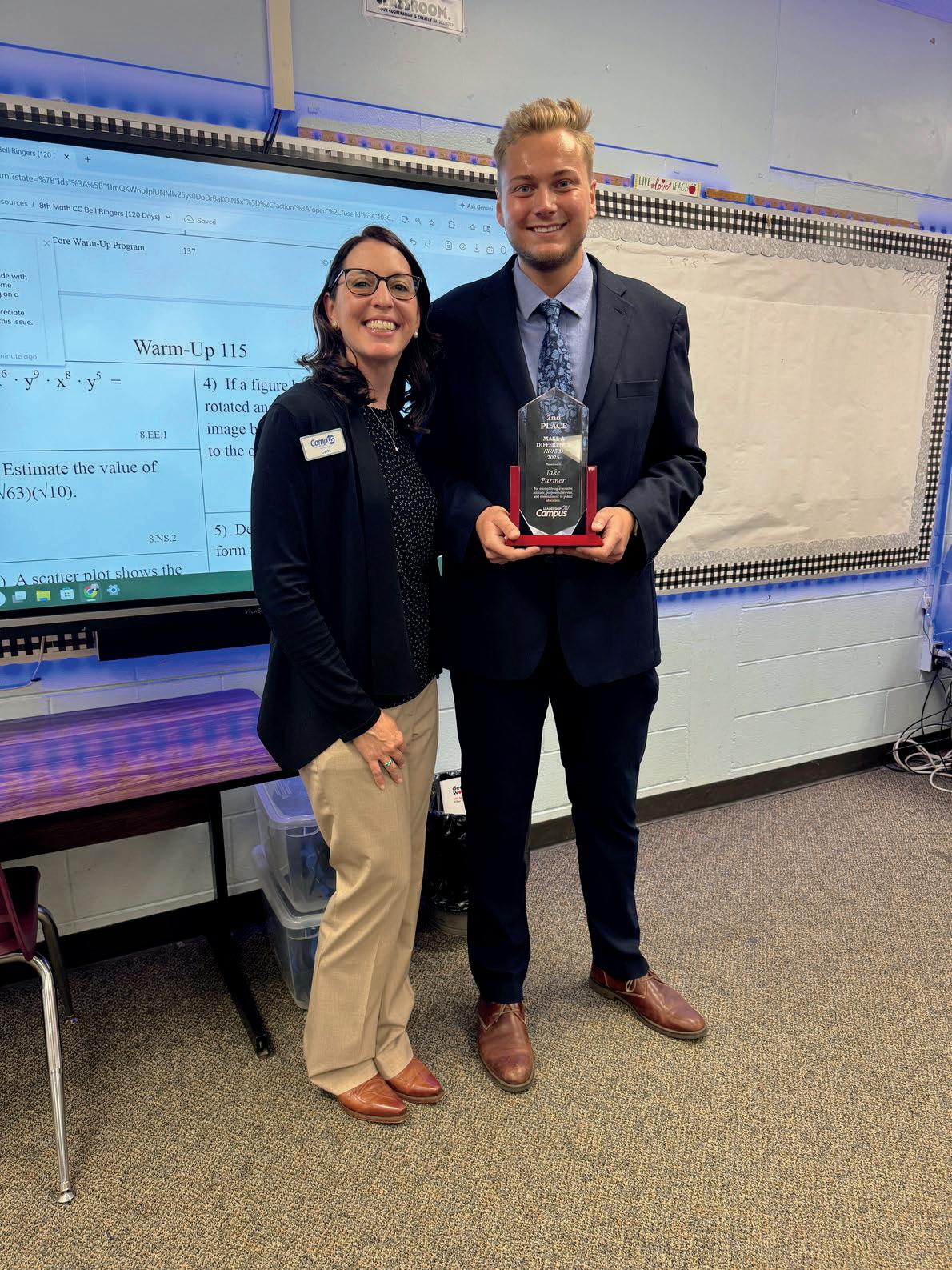
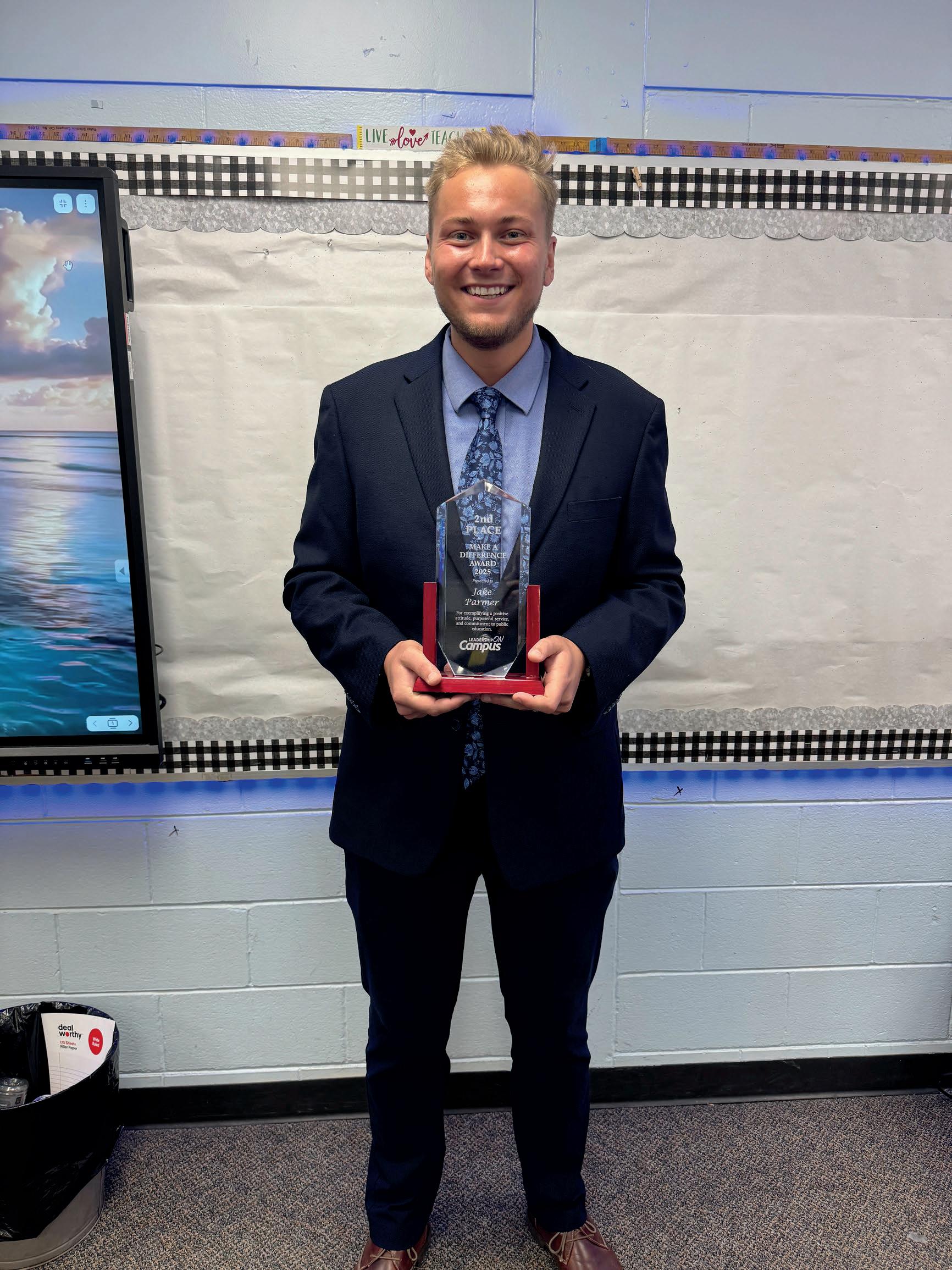
With Carra Johnson (Leadership on Campus)
Jake Parmer
DR. ALICIA CONERLY
Alicia was selected for this esteemed award because she consistently demonstrates extraordinary leadership qualities, anchored by an inspiring positive attitude When Alicia took over as principal at Monticello Elementary during the COVID-19 pandemic, the school's accountability rating had dropped to a 'C', and staff morale became exhausted. She maintained high morale by reframing the rating not as a failure, but as a starting line for recovery, adopting a "One Point at a Time" mindset By publicly celebrating "B-Worthy" efforts, she shifted the team's focus from fault to future, empowering her staff to eventually earn back their 'B' rating
This positive leadership is matched by her profound dedication to purposeful service Alicia served as the 2024-2025 President of the National Science Teaching Association (NSTA), a volunteer role where she shaped strategic direction and assisted with providing resources for over 30,000 members She also founded PUSH 4 Science, Educational Services, LLC, utilizing it as a selfless platform to provide curriculum development and professional training to districts that lack in-house expertise
Her service is driven by a deep passion for public education and advocacy Alicia is deeply dedicated to mentoring the next generation of educators, having previously coordinated a New Teacher & Leadership Academy to invest in their long-term success
It is with immense pride that we congratulate Alicia Conerly for winning third place for the prestigious Leadership on Campus Make a Difference Award This honor celebrates individuals who change lives through an unwavering commitment to leading with love, compassion, and integrity Alicia does not just meet the criteria for this award; she exemplifies it
A Career of Transformational Impact
Currently serving as the Federal Programs Director, MTSS Coordinator, Title IX Coordinator, EL Coordinator, and Foster Care P O C for the Marion County School District in Mississippi, Alicia’s career spans nearly two decades in public education She has a 360degree understanding of the educational system, having progressed from an elementary and secondary science teacher to an instructional coach, principal, and district administrator A landmark moment in her career was leading South Pike High School to win the 2016 NSTA Grand Prize Shell Science Lab Challenge This achievement secured a $20,000 prize that modernized the school’s science laboratory, successfully elevating instruction from theorybased methods to critical hands-on, inquiry-based STEM learning
EXEMPLIFYING
LEADERSHIP
She consistently advocates for her schools by securing massive external funding, including a $150,000 Literacy Grant, ensuring students have access to essential tools and technology
To further her impact, she maintains a strong commitment to continuous learning and innovation She earned her Doctorate in Educational Leadership (Ed D ) from William Carey University in 2023 She utilized this knowledge to coordinate and design an innovative Multi-Tiered System of Supports (MTSS) for her district, creating a system where student data is analyzed weekly to provide highly targeted and timely interventions
She led by example by publishing a firm, public letter declaring that NSTA’s commitment to transforming science education "to benefit all" remained unwavering, serving as a courageous and stable force for educators nationwide
Finally, Alicia's leadership is defined by integrity and accountability As the first NSTA President from Mississippi and only the fourth African American to hold the title, she faced the profound challenge of leading the organization amidst a polarized national political climate regarding diversity, equity, and inclusion (DEI)
Alicia's selfless service, visionary advocacy for STEM education, and lifelong commitment to mentorship make her a profoundly deserving recipient of this honor We proudly congratulate her on winning the Leadership on Campus Make a Difference Award and thank her for her transformative impact on educators and students nationwide
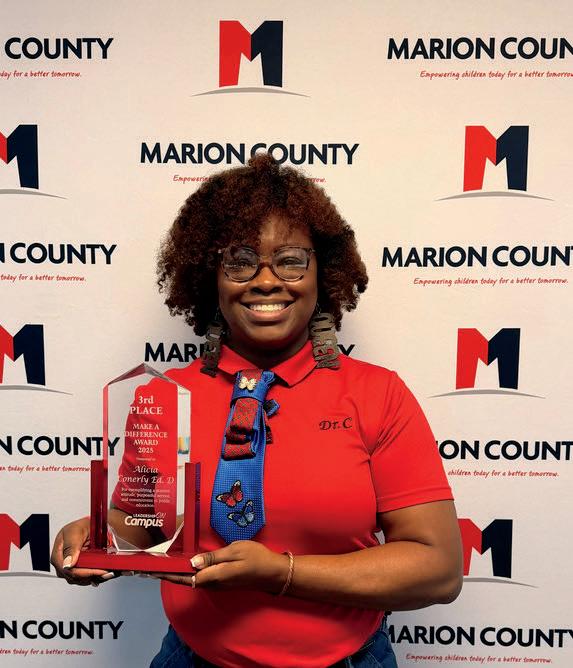
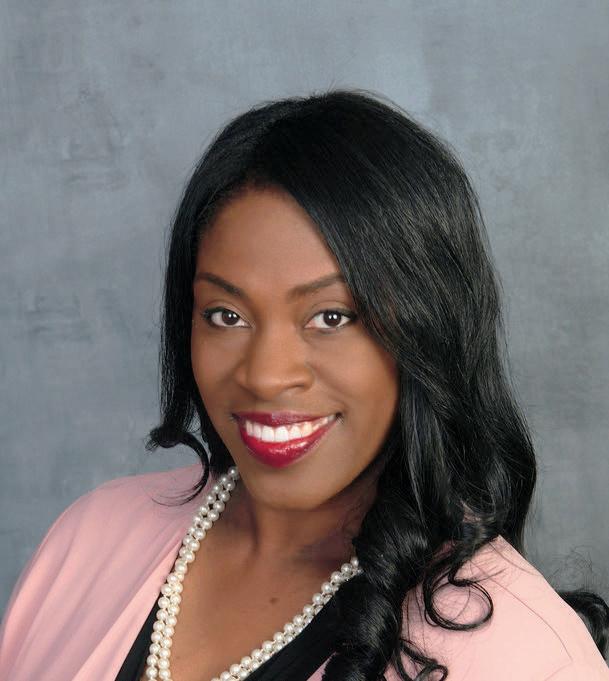
Dr. Alicia Conerly
Written by
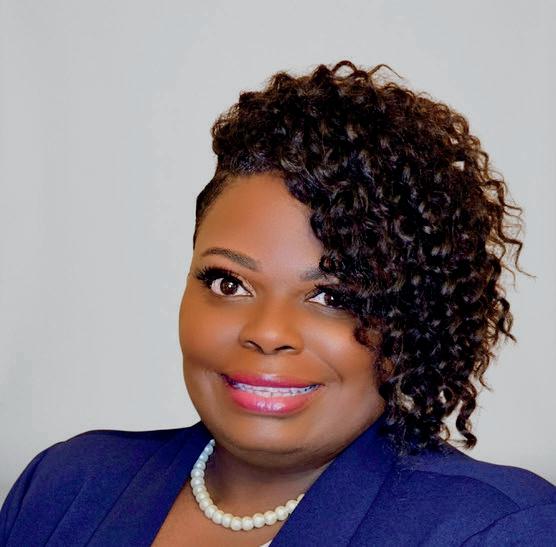
Dr. Anisha Robinson Mendez
Prestige Management & Consulting, LLC. Special Education Consultant
www prestige-ga com info@prestige-ga.com
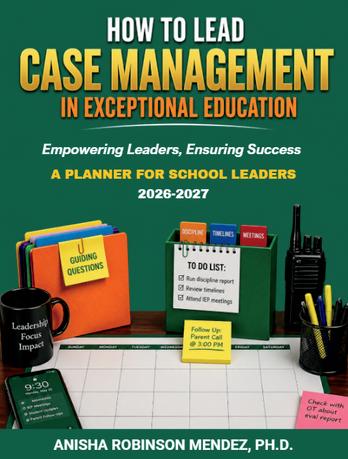
“Dr. Anisha Robinson Mendez is the author of “Navigating Case Management in Exceptional Education”, a planner for special education teachers, and “How To Lead Case Management in Exceptional Education”, a planner for school leaders. In addition, she has a book being released entitled, When the Bell Rings: What Every New Special Education Teacher Needs To Know. Dr. Mendez remembers her first year of teaching and believes that new teachers should never be handed a caseload without clarity, left alone without mentorship, or made to feel that asking questions is a sign of weakness When new special education teachers are empowered, trained, and valued, students with disabilities will receive the meaningful instruction they deserve.
From Potential to Practice
I still remember the day I was hired to be a special education teacher. The interview was held during the summer, and it felt almost surreal I sat down, answered a few questions, and before I could fully exhale, I was offered the job on the spot The principal explained my role and how I would be a co-teacher for third grade New to the world of education, I politely asked the question every new educator would think but would not want to say out loud. What exactly is a co-teacher? The principal grinned and explained that there would be two teachers in the classroom, one general education teacher and one special education teacher. I would serve as the special education teacher With that understanding, I accepted the position, feeling equal parts excited about my new opportunity and relieved that the interview was finally over.
The weeks leading up to the new school year were filled with anticipation and excitement. My previous professional background had nothing to do with special education, so everything about this role was new and unfamiliar Still, I told myself I would be fine I was optimistic and ready for this new chapter.
The summer ended, and the first day of pre-planning had arrived. I walked into the school building, checked in at the front office, and asked for the principal She arrived with a big smile and a warm welcome. As we walked down the hallway to meet a team of teachers, she casually mentioned there had been a change of plans. “Oh, okay,” I said, trying to sound calm “What is the change of plans?”
The principal explained that I would no longer be a co-teacher; however, I would be a resource teacher. I paused and asked the only question that mattered in that moment, “Will there still be two teachers in the classroom?” She stopped, looked at me, and said, “No.” There will only be one teacher in the resource classroom, and that teacher will be you.
Inside, my world tilted, and my mind began to race How can I be the only teacher when I have never taught before? Does the principal understand that teaching is not my background?
Why would I be placed alone in a resource classroom with no experience and a provisional certification? As we continued walking down the hallway, my steps felt heavier with every question swirling in my head. The principal likely saw a need to fill a vacancy and decided that I was a capable new hire. However, I questioned my very own background and capabilities as I was new to the profession And yet, somewhere between panic and disbelief, a quiet realization settled in. In that moment, I knew my steps were ordered and that I was about to embark on a journey that would shape not just my teaching career but who I would become as an educator. I knew I had the potential to learn the duties and responsibilities of a special education teacher, but I had to intentionally practice becoming great in this role
Each school year, school principals work to fill vacant positions within their buildings and may not realize that what seems like a minor logistical pivot can be a catastrophic failure Many times, new educators enter the field of special education without a formal educational background. These special education teachers come from alternative certification programs or career transitions and may not have strong content knowledge or experience with writing Individualized Education Plans (IEPs).
A new teacher may not know that the Present Levels of Academic Achievement and Functional Performance (PLAAFP) is within an IEP. Some areas to find within the PLAAFP section are a student's strengths, needs, parent input, impact of disability statement, etc. When teachers do not write a strong PLAAFP, this will result in an out-ofcompliance IEP While preparation programs introduce key concepts such as instructional strategies and disability awareness, it does not fully prepare new teachers for the practical demands of a case manager. These demands include writing compliant IEPs, understanding state and federal laws, collaborating with professionals, and balancing all case management responsibilities. All of this can be overwhelming for a new special education teacher
School and district leaders should broaden their approach from simply providing professional learning for new teachers to actively planning and implementing support for new special education teachers starting on day one. The needs of special education teachers go beyond standard professional learning Strong leadership support is essential in helping teachers build the confidence needed to effectively mentor and retain new educators.
Too often leaders eagerly hire new staff, celebrate that the position has been filled, and then quietly move on, almost as if the job is done. The excitement of onboarding fades quickly, leaving new hires to navigate unfamiliar systems, expectations, and classrooms on their own With little to no training and no intentional mentoring, these educators are left to survive by trial and error, rather than being supported to grow, thrive, and succeed Leaders who provide intentional guidance and step-by-step explanations can reduce confusion and help new teachers focus on learning their role rather than being expected to master everything at once.
In addition to providing professional learning opportunities, here are three meaningful ways leaders can support new special education teachers:
1.Provide Structured Mentorship and Coaching: Pair new special education teachers with experienced mentors who understand compliance, instruction, and how to manage a caseload Regular check-ins, classroom walk-throughs with feedback, and a safe space to ask basic questions will help new teachers build confidence and avoid feeling isolated or overwhelmed.
2.Ensure Clear Roles, Expectations, and Teacher Schedules: Many new special education teachers struggle because expectations are unclear or there is an adjustment at some point with their teaching schedule School leaders should clearly define the teacher’s role, provide a schedule and explain non-negotiables around compliance, data collection, and service delivery. Clarity reduces anxiety and prevents burnout.
3 Protect Time and Provide Practical Resources: Special education teachers need protected time for writing IEPs, scheduling meetings, progress monitoring, collaboration, etc., not just time for instruction. School leaders can support new teachers by building planning time into their schedules, limiting unnecessary duties, ensuring resources for the general curriculum, behavior supports, and compliance resources Leadership that provides practical support values both the teacher and the students.
In conclusion, when leaders intentionally support new special education teachers, this can be far more cost-effective and student-centered rather than re-posting a vacancy every year. New teachers are far more likely to stay on the job, develop confidence, and become effective educators Retention happens when leaders are present, proactive, and committed to supporting new teachers beyond their first day, their first month, and even their first year. From potential to practice, leadership is the bridge. The way we lead determines whether new special education teachers endure their first year or rise to become the transformative educators our schools desperately need
When the bell rings, expectations are already in motion, individualized education plans are expiring, timelines are on countdown, and students are depending on systems you may not have been taught yet
This book is for new special education teachers who were hired because of potential, but little preparation. Whether you are new to special education, new to teaching, or new to navigating case management, When The Bell Rings brings clarity to the moments where confusion often lives.
This book outlines what the job truly requires, such as compliance, instructional practices, and case management Also, it has reflection questions and survival strategies often left unspoken during the interview process. We hope that it bridges the gap between theory and reality, helping you understand not just what to do, but why it matters. When The Bell Rings helps you build confidence, establish systems, and encourages you to reflect as you step into your new role, better prepared
We encourage you to explore this author’s additional publications, including Navigating Case Management in Exceptional Education – A Planner for Teachers and How to Lead Case Management in Exceptional Education – A Planner for School Leaders, for further insight and practical guidance.
The Art of the Pivot Leading Through the Ecosystem of Virtual Education, Sch Choice, and the Evolving Demands of Public Education
I remember standing in my high school chemistry classroom counting chairs There were not enough
Students crowded lab tables designed for fewer bodies Conversations about covalent bonds and stoichiometry competed with the logistics of space and scheduling I loved teaching I believed deeply in the promise of public education Yet even then, I could feel the strain of a system trying to respond in real time to growing demand
Today, public education faces a different kind of overcrowding; not of seats, but of expectations.
Artificial intelligence is reshaping how knowledge is accessed and produced School choice is redefining how families engage with institutions Workforce demands are evolving faster than policy cycles
Communities expect personalization, accountability, innovation, and safety simultaneously The context has shifted, but the core responsibility has not
Our mission remains to educate and prepare children for the future Leadership in this moment requires what I call the Art of the Pivot My first significant pivot came in 2005 Frustrated by structural limitations in a large traditional district, I joined the inaugural teaching staff at Georgia Connections Academy, a new statewide virtual public school At the time, virtual education was neither widely understood nor widely trusted However, I saw its potential I saw access unconstrained by geography and personalization unbound by physical capacity
Over the past fifteen years, I have grown alongside this institution, serving as a teacher, assistant principal, lead principal, and since 2019 as Executive Director Across each role, one truth has remained constant The mission stays steady even as the environment shifts
Today, Georgia Connections Academy serves thousands of students across all 159 counties in Georgia through a fully virtual public school model
Written by Brazilia Bilal-Page Georgia Connections Academy Executive Director
Our students log in from rural communities, suburban neighborhoods, and urban centers, often bringing very different reasons for choosing virtual education Some seek flexibility Others seek safety, personalization, or expanded academic opportunity Leading in this environment provides a unique vantage point into how rapidly student needs and expectations are evolving across the broader public education ecosystem
Demographics evolve Student needs become more complex Accountability frameworks are revised Political climates fluctuate Technology accelerates Still, the mission remains clear; access and opportunity for all students
The complexity lies not in the words themselves, but in how we define them
The Shift from Logistics to Expectations
When I began teaching, success was largely framed through the lens of proficiency rates and standardized benchmarks shaped by the No Child Left Behind era
As school choice expanded and personalized learning models matured, flexibility and customization became central to the conversation Now artificial intelligence has entered classrooms and boardrooms, challenging long standing assumptions about authorship, assessment, and even cognition
Ten years ago, we were not discussing AI literacy with students Today we must The definition of readiness continues to evolve The mission does not Leading a statewide virtual school has made that reality unmistakable
We serve students in every county across Georgia Suburban, urban, and rural families seek us out for different reasons, but they share a common expectation They want access to meaningful opportunities Zip code should not determine the quality or scope of a child’s education
When we personalize learning and prepare students for an ever-changing future, we are not simply improving academic metrics We are altering life trajectories That belief sustains the work; it also requires us to adapt thoughtfully
One of the most defining examples of this mindset began with a classroom teacher who applied for a small grant to purchase a mobile 3D printer At the time, the idea felt innovative. A single printer could allow students to experiment with design, see their ideas come to life, and experience a small piece of hands-on learning within a virtual environment.
The pivot came quickly.
Within weeks of announcing the opportunity, the interest from students exceeded anything we anticipated. Students who rarely spoke in LiveLessons began submitting design ideas. Others asked if they could prototype engineering concepts connected to their coursework Families began asking how their children could participate What we initially framed as a small instructional enhancement revealed something larger The demand was not for a single device; the demand was for access to creation
That moment required humility As leaders, we had to acknowledge that the original solution was too small for the need we were seeing Our students had talents and ideas that could not be contained within a single tool, a single classroom project or an occasional field experience It also created urgency
Many of our students choose virtual school during complicated seasons of life Some arrive after experiencing bullying Others need flexibility because of learning differences, health challenges, or family transitions
We realized that if we were not intentional, these students could easily miss out on the hands-on innovation experiences that are often reserved for traditional school environments
So, we asked a different question; instead of asking how to deploy one 3D printer, we began asking how virtual students could experience authentic innovation
That question led us to imagine something much larger What if students from different backgrounds and achievement levels could come together to design, build, and solve real world problems using technology, engineering, science, and the arts? What if the virtual model allowed us to expand opportunity rather than limit it?
That conversation became the beginning of our STEAM Academy It was designed as a space where students could move beyond theory into creation and connect their academic learning to future college and career pathways
For us, the lesson was clear Innovation in education rarely begins with a fully formed strategy More often, it begins with a small idea, the humility to listen to what students are showing us, and the urgency to build something worthy of their potential
Ultimately, our goal is simple Students should not lose access to opportunities simply because they chose a virtual school
Over time, that shift in thinking expanded beyond a single initiative and into a comprehensive STEAM pathway serving thousands of middle and high school students
What began as a response to student curiosity evolved into a system of opportunities where learners could explore engineering, design, computer science, and creative problem solving within a virtual environment
In 2023, Georgia Connections Academy became the first virtual school in the country to earn STEM certification through Cognia The recognition was meaningful, but it was never the objective; responsiveness was The certification simply affirmed what our students had already shown us: when access and opportunity are intentionally designed, virtual students are capable of innovation, collaboration, and discovery at the highest levels
The Art of the Pivot is not about chasing trends or reacting impulsively to every new development. It is about acting on evidence with urgency while remaining anchored in purpose
It requires leaders to examine what no longer fully serves students, even when those systems are familiar It requires humility to acknowledge that yesterday’s measures may not capture tomorrow’s readiness
Public education is operating at an inflection point School choice has reshaped family expectations Technology has transformed how knowledge is accessed and created Workforce demands evolve faster than curriculum cycles The uncertainty many leaders feel is not dysfunction It reflects an ecosystem that is changing
Leadership in this Era Demands Disciplined Adaptability
If artificial intelligence can generate answers, then our responsibility shifts toward cultivating discernment, ethical reasoning, creativity and the ability to ask meaningful questions If personalization is promised, systems must deliver it with integrity and scale If access expands, opportunity must be substantive rather than symbolic
The definition of access and opportunity will continue to evolve That evolution is not a threat It is a responsibility We must redefine success before circumstances force us to We must redesign systems while they are still functioning, not after they have failed We must anchor ourselves so firmly in mission that we can remain flexible in practice
The work of public education has never been about preserving structures; it has always been about preserving possibility
Possibility for the student in a rural community seeking expanded coursework Possibility for the learner who thrives with personalization Possibility for a generation growing up in an age defined by artificial intelligence and accelerated change
The Art of the Pivot is not a reaction to instability. It is a disciplined commitment to responsiveness. It is the willingness to adjust strategy without compromising purpose.
The future will continue to unfold in ways we cannot fully predict. Our role is not to control it. Our role is to prepare students to lead within it.
That preparation requires courage from educators and system leaders It requires us to ask an uncomfortable but necessary question: “What system in your district is currently functioning, but quietly failing to meet tomorrow’s demands?”
Access and opportunity remain the promise Leadership ensures we keep it
Pivot Protocol
Audit for Obsolescence: Identify which systems no longer serve students, even if they are familiar or historically successful
Pilot Small, Scale Smart: Start with a focused idea, such as a single classroom innovation or grant opportunity, and expand based on student engagement, outcomes, and responsiveness.
Listen for the Signal: Pay attention to where students lean in Curiosity, participation, and ownership often reveal where learning is most meaningful and where systems should evolve.
Prioritize Disciplined Adaptability:
Encourage leaders to adjust strategies (the how) without shifting the mission (the why)
Shift Curricular Focus: Move beyond teaching answers and toward teaching discernment, ethical reasoning, and creativity as artificial intelligence reshapes how knowledge is accessed and applied.
Measure What Matters: Evaluate new initiatives through evidence of student opportunity, engagement, and growth, not simply through traditional compliance metrics. Continued
From Strategy to Stewardship
How George County Innovates School Finance Through Collaborative Leadership
In today’s educational landscape, effective financial leadership is no longer defined solely by balanced budgets and compliance checklists Instead, it is measured by how intentionally resources are aligned with instructional priorities, student needs, and long-term district goals. At George County School District, finance and budgeting serve as strategic leadership tools, thoughtfully designed to support teaching and learning through collaboration, transparency, and purpose-driven decision-making
George County’s approach demonstrates that innovation in school finance does not require radical reinvention Rather, it requires disciplined alignment between strategy, instruction, and fiscal stewardship
Strategic Planning as the Financial Compass
The foundation of George County’s financial innovation begins with its strategic plan Unlike traditional budgeting models that rely heavily on historical spending patterns, the district uses its strategic plan as a decision-making compass. Budget discussions are anchored in long-term goals rather than short-term fixes.
Each budget cycle is approached with a guiding leadership question: How does this investment advance our strategic priorities and improve outcomes for students?
Written by Natasha Henderson
This mindset ensures that resources are intentionally directed toward initiatives that support academic achievement, instructional quality, student support systems, and operational sustainability Programs and purchases are evaluated not simply on cost, but on alignment and impact By grounding financial decisions in strategy, the district avoids fragmented spending and ensures coherence across departments and campuses
Breaking Down Silos Through Department Collaboration
One of the most impactful budgeting innovations at George County is the deliberate collaboration between the business office, curriculum and instruction, and district departments. Financial planning is not conducted in isolation. Instead, leaders meet regularly to discuss priorities, challenges, and emerging needs
Department
Curriculum
Operations
Business Office
What they bring to the table
Instructional goals, student data, and program evaluations
Compliance considerations and facility/logistical needs
Funding expertise, sustainability analysis, and fiscal oversight
Curriculum leaders bring forward instructional goals, program evaluations, and student data Department leaders share operational needs and compliance considerations
The business office provides financial guidance, funding source expertise, and sustainability analysis These conversations transform budgeting from a transactional process into a collaborative leadership exercise.
George County School District Chief Financial Advisor
This cross-department dialogue ensures that instructional initiatives are financially viable, compliant, and sustainable from the start. It also fosters mutual understanding where instructional leaders gain clarity on funding structures and constraints, while finance leaders develop a deeper appreciation for classroom realities and student needs.
Data-Driven Decision Making
George County’s financial leadership model is deeply informed by data Budget discussions incorporate enrollment trends, staffing needs, program performance, and student outcomes alongside financial projections This approach allows leaders to move beyond assumptions and base decisions on evidence.
During department meetings, leaders examine what is working, what requires adjustment, and where resources may be better allocated This process encourages thoughtful reallocation rather than automatic continuation of past spending Programs that demonstrate positive impact are strengthened, while those that do not are reevaluated
By using data as a shared language across departments, the district ensures that funding decisions are purposeful, transparent, and aligned with student success.
Balancing Innovation with Accountability
Innovation in budgeting does not come at the expense of accountability. George County maintains strong internal controls, compliance standards, and fiscal oversight. Leaders are encouraged to think creatively, but always within established guidelines that protect public trust and audit integrity
Department meetings serve as checkpoints where initiatives are reviewed, refined, and aligned with both instructional goals and financial requirements This balance allows innovation to thrive while maintaining confidence in financial stewardship.
Putting Innovation into Practice
Innovation in finance at George County School District is driven by communication, collaboration, and a deep understanding of district needs This is best illustrated by our approach to staffing realignment Rather than simply approving or denying requests based on current bank balances, the district leadership team engages in a collaborative review process Through regular meetings between the business office, curriculum department, and other district leaders, staffing allocations are evaluated alongside enrollment trends, instructional goals, and student performance data. This ensures that our team structures directly support student achievement and align with the district’s long-term strategic plan
Beyond staffing, major facility improvements are realized through intentional communication and long-term planning. By maintaining an ongoing dialogue with principals, athletic directors, career and technical education (CTE) leaders, and maintenance staff, leadership can identify critical infrastructure needs well in advance Because these needs are discussed consistently during leadership meetings, the district can move away from reactive spending and instead allocate funds responsibly and proactively.
This strategic coordination has resulted in several significant investments that directly impacted on the student experience:
Career readiness: District funds were specifically set aside to complete a new culinary lab, supporting curriculum expansion in CTE to meet growing student interest and workforce alignment.
Campus infrastructure: The district invested $300,000 in parking lot improvements across multiple campuses to ensure safety and accessibility
Athletic upgrades: Investments included $263,000 for new high school bleachers (replacing 20-year-old seating), $300,000 to resurface the high school track, and a $70,000 softball facility upgrade.
At George County, financial innovation isn't about cutting, it’s about coordinating, planning, and investing intentionally in both our people and our programs
A Model of Strategic Financial Leadership
What distinguishes George County’s approach is not a single tool or process, but a leadership philosophy.
Finance is viewed as a strategic partner in education, not merely an administrative function.
By aligning budgeting with the strategic plan, engaging departments collaboratively, and grounding decisions in data, the district has created a sustainable and effective financial leadership model
Every dollar invested tells a story one of intentional planning, shared responsibility, and commitment to student success
As schools nationwide navigate increasing demands with limited resources, George County offers a clear example of how thoughtful collaboration and strategic alignment can transform budgeting into a powerful leadership practice. Financial innovation, when rooted in purpose and partnership, becomes a catalyst for meaningful and lasting impact
Quick Start Guide for Districts
Ready to transition from traditional accounting to strategic stewardship? Here is how to begin reframing your district’s financial approach into a powerful leadership practice:
Audit Your Meetings: Move away from transactional budget updates and toward collaborative "strategy sessions" between your finance and curriculum teams
Define Your "Compass": Before any budget item is finalized, challenge your leadership team to answer: "How does this investment specifically advance our strategic priorities and improve outcomes for students?"
Review the Data, Not Just the Balance: Shift the focus from simple spreadsheets to comprehensive evidence by evaluating program performance alongside enrollment and staffing trends
Foster Cross-Department Dialogue: Ensure instructional leaders understand funding constraints while finance leaders develop a deeper appreciation for classroom realities.
School Travel and the Duty of Care: What Leaders Need to Know
Written by Bill Pope MissionSafe President
Every time a student steps off campus, whether for a walk to a nearby park, a band trip across the state, or a service project overseas, school leaders carry more than a permission slip. They carry a legal and ethical duty of care for other people’s children. Courts and parents do not expect perfection; they expect reasonableness in the preparation.
This article offers a practical overview of duty of care for K-12 leaders in Georgia, Mississippi, and the broader region, with a focus on off campus activities of all types It also draws on insights from MissionSafe’s Safe Passage: Lessons in Global Care case study series, which analyzes real world incidents from group travel programs to identify pragmatic best practices in planning, communication, and emergency response.
means off campus
hool leaders and staff must rotect students from ey are under school us activities, that includes: isks: transportation incidents, or issues, weather, and
able measures to prevent or and appropriately when ong
a student on an overseas trip dical emergency late at night in the difference was not luck, but edical information, knowledge d a clear communication plan adership. “Duty of care is less nd more about planned for reality.”
d you consider foreseeable ct policies? Were staff trained? mmunicated to parents? Those duty of care was met
Safe Passage case studies repeatedly show that small gaps unclear supervision, outdated medical information, or assumptions about who calls parents can create outsized problems. The soft spots in your travel plan usually show up when you are tired, off schedule, and far from home.
r every trip
museum visit locally or a ally, the same basic principles
ersight ar and far) follow district mpus activities, including umentation.
is aware of higher risk or ational trips.
g planning form capturing purpose, transportation, edical considerations, and
endor contracts, and key on imum supervision ratios, r younger students and es
ts are responsible for which h parts of the itinerary
ith clear written information jor risks, and behavior
rms that include medical gency contacts, and reatment
ng perones on roles, emergency pecific student needs. ple, age appropriate safety hat to do if they are e group.
dent medications and clearly documented parents and healthcare authorized to administer cations or an emergency that information will be d shared only with those who
Local, Overnight, and International:
Scaling the same mindset
Local day trips are often treated as routine, but they still carry risk. Strong practices include using approved transportation, checking accessibility for students with disabilities, establishing check in and head count procedures, ensuring first aid capability, and carrying up to date rosters with emergency contacts and medical information
In a Safe Passage scenario involving a domestic day trip, a bus breakdown turned a simple outing into a multi hour delay Schools that fared best had already thought through how to keep students supervised and parents informed. A routine trip becomes a crisis when communication breaks down.
Overnight and out of state trips require elevated planning:
Assessing destination risks, seasonal/weather issues, and crowd or urban factors
Vetting vendors (hotels, charter companies, camps, tour operators) for safety policies and emergency procedures
Setting clear rules for room assignments, curfew, off limits areas, and overnight supervision
Defining how and when parents will be updated, and who fields questions from home
Pre planning responses to hospitalization, transportation failures, severe weather, or missing students
If your plan is living in one person’s head, you do not have a plan; you have a vulnerability.
International travel adds unique layers:
Reviewing travel advisories, local laws affecting minors, health guidance, and security considerations
Ensuring passports, visas, and notarized permissions are in place for minors traveling without a parent
Planning for access to medical care and for an adult to remain with a hospitalized student if needed
Preparing for flight disruptions, itinerary changes, and unexpected costs
In more complex Safe Passage cases, schools faced simultaneous pressures abroad and at home caring for a student, managing the group, handling media interest, and addressing parent concerns.
Those with a pre identified travel risk partner and clear travel protection navigated these pressures more calmly
International duty of care is as much about who you can call at 2 a.m. as it is about the paper forms in your files.
Building a culture of shared responsibility
The safest programs emerge where responsibility is shared across:
District leadership: policies, approvals, training, vendor standards
School administrators: trip selection, oversight, communication
Teachers and sponsors: detailed planning and direct supervision
Parents and students: honest health information and adherence to rules
A healthy culture emphasizes saying “no” or “not yet” to trips without adequate preparation, learning from incidents and near misses, and viewing risk management as part of caring well for students and staff “Duty of care is not about fear; it is about stewardship of your students, your staff, and your community’s trust.”
For leaders, the goal is not to stop saying “yes” to opportunity; it is to say “yes” with eyes open and systems in place.
About MissionSafe & Safe Passage
MissionSafe is a travel insurance provider and supports schools, churches, and organizations in mitigating risk and providing safe travel experiences Through its Safe Passage: Lessons in Global Care case study series, MissionSafe analyzes real world incidents from student travel programs to identify practical best practices in planning, communication, and emergency response. These insights are designed to support school and district leaders as they balance educational opportunity with student safety, staff support, and public accountability
MissionSafe’s work emphasizes preparation over reaction and partnership over transaction, aligning risk management with the operational realities of public education.
Use the QR Code to subscribe to our Safe Passage library today
Preparing for Student Travel: FAQs for Leaders
When schools take students across borders, they’re responsible for more than the itinerary. They’re responsible for what happens if something goes wrong.
1. What does “duty of care” mean for school leaders when students travel?
Duty of care refers to a school’s responsibility to take reasonable steps to protect students, staff, and chaperones from foreseeable risks. For travel programs, this typically includes appropriate supervision, vetting travel providers, preparing for emergencies, ensuring proper insurance coverage, and giving travelers clear guidance on what to do if something goes wrong
2. If parents sign a waiver, are we protected if something happens on a trip?
Not entirely. Parent waivers can acknowledge risk, but they rarely eliminate a school’s duty of care or negligent supervision. Schools are still expected to demonstrate reasonable planning, supervision, and emergency preparedness.
3. Doesn’t the school’s general liability insurance cover travel incidents?
Not always General liability policies typically protect the institution rather than the individual traveler Medical treatment abroad, evacuations, and travel disruptions often require specialized travel insurance or travel assistance services
4. What is the biggest travel risk schools often overlook?
Emergency response planning. Schools usually focus heavily on logistics flights, hotels, and itineraries but may lack a clear plan for who to contact, what documents are needed, and what steps to take during a medical or security emergency.
5. Who should manage travel risk for a school trip?
Schools should designate a clear trip leader or risk coordinator responsible for emergency communication, traveler documentation, and contact with assistance providers Establishing this role before departure helps ensure a faster and more organized response if an incident occurs
6. What information should trip leaders have immediately available during an emergency?
Trip leaders should have quick access to emergency contacts, traveler medical information, insurance details, copies of identification or passports for international travel, and a clear escalation plan for contacting school leadership and assistance providers.
7. How can schools make sure chaperones know what to do in a travel emergency?
Providing simple preparedness resources can make a significant difference Many schools now equip chaperones with quick-reference guides or digital tools that outline the first steps to take during medical emergencies, safety incidents, or major travel disruptions
8. What does effective travel preparedness look like for a school program?
Prepared programs ensure that travelers and leaders have easy access to a clear emergency plan, key contacts, insurance information, and important documents. When that information is organized and readily available, leaders can respond quickly and confidently when unexpected situations arise
Preparedness doesn’t eliminate travel risks but it dramatically improves how schools respond when something unexpected happens
IS YOUR RETIREMENT PLAN A BLOCKBUSTER OR NETFLIX?
Let’s go back in time. The year is 2000. We all survived Y2K; Beyonce and Justin Timberlake were both members of bands, and some of the top movies at the box office were “Gladiator,” “The Perfect Storm,” and “Castaway.” Where would you go if you wanted to watch a movie without going to a theater? If you said Blockbuster, you don’t have to be kind and rewind - those of you old enough to have gone into a Blockbuster will know what I mean!
In the year 2000, there were approximately 9,000 Blockbuster stores with around 80,000 employees Around that time, Blockbuster was offered the chance to buy another video rental company you may have heard of for $50 million But Blockbuster’s CEO claimed this other company was a small niche business and wasn’t going to be profitable in the future That company’s name - Netflix!
How did this turn out? Well, there is one Blockbuster store left and Netflix now has a net worth over $400 billion Just like the old way of going to a store to rent a video became outdated, many school districts have a supplemental retirement savings plan that is stuck in the past Multiple vendors, high fees, and a lack of education all play a role in this But this is changing Forwardthinking districts are now applying the power of a consortium to dismantle these legacy barriers, ensuring that the wealth generated by educators stays with educators
What is a consortium? It is a group of K-12 school districts that have come together to create a model focused on improving retirement outcomes for K-12 employees. By working collectively, small and medium sized districts can obtain economies of scale that would not normally be available to them. In the Southeast, school districts can join the Southern Education Retirement Consortium (SERC) to accomplish this.
SERC is currently made up of 21 school districts (a majority of these are in Georgia) with more in the process of joining this year.
This consortium provides a comprehensive employee experience that emphasizes financial education, low-cost transparent fees and diligently evaluated and monitored investment options
Time for a pop quiz Can you name the state that has the second most counties in the United States? I may have given it away, but it is Georgia with 159 school counties – second only to Texas In addition to county school districts, Georgia also has several city school systems In total, Georgia has 219 school systems As you can imagine, some of these school districts are small with few employees In fact, one school district in Georgia has a total staff count under 51!
These smaller school systems are usually offered a supplemental retirement savings plan that is not equal to larger systems This is where SERC can help drastically By combining these districts into one, we help teachers, bus drivers, cafeteria staff and all other school district employees save thousands of dollars!
Written by Danny Kofke Southern Education Retirement Consortium Director of Training and Outreach
*Danny’s love of teaching and personal finance led him to write 6 personal finance books including the recently released Where to Spend, Where to Save: A Teacher’s Guide to Managing Your Finances.
Before joining the consortium, many of the school districts in SERC had a supplemental retirement savings plan that was charging each of their employees over 1.5% in fees. Most of the money paid in fees was leaving the community and going to Wall Street. SERC currently charges .17% along with a $45 annual fee. This means the money stays in the pockets of local families. And, as more school districts join, the fees go down even more. Let’s see what this means in real numbers with a real plan SERC just added.
In this particular plan, the average starting balance being transferred over was $20,846. We then used the following assumptions: the school district employee will invest $150 every month ($1,800 a year) they will invest this amount for 20 years the investment average is 8% growth per year
Under the former plan, this person would have $144,377 after 20 years Under the new plan with SERC, they will have $167,461 This is over $23,000 more Just think, this is just one staff member Multiply this by the hundreds of other teachers, bus drivers, food service workers, and office staff in this school district
As a school district leader, this can help you with recruitment and retention The salaries and benefits you offer are often not solely up to you Most of you reading this would agree that school district employees should get paid more but have little control over that However, joining a consortium can be an immediate win for the district as you can show current and potential employees how much of their retirement savings they get to keep
Another benefit of joining SERC is it eliminates confusion by using a single vendor. When I first started teaching, during pre-planning days, I had five gentlemen stand in front of me saying how important it was to save for retirement. Yet, retirement was the last thing on my mind as I was 25 years old and had more immediate concerns such as setting up my classroom and preparing to teach. So, what did I do? I went with the best salesperson! Now, this person was not offering me the best retirement savings plan; he just presented it better than others. As illustrated above, using a single vendor is ensuring that individuals using SERC get the most out of their hard-earned money. In addition, they help educate employees and provide recordkeeping for the school district.
Another benefit of the school districts in SERC is they have control over what mutual funds are offered in the plan Each school district has a seat on the investment committee In addition, SERC has a Registered Investment Advisor (RIA) to serve as the 3(21) cofiduciary of the plan As the RIA, the individual supports the SERC investment committee by providing fiduciary training and guidance, investment manager search and selection, and ongoing monitoring of mutual funds offered in the plan. They report their findings to the investment committee. The funds offered in the plan are voted on by members of this committee. This puts the control back into the members’ hands and not some third party.
We all have the same 24 hours a day, but SERC can help finance departments get time back. During my teaching days, saving for retirement was often timeconsuming for me and my school district’s finance department. If I wanted to change how much I was contributing, I had to complete a form and send it to the central office.
Someone in payroll then had to manually input this change into the system. With SERC, this is no longer the case. The individual is in control. They can simply log into their account (either online or using an app) and make this change. Payroll departments no longer have to manually process these changes.
To evaluate whether your current supplemental retirement savings plan is best for the employees in your school district, consider asking the following:
What is the all-in fee (including administrative and investment costs) our staff is paying? Is it closer to 1.5% or 0.17%?
Are our retirement offerings serving our employees, or are they pre-Netflix models stuck in the year 2000?
How much wealth is being lost in our district due to high-fee supplemental plans? What type (if any) of education is being provided to our employees concerning retirement savings?
The answers to these questions will determine whether a school district's retirement plan is serving its employees well In 2000, Blockbuster had the chance to change but chose to stay with what was familiar We all know how that story ended School districts today face a similar choice when it comes to supplemental retirement plans Staying with outdated, high-fee, multi-vendor models may feel comfortable, but it can cost employees thousands of dollars over the course of their careers By embracing innovative solutions like a consortium, districts can move from a Blockbuster mindset to a Netflix mindset, modern, efficient, and built for the future The question is no longer whether change is coming, but whether your district will lead the change or be left behind by it
ARecipefor Success:
HowGeorgeCountySchool DistrictisTransforming FuturesThroughCulinary Arts
The Heart of the Program: More Than Just Cooking
In Culinary Arts I, students focus on essential foundational skills, including food safety, sanitation, culinary math, and an introduction to the hospitality industry They dive into the history of the culinary world and learn the organizational differences between the "front of the house" and "back of the house" Before they ever touch a commercial range, they must pass rigorous safety tests, learning everything from grease fire suppression to proper workstation sanitation.
As they progress to Culinary Arts II, the emphasis shifts heavily toward hands-on practice and advanced techniques, such as fabricating poultry and grinding meats for custom burgers. This level also integrates management concepts, customer service, and internship experiences, ensuring students understand the business side of the industry
At George County School District (GCSD), our Culinary Arts program is designed to provide students with a comprehensive foundation in the food service industry This two-year program is structured to take students from basic principles to professional-grade execution. The program is led by two ServSafe certified instructors, Danielle Frey and Ashton Estis. Student participation in the program has grown significantly, increasing from approximately 30 students to an average of 70–80 students enrolled each year.
Written by
Ashton Estis, Jeff Mathis, Danielle Frey George County School District
Article containing photos of students participating in the program.
From Portables to a State-of-the-Art Reality
For years, our culinary students operated out of a 24-foot by 24-foot double portable building While the instruction was excellent, the space was limited To better serve our students, a new, modern facility was constructed at George County High School to replace these temporary units The project was led by Jeff Mathis, George County’s Career, Technical Education & Logistics (CTE) Director.
This project, estimated at $1.77 million, includes a 45-foot by 73-foot building and a large parking lot. This expansion more than doubled our classroom space, growing from 800 to approximately 2,000 square feet, and allowed us to house two adjoining classrooms and a full commercial kitchen under one roof. The classrooms can be opened up to 50 people, allowing students to cater community or school events
The creation of this facility was a true community and district effort:
Funding: Supported by SB 3015, HB 603, and local district funds
Equipment: Ingalls Shipbuilding donated several pieces of equipment, while the remainder was purchased using Perkins funding.
Construction: While JBHM served as the architects and Stewart Construction as the contractor, our own GCSD Maintenance department collaborated with student welding and construction classes to complete the classroom portions
The new kitchen features the latest commercialgrade appliances, including gas ranges that allow for the faster, high-heat cooking found in professional restaurants We also included a dedicated demo area where instructors can showcase techniques before students try them This innovative design promises to foster teamwork and enrich the overall culinary education experience.
Bridging the Gap: The “Sous Squad” and Community Impact
Construction of Building.
One of the most exciting developments in our program is the Sous Squad. This name was chosen and voted on by the students themselves. Through the Sous Squad Facebook page, we share videos and updates, allowing parents and the community to see the incredible dishes our students produce During the pandemic, the Facebook page allowed the culinary instructor, Danielle Frey, to upload videos and provide instruction when in-person classes were not possible Families love seeing what their children are doing, and the students have immense pride sharing their creations.
Construction of Building.
Our program is deeply integrated into the George County community through various activities:
Fundraising and Catering: Students create and sell Valentine’s Day cakes to family and friends, which teaches them how to pack, seal, and deliver goods. They also cater roughly six community and school events annually, including sports banquets.
Real-World Resourcefulness: Students don’t just cook; they shop They visit local stores like Walmart to find ingredients, learn to check if items are in season, compare prices, and identify suitable substitutes
The Senior Citizen Prom: This beloved annual event is a highlight for our students In partnership with the local hospital that founded the tradition, students prepare and serve a full meal for senior citizens in the community. The celebration even features an Elvis impersonator and plenty of dancing, giving students the opportunity to connect with others while serving their community in a meaningful and joyful way.
Earning A Future: Practical Knowledge & Certifications
We are committed to setting kids up for success, and a major part of that is professional certification Our students can earn:
ServSafe Manager Certification: This certification is a requirement for every restaurant, making our students immediate assets to employers. Their certification is valid for 5 years, giving them a headstart if they pursue opportunities while in high school or right after.This is often the crown jewel of a student's resume because it proves they can handle the highest level of responsibility in a kitchen: food safety oversight
ProStart National Certificate of Achievement (COA): This is the gold standard credential for high school students in the culinary world Students who pass Year 1 and Year 2 exams can earn this certification Think of it as a professional passport, once a student earns it, they have proven they have both the technical skills and the real-world experience to succeed in any commercial kitchen.
The certifications can help students pursue scholarships for higher education in the hospitality industry. We are also currently working on establishing dual credit opportunities with local colleges, such as MS Gulf Coast Community College (MGCCC), to show students the vast opportunities available in higher education and beyond
By the time our students graduate, if they decide to pursue hospitality careers, they aren't just looking for entry-level line cook jobs, they are qualified for supervisory roles.
Management Readiness: Employers save hundreds of dollars in training and testing fees because our students arrive with this credential already in hand.
Safety Leaders: Students learn how to train other employees on hygiene and sanitation, making them leaders in the workplace from day one
Higher Earning Potential: Holding a managerlevel certification often allows students to negotiate higher starting pay compared to peers without the credential
A Lasting Impact
Beyond the Kitchen
The true value of this program is seen in the lightbulb moments. There is a visible sense of pride when a student masters a skill and realizes they have created something professional and delicious
Even for those who do not pursue a career in hospitality, the skills learned here: teamwork, time management, math, and kitchen hygiene are life skills they will use forever For many who may not have the opportunity to attend college, this program provides a path to a successful, livable wage.
It is a point of immense pride to see our students pivot from learners to leaders, launching independent businesses while still in the program. Our curriculum is designed to challenge them to think outside the box, not just as cooks, but as entrepreneurs with the power to drive their own economic futures Their drive to innovate and create is a testament to the professional standard we strive for at George County School District
A Framework for School Districts
For school leaders looking to enhance or create their own culinary programs, we offer a few key pointers based on our journey:
1 Prioritize Qualified Staff: It is vital to find instructors with a professional food service background or a culinary degree. Teachers should be ServSafe certified and capable of administering the exams.
2 Invest in Space: A program needs room to grow Ensure your facility can accommodate both instruction and production.
3.Make it Interactive: The most successful programs are fun and hands-on When students are interested in what they are making, and getting to eat it, they are much more likely to dig in and learn.
4.Cultivate Transferable Life Skills: Remember that most of your students may not pursue a professional career in hospitality Focus on the hidden curriculum, teaching time management, teamwork, financial literacy, and the essential life skill of feeding oneself healthy, delicious meals These are assets that will serve them in any industry or stage of life.
The George County Culinary Arts program is more than just a class; it is a business, a community partner, and a launchpad for the next generation of professionals.
SMALL BUT MEANINGFUL:
A BLUEPRINT FOR CULTIVATING SCHOOL CULTURE
& RETENTION
THE PHILOSOPHY
OF
“SMALL BUT MIGHTY” CHANGES
In the current educational landscape across the Southeast, district leaders are under immense pressure to implement sweeping overhauls to combat burnout and high turnover rates
However, at Commerce City Schools, we have found that the most sustainable cultural shifts do not stem from grand mandates or high-level policy changes alone. Instead, they are built on a foundation of intentional, incremental gestures.
Rookie of the Year
New Teacher Mentoing Program
“Commerce City Schools is proud to announce that we have been named a 2025 Top Workplaces Industry Award winner, a prestigious national recognition honoring organizations that prioritize employee engagement and cultivate a people-first workplace culture.”
As a smaller district supporting 1,925 students across four schools with a dedicated staff of 240, we have embraced a "small but mighty" philosophy; the conviction that strategic, people-centered changes collectively reshape a district’s identity and mission to #ExpectExcellence.
Our core thesis is that massive cultural shifts are the sum of intentional, small gestures. By focusing on the human side of the human resources equation, we move beyond mere compliance and toward true engagement. The strategic benefits of this approach include:
Strengthening Morale: Demonstrating that leadership is not only aware of but actively removing the daily hurdles staff face
Building a Cultural Foundation: Creating a safe, supportive environment where every employee, from the classroom to the cafeteria, feels loved and advocated for Retaining Talent: Creating a unique professional ecosystem that staff describe as "unlike other places," making the choice to stay an easy one
This shift in culture requires more than just new initiatives; it demands a specific type of collaborative, servant-leadership to execute the "how" behind the vision.
A UNIFIED VISION: THE LEADERSHIP FOUNDATION
A unified leadership vision is the absolute prerequisite for any cultural initiative. Without alignment at the top, small changes feel like disjointed gimmicks rather than a cohesive strategy. At Commerce City Schools, this foundation is built on a collaborative partnership between our Superintendent, Billy Kirk, and the Director of Human Resources and Engagement, Lauren Milford Our collaborative style is defined by constant communication, radical trust, and shared decision-making
To ensure our vision was grounded in the actual needs of our Tiger family, we utilized the GSAPS (Governmental Services Audit Program) audit. This complete system audit served as more than just a checklist; it was a tool to validate our existing strengths and identify precise areas for improvement. By listening to our staff through this process, we were able to move forward with a roadmap that addressed real pain points, ensuring our small but mighty changes would have the most significant impact
GIVING TIME & VALUE BACK: TACTICAL SUPPORT & FINANCIAL INVESTMENT
One of the most valuable currencies we can offer our staff is time. By giving time back, we actively reduce burnout and communicate that we value our employees' lives outside of our buildings. We view these as concierge services that remove the friction of daily life Our tactical staff support initiatives include:
On-site Quality of Life Services: We coordinate with local vendors to provide on-site oil changes and dry-cleaning pickup/drop-off at our school sites. Wellness and Fitness: We offer free on-site faculty fitness classes, utilizing our own facilities to prioritize the physical well-being of our team.
Presence in the Elements: During freezing temperatures, district office leadership and volunteers take over morning car rider duty. This allows our frontline staff to stay warm and use that time to prepare for their students
However, we recognize that being small but mighty must also include strategic investments in our people
To demonstrate our commitment to staff retention, we make every effort we can to support and recognize our employees
With the support of our Board of Education, we have been able to implement initiatives aimed at retaining the talented individuals who serve our students each day.
The true impact of these gestures lies in the message they send: the district values your time, your bank account, and your well-being. These investments create the emotional and professional headspace necessary for our educators to focus on their primary mission: the students
Employee morale is often eroded by death by a thousand papercuts the administrative burdens of outdated manual processes We believe that streamlining these burdens is a critical component of retention because it respects a professional’s need for efficiency.
By modernizing our systems, we have shifted the applicant experience from a black hole of paperwork to a transparent, digital pipeline. This transition has freed our district office resources to focus on people and engagement rather than filing. These advancements ensure that an employee’s first interaction with our district is professional and modern, setting the tone for their entire tenure
THE VISIBILITY FACTOR: INTENTIONAL RECOGNITION & COMMUNITY
Teamtailor:Digital,mobile-friendly tracking
AboardHR:Digitalcontractsandseamless entry
Thrillshare:Centralizeddistrict-wide communication
Frontline:Integrated,automatedsystem
Transparentdigitalpipelinewithprogress updates
WebmasterInitiative:Staff-ledschoolsite updates
www reallygreatsite com
While digital systems provide efficiency, they cannot replace the human touch Strategic leadership requires a constant presence in the buildings We have intentionally adopted a "teachers and those who support teachers" mindset, ensuring that our classified staff, from nutrition professionals to bus drivers, are celebrated as equals in our success Our recognition efforts are designed to be personal and inclusive:
Personalized Newspaper Clippings: Each week, we cut out local newspaper features of students and staff. Superintendent Kirk writes a personal note on every clipping before hand-delivering them to our schools.
Servant Leadership in Action: At our district-wide Thanksgiving lunch, Superintendent Kirk personally cooks all the turkeys himself, and the leadership team serves the entire staff.
Inclusive Milestones: We introduced SPOTY (Support Person of the Year) and Milestone Awards to ensure every role is recognized.
Investing in the Future: We restructured our New Teacher Orientation and implemented a Tiered New Teacher Mentorship Program to ensure our newest Tigers feel supported from day one.
Guided by our GSAPS data, we use a "Good, Better, Best" framework to refine our leadership:
1.Good (Supportive Administration): Maintaining a hands-off approach that encourages teacher autonomy while providing ample resources and open communication
2 Better (Resources & Environment): Meticulously maintaining facilities to reduce staff workload and ensuring a clear balance in communication to prevent information overload
3 Best (Growth & Balance): Matching pay to the cost of living, reducing testing to maximize instructional time, and fostering a camaraderie unlike other places through community engagement
FROM THRIVING STAFF TO THRIVING STUDENTS
The holistic impact of these changes is measurable and significant. Our commitment to these practices was recently validated at the GASPA Conference, where Commerce City Schools received three "Best in Class" awards: Gold for Retention Practices, Gold for Recruitment, and Silver for Technology Advancements. These alone highlight the intentional work we are doing to support our employees.
The goal of this work is the direct link between staff morale and student success. When our staff feel loved, advocated for, and inspired, they create a safe environment where students can thrive. When a visit from a district office member feels like a visit from a supportive partner rather than a threatening inspection, the entire culture shifts toward excellence
We encourage other Southeastern school districts to adopt this presence-based leadership model. Leaders should remain visible in their schools, listen to their staff and act quickly to the feedback they receive. When leadership shows up and implements small, meaningful changes, you build more than just a workforce you build a community that can truly #ExpectExcellence.
Scaffolds bridge students to gradelevel proficiency
Instructional quality remains protected, even when logistics are complex
Beyond Titles: Leadership that Multiplies
How expanding leadership beyond the principal’s office strengthens instruction, improves retention, and builds resilient school systems
Throughout my career in education, I have often been asked a familiar question: “So, when are you going into administration?”
My roles classroom teacher, team leader, graduation coach, and school improvement coach seemed to suggest a natural progression. On paper, the path looked predictable. However, my answer never changed. I wasn’t pursuing administration.
That response was never about ambition or respect for the principalship. It reflected clarity about where I make the greatest impact: in the daily work of teaching and learning building teacher capacity, strengthening instructional practice, mentoring educators, and cultivating collective efficacy among teachers and school-based leaders.
Over time, I came to understand something more fundamental. The question in education is not whether school principals can lead improvement. It is whether our systems make it feasible for them to do so alone They do not
Sustainable Schools Require Shared Leadership
Today’s principals navigate budgeting, compliance, safety, staffing shortages, community engagement, and student mental health, all while being expected to serve as chief instructional leaders The scope is not simply demanding; it is structurally unsustainable
When leadership rests primarily on one individual, improvement depends on endurance When leadership is shared, improvement becomes systemic
Teacher leadership is not an addon initiative or a stepping stone to administration
It is the infrastructure that makes sustained improvement possible. When schools intentionally cultivate instructional coaches, mentors, data facilitators, and team leaders, they extend expertise beyond a single office. Instructional coherence becomes stronger. Decision-making becomes more responsive.
Principals gain partners in translating vision into daily practice.
I witnessed this power most clearly while serving as a school improvement coach. In one pivotal year, we hosted a teacher-led professional learning day.
Instead of administrators designing the sessions, teachers submitted proposals to facilitate workshops for their colleagues. They led learning on formative assessment practices, collaborative planning structures, student-centered strategies, and literacy integration across content areas.
To make it work, we were intentional. We invited proposals and nominated strong practitioners, then gathered those teacherleaders and walked them through a simple planning template grounded in adult learning principles. The tool helped them clarify outcomes, build in active engagement, and carve out time for colleagues to plan how they would implement the learning in their classrooms.
With light coaching and space for reflection afterward, the day felt less like a mandate and more like a movement teachers learning from teachers and leaving ready to act
The shift was immediate and unmistakable Teachers were no longer recipients of professional development; they were authors of it Voice and choice elevated engagement Facilitators deepened their own expertise through preparation and delivery Colleagues leaned in because the learning was grounded in classroom credibility What emerged was not simply a successful professional learning day, it was a visible expansion of leadership capacity Teachers began to see themselves as instructional leaders, and the school began to operate differently as a result
Leadership Development Strengthens Instructional Coherence
hared Leadership Retains ducators and Sustains rincipals
he same structures that rengthen instruction also fluence whether educators stay.
Improvement accelerated because ownership expanded.
That same principle guided the creation of what we called “Content Team Lead University”, an after-school, stipendsupported learning series for department and grade-level chairs. These sessions were designed to build facilitation skills, data literacy, feedback protocols, and collaborative problem-solving strategies that team leaders could immediately implement.
The impact was tangible Team ocused and n procedural shifted from view to on-making veloped the e dialogue, nd maintain than relying tors to drive tive teams mprovement aders are veloped, herence classrooms, ves increase, but because expertise multiplies
eachers remain in schools where ey experience professional agency, meaningful influence, and opportunities to grow without leaving the classroom. Early career teachers benefit from skilled mentors and team leads who accelerate their development. Veteran educators remain when leadership pathways honor their expertise and allow them to expand their impact while continuing to teach.
Shared leadership also sustains principals Isolation is reduced when instructional leadership is distributed Decision making improves when it is informed by those closest to students Burnout decreases when responsibility is collective rather than concentrated
As my own family grew and the COVID-19 pandemic reshaped both school and home life, I needed flexibility without abandoning the work I loved I stepped out to launch a consulting practice grounded not in title, but in relationships and results Supporting districts in designing coaching frameworks, strengthening principal feedback systems, and building data-driven improvement structures reinforced a truth I had long known: leadership is defined less by position and more by the ability to develop others.
The question becomes: Are we asking our best teachers to stop teaching to become leaders, or are we giving them the tools to lead from within their classrooms?
Later, at the state level as a Title II professional development specialist, this pattern became unmistakable Whether piloting teacher development systems, strengthening induction programs, or implementing apprenticeship models, the most sustainable progress occurred when teacher leadership was embedded into the design Strategic investments in coaching systems and mentorship pipelines yielded far greater returns than isolated initiatives ever could
Across contexts school, district, and state the conclusion remained consistent: schools improve when leadership is shared
A National Imperative
Schools today face increasing complexity, persistent staffing shortages, and widespread burnout Retention strategies rooted solely in incentives or compliance will continue to fall short Structural challenges cannot be solved by individual heroics If we want schools that are resilient rather than reactive, we must redesign leadership itself
Quick Wins (do this month):
For campus and system leaders, goals can be achieved with quick wins and strategic shifts
Publicly affirm teacher leadership as essential professional work not an extra duty
Recognize and identify instructional influence as leadership, regardless of title.
Strategic Shifts (plan for next year):
Build intentional pathways for coaching, mentoring, facilitation, and data leadership
Invest in capacity-building experiences that prepare teachers to lead collaboratively
Collective efficacy, the shared belief that educators can positively influence student outcomes, does not emerge from mandates It grows when teachers are trusted as leaders in the work of improvement
Throughout my career, I was asked repeatedly when I planned to move into administration
The question was never whether I would lead it was how I would lead
The most powerful leadership I have witnessed and practiced does not concentrate authority It multiplies it
At a moment when schools are asked to do more than ever before, multiplying leadership may be the most urgent work of all
Traditional "Heroic" Leadership "Multiplied" Shared Leadership
Leadership rests primarily with administration
Leadership is an intentional infrastructure
Improvement depends on personal endurance.
Protect time and structures that allow teacher leadership to flourish.
Teachers are recipients of development.
Improvement becomes systemic and resilient.
Teachers are authors of professional learning.
Decision-making is concentrated
Decision-making is responsive and informed
“Leadership on Campus empowers, educates, and inspires leadership on campuses to elevate both faculty and students, equipping them with the tools to excel in their personal and professional journeys to change the world.”
We would like to take a moment to express our deepest gratitude. To our readers thank you for your continued support, curiosity, and enthusiasm. To our contributors, creators, and collaborators your passion and talent bring every page to life This magazine exists because of you, and we’re so thankful to have you as part of our journey.
Learn more about our story at www.LeadershipOnCampus.com
Great publications are built by great communities, and that means you!
Help shape what comes next by submitting an article topic for the 2027 edition, recognizing a peer through a nomination for the 2026 “Make a Difference” Award, or revisiting the stories that brought us here in our previous editions.
Together, we can continue to lead, inspire, and make a difference.