

MAKE AN IMPACT TODAY
Your support helps us forge proud and safe communities where gender identity and sexual orientation are respected.
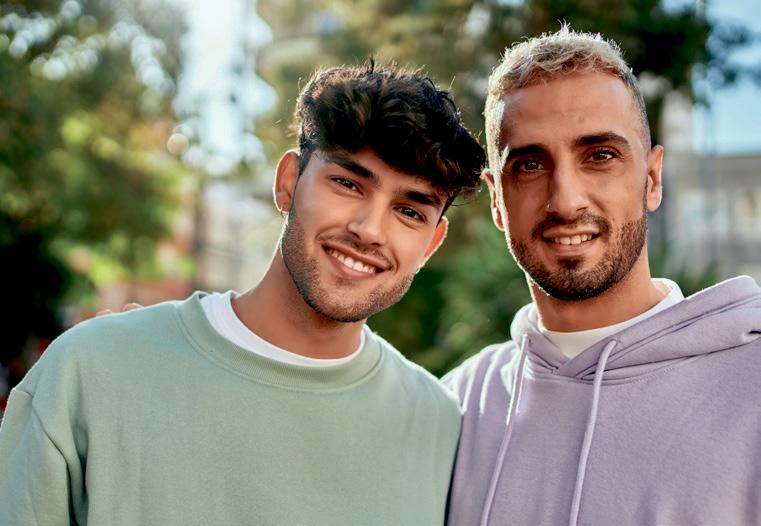
CAMP Rehoboth’s mission isn’t just about programs and services—it’s about making sure every person feels embraced for who they are. That takes resources, and it’s the member-driven donor system that keeps the mission moving forward. I donate because I believe in CAMP Rehoboth’s ability to create a stronger, more inclusive community for all of us here in Delaware.
— Dennis Diaz
EXPLORE WAYS TO GIVE
CAMP Rehoboth Membership
Give ongoing support monthly or yearly.
One-Time Gift
Give instantly online.
Donor Advised Fund (DAF)
Recommend a grant from your DAF to support our work.
Tribute Giving
Honor someone special.
Planned Giving
Include us in your will or trust.

Stock Gifts
Donate appreciated assets.
Corporate Matching Employer match donations.
Fundraise for Us
Start a peer-to-peer fundraiser.
Transfer from an IRA
If you are 70 1/2 years of age or older.
Cryptocurrency Giving
Donate crypto securely.


Welcome Dr. Robin Brennan Getting to Know You…
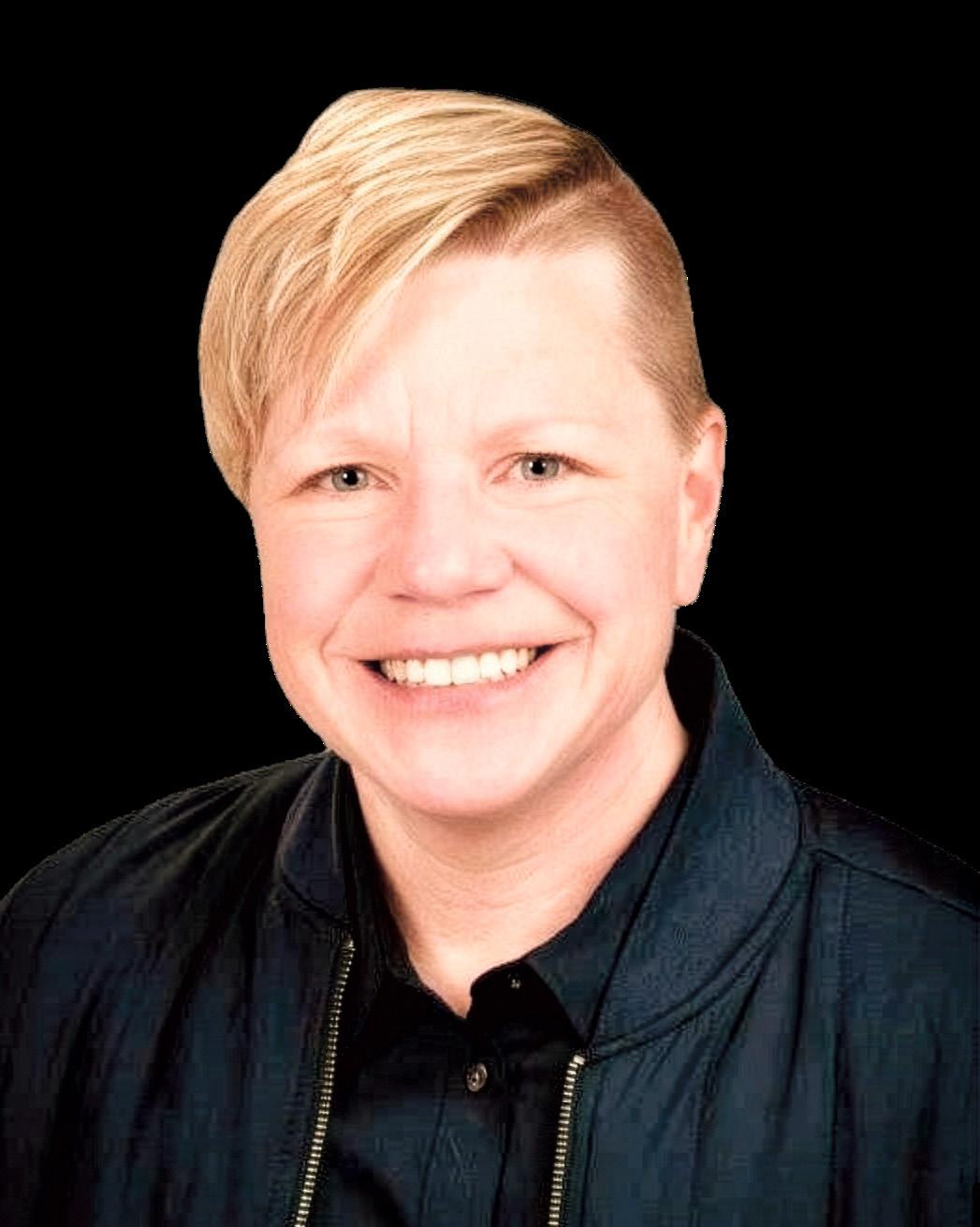
“I look forward to meeting members of the community, listening to their stories, and building meaningful relationships with the many people who make CAMP Rehoboth such a vital community anchor.”
CAMP Rehoboth Community Center warmly welcomes Robin Brennan, DrPH, as its new Executive Director! She stepped into her new role on Monday, March 23; we encourage you to stop by and welcome her too, next time you’re in the neighborhood. Robin’s eager to meet-and-mingle with our community as she embraces the work before her.
She’ll also—soon!—be embracing life at the beach full-time. While she has visited the area since the late 1990s, and is working onsite most days, she and her wife will be moving to the Rehoboth Beach area full-time (from New Jersey) this summer. The timing of the move accommodates their teen-age daughter’s school calendar; she’ll begin high school at Cape Henlopen High in the fall.
Says Robin, “I am deeply honored to serve as CAMP Rehoboth’s Executive Director as we enter an exciting new chapter. I was drawn to CAMP Rehoboth because of its unwavering mission, deep roots in the community, and the meaningful role it plays in bringing people together. I look forward to meeting members of the community, listening to their stories, and building meaningful relationships with the many people who make CAMP Rehoboth such a vital community anchor.”
Robin adds that she will build on CAMP Rehoboth’s strong foundation, working collaboratively with the Board, staff, volunteers, and community partners to expand its impact and ensure it remains a welcoming and affirming space for the LGBTQ+ community.
Robin brings with her a wealth of experience that will be key to achieving those goals. Her leadership has been anchored in large, complex health systems and institutions, where she held senior roles spanning evaluation, population health, and DEI education.
She also is an experienced fundraiser across diverse revenue streams, skilled at translating mission into compelling narratives that inspire donors, deepen trust, and sustain long-term investment.
Says Leslie Ledogar, CAMP Rehoboth Board President, “The Board of Directors selected Robin because of her depth of leadership experience, her fundraising acumen, and her overall joyful, focused approach. The fact that core to her leadership is her belief that community well-being is inseparable from access to health, culture, education, and the arts— an approach that mirrors CAMP Rehoboth’s holistic mission—makes Robin the ideal person to lead CAMP Rehoboth today and into the future.”
Robin succeeds CAMP Rehoboth’s former Executive Director, Kim Leisey, PhD. “Kim was instrumental in propelling CAMP Rehoboth on our upward trajectory,” said Ledogar. “Thanks to Kim’s steady leadership, her commitment to our mission, and the fact that she truly is a ‘champion for all things that help humans to thrive during their lifespan,’ she left CAMP Rehoboth well-positioned. We emerged from a time of uncertainty to a time of strength, with the capacity we need to serve our community for decades to come.”
When responding to Robin’s comment that she believes she has “big shoes to fill,” Kim shared that “healthy and storied organizations, like CAMP Rehoboth, welcome the shoes of new leadership to facilitate the next phase of growth, continue service to the entire community, and ensure financial responsibility. I look forward to supporting Robin in her new role.” ▼
THIS ISSUE

Letters from CAMP Rehoboth welcomes submissions. Email editor@camprehoboth.org. Photographs must be high resolution (300 dpi). Documents should be sent as attachments in Microsoft Word®. Deadline for submissions is two weeks prior to the issue release date. Letters to the Editor (up to 300 words) are published at the discretion of the Editor on a space-available basis. Letters may be edited for length or clarity.
VOLUME 36, NUMBER 3 • APRIL 3, 2026

70 Deep Inside
74 The Real Dirt Plant Once, Harvest for Years ERIC WAHL
78 Sea Salt Table Tomato Pie ED CASTELLI
80 It’s Kite Month! Go Fly a Kite TERRI SCHLICHENMEYER
86 Historical Headliners Willa Cather ANN APTAKER
88 Sounding Off Cinco de Mayo STEPHEN RASKAUSKAS
90 We Remember
58 Celebrity Interview Mandy Mango
COOK 62 View Point The Cries of a Child RICHARD ROSENDALL
Famous Last Words Plan Your Epitaph NANCY SAKADUSKI
CAMP Arts LOGAN FARRO & MARY JO TARALLO 68 Booked Solid

EDITOR: Marj Shannon
EDITORIAL ASSOCIATE: Matty Brown
DESIGN AND LAYOUT: Mary Beth Ramsey
ADVERTISING SALES MANAGER: Tricia Massella
DISTRIBUTION: Mark Wolf
CONTRIBUTORS: Ann Aptaker, Rich Barnett, Matty Brown, Ed Castelli, Pattie Cinelli, Sandy Clark, Michael Cook, Logan Farro, Clarence Fluker, Michael Thomas Ford, Leslie Ledogar, Kel Marquez-Henriquez, Tricia Massella, Christopher Moore, Sharon Morgan, Eric Peterson, Mary Beth Ramsey, Stephen Raskauskas, Richard Rosendall, Nancy Sakaduski, Laurie Thompson, Romeo San Vicente, Terri Schlichenmeyer, Marj Shannon, Beth Shockley, Mary Jo Tarallo, Shae Wagner, Eric Wahl, Rick Welk
Letters from CAMP Rehoboth is published 11 times per year, between February and December, as a program of CAMP Rehoboth Inc., a non-profit community service organization. CAMP Rehoboth seeks to create a more positive environment of cooperation and understanding among all people. Revenue generated by advertisements supports CAMP Rehoboth’s purpose as outlined in our mission statement.
The inclusion or mention of any person, group, or business in Letters from CAMP Rehoboth does not, nor is it intended in any way, to imply sexual orientation or gender identity. The content of the columns are the views and opinions of the writers and may not indicate the position of CAMP Rehoboth, Inc.
© 2026 by CAMP Rehoboth, Inc. All rights reserved by CAMP Rehoboth. No portion of this publication may be reproduced in any form without the prior written permission of the editor.
Ms. Emilie (detail) by BT Bell. See CAMP Arts on page 66.
CAMP REHOBOTH
MISSION STATEMENT AND PURPOSE
MISSION
CAMP Rehoboth is an LGBTQ+ community center determined to Create A More Positive (CAMP) environment that is inclusive of all sexual orientations and gender identities in southern Delaware and beyond. We seek to promote cooperation, understanding among all people, and well-being, as we continue our work to build a safer community with room for all.
VISION
CAMP Rehoboth envisions communities in southern Delaware and beyond where all LGBTQ+ people thrive.
VALUES
Community | Belonging | Positivity Diversity | Visibility | Transparency Safety | Partnership | Compassion
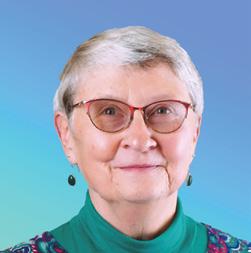
From the Editor
MBY MARJ SHANNON
PRESIDENT Leslie Ledogar
VICE PRESIDENT Polly Donaldson
SECRETARY Pat Catanzariti
TREASURER Kevin Ussery
AT-LARGE DIRECTORS
Robin Brennan (non-voting), Lorne Crawford, David Garrett, Jenn Harpel, Rachel Hershe, Michelle Manfredi, Teri Seaton, Hope Vella, Joe Vescio
EXECUTIVE DIRECTOR Robin Brennan, DrPH
CAMP REHOBOTH
37 Baltimore Avenue, Rehoboth Beach, DE 19971 tel 302-227-5620
email editor@camprehoboth.org www.camprehoboth.org
CAMP Rehoboth, Inc. is tax-exempt under section 501(c)(3) of the United States Internal Revenue Code. Contributions to CAMP Rehoboth are considered charitable contributions for federal income tax purposes and may be deducted to the fullest extent of the law. A copy of our exemption document is available for public inspection.
aybe you’re browsing Letters while you’re here for Women’s+ FEST? Or for Spring Break? Or, maybe you’re a regular weekender or even a year-rounder who picks up the issue each month? No matter the occasion—welcome to our pages!
Speaking of Women’s+ FEST—there’s a handy pull-out in our centerfold that will help you navigate the four days of fun. And page 50 is your guide to the fabulous auction items. Get ready to bid! The FEST+ Art 2026 exhibit opens April 9 with a reception at the CAMP Rehoboth gallery; see CAMP Arts for a glimpse into what awaits. While you’re there, read all about this month’s featured CAMP Artist: trumpeter Debbie Woods.
Happily, we have delights beyond Women’s+ FEST in this issue as well. For one: the first-place winner of Letters from CAMP Rehoboth’s 2026 Flash Fiction contest appears on page 18. (A list of all the winners and information on the contest itself is on page 16.) Many thanks to all who entered and congratulations to all the winners.
Another: CAMP Rehoboth had the distinct pleasure of hosting its first-ever Fay Jacobs Communications Intern these past few months. Read all about that experience— from the intern’s perspective—on page 42. Thanks, Kel, for all you contributed during your tenure!
How about some spring fun? Terri Schlichenmeyer has the perfect pursuit: Go fly a kite! See page 80. Maybe spring means “garden” to you? If so, Eric Wahl’s got you covered—and reduces your workload—with how-tos on planting once, harvesting many times. Perennials, anyone?
Also in spring: National Library Week, this year occurring April 19-25. Christopher Moore writes about his (nearly) life-long love of libraries, noting the profound impact those of his childhood had.
A bit later in the season, we have National Pet Month (May). In hopes of inspiring our readers to help us celebrate, we asked our contributors to provide us with photos of their beloved pets. Turn to page 36 to admire those, then sort through and send along your own (high res) pet photos (furry, finned, feathered, scaly…) to me at: editor@camprehoboth.org. And see OutTakes for Sandy Clark’s reflections on the joys(?) of “pawrenthood.”
Also coming up in May—Cinco de Mayo! See Stephen Raskauskas’s column on this celebration’s popularity in the US…but not so much, in México.
In health news, Sharon Morgan discusses the brain benefits of learning a second language, and Michael Thomas Ford tackles heart disease. Health-adjacent, Pattie Cinelli extolls the virtues (and benefits) of a smile. And if “health” eludes you, well, Nancy Sakaduski has advice on planning your epitaph….
Of course, there’s more—lots more. Browse at your leisure, speed-read your way through—it’s all good. Thanks for reading Letters! ▼
Thank You for Supporting CAMP Rehoboth During Do More 24!
CAMP Rehoboth thanks the more than 90 generous donors who supported its Do More 24 campaign, helping raise over $10,000. Across March 5 and 6, this state-wide fundraiser—powered by United Way and Spur Impact—supported over 900 nonprofits in Delaware.
Special thanks to the CAMP Rehoboth Board of Directors for its matching gift and to an anonymous donor who also made a matching gift in memory of Natalie Moss, further amplifying the impact of every contribution.
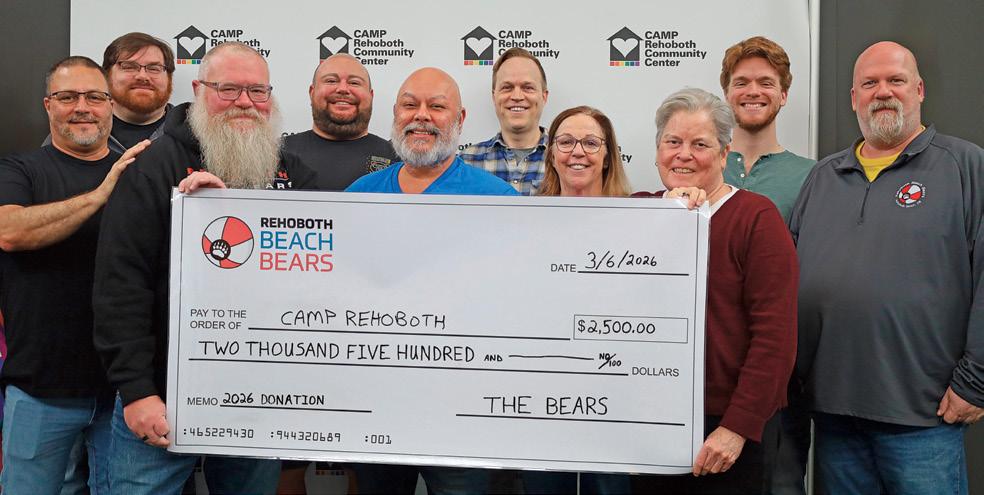
Special thanks also to the Rehoboth Beach Bears for contributing $2,500 to CAMP Rehoboth during the day of giving.
This year, CAMP Rehoboth adopted the theme “Showing Up for Delaware” to highlight the ways that funds raised will sustain the work to build coalitions and relationships with state and local officials, organizations, and partnered nonprofits. Building trust and a community of cooperation is vital, and CAMP Rehoboth thanks all who show up to support its mission. ▼
Golf League Opens Soon
The CAMP Rehoboth Women’s Golf League is getting ready for its 2026 season. Organized and run by Rina Pellegrini, the league plays throughout the summer at American Classic Golf Course.
A social league, where everyone plays with each other and meets people, the league’s entry fee includes special weekly prizes and the end-of-year party.
Registration opens in mid-April, first to CAMP Rehoboth members. Check your membership status or sign up to become a member by calling 302-227-5620. ▼
SUNFESTIVAL
“Love
Out Loud” with Headliner David Archuleta
DJs Robbie Leslie and James Anthony to Soundtrack Iconic Dance
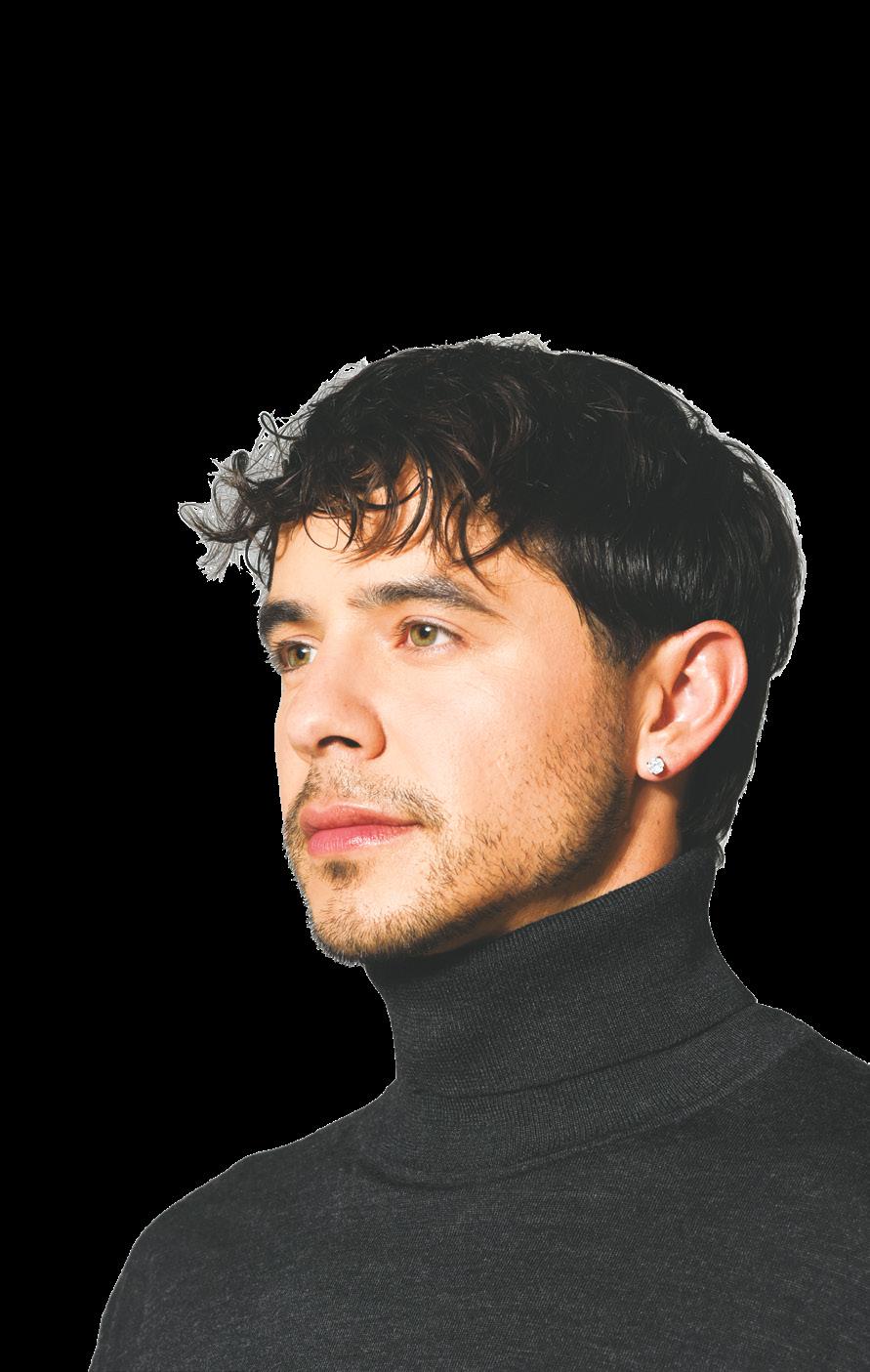
CAMP Rehoboth is excited to announce David Archuleta will headline SUNFESTIVAL, the Labor Day weekend extravaganza. The iconic American Idol alum will headline SUNFESTIVAL’s entertainment and live auction night on Saturday, September 5. Since first stepping into the pop spotlight at age 17, David Archuleta has embodied the kind of genuine star power that can’t be manufactured. After years of dazzling audiences with his radiant personality and phenomenal voice—a journey that’s included turning out multiple platinum-selling hits, achieving global acclaim as a captivating live performer, and emerging as an undeniable fixture on the pop-culture scene—the Miami-born singer/songwriter experienced a major personal transformation that radically altered his identity as an artist.
Already this year, Archuleta released his memoir, Devout an instant New York Times coming-out story traces his journey from closeted Mormon teen to global pop star to openly queer man, revealing the hidden pressures of fame, the weight of religious expectations, and the courage it takes to live authentically. On March 27, Archuleta released the accompanying and Young,” which, through his rich, dynamic vocals, explores the challenge of starting over— feeling older yet newly inexperienced.
This year’s SUNFES TIVAL theme, “Love Out Loud,” captures not only Archuleta’s authenticity and unapologetic new chapter, but also the daring and gleeful abandon of the dancefloor. On Sunday, September 6, DJs Rob bie Leslie and James Anthony close out both SUNFESTIVAL and the summer season with the most epic dance party of the year. ▼
Tickets will be available starting Memorial Day weekend.
Above: The Rehoboth Beach Bears present a donation of $2,500 to CAMP Rehoboth. L-R: Matt Hocking, Rob Wilkinson, Jeff Donovan, AJ Eckman, William Gestole, Mark McDaniels, Laurie Thompson, Polly Donaldson, Matty Brown, Michael Whitlock. Photo credit: Michael Beigay.
SAVE THE DATE!
Pride
Film Fest Set for May 14-17

The Rehoboth Beach Film Society (RBFS) is proud to present the 2026 PRIDE Film Fest in partnership with CAMP Rehoboth. The four-day festival, held May 14-17, will showcase LGBTQ+ documentaries, features, and international films.
Join the RBFS and CAMP Rehoboth at the Cinema Art Theater for social gatherings and hear from filmmakers to celebrate the lead-up to Pride month.
More information on tickets and film selections coming soon; watch camprehoboth.org for more information. ▼
Empowering LGBTQ+ Youth: A New Mental Health Initiative
CAMP Rehoboth and Delaware Psychological Services are partnering to provide no-cost/low-cost behavioral health support to Sussex County LGBTQ+ (including gender-expansive) youth 13-18 years of age and their families. Funding was provided by a Highmark Small Grant-BCBS.
LGBTQ+ youth are at risk for feelings of isolation, depression, and anxiety. The shortage of affirming providers and rising anti-LBGTQ+ hostility have compounded mental health risks and family stress. This partnership seeks to expand support and services for LGBTQ+ youth and their families in Sussex County.
Youth and/or their families who are interested in accessing individual counseling, support groups, or educational workshops are encouraged to visit camprehoboth.org for more information on this program. ▼
On the Cover: Women’s+ FEST Is Here!
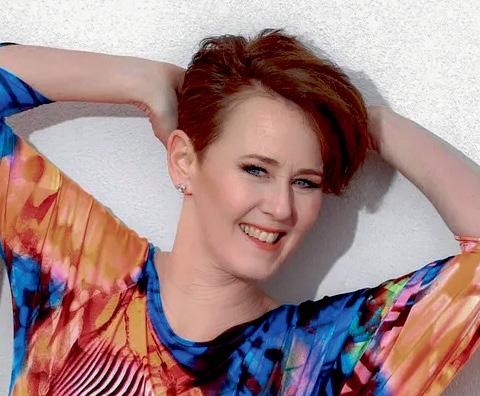
Celebrating its silver anniversary, Women’s+ FEST is ready to take over Rehoboth Beach April 9-12! For the full run-down on the events taking place, check out our centerfold on pages 48-49. Gracing the cover of this issue are FEST headliners Mina Hartong and Yoli Mayor, both taking to the Rehoboth Beach Convention Center stage on Friday, April 10. Between Mina’s comedic stylings and Yoli’s soulful flavor, audiences are in for a real treat. Plus, there’s plenty more where that comes from: Women’s+ FEST offers dances, the vendor expo, recreational sports, and plenty of mingling opportunities to gather and celebrate all on the spectrum of the feminine spirit. ▼
City of Rehoboth Beach Grants CAMP Rehoboth $75K
On Monday, March 9, the City of Rehoboth Beach approved a $75,000 grant to support CAMP Rehoboth’s “Safe Harbors” initiative to strengthen LGBTQ+ services, advocacy, and visibility in southern Delaware.
In part, this initiative will support a grant writer to help diversify CAMP Rehoboth’s funding streams, and expand affirming services, health navigation, culturally competent education, peer and advocacy programming, and inclusive events.
The approval comes after decades of a strong partnership with the City of Rehoboth Beach. In the fall of 2025, thanks to the collaboration, Rehoboth Beach scored a perfect 100 on the Human Rights Campaign’s Municipal Equality Index (MEI), up from the previous year’s 61.
This funding will strengthen the well-being, visibility, and advocacy capacity of LGBTQ+ residents across coastal and rural Sussex County. CAMP Rehoboth thanks Mayor Mills and the City commissioners for their continued partnership. ▼
TRAVELS WITH LETTERS
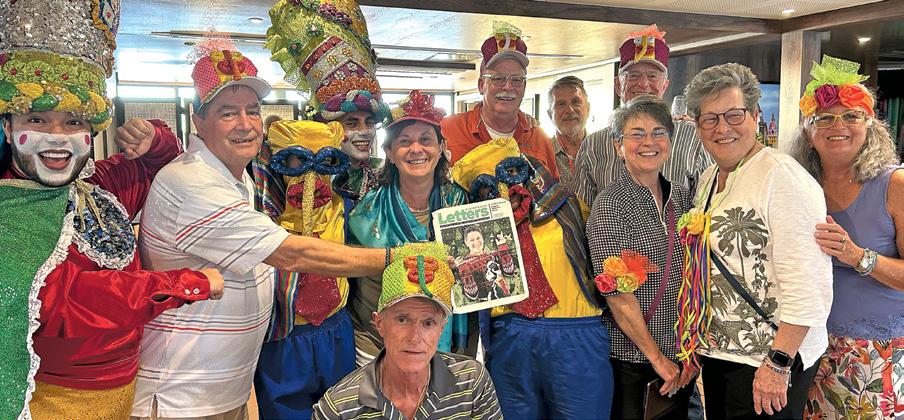
MAGDALENA RIVER CRUISE | COLOMBIA, SOUTH AMERICA
Doug Sellers, Mark Eubanks, Annette Stellhorn, Phil Vehslage, Jim Mease, Rick Stellhorn, Terry Berrera, Deb Chase, Donna West
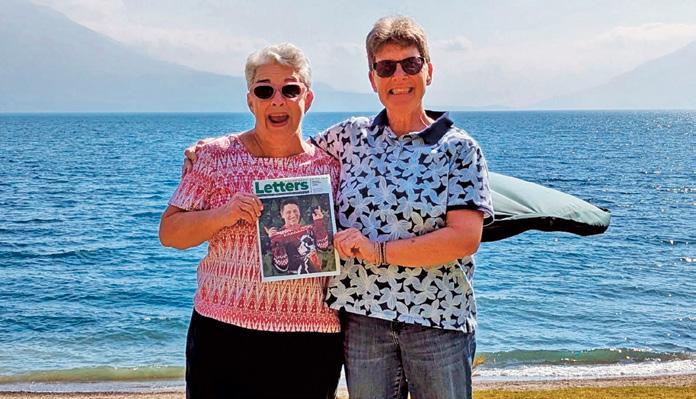
GUATAMALA
Barbara Breault, Sharon Morgan
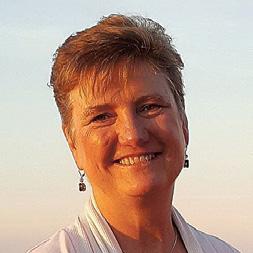
Writing the Next Chapter Together
This past March 23 marked the start of the latest chapter in CAMP Rehoboth Community Center’s 35-year history: Dr. Robin Brennan stepped into the role of Executive Director. After conducting a comprehensive national search, the Board of Directors selected Robin because of the depth of her leadership experience, her fundraising acumen, and her overall joyful, yet focused approach.
In preparing for the search, the Board recognized that the demographics of our area are ever-changing, but that the physical and legal attacks that threaten our constitutional rights and personal safety are ongoing and relentless.
That said, when former Executive Director Kim Leisey retired from leading CAMP Rehoboth, she left us in a very different and greatly strengthened position than when she assumed the role almost three years ago. Today, CAMP Rehoboth is stronger than ever as evidenced by the awarding of major grants, increased donations, and the trust placed in us by the state and local governments.
Against this backdrop, the Board, with the help of our search firm, developed a candidate evaluation “litmus test.” Dreaming big, we determined that our next executive director must be:
• A community-centered, inclusive, and compassionate leader, who is able to build deep trust and belonging across differences through emotionally intelligent, bridge-building leadership, grounded in a genuine commitment to LGBTQ+ and intersectional equity;
• A proven nonprofit executive with organizational and financial stewardship experience;
• A fundraising leader with major donor and institutional giving strength;
• A strategic operator and programmatic leader rooted in community needs, who can translate strategy into action by evaluating, strengthening, and evolving programs in alignment with community needs and CAMP Rehoboth’s priorities of health, safety, and belonging;
• A people and culture builder for multigenerational staff and volunteers, who can create an inclusive culture by setting clear expectations, developing leaders, and supporting multigenerational staff and volunteer communities with care and accountability; and
• An authentic public ambassador and external advocate who is able to act as a visible, compelling ambassador by building partnerships, engaging public and civic audiences, and advancing advocacy through both presence and relationship.
You, too, can help set Robin up for success by visiting CAMP Rehoboth and welcoming her in the coming days and weeks.
During the interview process, we quickly determined that Robin could pass this litmus test with flying colors. While she holds a master’s degree in psychology and a doctorate in public health, her leadership experience is anchored in large, complex health systems and institutions. Most recently, Robin served as Vice President and Chief Diversity and Inclusion Officer at Redeemer Health. Additionally, she is an experienced fundraiser across diverse revenue streams, and she is able to translate mission into compelling narratives that inspire donors, deepen trust, and sustain longterm investment.
Our focus now is to set Robin up for success from her very first day. To that end, the Board and staff, with Robin’s input, have developed an extensive and intentional on-boarding plan. Broken into weekly segments, our goal is—first and foremost—to have Robin and staff get acquainted.
Next and of equal importance is stakeholder engagement; it is a priority that we ensure that Robin has the opportunity to engage early and often with key stakeholders, including Board members, volunteers, donors, sponsors, and
LEDOGAR
community members. Our goal is to have Robin gain a deeper understanding of our organization’s strengths, challenges, and opportunities.
Eventually, we look forward to hearing Robin’s organizational assessment. The arrival of a new executive director provides an opportunity for a comprehensive assessment of an organization’s internal and external environment. This assessment may involve reviewing the current strategic plan, evaluating the organization’s performance, analyzing market trends, conducting a SWOT (Strengths, Weaknesses, Opportunities, Threats) analysis, and identifying areas for improvement. We are looking forward to having Robin bring her fresh set of eyes to CAMP Rehoboth to help us become even better at serving our community.
We recognize that Robin will bring her own vision, priorities, and leadership style to the organization. We look forward to her fresh ideas and innovative approaches to achieving our strategic objectives.
You, too, can help set Robin up for success by visiting CAMP Rehoboth and welcoming her in the coming days and weeks. I encourage you to share your story with her; let her know the reason(s) why you chose to live in or visit the Nation’s Summer Capital, and why CAMP Rehoboth matters to you. Your stories will help Robin weave the fabric of her leadership as our new executive director.
As we welcome Robin, I can sincerely say that I look forward to working with her, the Board, staff, and everyone in the community as we write the next chapter in the story of our beloved organization together. CAMP Rehoboth is, now more than ever, the heart of the community, where there is room for all. ▼
Leslie Ledogar is CAMP Rehoboth Board President.




Community Connections
Support Our Community
Turn Your IRA Into a Powerful QCD Gift and Enjoy Tax Benefits
One of the things I love most about CAMP Rehoboth is seeing our community come together. Whether someone is attending our LGBTQ+ grief support group, enjoying a performance by our CAMP Rehoboth Chorus, or volunteering their time in the community through our CROP program, these moments show the power of shared spaces and meaningful connection.
CAMP Rehoboth thrives because our community believes in supporting the work we do. Some supporters join as Rainbow Members, sustaining our work year-round, while others give through monthly or annual donations that fund programs, services, and events promoting health, safety, and belonging for
LGBTQ+ individuals and allies.
This time of year, I often hear from supporters asking if there are ways to give that also provide tax benefits. One option is to consider a Qualified Charitable Distribution (QCD). A QCD allows individuals age 70½ or older to send a gift directly from their IRA to CAMP Rehoboth. Because the funds go straight to the charity, the donation is not included as taxable income. For those already taking Required Minimum Distributions (RMDs), a QCD can also count toward that withdrawal—offering a thoughtful, tax-wise way to support our work.
Here’s the simple difference:
• RMD: A required withdrawal from your IRA starting at age 73.
• QCD: A direct gift from your IRA to
BY LAURIE THOMPSON
CAMP Rehoboth if you are 70½ or older
Are you interested in making a QCD? Simply ask your IRA administrator to send your gift directly to CAMP Rehoboth. A QCD is a meaningful way to support programs that create safe, welcoming spaces and foster connection.
I’m happy to answer questions or explore whether a QCD might be a good fit for you. Your generosity ensures that CAMP Rehoboth continues to provide safe, welcoming spaces and impactful programs for all who call our community home. ▼
Laurie Thompson is CAMP Rehoboth’s Development Manager. She can be reached via email at laurie@camprehoboth.org or call 302-227-5620.










FEATURING
Comedian, Storyteller, named as “One of America’s Funniest Women”
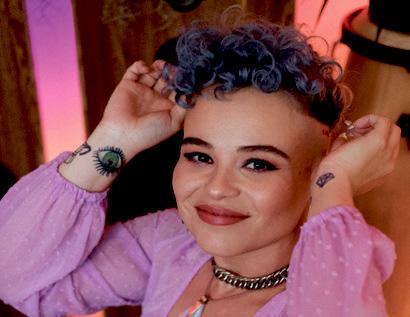
Captivating singer, known as “The Cuban Adele”




Chris Bowers
Polly Donaldson



Connie Fox & Donna Adair
Tammy Smith & Associates


Dr. Nancy & Mrs.Tora Kennedy
Carole and Judy Jesiolowski
Chris Lay & Dr. Mari Blackburn






Kenneth Currier & Mike Tyler
David & Marti Garrett
Leslie Ledogar & Marilyn Hewitt
Bryce Lingo & Shaun Tull Team
Evelyn Maurmeyer in memory of Natalie Moss
Sandra Pace & Barbara Passikoff
Kim Parks & Sharon Denny
Debbie Woods & Leslie Sinclair



FEST is one of the best events on the East Coast for women, both trans and cis, nonbinary folks, and those that live on the spectrum of the feminine spirit.

For

CROP at the Food Bank
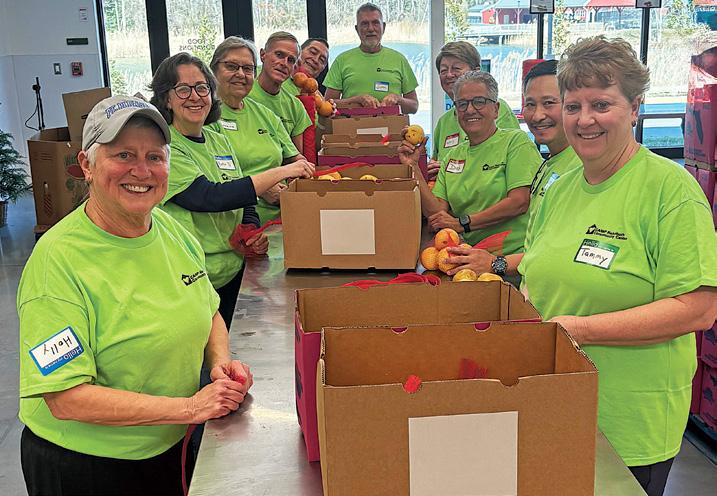
On Tuesday, March 10, a group of CAMP Rehoboth Outreach Program (CROP) volunteers supported the Food Bank of Delaware by sorting and packaging bulk fruit. The fruit will be distributed in the Healthy Pantry and other food pantries throughout Delaware.
To learn more about CROP or to sign up for future volunteer opportunities, visit camprehoboth.org/volunteers. ▼
Broadwalk on the Boardwalk
Join the Delaware Breast Cancer Coalition's 16th Annual Broadwalk on the Boardwalk on Saturday, May 2, 2026, from 9:00 to 11:00 a.m. at the CAMP Rehoboth Courtyard. This free community walk begins with 9:00 a.m. registration and a 10:00 a.m. start, followed by a fun kick-off party. Created in honor of survivors and loved ones, the event raises funds for the Delaware Breast Cancer Coalition. All are welcome to come out and support those impacted by breast cancer. ▼
An Affirming Clothing Swap
Take something from your past life and make it a cherished piece of someone's new life.
On Saturday, May 2, from 3:30 to 6:30 p.m., CAMP Rehoboth welcomes the community to a clothing swap. Organized by members of Chroma, CAMP Rehoboth’s support and social group for any person who identifies with a gender other than their assigned-at-birth gender, the clothing swap is open to all genders, identities, and ages.
Have clothes to swap? Please bring clean, wellcared-for clothing. Shoes and accessories are welcome. Clothing with stains, strong odors, or broken zippers are not welcome. Bring a bag!
This event will not only affirm the trans, gender-expansive community, but will also be open to all community members who wish to take part. Learn more about this event by visiting camprehoboth.org/events. ▼
Women’s Build 2026—All “Hands-On” Deck!
State Farm
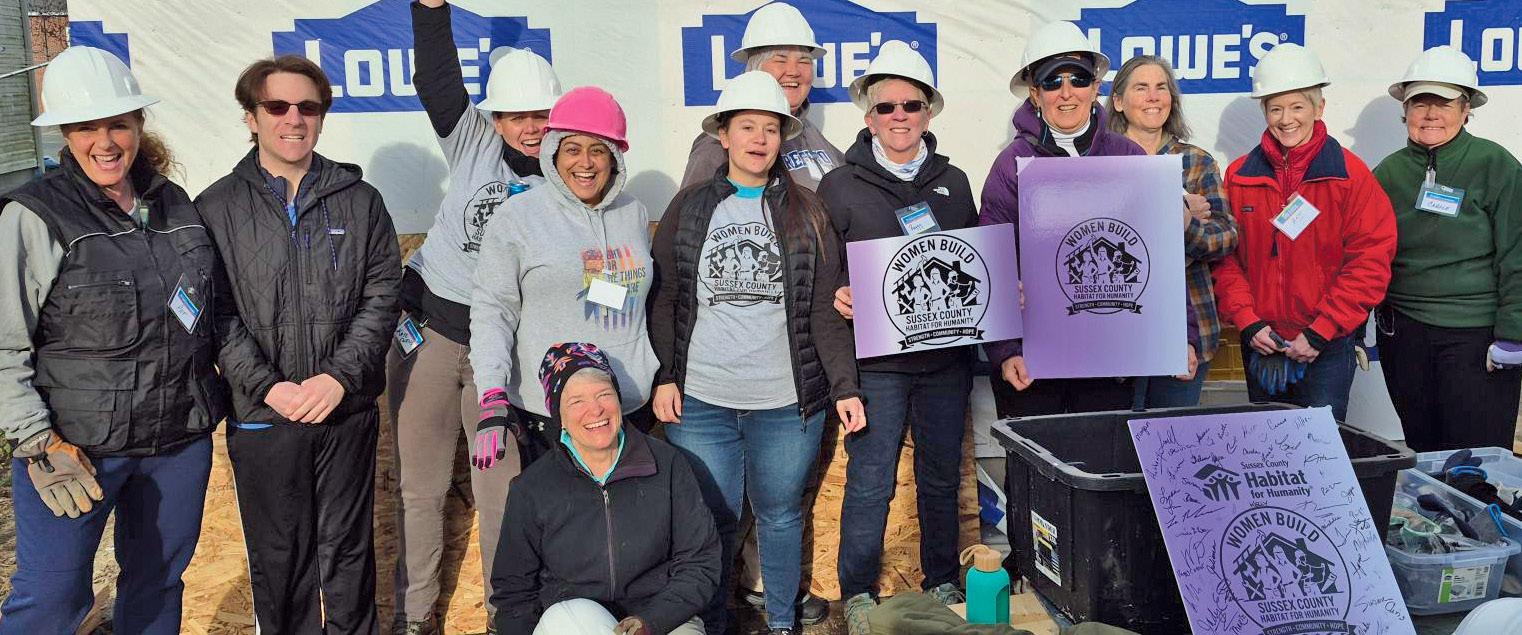
AMP Rehoboth partnered with Sussex County Habitat for Humanity for its annual Women’s Build on Saturday, March 14. This year’s construction site was in Milford, Delaware. An eager volunteer crew gained great hands-on experience by working to complete front
Catie Walther
porches and construct sheds.
The group had the opportunity to listen to an advocacy talk, and learned how partnerships like this support creating accessible, affordable housing initiatives, and contribute to a brighter future. ▼


CAMP
Tennessee Williams Was Right About Everything
One of the things you notice after spending some time in Key West is how certain historical figures never quite leave the island. Ernest Hemingway and Jimmy Buffett are literally everywhere, as you might think. Harry Truman’s here too, along with his 1950 Lincoln Cosmopolitan limousine. But the deceased resident I kept noticing this winter was author and playwright Tennessee Williams, who once lived a few blocks from where I usually stay.
No, I wasn’t seeing ghosts. I saw him in two different theatre productions. I bought a collection of his short stories. And his face kept appearing around town as well. One very tropical image in particular caught my eye. It was a poster with his profile splashed in bright pink and orange colors. One eyelid swept with theatrical green shadow. Lashes so dramatic they looked like they’d been borrowed from a Duval Street drag queen.
And that glance! Tennessee giving a little side eye, as if to say: Yes darling, I’ve seen the show we’re in before.
His expression got me wondering. First, where could I purchase a copy of the image? But more importantly, why do some writers fade into literary history while others seem to grow more relevant?
A lot of writers don’t age particularly well. Their work may still be admired, but it begins to feel trapped inside the social order of another era. Rudyard Kipling, Margaret Mitchell, and Norman Mailer come to mind.
Tennessee Williams, somehow, keeps feeling contemporary. And I suspect the reason may be that we are, in fact, living today inside one of his plays.
Consider the tensions that run through some of his best-known works. In Cat on a Hot Tin Roof, an entire family gathers on a Mississippi estate and spends most of the evening carefully avoiding the truth about nearly everything that actually matters in their lives—terminal illness, inheritance, a crumbling marriage, and same-sex desire. In A Streetcar Named Desire we meet Blanche DuBois, a fading Southern belle
clinging to the wreckage of a life she can no longer afford to examine honestly. She has simply decided she can no longer remember because illusion is preferable to the truth that would destroy her.
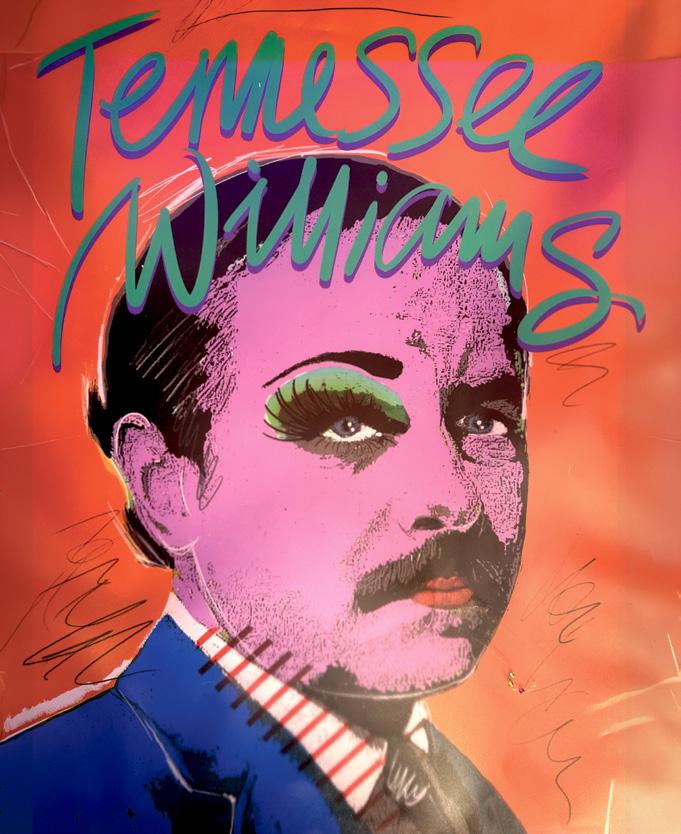
Tennessee Williams was ahead of his time in recognizing how much of life involves performance.
These plays are often labeled Southern Gothic, but they’re really about something more universal: the deals we make with ourselves to avoid the truth. In a Tennessee Williams play, the truth is almost always sitting right there in the room. Everyone knows it. And for reasons of pride, fear, convenience, or greed, everyone agrees not to say it out loud.
Tennessee understood the danger of such a bargain early on. As a young writer in the 1930s, he watched fascism rise in Europe and saw how quickly people will trade reality for a story that makes them feel better, especially when everyone around them agrees to pretend it’s true. Once people decide illusion is easier than reality, the performance can go on for a very long time.
Watching the goings-on in this country,
I have the uneasy feeling we’re auditioning for the role of Blanche DuBois. Truth competes with outright lies. Reality competes with AI-generated images. Entire political narratives now rise and fall depending on which version of events people choose to believe.
“They’re eating the dogs!”
Tennessee would have had a field day writing about our politicians today. Although to be fair, even he might reject some of the dialogue as too unrealistic.
He was especially fascinated by masculinity under pressure. Many of his male characters are men who feel compelled to present a certain image of strength and certainty, even when the private reality underneath is much more complicated. The louder the performance becomes— drinking, bravado, ritual displays of loyalty—the more fragile it begins to look.
Again, the parallels feel oddly familiar today. And the more I think about it, the more I find myself convinced Tennessee Williams was ahead of his time in recognizing how much of life involves performance.
He explains it best through one of his most famous characters. Near the end of A Streetcar Named Desire, Blanche DuBois finally confesses her philosophy of life with devastating clarity: “I don’t want realism. I want magic.”
Apparently, Blanche has quite a few followers these days….
And perhaps that’s the essence of why Tennessee Williams still feels so present in 2026. The uneasy tension between truth and illusion that runs through his plays never really left the stage. And judging by the headlines lately, someone just announced an extended run. ▼
Rich Barnett’s column just celebrated its 20th year in Letters. He is the author of two books and is an occasional contributor to Delaware Beach Life. His character-driven short stories have appeared in a variety of publications, most notably three times in Saints and Sinners annual LGBTQ fiction anthology. He can be reached at richbarnettwriter.com.
Stories BY RICH BARNETT

The Good, the Better, the Best!

1st PLACE
★ WINNERS ★
FIRST PLACE
“Box 417,” by TJ Edmund
SECOND PLACE
“The School Teacher,” by Craig Roberts
THIRD PLACE
“The Art of Bea Cumming,” by Renée Rockland
HONORABLE MENTIONS
“Middle of Nowhere,” by Gregory Kompose “Invisible,” by Terri Schlichenmeyer
“Go Knicks,” by Erica Butz
“Box 417” appears in this issue; see page 18. The other winners listed above will appear in upcoming issues of Letters; watch for them!
HOW THE CONTEST WORKED
• All entries meeting the Writers’ Guidelines were anonymized and shared with all Readers.
• Each Reader identified their “top 5” entries (via electronic polling).
• All entries receiving a “top 5” designation from at least one Reader advanced to a second round of review.
• Each “second round” entry was reconsidered by each Reader and ranked (via electronic ballot); e.g., a rank of “1” equated to “first place.”
• Entries were scored based on rankings assigned by each Reader, yielding First, Second, and Third place winners, along with three Honorable Mentions. (Honorable mentions—those stories ranked in Fourth or Fifth place—were expanded from the expected two stories to three due to a tied score for Fifth place.)
In its December 2025 issue, Letters from CAMP Rehoboth launched its 2026 Flash Fiction contest. By the time the contest closed to submissions (February 28, 2026), 33 entries had been received. Thanks so much to all who entered!
Members of the Readers’ Panel had this to say about the entries overall:
“What a wonderful collection of stories, which proves yet again what a talented community we have. From simple, yet poetic, stories to imaginatively complex tales, this group created some tough choices for the judges.”
“Good stories place you in front of a window to look inside the world of someone else. That opportunity to look at the lives, loves, and experiences of others can also provide an interesting view of yourself. Each of the entries this year placed me in front of a window to see relatable characters, either by shared events, or just shared emotions.”
“The range of stories and authors’ voices was impressive. The different narratives, the range of imagination and life experiences, interested me immediately and kept me interested throughout. Reading the stories was like a tour through the human condition expressed through the lens of Queer life. Thus, the reading experience provided a Queer literary adventure of the most satisfying kind.”
“I enjoyed reading this year’s submissions. The range of voices, styles, and premises made the process both engaging and challenging. What struck me most was how effectively many writers used the constraints of flash fiction to their advantage. The pieces that resonated with me most were those that dropped me quickly into a moment or relationship and trusted the reader to discover meaning through character, tension, or image rather than explana -
tion. When a flash story works, it creates the sense that the narrative extends beyond the final line. Several of this year’s entries did exactly that, lingering in my mind well after I had finished reading them.”
“Flash fiction is hard to write! It demands the discipline of poetry, the structure of a short story, and, most importantly, restraint. Because what’s left unsaid is often as powerful as what appears on the page. The contest writers gave us a wide range of flash fiction, which made judging the entries both difficult and rewarding. The stories may be small in word count, but not in ambition and impact.”
“Flash fiction feels especially well-suited to a place like Delaware—small in size, but rich in character and possibility. I hope Letters continues this contest for years to come.” ▼
READERS’ FAVORITES
In addition to selecting the winners, Readers were invited to identify a favorite among all the other entries. Those identified were:
“I Don’t Recommend It,” by Bobbie Combs
“My Therapist Made Me Do It,” by Renée Rockland
“Lonely Like a Highway,” by Eric Peterson
“Daughter of the Sea,” by IkeChukwu Henry
Readers’ Favorites also may appear in upcoming issues of Letters.
READERS PANEL ⊲
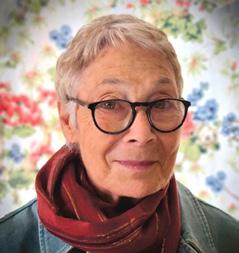
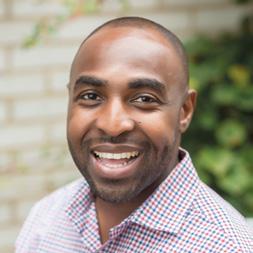
Ann Aptaker is a Lambda Literary Award winner and a three-time Goldie Award winner for her Cantor Gold crime/ mystery series. Her short stories have appeared in multiple volumes of the Mickey Finn: 21st Century Noir series, among several other anthologies. Her story “Neon Women,” which originally appeared in the Private Dicks and Disco Balls anthology, was selected for inclusion in the 2025 edition of Best American Mysteries & Suspense Ann’s “Historical Headliners” column appears regularly in Letters from CAMP Rehoboth.
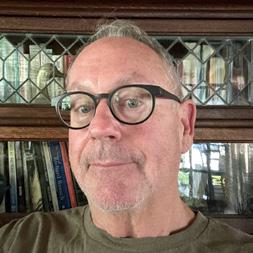
Rich Barnett’s column just celebrated its 20th year in Letters. He is the author of

Flash Fiction Contest
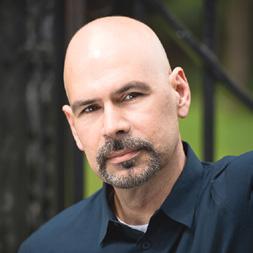
two books and is an occasional contributor to Delaware Beach Life. His character-driven short stories have appeared in a variety of publications, most notably three times in Saints and Sinners annual LGBTQ fiction anthology. He’s dabbled in flash fiction but finds it excruciatingly difficult to rein himself in.
Clarence J. Fluker is a columnist for Letters from Camp Rehoboth. He’s also a contributing writer for Swerv, a lifestyle periodical celebrating African American LGBTQ+ culture and community.
Orlando Ortega-Medina is a US immigration attorney and the managing editor of Amble Press, an imprint of Bywa -
ter Books. He is also a fiction writer whose work explores themes of identity, memory, and human connection.
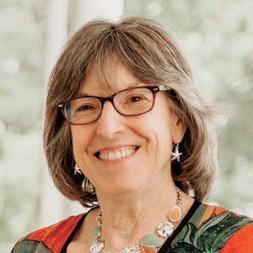
Nancy Sakaduski is a longtime LGBTQ+ ally who writes for Letters from CAMP Rehoboth and has helped with publicity for CAMP Rehoboth events for many years. For 10 years she ran the Rehoboth Beach Reads Short Story Contest as part of her publishing company, Cat & Mouse Press. She is the author of 25 published books and hundreds of articles. She serves on the Lewes Public Library Board of Commissioners and the Delaware Art Museum’s Sussex County Advisory Council.▼



Five people served on the Readers Panel for the contest:
Ann Aptaker Rich Barnett
Clarence J. Fluker Orlando Ortega-Medina
Nancy Sakaduski
BY TJ EDMUND
1st PLACE
READER’S PANEL COMMENTS
“Box 417 stood out to me immediately. The spare, carefully worded text helped convey the cold and impersonal setting of an archive. A less capable writer might have over-seasoned the descriptions with adjectives or added unnecessary action. Instead, the writer creates tension between the impersonal nature of the documents and their intensely personal hidden meaning.”
“As I read this story, I could feel the care that was taken in its writing, much like the care the author moves his character to provide to the materials and memories of the box itself.”
“Box 417 grabbed me from the first sentence…”
“Box 417 impressed me for its quiet elegance and restraint. As I read it, I found myself drawn into the narrator’s process of discovery and the subtle way the story reveals the emotional significance of what might otherwise appear to be ordinary materials. The piece accumulates meaning gradually, and by the end I felt the quiet weight of what had been preserved—and recognized—across time. It’s a beautiful example of how flash fiction can illuminate an entire emotional landscape through the smallest details.”
“Box 417 takes a restrained approach to flash fiction to explore the difficulty of uncovering and preserving LGBTQ+ history. The author asks the reader to pay attention to what isn’t fully spelled out, using subtle details to carry emotional weight. Trust me, that’s not easy to do.”
Box 417 B
ox 417 is lighter than I expect, which feels wrong for something that has survived this long. The cardboard has gone soft around the corners, its label nearly illegible, as if time itself kept handling it with uncertain hands. Inside are papers meant to be permanent—meeting minutes, typed agendas, names aligned in careful columns—but nothing about the box suggests it was ever meant to be opened again.
I lift the lid anyway.
Because this is how queer history often waits for us: quietly, without instruction, hoping someone will recognize what it is before calling it ordinary.
The first folders offer logistics. Monthly meetings. Treasurer’s reports. Coffee expenses and room reservations. The language is procedural, bloodless in its precision, built to survive scrutiny. Names appear only once, sometimes twice, typed cleanly and evenly spaced. It’s the kind of history that records presence without ever admitting intimacy, as if showing up were the most anyone could safely claim.
I understand the impulse.
I’ve typed like this before—careful, neutral, scrubbed of anything that might linger.
Halfway through the box, something slides loose. A single sheet, folded into quarters, the paper worn thin along its creases. It isn’t official. No letterhead. No stamp. Just a list, handwritten in blue ink. The letters are rounded and slightly uneven, as if written quickly, or nervously.
Call Mabel.
Bring extra flyers.
Don’t forget the key.
At the bottom of the page, a name appears again.
And again.
After that, I start noticing patterns. The handwriting shifts across documents—sometimes blocky, some-
times slanted—but the name repeats. It shows up on sign-in sheets, in meeting notes, once scribbled in the margin beside an agenda item labeled Community Outreach. I don’t know what that meant in 1975. I imagine phone trees. Long drives. Doors opened carefully, then closed just as fast.
There’s a flyer folded one too many times, its creases soft as fabric. It advertises a potluck, lists rules about discretion, asks attendees to arrive in pairs “for appearances.” On the back, in pencil, someone has drawn a small star.
I don’t know why, but it feels like a promise.
The love story reveals itself slowly, the way careful things do. Two addresses that change at the same time. Alternating handwriting on the same clipboard. A note tucked into an envelope that reads Your turn to bring dessert, the Y looping like it was written with a smile. I don’t understand the full narrative. I get evidence.
That’s enough.
The minutes continue with a steady hand, presenting the unremarkable – until they don’t. One name disappears. The meetings carry on without comment. New business replaces old. There’s no special announcement, no clarification, no record of loss. History, I’m learning, rarely bothers with endings.
Whether happy or not.
I let that absence linger longer than it should. The archive is quiet in the late afternoon, the kind of silence that invites reflection and expects reverence in return. I wonder if anyone ever asked where they went. I wonder if anyone needed to.
I’ve been trained to believe my job is neutral—to preserve, not interpret; to catalog, not care. But neutrality is a luxury history has never afforded people like us. Someone chose to keep this box. Some-
…nothing about the box suggests it was ever meant to be opened again. I lift the lid anyway.
one decided it deserved to occupy a dusty shelf. Someone believed, perhaps without quite knowing why, that this ordinary paperwork held a deeper meaning.
It was a necessary artifact.
I think again about the handwriting. About the flyer folded too many times like it held a secret. About the star.
When I update the catalog entry, I pause longer than required. Misc. Meetings, 1974-76, feels insufficient, almost cruel. I don’t invent new details. I don’t claim certainty. I add a single line instead—brief, factual, true.
Includes personal annotations and materials reflecting community relationships.

It isn’t much.
But it’s everything I’m allowed. When I return Box 417 to the shelf, it slides into place without resistance. Another box among thousands of others. Another life between acidfree folders and institutional custody. But now, if someone comes looking—not for stats or spreadsheets, but for proof—there will be a record that says this mattered.
That someone noticed.
I turn off the lights before I leave. The archive hums softly without me, steady and patient. Somewhere inside, a name remains written twice. A promise stays folded into quarters. And because it was saved, love survives—decades later, quietly, and waiting for recognition. ▼
ABOUT THE AUTHOR
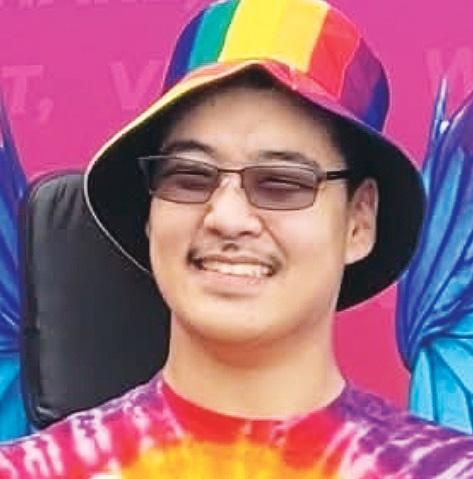
TJ Edmund (he/him) is a freelance writer and advocate whose work has appeared in publications including Philadelphia Gay News, Follow South Jersey, and at Rowan College of South Jersey. While in college, he founded Stonewall Superlatives, a blog celebrating LGBTQ+ achievements and history. Edmund enjoys taking on new journalism assignments as well as writing fiction. He lives in National Park, New Jersey with his parents and spends his free time reading queer Young Adult literature, watching trivia shows, volunteering, and enjoying quality time with family. ▼

Comprehensive Legal Guidance for Real Estate Matters
At Brockstedt Mandalas Federico, we provide strategy and support on a full range of real estate services including:

Happy Birthday, Mom
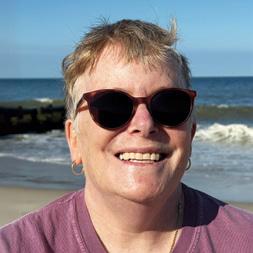
Spring is here, and with it a whirlwind of wonderful things—daffodils, robins, and beach walks on warmer, sunnier days. While I look forward to all of those things and more, I tend to be sad this time of year. It’s largely because April 19 is my mother’s birthday. Even though it has been nearly 40 years since she died of lung cancer.
I was 27 at the time and working as a Deputy Press Secretary for a US Senator in DC. It was a crazy-busy, demanding job that didn’t leave me much time to visit her as much as I wanted to when she was ill, even though Salisbury was just two and a half hours away. I didn’t know, as I worked through long days and weekends, that she would be gone just six weeks after her diagnosis. Lesson learned the hard way on that one.
There’s a but, though. My mother was, let’s say…complicated. She had severe mood swings, she had a rage problem, she was sometimes abusive, physically and emotionally, and she could be viciously cruel. Unlike me, who spent a condo’s worth of coin on years of therapy to undo much of the fallout from my childhood, my mother never had any diagnosis or help.
Complicating the situation, she also had an incredibly warm and loving side, making my childhood confusing and my therapy long and difficult. She had a way of making me feel so special, both when I was a child and later, when I would visit. She could make me feel like the only person in her world. So despite many difficulties, I knew she loved me and I always knew I was wanted. For that, I am most fortunate and grateful.
She was also a role model for me for how women could succeed in the workplace, long before that became common. She went back to work in 1967, when I was in second grade. That was before any workplace protections for women were even a whisper. It would be another seven years before women could get their own credit cards, bank accounts, or loans.
BY BETH SHOCKLEY

She went back to work not because she had to, but because she was going crazy being a stay-at-home mom. All three of us kids were in school, me and my two older brothers. We were among the original latchkey kids. I believe my mom would have made a great librarian, or even journalist. As it was, she was an executive secretary, always to the man in charge of whatever healthcare facility she worked for.
In the summer of 1973, when I was 13, she took me to work with her. She let me organize the employee newsletter, select some of the artwork, and learn how to file. I met most of her colleagues and her boss and learned how to dress and comport myself appropriately in a professional work environment. All of those skills would serve me well later on.
When I was a teenager, she made sure I got to see my musical shero, Janis Ian, twice. The first time she took me and a friend to Philadelphia—by Greyhound bus, from Salisbury. When we arrived in Philly, at the 30th Street Station, I saw real, live prostitutes for the first time ever. Somehow, my mother managed to navigate us from there to the concert at what is now the Mann Center.
Years later, she travelled hundreds of miles to take care of me after I was first in rehab. She had just had surgery on her foot and she was not supposed to drive. But when I reluctantly told her (at 23) that I was in treatment for addiction,
But I can think of her, remember her caring, loving side—and even her instability—and still miss her like crazy.
she jumped in her car with her bum right foot, drove the 600 miles, helped me clean my ratty apartment, and made me her very special meatloaf. She wiped sweat from my brow and comforted me through DTs from alcohol and drug withdrawal. She was there for me when I couldn’t sleep or had nightmares. She learned about the science of addiction and even stopped drinking herself.
I miss her this time of year, when the world is awakening from its winter slumber. I miss her smile, her kindness. I miss talking to her. It was so hard to lose her so suddenly and at so young an age—she had just turned 58. She was finally going to retire, finally going to take it easy. Let go of that long work burden. But she never got that chance.
I’m almost a decade older than she was when she died. Not sure if I’m any wiser than she would have been. But if I could do it again, I would have said no to my job and spent the last few weeks of her life with her, taking care of her. Life is full of regrets and I can’t take that back.
But I can think of her, remember her caring, loving side—and even her instability—and still miss her like crazy. And wish her a happy birthday, wherever she may be.
Beth Shockley is a retired writer and editor, and shares life with her wife and kitty boys.
Do you tinkle when you laugh, sneeze, cough, or exercise?
Do you constantly wake up at night to go to the bathroom?
Do you feel like you need to pee, but can’t go once you try?
Do you sometimes just can’t get to the bathroom quick enough?

Do you carry around extra underwear, just in case?
Do you notice blood in your urine?
Do you feel pain when you start to go to the bathroom?
Is your worry starting to take over your daily life?
Brandywine Urology Consultant’s Dr. Alice Y. Wang, MD, is Fellowship trained in Pelvic Medicine and Reconstructive Surgery who, depending on your symptoms, can provide a variety of treatment options ranging from lifestyle changes, minimally invasive treatments or surgical operations. Dr. Wang is accepting male and female patients in all three offices. Please contact the office today to schedule your conversation with Dr. Wang.
Brandywine Urology Consultants, Delaware’s leading urological practice, delivers comprehensive urological solutions for men and women enabling them to remain in Delaware throughout the duration of their treatment. Brandywine Urology Consultants team of Surgeons and Advanced Practice Providers specializes in urinary cancer care, reproductive and sexual health, bladder and kidney dysfunction, chronic urinary tract infections and prostate health.
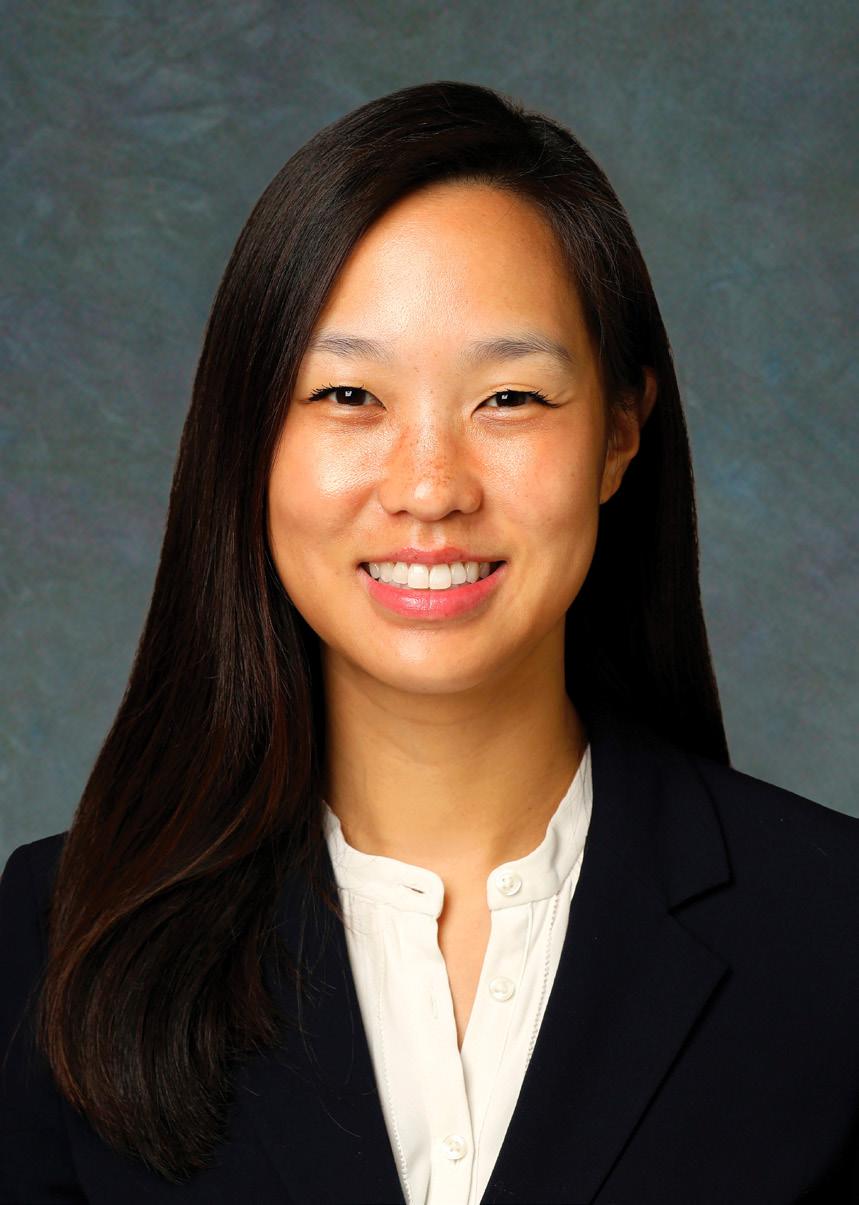
Dr. Alice Y. Wang, MD
health+wellness
Your Brain on Language
“…baila sin miedo, ama sin miedo…” - BAD BUNNY
My parents took me to my first opera when I was 11. Before going, I read a synopsis of Carmen, and while I did not understand the words, the passion and drama reached my soul. As I watched this year’s Super Bowl halftime show, I was again struck by how much communication can transpire without necessarily understanding the language.
Language is considered the most important tool for human communication, consisting of words and sounds in a structured way and sharing a common expression through speaking, writing, and movements. While constantly in flux, over 7,100 languages in 195 countries are recognized worldwide. That said, approximately 44 percent of languages are endangered, with fewer than 1,000 speakers. At the same time, the top 20 languages are spoken by 50 percent of the worldwide population.
…those exposed to repeated and varied early language development have demonstrated an ability to recover language capability quicker following a cerebral insult (such as a stroke), no matter when or in what part of the brain the insult occurs.
Historically, countries have used monolingualism to consolidate power and streamline educational and financial systems. Currently, English is the most spoken language by native and non-native speakers, a remnant of 18th century British colonialism. English is so widely used, it is considered the lingua franca of the world, the default language when one cannot communicate in any other language. English is also considered the
international language of business, tourism, and diplomacy. African countries are increasingly moving toward English to accelerate financial opportunities within the continent and abroad.
With a size of just under 463,000 square kilometers and eight million people, Papua New Guinea (PNG) is the most linguistically diverse, with over 840 living languages spoken. A living language is one where at least one person speaks it as a native tongue. One key reason for its linguistic diversity is humans have inhabited the island for over 50,000 years, allowing time to develop multiple languages. In addition, although a key stopover in trade routes over the centuries, PNG was never colonized under a central authority which resulted in a unifying language. It’s rugged terrain also contributed to maintaining independent, isolated communities. In comparison, the United States has only 236 living languages, even though it is 20 times larger than PNG and has 43 times the population.
With technology allowing for immediate translation of languages, however, why bother learning another language? Several studies suggest early introduction of multiple languages can result in cognitive advantages both during development and as one matures. Babies as young as six months have shown their ability to distinguish between different languages, and, unlike adults, very young learners use both brain hemispheres to learn and process language. Hence, those exposed to repeated and varied early language development have demonstrated an ability to recover language capability quicker following a cerebral insult (such as a stroke), no matter when or in what part of the brain the insult occurs.
Children learning more than one language simultaneously must suppress certain areas of the brain and refocus as they switch between the languages. These cognitive muscle exercises improve the brain’s command center, and multilingual children show quicker directional and problem-solving skills than their monolingual counterparts.
BY SHARON MORGAN
Bilingual children also demonstrate higher social awareness and appear more able to respond better to thoughts and intentions. These brain plasticity advantages continue as we age, and those who consistently speak more than one language tend to retain concentration and retention skills. Multilingual individuals may also stave off neurological disease and decline by an average of five years.
Multilingual individuals may also stave off neurological disease and decline by an average of five years.
Bi- or multilingual individuals have distinct educational and financial opportunities that may not be as available to monolingual speakers. In 20 percent of US households, English is not the primary language spoken. Non-English speakers who do not develop literacy in English and their native tongue are associated with higher rates of incarceration, unemployment, and mental illness. In addition, up to 30 percent of monolingual English speakers in the US who are not exposed to another language are less likely to graduate high school. Multilingual students are more likely to seek higher education and be chosen for internships and learning opportunities abroad.
Monolingualism is increasingly being viewed as a financial handicap. Over a five-year period, the demand for bilingual workers doubled, most notably in the finance, healthcare, legal, and customer service sectors. Having a multilingual workforce not only expands financial possibilities but increases the satisfaction of business interactions on a more interpersonal level. According to labor market data, bilingual workers can earn 5-20 percent more per hour. In one study, international small and medium companies that invested in multilingual staff saw an increase in exports. Fifty-six percent of the European Union
consider themselves bilingual, while the citizens of Luxembourg, Sweden, the Netherlands, and Denmark are all over 88 percent bilingual. Switzerland attributes approximately 10 percent of its gross domestic product (GDP) to its multilingual heritage, whereas Great Britain may lose up to 3.5 percent GDP due to its monolingual culture.
Speaking more than one language ultimately opens more horizons. No matter what age a language is learned, the task of learning orients us to re-evaluate the importance of learning and how we learn. Moreover, learning a language boosts confidence, as one often makes mistakes, often in public settings. Learning a new language also introduces new cultures, concepts, food, and places. A desire to travel is heightened. At the end of the day, learning a new language prompts us to see the world through different lenses, which increases cultural sensitivity and expands tolerance.
April 23 is Día del Idioma Español, commemorating the Spanish language and rich, historical culture. I will think of the Bad Bunny Superbowl half-time show and his homage to Puerto Rican history and community, which is part of the American landscape. Were all the words understood? No. Was the absolute passion felt? Every moment. I will take his challenge: I will dance without fear. ▼
Sharon A. Morgan is a retired advanced practice nurse with over 30 years of clinical and healthcare policy background.
LET’S STAY
CONNECTED!
All of CAMP Rehoboth’s programs, services, and events are listed here: camprehoboth.org/ events-calendar/. Please visit the site often to ensure you have up-to-date information on what is being offered—and when
Ready to Learn a Second Language? Here
are some hints….
START WITH THE RIGHT MINDSET Fluency is a marathon, not a sprint. Expect to spend months—or years— before feeling truly comfortable. The good news is that progress is noticeable early on, and those small wins are deeply motivating. Accept that you will make mistakes constantly and learn to embrace them as the core mechanism of language acquisition.
IMMERSE YOURSELF DAILY
Consistency beats intensity. Thirty minutes every day will outperform a four-hour weekend session almost every time. The goal is to make the language a part of your daily environment. Change your phone settings, watch TV shows, listen to podcasts, and follow social media accounts in your target language.
PRIORITIZE SPEAKING EARLY
Many learners hide behind grammar books and vocabulary lists for too long. Speaking feels uncomfortable at first, but it is the fastest path to real fluency. Find a language exchange partner or hire a tutor. Even 10
minutes of real conversation per week will accelerate your progress dramatically, because speaking forces your brain to retrieve language actively rather than just recognize it passively.
LEARN
VOCABULARY
STRATEGICALLY
Don’t try to memorize random word lists. Focus on high-frequency vocabulary first—the most common 1,000 words in most languages cover roughly 80 percent of everyday speech.
USE GRAMMAR AS A TOOL, NOT A RULEBOOK
You don’t need to master grammar before you start speaking. Learn just enough structure to form basic sentences, then acquire the finer details naturally through exposure and correction.
TRACK YOUR PROGRESS AND STAY CURIOUS
Plateaus are normal and can be discouraging. Keep a journal, record yourself speaking, or set milestone goals like watching a full-length film without subtitles. Most importantly, stay genuinely curious about the culture behind the language. Motivation rooted in real interest is the single greatest predictor of longterm success. ▼
Youth Crisis Support: Crisis intervention services for children under 18. Parents and caregivers are connected to a crisis clinician. Available 24/7. Call 800-9694357 or text DE to 741-741.
988: Free, confidential support and resources for anyone in distress. Available 24/7. Call 988.
Delaware Hope Line: Free coaching and support. Links to mental health, addiction, and crisis services. Available 24/7. Call 833-9-HOPEDE (833946-7333).

Out & About
Pure & Simple
I’ve been a DEI (Diversity, Equity, & Inclusion) practitioner for 25 years, and a true-blue Democrat even longer than that. This probably explains why, when I hear people complaining about “wokeness,” I generally get a little defensive.
For a term that so many people throw around, “woke” is quite misunderstood. Since as far back as the 1930s, Black Americans have been saying “Stay woke” to remind each other to remain on alert, especially when traveling through racist areas such as the segregated South. It was important, because the stakes were high: a failure to stay woke in those days (and even today) might prove deadly. In 2014, after Michael Brown, an unarmed Black youth, was killed by police in Ferguson, Missouri, the hashtag #staywoke began trending.
The American right-wing noticed and began to use “woke” to misinform their followers about those on the left. They described the “woke mob” as those who think White people should suffer under a cloud of guilt, who want to destroy the family unit, or who want to perform sex reassignment surgery on school-age children without telling their parents.
Whenever I hear someone complain about the “woke mob,” I get ready to do battle against an avalanche of mean and a tidal wave of asinine. For years, I’ve prided myself on being “woke,” and I suppose I still do.
And yet, I’ve noticed a shift in my own attitudes lately, when conversing with folks on my own side of this particular culture war.
Last fall, I attended a day of nationwide protest. Standing with about a thousand others who shared my concerns about the fragile state of our democracy, I held a sign that read, “I Refuse to be Overthrown by Anyone This Stupid.” I hoped the sign would make people smile, and on a deeper level, give them a little hope. After all, while those who are attempting an authoritarian takeover certainly have evil intentions, their
malevolence is not matched by their competence.
I thought my sign was succinct and witty, with just the right amount of fight. The internet, however, was quick to let me know that the sign was ableist
Apparently, back in the 17th and 18th centuries, the word “stupid” was used by doctors to refer to someone in shock—a disability, however temporary. I’m fairly sure doctors have other words for that condition nowadays.
Since as far back as the 1930s, Black Americans have been saying “Stay woke” to remind each other to remain on alert, especially when traveling through racist areas…
Before I say any more, let me be clear: along with women, people of color, LGBTQ+ folks, and other marginalized groups, I’ve been advocating for people with disabilities for a long time. I firmly believe that the world should be more accessible to this community, that they have much to offer, and that they are just as worthy of dignity and respect as any other human being. It would never occur to me to mock or belittle anyone with a disability—physical, mental, or intellectual.
But I think my online critics knew that. I think most discerning people can understand the difference between someone whose brain is wired such that there are limits on what they can know and learn, and those who have access to critical thinking skills but choose not to use them. I think most everyone understood what my sign was trying to say but some made a choice to be a little woker-than-thou, to leverage an easy opportunity to claim moral superiority.
So, have I joined the other side? Not by a long shot. I know how important language is. Other than our five senses,
BY ERIC C. PETERSON
it’s the most important tool we have to learn about the world around us. Language can illuminate, but it can also harm. I will not use language to intentionally wound. I will not say the N-word or similar slurs, because they dehumanize both the speaker and the target of those words. I will not attack someone based on their identity when I have real arguments pertaining to their character.
And yet, I reserve the right to tell anyone who will listen that Stephen Miller looks like a toe. There are plenty of reasons I dislike Stephen Miller, and honestly, his (lack of) attractiveness should be fairly low on the list. And yet, I keep it up. When I interrogate myself on this question, it occurs to me that Stephen Miller thinks he’s superior—morally, intellectually, and genetically—to the majority of the world’s population. And it’s just too deliciously ironic that anyone who believes themselves to be a member of the master race looks like…well, that. I have more to say on the topic than I have room for here, so I’ll close with this: To those of us aligned with those fighting for democracy, who truly believe in the inherent worth of all people regardless of race, gender, sexuality, or disability—we should absolutely stay woke. And that means being aware of what’s dangerous, insidious, and truly harmful…but also what’s not.
When people are truly being harmed by inflammatory language, we should intervene. But when someone uses the easiest language available to them to remind the world that a certain world leader is, as my grandmother used to say, “not the sharpest spoon in the bucket,” we should remember that reason and judgment (and yes, intellect) is actually an important part of that job…and just keep scrolling. ▼
Eric Peterson is a Diversity, Equity & Inclusion (DEI) practitioner, pop culture junkie, and sometime novelist. His debut novel (Loyalty, Love & Vermouth) is available at Broweseabout Books and online.

OLIVIA IS THE PROUD PRESENTING SPONSOR OF WOMEN'S FEST April 9–12, 2026
Olivia is donating a trip for two on our 2026 BORDEAUX: FROM VINE TO TABLE RIVERBOAT CRUISE! AUGUST 18–25, 2026 Visit olivia.com to learn more about this exciting cruise.

Balkans on the Danube Riverboat Cruise | Apr 5–12, 2027
Cancún, Mexico Resort | May 8–15, 2027
Wild Alaska Adventure Cruise | May 29–Jun 5, 2027
Barcelona to Lisbon Luxury Cruise | Jun 8–16, 2027
Norwegian Fjords Luxury Cruise | Jul 12–19, 2027
A Taste of France Riverboat Cruise | Jun 29–Jul 6, 2027
Greek Isles with Lesbos Cruise | Oct 2–9, 2027



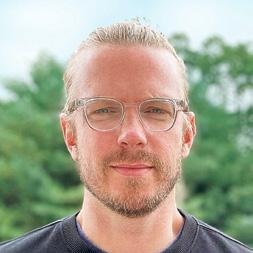
The Library is [Always] Open
Growing up, I received three gifts which helped shape my world view.
The first gift was music; and more specifically, the kind adults thought I might like. When my Aunt Cathy gifted me George Michael’s Faith on my eighth birthday, it was more than an album—it was an invitation. An early whisper which would illuminate how identity could be discovered through rhythm and voice. It was a signal that somewhere beyond my small orbit existed a world where expression was bold, glamorous, and unapologetic.
The second gift was a bucket of LEGOs® intended to be used to make whatever one’s own heart desired. Those small, plastic bricks taught me how to see possibility inside fragments. They taught me that something extraordinary could emerge from pieces if you were willing to turn them in your hands, view them from different angles, imagine what they could become.
The third gift was a library card.
Of the three, it may have been the most powerful. It would become a passport. That little blue card that fit inside a yellow paper sleeve would give me permission to step beyond the borders of my own life and wander freely through the lives, ideas, and imaginations of others.
Recently, I was driving through Wilmington, heading downtown, when I stopped at a red light and surveyed my surroundings. To my right stood a massive, modern structure waiting behind chain-link fencing as construction wrapped up. It was a grand, new library rising in the Riverside neighborhood.
In that moment, I felt the rush where experience and excitement meet in a split second.
I pictured a young person walking through those doors for the first time. They will wander past rows of shelves and realize, perhaps without fully understanding it yet, that they have been given access to something extraordinary. Libraries remain one of the last places in American life which are entirely,
stubbornly public. There’s no purchase required. There’s no membership fee. Thankfully, there’s no algorithm nudging you toward the next thing. There’s just silence, and the space to be curious.
As a kid, the library was my sanctuary. I would ride my bike there, lock it to the rack, and disappear for hours. There was something thrilling about the independence of it, and no one telling you what to read, where to go, or what to explore.
The stacks became a map of possibility.
At first, I devoured books with the appetite of someone who had just realized the mysteries of life could be uncovered by simply turning the page. I read books about history, famous people, and architecture. I studied the photos and passages in cookbooks by Julia Child. I consumed books about presidents and revolutionaries. I discovered names like Eva Peron, the Duke and Duchess of Windsor, and Mahatma Ghandi—names I wasn’t likely to find in my grade school text books. I soon graduated to reading the work of writers whose names I had never heard but whose voices would shape the way I thought about life.
I discovered James Baldwin and Truman Capote, and other queer writers whose existence alone was a revelation.
BY CHRISTOPHER MOORE
Their work was proof that the life I sensed within myself had precedent, language, and dignity. I also found a book called Postcards from the Edge by Carrie Fisher. I was too young to understand what I was reading, but I was aware enough to know it was funny.
Then came the movies.
If books unlocked my desire to read, the video shelves activated my love of pop culture. I began checking out films I had never heard of, stories far removed from the safe television diet of my childhood.
I discovered Bette Davis and Joan Crawford—an education every young queer kid should receive at some point. Bette Davis, especially, was a marvel; all eyes and cigarette smoke with a voice that could wake a full house in the dead of night. I watched the Roots miniseries. I watched every season of Upstairs, Downstairs. I explored worlds layered with drama, history, glamour, and conflict.
Then one documentary changed everything. It was called Unzipped, about the designer Isaac Mizrahi.
I checked it out once and was hooked. Over a period of years, I checked it out so often that the librarians eventually noticed. When the VHS

[Libraries…are quiet rooms where democracy practices one of its most radical promises—that knowledge belongs to everyone.
DOWNTOWN REHOBOTH with FREE 15 MINUTE PARKING
(
Adjacent to THE CULTURED PEARL RESTAURANT and 4TH STREET )
Letters Loves AD 2026.indd 1
tape was finally retired, one of them quietly set it aside for me to take home.
The film itself was electric. It was mostly black and white punctuated by bursts of color. The soundtrack introduced my young ears to a different kind of mixtape, one crafted with a purely queer sensibility: the opening number from Company, Sandra Bernhard covering Sylvester, a remix of Culture Club’s “Miss Me Blind.” It was beautiful, vibrant, and created the perfect backdrop to the story.
The real revelation, though, was Mizrahi himself: openly gay, wildly creative, obsessively devoted to his art, pushing himself to the brink in pursuit of something beautiful. For a young person still trying to understand who they were, the film wasn’t just entertainment. It was a tutorial. While I had no intention of ever designing clothes, I was intent on being creative—and doing so on my own terms. While it would take me decades to get there, Mizrahi would be the one I looked up to; and all because of that little blue library card.
You see, libraries do this quietly, without ceremony—every day. They place
possibilities on shelves and allow people to find them when they are ready.
In a world increasingly shaped by paywalls, subscriptions, prescribed content (hilariously described as “curated”), and digital noise, the simple act of checking out a library book feels beautifully subversive.
You walk into a building funded by the public, choose knowledge created by someone else, and take it home—no invoice, no rubric to adhere to, no expectation beyond returning it for the next curious mind. That exchange remains one of the purest civic rituals we have.
Which is why that moment at the red light in Wilmington was beautiful.
Somewhere not far from where I sat in my car, a kid in Riverside will soon wander through those doors. Maybe they will pick up a novel that shifts their understanding of the world. Maybe they will discover music, history, film, or science. Maybe they will find the blueprint for a life they didn’t yet know was possible.
All because someone gave them a library card and said “here, the world is yours.”
And that little card does something else, too. It stays with you. Even now, as an adult, the moment I walk into a bookstore there is a quiet sense of calm that settles over me. My inner child recognizes the feeling immediately. Shelves. Possibility. Discovery waiting patiently. That early library card trained my heart to associate books with freedom, curiosity, and safety—and decades later, that reflex still holds.
Libraries are not relics. They are engines of imagination. They are quiet rooms where democracy practices one of its most radical promises—that knowledge belongs to everyone.
And sometimes, that promise is all a young person needs to begin building a life. ▼
Christopher Moore is a writer, a teacher, and now, a certified yoga instructor. He loves Fresca with a splash of Canada Dry Club Soda, the unplugged version of George Michael’s Father Figure, and a man and a dog who live in Toronto.
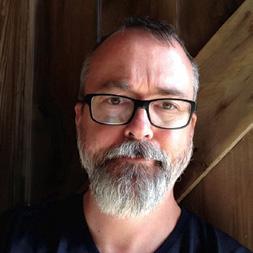
It’s My Life
King of Hearts “O
h my God! He’s flatlining!”
The young woman turns and stares at me, eyes wide. I give her a thumbs up.
A moment later, the heart monitor chirps. I am no longer dead.
“For future reference,” the head nurse says to the young woman, “patients don’t generally want to hear that they’ve flatlined. He’s done this before and knew it was coming, but don’t do that again.”
“Sorry,” the young woman apologizes.
“It’s fine,” I assure her. “This is the third time I’ve died. I’m a pro.”
This is not entirely true. I didn’t actually die. My heart just stopped. And only for a few seconds. But that’s not nearly as good of a story.
Now that I am no longer dead, the nurse explains to the group of student nurses and medics who have been observing the procedure what just happened, which is that my heart was beating irregularly and too quickly and needed to be stopped and restarted. This was done by injecting me with a drug, but in case that didn’t work I was also wired up so that they could do it with electricity. Thankfully, the three times I’ve had this done, the drug has done the job, and the most uncomfortable part of the procedure was removing the dozen sticky pads affixed to my skin as a precaution.
A week later, I’m sitting in my cardiologist’s office.
“The last time this happened, we said that if it occurred again, we would consider ablation,” he reminds me.
I do not need reminding. I have been thinking about it a lot. Ablation involves running a wire through an artery in my groin and into my heart, where the problematic section of my heart is scarred using extreme cold to prevent the signals that cause it to beat irregularly from getting through. It’s a fascinating procedure. But I have been putting it off, hoping that medication alone would fix the issue.
“This is going to start happening more frequently,” my doctor warns me. “Because of your age.”
My age has lately been a popular topic of conversation with health professionals. A few weeks ago, at my most recent dental visit, the dentist cheerfully informed me, “Given your age, I can confidently predict that you will likely depart this world with all of your own teeth.”
When I got home and mentioned this to Cubby, he said, “Well, this is rural Appalachia. That man knows bad teeth. He meant it as a compliment.”
Perhaps. But what I heard was, “You’re going to die soon. But, hey, at least you can chew your last meal and not suck it through a straw.”
A couple of days after my visit with the cardiologist, I have a Zoom call with a diabetes counselor assigned to me by our health insurance carrier. “You’re almost 60,” she chirps, “and we want to make sure you enter your golden years as healthy as you can be. Have you started wearing the continuous glucose monitor that came with your intro kit?”
“I have not,” I inform her. “I’ve been a little busy dying. But I’ll get right on it.”
“Great,” she says. “We find that our seniors who are actively involved in their health care are the happiest.”
When I hang up from talking to her, I sit there thinking about whether or not I want to be a happy senior. I turn 58 this year, so indeed almost 60. As my sister reminded me recently, I will be the last of our cousin group to become a sexagenarian. And given that members of our family generally do not make it out of their 70s, this is not an insignificant milestone. What with the heart issues, the diabetes, and some other inconvenient things (a hearing aid has been suggested, and I now use two different eyeglass prescriptions), I’ve been wondering how much time is left on my warranty.
As I’m thinking about these things, Bear stomps in. He’ll be 17 in a month or two (we don’t know his exact birthdate) and has kidney failure that we manage with twice-weekly applications of subcutaneous fluids. His eyesight, already failing when he came to us, recently flickered out altogether. Despite this, he is a happy
BY MICHAEL THOMAS FORD
dog. He navigates the house with almost no issues, and outside he manages with the occasional redirection from us. When he needs something, he barks once and waits for assistance, repeating the call as needed.
At his last check-up, his vet declared him “as healthy as possible given the circumstances.” Then she added, “You know, a lot of people would give up on him. It says something about you that you haven’t.”
It has never occurred to us to give up on Bear just because he’s blind and requires a lot of care. But it’s also his choice. We do it because he clearly still likes being alive. When the time comes that he’s no longer happy, we’ll help him along to his next adventure. In the meantime, we’ll take him in twice a week for fluids and extract him when he manages to get stuck in an elderberry bush while exploring the garden.
I’m trying to have the attitude he does about being alive. And mostly, I succeed. But occasionally, when I wake up in the middle of the night thinking about medical bills or the future, or when I find myself struggling to follow conversations in crowded situations, I resent the whole thing. Will I be a happy senior? Bear’s attitude suggests that it’s a matter of perspective.
In a couple of weeks, I’ll have ablation. If it’s successful, I will no longer have an erratic heartbeat. I’ll also be able to stop taking the medication that causes me to be exhausted almost all the time. Will life be different then? Will I stop thinking about the things that, one by one, are being taken away from me? Or will some other worry take the place of these things?
We’ll find out. In the meantime, I’m going to bark until someone comes and gets me out of this bush. ▼
Michael Thomas Ford is a much-published Lambda Literary award-winning author. Visit Michael at michaelthomasford.com.



2026:
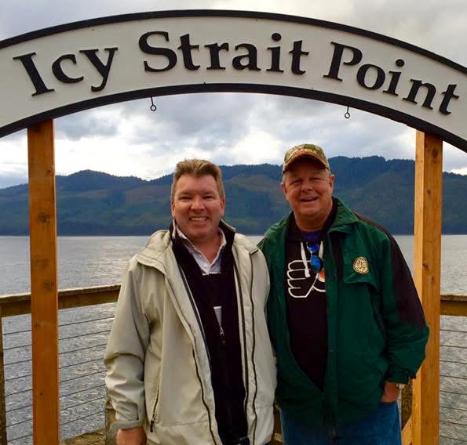
Join us on our hosted cruise to:
July 5 - 15, 2027
Alaska Ocean Cruise and Land Package
Vancouver, Ketchikan, Icy Strait, Juneau, Skagway, Anchorage, Fairbanks, and Denali
Whales and Glaciers and Eagles...oh, YES! Let's capture the essence of the Last Frontier...TOGETHER!
Adventure, relaxationand culture await in a place wherenature and history collidein breathtaking beauty like nowhere else on Earth.
Space is limited – join today!
Frank@Where2NextTravel.com
Here are some of our other upcoming escorted trips:
2027:
- August 10-21: Portugal river cruise - May 16-23: Rhine river cruise
- October 3-14: Italy land trip (limited space) - July 5-15: Alaska ocean cruise - November 7-14: Costa Rica all-inclusive - September 19-30: Egyptian Nile river cruise - November 1-15: Romania land tour
Traveling without Frank and Bob is not an option! They introduced me to international travel. Group vacations withthem over the past 10 years are always fun! I have never been disappointed. Every question is immediatelyaddressed and every vacation exceeds my expectations.

Call Frank to book your next trip! (302) 945 - 3460
www.Where2NextTravel.com Frank@Where2NextTravel.com
Erin has traveled with us:
Rhine River Costa Rica Cancun Danube River Iceland Nashville Key West
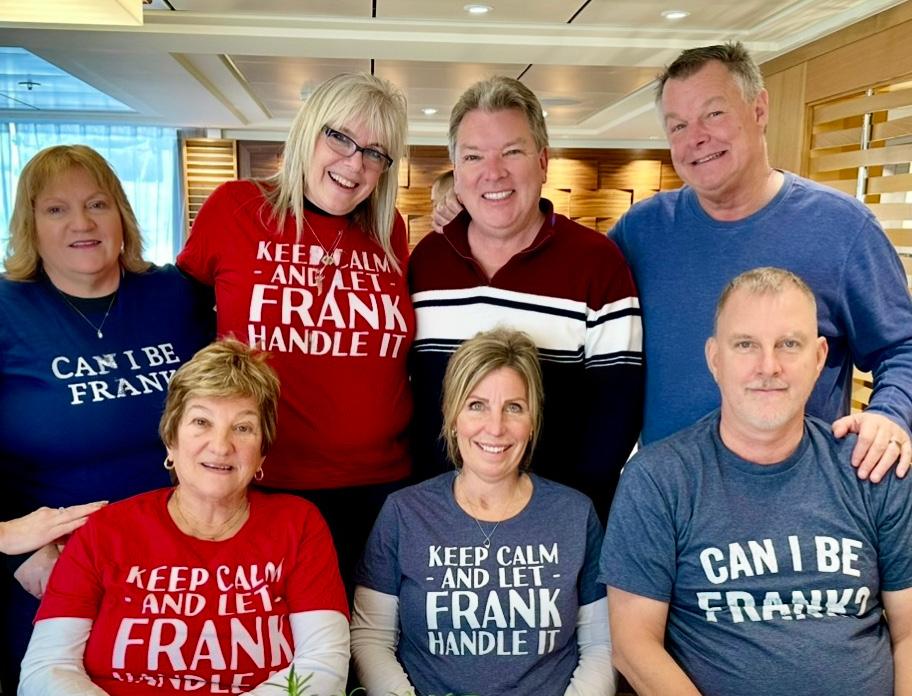
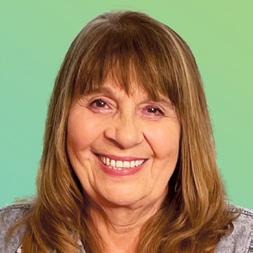
Reflections
The Power of a Simple Smile
Smiling always has been hard for me. It symbolized frivolity, silliness, flightiness, and flippancy, none of which is how I wanted to be known in the world. As a kid, I was usually buried in the pages of a book or exploring the forbidden land of the Kensico Reservoir or running through the neighborhood with my gang of kids, all serious fun stuff but nothing worth smiling about. When I was with family, I spent a lot of time listening, not smiling, and when I wanted to talk, I ended up shouting just to be heard. I don’t remember much smiling going on. As I grew older, I became aware of my crooked teeth and deliberately didn’t smile. I felt self-conscious and covered my mouth or just didn’t smile.
So, I was amazed to learn that smiling is a natural, involuntary, and universal human response to joy, pleasure, or social connection. It apparently is more than a simple social gesture. It’s a complex, biologically driven behavior that triggers physiological and psychological reactions in the brain and body. Science shows that the act of smiling, even when forced, activates muscles that release neurotransmitters that can reduce stress, lower heart rate, lower blood pressure, and improve mood. The endorphins released while smiling can act as natural painkillers, reducing the perception of discomfort.
Smiling is considered a reflexive action rather than a learned behavior, often acting as a non-verbal cue to signal friendliness and approachability. While the effect of a fake smile is not as strong as that of a genuine one, it is still a mood booster. A study published in Nature Human Behavior suggests that just forming a smile can influence feelings. I believed the opposite—that it was feelings that triggered a smile.
Researchers believe smiling evolved from a “fear grin” used by primates to show they were harmless. Smiling is not cultural; it’s biological. It’s innate behavior that is recognized across all human populations as a sign of positive emotion
BY PATTIE CINELLI

or, historically, submission/non-aggression. Even the Bible associates smiling and a cheerful countenance with a joyful heart, inner peace, and good health. The book of Proverbs notes that a smile is an outward expression of internal joy and faith in God.
I was surprised that none of my research about smiling unearthed how often I have used a grin as a tactic when in a discussion or a debate. Sometimes, though my mouth was upturned, my eyes twinkled with the knowledge that what my colleague was saying would soon be refuted by yours truly. I’ve also used a smile to aggravate another when arguing and have used it to lessen the importance of what another was saying. My smile in those instances was more of a smirk or a sneer, often accompanied by a very subtle head shake.
As I got older and wiser I discovered the magical power of smiling. It usually makes everyone smile back. It took me decades, but I figured out how important a smile can be. Once I started looking at people and shooting them a smile, warm energy headed my way.
It turns out smiling is contagious and there’s scientific proof. Mirror neurons in the brain, which automatically mimic the expressions of others, foster social connection and create a positive empathetic atmosphere. Smiling strengthens social bonds, fosters favorable interactions,
It took me decades, but I figured out how important a smile can be.
and signals openness and friendliness. Smiling makes people appear more confident, approachable, and trustworthy, and can improve interpersonal relationships as well as career prospects. Some even say frequent smiling is associated with a longer lifespan.
Some could say there’s not a lot to smile about in the world these days. While I agree, I choose to look all around me for reasons to smile. It’s a lot easier to smile looking outside when it’s sunny and beautiful weather. I smile when I look at the excellent work done to repair my house and think about how fortunate I am to have found skilled and professional contractors. I smile when I walk into a club where one of my favorite bands is playing. I smile when I see a good friend.
Just the other day I took my doodles to the beach and treated them to Dairy Queen afterwards. I’m smiling right now thinking about how much they enjoyed their afternoon. When I think about it, a smile is an inexpensive way to improve my looks. I can’t think of anyone who doesn’t look better wearing a smile, including me. ▼
Pattie Cinelli is a writer who now finds lots of things in her daily life to smile about. Contact her with comments or questions at: fitmiss44@ aol.com.
Furred, Feathered, Finned….
Here Comes National Pet Month!
In anticipation of National Pet Month (May 2026), we asked our contributors to share photos of their beloved pets. All the photos we received feature ones that are furry—and also very cute (or handsome or regal). Judge for yourself, on these pages.
In our May issue, we’d like to celebrate your furry (feathered, finned, scaly…) pets. So, take (or find) a photo and send it to editor@camprehoboth.org by Friday, April 24.
HINTS: Photos need to be high resolution to work in print. Cell phone photos work, if sent “actual size.” Please: no special effects; no cropping. Our design folks will take care of any necessary tweaks.
May Is National Pet Month!
Send us pix of your pupper, Your purrlot, your floof.
A pic of your woofer, Its belp or its sploot.
Maybe one of toe-beans
Or one of your snek. We’d love to see derpies; Or oh, what the heck?
Maybe you have a birb? Pocket puppies and borbs, And even a swimmy Would be just adorbs!
We can’t wait to see them And share them in May; 24th is the deadline, So do not delay!
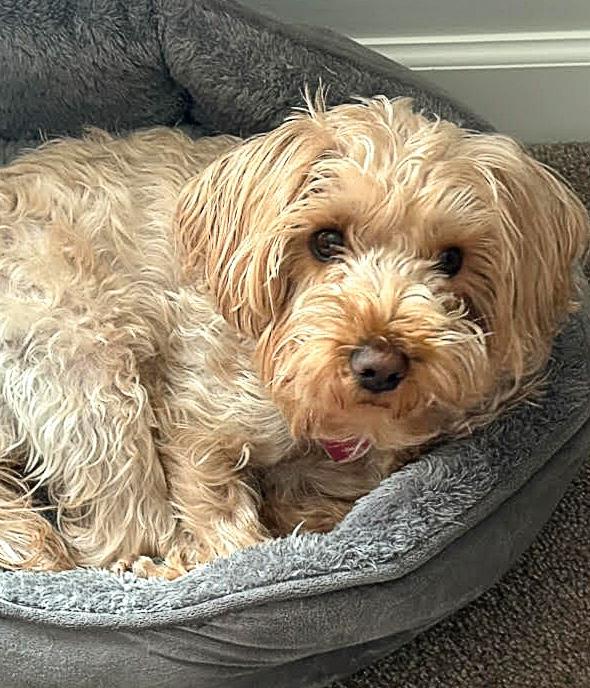
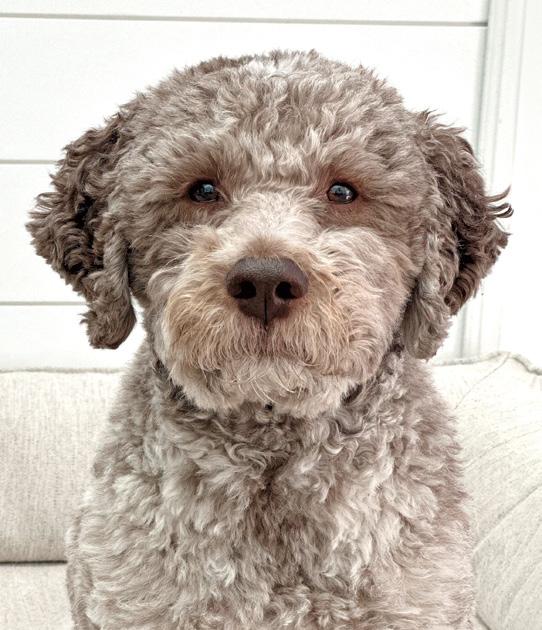
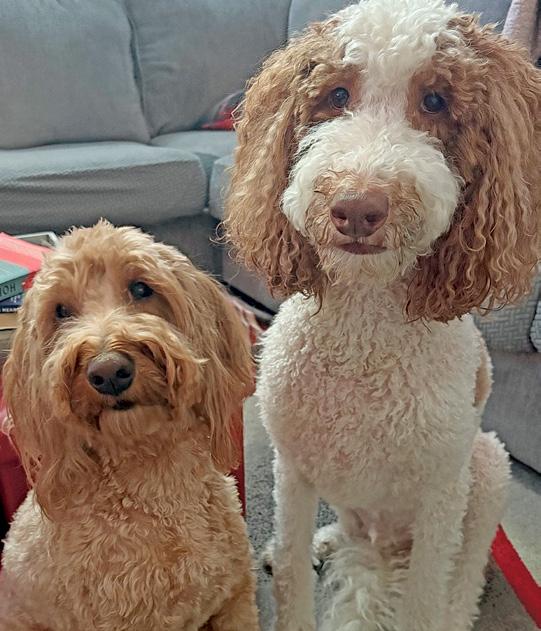
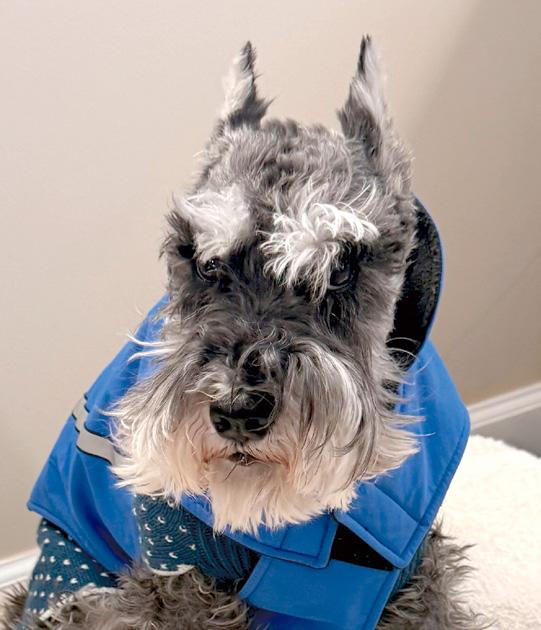
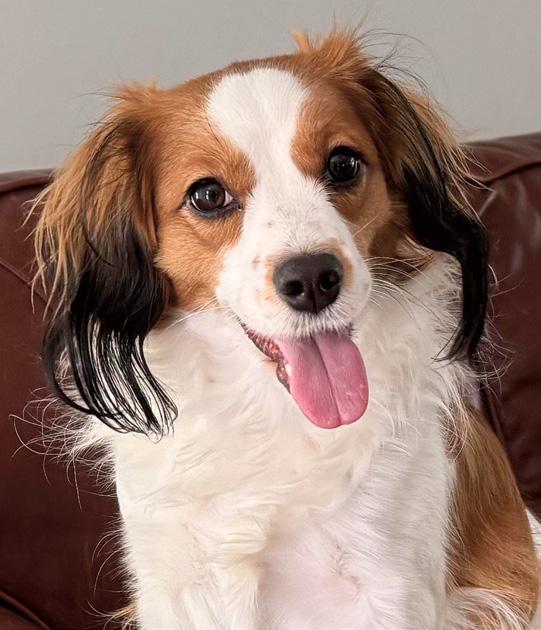

Many thanks to all the contributors who sent us photos: Matty Brown, Ed Castelli, Pattie Cinelli, Sandy Clark, Logan Farro, Joe Gfaller, Fay Jacobs, Leslie Ledogar, Tricia Massella, Christopher Moore, Sharon Morgan, Eric Peterson, Mary Beth Ramsey, Nancy Sakaduski, Terri Schlichenmeyer, Marj Shannon, Beth Shockley, Rick Welk.


Pictured, top row, L-R: Scout; Windsor; Charlie; Jojo; P; Schala. Second row: Bingo; Amalia; Sprout; Banana Bread; Louis; Clyde. Third row: Dante & Gianni; Atticus; Morris; Rocky; Maxwell; (Luke) with BJ Hanz. Fourth row: Alfie; Bolt; Charlotte; Lizzie; Becky; Minnie.
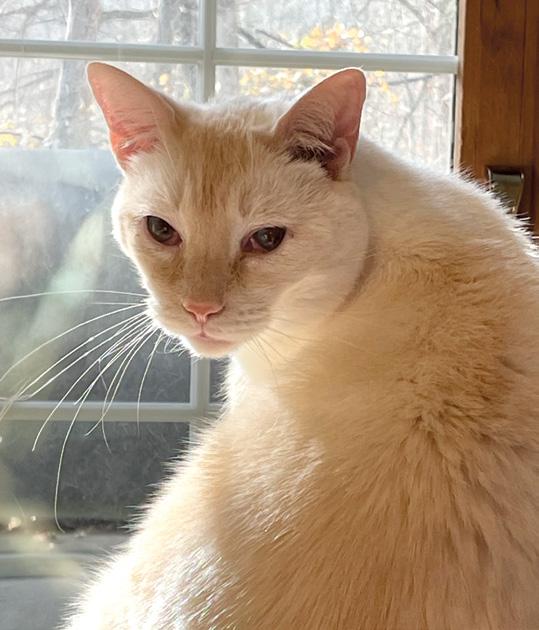
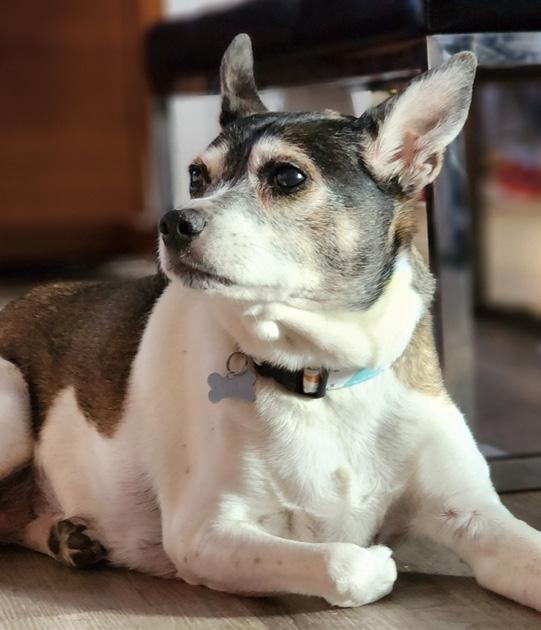
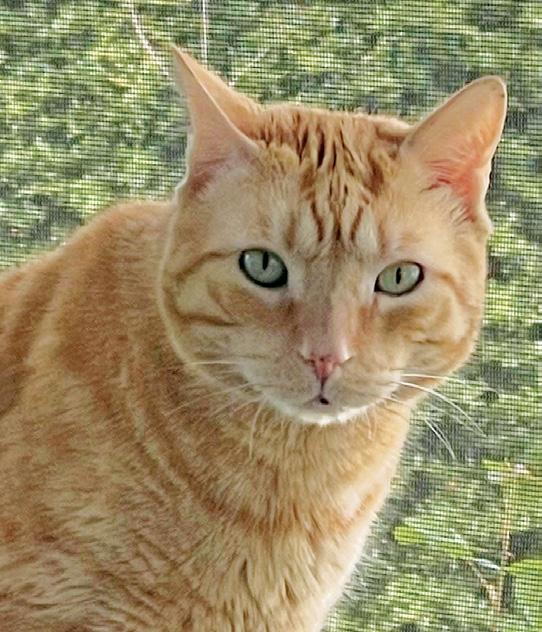
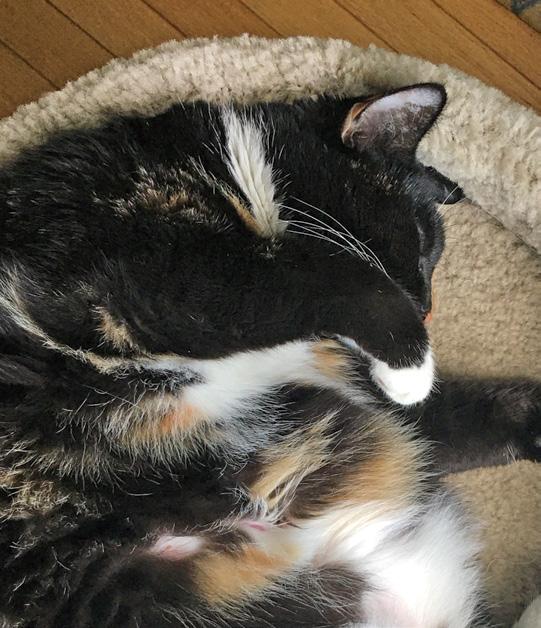
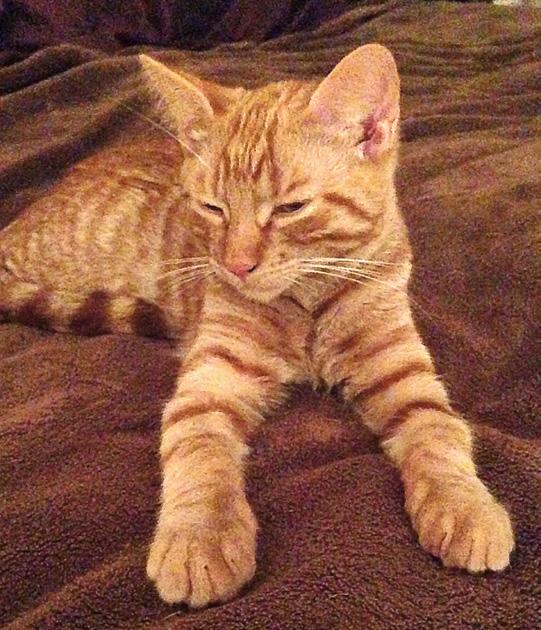
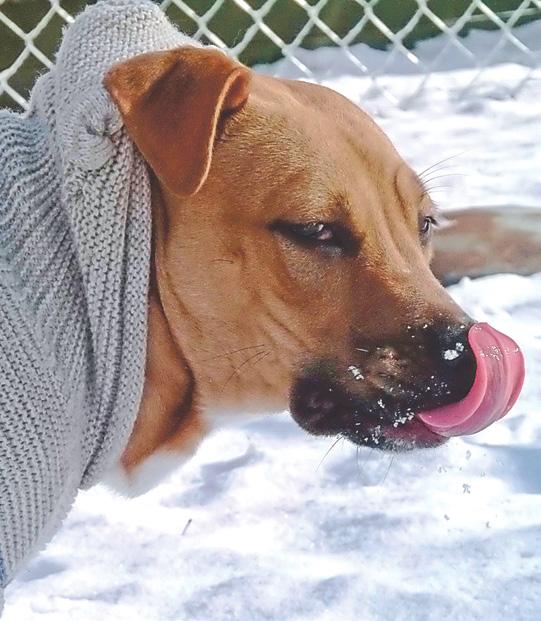
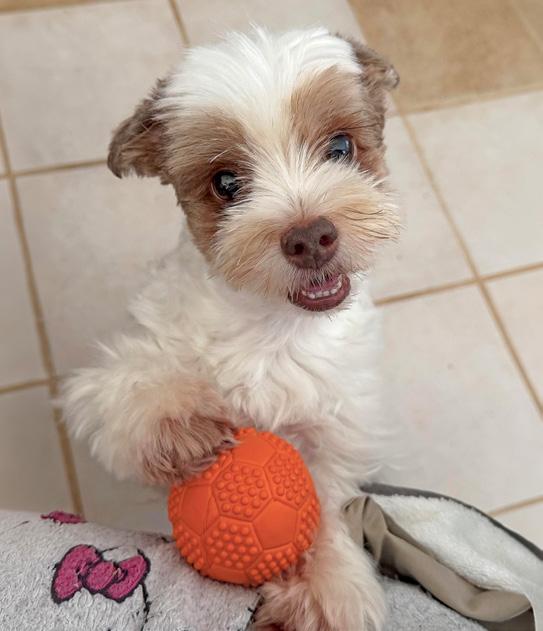
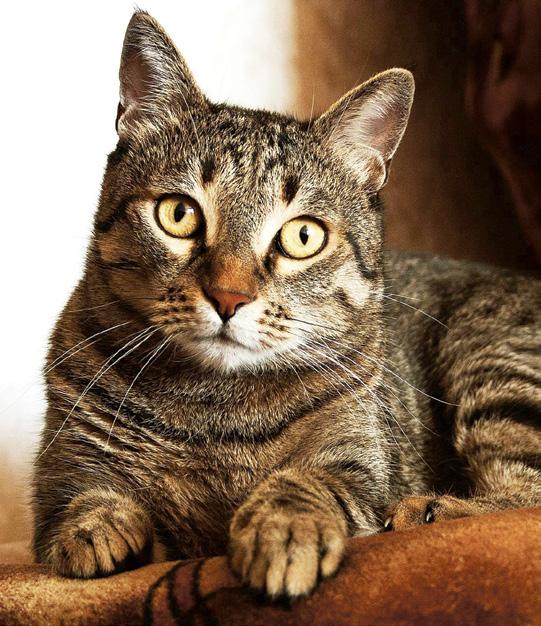

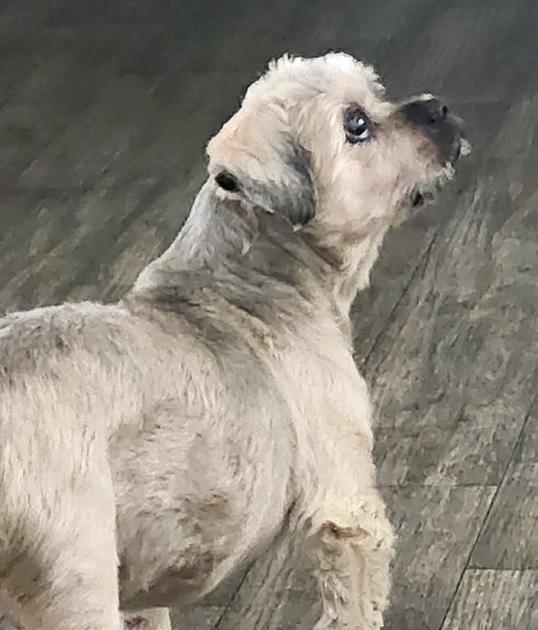
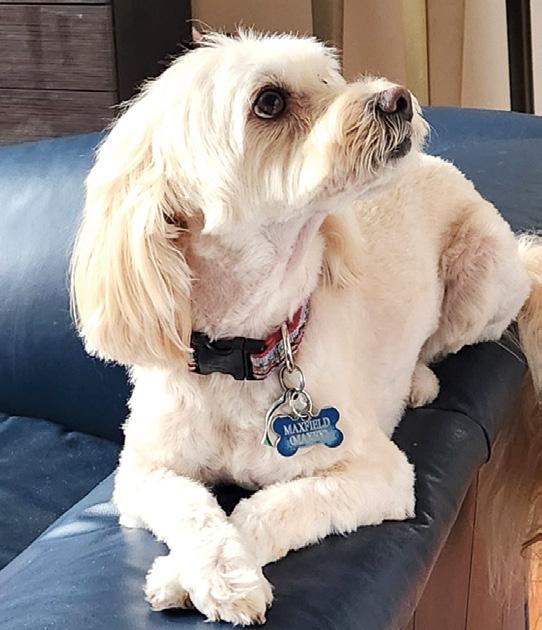
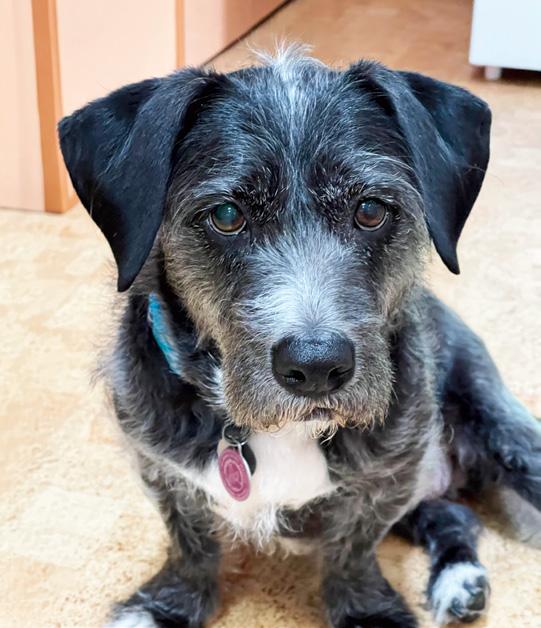

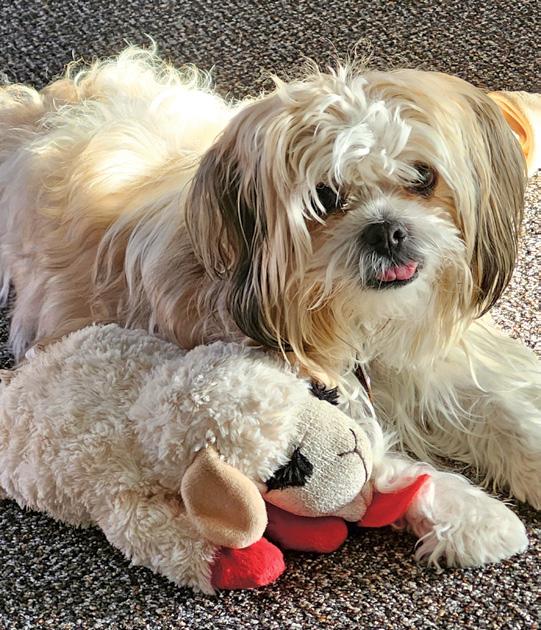
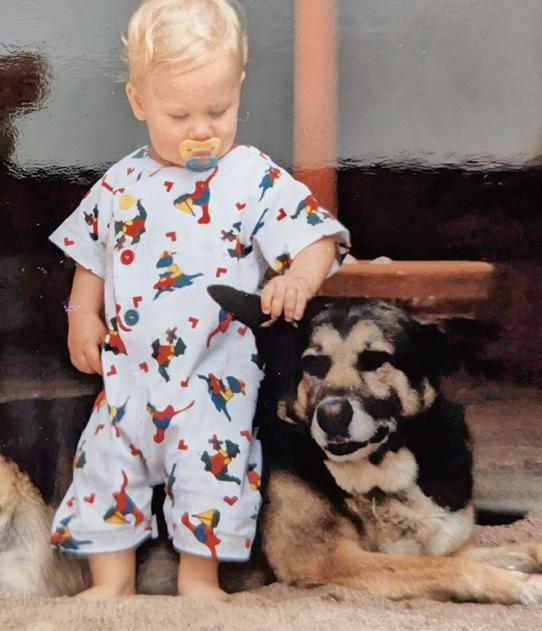
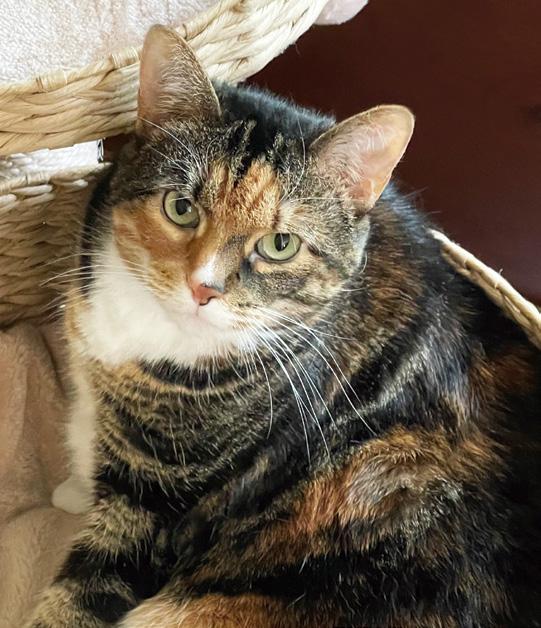
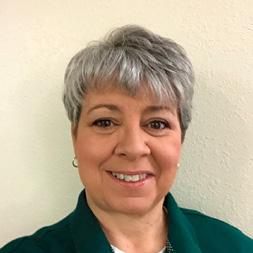
Why We Can’t Have Anything Nice OutTakes
At one time there were three German shepherds and five cats living with us three humans in a 1,600-square-foot duplex. Luckily, mom’s horse lived in the barn down the road.
Ilove animals. I always have. When asked what I wanted to be when I grew up, my answer was a veterinarian. That dream lasted until my freshman year at the University of Maryland when I found out I needed to take an unreasonable amount of calculus for that degree. Six semesters! Why anyone would need to calculate the surface area of an Irish wolfhound is beyond me.
I’m not a vet. But I do have pets and have for most of my life. My first pet was a little black and white dog named Cindy. She was followed by Chopper, a long-haired mutt who was my constant companion and protected our family from the mail carrier and the garbage guys. After that, all my dogs have been German shepherd dogs: Dascha, Chrissy, Hildegard, Molly, Abby, and Sydney. I have also had cats: Tigger, Kelly, Mickey, JoJo, Pi, and Charlie. Plus, other people’s pets have lived with me—my mom’s dog Lexa and her cat Sassy, and my wife Beth’s cat Lucy. At one time there were three German shepherds and five cats living with us three humans in a 1,600-square-foot duplex. Luckily, mom’s horse lived in the barn down the road.
While there are so many positives pets offer us, I also know that life with fur-children is not always sunshine and rainbows. One downside is they can be real demons of destruction. This is something I like to call “the reason we can’t have anything nice.” I don’t think it is any coincidence that chewing, eating, clawing, and breaking my stuff occurred mostly when they were small and adorably cute. This probably explains their longevity.
OK, maybe I’m being overly dramatic. Really though, I can walk through our house right now and see puppy chew marks on the corners of our kitchen cabinets. I can point out the place where we had the drywall repaired, not once but twice in the same spot, because Abby was certain there was something in there that we needed to know about. And over there is the shredded bottom of the screen on the sliding glass door. Thanks for the extra ventilation, kitties!
Speaking of shredded, every piece of our upholstered furniture bears the scars of cat claws. This is the same furniture that has stains from middle of the night hairballs and is permanently decorated with cat fur. To be fair, I’ve
BY SANDY CLARK
spilled a few stains myself. Now I understand why my great-grandmother had plastic covers on her furniture. I swear our next sofa will be multi-colored in shades of dirt.
As we go upstairs, pay attention to the scratched edges of our wood steps courtesy of dog toenails. See the frayed hem of the comforter on our bed because Pi just couldn’t leave that loose thread alone. Notice the scratches on our bedroom door thanks to both dogs and cats who took it personally when we closed the door at night.
Legendary in our house, with a doctorate in destruction, is Abby. One day when she was a puppy and we were at work, she stealthily de-upholstered and unstuffed an entire loveseat down to the wood frame while my mom was in the next room! Now that was impressive. Granted, most of our damaged décor could have been prevented. But, after one night of listening to the most pathetic whines and whimpers, I just could not do the crate thing. I know, I know. We used baby gates instead. If Abby was confined, then so was I. I spent a lot of time in the kitchen anyway, right?
So, we can’t have nice things. So what? They are just things. What I have had and continue to have is cuddles on the couch, endless games of frisbee and ball, purrs that calm my anxiety, puppy breath that smells like the joy of life, and more love than this human could possibly deserve. Pets are so worth the responsibility and occasional inconvenience.
If you have considered getting a pet, but are concerned about things like stains or scratches, let me share one more thing: Never, not even when it happened, did I shed a single tear over that lost loveseat. But even though she has been gone for over a year, I’m still sitting here right now with tears in my eyes missing Abby. April is Dog Appreciation Month and has a couple of other pet centered dates—National Adopt a Shelter Pet Day on April 30 and National Cat Lady Day on April 19. I’m so grateful to be qualified to celebrate all of those… even though I’m not a vet and I don’t have many nice things. ▼
Sandy Clark, retired and living in central Delaware with her wife and two cats, loves sharing her humorous observations on the weirdness of life.

Located at the south end of the boardwalk in beautiful Rehoboth Beach
Full custom design center and repair service on premises, most can be completed while you’re here on vacation Exclusive home of the “Rehoboth Beach Bracelet” Official Pandora Dealer Large selection of: 14kt Gold, Rubies, Emeralds, Sapphires, and Tanzanites GIA Certified Diamonds in all sizes Watches including Movado, Raymond Weil, Seiko, Citizen, Pulsar, and Swiss Army w www.harr y kjewelr y.com



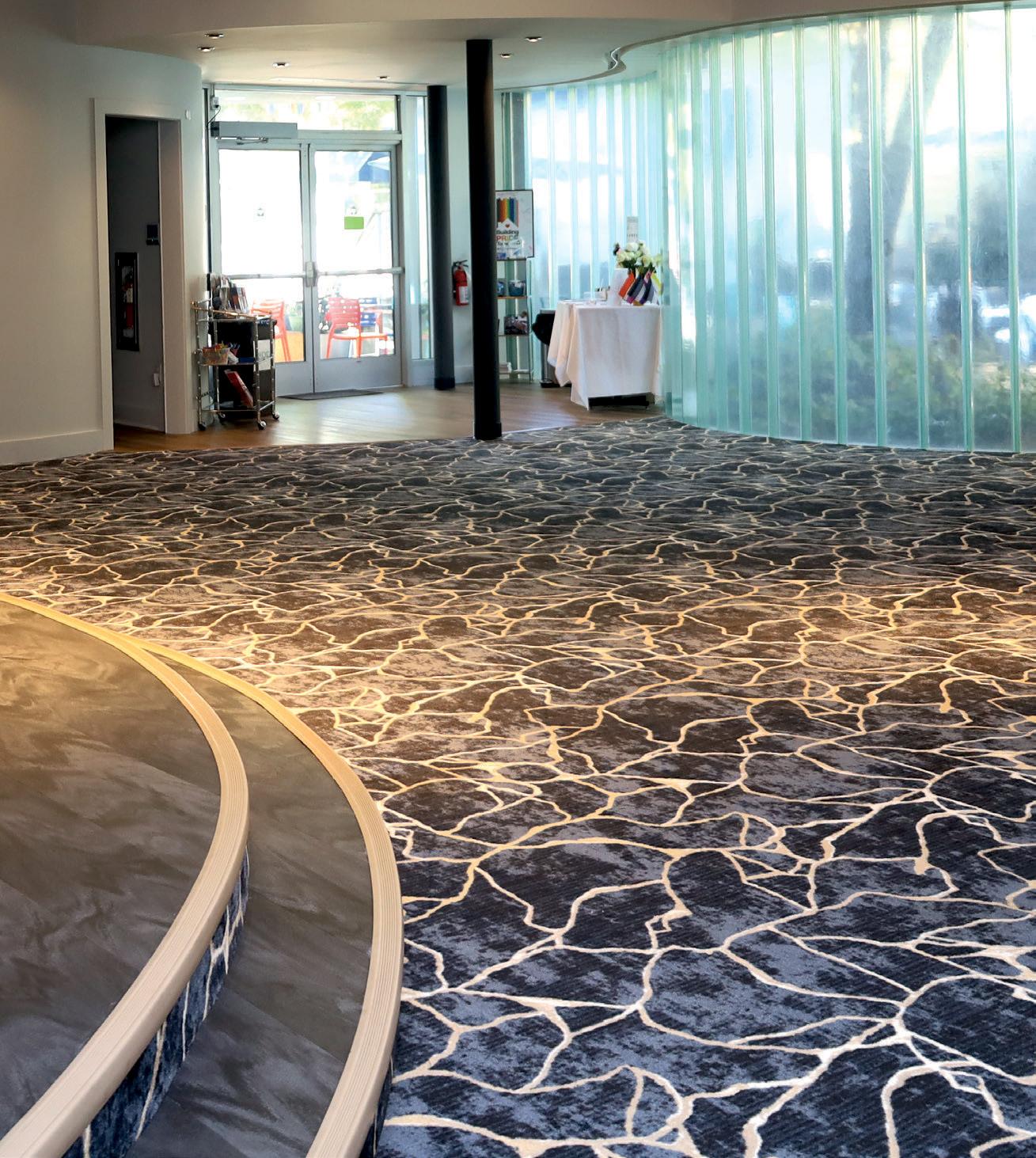

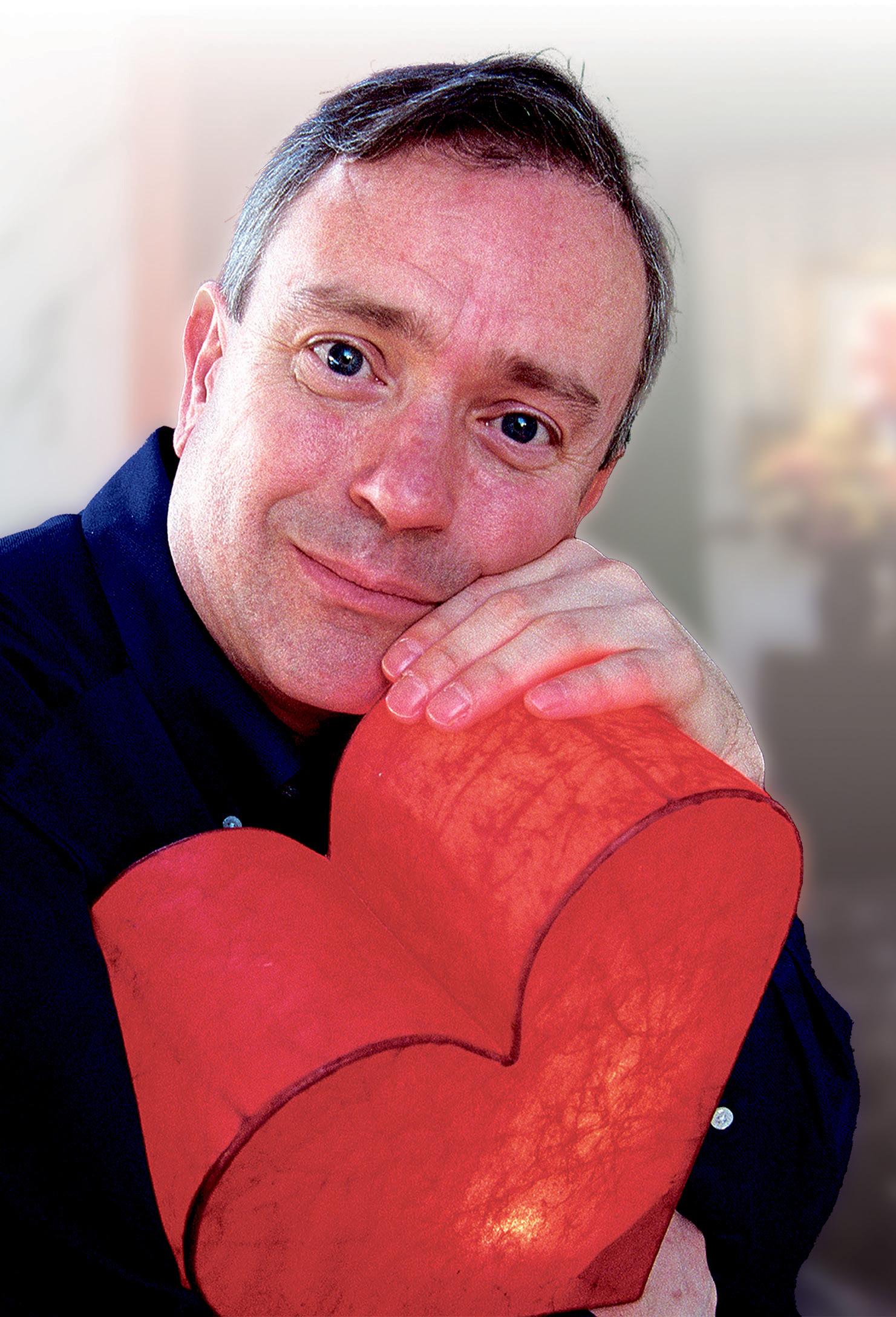
“We
PLANNED GIVING OPTIONS
Bequests
Name CAMP Rehoboth in your will or trust
Retirement Accounts & Life Insurance
Designate CAMP Rehoboth as a beneficiary.
IRA Charitable Rollover
If 70½ or older, give up to $100,000 tax-free from your IRA.
Appreciated Stock & Bonds
Donate securities to maximize impact and reduce capital gains tax.
Gifting Real Estate or Personal Property
You may leave your home or other property to CAMP Rehoboth through your will or a charitable trust. Consult your legal and tax advisors to determine the best way to structure your gift.
envisioned CAMP Rehoboth as the heart of the community. CAMP Rehoboth became a gift to the community around us.”
—Murray
Archibald,
CAMP Rehoboth Co-Founder

Contact our Development Manager, Laurie Thompson, at Laurie@CAMPRehoboth.org to learn more about these ways to give. CAMPRehoboth.org/PlannedGiving EIN # 51-0331962 © CAMP Rehoboth 2025
An Intern Reflects
My Chapter with CAMP Rehoboth
Right Where I Needed to Be
From a young age, I remember walking in Rehoboth Beach, wandering wherever the wind would take me. With an ice cream cone dripping onto my arm or the saltiness lingering on my lips from a bucket of fries, I’d walk aimlessly for hours. On random corners and random streets, I’d find news racks with various publications. I wasn’t always much of a reader, and at that age I had no business picking up a newspaper. Despite my naïveté, there was always one publication that caught my eye. The one with bright colors and photos of people spreading warmth and joy. In big bold letters, I would see the publication's title, Letters from CAMP Rehoboth.
The first time I grabbed a copy of Letters was in June 2023, completely entranced by Murray Archibald's Drag Revolution cover. I remember that moment vividly. I was sitting in CAMP Rehoboth's courtyard, eating a scoop of peppermint ice cream, with Pride flags and string lights dangling above, bringing life to the space. This cover spoke to me, inviting me to learn what CAMP Rehoboth was all about. As I flipped through the pages, I realized that I was sitting in the place where so many people advocated for LGBTQ+ visibility in southern Delaware.
When I was younger, I always thought that there was no place in Delaware for someone like me. I only knew of one other transgender girl and believed we were the only two trans people in the state (this thought makes me laugh now). I had other LGBTQ+ friends, but I thought there was nowhere that we thrived. In my mind, I would have to move miles away to a bustling city with a fervent LGBTQ+ scene to be understood. So it was to my surprise that there was a vibrant LGBTQ+ community in the exact place I had grown up. For years, it had blossomed right in the area where I was sitting, under the string lights, with my melted cup of ice cream.
It never dawned on me that someday I would be interning for a local LGBTQ+ organization. When I saw the posting for the Fay Jacobs Communications Internship with CAMP Rehoboth, I wanted to get it so badly. First, it was a great oppor-
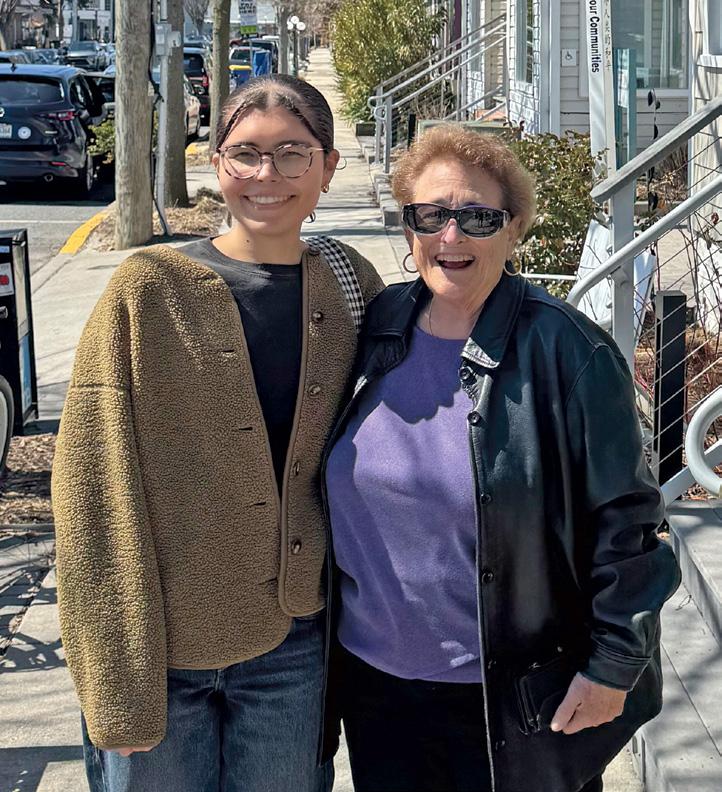
When I was younger, I always thought that there was no place in Delaware for someone like me.
tunity for me to expand on concepts I’ve learned at my university. Most importantly, it was a chance for me to learn more about this wonderful organization and the work that they do. As an out and proud LGBTQ+ Latina, it has always been a mission of mine to support my community in any way I could. Whether that meant conducting positive LGBTQ+ research with the Queer Development Lab or applying for this position with CAMP Rehoboth. So when I received an email from Matty Brown offering me the internship, I was ecstatic.
The first day of my internship, I felt extremely nervous. It might have been the first-day jitters or maybe just a sense
of excitement. As soon as I walked through the door, I was welcomed with open arms, and those nerves vanished. I could feel the kind energy radiating off of every person I met. This energy filled the space with such warmth, and I knew then that CAMP Rehoboth was the perfect place for me to be. That day, I learned so much about the work the organization has done since 1991, playing a major role in making southern Delaware an accepting and safe place for LGBTQ+ individuals. To be part of this legacy is truly an honor.
I’m proud of the work I’ve done as the first Fay Jacobs Communications Intern. In the coming months, you will be able to find our Flickr profile that I helped develop. This is where you will find all of the wonderful photos taken by CAMP Rehoboth's hardworking photographers. With my background in communications and research, I also supported the development of the organization's communications practices. I’m hopeful that my work will benefit both CAMP Rehoboth and its members. Lastly, one of the major chunks of work that I did was filing for CAMPshots. This was by far my favorite task, as I got to see all the wonderful faces that have made CAMP Rehoboth what it is today.
I’m so grateful to the entire team for welcoming me into this space. The work that they’ve done, and continue to do, is inspiring. I learned so much from them, and this experience will have a lasting impact on my life. I’m not sure where my next chapter leads, but I believe that I will end up right where I need to be. I’ll trust that someday the wind will bring me back to this wonderful place to pick up where I left off. ▼
Kel Marquez-Henriquez (she/her) is a senior at the University of Delaware, majoring in Communications and Women and Gender Studies. She is the first-ever Fay Jacobs Communications Intern for CAMP Rehoboth.
weekend September 5&6, 2026




Sunday, Sept. 6

Saturday, Sept. 5

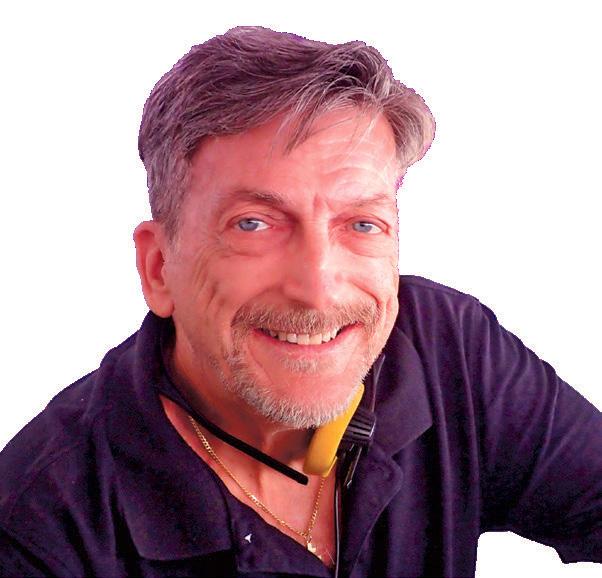
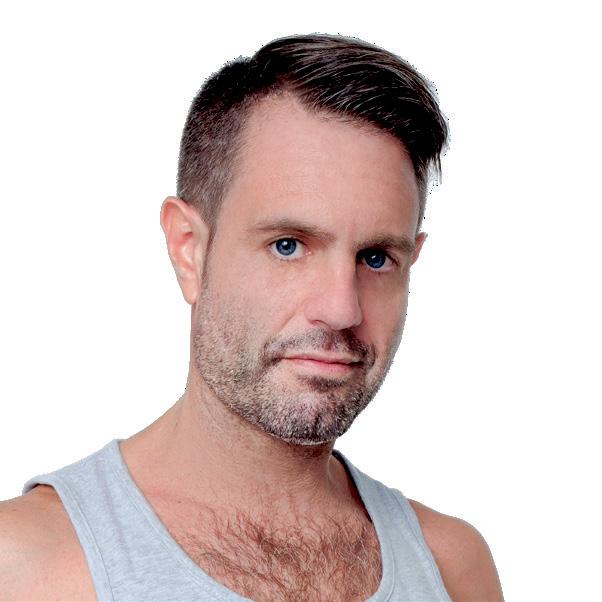
Medical Foundation



Trusted Care
For more than 100 years, Beebe Healthcare has proudly served our community delivering comprehensive, patient-centered care with dedication and heart. From primary care and walk-in visits to advanced surgery and 24/7 emergency services, we’re here for every stage of life.
Now with MyChart, staying connected to your care team is easier than ever. Message your doctor, view test results, and manage your health all in one place.
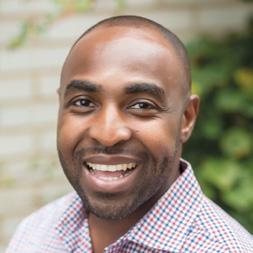
Words Matter
I Am Somebody
In 1984, at the close of his historic campaign for the Democratic presidential nomination, Reverend Jesse Jackson delivered what would become his most famous speech before the Democratic National Convention in San Francisco, California.
“America is not like a blanket—one piece of unbroken cloth, the same color, the same texture, the same size. America is more like a quilt—many patches, many pieces, many colors, many sizes, all woven and held together by a common thread. The White, the Hispanic, the Black, the Arab, the Jew, the woman, the Native American, the small farmer, the businessperson, the environmentalist, the peace activist, the young, the old, the lesbian, the gay, and the disabled make up the American quilt.
“Even in our fractured state, all of us count and all of us fit somewhere. We have proven that we can survive without each other. But we have not proven that we can win and progress without each other. We must come together.
“The Rainbow includes lesbians and gays. No American citizen ought to be denied equal protection from the law.”
That vision of a united America stitched together like a quilt became the throughline of Jackson’s public life. It was a vision that included LGBTQ+ Americans.
In October 1987, Jackson addressed the crowd at the Second National March on Washington for Lesbian and Gay Rights, the largest rally of its kind to date, with at least 200,000 participants. He told them: “We gather today to say that we insist on equal protection under the law for every American—for workers’ rights, women’s rights, for the rights of religious freedom, the rights of individual privacy, for the rights of sexual preference. We come together for the rights of all American people.”
The following year, after his second unsuccessful bid for the presidency, Jackson returned to the 1988 Democratic National Convention stage in Atlanta, Georgia and delivered remarks that feel, even now, startlingly current:
Jackson’s advocacy for the LGBTQ+ community extended well beyond the convention stages and campaigns for office.
“Gays and lesbians, when you fight against discrimination and a cure for AIDS, you are right—but your patch is not big enough. Conservatives and progressives, when you fight for what you believe, right wing, left wing, hawk, dove, you are right from your point of view, but your point of view is not enough.
“But don’t despair. Be as wise as my grandmama. Pull the patches and the pieces together, bound by a common thread. When we form a great quilt of unity and common ground, we’ll have the power to bring about health care and housing and jobs and education and hope to our Nation.
“We, the people, can win!
“We stand at the end of a long dark night of reaction. We stand tonight united in the commitment to a new direction. For almost eight years we’ve been led by those who view social good as coming from private interest, who view public life as a means to increase private wealth. They have been prepared to sacrifice the common good of the many to satisfy the private interests and wealth of a few.
“We believe in a government that is a tool of our democracy in service to the
BY CLARENCE FLUKER
public, not an instrument of the aristocracy in search of private wealth. We believe in government with the consent of the governed ‘of, for and by the people.’ We must now emerge into a new day with a new direction.”
Those words, spoken more than 30 years ago, have only grown more resonant with time.
Jackson’s advocacy for the LGBTQ+ community extended well beyond the convention stages and campaigns for office. As early as 2004, he went on record in support of same-sex marriage. In 2010, he called for the repeal of California’s ban on gay marriage, and when the Supreme Court made same-sex marriage the law of the land in 2015, he celebrated. His commitment never wavered. Perhaps nothing captured his spirit more simply than a phrase he returned to again and again: I am somebody
When Reverend Jackson stood before a crowd and declared those words, you knew he meant them not just for himself, but for every person in the room. He believed, without reservation, in the dignity and worth of every human being. He believed that no matter where you stood on this Earth, you were God’s child and you deserved to be there. Whether his audience was a gymnasium full of schoolchildren, a college auditorium, or a crowd of thousands, he would call out and wait for them to call back: I am somebody.
We are all somebody.
Reverend Jesse Jackson has left this world, but his legacy of words spoken with conviction, of actions taken with courage, of a life lived in service to the belief that every patch belongs in the quilt—remains. It is ours now to remember, to embrace, and to carry forward. ▼
Clarence J. Fluker is a public affairs and social impact strategist. Since 2008, he’s also been a contributing writer for Swerv. Follow him on Instagram: @Mr_CJFluker
Photo: Jesse_Jackson,_half-length_portrait_of_Jackson_seated_at_a_table,_July_1,_1983.jpg: Leffler, Warren K. This image is available from the United States Library of Congress’s Prints and Photographs division.

Women’s+ FEST Turns 25
25 WAYS
to Make the Most of WOMEN’S+ FEST
April 9-12
BY NANCY SAKADUSKI
Women’s+ FEST
Hi-Yo, Silver! It’s Women’s+ FEST’s 25th anniversary! Women’s+ FEST can no longer be contained within a single weekend or a particular venue. This year, its 25th, FEST breaks out into a yearlong range of programming throughout the community. But the centerpiece is the upcoming weekend of festivities celebrating 25 years of bringing together all those on the spectrum of the feminine spirit. If you or your companion has any needs related to accessibility, please contact accessibility@camprehoboth.org.
Here is a pull-out guide for you to use to make sure you don’t miss any of the fun.
THURSDAY
1. Pick up your FEST passes and tickets. Don’t have them yet? Go to camprehoboth. org/womensfest before they’re gone!
2. Meet up with friends, check out who’s here, perhaps stroll the boardwalk.
3. Make some new friends or catch up with old ones at the Sip N Mingle at The Dunes, 2-5 pm**
4. Check out the FEST+ Art 2026 Reception at the CAMP Rehoboth Community Center, 3-5 pm, FREE
5. Kick back and listen to WomenKind, CAMP Rehoboth Chorus’s newest ensemble, in an a cappella performance at the CAMP Rehoboth Community Center, 4 pm, FREE
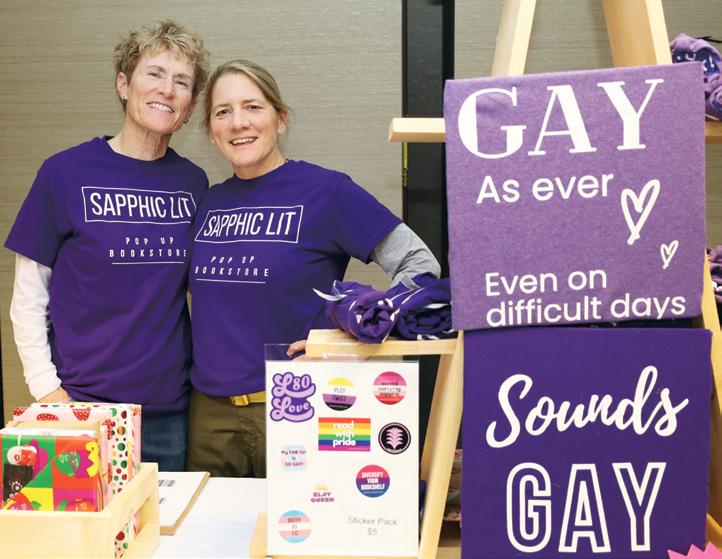
6. Don’t miss the FEST Pre-Party at Aqua Bar & Grill, 4-7 pm**
7. Join the crowd at the traditional Georgette Krenkel Welcome Dance at the RB Convention Center, 7-10 pm*
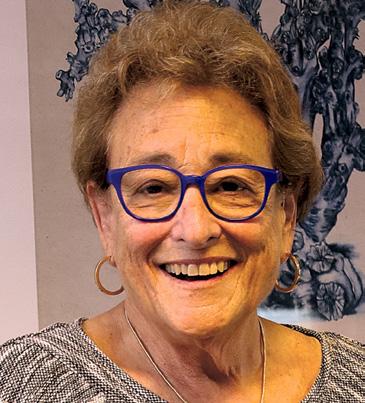
8. Look for
longtime fans to kick off the dance on Thursday night.”
FRIDAY
9. Shop the Sapphic Pop-Up Bookstore at CAMP Rehoboth Com munity Center, 11 am-4 pm
10. Meet your future wife (it’s happened!), perhaps while having brunch at one of Rehoboth’s great spots.
11. Buckle up for Drag Bingo at Aqua Bar & Grill, 1-3 pm**
12. Kick up your heels at the Singles Tea Dance, Aqua Bar & Grill, 4-7 pm**
13. Hop into a happy hour—there are many to choose from and likely some Friday at the RB Convention Center, starting at 7 pm with Mina Hartong
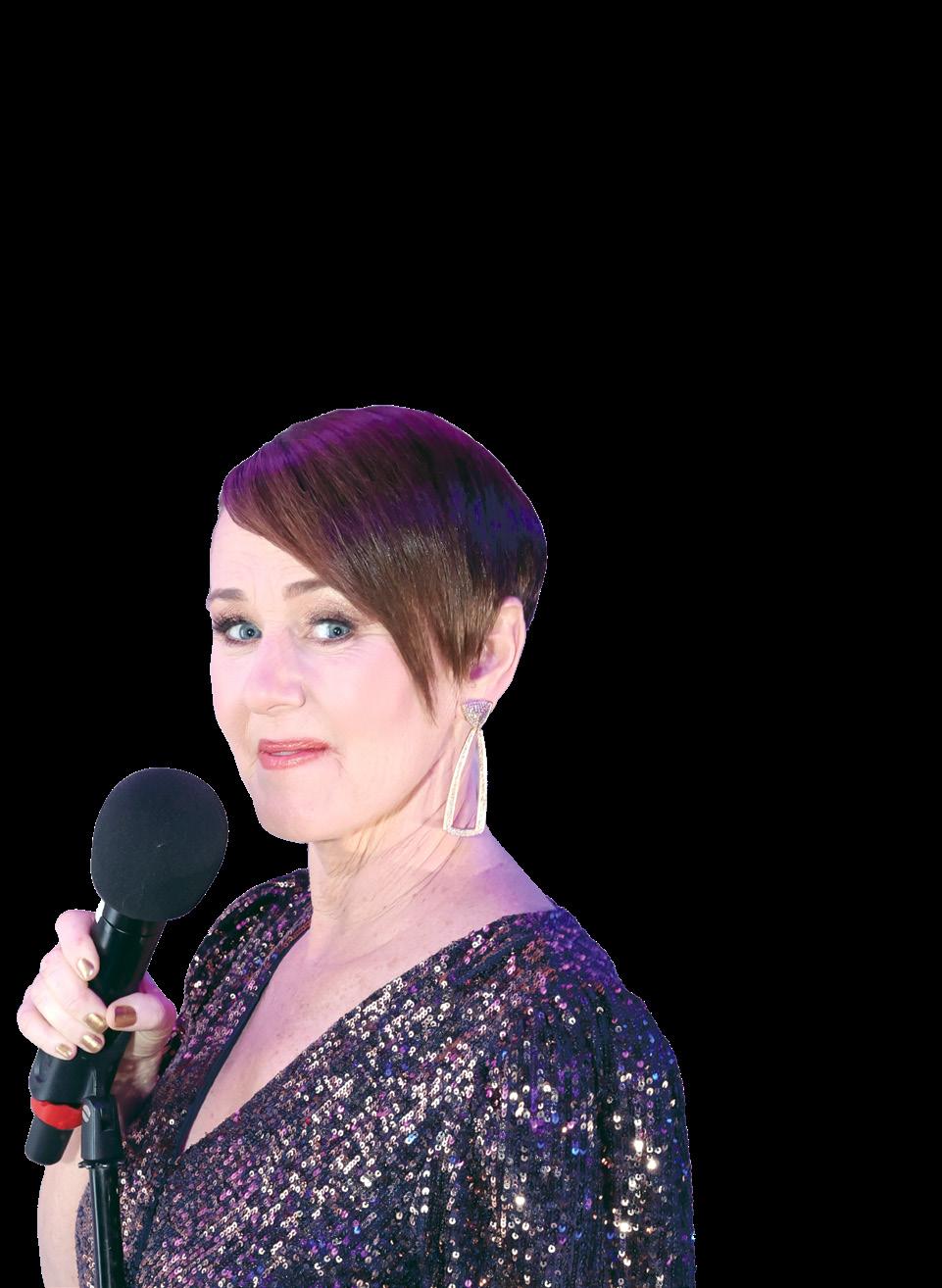
The evening’s emcee for the Friday Night Headline Showcase is Fay , who will provide insights on the 25-year history of Women’s+ FEST as well as offer witty comments on the proceedings.
Come home with a trip of a lifetime, a piece of original art, or another treasure from the at the RB Convention Center, between the entertain-
The Friday Night Headcontinues Yoli Mayor from America’s Got Talent American Idol at RB Convention Center, ending around 9:30 pm*
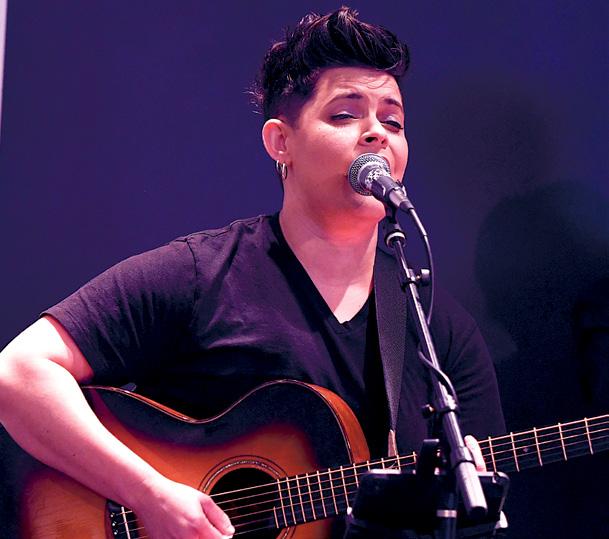
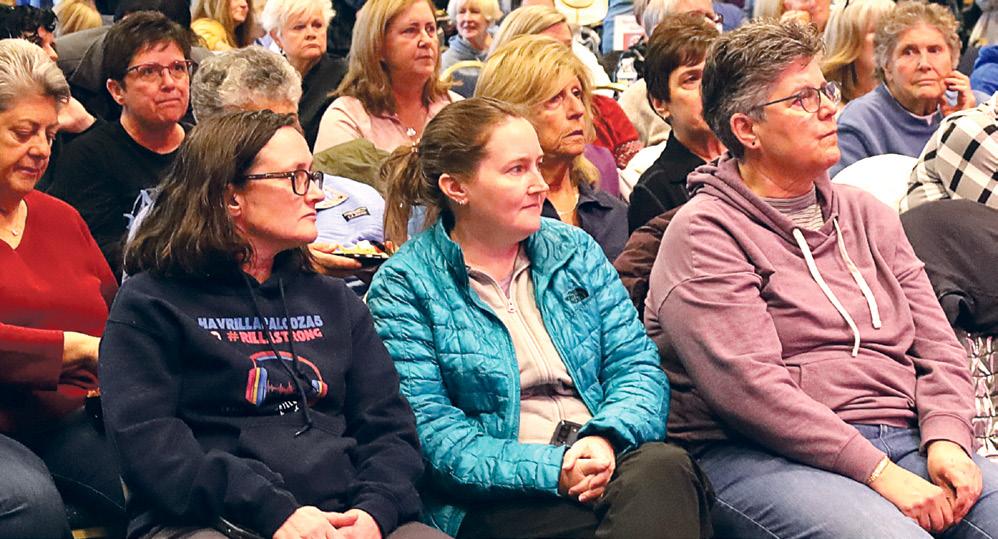
18. You’re not finished, are you? Pop into one of the local bars, see the beach at night, or rest up for a big day tomorrow.
SATURDAY
19. Pick up some gifts for friends or treats for yourself at the FEST Expo at the RB Convention Center, 9 am–1 pm. The expo will showcase artworks, including original watercolor paintings, reverse glass painting, handmade jewelry, and wall art, and one-of-a-kind crafts such as handmade leather and metal bracelets, shell and sea glass items, carved wood, stained glass, artistic garden décor, and Pride items. There will also be jazzy sunglasses, hats, and t-shirts, as well as body and bath items, soy candles, scented products, and home décor. Community organizations and service providers will offer resources for women’s health, cancer prevention, and LGBTQ+ support. Also participating will be groups offering information on elder care and family services. FREE to enter
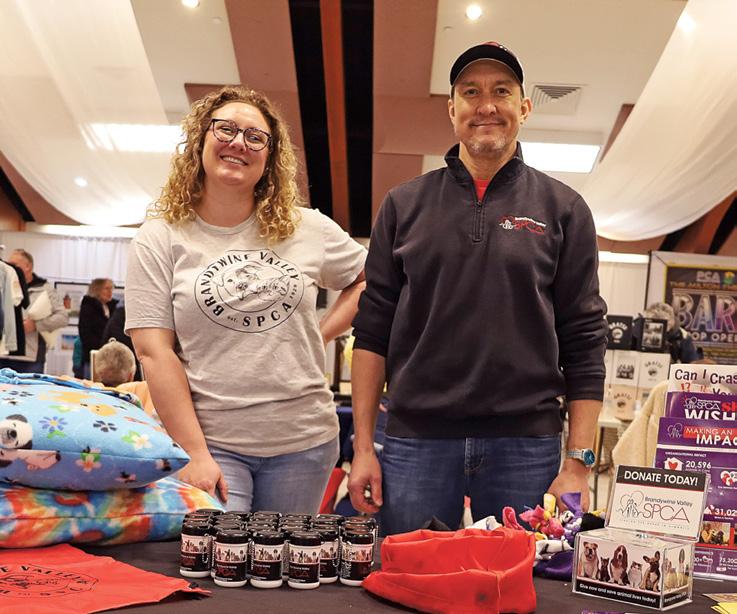
20. Have an eye-opener and enjoy the Drag Brunch at Kiwi’s Kove at The Sands, 12-2 pm.**
21. Hear from Ashley Carothers, Executive Director at the Modern Military Asso-
ciation of America, speaking at CAMP Rehoboth Community Center, 3 pm (free but registration required).
22. Have dinner at one of Rehoboth’s many wonderful restaurants.
23. Wear your silver slippers, hats, shirts, boots, bangles, and beads to the Silver Anniversary Premier Dance featuring DJ Peggy Castle at the RB Convention Center, 7-11 pm.* This is a bling blaster you won’t want to miss.
SUNDAY
24. Be sure to catch the Farewell Social Regina Sayles, Colleen Clark, and Mama’s Black Sheep, and including a tribute to the late Christine Havrilla. RB Conven tion Center, 12-3 pm.*
25. Keep an eye out for more FEST events and pro grams throughout 2026. ▼
*Ticket required. Visit camprehoboth. org/womensfest to purchase.
**Partner event. Purchase tickets from venue/ partner.
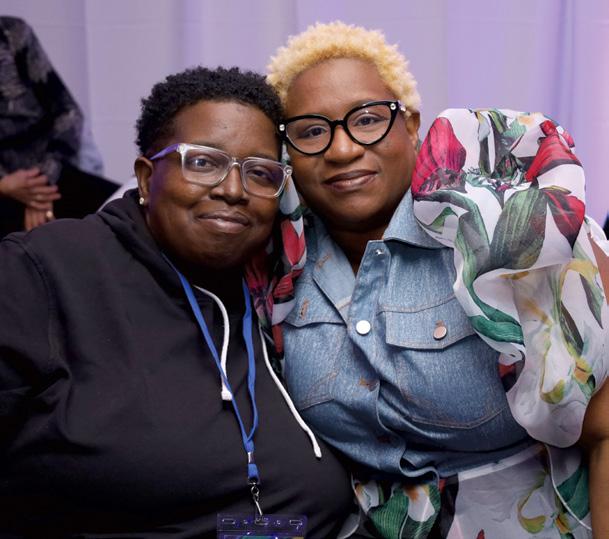
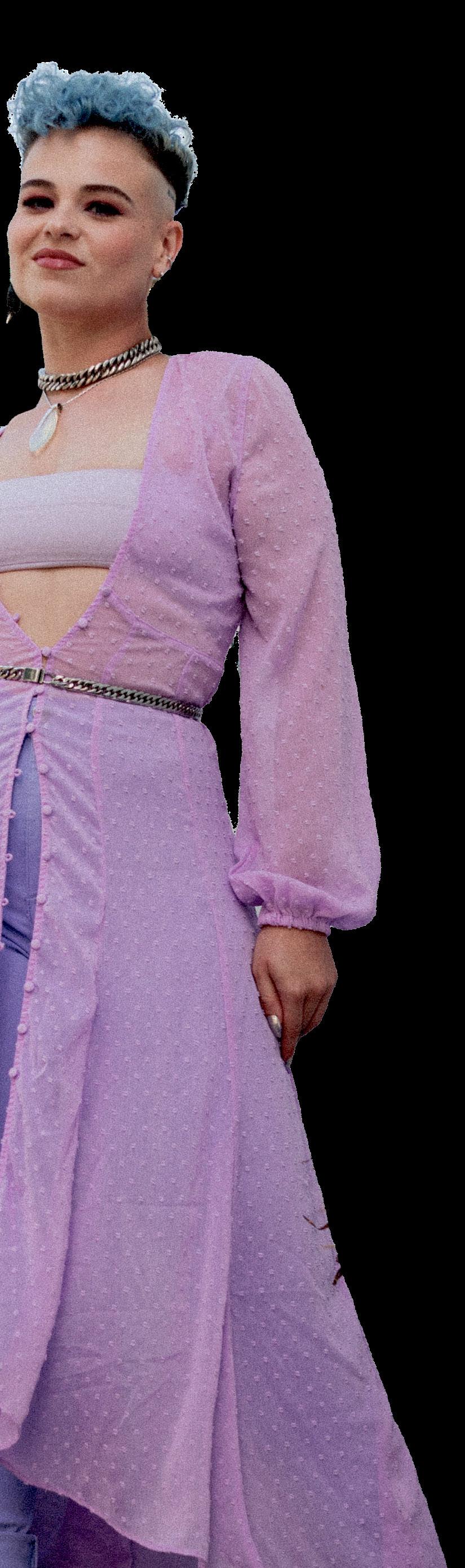
Women’s+ FEST Turns 25
BY NANCY SAKADUSKI
Sneak Peek at the Women’s+ FEST Auction
One of the highlights of FEST each year is the live auction, held between the two entertainment acts on Friday night at the Rehoboth Beach Convention Center. Consider bidding on one of these great items, whether it’s the trip of a lifetime, a unique work of art, or a memorable experience for you and your friends. You will do well by doing good when you support the CAMP Rehoboth FEST auction.
Olivia 2026 Bordeaux: From Vine to Table Riverboat Cruise, donated by Olivia Travel. Value: $13,598 • Explore the bountiful beauty of France’s Bordeaux region on this 7-night Olivia luxury cruise for two, August 18-25, 2026. Sail along the Garonne and Dordogne Rivers, visiting historic villages and world-renowned vineyards while enjoying Olivia’s curated experiences and attention to detail. Explore iconic destinations, including Saint-Émilion, Médoc, and Bordeaux, known for incredible wine, cuisine, and culture. Includes: luxurious accommodations, gourmet meals inspired by regional cuisine, wine and beer with meals, guided excursions, and onboard entertainment. Olivia is legendary for its unforgettable safe and fun experiences curated specifically for LGBTQ+ women.

Original painting by Murray Archibald. Donated by Murray Archibald. Value: Priceless • “Modern HEART (Sisters)” by CAMP Rehoboth co-founder Murray Archibald is a spectacular work in acrylic gouache on museum canvas, measuring 30” x 30.” Murray’s work, known for its colorful and inventive elements, is in many private collections as well as the Biggs Museum of American Art.
“While most of my art donations have gone to Sundance (and now SUNFESTIVAL) over the years,” Murray says, I am happy to have created a piece especially for this year’s 25th Anniversary Women’s+ FEST. With “Modern HEART (Sisters)” I return to my recurring exploration of the way patterns shape our human condition.
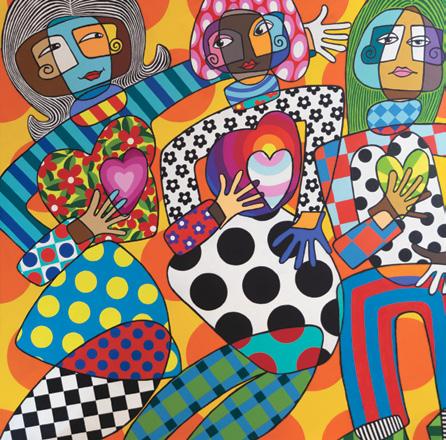
Here again, as in my 2025 exhibit, I play with gender and race in a way I hope allows my bedrock belief in true equality and love to be fully present. At the same time, it is colorful, playful, and joyous.”
WorldMark Indio (Palm Springs) Getaway, Donated by Connie Fox and Donna Adair. Value: $2,100 • Relax in sunny splendor with this 7-night stay (October 31-November 7, 2026) in a spacious two-bedroom suite (with full kitchen) in Indio, California (Greater Palm Springs). Located right next to Terra Lago Golf Course, the property features awesome pools, a lazy river, hot tubs, day spa, tennis, and other fabulous amenities. Palm Springs is a vibrant oasis in the desert, known for its stunning landscapes and wonderful restaurants and rich LGBTQ+-friendly community. Fall is an ideal time to visit, offering great weather with fewer crowds.

Private 4-Hour Cruise and Gourmet Lunch for 6. Donated by Freedom Boat Club and Lori’s Oy Vey Café. Value: $1,165 • Enjoy an afternoon on the water with this custom cruise, guided by a captain from Freedom Boat Club. Included is a handcrafted gourmet lunch from beloved local eatery Lori’s Oy Vey Café—made just for your crew. Choose your boat (pontoon, deck,
or center console boat), your date (May–October 2026, except July 4 and holiday weekends), and your activity (cruising, water sports, or fishing).
Cocktail-making Class with Hors d’oeuvres at Shorebreak Lodge. Donated by Shorebreak Lodge. Value: $600 • Shorebreak Lodge is known for its inspired local cuisine and handcrafted cocktails. Now you can learn how to create signature cocktails yourself. Shorebreak mixologist Ben Winiarczyk will guide a group of up to six in making (and enjoying) three different cocktails. Each guest will have the opportunity to get behind the bar and craft their own cocktail. The experience lasts two hours at a mutually agreed upon time. Shorebreak snacks are included.
Rainbow Heart Painting by Laura Jednorski. Donated by Laura Jednorski. Value: $150 • Like the FEST t-shirt art? Own the original. Award-winning artist Laura Jednorski has generously donated the original artwork used for the back of this year’s t-shirt. The work measures 9”x12.” You can find Laura on Facebook—her art page is “Nature’s Palette,” or you can visit her home gallery in Rehoboth. ▼
Can’t Make the Live Auction but Want to Place a Bid?
Contact Laurie Thompson at laurie@ camprehoboth.org.
Additional details are available at camprehoboth.org/womensfest. Read descriptions carefully before bidding. Winning bidders pay (check/credit card) on night of auction.
















































CAMP REHOBOTH MEMBERSHIP
Join today to support our mission!
CAMP REHOBOTH RAINBOW MEMBERS RECEIVE:
• Advance access to ticket sales for CAMP Rehoboth events
• Invitations to member-only events and updates
• Recognition in Letters from CAMP Rehoboth (3 times per year)
• Rainbow Member window cling
• Weekly What’s Happening at CAMP Rehoboth email
INDIGO & PURPLE MEMBERS RECEIVE:
• All Rainbow Member benefits, plus: Private invitations to special events, including VIP receptions and donor appreciation events
FOUNDERS’ CIRCLE MEMBERS RECEIVE:
• Annual recognition in Letters from CAMP Rehoboth PAY ANNUALLY or MONTHLY
☐ PURPLE LEVEL ☐ $2400 annual or ☐ $200 monthly
☐ INDIGO LEVEL ☐ $1200 annual or ☐ $100 monthly
☐ BLUE LEVEL ☐ $900 annual or ☐ $75 monthly
☐ GREEN LEVEL ☐ $600 annual or ☐ $50 monthly
☐ YELLOW LEVEL ☐ $300 annual or ☐ $25 monthly
☐ ORANGE LEVEL ☐ $180 annual or ☐ $15 monthly
☐ RED BASIC ☐ $50 annual or ☐ Basic Dual/Family, $85 annual
☐ YOUNG ADULT (18-25 years old) ☐ $25 annual
spotlight
Meet Christa
BY SHAE WAGNER
Marks!
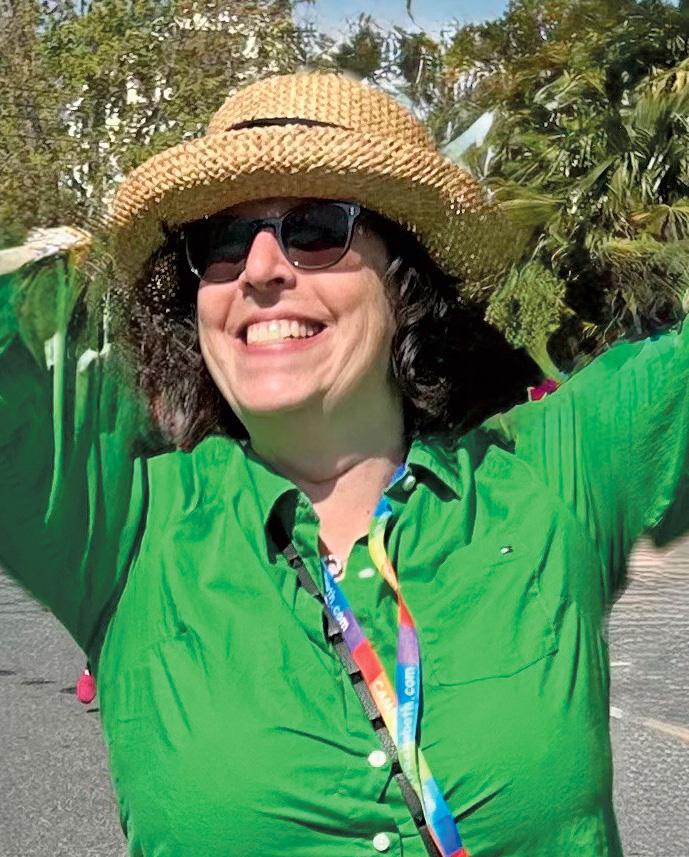
SHAE WAGNER:
When did you start volunteering at CAMP Rehoboth?
CHRISTA MARKS: I started volunteering for CAMP starting with Women’s FEST in 2024.
SW: Why is Women’s+ FEST important to you?
CM: Being able to create a safe space where we can all come together, hold space for one another and celebrate our full spectrum of Women.
SW: Best year of your life and why?
CM: I can’t pick just one. Every year I strive to live my best life. Each and every year of my life has been integral in bringing me to where I am today.
SW: What’s your favorite way to unwind?
CM: Traveling with my wife, Lisa, knitting, boating, RVing, spending quality times with family and friends, and napping with my dog Henry.
SW: Favorite US city and why?
EMAIL 1 CELL 1 EMAIL 2 CELL 2
☐ Enclosed is my check payable to CAMP Rehoboth for the full annual amount.
☐ Please charge my Recurring Monthly or Annual Membership fee to: CREDIT CARD NUMBER
SIGNATURE
EXPECTED
CM: Rehoboth Beach of course! I get to live in a place that people come to for vacation. We have lovely weather, we enjoy all four seasons, we’ve got the ocean and the bay. We have amazing food, lively bars, boutique shopping, outlet shopping, and best of all CAMP Rehoboth that supports and advocates for our diverse community. Our diverse community is what makes Sussex County so unique.
SW: What advice would you give to a new CAMP Rehoboth volunteer?
CM: Take a look at all the wonderful volunteer opportunities CAMP has to offer and start with something that aligns with your passions. There are so many opportunities.
Just know that YOU are a HUGE part of what makes our community so great!▼
ShaeWagner is Event and Volunteer Coordinator at CAMP Rehoboth.
CAMPshots
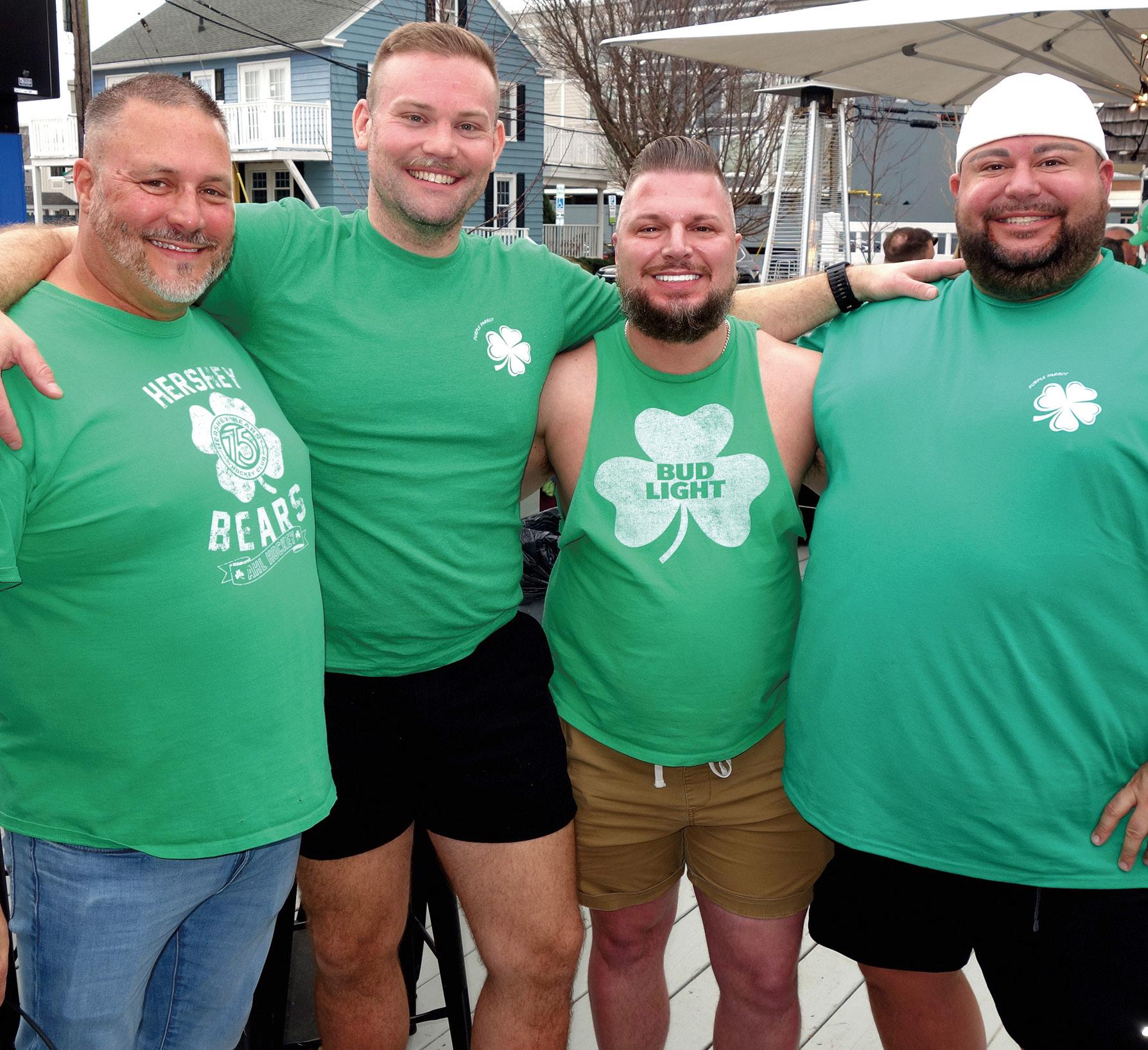
SCENES FROM REHOBOTH
BEACH
Emerald City!
St. Patrick's Day, Rehoboth Beach Chili Crawl, Rilla-Fest, CAMP Rehoboth Poetry Jam, Clear Space Theater, Gay Women of Rehoboth, FURST Friday, and More!
THIS PAGE (left to right) 1 ) at St. Patrick's Day Weekend: Matt Hocking, Cole Larkins, Matt Douglas, AJ Eckman, Christopher Rudolph, Brendan Campbell, Nicholas Biagioli, Bruce Clayton (Aqua); Paula Thorton, Matty Brown, Jackie Thorton, Tim Joyner, Tom Albrecht, Ken Jamison, Chad Stover, Kevin Morris, Cynthia Carey, Dale Carey, Chris Gearin, Richard Looman (Diego's)
OPPOSITE PAGE 2) at St. Patrick's Day Weekend: Kelly Doyle, Magnolia Applebottom, Linda Wildasin, Michael Clay, Chuck McSweeney, John Marchie, Frank Lannucci, Roger Valentine, Paul Seyfert, Michael Kluk, Andrew Tutko (Diego's); Richard Norcross, Dan Kendall, Michael Taggart, Corey Peterson, Joe McHugh, Matt Schwab, Lisa Pillon, Maria Marchegiano, Mary Tapp (Nalu); Duane Reed, James Pol, Tommy Paoletti, John Derrick, Mark White, Keith Roman, Ryan Gordon (Rigby's)
More CAMPshots page 56
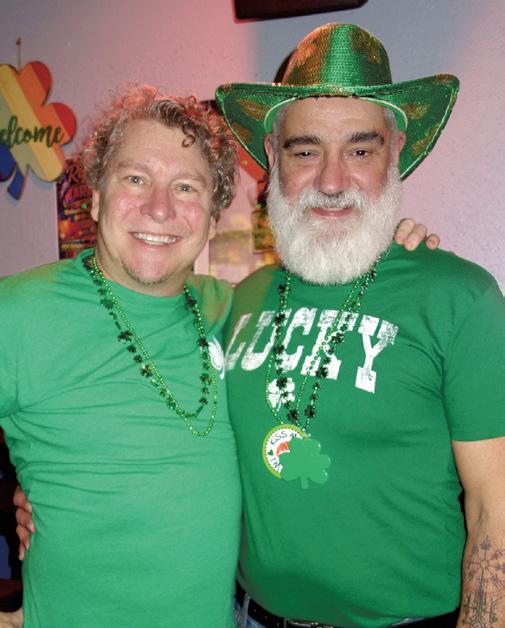
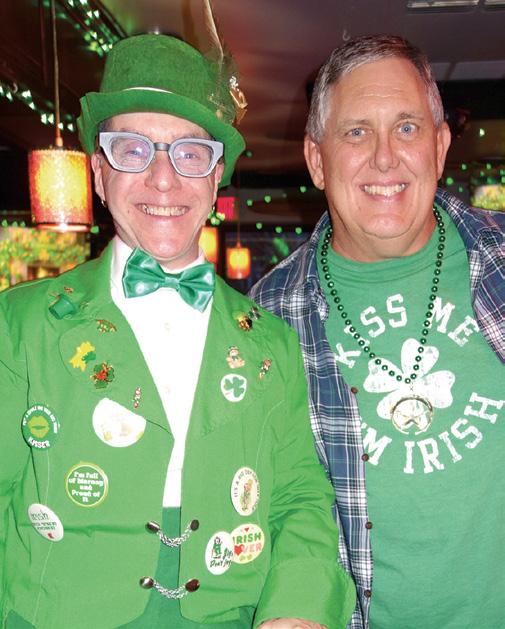
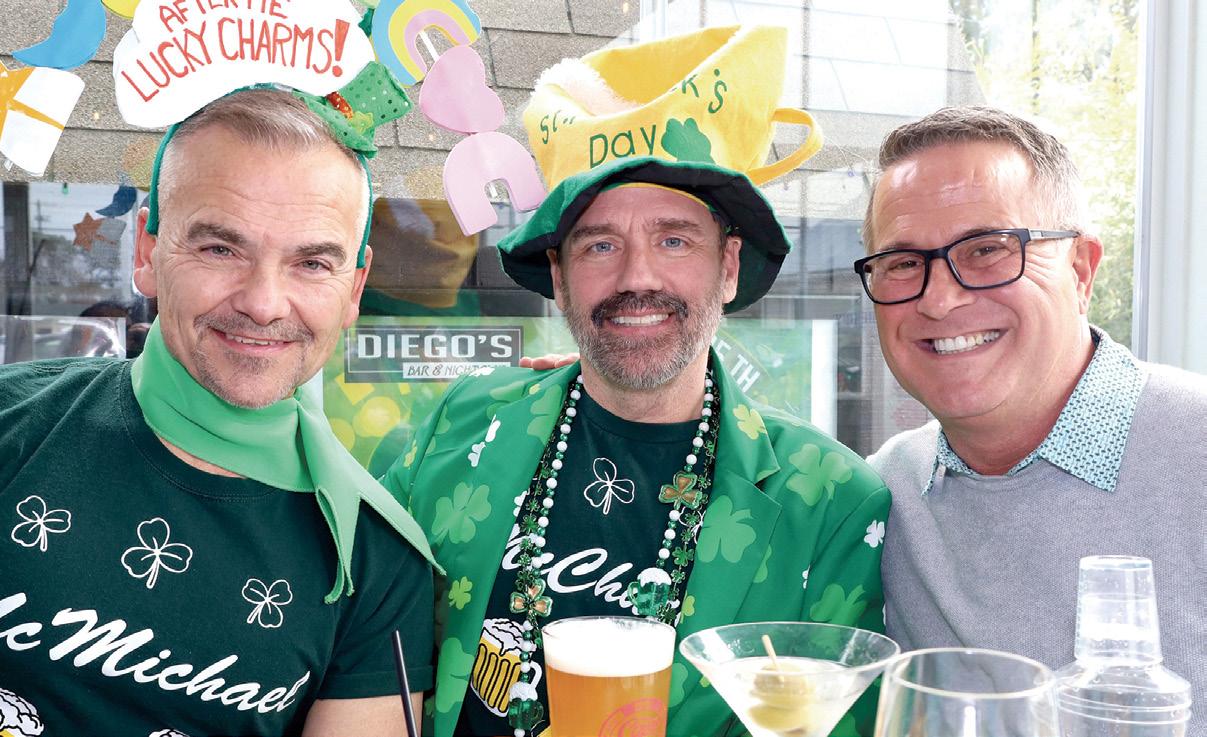
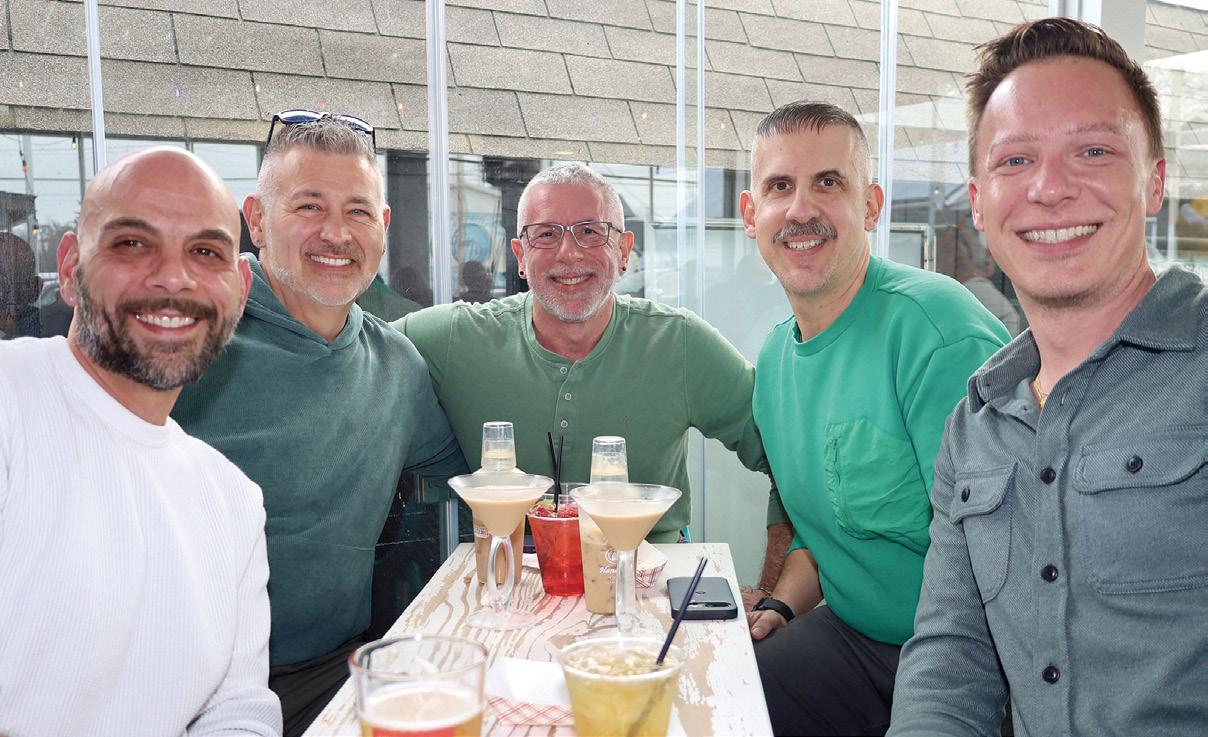
SCENES FROM REHOBOTH BEACH
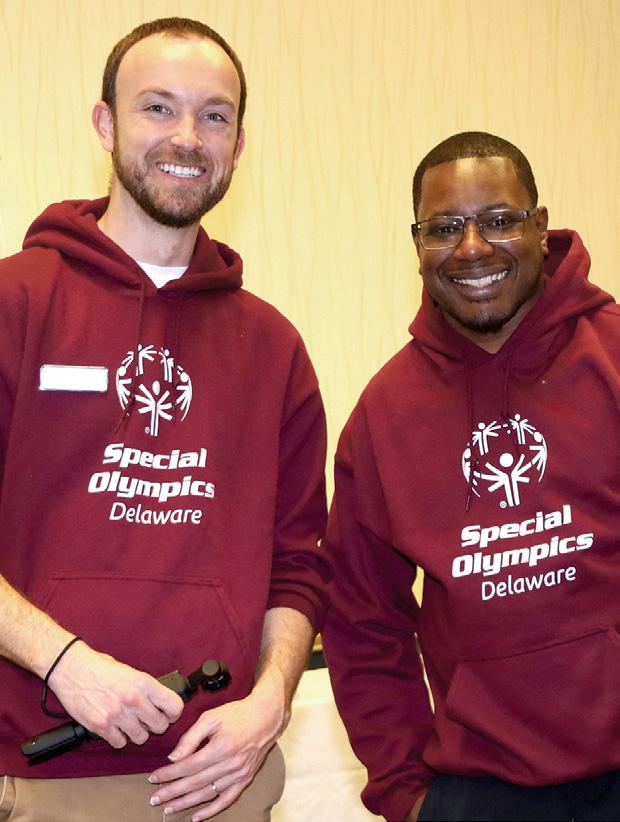
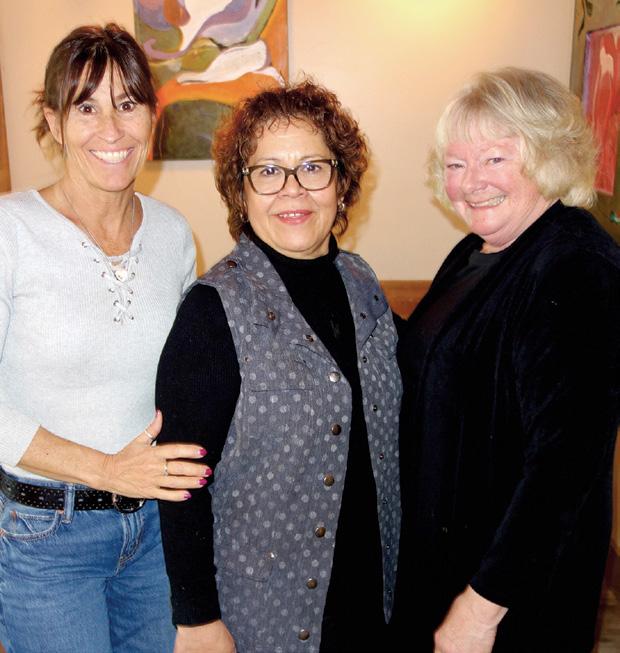
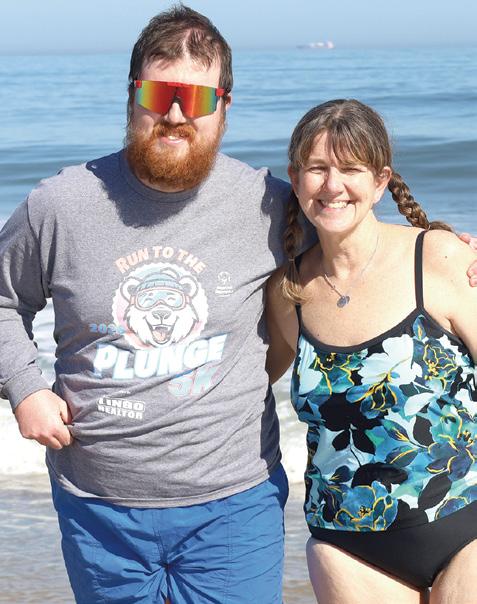
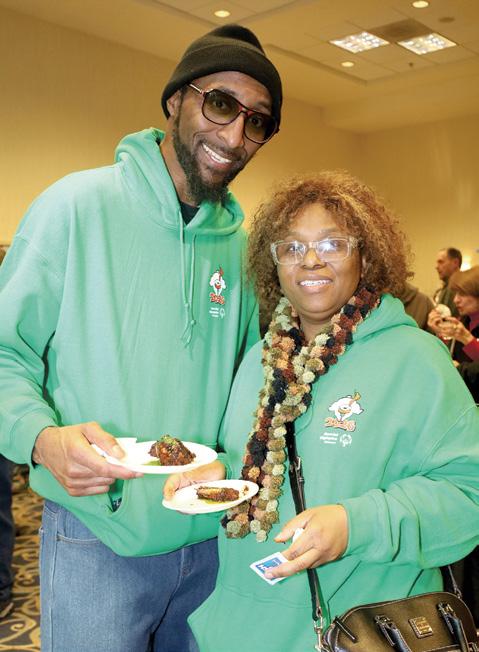
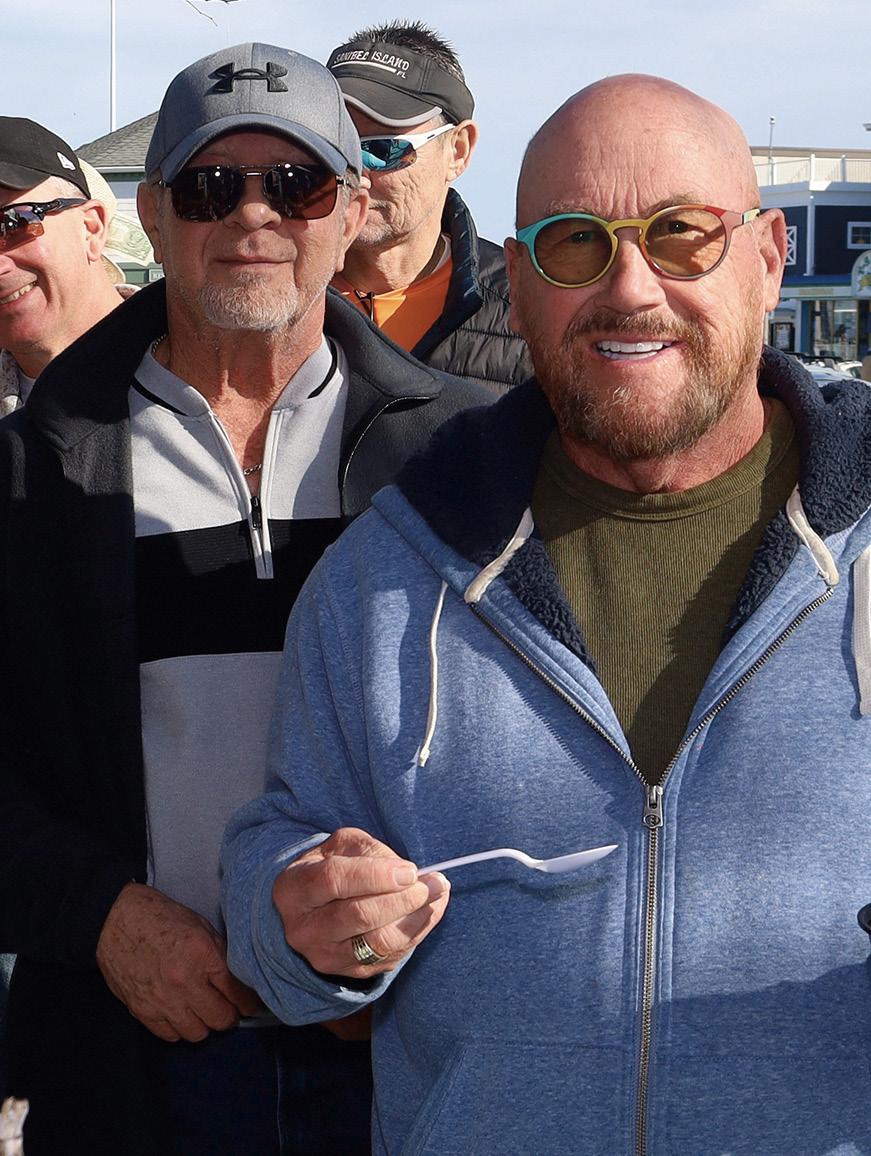
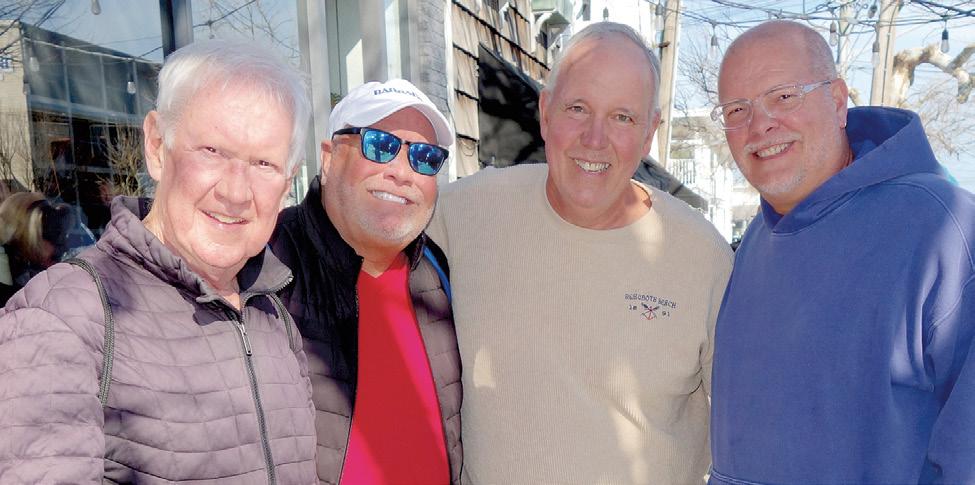
(Continued from page 55)
THIS PAGE (left to right) 1) at Polar Bear Plunge Weekend—RB Chili Crawl: Kris Bump, Cindy Bump, Barrel Bump, Justin Bates, Kim Bates, Ann Marie Perrotta, Lisa Miller, Chris White, Tamika White, Cliff Gibson, Charlie Gibson, John Cunningham, Alex Seymour, Tyrone Wallace, Glenn West, Max Dick, Chris Declark, Dave Declark, Ken Williams, David Smith, Pam Pineda, Yolanda Pineda, Jan Dunn, Christopher Murray, Drew Fiag.
OPPOSITE PAGE: 2) at CAMP Rehoboth Best Shot Art Reception: Don James, George Hudson, Leslie Sinclair, John Hoyt, Dennis Roberts, Kathy Campos, Deb Payette, Debbie Blair, Nancy Allen; 3) at CAMP Rehoboth Poetry Jam: Christa Marks, Karen Laitman, Kelly Sheridan, Chrissy Stegman, Ellie Maher, Debbie Bricker, Irene Fick, Shelley Blue Grabel, Guillermo Silveira, Judith Speizer Crandell, Coca Silveira, Judith Klein, Craig Roberts, Derrick Johnson, Judith Ramirez, Amanda Aris; 4) at Theo's: Anna Pacio, Judy Rolfe; 5) at Rehoboth Ale House: Edward Chrzanowski, Connor Miller, Mary Boggi, Michael Weiss, DE State Representative Claire Snyder-Hall, DE State Senator Russ Huxtable, DE Congresswoman Sarah McBride.
(More CAMPshots page 82)
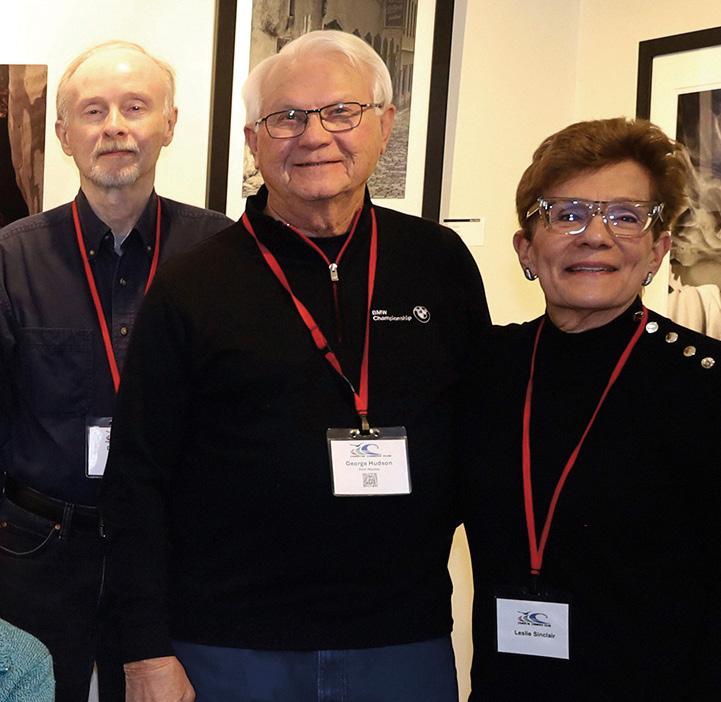
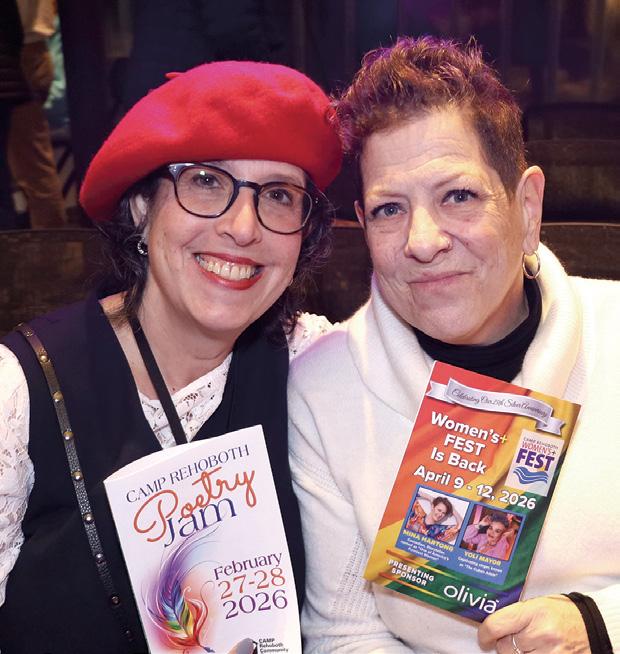
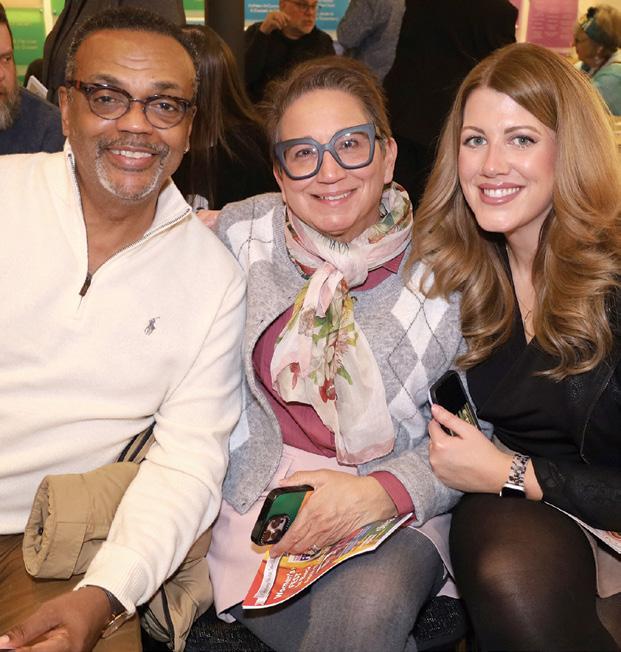

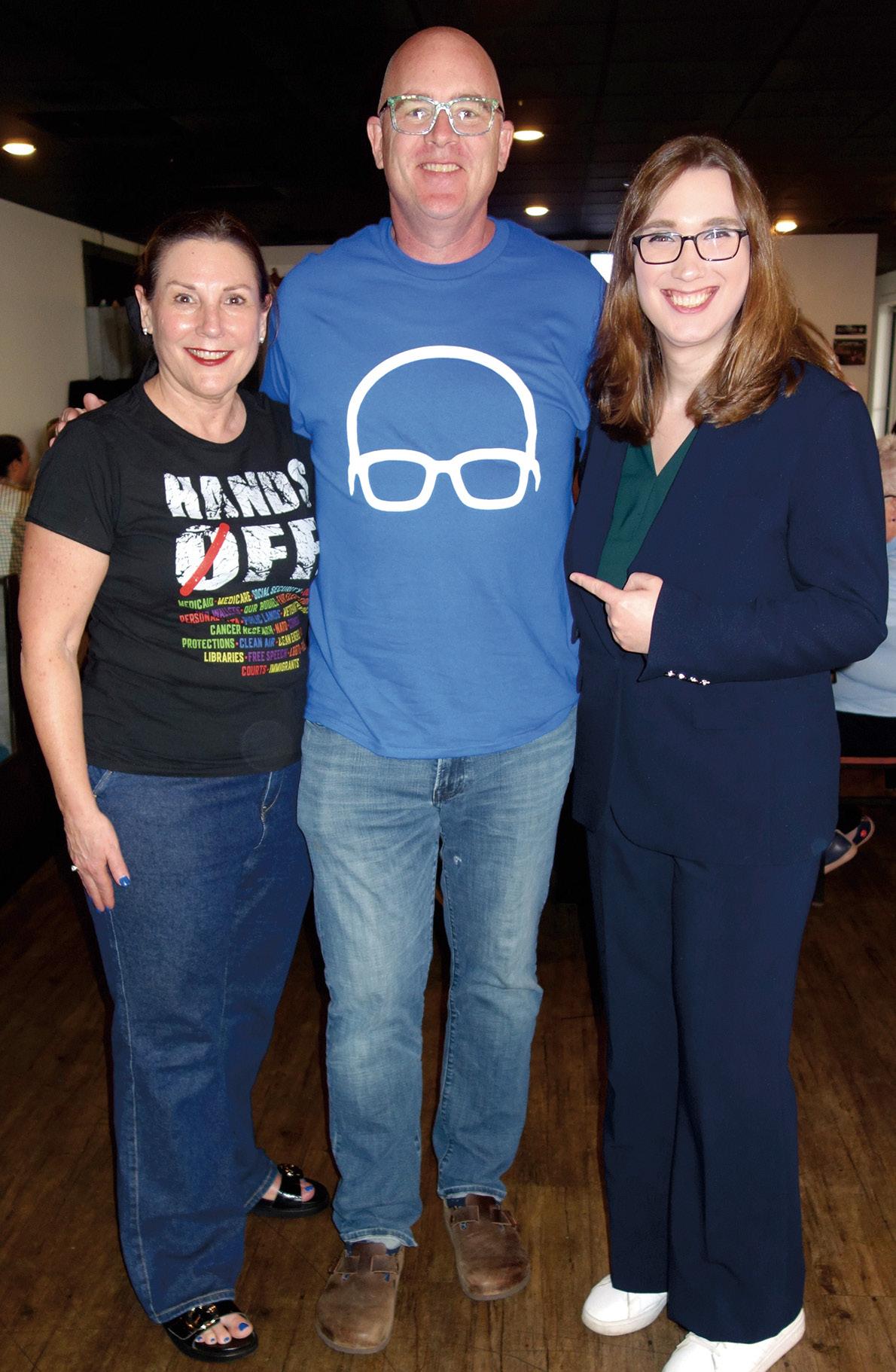
Celebrity Interview
Mandy Mango
Chats RuPaul’s Drag Race, the Cardi B Critique, and Philly’s Drag Scene
Direct from the City of Brotherly Love, Mandy Mango delivered Philadelphia flair and a very distinct perspective during her run on RuPaul’s Drag Race Season 18. Arguably the first queen to ever Lip Sync for Her Life with an entire place setting around her neck (she won by the way), Mango is embracing the love. She’s also moving into a space where she is going to be able to merge her passion for the stage with her dedication to her community as she continues to be a passionate advocate for sexual health and education. I sat down with Mango to chat about those Drag Race moments, bringing that Philadelphia perspective to the Main Stage, and the unique way she is merging her passions for a very important cause.
MICHAEL COOK: Congratulations on being such a fantastic representation of Philadelphia this season on RuPaul’s Drag Race. What was it like getting to represent the City of Brotherly Love on the global platform of Drag Race?
MANDY MANGO: It is such an honor; I really feel like Philadelphia is such an underrated city on the drag scene. We hear a lot of big names coming from Chicago, Texas, New York, and so we kind of get overshadowed. I think Sapphira Cristál opened a lot of doors and I was happy to follow in her high heels to be able to also represent the characteristic grit and campiness and passion that Philly drag has.
MC: Every season of Drag Race has some amazing and gag-worthy “firsts” and this season, you are probably the first queen to ever have walked the runway with an entire table setting around your neck! Your aesthetic shows you’re willing to go “there”—is that fair to say?
MM: That is what I feel like drag is, you know? Like RuPaul says, “coloring with every color in the crayon box,” that is really what I want to do with my drag. I think of Mandy Mango as the highest form of femininity in any kind of universe
I am happy to be an educator and teach other professionals how to be LGBTQ+competent providers in healthcare.
BY MICHAEL COOK
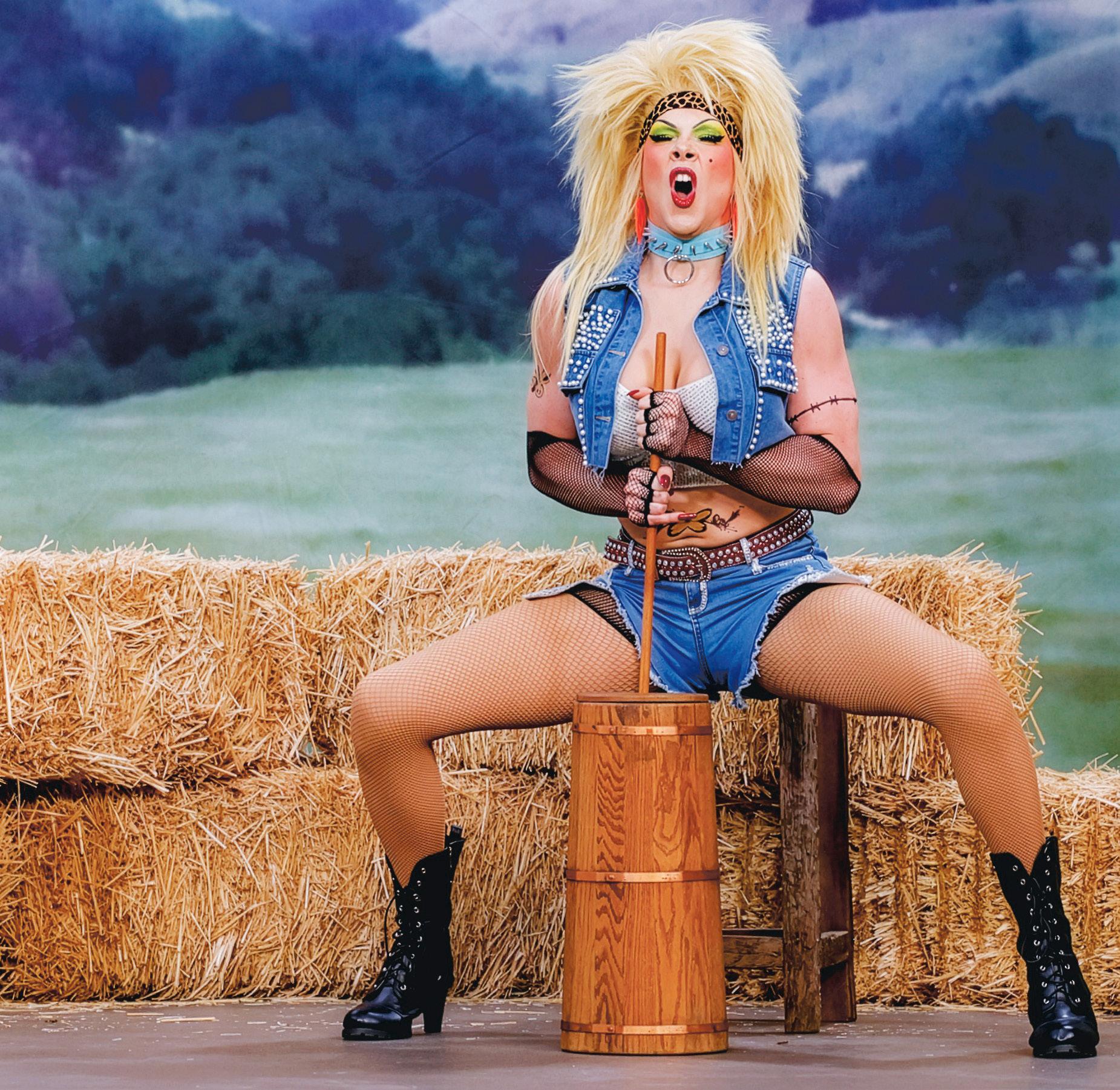
that you put her in. Even if it’s a different planet and there are different creatures. If she’s on the red carpet for the Emmys or a premiere, she is still giving gorgeous, glamour, poise. It’s funny that I got to show a lot of the kooky and campy side of me, but I really look forward to getting to show the poised and elegant side of myself as well because Mandy Mango gives it all!
MC: One thing that was very intentional during your Drag Race run was to mention your background in the healthcare field as a nurse specializing in HIV/AIDS. It is so important to have a backup plan, but aside from that, where does this passion stem from?
MM: The way I see it, I take care of all of my patients all the way around. As a queer person I know some of the
struggles of navigating relationships and navigating certain sexual journeys and understanding yourself. When I see myself now, being a confident drag queen, 21-year-old me would not have dreamed that I would be here right now. The 21-year-old me that was also sitting in a nurse’s office to get tested for HIV and getting weird looks and weird statements from the nurse, to now be able to be that person in the office where the patient knows I “get” it…. It is about making sure they feel comfortable to be honest so they can get the care they need.
MC: What are the rose and thorn of your Drag Race journey?
MM: I’d say my low would be, frankly, being eliminated at the time that I was and not being able to show the full
One thing that was very intentional during your Drag Race run was to mention your background in the healthcare field as a nurse specializing in HIV/AIDS.
breadth of my package. Not being able to spend more time with the girls—I truly love them and I think we share a cool perspective of drag, and I really wish we got to spend more time together in the Werk Room. The rose would be all of the worldwide global love that I am getting every step of the way, no matter if Cardi B is saying she hates my skirt, my eyelash is falling off my eye, or if trinkets are falling off of my table. At the end of the day, I approached my package saying, “If this is going to follow me for the rest of my life, I want to stand by it. Here’s my thought behind it and here’s why it’s true to me.” I really feel like that has been seen; I’ve found my fans and my fans have found me—that has been the high.
MC: You now have the global platform that Drag Race provides, so what do you

think you want to do next?
MM: Long term, I love living out this pipe dream of being a drag queen nurse. I think it’s really cool that there are different services like Mistr and Q-Care that are involving RuGirls in their marketing and advertising. Now let’s take it a step further and not just be spokespeople. I am happy to be an educator and teach other professionals how to be LGBTQ+-competent providers in healthcare. I am hoping that this platform allows me to be the counter voice to a lot of the misinformation and darkness that people are feeling right now.
MC: Last important question. What is the best place to see or do drag in Philadelphia?
MM: That’s easy—Frankie Bradley’s! If I’m not traveling, I’m probably there on the
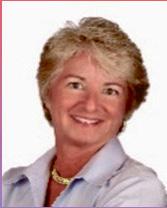
weekend. There are three different dance floors, one playing early-aughts pop, another playing queer house vibes, and another playing funk/disco/hip-hop; you can always find your flavor there. Whether you’re gay, straight, or queer, there’s always a spot and a dance floor for everyone. And the drinks are always good!
Follow Mandy Mango on Instagram @mandyy.mango
Michael Cook has been a part-time resident of Rehoboth Beach for over a decade. He is currently a contributor to WERRRK.com., OUTSFL, & The Philadelphia Gay News. photos courtesy MTV/World of Wonder.



FAIRWAY VILLAS - Dagsboro. 2003 2BR/2BA condo w/loft. 7 miles to Bethany boardwalk. In Cripple Creek Golf & CC with memberships available. $347,400 (2085536)


REHOBOTH BAY - Rehoboth. Remodeled 1987 3BR/2BA. 1,440sf. Gorgeous! Very private backyard. Pool. Marina. 6.5 miles to beach. $269,000 (2103152) Lot Rent $779/mt.

EAST -
Beach. 2019 3BR/2BA features the “ultimate kit” & “super
SHADY DELL -Ocean View. 1988 3BR/2BA home on 1/4acre lot. Low HOA. Screened porch. Shed w/RV 30amp. 3 miles to Bethany boardwalk! $380,000 (2095732)

REHOBOTH BAY -Rehoboth. Remodeled 1986 2BR/2BA w/200sf enclosed porch. Big shed. Pool. Marina. <7 miles to beach. $145,000 (2106746) Lot Rent $769/mt.

SHOREVIEW WOODSMilton. 2,050sf 3BR/2.5BA w/1-car garage. 1st-floor main suite. Rear deck w/hot tub. Pool, clubhouse, tennis. 8 miles to beach. $399,999 (2107696).



REHOBOTH BAY -Rehoboth. 2017 1,344sf 3BR/2BA with front porch. Fully furnished + Golf Cart. Pool. Marina. 6.5 miles to beach. $209,900 (2106304) Lot Rent $759/mt.

COLONIAL
Rehoboth
bath” upgrades. Pool. 4 miles to beach. $269,000 (2091602) Lot Rent $896/mt.
WHISPERING PINES - Lewes. 2020 3BR/2BA has screened front porch & rear patio. Backs to bike trail. Pool. 4 miles to bch. $142,500 (2103786) Lot Rent $782/mt.
CAMELOTMEADOWS - Rehoboth. Updated 1977 2BR/1.5BA w/enclosed porch. Mostly furnished. Pool & just 4 miles to beach. $75,000
MARINERS COVE -Millsboro. 1997 2BR/2BA. 1,500sf with the family room addition. Rear deck. Shed. Pool & marina. $125,000 (2103848) Lot Rent
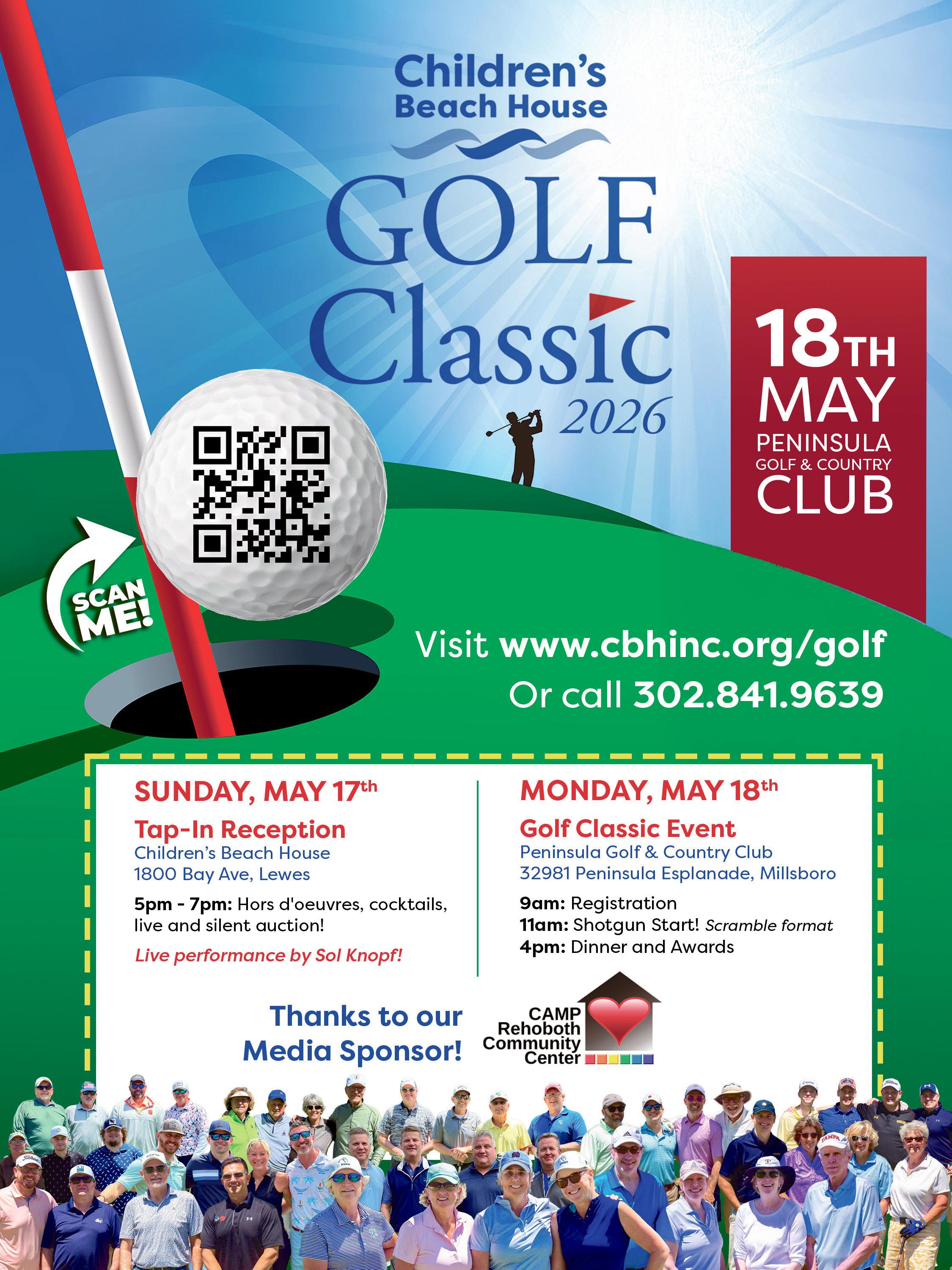

The Cries of a Child
Lessons from Society’s Treatment of
Mirabel is a queer refugee who runs a safe house in Nairobi, Kenya.
The house provides shelter to seven adults and eight children. My focus here is on the children. They are fed and cared for; they have the shoes, sweaters, and notebooks they need for school.
Recently, someone abandoned a four-year-old boy outside Mirabel’s safe house before dawn. She found him shivering on the ground. He cried but did not speak. All he was wearing was a shirt and shorts; no shoes. She held him, gave him medicine and wrapped him in her t-shirt. She contacted the local village chief and the police and consulted a nonprofit group that helps children. She was told to take the child to a county facility a good distance away.
She sang for the child to comfort him. He was fascinated and touched her face. When they reached the place where she was to turn him over to the county officials, the boy cried as she was leaving. In the space of a day, a bond of trust had formed. It was heartbreaking, but Mirabel is at capacity with the children she already has.
The next day the officials called and said the boy is not Kenyan but Congolese. He is a refugee whose mother died in an accident. Because they put refugees in a different category, they told Mirabel to come and take him to some other place.
She refused. She said she had done her best to get him the help he needed and had no further responsibility. Fortunately, she has a paralegal certificate which helps her deal with government officials. The police she spoke with told her she had done the right thing.
The world can be a cold and cruel place, especially for children. There are thousands of homeless children in Nairobi.
In 1988, the late gay historian and Yale professor John Boswell wrote a
Children
book called The Kindness of Strangers: The Abandonment of Children in Western Europe from Late Antiquity to the Renaissance. The practice was common. Parents used churches and foundling hospitals.

None of us can solve all the problems in the world, but we can do our part.
With such a history, it should be no surprise that recent weeks have seen Immigration and Customs Enforcement officers in America arresting parents while leaving their children on their own, as well as cases in which a parent and child were seized and sent to one of Trump’s concentration camps.
The boy in Nairobi could have been treated worse by whoever left him outside the safe house. In America, cases arise of newborn babies being found in trash bins by passersby who hear their cries.
It requires receptivity to gain understanding of others’ suffering. I am much better off than a refugee in Kenya. I have a pension, health insurance, and a personal support network. I am not
BY RICHARD J. ROSENDALL
estranged from my family and I have loving friends. I have legal rights for which I and many others fought. Those rights are now under attack by Trump and his allies, not because Trump personally cares, but because stoking the culture wars helps him consolidate power.
Some gay and trans refugees who fled to Nairobi from neighboring countries have had to hide from family members who went there to hunt them down. Dissertations could be written on why murders of family members for being different came to be called “honor killings.” There is no honor in ignorance, cruelty, and hate.
Recent events show that if we do not learn to respect our differences, society will splinter into conflict and needless suffering. Those who will suffer the most are children.
None of us can solve all the problems in the world, but we can do our part. Mirabel did so when she comforted the abandoned boy and looked for where to take him for the care he needed. She still doesn’t know his name, but she remembers her heartbreak when he cried at their parting.
When she returned home, the children at her house were waiting and greeted her warmly.
Let us hold our children close while giving a thought to those who are lost, alone, and afraid. We should not accept a caste system in which our own children are safe and well cared for, while others fend for themselves in the streets.
Suffering that we ignore can metastasize into a threat to things we take for granted. The more of us who step in to fill the gaps instead of leaving the task to others, the more we will build community rather than chaos. ▼
Richard Rosendall is a writer and activist who can be reached at rrosendall@me.com.





Young Performers program

legends, and fading memories, one young woman might hold the key to the mystery of Russia’s Romanov family. Anastasia is a sweeping epic about how we decide to transform into the people we are capable of becoming.
Supporting Sponsor: Cape Gazette
4 PERFORMANCES ONLY 4 PERFORMANCES April 10 - 12 April 10 - 12
Two Contemporary Hits Perform in Repertory This May

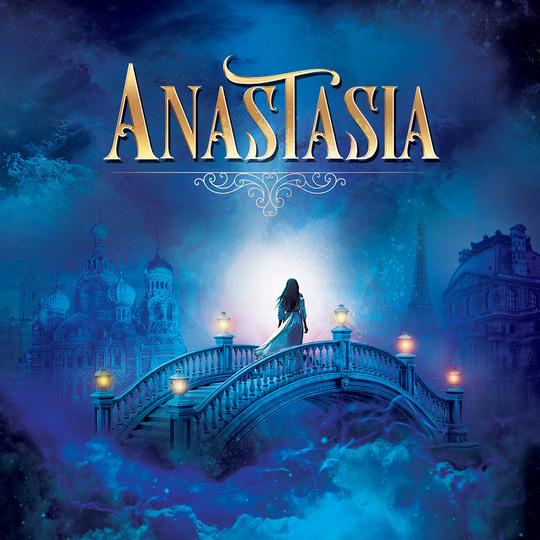


Music & Lyrics by Benj Pasek & Justin Paul
Directed by Joe Gfaller
This groundbreaking Tony Award winning best musical is an unmissable anthem of hope and courage.
Performances Thursdays - Sundays
Supporting Sponsors: Mike DeFlavia & Tony Sowers, Joe Petrone & Shawn Evans



Directed by Fay Jacobs
An Elvis imperonsator trades in his blue suede shoes for wigs, heels, and a whole lot of padding in a daring comedy about finding your voice.
Performances Mondays - Wednesdays
Presenting Sponsor: Jon Worthington

BY NANCY SAKADUSKI
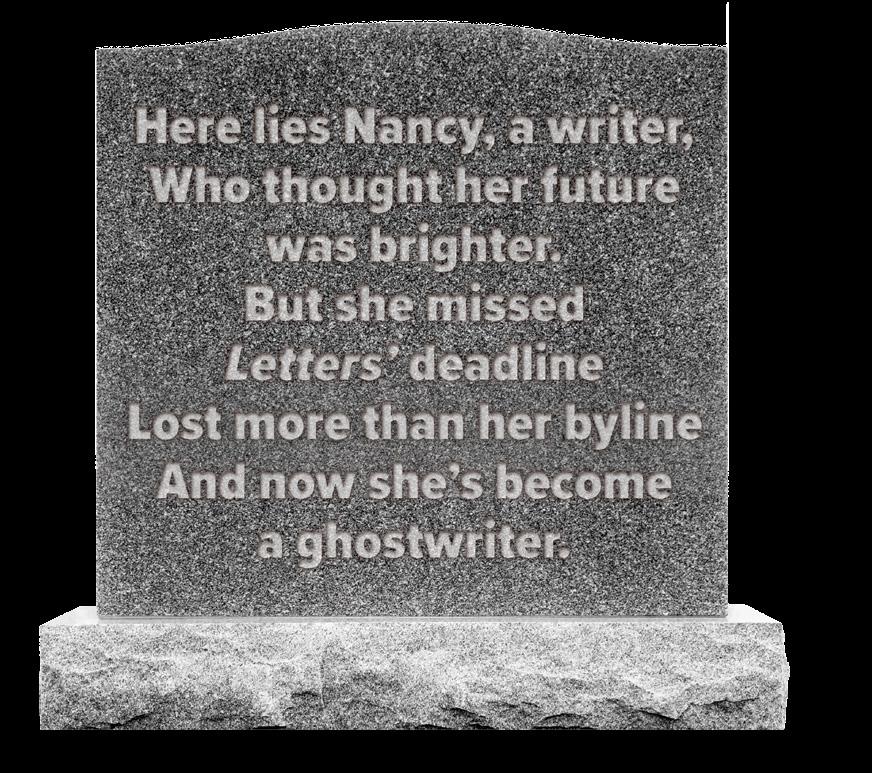
APPROACH 1
Let your relatives deal with it.
Here lies my wife, I bid her goodbye. She rests in peace, and now so do I.
My brother was good at pissing people off.
Here lies poor stingy Timmy Wyatt, Who died at noon and saved a dinner by it.
She always said her feet were killing her, but no one believed her.
Here lies good old Fred. A great big rock fell on his head.
APPROACH 2
Nancy (Day) Sakaduski is an award-winning writer and proud ally who has provided writing services to CAMP Rehoboth for 14 years. She also serves on the Lewes Public Library Board of Commissioners and the Delaware Art Museum’s Sussex County Advisory Council Famous Last Words
Reference your occupation. I was a lawyer, but nobody’s perfect. Stranger tread this ground with gravity. Dentist Brown is filling his last cavity.
Here lies the body of Detlof Swenson. Waiter. God finally caught his eye.
Plan Your Epitaph
Let’s face it. The end is coming at some point, so why not be prepared? You’ve written your will, decided who to leave your expired gift cards to, and signed that organ donor card. Now, it’s time to plan your epitaph (the wording on a gravestone). What’s there to plan? How hard can it be? Name, date, and serial number, right? No character arc, plot twist, or unreliable narrator (unless, God forbid, the gravestone has a typo—please see the March Letters article on proofreading). But my assignment is to convince you to plan your epitaph. So, for starters, let me share some approaches and the epitaphs that could, and in some cases did, result.
APPROACH 3
Play off your name (this wouldn’t work for me, but maybe you have better raw material).
Here lies the body of Mary Ann Bent, She kicked up her heels, and away she went.
Rest in Peace Nathaniel Ward
His Chevy Nova hit a Ford.
On the 22nd of June Jonathan Fiddle. Went out of tune.
Here lies Johnny Yeast. Pardon me for not rising.
Here lies (not “lays”) Billee Woody Robbins Reed, English Teacher.
APPROACH 4
Use a thoughtful quotation.
Na na na na, Na na na na, Hey hey-ey, goodbye.
Another one bites the dust.
APPROACH 5
Scare the crap out of visitors. Here I lie, But don’t you cry, For one day too, You will die.
I see dumb people. Go away—I’m asleep. Don’t laugh. You’re next.
APPROACH 6
Be a realist. Damn it’s dark down here. Well, this sucks.
I came here without being consulted and I leave without my consent.
APPROACH 7
Get in your last two cents. I finally found a place to park in Rehoboth.
You said those oysters were OK.
Seriously, Here’s How to Plan Your Epitaph
Epitaphs last a loooong time, so if you plan to be buried and there’s going to be a gravestone marking the spot, why not take some time now to make sure it says what you would like it to say? Here are some basic tips to get you started:
• Check with the cemetery. It may have rules governing epitaphs.
• Keep it brief—think billboard, not novella.
• For the benefit of your family and future genealogists, include your full name, accurate birth and death dates, perhaps even a family relationship (and not just “I’m with stupid” with an arrow pointing to the neighboring gravestone).
• Think about what was important to you and focus on that.
• Ask a friend or family member what comes to mind when they think of you (caution: this can be dangerous).
Just resting my eyes.
Now I can finally rest without that incessant snoring.
I told you I was sick. This ain’t bad once you get used to it.
Or, you could just go with what are surely the most common last words: Oh, shit. ▼
• Consider a quotation or sentiment that conveys your personality, achievements, or values.
• Discuss it with your family—they will be in a position to overrule you.
• Choose a gravestone design that helps communicate your message.
• Get ideas from others by searching online or strolling through cemeteries. By the time they catch you for plagiarism, you’ll be gone. ▼
Thank You for Donating







CAMP Rehoboth Board of
Anonymous Donor in Honor of Natalie Moss
Rehoboth Beach Bears
SPOTLIGHT ON THE arts
CAMP Rehoboth Puts Art at the Heart of Our Community
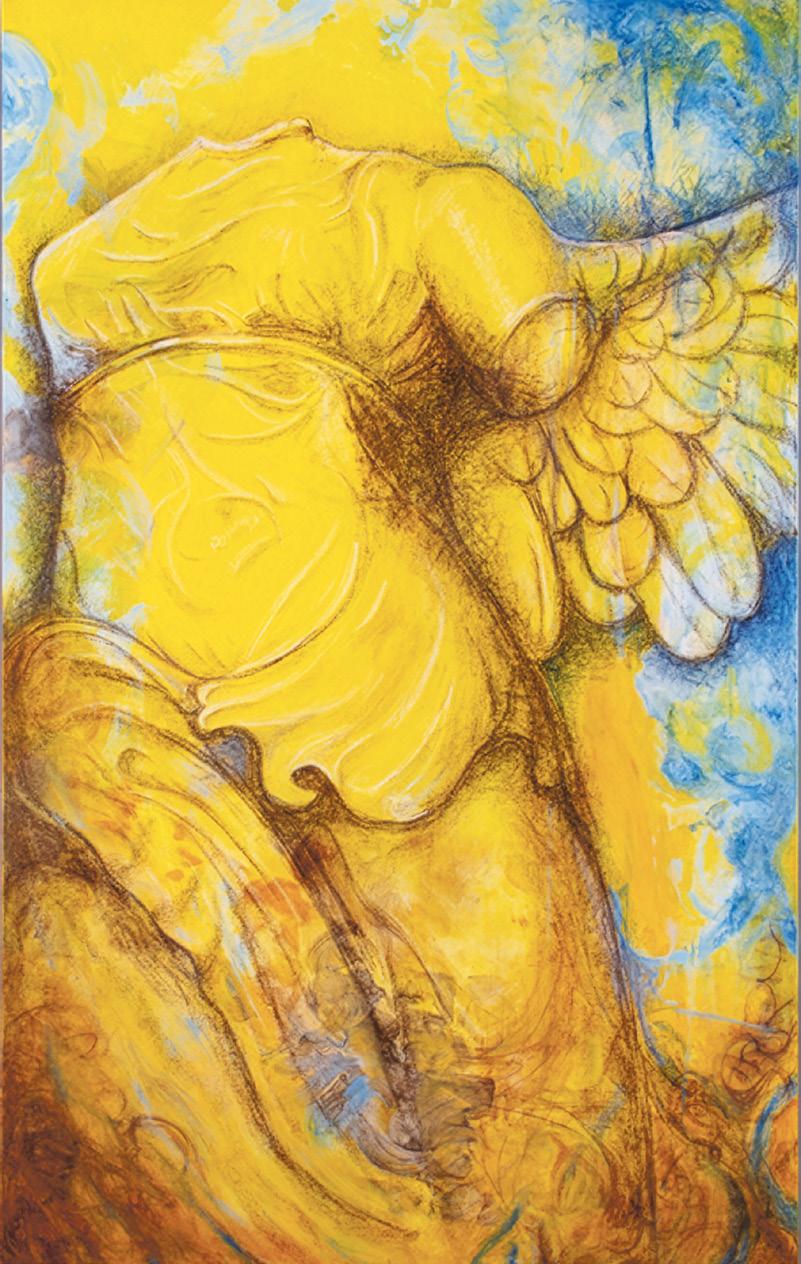
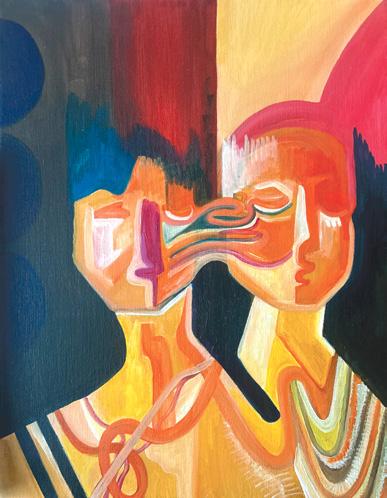
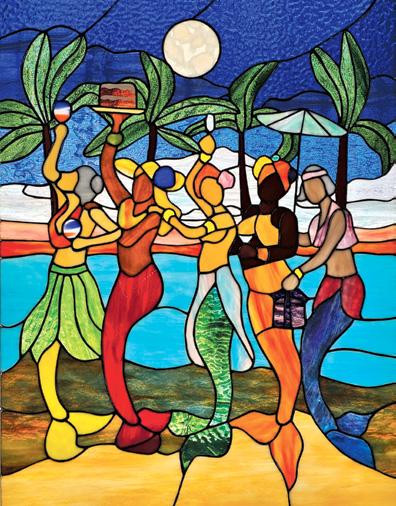
FEST ART+ 2026
April 9-May 21, 2026
Opening Reception: April 9, 3:00-5:00 p.m.
CAMP Rehoboth is excited to announce that FEST ART+ 2026, a juried exhibition held annually with Women’s+ FEST, opens April 9. This exhibition will be on display from April 9 till May 21, 2026.
FEST ART+ 2026 brings together over 30 artists to showcase works celebrating women and the feminine spirit. From paintings and photographs to stained glass and sculpture, FEST ART+ 2026 is an exciting and expressive exhibition of works brought together by the community.
Shout out to the exhibiting artists for their amazing works: Jane Knaus, Misty Letts, Russell Stiles, Gilberto Rodriguez, Geri Dibiase, Carol Bell, Brittney Bodner, Angela Pierce, Dee Gray, JuneRose ‘JR’ Futcher, Barb Cushing, Leslie Sinclair, Kristin Painter, Lorraine Dey, Nancy Allen, Allison Brennan, Kiara Florez, Deb Payette, Alexis Mckenzie, Bev Pasquarella, Lee Pohlsander, Carol Gentes, Kim Sheaffer & Karen Brause, Deb Rolig, Carol Scherling, Janis Romanovsky, Daniel Bartasavich, Bryant Bell, and Lorraine Quinn.
The opening reception for FEST ART+ 2026 is on Thursday, April 9, from 3:00 to 5:00 p.m. Join us for a fun-filled afternoon and explore the expressive and wonderful works created by this year’s artists. We hope to see you there!
CAMP Rehoboth Gallery typically is open Monday-Friday, 10:00 a.m. to 4:00 p.m. You can call ahead to confirm: 302-227-5620.
Logan Farro is CAMP Rehoboth’s Visual Arts Coordinator. They may be reached at logan@camprehoboth.org.
Mary Jo Tarallo is a former journalist and public relations professional for various nonprofits including a ski industry trade association. She won a Gold Award for a United Way TV program starring Oprah Winfrey.
This program is supported, in part, by a grant from the Delaware Division of the Arts, a state agency, in partnership with the National Endowment for the Arts. The Division promotes Delaware arts events on DelawareScene.com.
Images (clockwise): She Rises Through Ash To Greet
The Sun by Lee Pohlsander; Sisterhood by Kim Sheaffer; Passing Through by Kiara Florez.
arts+entertainment
CAMP REHOBOTH ARTIST PROFILE
Aformer music teacher from the University of Iowa has a blog called The Trumpet Blog. In it, he lists 15 reasons why the trumpet is the most difficult instrument to play. Among them is the fact that trumpeters often play a tune’s melody so it’s easy to detect a mistaken note. He also says that the fingering of a trumpet is very complex.
None of this fazed CAMP Rehoboth member (and volunteer) Debbie Woods, who plays trumpet in the Rehoboth Concert Band. She began taking trumpet lessons in elementary school, dropped it for a few years, and then picked it up again in high school where she became involved in the school’s marching band, jazz band, and orchestra pit for school musicals.
“Back then, I don’t recall needing to practice much outside of rehearsals,” she said. “These days I need to practice a lot more!” She stopped playing again after high school because she had to return her school-owned instrument. “I often thought about taking it up again,” she added. “My wife, Leslie, encouraged me by giving me a new trumpet as a gift. For a long time, I only pulled it out occasionally—usually for holiday tunes and a few fun pieces, like “The Entertainer” from The Sting.”
After stepping back from some volunteer commitments, she had time to pursue activities that interested her and stimulated the brain. Since music has always been a big part of her life, she eventually connected her love of music and that trumpet in the closet. In 2023, she began refresher lessons at Music & Arts on Coastal Highway in Lewes.
“By early 2024, my instructor suggested I consider joining the Rehoboth Concert Band,” she said. “I was shocked…but intrigued!” She contacted the band’s director, Steve Kieley, who told her they could indeed use a trumpet player. Kieley sent her their sheet music. “After reviewing it, I thought, ‘I can do this!’. I attended my first rehearsal in March 2024 and have
been having a wonderful experience ever since.”
Debbie sings the praises of the band for welcoming musicians of all skill levels and ages. A significant number are retired music teachers or even professional musicians. One young trombone player has recently committed to Boston College. “It’s a dynamic and inspiring group and I love being exposed to such a wide variety of music,” she says. Currently, the band is rehearsing for its spring and sum mer concert season. Performances are scheduled for May 27 in Milton, June 1 at the Rehoboth Bandstand, and June 2 at Stango Park in Lewes.
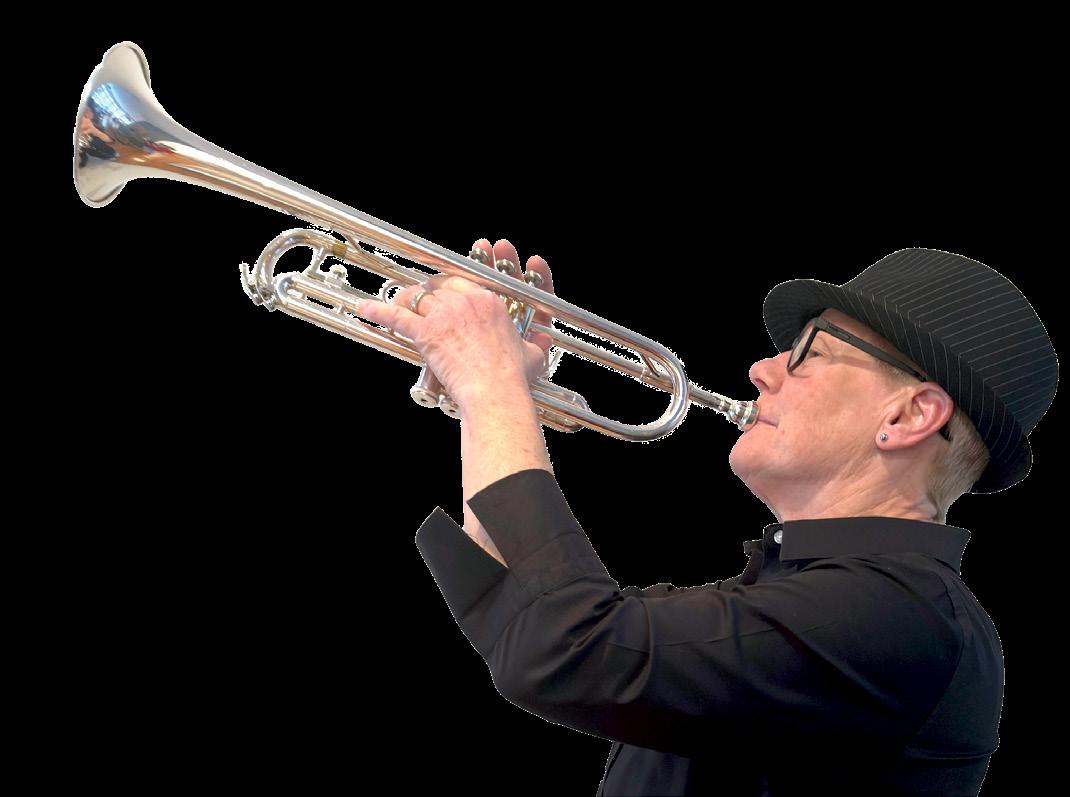
Debbie grew up in Philadelphia’s suburbs. She took the Civil Service exam as a senior in high school and did well. She was contacted about a position at the VA Medical Center in West Philadelphia and started working as a clerk-typist in Purchasing and Contracts. After 12 years, she moved to the Naval Facilities Engineering Command in South Philadelphia as a Contracting Officer. She relocated to Northern Virginia in 1992 to work for the Small Business Administration in Washington, DC. She finished up her career at US Coast Guard Headquarters, focusing on acquisition policy. While advancing through various career moves, she earned a bachelor’s degree by taking night classes at Philadelphia University (now called Thomas Jefferson University).
Before moving to Rehoboth, Debbie lived in Northern Virginia for about 16 years—first in Alexandria, then Vienna, and finally in Reston after she and her wife Leslie got together. “In the late 1990s, Washington, DC had a women’s social group called Bon Vivant, which hosted monthly dances for women in Northern Virginia,” she said. “We met at one of those dances in late 1997. Jamie Fox was the DJ at the time!”
Leslie and Debbie have given their all volunteering for CAMP Rehoboth. Through the popular CAMP Rehoboth Outreach Program (CROP) program,
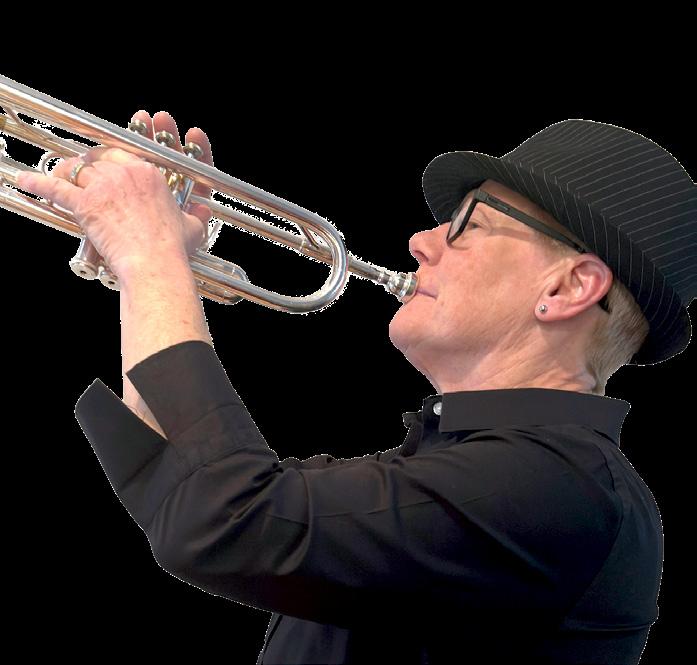
Debbie and Leslie impacted several local non-profits.
In the arts arena, Debbie assisted Leslie with coordinating CAMP Rehoboth’s visual arts programs. They have also managed CAMP Rehoboth’s participation as docents for the Rehoboth Art League’s annual Cottage Tour.
Debbie’s love for music spills over into the area’s vibrant music scene. “Sussex County is rich in musical talent, and I encourage everyone to attend performances whenever possible,” she urges. “Local organizations include the Southern Delaware Orchestra (SODELO), Delaware Winds, the Delaware Symphony Orchestra, jazz and big band ensembles, and professional classical musicians presented by Coastal Concerts. Many members of the Rehoboth Concert Band also perform in these groups, which speaks to the incredible depth of musical talent in our community.”
Debbie and Leslie have travelled extensively, with scuba diving having been a favorite pastime. In recent years, the two have shifted toward different travel experiences, including river cruises and cultural adventures. “While we don’t specifically seek out music venues when we travel, we always enjoy opportunities to experience local musicians, dancers, and cultural performances.” Says Debbie, “One of our most memorable experiences was attending a classical concert. ▼

Kids, Wait Till You Hear This! My Memoir by Liza Minnelli, as told to Michael Feinstein © 2026, Grand Central, $36, 421 pages
Twenty feet in front of you, and you can’t see a thing.
Even the closest faces are in shadow—lit, but not quite enough for you to see for sure what the people there are thinking. Still, you can hear them, their gasps, their laughter, and applause. Such is life, on-stage. Now read Kids, Wait Till You Hear This! My Memoir by Liza Minnelli, as told to Michael Feinstein, and read about it beyond the spotlight.
Almost from the moment she was born, Liza Minnelli was famous.
It was inevitable: her mother was Judy Garland. Her father was director Vincente Minnelli. Her godparents were Hollywood glitterati, her neighbors were famous, her playmates would be famous someday, too.
But her life wasn’t all starlight and happiness.
She made her stage debut as a toddler. She became her “mother’s caretaker” at age 13.
At 16, she had a growing career of her own—one that her mother tried to stop. But, she says, “In her own way, Mama was wonderful to me. Try understanding—she was my mother,
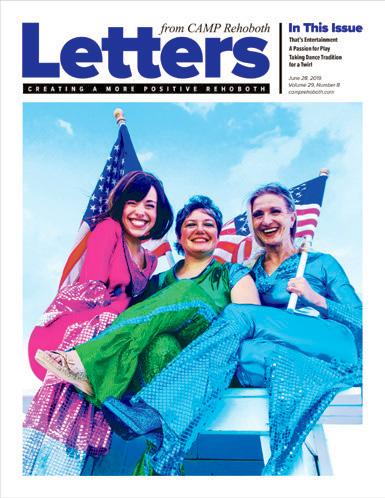
Call Tricia Massella at 302-227-5620 or email
not a movie star…. I knew her as the person who loved me and always would.”
At 19, Minnelli was working, happy, and madly in love with the man who’d become her first husband, and life was wonderful—until she came home one day to find him in their bed with another man. Before they were divorced, she lost her beloved mother and became “engaged” to two other men simultaneously, neither of which made it to the altar with her.
She married her second husband, the son of one of her mother’s former co-stars, in 1974. But her love affairs and addictions led to a second divorce.
Her third husband was a stage manager.
She doesn’t have much good to say about her fourth, and last, husband.
Overall, she says, “You gotta play the comedy for all it’s worth and leave ‘em laughing. Even when your heart is breaking.”
Are you expecting bluntness, sass, or attitude here? Good, because that’s what you get inside Kids, Wait Till You Hear This! It’s strong on honesty and don’t-give-a-flip. It’s wonderfully edited, so it moves fast. It’s eye-opening and funny and a pleasant surprise for a first, and only (so far), memoir.
Even better, author Liza Minnelli (with best friend, Michael Feinstein) is really quite candid and nicely gossipy, starting from the beginning. There are some Hollywood folks, in fact, who are feeling edgy tonight, because of what’s inside this book and the secrets spilled. Minnelli and Feinstein seemed to have fun telling her story, and they comfortably lure readers in.
That’s not to say that it’s all a cabaret. Minnelli tells about her addictions and recoveries, her marriages and why she wed two gay men, and the losses she endured, including miscarriages, deaths, and broken relationships. The bad balances well with the good for a tale that’s several notches above most celebrity memoirs. Kids, Wait Till You Hear This! is, in fact, a real joy to read, a genuine bright spot. ▼


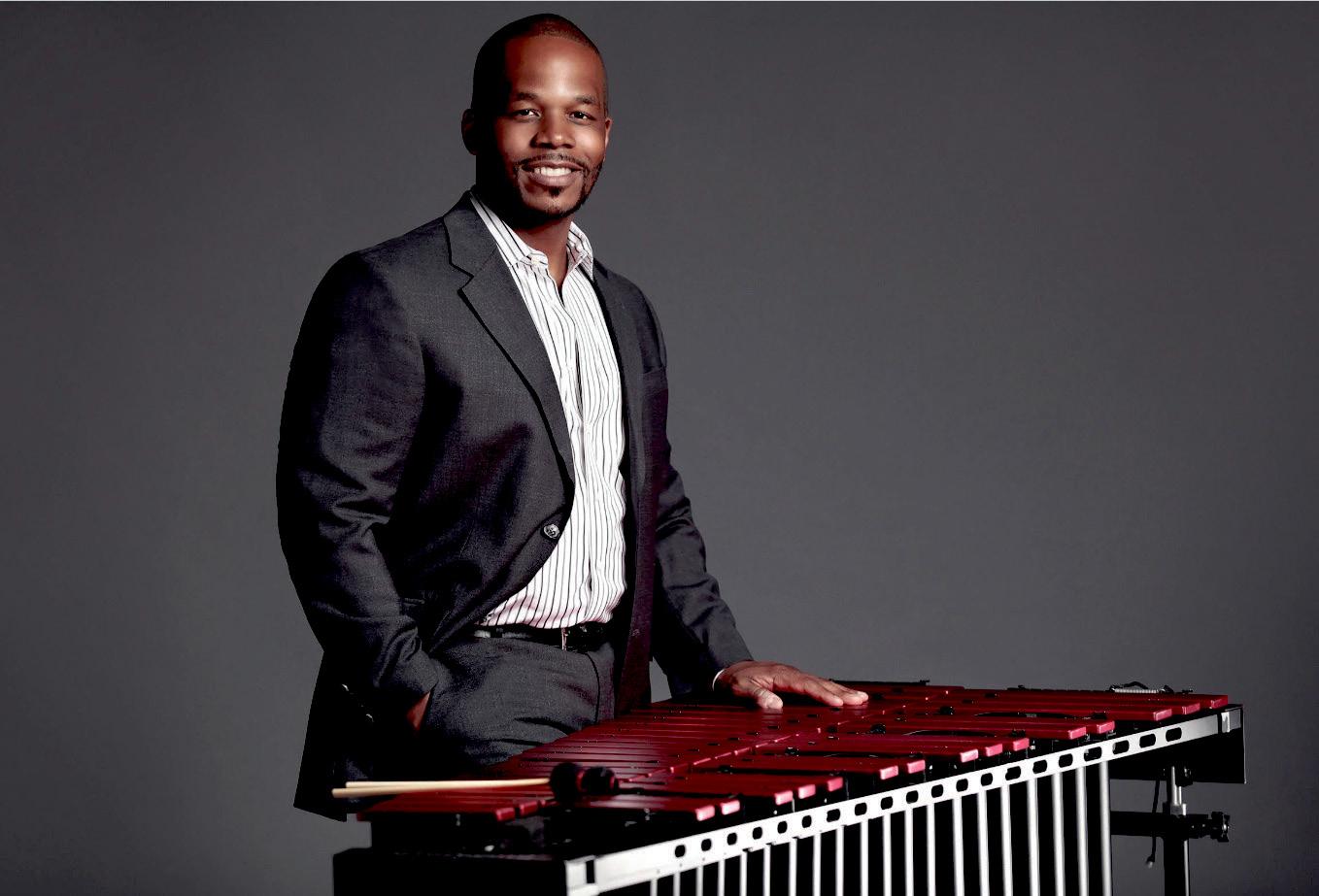

Deep Inside Hollywood
Clashing with Lukas Gage
There’s always some kind of holiday movie in production somewhere, with someone. And now it’s Lukas Gage’s turn. And it’s not just another Hallmark joint—this one has history behind it. It’s called Clashing Through the Snow, and it’s purported to be a Gen Z update of the Steve Martin-John Candy ’80s classic Planes Trains and Automobiles, about two men struggling against weather and flight delays to get home in time for Thanksgiving. We don’t know the specifics of the plot yet (Thanksgiving like before? Christmas?
New Year’s Eve?)
but queer White Lotus star Gage will be joined by Michelle Randolph (Scream 7 ) and Christopher Briney ( Summer I Turned Pretty and all of it in the hands of actress-turned-director Carlson Young ( Assuming it drops by the end of this year, we’ll keep a plate warm. ▼
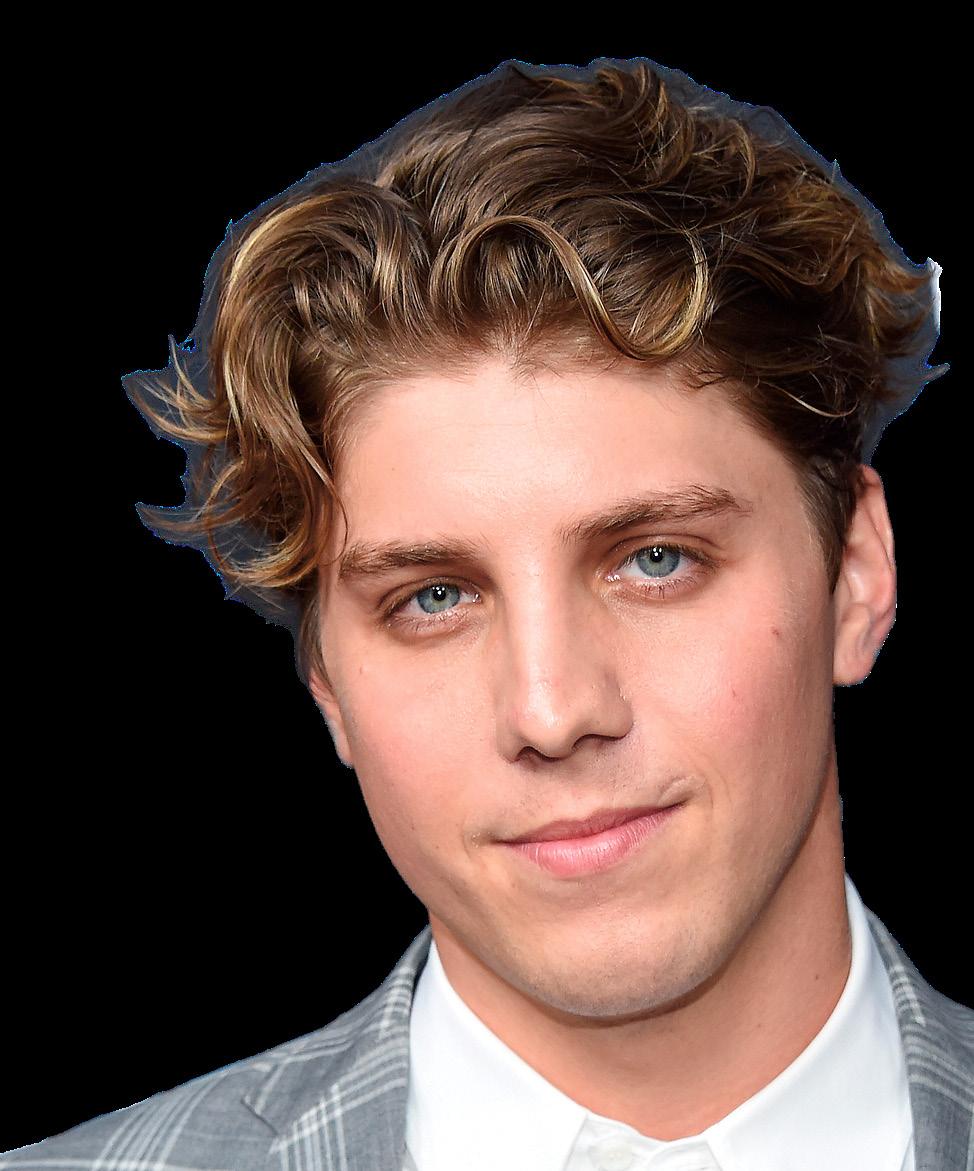
Connor Storrie Has Peaked
Sorry for the misleading headline. Connor Storrie, now known to all of you for his Russian accent and sex scenes with Hudson Williams on Heated Rivalry, has far from peaked, but he is in talks to co-star in a new comedy from A24 called Peaked. What’s it about? Two mean girls attend their 10-year-reunion and try to relive their glory days, except those glory days traumatized everyone else, so it appears a comeuppance might be due. And what’s Storrie’s role? That’s currently under wraps. But—and this is equally exciting—it will star Molly Gordon (The Bear ), who is also directing, and SNL writer Allie Levitan, who is also handling the script. Rounding out the cast: Laura Dern, Sex Education alum Emma Mackey, Bridgerton star Simone Ashley, and queer Bachelorette cast member Gabby Windey. They could have just led with Laura Dern—sorry, Storrie, nothing personal—and we’d already be in. ▼
BY ROMEO SAN VICENTE
The Ballad of Judas Priest Is Going to Be Loud
You’ve got another thing coming when The Ballad of Judas Priest storms onto big screens after its premiere at the Berlin Film Festival. In case you’re unaware, Judas Priest is a legendary British metal band fronted by Rob Halford. Until the 1990s they were most famous for their music and an unsettling, headline-making lawsuit brought against the band accusing them of encouraging teenage suicide (it was dismissed). Then Mr. Halford made metal history by coming out as gay—which some fans predicted, as he was already quite the leather daddy—which only endeared them to their audience all the more. The doc comes from Canadian filmmaker Sam Dunn (Metal: A Headbanger’s Journey ) and Rage Against the Machine’s Tom Morello, and it features appearances from metal enthusiast Jack Black alongside an impressive roster of music royalty: the late Ozzy Osbourne, the members of Metallica, Run-DMC, and Smashing Pumpkins co-founder Billy Corgan. No US release date is set yet but stay tuned. ▼
Kim Kardashian Will Act Again and Lesbians Are Making It
Happen
Paula Pell is a face you might know from Girls5eva and she’s a writing voice you know from Saturday Night Live and 30 Rock. Her spouse, Janine Brito, herself a comedy writer, worked on One Day at a Time and also co-starred on Girls5eva. Together, they’ve written a buddy comedy for Kim Kardashian. It’s called The Fifth Wheel, in which a hot stranger (KK) crashes a reunion of high school friends and wreaks havoc. The high school friends in question: Fortune Feimster, Casey Wilson, Brenda Song, and Nikki Glaser. It’s going to be directed by Eva Longoria and the whole thing is co-produced by Kardashian and Will Ferrell. The supporting cast is solid, a full bench of stellar women of comedy. We think all Kardashian has to do is show up and channel an amplified, Bugs Bunny-in-drag version of her persona and this really could be something special. And we’ll be real: we’re looking forward to seeing her pull it off after that weird Ryan Murphy lawyer show, because.… ▼
Romeo San Vicente always wants seconds.
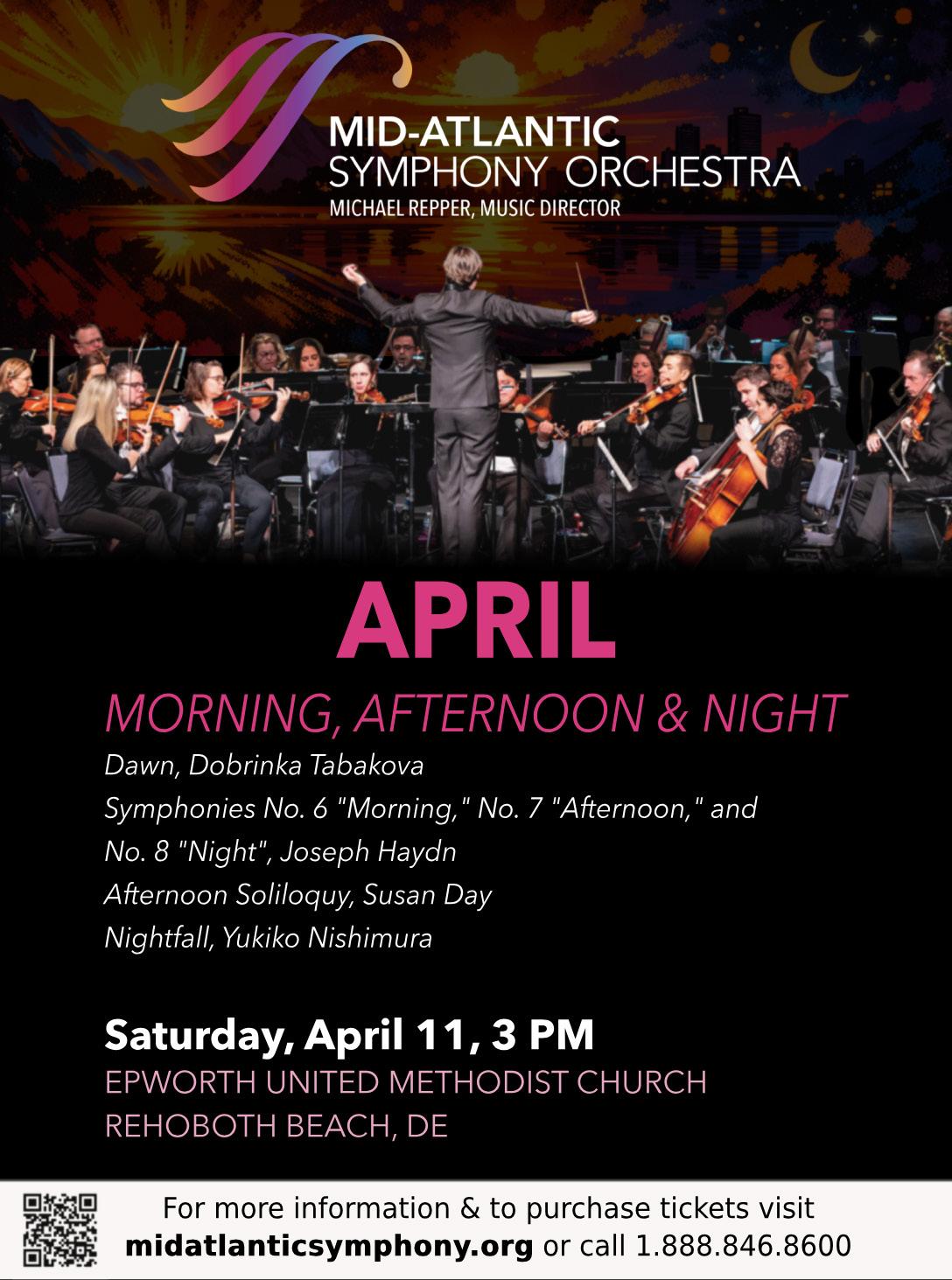
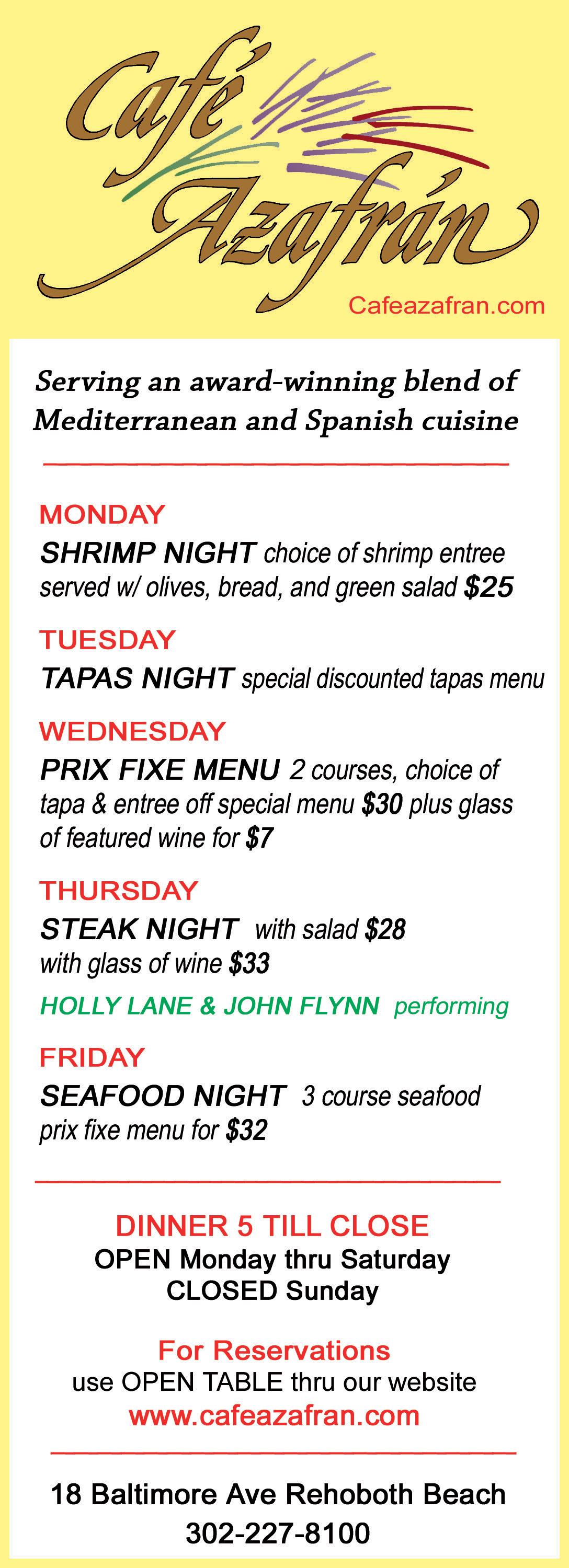




The Real Dirt
Plant Once, Harvest for Years
Building a Perennial and Self-Seeding Food Garden
Aproductive garden does not have to be replanted every spring. By focusing on perennial vegetables, fruits, herbs, and self-seeding annuals, a gardener can create a landscape that produces food year after year with less labor and lower grocery bills. Instead of starting from scratch each season, the garden gradually becomes a living pantry—one that improves with time as plants mature, spread, and reseed themselves.
Traditional vegetable gardening relies heavily on annual crops such as tomatoes, peppers, and lettuce that must be replanted every year. While these plants are productive, they require a steady investment in seeds, soil amendments, and labor. A perennial food garden, by contrast, is designed to mimic natural ecosystems where plants return reliably each season. Once established, these gardens provide consistent harvests with relatively minimal maintenance.
Many perennial food plants are surprisingly easy to grow. Asparagus is perhaps the most famous example. A single bed can produce tender spears every spring for 15 to 20 years. Rhubarb is another classic perennial, emerging early in the season with bright red stalks perfect for pies and preserves. Herbs such as thyme, oregano, sage, and chives also return reliably each year, expanding into larger clumps that can be harvested frequently.
Berry-producing shrubs and vines add another layer of productivity to a perennial food garden. Blueberries, blackberries, and raspberries provide abundant fruit while also contributing ornamental beauty to the landscape. These plants grow larger and more productive over time, often yielding more fruit each year as they mature. In addition to fresh eating, berries can be frozen, dried, or preserved, extending the value of the harvest well beyond the growing season.
Perennial greens are another valuable component. Plants such as sorrel, perennial arugula, and certain varieties of kale can survive multiple seasons and provide early spring harvests when most annual vegetables are still weeks away from planting. Egyptian walking onions and perennial bunching onions offer a continuous supply of flavorful stems and bulbs. These resilient plants often multiply on their own, slowly expanding their presence in the garden.
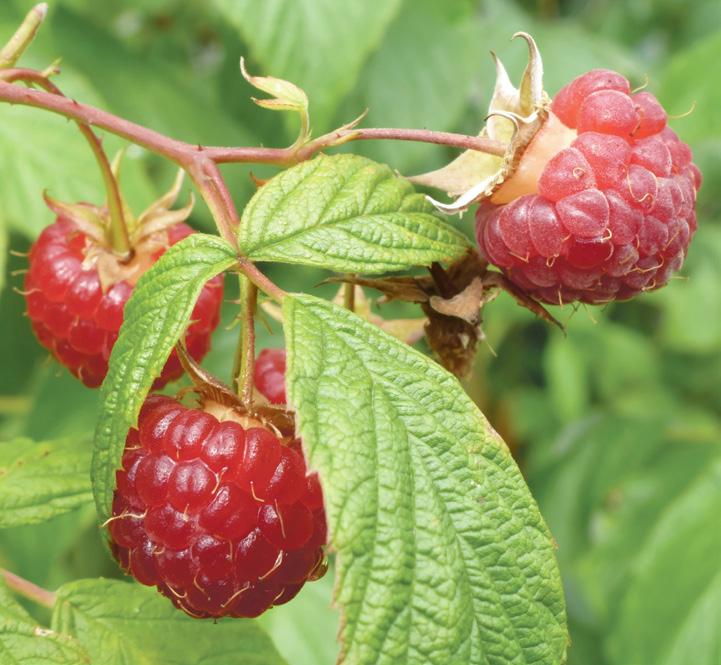
A perennial food garden… is designed to mimic natural ecosystems where plants return reliably each season.
Self-seeding annuals provide a complementary strategy for long-term productivity. Certain vegetables readily drop seed at the end of the growing season, germinating naturally the following year. Arugula, dill, cilantro, and parsley are well known for this habit. Once allowed to flower and set seed, they often appear again the following spring without any effort from the gardener.
The long-term financial benefit of such a garden can be significant. A single established asparagus bed, for example, can produce several pounds of spears each spring—often equivalent to doz-
BY ERIC W. WAHL
ens of grocery store purchases over the course of a season. Herbs that would otherwise be bought repeatedly in small bundles become abundant and nearly free once planted in the garden. Berry bushes, which can be costly at markets, often produce quarts of fruit each summer after a few years of growth.
Designing the garden thoughtfully enhances both productivity and beauty. Perennial food plants can be integrated into ornamental beds, borders, and even front yard landscapes. Blueberries offer attractive fall color, herbs release fragrance when brushed by passing hands, and flowering vegetables such as chives attract pollinators. In this way, the garden becomes both functional and aesthetically pleasing.
Good soil preparation is the key to long-term success. Because perennial plants remain in place for many years, enriching the soil with compost before planting helps ensure strong root systems and healthy growth. Mulching around plants conserves moisture, suppresses weeds, and gradually improves soil structure as organic matter breaks down.
Over time, a perennial and self-seeding food garden develops its own rhythm. Plants emerge in succession throughout the seasons, offering harvests from early spring through late autumn. With each passing year the garden becomes more established, more productive, and more resilient. The result is a landscape that nourishes both people and place—a garden that rewards the simple act of planting once with the enduring gift of food for many seasons to come. ▼
Eric Wahl is a landscape architect at Pennoni, an artist, author, and longtime contributor to Letters from Camp Rehoboth. His work explores the intersections of ecology, community, and belonging, rooted in the landscapes of coastal Delaware.


7
4,552
JOE STERNER | C: (717) 991-5470
DANIEL LUSK | C: (202) 412-8885

SOMMER | C: (484) 553-9288




Celebrating 50+ Years of Women’s Art, Music, Culture, and Community!
SisterSpace Weekend Women’s Festival 2026
Sept. 11-13 in beautiful northern Maryland - Join us for fun and frolic!
Featuring: Alexis P Suter, Dara Carter, Holly Near, Indigie Femme, KJ Denhert, Mayra Casales, Nedra Johnson, Rachel May, Staceyann Chin, Tangle Movement Arts, Zip Warmerdam square dance caller, DJ Kathy G, DJ MariaMaria, DJ SheeK, DJ Warm Advice and Dr DJ and more!
All meals included! Cabins, tenting, RV spaces, indoor bathrooms & hot showers. Sliding scale. Discounted admission for volunteer workers!
ArtSpace, Bonfires, DJ Dances, Gallery in the Woods, Hiking, Karaoke, Late Night Jazz & Blues Club, Lesbian Films, Multiple Concert Stages, Open Mic, Rosh Hashanah Celebration, Sacred Fires, Sexuality Space, Single Mingles, Spoken Word, Sports & Games, Swimming Pool, 12-Step Meetings, Vendor Village, Wellness, Workshops, and YOU are invited! Give the gift of Together Time! Perfect for your bestie(s), spouse/sweetheart, teen girl(s), women’s sports team, or treat yourself to a solo trip and meet hundreds of wonderful women!
SisterSpace, P.O. Box 22476, Philadelphia, PA 19110 ● Tel. (888) 294-1110 Tickets: www.sisterspace.org



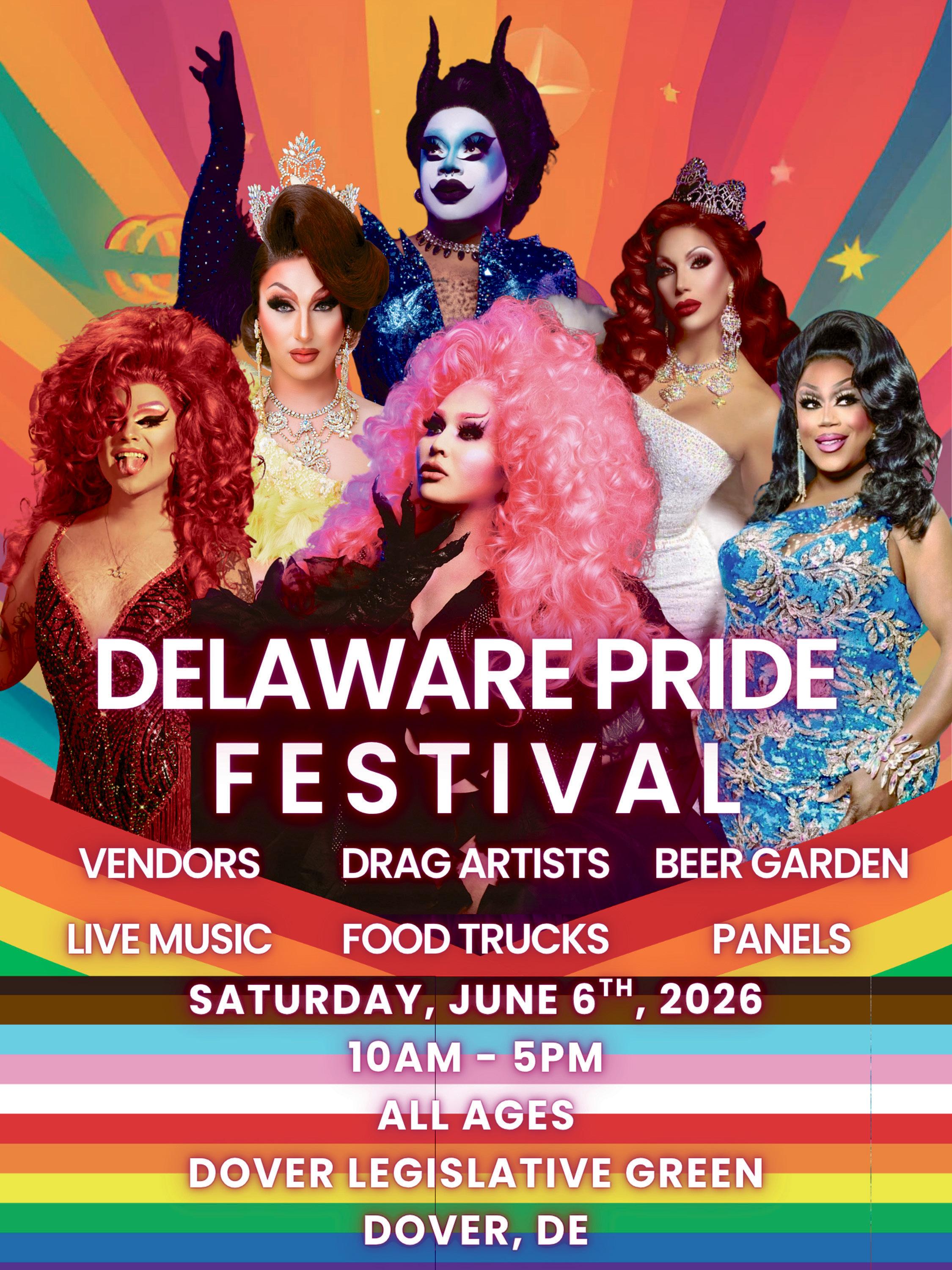
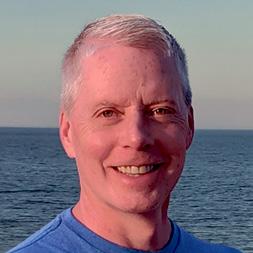
The Sea Salt Table
Tomato Pie
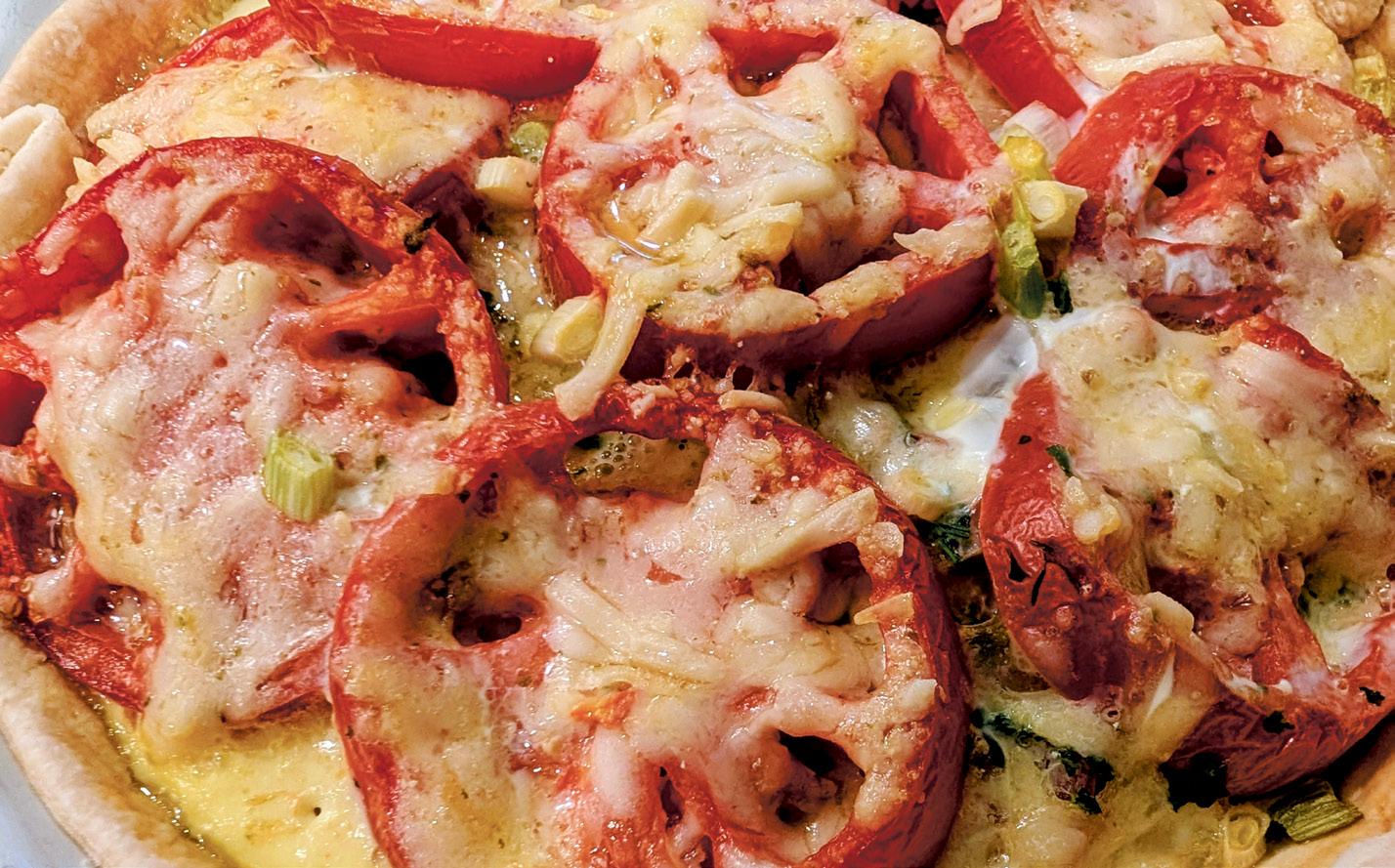
Beach chair time is just around the corner. So, as I do every spring, I’m compiling my summer reading list. Gathering various genres and styles, even some classics.
I can be a bit of a bookworm. Although it goes in waves. Sometimes I can’t put books down. Other times I struggle to get into the story or embrace the writer’s style.
I find novels tend to start and end strong. But middles can be troublesome. With stories that go off two sides of the rails, struggling to come back in a satisfying and cohesive way.
I’m not knocking authors. I’m rather awed by them. I’ve never written anything over eight hundred words (the target length for these articles). Maybe I’m the problem. Maybe I’ve just read so much that nothing is novel anymore. Get it?
I’m known for reading as many as four to six books at a time. I think my record is eight. People always ask how I keep the storylines straight. But I tell them it’s a lot like following multiple TV shows.
Your brain picks up where the last episode left off, no matter what you’ve watched in between. Although there
was that time where two books had very similar protagonists. One named Loretta, the other Loraine.
As you know, I can be cheap. Or, put more positively, I love a bargain. You’ll never catch me buying a new release hardback. Remember the old Atlantic Books with the color-coded discounts? Rehoboth and Bethany each had one. I could spend hours just in the cookbook section.
I love the library app Libby. And the fundraiser sales at local churches, where you can fill a bag for less than 10 bucks. Oh, and the little “leave one, take one” kiosks popping up everywhere. Why keep a book collecting dust when you can pay it forward! Plus, if a book was cheap or free, and I’m truly not enjoying it, I give myself permission to stop reading it. Sometimes I’ll skim to the end. But mostly I just give it away unfinished. Life is too short.
This month I’m highlighting my recipe for Tomato Pie because like beach chairs, fresh tomatoes will soon be here. And good news: even off-season tomatoes taste better when baked. This dish, paired with a salad, makes a meatless meal perfect for late spring.
Let get started, shall we?
BY ED CASTELLI
STEPS
Preheat your oven to 350°. Grease a deep 9” pie plate, then line it with your favorite crust.
Prepare the following:
• Measure ½ cup of fresh breadcrumbs
• Thinly slice half an onion
• Grate a cup of cheddar cheese
• Chop 1 to 2 tablespoons of fresh herbs (especially basil)
• Whisk 3 large eggs with a little salt and pepper
Cut ¼” off the tops and bottoms of 2 pounds of tomatoes (reserve for another use). Cut the tomatoes into ¼” slices and remove the seeds.
Make layers in this order, overlapping the tomatoes as needed:
• Half the breadcrumbs, onions, tomatoes, and cheese
• All the herbs
• The remaining breadcrumbs, onions, tomatoes, and cheese
• The egg mixture
Bake for an hour or so, tenting with foil to keep the crust from overbrowning, until the tomatoes are very soft. Cool on a rack for 20 to 30 minutes.
TIPS
• Don’t serve this straight from the oven. Allowing it to cool settles the juices and sets up the best flavor.
• We eat this as a side dish when grilling. But it’s great for brunch, too.
• Swap in leeks for the onion, or gruyère for the cheddar. Add a layer of lightly crisped bacon. Make it your own! ▼
Ed and his husband Jerry split their time between homes near Harrisburg Pennsylvania and Bethany Beach. Ed builds websites to pay the bills but loves to cook, garden, hike, and dote on their dog Atticus.





It’s Kite Month!
Go Fly a Kite!
And just like that…there goes your hair-do. How long did it take you to be perfectly coiffed today? Twenty minutes, an hour, and a gallon of gel, you looked marvelous until you went outside. ’Tis the season for windy days and mussedup hair. Also ’tis the season for having some childlike fun and thinking like a bird.
In the movie, Mary Poppins Banks family sang it best: “Let’s go fly a kite.”
But first, you gotta know what you’re getting yourself into: a kite is an aerodynamic device powered by the wind and controlled by a tether, technically known as a “tethered aero dyne” (big duh). Scientifically speaking, a kite will fly when you find the sweet spot between an upward force of breeze, a backside force of turbulence (or drag), and the downward force of gravity, as long as you’ve added a tail for balance and you’ve got a long enough string.
Oh, and you need a windy day. But not too windy, and you want to stay far away from power lines because touch ing one of those with a kite string would hurt. A lot.
describes the use of man-bearing kites to determine the viability of trade in unfamiliar areas. Even Shakespeare was quite taken by kites and as kites flew
BY TERRI SCHLICHENMEYER
their experiments with kites led to the invention of airplanes.

Ah, the simple joys of flying a kite. They didn’t start so simple.
While most academics and researchers believe that kites were invented in China, the fact is that nobody knows for sure. The first documented use of a kite comes from China, 200 BCE, but we also know that people in Indonesia and the South Pacific used them as instruments for fishing in ancient times. Additionally, there’s light evidence that kites were invented in other societies, but no hard proof exists on that.
It may come as no surprise that the first kites were used in warfare, surveillance, and trade—in other words, kite-flying was strictly for adults only. Koreans and Buddhist monks had kites in the seventh century. By the time kiting spread to the Middle East, it was serious business; in the 13th century, Marco Polo
…the Wright Brothers were said to have been expert kite-flyers and their experiments with kites led to the invention of airplanes.
physicists used kites to further their understanding of the air, wind, and the atmosphere, noting early on that kites could carry things like thermometers and other rudimentary instruments. Famously, Benjamin Franklin used a kite to experiment with electricity. Shocking, right?
Inventors began to get really creative in the late 18th and early 19th centuries, crafting carriages powered by kites (which were deemed illegal because they were not horse-powered), and canoes that moved on air power (which, think about it). More than one inventor is said to have used a modified kite or two, à la the movie Up. This burgeoning understanding of aerodynamics led to a full-fledged, official study of how they worked (official word: kytology) and it made history: the Wright Brothers were said to have been expert kite-flyers and
Though kites were used during World War I—many of our European allies had actual kite brigades—they didn’t become much of a feature in the American military until World War II for anti-aircraft uses, search-and-rescue, and surveillance. Advances in kite-making during the wars led to post-war innovations such as hang-gliding and other kite-related sports. Games involving kites were created; for instance, many cultures take kite fighting very, very seriously.
Yes, kites were tools for war and for sport but starting back in the 18th century, kites were also toys. Inexpensive, fun toys that a kid could make themselves without the help of a parent, and that they could play with sans supervision.
Today, you can pay top dollar for a specialized sporting kite or for a colorful, fancy kite to use in competition or organized events. You can join a club of like-minded folks who fly kites, you can take the easiest route and buy a cheap one for a few bucks at the store, or you can find a tutorial online and make a kite at home using basic tools like twigs, newspaper, and a few light rags.
Then, head for a big, open space. Take your running shoes and hope for a good wind.
So get outta here. Aw, go fly a kite! ▼
Terri Schlichenmeyer’s third book, The Book of Facts and Trivia: Science, came out in September 2024.


$269,000
VACANT LOT FOR SALE
Red Fox Run, Milton Rare opportunity to build your dream home on a 3/4 acre wooded homesite. Low HOA fees add to the appeal of this property.
SCENES FROM REHOBOTH BEACH
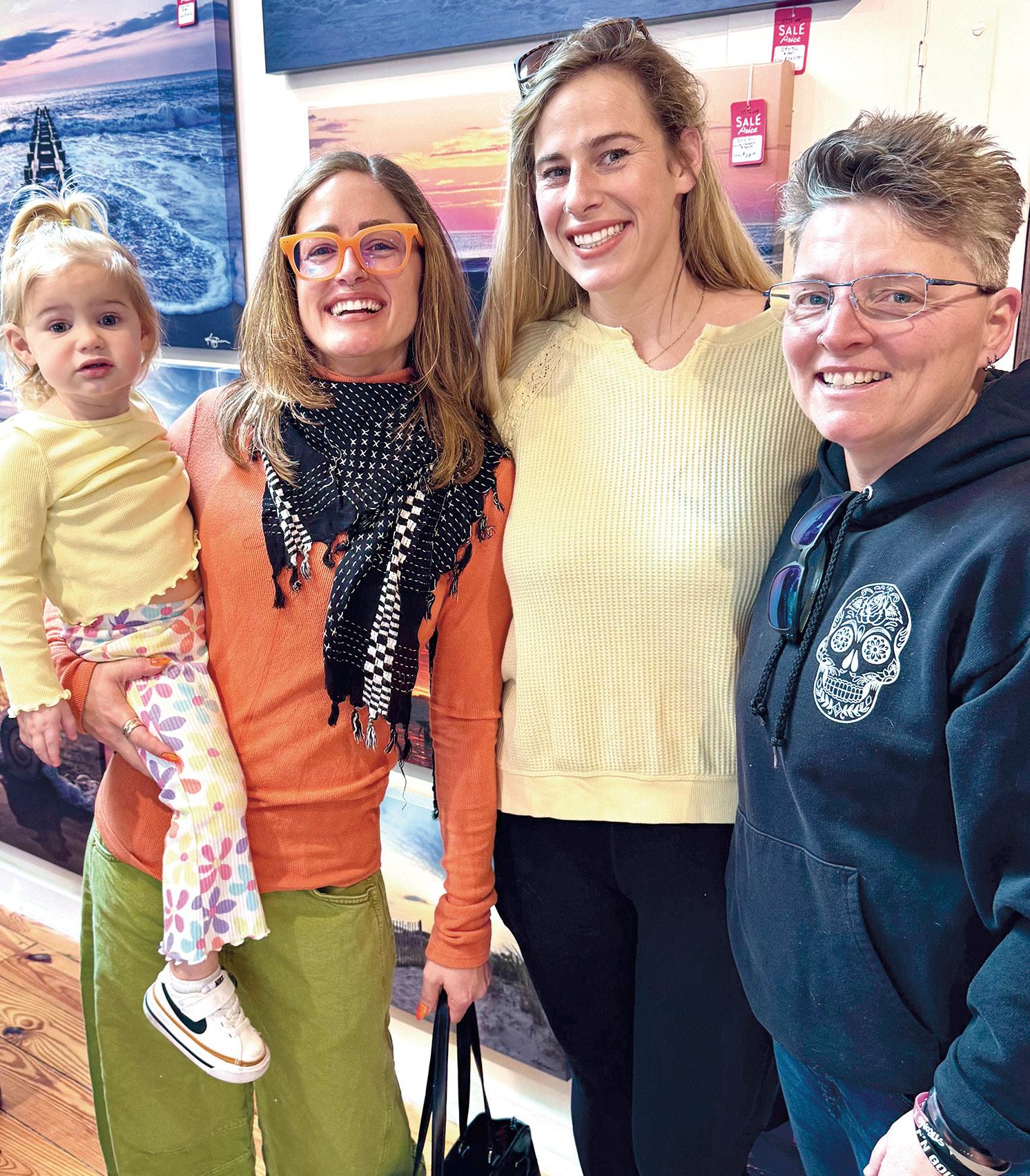
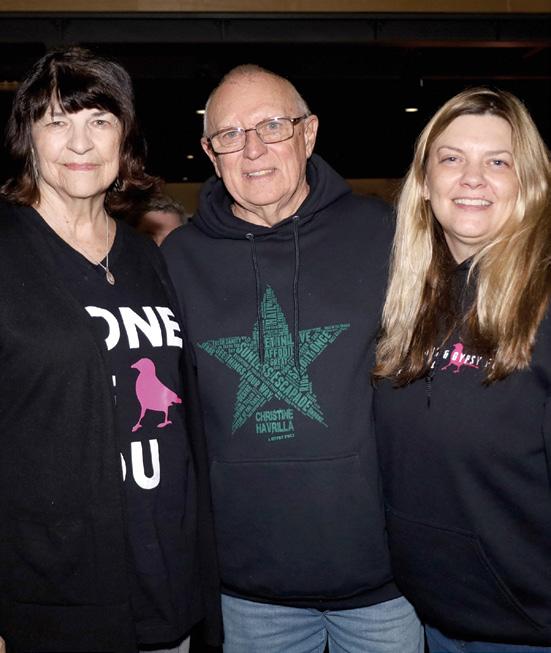
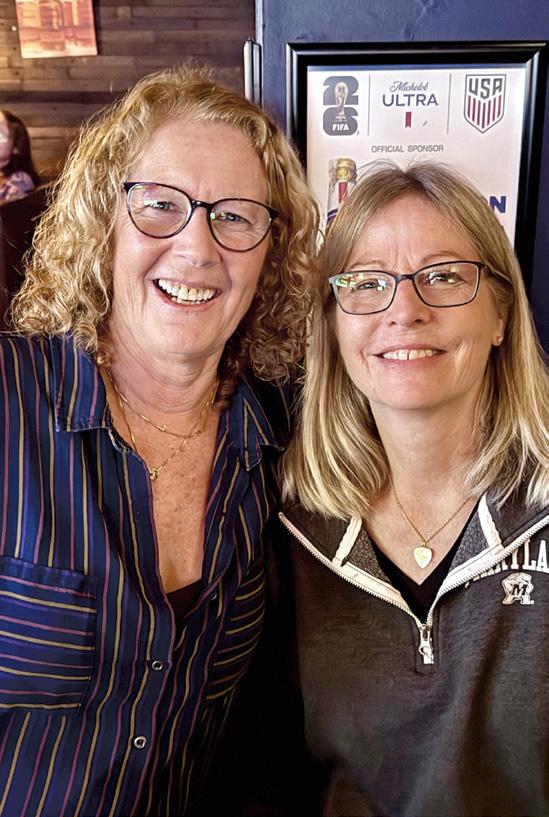
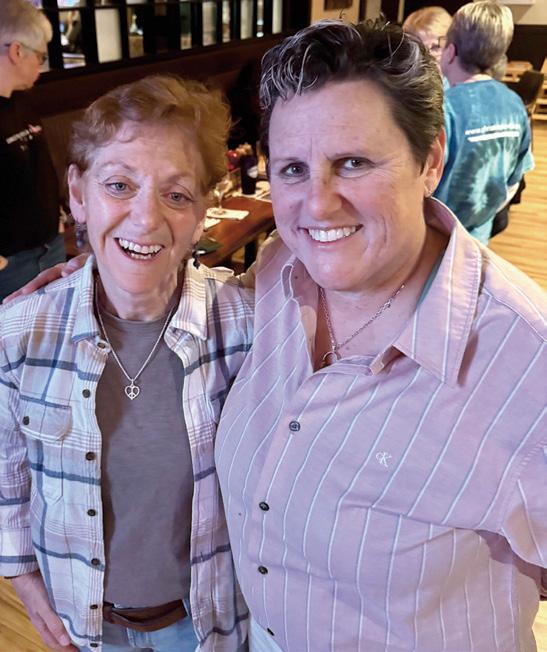
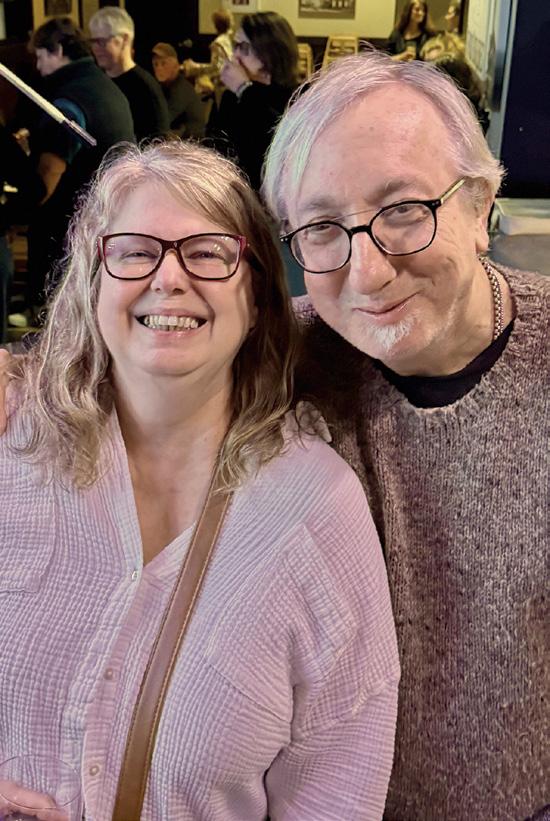
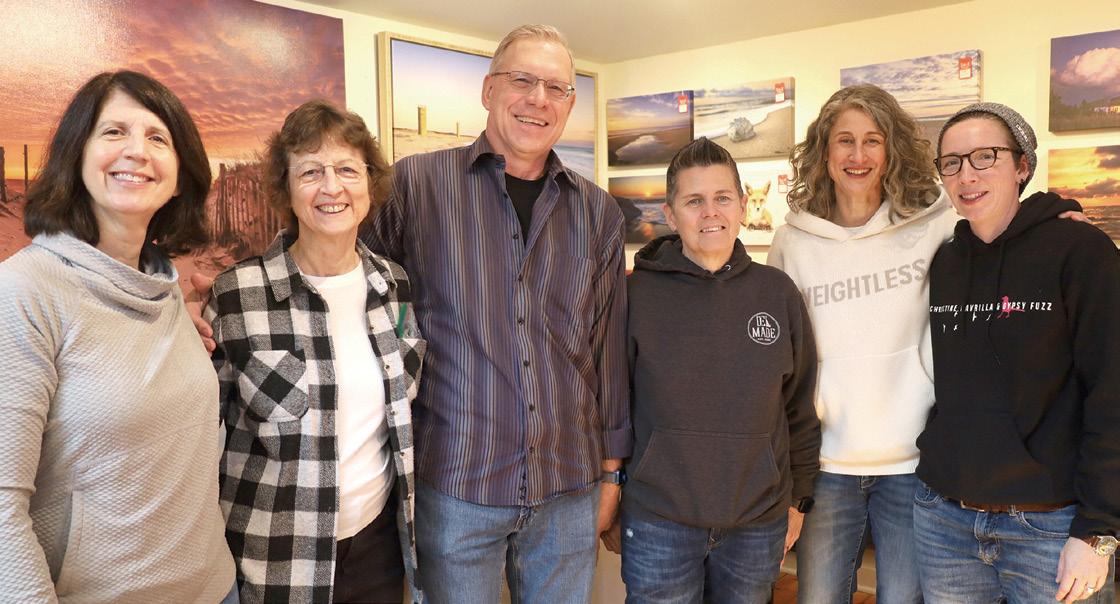
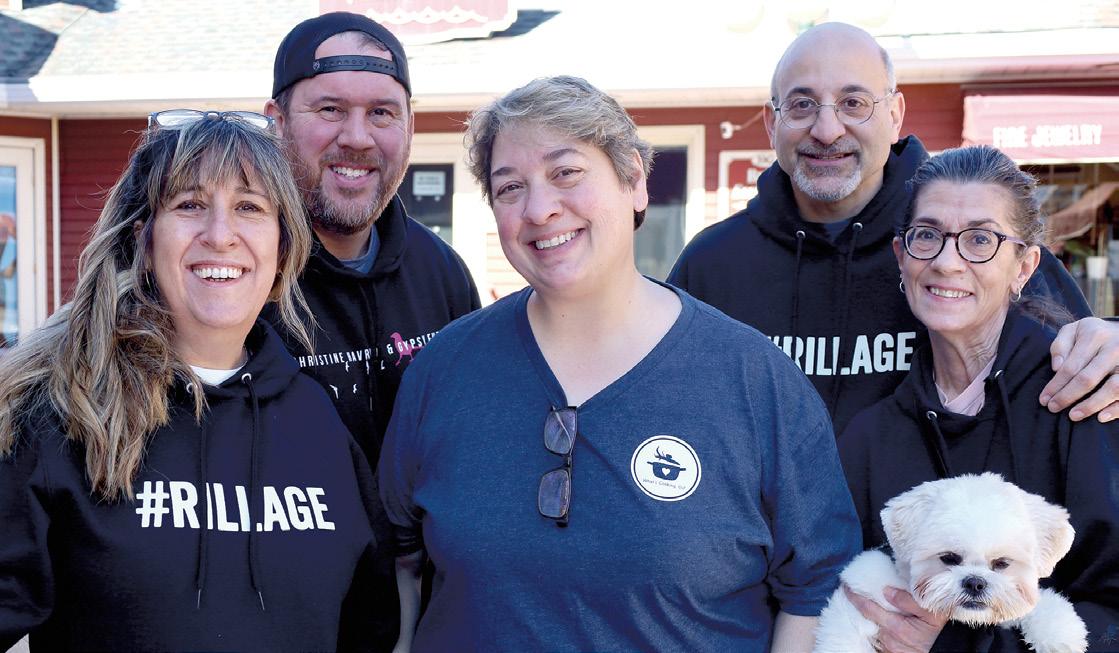
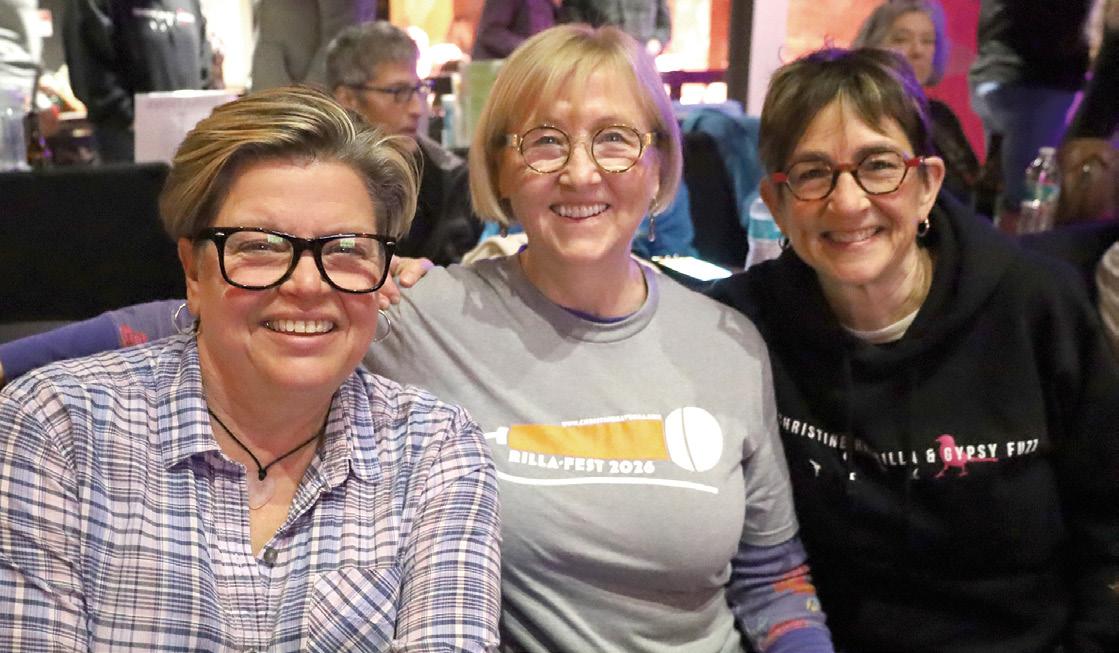
(Continued from page 57)
THIS PAGE (left to right) 1) at Rilla-Fest—Take Another Look: Christine Havrilla at Art Off the Avenue: Colbi Hinton, Brooke Havrilla, Stacy Hinton, Briggs Hinton, Sharon Gray, Tina Pastor, Gary Regulski, Kim Johnson, Doerthe Externest, Colleen Clark, Corinne Pubill, Rich Bellando, Diane Corsi, Stan Alexion, Jen Alexion; 2) at Rilla-Fest—RILLA Pub Crawl: Mary Havrilla, John Havrilla, Angela Havrilla, Cheryl Landry, Nan Martino, Deb Bievenour, Joan Doyle, Maria Fenelli, Pat Fitzsimons, Karon Hamlyn, Mary Knight, Al Knight.
OPPOSITE PAGE 3) at Rilla-Fest—RILLA Pub Crawl: Michele Garrett, Hilton Garrett, Dana Harrington, Wendy Greezicki, Donna Tyrrell, Michelle Sileo, Eve Tyrell, Eve Wyatt; 4) at Clear Space Theater—42nd Street: Denise Anderson, Mike Davitt, Nicole Chubioglu, Joe Gfaller, Candice Jewell, Marti Garrett, David Garrett, Chris Berg, Terry Kistler, Mark Lenard, Michael White, Rece Pope, Brooke Rhue; 5) at Rigby’s—FURST Friday: Mark Shaw, Charles Vandergrift, Jeff Donovan, William Gestole, Drake Bahajak, Matt Bronson.
(More CAMPshots page 84)
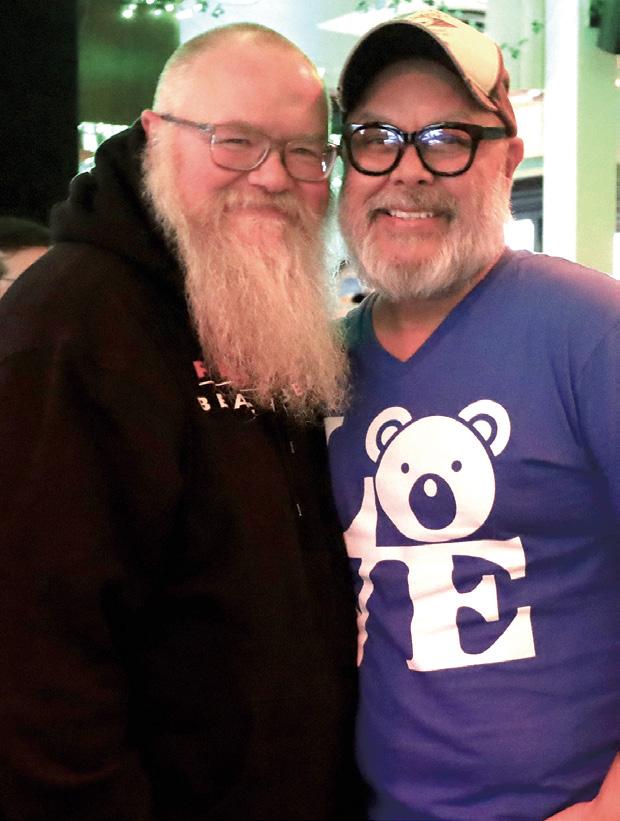
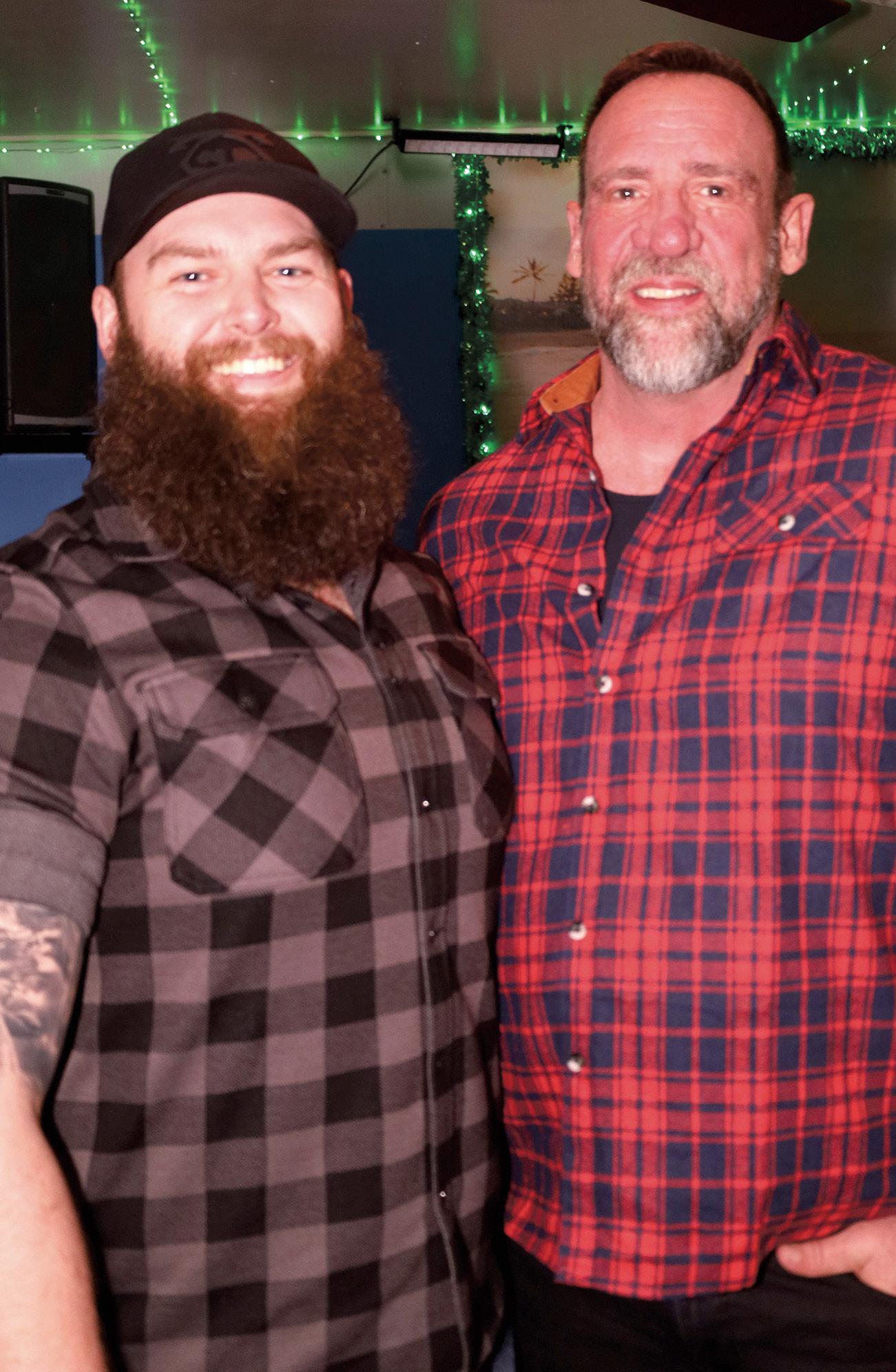
SCENES FROM REHOBOTH BEACH
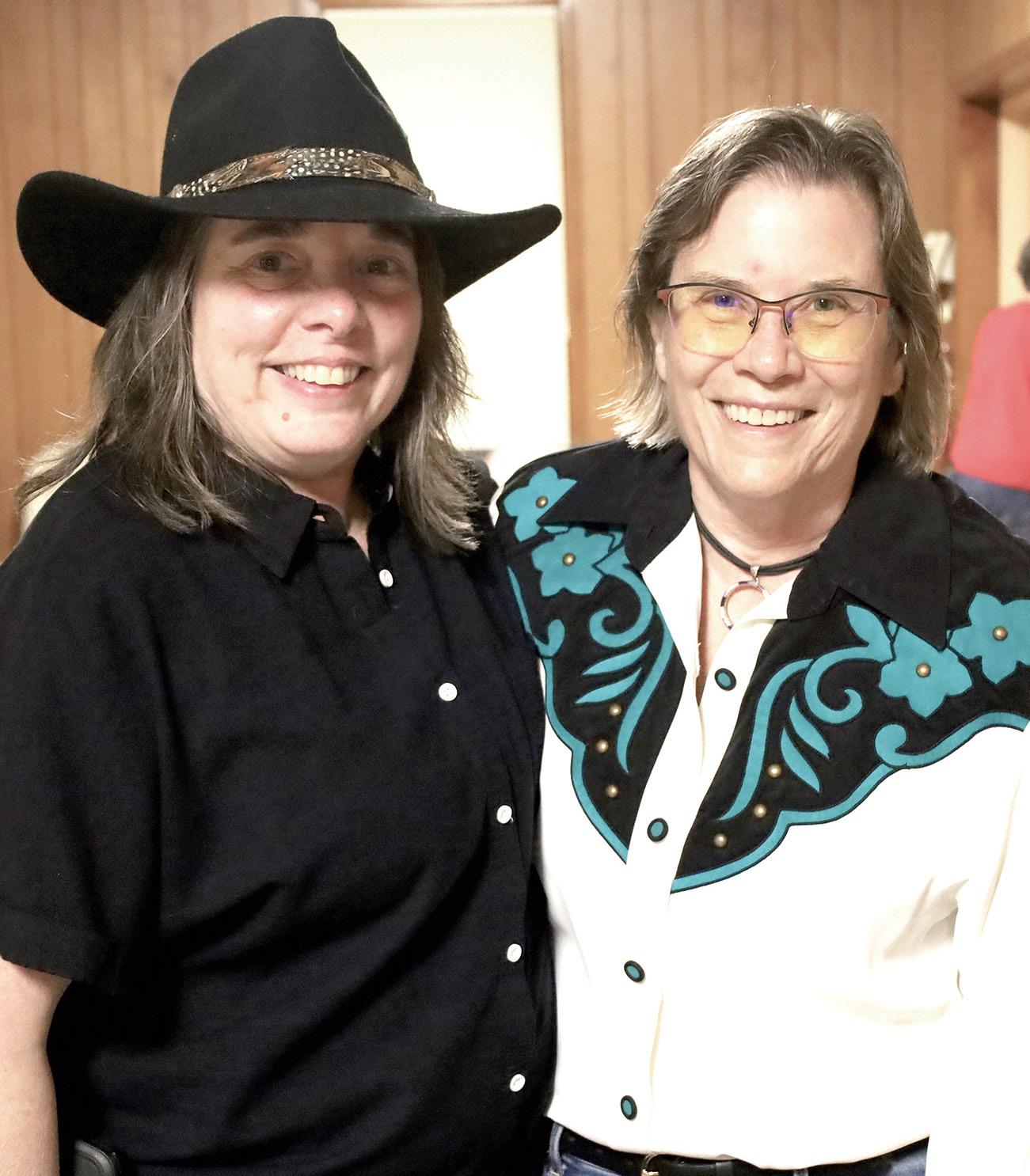
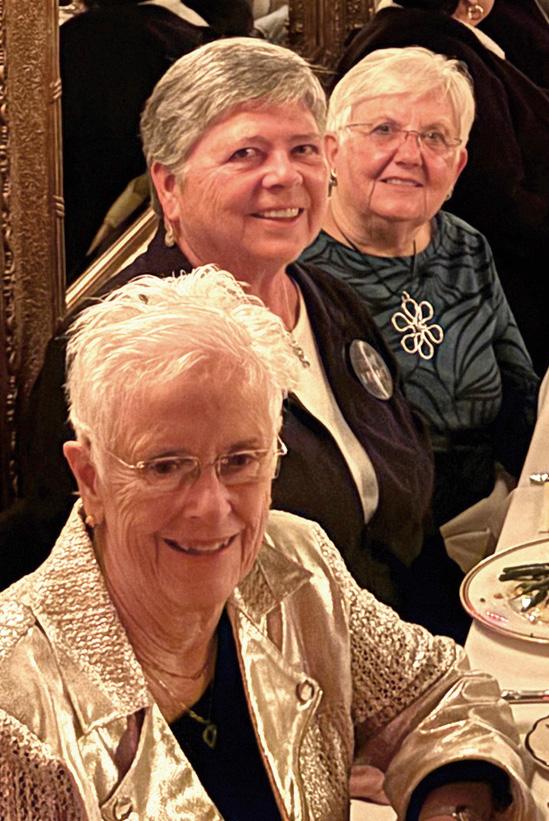
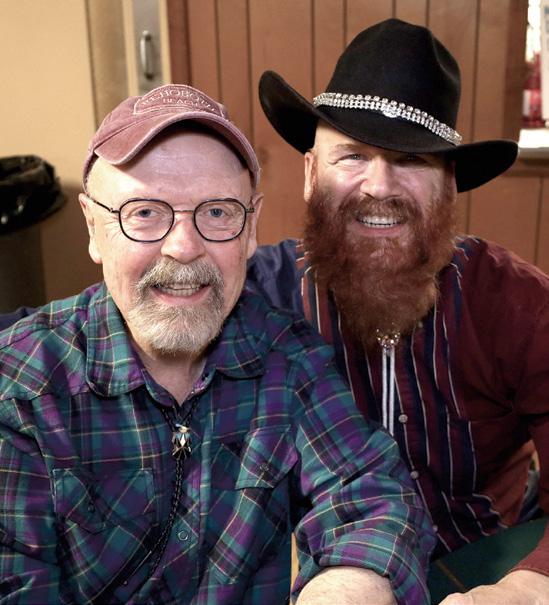
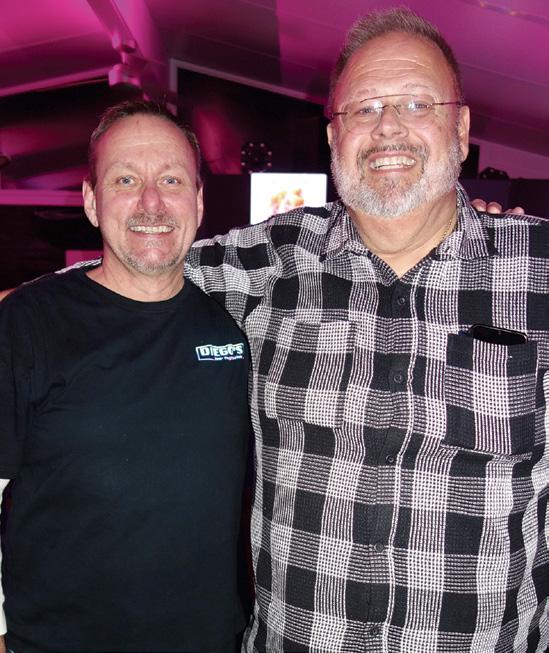
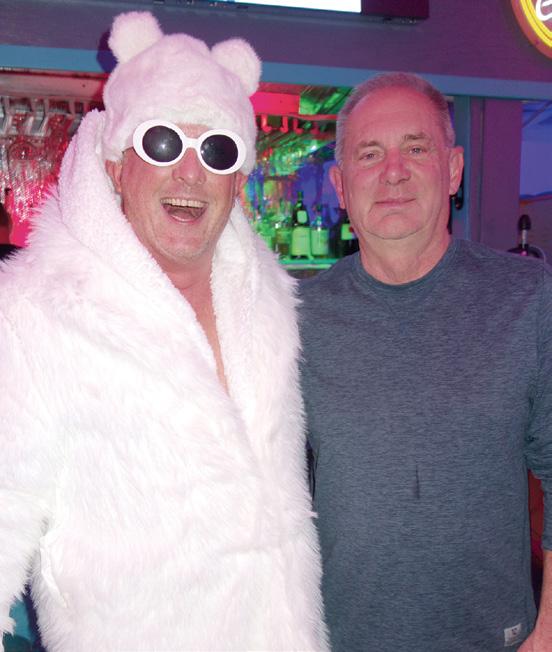
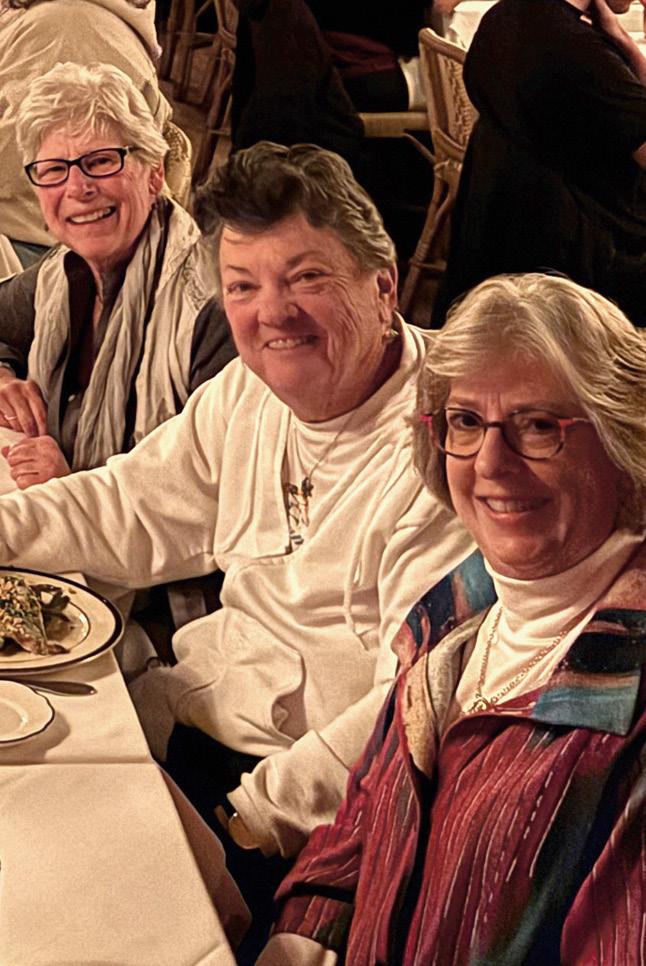
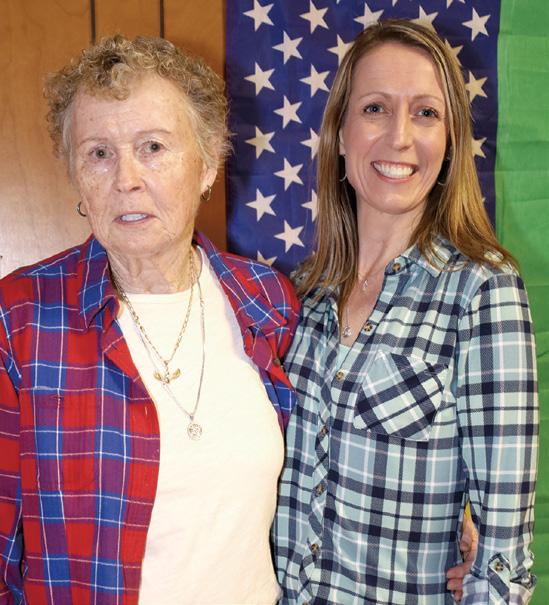
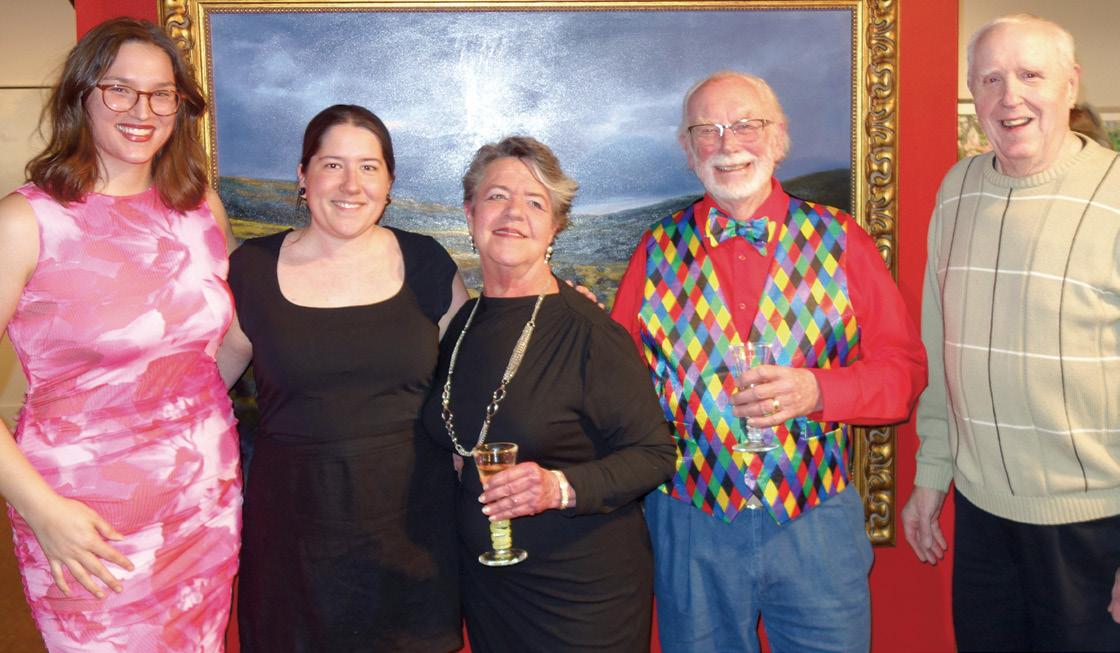
(Continued from page 83)
THIS PAGE (left to right) 1) at Gay Women of Rehoboth Line Dancing at RB Firehall: Colleen Malloy, Paula Sydenstricker, Jerry Filbin, Chris Dalen, Chris Bowers, Amanda Showell; 2) at Diego’s: Ronnie Black, Bryan Hecksher, Simon Fares, Rita Fry, Lorne Crawford, Natalie O’Neill, Rita O’Neill, Mark Kehoe, Andy Dorosky; 3) at Peninsula Gallery: Shelby Cook, Molly Honey King, Carol BoydHeron, Tony Boyd-Heron, Gene Beamer; 4) at La Fable: Jackie Goff, Ruth Morse, Jean Brolund, Kathy Trzcinski, Liz Wheeler, Mary Vogt.
OPPOSITE PAGE 5) at Sussex Habitat for Humanity Women’s Build with CAMP Rehoboth: Pat Cantanzariti, Christine Allison, Evie Wills, Sue Greer, Olivia Stanhope, Ann Maresca; 6) at RB Library Friday Flicks at CAMP Rehoboth: Lauren McCauley, Sue Goudy, Andrew Keller; 7) at The Pines: Steven Haber, Matty Brown, Eric Korpon, Michael Fetchko, Tony Burns, Keith Petract, Donna Shifflett, Kay Young, Kim Leisey, Kathy Solano; 8) at Purple Parrot: Jeff Enck, Ritchi Francia, Brian Fisher, Elisha White ; 9) at Blue Moon: Nancy Beaumont, Mindy Martin, Jerry Gallucci, Conrad Welch, Tim Roger, Scarlett Stout. ▼
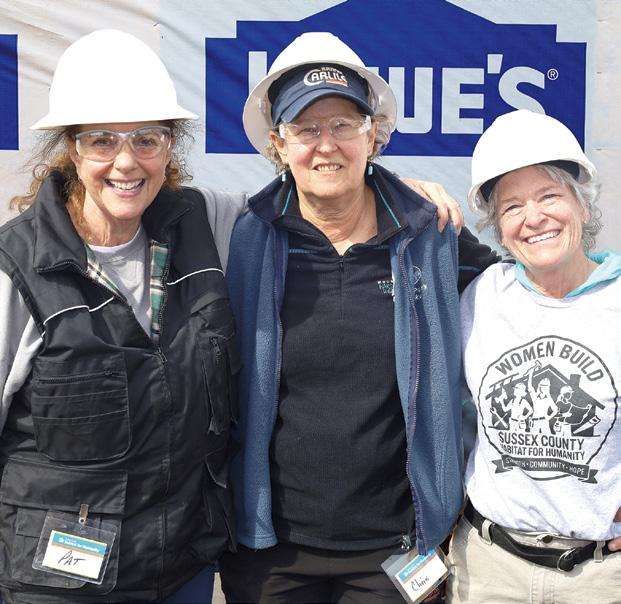
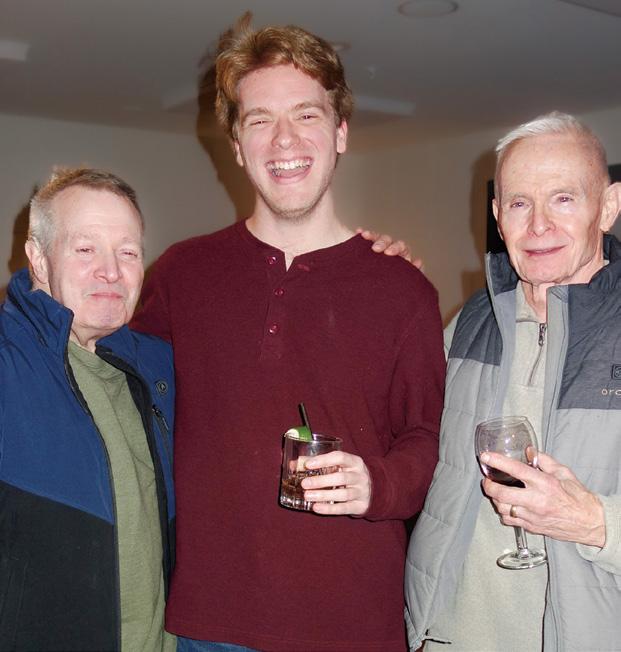
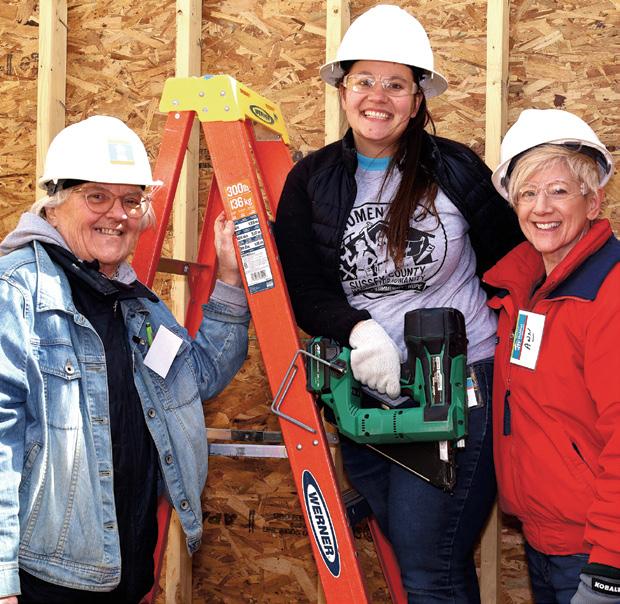
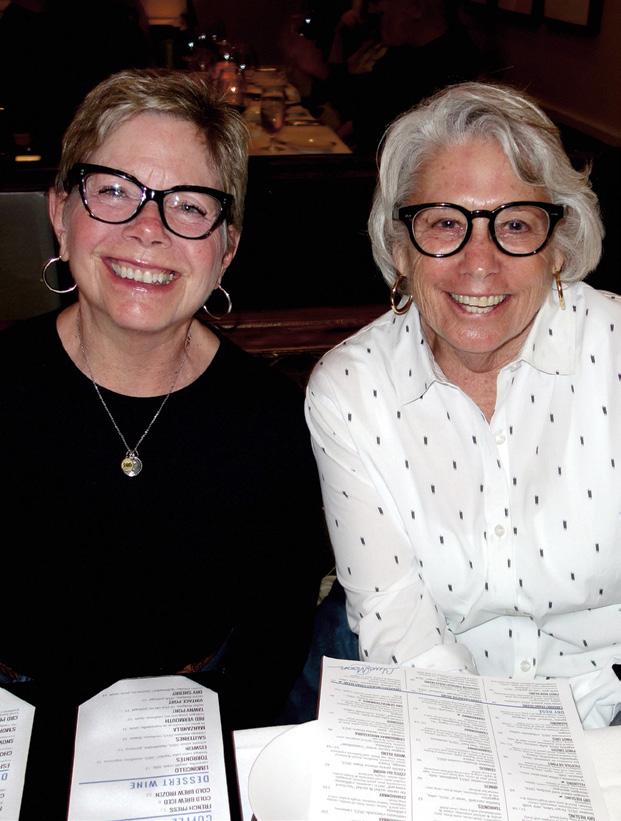
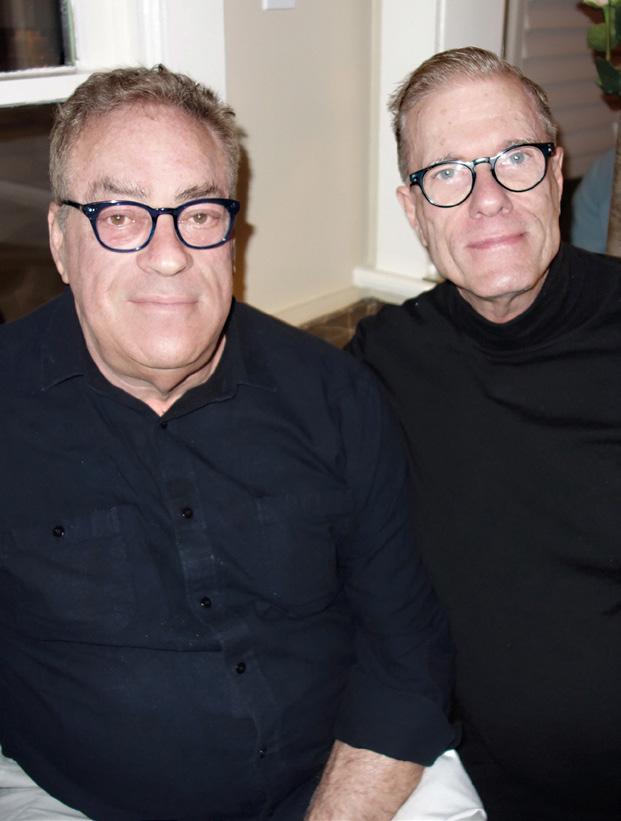
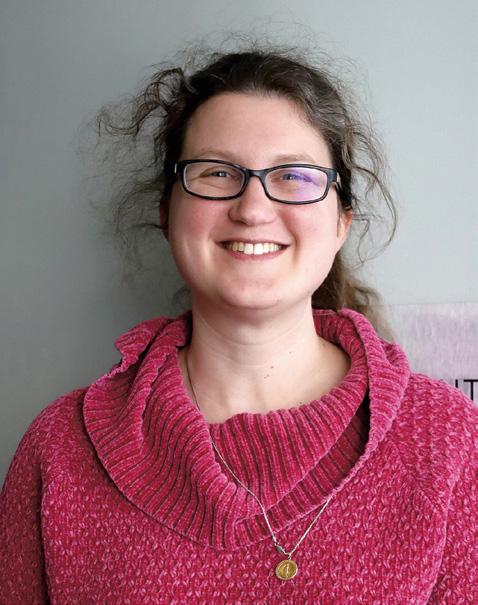
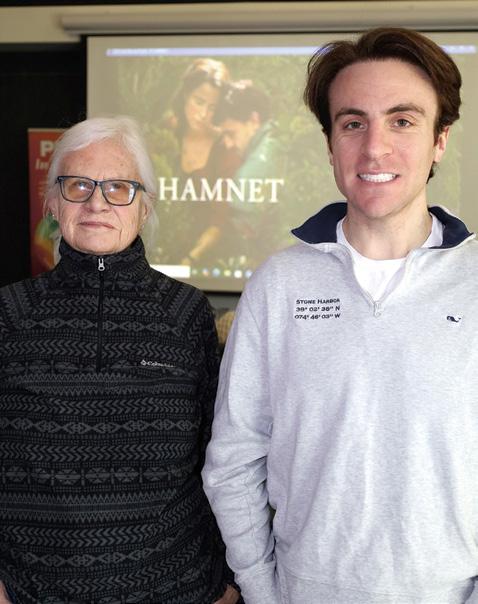
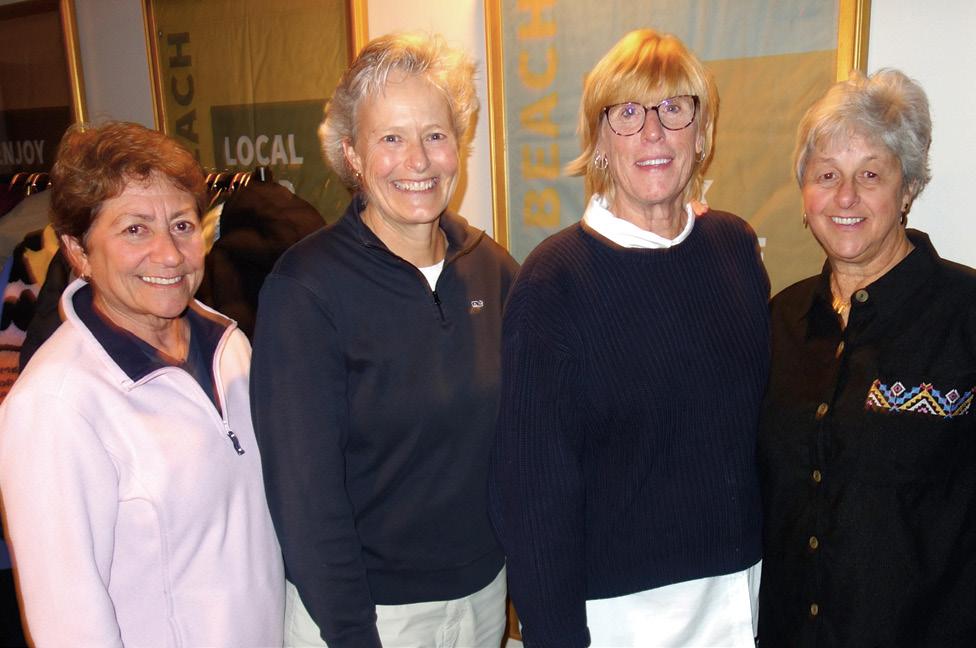
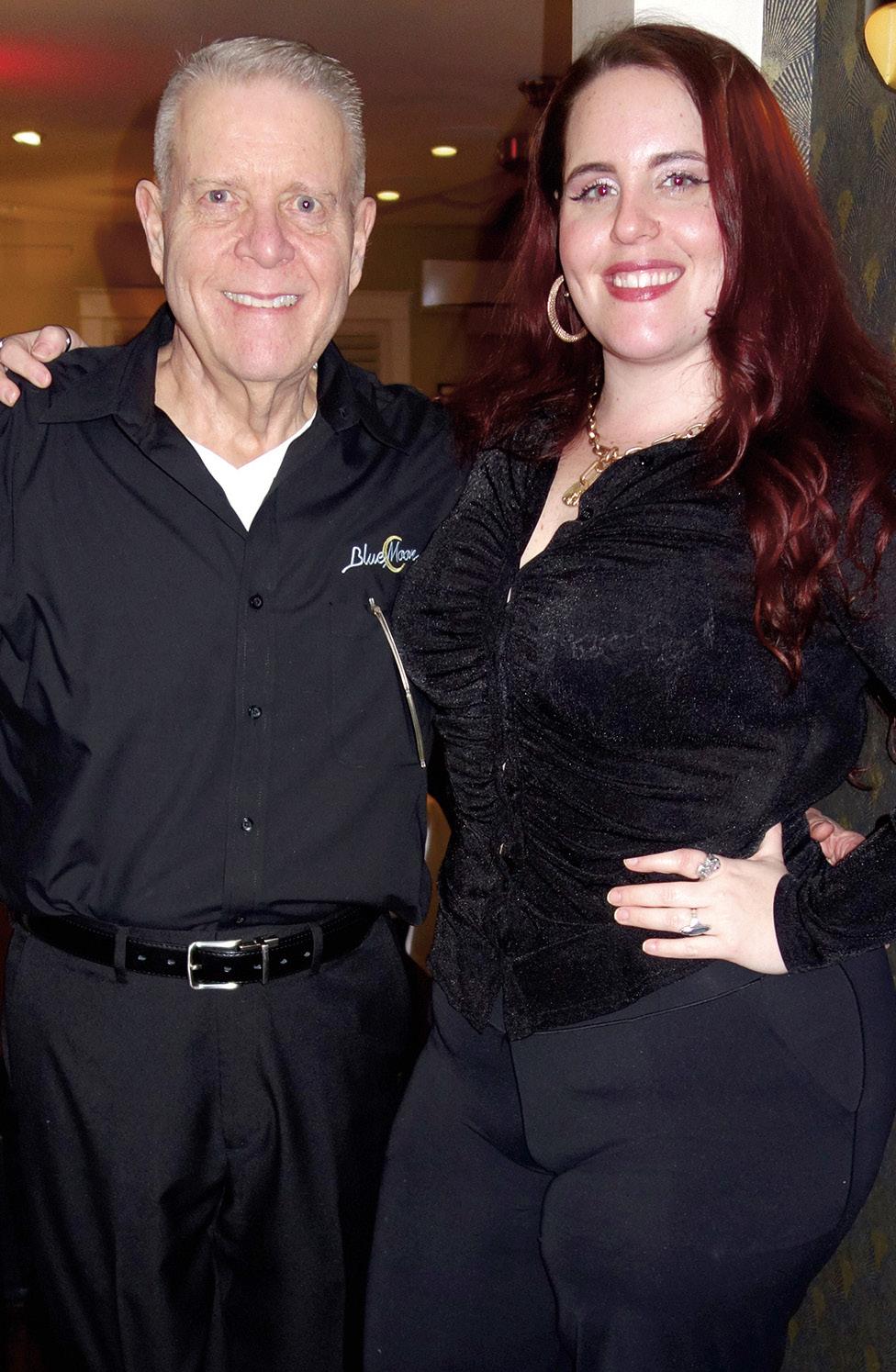
Historical Headliners
BY ANN APTAKER
Willa Cather: What They Didn’t Tell You in School
Whether it was in high school or college, chances are you were assigned books by Willa Cather. Perhaps you were lucky enough, especially in college, to have a teacher or professor who opened your mind and heart to one of America’s greatest writers, author of several masterpieces, among them O Pioneers!, A Lost Lady, and perhaps her greatest, My Ántonia. These and many of her other works celebrated the glories and struggles of life on the Great Plains of the Midwest.
Cather was born in Gore, Virginia on December 7, 1873, but the family moved to Webster County, Nebraska when Cather was nine years old. Sometime later, the family took up homesteading in the area near the Nebraska town of Red Cloud. It was these early experiences in the hardscrabble Midwest—where a growing population of Northern European immigrants competed with the native-born to scratch out a living in the unforgiving soil and weather of the Great Plains—which later ignited Cather’s literary imagination.
After graduating from the University of Nebraska, Cather moved to Pittsburgh, Pennsylvania, where she remained for 10 years and gained writing and publishing experience by working as a magazine editor. But for a talent and an ambition as powerful as Cather’s, Pittsburgh offered little opportunity to break into the larger literary world. So in 1906, at the age of 33, Cather said goodbye to Pittsburgh and moved to New York City.
At that time—the early years of the twentieth century—New York was experiencing fantastic growth, not just outward but upward. The city’s earliest skyscrapers were going up, forever changing urban architecture and forming the beginnings of New York’s famous skyline. Excited by the energy of the city and curious about the tiers of its society, Cather wrote her first great work, Alexander’s Bridge, a novel featur-
ing a successful bridge engineer and his globe-trotting life and troubles. Though Alexander’s Bridge was met with
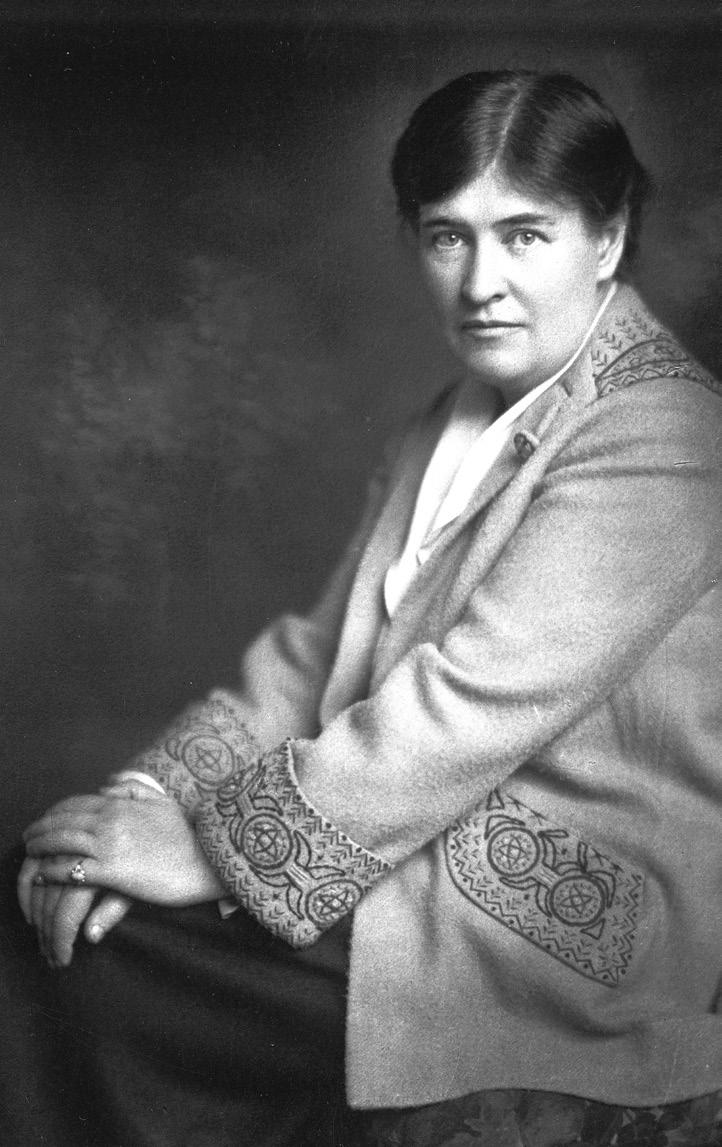
…a year after moving to New York and rising in its literary circles, Cather, at 34 years old, became involved with the love of her life: Edith Lewis…
generally favorable reviews, the soil, wind, and people of Cather’s formative years on the Great Plains tugged at her imagination and literary soul. The three novels known as the Prairie Trilogy— O Pioneers!, The Song of the Lark, and My Ántonia,—followed in quick succession.
Though busy writing novels, short stories, essays, and working as an editor at McClure’s Magazine, a year after moving to New York and rising in its literary circles, Cather, at 34 years old, became involved with the love of her life: Edith Lewis, an important tidbit they probably
didn’t tell you in school. Lewis, a successful editor and advertising copywriter, was eventually hired by McClure’s that same year. It’s unclear whether Lewis first met Cather in Lincoln, Nebraska, where Lewis took a teaching position for a year, or when they were both working at McClure’s. In any event, it was in New York where the two women became a couple, living quite openly in the Bohemian atmosphere of Greenwich Village, and later on, Park Avenue. Though both women travelled extensively for professional reasons (lectures, magazine assignments, etc.), their Park Avenue apartment remained their primary residence for the rest of their lives.
According to scholar and noted author, Dr. Melissa Homestead, professor at the University of Nebraska-Lincoln, Lewis, an experienced editor, helped shape Cather’s writing. Lewis’s advertising experience also served Cather well, making sure that Cather’s writings were mentioned in the better critics’ columns.
The couple stayed together for 39 years, until Cather’s death in 1947. Cather was buried in Jaffrey, New Hampshire. Lewis survived Cather by 25 years. She died in New York City in 1972, but was buried beside Cather in New Hampshire.
Like a number of the queer notables written about in this column, the relationship of Willa Cather and Edith Lewis was a union not only of a deep love but of an equally deep creative partnership. ▼
Ann Aptaker is the author of short stories and the Lambda & three-time Goldie award winning Cantor Gold series. Her latest in the series—Gold for the Dead—was released in October 2025. Image Courtesy of Nebraska State Historical Society.


Sounding
Cinco de Mayo
Why does the US Celebrate More than México?
Cinco de Mayo is the anniversary of the Battle of Puebla. And every year, people in the United States love to commemorate this event with celebrations small and large.
But, did you know Cinco de Mayo is hardly celebrated at all in México?
Why? The answer tells us a lot about the complicated history between the US and México. And, it also helps us understand some attitudes about México in the US today.
First of all, what is Cinco de Mayo?
The day is so popular in the US that many assume it’s Mexican Independence Day (which is September 16 and celebrated primarily the night before on September 15, btw!).
But, the Battle of Puebla was more than 50 years after México declared independence from Spain. In this conflict, Mexican forces defeated a larger and better-equipped French army sent by Emperor Napoleon III to establish influence in México.
The determination and strength of Mexican armed forces in spite of odds stacked against them inspired Mexicans all over North America to celebrate, including people living in California the same year the battle took place. Mind you, just 15 years before the Battle of Puebla, the US seized California from México by military force.
So, the very first people in the US to celebrate Cinco de Mayo were Mexicans living in former Mexican territories who had just experienced military take-over themselves. Naturally, they were inspired by the resistance in Puebla against imperialist aggression.
Cinco de Mayo festivities in the US became more popular in the 20th century when President Franklin D. Roosevelt initiated his Good Neighbor Policy, promoting non-intervention and cooperation between the US and Latin America. In the 1960s and 1970s during the beginning of the Chicano Movement,
Cinco de Mayo continued to be a symbol of resistance.
Fast-forward to the 1980s and 1990s, the date became commercialized in the US. Advertising giants like Anheuser-Busch and the Miller Brewing Company poured lots of dollars into Cinco

The real problem with Cinco de Mayo celebrations in the US is how they can perpetuate stereotypes of México and Mexicans.
de Mayo campaigns linking the day with beer and Mexican-themed parties. The occasion became an excuse to indulge, using an exoticized, imagined México as the backdrop for consumption and frivolity.
How is Cinco de Mayo celebrated in México today? Well, it’s hardly celebrated at all. Events are mostly limited to the state of Puebla—a military parade in the state capital and nearby battle reenactments.
And, should we be surprised?
Even though this date was important in Mexican history, it was by no means the most important military event in the country’s history, or even that century. And, though Mexico won the Battle of Puebla, it actually lost that war with France!
BY STEPHEN RASKAUSKAS
It’s not like everyone in the US celebrates, say, the Siege of Vicksburg every year. We would probably think it’s very odd if Mexicans went out for hot dogs and apple pie every year to honor that date, right?
But, if there’s one thing we love in the United States, it’s a commercialized holiday and an excuse to celebrate.
Perhaps that’s also why St. Patrick’s Day is more widely celebrated in the US than in Ireland. It, too, has become just another reason to party. What, after all, does drinking green beer have to do with Ireland’s conversion to Christianity? No more than drinking margaritas with the Battle of Puebla.
The real problem with Cinco de Mayo celebrations in the US is how they can perpetuate stereotypes of México and Mexicans. Cinco de Mayo ads sell Mexican culture as festive, fun, and entertaining. On the other hand, political rhetoric often portrays Mexicans and Mexican immigrants as dangerous, criminal, or burdensome.
Mexican identity is welcomed when it is commercial and entertaining, but questioned when it involves political and human rights. In periods of heightened immigration enforcement, including highly publicized actions by agencies such as the US Immigration and Customs Enforcement (ICE), this contradiction becomes more visible and painful.
Communities may celebrate Mexican-themed parties in early May while simultaneously witnessing raids, detentions, and violence. The same people who talk about “illegal aliens” ruining the US are also booking vacations to Cancún and Tulum, without regard to how overtourism and gentrification impact locals. This January, ICE agents ate lunch at a Mexican restaurant in Willmar, Minnesota, only to return later that day and detain the owners and a staff member.
These tensions intensify questions of who “belongs” in the United States. And, when Mexican identities are reduced to
Continued on page 92.
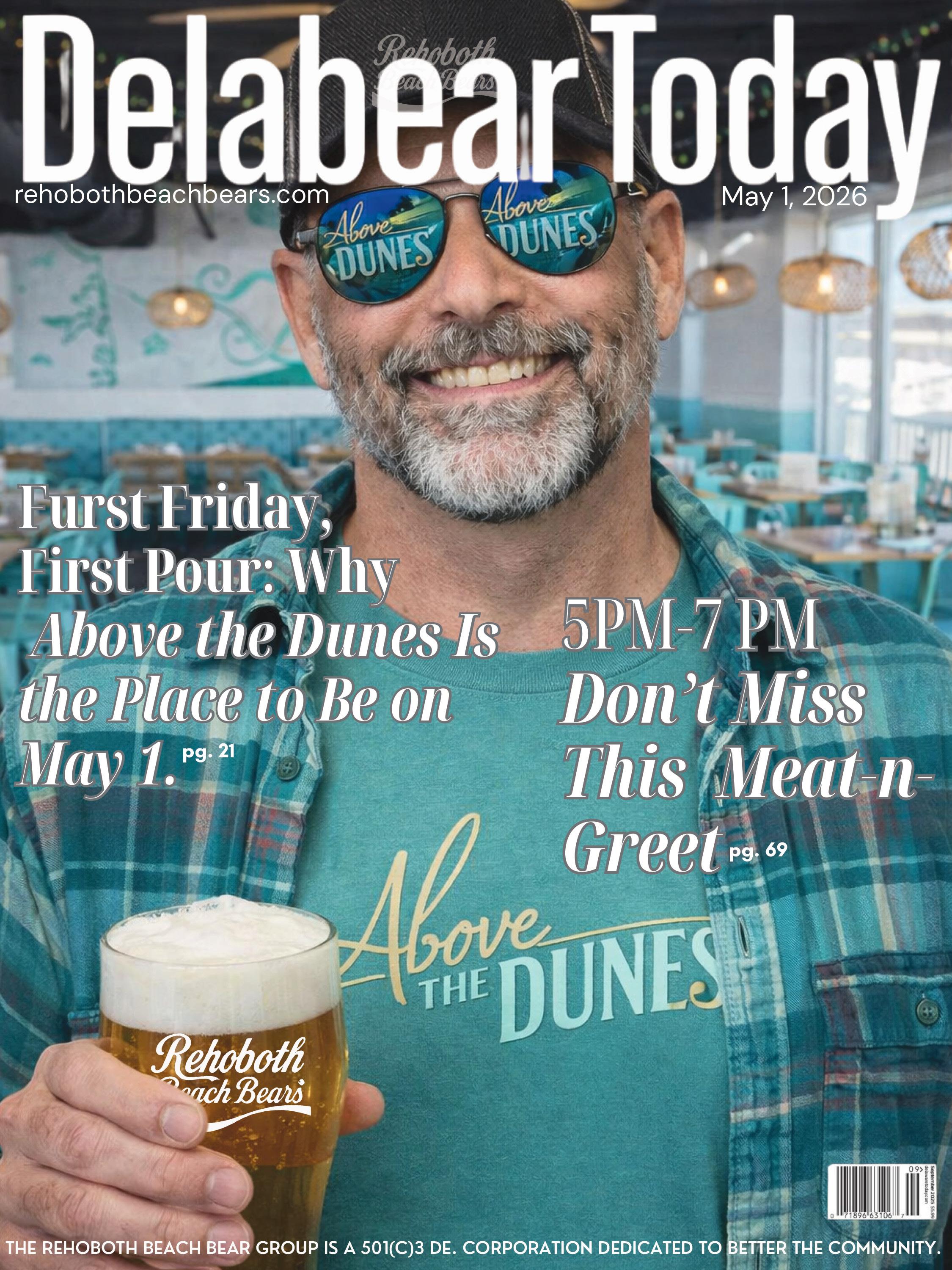
We Remember
Charles Lawson Browne III
Charles Lawson Browne III—Charlie to his family and many friends— passed away peacefully in Baltimore, Maryland on Tuesday, March 3, 2026, surrounded by his beloved husband, Rod, friends, and family. He was born in Camilla, Georgia on October 6, 1945. After graduating from high school in Camilla, Charlie attended The Georgia Institute of Technology before transferring to Emory University. At Emory he was a member of Pi Kappa Alpha fraternity where he made lifelong and enduring friendships. Charlie received his Juris Doctor degree from The University of Georgia School of Law and served his country through the Armed Forces during the Vietnam War.
Charlie moved to the DC/Baltimore area initially as part of the Carter administration and then spent the remainder of his career serving as an attorney in the Johns Hopkins Health System. Charlie had an amazing talent for building community and being a lifelong learner. He is remembered for his kindness, intentionality, inclusive nature, generosity, and smart wit. He served on many boards and committees in leadership positions and volunteered for faith-based and not-for-profit charities throughout his incredible and well-traveled life.
Charlie was an active member of his church in both Baltimore and Rehoboth Beach, a member of the Rehoboth Beach Chapter of Black Tie International, a member and past president
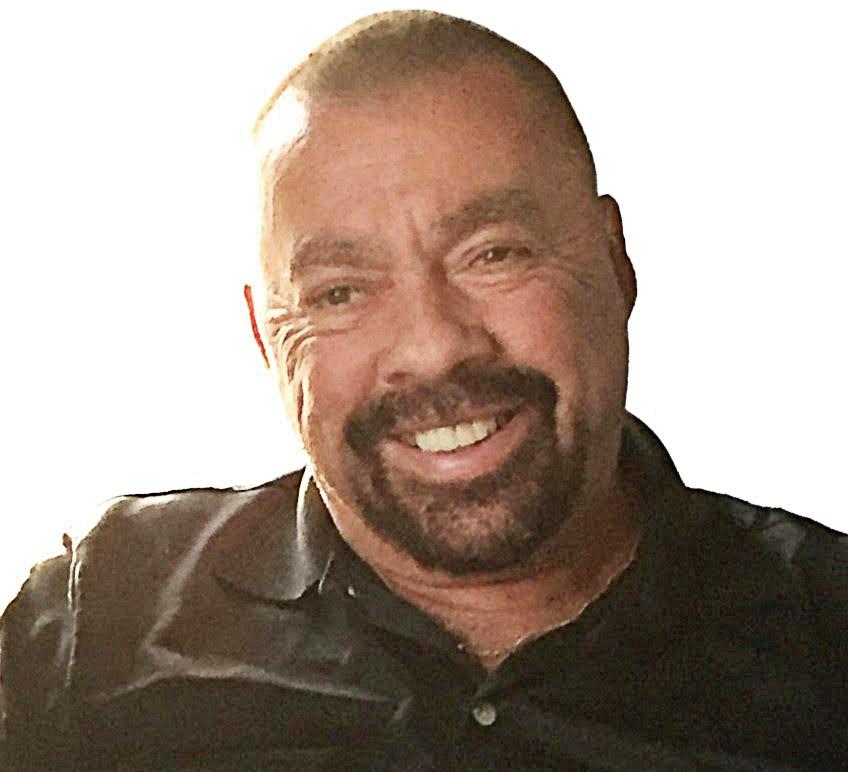
of the Rehoboth Beach Homeowners’ Association, a patron of the arts, and a card-carrying member of the ACLU. He supported causes near and dear to him and his loved ones throughout his life. He and Rod entertained countless friends, family, and chosen family at their Seabreeze House here in Rehoboth Beach where they were known for hosting incredible and welcoming parties, dinners, and brunches. Charlie maintained friendships for over a half-century with his childhood and college friends and his fraternity brothers, many of whom became treasured members of his extended family. He was a beloved son, brother, nephew, uncle, great-uncle, godfather, friend, and, of course, husband.
He is preceded in death by his father, Charles Lawson Browne, Jr; his mother, Marie Edwards Browne; and his beloved sister, Charlotte Browne Wright. He is survived by his cherished husband of 40 years, Rodney Craig Cook; niece, Marie Wright Edler (Andy); nephew, William Lawson Wright (Rachel); great nephews, Nicholas Wright Edler and Austin William Edler; and numerous cousins.
A visitation was held at Cox Funeral Home in Manchester, Georgia followed by a graveside service at Oak Hill Cemetery in Talbotton, Georgia on Tuesday March 10. A service to celebrate his life was held at The Cathedral of the Incarnation in Baltimore, Maryland on Friday March 13. An additional celebration of his life is planned for friends and family
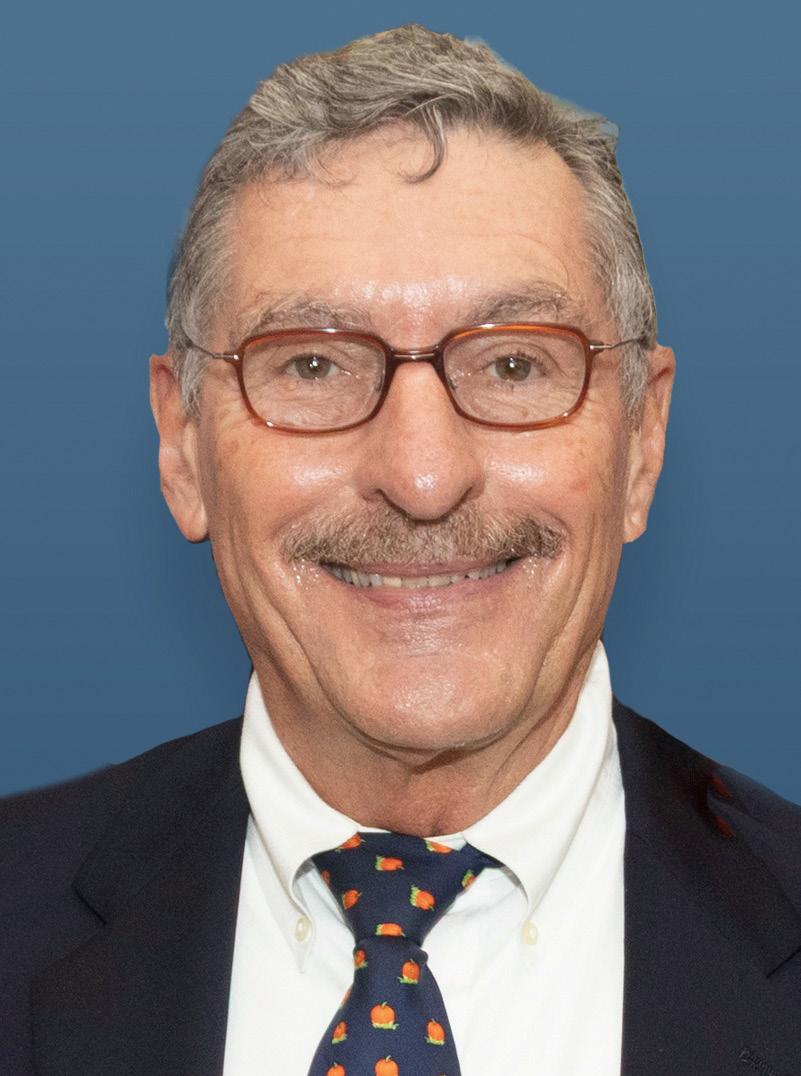
later this spring in Rehoboth Beach, Delaware (details to be shared when confirmed).
In lieu of flowers, his family invites those who wish to honor Charlie’s memory to consider making a gift in his name to support an organization that was close to his heart and that he supported with volunteer hours and event participation over many years: CAMP Rehoboth. Donations may be sent to CAMP Rehoboth at 37 Baltimore Avenue, Rehoboth Beach, Delaware 19971 and may be made online at: give.camprehoboth. org (please note “In Memory of Charlie Browne”). ▼
Marc-Anthony (Mark) Worosilo
ACelebration of Life for MarcAnthony (Mark) Worosilo will be held on April 18, 2026, from 12 noon until 2:30 p.m. at The Virden Center, 1155 College Drive, Lewes, Delaware 19958. Please join Tom Negran and Marc-Anthony’s friends to celebrate his life and share some
memories of the wonderful times we all had together. Lunch will be served. Please RSVP by April 10 to t.negran@ att.net if you plan to attend. ▼
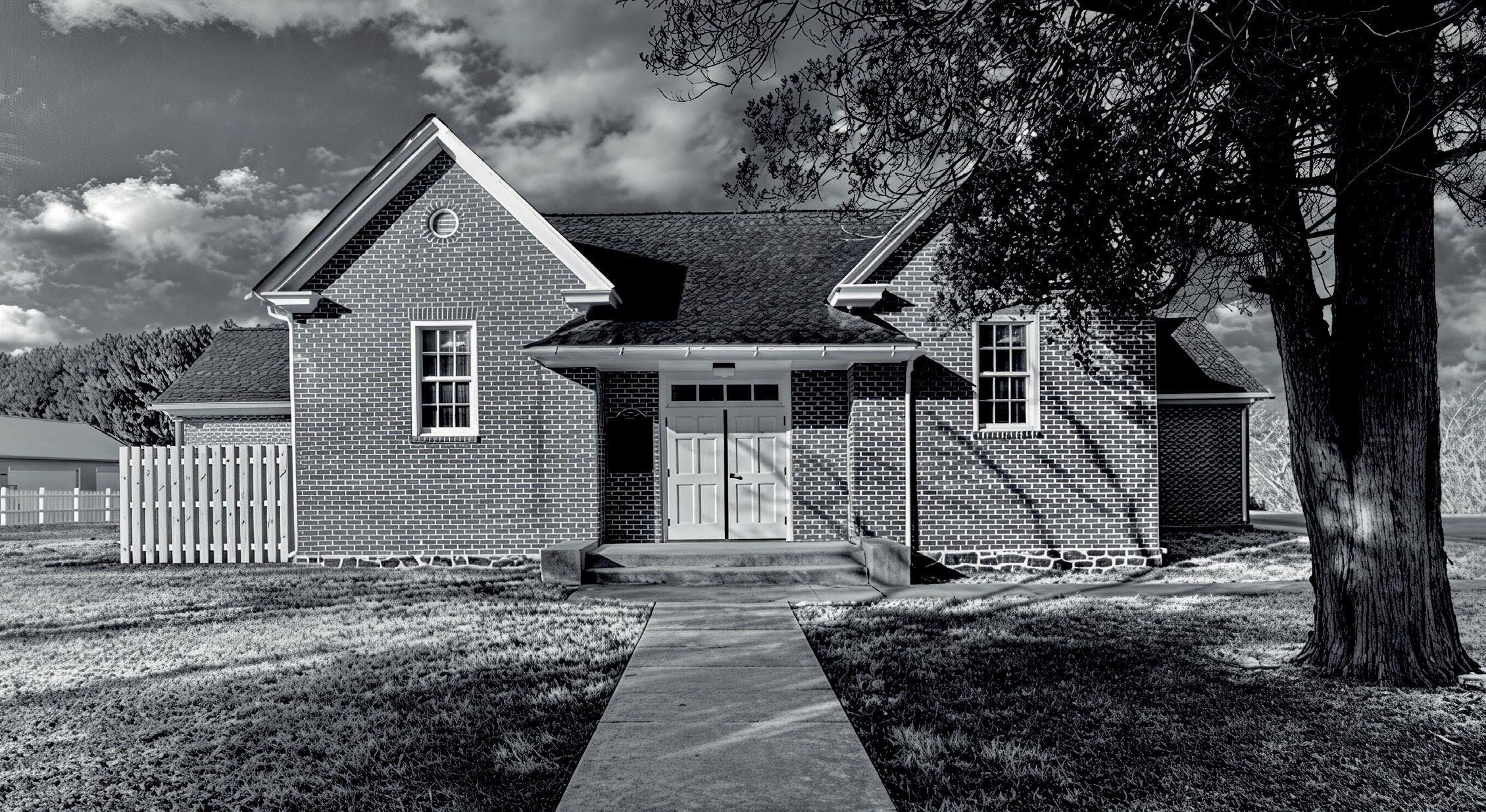
Rescuing History
Community Transformation
Growing Community
Medical Achievement
Quiet Philanthropy
Rescuing History
Statewide Innovation
The historic Hockessin Colored School #107 was facing demolition. Stepping in to stop the wrecking ball was the African American Empowerment Fund of Delaware at DCF, which loaned $100,000 to the project, buying vital time to raise additional funds. Today the school is a center for diversity, inclusion and social equity, and the loan has been repaid.
Hockessin Colored School #107
Sounding Off Continued from page 88.
a single costume one day a year, it’s easier to dehumanize real people the rest of the year.
Advertising, media, and political discourse shape how Mexicans and Mexican-Americans are imagined, welcomed, or excluded in American public life. Even seemingly “harmless” Cinco de Mayo party themes can reinforce the idea that Mexicans are outsiders.
Social problems that result include normalization of cultural appropriation, racial profiling, and discrimination against Mexicans and Latinos more broadly. Stereotypes can influence how teachers, employers, law enforcement, and neighbors form unconscious biases.
What’s most ridiculous, is that some areas of the US where Mexicans and Mexican-Americans face the most discrimination used to be part of México!
So this year, if you’re thinking about celebrating Cinco de Mayo, ask yourself, “What exactly am I celebrating and why?” We don’t need to invent excuses to learn about other cultures and to celebrate them. How we celebrate is another matter. ▼
Stephen Raskauskas is a Sussex County native who has produced content for radio, TV, digital, and print.
windsor's 28-02_windsor's 14-15.qxd 3/30/2018 2:26 PM Page 1


“
WHERE FLOWERS SPEAK A BEAUTIFUL LANGUAGE”
FLORIST SHOP • GREENHOUSES
20326 Coastal Highway • Rehoboth Beach, DE (Next to Arena’s Café) 302-227-9481
Fourth-Page-V CROSSWORD PUZZLE SOLUTION
(puzzle on page 72)
CAMP Rehoboth Volunteer Opportunities









Send your check for $50 to CAMP Rehoboth, 37 Baltimore Ave., Rehoboth Beach, DE 19971. If you prefer to use your Visa, MasterCard or American Express call 302-227-5620.
VOLUNTEER AT CAMP REHOBOTH’S WOMEN’S+ FEST!
Women’s+ FEST is coming up and we’re looking for enthusiastic volunteers to help make this vibrant, community-centered weekend a success! From welcoming guests to assisting with events throughout FEST, volunteers play a vital role in creating the warm, inclusive atmosphere that makes Women’s+ FEST so special. Whether you can give a few hours or more, your time and energy help bring this celebration to life. Join us in making this year’s festival unforgettable—sign up to volunteer and be part of the magic!
JOIN THE RAINBOW THUMB CLUB!
Love gardening and want to help keep CAMP Rehoboth’s spaces welcoming and beautiful? Join the Rainbow Thumb Club, composed of our volunteers who help care for the courtyard and surrounding grounds through pruning, watering, seasonal planting, and general garden clean up and maintenance. Each volunteer chooses one shift per week in the morning—finishing up before metered parking begins— making it an easy and rewarding way to give back, enjoy time outdoors, and connect with others who share a love of gardening and community. If you’re interested, please reach out to Shae Wagner at swagner@camprehoboth.org.
CROP: CAMP REHOBOTH OUTREACH PROGRAM
The CAMP Rehoboth Outreach Program (CROP) is constantly working to cultivate community and strengthen relationships and the connections between us all. Check the site for monthly volunteer opportunities.
Sign up at camprehoboth.org/volunteers.
Please visit camprehoboth.org/volunteers to register as a volunteer and to sign up for available opportunities.
THANK YOU
CAMP REHOBOTH ACCESSIBILITY
Hope Vella
CAMP REHOBOTH ADMIN
Sherri McGee
CAMP REHOBOTH ADVOCACY COMMITTEE
Daniel Bruner
David Garrett
Leslie Ledogar
CAMP REHOBOTH ART RECEPTION: BEST SHOT!
Lissa Dulany
George Munson
Jefferson Rougeau
CAMP REHOBOTH CHORUS CONCERT USHERS
Cathy Balsley
Kathleen BeraultChmielewski
Monica BeraultChmielewski
Bob Croker
Robin Cunningham
Donna Dolce
Bernadette HumphreyNicol
Michele HumphreyNicol
Mark Shaw
Charles Vandergrift
Mary Ann Wangemann
Jerri Williams
CAMP REHOBOTH CHORUS LEADERSHIP COMMITTEE
Bill Fuchs
Karen Gantz
Sue Pound
Gloria Richards
Dave Scuccimarra
Travis Stevens
Rose Verona
CAMP REHOBOTH DEVELOPMENT TEAM
Pat Catanzariti
Lorne Crawford
Mike DeFlavia
Michelle Manfredi
Joe Vescio
CAMP REHOBOTH FACILITIES
Carol Brice
Lisa Evans
Eric Korpon
CAMP REHOBOTH VISUAL ARTS
Lissa Dulany
Logan Farro
George Munson
Jefferson Rougeau
Leslie Sinclair
Debbie Woods
CAMPCIERGES
Ken Currier
Max Dick
Peter Keeble
Susan Goudy
Jim Mease
Jean Metzar
Kim Nelson
Lori Rocheleau
Pamela Rule
Maria Scannapieco
Patricia Stiles
Linda Tiano
Joe Vescio
CAMPSHOTS
PHOTO VOLUNTEERS
G Michael Beigay
Tony Burns
Geri Dibiase
Jackie Goff
Deb Murray
COASTAL CONCERTS: WINDSYNC
George Munson
Kevin Pelland
CROP SUPPORTS
FOOD BANK OF DE
Chris Allison
Randy Amoyen
Cathy Balsley
Deb Carroll
Karen DeSantis
Daphne Kaplan
Tammy Mundie
Mary Jo Piarote
Steve Scheffer
Rachel Summers
Jennifer Varone
Holly West
HEALTH SUITE INVENTORY
Joe Vescio
LETTERS DISTRIBUTION TEAM
Jim Mease
LETTERS MAILING TEAM
Nancy Hewish
Joanne Yurik
LETTERS PROOFING
Barb Ralph
RBL FRIDAY FLICKS
Robert Fleming
Maria Scanapieco
THIS MONTH IN QUEER HISTORY
Beth Shockley
WHAT HAPPENS WHEN YOU DIE
Andrew Keller
Chip Logan
AD INDEX



FRIDAYS & SATURDAYS 9 PM 9 PM