MAKE AN IMPACT TODAY
Your support helps us forge proud and safe communities where gender identity and sexual orientation are respected.
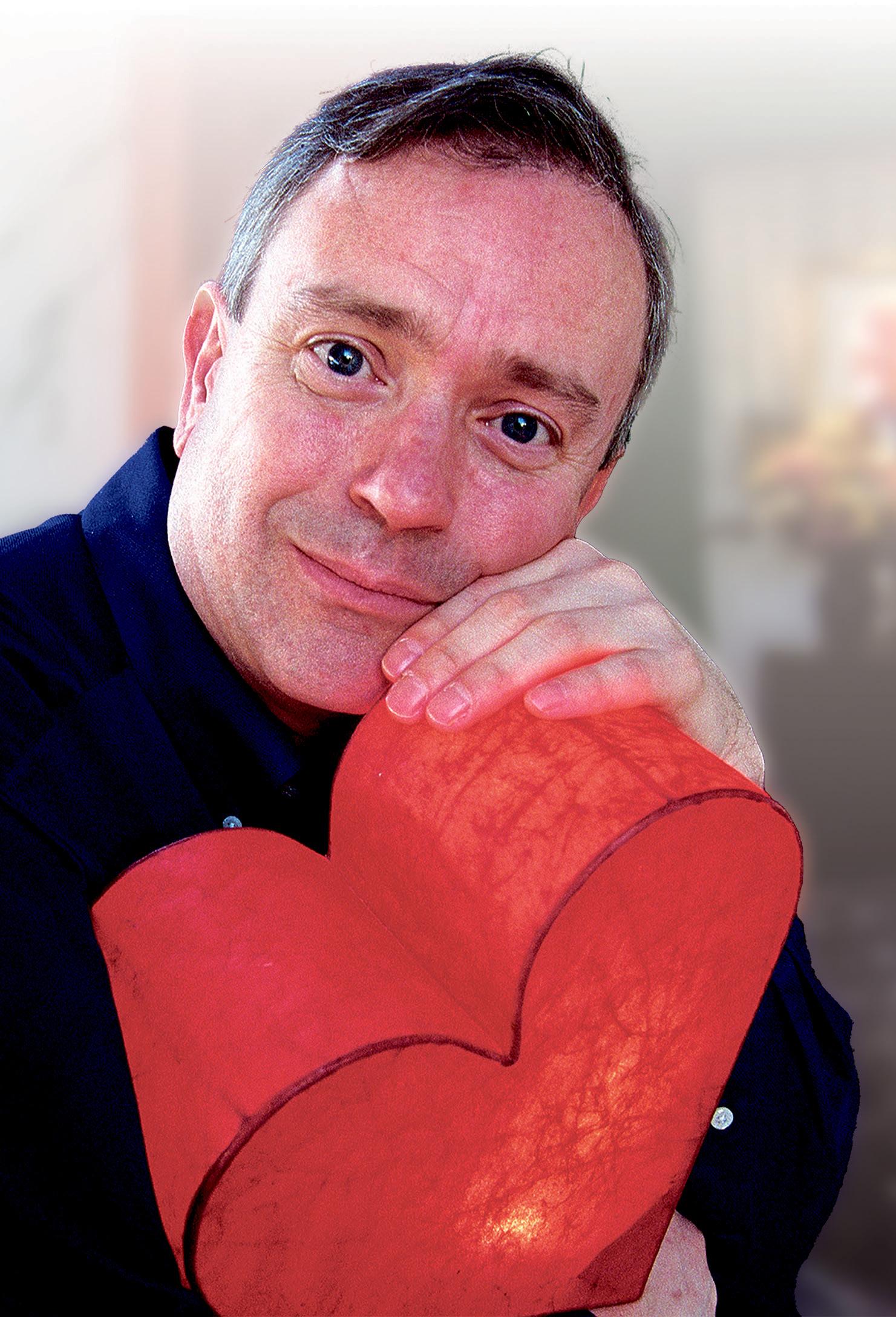
CAMP Rehoboth’s mission isn’t just about programs and services—it’s about making sure every person feels embraced for who they are. That takes resources, and it’s the member-driven donor system that keeps the mission moving forward. I donate because I believe in CAMP Rehoboth’s ability to create a stronger, more inclusive community for all of us here in Delaware.
— Dennis Diaz
EXPLORE WAYS TO GIVE
CAMP Rehoboth Membership
Give ongoing support monthly or yearly.
One-Time Gift
Give instantly online.
Donor Advised Fund (DAF)
Recommend a grant from your DAF to support our work.
Tribute Giving
Honor someone special.
Planned Giving
Include us in your will or trust.

Stock Gifts
Donate appreciated assets.
Corporate Matching Employer match donations.
Fundraise for Us
Start a peer-to-peer fundraiser.
Transfer from an IRA
If you are 70 1/2 years of age or older.
Cryptocurrency Giving
Donate crypto securely.


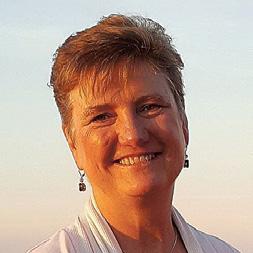
Spring is Coming to CAMP Rehoboth
While the plants lay dormant, the pond behind our home remains partially frozen and our yard is a mucky combination of slush and mud, sure signs of spring are emerging. We are delighted in seeing the first daffodils poke up their heads, the ducks and other birds pairing up, and the daylight lasting longer and longer—thank goodness.
At CAMP Rehoboth, spring is coming in with a sense of joyfulness and expectation. Starting with the resoundingly successful performances of the CAMP Rehoboth Chorus’s production of “I Am Woman,” we celebrated the power of women in music and introduced the new a cappella ensemble, WomenKind. The sold-out crowds were on their feet, and it was such a pleasure to be “in the room” to soak up all of the electrifying energy.
Throughout the month of February, the Board’s Executive Director Search Committee, with the invaluable help of search professional Johnny Cooper of Cooper Coleman, has been hard at work vetting an amazingly strong bench of candidates. We are looking forward to introducing all of you to our next executive director, and I am hoping to begin onboarding as early as the end of March.
Which brings us squarely to April and our annual Women’s+ FEST. People all along the spectrum of the feminine spirit look forward to Women’s+ FEST, some preparing to attend next year even as they wrap up the current year’s FEST. What began as a half-day conference has evolved into a four-day event filled with art (including the ever-popular Expo), sports, dances, and performances.
Throughout it all, we strive to create and maintain an inclusive and accessible environment that empowers all people, including people with disabilities. If you or your companion have any needs related to accessibility, please be sure to
contact the accessibility team at accessibility@camprehoboth.org.
An added bonus this year is that 2026 marks our 25th (SILVER) anniversary, and the decorating team is gearing up to bedazzle us and the convention center with all manner of bling. While I am famous with the Board for admonishing them not to “chase shiny objects” when steering the governance of our organization, I will be making an exception at that Saturday night event by turning into a shiny object myself. I invite all of you to do the same!
So, even though the yard is muddy, spring is clearly springing forth at CAMP Rehoboth Community Center.
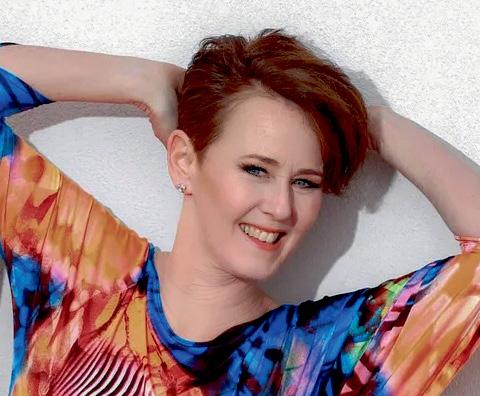
The Friday night headliners at this year’s Women’s + FEST promise to be entertaining. Comedian and storyteller Mina Hartong has been named “One of America’s funniest women.” Founder of Lez Out Loud, Mina is an international headliner, appearing in Olivia Travel’s Greece and Tahiti cruises and touring in New York City and Palm Springs, California.
Also headlining is the ever-captivating Yoli Mayor. Her trademark Latin-Pop sound earned her the attention of several publications including the New York City-based Downtown Magazine, which dubbed her “The Cuban Adele.”
Peggy Castle, DJ extraordinaire and a personal best buddy, will soundtrack the Thursday and Saturday night dances with her signature set of tunes. And our Presenting Sponsor Olivia has, once again, generously donated a trip for two on their 2026 Bordeaux: From Vine to Table Riverboat Cruise (August 18-25, 2026)! Thank you, Olivia!
So, even though the yard is muddy,
LEDOGAR
spring is clearly springing forth at CAMP Rehoboth Community Center. Every day, we show up to do “the work” because it matters. As if anyone needs convincing, the centerfold of the February edition of Letters tells a compelling story of the impact our community center had in 2025. Data such as the fact that over 10,000 people attended CAMP Rehoboth’s events, including the 4,100 people who attended the October Block Party, 3,500 people who attended Women’s+ FEST 2025, and 2,000 people who attended SUNFESTIVAL 2025, are real and compelling evidence of how we show up, and that folks appreciate that we do so.
We strive to create safe spaces for courageous LGBTQ+ individuals to forge a sense of safety and belonging in the community. Offering vibrant programs, services, and events such as the chorus performances and Women’s+ FEST are ways in which we continue to advocate for the health, safety, and belonging of our LGBTQ+ community.
Here’s to a beautiful spring, a roaringly successful Women’s+ FEST, and to meaningful programming throughout the first quarter of this year. Let’s thaw out with the sense of optimism and renewal that comes with every spring. ▼
Leslie Ledogar is CAMP Rehoboth Board President.
THIS ISSUE
Editor (up to 300 words) are published at the discretion of the Editor on a space-available basis. Letters may be edited for length or clarity.
VOLUME 36, NUMBER 2 • MARCH 6, 2026
58 Sounding Off
How Climate Change Is Impacting Delmarva STEPHEN RASKAUSKAS
60 View Point
Courage Is Contagious RICHARD ROSENDALL
62 CAMPshots
Cold Hands, Warm Hearts, Hot Nights!
66 CAMP Arts
LOGAN FARRO, JOE GFALLER, MARY JO TARALLO
69 Booked Solid TERRI SCHLICHENMEYER
70 Getting to Know You….
Rick Welk, Letters’
New Cartoonist
ERIC PETERSON
74 Sea Salt Table
New York Crumb Cake
ED CASTELLI
76 Historical Headliners
Love Like an Egyptian
ANN APTAKER
78 Visiting View
When We Rise
ROBERT DEDOMINIC
82 We Remember
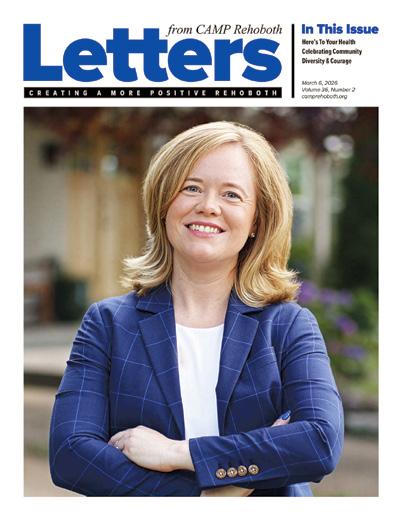
ON THE COVER
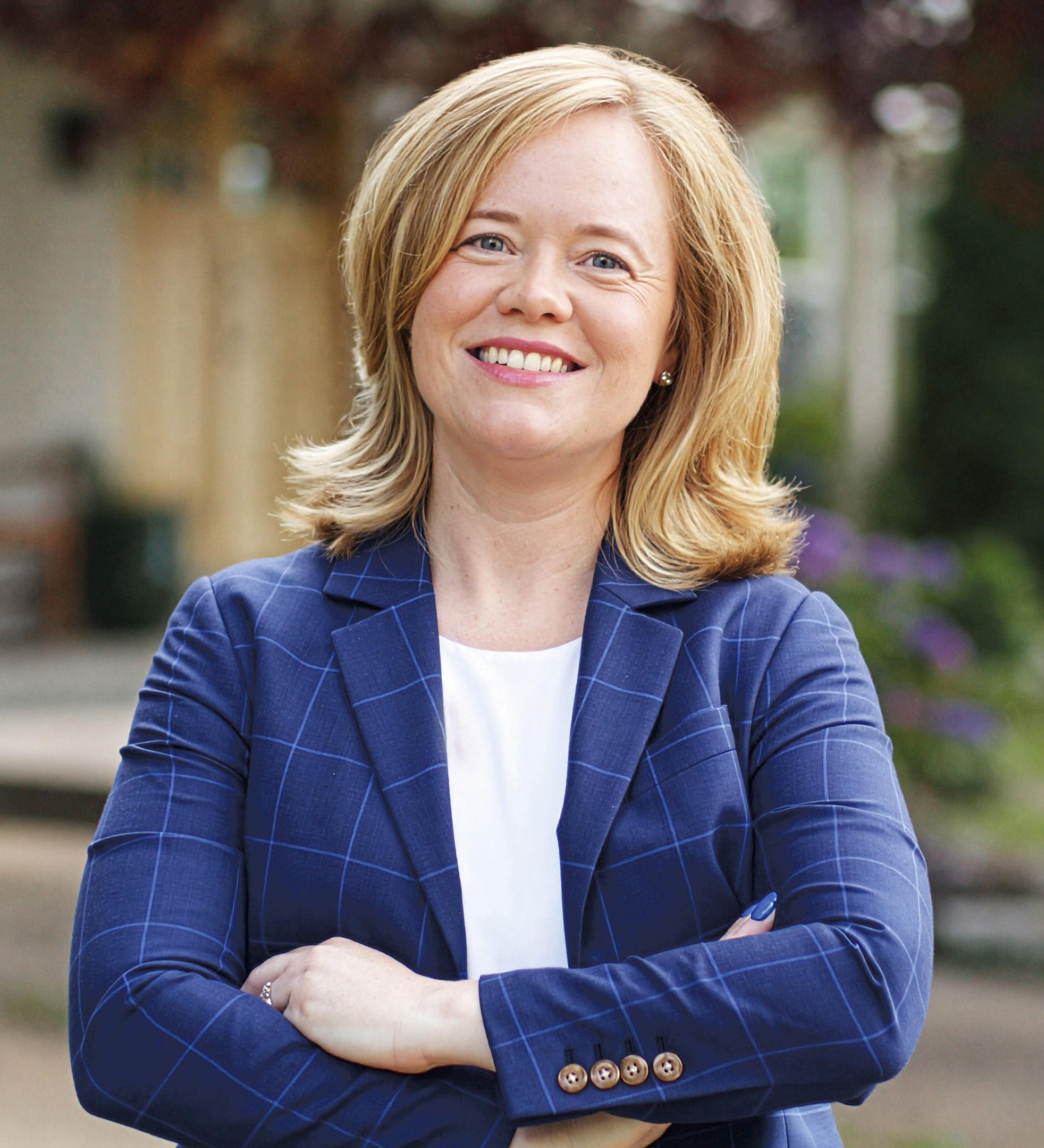
Delaware Lt. Governor Kyle Evans Gay
EDITOR: Marj Shannon
EDITORIAL ASSOCIATE: Matty Brown
DESIGN AND LAYOUT: Mary Beth Ramsey
ADVERTISING SALES MANAGER: Tricia Massella
DISTRIBUTION: Mark Wolf
CONTRIBUTORS: Ann Aptaker, Rich Barnett, Matty Brown, Ed Castelli, Matt Castrina, Pattie Cinelli, Sandy Clark, Robert DeDominic, Vincent DeLissio, Logan Farro, Clarence Fluker, Michael Thomas Ford, Bill Fuchs, Joe Gfaller, Fay Jacobs, Leslie Ledogar, Kel Marquez, Tricia Massella, Christopher Moore, Eric Peterson, Mary Beth Ramsey, Stephen Raskauskas, Richard Rosendall, Nancy Sakaduski, Romeo San Vicente, Terri Schlichenmeyer, Marj Shannon, Beth Shockley, Mary Jo Tarallo, Shae Wagner, Eric Wahl
Letters from CAMP Rehoboth is published 11 times per year, between February and December, as a program of CAMP Rehoboth Inc., a non-profit community service organization. CAMP Rehoboth seeks to create a more positive environment of cooperation and understanding among all people. Revenue generated by advertisements supports CAMP Rehoboth’s purpose as outlined in our mission statement.
The inclusion or mention of any person, group, or business in Letters from CAMP Rehoboth does not, nor is it intended in any way, to imply sexual orientation or gender identity. The content of the columns are the views and opinions of the writers and may not indicate the position of CAMP Rehoboth, Inc.
© 2026 by CAMP Rehoboth, Inc. All rights reserved by CAMP Rehoboth. No portion of this publication may be reproduced in any form without the prior written permission of the editor.
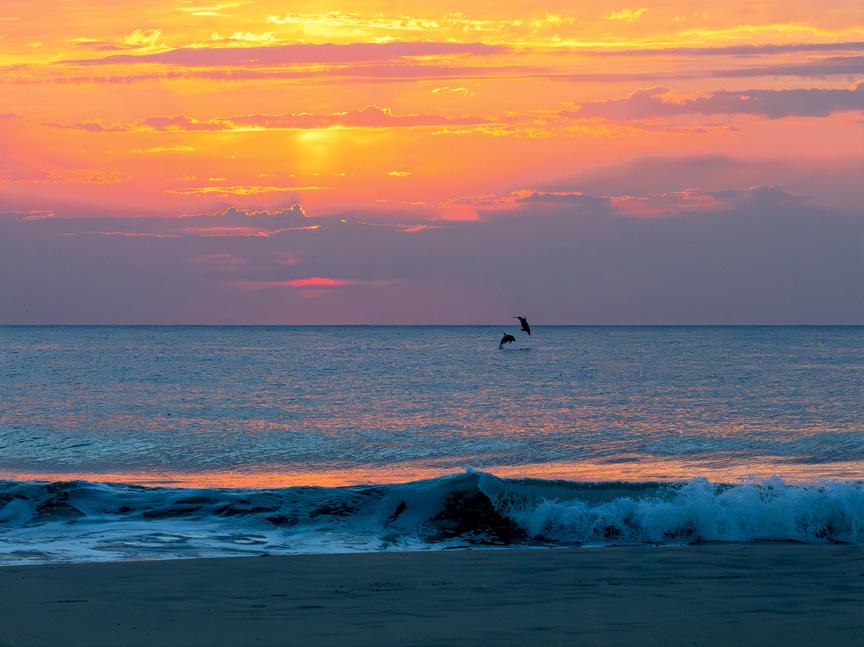
Dolphin Sunrise by Earl Blake. See CAMP Arts on page 66.
CAMP REHOBOTH
MISSION STATEMENT AND PURPOSE
MISSION
CAMP Rehoboth is an LGBTQ+ community center determined to Create A More Positive (CAMP) environment that is inclusive of all sexual orientations and gender identities in southern Delaware and beyond. We seek to promote cooperation, understanding among all people, and well-being, as we continue our work to build a safer community with room for all.
VISION
CAMP Rehoboth envisions communities in southern Delaware and beyond where all LGBTQ+ people thrive.
VALUES
Community | Belonging | Positivity Diversity | Visibility | Transparency Safety | Partnership | Compassion
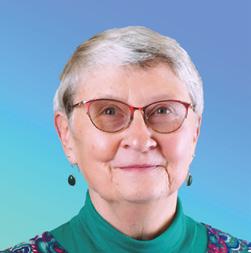
From the Editor
APRESIDENT Leslie Ledogar
VICE PRESIDENT Polly Donaldson
SECRETARY Pat Catanzariti
TREASURER Kevin Ussery
AT-LARGE DIRECTORS
Lorne Crawford, David Garrett, Jenn Harpel, Rachel Hershe, Michelle Manfredi, Teri Seaton, Hope Vella, Joe Vescio
DEPUTY DIRECTOR Mark McDaniels
CAMP REHOBOTH
37 Baltimore Avenue, Rehoboth Beach, DE 19971 tel 302-227-5620
email editor@camprehoboth.org www.camprehoboth.org
CAMP Rehoboth, Inc. is tax-exempt under section 501(c)(3) of the United States Internal Revenue Code. Contributions to CAMP Rehoboth are considered charitable contributions for federal income tax purposes and may be deducted to the fullest extent of the law. A copy of our exemption document is available for public inspection.
BY MARJ SHANNON
s I write this from my laptop, I am awaiting power restoration and keeping a gimlet eye on the still-accumulating snow. It’s all a bit much; I’m not a winter person. But I am a soldier-on person, so—here we go….
There are other winter-weary souls among us: Fay Jacobs, Sandy Clark, and Beth Shockley all report in from the frigid trenches. Each of them is soldiering on too, even managing to find some humor amidst the mess. Thanks, ladies—we needed that!
Some good news: By the time you read this, it’s spring! At least, meteorological spring, which I have observed for some years. By March 1 I’m desperate for the season, so why wait till astronomical spring follows about three weeks later?
Speaking of not waiting—turn right now to the centerfold to read all about one of CAMP Rehoboth’s spring traditions: Women’s+ FEST! Celebrating its 25th anniversary this year, you can expect lots of silvery sparkle along with the event’s perennial fun, sports, expo, and more.
Of course, there’s more to enjoy in this issue beyond snowy adventures and visions of Women’s+ FEST. For one, this is our “wellness” issue, and we’ve got health-related info aplenty. See page 10 for a round-up of CAMP Rehoboth’s health/wellness programs, page 34 to learn about Empowered Futures Sussex, and page 22 for info on the new federal dietary guidelines released in January. (Spoiler alert: some are controversial.)
But wait! There’s yet more: with nods to both the just-concluded Black History Month and the now-in-progress Women’s History Month, Clarence Fluker writes about the history makers among us—maybe you’re one of them? Christopher Moore spoke with Delaware Lt. Governor Kyle Evans Gay, who is a strong ally of our community. And Richard Rosendall reminds us that courage is contagious—hopefully, as contagious as measles….
Rich Barnett—from his winter get-away in Key West—recounts locals’ response to the painted-over rainbow crosswalks. You go, Key Westers! And Robert DeDominic reports in from the Stonewall National Monument, where the Pride flag recently was removed by the National Park Service in response to updated federal guidance.
We have some new folks for you to meet in this issue: On page 12, Bill Fuchs introduces us to WomenKind, a women’s a cappella group that opened the recent CAMP Rehoboth Chorus concert. Scott Beadle (Regina Cox) is our featured CAMP Artist (page 68) and on page 70, we have an intro to local cartoonist Rick Welk, whose Birds of a Feather fledges in this issue. While you’re in the CAMP Arts section, browse Joe Gfaller’s line-up of local performing arts—so much to enjoy, so little time! What else? We have Eric Wahl’s 100th column for Letters—thank you, Eric! Nancy Sakaduski celebrates those essential behind-the-scenes nitpickers—proofreaders, of course. And Terri Schlichenmeyer offers advice to those of us thinking about observing Adopt a Rescue Guinea Pig Month.
As always, thanks for reading Letters! ▼
WOMEN’S+ FEST—THE SILVER ANNIVERSARY FEST Passes & Event Tickets
Now on Sale!
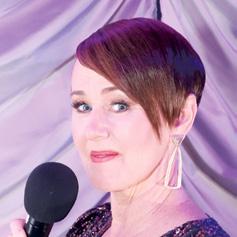

At last! Women’s+ FEST celebrates its silver anniversary across April 9-12, 2026. All FEST Passes and event tickets are now available for purchase by the general public.
This year’s FEST Pass will include general admission to the FEST headliners Mina Hartong/Yoli Mayor show at the Rehoboth Beach Convention Center, admission to the Georgette Krenkel Welcome Dance + Saturday night FEST Premier Dance featuring DJ Peggy Castle, and a commemorative FEST t-shirt with custom artwork by Laura Jednorski.
There are several events outside of the FEST Pass to complete attendees’ weekend festivities. Check out the full scoop on pages 44 and 45 and purchase tickets today before they’re all gone at camprehoboth.org/womensfest. ▼
The CAMPus Facilities Get a Facelift
Within the first several weeks of 2026, CAMP Rehoboth’s facilities at 37 and 39 Baltimore Avenue (affectionately known as the “CAMPus”) have undergone major renovations. These include entirely new siding for the community center at 37 Baltimore, refurbished window awnings, a revamped atrium storage room, new lighting for atrium bathrooms, and vital electrical updates.
Some upcoming renovations include reno of the front office and reception area, a new HVAC unit for the 39 Baltimore studio office and apartment, and the staff office bathroom renovation.
These renovations are made possible through the Community Reinvestment Fund’s Bond Bill. ▼
Expanding Mental Health Resources
CAMP Rehoboth is excited to announce two additional affirming mental health providers, certified through the Yale LGBTQ Mental Health Initiative in partnership with CenterLink. This expansion comes after CAMP Rehoboth first partnered with Yale University (in 2025) to increase the number of LGBTQ+ affirming mental healthcare providers for all ages in Sussex County and throughout Delaware. The training, over 12 sessions, equipped providers in LGBTQ+-affirmative cognitive behavioral therapy (CBT).
First, Jessica Roth, LMSW, is a provider at Delaware Psychological Services in Lewes. Roth holds a master’s degree in social work with a clinical focus on supporting children, teens, young adults, and parents.
Second, Jude Johnson-Shupe DSW, LCSW, CADC is a provider with Beebe Behavioral Health-Georgetown. Jude holds a doctorate in social work from Tulane University with expertise in addressing a wide range of social, emotional, and psychological challenges.
On what motivated her completion of the training, Jude simply shared, “It really came down to need and understanding that service gaps posed significant barriers to care.”
By expanding this access in both Lewes and Georgetown, CAMP Rehoboth now has a longer referral list of LGBTQ+-affirming mental healthcare providers serving the LGBTQ+ community. For more information on how to contact any of the eight therapists certified through this initiative, please visit camprehoboth.org/resources. ▼
Honoring Transgender Day of Visibility
On March 31, Transgender Day of Visibility (TDOV) is recognized to celebrate the lives and contributions of trans people.
International TDOV was created in 2010 by trans advocate Rachel Crandall. Crandall, the head of Transgender Michigan, created TDOV in response to the overwhelming majority of media stories about transgender people being focused on violence. She hoped to create a day where people could celebrate the lives of transgender people, while simultaneously acknowledging that due to discrimination, not every trans person can or wants to be visible.
At CAMP Rehoboth, two affinity groups create safe spaces for connection for trans community members. The newest is called Chroma, an inclusive space for folks who identify with a gender other than their assigned-atbirth gender. At Chroma, folks can form meaningful connections with others, find ongoing support, and build a strong sense of belonging and unity. Meeting
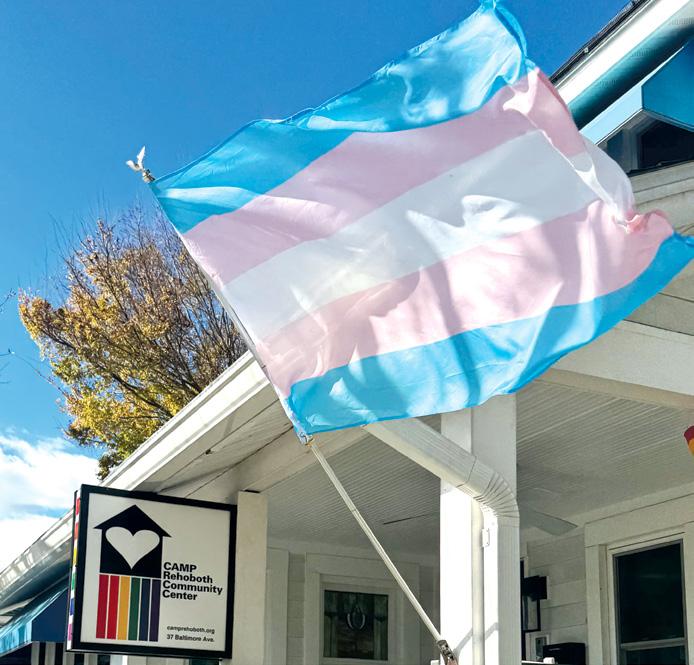
cadence will soon be established.
Next, the H.I.M. Society is for trans men ages 21 and older for connection, networking, and fellowship. The title derives from an acronym that stands for “Historically Intentional Men,” as a way to pay tribute to the visible presence of trans men throughout history.
For more information on these programs, email programs@ camprehoboth.org. ▼
Partnering to Empower Community Health
CAMP Rehoboth leverages partnerships with various providers, healthcare agencies, and local organizations to advocate for the health and wellbeing of LGBTQ+ residents in southern Delaware and beyond. Read below for just a few upcoming outreach events where CAMP Rehoboth will have a presence.
EMPOWERING COMMUNITY WELLNESS SYMPOSIUM ⊲ On March 10, CAMP Rehoboth will have a presence at the 25th annual Empowering Community Wellness Symposium, presented by the Mental Health Association of Delaware, at Delaware State University. This year, the symposium carries the theme “Finding Your Voice,” and representatives from CAMP Rehoboth will make sure LGBTQ+ voices are brought to the table and heard.
PWW
LAW—ESTATE PLANNING AND ELDER LAW UPDATES ⊲ Financial health is another priority for community members. On March 12 at 12:00 p.m., PWW Law, in partnership with CAMP Rehoboth, presents “Estate Planning and Elder Law Updates: Recent Changes You Should Know.”
This estate planning overview will cover recent changes in law that affect estate planning and elder law, including: Transfer-On-Death Deeds, the Uniform Health Care Decisions Act, the End-Of-Life Options Act, H.R. 1, and other recent changes.
This presentation focuses solely on how these laws impact your estate plan, to help you make informed decisions.
BLOOD BANK OF DELMARVA—SPRING
BLOOD DRIVE ⊲ CAMP Rehoboth is partnering with the Blood Bank of Delmarva for a blood drive on Friday, April 24, from 10:00 a.m. to 3:00 p.m. This continued partnership follows the FDA lifting its ban (in 2023) on the ability for men who have sex with
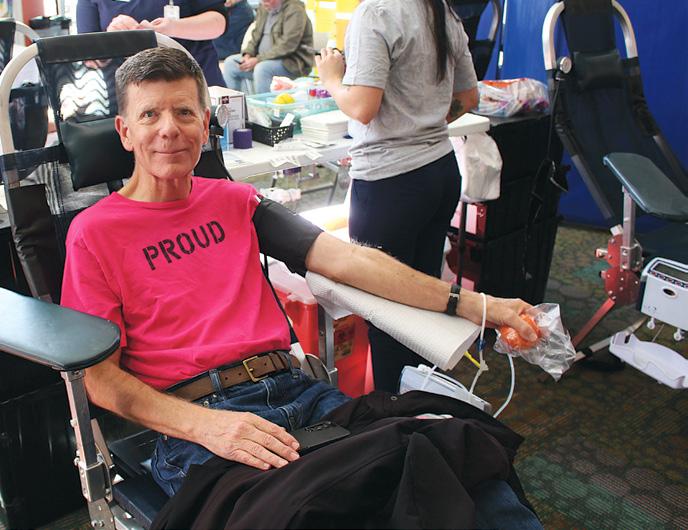
men to donate blood. Donors must be age 17+ or 16 with a parental consent form. For full eligibility requirements and COVID-19 information, visit delmarvablood.org/eligibility.
Prepare to donate by eating well and hydrating, bringing a photo ID, and feeling good and symptom free on the day of the blood drive. Registration is required by visiting camprehoboth.org/ events.
ADVANCING
HIV CARE IN DELAWARE: PARTNERING TO SUPPORT UPCOMING MAAETC CONFERENCE ⊲ CAMP Rehoboth is proud to partner with other Delaware organizations to support the MidAtlantic AIDS Education and Training Center’s (MAAETC) Annual Conference on May 5, in Dover, as part of its ongoing efforts to strengthen HIV prevention and care across the lifespan.
This year’s conference, titled “Never Too Young, Never Too Old: HIV Prevention and Care Across the Lifespan,” will take a fresh look at the evolving landscape of HIV prevention and care, with a special emphasis on the unique needs of younger individuals (24 and under) navigating identity, stigma, and care engagement, and aging adults (60+) living longer with HIV and facing complex health and social challenges. Attendees will gain new insights, practical tools, and collaborative strategies to enhance care in their own settings. For more details, visit maaetc.org. ▼
LGBTQ+
HEALTH AWARENESS WEEK
The National Coalition for LGBTQ Health celebrates the 24th National LGBTQ+ Health Awareness Week from March 16-20. This year’s theme, “Organize to OUTlast,” calls on the LGBTQ+ community and those who provide healthcare for LGBTQ+ communities to organize for LGBTQ+ health and push back against regressive forces in policy and culture.
“We urge healthcare professionals, advocates, and community leaders to collaborate on building strategies, skills, resources, and support structures that continue to foster health equity amid divestment and fragmentation of the broader healthcare system,” said the Coalition.
CAMP Rehoboth remains committed to promoting health, wellness, and equity for LGBTQ+ community members in southern Delaware and beyond. Learn more about ways to get involved in health and wellness at CAMP Rehoboth on page 10 (CAMP News), get the latest updates for CAMPsafe on page 24, and visit camprehoboth.org for the latest event and program updates. ▼

⊳ TRAVELS WITH LETTERS ⊲
QUEENSLAND, NEW ZEALAND
Mary Jo Tarallo
Community Connections
There’s a Place for Us
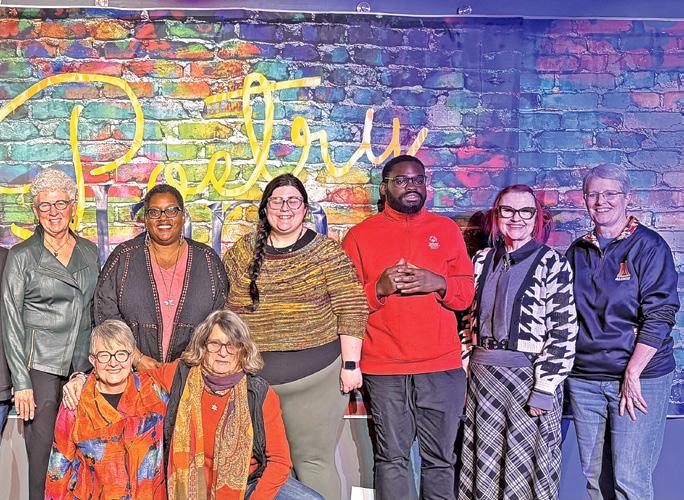
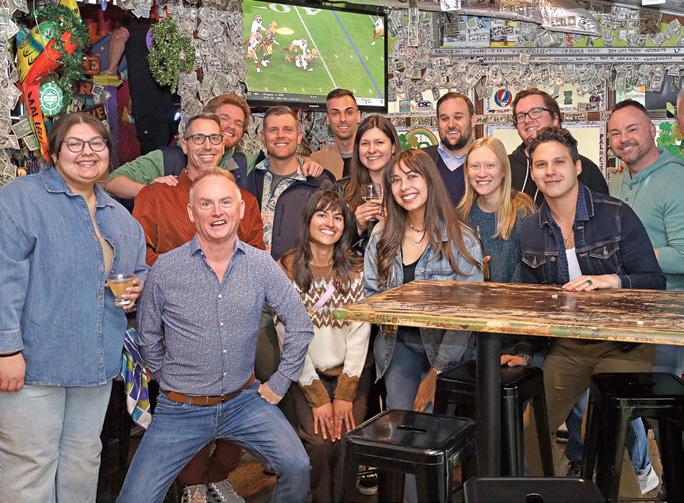
This year marks a special milestone for CAMP Rehoboth as we celebrate the 25th anniversary of Women’s+ FEST—a weekend that has grown into one of the most anticipated and meaningful gatherings in our community. For 25 years, women and gender-diverse individuals have traveled to Rehoboth Beach to celebrate identity, build friendships, and experience the joy of being in a space created just for them.
While the weekend is filled with concerts, comedy, dances, and social events, the true impact of Women’s+ FEST extends far beyond those few days. The event represents connection, visibility, and belonging—something many attendees carry with them long after they return home. For some, Women’s+ FEST is an annual reunion with chosen family. For others, it may be their first time experiencing such an affirming environment or realizing they are part of a much larger community than they imagined.
That sense of connection doesn’t end when the weekend is over. Throughout the year, CAMP Rehoboth creates spaces and programs where people continue to gather, find support, and build friendships. From wellness initiatives and support groups to arts programming, advocacy efforts, and volunteer opportunities, CAMP Rehoboth helps people stay connected in every season—and Women’s+ FEST plays an important role in making that possible.
Sponsorship support and event proceeds help sustain this work, allowing


BY SHAE WAGNER
connections formed during Women’s+ FEST to grow into a year-round community. Businesses and organizations that sponsor the event certainly gain visibility during a lively and well-attended weekend, but their partnership carries a deeper meaning as well. Sponsorship demonstrates a commitment to inclusion and signals that LGBTQ+ individuals are welcomed and valued in their spaces all year long.
Women’s+ FEST also supports local businesses, filling restaurants, hotels, and shops with visitors who return year after year—many reconnecting with friends they see only during this special weekend. In doing so, the event strengthens both our local economy and the welcoming spirit that makes Rehoboth Beach feel like home to so many.
As we celebrate 25 years of Women’s+ FEST, we are reminded that gatherings like this thrive because of community support. Together, we can ensure that Women’s+ FEST continues to grow and create meaningful memories for the next 25 years and beyond! ▼
Community Connections is created by the CAMP Rehoboth Development Team: Laurie Thompson, Development Manager; Shae Wagner, Event and Volunteer Coordinator; and Vincent Delissio, Membership Coordinator. Together, they work to strengthen relationships, grow engagement, and build connections throughout our community.
“We
PLANNED GIVING OPTIONS
Bequests
Name CAMP Rehoboth in your will or trust
Retirement Accounts & Life Insurance
Designate CAMP Rehoboth as a beneficiary.
IRA Charitable Rollover
If 70½ or older, give up to $100,000 tax-free from your IRA.
Appreciated Stock & Bonds
Donate securities to maximize impact and reduce capital gains tax.
Gifting Real Estate or Personal Property
You may leave your home or other property to CAMP Rehoboth through your will or a charitable trust. Consult your legal and tax advisors to determine the best way to structure your gift.
envisioned CAMP Rehoboth as the heart of the community. CAMP Rehoboth became a gift to the community around us.”
—Murray
Archibald,
CAMP Rehoboth Co-Founder

Contact our Development Manager, Laurie Thompson, at Laurie@CAMPRehoboth.org to learn more about these ways to give. CAMPRehoboth.org/PlannedGiving EIN # 51-0331962 © CAMP Rehoboth 2025
CROP Supports the Food Bank of Delaware
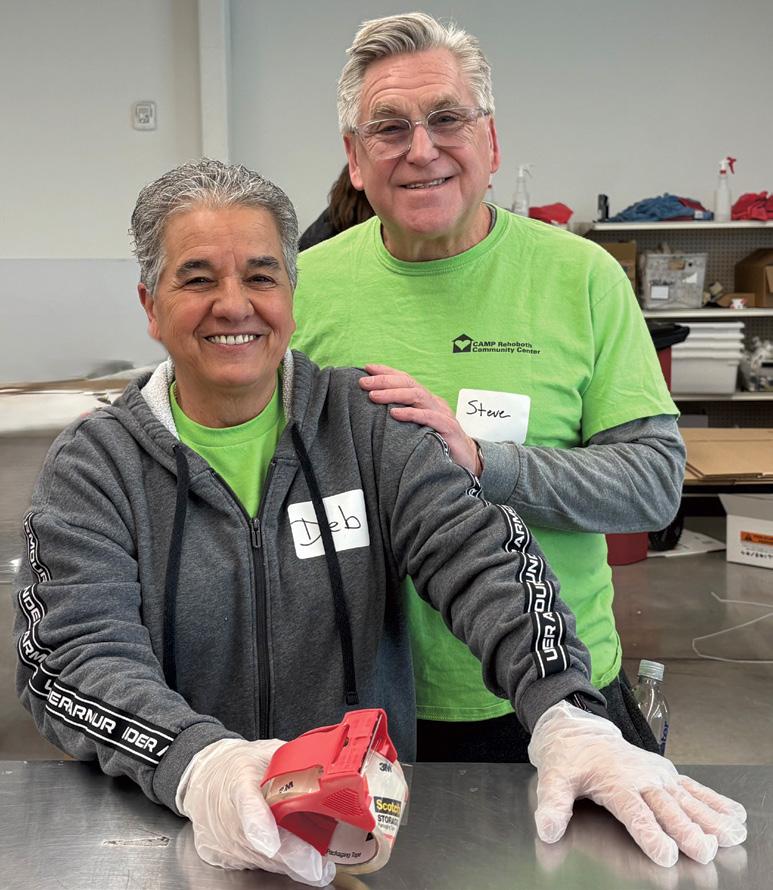
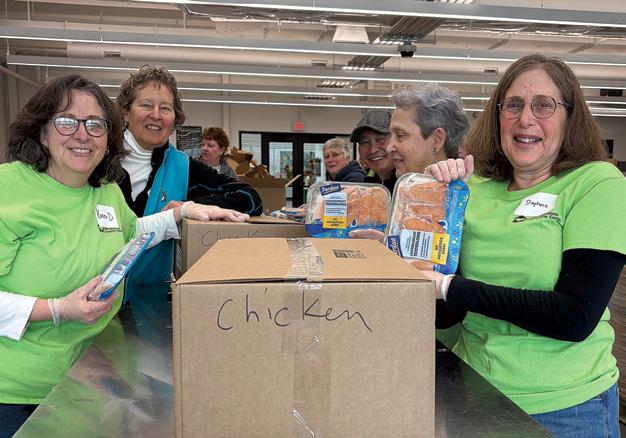
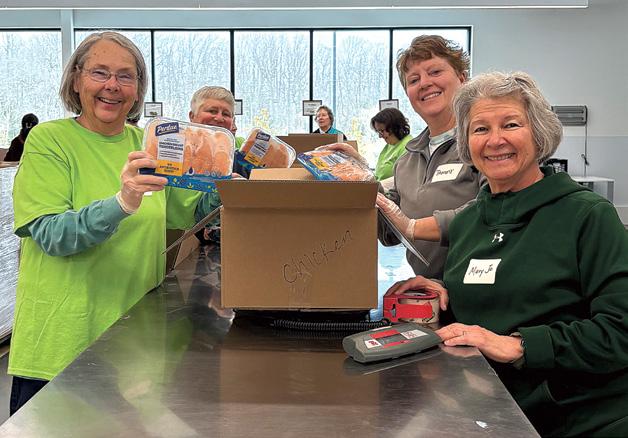
On Tuesday, February 10, CROP
(CAMP Rehoboth Outreach Program) volunteers shared their time, assistance, and commitment to support the community at the Food Bank of Delaware in Milford. The group boxed Purdue frozen chicken products for distribution to food pantries and other organizations. With this continued partnership, CROP volunteers help to address food insecurity across the state.
Next up for CROP: On March 26 at 11:00 a.m., volunteers will support the Brandywine SPCA by bagging food for “Animeals,” organizing the food storage pod, and providing additional cleaning support. For more information and to register for upcoming volunteer opportunities, visit camprehoboth.org/volunteers. ▼
Get Healthy with CAMP Rehoboth!
CAMP Rehoboth is committed to providing a variety of health and wellness programs for all. CAMP Rehoboth hosts special events throughout the year, including vaccination clinics, health screenings, and so much more.
MINDFULNESS & MOVEMENT
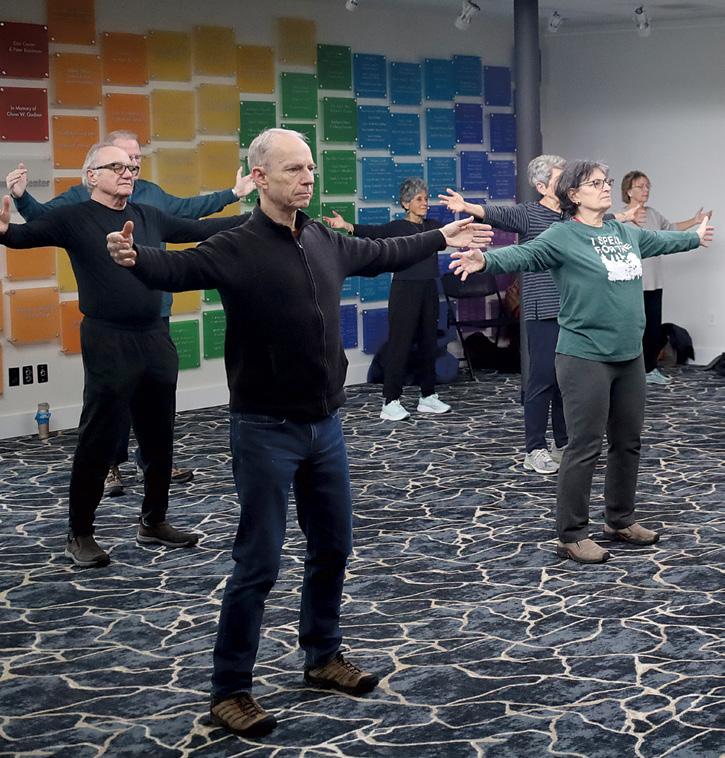
Tuesday Tai Chi
Tuesdays 8:30 a.m. at CAMP Rehoboth Community Center
Tai Chi with Master Trainer, Marianne Walch, PhD, the Co-Director of the Silver Lotus Training Institute. Drop-in.
Morning Mindfulness
Tuesdays 8:00 a.m. on Zoom
Erin Shivone leads a mindful exercise or morning meditation for 30 minutes. Register on our calendar webpage.
Chair Yoga
Tuesdays 9:00 a.m. on Zoom
Erin Shivone guides you to synchronize conscious breath with mindful movement. Register on our calendar webpage.
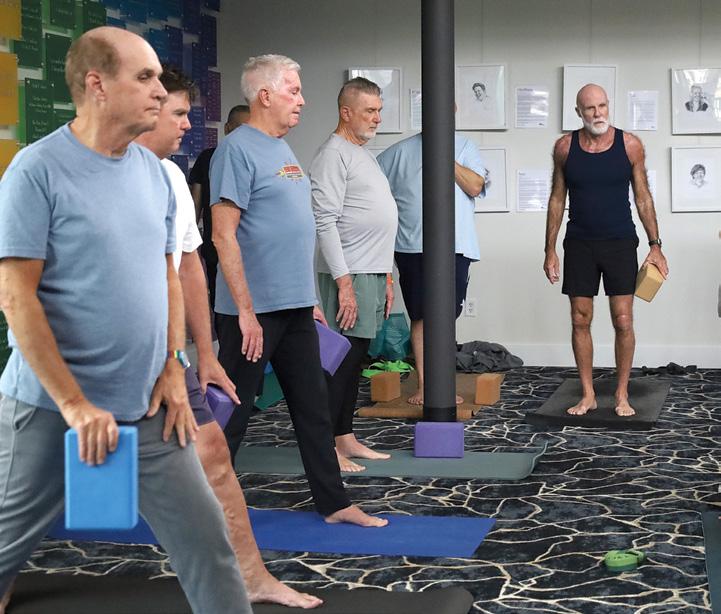
Men’s Yoga
Saturdays 8:45 a.m. at CAMP Rehoboth Community Center
Tim Rennick provides everyone the opportunity to modify or advance their practice. Drop-in.
SUPPORT, GROWTH, & HEALING Bereavement
Group
Every 4th Tuesday, 5:00 p.m. at CAMP Rehoboth
This space will be for anyone who has lost someone and would like to have the safety and security of a bereavement group within their own community. This gathering will be facilitated by a Delaware Hospice Bereavement Counselor. More information is available on our calendar webpage.
LGBTQ+ Grief Support Group
Tuesdays, March 17-May 5, 10:30 a.m. at CAMP Rehoboth
CAMP Rehoboth will host an 8-week group for LGBTQ+ adults focusing on “Loss, Grief, and Bereavement.” This group will be facilitated by Joseph Anastasio, LCSW, Anita Smulyan, LCSW, and Sondra Rosenfeld. Joseph Anastasio is a licensed psychotherapist in private practice with Delaware Psychological Services and has been facilitating grief support groups in Sussex County, Delaware, for the last eight years.
This is not a “drop-in” group. Registration is required: Call 410-804-6407 or email turnheartlighton@gmail.com. There is no fee for this group. ▼
Comedian, Storyteller, named as “One of America’s Funniest Women” MINA HARTONG
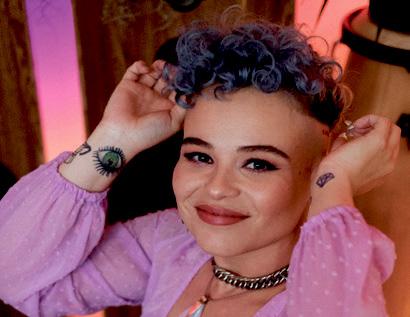
Captivating singer, known as “The Cuban Adele” YOLI MAYOR fun! Join THE fun! Join THE






RUBY
Polly Donaldson
Connie Fox & Donna Adair
Tammy Smith & Associates

Dr. Nancy & Mrs.Tora Kennedy
Chris Lay & Dr. Mari Blackburn
BEER & WINE SPONSOR AUCTIONEER SPONSOR


Sponsorship Opportunities Now Available! Sponsorships bring both VISIBILITY and IMPACT for individuals and businesses.

Scan the QR code to sponsor today or to learn about sponsorship opportunitios. Contact Shae Wagner at swagner@camprehoboth.org for more information.
LISTEN! To the soulful music of Yoli Mayor! LAUGH! Mina Hartong at the Rehoboth Beach Convention Center! PLAY!
Golf, pickleball, & cornhole! DANCE! Thursday Georgette’s Dance & Saturday Premier Anniversary Spectacular! DISCOVER!
Popular craft expo, local musicians, and partnered venue events celebrate the women’s+ community! PLUS “+”
FEST is one of the best events on the East Coast for women, both trans and cis, nonbinary folks, and those that live on the spectrum of the feminine spirit.

Introducing WomenKind
Connection, Harmony, and Belonging “W
omenKind: excellent idea and a wonderful intro!”
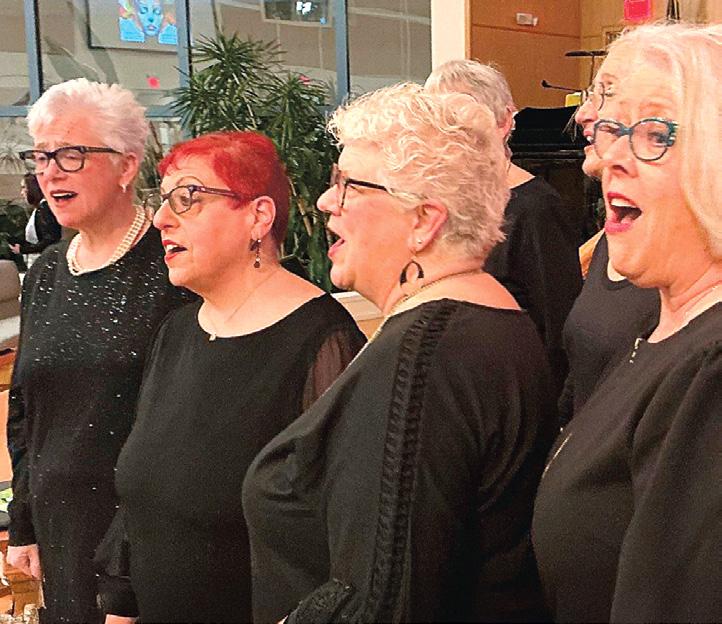
So wrote an audience member at the debut of WomenKind, a new women’s a cappella ensemble, joining ALLIANCE as part of CAMP Rehoboth Chorus’s outreach. The group performed at the beginning of the Chorus’s February concert and will present its first full concert, “Life, Love, Laughter,” on Saturday, April 18 at 7:00 p.m., and Sunday, April 19 at 3:00 pm. Both performances will be held at Westminster Presbyterian Church, 301 King Charles Avenue, in Rehoboth Beach. Tickets are $25 and are available at camprehoboth.org/events.
WomenKind’s full concert will include songs from pop, jazz, Broadway, women’s music, and traditional choral music, including familiar songs like “California Dreamin’,” made famous by the Mamas and Papas, “What I Did for Love” from A Chorus Line (celebrating its 50-year anniversary), and “Popular” from Wicked WomenKind will be joined by special guests Potomac Fever, an a cappella group from the Gay Men’s Chorus of Washington DC. Potomac Fever has previously performed at CAMP Rehoboth, consistently impressing audiences with its exceptional artistry. They will sing some numbers from their own repertoire and join WomenKind for “Everything Possible,” a song made famous in the 1980s by a gay a cappella ensemble, The Flirtations. The 17 members of WomenKind are dedicated to their mission of celebrating the power of women through music and honoring a shared desire for connection, harmony, and belonging. Alto Jeanne Ann McManus shared the hope that, “Through our music, we can spread a little joy to our audience, so you leave the performance smiling, maybe humming one of our tunes, and feeling kinder.” The group is an auditioned group with women from a wide variety of backgrounds and experiences. They include a former opera singer, a retired Foreign Service Officer, a singer in an international a cappella group who sang in Abu Dhabi, and a proud
alumna and Arion Award winner in the New Jersey All State Chorus.
Soprano Pam Malsch describes her enjoyment of a cappella singing: “Singing is pure joy for me.” She loves “the vocal challenge and the purity of the sound and blend.” Says soprano Karen Hinman, “To me, the pleasure of collectively learning,
“We’re pretty dang amazing, and folks are missing out if they don’t hear us perform!”
practicing, and perfecting a piece of music is priceless.” Soprano Stephanie Lupo, who has sung opera professionally, says that “Singing with these fine ladies is even more of a challenge…. You need to listen and blend.” Alto Trudie Thompson enjoys the camaraderie of the group and says that the “group is very compatible and has already jelled.”
A cappella music—vocal music performed without instrumental accompaniment—is one of those art forms that feels both ancient and totally fresh at the same time. Every sound—melody, harmony, rhythm, bass, even “instrumental” effects—comes from human voices. Contemporary a cappella groups include Pentatonix, barbershop quartet such as Sweet Adelines, collegiate groups for men and women, groups from the LGBTQ+ choral movement, and the most famous a cappella group, Chanticleer, with roots in Renaissance music.
BY BILL FUCHS
The ensemble was founded by Jeff Buhrman, the Assistant Artistic Director of CAMP Rehoboth Chorus. Buhrman was a teacher, high school choral director, and school counselor for 25 years before moving into the LGBTQ+ choral movement. He was the artistic director/ conductor of the Gay Men’s Chorus of Washington for 15 years and was the artistic director for Voices of Kentuckiana. “Starting WomenKind and working with such talented and enthusiastic women has been an unexpected and great joy. I think the group will contribute a great deal to the women’s community in the Rehoboth area. We look forward to being invited to sing for all kinds of events and special occasions.”
Alto Lisa Fernandez conveys the sentiment: “This group is important as we are women of a certain age and we bring experiences, knowledge, and wisdom as we convey musically the many messages in the material we share.” Adds alto Tracey Seabolt, “We’re a diverse group of women, each bringing her unique musical and personal gifts. We’re pretty dang amazing, and folks are missing out if they don’t hear us perform!”
WomenKind plans to perform at community events, retirement communities, assisted living facilities, schools, and private events as part of CAMP Rehoboth Chorus’s outreach to the community. To book them for an event, email jbuhrman253@gmail.com or chorus@camprehoboth.org. ▼
Bill and his husband Gerry moved to Rehoboth Beach from Washington, DC, 11 years ago. He has been on the Chorus Leadership Committee since 2017 and volunteers at Clear Space Theatre. He has two grown children and two grandchildren, including a transgender grandson. He loves traveling and animals.
Pictured, L-R: Kathleen Taylor, Stephanie Lupo, Kim Schlipp, Tracey Seabolt. Photo by Tom Iarossi

LIFE LOVE LAUGHTER
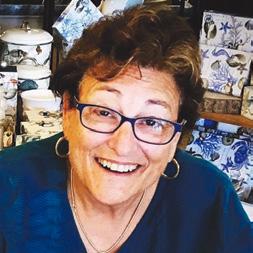
Aging Gracelessly
The Homecoming
It was freezing in Rehoboth, so we went to Colorado to get even colder. Surprise! While Delaware’s wind chill made it feel like minus 7 degrees, Colorado had its warmest temperatures in 40 years. We watched our companions ski down the slopes on human-made faux snow and had a grand time hot-tubbing, tubing, dining, drinking, and laughing.
Returning home to a snowy frozen tundra on Saturday February 7 at 11:30 p.m., Surprise!—the water pipes under our home were frozen solid, perhaps busted, and we had no running water. The week’s 50 mph wind spree took out a crawl space wall and froze whatever it touched.
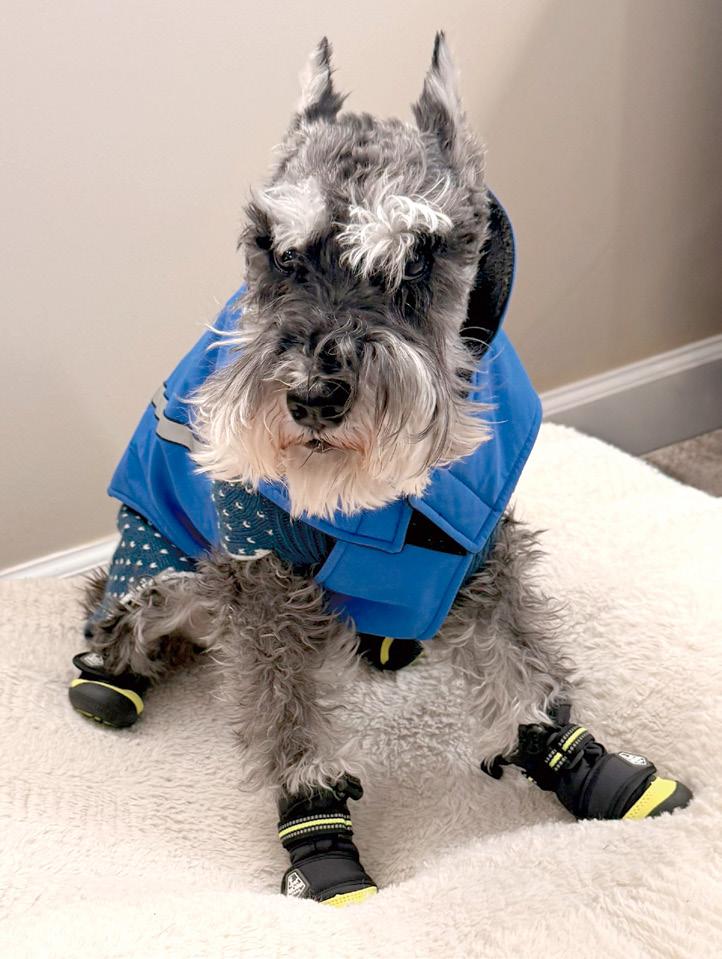
Our dog Windsor, returned to the house two hours earlier by his wonderful dog sitters, welcomed us, then cried to go out.
Almost worse than the lack of water, the door to our fenced yard was frozen shut. No amount of elbow grease or cursing made it budge, forcing us back into our abominable snowperson outfits, to walk Windsor in freezing wind and cold. Real feel: 12 below.
Fortunately, Windsor got the memo and quickly complied. I wondered, should I pee on a tree trunk too, given our unflushable plumbing? ”Good news!” said Bonnie, “there’s enough water left in the tank for one flush!” Well, that would take care of us through early morning. Back inside, frostbitten and grumpy, we melted ice cubes in the microwave to make hot chocolate and went to bed. Come morning, with the side door still unusable, I bundled back up, taking my leashed pup out into the arctic “feels like minus 13” morning. Trotting down the street in his winter coat and cute rubber boots, Windsor sounded like an approaching Clydesdale.
Then, we did the only sensible thing. We went to Crystal Restaurant for breakfast. Following our eggs, we chugged additional coffee and sat and waited. And waited. We sat there so long our server said, “Don’t worry, we don’t close until 3 p.m.” And finally, our strategy
paid off. I should print a t-shirt saying “I crapped at Crystal.” Their newly-renovated restrooms are lovely.
Arriving home we spied a plumber’s truck in the ‘hood and begged him to visit us next. In the meantime, we stood for an hour and a half aiming the hairdryer gun at our frozen back door, lock, and deadbolt. We tried Sub-Zero
I never realized the length of my home until walking a long way to Tipperary at 3:00 a.m. to the one flushable latrine.
Lock De-Icer, a giant pliers, and a hammer—but nothing helped. I wanted to kick out a window, remove the screen, and toss Windsor out. Bonnie stopped me.
When Tony the plumber showed up, he worked for about five hours (on a Sunday!) and was able to restore water to the guest bathroom and kitchen. The master bath, including the water heater, remained dead to us.
I never realized the length of my home until walking a long way to Tipperary at 3:00 a.m. to the one flushable
BY FAY JACOBS
latrine. Also, at bitter cold dawn, I was extremely bitter about my new career as Sasquatch, Inc.: dogwalker.
On Monday, we went to a friend’s house for showers and shampoo, spending the rest of the day alternately holding the hairdryer to the side door or bundled like mummies, walking the dog.
By Tuesday there was a breakthrough. Literally. Tony came back and hacked an ugly, jagged drywall hole in our bedroom wall behind the shower where we all thought we heard Niagara Falls. Surprise! The shower was fine, but we were now part of the hole in the wall gang.
Finally, hours later, Tony found the problem below the house, fixed the broken pipe, and we got all our water service back. As he rushed to another job, Tony promised to be back “In the spring” to install an access panel over the bedroom demolition and fix the pipes so they’d be less prone to freezing.
No surprise! His bill was staggering, considering the Sunday hours and how long he spent on his belly under our house like a river troll.
By Tuesday afternoon, sunshine rendered it 37 degrees, feels like 40 in the sun, and the record-breaking Delaware deep-freeze was history. I raced to the back door, grabbed the knob and heard ice crack. Voilà! The deadbolt moved, the door opened, and Windsor flew out to survey the North forty.
As for the unsightly drywall tunnel in the bedroom, it’s very Shawshank Redemption. I’ve put a framed poster over it. Expensive access panel? No thanks. As for the rest of the required spring plumbing job, hopefully it won’t be on any given Sunday.
Surprise! Spring thaw cannot come soon enough. ▼
Fay Jacobs is a freelance writer, storyteller, and author of six books of (mostly) comic essays. She has written for the Washington Post, Baltimore Sun, The Advocate, the Washington Blade, Delaware Beach Life, and—for 30 years—Letters.

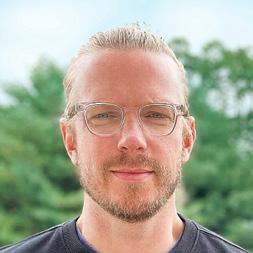
She’s Gay for Delaware
CHRISTOPHER
Lt. Governor Kyle Evans Gay on Community, Compassion, and Creating Space for Everyone
In Delaware, politics is often measured in small rooms: in coffee shops before the hustle of the working day starts, in crowded break rooms during long shifts, or at community meetings where policy is less an abstraction than a neighborly concern. It is in those rooms that Lt. Governor Kyle Evans Gay has built a public life rooted in proximity to the people her decisions impact. An attorney by training, a politician by service, and a mother by daily practice, Gay’s approach to leadership is grounded in the belief that government should feel close enough to matter.
“My name is Kyle,” she says, with the kind of introduction that sounds more like a neighbor than the second-highest-ranking official in the state.
“I am a mom, an attorney, an advocate, a former state senator, and now Delaware’s 27th lieutenant governor.”
She first ran for office with an eightmonth-old in her arms and a two-year-old at her side, convinced that families in Delaware deserved representation that reflected their own complicated, everyday realities. The mission of her work since then has been simple: deliver for working families in ways that add value to daily life—affordable childcare, accessible healthcare, and a state government that picks up the phone when people call.
Her résumé reads like a map of Delaware’s civic infrastructure. She began as a deputy attorney general in the Department of Justice, clerked in Superior Court, and spent years in private practice navigating the state’s business courts while taking on pro bono work for children in foster care. She later expanded her role in public service through nonprofit boards, civic organizations, and service on the Public Integrity Commission. Each role strengthened what has become a guiding principle during her time in office: policy is personal when you have seen its consequences up close.
Her interest in public service started early.
“My mom worked in banking and
my dad was a law enforcement officer, and both were deeply invested in their community,” she recalls. “I don’t remember a time when I wasn’t tagging along to meetings about local issues.”
That early exposure showed her how change happens both inside and outside the system—a belief that carried her from the courtroom to Legislative Hall and eventually to running for office herself. The goal was not simply to advocate from the sidelines, but to step into the responsibility of making decisions and shaping outcomes from within. That perspective continues to shape her work on issues that cross both family and public life: healthcare access, early childhood education, voting rights, and criminal-justice reform.
As lieutenant governor, she presides over the state Senate, works alongside Governor Meyer and his cabinet, and chairs the state’s Board of Pardons. The work there, she notes, often sits along the long arc of a person’s life.
“It’s a place where we think about forgiveness and the path someone has taken,” she says. “It reminds me that leadership is about understanding the human experience and treating those moments with care.”
Her legislative record reflects an emphasis on second chances, civic participation, and the often-unseen systems that determine whether residents can move through their lives with stability
…she sees [LGBTQ+ Delawareans] not as a separate constituency but as neighbors whose safety, dignity, and belonging are essential to the health of the state.
and dignity. She speaks frequently about childcare not only as a family issue but as an economic one, and about healthcare as a foundation for participation in daily life.
“When people have healthcare and childcare, they can work, support their families, and strengthen the economy,” she says. “My approach is holistic; center people, and the policy and the economy both benefit.”
That holistic view extends to LGBTQ+ Delawareans, whom she sees not as a separate constituency but as neighbors whose safety, dignity, and belonging are essential to the health of the state. She speaks with pride about the progress Delaware has made on inclusion and representation, while acknowledging that the work is ongoing and requires vigilance and care.
“My biggest concern right now is making sure people feel safe and supported,” she says. “In Delaware, we have to protect people and continue making healthcare accessible and communities safe. Even when we can’t act directly because of federal constraints, we can speak out. We will persevere and get back to a place where we’re not just defending progress but building on it creatively and intentionally.”
For Gay, allyship is not abstract; it is a daily practice.
“Personally, it means listening, creating space, and elevating voices,” she

Estate & Trust Planning for Families and Businesses

explains. “In my role, it also means using the resources of the lieutenant governor’s office to bring people together.”
Her office convenes regular LGBTQ+ leadership calls that center community leaders and organizations—spaces designed less for speeches and more for connection, coordination, and shared understanding.
“If I’m better informed, I can be more helpful,” she says simply.
She is especially mindful of young people navigating identity and belonging in a moment of national tension.
“I want young LGBTQ+ people in Delaware to know they are not alone,” she says. “If they come to me or to our administration, they will be seen, heard, and valued. If they trust us with their stories and their time, we can work together to put them in positions to create change.”
Gay’s public identity is not built on policy alone. It is shaped by a style of engagement that favors presence—constituent coffees, community forums, and regular conversations with advocates, business owners, and nonprofit leaders across the state. Public service, for her, did not begin with elected office. It began with volunteerism, advocacy, and a deep
sense that state government should amplify what communities already know about their own needs.
“I want young LGBTQ+ people in Delaware to know they are not alone.”
That ethos also shapes how she approaches partnership and collaboration. Delaware’s small size, she often notes, is an advantage: people can know one another across sectors and work together in ways that feel personal rather than transactional.

“We should use that to our advantage,” she says. “When we invest in people as whole individuals—their families, their work, their civic lives—we build stronger communities.”
In a state where the distance between government and neighbor is often just a few steps, Gay’s leadership is defined by proximity and care. Her vision for Delaware is not only one where policy works on paper, but one where every resident— including LGBTQ+ Delawareans—feels seen, safe, and able to belong.
And in those small rooms where Delaware’s politics still take shape, she continues to make space—for listening, for compassion, and for the kind of community where everyone has a place at the table and a future worth building together. ▼
Christopher Moore is a writer, a teacher, and a lover of NPR, yoga, abandoned shopping malls, reproductive freedoms, and a man who lives in Toronto. His email is moore.cc@gmail.com.
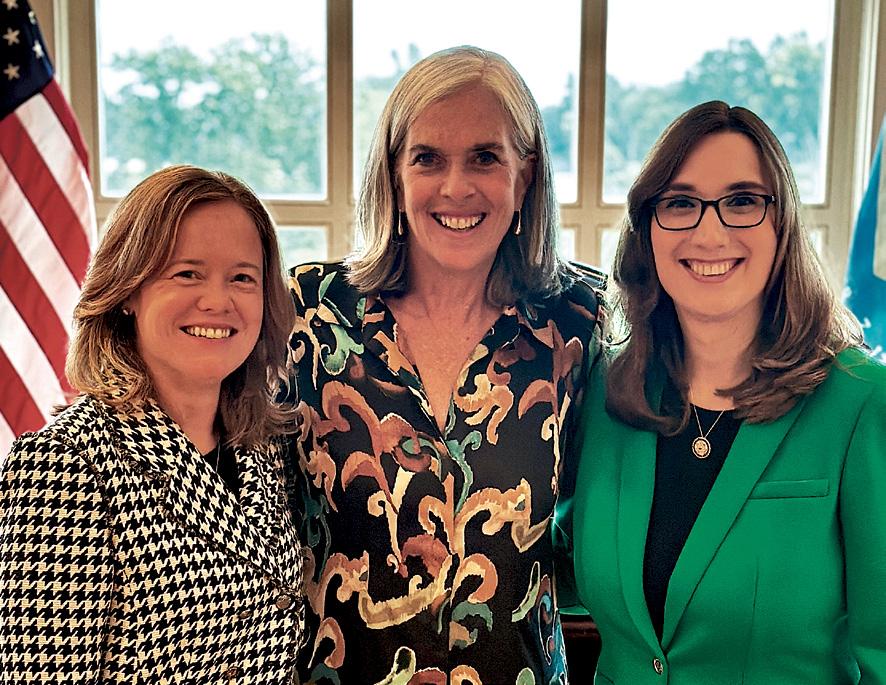
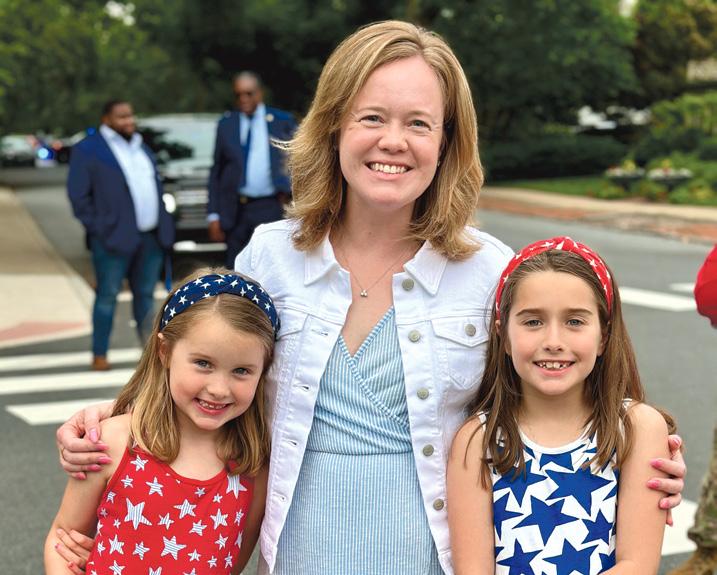
Photos, opposite page, L-R: Lt. Gov. Kyle Evans Gay, Massachusetts Rep. Katherine Clark, Rep. Sarah McBride. This page: Lt. Gov. Kyle Evans Gay with her daughters.
It’s My Life
Take Two
Our local movie theater is currently showing a series of films based on Stephen King stories, which I’ve been going to with my friend Jason. Of the 10 films being shown, the only one I didn’t see during its original theatrical run is Carrie, which came out when I was eight. I’ve seen it since then, but never in a theater with other people, and not for many years.
The audiences for these films are primarily college students, as the theater is part of the local university, and it’s been interesting to see their reactions. The opening scene of Carrie, for instance, takes place in a high school girls’ locker room, complete with full frontal nudity. And there are multiple scenes in which a female character is verbally and physically abused by her boyfriend, often leading to sexual arousal on both their parts.
There were audible groans and whispered discussions during all these scenes, but particularly during the locker room one, I’m guessing because many of the viewers realized that the characters are supposed to be in their teens (even though the actresses were all in their mid-twenties at the time of filming) and the camera lingers on their naked bodies casually and voyeuristically. Being still close to high school age themselves, maybe this felt particularly real to the students in the audience, particularly the young women around me.
As I said, I did not see Carrie when it was in theaters. I did, however, see a lot of movies about sex-obsessed teenagers when I was one myself: Porky’s, Risky Business, Weird Science, Losin’ It, Revenge of the Nerds. And, of course, all the horror movies about teenagers, which invariably involved sex, generally followed by death as punishment. As a gay teenager, I didn’t find the occasional glimpses of female bodies in these movies all that interesting. I did, however, understand why my straight friends were excited by it, as I kept hoping to see some penises. But the only one I recall making an appearance was Craig
Wasson’s in Ghost Story, where there’s a shot of his nude body seen from above as he falls to his death from a high-rise window. Not exactly the stuff of fantasies, but undeniably exciting to a horny 13-year-old in the pre-internet days.
While the casual nudity of Carrie struck me differently now than it did the first time I saw the movie, the casual depiction of an abusive relationship was more unsettling. Sitting in the theater, I found myself thinking back to other movies I saw as a young person, other depictions of relationships, and how when I saw those depictions as a kid, I didn’t think twice about the toxicity of them. Rizzo and Kenickie in Grease were meant to be comic relief, but their constant bickering didn’t suggest a healthy future. (Not that Sandy and Danny were any better.) But all I noticed back then was that Rizzo was a riot and Sandy rocked her new look in the Shake Shack.
Subsequent films in the King series raised this issue again. During The Shining, the offhand way in which Shelley Duvall’s Wendy talks about and accepts her husband’s abuse of both herself and their son was far more chilling than the wintry landscape or the Overlook’s ghosts, and in Christine I once again noticed how high school relationships were depicted as ones in which the young women are lusted after and treated with scorn when they don’t respond accordingly. Indeed, the prize that Christine’s nerd-turned-cool-kid Arnie wants to win for himself is beautiful new girl Leigh, who then becomes his intended victim when she tells him she wants to slow things down. Having read both books on which these films are based, I know this take doesn’t come from King, but from the screenwriters and directors. The question is, why?
As I said, when I saw these movies when they were released, I didn’t question these depictions. Nor, I imagine, did a lot of people. But surely, we internalized some of what we saw, especially those of us who were teenagers. Much has been said about how negative
BY MICHAEL THOMAS FORD
depictions of queer people in movies made those of us dealing with our own identities believe there was something wrong with us, which is absolutely true. What, then, did straight young men take away from these films regarding how they were allowed (or supposed) to treat women? And what did young women take away from them about how they should expect to be treated?
When the King film festival was announced, I saw it as a fun opportunity to revisit films I haven’t seen in decades. I didn’t expect it to become an exercise in analyzing what messages I might have taken away from them back then, or to find myself wondering what reactions an audience of people mostly much younger than myself are having seeing them now. Just from casual observation I can tell that things I didn’t consider problematic then are considered problematic now. And because my friend Jason is 20 years my junior, we’ve had some great conversations about generational perspectives. This is obviously not a new phenomenon or a new thought. It’s entirely normal and expected to reevaluate art once you have some distance from it. I’m old enough now that I’ve seen it with my own work, occasionally being surprised by how much my own thoughts on something I wrote have changed over time, or even how a current audience sometimes completely misinterprets what I did.
Other times, I wonder how we didn’t see what was right there in front of us. Then I think about the many, many people who are either blind to or accepting of the things happening around us right now, and I remember how easy it is to want to believe that things are okay because realizing they aren’t means we might have to take our freaked-out kid and run through a frozen hedge maze to get away from our psychopathic axe-wielding husband.▼
Michael Thomas Ford is a much-published Lambda Literary award-winning author. Visit Michael at michaelthomasford.com.
Do you tinkle when you laugh, sneeze, cough, or exercise?
Do you constantly wake up at night to go to the bathroom?
Do you feel like you need to pee, but can’t go once you try?
Do you sometimes just can’t get to the bathroom quick enough?
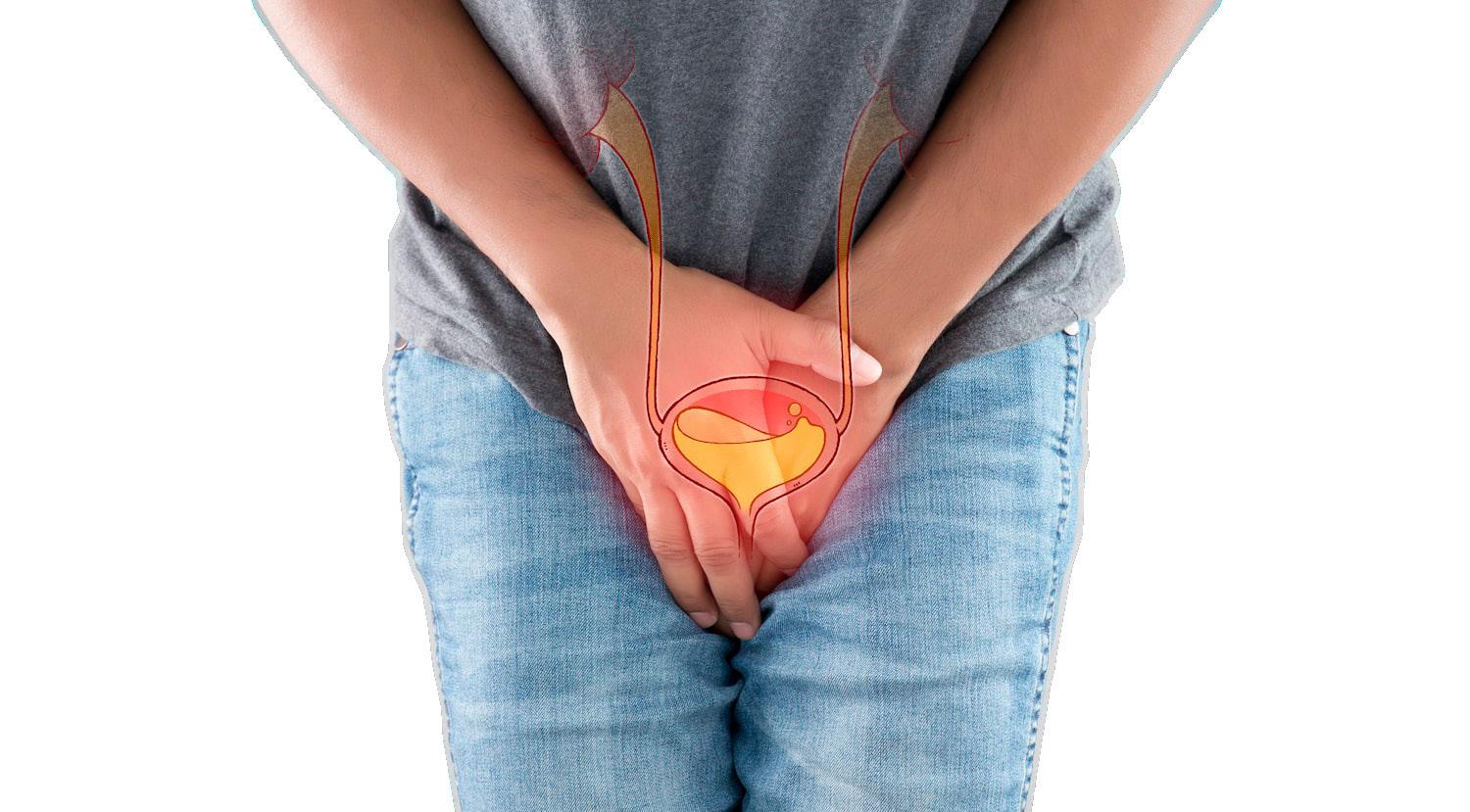
Do you carry around extra underwear, just in case?
Do you notice blood in your urine?
Do you feel pain when you start to go to the bathroom?
Is your worry starting to take over your daily life?
Brandywine Urology Consultant’s Dr. Alice Y. Wang, MD, is Fellowship trained in Pelvic Medicine and Reconstructive Surgery who, depending on your symptoms, can provide a variety of treatment options ranging from lifestyle changes, minimally invasive treatments or surgical operations. Dr. Wang is accepting male and female patients in all three offices. Please contact the office today to schedule your conversation with Dr. Wang.
Brandywine Urology Consultants, Delaware’s leading urological practice, delivers comprehensive urological solutions for men and women enabling them to remain in Delaware throughout the duration of their treatment. Brandywine Urology Consultants team of Surgeons and Advanced Practice Providers specializes in urinary cancer care, reproductive and sexual health, bladder and kidney dysfunction, chronic urinary tract infections and prostate health.

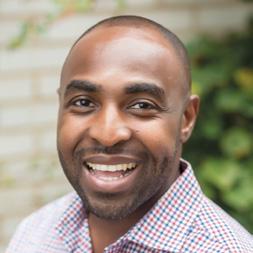
Dr. Alice Y. Wang, MD
Words Matter
The History Makers Among Us
People often point to the 1963 March on Washington for Jobs and Freedom as a turning point in American history. When it’s taught, the emphasis is usually on the soaring rhetoric of Martin Luther King Jr., and as of late, the impeccable organizing of Bayard Rustin. Yet, when I think of that day, my mind wanders to all the other people there. King delivered one of the most notable speeches of the century that day, but if he was talking to a crowd of 250 people would it have been as impactful as his speaking to a crowd of 250,000 people? Ordinary people creating an extraordinary moment in history. I salute the man who drove a bus of strangers and friends across the Jim Crow highways safely to DC. I salute the woman who packed food for her friends who were headed to DC while she couldn’t go. I salute the family members and neighbors who babysat children who were left behind. Theirs too was a significant contribution. Those folks are all history makers. History is deep, rich, and has breadth. As Black History Month ends, and we begin to celebrate Women’s History Month, I think a lot about my fifth-grade teacher, Ms. Bussey. To me, she’s a hero. She was never the principal, superintendent, or held a “leadership role,” but she made significant contributions to the lives of so many. For years she provided instruction, instilled confidence, and encouraged little Black boys and girls in one of the poorest school districts in Ohio to learn, grow, and share. She believed that we could take on the world with intellect, discipline, and our own rhythm.
Every morning her class started with us reciting the pledge of allegiance, followed by her reading a positive affirmation which we’d then discuss, and a presentation of a “current event” from one of our fellow classmates. Each student at some point throughout the month would have to present a current event at least once. This required you to watch the news the night before or wake up early that morning, get a copy of the
newspaper, read an article, clip it, paste it to a piece of construction paper, and be prepared to explain the who, what, when, where, why, and how of a relevant news story to our peers. We were children, but she was helping us build the foundation for civic literacy and an understanding of the world around us beyond our neighborhood blocks. I’m grateful for her.
That is how the future is shaped—one classroom, one conversation, one act of courage at a time.
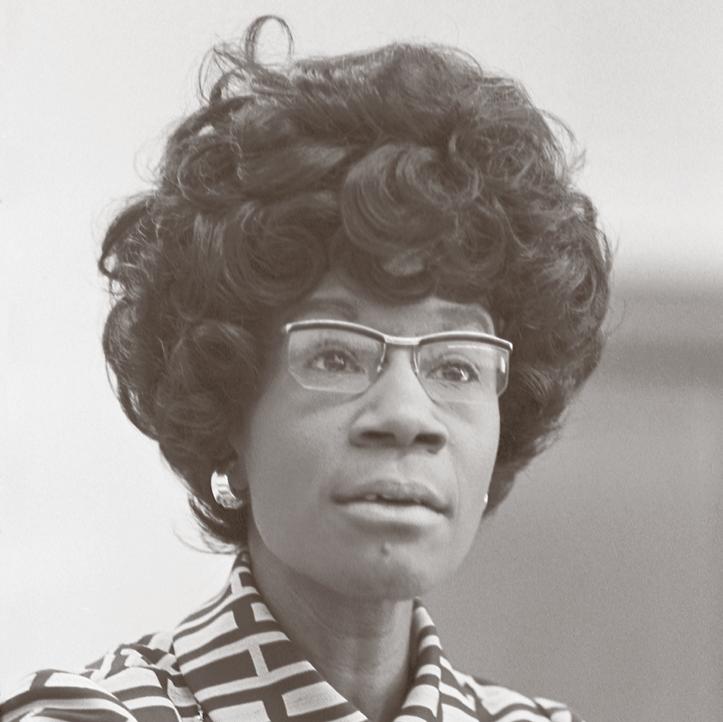
March is Women’s History Month, and it invites us to widen our lens. It asks us not only to remember the well-known names like Harriet Tubman who made frequent visits to Delaware while helping enslaved people regain their freedom, or Shirley Chisholm who is undoubtedly one of my favorites for declaring herself “unbought and unbossed.” It asks us to also remember the countless women who organized, marched, wrote, taught, and led. It asks us to honor the Ms. Busseys in our own lives. The women who may never appear in textbooks but whose fingerprints are all over our character, our courage, and our commitment to community. History is not only shaped in grand speeches on national stages; it is also shaped in classrooms, kitchens, carpools,
BY CLARENCE FLUKER
and church basements. It is shaped in beauty salons, basketball courts, and on occasion, a bar.
Right now, it is easy to feel overwhelmed and the challenges facing our communities and our democracy can seem insurmountable. But the lesson of that August day in 1963—and the lesson of Women’s History Month—is that largescale change is built on small, consistent acts of participation. Someone had to make the signs. Someone had to print the flyers. Someone had to make the phone calls. Someone had to believe that their presence mattered.
Right now, we can all do small things that ripple outward. We can mentor a young person. We can check on a neighbor. We can support a local organization doing quiet, faithful work. We can read deeply, listen generously, and speak up when it counts. We can model both empathy and empowerment for the children watching us.
Ms. Bussey probably never imagined that her insistence on current events and affirmations was an act of nation-building. But it was. She was preparing engaged citizens. She was cultivating confidence. She was expanding our sense of possibility. That is how the future is shaped—one classroom, one conversation, one act of courage at a time.
As we celebrate Women’s History Month, may we honor the women who carried movements on their backs and the women who carried us in their arms. And may we remember that we, too, are history makers. The world we want to live in and the one we hope to leave for generations behind us will be built not only by famous names, but by all of us. ▼
Clarence J. Fluker is a public affairs and social impact strategist. Since 2008, he’s also been a contributing writer for Swerv, a lifestyle periodical celebrating African American LGBTQ+ culture and community. Follow him on Instagram: @Mr_CJFluker.
Photo by Adam Cuerden.

health+wellness
Eat, Drink, & Be—Healthy?
March is National Nutrition Month—so when better to take a look at the latest dietary guidelines for Americans? Released in January 2026, the new guidelines (developed and published collaboratively by the US Department of Agriculture [USDA] and the Food & Drug Administration [FDA]) will be in effect till 2030, when they will again be updated.
There’s a new graphic to accompany the new guidelines: an inverted pyramid, replacing the “MyPlate” graphic used to illustrate dietary guidelines since 2011. You can browse the new guidelines (and admire—or revile—the new graphic) at realfood.gov.
As that website name suggests, the new guidelines have as a tagline: “eat real food.” Accompanying explanatory materials state that “American households must prioritize diets built on whole, nutrient-dense foods,” and advise dramatically reducing consumption of highly-processed (aka ultra-processed) foods.
This raises the question: exactly what foods are “highly/ultra-processed”? Which turns out to be harder to pin down than one might think: there is no universally accepted definition of ultra-processed foods (UPFs). As of 2025, California developed its own, enacting legislation which created a statutory definition for the purpose of banning certain UPFs from being served in schools. Of course, that definition is California’s—i.e., it’s not “universal.”
So, how about everyone else? Say, for example, the USDA or the FDA? Well, they are currently collaborating on establishing a definition of UPFs; in mid-2025, the two agencies published a joint Request for Information to help move them toward that goal. While the eventual federal definition may differ from California’s, the state’s definition could inform the development.
Another set of definitions that may prove informative is the widely-used food classification system known as Nova. Created in 2010—and updated a decade later—Nova classifies foods into four broad groups, based on the
extent and purpose of their processing. While less nuanced than California’s new definition, it has some utility. Nova’s four food groups are:
GROUP 1 ⊲ Unprocessed/Minimally-processed Foods: Naturally occurring foods with no added salt, sugar, oils, or fats. Examples: Milk, meat, eggs, fish, poultry, beans, fresh/frozen/dried fruits and vegetables, oats, rice.
GROUP 2 ⊲ Processed Culinary Ingredients: Food products from Group 1 that have been processed by pressing, refining, grinding, and/or milling. Examples: Vegetable oils, butter, vinegar, beet or cane sugar, honey from combs, syrup from maple trees.
GROUP 3 ⊲ Processed Foods: Food products made by adding sugar, oil, and/or salt to create simple products from Group 1 foods. Examples: Canned vegetables/fruits/beans, some salted/ sugared nuts/seeds, salted/smoked/ cured meats, canned fish, cheese.
GROUP 4 ⊲ Highly-/Ultra-processed Foods: Food products created with the addition of multiple ingredients, e.g., some Group 2 ingredients as well as additives such as high fructose corn syrup, non-sugar sweeteners, and processing aids such as stabilizers. Examples: Commercial bakery goods, breakfast cereals, soy burgers, flavored yogurts, ready-to-heat meals, soft drinks, candy.
So—what’s the big deal about UPFs? Why is California legislating against them in school meals, and why is the federal government advising consumers to avoid them?
Briefly, it’s because research suggests that eating a diet high in UPFs is associated with an increased incidence of chronic diseases such as obesity, heart disease, and Type 2 diabetes. And—notably—because treating chronic disease accounts for about 90 percent of health care spending. The hope is that reducing consumption of UPFs will reduce the incidence of chronic diseases and—consequently—the number of dollars expended to treat them.
BY MARJ SHANNON
It’s good to have goals. But clearly, these are not ones speedily reached. And nuance will be important: The Academy of Nutrition and Dietetics (AND) has closely examined the Nova food classification system and the healthfulness of UPFs, publishing their findings in 2024 and 2025. AND found that the Nova system has a significant limitation: It is based solely on processing, with no consideration of the nutritional quality of food. So, for example, a commercially-produced hummus (ground chickpeas)—with guar gum added as a stabilizer—would fall into Nova’s Group 4 UPFs, along with commercially-produced chips, many sweets, and sweetened beverages. But hummus—unlike those Group 4 food products—has considerable nutritional value.
Further, AND reports that while studies have demonstrated that an overall diet containing a large percentage of UPFs increases the risk of Type 2 diabetes, there are subgroups of UPFs that lower the risk. Among these subgroups: breakfast cereals, whole-grain breads, yogurt, and dairy-based foods.
In one proof-of-concept study funded by the USDA (published in 2023), more than 80 percent of foods the study participants consumed came from Nova’s Group 4. But participants who followed the planned diet achieved a Health Eating Index (HEI) of 86 (out of 100). The HEI measures diet quality and evaluates to what extent Americans are following dietary guidelines. At the time of the study, Americans—on average—were achieving a score of only 59. Clearly, there are important nutritional differences among Group 4 foods, despite their common categorization as UPFs.
So—what’s a person to do? Per the new dietary guidelines, one can:
• Eat the right amount of food—pay attention to portion sizes.
• Prioritize protein at every meal—nutrient-dense protein foods include eggs, beans, peas, legumes, poultry, seafood, and red meat.
• Consume dairy (without added sugars)—dairy is an excellent source of protein.
health+wellness

• Eat fruits and veggies—two to three servings, respectively, per day.
• Incorporate healthy fats, such as those found in eggs, poultry, olives, fullfat dairy products, nuts, avocadoes, and omega-3-rich seafood.
• Focus on whole grains.
• Limit highly-processed foods, added sugars, and refined carbohydrates.
• Limit alcoholic beverages.
But not everyone is keen on all of the new guidelines. Among those with reservations is the American Heart Association (AHA). The AHA supports many of them, such as those limiting consumption of added sugars, refined grains, highly-processed foods, saturated fats, and sugary drinks. However, it continues to encourage consumers to prioritize plant-based proteins, seafood, and lean meats, and to limit high-fat animal products such as red meat, whole milk, and butter—all of which enjoy pride of place on the pyramid.
Other organizations and individuals have expressed concern that the pyramid may be somewhat misleading, in that it
LET’S STAY CONNECTED!
All of CAMP Rehoboth’s programs, services, and events are listed here: camprehoboth.org/ events-calendar/. Please visit the site often to ensure you have up-to-date information on what is being offered—and when
[Some]
have expressed concern that the pyramid may be somewhat misleading, in that it does not
always well represent what the guidelines themselves say.
does not always accurately represent what the guidelines themselves say. For example, the new guidelines recommend that saturated fat consumption should not exceed 10 percent of total daily calories (just as earlier guidelines did). However, both healthy (plant-based) fats and notso-healthy (animal-based) fats occupy the same, rather prominent section of the pyramid. And whole grains, although recommended at two to four servings per day in the guidelines, are relegated to the rather small, pointy tip of the pyramid.
Given people’s propensity for inferring a message from an image—the pyramid, v. reading the accompanying narrative— the guidelines, this concern is likely well placed.
Concerns also have been expressed about the process through which the new guidelines were developed. Typically, a Dietary Guidelines Advisory Committee, composed of independent nutrition scientists, spends about two years reviewing and summarizing current information in nutrition science. It then provides USDA
and the Department of Health and Human Services with a report to inform guideline development. That process occurred this time, too. But the current administration rejected the report and instead contracted with a new group, charging it with conducting a “supplemental scientific analysis.” Little is known about the process this group followed, due to a lack of transparency. Notably, some reviewers in the group have financial ties to the beef and dairy industries.
So back to that question: what’s a person to do? From a practical standpoint:
• If you’re already on a diet you’ve developed with the help of a healthcare provider, don’t make changes without consulting the provider.
• Focus on those new guidelines which are consistent with earlier ones, e.g., limit added sugars, refined grains, and processed foods.
• Weigh carefully the guidelines which depart markedly from prior guidelines, e.g., those which promote consumption of whole milk and red meat.
• Avoid extrapolating dietary guidance from the image of the pyramid alone—visuals can be misleading.
• Ask a healthcare provider or registered dietitian for advice, especially if you have special dietary needs or limitations.
A bottom line that usually would be discouraging, but in this case might be a good thing: Research has shown that Americans do not follow dietary guidelines. ▼
Marj Shannon is editor of Letters from CAMP Rehoboth and a retired epidemiologist.
Youth Crisis Support: Crisis intervention services for children under 18. Parents and caregivers are connected to a crisis clinician. Available 24/7. Call 800-9694357 or text DE to 741-741.
988: Free, confidential support and resources for anyone in distress. Available 24/7. Call 988.
Delaware Hope Line: Free coaching and support. Links to mental health, addiction, and crisis services. Available 24/7. Call 833-9-HOPEDE (833946-7333).
Community Health and CAMPsafe
A New Way Forward
By investing in collaboration and knowledgesharing, CAMP Rehoboth is strengthening its role as a hub…
Long-time readers of Letters may know CAMPsafe as the community center’s premier health service, providing HIV testing and counseling for nearly 30 years. Some may already be aware that, since the beginning of this year, CAMP Rehoboth is no longer providing in-house HIV and STI testing services.
This transition marks not a retreat from LGBTQ+ health equity, but a strategic opportunity for our community. By focusing on education, partnership, and resource connection, CAMP Rehoboth aims to help community members access the full spectrum of care available through trusted, local agencies—perhaps in more ways than was previously possible.
It’s important to note that healthcare landscapes are changing, especially in Sussex County. No single organization can meet every need alone. By investing in collabora-

BY VINCENT DELISSIO
tion and knowledge-sharing, CAMP Rehoboth is strengthening its role as a hub—ready to support the unique healthcare needs of the LGBTQ+ community alongside partners that uphold affirming and equity-centered services in southern Delaware and beyond. This ongoing work directly advances health, one of CAMP Rehoboth’s three strategic pillars within its five-year strategic plan. In 2026, community members can expect reinvigorated programs, clearer pathways to services, and a sustained commitment to meeting people where they are. CAMPsafe and CAMP Rehoboth invite community members to look toward the horizon—where a new reality is taking shape for the health and prosperity of our community. ▼
Vincent DeLissio is CAMP Rehoboth’s Membership and Program Coordinator.






If You Can’t Paint the Street…
Oh, Key West. My winter retreat. The place I come to thaw out and recharge my creativity. So, when on my first day back this year I spotted something I’d never seen in previous years—rainbow-stripes painted on white picket fences—I took note.
The stripes were crisp and deliberate. In a city that already flies so many different styles of rainbow flags, why were they migrating now to the fences? These days it’s hard to look at anything without wondering what it signals. I sensed a story.
Last summer, the Florida Department of Transportation removed the rainbow-colored crosswalks from the corners of Duval and Petronia Streets. Since 2015, those crosswalks had been a bright, unapologetic marker of Key West’s long reputation as an accepting, LGBTQ+friendly place. The state, however, had deemed them “unsafe” and in violation of a new ordinance prohibiting political or ideological messaging in public spaces.
Local reporting noted there had never been a single accident attributed to the crosswalks. They had been installed according to state design guidelines. The speed limit on Duval Street is only 15 miles per hour. And from personal observation I can attest that the wild chickens and drunk tourists present far greater road hazards than colored paint.
When I asked my friend Christopher Peterson about this, he didn't mince words. Peterson, a drag performer extraordinaire beloved in both Key West and Rehoboth, called it for what it was: the state’s most recent attempt to reduce LGBTQ+ visibility.
It was yet another test to see how much communities like Key West were willing to tolerate before simply shrugging. The removal of the rainbows wasn’t about safety.
It’s about who gets to define the character of a place.
What did residents of the Conch Republic do? According to Peterson, they did what Key West has done before when confronted by Governor DeSantis and
his anti-diversity policies: they found an imaginative solution. The city painted the sidewalk bicycle racks at the same corner of Duval and Petronia in rainbow colors. Then it began planning a new rainbow archway emblazoned with the phrase “All Are Welcome Here in Key West” to stand near the former crosswalk site. If the rainbow couldn’t live underfoot, it would rise overhead.

Every community that prides itself on openness and inclusivity eventually must decide whether its values are decorative or foundational when they come under attack.
As Peterson told me, the new rainbow arch will be more eye-catching, more visible, more fabulous than the old crosswalks which, in his words, were getting kind of dirty and in need of a new paint job anyway. Key Westers, he explained, won’t be walked over.
Within weeks after the crosswalk removals, rainbows began appearing on fences all over the city. Not on the entire fence, just on six or seven vertical fence pickets painted red, orange, yellow, green, blue, indigo, and violet.
And then, as if on cue, a new twist arose.
Old Town Key West is protected by preservation rules that most residents fiercely support. They are why the island still looks like Key West instead of “Any-
where in Florida with Palm Trees.” The same rules that save gingerbread trim and wooden shutters also regulate paint palettes. Rainbow pickets were not an approved look, and two residents filed complaints about them with Key West’s Historic Architecture Review Commission.
The debate that followed has been layered and hasn’t yet landed on a solution. Some board members have floated the idea of allowing homeowners to paint up to seven pickets in any color under a free-speech exception. Others worry about setting precedents that weaken preservation standards. The debate is also raising the question about the definition of preservation. Can preservation accidentally erase cultural identity while protecting physical identity?
A few days after my conversation with Christopher Peterson, I came across three houses where homeowners had constructed detachable signs made of rainbow-colored pickets and hung them above their white fences. The fences remained compliant. The message hovered just above.
It was creatively and quintessentially Key West. Remove the crosswalk and the rainbow appears on the bike rack. Then it rises into an arch. Debate the painted fence, and it floats above it.
What’s unfolding here in Key West isn’t about aesthetics. Every community that prides itself on openness and inclusivity eventually must decide whether its values are decorative or foundational when they come under attack. The removal of a crosswalk may not seem like much compared to what’s happening in other cities around the country. But it is a line in the sand. And in this case, Key West has chosen not to shrug.
Values don’t survive because they’re painted on a fence picket or a street crossing. They survive because people pay attention and choose to respond. ▼
Rich Barnett has written for Letters for 20 years, and also is an occasional contributor to Delaware Beach Life.

Medical Foundation


OVERCOMING WEIGHT STRUGGLES IS A TEAM EFFORT
If You’re Struggling With Your Weight, You’re Not Alone
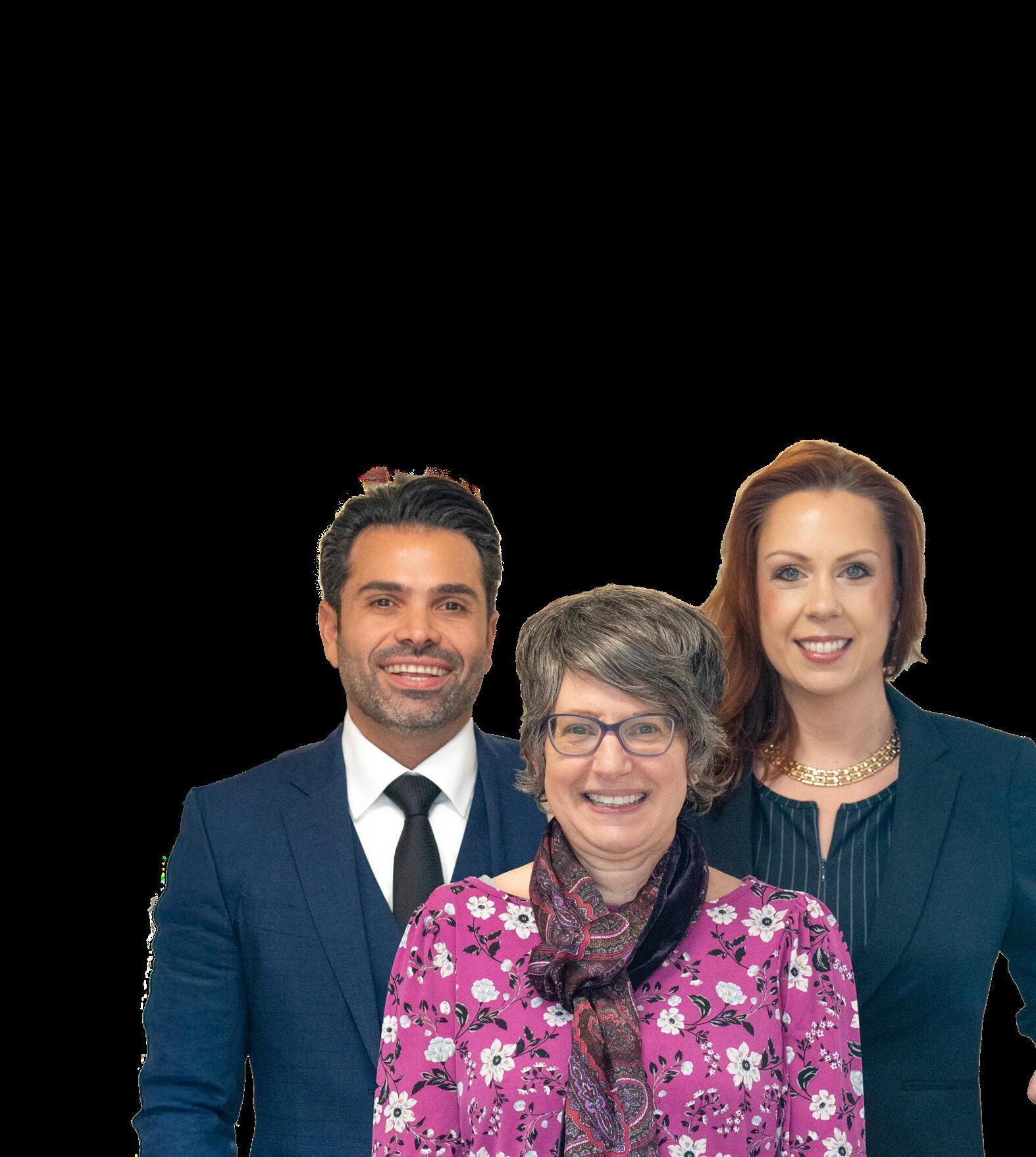
You don’t have to face the challenges of weight loss alone. At Beebe’s Center for Weight Loss Surgery, we believe that the journey to a healthier lifestyle takes more than willpower. It takes a caring, experienced team that sees the whole you — not just the number on a scale.
Our passionate, multidisciplinary team helps patients take control of their weight through a holistic approach integrating advanced surgical options and expert nutrition and behavioral support.
We’re here to help you understand your options — and to support you every step of the way.
To attend a free weight loss seminar scan the QR code.
Kimberly Hyatt, RD
Susan Dunlap, RD
Tarek Waked, MD
OutTakes
Why I Need Spring Right Now!
Ice out now! No, not that violent mob of semi-literate, murderous, bullying thugs who might abscond with my family and neighbors to some secret location of horrors without warning. I’m talking about the other ice, as in “frozen water.” I don’t care what that groundhog said. I need winter to be over with. No more snow. No more frigid temperatures. No more wind chill factors in the sub-zero range.
First of all, winter triggers me into cooking fat food. Not just food that causes weight gain, but food with fat actually appearing in the ingredient list of the recipe. Butter, bacon grease, vegetable shortening. At least I haven’t cooked anything with lard or tallow yet. Just stuff like roast beef with mashed potatoes, chicken stew and noodles, ham with potatoes au gratin. I’m sure I saw my bathroom scale wince as I walked past it this morning. But really, winter is hard enough without adding dieting to the experience.
Do you know what else was hard? Our front lawn for most of the month of February, that’s what. I mean, I like snow, but the added layer of ice on top of it was more than just challenging. Plus there was the ice wall at the end of the driveway created when the snowplow came through. Plowing also created a mountain of snow and ice in the middle of our cul-de-sac that looked like it could have been responsible for sinking the Titanic. So, there we were, trapped in our house…with all that food.
Ask my wife and she will tell you that the last thing that will ever happen to us in a weather emergency is starvation. Our refrigerator, freezer, and pantry are all full…all the time. We are only two people! My sister and I learned how to cook from our mom who learned from her aunt who ran a boardinghouse. Culinary education aside, we also have Italian ancestry. We cook big and we cook heavy—just like my butt in these jeans. No one will go hungry around us. But eating doesn’t just create fat. It also creates garbage.
What does that have to do with the ice-covered yard? Well, as we entered the second week of being frozen in place we realized that at some point, we would need to free our very full garbage bin from drifted snow and ice. Then we would need to drag the bin across the ice flats, over the ice wall, and out to the iceberg to be emptied. No problem right? Wrong.

So, there we were, trapped in our house… with all that food.
I suited-up in enough outerwear to resemble the Michelin tire man and grabbed my garden spade to break through the ice crust. I was feeling pretty competent when I’d dug and stomped my way through the frozen terrain and reached the bin. I had made it this far and I wasn’t going to give up now. Confidently handing the spade to my wife, I grabbed the bin with both hands and rocked it back and forth, freeing
BY SANDY CLARK
it from the ice. Then, holding on to the porch rail with one hand and pulling up on the bin with the other, I got it completely out of the drift and on top of the ice. I was feeling victorious!
I began to retrace my steps back toward the cleared front walk. One step, then drag the bin. Another step, then drag. A third step, then…WHAM! I lost my footing and fell belly-down on the ice. This would have been fine, except that I still had hold of the bin, which I had now pulled over on top of my butt. That extra layer of fat served as some protection!
At this point both the bin and I started spinning across the yard. The bin lid had now opened up and started spewing bags of trash in our wake. A McDonald’s bag stately sailed all the way to the sidewalk. I started doing the breaststroke across the ice and out from under the bin. I prayed this would not become a Ring video that one of my neighbors posted on Facebook. Eventually, I regained my footing and was able to get the bags back in the bin and the bin out to the curb without any further mishap. Aside from some large bruises— more colorful than a bunch of blooming crocuses—nothing was injured except my pride.
And that is why I need it to be spring right now! I want fresh strawberries, and asparagus, and baseball spring training. I want the scent of blooming lilacs and cherry trees to fill the air. I want to go outside without my face freezing and without fear of inventing an entirely new sport for the next Winter Olympics. Bin-sledding anyone? ▼
Sandy Clark, retired and living in central Delaware with her wife and two cats, loves sharing her humorous observations on the weirdness of life.



March 8 Is Proofreading Day!
Proofreaders of the World, Untie!
There are fussbudgets. There are nitpickers. And then there are proofreaders.
Proofreaders notice if you any words out. Proofreaders tell people right then and there that they’re out of their minds and get all the there/they’re/theirs right. Proofreaders know when to use the Oxford comma (it depends on the style guide) and can tell you what the Oxford comma and style guides are. Proofreaders are our last line of defense against miscommunication, embarrassment, and even financial catastrophe. Take the missing hyphen that reportedly cost NASA $80 million when it contributed to the loss of Mariner 1 (it changed the trajectory). No spellchecker or grammar app would have caught that.
The most famous typo in history was in what’s known as the Wicked Bible. The word not was dropped from the seventh commandment (by either a poor proofreader or a devilish printer’s assistant), leaving it to read, “Thou shalt commit adultery.” This made the 1631 edition of the King James Bible both an outrageous scandal and an outstanding wedding gift.
Having a proofreader’s eye is a blessing and a curse. It means you can’t read a book without noticing that the spelling of the character’s name changed midway through. You can’t drive past signs for “Bobs Rib’s” without cringing. You aren’t even safe with authoritative sources—a label at the Kisumu Museum in Kenya claimed that a certain herb was used “for treatment of harpies” (although if that’s not an error, I might be interested). Even menus can be upsetting (Baffalo wings, anyone?).
A particular problem is the plague of apostrophes. People cast them out like handfuls of confetti, with wild abandon and an air of “there must be one in here somewhere.” The only places that are short on apostrophes are America’s geographic names (Pikes Peak, for example). We can thank President Benjamin Harrison for this abomination. In 1890, he formed a board to regulate geographic names, and they decided to purge the
poor possessive apostrophes, a despicable policy that has continued, with few exceptions, to this day. (Stay strong, Martha’s Vineyard!)
A particular problem is the plague of apostrophes.
Also troublesome is the exclamation mark. Meant to convey an actual exclamation (“Stop!“ “Fire!” “Happy Hour is open at The Pines!”), it is instead used in a misguided attempt to add excitement, particularly when two or three additional exclamation marks are thrown in for good measure. The result is an exhausted reader, who in the end doesn’t know what to be excited about.
Jeff Deck, author of The Great Typo Hunt, took proofreading to the next level. Tired of declining standards, the young editor formed the Typo Eradication Advancement League (TEAL) and went on a quest to rid the country of errors on signs. Exclaiming “Somebody needs to fix America,” he set off across the US, steps ahead of a possibly imaginary arch enemy force called FLAME (the Fiendish League for Advancing Mistakes in English). Armed with black markers, chalk, vinyl stick-on letters, “elixir of correction,” and a 48-count box of Pop-Tarts, Deck, and a friend he somehow cajoled into joining him, hit the road. They corrected hundreds of signs, such as one that read, “Pregnacy Test, Baby Stuff, Toys, Umbrella, Radio, Atlanta Souviner, Birth-
BY NANCY SAKADUSKI
day Stuff.” Although that retail endeavor may have challenges greater than lack of proofreading.
When you have a last name like “Sakaduski,” typos get personal. I have a collage (and it’s a large one) made from unique misspellings of my name, collected from envelopes, mailers, and the like. They range from the oh-so-close like “Sakavuski,” “Neskaduski,” “Wakaduski,” and “Zakadoski,” to delightfully inventive versions such as “Sackadodge,” “Sanderaski,” and inexplicably, “Sammarco.” Some are vaguely ethnic (“Sakiduski,” Tsakaduki,” “Sadatuchi,” “Fakadufki” and “Sidlauskas”). Others are from people who couldn’t be bothered (“Skaduski,” “Sakadi,” “Uski,” and even just “Sa”). My favorite ones got the first name wrong as well: “Dancy Jakaduski,” “Nany Akaduki,” and “Vaney Sakadisko.” (Heavy sigh.)
Rarely, having a proofreader’s eye pays off. Many moons ago, I attended a fancy schmancy editorial board dinner at Caesar’s Palace, of all places. The smug host challenged the assembled dignitaries, most of whom were two or three times my age and experience, to find the error on the custom menu they’d had printed. It was a tiny mistake (a word printed in a slightly smaller font), but somehow it leapt out at me. Heads turned as I was presented with the prize—a magnum of Dom Pérignon, which I’m happy to report I later drank, alone, in my bathtub (a celebratory glass, not the entire bottle). I could go on, extolling the virtues of proofreading for six or seven hundred more words, but the Letters editor would beat me over the head with an Oxford comma, so suffice it to say, Happy National Proofreading Day!!!! Let’s here it for proofreaders!!!! ▼
Nancy (Day) Sakaduski is an award-winning writer and proud ally who has provided writing services to CAMP Rehoboth for 14 years. She also serves on the Lewes Public Library Board of Commissioners and the Delaware Art Museum’s Sussex County Advisory Council.





Partnering for Success
Empowered Futures Sussex
CAMP Rehoboth is partnering once again with the University of Delaware Partnership for Healthy Communities (PHC) and Delaware Technical Community College-Georgetown campus for Empowered Futures Sussex. The event is an annual LGBTQ+ legal and healthcare readiness day; in 2026 it will take place on Tuesday, March 24, at the Del-Tech Georgetown campus, from 9:00 a.m. to 12:00 noon.
Recently, CAMP Rehoboth chatted with Kate Culhane-Suluai, Program Manager at PHC, responsible for launching this community event.
MATT CASTRINA: Tell us about your organization and your role.
KATE CULHANE-SULUAI: The PHC advances health equity through authentic community partnerships, community-engaged scholarship, and public health practice. In my role, I build and sustain partnerships, support community-centered programming, and translate community needs into actionable public health initiatives—including Empowered Futures Sussex.
MC: How did the name Empowered Futures come about?
KC-S: The name reflects the heart of the event: empowerment through preparation. LGBTQ+-affirming services allow people to protect themselves, their families, and their wishes. The event is about giving people agency over their futures, not waiting for a crisis.
MC: What inspired you to start the event?
KC-S: After the 2024 elections, fear and uncertainty in the LGBTQ+ community felt heavy and paralyzing. As a member of the LGBTQ+ community and a parent raising a young son with my wife, this felt deeply personal. I wanted to turn fear into action.
I started by leveraging my PHC connections and reaching out to partners I had worked with, then contacted other organizations across the state. In just three weeks, we pulled together the first event. The overwhelming response
reaffirmed the power of collective commitment.
MC: What needs does the event address?
KC-S: Many LGBTQ+ people struggle to find affirming legal services, or experience barriers when trying to access healthcare. There’s also a lack of safe, visible LGBTQ+ community spaces in

The space is designed for learning, support, and connection at your own pace.
Sussex County outside of beach and hospitality settings. Bringing a range of providers together in one spot makes it easier to connect with multiple supports at once, all in a setting that’s accessible, low-pressure, and community-centered.
MC: Who are some of the tabling partners?
KC-S: Participating organizations include legal service providers such as Community Legal Aid Society Inc., healthcare providers like Beebe Healthcare and La Red Health Center, behavioral and mental health organizations, community-based organizations such as Orgullo Delaware, advocacy and support groups, and social service agencies focused on housing and benefits serving both statewide and Sussex County residents.
MC: Who is the fair intended to serve?
KC-S: LGBTQ+ individuals, couples, fami-
BY MATT CASTRINA
lies, and chosen family in Sussex County and nearby areas. Attendees range from young adults planning ahead to older adults preparing for long-term care needs, as well as parents and caregivers.
MC: Can you share an example of the event’s impact?
KC-S: At last year’s event, a parent brought their young adult child, walked them into the space, and then waited outside while their child visited each table. The parent checked in occasionally to make sure their child had what they needed but allowed them to engage on their own. It was heartwarming to see that not only had word spread about the event, but the parent felt safe and confident enough to allow their child to engage independently.
MC: What’s next for Empowered Futures Sussex?
KC-S: Each year, we explore ways to expand services, increase educational components, and potentially expand invitations to faith-based organizations and reach more communities in Sussex County, guided by community needs.
MC: What would you say to first-time attendees?
KC-S: You don’t need to have everything figured out or know what questions to ask. The space is designed for learning, support, and connection at your own pace.
MC: Any shout-outs?
KC-S: This event wouldn’t be possible without community partners, legal and healthcare volunteers, and LGBTQ+ community members who trust us with their needs. I thank CAMP Rehoboth and Delaware Technical Community College for helping to bring this event to Sussex County. ▼
Matt Castrina is CAMP Rehoboth Program Manager.
Photo: L-R, Kate Culhane-Suluai, Program Manager, Partnership for Healthy Communities; José Miller, Ph.D., Academic Counselor, Delaware Technical Community College; Matt Castrina, Program Manager, CAMP Rehoboth. Photo credit: Samone Suluai.







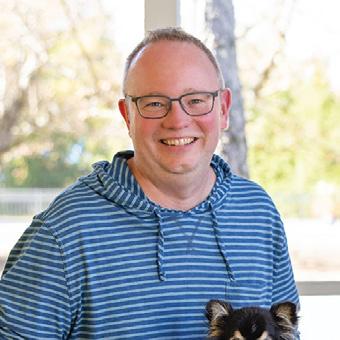


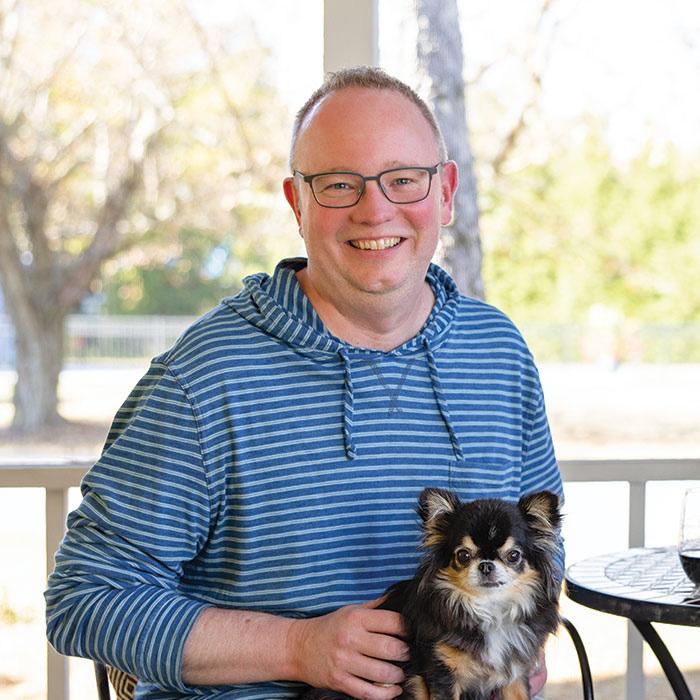
Adopt a Guinea Pig Month
The Perfect Pocket Pet
Check your pockets. Wallet? Yeah, it’s there. Glasses are on your head. Phone, check. Keys, uhhuh. Guinea pig? Okayyyy, if that’s where you want him for now but first, you might want to learn a few things about the creature whose very name is synonymous with “experimentation.”
Thousands of years ago—about seven of them, give or take—someone in South America, probably in the Andean region, found a cute little furry animal and decided that it would one day be the perfect classroom pet. Someone else, Ecuadorean, Peruvian, Bolivian, figured yes, but that little rodent-like animal also might make a good (albeit rather unsatisfying) snack or something for a religious rite, or sacrifices, or medications.
When the Europeans came through the area some 500-700 years ago, they liked the creatures, which the Andeans had started to breed for their colorful fur. Those explorers, as sea-faring explorers will do, decided just whatevs, let’s take a few home. They brought back the creatures, probably by way of Guinea or Guiana. And since the animals squeal like little piglets when frightened or unhappy, they were hence known as (ready for it?) Guinea...Pigs.
Yeah. Sad to tell you, but the name is a total lie.
For what it’s worth, despite that, Queen Elizabeth I was a big fan.
At any rate, the fact is that guinea pigs, scientific name Cavia porcellus, won’t be found on any porcine family tree; instead, the furry little guy is purely a rodent, more related to capybaras and porcupines. That means that, like those rodents, a guinea pig’s teeth will constantly grow and the animal needs access to chewables or his teeth will pierce through the roof of his mouth. You don’t want to think about the ramifications. Other fun things to know about guinea pigs is that their constant chewing means constant elimination and to get all the nutrients they need, they will eat their own poop. You really don’t want
to think about that, either.
Unless, that is, you make one into a pet because guinea pigs—though they’ve been used in laboratories for more than two centuries—aren’t just guinea pigs for science.
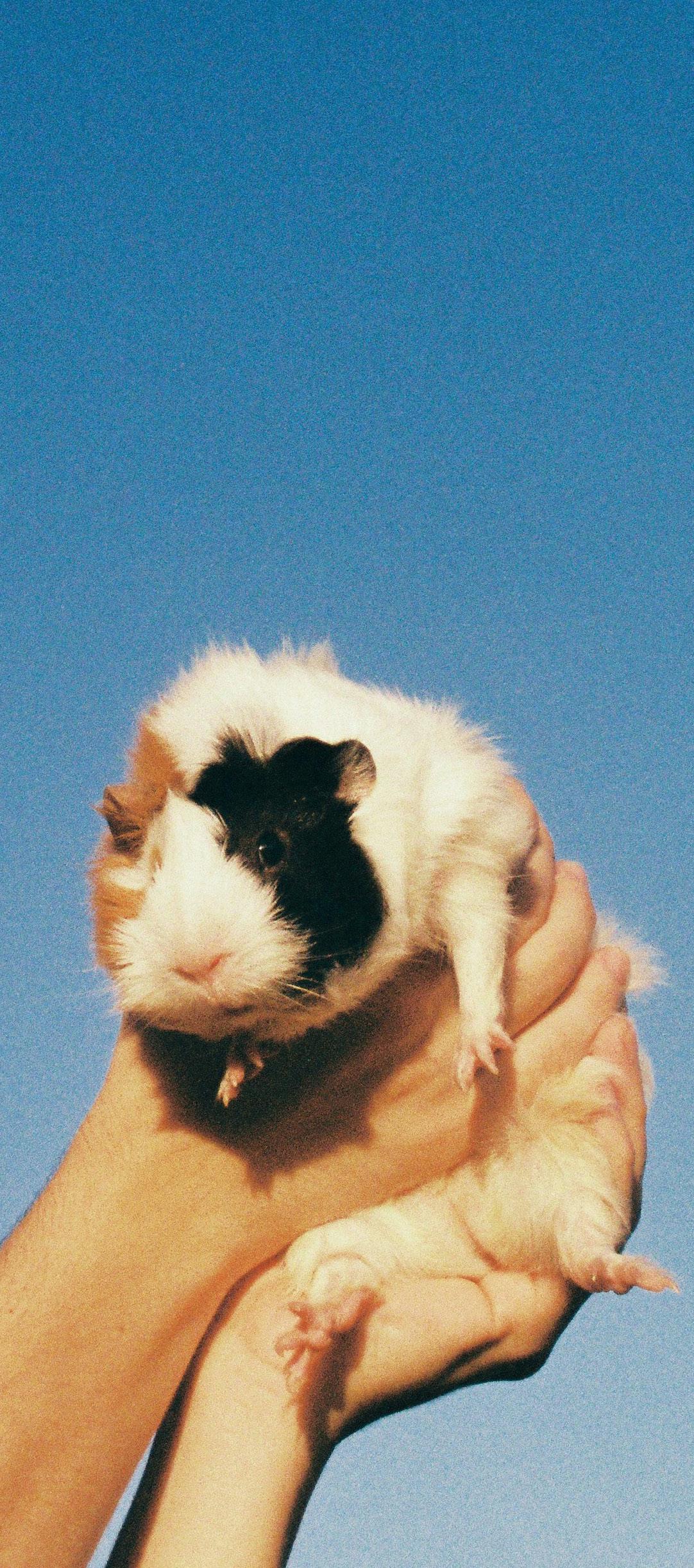
You can cuddle them, teach them little guinea pig tricks, leash train them, build fun tunnels for them, and they especially like toys.
The cautionary news for you as you consider this idea is that if you’re in need of a “pocket pet” that’s personable and trainable, when Little Girl Guinea Pig meets Little Boy Guinea Pig, things can happen really fast, since guinea pigs can mate as early as eight weeks old. Make the mistake of not keeping Little Girl Guinea Pig and Little Boy Guinea Pig apart, and after roughly 60-ish days,
BY TERRI SCHLICHENMEYER
they can have from one to eight pups per litter before doing it all again in a handful of weeks. And so can their babies. And their babies, with a possibility of 25 or more pups per pair, per year. That should be a neon warning to future guinea pig parents, with bells and sirens and whistles.
So, okay, let’s say you’re determined to be a Guinea Pig Rancher and you want to raise your livestock right. Make sure your pigs have lots of things to chew (see above), clean water, a large enough place to exercise, vitamins, and special guinea pig food. Equally important: pigs are very social animals, and absolutely need companionship of their own kind, of either sex but (see above). Take really great care of your pigs, direct all your questions to a guinea pig whisperer or a veterinarian who treats small animals, and your guinea pig will live an average of five to eight years of happy bliss.
And you’ll be happy, too, actually. Guinea pigs are relatively low maintenance, all things considered. They’re somewhat delicate—clumsy toddlers need not apply—but they can eventually make good lap pets once they trust their owners. You can cuddle them, teach them little guinea pig tricks, leash train them, build fun tunnels for them, and they especially like toys. Spend time with your guinea pig, and you’ll eventually learn how it communicates with squeals, chirps, and chortles.
So step right up. Ask for a morskaya svinka in Russian, a Meerschweinchen in Germany or just a sea pig; a Cochon d’Inde in France, or an Indian pig; ask for a cavia in Holland or a marmot in Indonesia, or just ask for a guinea pig here at home.
And check your pockets carefully. That’s a good place to carry your new baby pet. ▼
Terri Schlichenmeyer’s third book, The Book of Facts and Trivia: Science, came out in September 2024.



FAIRWAY VILLAS - Dagsboro. 2003 2BR/2BA condo w/loft. 7 miles to Bethany boardwalk. In Cripple Creek Golf & CC with memberships available. $347,400 (2085536)

WHISPERING PINES
- Lewes. 2016 3BR/2BA is 1,260sf. Big eat-in kitchen. front porch. Pool. 4 miles to beach. $135,900 (2098990) Lot Rent $888/mt.


MILL POND ACRES - Lewes. 2002 3BR/2BA w/sunroom. Gas fireplace in living room. Finished, partial basement. 5 miles to Lewes public beach. Coming Soon! Call for Price

COLONIAL EAST - Rehoboth Beach. 2019 3BR/2BA features the “ultimate kit” & “super bath” upgrades. Pool. 4 miles to beach. $279,000 (2091602) Lot Rent $896/mt.
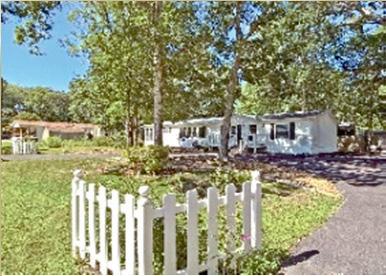
SHADY DELL -Ocean View. 1988 3BR/2BA home on 1/4acre lot. Low HOA. Screened porch. Shed w/RV 30amp. 3 miles to Bethany boardwalk! $380,000 (2095732)

REHOBOTH BAY -Rehoboth. Remodeled 1987 3BR/2BA. 1,440 sf. Gorgeous & private backyard. Pool. Marina. 6.5 miles to beach. $285,000 (2103152) Lot Rent $779/mt.




SEA AIR - Rehoboth. 1990 1BR/1BA mini-mobile w/LV, kit & laundry. Pool & just 3 miles to beach. $50,000 (2100802) Seasonal 4/15-11/15. Lot Rent $6,130

MARINERS COVE -Millsboro. 1997 2BR/2BA. 1,500sf with the family room addition. Rear deck. Shed. Pool & marina. $125,000 (2103848) Lot Rent $850/mt.


REHOBOTH BAY -Rehoboth. 2019 “like new” 3BR/2BA doublewide. Pool. Marina. Just 6.5 miles to beach. $189,900 (2090642) Lot Rent $960/mt.

A SPEN MEADOWSRehoboth. 1989 2BR/2BA. So many recent upgrades! 1,100sf. Wrap-around deck. Pool & 4 miles to beach. $129,000 (2104620) Lot Rent $1,196/mt.
Reflections
The Case for Dabbling
Ialways thought of myself as a dabbler. I’m someone who chose a profession—journalism—that allows me to learn about a slew of different subjects without studying or becoming an expert in any one of them. I mean, really, I could never see myself concentrating on just one topic for the rest of my life. I was more attracted to becoming a broad synthesizer instead of becoming a narrow specialist. The diversity, intellectual stimulation, curiosity, and varied human contact that I thought came along with being a dabbler was what I loved. Yet I somehow felt not as smart, as important, or as accomplished as others because I didn’t choose to dive deep into a subject for my life’s work.
To my surprise, a story about dab bling appeared in my email. I was amazed to read I was not a dabbler, at least not in my chosen career. I thought dabbling was what I was doing—learning about a myriad of topics but not com mitting to any of them. I loved picking a subject, learning about it, authoring a story, then moving on.
Dabbling, on the other hand, is to try something lightly or experimentally, often just for curiosity or enjoyment. It means engaging in something casual in a non-committed way and is usually without deep study, serious investment, or long-term dedication. I assumed dabbling was for people who didn’t want to work at or dig into something. Taking part in an activity in a superficial way seemed lazy. To my surprise, the art of dabbling has serious benefits.
Dabbling requires you to release perfectionism and invites many mental health benefits that come from simply trying. Taking a stab at painting even though I have no artistic talent is another activity I discovered from dabbling. Never having picked up a paint brush in my life, I said, “Why not?” when friends asked. Doing a ‘Paint-N-Sip’ without worrying about the outcome helped me be empathetic to others who were trying it for the first time too. Dabbling can create
BY PATTIE CINELLI
courts for the first time when I had absolutely no idea how the game was played or if I could do it. More importantly, my prowess didn’t matter. I had so much fun that I’m no longer a dabbler but transformed into a lover of the racquet sport.
Karen Walrond argues in her book, In Defense of Dabbling: The Brilliance of Being a Total Amateur that society pressures us to turn hobbies into side hustles. She, on the other hand, says to explore activities just because they “light you up.” She states letting go of excellence can lead to greater fulfillment. She notes how “intentional amateurism” builds resilience and self-compassion, and how community forms naturally around shared interests.

Dabbling requires you to release perfectionism and invites many mental health benefits that come from simply trying.
The only time dabbling becomes problematic is when it derives from avoidance. Constantly starting but never committing because of fear can happen, but when it’s chosen intentionally, dabbling is examination—not escape.
Psychologically, dabbling reflects a mindset of exploration rather than mastery. Those with varied knowledge (a bit of this and a bit of that) are valuable and, contrary to popular belief, often drive society forward more than specialists.
It turns out dabbling is a practice that can expand our self-compassion. When we mess up at something new it takes effort to be kind to ourselves instead of jumping to self-criticism. A few months ago, I volunteered to be an emcee at The Room at Cedar Grove. Never did it before and I thought, “If I don’t like it, I don’t have to do it again.” Despite my less-than-stellar performance, encouragement and support plus my “having no skin in the game” let me let go of most of my personal criticism and try again.
Stress is absent from an activity that has no outcome tied to it. When you don’t have to achieve anything, it’s much easier to accept messing up or not being perfect. Dabbling also helps you stay in the moment, concentrate, and embrace mindfulness.
While it’s easier to enjoy a new activity with someone else who is also a novice, I’ve dabbled often on my own. My curiosity got me out on the pickleball
Choosing journalism and writing is not dabbling. I learned it is actually the opposite. For years, I mistook breadth for shallowness and curiosity for a lack of commitment. I see now that writing never made me a dabbler. It made me disciplined in going deep and becoming skilled at intellectual agility. And dabbling, in its truest sense, isn’t laziness: it’s courage. It’s the willingness to begin to be imperfect and to light up at something new without needing to master it. What I once judged as scattered now feels expansive. I’m not a dabbler. I’m a learner and I’m finally proud of that. ▼
Pattie Cinelli is a writer who has gained new perspective on her chosen career and is looking for things in which to dabble. To comment: fitness44@aol.com.












Women’s+ FEST Turns 25
Bring on the Bling
A25th anniversary recognizes commitment, resiliency, and lasting spark.
For Women’s+ FEST, the 25th anniversary celebrates community, respect, and engagement for all those on the spectrum of the feminine spirit. It’s the silver anniversary, silver being a precious metal that stands the test of time, continuing to shine with warmth, light, and clarity.
During FEST weekend, April 9-12, you’ll see dazzling performances by nationally known entertainers, silver bedazzled outfits at the dances, and dazzlingly fun sports activities. And as you experience the exciting activities, pause to reflect on the many people— from the organizers of the first CAMP Rehoboth women’s conference to today’s many leaders and volunteers—who have continued to polish and refine Women’s+ FEST, while preserving its special sense of belonging and focus on the feminine spirit.
NOT JUST A WEEKEND AND NOT JUST CAMP REHOBOTH
This year, CAMP Rehoboth is stepping up to offer a full year of Women’s+ programming designed by and for women. (Stay tuned for upcoming events.) It’s not just a weekend anymore!
Women’s+ FEST has also grown to include many community partners—local organizations, businesses, and venues in and around Rehoboth Beach rising to support Women’s+ FEST. Choose from an array of partnership events (drag brunches, singles mixers, and more) throughout the weekend. Keep an eye on the CAMP Rehoboth website so you don’t miss out on the fun.
STAR-STUDDED ENTERTAINMENT
Two brilliant entertainers and a dazzling live auction promise a night to remember on Friday, April 10. The evening’s emcee is local treasure Fay Jacobs, who will talk a bit about the history of Women’s+ FEST and honor the 25th anniversary. Get your tickets early for this one.
YOLI MAYOR
It should tell you something that Yoli is coming to us after performing burlesque with the AirOtic Soirée, a combination acrobatics circus and cabaret show, currently in Dallas. She has also appeared on both America’s Got Talent and American Idol. In other words, as judge Simon Cowell said, she’s a “solid gold star.”
“Fusion is the best descriptor for me,” Yoli says, “because I have Cuban roots. Very deep Cuban roots the way I was raised, but then the music that I learned growing up was more soul R&B. So, I’ve ended up putting together both worlds to make the most appropriate

BY NANCY SAKADUSKI
music for me.” Although she’s never been to Rehoboth, Yoli is looking forward to it and says she feels most at home singing to a queer crowd.
Yoli performs barefoot, explaining that she needs to feel connected to the Earth, and the music does seem to bubble up through her like hot lava. Her voice expresses deep raw emotion that creates an honest connection with her audience.
Two brilliant entertainers and a dazzling live auction promise a night to remember on Friday, April 10.
And Yoli does more than just sing. She promises that anyone who comes to her show with some sort of fabric to dance with, will dance with it. “If anyone brings a scarf or a large skirt, we’re dancing. I don’t want any shyness because there is no fourth wall between me and them.”
According to Yoli, the FEST audience can expect “a lot of body, a lot of really hard-hitting lyrics, and personal moments. I’m not up there to feel like a superhero. I’m up there to connect; I’m up there to create a web between all of us. That’s my goal. Connectivity. Oneness.”
MINA HARTONG
Mina Hartong was just out of the closet, with a freshly minted theater degree from Smith College and a broken heart, visiting Amsterdam. One night, she wandered into an open mike venue and started telling stories about being a tourist. Soon, she began getting gigs. Although she had trained to be an actor or director, people kept telling her she was a comedian. Anyone who has seen Mina—on an Olivia cruise, on her comedy special, Miss Personality, or in live shows—will agree. She is one funny lady. And after going back to earn a master’s degree (from Harvard, no less) and getting 20 years of teaching experience (in
Pictured, L-R: Yoli Mayor, Mina Hartong.
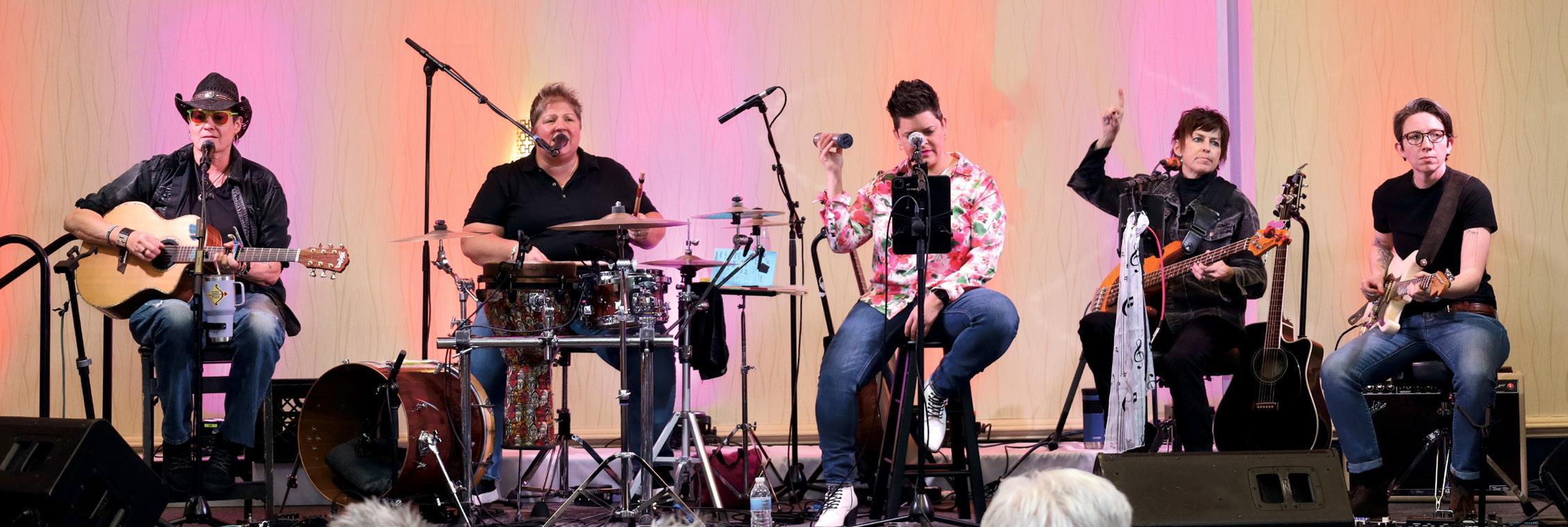
prisons as well as public schools) she is even funnier and has many more stories to mine.
One thing that makes Mina different is her ability to draw on her theater background. What audiences get is not just standup, but song parodies, characters, storytelling, and dance moves—what she describes as “theatrical comedy.” And the audiences love it. “Comedy is just something everybody wants and needs right now,” Mina explains. “I keep hearing that everywhere I go.” Mina particularly loves to interact with the crowd. “I love to break that fourth wall and interact.”
What can the FEST audience expect? “They can expect a really, really fabulous show,” Mina says. “You’re going to have a great time.” She adds, “and they can certainly expect some really fun dancing, because after the show, we’re all going to go dancing…. But please don’t rush the stage. I hear those Rehoboth girls are pretty wild, so anything can happen.”
Mina says she has a few surprises of her own, promising, among other things, sex tips from a public-school teacher. She’s particularly looking forward to
Women’s+ FEST, after having met so many fabulous Rehoboth women on Olivia cruises. “And this is such a special time—it’s the 25th anniversary.... I’m so excited.”
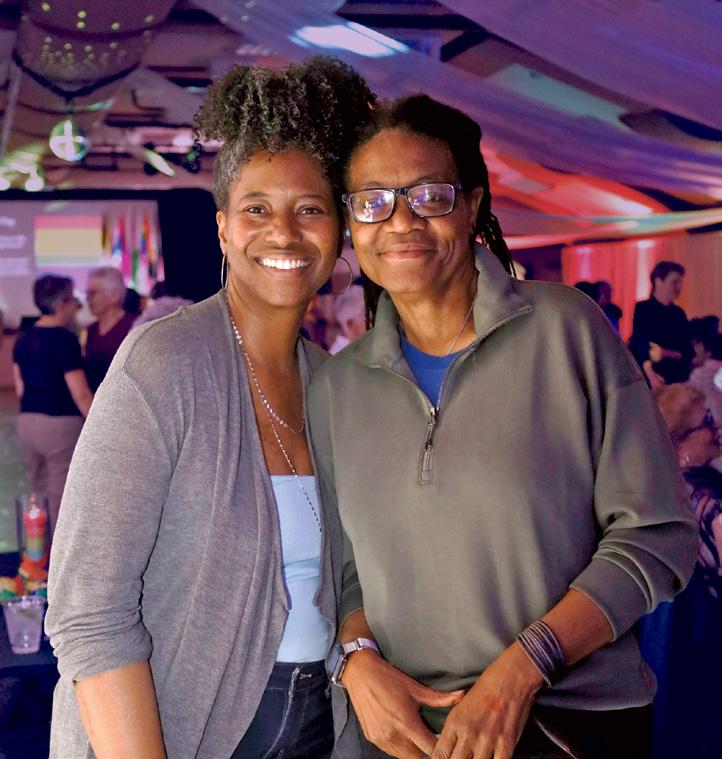
SILVER ANNIVERSARY PREMIER DANCE
Get ready for a sea of silver under the twinkling lights on Saturday, April 11. Music and dance have always been a
LIVE AUCTION ITEM—GET YOUR BIDS READY!

Among the fantabulous items offered will be a spectacular Olivia Cruise: a trip for two on the Bordeaux: From Vine to Table Riverboat Cruise August 18-25, 2026, in a deluxe stateroom (value: $13,598). Get the details and view the list of auction items on the CAMP Rehoboth website.
FEST highlight. DJ Peggy Castle will soundtrack a night of joy from the first track to the last dance. Don’t miss this sparkling night of music, movement, and community as we honor 25 years of women coming together. Dust off your sequins, satin, sparkle, and shine. Think bedazzled boots, shimmering shirts, and boatloads of bangles. Tiaras, anyone? Let’s bring the bling!
FEST FAREWELL SOCIAL
One of FEST’s most popular events is back and bigger than ever at the Rehoboth Beach Convention Center on Sunday, April 12. Come bid Women’s+ FEST 2026 adieu with friends old and new. See Women’s+ FEST veterans Mama’s Black Sheep, Colleen Clark, and Regina Sayles, and join in a rousing tribute to Christine Havrilla. ▼
For a current list of Women’s+ FEST activities and ticket availability, go to: give.camprehoboth.org/womensfest-2026.
CAMP Rehoboth’s Women’s+ FEST strives to create and maintain an inclusive and accessible environment that empowers all people, including people with disabilities. For any needs related to accessibility, please contact accessibility@camprehoboth.org.
The Women’s+ FEST 2025 Farewell Social, featuring performers, (L-R): Mama’s Black Sheep, Regina Sayles, Christine Havrilla, and Colleen Clark. Christine Havrilla will be honored at this year’s Farewell Social.








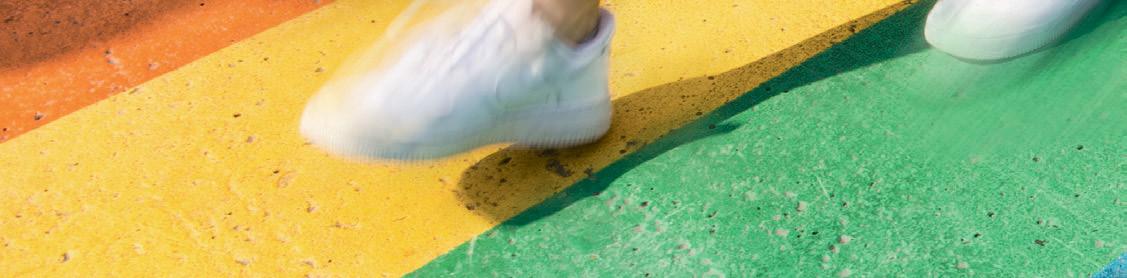



































CAMP REHOBOTH MEMBERSHIP
Join today to support our mission!
CAMP REHOBOTH RAINBOW MEMBERS RECEIVE:
• Advance access to ticket sales for CAMP Rehoboth events
• Invitations to member-only events and updates
• Recognition in Letters from CAMP Rehoboth (3 times per year)
• Rainbow Member window cling
• Weekly What’s Happening at CAMP Rehoboth email
INDIGO & PURPLE MEMBERS RECEIVE:
• All Rainbow Member benefits, plus: Private invitations to special events, including VIP receptions and donor appreciation events
FOUNDERS’ CIRCLE MEMBERS RECEIVE:
• Annual recognition in Letters from CAMP Rehoboth PAY ANNUALLY or MONTHLY
☐ PURPLE LEVEL ☐ $2400 annual or ☐ $200 monthly
☐ INDIGO LEVEL ☐ $1200 annual or ☐ $100 monthly
☐ BLUE LEVEL ☐ $900 annual or ☐ $75 monthly
☐ GREEN LEVEL ☐ $600 annual or ☐ $50 monthly
☐ YELLOW LEVEL ☐ $300 annual or ☐ $25 monthly
☐ ORANGE LEVEL ☐ $180 annual or ☐ $15 monthly
☐ RED BASIC ☐ $50 annual or ☐ Basic Dual/Family, $85 annual
☐ YOUNG ADULT (18-25 years old) ☐ $25 annual
VOLUNTEER spotlight
Meet Rochelle Parks!
SHAE WAGNER:
When did you start volunteering at CAMP Rehoboth?
ROCHELLE PARKS: I started volunteering at CAMP Rehoboth in 2022 when my best friend, Karen Laitman, asked me if I would help her with Women’s FEST. And I was very happy to Favorite season here at the beach and why?
My favorite season at the beach is fall or autumn, when the beaches and boardwalks are less crowded and the weather is cooler.
SW: Night owl or early riser and why?
RP: I’m neither actually. I love the night life in Rehoboth, but I also love to wake early and go for a good brisk walk!
1 CELL 1 EMAIL 2 CELL 2
☐ Enclosed is my check payable to CAMP Rehoboth for the full annual amount.
☐ Please charge my Recurring Monthly or Annual Membership fee to:
SW: Name a childhood mentor or someone who influenced you while growing up.
RP: My mother was my biggest mentor and greatest influence on my life. She taught me how important an education is and how important family values are and how having faith is the greatest gift of all blessings.
SW: What are you most thankful for?
RP: My faith in God and my two sons, Desmond and Isaiah, and my family and extended family.
SW: What advice would you give to a new CAMP Rehoboth volunteer?
RP: Be ready to have great times and even greater experiences with great people and an awesome community! ▼
ShaeWagner is Event and Volunteer Coordinator at CAMP Rehoboth.
Staying Sane
This has been one of the bleakest and most brutal winters I can remember, between the frigid temperatures and what’s going on in the world. It’s good for me to realize that spring is knocking, soon to invite us all to enjoy warmer temperatures, walks on the beach, and seeing each other again. I love watching the spring season subtly coming to life, first with longer daylight hours, and then suddenly, you find you don’t need to wear your heavy winter coat to go out to dinner anymore.
The signs of spring are also signs of hope for me, and hope helps keep me sane. Also, there are the things I’ve been actively doing to stay sane. First, taking care of our backyard birds—we really went all out during the worst of the ice storm last month to keep our backyard birds fed, chiseling a path around our back deck to ensure daily feeding could continue, and buying a heater for their water. Seeing the birds, especially the bluebirds and blue jays, woodpeckers, cardinals, juncos and so many others, brings out such a sense of joy at their beauty and their antics. Not to mention the squirrels and all they get up to.
She is so much fun and helps so much in my lifelong quest to not take myself so seriously.
I’ll continue to watch the birds because they help me remember that nature is bigger than me, bigger than humans. Nature will do what she does, regardless (mostly) of what we do. Watching the birds reminds me of the changing cycles of nature and that nothing stays the same, good or bad.
Physical activity has been hard to come by for me, with all the recent ice and freezing temperatures. But I have
rediscovered my drum kit. I’ve had side gigs as a drummer in bands for nearly 30 years but am currently sans band and have been for a while. And after an extended period of not playing, I found that I had become incredibly rusty. So I started playing more regularly, at least once a week. Thank heavens, I rediscovered most of my chops, although I can’t play like my 30- or even 40-year-old self. But I’m certainly better now than I was six months ago. In the meantime, drumming is great for my mental and physical health, keeping both in shape.
Perhaps the most credit for helping keep me sane is the delight in having my wife, who is now retired, at home. We nested like crazy during the ice storm, ready to make our home’s den—with its wonderful fireplace—the center of life. We forged a path through the ice to the wood pile, and stocked wood inside and outside. Those flames burned night and day at some points. We also have a pullout sofa in the room in case it ever becomes ground zero in a power outage.
In any case, I just love her being here, having her to talk to and see periodically throughout the day. She is so much fun and helps so much in my lifelong quest to not take myself so seriously. She has rediscovered her love of and talent for painting. She writes. She loves music. And, like I did when I first retired, she sleeps and naps frequently. A real retirement luxury.
Finally—when things seemed most bleak, I was able to garner hope and sanity from the venerable monks and their peace dog, Aloka, walking 2,300 miles from Texas to Washington, DC. I followed them almost daily on social media as they made their way from Georgia, when I first learned of their journey.
I’ve never been religious, though certainly spiritual, and I don’t feel drawn much to churches or temples (aside from admiring their beauty), or to any particular faith. But there was just something about those venerable monks. From cities to tiny towns they greeted hundreds,
BY BETH SHOCKLEY

thousands, of well-wishers. That lifted my heart. To see the monks exchanging flowers and attaching friendship bracelets brought me to tears.
And then there was their faithful peace dog, Aloka, who they first met when Aloka was a stray in India. Aloka, who has a heart shaped mark on his forehead, was lovingly cared for when he had a leg injury along the journey. He came through like a champ and they made it to DC on a not-so-frigid day last month.
I don’t know what, if any, permanent change came or will come as a result of the monks’ journey. But I do know it made a huge difference in my outlook and, from what I can tell, to that of millions of others who followed along.
Humor, joy, hope—those are the elements of resistance that are most powerful, and those we cannot afford to lose. But if we do, we can carry each other while we recharge our batteries. Those are the best ways I can think of to stay sane. ▼
Beth Shockley is a retired writer and editor, and shares life with her wife and kitty boys.
Photo credit: Aloka the Peace Dog/Instagram

OLIVIA IS THE PROUD PRESENTING SPONSOR OF WOMEN'S FEST April 9–12, 2026
Olivia is donating a trip for two on our 2026 BORDEAUX: FROM VINE TO TABLE RIVERBOAT CRUISE! AUGUST 18–25, 2026
Visit olivia.com to learn more about this exciting cruise.


Balkans on the Danube Riverboat Cruise | Apr 5–12, 2027 Cancún, Mexico Resort | May 8–15, 2027
Barcelona to Lisbon Luxury Cruise | Jun 8–16, 2027
Norwegian Fjords Luxury Cruise | Jul 12–19, 2027 A Taste of France Riverboat Cruise | Jun 29–Jul 6, 2027
Greek Isles with Lesbos Cruise | Oct 2–9, 2027
The Real Dirt
Notes From the Ground Up
Ninety-nine editions ago, The Real Dirt began as a modest column about gardening and land care. Over time, it became something else, to reflect how we belong to the land, to one another, and to the responsibilities that come with both. This is a synthesis of that spirit, shaped by years of watching seasons turn, landscapes change, and communities grow. What follows is rooted in one place but written for anyone who has ever put their hands in the soil and felt changed by it.
THE GROUND BENEATH US
The dirt is not glamorous. It clings under fingernails and stains our clothes. We spend much of our lives trying to keep it outside, scraped from shoes, and swept away. Yet it is the dirt that holds everything together. It is where decay becomes fertility, where roots create foundation, where life begins again after loss.
To write about dirt is to write about attention. It is to slow down enough to notice what is happening beneath the surface—to accept that most meaningful change occurs out of sight. Over years of tending land, the lessons become less about plants and more about patience, humility, and care. The ground teaches if we are willing to listen.
Once we understand how interconnected systems are—soil, water, insects, people—we can no longer pretend our choices are isolated.
LEARNING THE LAND
Every piece of land has a memory. Soil remembers what grew there, what was removed, what was buried. It remembers droughts and floods, compaction and neglect. When we step into a garden or
BY ERIC W. WAHL

landscape, we enter into that memory. Early attempts to “fix” the land often fail. Plants die. Water flows where it shouldn’t. What looks good on paper refuses to thrive in practice. Slowly, the lesson becomes clear: the land does not need domination; it needs understanding. Learning the land means observing before acting. It means respecting limits and working within them. The soil is not inert—it is alive, complex, and honest. It responds to care, but never to arrogance.
SEASONS OF WORK AND REST
Gardening binds us to the truth of seasons. There is no escaping winter’s pause or summer’s intensity. Each season brings its own demands and its own wisdom.
Fall teaches release. Leaves fall where they must, returning nutrients to the soil. Winter insists on rest, reminding us that productivity is not constant. Spring arrives with urgency and promise, while summer offers abundance that must be tended carefully to avoid exhaustion.
Over time, seasons stop being a calendar and become a rhythm for living. They remind us that rest is necessary,
that growth has limits, and that renewal is inevitable.
NATIVE GROUND
Native plants belong to their place in ways we are only beginning to understand. They feed the insects that feed the birds. Their roots hold soil, manage water, and sustain unseen networks beneath the ground.
Choosing native plants is an act of faith. It requires letting go of control and embracing landscapes that are wilder, messier, and more alive. Restoration is slow, often imperfect work. Invasive species resist removal. Expectations must be adjusted.
But native landscapes reward patience. They teach resilience through relationship, not force. In a time of ecological uncertainty, they offer a path forward that is grounded in respect for what already knows how to survive.
STEWARDSHIP AS PRACTICE
At some point, caring for land becomes an ethical commitment. Once we understand how interconnected systems are— soil, water, insects, people—we can no longer pretend our choices are isolated.
Located at the south end of the boardwalk in beautiful Rehoboth Beach
Full custom design center and repair service on premises, most can be completed while you’re here on vacation Exclusive home of the “Rehoboth Beach Bracelet” Official Pandora Dealer Large selection of: 14kt Gold, Rubies, Emeralds, Sapphires, and Tanzanites GIA Certified Diamonds in all sizes Watches including Movado, Raymond Weil, Seiko, Citizen, Pulsar, and Swiss Army
w www.harr y kjewelr y.com



The Hangry Games
Author’s Note: This column is about books and films from over a decade ago; spoilers abound.
Let’s face it, we’re all living through a moment. The news is a constant rollercoaster ride, and political headlines seem to have more personal implications than ever, not only affecting our pocketbooks, safety, and sense of belonging, but also on our relationships, particularly those that cross political differences.
I usually try to take a break by watching something fun when it all becomes too much. Last weekend, I was so desperate to escape current events, I decided to watch an entire series of movies I loved a decade ago. Reader, I binged all four Hunger Games movies, back-to-back.
Clearly, I didn’t think this through. For those who don’t know, The Hunger Games were a trilogy of books released in 2008, 2009, and 2010—the beginning of the Obama administration, when dystopia was interesting and fun, not prescient or eerie. They center on Katniss, a young girl taken from her home in District 12 (formerly Appalachia) and sent to the Capitol (somewhere in the Rockies) to enter an arena with 23 other young people, who will fight to the death until only one remains.
Fun, right? Believe it or not, it used to be. Of course, the premise of the Games (a tool used by the oppressive oligarchs to stoke fear and compliance among the poor) is awful, but the heroine is plucky and her circumstances so outlandish that once upon a time, it felt like escapism.
Now, the themes of family separation, authoritarianism, and propaganda hit a little closer to home. And yet, I watched all nine hours of the films (released in 2012, 2013, 2014, and 2015) over two days, and I was engrossed. Because stories don’t exist just to help us escape, but also to learn.
The first thing I learned was that what seems superficial can matter a whole lot. When I first read the books, and saw the
films, the emphasis on surface details, particularly the fashion industry, felt a little overdone. Kids were literally dying, but paragraphs were dedicated to the clothes people wore—and a major character of the first two books was the stylist assigned to Katniss to make her over for competition.
In all three books and all four movies, this a consistent theme—and this time, it seemed a little less silly and superficial. In the same way that we’re noticing the phenomenon of “Mar-a-Lago face” or, even more frightening, the dark overcoat worn by one-time ICE leader Greg Bovino (not to mention the masks worn by his underlings), these details carry messages, and messages have power.
…while maybe it doesn’t make sense to play by all the rules when your opponent obeys none of them, it’s also important not to allow yourself to become the thing you hate.
Another thing that played a little differently this time was the love triangle. Throughout the books, Katniss is torn between Gale, her best friend from District 12, and Peeta, the boy from her district chosen to fight in the Games with her. She and Gale have a long history. She and Peeta have a lot of shared traumas. A decade ago, I was always rooting for Gale—and I’m a little embarrassed to say that part of this might have been that Gale was played by Liam Hemsworth, with the impossibly good looks shared by that family.
This time, my allegiances were absolutely switched. Even though both Gale and Peeta ultimately fight to overthrow the oppressive regime, Gale becomes so obsessed with winning the fight that he sacrifices some of his humanity along the
BY ERIC C. PETERSON
way. It echoed in many ways how many who are set against the Trump administration now bristle when they hear Michelle Obama’s famous words, “When they go low, we go high.”
In the same vein, there was a great lesson in the form of President Coin, played by the great Julianne Moore. Coin is the leader of the resistance, who eventually emerges victorious in the final film. When she first appears, in the first scenes of the third film, there was every reason to like her. She was calm, precise, and clearly one of the good guys. Plus, who doesn’t like a woman leader taking down the bad guys in our current context?
But President Coin has a fatal flaw: for her, it’s all about winning, with no plan to repair what’s broken after victory is secured. In the end, she takes power and because the country has become so accustomed to authoritarianism, her ego overtakes her principles, and she is no better than what came before. It was a reminder that while maybe it doesn’t make sense to play by all the rules when your opponent obeys none of them, it’s also important not to allow yourself to become the thing you hate.
Here in 2026, it will be important for all of us to hold on to our better natures. Whether we know it or not, they’re already being tested.
So my sojourn into escapist fantasy didn’t go exactly as planned, but I’m still happy I took the trip. Next, I decided to escape for real, so I binged the Netflix docu-series Reality Check: Inside America’s Next Top Model, with subplots ranging from racism to sexual assault to leaders who are quite possibly malignant narcissists. The jokes write themselves, folks. ▼
Eric Peterson is a Diversity, Equity & Inclusion (DEI) practitioner, pop culture junkie, and sometime novelist. His debut novel (Loyalty, Love & Vermouth) is available at Broweseabout Books and online.




Stewardship is not about achieving an ideal landscape. It is about showing up repeatedly, making thoughtful decisions, and accepting responsibility for impact. Sometimes that means doing less. Sometimes it means repairing damage done long ago.
True stewardship is quiet and ongoing. It values long-term health over immediate results. It understands that care is not a one-time action, but a practice.
COMMUNITY ROOTED IN PLACE
Land shapes community, and community shapes land. Shared spaces carry shared meaning. At places we call home, the ground holds stories of welcome, courage, grief, and celebration. The landscape is not merely a backdrop—it is a participant.
Tending common ground teaches cooperation and accountability. It reveals who feels welcome and who does not. Gardens become places of
encounter, rest, and belonging. When land is cared for collectively, it becomes more than soil and plants. It becomes a promise: that this place matters, and so do the people who gather here.
CLIMATE, CHANGE, AND COMMITMENT
Writing about the land now means acknowledging loss. Seasons shift. Familiar plants struggle. Storms arrive with new force. There is grief in witnessing these changes, especially in places we love.
But there is also resolve. Climate awareness sharpens the meaning of small acts. Planting trees, rebuilding soil, restoring habitat—these are no longer symbolic gestures. They are necessary responses. Hope, in this context, is not denial. It is commitment. It is choosing care over despair, action over apathy, and relationship over extraction.

STAYING GROUNDED
The dirt asks us to stay—to keep paying attention even when outcomes are uncertain. It reminds us that transformation is slow, that decay feeds renewal, and that fostering care is never wasted.
This work is unfinished. There will always be weeds, mistakes, and lessons repeated. But there will also always be growth for those willing to cultivate it.
To keep our hands in the dirt is to remain grounded in what matters most: connection, responsibility, and the quiet, enduring power of tending the earth. ▼
Eric Wahl is a landscape architect at Pennoni, an artist, author, and longtime contributor to Letters from CAMP Rehoboth. His work explores the intersections of ecology, community, and belonging, rooted in the landscapes of coastal Delaware.

Vital Alzheimer’s research at University of Delaware
Making Memories
Community Transformation
Growing Community
Medical Achievement
Quiet Philanthropy
Rescuing History
Statewide Innovation
In 2025, the DCF’s Boerger Fund committed $13.1 million to the Center for Cognitive Aging Research to advance Alzheimer’s and dementia research at the University of Delaware. The funding supports a long-term study to understand the early warning signs of cognitive impairment and enables purchase of a state-of-the-art MRI scanner critical to advance knowledge of the disease.
Deep Inside Hollywood
Beam Me Up, Sulu No Longer Lost in Space
As Sulu on the original 1960s TV series Star Trek, George Takei, along with Black co-star Nichelle Nichols, broke ground in an almost entirely White TV casting landscape. Later in life when Takei came out as gay, his character was viewed through a new queer lens, adding more depth to the Star Trek commitment to a peacefully diverse vision of the future. Now, a documentary, Beam Me Up, Sulu, from filmmakers Timour Gregory and Sasha Schneider, explores the meaning of the show through newly discovered footage of the once-lost ’80s fan-made project that actually co-starred Takei. In this mix comes new participation from Takei, as well as interviews with Eugene Roddenberry (creator Gene Roddenberry’s son), Alexander Siddig (Star Trek: Deep Space Nine), Christina Chong (Star Trek: Strange New Worlds), Garrett Wang (Star Trek: Voyager) and Ian Alexander (Star Trek: Discovery). Queer devotion to the legendary Takei began in February when the film dropped on streaming platforms. ▼

BY ROMEO SAN VICENTE
Slo Pitch Scores Lesbian Softball Rivalry
Crave, the Canadian streaming service that gave the world Heated Rivalry, has a new series coming soon for queer sports fanatics. It’s called Slo Pitch and it’s exactly what the name implies: a comedy about a lesbian softball beer league and one chaotic, queer, underdog team, served mockumentary-style. Leading the ensemble are Schitt’s Creek alum Emily Hampshire and Frasier co-star Jess Salgueiro, with a little extra help from a very if-you-know-you-know participant: Ayami Sato, the first woman to play in a Canadian men’s pro baseball league. The 10-episode series is due to drop in Canada first, of course, but in the tradition of Crave’s other original series, Letterkenny, Shoresy, and of course the gay hockey show, it seems safe to assume that the US will get a home plate seat to the series soon enough. ▼
You Want More Francois Arnaud, You Get More Francois Arnaud
He was a working actor before Heated Rivalry, but Francois Arnaud—kisser of Kip The Barista, for those who haven’t memorized the show’s cast names yet—is about to be a lot more employed. His IMDb page shows several upcoming projects—including the wild comedy F***toys that’s currently shaking up the film festival circuit— but the most hockey-adjacent (because Canada, y’all) would be the forthcoming heist comedy, Keeper of the Cup. An on-again-off-again project from fellow Canadian Jason Priestley (Beverly Hills, 90210 ) that’s now on-again, it’s a road movie about superfans who decide to steal the Stanley Cup for their favorite losing team. The movie co-stars William Shatner (who knows a thing or two about extreme fandoms) and SNL pioneer Dan Aykroyd, but queer fans will want to see it for Arnaud when it finally sees the light of day. ▼
Oh, Mary! Coming to Your Town. Maybe
The “bratty curls” are coming. Tony Award-winner Cole Escola’s Broadway comedy sensation Oh, Mary! will embark on a US tour this fall, hitting all the usual major cities and maybe some unusual ones, too. And if you don’t pay attention to theater, it’s about Mary Todd Lincoln, which is where the commitment to real life history ends. In Escola’s vision, Mrs. Lincoln is a deranged alcoholic who wants to be famous in cabaret. Along with Escola, a host of stars have stepped into the role for its Broadway run, among them Jane Krakowski, Tituss Burgess, and Jinkx Monsoon. As for tour casting, right now it’s anyone’s guess, and may well be an opportunity for even more big names to sweat under the Mary wig. We’ll all find out together. Meanwhile, get your most obsessive ticket-scoring friends on their marks for the drop. They’ll go fast. ▼
Romeo San Vicente has toured the Eagle bar in every city.

Sounding Off
BY STEPHEN RASKAUSKAS
How Climate Change Is Impacting Delmarva
Delaware is sinking. That’s not an exaggeration.
That’s a direct quote from the US Environmental Protection Agency (EPA).
Flat and full of beaches and wetlands, the Delmarva Peninsula is beautiful. But water levels here are rising faster than almost anywhere else in the United States. According to the EPA, the region has experienced roughly one foot of relative sea level rise over the past century, which is nearly twice the global average.
The same beautiful landscapes that attract tourists and transplants are at risk of disappearing. And we’ve all experienced the dramatic effects of more frequent and damaging flooding in recent years.
Delmarva’s low elevation, soft soils, and proximity to the ocean, bays, and other natural waterways have always put the peninsula at risk for coastal flooding. But flooding is more frequent and more hazardous now than it used to be.
Perhaps you planned a relaxing family vacation, only to see that the beach has eroded for the entirety of your stay. Maybe you’ve needed to get to work, but find that the Coastal Highway has been washed out. Or you’ve just built your dream home by the bay, but your property is underwater every time it rains.
By the end of this century, some projections suggest water could rise between 1.3 and 5.2 feet. And that’s a lot of water for a place barely above sea level.
One of the main drivers of rising water levels is the amount of carbon dioxide we’ve been pumping into the atmosphere for centuries. In simple terms, more carbon dioxide in the atmosphere raises temperatures, causing global warming. A warmer planet means warmer oceans, and since water expands when it’s heated, ocean levels rise, too. Adding to the problem, icebergs are melting.
This is all a part of global climate change. And we need global solutions.
But locally on Delamarva, we’re only making things worse.
For decades, the “quiet shores” of Delaware, Maryland, and Virginia have been developing at a pace that doesn’t consider long-term effects on the environment. Roads, parking lots, and rooftops prevent rain from soaking properly into the soil. Instead, rainwater fills our natural waterways, causing flooding and carrying pollutants with it. This runoff contributes to algae blooms and water quality issues that can kill fish, shellfish, and other aquatic life.
On a peninsula defined by water, our choices are not abstract. If you love the land you live on, protect it.
The US Fish and Wildlife Service reports that we’re also losing wetlands, one of the defining natural features of Delmarva, due to human development and rising tides. In some areas, saltwater flooding is also killing off trees, creating spooky “ghost forests.”
Have you noticed more deer grazing at the edge of subdivisions, or foxes slipping through parking lots at dusk? As wetlands erode and coastal forests die back, the buffers between wild space and human space starts to erode—literally. These animals aren’t invading our spaces, they’re searching for new places to live due to loss of other habitats.
And marshes and forests aren’t just important for wildlife, they also help protect shorelines and act as buffers during storms. Human-caused climate change creates a cycle in which rising seas and stronger storms ruin natural defenses. Each successive storm is more harmful than the last.
While we can’t reverse some damage that’s already been done, we can take some steps to start curbing our impact. Some Delmarvans have been exploring alternative energy projects, aiming to
reduce emissions and generate “clean” power. More solar panels, for example, are popping up on rooftops and old farmland.
Wind power is another viable alternative to generate energy more cleanly. Companies like US Wind are planning large-scale turbines off the coast of Maryland to power hundreds of thousands of homes every year. Some locals say offshore wind farms can do more damage than they’re worth.
One criticism is that wind turbines will destroy views of the ocean and negatively impact tourism. But they’ll be located 10 miles away from shorelines, and barely visible on a clear day.
Some detractors claim that wind turbines will put ocean life at risk, particularly large fish and marine mammals. You’ve likely seen stories on social media about dead whales washing ashore, with claims they had fatal accidents with wind turbines.
The National Oceanic and Atmospheric Administration (NOAA), however, reports, “There is no scientific evidence... no known links between large whale deaths and ongoing offshore wind activities.” NOAA has reported, however, that global warming means whales are swimming closer to shore in search of food, in waters full of fishing vessels, which is likely the cause of these fatalities. In other words, the idea that wind farms kill whales is fake news.
On a peninsula defined by water, our choices are not abstract. If you love the land you live on, protect it. Think about the choices you have every day, and how you can make better ones to protect the peninsula and the planet.
Environmental stewardship isn’t just important for future generations. We’re already feeling the consequences of poorly informed actions. ▼
Stephen Raskauskas is a Sussex County native who has produced content for radio, TV, digital, and print.


View Point
Courage is Contagious
We Cannot Normalize Hate
Iam in bed before dawn playing solitaire on my phone when I hear a helicopter overhead. I wonder if it’s ICE agents coming to rappel onto my roof so they can knock my door in and drag me off to El Salvador. Granted, that seems farfetched, but so is the recent history of this country.
Cardinal Richelieu said, “If you give me six lines written by the hand of the most honest of men, I will find something in them which will hang him.” Thus we who speak up stand figuratively on the gallows. I am ornery enough that I don’t let this bother me.
At the same time, I am mindful of what a man sitting next to me with his cappuccino at the bakery said about the current madness: “It hasn’t affected me yet.” It is a failure of the imagination that for many people the problem has not hit home in a way that cannot be solved by turning off the TV.
Speaking of which, at a televised hearing on Capitol Hill on February 11, Attorney General Pam Bondi showed she has reduced her job to that of a mobster’s lawyer. She was as nasty as could be. She paid no respect to the constitutional oversight role of Congress. She refused even to turn and look at the 11 survivors of Jeffrey Epstein’s child sex trafficking seated behind her.
Rep. Jasmine Crockett told the survivors, “Thank you for having more courage and moral clarity in your pinky fingers than the entire Department of Justice.”
As Bondi paged through her book of insults, Rep. Becca Balint said, “This is not a game, Secretary.” Bondi replied, “I’m Attorney General.” Balint said, “My apologies. I couldn’t tell.”
Bondi’s attacks and unresponsiveness were useful in displaying her utter soullessness and contempt for the law. That will not help Trump with the supporters he betrayed on the issue with his cover-up.
Trump is attacking on multiple fronts at once. He named white supremacist Jeremy Carl to a State Department post. Carl claims that “White erasure” is weakening this country. Why do people complain about being called Nazis when they won’t stop behaving like Nazis?
We can resolve to be hopeful and say we’ll get through this challenging time together.
Trump has declared his intent to impose stringent voter identification requirements in the name of combating what he claims without evidence is massive voter fraud, “whether Congress approves it or not.” Voting is a fundamental right. The president has no right to infringe on it. The cost of complying with his expected executive order amounts to a poll tax. He is doing this to suppress voters who do not support him.
Amid his mad rampage, it is important to recognize that he is no less a threat because he does it so crudely as to appear comical. He is but the latest in a long line of malignant clowns.
Speaking of clowns, Republican congressman Andy Ogles accused Bad Bunny’s Super Bowl halftime show of broadcasting “gay pornography.”
Why do so many homophobic politicians appear to need a cold shower at the slightest manifestation of gayness? This is fake straight fragility to go along with fake white fragility.
Trump said no one understood a word of the halftime show. That is how casually he tries to erase 59 million Spanish speakers.
Florida Senator Rick Scott called for American Olympic athletes who
BY RICHARD J. ROSENDALL
criticized Trump to be stripped of their uniforms. First, they have as much right to express their views as he. Second, they could hardly bring greater discredit upon America than Trump himself has done.
There are many constructive ways of responding to the fascist surge: be sure to vote, of course, but also participate in public demonstrations; support legal groups fighting Trump and his cohorts in court; support advocacy groups or podcasters you like; donate to political candidates; and raise your voice online and in your community. You can plaster protest signs on light poles. You can organize fundraisers.
One crucial thing we can do is not succumb to Trump’s gaslighting. Despite our legitimate concerns, we can decide not to declare that we’re all doomed. We can resolve to be hopeful and say we’ll get through this challenging time together. This is the opposite of the angry mob Trump incited at the US Capitol on January 6, 2021.
We are in the midst of a battle for our country. We need to celebrate small victories, ignore the trolls, remember who we are and our obligations to those we love, and refuse to accept the normalization of hate. ▼
Richard Rosendall is a writer and activist who can be reached at rrosendall@me.com.

CAMPshots
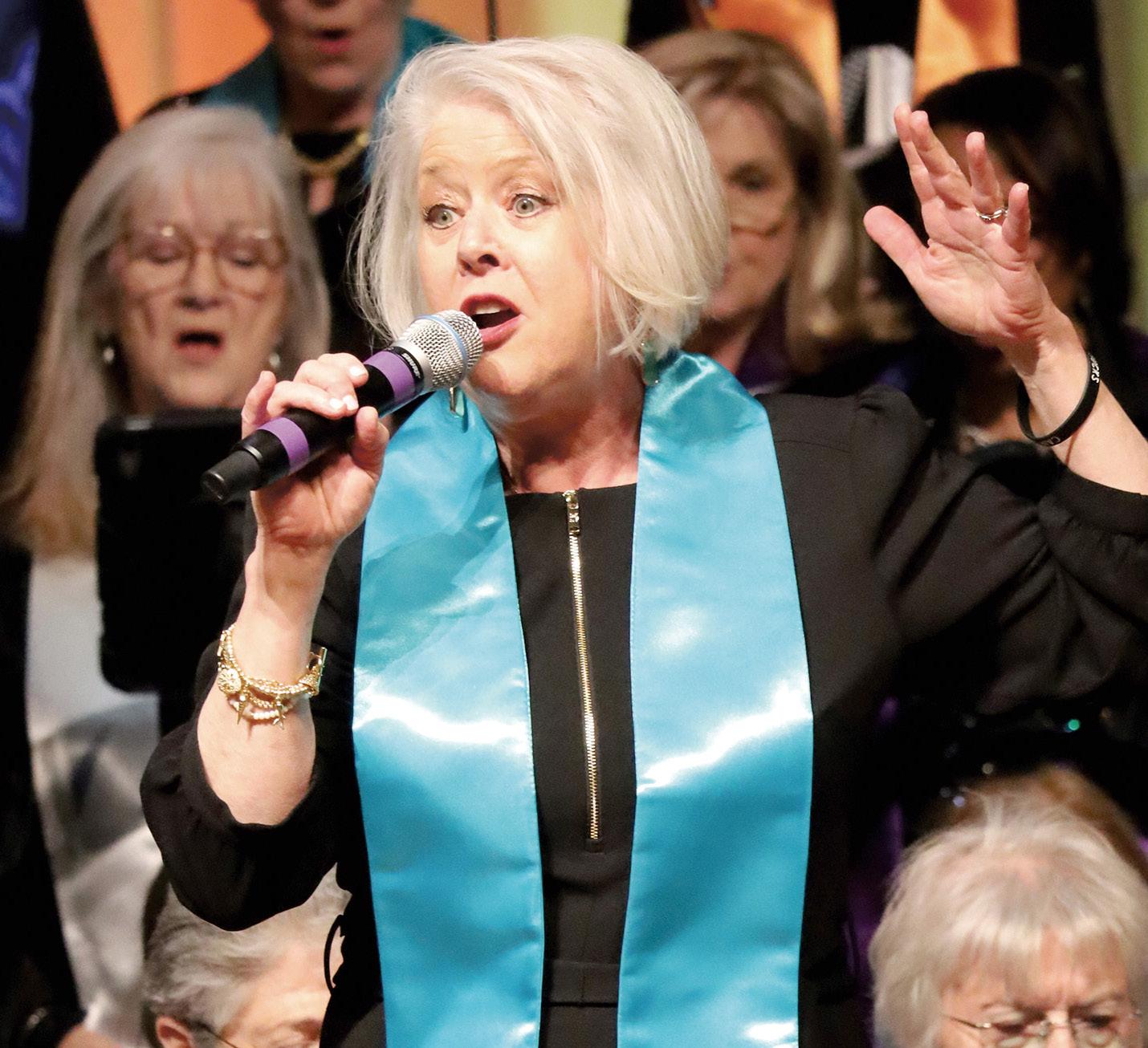
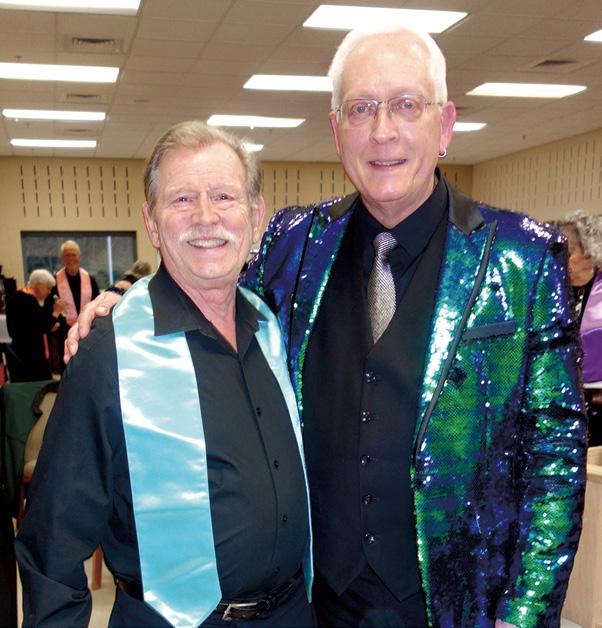
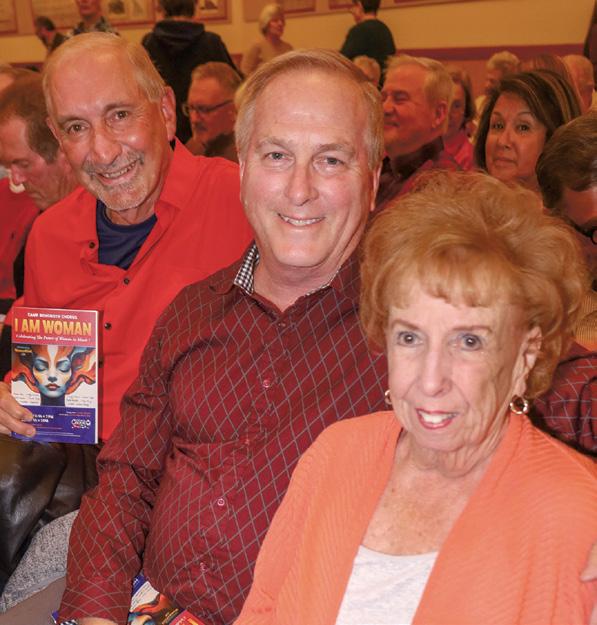
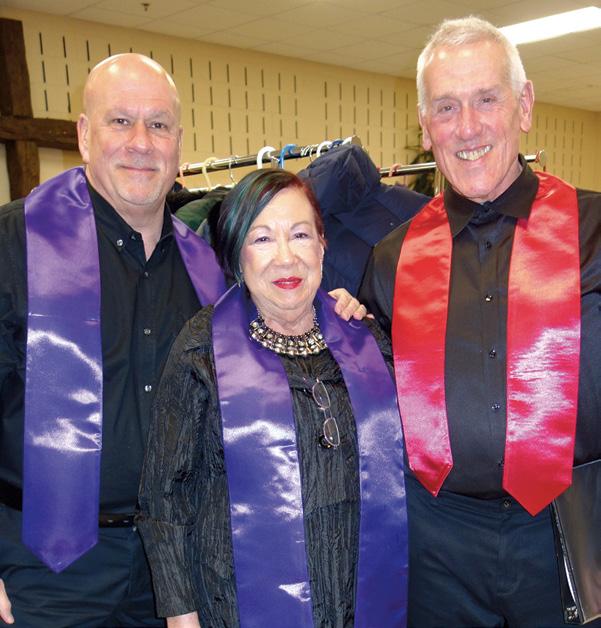
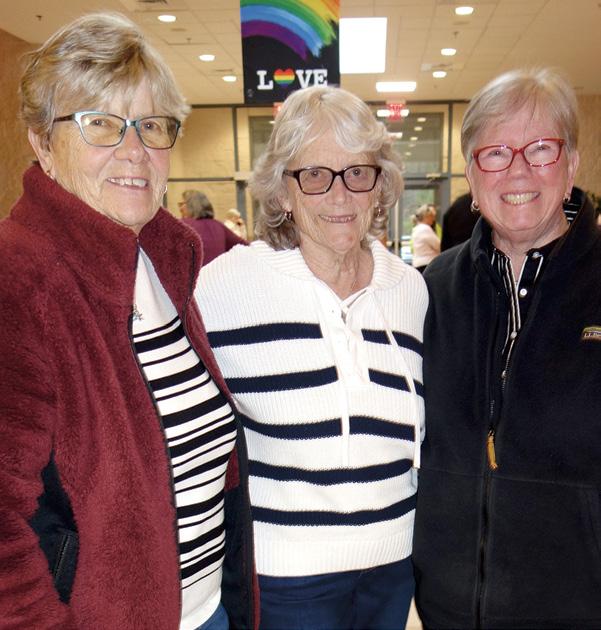
SCENES FROM REHOBOTH BEACH
Cold Hands, Warm Hearts, Hot Nights!
CAMP Rehoboth Winter Concert, Lewes Rainbow Social Club, and More!
THIS PAGE (left to right) 1 ) at CAMP Rehoboth Chorus Concert at Epworth: Tracey Seabolt, David Scuccimarra, Doug Yetter, Joe Vescio, Patricia Stiles, David Streit, Jon Day, Kathy Beiderman, Loretta Maham, Bryan Warner, Mike Nonemaker, Joyce Pool, Lee Lambert, Jill Brady, Kathy Davison, Bill Quinn, Brett Svensson, Lewis Renoll.
OPPOSITE PAGE 2) at CAMP Rehoboth Chorus Concert at Epworth: Barb Ralph, Dottie Cirelli, Gwen Osborne, Vicki Gordy-Stith, Michael Beigay, Jim Villareale; 3) at Coastal Concerts at CAMP Rehoboth: Lisa Evans, Dan Bruner, Leslie Ledogar, Carol Dennis, Rachel Mavity, Kevin Pelland, George Munson, Allan Jurgess, Kris Aulenbach, Ken Currier, Sherri McGee, Mike Tyler; 4) at Peninsula Gallery: Steve Rogers, B.J. Clark, Rose Aquilino, John Aquilino; 5) When You Die Seminars at CAMP Rehoboth: Megan Sekscinski, Gregory Fuller Sr., Allison Emerson, Andrew Parsell, Amanda Gill, Jeanine O’Donnell, Laurie Thompson.
(More CAMPshots page 64)
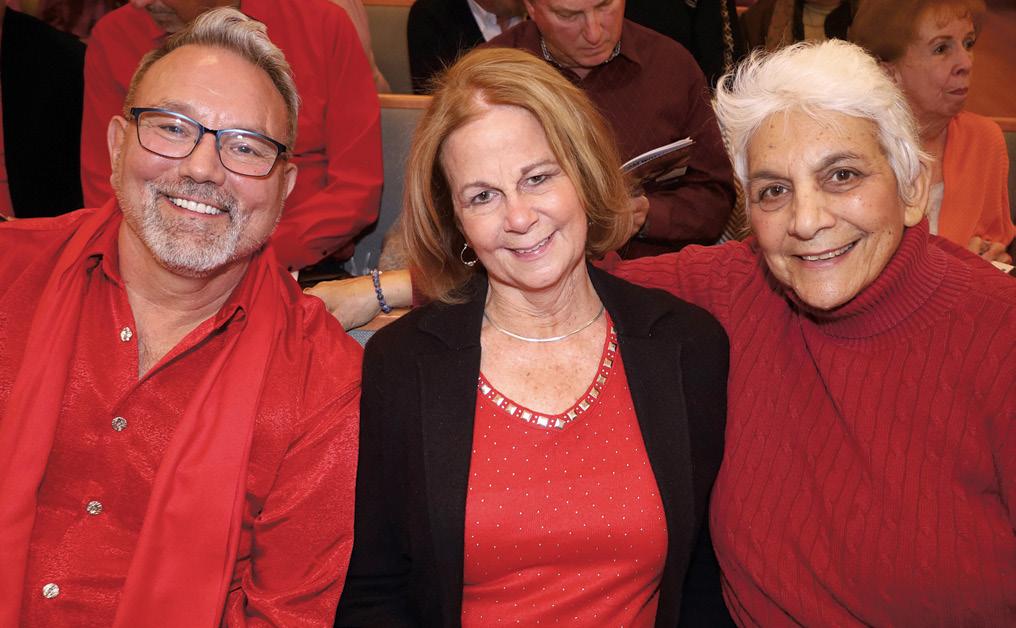

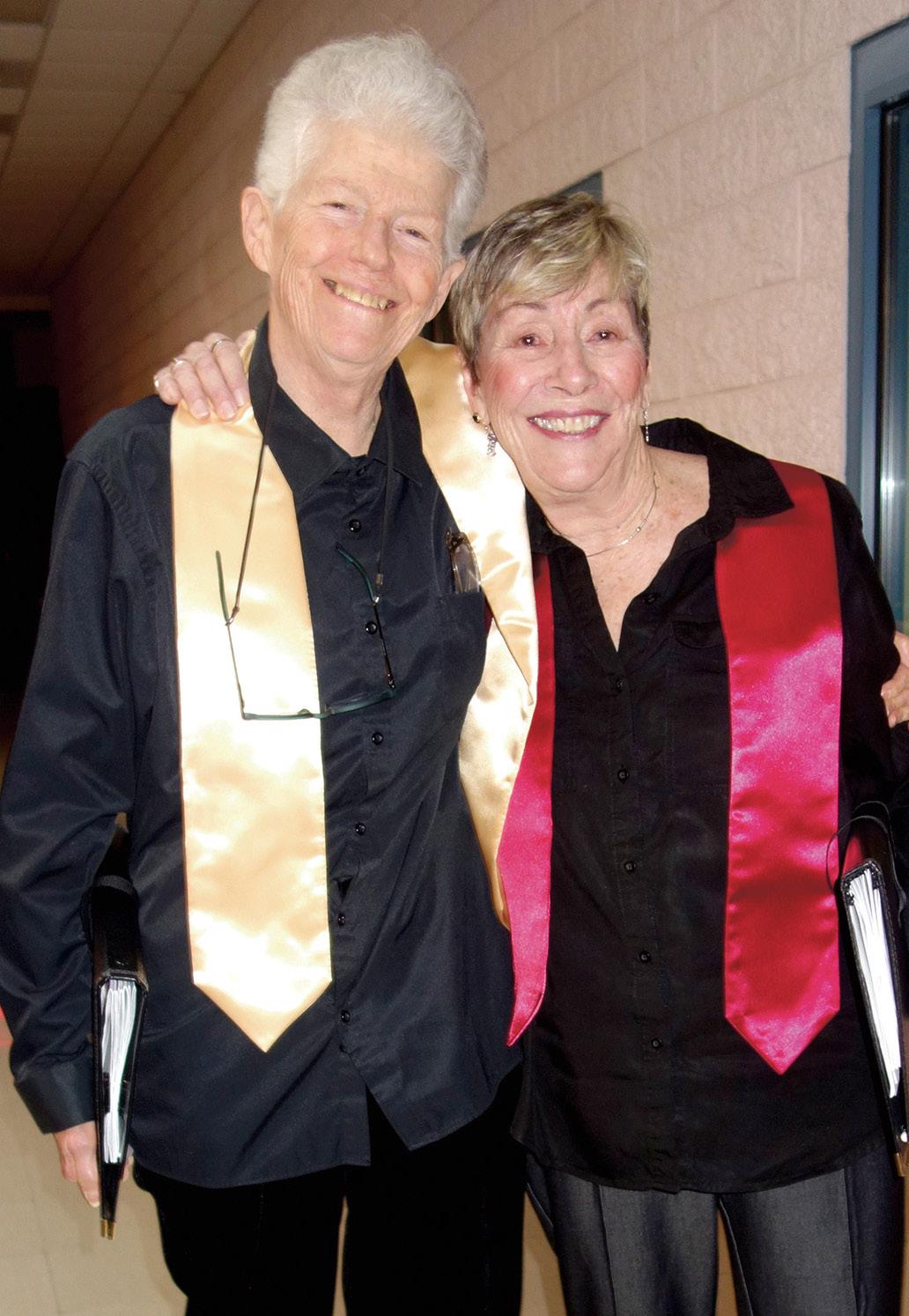
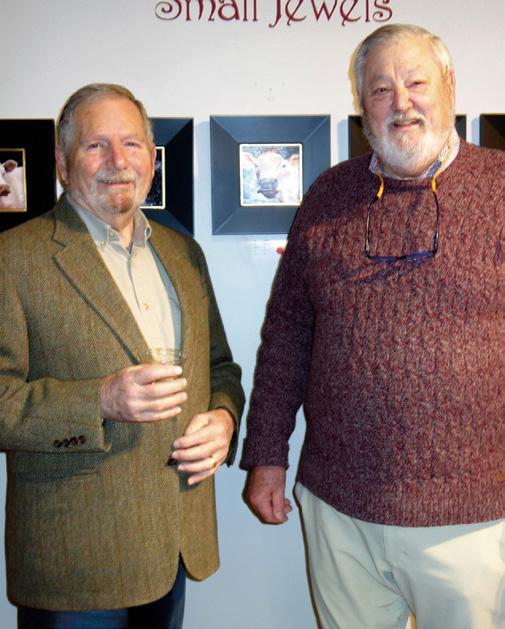
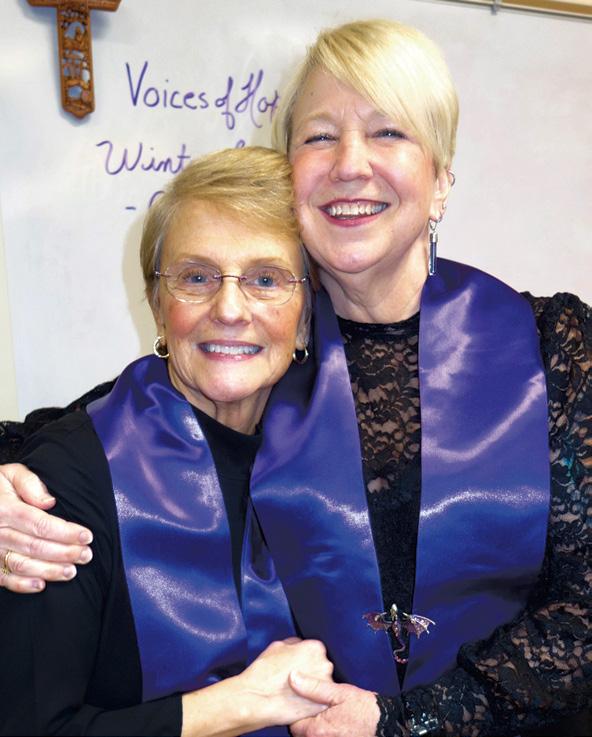
SCENES FROM REHOBOTH BEACH
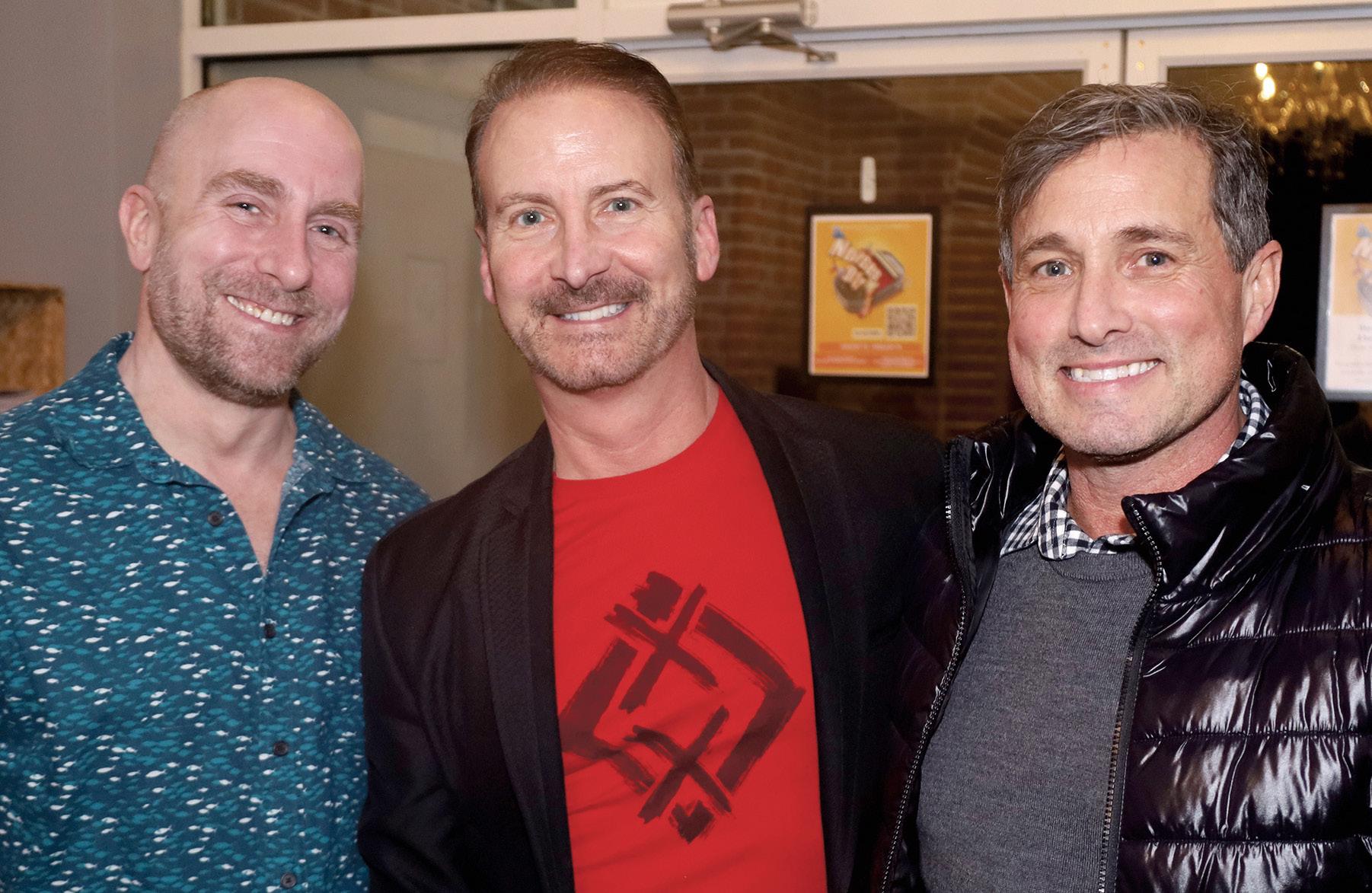
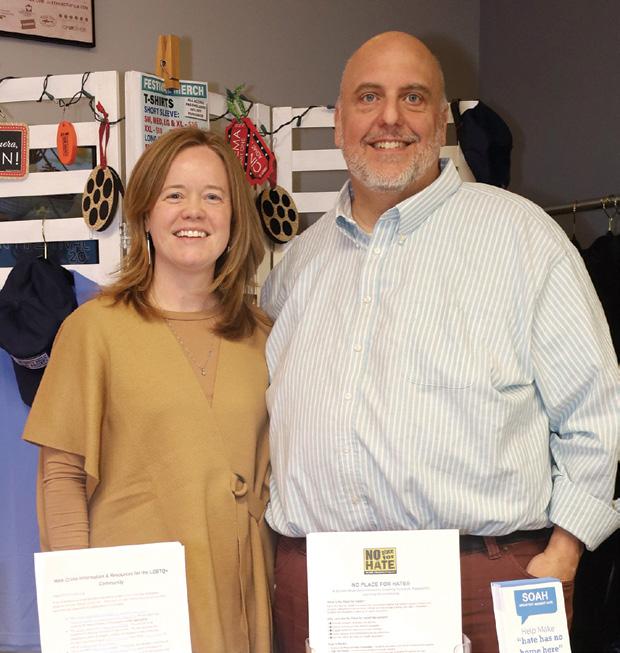
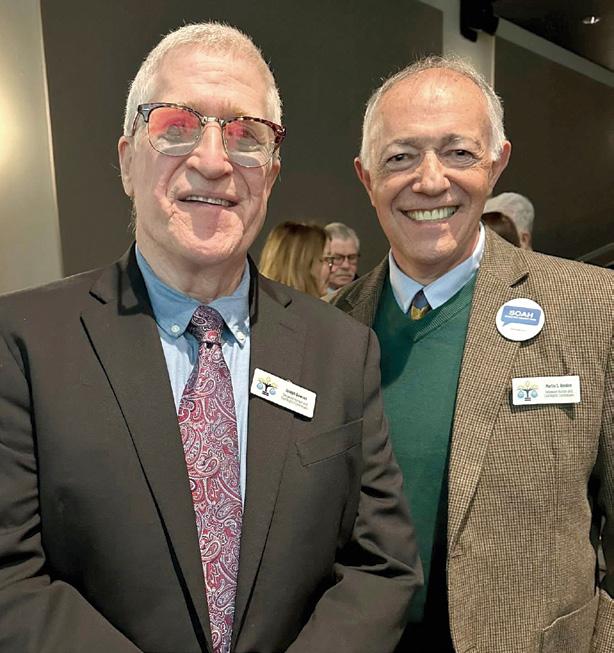
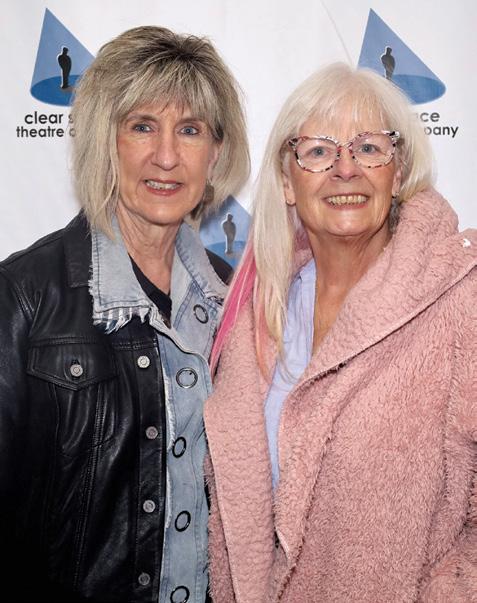

(Continued from page 63)
THIS PAGE (left to right) 1) at Clear Space Theatre: Peter Pizzolongo, Ashley Williams, Kim Whitmer, Cathy Herman, Linda Wolf, Matty Brown, Jeff Rowe, Ida Rowe, Pat Bartels, Bill Fuchs, Donald Garverick, Mark Lenard, Michael White, Mikki Snyder-Hall, Joe Gfaller, DE State Representative Claire Snyder-Hall; 2) at SOAH Film Festival: Lt. Governor Kyle Evans Gay, David Mariner, Josephy Dawson, Marty Rendon.
OPPOSITE PAGE: 3) at Lewes Rainbow Social Club Valentine’s Loveshack Social: Tim Finn, Brad Boswell, Sandy Maskell, Amelia Riley, Ann Maresca, Kevin Buhrman, Crystal Beckwith, Nancy Maresca, Marvin Garcia, Peter Garneau, Paul Seyfert, Bryan Hecksher, Ruth Kloetzli, Alex Petrino, Michael Yousko, Chad Stover; 4) at Rehoboth Art League: Denise Stripling, Kelly Nells, Sara Ganter, Allison Cosmos, John Schisler, Michele Foster-Lucas; 5) at Diegos: Pamala Stanley, Chuck McSweeney, Tony Burns, Michael Clay, Nancy Marlowe, Matty Allen.
(More CAMPshots page 80)
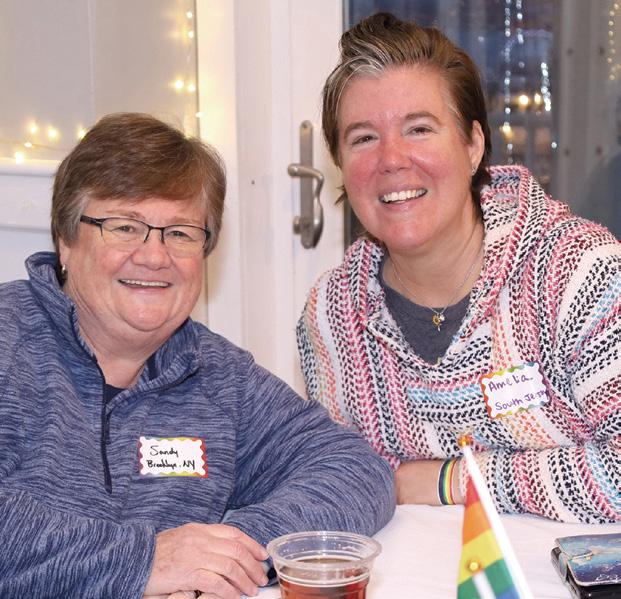
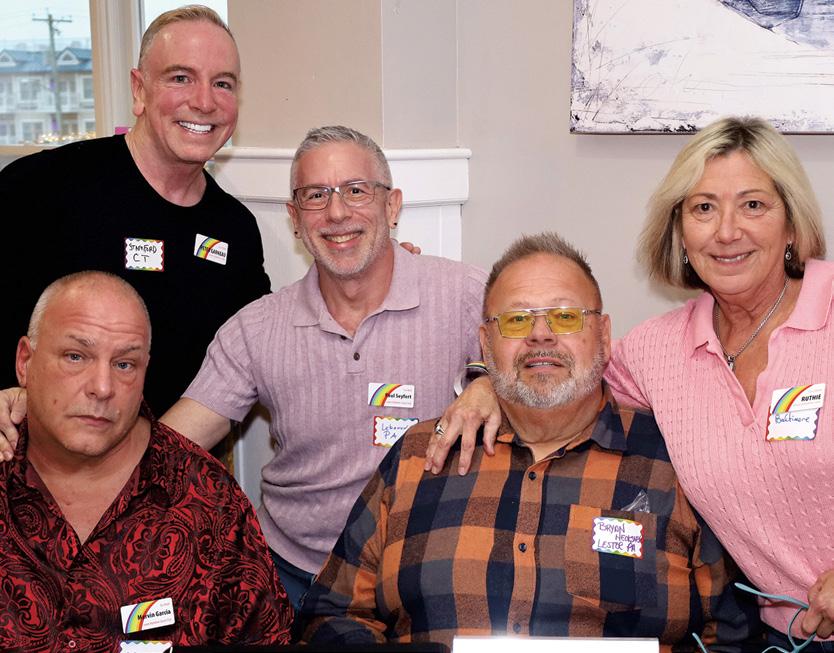
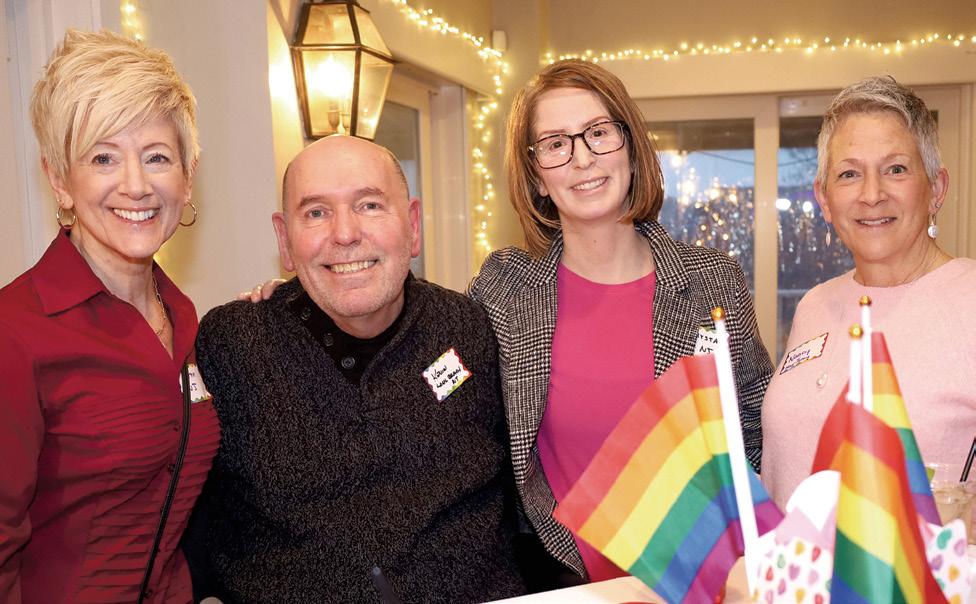
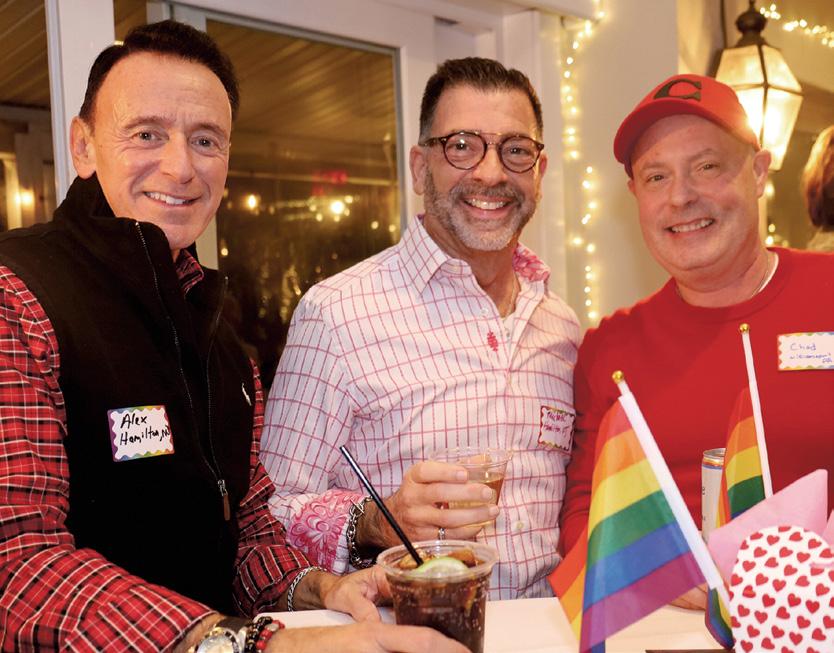

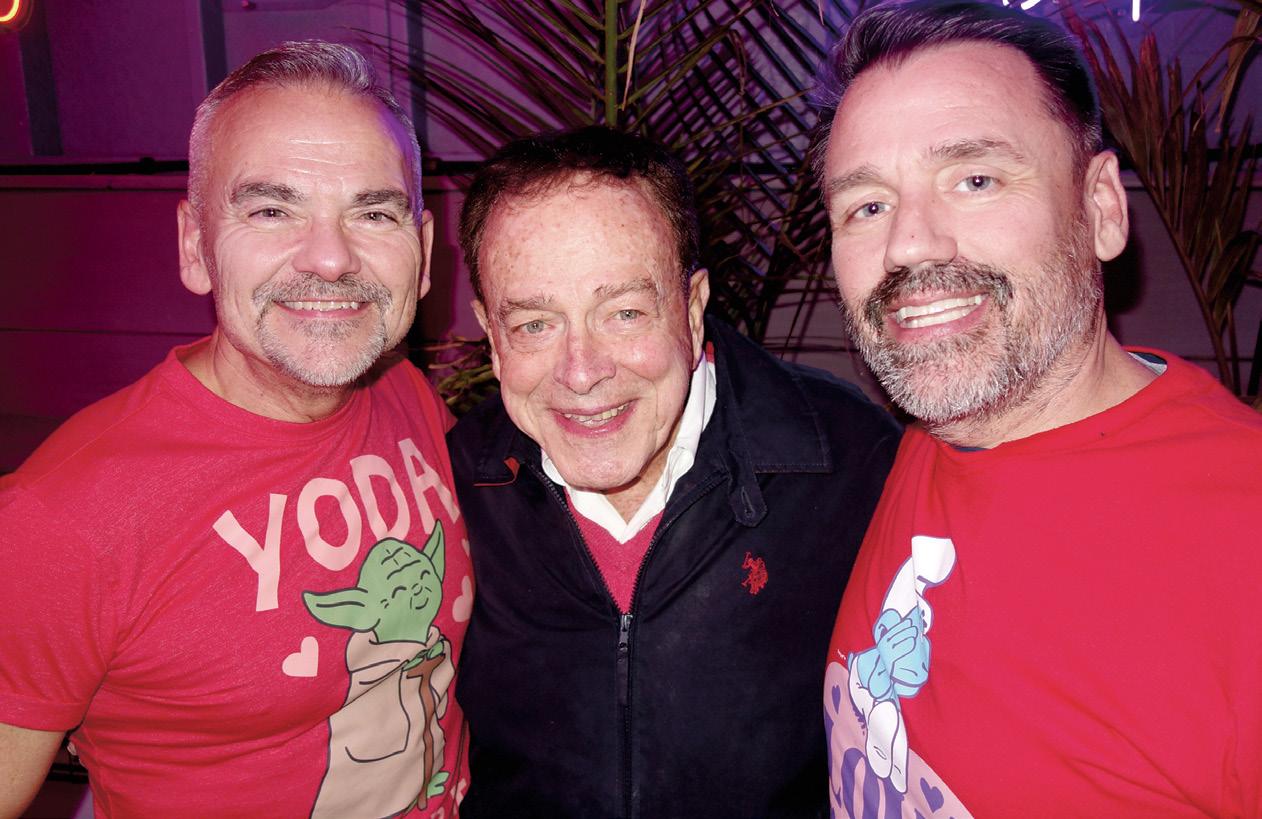
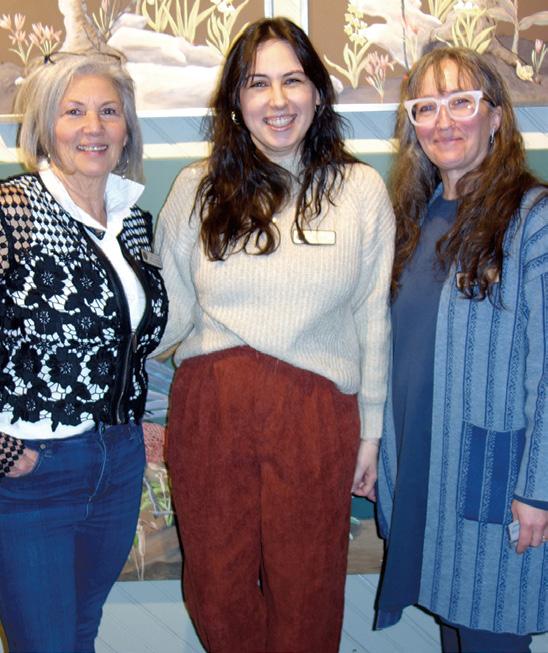
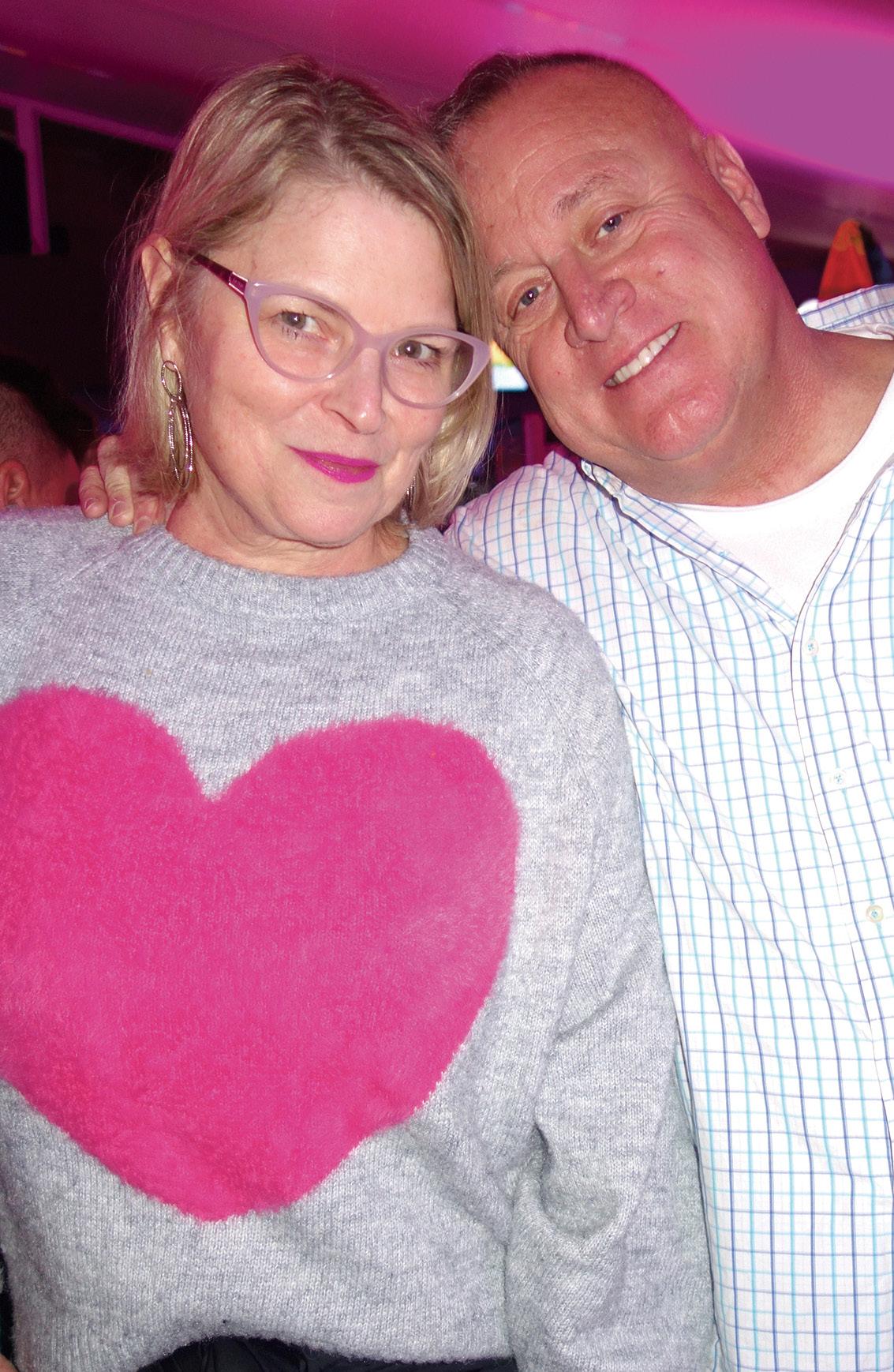
SPOTLIGHT ON THE arts
CAMP Rehoboth Puts Art at the Heart of Our Community

Happening in the Arts!
Thank you to everyone who came out to celebrate the opening of Best Shot!, and to all those who have stopped by to view this great exhibit. This wonderful photography collection was brought together by the Coastal Camera Club, a nonprofit organization based in Lewes, Delaware, that is dedicated to promoting the art and practice of photography. Celebrating its 25th anniversary in 2026, the club has grown from a small gathering of enthusiasts into a thriving community of more than 250 members.
Shout out to the exhibition artists for their incredible works! Exhibition artists include: Lyle Allan, Nancy Allen, Scott Becque, Carol Bell, Debbie Blair, Earl
Blake, Kathy Campos, William Cheadle, George Hessler, John Hoyt, George Hudson, Don James, Susan Jordan, Suzanne Kricker, Leslie Lesko, Deb Payette, Lorraine Quinn, Dennis Roberts, Bonnie Roll, Leslie Sinclair, and Douglas Strande.
Best Shot! will remain on display until Friday, April 3. Make sure you stop by to get a glimpse of these stunning photographs.▼
CAMP Rehoboth Gallery typically is open Monday-Friday, 10:00 a.m. to 4:00 p.m. You can call ahead to confirm: 302-227-5620.
FEST ART+ 2026
The CAMP Visual Arts Team has some exciting exhibitions planned as we head into the spring, including FEST ART+ 2026, a juried exhibition alongside Women’s+ FEST. Keep an eye out for more information as we get closer to Women’s+ FEST.

Pictured above (detail) from FEST Art+ 2025, DEI Saves Lives by Elissa Davis.
Image above (detail): Fall in Mount Cuba by Kathy Campos.
BY JOE GFALLER arts+entertainment
Coastal Stages Spring into Life This Month
By the time this article hits newsstands, I hope that the snow piles will at last have melted and that we’ll all begin to feel time marching forward towards spring. As brutal a winter as it’s been, the spring always breathes new life into our days—and into the stages across our region. There are a lot of great events coming up in the months ahead that I’m excited to get out and enjoy. From classical music to rock and pop and theater for all ages, there’s something for everyone playing across our region over the next month. I hope that a few of these upcoming spring events across the region pique your interest as well!
COASTAL CONCERTS
Coastal Concerts continues its 202526 Season at Bethel United Methodist Church in Lewes with an all-female brass quintet called Seraph Brass on March 28. Winners of the American Prize in Chamber music, the ensemble has toured recently to destinations as distant as Peru and South Korea. Their concert promises a fascinating blend of contemporary music from living composers alongside classics from Grieg, Verdi, and Liszt. This concert should be especially memorable for Coastal Concerts, as it will be one of the last concerts that Carol Dennis will helm as Executive Director before her retirement at the end of their season.
THE LISTENING BOOTH
In addition to offering classes and lessons for a wide range of musicians
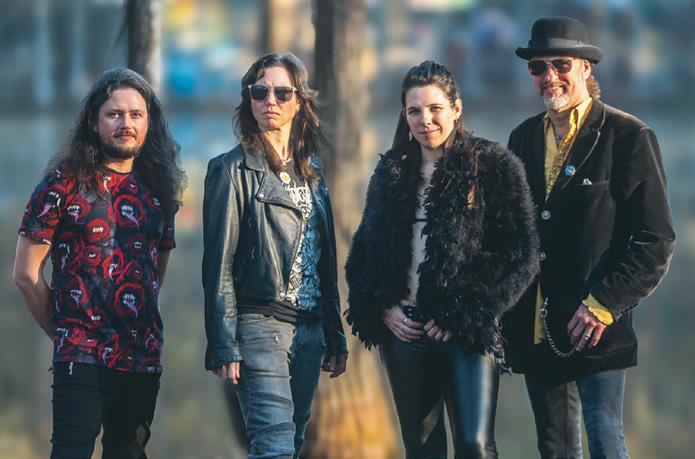
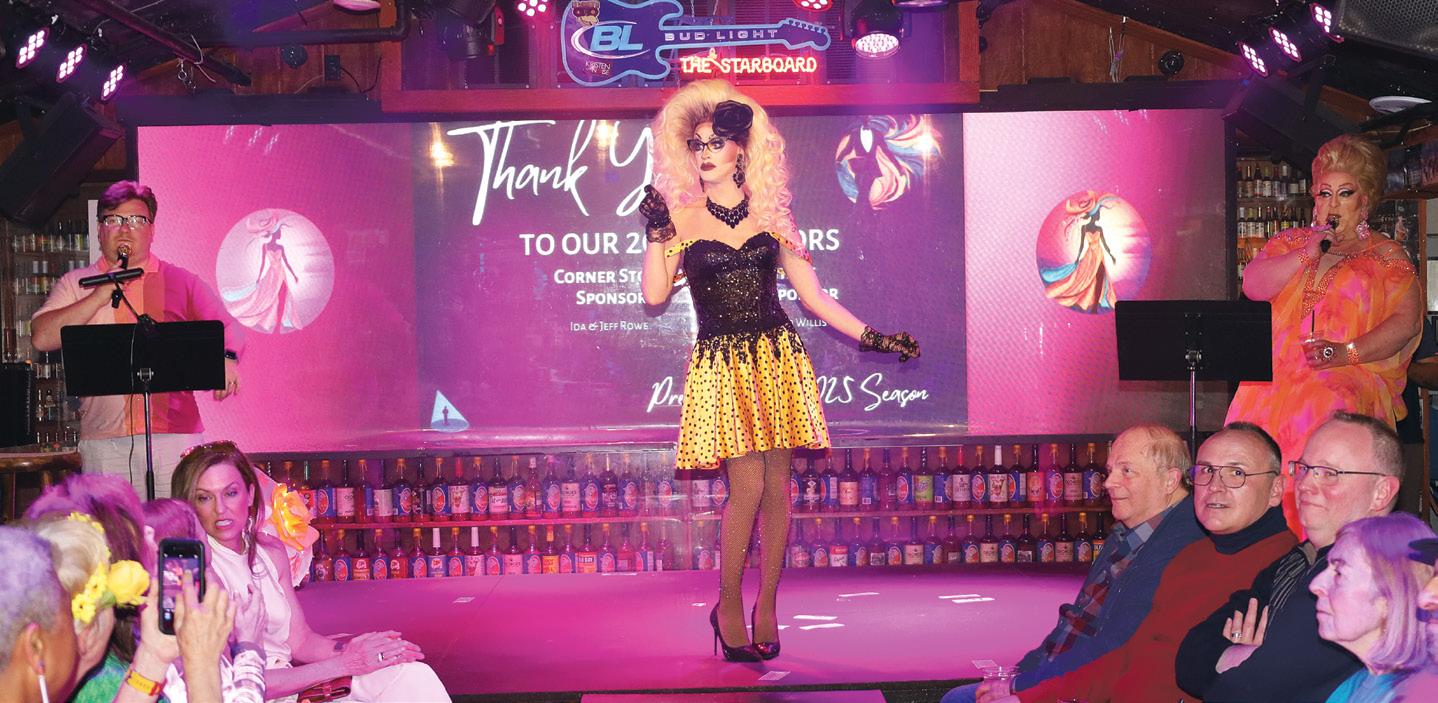
in our region, The Listening Booth welcomes to the stage an eclectic balance of indie, folk, and rock musicians and singer-songwriters. March 13, they welcome Erin Ash Sullivan and Emma Frances, known for their engaging narrative folk style. Lower Case Blues with Joey Fulkerson and Alicia Maxwell takes the stage March 22 for a blues jam session that’s sure to be memorable. The folk rock stylings of Ain’t Sisters appear on April 12, with music that is reminiscent of both Pink Floyd and the Indigo Girls, fronted by the androgynous duo Arrie Bozeman and Barb Carbon.
POSSUM POINT PLAYERS
This March, Possum Point brings to the stage Ripcord, a recent play by popular (and Pulitzer Prize-winning!) gay playwright David Lindsay-Abaire (Kimberly Akimbo, Rabbit Hole). An ever-escalating war of wits between two retired women who are forced to share a room together at an assisted living facility, Ripcord celebrates vibrancy at every and any age. Directed by Andrew Peters, who staged Possum Point’s recent production of God of Carnage, it is definitely worth a visit to Georgetown to see it live.
CLEAR SPACE THEATRE COMPANY
For most of this month (March 6-29), 42nd Street’s dancing feet tap their
way through one of the 1930’s most delightful scores. Near the end of the month (March 25) brings the company’s wildest annual fundraiser, “Outfit the Ensemble,” a runway walk and auction to support Clear Space’s annual costume expenses. In honor of this summer’s production of Mean Girls, the event is themed “On Wednesdays We Wear Pink.” Then, for one weekend in April, the young people in the Clear Space Arts Institute bring to life the sweeping musical Anastasia, invoking the glamor and the mystery of St. Petersburg and Paris in the earliest decades of the 20th century.
MILTON THEATRE
At Milton Theatre, as the month begins, another great dance show, A Chorus Line, wraps up its run on March 8.
Throughout March and early April, Milton’s popular cover band shows bring in tributes of everyone from Janis Joplin (March 25) and Freddie Mercury (April 4) to Carole King (March 21) and Foreigner (March 15). Magnolia Applebottom returns to the stage to host a Studio 54 Disco Divas Drag Show on March 27.
Information on these shows and more can be found on these organizations’ websites. Visit them to learn more and book your tickets! ▼
Ain’t Sisters delivers high-energy performances of their original music at The LIstening Booth.
Magnolia Applebottom prepares to walk the runway at Clear Space Theatre Company’s 2025 Outfit the Ensemble at the Starboard.
BY MARY JO TARALLO
CAMP REHOBOTH ARTIST PROFILE ⊲ Scott Beadle
One might describe the monthly Sunday Drag Brunch at Goolee’s Grill as “Everything, Everywhere, All at Once.” Drag performers kick up their heels in the restaurant’s aisles to music blasting from the sound system. They graciously collect dollar bills from adoring customers. Waiters and waitresses scurry and weave in between tightly packed tables serving up pancakes, eggs, Bloody Marys, and mimosas. The atmosphere is at a minimum joyous and sometimes a bit raucous, but it is all in good fun and the perfect antidote to the craziness of the world. You also could call it “The Great Escape”! Shows feature themes and the January show opened with showstopper “I Am What I Am” from La Cage aux Folles for a good reason.
Meet Scott Beadle, performer and MC extraordinaire who organizes the drag shows and seems to know everyone in Rehoboth. He and his troupe have quite a following, many of whom are devoted repeat customers, and it is evident that performing drag is part of his DNA. He spent the better part of his career in human resources in Maryland (he’s now retired), although his Virginia Tech undergraduate degree was in theater arts. He earned a master’s degree in human resource development from Towson University.
In 1983 Scott moved to Frederick, Maryland from Northern Virginia to live with his then partner and to take advantage of a job opportunity. After he and his partner separated, Scott realized that “all of my friends were actually our friends.”
On a whim, he decided to create the character/persona of Regina Cox (Regina is Latin for Queen). He entered a local pageant, called Queen of Hearts, in 1985. “It was really my first time performing in drag, even though I had that degree in theater arts,” he confided. “That night I was crowned the winner and now we were off to the races. Back then, there was no RuPaul or YouTube, so I had no context. Even though I did not have a mentor per se, I was inspired
and taught by two individuals in particular—Beulah LaMont and Maria McCambridge. I learned how to do make-up, hair, costume design, etc.”
His alter ego can easily switch from a frumpy-looking waitress to a dazzling impersonation of Albin Mougeotte (La Cage) all under the guise of Regina Cox. “I get to create this amazing character, Regina,” he explained. “The creativity is the thrill. Having the right song, the right costume, hair, jewelry….”
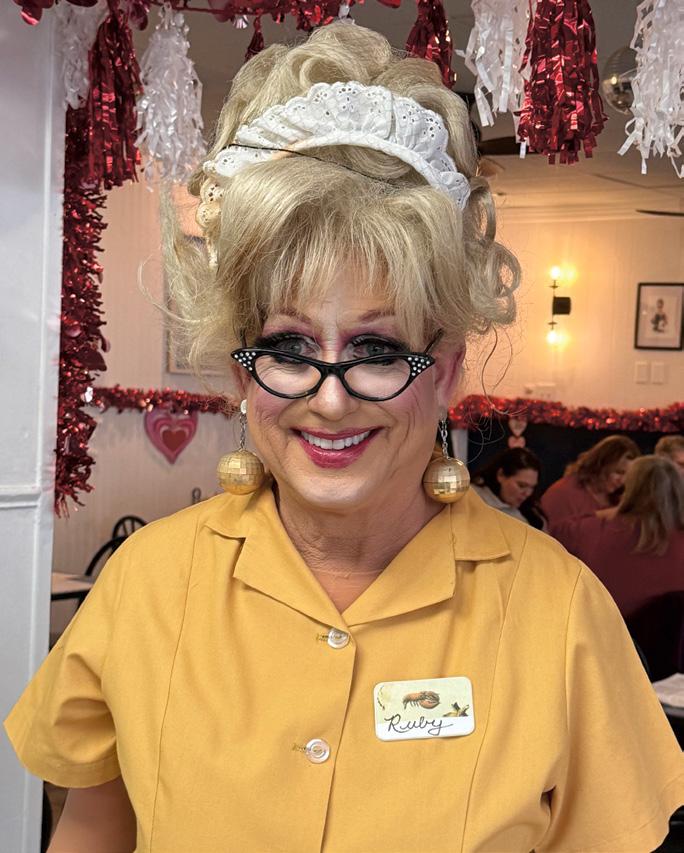
Scott is an avid theater fan and supporter. It all started with “a very small part” in a high school production. “I always wanted to be a teacher and that lends itself to ‘being on-stage’ every day,” he said. “My career as a classroom facilitator for management/leadership development fulfilled that need.”
His passion for the theater is contagious. “It transports you to places and times you have never been and see people that maybe you have never seen,” he said. He and his husband seek out shows when they travel and Scott marvels at the amount of live local theater in Sussex County.
“I encourage everyone to please support the arts. There is something for everyone.” On one January Sunday, several of his fellow performers from Possum Point Players were in attendance at Drag Brunch, including two who performed. They all were part of the
Possum Point Players’ recent production of La Cage aux Folles, thus the opening music selection. It was a particularly special day for Scott. “I am a performer at heart,” he said. “If I can make someone learn, laugh, smile—even cry—then I have done my job.”
Judging from his audience’s reaction, he succeeds in spades. The atmosphere at Goolee’s is one of friendship, camaraderie, and enthusiasm. Scott has been performing there, and managing the monthly shows, since 2018.
Lincoln, Delaware resident David Mussleman and his husband Dennis attend “seven or eight times a year” and were at the inaugural show. “It started out as supporting a friend and then it was just so enjoyable. And it still is,” he said. “We have made so many new friends there and gotten to know the drag queens on a performing level as well as friends. This town is one big family.” David and Dennis particularly like the holiday themes because they “bring out elaborate costumes.”
Scott also has performed locally at Blue Moon (20+ years), Freddie’s, Purple Parrot, Milton Theatre, Salisbury, and Delmarva Pride Festivals. He also has appeared in Delaware’s Pride Parade.
Scott reflects on life this way: ‘We are put on this planet with one purpose, to leave it better than when we entered it,” he said. “Let’s support one another, lift each other up, and…basically, just love one another. After all, we are just one big family.” ▼
Logan Farro is CAMP Rehoboth’s Visual Arts Coordinator and a Delaware Division of the Arts 2026 Fellow. They may be reached at logan@camprehoboth.org.
Mary Jo Tarallo is a former journalist and public relations professional for various nonprofits including a ski industry trade association.
Joe Gfaller is Managing Director of Clear Space Theatre Company.
BY TERRI SCHLICHENMEYER
BOOKED SOLID

Love You Madly, Holly Woodlawn by Jeff Copeland
© 2025, Feral House, $22.95, 301 pages
Catch a tiger by the tail.
It seems like that’s a good way to think of fame and fortune: wild one minute, dangerous the next, and you’ve always wondered if you could live it. What would it be like to be among the glitterati and their hangers-on? Is it nonstop glitz and glamour, parties and paparazzi or, as in the new book Love You Madly, Holly Woodlawn by Jeff Copeland, are there times when the claws come out?
Back when he was but a seven-year-old child, Jeff Copeland wanted to work in Hollywood. Also for as long as he could remember, he knew he was gay and that it disappointed his father. Eventually, though, Copeland’s dad came around. Copeland would “make both my parents proud” after graduating from college and heading for Tinsel Town.
But Hollywood was a struggle, starting with accommodations. Copeland had no credit card, no credit score, and no chance of finding an apartment in L.A. He had zero prospects and a lot to learn, so he began knocking on doors, snagging a tiny apartment, and taking low- or nopay jobs for experience and the contacts he’d get. He was


brazen and unafraid to cold-call—which is how he met Holly Woodlawn.
He’d seen her at a party and was told that Holly was “an Andy Warhol superstar.” He realized she was trans, and he learned quickly that she’d fallen on hard times, was perpetually broke, constantly on the move from party to event to city and back, and lived for the moment.
She was kind of “a mess.”
She was also the most fabulous, fun person Copeland had ever known. They became fast friends when he said he wanted her to star in a movie he was writing. Their bond was cemented when he began penning a book about her, but fame is famously fickle and so are some friendships. He and Woodlawn had a falling-out and Copeland moved on.
“I didn’t have time for her craziness,” he says. “But I still cared about her, even though at times I chose not to show it.”
Like every story, there are two sides to Love You Madly, Holly Woodlawn
On one side, it’s fun and funny and delightfully chaotic. Author Jeff Copeland shares his own story of the reach for Hollywood esteem, twined with that of his friendship with Woodlawn, making readers wish they’d been along for at least a little bit of the ride.
On the other side, you’ll notice that a lot of the chaos feels repetitious, like playing Whack-a-Mole for too long. The fun becomes shaky at those points—didn’t we hear this story once already? Or something an awful lot like it?—and that may curiously leave you to wonder if there was more to Woodlawn that we missed.
’Tis a conundrum that’s worth exploring, if nothing but because both author and subject are interesting people. So Love You Madly, Holly Woodlawn is worth a try, just for fun. It’s a story of a whole ‘nother stripe. ▼




























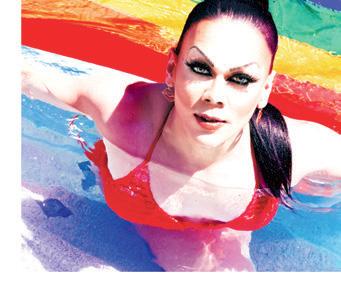











Getting to Know You…
INTRODUCING RICK WELK
Letters’ New Cartoonist
This month, Letters from CAMP Rehoboth is proud to launch a new feature: our very own cartoon, written and drawn by Rick Welk. “When Rick approached us about contributing an exclusive cartoon to Letters, I was eager to hear more,” says Letters editor Marj Shannon. “We'd explored engaging a local cartoonist a few years ago, but that never quite came together. I knew Rick had a long history of cartooning, so was excited to receive his proposal. We're launching Birds of a Feather in this issue and look forward to seeing it take flight across several issues this year.”
Birds of a Feather is about a gaggle of gay guys, gals, and those in between who live in and around Rehoboth Beach. Rick and his husband, Jake, have lived in nearby Lewes for two decades, where they now share a home with a threelegged cat.
But he’s been publishing his cartoons since the 1980s. At one point, he had two separate cartoons (Scrapple, featuring a cast of pigs, and Hedgehogs, focused on a married couple of, well…hedgehogs) being published in two separate publications in Lancaster, Pennsylvania.
Rick was actually born in Lancaster, but his family soon moved, first to New
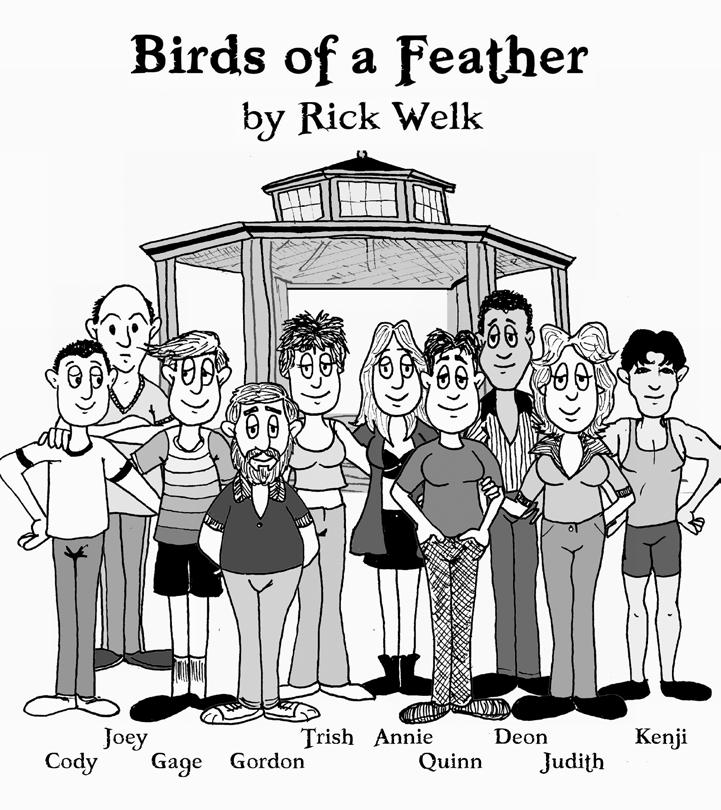
Jersey, then to Newark (Delaware), where he lived till graduating from Christiana High School. After that, he moved a lot—he spent six months in Los Angeles, hated it, moved back to Lancaster, “bounced around” for a while (Portsmouth, New Hampshire; Hampton, Virginia), always seeming to end up back in Lancaster. It was a “day job” at an electrical supply company that brought him back to Delaware—first to Newark, then Fenwick, and finally to Lewes. I recently sat down with Rick to talk about his work and what readers of Letters can expect.
ERIC PETERSON: So, let’s hear a bit of the origin story. When did you start to draw?
RICK WELK: It was elementary school, I think, when I started drawing cartoons. I would get bored in class, so would open up my notebook and draw these little stick mice figures. They were running computers or working on old battleships, that type of thing. I’m sure I got in trouble for it more than once.
EP: And when did you decide you’d pursue this as a career?
RW: I had an art teacher at Christiana High, Mrs. Moore. I’ll never forget her; she was so amazing. But I remember having arguments with her, because I knew even then that this is where I wanted to go, art-wise. I wanted to draw cartoons. I was not a portrait painter or anything like that. And Mrs. Moore would say, “Have you ever seen a wealthy cartoonist?” And I’d say no. But on the other hand, I saw Charles Schultz’s house in a documentary once, and it seemed pretty nice to me. I knew it was a profession that involved some struggle.
EP: How do you think you’ve grown as a cartoonist since then?
RW: Well, in the 1980s, I had two bi-weekly strips going at the same time. I really enjoyed being able to develop my characters and storylines and personalities. That’s when I started sending things
BY ERIC PETERSON

Mrs. Moore would say, “Have you ever seen a wealthy cartoonist?” And I’d say no. But on the other hand, I saw Charles Schultz’s house in a documentary once, and it seemed pretty nice to me.
out to the syndication companies to try and get picked up. In the meantime, I also sent out my samples to cartoonists I admired, some of whom were nice enough to correspond with me. They all had the same advice: refine your style. And they were right. At the time, I probably shouldn’t have been sending my work out. I wasn’t ready.
EP: What makes a good cartoon? When do you know you have something that works?
RW: I think if it’s going to be funny—if funny is your goal—then it has to be instantly recognizable. My Hedgehogs worked, I think, because I based them directly on my parents. Sometimes I would literally see my parents do things, go home, and immediately draw it up. So, it was real and therefore relatable.
EP: Let’s talk about Birds of a Feather, your cartoon for Letters
CLOSED MONDAYS & TUESDAYS

RW: Well, there are at least two characters I’ve been drawing since 1979. The hairstyles have changed, but the two guys are essentially the same. In ’97, when I started publishing under the title Birds of a Feather in QPublic magazine, I added another couple, two women. In this new version, I’ve added some more characters.
But at the core is this same male couple. From the beginning, I wanted to portray them as any other couple who live together, travel together, one’s not a very good cook and almost burned the house down, that kind of thing. Cody is a lawyer, and his partner Gage is a house husband. Gage is a romantic—lots of hearts and flowers and tenderness. Cody is more grounded and still has a bit of a wandering eye.
And then there are Trish and Annie. Trish is a nurse, inspired by my sister, who was a nurse. She and Annie are the voices of reason, when other characters are having issues or personal dramas. There’s also Gordon, Trish’s brother; Deon, who’s an author; and Kenji, who spends a lot of time at the gym. Quinn and Judith are another couple. Judith is a teacher and Quinn is an EMT. Collectively, the characters fall all along the LGBTQ+ rainbow.
The thing about all these folks is, they’re friends. Nobody is set against anyone else.
EP: Anything else you’d like to say to our readers to introduce yourself?
RW: Just that I hope that people enjoy the strip. I know CAMP Rehoboth serves a very large and diverse community, so I’m playing to a lot of people. My biggest hope is that I’m able to present something relatable that makes readers laugh. ▼
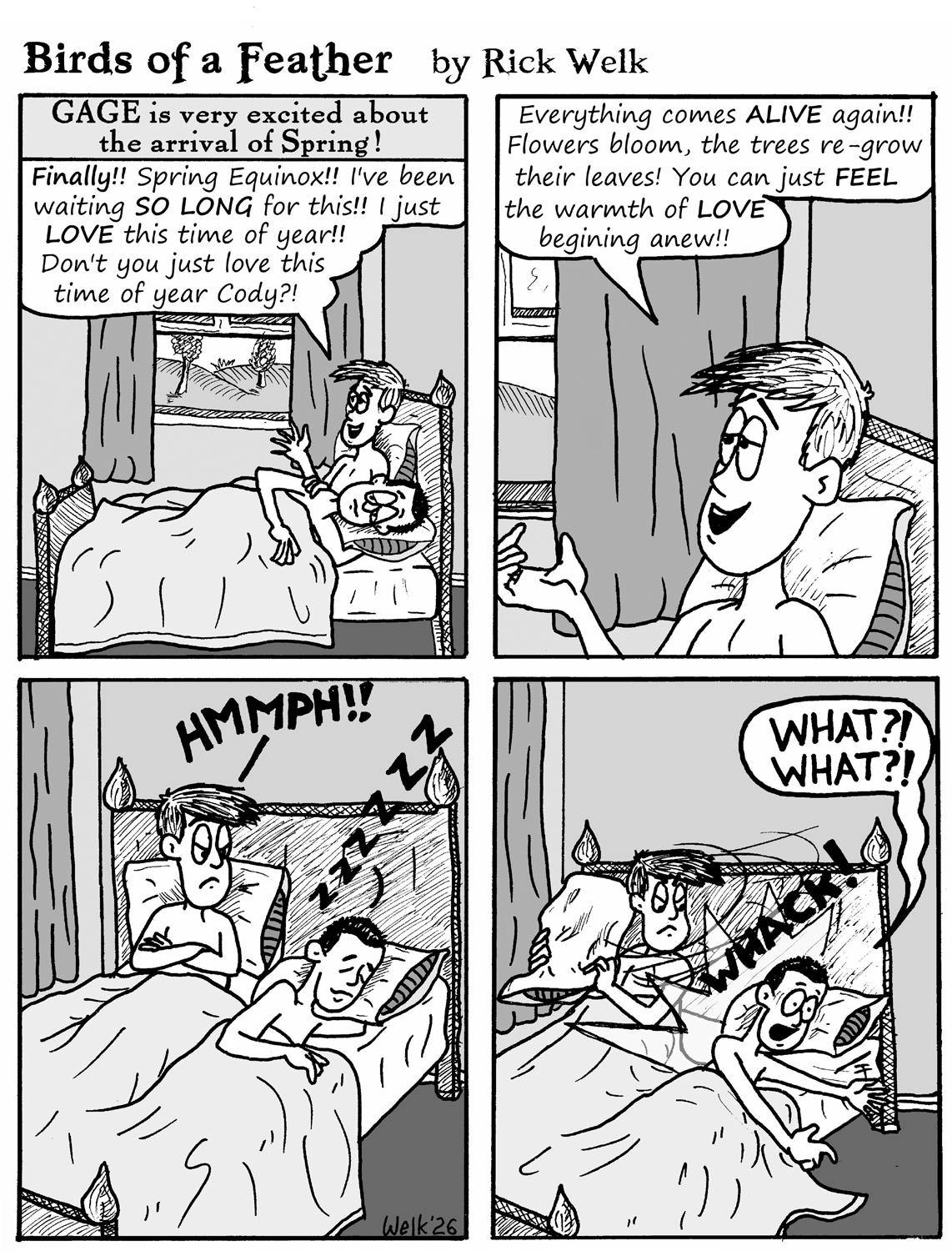
How to Strut Solution



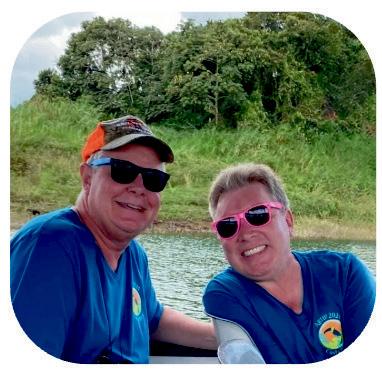




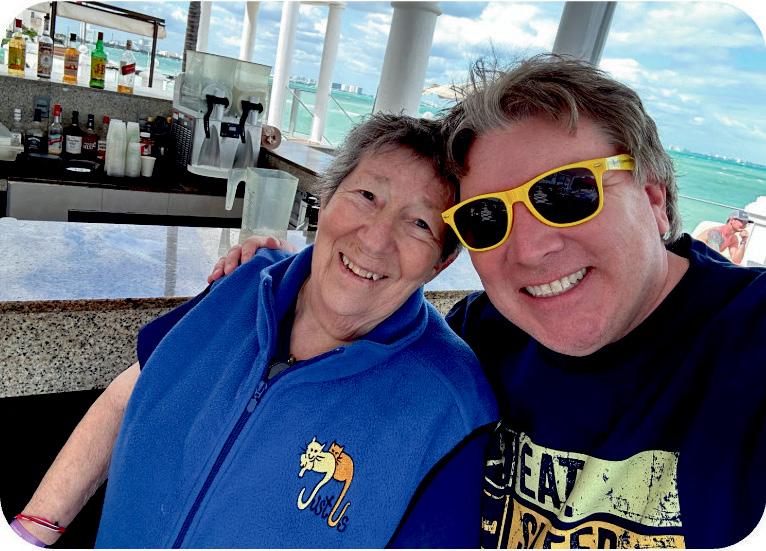
The Sea Salt Table
New York Crumb Cake
Ilove saying we winter in Pennsylvania. Just ‘cause I want to sound fancy. Being honest, we all-the-rest-of-the-seasons here too. Getting down to the shore as often as we can.
South central Pennsylvania is as lovely as southeastern Delaware. Just in a different way. Like, there’s no ocean. But there are mountains. And a fabulous store called The Kitchen Shoppe.
It’s huge. As in, get lost in aisles polluted with cooking things you never knew you wanted. I mean needed. Never say want when you can insert the word need. It makes the Visa bill more palatable.
And, icing on the cake, they offer classes in a professional, raised-stage kitchen. Years ago, I was a volunteer sous chef at the school. Gurl, the stories I could tell.
In truth, I was a glorified dishwasher and server, who occasionally cut vegetables. We were expected to arrive early and leave late. But it was deliciously fun—albeit hard—work. Especially after a day at my paying job.
We did get a discount with which I bought things I never could have afforded otherwise. Super high-end things, that I still use today. And sometimes there was free swag. Like signed cookbooks, or what have you.
In truth, I was a glorified dishwasher and server, who occasionally cut vegetables.
Our main job was to blend into the background and cater to the instructor du jour. The school often hosted big names. Like authors who came from New York City with their drivers. And my-my, they could be persnickety.
Like the chef who wanted HIS two knives always angled just so in the
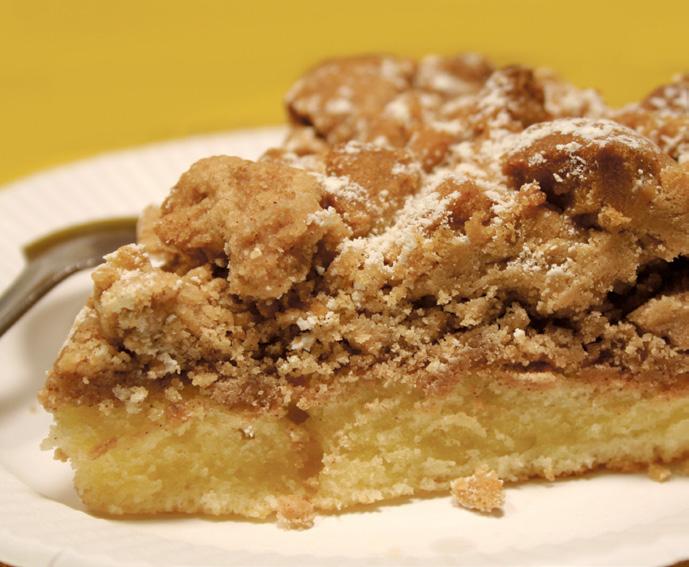
upper right corner of HIS cutting board. He’d use a knife, discard it off to the side, expecting it immediately washed, and restored back to its corner. At all times, one of us was “knife-watch sous.”
But we also gave the instructors latitude. They were the ones “performing” for the students who paid good money and expected exceptional classes. You couldn’t help but pick up some great tips.
For instance, I learned how to quickly make portions in a catering kind of way. Let’s say I had to serve 40 from a large sheet pan. I mentally divided the pan into eighths, then decided what size a fifth of the eighth would be to serve every person the same amount and not fall short. (Bet you’re gonna read that sentence several times.)
I also had the opportunity to say things as if I worked at The Bear. “Yes chef,” “behind,” and “hot stuff.”
After class, we’d enjoy leftover food and wine. Sometimes the chef would join us, regaling us with stories of life in restaurant kitchens and the publishing world. I miss those nights and my kindred volunteers. I don’t miss coming home smelling like grease and fat.
This month, in honor of those visiting chefs, I’m highlighting my New York Crumb Cake.
Let’s get started, shall we? l
BY ED CASTELLI
STEPS
Preheat oven to 325° and grease an 8x8 pan.
Whisk together:
• 1 ½ cups flour
• ½ tsp each baking powder and baking soda
• ¼ tsp salt
In your mixer, blend until fluffy:
• ½ cup unsalted butter, softened
• ½ cup sugar
Add, until blended:
• 1 large egg
• ⅓ cup sour cream
• ¼ cup whole milk
• 2 tsp vanilla
Gently add the flour mix until just combined. Spread batter in pan.
Combine until clumpy:
• 1 ¼ cups flour
• ½ cup brown sugar
• ¼ cup sugar
• 2 tsp cinnamon
• ½ tsp salt
• ½ cup unsalted butter, melted
Sprinkle crumbs on batter and bake 30 to 40 minutes. Cool, then generously top with powdered sugar.
TIPS
• Scrape down your mixer between additions. I use the same dirty bowl and paddle to make the crumbs.
• This can overbake rather quickly. Use a toothpick to check for wet batter starting at 30 minutes. ▼
Ed and his husband Jerry split their time between homes near Harrisburg Pennsylvania and Bethany Beach. Ed builds websites to pay the bills but loves to cook, garden, hike, and dote on their dog Atticus.

Historical Headliners
Love Like an Egyptian
We think of Egyptian art as timeless, and with good reason. Over a span of about four thousand years, Egyptian art changed very little. The rigid systems put in place for the organization of Egyptian civic and religious society applied as well to Egyptian art. Change was not highly prized.
Thus we know the status of various long dead Egyptians by how they are depicted on the walls of their tombs. Certain assigned postures tell us whether the deceased were scribes, or married, or of the royal house, were military heroes, or held respected civilian jobs, whether they owned land, had many servants, etc.
Among the many jobs serving the royal chambers of the Pharaoh were the Royal Manicurists. It’s possible that aside from members of the Pharaoh’s family and his concubines, the Royal Manicurists were the only other people allowed to touch the Pharaoh, his wife, and children. Evidently there were several manicurists, and like any organization there needed to be someone at the top to assign who does whose nails on which days. During the reign of Pharaoh Nyuserre Ini of the Fifth Dynasty, reigning from approximately 2458 BCE to 2422 BCE, there were two bosses in charge of the Royal Manicurists: Niankhkhnum and Khnumhotep. Their official titles were Overseers of the Royal Manicurists or Overseers of the Manicurists of the Palace of the Pharaoh.
Niankhkhnum and Khnumhotep were so trusted by the Pharaoh that in addition to their responsibilities for the royal nails and cuticles, they were bestowed with a number of other titles, including Keeper of the Pharaoh’s Things (which prompts my imagination to run wild), Pharaoh’s Scribe, Purity Attendant of the Enduring Places of Pharoah Nyuserre, which despite another jump in my imagination is believed to refer to responsibilities for the cleanliness of Nyuserre’s tomb, and

an exalted title as Guardian of Secrets, among several others.
In other words, their careers were full and rewarding.
But what of their lives? As stated above, we often know about the lives and status of long dead Egyptians by their depictions in their tombs. In Niankhkhnum and Khnumhotep’s case, they were buried together at the Saaqara necropolis, though years apart. Once they were entombed together, theirs became—and remains—the only tomb in the entire necropolis depicting two men in loving gestures: holding hands, shared intimate kisses of each others’ noses, and hands on shoulders or across the other’s chest, a depiction usually reserved for married couples. Inscribed on their tomb is the statement interpreted as “Joined in Life and Death” or “Entwined in Life and Death.”
It is now generally acknowledged by Egyptologists and other scholars that the tomb depicts the ancient world’s earliest and perhaps first images of a samesex couple. There are some holdouts who interpret the imagery as scenes of brothers, but those scholars are few. These scholars cite the fact that Niankh-
BY ANN APTAKER
It is now generally acknowledged by Egyptologists and other scholars that the tomb depicts the ancient world’s earliest and perhaps first images of a same-sex couple.
khnum and Khnumhotep both took wives and fathered six children each. But we must remember that procreation was of high importance in Egypt and the entire ancient world, an idea which remained important throughout centuries of history. In Niankhkhnum and Khnumhotep’s tomb, there are women, presumably their wives, which are depicted as smaller figures, with the most loving depictions reserved for images of Niankhkhnum and Khnumhotep together.
Images of Niankhkhnum and Khnumhotep may have been the first known depictions of a same-sex couple, but I think we can assume they were not the only same sex couple, male or female, in ancient Egypt. In a civilization lasting nearly four thousand years, we can be certain there were plenty of such couples. Now we just need to unearth images of them. ▼
Ann Aptaker is the author of short stories and the Lambda & three-time Goldie award winning Cantor Gold series. Her latest in the series—Gold for the Dead—was released in October 2025.

Visiting View
When We Rise
Greetings Letters readers, Robby from Brooklyn reporting from a jubilant and defiant Sheridan Square Park where the Pride flag has just been raised once again. Over 1,000 people gathered in the bitter February cold shouting “WHOSE FLAG?” “OUR FLAG!!!” as both the rainbow flag and the stars and stripes USA flag now once again fly proudly here in the West Village.
As first reported by Gay City News, “The Trump administration removed a large Rainbow Flag from a flagpole at the Stonewall National Monument, the National Park Service confirmed to Gay City News on February 9, marking the latest example of the president’s broader effort to erase the queer community from the birthplace of the modern LGBTQ rights movement.”
Contacted by the Gay City News, a spokesperson for the National Park Service noted on the evening of February 9, “Under government-wide guidance, including General Services Administration policy and Department of Interior direction, only the US flag and other congressionally or departmentally authorized flags are flown on NPS-managed flagpoles, with limited exceptions. Any changes to the flag displays are made to ensure consistency with that guidance. Stonewall National Monument continues to preserve and interpret the site’s historic significance through exhibits and programs.”
Longtime queer activist Ken Kidd spoke about the importance of the flag stating, “In 1978, Harvey Milk—one of the first openly LGBTQ elected officials— asked his friend, artist and activist Gilbert Baker, to create a new symbol for our movement, replacing the pink triangle that once marked us for persecution and death. Gilbert chose a flag to embody our Pride because he understood that flags carry power.”
Kidd went on to mention the significance of the removal of this specific flag from the birthplace of the modern queer
rights movement: “That is exactly why it was targeted—they tried to steal our Pride. We refuse to let Gilbert’s Rainbow be taken; it will not be folded up and put back into a closet any more than we will, because we’re here, we’re queer, and we’re not going anywhere.”
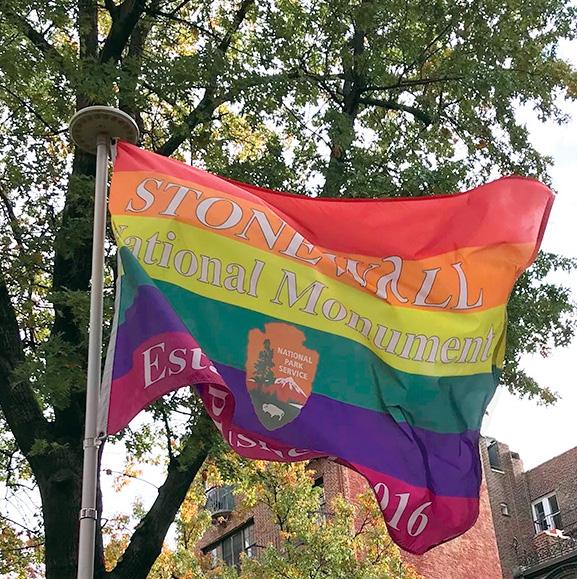
“We refuse to let Gilbert’s Rainbow be taken; it will not be folded up and put back into a closet any more than we will…”
This is by no means the Trump administration’s first attack on our community. Some of these attacks include more than $800 million in cuts to the National Institute of Health, including funding for grants meant to study the health of LGBTQ+ people. Last May the Supreme Court ruled that the president’s ban on transgender troops serving in the military could go into effect while the courts decide a final outcome. The Department of Defense removed queer icon Harvey Milk’s name from a US Naval vessel. And during June 2025, the White House did not acknowledge Pride month. These examples are only a few of the wide and varied attacks our community has suffered at the hands of this second Trump administration.
BY ROBERT DEDOMINIC
Michael, a New York City resident for more than 40 years, who proudly attended the re-raising of the Pride flag, said that he felt the need to be here because “now more than ever we need to speak up. We need to prove the point we are equal to everyone else. No compromises. No backing down.” Former Miss Stonewall Fifi DuBois underscored this sentiment, declaring, “I came because this is my community and the fact that this happened in 2026 is unacceptable.”
In 2017, the miniseries When We Rise premiered on ABC. Created and written by Dustin Lance Black, the Oscar-winning writer of Milk, the show chronicled the 40-year-long struggle for LGBTQ+ equality. This was the first series of its kind. (If this is the first time you are hearing about this you are not alone. The ratings for the miniseries were terrible—it bombed; no one watched it.)
The name alone inspires and empowers—When We Rise. When asked about the name, Black said in an interview, “We all know that we are minorities in one way or another, it just depends on how you slice that pie. Every single person has an investment in that we need to make sure our neighbors are being treated equally.”
“RAISE IT UP,” “RAISE IT UP,” the crowd kept chanting. Watching our Pride flag being raised with hundreds of my queer brothers and sisters cheering, clapping—and some crying—was surprisingly moving for this middle-aged gay man. As that flag rose, so too did the hopes, dreams, wants, and needs of an entire community.
And as countless queer people have said for decades—and as Ken Kidd had said earlier—“We’re here, we’re queer,” and most importantly and most loudly, “We aren’t going anywhere.” ▼
Robert DeDominic is a queer freelance writer living in Brooklyn
Photo credit: National Park Service.

SCENES FROM REHOBOTH BEACH
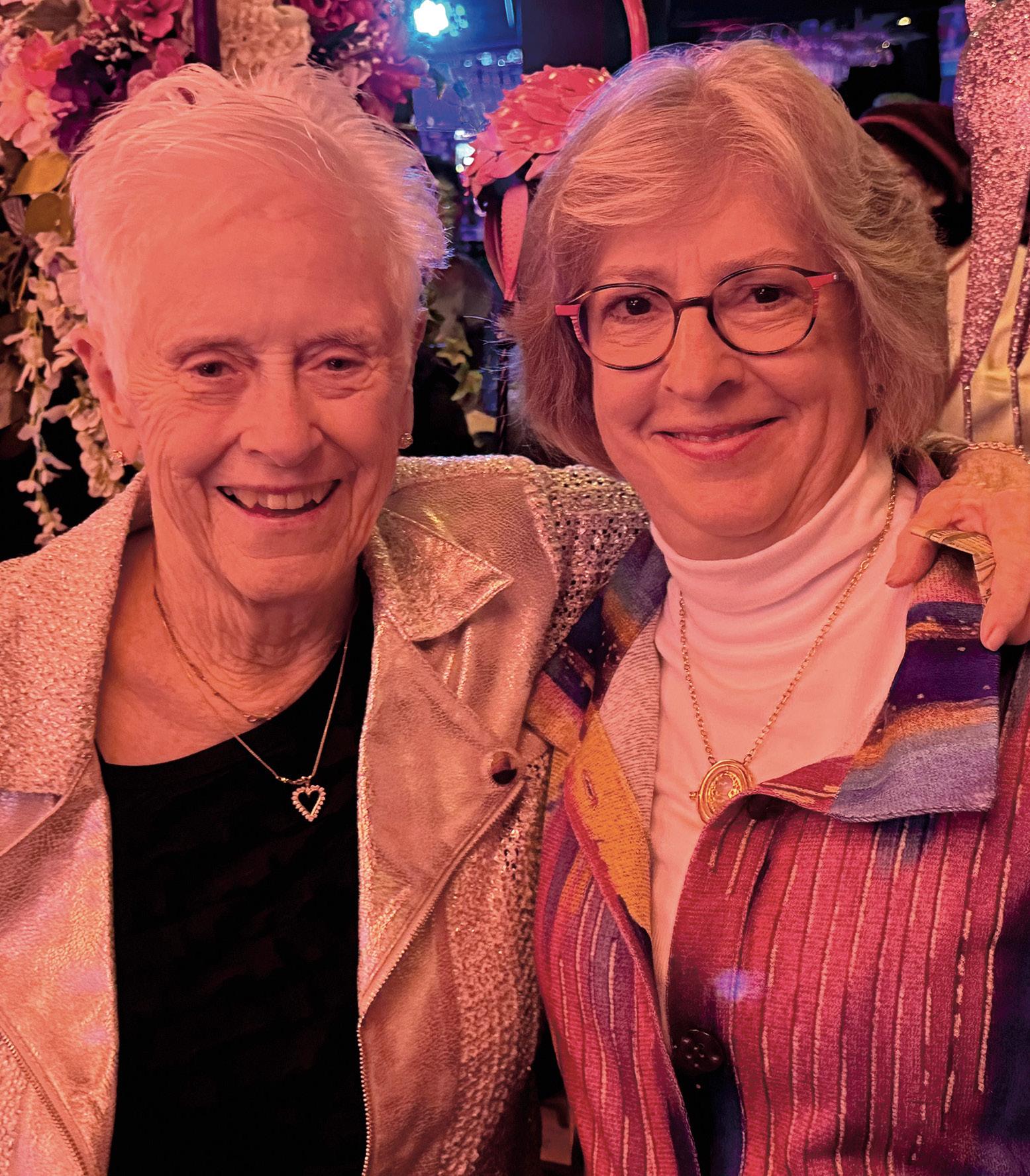
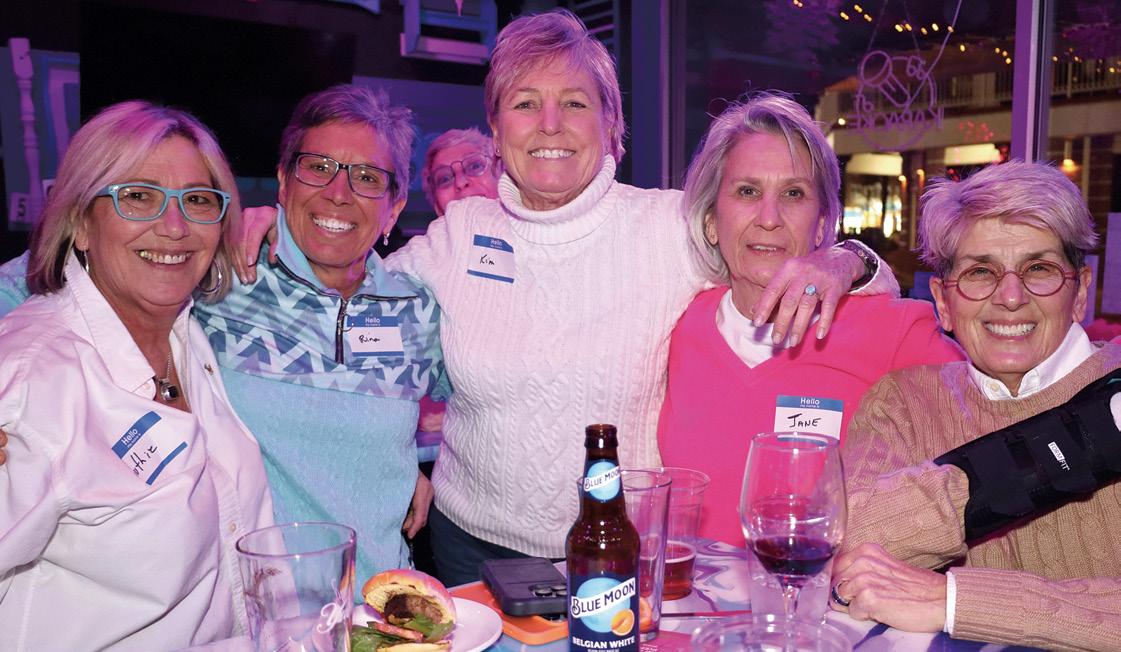
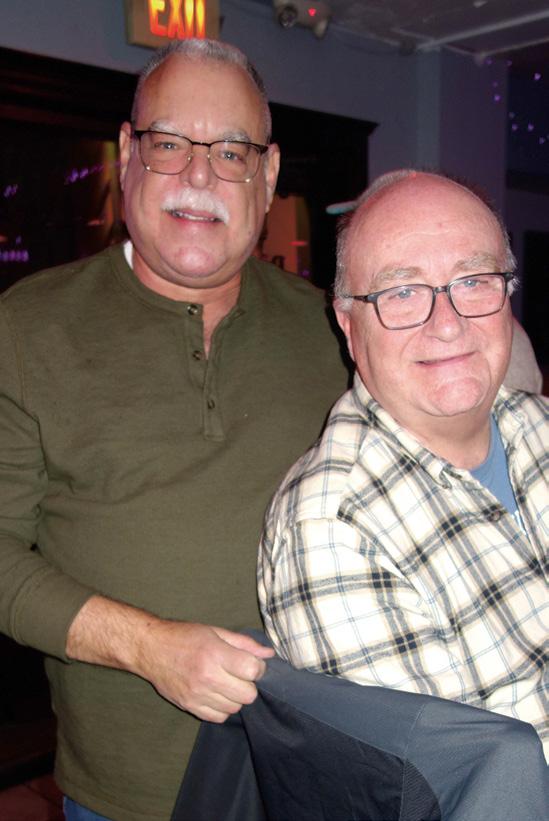
(Continued from page 65)
THIS PAGE (left to right) 1) at Freddies Beach Bar: Jackie Goff, Mary Voight, Roseanne Madden, Kathy Moore, Vera McNair, Deb Quinton, Jean Brolund, Kelly Sheridan, Sonya Dilworth, Elaine Boyle, Deb Knickerbocker, Geri Dibiase, Ruth Kloetzli, Rina Pellegrini, Kim Richards, Jane St Clair, Susanne Furman. 2) at Rigby’s: Michael Davitt, Sandra Skidmore, Tommy Paoletti, Terri Raynes, Bill Wasser, Jack Cleveland; 3) at Tai Chi at CAMP Rehoboth: Marianne Walch.
OPPOSITE PAGE 4) at DE Coastal Beach Buddies Dinner at The Pines: Kevin Todd, Michael English, Luiz Cruz Jr., Steve Schafer, Matthew Matula, David Wiedner, Jeff Weber, Matt Brown, Mitchell Shahade; 5) at Eden: David Park, Jamie Kotchek, John Rainer, Lion Gardner, Mark Pipkin, Riess Livaudais, Brooks Woodward, Karl Zoric; 6) at Purple Parrot: Chris Chandler, George Yanchenko, Nicole Chubiogu, Rick Norcross; 7) at Blue Moon: Jeremy Clark, Matt Rice, Mack Jinole, Stuart Ortel, Beth Yocum, Deborah Kennedy. ▼
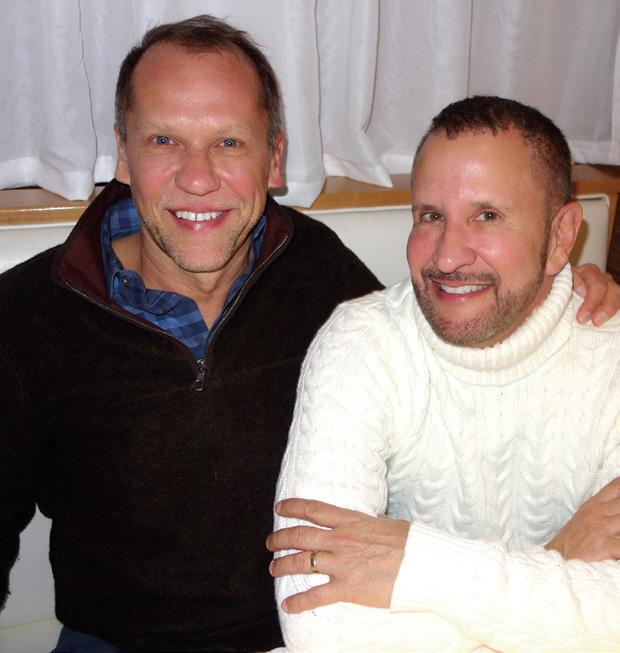
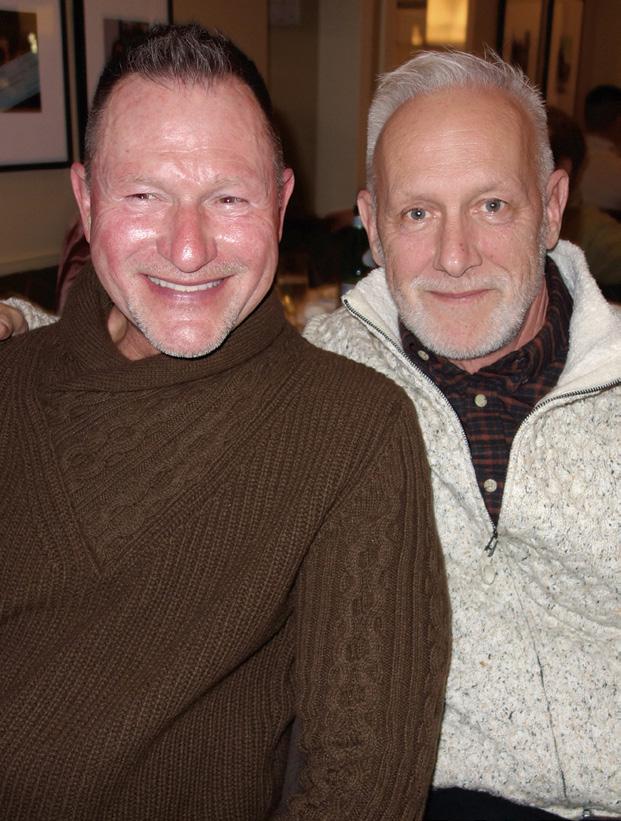
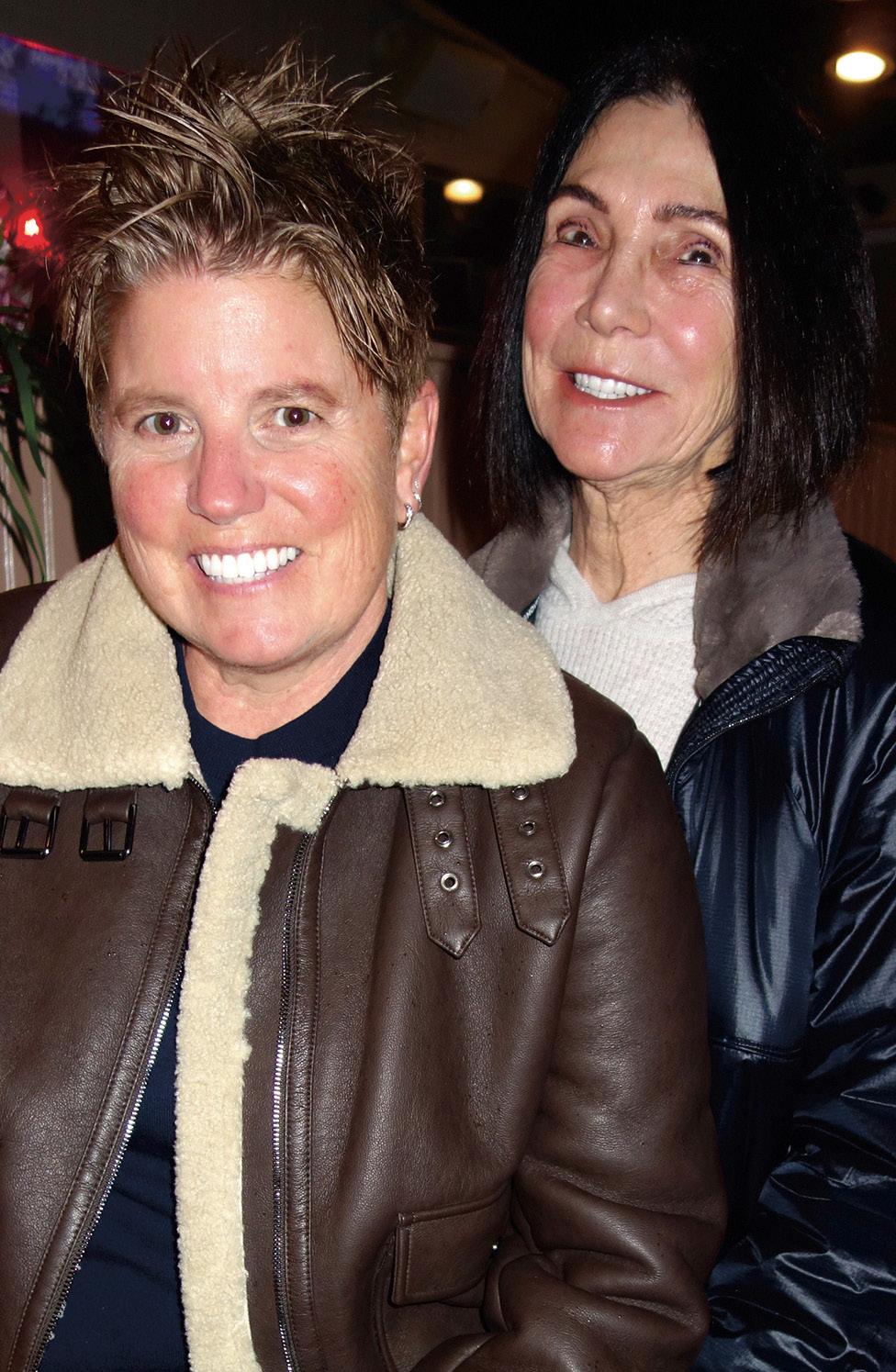
We Remember
Lisa Lynn Simmons
Lisa Lynn Simmons of Bellows Falls, Vermont, died at home on January 17, 2026. She and her wife had recently moved to Vermont after decades of residing in and around Millsboro.
Lisa was a kind and caring soul whose life was guided by compassion, creativity, and an adventurous spirit. Known for a gentle presence and deep love for both people and nature, Lisa touched many lives through her years of service with Kiwanis, with her art and friendship.
Lisa always loved nature and spending time outdoors. She worked as a naturalist at Trap Pond State Park in Laurel during several summers. Later she worked at Delaware Department of Natural Resources and Environmental Control (DNREC), helping to promote Delaware State Parks. She always said her favorite job was with the Delaware Tourism Department, where she got to explore other destinations. She and her wife traveled extensively in their camper van before settling down in 2022 to create their new lives in Vermont. Lisa loved food—researching recipes and inventing her own, cooking and eating from a wide variety of cultures—and had plans to start a food-based cottage industry in Vermont. We called her “the queen of herbs & spices.”
Lisa expressed her healing intentions through music, hosting and participating in drumming circles, finding connection and peace in rhythm and community. A nurse and practitioner of reiki healing, she believed in holistic well-being and the power of healing energy, offering comfort to many. Her most recent job as a school bus driver allowed her to dedicate her breaks and summers to caring for her parents in Maryland.
Above all, Lisa lived with an open heart, a curious spirit, and a love for life’s journey. Lisa will be deeply missed and fondly remembered by all who knew and loved her.
Lisa Simmons is survived by her beloved wife, Mary Ann Benyo; mother, Sally Simmons; sisters, Kathy Lingo (Jay) and Kim Willoughby (Rex); nephews, Jordan and Connor; niece, Sara; grand-niece, Lucy; and numerous friends and acquaintances. Her father, Lloyd Simmons, predeceased her.
A Celebration of Life was held February 21 at Rockingham Public Library, Bellows Falls, Vermont, and another will be held Saturday, April 25, at 11:00 a.m., at Unitarian Universalists of Southern Delaware, Lewes. In lieu of flowers, people are encouraged to inquire about making a donation to Bayada Hospice Fund at philanthropy@bayada.org. ▼
Edmund
T. Gmoch Jr.
Edmund T. Gmoch Jr. passed away February 3, 2026, following a series of prolonged illnesses. Ed was born on December 6, 1945, in Wilkes-Barre, Pennsylvania, to Edmund T. and Mary Gmoch. He spent his childhood in Nanticoke, Pennsylvania, until relocating with his family to Scotch Plains, New Jersey.
Ed graduated from Bemidji State University (Minnesota) with a degree in education and began teaching in Deptford Township, New Jersey, where he enjoyed a career in public education until his retirement 34 years later. Over those decades, Ed grew to be admired and respected by his colleagues, while at the same time becoming beloved by his students. In addition to teaching US History to freshmen, Ed served as advisor to the National Honor Society and, early in his career, directed plays at the middle school.
Ed was named Deptford’s Teacher of the Year, an honor he relished even more than his well-deserved school recognition as Best Dressed Teacher from his students and colleagues. In his spare time, Ed also worked as a waiter at New Jersey and Philadelphia restaurants.
Ed loved vacationing in Provincetown, Massachusetts, during the summers, and later in Rehoboth Beach, Delaware, where he made many lifelong friends. After retirement, he moved to Rehoboth and began a new chapter. In 2009, Ed joined the staff at Beach Essentials in Rehoboth Beach, where he fitted swimwear and styled both locals and summer visitors. Ever the fashionisto, Ed took great pride in selecting each season’s beach and social fashions for his customers.
Ed, regarded by many as the “Unofficial Mayor of Rehoboth,” always made people feel welcome, valued, and included in town. His captivating, radiant smile could light up a room, and his singularly distinguished voice wove colorful (often lengthy) stories for happy hour or dinner crowds lucky enough to be in attendance. Ed enjoyed visiting his favorite restaurants with friends almost as much as the restaurants enjoyed his patronage.
Ed enjoyed gardening, ballet, Broadway musicals and plays, concerts, travel, music, trivia nights, extravagant dinner parties, and socializing with his many friends. He loved movies. Each year, Ed attended— and often volunteered at—the Rehoboth Beach Film Festival. His love of cinema motivated him to watch every possible offering throughout the festival. During awards season, he set a goal of seeing each nominated movie prior to award night in order to be well informed when completing his personal ballot.
Ed was a devoted and devout man of faith and served for many years as a lector at Old Saint Joseph’s Catholic Church in Philadelphia, Pennsylvania, and, in retirement, at St. Edmond Catholic Church in Rehoboth Beach.
Ed is predeceased by his parents and his brother, Richard L. Gmoch Sr. He is survived by a host of friends he proudly described as his family of choice, as well as his sister-in-law, Dolores (Dee) Gmoch, and nephews Richard L. Gmoch Jr. (Dawn), David Gmoch, and Christopher Gmoch (Monika Jakober).
A Mass of Christian Burial was celebrated February 14, 2026, at St. Edmond Catholic Church, Rehoboth Beach. The family invites donations in Ed’s memory to Delaware Hospice and Dignity Philadelphia. ▼
George Howard Bunting Jr.
Former Delaware State Representative and State Senator George Howard Bunting Jr., 81, passed away February 12, 2026. He served as a member of the Delaware General Assembly for 28 years, 12 of which were spent in the state House of Representatives from 1973 until 1975 and from 1977 until 1997. In 1996, he was elected to the state Senate.
George was born November 20, 1944, the elder of the two sons of the late George Howard Bunting Sr. and Ida Watson Bunting. He and his younger brother, Jimmy, grew up in Frankford and attended local schools. In high school, George attended Charlotte Hall Military Academy in Southern Maryland, graduating in the early 1960s. After attending college in Virginia, he enlisted in the US Marine Corps in the mid1960s. During the course of his service, he served in Vietnam; he was awarded both the Purple Heart and the Bronze Star for valor.
Upon his return to civilian life from the Marine Corps, George met Donna Gray. Donna and George were married in September 1967 and enjoyed a marriage spanning almost 59 years. They were blessed with two sons, Clinton and Christian.
After leaving the military, George attended the University of Delaware, then went to work for the DuPont Company in Wilmington for several years. He then came back to the coastal area, where he started a State Farm Insurance agency in Rehoboth Beach.
In the early 1980s, George decided to run for a vacant seat in the state House of Representatives. “I think I was the only Democrat in town,” he was quoted as saying in a 2018 Cape Gazette article. He won his first House race by only 50 votes.
During much of his time in the House of Representatives, it was under Republican control, and the first two of the five governors under whom he served were Republicans. George, a lifelong Democrat, quickly came to understand the importance of compromise in getting things done. That became a key part of George’s philosophy throughout his political career.
One of George’s major interests in the Senate was the coastal environment which took up so much of his district. He played an especially significant role in bringing about the construction of the new Indian River Inlet Bridge, the fourth one at that location.
George continued to have a strong interest in the betterment of his community after his retirement from public life. He frequently shared his views on a variety of subjects with various Delaware governors and members of the state’s congressional delegation. Among other community service projects in which he played an active role was the establishment of a historical society in his former hometown of Selbyville. He also worked with the Selbyville Public Library to transfer ownership of the historic Senator John G. Townsend Jr. home to the new historical society.
George is survived by his beloved wife and partner of more than 58 years, Donna; by his son, Clinton, and daughter-in-law, Dr. Tia Bunting; two grandchildren, Gray and Kinzie Bunting; his brother, Jimmy Bunting, his wife, Diane, and their sons, Chad and Jimmy Bunting; and by numerous members of his extended family and loved ones.
A funeral was held February 21; George was interred with military honors at Prince George’s Chapel Cemetery, Dagsboro. George’s beloved younger son, Christian, is also interred there. ▼
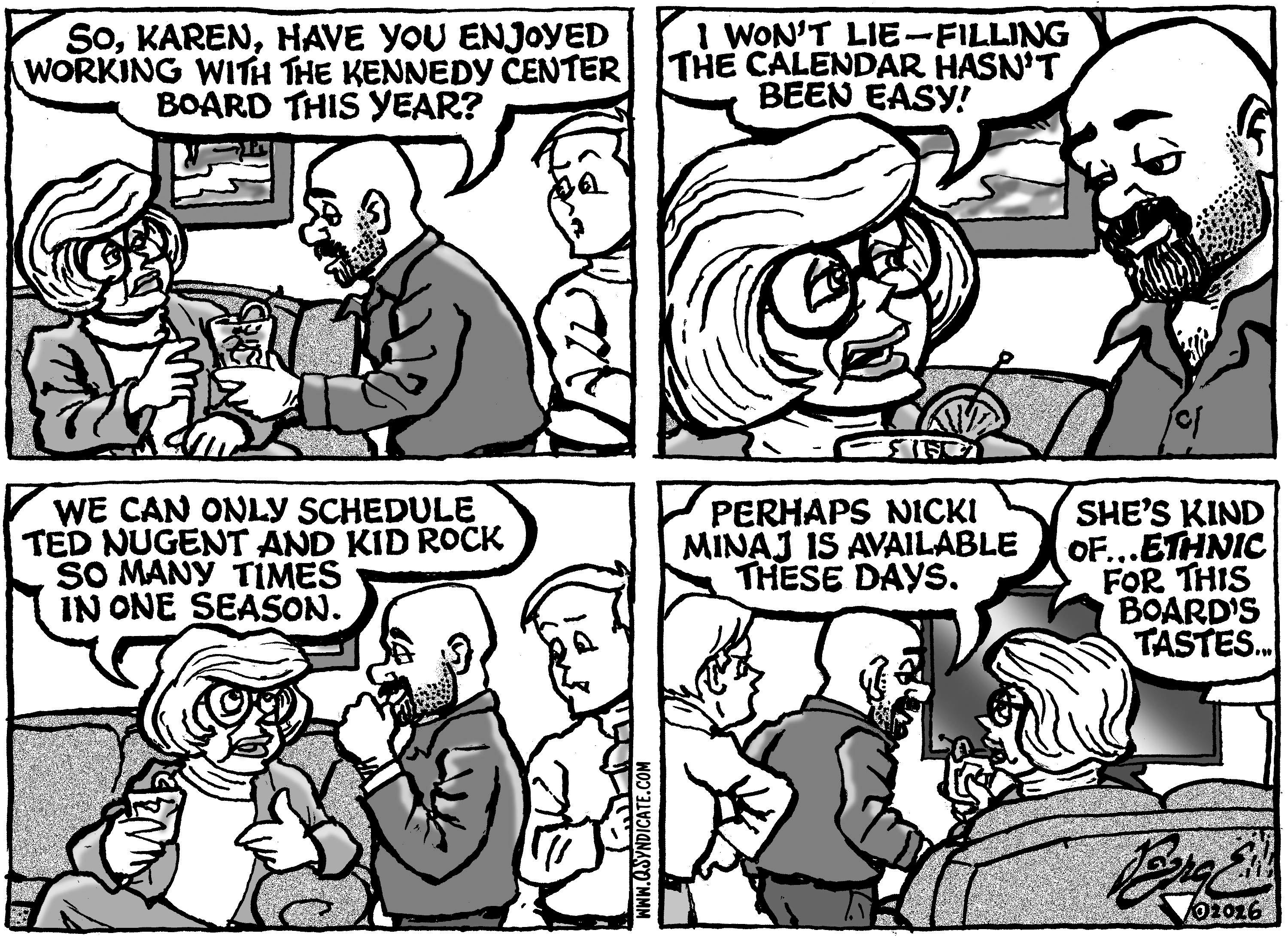


Fourth-Page-V CROSSWORD PUZZLE SOLUTION
(puzzle on page 72)
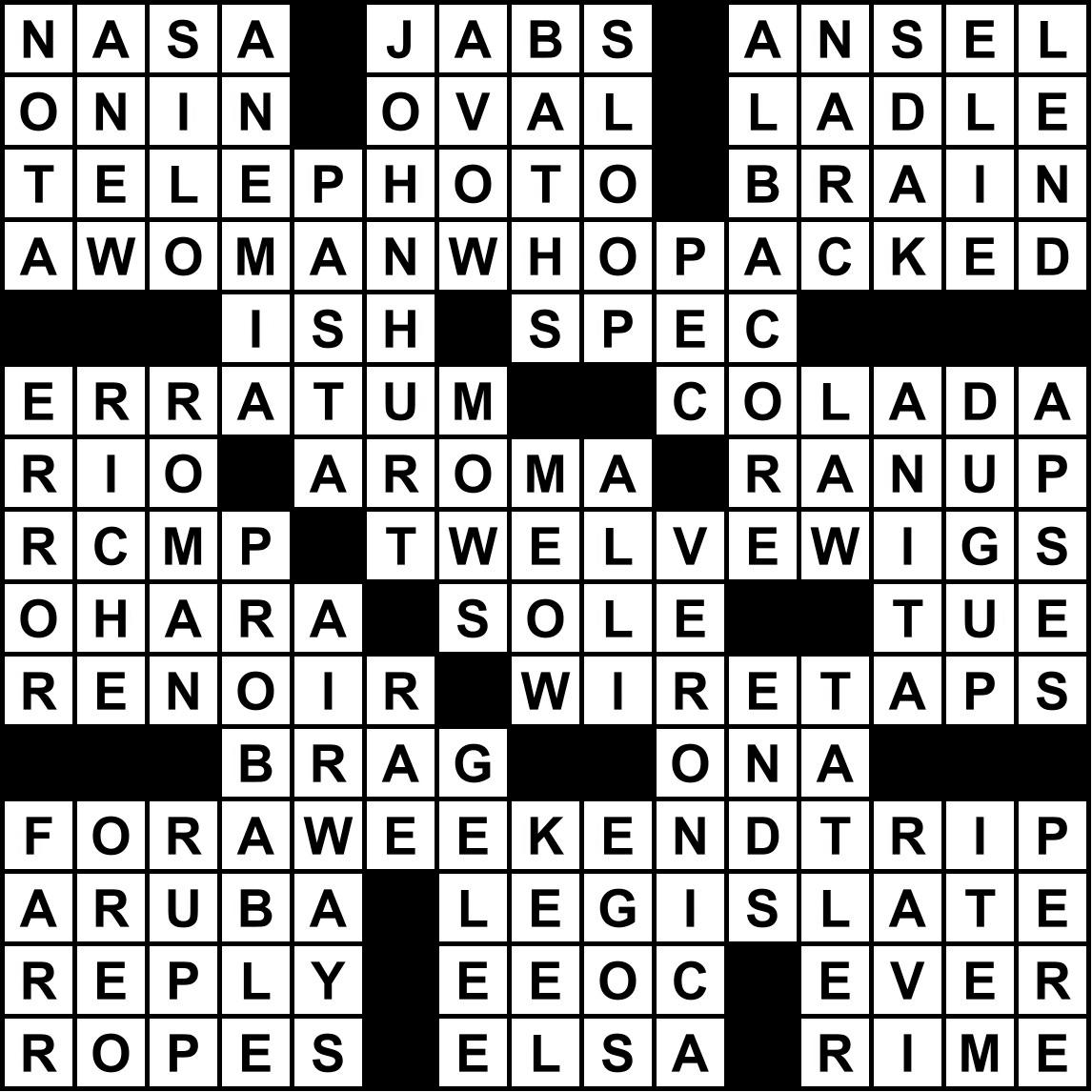
CAMP Rehoboth Volunteer Opportunities



CAMP





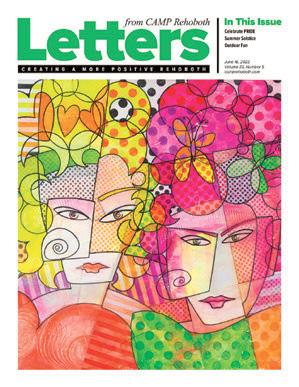


Send your check for $50 to CAMP Rehoboth, 37 Baltimore Ave., Rehoboth Beach, DE 19971. If you prefer to use your Visa, MasterCard or American Express call 302-227-5620.
VOLUNTEER AT CAMP REHOBOTH’S WOMEN’S+ FEST!
Women’s+ FEST is coming up and we’re looking for enthusiastic volunteers to help make this vibrant, community-centered weekend a success! From welcoming guests to assisting with events throughout the FEST, volunteers play a vital role in creating the warm, inclusive atmosphere that makes Women’s+ FEST so special. Whether you can give a few hours or more, your time and energy help bring this celebration to life. Join us in making this year’s festival unforgettable—sign up to volunteer and be part of the magic!
JOIN THE RAINBOW THUMB CLUB!
Love gardening and want to help keep CAMP Rehoboth’s spaces welcoming and beautiful? Join the Rainbow Thumb Club—our volunteers who help care for the courtyard and surrounding grounds through pruning, watering, seasonal planting, and general garden clean up and maintenance. Each volunteer chooses one shift per week in the morning—finishing up before metered parking begins—making it an easy and rewarding way to give back, enjoy time outdoors, and connect with others who share a love of gardening and community. If you’re interested, please reach out to Shae Wagner at swagner@camprehoboth.org.
CROP: CAMP REHOBOTH OUTREACH PROGRAM
The CAMP Rehoboth Outreach Program (CROP) is constantly working to cultivate community and strengthen relationships and the connections among us all. Check the site for monthly volunteer opportunities.
Sign up at camprehoboth.org/volunteers.
Please visit camprehoboth.org/volunteers to register as a volunteer and to sign up for available opportunities.
THANK YOU
CAMP REHOBOTH ACCESSIBILITY
Hope Vella
CAMP REHOBOTH ADMIN
Sherri McGee
CAMP REHOBOTH ADVOCACY COMMITTEE
Daniel Bruner
David Garrett
Leslie Ledogar
CAMP REHOBOTH ART RECEPTION: BEST SHOT!
Lissa Dulany
George Munson
Jefferson Rougeau
CAMP REHOBOTH CHORUS CONCERT USHERS
Cathy Balsley
Kathleen BeraultChmielewski
Monica Berault
Chmielewski
Bob Croker
Robin Cunningham
Donna Dolce
Bernadette HumphreyNicol
Michele HumphreyNicol
Mark Shaw
Charles Vandergrift
Mary Ann Wangemann
Jerri Williams
CAMP REHOBOTH CHORUS LEADERSHIP COMMITTEE
Bill Fuchs
Karen Gantz
Sue Pound
Gloria Richards
Dave Scuccimarra
Travis Stevens
Rose Verona
CAMP REHOBOTH DEVELOPMENT TEAM
Pat Catanzariti
Lorne Crawford
Mike DeFlavia
Michelle Manfredi
Joe Vescio
CAMP REHOBOTH FACILITIES
Carol Brice
Lisa Evans
Eric Korpon
CAMP REHOBOTH VISUAL ARTS
Lissa Dulany
Logan Farro
George Munson
Jefferson Rougeau
Leslie Sinclair
Debbie Woods
CAMPCIERGES
Ken Currier
Max Dick
Peter Keeble
Susan Goudy
Jim Mease
Jean Metzar
Kim Nelson
Lori Rocheleau
Pamela Rule
Maria Scannapieco
Patricia Stiles
Linda Tiano
Joe Vescio
CAMPSHOTS
PHOTO VOLUNTEERS
G Michael Beigay
Tony Burns
COASTAL CONCERTS: WINDSYNC
George Munson
Kevin Pelland
CROP SUPPORTS
FOOD BANK OF DE
Chris Allison
Randy Amoyen
Cathy Balsley
Deb Carroll
Karen DeSantis
Daphne Kaplan
Tammy Mundie
Mary Jo Piarote
Steve Scheffer
Rachel Summers
Jennifer Varone
Holly West
HEALTH SUITE INVENTORY
Joe Vescio
LETTERS
DISTRIBUTION TEAM
Jim Mease
LETTERS MAILING TEAM
Nancy Hewish
Joanne Yurik
LETTERS PROOFING
Barb Ralph
RBL FRIDAY FLICKS
Robert Fleming
Maria Scanapieco
THIS MONTH IN QUEER HISTORY
Beth Shockley
WHAT HAPPENS WHEN YOU DIE
Andrew Keller
Chip Logan
AD INDEX