The Seventh Annual Student Art Competition and Exhibition took place from 6 - 8 p.m. Feb. 19 in the Cameron University Teaching Art Gallery.
The event showcased student artwork to Cameron students, faculty, staff and members of the Lawton community while celebrating the dedication and creative growth of Cameron’s art department students throughout the academic year.
When guests entered the gallery, they stopped at a table of snacks and refreshments before viewing the artwork. Conversations filled the space as attendees moved from piece to piece.
The gallery walls featured a range of media and styles, and each work reflected hours of careful planning, experimentation and craftsmanship.
After attendees had time to view the exhibition, organizers began the awards ceremony.
The juror presented awards for the top three two-dimensional works, the top three threedimensional works and three honorable mentions. She also presented an Award of Exceptionalism to a student who demonstrated significant artistic growth and maintained positive, supportive relationships within Cameron’s artistic community.
Lou Baggett, an artist and instructor of painting, drawing and pottery, served as the juror for the competition. She evaluated each piece based on content, technical skill and overall effort, considering how successfully each artist communicated their ideas through visual form.
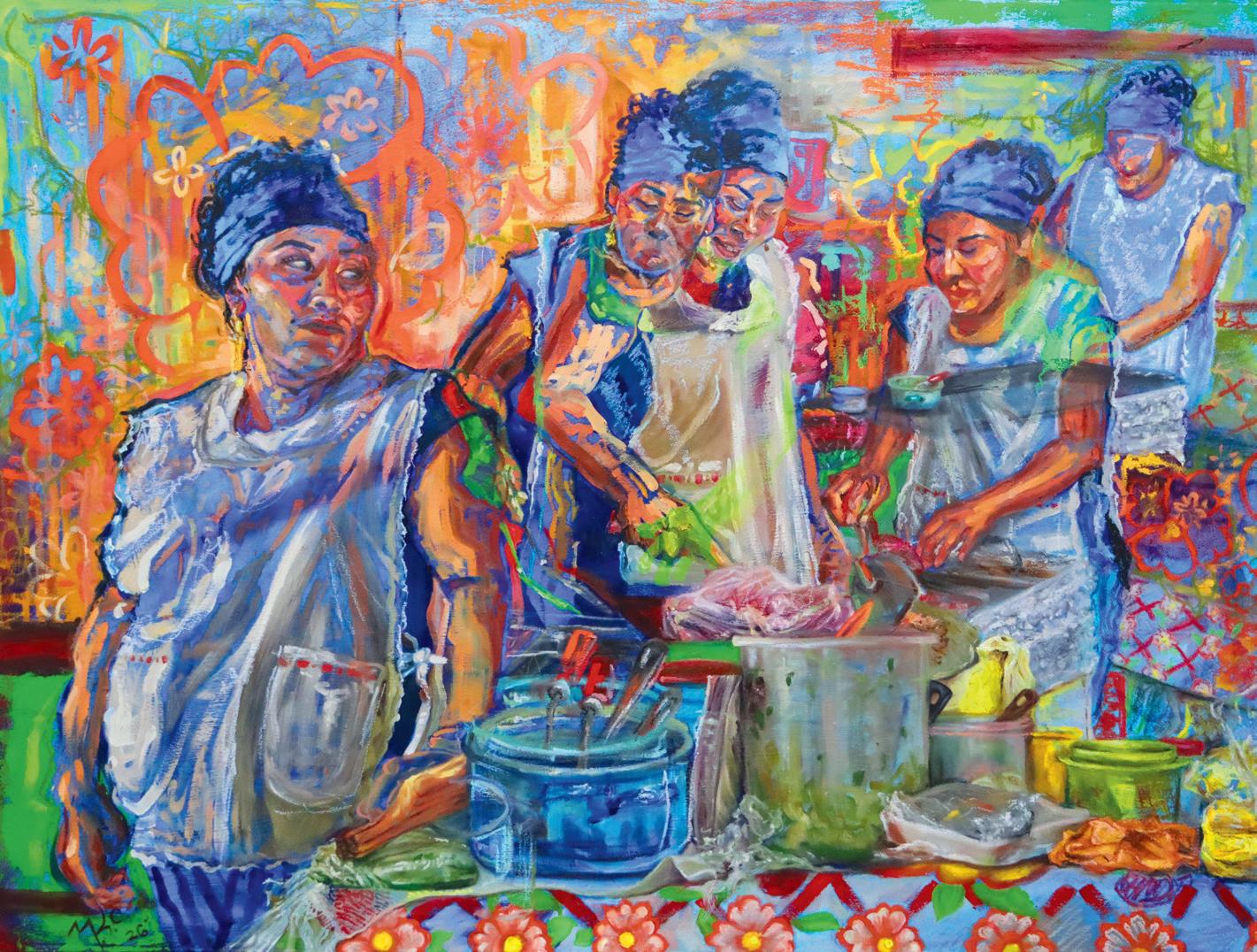
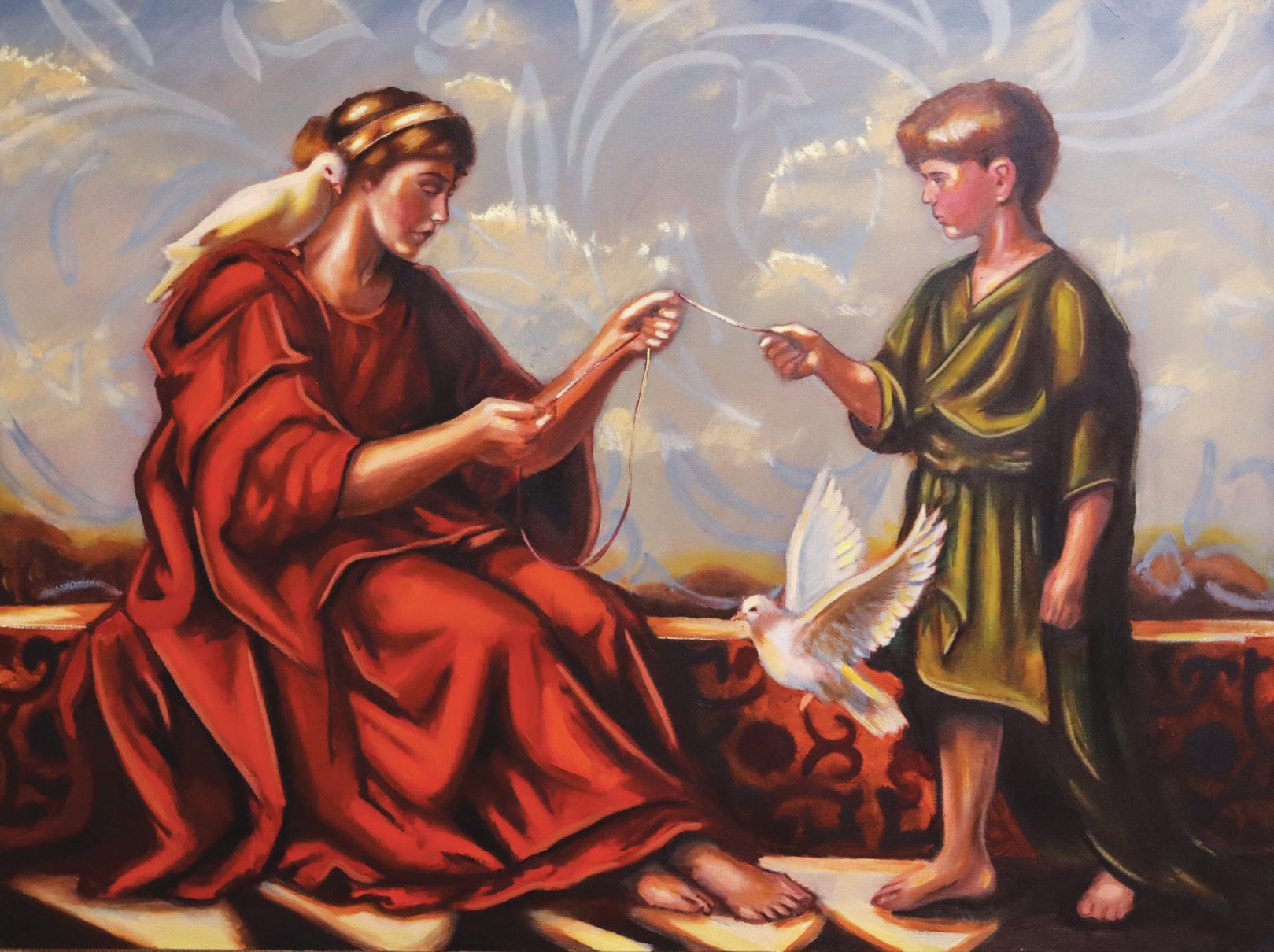
Mallory Cajas won first place in the twodimensional category for her piece, “La Cocinera: Study in Motion.” This marks the second consecutive year Cajas has earned first place in
What’s
the category. Her painting portrays working women in a kitchen surrounded by bright colors, with the food they prepare displayed prominently in the foreground.
“Historically, the female canon has been tied to a sensualized, passive or weakened portrayal. Women are often depicted as victims or as femme fatales, rather than full, complex individuals,” Cajas said. “I want to challenge that. My goal is to paint women simply existing, with strength, presence and dignity, without forcing them into stereotypes. Why can’t normal people be celebrated? There is a power in everyday humanity, and I want my work to reflect that reality.”
Melissa Heilig earned second place in the twodimensional category for “Creative Difference,” and Mathew Gonzales placed third for “A Mother’s Guidance.”
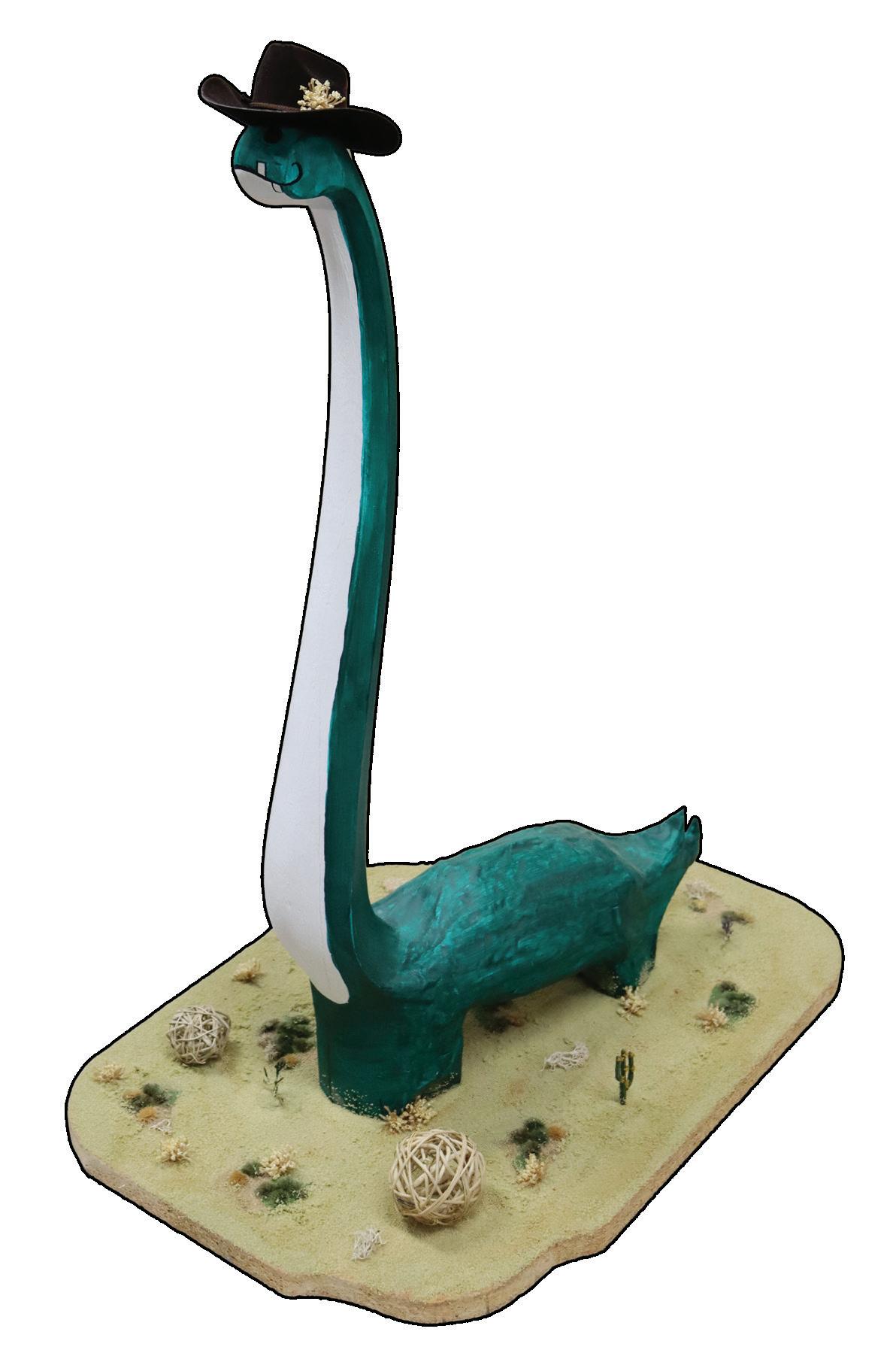
Daijah WatsonKyser won first place in the three-dimensional category for her multimedia sculpture, “Broco.” The piece transforms a table leg into the iconic elongated neck of a brachiosaurus dressed as a cowboy in a Wild West desert scene, making him “the tallest dino-cowboy in the West,” as she describes.
The sculpture combines humor with technical problemsolving, blending found objects and sculpted elements into a cohesive and imaginative work.
Watson-Kyser said she drew inspiration from childhood imagination and whimsy.
“I think a lot of people don’t want to get too deep into art because it can seem so philosophical,” she said. “I like to keep it lighthearted and joyful.”
Isabel Bryant earned second place in the threedimensional category for her sculpture “Howdy,” and An Nguyen Dang placed third for “Dream Key.”
Organizers presented the Award of Exceptionalism to Noah
Adachi. Faculty and peers recognized him not only for his artistic growth but also for his active support of fellow students.
“Being in an environment where I can see other artists and interact with them is so rewarding,” Adachi said. “It’s so exciting because not only do I get to grow as an artist — I get to see other artists grow. That’s always been something I’ve liked about art — it’s the ability to connect.”
Honorable mentions included Heather Frampton’s “Controlled,” Keilah Carraza’s “Bottle StillLife” and Kayla Bryant’s “Picnic Scene.”
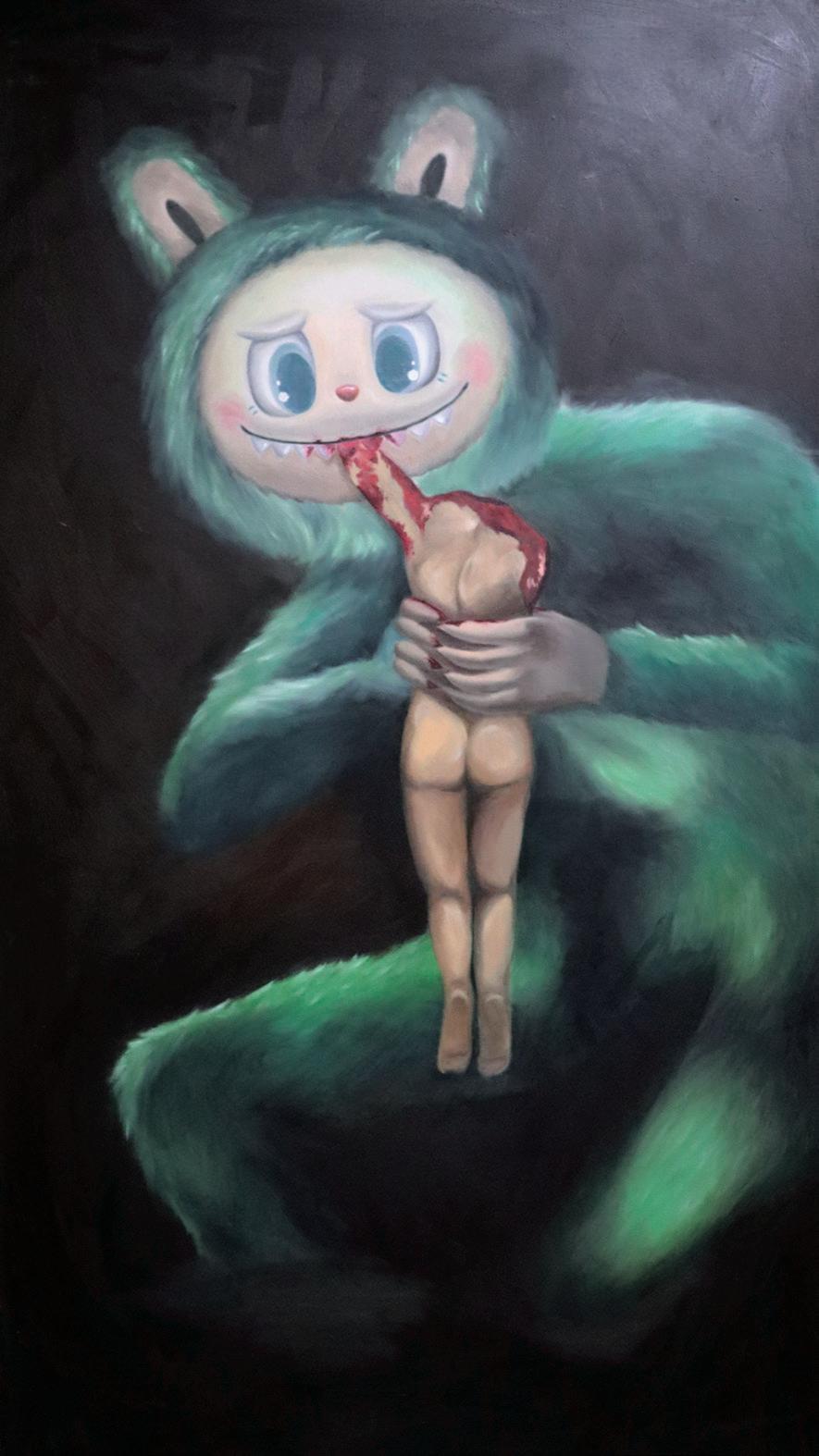
As the awards ceremony concluded, visitors explored the gallery once more. Several fan favorites emerged, including Kaylee Ataddley’s “Monster Devouring His Owner,” which features a monstrous Labubu toy devouring a comparatively small human.
The piece offers a twist on Francisco Goya’s 1820 painting “Saturn Devouring His Son,” reimagining the classical composition with a modern, playful yet unsettling subject.
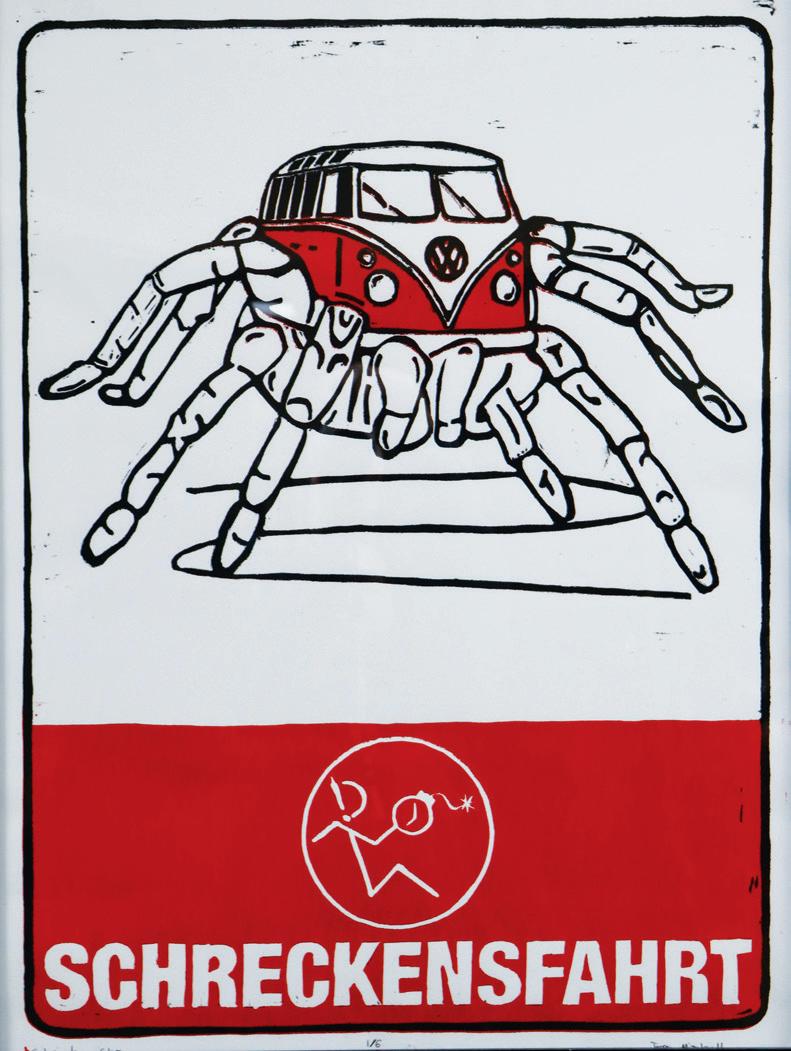
Another notable piece was Jason Mitchell’s “Schreckensfahrt,” which translates to “Terrifying Ride.”
The work depicts a Volkswagen fitted with tarantula-like legs in place of wheels, creating a surreal and slightly eerie image that drew double takes from viewers passing by.
The exhibition will remain open through March 12, located in the art building for students and community members to view the artworks.
Angelica Martinez Managing
Photos and graphics by Angelica Martinez
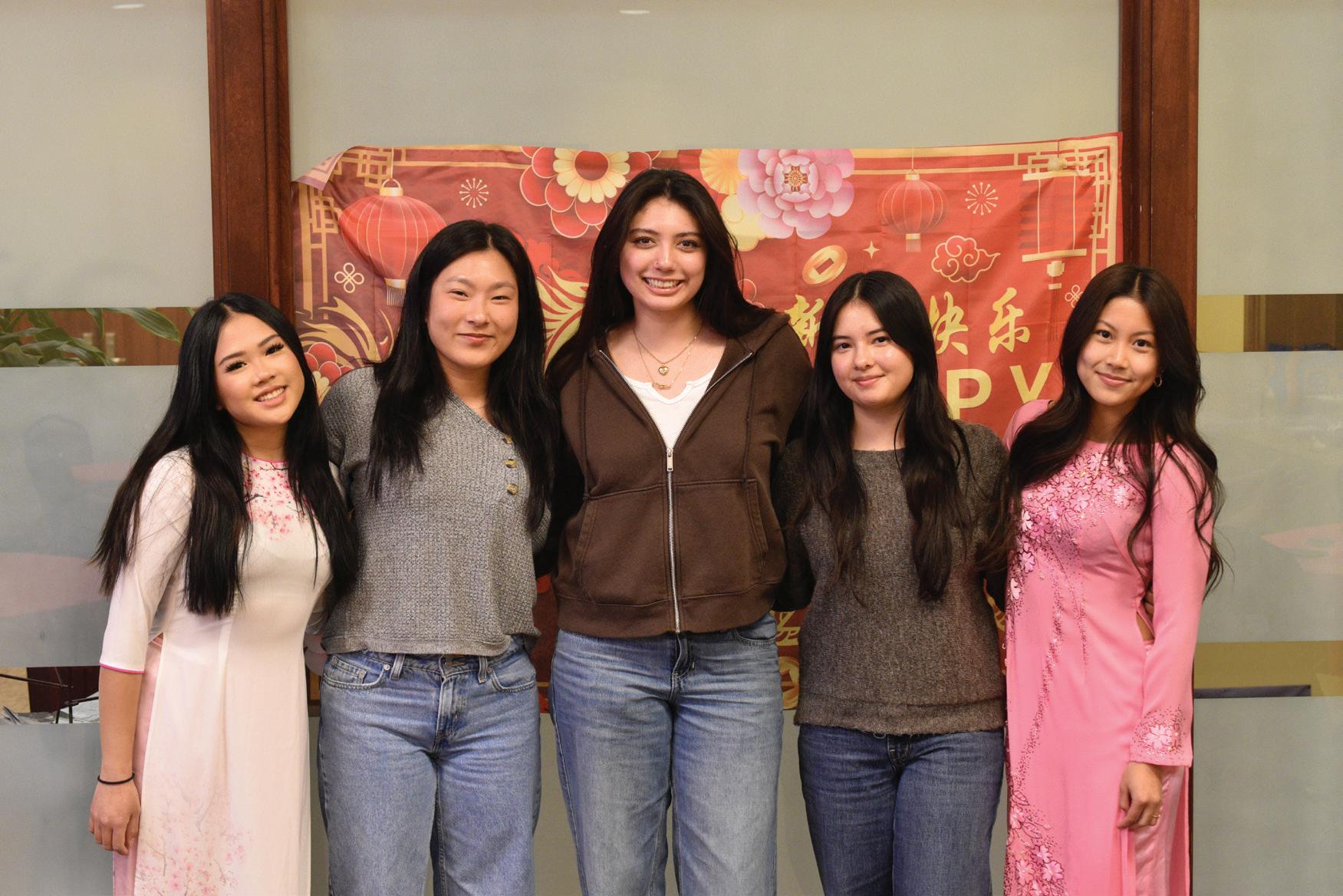
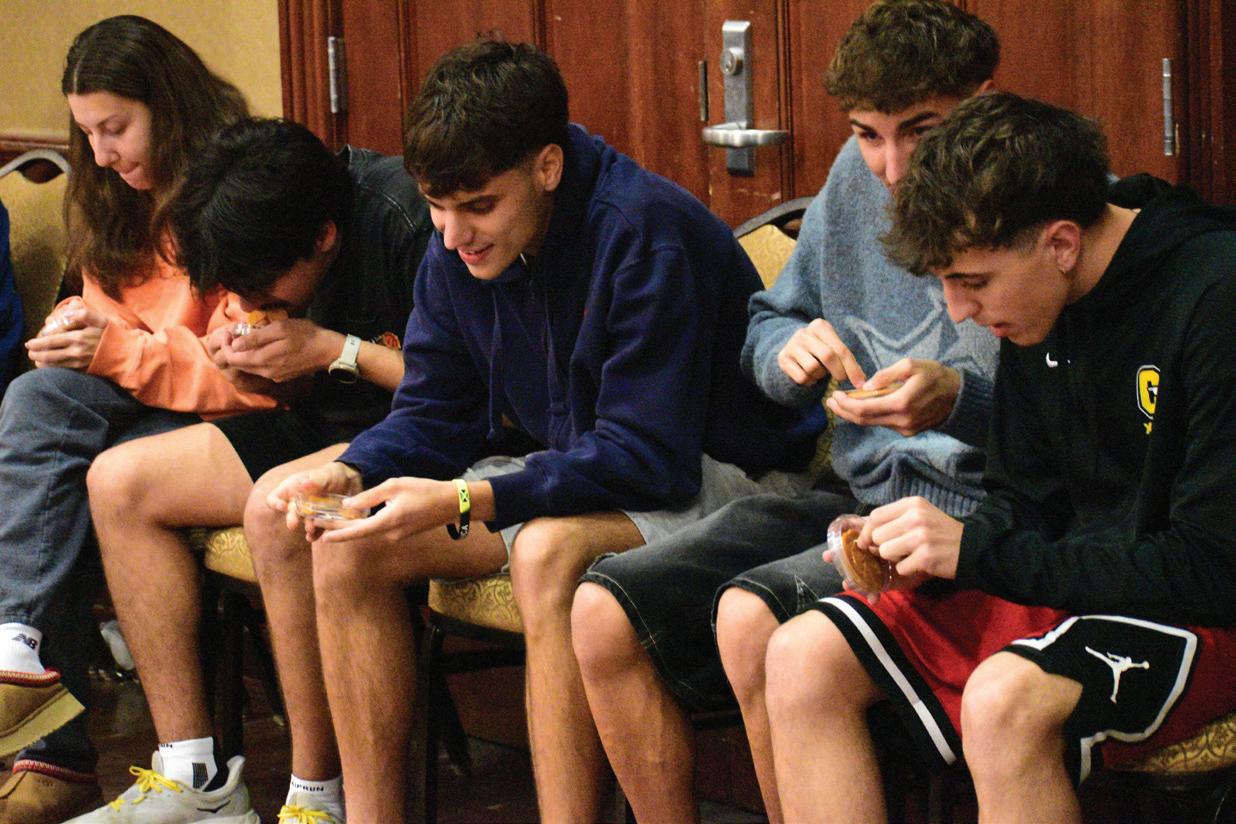
Starting at 5:30 p.m., Feb. 17, in the Buddy Green room, the Asian American Student Association (AASA) celebrated Lunar new years with a bingo event.
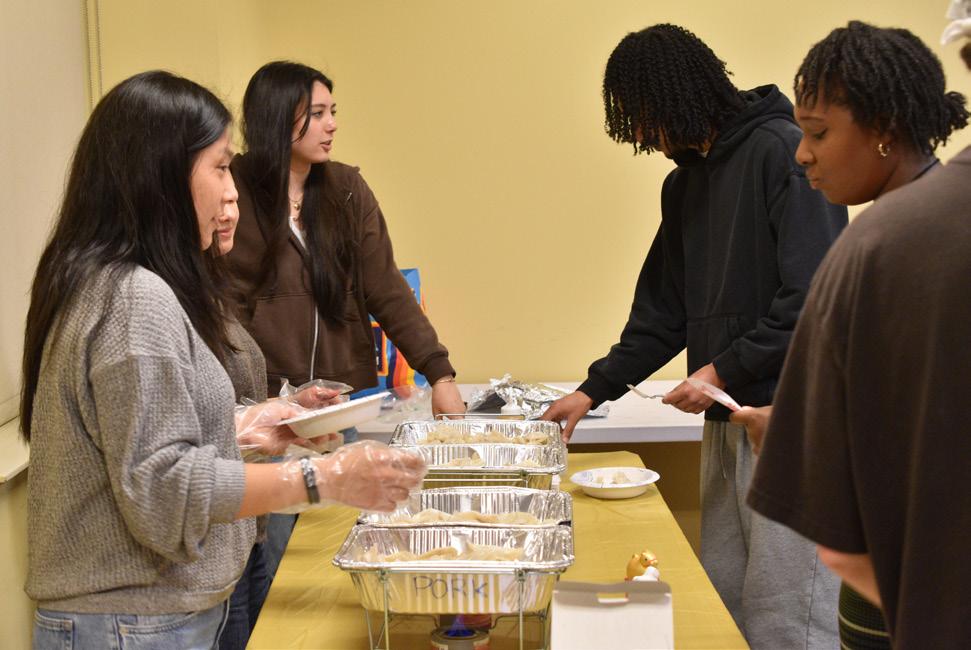
The event was a success, featuring festive decorations, dumplings and several rounds of bingo.
The club designed a relaxing evening with some friendly competition to introduce attendees to club members and the organization, as a whole.
The bingo night was one of several early events that the newfound organization has put together.
The club just formed at the tail end of last semester, but club president Mckalay Estep has wanted to create something like it since high school.
“At first I didn’t think I was prepared or outgoing enough to start one yet,” she said. “But I decided to take my chance now because I was inspired by other Universities that have a similar organization.”
Estep also mentioned that starting out can be a little stressful, especially with all the new events they have to plan out and host.
The first event was a “Build your own Pho” night, earlier in January, which worked as an introductory meeting for the club’s staff.
Club members made Homemade pho to enjoy (and customize to each member’s liking) and sold
thai tea to fundraise for the club, selling out in around 30 minutes.
From Feb. 11 - 12, the club hosted a two day bake sale featuring cultural treats such as pandan waffles, taiyaki, ube and chocolate crinkle cookies, and thai tea.
The idea proved to be another great success, selling out of everything on their first day, including a purchase from an anonymous benefactor. The donor bought 100 cookies, allowing everyone who was interested to indulge in free cookies thanks to their generosity.
Thanks to this event and careful planning from the club leaders, AASA has gained a lot of momentum through participation and profit — the bake sale in particular netting them a little over 500 dollars in profit.
Looking forward, AASA has their schedule packed with events; in March the group will collaborate with the Fine Arts society for a karaoke night featuring prizes, Filipino food and potentially some live performances.
After spring break, the club hopes to host an outdoor movie night, screening a Studio Ghibli film on a projector with picnic-style seating. And after that, in May, another fund-raising event will take place to celebrate AAPI (Asian American Pacific Islander) month.
To Estep, the club’s mission is simple, “Spread culture, build community and get everyone together,” she said.
The club’s Vice President, Lydia Park, thinks the club has a lot of potential for sharing culture.
“I think a club like this can be pretty informative,” she said. “It spreads diversity – makes it to where everyone can learn more information about our cultures.”
While for now, the club is focused on keeping things related to Cameron, in the future, they hope that ability to showcase their identity can spread off campus as well.
“In the city, they have an Asian district festival, and we don’t really have anything like that here,” Park said. “Hopefully we get to the point where we can do out-of-campus activities, but for now, we’ll do what we can.”
At the start of a new year, the club’s future is looking bright, and the lunar new year event is just the beginning of their plans.
For more information about the club and future events, students can contact the organization through their email at CameronAASA@gmail.com, or their Instagram at @cameronaasa.
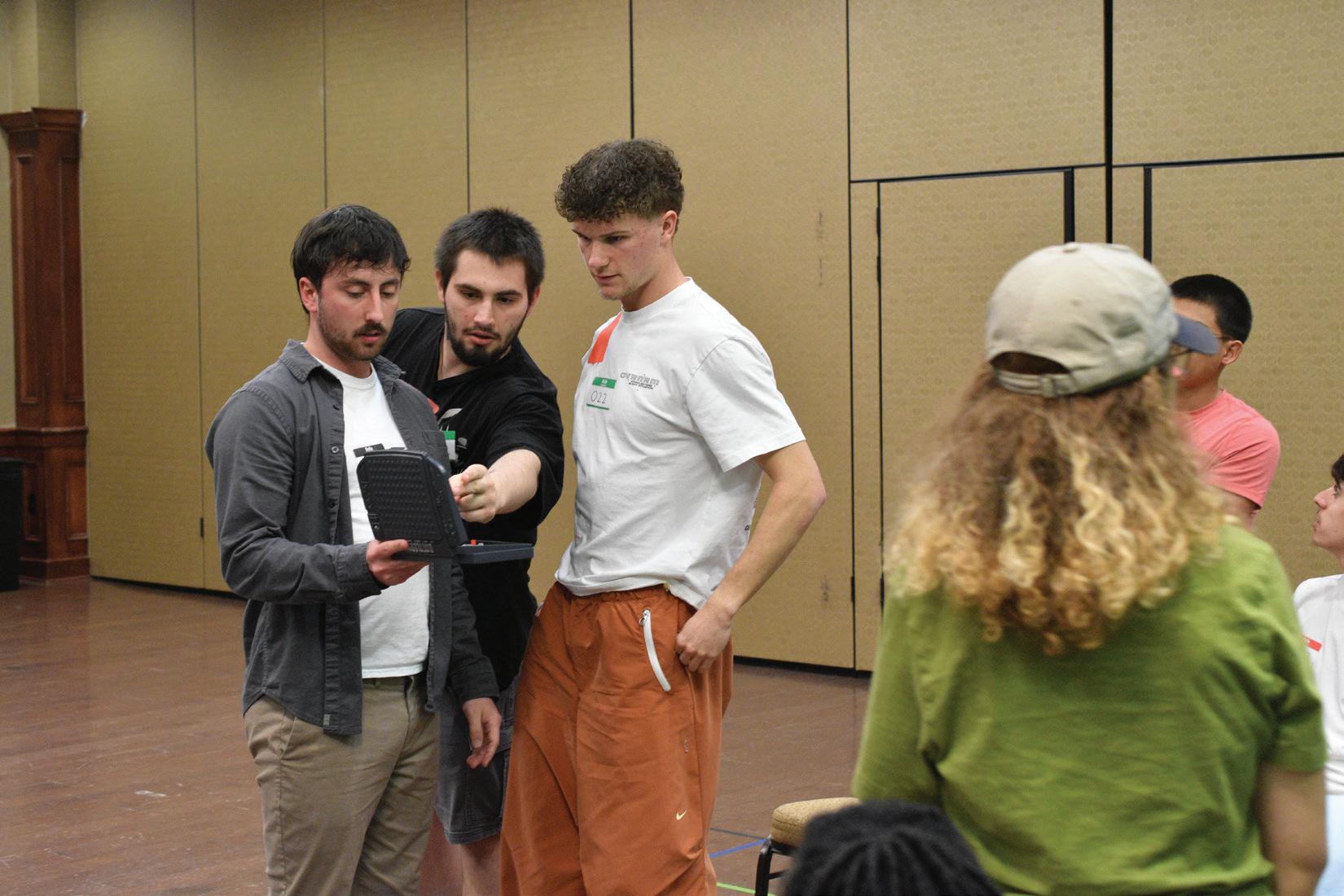
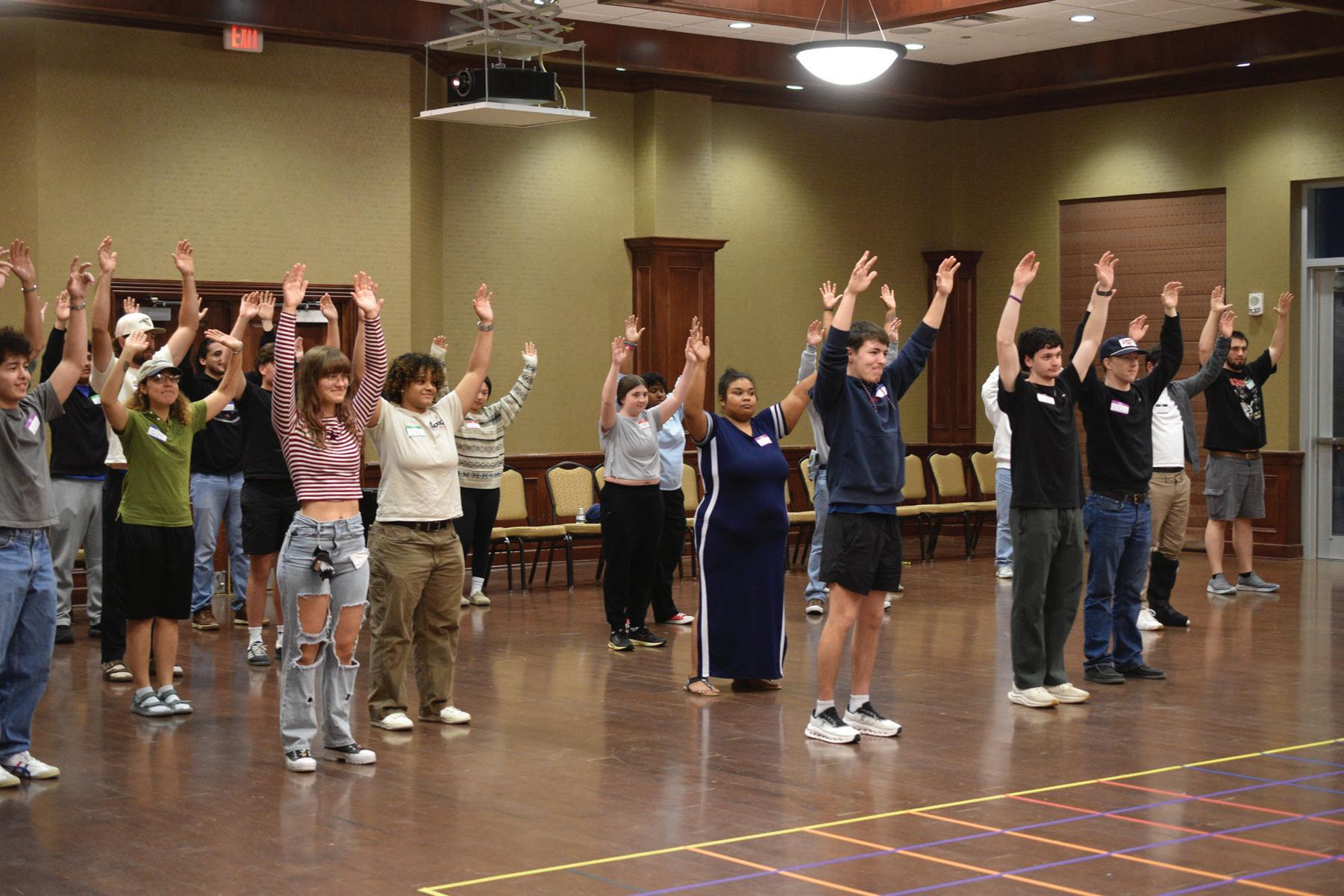
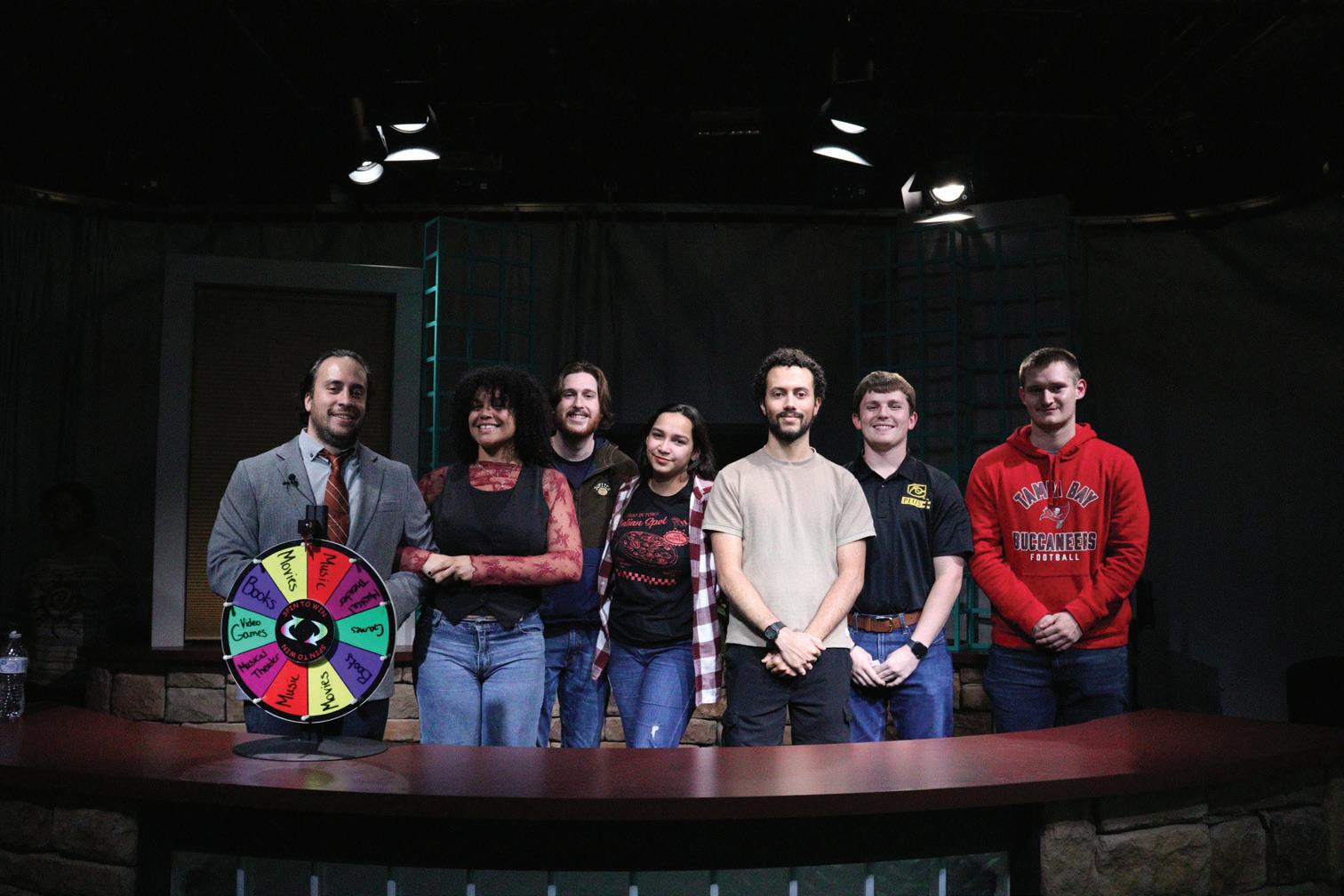
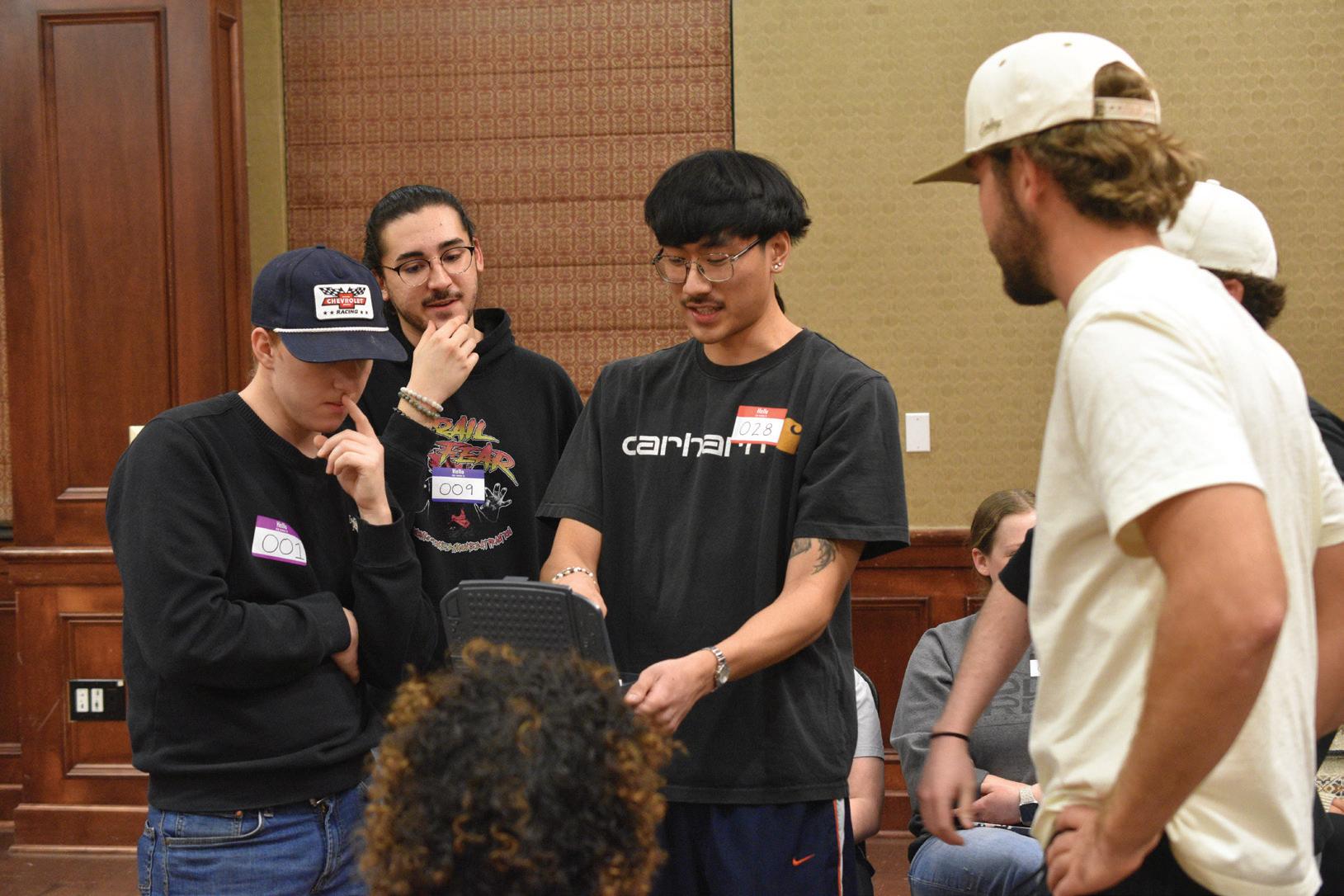
Jake Thomas News Editor Another $500 scholarship is up for grabs this week as the CUTV Trivia Show returns for another season.
4:30 p.m., on Thursday, March 5, the show will be recorded LIVE in the CUTV Studio, in the Academic Commons building.
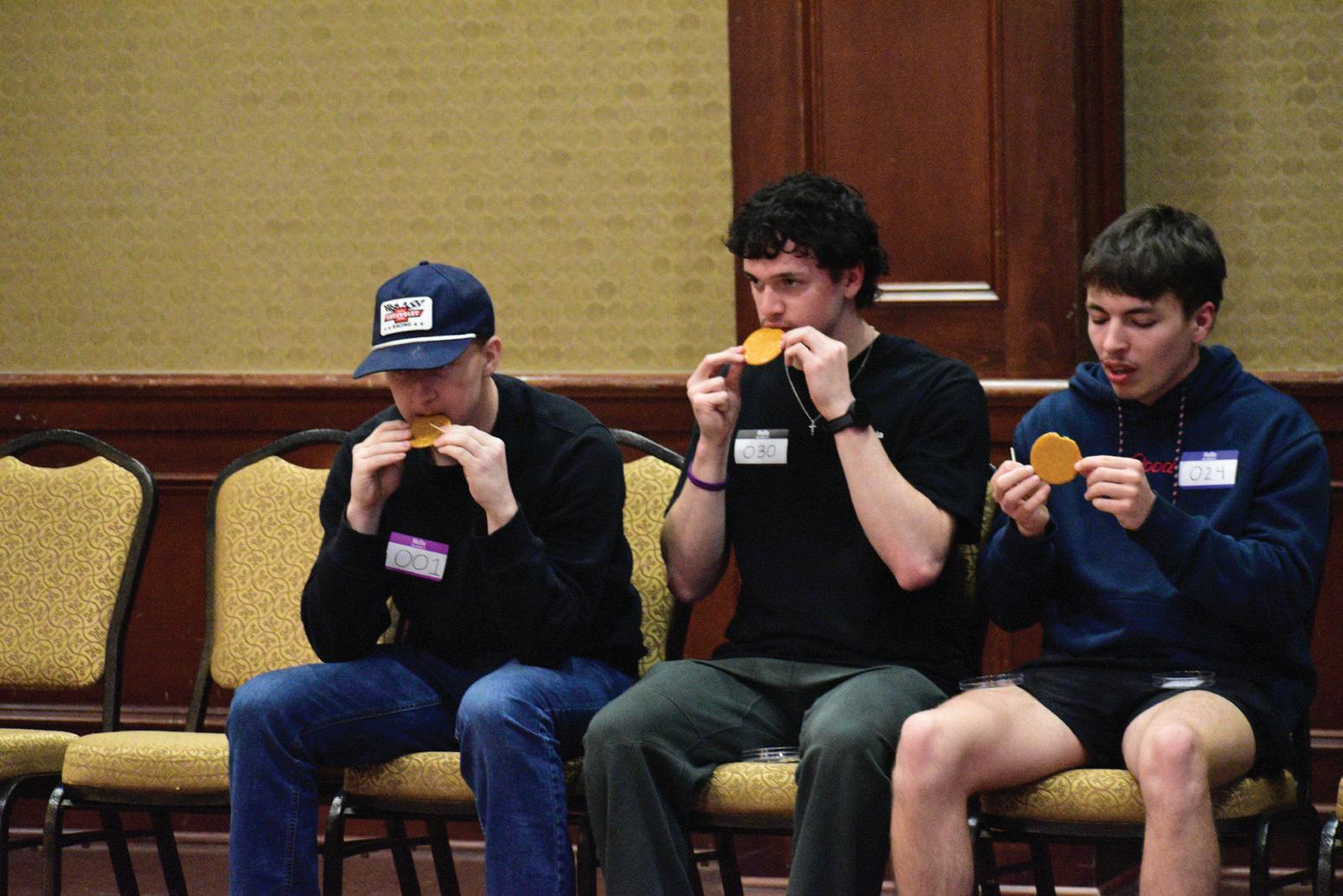
Cameron student interested in
Photos by Jake Thomas
Photos by Jake Thomas
Photo by Elaina Benke
Maintenance mode:
Do creative industries value profit over preservation?
Voices Editor
On Feb. 2, Adobe sent out emails to creative cloud users indicating that the animation software known as Adobe Animate would be discontinued on March 1, 2026. Following this, users would have until March 1, 2027, to convert files, or they would lose access to their projects.
Adobe is a company whose software is an industry standard in various creative spaces, including animation and game design. For animation in particular, Adobe products were used in projects made by Disney, Nickelodeon and Cartoon Network.
In game design, independent game developer Lost Relic Games has used Animate for their game Blood and Mead, which is currently in development.
The statement made by Adobe has since been retracted after a major pushback from users, and the software will remain available to users in “maintenance mode,” but it begs the question: if a major company were to go through with a decision like this, what would be lost?
The preservation of media has been a major effort from archives and institutions before the internet was even a thought. Today, the Library of Congress preserves their digital content by the petabyte, which is the equivalent of one million gigabytes.
Despite these preservation
efforts, media is constantly lost to technological obsolescence and legal obstacles.
Daniel Billings is the game design and 3D animation instructor for the Life Ready Center in Lawton, Oklahoma. He has been teaching video game design for six years and animation for two years. He has used his passion to teach
“Being able to have a company essentially be able to flip off access to whatever you’re doing just on a whim is kind-of scary.”
- Daniel Billings Life Ready Center Instructor
students about both industries.
“We start by teaching a lot of the basics,” Billings said.
“Gradually [we move] into coding … and once we get into the video game design two area, it’s a lot of personal projects. Instead of just how to learn game development, it’s how to be a game developer.”
Billings said he was disappointed with Adobe’s statements and the loss of access to files in context of education.
To lose access to months or even years of work because a company wills it is a gross misuse of power — power that should not be held over creators in the first place.
This behavior from companies that are considered an industry standard only brings about mistrust in users and only furthers the issue with preservation of digital media.
A study of the video game reissue market in the United States done by Phil Salvador for the Video Game History Foundation revealed that only 13 percent of classic
requires time and money. Video game consoles fall into obsolescence as the years go by, and moving games to a new console is not as easy as copying and pasting code. It must be retrofitted for the console.
Another issue is licensing. Companies may not hold the rights to the game anymore or may not know who holds the rights. Legal barriers are one of the many reasons that preservation for digital media is so difficult.
“I think right now we are in a weird state as far as digital media preservation goes,”
that even in development, the risk of losing access to digital media is a prevalent issue that needs to be addressed.
Combined with the issues that threaten older media, there must be a major effort to allow public archival of creative work.
The Video Game History Foundation is a non-profit organization dedicated to not only preserving video games, but also the history of video games.
“Being able to have a company essentially be able to flip off access to whatever you’re doing just on a whim is kind of scary,” he said.
that the media is totally lost; much of it is simply unavailable to the public because companies will not release said media.
This can be for several reasons.
For video games, it is often because a rerelease of a game
to have it streamed … so being able to get all of these companies to agree on how media should be preserved and where media should be preserved seems like a monster of an undertaking to be able to do.”
Adobe’s actions emphasized
They are building a research library for access to historical material of video games, preserving source code and video game assets and educating and informing developers on how to preserve their media and the history of it.
The Software Preservation Network is an effort dedicated to ensuring the prolonged access to software and has worked to bring about legal reforms to allow for more digital media
Groups like this stress the importance of digital media, and how it is not just about preserving the media but preserving the history and the impact on culture that the media has.
“If it’s something that can’t be preserved, and the makers have no intention of preserving it, [then] I feel like that is at least ethically where someone can and should do media preservation,” Billings said.
Jaley Melton-Wiley
Graphic by Jaley Melton-Wiley
Comic by Jaley Melton-Wiley
Reanimal Navigating a horrific nightmare world
Makayla Flenoury A&E Editor
Tarsier Studios has set their sights on a new co-op puzzle-horror game: Reanimal. Just like the Little Nightmares franchise, in Reanimal, you play as children navigating a horrific nightmare world.
The Little Nightmares world is a nightmare world called Nowhere that feeds on fear and trauma. The Ferryman lures children into the hellscape through their dreams.
Reanimal does not operate in the same world, and little about the world is confirmed. We do know one thing: Players navigate through a war and a massive flood. Reanimal follows a brother and a sister trying to find their three friends in the midst of the chaos.
Tarsier Studios stayed true to their atmospheric horror. The world holds a heavy feeling of daunting despair and an absence of hope or safety.
and her dust children; and The Lamb, a horrifying mutation of the corruption of innocence .
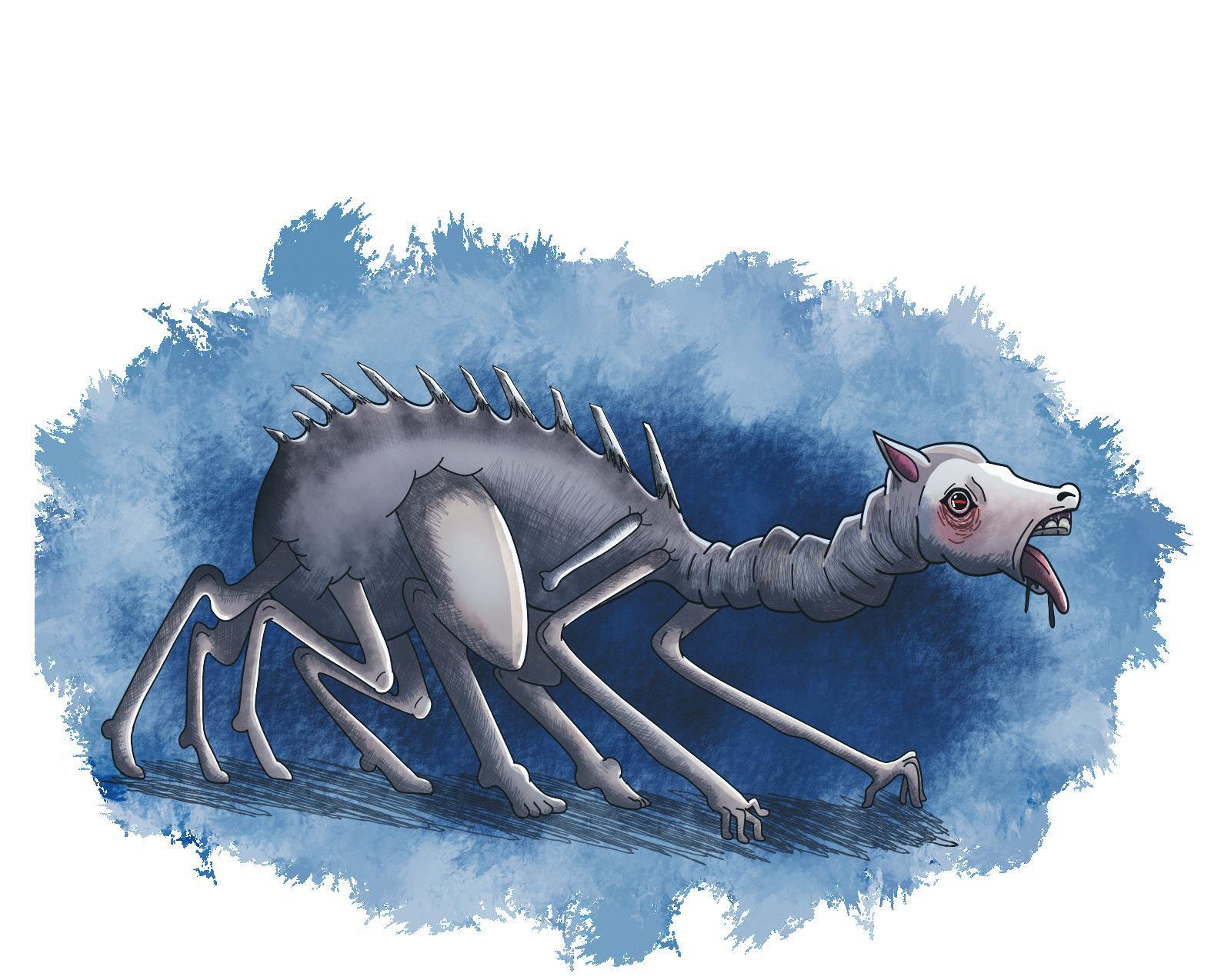
The Lamb and the Sniffer encapsulate the Little Nightmares feel with their ugly, terrifying and mutated aesthetic. When the siblings roam the environment with the Sniffer, it’s unnerving. The creature creates the mood of a serial killer, turning people into skin suits for him to inhabit. He even kidnaps their friend Hood, luring him with ice cream.
Other massive, mutated animals roam throughout the world; some are hostile, others are not, but all represent something sacrificial, foreshadowing the impending truth. After fighting each of the main three creatures, you are able to save your friends: Hood, Bandages and Bucket.
But something strange happens to the sister. After each rescue, or the carefully placed voice lines, she appears to be in extreme pain, lights flash red and then we see a lamb at the bottom of a well.
The Lamb is angry and mutating, until
Shortly after the lamb erupts from the girl, it eats their friend Hood, which causes the lamb to grow and begin the mutation. The rest of them enter the center of the war zone.
The war zone is the embodiment of hopelessness; you witness many soldiers suicides in the midst of gunfire, people aiming to kill the children, and the aftermaths of what war does. The chapter brings you deeper into the feeling of despair and desperation.
While navigating the world, the lamb hunts down their other two friends, growing into a grotesque human-lamb monster. Only the siblings are left, sneaking their way through gunfire, bodies and hiding from the monstrous beast.
They come across a tank (that they somehow know how to drive), which aids them in their upcoming battle with the monstrous lamb.
Even though the two siblings put many rounds into the beast, it was somehow still alive and ate the boy. You run away as the girl until she is inevitably caught, too.
Now the truth is revealed: The other children knew exactly what was wrong with the girl, because they did it to her.
The brother and other children sacrificed the girl in a cult-like ritual and threw her down a well.
The final scene is the top of the well, surrounded by dust and dryland, until the well starts to overflow with water, giving the impression that the cult sacrifice was to stop a drought or even the war itself, but it seems the water never stopped coming.
Of course, there is a secret ending that changes the narrative. Throughout the game, there are five hidden coffins. If you find them all, you’ll get the secret ending.
The coffins themselves reveal something strange. The boy and the three friends are already dead. When you open
the coffin, it shows the moment right before their deaths. Except for the fifth coffin, which holds a rabbit alive and well, representing the sister.
In the secret ending, it is revealed that other children have been sacrificed before her. During the final well scene, figures wearing similar animal masks come out of the shadows, and they actually bring the water with them.
And that is the end.
There will be three expansion packs coming out that add to the main storyline, so until then, this is all we know.
The gameplay was amazing. It was extremely similar to Little Nightmares, but somehow on its own scale. I love the more realistic style versus the almost claylike style in Little Nightmares.
The world and atmosphere were beautifully terrifying, and the co-op made the experience better.
The gameplay being centered in a war zone adds to the horrific atmosphere with a layer of devastation. Plus the grotesque appearance to many of the animals, bodies and creatures brought out the horror element. The war zone was my favorite part of the game, next to the small journey across the flooded city.
The flooded city includes most of the game’s minimal voice lines. The voice lines allow you to understand the amount of sadness the children feel because this city used to be their home. Now their city is destroyed and riddled with bloated bodies that want nothing but to eat you.
The puzzle difficulty sat at a good medium. Nothing too difficult, except for when my co-op partner wouldn’t listen, and it felt like a true Tarsier Studios game. I am looking forward to the three upcoming expansion packs that will reveal more of the story. Two will be released this year, and the final one in early 2027.
I would give ‘Reanimal’ a 9/10.
‘SPIDER-MAN: ACROSS THE SPIDER-VERSE’
“Spider-Man: Across the Spider-Verse” promises, action and it delivers but then quietly turns into a story about fear, identity, and coming of age. The film, a sequel to 2018’s “Into the Spider-Verse”, builds its entire story around one idea: the leap of faith. Miles Morales is no longer learning how to be Spider-Man. Now he has to decide who he is allowed to be, both outside and inside the mask.
What makes the movie special is how it tells that story visually. Even though it is animated, the directors treat it like a live-action film. The camera moves, tilts and frames characters as if a real person were holding it. Lighting also plays an important role. Emotional scenes often take place at sunset or against glowing city lights. Warm colors appear when Miles is with his parents, creating a feeling of safety and comfort. Darker lighting surrounds the headquarters of the Spider-Society, like cool blues and greys, where Miles is told that certain tragedies must happen for the universe to stay intact.
During one major fight on a moving train after Miles decides to forge his own path, the environment itself becomes a part of the storytelling. The train travels a futuristic world, through layered highways and buildings. The motion symbolizes Miles moving through his character as he uses the train as a metaphorical leap of faith. The visual contrast presents a choice: family and personal belief, or duty and sacrifice. The movie never states this directly, but the lighting helps the audience catch the subtext.
language becomes the main way emotion is communicated, rather than facial expression. Though the director and animators could have chosen to make the masks more emotive, they pay homage to traditional film techniques and the original Spider-man trilogy.
Technical choices like using inconsistent framerates for certain characters makes their movements stilted yet aesthetically pleasing, especially for characters like Hobie Brown aka Spider-Punk. Hobie’s movements are dripping with personality. His character design down to the way he moves is masterfully articulated to showcase a punk rocker’s Spider-Man, who fights fascists. Hobie’s character is one of the only SpiderPeople who resist the authoritarian traits of the Spider-Society. While the Spider-Society demands obedience and letting tragic cannon events take place, Hobie opposes the idea of blindly following orders. He actively encourages Miles to break the status quo and take a leap of faith despite not knowing how to save his universe and his father, or if he even can.
nod to the Comics Authority with a “Approved by the Comics Code Authority” seal.
The movie frequently pauses just before characters act. The image slows or briefly stills, then suddenly bursts into motion as someone jumps. Those pauses matter. A leap of faith always happens in the moment between fear and action. The film visually recreates that hesitation so the audience experiences it too.
Unlike most superhero movies, “Across the Spider-Verse” does not fully resolve its story. The film ends on a cliffhanger leading into the next installment, expected in 2027. Instead of feeling incomplete, the ending fits the theme. A leap of faith never guarantees safety or answers. Miles chooses his path, but the consequences are still unknown. The movie leaves viewers in the same position as its hero: committed, but uncertain of the future.
“Across the Spider-Verse” works because every part of the filmmaking supports its message. Camera movement shows instability, lighting shows emotional conflict, color expresses feeling in a way that would be impossible with dialogue.
Characters lean closer to people they trust and physically distance themselves from people to show emotional distance. Miles and Gwen hug, stand close together, swing through the city together, all this emphasizes their closeness. When Miles confronts the other Spider-People, they surround him and restrict his movement and literally box him in.
Because most characters wear masks, body
The animators took a leap of faith not just for Miles, but by breaking away from traditional superhero animation. They combined both 2d characters and 3d models in the same environment, with designs so varied few animated movies would dare venture into this territory with a dynamic cast charters, all animated distinctly in their own style. Spider-Verse is filled to the brim with genreblending, crossovers from different IP’s, and a level of self aware humor. To expand further on the amount of references they could pack into this film, they also use book effects. Otomotopias like “FLASH” or “BANG!” flies out from the characters fists when they land a punch. Spider verse treats itself like a moving comic book. Using paneling and thought bubbles the animators internationally introduce errors into the animation to make it feel more authentic to traditionally print and paper comics; colors blur together, or seem off center like a misprinted page. Both movies even begin with a
It is easy to call the movie a masterpiece of animation. It can be argued “Across The SpiderVerse” is a masterpiece overall: in plot, animation, the superhero genre and technical aspects like framing camera work, which is insane since SpiderVerse is shot with “virtual camera”. The film is not only an impressive work of animation; it is impressive because it uses animation to do things live-action films cannot, and it borrows techniques from live-action to sell emotional depth and weight to the audience. Every frame contains detail and intention. You could pause the movie almost anywhere and analyze the frame for pages.
More importantly, the movie understands Spider-Man better than many live-action versions. Spider-Man has always been a character defined by community and responsibility. Here responsibility is questioned. The film asks whether following tradition is heroic or whether true courage is deciding your own fate.
Elizabeth Lehman Staff Writer
Graphic by Fabiola Perez-Aponte
Student Life
Amanda Purser Managing Editor
As graduation approaches for a new class of Aggies, hundreds of students are preparing to go beyond the classroom and enter the next phase of their lives, which for many means entering an incredibly competitive workforce.
Cameron puts an emphasis on careerreadiness with many resources and opportunities for students to be well prepared to take on professional roles and immediately bridge the gap between academic theory and real-world application.
Work-Based Learning Experience Coordinator
Isabella Myers helps to run the Student Enrichment Center (SEC) which provides a variety of assistance to students for their best chances of success. From academic coaching, career services and financial literacy, there are significant resources available.
“We offer so many things here as far as career services in the Student Enrichment
Center,” Myers said. “We do resume review, we do mock interviews, we offer some other platforms like Focus2, it’s kind of an interestinventory. If students are unsure of the job they want in the future or their major, they can check that out or they can come talk to me.”
The SEC accommodates students who may not have the time or ability to come to campus, ensuring they can reach as many Aggies as possible.
“We also have SkillsFirst,” Myers said, “so, if students aren’t wanting to come see me face to face for resume, cover letter, mock interview help, they can go on there.”
The most recent endeavor is Cameron’s partnership with the career placement platform Handshake, which launched on campus in fall 2025.
“We’re using it as our online job board,” Myers said. “It has a lot of other uses that Cameron hasn’t explored yet, but it’s mostly a place where students can go to find jobs and to interact with
Frank Rabel Santos Staff Writer
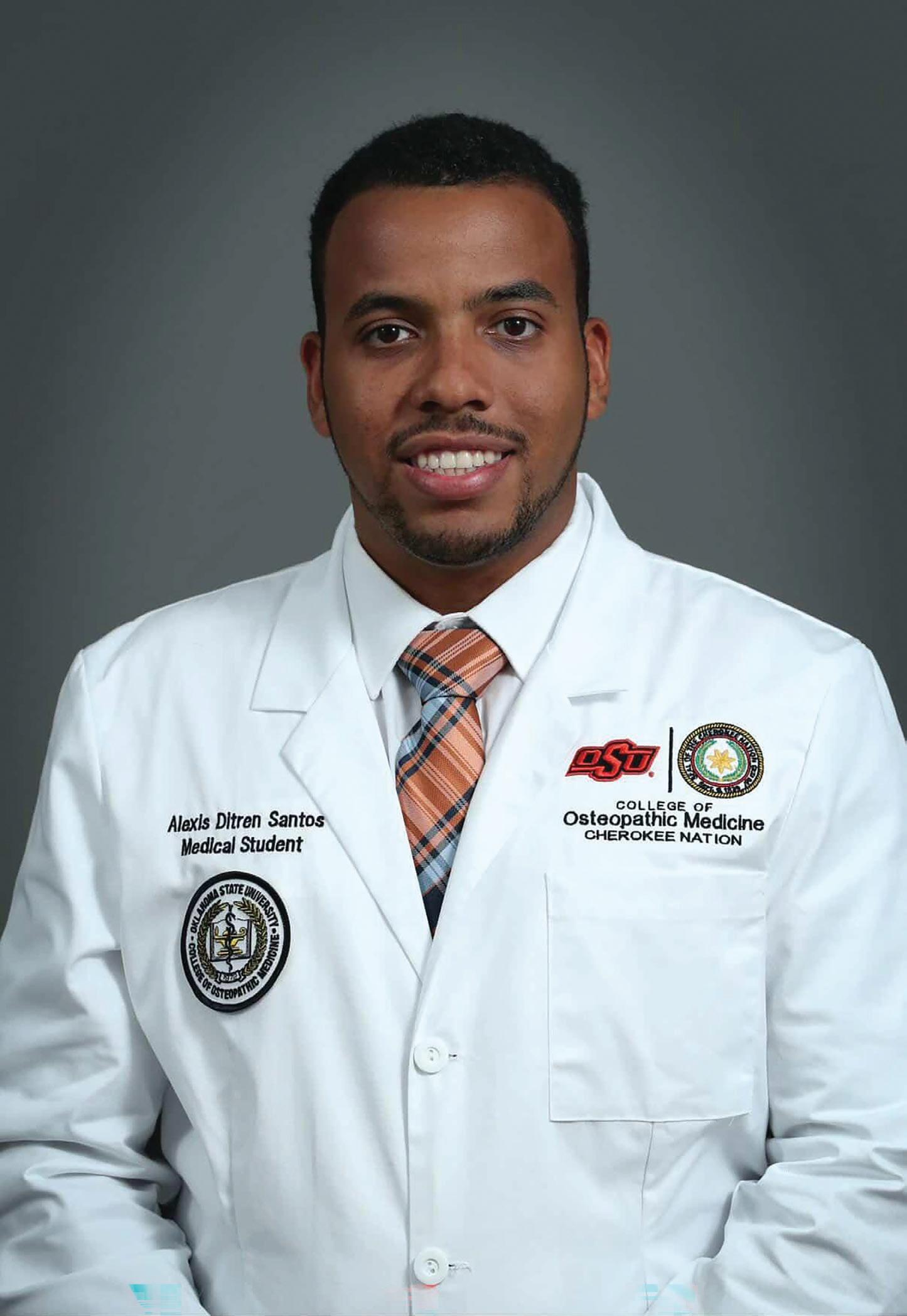
At Cameron University (CU) there are many graduates who go on to do great things, and one of these Aggies is Alexis Ditren Santos.
Santos graduated from CU in 2021 with a bachelor’s degree in biology and is currently working to graduate in May from Oklahoma State University’s (OSU) Center for Health Sciences with a degree in osteopathic medicine. After that, he is planning to do his residency specializing in neurology, which will be another four years of study.
Born in the Dominican Republic in 1999, Santos moved to Lawton in 2008 and graduated from Lawton High School in 2017. He chose to complete his medical undergraduate degree at CU mainly due to its location — to remain close to family support. Another big reason was affordability, as CU is very economical which helped Santos not having to worry about debt and being able to focus more on his studies. During his time at Cameron, Santos recalls a story he was taught which stuck with him.
different organizations.”
Potential employers have the ability to engage with students on Handshake by posting information, job openings or making direct contact with applicants. You can also select if you are actively seeking employment and will receive periodic alerts on openings that are in your field or area of interest.
“It’s a lot more userfriendly for our students than our previous platform, and it seems like it’s been a bit easier for employers to use it, so that has been a big A plus,” she said.
It’s advised that students fill out their Handshake profile and keep it up to date with applicable information and interests that best reflect your goals. Doing that work up front when starting out on this platform can help to connect you with the best possible matches.
“Students who have their profile more filled out are more likely to get contacted by recruiters than if they just have their name and major on there,” she said. “So,
about that, but it was also very cool to learn how somebody was able to go back and see where these cells came from and be able to honor her in some way.”
Santos also mentioned how it taught him about ethical practices in medicine, and how important consent is when administering treatments.
In Henrietta Lacks’ case, the biopsy was not the problem, it’s a common procedure done to analyze a specific portion of a patient. The problem lies in the amount of research that was accomplished using her cells, and the multi-billion-dollar industry that exists now because of it.
Santos added that during his time at CU he was taught by many skilled and intelligent professors, such as Dr. Husak, Dr. Lee and Dr. Dunn.
Another notable person that impacted him was his mom.
it’s important to put a little more effort into the profile.”
Handshake is provided to students and alumni free of charge, as student fees and state funding are being used to cover any costs. Anyone looking for a summer internship should access their accounts and start completing their profile now. Those enrolled last semester already have an account set up.
Myers said, “we are currently working to get newly enrolled students on there.”
A unique benefit to students utilizing this resource is the ability to see jobs that are tailored to their level of skills and experience, by finding entry-level positions you are qualified to be hired for immediately.
“It’s mostly for people who are early in their career,” Myers said, “that’s what people in Handshake are looking for.”
She said, “it’s a good opportunity for students to maybe find something that’s, you know, not just a job, but something that they can really see themselves doing for the
long term. Or putting themselves in a career path that they’re actually interested in.”
The SEC has two major professional events coming up that will provide incredible opportunities for students.
From 1-3 p.m. on Wednesday, March 4, Connect on Campus takes place in the McCasland Ballroom of the McMahon Centennial Complex. It’s a networking event open to students and alumni, intended to provide a comfortable setting for students to learn how to communicate in these settings.
“I know that it can sometimes be hard to make those professional connections when you have absolutely no idea where to start,” Myers said, “so we want to use Connect on Campus to offer that assistance.”
The next day, from 3-6 p.m., on Thursday, March 5, in the Aggie Rec Center, the SEC will host the Red River Career Expo, which is open to the entire Cameron community and will feature numerous
to him happened while he was working at Integris Southwest Medical Center, in southwest Oklahoma City.
While working under a neurologist at Integris, there was a case that Santos was able to help with. The patient hadn’t been to the hospital since COVID, and during that time, she had developed a severe weakness in her legs that prevented her from walking. After imaging, bloodwork and other general testing didn’t show anything medically significant, the patient had an electromyography (EMG) done, which measures electrical activity in nerves. The results of the EMG allowed the neurologist to pinpoint the issue. This provided Santos the opportunity
It’s the story of Henrietta Lacks, a black woman who, in 1951, was treated for cervical cancer, and unbeknownst to her, the attending physician took a biopsy of the cancer and of Lacks’ healthy skin. The cancerous cells had the rare trait of dividing infinitely which is why Lacks’ cells are still used to study cancer in research centers around the world.
The issue, however, is that Lacks was never informed about any of this, and the cells were taken without her consent. Years after her death, Lacks’ family was still being asked to donate blood for research with almost no information provided to them explaining why.
Santos said, “It was sad to learn
Santos’ mom is unfortunately affected by a few neurological conditions, such as epilepsy and migraines. However, thanks to neurologists and modern medicine, a lot of her symptoms can be suppressed, and she is able to live almost completely unimpeded.
“The difference that neurologists have been able to make in her life really kinda always stuck with me and made me want to be that for other people,”
Santos said.
Once he graduated from CU, Santos attended OSU’s Center for Health Sciences. He did more traditional studies for his first two years and has since completed two years of rotations. Rotations are more practical studies where instead of learning from lectures and books, he has to actually work in a variety of hospitals and medical facilities under an attending physician to gain real world experience. Out of many patients and cases Santos handled during his rotations, one that stands out
employers and recruiters ready to hire their next team members.
Taking preparedness a step further, the Campus Closet is doing two pop-ups, hosted in the centrally located Eugene D.McMahon Library, on Monday, March 2, and Tuesday, March 3.
“So, if anyone wants to go to the Connect on Campus or the Career Expo but feels they might not be dressed appropriately — the campus closet has longer hours this semester — but they also have these pop-ups in the library so it might be easier for people to get to.”
Students can visit the Campus Closet to obtain professional attire and personal items to ensure they are more prepared for the upcoming events and have the opportunity to present the best versions of themselves. Student enrichment is about equipping graduates with the skills and confidence to navigate what comes next, commencement is just the beginning of your next chapter. Now, go get that dream job!
to observe how the neurologist handled a patient with a hard to diagnose condition and what treatments were recommended. Santos also said that during his time in neurological rotations he cemented his choice to specialize in neurology, as before he was debating between that and internal medicine.
Now that Santos is graduating from OSU, his residency is the last step before being able to work on his own. Residency is similar to rotations, except it focuses on the medical specialty of his choice. Once his residency is complete, Santos plans to work at Duncan Regional Hospital and hopes to serve southwest Oklahoma as a neurologist.