Hamilton is one of the youngest cities in New Zealand.
Page 2
RESPONSIBLE AI USE
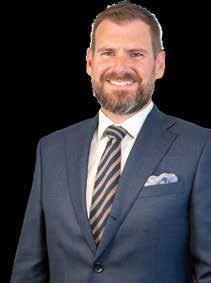
Morgan Clearkin is helping unlock automation opportunities using Ai technology. Page 5
MOVING ON
She’s the behind-the-scenes face of King Street Advertising, now Judy Coulter wants a change. Page 7
OUT AND ABOUT
We were at the trots, Business After 4, Chile, Alan Livingston’s funeral and Government House. Pages 10 and 11
Up close and personal
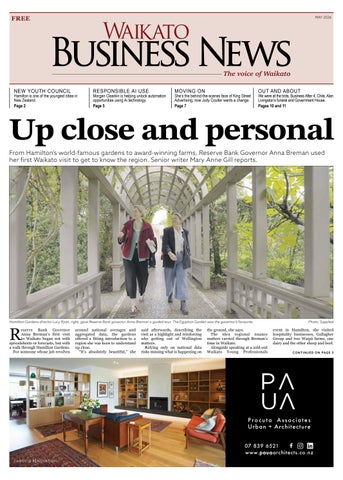
From Hamilton’s world-famous gardens to award-winning farms, Reserve Bank Governor Anna Breman used her first Waikato visit to get to know the region. Senior writer Mary Anne Gill reports.
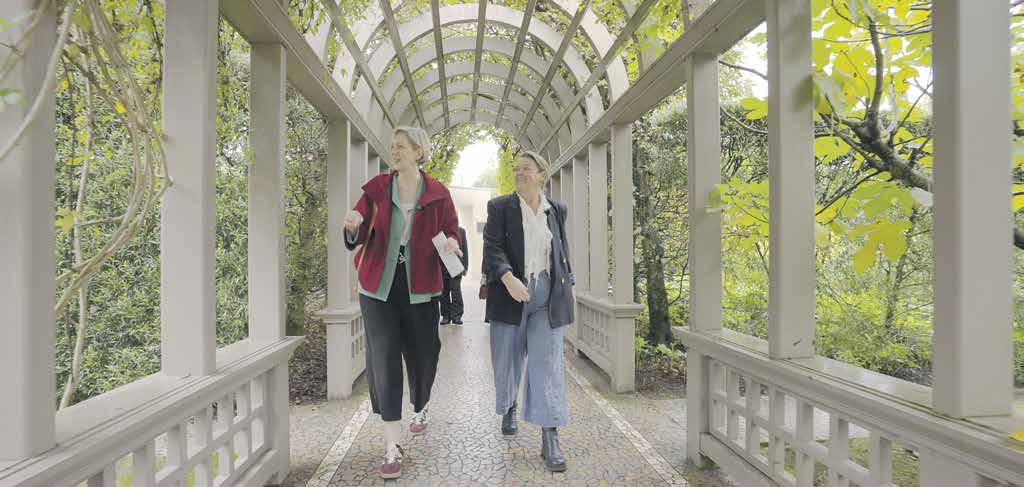
Reserve Bank Governor Anna Breman’s first visit to Waikato began not with spreadsheets or forecasts, but with a walk through Hamilton Gardens. For someone whose job revolves
around national averages and aggregated data, the gardens offered a fitting introduction to a region she was keen to understand up close.
“It’s absolutely beautiful,” she
said afterwards, describing the visit as a highlight and reinforcing why getting out of Wellington matters.
Relying only on national data risks missing what is happening on
the ground, she says. The idea regional nuance matters carried through Breman’s time in Waikato.
Alongside speaking at a sold‑out Waikato Young Professionals
event in Hamilton, she visited hospitality businesses, Gallagher Group and two Waipā farms, one dairy and the other sheep and beef.
Hamilton Gardens director Lucy Ryan, right, gave Reserve Bank governor Anna Breman a guided tour. The Egyptian Garden was the governor’s favourite.
Photo: Supplied
News/Editorial
Roy Pilott editor@goodlocal.nz 027 450 0115
Mary Anne Gill maryanne@goodlocal.nz 021 705 213
Viv Posselt viv@goodlocal.nz 027 233 7686
Advertising Director
Janine Davy janine@goodlocal.nz 027 287 0005
Owner/Publisher
David Mackenzie david@goodlocal.nz
Office/Accounts admin@goodlocal.nz 07 827 0005
Readers’ contributions of articles and letters are welcome. Publication of contributions are entirely at the discretion of editorial staff and may be edited. Contributions will only be considered for publication when accompanied by the author’s full name, residential address, and telephone number. Opinions expressed are not necessarily those of the publishers. Waikato Business News is published by Good Local Media Limited.
Also publishers of
Shine on, you diamonds
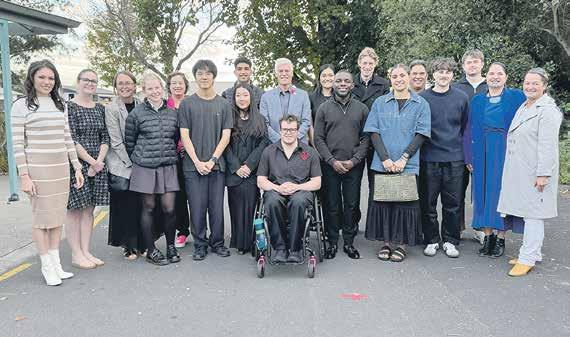
Hamilton’s first youth council in seven years was encouraged to “shine and shine bright” when they gathered for a pōwhiri last month.
The call came from Shane Te Ruki, who played a lead organisational role in the pōwhiri which brought city and district councillors and staff together at the Western Community Centre in Nawton.
Te Ruki is the iwi liaison advisor for Waipa District Council, and he was assisted by Cassidy Temese, who occupies the same kaitiakitanga role for Ōtorohanga District Council.
City mayor Tim Macindoe said it was an exciting day, underlined by the presence of six sitting city councillors Meshweyla MacDonald, Emma Pike, Anna Casey Cox, Sue Moroney, Robbie Neha and Maria Huata.
Also present was Waipā councillor and Ngāruawāhia Community Board member Dale Maree Morgan. Macindoe acknowledged
the outgoing city council for its decision to restore a youth council, noting 12 candidates were selected from an initial field of 200.
“We want you to be heard,” he
Journeys in opera music
Hamilton audiences will hear a significant New Zealand opera alongside a classical concerto this month, when Opus Orchestra presents The Journey of Mataatua Whare with
Beethoven’s Emperor Concerto at the BNZ Theatre. Composed by Dame Gillian Karawe Whitehead, The Journey of Mataatua Whare tells the true story of the
Mataatua wharenui, built in Whakatāne in 1875 by Ngāti Awa. Removed from its home without consent, the wharenui travelled internationally for decades before returning to Aotearoa in 2011.
The work is performed in concert form and centres on themes of cultural loss, resilience and homecoming. Three emerging New Zealand singers Katherine Winitana (soprano), Tomairangi Henare (baritone) and Samuel McKeever (bass) perform distinct narrative roles within the opera, giving voice to Māori, Pākehā and the wharenui itself.
The Waikato University Voice Programme Ensemble will join Opus Orchestra for the performance, further highlighting the region’s involvement in the production.
The second half of the programme features Beethoven’s Piano Concerto No. 5, the Emperor, performed by New Zealand pianist Stephen De Pledge. De Pledge says the return to Waikato is particularly
meaningful.
“I’m delighted to be making my debut with the orchestra of my home region,” he says.
“The Emperor is a work I’ve lived with for many years it’s both powerful and deeply lyrical.”
Conducted by Peter Walls, the concert brings together works that differ widely in period and style, but which each explore large‑scale human themes. Supplied
An emotional new opera by Dame Gillian Whitehead and Beethoven Piano Concerto No.5
said. “Hamilton is one of the youngest cities in New Zealand.” Roy Pilott
From left, a gathering of youth, city and district councillors - Meshweyla MacDonald, Emma Pike, Anna Casey-Cox, Sara Macdonald, Sue Moroney, Brugud Buri, Rion Ormsby-Harris, Nury Choi, Hamilton mayor Tim Macindoe, Asher Lewis, Shemaiah Ioapo, Damas Buhendwa, Will Benefield, Tirama te Marino Bramley, Robbie Neha, Seamus Lohrey, Bastiaan Banks, Maria Huata and Dale-Maree Morgan. Photo: Roy Pilott.
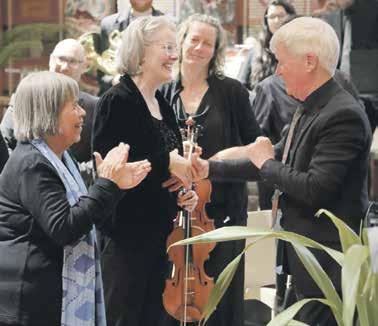
Celebrating the music, from left composer Gillian Whitehead, violinist Tessa Petersen and conductor Peter Walls. Photo: Richard Lummus
Pianist Stephen De Pledge.
Festival hit
More than 1000 nights of accommodation have already been booked for Jim Beam Homegrown 2027 with organisers confirming New Zealand’s largest Kiwi music festival will be held in Hamilton for the foreseeable future. Chief executive Andrew Tuck says such was the success of the move to Hamilton, he’s excited to stay and confirmed April 3 for next year.
New ambulance
Hamilton has a new emergency ambulance thanks to funding from Grassroots Trust Ltd. The Generation 4 ambulance, which is fitted with modern equipment including a power load electric stretcher and stair carry chair and will be based in Hamilton, was blessed at a ceremony at Hato Hone St John’s Ngāruawāhia ambulance station last month.
Apprentice wins
Hamilton apprentice Pascal Gisler, 22, won the Waikato heat of the New Zealand Certified Builders Apprentice Challenge last month and took home a $1000 prize package. Cullen Whiteman, 21, was second, while Josh Tretheway, 21, came third. The challenge saw apprentices test their carpentry skills in a head to head, eight hour build of a pātaka (community sharing cupboard).
Building up
Hamilton Airport has marked a major milestone in the expansion of its business park, with the first building in Precinct North completed ahead of schedule. The 5000sqm purpose-built facility has been developed for New Zealand owned Asmuss, which becomes the inaugural tenant in the newest stage of the 170-hectare Titanium Park.
Feds president
Taupiri dairy farmer Chris Woolerton is the new president of Federated Farmers Waikato. The former Waikato District councillor was elected to lead what is the largest of the organisation’s 24 provinces at an annual general meeting yesterday. He takes over from Phil Sherwood.
Up close and personal
She saw first‑hand how exporters, manufacturers and agricultural producers are navigating another period of global disruption.
Those visits framed a wide‑ranging panel discussion chaired by Waikato Young Professionals chair and senior solicitor Tyla Robinson and joined by Craig’s Investment Partners adviser Callum Malcolm and Hamilton Central Business Association general manager Vanessa Williams.
While global conflict and fuel prices dominated the headlines, the conversation quickly grounded itself in what businesses and households are dealing with day‑to‑day.
The timing was not easy. Breman acknowledged her first months in the role had been “chaotic”, with New Zealand appearing to be turning a corner before renewed global shocks pushed costs higher again.
Fuel prices, she noted, are hitting inflation and confidence, particularly for households and consumer‑facing businesses. The Reserve Bank’s challenge is working out whether that shock remains temporary or begins to embed more broadly.
“Our job is to make sure near‑term inflation doesn’t become medium‑term inflation,” says Breman.
“If we see that happening, the bank would tighten.”
For now, she said, headline inflation has lifted but core inflation has remained stable a distinction that matters when making decisions that can take 12 to 24 months to fully flow through the economy.
Williams says those pressures are already visible in Hamilton’s CBD. Costs are rising, margins are thinning and discretionary spending has been cut back, particularly in retail and hospitality. Foot traffic remains well below pre‑2019 levels, impacted by hybrid work patterns and tighter household budgets.
But Williams also pointed to adaptation.
“We’re seeing businesses collaborate, expand offerings and look seriously at productivity tools.
“Small businesses are nimble and waiting is one of the biggest risks right now.”
That message resonated with Breman, who says successive shocks risk draining confidence just when investment is most needed.
“My concern is that after several tough years, people lose belief that investing now will pay off.
“But businesses that invest through downturns are much better positioned when demand returns.”
Productivity came up repeatedly during the panel discussion not as an abstract economic concept, but as something practical. Digitalisation, smarter systems and new technologies give businesses ways to produce more without adding cost, easing pressure on prices while supporting higher real wages over time.
From a regional perspective, Breman said Waikato has strengths that position it well. While local services face headwinds, exporters and agricultural producers are seeing solid demand. New Zealand’s reputation as a reliable supplier something reinforced during her visits to farms and manufacturing
sites is an advantage in uncertain global conditions.
Housing also forms part of that story. Breman welcomed the recent stabilisation in house prices, noting it has improved affordability for younger buyers and allows people to move to where jobs are.
“High volatility isn’t good. But stability, especially when it helps first‑home buyers, is positive.”
Asked what advice she would give young professionals early in their careers, Breman spoke personally.
Entering university in Sweden after the economic crisis of the early 1990s, she worried she might never find work. Experience has taught her otherwise.
“Worry less. Even when the world looks scary, there will be opportunities.”
Her own career took her from Sweden to the United States, France and now New Zealand a move she made with her husband and two daughters for the right role.
“You do have to be prepared to try things. Believe in yourself and go for it.”
As Breman headed back to Wellington, it was clear Waikato had left an impression: a region balancing caution with investment, navigating pressure without waiting passively for conditions to improve and telling its story in ways no dataset ever could.
Meet the university graduates
University held graduation
online goodlocal.nz
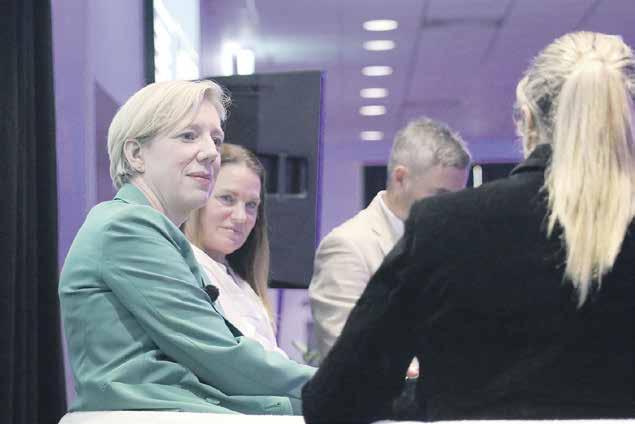
Reserve Bank governor Anna Breman, left was on a panel with Hamilton Central Business Association general manager
Vanessa Williams and Craig’s Investment Partners adviser Callum Malcolm (obscured).
Photo: Mary Anne Gill
Ben Pilmore-Evans
Waikato
ceremonies at the Hamilton campus in The Pā and the Tauranga campus last month. Specific ceremonies included Bachelor of Business, Management, and various postgraduate qualifications. We met five of the hundreds who graduated and profile them
Anna O’Leary Ben Bidois
Kate Burnham Kevan Wong
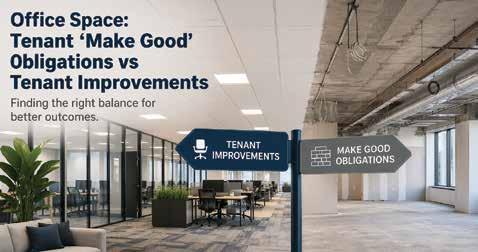
Office Space: Tenant ‘Make Good’ Obligations vs Tenant Improvements
Over recent months, we have experienced a noticeable increase in enquiries from both landlords and tenants regarding make-good obligations. This growing interest highlights a common area of tension at the expiry of a lease and raises important questions about how tenant improvements should be treated.
From a tenant’s perspective, there is often concern that a landlord may insist on full compliance with makegood provisions, even where the existing improvements could be seen as beneficial to the property and/or incoming tenant. Where a tenant owns the fit-out, this can mean removing partition walls, floor coverings, supplementary heat pump systems, and other installed elements.
The cost of returning a space to a bare shell can be significant, particularly in today’s market where construction and material costs continue to rise.Landlords must weigh up the implications of stripping out a potentially valuable fit-out. Reinstating a tenancy to a blank canvas may seem like a clean starting point, but it often shifts the financial burden, with incoming tenants frequently requiring incentives such as rent-free periods or capital contributions to undertake their own fit-out. Current market trends suggest a growing preference among tenants for existing fit-outs, that either meet their operational requirements or can be easily adapted. This approach offers a more cost-effective solution, with speed to market and minimising upfront capital expenditure as key drivers in their leasing decisions.
When assessing whether an existing fit-out should be retained, several practical considerations come into play. Age and condition of partitioning is an important starting point. Newer installation, articularly those constructed with quality materials, can add considerable value.
Type and construction of partitioning also matter. Fullheight glass partitions and well-designed aluminium or timber joinery can create a professional and functional environment.
Similarly, the layout itself should be
evaluated for functionality, as a heavily partitioned office only may suit some occupiers, such as those in healthcare or consulting sectors, where privacy and confidentiality is essential.
Leasing activity has demonstrated that high-quality existing fit-outs can play a decisive role in securing tenants. In several recent cases, this has tipped the balance in favour of one property over another. Likewise, many current tenant requirements specifically favour spaces with existing improvements.
Murphy has a Law – “whatever you do, it will be wrong”
— If you remove the partitioning, an incoming tenant will want it reinstated — If you retain the partitioning, as incoming tenant will want it removed. This uncertainty makes it challenging for landlords to determine the optimal approach.
A practical solution that is gaining traction in the market, is the agreement of a lump sum payment in lieu of full make-good reinstatement. Under this approach, the tenant pays an agreed amount to the landlord instead of undertaking the full cost and effort of returning the premises to a bare shell.
This sum is typically less than the tenant’s full reinstatement cost and can be significantly lower than the cost of a new fit-out, therefore reducing incentives that may be required for an incoming tenant.
This arrangement can provide a mutually beneficial outcome. Tenants avoid the expense and disruption of a full strip-out, while landlords retain greater flexibility to adapt the space for incoming occupants.
It is important to note however, that this approach requires careful judgement. Retaining a poor-quality or highly impractical fit-out can hinder re-leasing efforts and ultimately reduce the property’s appeal. The goal should always be to strike a balance between preserving value and maintaining flexibility. Adopting pragmatic and flexible solutions such as lump sum settlements, can achieve more favourable outcomes for all.
Mike Neale, Managing Director, NAI Harcourts Hamilton
Tourism’s economic impact
By NICOLA GREENWELL
Each year, Statistics New Zealand releases the Tourism Satellite Account (TSA) the most comprehensive measure of tourism’s contribution to the national economy. The latest report, covering the year ended March 2025, provides a valuable snapshot of the visitor economy and it continues to support businesses, communities and employment across Aotearoa.
Total tourism expenditure reached $46.6 billion, an increase of 3.3 percent on the previous year. Tourism now contributes 7.7 percent of New Zealand’s GDP, reinforcing its position as one of the country’s most significant economic sectors.
International visitors spent $18.1 billion, up 7 percent, while domestic tourism remained strong at $28.5 billion, reflecting the continued importance of New Zealanders exploring their own backyard. Overseas visitor arrivals grew 4.3 percent to more than 3.3 million people, showing continued growth in global travel demand.
Tourism remains a major employer, currently supporting 327,888 jobs across New Zealand, with 194,631 people working directly within tourism industries.
Tourism and Hospitality minister Louise Upston recently highlighted the significance of these figures, noting one in nine New Zealanders are now employed in tourism and hospitality, underlining the sector’s critical role in supporting employment and regional economies.
So, what does this mean for the Waikato? For the same period, Waikato’s key indicators reflected the national data:
• International visitors spent $130 million in the Waikato, an 11 percent increase year
BUSINESS
on year.
• The United States accounted for the largest share of international expenditure at 31 percent, followed by Australia (20 percent) and the United Kingdom (13 percent).
• Domestic visitors New Zealanders travelling within our region - spent $772 million in the Waikato, continuing to provide the backbone of regional tourism activity.
• 13,200 people were employed in the tourism industry across the Waikato, generating $644 million in employment earnings that is largely put back into the local economy.
The data speaks for itself, with around $902 million in electronic card spending in the Waikato during the period. This represents new money entering the regional economy, flowing through to local businesses, suppliers and communities.
For the economy, tourism is more than visitors. It is a key driver of regional economic activity, employment and investment.
However, these benefits are at risk of being eroded by rising fuel prices, with the potential to reduce long haul visitation, particularly from the UK and Europe, while also increasing the cost of delivering visitor experiences.
While households are all watching fuel prices for the sake of our personal budgets, the tourism industry is closely watching for the impact of not only their business, but the flow on effects of reduced visitor spend within our communities. More on this in next month’s column.
• Nicola Greewell is general manager of Hamilton and Waikato Tourism
IN THE WAIKATO
Lessons from survival
By CHRIS WILLIAMS
You don’t need me to tell you it’s been a tough few years
Across the Waikato, and the country for that matter, it’s been a tough few years for business, and continues to be.
As a business owner, I understand the highs and lows well. I’ve lived them, experienced them, and come out stronger.
But what I didn’t expect was that my biggest reset wouldn’t come from the economy, it would come from being on death’s door.
I know that because I’ve been there.
Not metaphorically, not in some “burnout” sense. I was genuinely on the brink of dying fighting pancreatitis, sepsis, and organ failure for five months. Recovery took a year.
When you get that close to the edge, you stop worrying about the next quarter and instead start thinking about what actually matters. For me, that clarity has reshaped how I think about work, life, and doing business here in the Waikato.
Structure isn’t optional
Like a lot of CEOs and business owners, I prided myself on being across everything. Every project, every pitch, every decision, every moving part.
In reality, I was putting my people and my business at risk.
Strong internal leadership is absolutely critical. You need a team of people you can trust, with designated roles, and clear accountability because, as I discovered, one day, you might not be there. I was really lucky my team stepped up and our respective leaders took charge.
Work/life balance isn’t the world we live in
I used to think work/life balance was important, but I’ve come to realise that isn’t how it works. Balance is about fulfilment.
If the work you’re doing drains you, no amount of switching off at the end of the day fixes that but, if it fulfils you, you’re energised. Time isn’t something you manage; it’s something you spend, so invest it wisely.
The Waikato business community is a special place
We’re fortunate to live, work, and play in the Waikato. It’s an incredible region where people don’t just know each other, they help each other.
I’ve always believed in backing people; it’s not just good business, it’s essential. Because when things go wrong – and they do – it’s your community that shows up. And that matters more than any transaction ever will. We’re also really blessed with an amazing health service. From the top end surgeons to the people who bring the tea and coffee, these people are amazing. I’m living proof of their incredible talent and commitment. My learnings from the pearly gates Build a business that doesn’t rely entirely on you, do work that fulfils you, and be someone who contributes more than they take. The economy will always rise and fall. But how you show up and treat people?
That’s what lasts.
• Chris Williams is a writer and composer who in his day job runs an advertising and design agency and at night is a self taught musician performing as Middleman.
AI in action
As head of artificial intelligence at KPMG New Zealand, Morgan Clearkin is helping shape how one of the country’s largest professional services firms builds capability and uses AI responsibly, writes Monique Balvert-O’Connor.
As a school leaver, Morgan Clearkin had no chance of foreseeing where his career would take him – his job was just too futuristic.
Today, the former Mt Maunganui College student is head of AI at KPMG New Zealand.
The Hamilton based 33 year old leads a team of eight developing niche AI solutions for the firm, driving continuous learning across the business and strengthening KPMG’s AI capability to better position it in the market. The focus is on leveraging the technology to create value for both people and clients.
Morgan has been with the global company for four years, initially as a business analyst working on a variety of projects and “cottoning on” to the benefits of ChatGPT for work when it came onto the scene in 2023.
He led several large initiatives to roll out AI solutions and campaigns across 2024 and 2025, becoming the go-to person for those (in a firm of over 1500 at the time) starting to use the technology.
Morgan says his varied workdays involve encouraging staff in their AI journeys and identifying new development opportunities for his team to work on. He also engages at governance level, working with senior leaders in considering how risk is managed and how AI is used safely with best practice.
He heads up the internal facing work –looking at how to make the NZ team better at what it does.
“That involves finding where AI can unlock automation opportunities, where it can go
beyond being a transactional chat in, chat out to being able to complete an entire process, with our people bringing their professional expertise to the draft output, a collaboration between human and AI. We look at where we can augment our people with the tools and capabilities to free up their time and give them more value in the roles they have,” Morgan says.
He praises KPMG’s attitude to AI, how the company has an appetite to be curious about how AI can benefit people.
Morgan says AI adoption across New Zealand is mixed, with some organisations moving quickly and others still building confidence in how the technology can be used responsibly and effectively.
“What I’ve seen is a lack of understanding still in some areas regarding what AI can and cannot do. It’s definitely not a fad – although that sentiment’s out there.”
He says AI needs to be explored and embraced.
Morgan concedes his career path could have been so different. The Waikato University graduate planned to major in International Management and French. He acquired a double major in Supply Chain Management and International Management with First Class Honours.
His potential was recognised in his senior college years when he was selected to attend a BOP Education Trust Future Leaders’ Programme.
Morgan is married with two young children. His wife, Megan, also works at KPMG.
Outside work, Morgan Clearkin enjoys spending time hiking.
e Business Investor Visa: A New Succession Planning Tool for New Zealand SMEs
ew Zealand’s new Business Investor Visa (BIV) is more than an immigration policy change, it is a practical succession planning tool for the SME sector. Introduced in late 2025, the BIV is designed to attract experienced offshore businesspeople who are willing to invest in, own, and actively operate established New Zealand businesses.
At a time when many business owners are approaching retirement without a clear exit plan, the BIV expands the pool of potential buyers and investors. It allows suitably qualified migrants to acquire a meaningful stake in an existing business, retain jobs, and introduce new capital and capability, while working towards residence over time.
For business advisers, this creates a timely opportunity to help clients position their businesses to benefit from a new, but highly structured, source of succession capital.
The BIV requires:
• A minimum investment of $1 million to purchase an established New Zealand business (excluding any real estate component)
• The business being purchased must have operated for at least five years and employ at least five full time equivalent (FTE) staff
• The applicant to have relevant business experience, be under 56 years of age, meet English, health and character requirements, and hold sufficient additional settlement funds
• Following purchase, the applicant must actively operate the business for three years, maintain at least five FTE staff, and create one additional full time permanent role for a New Zealand citizen or resident
Once these criteria are met, the applicant can become eligible for New Zealand residence. There is also a fast track residence pathway where the business investment is $2 million or more.
The BIV deliberately focuses on established businesses rather than start ups. The policy emphasis is on employment continuity and modest, achievable growth, and not speculative projections.
Clarity on homelessness LOCAL GOVERNMENT
This makes the visa particularly relevant for well run SMEs where the core challenge is ownership transition, rather than operational viability. For the right business, an offshore investor can provide a clean, or partial, exit for the owner while preserving the business, its workforce, and its going concern value.
Accountants, lawyers, bankers, business brokers, and valuation professionals can add significant value by identifying early whether a business is likely to meet policy requirements, and by ensuring financials and valuations are realistic. While it may take time for some businesses to become “BIV ready”, this pathway is often preferable to the alternative of businesses being wound down or closed, with the resulting loss of jobs, intellectual property, and going-concern value.
While the opportunity is genuine, the BIV is not straightforward, and the market will definitely take some time to mature. Many businesses currently for sale will not qualify due to staff numbers, trading history, sector exclusions, insufficient value, or informal compliance practices. This reality is reflected in the low application numbers to date, and, as with any new policy, the settings will remain under regular review while the policy settles in.
It is also important to note that the BIV is initially a work visa, not a resident visa, meaning visa holders cannot purchase residential property until residence is granted.
Despite these constraints, the Business Investor Visa represents a meaningful addition to New Zealand’s succession planning toolkit. For advisers who understand both the commercial and immigration dimensions, it offers an opportunity to take a more strategic, long term role in helping clients prepare earlier, address structural issues before exit becomes urgent, and position viable businesses to attract a broader pool of credible buyers. Over time, this approach has the potential to support better succession outcomes for business owners, greater continuity for employees, and a more resilient SME sector – but this will take time!
By MARGARET EVANS
Focus and clarity were the words in my mind when I sat down to write this piece on homelessness and ‘Streeties’, prompted by Hamilton City Council’s April Community Committee meeting and the wider national debate.
That meeting’s public forum featured Te Whare Korowai Christian Night Shelter’s Te Rito Awhi Hub Coordinator Lisa, alongside an unnamed ‘Streetie’. Within the strictly enforced five minutes, both offered first‑hand perspectives that cut through the thousands of hours and words generated by government agencies and social enterprises in recent years.
Mayor Tim Macindoe himself a shelter trustee and former chair acknowledged this.
Another highlight came from longest‑serving councillor Angela O’Leary, who recalled the 2014 City Safe initiatives and the Wise Group’s People’s Project to end homelessness. Other councillors noted that at this year’s council hui with government and community agencies, many of the 50 people present did not know each other and no Streeties attended.
Back in 2014, a Parliamentary Library research paper concluded homelessness was a “continual issue”, driven by familiar factors: unaffordable housing, poverty, unemployment, mental health issues, addiction, trauma, and insecure accommodation. The conclusion still rings true addressing homelessness requires prevention, early intervention, and, critically, affordable housing.
So what’s changed?
Hamilton once had a Housing Resource Centre, nurtured Habitat for Humanity, promoted community housing and Housing First, and its mayoral office actively fostered inter‑agency relationships. Those structures mattered.
Streeties, of course, have always been with
us. They are only one segment of the homeless. What feels different now are behaviours too often shaped by drugs (including alcohol) and sometimes edging into violence. City centres are their preferred base. At their best, Streeties add colour, conversation, even music (hence the street pianos). But disorder must be addressed directly, rather than blurred by generalisations or self‑promotion.
Te Rito Awhi’s Hub has been operating only a few weeks, and I’m hopeful its engagement will prove more valuable for the genuinely homeless and jobless than yet another hui. Some have suggested expanding the proposed CBD ‘Guardians’ initiative into a Task Force Green–style group to tidy the city, create jobs and apprenticeships, and build relationships with Streeties working alongside police and mental health services. And why not revisit the idea of a boarding house or hostel, using some of the many empty CBD buildings?
Later this year, a new $130m, 64‑bed mental health unit opens at Waikato Hospital just four more beds than the old Henry Rongomau Bennett Centre. There are also renewed police powers around disorder, and a sharper focus on drugs.
Council official Erin Bates summed it up well: many existing strategies are being replaced by an “overarching strategy” with shared initiatives. Before adding more, we need to know what’s working and what’s not. That brings us back to brevity and to Winston Churchill’s 1940 instruction to his cabinet: short papers, clear thinking. Sage advice in today’s information avalanche. • This column is abridged, full version goodlocal.nz
• Margaret Evans was Hamilton mayor from 1989 to 1998 and was first elected to the council in 1974.
Central city advantage
By VANESSA WILLIAMS
There are many who see shopping in Hamilton as a mall only experience. I’ve heard countless times: “I don’t go into town, I only ever go to the mall.” To that I say: great news, in the central city we have a mall and so much more!
Central cities are hubs where economic, social, cultural and political offerings converge for people to participate in the exchange of goods, services, activities, experiences, and information. Hamilton’s city centre is exactly that. Boasting over 220 hospitality businesses, 200 retail businesses, 150 health, beauty, and wellness businesses and more than 400 professional and trade services businesses. These are over 22,000 people working in town, supported by more than 1,300 business and property owners who have invested in the city centre.
However, central cities are evolving. They’re no longer just a place to transact and leave. City centres must create the vibrant heart of a city. To compete against online and neighbourhood options, they must attract people with more than just the facilitation of buying goods and services. They have to give people what they want and even better, what they didn’t know they wanted. This opportunity lies in the multitude of experiences on offer.
Danish urban designer Jan Gehl calls this “the right recipe.” As with all recipes, this requires the right ingredients or as we talk about in central city circles, a carefully
curated mix of retail, hospitality, professional services, and experience offerings. It’s not about competing with malls, they absolutely have their place and I love them, however it’s about the offerings in addition to malls.
One of the biggest drawcards of the central city is the owner operated business. The place unique to the city. These gems can be found on main streets, hidden down laneways or three streets over. These are places where the owner knows their business. Where customer service is top notch. Where best baked goods are debated, where fabrics are understood, where local knowledge stands best. These are the places that make you feel special and where relationships are built quickly.
Now, the elephant in the car park. Is it hard to find a park directly outside the shop you want? Probably. This is because we are a city and for every carpark you want, there are probably 20 other shoppers wanting the same one. So, here’s my recommendation: park one or even (gasp) two streets away. Yes, it may involve a five minute walk, but during this walk you may discover a new business, a gallery exhibition, a free public event or even bump into someone you’ve been meaning to catch up with.
Next time you can’t find a park outside the shop you want to visit, look at it not as an inconvenience but as a footpath of discovery!
• Vanessa Williams is general manager of the Hamilton Central Business Association.
Time for a change…
After nearly 40 years in the advertising business, Judy Coulter has stepped into retirement, moving from Hamilton to Tauranga as an industry she helped hold together continues to change. Mary Anne Gill reports.
For more than two decades, Judy Coulter has been the person behind the scenes at King Street Advertising responsible for the systems, finances and processes that kept the agency functioning as the industry around it changed.
Her working life has coincided with a period in which advertising shifted from typewriters, darkrooms and print dominated media to cloud based systems, digital platforms and analytics driven campaigns.
Coulter and her former business partner Chris Williams first met in 1999 when he came from Auckland to check out the Hamilton advertising agency at 9 King Street in Frankton where she was working.
His father Hamilton accountant Dick Williams suggested his son who had been working at big city agencies including Colenso in Wellington and Saatchi & Saatchi in Auckland have a look at his client Rimmington Advertising.
A deal was struck Williams secured 80 per cent and Coulter 20 per cent.
“It just worked,” Coulter says of the partnership.
While Williams led the agency’s creative and external profile, Coulter provided stability through finance, systems, compliance and governance the internal structures that allowed the business to grow, contract and evolve without losing its footing.
Raised in Hamilton, Coulter attended Frankton Primary School, Melville Intermediate and Fraser High School before completing shorthand and typing at what was then Waikato Polytech. Those practical skills proved pivotal.
After spending nine years overseas, largely in the United Kingdom working in travel and tour operations, Coulter returned home at the age of 28. She joined Rimmington Advertising in January 1987, working for legendary Hamilton advertising veteran Russ Rimmington as a shorthand typist and personal assistant, but her role expanded quickly as she moved into media planning and account management.
They worked together for 13 years, witnessing both the height of traditional agency influence and the early signs of an industry on the verge of transformation. When Rimmington became mayor of Hamilton in 1998 and began stepping back from the business, change followed swiftly.
In July 1999, Coulter and Williams took ownership, initially operating as
Rimmington Advertising from the same premises at 9 King Street before rebranding to King Street Advertising within months.
The new name signalled a break from the past and the start of a new chapter at the beginning of the millennium.
King Street Advertising went on to become one of the Waikato’s most established agencies, at its peak employing 24 staff and running an additional office in Tauranga. Long term clients included Fieldays, Waikato Rugby, the Chiefs and tertiary institutions, alongside a wide range of regional businesses.
Some of Coulter’s clearest memories are of how different the agency world once was. Agencies were highly social, well resourced environments, backed by strong print revenues and generous media commissions. That model has disappeared, she says.
“Advertising agencies used to be fun. Their Christmas parties used to be legendary.”
As media economics shifted, the financial foundations of agencies changed dramatically. Commission rates fell, print volumes dropped, and digital platforms rewrote how advertising performance was measured and billed. Clients became more hands on, more data focused and, in some cases, more inclined to take advertising functions in house.
Coulter was closely involved in guiding King Street Advertising through that upheaval. About a decade ago, the agency made the decision to bring digital capability fully in house. She later spearheaded the transition to integrated agency management software that combined project management, media planning and accounting.
That evolution proved critical during Covid 19. King Street Advertising already had remote access in place, allowing staff to continue operating without interruption. In recent years, the business has also completed its move to cloud based systems.
“I was never ahead of the eight ball. I let everybody else do something first, then I follow.”
Over time, Coulter deliberately narrowed her focus within the business. As the agency grew, specialist staff took on media and account management roles, allowing her to concentrate almost entirely on finance, compliance, systems and internal operations.
“I was the mum,” she says.
That shift also allowed her to progressively reduce her hours. By her early 60s, Coulter was working part time, structuring her week to include regular golf a sport she embraced after a knee injury ended her competitive squash career.
A former C1 squash player, Coulter had been heavily involved in both squash and golf administration, serving on committees and boards during major facility developments in the Waikato. Today, she plays golf twice a week at Omanu Golf Club in Tauranga.
Two years ago, Coulter relocated full time to Tauranga, building a house in Ohauiti close to her twin sister Robyn and their older sister Judy, while continuing to support King Street Advertising remotely.
Hamilton had long been Coulter’s base. Growing up and working on the city’s west side she lived on Ellicott Road where she could look out from her home towards Pirongia, the hospital and the river a sense of place she says mattered.
In Ohauiti, she has found something similar. From her home she can see Mount Maunganui, a view that was a non‑negotiable when she decided to build.
“I sit in my lazyboy and if I can’t see the mount, it’s raining …. the same in Hamilton if I couldn’t see Pirongia, it was raining. A view is good for your health,” she says.
Earlier this year, she sold her 20 per cent shareholding to Williams, while agreeing to remain available during a
handover period.
“I just knew. I can’t do it anymore.”
Now 66, Coulter is off to pursue three of her great loves gardening, golf and travel.
Travel features prominently in her plans, including an extended international journey combining Japan, Alaska and North America.
Looking back, she reflects on how much both the industry and the world have changed during her working
life and why leaving now feels right.
“I’m glad I’m at this end. The pressures on young people now are huge.”
As King Street Advertising continues without her day to day involvement, Coulter remains quietly satisfied with what she leaves behind: a business that adapted, survived and evolved without losing its core values.
“The world just keeps changing,” she says.
“You either change with it, or you don’t.”
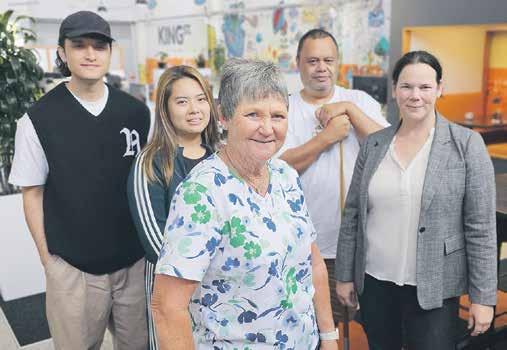
Judy Coulter, centre, with from left King St staffers Josh Uerata, Kwan Ng, Hone Tutua and Angela Alonso.
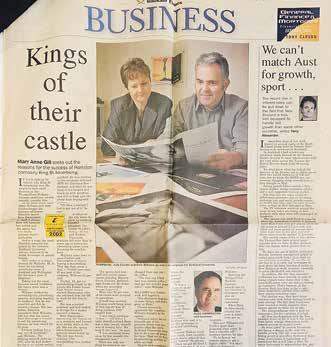
Photo: Mary Anne Gill Back in 2002, Good Local Media’s Mary Anne Gill caught up with Judy Coulter and Chris Williams after their victory as best small business at the Waikato business excellence awards.
Working from home benefits Identifying job scammers
With the current global oil crisis impacting New Zealand, once again working from home when possible has become an increasingly common arrangement. Offering clear advantages for both employees and employers when implemented effectively, thanks to the Covid experience, it has shifted from a temporary solution into a long-term workplace strategy, particularly in knowledge-based industries.
For employees, one of the most significant benefits is improved work–life balance. Eliminating daily commutes saves time, reduces stress, and allows for greater flexibility in managing personal responsibilities such as childcare or appointments. This often leads to higher overall wellbeing and job satisfaction – and studies have shown, offer better production.
Employees also gain the ability to design a work environment that suits their preferences, which can enhance focus and productivity. Many people report fewer workplace distractions at home compared to busy office settings, enabling deeper concentration on tasks. Financial savings are another key advantage for employees and employers. Costs associated with commuting, meals, and work attire are reduced, which can make a noticeable difference over time. Additionally, access to remote work expands job opportunities, allowing individuals to work for organisations outside their immediate geographic area without relocating.
From an employer’s perspective,
working from home can lead to increased productivity and performance when supported by clear expectations and effective communication. Many organisations have found that employees working remotely often maintain or even exceed previous output levels. Reduced absenteeism is another benefit, as employees are more likely to continue working when mildly unwell or when managing minor personal commitments.
Cost savings for businesses can also be substantial. With fewer employees in the office full-time, companies can reduce expenses related to office space, utilities, and on-site resources. Some organisations have downsized physical premises or adopted hybrid models, optimising their real estate footprint while maintaining operational efficiency.
Working from home also enables employers to access a broader talent pool. Rather than being limited to candidates within commuting distance, businesses can recruit from across regions or even internationally. This can improve the quality of hires and support greater workforce diversity.
However, the benefits does depend on strong systems and management practices. Clear communication, appropriate technology, and a focus on outcomes rather than hours worked are essential to success.
These days there are any number of resources available both to employers and employees on how to structure an optimised working arrangement effectively and well.
While there’s usually no such thing as a free lunch, paying to apply for a job in New Zealand is almost always a strong warning sign of a scam. Legitimate employers and recruiters do not charge applicants simply to be considered for a role. If money is requested upfront, it should immediately raise concerns.
In New Zealand, the hiring process is generally transparent and regulated, designed towards selecting the best applicant, whether that is by advertising a position, or actively headhunting someone regarded as ideal for a role. Either way, often an employer will pay a recruitment agency to find the right person – and that person is never expected to pay to apply.
How that might look, if a scam is in play, is an applicant might be expected to pay application fees, processing charges, or “placement” costs. If a company asks for payment before offering a job, it is highly likely they are exploiting people’s desire for employment.
One common tactic used by scammers is to present the payment as part of a “visa processing” or “administration” fee.
While visas in New Zealand do involve costs, these are paid directly to Immigration New Zealand, not to an employer or recruiter. Any request to transfer money to a private individual or unknown company for job-related paperwork is suspicious
and should be verified independently. Another red flag is urgency. Scammers often pressure applicants to act quickly, claiming that the job opportunity will disappear if payment is not made immediately. Genuine employers allow candidates time to consider offers and do not demand instant financial commitments.
Additionally, fake job offers may include vague job descriptions, unusually high salaries, or limited contact details. These are designed to lure applicants into trusting the opportunity without proper scrutiny. In contrast, real employers provide clear role expectations, formal contracts, and verifiable business information.
Protecting yourself involves doing basic checks: research the company, confirm contact details, and never send money or personal financial information without certainty. If something feels off, it is better to walk away.
Backing local recovery
B y DAVID CHRISTIANSEN
It has been heart breaking to see the damage and disruption caused by the recurring storms of recent months. Such emergencies have enormous impacts on ordinary people, but they are also when New Zealanders are their most generous. For businesses wanting to send financial support to the frontline, the challenge can be knowing how to get it to where it is needed, and then trusting it got there.
After a disaster, a Mayoral Relief Fund is set up by the local council, which receives money from both the Government’s National Emergency Management Agency and the general public, and then distributes it based on applications received for assistance.
This process generally works, but the appeal itself can only reach so far, as councils are not fundraisers, have only broadcast communication channels, and don’t have charity status for tax rebates on donations. Also, some in business simply feel weary about giving to a council, for reasons ranging from avoiding a conflict of interest in other dealings, to habitual suspicion of bureaucracy. As ever, the greater the trust, the greater the likelihood and scale of generosity.
Meanwhile, private run online appeals can be insecure and lacking credibility. There can also be concerns about the cost and destination of crowdfunding sites’ fees.
Which are all counts on which Momentum Waikato, as the region’s community foundation, has been able to help following the recent storms across Ōtorohanga, Waipā and Coromandel.
We ran several ‘Greatest Needs Appeals’
during Covid, so our resulting connections and ‘back office’ know how enabled and guided these recent efforts.
Our supporters are generous people who want to give wisely and locally, so proportionally they responded more readily to our calls for donations than a council could achieve via a wide call out. We also expedited donations from businesses and others we know to be receptive.
Such donors can readily connect with our team if they have queries and see our strong track record, factors which build and reinforce ongoing trust.
After each of our recent appeals, we distributed the gathered donations to the Mayoral Relief Funds, though with slightly different approaches.
Momentum is partnering with the Thames Coromandel District Council on the Coromandel Future Funds, which were set up last year to build local long term financial resilience following previous weather events. So, we collaborated with TCDC staff on appeal priorities and handled some callouts in tandem with them.
Whereas with the Waipā and Ōtorohanga district councils, we simply reached out to the mayors and then delivered the collected donations to add to their Relief Funds, which were warmly received.
Momentum Waikato is proud to able to back up the broad range of people and organisations who have to mobilise when disaster strikes. On behalf of us all, we say thank you to them.
• David Christiansen is Executive Officer of Momentum Waikato.
PEOPLE AND CULTURE
Privacy considerations
By SARAH LIM
Most employers are aware that in any employment process they need substantive justification, a fair process, and to deal with employees in good faith. What is often overlooked, however, is the privacy dimension of those same decisions.
In the rush to progress matters, employers tend to focus on having a sound reason for their decision and gathering information for employee feedback. Too often, they forget to pause and consider when and how that information is being collected, and from where. That oversight can create avoidable legal risk.
This can be a costly mistake. If an employee’s privacy is breached, they could allege an unjustified disadvantage and a breach of good faith. Where an employment agreement requires compliance with the Privacy Act 2020, privacy failures may also amount to a breach of contract. An employee may also complain to the Office of the Privacy Commissioner, which takes such matters seriously, and often publicly.
Before taking action, employers should consider the potential privacy risks that may arise. These commonly occur in everyday employment situations, including:
(a) Pre employment checks: These should be completed with the individual’s consent before they commence work. If checks are carried out later, for example, after concerns arise about past conduct, this may amount to a breach of privacy.
(b) Collecting information from public sources: Employers must ensure any collection is necessary for a legitimate business purpose. While information from
sources such as Google searches or social media may be publicly available, it is usually collected indirectly and should not be used in a way that is unfair or unreasonable. Reasonable steps should also be taken to confirm the information’s accuracy.
(c) Monitoring employees’ work equipment and activities: Monitoring must be directly connected to a business purpose. If, for example, employees are required to enable location tracking, there must be a clear justification. Best practice is to record this clearly in employment agreements or workplace policies.
(d) Obtaining an employee’s ACC information: In a medical incapacity process, employers may need information held by ACC, which will typically require the employee’s written consent before releasing it. Regardless, best practice is to consult with the employee and limit access to those with a genuine need to know.
If a proposed decision or process may carry privacy risks, employers should seek advice before collecting or relying on employee information. EMA members can access the AdviceLine service, which provides practical, up to date guidance on privacy obligations in employment processes and the wider workplace, helping address issues early before they escalate.
EMA Legal also regularly advises on privacy matters and can provide more detailed support where required. In employment matters, how information is gathered can be just as important as the decision that follows. • Sarah Lim is Senior Associate, Employers and Manufacturers Association (EMA)
Out and about…
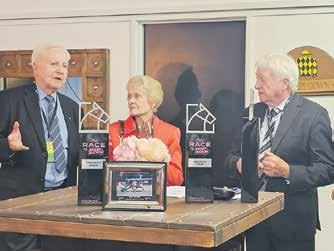
Night of Champions – Cambridge Raceway hosted New Zealand and Australia’s best harness racing at the Night of Champions last month and people from both sides of the Tasman came along to celebrate. All pictures are left to right. Photos: Mary Anne Gill
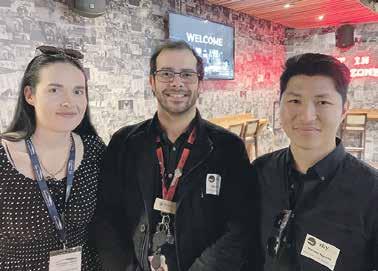
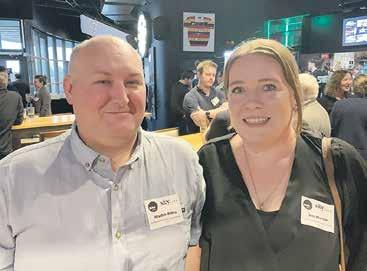
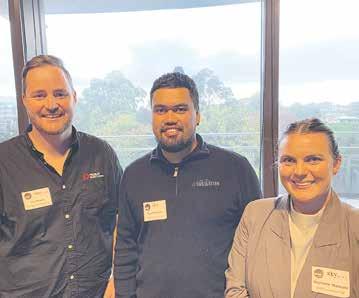
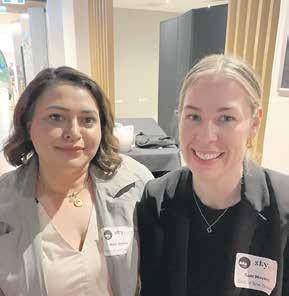
Business after 4 – Waikato Chamber of Commerce held a Business after Four with members at Sky City in Hamilton last month. All photos are from left to right. Photos: Marcelo Mieres
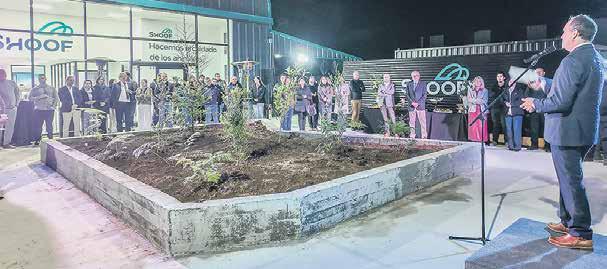
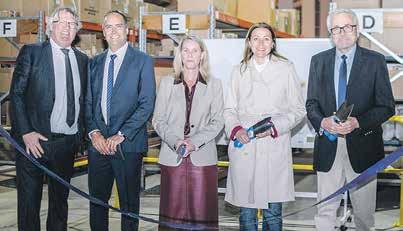
Latin America base – Shoof International opened a warehousing and office facility last month in Osorno, Chile, a key agricultural centre in the country’s Los Lagos region and on a similar latitude to the Waikato, where Shoof has its headquarters. The official opening was marked with a ceremony at the new base. Photos: Supplied
Team Paula Wenham Lugton’s Real Estate had their Christmas party at the Raceway, albeit four months later. Courtney Paterson, Kelly Parker, Paula and Dave Wenham.
Alex O’Reilly and Sanne Klevin of Hamilton Tahlia Ellmers and Jordanna Herbert of Tīrau were enjoying the balmy conditions as the sun sets.
Queensland business identities Kevin and Kay Seymour with Waikato-Bay of Plenty Harness Racing Board Member Steve Rowe.
Jessica Richards, (Wide Span Sheds), Marc Hastie, (Ministry of Social Development), Michael Nguyen, (Wide Span Sheds)
Kate Horton and Rob Bull, (New Zealand Lean Academy).
Neha Verma and Sam Mayles, (BNZ).
Sam Power, (Peebles Electrical), Tom and Stephanie Matatahi, (JMM Insulation Ltd).
Cutting the ribbon, from left Peter Reidie, Shoof International Board member, Juan Cristóbal Correa, Shoof Latin America Country Manager, Michaela Dumper, Shoof International CEO, Daniela Rigoli, New Zealand Ambassador to Chile and Sergio Niklitschek, President of the Chilean Dairy Consortium.
Juan Cristóbal Correa, Shoof Latin America Country Manager speaks at the opening in Chile.
Out and about…
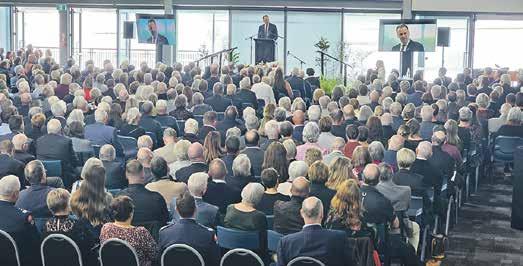
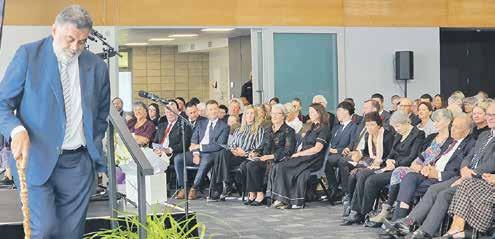
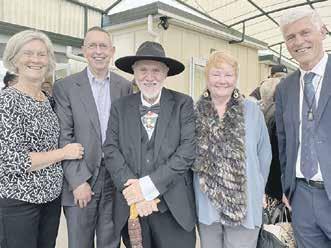
Farewell to Alan – A memorial service for former Waipā mayor and Waikato Regional Council chair Alan Livingston was held at Don Rowlands Centre, Lake Karāpiro last month with more than 600 people from around the region present. Photos: Mary Anne Gill
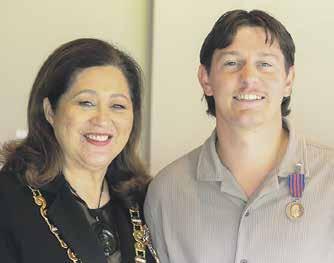
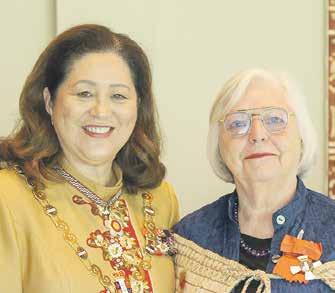
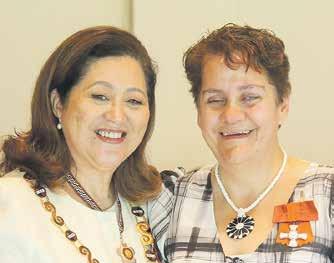
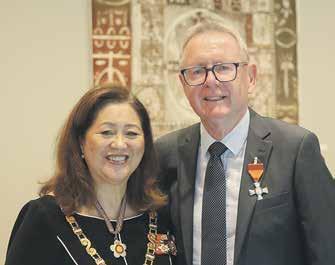
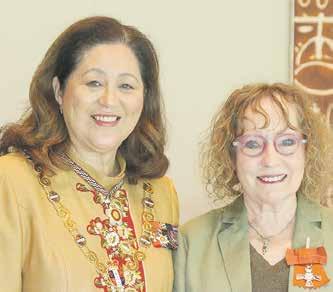
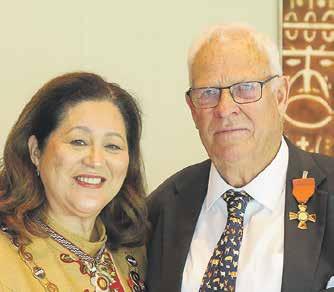
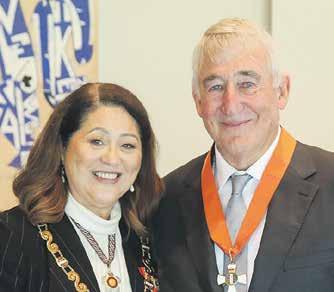
Gongs galore – Governor-General The Rt Hon Dame Cindy Kiro hosted 12 investiture ceremonies at Government House in Auckland last month. Several Waikato people were honoured and pictured with Dame Cindy.
One of the speakers was Sport Waikato chief executive Matthew Cooper who spoke of Alan Livingston’s contribution to the organisation as a trustee.
Ngāti Korokī -Kahuhura Trust co-chair Rahui Papa – who described Alan Livingston as “a bloody good bloke” leaves the stage, watched by Alan Livingston’s family and former Prime Minister Helen Clark, having announced a kiwi called ‘Big Al’ will move from Maungatautari to Wellington’s Zealandia.
A dinner to celebrate the investiture of Professor Tom Roa with a CNZM for services to Māori language and education was held at Tārewanga Marae in Ōtorohanga where he is pictured with, from left Waikato University vice chancellor Neil Quigley and his wife Norine McBride, former Hamilton mayor Margaret Evans and her present day counterpart Tim Macindoe.
Photo: Roy Pilott
Coral Shaw, of Pirongia, a Dame Companion of the New Zealand Order of Merit for services to public service, the judiciary and the community.
Gaye Poole, of Hamilton, MNZM for services to the performing arts and education
Hayden Cornwell, of Hamilton, NZBM for an act of bravery Helena Tuteao, of Hamilton, MNZM for services to people with disabilities and Māori
Kevin Burgess, of Cambridge, MNZM for services to governance, the community and sport
Lloyd Downing, of Morrinsville, ONZM for services to agriculture and governance.
Neil Bateup, of Ohinewai, CNZM for services to the rural sector
Ravinder Powar, of Hamilton, MNZM for services to ethnic communities
PURPOSE-BUILT. FOR MARIAN SCHOOL
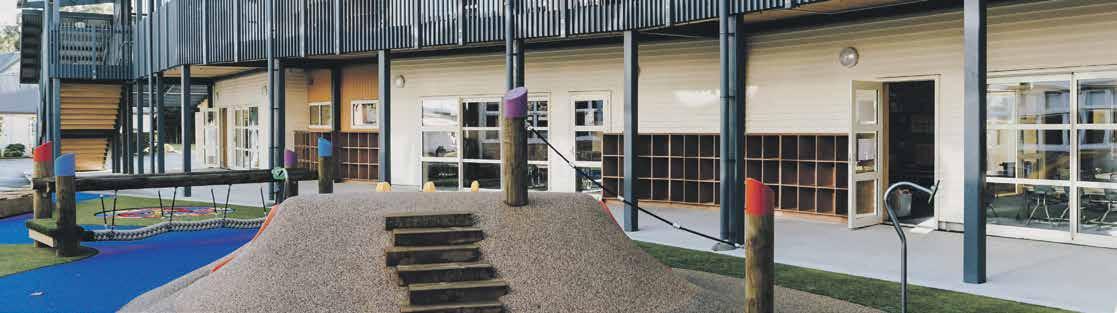
For School Property Manager Vicki Fabling, the recent completion of St Theresa’s Block at Marian Catholic School meets a few objectives – it replaces single storey buildings with a two-storey block, creates more space on campus and enables the school role to grow by another 50 students.
Located in Hamilton East, the school caters for 650 children in years 1 to 8. With a history dating back to 1889, Marian is the largest full primary Catholic school in NZ.
The School is one of 33 local Waikato and Bay of Plenty schools that Vicki manages: overseeing capital maintenance, modernisation and upgrade works.
“Fosters won this job with a competitive tender price,” said Vicki. “They then mobilised very quickly for us, putting an efficient programme in place.”
Architecturally designed, the two-storey building includes three classrooms with breakout and kitchen spaces on both floors. A covered timber walkway from the first floor joins the new building to existing buildings. Other works included a bathroom area and 19 new carparks.
“The level of experience in the Fosters team was very evident,” she added. “Taking a highly collaborative, ‘can do’ approach, they worked to overcome challenges rather than highlight issues.
I noted Fosters’ focus on delivering the contract and avoiding variations as far as possible. Keeping to budget is always a key consideration for me... their support on that was ideal.
“I also noted Fosters’ focus on delivering the contract and avoiding variations as far as possible” she said. “Keeping to budget is always a key consideration for me, so having their support on that was ideal.
“Importantly, the final product is fantastic, and our students and teachers love their new learning environment.”
#BuiltByFosters
Vicki Fabling, Catholic Schools Property Manager, Catholic Diocese of Hamilton