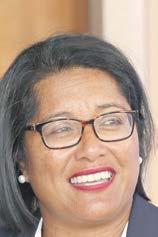
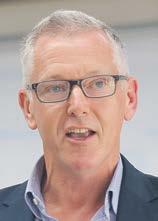
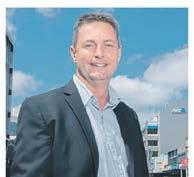
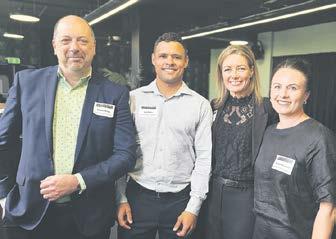
Labour’s Finance spokesperson Barbara Edmonds argues for stability over speed.
Page 3
SWEET DREAMS
There are more student beds available in Hamilton, but the demand remains. Page 7
AT THE CHALK FACE
A principal sounds the alarm about some of the NCEA reforms taking place. Page 10
OUT AND ABOUT
15
Standing tall
After more than a century serving our community, the Waikato Cathedral Church of St Peter needs $22 million for a strengthening project that will take years to complete. Mary Anne Gill went on a tour.
On any given week, the Waikato Cathedral operates less like a traditional church and more like a piece of civic infrastructure, hosting support groups, public events and performances in Hamilton.
That breadth of use underpins a major investment decision facing the Anglican Diocese of Waikato: a staged, $22 million programme to keep the landmark building safe, operational and accessible for decades to come.
As Archbishop Emeritus Sir David Moxon explains, the cathedral plays a central role in the life of the region.
“It’s the mother church of the Anglican Diocese of Waikato,” he says.
“It’s the hub, it’s the hiveit’s the mothership of the entire central North Island region for the Anglicans.”
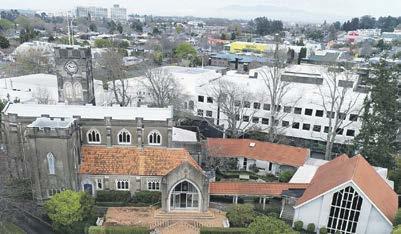
The landmark building, perched on Pukerangiora Hill in central Hamilton, requires significant earthquake strengthening to remain safe and usable for future generations.
It is a substantial challenge, but one the cathedral’s leadership believes the wider Waikato community can meet.
Its construction history reflects a pattern of perseverance through difficult times, with fundraising
beginning at the start of World War One and further additions made during the Great Depression as funds became available.
But the cathedral’s significance goes deeper than architecture.
The site is sacred to Tainui, particularly Ngāti Wairere, and known as “the Hill of the Life-Giving Heaven”. Long before the cathedral was built, the hill was a place of prayer and spiritual focus for Māori.
Today, it carries both Māori and Anglican layers of history, giving it a distinct place in Hamilton’s landscape.
For Moxon, it is a place of constancy.
“It does feel home, totally at home,” he says.
“It is the same sanctuary, sacred space.”
He says cathedrals and churches are increasingly important in uncertain times.
“People are looking for hearth and home spiritually, for sanctuary, for a place to revive their spirit,” he says.
“This is a sure home, this is a deep wellspring, and this is a place where you can refresh your own soul.”
St Peter’s is not a dormant heritage building. It is used daily for services and commemorations for the military, police, emergency
services, schools and individuals.
Concerts, candlelight performances and public events regularly draw people who may never otherwise step inside.
Dean Julian Perkins – who has been in Hamilton for eight years and dean for three - says its role goes well beyond formal worship.
“This is a community place,” he says.
“Not all the things that go on here have anything to do with church.”
Like many early 20th-century buildings, the cathedral was not designed to meet the more modern seismic standards introduced after the Canterbury earthquakes.
Waikato businesses are easing their way into 2026 and we were with them with our camera. Page
St Peter’s Cathedral stands on Pukerangiora Hill – sacred ground for Māori and Christians for centuries.
Photo: Supplied
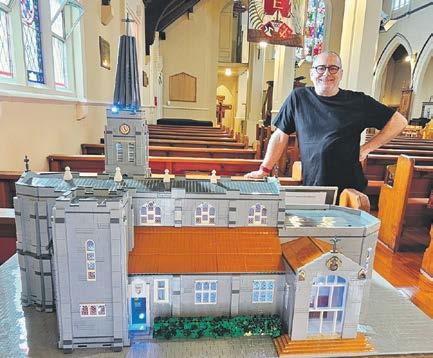
Dean Julian Perkins with a lego model of how the cathedral will look once strengthened . Photo: Mary Anne Gill
PENCARROW HOUSE, TAMAHERE
News/Editorial
Roy Pilott editor@goodlocal.nz 027 450 0115
Mary Anne Gill maryanne@goodlocal.nz 021 705 213
Viv Posselt viv@goodlocal.nz 027 233 7686
Chris Gardner chris@goodlocal.nz 027 231 7007
Advertising Director
Janine Davy janine@goodlocal.nz 027 287 0005
Owner/Publisher
David Mackenzie david@goodlocal.nz
Office/Accounts admin@goodlocal.nz 07 827 0005
Readers’ contributions of articles and letters are welcome. Publication of contributions are entirely at the discretion of editorial staff and may be edited. Contributions will only be considered for publication when accompanied by the author’s full name, residential address, and telephone number. Opinions expressed are not necessarily those of the publishers. Waikato Business News is published by Good Local Media Limited.
Standing tall
One of the more unusual aspects of the strengthening project involves the cathedral tower. Built later than the main body of the church, it is paradoxically the strongest part of the structure.
Rather than rigidly tying it into weaker sections, engineers plan to allow the tower and the rest of the building to move independently during an earthquake - a calculated separation designed to reduce
stress and protect both elements.
“We need $22 million, and we currently have $1 million plus a promise of $1 million,” says Perkins. “We’re a long way off.”
The work will be undertaken in stages, with priority given to areas that ensure safety and allow the cathedral’s ongoing use. The first priority stages include the north end of the building and the choir vestry.
A common question arises whenever large sums are mentioned: could that money be better spent elsewhere?
Cathedrals are not efficient buildings. They exist because communities decide some places are worth the long-term investment.
The cathedral’s leadership is clear that this project is not about diverting funds from housing, health or frontline social services. Those remain core priorities for the diocese, including city mission work based near the cathedral precinct.
Instead, the strengthening project is being funded through grants and targeted fundraising, including a strong emphasis on gifts in kind.
Moxon says this approach is deliberate.
“We go for trusts and grants that can only give to heritage, or can only give to the arts, or can only give to public amenities,” he says.
Engineering expertise, construction materials, professional services, project management, specialist trades and technical support, donated in kind, can all make a meaningful difference.
This approach reflects how the cathedral was built in the first place - incrementally, through broad community support, over time.
One of the cathedral’s greatest assets is its music, sustained by the volunteer Cathedral Choir under the direction of Rachael Griffiths-Hughes and organist
Anne Cleaver-Holm. Griffiths-Hughes says the pace and commitment required of the choir is often underestimated.
“It’s not like a community choir where you rehearse for 10 weeks and then do a concert,” she says.
“We rehearse once, we sing it on Sunday, then we move on. So, we need people who can read quickly and commit every week - and they do.”
The choir ranges in age from 14 to 80.
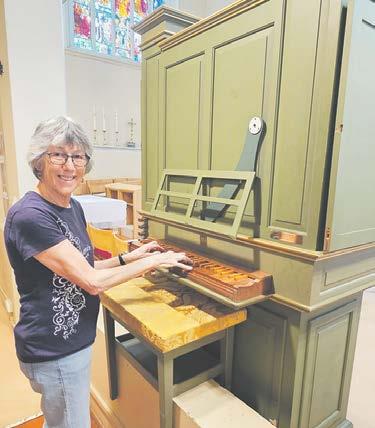
The cathedral is home to the Donald Barriball Memorial Chamber Organ, built in 1874 and now valued at about $2 million. It remains in regular use, making St Peter’s one of the few places where such an instrument still functions as intended.
“It’s fabulous for the space,” Cleaver-Holm says.
A 1981 Noel Mander organfamously used at the wedding of Prince Charles and Princess Diana for soprano Dame Kiri Te Kanawa’s Handel piece Let the Bright Seraphim - was moved from London to New Zealand in 2006 and sits to the side of the altar.
The building also has its quirks. Other additions, completed by different engineers during different economic periods, are among the weakest, and even the stained glass windows contain small mysteries that still spark discussion.
Outside, the Ashwell pear tree - grown from a cutting first brought to the Waikato in 1843 - stands as a living symbol of continuity, partnership and shared guardianship.
Perkins says losing the cathedral would mean losing more than bricks and mortar.
“It would cost as much to knock this down and rebuild as it would to preserve,” he says.
“You would have lost what is a very beautiful space.”
St Peter’s has served Hamilton and Waikato for generations as a place of worship, music, remembrance, support and civic life. Now it is asking the region to help ensure it can continue to do so.
This is not just about saving a church. It is about preserving a shared regional asset - one that belongs to the people of Waikato.
The strengthening project is about ensuring that role can continue – not as a static heritage monument, but as a functioning regional asset.
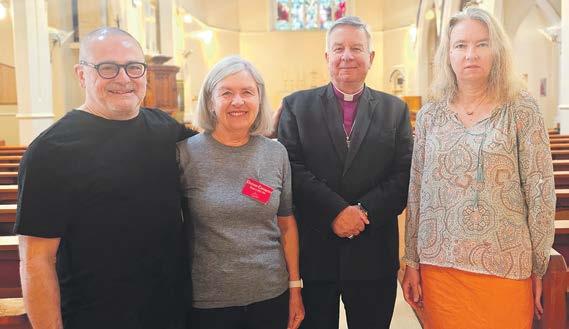
Inside the historic cathedral, from left the Very Reverend Julian Perkins, Dean’s warden Dianne Cameron, Archbishop Emeritus Sir David Moxon, Dr Rachael Griffiths-Hughes, Director of Music. Photo: Mary Anne Gill
Organist Anne Cleaver-Holm with the organ played at Charles and Diana’s wedding in St Paul’s Cathedral, London 1981. Photo: Mary Anne Gill
Selwyn on board
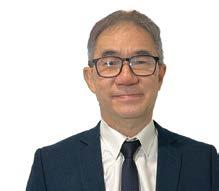
Hamilton’s Selwyn Hikuroa has been reappointed Plumbers, Gasfitters and Drainlayers Board deputy chair with Martin de Gouw of Christchurch again the chair. Hikuroa has a 40 year career in teaching, training, and mentoring and is currently contracting to Wintec, Earn-Learn and ASPEQ in assessment, teaching, mentoring and exam moderation roles.
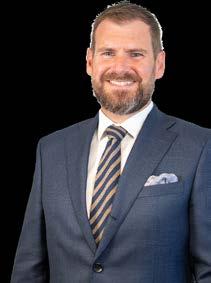
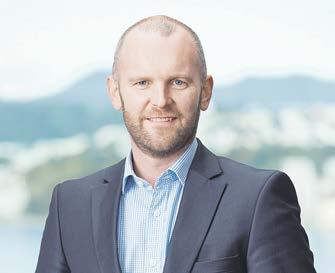
Damien in
Damien Whiffen is Waipā Networks new chief executive replacing Sean Horgan who joined MainPower in January. It is a straight swap as Whiffen was acting chief executive at the North Canterbury electricity distributor before Horgan joined. Whiffen’s previous leadership roles include senior positions at Essential Energy in Australia, Orion, and Alpine Energy.
More Te Huia
Waikato Regional Council has succeeded in getting a 12-month extension from New Zealand Transport Agency for the Te Huia train service between Auckland and Hamilton. The Future is Rail lobby group says the next step is to build momentum and to extend passenger rail beyond Waikato to Tauranga and establish a connected Golden Triangle Rail service.
Numbers rise
Tens of thousands more air passengers are pouring through Hamilton Airport as travellers cash in on more choice and cheaper air fares. In its six-month report (1 July 2025 – 31 December 2025) Hamilton Airport passenger numbers are up 39 per cent compared to the same period in 2024. That’s an increase of 71,000 travellers. Of those, around 55,000 were on international flights between Hamilton, Sydney and the Gold Coast. Jetstar launched daily international flights to Australia in June last year.
Taking the long view
Barbara Edmonds does not pretend economics is abstract.
For her, it is personal. It is about whether families can stay in their homes, whether children can remain at the same school, and what stability means when life does not go to plan.
That perspective shaped everything the Labour Party’s finance spokesperson had to say during her visit to Waikato, where she addressed business leaders, economists and community organisations at the University of Waikato Management School Economics Forum last month.
At a time when certainty feels in short supply, Edmonds, 45, a specialist tax lawyer, the MP for Mana since 2020 and mother of
eight, says she is not offering simple answers.
“Ultimately, for me, it’s around stability. We don’t want huge depreciation. We don’t want huge spikes.”
Housing is where that philosophy is most evident. Asked whether allowing KiwiSaver funds to be used for firsthome deposits was a mistake, Edmonds is unequivocal: no.
For her, housing is both an investment and something far more fundamental.
“I’m a child that was brought up on a benefit whose parents bought their first home through a government scheme,” she says. “When my mother died, the fact that we had a roof over our head stopped us being homeless. It meant we could build a community around us.”
That lived experience underpins her resistance to extremes - whether dramatic house price falls or runaway growth. Stability matters not just for homeowners, but for retirees, business owners and first home buyers trying to plan their futures, she says.
It is far harder for families like her own to buy a home today.
Even at seven or eight times household income, affordability is “really difficult”, particularly for first time buyers, she says. Supply, land use, infrastructure and climate resilience all need to be part of the solution, not just price signals.
Edmonds applies the same longview thinking to infrastructure, including the Government’s proposal for a
liquefied natural gas (LNG) import terminal. Business wants certainty, she says, but certainty has to be grounded in evidence.
“Certainty on a business case that hasn’t been drafted, on contracts that haven’t been drafted. We can’t provide that certainty in hypothetical situations,” she says and points to reports that ranked LNG as the least favourable option.
For Edmonds, bipartisanship works best when governments engage early and transparently.
Waiting until late in an election cycle undermines the very certainty businesses say they are seeking.
On banking, Labour wants fees to be “fair and reasonable”, but policy must again be evidencebased.
With reviews under way,
Edmonds is unwilling to rush to conclusions - a contrast to electionyear rhetoric that is more about positioning than reform, she says. That caution extends to retirement policy. While Labour has committed to keeping the superannuation
age at 65, Edmonds says retirement security is about far more than a single lever.
“There’s a lot more to retirement than just the age.”
Any changes, she believes, should be discussed across Parliament, not imposed by one party alone.
Edmonds’ Waikato visit was not just about policy. She was visibly energised by the mix in the room - business leaders, academics, social services and community groups.
“You need different voices and different people in the room. It’s not just business, it’s not just economists.”
She also acknowledged Waikato’s strong Māori and Pacific communities, and the region’s role as a national economic contributor. Her professional roots at Inland Revenue, where policy decisions played out in regions like Waikato every day, still shape how she views the economy.
There was lighter relief too. Edmonds says she and National’s finance minister Nicola Willis both live in Wellington and, between them, have a dozen children, enough for any sporting team.
Edmonds regularly returned to the same themes: evidence, certainty and the cost of getting it wrong.
“We don’t want half information, half analysis,” she says.
“Because then it costs us longer, it costs us more, and we still don’t have the outcome we need.”
Barbara Edmonds
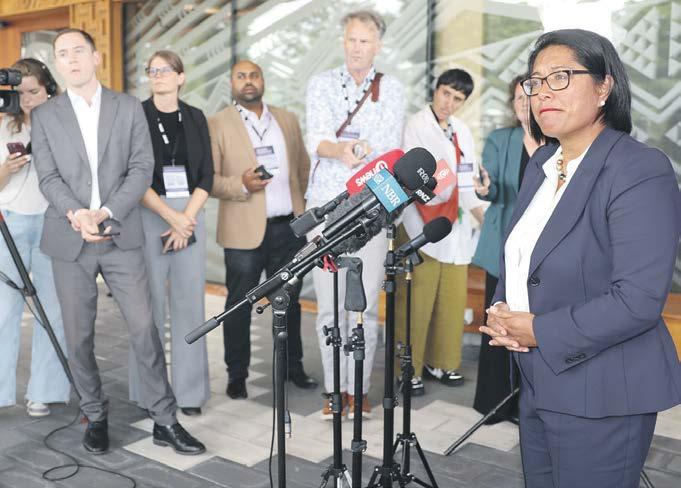
In the spotlight: Barbara Edmonds answering media questions at the forum.
Photo: Mary Anne Gill
2026 – Year of action?
By PHIL MACKAY
It’s always dangerous giving a year its own moniker – think Labour’s 2019 ‘year of delivery’ or National’s 2025 ‘year of growth’.
Nevertheless, I want to make the case for making 2026 a year of action. Bear with me. I’ve had a lot of conversations in the last few months with a fairly similar dialogue or narrative.
Generally speaking, the narrative is –back to monikers or catch-phrases again –first we were all saying “survive ‘til ‘25”, then it was just “survive ‘25”.
And now, while there is definitely more optimism, most people are cautious to get too excited about their prospects for 2026.
Now, don’t get me wrong, it has been a tough few years for many businesses, not least of all in the construction industry.
However, I’m also starting to have more conversations with a different narrative, a more positive, pragmatic mindset, along the lines of “let’s just get on with business.”
At the NZ Economics Forum last week, a Waikato Management School initiative hosted right here in the mighty Waikato, one theme that emerged was that there is a lot of ‘noise.’
Noise internationally about tariffs, conflict, and whatever chaos Trump’s brain dreamt up this week. And noise locally about election year.
Several speakers at the conference emphasised the need to look through all the noise and get on with doing business. Control the controllables, in other words, and ignore the rest.
That’s a really important message for the Waikato right now. Because when you step
back and take a good look at our region, it’s a pretty exciting time.
We’ve just opened a world-class regional theatre, and broken ground on a new medical school.
Tainui’s Ruakura Superhub is well underway, but with a lot more development planned.
International flights and jet services are back at Hamilton Airport, and tourism numbers are back nearly at pre-Covid levels. Prices for key exports are strong, and at least some of the Fonterra payout will flow through the local economy, regardless of individual farmers’ plans.
So now is a great time for businesses to get on with business.
Which brings me back to my year of action.
There are opportunities, even in a slower economy, but they’re probably not going to walk themselves in your door.
This could be the moment to progress that strategic initiative that you’ve been sitting on, tidy up some systems, incorporate new technology, or review your marketing activities.
The uncertainty is not going away, but it doesn’t have to define our reality.
I’ll leave you with a final thought and catchphrase, courtesy of Reuben from Virtual Print, who dropped this one into conversation with me this week - “If it’s meant to be, it’s up to me.”
Will 2026 be your year of action?
• Phil Mackay is Business Development manager at Hamilton-based PAUA, Procuta Associates Urban + Architecture
Water, water, everywhere… LOCAL GOVERNMENT
By MARGARET EVANS
There is no need to exaggerate. Recent rainfall has done that for us, the extreme weather reminding emphatically that water is the dominant influence for human survival.
Wellington’s faulty sewage treatment system, the flooded lands and disintegrating roads across so much of the country as well as Mount Maunganui’s fatal slips, are horrendous examples of what’s gone wrong in our relationship with water. And the frightening financial consequences ahead, the bogey of billions needed to fix it all.
The human-water connection needs a reset. Demands one. Quickly.
The co-incidental mid-February release of the first official National Infrastructure Plan responds to ‘formidable challenges’ to the nation’s water systems (as well as to land transport, electricity, hospitals, schools, and courts). The authors warn of the fiscal tsunami ahead if the flood of spending on ‘mega projects’ isn’t stopped. Their advice: “a willingness to change how we plan, fund, build and maintain infrastructure, and the courage to face hard truths”.
We also had the deadline (February 20) for submissions on Central Government’s plan for Local Government Reform, to merge regional councils into a new ‘unitary model’ led by the local mayors. This has the option of adding unelected government-appointed commissioners. Some of us would prefer local MPs sitting down within the mayoral forum to better bridge the regional gap.
All this is part of a portfolio of reform proposals currently underway at Parliament, alongside others that should be brought into a cohesive package to reshape this nation’s
democratic future.
Central and local governments now need unity in their reform thinking. And a rapid review of projects big and small, to restore public confidence, and how it all fits together for prosperity and resilience. For all - public, private, and community sectors.
It is not ‘business as usual’. We are well aware that some boys (and girls) prefer playing with big toys rather than keeping up with essential maintenance and have lost sight of both economic realities and political responsibilities. (But there are reform warnings for the salaried above $200k.)
We require deep comprehensive review. Along with official recognition, rapidly, that service delivery must change. Billions of dollars are at stake.
All spending now must be underpinned by a new focus on infrastructure maintenance, and innovations in response to weather weaknesses and development demands. With local knowledge and commitment in preference to international corporates. As well as geotech to avoid those taniwha.
We love the summer sun, but water is essential for our wellbeing, vital for our survival, beyond predictability and worthy of deep respect. An integrated approach must consider land impacts as well as water storage, treatment, recycling, and disposal. And with innovation and an outcomes’ perspective. Swimming lessons too.
• Margaret Evans was Hamilton mayor from 1989 to 1998 and first elected to the council in 1974. She was honoured in 1995 with a Commander of the Order of the British Empire (OBE) for her services to local government.
www.cambridgeautumnfestival.co.nz
Regional health investment
A new Waikato air ambulance base at Hamilton Airport underscores how longterm infrastructure investment, funding certainty and workforce planning are shaping the future of regional health services, reports Mary Anne Gill.
The arrival of a permanent Life Flight aeromedical hub at Hamilton Airport strengthens emergency response capability across the central North Island and reinforces Hamilton’s role in regional healthcare delivery.
Health Minister Simeon Brown, speaking at the official opening last month, says the purpose - built base reflects the type of infrastructure New Zealand needs to meet rising demand while improving equitable access to care across the regions.
“Ultimately that’s the type of infrastructure you need - all the equipment you need and the machines to be able to deliver the services,” Brown says.
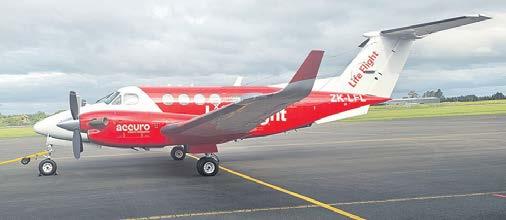
The base will house Life Flight’s fourth fixed-wing air ambulance, a Beechcraft King Air B200C, expanding time-critical aeromedical coverage across the central North Island.
The service provides intensive care and neonatal transfers for Waikato, Bay of Plenty, Taranaki, Northland, Gisborne and Manawatū‑Whanganui.
Life Flight chief executive Mark Johnston says the new Waikato aeromedical hub will play a pivotal role in ensuring patients reach definitive care faster - often in minutes rather than hours.
“Our new Waikato aeromedical hub will play a vital role in that mission, helping ensure patients reach lifesaving care at Waikato Hospital and other regional centres.”
Since its establishment in 1975, Life Flight has
provided life - saving aeromedical care to more than 40,000 people, with demand continuing to grow.
“In the next decade we expect to support a further 20,000 patients in their moments of greatest need,” says Johnston.
The base forms part of Life Flight’s wider expansion which has been supported by a $1 million grant from the New Zealand Community Trust, alongside ongoing public funding.
Brown says that combination of government investment and community backing is essential for high - cost, high - impact services to operate sustainably.
“Health New Zealand puts significant amounts of resource into all of these services,” he told The News.
“But of course there are very generous trusts and partners who support these services as well, which is hugely important and plays a really important role in keeping them going.”
Brown says multi-year contracts provide certainty
Technology changes. Trust doesn’t.
After 40 years, almost everything about Houston Technology has evolved, except the principle that kept it alive.
Of the dozens of IT companies that emerged in Hamilton in the late 1980s, almost all disappeared. Houston Technology didn’t, and its story explains why. When chartered accountant and management graduate Alan Chew founded Houston Technology in Hamilton in 1986, the local IT market was tiny. The release of IBM’s PS/2 PC a year later triggered rapid expansion, and by 1990, he counted around 35 IT companies operating in Hamilton alone.
A Waikato technology firm that is still operating four decades later is therefore an outlier in an industry not known for longevity.
“In the early days, IT was almost entirely hardware,” Chew recalls. Frustrated by how little software was doing to improve real productivity, he launched Houston Productivity in 1990.
The focus was not on selling more technology, but on pairing systems with software and advice that transform how organisations work. For years, it was the only local firm taking that approach.
By the early 2000s, the market caught up. Demand shifted decisively toward productivity, compliance and security delivered through software, better processes, and trusted advice.
“ e purchase is a moment,” Chew says. “ e outcome is everything that follows.”
for capital investment and workforce planning.
“Each year we go through a process to look at funding and making sure that we provide uplifts to the services which play this role,” he says.
“For fixed-wing services, the contracts are over four or five years. Those contracts provide that level of service and provide that support to these entities.”
Certainty is critical for a not-for-profit organisation operating at the frontline of emergency care, says Johnston.
“As a not-for-profit, we need to raise about $4000 every time we fly to help ensure that we’re available 24/7, 365 days a year.”
The Life Flight base opens against the backdrop of ageing national health infrastructure.
“The average age of hospital buildings is around 47 years, so there certainly is a need for significant investment,” he says.
There is a $7.5 billion funded pipeline of health infrastructure projects, either under construction or in planning, including major hospital redevelopments.
“It’s a big task ahead of us to make sure we have the modern infrastructure New Zealanders need.”
While large hospital builds attract public attention, assets such as air ambulance bases are critical enablers, particularly for regional communities distant from tertiary care.
But investment in emergency response must sit alongside strong primary and community care.
“The number one issue for New Zealanders needing to access primary care is the time it takes to get a GP appointment,” he says.
The Budget last year delivered around $175 million towards primary care alongside workforce initiatives including expanded training places, support for nurse practitioners and progress on the Waikato Medical School, which he described as “critically important to this region”.
As pressure on the health system continues to grow, investments such as the Life Flight base highlight the role regional infrastructure plays in connecting patients to care, supporting frontline services and building resilience across the wider network.
The lesson, Chew says, was simple but frequently ignored: buying technology is easy; living with it is not. Value is created - or destroyed - after go-live, through adoption, training, integration, cybersecurity, and continuous improvement.
“The purchase is a moment,” Chew says. “The outcome is everything that follows.” Chew is disarmingly honest about early mistakes, particularly underestimating change management. Houston’s response was structural, not rhetorical. Today, a professional change manager sits on the senior leadership team, an acknowledgement that technology fails when people are treated as an afterthought.
If Houston has a competitive advantage, Chew believes it lies in trust and the loyalty that follows over time. Trust reduces risk. And in complex IT environments, risk is what keeps boards awake at night.
What clients do over time matters more than what is claimed. Te Awamutu Medical Centre and Keyport Medical have worked with Houston since the early 1990s. The medical centre left for five years before returning, a pattern Chew sees as a stronger indicator of trust than uninterrupted tenure.
Over time, Houston has also secured more complex and highly regulated clients such as Transpower and Hamilton City Council.
To underscore Chew’s emphasis on the importance of software and advice, the firm’s work in those areas now spans widely - AI, automation, software development, cybersecurity, and Modern Workplace
consultancy.
A newer division implements and supports enterprise software for multinationals such as Coca-Cola, Unilever, and Danone. Houston has also invested in a Malaysian software company serving 16 regional banks, including the Malaysian Reserve Bank.
Asked why, Chew pointed to the firm’s depth of Data and AI expertise, including a former Postdoctoral Research Fellow from Harvard. Alongside its commercial evolution has been a consistent commitment to the community. Chew, supported throughout by his wife Jill, has served 14 years on the boards of Trust Waikato and WEL Energy Trust. He also donated the design of the NZ Covid Tracer App at the start of the pandemic, which earned him a Paul Harris Fellowship from Rotary International.
Trust hasn’t changed because no one has invented a better alternative.
As Houston enters its fifth decade, new technologies like AI continue to reshape the industry. Chew says the firm has moved from instinct to data-driven decision-making, upgrading almost everything along the way. Trust hasn’t changed because no one has invented a better alternative.
In Chew’s view, that constancy, rather than any single technology shift, explains Houston’s longevity.
Alan Chew is the founder of Houston Technology, 9 Clifton Road, Hamilton, alan@houston.co.nz (027) 578 3860
A fourth Beechcraft King Air B200C has been added to the fleet, based at Hamilton Airport.
Photo: Mary Anne Gill
Mark Johnston, chief executive Life Flight
Alan Chew
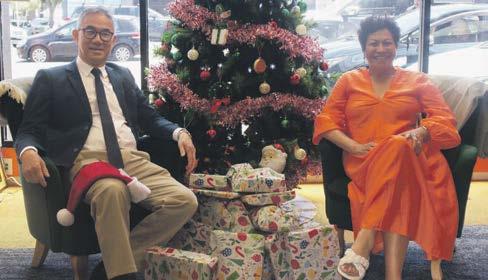
Aroha Te Kanawa, chief of partnerships for Kirikiriroa Family Support Trust in Hamilton, with Alan Chew presenting Houston Christmas gifts for distribution to their tamariki.
Hiring Overseas Workers Without the Red Tape: Flexible Work Visa Options for Employers
Employers are once again reporting skill shortages as projects restart, workloads increase, and confidence slowly returns. While many businesses assume that hiring overseas workers automatically means complex and costly immigration processes, employer accreditation, and mandatory job advertising, this is not always the case. In fact, New Zealand’s immigration system includes several highly flexible work visa options which enable employers to hire overseas workers without being accredited, and without any job advertising These pathways are often under used, yet they can sometimes be the fastest and simplest way to fill job vacancies.
From an employer’s perspective, open work visas are the most straightforward visas to deal with. A person holding an open work visa can work for any employer, in any role, without sponsorship. Common examples include:
Post study work visas – International student graduates who complete a New Zealand qualification may be granted an open work visa for between one and three years, depending on the level of their NZ study. This provides an excellent pool of NZ educated talent who are already familiar with local systems and standards, and are immediately available for internship opportunities.
Working holiday visas – New Zealand has working holiday agreements with over 40 countries which allow young people (generally aged 18–30y) to work for up to 12 months - although UK and Canadian citizens can be aged up to 35y, and work for longer periods. For employers, there is no accreditation, no advertising, and no immigration paperwork required. While these visas are temporary and not suitable for permanent roles, they are ideal for fixed term, casual, or contract work.
Partnership based work visas – If a candidate has a partner who is a New Zealand citizen or resident, or who
holds a work or student visa, they may qualify for an open work visa. This is particularly common where one partner is in NZ for study or work.
In all of these cases, the employer avoids the need for accreditation, job checks, or advertising entirely, and can employ anyone holding a visa “allowing work for any employer” the same as hiring a NZer.
Where open work visas are not available, the Specific Purpose Work Visa could be an option. This visa is designed for time-bound, project based or specialist assignments. Advantages include:
• The visa duration is matched to the life of the project or assignment, which can range from a few weeks up to several years, allowing costs and workforce planning to align directly with project parameters
• Ability to employ the person directly, or second them from an overseas business
• No employer accreditation and no job advertising required
• Fast application processing These visas are commonly used for specialist engineering, IT or technical roles, commissioning work, or senior project leadership.
One category that is frequently forgotten is Australian citizens and Australian permanent residents. Both groups are granted New Zealand resident visa status on arrival, allowing them to live and work here indefinitely. From an employer’s standpoint, there is no visa process at all.
The takeaway is that employing overseas workers does not always require accreditation or advertising. In many cases, the right candidate may already hold a visa that allows them to work freely, or may qualify for a streamlined, project based option.
Understanding these pathways early can save time, cost, and frustration, and can make the difference between securing critical skills quickly or losing them to a competitor.
Investment for economic growth
By NICOLA GREENWELL
Proposed changes to local government and national funding settings are creating renewed uncertainty for the tourism sector, particularly for Regional Tourism Organisations (RTOs) whose work directly supports regional economic performance.
Hamilton & Waikato Tourism is funded through a mix of local council investment and direct industry contributions, and while this diversified model provides a degree of resilience, it also means any tightening of council revenue has immediate consequences for what we can deliver on behalf of the region.
The government’s proposals to introduce a national rates cap and replace regional councils with combined territory boards have intensified the conversation. RTOs across New Zealand are structured and funded in very different ways, so the impacts of any structural reform will inevitably be uneven. For regions like ours, where recent Long-Term Plan decisions have already reduced investment, further constraints risk compounding existing pressures.
When councils are required to operate within tighter revenue settings, non-essential expenditure often comes under scrutiny - and tourism funding is consistently at risk. Other regions have already experienced this.
Hawke’s Bay Tourism, for example, has faced significant reductions and had to reconsider its priorities, structure and delivery as a result. Their experience is a reminder rate caps, even if well-intentioned, can directly influence the viability and effectiveness of regional tourism functions.
The economic stakes are high. Tourism
remains a critical lever for regional growth, supporting jobs, generating business activity, enhancing community vibrancy and strengthening resilience. Funding enables RTOs to deliver destination marketing, visitor-experience development, industry capability building, event acquisition and support, and destination management, all essential components of a thriving regional economy. When investment diminishes, so too does the capacity to drive these outcomes. It is important to acknowledge the current proposals sit within a much wider reform environment. Central government is reassessing how best to streamline local government, optimise regional investment, and leverage tourism as part of wider economic development. From this perspective, the rates cap and governance changes may represent one piece of a much larger system redesign. However, the full implications remain unclear until more detail is released.
What we can say with certainty is this: as we prepare for the next round of LongTerm Plans, the need to advocate for stable, strategic tourism investment has never been more important. We support efforts to improve long-term efficiency and deliver value for communities, but any structural changes must continue to recognise tourism as a major economic enabler. Protecting investment in tourism is essential if regions like Waikato are to maintain momentum, attract visitors, support local businesses and drive sustainable economic growth. • Nicola Greenwell is general manager of Hamilton and Waikato Tourism
PEOPLE AND CULTURE
AI: Courts sound alarm
By SARAH LIM
The Employers and Manufacturers Association (EMA), which represents around 7000 employers and manufacturers across the North Island, is seeing a clear and growing trend: increasing concern about employees using AI tools without authorisation during formal employment processes.
A key issue arises when employers begin a disciplinary or other formal process. Employees are increasingly generating their written responses using AI tools, resulting in lengthy submissions that do not directly address the allegations or the matters under review.
of probabilities, it found the employee had uploaded confidential material - including disciplinary allegations, names, and statements - into an AI platform.
This was held to be a breach of the confidentiality clause in the employment agreement, and a compliance order was issued to prevent further disclosure.
Several employers report that when they seek clarification, employees sometimes appear not to understand their own submissionshaving copied and pasted AI generated text without reviewing it or forming a clear view of their position.
Despite this, employers remain legally obliged to consider an employee’s feedback and to engage with it in good faith under the Employment Relations Act 2000. This means that what should be a straightforward process is, in some cases, becoming unnecessarily timeconsuming and frustrating.
A recent Employment Relations Authority (ERA) decision offers some reassurance for employers encountering this problem. In QTR v BXD [2025] NZERA 716, an employer sought an urgent compliance order to enforce an employee’s confidentiality obligations. The employer suspected the employee had used AI to generate submissions in both the disciplinary process and the authority proceedings. The documents included “hallucinated” case citations - a tell-tale sign of AI involvement. The employee did not deny using AI but claimed to have generalised the confidential information.
The authority disagreed. On the balance
The Supreme Court has also commented on the issue. In a recent case, a self-represented litigant filed AI generated submissions that contained fabricated case law. The court warned that filing such material could amount to obstruction of justice or contempt of court - offences that carry the potential for imprisonment or fines.
If you suspect an employee is using AI to generate submissions during an employment process or court proceeding, begin by reviewing their documents for signs such as fake case law, unusual phrasing or formatting anomalies. Check their employment agreement and relevant workplace policies and discuss your concerns with the employee first. If the behaviour continues, it is prudent to seek legal advice on next steps.
As technology and workplace practices continue to evolve, employers may find it challenging to stay across the emerging risks and obligations associated with AI. EMA members can access the organisation’s AdviceLine service, which provides up-to-date guidance on the appropriate use of AI in employment processes and the wider workplace. It ensures employers have a reliable source of clarification when navigating unfamiliar or complex situations, before issues escalate.
• Sarah Lim is senior associate at the Employers and Manufacturers Association (EMA)
University meets bed demand
When student housing capacity tightens in Hamilton, recruitment, retention and graduate flows are affected, turning accommodation into a regional workforce enabler rather than purely a campus concern, reports Mary Anne Gill.
At Waikato University’s Hamilton campus, student accommodation demand is running hot, a reflection of both institutional growth and broader pressures in the regional housing market.
Fully catered halls are at capacity, and self - catered accommodation is close behind, with pricing reflecting sustained demand. Weekly costs range from
$446 to $510 for fully catered halls, and $296 to $387 for self-catered options, with premium apartments higher again.
The university currently manages about 1200 beds across its Hamilton accommodation portfolio, spanning traditional halls, flats and apartments. But with enrolments rising across undergraduate, postgraduate and international cohorts, that number
is increasingly under pressure.
Recent developments have focused on self - catered, apartment-style accommodation, aimed at students beyond their first year.
These facilities offer greater independence while retaining the pastoral care and community support that universities see as a competitive advantage over the private rental market.
Business is Better When You’re Connected
Running a business shouldn’t feel isolating. Growth shouldn’t feel accidental.
At Waikato Chamber of Commerce, we help Waikato businesses: Make meaningful connections, Generate quality leads, Increase visibility across the region, Develop through events and training, Grow sales.
Real relationships. Real growth.
Because connection fuels confidence. And confidence drives growth.
Associate Director of Student Accommodation TJ Cloete says student preferences have evolved.
“Students want flexibility and quality, but they also want support. That’s especially true for international students and those moving cities.”
Hamilton’s accommodation contracts are also structured on a 50-week, full-year model, which lowers weekly costs compared with shorter academic-year options but requires longer commitments.
Weekly rates start at $276 for standard self - catered flats, rising to $438 for premium or couple-occupancy apartments.
From a business and planning perspective, purpose-built student
accommodation is increasingly seen as a way to relieve pressure on the private rental market, where students often compete with families for housing.
University leaders say accommodation is now inseparable from growth strategy.
Programmes such as medicine, engineering and business rely on the university’s ability to attract students from across New Zealand and overseas and that, in turn, depends on housing availability.
As Hamilton continues to grow as a university city, student accommodation is emerging as a key piece of urban infrastructure, with implications that extend well beyond campus gates.
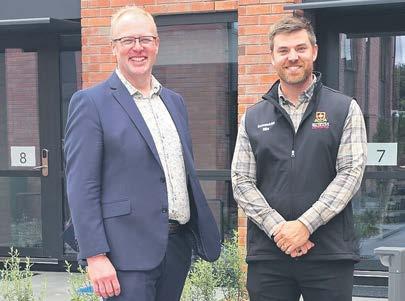
Associate Director Student Accommodation TJ Cloete, right and chief operating officer Jim Mercer at the new $10 million student apartment complex.
Photo: Mary Anne Gill
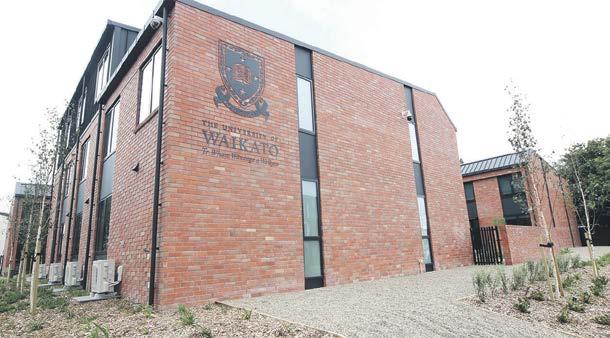
The Knighton Road student accommodation.
Photo: Mary Anne Gill
Business confidence edges back
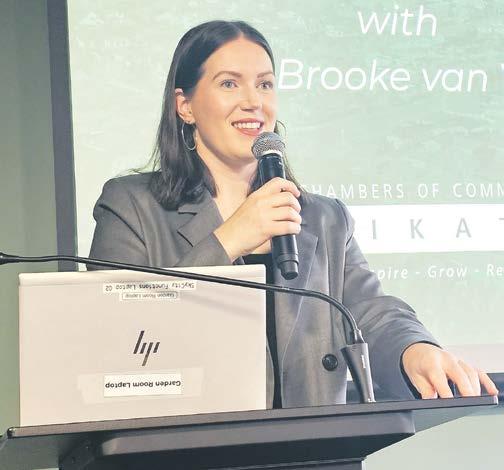
A shift in sentiment and a pipeline of workplace reforms were front of mind when Act deputy leader Brooke van Velden addressed a Waikato Chamber of Commerce business briefing. Mary Anne Gill was there.
Brooke van Velden knows many businesses are tired.
Speaking to a Waikato Chamber of Commerce business briefing last month, the Minister for Workplace Relations and Safety acknowledged the “hard slog” employers have endured since the pandemic, and the uncertainty that has lingered long after lockdowns ended.
But she also brought data suggesting the mood may be starting to shift.
New Zealand Institute of Economic Research figures released in January showed business confidence at its highest level since 2014, with improvements across a range of sectors. Hiring intentions have lifted, with a net 22 percent of firms planning to take on staff in the next quarter.
“That’s small good news, and it’s really important to notice when it does come through,” van Velden says.
With 2026 an election year, van Velden said policy changes developed by the coalition government are now beginning to flow through Parliament and into effect, particularly those aimed at economic recovery. Her portfolio sits at the
intersection of government and business.
Van Velden, 33, was first elected to Parliament in 2020 as an Act Party list MP and entered Cabinet after winning the Tāmaki electorate in the 2023 election. One of the younger ministers in government, she has moved quickly through a portfolio central to business confidence, workplace reform and regulatory change.
“My job is to make it as easy as possible for employers to hire staff, keep people safe, meet their obligations, and change their staffing mix when they need to,” she says.
A recent milestone was the passage of the Employment Relations Amendment Act, which introduces greater flexibility into employment relationships. Changes include clearer tests distinguishing contractors from employees, removal of the 30-day rule for new employment agreements, and a $200,000 income threshold above which employees can no longer bring a personal grievance for unjustified dismissal after a transition period.
Van Velden said the
changes were designed to restore balance and reduce risk for employers, particularly when hiring for senior roles.
“These settings are about giving businesses confidence and when businesses have confidence, they’re more likely to create jobs and invest.”
Health and safety reform is the next major focus. Van Velden says the current system too often prioritises compliance paperwork over managing real risks, consuming time and money without necessarily improving safety outcomes.
Proposed amendments to the Health and Safety at Work Act would shift attention to critical risks, with a particular focus on reducing compliance pressure for small businesses. The bill is currently before select committee.
Perhaps the strongest response from the room came when van Velden turned to the Holidays Act, which she described as “broken”.
A replacement bill proposes a simpler hours-based accrual system for leave, pro-rata sick leave tied to contracted hours,
and clearer entitlements for casual and additional hours.
For Waikato employers, many of whom operate with
fewer than 20 staff, the message was clear: change is coming, the settings are shifting, and the government
is betting greater flexibility and clarity will help rebuild confidence.
• Full story goodlocal.nz
Brooke van Velden speaks to business representatives at Waikato Chamber’s briefing in Hamilton.
Photo: Mary Anne Gill
Hamilton buyers break loose
Although coming down from a staggering all-time high in 2022, average house prices have still proven challenging for some. However, first home buyers have been enjoying better terms of late, as Jon Rawlinson discovered.
First - home buyers across New Zealand, including Hamilton and the wider Waikato, are stepping into the market and turning the goal of home ownership into reality.
Cotality data backs that up, showing first-home buyers now make up a larger share of active house-hunters.
Chief property economist Kelvin Davidson says first - home buyers are capitalising on current market conditions.
“Interest rates have been down, house prices have been down and first home buyers have been tapping into that.”
First-home buyers made up almost a third (28.4 per cent) of the market in the final quarter of 2025.
“Part of this shift towards ownership has been because servicing debt has been a bit cheaper than paying rent in a lot of cases, but that’s only one factor,” Davidson says.
“First-home buyers have also accessed low deposit finance, a lot have KiwSaver and there’s still a genuine desire to own rather than rent.”
The main centres are (give or take), in step with this trend. While Hamilton had a slightly larger percentage of new buyers towards the end of the year.
Davidson says Auckland buyers priced out of that market are not driving Hamilton’s increase.
“I wouldn’t say so in general, no. Hamilton’s been a good market for firsthome buyers, but in general it’s strong in Auckland too. It’s a trend we’re seeing everywhere. They have been a pretty significant part of the market for the last two or three years now, so you could call it a sustained peak, or just a strong phase.”
The Reserve Bank made multiple cuts to the Official Cash Rate through 2025 in efforts to control inflation, boost confidence and economic activity and, importantly, encourage borrowing. Combined with relatively static house prices, the cuts encouraged borrowing.
“With property values off their highs, mortgage rates easing and support from KiwiSaver and low-deposit lending, this group is well placed to take advantage of opportunities. For many, the gap between renting and buying has narrowed, making home ownership more achievable.”
Markets now expect the Reserve Bank to raise the
general will continue to see ownership as more than just a dream, Davidson says.
True Story - Having to Walk the Walk with a Vacant Building
It’s almost a daily occurrence, where Landlords are looking for guidance around re-leasing their vacant property. What should they do externally and internally, how much will it cost, what must they do, what else could they do ….
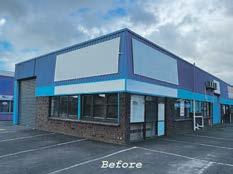
We own a small industrial building in Frankton which has just become vacant and I went through the process of ‘what would I tell a Landlord, if it was their property’.
The previous tenant had been there for quite a number of years and the lease had been taken over from a previous owner of the business. What was left was a lot of ‘stuff’ from the previous tenant(s) and I could see that there would be arguments about who was responsible for what – in the end it was easier and faster for me just to get on with what needed doing:
There was an entire skip full that we needed to be removed and it looked so much better afterwards.
Additionally, there were other tasks that needed to be completed, along with an exterior refresh:
- The locks were changed
- The alarm code was changed
- Holes in the exterior cladding were repaired
- Broken or cracked exterior panels were replaced or repaired
- Old garden plantings were removed and replaced
- Textured rendering on the exterior brick had to be removed and ground back
- The entire building was painted externally
“The outlook for 2026 as a whole is for rising house prices and sales, but certainly not at the crazy post-pandemic levels.”
Consequently, Kiwis in
Briefs…
Credit rating
“It’s never been easy to buy a house. There are people renting who just don’t see a pathway out of that, and it’s a legitimate option for many,” he says.
“But I think ownership is still the goal for most.”
Waikato District Council has retained its AA+ (outlook negative) long-term credit rating and F1+ short-term rating from Fitch Ratings, following the agency’s annual review. AA+ is the highest rating currently assigned by Fitch to a New Zealand local government agency. It reflects very strong capacity to meet financial commitments and prudent longterm financial management.
Top ranked
Waikato ranks among New Zealand’s strongest regions for infrastructure resilience, the inaugural New Zealand Infrastructure Resilience Index (compiled by NZIER and commissioned by Downer) found. Waikato had a relatively stable performance across the four lifeline sectors and stronger underlying network resilience compared to other parts of the country.
Jason in charge
Waikato-based digital marketing agency, Unbound Marketing, has appointed Jason Tiller chief executive as founder Quentin Weber steps into the chief technology officer role.
Speed needed
Smart Waikato, which runs the annual Young Enterprise Scheme, is calling for local business professionals, entrepreneurs, and community leaders to be speed coaches for students and meet student companies in quick mentoring rounds on March 13. Each team will share their elevator pitch and ask for feedback.
Council listens
Waikato District Council is inviting residents to take a more direct role in shaping the future of the district with the launch of a new Community Voice Panel. The panel is made up of residents who will take part in short, online surveys throughout the year. Feedback will help inform Council decisions and ensure local views are reflected in planning, services, and priorities. Mayor Aksel Bech says the panel is about making community input easier, more inclusive, more practical, and built in at the start of council’s processes so it can genuinely help shape the decisions.
Horses in Tron Equifest, New Zealand’s leading equine event, will move from Taupō to Hamilton in October to the Claudelands Events Centre. Equifest is the only national event of its kind, bringing together riders, horse owners, industry professionals and enthusiasts from all equine disciplines to connect, learn and celebrate horses in an equine-themed, festival-style environment.
- Removal of various old floor coverings, most of which were direct-stick
- Removal of old furniture, some of which were claimed to be ‘built in’, that were in fact just really heavy and had to be broken up to be removed
- Removal of large boards that were attached to the walls, used by the previous tenant to hang things on
- Removal of part partition walls
- Removal of various old signage that hadn’t been removed
- Fixing several broken windows
- Repairs to holes in the walls
- Cutting off redundant dynabolts sticking out of the floor
- General cleaning, including several toilets which were in a terrible state.
- Upgraded the electricity meters from 5 separate meters (each having a daily charge), to one meter and 3 check meters, plus replacing the main supply box
- Roofing had the gutters cleared, spayed for moss, minor rust treatment where necessary and replaced the old leadhead roofing nails.
All in all, its now a much more presentable building, both internally and externally. While this provides no guarantee as to when a new tenant will be found, we have the satisfaction of knowing that we have done our bit to make it entirely more presentable and attractive for a future business.
If you are wanting some guidance with your vacant building, then your commercial sales and leasing specialist will be able to give you some guidance.
Mike Neale, Managing Director, NAI Harcourts Hamilton
Official Cash Rate at some point this year, sparking interest rate rises. House prices are also tipped to rise somewhat.
As NCEA reforms gather pace, educators warn rushed change could widen inequities and undermine workforce readiness, reports senior writer Mary Anne Gill.
New Zealand’s debate over education reform is often framed around credits, standards and league tables.
But at the New Zealand Economics Forum hosted by Waikato University’s Management School last month, one message cut through clearly: what happens in classrooms today will shape the country’s economic resilience for decades.
In a wide-ranging discussion on the future of NCEA, Tauranga Girls’ College principal Tara Kanji delivered one of the forum’s most grounded and confronting perspectives, speaking from “the chalk face”.
Kanji welcomed a review of the national qualification system, saying that literacy and numeracy matter.
But she warned that the pace and design of the proposed reforms risk creating new inequities and destabilising schools at a time when stability is essential.
“Schools can’t operate in a vacuum,” she says.
“If we’re serious about preparing young people for work, society and citizenship, we need coherence across curriculum, assessment and resourcing.”
For regional economies the stakes are high. Employers already struggle to find job ready staff, while schools are being asked to implement new qualifications for which key details are still unclear.
Kanji told the audience that current Year 9 students will sit entirely new qualifications at Years 11, 12 and 13, yet schools still lack the information needed to plan coherently.
“I cannot currently backward map my Year 9 students to best prepare them,” she says.
“We’re building the plane while flying it.”
Kanji says previous rushed reforms led to teacher burnout and migration overseas, compounding workforce shortages in already stretched regions.
Beyond academics, schools play a critical economic role by building social cohesion, a skill increasingly valued by employers but rarely measured.
“Empathy, teamwork, understanding differences, these are not ‘soft extras’,” she says.
“They’re fundamental capabilities that allow people to function in workplaces and communities.”
Fellow panel member, innovation leader Colin Kennedy of Creative HQ, says productivity growth will increasingly depend on problem solving, adaptability and ethical use of AI - skills he believes current reforms underplay.
“We’re preparing students for an economy that’s already moved on,” he says.
Waikato University Pro Vice-Chancellor Claire McLachlan says literacy and numeracy challenges are not primarily a secondary school problem.
“They start much earlier, and high-stakes exams alone will not fix long-standing issues,” she says.
For business leaders, the message was sobering: education reform is not just a sector issue, but an economic one.
Kanji says Education Ministry documents themselves acknowledged the proposed reforms would initially lower achievement rates for students already over-represented
in underachievement, particularly Māori and Pasifika learners.
“I can’t accept a system that knowingly perpetuates disadvantage,” she says.
“Education has to be accessible and
Briefs…
$5 million bequest
The George Mason Charitable Trust has announced a landmark $25 million gift to four New Zealand universities, including $5 million to Waikato. It is the largest-ever single bequest to higher education and will go towards advancing scholarly research in the natural environment and biological sciences. Mason co-founded the agricultural chemical company Taranaki NuChem Ltd (later Zelam Ltd) and was recognised internationally as an expert in weed science. Over decades, he donated millions of dollars to environmental, scientific and arts causes.
Water ready
From July, drinking water and wastewater services will be removed from Hamilton City and Waikato District councils’ rates and managed by IAWAI Flowing Watersthe separate joint waters entity, established by Waikato and Hamilton who have both told IAWAI to set water charges as low as sustainably possible, without compromising services. On the same day Waipā District Council’s water services will transfer to Waikato Waters Ltd. Stormwater arrangements have paused to allow Waipā to assess the best long-term delivery model.
Festival all set
The stage is set for Homegrown's return to Hamilton this month after 18 years in Wellington. 30,000 people are expected to attend the event at Claudelands Oval delivering a significant boost to the city. The one-day event will generate 951 hotel room nights and support hundreds of local suppliers and contractors. It takes three weeks to set up the one-day festival which will see 2300 people working on the day, 40,230 man hours logged on the ground, 220 truckloads of equipment transported, and nearly 4000 meals catered onsite.
Demolition begins
Demolition and remediation work will begin at the former Tokanui Psychiatric Hospital near Te Awamutu next week, with contractors establishing on site this week. Toitū Te Whenua Land Information New Zealand is leading the project, which will involve removing 74 buildings, a swimming pool, eight substations, and 14 kilometres of underground services and roading. The work also includes upgrading a closed landfill and works to address contaminated land.
meaningful for all.”
Panellists all agreed that how New Zealand reforms NCEA will shape not just schools, but productivity, equity and economic confidence nationwide.
Liquor call
Researchers from Waikato University are calling for stronger Government-led laws to reduce children’s exposure to alcohol marketing and prevent harm. A new study published in the Journal of the Royal Society of New Zealand shows that alcohol advertising is influencing how children think about alcohol, increasing the likelihood they will start drinking earlier. Lead researcher Dr Victoria Egli, Associate Professor from Waikato’s Te Wānanga Waiora Division of Health says the evidence is clear: repeated exposure to alcohol advertising shapes young people’s attitudes and normalises drinking.
Home found
A once roaming dog has found his forever home thanks to the care of Waikato District Council’s Animal Control team and the support of community partners. Doofus was picked up roaming in, early December, and was never claimed. Despite his situation, staff quickly noticed his big, goofy and affectionate personality. He passed his temperament assessment with ease and showed strong potential for rehoming. Before that could happen, Doofus needed surgery for cherry eye – a painful condition affecting the tear gland - in both eyes. Council’s Animal Control team worked alongside Fundraising for Impound Dogs –New Zealand, who successfully fundraised to ensure Doofus received the treatment he needed just in time for Christmas.
e-Bike findings
Participants in a New Zealand e-bike pilot programme say cycling has improved their physical and mental health and helped in managing chronic conditions such as diabetes and asthma, a study from the University of Otago, Wellington – Ōtākou Whakaihu Waka, Pōneke has found. The researchers explored the impact of e-biking on the 26 Māori and Pacific people who signed up to participate in the HIKO e-bike pilot programme in Wainuiomata, in the Wellington region in 2023. Their findings are published in the New Zealand Medical Journal. Those who joined the programme were provided with e-bikes, helmets and high visibility clothing, and given cycling skills training and mechanical support. They were interviewed at the start of the programme and then at six- and 12-month intervals.
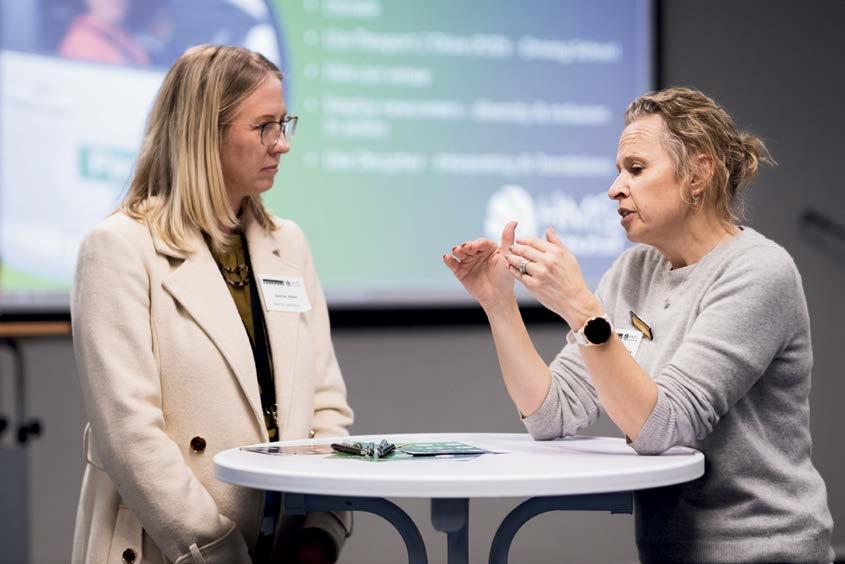
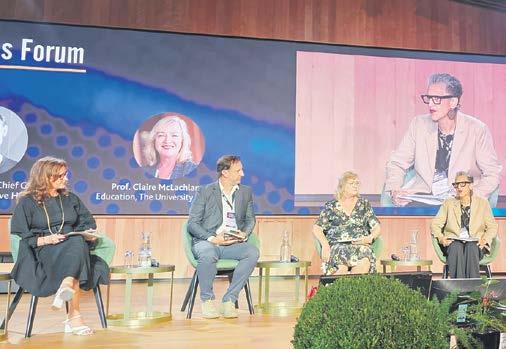
Panel members, from left Josie Pagani, Colin Kennedy, Claire McLachlan and Tara Kanji at the From Credits to Capabilities session and Rethinking NCEA for the future. Photo: Mary Anne Gill
Workforce crunch looming
An ageing population and volatile migration are reshaping New Zealand’s labour market, with big implications for regional growth, reports senior writer Mary Anne Gill.
New Zealand is heading toward a demographic crossroads, and simply turning the immigration tap on and off will not be enough to secure the country’s economic future.
That was the clear message from a panel on demographic change at the New Zealand Economics Forum last month, where leading demographers and economists challenged the idea that migration can single-handedly offset an ageing population.
Prof Paul Spoonley described New Zealand’s migration settings as “highly volatile”, swinging from a net gain of more than 130,000 people two years ago to barely 11,000 today.
“It was too high two years ago. It’s too low at the moment. Why don’t we try and dampen that down?”
Spoonley told the audience in The Pā at Waikato University.
Such swings make long - term planning difficult for businesses, infrastructure providers and
regional economies.
“We disconnect demography from economic strategy at our peril,” Spoonley says.
“Demography is actually central to our future economic success as a country.”
Waikato University demographer professor Tahu Kukutai warned New Zealand risks repeating mistakes made in Europe, where governments waited too long to respond to sustained fertility decline.
“We’ve only been below replacement fertility for about a decade.
“There is still time to plan but not if we keep treating migration as a short-term fix,” she says.
Once countries move too far into population decline the consequences are long-lasting.
“Most of those countries just waited too long.”
Economist Isabelle Sin said relying on ever-increasing migration to counter ageing is mathematically unrealistic.
Migrants themselves age,
and global competition for young workers is intensifying as other developed nations face the same pressures.
“There is not an infinite pool of young migrants out there,” says Sin.
Using migration to plug workforce gaps without planning for housing, transport and services creates its own problems, particularly when population growth accelerates suddenly.
For regions like Waikato and the Bay of Plenty, the impacts of migration volatility are already visible. When migration
Resilience now regional advantage
With disasters and disruption becoming more frequent, experts say New Zealand must shift from crisis response to risk management, reports Mary Anne Gill
From pandemics and floods to cyber disruption, climate change and landslides, New Zealand is entering an era where shocks are no longer rare events. If proof was needed, it came the day after Waikato University Management School hosted an Economics Forum session bluntly titled The Next Big Shock.
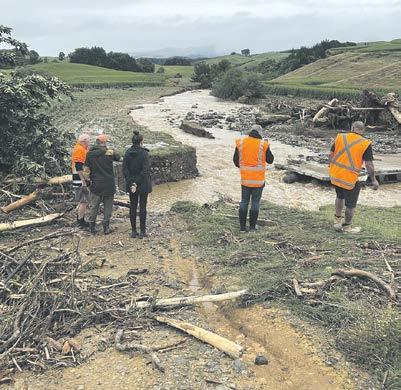
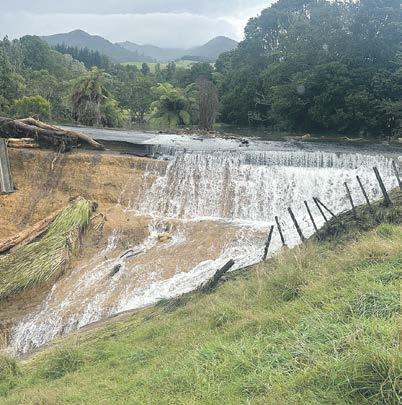
Once-in-a-century floods hit parts of Waipā and Ōtorohanga.
Among those in the room for the forum was Waipā mayor Mike Pettit, who would declare a State of Emergency the next day. And in January, a landslide at Mauao (Mount Maunganui) and another in Welcome Bay highlighted the growing risks posed by unstable hillsides.
slows, population growth concentrates in Auckland, Hamilton and Christchurch, leaving provincial economies exposed.
“Auckland currently receives about half of all population growth in New Zealand,” says Spoonley.
Within a couple of decades the city could be home to 40 percent of the country’s population.
New Zealand is also unique within the OECD, with a large and youthful Māori and Pacific population.
Kukutai says this as a “demographic gift but only
if we invest in education, training and pathways into work.”
Rather than framing the debate as “immigration versus locals”, the panel urged a more integrated approach: better use of older workers, stronger workforce participation for Māori and Pasifika, and regional strategies that align population change with infrastructure investment.
The forum also touched on social cohesion.
New Zealand has underinvested in settlement
support compared with countries such as Canada, says Spoonley.
“If you land in Canada today, you automatically get 400 hours of English or French language instruction. We don’t do that here.”
For business leaders, the takeaway was clear: demographic change is not a distant problem. It is reshaping labour markets now, and without a long-term population strategy, skills shortages and regional decline will become harder and costlier to reverse.
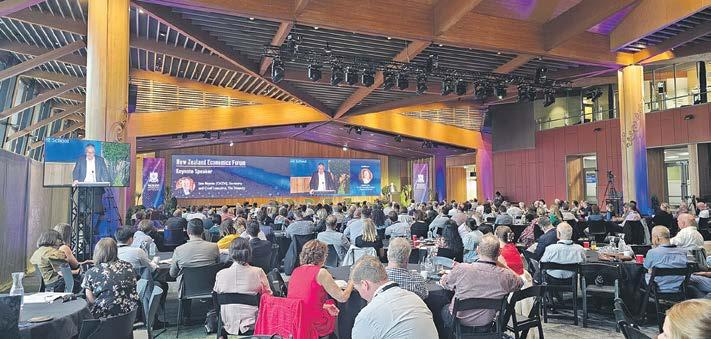
One of the speakers at the economics forum was The Treasury’s chief executive Iain Rennie.
Photo: Mary Anne Gill
Waipā mayor Mike Pettit, right, with deputy Jo Davies-Colley was an interested participant during The Next Big Shock session and the next day was on the ground at the floods in the district.
Emergency response criticality
By STEPH O’SULLIVAN
Volatility, Uncertainty, Complexity and Ambiguity - the ‘VUCA’ model of the world - was highlighted repeatedly during the New Zealand Economics Forum at Waikato University. A fantastic event on our regional doorstep.
Ironically, a week later we saw firsthand that resilience is not only a national challenge - it is fundamentally local in its execution and impact. In an era of increasing climate volatility, infrastructure stress and economic uncertainty, the role of local government in emergency event response has never been more critical.
Local government sits at the frontline of emergency response in New Zealand.
Councils are responsible for community safety, the protection of critical infrastructure, and the continuity of essential services during and after significant events. When major events occur, alongside iwi partners, it is local authorities that mobilise first – activating emergency operations centres, coordinating welfare support, managing infrastructure damage, and communicating with affected communities.
The forum underscored the growing frequency and complexity of disruptive events and the economic consequences that follow.
These discussions reinforced that emergency response is not a short-term operational issue, but a long-term economic, environmental and social one. Decisions made in the immediate response phase have lasting implications for recovery, business continuity and community wellbeing.
Local government plays a unique bridging role between national frameworks and community realities. While central government provides legislative settings and funding mechanisms, councils translate these into practical action on the ground.
This includes working alongside iwi and hapū, coordinating with emergency services and lifeline utilities, and supporting local
businesses and community organisations.
As a chief executive, emergency response is not theoretical. I have led through volcanic eruptions, floods, tsunami threats and evacuations, shipwreck restoration and the long tail of debris-flow impacts.
Every time, the same pattern emerges. Local government is there. And every time, iwi are there too.
The forum’s wrap-up video highlighted the importance of leadership, coordination and trust during times of uncertainty.
These qualities are tested most visibly during emergency events, when communities look to their councils for clarity, reassurance and decisive action. Trust is earned through preparedness, strong relationships and consistent engagement well before an event occurs.
What I am curious about is not so much what was said at the forum, but what was absent. There was no mention of, or connection to, Te Arikinui Ngā Wai Hono i te Pō, the Māori Queen’s recent Economic Forum, nor recognition of the indigenous economic leadership and scale of investment interests represented there, including the announcement of a significant Māori investment fund.
That absence matters.
As we consider the Big Choices for a Small Nation, we must be intentional and respectful about who consistently carries communities through disruption. If our economic conversations do not fully acknowledge iwi partnership and Māori economic leadership and innovation, they risk being incomplete. Because every time crisis hits, the reality is the same: local government shows up, and iwi open their doors.
• Steph O’Sullivan is Waipā District Council chief executive. Her executive and governance leadership roles span the private, public and iwi sectors.
Opportunities to amalgamate
By JOHN ROBERTSON
The process began under Labour, when it directed councils to combine their water businesses into several large entities. The National-led Government changed the model, but not the direction.
In the Waikato drinking water and wastewater assets and services are being shifted from eight out of our 10 councils into two new water entities.
In November last year, another directive - that mayors replace regional councillors as governors of regional councils. Central government also wants to see local councils develop plans to work “more effectively and efficiently” together.
The writing is on the wall. Regional councils are on the way out and local councils will be reconfigured.
We can stand back and let this reconfiguration be done to us, or we can be proactive and try to shape our future.
The four councils in Northland are making their views known as they promote their vision of “By Northland, for Northland.” They may well end up with one combined governance structure, something considered in 2013.
Moving south, Auckland has already amalgamated.
If I were to make a prediction, I would bet on Taranaki councils being amalgamated into one unitary council. And Wellington councils the same.
Down the west coast between Auckland and Taranaki and heading east to Coromandel and Taupo lies the so called “Mighty Waikato”. We are an odd lot to group into one.
In the south the King Country would make sense as a stand-alone council. We have been a community of interest for well over a century, Te Rohe Potae. Dominated by one proud iwi, Maniapoto, our economy is driven by pastoral farming, forestry,
mining and tourism.
We are a vast area stretching from Kāwhia to Mōkau inland to Taumarunui, and east towards Taupō. We are an area the size of Hamilton city, Waipā and Waikato districts combined.
Ōtorohanga and Waitomo districts represent most of this area. An amalgamation of the two councils would be easily achieved by legislation.
Interestingly, an amalgamation in Waitomo has been achieved before. It was initiated by two councils in in 1976 - Te Kūiti Borough with Waitomo County and executed by an Order in Council signed off by then Prime Minister Robert Muldoon.
The Ōtorohanga and Waitomo administrations work well together now, sharing some services; but we would be that much more effective, efficient and lower cost if we were one organisation.
Operational costs would drop. One chief executive, one senior management team, one regulatory service, one Long Term Plan, one comms and Human Resources team. The list goes on. Savings would be significant.
The one councils would be: Northland, Auckland, King Country, Taranaki and Wellington.
Others are best to judge how the rest of the Waikato should be reconfigured. Criteria should include communities of interest as well as effectiveness and efficiency.
• John Robertson, QSO was a National MP for Papakura, mayor of Papakura, co-founded United NZ and chaired the Kaipara district commission for four years. He became Waitomo mayor in 2019. The views are his own.
Resilience now regional advantage
The country’s biggest risk is not the disasters themselves but the failure to prepare, the panel heard.
“A shock is often something that exceeds our capacity to cope.
Preparation changes that.”
Treasury chief strategist James Beard told the audience that a single major disaster can cost the equivalent of 10% of GDP, yet New Zealand continues to treat many foreseeable events as surprises.
“They are fully expected. The question is whether we’ve planned for them.”
Insurance executive Bryce Davies says floods, earthquakes and infrastructure failures should no longer be seen as unexpected.
Former Covid response leader Kiriana Brooking described crises as the collision of sudden shocks with long ignored trends, such as underinvestment in infrastructure or emergency systems.
“Covid and Cyclone Gabrielle weren’t just shocks. They exposed decisions not made years earlier.”
Economist Martin Lally challenged the audience to think beyond headline disasters, arguing that slow burn crises like obesity, addiction and chronic disease impose far greater long term costs than many sudden events.
“Obesity is over 100 times more serious than the most extreme forecasts. It is not much point getting bent out of shape over pandemics when you are ignoring meth and alcohol and obesity.”
For regional New Zealand, the implications are particularly acute. Smaller communities often lack the resources to absorb disruption yet are more exposed to climate and infrastructure risks.
Brooking highlighted how many households lack the means to cope with even short term supply disruptions, turning manageable events into social crises.
There was a need to shift from reactive emergency response to proactive risk management,
integrating land use planning, insurance, infrastructure investment and clear rules about who pays when disaster strikes.
“We focus on response because it’s visible. But resilience is built quietly, long before anything goes wrong,” says Davies.
For businesses in Waikato and
the Bay of Plenty, the message was direct: resilience is now a competitive advantage.
Companies and regions that plan for disruption will recover faster and suffer less when the next shock arrives.
And as the following day proved, it’s not a question of if, but when.
The culvert damage on Corcoran Road in Waipā.
Downer’s staff show Waipā mayor Mike Pettit, second left, and deputy Jo Davies-Colley some of the flood damage
Super costs force choices
Rising superannuation and healthcare costs are forcing a long - delayed reckoning over savings, productivity and intergenerational fairness, reports senior writer Mary Anne Gill
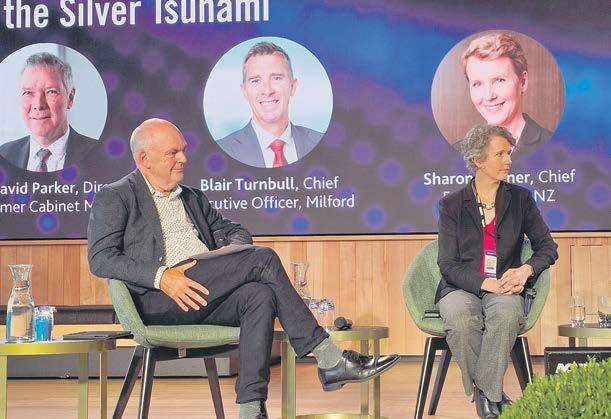
New Zealand’s ageing population is often described as a “silver tsunami” but the wave is already breaking.
Speaking at the University of Waikato Management School’s Economics Forum last month, ANZ chief economist Sharon Zollner said spending on New Zealand Superannuation had already climbed sharply.
“On Treasury’s numbers, it’s already increased from just under four per cent of GDP 20 years ago to just over five per cent now and under current settings, we’ll go to around eight per cent of GDP over the next 40 years.
“That’s obviously a lot of money we’re not spending on something else,” she says.
Superannuation was only part of the challenge. Health costs associated with an ageing population would rise even faster.
“The people over 85, the health care costs are five times those of 65-year-olds.”
Former cabinet minister David Parker said the superannuation debate could not be separated from New Zealand’s poor productivity performance.
“For me, it’s most important
ambit is its relationship to productivity,” he says.
“I see no credible way forward for New Zealand to lift our productivity unless we match the Australians in their better savings rate.”
Australia’s stronger performance reflected deeper capital markets and higher levels of retirement saving.
“They apply more capital to their labour and where does that capital come from? Largely from their retirement savings.”
Milford Asset Management chief executive Blair Turnbull delivered one of the starkest warnings.
“In 1970, you had seven workers to every person over the age of 65. Today that’s about four workers to every person over the age of 65. And by 2060, it’ll be two workers every person over the age of 65.
“The truth is, as hard as we don’t like this, we just cannot afford the superannuation system because we don’t have the workers,” he says
Raising the retirement age alone would not solve the problem.
Aged Care Association chief executive Tracey Martin said the issue was far more complex than a
single age threshold.
“Fifty three per cent of over 65-year-olds are women. In the next 25 years, 660,000 New Zealanders will be renters over the age of 65.
“This is too simple a conversation to just say, should we raise the age of super or not?”
Panellists agreed there was a
need for stronger private savings – likely through changes to KiwiSaver – alongside a universal public pension that prevented poverty in old age.
“The longer we put off things because they’re difficult, the worse the set of options will be and the harsher the transition will be,” says Zollner.
For regional economies, the implications are significant.
An ageing population affects labour supply, healthcare demand and housing markets, while a shrinking workforce is left supporting a growing retired cohort.
Delaying only narrows the choices.
Mount faces long rebuild
Widespread instability on Mauao has forced prolonged access restrictions, disrupting Mount Maunganui’s visitor-driven economy and challenging local businesses to adapt, reports David Porter.
The slips on Mauao have reshaped more than the Mount Maunganui landscape.
They have disrupted a local economy built on access, movement and visitors and the path back will be neither quick nor simple.
Six people lost their lives in late January after a major slip on the iconic maunga. Since then, geotechnical assessments have confirmed widespread instability across the reserve, forcing extended closures and compounding pressure on surrounding businesses.
Tauranga mayor Mahé Drysdale says the engineering picture is now clear. More than half of the 42 landslips identified on Mauao will require substantial intervention before tracks can safely reopen.
“This is not a short-term fix. Some of these areas will require significant engineering solutions, and that takes time.”
Risk management measures are now a permanent feature of the landscape. Protective
tarpaulins have been installed across vulnerable faces of the maunga, forming part of an evolving response plan that is triggered by weather conditions, particularly heavy rainfall.
“As risk levels change, our response will change. But this is the reality we are dealing with now. We’re having to adapt to a different operating environment.”
Those controls will continue to affect access around the Mount, including nearby roads and facilities, under certain conditions.
The surf club and boat ramp remain priorities for reopening, but only when safety thresholds are met.
At the same time, Drysdale is keen to reinforce that the commercial heart of Mount Maunganui remains open.
“While Mauao itself is closed, local businesses are very much operating and need support,” he says. For Mount-based businesses, the loss of foot traffic has been immediate and tangible.
Glenn Dougal, a long-time Mount business owner and regional councillor, says the temporary closure of Mauao
and the campground has removed a critical flow of customers.
“Access to the maunga is part of the Mount’s daily rhythm,” he says.
“When that stops, the impact ripples right through hospitality, retail and accommodation.”
Dougal says the community understands why restrictions are in place, but the economic consequences are real.
“This has been a tough period for businesses that rely on regular visitors and locals moving through the area. There’s no getting around that.”
Support mechanisms are beginning to take shape. The Mount Maunganui Business Association has been coordinating assistance, and the Mayoral Relief Fund has provided some financial relief for those most severely affected.
“The business community here is resilient. Historically, when we’ve faced disruption, we’ve pulled together and that’s happening again.”
He says collaboration, rather than competition, will be key over the coming
months.
“As business owners, we’ll support each other, share information and do what we can to help those who’ve taken the biggest hit,” he says.
Regional economic development agency Priority One is also part of the broader response, working alongside councils and government agencies.
Chief executive Dave Courtney says while others are leading the immediate recovery, Priority One is listening closely to its members.
“There’s a strong desire from businesses to helpwhether that’s through direct support, partnerships or finding practical ways to keep economic activity moving,” he says.
Courtney says reduced foot traffic remains the dominant concern, particularly if access restrictions extend longer than anticipated.
Police have now formally taken over the operation from Fire and Emergency New Zealand, marking a transition from emergency response to longer-term management.
For Mount Maunganui, recovery will be measured in months and years rather than weeks. For local businesses, the challenge is to remain viable while the landscape - physical and economic - slowly stabilises. The Mount has weathered disruption before. The question now is how the community adapts to a future where access, safety and resilience are no longer taken for granted.
Panel host Steven Joyce who chairs the Management School’s Business Advisory Board, left and ANZ chief economist
Sharon Zollner at the economic forum.
Photo: Mary Anne Gill
Life goes on in the shadow of Mount Maunganui with evidence of the devastating slip still prominent. Photo: Mary Anne Gill
Chiefs launch kindred club
Jesse Wood talks to Ruakura Rugby Football Club manager Kent Currie about Super Rugby’s first formal alumni and community club.
For 30 years, the Chiefs Super Rugby franchise has captivated rugby fans across the region, with 380 players and countless staff contributing to the jersey.
Now, the franchise has launched Super Rugby’s first kindred club: the Ruakura Rugby Football Club (RFC) - a formal alumni and community structure designed to retain institutional knowledge and connection.
Kindred clubs - associations that preserve connection and shared identity - are common at development level but new to the professional game. For longtime Chiefs employee and Ruakura RFC manager Kent Currie, the club formalises something many former Chiefs already feel.
“It is something we’ve put together to ensure that when people do their time with the Chiefs, they graduate into our club and keep a connection with the Chiefs forever,” Currie says.
The club already has more than 100 members, the majority former players, following a soft launch before Christmas.
“They’ve bought into rekindling old friendships, getting together, telling stories and creating new ones within the Chiefs family,” he says.
“A lot of people have made important decisions throughout our history and it’s important we don’t forget them.
“The players earn the right to represent the Chiefs, and it’s the same for coaches, office staff and administrators who’ve come through club and provincial systems.”
While Ruakura RFC is a Super Rugby club first, Currie points to a long tradition of kindred clubs across New Zealand rugby.
“They’ve been around for years - the New Zealand Harlequins,
Auckland Barbarians, Wellington Centurions, Bay of Plenty Wasps and Counties Cavaliers,” he says.
“Locally, the Harlequins have done brilliant work supporting Waikato clubs and age-group rugby.”
Former players, coaches, staff, board members and shareholders receive complimentary legacy membership, while 250 paid foundation memberships are available to the wider public.
“Foundation memberships are for people who see value in what we’re doing and want to be part of something special.”
Early members include highprofile former Chiefs and All Blacks including Sir Wayne Smith, Sam Cane, Aaron Cruden, Richard Kahui, Liam Messam, Brad Weber and Brodie Retallick.
“Players understand what we’re trying to do. It’ll take time to build the culture, but the willingness is there.”
Beyond alumni engagement, the club provides a new bridge between professional rugby and the community game.
“We want to be seen supporting grassroots rugby and giving back to the game we love,” Currie says.
“These Chiefs are household names, but they’re also humble New Zealanders who like giving back to the communities they came from. This club creates a platform for that.”
The club’s home at the Ruakura Campus & Squash Club, within the Ruakura Research Centre, made the name an easy choice.
“These clubrooms are something tangible people can come to - to reconnect, have a drink, a meal and reminisce.
“When people hear Ruakura, they think of the Chiefs headquarters and training base. It’s our spiritual home.”
The Campus & Squash Club
president Peter Clough welcomed the partnership.
“They’ve come on as a sub-club like squash, swimming and darts.
“It’ll attract younger members, which excites us, and it’ll be good for the bar and kitchen. We’re keen to support their events - it’ll be fantastic.”
Ruakura RFC has established a formal governance structure, including a new constitution and a regionally representative board.
Former Chiefs captains Errol Brain and Mike Collins are president and board member respectively, alongside Jennifer Kerr, former New Zealand Rugby Union board member; Movember New Zealand country director Robert Dunne and Hamilton Marist’s Howie King as treasurer.
“Our former players are great storytellers with vast experience and knowledge of the game. We hope we can use that to inspire the next generation of Chiefs,” says Currie.
To reflect the Chiefs’ diverse regional roots, Ruakura RFC colours are black and turquoise.
“We didn’t want to use the Chiefs colours of red, yellow and black.
“Our alumni come from everywhere - Northland and North Harbour. Some of our best players are from outside of the region. Black was obvious, and the turquoise is inspired by the Huka Falls - part of the Waikato River, which is important in our story.”
In its first year, the club’s focus is on growing membership and re-engaging former Chiefs, with plans for a full calendar of events and community fundraising.
Ruakura RFC could become a long-term conduit between professional rugby and the grassroots game, formalising relationships that have traditionally relied on informal networks.
Park picks up awards Briefs…
The Sculpture Park at Tauwhare’s Waitakaruru Arboretum recently won two significant awards, one national and the other international.
It was awarded a five-star rating from the New Zealand Gardens Trust as a Garden of National Significance, placing it among the country’s most outstanding gardens. The park has also received an international accreditation as an Arboretum of International Standing through the USA-based ArbNet, an international network founded in 2011 to promote the interests of tree-focused professionals. That recognised its standards in tree conservation, collection management and longterm stewardship. Both awards commended the park’s story of renewal. The arboretum was developed from a disused quarry 34 years ago by Dorothy and John Wakeling. It is now a 17.5ha art-in-nature trail displaying more than 20,000 trees and shrubs from around the world. It is also one of New Zealand’s largest outdoor art galleries. The park is run by the Art-in-Nature Arboretum Trust Board, founded in 2020. – Viv Posselt
Brain wave
Former Chief and Māori All Black Errol Brain is the Super rugby club’s new chair replacing former All Black Bill Osborne who was in the role since August 2022. Scott Ratuki becomes deputy chair. Osborne and former chair Tonia Cawood remain on the board with Craig Vincent and Paul Bowman.
Chemistry boost
Wintec’s newly redeveloped chemistry laboratory on Hamilton city campus opened last month and is strengthening science capability in the Waikato by supporting programmes aligned with key regional industries. Built over half a decade ago, the original lab has undergone a $1.63M upgrade (initially budgeted at $1.76M), to modernise it for hands-on learning and teaching.
Password watch
If 123456 or Michael is your password to anything, you are not alone. Brand new data released by AI search analytics platform PeecAI reveals they the most common words, phrases and values used in passwords – which also happen to be the ones most likely to get you hacked. The top five football teams used are ‘Liverpool’, ‘Chelsea’, ‘Barcelona’, ‘Arsenal’ and ‘Juventus’.
Memorabilia on the walls will help give former players a sense of belonging. Photo: Supplied
Manager Kent Currie is amped for the new Ruakura Rugby Football Club initiative.
Photo: Jesse Wood
Out and about…
Waikato businesses have eased their way into 2026 with a series of “looking forward” functions and celebrations. Waikato Business News was there for some of them.
Colour Run/Walk
Frankton McDonald’s held a colour run/walk at Innes Common in Hamilton. Photos: Marcelo Mieres.
Family wetlands event
World Wetlands Day was celebrated at Ōhaupō’s Rotopiko wetlands last month in a family-centred event co-ordinated by the National Wetland Trust and bringing together Landcare Trust, DOC, Waikato Regional Council, Waipā District Council, Go Eco, Sanctuary Mountain Maungatautari and the Te Awamutu Rotary Club. Photos: Viv Posselt
Business briefing
Feeling blue
Blue Pacific Minerals is a New Zealand owned natural minerals business in Tokoroa. The company transforms locally sourced minerals into high-value solutions. The team hosted a Waikato Chamber BA4 last month. Photos: Marcelo Mieres.
Act
Tama Potaka, MP Hamilton West, left with McDonald’s Frankton and Centre Place franchisees Pooja and PJ Goel with Jay Randhawa (JSR Refrigeration & Air Conditioning).
St John paramedics Daimin Sammons, left and Cindie Davies.
Omega Financial Services financial advisors Paddy Lubana left and Kulvir Kankara.
Ecologist Adam Purcell with his children Olivia and Oscar at the World Wetlands Day event, where they picked out temporary tattoos from Go Eco man Paul Murray.
Ringi Morgan-Fifield, who is a volunteer guide with Sanctuary Mountain Maungatautari, talked about the benefits of rongoā, or Māori herbal medicine found in the wetlands
Zipporah Ploeg from the National Landcare Trust points out a completed piupiu, a traditional Māori skirt made from woven flax.
Paul Tidmarsh (Blue Pacific Minerals) left with Westpac New Zealand’s Nicky Wallace and Nicholas Dawson.
Teuila Maggof (Waikato Pacific Business Network), left and Bruce Martin (Holster Engineering Co (2003) Ltd).
Sean Johnson (Johnson’s Development Ltd), left and Roseanne Jefferies (Kiwibank).
Calder Stewart area manager Kelvin O’Connell, left with McLeod Waikato customer relationship manager Tony Jump.
deputy leader Brooke van Velden was guest speaker at Waikato Chamber of Commerce’s business briefing last week. Photos: Mary Anne Gill
Pictured with Brooke van Velden, centre was Theresa Grainger (The Lean Hub) and Raewyn McPhillips (Prime Strategies Waikato).
Also there for the business briefing were, from left: Connor Brady (Pivotal People Ltde), Josh Nyika (McLuskie Dalziel Lawyers), Andrea Twaddle (DTI Lawyers) and Karina McLuskie (McLuskie Dalziel Lawyers).
PURPOSE-BUILT. FOR AIR LIQUIDE
Air Liquide, a global leader in gases, technologies and services operating across 60 countries, strengthens their New Zealand supply chain with a new purpose-built industrial gases depot at Ruakura Superhub.
Here is another significant business recognising the benefits of locating to Australasia’s largest inland port and logistics hub to supply customers across the region.
Proudly delivered by Fosters in partnership with Tainui Group Holdings under an Early Contractor Involvement Design & Build contract, the project reflects a shared
commitment to safety, quality, sustainability, and collaboration - Fosters partnering with Puna Pakihi businesses to deliver the project.
The 9,000m² facility includes gas storage and loading infrastructure, tank farm foundations, workshop and office spaces, extensive yard slabs, carparking and landscaping. More than 1,500m³ of concrete was placed across multiple pours, including a substantial tank farm foundation.
The project achieved a 5 Green Star Design rating under Design & As Built NZv1.1, recognised as ‘New Zealand Excellence’.
Fosters proved adept at meeting the requirements of this project including the integration of specialist tenant fitout items and engagement with registered tribal businesses.
Ivan Bartley
GM Development, Tainui Group Holdings
GM Development at Tainui Group Holdings, Ivan Bartley said Fosters successfully delivered this project to tight timeframesfrom working on foundations, to handover to Air Liquide in just four months.
“Fosters proved adept at meeting the requirements of this project including the integration of specialist tenant fitout items and engagement with registered tribal businesses - Puna Pakihi. They also brought a constructive relationship with local authorities and all parties worked together productively to deliver a quality project on time and within budget,” he said.