



Pressure is building on how major projects will be paid for, with funding shortfalls, workforce loss and political uncertainty weighing on Waikato’s infrastructure pipeline, writes Mary Anne Gill.
One major Waikato transport project is facing an uncertain future, with tolling emerging as a likely solution as questions grow over how New Zealand will fund its next wave of infrastructure.
The country currently only has three toll roads, two of them in nearby Tauranga, putting a spotlight on how any expansion of tolling could affect Waikato motorists and businesses.
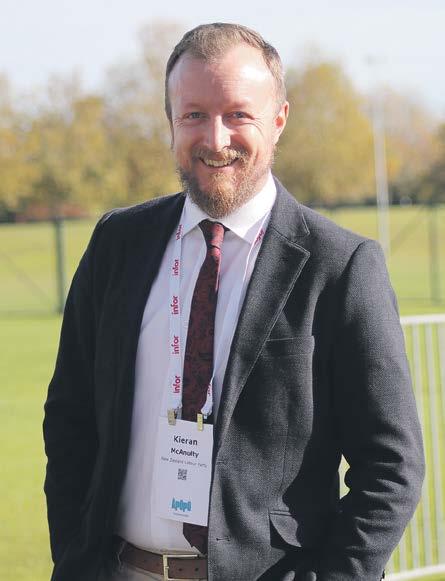
In a wide-ranging interview at the Āpōpō Congress in Hamilton last month, the national body representing infrastructure asset management professionals, Labour infrastructure spokesperson Kieran McAnulty said his party would back projects already underway and funded.
That included Cambridge to Piarere – which got $1.77 billion in last month's Budget - but he stopped short of support for Southern Links.
“If it’s underway and it’s funded, we will honour it,” he said.
“If it’s not, then we’ll look at it, but we can’t make a commitment if it hasn’t been funded.”
Southern Links, long seen
as a key piece of the southern Waikato growth corridor, remains unfunded, placing it firmly in the uncertain category regardless of the next government.
McAnulty said the wider issue is a significant funding gap across the Roads of National Significance programme, which he estimates at about $30 billion.
That shortfall, combined with rising construction costs and pressure on public finances, is creating growing unease across the infrastructure sector, particularly for contractors and suppliers planning long-term investment.
For Waikato businesses, the stakes are high. The region is positioning itself as a logistics hub, with inland ports, freight links and industrial growth all dependent on reliable state highway connections.
“We definitely recognise strategic assets and how they can open up a region,”
McAnulty said.
But he warned against announcing projects without secure funding or a clear delivery plan.
“People are sick and tired of the stop, start, carry on.”
That uncertainty is now
being felt beyond project timelines, with workforce impacts emerging as a growing concern. Skilled workers,
including apprentices trained in recent years, are leaving New Zealand for more stable opportunities overseas, he said.
“Many of them have now left to Australia because of the uncertainty in the construction space,” he said. The issue of how projects are funded is also front





News/Editorial
Roy Pilott editor@goodlocal.nz 027 450 0115
Mary Anne Gill maryanne@goodlocal.nz 021 705 213
Viv Posselt viv@goodlocal.nz 027 233 7686
Advertising Director
Janine Davy janine@goodlocal.nz 027 287 0005
Owner/Publisher
David Mackenzie david@goodlocal.nz
Office/Accounts admin@goodlocal.nz 07 827 0005
Readers’ contributions of articles and letters are welcome. Publication of contributions are entirely at the discretion of editorial staff and may be edited. Contributions will only be considered for publication when accompanied by the author’s full name, residential address, and telephone number. Opinions expressed are not necessarily those of the publishers. Waikato Business News is published by Good Local Media Limited.
Also publishers of








By JOHN ROBERTSON
Central government has ramped up the pressure on local and regional councils to “simplify” and rationalise ourselves.
In fact, they have gone further. Its goal is to eliminate regional councils and reduce the total number of district councils across the country. In the words of Minister Chris Bishop:
“Our message to councils is simple: lead your own reform, or we will do it for you. Either way, change is coming.”
The minister has instructed councils to submit proposals for change within a three-month window.
“Proposals should focus on creating larger, more efficient unitary authorities that streamline functions, reduce duplication and improve decision-making.”
Strong words.
These directives have councils scrambling. In the Waikato a collective response would be good, but as happened prior to the major council restructuring in Auckland, councils in the region are unlikely to agree on a unified way forward. Auckland was dealt a Royal Commission.
Prior to amalgamation Auckland had eight councils. Waikato has 10.
The “must happens” directed by the government are that the regional council is to be eliminated, local “unitary” councils are to take over their functions, and the remaining councils are to amalgamate in some fashion.
The first directive is clear, the last is not. Amalgamation could mean consolidation into one – so one “supercity” model, or any number less than the current 10.
I am strongly opposed to a “supercity” model.
There are stark differences between the Waikato and Auckland regions.
• Auckland is home to 1.8 million people, squeezed into
an area of just 5000 square kilometres.
• Waikato is home to half a million people, spread over an area of 25,000 square kilometres. We are mostly rural.
Having one Hamilton-centric council with responsibility over our huge rural hinterland does not support the important principle of communities of interest. Nor does it support the concept of localism.
Ōtorohanga and Waitomo councils have been thinking about amalgamation for some time.
Last month, elected members from both councils agreed to put in a proposal to government to amalgamate and form one unitary council. The votes were unanimous. This is a significant step.
While our hands were forced by the minister’s threatening message, my view has always been that it is an important step for us to take on behalf of our ratepayers. It will deliver efficiencies while also supporting the concept of localism – making decisions as closely as possible to those whose lives they impact.
The “supercity” concept would be madness for us in the King Country. We love and respect our friends in Hamilton. But we are rural, with very different needs for public services to those living in this urban metropolis.
It is pleasing to hear Federated Farmers supporting our view.
Rural communities are best governed by people who understand rural issues. A King Country council makes sense for our constituency.
• John Robertson, QSO, was a National MP for Papakura, mayor of Papakura, co-founded United NZ and chaired the Kaipara district commission for four years. He became Waitomo mayor in 2019. The views are his own.
By MARGARET EVANS
It’s time for life-preserving surgery…
The Coalition Government is focused on state sector reform, and a checkup’s coming for local government. Quickly.
Mayors have a deadline of August 9 for proposals. Regional councils are to be euthanised, with the overall intent to ‘unify and simplify’ reflecting central government’s plans for its own patch.
There’s the Resource Management Act reforging, a mega ministry of Cities, Environment, Regions and Transport, and ministers
Nicola Willis with public sector transformation plus David Seymour’s ‘twisted spaghetti’ regulation cleanse. This means fewer departments, rearranged to work together, with clear accountability to ministers, and a new emphasis on public service. PM Christopher Luxon wants the best and brightest.
Today’s 63,000 public servants can expect around 8000 job cuts.
If our mayors don’t submit ‘credible’ proposals, ministers Simon Watts and Chris Bishop will impose reforms ready for the 2028 local elections.
Last year in Waikato 39% voted. We elected seven new mayors out of 10 and ousted the regional council chair.
Across the nation’s 67 councils, there were 31 new mayors, and LGNZ’s president lost his seat.
It’s four years since our on-line Citizens Assembly hosted by Waikato University responded to Labour’s reform proposals, and the conversations continue.
There’s the sense that public service has been lost in the officials’ swamp, that it’s too hard to penetrate City Hall’s disinterest in residents’ input and local knowledge. Overly prescriptive and conflicting policymaking doesn’t add value, nor does Comms replace village democracy. High-risk billiondollar debt, gold-plated projects, and inadequate maintenance are the ratepayers’ burden.
For all the trumpeting (and official discussions on ‘purpose’), the role of local councils (like central government) is unchanged (and ancient): that’s to provide leadership and the public services agreed. Just like Central Government.
So, I’m urging our mayors to work closely with the Coalition Government’s ministers on all this, to usher in this significant constitutional review and strengthen democracy and leadership nationally, regionally, and locally.
Some ideas:
• Legally require voting by law, in polling booths, with NOTA (none of the above) on voting forms, STV gone, and ‘recall’ provisions.
• Merge the proposed mayors’ cluster with regional MPs to bridge the central/local chasm. Consider multi-member MP regional electorates. Retain existing local councils but add neighbourhood boards to boost local democracy.
• Service delivery relevant now is to replace big contractors with neighbourhood-based ‘guardians’: multi-purpose work teams for employment opportunities, apprentices and youth skills development, operating from existing community centres and sports clubs, and in a funding partnership with Central Government.
• For council processes, insist a ‘brevity’ rule on official’s reports. Last month an item lost in two agendas: $150,000 to plant five trees in Barton Street and $35,000 for new seating at the Ward/Worley Street corner.
• And so how about a council Hearings on Everything resolution process for locals to get past the gatekeepers. Simplifying Local Government sounds great.
• Margaret Evans was Hamilton mayor from 1989 to 1998 and was first elected to the council in 1974.









Waikato winners
Affco Horotiu – in the $10$25 million category - and Huka Lodge – in the tourism and leisure project - were the only Waikato winners at the New Zealand Commercial Project awards last month.
LT McGuinness won the Supreme Over $10 million Award for Te Matapihi Ki Te Ao Nui (Wellington Central Library), while Leighs Construction was awarded the Supreme Under $10 million Award for The George Forbes Building (Stage 3) at Lincoln University.
New appointment
Age Concern Waikato has appointed Claire van der Most as its new general manager. She brings more than 20 years senior leadership experience across the private, public, and for-purpose sectors.
New beds open
Beds open
Ten new forensic inpatient beds at Waikato Hospital have been officially opened by Mental Health minister Matt Doocey. Currently, around 13 per cent of the region’s prison population is on the forensic mental health caseload, one of the highest rates nationally.
A new community wraparound support service to assist people transitioning from prison back into the community, as well as a workforce development fund aimed at growing and retaining specialist forensic clinicians and support workers will start soon.
The new Morrinsville Road/ Matangi Road roundabout opened earlier than planned last month. The peanutshaped roundabout, along with a new signalised pedestrian crossing and wide shared paths, was confirmed ready to open following a site visit and final review of remaining works. The project was fully funded by New Zealand Transport Agency Waka Kotahi and delivered by Hamilton City Council within the $6.4 million budget allocated for this section. The overall project budget is $11 million.
After falling short in its first attempt, Tolbecs used judges’ feedback to refine its model, lift performance and go on to win at the Waikato Business Awards, reports Mary Anne Gill.
For many businesses, entering awards can feel daunting. There is the paperwork, the judging, and that lingering doubt about whether you are good enough.
But for Waikato-based Tolbecs Ear Clinic, taking that step turned out to be one of the most valuable decisions the business made.
Operations manager Chelsea Lambert is the first to admit that the initial entry did not bring home a trophy. What it did deliver was something far more useful. It gave clarity.
“We thought we were doing quite well, hitting our targets,” she says.
“We didn’t get through. But I got some feedback from the judges that was invaluable.”
The feedback pointed to a gap.
The team had strong ideas, a clear direction, and a solid foundation. But they were not fully executing on those ideas.
“It was half an idea and half executed,” Lambert says.
“We knew we delivered an excellent service, but our ideas weren’t coming to life as much as they could.”
Rather than seeing that as a setback, Lambert treated it as a roadmap. She went back through the judges’ comments, not focusing on the praise but looking carefully at what had not been brought to life in the entry. That became the starting point for change.
The business set clear goals and key performance indicators. They invested time in understanding what mattered most to their patients. Feedback was gathered from every single person who walked through the door.
“There wasn’t a patient that was missed,” Lambert says.
That shift did more than tighten up processes. It changed how the business told its story. Instead of simply saying they delivered excellent care, they could demonstrate it through real patient experience and measurable outcomes.
The results followed. Tolbecs returned to the Waikato Chamber of Commerce Business Awards and this time took out the Service

Excellence Award. Judges noted the clinic’s highly personalised approach, its focus on education, and its commitment to accessibility, including same day appointments and community outreach that reduces barriers to care.
What stood out was not just clinical expertise, but how closely service excellence and business performance were linked. Judges observed a clear connection between the quality of care and business growth, with income rising and further expansion planned.
For Lambert, the impact went beyond the award itself.
“It changed the game for us,” she says.
The recognition reinforced what patients already felt. One long-time client summed it up while sitting in the waiting room, proudly telling his wife he was in an award-winning clinic.
Moments like that matter. They build trust, not only with customers but with staff and the wider community. They also shift how a business sees itself.
Lambert says smaller businesses often underestimate where they fit.
“If you think you’re just a small business and you should only enter a small category, absolutely not,” she says. “You can compete.”
The process itself is also less intimidating than some expect. Lambert completed the entry without external help and found it straightforward.
“It’s about being honest and open. Where are you now and where are you going?”
Of course, there is no guarantee of winning. But that is not really the point. The true value lies in the reflection, the discipline of measuring what matters, and the willingness to hear constructive criticism.
“You’ve got nothing to lose. You have everything to gain.”
That gain might be sharper strategy, better systems, or simply a clearer understanding of your value proposition. For Tolbecs, it led to stronger community engagement, from working with organisations such as Women’s Refuge to





expanding services into new areas and underserved populations.
It also reinforced a mindset of continuous improvement. Even after winning, Lambert is entering again.
“There’s always more work to be done.”

The key is continuing to improve for any business considering an awards entry, she says.
It does not happen all at once. It builds over time.
For those on the fence, Lambert’s advice is simple.
“Give it a go.”



Labour List MP Kieran McAnulty has ruled himself out of any future tilt at the party leadership, saying his priorities lie elsewhere.
Asked about his ambitions during an interview following the Āpōpō Congress in Hamilton, McAnulty was emphatic.
“Non-existent,” the Wairapapa-based 41-year-old said when questioned on leadership aspirations.
He backed current Labour leader Chris Hipkins, describing him as having his “100 percent support” and saying their working relationship was strong.
He dismissed the idea he might reconsider in the future, even if the leadership became vacant.
“I still won’t be putting my hand up. I’m just not interested. I don’t want to be the leader of the Labour Party,” he said.
Instead, he pointed to family as a key factor in that decision, saying the demands of senior political roles come with significant personal costs.
“I’ve got a four-month-old baby at home. I’ve got a strong desire not to be an absentee father,” he said.
He said the responsibilities of party leader or prime minister made it even harder to balance family life, despite acknowledging the efforts of others in the role.
“It’s hard enough being an MP, let alone being the leader, let alone being the Prime Minister.”
While stepping away from leadership ambitions, McAnulty signalled he remains committed to Parliament and to Labour’s future.
“I don’t want to be leading but I’ll be part of the next Labour government.” –Mary Anne Gill
CONTINUED FROM PAGE 1 of mind, with tolling part of the conversation for future Waikato highways. McAnulty said it could play a role, but only if it is made clear from the outset and supported by a genuine free alternative.
“It needs to be up front at the start and there must be a credible free alternative.”
The alternative routes should remain the responsibility of the New Zealand Transport Agency rather than being passed to local councils, which are already under financial pressure, he said.
Alongside the political debate, Infrastructure minister Chris Bishop used the congress to signal a shift in focus toward better management of existing infrastructure rather than simply building new assets.
New Zealand needs to lift its performance in asset management and improve decision making on major projects, with stronger oversight and better longterm planning.
For the sector, that points to a rebalancing toward maintenance, renewals and improved data, including work under way to better coordinate underground services and reduce costly disruptions, said Bishop.
McAnulty said there is increasing agreement across political lines on the
need for better planning and less politicisation of infrastructure decisions, but acknowledged that uncertainty remains around individual projects and funding.
For Waikato’s business community, the message from Hamilton was clear. The issue is no longer just which projects will proceed, but whether governments can provide the certainty needed to support investment, retain skilled workers and deliver long-term growth.
In the same interview with The News, McAnulty also defended the role of the media, saying scrutiny of government is essential and politicians should expect to be challenged.
“The Fourth Estate is a crucial part of any functioning democracy,” he said.
• More online goodlocal.nz and Out and About page 15



By NICOLA GREENWELL
Waikato has been front and centre in recent weeks, with Hamilton and Waikato Tourism helping showcase the region on national and international stages across tourism, trade and business events.
From showcasing the region to international travel buyers at New Zealand’s largest tourism trade event, TRENZ, through to engaging global media at International Media Marketplace, recent activity has provided valuable opportunities to promote Waikato to key international audiences.
Waikato’s business events sector has also been promoted to the New Zealand Society of Association Executives, while the World Surf League event in Raglan has attracted worldclass surfers, media and international attention to the region. Together, these activities reinforce tourism’s growing contribution to the regional economy and profile.
These events generate visitation, support local businesses, create international exposure and reinforce Waikato’s position as a region capable of hosting globally recognised experiences alongside major business and trade opportunities.
At the same time, however, regional tourism organisations across New Zealand are operating in one of the most uncertain planning environments the sector has faced in recent years.
The government’s direction on local government reform, including council amalgamation and expectations of greater structural efficiency, alongside the pending Tourism Policy Statement, will shape the future operating environment for these organisations.
The Tourism Policy Statement is expected to build on the Tourism Growth Roadmap and provide greater clarity around the respective roles of central government, local government and industry within New Zealand’s tourism system. This is likely to influence the role tourism organisations play on behalf of

partnering councils.
For Waikato, these discussions are particularly relevant. The region spans eleven council areas and includes three regional tourism organisations, meaning any structural changes could affect how activity is coordinated, funded and delivered across Waikato.
Importantly, this discussion comes as tourism again demonstrates its economic importance.
Latest figures show visitor expenditure contributed $2.29 billion across the Hamilton, Waipā, Waikato and Matamata-Piako economies for the year ending March 2026, while supporting about 13,400 jobs across those communities. These benefits extend beyond tourism operators, flowing into hospitality, retail, events, transport, accommodation and other supporting industries.
The challenge for regional tourism organisations during fiscal pressure and reform is their connection to promotion risks being seen as discretionary spending. However, recent activity across Waikato demonstrates the tangible economic value tourism delivers to businesses, employment and regional growth.
Increasingly, tourism is recognised as essential regional economic infrastructure, helping attract visitors, events, conferences and international attention that supports jobs and long-term growth.
Whatever structures emerge, maintaining strong regional tourism capability and coordinated advocacy is essential to ensuring Waikato continues to compete nationally and internationally.
This will require collaboration between councils, industry stakeholders and government to balance efficiency with effective regional promotion outcomes for communities and businesses.
• Nicola Greenwell is general manager of Hamilton and Waikato Tourism.
By ANDREA TWADDLE
A significant shift in New Zealand employment law is now in force, requiring the attention of employers and high-income employees. However, it is not a free pass for employers.
The change prevents high-income earners, defined as those earning $200,000 or more including bonuses, commissions and sharebased remuneration, from raising personal grievances for unjustified dismissal or disadvantage where it relates to their dismissal. The reform is part of wider amendments aimed at increasing labour market flexibility.
For employees starting new roles after 21 February, the threshold applies automatically. Existing employees have a 12-month transition period to negotiate changes to their employment agreements or opt out if both parties agree. If no agreement is reached, the threshold will apply from 21 February 2027.
This shift is likely to trigger more sophisticated and commercially focused negotiations. Employers will need to weigh flexibility against reputational and retention risks, while employees are likely to seek stronger contractual protections, particularly in competitive labour markets.
Under the new regime, the requirement to follow a fair and reasonable dismissal process no longer applies for those captured by the threshold. Nor does the obligation to provide relevant information or a reasonable opportunity to respond before a decision is made.
However, employees retain the right to bring claims for breach of contract, discrimination and whistleblowing. In practice, this may see disputes shift away from personal grievance
claims towards more complex legal arguments and technical interpretations.
Some employers may be reluctant to rely on the threshold, particularly where consistency across a workforce is a priority. Others may see benefits in greater certainty and reduced procedural risk, especially for senior roles where employment relationships are often governed by contract.
In practice, employers should consider whether to apply the new framework across their organisation or selectively. Employment agreements may need to be reviewed to ensure clarity and alignment with the new law, and to address what is offered in exchange for employees relinquishing dismissal grievance rights.
There are also technical considerations, including who falls within the income threshold and how remuneration is structured, given the calculation is based on earnings over a rolling 364-day period. These details may become particularly important when disputes arise. Clear communication will be critical. Employers should ensure affected employees understand the implications of the changes, the options available during the transition period, and the importance of obtaining independent advice before agreeing to any variation. While the law does not create a “fire at will” environment, it does shift the balance away from process and toward contract negotiation and commercial judgment. How employers and employees respond will determine whether the changes deliver flexibility or unintended risk in practice.
• Andrea Twaddle is a director of DTI Lawyers who specialises in sports and employment law and independent investigations.
Businesses are warned to stay on top of their taxes as Inland Revenue steps up enforcement after its softer Covid approach, reports Mary Anne Gill.
Inland Revenue’s focus has shifted back to overdue tax, a message delivered to accountants at a recent roadshow.
The update came from Chartered Accountants Australia and New Zealand at an event in Hamilton last month, with earlier sessions in Tauranga and Taupō.
The softer approach seen during Covid is over. Inland Revenue is now actively pursuing overdue tax, backed by more funding, better data and a more targeted compliance strategy.
Tax leader John Cuthbertson told attendees the numbers spoke for themselves. Inland Revenue is returning close to $12 for every dollar it spends on enforcement.
“That tells you everything you need to know about where the focus is,” he said.
Overdue tax debt sits in the billions, with small businesses and the selfemployed carrying much of it.
Many businesses fell behind during Covid when Inland Revenue took a more supportive stance. That
allowed debt to build. Inland Revenue is now moving to bring it back under control.
There are more calls, more letters and, in some cases, on-site visits. Where businesses do not respond, enforcement can escalate quickly to deductions from bank accounts, legal action or liquidation.
Cuthbertson said Inland Revenue was not trying to catch people out, but expected businesses to engage early. “You get a lot of chances,” he said.
“There are phone calls, there are letters. But if you ignore it, they will escalate.”
Most cases were not deliberate avoidance but cashflow pressure.
“Most people are not trying to avoid tax. They get behind, then they panic, and then they go quiet.”
Liquidations are trending higher, particularly in construction and hospitality where cashflow is critical. Figures at the roadshow showed an increase in winding-up applications and formal insolvency appointments, with Inland Revenue often one of the largest creditors.
For some firms, historical tax debt has become the tipping point.
Obligations that were manageable when trading conditions were stronger are now being called in as revenue remains under pressure.
Those who carried debt through Covid are now being forced to deal with it, often while cashflow is still tight.
Businesses that act early have options, attendees were told.
That includes setting aside funds for tax, using tax pooling to manage timing differences and considering alternative provisional tax methods such as the accounting income method.
Attendees were encouraged to get clients engaging early.
The department has also introduced a pilot programme to help taxpayers manage debt.
It includes structured repayment arrangements supported by tax pooling providers and offers flexibility, but relies on businesses engaging early.
Tax Management New
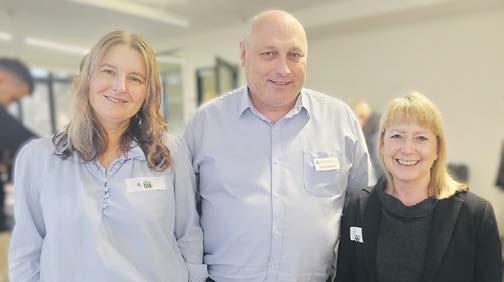
Zealand head of Advisor Relationships Kathleen Payne said businesses needed to be upfront about their position.
Alongside enforcement, businesses also need to keep up with technical changes, particularly around fringe benefit tax (FBT).
FBT is an area of growing Inland Revenue focus, with interpretation continuing to evolve.
Updates discussed at the roadshow included how Inland Revenue is applying health and safety exclusions, covering items such as flu vaccinations, protective equipment and workplace
wellbeing initiatives.
Some benefits businesses assume are exempt may still fall within the FBT net.
The treatment of gift cards and employee benefits remains another focus, with rules clarifying whether PAYE or FBT applies, but not both.
Motor vehicles and other common benefits also continue to be refined under valuation rules.
FBT was an area where businesses could easily make mistakes.
“It’s one of those taxes that trips people up because the rules are detailed and the line between exempt
are well-established Chartered Business Advisors, proudly Waikato region for over a century. With than 70 professionals, 12 partoffices across the region, the firm wealth of knowledge, diverse and deep expertise across both the agri sectors. Alongside this technia long-standing commitment to communities in which it operates.
and taxable is not always obvious,” said Cuthbertson. Policy changes are coming through steadily, from foreign investment to shareholder loan rules. Compliance expectations are also rising.
Technology is also playing a bigger role, with Inland Revenue using data and analytics to identify risk. As one attendee said after the session, “it feels like Inland Revenue is back in the room again”. For businesses across Waikato and the Bay of Plenty, that presence is likely to be felt more strongly in the months ahead.
CooperAitken are well-established Chartered Accountants and Business Advisors, proudly serving the Waikato region for over a century. With a team of more than 70 professionals, 12 partners, and four offices across the region, the firm brings together a wealth of knowledge, diverse backgrounds, and deep expertise across both the commercial and agri sectors. Alongside this technical capability sits a long-standing commitment to supporting the communities in which it operates.
CooperAitken has strong roots in the rural on the commercial landscape conThe firm’s presence at Innovation where it has been established reflects this strategic direction, placcloser to a thriving business hub and collaboration with both new and as well as other professionals in established and growing team in CooperAitken is well positioned to conits reach across the region.
The upgrades have transformed the space into a clean, bright, and contemporary office. A refreshed neutral colour palette replaces the previous design, while a reconfigured layout brings the Morrinsville team together under one roof for the first time in many years - supporting stronger collaboration and a more connected workplace. Working with local contractors and suppliers throughout the process, reinforcing our commitment to supporting the local community.
While CooperAitken has strong roots in the rural sector, its focus on the commercial landscape continues to grow. The firm’s presence at Innovation Park in Hamilton, where it has been established since 2021, reflects this strategic direction, placing the team closer to a thriving business hub and enabling greater collaboration with both new and existing clients, as well as other professionals in the area. With an established and growing team in Hamilton, CooperAitken is well positioned to continue expanding its reach across the region.
this growth, CooperAitken has recompleted significant renovations to its purMorrinsville office on Moorhouse Street. refurbishment reflects the firm’s commitment modern, welcoming, and functional both clients and team members.
Reflecting growth, resilience, and connection to place, qualities that align closely with both the firm and the region it serves.
colour palette replaces the previous design, while a reconfigured layout brings the Morrinsville team together under one roof for the first time in many yearssupporting stronger collaboration and a more connected workplace. Working with local contractors and suppliers throughout the process, reinforcing their commitment to supporting the local community.
The front of the office now features a spacious, welcoming reception area and a range of spaces to suit different client needs, including shared offices, meeting rooms, and a boardroom available to external organisations.
staffroom that can open into the boardroom for flexible use, upgraded amenities, an open-plan working area designed to encourage collaboration, and improved technology for more seamless client interactions.
To celebrate the completion of the renovations, CooperAitken recently hosted a grand opening event, welcoming around 70 professional peers and connections to experience the refreshed space over a light breakfast.
The front of the office now features a spacious, welcoming reception area and a range of spaces to suit different client needs, including shared offices, meeting rooms, and a boardroom available to external organisations.
In line with the firm’s values, meeting rooms have been thoughtfully named after native New Zealand trees; Kahikatea, Kōwhai, Mānuka, Nīkau, Pōhutukawa, Rātā, Rimu, Tōtara, and the Kauri Boardroom. Reflecting growth, resilience, and connection to place, qualities that align closely with both the firm and the region it serves.
In line with the firm’s values, meeting rooms have been thoughtfully named after native New Zealand tree; Kahikatea, Kōwhai, Mānuka, Nīkau, Pōhutukawa, Rātā, Rimu, Tōtara, and the Kauri Boardroom.
Complementing this growth, CooperAitken has recently completed significant renovations to its purpose-built Morrinsville office on Moorhouse Street. The refurbishment reflects the firm’s commitment to providing a modern, welcoming, and functional environment for both clients and team members.
The upgrades have transformed the space into a clean, bright, and contemporary office. A refreshed neutral
To celebrate the completion of the renovations, CooperAitken recently hosted a grand opening event, welcoming around 70 professional peers and connections to experience the refreshed space over a light breakfast.
These upgrades represent an important step in CooperAitken’s broader growth strategy. Together with its Hamilton presence and other Waikato offices, the Morrinsville refurbishment strengthens the firm’s ability to support clients now and into the future - providing modern spaces, enhanced capability, and a continued commitment to the region.
The renovation also includes sustainability improvements such as solar panels, alongside a modern
These upgrades represent an important step in CooperAitken’s broader growth strategy. Together with its Hamilton presence and other Waikato offices, the Morrinsville refurbishment strengthens the firm’s ability to support clients now and into the future - providing modern spaces, enhanced capability, and a continued commitment to the region.
CooperAitken’s focus is firmly on growth and the future, and the firm is committed to achieving the same for its clients. Get in touch if you’re looking to get the right support behind you.
CooperAitken’s focus is firmly on growth and the future, and the firm is committed to achieving the same for its clients. Get in touch if you’re looking to get the right support behind you.


By MARGARET WILSON
The campaign for the NZ Graduate School of Medicine revives memories of 36 years ago when Te Piringa Faculty of Law opened at The University of Waikato as the country’s fifth law school.
While the circumstances differ, concerns raised now echo those back then around the Law School - will the graduates practice their profession in the Waikato?
Such local educational opportunities were not available for my legal studies in the 1960s. I had to go to The University of Auckland, and although my fees were paid, it was still a financial stretch for my family.
I never imagined when I graduated in 1970 that I would be the founding Dean of Waikato’s Law School in 1990, a role which made me conscious of how important access to a university education is to people across the region.
The fact the Law School in its first year attracted over 1000 applications for less than 200 places demonstrated that need. Many of those who enrolled then were ‘mature students’ from the Waikato, a cohort the new Medical School is now aiming to attract.
I’m not familiar with research on the number of lawyers practicing in the Waikato who graduated from its university, but I do know that after initially going elsewhere, many later returned and now hold senior positions here in law firms or legal institutions, including the judiciary. Those Waikato-trained lawyers also contribute locally through belonging to school committees and the like, or by giving free advice to charitable organisations.

‘Good things take time’, but we can be confident the doctors who graduate here will likewise work and volunteer in our communities in the years ahead.
The Waikato is now the fastest growing region in Aotearoa and has a diverse population with a wide range of skills and experiences. To reach its full potential, it not only needs good educational opportunities, but also reliable access to medical advice and treatment, regardless of who you are or where you live.
People in the Waikato are resilient and able to foresee future community needs, so work tirelessly to meet them. It is not always easy - with little government capital funding, it was the commitment of local people that opened the Waikato Law School. By comparison, the Waikato Medical School is being built with state funding, but its future students will still need financial support to access it. Which is why Momentum Waikato Community Foundation, which I now chair, will be seeking donations and gifts-in-Wills for an endowment fund to support scholarships and placements for new medical students.
Just as the Law School did, the Medical School is pioneering a new form of education focused on provincial needs. With time, it will bring benefit to the people of the Waikato, and New Zealand as a whole.
• Margaret Wilson was founding Dean of Waikato University’s Law School, now an Emeritus Professor and is a former Speaker of the House of Representatives.
By PHIL MACKAY
The Waikato is a small place. I imagine that, like me, most readers are regularly reminded of just how small by chance interactions with someone who randomly knows a close friend or family member. That small world is a critical strength and strategic advantage right now.
We can have a big impact in this small world, by consciously looking after each other and supporting local businesses.
The ‘local multiplier’ effect is welldocumented; money spent with local businesses is re-spent in the community more times before leaving. This is especially true of small and medium independently owned businesses.
As individuals our personal spending habits might seem insignificant. But aggregated, the impact is substantial. If each adult in the Waikato – approximately 400,000 – consciously chose to spend just $5 each week with a locally owned business, the direct spend would be worth $104 million to the local economy.
Including the multiplier effect of this money recirculating, the impact could be up to $300 million. This is because every local business is likely to use local accountants, lawyers, tradespeople, IT, marketing specialists, etc. Those local suppliers in turn have their own local suppliers, and also pay local wages and local rates. Their staff spend money with local retailers, and buy coffee from the local coffee shop. And so it goes.
While I’m on coffee shops, having spent half my life in that world, I have very little patience for cafes who are buying their beans from Auckland, Wellington, or even
overseas. We have world-class coffee roasters like Rocket Coffee – and others - in the Waikato, there is absolutely no justification for not supporting local.
As businesses, challenging (my favourite euphemism) economic times should inspire us all to review our own suppliers. Is there an opportunity to target your spending with local businesses? It’s also a great time to be making referrals and testimonials; if you’ve had a great experience or relationship with another local business, tell that story as loudly as you can.
Finally, we should expect that our large institutions, especially those who are spending public money, are applying a similar degree of rigour to their spending decisions.
This applies especially to local councils. Most councils, at the governance level, are on board with the idea of supporting local suppliers. But at the delivery level, this sometimes means only a token 5-10% weighting for ‘local attributes’, which often relies on blunt measures like the number of local employees. We can and should do better.
As noted earlier, a small local supplier is far more likely to use other local suppliers, compared with a regional office of a large national or multinational company. Local business owners live in the community. That social accountability shapes behaviour and guarantees better value for money.
Buying local is better value for money, and better value for our community.
• Phil Mackay is Business Development manager at Hamilton-based PAUA, Procuta Associates Urban + Architecture.

Rodney Stirling
By ALAN M c DONALD
The Government’s announcement last month seeking public feedback on New Zealand’s employment dispute resolution system is a significant win for EMA members - and a clear vindication of the EMA’s research and advocacy on this issue.
Workplace Relations and Safety minister Brooke van Velden has launched a public engagement process examining how employment disputes operate in practice, including the role and conduct of employment advocates, the time and cost involved, and opportunities to improve the system overall. These are precisely the concerns raised by EMA members in our March survey, which highlighted growing pressure within the system. The findings paint a picture of a system under increasing strain. Employers told us disputes are taking longer, costing more, and becoming more complex and adversarial. Even when businesses follow the rules, many feel pressured to settle early because the cost of defending a claim can exceed the value of the claim itself.
A key driver is the growing influence of unregulated employment advocates, particularly those operating on ‘no-win, no-fee’ models. Survey respondents highlighted instances of aggressive or unprofessional conduct, inflated settlement demands, delays, and poor-quality advice that unnecessarily escalates disputes.
The emergence of AI-generated correspondence was also flagged as a concern, with some employers describing it as lengthy, inaccurate, or contextually misleading, contributing to delays and unrealistic expectations.




The EMA formally presented these findings to the minister, calling for reform of the dispute resolution process and appropriate regulation of employment advocates. The minister’s decision to publicly acknowledge these challenges and seek input on solutions reflects the strength of the evidence put forward by the EMA and its
Some employers described certain advocates as ‘cowboys’ or ‘ambulance chasers’ - language that reflects genuine frustration within the business community. Others noted that advocates’ fees are increasingly driving settlement negotiations, with some representatives prioritising recovery of their own costs over the employee’s interests.
For employers, this marks an important step toward a dispute resolution system that is faster, fairer, and more focused on early, practical resolution rather than unnecessary escalation. A better-functioning system will support business confidence, job growth, and

Our team is Consistent, Reliable, Professional & Considerate
Our team is Consistent, Reliable, Professional & Considerate EXPERT
Attention now turns to what comes next. This consultation is a critical opportunity for EMA members to ensure their real-world experiences are heard, with the government actively seeking feedback on issues employers
We strongly encourage members to take part in the engagement process and make a submission outlining how the current system affects their business, and what changes are needed.



The EMA will continue to advocate for practical reforms that restore balance to the system and deliver better outcomes for employers and employees alike.
• Alan McDonald is head of Advocacy and Strategy at the Employers and Manufacturers Association (EMA).
Our team is Consistent, Reliable, Professional & Considerate
Our team is Consistent, Reliable, Professional & Considerate













Rodney Stirling




Rodney Stirling
Rodney Stirling
Rodney Stirling




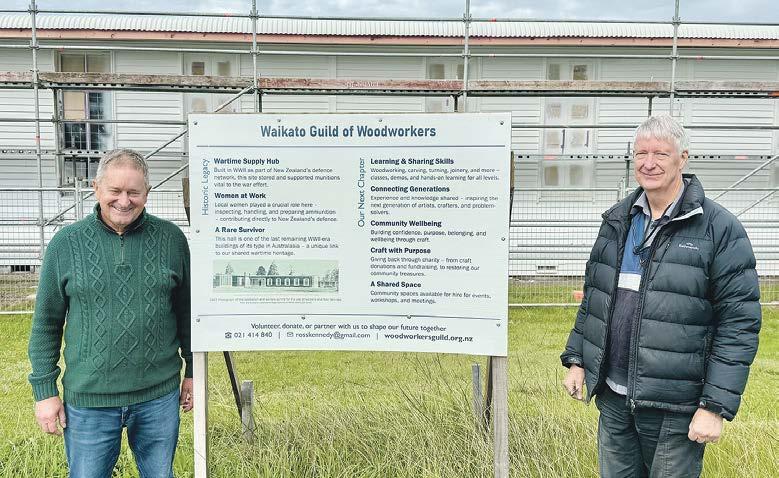
A building in Hamilton East has been rescued from the brink and is being reinvented as a community-driven hub for craft, connection and heritage, bridging wartime history with a creative future, writes Jesse Wood.
One of the last surviving WWII munitions buildings of its kind in Australasia is being given a new lease of life.
The Waikato Guild of Woodworkers has stepped in to save the former Colonial Ammunition Company (CAC) plant building in Hamilton East from demolition - securing the site for just $1 and preserving a unique piece of regional history.
The project is expected to contribute to heritage tourism and local economic activity in the Hamilton Gardens precinct.
The 380m² 1942-built hall at Flynn Park – on the corner of Wairere Drive and Cambridge Road in Hamilton East – was once used to manufacture ammunition shells.
Following the merger of the Hamilton Woodturners Club into the Waikato Guild of Woodworkers, members are now focused on pooling their combined skills and resources to create a Community Woodcraft and Arts Hub.
The project has been well supported by Hamilton mayor Tim Macindoe and councillor Andrew Bydder.
Previously owned by the Hamilton City Council, the hall was out of use for the past six years or so, disconnected from power and water.
It had been home post WWII to air cadets, scouts, army cadets and other groups.
“We’ve saved the building and we’re pretty proud of achieving that. Its history is impressive,” building committee member Mark de Lisle says.
“The function of making the ammunition was moved from Auckland to the Waikato in 1942.
“When the Japanese Empire entered WWII, there was concern that the Mount Wellington site was exposed and easy to attack
Fieldays Tent Talks, in association with the University of Waikato, features 20-to 40-minute “drop-in” sessions on topics such as sustainability in the food and fibre sector, solar energy, regenerative practices, and more. The Fieldays Rural Advocacy Hub, in collaboration with Federated Farmers, provides a space for farmers to stop by for a chat or share thoughts and concerns on farming-related issues. Beyond the Hubs, the expertise shared by exhibitors provides a valuable opportunity for conversations that can lead to practical, on-farm solutions.
The Careers & Education Hub will be the central starting point for school visits supported by a Careers Trail that helps students explore training and employment pathways. The Hub has engaging exhibitors and thought-provoking seminars and panel discussions. More than 70 sites are part of the trail, bringing together training providers, support organisations and employers keen to connect with future talent.
Veteran journalists Kingsley Field and Mary Anne Gill will cover Fieldays again this year – both more than 30 years after their first venture out to Mystery Creek. The former Waikato Times colleagues are now freelancing with Gill covering the event for Good Local Media, publishers of Waikato Business News and community newspapers in Cambridge, Te Awamutu and King Country as well as the Bay of Plenty Business News.
from the coast.
“It was mainly a workforce of women from all around the Waikato. A lot of people, including members of the club, have parents and family members who worked in these facilities.”
Following the war, equipment and production returned to Auckland.
The catalyst for the project is the need for the two clubs to merge once an appropriate premises was found.
De Lisle knew the building had good bones.
“There was a complex just down the road, where the Roseland Park Retirement Village is now, which was Ministry of Works,” de Lisle says.
“I worked in one of these buildings in the 1980s before it became student accommodation. Then they all got demolished.”
The guild needed better facilities as the building on Storey Avenue was too small for their present needs.
“The space did not allow for a larger workshop for woodturning or for a workshop that had multi woodcraft facilities,” building redevelopment chair Grant Taylor says.
“Although it is being set up for wood crafts, there will be ample space for other arts and crafts. We will welcome them to be involved.
“We will start with approximately 100 members but expect that to increase when we open.”
The building will be made wheelchair accessible and available for all ages, cultures and crafts, he says.
The layout and fit-out are planned to support both dayto-day member use and wider public engagement.
There will be 16 lathes, a
general workshop, a sales shop, a “smoko” room, toilets and a loud machinery area.
While the main craft will initially be centred around woodturning, members can also make tools, arts or whatever they aspire to.
“A lot of crafty people collaborate, involve others and become multifaceted,” Taylor says.
“Quite often, you’ll see different crafts blend from steel work to pottery to wood to material.
“It helps people develop and get inspired with ideas, rather than just making basic items.”
Taylor says it was important to preserve the building’s history, not only for Hamilton but for New Zealand.
Graffiti from the WWII years is marked on the interior walls including lists of prisoners of war, missing persons and wounded soldiers.
The group hopes to make a lot of this still visible within the walls to showcase that history and preserve a legacy of Hamilton’s “below the radar” WWII involvement.
“Apart from that, we’re preserving the legacy of the crafts. People enjoy the repair shop programme on TV and we see a lot of delight and enjoyment as members develop their own crafts too.”
Wellbeing and sociability are an important part of the guild’s project and the “smoko” room will help facilitate that.
“It’s a place for everyone to socialise, this hub is about making items but also about the wellbeing of people of all ages,” Taylor says.
“We’ve got members in our club who have had major health issues and a lot of them come along to still do a little bit, but they also come along for
sociability.
“But of course, we cater for all ages and ethnic backgrounds.
“We see this as developing and retaining the crafts, but also a focus for people’s wellbeing.”
Taylor says he and others have been going over the plans since November 2024 and hope to have the $800,000 project nearly completed next month.
About two thirds of the project has been funded but a shortfall remains.
Hamilton City Council has committed $200,000 toward the redevelopment, the Glenice and John Gallagher Foundation has sponsored $150,000 and the guild’s own contribution of $40,000 plus proceeds from the sale of its current premises on Storey Ave has established a significant foundation.
“Our members have done a huge amount of work and that’s been really great.
“We would like to get the project finished off so that it is not only great for the club, but another showpiece for Hamilton,” he says.
“I’ve been woodturning for approximately 20 years as a hobby. Indirectly, I’ve been on this project one way or another for about 10 years, but particularly for the last 18 months.
“Members have been making 350 wig stands for the cancer chemotherapy support every year for about the last 14 years as well as wooden tulips for Parkinson’s support.
“This project is cost-effective, community-led and an ideal opportunity for a meaningful partnership between the building industry and the wider community to continue.”
The project is about building something that honours the past and creates something lasting for the future, he says.
All available exhibitor sites at this month’s Fieldays are full which underscores that the industry sees the event as an essential agricultural event and signals strong confidence from the agricultural sector, says spokesperson Brett Beagley. More than 1115 exhibitors over 1335 sites will showcase their products and services.
The Primary Industries New Zealand Awards finalists reflect a sector overflowing with talent. Three finalists in each of nine categories have just been announced, with the winners to be named at an awards ceremony in Auckland this month. Respected agricultural commentator Alan Emerson, a judge in multiple PINZ awards, says he was deeply impressed by the calibre of this year’s nominations.
The Waikato region is set to build on its core strengths to drive a new phase of economic growth, following endorsement of a draft Regional Economic Development Strategy by Waikato regional councillors. The draft strategy highlights the region’s strengths – first for share of freight movements, bioeconomy, share of electricity generation capacity and Māori asset base; second for food manufacturing and third for fastest growing urban area in New Zealand - as six intertwined opportunities to build on to increase employment, productivity and incomes.
The new $2 million solar farm at Cambridge’s wastewater treatment plant is set to slash power costs and carbon emissions – saving ratepayers money while powering a cleaner, greener future. The farm will harness the power of the sun to generate enough renewable energy to power up half of the plant’s daily load during daylight hours – cutting emissions and saving costs for ratepayers. Waipā District Council has teamed up with renewable energy specialists Pacific Energy and Endless Energy to deliver the project, which includes 1944 highefficiency panels designed to capture sunlight from both sides for maximum output.
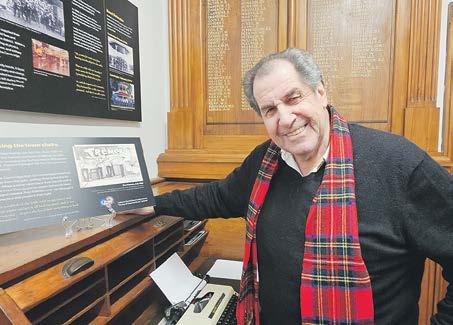
Lead singer David Stone was the face out front and the one the girls loved when The Tremors played around Waikato in the 1960s. Mary Anne Gill meets the heart throb now.
Long before global tours, private jets, and digital playlists, music in the Waikato meant packed dance halls, crepe-paper streamers, and teenagers chasing the excitement of a new sound.
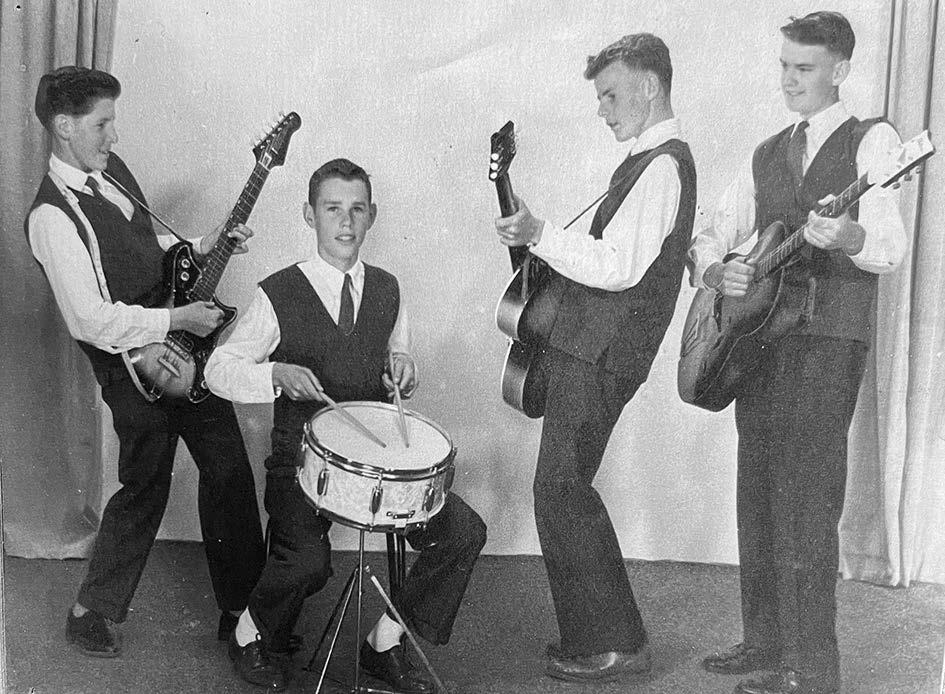
At the heart of that scene was David Stone, the charismatic frontman of Cambridge’s beloved 1960s band The Tremors.
“We were just five guys who wanted to make a nice noise,” he says.
Yet for a few years, that “noise” took them from Cambridge to Hamilton to Tokoroa, playing to packed dance halls.
Stone is 78 and lives in Nawton, Hamilton. He was born in Dunedin and moved north as a child.
His family story is part grit, part determination. His father Gorton was an architect and builder and developed Parkinson’s disease. His mother, Ethel, bought a business in Hamilton, employed a baker and opened a sponge kitchen.
“Within three or four years she’d freeholded the house, bought a car, put money in the bank,” he says.
“Good old mum.”
Music had arrived earlier in Cambridge after Austin Pattison moved in next door when Stone was about nine or 10. The boys would entertain adults at home with skits and music.
Stone suggested to Pattison that they get a band together. Pattison bought a snare drum and a hi-hat and became the drummer.
“That was the starting kick,” says Stone of The Tremors’ formation.
Stone sang and played bass, swapping duties with Max Edge so there was always someone behind the microphone. When they played instrumentals, Stone stood out front with maracas or tambourine.
“And smile at girls and phone numbers,” he says of his time as a local heart throb.
The band’s rise coincided with an explosion in popular music. Armed with guitars, drums and boundless enthusiasm, they played a steady circuit of dances, school events and club nights.
They built a set list around English rock and roll and the songs that were landing with young crowds. Rhythm guitarist Jeff Allan’s sister travelled to England and brought back a copy of the Dave Clark Five hit Glad All Over.
“We listened to it, we practiced it, and we did it that night,” says Stone.
“We probably did it for six weeks before anyone else had heard it (on the
radio).”
They played hard and often. The fifth member of the band was lead guitarist John Meddings.
The band had a standing gig every two weeks at the Buffalo Hall in Cambridge. The parents chaperoned, and the band and their mates decorated the place themselves.
“We used to go down and get big punga leaves and crepe over streamers and do it up and blow balloons up,” he says.
“I can see it now. I can smell it when you walked in with all the punga,” Stone says.
The Tremors broke up when Meddings, who Stone says was the band, left town.
After a brief period performing and running a record shop in Rotorua, Stone made a pivotal decision to move to “the other side of the business.”
Joining WEA (Warner-ElektraAtlantic), he built a career spanning more than three decades in music promotion and artist management, helping bring international acts to Australia and New Zealand. His job was taking new releases to radio stations and convincing programmers to play them.
“I’ve met hundreds of overseas acts,” he says.
“I’ve driven them, partied with them, been on tour with them.”
Among the highlights was working with legends such as Eric Clapton, whom he describes warmly as “one of the loveliest guys I’ve ever looked
Fieldays is about to get its own North Island answer to the iconic Cardrona Bra Fence with thousands of dirty, mismatched, holey socks hanging across Mystery Creek. Rural apparel brand Back Country is launching a giant “Sock Swap Fence” at Fieldays, where visitors can trade in their old socks for a fresh pair, with all donated socks then recycled instead of heading to landfill.
The Fieldays Forestry Hub returns to Fieldays for the fifth consecutive year, highlighting the important role forestry and wood processing play in supporting New Zealand’s economy, environment, and regional communities. The hub will highlight the role forestry and wood processing play in New Zealand’s economy, alongside the sector’s ongoing focus on innovation, workforce development, and environmental management.
A powerful and heartfelt step toward reconciliation and cultural understanding was achieved at a multi-community hui held at Trust Waikato meeting rooms bringing together leaders from Māori, Indian, and wider South Asian communities. The hui was organised by the Indian Cultural Society Waikato Inc., led by its president and events director Jujhar Singh Randhawa following constructive engagement aimed at turning recent challenges into an opportunity for dialogue, learning, and unity.
after”.
He also spent time with Robert Plant of Led Zeppelin and drove members of Elvis Presley’s original backing band through the South Island.
There was also George Benson, fresh off a concert in front of 32,000 people at Mt Smart Stadium.
The job wasn’t all glamour. It involved relentless travel, pitching songs to radio stations, and managing the unpredictability of touring artists. Yet it placed Stone at the centre of the music industry during some of its most dynamic decades. His diaries, kept over 32 years, document every journey, gig and encounter.
He has thought about a book but what happens on the road stays on the road, he says.
Through it all, his perspective remained grounded. While he witnessed the excesses often associated with the industry, he largely steered clear, reflecting that his early band days were more about “beer, shandies and playing music” than anything more destructive.
Now 78 and living in Nawton, Hamilton, Stone looks back on a life defined by music, with no regrets about the path he chose. He is curious about how things have changed, even experimenting with AI music, though he says nothing compares to the raw energy of a live band.
Stone has donated his stage jacket and trousers to Cambridge Museum. The black trousers are wool, terylene and mohair and they with the checked jacket were made by Wilkinson’s Tailors in Hamilton and cost £37.10 each.
They are a reminder of a time when a local group could pack a hall every fortnight, learn a song off a record from England, play it that night, and have the crowd feel like they were part of something big.
The band reunited in the early 2000s and has played again in recent years, including last year at Lake Karāpiro, drawing crowds keen to relive the dance hall days.
Stone is still up for it too. If The Tremors play again, he does not want a sit-down concert.
“We’ll do a dance night,” he says, with three 45-minute sets.
And if he gets his pick, there is one song that keeps coming back.
“Route 66,” Stone says. It does not need a big arrangement, and he has performed it hundreds of times with that twinkle in his eye the girls used to love.
Waikato Thoroughbred Racing chief executive Andrew ‘Butch’ Castles will retire from his role for health reasons after a six-year tenure with the club. His last day will be June 30. He played an instrumental role in the successful merger of Waikato, Cambridge and Waipā racing clubs to form Waikato Thoroughbred Racing, helping create a unified organisation positioned to future-proof the region’s racing infrastructure, assets and long-term viability. He also helped drive the Waikato Greenfield development project, further strengthening the club’s long-term future.
The Te Awa River Ride Light Night returns this winter for the third year, bringing a popular after-dark community event to Cambridge and Ngāruawāhia. The free, familyfriendly ride features illuminated trails, food, music and creative light displays. Ngāruawāhia had 1600 participants while Cambridge attracted 2700 people. Organisers are hoping for more this year, weather permitting.
Waikato District Council has been recognised nationally at the 2026 Recreation Aotearoa Parks Awards, with Hukanui Playground in Gordonton named as a finalist in the Playspace of the Year (Within $500,000) category. The awards celebrate excellence across parks, play and open spaces recognising projects that strengthen communities, support wellbeing and create welcoming public spaces. Hukanui Playground was acknowledged for its strong community-led approach, inclusive design and local storytelling elements.
Highly respected Waikato thoroughbred racing identity Colin Thompson has passed away aged 97. Thompson was a leading veterinarian for decades, breeder and owner and with late wife Irene, their son John and his wife Colleen and Alan Galbraith established premier nursery Rich Hill Stud in the early 1990s.
The racing industry also lost one of its most colourful characters with the recent passing of Bob Autridge, aged 85. He was a successful amateur jockey and accomplished trainer, and he passed his passion on to his sons Stephen and Toby, who forged their own successful paths in racing as both jockeys and trainers
Cambridge produced and directed film The Tavern - which features scenic highlights from around the town including the Raceway and the former Masonic Hotel – has been picked up by the TVNZ+ free to air platform from next week. Director and resident Matt Hicks who donated several of the iconic beer cans shown in the movie to Cambridge Museum this week and aired its final screening at Tivoli Cinema on Sunday said he was “super proud” that some battlers from Cambridge have got their content on New Zealand’s biggest free to air platform.
Waipā Networks and WEL Networks are building on more than 20 years of collaboration with a new agreement that will see Waipā use an established WEL platform to modernise the management of its electricity network. Waipā Networks will implement a new Advanced Distribution Management System, a software platform used to monitor, control and optimise the distribution of electricity across the network. By extending WEL’s existing control room platform in a co-hosted setup, Waipā Networks will have greater real-time visibility of its network.
From birthday surprises to deeply personal turning points, nursing students are stepping into a profession under pressure, reports Mary Anne Gill
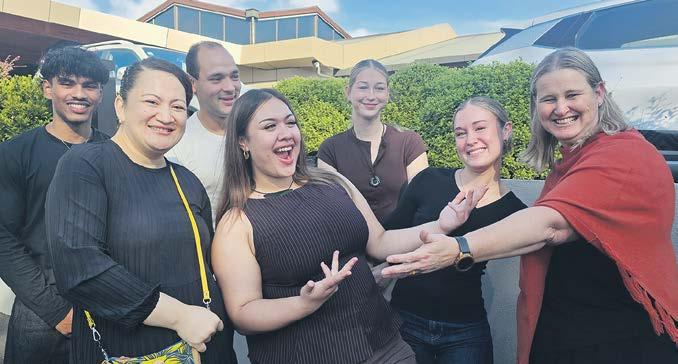
As birthday presents go, Waikato University student nurse Upuia Richel’s was pretty special.
A $30,000 scholarship from Southern Cross Health Trust for her nursing studies.
“Yes, I got an email the night before my birthday,” Richel says of the notification, which arrived on March 15, on the eve of her 18th birthday.
Richel, who has Māori, Samoan and European ancestry and is named after her Samoan grandmother, went to school in Rotorua where performing arts helped balance study demands.
She took part in productions such as Legally Blonde and In the Heights, as well as choir and Shakespeare performances.
But since moving from Rotorua to Hamilton, those opportunities have been limited.
“It’s my outlet, I really miss it now,” she says.
Nine Waikato University students are supported by the Southern Cross Trust scholarship programme, which provides $10,000 a year for each student, as well as mentoring and professional development opportunities.
Richel applied for it while working a summer job at Lady Jane’s ice cream parlour in Rotorua to save for university.
She is already taking on leadership opportunities, recently attending a national Māori nursing hui and stepping into a representative role for Māori nursing students.
The scholarships were formally recognised at a morning tea last month at Southern Cross Hospital in Hamilton, where recipients and their whānau met staff and university leaders.
For some students, the pathway into nursing comes from deeply personal experiences and a desire to care for those closest to them.
Richel had initially planned to study environmental engineering, but changed direction after her uncle became critically ill and was hospitalised in Rotorua, where he died four days later.
“The way the nurses looked after him, and my family as well, really changed my perspective,” she says.
“It had a big impact on the kind of nurse I want to be.”
Third year nursing student Anastacia Cuthers of Te Awamutu is also a recipient and made a similar decision after her father suffered a stroke during Covid.
“I saw a gap I could fill, and that was to come and be a nurse,” she says.
Helping care for him gave her firsthand insight into the pressures
facing the health system and cemented her decision to move into a more hands-on role after previously working in administration.
For Cuthers, who is raising two children while juggling study and placements, the financial support has made an immediate difference.
“I’m so grateful. That scholarship helped take that financial pressure off tremendously,” she says.
At the morning tea event, Southern Cross Hamilton general manager Marlise van Staden told students the funding was more than financial support and came with expectations.
“Be curious, ask questions, don’t be afraid to speak up,” she says.
“Habits you build now are habits that you’ll carry with you for the rest of your career.”
Students were stepping into a profession that needed fresh thinking and confidence.
“You’re an ambassador for a profession that needs to carry its head up and stand a little stronger,” she says.
The scholarships are part of a partnership with Waikato University’s School of Nursing and Midwifery.
For the students, the support is already making a difference, not just in study, but in the kind of nurses they hope to become.
Vilagrad Wines 2005 Pinot Gris has been awarded a gold medal at the International Wine and Spirit Competition in London. The event attracted more than 12,000 entries from 90 countries and judging was done by a panel of leading wine experts. The award-winning pinot gris is grown, handharvested, and produced entirely onsite at the Nooyen family’s fifth-generation winery and restaurant in Ngāhinapōuri, just south of Hamilton. Vilagrad winery was founded by Nooyen’s great-grandfather, Ivan Milicich in 1922.
Trustee Tinder, a fun way to connect professionals interested in giving back at the governance level with not for profits, will be held at K’aute Pasifika in Hamilton this month. The event was started by Houston Technology’s Alan Chew last year to help charitable organisations find volunteer trustees and attracted more than 150 professionals.
Waikato’s economy has continued to build positive momentum in early 2026, the latest Waikato Quarterly Economic monitor reports. Economic activity outperforms the national average with strong gains across sectors including agriculture, professional services, and rental and real estate services. Employment trends are improving, job ads are up, and the region is leading the North Island for employment performance over the past year. While households remain cautious and some sectors, particularly construction and manufacturing, continue to face pressure, increased housing market activity, rising construction intentions, and strong primary sector returns are helping support confidence across the region.
Ekos and Sanctuary Mountain Maungatautari have recently completed a biodiversity credit transaction with Polish hotel Stradonia, traded via ClimateTrade, an international nature markets platform based in Europe. The deal marks an important milestone in the maturation of New Zealand’s biodiversity markets, noting that international trades only occur where credits demonstrate high integrity.
Rising fuel costs and State Highway 3 freight disruptions have temporarily paused New Zealand production of an awardwinning living soil, and delayed its nationwide expansion, says a Kihikihi-based business. Living soil specialist Frank Lachmann, co-founder and owner of Kihikihi-based Herbi.nz Ltd, said rising fuel prices had forced a pause in New Zealand production of his Living Soil growing mix.
Federated Farmers is telling local government to get on with putting forward proposals to simplify and strengthen their regions. New Zealand’s local government structure simply isn’t working for farmers, says spokesperson Sandra Faulkner. It’s contributing to rising costs, infrastructure pressure, and declining civic engagement, she said.
Waikato-based Aimer Farming has welcomed Government co-investment that will help New Zealand farmers make faster, more confident pasture and feed decisions - turning measurement into clear, practical action on farm. As part of the Ministry for Primary Industries’ Primary Sector Growth Fund, MPI is investing $600,000 in a $1.675 million project with Aimer Farming. The project will scale Aimer Farming’s proven AI-powered pasture measurement and decision technology across hundreds of New Zealand dairy and beef farms. It will also help fast-track new tools designed to save farmers time and reduce uncertainty in daily grazing and feed decisions.















Dame Susan Hassall tells Mary Anne Gill she plans to lead Waikato University into a defining moment with its new medical school. But what comes next?
Susan Hassall has her sights set on 2028 and intends to still be chancellor of Waikato University when its long-awaited medical school opens.
“That’s the dream,” she says.
“I’d like to be part of that journey.”
It is a fitting goal for a leader whose career has been defined by long term commitment to education and the region.
Hassall, 71, who was made an Officer of the New Zealand Order of Merit in 2021, has now been made a Dame Companion in the King’s Birthday Honours.
Education minister Erica Stanford described her as among those making significant contributions to educational leadership across New Zealand.
Her influence in the Waikato has been farreaching.
Best known as headmaster of Hamilton Boys’ High School for 25 years, she retired in 2024 after more than four decades at the school. But retirement lasted only days before she was drawn into further
leadership roles across the region.
She is now the university’s chancellor, chairing the governing council at a time of rapid growth and transformation.
“The university is doing very, very well,” she says.
“We are increasing our numbers against market trends, so it’s exciting.”
Central to that momentum is the proposed medical school, scheduled to open in 2028 with an initial intake expected to be about 120 students.
Hassall credits vice chancellor Neil Quigley for pushing the project forward.
“He’s fought and fought and fought,” she says.
“It’s his medical school.”
The facility is expected to have significant regional impact, not just for tertiary education but for healthcare workforce development.
Momentum Waikato, where Hassall is deputy chair, is already working on scholarship models to support students into medical training and encourage graduates to return to their home communities.
“It’s about lifting the whole Waikato. Not just the university,” she says.
She is also involved in Te Pae Kōkako The Aotearoa New Zealand Opera Studio, known as TANZOS, working alongside fellow dame Malvina Major.
TANZOS and Momentum Waikato launched the TANZOS Dame Malvina Major Legacy Fund in January.
The two dames caught up for coffee over the weekend, where Hassall shared news of her honour.
She is chair of Hospice Waikato Trust, a role she returned to after stepping in as acting chief executive for nearly a year following her retirement from teaching. Her connection to hospice is personal, after her husband James died under its care in 2023.
“It means a lot to me to be able to support them,” she says.
She has also contributed to Momentum Waikato’s philanthropic initiatives and remains involved in tertiary and national education governance, including the Teaching Council.
Her influence has also reached a wider audience through a recent episode of the Between Two Beers podcast, hosted by Hamilton Boys’ High School old boys Seamus Marten and Steven Holloway, who spent two years persuading her to take part.
The episode has since attracted more than 60,000 listens and saw Hassall reflect on love, leadership and loss, as well as what it takes to raise good men.
She spoke about her guiding belief that “you can pretend to care, but you can’t pretend to show up”, the Greek concept of aretē that underpinned the school’s culture, and her view that vulnerability is one of the most important qualities in a leader.
Hassall believes voluntary boards are often underestimated but play a critical role in communities.
“You get very professional boards,” she says.
“People give their time where they can make a difference.”
Her appointment as a dame comes during a period of both professional
Knight Companion (KNZM)
David Ellis – Te Akau
For services to the thoroughbred industry and philanthropy
David Ellis, made a Companion of the New Zealand Order of Merit in 2020, is Principal of Te Akau Stud and Racing Stables.
He was inducted into the New Zealand Racing Hall of Fame in 2025 and is widely regarded as one of the country’s most influential figures in thoroughbred racing and breeding. Te Akau has won multiple champion stable titles and more than 100 Group One races.
He has invested more than $150 million at Karaka yearling sales and developed talent across the racing industry. He is also a long-time supporter of charities and community organisations.
Officer (ONZM)
Geoffrey Maber – Hamilton
For services to agribusiness
Geoffrey Maber has led Power Farming Group for more than 50 years, growing it into the largest privately owned tractor and farm machinery business in the Southern Hemisphere. The company employs about 500 staff across New Zealand, Australia and North America and generates $600 million annually. He has supported the Waikato community through philanthropy, including funding facilities at Southwell School.
Ken Williamson – Hamilton
For services to governance and the community
Ken Williamson has held governance and leadership roles across a wide range of organisations for decades. He has been involved with St John since 1969, chaired Momentum Waikato and contributed to organisations including the Waikato Chiefs, Magic Netball and University of Waikato Foundation. He was appointed to the Waitangi Tribunal in 2024 and is Deputy Chair of WINTEC.
Dr Luk Chin – Cambridge
For services to health and harness racing
Dr Luk Chin has contributed more than 50 years as an
anaesthetist and specialist, helping establish Waikato Hospital’s Intensive Care Unit and Pain Service. He co-developed Anglesea Medical Centre and has supported the development of private healthcare facilities across the region. At 83, he remains active in harness racing as a trainer and driver, with more than 200 wins.
Dr Rachael Griffiths-Hughes – Hamilton
For services to music
Rachael Griffiths-Hughes lectures at the University of Waikato and directs several choirs. She has led Hamilton Civic Choir, founded Vox Baroque and contributed widely to the region’s musical life, including as an adjudicator at the 2024 World Choir Games.
Colin Groves – Hamilton
For services to business, philanthropy and sport
Colin Groves has contributed across business and sports governance, including Waikato Rugby, where he served as chairman. He has supported leadership development and helped establish Seddon Cricket Club, which now has around 700 members.
Associate Professor Mary Low – Hamilton East
For services to accountancy education
Mary Low has spent more than 35 years in accountancy education at the University of Waikato. She helped establish the Master of Professional Accounting programme and has published extensively, with more than 50 research outputs.
Dr Katrina Roberts – Matamata
For services to the dairy industry and the community
Katrina Roberts co-developed heifer teat sealing, now widely used to reduce mastitis. Her work has prevented tens of thousands of antibiotic treatments annually. She has also mentored veterinarians and contributes to community and equestrian organisations.
Dr Udaya Samarakkody – Tamahere
For services to paediatric surgery and the Sri Lankan community
Udaya Samarakkody has served as a paediatric surgeon at Waikato Hospital for more than 30 years and trained more
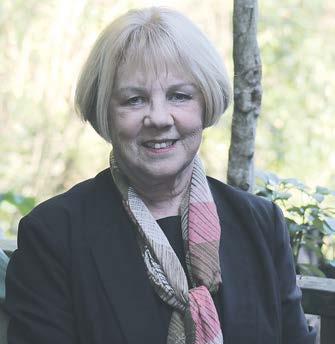
achievement and personal transition.
She describes the past few years as challenging, marked by loss and retirement, but also by new opportunities.
“I feel very fortunate that I’ve had so many things to go to. If you’ve got something to give, then the world needs it.”
Her legacy as an educator endures. Old Boys Foundation boards and fellow educators praised her tireless work ethic and her ability to connect with
students as individuals, noting that when she spoke at assemblies “you could hear a pin drop”. That mindset continues to shape her work today. From education leadership to philanthropy, healthcare and the arts, Hassall’s influence remains embedded across the Waikato.
As 2028 approaches, Hassall is determined not just to see the doors open but to help shape what comes next.
than 50 surgeons.
She has worked to improve access to surgical care across the Midland region and co-founded the Sri Lankan Doctors and Dentists Association. She has also supported community programmes and cultural initiatives for more than two decades.
Professor Marc Shaw – Hamilton
For services to travel health
Marc Shaw established New Zealand’s first travel health service, Worldwise, in 1993 and has led its development nationally. He has contributed to research and international surveillance of infectious diseases and supported humanitarian work in more than 100 countries.
King’s Service Medal (KSM)
Rosalind Corban – Tokoroa
For services to nursing
Ros Corban has worked as a nurse for more than 60 years, including leadership roles at Tokoroa Hospital. She continues working at age 81 and supports patients and families in her community.
Dianne and Selwyn June – Hamilton
For services to conservation
The Junes have dedicated more than 40 years to conservation, supporting predator control and kōkako recovery. Their work has helped grow the Mount Pirongia kōkako population significantly.
Jane Manson – Hamilton
For services to the community
Jane Manson founded the Tamahere Country Market in 2004 and continues to support community initiatives, including heritage and social service projects.
Brian Marcroft – Ōhaupō
For services to the community
Brian Marcroft has given more than 60 years of voluntary service, contributing to local organisations, farming groups and community projects across the Ngāhinapōuri area.
After four and five - Waikato Chamber of Commerce held its BA4 with Waikato Westpac Rescue Helicopters and Westpac NZ last month while NZ Business Connect had a BA5 to celebrate the launch of the world-first social giving App. Photos, from left, by Marcelo Mieres.
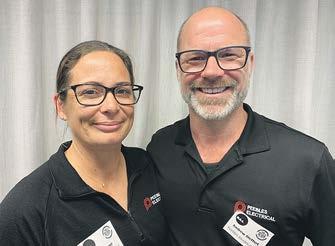
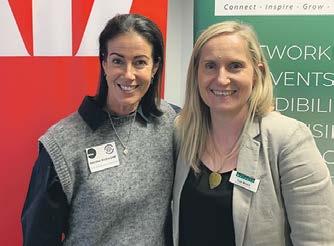
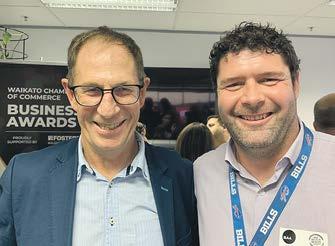
The latest Waikato recipients of royal honours headed south last month to Wellington to receive their medals from governor general Dame Cindy Kiro.
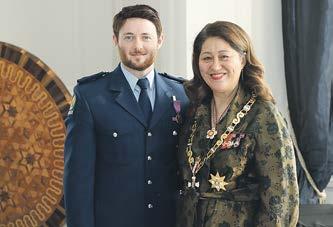
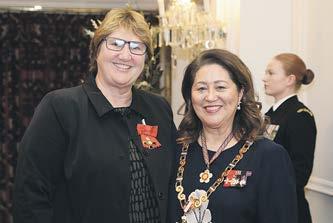
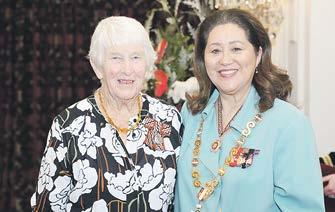
Carr, of Ōtorohanga, KSM for services to netball and the community. Carr held numerous leadership positions within the Ōtorohanga Netball Association, now
Netball Centre, and Waikato Netball. While teaching at Ōtorohanga College, she developed the netball programme and initiated tours to the South Island, Rarotonga and Australia. She is a Life Member and Patron of the Ōtorohanga Tennis Club Tauranga City Council is at the centre of a national infrastructure success story after a data-driven approach to managing assets helped secure the top prize at this year’s Āpōpō Asset Management Excellence Awards. The council, working alongside GHD Group NZ, took out the Supreme Asset Management Excellence Award for a project that is reshaping how infrastructure decisions are made. Photos, from left, by Mary Anne Gill
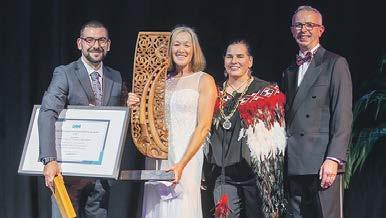
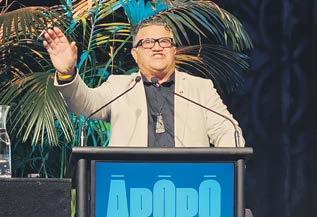
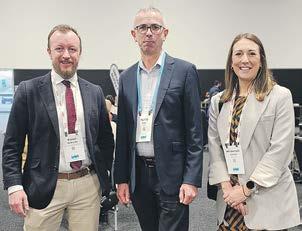
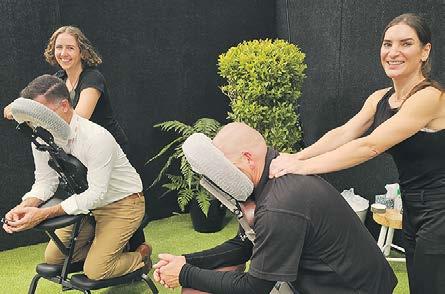
The New Zealand Racecourse Managers Association National Conference, focused on maintaining safe, high-performing racing and training surfaces for New Zealand racing. The conference also recognised excellence within the industry through the presentation of several annual awards.





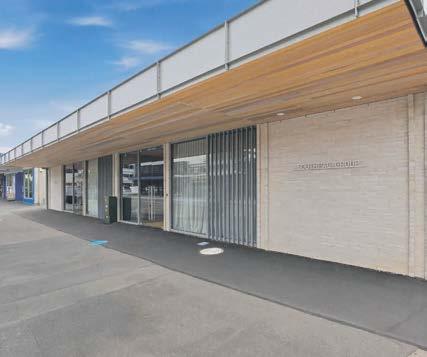



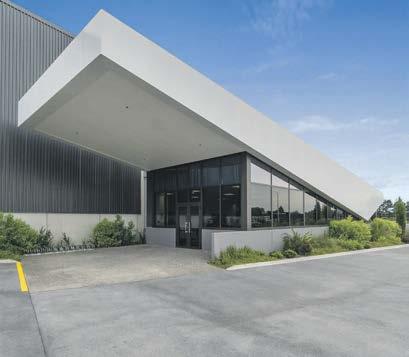


We entered six projects into the 2026 New Zealand Commercial Project Awards. We won seven awards...
The National Value Award (for projects $10-25M) for the Horotiu Head Office.
Gold for the Horotiu Head OfficeCommercial Category.
Let’s build together.

Gold for 100 First Avenue (Tauranga)Commercial Fitout Category.
Gold for Kinfields Village Stage 2Retail Category.
Gold for the Kohia WarehouseIndustrial Category.



Wins like this showcase the strength of regional business. In a tough market, we’ve delivered six award-winning projects. And it’s thanks to the unwavering commitment of our team to delivering value, with the backing of our strong local partners and supply chain, that we can achieve this level of excellence.
Gardner,
Silver for Activate Church Stage 1Commercial Fitout Category.
Silver for Harvard Industrial DevelopmentIndustrial Category.
Celebrating successful partnerships, collaboration, innovation, building excellence, and the teams that make it happen.