



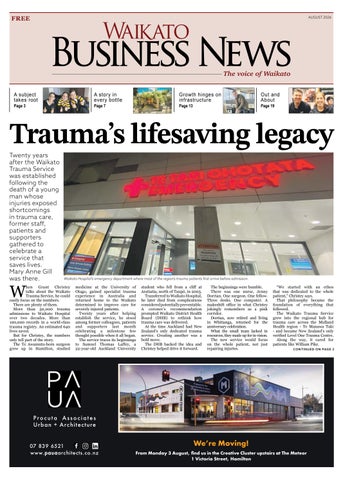
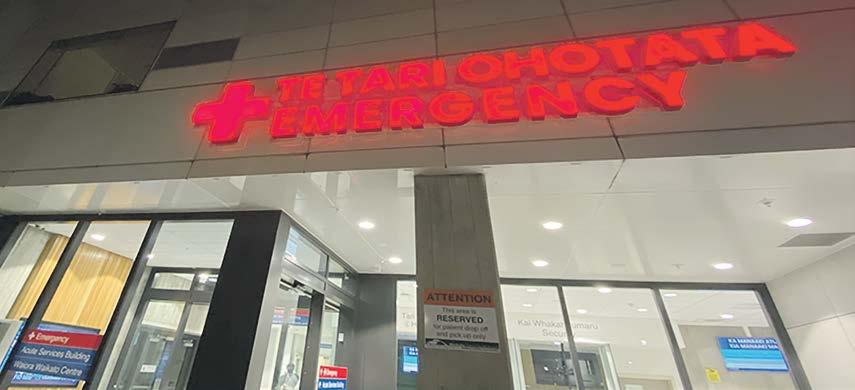
Twenty years after the Waikato Trauma Service was established following the death of a young man whose injuries exposed shortcomings in trauma care, former staff, patients and supporters gathered to celebrate a service that saves lives. Mary Anne Gill was there. Waikato Hospital’s
When Grant Christey talks about the Waikato Trauma Service, he could easily focus on the numbers. There are plenty of them.
More than 50,000 trauma admissions to Waikato Hospital over two decades. More than 100,000 records in a world-class trauma registry. An estimated 640 lives saved.
But for Christey, the numbers only tell part of the story.
The Te Awamutu-born surgeon grew up in Hamilton, studied
medicine at the University of Otago, gained specialist trauma experience in Australia and returned home to the Waikato determined to improve care for severely injured patients.
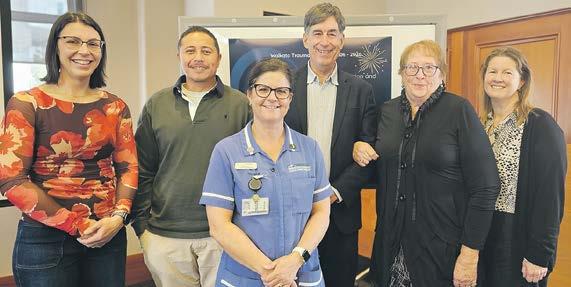
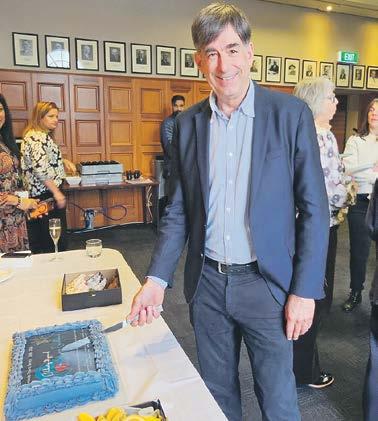
Twenty years after helping establish the service, he stood among former colleagues, patients and supporters last month celebrating a milestone few thought possible when it all began.
The service traces its beginnings to Samuel Thomas Laffey, a 22-year-old Auckland University
student who fell from a cliff at Aratiatia, north of Taupō, in 2003. Transferred to Waikato Hospital, he later died from complications considered potentially preventable.
A coroner’s recommendation prompted Waikato District Health Board (DHB) to rethink how trauma care was delivered.
At the time Auckland had New Zealand’s only dedicated trauma service. Creating another was a bold move.
The DHB backed the idea and Christey helped drive it forward.
The beginnings were humble.
There was one nurse, Jenny Dorrian. One surgeon. One fellow. Three desks. One computer. A makeshift office in what Christey jokingly remembers as a pink corridor.
Dorrian, now retired and living in Whitianga, returned for the anniversary celebration.
What the small team lacked in resources, they made up for in vision.
The new service would focus on the whole patient, not just repairing injuries.
“We started with an ethos that was dedicated to the whole patient,” Christey says.
That philosophy became the foundation of everything that followed.
The Waikato Trauma Service grew into the regional hub for trauma care across the Midland Health region - Te Manawa Taki - and became New Zealand’s only verified Level One Trauma Centre.
Along the way, it cared for patients like William Pike.





News/Editorial
Roy Pilott editor@goodlocal.nz 027 450 0115
Mary Anne Gill maryanne@goodlocal.nz 021 705 213
Viv Posselt viv@goodlocal.nz 027 233 7686
Advertising Director
Janine Davy janine@goodlocal.nz 027 287 0005
Owner/Publisher
David Mackenzie david@goodlocal.nz
Office/Accounts admin@goodlocal.nz 07 827 0005
Readers’ contributions of articles and letters are welcome. Publication of contributions are entirely at the discretion of editorial staff and may be edited. Contributions will only be considered for publication when accompanied by the author’s full name, residential address, and telephone number. Opinions expressed are not necessarily those of the publishers. Waikato Business News is published by Good Local Media Limited.
Also publishers of BAY OF PLENTY









In 2007, Pike was climbing Mt Ruapehu when the volcano erupted. He suffered devastating injuries and ultimately lost his right leg below the knee.
Today he is a motivational speaker, founder of the William Pike Challenge and co-owner of a successful prosthetics business.
What Pike remembers most is not the surgery but the people around him. Dorrian comforted his terrified family while the trauma team looked beyond the immediate injuries and planned for what life might look like afterwards.
Most of all, he remembers a conversation.
Lying in a hospital bed, frightened about life as an amputee, Pike was given a choice by Dorrian.
“You can go home and give up, do nothing, or you can go on a brand new adventure.”
It was a small moment.
But it changed everything.
“I wanted that adventure so bad,” Pike says. “That tiny, brief conversation gave me the courage and confidence that I really needed.”
Statistics show 99 per cent of trauma patients survive and most eventually return home. What the figures cannot show is the emotional labour behind those outcomes.
Dorrian spent much of her
career helping people find hope in their darkest moments.
She recalls patients such as Meg Theriault, an American student who suffered devastating injuries after a minivan accident near Turangi in 2012. Today she is married, has built a successful career and recently bought her first home.
She remembers many others who rebuilt their lives despite catastrophic injuries.
“People struggle, their families struggle, but you’ve got to have

kindness,” Dorrian says. “You’ve got to give people hope.”
That humanity is matched by evidence.
One of Christey’s enduring contributions has been his insistence that every trauma case tells a story worth learning from.
What began as a small registry now holds more than 100,000 patient records and has helped identify injury patterns, improve treatment pathways and drive quality improvement programmes throughout the region.
The findings have challenged assumptions.
While road crashes often dominate public attention, the registry shows falls now represent one of the largest and fastestgrowing causes of serious injury, particularly among older people.
Most importantly, the numbers prove better systems save lives.
Before the service was established, major trauma mortality was 16.8 per cent. Years later it had fallen to about seven per cent.
Former chief operating officer Jan Adams, who approved the original proposal, describes the decision as bold, brave and absolutely the right thing to do.
“It was a privilege and it was very easy to say yes,” she told those gathered for the anniversary.
“It’s an amazing service. It’s had some amazing outcomes for many people.”
Christey says those achievements belong to nurses, physiotherapists, occupational therapists, surgeons, theatre teams, intensive care staff, paramedics, administrators and
data specialists whose work often goes unnoticed.
Much of it happens quietly on the wards and in conversations with families.
Twenty years on, the Waikato Trauma Service faces new challenges. Patient numbers are growing. The population is ageing. Injuries are becoming more complex.
Yet the philosophy that shaped the service remains unchanged. Every patient deserves the best possible care.
Every family matters.
Every story matters.
Twenty years ago, one family’s tragedy forced the DHB to confront difficult questions about trauma care.
Since then, more than 50,000 trauma patients have come through Waikato Hospital.
Many would never know the names of the people who cared for them.
But they got to go home.





















New road
A new road has been completed in Hamilton, unlocking land for thousands of future homes and marking the completion of the Peacocke Housing Infrastructure Fund programme, delivered ahead of schedule. Whatukooruru Drive is a new arterial road connecting Peacockes Road in the east with Ohaupo Road/ State Highway 3 in the west and improving access to Hamilton’s newest growth area – Peacocke.
Three Waikato University students have received Tower Climate Change Scholarships worth $5000 each. Recipients Lagi Talalupe, Genifer Tadielo and Ayla Montgomerie are studying the university’s Bachelor of Climate Change degree. The scholarships support future climate leaders and help students tackle resilience, sustainability and climate adaptation challenges facing New Zealand and the Pacific.
The New Zealand Symphony Orchestra will bring a Nordic-inspired programme to Hamilton this month. Conducted by Finnish maestro Pietari Inkinen, Myths & Legends features music by Jean Sibelius and the New Zealand premiere of Magnus Lindberg’s Violin Concerto No. 2. The concert will showcase NZSO Concertmaster VesaMatti Leppänen as soloist.
Building Honours
A home in Rangitahi, Raglan, built by White Wood Homes, has won the Waikato Supreme House of the Year title at the 2026 Master Builders House of the Year Awards. Other Waikato winners included G.D Pringle Building for a Cambridge renovation and Hamilton home, showcasing the region’s strength in residential design and construction.
Several Waikato businesses have earned national recognition as finalists in the Spark Retail NZ Awards. Noel Leeming Matamata is shortlisted for Most Improved Store, while Renting with SB in Hamilton, Rumour in Cambridge and Well Stocked Deli in Whitianga are finalists in the People’s Choice category. Winners will be announced in Auckland next month.
Agribusiness is no longer confined to the farm gate. Jesse Wood explores how a Waikato initiative is opening students’ eyes to one of New Zealand’s most important industries.
What started as a classroom experiment at St Paul’s Collegiate in Hamilton has grown into a nationwide programme introducing students to the opportunities that exist beyond the farm gate.
Agribusiness started in 2013 and has since spread across the Waikato, Bay of Plenty and the rest of New Zealand, with 128 schools teaching the subject last year.
Nathan Guy, the minister for Primary Industries at the time, set ambitious targets of doubling primary sector exports by 2025. He estimated the industry needed to employ another 50,000 people, half requiring tertiary or Level 4 qualifications.
MPI research in 2014 showed a need for an additional 25,000 graduates in the primary sector by 2025.
St Paul’s-based Agribusiness in Schools advisor Melanie Simmons helps educators bridge the gap between the classroom
and one of New Zealand’s biggest industries.
Most people may not understand the breadth and depth of careers within the agri-sector, she says.
“In 2013, there were 10 other lead schools alongside St Paul’s. I was at Feilding High School at the time, and that was one of them.
“First funders Gallagher, Dairy NZ and Beef + Lamb New Zealand helped bring two teachers from each of those 10 schools – a science teacher and a commerce teacher – to St Paul’s for two days every term for two years.
“That’s how we wrote the agribusiness standards and then pitched them to the Ministry of Education.
“Kerry Allen was employed to be the curriculum director. We would all write a bunch of ideas and Kerry would pull it together and make it into something that encompassed what we were trying to create,” says Simmons.
At the end of 2017, once the standards had been piloted, Agribusiness was registered




by the Ministry of Education on the NZQA framework.
St Paul’s Collegiate and the agribusiness programme decided to get a full-time advisor. That’s when Simmons moved north.
“I have been doing that ever since, encouraging and supporting teachers in schools to implement agribusiness.”
There are 29 agribusiness teachers from urban and rural schools across the Waikato and Bay of Plenty.
“Some of the schools just add one or two achievement standards through their existing course to revitalise or add an Agri-spin to elements of their assessment,” Simmons says.
“Other schools have full agribusiness courses – Level 2 and 3, teaching it as an entire subject. But everybody gets the same support.”
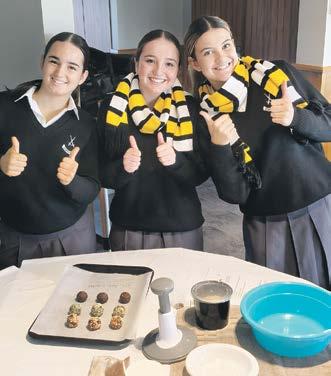
At St Paul’s, Agribusiness is taught through the strands of Agri-science, Agri-marketing, Agri-management and Finance, and Agri-innovation, with a strong emphasis on industry engagement, experiential learning and real-world problem solving.
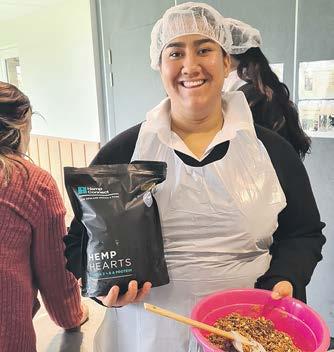
Students have made cheese, biltong, kombucha and mead from excess honey. It’s not all about orchards and milking, says Simmons.
“We look at new and innovative ideas and products as well as new ways of using organisms – dung beetles, hemp, crickets for protein –to meet future needs.
“It’s a great way to bring the industry and cuttingedge thinking and products into the classroom, and great conversation/classroom discussion starters.”
Even if you work in a city, your industry will likely cross over with the primary industries.
With this in mind, Simmons says it’s great to see big urban schools teaching


agribusiness.
“Just because the students are learning in a city, doesn’t mean they’ll stay in the urban area for their entire life.
“At Fieldays there were rural bankers, accountants, marketers and branding specialists – someone with a graphic design degree produced those concepts.
“They wouldn’t consider themselves as working in the primary sector but their organisation supports the primary sector.
“It is our second largest industry – with service being the largest – but when you think about service, many are serving products from the agri-sector.
“It’s amazing how many jobs cross over with the primary sector. Eighty per cent of New Zealand’s export earnings came from the primary sector last year.”
Although agricultural and horticultural science had been around for a long time, the teaching was “ringfenced”.
It was “on-farm, on-boat and on-orchard” learning but stopped at the farm gate.
Agribusiness shows students what’s past the gate and teaches them about the
primary industries from their own perspectives.
“Agribusiness looks at science and business on-farm, on-boat, on-orchard but it also looks at the entire value chain – right through to marketing, logistics, production and anything that supports those industries,” Simmons says.
“It’s a much broader mandate.”
For an industry searching for its next generation of talent, the classroom is proving a good place to start.
• Waikato schools that provide agribusiness, including St Paul’s Collegiate, are Fraser High School, Hamilton Boys’ High School, Hamilton Christian School, Hamilton Girls’ High School, Hillcrest High School, Matamata College, Morrinsville College, Rototuna Senior High School, St John’s College, St Peter’s Cambridge, Te Awamutu College and Waikato Diocesan School.
• In the Bay of Plenty, Aquinas College, John Paul College, Katikati College, Mount Maunganui College, Ōtūmoetai College, Pāpāmoa College, Tauranga Boys’ High School, Tauranga Girls’ High School, Te Puke High School, Western Heights High School and Whakatāne High School provide the subject.

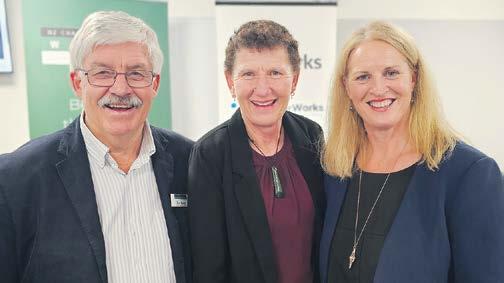
A Waikato employment initiative is challenging perceptions about job seekers while helping businesses fill vacancies, plan future workforce needs and tap into talent pools often overlooked by employers, reports Mary Anne Gill.
Eleven people recently secured jobs in the Waikato from a recruitment campaign aimed at filling just eight vacancies.
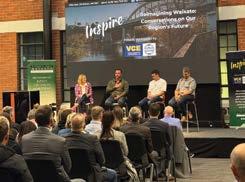
The result, achieved through a partnership between JetPark Hamilton and the Ministry of Social Development (MSD), was one of several success stories highlighted at a Waikato Chamber of Commerce and MSD ChamberWorks event in Hamilton attended by Social Development and Employment Minister Louise Upston last month.
The JetPark example set the scene for an evening focused on connecting Waikato employers with what speakers described as an often-overlooked pool of skilled and work-ready job seekers.
MSD Waikato Regional Commissioner Tracey Smith revealed that about 6600 Waikato job seekers had been on a benefit for less than a year. Of those, around 2100 held a degree or equivalent qualification, 4800 had skills aligned with the region’s key industries and 2700 held a full driver’s licence.
Those figures challenge long held assumptions about the people seeking work.
Upston reinforced that point, telling the audience that in Hamilton alone, 80 per cent of people engaged with MSD had previous work experience and half had worked in moderately or highly skilled roles.
“They do come with a range of skills,” she said.
The sectors represented include transport, logistics, manufacturing, hospitality, tourism, retail and construction, industries
where many Waikato businesses are actively looking for staff.
The ChamberWorks initiative is a partnership between MSD and New Zealand Chambers of Commerce. Employers can list vacancies and receive pre-screened candidates, removing much of the time, uncertainty and cost often associated with recruitment.
Upston said businesses were looking for support that was “practical, simple, responsive, and grounded in the very real needs of the business”.
Having owned and managed small businesses before entering Parliament, she acknowledged recruitment could be challenging.
“Recruitment’s tough. It’s tough, it’s risky, and it’s not an area that you are normally an expert in,” she said.
At the time of the presentation there were 73 vacancies listed through ChamberWorks, resulting in 17 placements in just three months.
But it was one local success story that drew the strongest response from those in the room.
JetPark Hamilton has been working alongside MSD Waikato for five years. During that time more than 70 people have been supported into employment through the partnership. In the latest recruitment exercise alone, 11 people secured jobs.
The recruitment campaign had originally been aimed at filling eight vacancies.
The JetPark example also highlighted
Success is... never being far from your o ce, your gym and your family.
the collaborative nature of the programme. MSD Work Brokers worked alongside K’aute Pasifika and MSD Job Connect to support candidates and employers through the process.
Upston described ChamberWorks as a way of “connecting the largest talent pool in the country with the businesses who want great people and need great people for them to grow”.
The presentations also highlighted a broader role for MSD in helping businesses plan future workforce needs.
Rather than seeing MSD simply as a place to fill an immediate vacancy, businesses were encouraged to view the agency as a long-term workforce planning partner capable of helping them prepare for growth months and even years ahead.
Upston said too often MSD was seen as a reactive solution when it could also help businesses plan their future workforce needs.
There was also considerable discussion around youth employment. Upston urged businesses to provide greater exposure to different industries and career pathways, helping young people make informed
decisions before committing to training or apprenticeships.
Another largely untapped opportunity lies among New Zealanders living with disabilities. Upston said that almost three quarters of disabled people who are not currently employed would like to be working, creating a motivated and often overlooked workforce.
The Government has set a target of reducing the number of people on JobSeeker Support by 50,000 by 2030.
Upston said she had deliberately set an ambitious target because employment transformed lives.
“I know for every single person that we support off welfare and into work, it makes an enormous difference for them, their family and their community,” she said.
“As someone who’s been on welfare myself, I know it’s not a life of choice and opportunity.”
For Upston, ChamberWorks demonstrated what could happen when employers, community organisations and government agencies worked together.
“You can’t grow businesses without growing people,” she said.
Find the right work-life balance at our new flexible workspaces in Hamilton.
Finding the balance between doing a great job and having a great home life is so important. At Regus, our flexible workspaces mean it’s easier to balance both than ever before. Discover an o ce in Hamilton that makes your whole life work today.




Every generation of leaders likes to think it is facing unprecedented change. In 2026, that claim feels less like a cliche and more like reality.
Economic uncertainty remains a constant feature of business. Artificial intelligence (Ai) is reshaping industries, and workforce expectations continue to evolve. The question for New Zealand businesses is no longer whether change is coming, but whether our leaders have the capability to navigate it.
What matters most is not whether leaders have all the answers. It is their ability to help people make sense of uncertainty, adapt to new circumstances, and keep moving forward when conditions change. Leadership today is less about applying predetermined solutions and more about making sound decisions in complex, fast-moving environments.
Ai provides a good example. There is no universal roadmap for adoption. Every organisation must decide how to integrate Ai into workflows, manage risk, engage employees and create value. The organisations that succeed will not necessarily be those with the biggest technology budgets. They will be the ones that develop the leadership capability, confidence and culture needed to use technology effectively.
This challenge sits at the heart of the EMA’s Workforce 2030 initiative, which is helping organisations prepare for the transformative forces reshaping work. Workforce 2030 recognises that Ai adoption is not simply a technology challenge. It is also a people challenge, a leadership challenge and ultimately a business performance challenge.
For many businesses, particularly small and medium-sized enterprises, the pressure is immediate. Leaders are expected to understand
emerging technologies while managing productivity demands, skills shortages and changing employee expectations. At the same time, they are being asked to guide their people through significant change.
That reality is changing the way leadership development itself needs to be approached. Traditional models built around attending courses and absorbing information remain valuable, but they are no longer enough on their own. Today’s challenges require leaders to learn through action, experimentation and reflection.
The EMA’s new Adaptive Leader Programme, developed in partnership with Adeption, reflects this shift. Rather than treating learning as something separate from work, participants tackle real business challenges, test new approaches and apply insights directly in their organisations. The goal is not simply to build knowledge, but to build the confidence and capability needed to lead in increasingly complex environments.
The leadership skills New Zealand businesses need are evolving. Technical expertise remains important, but it is no longer enough. Leaders must be able to build trust, encourage learning, make decisions amid uncertainty, and create cultures where people feel confident adapting to new ways of working.
Change is coming faster than ever. The organisations that thrive will not be those waiting for a perfect playbook. They will be those whose leaders know how to keep people engaged, learning and moving forward when no playbook exists.
• Nick Sheppard is Head of Professional Services at EMA (Employers and Manufacturers Association)

Hamilton and its central city have been known by many names – from “Cow Town” to “the Tron,” to much worse.
Many naysayers have been quick to write off our CBD.
But I’m far more interested in listening to the ones who put their money where their mouth is. The people investing hundreds of millions of dollars in the CBD right now because they believe in it.
While it is still a work in progress, our city is entering a bold new chapter, and I believe the best is yet to come.
Turning the city centre to face the river has long been a key vision.
Our new $80 million world-class BNZ Theatre has created a vibrant arts and entertainment precinct at the southern end of Victoria Street. Just to the north, Templeton Group is planning a 25-storey, five-star, $100 million-plus hotel on the riverbank.
Nearby, the $100 million Pullman Hotel on Ward Street is approaching completion, while Foster’s Union Square and Stark Property’s North Bloc are adding more elite quality office space.
Last year, more than 22,000 square metres of new development was completed in the CBD – the highest level in more than a decade. Combined, these projects reflect the momentum building in our city.
Council’s role is to get the fundamentals right, so the city centre can thrive with these investments that bring vibrancy, jobs and economic prosperity to Hamilton.
We’re focused on the basics and committed to playing our part in a fiscally responsible way.
That means creating a clean, safe and
welcoming city centre and giving businesses, investors and residents the confidence to be part of its future.
This includes lifting cleaning and maintenance budgets, reintroducing two hours of free parking to make it easier to visit, and working closely with Police to improve safety, including installing attractive amenity lighting that will make a real difference to the CBD’s look and feel.
We have also increased funding for events and activations that add vibrancy, bring more people into the city centre, and support retailers, businesses and service providers.
Housing is the other key factor in the central city’s long-term future.
We are using $150 million of Government funding to deliver the underground infrastructure needed to enable more inner-city living.
The recently completed 42-unit Hinemoa housing complex on Tristram Street is one example, and there is much more to come. As more people choose to live in the city centre, its energy and character will continue to evolve.
That’s why we are investing in making it a great place to live as well as visit, including the first central city playground on the former Founders Theatre site.
So, my message to Hamiltonians is simple: the CBD will only succeed if we believe in it. Follow the people who are brave enough to lead by example and back our city. The future is ours to shape.
• Geoff Taylor is Hamilton deputy mayor, a journalist and author.






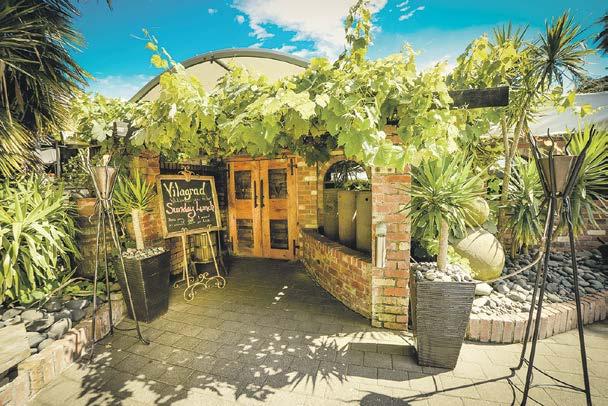
A world-beating Pinot Gris has put Vilagrad Winery in the spotlight, but generations of family farming, grape growing and storytelling continue to drive the Ngāhinapōuri business, writes Jesse Wood.
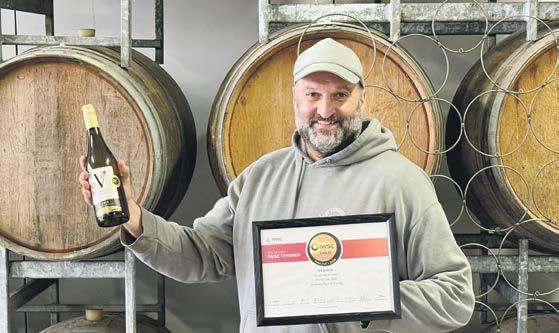
Tradition has underpinned Vilagrad Winery for generations. The Ngāhinapōuri winery recently claimed a major international accolade, with its 2025 Pinot Gris winning gold at the International Wine & Spirit Competition in London.
Producing premium wine grapes in the Waikato presents its own challenges, with growers working around seasonal frosts, rainfall and changing weather patterns to achieve consistent quality.
“We’ve won over 120 awards for the wines that have been produced here on site in the Waikato,” fourthgeneration Vilagrad winemaker and grape grower Jacob Nooyen says.
“People think we’re buying the grapes in and making them here. No, these are wines that have been grown, produced and made here.”
The family’s connection to the land dates back more than 100 years. After emigrating from Croatia, founder Ivan Milicich Snr began growing grapes on his Ngāhinapōuri dairy farm and obtained a licence to make and sell wine in 1922. Five generations later, the family remains hands-on
in both the vineyard and winery.
The International Wine & Spirit Competition attracts more than 12,000 entries from more than 90 countries and is regarded as one of the world’s most respected wine competitions.
The beverages are judged by a panel of leading international wine and spirit experts.
“The results came through and I realised we were the only one that had been awarded a gold,” Jacob says.
“The gold award is rare – it hasn’t been given to anyone for about five years. That means it’s even more valuable.
“In previous years, we’ve had two bronzes. The standout one for us was a silver medal for the dry Pinot Gris 2021. That was the highest awarded silver and there were no golds.
“It’s incredible. It’s an honour to receive such a prestigious prize. It was a very pleasant surprise.”
Jacob says it’s neat to have the accolades to go alongside their hard work. Now it’s time to push into overseas markets.
“We’ve always done well in the national competitions. That’s where most of the awards come
Success is... never being far from
your
o ce,
your
gym
and your family. Find the right work-life balance at our new flexible workspaces in Hamilton.
Finding the balance between doing a great job and having a great home life is so important. At Regus, our flexible workspaces mean it’s easier to balance both than ever before. Discover an o ce in Hamilton that makes your whole life work today.
from. It wasn’t until recently that I decided to start entering them into the London competition,” Jacob says.
“To have that come back tenfold, it shows the consistency of producing Pinot Gris here in the Waikato.
“My ideal situation would be to head over to the awards dinner in November and make some serious
contacts overseas that can help us with distribution in the UK.”
Once distribution in the UK has been sorted, social media will play a big part in breaking their story to the world.
In a very diluted market with storied wines from the likes of France, Italy, Germany and Austria, it’s important to have a point of difference and to keep


with the times.
Their online presence will help them get through to the next generation of wine connoisseurs across the globe.
“The social media aspect in general is playing a huge part in our business now on both fronts, restaurant and winery,” Jacob says. CONTINUED

It would be easy to look at Hamilton’s latest CBD vacancy figures and conclude the city is facing difficult times. Retail vacancy has increased from 10.5% to 12.7%, while office vacancy has actually improved from 8.9% to 8.4% over the first half of 2026. At first glance, the results appear mixed. Dig a little deeper and the story unfolds.
The reality is that Hamilton’s commercial property market is evolving.
For years we’ve too often heard that “the CBD is dying.” But that’s not what we’re seeing. Instead, Hamilton’s city centre is adapting to changing consumer behaviour, new ways of working, and a growing preference for quality over quantity.
The retail sector has certainly had its challenges, particularly with the departure of major occupiers such as Lincraft from Bryce Street and Wintec’s School of Media Arts from Alexandra Street. These large vacancies overly influence the statistics, but they don’t necessarily reflect the health of the wider market.
Key retail headlines include:
• Retail vacancy increased to 12.7%
• More than 2,100sqm of retail space is currently under refurbishment.
• Large-format vacancies are creating opportunities to reconfigure space for modern occupiers.
Investment in existing buildings continues despite softer market conditions.
Perhaps the biggest shift is not vacancy – its how people shop and businesses adapt.
Today’s retail environment is increasingly splitting into two distinct models:
• Convenience retail – businesses built around speed, accessibility and ease of access.
• Experience retail – hospitality, boutique shopping, wellness, entertainment and services that encourage people to stay longer. The retailers performing best are those with a clear identity, who adapt to their customers changing shopping patterns. Those trying to be everything to everyone, often struggle. The question is no longer whether a CBD location is good or bad
– it is whether the location matches the way customers want to engage with the business. The CBD’s defining difference – the breadth of independent businesses, offering unique services and products with real passion and knowledge.
Office Market Showing Encouraging Signs
While retail has softened, Hamilton’s office market has quietly produced one of its strongest results in recent years. The highlights:
• Overall office vacancy reduced from 8.9% to 8.4%.
• Occupied office space increased by more than 6,000sqm
• Grade A vacancy remains exceptionally low at just 3.1%
• Businesses continue to favour modern, refurbished office accommodation. The completion of North Bloc at 193 London Street, now fully occupied by Fonterra, demonstrates exactly what today’s occupiers want. Businesses are increasingly demanding well built with high spec and amenities, and this is where the CBD delivers – they are simply choosing buildings that better support collaboration, staff wellbeing and productivity.

Quality is the New Currency
Perhaps the most significant underlying message from both surveys is the continued flight to quality.
Whether retail or office, occupiers are increasingly choosing buildings that reflect their brand and provide a better customer or employee experience. For property owners, the message is clear: Invest in refurbishment. Look to create flexible floorplates and spaces.
• Think about the customer and client journey.
Those who reinvest today are likely to be rewarded as demand continues to strengthen.
Reasons for Optimism
Hamilton also has considerable momentum working in its favour.
Current projects including:
• The Pullman Hotel development of 200+ rooms.
• Ongoing office refurbishments and development.
• A growing residential population in and around the CBD.
...will all increase activity within the city centre and support retailers, hospitality operators and office occupiers alike.
Commercial property has always been cyclical, but this cycle feels different. Rather than an economic slowdown, New Zealand’s fastest growing city is repositioning itself for a new era. Vacancy statistics provide an important snapshot, but they don’t tell the whole story. Behind the numbers is a CBD investing in better buildings, attracting higher-quality occupiers and evolving into a place where people increasingly want to work, visit and spend time. Hamilton isn’t retreating – it’s reinventing itself
For a full copy of the latest CBD Retail and Office Occupancy Surveys, email: hamilton@naiharcourts.co.nz


Student View is a new regular column by Waikato University student Chloe Caddy. From lecture theatres to student life, Chloe shares her perspective on the issues, challenges and experiences shaping life on campus. In her first column, she looks at what happens when students discover the course they enrolled in isn’t quite the course they expected.
By CHLOE CADDY
Most university students understand that papers change over time. Lecturers come and go, research interests shift, and departments update what they teach. That’s all part of university life.
What is harder to accept is when a paper changes so much that it no longer feels like the one you enrolled in.
Recently, students preparing for a secondsemester English paper discovered that the reading list and focus of the course had changed shortly before classes began. What had previously centred on classic gothic and horror literature was replaced with a completely different theme. For students who had already bought books, started reading, and planned their break around the original outline, it was a frustrating surprise.
The issue isn’t whether the new material is good or worthwhile. Every area of literature has value, and universities should be places where new ideas and perspectives are explored.
The problem is expectation.
Students choose papers for all sorts of reasons. Some need them for their degree. Others are genuinely interested in the topic. Many of us spend our university breaks getting organised, buying books and trying to get ahead before classes start.
When a paper changes significantly at the

last minute, it can feel like you’ve signed up for one thing and ended up with something else.
That feeling is made worse by the cost of study. Most students are paying hundreds of dollars per paper and have to think carefully about where they invest their time and money. It’s reasonable to expect that the course you enrol in will look broadly like the one you were originally shown.
Of course, universities need flexibility. Staff change and courses evolve. No one expects every paper to stay exactly the same forever.
What students do expect is communication. If major changes need to happen, the earlier students know, the better. Even if not everyone agrees with the decision, being informed allows people to adjust their expectations and make choices that work for them.
The issue isn’t whether the new material is good or worthwhile. Every area of literature has value, and universities should be places where new ideas and perspectives are explored.
The problem, at least from a student’s perspective, is expectation.
• Chloe Caddy is a Waikato University student offering observations on university life and issues affecting students.
By NICOLA GREENWELL
The Government’s recent release of New Zealand’s Tourism Policy Statement marks an important step forward for New Zealand’s visitor economy. More than simply outlining Government priorities, it provides the first clear national framework for how central government, local government and industry will work together to grow tourism and deliver long-term economic value for New Zealand and its regions.
For the Waikato, the announcement comes at an important time. As councils consider their future under the Government’s Local Government Reform and ‘Head Start’ programmes and begin developing their next Long-Term Plans, the Statement reinforces tourism’s role as an economic enabler. It also recognises successful tourism doesn’t happen by chance – it requires coordinated planning, investment and collaboration between government, industry and regional partners.
The Statement identifies eight objectives to guide the future of New Zealand tourism, many of which align strongly with the work already underway across the Waikato and provide opportunities for our region to help shape the future direction of our place and the sector.
The emphasis on high-quality visitor experiences reflects the direction we’re already heading as a region. Whether it’s food, culture, nature or events, our region’s strength lies in experiences that are authentic and uniquely local. Through our Food Tourism Strategy, we’re working with local producers and hospitality businesses to create experiences that connect visitors with our people, places and produce while bringing the story of the Waikato to life.
The same is true for Māori tourism. As the home of Kīngitanga, the Waikato offers a depth of cultural authenticity that is
uniquely our own. Supporting Māori tourism creates opportunities for local enterprise while offering visitors experiences that are distinctive and meaningful.
The Statement recognises the importance of stronger regional partnerships, sustainable funding models, improved domestic and international connectivity, workforce development, coordinated destination marketing and unlocking the economic value of events.
These are all areas where Hamilton & Waikato Tourism works with industry, local government and national partners to position our region for long-term success.
Importantly, the Statement also provides greater certainty about the respective roles of central government, councils, industry and regional tourism organisations. This clarity creates confidence for investment and reinforces the importance of organisations that connect local priorities with national opportunities.
For Hamilton & Waikato Tourism, the Tourism Policy Statement is more than another Government document or a roadmap for the visitor economy. It recognises tourism as a genuine contributor to regional prosperity and reinforces that long-term success depends on planning, partnership and investment.
The Waikato has strong foundations, ambitious businesses and a compelling story to tell. This is an opportunity to ensure our region is well represented in national conversations, ready to contribute to future initiatives, and well positioned to deliver sustainable tourism growth that benefits businesses, communities and our regional economy for years to come.
• Nicola Greenwell is general manager of Hamilton and
“There’s a world of knowledge to learn.
“You can target your markets, you can target what demographic, what region. It’s mind boggling, but it’s something that we have to start really incorporating into our business for the future to be successful.
“You can see the engagement on those and then act accordingly.”
Social media is helping disprove the myth that “Gen Z” and “millennials” are drinking less wine.
“There is less consumption worldwide of bulk supermarket wines,” Jacob says.
“The younger generations are purchasing fewer bottles of wine but buying more wine of a higher quality.
“If they go out for dinner, or have friends around for dinner, they’ll take the time to purchase a bottle that has a great story.
“That suits us fantastically. We have a great story and we have the family behind it.
“Whereas the more generic wine –that people want to pay less for and drink three bottles of – doesn’t have that background story or history.
“That’s why it’s so important to get the recognition for these awards and use social media marketing to our advantage.”
TikTok and video reels are helping showcase the winery and its wines.
“It’s been quite exciting because that visual plays a huge part in painting that picture of the product,” Jacob says.
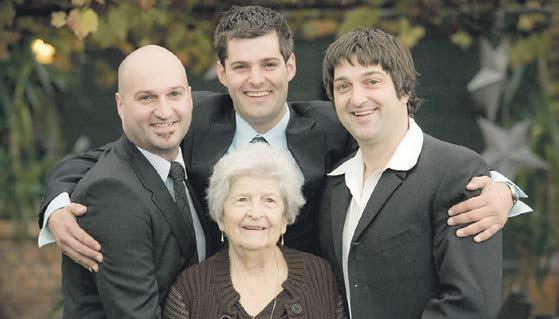
“It has been very helpful in the last couple of years. We’re up to five generations here and my kids helped pick the grapes for this award-winning wine.
“Every year, all the family is involved, the brothers, the uncles and aunties help. It’s a real family affair.”
Like many farmers, the Nooyen family’s day can start before sunrise checking conditions in the vineyard during critical growing periods.
“We’ve shared videos of getting up to see the frost, right through to videos of us all picking grapes together.
“That’s our business model, that’s how we portray ourselves and that’s worked well for the restaurant here as well because it’s a family environment.”
Jacob and his brothers, Kristian and Adam, hope the next generation will continue to help grow the business – in the vines and on the web – as they have alongside parents Nelda and Pieter.
“Hopefully some of our nieces and nephews, sons or daughters will take over one day. That’s the plan,” Jacob says.
“Well, they have to - we’ll make them.”
From Ngāhinapōuri to London, Vilagrad continues to make a name for itself and it’s only the beginning of their international journey.
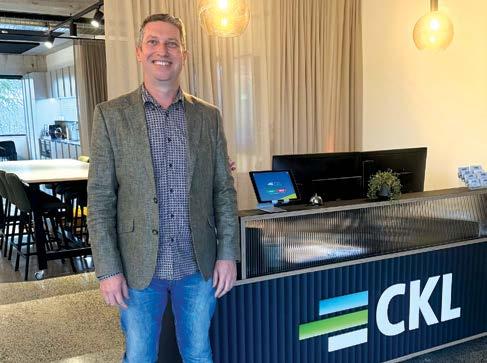
When CKL relocated its Hamilton office back to the CBD after almost 20 years in Te Rapa, it wasn’t simply a decision about premises.
According to CKL Director and Planner, Bevan Houlbrooke, it was a decision grounded in confidence: confidence in Hamilton, confidence in the CBD, and confidence in the opportunities the city is creating for businesses prepared to invest in its future.
Houlbrooke recently shared those views with around 90 members of the Waikato Chamber of Commerce at a Business After 4 event hosted by CKL in its new Hamilton CBD office.
Established in Hamilton in 1988, CKL has grown into a multidisciplinary consultancy with offices in Hamilton, Te Awamutu, Tauranga and Auckland, delivering planning, surveying, engineering and environmental services on projects throughout New Zealand. That national perspective gives the business a unique view of how cities and regions evolve, making its decision to return to Hamilton’s CBD all the more significant.
“We’d been talking about returning to the CBD for several years,” says Houlbrooke. “We wanted to be closer to our clients, councils and the wider professional community. We genuinely believed in the future of the CBD and more than anything, we wanted to be part of the conversations shaping Hamilton’s future.”
While the sale of CKL’s Church Road office accelerated the timing, the decision reflected something much bigger than a
change of address.
“Hamilton is entering one of the most significant periods of change in its history,” Houlbrooke says. “Over the next few years we’ll see planning reform, new approaches to water infrastructure, local government reorganisation and major Fast-track developments. Together, those changes will reshape how Hamilton and the wider Waikato grow.”
Those reforms won’t just affect the property sector, they will influence where investment occurs, how infrastructure is delivered and how quickly new housing, commercial developments and community facilities can be brought to life.
One of the most significant shifts, Houlbrooke says, is that many of the decisions shaping future communities will increasingly happen through long term strategic planning rather than individual consent processes.
“The biggest opportunity to influence future development will be during the strategic planning phase. Once those decisions have been made, many of the fundamentals are already locked in.”
Returning to the CBD has reinforced CKL’s belief that proximity still matters.
Since relocating, the business has experienced greater collaboration across its own team, stronger connections with clients and industry partners, and more opportunities to host professional organisations and events that contribute to conversations about the region’s future.
“Hamilton’s CBD still faces challenges, and no one would suggest otherwise,”
Houlbrooke says.
“But cities evolve. We’ve seen that throughout CKL’s history, and we’re optimistic about where Hamilton is heading. We wanted to be part of that future rather than watching it from the sidelines.”
For CKL, returning to the CBD was an investment in the future of the city that has been home to the business for almost four decades.
As Hamilton enters its next chapter, businesses, developers and landowners will all face important decisions about
growth, investment and opportunity. If you’re considering your next project, talk to the CKL team about how these changes could influence your plans. Visit www.ckl.co.nz

On 24 August 2026, New Zealand will introduce the most significant changes to the Skilled Migrant Category (SMC) residence programme in several years. While much of the public focus has been on Accredited Employer Work Visa (AEWV) settings, these residence changes may ultimately have a greater impact on both migrant workers and employers seeking to attract and retain skilled staff.
The good news is that the changes create more residence opportunities and greater flexibility. The challenge is that the system is becoming more complex, requiring both employers and migrants to better understand, and plan in advance, their long-term immigration strategy.
Until now, most skilled migrants seeking residence have relied on the SMC Points-Based Pathway, requiring six points obtained through a combination of qualifications, occupational registration, income - and New Zealand work experience. This pathway remains in place, but from 24 August it will sit alongside two new residence pathways.
The first is the Skilled Work Experience Pathway, aimed at experienced workers who may not have the qualifications or income levels to achieve the required six SMC points. The second is the Trades and Technician Pathway, designed specifically for more than 100 listed trade and technical occupations.
These additions recognise an important reality in the New Zealand labour market. Not every valued employee holds a formal qualification or earns a high salary. Experience, skills and proven contribution to the workforce are now being given greater recognition.
For employers, this is potentially very positive news. Many migrant workers who previously appeared to have no realistic residence pathway could now become eligible through one of these new options. Having a residence pathway should significantly improve staff retention, particularly in industries where recruitment and training costs are high.
The changes also improve qualification recognition. New Zealand bachelor’s degrees will now attract five points under the current system, while New Zealand master’s degrees will be worth six points in their own right. This means many international graduates
will be able to progress their residence considerably sooner than previously, further strengthening New Zealand’s competitiveness as an international education destination.
Another welcome development is the revised approach to claiming New Zealand work experience. Under the new rules, applicants can generally count work experience from the point they first met the relevant SMC wage threshold, rather than having to demonstrate ongoing wage compliance throughout the entire period. For many migrants this will make residence eligibility significantly easier than under the current policy settings
However, there are some important caveats.
All applicants must still secure suitable skilled employment, or an offer of skilled employment, with an accredited employer. English language, health, character and age requirements continue to apply. There will also be increased documentation requirements, particularly when claiming for overseas work experience under the two new categories. How jobs are classified will also become increasingly important as certain occupations will be subject to special treatment under the new policy settings. Wage thresholds, qualification recognition and work experience calculations will all need very careful consideration when determining eligibility and when to make the residence application.
For employers, the key message is simple: immigration planning should not start when an employee’s visa is close to expiring. Valued staff who were previously unlikely to qualify for residence could now become eligible after 24 August.
For migrant workers, these changes create new opportunities, but also new complexity. Understanding eligibility criteria early could make the difference between a successful residence application and a missed opportunity.
The overall direction of these changes is positive. New Zealand is maintaining high standards while providing more realistic pathways to residence for skilled workers who contribute to our economy and communities. Employers and migrant workers who take the time to understand the new rules and plan ahead will be best positioned to benefit from the opportunities these changes create. Contact your friendly Pathways team today!

By MARGARET EVANS
It’s great to hear serious thoughts arising about local government reform (as well as the general elections in November). It’s like sunshine on a new day, people waking up determined to seek change.
Let’s start where democracy is closest to the people - Localism.
So let’s insist voters vote, a legal requirement in local and national elections (as in Australia and elsewhere).
And add in NOTA (also elsewhere), a box to tick on ballot papers for ‘None Of The Above’ (also for those who argue it’s their right to ‘not vote’). And if NOTA wins, call another election.
As well, get rid of Codes of Conduct, that anti-democratic in-house punishment system beloved of lawyers. We voters will do that at the next election if mayoral chats with the naughty councillor fail. And streamline Standing Orders to confirm public expectation that mayors and chairs are ‘in charge’ (and ensure consistency with Parliament’s Speaker and Cabinet Ministers).
Minister Chris Bishop’s Head Start instructions to current councils for amalgamation proposals has an August 9 deadline, but this conversation will continue for some time as we contemplate all the governance reform cards in the Coalition Government’s hand.
So here is an emerging concept to contemplate: a new cluster regional structure that gives us one mayor per ‘neighbourhood’ of around 20,000 people (Parliamentary electorates have c70,000). That would give us around 25 mayors across the entire Waikato
region. And to bridge the gap between central and local government, regional MPs (elected and list from c120 seats) should sit at the table with the mayors.
To chair this cluster of locally elected leaders, I add in one overall elected regional mayor (called either the Lord/Lady Mayor, or perhaps Governor to reflect our Governor General’s title but with regional governing powers).
Each local mayor would chair a small local body, appointed by them or elected locally. Voluntary advisory groups, including Mana Whenua/Tangata Whenua, could provide community input.
Hundreds of elected councillors would be redundant but enabled to continue serving their communities in the new system.
History suggests we prefer neighbourhoods and strong leaders. Good leadership ensures essential services, prudent use of public funds and, above all, listening to the people.
At our “Let’s Tell Them” Forum last month, locals voiced frustration at bureaucratic barriers and rules lacking common sense. Their response was a call for stronger local leadership, innovation and accountable staff. We need deep digs into the past, and where to focus leadership for the future. All in concert, and in public, to progress as a nation. Then, the next stage of reform (for the nation), perhaps an elected senate in a bicameral House of Representatives, even a republic (reflecting Jim Bolger’s call three decades ago).
• Margaret Evans was Hamilton mayor from 1989 to 1998 and was first elected to the council in 1974.
The right audience. The right message. The right place. We specialise in advertising solutions. Our well-known publications, print and online, promote your business to an engaged audience.
Publishes the first week on every month.



Physical ads — in local newspapers build higher brand trust, are free from ad blockers, and command deeper engagement. When combined with digital marketing, they can significantly increase overall response rates.
For more information please contact Janine Davy Advertising Director 027 287 0005 janine@goodlocal.nz















By JANICE LAPWOOD
During my eight years at Momentum Waikato Community Foundation, I have had the privilege of working with hundreds of generous people.
Every donor I’ve met has a different story, but they have one thing in common – all of them want their giving to make a difference in their communities.
Which is why I believe the Government’s upcoming changes to tax rules for donations need wider discussion.
Many charities and donors may not be aware that from 1 April 2027 there will be a $100,000 annual cap on the donations eligible for a tax credit.
Currently there is no limit on the total value of donations over a year that get the 33.33% tax credit.
Whereas from April, only the first $100,000 of a donor’s gifts each year will qualify, limiting their maximum annual tax credit to $33,333.
The Government says this reform will improve fairness, reduce tax avoidance, and sustain the tax system.
My concern is its chilling effect on the philanthropy that charities and communities depend upon.
For most New Zealanders, the proposal will have little impact because their annual donations fall well below that threshold. The story is very different for major philanthropic gifts.
Someone donating $1 million now would receive a tax credit of $333,333 that year, which many then add to their initial donation. Under the new setting, that falls to $33,333.
This will not necessarily cap such generosity. Many donors are motivated by purpose, not tax benefits. However, tax policy does influence
behaviour, including whether people start donating in the first place.
Some may now spread their transformational gifts over several years to maximise the available tax credit. Others may reduce the scale of their donations altogether. Either outcome could scuttle or slow funding for important community services and projects.
Large gifts often make the difference between projects proceeding or remaining on the drawing board. They help charities expand support, respond to emergencies, or invest in long-term solutions. Delayed donations may create cashflow pressures for community organisations.
There is a rich irony in this move.
The Government increasingly encourages philanthropy, business and communities to work together to address social challenges, yet this change weakens a key decades-old incentive for major donations and may limit growth in such giving just when it is needed most.
For organisations who fundraise, now is the time to prepare. Capital campaigns and charities reliant on significant donations should review their fundraising strategies, revisit cashflow assumptions and begin conversations with major donors about how this change could influence their future giving.
New Zealand has a proud tradition of generosity, and community foundations play a key role in fostering this. The tax system should be designed to encourage a partnership between government and private citizens, to build communities together.
• Janice Lapwood is General Manager Endowments, Momentum Waikato

Following the success of this year’s inaugural Frankton McDonald’s Colour Run, organisers have confirmed the event will return on February 28 next year, with around 2,500 people expected to take part.
Created by McDonald’s franchisees PJ and Pooja Goel, the Colour Run raised over $75,000 for Ronald McDonald House in Hamilton, which provides a “home away from home” for families with children in hospital.
Held at Innes Common beside Hamilton Lake, the course welcomed walkers and runners of all ages and abilities. With no competitive element, the focus was simply on enjoyment. Participants moved through a series of stations where puffs of coloured powder added to the day’s fun. Food trucks,
music, and children’s activities all contributed to the festive atmosphere.
Nearly 20 local businesses supported the event through sponsorship, or by donating products, services, or their time.
“Their support was integral in creating an enjoyable and meaningful day,” said Pooja. The event organisation was facilitated with close input from Ronald McDonald House consultant Tammee Wilson, said Pooja, who added, “We all wanted to create something that families could enjoy doing together while ultimately helping other families whose children find themselves in hospital.”
The website for next year’s event will go live towards the end of August with details about registration and online ticket sales. Visit HamiltonColourRun. co.nz for more information.




















Decisions being made today will influence where Hamilton expands, who pays for it and how quickly it happens, reports Mary Anne Gill.
Rodney Stirling
Hamilton is entering one of the most significant periods of change in its modern history, with sweeping reforms to planning, water infrastructure and local government likely to influence where growth occurs and how it is funded.
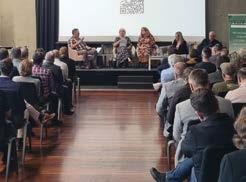
That was the message from CKL director Bevan Houlbrooke at a Waikato Chamber of Commerce Business After Four event held at the consultancy’s newly refurbished London Street offices.
While the event marked CKL’s return to Hamilton’s CBD after almost two decades in Te Rapa, Houlbrooke used the occasion to focus on the broader forces reshaping the city and wider Waikato.
Hamilton was at “the sharp end” of change, with four major reforms occurring simultaneously: the replacement of the Resource Management Act, new water service delivery models, local government reorganisation and the expansion of fast-track development approvals.
Among the most significant changes is the planned replacement of the Resource Management Act with new planning legislation aimed at simplifying development processes and improving national consistency. Under the proposed system, longterm growth and infrastructure decisions would increasingly be
the enabler or the constraint on development,” he says. “Without pipes and capacity, growth simply can’t happen.”
EXPERT CONCRETE GRINDING, POLISHING & SEALANTS /
The prospect of local government reorganisation is another major issue facing the region.

Fast-track legislation is already influencing growth patterns and could deliver about 10,000 new homes around
“These reforms aren’t isolated,” Houlbrooke says. Together they will influence where cities grow, how infrastructure is funded and how quickly development can proceed.
Our team is Consistent, Reliable, Professional & Considerate
Treatment Plant, would play a critical role in unlocking future development opportunities across Hamilton, Waikato and Waipā.


“The takeaway for this piece of reform is that water infrastructure is increasingly

Our team is Consistent, Reliable, Professional & Considerate
Our team is Consistent, Reliable, Professional & Considerate
Our team is Consistent, Reliable, Professional & Considerate



Rodney



Rodney Stirling


EXPERT CONCRETE GRINDING, POLISHING & SEALANTS / COATINGS FOR
Rodney Stirling
Rodney Stirling
Rodney Stirling







When you look beyond the numbers, what are you really looking for?
The numbers are the evidence. Curiosity investigates. Every business has a story, and I love following the clues. Sometimes I’m uncovering financial leakage, sometimes hidden opportunities, and sometimes simply connecting the dots.
What has working with different business owners taught you?
Understanding people is every bit as important as understanding the numbers. Once I understand how someone works, we build systems that work for them. I’ve seen incredibly talented people flourish once they stop trying to fit someone else’s way of working.

What do you think business owners value most in a bookkeeping relationship?
My clients often tell me they appreciate that I care for their business as though it were my own. They’re right. I’m genuinely invested in their success. Through trusted financial oversight, I steward their finances and keep them informed so they can focus on leading their business.
How do you continue to grow professionally?
Each client encourages my professional growth. Serving on the Executive Committee of the Institute of Certified New Zealand Bookkeepers immerses me in New Zealand’s most knowledgeable bookkeeping community. We thrive on collaboration over competition through professional development and sharing knowledge, technology, and practical experience, because stronger bookkeepers create stronger businesses.
How has your leadership journey shaped the way you work with clients?
The leaders who’ve influenced me most have led with humility, respect, and self-compassion. They created environments where people felt safe to ask questions continue learning and play to their strengths. That’s the environment I strive to create for my clients.




Did you have any mentors throughout your career and how did they influence you?
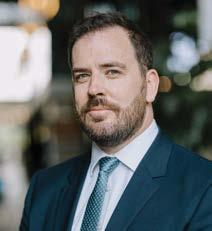
My supervising partner at the first firm I worked at introduced me to litigation and in particular construction law, which I didn’t even know was a thing at university! He also talked to me about the realities of partnership and how a law firm operates, which has been invaluable information as it is often not spoken about.
What was your first job?
I worked multiple summers in a vineyard throughout university. It was hard, physical work, but also a lot of fun and funnily enough, having that on my CV was a big factor in being offered my first job in law! Working in a vineyard prepared me for working in law in a number of ways. Firstly, it helped to develop a good work ethic. It also showed the importance of team work and working with a variety of different personalities – something that is important when it comes to working in an office environment and dealing with clients as no two are the same.
Throughout your career what was a highlight for you?
There have been a couple of highlights that stand out. I was lucky enough to be involved from the very start in a case that went all the way to the Supreme Court. It was incredible

to see the process the whole way through. Even more so when our losses in the High Court and Court of Appeal were ultimately overturned by the Supreme Court. I was also lucky enough to attend the Litigation Skills Course last year thanks to Braun Bond and Lomas.
What do you believe contributes to your success?
Definitely the people around me. Having supportive family and friends is incredibly important. However, the biggest thing I have found that contributes to my success is working alongside driven, talented people. It’s much easier to do good work when you enjoy what you do and who you do it with.









What is the most interesting part of your work?
The stories. Every client has a different problem they’re trying to solve and no two cases are ever the same. One day I might be in Court and the next I am meeting with a client to work out the best way forward. The variety keeps the job interesting and challenging. I like that I can delve really deeply into the specific matter and you often end up becoming an expert in a particular area within construction or relationship property. It is challenging and never boring!
What support do you have to help you be successful?
I am lucky that I have a supportive husband and family. We have two
children, aged three and five, and having people around us who are willing to help when work gets busy makes it possible to juggle a career and raising a young family. I’m also fortunate to work with a great team at Braun Bond & Lomas, where flexibility and work life balance is valued and everyone is supportive of one another.
Where did you study and what degrees do you hold?
I studied at Victoria University of Wellington, where I completed a Bachelor of Laws and a Bachelor of Arts, majoring in Public Policy and International Relations. I enjoyed studying subjects that looked at how law, government and society interact, and I think that broader perspective has been valuable in my career.
What goals have you set for yourself?
I’d like to continue building my litigation practice and establishing myself in Hamilton. My family and I recently moved back to my hometown after several years away, so it’s been great reconnecting with the Waikato community. I am enjoying getting involved through networking and involvement with local community organisations, and I look forward to continuing to build those relationships and contribute where I can over the coming years.

What was your first job?
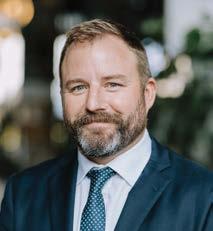
My first job was working at a thoroughbred racing stable. It was a demanding introduction to the workforce. It taught me discipline, resilience, and the value of hard work, often before most people were even awake.
Throughout your career, what has been a highlight for you?
The highlights that stand out most are the moments when a client achieves a positive outcome or is finally able to move on from a stressful and often deeply personal dispute. Litigation can be challenging for those going through it, so being able to help clients navigate uncertainty and reach a resolution is incredibly rewarding. Their reactions are all different, but each one is a powerful reminder of why I chose this profession.
If you could change anything from the past, what would it be?
Like most people, I can look back on plenty of decisions, mistakes and missed opportunities and wonder what I might have done differently. But I genuinely believe those experiences, both the successes and the setbacks, shape who I have become. I feel incredibly fortunate to be where I am today, and that journey has been a combination of hard work,

invaluable support from others, a little good luck, and a willingness to learn from mistakes. Looking back, I wouldn’t change much because every experience has contributed in some way to where I am now.
What did you want to be when you were at school?
For a brief period, I thought I wanted to be a veterinarian. I can’t say that from a young age I knew I wanted to be a litigator. I studied philosophy and political science before deciding to pursue law. In hindsight, that combination of studies was excellent preparation for a career in litigation, where critical thinking, problemsolving and understanding different perspectives are essential every day.

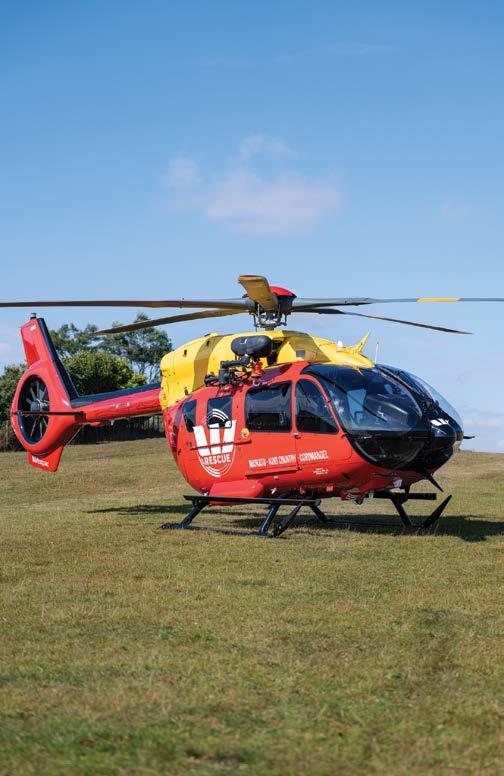
I’m usually across several campaigns at once - an eDM being drafted here, a donor stewardship plan being reviewed there, a meeting about a new corporate partnership in between. A lot of what I do sits at the intersection of storytelling, strategy, and relationship management. I spend more time than people might expect thinking about what a donor feels when they read something we have sent - and whether that feeling is the right one.
Did you have any mentors throughout your career and how did


they influence your decisions?
I’ve learned a lot from the people we fundraise for: the crew, the patients and families. They remind you what’s at stake in a way no strategy document can.
What support do you have to help you be successful?
Our team is small but exceptionally capable. But the most important support we have is the trust of our donor community.
What goals have you set for yourself?
I want to build a corporate giving programme that feels less like an annual ask and more like an ongoing partnership. The businesses in our region have so much to offer beyond a donation - connections, expertise, visibility, advocacy. I’d love to see more of that energy channelled toward the service.
When did you know this was the career you wanted?
The moment I realised that good writing could change someone’s mind, and that changing minds could change outcomes. In fundraising, those two things converge constantly. It’s a rare kind of work, and I love it!

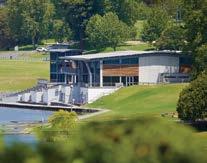
How long have you been in business and what do you think drives your success?
I’ve been involved in event management and venue operations for more than 22 years, managing one of New Zealand’s premier sporting and recreation venues, Karāpiro Lake Domain. During that time, I’ve had the privilege of working with world-class sporting events, community organisations, local businesses, volunteers and visitors from around the globe.
What drives my success is simple— people. Every event is about creating an experience that leaves a lasting impression, whether it’s a world championship, a family camping holiday, or a local community gathering. I genuinely enjoy bringing people together and finding practical solutions that help organisations achieve their goals.
I also believe success comes from being prepared to roll up your sleeves. No two days are ever the same, and I’m just as happy helping with operational challenges on the ground as I am working on long-term planning, strategy and partnerships. Building strong relationships, being reliable and always delivering on commitments has earned

the trust of clients, stakeholders and the wider community.
Alongside my business, I’ve spent many years serving in local government, which has strengthened my understanding of leadership, governance and the importance of balancing economic growth with community wellbeing. After more than two decades, I still enjoy the challenge. Seeing an event come together successfully, watching people create lasting memories, and knowing you’ve contributed to your community is incredibly rewarding. That’s what continues to motivate me every day.













What is the most interesting part of your work/business day?
It’s definitely the people. Every customer has a different story and every day is completely different. One person might be buying flowers, another is searching for the perfect gift, while someone else needs to thank a client or celebrate a milestone. I love that The Flower Crate has become a place where people come to browse, be inspired and hopefully leave with something they didn’t even know they were looking for.
How long have you been in business and what drives your success?
I took over The Flower Crate in March 2020, so we’ve just celebrated six years. Looking back, I think what drives us is keeping things genuine. We’ve created a shop that feels welcoming, smells amazing and offers something for almost everyone. We’re always evolving, always looking for beautiful products and local makers to bring into the shop, and we never lose sight of the experience we want people to have when they walk through the door.
What is the most challenging thing about your work?
Probably trying to wear all the hats! Running a small business means no two days are the same, but that’s also what I enjoy most. While I’m often the one steering the ship, I’m incredibly lucky to have a fantastic team. Phoebe
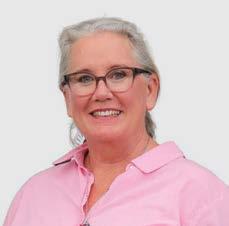
Alex Bedford, Owner / Director
and Sam are a huge part of what makes The Flower Crate what it is. They keep me grounded, keep things moving and make the impossible look easy.
What is a usual day for you at your business?
There’s no such thing as “usual”, and I wouldn’t have it any other way. You’ll find me working alongside the team, sourcing new products, chatting with customers, helping local businesses with thoughtful gifting or simply making sure the shop feels just as welcoming at 4pm as it did when we opened the doors that morning. Thank you for coming along for the journey.


By JOSH MOORE
When someone mentions TOFu, MOFu and BOFu in a marketing meeting, you could assume you’d accidentally wandered into a nutrition seminar. What does tofu have to do with SEO, Ai and getting more customers? As it turns out, quite a lot.
TOFu (Top of Funnel), MOFu (Middle of Funnel) and BOFu (Bottom of Funnel) describe the stages customers move through on their journey from problem awareness to purchase. For years, SEO strategies focused heavily on TOFu content because that’s where the traffic was. Today, Ai is changing the recipe.
At the top of the funnel, users ask broad questions like “How do I improve workplace safety?” or “What’s the best CRM for a small business?” Increasingly, they are asking ChatGPT, Copilot, Gemini or Google’s Ai Overviews instead of clicking through search results.
This means TOFu content still matters, but its purpose has changed. You’re no longer writing solely to attract visitors. You’re also writing to become a source that Ai systems reference and trust. High-quality educational content, original insights, unique data and genuine expertise all increase the likelihood that Ai platforms will surface your information in their answers.
The reality, however, is that even if Ai cites your brand, you may not receive the same volume of clicks that traditional search once delivered. Businesses need to adjust expectations accordingly. TOFu content is increasingly about brand visibility and authority rather than direct website traffic.
In the middle of the funnel, prospects are evaluating options. They know
they have a problem and are comparing solutions. This is where comparison pages, case studies, buyer guides and detailed service explanations shine. Ai may help users discover possibilities, but people still conduct research before making decisions, especially for higher-value purchases.
The biggest opportunity lies at the bottom of the funnel.
BOFu content targets users who are close to converting and are asking highly specific questions. Examples include:
• How much does it cost?
• How long does implementation take?
• What areas do you service?
• Do you offer financing?
• How does your solution compare with a specific competitor?
These aren’t necessarily long articles. Often, simple and direct answers work best. Dedicated FAQ pages, pricing information, process explanations and service-specific landing pages help remove friction from the buying decision.
As Ai increasingly serves TOFu answers, many businesses may find their best SEO returns come from owning the conversion stage. The future isn’t about publishing endless informational blog posts. It’s about creating trustworthy content that Ai can reference at the top of the funnel while ensuring your website excels at answering the questions customers ask right before they buy.
Or, to put it another way: TOFu gets people thinking, but BOFu gets them eating.
• Josh Moore is the Managing Director of Hamilton-based digital marketing agency Duoplus.
Whether you’re welcoming new homeowners, thanking valued clients, recognising your team, or celebrating milestones, The Flower Crate makes corporate gifting simple, thoughtful and memorable. Contact our team for bespoke solutions to suit your business requirements. We can help with:
• Client settlement gifts
• Thank you gifts
• Staff recognition & celebrations
• Sympathy & bereavement flowers
• New baby & milestone gifts
• Curated gift boxes
• No Vase Needed bouquets
• Gifts for one (or 100)
Locally curated. Beautifully presented. Delivered throughout Hamilton The Flower Crate



1/394 Grey St (Lovegrove Lane), Hamilton East, 3216 | 07 856 6416 www.theflowercrate.co.nz | hello@theflowercrate.co.nz
New Zealand Thoroughbred Racing, Harness Racing New Zealand and TAB NZ have unveiled Project Stamina, a long-term strategy to reshape the country’s racing infrastructure. The plan recommends concentrating investment into fewer, higher-quality venues to improve sustainability, wagering performance and racing quality, while extensive consultation will continue before any final venue decisions are made.
Several Waikato projects have secured funding through the National Emergency Management Agency’s 2026/27 Resilience Fund. Successful initiatives include the Waikato Resilience Video Series, Waikato CDEM’s Power Out, Plan On campaign, an iwi emergency preparedness project led by Ngāti Tamaterā, and a programme addressing family violence risks following emergencies. Together they aim to strengthen community resilience and preparedness for severe weather events.
Melissa Williams, national growth and business development lead at H3 Group, has joined the board of Business Events Industry Aotearoa, the national body
representing New Zealand’s business events sector. Williams says she hopes to contribute to industry advocacy and growth while highlighting Waikato’s role in the sector.
Construction of Waikato University’s Health
Precinct has reached a major milestone with completion of the groundfloor slab for the future New Zealand Graduate School of Medicine. The four-storey facility will house medicine, nursing, midwifery and pharmacy students and feature advanced teaching and simulation spaces before opening for medical students in 2028.
Aotearoa has been launched to connect and support the next generation of organic farmers and growers. A sold-out event at Monavale Blueberries near Cambridge highlighted strong demand for networking, advocacy and knowledge sharing. The group aims to champion chemical-free food production while giving young people a stronger voice in New Zealand agriculture.
Connexis’ Girls with Hi-Vis programme is introducing more young women to
careers in infrastructure.
More than 800 students from over 80 schools attended events nationwide this year, gaining handson experience and meeting employers. Female participation in Connexis training programmes has doubled over the past decade, helping address skills shortages across the sector.
Hamilton’s Central Library has opened Te Paataka, an interactive Māori art installation celebrating local stories and connections to the land. Located within Te Kōpū Mānia o Kirikiriroa, the welcoming space is designed to deepen understanding of local narratives while enhancing visitors’ experience at one of the city’s most popular community hubs.
New Zealand Thoroughbred Racing chairman Russell Warwick will step down from the role this month and resign as a director following the organisation’s AGM in November. Warwick said increased demands on the board, combined with his responsibilities at Westbury Stud, prompted the decision. He leaves after helping oversee a significant period of reform across the racing industry.
Despite the pressures facing HR teams, 2026 benchmark data highlight several strong opportunities for New Zealand organisations to strengthen capability, improve productivity, and unlock greater strategic value from HR functions. These opportunities reflect both emerging workforce trends and areas where New Zealand organisations already show promising momentum.
1. Strengthening Workforce Capability
Through Targeted Upskilling
Upskilling, cross skilling, and reskilling remain the number one organisational challenge, but also one of the clearest opportunities for change. With about 90 per cent of HR leaders expecting workforce growth and turnover decreasing for the first time in four years, organisations have a window to invest in capability building that supports retention and future readiness. AI enabled skills mapping and capability diagnostics are already delivering tangible benefits for 40 per cent of HR teams, according to an annual HR Industry Benchmark report released by ELMO – its seventh to date – which offers a scalable pathway to identify gaps and build targeted development plans.
2. Deepening AI Adoption for Strategic Impact
New Zealand has broad AI adoption but shallow usage depth. This presents a significant opportunity in shifting AI from operational efficiency to strategic value. HR teams can focus on embedding AI into high impact workflows such as

performance and development support (identified as the top future opportunity by 42 per cent of HR leaders) and workforce forecasting (41 per cent). Organisations that invest in capability building, workflow redesign, and leadership modelling of AI use will be best positioned to close the readiness–effectiveness gap.
3. Building a Unified HR Data Foundation
Only 18 per cent of organisations operate from a fully centralised HR–payroll–workforce platform, and 36 per cent still rely on manual processes

to gather HR metrics. Consolidating systems represents one of the most powerful opportunities for HR to improve accuracy, reduce administrative burden, and enable predictive analytics. A unified data foundation also strengthens HR’s ability to demonstrate measurable links between workforce outcomes and business performance - a top strategic blocker for 40 per cent of organisations.
4. Enhancing Employee Engagement and Retention
Employee engagement and satisfaction rank as a top priority for 2026, reflecting ongoing concerns about new hire
turnover. Faster time to productivity (now under four weeks for most new hires) shows onboarding improvements, but organisations can further leverage technology enabled onboarding, structured development pathways, and AI supported performance management to strengthen connection and retention in the critical early months.
5. Leveraging Data Driven HR Reporting and Analytics
HR reporting and analytics is the number one organisational priority (34 per cent), signalling a shift toward evidence based decision making. With AI increasingly capable of turning data into insights, HR teams have an opportunity to build stronger business cases, improve workforce planning, and provide leadership with clearer, more actionable metrics. Organisations that invest in analytics capability and clarity around value add metrics will gain a competitive advantage in both productivity and strategic influence.
6. Responsible AI and Ethical Workforce Practices
New Zealand organisations show heightened awareness of AI fairness and bias concerns compared to Australia. This creates an opportunity for HR to lead responsible AI governance through establishing clear guidelines, training employees, and ensuring transparency in AI supported decisions. Ethical AI practices strengthen trust, support adoption, and position HR as a steward of safe and equitable workforce technology.




Change ahead – Waikato is entering a period of unprecedented change, CKL director Bevan Houlbrooke told guests at the Waikato Chamber BA4 last month at the company’s new offices in London Street. Photos:
and Mary Anne Gill
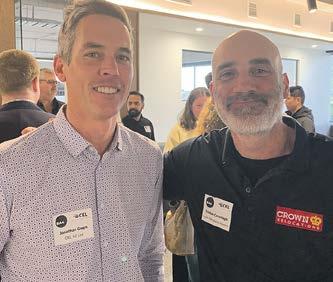
Relocations
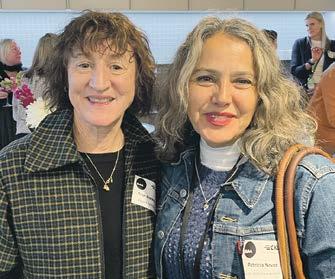
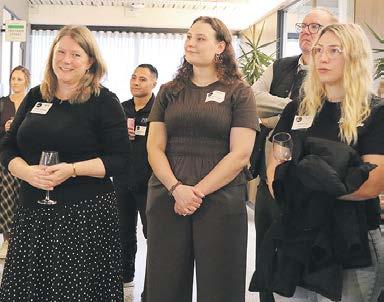
Moyes
was busy serving drinks.
Bringing together – An exclusive Waikato Chamber event in Te Rapa, brought local business leaders, government, and workforce partners together to explore practical solutions to today’s employment challenges where they heard from Louise Upston, Minister for Social Development and Employment, and Tracey Smith, Regional Commissioner for the Ministry of Social Development. Photos: Mary Anne Gill
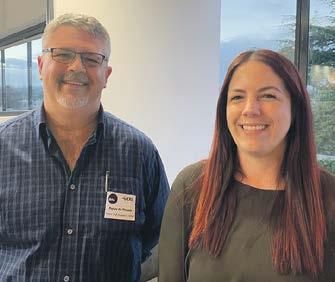
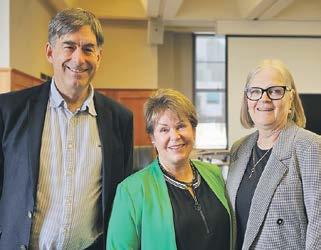
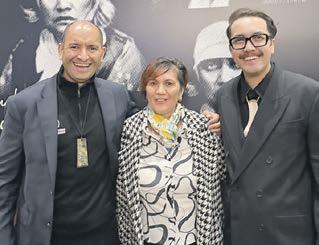
More than 1000 students from Cambridge and Te Awamutu visited the Community Careers Expo held in Cambridge Town Hall last month where 45 providers and universities discussed career options.
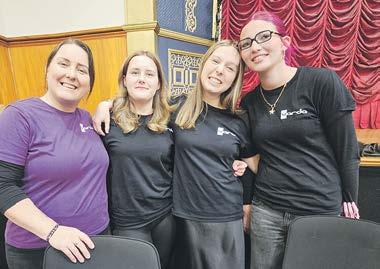
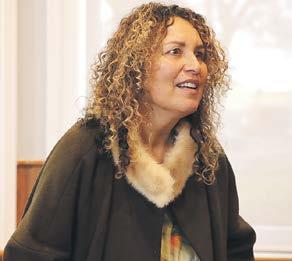
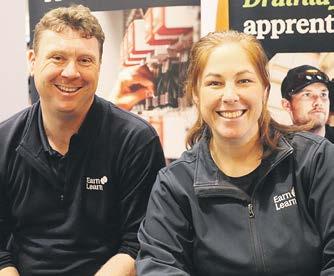



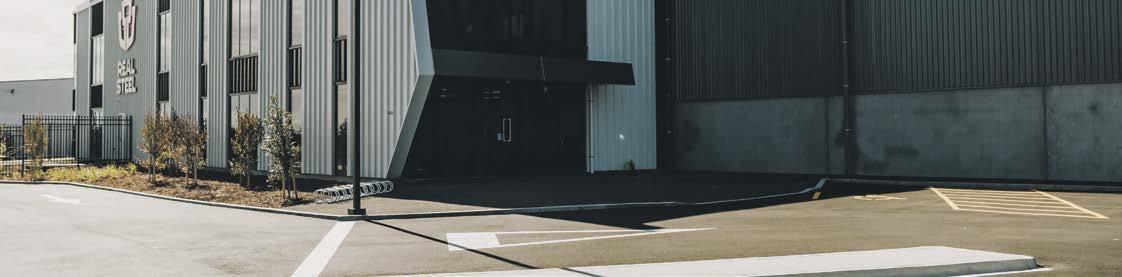


Designed for optimum workflow, efficiency and sustainability, Real Steel Hautapu is a purpose-built steel plate manufacturing plant. The building is constructed to house some of the largest and latest steel processing machinery in New Zealand, supporting both expansion of the business and the centralisation of operations in Cambridge.
Real Steel Managing Director Luke Mathieson said that Fosters was initially chosen as the lead contractor on the design and build project because of an “upfront approach” alongside a competitive offer.
“I also liked the fact that I was working with Fosters shareholders,” said Luke. “That gave me confidence.”
He notes that Fosters lived up to reputation – offering plenty of extra value throughout the duration of the build.
“Our factory required significant foundation works for our machinery, and Fosters engineered highly efficient solutions. In fact, they made several recommendations on construction methods to create better outcomes.”
A key feature of the project was the construction of significant press foundations, requiring deep excavations approximately three metres below ground level. These foundations incorporate suspended 3.5-tonne steel plates within the concrete structure to support high-load machinery and operational performance. The project
I liked the fact that I was working with Fosters’ shareholders. That gave me confidence.
Luke
Mathieson Managing Director Real Steel
also involved coordination of specialist industrial services and integration of heavy equipment requirements (including six gantry cranes) within the wider building design.
Begun in August 2025, the 7,700m² building, along with 4,000m² yard, carpark and a two-storey office area was handed over in April 2026.
“Fosters’ site management, communication and delivery were top notch,” said Luke. “They delivered the project in nine months – from digging dirt. It was exactly on time and on budget, and the quality of the build is amazing.
“Fosters’ handling of this project, from start to finish, was impressive.”
#BuiltByFosters