

Council restructures
By Michelle Lachmann
Waipā District Council has launched a significant restructure as the organisation and councillors grapple with the district’s ongoing growth pressures.
Council chief executive Steph O’Sullivan told The News two staff would leave their council jobs, effective from July 1, 2026, following a restructure that was on-going and part of a fourphase transformation.
One of the council’s longest serving staff members, Wayne Allan, confirmed his departure from council, with a message on LinkedIn.
“While this marks a change I hadn’t anticipated, I remain grateful for the time I’ve had at council and for the opportunity to work alongside so many dedicated colleagues,” he wrote. “While this chapter is coming to a close, I leave with enormous respect for the people I’ve worked alongside and confidence in the ongoing work of the organisation.
O’Sullivan said that in total, six council jobs had been disestablished so far, while three new roles had been established under the restructure, which was part of a transformation called Future Us.
“While you’re going through a change process, it adds additional pressure. Two people are leaving the organisation so it’s a significant change,” she said.
The council will also be hiring a new chief financial officer. Acting chief financial officer James
Graham, had been appointed Waikato Waters chief executive.
Future Us will also include a review of Waipā Civil Defence Emergency Management (CDEM) capacity and capability.
The restructuring of council roles is expected to finish between August and October this year, depending on how long it takes to fill new positions. The remaining phases of Future Us are building leadership and capability, which could take up to 18 months.
Waipā Mayor Mike Pettit told The News that while more council jobs could be affected by the restructure, it was about making the council organisation fit-forpurpose.
“Restructures are hard on everyone. Unfortunately, there are often difficult conversations to have. And at the end of the day, we must have a Waipā District Council that’s fit for purpose to achieve good outcomes for the community,” Pettit said.
“If you take a continuous improvement approach you should always strive to improve and this is part of that - this is the start of a new structure that’s fit for purpose,” he told The News.
O’Sullivan said the new council executive leadership structure had been reduced from a sevengroup framework down to five: growth, strategy and planning, community delivery, strategic Māori partnerships, customer and business services, and finance and commercial. Each group would be led by a director.
Waipā had changed significantly



in the past 15 years, along with the environment it operated in, she said.
“We’re seeing sustained growth, increasing expectations from our communities, and tighter financial constraints.”
The Future Us transformation was designed to make the council fit for the future, to deliver community outcomes, while operating in a volatile and challenging environment locally, nationally and internationally, which many sectors were also facing, O’Sullivan said.
Ahead of the start of the restructure, there had been more than 55 meetings with external stakeholders and more than 50 interviews with staff and elected members, O’Sullivan said.
Challenges around increasing workloads and tight deadlines for Waipā councillors and district council staff also came up at this


week’s Strategic Planning and Policy Committee meeting.
Strategic Planning and Policy Committee chair Mike Montgomerie acknowledged the workload and tight deadlines of both councillors and staff, in response to a concern that councillors only had a few days to read and consider council work on Cambridge Connections - a council project investigating solutions to the district’s traffic woes.
Councillor Roger Gordon said councillors did not have enough time to read and consider council staff’s work on traffic challenges and possible solutions, ahead of a public-excluded workshop to whittle down a list of ideas, assessed against multiple criteria.
Montgomerie acknowledged councillors’ workload and tight deadlines but said it couldn’t be helped. The workshop was designed to be interactive, and a


staff report on the matter could not be made available any earlier.
“There are a limited number of staff all working on the same issues councillors are trying to deal with,” Montgomerie said.
“This year we have three massive pieces of work all at the same time - the annual plan, long-term plan and Cambridge Connections - and it’s a lot of the same staff working on these things,” he told The News.
The district council was a relatively small organisation, with the same group of people handling work on many challenging issues facing the district, he said.
“There is tension between some governance expectations and around the timing of material delivered,” Montgomerie told The News.
However, that was the side effect of running a lean, efficient organisation that dealt with multiple big issues, he said.

Steph O’Sullivan
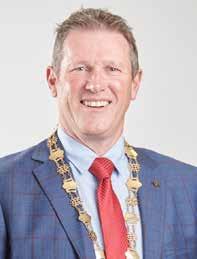
Mike Pettit
Mike Montgomerie


Business confidence tested
By Mary Anne Gill
Strong regional confidence is being tested by mounting global uncertainty, and the conflict involving Iran is casting a shadow over what had been shaping as an economic comeback.
The latest Waikato Business News leads with Reserve Bank Governor Anna Breman’s Waikato visit, where she reinforced the importance of looking beyond national averages to understand what is happening on the ground. Her visits with manufacturers, hospitality operators and Waipā farmers highlighted regions balancing rising costs with continued investment and adaptation.
The front-page lead in Bay of Plenty Business News reports that a major business confidence survey of Western Bay of Plenty firms - completed just days before the outbreak of the conflict - showed businesses entering the year with optimism, solid fundamentals and a willingness to invest.
More than three-quarters of respondents were confident about their own prospects



editor@goodlocal.nz
maryanne@goodlocal.nz
viv@goodlocal.nz
janine@goodlocal.nz
admin@goodlocal.nz

and the local economy. Confidence in regional conditions outstripped views of the national outlook. But escalating global tensions, supply chain risk and energy price volatility are clouding that picture.
A strong theme of resilience runs across both papers. Hamilton’s first youth council in seven years was welcomed as a sign of civic renewal.
Productivity, responsible use of AI and leadership anchored in learning feature prominently, from Morgan Clearkin’s work at KPMG to stories of lifelong learners and sector leaders embracing change.
There is also reflection, with tributes marking the contribution of the late Waipā mayor and Waikato Regional Council chair Alan Livingston and a farewell to Waikato advertising stalwart Judy Coulter as she steps into retirement.
Rounding out both editions are the popular Out and About pages, capturing business breakfasts, award nights, community events and familiar faces spotted across the region - proof that even in uncertain times, people are still turning up,
Neighbourly advice
First up this week, a fresh reminder that you can never know what is going on with other drivers on the road.
Strategic Traffic staff recently stopped a driver for speeding in a 50kph zone in Leamington at 2pm on a weekday. Breath alcohol procedures were carried out, and the driver returned a result over three times the legal limit. The driver is facing court charges accordingly. In Te Awamutu, last Friday afternoon another driver was stopped on State Highway 3 due to excess speed. The driver is similarly facing charges after they returned a breath alcohol reading twice the legal limit.
Such situations are a reason to drive defensively, always being aware of your surroundings, potential hazards and the behaviour of others. Anyone driving under the influence of alcohol or drugs poses a significant risk to other road users. They will not have the same driving control or reaction times as they would have sober. They may display inconsistent driving speeds, tailgating, random braking, weaving in their lane and crossing the fog and centre lines or simply fail to follow the road line causing them to crash. If you see dangerous driving behaviour, call 111 and provide regular updates.
As a Community Liaison Officer, I get assigned a wide range of files requiring investigation and intervention. My current

caseload includes reports involving “neighbours at war”.

In my experience, most of these situations stem from disputes over boundaries, access rights, or disagreements about hedges and trees. Such matters are civil rather than criminal in nature, and many are preventable with early, calm negotiation.
To reduce the risk of escalation, start by getting clear on the actual issue. Focus on facts rather than assumptions, and identify a preferred, but realistic outcome.
Keeping a simple record of dates, times, and the nature of the behaviour can help clarify the situation and ensure it isn’t being overstated. In many cases, escalation is not one-sided so consider how your actions may have been affecting the situation. If you decide to approach your neighbour, try not to catch them off guard.
A calm, respectful conversation at the right time and place, gives you the best chance of resolving the issue before it becomes something bigger.
If despite your best efforts, things do not improve, it may be time to involve outside agencies, for example Waipa District Council for boundary queries, noise complaints or other issues such as illegal parking, dogs barking or pollution. If escalation occurs to the point of harm to person or damage to property, call 111.

connecting and getting on with it.
The two business publications are part of Good Local Media’s stable which also includes community and farming newspapers in King Country, Te Awamutu and Cambridge.
• See From policy to paddocks, Page 11


Web statistics
Our Briefs column was the top news story on our teawamutunews.nz website last month.
The story contained tributes to former Waipā mayor Alan Livingston and follow ups to the State of Emergency declared after Cyclone Vaianu which happened after The News went to press.
Our home and e-Editions pages – with full pdf versions of the newspaper – came in first and second overall.
The Anzac Day coverage from Te Awamutu and Kihikihi was second in the news list followed by the story of Thomas Wrightson, who loves lifts and lift engineering, the death of former mayor Alan Livingston, our front page coverage on Waipā’s water worries at the Te Tahi rural water reservoir and photos from Livingston’s memorial service rounded out the top six.


In the News
Strong regional confidence is being tested by mounting global uncertainty, with the conflict involving Iran casting a shadow over what had been shaping as an economic comeback. In this month’s Waikato Business News Reserve Bank Governor Anna Breman reinforces the importance of looking beyond national averages to understand what is happening on the ground. Sister paper Bay of Plenty Business News lead with results of a business confidence survey of Western Bay of Plenty firms.
Gorge opens
Convoys of vehicles are being allowed through a single lane of the storm-hit Awakino Gorge, restoring the most direct link from Waikato to Taranaki. Waka Kotahi is allowing vehicles a total of nine five half hour windows to get through the gorge north and south.
Council stays put
Waikato regional councillors have rejected a call to withdraw for local Government New Zealand, A notice of motion from councillor Noel Smith, seconded by Chris Hughes, called for the end of the council’s $91,500 membership – but only Waipā-King Country councillor Garry Reymer voted with them. In favour of staying were Robbie Cookson, Mich’eal Downard, Ben Dunbar-Smith, Keith Holmes, Kataraina Hodge, Warren Maher, Gary McGuire, Jennifer Nickel, Liz Stolwyk and Angela Strange.
Happy birthday
Te Awamutu Regent Theatre operations manager Lindenberg “Linden”
Gomes celebrated his 45th birthday surrounded by the community on Sunday afternoon. A packed Cinema
One of Gomes’ “new and old friends” watched the 1984 movie Indiana Jones and the Temple of Doom at the regent. The event was dedicated to former Waipā District mayor and Allan Webb Theatre Trust chair Alan Livingston who died suddenly last month.
Rubbing out the taggers
By Jesse Wood
Te Awamutu people want to keep their town beautiful.
After the resurrection of Keep Te Awamutu Beautiful, and consultation with building landlords, the first group project work was carried out last month.
Group members, including Alexandra Images and Varntige staff, took to the streets to paint over graffiti.
The tag busting team firstly covered the markings on the back and front of the Go NZ variety gift store in the Newton King building, before the tagging on the Mr Kim’s Sushi and Don premises on Redoubt St.
Many hands made light work, and the selected jobs were done in no time.
Convenor Paula Walsh said the work aims to keep the town a place people are proud to live in and are excited to visit.
“Following this, we also painted the Postie building on Saturday. To futureproof, we’re giving all business owners a pail of paint so they can paint the graffiti themselves if it reappears.
“We don’t want graffiti to take over again and we really think everyone needs to be responsible.”
Walsh hopes all residents and building owners will play a part where they can.
“It went really well, it’s great to be part of a group helping keep Te Awamutu looking sharp and standing proud,” Alexandra Images director, sign writer and graphic designer Ethan Moir said.
“It means a lot to volunteer for a hard-
working, busy town like ours and we’d encourage others to get involved.
“It’s something we all have a part to play in, including those responsible for maintaining our public spaces, buildings and businesses.”
Virtual Assistant firm Varntige’s staff mucked in as part of their annual community day.
One day every year, they close their doors and gift time to a local organisation or charity.
“It felt good to get stuck in and be able to see the results.
I think we will definitely be more aware of graffiti around town now,” Varntige founder and managing director Chantelle Good said.
“I plan to get in touch with Paula and give back some
more time - it was enjoyable.
“We often go all over the place for our community days and hadn’t been in our own town for the last two years.
“We wanted to pick a Te Awamutu-based organisation this year. It sounded like a project we could get stuck into, see visible results and help out in our own town.”

Pirongia brigade stalwart mourned
By Jesse Wood
Longtime Pirongia Rural Fire brigade member John Lawrence Kelly has died three days short of his 80th birthday.
Kelly, who died on April 26, John was a firefighter from July 1998 to April 2004 and then a brigade support member from December 2013 to March 2022.
A celebration of his life was held on Tuesday at the Pirongia Community Centre Church.
He was remembered as a much-loved husband of Rachel (Kay), friend, and member of the community.
He was well known for his passion for vintage cars and machinery and his work included driving for McFalls and bus driving.
Former Te Awamutu Community Board hair Gary Derbyshire described Kelly as a pleasure to work alongside - “full of engineering knowledge and proud of his collection”.
Pirongia chief fire officer Roan Gouws spoke of an “awesome guy”.
“He was always at the station, never too shy to grab a broom and tidy up. He always made sure things were in their place,” Gouws said.
“What always stands out to me

about him as he was really into the social side. He loved sitting down, having a beer with the crew and reminiscing about the old days.
“He really saw the brigade as an extension of his family – and so do we.
“He was an all-round nice person. He stepped away from the brigade a couple of years or so prior to his passing, but we still invited him to our brigade dinners and then he would always turn up.
“He was a dependable guy and he’s going to be sorely missed. He was always smiling and never had a negative thing to say. He was happy-go-lucky and genuine.”

Funeral Director: Jim Goddin
John Kelly had a passion for machinery.
The clean-up brigade included John Hardcastle, Angie Barrowcliffe, Ethan Moir, Caroline Jones, Jo Douch, Chantelle Good, Rebecca Burgess and Daryl-Lynn Wilken.
Photo: Jesse Wood
YOUR WAIPĀ NETWORKS DISCOUNT IS COMING
Waipā Networks customers will receive their next electricity discount this month, with credits automatically applied to eligible power accounts.
The discount is paid twice a year and is one way that customers can share in the benefits of local ownership. Waipā Networks is wholly owned by Waipā Networks Trust on behalf of local electricity customers, so value generated through the network stays connected to the people and communities it serves.
Approximately $3 million, including GST, will be returned to customers in this round of discounts. The average discount per eligible property is approximately $120, including GST. Total discounts for the 2025/26 financial year are around $6.5 million, including GST.
Customers don’t need to apply for their discount. If a property was connected to the Waipā Networks electricity network and registered with an electricity retailer on 23 April 2026, the discount will be applied automatically.
Waipā Networks Trust Chair Sarah Matthews says the discounts are a practical example of local ownership delivering value for customers.
“The Trust owns Waipā Networks on behalf of customers and represents their interests. These discounts are one way the benefits of local ownership are returned to customers, while Waipā Networks continues investing in a reliable network for the future.”

HOW THE DISCOUNT WORKS
The discount is applied per eligible property. In the electricity sector, each connection point is known as an Installation Control Point, or ICP. The amount varies depending on the property’s electricity use and pricing plan during the qualifying period.
Customers with more than one eligible property will receive a discount for each one. If someone has recently moved, the discount may reflect electricity used at the property earlier in the period, for example, by a previous tenant.
Waipā Networks Chief Executive, Damien Whiffen, says the discount is part of a broader commitment to delivering value while continuing to invest in the local network.
“Our focus is on making sure customers see the benefits of local ownership now, while we keep planning and investing in the network needed to enable growth, resilience and future electricity needs across Waipā.”

HOW WILL I KNOW IF I’VE RECEIVED THE DISCOUNT?
Waipā Networks is the local lines company that owns and maintains the electricity network across the district. Electricity retailers manage customer accounts and bills, so the discount appears as a credit through each customer’s retailer.
Discounts are credited to retailers on or shortly after 23 April 2026, depending on billing cycles. Customers should see the credit on their bill in April or May 2026, usually labelled “Waipā Networks Discount” or similar.
If customers have questions about how the credit appears on their bill, their electricity retailer is the best first point of contact.
Waipā Networks pays customer discounts twice a year, based on electricity usage and pricing during 1 April to 30 September, paid in October, and 1 October to 31 March, paid in April.
Customers who want to understand how discounts are calculated can find Waipā Networks’ discount methodology and further information by scanning the QR code, or at: waipanetworks.co.nz/ about/document-library/ disclosure/customer-discounts/
Alexander’s story Council talks water change
By Michelle Lachmann
Waipā residents’ water services came under scrutiny last week ahead of their transfer to Waikato Waters, at a Waipa District Council meeting last week.
Away from the meeting, the organisation representing the Hauraki, Matamata Piako, Ōtorohanga, South Waikato, Taupō, Waipā and Waitomo districts, has set up its head office - in Hamilton.
The Post-Completion Transition Service agreements between Waikato Waters, the country’s largest joint water services councilcontrolled organisation, and Waipā District Council were approved last Friday.
Councillors agreed to enter into transition service agreements at the meeting, meaning the district council would receive more than $1.2 million a year to provide services on behalf of Waikato Waters.
The transition services Waipā District Council will provide to Waikato Waters start on July 1, the transfer date, and can continue for
up to three years. Under three service orders, the district council will receive $562,514 a year for billing, $633,244 for customer service and $60,000 for development contributions, excluding GST. In addition, it will collect $50 per household per activity for standard residential developments and $125 per household per activity for non-standard residential developments.
Waipā councillor Clare St Pierre asked for assurances that residents’ water services would be monitored with performance indicators. It was important to ensure services were well maintained and did not deteriorate, she said.
“I want these (performance) measures in place from day one,” she said.
Waikato Waters group manager Georgina Knapp said there would be an intergovernance group made up of stakeholders, including representatives from each council, and they would address issues.
There were also multiple

layers of governance from statements of expectation through to operations and service orders, ensuring service levels remained consistent, Knapp said.
Work is on track to take over drinking and wastewater services for six councils - Waipā, Waitomo and South Waikato on July 1, 2026, Matamata-Piako on October 1, 2026, and Hauraki and Ōtorohanga on July 1, 2027.
Waipā chief executive Steph O’Sullivan said New Zealanders would be watching closely to see how Waikato Waters, one of the country’s first multi-council water entities to go live, performs and whether it meets its July 1 deadline.
By Meghan Hawkes
Alexander Ligertwood would not go into the Old Men’s Refuge at Hamilton, and Dr Pairman, who attended him, also opposed the idea.
Alexander, 68, was from Scotland where he had attended Glasgow University and earned a degree. He worked as an Advocate - a highly trained, independent lawyer similar to a barrister. In his early 40s he had come to New Zealand, lived for a short time at Ngāruawāhia and Whatawhata and for the past 25 years between Paterangi and Te Rore.
Alexander was seen as somewhat curmudgeonly and canny. He did not live on his farm at Paterangi, didn’t pay his land taxes and when sued for road rates he denied ownership. In 1886 when the Government compelled land owners to manage the rabbit nuisance, he heatedly resisted.
Inspectors were allowed to enter land and penalise owners for not controlling rabbits. The Rabbit Inspector and an expert sent by the Government to Waikato began an active crusade against rabbits to the satisfaction of some and the disgust of others. Alexander wrote to the
county council asking them to protest against the rabbit inspector. At a public meeting he harangued the audience considerably on the matter. An outraged Te Rore resident accused him of being a gentleman without genteel employment who cared not to soil his fingers with manual labour. He was a New Zealand ‘snob out of a job.’
Alexander occupied himself with the voluntary role of chairman of the Mangapiko Roads Board. He found intellectual stimulation at the Paterangi Chess and Draughts Club but there was a need for something more in the district. In 1893 the Waikato Times’ Paterangi correspondent observed “Our library seems almost to have dropped out of existence, and there is little interest taken in social enjoyments. Other districts have their debating societies, but here the young men appear to be apathetic and go moping about smoking their pipes of an evening. Their only pastime is football, which the ladies cannot take part in.” The Paterangi Mutual Improvement Society, place of “intellectual treats . . . to make our winter evenings more enjoyable” was formed in May 1894, Alexander promptly joining.
In 1899 Alexander was noted to have had a bad run having been sick for over two months. Then the small cottage that he occupied was burnt to the ground By 1903 his health was failing and it was thought he could no longer live by himself. Alexander, stubbornly independent, resisted the idea of the Old Men’s Refuge but in the end he was sent there, and died suddenly about a month later. He was a man of considerable ability, and no doubt, it was said, he could have “obtained further honours if circumstances had been different” possible referring to his prickly personality.
Alexander was buried at Paterangi, exasperating to the last. Having been an inmate of the Old Men’s Refuge where many paupers ended their days, his funeral costs had been paid. A Waikato Hospital Board meeting revealed he owned land, held by the Public Trustee. The Trustee was written to and reimbursement asked for.

Clare St Pierre

ON SHAKY GROUND
Reflections on water
By Christine Bryant, Lay Minister, St John’s
You may recognise these lines from the Coleridge poem The Ancient Mariner which describes the fate of a sailing ship becalmed at sea. However, after all the significant rain events we have experienced in the first months of this year, these lines became the daily reality for a number of communities in the motu, including Pirongia and Ōtorohanga, where drinking water was unsafe.
It is easy to bemoan the rain, the amount of water falling from the heavens, but in fact New Zealand is particularly blessed, being one of a handful of countries which has sufficient and consistent fresh water to sustain both its population and its food production.
Two others, for example, are Canada and Finland.
In the case of New Zealand, our surplus of water enables us to meet 85 per cent of our energy needs by renewable energy. It also enables our population of five million to export 85 per cent of our produce to feed approximately 40 million people across the world.
Water, more particularly, the imminent starting up of the new combined water entity across the Waipa-Waikato, has been exercising the minds of our councils.
On the one hand, uniting to ensure the delivery of quality water and equally highquality treatment of wastewater makes good sense.
However, for some smaller councils, water services make up up to one-third of their revenue and council staff.
This raises questions of their future viability, so as with all questions of
governance, this is a more complex issue than it appears on the surface.

Water is also a recurring theme in the Bible, unsurprising given the lack of fresh water in the Palestine-Israel region where life-giving water is a scarce and precious resource.
One of the most beautiful conversations is recorded in John’s gospel when Jesus encounters a Samaritan woman at a well. It is about midday.
The usual time for fetching water was early morning or evening, but this woman is not welcome at the well then.
She is astonished that Jesus asks her to draw water for him to drink because she is a Samaritan and because she has had six “husbands” and is not married to the current one.
Then follows a conversation about the living water of life which God provides through Jesus Christ. “Sir,” she says, “give me this water so that I won’t get thirsty …” Jesus reveals to her that he is the Messiah. She is so excited by this news that she tells the whole village to come and listen to what he has to say. (John 4: 4-38)
The next time it rains, the ground is soggy and everything feels damp, it is worth remembering that we are blessed in Aotearoa because we have access to clean water for all our physical needs and to the living water which God supplies for all our spiritual needs.
What’s triggered from space?
By Janine Krippner
When researching large submarine landslides below our oceans, an alien example caught my attention.
About 51 million years ago a meteorite hit the continental shelf about 200 km south of Nova Scotia, Canada. This location is now buried under around 600 metres of sedimentso how do we uncover these dramatic events?
Researchers study the seafloor sediment and underlying rock using seismic data that ‘looks’ through the layers, often acquired during hydrocarbon exploration. Wells are drilled deep down through the layers and samples brought back to the surface.
These tools identified a submarine impact site for the first time. This was published in a 1987 research article, so is a pretty recent discovery.
The age of the impact was figured out by analysing rocks that melted during the impact, pinpointing the time they cooled back into glassy rock, very roughly speaking.
The impact formed a crater at least 45km wide and about 2.7km deep. For comparison, it is 42km from Ōtorohanga to Cambridge. The meteorite was calculated to be around 2.5-3.4km wide, assuming it travelled at a velocity of around 29km a second.
With something that powerful hitting the sloping seafloor, a significant portion of the slope collapses, causing widespread landslides.
Once all the rock and sediment stopped moving, it covered an area of around 93,000 square kilometres. Now this is a difficult area to imagine so to help, Lake Taupo covers around 610 square kilometres, and the area of the North Island is not quite140,000 square kilometres.
The landslide travelled an impressive

distance, reaching out to 580km from the impact site. The drive from Hamilton to Wellington is about 525 km. These impressive numbers make this one of the largest landslides that we know of. With these massive events, researchers unpack what happened like working through clues at a crime scene. A giant crime scene below the ocean, buried by 51 million years’ worth of sediment. Easy, right?
They considered how much material was displaced by the initial shaking, and how much was moved by the ensuing tsunami and the flow of water across the site. Where the meteorite hit, the water depth was somewhere around 300m. The movement of water would have eroded away surface sediments across the area.
Thankfully, we don’t have recent experience with large meteorite impacts, and they are pretty low on the list of things we will likely have to deal with. However, understanding these impacts and how they influence the land or seafloor around them is part of understanding how our planet evolved.
This helps put into context all of the more common processes, such as which landslides are caused by more likely events like large earthquakes.
Understanding all the complex parts of our geologic history gives important insight into the range of different processes that interact to shape our land and seafloor. It all matters. May we all happily live our lives without ever witnessing one of these extraordinary events.


From policy to paddocks
By Mary Anne Gill
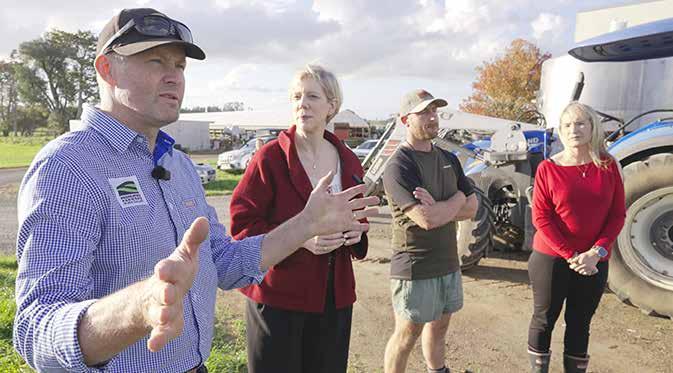
Reserve Bank governor Anna Breman’s first visit to Waipā was spent out on farming land at Te Pahu.
For someone whose job relies on national averages, models and aggregated data, the chance to walk two working farms offered something numbers cannot - context.
“It’s absolutely beautiful,” she said of the region, but the purpose of the visit went well beyond scenery.
Relying on national data alone risks missing what is happening on the ground,
Breman said, and it was that belief that brought her to the farms of Andrew Lloyd and the late former Waipā mayor Alan Livingston.
Lloyd runs a dairy operation at Te Pahu, navigating rising costs, price volatility and the constant pressure to remain productive while responding to global uncertainty.
Livingston’s sheep and beef farm is now run by his daughter Megan and son-inlaw Phil Weir, continuing a family farming legacy while managing the same economic headwinds.
The visits formed part of Breman’s
broader Waikato programme, which also included speaking engagements and business visits, but it was the farm gates where national policy met lived experience.
Fuel prices, inflation and confidence are dominating the economic landscape, and Breman has acknowledged the first months of her tenure have been “chaotic”. New Zealand appeared to have turned a corner before renewed global shocks pushed costs higher again.
Fuel costs are hitting both inflation and confidence, particularly in sectors like agriculture where input costs feed through quickly, she said.
“Our job is to make sure near-term inflation doesn’t become medium-term inflation. If we see that happening, the bank would tighten.”
Exporters and agricultural producers are facing another period of disruption, but demand remains solid, and New Zealand’s reputation as a reliable supplier continues to count in uncertain global conditions.
Breman said Waikato’s strengths were evident. While some local service industries are under pressure, agricultural producers were better placed than many, and balanced caution with continued investment.
That balance - between watching costs and planning for the future - came through in her conversations with farmers and businesses.
Breman is concerned repeated shocks risk draining confidence just when investment is most needed.
“My concern is that after several tough years, people lose belief that investing now will pay off. But businesses that invest through downturns are much better positioned when demand returns.”
Productivity is central to that thinking - systems that reduce waste, smarter use of technology and processes that allow producers to do more without adding cost. Over time, those gains ease pressure on prices while supporting higher real incomes.
The contrast between the two Te Pahu properties underscored the diversity within the sector, but also its shared realities - exposure to global markets, weather dependency and policy decisions made far beyond the farm gate.
Breman’s visit reinforced why those realities matter to monetary policy decisions that can take 12 to 24 months to fully flow through the economy. Headline inflation had lifted, she noted, but core inflation remained stable - a distinction that shaped how the Reserve Bank responded.
Hamilton’s world-famous gardens may have been her first stop in the Waikato, but it was in Te Pahu that the governor saw the practical side of an economy often discussed in graphs.
It was a reminder for her that behind every data point are people making daily decisions - investing, holding back, adapting and pushing on.
And those stories, she says, do not always show up in the numbers.
Waipā dominance continues
By Jesse Wood
It was another high scoring weekend for the Waipā club rugby teams.
Highlights included Pirongia scoring 219 unanswered points across 1A and 1B divisions, while Hautapu scored 142 across their two senior matches, winning all four of their games.
Hautapu trounced United Matamata Sports 81-5 at Cambridge Memorial Park.
The impressive Nathan Stephens helped himself to a hattrick, while number 10 Rangiwai Lunjevich grabbed a double and kicked seven conversions.
Fellow Hautapu scorers included Waisake Salabiau (2), Quentin Hill (2), Harry Chittick, Pita Anae-Ah Sue and Rui Farrant.
In the earlier match, Hautapu B defeated Matamata B 61-12 with left winger Josh Brunger crossing the chalk on four occasions.
First five-eighth Callum Beckett kicked eight conversions and grabbed a try himself.
Te Awamutu Sports’ premier side won by default as they were drawn to play the removed Melville.
Te Awamutu Sports premier development beat Melville B 43-12 at Collins Road in Hamilton.
Four George Poolman conversions were added to the tally alongside tries from John Salinas, Kahu Boyd, Gelestino Kiutau, Sosaia Fonua, Kahn Martin, Daniel McGillivray and Connor Moore.
In the women’s premiership, Melville-Hautapu combined (Meltap) beat Suburbs 62-15 at Flagstaff Park.
Fullback Keira Russell grabbed a hat-trick and kicked four conversions.
Fellow outside back Dawn Hohua crossed for two fivepointers in the 10-try to three victory.
In division 1A, Leamington travelled down the road and pipped Ōhaupō 18-17 at Ōhaupō Memorial Park.
Winger Robert Day scored all of the visitors’ points – two tries, two penalties and a conversion – to add to his impressive 2026 points tally.
Fullback Hateni Tafolo and Chris Johnson were the Ōhaupō try scorers, while pivot Dean Fullerton added seven points off the tee.
Pirongia hosted Kereone and buried them 130-0.
The mountain men scored 20 tries with Jason Hill converting 15 of them.
Winger Ruban Maniapoto-King scored four tries as did flanker Ty Demler-Findlay.
Reserve Jeke Lesuma and vicecaptain Callum Hall got three tries apiece.
In the 1B division, Leamington B lost 29-19 to Ōhaupō B. Hayden Thomas and co-captain Cameron Torr scored braces for the victors, while veteran Brent Smith sealed the deal with his side’s fifth.
Pirongia B thrashed Kereone B 89-0 – 15 tries and seven conversions. Kingston Grant scored 19 of the Pirongia points including a hat-trick.
Kirwyn Ellis had a 15-point haul, while Ben Rush, Tom Kirkbride and Kayden Moorfield registered two tries each.
The Waipā women’s

championship matches were both under mountains.
Pirongia were pipped by Waitete 36-33 at Pirongia Domain.
Fullback Sarah Moorhouse grabbed a double for the home team and added four conversions.
Other Pirongia try scorers were openside Georgia Packer, centre Katie King and Grainne Walsh
Kihikihi lost 50-0 to Taupiri-Te Kauwhata combined at Murphy Lane in North Waikato.
Former Waikato FPC representative Calista Ruruku
grabbed two tries for the home team.
In the colts grade, Hautapu thumped Suburbs 48-0 including a Mason Baker double, as well as 13 points for first five-eighth Johanson Tamala.
Other scorers were Sean Burgess, Luke Goodman, Brooklyn King, Mason Grice and Sam Fowler.
Pirongia colts lost 34-0 to Fraser Tech and Leamington under-21 lost 52-12 to Morrinsville Sports.
Winger Hunter Ward and prop Ambrosio Reidel were the sole
Leamington scorers, with Will Lord adding a conversion.
Te Awamutu Sports beat United Matamata Sports’ under-21 team 33-24 at Bedford Park – a penalty try and a penalty goal were the difference.
Former Te Awamutu College first XV reps Teina Beets, Ryan Baillie, Kainan Kelly and Kiarn Collett all
visitors.
Jaoquin Burke slotted two conversions and Braith Tangohau one.
crossed the chalk for the
ROBERT: Leamington winger Robert Day scored all of his side’s points on Saturday. Photo: Leamington Rugby Sports Club
Federated Farmers resource management spokesperson Mark Hooper, left with Reserve Bank governor Anna Breman, Te Pahu dairy farmer Andrew Lloyd and Hayley Gourley from the bank’s Monetary Policy committee.




Across 1. Becomes older (4)
4. Uncoordinated (6)
8. Source of difficulty (7) 9. Redden (5)
10. Despatched (4) 11. Official stamp (8) 13. Scan text for errors (9) 17. Total (8) 19. Centre (4)
Last week
21. Frown (5)
22. Well turned out (7)
23. Protein substance (6)
24. Detest (4)
Down
2. Adult (7)
3. Unaccompanied (4) 4. Shell shock (6,7)
5. Evolved (8)
6. Steam bath (5)
7. Unstable (5)
8. Small bunch of flowers (4)
12. Unfair act in sport (4,4)
14. Submissive person (inf) (7) 15. Hesitate (5) 16. Care for (4) 18. Faint (5) 20. Two together (4)
Across: 1. Alias, 4. Stance, 8. Prevail, 9. Barmy, 10. Extol, 11. Elevate, 12. Except, 14. Ballet, 17. Scourge, 19. Drown, 21. Vital, 22. Gnocchi, 23. Hearse, 24. Siren. Down: 1. Apprehensive, 2. Inert, 3. Snarl-up, 4. Seller, 5. Amble, 6. Curtail, 7. Hypertension, 13. Chortle, 15. Arduous, 16. Meagre, 18. Ruler, 20. Occur.
LOTQVHMDAQUHLLNULK
OPREOOEIRLWXVETLTM CPFTNARCSUIUMLEZBE OQAYERJOLGQTABTTGN MQLSARTAEGRHEDHUTT OARCSEJCEAFTPGGNTL TZEYFECHPGWVISGNET INTFORNMEETELNUSGA VIUEXFOGRWRIIHEGQX EBRPBCSCEFADSIOYFL JUNCTIONRRIGDTPAZE TIMETABLESNSORYRBT EXPRESSVVGPLINWDCM AXLE BELL BUFFET CARRIAGE COACH COMPARTMENT CREW CUTTING DIESEL ELECTRIC EMBANKMENT EXPRESS











Cheers for the vote of confidence

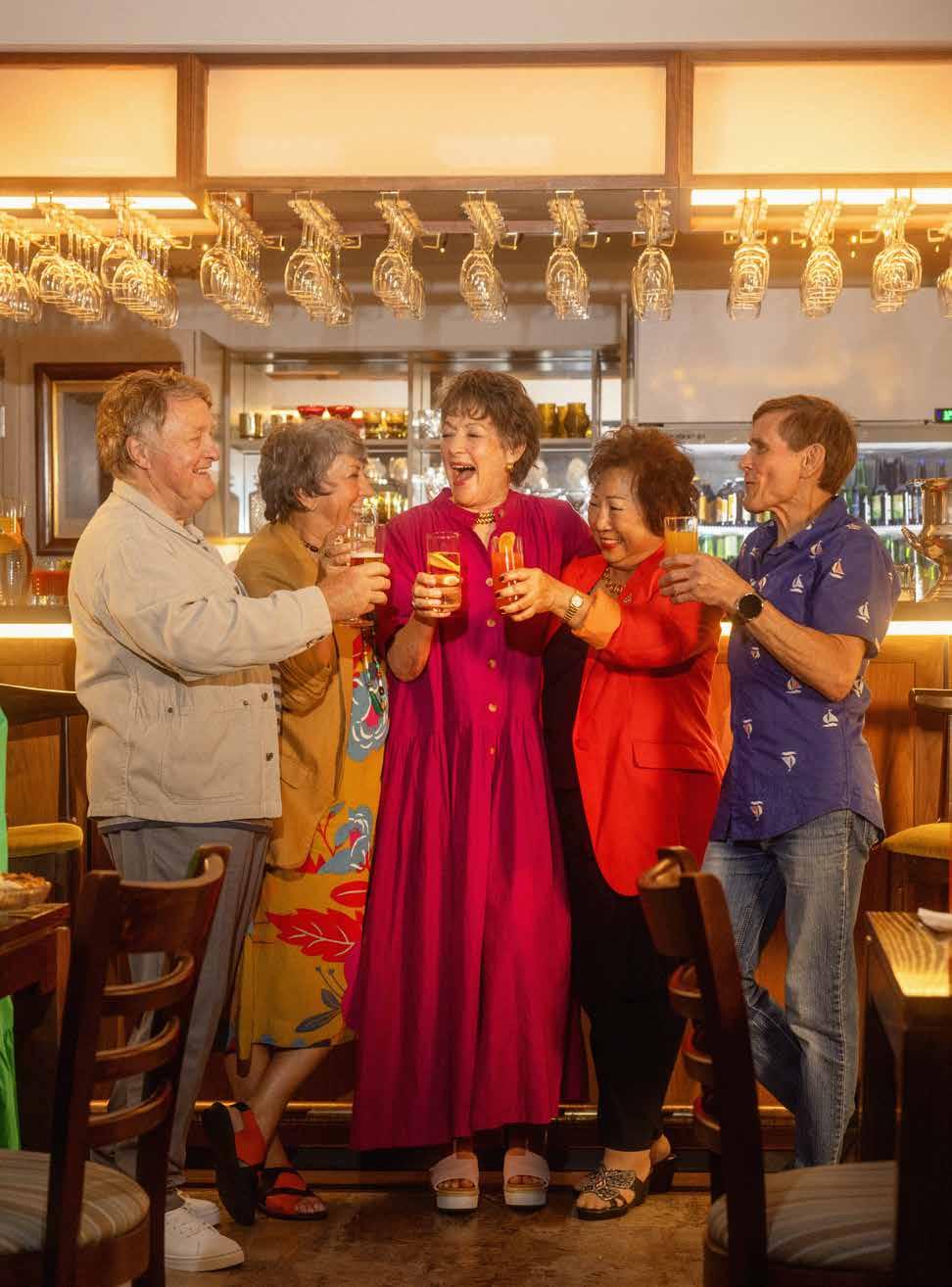
Winner of the most trusted retirement village brand.
Thank you to everyone in New Zealand who voted for us. A special shout-out to our residents too, for making Summerset communities warm and welcoming.
Come and see for yourself what makes Summerset so special. Our doors are always open.
Love the life you choose.


Summerset Cambridge Weekly Walk-in Wednesdays

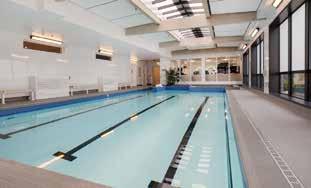
Summerset Cambridge offers a relaxing, resort-style retirement in a vibrant and growing village. The grand village centre is now open and residents have been loving their resort-style facilities, from an indoor pool to a café, residents’ bar and hair salon.
There are a range of homes ready to move into right now, from villas and cottages, to serviced apartments and care suites. Two-bedroom homes start from just $638,000 with flexible pricing options available.*
We know that moving to a retirement village is a big decision. So why not come along to one of our Walk-in Wednesdays every week this May. See for yourself why our residents love the Summerset life.
Love the life you choose.
Weekly Walk-in Wednesdays
Every Wednesday in May, 10am - 2pm
Summerset Cambridge 1 Mary Ann Drive, Cambridge 07 839 9482 | summerset.co.nz/cambridge




Know


real estate









COMING SOON
Mike Gascoigne Branch Manager 027 430 8311 mike.gascoigne@bayleys.co.nz














TE AWAMUTU OFFICE PHONE 07 858 5338
Camron Meade
Central Region Sales Manager 027 420 1881
camron.meade@pggwrightson.co.nz
Peter Wylie
Lifestyle/Rural Sales 027 473 5885 pwylie@pggwrightson.co.nz
Rob Pierce
Residential/Lifestyle Sales 021 137 8105 rob.pierce@pggwrightson.co.nz
Richard Thomson Lifestyle/Rural Sales 027 294 8625 richard.thomson@pggwrightson.co.nz
Ben Warren Lifestyle/Rural Sales 021 466 057 ben.warren@pggwrightson.co.nz

OFFICE PHONE 07 870 2112
Rebecca Fraser Branch Manager & Residential/ Lifestyle 021 152 1477
Dianna Janett
Residential/Lifestyle 027 554 2227
Ian Pepper Residential/Lifestyle 022 126 6852




James Moore
Residential/Lifestyle 022 064 8072
Krystle Fabish Residential/Lifestyle 021 244 0477
Peter Martyn Residential/Lifestyle 021 186 8522
Pip Howells
Residential/Lifestyle 027 214 1599
Rosie Milicich
Residential/Lifestyle 027 810 6848
Sandy Phillips Residential/Lifestyle 027 448 8139
Vicky Wright Residential/Lifestyle 021 058 6618
Wendy Knight Residential/Lifestyle 027 493 6391
Courtney Howells Rural/Lifestyle 021 271 8877
Doug Wakelin
Rural/Lifestyle 027 321 1343
John Sisley
Rural/Lifestyle
027 475 9808
Paul Wheeler
Rural/Lifestyle
027 336 6158
Stephen Weck
Rural/Lifestyle
027 455 1106
























Rosie
John
Lani Pihama
Nicky Pratt
Riane King
Raewyn
Shikiera

Know your real estate agency
Waipā’s Property Market finds it’s balance
Over the past five years, Cambridge and the wider Waipā District has experienced promising growth, perhaps even exceeding most early predictions. Residential expansion, particularly in Cambridge, has been decisive, while commercial and industrial development has followed to support a fast growing population. Lifestyle and rural residential demand has also remained a constant. What has become clear is that while growth forecasts broadly pointed in the right direction, the intensity of demand, especially post Covid, outpaced expectations before naturally recalibrating.
That recalibration is now evident, buyer and seller behaviour has shifted from urgency to intention. Today’s purchasers are more measured, better informed, and increasingly motivated by quality of life rather than speculation. Clients consistently cite Cambridge’s strong schooling, community feel, proximity to Hamilton and Tauranga, and improving

transport links as key reasons for buying. Te Awamutu continues to attract value focused buyers and families seeking space and affordability. The two towns are not necessarily competing so much as complementing one another, each offering a different lifestyle within the same region.
Subdivision activity has settled into a more sustainable rhythm. Compared with the heady pace of five years ago, applications have slowed, reflecting higher financing costs and greater caution among developers. However, the past 12 months has still delivered a steady pipeline of sections across Cambridge, Te Awamutu and surrounding settlements, suggesting long term confidence in the district remains strong. The market today feels more balanced, with supply and demand better aligned.
Recent global uncertainty is now an unavoidable backdrop. As our Head of Insights, Data & Consulting, Chris Farhi recently explains, heightened geopolitical tension, particularly in the Middle East, has the potential to create short term disruption through fuel price shocks and rising living costs. We are already seeing echoes of previous global shocks, with some open homes quieter and buyers taking a pause as confidence is tested. However, history suggests these periods tend to influence sentiment more than fundamentals. The New Zealand property market, including regional centres like Waipā, has shown an ability to adapt through technology, flexible working and shifting buyer priorities.
In fact, the ability to work remotely, or even partially remotely, continues to underpin regional demand. Avoiding long urban commutes, managing fuel costs,
and accessing lifestyle amenities remain powerful drivers. Building confidence in options such as the Te Huia train connecting Waikato commuters to Auckland, can only strengthen that narrative over the longer term.
Interest rate volatility has undoubtedly reshaped expectations, but it has not extinguished demand. Instead, we are seeing realistic negotiation and transactions driven by genuine value.
Today’s purchasers are m e measured, be er inf med, and increasingly motivated by quality of life rather than speculation
The rural sector deserves special mention. Dairy remains resilient, supported by strong fundamentals, while diversification into horticulture, grazing conversions, and mixed use land is increasingly front of mind.
Waipā’s story is no longer about rapid expansion at any cost. It is about measured growth, thoughtful decisions, and a region confidently planning for whatever comes next.
Market Values
While the sales numbers have stabilised in the past year, Waipā district residential sales trends in have reflected a market transitioning from post-peak correction toward relative stability, with modest recovery signals emerging alongside subdued activity.
Following the sharp national housing downturn after the 2021 peak, Waipā has continued to experience lingering downward pressure on property values, based on data released by REINZ, One Roof and Quotable Value.
Updated rating valuations released in 2025 show that residential property values declined by an average of 7.2% across the district, reflecting the broader cooling of the New Zealand housing market.
This correction phase has been driven largely by higher interest rates, tighter lending conditions, and reduced borrowing capacity, which have particularly impacted mid-to high-value properties.
However, lower-priced homes have remained relatively resilient due to continued demand from first-home buyers.
Despite this decline in values, there are clear signs that the market stabilised over the most recent 12-month period.
Informetric data indicates that average house values in Waipā were up approximately 1.9% year-on-year by late 2025, suggesting a shift from contraction to modest growth. Earlier in the year, values had been flat or slightly negative (around -0.3% to -1.1%),
highlighting that the recovery has been gradual rather than rapid.
This pattern is consistent with national trends, where price growth has remained subdued but generally positive.
Sales activity presents a more mixed picture. Annual house sales in Waipā increased by approximately 14% year-on-year to September 2025, indicating renewed transactional activity and improved buyer confidence.
However, this rise must be viewed in context: it follows a period of historically low sales volumes, meaning the increase represents a partial rebound rather than a full return to pre-downturn levels.
Nationally, sales volumes were still down by around 5% in early 2026, reinforcing the notion of a cautious and uneven recovery.
At the local level, trends vary by suburb and property type.
For example, in Kihikihi, median sale prices over the past year have remained relatively stable, with only marginal growth of around 1% and slight declines in asking prices and rents.
Lifestyle properties have experienced sharper declines (around 10–13%), reflecting reduced demand for higher-priced rural-residential assets.
In contrast, urban centres such as Cambridge have shown modest annual growth in values (under 1%), supported by population growth and ongoing demand.
Supply and demand dynamics have also played a role. Population growth and long-term development planning continue to support underlying housing demand in Waipā, particularly in Cambridge and Te Awamutu. At the same time, limited housing stock across the wider Waikato region has helped prevent sharper price declines, although buyers remain price sensitive.

Mike Gascoigne, Bayleys Cambridge, Branch Manager














ENERGY BRINGING GREATER TO TE AWAMUTU













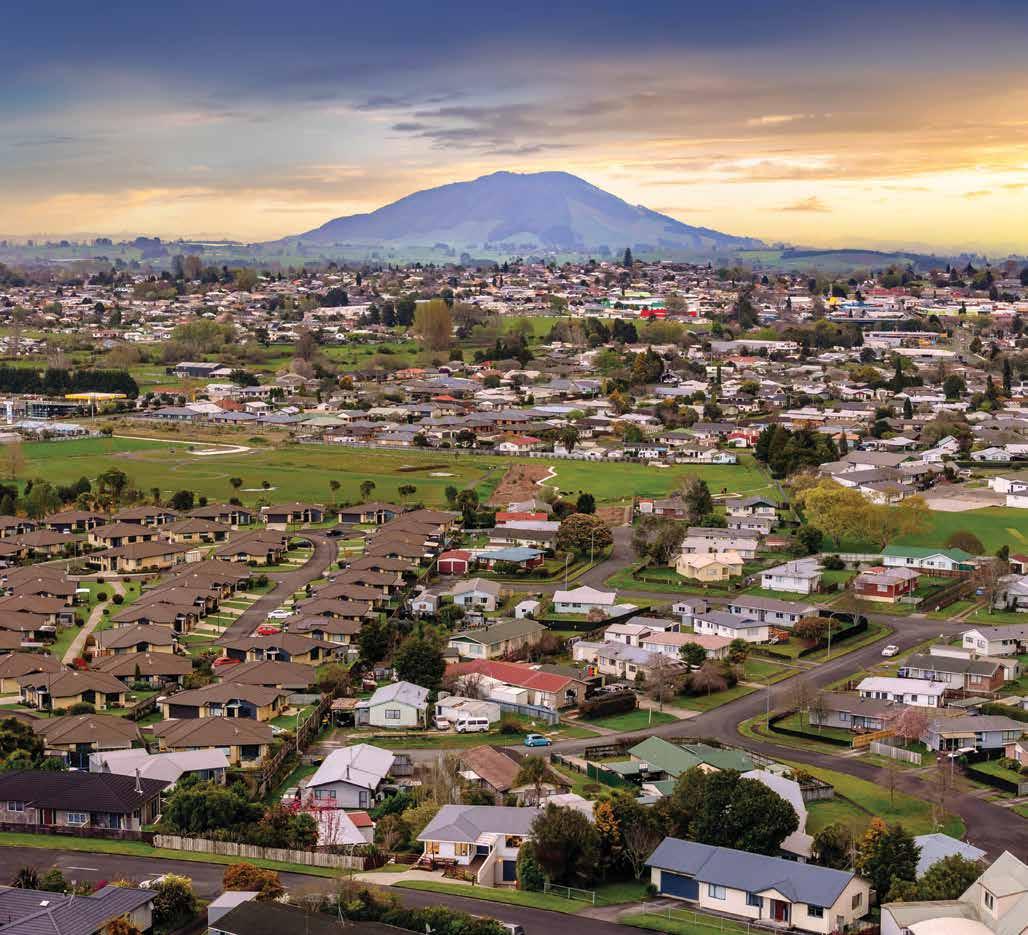


















Te Awamutu has been part of the Bayleys story for some timeand now, with a dedicated local office opening soon, we’re taking that commitment even further.










Our team brings deep experience across residential, rural, commercial and property management. With a stronger local presence, we’re here to deliver even greater energy, insight, and support to the Te Awamutu community.


At Bayleys we bring more energy to every detail, every conversation, and every interaction, across every property we sell, lease, or manage. Of course, success takes more than energy. It also requires an unwavering commitment to service from the first handshake through to the final result - genuine people who care, who collaborate, and who go the extra mile.


For a fresh approach to selling your property, and advice you can trust, talk to the Bayleys team today. We’re proud to be part of Te Awamutu, and even more excited about what’s ahead.


Know your real estate agency
A steadier property market takes shape across Waipā
For those watching the property market around Cambridge and the wider Waipā district, the past few years have felt like a cycle of sharp ups and downs. Rapid growth through 2020 and 2021 was followed by rising interest rates and cost pressures that caused many people to pause and reassess. What we are seeing now is a market that has largely adjusted and is moving forward at a more realistic pace.
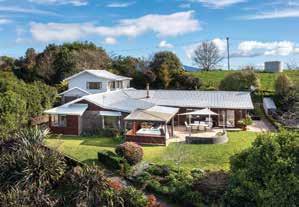
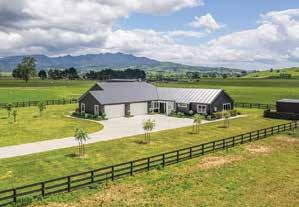
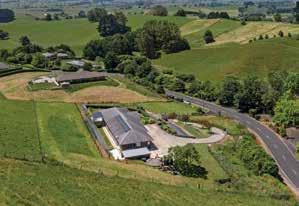
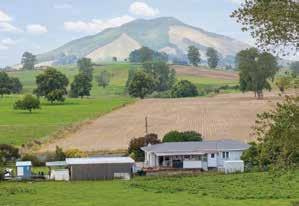
Lifestyle property continues to play an important role locally. Blocks around Cambridge remain popular with buyers looking for space, flexibility and a lifestyle that balances rural living with access to town amenities. While price growth has moderated from previous

Camron Meade, PGG Wrightson, Sales ManagerCentral NI Region
highs, that correction has helped bring expectations back into line and supported steadier decision making.
When clients talk to us about buying in Waipā, quality of life is consistently top of the list. Good schooling, sporting facilities, strong community connections and being within reach of Hamilton and Auckland all contribute to the region’s appeal. Cambridge continues to attract buyers for its established infrastructure, while Te Awamutu remains appealing for its affordability and strong local identity.
Subdivision activity has slowed compared with five years ago. Higher build costs, planning requirements and financing constraints have reduced the number of new sections being created. From a buyer’s perspective, this has eased oversupply and helped stabilise pricing in existing residential and lifestyle areas.
Global uncertainty and rising costs are also part of the backdrop. While events offshore may feel distant, their effects on inflation and interest rate pressure are very real at home. These factors have softened confidence at times, but they have also reset thinking. Buyers are taking a longer term view, and sellers are recognising the importance of good preparation and pricing accuracy.
Interest rates remain a major consideration, but most people now accept that movement in either direction is part of the landscape. Rather than trying to pick the perfect moment, many are focusing on whether a property fits their needs over the next five to ten years.
The rural sector continues to show resilience.
Dairy confidence has improved, diversification is more common, and strong horticultural performance in the wider region continues to support land values. That link between lifestyle, rural and productive land remains a defining feature of Waipā.
When clients talk to us about buying in Waipā, quality of life is consistently top of the list.
Overall, the market feels steadier. Activity is continuing, just with calmer expectations and a stronger focus on getting the fundamentals right.
Farming and rural trends
Following similar trends with the commercial and retail markets, rural and farm sales in the Waipā district have reflected a subdued but gradually stabilising market, shaped by economic pressures, sector-specific performance, and cautious buyer behaviour.
Farm sales volumes across the wider Waikato region, which includes Waipā, have remained relatively low compared to long-term averages.
This has been driven primarily by elevated interest rates and tighter credit conditions, which have reduced purchasing power and slowed transaction activity. Many potential buyers - particularly those looking at larger or higher-value farming operations - have adopted a “wait and see” approach, leading to longer listing periods and more negotiation-driven sales outcomes.
Dairy farms, which remain the dominant land use in Waipā, have shown mixed performance.
While global dairy prices have experienced some volatility, generally solid payout forecasts over the past year have supported farmer confidence to a degree. However, this has not translated into a significant lift in sales volumes.
Instead, activity has remained selective, with welllocated or highly productive farms attracting interest, while average or capital-intensive properties have faced limited buyer pools.
As a result, price expectations between vendors and purchasers have not always aligned, contributing to slower deal flow.
In terms of pricing, rural property values in Waipā
have generally softened compared to peak levels seen in earlier years.
Reports indicate that lifestyle and rural-residential properties in the district experienced declines in the range of 10–13% over the past year, reflecting reduced demand from non-farming buyers and a pullback in discretionary purchases.
For larger-scale farms, price adjustments have been more variable, often depending on farm type, infrastructure quality, and income potential rather than uniform market-wide shifts.
Sheep and beef farms have faced additional pressure due to softer commodity prices and profitability challenges. This has led to more conservative bidding and, in some cases, deferred sales.
Conversely, horticultural and niche farming propertiesparticularly those with diversified income streams - have shown relatively stronger resilience, as buyers seek lower-risk or higher-margin operations.
Sales turnover has
also been influenced by generational factors. Some long-held family farms have come to market as part of succession planning, but overall supply has remained constrained. Many existing owners are choosing to hold assets rather than sell into a softer market, further limiting transaction volumes.
Despite these challenges, there are emerging signs of stabilisation. Interest rates have begun to ease slightly, and improved confidence in key agricultural sectors - especially dairy - has started to bring more buyers back into the market. Inquiry levels have lifted modestly toward the latter part of the 12-month period, although this has yet to fully translate into a strong rebound in completed sales.


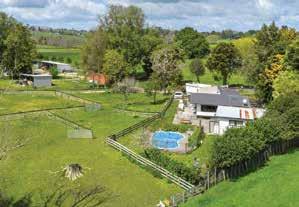

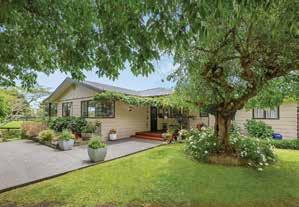










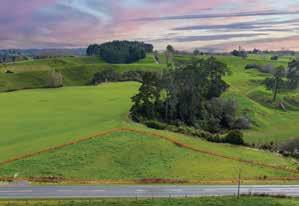




Pirongia




0210 284 5166 alleycatgardencare@gmail.com













MONSTER


SATURDAY

Huge variety of household goods, furniture, books, plants, toys, linen, tools, clothes etc Plus…..


• Sausage Sizzle • Cake Stall • Devonshire Teas BARGAINS GALORE
DAIRY grazing available for R1 and R2 heifers. Call Aaron on 027 388 3881





DESIGN COORDINATOR
We’re looking for an organised, detail-focused Design Coordinator to help deliver high-quality construction projects from concept through to consent.
Key responsibilities:
• Coordinate design consultants and manage project documentation
• Support design changes, submissions, and approvals
• Assist with planning and consent processes
• Ensure compliance with NZ Building Code
• Support procurement and project handover
About you:
• Experience in construction, architecture, or engineering
• Strong organisational and communication skills
• Knowledge of NZ Building Code and H&S requirements
• Proactive, solutions-focused approach
Join a supportive, collaborative team delivering quality projects. Apply now: annette.venter@wcml.co.nz
Applicants must have NZ residency or a valid NZ work visa
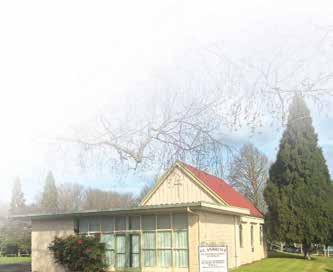
Kihikihi Presbyterian Church
CHURCH SERVICES 10am 10th May
Dr Terry Cowland
All Welcome



DOG FOR SALE - Huntaway dog, 2 years old, untrained. Excellent parents, big and strong and needs a chance. Free to a good home. Ph 027 4781 783 Otorohanga
PIRONGIA
TOPIARY
Open Fridays 10am-4pm 132 Sainsbury Rd Pirongia OR Phone Susan Ranstead 0274 176 379
WANTED TO BUY. Any ute, van, 4WD, truck or car. Any condition doesn’t have to be going. Cash paid. Ph/txt Kevin 027 299 6165
Got reject or surplus milk? Call us today on 027 871 5075 We collect within 1.5 hours drive from Te Awamutu.
60’s Up Movement Te Awamutu Branch
AGM
Friday 15th May 2026 at 10.30am At Waipa Workingmen’s Club Albert Park Drive Te Awamutu All Welcome Morning tea Contact Lloyd Jackson 871 4097



YOUR
WITH US Call Janine 027 287 0005 or email janine@goodlocal.nz
PUBLIC NOTICES
2026 Ownership Review

MURPHY, Kerry Spence –
Passed away suddenly on 1st May 2026. Loving soulmate of Cynthia Dow. Loved Dad and father-in-law of Ross, Sara, Kate, Nigel, Carolyn, Dennis, Rodney, and Michelle. Adored Grandad to Cody, Maddie, Keegan, Janna, Kylan, Grace, Jake, Luke, Roxanne, and Liam. Great-Grandad to Trace, and Alaska. A gathering of family and friends to remember Kerry, sharing memories and laughter (no formal service), will be held at the Te Awamutu RSA, 381 Alexandra Street, Te Awamutu, on Friday, 8th May 2026 at 2:00pm. All communications to Cynthia Dow, C/- PO Box 137, Te Awamutu 3840.

• Engagements
• Weddings
• Births


PUBLIC CONSULTATIVE PROCEDURE
In accordance with the Deed of Trust under which the Waipā Networks Trust has been constituted, the Trustees and the Directors of Waipā Networks Limited have prepared a joint report considering proposals and available options for the future ownership of Waipā Networks Limited.
The Trustees and the Directors propose that the Ownership of the Company should continue to remain 100% Trust owned on behalf of the Community.
The Trustees hereby implement a Public Consultative Procedure. Notice is given that the Ownership Review will be available for inspection by the public from the 1st May 2026, from the Trusts website www.waipanetworkstrust.co.nz or during normal business hours at the following location:
Waipā Networks Ltd 240 Harrison Drive TE AWAMUTU
Persons interested in the proposals are invited to make written submissions to the Trustees.
All mail submissions should be addressed to:
Submissions to the Trustees
Waipā Networks Trust PO Box 34 TE AWAMUTU 3840
All email submissions should be addressed to: info@waipanetworkstrust.co.nz
Persons wishing to make submissions should ensure that those submissions are received at the above address no later than 5pm 30th June 2026 (“the due date”). Submissions received by the due date will be made publicly available.
In due course, any persons who make written submissions by the due date will be offered an opportunity to be heard by the Trustees at a meeting open to the public.
• Anniversaries
• Bereavements


Dave Rowe PAINTING LTD

• In Memoriam etc Call Janine 027 287 0005 or email janine@goodlocal.nz