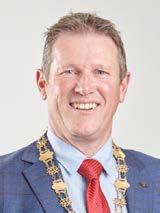
Waipā ratepayers face an average rates increase of 10.7 per cent, and mayor Mike Pettit says the rise reflects escalating costs with unprecedented challenges.
Pettit said the recommended figure, which will be put to a full council meeting early next month for confirmations, was achieved after staff had worked on council’s most complex annual plan ever.
The proposed 10.7 per cent rate increase is made up of an 8.1 per cent increase in rates funding to maintain Waipā district council services and activities, while Governmentled water reforms will require a 19.1 per cent increase in revenue for water
supply and wastewater activities ahead of their transfer to council-controlled organisation Waikato Waters Ltd on July 1.
“Together, the two figures equate to a 10.7 per cent average rate increase after growth, matching what was signalled for year two of the 2025–2034 Long-Term Plan,” Pettit said.
The council’s 8.1 per cent rate rise was in response to escalating costs, higher than expected inflation, and recovery impacts from February’s State of Emergency and a November storm, Pettit said.
He said the rise could have been higher - up to 15.5 per cent - but for significant work to make millions of dollars in savings.
“I need people to understand that we didn’t just sit there and nothing was done,” Pettit said.
Councillors had agreed that it was a priority to make the council a lean, and fit-for-purpose organisation that operated efficiently, Pettit said.
It had saved $3.6 million in reducing operational budgets, including a significant restructure and four-phase transformation programme, called Future Us, announced by chief executive Steph O’Sullivan on May 1.
The restructure was ongooing and so far had dis-established six positions, while creating three new roles, and reduced the council’s executive
leadership team from seven teams to five.
More jobs could still be affected by the restructure.
O’Sullivan told The News she expected it to be finished between August and October and it would also include a review of Waipa’s Civil Defence Emergency Management (CDEM) capacity and capability
“Moving forward we’re looking for efficiencies, ” Pettit said.
“It’s looking at the council as a whole and going where can we make efficiencies,” he said.
However, he cautioned that there was an opportunity cost to those efficiencies.
““You save money, but there’s an opportunity cost
to that - you cut something out, while something else gives, but you don’t get the same, whatever that’s going to mean,” Pettit told The News. “We are here to make the whole organisation more efficient. And for us to hit next year with a rate rise
with a five in it we are going to have to do that,” Pettit said.
He said the rate rise should come as no surprise to Waipa residents “because it was exactly what we talked about in the Long Term Plan”.
Home show at your leisure…
Exhibitors at the third Waipā Home and Leisure Show have pulled out the stops to recognise shoppers are counting their pennies.
The show, run by publishers of The News, Good Local Media, has drawn a full complement of 71 exhibitors for the threeday event starting tomorrow (Friday) at Karapiro’s Mighty River Domain.
“ We have lots of new exhibitors and exhibitors returning for their second or third show –exhibitors recognise the market is tight,” Good Local advertising manager Janine Davy said. “They have worked hard to make this show one where there thousands of dollars worth of prizes to be
won, giveaways and great deals.”
Entry is $5 - children are free – and so is parking. The show will run from 10am to 4pm on Friday and Saturday and 10am to 3pm on Sunday.
“It’s a great opportunity to come and spend a day looking at what’s new and what’s on offer,” Davy said.
Major prizes include a $5000 door prize, a luxury weekend for two sponsored by Te Karaka Lodge and the use of an MG car for a weekend sponsored by Winger Motors Cambridge. Terms and conditions will apply.
There is also the chance to win a $5000plus bed courtesy of Beds 4 U and $1000 worth of legal fees from Edmonds Judd
along with many more giveaways and specials.
Good Local Media publisher David Mackenzie, who launched the show in 2024 to fill a void in Waipā, said it had been a popular and welcome addition to the calendar.
“We knew if we brought a home and leisure show to Waipa the people and exhibitors would come – and now we are looking at our best show yet,” he said.
Good Local Media websites - you will find us at cambridgenews.nz, teawamutunews. nz and kingcountrynews.co.nz – has a link to more details about the show including a full list of exhibitors.
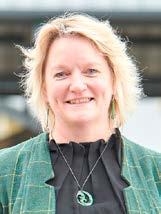
Steph O’Sullivan
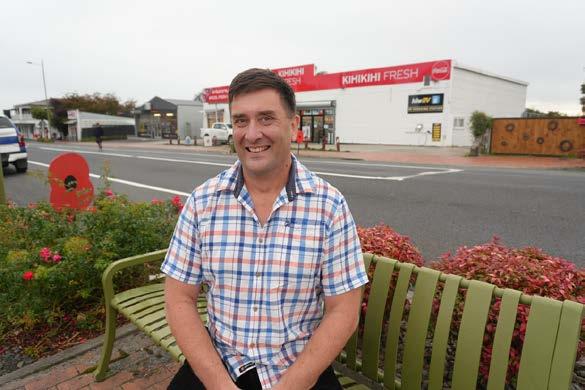
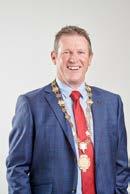
Mike Pettit
Daniel Davy is part of the team behind the third Waipā Home and Leisure Show.
Grey Power
TE AWAMUTU Grey Power
TE AWAMUTU er AMUTU
Wishes to advise members our AGM will be Thursday 21 May 2026, 1:30pm, doors open at 1pm. Waipa Workingmen’s Club, Albert Park Drive.
Financial members will be invited to elect a President, Treasurer, Secretaries, and committee.
Guest Speaker: His Worship the Mayor, Mike Pettit
For further info including nomination forms
please contact Michael on 021 2424 220
are members of the NZ Independent Community Newspapers Association
CONTACTS
News/Editorial
Roy Pilott editor@goodlocal.nz
027 450 0115
Mary Anne Gill maryanne@goodlocal.nz
021 705 213
Viv Posselt viv@goodlocal.nz
027 233 7686
Advertising Director
Janine Davy janine@goodlocal.nz
027 287 0005
Owner/Publisher
David Mackenzie david@goodlocal.nz
Office/Missed Deliveries
07 827 0005 admin@goodlocal.nz
Potter is back on the trail
By Viv Posselt
After taking a hiatus last year, the Waipā Creative Trail returns next week with an opportunity for people to meet over 60 artists at 11 open studios and galleries across 10 trail locations.
The feast of talent includes painters and printmakers, potters galore, a florist, embroiderer, hobbyist blacksmith and a luthier. They come from all over – Te Awamutu, Pirongia, Te Pahu, Ngāhinapouri, Tamahere, Cambridge and Roto-o-Rangi.
Some, like the 20 or so potters, will be in a creative cluster of their own.
The free community event was launched in 2024 by award-winning Kihikihi-based ceramic artist Alex Wilkinson. She had two core aims – to highlight the rich talent the region has to offer, and to encourage those visiting them to try some creativity of their own. She held off last year to deal with life stuff but is bringing it back for 2026 with hopes it might remain an annual event.
Supporting the trail is the Waipā District Council’s Creative Communities Scheme, plus a sprinkling of other businesses lending a hand in various ways.
The trail strays slightly from the norm in
On the beat
that Alex sees it as a way not only to give people insight into different ways of being creative, but also to help boost mental and emotional wellbeing. She is co-organising the event with life coach and practitioner Tracey Hancock.
Both women have faced their own demons in the past and work to enhance mental wellbeing within their communities.
Alex, sister to Olympic sailor Micah Wilkinson, grew up in Cambridge, and attended St Peter’s Catholic and Cambridge High schools before heading to Christchurch to do an engineering degree she didn’t complete. She moved back to the Waikato to do a business degree, dropped into a pottery class by way of navigating those demons, and was hooked. She ended up with an honour’s degree in sculpture from Wintec and her work has been featured in exhibitions in New Zealand and overseas including at the Portage Ceramic Awards and Waiclay ceramic event.
She once said: “I simply would not be here if it were not for me trying a night class in pottery.”
Along the way, Alex developed a passion for the Japanese nerikomi pottery technique, one where multiple colours of clay are
Toys and trouble
As mentioned in a recent column, speeding cyclists and e-scooter riders on pavements are a cause of community concern in Cambridge.
Last week I did a beat patrol focused specifically on cyclists on the footpath travelling through the CBD after school. I was pleased with the cooperation of cyclists, dismounting or using the cycle path instead. E-scooter riders were also educated on the need to slow right down and be mindful of pedestrians.
In other news, last week, we had an incident that highlighted the risk associated with buying realistic looking plastic guns as toys. Two youths were seen by a member of the public pointing what appeared to be a black pistol at each other on the roadside. When told to put it away, one then ‘fired’ at the woman as she drove away. This was reported immediately to police by the woman who was understandably shaken.
Staff located the youths and seized a gun, found to be similar to a bb gun. Given the outward likeness of the gun to a real pistol in colour and design, the outcome could have been very different in other circumstances. Please ensure that such toys purchased for or by your children, are obviously toys in their design. I encourage retailers to also think
CountryLife
Reach a targeted rural & lifestyle audience each month by advertising your business in CountryLife; featured inside the Cambridge News & Te Awamutu News
Distributed to EVERY rural & urban letter box across the Waipa region each month.
Next Publication Date: Thursday 11 June
June Deadlines:
Booking:
twice before stocking any toy gun which by his size and design could be misrepresented or mistaken for the real thing.
Early last Sunday morning, a vehicle was located crashed on Carlyle Street, Leamington in circumstances that indicated those involved would have sustained an injury. No one was at the scene when police arrived. If you have any information relating to this incident, please contact 105 and quote file ref 260509/3561.
Still in Cambridge, coordination and quick responses from police and Cambridge retailers resulted in two good catches in the past week. In the first, a male shoplifter was arrested for theft from the Warehouse Cambridge. Police arrived just as he walked out the door, concealing items. He was also found to be breach court bail conditions. The male appeared in court accordingly.
In a second incident, staff responded to a report about a group of five people in two separate vehicles. One of the group was believed to have stolen from Mitre 10 Mega Cambridge. One vehicle was stopped leaving the store and the second close-by. The goods were recovered and the offender and related parties identified.
combined or marbled to create unique pieces.
“I was terrible on the wheel, I didn’t want to glaze… so this niche type of pottery worked for me,” she said. “I love the process, it is unpredictable. There are elements I can control and some I can’t. Failure is part of pottery, so I always make two of any pieces I’m doing for somebody.”
She is now believed to be the only person in New Zealand teaching the technique to others.
Alex’s involvement in Creative Waikato and other community organisations sees her advocate for artists and other creatives, to give them and their work real value in society.
That, in part, is what next weekend’s trail is all about.
“Because it’s all over the place, we’re putting on mini-buses from Te Awamutu i-Site for people who don’t want to do it on their own,” she said.
“We expanded it to two days this year after the success of the initial one-day trail in 2024.
with Senior Constable DEB HANN
Ceramicist Alex Wilkinson is to bring back the Waipā Creative Trail next week.
Photo: Holly Kate
In the pink
More than 70 Pink Ribbon breakfasts events have been planned so far in the Good Local Media community newspaper region –approaching the 93 achieved in 2025. The numbers include, 27 in Te Awamutu, 37 in Cambridge, three in Te Kūiti and five in Ōtorohanga.
Pension poser
Grey Power New Zealand has reaffirmed its support for the current format of the pension after Labour leader Chris Hipkins indicated he was open to means-testing. The issue could come up for debate when for Grey Power Te Awamutu holds its annual meeting on May 21 where Waipā mayor Mike Pettit will be guest speaker.
Hautapu work
A programme of transport and water infrastructure work to support Hautapu’s rapid industrial growth will begin in July, backed by funding approved through Waipā District Council’s LongTerm Plan. The Hautapu Infrastructure Programme brings six major projects into a single, co-ordinated build.
Tricolor success
Te Awamutu College celebrated winning up the Tricolor Trophy – the Ranfurly Shield of Waikato secondary school rugby – at the start of the month. The first XV plays St John’s on Saturday.
Brigade success
Te Awamutu’s volunteer fire brigade has celebrated raising $3000 for Blood Cancer NZ at Te Awamutu Pak’n Save, funds which will go towards the total raised at the annyal Firefighter Sky Tower Challenge in Auckland later on May 23.
Correction
James Graham, currently acting chief financial officer at Waipā District Council, has been appointed Waikato Waters chief financial officer, not chief executive as we reported last week.
New nurse in the making
By Mary Anne Gill
Te Awamutu has always had a way of holding on to its own -
Anastacia Cuthers knows that well.
Born in Te Awamutu and raised in the town, and partly at Waikeria where her father worked as a prison officer for more than 40 years, she laughingly calls herself a “prison brat”.
These days, despite the commutes to Hamilton for study and clinical placements, she has no intention of leaving.
“My roots are here. We just feel safe. We’ve built a community. Our whole life is here.”
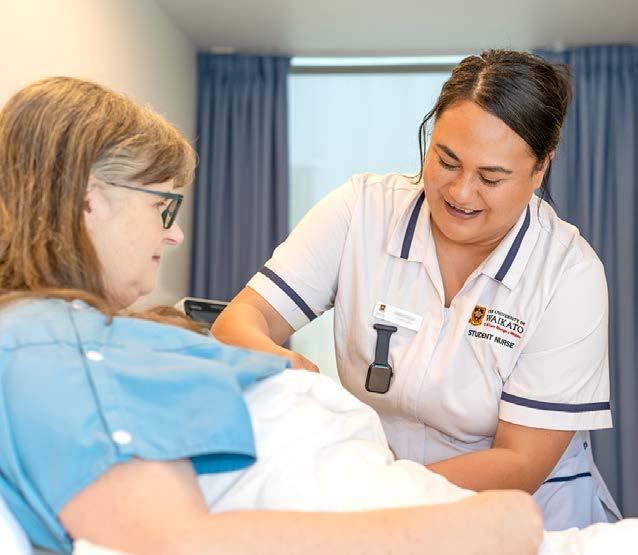
Now in her third year of a nursing degree at Waikato University, Cuthers is juggling study, placements and raising two children on her own - driven by a determination to be “more hands on” and make a difference where it matters most.
At 36, the solo mum of two is not your typical university student.
Last week she was named among a select group of Waikato University nursing students backed by a prestigious Southern Cross Trust nursing scholarship, part of a programme that supports students through their degree and clinical placements. For her it is worth $10,000 this year.
“I’m so grateful. That scholarship helped take that financial pressure off tremendously,” she says, describing weeks where fuel alone cost her $480 just to get to placements.
Anastacia first went to St Patrick’s Primary School in Te Awamutu.
“My whole whānau went there, so I just followed the leader kind of.”
Later, after time at Sacred Heart Girls’ College in Hamilton, she returned to Te Awamutu College where life took a different turn.
She admits she felt “a bit lost actually” but the birth of Felicia, 16, while still a teenager, and Te Arani, 13, changed everything.
“The positives of having my children, they are honestly like my greatest motivators.”
It was another family moment that ultimately set her on the path to nursing. During Covid, her father suffered a stroke and she saw firsthand the pressures on the health system.
“I saw a gap that I saw myself
being able to fill, and that was to come and be a nurse.”
She had been working in administration roles, including in a Covid directorate, but wanted something more hands-on. That decision led her to enrol in the University of Waikato’s nursing degree in 2024. She is now in her third year and on track to graduate later this year.
Her placements have already taken her through a wide range of areas - from aged care at Matariki in Te Awamutu to intensive care - but it was mental health and addictions that surprised her most.
“Surprisingly that was one of my favourite placements,” she says.
“I had my own biases going into mental health. I thought I didn’t want to do it. Went in there and I was like, oh my gosh, this kind of nursing, it’s actually fulfilling.
“A lot of it is therapeutic conversations, but what they don’t
teach you is how do you do it with all this information, the heavy stuff?”
The Southern Cross scholarship programme backing her study is part of a wider national effort to grow New Zealand’s nursing workforce. Nine Waikato students were recognised this year, with scholarships offering financial support, mentoring and help with placement costs. Each scholarship provides up to $30,000 per student.
For Cuthers, the impact is immediate and practical - easing the cost of study.
But her ambitions stretch far beyond her own circumstances.
As a Māori student, she sees the difference cultural connection can make in healthcare.
“When Māori whānau saw me, I could see that they felt a little bit relieved. ‘Oh my God, we’ve got someone in here that’s like us, that understands us’.”
Her long-term goal is to build her clinical skills and eventually bring them back to communities like her own.
“I really want to go into the clinical side to get those clinical core skills and then take those back to the people later on down the track.”
For now, she is focused on finishing her degree, completing placements - including an upcoming stint at Southern Cross Hospital - and navigating the realities of student life.
“Three years has gone so quick,” she says.
There is still uncertainty ahead, particularly as financial support changes later this year when her son turns 14, but she remains determined.
“We’ve worked out so far this far. I’m sure I’ll figure it out.” In a town that values its people, Te Awamutu will be watching closely.
Rosetown Funerals proudly
The Rosetown Funerals team
Jim Goddin and Teri Keir
Student nurse, Te Awamutu’s Anastacia Cuthers, right, featured in a promotion for the Southern Cross scholarship before she was awarded one. Photo: Waikato University.
Lauding Les at ninety
By Jesse Wood
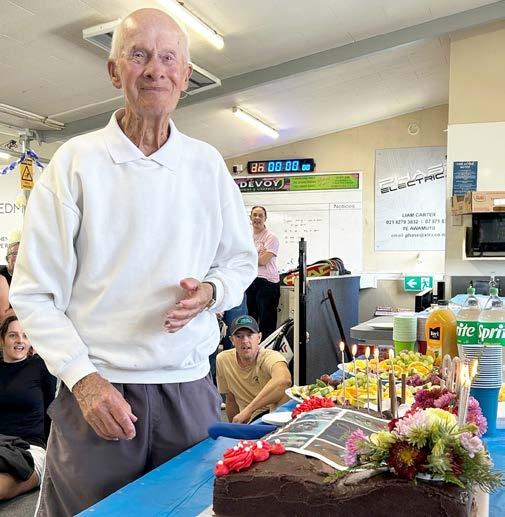
He’s a founding member, patron and current player of the Te Awamutu Squash Club – and on Saturday members and family gathered at his “second home” to celebrates his 90th birthday.
It was a fun, social day of squash followed by a luncheon and presentation to mark the milestone.
“All those who have had the pleasure of meeting or competing on court against Les will know of his humble, yet fiercely determined and competitive nature,” committee member Bronwyn Brier said.
“His characteristic wry smile for a well-placed shot and even more appreciative nod for a well-placed shot from his opposition always make playing Les an absolute pleasure.”
Les has deep roots within the sporting community and Te Awamutu squash is indebted to the Brain family for its existence - in both the establishment of the welcoming culture of the club and the building itself.
He is Te Awamutu Squash’s longest playing member, active since founding the club in 1962.
Les and wife Maureen were the club’s first life members and Les still holds the title of club patron on the club’s committee.
He has been actively involved in every event hosted by the club at some point – both socially and competitively – and still plays biweekly in the senior club ladder.
He was the club’s first men’s club champion (1962-1967; 1969) and played competitive interclub up until 2019, aged 83. If Les is not participating himself, both he and Maureen are often spectating from above.
After playing and encountering squash in Hamilton, Les recognised the need for a similar facility in Te Awamutu.
“Les was part of the founding committee that built the facility we have today,” Brier said.
“He initiated public meetings, gathered public interest and later approached
and sourced debentures for the initial build of the facility in 1962; drew the initial plans for the two-court facility; oversaw the build of the facility with the builder contracted.”
Both Les and Maureen then oversaw the repayment of the debentures to ensure the club’s future viability.
Les was also actively involved behind the scenes in the extension and build of the third court and upstairs area, however due to changes in the certification he was unable to draw and drive the plans for this extension himself.
The Brains are always welcoming to new and existing, young and old members.
From historic traditions of putting on a good feed in the builders’ shed across the road (pre court extensions) and later the kitchen in the club rooms to the way in which they both have quietly continued to contribute in both visible and invisible ways through getting stuck in when help is needed, the Brain family have formed the backbone of the club.
Les was also the 19781979 club president, the first statistician for the club – he kept the handicapping records up-to-date preelectronics – and the club maintenance officer.
“Les was actively involved with facility maintenance and upkeep for well over 50 years, overseeing both large
and small maintenance jobs,” Brier said.
“It has not been unusual to see Les in and around the club contributing to the general upkeep of the facility through undertaking jobs such as mowing the lawns, cleaning the gutters, cable tying the court netting, sweeping the courts, changing light bulbs,
as well as repairing wear and tear at the club to ensure that it is always well presented and well kept.”
In recognition of his efforts to squash, Les was also presented with an award for 50 years outstanding contribution to squash by former world number one Dame Susan Devoy in 2011.
Les Brain celebrated his 90th birthday with friends and family at Te Awamutu Squash Club.
Fieldays 2026: Innovation, Resilience and Community at the Heart of Rural New Zealand.
by Barbara Kuriger, MP for Taranaki-King Country
If you make your living off the land, Fieldays isn’t just another date on the calendar – it’s where we go to recharge, take stock, and remind ourselves we’re not in this on our own. Since 1969, National Fieldays at Mystery Creek has been bringing farmers, contractors, families, and townies together. And haven’t the organisers succeeded? What began as a simple showcase of Kiwi ingenuity has grown into the Southern Hemisphere’s biggest ag event. Generations of farming families come back year after year to see what’s new, catch up with old mates, and bring the kids along for a look at their future. This year, with fuel, freight, and finance all tightening the screws, Fieldays feels more important than ever. It’s a chance to kick the tyres on gear that genuinely cuts fuel use, explore tools that save labour, and talk directly with people who understand the realities behind the farm gate.
Over four days, more than 1,200 exhibitors will be on site, showcasing the best innovations, products, and services to an audience of over 100,000. From low-emissions tech to pasture management, there are plenty of opportunities to find ideas that make a real difference. Seminars and workshops will offer straight talk on markets, regulation, and banking, while the social side – a yarn over a coffee – often delivers the most valuable, and most unexpected, insights of all. At its heart, Fieldays is a reminder that New Zealand farming still leads the world. Not because it’s easy, but because our people are resilient, practical, and keen to teach and to learn. As we walk through the gates this year, we’re not just visiting a show – we’re backing our businesses, our communities, and the future of our rural New Zealand. This year’s Fieldays will be held from 10–13 June at its traditional and spiritual home, Mystery Creek.
See you there.
Remembering them
By Jesse Wood
Four more fallen WWI soldiers noted on the Kihikihi cenotaph have been at the Kihikihi Town Hall.
New Zealand Society of Genealogists Te Awamutu branch member and life member Sandra Metcalfe did a similar presentation last year on different soldiers.
Following the Anzac service outside the hall, she presented the stories of Wastel Brisco, brothers George and Noel Gibson and Archie Kay.
The Gibson brothers were also remembered during an Anzac service by Peter Emery and RSA executive member, Adan Te Huia.
Christine Ball researched their details. George is buried at the Kantar War Memorial Cemetery in Egypt. Noel’s body was never recovered.
Sandra Metcalfe acknowledged the Te Awamutu Genealogy Group which has had a research project for the Te Awamutu cenotaph for the last three years and encouraged anyone who had family members named on the cenotaph to make contact if they wanted research carried out.
Family members
including Malcolm Kay who helped with researching Archie Kay, have also been helpful. Wastel’s details were researched by Rae Selby.
Wastel was a 19101911 Manawatū rugby representative, while Archie was a 1914 South Auckland player and the first secretary of Kihikihi Polo Club.
Westel’s father, Arthur Hylton Brisco, was the fifth son of Sir Robert Brisco, third Baronet of Croften Hall, Cumberland.
The present holder of the title lives in Southland but has not proven his succession to the baronetcy.
Born in Geraldine, Wastel attended Wellington College. His brother Hylton married in 1914 and moved to the Kihikihi area soon after, where the family remained until at least 1923.
Wastel’s death notice said he was engaged in farming with Hylton before joining the Auckland Mounted Rifles, although his address prior to enlistment was Ranganui in the King Country.
“The reason some of these names are on the cenotaph is not because they were born here, but because someone put their name forward to be on it since they worked in the area,” Metcalfe said.
He was killed in action during at Nibrunesi Point, Dardanelles - 16 days after his 27th birthday and was buried at Walker’s Ridge Cemetery, Gallipoli.
Karina Kirk and Linda Howarth also researched John “Archie” Archibald Kay’s information. Educated at Kihikihi and Pārāwera schools, Archie spent time working for the BNZ at Te Awamutu and BNZ Kāwhia prior to enlistment. He was 26 when he was killed at the Battle of Ayun Kara on November 14, 1917.
Archie was re-interred at the Ramleh War Cemetery in Israel.
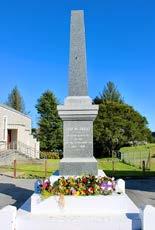
The names of Wastel Brisco, George Gibson, Noel Gibson and Archie Kay are on the Kihikihi cenotaph. Photo: Jesse Wood
More soldiers’ stories shared
By Jesse Wood
The names of 58 soldiers who gave their lives are inscribed around the sides of the Te Awamutu First World War Memorial.
Ten were remembered at the Te Awamutu branch of the New Zealand Society of Genealogists’ presentation at the library recently.
The cenotaph, unveiled by Governor-General Lord Jellicoe on May 30, 1923, is surmounted by a statue of a New Zealand infantryman carved from white marble.
This was the third year the group have presented their research, and emotions were high from the presenters and about 20 attendees.
Society member Sandra Metcalfe acknowledged the group for their effort as they work through the list of soldiers on the Anzac cenotaph, “in particular Lisa Howarth, who has been driving this project and everyone involved in it”.
Those remembered were William Gordon Hall - a blacksmith in Te Awamutu and Ōtorohanga, Alexander Livingstone – a Scotsman who had worked for Waipā County Council, Mangapiko-born William Moon Alexander – brother of Stewart (Stewart Alexander Golf and Country Club’s namesake), the Te Awamutu-born Gibson brothers –Noel and George, Robert Bertram Aldridge, Ōrākau-born John “Archie” Archibald Kay, Roto-o-
Rangi man William David Kemp, 29-year-old Hairini dairy factory manager James “Jack” Lockhead Cowan and 1910-1911 Manawatū rugby representative Wastel Brisco. Sandra also spoke about Brisco, the Gibsons and Kay in the Kihikihi Town Hall on Anzac Day (see page 6).
Members of the genealogy group – Lisa, Ann Roberts, Karina Kirk, Christine Ball and Rae Selby read the stories of each of these men.
Coral Townley (nee Gibson) had the honour of reading about her late father Norman’s cousins.
Sandra Metcalfe read a piece on the toll of war, also read by RSA executive committee member and MC Adan Te Huia at the Kihikihi Anzac Day service.
“New Zealand’s experience of WWI is often told through battles and statistics. But the deepest story lies in the impact on people, families and communities,”
Metcalfe said.
“At the time, New Zealand had a population of just over one million. Around 100,000 men and 550 women served overseas in WWI. Nearly 10 per cent of our population.
“More than 18,000 men died and many 1000s more were wounded. The effects of this loss went far beyond the battlefield. In some cases, entire family lines ended.” Many veterans never talked
about their experiences and “that silence shaped families for generations”.
“Children and grandchildren were often left to piece together the stories long after the war had ended. In small communities like Te Awamutu, the impact was deeply felt.”
WWI records on the online cenotaph show at least 331 Te Awamutu-connected men.
“They may not have lived here, but Te Awamutu appears in their service reports,” Metcalfe said. “The same family names appear again and again on memorials. Schools lost entire groups of young men. The social and economic fabric of the community was permanently changed.”
The speeches were signed off by the Ode of Remembrance in te reo and the Last Post.
Two more years of stories are set to come as the group begin research for 2027 and 2028.
“It’s a privilege doing this. We are carrying this on and hoping that we can put it together as an online and a paper version to also put on the online cenotaph in Auckland,” Rae said.
“There is so much information online that is available to the public. Very few of us are related to any of the people we spoke about. Like the Remembrance Army says, a person dies twice. Once, when they take their last breath and also the last time anyone says their name.”
We are honoured to announce the opening of NEPIA FUNERAL SERVICES a boutique, family-owned business located at 9 WALTON STREET TE AWAMUTU AT THE END OF MAY.
Jack Nepia brings 25 years of experience as a funeral director and more than 50 years living in the local community. Jack is the son-in-law of local identities DON AND LESLEY VERITY. Alongside Jack is Donna Nepia,our sons Mana,Kaia and daughter in-law Maia and Tracey Devcich who worked in our community as a registered nurse.
Please give us a call, we look forward to opening our doors VERY SOON. JACK NEPIA 027 466 8166
As a smaller, locally owned service, Nepia funerals is able to offer more affordable options for the community. OUR ALL-INCLUSIVE PACKAGES ARE FULL BURIAL PACKAGE - $5,990 DIRECT CREMATION PACKAGE - $ 2,990 NO HIDDEN COSTS. SEE OUR WEBSITE & FACEBOOK PAGE. EMAIL - nepiafuneralservices@gmail.com
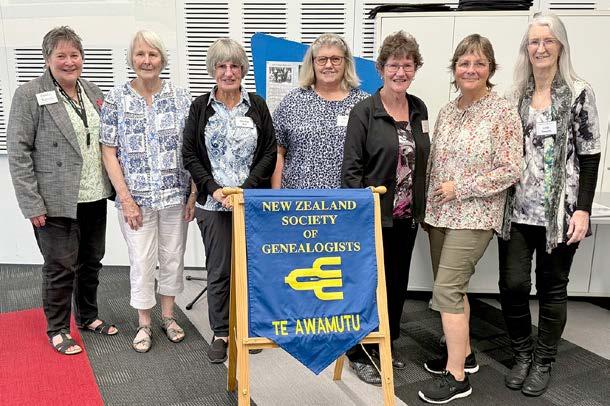
From left, Sandra Metcalfe, Coral Townley, Christine Ball, Ann Roberts, Rae Selby, Karina Kirk and Lisa Howarth at the Te Awamutu library community room. Photo: Jesse Wood
Meghan
The farmer did it
Te Awamutu was the thriving centre of a prosperous area, but it had an acute housing shortage. This was strikingly illustrated by the situation at the motor camp at Selwyn Park. A total of 29 tents dotted the area sheltering a population of 88 people.
Of the 88, 19 were married couples with families. Six tents housed the contractors building the Commercial Hotel.
Four new state houses fronting Mangapiko Street were ready for occupation and on the same block another dozen houses were in varying stages of construction. More state houses were nearing completion along Kihikihi Road. They were modern and well-appointed in every respect. When the first one was tenanted it was an event worthy of civic recognition, but it passed almost unnoticed.
There was mystery at Pirongia when water pressure from the mains fell so low householders could get nothing from the taps. Consumers were considerably perturbed and there was all sorts of conjecture, the general opinion being that a break
had occurred on the line. The interruption caused a good deal of inconvenience, especially at the local dairy factories. The works foreman, concerned there was something radically wrong, made a patrol of the pipeline right from the intake high on the slopes of Pirongia but he could not find a cause. Water was coming past the meter. There was no sign of a burst pipe. He telephoned Tokanui Hospital which drew large amounts of water at certain times and suggested that there was a leak on their special supply line, but no trace of a leak was found.
Puzzlingly, the reduced pressure was evident two mornings in a row and in the meantime was normal again. The mayor said the situation suggested interference by some irresponsible person.
An elderly retired Ōhaupō farmer was charged with driving a motor vehicle in Arawata Street, Te Awamutu, without observing due care and attention. Asked to plead in court he said, “Oh, guilty!”
Constable Forsyth said that the man backed his car right across Arawata Street and it collided with a stationary
car. He then drove away, without stopping to find out if any damage had been done. Luckily the garage attendant opposite saw the occurrence and noted the number of the car. The other vehicle was damaged; the fender being torn off and the running board crumpled.
The farmer remarked “I did it, right enough; and all fools have got to pay for their foolishness.” His Worship pointed out that the worst feature was that he did not stop to inquire if there was any damage.
“A man of your age should not need to be told your responsibilities, and the best punishment in such cases would be deprivation of the license to drive for a couple of months. Your action was contrary to the spirit of road usage, and if the garage attendant had not happened to see your car you would have got away with it. You do not appear to have learned the elementary rules of motoring.”
Being an ambassador
By Karla Rose, Zion Church
This week I had the pleasure of meeting a couple who were new to Te Awamutu. They had been riding their bikes all over town, checking out neighbourhoods as they considered the benefits of downsizing and permanently relocating.
As a longtime member of the Te Awamutu community, I was able to confidently answer questions they had about the area, advocating for my favourite streets and sharing about the down-to-earth culture that we enjoy here.
I was an ambassador for our town, and honestly, it was a lovely feeling, to share with people who hadn’t yet experienced our home to its fullest.
I think that many, if not most, of us could help someone see the benefits of living in a place like Te Awamutu.
It is a beautiful place to live, with some of the best people and views that I have experienced in my life, which is why, after trying a short stint in another area, my family moved back.
The thing is, those of us who are Christians live with a form of dual citizenship. We are members of our local community, but we are also citizens of the Kingdom of Heaven.
As dual citizens I wonder if we are as enthusiastic in sharing about the culture of heaven as we are about sharing the culture of our town.
Do we light up when we share about the beauty of God’s kingdom and all the benefits it offers, particularly direct access to our King, as we tend to light up when we share about the beauty of our rose gardens, or our favourite park?
Perhaps the better question is, do we know
the kingdom?
Because I for one recognise that it is awfully difficult to share with others the benefits of a place we don’t know about personally.
The Kingdom of Heaven can feel distant at times, and yet we are living in it now. The Kingdom has come, and the Kingdom is coming.
Because of Christ’s sacrifice, His Kingdom is already here, it just isn’t complete yet, and that’s where we come in. We are the ambassadors of the kingdom, which means we are the official face and voice representing God to people who are yet to meet Him.
As ambassadors we are the ones who not only get to present the views, values and priorities of the Kingdom, but we also get to live them. That means we need to learn what they are.
Many of us are years, if not decades, out of school, but I think, despite that, we all have at least an idea of what learning looks like.
To learn about any topic, we have to open our books, in this case our Bible.
We need to go to our teacher with our questions, requests and objections, meeting with God in prayer. A
nd we need to discuss what we’ve been learning with our friends and peers, in Christian community.
If we do these things, day by day we learn how to live the views, values and priorities of God’s kingdom, and then share it with others.
Dale-Maree Morgan: a voice for local Māori and community
For Waipā Māori Ward Councillor Dale-Maree Morgan, local government doesn’t start in the council chamber - it starts in the community
Whether she’s standing alongside locals advocating for their town or knee-deep in an awa (river) helping restore the environment, her approach is grounded in action, connection, and care for people and place
Dale-Maree’s journey into Council wasn’t mapped out, it was sparked by community action Standing alongside a passionate group in Te Awamutu opposing a proposed waste-toenergy plant showed her what ’s possible when people come together
“My drive comes from a commitment to protecting taiao (environment), uplifting communities, and ensuring that voices, particularly Māori and Pacific, are heard in decision making,” she says “Local government is where policy meets people, and that ’s where change becomes real ”
Her background spans Māori and Pacific development, policy, and community work From studying and working at the University of Waikato, through to managing community houses, events, and hands-on environmental restoration, she brings a wide range of experience to the role
When she first stepped into local government, Dale-Maree (Raukawa ki Panehaakua, Ngāti
Maniapoto and Te Puaha o Waikato) quickly realised something most people don’t seecouncils are asked to do a lot with very little
“Local government is expected to deliver a large mandate with a small share of public revenue that comes our way,” she reflects “Yet we’re expected to still maintain roads, water, community spaces - all while costs rise and rules keep changing
“Add in the pressure of a cost-of-living crisis, major weather events, and big decisions like the water transition - it ’s been a steep learning curve
“This term is about building on the iwi and mana whenua relationships laid over many years, foundations strengthened by leaders such as former Mayor, Alan Livingston E moe e te rangatira, i tō moe mārie (Noble leader, rest in peace),” she said
Looking ahead, she is focused on making meaningful change for the benefit of Waipā
Beyond the Council table, Dale-Maree’s role is deeply personal
“As a wife, mum, and grandmother, and uri (descendant) of my tribes, Waipā is home,” she says “Not only geographically, but culturally and spiritually I deeply value the connections across our marae, awa, and communities, and the way our histories, people, and place are inseparable ”
Recycling contamination is costing Waipā District Council around $600,000 every year While most residents recycle correctly, ongoing contamination from a small number of households is increasing costs for ratepayers
When rubbish or non-recyclable items are placed in recycling bins, entire truckloads can be sent to landfill Despite warnings and the current three-month suspension process, repeat contamination remains an issue
To help reduce contamination, Council will later this year introduce a stricter approach, replacing temporary suspensions with bin removals in cases of severe contamination or after three warnings
This change aims to reduce costs for ratepayers, send less recycling to landfill, increase accountability and improve safety for recycling staff
Reminder: NZTA’s Expressway work moves to stage 3
NZ Transport Agency Waka Kotahi are continuing asphalt works on the Cambridge section of the Waikato Expressway to keep it safe and fit for future growth Stage 3 is starting from Sunday, May 17 to early July, between the Victoria Road, Hautapu and Northern Cambridge interchanges
Southbound on and off-ramps at the Victoria Road, Hautapu interchange will be closed, with detours in place
Southbound traffic on the expressway can access Cambridge by exiting at the Northern interchange and using Cambridge Road/Hamilton Road
Expect delays, around Victoria Road/Cambridge Road roundabout, Albert Street/Achillies Street intersection, and Shakespeare Street/Tīrau Road intersection
For more information visit nzta.govt.nz/waikato-works
Mike Pettit Mayor Jo Davies-Colley Deputy Mayor
Roger Gordon Aidhean Camson Pip Kempthorne
Clare St Pierre Les Bennett Shane Walsh Dean Taylor
Marcus Gower
Mike Montgomerie
Dale-Maree Morgan
Recycling contamination
For Dale-Maree Morgan, serving the district is both a privilege and a responsibility Guided by values like kaitiakitanga, partnership, and intergenerational thinking, she is focused on shaping outcomes that truly matter in people s everyday lives
Hautapu and Hedley on target
By Jesse Wood
It was a mixed bag for Waipā senior club rugby sides on Saturday but Hautapu once again proved their depth and dominance.
In the Waikato premier division, the Cambridge-based side won 70-21 against Morrinsville Sports at Campbell Park –scoring 10 tries to three in the process.
Henry Brown, Harry Chittick, lock Dylan Eti, winger Quentin Hill, halfback Rui Farrant, Konelio Burgess, centre Waisake Salabiau, Nathan Stephens, Jason Thomasen and number eight David Morris all crossed the chalk.
Fullback Patrick Hedley was on target, kicking all 10 conversions.
Te Awamutu Sports’ premier team lost 3126 to Ōtorohanga Sports at Albert Park.
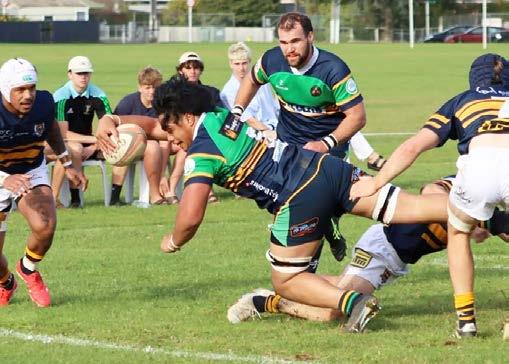
Hooker Albert Nadan, George Poolman, Sosaia Fonua and lock Lau Arona – both making their premier debut - scored for the home team. Right winger Leo Scott added three conversions.
Hautapu B beat 61-10 Morrinsville Sports B, a nine tries to two victory.
Winger Vilimone Bainibure, openside flanker Kane Gibberd and centre Ihaka Harper-Dent helped themselves to doubles while backs Josh Brunger, Dillon Martin and Maraekaiti Nepia also scored.
Martin added eight conversions to his tally.
Martin’s former team Te Awamutu Sports premier development lost 46-24 to Ōtorohanga Sports B.
Flanker Dylan Jeffries scored a hat-trick and slotted a conversion in front of the home fans. Veteran halfback Ben Mylchreest scored his side’s fourth try and Alexander Creak added a further conversion.
In division 1A, Pirongia 43-33 win over Te Rapa at St Andrews Park included doubles
for wingers Ruban Maniapoto-King and Daniel Belk.
Jayden Darby, Mathew Findsen and Sunia Ragede were the other scorers, and first fiveeighth Jason Hill added four conversions. Ōhaupō also travelled into Hamilton and were beaten 29-22 by Suburbs at Flagstaff Park.
Midfielder Bronson Wilson-Beech, Chris Johnson and hooker Jack Jordan scored a try apiece. Pivot Dean Fullerton added seven points off the tee.
Leamington demolished Kereone 80-5 in Morrinsville.
The 12 tries to one thrashing included four tries to fullback Jarrod Davey as well as
Moving Day done right
Simple steps can reduce mess, stress and risk.
• Don’t take pests with you. Clean and disinfect machinery and equipment before you move.
• Effluent rules apply from day one. Understand how the system works. Check it’s compliant.
• Planning ahead can keep your stock safe and reduce mess in transit.
doubles for fellow backs Keegan Harris and Chris Webber.
James Knowles, Drew Bootten, Hunter Mckenzie and Sam Walker got a try apiece.
Winger Robert Day added eight conversions, bringing his 2026 tally to 118 points after just eight rounds.
Harris and Davey also added a conversion each.
In division 1B, Pirongia B beat their Te Rapa counterparts 67-10, Ōhaupō B fell 50-22 against Suburbs B and Leamington B pipped Kereone’s second side 12-10.
Women’s premiership team MelvilleHautapu combined (Mel-tap) had a bye week and will host the Hamilton Old Boys Huskiez
in a top of the table clash this Saturday at Cambridge Memorial Park. Kihikihi were pipped 27-24 by Waitete in the women’s championship – five tries to four – at Rugby Park Te Kūiti.
Kiriana Nolan, Charlize Waters, Sarah Payne and Jasmine Cannon all scored tries, while Rinoa Day added two conversions.
Pirongia had a bye and head to Wealleans Park this Saturday to face Hinuera.
Pirongia were the only Waipā-based colts side to get a win, beating Hinuera 26-19 at Pirongia Domain.
Second five-eighth Mark Seager scored a brace, while Sam Denize and winger Gus Pratt also grabbed five-pointers.
Centre Corbin Fleming slotted three conversions.
Hautapu lost 29-12 to Hamilton Marist under 21 on the turf. Lachlan Ross and Noah Walker were the Hautapu try scorers and Johanson Tamala added a conversion.
Former Te Awamutu College representative Corbin Harty was one of Marist’s four players to score.
Leamington were beaten 64-31 by Fraser Tech at Leamington.
Hennessy Campbell, Dayton Henare and Riley Jackman were among the home side’s points-getters.
Te Awamutu Sports fell 64-19 to Hamilton Old Boys colts.
Ryan Bailliie scored two tries and Cyress McCorkindale got Sports’ third. Jaoquin Burke kicked two conversions.
For Old Boys, 2025 Ōhaupō sevens player Jacob Stone-Pearn scored two tries.
Te Awamutu Marist Bushpigs hosted Pirongia Mountain Men in the first round of presidents grade.
The clash at Castleton Park saw the visitors walk away 24-10 victors.
Te Awamutu Sports lock Lau Arona dives to score in his premier debut.
Photo: Justin Miezenbeek.
CountryLife
Beast for a cause
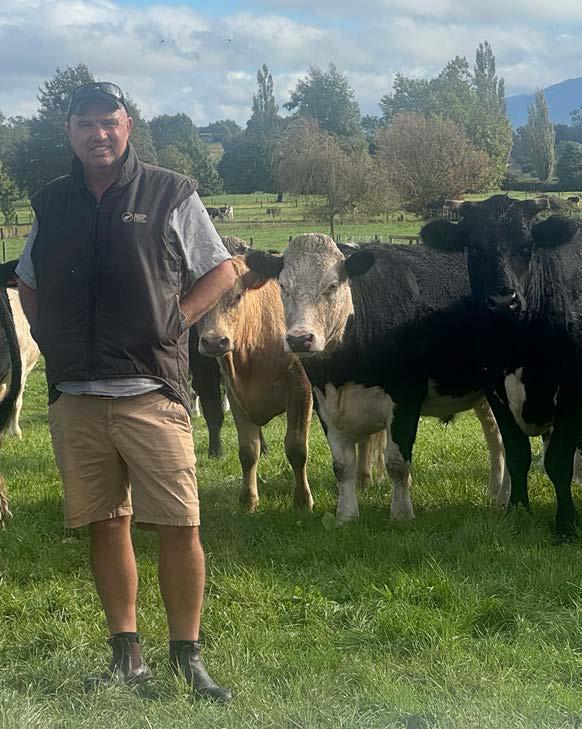
Farming has always been part of life for Ōhaupō farmer Simon Boshier, who now runs 150 head of beef cattle each year on his 20-hectare block.
Today he balances that with his role at Silver Fern Farms, working alongside dairy, sheep and beef farmers across the country.
Six years ago, something changed his outlook.
Through his work, Simon became aware of Meet the Need not long after it began. What moved him from awareness to action was a visit to a partner foodbank run by Sir Michael Jones’ The Village Community Services Trust.
“I love rugby, so that got me in the door,” he says. “But once you see a foodbank in action, it sticks with you.”
One moment in particular stood out. A mother arrived with five children, emotional and deeply grateful for what was available, especially mince.
“That really hit home,” Simon says. “You realise pretty quickly what a difference it makes.”
For him, the decision to contribute came down to something simple.
“Farmers are doing alright. Prices are strong. It’s not hard to give a beast,” he says.
It is a practical approach that reflects how he views farming more broadly. He sees it not just as a business, but a position of responsibility.
“We’re lucky to be in this life. Sometimes you’ve got to step back and remember that.”
Each year, Simon donates one animal through Meet the Need. He sees it as a straightforward commitment and something others can adopt in whatever way works for them.
“I just make sure I give one a year.
It’s about doing your bit and leading by example.”
Importantly, he points out that farmers do not need to donate a whole animal. The programme allows for part donations as well, making it possible for more people to get involved.
“It doesn’t have to be big to make a difference.”
The livestock donated through Meet the Need is processed into mince and distributed to foodbanks around the country. For Simon, that connection between farm and families is what gives the initiative real meaning.
“It’s not just giving cash. It’s protein, it’s good-quality food, and it’s something people really need.”
As someone working day to day with farmers, he believes the sector is in a strong position to help.
“That’s the thing, we produce this every day. We’re in a position to share it.”
Looking ahead, he says there has rarely been a better time for farmers to consider contributing.
“With prices where they are, there’s an opportunity there.”
And while he makes the point with a degree of humour, his message is clear.
“They might just need to get the moss out of their wallet,” he says.
“But in all seriousness, there’s no better charity for farmers to get behind. It’s our product, it’s our sector, and it makes a real difference.”
For Simon, it comes back to something straightforward. Farming provides a good life, and giving back in a practical way is part of that.
For many Kiwi families, that contribution ends up being something simple, but significant: having good-quality mince on the table. - Supplied
Simon Boshier on his Ōhaupō farm.
Governance on the ground
Recent councillor engagement across the Waikato and King Country has reinforced a simple but increasingly urgent point: if we are serious about good decision-making, we need more time on the ground and less time in council chambers.
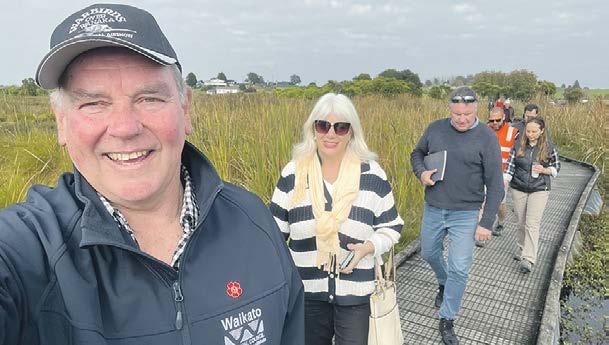
Recognising this, I organised a recent field visit across the region, bringing councillors together to see first-hand the environments, communities, and challenges we are making decisions about.
Lake Ngā Roto, a lake that is clearly calling for help, was the first stop on the visit, where regional councillors discussed the future
of the reserve and its surrounding environment. While the conversation was constructive, it also highlighted how important it is to physically see and understand the pressures facing this place. There is no substitute for being there - standing on the land, seeing the condition of the lake firsthand, and understanding the cumulative impacts that are not always obvious in reports alone.
With long-term financial planning for the reserve and surrounding catchment commencing shortly, it is a timely opportunity to properly understand the issues on the ground and ensure investment decisions are
By Liz Stolwyk, Regional Councillor
well-informed and targeted. From there, we travelled to Pirongia and Kiokio to assess floodaffected areas. Standing in those landscapes provides a very different perspective to reading summaries of damage. The scale of impact on land, infrastructure, and livelihoods becomes immediate and real. It also highlighted how impractical some aspects of Waikato Plan Change 1 can be when applied in real-world situations. In Pirongia especially, it was clear that any climate or resilience policy must also prioritise the fundamentals - improved clearing of drains and waterways, alongside
NZ
•
•
•
•
•
•
•
•
ongoing investment in infrastructure that can better cope with extreme weather events.
Over lunch with Ōtorohanga mayor Rodney Dow, discussions reinforced the ongoing challenges rural communities face - not just in recovery, but in building long-term resilience.
In the King Country, engagement with King Country River Care provided valuable insight into the environmental work being undertaken on farms. Visiting Reon and Wendy Verry (sheep and beef) and Brian and Paulette Johns (dairy) showed firsthand what is being achieved, what is possible, and where policy intersects with practical farming systems.
Seeing their plantings and the results of their work on the ground was particularly powerful and, importantly, is aspirational for other river care groups across the region. Standing in their paddocks, it was clear that progress is being made - but also that policy must remain grounded in reality.
Discussions also touched more broadly on Waikato Plan Change 1 and the need for a common-sense approach that recognises both environmental outcomes and the realities of farm viability. We hear you, King Country farmers, and once decisions are released, we are committed to working closely alongside you to ensure workable solutions.
Beyond the formal programme,
I attended the Kāwhia Community Board meeting, where support was given to government funding for an EV charging station - an important step for connectivity and local development.
Kāwhia beach access was also discussed at a recent hui. As indicated there, vehicle access on Kāwhia Beach is a complex legal issue, involving several overlapping pieces of legislation that must be carefully considered together.
Separately, I visited Mōkau to assess the resilience of State Highway 3 alongside Taranaki Regional Council. In my role as Regional Transport chair, I have since written to Minister Chris Bishop advocating for SH3 to be prioritised as a critical lifeline route for the region.
The conclusion from all of this is straightforward: we cannot govern effectively from behind desks alone. Boardroom discussions have their place, but they must be matched with consistent, structured, and meaningful engagement on the ground.
Our communities, farmers, and infrastructure challenges are complex, local, and constantly evolving. They require councillors who are willing to get out, see it for themselves, listen directly, and fully understand the real-world consequences of the decisions we make.
•
• Results guaranteed
tailored to suit your water needs
• Latest in electronic technology , wireless & alert systems
•
•
• Servicing the Waikato, Bay of Plenty, Taranaki & Gisborne
• Latest in electronic technology , wireless & alert systems
• Fully automated
•
•
• Servicing the Waikato, Bay of Plenty, Taranaki & Gisborne
• NZ designed systems tailored to suit your water needs
•
•
• Latest in electronic technology , wireless & alert systems
• Servicing the Waikato, Bay of Plenty, Taranaki & Gisborne
• Servicing the Waikato, Bay of Plenty, Taranaki & Gisborne
included)
Waikato regional councillors Gary McGuire and Liz Stolwyk with chair Warren Maher at Lake Ngā Roto
Solar hits red tape
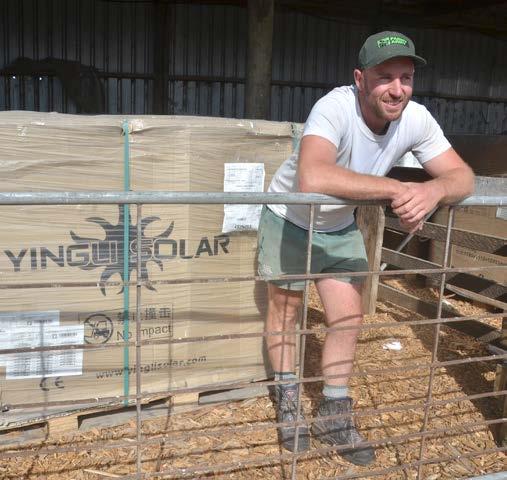
A dairy farmer who has just installed solar panels says council red tape is making a simple, practical on-farm upgrade harder than it should be.
Andrew Lord, who milks 270 cows at Te Pahū in the Waikato, recently completed installation of a solar panel array to cut his electricity costs and build resilience against future power cuts.
But despite the system now being up and running, he remains frustrated that consent was required in the first place.
“I got quite irritated to learn under Waipā’s district plan I’d need a resource consent, with a $2895 charge just to lodge the application.
“For the life of me, I don’t know why,” Lord says.
“There’s absolutely no impact on my neighbours or anyone else, and New Zealand is meant to be on a drive to further increase our renewable energy capacity.”
Mike Casey, the CEO of Rewiring Aotearoa, says he’s fielding similar concerns from farmers all over New Zealand.
It adds to a case he and Federated Farmers put to the Government late last year that on-farm solar should be a permitted activitymeaning it doesn’t need resource consent.
“Solar power is in the interest of farmers and the country.
“We shouldn’t be stifling progress with needless red tape and bureaucracy,” Casey says.
Farms can be a net positive on the energy system by feeding power back into the grid at times of peak demand.
They can also play an important role in meeting the country’s climate goals by electrifying farm machinery.
Lord, an active member of Dairy Environment Leaders, installed 168 panels and an inverter delivering 75.6 kilowatts. The system sits on about 340 square metres of ungrazed land behind his milking shed.
“They’re tucked in behind the shed, pretty much invisible to anyone else unless you were flying over in a helicopter,” he says.
While the consent charge is relatively small against the total investment of around $150,000, Lord says the principle still doesn’t stack up.
“What’s even more ridiculous is that Waipā District Council’s invoice said I had to pay the $2895 within two days - as if they’d ever settle a bill that quickly.
“On-farm solar power is good for the environment and for when storms bring down power lines, so why put up this unnecessary hurdle and cost?”
Council planning rules cite potential impacts such as glare, visual amenity, earthworks and even noise from panels tracking the sun.
Casey, who co-owns the world’s first fully electric cherry orchard, draws a clear line between small-scale farm use and large solar developments.
“In essence, solar panels for a farmer to power a milking shed or irrigators, and feed a bit back into the grid, are temporary structures and relatively easy to remove.
“You don’t need resource consent to bang in fence posts.
“But large-scale solar arrays, generating above one megawatt, are a different kettle of fish.”
He says inconsistency between councils is also frustrating farmers.
While his Central Otago orchard required no consent, another farmer just 10km away across
the Queenstown Lakes district boundary faced significant compliance costs.
“It’s not enough to stop farmers investing, but it is a cost that doesn’t need to be there and is inconsistently applied,” Casey says.
Federated Farmers RMA reform and energy spokesperson Mark Hooper says some councils are already moving to make smallscale farm solar a permitted activity.
“Some national direction from the Government would cut through these inconsistencies and remove a real thorn in farmers’ sides,” Hooper says.
Andrew Lord with his solar panels.
Passing on the Farm Without Losing the Family
When people talk about farm succession, it is often treated as a simple handover. In reality, that is where the hard questions begin.
The first question is whether succession is actually viable. Can the farm support another family? Can Mum and Dad step back while still allowing a child to make a living from the business? Or will debt and tight cashflow make the whole plan unworkable? A farm may have significant value tied up in the land, but that does not always mean it has the income to sustain a successful succession plan. Then comes the question no one likes answering properly: what are Mum and Dad actually ready to let go of? Some want to step back early and enjoy a different pace of life. Others still want a hand on the wheel. Neither approach is wrong, but if expectations are not discussed openly, frustration can quickly creep in.
Then there is the sibling question. Most parents want to be fair. Of course they do. But fairness in farming families is rarely simple, and it is almost never seen the same way by everyone involved. One child may have stayed on the farm, worked long hours, accepted lower pay, taken on responsibility, and helped grow the business over many years. That contribution matters, even if it does not sit neatly on a balance sheet.
There is also another part of the equation that is easy to overlook: the freedom that comes from having family on the farm. Not just labour, but trust. Reliability. Shared responsibility. The ability to step away and know things will still be done properly. That has real value, even if it is difficult to measure. In a world where quality farm staff can be hard to find, that contribution should never be underestimated.
Good succession planning is not really about choosing a winner. It is about working out what is sustainable, what is fair in the circumstances, and what gives the farm the best chance of continuing without breaking the family in the process.
The earlier those conversations start, the better. Open discussions, clear expectations, and good professional advice can make all the difference. Done well, succession planning protects more than the farm — it protects the relationships around it too.
If your family is starting to think about succession, the friendly rural team at Edmonds Judd is here to help.
Fiona Jack
Costs bite on farm
By David Porter
A spike in costs following the Iran war is already hitting New Zealand farms, with former Waikato Federated Farmers president Phil Sherwood warning the pressure is being felt immediately on the ground.
Sherwood, who has recently moved to Taranaki, says farmers are seeing extra costs filter through quicklyparticularly in contracting and fuel-linked work.
“On my own farm we saw a $3500 extra charge on top of our normal maize harvesting costs,” he says.
“The contractors just pass it on and we absorb it on our balance sheets.”
The conflict has unsettled global fuel markets, with knock-on effects beginning to show across agricultural supply chains. Sherwood says while the full impact is still unfolding, input costs are expected to climb further.
“We’re expecting fertiliser prices to go up and supply to tighten because of basic supply and demand,” he says.
“I guess the big impact we’re going to see here is inflation and farmers feel that pretty quickly.”
That inflationary pressure will not stay on farm for long. Sherwood says rising costs typically move through the system, affecting everything from production to supermarket prices.
While fuel demand is
relatively steady at present with many dairy farmers dried off and preparing for calving, Sherwood says that will change quickly as activity picks up.
“When things ramp up again, diesel demand will be high,” he says.
Fuel availability is a key concern. Farmers can manage higher costs to a degree, Sherwood says, but disruptions to supply create much bigger risks.
“If you can get fuel, you can make trade-offs. If you can’t, that’s when things get really difficult — particularly around harvest or getting crops in the ground.”
Across the sector, farmers are now weighing how sustained the disruption could be.
Infometrics chief economist Brad Olsen says fuel supply chains may take time to settle, with elevated prices likely to persist in the short term.
“The fuel side could stay higher for a while,” he says.
“For inputs like fertiliser, the impact may not be immediate because there’s already supply in the system but the next season is where costs could really start to bite.”
Olsen says the lag effect means farmers may feel a more significant squeeze later in the year as higher-priced inputs begin feeding through.
For now, many are focused on preparation for the next production cycle, balancing
current conditions with uncertainty about what lies ahead.
There are also broader questions around demand for New Zealand exports as global economic conditions react to the conflict.
Sherwood says farmers will be watching closely, but the immediate concern remains firmly on managing rising costs at home.
“The biggest thing for us is the cost pressure,” he says.
“That’s what hits first and it’s what flows through everything else we do.”
Temporary pause
Rising fuel costs and State Highway 3 freight disruptions have temporarily paused New Zealand production of an award-winning living soil and delayed its nationwide expansion.
Living soil specialist Frank Lachmann, cofounder and owner of Herbi, a Kihikihi-based business, said increased transport costs had forced a pause in local production of his growing mix.
The business last month sold out of its product, voted Germany’s Best Garden Product in 2025, and dozens of orders were waiting to be fulfilled, Lachmann said.
“It’s really frustrating. We have gardeners and retailers around New
Zealand waiting for stock, and the list continues to grow, but rising costs have made the current model too expensive.”
Higher fuel and freight costs were the main factors behind the temporary production halt in Taranaki, where the soil had been made under contract.
“We use specialist natural ingredients from around the country, so transport costs have a real impact on production.”
The pressure had been compounded by temporary road closures and road works on State Highway 3 to Taranaki.
Lachmann shifted his soil and plant food business from Taranaki to the Waikato last year to expand and safeguard production.
Phil Sherwood
Te Awamutu
Across 1. Relating to sound (5) 4. Opportunity (6) 7. Alien object (3) 8. Supple (6) 9. Contemptibly few (6)
AIR MAIL BILL CABLE CHIT COURIER DRUMS EMAIL FACEBOOK FACETIME FAX LETTER MEMO
Enjoy welcoming, comfy surroundings and a warm sense of belonging at our Resthaven on Burns Care Centre.
• We are a community charitable trust providing quality, affordable care for seniors.
• Our caring team are here to help you enjoy the things you love, whether it is gardening, baking, trips to town, hobbies, or simply a quiet afternoon relaxing.
• Our commitment to affordability means there is no premium daily room charge at Resthaven on Burns.
MESSENGER MORSE NOTE
POSTCARD POSTER RADIO SEMAPHORE SKY WRITING SKYPE
SMOKE SIGNAL SNAPCHAT TANNOY
TELEGRAM TELEPHONE TELEPRINTER TELEX TEXT TIC-TAC TOWN CRIER WHATSAPP WIRE ZOOM
Moroccan bites with Jan Bilton
Ras al hanout seasoning, the signature spice from Morocco, is a blend of ground cumin, coriander, cinnamon, turmeric, saffron and other warm spices often used in many Moroccan dishes. Typical Moroccan dishes include tagines — gently steamed stews, and bestillas — sweet and savoury flaky pies.
A tagine (or tajine) is a North African, specifically Moroccan, slow-cooked stew, as well as the cone-shaped clay or ceramic pot used to cook it. The unique lid traps steam and returns condensed liquid to the pot, creating tender, moist meat and vegetables.
Couscous is a common carbohydrate served with stews. It is traditionally cooked by steaming semolina grains three times over a simmering stew in a ‘couscoussier’, a twochambered pot. The grains are rubbed with oil and water, then steamed for 15–20 minutes per round, ensuring the couscous becomes fluffy, light, and absorbs the aromas of the meat and vegetables cooking below. Kiwi cooks — follow the packet instructions. The cuisine has been influenced by many cultures, including Arab, Jewish, and French, and is both subtle and full of surprises. Slow-cooking methods bring out the unique flavours of the spices. Honey, sugar or fruits, either dried or fresh, are often used to flavour couscous or savoury meat dishes.
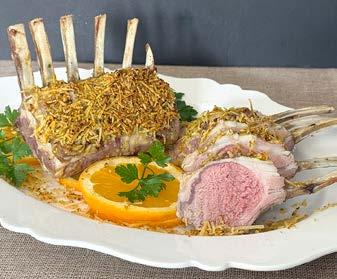
Moroccan Spiced Lamb Rack
2 racks lamb, about 5 cutlets each freshly ground black pepper to taste
1-2 tablespoons olive oil
4 tablespoons grated parmesan cheese
1 1/2 tablespoons Moroccan spice mix
Preheat the oven to 200°C.
Trim the excess fat from the racks if needed. Season with black pepper. Heat the oil in a non-stick frying pan over medium heat. Brown the racks quickly on both sides, then place them in a small baking dish, meat side up. Combine the parmesan and Moroccan spice mix. Pat firmly
over the meat side.
Roast the lamb rack for 20-25minutes. The inside temperature should be about 55°C and a little pink. Great served with an orange-based chutney. Serves 4.
Moroccan Avo Dip
AvoGrey avocados have a long shelf life, are easy to peel, have firm flesh and don’t discolour in a way other varieties do.
1 large AvoGrey avocado or 2 Haas avocados
1 1/2 teaspoons ras al hanout seasoning blend
1 teaspoon finely grated orange rind
1 tablespoon fresh orange juice
2 small tomatoes, seeded and diced
1 tablespoon chopped fresh coriander, freshly ground salt to taste
Halve, stone and peel the avocado. Coarsely mash. Gently combine with the ras al hanout, grated peel, juice, tomatoes, coriander and salt. Garnish and serve within the hour.
Serving Suggestion: Top with slices of preserved lemon and serve with crackers and/or fresh veggies.
Quick Preserved Lemon: Slice 4 lemons lengthwise into 6
wedges. Place in a jar and add 1 tablespoon of salt and 2 tablespoons of sugar. Cover and shake. Leave at room temperature for 3 hours before use.
Beef Tagine with Apricots and Prunes
600g lean stewing beef
1 tablespoon oil
1 each: large onion, carrot, sliced
1 teaspoon each: ground ginger, ground turmeric
1/2 teaspoon each: ground cumin, cinnamon, nutmeg, white pepper
Heat the oil in a non-stick frying pan and brown the meat in batches. Add the onion and carrot with the spices and cook for 2-3 minutes, stirring. Add the flour, mixing well. Pour in the stock and orange juice and bring to the boil. Stir well. Add the dried apricots and prunes, cover, and cook on very low heat for about 1 1/2 hours or until the meat is tender. Stir occasionally. This treat can be served with couscous. Serves 4.
Moroccan Spiced Lamb Rack
Moroccan Avo Dip
0210 284 5166 alleycatgardencare@gmail.com
Farming roots and implants
By Mary Anne Gill
A former King Country dentist says a decision he made for a local farmer led, unexpectedly, to groundbreaking research into dental implants.
The Taumarunui farmer wanted white and straight teeth to display at his daughter’s wedding. Years later the farmer returned saying he was having trouble keeping his dentures in place.
For Kevan Wong, the case never left him. At the time, Wong had spent a decade working as a rural dentist in Taumarunui, deliberately choosing to practise where services were most needed. He had also gone on to establish the first dental practice in Ohakune in the late 1970s, combining long clinical days with his love of skiing on the mountain.
“When he first came to me, I didn’t want to do it,” Wong says.
The farmer’s teeth, although crooked, were healthy and functional. Wong was reluctant to remove them simply for cosmetic reasons. But after months of persistence, he eventually agreed.
The farmer got his smile for the wedding, but the outcome troubled Wong.
When the man returned years later unable to keep his dentures in place, Wong was confronted with uncomfortable questions about long-term responsibility and whether dentistry could do better.
“That experience stayed with me,” he says. “There had to be a better way.”
That question changed the direction of his career, taking him from small-town dentistry in the King Country to the forefront of international dental implant research.
Born in Guangzhou in southern China, Wong arrived in New Zealand at the age of two. He grew up in Timaru and attended Timaru College, immersing himself in what he describes as a very New Zealand childhood. For a time, his ambitions were sporting rather than academic.
“My whole ambition in life was to be an All Black,” he says, proudly recalling two seasons playing No 8 for South Canterbury representative teams. His working life began as an aircraft engineering apprentice with the National Airways Corporation, now Air New Zealand. Stationed at Harewood in Christchurch, he spent lunch breaks reading about
early discoveries in DNA and molecular biologycuriosity that ultimately led him to give up engineering and enrol at the University of Otago, completing a Bachelor of Science and then dentistry.
Dentistry appealed because it was practical and problem-solving, but it was the farmer’s case in Taumarunui that pushed Wong into deeper inquiry. Determined to find alternatives to dentures, he travelled to the United Kingdom and enrolled at the University of London and completed a PhD in dental implantology with a focus on jaw reconstruction and bone regeneration.
From there, Wong established a specialist referral practice in Norwich, published peer-reviewed research and was awarded a fellowship from the Dunhill Medical Research Trust. His work helped place dental implants on firmer scientific footing and positioned him as a trainer for other dentists.
Family ties eventually drew him back to New Zealand. Settling in Tauranga in the early 2000s, Wong developed a group dental practice that grew to include five dentists and multiple hygienists,
later becoming part of the Lumino Dentists Group. Alongside clinical work, he spent more than two decades training dentists in implantology, lifting capability across the profession.
By most standards, it would have been a logical moment to slow down. Instead, semi-retirement made Wong restless once again. Watching nightly news coverage of climate change, he became frustrated by how little he understood of the science, policy and law behind it - leading him back to university.
Last month, at the age of 77, Wong walked across the graduation stage at The Pā in Hamilton to receive a Bachelor of Laws from the University of Waikato, dressed in a deep claret gown reflecting his earlier PhD rather than the degree he was collecting that day.
“I just follow my interests,” he says. “And once something catches my attention, I want to understand it properly.”
Approaching his 80s, and still asking questions, the former King Country dentist says that lifelong learning is not an indulgence.
“It’s a responsibility,” he says.
INVOICING AND PAYMENTS
E ective
Te Awamutu & District Memorial RSA Incorporated NOTICE OF ANNUAL GENERAL MEETING & ELECTION OF EXECUTIVE COMMITTEE
Notice is hereby given that the Annual General Meeting and Election of the Executive Committee will be held at the RSA Clubrooms 381 Alexandra Street, Te Awamutu on
Sunday 21st June 2026 commencing at 1.00pm
Nominations for members of the Executive Committee open Monday 11th May and close Friday 29th May. Forms are available from the Clubroom Office. Notices of Motion must be in the hands of the Secretary by Friday 29th May.
A Newsletter with nominated candidate profiles will be available at the Clubrooms on Sunday 31st May. It will also be emailed to members. Voting for Executive Committee will be from Friday 29th May to Friday 20th June.
Meet the candidates will be 4th June 7pm
The Audited Annual Financial Report to 31March 2025 will be available at the Clubrooms on the Friday before the AGM.
Heather Upston – Secretary Manager
DESIGN COORDINATOR
We’re looking for an organised, detail-focused Design Coordinator to help deliver high-quality construction projects from concept through to consent.
Key responsibilities:
• Coordinate design consultants and manage project documentation
• Support design changes, submissions, and approvals
• Assist with planning and consent processes
• Ensure compliance with NZ Building Code
• Support procurement and project handover About you:
• Experience in construction, architecture, or engineering
• Strong organisational and communication skills
• Knowledge of NZ Building Code and H&S requirements
• Proactive, solutions-focused approach
Join a supportive, collaborative team delivering quality projects. Apply now: annette.venter@wcml.co.nz
Applicants must have NZ residency or a valid NZ work visa
TERMS AND CONDITIONS
period starting from the date the first ad publishes. Rate bracket e.g. 6 insertions, 12 insertions etc. chosen allows ad sizes to vary within the rate bracket. If the number of insertions chosen is not met then a bulk charge will be applied at the end/cancellation of your schedule based on correct rate reflective of the number of ads published e.g. if you have chosen the 12 insertion rate and only publish 6 insertions, the bulk charge will be the di erence in price between the 6 insertion rate and 12 insertion rate multiplied by the number of ads published. You pay the rate reflective of the number of ads you published.
Copy deadline for ad-make up is noon Friday prior to publication day. Booking and Copy deadlines for Waikato Business News and Bay of Plenty Business News is on request. Advertiser is responsible to advise us of any copy changes before proofing deadline –anything not signed o by this time, ad prints as per the last proof sent. Advertising supplied in completed form (finished artwork or camera ready), deadline is Tuesday 11am prior to publication day. Public holiday weeks, all deadlines move forward one working day. Cancellation deadline is one week prior to publication. If cancellations are received after the cancellation deadline, then full charge applies. All other publications and products see separate booking and deadline sheet. Advertising setting incurs a production fee of $50 + GST for up to two proofs, further changes will incur additional production fees. Advertising copy set by Good Local Media Ltd is the property of Good Local Media Ltd and for use in Good Local Media Ltd publications only. If used elsewhere charges will apply, pricing available on request. If supplied ready to print, copy is owned by the advertiser. Publication day is Thursday for urban deliveries and Friday morning for rural deliveries. Acceptance of advertising and free productions services is at the discretion of the publisher. Acceptance of advertising for publication and free productions services is at the discretion of the publisher.
high resolution PDFs as the ad file format exported using the compatibility setting: Acrobat 4 (PDF 1.3). Please do not use/include overprint. Ideally, 10pt is the standard point size; however, in some cases with bold fonts 9pt can be used, depending on background. Black text should be 100% black[k]. All artwork submitted needs a border. Specifications for photos and logos – CMYK, high resolution jpeg (minimum 200dpi) pdf attachments. If finished artwork ready to print (Camera Ready) provided does not meet our technical requirements, your advert will be technically fixed, a technical report will be provided, and a $50 + GST production fee will be incurred. No proof will be sent as no design changes will be made. File formats: We will not accept PDFs created from Word, Excel, Publisher, PowerPoint, Photoshop, and Canva. However, we can copy your design and proof for your approval. Any artwork received in these formats must adhere to the copy setting deadline as they are not finished artwork or technically compatible to newspaper printing specifications.
LIMITATION OF LIABILITY
Family support for Kevan Wong at his recent Waikato University graduation, from left: Zona, Amy, Bella, Rohan, wife Jan and Jonathan; kneeling left, Xanthie, Cassian and Zebacia.
AGISTMENT
DAIRY grazing available for R1 and R2 heifers. Call Aaron on 027 388 3881
FOR SALE
FOR SALE - Foxy Jack
Russell first crossed pups $800 each Ph 021 107 1967
PLANTS FOR SALE
PIRONGIA TOPIARY
Open Fridays 10am-4pm 132 Sainsbury Rd Pirongia OR Phone Susan Ranstead 0274 176 379
WANTED TO BUY
WANTED TO BUY. Any ute, van, 4WD, truck or car. Any condition doesn’t have to be going. Cash paid. Ph/txt
Kevin 027 299 6165
Cambridge & District Pipe Band AGM
Thursday 2 th May 202 at 7. 0pm Band Room, Vogel St, Cambridge Sec Ph 02 215
WOMEN’S SECTION ANNUAL GENERAL MEETING
Wednesday June 10th, 2026 2 PM At the RSA, 881 Alexandra Street, Te Awamutu. J. Elers, Secretary.
TE AWAMUTU CONTINUING EDUCATION
Wednesday 20th May 2026 10am
Entry: $4 on arrival Waipa Workingmen’s Club
KERBY, Mary Jean –
Passed away peacefully at home on Saturday, 2nd May 2026, aged 77 years. Now reunited with her dearly loved son Walter (Wally). Loved sister of Lynette (Lyn). A private gathering of family and friends has been held. Messages to the Mary's Family may be sent c/- 262 Ohaupo Road, Te Awamutu 3800 or left in Mary’s online tribute book at www. rosetown.co.nz
PROPOSED PLAN CHANGE 25 TO THE OPERATIVE WAIPĀ DISTRICT PLAN: SHELTERBELTS AND ARTIFICIAL CROP PROTECTION AND SUPPORT STRUCTURES.
Availability of Summary of Submissions and Further Submissions Clauses 7 and 8 of Schedule 1 to the Resource Management Act 1991.
On January 15, 2026, Waipā District Council notified Proposed Plan Change 25 – Shelterbelts and Artificial Crop Protection and Support Structures (PC25). Submissions closed on February 20, 2026. Council has prepared a summary of the decisions requested in submissions received on PC25, which is now available to view at www.waipadc.govt.nz/planchange25 , or at Council offices and public libraries in Te Awamutu and Cambridge.
Further submissions on PC25 can now be lodged with Council. The closing date for further submissions is 5pm, Thursday May 28, 2026.
A further submission may only be made in support of, or opposition to, another person’s submission and can only be made by: any person representing a relevant aspect of the public interest; any person with a greater interest in the plan change than the general public; and Waipā District Council.
Further submissions must follow and provide the information required by Form 6 in the Resource Management (Forms, Fees, and Procedure) Regulations 2003. The further submission form can be accessed at www.waipadc.govt.nz/planchange25
Further submissions can be made:
Online: www.waipadc.govt.nz/planchange25
Email: districtplan@waipadc.govt.nz
Post: Private Bag 2402, Te Awamutu 3840
In-person: Waipā District Council offices, 101 Bank Street Te Awamutu OR 23 Wilson Street, Cambridge.
You must serve a copy of your further submission on the person who made the original submission within five working days of lodging it with Council. Please email districtplan@waipadc.govt.nz to request the contact details of the original submitter. Notification date (summary of submissions): Thursday, May 14, 2026.
Further submission closing date: 5pm, Thursday, May 28, 2026. See the Privacy Statement on Council’s website for further information.
Steph O’Sullivan Chief Executive
CHURCH
Dr Terry Cowland
All Welcome
BELCHAMBER, Philip Gordon Fredrick – Passed away after a brief illness on Saturday, Anzac Day, 25th April 2026, at Waikato Hospital, aged 73 years. A gathering of friends will be held last week. Messages to the Belchamber family may be sent c/- 262 Ohaupo Road, Te Awamutu 3800, or left in Philip’s online tribute book at www.rosetown. co.nz.
A conversation about Death to help you live more fully 11am Tuesday
A conversation about Death to help you live more fully
11am next Tuesday
Speaker: Neil Pratt
Topic:
20 August 2024
19 May 2026
National and International Clay Target Tiles and Hall of Fame Induction.
Parish of St John’s Lounge
Parish of St John’s Lounge
162 Arawata St
162 Arawata St
Te Awamutu
Te Awamutu
ALL WELCOME
ALL WELCOME
Everybody Welcome More info phone 07 870 3223
No cost, but koha welcome
No cost, but koha welcome
RATING INFORMATION DATABASE
Pursuant to section 28 of the Local Government (Rating) Act 2002 public notice is hereby given that the Rating Information Database is available for public inspection at the Council, 17 Maniapoto Street, Ōtorohanga between the hours of 9am and 4pm Monday to Friday or by visiting our website www.otodc.govt.nz
The Rating Information Database records all information required by a local authority for setting and assessing rates on properties within their district. For each rating property this includes its valuation and any categories that belong to that property that are used to charge separate targeted rates. This database does not include the name of the ratepayer nor any address other than the physical street address of the property.
Tanya Winter CHIEF EXECUTIVE
KLEIN, Brian Frank – Passed away peacefully at Waikato Hospital on Thursday, 7th May 2026. Aged 87 years. Dearly loved husband of Joy Klein. Cherished dad of Michele and Darryl. Adored brother of Mary Sircombe. Father-in-law to Min and Greg. Very precious grandad to Olivia, Ryan, Sara, Alan, Bailey and Logan. Gone are the days we shared together, but in our hearts you will always be. Rest in peace now. A celebration of Brian’s life will be held Thursday, the 14th of May 2026, at 1pm, in Alexandra House Chapel, 570 Alexandra St, Te Awamutu. All communications c/- Klein family to PO Box 137, Te Awamutu.
BRADLEY, Ian Clifford –Peacefully on the 6th May 2026 at Rangiura Care Home, Putaruru. Aged 71 years. Eldest son to Richard and Barbara. Loving husband of the late Adele. Much loved father and father-in-law of Jarrod and Fiona, Kyle and Jenna, Nichola and Jono. Loving Poppa to his 9 grandchildren. Loved Big Brother to Ross, Glenda and the late Donald. "Gone Bush" According to Ian's wishes a private service has been held.
South Waikato Funeral Services Ltd, FDANZ PO Box 459, Tokoroa 3444
JOHNSTON, Margaret Ann (Ann) – Passed away suddenly at home on 23 April 2026 aged 90 after a long and fulfilling life. Loving wife of John Murphy (dec) and Eric Johnston (dec). Much loved Mum and mother-inlaw of Maria and Tony (Aus), Tina and Paul (Aus), Michael (Scotland). Special Grandma to Blake and Renee and great grandmother to Colt. Beloved sister of Joy and David (dec). Treasured Aunty Ann to many.
"Mum was an amazing person brave, resilient and strong who loved her family and life." Her passion for horses and the outdoors inspired a lifetime of adventures across New Zealand. In keeping with Ann's wishes a private service was held at St Patrick's church Te Awamutu.