High-flying farm chief
Monique Balvert-O’Connor
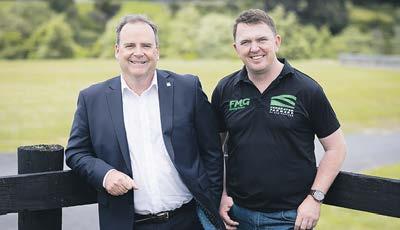
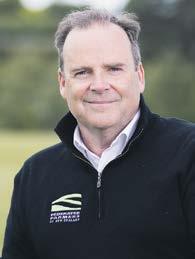
As a teenager Mike Siermans thought he might become a pilot. Instead, he has become a senior leader in a sector grounded firmly in the land.
His appointment as Federated Farmers chief executive was confirmed in January after he spent several months in an interim capacity and coincided with severe weather that brought devastation to parts of the country.
Through it all he learnt first hand of the value of Federated Farmers in times of strife.
“We have a different perspective from emergency services as we know our farmers and can ring those provincial heads to ask
what is needed. The collective knowledge that brings the community is incredible.
“Federated Farmers is not just about productivity in farming; it’s about helping in adverse times. We can be the voice of our rural communities. This was demonstrated and is becoming increasingly important given climate change,” Siermans says.
From his seat at the helm during those trying times he worked with agencies to restore access so food and stock could move and spoke with farmers to ensure they stayed connected. Resilience and maintaining connections quickly became priorities.
It was a demanding start to the role and proved useful preparation


for future weather events.
With the storms behind him, his focus has shifted to travelling to as many provincial annual meetings as possible.
“There are 24 provinces and each has an AGM and I have tried to get to as many as I can, to meet people and work to identify their needs,” Siermans says.
Next on the agenda there’s Fieldays, where Federated Farmers will co-host an advocacy hub. Then, hot on the heels of Fieldays comes the Primary Industry Awards, staged by Federated Farmers on behalf of NZ primary industries.
He has been busy from the outset and says the role suits him.
“Within my career I have always looked to work for companies wanting to grow NZ Inc. I have worked for big, multinational companies and have a thing about putting my efforts and talents into making NZ successful.
“Working within the biggest export sector in NZ provides the biggest opportunity and prospect to grow NZ Inc forward. I am working in alignment with NZ farmers to do good work every day,” Siermans says.
The current Federated Farmers focus? In a nutshell, he says that would be financial and organisational stability and membership growth. The current membership of about 12,000 is
strong but says 14,000 would allow greater investment in advocacy and support.
“Advocacy is our game; our strength is our fraternity,” is his mantra.
“We are across the provinces, understanding what the issues are, and then we go to bat for our farmers. There is good, robust discussion and an impact on local regulations and national legislation.
I love that we are making a positive difference for them,” says Siermans who urges non-members to pick up the phone, sign up and support the good work Federated Farmers does.
Siermans says the call he received suggesting he apply for the Federated Farmers position was perfectly timed. He’d been interested in moving into another field and the agricultural sector was in his line of vision.
Federated Farmers president Wayne Langford acknowledges Siermans’ extensive senior leadership and commercial experience. Siermans, in return, considers it an “absolute privilege” to head an organisation highly respected by local and central government and farmers in general – one that’s highly influential when it comes to the future of NZ farming.
Before joining Federated Farmers, Siermans’ career spanned fast-moving consumer goods,
pharmaceuticals, and technology, with senior roles at Douglas Pharmaceuticals, Pfizer Animal Health, and most recently at Taura Natural Ingredients. His 15th birthday present was a flying lesson but university beckoned, and the idea of becoming a pilot morphed into being a one-day leisure activity; that’s still on the cards, he says.
“I decided to pursue business. I thought that would be a good way to influence outcomes and do good work,” says Siermans who has both a Bachelor of Commerce (economics major) and an MBA from Otago University.