
Confusion at Paewira
By Roy Pilott
The company behind plans to build a waste to energy plant in Waipā is on a New Zealand Gazette list to be removed from the Companies Register.
It says Global Contracting Solutions will cease to exist as a legal entity next Wednesday if no objections are received. Then, it would not be permitted to trade, enter into contacts or hold asserts.
But a spokesperson for the company says that will not be the case – and the announcement, listed online
by the New Zealand Gazette was a Companies Office broadcast to many New Zealand companies related to the timing of submitting annual returns.
“GCS therefore intends to continue with progressing with Paewira,” project director Adam Fletcher said.
The News has sought a response from the New Zealand Gazette, which is the Government newspaper and journal of constitutional record.
Global Contracting Solution’s bid to construct a plant in Te Awamutu’s Racecourse Road to burn
rubbish from around the region stalled last August when the Environmental Protection Authority revealed costs had not been paid.
This week EPA General Manager of Climate, Land and Oceans Garth Bloomfield told The News “we are aware of the Gazette notice and are currently considering our options”.
GCS began planning for a waste to energy plant eight years ago, found a site in Te Awamutu then unveiled its Paewira project.
Te Awamutu residents protested, and a lobby group






- Don’t Burn Waipā – argued against both the site and the science of the plan.
The lobby group, aligned with the Zero Waste Network, advanced data to underscore their concerns about the impact the plant would have.
On the other side, Global Contracting Solution’s Craig Tuhoro spoke passionately when painting a completely different picture, pointing to similar and successful operations in Europe.
When the resource consent applications went to the Waipā district and Waikato regional councils, they were called in to an independent board of inquiry by environment minister Penny Simmonds.
The application attracted more than 2000 submissions, and a board of inquiry, chaired by Environment Court Judge Bryan Dwyer, sat for three weeks in Hamilton in June and July last year.
But when it appeared to be on the cusp of announcing a decision in mid-August, the authority reported the process had stalled.
Adam Fletcher said at the time the doubling of resource consent application costs had led to the suspension of the resource consent application.
It is also understood processing costs of more than $100,000 were owed to the district and regional
Pure Hoki Oil
councils.
Garth Bloomfield told The News the board of inquiry was separate from the EPA and had not made a final decision on the application when the suspension decision was made and “this remains the case”.
In January The News reported Environmental Protection Authority chief executive Allan Freeth had told Waipā District Council chief executive Steph O’Sullivan the company was attempting to raise capital to pay costs.
At the time, Global Contracting Solution posted an online video with Tuhoro saying he was struggling to understand why it was a political issue and “why we have so much activism around it”.
Waipā Mayor Mike Pettit told The News the company still had until July 15 to object to removal, “so it’s too early to say what this means
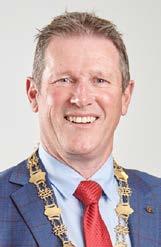
for the resource consent application, but we’ll be following this closely”.
“Waipā District Council’s position on the plant hasn’t changed. We remain strongly opposed to it being built on Racecourse Road in Te Awamutu, and we’ll keep advocating for the community regardless of what happens with this process.”









There were protests in Te Awamutu over the plan for a giant furnace to burn rubbish.
Mike Pettit
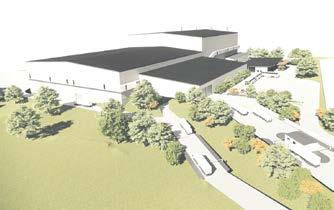
An artistic impression of the proposed waste to energy plant being considered for Te Awamutu.
AMUTU

Are you concerned about you electricity costs?
This is your invitation to join fellow members or potential members at our next meeting
Grey Power invites members and friends to: Waipa Workingmen’s Club, Albert Park Drive Thursday 16 July, 1pm for a 1:30pm start

Waipa Workingmen’s Club, Albert Park Drive
Guest speaker: A representative from Grey Power Electricity.
$4 door charge includes raffle and tea/coffee.
We are in desperate need of a secretary. If you feel you could fill this position, please let us know.
For more information please contact Bernard Westerbaan
For further info please contact Michael on 021 242 4220
Mobile 027 491 6763 or Michael on 07 8719006
TE AWAMUTU CONTINUING EDUCATION
Wednesday 15 July 2026
10am
Entry: $4 on arrival
Waipa Workingmen’s Club
Speaker:
Dame Coral Shaw
Topic: Abuse in Care. Royal Commission findings. What has changed?
Everybody Welcome More info phone 07 870 3223
CONTACTS
News/Editorial
Roy Pilott editor@goodlocal.nz
027 450 0115
Mary Anne Gill maryanne@goodlocal.nz
021 705 213
Viv Posselt viv@goodlocal.nz
027 233 7686
Dan Tasker
021 544 615
Advertising Director
Janine Davy janine@goodlocal.nz
027 287 0005
Owner/Publisher
David Mackenzie david@goodlocal.nz
Office/Missed Deliveries
07 827 0005 admin@goodlocal.nz
Happy New Year
Thanks to his scholarship and mastery of both western science and mātauranga Māori, Professor Rangi Mātāmua led a renaissance in Te Ao Māori and a new awareness in the Western world of the star cluster that it knows as the Pleiades.
Our Waikato-Maniapoto-Tainui ancestors recognised that there are hundreds of stars visible to the naked eye in the cluster and focussed on seven – Matariki, Waitī, Waitā, Ururangi, Waipunārangi, Tupuānuku and Tupuārangi.
Matanuku’s Tuhoe ancestors spoke and wrote of another two, Pohutukawa and Hiwaiterangi,
According to ancestral narratives the brightest star in the centre of the cluster, Matariki, married Rehua (Antares) and is the mother of the other six (eight) stars of the cluster.
The first appearance before sunrise of Matariki in the north-eastern sky, in the Tangaroa phase of the lunar month, marks the beginning of the Māori year – this year on July 10 - and is celebrated with our Matariki Māori New Year holiday thanks to the professor’s scholarly research and his publicising of that
On the beat
research far and wide.
By Tom Roa, Tikanga Advisor, Waikato University
Other iwi, primarily those on the West Coast of the North Island, mark their New Year with the rise of Puanga, (Rigel) who appears just before Matariki.
This is the fifth year of the holiday celebration. Ngāti Whātua Ōrākei will host the national event at Takaparawhau in Auckland Tāmaki-makau-rau. Karanga, karakia,and kōrero will start the ‘hautapu’ celebrations and subsequent festivities. Other iwi, hapū, whānau, will celebrate the Māori New Year in their own way over the next few days.
Professor Matamua’s introduction of the ‘hautapu’ concept piqued my curiosity. Following a conversation with him I contacted various of my elders and peers of the WaikatoKing Country and reflected with them on the ‘hautapu’ with a view to suggesting we might follow the professor’s example in reviving the practice.
Unsurprisingly most of my elders (and I!) knew little to nothing of the hautapu –merely that it was an ancient practice that they/we never witnessed. At one wānanga the suggestion was that Matariki rose while tribal Whare Wānanga were in session in the wintertime. So those ceremonies would have been conducted by tohunga, and not observed by the ‘ordinary’ people. Hence they were
Schools out, scammers too
Last Friday was the end of term two, to the delight of school students all across the district. On this day, I was honoured to be invited to judge the Te Awamutu College house song and haka competition. What a phenomenal display of passion and performance. Kei runga noa atu! Everyone did their house proud and Pounamu house took out the win in the end.
With school holidays well underway, please remember to be aware of our tamariki, more of whom will be out and about around the community, especially on bikes and scooters. If you are heading away for a break, as always, ensure your vehicle is up to WOF standard, drive defensively and to the conditions. Keep your speed down and allow plenty of time for your journey. Take regular breaks and be patient with others on the roads. Remember to secure your vehicle when parked and keep valuables out of sight. If we remove the attractants and opportunity, we lessen the likelihood of becoming a victim of crime.
This week I sadly have another scam case study to tell. One of our elderly community members recently received a phone call on her landline phone. The caller said she was from the Inland Revenue Department and advised of tax refund. What followed was a relentless campaign. The scammer managed to obtain

bank card details while also convincing the victim to withdraw money to purchase “Paysafe” vouchers on multiple occasions over a short space of time. She was told to pass the voucher details to the scammer when they called back each time and so the scam was complete.
A key factor of this scam was the urgency that was impressed upon the victim, including ringing her first thing in the morning and demanding she withdraw money immediately, then calling her a short time later when she got home to obtain voucher details. This resulted in the victim losing a total of $8000. It would have been even worse were it not for the interventions by staff at two different supermarkets, who took action to prevent her from purchasing further vouchers and brought her the realisation that it was a scam.
Please spread the scam awareness and prevention word to family, friends and neighbours. Confirm the validity of any phone or messaging approaches you suspect are suspicious, by contacting the organisation directly on a publicly advertised number (not the one the caller will give you).
If it looks like a scam, sounds like a scam or reads like a scam, it probably is a scam.
‘tapu’.
Following that advice, I suggested we might introduce a Māori New Year celebration that would not be ‘tapu’, that we might call a ‘hautū’. ‘Hautū’ can be interpreted as ‘to lead’. So this celebration without any accompanying heavy ‘tapu’ would lead out the New Year, acknowledging all that has passed with the old year, looking forward to a ‘happy new year’! Mānawatia a Matariki!
Dam story tops stats
A feature story on Arapuni Dam’s hidden past was the most read post on the Te Awamutu News website last month.
College students bringing the story of racial integration in the 1960s came in second followed closely by Kihikihi resident Donna West’s plan to seek treatment for breast cancer in Australia.
Rounding out the top five were Aunties
Laundromat owners Donna Missen and Dave Crone and the 100,000 Fieldays smart bands they washed and Te Awamutu College Year 13 student Charlee Neilson’s selection in the New Zealand junior squash team to compete in Canada this month. Website visits were up 11 per cent on the previous month.
The website’s home page and e-Editions continue to rank as the most visited with Thursday the busiest day.

CountryLife
CountryLife
Reach a targeted rural & lifestyle audience each month by advertising your business in CountryLife; featured inside the Cambridge News & Te Awamutu
Distributed to EVERY rural & urban letter box across the Waipa region each month.
Reach a targeted rural & lifestyle audience each month by advertising your business in CountryLife; featured inside the Cambridge News & Te Awamutu News Next Publication Date: Thursday 20 August August Deadlines:
region each month.






with Senior Constable DEB HANN
School hit
Te Awamutu Primary School has again been the victims of a burglary. The caretaker’s shed has been broken into.
The school posted details on social media on Monday asking if anyone saw people around Teasdale Street early Sunday morning with two small chainsaws and a red fuel can.
On
the trail
Planning is underway for a repeat of this year’s Waipā Creative Trail. Co-organiser, ceramic artist Alex Wilkinson told The News the call for a repeat was coming from participants and visitors. She said a conservative estimate of visitor numbers was around 700.
Pou unveiled
A carved pou created by Ngāti Korokī-Kahukura and Ngāti Hauā and including wood from the stump of a tōtara tree felled during construction of the entrance to Fonterra’s $85 million Wai Mahea water treatment plant at Hautapu was unveiled early yesterday (Wednesday).
Speed limits
New speed limits will be introduced to Waipā roads following response to community feedback and a 6-week consultation process. Intersection Speed Zones (ISZs) will also be installed in four locations in Waikato so when approaching traffic is detected at an intersection, electronic signs show a temporarily lowered speed limit.
Roading awards
Projects futureproofing
Hamilton Airport and connecting roading for a major residential development were recognised last week at the Waikato Civil Contractors New Zealand Hynds Construction Awards 2026. Work completing the final section of Whatukooruru Drive in Peacocke, southern Hamilton, won Schick Civil Construction the Supreme Award.
Bayly gets a Michelin star
By Jesse Wood
Te Awamutu College old
boy Ben Bayly’s Auckland restaurant Ahi has been awarded one of New Zealand’s first Michelin stars – and it’s all thanks to New Zealand food producers.
Fifteen restaurants were awarded Michelin stars in the first Michelin Guide New Zealand last week in Auckland.
Ahi and Bayly were also recognised as part of Michelin’s Mindful Voices.
“It’s a real privilege. I worked in all those restaurants through London and France, and I never thought it would come here. It’s just wonderful for New Zealand,” Bayly said.
“I’ve got a lot of gratitude, and I’ve got a lot of young chefs in my team that are going to run their own restaurant one day. It’s so cool for them.
“Hospitality employs a lot of people in New Zealand. So it’s nice to be seen.”
The Michelin stars will help put New Zealand on the international culinary map and inspire young people to work in the industry.
“It’s a great industry; I love it so much,” Bayly said.
“It’s showing people a pathway, that they could one day achieve that and it could bring Kiwis home – a brain drain reversal – a lot of Kiwis go overseas to work in hospo and never come home.
“We’re a food producing nation, 65 per cent of our economy is from food. We make food for 40 million and we’re only about five million.”
According to the guide, one Michelin Star is awarded to restaurants for “highquality cooking that is worth a stop”.
No restaurants achieved the coveted top rating of three stars, but Queenstown restaurant Essence was awarded two.
Bayly attended St Patrick’s primary School and Te Awamutu College before making a name for himself in the culinary world.
“Our family are immensely proud of Ben,” dad Graeme said.
“He has worked in Michelin star restaurants around the world, and it means a lot that now he’s the owner of a Michelin star restaurant in New Zealand.
“He’s super stoked that other New Zealand restaurants have also been recognised.”
Bayly said they had no idea if Ahi or any restaurant would be awarded a star.
“You find out then and there. It’s beyond secretive –it’s pretty cloak and dagger. It’s impartial and you don’t know when they’re here,” Bayly said. “They’re all from overseas, but we serve a lot of tourists, so how would we ever know?
“It’s good for the bigger picture, promoting our food producers and telling their
Without the food producers, Bayly said he’s nothing. Their stories are worth sharing.
“You need good quality food to be able to make nice dishes,” Bayly said.
“I’ve got this love affair with those people who grow our food and hence why the A New Zealand Food Story show exists. That was a passion project to showcase those people – they inspire me.
“You want to talk directly to the farmer or grower. That’s where the inspiration comes from for a lot of dishes, when you hang out with the people that grow your food.”
Receiving the Michelin star is a full circle moment for Bayly and his Ahi crew.
“Two years ago, Ahi, myself and Tourism New Zealand, were part of the initial challenge to get Michelin to come here.
“We made the very first “two-billion-star restaurant”
at Kura Tawhiti – Castle Hill in Canterbury in the Dark Sky area.
“It was like a cheeky challenge to Michelin Guide. It was amazing to be a part of the original story of how they came here.”
It was announced last November that the Michelin Guide was coming down under.
“We didn’t change anything at Ahi. We wanted to win it on our own merits. We were already pretty busy and serving a lot of tourists,” he said.
“I think you should never get into the industry or open a restaurant to treat people differently. You’ve got to be treating everybody at that [high] level. That gives you peace of mind.
“It’s about becoming a little bit better every day. This is not the pinnacle for us; we’ll keep getting better.
“We’re competing against the people we were yesterday – that’s our philosophy.”
Bayly said New Zealand is amazing geographically and can grow anything. We’ve done a great job with wine. Everyone around the world knows New Zealand wine, but we haven’t done a very good job of telling our food story and this is a part of that,” Bayly said.
“We make food and export it; that’s our main job in New Zealand.”
New Zealand restaurants will get more support worldwide with the Michelin Guide coming.
“I was away for nearly 10 years, and I wouldn’t want to be anywhere else. I really love what I do and love this country. This is so great for the future,” Bayly said.
“I wonder in 100 years, what our food scene is going to be like. The restaurants and the standard is going to be higher.
“How cool is that, when we were one of the first ones to get a Michelin star? It’s an exciting time.”
Funeral Director: Teri Keir
stories better.”
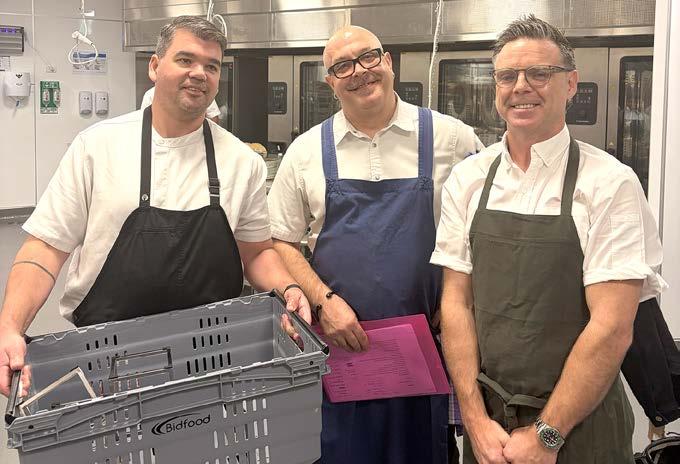
Pictured from left - Gideon Landman, Mikhail “Mike” Shatura and Ben Bayly of Ahi.
News
A genuine circus
A circus within a circus had Ōhaupō residents agog when it put on an unforgettable performance after the main show.
The circus comprised 13 people and had been put together just the week before.
It promoted itself as Tew and Webb’s famous circus of buck jumpers, wire walkers, acrobats, and clowns.
Tew and Webb had drawn up a proper partnership agreement for their circus venture, but they were not a happy family.
The afternoon the circus arrived at Ōhaupō there was a general feeling of ill-will towards the ringmaster.
Webb considered that Mrs Tew was doing too much “bossing”. Mrs Tew thought Webb was too sulky and bad tempered.
The show did not start that night until nearly a quarter to nine as the male staff was in a state of revolt against the overbearing Mrs Tew, and Webb would not enter the ring.
The impatient crowd whistled and cat-called. After the show the residents of the peaceful
little township of Ōhaupō had scarcely climbed into their beds when their ears were assailed by upraised voices, yells and profanity coming from the direction of the circus.
The performance was audible half a mile away and kept up till about two in the morning.
One hundred tons of butter was manufactured at Te Awamutu’s dairy factory in one week - the first time in the season that this quantity of butter had been made.
The previous week 98 tons had been reached. On the London market this weekly output was worth about £17,000 to £17,500. Continued mild weather was hoped for to ensure this standard for several more weeks.
After putting his wife on the evening train to Thames, Mr Dyer, farm employee, returned home to Kihikihi. On arriving there he heard a crash and as he walked around his house, he saw the dining room lit up.
Thinking neighbours had called he opened the back door and was met by dense smoke.
The walls and ceiling of the kitchen were ablaze. Racing through to the sitting room he found his three-year-old daughter wandering about dazed. Shouting to the rest of the occupants, he rushed out with the child and then returned to rescue the others.
Mr Dyers’s father, aged 82, heard his shouts, and jumped from bed. The doorknob came away in his hand, and he could not open the door.
He threw a handbag through a window smashing it and then scrambled out.
All those in the housethree of Mr Dyer’s children, four orphaned nephews and nieces, and his father escaped unharmed, but only in night attire.
Kihikihi had no water supply, and the neighbours could only stand by, helpless.
Honour your elders
By Christine Bryant, Lay Minister, St John’s
The lives of people in different cultures have always interested me. I’ve read many biographies of political leaders, especially women, Golda Meir, Simone Veil, amongst others. But the lives of ordinary people are often equally rich and full of wisdom, though they speak of the mundane, the ups and downs, the challenges which life throws up.
As I write this, I am lucky to be in Josselin, one of the prettiest and most interesting villages in Brittany, northwest France. In summer the flower boxes abound, and the village is currently preparing for the biennial Medieval Festival on July 14. This village has a long history, having been founded in 1002. In the 12th century it was destroyed by Henry II of England. Its chateau and church were rebuilt in the 13th century.
This year the town is honouring 15 of its senior citizens. The criteria for selection were to be at least 99 years old and to have lived a century mostly in this area. Each person has a billboard with a large photo and a résumé of their life with their happiest memory, their most difficult challenge and their philosophy of life. Being deep in rural France, many of them grew up on a farm.
For example, Marcel (99), married in 1948 and was a stone mason with his own company. Restoring the old stone buildings of Brittany has been his lifelong passion. During WWII, aged 15, he joined the Resistance. As part of his work he could drive trucks around Brittany. As he did this, he also delivered food to local resistance groups, transported equipment for sabotage operations and picked up valuable information from the Germans. The saddest part was seeing many friends arrested and
shot. “But”, he says, “you learn to be strong and resilient and to face up to challenges.”
Another example is Suzanne, 104 when interviewed. She never married and worked all her life in an office. For her also, the war years were most difficult: “The grief of losing so many of my dearest friends”. Her philosophy is simple: “You have to be content, whatever comes your way, and let go all that doesn’t go right.”
The desire to honour people important to the community reminds me of the Walk of Fame in Te Awamutu. However, if you haven’t grown up in the town, you actually don’t know who most of them are or what their contribution was.
The idea of honouring and having respect for older people and the wisdom they have gained goes back to Moses.
The fifth Commandment says: “Honour your father and your mother that your days may be long in the land your God is giving you.”
In Leviticus Moses says: “Stand up in the presence of the elderly and revere your God.” Paul says in his letter to Timothy, a young church leader, “Do not rebuke an older man harshly but exhort him as if he were your father.”
These words underpin the purpose of the Walk of Fame, but a bit more information about the people honoured would be enlightening.
Meanwhile, if you are a grandparent, you have wisdom and experience to pass onto a younger generation. If you are a grandchild, ask questions of your grandparents before it is too late.




Bringing home the bacon
By Jesse Wood
Waipā butchery Expleo picked up two medals at the national bacon and ham awards in Auckland last week.
The judging process spanned three days the panel evaluated 233 entries crafted using New Zealand pork.
Products were judged across eight bacon and three ham categories.
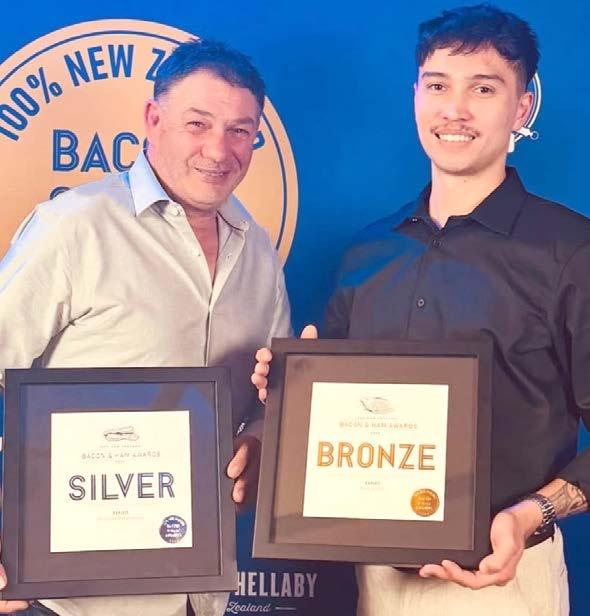
Te Awamutu-based Expleo won silver for their dry cured middle bacon and bronze for their bone in ham.
Fellow Waikato winner Matamatabased Meat Matas Butchery were category champions for their Christmas rolls boneless ham, gold medallists for their streaky bacon and bronze winners for their middle bacon.
“It’s always a great event to catch up with others in the industry and hear how they are doing,” Expleo owner Shawn Nicholas said.
“The win, wow, to receive an award is truly tremendous. The work behind the scenes, new ideas, different recipes, tweaks here and there, it’s our benchmark and it tells us we are mixing it with the big boys pretty darn well.
Technical judge Todd Treadwell from Well Hung Butchery in Milford said the winning bacon and ham demonstrated all the qualities the judges were looking for - balance, great flavour, a satisfying mouthfeel - not too salty, moist or dry.
“We’re looking for that perfect combination, and this year’s winners definitely delivered it,” Treadwell said.
“It’s great to see such a high standard of products coming through.
“It shows how important this competition is in raising standards across the industry and reassuring consumers they are getting an amazing product made with 100 per cent New Zealand pork.”
Waipā District Council has revealed a person charged with felling a tree has had the charge dismissed by consent after completing diversion.
The council said the issue related to the felling of a mature tree in Cambridge last November.
Under the agreement, the defendant was required to make a $5000 donation to the Cambridge Tree Trust, provide a letter of apology, pay council $2000 for costs associated with removing the remaining trunk and stump and replacement planting – and agree to the agreement being made public.
The council also agreed not to name the individual.
It said it chose to prosecute in response to increasing incidents of vandalism involving council-owned trees and to discourage further damage.
Council Acting Group Manager of Customer and Community Services Barbara Dempsey said the council wanted to send a clear message that intentional damage to public trees has consequences.
Trees located on council land, including street berms and reserves, must not be removed, pruned or damaged without council approval.

Shawn and Will Nicholas at the become and ham awards in Auckland.
Cats, cats and more cats
By Roy Pilott
Not that your nostrils would tell you, but in the Tamahere Community Centre there are dozens and dozens of cats and almost all of them are dozing in cages or performing on judges’ tables while people jostle for position to see them.
Welcome to the 75th Hamilton Cat Club Show, which attracted more than 1500 visitors on Sunday.
It was another day at the office for cat club president Megan King who reported the event involved 11 judges – 10 of them from overseas.
“Overall, the day was a huge success. We had 174 exhibits
with exhibitors coming from as far south as Christchurch, and from Dargaville in the north,” she reported.
To the uninitiated, though, it was a step into the unknown.
Te Awamutu judge Sue Ford was happy to explain some of it.
And for the record she noted that while a blind person might not have known there were cats in the room at this time of the morning, it’s not beyond the realms of possibility he or she would at the end of the day.
Ford – a Pirongia resident for three decades after a move from Hamilton where her last full time work was in Fraser High’s teen parenting unit – is a relief teacher these days at Te Awamutu College.
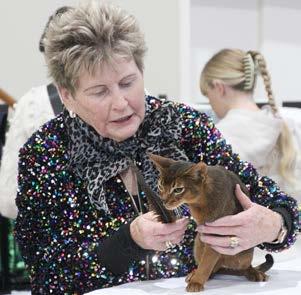
Husband Rob is a maths teacher. She is also in demand as a judge; it’s a role that had taken her around the world. She has bred Burmese cats for 40 years, and judged for 20.
Looking at the rows of cages with content cats and kittens relaxing, she points out it takes some training.
“Cats do need training – shows can be stressful. Most start young,” she says.
So they arrive and go to sleep –but many of them clearly enjoy the experience and when it comes to judging some will even dance on the table.
And, Sue points out, the placement of cages must also be considered. Simple rule: don’t
put one stud cat next to another. A bite from an agitated cat – she’s only had one of note – is not pleasant and can be expensive.
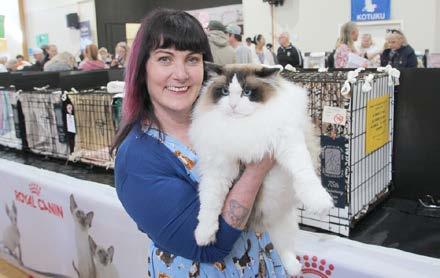
Rachel Ladd checks out the photo of her with Mr Bigglesworth and spots the flash has turned his eyes the wrong colour. A retake sans flash and Mr Bigglesworth is restored to young blue eyes.
Rachel, from Matangi, explains Mr B is a Balinese, a long haired Siamese variant. It’s been known to see Siamese getting a bad rap (think old Disney cartoons), but Rachel insists they are extremely smoochy.
She explains that there is a bit of synergy between breeding and her job as a midwife.
Details in the photos are very important when it comes to cats and breeders.
“Did you spot the issue with Bob?” Sheree Russell asks me after posing with Emerald Double Grand Premier Bobcat. Bob is listed as a long-haired companion (pedigree with a fault) cat. At the
slightest prompting at the suggestion there is a tale to be told it turns out there is.
“His tail should be a long longer,” she explains.
But what cat lover could not be taken by Bob?
And the major winners were:
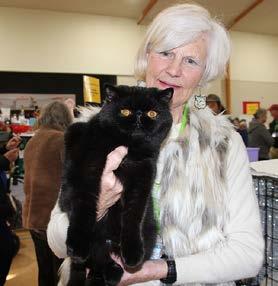
Supreme Longhair PedigreeMagicbox Mimi Cola, a black exotic kitten. Owners, Jan and Ian Gray, Te Awamutu.
Supreme Shorthair Pedigree and Supreme Overall - Kirov Kazual Sinner, a Blue Russian kitten. Owner, Jo Miller, Darfield.
Supreme Domestic - Coco Chanel Divalicious, a brown Tortie tabby and white. Owners, Michelle and Megan Harland, Tauranga.
Supreme Companion – EmDGPr Bob Cat, a Seal bicolour. Owners, S Russell and K McOmish, Ōtorohanga. Public choice - GCh Coastalcatz Legend of Koa, a black and brown mackerel Tabby Toyger. Owner, Sara Nelson, Katikati.
Meet Bob from Maihihi with owner-breeder Sheree Russell.
Pirongia based judge Sue Ford was impressed with this Tawney Abyssinian kitten.
Jan Gray with seven month old short coated Persian Magic Box Dancing Darcy (Darcy to his mates) who lives in Te Awamutu.
Next stop - Japan
By Jesse Wood
St Peter’s School Cambridge alumni Samipeni Finau and Laghlan McWhannell are heading to play rugby in Japan.
Seemingly unwanted by the new All Blacks management, Chiefs enforcer Finau has signed with the Leon MacDonaldcoached Yokohama Canon Eagles.
He will be joined there by several New Zealanders including Hautapu and Blues lock McWhannell.
“I’m excited to be joining the team and very keen to contribute to a successful campaign,” McWhannell said.
The pair, both 27, will likely head there following the Waikato NPC season.
Māori All Blacks lock McWhannell has played 46 Waikato games and will be aiming to hit 50 before his departure.
According to Rugby Database, Finau has played 132 first-class games on New Zealand shores since 2019, when he first represented
the Mooloo men and New Zealand Under 20.
To date, 103 of those have been alongside fellow St Peter’s alumni Ollie Norris and 83 with Cambridge’s Luke Jacobson.
Chiefs 2026 squad members Xavier Roe, Etene Nanai-Seturo, Lalakai Foketi, Liam Coombes-Fabling and Reuben O’Neill have also confirmed their movements overseas.
Acknowledging his five years and 75 games with the Chiefs, Finau shared his respect for the jersey.
“My time at the Chiefs will always be one that I will cherish. It’s hard to say goodbye, but I’m really grateful for the people, the memories and the chance to represent this club,” Finau said.
He played 12 tests for the All Blacks after making his first appearance in 2023 under coach Ian Foster.
He made an immediate impact, scoring on debut against Australia in Dunedin as the All Blacks came from behind to win 23-20.
Club rugby wrap up
By Jesse Wood
Hautapu go into the premier and premier B finals with a head of steam following a successful last round of the Waikato Club rugby competition.
The premier side beat Morrinsville Sports 53-7 at Campbell Park.
Lock Dylan Eti and fullback Patrick Hedley scored doubles. Other scorers were Waisake Salabiau, centre Karlan Mosaati, veteran Jason Thomasen, Nathan Stephens and hooker Rico McQuoid.
Hedley added four conversions.
Te Awamutu Sports ventured into Hamilton and fell to Marist 55-19 on the turf.
Left winger Jonan Heke-Heays, centre Tairoa Crean and lock Lau Arona crossed the chalk for Sports.
Fullback George Poolman slotted two conversions.
This weekend’s semi-finals will see Te Awamutu face Marist again, while Hautapu host Fraser Tech.
In the premier B Rowe Cup division, Hautapu B demolished Morrinsville Sports B 107-7.
Luke Goodman and Vilimone Bainibure scored four tries each in front of home support.
Other scorers were Rory Blyth (2), Ben Brown (2), Flynn Morey (2), Josh Brunger, Jack Tuck and Jese Ravunacagi.
Dillon Martin added 11 conversions off the tee.
Te Awamutu Sports B defaulted to Hamilton Marist B.
This weekend Hautapu B host Te Awamutu Sports B in a semi-final clash.
Leamington were dealt to 78-14 by Hamilton Old Boys at Fred Jones Park in the premier championship.
Halfback Sam Walker and blindside Matthew Lyttle grabbed five-pointers for the visitors.
Wingers Robert Day and Jarrod Davey added a conversion apiece.
This weekend’s semi-finals will see Leamington head to University.
Leamington B were beaten 31-12 by Hamilton Old Boys B.
Lock James Knowles and reserve Leon Mackey scored for Leamington.
Captain Trae Innes added a conversion.
This weekend Leamington B will again visit Fred Jones Park to face Old Boys B.
Women’s premiership side Melville Hautapu combined lost 58-0 to Hamilton Old Boys Huskiez.
In the division 1A championship, Ōhaupō lost 29-10 at home to Southern United.
Tries were scored by starting halfback Boston Hale and reserve Hayden Thomas.
In their earlier match, Ōhaupō B lost 22-19 against Southern United B.
Halfback Dane Murphy scored 14 of the home side’s points with Baylee Davies also crossing the chalk.
Pirongia and Pirongia B both had a bye.
In the under 21 division, Hamilton Marist beat Pirongia 29-8 and Fraser Tech won 58-14 against Te Awamutu Sports.
Leamington and Hautapu colts won by default.
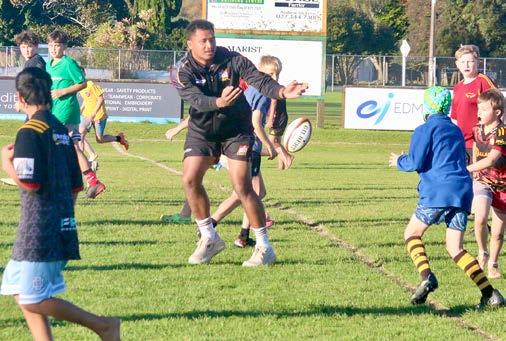


Samipeni Finau is heading to Yokohama Canon Eagles.
Photo: Jesse Wood




Across 1. Expenses (5)
4. Dig up a corpse (6)
7. Hold down (3) 8. Noisy insect (6) 9. Airless (6) 10. Something unpleasant which has to be done (9,4)
14. Evade (5)
15. Aroma (5)
18. Trickery (7,2,4)
Last week
23. Speak ill of (6)
24. Overly fussy (6)
25. None (3)
26. Stuck up (6) 27. Access way (5)
Bell sound (5)
Climb (5)
Thinly spread (6)
Make certain (6)
Dwelling (5)
6. Plainclothes (5) 10. Essentials (5) 11. Rough (5) 12. String instrument (5) 13. Sensational (5) 16. Neigh (6) 17. Pair (6) 19. Gain knowledge (5) 20. Simpleton (5) 21. Lift (5) 22. Unpleasant (5)
Across: 1. Spoils, 5. Subway, 8. Tin, 9. Bookie, 10. Astral, 11. Limb, 13. Cockeyed, 14. Venue, 15. Tough, 19. Temerity, 21. Kink, 22. Vacant, 23. Torpid, 25. Ore, 26. Glider, 27. Mayhem. Down: 2. Promise, 3. Ink, 4. Stench, 5. Snatch, 6. By the book, 7. Adage, 12. Boulevard, 16. Genuine, 17. Victor, 18. System, 20. Email, 24. Ray.
ATDNYPEWRCMUYXDUNE NGEEDVHEADEIMIBLTT TAIMNDTXFRRHTOIAVI EGRRUWAGEILYRVNXYH LLAEGOEITPOYENZDBW BRJFRJRHAETPIVASPD ACOMUCBTLFDNSEANJY TUUSBSEPARGEHKOODT EDDEEPOEPKISMYROSE DSTASTEDFINEDIBOTN NEOISAUTERNEHESUCI IOTNEMIDESCJRORESV VSASSIALOJUAEBCWCF AXHKEBEITNAIHCLKTU
ACIDITY ASTI
BEAUJOLAIS BODY BOTTLE
BREATHE BRUT
BURGUNDY CARAFE
CHIANTI
CLARET
CORKS
YOU DON’T NEED AN ORA TO RECEIVE
Looking for quality, affordable care for yourself or a loved one? Give our friendly team a call. Our difference:
• As a community charitable trust, we are committed to providing affordable care for seniors in Cambridge.
• No Occupation Right Agreement (ORA) required for rest home, continuing, and memory care in our care centres.*
* Rest home, continuing, & memory care are subject to a needs assessment.
TANNIN TASTE TEMPERATURE TINTO VIN DE TABLE VINE WHITES WINE
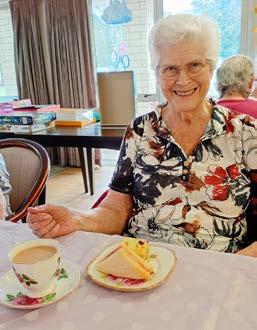




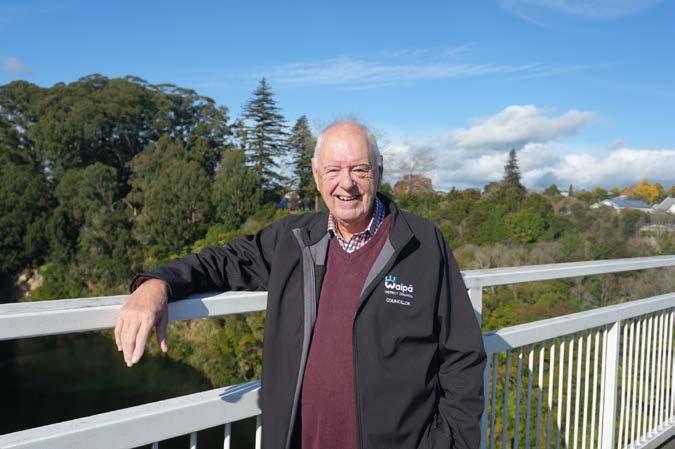
Roger Gordon: 10 years of community, challenge and change
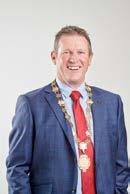
After a decade in local government, proud Cambridge Ward Councillor Roger Gordon still enjoys the challenge and variety that comes with representing his community
“What matters is staying true to your principles, contributing positively and working together to get the best outcomes for Waipā, ” Roger said
He believes this Council term will be one of the most significant yet, with central government reforms expected to reshape local government in the years ahead
“Whatever local government looks like in years to come, it ’s essential that local voices remain strong and actively encouraged
As deputy chair of the Risk and Assurance Committee, Roger is looking forward to continuing work around growth, infrastructure and affordability
He said there’s an opportunity this term to continue rebuilding trust and confidence in local government
“From my experience, councillors genuinely care and work hard to make balanced decisions on often complex issues ”
A highlight for Roger is the citizenship ceremoniesmeeting families who have chosen to make Waipā their home He also enjoys being a part of plan changes and consent applications, carefully weighing the evidence and reaching well-informed decisions


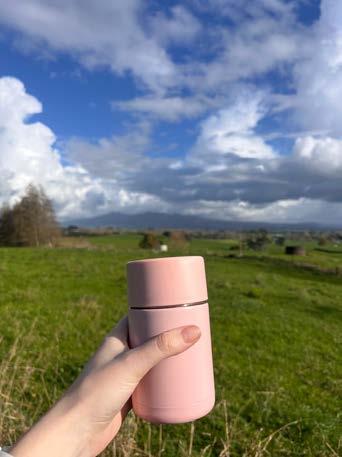
Win a weekly coffee shout on us! This month the Waste Minimisation team is teaming up with cafés across the district to help reduce the number of disposable cups going to landfill through our Reduce, reuse, re-caffeinate challenge
Roger was involved in the early stages of Cambridge Connections “While it was challenging at times, it gave me a much better understanding of how intricate community engagement and infrastructure planning can be ”
Away from formal meetings, Roger enjoys getting out, meeting people face-to-face and hearing a wide range of perspectives
Before entering local government, he spent a decade as CEO of Rotorua Chamber of Commerce Through that role he gained valuable insight into how councils operate, which ultimately encouraged him to stand for election
With a background largely in tourism and hospitality, Roger worked across Asia including consultancy and education work, before moving to Cambridge in 2014, where he established Destination Cambridge before standing for Council
Outside of Council, Roger says family remains the most important part of his life He and his wife Jo have been married for more than 50 years and have three children and six grandchildren living around the world
“Last Christmas we were fortunate to have the whole family together in Cambridge, which was incredibly special,” Roger said “It ’s a reminder of how lucky we are to live in such a wonderful community Waipā is a fantastic place to call home, and I feel privileged to serve it ”





This campaign is funded through Central Government’s Waste Minimisation Fund Bring a reusable cup for your takeaway coffee at any participating café during July and collect a stamp each visit You will go in the draw to win one free coffee every week for a year! A completed card with five stamps qualifies for one entry into the prize draw, where two lucky winners will receive vouchers, they can use at a participating café of their choice
Keen to get involved? Find out more information, including the list of participating cafés and terms and conditions on our website:
wastelesswaipa co nz/recaffeinate
Pirongia Mountain Bike Park fully reopens Pirongia Mountain Bike Park has reopened its full trail network after 18 weeks of storm recovery work, marking the final stage of restoration following February's severe weather event
While the lower tracks reopened in March, the upper trails - including Lockdown, Primeval Downhill and Resurrection - had remained closed due to widespread damage including slips, washouts, fallen trees and unstable ground All trails including those north of the Mangawawa Stream are now open
The reopening completes a wider recovery effort across Waipā's outdoor spaces Sainsbury Road Reserve welcomed horse riders back in May, and Kakepuku maunga reopened in June for recreation walkers to enjoy its summit views across the Waikato




Mike Pettit Mayor Jo Davies-Colley Deputy Mayor
Roger Gordon Aidhean Camson Pip Kempthorne
Clare St Pierre Les Bennett Shane Walsh Dean Taylor
Marcus Gower Mike Montgomerie Dale-Maree Morgan


Social interaction
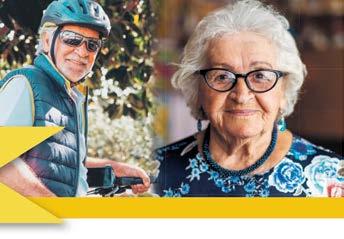
Social interaction is one of the most important - and sometimes overlookedelements of wellbeing in a retirement home. As people age, changes in mobility, health, loss of work roles, and the passing of peers can all reduce opportunities for meaningful connection. For many older adults, a retirement home becomes their primary social environment, so the quality and variety of interactions available there can significantly impact physical health, emotional wellbeing, cognitive function, and overall life satisfaction.
Yet it’s not as simple as it sounds. The Waikato – and this includes Waipā - has a plethora of retirement villages to choose from, so it pays to take the time to make sure you align your needs (including potential ones) with those that are on offer. Research shows that social engagement is linked to better mental health, lower rates of depression and anxiety, and even improved immune and cardiovascular function. Regular conversation, shared activities, and close friendships help maintain a sense of purpose and identity. Being part of a community supports resilience during life transitions and can reduce feelings of

loneliness and isolation - issues that are surprisingly common among older adults. In a retirement home setting, especially one with residents of varied backgrounds and interests, social interaction offers opportunities for learning, laughter, and mutual support.
When choosing a retirement home, it’s important to look beyond clinical care and accommodation to assess how well the environment supports social life. Look for dining rooms, lounges, libraries, and gardens that are comfortable, welcoming, and designed for people to gather naturally. Spaces that are too clinical or sterile discourage lingering; warm, homely environments invite spontaneous conversations and shared experiences. Rely on how a place makes you feel when you walk into it, it’s usually a good gauge.
A good retirement home offers a variety of organised activities that cater to different interests and abilities. Examples include arts and crafts, music sessions, movie nights, book clubs, gentle exercise classes, discussion groups, cultural celebrations, gardening clubs and outings to local Waipā attractions. Variety matters: not everyone
WHEN YOU NEED A LAWYER
WE’RE HERE TO HELP YOU
Retirement Village Law
Residential, Commercial & Rural Property
Rural Law & Farm Succession
Employment Law
Dispute Resolution
Relationship Property
Wills, Trusts, Estates & Enduring Powers of
Attorney

enjoys the same things, and options help people discover new interests. Gardens, patios, walking paths and courtyards provide safe, pleasant spaces for residents to meet, stroll, or simply sit together. Fresh air and nature are powerful mood boosters and give residents another setting for socialising beyond indoor common rooms.
Spaces that accommodate family and friends - such as guest lounges, cafés or private visiting rooms are important; they encourage regular visits and participation in social events. Being able to include whānau
and friends strengthens residents’ sense of connection to life outside the home. Retirement homes need to honour residents’ cultural backgrounds, languages and spiritual practices help people stay connected to their identity and each other. In Waipā, this might include Māori cultural activities, prayer or meditation spaces, or celebration of community events. Engaged, respectful staff who understand the importance of social wellbeing can help residents feel included, encourage participation, and gently connect quieter residents with others.
Maintain independence through exercise
As we get older, keeping our bodies flexible and active becomes increasingly important for maintaining independence in our home, reducing the risk of injury, and supporting overall wellbeing.
While aging naturally brings changes to muscles, joints, and balance, regular, gentle activity can make a significant difference to how people feel and move each day.
One of the simplest and most effective ways to stay flexible is by stretching.
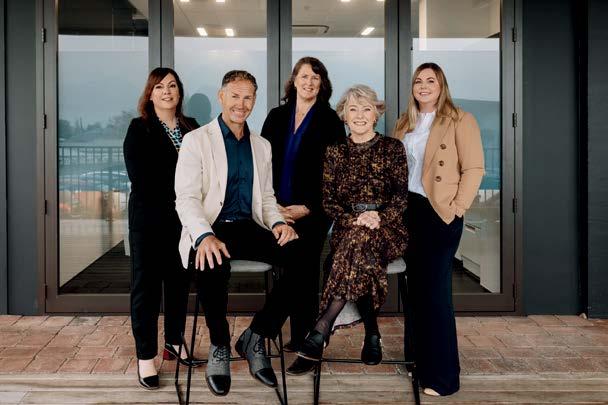
Gentle daily stretches help maintain joint range of motion, ease stiffness, and improve circulation. Stretching does not need to be complicated - simple movements such as shoulder rolls, neck stretches, and calf stretches can be done at home, even while seated.
The key is to move slowly, avoid bouncing, and stop if there is any pain.
Walking remains one of the best all-round activities for aging bodies. It is low impact, free, and can be adapted to suit different fitness levels.
Regular walking helps strengthen leg muscles, support heart health, and improve balance. Whether it is a short stroll around the block, a walk with friends, or a gentle beach or park walk, consistency matters more than speed or distance.
Strength training is another important part of healthy aging.
Maintaining muscle mass helps support joints, improves posture, and makes everyday tasks such as carrying groceries or getting out of a chair easier.
Light hand weights, resistance bands, or body-weight exercises can all be effective.
Exercises such as seated leg lifts, wall pushups, and gentle squats can be done safely
at home or in group classes designed for seniors.
Activities that focus on balance and coordination are especially valuable, as falls are a major concern for older adults. Tai chi and yoga are popular choices, offering slow, controlled movements that improve balance, flexibility, and breathing. Chair yoga is a great option for those with limited mobility, allowing people to gain the benefits without needing to get down onto the floor.
Water-based exercise is another excellent option for aging bodies.
Swimming or aqua-fitness classes reduce pressure on joints while still providing resistance for muscle strengthening. This makes water activities ideal for people with arthritis, joint pain, or recovering from injury.
Equally important is listening to the body. Rest days, proper warm-ups, and cool-downs help prevent injury. Staying hydrated and wearing supportive footwear also play a role in keeping movement safe and enjoyable.
Social connection is a big one here –these group classes, walking groups, or community exercise programmes provide both physical activity and a chance to stay connected with others. It supports not only physical health but also mental and emotional wellbeing.
By staying active in ways that suit individual abilities and interests, aging bodies can remain flexible, strong, and healthy.
Regular movement, no matter how gentle, helps people continue doing the things they enjoy and supports a better quality of life as they age.
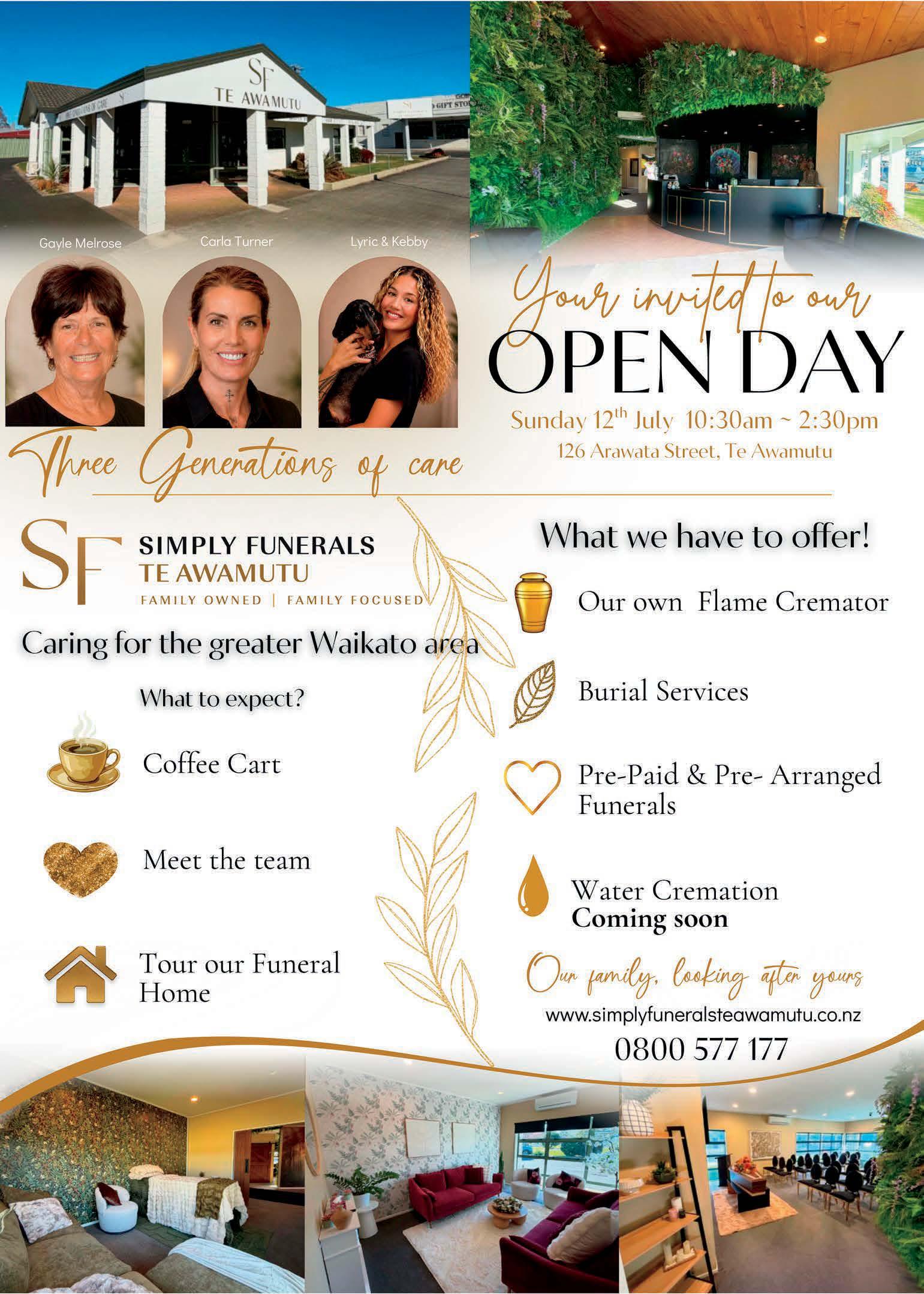

A New Home for Disability and Aged Care

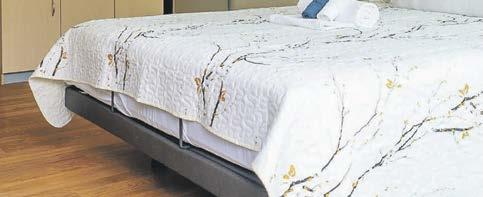
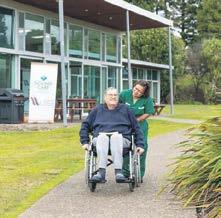


Te Whare Manaaki o Tamahere is now open in Tamahere, Hamilton, o ering a purpose-built home for young people living with disabilities as well as aged care residents.
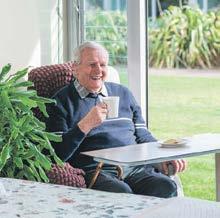

For families seeking the right care for a loved one, this is an important step forward for our community. Te Whare Manaaki o ers a thoughtfully designed environment where both older people and younger people living with disabilities can feel supported and genuinely cared for. It also marks an important milestone as the sixth home of Sound Care Group.
This new chapter responds to a genuine need within the community, with growing demand for more dedicated disability support. Te Whare Manaaki has been developed to provide an inclusive space built around individual needs, with a commitment to care that families can trust, grounded in dignity and understanding.

Our team has been carefully selected for their skills and compassion, ensuring each resident receives the right level of care in a thoughtful and respectful way.
Set in a quiet and spacious environment, each room includes a private ensuite, a small pantry, and direct
We welcome you to experience our Culture of Care

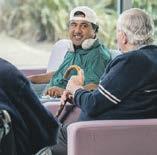
outdoor access. Wide, open areas create a calm and welcoming atmosphere, while shared spaces and secure gardens provide places to relax and spend time with friends and whānau.
Founded by Owner and Director Carly Mangulabnan, a nurse by profession, Sound Care Group has grown from one home into a trusted and well-established network across New Zealand, including Taranaki, Dunedin, the Bay of Plenty, and Waikato.
Te Whare Manaaki is more than just a place to receive care; it is a place where people are supported to achieve a meaningful and fulfilling quality of life.

Visit us and see what makes our home special.
54ClearwayRise,Rukuhia, �������� manager.twmt@soundcare.co.nz ���������� soundcare.co.nz

How not to break the budget with food
Managing a food budget on a pension can be challenging, especially with continuing rising grocery prices.
However, with thoughtful planning and a focus on simple, nutritious foods, it is possible to eat well without overspending. This coupled with small changes to shopping habits, and food choices can make a meaningful difference to both health and household budgets.
Planning ahead is one of the most effective ways to save money. Creating a weekly meal plan and shopping list helps avoid impulse purchases and reduces food waste. Planning meals around seasonal produce and supermarket specials can significantly lower costs, especially if you have a freezer and can preserve some of that. In fact, of all the appliances the older generation might have, an upright freezer is the most valuable if living only on a pension.
Most supermarkets publish weekly specials online or in-store, making it easier to compare prices before shopping.
Choosing basic, whole foods is both economical and healthy. Items such as oats, rice, pasta, dried beans, lentils, eggs, and frozen vegetables provide good nutrition at a low cost. Frozen fruit and vegetables are often cheaper than fresh, last longer, and retain most of their nutritional value. They are also convenient, as you can use only what you need and avoid spoilage.
Protein does not have to be expensive. Eggs, tinned fish such as tuna or sardines, dried or canned beans, and lentils are affordable options that are rich in nutrients. Buying larger cuts of meat and using them across several meals - such as roasts turned into
soups or stir-fries - can help stretch the budget further.
Meat-free meals a few times a week can also reduce costs while still providing balanced nutrition.
Cooking at home is generally far cheaper than buying pre-made or takeaway food.
Simple meals such as soups, casseroles, stews, and pasta dishes are economical, filling, and easy to prepare in bulk. Cooking extra portions and freezing them provides ready-made meals for busy or low-energy days, reducing the temptation to buy more expensive convenience foods.
Growing some food at home can also help save money.
Even small gardens, pots, or window boxes can produce herbs, lettuce, silverbeet, or tomatoes. Even a single cucumber plant can be trained up a tepee framework on your porch that can last for months. Home-grown produce not only reduces grocery bills but also adds freshness and flavour to meals. Being mindful of waste is another key factor. Using leftovers creatively -such as turning cooked vegetables into soups or omelettes -helps make the most of what you buy. Storing food correctly and checking use-by dates regularly can prevent unnecessary waste. Finally, don’t hesitate to use community resources. Local food co-ops, community gardens, and budget-friendly recipe programmes are available in many New Zealand towns. These days, there are community initiatives that also offer cooking classes focused on healthy, low-cost meals.

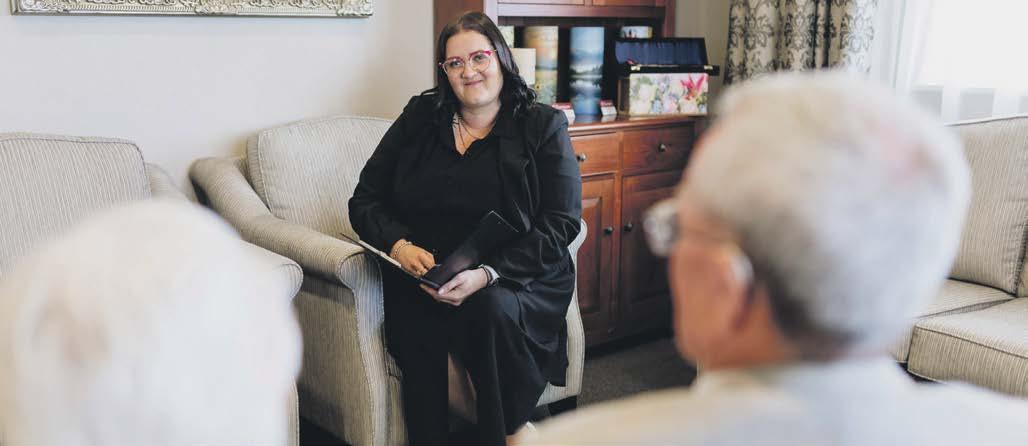
One of the kindest gifts you can leave your family
Planning your own funeral isn’t about dwelling on the future - it’s about making life a little easier for the people you love. By recording your wishes now, you remove the uncertainty and di cult decisions that often come at a time of grief. It’s a simple conversation that provides peace of mind for everyone. Talk to the caring team at Rosetown Funerals today to arrange a no-obligation pre-planning conversation. Call us on (07) 871 7184 or visit www.rosetown.co.nz.
Rosetown Funerals proudly serves the people of Te Awamutu, Ōtorohanga and

It’s Time to Experience Premium Independent Retirement Living
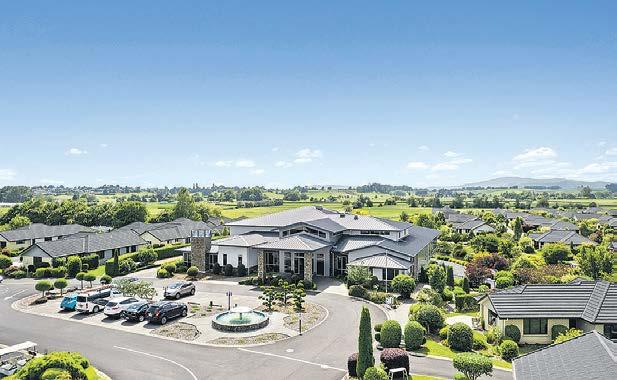
Family owned and operated, Te Awamutu’s High eld Country Estate was established in 2012 and is set in beautifully landscaped grounds.
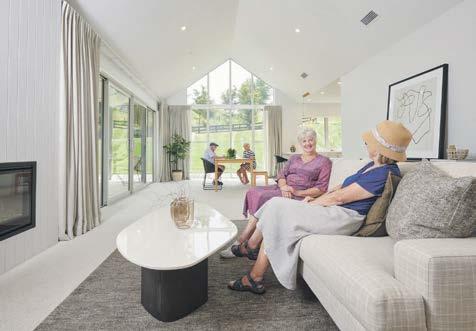
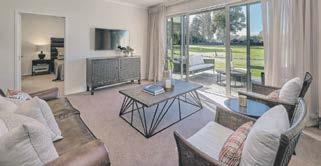
Due to unprecedented demand for quality independent living, High eld Country Estate is proud to o er a limited number of brand-new two and three-bedroom villas, thoughtfully designed for comfort, sunshine, and e ortless living.
Our newest villas are scheduled for completion by 1st of October 2026, but with strong interest already being shown, now is the perfect time to secure your place in one of the Waikato’s most sought-after retirement communities.
In addition to these brand-new homes currently under construction, we also have a selection of two- and three-bedroom villas available now within the village. These established, fully renovated homes o er the same welcoming community lifestyle that residents value, with the added advantage of being ready to move into sooner. Featuring spacious modern layouts, quality nishes, and stress - free living, every High eld villa is designed to help you make the most of each day. Residents enjoy stunning grounds, a vibrant and friendly community, and the peace of mind that comes with living at High eld Country Estate.
“The reality is that people living here enjoy it so much, they tell their friends, and we want to be able to o er the same lifestyle to more people,” – Sheryl Thomas, High eld General Manager
Our Residents Enjoy the Bene ts of:
• A family focused and dedicated Management Team
• Friendly, welcoming and supportive sta
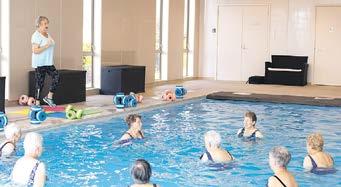
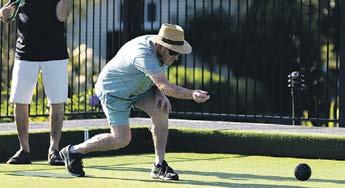
• A comprehensive programme of weekly social outings, events and activities
• A safe and secure living environment
• Beautifully landscaped well-established and maintained grounds
• A vibrant community atmosphere and sense of belonging
• A focus on health, tness and well-being
• Maintenance free, lifestyle living
“One of the best decisions we made was to move into High eld, where we know, and our family knows, that we live in a safe, happy, and friendly environment where people look out for one another. We love living here and if you are lucky enough to get the opportunity to purchase a villa, please come and join us and enjoy our retirement.” – Dave & Shona Hollinshead
To learn more about the bene ts of independent lifestyle living at High eld and to organise a personalised tour of our facilities contact General Manager Sheryl Thomas – 07 871 2020 manager@high eldcountryestate.co.nz | 397 Swarbrick Drive, Te Awamutu www.high eldcountryestate.co.nz
-
e Lifestyle You Want, the Peace of Mind You Deserve -




When health insurance matters
Turning 65 is a milestone that often brings changes to lifestyle, finances, and healthcare needs.
With insurance costs rising exponentially every year, faced with inevitable increase of charges because of growing older, older people begin to question whether private health insurance is still worthwhile once they reach this age, especially given the current problematic access to the public health system. The answer depends on individual circumstances, but for many older Kiwis, health insurance can continue to play an important role.
New Zealand’s public healthcare system provides essential services, including hospital treatment, emergency care, and many specialist services. However, demand on the public system increases with age, and waiting times for non-urgent procedures such as joint replacements, cataract surgery, and some diagnostics can be lengthy.
Health insurance can offer faster access to treatment, allowing people to address issues sooner and potentially maintain mobility and quality of life.
As people age, the likelihood of needing medical care generally increases. Conditions such as arthritis, heart disease, hearing or vision issues, and other age-related concerns often require specialist input or elective procedures.
Private health insurance may cover consultations, imaging, surgery, and rehabilitation that would otherwise involve long waits or out-of-pocket costs. For many, this peace of mind becomes more valuable rather than less after 65. That said, cost is a key consideration. Premiums do increase with age, and some
policies may have exclusions for pre-existing conditions. It is important to review policies carefully, understand what is covered, and weigh the cost against potential benefits. Some people choose to downgrade to a more basic plan that focuses on major hospital care rather than extras, while still retaining protection against large, unexpected expenses.
Another factor is independence and recovery. Faster access to treatment can mean quicker recovery and less disruption to daily life. For older adults who wish to remain active, travel, or continue living independently, this can be a strong reason to keep insurance in place. Waiting longer for treatment can sometimes lead to increased discomfort or reduced mobility, affecting overall wellbeing. It is also worth considering personal circumstances such as savings, family support, and existing health conditions. Those with sufficient financial resources may feel comfortable self-funding private care if needed. Others may prefer the certainty that insurance provides, knowing they are protected against significant medical costs. Ultimately, there is no one-size-fits-all answer. Health insurance after 65 is less about age and more about priorities, health status, and financial comfort.
Reviewing cover regularly, dropping premiums by leaving off some of the cover, seeking professional advice, and considering future needs can help older New Zealanders make an informed decision that supports their health, independence, and peace of mind in the years ahead.

Clearer Vision. Greater Independence.

Expert Cataract Surgery & Specialist Eye Care in the Waikato
If vision is becoming less clear—whether it’s di culty reading, driving at night, recognising faces, or seeing colours as vividly as before—cataracts are often the underlying cause.
Cataracts are a natural part of ageing and one of the most common and treatable causes of vision loss.
Cataract surgery is a highly e ective, low-risk procedure that can signi cantly improve clarity of vision and restore con dence in everyday activities.
At Hamilton Eye Clinic, we are specialists in cataract surgery, providing advanced surgical techniques and modern lens options tailored to each patient. Our focus is on achieving the best possible visual outcome, helping patients regain independence and quality of life. Alongside our strong cataract service, we provide comprehensive subspecialty ophthalmic care for the full spectrum of eye disease.
OUR SPECIALIST SERVICES
• Cataract Surgery
Advanced surgery to restore clear vision
• Glaucoma

Diagnosis and long-term management, including surgical and laser options
• Retina & Macula Conditions
Including AMD, diabetic eye disease, and retinal vein occlusions
• Oculoplastic / Eyelid Conditions
Functional and reconstructive eyelid
surgery
• General Ophthalmology
Comprehensive medical and surgical eye care
Hamilton Eye Clinic provides trusted specialist care for patients across the Waikato and Central North Island— helping people maintain vision, independence, and quality of life. To learn more or arrange referral:
WHY CHOOSE HAMILTON EYE CLINIC?
• Dedicated cataract surgery services with modern lens options
• Waikato’s leading specialist eye care providers
• E xperienced ophthalmic surgeons with subspecialty expertise
• Dedicated surgical facility at Bridgewater Day Surgery
• Full diagnostic, surgical, and long-term followup care in one network
• Collaborative care with optometrists and referring clinicians


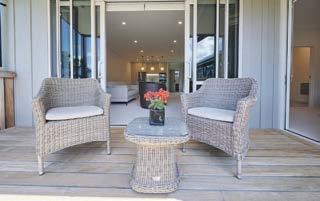

Villa 39
Villa 80
Natural alternative thereapies
As we age, many look for ways to support our health and wellbeing that feel gentle, holistic, and aligned with whatever our lifestyle may be.
Alongside conventional medical care, natural therapy alternatives are increasingly being considered by older Kiwis as a way to manage discomfort, improve mobility, reduce stress, and enhance overall quality of life.
When used thoughtfully and alongside medical advice, these therapies can offer valuable support.
One of the most commonly used natural therapies is massage. Gentle massage can help relieve muscle tension, improve circulation, and reduce stiffness associated with arthritis or reduced mobility.
For older adults, massage is often adapted to be slower and lighter, focusing on comfort and relaxation rather than deep pressure. It can also provide emotional benefits, helping to reduce stress, anxiety, and feelings of isolation.
Acupuncture is another option some older people explore. Based on traditional Chinese medicine, acupuncture involves placing ultra fine needles into specific points on the body to support balance and energy flow.
Many people use acupuncture to help manage chronic pain, headaches, or joint discomfort. When performed by a qualified practitioner, it is generally well tolerated and tailored to individual needs. Herbal remedies and natural supplements are also popular, though they require

careful consideration.
Products such as turmeric, ginger, and glucosamine are often used to support joint health and reduce inflammation. However, it is important for older adults to discuss supplements with their GP or pharmacist, as some natural products can interact, or contra-indicate with prescription medications.
Movement-based therapies such as yoga, tai chi, and qigong are especially well suited to older generations. These practices combine gentle movement, balance, and breathing, helping to improve flexibility, coordination, and calmness.
Many classes are specifically designed for seniors, making them accessible and safe for varying levels of ability.
Mind–body therapies are also gaining recognition for their benefits. Practices such as meditation, guided relaxation, and breathing exercises can help manage stress, improve sleep, and support mental wellbeing.
For older people dealing with life changes, grief, or ongoing health issues, these approaches can be a valuable addition to physical care.
One of the reasons natural therapies are worth considering is their focus on the whole person rather than just symptoms.
They often encourage slower, more mindful approaches to health, which can be empowering and reassuring for older adults. Many therapies also promote selfcare, helping people feel more involved in managing their own wellbeing. While natural therapies are not a replacement for medical treatment, they can complement traditional care when chosen carefully.
With professional guidance and open communication with healthcare providers, gentle natural therapies can offer older New Zealanders additional ways to stay comfortable, active, and supported as they age.


























































Pou Taiao / Environmental Officer –Waitomo/Otorohanga
30‑hour week • 2‑year fixed term
PROOF TIME 13/11/2023 12:34:51 PM
L AST RUN: 11/30/23
Strengthen kaitiakitanga and support tikanga‑led environmental protection across our rohe. RUHT is seeking a Pou Taiao to lead taiao projects, provide culturally grounded environmental advice, and work closely with hapū, iwi, DOC, councils, and our lease holder.
VEHICLE FOR SALE. 2003
Mazda Bounty Ute, Cab plus, 269,000kms, very tidy, manual diesel, WOF, Rego and Mileage up to date. $12,000 ono. Ph 021 969 851
SIZE: 10X2
10X2
You’ll bring environmental expertise particularly in water and karst, scientific monitoring experience, strong tikanga/Mātauranga Māori grounding, and experience working with iwi/hapū.
Meaningful mahi. Hapū‑driven outcomes. Kaupapa‑based team.
Send CVs to manager@ruht.co.nz
Request the full Job Description at manager@ruht.co.nz
Applications close 31 July 2026
SITUATIONS VACANT
COMMUNITY CARE GIVER
Due to increasing demand for our community services, we are looking to add another Community Care Giver to our team.
Everyday, clients entrust us to assist them with their daily living requirements in their own home.
If you are a mature, honest and empathetic person who has:
• The ability to work rostered shifts Monday to Sunday, and
• Have your own vehicle with a clean driver’s licence.
You might be the person our team is looking for.
Whilst care giving experience is preferable, full training will be offered to the right applicant.





Pokuru Community Reserve (Hall) AGM
16th July 2026
7pm in the Pokuru Hall All welcome



OLIVER, Patricia May (Pat) - Formerly Scholes (Nee Pescini). Passed away at home with family on Tuesday 16 June 2026. Aged 84 years. Loved mother of Gaeleen, Carey and Janine. Loved grandmother of her grandchildren and great grandchildren. A family service for Pat has been held. All communications to Pat Oliver’s family to PO Box 137 Te Awamutu.

VICKERS, Shona Fay –
BROWN, Kenneth David




Peacefully passed away at Radius Windsor Court on Sunday, 5th July 2026, aged 82 years. Loved wife of the late David. Much loved mother and motherin-law of Kate, Michael, Allan & Tamara, and Kelly & Paul, and nana of her six grandchildren and four greatgrandchildren. The family sincerely thank the staff of Radius Windsor Court for the wonderful love, care, and compassion shown to Shona over the past few years. In accordance with Shona’s wishes, a private family farewell has been held. Messages to the Vickers family may be sent c/- 262 Ohaupo Road, Te Awamutu 3800, or left in Shona’s online tribute book at www. rosetown.co.nz.





– Very peacefully passed away surrounded by family at Waikato Hospital on Monday, 29th June 2026, aged 84 years. Loving husband of Margaret for 60 wonderful years. Devoted father and father in-law to Jeannine & Craig, and Shane & Paulette. Best loving grandad to Jesse, Amy, Nikita, and Cohen. Favourite great grandad to Kelsie, and best friend to Molly. A private family farewell has taken place. Messages to the Brown family can be sent c/- 262 Ohaupo Road, Te Awamutu 3800 or in Ken’s online tribute book at www. rosetown.co.nz.
EDE, Christina Irene, (Chrissy) – Passed away peacefully on Thursday 2 July 2026. Much loved mum of Shane, Glenn, Nigel and Angie, adored grandma of Baylee, Kylie, Robin, Liam and Jak. A special thank you to the lovely staff at Matariki. A celebration of Chrissy’s life has been held. Livestreaming available at teawamutufuneralservices. co.nz (under funeral recordings). All communications c/- Ede family to PO Box 137 Te Awamutu

HORSBURGH, Brent John – Passed away unexpectedly on Tuesday, 30th June 2026. Dearly loved husband of Tracey. Much loved father and father-in-law of Dylan, Tayla & Jesse, Blake & Abby, Ryan & Mishka, and Jordyn. Cherished Poppa of Alexis and Abel. A service to celebrate Brent's life has been held. Messages to the Horsburgh family may be sent c/- 262 Ohaupo Road, Te Awamutu 3800, or left in Brent's online tribute book at www.rosetown.co.nz.

HORSBURGH, Brent John – Passed away on Tuesday, 30th June 2026. Dearly loved eldest son of Noeline & Johnny (dec). Loved brother of Stefan & Jocelyn, and Todd & Marta, and families. Will be dearly missed.
22/10/1940
30/06/2026 –
Sharna. Rest in peace.
Locally owned and operated
Pam & Ray Bestwick
HOUGHTON, Peter Longden
–
Much loved husband of Robyn, caring stepfather of Karen and Stuart. Special grandad of Karl and