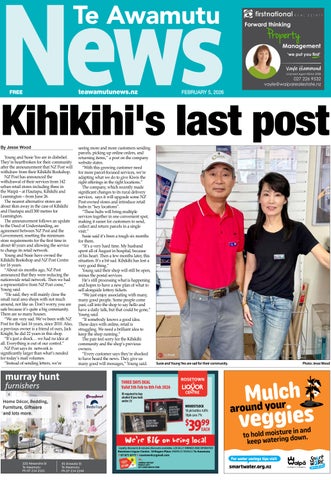

Kihikihi's last post
By Jesse Wood
Young and Susie Yeo are in disbelief. They’re heartbroken for their community after the announcement that NZ Post will withdraw from their Kihikihi Bookshop.
NZ Post has announced the withdrawal of their services from 142 urban retail stores including three in the Waipā – at Hautapu, Kihikihi and Leamington – from June 26.
The nearest alternative stores are about 4km away in the case of Kihikihi and Hautapu and1300 metres for Leamington.
The announcement follows an update to the Deed of Understanding, an agreement between NZ Post and the Government, resetting the minimum store requirements for the first time in about 40 years and allowing the service to change its retail network.
Young and Susie have owned the Kihikihi Bookshop and NZ Post Centre for 16 years.
“About six months ago, NZ Post announced that they were reducing the nationwide retail network. Then we had a representative from NZ Post come,” Young said.
“He said, they will mainly close the small rural area shops with not much around, not like us. Don’t worry, you are safe because it’s quite a big community. There are so many houses.
“We are very sad. We’ve been with NZ Post for the last 16 years, since 2010. Also, a previous owner is a friend of ours, Jack Knight, he did 22 years in this shop.
“It’s just a shock… we had no idea at all. Everything is out of our control.”
NZ Post says its network is significantly larger than what’s needed for today’s mail volumes.
“Instead of sending letters, we’re



seeing more and more customers sending parcels, picking up online orders, and returning items,” a post on the company website states.
“With this growing customer need for more parcel-focused services, we’re adapting what we do to give Kiwis the right offerings in the right locations.”
The company, which recently made significant changes to its rural delivery services, says it will upgrade some NZ Post-owned stores and introduce retail hubs in “key locations”.
“These hubs will bring multiple services together in one convenient spot, making it easier for customers to send, collect and return parcels in a single visit.”
Susie said it’s been a tough six months for them.
“It’s a very hard time. My husband spent all of August in hospital, because of his heart. Then a few months later, this situation. It’s a bit sad. Kihikihi has lost a very good thing.”
Young said their shop will still be open, minus the postal services.
He’s still processing what is happening and hopes to have a new plan of what to sell alongside lottery tickets.
“We just enjoy associating with many, many good people. Some people come past, call into the shop to say hello and have a daily talk, but that could be gone,” Young said.
“If somebody knows a good idea. These days with online, retail is struggling. We need a brilliant idea to keep the shop running.”
The pair feel sorry for the Kihikihi community and the shop’s previous owners.
“Every customer says they’re shocked to have heard the news. They give us many good will messages,” Young said.








Susie and Young Yeo are sad for their community.
Photo: Jesse Wood
• Garden & landscape maintenance
• Landscape design & construction
• Planting, edging, mulching, and more

• Custom features and outdoor enhancements

Care. Create. Transform.

Change makers in spotlight
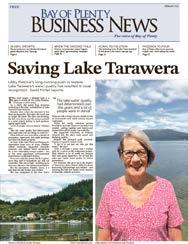
Two women with long careers in the public sector feature on the covers of Good Local Media’s business publications this month.
Former Hamilton mayor Paula Southgate appears in the Waikato Business News, while Lake Tarawera advocate Libby Fletcher graces the Bay of Plenty Business News.
Southgate spent 24 years in local government, beginning at Waikato Regional Council and then serving six years as Hamilton mayor.
a new reticulated sewage system to reduce pollution in the lake.
The two business publications - sister titles to Cambridge News, Te Awamutu News, King Country News and King Country Farmer - also examine housing and commercial real estate trends, signs of an economic upturn, the use of unmanned aerial vehicles in forestry, and provide an update on the Iawai water company.
Both editions are available online at goodlocal.nz.
Roundabout call
We lived in St Leger road for 20 years and still visit friends there regularly. We completely agree with Howard and Mary [Webster, Call for a Roundabout, The News, January 29] that a roundabout (preferably) is needed. A lower speed limit too, but not everyone will follow that. Crossing from Golf Rd to St Leger and back is particularly dangerous. With the huge volume of traffic now using Golf Rd we believe it justifies a roundabout.
Visit: www.yardmatters.co.nz or call 0800 46 9273 for more!
admin@yardmatters.co.nz


MAHJONG LESSONS
CLASSES RUN EVERY WEDNESDAY
FROM 25 Feb – 25 Mar 12.45 – 3.30pm
FIRST INTRODUCTORY CLASS IS FREE
WEDNESDAY 25 FEBRUARY 2026
ARRIVE 12.30PM
Come and join our fabulous group of friendly women and learn a new skill!
• Learn the basics over four weeks
• Learn at your own pace
Calm and supportive environment
• Great way to meet new people and most importantly, have fun!
Contact Glenice for more information
M: 021 414 644
Waipa Women’s Hub Inc.
321 Bank Street Te Awamutu


CONTACTS
News/Editorial
Roy Pilott editor@goodlocal.nz
027 450 0115
Mary Anne Gill maryanne@goodlocal.nz
021 705 213
Viv Posselt viv@goodlocal.nz
027 233 7686
Chris Gardner chris@goodlocal.nz
027 231 7007
Advertising Director
Janine Davy janine@goodlocal.nz
027 287 0005
Owner/Publisher
David Mackenzie david@goodlocal.nz
Office/Missed Deliveries
07 827 0005 admin@goodlocal.nz
She has recently taken up a part-time role as a senior fellow at the Helen Clark Foundation, where she is encouraging discussion about the future of local government.
Speaking to senior writer Mary Anne Gill, Southgate said she wants to promote debate around council structures.
“Do we really need more than 60 councils?” she asks.
Fletcher, who was awarded a King’s Service Medal in the New Year Honours for her environmental work, led efforts to improve the health of Lake Tarawera. She rallied residents, supported scientific research and helped build momentum for
On the beat
Back to school tips
I would like to begin by expressing my sincere condolences to all those affected by the recent tragic events at Mauao, Mount Maunganui. I recognise that the emotional impact and sense of loss are being felt deeply across our community. My thoughts are also with the emergency responders and community volunteers whose compassion and dedication supported others during this difficult time.
Here in Waipa, school is back after summer holidays. It is a great time for some reminders to help keep our younger community members safe. While summer weather is here, many students will be walking, scootering and cycling to and from school. It is important that we drive defensively, be aware of our surroundings and give way at pedestrian crossings. Young people can be unpredictable and don’t always demonstrate the best road sense. If you are a parent, please ensure your child is equipped with appropriate safety and visibility equipment, especially helmets and have the necessary skills and experience to make the commute safely. It is a good idea to periodically ride or scoot the school route with your child, to observe first hand how they cope in different situations. Every child has a different skill level.
Please also educate your children around appropriate behaviour around
CountryLife
Reach a targeted rural & lifestyle audience each month by advertising your business in CountryLife; featured inside the Cambridge News & Te Awamutu News
Distributed to EVERY rural & urban letter box across the Waipa region each month.


other road users especially pedestrians. Cyclists should keep to designated cycle lanes or dismount and walk their bicycles on the pavements through town. Too often, students speed through our towns on the pavements, sometimes doing wheelies or weaving in and out of pedestrians. It is illegal to ride a bicycle on footpaths (unless a child’s trike or small bicycle with small diameter wheels). The risks posed by speeding or weaving demonstrate the reasoning why.
On the topic of road users, in the past week, the teams in Cambridge received four reports of traffic crashes and stopped one person driving with excess breath alcohol. Te Awamutu staff received seven reports of traffic crashes and two people were caught driving with excess breath alcohol.
The crashes ranged from fender benders to collisions with inanimate objects and stock. Failing to maintain sufficient following distance, especially in slow moving queued traffic featured in a few cases.
Distraction through use of a mobile phone, also common in slow moving traffic, was a factor in one case. If you connect you phone to your car via Bluetooth, you will be a safer driver, able to be aware of your surroundings, and less importantly, avoid a fine and demerit points.
Anne and Wayne McGregor Te Awamutu
Read the signs…
I regularly travel through this intersection and have done for many years’ I don’t see the need for a roundabout. My only concern is people ignoring the stop sign on St Leger Rd. Vehicles often drive through with no intention of stopping. This is illegal and dangerous. Motorists doing this often stop partially into the northbound lane when they misjudge the oncoming traffic on SH3. This tactic is illegal, dangerous and quite common. Don’t be stupid, obey the stop sign. Vision is good and northbound traffic easily seen. Remember, you are exiting a side road onto a State Highway. Just be patient.
Colin Walters Kihikihi
It’s a good idea
I have recently moved to Te Awamutu. I have friends in the area and driving out of St Leger Road twice I have had narrow misses and other times I have found it such a concerning intersection. The suggestion of a roundabout sounds a great solution.
Bridget Wildman Te Awamutu

Next Publication Date: Thursday 19 February
Deadlines:




with Senior Constable DEB HANN
Pipe checks
A 3-kilometre pipeline that supplies water to Pirongia and Te Awamutu is getting a check-up. Water services manager Karl Pavlovich said a water main break late last year, which affected both Pirongia and Te Awamutu, showed how important it is to invest in infrastructure to keep water flowing safely and reliably. Testing should be wrapped up in March, and it is hoped to complete the work without any temporary water shutdowns.
St John stats
Hato Hone St John ambulance crews responded to 50,907 incidents in the Waikato region last year, up 2.7 percent from 49,577 in 2024, and up 15.4 percent from 44,129 in 2020. The most common reasons for calling 111 for an ambulance included referrals from a health practitioner, breathing problems, chest pain, falls and people feeling generally or medically unwell. Water related incidents were significantly up last year.
Continuing education
The first 2026 meeting of the Te Awamutu continuing education group will be held next Wednesday.
Harness awards
Waipā featured in two major categories at harness racing’s Horse of the Year held at Addington on Saturday. Benjamin Butcher of Cambridge won the Newcomer to Training award for his eight winners last year in his second season of training. He also drove 300 winners. Ōhaupō breeders Ken and Karen Breckon picked up the Outstanding Contribution to Harness Racing gong.
Te Huia rally
Approximately 300 supporters attended an event in support of the Te Huia passenger rail service in Hamilton on Sunday. The event marked the launch of a petition calling on the government to expand the service into network linking Auckland, Waikato, and the Bay of Plenty.
Bus numbers keep rising
By Mary Anne Gill
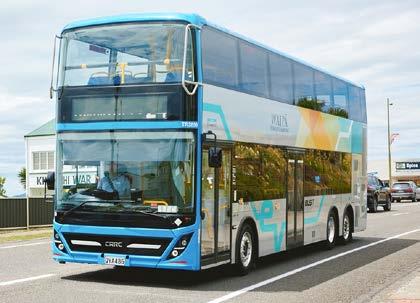
Bus use in and around Te Awamutu continues to climb.
Patronage on the Te Awamutu–Kihikihi service rose nearly 14 per cent over the past year.
Waikato Regional Council figures show passenger numbers on the route increased to 142,575 trips and March the busiest month, when there were 14,495 passengers.
Demand remains strongest on services linked to schools, a trend reflected across the wider Waipā district.
While Te Awamutu’s growth is steady, public transport use across the district is accelerating, particularly on the Cambridge route, which has overtaken Te Awamutu in total passenger numbers for the first time.
Nearly 150,000 trips were taken on the Cambridge service in 2025, driven largely by high school students following the introduction of additional trips before and after school.
The regional council says the extra services have helped meet demand
from students living in Leamington and travelling to the Taylor Street school stop.
Regional councillor Liz Stolwyk said she was thrilled with the Waipā and King Country figures.
“The data certainly confirms that public transport is becoming a trusted and practical travel choice across the region and I don’t see this as a short-term spike.
“The numbers show a sustained shift in travel behaviour which is fantastic. When reliable and wellconnected services are provided, people will use them,” she said.
According to Sandra Sesto-Dekic, Team Leader Customer Focus at the council, Cambridge’s growth was especially noticeable during school terms.
She says journeys within Cambridge itself, along with the Te Awamutu–Kihikihi service, remain relatively low outside peak school travel, giving the council something to focus on this year.
Regional routes present a mixed but encouraging picture.
The Te Kūiti–Hamilton service, which stops in Te Awamutu,
Te Awamutu figures
• Patronage increased 13.67 per cent compared with 2024
• Continued steady growth across 2025
• Remains one of the region’s strongest performing connector services
recorded stable patronage compared with the previous year. The council says maintaining those numbers through 2024 and 2025 provides a solid platform for future growth.
A targeted promotional pack is being developed to raise awareness of the service across Ōtorohanga and Waitomo districts, with the aim of increasing usage and strengthening the route’s long-term viability.
Further south, patronage on Route 32 between Tokoroa and Hamilton showed a downward trend. In contrast, the daily Taumarunui service — jointly funded with Te Whatu Ora Waikato and stopping at
Te Kūiti Hospital - recorded a 40 per cent increase.
The service is primarily used by patients travelling to and from Waikato Hospital for outpatient appointments.
Elsewhere in the region, a Waikato district service serving Tamahere, Mātangi and Tauwhare continues to attract passengers, highlighting the appeal of a stop at the University of Waikato campus.
The council says overall the figures point to growing confidence in public transport across Waipā and Te Awamutu remains a key part of the district’s evolving bus network.
Kihikihi clock comes unsprung
By Chris Gardner
Time has, once again, stood still in Kihikihi.
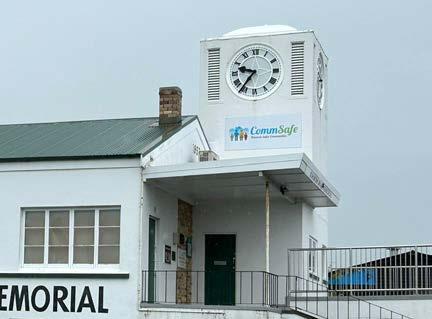
Kihikihi War Memorial clock has been frozen in time at 9:36 for much of the New Year.
Te Awamutu and Kihikihi Ward councillor Marcus Gower told The News he had let Waipā District Council’s property team know the clock had stopped on January 11.
Gower said the suspension spring, the thin piece of metal that the pendulum swings from, has broken, and the council has ordered some metal to make a new spring.
Gower lives near the clock and campaigned to get it fixed in 2021 after it had stopped for nearly two years. The council estimated repairs then would cost $70,000.
Then, in 2022, the clock stopped again, causing the council to conclude that the power supply had been maliciously interfered with.
CommSafe community safety officer Mandy Merson, whose office sits between the clock and the toilets, said the council was working on fixing the clock.
“There’s been a few issues, that’s for sure,” Merson said.
The building had also been graffitied – the culprit tagged buildings in Kihikihi and Te Awamutu.
The turret clock, manufactured in 1881 when Victoria was Queen and Sir John Hall was prime minister, started life in Te Awamutu Post Office. It was moved to Kihikihi in 1960.

Funeral Director: Jim Goddin
Double decker buses now do a loop around Kihikihi.
Kihikihi War Memorial Clock is, once again, under repair.
Photo: Chris Gardner
COMING TO TE AWAMUTU
Retirement where the living is easy.
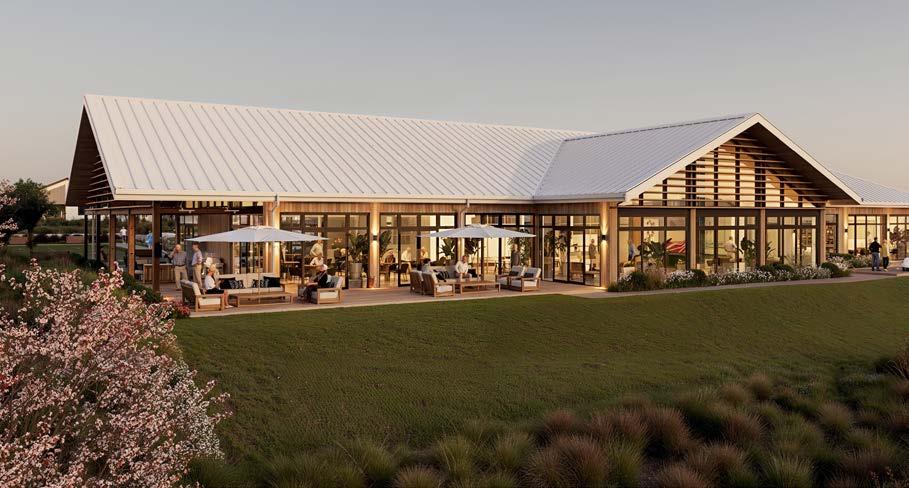
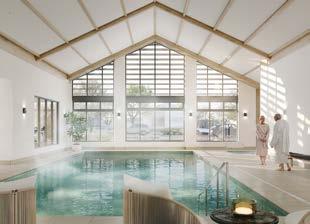
Arvida in Te Awamutu has a brand-new clubhouse and resident workshop underway, featuring a dining area, library, pool, gym, bowling green and outdoor fire. Our brand new villas are priced from $695,000 (licence to occupy)*. And the nearby Frontier Estate is home to a pharmacy and medical centre. What more could you want from a retirement? Now’s the time to make the move.
* Price is for an Occupation Right Agreement, secured by a first‑ranking mortgage in favour of the Statutory Supervisor on behalf of residents. Price valid for 30 days from the date of publication.

Book a private tour.
Arvida Whai Mauri Ora is situated at 319 Manaia Road, Te Awamutu. We’d love to show you around and answer any questions you have. To book your tour, call Juliet on 07 444 4023.
Scan here to learn more.

Artist impression
Artist Impression
An eye-opener for students
By Jesse Wood
Twelve Te Awamutu
College students were the last in Australasia to experience personal growth and a sense of community via the World Challenge Leadership Expedition in Asia.
Year 12 and 13 students
Rosie Anderson, Ashlee Bell, James Crowhurst, Bonnie Dixon, Lilah Earwaker, Kaylee Grinter, Libby Haynes, Maddy Lile, Zoe McQuillan, Emaani Mullins, Madison Phillips and Eva Walton spent three weeks in Cambodia and Thailand last month, accompanied by teachers Brian Winter and Bernard Oliver, as well as World Challenge expedition leader Vicky Bradshaw.
World Challenge is a UKbased company specialising in sustainable travel and leadership expeditions.
“We’re hoping they’ll be able to bring some of their experience and their learning back with them to school,” Te Awamutu College teacher of social studies and tourism Winter said.
“The idea is to push you out of your comfort zone, test you and to learn about the culture of the places that you visit.”
As part of their trip, the group stayed at a rural Cambodian village, Trei
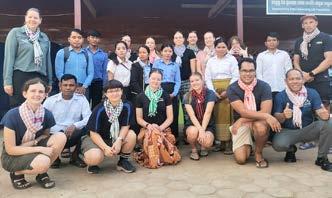
Nhoar, for three nights and helped paint a block – inside and out - at Chambok Sor Primary School.
“They learnt about the village, the kids and why school was so important to them,” Winter said.
“One of the guides spread the message about how important school is to the children there because it is the way out of poverty.
“It gave the students that appreciation for what these children’s experiences in life are and thinking about their experiences back home. We are in a fortunate position.
“It was cool to see them come to terms with that and realise we’ve got it good in New Zealand, but there are small ways that we can contribute.
“In our small way, we were able to do that.” Winter said it was
gratifying seeing the students’ sense of accomplishmenthelping communities they wouldn’t originally have a connection with.
“We often talk in the classroom about leadership and contributing to the community,” he said.
“I come from a history and social science background. So, it was cool to see kids interacting even with that aspect overseas, especially experiencing the history of Cambodia first hand.
“It was really about getting out of your comfort zone and making the most of every opportunity.
“To see some of them push themselves and make the most of every opportunity while they were travelling was fantastic.”
Not long before their departure to Asia, World Challenge announced the
closure of their programme in Australia and New Zealand in 2026.
With a month to spare, luckily the students’ fundraising efforts didn’t go to waste.
Alongside fundraising, the students had funded their travels out of their own pockets, and their caregivers’ too.
“We were lucky. I know other schools who were going to go this year and they had their trips cancelled. They’re concentrating on their UK operations,” Winter said.
“We raised around $17,000. It didn’t pay for the entire trip, but it was a massive effort that students and families put in to raise that amount.
“Our quiz night in September helped us get to that mark, as well as other fundraisers throughout the year. We have such a generous community in Te Awamutu.
“Without the donations and the support of our community, we couldn’t have done it. We owe a lot of gratitude to them.
“I know our students have had a lot of personal growth from this experience and it has been awesome to see them take up the challenge. It’s going to be something they will remember for the rest of their lives.”
Star turns on stage
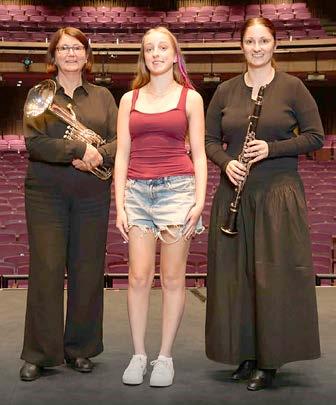
Among the 500 performers on stage for the opening performance of Ki Ngā Whetū To the Stars at the new Waikato Regional Theatre last week were some faces that Te Awamutu residents will be familiar with.
Mother and daughter Grace Gower and Alice Collins, were among the featured singers in the performance. Renee Kenyon, who was in the pit orchestra, shared the experience with both her daughter, Addison Kenyon (onstage performer), and her mum Theresa Dyer (onstage orchestra) and Te Awamutu drama teacher Morag Carter was also part of the on stage orchestra.
“I thought it was important to take the opportunity to be a part of this historic event, especially with Founders Theatre having been such a significant part of my teenage experiences with theatre,” Carter said
OPEN DAY
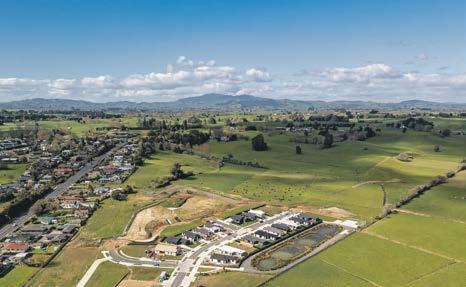
We’re excited to welcome you to Waipiko Landing on Sunday 22 February, where you’ll have the chance to explore our completed homes, meet the team, and experience the vision for this growing neighbourhood in Te Awamutu.
Just a 30-minute drive from Hamilton and 20 minutes to Cambridge. Waipiko Landing o ers easy access to major centres while maintaining the charm of life in a vibrant community.
Homes are being delivered by trusted build partners Venture Developments, Progressive Projects, and Generation Homes, o ering a mix of completed and customisable home packages to suit are available, o ering flexibility in design, size and price point. Join us for the
Location: Time: Date: Find out more at www.waipikolanding.co.nz
Neighbourhood entrance at 952 Cambridge Road, Te Awamutu 12:00pm - 2:00pm Sunday 22 February 2026


Addison Kenyon, Renee Kenyon, and Theresa Dyer.
Photo – Mark Hamilton.
A photo of the students with the staff of the school.

Visiting the past
By Murray Smith, Bridges Church
In August 2025 I wrote to Waipā District Council about an important sign that had gone AWOL (absent without leave).
This Council sign situated along Maungatautari Road, just before Lake Karāpiro Dam, pointed southwest up the hillside. It read, “Confiscation (Aukati) line”. An emailed response from Council said the sign was removed because it had been ‘vandalised’ and no reinstatement was planned.
My point in reply, appealed to the sign’s significance as a ‘marker’ of our local history. It’s presence provided a potent reminder of events at the end of the Waikato Land Wars in 1864 when colonial forces arbitrarily seized almost 500,000ha of prime land from
Māori. This ‘Aukati Line’ further enforced the dispossession Māori felt. Imagine armed patrols warding tangata-whenua off their own lands - that was the case in Waikato, northwards all the way from the Firth of Thames across to Maungatautari and then on to Ōrākau.
It’s good to see council have reinstated the sign. I’ve been reflecting on this saga as our nation prepares to commemorate Waitangi Day on February 6. On that day in 1840, representatives of the British Crown and over 500 Māori chiefs on behalf of their people, signed New Zealand’s founding document.
Looking back 186 years to when Te Tiriti ō Waitangi was signed, the numerous breaches this covenantal document has suffered under Crown indifference are unfathomable. Soon after the signing, blatant dishonouring of the
Treaty began… how this ‘Aukati Line’ was ever inaugurated within about two decades of the Treaty’s signing, beggars belief - especially in the light of its stated intentions. (Article 2 of Te Tiriti guarantees that Māori will have “unqualified exercise of their chieftainship over their lands, villages and all their treasures”).
Many New Zealanders have little idea of what brought the Treaty about, its purpose and that historically the Christian missionary influence was instrumental in gathering support throughout Aotearoa for Māori rangatira to sign the Treaty. Their motivation was to protect Māori from the negative aspects of British colonialism - greedy settlers and unscrupulous traders who lacked understanding or interest in honouring Māori culture.
Back in February 1934 New Zealand’s Governor General, Lord Bledisloe, inaugurated components in that year’s Waitangi Day celebrations that have become something of a pattern for subsequent events. The ceremonial
aspects involved important sites including the Treaty House grounds and Te Tiii marae close by - in addition, organisation was consultative with Māori, Pākehā and government conferring. Significantly, Lord Bledisloe’s prayer carried impact that has continued. He prayed that, ‚the sacred compact made in these waters may be faithfully and honourably kept for all time to come.’ He continued with a prayer that Māori and pakeha would find unity, affirming the place that Christian faith had in achieving the goal of ‘one-ness’.
The Treaty connects us to history and anchors us to what was promised. The majority of those Christian pioneer missionaries cared enough to try and ‘get it’… at least to a reasonable degree. Their relationship and credibility with Māori stemmed from mutual respect and honour… values inherent in the Treaty. This instrument of reconciliation remains a living document for today - though abused and damaged, it’s not too late for healing to take place in Aotearoa.
ON SHAKY GROUND
Safety around our railways
By Janine Krippner
As we have sadly been reminded over the past couple of weeks, we have a country that is susceptible to hazards like landslides that impact people, homes, and lifelines (for example, transport, water and power). People and communities around the country work to have plans for what to do when something hits, to keep people safe where we can, and recover faster.
In Aotearoa, we have freight and passenger trains, and even as you read this there will likely be at least one train running from Hamilton, passing Taumarunui, or collecting milk products around the south Waikato. This is through some very diverse terrain.
To make this possible, a lot has improved with rail operations and safety, but vigilance and improvements are critical to keep our country running.
Our most severe example of this has been mentioned in this column before –the Christmas Eve 1953 Tangiwai disaster, where over 150 lives were lost. A lahar from Ruapehu had destroyed the bridge at Tangiwai shortly before the evening express arrived. Every year before Christmas, rail staff remember this tragedy by stopping and laying wreaths at the site.
We cannot, and many would argue, should not stop nature from doing its thing, but there is a lot we can do to keep people safe and reduce impacts.
There have been great advancements in technology so that when another lahar occurred in 2007, automated systems alerted authorities and rail and road networks were closed for safety. Two similar events, two very different outcomes.
Accidents and disasters still happen. Last month with the severe weather impacting the country, train services were stopped on the
East Coast to prevent harm.
Slips, derailments, and collisions sadly still happen, as we saw in Spain last month, so for all of us as community members it is handy to know what to do. Just in case. If we encounter something wrong within the rail corridor, what can we do?

Something wrong may include loose wires, broken rail tracks, landslides, or anything else that seems unusual, even cattle that have wondered onto the track as we have seen in recent years in Te Awamutu.
Please call 0800 808 400 and let Train Control know. If you encounter an accident or derailment and there aren’t already emergency services on site call 111 immediately. Even though this is tough, please don’t go to the site as you don’t know if there is live electricity, fuel, or hazardous chemicals that may put you in danger as well. Even when there hasn’t been an accident, there are always hazards present. Rules are there for a reason, and when they aren’t observed, casualties can happen. If the bells are ringing and the arms are down, waiting is critical. Trains cannot slow down very quickly and can be moving faster than they appear. Many rural crossings don’t have bells, so at these places we are to stop and check both ways first.
Every day, hundreds and thousands of tonnes pass through the region on trains, helping keep the country running. But like being aware of our natural landscape, respecting rail corridors and knowing how to respond if something does happen is critical to making our community safer.









Heat on in wetland
By Viv Posselt
Close on 200 people were at Ōhaupō’s Rotopiko wetlands to mark Sunday’s World Wetlands Day.
The celebration this year carried the theme ‘Wetlands and traditional knowledge: Celebrating cultural heritage’.
Spearheaded by the National Wetland Trust (NWT), it brought together various agencies and organisations that included Landcare Trust, the Te Awamutu Rotary Club, Waipā District Council and the Waikato Regional Council, DOC, Go Eco, and Sanctuary Mountain Maungatautari.
The event is held across New Zealand to coincide with World Wetlands Day, which has been marked internationally on February 2 since the 1971 signing of the Convention on Wetlands Treaty. It serves to raise awareness about the importance of wetlands and highlight the work being done to preserve them in communities around the world.
The Rotopiko wetland forest and lake has
been the hub of this region’s celebrations over the past six years and the annual event has turned into an information-packed family day, complete with activities, giveaways and refreshments, and a host of wetland education.
In line with this year’s theme, the NWT invited Ringi Morgan-Fifield, who works parttime with Sanctuary Mountain Maungatautari, to offer up information and products linked to the rongoā, or traditional Māori herbal medicine, found within the wetlands.
National Wetlands Trust deputy chairman Don Scarlet said the purpose of the day is to get people into wetlands, both physically and emotionally.
“I would say something like this collaboration of all those taking part has enabled us to take a fantastic step forward to get more Kiwis involved.”
Work at Rotopiko over the past year has centred on removing rats from within the wetlands fence, managing the exotic birds and planting up areas outside the fence that drain into the wetland.
Loco display still offline
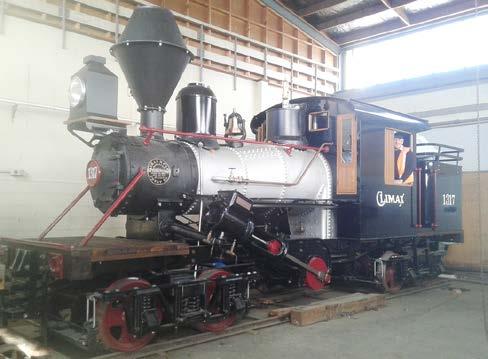
The meticulously restored Climax 1317 locomotive steam engine won’t be back on display in Te Awamutu for a while yet.
There is no funding allocated for the project in Waipā District Council’s 2034–2037 Long Term Plan.
A Te Awamutu mayor, the late Jonas Smyth, gifted the former bush tramway engine to Te Awamutu in the late 1950s.
For 48 years, it was a play item for children at the Te Awamutu War Memorial Park. In 2003, the council agreed the locomotive should be restored and supported the Te Awamutu Lions Club to form the Climax 1317 Trust.
The following year the engine was
moved into premises leased by the council where it has been repaired and refurbished by volunteers.
“Staff are continuing to work with the Te Awamutu Lions and representatives of the now-dissolved Climax Engine 1317 Trust to identify a suitable permanent location for the historic engine,” group manager customer and community services Sally Sheedy said.
“Confirmation of a site is required before any fundraising can proceed for the construction of a building to house the engine.
“Council staff will continue to work alongside the Te Awamutu Lions to reach agreement on a suitable location.”



Before and after: the Climax 1317, more recently with trust treasurer Allen Roundthwaite on board.
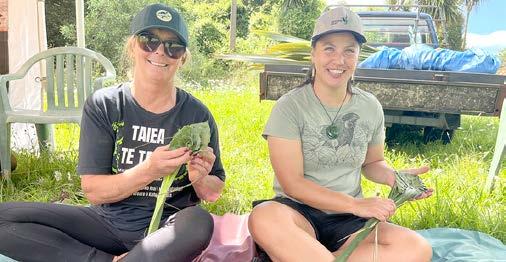
NZ Landcare Trust’s Zipporah Ploeg, right, and Pirongia Enviro Group volunteer Faith Lyons started the day with some traditional weaving. Photo: Viv Posselt
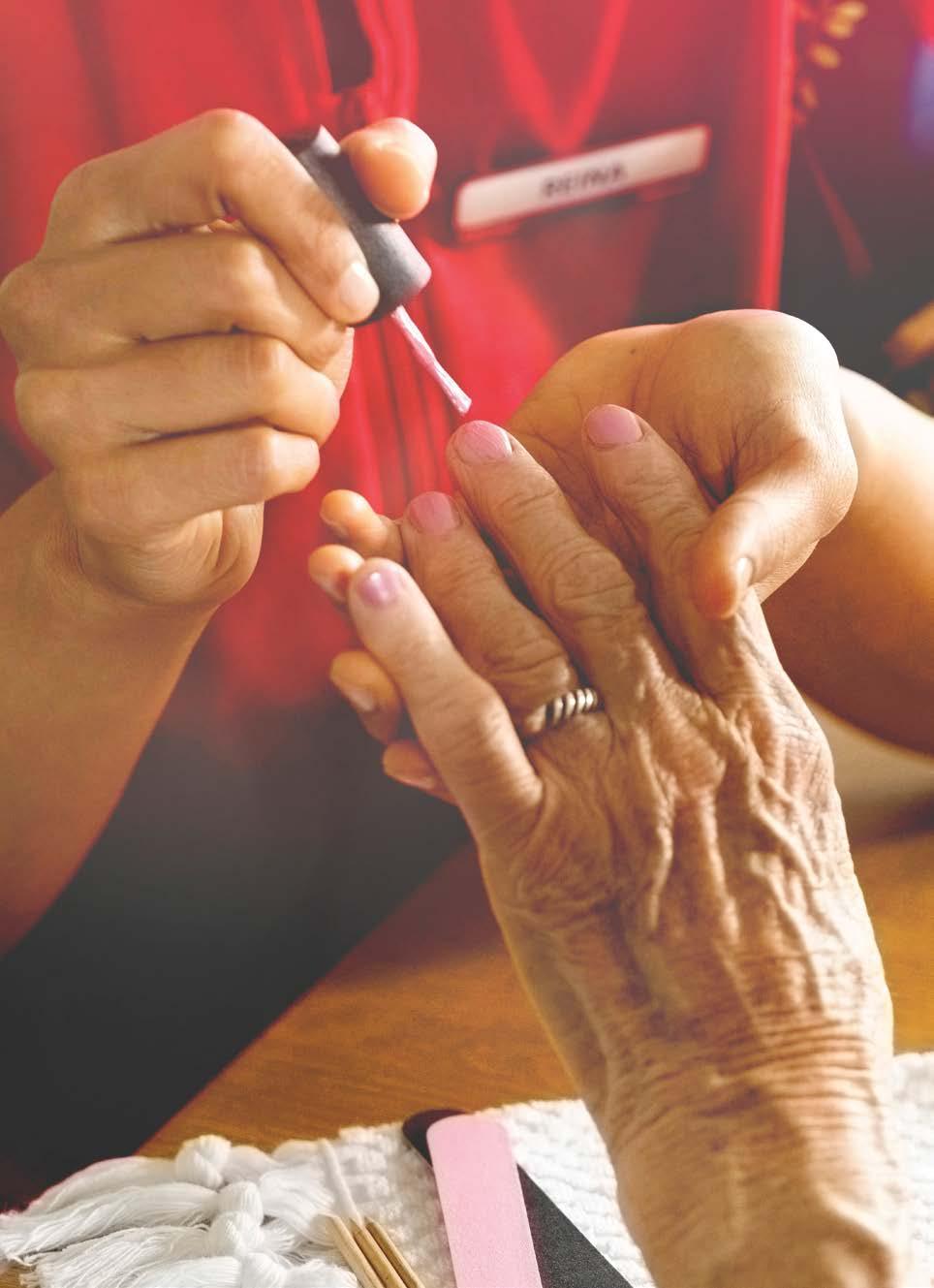
Care is finding the perfect shade of pink.

When your loved one can no longer manage at home, you need a place with care you can trust.
At Summerset Cambridge, we know the little things can make a big difference. Care isn’t just about scheduled doses, it’s knowing sometimes laughter is the best medicine. Care is having a dance to their favourite song and talking about the town where they grew up.
Join our upcoming Care Morning Tea Tour to learn more about Waikato’s newest premium care centre, including specialist dementia care.
Summerset Cambridge summerset.co.nz/cambridge 07 839 9482
Summerset Cambridge Care Morning Tea Tour

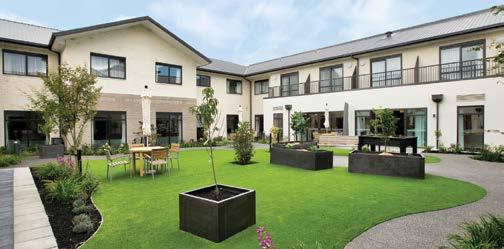
Summerset Cambridge’s brand new care centre is now open, offering a range of accommodation to suit your needs, from care apartments to premium care rooms with rest home and hospital level care. The village is also home to our industry-leading memory care centre, offering apartment-style living for people living with dementia, in a safe, secure and homely environment.
We know that moving to a retirement village is a big decision, so why don’t you and the family come along to our Care Morning Tea Tour on Saturday 14 February. This will be your only chance to walk through our state-of-the-art memory care centre before our first residents move in. Plus our specialist care team will give a short presentation on our continuum of care, with a chance for you to ask any questions regarding you or a loved one, so you can feel peace of mind for the future.
Care Morning Tea Tour
Saturday 14 February, 10.30am
Summerset Cambridge 1 Mary Ann Drive, Cambridge 07 839 9482 | cambridge.sales@summerset.co.nz
The story of Father Croke
By Meaghan Hawkes
It was while performing the hard work of his huge and scattered parish that Father William Croke sowed the seeds of his demise.
The 28-year-old priest was stationed at Kihikihi, his duties requiring long journeys on horseback and he suffered many hardships reaching the outer districts.
The priest with the remarkably sweet nature, who made friends among all denominations, had come to Kihikihi from Auckland’s St Patrick’s cathedral in 1899 to take charge of the Waikato West district after the death of Father Luck.
Father Croke, however, was in somewhat overworked and weakened health, and for some weeks at Kihikihi was laid up with pleurisy and only able to say one mass a Sunday. Once recovered, he endeared himself to all. He was a sprightly scholar, too, and engaged in a prolonged but friendly newspaper letter exchange with Te Awamutu’s Presbyterian minister Rev Smith reflecting on the Roman Catholic faith.
In 1901, in the course of his work, he was drenched by rain and contracted a lingering
cold which significantly impaired his health. Doctors recommended he try a hot climate for a change. He was transferred back to Auckland.
His Kihikihi parishioners held a farewell social for him, which was a great success, although very short notice had been given.
Several speeches were made praising the good work done by him, noting the high esteem in which he was held throughout the parish and wishing him every success in his “new sphere of usefulness”. Father Croke replied that he felt great sorrow at leaving the district. He had endeavoured to do his duty there as a gentleman, a citizen, and a priest.
Father Croke would later leave Auckland for the warmer climate of Gisborne and then travel to Australia where he took charge of the parish of Barcaldine, in Rockhampton.
In February 1902 he returned to New Zealand suffering from consumption (tuberculosis) and proceeded at once to the Mater Misericordiae Hospital at Mount Eden to be cared for by the Sisters of Mercy.
Six months later parishioners were pleased to see him once more in the sanctuary at St Patrick’s, quite a number

waiting for him outside after Mass.
During early 1903 he travelled between Auckland and Gisborne before deciding to take the long journey home to Tipperary, Ireland to see his family. In March he left on the Sierra bound for San Francisco. With a friend named Mr Fox, Father Croke crossed the Pacific, and by easy stages reached Philadelphia, arriving in late May.
They were to transfer to the Belgenland and sail two days later for Ireland. But the vessel had been put back two days, and disheartened by the delay, Father Croke’s courage gave way.
He was taken to St Joseph’s Hospital where he grew rapidly worse, despite the care of the Sisters of St Vincent de Paul and died aged 32. He was buried in the priests’ plot at Holy Cross Cemetery, Philadelphia.
Father Croke, who had left his homeland for missions in a distant country that would prove fatal to him, was mourned at Kihikihi and the wider Waikato West district.
Be prepared to overnight
By Chris Gardner
Be prepared to overnight every time you go for a hike or a tramp.
Weather is unpredictable. Rivers rise. Slips could block your path. A trip could leave you with an injury and unable to walk.
Always take a survival bag. A plastic pack liner, keeping rain and the river out of your gear, can double as a survival bag. Crawl into a water and wind resistant aluminiumcoated emergency bag to become insulated from the elements and prevent hypothermia.
A survival bag can be cut open to make the roof of an emergency shelter or make an emergency shelter from fallen branches. Dry ferns and leaves make springy beds and piled 30 cm high are good insulation.
Practice making an emergency shelter in the hope you may never need to build one under pressure in a real-life emergency situation. It could save lives.
Take a tent or emergency shelter on a multi-day tramp, even if you plan to stay in a Department of Conservation hut.
Great, lightweight, tramping tents are expensive, but worth the investment if you plan to use them regularly. You won’t get change from $1000 if you want a one-person tent weighing less than one kilogram. Add another $500 for a two-person tent. Cheaper and heavier tents are available from mainstream outdoor retailers.
Lighten your load by splitting a multi person tent between those who will sleep in it. The disadvantage is if one of those people becomes lost on the trail, they will not have a full tent, and neither will those they become separated from.
Shelter is only half the equation – staying warm through the night requires the right sleeping system.
Sleeping bags have comfort, lower limit,

and extreme ratings. The comfort rating is the temperature a standard woman can sleep comfortably in, the lower limit is the temperature at which a standard man can sleep without waking, and the extreme rating indicates the temperature where hypothermia is unlikely for a few hours.
Down sleeping bags are the tramper’s choice, compressing well into a backpack. Never put anything on top of a down bag you are sleeping in, as it reduces the down loft and the insulation. A wet down bag will lose its insulation too.
Synthetic sleeping bags, usually filled with polyester, are cheaper than down filled bags. But they are a lot bulkier too. They are still warm when wet.
A good compromise is a hybrid sleeping bag filled with a mixture of down and synthetic material.
I have one of each I use for different scenarios. I default to a bag rated for subzero temperatures and sleeping in it opened out when I am too warm.
I always take a sleeping bag liner to add another layer of warmth and protect my sleeping bag from my trail weary body. A merino wool liner is great in summer, and cotton silk blend in other seasons.
A good sleeping mat, also rated for your conditions, is essential. Without this you’ll freeze in the best sleeping bag and liner.
Closed cell foam mats are bombproof, but they are bulky.
Inflatable mats are popular. But, as I found out in subzero temperatures last year, they can leak, and you can wake up shivering on the ground. Reinflating a mat in a cramped tramping tent at 3am when it is -3 degrees is not fun.
A survival bag, emergency shelter, tent and reliable sleeping system could mean the difference between danger and discomfort.





Dairy farmer Mike Montgomerie swapped his gumboots for agendas in 2022, diving headfirst into life as a Waipā District Councillor - a role he has found both rewarding and challenging
Mike says one of the biggest learning curves has been getting to grips with Council s finances from the funding streams unique to local government to the many funding demands that come with it “It quickly became apparent that Council manages a very large asset base with a relatively small annual budget Farming has some similarities, but Council is next level ”
Mike chairs the Strategic Planning and Policy Committee, and is deputy chair of the Finance and Corporate Committee While the workload is high, his motivation for entering local government is grounded in community service “It ’s important who we have acting as guardians of the assets Council looks after, and who helps guide the collective investments that shape the place we live I can hardly believe how much Waipā has changed over the past few decades Like everyone, I want to maintain the best parts of the small-town rural life as we continue to grow ”
Mike is really enjoying being part of something bigger than just his own business, working with fellow councillors and especially Council staff
The Maungatautari ward representative and Cambridge Community Board member enjoyed
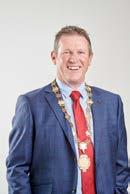


his first term learning from the established councillors and says it is refreshing to see so many new faces around the table this triennium They bring new energy, skills and perspectives, he says
Looking ahead, Mike says a lot is happening across the district “I am looking forward to completing the Cambridge Connections project, helping shape what Council looks like once waters transitions to Waikato Waters Limited, and ensuring Waipā is well placed in the changing local government scene ”
Originally from a farm near Cambridge, Mike spent three years working as a lawyer in a large commercial firm in Wellington before returning to farming 30 years ago His wife, Luci, was a GP at Cambridge Medical Centre before going on to specialise They have four sons who have all left home but still love returning to the family farm
“We are now beginning to travel, and as we move through countries, cities and towns, my Council role has really focused my attention on the way things work in other places I'm always thinking what works better than how we do things and what is worse ”
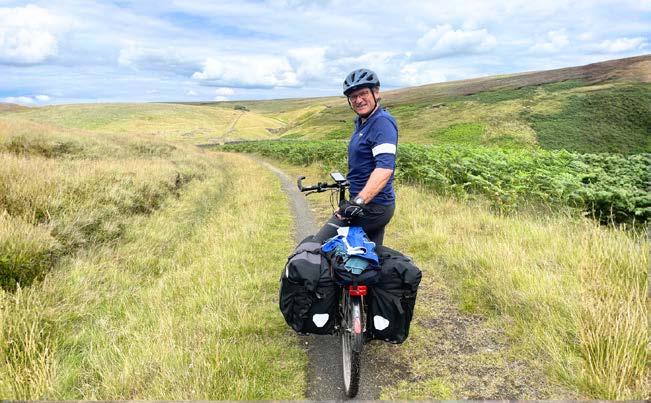
Outside Council and the farm, Mike loves getting out on his bike around Waipā Growing up in the 1970s, cycling was a big part of daily life “While roads are busier now, Te Awa River Ride and growing urban cycle networks are giving today’s kids some of the freedom I had growing up ”




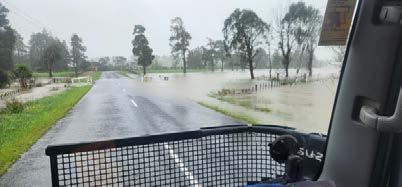
When flooding struck the Thames–Coromandel District recently, the impacts were felt well beyond district boundaries In response, three Waipā District Council staff stepped forward to support those affected, reinforcing the importance of collaboration and preparedness across local government
Cathie Shaw, Gina Scott and Harry Baxter assisted with welfare coordination and operations support, working alongside Thames–Coromandel District Council, emergency management teams, and community organisations Their mahi included supporting affected residents with information and practical needs, and contributing to coordination efforts during a challenging and fast-moving situation
Follow us on Facebook or sign up for Antenno to keep up-to-date with weather warnings and other news!

Waitangi Day long weekend activities
Waitangi Day is tomorrow, Friday, February 6, bringing with it another long weekend If you’re staying local and looking for something to do, take your whānau to Te Whare Taonga o Te Awamutu Museum or Cambridge Museum, where hands-on Te Tiriti displays, resources and a kids’ activity book will be available from February 5–9
Recycling collections will continue as usual, just remember to have your bins out by 7am on your scheduled day!





Mike Pettit Mayor Jo Davies-Col Deputy Ma
Roger Gordon Aidhean Camson Pip Kempthorne Clare St Pierre Les Bennett
Shane Walsh Dean Taylor Marcus Gower
Mike Montgomerie
Your Elected Members
Being on Council has changed how Mike sees the places he visits: a recent cycling trip to the UK
Dale-Maree Morgan




Desert (7)
(5)
Human beings (6)
Blunder (5) 20. Clever (5)
(5)
Across: 1. Swamp, 4. Brassy, 7. Loo, 8. Trauma, 9. Utopia, 10. Seventh heaven, 14. Evoke, 15. Argue, 18. Traditionally, 23. Uneven, 24. Novice, 25. Cat, 26. Settle, 27. Solid.
Down: 1. Spree, 2. Abuse, 3. Plaits, 4. Bought, 5. Aroma, 6. Spite, 10. Sleet, 11. Viola, 12. Vigil, 13. Needy, 16. Stance, 17. Points, 19. Range, 20. Duvet, 21. Anvil, 22. Lucid.
DVGMAOESOUDMJNEDZN PDSDYTNYVNUGUGZVEU QEOBUULSEDMHDAURAO UKSLGSEGRAVOMDUOVR SAEYODALYIDXDEFLEZ ZPJTEWHILLMANIOLQU OKBCSBCTNIKUWVSSHM YRRKKXTOYOTAIYIRQO LELHUMBERAMDRVMOFR MOSUBARUCHUHLQCYOR VAUXHALLSACAXUACRI SINGERZFTALBOTFEDS


If
CARE GIVER


























































TO LET
FARMHOUSE AVAILABLE between Pirongia and Otorohanga, in return for farm work, suit retired farmer. Please text only with name age and references. 02108677781
WANTED TO BUY
WANTED TO BUY. Any ute, van, 4WD, truck or car. Any condition doesn’t have to be going. Cash paid. Ph/txt Kevin 027 299 6165
Gorse, Ragwort, Thistles, professional, efficient weed spray operator, 200m auto rewind reels Ph 022 0844
Te Awamutu Concerts Alive! are looking for volunteer committee members
Do you love live music? Do you have marketing/ social media skills? Help spread the word about our reasonably-priced live concerts by professional musicians. Can you commit to a couple of hours a month or more to create and admin a simple website and Facebook page and grow our existing mailing list? In exchange, you get exclusive behind-the-scenes experience of live concert performances. We are a friendly team and welcome new ideas to promote our project which has a successful 50+ year history.
Contact Ursula 027 2905710

A Farewell with Heart Every life deserves a meaningful farewell, and our compassionate team is here 24/7 to offer care and support when it matters most. Jim Goddin

PERRY, David Ross –Peacefully passed away in his sleep, surrounded by his girls, at Waikato Hospice on Sunday, 1 February 2026, aged 59 years. Beloved friend, lover and partner of Tracy. Cherished father and father-in-law of Amiee & Austin, and Jessie & Sean. Dearly loved Poppa to Elizabeth, James, JP and Baily. Loved son of Mary and the late Cecil, and muchloved brother of Jeanine & Brian Haigh, and Andrea & Brian Dobbs. Loved by all his nephews and nieces. At David’s request, a private cremation has taken place. Messages to the Perry family may be sent c/- 262 Ohaupo Road, Te Awamutu 3800, or left in David’s online tribute book at www.rosetown. co.nz
HOOKER, William Bruce (Bill) – Peacefully passed away at home, surrounded by his loving family, on Saturday, 31 January 2026, aged 80 years. Loved husband and soul mate of Carol. Proud father and father-in-law of Seth & Star, Sally & John, Jane & Mark, Lou & Kevin, Christina & Brandon, and an awesome stepfather to Maree & Mike, Neil, and Shane. Adoring grandfather to Logan, Lyla and Willow, and muchloved grandad Bill to seven. Special thanks to the Te Awamutu District Nurses and Dr Ernst Buhrs for the many house calls, and for the love and care shown to Bill over the past few weeks.
BAKER, Betty Hilda Sidonia




Honest and reliable Class 5 bulk tipper truck and trailer drivers – we want to hear from you!
Phone 07 827 1869 or email office@ curincontractors.co.nz for more information.






THOMAS, Hillary Anne (Hansen) 4.10.19461.02.2026 – Hillary passed away peacefully at home, surrounded by family. Adored wife & soulmate of Ross. Cherished mother of Stephanie & best Nana to Baxter. Treasured stepmother to Mark and Kim & step Nana to Rohan, Jackson and Isabel. In accordance with Hillary’s wishes a private service has been held. All communications to the Thomas family, PO Box 137, Te Awamutu 3840.
Te Awamutu Funeral Services, FDANZ






WADMORE, Robert Stanley (Bob) – Passed away unexpectedly at Waikato Hospital on Wednesday, 21 January 2026, after a very brief illness. Aged 86 years. A loving, caring and devoted man. Dearly loved husband of Joan. Much loved father and father-in-law of Robert & Fiona, Robin & Jo, the late Philip, and Mark. Treasured grandad to David, Hayley, Jaymie, Kendall, and Charlie, and proud great grandad to Romeo and Louis. In accordance with Bob’s wishes, a private farewell will be held. Messages to the Wadmore family may be sent c/- 262 Ohaupo Road, Te Awamutu 3800, or shared in Bob’s online tribute book at www.rosetown.co.nz
A celebration of Bill’s life will be held at the Te Awamutu Presbyterian Centre, Mutu Street, Te Awamutu, on Thursday, 5 February 2026, at 11.00am, followed by burial at Pirongia Cemetery.
Messages to the Hooker family may be sent c/- 262 Ohaupo Road, Te Awamutu 3800, or left in Bill’s online tribute book at www. rosetown.co.nz
MIERS, Peter Frederick – Passed away at Waikato Hospital, aged 71 years. Father, father-in-law and grandfather to Julie & Stephen, and family. A private cremation for Peter has been held. Messages to the Miers family may be sent c/- 262 Ohaupo Road, Te Awamutu, or left in Peter’s online tribute book at www. rosetown.co.nz. Aged 71 years 2 months 30 days.
NESBIT, David John –Passed away at Waikato Hospital. Aged 67 years. Father of Leah, Rebecca, and the Late Ricky. Grandfather of Anaru, Diamond, Giovanna Couture, Sovaan, Boston & Drake. In accordance with David's wishes, a private cremation has been held. Messages may be left c/- 262 Ohaupo Road, Te Awamutu 3800, or via David’s online tribute book at www.rosetown. co.nz.
– Our beautiful mother passed away peacefully on 2nd February 2026, aged 89 years. Reunited with her loving husband Ken. Dearly loved mother and mother in law of Allan (dec) & Sue, Sheryle, Kevin & Ruve, Wendy & David. Adored by her 11 grandchildren and 18 great grandchildren. ‘In God’s Hands’ A Celebration of Betty’s life will be held at St Andrew's Presbyterian Church, 80 Mutu Street, Te Awamutu on Tuesday, 10th February at 11am followed by burial at The Hamilton Park Lawn Cemetery, Newstead. The service will be livestreamed please email office@ teawamutufunerals.co.nz for the link. Donations welcome to the Te Awamutu Presbyterian Church and may be left at the service. All communications to the Baker family, PO Box 137, Te Awamutu 3840.
Te Awamutu Funeral Services, FDANZ
BLYTHE, Ruth Mary –Passed away peacefully on 27th January 2026 at St Kilda Care Home, Cambridge Beloved wife of the late Don. Loving mother and mother in law of Ken & Anne, Wayne & Janet, Jenny & Wayne, Shirley & Graeme. A private cremation has been held.
Te Awamutu Funeral Services, FDANZ
FERGUS, Graeme Kellas –Passed away peacefully after a short illness at Waikato Hospital on Monday, 19th January 2026, in his 80th year, with his soulmate by his side. Much loved and cherished husband of Kathy. Dearly loved father and father-in-law of Rodney, Lisa & Brian, Darren, and Collette. An adored grandfather and great-grandfather. Forever in our hearts and lovingly remembered. In accordance with Graeme’s wishes, a private burial service has been held. Messages to the Fergus family may be sent c/- 262 Ohaupo Road, Te Awamutu 3800, or left in Graeme’s online tribute book at www.rosetown.co.nz.