

Mokoroa name reinstated
The land where Tokanui Psychiatric Hospital sits near Te Māwhai will now be known as Mokoroa, acknowledging its original identity.
Toitū Te Whenua Land
Information New Zealand (LINZ) say physical works on site can now begin following a karakia led by descendants of the original landowners when the original name for the land was reinstated.
The demolition and remediation of the former hospital site is expected to take around three years to complete.
Tokanui Psychiatric Hospital operated from 1912 to 1998.
Contractors will begin by clearing hazardous materials including asbestos, chemicals, oils and other waste before moving into salvage works.
LINZ plans to have doors, windows and timber recovered for reuse, as well as concrete crushed for recycling. Once salvageable materials have been removed, buildings will be mechanically demolished to ground level.
Contractors will then remove building foundations and any contaminated soil.
Pre site testing identified contamination around buildings where materials
such as paint had deteriorated over time.
In addition to building removal, they will also remove underground pipes, footpaths and sections of roading across the site.
LINZ will upgrade a closed landfill on site that was used to dispose of
hospital waste during the facility’s operation.
This work includes removing and replacing the cap and diverting groundwater away from the landfill.
Work will also take place along the Wharekōrino Stream. Several culverts
will be removed to improve water flow and fish passage.
Additional sections of the stream will be daylit, bringing them back to the surface to flow naturally.
This work will be supported by restoration planting along the stream margins.
Power plan checks urged
Waipā Networks is encouraging residents to plan ahead for winter – by checking whether or not their electricity plan is still right for them.
Last week, independent regulator the Electricity Authority Te Mana Hiko launched “Billy”, an electricity plan comparison and switching tool. Billy replaces the former Powerswitch website and helps users understand their electricity use, compare plans across different retailers, and switch
to the option that works best for them.
“Electricity pricing and plans are set by retailers, not electricity distribution companies like us,” says Anna Watson, General Manager Customer and Community at Waipā Networks.
Waipā Networks is an electricity distribution business which owns and maintains the electricity network that delivers power to homes and


businesses across the district.
“Our role is to deliver safe and reliable electricity across the district. What we can do is help people understand how the system works and where they can go to make informed decisions about their power use,” Watson said.
Power bills can vary depending on factors such as daily fixed charges, peak and off-peak rates and the times of day electricity is used most. A


plan that works well in summer may not always be the best fit in winter, particularly as household routines change.
Billy does not promote any particular power company or receive commissions. It simply shows how different plans could work for a household, based on the information people provide about their electricity use.
Waipā residents can review their

power use using tools like Billy, or speak directly with their electricity retailer if they have questions about their current plan or want to explore other options.
“Supporting the uptake of tools like Billy, which help people understand their choices, manage their power use, and make cost savings where they can, is part of our role in supporting a resilient and informed Waipā community,” says Watson.

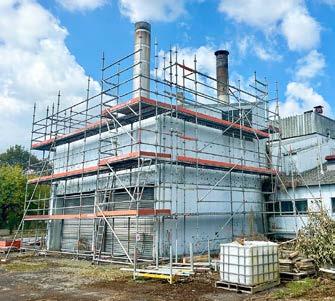
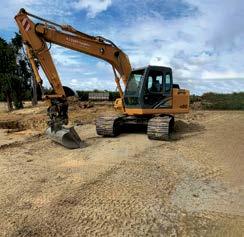
Work has started at the former industrial area at Tokanui Hospital. This area housed services such as the kitchen and laundry.
Photo: LINZ
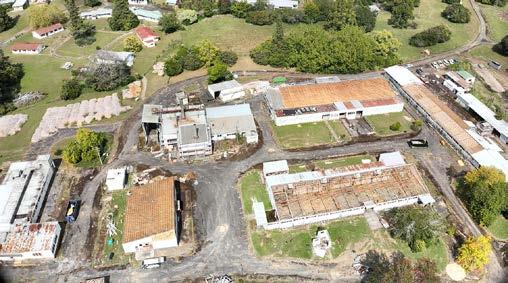
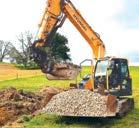
A bird’s eye view of the former Tokanui Hospital.
Photo: Protranz Earthmoving

Invites members and friends to: Waipa Workingmen’s Club, Albert Park Drive.
Thursday 16 April, doors open at 1pm
Guest Speaker: Harriet Clune, representing Te Awamutu Business Chamber
Door charge $4, includes ra e and a cuppa.
Please note our AGM will be 21 May.
Financial members will be invited to elect a President, Treasurer, Secretaries, and committee.







Rie hits 101 at pace
By Viv Posselt
Te Awamutu’s Rie de Haan celebrated her 101st birthday on March 27 with a schedule that would leave many far younger people
in her wake.
The Te Ata Rest Home resident spent her birthday morning playing housie, then enjoyed an afternoon of high tea and music with family and rest-home residents. The
On the beat with
Burns on Burns Street
I hope everyone managed to get a break over the Easter weekend.
Starting with a few recent good catches: Cambridge staff last week found and arrested a recidivist shoplifter who was wanted for four different thefts across Cambridge and Hamilton. She will now be appearing in court.
Te Awamutu staff attended a crash involving a single vehicle, where the driver had gone straight through an intersection, hit the curb and shrubbery. Breath test procedures were conducted and recorded a breath alcohol level of almost five times the legal limit. The driver will also be facing charges.
In another incident, a stolen car was detected driving into Te Awamutu and soon fled from police. After being stopped through the deployment of spikes, one youth was immediately arrested while a second fled.
A successful track by a police dog handler resulted in both youths now facing associated charges.
Back in Cambridge last weekend, a report of a car doing a burnout on Burns Street quickly resulted in the vehicle being located outside a Leamington address. It was immediately impounded for 28 days. The driver will face a charge of sustained loss traction.
I regularly remind everyone to ring 111 if police attendance is required at the time (105 where reporting is delayed). What I would
like to mention now, is what comes next, especially when you are an independent witness to something.
Making that initial 111 call is great to ensure a unit is aware and can be dispatched to assist. How effectively we can address the situation, however, may depend on our ability to obtain ongoing and timely updates. If you call us and drive on, away from the scene of the incident, it often leaves us with unanswered questions as to where offenders may have gone, any developments or escalation in the situation or changes in location.
If you’re making the call about an unfolding incident or situation, I would encourage you to remain in the area observing from a safe position. This greatly assists the staff that are responding.
In some cases, an informant has moved on and we arrive to find no evidence of the people or incident described. That leaves us wondering whether people have simply left the area, been picked up by a vehicle or are still in the area but hiding from view.
In the case of driving offences, a vehicle’s onward route and progress becomes uncertain. If it is safe and possible to do so, staying online to 111 or calling back with updated information when things change will greatly assist us. Safer communities together.
following day, the celebrations continued on the farm with family and friends. Rie remains impressively active. She is often out and about using her walker and joining in games. From time to time, she still pops into local creative fibre group meetings. Rie was born in Holland in 1925. After studying nursing then marrying Joe de Haan in 1947, the couple migrated to New Zealand where Rie’s brother Pieter had settled. Their farming life took them around the region, and after Joe’s death in 1992, Rie finally learned to drive at age 65. She carried on farming for several years.
At her centenary celebration last year, she told The News that the secret to a long life was quite simple … “hard work”.
Web stats
A News in Brief posting topped our Te Awamutu News website statistics last month.
The top page was e-Editions where we post full pdf versions of the newspaper for those who cannot wait for the printed version.
Coverage about new Te Awamutu RSA president Daniel van der Hulst, clearing up the Tokanui Hospital site, a temporary fix for Pirongia with news of a temporary bridge and a celebration by the Waipā King Country branch of Rural Women NZ rounded out the top five.
The top columnist for the month was Janine Krippner reflecting on paying back her student loan and her journey from her hometown of Te Awamutu, navigating Ehlers-Danlos Syndrome and job cuts to the good news she has been headhunted for a remote role with a US company.


Senior Constable DEB HANN
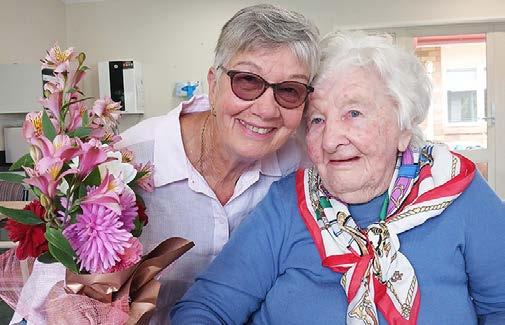
Rie de Haan celebrates her 101st birthday with a hug from daughter Joanna Fitzgerald.
Petrol use
With increasing pressure on fuel prices, Police encourage residents and commercial entities to be extra vigilant with any stored fuel. In Ōtorohanga, Sgt Heyden Nunn said any feasible measures to secure fuel tanks or areas surrounding them should be considered now, “as trends are emerging of increased petrol and diesel thefts – especially in rural locations”.
Daylight Saving
Clocks went back on Sunday. Daylight saving officially starts again on Sunday, September 27 at 2am, when clocks move forward to 3am. New Zealand observes 27 weeks of daylight saving to maximise evening light.
Firefighters compete
More than 140 firefighters will converge on Havelock North this weekend to compete in the United Fire Brigades’ Association North Island Firefighter Challenge.
Dog Show
The Cambridge Kennel Association stages its annual pedigree this weekend at the Karapiro Domain. Club secretary-treasurer Sue Chaytor is encouraging the public to attend “but please do not bring your family pet”.
Owl Farm Day
St Peter’s School will host its annual Owl Farm Open Day on Saturday where the school’s working farm is opened to the public. The event attracted more than 800 people in 2025.
Chasing glory
Champion Aussie
trotting
mare Keayang Zahara is a key part of Australia’s record eight raiders chasing the two marquee races at Cambridge’s Night of Champions tomorrow (Friday) night. The $1 million main race has attracted 10 starters. Each slot is worth $60,000 and the winning will take home $420,000. One of the country’s most successful modern acts, Drax Project will be playing the Night of Champions after party.
Tapping into funding
Waikato Waters, owned by Waipa, Ōtorohanga, Waitomo, Hauraki, Matamata Piako and South Waikato district councils has become the first of a potential 18 water councilcontrolled organisations to be granted access to the New Zealand Local Government Funding Agency.
Joining the funding agency gives Waikato Waters access to long-term borrowing. Its water services delivery plan anticipates the organisation will borrow more than $300 million by 2034.
The money will support an investment programme valued at around $800 million to renew,
upgrade and expand water and wastewater infrastructure across the region.
Waikato Waters will begin operating under the Government’s Local Water Done Well policy on July 1.
Interim chief executive Neil Brennan said Waikato Waters was building something that would stand the test of time and support growth across the region.
“Access to LGFA funding is a significant step for us,” says Brennan. “It means we can invest in critical infrastructure in a financially responsible way, helping to keep
costs down over the long term while still delivering the upgrades our communities need.”
Waikato Waters has also signed transfer agreements with Waipā, Waitomo and South Waikato district councils – the first councils to transfer their water and wastewater services to the new entity.
Transfer agreements will also be signed with Hauraki, Ōtorohanga and Matamata Piako councils.
From 1 July Waikato Waters will begin delivering water and wastewater services across the first three council areas. Councils will continue to collect water and
wastewater charges on behalf of Waikato Waters for at least the next 12 months.
Customers will continue to pay their council and contact council customer service teams with any billing or service queries, while Waikato Waters crews deliver services in the field.
Waikato Waters’ head office will initially be based in Hamilton. It will have around 50,000 customers and assets valued at approximately $1.4 billion, making it one of the largest water companies in the country.
Building leadership capability

is delivering the Ministry of Education’s Aspiring Leadership Programme for Waikato University.
By Mary Anne Gill
For Sharleen Nathan, leading the Ministry of Education’s new Aspiring Principal Programme at Waikato University is both professional and deeply personal.
She knows the programme from the inside. More than a decade ago, Nathan was herself an aspiring principal, grappling with the same questions now facing this year’s cohort - am I ready, what does the role really involve, and what kind of leader do I want to be?
“That experience changed the way I saw myself as a leader,” she says.
“It gave me confidence
and it made me think bigger.”
Now director at Waikato University’s Te Whai Toi Tangata: Institute of Professional Learning she is overseeing the national delivery of a programme designed to prepare the next generation of school principals for one of the most demanding leadership roles in the country.
Waikato is the right place to base the programme, she says, because of its long-standing reputation for innovation, strong research foundations and deep, trusted relationships with schools across the country.
The university is known for combining academic rigour with practical impact, and for designing professional learning grounded in the real work of schools rather than theory removed from practice.
Just as important is her own credibility. Nathan brings more than 25 years’ experience across classrooms, senior school leadership, the Ministry of Education and governance roles. She has worked as a Student Achievement Practitioner and Waikato professional learning and development lead, supported schools through major NCEA changes, and understands how policy
plays out on the ground.
“I’ve been an aspiring principal myself,” she says.
“I know what it feels like to test your readiness and start thinking bigger.”
The programme starts in term two following investment in Budget 2025 and has attracted strong national interest.
All 200 places were filled, with 15 teachers from Waikato. Participants were chosen through a Ministry-led application and interview process and require the backing of their home schools.
Deputy Secretary Education Workforce Anna Welanyk says the programme responds to the increasing complexity of the principal role.
“Principals need a wide range of skills, as well as the ability to connect with students, families and communities,” she says.
“This programme provides intensive learning and practice opportunities to help participants build confidence and capability before stepping into the role.”
The programme - funded at $12.8 million over seven years, with an initial threeyear delivery period and formal review points built in - was awarded to Waikato University following

a highly competitive procurement process.
Unlike traditional leadership courses, the programme is designed to sit alongside participants’ existing roles.
“This is not a full-time course,” says Nathan.
“Participants complete their leadership inquiry within the context of their own school, applying what they learn directly to their day today leadership practice.”
The curriculum aligns closely with the Beginner Principal Programme and is delivered through a mix of online modules, leadership inquiry and face-to-face learning.
Each aspiring principal is supported through three key relationships: their home
principal, a mentor principal from another school, and a programme facilitator who leads regional communities of practice.
Mentoring is one of the programme’s defining features.
“Being supported by a current, practising principal gives participants access to lived experience and honest insight into the realities of the role. That kind of support is invaluable.”
The programme also offers a reality check. Research shows many principals leave the role within their first five years, often due to workload and burnout. “This gives people a chance to explore the full scope of the job - governance, finance,
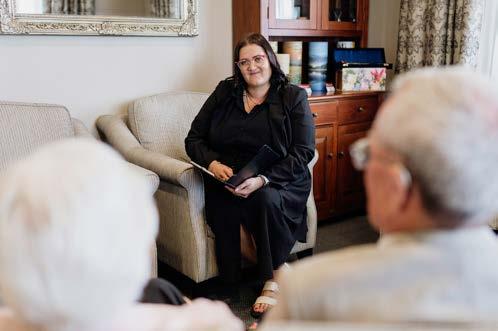
Funeral Director: Teri Keir
Alistair Luke
Anna Welanyk
Sharleen Nathan
Photo: Supplied
Continued on page 6
ON SHAKY GROUND
Ancient tsunamis
By Janine Krippner
A lot of work goes into understanding ancient tsunamis and their impacts.
The Storegga Slide is a giant submarine landslide that occurred thousands of years ago below the sea, offshore from southern Norway.
This is one of the largest landslides we know of - 2400 to 3200 cubic kilometres flowed out to around 800km from where it began.
The resulting tsunami impacted areas that now include Norway, Greenland, Scotland, and England. It took a lot of investigation work to understand this.
Out in the field, once a tsunami deposit has been recognised and described similar deposits can be identified elsewhere. Lab work can then provide an age for when it formed. Identifying similar deposits of the same age builds a picture of what areas were hit.
For impacts, the tsunami run-up height is important; this is the height that the water reaches above sea level. If a tsunami hit today, we could walk up to the highest points on land and measure it as it varies along the coastline.
For ancient tsunamis this takes much more work.
One method is investigating tsunami deposits within old lake beds. Under normal conditions sediment settles down through water, forming a mud layer. This can be interrupted by large storms or a tsunami washing new material into the lake. Tsunamis can transport sand and gravel from the sea plus ripped-up clasts of land that the water crossed. Marine fossils can confirm the ocean source.
For the Storegga tsunami, researchers found deposits within lakes at increasing

heights above sea level, then at lakes above a certain height they weren’t there. This gives a range of runup heights between those lakes. Their age connects deposits across regions.
The Storegga Slide occurred during the end of the Last Glacial Maximum, when ice sheets covered large parts of Europe. This adds complexity.
Having so much water locked up as ice changes a few things. Sea level was not the same as it is now, so scientists must figure that out too. Part of understanding past sea level is finding evidence through the geologic record, building a global picture through time.
Another complexity is where the land was at this location, at that time. Thick ice is heavy and can push the land itself down. When those thick ice sheets melted, the land rebounded upwards to where it is now. The sea level was lower, and so was the land. The level of the tide at that time also matters.
Many pieces of the puzzle must come together.
All this work led to run-up heights reaching 13 metres in Norway near the landslide, at least 20 metres in the Shetland Islands, around six in northeast Scotland, and around five in northeast England. A seemingly simple result required so much work.
Studies like this that help us understand what happened in the past show us what could happen in the future, and therefore, what actions we must take to protect ourselves. Figuring out geologic events across the ages contributes to building safer and more resilient communities.
FAITH IN WAIPĀ
Destination confirmed
By Phil Strong, Proprietor Chair, Waipa Christian School
Watching the recent NASA liftoff stirred something familiar. Not space travel, but the thrill of going somewhere new and the question of what it will be like when you finally arrive.
A few months earlier, Kathy and I watched a reality show where contestants travelled across Europe trying to guess their final destination. The tension wasn’t just in the journey—it was in not knowing where they were headed.
That feels uncomfortably close to real life right now. Global tensions are rising. Conflict fills the news.
The price of fuel climbs. Travel tightens. Even sport—my great escape—gets disrupted. Life isn’t exactly inspiring confidence.
And yet, it’s engrained in human nature to want to stay hopeful. But hopeful in what, exactly? If your hope is anchored in comfort, stability, or the idea that the world will eventually calm down, you may find yourself constantly unsettled. Because history and the current news cycle suggest otherwise.
Here’s the tension: we all want peace now, but we’re living in a world that can’t seem to hold onto it.
The traveller of faith approaches this differently. Not with denial, and not with panic, but with clarity. Because the destination is already settled.
Like astronauts who launch with a flight path already mapped, Christians don’t see this life as the final stop.
The journey matters, of course—but it’s not the end point. And that changes how you travel.
Am I concerned about rising costs and global instability? Of course.
These things affect how we live, how we care for others, and how we respond in the moment. But they don’t define where this is all heading. That’s the difference.

Hope that depends on circumstances will rise and fall with every headline. But hope anchored beyond this world holds steady. Even when everything else shakes.
This is why Easter still matters. It’s not just a tradition or a long weekend. Jesus Christ stepped into human history, faced its worst, and overcame it - not by avoiding suffering, but by going through it. The cross wasn’t the end.
The tomb didn’t hold Him. And in that, hope of a destination for us was opened.
The Bible describes it as a living hope; an inheritance that doesn’t spoil, fade, or disappear with time. Not fragile. Not temporary. Not dependent on global stability. Secure.
That kind of hope doesn’t ignore the present. It steadies you within it. It moves you toward compassion, generosity, and courage.
The alternative is to spend life scrambling to preserve something that was never guaranteed in the first place. We may not be heading to the moon anytime soon. But every one of us is heading somewhere.
The question isn’t whether you’re on a journey.
It’s whether you’ve considered the destination your life choices have confirmed. Because once that’s settled, everything else starts to make a lot more sense.


Born and bred for farming
By Jesse Wood
Waipā featured prominently at the FMG Young Farmer of the Year Waikato Bay of Plenty regional final at Te Teko Racecourse.
Te Awamutu College students featured on the junior podium, while Whitehall farmer Stephen Brunskill placed second in Young
Farmer of the Year.
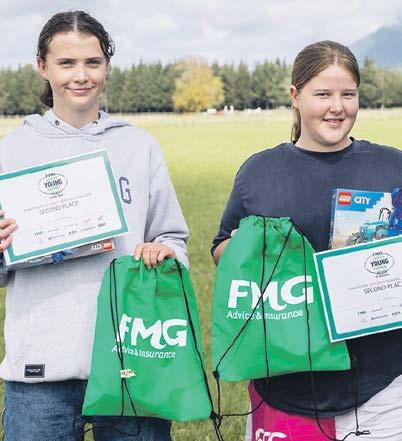
After placing second, Year 13 students Kendra Grayling and Morgan Shannon (Te Awamutu College) will head to the national grand final in New Plymouth in July.
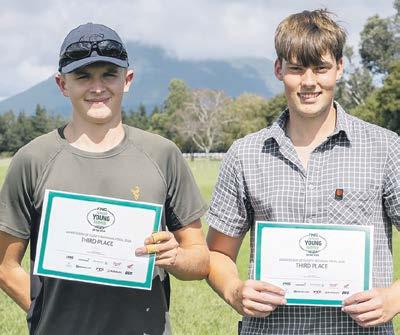
The top two junior qualifiers go through to nationals. The team of Cody Muller (Te Awamutu
College) and
Toby Whytock (St Paul’s) placed third.
Te Awamutu College head of department agriculture David Prout said it was great to see the students rewarded for their hard work.
“We are very proud of our students who competed in the Waikato Bay of Plenty Junior young farmers competition. We had nine students from our teen ag group that took part,” Prout said.
“Kendra and Morgan took out second place while Year 12 Cody Muller paired up with another Te Awamutu local Toby Whytock to claim third spot.
“Cody also took out the prize for contestant of the day which was the judge’s choice award.
“Our students were rewarded with FMG merchandise and cash from Lincoln University and the young farmers group.”
AgriKids winners were from King Country’s Ōtewā Schoolthe Ōtewā Gumboot gang of Jack Woodward, Isaac Wilson and Laura Connoly. They will also travel to Taranaki.
Hamilton Young Farmers member Stephen Brunskill turns 31 this month and this was his final competition.
“It’s bittersweet. It’s a cool thing to be involved with but it’s good to see the next cohort coming through. I’ve had my crack at it,” Brunskill said.
“I might get involved with the
organising if there’s an opportunity to help.
Te Aroha self-employed sheep and beef farmer Cam Clayton took top honours and will go to the national final.
“This was my fourth young farmer’s competition. It was cool to be on the podium. Cam did well to win it,” Brunskill said.
“It was pretty close on points which I’m happy and gutted about at the same time.”
“Hugh Jackson and Emma Poole from the Waikato have both won the NZ Young Farmer of the Year, so Waikato has put up some pretty
good competition and Cam will continue that.
Brunskill is the fifth generation on the 460-acre Brunskill Rd farm. Dry stock – running sheep, beefand dairy graziers.
“I’ve always been out here. I can’t imagine really being anywhere else,” Brunskill said.
“Farming is what I always wanted to do. I remember being 5 years old and not wanting to go to school. I wanted to be at home with Dad on the farm.
“My wife Hayley and I have been given a cool opportunity to continue the family farm.”

Te Awamutu College’s Morgan Shannon and Kendra Grayling placed second in the juniors. Photo: Brittany Fowler Photography
Te Awamutu’s Cody Muller Toby Whytock (St Paul’s Collegiate) and (Te Awamutu College) were third in the juniors. Photo: Brittany Fowler Photography
Running at forty
By Dan Tasker
What started as a homegrown event for local shearers now stands at the heart of Te Kūiti’s identity more than 40 years on.
Today the 40th edition of the New Zealand Shearing Championships gets under way at the Les Munro Centre, the hub of the event that turned Te Kūiti into the ‘Shearing Capital of the World’.
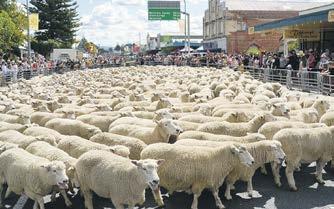
On Saturday, the town will come to a standstill as the Great New Zealand Muster gets underway with a record 120 stalls on show as the event builds towards the famous ‘Running of the Sheep’ at 2pm.
Following heats and finals through Thursday and the Friday corporate event, the serious action gets underway on Saturday evening with finals for the Open Shearing and Woolhandling, New Zealand Shears Circuit, North Island Shearer of the Year and the North v South events headlining the night.
Shearers in the Open and New Zealand Shears Circuit finals have the added incentive of making the national team to travel to the world championships in the United Kingdom and France in July, along with long-time Ōtorohanga shearer Digger Balme who has been named team manager.
Balme will also feature at Friday’s corporate event as he interviews New Zealand Rural Sports’ first Hall of Famer John Fagan to discuss how the shears started in Te Kūiti.
As the New Zealand Shearing Championship organising committee pushes go on number 40, legendary Te Kuiti shearer Sir David Fagan reflected on the journey.
The first shears, first known as the King Country Shears, came to Te Kūiti on April 10, 1985 – five years after the idea was tabled by Fagan and his brother John flying home from the Diamond Shears in Australia.
Two years later, the event became the New Zealand Shearing Championships and the rest as they say is history as the community put its weight behind the event.
“In those early days, we ran an event the shearing fraternity got behind. It took a few years and now the wider community get behind it,” Fagan said.
“Along with the muster, it’s really evolved into what is the
biggest single event in this district. The biggest thing is the whole community gets behind it and supports it now.”
Moments defining the shears included the ‘Shearing Capital of the World’ title bestowed on Te Kūiti in 1994 and the shearing statue erected the same year, Fagan said.
“It’s something everyone’s got a bit of pride in and the people that were involved with that, it’s a legacy left there for the town and for the whole district,” Fagan said.
Although the New Zealand Shearing Championship centres around competition shearing, Fagan said the legacy of the event is how the community has supported it – particularly the volunteers, the sheep suppliers and sponsors.
“That’s why it’s carried on, all the people that have helped on the committee for all these years – the event belongs to them. We’re just a bunch of volunteers chucking something together,” Fagan said.
“We’ve got quite a young committee currently, and I’m quite proud of them, the way they’re all stepping up. We need that to continue on for another 40 years.
“Tiroa E and Te Hape B Trust farms have been supplying us sheep for at least 25 years and Neil and Stacie Fagan are supplying sheep for the sheep run. The hardest thing is if they said, ‘We’re not doing it again’, there’ll be no shears or muster, so we’re very grateful to these farmers that supply the sheep,” he said.
Building leadership capability
property, people leadershipand decide if and when they are ready,” Nathan says.
For school boards, the programme provides reassurance that candidates who complete it have been exposed to the full breadth of principalship.
“Our responsibility is to make sure people don’t step into principalship under-prepared,” Nathan says. “This programme is about confidence, capability and support - not throwing people in at the deep end.”
Selection marks both recognition of their leadership potential and the beginning of a nationally supported pathway toward leading schools where students, staff and communities can thrive.
Strong leadership, prepared early, is the foundation of sustainable performance - in schools as in business. It is succession planning at scale: identifying talent early, investing deliberately, and preparing leaders before the role requires it.
Whangamatā Area School Principal Alistair Luke has put his name forward as a mentor, having been a graduate of the Aspiring Principal Programme in
NEW-GENERATION
2015.
“The role of a mentor is really to help participants understand the realities in the first instance but also open up a network of support if they do go on to become a principal,” says Luke.
“That network was one of the most valuable things for me in those first few years, when I was facing a constant stream of challenges I’d never seen before.”
The step up to principalship can be more complex than many expect.
“It’s one of those jobs where the experiences you have in preparation, as a classroom teacher or even a senior leader, don’t necessarily prepare you for the realities of principalship, especially in areas like finance and HR which you often don’t encounter until you’re in the role.”
He believes programmes for aspiring principals can help address this gap.
“A programme like this can play a real part in building that workforce desire back up again, while also helping people understand whether principalship is the right path for them before they step into the role.”

Ready to run: the sheep are penned in ahead of their run last year down Rora Street.
Keeping the stamps alive
By Jesse Wood
Longtime Waipā resident and philately enthusiast
Kevin Burgess believes stamp collections will have a place in society for many years to come.
There are still several societies enthusiasts can join including the Waikato Philatelic Society, the Royal Philatelic Society of New Zealand and the New Zealand Philatelic Federation.
“There’s a future because what do you do as a hobby? It can’t be always connected with your phone or computer. People want something tactile that they can actually collect,” Burgess said.
“There’s been crazes over the years, Pokémon and telephone cards have been very popular.
“Stamp collecting or philately might come again for a dedicated bunch of enthusiasts.
“You could start a young person off by spending $20get a stamp album and fill it with low value stamps.”
Kihikihi Bookshop and NZ Post Centre Young Yeo said they sell stamps on a much smaller scale these days.
“When we started 16 years ago, some businesses were buying bulk quantities, but now businesses are buying everything online,” Yeo said.
“Now there’s foot traffic only. But still, people are using a stamp, especially the elderly.
“There used to be people collecting special stamps but it’s been a long time since people have asked me.”
Burgess’ love of stamps was initiated and fuelled by his beloved grandmother, Mary Burgess.
“My grandmother used to give all the grandchildren Christmas gifts. When I was 10 or 11, I got a stamp album and that piqued my interest,” Burgess said.
“I’d go to the Hamilton Central Post Office and buy little packets of stamps or individual stamps that I could afford. It was fascinating going to the counter to get a brand-new stamp that no one had seen.
“I got hooked on it but when I got into my teen years there were other priorities. But I always had a passion for it.
“Right through until I went into business in my mid-20s, I thought maybe I’d get back into it.”
Burgess has combined his love of sport, history and WWI with philately to create his collection.
His love of the stamps has led him to write a social history of the post offices in the Cambridge area.
“Post offices were the centre point of most communities. Postmasters were considered the top strata along with the mayor and councillors,” Burgess said.
“The first post office in Cambridge was in 1864; the militia camped there at one of the redoubts. As Cambridge grew, they had to get the post closer because people would hardly get to town. They had little post offices, probably 17 or 18 around Cambridge – Pukerimu, Bruntwood, Karāpiro. Which is quite fascinating.
“It’s not just stamp collecting, it’s how small towns like Cambridge and Te Awamutu evolved. That’s what I’m fascinated in.” Even in the business world as a pharmacist, Burgess got his staff to cut out stamps and postal markings off envelopes for him.
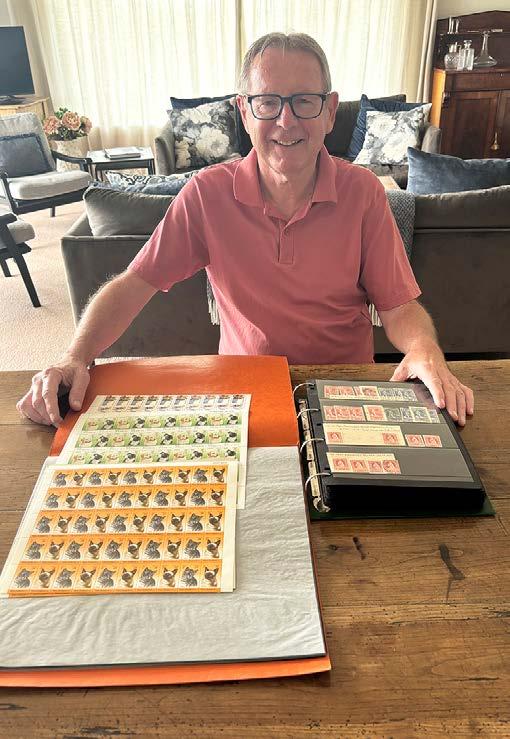
“One of the stamps I was fascinated with was the smiling boys from 1931, during the Depression, because my grandmother had talked about it,” Burgess said.

“There was a blue boy
and a red boy. During the Depression, few letters were written or stamps used as they couldn’t afford to buy stamps - there was only a small supply.
“She got me interested in stamps to help others. In New Zealand, there were about six health camps for children who were disadvantaged for health reasons including malnutrition and lack of physical development.
“They’d have a stamp for sale from the Post Office for, say, three pennies. Two pennies would be for postage and one penny would be for the health camps.
“They raised hundreds of thousands of pounds to keep those going.
“In my first business in the early ‘80s, I said I’m going to support buying health stamps, to boost my collection, but help people in need.
“I would buy whole sheets and put them away safely.”
For many years, Burgess broadened his collection before narrowing it down to certain types.
“I decided to just do really well with new issues. From the early 1980s, right up to 2015, I got first day covers, some plate blocks, about six types of stamps and some miniature sheets. That brought my collection up,” Burgess said.
“Then a friend of mine, who had written a book about the Gisborne postal area, said, ‘Kevin that’s great. That’s generalising but what’s your passion?’
“I said, I’m studying military history - piqued by the interest, my wife’s, [Jane’s] grandfather, who sent 50-60 letters to his wife from 1915 to 1919.
“I was fascinated by the stamps and troop ship stamps. That got me thinking, if I do want to specialise, it needs to be something that has meaning



to me - military history, postal history, New Zealand Olympic stamps and rugby.”
He’s enjoyed spending the past 15 years searching the globe for the missing pieces of his collection.
His collection is made up of more than 30 albums of first day covers, 40 albums of stamps and boxes of others yet to find homes.
“I’ve had so much fun looking to add to my collection, that maybe one

day I’ll complete - maybe I’ll never complete it,” Burgess said.
“For me, there aren’t too many thrills that beat finding a unique cover or a unique stamp or something to complete your collection. Postal markings, as well, are quite valuable.
“I’m sure there are enough enthusiasts to carry on, because stamps still are being made.
“The postal [service]collecting stamps, history, the social history has been pretty big in my life. That’s why I’m a dedicated, and a bit narrow minded, stamp collector. It’s our history.”
“At my stage of life. A lot of people say to me, ‘I’ve got a stamp collection somewhere that I started when I was 12. Do you want it? My children don’t want it.’ I’ve taken them on board or given advice if they want to sell it.


Postal enthusiast Kevin Burgess with cats, dogs and the smiling boy.
By Jesse Wood
Sports take down Old Boys Melville opts out
Southland Stags stalwart
Joe Walsh was welcomed to Te Awamutu Sports with a 26-15 debut win against Hamilton Old Boys on Good Friday.
The former Blues prop has made the move to Sports after Melville pulled the pin on their premier side for the season.
Tairoa Crean, Jonan HekeHeays, Bronson van der Heyden and Rameriz Viane crossed the chalk at Albert Park. Leo Scott converted three of the tries.
Te Awamutu’s Daniel Tickelpenny led from the front in the green machine 10 jersey.
Fellow premier club Hautapu lost 33-26 to Hamilton Marist at Cambridge Memorial Park.
Fullback Dallas Rata-Makene grabbed two tries for Hautapu, Rui Farrant scored one and Nathan Stephens was the other scorer.
New recruit Patrick Hedley kicked three conversions.
Former Te Awamutu midfielder Dre Liebenberg scored one of Marist’s five tries.
The Te Awamutu Sports and Hautapu premier development sides were at different ends of the scale.
Old Boys B dealt to Te Awamutu 67-0, while Hautapu
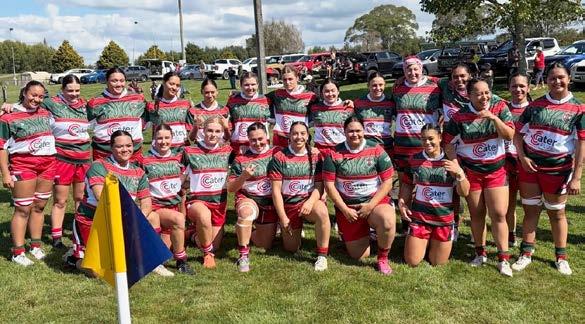
B beat their Marist counterparts 28-17.
Fullback Dillon Martin converted all four of the Cambridge team’s tries.
Melville-Hautapu combined women, “Mel-Tap”, also got their premiership season underway
Mel-Tap claimed a 22-15 win against Ōtorohanga at Island Reserve. The visitors scored four tries to three.
This weekend Mel-Tap face Putāruru.
In division 1A rugby, Ōhaupō and Pirongia both claimed wins at home - 29-27 against Frankton and 34-14 versus Suburbs respectively.
Ōhaupō winger Caleb Kennedy helped himself to a double, as did Pirongia outside back Daniel Belk.
The Ōhaupō division 1B team lost 26-19 to Frankton B while Pirongia B beat 24-22 under the mountain.
Dane Murphy (Ōhaupō) and
Pirongia B fullback Mitch Zeuren also registered two tries each.
Tokoroa-based Southern United will host the Ōhaupō games this weekend, while Pirongia venture to Hamilton’s Swarbrick Park to face Frankton.
Both Leamington sides had the bye week and host Putāruru next.
Hautapu, Pirongia, Leamington and Te Awamutu Sports will all feature when the colts competition gets underway this Saturday.
Memories of Lion tamer
By Jesse Wood
Former Ngāhinapōuri and Tamahere
resident Ross McMillan remembers his late older brother Don fondly.
Not just the man who scored an 80 metre try against the touring 1977 British Lions, but a keen guitarist with a strong work ethic.
From Paeroa to London, Saudi Arabia and Africa, Donald George McMillan saw the world before his death on January 3, 2024, in Uganda, Africa aged 71.
Ross, father of St Peter’s alumna and New Zealand winter Olympian Chloe, ventured to Uganda to obtain Don’s ashes and death certificate.
“The whole thing was a bit messy, but we succeeded. Basil Morrison from Paeroa came with me. He’s the honorary consulate to Uganda for New Zealand - an absolute bizarre coincidence,” now Central Otago-based Ross said.
“I hadn’t known Basil when I lived in Paeroa, but he knew the old man and Don really well.”
Basil – Hauraki District Council’s inaugural mayor and a former president of Local Government New Zealand - helped Ross “cut through the red tape” in Uganda.
“I was really lucky I had him with me. He succeeded in getting Don’s death certificate within a couple of days and the ashes were already there for me to take home,” Ross said.
“Basil was good friends with a guy who picked us up from the airport and took us around. He had all the right contacts.
Wherever we went, everyone did as he asked.”
Born in 1952, Don was the eldest of Norm and Vera McMillan’s three children.
Norm was at one stage Paeroa Borough Council deputy-mayor (1974-1988), a Thames Valley rugby player from 1947-1950 and coached the Thames Valley rugby side from 1960-1964 and 1968-1970.
Norm’s father Gordon was a referee with
one first-class game under his belt as well as Thames Valley union’s vice president and president in the 1930s.
Starting at Paeroa Central School, Don went on to board at Wesley College before studying accounting at the University of Otago.
Don’s goal was to represent Otago and he gave it a fair crack with the Southern Rugby Football Club alongside All Blacks Gary Seear and Laurie Mains.
But the blue and gold jersey opportunity never came.
“Don was passionate about rugby. He ended up moving back to Paeroa and worked with the old man at his accountancy company,” Ross said.
“He played for the local Paeroa West Club and consequently got into Thames Valley.”
Alongside fellow Thames Valley representative Brian Duggan, Don was in the 1977 Thames Valley-Counties combined side that lost 35-10 to the Lions.
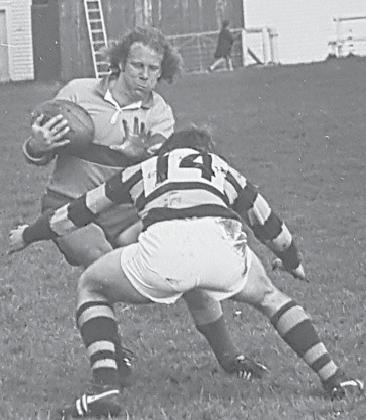
Ross witnessed his brother scoring the longe range try with only Mike Gibson giving chase.
“It was pretty amazing. I went to the game in Pukekohe and because it was the Lions, it was just huge. It was more than likely a sellout,” Ross said. “There was no miracle that day but Don was the hero of Thames Valley.
“In the ’80s, there used to be a programme that you could ask for things that had been on TV to be shown again.
“My mother wrote a letter to them and asked if they could show Don’s try again. They organised a video of it for her and we’ve still got it.”
Don represented the Valley 28 times between 1976-1978, scoring 11 tries.
In 1978, he also played for the Colin Meads Invitational XV and in 1979 represented Gisborne-based Poverty Bay.
He scored for every representative team he played for in New Zealand.
Don then went to London to work in accountancy. He played for the London New
Zealand Rugby Club and was captain for a long time.
“A lot of Kiwis used to go to work in Saudi Arabia, you could earn a lot of money. Don did that for a couple of years,” Ross said.
“In doing that, he met his future wife. She was an airline hostess for British Airways. They were married and had a kid together. Then Don decided that he wanted to go back to Saudi to make more money and get ahead in life.
“Sadly, women were considered second-rate citizens in Saudi Arabia. Back then they had to stay in a commune. Women and children were not allowed out.
“Of course, it drove Carol and their son David nuts spending 24 hours a day in the commune. She had a guts full and went back to England. The marriage dissolved.”
Ross said he can’t remember the exact details, but suddenly Don was in Africa.
“That was the new place to go for expats - Aussies, Kiwis, South Africans and a lot of Europeans,” he said.
“He flitted between Uganda and Tanzania. He’d worked for TNT and DHL, among other
Melville has become the second Waikato premier rugby club to withdraw from the senior competition in recent years.
But as Matamata, which opted out a couple of seasons ago has shown, there is a way back.
The year’s premier competition involves Hautapu, Te Awamutu, Morrinsville, Matamata, Ōtorohanga, University, Hamilton Marist, Hamilton Old Boys and Fraser Tech. Collins Road based Melville –winners of the Haswell Catley trophy in 1979, 1981 and 2016, has suffered a declining playing strength since the end of last year and members were told last month “we only have a few loyal members left and even those players are getting hounded daily by other clubs”.
The club subsequently confirmed following a Waikato Rugby Union chair’s meeting that Melville would not field a Premier A team, but would remain in the Premier B. It would effectively finish 10th in the A division. The door remains open for Melville to return to the premier competition in 2027 either via a promotion relegation round or by filling the 10th spot should it be vacant.
Melville and Hautapu have also combined forces to field a Mel-Tap team in the Waikato women’s premier competition. That team came from behind to beat Ōtorohanga last weekend.
multi-national companies.
“I think he may have had a stint in Kenya; he was hard to keep track of at times. It was the lifestyle.
“Don’s life was a pretty hard case. He did do a lot. He was here, he was there, he was everywhere.
“He certainly lived a good life. He didn’t just sit around drinking beer all day.”
The new Melville-Hautapu combined women’s squad opened its account with a win at Island Reserve, Ōtorohanga.
Photo: Melville Rugby
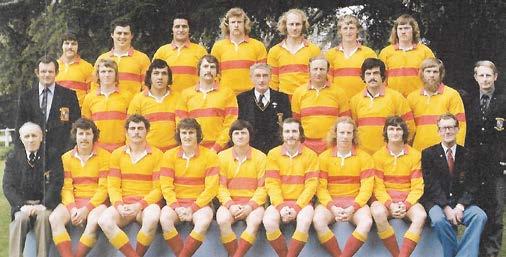
Thames Valley’s Don McMillan takes on King Country winger Murray Kidd at Te Aroha in 1976.
Photo: Graham Watton
The 1976 Thames Valley team. Don is front row, third from right. Don’s long hair flowed behind him as he ran away to score against the Lions. Photo: Thames Valley Rugby Football Union





Across 1. Pilfer (5)
4. Opportunity (6)
7. Wood residue (3)
8. Season (6) 9. Assignment (6) 10. Dawn (8)
12. Perpetually (4) 13. Modify (6)
15. Attractive (6)
16. Ring (4)
17. Strong desire (8)
Last week
19. Separate into parts (6)
20. Eraser (6) 22. Speck (3) 23. Talkative (6) 24. Useful (5) Down 1. Exaggerated cleaning (4,3,6)
2. Dine (3)
3. Sizeable (5)
4. Medical examination (7) 5. Pact (9) 6. Sweets and chocolates (13) 11. Design, plan (9) 14. Calamity (7) 18. Moor (5) 21. Prohibit (3)
Across: 1. August, 4. Aspire, 9. Layer, 10. Evasive, 11. Recital, 13. Iris, 14. Intolerable, 17. Gust, 18. Annoyed, 21. Episode, 22. Taste, 24. Danger, 25. Cherub.
Down: 1. Allure, 2. Guy, 3. Strut, 5. Stamina, 6. Initially, 7. Even, 8. Wellbehaved, 12. Confusion, 15. Outcome, 16. Adverb, 19. Notch, 20. Feud, 23. Sir.
SBNFTHREEWISHESCXI OIASNETLLEPSALPOPR
RADAISSBEPUJRBOATE CNRNZERXGFVZEFAWQI ECEDGKIGEPNQMDSSXZ RGAAEVILNRSIAGILDI
YHYLNSIXDIDSDNSNAV WOOWIXEVSNSLBDXSDD VEAEOPQROCJAOVAWHN
MCDOUAHITEDBRGFLGA MLQDLTREASUREHNLAR STORIESDFSEQOIZOBG HOZKLNTKUOAYSTJVGT
QOPOMAGICCARPETELR
ALADDIN
ARABIAN
BAGHDAD BOAT CALIPH CAVE
CURSE
DANCES DESERT EVIL FANTASY GENIE GOLD
GRAND VIZIER
HAREM
LAMP
LEGENDS
LOVE
MAGIC CARPET
OASIS
OPEN SESAME
PALACE
PRINCESS
SAD
SAND
SINBAD
SING
SORCERY
SPELL
STEAL
STORIES
TALE
THIEVES
THREE WISHES
TREASURE
VOYAGES
WEDDING
TERMS AND CONDITIONS
+60 days may be subject to a $95 + GST late payment fee per month. Advertiser is responsible for all debt collection fees.
and are
12-month
from the
Rate bracket e.g. 6 insertions, 12 insertions etc. chosen allows ad sizes to vary within the rate bracket. If the number of insertions chosen is not met then a bulk charge will be applied at the end/cancellation of your schedule based on correct rate reflective of the number of ads published e.g. if you have chosen the 12 insertion rate and only publish 6 insertions, the bulk charge will be the di erence in price between the 6 insertion rate and 12 insertion rate multiplied by the number of ads published. You pay the rate reflective of the number of ads you published.
Copy deadline for ad-make up is noon Friday prior to publication day. Booking and Copy deadlines for Waikato Business News and Bay of Plenty Business News is on request. Advertiser is responsible to advise us of any copy changes before proofing deadline –anything not signed o by this time, ad prints as per the last proof sent. Advertising supplied in completed form (finished artwork or camera ready), deadline is Tuesday 11am prior to publication day. Public holiday weeks, all deadlines move forward one working day. Cancellation deadline is one week prior to publication. If cancellations are received after the cancellation deadline, then full charge applies. All other publications and products see separate booking and deadline sheet. Advertising setting incurs a production fee of $50 + GST for up to two proofs, further changes will incur additional production fees. Advertising copy set by Good Local Media Ltd is the property of Good Local Media Ltd and for use in Good Local Media Ltd publications only. If used elsewhere charges will apply, pricing available on request. If supplied ready to print, copy is owned by the advertiser. Publication day is Thursday for urban deliveries and Friday morning for rural deliveries. Acceptance of advertising and free productions services is at the discretion of the publisher. Acceptance of advertising for publication and free productions services is at the discretion of the publisher.
SPECIFICATIONS
high resolution PDFs as the ad file format exported using the compatibility setting: Acrobat 4 (PDF 1.3). Please do not use/include overprint. Ideally, 10pt is the standard point size; however, in some cases with bold fonts 9pt can be used, depending on background. Black text should be 100% black[k]. All artwork submitted needs a border. Specifications for photos and logos – CMYK, high resolution jpeg (minimum 200dpi) pdf attachments. If finished artwork ready to print (Camera Ready) provided does not meet our technical requirements, your advert will be technically fixed, a technical report will be provided, and a $50 + GST production fee will be incurred. No proof will be sent as no design changes will be made.
File formats: We will not accept PDFs created from Word, Excel, Publisher, PowerPoint, Photoshop, and Canva. However, we can copy your design and proof for your approval. Any artwork received in these formats must adhere to the copy setting deadline as they are not finished artwork or technically compatible to newspaper printing specifications.
LIMITATION OF LIABILITY
Good Local Media Limited (including its employees, o cers, or agents) shall not be liable for a failure or breach arising from anything beyond their reasonable control e.g. an act of God, fire, earthquake, strike, explosion, or electrical supply failure, unavoidable accident or machine breakdown; and
























Bones to pick
By Dan Tasker
Mōkau has put on another masterclass for bone carvers at the latest Firstgas Mōkau Bone carving Symposium over Easter weekend.
Around 60 novice to expert carvers from across the country filled the Mōkau Hall to learn, create and connect at the free symposium that has been an annual event since 2017.
Headlining the weekend were masterclasses in seven specialist areas: setting paua eyes into carvings, design process, 3D carvings, hand tool maintenance, carving as a spiritual language, lashing and electrical tools of the trade.
Symposium organiser Mike Brown said the masterclasses gave carvers at all levels the chance to improve and grow their skills and knowledge of the art.
“We’re seeing carvers who’ve been coming for a few years picking up these tips, really developing in the quality of their carvings. This was one of the goals of this symposium was to bring people from beginner carvers and teach them the skills to make high quality work,” Brown said.
One of the great moments of the event was at the carver’s dinner on Sunday night, where eight novice carvers presented their carvings to the group.
“That’s where we celebrate the weekend, the unity of the people, the love of bone carving, just a really joyful time,” Mr Brown said.
“Each of (the beginner carvers) all made one or two beautiful carvings they were most proud of, and they presented those carvings to the symposium at the end to great applause.”
While a range of bone types are used in bone carving circles, most carvers brought cow bone and deer antlers to carve at the symposium due to how accessible they are.
While Māori cultural has strong ties to bone carving, r Brown said part of the richness for carvers at the symposium was the variety of cultures and backgrounds.
“There’s sometimes an assumption that bone carving is a traditional Māori design, and it is for some people, but other people have a different background and they’ll be carving something that might relate to their own culture,” he said.
“It could be northern European or Asian and some people are doing abstract contemporary designs. That’s all encouraged here, it’s the diversity in the room that makes it’s so interesting.”

EXCELLENT GRAZING
AVAILABLE for 50-60 diary heifers. Pirongia area, Ph 027 6465234.
HEIFER GRAZING available Te Awamutu area. Phone 027 3185618
HEIFER/COW. Grazing Available. Te Kuiti area. Please phone or txt Alan 021 088 02383
DOGS for sale. Huntaway dog, big and strong, 2 yrs old, untrained. Top working parents. Needs a chance. $500.00. Ph 027 478 1783. Otorohanga.
TE AWAMUTU CONTINUING EDUCATION
Wednesday 15th April 2026 10am Entry: $4 on arrival Waipa Workingmen’s Club Speaker: Ollie Ward Topic: Waipa Sports Director. For Schools and Rugby Club. Everybody Welcome More info phone 07 870 3223

We buy milk!
PARISH OF ST JOHN
AGM 2026
Sunday 26 April
Following the combined 9.30am Service
BRIDGE LESSONS
starting 23 April
Register your interest at tabridgenz@gmail.com or with Nick 027 277 4313 www.teawamutu.bridge-club.org
60’s Up Movement
Te Awamutu Branch
Next meeting will be Friday 17th April at 10.30am At Waipa Workingmen’s Club
Albert Park Drive Te Awamutu
Morning tea and a speaker
Contact Lloyd Jackson 871 4097
Got reject or surplus milk? Call us today on 027 871 5075
We collect within 1.5 hours drive from Te Awamutu.

Gardening Work
Are you fit, enjoy working outdoors, looking for extra income?
If the answer is yes then we have something for you working in a small team 1-2 days a week, possibly more for the right person.
Please send your CV to ggworkz@gmail.com or call 027 238 2517 and speak to Tess.

BELL, Donald James –Passed away at home, aged 62 years. Loved partner of the late Barbara Jackson. A private cremation has taken place. Messages to the Bell Family can be sent c/- 262 Ohaupo Road, Te Awamutu 3800 or in Don's online tribute book at www. rosetown.co.nz




WANTED TO BUY. Any ute, van, 4WD, truck or car. Any condition doesn’t have to be going. Cash paid. Ph/txt Kevin 027 299 6165

ggworkz@gmail.com
CHURCH SERVICES 10am 12 April
Rev Ken Wall
All Welcome







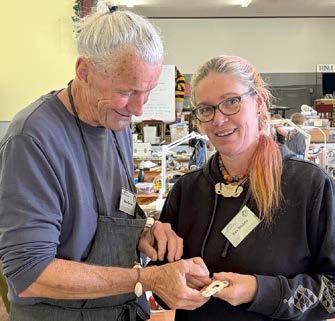
Mōkau Bone carving Symposium organiser Mike Brown (left) admires a carving of Waitomo bone carver Bex Stubbs.
Photo: John Robertson
roundabout.