King Country

By Dan Tasker
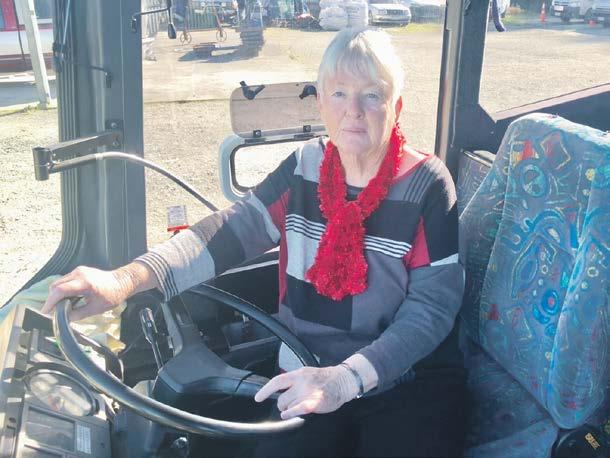
After more than five decades behind the wheel, Jan Crosland has finally decided to park up for good.
From driving school buses and coaches to ambulances, rural mail runs and even vehicles used in The Hobbit in a professional driving career spanning more than 50 years, the Te Kūiti woman retired from her Black Water Rafting job earlier this year.
She has been reflecting on a lifetime that began on a farm in Waimiha and grew into a career that took her across the King Country and beyond.
“I guess it may have sparked my love of driving,” Crosland said, recalling learning to drive tractors and trucks while helping her father feed stock and stack the bailed hay.
“My Dad made me get my driver’s licence when I was 16,” she said.
Her journey into professional driving began in the early 1970s while living at Maraetai near Mangakino, where her thenhusband worked on the hydro scheme.
After joining St John as a volunteer, she gained heavy traffic, bus and ambulance licences – and even a motorcycle licence “just because I could”.
Soon she was driving a school bus during the week and volunteering as an ambulance transport officer in her spare time.
One of her earliest ambulance journeys is still one of the most memorable.
Crosland was called to drive
a seriously injured construction worker to Waikato Hospital after he had been impaled by a reinforcing steel rod, while working on the Maraetai hydro project.
“There were no rescue helicopters in those days, I just drove carefully and kept my eyes on the road ahead,” Crosland said.
The worker who made a full recovery.
After moving to Te Kūiti, Crosland continued volunteering

with St John, eventually completing advanced ambulance training in Auckland before serving for 20 years as an ambulance officer and another five years on the area committee.
During that time, she attended countless accidents, medical emergencies, sporting events, patient transfers - and helped deliver two babies in the back of an ambulance.
“My kids got used to waking up in the morning and finding
a stranger asleep on the couch,” Crosland said.
“What do you do with someone who’s crashed their car out on a country road in the middle of the night? You take them home,” she said.
Alongside her ambulance work, Crosland spent decades driving buses throughout King Country.
When family circumstances required a full-time income, she stepped away from bus driving to manage the Waitomo News

office, succeeding long-time administrator
But buses were never far away. She continued weekend charters, rugby trips and later returned to school bus driving while also working in real estate and going back to the Waitomo News.
After retiring from the newspaper at 66 and missing life on the road, she climbed back into the driver’s seat once again on a regular school bus run, then spending her final driving years at Black Water Rafting before retiring a few months ago.
Crosland admitted walking away from bus driving wasn’t easy, especially because of the kids.
“When I gave up school bus driving, I really missed the kids,” Crosland said. “Some of the children on my bus were the sons and daughters of parents I’d driven to school 15 or 25 years earlier,” she said.
Crosland also became a qualified driving instructor after helping a neighbour learn to drive an adapted automatic vehicle following the death of her husband.
She spent five years teaching local people to drive and still has former students stop her to say they remember her lessons. Her driving experiences extended beyond buses and ambulances, including rural delivery mail runs and she even helped relocate buses and support vehicles used during the filming of The Hobbit.
“The second time around they gave me the tuck-shop bus, so I wasn’t worried if I got lost – I wouldn’t go hungry,” Crosland said.






Hato Hone St John

Area Committee volunteers needed
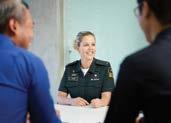
We are looking for dedicated volunteers to join Hato Hone St John Area committee to help drive local initiatives and create a lasting impression. This is a unique opportunity to contribute your skills and ideas to strengthen the committee, supporting community health, wellbeing, and volunteer engagement.
For more information:
Email recruitment@stjohn.org.nz
or call 0800 STJOHN (0800) 785 646)
A six-year-old Waikato boy gazing skyward at balloons has inspired thousands of children around the world through a career that began at Balloons over Waikato and led to classrooms in more than 80 countries.
It is a reminder of how Waikato stories often start small and grow into something much bigger. That thread runs through the latest Waikato Business News, where growth, change and quiet confidence sit alongside the region’s everyday realities. There is momentum in tourism and investment, but also a recognition that opportunity has to be worked for. Farmers talk cautiously about better returns while keeping an eye on rising costs. Community efforts sit alongside that, with a Hamilton choir helping raise funds to strengthen St Peter’s Cathedral, showing how local support continues to underpin the region’s institutions.
Elsewhere, questions are being asked about the long-term value of major assets like Hamilton Airport and how regions position themselves for the next phase of growth.
leadership” and we meet the man who pioneered the Ruby Red kiwifruit.
• More: goodlocal.nz

The chief executive of the Energy Efficiency and Conservation Authority has been named chief executive of Waikato Waters.
Marcos Pelenur will join the organisation in October.


Booking & Copy Setting
Noon Thursday, 9 July
Finished Artwork
11am Tuesday, 14 July
CLASSIFIED ADVERTISING
Booking, Copy Setting & Payment
5pm Monday, 13 July
Across the hill, Bay of Plenty Business News reflects a similar moment. Tauranga’s skyline is full of cranes, but the challenge now is bringing people and life back into the city centre. Plus columnist Todd Muller reflects on Kane Williamson’s “quiet


Waikato Waters is a council-controlled organisation jointly owned by Waipā, Ōtorohanga, Waitomo, South Waikato, Hauraki and Matamata Piako district councils.
It began operations yesterday when Waipā, Waitomo and South Waikato councils passed over their water and wastewater services.
Board chair Elena Trout said Dr Pelenur had extensive leadership experience in a highly regulated environment and was known for building strong teams and enduring relationships with key stakeholders.
Auckland based Trout already works with Pelenur – she also chairs the Energy Efficiency and Conservation Authority.
Interim Waikato Waters chief executive Neil Brennan will stay on in an advisory role for another year – through to July 2027 - when the remaining councils will have transferred their water and wastewater services.
News/Editorial
Roy Pilott editor@goodlocal.nz
027 450 0115 Mary Anne Gill maryanne@goodlocal.nz
Posselt viv@goodlocal.nz
Davy janine@goodlocal.nz
Owner/Publisher David Mackenzie david@goodlocal.nz
Office/Missed Deliveries
07 827 0005 admin@goodlocal.nz
It has been a busy week for King Country police, with several arrests made and staff responding to a range of incidents across the district.
You may have noticed an increased police presence in both towns last week as enquiries were carried out to locate a male wanted for breaching a protection order earlier in the month. A 29-year-old man was located and arrested without incident, and police also seized some firearms from the address.
Police attended a crash in Ōtorohanga after a driver failed to navigate a straight section of road and collided with a parked vehicle and a power pole, causing significant damage. This incident was particularly concerning given its proximity to a school and early childcare facilities. Thankfully, no one was injured.
Staff also responded to a separate breach of protection order in Ōtorohanga involving a 43-year-old man. He was already subject to court-imposed bail conditions and facing an active charge for a similar breach. Following his arrest, Police opposed bail, and he has been remanded in custody.
In Te Kūiti, a 37-year-old man was arrested after being sought for making threats and breaching a no-violence bail condition.
Police continue to receive calls regarding disruptive motorbike activity in both Te Kūiti and Ōtorohanga. We ask the public to keep reporting these incidents and provide any information about where the bikes are coming from or going to, as this assists with enforcement.
During the week, police dealt with a failing to stop incident involving a

motorbike in Ōtorohanga. The rider was located shortly after at an address, the bike was impounded, and the 42-yearold rider has been summonsed to court for failing to stop and resisting Police.
In Te Kūiti township, staff took a 42-yearold man into custody after he was found in possession of a knife.
Police also attended a crash on Rora Street in Te Kūiti. Enquiries are ongoing and staff are awaiting blood test results before taking further action with the driver.
Officers responded to a burglary at Pukenui School, where three male youths were located and arrested. Files are now being prepared for the local Youth Aid Officer.
Please continue to report crime and suspicious activity.

Armed police responding to a firearms incident in the Esplanade in Te Kūiti on Monday found one person dead and have referred the issue to the coroner’s office. Police later said there was no ongoing risk to the public and cordons in the area had been removed. The incident came after Chris Aspin had filed his weekly On the Beat column.
Trash talk
Chanes to kerbside recycling were introduced by Waitomo District Council this week.
Evolve Ventures has taken over waste and recycling services. The council says the changes will result in more waste being diverted away from landfills ad provide residents with additional recycling capacity.
Van der Poel honoured Ōhaupō’s Jim van der Poel was given a standing ovation in Auckland on Monday when he was recognised for his service to the dairy sector with an Outstanding Contribution to Primary Industries Award. North Waikato’s Neil Bateup was announced winner of the Champion Award, recognising his support for farmers and rural families.
South Canterbury farmer
Colin Hurst is the new national president of Federated Farmers, succeeding Golden Bay’s Wayne Langford.
Police say the body of missing fisherman Dilane Harding was found after being sighted by officers on the Eagle helicopter near Albatross Point, Taharoa. The 55-year-old’s body was recovered on Sunday, and the death has been referred to the coroner’s office.
Hamilton City Council is evaluating six scenarios for local government reform and initial analysis favours mergers with one or two neighbouring councils – specifically Waikato and Waipā.
By Dan Tasker
Three major bridge projects are set to strengthen state highway routes in the coming months as Ōtorohanga bounces back from the February floods.
The projects include repairs to the flooddamaged Mangaorongo Bridge on State Highway 3, strengthening work on Symes Bridge on State Highway 39, and plans for a permanent replacement of the Mangati Bridge, which was destroyed during February’s severe weather.
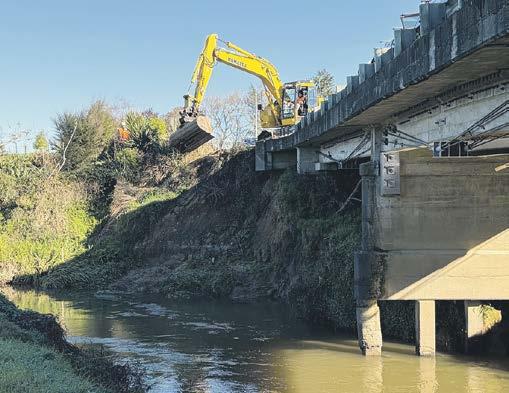
Work on the Mangaorongo Bridge about 7km north of Ōtorohanga near Kio Kio Station Rd on State Highway 3 is expected to take four weeks.
The bridge was reduced to a single lane on Monday and stop-go traffic management put in place.
The bridge abutments are being repaired while erosion control is carried out on nearby riverbanks.
Transport minister Chris Bishop said the New Zealand Transport Agency’s work on the riverbank would help protect the bridge from future floods.
Symes Bridge on State Highway 39 just north of
Tihiroa over the Moakurarua Stream will also be repaired following significant erosion underneath the bridge, the result of February storms. The work should take about five weeks.
Bishop said the deck and beams would be replaced later this year.
Initial work on Symes Bridge will require a few days of lane closures while equipment is brought to and from site and a temporary access underneath the bridge is built. The second stage of works will involve closing the bridge for seven weeks.
“Together, these components form the bridge’s superstructure, and replacing them will provide a wider, more resilient and safer structure,” Bishop said.
Further north on the highway between Ōtorohanga and Pirongia, a temporary single-lane Acrow bridge replaced the Mangati Bridge in March after the original bridge was destroyed in the February flood.
The closure of the highway resulted in takings in Pirongia shops dropping by more than 66 per cent in many cases.
Bishop said a permanent bridge is still a priority and a
tender process for a two-lane replacement has started.
Ōtorohanga mayor Rodney Dow welcomed the investment.
“From a mayor’s point of view, it’s really cool that they’re spending some money and providing some resilience for the main corridors of our town and for the district,” Dow said.
“We’re primary producers for the economy and the
roads need to be open and functioning properly so we can get our produce to market.”
The February floods also caused widespread damage in Ōtorohanga.
Ōtorohanga Primary School was inundated when the Mohoanui Stream burst its banks and the whare housing the 13-metre Te Waonui o Tāne waka at Ōtorohanga Museum was
inundated with flood water from Ōtorohanga Domain.
Ōtorohanga District Council’s mayoral relief fund paid $165,000 to support people needing immediate help following the floods.
Chris Bishop said the work on the bridges was about fixing the basics and making sure critical routes stay open and reliable for the communities and businesses that depend on them.
By Roy Pilott
The education ministry says it is providing support to a north King Country school board.
A parent who has removed her children from the school has raised concerns about issues there with Taranaki-King Country MP Barbara Kuriger.
In response to questions from The News, the Director of Education for Waikato Marcus Freke said the support was coming through specialist help to strengthen governance capability and support the school’s board in carrying out its responsibilities effectively.
“This support involves initial scoping to guide the assistance deemed necessary,” he said.
The News has elected not to name the school at this time.
The parent, via email, told Kuriger her children
remain at home because “the school continues to fail in its fundamental legal obligations”.
“I am still without any formal academic reporting, leaving me with no evidence that my children are receiving a proper education,” she wrote.
She also revealed emails dating back to April recounting incidents, questioning the vetting of one teacher and qualifications of another and suggesting a number of young students have been excluded from the school.
“I believe I have bravely acted with due diligence in raising these concerns; however, I have received no meaningful support or guidance from the school, the Ministry of Education, or the truancy service,” she wrote.
She said despite her communication that removing her children was a temporary measure,
it had been labelled truancy.
“I am now being threatened with escalation to government agencies, while the school has simultaneously removed my children from the enrolment system, cutting off our access to newsletters and educational resources…”
The ministry says schools have a legal obligation to remove any student from their school for non-attendance, and that generates a referral to the Attendance Service provider
Freke told The News due to the small number of students enrolled at the school, if the ministry provided specific data on referrals to the local Attendance Service provider it could risk identifying individual students and would not be consistent with Privacy Act requirements.
Kuriger said the concerns raised with her by the parent had been elevated to the ministry.




Six councils from across the region have joined forces to create a new organisation to deliver water and wastewater services to Waikato communities.
If you live in Waitomo, your council was among the first to transfer and you may have already noticed our staff working in your neighbourhood. For the most part, the people haven’t changed – they’re simply wearing different uniforms and have our branding on their vehicles.
If you live in Ōtorohanga, your services will transfer on 1 July 2027.
1 July 2026

1 July 2026 1 October 2026
1 July 2027
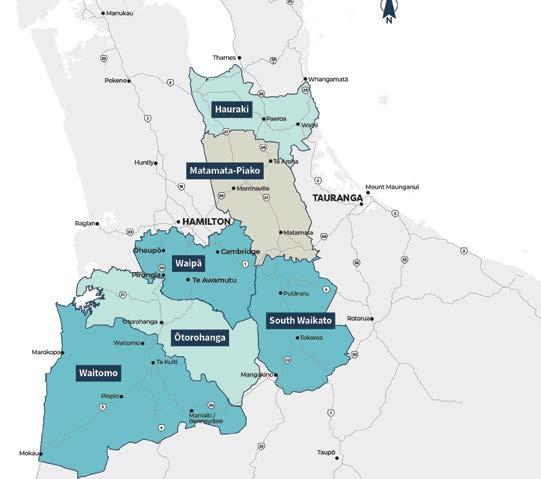

In Waitomo, day-to-day services will feel the same in our first year of operation. You will keep paying your council for your water and wastewater services. Current water and wastewater charges were set by your council. We will set charges from 1 July 2027.
1 July 2027
When you become a customer of Waikato Waters, you are automatically covered by our customer contract. It outlines what you can expect from us, and what we need from you as a customer.
You can find our customer contract on our website waikatowaters.co.nz by searching ‘customer contract’.
Set strong foundations
Build trusted relationships
Ensure a smooth transition
Take stock of our performance, and asset condition
Understand first, act second
By taking the time to get this right, we’ll be in a better position to invest wisely, manage costs responsibly and deliver better outcomes for our communities.
We’re responsible for:
Got a billing query? Want to report a fault? Have a question about a new connection? Call your council Call your council Call your council
Your council is responsible for:
Esther James was the first person to walk the length of the country, which is remarkable in itself, but she did so in 1932 during the Great Depression, wearing only New Zealand-made clothes and eating only New Zealand-produced food, to encourage people to ‘buy local’. She then walked from Melbourne to Brisbane. Her walking feats are the subject of author Ian Dougherty’s latest book, from which the following edited extract is taken of the King Country part of her New Zealand walk.
James was welcomed on the boundary of Te Awamutu by the town clerk, Dudley Bockett, and waiting townsfolk.
She spoke about her trip and New Zealand goods at the Empire Theatre, where she was introduced by the deputy mayor, George Spinley, and a collection was taken ‘to assist her enterprise’.
The next day, she was shown over the local dairy and casein factories in the flourishing dairy town, and walked to Kio Kio,
where she spent the night at the Mount Pleasant farmhouse of John Budge. She continued on the next day to Ōtorohanga, where she was welcomed by the town clerk and gave a lecture in the Town Hall. She also fitted in a visit to the Waitomo Caves, describing the glow-worm caves as ‘the most wonderful sight I have ever seen.’
On to Te Kūiti, she visited the historic Te Tokanganui-ā-Noho marae and gathered the signatures or marks of prominent Māori. She
later delivered an address at the Empress Theatre.
The summer weather had continued to been kind to James: she still had experienced only the one wet walking day through the Mangamuka Gorge. Bush fires were the downside of the fine weather. On leaving Te Kuiti, James recounted that she had to traverse country through which bush fires were raging.
‘The bush fires sent up a very thick smoke, and all day a bluish haze
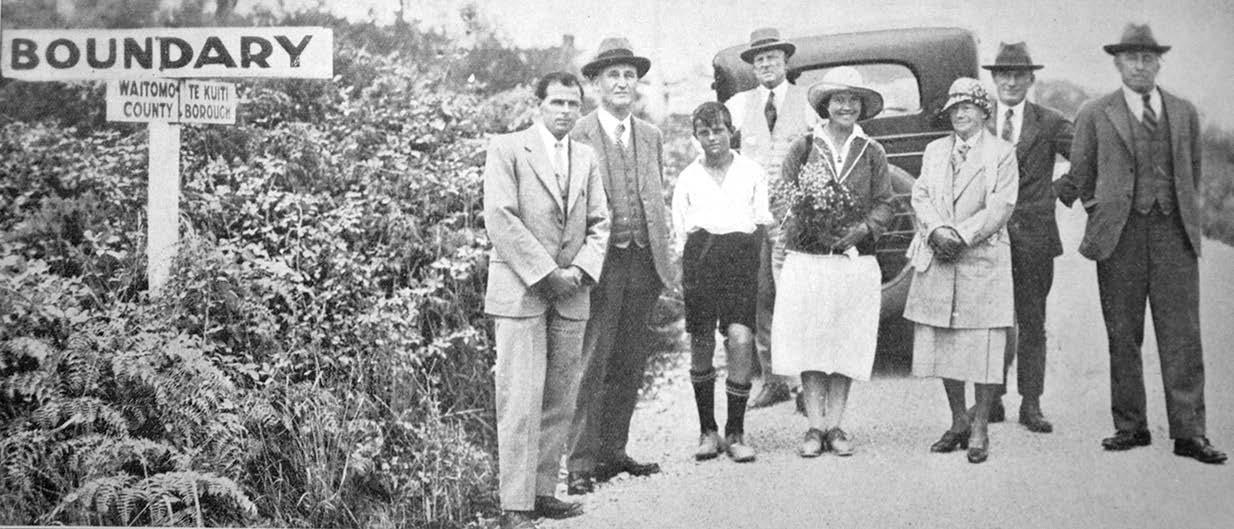
hung over the sky, and for miles ahead I could see the reflections of some huge fire in the sky at eventide. As I trudged on, the smoke became more and more annoying until when I reached Piopio, 15 miles away, I could hardly see, and the tears were in my eyes.’
She walked to Paearuhe the following evening, and then on to Mahoenui the next afternoon, which she described as the hardest walk of her trip so far.
‘The bush fires were right around me and the smoke so dense I was forced to wet my handkerchief and keep it at my eyes to enable me to see at all. The hills were all ablaze with a continual falling of trees, and pieces of burnt fern dropped in the paddocks. At one bend in the road, I was forced to run through a cutting for both banks were aflame, and such a sad sight met my gaze. About a dozen sheep were trapped in a corner of a paddock, all huddled together, and the fire was rapidly approaching them. I could see that very shortly the sheep would be roasted mutton, so I took up a stone and hit the staples out of the wires, and how eagerly those poor sheep ran down the road into the creek nearby!

Newspapers reported serious bush fires raging in the King Country at the time, fanned by strong winds and causing extensive damage. There was some consolation: just past Piopio she clocked up 500 miles of her 1600mile journey.
Ian Dougherty’s book New Zealand Maid: Esther James And Her Campaigning New Zealand And Australian Walks During The Great Depression is available from bookshops and directly from the publisher.





By Meghan Hawkes
Kenneth Livingstone and Charles MacFarlane were fencing Rolleston’s sheep farm, outside of Mangapehi, in July 1916 when they noticed smoke rising from their hut.
Mr Rolleston had gone to war and Charles, from Te Kūiti, was managing the farm. Kenneth, from Ōtorohanga, was shepherd.
The men were on their way to the hut for lunch and once they got there, they found the door was unlatched.
Charles’ saddlebag was gone and Kenneth’s watch and chain were missing. They discovered impressions of horse and Kenneth said, “Here the beggar is”.
Charles saw a Rarotongan man he knew as Tui who had previously worked on the farm. He was coming towards them carrying a double-barrelled gun and a pigeon.
A shot was fired and Kenneth, 33, fell. Tui fired again, the shot grazing over Charles’ heart and for a second or two his head swam.
He ran for the hut where he had a rifle. Tui chased him and fired two shots, hitting him in the left hand
and the right arm. When he got to the rifle, Charles could not pick it up. The only thing to do was to run for it.
He heard another shot before reaching two fencers and the three of them headed for Tiroa, 10 miles away. They came across Kenneth’s body which had been dragged into the bush and shot again. Charles was badly hurt and taken to Waikato Hospital.
Tui, whose name was Toeta Kainuku, lived seven miles from Rolleston’s, and after the shootings rode around erratically, before shooting his own horse, catching another and riding away.
He was from Avarua, Cook Islands. He was, 26, powerfully built, and spoke broken English.
Tui was arrested the next morning at his brother’s camp. He said in a rambling statement he was Jesus Christ the Holy Ghost, and was the owner of all the land in the district. He was charged with a variety of offences, including breaking and entering, theft, arson, the attempted murder of Charles MacFarlane, and the murder of Kenneth Livingstone.
Tui was detained at the Avondale Mental Asylum

in Auckland where had previously been an inmate for 23 months.
His first trial in Hamilton was postponed as he was dangerously homicidal and unfit to travel. In March 1917 Tui was charged with the offences. When he was asked to plead he raised his hand and said “I am a brave man”.
The jury found that the Tui had committed the acts while insane. He was to be kept in custody at the Avondale Asylum. In July 1918 Tui escaped but was caught after three days. Three months later he died. Kenneth, from Scotland, was single, and had not been employed on Rolleston’s farm for long. He had no relatives in the country but had a brother, John, serving with the New Zealand troops in France. He was buried at the Te Kūiti Old Cemetery and his brother John later organised a headstone for the grave.
By Janine Krippner
Over the past few columns, we have explored submarine eruptions near the surface. Once a volcanic edifice is high enough, with lava and rock stacking higher and higher from the sea floor through repeated eruptions, it can become explosive. We can also see it. We can see the waterrich, heavy ashfall that collapses towards the ocean, the white steam plumes from seawater evaporating, and the pyroclastic surges that can race across the ocean.
What is much more common, though, happens far deeper below the surface, where sunlight does not reach. The majority of our broad ocean floors were initially formed by volcanic activity over many millions of years. Much of this occurs at mid-ocean ridges.
Mid-ocean ridges are where tectonic plates pull apart and new seafloor is formed. The rate at which these plates rift apart varies. Faster - and slower-spreading centres form new seafloor in different ways, with varying amounts of volcanic activity and faulting.
Here, lava flows ooze out of fractures or vents, producing pillow lavas that are rounded like toes or fingers. These can stack up to build volcanic ridges or small cones. Lavas can also build steep “haystacks” that may be five to 150m high and 30 to 330m wide. These steep features can collapse to produce talus, which is a pile of sharp, broken, glassy rock.
Sheet lava flows can also cover the sea floor, forming flat surfaces. These can have lava tubes like we see on land, and they can break apart through fractures or collapse pits that produce more sharp edges.
A beautiful, peaceful, and still hazardous environment.

By Maz Wanden
Under the shining stage lights of Ōtorohanga College, dozens of students dressed in wild 80s fashion, big hair and bright makeup to perform the musical Back to the 80s for three spectacular nights. The lead-up to the Production was a rollercoaster ride, full of mixed emotions and unique challenges that we all had to face. Preparations began all the way back in February with auditions for the lead roles. The process involved learning various script lines and singing Total Eclipse of the Heart, which was a massive hurdle for those of us who had never sung on stage before. Once auditions wrapped up and roles were assigned, we dove straight into our first rehearsal and script read-through. There were plenty of laughs, along with a lot of confused faces as we tried to understand some of the old-school jokes, but we all knew the journey ahead was going to be an unforgettable one.
Very slowly, sediment can drift down through the water column to coat the glassy rock, allowing researchers to estimate relative ages.

If one group of lavas has 5cm of fine sediment, and a pile next to it has 1cm, the one with less sediment is likely to be younger.
It may take a thousand years, or longer, to accumulate just a few centimetres. Because of how volcanic activity occurs, scattered across many kilometres, we do not always simply define one clear feature as “a volcano”.
There may be many cones, fractures, and vents surrounded by more faults that form as the seafloor breaks to accommodate tectonic plate movement.
These areas are also where we can have hydrothermal activity, where life can thrive in darkness under enormous pressures and at high temperatures. Tall chimneys can eventually grow, with fluids shooting out the top.
We do not just learn about geology in these areas, we learn more about life itself. It is uncommon to witness eruptions at these depths. Much of the seafloor, under thousands of metres of water, has not been seen through a remotely operated vehicle camera.
It is expensive and logistically challenging to collect data out in the middle of an ocean. When I am doing research in these locations, I look at every scrap of information from the area, as well as from similar areas, to piece together the puzzle of the deep. There are still many discoveries ahead of us.


By the halfway mark of the rehearsal process, we began tackling the music and choreography. Big group dances like Footloose and Love Shack required extremely hard work, but they came together fantastically well thanks to Mel O’Brien, who choreographed the show and patiently taught us the moves. We also put endless hours into vocal practice for anthems like Man in the Mirror and We Are the World - songs that took countless lessons and stage rehearsals to perfect. We could not have done it without the guidance of Beth Dalton, our College vocal teacher. Around this time, our chorus dancers, background actors, lighting team and backstage crew all joined the mix to bring the show to life. Before we knew it, Production week had snuck up on us, and everyone channelled their energy into delivering our best possible performances. On the 9th and 10th of June, we put on matinee shows for students from various
local primary schools. The daytime performances went off without a hitch, leaving us on an incredible high and feeling encouraged for the opening nights.
As the sun went down, we prepared ourselves mentally and physically for the evening shows, which were a massive success. The crowds absolutely loved the singing, dancing and acting. They were constantly cheering, laughing and catching all the 80s humour woven into the script.
The entire process from beginning to end was an amazing experience and we never doubted that the show would be spectacular. Being part of a cast is not just an extracurricular activity, it truly feels like joining one big family. By the final curtain call, I had built friendships I never would have made otherwise. I highly recommend getting involved in future College Productions, no matter what your performing background looks like!

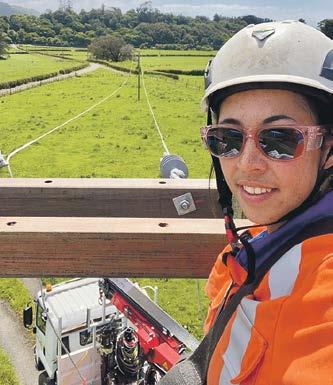
For Madison Harvey, a career as a line mechanic has opened doors to experiences she never imagined when she entered the electrical distribution industry eight years ago – having started out her career as a beauty therapist.
Now a leading hand with The Lines Company’s Ohakune crew, Harvey is passionate about the workand also encouraging more young people, particularly women, to explore careers in the trades.
She recently put that into action by participating in a Girls with Hi-Vis – GWHV - event, hosted by The Lines Company in Taumarunui. Connexis, training provider to
the electricity supply industry and other infrastructure trades in civil construction, telecommunications and water, started GWHV to give female secondary school students the chance to visit employers, learn what it’s like to work in trades they may not be aware of, and get hands-on experience at some of the skills required.
Harvey, who has been with The Lines Company for four months after moving from Horowhenua, believes events like GWHV play an important role in helping young women discover career opportunities they may never have considered.
“Girls With Hi-Vis is important because it shows
By Viv Posselt
The history of Indian settlement in New Zealand, from its little-known beginnings in 1769 to the present day, was outlined in a talk to the Cambridge U3A.
Senior Radio New Zealand reporter Gaurav Sharma addressed the topic, ‘From margins to mainstream: How Kiwi-Indians helped shape modern New Zealand’.
He spoke to the contrasts between perception and reality around Indian migration, covering off their earlier-than-realised arrival here and their integration into New Zealand communities.
Over the years, the Indian community has grown to account for six percent of New Zealand’s population.
“Now the third-largest ethnicity, Indian New Zealanders are among the nation’s most prosperous, earning 20 per cent more than the median income,” he said.
“They are woven into the very fabric of our national history. From the first colonial ships in the 1700s and the trenches of Gallipoli, to the Waikato dairy farms and Pukekohe market
gardens, their footprint is deep.”
He said over 1000 Indians died fighting with British forces at Gallipoli, yet it took years for the New Zealand government to recognise their contributions.
Many came to the Waikato between 1890 and 1918, initially working to clear scrubland to create arable farmland. They later purchased some of that farmland, and today, more than 100 Indian families are dairy farming in the Waikato, contributing over 20 percent of New Zealand’s milk supply.
Indians also settled in the Pukekohe area where they became successful market gardeners, yet for years faced open discrimination. Those issues still exist, Sharma said, citing markedly inequal representation in corporate leadership and difficulties experienced around the recognition of qualifications held by migrant professionals.
He came to New Zealand from Singapore in 2014, following his scientist wife whom he said was ‘poached’ from her job with




the Singapore government for a job with a 20 per cent drop in earnings. Sharma worked in various centres then launched his own publications, The Migrant Times, and Multicultural Times, essentially, he said, to strengthen ethnic representation in New Zealand media.
More recently he has been covering news around the Asian community in Auckland.
Indian migrants have been here for 250 years – a contrast to political rhetoric that suggests they ‘have just come from the airport’, he said.
They first arrived in 1769 when two Indian sailors came here aboard a French ship at the same time Captain Cook was leaving New Zealand.
The first recorded Indian to discover gold here, in Otago in 1857, was Edward Peters from Goa. Between 1890 and 1918 Indians from Punjab began arriving, working initially to clear land for farming. They saved hard and bought their own farms.
The first recorded Indian owned dairy farm was in Kihikihi.

Despite the deep history they have here, many Indian families continue to face misunderstanding and cultural clichés. One is that they own ‘corner dairies’ as some sort of lifestyle choice when those were decisions made because jobs were difficult to get.
Another misconception, he said, was that Indians were regarded as ‘one family’.
“There are more than 100 official languages in India and lots of different religions,” he said. “Such diversity means that most people now speak English as a way of connecting with one another.”


young women the different career options available to them. It gives them the chance to see what jobs like mine are really like and ask questions.”
At this year’s GWHV event, she shared her career journey, explained what life as a line mechanic involved and answered students’ questions.
Her message was simple: don’t be afraid to step outside your comfort zone.
“I hope the students leave with a better understanding of the different career opportunities out there and feel confident to give something a go, even if it’s outside their comfort zone.”
She also hopes the public gains a better understanding of the work line mechanics do behind the scenes.
“I find most people only really notice us when the power goes out, but there’s a lot happening behind the scenes to keep everything running safely and reliably.”
She says regular maintenance, inspections and upgrades are essential to keeping communities connected.
“We’re always maintaining and upgrading the network, and a lot of work goes into making sure the power stays
on.
She believes young women in particular need opportunities to see tradespeople who look like them and hear firsthand about the possibilities available.
“I think it’s important that young women see the opportunities available in trades and know that these careers are for anyone who’s willing to give them a go.”
“No two days are the same. We cover a wide area and work in a variety of locations and conditions. I also get to enjoy working in some incredible parts of New Zealand that I would never have been if I wasn’t in this line of work.”
While Harvey was initially focused on learning her trade and gaining qualifications, her priorities have evolved.
“Now that I’ve been in the industry for a while, I really enjoy helping the trainees develop their skills and confidence and sharing the knowledge and experience I’ve gained throughout my career.”
Supporting the next generation has become one of the most rewarding parts of her job.
By Richard Steele
I have read of a doctor being arrested at Wellington airport recently.
Apparently, his student loan arrears were over $150,000 and according to reports, the government wants the money back. Who would have thought ?.
Student loan arrears add up to over a billion dollars and some of the loans were huge.
Many of the people owing the money are overseas, and it sounds as though quite a few are not coming back.
Whether that’s because they owe so much money or their life overseas is so good wasn’t made clear in the news I heard. Maybe a bit of both.
Now I’ve never passed an exam in my life, so you could question my ability to know. I’ve borrowed a lot of money I thought I needed to, to advance from starting from nothing to where I am today.
I’d say borrowing was a necessary evil, not something I enjoyed, and it’s gone a long way toward making a couple of banks a lot of money. I was never that pleased about that either.
There was never a moment in all those years of working, when I ever thought, for even the briefest moment, that I didn’t have to pay the borrowing back.
Even worse than that, all through my life all manner of people have gone broke and have suffered the ignominious fate of being sold up, by whoever they owed the money to.
I’ve even sailed a little too close for comfort to the wind at times, and at those times I’ve sought advice then borrowed
more or just worked harder to keep my head above water, so to speak.

So how can so many thousands of people, bright enough to go on to higher education, not realise the consequences of their youthful borrowings?
I know life’s tough at times. I well know that circumstances change through life sometimes, and not always in better ways.
I’m also aware that pubs in some university cities sell more beer than any other places in the country.
I’m possibly a bit old fashioned here, but I’m not sure of how many students work in the generous time off study they have so that’s they can enjoy the social life they want, and the debt is not so big, when the degree has been achieved.
You would be surprised at how many students we employed to pick up hay who went on to become doctors .
In my role as an advocate with the rural support trust, I found the Inland Revenue Department to be most helpful when approached to assist a business in trouble.
And here’s another thought.
How about removing the qualification from the person whose arrears are so serious they may never be sorted. Just until the problem is worked out, to be sure.
Why do the people who borrow the money feel so entitled that they believe not paying the money back is ever going to be an option that they can get away with?
By Peter Nicholl
Full-page advertisements setting out five options for Waikato local government reorganisation have appeared in Good Local Media papers recently.
Four of them would see Waipā joining other Waikato councils to create larger unitary areas. The fifth option is ‘do nothing’. But this option added that after the 2028 local body elections, the government might impose amalgamation anyway.
There is an assumption behind these proposals that being bigger is better for efficiency, costs, and for implementing large or long-term projects. The example that is generally used to back this idea is the Auckland Supercity which saw eight councils amalgamate in 2010. The government often says it takes an ‘evidencebased approach’ to policies. But there is little or no ‘evidence’ that bigger local authorities are more efficient than smaller ones. The policy seems to be based on assumptions rather than evidence.
Some evidence I have seen casts doubt on the assumption. In 2022, the New Zealand Infrastructure Commission put out a report under the title Does Size Matter? They looked at impact of council size on the efficiency of road maintenance, building consent processes and overhead costs, over a 15-year period. Their main conclusion was the size of the local authority is neutral for cost efficiency. That is, the council size on its own does not decrease or increase cost-efficiency.
John Chapman, a consultant who lives in Cambridge, earlier this year published a report headed ‘Auckland’s amalgamation didn’t save money’. He said when the supercity was created the promise was clear: merge the councils, eliminate duplication

and tens of millions in savings will be unlocked.
Sixteen years later it is clear that Auckland hasn’t received these promised savings.

The Mayor of the Tasman region is opposing amalgamation with Nelson City. He made two very good points. Firstly, most of the advantages relating to finances, efficiency of service delivery and consistency of rules and regulations can be achieved without political amalgamation. The recent establishment of Waikato Waters seems to be an example of that.
Secondly, amalgamation would have a very detrimental impact on representation.
Three of the five options for the amalgamation in the Waikato would involve Waipa and a number of other smaller councils joining a larger body that included Hamilton City. The population of Hamilton is close to 200,000. Cambridge, with 22,000 people, is the second biggest Waikato town. The total population of the 12 largest Waikato towns outside Hamilton is just over 100,000. The Waikato is not a super-city like Auckland. It has separate towns with separate needs and interests.
I think amalgamation would be a disaster for representation and there is no evidence that it will lead to increased efficiency and lower costs. The only thing we know for sure is that there will be substantial front-end costs implementing the amalgamation. Waipā should adopt Option E: do nothing. If the government wants to impose something on the Waikato after the 2028 election, they should be asked to provide evidence to back up their proposal.

By Dan Tasker
The Waitete U13 team have done the double after demolishing Taupō Sports Vikings 74-19 to win the Jim Gibb Shield and the final in Te Kūiti on Saturday.
The young blues have been a step above the other seven teams in the King Country U13 Championship all year – in fact the last two years – and Saturday provided an emphatic send-off for this formidable team.
Any chance Taupō had was killed off with an early Waitete four-try onslaught that buried the visitors from the outset and included a fantastic long-range try from Noah Tipene-Kale Wehi.
Stands outs included number eight Cooper Boddie who made plenty of metres up the park, not to mention another hat-trick to centre
Demyriuz PuTamainu TaitokoDewes, who has arguably been Waitete’s best all year.
Taupō Sports pegged back a bit of ground through the middle part of the game, mainly thanks to their towering number eight, and son of former Chiefs player Fritz Lee, Elijah Lee, who bagged two of his own tries after proving hard to contain from broken play.
Long-serving referee and rugby man Jim Gibb was on-hand to present Waitete the shield named after him and winners’ medals, commending both teams on a great season.
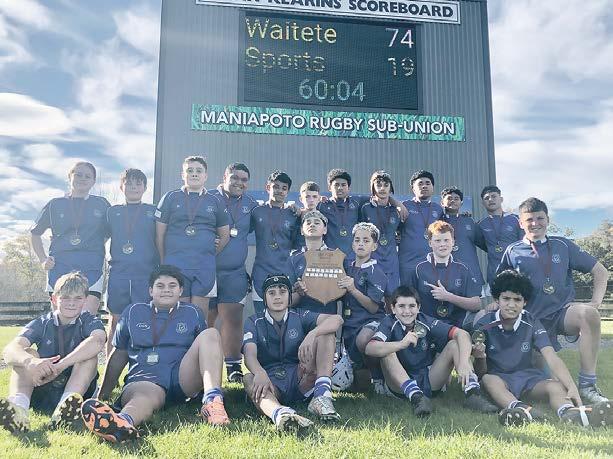
“Waitete, you turned out to be a well-coached, well-drilled team and made great use of the ball,” Gibb said.
He acknowledged the management of both teams and the parents.
“It’s a big commitment playing in a King Country-wide competition and for you to keep
these kids on the field is a great effort, thank you,” he said. The result was effectively a repeat of the 2025 final where Waitete beat Taupō Sports 40-21 in Te Kūiti. Te team has now gone unbeaten since losing the final to Tongariro in 2024 – a span of 19 wins on the trot.
In senior men’s footy, Taupō Marist has claimed the Ron Bryers Trophy, for topping the King Country premier club ladder at the end of the regular season. It was a third consecutive win. They remained unbeaten throughout but only just, as Taumarunui Districts put a slight
dint in their armour in a 27-27 draw in Taumarunui on Saturday. The draw also secured the second seeding for Districts heading into the semi-finals this Saturday, when they will host Taupō Sports, who pumped the yellow-and-blacks 40-12 at the Taumarunui Domain on June 13.
Waitete locked up fourth spot with a 40-15 victory in a do-or-die clash against Taumarunui Eels at Cherry Grove, and will now face Taupō Marist at Owen Delany Park in the other semi.
Having already lost to Taupō Marist twice this season – 43-7 in Taupō and 24-0 in Te Kūiti – it will be a tough ask for Waitete to stop Marist making their third consecutive final, but in knock-out rugby anything can happen.
It’s been a long time between drinks for Waitete, who made their last final in 2019 against Taupō Sports and won their last King Country championship in 2013, also against Taupō Sports 21-17.
The division one final for fifthplace is a repeat of last year’s match between Eels and Piopio, but with Eels hosting this time at Cherry Grove in Taumarunui.
King Country premier men’s club rugby final standings: Taupō Marist 60, Taumarunui Districts 47, Taupō Sports 44, Waitete 38, Taumarunui Eels 33, Piopio 21, Waitomo 6 (all teams received five points for a default win against Tongariro United in the first round).

The most interesting entries will be printed out HUGE and exhibited at The Village Green Bakery and Cafe AND each win a $50 bakery voucher to spend on chips, pies, slices or whatever you
• Your photo has to be taken in our district.
• Set your phone’s quality resolution to high.
• If you photograph a person ask permission first.
• No, we won’t ‘own’ the rights to your photo.
• Yes, do include the story behind your photo.
• Enter as many times as you like




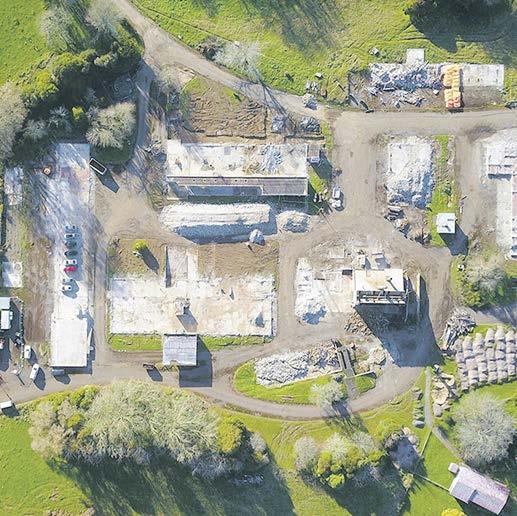
More than 81 tonnes of metal have been recycled as part of the demolition and remediation of the former Tokanui Psychiatric Hospital.
And enough rimu timber panels to cover about half a tennis court have been salvaged. The recycled metal can be used to make new products.
Toitū Te Whenua Land Information New Zealand is four months into the project and demolition of the industrial area. Work has started on former ward buildings and foundations will be removed in September.
The site is crisscrossed with underground services including water and steam pipes and communications and electricity cables. Contractors will remove all these services down to a depth of 800mm.
They have started work on the underground services by removing old concrete ducts that once carried steel pipes used to move high-pressure steam around the site. This steam was used to heat the buildings. The next stage of works will also focus on the upgrade of the closed landfill.
By Jesse Wood
The Ōtorohanga Sports women’s premiership side dealt to Putāruru, 56-5, at Island Reserve on Saturday. In front of the home fans, the ladies scored 10 tries to one.
Fullback Keighley Brough celebrated her 50th game with a hat-trick of tries and former Black Ferns front-rower Grace Houpapa-Barrett crossed the chalk twice.
Other try scorers included winger Mihi Edwards, Maria Muraahi, flanker Taongahuia McDonald and Sina Tainefu. Centre Libby Kearins-Te Whare added three conversions off the kicking tee.
Also at home, the Ōtorohanga Sports men’s sides faced Leamington. In the earlier championship WRU Trophy division match, the Ōtorohanga blues team beat Leamington B 38-7. Loosehead prop Paulo Sione scored a brace of tries.
Lock Matthew Bullock got Leamington B’s sole five-pointer. Captain and pivot Trae Innes added the extras off the tee.
The premier Ōtorohanga side were pipped 34-31 by the Waipā visitors in the championship Lone Star Cup division. First five-eighth Manaaki Rewi-Wetini, blindside flanker Ondrej Bejcek, reserve Brook Maikuku and winger Manieta Vonovono were among the home team’s try scorers.
Rewi-Wetini added two conversions and halfback Liam Fox another but the kicking of Leamington left winger Robert Day proved the difference.
Day slotted five penalties and two conversions as well as grabbing a try.
Midfielder Jackson Neels and blindside flanker Matthew Lyttle were the other Leamington try scorers.
This weekend the Ōtorohanga men venture to Matamata, while the women head to Marist Park to face Hamilton Marist-University combined team.





















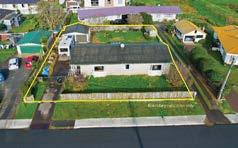
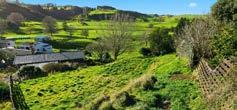
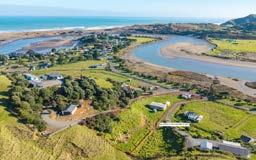
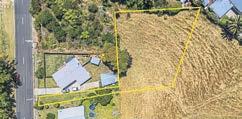
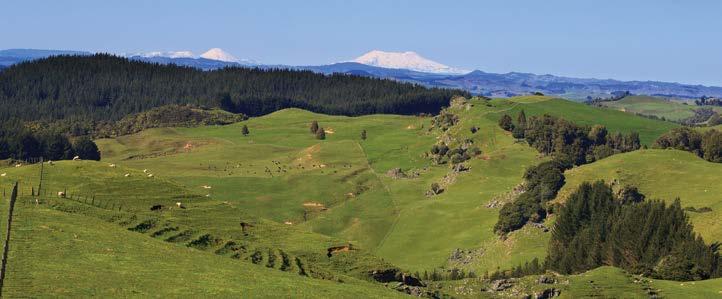
This exceptional lifestyle property is sure to attract strong interest, particularly from buyers seeking a premium home, land, and excellent shedding. Spanning approximately 295sqm, including the expansive portico, the home enjoys an elevated north-facing position that captures stunning rural views and an attractive countryside backdrop. There is no shortage of space for vehicles, machinery, and recreational equipment, with the recent addition of a large, fully enclosed three-bay shed complete with a concrete floor and power. Set on 16.1 hectares (approximately 40 acres) of mixedcontour land, the property offers an attractive blend of productive pasture and pockets of native bush. Divided into five paddocks, the land is of a scale that can still provide a useful supplementary income while remaining manageable for lifestyle owners. Combining a high-quality modern home, excellent infrastructure and stunning rural surroundings, this is a lifestyle property that offers the complete package.


Lennox
027 559 4468 P 873 8700
Harty
027 294 6215 P 873 8700




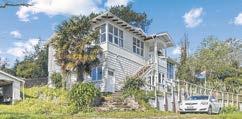
high ceilings and original detail creating a sense of warmth and luxury. Offering up to five bedrooms, two bathrooms, flexible living spaces, dedicated office spaces, multiple heating sources and generous storage, catering effortlessly to family life.
Set on a private, fully fenced setting, with outdoor entertaining area, double garage and off-street parking, it delivers space, comfort and enduring style.




























































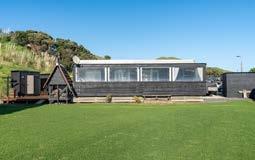
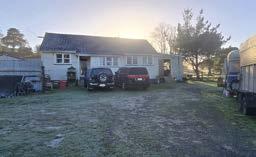

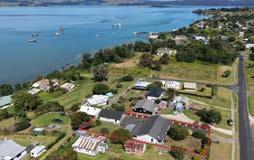





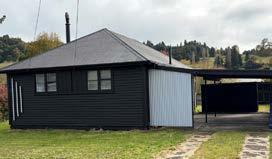























When planting a new garden or adding onto your existing one, it’s worth thinking about the views from inside your home. A well-designed garden doesn’t just fill a space — it creates a scene, softens what’s beyond, and gently directs your eye to something more enjoyable.
In this space, the neighbouring building sits quite close, with no fence line — just garden in between. By using native Dicksonia fibrosa in a natural grouping, the view is broken up and softened. Instead of your eye landing straight on the wall, it now moves through the layers of fronds, creating depth and interest.
As this planting is just getting underway, you’re seeing the bones of the garden. These structural plants set the framework for the view, which will be softened over time with lush, layered planting.

As everything establishes, the space will become more cohesive, drawing your focus into the garden rather than beyond it. Adding layers at different heights is key — low-growing groundcovers, mid-height foliage, and feature plants all working together.
This not only fills the space but creates movement and texture, so there’s always something for your eye to settle on.
It’s also a reminder to think about how a garden feels in every season. Evergreen structure, like tree ferns, keeps that view consistent year-round, while softer planting can change and evolve around it.
It’s a simple approach, but one that completely changes how a space feels from inside — turning an exposed outlook into something calm, considered, and easy on the eye.








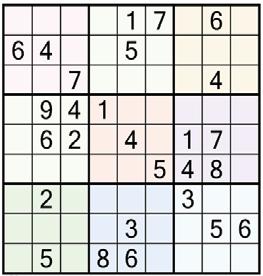
Stolen goods (6)
Underground rail (6)
Canister (3)
Betting organiser (6)
Relating to the stars (6)
Arm or leg (4)
Crooked (8)
Scene of an event
Defect (4)
Unoccupied (6)
Sluggish (6)
Mineral (3)
Difficult, testing (5) 19. Excessive confidence (8)
Unpowered aircraft (6)















•
•
•
•
•
•
•
•



• Interior & Exterior
• Painting • Wallpapering
• Spray Painting • Roofs
• Farm Buildings Chivone Prak • 021 211 1176 decorator@daverowepainting.co.nz All

PROMPT & EFFICIENT
ELECTRICAL SERVICES
/ Residential / Commercial / Industrial / Inspections
P 07 878 8335
E james@marshallelectrical.co.nz W marshallelectrical.co.nz
• Emptying septic tanks
• CCTV pipeline inspection
• Jetting drainage pipelines
Waitomo Liquid Waste Disposal 021 111 3911
• Spreading animal effluent FENCING & RURAL SOLUTIONS
Servicing the Waikato Rural Farm Fencing • Repairs or New Builds
Contact Hayden Soeters: 021 182 4652 Or email: info@soetersrural.nz
• Security Patrols
MANGO MOW MANGO MOW REGULAR & RELIABLE
LAWN MAINTENANCE REGULAR & RELIABLE LAWN MAINTENANCE
• Lawns
• Scheduled Maintenance • Section Tidies • Weed Eating
Green Spraying
Green Waste Removed
Garden Tidies • Pruning & Shrubs
Jonathan Wilson 027 770 7277 contact@mangosolutions.co.nz


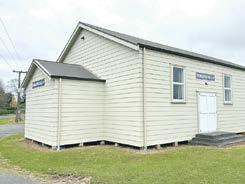
July 5 will marks a century since the first meeting was held in the Mangapiko Hall – it was officially opened on July 26, 1926.
Halfway between Pirongia and Te Awamutu, the rural Waipā facility is still in good condition and use.
Ngaire Phillips details the hall’s origins in her book My Family Story, They Came by Sailing Ships.
Ngaire’s grandfather J.T. (John) Johnson was one of three trustees when the Mangapiko Settlers’ Hall Association was formed in 1925, alongside Charles Alexander and John Ryan.
The Johnsons have been in the district since 1908, when J.T. brought his family north from Masterton, hence Johnson Rd.
The hall was built by Tom Mr Hastings, on the site of the Mangapiko creamery, which had fallen into disuse and was pulled down in 1925.
The opening evening commenced with the playing of the national anthem by the Te Awamutu Orphans’ Orchestra before Waipā County Council chairman Samuel Macky declared the hall open.
More than 250 people were present.
Te Awamutu mayor Leonard Armstrong congratulated the settlers upon their enterprise.
A concert followed, then Johnson spoke about some of his impressions of the district in the 18 years he had lived here.

Johnson said the Mangapiko district had happily made such progress since then; so also had Te Awamutu, which at that time was a town district.
Roads throughout had improved, the school enlarged, telephones, rural mail services, electric light and power - in fact, he could not think of any district where the amenities of life were so good and attractive as Mangapiko.
After supper, the floor was cleared and for at least three hours Dalton’s Orchestra was kept busily occupied playing for the many dancers.
At about 3am the event was brought to a close.
“I imagine that my grandparents would






have left for home after supper as they were a family who did not dance,” Ngaire said.
“After the Mangapiko Hall was opened in 1926 many a school concert was held on its stage.
“Miss Cameron is well remembered for her organisation of such functions with their crepe paper costumes.
“One of the concerts was held to raise funds for the first school radio to enable the pupils to listen to the broadcasts to school.
“Harold and Herbert Hey were talented entertainers at concerts organised by the school committee to raise funds for the school.”
In the 1920s and 1930s the hall was also used as a venue for Presbyterian Church services.
“Many a play, skits and concerts were performed on the stage. But the stage was used less and less.”
Indoor bowls and table tennis became popular and more floor space was needed. So the stage was pulled out and a new entrance made. Other alterations have since been made.
Bowls are still played during the winter months.
“Looking back there was probably more progress [for Mangapiko] in that 45 years from 1880 to 1925 than at any other time since,” Ngaire said.
There will be no centenary celebration for the hall but it still remains a well-cared-for country hall.
By Jesse Wood
Waipā powerlifter Delwyn Evans, 62, overcame adversity to win gold at the IPF (International Powerlifting Federation) World Bench Press Championships in Warsaw, Poland last month.
The Cambridge High School educated, Pirongiabased athlete rescheduled her flights from the Middle East route to the long way around - going via Hong Kong and Amsterdam to the Polish capital.
Her bags arrived five days later.
“This wasn’t my first rodeo but in all the years I’ve been travelling, that was the toughest situation I’ve had to deal with,” Evans said.
“I had a six-hour delay in Hong Kong. I got put up in a hotel which meant I missed my connection in Holland to Poland.
“I was meant to land in Warsaw at midday on Monday and ended up arriving there at midnight. My luggage was not there on the carrousel – it had gone to Bangkok.
“My hotel bookings were also mucked up. I got sent to three hotels before arriving back at the original hotel. The guy just hadn’t understood me.”
Luckily, Evans had packed her lifting gear and a few essentials in her carry-on luggage.
“For me to go out and win like I did was a pretty great feeling. Once that stress level had peaked, I thought, ‘oh well just come to do what you’re here to do’.”
There were 797 athletes lifting in the classic category and 518 in the equipped, some doing both.
Evans was in her 66th competition. In the masters’ three under 76kg category,
she lifted 22.5kg more than the second placed competitor.
“I lifted 22.5kg heavier than her but it’s never about that. It’s always about your own personal best and beating yourself,” Evans said.
“I opened on 80kg which, not that long ago, was my personal best. Then I went to 82.5kg and had a go at 85, but it wasn’t quite there.
Her son Brad Mayo watched her compete.
“Brad flew from Limerick, Ireland to come and watch me lift. It was great to spend a couple of days with him before he went back.”
After two weeks in Poland, Evans arrived in Auckland on June 1 and got straight back into training.
She is preparing for competition 67 in Winnipeg, Canada in September. – it will be her third event in that country.
Small practical, safe wagon in good condition. Perfect first car or workhorse.
1.8L petrol engine, 6-speed automatic, 8.2L/100km. Summit white, alloy wheels, cargo barrier in the boot.
Has new WOF, 12-month Rego, and 4 new tyres. Travelled 176,000 km, mostly on open roads, ex-fleet car. Selling as is.
$5,000 ono. Phone 027 287 0005
This Saturday, July 4
8am-12 noon
Carpark 85 Esplanade, Te Kūiti
$10 per space
Sellers and buyers welcome Enquiries: 021 201 0355 or 027 243 6312

Ōtorohanga | Residential, Commercial, Rural & Solar
Looking for a Better Place to Work?
Let’s be honest.
Most electricians don’t leave jobs because they don’t enjoy electrical work. They leave because they’re tired of poor communication, lack of appreciation, disorganised job management, cleaning up other people’s mistakes, or working for companies that don’t invest in their people.
If that sounds familiar, keep reading.
Join a Team That Has Your Back
At Kiwitown Electrical, we’re looking for an exceptional Registered Electrician who takes pride in their work and wants to be part of a high-performing team.
We’re building a team of professionals who care about quality workmanship, customer experience, personal growth, accountability, and helping each other succeed.
For more than 15 years, we’ve built a reputation for delivering quality electrical solutions throughout the Waikato while creating a workplace where people enjoy coming to work and are recognised for the value they bring. As our business continues to grow, you’ll be supported by a dedicated Operations Manager whose role is to ensure jobs are planned properly, communication is clear, and the team has everything they need to succeed.
What’s In It For You?
• Top rates paid for the right person
• $35-$45 per hour depending on experience
• $2,000 sign-on bonus
• Company vehicle
• Latest iPhone and company phone plan
• Quality uniforms, boots and wet weather gear supplied
• Paid birthday leave
• Regular team BBQs, social events and staff activities
• Ongoing training and professional development
• Opportunities to grow within a growing business
• Variety of work across residential, commercial, rural and solar projects
No two weeks look the same. One day you could be wiring a new home, the next troubleshooting a commercial installation, upgrading a dairy shed, installing a solar system, or delivering a large commercial project.
What We’re Looking For
• Registered Electrician with a current New Zealand practising licence
• Proven ability to work independently and manage jobs from start to finish
• Excellent workmanship and attention to detail
• Strong communication skills with customers and teammates
• Full, clean driver’s licence
• Experience in residential, commercial and rural electrical work preferred
• Solar experience is a bonus, but not essential
Most importantly, we’re looking for someone who takes pride in their work, owns their responsibilities, backs their teammates, and genuinely wants to be part of a high-performing team.
We’re not looking for someone who wants to do the bare minimum.
We’re looking for someone who cares about doing quality work, continuously improving, and delivering great outcomes for customers.
Why Kiwitown Electrical?
Because good people deserve:
• Respect
• Clear communication
• Strong leadership and support
• Opportunities to grow and develop
• Quality tools, equipment and systems
• Recognition for hard work
• A workplace where people enjoy turning up each day
If you’re looking for a company that values quality workmanship, backs its people, and offers genuine opportunities to grow, we’d love to hear from you. Applications close 15 July 2026 – apply in writing to nicki@eight73consulting.co.nz
Council adopts Annual Plan 2026/2027
Waitomo District Council adopted its Annual Plan 2026/2027 on 30 June 2026. Council also adopted the revised Revenue and Financing Policy, and Significance and Engagement Policy. The Annual Plan (digital version) is made available on our website www.waitomo.govt. nz. You are welcome to view the Annual Plan at the WDC Customer Services and Visitor Hub at Rora Street, Te Kūiti, or the Library on Taupiri Street. You can also request a copy by contacting our Customer Services Team on: 0800 932 4357
On 30 June 2026, Council adopted the fees and charges for 2026/27. These fees and charges apply from 1 July 2026. Due to the impact of rising costs Council has increased most fees and charges by 3% in line with inflation. This ensures costs are recovered so that Council services are not subsidised further by rates. The most significant changes are:
- Consenting fees increases of 5%
- PIM charge for granny flats
- Landfill and rubbish bags
The schedule of Fees and Charges is available on our website www.waitomo.govt.nz
On 30 June 2025, Council adopted the Alcohol Fees Bylaw 2025 that allows Alcohol Licensing fees to be set by Council. The second stage of increases will apply from 1 July 2026. The Alcohol Fees Bylaw 2025 can be found on Council’s website.
You can request a hardcopy of the fees and charges by contacting our Customer Services Team on 0800 932 4357 or email: info@waitomo.govt.nz
Ben Smit, Chief Executive

Looking for more than just a job?
Become a qualified electrician with Kiwitown Electrical and build a career that’s in demand, well paid, and hands-on.
As technology continues to evolve with AI, electrification and renewable energy, skilled electricians are becoming more valuable than ever. Homes, businesses and farms will always need qualified people to install, maintain and troubleshoot the systems that keep New Zealand running. Based in Ōtorohanga, Kiwitown Electrical works across domestic, commercial and rural projects throughout the Waikato. We also install and maintain solar power systems, giving you experience in one of the fastest-growing areas of the electrical industry.
What you’ll be doing
Working alongside experienced electricians, you’ll gain practical skills in:
• Residential wiring and renovations
• Commercial installations and maintenance
Rural electrical work
• Solar power system installations
• Fault finding and repairs
• Lighting, switchboards and power installations
• Safe work practices and industry standards
What we offer
• Earn while you learn. You’ll be employed and paid while gaining real-world experience and completing your apprenticeship.
• Experience across domestic, commercial, rural and solar electrical work.
• Mentoring from experienced electricians invested in your success.
• A supportive team that values growth, quality and professionalism.
• High-quality tools, equipment and PPE.
• Long-term career opportunities in an industry that’s continuing to grow and evolve.
We’re looking for someone with a great attitude, a willingness to learn, and a strong work ethic. If you’re reliable, enjoy solving problems and want to build a career you can be proud of, we’d love to hear from you.
Apply now Email your CV and a short introduction telling us why you’d like to become an electrician to admin@kiwitownelectrical.co.nz. Questions? Call
Following a review and public consultation process, Waitomo District Council has adopted the Solid Waste Bylaw 2026.
The Bylaw comes into force on 1 July 2026 and replaces the previous Solid Waste Bylaw. It will remain in force until 1 July 2036 unless reviewed or revoked earlier. The purpose of the Bylaw is to support effective waste management across the district by promoting waste reduction and ensuring waste is collected and disposed of in a way that protects public health, safety and the environment.
The Bylaw regulates the collection and disposal of waste and recyclables, waste disposal facilities, public litter bins, event waste management, licensing of waste collectors, safe disposal of prohibited and hazardous waste. Key changes include:
• Updated definitions, including household waste, prohibited waste and bin audits.
•Addition of Plastic 5 to accepted recycling materials.
• Requirements to prevent overfilled rubbish bags and recycling bins.
Clarifying green waste accepted only at the Te Kuiti Transfer Station.
• Public litter bins cannot be used for disposing of motorhome or camping waste.
• Clearer responsibilities for event organisers to manage waste and recycling
Reminder: Rubbish bags and recycling bins need to be placed out on the morning of the collection day before 8am to ensure collection. Yellow bins are now in use for mixed recycling, blue bins for glass only.
A copy of the Waitomo District Council Solid Waste Bylaw 2026 is available on Council’s website Waitomo.govt.nz and at Council offices during normal opening hours. For more details, contact our Customer Services Team 0800 932 4357
Ben Smit, Chief Executive

ĀRIA PRIMARY SCHOOL (U2) - KING COUNTRY, WAIKATO

Āria Primary School is seeking an inspiring, communityfocused leader to join our small rural school as Principal. Located in the heart of the King Country, just 10 minutes from Piopio and 30 minutes from Te Kūiti, Āria Primary School offers a unique leadership opportunity for someone passionate about rural education and making a meaningful difference in the lives of tamariki.
Āria Primary is a U2 rural school with a strong sense of whānau, community, and connection. Our students enjoy a supportive, inclusive environment where they are known, valued, and encouraged to achieve their best. Our community is proud, resilient, and actively supports the school.
We are looking for a motivated and visionary leader who will:
• Foster a positive, inclusive, and engaging learning environment
• Build strong relationships with students, staff, whānau, and the wider community
• Promote high-quality teaching and learning
• Embrace the character and opportunities of rural education
• Lead with integrity, innovation, and care
This is a wonderful opportunity to lead a small school with a big heart, in a supportive and welcoming rural community. A school house may be available.
Position begins at the start of the 2027 school year.
Applications close 4.00pm 26 July.
Please request an application pack and forms from: petergall@edsolnz.co.nz
3-4




All Saints Piopio, 22 Moa St Sunday 10am
St Peter’s by the Sea 25 Aria Tce, Mōkau 1st, 2nd, 3rd and 4th Sunday 2pm
Piopio contact: 07 877 8097
Mokau contact: 06 752 9123



Or
• Letters should not exceed 200 words
• They should be opinion based on facts or current events
• All letters to be emailed to editor@goodlocal.nz
• No noms-de-plume
• Letters will be published with names
• Please include full name, address and contact details for our records only
• Letters may be edited, abridged, or rejected at the editor’s discretion
• The editor’s decision on publication is final.
TO BUY. Any ute, van, 4WD, truck or car. Any condition doesn’t have to be going. Cash paid. Ph/txt Kevin 027 299 6165

We buy milk! Got reject or surplus milk? Call us today on 027 871 5075 We collect within 1.5 hours drive from Te Awamutu.



St Bride's Anglican Church Haerehuka St Ōtorohanga Sunday morning service 10am Ph 07 873 7006

Harvest Church Ōtorohanga
Sunday Service @ 10.30am 5 Tuhoro Street, Ōtorohanga Ph 07 873 8890 Mob 027 493 0117 Email harvest.pc@xtra.co.nz ALL WELCOME. Pastors Peter & Carole Coventry (An Assemblies of God Church)
BAPTIST
878 7878
all urgent out of hours call...................................................07 878 7878
Te Kūiti Pharmacy Sat 9.30am - 12.30pm....................07 878 8011
Ōtorohanga Pharmacy Sat 9am - 12.30pm.................07 873 7294
873

CHURCH 8 Ranfurly St, Ōtorohanga
ROBERTS, Elizabeth Grace (Betty) – Peacefully at Waikato Hospital on Sunday, June 28, 2026 with her loving and caring family at her side. Dearly loved wife of the late Brian. Much loved mother and mother-in-law of Gayle and Ken, Dianne and Cecil, Dawn and Andy, Margaret and Ivan. Cherished grandma to her 13 grandchildren, 21 great grandchildren and 7 great great grandchildren. A funeral service for Betty will be held at St Luke’s Anglican Church Te Kuiti, on Thursday, July 2 at 1pm, followed by interment at Te Kuiti Cemetery. All communications to Roberts Family c/- PO Box 241, Te Kuiti 3941. In the care of VJ Williams & Sons, Funeral Directors Association of NZ
Luke's Anglican Church Te Kūiti No



Sundays 10:30am Service and Children’s programme Everyone is welcome Contact: 07 873 8685 10:30am Sunday 10 Sheridan St, Te Kuiti
Sheridan St, Te Kūiti
Pastor Terry & Rowena Bradley 07 878 8694 021 703 008 An Assemblies of God Church We welcome you to our 10.30am Sunday service. www.journeychurch.org.nz
Kuiti
Pastor Terry & Rowena Bradley 07 878 8694 021 703 008 An Assemblies of God Church
King Country Christians meet every Sunday in the Piopio Senior Citizens Hall, Weka Street, Piopio, at 10.30am
Phone Judy 021135946 Everyone is welcome! Phone 0211359346

Every life deserves a meaningful farewell. Our compassionate, professional, and dedicated team is here to help, offering care and understanding when it matters most. Call us anytime – we’re here for you.




It was late Friday afternoon. Outside his o ce window Simon could see a long line of cars rushing home. Just like his sta rushing to the sta room for Friday drinks. Simon stood up to join them for a well-deserved zzy drink, when his phone rang - John was downstairs, and it was urgent.
John explained that he and his fellow shareholders were wondering how they could
pay each other out if one of them was to die.
“This is a common trend at the moment,” Simon remarked. “Firms are restructuring or succession planning. It’s critical there is insurance to cover death, permanent injury or illness stopping a shareholder from working. Insurance must go to the right person.”
Simon advised it was crucial that insurance
policies were owned by an independent stakeholder, like a professional trustee, and that shareholders and the stakeholder were parties to a buy-sell agreement detailing the types of insurance, how it would be owned, and used.
John left, determined to nalise an agreement. Simon, just as determined, went in search of a zzy drink.



Cat u is a term used to describe a group of contagious upper respiratory infections that a ect cats. While it may sound similar to human in uenza, cat u is caused primarily by two viruses: feline herpes virus (FHV) and feline calcivirus (FCV). These infections are especially common in kittens and cats with weakened immune systems.
Common signs of cat u include sneezing, nasal discharge, watery eyes, a sore throat, loss of
appetite, fever, and lethargy. Some cats may also develop mouth ulcers, coughing, or have di culty breathing. While most healthy adult cats recover well, kittens and older cats are at greater risk for complications. Cat Flu is highly contagious and spreads easily through direct contact with infected cats, shared food bowls, bedding, or even human hands and clothing.
Regular vaccination is the best way to protect cats from these viruses. Good hygiene, isolation
of sick cats, and regular cleaning of living areas also help reduce the risk of outbreaks in multicat households. There is no cure for cat u, but supportive care plays a crucial role in recovery. This includes keeping the cat warm, hydrated, and encouraging them to eat. In more severe cases, veterinarians may prescribe antibiotics to prevent secondary bacterial infections or antiviral medications for chronic cases. Always consult a veterinarian if you suspect your cat has cat u.



Taking care of your teeth helps prevent cavities and gum disease. Brushing twice daily and ossing once a day properly can prevent plaque. Gum disease starts when plaque builds up under and along the gum line. Plaque is a sticky lm-like substance that’s lled with bacteria. It can cause infections that hurt
the gum and bone, leading to gum disease and tooth decay. Plaque also can cause gingivitis, the earliest stage of gum disease. Gingivitis causes your gums to become in amed and swollen. A few signs of gingivitis include consistently bad taste or breath, gums that are swollen, red, or tender & bleed easily when touched or brushing. Regular Dental checkups and Dental Hygiene cleans are important to ensure your teeth and gums are Healthy.
Phone Otorohanga Dental Surgery on 07 873 8824 or 0800 686 336 to book your Dental Exam or Dental Hygiene appointment TODAY!




One of the biggest changes in travel over recent years has been the increase in pretravel paperwork. It’s no longer enough to simply hold a valid passport and airline ticket. Depending on where you’re travelling, you may also need a visa, an electronic travel authorisation, or a digital arrival card before departure.
Many popular destinations for New Zealand

DAVY

&
travellers, including Thailand, Singapore, Malaysia, Japan and Indonesia, now require travellers to complete online arrival declarations or health questionnaires before arrival. These are separate from visa requirements and are often mandatory, even for visa-free visitors. Travellers should also be aware of electronic travel authorization requirements such as the UK’s ETA, USA ESTA, Canada ETA, and
Europe’s ETIAS system, which is expected to be introduced in the near future for visitors to many European countries.
Requirements can change regularly, and failing to complete the necessary documentation could result in delays or even denied boarding.
Before travelling, always check the latest entry requirements to ensure your journey gets o to a smooth start.

To Inform
•Build awareness of your brand
•Promote your products or services
To Identify
•De ne your point of di erence
•Attract consumers
To Compete
•Sell your products or services
•Gain sales ahead of your competitors
•Good marketing is not an expense, it’s an investment
•Advertising is your silent salesperson
The Ultimate Browser
•Readers connect with their local newspaper –they read the newspaper to feel in touch with their community
•Readers give newspapers their full attention
– they are engaged as they invite it into their space
•Readers read the newspaper to nd out what is behind the issues
•It’s part of their routine
•Newspaper advertising is less intrusive
•Newspapers are used to nd the best local


weekly deals
•Readers use their newspapers to nd products and services
•Credible local content that can be trusted
•Nontoxic environment for readers and advertisers
The King Country News, serving your local community for 120 years.
For all advertising enquires contact Janine Davy 027 287 0005 | janine@goodlocal.nz