King Country



By Jon Rawlinson
A long awaited rebuild of the Kāwhia Sports Club’s clubrooms, nicknamed Project Phoenix, is finally off the ground.
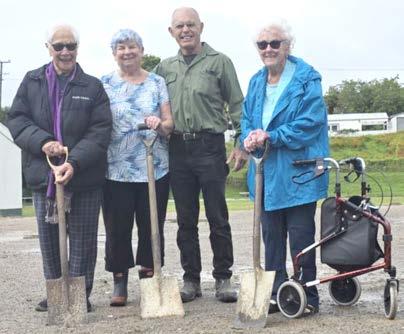
Club members gathered at the site for a sod turning and a blessing by kaumātua, John Puke.
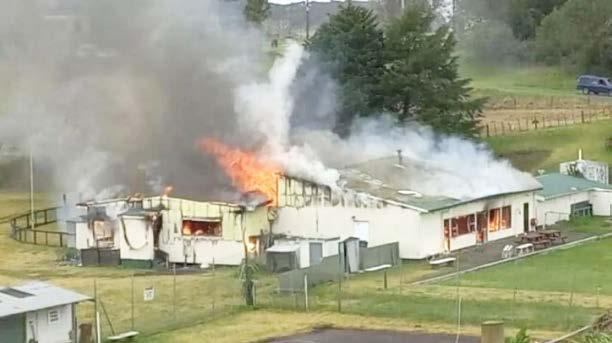
The previous clubrooms were destroyed in a blaze in July 2022.
“The Kāwhia Sports Club has always been more than a club,” the organisation’s president, Dave Walsh said. “It’s been a meeting point, a support network and a source of pride in our town. It wasn’t just a ground breaking, it’s about investing in people, creating a place for them to utilise the teamwork and resilience that small communities are known for.”
Calling a spade a spade, Walsh said breaking ground is even more satisfying as it follows a lengthy process involving Ōtorohanga District Council.
“It took more than three years just to get a permit because of a bullshit bureaucratic process,” said Walsh, a builder by trade. “It has been hard to get answers and get things done – it was like the council kept moving the goalposts.”
The fire, which destroyed the clubrooms, is thought to have been a consequence of rodents gnawing at electrical wires.
“Two committee members were there at the time, setting up an event for that evening,” said Walsh. “They attempted to put it out but it was too late.”

When the site was cleared within a couple of weeks, members expected a new building would rise from the ashes soon enough. However, it marked beginning of a wrangle that kept groundwork firmly grounded.
“We had the lease for more than 70 years. It had expired but we were trying to have it renewed and we were told it was a just a formality to roll it over,” said Walsh, “Instead, it took around two years just to get the lease sorted and we couldn’t apply for our insurance until then.”
Putting the insurance money to work also proved problematic as the club was paying the premiums while council held the policy, Walsh said.
Issues now behind them,
council’s chief executive Tanya Winter is also pleased to see Project Phoenix finally take flight.
“It’s great to see the rebuild now underway and we look forward to the club once again bringing people together and strengthening social life in the Kāwhia community,” she told The News.
“Council acknowledges that the rebuild took longer than anyone would have liked and that it was a complex project involving multiple parties, different roles and shared responsibilities. We accept that some delays occurred on our side and we own our part in that.”
Backed by approximately $1.5million from insurance, the project should result in the clubrooms being built back better.
“We’re building it a bit

differently, using solar energy for example” said Walsh.
“It’ll also be a backstop for civil defence because we’ll have solar power and we’re putting in a water tank as part of new regulations, so we will be independent during emergencies.”
The clubrooms, which also provide a base for the community’s RSA, will then resume service as a community hub, Walsh expects.
“This new development represents growth, not just for sport but for connecting and bringing our community even closer together,” he said.
“We don’t have a fixed opening date because there’s a lot to do, but we’re hoping to be back up and running before the end of the year.”






Lionel Smith BBS CA
Shelley Mitchell BMS CA
127 Rora St | PO Box 159 | Te Kuiti
e lionel@smithmitchell.co.nz
e shelley@smithmitchell.co.nz
w www.smithmitchell.co.nz
p 07 878 1098


Monday to Thursday 9.00am - 3.00pm
Best way to contact us:
Advertising:
Janine 027 287 0005
Editorial: Roy 027 450 0115
Email: admin@goodlocal.nz

News/Editorial
Roy Pilott editor@goodlocal.nz
027 450 0115
Mary Anne Gill maryanne@goodlocal.nz
021 705 213
Viv Posselt viv@goodlocal.nz
027 233 7686
Chris Gardner chris@goodlocal.nz
027 231 7007
Advertising Director
Janine Davy janine@goodlocal.nz
027 287 0005
Owner/Publisher
David Mackenzie david@goodlocal.nz
Office/Missed Deliveries
07 827 0005 admin@goodlocal.nz
By Viv Posselt
Close on 200 people were at Ōhaupō’s Rotopiko wetlands to mark Sunday’s World Wetlands Day.
The celebration this year carried the theme ‘Wetlands and traditional knowledge: Celebrating cultural heritage’.
Spearheaded by the National Wetland Trust (NWT), it brought together various agencies and organisations that included Landcare Trust, the Te Awamutu Rotary Club, Waipā District Council and the Waikato Regional Council, DOC, Go Eco, and Sanctuary Mountain Maungatautari.
The event is held across New Zealand to coincide with World Wetlands Day, which has been marked internationally on February 2 since the 1971 signing of the Convention on Wetlands Treaty. It serves to raise awareness about the importance of wetlands and highlight the work being done to preserve them in communities around the world.
The Rotopiko wetland forest and lake has been the hub of this region’s
celebrations over the past six years and the annual event has turned into an information-packed family day, complete with activities, giveaways and refreshments, and a host of wetland education.
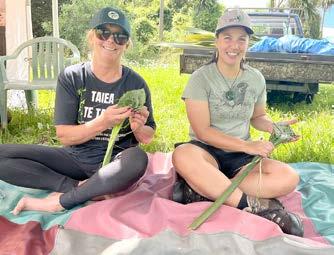
In line with this year’s theme, the NWT invited Ringi Morgan-Fifield, who works part-time with Sanctuary Mountain Maungatautari, to offer up information and products linked to the rongoā, or traditional Māori herbal medicine, found within the wetlands.
National Wetlands Trust deputy chairman Don Scarlet said the purpose of the day is to get people into wetlands, both physically and emotionally.
“I would say something like this collaboration of all those taking part has enabled us to take a fantastic step forward to get more Kiwis involved.”
Work at Rotopiko over the past year has centred on removing rats from within the wetlands fence, managing the exotic birds and planting up areas outside the fence that drain into the wetland.
Two women with long careers in the public sector feature on the covers of Good Local Media’s business publications this month.
Former Hamilton mayor Paula Southgate appears in the Waikato Business News, while Lake Tarawera advocate Libby Fletcher graces the Bay of Plenty Business News. Southgate spent 24 years in local government, beginning at Waikato Regional Council and then serving six years as Hamilton mayor.
She has recently taken up a part-time role as a senior fellow at the Helen Clark Foundation, where she is encouraging discussion about the future of local government.
Speaking to senior writer Mary Anne Gill, Southgate said she wants to promote debate around council structures.
“Do we really need more than 60 councils?” she asks.
Fletcher, who was awarded a King’s Service Medal in the New Year Honours for her environmental work, led efforts to improve the health of Lake Tarawera. She rallied residents, supported scientific research and helped build momentum for a new reticulated sewage system to reduce pollution in the lake.
The two business publications - sister titles to Cambridge News, Te Awamutu News, King Country News and King Country Farmer - also examine housing and commercial real estate trends, signs of an economic upturn, the use of unmanned aerial vehicles in forestry, and provide an update on the Iawai water company.
Both editions are available online at goodlocal.nz.
King Country Police have had another active week, responding to a range of incidents across the district.
Police believe they have identified a 46-year-old woman responsible for several ongoing retail crime incidents in Te Kuiti. The offender has continued to target the same store and has repeatedly breached trespass notices. Staff are making further enquiries to locate her. We encourage all store workers to remain vigilant and report offending as it occurs.
Police attended a sudden death involving a 71-year-old male at a Te Kuiti address. The matter has been referred to the coroner. Local staff wish to acknowledge the support provided by specialist teams who assisted with scene work and follow up enquiries.
Staff located a stolen vehicle in Benneydale. The vehicle has been towed and will undergo forensic examination as part of


ongoing enquiries.
We are investigating a burglary that occurred in Piopio over the previous weekend. Offenders used a stolen vehicle and targeted a store during the night. Staff are actively working to identify those involved and hold them accountable.
Police responded to a mental health crisis involving a female at a residential address in Te Kuiti. After a period of negotiation, she was safely taken into custody under the Mental Health Act and transported to Waikato Hospital for further support.
Police are looking into reports of sustained loss of traction incidents occurring in Benneydale township and on SH30. Members of the public are asked to report any further incidents and to come forward with information that may assist.
Staff attended a crash on SH3 in Te Mapara, where a driver is suspected to have

suffered a medical event prior to leaving the road and colliding with a farm fence and power pole.

Police followed up and dealt with a 31-year-old male in Ōtorohanga for a breach of bail matter. A 29-year-old male has been served with a summons for driving while disqualified - a third and subsequent offence.
King Country police have arrested and charged a 41-year-old male in relation to a serious assault that took place late last year at a party in Hangatiki.
The weather is changing frequently at the moment and there is a lot of road maintenance happening across the district. We ask drivers to remain patient and reduce their speed when passing through these areas. As always, thank you for your continued support.

A record set by King Country shearers near Piopio in 2019 has been smashed. Shearers Leon Samuels (Roxburgh, originally from Mangakino), Paerata Abraham (Masterton) and Shane Ratima (Hunterville) shore 2073 lambs in their threestand, eight-hours, strong wool record, surpassing the previous record of 1976.
Hato Hone St John ambulance crews responded to 50,907 incidents in the Waikato region last year, up 2.7 percent from 49,577 in 2024, and up 15.4 percent from 44,129 in 2020. The most common reasons for calling 111 for an ambulance included referrals from a health practitioner, breathing problems, chest pain, falls and people feeling generally or medically unwell. Water related incidents were significantly up last year
Work on the bottom section of the 235-metre tunnel on the State Highway 3 6km Te Ara o Te Ata - Mt Messenger Bypass has been completed four weeks ahead of schedule. Tunnellers broke through in October and went back and increased the depth and lined the tunnel with concrete. Work was finished last week.
King Country shearers landed a one-two punch during the Dannevirke shears last Friday as Clay Harris (Piopio) claimed top spot in the open speed shear followed by Jack Fagan (Te Kūiti) in second. Taumarunui was also well represented in Dannevirke - Forde Alexander placed fourth in the open speed shear, Taelor Tarrant was second in the senior speed shear and Vinniye Phillips was second in the woolhandling open.
By Jon Rawlinson
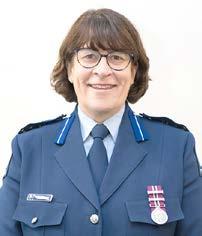
Jill Rogers is relieved to no longer be ‘relieving’ – she has now been confirmed as a deputy commissioner in the New Zealand Police.
More than 30 years since she joined the force, the former Ōtorohanga College student is now officially one of NZ’s highest ranking police officers.
“I had an extensive period relieving, so I was ready to take those training wheels off, but unpredictability is part of the job,” she told The News. “So, it’s a great relief and a real privilege to be secured in the role.”
Rogers served as acting deputy commissioner from March 2025 and is now one of two officers holding this rank on an ongoing basis.
In 1993, as a new recruit, she was stationed in Auckland, which proved quite the culture shock for a Kio Kio farmer’s daughter.
“I was in a frontline role dealing with all manner of serious crime. Coming from a loving and stable home, experiencing so much harm and trauma was something I’d never
encountered before,” she said.
“Back then, we went out with notebooks and wooden batons – you could take a longer baton out on night shifts. Now, with the latest equipment and continuing training, it’s so different from when I joined.”
The city may seem more associated with violent crime. However, the tragic end of the hunt for Tom Phillips in September was an example of how tragedy can strike as readily in rural King Country as on the streets of South Auckland.
“It’s hugely important that we’re known and seen and that we build strong relationships in our communities. In September, we saw the strength of those relationships (between police and the public) in Ōtorohanga and Te Kūiti,” Rogers said.
The officer injured by Phillips has since left hospital and is receiving support. This is vital to ensuring personnel can tackle even the worst situations, Rogers said.
“We train our staff, we equip them well and try to do everything we can to keep them as safe as possible,
but policing always involves some risk. So, our people look after each other and we provide wrap-around support for everyone involved in such incidents.”
Having spent most of her career based in Auckland, Rogers also helped train the next generation of officers at Porirua’s New Zealand Police College and spent 17 years in the CIB.
She credits her King Country roots with aiding her throughout her career.
“A policeman lived next door to our school. He spoke to us one day and I thought he had a pretty cool job. It set the seed in the back of my mind that I would like to do this. I trained as a teacher and taught for two years, but then thought I needed to give policing a try.”
Rogers’ parents, John (a former councillor) and Gail (a nurse who also ran Beattie Home) inspired her through their community service.
“I learned many skills that set me up for my career from my parents –they were hard-working, never gave up and my mum’s compassion and caring has encouraged me to be the
police officer that I’ve become.”
The Police College still falls within this former teacher’s mandate. Although skills learned there could save lives one day, Rogers advises rookies to look away from the job whenever they can.
“I’ve kept my feet on the ground, visiting family in Ōtorohanga as much as I can, which helps keep my life as normal as possible,” she said.
“Some things we do and see are very confronting, so it’s important to take time out, away from policing.”
Sometimes no news is good news, sometimes it’s because postal services have been cut back. New Zealand Post has announced postal services through 142 urban retail partner stores nationwide will cease this year.
Closures follow an update to a deed of understanding between NZ Post and the government which requires a ‘commercially sustainable mail service.’
Three outlets are in Waipā – but it’s business as usual for counters at the Ōtorohanga and Te Kūiti Paper Plus stores.
Grant Matthews, owner of Paper Plus Ōtorohanga, an NZ Post agent, said there is more than one side to this story.
“You can look at the negatives or at the positives – there are still a lot of New Zealand Post stores,” he said.
“The media is focusing on the 150 stores, or just under, that are being closed, but there’s still more than 500 post agents throughout
the country. We don’t have supermarkets or even banks that offer that level of coverage.”
In rural areas, Post Shops provide an essential connection, but the recently announced closures are limited to urban branches.
Minimum store requirements were last set in the 1980s, Sarah Sandoval of NZ Post said.
“The retail network needs to be rebalanced. We’ve carefully assessed customer and network data and engaged with our retail partners to understand where changes make sense while maintaining access to the right mix of services in communities.”
Some locations will be upgraded to become new retail hubs offering more services.
“Over time, these changes will help us operate in a more sustainable and commercially responsible way, which is essential for ongoing improvements to stores, services and overall customer experience.”





By Richard Steele
In the past six million years all, or most, of New Zealand has been under sea twice and every piece of our earth between our hilly tops has eroded away, and that’s where our flat coastal plains come from . Erosion, that has been a natural process since the actual birth of our country, is also still ongoing. It has never stopped. We have collectively occupied this land for less than a thousand years, yet we beat ourselves up over land degradation, slipping , slumping, while in fact 99.99 per cent of this erosion occurred millions of years before we got here.
And we have the audacity to be surprised when it floods or falls over, when we build on the top of cliffs to get a better view, or under the bottom of a hill to be closer to the beach. Or when our houses flood after we’ve built them on a flood plain, Papamoa, or on the side of a volcano, Auckland, or on the side of a steep harbour, Wellington, or on an earthquake fault, Christchurch.
I’m not a wise person, I’m a failure of the education system, yet I have enough nous to regard some of the things we do with a sad or cynical eye, because we don’t learn. The people making the rules and the decisions don’t learn, and so we are bound to stagger forward, ignoring the mistakes we made in the past.
I’ve been recording the rainfall, as a farmer interested in what’s going on around me, most of my working life, and I suppose, one day my records would be of some use to me as a person who relies on the weather for his wellbeing.
Not so. I’ve proved three things. The first is, memories are no good, including my own. Most of us can’t remember what happened

last week, let alone last month or last year. So I don’t trust anecdotal history anymore.

The second proof is that the wettest month, and the driest month are the same month. The wettest month and the driest month I’ve ever recorded is this oneFebruary.
The third point is that there is no pattern. I thought, after collecting daily records on this property, that I would see a pattern that would be some use to me on the land. After 33 years, there is no discernible pattern at all, it’s all over the place, and proves nothing.
Fascinating in itself.
So it’s a tragedy that we have lost lovely people under a slip, or that hills are eroding to the sea, but remember this: they always have, and even if we slow them down. They always will.
• Letters should not exceed 200 words
• They should be opinion based on facts or current events
• All letters to be emailed to editor@goodlocal.nz
• No noms-de-plume
• Letters will be published with names
• Please include full name, address and contact details for our records only
• Letters may be edited, abridged, or rejected at the editor’s discretion
• The editor’s decision on publication is final.




























By Jon Rawlinson
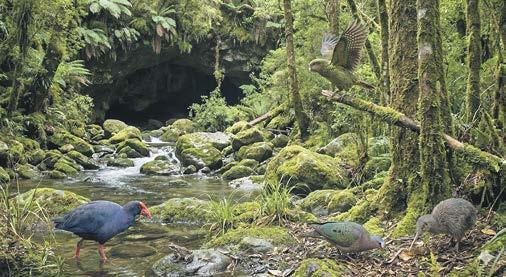
The recent discovery of fossils in a Waitomo cave casts new light on our ancient history and should serve as an alarm in our present.
While scientists unearthed fossils of previously unknown bird and frog species, their main aim
was to research the impact of catastrophic ancient eruptions and rapid climate shifts.
“It’s definitely a wakeup call,” Dr Paul Scofield from Canterbury Museum told The News. “Next time Taupō goes bang, the central North Island is going to be devastated.
“The caves of the King
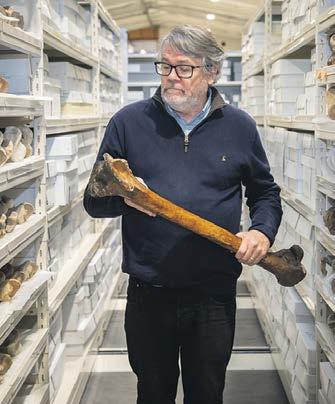
Country are really important to understanding the impacts of changing climate and natural disasters on the New Zealand environment.”
Because the fossils were found between two layers of volcanic ash, from two eruptions 1.55 and one million years ago, they could be dated accurately.
The more recent, massive eruption would have blanketed much of the North Island in metres of ash, Scofield said.
“We believe this was a major driver for the evolutionary diversification of birds and other fauna in the North Island.”
The fossils suggest that one-third to one-half of New Zealand’s ancient species became extinct during the million years before people arrived.
Scientists, including Scofield, were following earlier work by Dr Trevor Worthy from Flinders University, Adelaide.
“It stemmed from work by Trevor in about the 1980s when he was surveying caves in the Waitomo region. He named the cave ‘Moa Eggshell Cave’ because he found a large amount of moa eggshell there.”
Worthy also identified

evidence of the Taupō eruptions.
Backed by a government initiative, The Marsden Fund, the team returned to the cave, on private farmland near Te Anga Road.
“I was finding moa bones that were around 20–30,000 years old, but Trevor was digging at a much lower level when he found the older material,” Scofield said.
The new species include ancient ancestors of the Kākāpō and Takahē. One has been named after a much less ancient family.

“The landowner was so agreeable to us working there that we named a species after the ClaytonGreene family who have farmed in Waitomo for more than 100 years.”
The team’s research has now been published in scientific journal, Alcheringa.
“It casts a new light on a period largely absent from New Zealand’s fossil record,” said Scofield. “This isn’t a missing chapter in our ancient history, it’s a missing volume.”
There will be more chapters added to this volume.
“Apart from this little snippet, we still don’t have information from 15 million years ago, but we found 14 species of birds, so chances are there’s another 30–40 at the site,” Scofield said.
“There’s more information in that cave, sitting there waiting to be discovered. It’ll depend on funding, but we’ll be back there in the next few years.” Meanwhile, the fossils won’t stray far from home, Scofield confirmed.
“All the material is going to be kept in longterm storage at Waitomo Museum.”















By Janine Krippner
As we have sadly been reminded over the past couple of weeks, we have a country that is susceptible to hazards like landslides that impact people, homes, and lifelines (for example, transport, water and power). People and communities around the country work to have plans for what to do when something hits, to keep people safe where we can, and recover faster.
In Aotearoa, we have freight and passenger trains, and even as you read this there will likely be at least one train running from Hamilton, passing Taumarunui, or collecting milk products around the south Waikato. This is through some very diverse terrain.
To make this possible, a lot has improved with rail operations and safety, but vigilance and improvements are critical to keep our country running.
Our most severe example of this has been mentioned in this column before –the Christmas Eve 1953 Tangiwai disaster, where over 150 lives were lost. A lahar from Ruapehu had destroyed the bridge at Tangiwai shortly before the evening express arrived. Every year before Christmas, rail staff remember this tragedy by stopping and laying wreaths at the site.
We cannot, and many would argue, should not stop nature from doing its thing, but there is a lot we can do to keep people safe and reduce impacts.
There have been great advancements in technology so that when another lahar occurred in 2007, automated systems alerted authorities and rail and road networks were closed for safety. Two similar events, two very different outcomes.
Accidents and disasters still happen. Last month with the severe weather impacting the country, train services were stopped on the
East Coast to prevent harm.
Slips, derailments, and collisions sadly still happen, as we saw in Spain last month, so for all of us as community members it is handy to know what to do. Just in case. If we encounter something wrong within the rail corridor, what can we do?

Something wrong may include loose wires, broken rail tracks, landslides, or anything else that seems unusual, even cattle that have wondered onto the track as we have seen in recent years in Te Awamutu.
Please call 0800 808 400 and let Train Control know. If you encounter an accident or derailment and there aren’t already emergency services on site call 111 immediately. Even though this is tough, please don’t go to the site as you don’t know if there is live electricity, fuel, or hazardous chemicals that may put you in danger as well.
Even when there hasn’t been an accident, there are always hazards present. Rules are there for a reason, and when they aren’t observed, casualties can happen. If the bells are ringing and the arms are down, waiting is critical. Trains cannot slow down very quickly and can be moving faster than they appear. Many rural crossings don’t have bells, so at these places we are to stop and check both ways first.
Every day, hundreds and thousands of tonnes pass through the region on trains, helping keep the country running. But like being aware of our natural landscape, respecting rail corridors and knowing how to respond if something does happen is critical to making our community safer.















































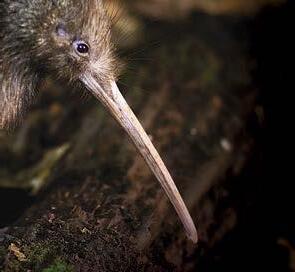
For $300 you can sponsor a panel, power our local Kiwi House, and have your name displayed for the next 20 years.







A new head office and depot in Te Kūiti will help The Lines Company (TLC) keep the lights on even when lives are on the line. By redeveloping its Waitete office and depot site, the company will be more energy efficient and better equipped for rapid response during earthquakes, storms and other disasters, chief executive Mike Fox said.
“We’re a lifeline utility. Following a
natural disaster, we must be able to operate quickly and efficiently. A modern, purposedesigned facility helps achieve this.”
Ground was broken at the site last week following a blessing by Waitomo councillor and Ngāti Rōrā kaikarakia, Isaiah Wallace. construction is expected to be completed in November.
The electricity distributor’s King Street offices and Waitete depot have served

the company for about 70 and 40 years respectively, but are no longer up to standard, Fox said.
The redevelopment will also unite the company’s northern-based team under one roof.
“Our new base represents more than bricks and timber, it symbolises our commitment to creating a safe, modern, people-first workplace.
“I’m looking forward to bringing our team together, united in purpose, growing communities with energy.”
“While we are redeveloping the site, The Lines Company team will continue to operate as normal, ensuring uninterrupted service to our customers.”
The fate of the King Street building is yet to be decided, but it is expected to be put to good use.
“We are working alongside Waitomo District Council and other stakeholders to decide what might happen to the King Street building and site. We absolutely guarantee that we will not leave the building vacant to become derelict.”
The redevelopment extends the company’s commitment to the region for at least another 50 years, Fox said.
“This project is not just about a new building, it’s about supporting our people, making our operations future-resilient, strengthening our service and investing in our region.”











By Mary Anne Gill
Bus patronage on the Te Kūiti service to and from Hamilton remained on a par with the previous year as Waikato Regional Council worked to grow awareness and usage of the route.
The service is not part of the council’s continuous regional programme, but plans are underway to promote it more widely across the Ōtorohanga and Waitomo districts to encourage increased uptake.
The biggest hurdle is the service has only one trip a day during the working week. It leaves the i-Site in Te Kūiti at 6.40am, arrives in Hamilton at 8.25am and then returns at 5.15pm with a final stop in Te Kuiti at
6.47pm.
For Te Kūiti, the regional council says maintaining stable patronage between represented a solid platform for future growth.
A targeted promotional pack is being developed to raise awareness of the service across Ōtorohanga and Waitomo districts, with the aim of increasing usage and strengthening the long-term viability of the route.
The daily Taumarunui service – a jointly funded initiative with Te Whatu Ora Waikato which also picks up passengers at Te Kūiti Hospital – recorded a 40 per cent increase.
Its primary purpose is to get passengers to and from Waikato Hospital to
Taumarunui and Te Kūiti for outpatient appointments.
Regional councillor Liz Stolwyk said she was thrilled with the Waipā and King Country figures.
“The bus figures confirm the value of regional connector services - the Te Kūiti Connector is doing exactly what it was designed to do - linking communities, supporting access to jobs and services, and providing a dependable alternative.
“The King Country figures are stable and the regional council is doing some great work with Ōtorohanga and Waitomo district councils,” she said.
“The Taumarunui service, in partnership with Waikato Hospital, is also holding its own.

“The data certainly confirms that public transport is becoming a trusted and practical travel choice across the region and I don’t see this as a shortterm spike.
“The numbers show a sustained shift in travel behaviour which is fantastic. When reliable and well-
connected services are provided, people will use them,” she said.
Sandra Sesto-Dekic, Team Leader Customer Focus at Waikato Regional Council said the latest figures showed a mixed but encouraging picture for the other regional bus services.
Both the Cambridge
and Te Awamutu services continued to grow patronage through the year. Cambridge’s growth was particularly noticeable during school terms.
Patronage on the Tokoroa service declined, but passenger numbers were up in Waikato from Tamahere, Mātangi and Tauwhare.
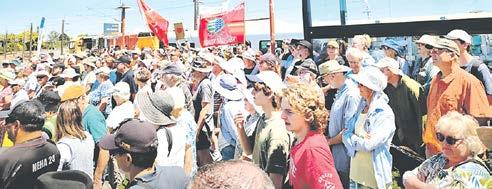
A
“Stack the Station” rally supporting the Te Huia passenger train service between Hamilton and Auckland attracted about 300 people last weekend.
Rally organisers want a permanent future for the service and have launched a petition calling on the government to expand the service into a network linking Auckland, Waikato and the Bay of Plenty.
The event was attended by MPs Tama Potaka (Hamilton West) Ryan Hamilton (Hamilton East) incoming list MP Georgie Dansey and local and regional councillors.


Event organiser Lindsey Horne said the turnout sent an undeniable message to the Government as key funding decisions approach.
“Stack the Station showed just how much Te Huia is valued. The community is no longer just asking for the service to stay, they are asking for it to grow. We want to see more frequent services and a network that finally links Hamilton and Auckland with Tauranga.”
The New Zealand Transport Agency will make decisions on Te Huia’s future in coming weeks.


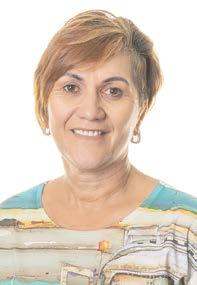
Te Tiratū Iwi Māori Partnership Board says the introduction of 12-month prescriptions from the start of this month risks having a negative impact of Maōri health.
The legislative change enables prescribers to issue prescriptions covering up to 12 months for some medicines, but not controlled drugs. Dispensing continues in the maximum three-monthly periods.
The board fears increasing under-care, delayed diagnosis and medicine-related harm for Māori unless strong equity and safety safeguards are put in place.
Chief executive (kumu whakarae) Brandi Hudson said Te Tiratū supported efforts to reduce barriers for whānau but affordability and convenience alone did not guarantee safe or equitable access to medicines.
Te Tiratū, the partnership board for the Tainui region, is made up of representation from Pare Hauraki, Waikato, Raukawa, Te Nehenehenui, Ngāti Hāua (Taumarunui) and Te Rūnanga o Kirikiriroa.
“From a hauora Māori perspective, access to medicines is not a single transaction, it is a continuous pathway of care,” Hudson said. “Any policy change must actively uphold Te Tiriti o Waitangi obligations of partnership, equity and active protection.”
“Partnership means Māori are involved in designing and governing medicines access pathways, not just consulted after decisions are made. Equity requires ensuring Māori have the same access to subsidised
medications and support services as others, addressing barriers like transport or culturally appropriate information. Active protection involves monitoring outcomes for Māori and adjusting policy to prevent under-care or delayed treatment,” she said.
She said Māori faced significant barriers to accessing medicines and despite higher rates of chronic conditions such as diabetes, cardiovascular disease, and respiratory illness, Māori were overall less likely to access dispensed medicines than nonMāori.
Te Tiratū advisor Leanne Te Kahu said the change carried significant risk if implemented without explicit safeguards.
“Māori already experience lower rates of monitoring, fewer
proactive clinical reviews, and later diagnosis of chronic and complex conditions,” she said.
Dr Te Kahu warned that reducing prescribing touchpoints risked further decreasing opportunities to detect deterioration, review side effects, adjust treatment, or optimise medicines.
Te Tiratū wants a Māoriled evaluation of safety, trust, communication, and cultural safety of the 12-month prescription move and clear national guidance determining who the change would not be clinically appropriate for.
Hudson said for a small number of whānau, longer prescriptions may be appropriate but only within a broader, equity-led system of care.
Without strong safeguards, this policy risks entrenching, rather than reducing, inequity.”




The Employment Relations Amendment Bill was reported back from the select committee on 8 December 2025.
One of the four key policy changes aims to increase the certainty as to whether or not workers would be classi ed as employees. Contractors are not employees, and the provisions and protections of the Employment Relations Act do not apply to them.
There are currently tests that are designed to help the Employment Relations Authority tell the di erence, but the amendment to the Act aims to make the question more straightforward to answer. Under the amendment, there should be a written agreement to specify that the worker is an independent contractor, the worker would not be restricted from performing work for any
other person, and the arrangement would not be terminated if the worker declines additional work. There are also provisions that relate to vetting and sub-contracting, depending on the circumstances of the arrangement, and the worker must have had the opportunity to get independent legal advice. The amendment bill is expected to pass, and claims by would-be contractors more simple to determine.


Vaccination and parasite prevention are two very important yet simple ways to protect the health of your dog or cat. Vaccines help prevent serious and sometimes fatal diseases such as parvovirus in dogs, and cat u and panleukopenia in cats. Puppies and kittens require a series of vaccinations starting from around 6-8 weeks of age, followed by boosters as recommended by your veterinarian.
Parasite control is just as important and should be maintained year-round. Fleas, ticks and worms can a ect pets in all seasons, even the cooler months. Regular treatment helps prevent itching, skin disease, tummy upsets, weight loss, and the spread of parasites that can also pose a risk to people. Puppies and kittens need more frequent worming early in life, while most adult pets require ongoing ea
control and worming every three months, or as recommended by your vet. Keeping your pet up to date with vaccinations and parasite prevention not only protects their health but also supports the wellbeing of your household and community. If you’re unsure of what your pet is due for, or which products are best, our team is always happy to help.


Children in New Zealand who meet the eligibility criteria for publicly funded and disability services are entitled to free basic oral health services from birth to 17 years (Until their 18th Birthday).
From birth you can enrol your child with the Community Oral Health Service by calling 0800-TALK TEETH. You will be advised where your nearest Fixed Dental Facility or Mobile


Dental Unit is located.
Adolescents 13-17yrs are referred to a General Dental Bene t provider of their choice who will continue to provide Oral Health care.
To book an appointment you can contact Otorohanga Rural Dental Services on 07 873 8824.
Standard treatments are FREE and include: routine examinations, x-rays for diagnosis,
scale & clean, preventive treatments eg. ssure sealants & uoride treatments, llings and extractions.
Your Oral Health Therapist or Dentist will advise you how often you should attend. We encourage regular check-ups to ensure dental problems are recognised and treated early. Phone today to schedule your child or teenagers’ dental appointment!



From 25 February 2026, British citizens MUST now use a valid British Passport when travelling to the UK, and Irish citizens must use a valid Irish passport. The UK’s transitional Electronic Travel Authorisation (ETA) system introduced in 2023 will end, meaning dual nationals can no longer rely on a foreign passport and ETA to enter the UK.
As an example, if your parents are born in the UK - this will most likely mean you are ‘eligible for British citizenship by descent’, which will make you ‘eligible to apply for a British passport’. And if you are deemed eligible then you ‘MUST hold a valid British passport to travel to the UK from 25th February 2026’. Dual citizens with British Nationality are
no longer eligible for an ETA, and failure to carry the correct documentation may result in denied boarding or delays at passport control.
So even if you hold a current UK eTA, from 25 February 2026, these are now invalid. Please contact me if you are unsure BEFORE you book your travel.

By Meaghan Hawkes
When the team of a three horse dray bolted on a March evening in 1911 three kilometres from Mōkau, George Davison galloped ahead to stop them.
Fifty-nine-year-old George was a carter for R T Batley travelling between Awakino and Te Kūiti and was accompanying his fellow teamster on horseback.
After passing the runaway dray George dismounted his horse close to a double telegraph pole when suddenly the dray collided with the pole, splitting it in two.
The pieces fell on George so seriously injuring him that he died not long after. The dray was smashed to atoms.
George had lived in the district for many years and “his body”, noted the newspaper “was lowered
into its last resting place by the tender, kindly hands of those who knew and loved him.” He was buried on Mōkau Hill “where the eternal lullaby of the ocean is forever heard.”
Shocking work accidents were frequent in the past when there were few safeguards, and inquests generally decided “no blame was attachable to anyone”.
In November 1912 William Kinsman had his first run on Te Kūiti’s ballast train line. The 29-year-old had arrived at Te Kūiti just the day before having been added to the local staff after alterations to the timetable.
William, from Hamilton South, Otago, was one of 10 children. He had worked for the railway service in Southland, the previous two years as fireman on the InvercargillClinton run. He had spent a week
at home before bidding goodbye to his family and leaving for a new life in the North Island.
He was going to be shortly promoted engine driver.
The ballast train left Te Kūiti south at 6.20am and as it crossed the bridge over the Mōkau River, William who was looking out of the cab, struck his head on the bridge. Death was instantaneous.
The inquest could find no definite cause for the accident. Two other staff on the train, the fireman and the guard, both saw William fall but not what preceded it.
It was thought that he was leaning out of the cab of the engine to see if everything was running properly and was caught by a bolt end through one of the bridge girders.
A verdict of accidental death, no blame being attachable to


anyone, was returned by the jury. He was sent south for burial, his funeral attended by a great many acquaintances.
Four handsome wreaths were sent by railway employees from around the country.
William, who was killed on his first and last run in the King Country, was buried at the historic gold rush town of Hamilton South, Otago, now largely a ghost town.

Hornets found
Ten more yellow-legged hornet nests have been destroyed on Auckland’s North Shore- thanks to the use of radio tracking devices which have been attached to worker hornets. The technology combined with more than 1000 traps has resulted in 49 queens and 51 nets bring destroyed.
Road works
The Desert Road will be closed overnight between February 15 and March 9 to allow the completion of surfacing at three sites in the area known as the Three Sisters. Work also started this week to repair erosion damage on State Highway 43, the Forgotten World Highway at Tāngarākau Gorge. The project should take two weeks and stop/go traffic management and delays of up to 30 minutes expected.














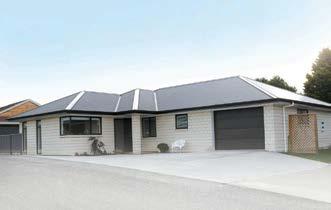





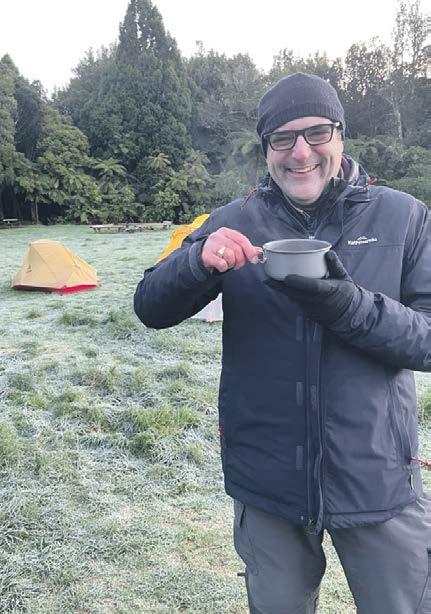
New Zealand Outdoor Instructors’ Association bush leader and senior writer Chris Gardner, pictured, continues his On The Trail series by discussing shelter and sleeping bags.
Be prepared to overnight every time you go for a hike or a tramp.
Weather is unpredictable. Rivers rise. Slips could block your path. A trip could leave you with an injury and unable to walk.
Always take a survival bag. A plastic pack liner, keeping rain and the river out of your gear, can double as a survival bag. Crawl into a water and wind resistant aluminium-coated emergency bag to become insulated from the elements and prevent hypothermia.
A survival bag can be cut open to make the roof of an emergency shelter or make an emergency shelter from fallen branches. Dry ferns and leaves make springy beds and piled 30 cm high are good insulation.
Practice making an emergency shelter in the hope you may never need to build one under pressure in a real-life emergency situation. It could save lives. Take a tent or emergency shelter on a multi-day tramp, even if you plan to stay in a Department of Conservation hut.
Great, lightweight, tramping tents are expensive, but worth the investment if you plan to use them regularly. You won’t get change from $1000 if you want a one-person tent weighing less than one kilogram. Add another $500 for a two-person tent. Cheaper and heavier tents are available from mainstream outdoor retailers.
Lighten your load by splitting a multi person tent between those who will sleep in it. The disadvantage is if one of those people becomes lost on the trail, they will not have a full tent, and neither will those they become separated from.
Shelter is only half the equation – staying warm through the night requires the right sleeping system. Sleeping bags have comfort, lower limit,
and extreme ratings. The comfort rating is the temperature a standard woman can sleep comfortably in, the lower limit is the temperature at which a standard man can sleep without waking, and the extreme rating indicates the temperature where hypothermia is unlikely for a few hours.
Down sleeping bags are the tramper’s choice, compressing well into a backpack. Never put anything on top of a down bag you are sleeping in, as it reduces the down loft and the insulation. A wet down bag will lose its insulation too.
Synthetic sleeping bags, usually filled with polyester, are cheaper than down filled bags. But they are a lot bulkier too. They are still warm when wet.
A good compromise is a hybrid sleeping bag filled with a mixture of down and synthetic material.
I have one of each I use for different scenarios. I default to a bag rated for subzero temperatures and sleeping in it opened out when I am too warm.
I always take a sleeping bag liner to add another layer of warmth and protect my sleeping bag from my trail weary body. A merino wool liner is great in summer, and cotton silk blend in other seasons.
A good sleeping mat, also rated for your conditions, is essential. Without this you’ll freeze in the best sleeping bag and liner.
Closed cell foam mats are bombproof, but they are bulky.
Inflatable mats are popular. But, as I found out in subzero temperatures last year, they can leak, and you can wake up shivering on the ground. Reinflating a mat in a cramped tramping tent at 3am when it is -3 degrees is not fun.
A survival bag, emergency shelter, tent and reliable sleeping system could mean the difference between danger and discomfort.

Jongmans 027 656 1506 antonia.jongmans@bayleys.co.nz
Finding the right home isn’t just about bedrooms and bathrooms — it’s about discovering a place where your family can grow, connect, and enjoy the lifestyle you love.
I take the time to understand what truly matters to you — whether that’s room for the kids to run, space for animals, a peaceful rural retreat, or being close to the right schools and community.
My goal is to make the journey enjoyable, informed, and tailored to you — because the right property should feel like an invitation to a better way of living.
Helping families find homes that inspire the life they want to live — right here in the Waikato.




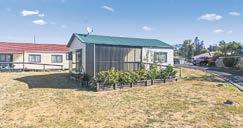






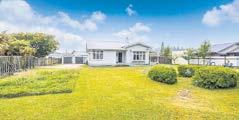

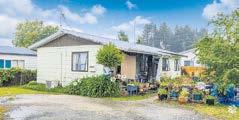


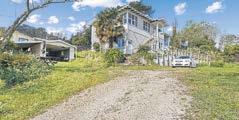
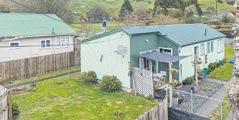




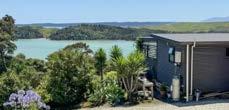



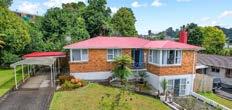

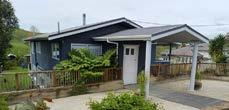

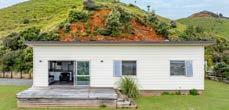
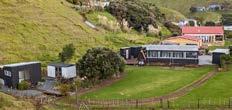
Ōtorohanga sections (sizes are approximate)
3 Rothery Place, Otorohanga, 685sqm, power, water, fibre, wastewater at boundary. Ph Buzz/Sam $220,000 44 Thomson Ave, Otorohanga, 686sqm, power, water, fibre, wastewater at boundary. Ph Buzz/Sam $220,000 9 Sunset Close, Otorohanga, 750sqm in Westridge subdivision. Ph Lorraine
Lot 1, 52 Old Te Kuiti Road, Otorohanga, 1876sqm, power, water at gate, no covenants. Ph John P $285,000
Lot 2, 0 Old Te Kuiti Road, Otorohanga, 2716sqm, power, water at gate, no covenants. Ph John P. $285,000
149A Old Te Kuiti Road, Lot 1, 5517sqm, easy covenants. Phone Lorraine Offers over $250,000
Lot 1, 627 Waitomo Valley Road, Otorohanga, 8105sqm rural lifestyle section. Phone Julie $298,000
Lots 90-108 Harpers Avenue, 486sqm to 962sqm, Westridge II subdivision. Phone John From $220,000ea
576C Mangawhero Road, Otorohanga, 1ha, fenced, sensible covenants. Ph Noldy Offers over $385,000
2/823 Ngahape Road, Otorohanga, over 6000sqm, elevated building site, rural views. Ph Noldy $450,000 Te Kūiti sections (sizes are approximate)
35 Robin Azariah Place, Te Kuiti, 1084sqm, handy to schools and hospital. Phone Buzz
10 Robin Azariah Place, Te Kuiti, 600sqm level section. Phone Buzz
Other sections (sizes are approximate)
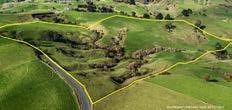
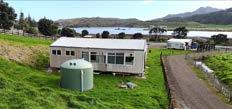
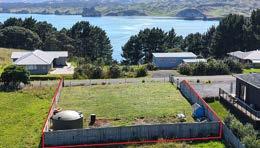
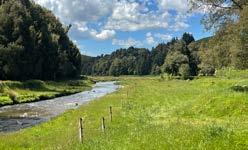
214 Okapu Place, Aotea Harbour, 700sqm, borders


Baggott
027 855 8472


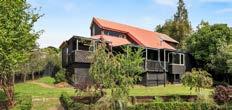
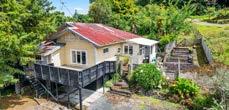













Across 1. Muslim garment (5) 4. Gun’s projectile (6)
DVGMAOESOUDMJNEDZN PDSDYTNYVNUGUGZVEU QEOBUULSEDMHDAURAO UKSLGSEGRAVOMDUOVR SAEYODALYIDXDEFLEZ ZPJTEWHILLMANIOLQU OKBCSBCTNIKUWVSSHM YRRKKXTOYOTAIYIRQO LELHUMBERAMDRVMOFR MOSUBARUCHUHLQCYOR VAUXHALLSACAXUACRI SINGERZFTALBOTFEDS
3. Desert (7) 4. Dairy product (6) 5. Garish (5) 6. Trade ban (7) 7. Race for humans or horses (12) 13. Finicky person (7) 15. Console (7) 16. Human beings (6) 18. Blunder (5) 20. Clever (5) Last
Across: 1. Swamp, 4. Brassy, 7. Loo, 8. Trauma, 9. Utopia, 10. Seventh heaven, 14. Evoke, 15. Argue, 18. Traditionally, 23. Uneven, 24. Novice, 25. Cat, 26. Settle, 27. Solid.
Down: 1. Spree, 2. Abuse, 3. Plaits, 4. Bought, 5. Aroma, 6. Spite, 10. Sleet, 11. Viola, 12. Vigil, 13. Needy, 16. Stance, 17. Points, 19. Range, 20. Duvet, 21. Anvil, 22. Lucid.


































Property
Lawns,
References available GST registered. Mike & Allana 027 350 0836 – info@handy-man.co.nz
• Emptying septic tanks
• CCTV pipeline inspection
• Jetting drainage pipelines
• Spreading animal effluent
Waitomo Liquid Waste Disposal 021 111 3911

• Interior & Exterior
• Painting
• Wallpapering
• Spray Painting
• Roofs
• Farm Buildings
Exclusive 10% Discount for Gold Card Members
Chivone Prak • 021 211 1176 decorator@daverowepainting.co.nz

Painting interior/exterior
Painting interior/exterior
Exterior house washing
Painting interior/exterior
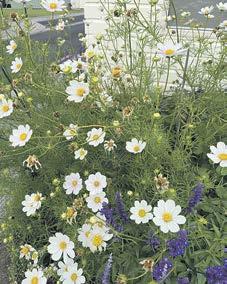
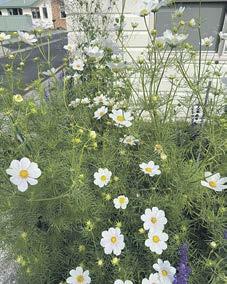
If your garden is full of colour at the moment, a little regular deadheading will help keep it that way for much longer. Deadheading is simply the removal of spent flowers, and it’s one of the easiest ways to encourage plants to keep producing new blooms.
Exterior house washing
Exterior house washing
while they’re at their best. Bringing a few blooms inside not only brightens up your home, it actually encourages the plant to produce more flowers. It’s also a lovely way to share the love — a small bunch picked from the garden and gifted to a friend or neighbour is one of those simple joys that never goes out of style.
Small jobs welcome Te Kūiti based
Small jobs welcome
Small jobs welcome
Contact Steve 022 676 1839
Contact Steve 022 676 1839
Contact Steve 022 676 1839
No obligation free quotes
No obligation free quotes
No obligation free quotes

A newspaper is more than just news. It involves you in the community with personal stories, thoughts, viewpoints, humour and helpful tips. Your newspaper is a one-stop source for analysis, opinion, great writing and personality. Nothing else is so focused on community.
to connect…
Laver 021 105 4737.


• Residential • Commercial
Price

Once a flower has finished, the plant naturally wants to put its energy into producing seed. By removing those spent flowers, you’re sending a message back to the plant to redirect its energy into making more flowers instead. The result? Longer flowering periods and tidierlooking plants.
Deadheading doesn’t need to be complicated. For most plants, simply follow the flower stem back to the next set of healthy leaves or side shoots and snip it off with secateurs. For softer plants, you can often just pinch the spent flower off with your fingers. Regular checks — even once a week — can make a big difference.
Before you even get to the deadheading stage, don’t be afraid to pick flowers
The removed flower stalks don’t need to leave the garden either. You can chop them up into smaller pieces and leave them to break down in the garden, or tuck them into the back of garden beds. This helps return nutrients to the soil and keeps that natural garden cycle going.
Not only does deadheading encourage more blooms, it also keeps plants looking fresh and prevents them from becoming leggy or untidy as the season goes on.
A few minutes spent deadheading or picking flowers while you’re already in the garden is a small job that delivers big rewards — more colour, healthier plants, and flowers to enjoy both indoors and out.




Service Contact Jason P: 021 2666 021 E: jason@perfectlawn.co.nz LAWNMOWING 0800 554 527 027 554 5270 info@jakesglass.co.nz












Work on diverse fleet of plant, heavy machinery, and trucks with a well-established local employer. Monday-Friday role, with a supportive, down-to-earth workplace.
HR Connect is assisting with this role. Please call Bronwyn on 0800 131 557 or collect an application form from Inframax Reception.

Part-Time, Fixed-Term Position
Ōtorohanga College is seeking a compassionate, adaptable and student-centred Learning Support Teacher to join our inclusive and supportive team. This role involves working closely with students who require additional learning support in classroom, one-to-one and small group settings. We are looking for someone committed to ensuring all learners are supported to reach their potential, working collaboratively with teachers and support staff to help students build confidence, develop independence and achieve success in their learning.
Key responsibilities include supporting individuals and small groups with classroom learning tasks, assisting with assessments, including reader/writer support, creating and adapting learning resources to meet student needs and encouraging student engagement, wellbeing and positive social interaction.
This is a part-time, fixed-term position of 27.5 hours per weekMonday to Friday, term time only.
Please email your cover letter and CV to kurthl@otocoll.school.nz Applications close Thursday 12th February at 3.00pm.



Part-Time School Cook – 20 Hours
We are seeking a reliable and enthusiastic Cook to take responsibility for the ordering, preparation, and cooking of school lunches onsite in our purpose-built kitchen. This is a key role within our school, providing nutritious, high-quality meals that support the health and wellbeing of our pupils.
Key Responsibilities:
• Plan, prepare fresh, balanced school lunches in line with nutritional guidelines
• Order ingredients and manage stock levels efficiently
• Maintain high standards of food hygiene, health and safety, and cleanliness
• Cater for dietary requirements and allergies as required
• Work independently and manage kitchen operations during service times
The Ideal Candidate Will Have:
• Previous experience as a cook or in a catering role (school or similar setting desirable)
• Knowledge of food hygiene and safety regulations (relevant certification preferred)
• Good organisational and time-management skills
• A positive, flexible attitude and a genuine interest in providing healthy meals for children
We Offer:
• A well-equipped, purpose-built kitchen
• The opportunity to make a real difference to children’s daily school experience
• Potential to expand and take on other catering opportunities
If you are passionate about cooking nutritious meals and could enjoy working in a school setting, we would love to hear from you.
Email: principal@benneydale.school.nz or Phone Matua Steve 0224213720 for more information
This Saturday, February 7 8am-12 noon
Carpark 85 Esplanade, Te Kūiti
$10 per space
Sellers and buyers welcome Enquiries: 021 201 0355 or 027 243 6312

Rorisons RMD is a family-owned business with over 60 years’ experience supplying agricultural lime and fertiliser across the Central North Island. We are looking for a reliable, experienced heavy machinery quarry operator to join our King Country Lime quarry team. This role suits someone who understands production-focused quarry work and the importance of doing it safely and consistently.
The role mainly involves operating heavy quarry machinery, with day-to-day work also including fixed crushing plant, bagging operations and other quarry tasks as req
The role includes:
• Operating heavy quarry machinery, including loader, forklift and dump trucks
• Working around and assisting with fixed crushing plant and bagging operations when required
• Contributing to daily production by doing your part properly, safely and on time
• Carrying out routine plant checks and basic maintenance
• Keeping the site tidy, functional and safe
• Identifying and reporting hazards, plant issues and production concerns, including completing all required site documentation
What we are looking for:
• Experience operating heavy machinery in a quarry or similar production environment
• A practical, hands-on understanding of safety in a working quarry
• Someone who takes pride in their work and the equipment they operate
• Experience with weighbridge operations and related documentation, or willingness to learn
• Reliable, committed and able to use initiative, including working unsupervised
• Physically fit and comfortable with hands-on work
• A strong production mindset, focused on steady output done properly
• Willingness to muck in and support the team where needed
• Level-headed, with a good sense of humour, and able to communicate clearly with the wider team, including contractors and truck drivers
• Full NZ driver licence and the right to work in NZ
What we offer:
• Competitive hourly rate, based on experience
• Long-term role in a stable, family-owned business
• A straight-up team that values safety, production and pulling together
If this sounds like you and you have a great sense of humour, build strong relationships and are a team player join us at Rorisons and help shape the future of our quarry operations!
Rorisons is committed to a safe, drug-free workplace. Pre-employment drug and alcohol testing applies.
Please send your CV and cover letter to Grayden Haine at jobvacancy@rorisons.co.nz or call him on 0274 774 357. Look forward to hearing from you!

The Beattie Home Community Trust warmly invites members of the public to attend our Annual General Meeting (AGM)
Date: Thursday, February 19, 2026
Time: 7:00pm
Venue: Wilshier Centre, Beattie Home & Hospital, 172 Maniapoto Street, Ōtorohanga
Join us as we review the year, discuss future plans, and celebrate the community support that makes our work possible.
This is a great opportunity to learn more about the Trust and how we serve our residents and community.
For more information, please contact Beattie Home & Hospital on 07 873 8789 or info@beattiehome.co.nz

Paper Plus Ōtorohanga is looking for a friendly, reliable team member to join our store. We currently have two work options available and are keen to find the right person urgently.
Available Work Options (Please clearly state which option you are applying for):
Option 1: Every Saturday, 8:50am–6:15pm
Option 2: Saturday 8:50am–6:15pm Thursday–Friday, 10:30am–4:00pm (some flexibility available to weekday hours and days worked available) This role includes opening and closing the store on Saturdays and may involve periods of sole charge, so reliability and maturity are essential. What We’re Looking For
• A mature, responsible, and trustworthy person
• Someone who delivers fantastic customer ser vice with a friendly attitude
• Willingness to learn the Lotto system and Paper Plus POS
• Customer service experience (retail experience preferred)
• Honest, reliable, and self-motivated
• Able to work well under pressure in a busy retail environment You’ll be joining a well-known local store and becoming part of the Paper Plus Ōtorohanga community, working in a supportive and customer-focused environment.
Please send your CV and clearly state the work option you are applying for to nicki@eight73consulting.co.nz.
Applications close: 14 February 2026, candidates will be phone screened as applications are received and interviews undertaken after 14 February 2026.

Our ideal applicant will have:
• A full and clean NZ drivers licence.
• A qualified electrician with a current practising licence (if possible, solar endorsement as well).
• A positive attitude, technical competence, attention to detail and solid communication skills.
• Experience in electrical service and maintenance.
• Experience in general housing, from renovations to new builds.
• Experience in camera and security alarm systems.
• Experience in HVAC systems.
• Experience in solar systems.
• Experience in commercial and light industrial work.
• Experience in farm work with cowsheds and water pumps and control systems.
• Have the ability to work well under pressure and meet deadlines.
• Be available to do rostered on-call work, however our main hours are 8am-5pm Mon-Fri.
We offer competitive rates, tool allowance scheme and a great team environment with low staff turnover. To apply, please forward your CV to office@waiteelectrical.co.nz







Looking for charcoal?
Tumu Tumu Eztate supplies two varieties of charcoal for your BBQ and cooking needs. Sustainably harvested right here in the King Country. Pricing (10kg bags) - Mānuka Pieces: $45.00 - Mixed Wood Pieces: $35.00
Bulk sales available – please contact to ask for pricing.
Contact Mick Tapara 022 513 9522
info@tumutumueztate.co.nz www.tumutumueztate.co.nz Or find us on Facebook
‘Nau
Date: Saturday 28th February, 2026 Start: 10am - 4pm
Sunday, 1st March, 2026 9am - 12pm
The trustees of Te Korapatuu Marae warmly invite whānau to come share their thoughts, ideas and aspirations for the future of our marae.
For further information please contact Charter Committee: Olivia Reweti, Oliviareweti.or@gmail.com
WATSON, Jason Ivan. 09.03.1974 – 25.01.2026 –Suddenly taken to soon from this world, but not our hearts. Soul mate, best friend, and husband of Stacey, adored son of Ivan and Janice Watson, respected son in law of Lynley and Robert Hazeldine, cherished big brother to Vikki, brother in law to Gemma, Steve, and Pierce, father of Chloe, Finn, and Reed, special step dad to Brock, and Elyse (his Lou) loved nephew, uncle, cousin, and a respected friend and workmate to many.
“A man of few words, but the biggest heart”
A Celebration of Jason’s life has been held. A recording of the service is available on Jason’s tribute page at www. hagedorns.co.nz/tributes.
Messages to Mrs Stacey Watson, 9 Stafford Street, Westport. Hagedorns Buller Funeral Services, Westport.
• Engagements • Weddings • Births • Anniversaries • Bereavements • In Memoriam etc DOG KENNEL + RUN for sale. Well-made and secure $300. Ph 021 504 510.

GOUGH, Gwendolen Doris (Gwen) – peacefully at Beattie Home on February 1, 2026. Aged 93 years. Much loved and loving wife of the late Bernard (Dargaville). Dearly loved mother and mother-in-law of Andrea and Bryan Price, Simon and Pauline Gough. Cherished grandmother of her six grandchildren Terri, Benjamin (deceased), Petra, Timothy, Regan, Lydia and four delightful great grandchildren. Special thanks to the staff of Beattie Home, Otorohanga for their dedicated care and attention to mum during her three years with them. A private cremation has been held to be followed by a memorial service in Dargaville at a later date to be advised. Will be sadly missed and always remembered with love. R.I.P mum. All communications to Gough Family c/- PO Box 241, Te Kuiti 3941. VJ Williams & Sons, Funeral Directors Association of NZ
UERATA, John Sydney –passed away January 25, 2026. Son of Sid and Lucy. Father to Jasmine and Rose. Loved brother of Topsey, Sydney, Ann, Jennifer, Diane and big big sister Anne. A private cremation has been held.
Janine 027 287 0005
janine@goodlocal.nz