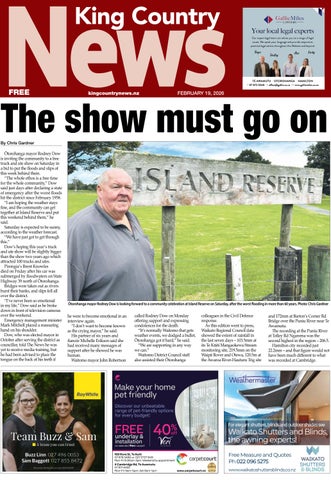
By Chris Gardner
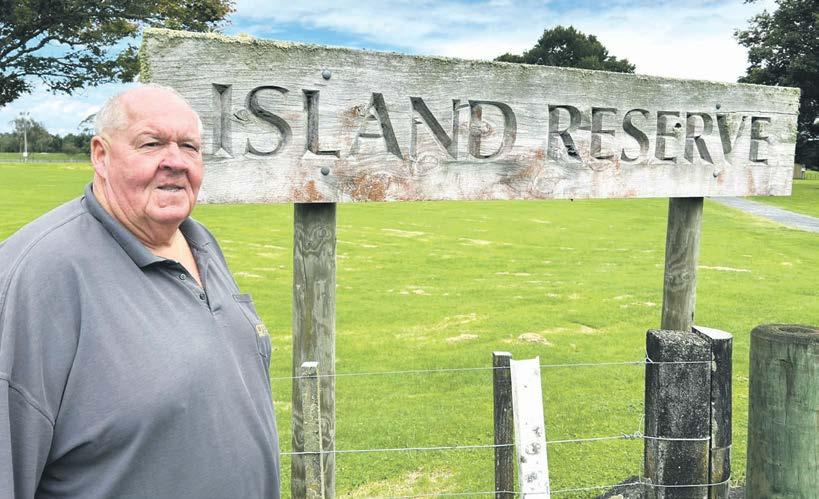
Ōtorohanga mayor Rodney Dow is inviting the community to a free truck and ute show on Saturday in a bid to put the floods and slips of this week behind them.
“The whole ethos is a free time for the whole community,” Dow said just days after declaring a state of emergency after the worst floods hit the district since February 1958.
“I am hoping the weather stays fine, and the community can get together at Island Reserve and put this weekend behind them,” he said.
Saturday is expected to be sunny, according to the weather forecast.
“We have just got to get through this.”
Dow’s hoping this year’s truck and ute show will be slightly bigger than the show two years ago which attracted 100 trucks and utes.
Pirongia’s Brent Knowles died on Friday after his car was submerged by floodwaters on State Highway 39 north of Ōtorohanga.
Bridges were taken out as rivers burst their banks, and slips fell all over the district.
“I’ve never been so emotional in my life,” Dow said as he broke down in front of television cameras over the weekend.
Emergency management minister Mark Mitchell placed a reassuring hand on his shoulder.
Dow, who was elected mayor in October after serving the district as councillor, told The News he was yet to receive media training, but he had been advised to place the tongue on the back of his teeth if
he were to become emotional in an interview again.
“I don’t want to become known as the crying mayor,” he said.
His partner of six years and fiancée Michelle Erikson said she had received many messages of support after he showed he was human.
Waitomo mayor John Robertson


A team
called Rodney Dow on Monday offering support and expressing condolences for the death.
“It’s normally Waitomo that gets weather events, we dodged a bullet, Ōtorohanga got it hard,” he said.
“We are supporting in any way we can.”
Waitomo District Council staff also assisted their Ōtorohanga
colleagues in the Civil Defence response.
As this edition went to press, Waikato Regional Council data showed the extent of rainfall in the last seven days – 103.5mm at its Te Kūiti Mangaokewa Stream monitoring site, 219.5mm on the Waipā Rover and Otewa, 120.5m at the Awaroa River-Hauturu Trig site




and 172mm at Barton’s Corner Rd Bridge over the Puniu River near Te Awamutu.
The recording at the Puniu River at Tolley Rd Ngaroma was the second highest in the region – 206.5. Hamilton city recorded just 22.2mm – and that figure would not have been much different to what was recorded at Cambridge.





By Jon Rawlinson
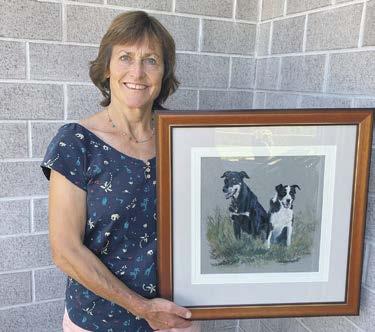
Rita Shaw’s paintings have been a long time in the making.
Her busy life on a Kiritehere farm left Shaw with little energy for art. Since the business transferred to her daughter’s stewardship, however, she’s been brushing up on her creative skills.
Ironically, now that she’s finished up on Marokopa farm, rural life is often the focus of her work.- which is being exhibited at Ōtorohanga Library.

Monday to Thursday 9.00am - 3.00pm
Best way to contact us:
Advertising:
Janine 027 287 0005
Editorial: Roy 027 450 0115
Email: admin@goodlocal.nz

maryanne@goodlocal.nz
“I have a very good eye for animals and their anatomies,” she said. “I enjoy realistic paintings; I’ve always been interested in detail.”
Shaw was motivated to rekindle her love of painting at an A&P show.
“At the show, in Morrinsville, I saw an artist with a stand and some paintings. I said they were lovely and that I was once an artist too. She told me about a workshop in Te Aroha and it went from there. It’s been wonderful to feel creative again.”
She has dabbled in other mediums, including oils, but
prefers pastels – Shaw’s a quick draw.
“Mostly, I use pastels because the results are pretty much instant. I can mix the colours on the paper and I don’t have to leave anything to dry – I get a quick result.”
Originally from Switzerland, Shaw came to New Zealand for a working holiday in 1991 but discovered more than she bargained for – a King Country farmer.
“I trekked all around the North Island, stopping at farms and doing a bit of work here and there. I loved the King Country so much that I decided to stay.”
Since settling down on a the Kiritehere sheep farm and raising three children, the decades have kept her occupied with other pursuits too.
“I’m not involved with dog trials and horses any longer because I’m not on the farm anymore – I handed all that over to my daughter (Fiona Shaw) –but I still fly with the Waitomo Aero Club.”
However, Shaw hasn’t left farm life behind her completely; she is now living on a lifestyle
In the midst of the recent severe weather, it has been a challenging week for communities across the King Country, Waitomo, and Waipā Districts.
During times like these, staying connected with friends, neighbours, and whānau is especially important. Please continue to check in with those around you, offer reassurance, and provide support where you can.
janine@goodlocal.nz
admin@goodlocal.nz
If there is someone you are concerned about—particularly in flood affected or isolated areas—and you have been unable to contact them, please let us know. We can arrange for staff to carry out a welfare check to ensure their safety.
It has been heartening to see so many volunteers and community members stepping forward to lend a hand in flood impacted areas. Your efforts make a real difference.
Throughout the week, King Country staff have been assisting with road diversions,

block near Ōtorohanga.
She is the first in her family to exhibit her work, but may not be the last.
“My grandmother and mother could both paint and so can Fiona. She’s on the farm, working long hours, so she’s in the same boat I was in, but I’m trying to talk her into sharing her paintings.”
Shaw also works on commission, specialising in realistic portraits of animals.
Of a painting is of a neighbours’ favourite working dogs she said, “you have to be very exact, because people know their animals very well.”
Shaw’s work is on display at Ōtorohanga Library until the end of the month.
evacuations, welfare checks, and attending to blocked or damaged roads caused by slips, fallen trees, and flooding. Despite the challenging conditions, staff have worked hard to support the community and maintain safety across the district.
Alongside weather related work, police have responded to a range of incidents across the King Country.
Staff assisted with traffic management after a tractor caught fire while travelling on Kopaki Road. Thanks to a swift response from local Fire service members, the blaze was contained, and fortunately no one was injured.
A 19 year old male has been charged in relation to a shoplifting incident in Te Kuiti.
A 45 year old male has been trespassed from an address in Waitomo, and staff will look to hold him accountable should any breaches occur.
A 56 year old male has been dealt with for breaching the liquor ban within the Te Kuiti
township and has been issued further trespass notices.

A 23 year old male was arrested after breaching his bail conditions following a failed drug test. He was transported to Hamilton Custody without incident. Staff also attended multiple vehicle crashes across the district, including two on State Highway 4.
In a separate incident, a 21 year old male was arrested for breaching his bail, with staff opposing his bail due to concerns about the risk of reoffending.
We continue to ask the community to plan their journeys carefully and comply with the many road closures currently in place. Breaching these closures not only puts yourself at risk, but also anyone that is call to rescue or assist.
Thank you for your ongoing support. Continue to report crime, suspicious activity, or anything that doesn’t look right.


Kaati remembered Waikato River Authority has acknowledged the work of one of its founding Board members. John Reihana Kaati, who died in early January, served as the Ngāti Maniapoto representative on the authority from 2011 to 2013. “He was a respected leader within Māoridom and, among many roles, served as deputy chair of the Maniapoto Māori Trust Board, a trustee of Te Nehenehenui, and a long-serving Waitomo district councillor,” chief executive (kaihautū) Antoine Coffin said.
King Country Energy’s major shareholder, Contact Energy, has made a non-binding indicative offer to King Country Trust to buy 24.98 per cent of King Country Energy for about $47 million. Contact already owns the about 75 per cent of the company shares.
Kapa Haka
Claudelands will host one of the regional finals of the Kapa Haka nationals, in midApril. The first was held at Waipukurau last weekend and is followed by another 12, including one on the Gold Coast, through to mid-June.
The reasoning behind Waipā District Council’s decision not to host an evening of the Balloons over Waikato this year has become clearer. The council says it would have faced a near 30 per cent increase in costs to host an event – up to about $25,400. Most of the increase was due to higher costs for traffic and waste management. Many of the costs cannot be recovered if the event is cancelled at short notice.
Bowhunter Gary Keoghan will be a guest at the Mt Pirongia Lions’ market on Sunday when the winner of a Predator Free Te Awamutu and Pirongia Kids Koi Carp Challenge will be announced. Koi have caused considerable biodiversity loss and water quality decline. They can grow to 75cm and weight 12kg.
By Chris Gardner
Nearly 60 homes in the Ōtorohanga district have been yellow stickered, preventing people from living in them, after they were inundated with flood waters or slips.
Civil Defence duty controller Tony Quickfall said it would be “months and months and months” before the scale of the weekend’s storms and cost of clean-up was fully realised.
Homes and Ōtorohanga Primary School were inundated when the Mohoanui Stream burst its banks, and taonga put at risk when Ōtorohanga Museum was flooded
after the neighbouring domain was inundated.
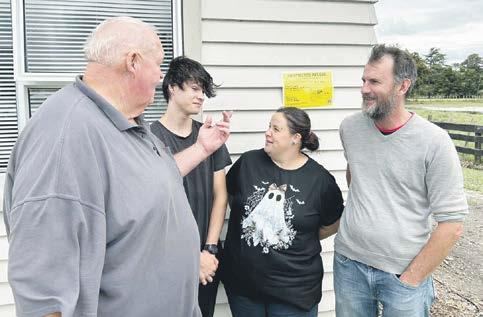
Dow visited Jeff and Trish Osterman’s yellow stickered home on Phillips Avenue on Monday.
The couple, and their neighbours, have lost nearly everything that was sat on the floor of their house when flood waters mixed with sewage came in on Friday night.
Trish woke the neighbourhood to warn them of the flooding.
Dow asked if there was anything he could do for them and their neighbourhood with his mayoral fund.
Trish asked for another skip, as
she felt the one already provided by Ōtorohanga District Council for a group of yellow stickered homes in the neighbourhood was filling fast.
“Everything in the garden we have got to heft,” she said.
“There’s nothing you can do about the weather, you have just got to get on with it,” Jeff said.
The couple, and their young family, have temporarily moved out and are staying with a friend on the hill in town.
Ōtorohanga Support HouseWhare Awhina board member Nika Wallace said staff and volunteers had been busy supporting the
community following the flood.
“It’s crazy,” she said.
Demand for food and support had been “quite huge”.
Board chair Amber-Lee Elliott said the organisation was working with the ministry of housing to help find accommodation for those impacted by the floods.
The central business district went relatively unscathed, with worker Wairere Hughes saying there was a little bit of flooding at O Café in Maniapoto Street.
“We got a little bit of water through the back,” she said. “Elsewhere was really terrible.”
By Chris Gardner
Ōtorohanga Museum called for help during its most desperate hour and the townsfolk answered.
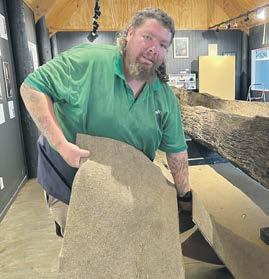
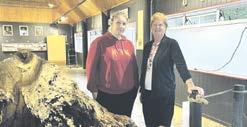
More than two dozen people rushed to the whare housing the treasured 13-metre Te Waonui o Tāne waka in Kakamutu after it became inundated with flood water from Ōtorohanga Domian on Friday.
They spent the evening wading through water and moving taonga, or treasures, from the whare to the neighbouring church which stands off the ground.
They were responding to a social media call from museum director Liz Cowan who had heard from Ōtorohanga Historical Society treasurer Amanda Kiddie that the waka was under threat but was unable to get into town from her home due to slips.
The waka, unearthed in 2002 at a quarry in Rangiatea Road, Ōtorohanga, escaped almost
unscathed after flood water lapped at the tree root at one end.
Cowan told The News media reports of lost taonga were erroneous and she was thankful for a which had saved everything in the whare.
“We have not lost anything, because of all of these people,” she said.
Ōtorohanga Historical Society president Maggie Hughes was joined by Kiddie and creative coordinator Rebbeca Ngāpō who coordinated the rescue.
Councillor Jo Butcher was among those who came to the museum’s aid.
“They were incredible,” Hughes said. ”We have had so many offers of adice and help from museums all over the country.”
“We have taonga all over the church and I am in the process of sanitising all the objects and letting them dry,” Cowan said.







by Barbara Kuriger, MP for Taranaki-King Country
For many young people in rural areas, a driver’s licence isn’t just a piece of plastic– it’s their lifeline. It’s how they get to work, training, school, and healthcare, often over long distances with little or no public transport.
That’s why the recently announced improvements to the driver licensing system will be warmly welcomed by rural communities.
From 25 January 2027, the Government will overhaul New Zealand’s Graduated Driver Licensing System (GDLS) to make it cheaper and easier to get a driver’s licence. The changes are expected to deliver particular benefits for rural areas, where being able to drive is often essential for daily life.
Under the new system, the total cost of getting a Class 1 car licence will drop by $80, from $362.50 to $282.50. This saving comes largely from removing the full licence practical test for car drivers, cutting not only fees but also the time and travel costs involved in sitting tests – a real bonus for people who currently must drive long distances to reach a testing centre. Young drivers under 25 will spend longer on a learner licence—12 months instead of six—but they can reduce this to six months by logging supervised practice hours or completing an approved practical course. The aim is to give young people more real-world driving experience, including on rural roads where conditions can be more demanding, while still allowing motivated drivers to move through the system more quickly. Will safety be compromised? No. The restricted period will be 12 months for under 25s and six months for those 25 and over. Restricted drivers who receive demerit points will stay on their restricted licence for an extra six months, reinforcing safer driving habits. A zero alcohol limit will apply to all learner and restricted drivers, an important safeguard on rural roads where serious crashes can have devastating impacts on tight-knit communities. In short, these licence changes aim to make life easier and safer for rural drivers: cutting costs, reducing long trips for tests, and encouraging more real-world driving experience— especially for young people.
With tougher expectations around safety and ongoing reviews built in, the new system is designed to open work and training opportunities while helping keep rural roads – and rural communities – safer and stronger.





New Zealand Outdoor Instructors’ Association bush leader and senior writer Chris Gardner continues his outdoor series by discussing the seven principles of Leave No Trace.
Every walker and tramper knows to take only pictures and leave only footprints, but it is just one of seven principles that encourages us to minimise our environmental impact.
Plan ahead and prepare is the first Principle of Leave No Trace. “If you fail to plan, you plan to fail,” the founder of Scouting, Sir Robert Baden-Powell, 1st Lord Baden-Powell of Gillwell, once said. Today we use the five Ps to say the same thing. Prior Planning Prevents Poor Performance. Either way they are great reminders that we should never step on the track without a plan.
We’ve talked at great length, in these columns, about the NZ Mountain Safet Council’s minimum gear list. You should always be prepared to overnight, even if you are planning a short walk. The media is full of reports of walkers or trampers who were not prepared. Making a mistake here can be fatal.
Travel and camp on durable ground is the second principle of Leave No Trace. Walking on unstable ground could damage flora and fauna, dislodge soil and rock, and lead to slips, trips, and falls.
Dispose of waste properly is the third principle. Or pack it in, pack it out, as I prefer to say. I follow this to the point that I will avoid using rubbish bins on the trail. Rubbish attracts pests like possums and rats who negatively impact our environment, and you never know when the bin will next be emptied.
This principle also covers toileting. I always use the toilet before starting a track to minimize my chances of having to dig a bush toilet otherwise known as a cat

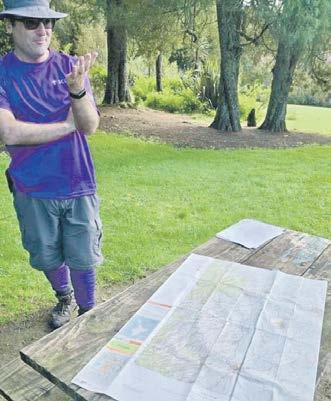
hole. Before considering toileting off track, check whether it’s appropriate as in many places it is culturally inappropriate.
Cat holes should be dug between 15 and 20 cm deep in organic soil between 50 and 70 metres from campsites, huts, tracks, and water. I always carry a tramping trowel, but a tramping boot can also do the job. Once you’ve finished, dispose of your waste properly by burying it so vermin cannot get at it.
Leave what you find is the fourth and simplest principle.
Minimise the effects of fire is the fifth principal. I always prefer to cook with a gas stove and cannister. It’s quick, cheap, and works in any weather. I might light a fire at a campsite at night for warmth if there is a firepit and it is allowed. Many
Department of Conservation campsites have a permanent
fire ban or, at least, a fire ban in the summer. Fire and Emergency New Zealand run a simple, three step, tool at www.checkitsalright.nz, which tells you whether you can light a fire and whether you need a permit. I carry aluminium foil to save having to dig a pit if I do light a fire.
The sixth principle is respect wildlife and farm animals. Wildlife and farm animals should be given a wide berth by walkers and trampers. If your presence is impacting their behaviour, then move away to a place where it is not.
The seventh is to be considerate of others. For me this extends to caring for other track users. I may ask how they’re going, where they are off too, and if I can offer any help. This could be useful if, further down the track they fail to check in. My intelligence could help police
By Jon Rawlinson
Neville King almost had to cut his interview with The News short.
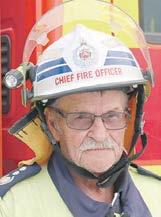
“Oh, spoke too soon, it’s just starting to rain again!” the Ōtorohanga Volunteer Fire Brigade chief said.
Fortunately, the rain didn’t last long but much of the damage from the Valentine’s weekend floods had already been done.
During almost 50 years behind the badge, this veteran firefighter has seen his share of flooding and
landslides – enough to know clean-up efforts are no quick fix.
“It’s probably going to be a week or so before they even have a full picture of all the damage,” he said. “It’s going to take time just for all the water to drain away.”
Over the course of the weekend, King’s brigade answered some challenging calls with the help of firefighters from the Waikato and Bay of Plenty.
“Between Phillips Ave and Kio Kio Station Road there were about 80–100 people

who had to be evacuated, but they got everybody out by about three o’clock on Saturday morning,” said King. “It’s lucky no one was badly injured or worse.”
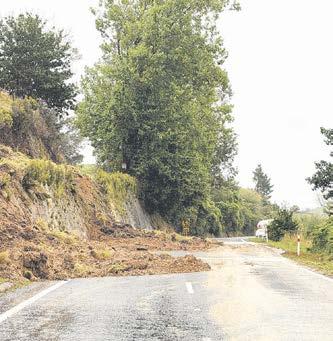
Landslides hit homes on Mountain View Road and Gradara Avenue and, in general, flooding was deep and widespread.
“We spent two hours pumping out a basement – a garage and laundry – in Kakamutu Road on Saturday,” King said. “The Ōtorohanga Domain was like a lake, which caused the museum to flood, and Ōtorohanga Primary School has been completely flooded.”
The brigade was also on site at major slips on State Highways 31 and 39.
Now that the storm has passed, professional and volunteer firefighters will be enjoying a well-deserved break leaving residents and politicians to count the cost.
“It’s not our job to assess the damage, that’s up to the Ōtorohanga District Council, and hopefully there’s not too much more for us to do,” said King. “But if I say that too loud, there probably will be.”
The northern King Country wasn’t the only area
to be battered by heavy rain resulting in flooding and landslides. In Waipā, which was especially hard hit, there was considerable flooding around Pirongia.
As the wild weather swept across the North Island, firefighters responded to more than 800 emergency calls, Fire and Emergency NZ reported on Monday. Even then, calls were still coming in after a particularly testing Sunday
night, assistant national commander Ken Cooper said.
“We had a very busy night and our firefighters are continuing to respond to calls,” he said at the time.
“We appreciate the work they are doing to support their communities and we urge people to follow the advice from civil defence to prepare and keep themselves safe, wherever they may be.”
Continued from page 3
Chem-Dry Waikato’s Isaac Jackson spent Sunday afternoon ripping up the whare’s carpet for replacement, and setting up dehumidifiers to allow the building and waka to slowly dry out. “It’s all go,” Cowan said.
Support continued in the days that followed.
“People are popping in and asking if we need food,” Ngāpō said.
Ōtorohanga Primary School, in Phillips Avenue, was inundated when the Mohoanui Stream burst its banks sending sewage infected flood water across the playground and into the buildings.
Principal Catriona Chrystall and presiding board member Kirby Beattie would not discuss the flood with The News, but a social media post said the school was closed until further notice.
“Due to unexpected flooding on site, Ōtorohanga Primary School will be closed effective immediately until further notice,” Chrystall said in the post.
“The safely of out Tamariki, kaimahi, and whanau is our absolute priority. We are currently working closely with the Ministry of Education, who will be conducting a formal assessment of the school grounds and buildings to ensure the environment is safe for our return.”
The school was expecting to start back today at “secure suitable space” at Otorohanga South School, with the school’s leadership team expecting to operate from there for a few weeks.




























It’s 1899… moa bones are found, and a wheeled vehicle completes a first by travelling the road from Hawera to Ōhaupō.
By Meghan Hawkes
The limestone country in the neighbourhood of Te Kūiti and Ōtorohanga had been a favourite habitat of the moa and from time to time discoveries were made of the relics of these giant birds.
One recent discovery was made in a cave on the farm of John Davis, of Waitomo. The skeleton of the bird was found lying in the position in which it fell and died, and poignantly the bones of an infant moa were lying across it. The entrance to these caverns was often so small and covered over with vegetation they were difficult to find and it was speculated the neighbouring ranges might contain wonders of a similar character.
Mr Newsham claimed the record of being the first to drive a wheeled vehicle over the road from Taranaki to Waikato but he did not have all the credit to himself, as his plucky wife shared it with him. They left Hawera on a Wednesday morning and arrived at Ōhaupō on Sunday evening, after just five days on the road. They came by way of Awakino and never once had to camp out, always making a settler’s house by nightfall. The vehicle was a light two wheeled trap drawn by a stout pony, which was only once taken out of the shafts, and that was at a creek between Awakino and Puketiti. The wheels were there taken off and the trap hauled down the bank. The pony was then yoked up and pulled the buggy across the ford, when the wheels were again removed and the trap carried over some rough ground.
With the exception of that small portion, the whole road could be travelled by buggy. Mr Newsham said the worst bit of road to travel on was between Te Kūiti and Ōtorohanga, a road that had been open for 12 years.
Men were continually arriving from Auckland to labour on the road works being undertaken to open up blocks of land in the King Country.
The road between Pirongia and Kāwhia was to be completed right through and a four horse conveyance would run weekly carrying passengers from Te Awamutu. Several families from Hamilton and Te Awamutu had for some seasons past gone to Kāwhia for their summer break, and described it as a most ideal place for an unconventional holiday. The locals were most hospitable, and there were hot springs, good fishing and plenty of oysters to be enjoyed.
Te Kūiti had an extraordinary escape from destruction by fire when the boarding house and store of Mr Bond were destroyed. The premises were separated from the adjacent building by a narrow passage. Although Bond’s fire burnt fiercely, no other building was damaged. Had Johnsons store caught, the whole of the street would have gone, including all the principal businesses. The fire occurred at about 2.30am, Mrs Bond and two children being alone in the house. Mrs Bond, awakened by the smoke and roar of the fire, at once gave the alarm and got out safely. Mr Bond was uninsured, and his loss was severe, including a piano and two sewing machines.
By Janine Krippner
We really don’t hear much about what lies below our oceans. Sure, we hear about a fraction of the incredible life down there, and sometimes about the amount of damage humanity is inflicting. I have touched on how much of a mystery the deep oceans are, largely because of a lack of data. It is technically difficult and expensive to collect the data and it is either driven by research, which requires funding, or industry, where we often don’t see the results.
A brilliant colleague of mine with decades more experience looking at the seafloor exclaimed how active it is down there. We were looking at giant canyons and enormous channels, forged by ocean currents, landslides or rockfalls, and turbidity currents – powerful and damaging sediment flows that can travel hundreds of kilometres from where they start.
Below our oceans, the seafloor is an incredibly dynamic place. The landscape doesn’t have wind or rain like we do on the surface, the processes that shape much of our landscapes, but it does have water currents and geologic processes.
The movement of sediments – worn down bits of rock plus biological material… and increasingly, our trash, is a critical process across our planet.
Below the sea are our longest mountain chains, mid-ocean ridges, where tectonic plates pull apart. This is driven by fault activity and volcanism to slowly but steadily create extensive new surfaces. As the thick layers of rock cool and move away from the ridge they become denser and slowly sink.
The seafloor is where volcanic islands begin to form, building edifices kilometres high that tower above the ocean surface.
There is geothermal activity, which may give clues to how life started on our beautiful planet.

There is a lot of seismicity, sometimes as enormous earthquakes along plate boundaries or where stresses accumulated in the crust. These can trigger massive landslides and tsunamis.
Water can become heavier because of temperature, salinity, or increased sediment from a storm, causing it to dive down across the seafloor. This can scour out those giant canyons or channels.
Extremes of hot and cold exist. Minerals form below kilometres of water as I covered last week, or at geothermal areas that also become hotspots for life. Methane ice (hydrate) forms within sediments, then can melt to destabilize the seafloor and trigger landslides across continental slopes.
When ice covered much of our planet, it scoured the seafloor and also transported sediment into our ocean basins. When sea level was much lower, landscapes stretched further outwards and carved some of those giant canyons.
Today, we have enormous river deltas that continue some of these processes. So much sediment moves seaward from these systems that the seafloor can become unstable. Storms can flush out even greater amounts of sediment (like when we see brown plumes forming where rivers meet the sea) triggering turbidity currents there too.
I didn’t know how much I didn’t know before I started my current job, and every day I am learning something new. I love that I get to share it with you here.

By Jon Rawlinson
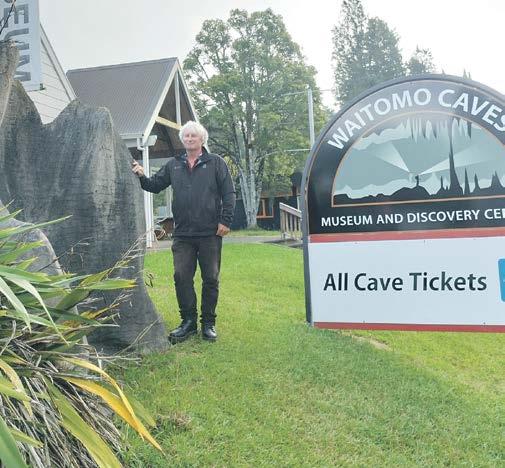
Fossils of recently discovered species of birds and frogs will be stored at Waitomo Caves Museum.
The fossils were found by scientists exploring a cave on private land to the west of the museum.
“The museum is very pleased to house these precious taonga,” former museum chair Ben Stubbs said. “The scientists understood this and it is very important to tangata whenua that treasures from our area stay here.”
There is no confirmation as to when the discoveries will be exhibited to the public.
“There is an intention to make a display relating to this amazing find, but it’s difficult to put a timeline on it. Good things take time – it took more than a million years for this story to be told so I guess we can wait a little longer.”
The fossils could be dated accurately thanks to deposits of volcanic ash, and they illustrated how eruptions and changing climate had extinction level impacts on the North Island.
“The significance of the discoveries can’t be overstated. The recently released research is essential to our understanding of Aotearoa’s past, the geological events that have shaped the landscape and its flora and fauna,” said Stubbs.
“We thought the caves were thousands of years old, so to find out that there’s a cave that’s 1.55 million years old is amazing in itself.”
The scientists were led by Dr Trevor Worthy from Flinders University, Adelaide. Worthy, originally from Northland, worked at Waitomo Caves Museum while completing his studies. Some of his earlier
collection.
“We had local involvement from the museum as well, helping with the digging at the site, working with the scientists, so there has been a fair bit of community involvement,” Stubbs said.
Another past chair of the museum board, John Ash, who assisted with the field research, emphasised the importance of ensuring the finds were safe and sound
when they return home.
“We are extremely excited about the prospect of them being archived at our museum,” he said.
“The material is not on site yet as we’re looking at the protocols involved in archiving such important material. As for displaying the objects, we need to be absolutely certain that any possible displays are secure and in accord with best practice.”
A new connection is intended to help The Lines Company keep power bills lower over time while improving responses during severe weather.
Working with south Auckland-based Counties Energy will drive greater efficiency and, all going well, it will result in even more collaboration, the company’s chief executive Mike Fox said.
“This partnership is simple by design and ambitious in impact. As the model proves its value, the partners will invite other likeminded electricity distribution businesses to join us on a clear pathway with substance. We believe it has the potential to accelerate sector-wide collaboration and standardisation.”
Initially, the businesses will focus on digital platforms and joint procurement and energy hardship programmes.
The partnership comes in response to government calls for more collaboration, standardisation and affordability. Counties Energy and The Lines Company are implementing a lowvoverhead model that focuses on outcomes for customers, Fox said.
“By sharing platforms, procurement and expertise, we remove duplication, share specialist capability and pass efficiencies straight through to the communities we serve. This partnership is built to scale, transfer and adapt, creating intergenerational value while staying true to our local needs and values.”
Counties Energy’s chief executive Judy Nicholl said the partnership is a practical response to industry challenges delivering benefits to customers faster, and more











•
•
•

(B.Chiro)



By Jon Rawlinson
Tauranga City Tridents and Taranaki Kraken flag football teams clashed at Centennial Park on Sunday, showcasing a game set to feature at the 2028 Los Angeles Olympics. The event was held while the Ōtorohanga and Waipā districts battled slips and flooding, the weather in Te Kūiti played ball.




“It went really well,” Tridents’ club president Alex Hatwell told The News. “Despite heavy rain in the days leading up to it, Centennial Park was a great venue and the ground was reasonably solid. We had a bit of rain throughout the day, but nothing that disrupted play.”
Effectively, flag football is a five-aside, non-contact version of American football where players aim to remove an opponent’s flag rather than tackle.
Featuring 24 games across all divisions, the first Coastal Bowl contested in the King Country was a hit with crowds, Hatwell said.
The Tridents dominated the scoreboard winning the Men’s, Women’s, Legend’s (seniors) Under 20s and Under 15 showdowns. However, the Kraken wasn’t entirely leashed – Taranaki teams secured the Under 12s and Under 10s.
“Both the women’s and legends series were fierce with four of the six games decided by less than one score, so the competition was a lot tougher than some
of the results might make it seem.”
Based on its reception, Te Kūiti will likely host more flag football in future, Hatwell said.
“We’re really grateful to the Waitomo District Council for making the venue available and supporting the event, and we’d absolutely love to come back,” he said. “The response was encouraging, and we’d love to keep building momentum in the region. We’d love to see more clubs popping up in the regions and helping build a vibrant scene outside of the main centres.”
It’s not quite as grand as the Superbowl, the Coastal Bowl was more about the games than the halftime show.
“Lorde, Alien Weaponry, Marlon Williams, Shihad and Kaylee Bell all (politely) turned down our requests, but we’ll try again next year!” Hatwell said. “But there was plenty of action on the field, which is the main thing for us.”
The tournament provided the teams with a chance to dust off the cobwebs



before the sport’s national championships in late March. In addition, it was intended to grow the game and attract new players.
However, King Country Ram’s fans need not be nervous – as it’s a summer code, poaching players is not the aim, Hatwell said.
“There are plenty of transferable skills between the two codes, but American football, both flag and contact, is played over summer in New Zealand so it fits in nicely alongside rugby. It could be a great way for Rams’ players to stay fit, keep their skills sharp and try something different.”
Even in Meadsville, the sport could take off.
“Te Kūiti is a great central meeting point for both clubs – the Kraken and the Tridents. Raising the profile of the game in regional communities is important,” Hatwell said. “Then, if there’s enough interest locally, we’d love to see the game grow here and eventually support the development of a club in the King Country.”




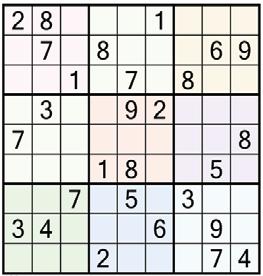
Across 1. Sturdy (6)
4. Entertained (6)
9. Style of film or book (5)
10. Put in place (7)
11. Cost (7)
13. Wicked (4)
14. Focus on something (11)
17. Teller of untruths (4)
18. Template (7)
Last week
21. Exact (7)
22. Kingdom (5)
24. Stinging plant (6)
25. Indistinct (6) Down
1. Tattered (6)
2. Small loaf (3)
3. Lustre (5)
5. Perceive incorrectly (7)
6. Piece of data (9)
7. Bland (4) 8. Children’s game (4-3-4)
12. Important or famous (9)
15. Sweet drink (7) 16. Uncoordinated (6) 19. Sign up (5) 20. Rotate (4) 23. Short song (3)
Across: 1. Mall, 4. Lounge, 8. Chaotic, 9. Caste, 10. Torn, 11. Fabulous, 13. Miniature, 17. Jealousy, 19. Mail, 21. Close, 22. Collide, 23. Brutal, 24. Peep.
Down: 2. Anagram, 3. Lots, 4. Lackadaisical, 5. Unctuous, 6. Gusto, 7. Heist, 8. Cute, 12. Innocent, 14. Evasive, 15. Eject, 16. Glee, 18. Amour, 20. Slip.

CHEESE CHICKEN

























Residential Low
Fixed Charge is only available to customers in their principal place of residence (home) and is usually best for those who use less than 8,000 kWh per annum.
Residential Standard is only available to customers in their principal place of residence (home) and is usually best for those who use more than 8,000 kWh per annum.
Temporary Accommodation is where the connection is a holiday home, small accommodation business or similar less than 15 kVA and is not a principal place of residence (home).
General is for all other connection types that are not residential or temporary accommodation.
What are lines charges?
Lines charges pay for the electricity network that delivers electricity to your home or business.
TLC owns and looks after the poles, lines, transformers and systems that carry electricity from the national grid (Transpower) – the larger pylons, to your homes and businesses across our region.
Our role is to make sure the network that delivers power is safe, reliable and available whenever you need it.
If I use less power, do my lines charges decrease?
Even when your electricity use is low, the network still needs to be there – ready to deliver power instantly when you turn something on. Most of the cost of running an electricity network is fixed.
Poles, lines, transformers, safety systems and crews must be maintained year-round so every connection stays safe and reliable.
Your lines charges are your contribution to keeping that shared network available, just like roads or water pipes that must be maintained whether they’re used a little or a lot.
Lines charges vs electricity
Electricity (the energy you use) is sold by your retailer. TLC doesn’t sell electricity — we maintain and operate the network that delivers it. Depending on retailer, it is sometimes not easy to see exact lines charges. Scan the QR code for an estimate.
or
Can I choose a different electricity No. You can choose a retailer. is not a retailer. We are an electricity Like other lines companies across is a natural monopoly. TLC owns power lines in your area. It wouldn’t to build multiple duplicate networks networks are expensive and complex.
Electricity distributors are regulated Commerce Commission and the Authority. They monitor performance revenue rules and quality standards.
Why do electricity
Fixed charges electricity network use. The expensive equipment, need to be funded
are detailed in the table below alongside the new prices. make pricing a bit clearer.
electricity distributor?
The Lines Company electricity distributor.
across the country, TLC owns the only set of wouldn’t make sense networks because complex.
regulated by the the Electricity performance and set standards.

Is there a connection between lines charges and electricity use?
There is a limited connection. Even if you use very little electricity, the network must still be maintained so power is available when you need it. Fixed charges ensure the network stays safe, reliable and ready.
Electricity relies on a network of poles, lines, transformers and systems that must be ready to deliver power every minute of the day, even when usage is low. This ‘always on’ network is what keeps our lights on, our hot water heating when needed and our appliances running smoothly.
Electricity networks are similar to other essential networks we rely on every day. Roads don’t shrink overnight when fewer cars are using them, and water and wastewater pipes must be maintained whether you use a little or a lot. The electricity network must be built and maintained to support everyone, no matter how much power each household uses.
electricity bills include fixed lines charges? charges exist because most of the cost of running an network doesn’t change with how much electricity you expensive parts — poles, wires, transformers, safety control systems and the people who maintain them — funded year-round to keep your connection reliable.
What is a pricing code?
It is the category your property is assigned so that charges are applied based on your connection type, capacity and usage pattern. Scan the QR code for details.
will be available on our website before 1 April 2026.
If you have a complaint, please call 0800 367 546 or email us at info@thelines. co.nz to access our free complaints process. If we cannot resolve your complaint, you can contact Utilities Disputes on 0800 22

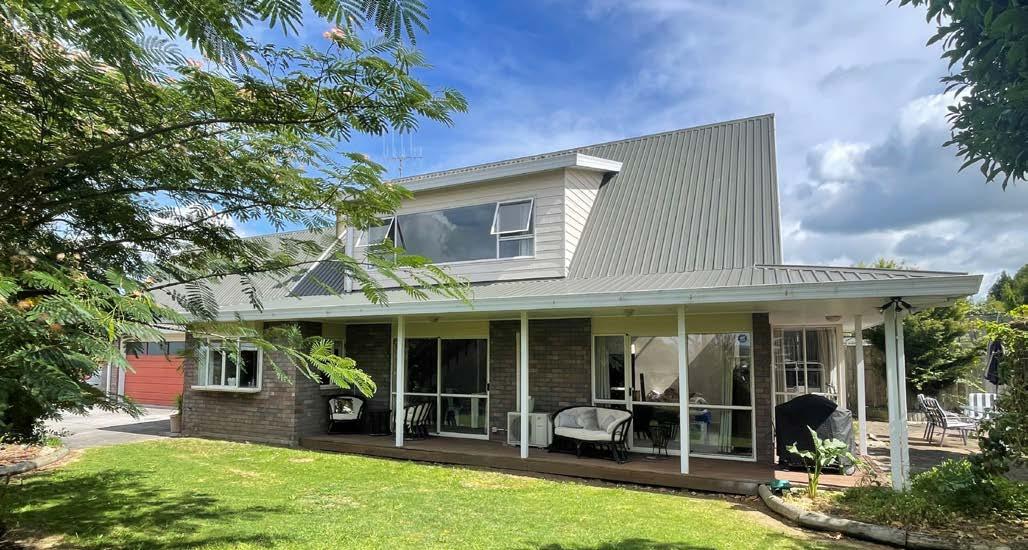
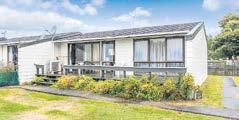
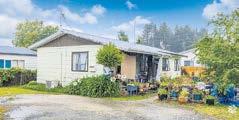
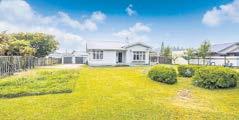
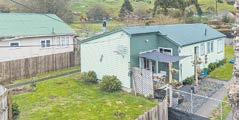
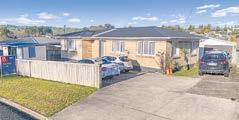
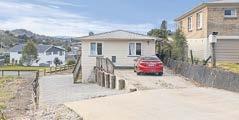
This attractive, architecturally designed two-level home sits proudly on a corner site on the northern outskirts of town, offering an easy commute to Te Awamutu and beyond.
Built in 1993 by a well-regarded local builder, the home has been thoughtfully constructed to exacting standards and is widely admired.
Careful planning has gone into future-proofing the floorplan, previously owned by a retired couple.
The ground floor features the main bedroom with walk-through wardrobe and en-suite, an office or optional fourth bedroom, and open-plan living with a spacious Oak kitchen.


A separate sunroom provides an inviting additional living space.
Upstairs is ideal for older children or guests, with two generous double bedrooms, a family bathroom, and a second living area enjoying rural views through striking feature windows.
Comfort is assured year-round with a woodburner on wetback and air conditioning, and the home was redecorated four years ago.
A double internal-access garage completes the package, all set on a compact, easy-care section.
A low-maintenance home perfectly suited to busy family life-this is one not to miss.


ADDRESS 1 Blucks Road, Ōtorohanga
LAND SIZE 820 sqm (more or less)
FLOOR SIZE 220 sqm (more or less) HOUSE 4 bedrooms, 2 living rooms, 2 bathrooms, 2 garages
PRICE $689,000
WEBSITE monarchsouthwest.co.nz
WEB ID OH22822 VIEW Open


22 Feb, 2.00 - 2.30pm



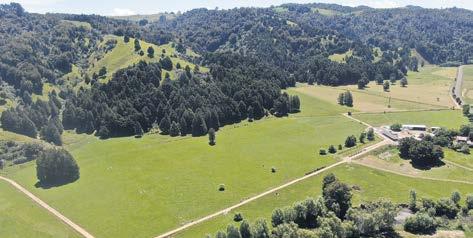

WAIMAHORA 1822 Otewa Road
Waikato Grazing with Lifestyle Appeal
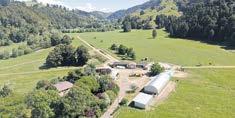
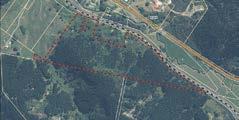
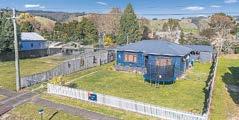
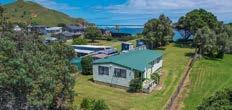
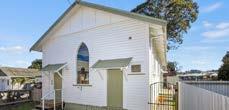
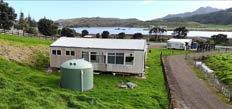
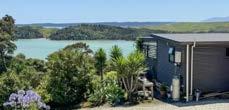
Quality grazing and lifestyle opportunity located approx 18km east of Otorohanga. 92.53ha (more or less) across two titles. A well-managed, former dairy farm with 55ha of pastoral land, including 30ha of flats and 25ha hill country. Additional 10ha young pine trees and 27ha native bush, with 12ha of native being ETS registered. Currently wintering 150 R1 dairy heifers. Infrastructure includes 7-bay gable shed, half round barn with concrete floor and near new 3-bay pole shed. A reliable gravity fed water system services the property. Waipa River, cabins, trout and Red deer complete the package.
pggwre.co.nz/TEK42298


























































Mike & Allana 027 350 0836 – info@handy-man.co.nz
• Emptying septic tanks
• CCTV pipeline inspection
• Jetting drainage pipelines
• Spreading animal effluent
Waitomo Liquid Waste Disposal 021 111 3911
Painting interior/exterior
Painting interior/exterior
Exterior house washing
Painting interior/exterior
Exterior house washing
Exterior house washing
Small jobs welcome Te Kūiti based Contact Steve 022 676 1839
Small jobs welcome Contact
Small jobs welcome Contact Steve 022 676 1839
022 676 1839


No
No obligation free quotes
No obligation free quotes









Waikato Regional Council advises that under Resource Consent 124871 spraying of pest plants growing in aquatic and semi-aquatic locations will continue over the next three months.
Pest plants to be sprayed are listed in the Regional Pest Management Plan and include (but are not limited to): alligator weed, Manchurian wild rice, sagittaria, Senegal tea, spartina and yellow flag iris. Herbicides to be used are haloxyfop, imazapyr, metsulfuron-methyl and triclopyr. Application method is location dependent and may be by helicopter, gun and hose, mistblower or knapsack.
Operational areas are spread throughout the region and include (but are not limited to):
• Lakes Whangape and Waikare
• Te Otamanui Lagoon
• Waihou, Piako and Ohinemuri rivers
• Waikato River (from Horotiu to Port Waikato)
• Whangamarino and Maramarua rivers
• numerous smaller urban and rural sites.
Spraying is weather dependent and will occur during daylight hours on any day, including weekends but excluding public holidays.
For more information or to request to be notified visit www.waikatoregion.govt.nz/aquaticspraying or call Waikato Regional Council’s biosecurity pest plants team on 0800 800 401.
Occupiers who have already requested to be notified will be contacted prior to spraying.
CDA McLay Chief Executive
www.waikatoregion.govt.nz

Jobs, terrific bargains, useful services, legal notices and announcements –these are some of the great things you’ll find in your newspaper’s classified ad section.
Connect to your neighbours in a proven reliable way.

Ruapuha Uekaha Hapu Trust (Hauturu East 8) Tertiary, Work Related & Apprenticeship 2026 Education Grant Round NOW OPEN
Karanga mai - calling all descendants of Tanetinorau Opataia, Te Aroa Haami Haereiti, Te Riutoto Aihe & Whatakaraka. You are invited to apply for education grants in the following areas; - Tertiary, Work Related & Apprenticeship for 2026
You can download an application from the RUHT website www.ruht.co.nz.
To be eligible for a grant you must be registered with the Ruapuha Uekaha Hapu Trust.
If you are unsure whether you are registered, please email register@ruht.co.nz
Please ensure all sections of the form are completed and you have supplied all the required documentation before sending in.
Applications close FRIDAY, 13 MARCH 26 @ 2PM. LATE APPLICATIONS WILL NOT BE ACCEPTED.
For all queries phone 0800 525 626 (option two) or email educationgrants@ruht.co.nz

Work on diverse fleet of plant, heavy machinery, and trucks with a well-established local employer.
Monday-Friday role, with a supportive, down-to-earth workplace.
HR Connect is assisting with this role. Please call Bronwyn on 0800 131 557 or collect an application form from Inframax Reception.

Our ideal applicant will have:
• A full and clean NZ drivers licence.
• A qualified electrician with a current practising licence (if possible, solar endorsement as well).
• A positive attitude, technical competence, attention to detail and solid communication skills.
• Experience in electrical service and maintenance.
• Experience in general housing, from renovations to new builds.
• Experience in camera and security alarm systems.
• Experience in HVAC systems.
• Experience in solar systems.
• Experience in commercial and light industrial work.
• Experience in farm work with cowsheds and water pumps and control systems.
• Have the ability to work well under pressure and meet deadlines.
• Be available to do rostered on-call work, however our main hours are 8am-5pm Mon-Fri.
We offer competitive rates, tool allowance scheme and a great team environment with low staff turnover.
To apply, please forward your CV to office@waiteelectrical.co.nz


Pirongia Community Centre, Crozier St Sunday, February 22 9am - 1pm
Last Sunday of every month
Email jim1@xtra.co.nz or ph Jim 027 366 5842
ATTENTION LAND OWNERS. Responsible family with young boys looking for properties to pig hunt on in the area. Safety conscious and respectful. Hunting with dogs. Reliable pest control. Please call 0211942724
This is a friendly reminder that the third instalment of your 2025/2026 rates is due by 4pm, Friday 27 February 2026. Rates invoices were posted out in January 2026.
Payments received after 27 February 2026 will attract a 10% penalty.
Rates payments can be made at the Customer Services and Visitor Hub, 160 Rora Street Te Kūiti, over the phone by credit card, on our website or by Internet Banking using your valuation number as your reference.
Please contact our friendly Customer Services Team on 0800 932 4357 for further assistance.
www.waitomo.govt.nz
Ben Smit Chief Executive


Under conduct of the Registrar of the District Court at Te Kuiti at the request of the Ōtorohanga District Council and in exercise of the power of sale contained in the provisions of the Local Government (Rating) Act 2002, the Ōtorohanga District Council offers by public tender the property listed below:131 Main North Road, Ōtorohanga Valuation number: 0554140400
Lot 14 Deposited Plan South Auckland 1834 and being all the land contained in Certificate of Title SA5D/1434 approximately 1571 square metres more or less. The property is situated at 131 Main North Road, Ōtorohanga and is within the territory of the Ōtorohanga District Council.
TENDERS CLOSE 4pm, 20 March 2026
Tender documents are available by contacting Debt Management Central (DMC), on 0508 436 269; dmc@mw.org.nz, DMC, DX PA84005, Feilding or from http://www.debtmanagementcentral.org.nz
Tender documents and all enquiries are to be submitted to DMC the agent for the Local Authority.
Late tenders will not be accepted. This notice is authorised by: Tanya Winter Chief Executive Ōtorohanga District Council 22 January 2026






Harvest Church Ōtorohanga
Where: Ōtorohanga Netball Centre
SOUNDY, Richard –Richard's family invites friends and colleagues to celebrate his life. Saturday 7th March 1.00 at the Waitomo Club in Te Kuiti. RSVP would be appreciated. Text 0275737718.



Sunday Service @ 10.30am 5 Tuhoro Street, Ōtorohanga Ph 07 873 8890 Mob 027 493 0117 Email harvest.pc@xtra.co.nz
ALL WELCOME. Pastors Peter & Carole Coventry (An Assemblies of God Church)
COMMUNITY SPORTS INC
Notice of Special Meeting To approve new Constitution Monday 23rd February 2026 Piopio Rugby Club - 7.00pm
When: Tuesday 24th, February Time: 7:00pm
Attendance: It is essential that club, school, and team delegates attend.
Note: A Committee Meeting will be held after For more information, please contact: Email: otorohanga.netball@gmail.com Phone: 0274 340 904


WANTED TO BUYCorrugated

276 6624 St David's Presbyterian Church Ranfurly St, Ōtorohanga
BELL, John Nikora (Buzz) –On Sunday, 8th March 2026, at Te Kūiti Urupā. Whānau & friends are warmly welcome to join us for the unveiling of Buzz Bell, our loving father & poppa. Service to be held 1pm, followed by hākari at te Bell homestead, Esplanade Rd, Te Kūiti. Enquiries to nicolebell@hotmail.co.nz. Nau mai, haere mai.

Jobs, terrific bargains, useful services, legal notices and announcements – these are some of the great things you’ll find in your newspaper’s classified ad section.
Connect to your neighbours in a proven reliable way. When buyers and sellers need to connect…






In life’s hardest moments, you don’t have to be alone. Our caring, experienced, and local team offers support, guidance, and a farewell that truly honours your loved one.
Available 24/7 – call us when you need us.







We’re carrying out helicopter inspections of power lines across the network. Inspecting lines is critical to delivering you a safe, reliable service. Works and locations are weather dependent.












































































For $300 you can sponsor a panel, power our local Kiwi House, and have your name displayed for the next 20 years.