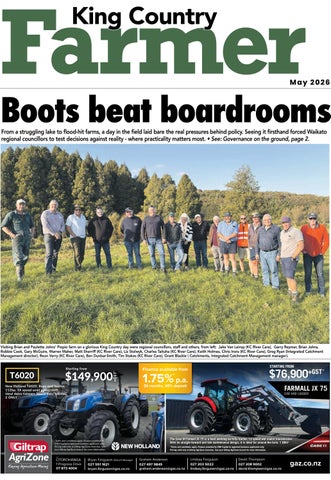
From a struggling lake to flood-hit farms, a day in the field laid bare the real pressures behind policy. Seeing it firsthand forced Waikato regional councillors to test decisions against reality - where practicality matters most. • See: Governance on the ground, page 2.
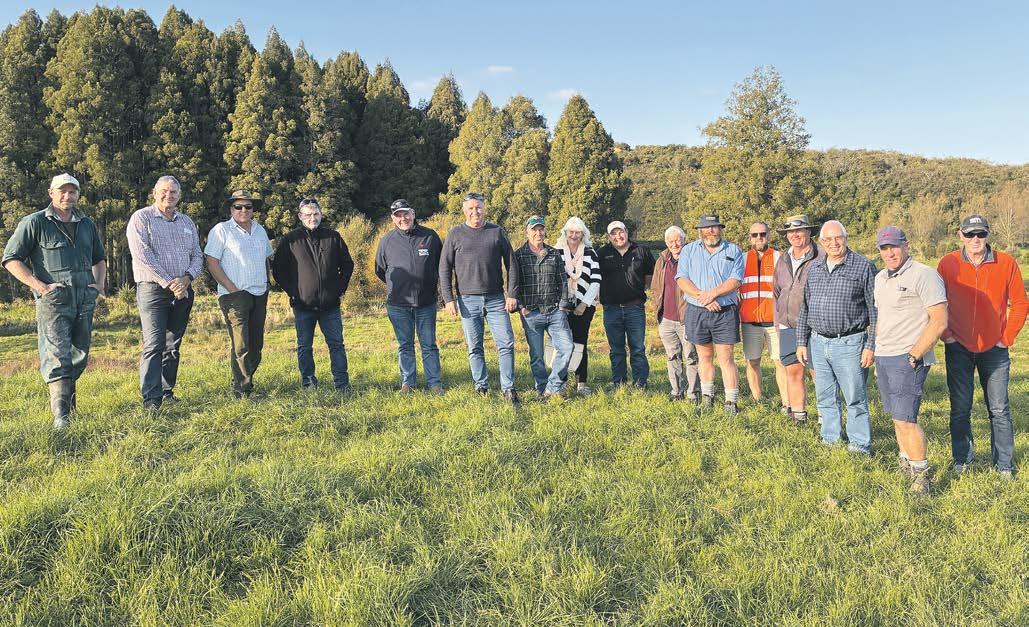
were regional
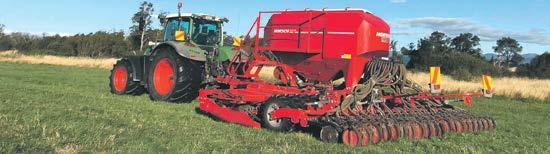
Grant Blackie ( Catchments, Integrated Catchment Management manager). $76,900+GST
Visiting Brian and Paulette Johns’ Piopio farm on a glorious King Country day
councillors, staff and others, from left: Jake Van Leirop (KC River Care), Garry Reymer, Brian Johns, Robbie Cook, Gary McGuire, Warren Maher, Matt Sherriff (KC River Care), Liz Stolwyk, Charles Taituha (KC River Care), Keith Holmes, Chris Irons (KC River Care), Greg Ryan (Integrated Catchment Management director), Reon Verry (KC River Care), Ben Dunbar-Smith, Tim Stokes (KC River Care),
• Quality, professional advice to farmers and businesses
• Expert taxation and business structure planning
• Family trust management
• Friendly, personalised service Contact us for a FREE NO OBLIGATION INTERVIEW to discuss your financial requirements www.baileyingham.co.nz
• Commercial law including sale & purchase of businesses
• Commercial leases
• Company law
• Conveyancing Rural, residential & subdivisions
• Estate planning
• Rural law
• Trust law
• Wills & estate administration
• Wind farming
127 Rora Street, PO Box 412, Te Kūiti, 3941 P 07 878 1011 W www.lbllaw.co.nz
E sam@lbllaw.co.nz • katie@lbllaw.co.nz
Governance on the ground
Recent councillor engagement across the Waikato and King Country has reinforced a simple but increasingly urgent point: if we are serious about good decisionmaking, we need more time on the ground and less time in council chambers.
Recognising this, I organised a recent field visit across the region, bringing councillors together to see first-hand the environments, communities, and challenges we are making decisions about.
Lake Ngā Roto, a lake that is clearly calling for help, was the first stop on the visit, where regional councillors discussed the future of the reserve and its surrounding environment. While the conversation was constructive, it also highlighted how important it is to physically see and understand the pressures facing this place. There is no substitute for being there - standing on the land,
seeing the condition of the lake firsthand, and understanding the cumulative impacts that are not always obvious in reports alone.
With long-term financial planning for the reserve and surrounding catchment commencing shortly, it is a timely opportunity to properly understand the issues on the ground and ensure investment decisions are well-informed and targeted.
King
From there, we travelled to Pirongia and Kiokio to assess flood-affected areas. Standing in those landscapes provides a very different perspective to reading summaries of damage. The scale of impact on land, infrastructure, and livelihoods becomes immediate and real. It also highlighted how impractical some aspects of Waikato Plan Change 1 can be when applied in real-world situations. In Pirongia especially, it was clear that any climate or resilience policy must also prioritise the fundamentals - improved clearing of drains and waterways, alongside ongoing investment in infrastructure that can better cope with extreme
weather events.
By Liz Stolwyk, Regional Councillor
Over lunch with Ōtorohanga mayor Rodney Dow, discussions reinforced the ongoing challenges rural communities face - not just in recovery, but in building long-term resilience.
In the King Country, engagement with King Country River Care provided valuable insight into the environmental work being undertaken on farms.
Visiting Reon and Wendy Verry (sheep and beef) and Brian and Paulette Johns (dairy) showed firsthand what is being achieved, what is possible, and where policy intersects with practical farming systems.
Seeing their plantings and the results of their work on the ground was particularly powerful and, importantly, is aspirational for other river care groups across the region. Standing in their paddocks, it was clear that progress is being made - but also that policy must remain grounded in reality.
Discussions also touched more broadly on Waikato Plan Change 1 and the need for a common-sense approach that recognises both environmental outcomes and the realities of farm viability. We hear you, King Country farmers, and once decisions are released, we are committed to working closely alongside you to ensure workable solutions.
Beyond the formal programme, I attended the Kāwhia Community
Board meeting, where support was given to government funding for an EV charging station - an important step for connectivity and local development. Kāwhia beach access was also discussed at a recent hui. As indicated there, vehicle access on Kāwhia Beach is a complex legal issue, involving several overlapping pieces of legislation that must be carefully considered together.
Separately, I visited Mōkau to assess the resilience of State Highway 3 alongside Taranaki Regional Council. In my role as Regional Transport chair, I have since written to Minister Chris Bishop advocating for SH3 to be prioritised as a critical lifeline route for the region.
The conclusion from all of this is straightforward: we cannot govern effectively from behind desks alone. Boardroom discussions have their place, but they must be matched with consistent, structured, and meaningful engagement on the ground. Our communities, farmers, and infrastructure challenges are complex, local, and constantly evolving. They require councillors who are willing to get out, see it for themselves, listen directly, and fully understand the real-world consequences of the decisions we make.
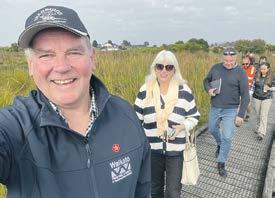
Waikato regional councillors Gary McGuire and Liz Stolwyk with chair Warren Maher at Lake Ngā Roto
Costs bite on farm
By David Porter
A spike in costs following the Iran war is already hitting New Zealand farms, with former Waikato Federated Farmers president Phil Sherwood warning the pressure is being felt immediately on the ground.
Sherwood, who has recently moved to Taranaki, says farmers are seeing extra costs filter through quicklyparticularly in contracting and fuel-linked work.
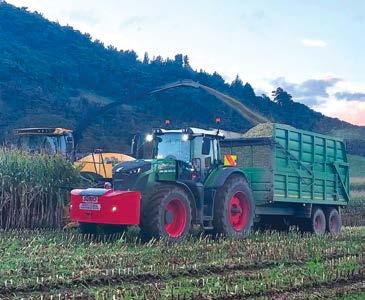
“On my own farm we saw a $3500 extra charge on top of our normal maize harvesting costs,” he says.
“The contractors just pass it on and we absorb it on our balance sheets.”
The conflict has unsettled global fuel markets, with knock-on effects beginning to show across agricultural supply chains. Sherwood says while the full impact is still unfolding, input costs are expected to climb further.
“We’re expecting fertiliser prices to go up and supply to tighten because of basic supply and demand,” he says.
“I guess the big impact we’re going to see here is inflation and farmers feel that pretty quickly.”
That inflationary pressure will not stay on farm for
long. Sherwood says rising costs typically move through the system, affecting everything from production to supermarket prices.
While fuel demand is relatively steady at present with many dairy farmers dried off and preparing for calving, Sherwood says that will change quickly as activity picks up.
“When things ramp up again, diesel demand will be high,” he says.
Fuel availability is a key concern. Farmers can manage higher costs to a degree, Sherwood says, but disruptions to supply create much bigger risks.
“If you can get fuel, you can make trade-offs. If you can’t, that’s when things get really difficult — particularly around harvest or getting crops in the ground.”
Across the sector, farmers are now weighing how sustained the disruption could be.
Infometrics chief economist Brad Olsen says fuel supply chains may take time to settle, with elevated prices likely to persist in the short term.
“The fuel side could stay higher for a while,” he says.
“For inputs like fertiliser, the impact may not be immediate because there’s already supply in the system but the
next season is where costs could really start to bite.”
Olsen says the lag effect means farmers may feel a more significant squeeze later in the year as higher-priced inputs begin feeding through.
For now, many are focused on preparation for the next production cycle, balancing current conditions with uncertainty about what lies ahead.
There are also broader questions around demand for New Zealand exports as global economic conditions react to the conflict.
Sherwood says farmers will be watching closely, but the immediate concern remains firmly on managing rising costs at home.
“The biggest thing for us is the cost pressure,” he says.
“That’s what hits first and it’s what flows through everything else we do.”
•
• Results guaranteed
•
• Fully automated
•
•
• Latest in electronic technology , wireless & alert systems
• Servicing the Waikato, Bay of Plenty, Taranaki & Gisborne
Phil Sherwood
How private is your will?
Will’s are stored deep in lawyer’s vaults, but they are not always fully private.
Before death
You can always see a copy of your will. Your EPOA/attorney often has rights to see your will.
Your executors and beneficiaries do not have a general right to see the will. It can be sensible that executors know where the will is stored, but there is no requirement to tell an executor they will be appointed.
After death
Most wills are probated, probate makes the will a public record. Copies can be obtained by anyone who pays the administration fee ($40).
Executors need a copy of the will and beneficiaries are usually entitled to a copy.
For spouses, children and grandchildren: in practical terms, if they ask, they will often be provided with a copy of the will, and an overview of the assets of the estate.
In complex family situations executors may be advised to give a copy of the will to persons who are excluded from it.
If these people having a copy of your will makes you feel slightly uncomfortable, see your lawyer as the right approach can help your will remain more private.
John Whyte
Solar hits red tape
A dairy farmer who has installed solar panels says council red tape is making a simple, practical on farm upgrade harder than it should be.
Andrew Lord, who milks 270 cows at Te Pahū in the Waikato, recently installed a solar array to cut power costs and improve resilience during
outages. Despite the system now running, he is frustrated a resource consent was required.
“I got quite irritated to learn under Waipā’s district plan I’d need a resource consent, with a $2895 charge just to lodge the application.
“For the life of me, I don’t know why,” Lord says.
Septi-Cure™is:
Cost Effective
Improves Soakage
Reduces Solids and Scums
“There’s absolutely no impact on my neighbours or anyone else, and New Zealand is meant to be increasing renewable energy capacity.”
Mike Casey, CEO of Rewiring Aotearoa, says he hears similar concerns from farmers nationwide. He and Federated Farmers argued last year that on farm solar should be a permitted activity that does not require consent.
“Solar power is in the interest of farmers and the country. We shouldn’t be stifling progress with needless red tape,” Casey says.
Farms can support the grid by feeding power back at peak demand and help meet climate goals through electrification.
Lord installed 168 panels
and an inverter producing 75.6 kilowatts on about 340 square metres behind his shed.
“They’re tucked behind the shed, almost invisible unless you were flying overhead,” he says.
While the consent fee is small compared to the $150,000 investment, he says the principle does not add up.
“What’s more ridiculous is the council invoice gave two days to pay, as if they’d settle a bill that quickly. On farm solar is good for the environment and for storm resilience, so why add this hurdle?”
Council rules cite possible impacts such as glare, visual effects, earthworks and noise.
Casey says small farm systems differ clearly from large solar developments.
“Panels for a milking shed or irrigators are temporary and easy to remove. You don’t need consent to put in fence posts.
“But large arrays above one megawatt are different.”
He says inconsistent rules between councils frustrate farmers. His Central Otago orchard needed no consent, while a farmer 10km away faced costs.
Federated Farmers spokesperson Mark Hooper says some councils are easing rules, but national direction would remove inconsistency and reduce unnecessary costs.
Regulation minister David Seymour last week ordered a review of the solar installation regulations saying they were a “red tape nightmare.”
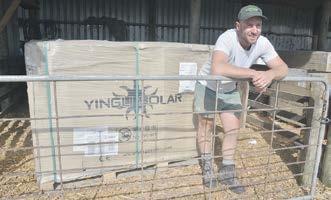
Andrew Lord with his solar panels.
Rising fuel costs and State Highway 3 freight disruptions have temporarily paused New Zealand production of an award-winning living soil and delayed its nationwide expansion.
Living soil specialist Frank Lachmann, co-founder and owner of Herbi, a Kihikihi-based business, said increased transport costs had forced a pause in local production of his growing mix.
The business last month sold out of its product, voted Germany’s Best Garden Product in 2025, and dozens of orders were waiting to be fulfilled, Lachmann said.
“It’s really frustrating. We have gardeners and retailers around New Zealand waiting for stock, and the list
Production paused BULL SALES 2026
continues to grow, but rising costs have made the current model too expensive.”
Higher fuel and freight costs were the main factors behind the temporary production halt in Taranaki, where the soil had been made under contract.
“We use specialist natural ingredients from around the country, so transport costs have a real impact on production.”
The pressure had been compounded by temporary road closures and road works on State Highway 3 to Taranaki.
Lachmann shifted his soil and plant food business from Taranaki to the Waikato last year to expand and safeguard production.
Gill placed third
Ōtorohanga’s Annie Gill, pictured, placed third in the Dairy Manager of the Year awards announced in Rotorua at the weekend.
She took home $5000 and also pocketed the DairyNZ People and Leadership award.
The 24-year-old is farm manager for Doug and Lorraine Courtman on their 56ha farm at Ōtorohanga milking 144 cows.
The judges were impressed with Gill’s passion for her pedigree cows along with her involvement in the industry outside the farm gate.
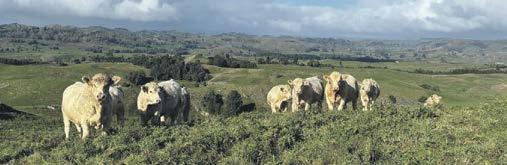
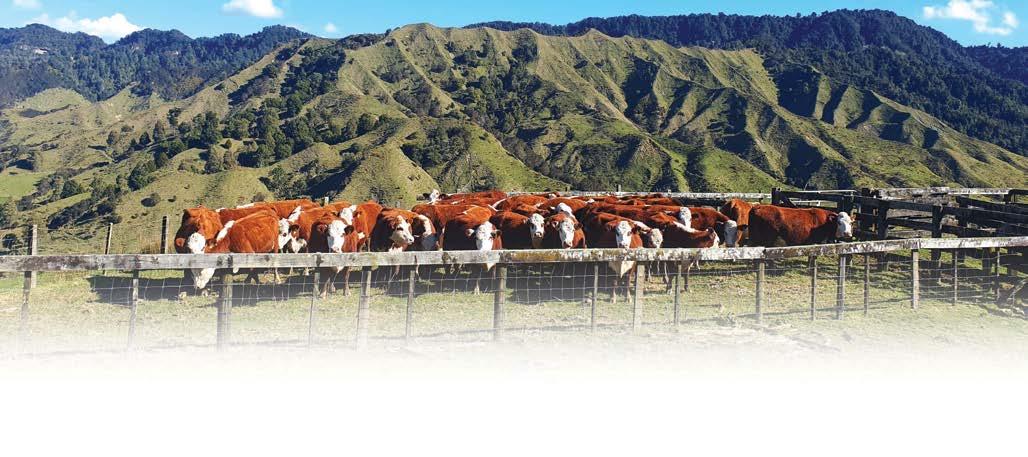
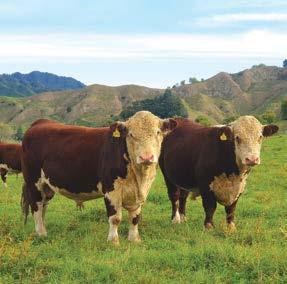
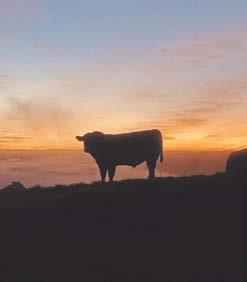
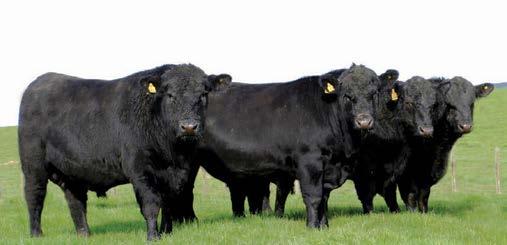
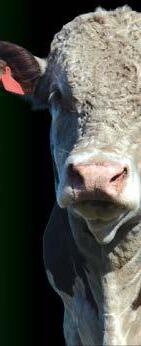
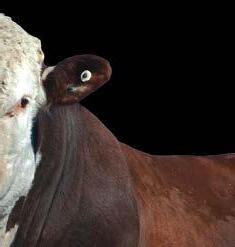
If you’re after a well-mannered bull that can handle King Country terrain, the upcoming RockEnd Hereford bull sale is the place to be.
Nestled in the hill country of the Paraheka Valley 10km east of Mahoenui is the 630-ha effective Te Matai Station, long-time home of the McCormick family and their Rock-End Hereford bulls. The McCormicks are gearing up to host their annual Rock-End Hereford bull sale set for May 27 from 12pm (912 Ngatarawa Rd, Mahoenui).
Up for grabs on the 2026 draft are 32 two-year-old Hereford bulls built on generations of breeding, geared towards performing on hearty King Country hill country.
No-one knows this better than Hauturu couple Chris and Lucy Brandon, fourth-generation sheep and beef farmers and clients of the McCormicks for the last four years.
The Brandons have been crossing the Rock-End Herefords with Angus cows, an approach Lucy
says has been proving its worth both in weight and temperament, with an increase of 40kg of liveweight gain per animal compared with crossing the cows over an Angus steer.
“The killing weights crossing the two have been a lot higher than just using the Angus pool. We’re getting a bigger-framed cattle beast and higher killing out weights,” Lucy said.
“The bulls are absolutely lovely to deal with, to handle, to work with.
“We have the confidence of knowing what we’re buying, the value for money; their bulls aren’t crazy, they’re a good quality product and we have a great relationship with the McCormicks. We don’t buy a lot of bulls, but we will always continue to choose to go back there,” she said.
The Rock-End Herefords are purposefully bred to roam the hilly terrains of King Country, something the Brandons have valued as local clients on rugged farm land.
“They know what a hill is and can work their way around it, which is helpful as stock that don’t know what King Country hills are generally can be a bit useless,” Lucy said.
A key feature of the Rock-End breeding program is the cows are farmed under pressure with sheep eating the best quality feed underneath them for 11 months of the year. This means only performing cows are kept, emulating what the bull progeny will need to do for Rock-End clients so they can buy with confidence.
Rock-End Herefords carry a five-star Breedplan recording status – only one of two Hereford studs in New Zealand with that level of gold-star recording, to help with data predictability. All sale bulls are 100k SNP tested (DNA profiled) through Neogen to enhance the accuracy of their EBVs, allowing the McCormicks to test for the polled gene.
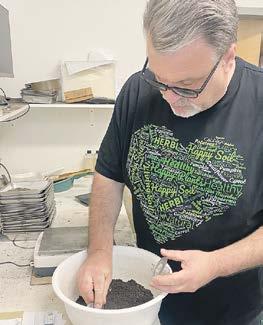
Frank Lachmann measures the microbes in soil mix.
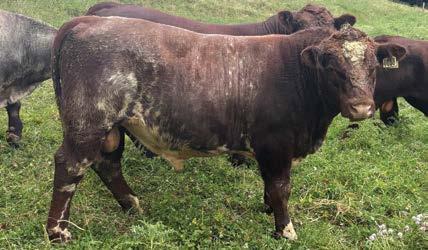
Shorthorn On-Farm Bull Sale Tuesday, May 26 – 11.30am