Flooding has delivered another blow to some King Country farmers already stretched by years of pressure but the soon to be signed New Zealand-India Free Trade Agreement will open up a lucrative new market for sheep farmers.
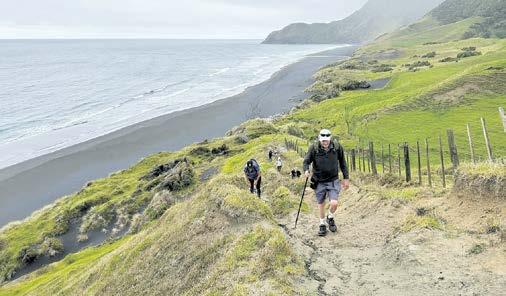
Agriculture minister Todd McClay says resilience, stronger sheep prices and renewed confidence are helping many farmers steady themselves again. Farmers like Hamish Nelson and Bridget St George at Nukuhakari Station where the black sand western coastline, endless native bush, rolling farm paddocks, winding tracks and an extinct volcano provide trekkers with three days’ variety and supplement the couple’s income during challenging sheep and beef seasons.
• Read: Confidence returns as resilience tested, page 3 and Tradition, tourism and farming, page 4.
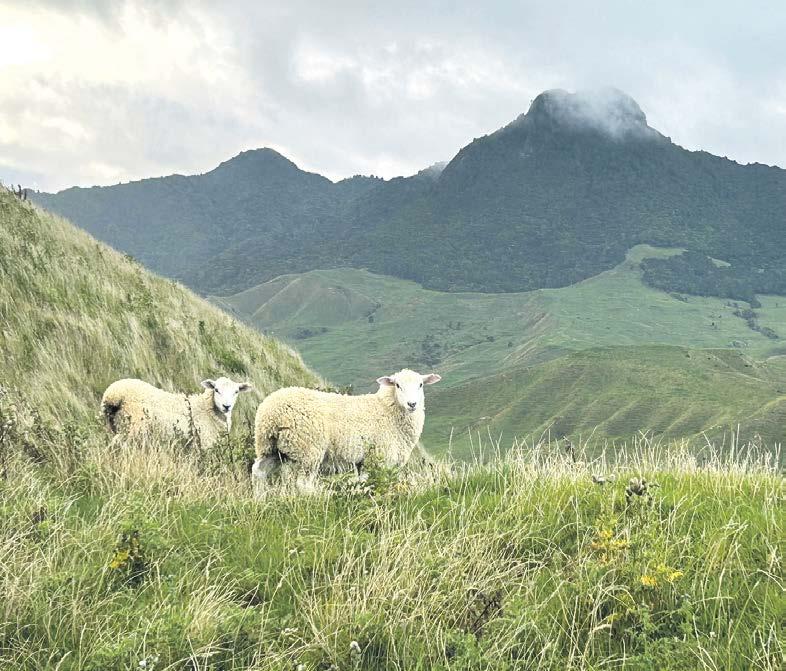
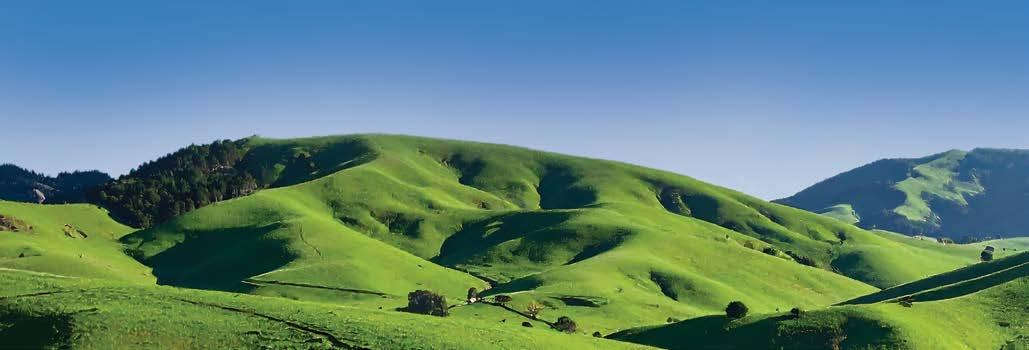
Sheep graze the slopes at Nukuhakari Station with the 649m high extinct volcano Mount Whareorino, part of the Herangi Range southwest of Te Kūiti, in the distance.
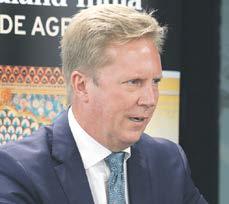
Photo: Chris Gardner Agriculture minister Todd McClay is
Country farmers. Photo: Mary Anne Gil
• Quality, professional advice to farmers and businesses
• Expert taxation and business structure planning
• Family trust management
• Friendly, personalised service
Contact us for a FREE NO OBLIGATION INTERVIEW to discuss your financial requirements
• Commercial law including sale & purchase of businesses
• Commercial leases
• Company law
• Conveyancing Rural, residential & subdivisions
• Estate planning
• Rural law
• Trust law
• Wills & estate administration
• Wind farming
127 Rora Street, PO Box 412, Te Kūiti, 3941
P 07 878 1011 W www.lbllaw.co.nz
E sam@lbllaw.co.nz • katie@lbllaw.co.nz
CONTACTS
News/Editorial
Roy Pilott editor@goodlocal.nz
027 450 0115
Mary Anne Gill maryanne@goodlocal.nz 021 705 213
Viv Posselt viv@goodlocal.nz 027 233 7686
Advertising Director
Janine Davy janine@goodlocal.nz 027 287 0005
Owner/Publisher David Mackenzie david@goodlocal.nz
Office/Missed Deliveries
07 827 0005 admin@goodlocal.nz
Heart health for Fieldays
When getting to the doctor is easier said than done, a Waikato heart team is using Fieldays to put rural health front and centre, reports Mary Anne Gill.
Health care is something that fits in when it can in rural communities.
Stock needs moving, weather waits for no one, and a “quick trip” to town can chew up half a day. That reality is exactly why the Waikato Cardiothoracic (Heart & Lung Surgery) team is heading back to Fieldays for the third year running.
The Waikato Hospital team will again be part of the Fieldays Health Hub, taking heart health checks out of the clinic and straight to where rural people already are. The Waikato cardiothoracic service covers a vast population across the Te Manawa Taki region, stretching from the Coromandel through to Gisborne and across to Taranaki.
A significant portion of those people live and work in rural communities, where access to regular healthcare can be challenging due to distance, time pressures and workforce shortages, says clinical nurse specialist Kelsey Abercrombie.
“Fieldays provides a unique opportunity to bring heart health screening directly to the community in a relaxed and
accessible setting,” she says.
“Last year we screened thousands of attendees and were able to encourage GP follow‑up where needed, helping raise awareness about the importance of knowing your pulse and recognising early warning signs. We also use our stall to chat with school‑age children about health careers.”
Across the event, the team offers simple heart rhythm checks, practical advice, and conversations about heart health without an appointment, referral, or waiting room. The value of that approach was clear last year when more than 1500 heart rhythm screenings were carried out on people of all ages.
Among those checks, several individuals were identified with previously undiagnosed atrial fibrillation and other abnormal heart rhythms. Because the cardiothoracic team was on site, urgent follow‑up could be arranged directly, either through the person’s GP or by organising specialist referrals.
Those numbers represent real people who might otherwise have carried on unaware of a
serious condition, increasing their risk of stroke or heart failure. That success has set an ambitious goal for 2026: screening 5000 people over the four days of Fieldays.
Atrial fibrillation is one of the most common heart rhythm conditions, affecting nearly
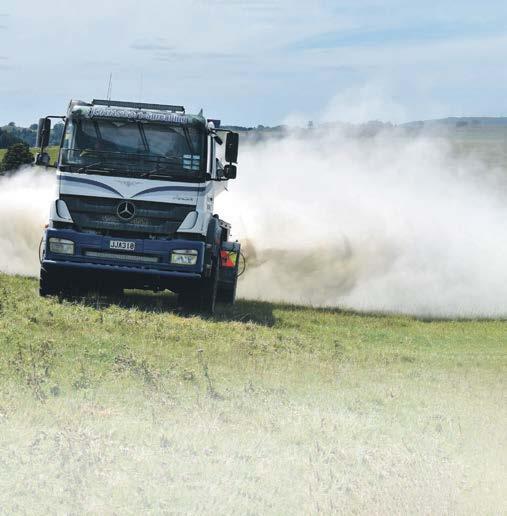
Independent AirSpread is a locally owned and operated aerial spreading (topdressing) company based in the beautiful King Country.
one in four people over the age of 40. Many people have no symptoms, which is why it is often described as a “silent” condition. Left undetected, it significantly increases the risk of stroke and other complications, yet early detection can make a real difference.
Sometimes all it takes is a simple pulse or rhythm check to raise the first red flag.
That simplicity is what makes Fieldays such a powerful setting. A few minutes at the Health Hub can prompt potentially life‑saving follow‑up.
The Fieldays stall is staffed entirely by volunteers from across the cardiac service, including nurses, surgeons, perfusionists, and electrophysiology specialists from the cardiac catheterisation lab.
“Beyond the screenings, the team values the conversations just as much, answering questions about heart health, prevention, and lifestyle,” says Abercrombie.
Fieldays is about more than numbers. It is about connection, trust, and practicality and delivering healthcare locally.
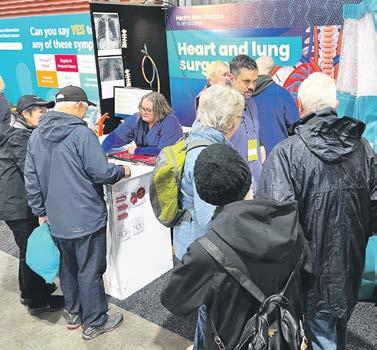
Karen Nixey (nurse educator) left and Karl Coley (clinical physiologist) speak to farmers at Fieldays.
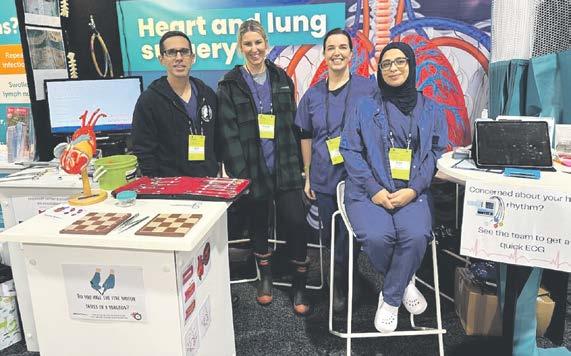
Heart to heart with, from left surgeon Zachary Deboard, Kelsey Abercrombie (clinical nurse specialist), Fiona Bunce and Alaa Hussein (clinical physiologists).
Confidence returns, as resilience tested
Stronger sheep prices, lower costs and new export markets are restoring confidence on farms as rural communities grapple with more extreme weather events, reports senior writer Mary Anne Gill.
Flooding across parts of Waipā and Ōtorohanga has added fresh strain to King Country farmers already worn down by years of low prices, rising costs and uncertainty.
But Agriculture minister Todd McClay says rural resilience is once again showing through.
Speaking exclusively to Good Local Media, McClay said he “absolutely” felt for farmers dealing with yet another extreme weather event, describing farming as one of the most resilient but also most isolated professions in the country.
“Farming can be very lonely, even though rural communities are incredibly strong,” he said.
“When it’s wet, when you’re worried about your animals, and you’re dealing with damage day after day, you can feel very alone.”
For many in Waipā and the wider King Country, the floods have come on top of several difficult years marked by low commodity prices, rising compliance costs and uncertainty about land use.
But McClay rejected suggestions it is “too late”
for some sheep and beef farmers, saying the picture on the ground is beginning to improve.
“They are very resilient, and we need to recognise just how challenging it’s been,” he said.
“But if you look at the prices many sheep farmers are getting at the works right now, they’re better than they’ve been for a long time. Farmers are making money again.”
That turnaround, he said, is translating into renewed confidence.
“They’re getting debt down, they’re investing back into their farms, and for the first time in a long time they’re thinking about increasing production.”
McClay said the government’s focus on resilience goes beyond farm balance sheets to the wellbeing of farming families and rural communities. In last year’s Budget, $4 million was set aside for community led resilience initiatives programmes designed by farmers, for farmers.
“This isn’t about business resilience – a lot of that already happens,” he said.
“It’s about the resilience of individuals, families and communities.”
Examples include initiatives encouraging farmers to get off the farm, connect with others and talk openly, from “surfing for farmers” to informal gatherings such as “blokes on gateposts”.
“If you live in town, you can pop out and see your mates or go for a meal. That’s not always easy in rural New Zealand,” McClay said.
“When rural communities are strong, the people in them do well – and when rural New Zealand does well,
all of New Zealand does well.”
Rebuilding trust with farmers has also meant reducing what McClay described as unnecessary regulatory costs. He pointed to reforms removing rules that “added cost but didn’t deliver environmental outcomes”, along with changes to stop large scale full farm conversions to forestry.
“That law was backdated, and it’s working,” he said.
“Forward orders for pine seedlings have virtually disappeared.”
While flood recovery is immediate and physical,
McClay said long term resilience depends on confidence there will be markets for what farmers produce. Improved sheep prices and access to export markets are critical.
“Our job as a government is to reduce costs and open up markets,” he said.
“If a farmer wants to put more ewes on the farm, there needs to be certainty there will be a market for that lamb.”
McClay said trade discussions with India could help underpin future demand. India already imports New Zealand lamb and wool, and lower trade barriers could improve returns.
“Lower tariffs mean better prices – and that means better returns at the farmgate,” he said.
McClay acknowledged the recent floods have been “exceptional” and said government agencies are continuing to work through issues around waterways, forestry slash and catchment based rules to reduce future risk.
But he remained optimistic about the sector’s future.
“Farmers are resilient they always have been,” he said.
“If we get the rules and markets right, rural New Zealand will continue to lead this country forward.”
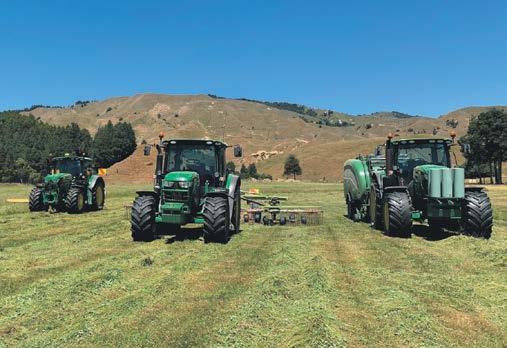
MUDFORD Contracting Ltd
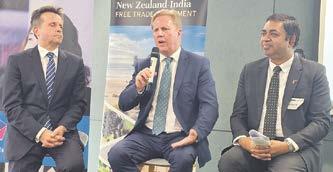
Minister of Trade & Investment Todd McClay, centre, with Vangelis Vitalis, Ministry of Foreign Affairs and Trade chief negotiator and his Excellency Dr Madan Mohan Sethi the Auckland-based Indian Consul General to New Zealand. Photos: Mary Anne Gill
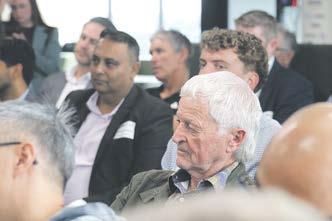
Waikato regional councillor Keith Holmes, a former Federated Farmers president, listens as Agriculture minister Todd McClay outlines the New Zealand-India Free Trade agreement.
Tradition, tourism and farming
For three decades the owners of Nukuhakari Station dreamed of diversifying their income stream by opening their Waikawau farm to tourists. Senior writer Chris Gardner trekked the threeday Nuku Walk and filed this story.
Nukuhakari Station is a longstanding operation that has grown through resilience, adaptation, and a deep connection to the land.
Set on more than 4000 hectares of rugged King Country landscape, the Nuku Walk is drawing attention from the tramping community but the heart of the property and the backbone of the family is still farming.
Hamish Nelson and Bridget St George have managed the property at Waikawau near Awakino for more than 20 years, overseeing a significant livestock operation that includes the wintering of approximately 2800 cattle and 8500 ewes. With an additional 380 hectare block down the road, the scale and breadth of the business require skilled labour, efficient systems, and constant environmental awareness.
Despite its size, the farm is deeply personal to the family.
“I can still remember driving down the road and waking up in the morning just thinking, you know, it’s a pretty special sort of place,” Nelson says.
That appreciation has shaped the way the property is run.
While farming remains central, the couple, like many New Zealand sheep and beef farmers, have faced sharp cost increases and volatile market returns. Rising interest rates, pressure on lamb prices, and extreme
weather events have pushed the business to explore complementary income streams.
The development of a three day walking experience on the farm exists alongside the separate farming operation.
The Nuku Walk was established as its own entity last year, operating alongside the broader family farming business.
Walkers spend a night on the edge of the farm before driving to the point of departure near the station’s Front Bay. The first day takes them 13km across farmland and up to an extinct volcano before skirting the property in thick bush and heading down to Back Bay. Day two is another 13km walk from Back Bay to Front Day, climbing the Nuku Dune en route. The final day includes a climb to the station’s pā before walking back to the start point.
The property celebrated a centenary of farming in 2008.
In the early days stock movements on and off farm were handled by paddle steamer, as there was no road until 1933.
The station was purchased in 1993 by St George’s parents, Peter and Kate St George, alongside several business partners. Over time, the family bought out the other shareholders.
The farm supports several fulltime staff, with family members working alongside shepherds, contractors, and seasonal labourers. The couple value the
Farmers send your cattle to UBP and win!
Every month we have 3 prize draws. Every 3 head qualifies for 1 entry into the draw. Winners receive $300 worth of BP fuel vouchers (conditions apply)
JANUARY 2026 WINNERS
• Hu Farms Ltd - Eltham
• 8 Mile Farms Ltd - Te Kūiti
• Bridge Combe Downs - Te Aroha
CONGRATULATIONS FEBRUARY 2026 WINNERS
• Matahiwi Farms Ltd - Masterton
• 8 Mile Farms Ltd - Te Kūiti
• B & L Vethaak - Owhango
contribution of farming couples, noting that modern rural living often requires two incomes. The introduction of additional employment through the walking business has strengthened the local labour pool, providing more consistent work for partners and family members living on site.
The farm includes more than 2000 hectares of native bush, which the couple protect through a combination of fencing, predator control, and partnership with neighbouring conservation efforts. Historically, possum pressure devastated
sections of bush Nelson vividly recalls a single kohekohe tree where he once shot “10 possums in one tree,” a sign of how depleted the forest had become. Working alongside the adjoining state forest, the farm has participated in coordinated 1080 pest control operations, which have significantly improved bush health. For Nelson, the motivation is simple: people come to the property and immediately sense what he has known for decades that this land is special.
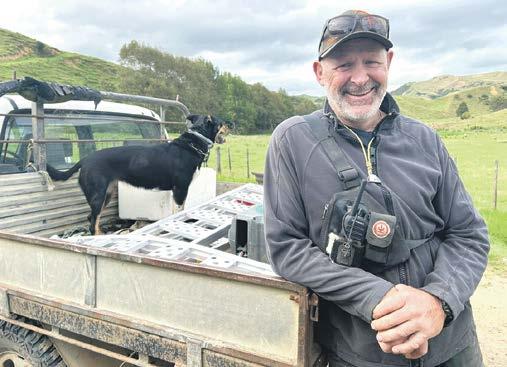
Hamish Nelson has been farming Nukuhakari Station for 20 years with his wife Bridget St George.
Photos: Chris Gardner
Continued next page
“Everyone’s been so appreciative,” he says.
“That English couple this morning said this is the best thing they’ve done in 20 years of travelling here.”
Whether tending stock or welcoming visitors, the couple and their team remain committed to sharing and sustaining a remarkable piece of New Zealand farming country.
Fresh thinking needed
By Liz Stolwyk, Regional Councillor
“The bus stop could be the next hotspot of innovation.”
Public transport in our region is quietly proving its value.
Bus services connecting fast growing towns such as Cambridge and Te Awamutu are seeing increasing patronage.
When reliable services exist, people will use them and that tells us there is real potential to build something much bigger.
But success brings responsibility. If we want more frequent buses, better connections, and a network that genuinely serves our communities, the system must be used.
Public transport cannot thrive on good intentions alone. Patronage drives investment, and communities need to step up and make the network part of everyday travel.
Employers can play a key role. Around the world, businesses are including public transport in staff wellbeing and sustainability initiatives.
Locally, offering Bee Cards as part of employee packages can encourage staff to try buses for commuting.
Equally important is feedback: if routes don’t match work hours or commuter needs, councils need to know so improvements can be made.
Elected members also need to think beyond today’s transport models.
Driverless vehicles, hydrogen powered buses, and smarter digital systems are no longer distant ideas they are already shaping the future. Innovation is essential if our communities are to
remain connected and congestion free.
Growth across the Waikato region continues at pace.
Hamilton is the economic engine, but surrounding towns such as Cambridge, Te Awamutu, Ōtorohanga, Te Kūiti and Waitomo are vital to supporting that growth. Commuting, freight movement, and local travel are putting pressure on both state highways and local roads.
These pressures cannot be solved by widening one road or building another intersection.
The answer lies in an integrated network buses, trains, walking and cycling infrastructure, all supported by technology.
The Future Proof partnership has been crucial in planning for long term regional growth.
But strategy alone is not enough. The focus must now shift to delivery turning plans into action that people can see and use.
The Te Huia train also sits within this conversation.
With a one year extension, there is time to assess its future, but patronage has declined and subsidies remain high. If people want the service to continue, they must use it.
To keep our communities connected, competitive, and free from congestion, councils, businesses, and residents must think differently, embrace innovation, and turn planning into action.
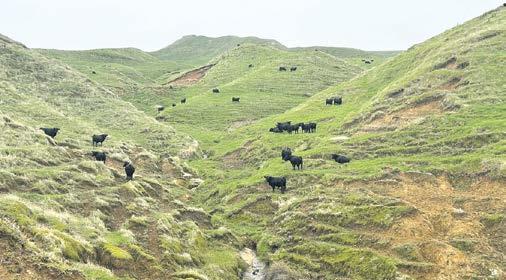
Cattle graze the clifftops of Nukuhakari Station.
A group of walkers ascend from Back Bay on the second day of the Nuku Walk.
Cautious rural confidence
By Jon Rawlinson
Improved profitability, strong meat and dairy prices, a bumper Fonterra payout and recent tweaks to KiwiSaver rules are all positive signals for the sector. At the same time, global uncertainty, including conflict in the Middle East, along with rising input costs, is keeping confidence in check.
Demand for farms has been increasing, including in the Waikato and King Country, but that is only one part of the picture when it comes to rural property, PGG Wrightson sales manager Camron Meade says.
“The rural property market has been positive for the past 18 months or so, particularly in the dairy sector,” he says.
“In spring, there was a build‑up in demand, which created good competition for well‑presented farms.”
Meade oversees the Waikato, King Country and Bay of Plenty markets and says while buyer interest has strengthened, that has not necessarily been matched by an increase in supply.
“Heading into autumn, we’re noticing a reluctance to bring properties to the market,” he says.
“A lot of farmers are holding on because they’re making good money, so that pent‑up demand is building.”
For some farmers, however, current conditions may present an opportunity to sell.
“For the right property, particularly
in the dairy sector, there is a pool of buyers, which creates more of an exit opportunity for people holding that type of land,” Meade says.
Dairy continues to lead the way, supported by a strong farmgate milk price. Fonterra’s sale of its consumer division has also contributed to improved returns, adding further confidence for dairy farmers considering their options.
The sheep and beef sector has faced a different set of pressures, particularly in areas such as the King Country, where forestry has played a significant role in recent years.
“The region was heavily exposed to forestry, and sheep and beef land was closely linked to that,” Meade says.
“There were some very strong hectare rates as a result, but that chequebook has largely been put away now.”
Changes to KiwiSaver rules have been welcomed by Federated Farmers as a step forward for younger farmers looking to enter the market, but Meade does not expect the reforms to have a major influence on rural property values overall.
“It will make things a bit easier for some young farmers, which is positive, but I don’t see it shifting farm values or overall market activity in any significant way,” he says.
Looking ahead, the general election is expected to be a key factor, with some potential buyers and sellers taking a wait‑and‑see approach.
“The election will have a major
AGE OF REASON
impact,” Meade says. “People tend to hold off until they have certainty. From a farming perspective, the outcome will be critical.”
He says recent efforts by the current government to reduce regulation have reassured farmers and supported confidence.
“Any change to that direction would influence attitudes towards buying or selling farmland,” he says.
Another increase in the Official Cash Rate could also have an impact, but Meade says lending conditions remain an important driver.
“With rural property sales, the biggest influence is the banks’ attitude to lending,” he says.
“With debt levels reducing, banks are more willing to lend to farming businesses that are well run, compliant with regulations and investing in modern systems. They are keen to support those types of operations.”
Turning poo back into food
By Richard Steele
Currently from our garden, we are enjoying the most delightful watermelons and cucumbers, along with the more common garden vegetables we always grow, every year. Little gives us more satisfaction, than a salad prepared entirely from what we produce.
Each and every year, I top up our gardens with dry sheep manure, from under the woolshed, where it’s spent a little time ageing.
Each and every year I’m amazed by the quality and taste of what our gardens produce, and the effortless manner in which the new earth turns manure into fine quality tucker.
So having an old but still enquiring mind, I wonder why we can’t ever seem to do better with our own manure.
Why on earth are we not using this resource as the asset it could so readily be. Surely just about anything has to be better than the current state of play, when every effluent treatment plant in the country, is either too small, too knackered, too old to be of any use, and all to expensive to replace.
Partially treat the sewerage, spread it on flat paddocks, and watch the grass grow.
Get over any silly prejudices your mind has, we have been using birdshit on paddocks for hundreds of years. Where do you think super phosphate comes from?
On our first property, we had a source of chook manure and man did it make the land perform. We are still all healthy a hundred years later.
Think outside the square people, be like me, embarrassed, that on one hand we are so bloody clever, but on the other hand, so dumb, that in 2026, we aren’t clever enough, to stop ourselves from ruining the oceons that surround us.
Cities are the obvious problem, congregations of people in small areas, who have no option but to flush and forget.
Out of sight and out of mind.
Rather than look for a more pragmatic solution, the answer to which is staring us in the face. Use the stuff for the good that it can do, rather than come up with another impractical short term way of ignoring the elephant in the room.
We would save enough on our annual fertiliser imports to pay for my new scheme within a year, of it being implemented.
Camron Meade of PGG Wrightson.
Farming excellence celebrated
Two sets of awards this month celebrated excellence across the sector and recognised farmers at different stages of their careers. Mary Anne Gill wraps up the awards.
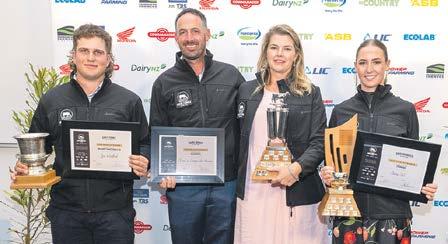
Ōtorohanga dairy manager Annie Gill has been named Waikato dairy manager of the year at this year’s Waikato Dairy Industry Awards, with King Country and Waipā firmly in the spotlight.
The 24‑year‑old, who manages a 56‑hectare dairy farm near Ōtorohanga, took out the prestigious title at the annual awards dinner held in Cambridge, recognising her strong leadership, technical skill and clear pathway toward future progression in the dairy industry.
Meanwhile, Noel and Lorraine Fox of Ōtorohanga were recognised at the Waikato Regional Ballance Farm Environment Awards ceremony in Hamilton, winning both the Livestock Farm and Sustainability and Stewardship awards.
Luke Campion of Hopehill Farm, Cambridge, won the Risk Management Award, while North Waikato sheep and beef farmers Jon and Fiona Sherlock were named overall winners, recognised for their powerful combination of profitability, innovation and environmental stewardship.
Judges at the dairy awards praised Gill’s strong financial literacy, structured career planning and passion for stock work and breeding.
“I’ve always had a shared passion for pedigree cows with my Dad, and I’m lucky enough to live that passion every day,” Gill said.
“I love genetics, breeding and seeing our stock do well for other people.”
Gill has set her sights on becoming a sharemilker within the next two years, with plans to build equity through the sale of Holsteins.
Waipā was also well represented among this year’s dairy award winners, with Cambridge‑based Levi Wesford
named the 2026 Waikato dairy trainee of the year. The 20‑year‑old assistant manager milks 220 cows on a 100‑hectare property near Cambridge and was recognised for his focus on efficiency, technology and ongoing skill development.
Third place in the dairy trainee category went to Renee Teers, 23, a farm assistant on Acacia Farms’ 165‑hectare property in Pukeatua, where she milks 465 cows.
Wesford, who did not come from a farming background, said the awards had played a key role in helping him build confidence and industry connections.
“The awards are a great opportunity to network with rural professionals and leading farmers,” he said.
“I want to set myself up with the skills to run my own business and eventually my own farm.”
Third place in the dairy manager category went to George Eaddy, who works for Kevin and Cherie van der Poel on their 95‑hectare farm at
Ōhaupō, milking 390 cows.
The Waikato Dairy Industry Awards also saw Glenn and Georgie van Heuven of Matamata named Waikato share farmers of the year, alongside the presentation of multiple merit awards across management, sustainability and innovation categories.
Waikato Dairy Industry Awards –Share Farmer: Winner – Georgie & Glenn van Heuven (Matamata); runner‑up – Deependra Parajuli (Waitoa); third – Emma Walton & Jared Van Tiel (Puketaha).
Dairy Manager: Winner – Annie Gill (Ōtorohanga); runner‑up –Danielle Brown (Morrinsville); third – George Eaddy (Ōhaupō).
Dairy Trainee: Winner – Levi Wesford (Cambridge); runner‑up – Abigail McLean (Morrinsville); third – Renee Teers (Pukeatua).
Waikato Ballance Farm Environment Awards: Jon and Fiona Sherlock (Otorohaea), Noel and Lorraine Fox (Ōtorohanga), Willy and Keely Muir (Waiuku), Luke Campion (Cambridge).
Insolvency: Next Steps
It isn’t unusual for a business to operate at a loss, but there is a subtle difference between this and insolvency. Insolvency is the inability for the business to pay its debts as they fall due, or when the business’s total debt is more than its total assets.
The key to navigating this tricky area is tackling the problem early. While it’s fairly straightforward for a creditor to put an insolvent company into liquidation, that isn’t always the best option for them. More often than not, your creditor will be happy to negotiate. This might involve paying the debt off over time.
If you can’t negotiate, then you’re looking at involuntary closure. This might be liquidation, or receivership. Liquidation is a step that can be taken by either the company or its creditors, so in that sense there can be more control over the process. Receivership involves a creditor appointing someone to take possession of the company’s assets and repay the company’s loans. It is often the condition of a loan agreement.
After receivership, the control of the company returns to its directors if the debts are all repaid. If not, then the company may be liquidated.
Jamie Graham
Dairy Industry award winners, from left Levi Wesford, Glenn and Georgie van Heuven and Annie Gill.
NZ Designed Filtration Systems for the Removal of iRon and Manganese and Other Rural Problems
NZ Designed Filtration Systems for the Removal of iRon and Manganese and Other Rural Problems
NZ Designed Filtration Systems for the Removal of iRon and Manganese and Other Rural Problems
• Results guaranteed
NZ Designed Filtration Systems for the Removal of iRon and Manganese and Other Rural Problems
• Fully automated
NZ Designed Filtration Systems for the Removal of iRon and Manganese and Other Rural Problems
• Results guaranteed
• Results guaranteed
• Fully automated
• NZ designed systems tailored to suit your water needs
• Latest in electronic technology , wireless & alert systems
• Fully automated
• Results guaranteed
• NZ designed systems tailored to suit your water needs
• Results guaranteed
• Latest in electronic technology , wireless & alert systems
• Fully automated
• NZ designed systems tailored to suit your water needs
• Servicing the Waikato, Bay of Plenty, Taranaki & Gisborne
• Fully automated
• Servicing the Waikato, Bay of Plenty, Taranaki & Gisborne
• NZ designed systems tailored to suit your water needs
• Latest in electronic technology , wireless & alert systems
• NZ designed systems tailored to suit your water needs
• Latest in electronic technology , wireless & alert systems
• Servicing the Waikato, Bay of Plenty, Taranaki & Gisborne
• Latest in electronic technology , wireless & alert systems
TODAY FOR YOUR NO OBLIGATION FREE SITE ASSESSMENT AND QUOTATION*
• Servicing the Waikato, Bay of Plenty, Taranaki & Gisborne
• Servicing the Waikato, Bay of Plenty, Taranaki & Gisborne
CALL TODAY FOR YOUR NO OBLIGATION FREE SITE ASSESSMENT AND QUOTATION*
CALL TODAY FOR YOUR NO OBLIGATION FREE SITE ASSESSMENT AND QUOTATION*
test report costs not included)
(*water test report costs not included)
CALL TODAY FOR YOUR NO OBLIGATION FREE SITE ASSESSMENT AND QUOTATION*
CALL TODAY FOR YOUR NO OBLIGATION FREE SITE ASSESSMENT AND QUOTATION*