• Commercial law including sale & purchase of businesses
• Commercial leases
• Company law
• Conveyancing Rural, residential & subdivisions
• Estate planning
• Rural law
• Trust law
• Wills & estate administration
• Wind farming
127 Rora Street, PO Box 412, Te Kūiti, 3941
P 07 878 1011 W www.lbllaw.co.nz
E sam@lbllaw.co.nz • katie@lbllaw.co.nz
CONTACTS
News/Editorial
Roy Pilott editor@goodlocal.nz 027
0115
Anne Gill maryanne@goodlocal.nz
viv@goodlocal.nz
janine@goodlocal.nz
Mackenzie david@goodlocal.nz
Office/Missed Deliveries
07 827 0005 admin@goodlocal.nz
Keeping decisions local
While it is great to see councils around the Waikato sharing their views with the public on local government reform, one important opportunity hasn’t been aired.
It is quite possible to both meet the Government’s requirement to form unitary authorities while keeping representation, decision-making and accountability local. The legislation allows for this, has protections to ensure decisionmaking is kept local and Auckland City has successfully adopted this model.
In its least disruptive form, Hamilton City and the district councils within the Waikato could become local boards that are elected by the locals. Local boards are totally different from community boards in that they have a duty to consult and powers to decide local matters. Residents within the local board
areas would then be rated for local services and board members would be accountable through the election box, just as is currently the regime for district and city councils.
If there was one Waikato unitary authority, the election process and accountabilities for the authority would not change from that of the current Waikato Regional Council.
In other words, nothing would change in representation, accountability and rating systems. Citizens would still get to elect representatives for two tiers of local government. All this seems very similar to how councils operate today.
Other arrangements are equally possible. Waipā might be split into Cambridge and Te Awamutu local boards. Similarly, Matamata-Piako District might form local boards around Matamata, Morrinsville and Te Aroha.
By Graham Pinnell
The major difference with the status quo is that services would be delivered by the unitary authority in order to achieve the economies of scale sought by Government.
Conceiving local government reform in this manner keeps “local” in local government while addressing the Government’s intention to improve efficiency, reduce duplication, streamline functions and have clear lines of accountability.
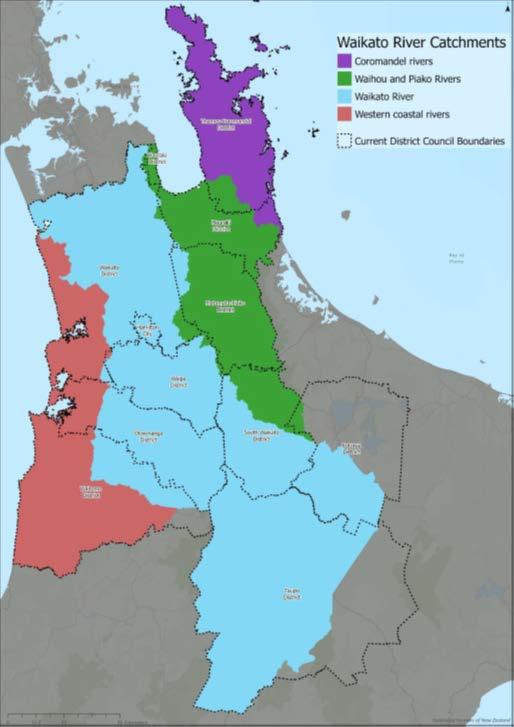
Any proposal to create more than one Waikato unitary authority needs careful consideration, particularly when boundaries split communities of interest or river catchment boundaries. Take for example Waitomo’s proposal to form a King Country unitary authority with Otorohanga.
Combining the communities makes perfect sense but creates challenges in regulating WaipaWaikato River water takes and discharges. This demands a whole of catchment approach.
A joint committee between King Country and other unitary authorities in the catchment would be required. This is not ideal as it invites two camps having entrenched positions.
A separate service provider organisation may need to be formed with its own overheads, so greater complexity could result, which the Government wants avoided.
A desire that seems to be commonly expressed by both the residents of Hamilton City and those in the remainder of the Waikato is for the city to have its own unitary authority. The same issues arise as for the King Country proposal. Maybe the local board option that includes Hamilton as a local board addresses some of those concerns.
One option of merit is to form two unitary authorities split by the eastern boundary of the Waikato River. ThamesCoromandel, Hauraki and Matamata-Piako could comprise an eastern authority and Waikato District, Hamilton City, Waipā,
King Country and Taupo might form a western authority. South Waikato District is split in half by the catchments, so would need to be accommodated in one or other authority. However, the benefits of two authorities compared with a single Waikato authority are not apparent.
The current combined turnover of Waikato councils is $1.7 billion per year. This cost needs to be slashed from Day 1 if the economies of scale are to be realised. Excellent governance will be required. Ratepayers need relief to provide headroom for the anticipated large costs in bringing the 3-water services up to scratch.
The mayors certainly have a challenge on their hands to navigate through these and many more complexities. Agreement will only possible if they and all others taking an interest in the reform look at what is best for the Waikato and not act in the interests of individual districts.
• Graham Pinnell is a Waipā farmer who owns and operates a drystock farm in the Whitehall area near Cambridge. He is a former national board member of Federated Farmers and involved in the Waikato branch.
New bridge
A new bridge is helping future-proof SH43 Forgotten World Highway, supporting more reliable journeys on this iconic route which links Taumarunui and Stratford.
The 20-metre bridge is also important for Whangamōmona and its tourism operators and has been built as part of the NZ Transport Agency Waka Kotahi priority bridge replacement programme.
The Forgotten World Highway is one of New Zealand’s iconic back country journeys and an important link for local communities, farms, businesses and visitors.
TRUSTED LOCAL OPERATORS
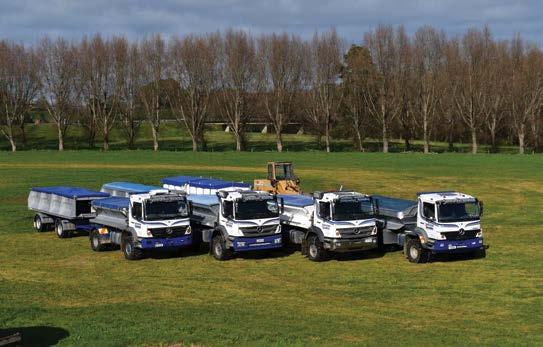
AirSpread is a locally owned and operated aerial spreading (topdressing) company based in the beautiful King Country.
A unitary council based on catchments.
Briefs
Clayton third
Waikato Bay of Plenty finalist
Cam Clayton finished third in the Young Farmer of the Year grand final in New Plymouth. Clayton was among seven regional champions competing for the national title, finishing behind winner Tom Slee of Otago Southland and runner-up Jack Taggart of Aorangi after a demanding programme of practical, technical and leadership challenges.
Regional success
Fonterra’s Waikato sites have been recognised among the co-operative’s top performers, collecting multiple honours at the annual Best Site Cup awards. Waitoa and Reporoa were standout winners, while other sites earned recognition for excellence in efficiency, sustainability, quality and teamwork. The awards highlight the region’s important role in processing New Zealand milk.
Leadership shift
South Canterbury farmer
Colin Hurst has been elected Federated Farmers national president, with Gisborne farmer Sandra Faulkner named vice president. Hurst, a former vice president and long-time industry advocate, says he will focus on ensuring farmers continue to have a strong voice as the sector faces regulatory, economic and environmental challenges.
Rising leader
Waikato sharemilker Danielle Hovmand has been named the primary sector’s top emerging leader. Recognised for her commitment to leadership, community building and advocacy, Hovmand has helped support young farmers and strengthen rural networks. Her award reflects a growing reputation for combining practical farming experience with a passion for helping others succeed.
Caught in limbo…
For more than a decade, Waikato-King Country farmers have lived with the uncertainty of Plan Change 1. Mary Anne Gill was at Mystery Creek to hear what two senior ministers had to say about its future.
The questions were respectful, but the concern was unmistakable.
More than 350 farmers from the Waikato, King Country and South Auckland gathered at Mystery Creek last week seeking answers on Plan Change 1, a planning process that has stretched over more than a decade and remains unresolved.
For King Country farmer Reon Verry, the debate is not about whether farmers should improve the environment.
It is about whether farmers should spend time and money complying with rules that could be replaced before they are fully implemented.
The Waikato Federated Farmers meat and wool chair
Verry supports cleaner waterways and has invested heavily in environmental work on his property south of Te Kūiti, where his family has fenced 45 kilometres of waterways and native bush, alongside extensive planting projects.
“What we’re not happy about is there’s a whole lot of farmers that will need resource consents that may become redundant under the replacement to the RMA.”
Verry said Plan Change 1 would create an escalating compliance burden, particularly for farmers in the Whangamarino Wetland catchment where obtaining resource consents would be more difficult and expensive.
Farmers would face farm plans, certification, consent
Farmers were already planting trees, fencing waterways and working through farm environment plans.
What worries many farmers is the prospect of spending limited resources on duplicated paperwork instead of practical environmental action.
The concern is not confined to one catchment.
Federated Farmers argues Plan Change 1 will introduce significant new requirements across the Waikato and Waipā river catchments, affecting more than 4500 farms and potentially restricting future land-use changes.
Veteran Federated Farmers campaigner Graham Pinnell of Cambridge said farmers
What is Plan Change 1?
Plan Change 1 is a Waikato Regional Council plan aimed at improving water quality in the Waikato and Waipā river catchments by reducing contaminants such as nitrogen, phosphorus, sediment and E. coli entering waterways. It introduces new farming rules, farm environment plan requirements and, for some farmers, resource consent obligations. Last month, the Environment Court largely upheld the plan, directing the council to make 20 changes before the plan becomes operative.
replacing the Resource Management Act.
McClay acknowledged those concerns and repeatedly stressed the government wanted to work with farmers rather than impose rules on them.
New Zealand’s primary sector was forecast to achieve record export returns, he said.
Farmers needed a regulatory system that supported production while still delivering environmental gains.
“The farming community across the Waikato is up for working hard to improve water quality,” McClay told The News.
“They just want certainty, good rules that support them, don’t just penalise them.”
The government now had an opportunity to examine Plan Change 1 more closely because the court process had reached a point where ministers could see the likely direction of travel.
“It does not make sense for Waikato farmers to have to use a system under the old RMA when there is a new one that will be adopted before the election,” he said.
Bishop delivered a similar message, acknowledging the awkward timing created by a planning process that began a decade ago and is colliding with wholesale reform of New Zealand’s resource management laws.
He told The News he was aware of farmers’ anxiety.
The government was considering how Plan Change 1 would fit with the replacement planning system now before Parliament.
“What we don’t want to do is find ourselves in a situation where people have to operate in one system for like 18 months or even in some cases under one set of rules and then the whole system changes.”
Bishop did not rule out pausing Plan Change 1 while the new planning framework was implemented.
“Everything’s on the table,” he said adding that parts of Plan Change 1 appeared inconsistent with the government’s direction, particularly around commercial vegetable growing and the greater reliance on farm plans proposed under new legislation.
That may have been the most important message of the day.
For now, Plan Change 1 remains in limbo, leaving farmers waiting to see whether years of uncertainty will finally give way to a planning system that delivers the certainty they have been promised.
• See: Regional Council view, page 4
King Country sheep and beef farmer Reon Verry.
Expect government to act
The release of the Environment Court decisions on Plan Change 1 has left many farmers and rural communities wondering what comes next.
My personal view is that it would make little sense for the government to allow Plan Change 1 to continue unchanged while it is fundamentally reforming New
By Liz Stolwyk
Zealand’s resource management system. The government has been clear that the Resource Management Act is being replaced with a new planning framework and to expect it before the election. Allowing one of the country’s most significant freshwater plans to collide with those reforms would create uncertainty, inconsistency and unnecessary cost. This is a view also shared by many rural advocacy groups who are currently lobbying MPs – a no brainer surely!
I would be surprised if we didn’t see a government announcement very soon.
Whatever happens next, we must not lose sight of the environmental progress already being made on the ground.
Recently, Cr Keith Holmes and I had the privilege of visiting the Waipā Rere Noa Catchment Restoration Group with Matt Holwill and Rosemary Davison. Seeing their work firsthand was both inspiring and encouraging. Thank you to Matt and Rosemary for taking the time to show us around the catchment and the impressive results being achieved through local leadership and community commitment. The numbers speak for themselves.
More than 350,000 native trees have now been planted throughout the catchment, with an incredible 200,000 planted by farmer members. These are not projects being imposed from above. They are being driven by people who live, work and farm in the catchment because they genuinely want to leave their environment in better shape than they found it.
This success has also been made possible through the ongoing support of the Waikato Regional Council, whose funding and technical assistance have helped community groups turn good intentions into measurable environmental outcomes.
But restoration is only half the challenge.
Protecting the millions of dollars already invested in native planting means confronting the growing threat of invasive weeds. Left unchecked, weeds can quickly undo years of hard work, choking out native species and reducing the health of our waterways.
Waipā Rere Noa’s funded weed control programme is a great example of how practical action delivers results. Through weed control demonstrations, education and community involvement, the group is changing attitudes, building knowledge and giving landowners the confidence to tackle invasive species before they become an even greater problem.
This is exactly the role councils should be playing — enabling communities, supporting local leadership and investing where it delivers real environmental gains.
The debate around Plan Change 1 has often become polarised. Yet what I saw in the Waipā Rere Noa catchment reminded me that the best environmental outcomes come through partnership, not simply regulation.
As the government considers the future of freshwater policy alongside its wider RMA reforms, I hope it recognises what is already working. Community-led initiatives like Waipā Rere Noa are proving that environmental improvement, productive farming and prosperous communities can go hand in hand.
That’s the future we should be building on.
Cost pressure
Strong milk prices and record production are supporting dairy farm profitability, but rising costs remain a concern, according to DairyNZ’s latest economic update. Increases in fuel, fertiliser, feed and freight costs are expected to lift breakeven prices and place pressure on margins. Farmers are being encouraged to prepare for ongoing cost volatility.
Leaders honoured
Two respected rural leaders have been recognised at the Primary Industries Awards. Dairy industry leader Jim van der Poel received the Outstanding Contribution Award for decades of service to the sector, while Neil Bateup was presented with the Champion Award in recognition of his longstanding commitment to supporting rural communities and wellbeing initiatives.
Layer hen review
Farmers, industry groups and the public are being invited to provide feedback on proposed changes to New Zealand’s code of welfare for layer hens. The draft updates include changes to housing definitions and stocking density standards, with a focus on bird flu preparedness, evolving farming practices and maintaining strong animal welfare outcomes. Consultation closes on August 14.
Pasture boost
Waikato ag-tech company
Aimer Farming is preparing to launch its AI-powered pasture measurement technology in the United Kingdom. Developed in New Zealand and already used on more than 650 farms, Aimer allows farmers to measure pasture using a smartphone video, helping improve grazing, feed and rotation decisions.
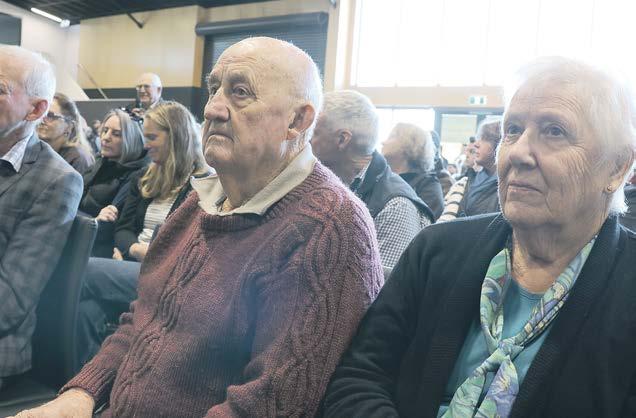
Tamahere farmers Ian and Michele Alexander listen as in the background Cambridge farmer Bill Garland, a long-time environmental pioneer, puts the case for Plan Change 1 to be paused. Photo: Mary Anne Gill
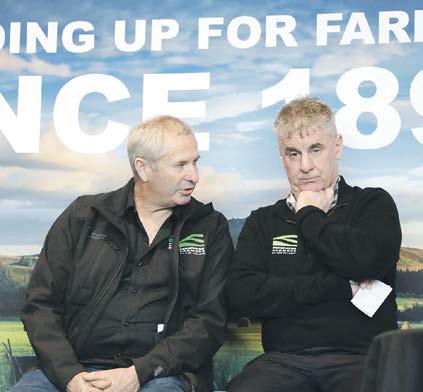
Federated Farmers Waikato provincial president, North Waikato farmer Chris Woolerton, left, with national president, South Canterbury mixed arable and dairy farmer Colin Hurst at the Mystery Creek meeting. Photo: Mary Anne Gill
Shaking up berry harvests
A young Waikato innovator has developed technology that could help blueberry growers improve harvest quality, reduce fruit loss and get more from their existing machinery, writes Jesse Wood.
Thomas Hocking knows first-hand how small adjustments to harvesting equipment can have a big impact on fruit quality and orchard returns.
The 20-year-old Waikato University mechanical engineering student has worked in commercial blueberry harvesting and, rather than accept the problem, set about solving it.
He has developed a system that uses artificial intelligence to assess blueberry ripeness in real time and automatically adjust harvester settings to optimise the mix of fruit being collected.
The technology aims to help growers harvest more ripe berries while reducing the number of green or damaged berries entering the packhouse.
“I worked in harvesting for several years and saw how much depended on the operator making constant adjustments throughout the day,” Hocking says.
“Drivers can be working long hours and small changes in machine settings can have a significant impact on the crop that’s picked.”
The idea was born after Hocking analysed the harvesting process while working at
Blueberry Country in Ōhaupō.
He assembled a team with engineering, software and mechatronics expertise to develop the concept, building and testing a series of prototypes over the past year.
The team showcased the technology in the Innovation Tent at Fieldays last month.
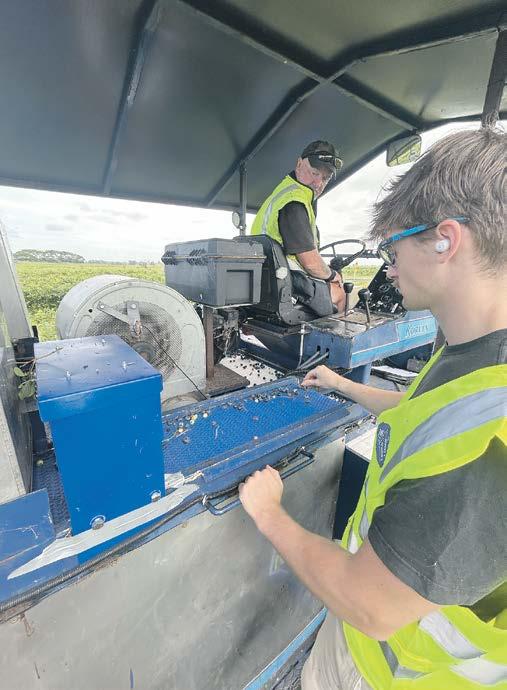
Their system retrofits onto existing harvesters, using an AI-powered camera module mounted above the conveyor belt.
The camera scans berries as they are harvested, identifying whether fruit is ripe, unripe, damaged or overripe. That information is fed into an algorithm which automatically adjusts the harvester’s shaking intensity.
“If the machine is shaking too hard, it can bring off too much green fruit and damage the plant. If it’s too soft, you’re leaving fruit behind,” Hocking says.
“The goal is to keep the harvest operating in the optimal zone without the driver needing to constantly intervene.”
The technology is designed to improve efficiency without replacing workers.
“This doesn’t replace jobs. It just makes people’s jobs easier and helps improve harvest performance.”
A major advantage is that growers can continue using their existing machinery rather than investing in a fully automated harvester, which can cost hundreds of thousands of dollars.
“Most growers can’t justify the cost of replacing harvesters, so we’re focused on providing a more affordable upgrade path,” Hocking says.
He believes practical industry experience has been essential to developing the technology.
“Working on farms and understanding the challenges operators face every day has been really important. Equipment needs to be reliable, rugged and simple to use.”
The team hopes to have the product commercially ready for next season.
Beyond harvesting, Hocking sees opportunities to expand into wider farm technology services including connectivity, analytics and on-farm monitoring tools.
“I’d like to keep helping growers become more efficient. That’s what motivates me.”
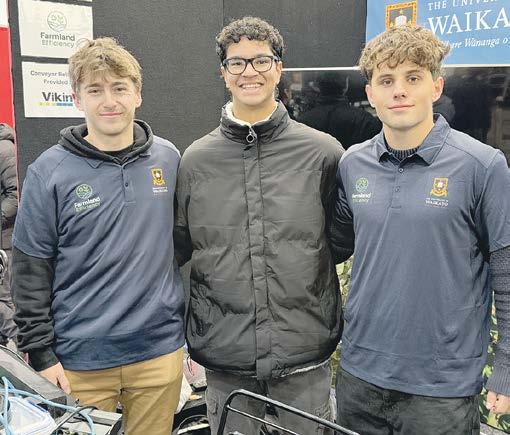
Thomas Hocking, left, with Caleb Fernades (mechanical engineering) and George Dixon (mechatronics engineering) in the Fieldays innovation tent.
Photo: Jesse Wood
Thomas Hocking’s product uses Ai to assess berry ripeness in real time and automatically adjusts harvester shaking intensity to optimise fruit quality.
Photo: Supplied
A story in every sip…
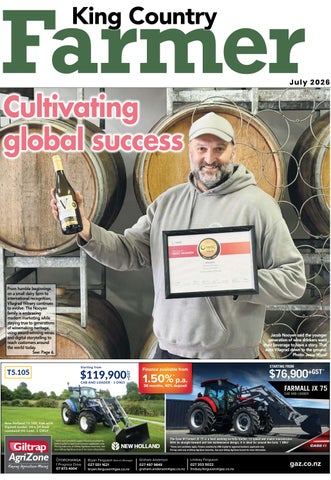
A world-beating Pinot Gris has put Vilagrad Winery in the spotlight, but generations of family farming, grape growing and storytelling continue to drive the Ngāhinapōuri business, writes Jesse Wood.
Tradition has underpinned Vilagrad Winery for generations.
The Ngāhinapōuri winery recently claimed a major international accolade, with its
2025 Pinot Gris winning gold at the International Wine & Spirit Competition in London. Producing premium wine grapes in the Waikato presents its own
challenges, with growers working around seasonal frosts, rainfall and changing weather patterns to achieve consistent quality.
“We’ve won over 120 awards for the wines that have been produced here on site in the Waikato,” fourth-generation Vilagrad winemaker and grape grower Jacob Nooyen says.
“People think we’re buying the grapes in and making them here. No, these are wines that have been grown, produced and made here.”
The family’s connection to the land dates back more than 100 years.
After emigrating from Croatia, founder Ivan Milicich Snr began growing grapes on his Ngāhinapōuri dairy farm and obtained a licence to make and sell wine in 1922.
Five generations later, the family remains hands-on in both the vineyard and winery.
competitions.
The beverages are judged by a panel of leading international wine and spirit experts.
“The results came through and I realised we were the only one that had been awarded a gold,” Jacob says. “The gold award is rare – it hasn’t been given to anyone for about five years. That means it’s even more valuable.
“In previous years, we’ve had two bronzes. The standout one for us was a silver medal for the dry Pinot Gris 2021. That was the highest awarded silver and there were no golds.
“It’s incredible. It’s an honour to receive such a prestigious prize. It was a very pleasant surprise.”
Jacob says it’s neat to have the accolades to go alongside their hard work. Now it’s time to push into overseas markets.
of producing Pinot Gris here in the Waikato.
“My ideal situation would be to head over to the awards dinner in November and make some serious contacts overseas that can help us with distribution in the UK.”
Once distribution in the UK has been sorted, social media will play a big part in breaking their story to the world.
In a very diluted market with storied wines from the likes of France, Italy, Germany and Austria, it’s important to have a point of difference and to keep with the times.
Their online presence will help them get through to the next generation of wine connoisseurs across the globe.
“The social media aspect in general is playing a huge part in our business now on both fronts, restaurant and winery,” Jacob says.
“There’s a world of knowledge to learn.
The International Wine & Spirit Competition attracts more than 12,000 entries from more than 90 countries and is regarded as one of the world’s most respected wine
“We’ve always done well in the national competitions. That’s where most of the awards come from. It wasn’t until recently that I decided to start entering them into the London competition,” Jacob says.
“To have that come back tenfold, it shows the consistency
“You can target your markets, you can target what demographic, what region. It’s mind boggling, but it’s something that we have
Continued next page
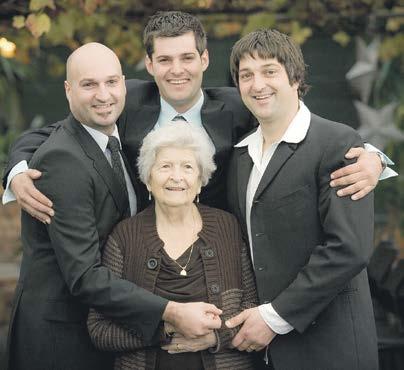
Jacob, Adam and Kristian Nooyen – the 3 Brothers – with their late Croatian grandmother Vesna Milicich who died in January 2020. Photo: Supplied
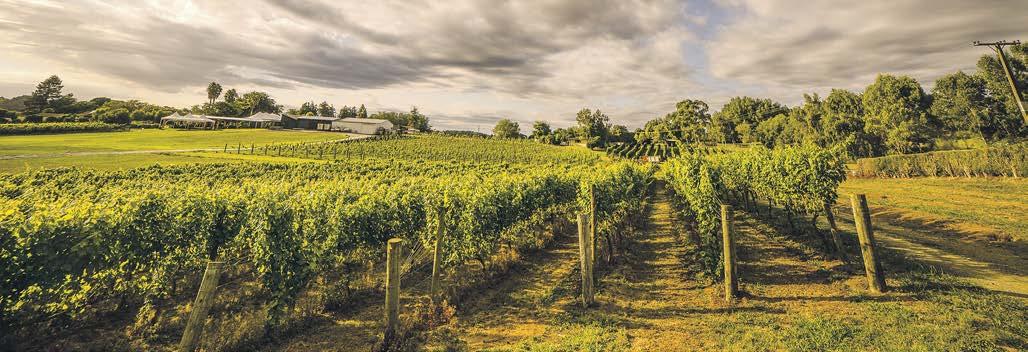
Vilagrad in Ngāhinapōuri was once a dairy farm but now produces award-winning wines.
Photo: Supplied
Farmers send your cattle to UBP and win!
Every month we have 3 prize draws. Every 3 head qualifies for 1 entry into the draw. Winners receive $300 worth of BP fuel vouchers (conditions apply)
CONGRATULATIONS
MAY 2026 WINNERS
• G.B.S Farming - Foxton
• JR Moody - Opotiki
• EF Deadman - Taupo
CONGRATULATIONS APRIL 2026 WINNERS
• Opie Family Trust - Te Kūiti
• Arran and Isla Trusts Partnership - Te Awamutu
• Waitea Station Ltd - Taumarunui
Universal Beef Packers Ltd buyers are
● Peter Knowles, Stock Co-ordinator, Te Kūiti - 07 878 5160 or 021 798 097