Owner/Publisher David Mackenzie david@goodlocal.nz
Office/Missed Deliveries
07 827 0005 admin@goodlocal.nz
Backing the next generation
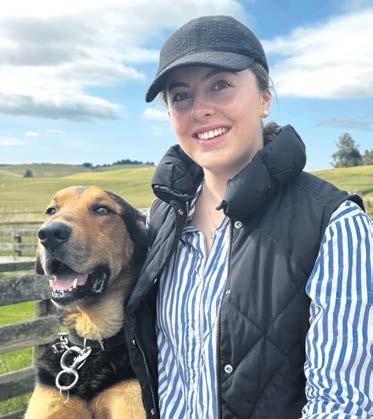
A farming student from Waotu, a rural community southeast of Ōtorohanga, has been recognised as an emerging leader in New Zealand’s sheep and beef sector.
Penny Ranger (Ngāti Raukawa) is one of 10 recipients of the inaugural 2026 Beef + Lamb New Zealand (B+LNZ) Agricultural Student Scholarship, an award supporting the next generation of people entering the red meat sector.
The scholarship provides $1500 to students who have successfully completed at least one year of agricultural‑related tertiary study at institutions including Lincoln University, Massey University, Otago University and Telford.
Waotu sits on the eastern edge of the King Country, bordered by the Waikato River at Lake Arapuni, and is surrounded by high‑producing rolling farmland supporting dairy, sheep and beef operations.
Growing up in the area, where she was raised on a sheep and beef farm, helped shape her interest in agriculture and its future.
She is currently studying a Bachelor of Commerce (Agriculture) at Lincoln University, combining her interest in practical farming systems
with business and financial management.
“I’m passionate about agriculture and business, and this course allows me to combine the two,” she said.
“It gives a well‑rounded understanding of farm systems alongside the financial side of the industry.”
As part of the scholarship programme, recipients also take part in a structured mentorship with senior industry leaders, designed to build professional capability, real‑world insight and sector connections.
National extension programme manager Olivia Weatherburn said the programme was an important investment in the long‑term future of the sheep and beef sector.
“We were blown away by both the quality and quantity of applications,” she said.
“This year’s recipients show real passion, determination and a genuine desire to make a positive impact in our industry.”
Ranger hopes the scholarship will help her gain deeper insight into the red meat sector and strengthen industry connections as she plans her career.
Her current ambition is to pursue a graduate role within agribusiness banking or the
meat processing sector, with the long‑term goal of contributing to a resilient and productive farming industry.
Outside her studies, Ranger remains closely connected to farm life and is also the founder of a small business, Mark It Drench Gun, a Kiwi‑designed
REGIONAL COUNCILLOR’S VIEW
Balancing rates and
One of the main workstreams since my last report was to complete our annual plan.
While it looked as though there would be a rates’ increase of 3.4%, a lot of work and careful decisions, has seen this figure land at an annual rate rise of 1.4%.
That is a total budget of a little over $157 million. Before the final meeting, whereby the full council grant sign off, sub committees do a lot of work on their respective budgets.
The more conservative increase was managed by scrutinising where surpluses currently existed, or where we were able to draw on reserves.
Regional transport and catchment management are the two big ticket items, at around 65% of the budget.
The Te Huia commuter train to Auckland has been given one more year of trial, to see if it can improve both passenger
risk
attachment that integrates with drench guns to allow accurate, single‑handed animal marking. In 2024, while in her final year of school, she was named Young Innovator of the Year at the National Fieldays Innovation Awards. – additional reporting Mary Anne Gill
By Garry Reymer, Waipā-King Country regional councillor
numbers and fare box recovery, currently at about 18% of running costs.
Catchment management is the other very important area of responsibility for the council.
The recent flood events have brought this home to the people of Waipā and King Country.
For a long time, we thought that floods, slips and road closures only happened in the Coromandel. We need to be sure that we budget well to make certain our infrastructure is fit for purpose, and we can handle what nature throws at us.
A discussion we need to have is: what level of protection are we willing to fund?
To build stop banks for the more regular but less extreme events, is less of a financial burden than building to the protection levels for a 1 in 200 year event.
The difference can be billions of dollars as
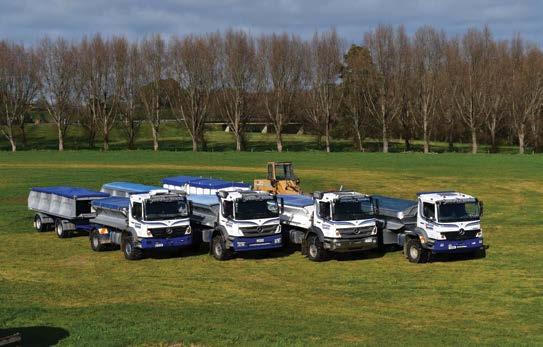
AirSpread is a locally owned and operated aerial spreading (topdressing) company based in the beautiful King Country.
we saw with the Cook Strait ferry debacle. I don’t believe any council or government can ever give its citizens a guarantee that they will be fully protected from natural disasters. However, we have a responsibility to deliver quality infrastructure to a level and price that ratepayers can afford. This is done by ensuring that we invest wisely on things that produce tangible results.
I feel that as a council, the best investment is to focus on the effects of climate (climate change protection) rather than climate change prevention. To do the latter is somewhat futile, as despite our best efforts to reduce emissions in our regions, the global nature of this challenge means our investment would have a negligible impact on improving our position.
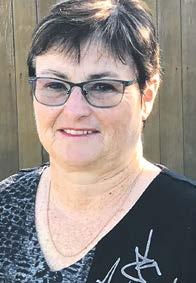
Penny Ranger hopes her scholarship helps her gain deeper insight into the red meat sector.
Weaner prices power ahead
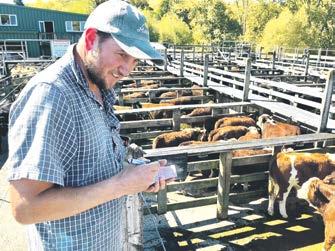
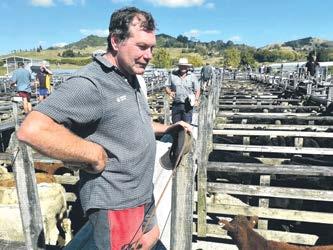
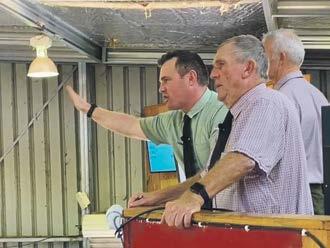
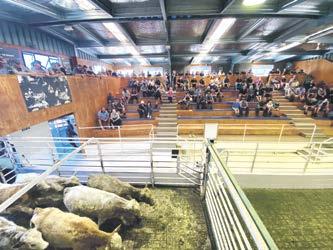
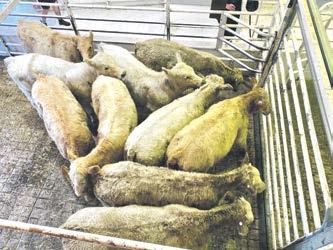
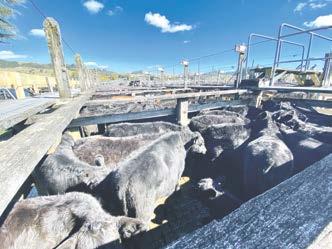
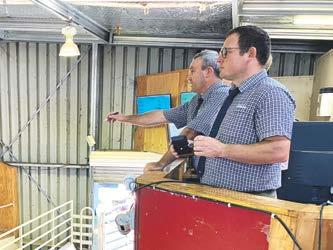
We sent Dan Tasker to the Te Kūiti Saleyards with his camera last week to capture the action at the weaner steer and bull sale, where 749 cattle sold for an average price of $1719.13.
National market reports describe the autumn weaner market as “supercharged”, with prices commonly $500 to $700 a head higher than last season. Analysts attribute the lift to strong demand from finishers, firm beef schedules and generally abundant autumn feed, with steers in some centres making $7-$8/kg and premium lines exceeding $2000 a head.
Deutz 6165RC 2023 with only 1800hrs. 50kph. Quicke loader.
$130,000 +GST
McCormick CX85
Solid all-rounder with Quicke loader, 6128 hrs.
$34,900 +GST
John Deere 5083 Nice compact 80hp tractor with only 1500 hrs.
$29,900 +GST
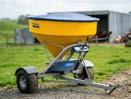
Vogal EX750 Simple, reliable 750L capacity spreader. Built to last.
$4,900 +GST
centre
For the first time in its history, Fieldays will have a central function space designed to put major events in full public view and Fieldays chief executive Richard Lindroos says it marks a turning point for Mystery Creek. The new Fieldays Function Centre, created on the Village Green, will host high‑profile lunches, breakfasts and international events during Fieldays week, bringing political leaders, diplomats and industry figures into the heart of the site rather than tucked away on the fringes.
Gongs presented Agricultural leaders Lloyd Downing and Neil Bateup were presented with their New Year’s honours by governor general Dame Cindy Kiro at Government House in Auckland last week. Downing was made an Officer of the New Zealand Order of Merit (ONZM) for his services to agriculture and governance. Bateup became a Companion of the New Zealand Order of Merit
Leadership in focus
Two Taranaki farmers –LeAnne Blakelock and Rachel Short – and Hinehou Timuti, general manager at Te Tawa Kaiti Lands Trust in the Bay of Plenty are finalists for the Dairy Woman of the Year award. The award, run by Dairy Women’s Network in partnership with Fonterra, recognises women who are making a tangible contribution to dairying through leadership, innovation and service to their communities.
See page 5.
Paying off New Zealand dairy farmers are making more informed, strategic breeding decisions, and it’s paying off. CRV managing director James Smallwood says the industry is finally seeing the lift in herd genetic gain it has been pushing for, driven by greater use of genomic young sires and a shift toward breeding replacements only from the best cows.
Te Kūiti sheep and beef farmer Joe Casey runs his eyes over a pen of weaner steers.
Piopio farmer William Ronaldson on the lookout for some cattle.
Carrfields auctioneer Ben Deroles, left, in full voice during the weaner steers and bull sales.
The crowd builds in the sale ring
A pen of Charolais weaner steers ready for sale.
Bidding begins under the watchful eye of PGG Wrightson auctioneer Jye Bates, left.
Angus weaner steers penned up and ready to go.
In the
(CNZM) for his services to the rural sector.
Pollination keeps bees working
A Waikato beekeeping couple is keeping their operation viable by prioritising pollination over honey production, writes Viv Posselt.
When Waikato beekeeper Celso Baldo compares early honey yields with today’s output, the scale of change is stark.
“From the 21 hives we started with, we got two drums of honey,” he said.
“Now, we cannot get even a single drum.”
Like many in the industry, Celso and wife Maria have watched varroa mites, rising competition and shrinking returns force a rethink of how they keep their beekeeping business viable.
The couple started their business, Marcel and Sons Honey, around 15 years ago.
They were well trained for the task, both in their home country of the Philippines and here in New Zealand.
Celso, who is a forester by profession, had worked for the Philippines’ Department of Agriculture. His interest in bees began when he was working on a three year beekeeping project funded by the European community.
Later, after meeting environmental planning graduate Maria through work, he took a job with a queen breeding farm in Queensland. Maria joined him for his second season there before the couple took up an opportunity in New Zealand.
They spent four years beekeeping in Galatea, adding to their apiculture skillset through Telford Rural
Polytechnic. Celso completed a Certificate in Apiculture Knowledge and Maria a Certificate in Queen Bee Rearing Knowledge. When they moved to the Waikato, they worked for a Hamilton based commercial beekeeper and soon began their own operation just outside Cambridge.
A recent report from the Bioeconomy Science Institute estimated that almost 13 per cent of the country’s roughly half a million bee colonies were lost last winter. Those who took part in the study attributed most of the losses to the varroa mite parasite, known to seriously weaken or destroy entire colonies.
Celso agrees and said the persistence of the varroa mite is worsened by its growing resistance to counter measures.
Also impacting home based producers like the Baldos is the increased number of beekeepers who came on stream after a Covid related ban on the importation of honey products prompted a surge in local operators, all competing for the same nectar sources.
Celso and Maria value their well established links to farmers and orchardists in this area, so while they now live in Putāruru where they purchased a house they still work the business from here and hold down jobs as healthcare assistants at Cambridge Resthaven.
Their youngest son Barry has two more years to go at Cambridge High School, and his older brother Paulo, has just graduated in engineering from Waikato University.
“Our hives are still here. We now focus more on the pollination side than on the production of honey and its by products,” she says.
Celso said without the pollination side of the operation, it would be difficult to keep the business going. Their intimate knowledge of bees helps them focus on sourcing the best queens, ones in hives that are clean, productive and in which the bees are non aggressive.
The Baldos’ story is one of migrants making good. The couple has always valued education and have made the most of every opportunity to expand their own and encourage the spread of knowledge about bees.
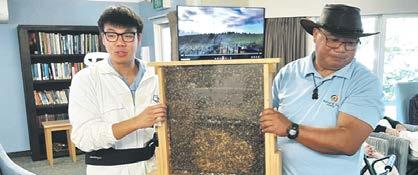
During the Covid lockdown, they took further qualifications in dementia care through a government funded programme. By then, they had already compiled their ‘World of Bees’ presentation, which includes the safe showcasing of an observation hive with live bees, basic beekeeping gear and equipment, the showing of a video on kiwifruit pollination prepared by their sons and open discussion on bees and their importance in the ecosystem. They launched that in 2019, taking it to local rest
homes. It was stopped during the Covid pandemic but resumed in 2023 to an expanded list of aged care facilities across Cambridge, Putāruru, Hamilton and Huntly. They also make themselves available to give their ‘World of Bees’ presentation to schools and other groups.
“Promoting education is our advocacy,” says Celso.
“Even though our business is small, we are committed to promoting beekeeping education and awareness to the community.”
Their message, they say, is simple: healthy hives, informed communities, and pollination services remain critical to the region’s farming future.
Still time
Nominations close tomorrow for any outstanding native forest initiatives for the Growing Native Forest Champions awards. Now in their second year, the awards recognise individuals and organisations leading the establishment and restoration of native forests across Aotearoa New Zealand. They celebrate practical, on‑the‑ground efforts that support biodiversity, strengthen land resilience, and deliver enduring environmental and economic benefits.
Tax implications
Fonterra farmers have approved the scheme of arrangement for the capital return that’s expected from the sale of its global consumer and associated businesses.
Fonterra has obtained a binding ruling from Inland Revenue that the amount paid to shareholders under share buyback arrangement will be treated as a return of capital and not as a dividend for income tax purposes. This means the proceeds will not be taxable in shareholder’s hands.
Farm purchased Braden and Brigitte Barnes have taken the leap into farm ownership to purchase their first farm after being one of three recipients last year of the inaugural Fonterra and ASB First Farm award at the New Zealand Dairy Industry awards last year. The couple have bought a 200ha grazing block in Sheffield, Canterbury, with an existing consent to convert to dairy. The couple – who got up to $1 million of ASB Business Term Lending fixed at 1% per annum for three years, along with a Fonterra launch package that includes $20,000 of Farm Source account credit to drive productivity and sustainability, mentoring, and additional support to help them successfully transition into ownership plans to convert, milk 600 650 cows, and supply Fonterra in the next 18 months.
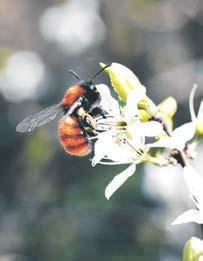
Close up of a bee on a flower. Photo: Thijs van der Weide, pexels.com
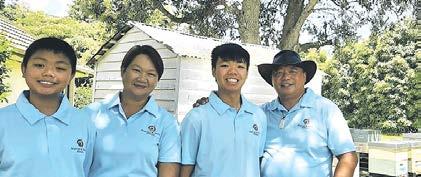
Maria and Celso Baldo, pictured with their sons Barry and Paolo, with some of their hives in Cambridge.
Sons Barry and Paulo have a sound working knowledge of their parents’ bee operation. Here, Paulo and Celso work together during a presentation at an aged-care centre.
Sheridan brings global insight
Pirongia based dairy leader Jo Sheridan put international experience into practice as record crowds turned out for Owl Farm’s annual open day, where she spoke to Mary Anne Gill.
Fresh from a tour of United States dairy farms, Jo Sheridan was on home ground on Saturday, translating global experience into practical farming conversation.
Sheridan last year’s Fonterra Dairy Woman of the Year was at the centre of the action as record numbers poured into Owl Farm, part of St Peter’s School Cambridge, where she is demonstration manager. By late morning, between 700 and 800 people had passed through the gates the largest crowd the demonstration farm has ever hosted.
Visitors came to walk paddocks, talk cows, ask questions and see how theory plays out in practice. For Sheridan, it was an opportunity to demonstrate the systems thinking she has gained internationally and how it applies under New Zealand conditions.
Beside her, three‑year‑old labrador Emjay Sheridan, fast becoming one of the farm’s most photographed residents, soaked up the attention
That international experience underpinned discussions throughout the day, particularly as Sheridan reflected on a season she described as “chalk and cheese” compared with the one before.
“We’ll be about 30,000 kilograms ahead of last season,” she said, gesturing toward paddocks still holding plenty of feed.
“That’s just due to really good rainfall and a lovely summer. Last year we were right in the middle of a drought. It was tough,” she says.
The difference shows. Grass cover remains strong, cows are in good condition and the system has shifted to once‑a‑day milking as the end of the season approaches.
Heifers start calving in late June, the main herd on July 1, and the last cows are expected to leave the shed by about May 10.
Owl Farm will milk about 317 cows next season, down from around 360 this year, but production is still expected to be more than 25 per cent higher, likely finishing above 160,000 kilograms of milk solids.
With Fonterra’s planned capital return to shareholders following the sale of its global consumer businesses, attention is turning to infrastructure at Owl Farm.
The cowshed is 47 years old.
“One of our priorities is how we future‑proof it,” Sheridan says. “We want to put that money into productive outcomes.”
On a day when record numbers turned up to see how the system works, that focus felt timely.
Balance right
New research suggests New Zealand farmers are broadly matching phosphorus fertiliser use to the needs of their soils, helping maintain relatively stable nutrient levels across the country’s agricultural land. Recent master’s research by Theané de Klerk analysed New Zealand’s national agricultural phosphorus (P) budget and found that overall, fertiliser use is closely aligned with the amount needed to maintain soil fertility. De Klerk’s research was funded by the Fertiliser Association of New Zealand and was supervised by Associate Professor Lucy Burkitt, Dr James Hanly and Professor Peter Tozer of Te Kunenga ki Pūrehuroa Massey University, and Dr Katrina Macintosh of DairyNZ.
Research grants
Seven of the Bioeconomy Science Institute Maiangi Taiao’s research programmes – spanning its land, plant, food and forestry scientific areas – have each received $350,000 in the latest Rangapū Rangahau round of the He Ara Whakahihiko Capability Fund. The Rangapū Rangahau Fund supports collaborative, two year projects aimed at building Māori research capability and durable partnerships between Māori facing organisations and the wider science, innovation and technology (SI&T) system – with a focus on economic and environmental outcomes.
Rural expo
King Country River Care is holding a rural expo evening in Te Kūiti next week to build on the momentum of its successful One Billion Trees catchment restoration project, which supported large scale riparian planting and environmental initiatives across local farms. The organisation supports farmer development and knowledge sharing. The event will bring farmers and rural service providers together to share ideas, explore practical tools and connect ahead of the busy winter rural events calendar.
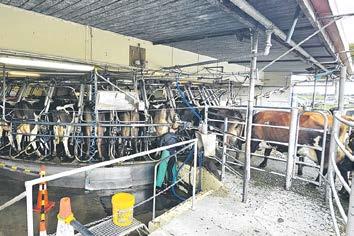
Cows head into the 47-year-old milking shed which is due for an upgrade. Photo: Mary Anne Gill
Owl Farm demonstration manager Jo Sheridan with farm hostess Emay at the annual Open Day. Photo: Mary Anne Gill
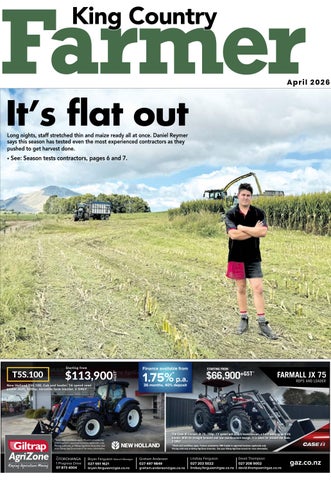
Season tests contractors
The two Fs – flooding and fuel - have been tough on agricultural contractors this year, writes Jesse Wood.
It wasn’t the rain itself that caused the biggest headache this season, but what came afterwards.
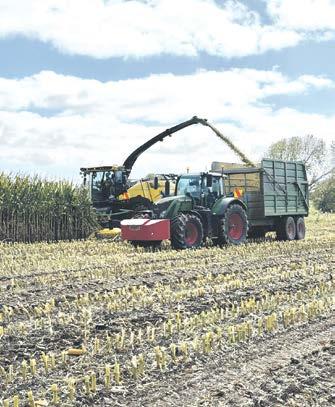
Weeks of delayed planting and growth stacked the season against contractors, with maize crops maturing at the same time and compressing the harvest window into a flat‑out race against the clock.
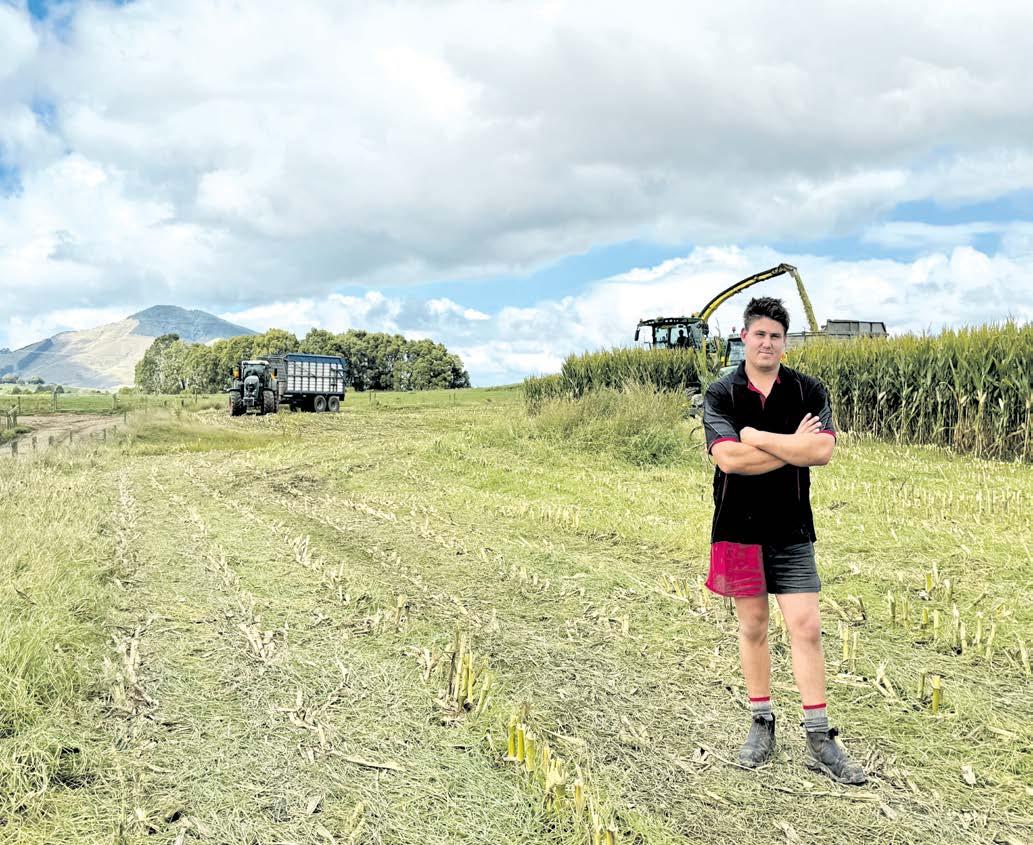
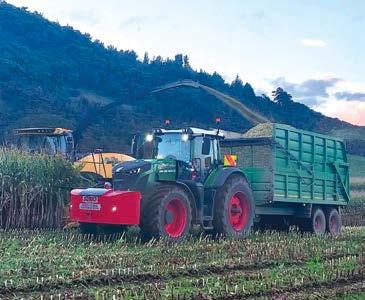
For two long‑established agricultural contracting businesses, the compressed timing quickly translated into pressure, long hours and rapid adjustment conditions familiar to Reymer Ag operations manager Daniel Reymer.
While Pirongia and Ōtorohanga were the main affected areas in the February flooding, it had an impact right across the board in King Country and Waipā.
The flooding delayed the start of harvest by two weeks.
Most years Reymer Ag start harvesting mid February and are finished by Easter. When you are harvesting 750 hectares of maize, the sooner the season can start, the better.
“This year on March 15, no one really wanted to harvest. It got to March 18 and everyone was ready to go. It’s probably the flow on effect from the wet spring,” Reymer says.
“We didn't plant until mid to late October or even early November due to rainfall. Everything went in, in such a short period.
“Then all the maize started to be ready in such a confined period. So getting it off turned into a flat out ordeal.”
The early maize crops were ready two weeks late and the crops planted later in the season “were bang on time”.
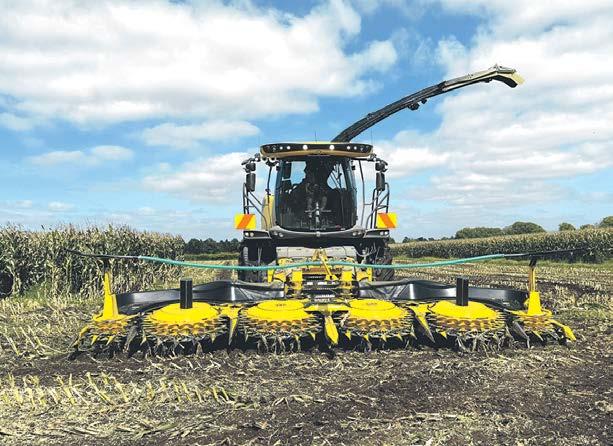
“It really condensed the harvesting season. We were running night shifts for two weeks straight basically, running the harvester 24/7 to try and keep on top of things.”
Reymer Ag covers about a 50km radius as far north as Te Kōwhai, down to Ōtorohanga, across to Cambridge and out to Kāwhia.
“We’re pretty well set up to cover most weather conditions.
We've got enough tractors set up on duals,” says Daniel.
“For the hill country, you’ve got the weight of the machines to worry about. You have to load the trailers right to climb hills. We have to use chains every now and again, but you try to avoid that.
“After that February 14 rain, it was pretty dry for about a whole month so we were lucky to get the harvest started.
“But all the crops were so used to a wet summer, I don't think they put their roots down far to find the water.
“As soon as it stopped raining, the growth came to a halt pretty quick.”
The Reymers are a large family and several are capable of driving tractors.
They’ve had to call in several cousins to help get through the long nights.
“Most seasons we have a few excess staff during maize. We’ve averaged about 14 staff this season,” says Daniel.
“We’re slightly understaffed by
one or two. We’ve had a few ring ins, but that’s been a good thing. We had a few farmers help us out, driving on their own farms.”
Reymer Ag also lost some work due to flooding. The maize crops didn’t survive, including 11 hectares of their own.
“There's another flow on effect too. We've had to find the same amount of area of maize to fill our contracts.”
Further south on Kio Kio Station Rd, John Clark Contracting’s yards and workshop were hit by the flooding of Mangaorongo Stream.
John Clark Contracting is also family owned and operated.
John, Julie, their son Matt and his partner Amy King work in the day to day operations.
Thanks to insurance, Giltrap AgriZone and Waikato Tractors and the hard work of their staff, they’re back to full capability.
“It was intense. It's more compounded by the fact that we've got so many young families around us and beside us that are more seriously affected,” says Julie Clark.
“There are nine houses in the area affected down there. There have been children displaced out of their homes.
“It was pretty devastating, walking through it the first day. It was gut wrenching to see the damage.”
But it’s the silt that has done more damage than the water.
The force of the flooding was still evident weeks later, with some equipment swept away entirely.
“There’s only one item that we haven't yet located, but I suspect it’s at the bottom of the river,” says Clark.
“We’re impacted by what happens at Maihiihi because the stream comes from out there. A lot of slips went into the stream, so it became dirty and silty,” she says.
Quite a few maize crops in the area have been affected with silt contamination, at some properties the water and silt went up over the top of the cob.
Some farmers have chosen to harvest the crop and stack it separately. Others will mulch it into the ground, depending on the
“There’s only one item that we haven't yet located, but I suspect it’s at the bottom of the river.”
severity of the contamination.
On a positive note, it’s been a great growing season compared to the previous year, with good grass growth and maize yields.
“Farmers are positive with the payout and Fonterra’s payout that's coming through. Diesel prices, that's not so nice. But like most businesses, we have had to activate the fuel surcharge. It’s not really what you want to do, but it is necessary and hopefully short term.”
There has been a good run of weather since the harvesting season started.
The few days of rain were counteracted with late nights of work beforehand.
As the maize season winds down, the long nights have eased, harvesters are slowing and contractors are taking stock of a demanding few months.
Flooding and fuel costs may have tested operations, but support from staff, farmers and neighbours ensured the work kept moving.
It’s a familiar story across the King Country and Waipā when pressure mounts, rural communities step in, roll up their sleeves and get on with it.
Julie Clark
Matthew Clark at the chopper controls.
Photo: Jesse Wood
FARM SERVICES
How to Plan a Smooth Property Purchase
Buying a home can be stressful, so engaging your lawyer early is a good idea to ensure a smooth process.
Start by carefully choosing conditions for your offer, such as financing, which is crucial if you need a bank loan. Be aware that banks often require insurance approval before financing is granted. If using KiwiSaver funds, include this as a condition, since your lawyer can only submit your application to withdraw KiwiSaver funds after a signed purchase agreement, with approval taking 10–15 working days.
Next, consider obtaining a LIM report for building consents and potential issues, along with a builder’s report to identify hidden problems. A toxicology report is advisable, especially for previously tenanted properties. A due diligence condition may also be included for comprehensive checks, although it might not always be accepted by vendors.
Once all conditions are satisfied, the purchase becomes unconditional and advances toward settlement. Remember to conduct a pre-settlement inspection before the settlement day to ensurethat chattels are functioning and the property is in good condition, as agreed in the contract.
Macayla Brdanovic
It is a race against the weather at this time of the year.
Photo: Jesse Wood
Filling up: John Clark, on the tractor, and son Matthew Clark harvests maize while the rain holds off. Photo: Jesse Wood.
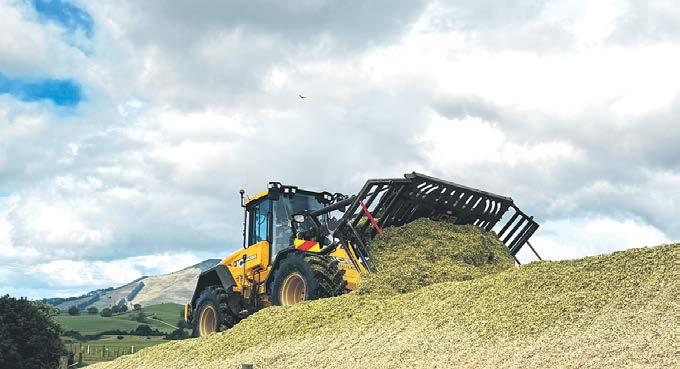
Daniel Reymer inspects a maize stack during a busy season.
Photo: Jesse Wood
NZ Designed Filtration
NZ Designed Filtration Systems for the
and Manganese and Other
NZ Designed Filtration Systems for the Removal of
and Manganese and Other Rural Problems
NZ Designed Filtration Systems for the Removal of
and Manganese and Other Rural Problems
NZ Designed Filtration Systems for the Removal of iRon and Manganese and Other Rural Problems
NZ
NZ designed systems tailored to suit your
Servicing
NZ designed systems tailored to suit your water needs
Latest in electronic technology , wireless & alert systems
Latest in electronic technology , wireless & alert systems
NZ designed systems tailored to suit your water needs
Servicing
NZ designed systems tailored to suit your water needs
Latest in electronic technology , wireless & alert systems
Servicing the Waikato, Bay of Plenty, Taranaki & Gisborne
Latest in electronic technology , wireless & alert systems
Servicing the Waikato, Bay of Plenty, Taranaki & Gisborne
Servicing the Waikato, Bay of Plenty, Taranaki & Gisborne
AND QUOTATION*
ASSESSMENT AND QUOTATION* (*water test report costs not included)