

Brayden’s pack’n save
By Michelle Lachmann
A Waipā student’s biodegradable foam innovation, using plant-based fibres, could soon replace polystyrene.
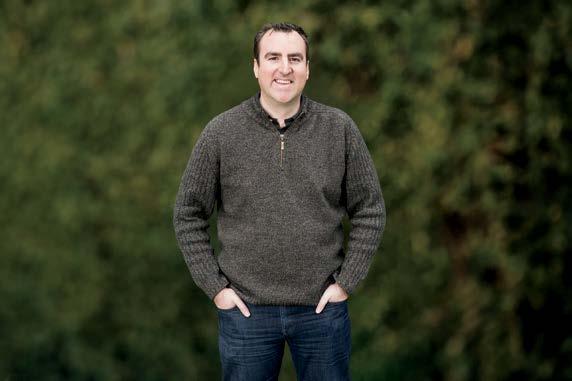
Brayden Whitton, of Karāpiro, is a PhD student at Waikato University’s School of Engineering, where he is on the cusp of cracking how to scale up production of a biodegradable, sponge-like material called cellulose foam. If successful, it could become a sustainable alternative to polystyrene which is used around the world, mostly in packaging.
Whitton’s innovation and research into cellulose gained international attention in March when he won the Australasian Pulp and Paper Technical Association New Speakers Competition in Melbourne.
Whitton told The News that he was “stoked” with the award and aspired to help create a sustainable solution to a global environmental problem - plastic packaging.
“Materials of the future need to be more sustainable. As scientists and engineers, we have a responsibility to harness the strength of natural materials and develop practical, environmentally friendly alternatives,” he said.
Polystyrene, also known as styrofoam, is widely used in packaging and insulation but poses environmental issues. It is not biodegradable, difficult to recycle, and often ends up in landfills or the natural environment.

Cellulose foam is made from a variety of natural sources, including recycled paper, plant materials, and wood pulp. It can be composted, or recycled, and is produced using water-based processes rather than harmful solvents.
Whitton showed The News a sample of the cellulose material, which is lightweight yet firm, with a slightly springy, cardboard-like texture.
He described it as somewhere between a dry kitchen sponge, puffed popcorn and marshmallows.
Whitton said his research was backed by a great team of Waikato University PhD students and professors, who were working on challenges to mass produce cellulose.
His research was supervised by Associate Professor Dalour Beg and Professor Kim Pickering, both from the School of Engineering.
The main challenge was that the foam-like material had to be scalable and viable for commercial operators to use it in place of polystyrene, Whitton said.
He hoped to find a viable solution by the time he finished his PhD in 2028. His research was funded by a Ministry of Business, Innovation and Employment (MBIE) fund - the Smart Ideas Endeavour Fund,
PICTURED RIGHT:
Photo: Michelle Lachmann
















Brayden Whitton is gaining international attention for his research into a natural foam that could replace polystyrene.


Business confidence tested
By Mary Anne Gill
Strong regional confidence is being tested by mounting global uncertainty, and the conflict involving Iran is casting a shadow over what had been shaping as an economic comeback.
The latest Waikato Business News leads with Reserve Bank Governor Anna Breman’s Waikato visit, where she reinforced the importance of looking beyond national averages to understand what is happening on the ground. Her visits with manufacturers, hospitality operators and Waipā farmers highlighted regions balancing rising costs with continued investment and adaptation.
The front-page lead in Bay of Plenty Business News reports that a major business confidence survey of Western Bay of Plenty firms - completed just days before the outbreak of the conflict - showed businesses entering the year with optimism, solid fundamentals and a willingness to invest.
More than three-quarters of respondents were confident about their own prospects



First up this week, a fresh reminder that you can never know what is going on with other drivers on the road.
Strategic Traffic staff recently stopped a driver for speeding in a 50kph zone in Leamington at 2pm on a weekday. Breath alcohol procedures were carried out, and the driver returned a result over three times the legal limit. The driver is facing court charges accordingly. In Te Awamutu, last Friday afternoon another driver was stopped on State Highway 3 due to excess speed. The driver is similarly facing charges after they returned a breath alcohol reading twice the legal limit. Such situations are a reason to drive defensively, always being aware of your surroundings, potential hazards and the behaviour of others. Anyone driving under the influence of alcohol or drugs poses a significant risk to other road users. They will not have the same driving control or reaction times as they would have sober. They may display inconsistent driving speeds, tailgating, random braking, weaving in their lane and crossing the fog and centre lines or simply fail to follow the road line causing them to crash. If you see dangerous driving behaviour, call 111 and provide regular updates.

As a Community Liaison Officer, I get assigned a wide range of files requiring investigation and intervention. My current
and the local economy. Confidence in regional conditions outstripped views of the national outlook. But escalating global tensions, supply chain risk and energy price volatility are clouding that picture.
A strong theme of resilience runs across both papers. Hamilton’s first youth council in seven years was welcomed as a sign of civic renewal.
Productivity, responsible use of AI and leadership anchored in learning feature prominently, from Morgan Clearkin’s work at KPMG to stories of lifelong learners and sector leaders embracing change.
There is also reflection, with tributes marking the contribution of the late Waipā mayor and Waikato Regional Council chair Alan Livingston and a farewell to Waikato advertising stalwart Judy Coulter as she steps into retirement.
Rounding out both editions are the popular Out and About pages, capturing business breakfasts, award nights, community events and familiar faces spotted across the region - proof that even in uncertain times, people are still turning up,
connecting and getting on with it. The two business publications are part of Good Local Media’s stable which also includes community and farming newspapers in King Country, Te Awamutu and Cambridge.
• See From policy to paddocks, Page 11


Speed issues
caseload includes reports involving “neighbours at war”.

In my experience, most of these situations stem from disputes over boundaries, access rights, or disagreements about hedges and trees. Such matters are civil rather than criminal in nature, and many are preventable with early, calm negotiation.
To reduce the risk of escalation, start by getting clear on the actual issue. Focus on facts rather than assumptions, and identify a preferred, but realistic outcome.
Keeping a simple record of dates, times, and the nature of the behaviour can help clarify the situation and ensure it isn’t being overstated. In many cases, escalation is not one-sided so consider how your actions may have been affecting the situation. If you decide to approach your neighbour, try not to catch them off guard.
A calm, respectful conversation at the right time and place, gives you the best chance of resolving the issue before it becomes something bigger.
If despite your best efforts, things do not improve, it may be time to involve outside agencies, for example Waipa District Council for boundary queries, noise complaints or other issues such as illegal parking, dogs barking or pollution. If escalation occurs to the point of harm to person or damage to property, call 111.
I totally agree with Andy Marsden’s concerns regarding the trucks speed along Taylor Street. Our family live near the Taylormade Community Centre where a childcare preschool is situated, and I have brought my concern to the council numerous times.
I fear a child or parent is in danger of death or injury in ridiculously fast moving traffic. The district council appear not the slightest bit interested. No speed signs, slow down bumps, or centre road lines. All they are interested in is saving costs.
My next move is to contact the police and petition residents. for some action.
Michael Truscott Cambridge














Briefs…
Road closures
Southbound traffic will not be able to use the Victoria Road interchange on the Waikato Expressway from May 17 to early July as a major asphalt renewal programme continues. And once that work is done, the northbound lanes will also close for the same maintenance work. It is expected there will be considerable congestion at the Victoria Road-Cambridge Road roundabout beside St Andrews Church, and at the Albert Street-Achillies Avenue and Shakespeare Street-Tīrau Road intersections.
Gorge opens
Convoys of vehicles are being allowed through a single lane of the storm-hit Awakino Gorge, restoring the most direct link from Waikato to Taranaki. Waka Kotahi is allowing vehicles a total of nine five half hour windows to get through the gorge north and south.
Season starts
Fish and Game has given a positive report on the opening weekend of the duck shooting season in Waikato. AucklandWaikato chief executive Dave Klee said rangers in Waikato found a few instances of people bagging more birds than they were allowed, “though hunters have largely been playing by the rules and doing the right thing”.
Council stays put
Waikato regional councillors have rejected a call to withdraw for local Government New Zealand, A notice of motion from councillor Noel Smith, seconded by Chris Hughes, called for the end of the council’s $91,500 membership – but only Waipā-King Country councillor Garry Reymer voted with them. In favour of staying were Robbie Cookson, Mich’eal Downard, Ben Dunbar-Smith, Keith Holmes, Kataraina Hodge, Warren Maher, Gary McGuire, Jennifer Nickel, Liz Stolwyk and Angela Strange.
Council restructures
By Michelle Lachmann
Waipā District Council has launched a significant restructure as the organisation and councillors grapple with the district’s ongoing growth pressures.
Council chief executive Steph O’Sullivan told The News two staff would leave their council jobs, effective from July 1, 2026, following a restructure that was on-going and part of a four-phase transformation.
One of the council’s longest serving staff members, Wayne Allan, confirmed his departure from council, with a message on LinkedIn.
“While this marks a change I hadn’t anticipated, I remain grateful for the time I’ve had at council and for the opportunity to work alongside so many dedicated colleagues,” he wrote. “While this chapter is coming to a close, I leave with enormous respect for the people I’ve worked alongside and confidence in the ongoing work of the organisation.
O’Sullivan said that in total, six council jobs had been disestablished so far, while three new roles had been established under the restructure, which was part of a transformation called Future Us.
“While you’re going through a change process, it adds additional pressure. Two people are leaving the organisation so it’s a significant change,” she said.
The council will also be hiring a new chief financial officer. Acting chief financial officer James Graham, had been appointed Waikato Waters chief executive.
Future Us will also include a review of Waipā Civil Defence Emergency Management (CDEM) capacity and capability.
The restructuring of council roles is expected to finish between August and October this year, depending on how long it takes to fill new positions. The remaining phases of Future Us are
building leadership and capability, which could take up to 18 months.
Waipā Mayor Mike Pettit told The News that while more council jobs could be affected by the restructure, it was about making the council organisation fit-for-purpose.
“Restructures are hard on everyone. Unfortunately, there are often difficult conversations to have. And at the end of the day, we must have a Waipā District Council that’s fit for purpose to achieve good outcomes for the community,” Pettit said.
“If you take a continuous improvement approach you should always strive to improve and this is part of that - this is the start of a new structure that’s fit for purpose,” he told The News.
O’Sullivan said the new council executive leadership structure had been reduced from a seven-group framework down to five: growth, strategy and planning, community delivery, strategic Māori partnerships, customer and business services, and finance and commercial. Each group would be led by a director.
Waipā had changed significantly in the past 15 years, along with the environment it operated in, she said.
“We’re seeing sustained growth, increasing expectations from our communities, and tighter financial constraints.”
The Future Us transformation was designed to make the council fit for the future, to deliver community outcomes, while operating in a volatile and challenging environment locally, nationally and internationally, which many sectors were also facing, O’Sullivan said.
Ahead of the start of the restructure, there had been more than 55 meetings with external stakeholders and more than 50 interviews with staff and elected members, O’Sullivan said.
Challenges around increasing workloads and tight deadlines



for Waipā councillors and district council staff also came up at this week’s Strategic Planning and Policy Committee meeting.
Strategic Planning and Policy Committee chair Mike Montgomerie acknowledged the workload and tight deadlines of both councillors and staff, in response to a concern that councillors only had a few days to read and consider council work on Cambridge Connections - a council project investigating solutions to the district’s traffic woes.
Councillor Roger Gordon said councillors did not have enough time to read and consider council staff’s work on traffic challenges and possible solutions, ahead of a publicexcluded workshop to whittle down a list of ideas, assessed against multiple criteria.
Montgomerie acknowledged councillors’ workload and tight deadlines but said it couldn’t be helped. The workshop was designed to be interactive, and a staff report on the matter could not be made available any earlier.
“There are a limited number of staff all working on the same issues councillors are trying to deal with,” Montgomerie said.
“This year we have three massive pieces of work all at the same time - the annual plan, long-term plan and Cambridge Connections - and it’s a lot of the same staff working on these things,” he told The News.
The district council was a relatively small organisation, with the same group of people handling work on many challenging issues facing the district, he said.
“There is tension between some governance expectations and around the timing of material delivered,” Montgomerie told The News.
However, that was the side effect of running a lean, efficient organisation that dealt with multiple big issues, he said.

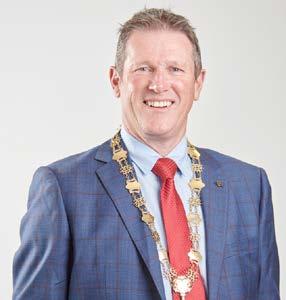

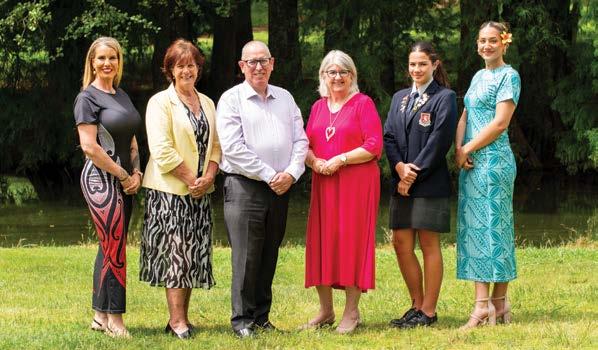
Steph O’Sullivan
Mike Pettit
Mike Montgomerie

























111 call on traffic safety
By Michelle Lachmann
Leamington residents say an industrial depot in the middle of their neighbourhood is an accident waiting to happen.
Resident Tim Bradshaw presented a 111-signature petition to Waipā District Council last week, asking it to close its Arnold St depot as a matter of urgency.
The petition signed by residents living on Arnold St, Lamb St, Hall St, Queen St, and Victoria St, says the councilowned depot is a “hazard and an accident waiting to happen.”
The depot, and its associated heavy truck traffic, carrying roading rock, bitumen, and machinery through a residential neighbourhood, was dangerous, disruptive, and devalued properties, the petition read.
“I have personally seen many near misses,” Bradshaw said at the council meeting where he presented the petition.
On busy days up to 50 trucks a day, carrying up to 40 tonnes, drove down Arnold St to the depot. Normally they operated from 7am to 10pm, but sometimes trucks operated overnight, until the early hours of the morning, Bradshaw said.
He was extremely worried about the safety risk for families, young and old, living in the neighbourhood.
Many children in the area walked or biked to Leamington School. The T-junction at Shelly St and Arnold St was a particular worry, and he had seen numerous close calls.
“The situation escalated a few years ago when residents were yelling out at truck drivers in the middle of the night after being woken at 4am by trucks driving past,” Bradshaw said.
Following the disruptive night, Bradshaw said he had attempted to contact the roading contractors working at Arnold St but had not received a good response. The council leased its depot to roading contractors and had been operating for about 10 years.
He was unsure where it used to be located, before Arnold St – where he had lived for 18 years.
A tentative gentleman’s agreement had been agreed to in the past, restricting truck movements from 8am to 8pm, but this was sometimes broken. For about eight years he had been working with council staff and roading contractors to find a solution,
but with little success, Bradshaw said.
“We have an industrial activity in the middle of an urban neighbourhood. We have had enough - 10 years is enough,” Bradshaw told the council meeting.
Last week’s petition follows another petition to council, presented on April 15. It demanded action against excessive truck noise, vibration and road deterioration on Cambridge Road, Pope Terrace, Cook Street/ Shakespeare Street and Golf Road.
Waipā Mayor Mike Pettit, said the latest petition was another symptom of growing pains for the district’s increasing population.
Other councillors agreed, with Dale-Maree Morgan saying heavy truck movements were a hot topic in Cambridge. Roger Gordon said trucks were the focus of many traffic challenges in the town, and complaints to the district council.
The petition was accepted by councillors, and it would be forwarded to the Service Delivery Committee. Further work would be carried out by council staff before the issue came before the committee on June 17.

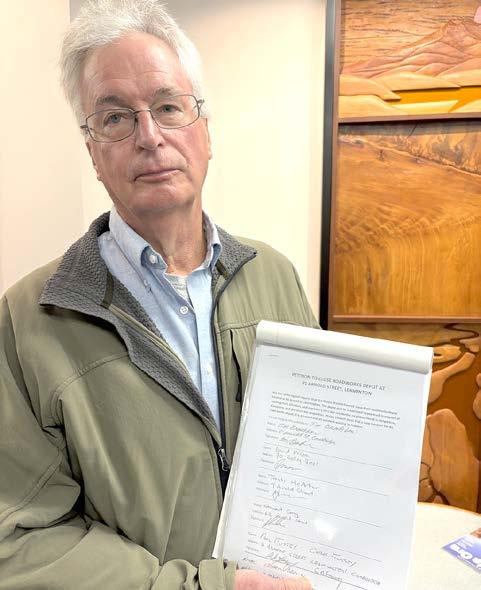


Tim Bradshaw says a decade of industrial activity in the middle of an urban neighbourhood. “iss enough”.
YOUR WAIPĀ NETWORKS DISCOUNT IS COMING
Waipā Networks customers will receive their next electricity discount this month, with credits automatically applied to eligible power accounts.
The discount is paid twice a year and is one way that customers can share in the benefits of local ownership. Waipā Networks is wholly owned by Waipā Networks Trust on behalf of local electricity customers, so value generated through the network stays connected to the people and communities it serves.
Approximately $3 million, including GST, will be returned to customers in this round of discounts. The average discount per eligible property is approximately $120, including GST. Total discounts for the 2025/26 financial year are around $6.5 million, including GST.
Customers don’t need to apply for their discount. If a property was connected to the Waipā Networks electricity network and registered with an electricity retailer on 23 April 2026, the discount will be applied automatically.
Waipā Networks Trust Chair Sarah Matthews says the discounts are a practical example of local ownership delivering value for customers.
“The Trust owns Waipā Networks on behalf of customers and represents their interests. These discounts are one way the benefits of local ownership are returned to customers, while Waipā Networks continues investing in a reliable network for the future.”

HOW THE DISCOUNT WORKS
The discount is applied per eligible property. In the electricity sector, each connection point is known as an Installation Control Point, or ICP. The amount varies depending on the property’s electricity use and pricing plan during the qualifying period.
Customers with more than one eligible property will receive a discount for each one. If someone has recently moved, the discount may reflect electricity used at the property earlier in the period, for example, by a previous tenant.
Waipā Networks Chief Executive, Damien Whiffen, says the discount is part of a broader commitment to delivering value while continuing to invest in the local network.
“Our focus is on making sure customers see the benefits of local ownership now, while we keep planning and investing in the network needed to enable growth, resilience and future electricity needs across Waipā.”

HOW WILL I KNOW IF I’VE RECEIVED THE DISCOUNT?
Waipā Networks is the local lines company that owns and maintains the electricity network across the district. Electricity retailers manage customer accounts and bills, so the discount appears as a credit through each customer’s retailer.
Discounts are credited to retailers on or shortly after 23 April 2026, depending on billing cycles. Customers should see the credit on their bill in April or May 2026, usually labelled “Waipā Networks Discount” or similar.
If customers have questions about how the credit appears on their bill, their electricity retailer is the best first point of contact.
Waipā Networks pays customer discounts twice a year, based on electricity usage and pricing during 1 April to 30 September, paid in October, and 1 October to 31 March, paid in April.
Customers who want to understand how discounts are calculated can find Waipā Networks’ discount methodology and further information by scanning the QR code, or at: waipanetworks.co.nz/ about/document-library/ disclosure/customer-discounts/
Safeguards sought on water
By Michelle Lachmann
Waipā residents’ water services came under scrutiny last week ahead of their transfer to Waikato Waters, at a Waipa District Council meeting last week. The Post-Completion Transition Service agreements between Waikato Waters, the country’s largest joint water services council-controlled organisation (CCO), and Waipā
District Council were approved at the district council meeting on April 29, 2026. Councillors agreed to enter into transition service agreements at the meeting, paving the way for the district council to receive more than $1.2 million a year to provide services on behalf of Waikato Waters. The transition services
Waipā District Council will provide to Waikato Waters

start on July 1, the transfer date, and can continue for up to three years. Under three service orders, the district council will receive $562,514 a year for billing, $633,244 for customer service and $60,000 for development contributions, excluding GST. In addition, it will collect $50 per household per activity for standard residential developments and $125 per household per activity for non-standard residential developments.
Waipā councillor Clare St Pierre sought assurances that residents’ water services would be monitored with performance indicators. It was important to ensure services were well maintained, and did not deteriorate, when taken over by Waikato Waters, she said.
“It’s got to be pretty clear that we want our communities to continue to experience reliable services, clear communications and timely response. So my question is what metrics, what monitoring, what key performance indicators are you going to put in place, at the time of the transition,” St Pierre said. “I want these (performance) measures in place from day one.”
Waikato Waters group manager Georgina Knapp said an inter-governance group made up of stakeholders, including representatives from each council, would address issues as
they arose.
There were also multiple layers of governance from statements of expectation through to operations and service orders, ensuring service levels remained consistent, Knapp said.
Waikato Waters transition programme lead Kevan Scott said there was time to work on this transition from a council perspective, ensuring it was clear how the arrangements would work.
Work was on track to take over drinking and wastewater services for six councils - Waipā, Waitomo and South Waikato on July 1, Matamata-Piako on October 1, and Hauraki and Ōtorohanga on July 1, 2027.
Waipā District Council chief executive Steph O’Sullivan said New Zealanders would be watching closely to see how Waikato Waters, one of the country’s first multi-council water entities to go live, performs and whether it meets its July 1 deadline.
“Not only are we the largest CCO (council-controlled organisation) in the country, but we are one of the first three going in,” she said,
“This team has been at the cutting edge of this nationally,” O’Sullivan said, acknowledging Scott and Knapp for their “excellent” work.
• See Page 15 - Whose water, whose cost?
Briefs…
Driving on
The next phase of work addressing Waipā’s traffic issues progressed this week. Waipā councillors at an extraordinary Strategic Planning and Policy Committee meeting on Monday accepted a report assessing the 68 ideas, from the public, technical work and earlier studies. A report to the committee by council executive director Katie Mayes included ideas for road network changes, freight routes, and major infrastructure like a new river crossing.
Early delivery
Peacocke subdivision on the northern outskirts of Waipā has been delivered early and under budget, marking one of Hamilton city’s most significant infrastructure investments. Roads, bridges, pipes and services are all in place to support more than 7000 new homes over the coming decades.
It’s back
After a successful return last year, the Cambridge half marathon will be held again later this year. The event – with a half and quarter marathon, 5kms and kids 2km dash - will follow the same format and courses as last year through Cambridge East and St Kilda and finishing at Cambridge High School. The event took a hiatus in 2024.
Rural help
Funding applications for Waikato district’s Rural Ward Fund close tomorrow (Friday) for grassroots projects that strengthen rural wellbeing and connectivity. The fund supports rural communities that fall outside standard Community Board funding, ensuring fair access for all. Chair Lisa Thomson says the fund exists to help rural communities thrive in ways that matter most to them.

Clare St Pierre
ON SHAKY GROUND
What’s triggered from space?
By Janine Krippner
When researching large submarine landslides below our oceans, an alien example caught my attention.
About 51 million years ago a meteorite hit the continental shelf about 200 km south of Nova Scotia, Canada. This location is now buried under around 600 metres of sedimentso how do we uncover these dramatic events?
Researchers study the seafloor sediment and underlying rock using seismic data that ‘looks’ through the layers, often acquired during hydrocarbon exploration. Wells are drilled deep down through the layers and samples brought back to the surface.
These tools identified a submarine impact site for the first time. This was published in a 1987 research article, so is a pretty recent discovery.
The age of the impact was figured out by analysing rocks that melted during the impact, pinpointing the time they cooled back into glassy rock, very roughly speaking.
The impact formed a crater at least 45km wide and about 2.7km deep. For comparison, it is 42km from Ōtorohanga to Cambridge. The meteorite was calculated to be around 2.5-3.4km wide, assuming it travelled at a velocity of around 29km a second.
With something that powerful hitting the sloping seafloor, a significant portion of the slope collapses, causing widespread landslides.
Once all the rock and sediment stopped moving, it covered an area of around 93,000 square kilometres. Now this is a difficult area to imagine so to help, Lake Taupo covers around 610 square kilometres, and the area of the North Island is not quite140,000 square kilometres.
The landslide travelled an impressive

distance, reaching out to 580km from the impact site. The drive from Hamilton to Wellington is about 525 km. These impressive numbers make this one of the largest landslides that we know of.
With these massive events, researchers unpack what happened like working through clues at a crime scene. A giant crime scene below the ocean, buried by 51 million years’ worth of sediment. Easy, right?
They considered how much material was displaced by the initial shaking, and how much was moved by the ensuing tsunami and the flow of water across the site. Where the meteorite hit, the water depth was somewhere around 300m. The movement of water would have eroded away surface sediments across the area.
Thankfully, we don’t have recent experience with large meteorite impacts, and they are pretty low on the list of things we will likely have to deal with. However, understanding these impacts and how they influence the land or seafloor around them is part of understanding how our planet evolved.
This helps put into context all of the more common processes, such as which landslides are caused by more likely events like large earthquakes.
Understanding all the complex parts of our geologic history gives important insight into the range of different processes that interact to shape our land and seafloor. It all matters. May we all happily live our lives without ever witnessing one of these extraordinary events.
A careful balancing act
By Crystal Beavis,Tamahere-Woodlands Ward
Recent Waikato District Council decisions to cut rates increases, and to find efficiencies in waters services and parks maintenance, are part of a longer-term effort to balance the cost of growth with ratepayer affordability.
With expectations that Waikato district will more than double in population from about 90,000 now to 220,000 in 2070, the council’s continued focus is on planning for the infrastructure needed to support that growth while keeping long term rates increases within a forecast Government rates cap of 2-4 per cent a year.
This month the council confirmed a belowinflation general rates increase of 2.8 per cent for the year ahead, with the average increase sitting at 3.79 per cent when targeted rates are included. Individual bills will vary depending on capital value and the services received.
The figures represent a careful balancing act. Significant cost savings were required to absorb new cost pressures and a $2.9 million shortfall in waste calculations carried over from the 2025–2034 Long Term Plan.
Water charges increases will be less than half what was forecast. For properties connected to water services, there is a $31.50 fixed charge increase for drinking water and a $110.72 fixed charge increase for wastewater for 2026/27.
From 1 July these will be charged on behalf of Iawai, the new water company owned by Waikato district and Hamilton city councils.
Preparing for its imminent launch, Iawai has publicly consulted on its draft water services strategy and the responses will be considered at a Iawai board meeting on May 7. The strategy includes a $3 billion capital programme over 10 years to support growing communities and to meet environmental standards.

Behind the scenes, the council has been preparing for a significant change in the way parks, cemeteries, sports fields and playgrounds are maintained. The existing open spaces maintenance contract – held by Citycare Property for the past decade – expires in July. Rather than re-appointing a single provider, the council went to market earlier this year with an unbundled model to provide opportunities for efficiencies as well as for local suppliers to bid for smaller contracts. A decision is expected soon.
Investment in shared regional assets is part of a wider Waikato growth picture. Local exporters and the regional economy will benefit from developments at Waikato Regional Airport, jointly owned by Hamilton city and Waikato, Waipa, Matamata-Piako and Otorohanga districts.
With a $6.5 million loan from the government’s Regional Infrastructure Fund, plans are underway for a $9.8 million upgrade including a runway extension.
And last week’s opening of the inaugural building in the airport’s Titanium Park north precinct marked a major milestone in the 170ha development.
Closer to home, Tamahere-Woodlands residents will be pleased to hear Hamilton City’s Morrinsville Rd roundabout project is on track for opening around May 19.
While we still face uncertain economic times, Anzac Day created time for reflection on the life we enjoy today thanks to the courage and sacrifice of over 250,000 New Zealanders who have served in overseas conflicts. It was a privilege to lay wreaths on behalf of the council at services in Gordonton and Eureka.


Bravery acknowledged
A Cambridge mum has been awarded for her bravery in saving the life of another resident.
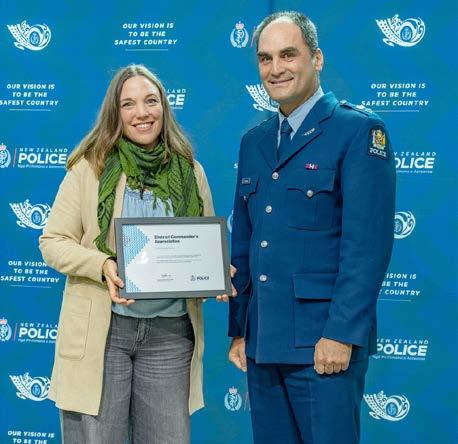
Emma-Louise Sinclair, of Roto-o-Rangi, was given a police commendation by District Commander Superintendent Scott Gemmell.
At a police ceremony in April this year, Sinclair was recognised for her “extraordinary courage, compassion, and decisive action during a lifethreatening incident” in 2025.
Superintendent Gemmell said Sinclair’s unwavering determination, physical endurance, and selfless commitment directly saved a life, and she was wholly deserving of formal recognition.
Sinclair said she was humbled by the award, which was an honour to receive.
“At the time of the incident there were so many people helping, we saw the best of humanity that day. We mustn’t forget that we live in a town of truly wonderful people, and there is always someone who cares,” she told The News.
No other details of the incident were available.
ENGINEERING SUPPLIES

• Nuts &bolts
• Bearings &seals
• Brassbushes
• Trojantrailerparts
• Weldingrods

• Grindingdiscs • Taps
Drills
Totaloil
Brassfittings


A FEATURE ROCK






CAMBRIDGE HEAT PUMP SPECIALISTS
CAMBRIDGE HEAT PUMP SPECIALISTS
Air Conditioning Group Waikato are the specialists for Heating, Cooling, Ventilation, and Air Purification for Homes, Rentals, Businesses, and Commercial Buildings.
Conditioning Group Waikato are the specialists for Cooling, Ventilation, and Air Purification for entals, Businesses, and Commercial Buildings.








FIND US BEHIND FARM SOURCE
1 Lower Alpha Street, Cambridge
Tim Bradshaw says a decade of industrial activity in the middle of an urban neighbourhood. “iss enough”.
By Peter Nicholl
New Zealand’s sovereign credit rating has been in the news lately as two of the three main international credit rating agencies have put New Zealand’s AAA credit rating on what is called ‘negative watch’.
They haven’t reduced the credit rating –yet.
But it’s a warning that they are watching New Zealand economic developments closely and the next change in the rating is likely to be downwards.
The third major rating agency, Standard and Poors, has had New Zealand’s foreign currency rating at AA+, one notch down from AAA, since 2022.
Most countries in the world have one or more sovereign credit ratings. They’re necessary to be able to borrow on international capital markets.
If a country doesn’t have a sovereign credit rating, it will also be difficult for companies from the country to borrow internationally. There are only a few countries that have no rating: countries like North Korea and Sudan. That’s not a list a country wants to be on.
That was why when I was governor of the Central Bank of Bosnia and Herzegovina, I arranged for the country to get its first sovereign credit rating even though I knew the country wouldn’t get a rating that was regarded as ‘investment grade’. To be in the position of having no rating was even worse.
Ratings run from AAA through AA, A, BBB, BB, B, CCC to D. A rating of BBB or higher is regarded by the international markets as ‘investment grade’. A rating in the C or D categories is highly risky or default.
Our rating has slipped out of the top tier
of about 10 countries, including Australia.
Our ratings are equal to those of the United States and above those of the United Kingdom.
It is not all bad news.

But the trajectory of our ratings and the concerns raised recently by the rating agencies should be a worry.
The rating agencies have given us a warning. We have received other warnings recently too including from our own Treasury and the International Monetary Fund.
The forecasts of the future trends in our fiscal deficits and debt levels if there aren’t significant policy changes should be alarming. If they occur, or anything remotely like them occurs, our ratings will certainly dive.
This would mean that at the same time as we need to do more borrowing overseas, the cost of that borrowing will rise, and it will become harder to find organisations willing to lend.
This may sound extreme, but New Zealand did experience this reluctance of lenders in 1984. We are not immune to such sentiment.
The 2026 election campaign hasn’t started in earnest yet.
But to date I’ve seen little from our politicians to show they are alarmed or even concerned by these dismal projections of our deficit and debt levels if we stick to current policies.
That will need to change, and change quickly and strongly, or we won’t keep our current sovereign credit ratings for long.
Valuing others…a parable
By Murray Smith, Bridges Church
Four creatures argued over who was most special. An elephant felt superior, being biggest and strongest. A monkey boasted nimble climbing, swinging from his tail, made him best. A giraffe claimed height, reaching treetops, plus the pace his long legs gave him, ensured his superiority. An eagle felt wingspan, enabling effortless soaring high in the sky, seeing from afar, proved him preeminent.
They asked a wise owl to arbitrate. The owl promised an answer, providing they undertook a challenge. Across the river, a tall tree grew golden fruit. Although virtually inaccessible, Owl promised an answer if they brought a fruit to him.
The four accepted Owl’s challenge. At the riverbank, Monkey faced never getting across with the current and depth. Eagle flew high over the river looking for the special tree. Elephant saw Monkey’s problem and invited him onto his back to cross safely together. Seeing Elephant wasn’t swept away gave Giraffe confidence to cross. However, on the other side, those three couldn’t find the tree. Eagle soared above and eventually spotted it and swooped down to the others wandering about aimlessly, and squawked, “follow me!”
At the towering tree, elephant charged to bring it down - it wouldn’t budge. Eagle couldn’t land in the tree or reach the golden fruit hanging under spikey leaves. Monkey’s climbing efforts failed since the bark proved too slippery.
Giraffe invited Monkey to scamper up his neck, onto his head. He grabbed Giraffe’s horns and leapt upwards to a branch, then swung by his tail to pluck a fruit. Back on Giraffe’s head, Monkey slid down to
the ground then sat on Elephant’s back, clutching the fruit on the journey back to Owl.
Atfer placing the fruit in front of Owl they awaited the answer as to who was the most important and special. Owl asked, “who brings me this fruit?”

The monkey shrilled, “me!” The elephant trumpeted, “no!” “Monkey couldn’t even cross the river without me!” Eagle screeched that finding the tree wouldn’t have happened without him. Giraffe pompously stated, “The credit is mine… I present this fruit to Owl because Monkey couldn’t scale the tree without me!”
Wise Owl interrupted their bickering,“quiet!”
“Enough nonsense. Each of you has special abilities and strengths. Look at each other…”
The four animals stood silently – they had never appreciated their differences, nor observed how each of them was special in their own way. Owl continued…“the Creator made you so different to one another because He loves variety and He loves your differences. Your differences were His ideas. You all needed each other to achieve what you were asked you to do. “Not one of you is superior to any of the others…everyone played a part in completing a task that none of you could have completed alone.”
How foolish to compare ourselves with others. Arguing and infighting over who’s the greatest isn’t new. Jesus rebuked His disciples for that, warning, whoever aspires to become great among you, become as a servant”. Nobody modelled that better than Him.



From policy to paddocks
OPINION
Whose water, whose cost?
Waikato Waters Ltd has made one of its first significant decisions, and it’s not a small one. It’s about where the company will be based.
The newly formed, council owned water services organisation has moved into its head office in Hamilton, in refurbished CBD premises. Staff will also be offered free parking.
That decision has raised eyebrows across the districts that actually own the company. Hamilton is not part of Waikato Waters Ltd.
The company is owned by the councils of Hauraki, Matamata Piako, Ōtorohanga, South Waikato, Taupō, Waipā and Waitomo, on behalf of their communities. These are the ratepayers who will fund it, live with its decisions, and carry the long-term costs. Yet the headquarters will sit outside all their boundaries.
The explanation offered is practicality and accessibility, along with the idea that being based outside an owner district helps “take the politics out of it”.
That argument deserves to be challenged.
The company already has an independent board. Managing political pressure is the job of governance.
What’s also missing from the discussion is why the head office couldn’t have been based in one of the shareholder districts in the first place. Towns like Putāruru or Ōtorohanga, for example, could have offered cheaper commercial rents, easier parking, and

far less strain on infrastructure. More importantly, they would have sent a clear message that this organisation belongs to the places it exists to serve.
Instead, the default seems to have been the biggest nearby city - regardless of ownership, and regardless of cost. At a time when councils are telling residents that every dollar matters, that deserves a harder look.
The promise of free staff parking doesn’t help. Every one of the participating councils invests in public transport and talks about reducing emissions and encouraging sustainable behaviour.
Offering free parking in a CBD cuts across that message. It also sets the tone early for staff perks that don’t sit comfortably alongside talk of restraint and efficiency.
The tone of Waikato Waters’ early communications adds to the unease.
The newsletter is slick, glossy and very corporate. There’s nothing wrong with being professional, but when a new organisation is asking people to trust it with a basic public service, plain language matters more than polish.
What residents really want to know is simple: what does this mean for my town, my water, and my rates bill?
None of this is to say Waikato Waters is the wrong idea. Regional cooperation on water infrastructure makes sense. Rules are more complex, assets are ageing, and smaller councils benefit from shared expertise and long-term


By Mary Anne Gill
Reserve Bank governor
Anna Breman’s first visit to Waipā was spent out on farming land at Te Pahu.
For someone whose job relies on national averages, models and aggregated data, the chance to walk two working farms offered something numbers cannot - context.
“It’s absolutely beautiful,” she said of the region, but the purpose of the visit went well beyond scenery.
Relying on national data alone risks missing what is happening on the ground,
By Mary Anne Gill
planning. There are real advantages in working together rather than going it alone.

But early decisions matter. They shape the culture of an organisation. They set expectations. And they tell communities very quickly whether they’re being listened to.
If local voice and transparency are meant to be at the heart of Waikato Waters, then those values should show up in everyday choices - not just in governance speak.
Location matters. Costs matter. Consistency between council policy and council owned company behaviour matters.
People across Cambridge, Te Awamutu and the King Country understand that change is sometimes necessary. What they are far less tolerant of is unnecessary distance - whether that distance is geographic, financial or cultural - from an organisation responsible for something as fundamental as water.
Waikato Waters says it will deliver water services that are efficient, sustainable and locally accountable. Now it will have to show that it can.
In the meantime, residents will be watching - watching rates, watching rents, watching staffing costs and capital spending - to see whether those promises turn into reality, or remain just words.

Breman said, and it was that belief that brought her to the farms of Andrew Lloyd and the late former Waipā mayor Alan Livingston.
Lloyd runs a dairy operation at Te Pahu, navigating rising costs, price volatility and the constant pressure to remain productive while responding to global uncertainty.
Livingston’s sheep and beef farm is now run by his daughter Megan and son in law Phil Weir, continuing a family farming legacy while managing the same economic headwinds.
The visits formed part of Breman’s broader Waikato programme, which also included speaking engagements and business visits, but it was the farm gates where national policy met lived experience.
Fuel prices, inflation and confidence are dominating the economic landscape, and Breman has acknowledged the first months of her tenure have been “chaotic”. New Zealand appeared to have turned a corner before renewed global shocks pushed costs higher again.
Fuel costs are hitting both inflation and confidence, particularly in sectors like agriculture where input costs feed through quickly, she said.
“Our job is to make sure near term inflation doesn’t become medium term inflation. If we see that happening, the bank would tighten.”
Exporters and agricultural producers are facing another period of disruption, but demand remains solid and New Zealand’s reputation as a reliable supplier continues to count in uncertain global conditions.
Breman said Waikato’s strengths were evident. While some local service industries are under pressure, agricultural producers were better placed than many, and balanced caution with with continued
investment.
That balance - between watching costs and planning for the future - came through in her conversations with farmers and businesses.
Breman is concerned repeated shocks risk draining confidence just when investment is most needed.
“My concern is that after several tough years, people lose belief that investing now will pay off. But businesses that invest through downturns are much better positioned when demand returns.”
Productivity is central to that thinking - systems that reduce waste, smarter use of technology and processes that allow producers to do more without adding cost. Over time, those gains ease pressure on prices while supporting higher real incomes.
The contrast between the two Te Pahu properties underscored the diversity within the sector, but also its shared realities - exposure to global markets, weather dependency and policy decisions made far beyond the farm gate.
Breman’s visit reinforced why those realities matter to monetary policy decisions that can take 12 to 24 months to fully flow through the economy. Headline inflation had lifted, she noted, but core inflation remained stable - a distinction that shaped how the Reserve Bank responded.
Hamilton’s world famous gardens may have been her first stop in the Waikato, but it was in Te Pahu that the governor saw the practical side of an economy often discussed in graphs.
It was a reminder for her that behind every data point are people making daily decisions - investing, holding back, adapting and pushing on.
And those stories, she says, do not always show up in the numbers.


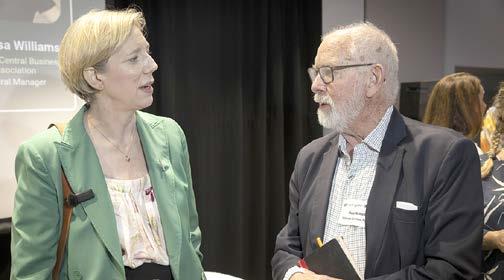
Reserve Bank governor Anna Breman with The News columnist Peter Nicholl, a former deputy governor. Photo: Kelly Hodel, Waikato Times.
Rubbing out the taggers
By Jesse Wood
Te Awamutu people want to keep their town beautiful.
After the resurrection of Keep Te Awamutu Beautiful, and consultation with building landlords, the first group project work was carried out last month.
Group members, including Alexandra Images and Varntige staff,
took to the streets to paint over graffiti.
The tag busting team firstly covered the markings on the back and front of the Go NZ variety gift store in the Newton King building, before the tagging on the Mr Kim’s Sushi and Don premises on Redoubt St.
Many hands made light work, and the selected jobs were done in no time.
Convenor Paula Walsh said the work aims to keep the town a place people are proud to live in and are excited to visit.
“Following this, we also painted the Postie building on Saturday. To futureproof, we’re giving all business owners a pail of paint so they can paint the graffiti themselves if it reappears.
“We don’t want graffiti to take over again and we
really think everyone needs to be responsible.”
Walsh hopes all residents and building owners will play a part where they can.
“It went really well, it’s great to be part of a group helping keep Te Awamutu looking sharp and standing proud,” Alexandra Images director, sign writer and graphic designer Ethan Moir said.
“It means a lot to

volunteer for a hardworking, busy town like ours and we’d encourage others to get involved.
“It’s something we all have a part to play in, including those responsible for maintaining our public spaces, buildings and businesses.”
Virtual Assistant firm Varntige’s staff mucked in as part of their annual community day.
One day every year, they close their doors and gift time to a local organisation or charity.
“It felt good to get stuck in and be able to see the results. I think we will definitely be more aware of graffiti around town now,” Varntige founder and managing director Chantelle Good said.
“I plan to get in touch with Paula and give back some more time - it was enjoyable.
“We often go all over the place for our community days and hadn’t been in our own town for the last two years.
“We wanted to pick a Te Awamutu-based organisation this year. It sounded like a project we could get stuck into, see visible results and help out in our own town.”
Speed bumps reviewed
By Michelle Lachmann
Waipā District Council staff have explained why they can’t speed up a review of Cambridge speed bumps.
The council is reviewing the humps, also known as safety platforms, in Cambridge. It’s looking at whether the level of speed humps is appropriate on specific streets, including Wilson, Duke, Victoria by the Town Hall and Alpha streets.
Cambridge Volunteer Fire Brigade has previously raised concerns, saying the humps slow its response and it avoids the CBD whenever possible when responding to calls.
A council report updating the speed hump review is due back in August, the Cambridge Community Board meeting was told last month.
However, councillor Pip Kempthorne asked if the report could be finished sooner, given the impact some speed bumps were having on emergency services.
“Why August - it seems quite a long way out,” he said at the community board meeting.
Staff, at the meeting, said the process had been delayed due to the severe storm event in February.

The clean-up brigade included John Hardcastle, Angie Barrowcliffe, Ethan Moir, Caroline Jones, Jo Douch, Chantelle Good, Rebecca Burgess and Daryl-Lynn Wilken.
Photo: Jesse Wood
Roadshow for volunteers
By Viv Posselt
A meeting today will unpick the findings of a pilot roadshow held to co-ordinate the hundreds of volunteers who are the lifeblood of not-for-profit organisations.
The Cambridge Community Roadshow at Bupa St Kilda last week was run jointly by Cambridge Community House (CCH) and Volunteering Waikato. It aimed to provide a
platform for each participating organisation to give an outline of the service they provide and help direct potential volunteers to opportunities best suited to them.
“It is so important for people to find a volunteering opportunity that is the right fit for them, that gives them the flexibility they might be looking for,” said CCH’s Amy Watkins, whose idea it was to stage the roadshow. “It’s equally
important for the organisations to benefit from being able to retain their volunteers.”
She said the event gave both parties the opportunity to learn more about the volunteering options.
The idea came out of regular community hui Watkins organises several times a year. She teamed up with Volunteering Waikato’s regional community advisor Danielle VanShipley, who in this year’s UN-designated International Volunteer Year, has been focusing on dividing the region into smaller areas to provide more effective coverage in each.
“Because the Waikato is so vast, it’s difficult to be everywhere we need to be,” VanShipley said. “We don’t have exact number of volunteers, but we do know there are 25 organisations in Cambridge alone using volunteers regularly. We decided to start with small and inclusive roadshows… our partnering with Amy at CCH resulted in the first one being held in Cambridge.”
She said the trial had identified a lack of visibility and awareness of the services offered.
“We thought that would be the case, so now we want to move forwards to address that. The roadshow has shed a lot of light on where to go from here.”
The decision to hold the event at Bupa St Kilda was to tap into the demographic most widely represented amongst volunteers, and while they may have more time to give back, some face other constraints such as transport.
“It was a fantastic venue,” said Watkins, “but we know we need to reach a more diverse audience, perhaps tap into the student population or people who are at home but might have a few hours free when children are at school.”
Both Watkins and VanShipley said a more central venue would be an advantage for future roadshows. That, alongside other findings, will be the topic of discussions at today’s followup meeting.
“We want to brainstorm initiatives that will bridge the gap between where we are and where we want to be in terms of linking volunteers to the organisations needing them,” said VanShipley. “This was a first for us. It’s just a start… we want to take the roadshow to Te Awamutu, then further afield.”
Bupa St Kilda general manager Clare Coles said they were delighted to be asked to host the roadshow, while village co-ordinator Megan Williams said it presented a valuable opportunity to strengthen community connections.
THE DENTURE MAN
Registered Clinical Dental Technician Roger Oliver (39 Years Experience)
Without Hesitation











Cambridge Community House’s Amy Watkins is behind the initiative to hold the first roadshow here.
Volunteering Waikato’s Danielle VanShipley speaking at the roadshow.
Gold hearted ageing rockers
By Viv Posselt
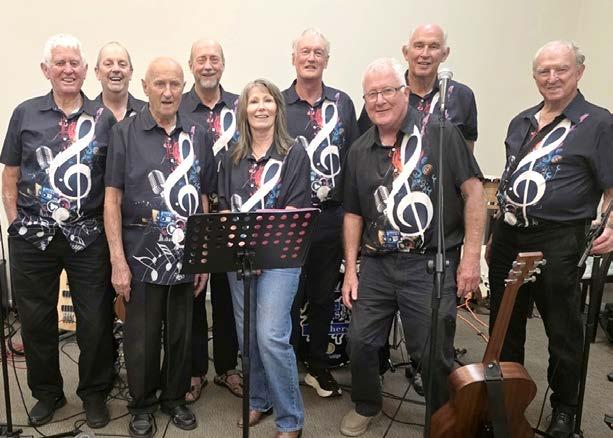
They’re ageing rockers with hearts of gold, sometime musos who channel their youth into producing the best foot-tapping sounds around.
The Bruised Brothers Band – a play on The Blues Brothers name –even call themselves the ‘old Fella’s Band’, yet they’re probably one of Cambridge Rotary’s best assets. The fact the band has raised over $26,000 for the club to help fund a swathe of good causes only adds to their star power.
The band formed around 20 years ago, initially as in-house Rotary entertainment. Fuelled by a passion for the rock ‘n’ roll anthems of the ‘60s and ‘70s and driven to give something back through Rotary, they now perform at rest homes and clubs, private functions, charity fundraisers and street festivals. Each time, they ask only for a contribution which goes into Rotary’s fundraising coffers to support other organisations in and around Cambridge.
No matter the age group, audiences love their covers of bands like The Beatles, The Rolling Stones, Van Morrison, Cliff Richard and more. They’ve made a recording, been on radio and, somewhat unusually, played at the funeral for Cambridge stalwart John Bishop. Some gigs take them out of town. One of those is just around the corner when they will play at
their second 60s Up New Zealand national conference, this time in Rotorua next month. They are also playing at a 2026 fundraising social raising money to upgrade the old Roto-o-Rangi Memorial Hall.
The band members themselves are a real mix, and all enjoy the melding of music, friendship and community support.
guitarist Roger Hill, who with his wife Ann founded Hill Laboratories, joined for the enjoyment of playing his era’s music. He’s seen as ‘the driver’, and it’s in his garden shed they rehearse weekly. Kim Pritchard, a dab hand on a 12-string guitar and former owner of The News, joined when he moved to Cambridge and
wanted to meet the town’s ‘movers and shakers’.
Greg Gascoigne, a retired dairy farmer, former Jaycee and longtime Rotarian, joined early on; he’s their bass guitarist. Bill Wilson is another former Jaycee who moved into Rotary – he is the band’s crooner. Colin Davis plays multiple instruments. Like several others,
his dad was a Rotarian, and he enjoys the mix of mateship and giving back.
Drummer Nigel Donne was ‘discovered’ by Roger Hill. He was inspired to join Rotary by fellow plastics industry man Mark Hanlon and reckons good fellowship is what it’s all about. Shona Devoy, currently the only woman in the band, is on vocals. She has been involved in the trustee industry for decades and was invited to join Rotary when she moved to Cambridge.
Former school principal John Bullick joined Rotary Cambridge 20 years ago and sees joining the band as a highlight. He is on rhythm guitar and vocals. Relative newcomer Alan van Niekerk, who does rhythm and bass guitar and vocals, knew about Rotary from his father-in-law in the then Rhodesia. He joined Cambridge Rotary in 2020.
Three of the guys – Greg, Kim and Alan – also build guitars, while others have come and gone over time, among them Chris and Robyn Crickett, and the band’s founder Bob Teal.
As much as it is about rock ‘n’ roll and resilience, The Bruised Brothers are generous advocates for the community service supported locally and internationally through Rotary.
As they see it, music can be a force for change … in the best possible way.

Lead
The Bruised Brothers are, from left, Greg Gascoigne, Alan van Niekerk, Bill Wilson, Kim Pritchard, Shona Devoy, John Bullick, Nigel Donne, Roger Hill and Colin Davis.
Pirongia brigade stalwart mourned
By Jesse Wood
Longtime Pirongia Rural Fire brigade member John Lawrence Kelly has died three days short of his 80th birthday.
Kelly, who died on April 26, John was a firefighter from July 1998 to April 2004 and then a brigade support member from December 2013 to March 2022.
A celebration of his life was held on Tuesday at the Pirongia Community Centre Church.
He was remembered as a much-loved husband of Rachel (Kay), friend, and member of the community.
He was well known for
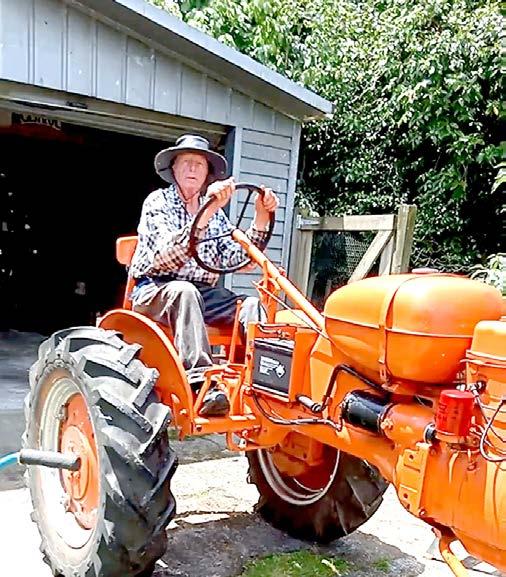
his passion for vintage cars and machinery and his work included driving for McFalls and bus driving.
Former Te Awamutu Community Board hair Gary Derbyshire described Kelly as a pleasure to work alongside - “full of engineering knowledge and proud of his collection”.
Pirongia chief fire officer Roan Gouws spoke of an “awesome guy”.
“He was always at the station, never too shy to grab a broom and tidy up. He always made sure things were in their place,” Gouws said.
“What always stands out to me about him as he was really into the social side.
He loved sitting down, having a beer with the crew and reminiscing about the old days.
“He really saw the brigade as an extension of his family – and so do we.
“He was an all-round nice person. He stepped away from the brigade a couple of years or so prior to his passing, but we still invited him to our brigade dinners and then he would always turn up.
“He was a dependable guy and he’s going to be sorely missed. He was always smiling and never had a negative thing to say. He was happy-go-lucky and genuine.”
Briefs…
Website stats
Our briefs columns nabbed two of the top five places in our online visits to cambridgenews. nz last month.
In first place were briefs containing late-breaking stories about a fire at the ResourceCo demolition waste recycling facility in Leamington and damage to greens at Cambridge Golf Club which happened after The News went to press.
Third place went to briefs containing tributes to former Waipā mayor Alan Livingston and follow ups to the State of Emergency declared after Cyclone Vaianu.
Sandwiched between them was our home page. Visits to the site were up 58 per cent on the same month last year and 92 per cent on 2024.
In fourth was our e-Editions page with full
pdf versions of the newspaper while our Anzac Day coverage came in fifth.
Walkway closed
Newstead Walkway is closed between Morrinsville and Vaile roads due to damage to both footbridges from erosion and recent weather. Work will be completed by late this month (weather dependent).
Waste fund
Applications have opened for Waikato district’s Waste Minimisation Fund, supporting projects that reduce waste to landfill and encourage longterm behaviour change. A total of $100,000 is available for initiatives such as food waste reduction, reuse and repair, education programmes and wastetreduction rials. Applications close later this month.


John Kelly had a passion for machinery.


Cambridge Lions
“Trash ‘n’ Treasure”
Memorial Park
Main Street Cambridge This SUNDAY
8.30AM TO 1PM
Book a stall at: www.cambridgemarket.nz

Across 1. Becomes older (4)
4. Uncoordinated (6)
8. Source of difficulty (7)
9. Redden (5)
10. Despatched (4)
11. Official stamp (8)
13. Scan text for errors (9) 17. Total (8)
19. Centre (4)
Last week
21. Frown (5)
22. Well turned out (7)
23. Protein substance (6)
24. Detest (4)
2. Adult (7) 3. Unaccompanied (4) 4. Shell shock (6,7) 5. Evolved (8) 6. Steam bath (5)
7. Unstable (5) 8. Small bunch of flowers (4) 12. Unfair act in sport (4,4)
14. Submissive person (inf) (7) 15. Hesitate (5) 16. Care for (4) 18. Faint (5) 20. Two together (4)
Across: 1. Alias, 4. Stance, 8. Prevail, 9. Barmy, 10. Extol, 11. Elevate, 12. Except, 14. Ballet, 17. Scourge, 19. Drown, 21. Vital, 22. Gnocchi, 23. Hearse, 24. Siren. Down: 1. Apprehensive, 2. Inert, 3. Snarl-up, 4. Seller, 5. Amble, 6. Curtail, 7. Hypertension, 13. Chortle, 15. Arduous, 16. Meagre, 18. Ruler, 20. Occur.
CountryLife
CountryLife
CountryLife
Reach a targeted rural & lifestyle audience each month by advertising your business in CountryLife; featured inside the Cambridge News & Te Awamutu News
Reach a targeted rural & lifestyle audience each month by advertising your business in CountryLife; featured inside the Cambridge News & Te Awamutu News
Reach a targeted rural & lifestyle audience each month by advertising your business in CountryLife; featured inside the Cambridge News & Te Awamutu News

Distributed to EVERY rural & urban letter box across the Waipa region each month.
Distributed to EVERY rural & urban letter box across the Waipa region each month.
Distributed to EVERY rural & urban letter box across the Waipa region each month.
Next Publication Date: Thursday 11 June
June Deadlines:
Booking: Tuesday 2 June
Copy Setting: Wednesday 3 June
Finished Artwork: Friday 5 June
TO BOOK YOUR SPACE: Daniel Davy Advertising Sales Consultant daniel@goodlocal.nz • Ph 0204 023 8018
OPREOOEIRLWXVETLTM CPFTNARCSUIUMLEZBE OQAYERJOLGQTABTTGN MQLSARTAEGRHEDHUTT OARCSEJCEAFTPGGNTL TZEYFECHPGWVISGNET INTFORNMEETELNUSGA VIUEXFOGRWRIIHEGQX EBRPBCSCEFADSIOYFL JUNCTIONRRIGDTPAZE TIMETABLESNSORYRBT EXPRESSVVGPLINWDCM AXLE BELL BUFFET CARRIAGE COACH COMPARTMENT CREW CUTTING DIESEL ELECTRIC EMBANKMENT EXPRESS
Proudly family-owned, experienced and qualified, Gibson Funerals, located in Cambridge, serves the Waikato region with warmth, dignity, and genuine care.
Rooted in community, we are known for creating bespoke services that honour each life in a way that feels authentic. We also specialize in prearrangements, offering the ability to tell your story, exactly how you would like it told.






Jono Gibson Funeral Director


























real estate agency Know your











Know your real estate agency
Waipā’s property market finds its balance
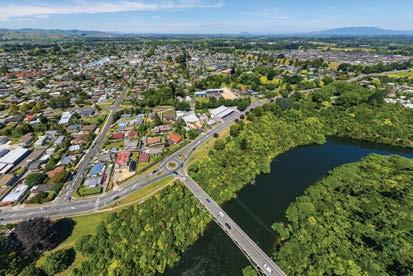
Over the past five years, Cambridge and the wider Waipā District has experienced promising growth, perhaps even exceeding most early predictions. Residential expansion, particularly in Cambridge, has been decisive, while commercial and industrial development has followed to support a fast growing population. Lifestyle and rural residential demand has also remained a constant. What has become clear is that while growth forecasts broadly pointed in the right direction, the intensity of demand, especially post Covid, outpaced expectations before naturally recalibrating.
That recalibration is now evident, buyer and seller behaviour has shifted from urgency to intention. Today’s purchasers are more measured, better

informed, and increasingly motivated by quality of life rather than speculation. Clients consistently cite Cambridge’s strong schooling, community feel, proximity to Hamilton and Tauranga, and improving transport links as key reasons for buying. Te Awamutu continues to attract value focused buyers and families seeking space and affordability. The two towns are not necessarily competing so much as complementing one another, each offering a different lifestyle within the same region.
Subdivision activity has settled into a more sustainable rhythm. Compared with the heady pace of five years ago, applications have slowed, reflecting higher financing costs and greater caution among developers. However, the past 12 months has still delivered a steady pipeline of sections across Cambridge, Te Awamutu and surrounding settlements, suggesting long term confidence in the district remains strong. The market today feels more balanced, with supply and demand better aligned. Recent global uncertainty is now an unavoidable backdrop. As our Head of Insights, Data & Consulting, Chris Farhi recently explains, heightened geopolitical tension, particularly in the Middle East, has the potential to create short term disruption through fuel price shocks and rising living costs. We are already seeing echoes of previous global shocks, with some open homes quieter and buyers taking a pause as confidence is tested. However, history suggests
Market values
While the sales numbers have stabilised in the past year, Waipā district residential sales trends in have reflected a market transitioning from post-peak correction toward relative stability, with modest recovery signals emerging alongside subdued activity.
Following the sharp national housing downturn after the 2021 peak, Waipā has continued to experience lingering downward pressure on property values, based on data released by REINZ, One Roof and Quotable Value.
Updated rating valuations released in 2025 show that residential property values declined by an average of 7.2% across the district, reflecting the broader cooling of the New Zealand housing market.
This correction phase has been driven largely by higher interest rates, tighter lending conditions, and reduced borrowing capacity, which have particularly impacted mid-to high-value properties.
However, lower-priced homes have remained relatively resilient due to continued demand from first-home buyers.
Despite this decline in values, there are clear signs that the market stabilised over the most recent 12-month period.
Informetric data indicates that average house values in Waipā were up approximately 1.9% year-on-year
by late 2025, suggesting a shift from contraction to modest growth. Earlier in the year, values had been flat or slightly negative (around -0.3% to -1.1%), highlighting that the recovery has been gradual rather than rapid.
This pattern is consistent with national trends, where price growth has remained subdued but generally positive.
Sales activity presents a more mixed picture. Annual house sales in Waipā increased by approximately 14% year-on-year to September 2025, indicating renewed transactional activity and improved buyer confidence.
However, this rise must be viewed in context: it follows a period of historically low sales volumes, meaning the increase represents a partial rebound rather than a full return to pre-downturn levels.
Nationally, sales volumes were still down by around
these periods tend to influence sentiment more than fundamentals. The New Zealand property market, including regional centres like Waipā, has shown an ability to adapt through technology, flexible working and shifting buyer priorities.
In fact, the ability to work remotely, or even partially remotely, continues to underpin regional demand. Avoiding long urban commutes, managing fuel costs, and accessing lifestyle amenities remain powerful drivers. Building confidence in options such as the Te Huia train connecting Waikato commuters to Auckland, can only strengthen that narrative over the longer term.
Interest rate volatility has undoubtedly reshaped expectations, but it has not extinguished demand. Instead, we are seeing realistic negotiation and transactions driven by genuine value.
The rural sector deserves special mention. Dairy remains resilient, supported by strong fundamentals, while diversification into horticulture, grazing conversions, and mixed use land is increasingly front of mind.
Waipā’s story is no longer about rapid expansion at any cost. It is about measured growth, thoughtful decisions, and a region confidently planning for whatever comes next.
5% in early 2026, reinforcing the notion of a cautious and uneven recovery.
At the local level, trends vary by suburb and property type.
For example, in Kihikihi, median sale prices over the past year have remained relatively stable, with only marginal growth of around 1% and slight declines in asking prices and rents.
Lifestyle properties have experienced sharper declines (around 10–13%), reflecting reduced demand for higher-priced rural-residential assets.
In contrast, urban centres such as Cambridge have shown modest annual growth in values (under 1%), supported by population growth and ongoing demand.
Supply and demand dynamics have also played a role. Population growth and long-term development planning continue to support underlying housing demand in Waipā, particularly in Cambridge and Te Awamutu. At the same time, limited housing stock across the wider Waikato region has helped prevent sharper price declines, although buyers remain price sensitive.

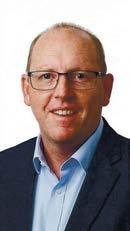
Mike Gascoigne, Bayleys Cambridge, Branch Manager






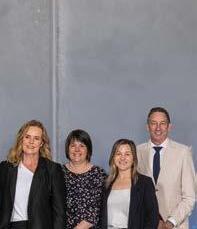

































Every property has its own energy, from the warmth that makes a house feel like home, to the legacy of a family farm, the rhythm of a retail precinct, or the potential of a brand-new development. At Bayleys, we’re relentless about bringing that energy to life in every property we sell, lease, or manage. We also bring our own unique energy to every detail, every conversation, and every interaction.
Of course, success takes more than energy. It also requires an unwavering commitment to service from the first handshake through to the final result - genuine people who care, who collaborate, and who go the extra mile. The result is that more people take notice, the right people show up, and more value is created. For a fresh approach to selling your property, and advice you can trust, talk to the team at Bayleys Cambridge today. We’d love to help.


Waipa’s real estate market continues to show steady growth, driven by lifestyle appeal, smart development, and its strategic location within the Waikato. Cambridge remains a standout, attracting a wide range of buyers who are drawn to its strong sense of community, excellent schools, and the unmistakable charm of the town centre. The café culture, boutique feel, and relaxed “vibe” make it highly desirable for families and professionals alike. Add to that the proximity of the Waikato River, Lake Karapiro, and an easy commute to

Gerder Venter AREINZ, LJ Hooker, Residential/ Lifestlye/Rural Sales
Hamilton, and it is easy to see why demand remains consistent.
A noticeable trend is the rise in smaller-scale subdivisions with 4-8 townhouses, which are becoming increasingly common, offering more affordable entry points without compromising on location.
Of course, real estate is never entirely predictable, with broader geopolitical factors and economic uncertainty carrying an element of the unknown. However, property decisions are rarely about perfect timing. The reality is that life continues, and those waiting for ideal conditions often miss opportunities. My advice is simple: if it works for you, just do it. It is a long-term investment after all.
First home buyers are still active in the market. The dip in KiwiSaver created a short-term hesitation, but confidence has returned.
In the rural sector, quality farms with good infrastructure continue to perform well. Many farmers are taking a prudent approach, directing much of the Fonterra payout towards debt reduction and tax obligation, plus improving infrastructure and compliance, reinforcing long-term stability within the sector
Waipā shows steady growth National market remains stable Know your real estate agency
New Zealand’s housing market remained resilient through March, with buyers continuing to transact despite the onset of the Iran conflict and a sharp rise in petrol prices.
Recent data released by the Real Estate Institute of New Zealand (REINZ) in its Property Report for March 2026 shows sales activity was essentially unchanged year-on-year, while prices remained broadly stable – a result that reflects a market absorbing a global shock rather than retreating from it.
Every transaction captured in the March data was made during the first full month of the conflict, as fuel prices climbed above $3.80 per litre and consumer confidence fell sharply. Despite this, buyers remained active across much of the country.
“March shows a housing market holding its nerve. Despite rising fuel costs and global uncertainty, buyers didn’t step away, but they are becoming more cautious and taking longer to make decisions,” REINZ Chief Executive, Lizzy Ryley says.
“That caution is reflected in the numbers. Sales were essentially flat year-on-year at 7,853, and while prices remain stable, the seasonally adjusted figures show a slight dip in activity.
“It suggests buyers are still active, but are more measured, responding to cost pressures rather than stepping away from the market,” she says.
Nationally, the figures point to a market that remains stable, but not uniform. The median price eased slightly by 0.3% year-on-year to $788,000, while excluding Auckland, median prices increased by 1.4% to $710,000 – highlighting continued strength across parts of the country.
While headline numbers appear steady, seasonally adjusted figures indicate a modest softening in underlying demand compared with February, consistent with a more cautious buyer environment. Performance across the country continues to vary by region, reinforcing the uneven nature of the current market.


Eleven of the 16 regions recorded year-on-year increases in median prices, led by Southland (+11.8%), Nelson (+9.2%) and Northland (+8.7%), while Wellington and parts of the East Coast recorded softer results.
Time to sell remained steady in March, with properties taking a median of 41 days nationally – unchanged from a year ago but 15 days faster than February.
Excluding Auckland, the median was also 41 days, down 14 days month-on-month, reflecting a return to more typical seasonal conditions rather than a shift in underlying demand.
Supply levels showed little change. New listings increased just 0.2% year-on-year to 12,055, while excluding Auckland, there was no year-on-year change, with 5,513 new listings.
National inventory levels rose modestly by 2.1% from last year to 37,638 properties, reinforcing that there has been no significant lift in sellers entering the market despite recent global uncertainty.
Auctions continue to play a key role in some regions, particularly Auckland, Bay of Plenty and Canterbury. Nationally, 1266 properties were sold at auction, accounting for 16.1% of all sales.
In Auckland, nearly one in three properties (29.6%) were sold by auction, compared with 9.9% across the rest of the country.
The House Price Index (HPI), which provides a more accurate measure of underlying value trends, eased slightly over the month to 3,641 and remains 14.9% below its peak. However, regional performance continues to diverge. Otago reached a new record high HPI of 4,318, up 3.6% over the past year, while Canterbury sits just 0.03% below its peak –highlighting the strength of South Island markets, which have largely recovered from the 2022–23 downturn, while other parts of the country continue to rebuild more gradually.
“The Reserve Bank holding the OCR at 2.25% has provided a level of stability for the market, but there is still uncertainty ahead. While we haven’t yet seen a significant impact from global events in the data, agents across the country report that buyers became more cautious toward the end of March,” Lizzy says.
“The focus now shifts to what happens next. Any early signs of a ceasefire have been overshadowed by renewed tensions, leaving uncertainty around fuel costs for New Zealand households and whether confidence begins to rebuild over the coming months.”









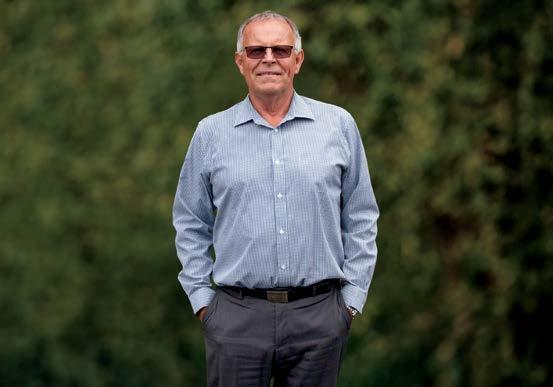









Kane Jacobson
Ang Offi
12 months residential Looking at Know your real estate agency
The past year has been a bit of a mish-mash in terms of sales activity for subdivision sections and houseand-land packages in the Waipā District, according to sources such as One Roof, Quotable Value and others. For all that, it has reflected a cautious but gradually improving development market. While overall volumes have understandably remained below the peaks seen during the 2020–2021 housing boom, there have been clear signs of renewed interest with market conditions stabilising until recent weeks.
Section sales in both Cambridge and Te Awamutu slowed through the earlier part of the 12-month period. This was largely due to higher construction costs, elevated interest rates, and uncertainty around build pricing, which made buyers more hesitant to commit to new builds. Developers also responded by staging releases more cautiously, limiting the number of sections brought to market at any one time to avoid oversupply.
As the year progressed, enquiry levels began to lift, particularly among first-home buyers and young families who were priced out of established housing stock during previous years.
House-and-land packages gained traction as they provided greater cost certainty compared to standalone section purchases followed by separate build contracts. Fixed-price packages became especially attractive in a market where build cost escalation had previously been a major concern.
In terms of sales numbers, while exact figures vary by development, most subdivisions across Waipā have experienced moderate absorption rates rather than rapid sell-outs. Sections in well-located stages have continued to sell steadily, but at a slower pace than in peak years.
Developers have reported that buyers are taking longer to make decisions, and conditional contracts
- particularly subject to finance - have been more common, especially as banks appear to be taking longer to come to decisions relating to lending.
Between the two main centres, Cambridge has clearly emerged as the preferred environment for new builds over the past year, statistics are showing.
Its strong population growth, higher median household incomes, and reputation as a desirable lifestyle town have driven consistent demand for new housing. Cambridge also benefits from its closer proximity to Hamilton and improved transport links, making it particularly appealing to commuters and relocating professionals.
As a result, subdivisions in Cambridge have generally recorded stronger enquiry levels and slightly faster section uptake compared to other parts of the district.
Te Awamutu, while still active, has tended to attract a more price-sensitive segment of the market. Section prices are typically lower than in Cambridge, which appeals to first-home buyers and local upgraders. However, this segment has been more affected by lending constraints and cost-of-living pressures, resulting in comparatively slower sales rates for both sections and house-and-land packages.
Another factor influencing trends has been developer strategy. In Cambridge, there has been a greater focus on delivering turnkey or packaged solutions, aligning with buyer demand for simplicity and certainty.
In Te Awamutu, a higher proportion of traditional section-only offerings has meant buyers must navigate the build process themselves, which can act as a barrier in uncertain economic conditions.

Buyer preference
with the DIY aptitude have never been averse to a renovation job as a way to put their personal stamp on their home, while at the same time, creating more equity.
However, that trend appears to be changing, according to sales reports.
The housing market has undergone a noticeable shift
in recent years, particularly in what buyers’ value when searching for a home.
Previous building stocks showed more older homes being available than new ones, but increased building consents and many more subdivisions in the past decade has seen the preference change.

There is growing evidence that the renovation ideal is changing, with more buyers now favouring homes that are already refurbished or newly built.
One of the main reasons for this shift is the budget uncertainty, coupled with higher costs to buy a home and the changing interest rates.
To that end, rising construction costs, supply chain issues – even being able to get preferred items post-Covid, and labour shortages have made renovations far more expensive and unpredictable.
What might have started as a modest upgrade can quickly escalate beyond budget, discouraging buyers from taking on such risks.
Another key factor is time and convenience. Modern buyers often lead busy lives and prefer homes that are “move-in ready.” Renovations do require time, planning, and ongoing decision-making, which can be stressful.
In contrast, refurbished or ’turnkey’ new homes offer immediate comfort and functionality, appealing to those who want a simpler transition into homeownership.
Stricter building regulations and standards have also influenced buyer preferences. New Zealand has placed increasing emphasis on healthy homes standards, insulation, and energy efficiency.
New builds and recently renovated homes are more likely to meet these requirements, making them more attractive to buyers who want to avoid compliance issues or additional upgrades after purchase.
Then there are the banks. Lenders in New Zealand tend to be more cautious than they were in the early part of this century when financing properties that require significant work. Buyers may find it easier to secure a mortgage for a finished home rather than one needing extensive repairs, especially in a tighter lending environment.
That said, renovation properties have not disappeared entirely. Some buyers - particularly investors or those with construction experience - still seek out “doups” for their potential to increase value. However, this is now more of a niche market rather than the mainstream preference it once was.
With the premium ideal now being a ‘move in ready’ home, sellers need to be aware that a coat of paint and a few cosmetic changes are likely to increase their chances of a reasonably quick sale than the other way round.
Kiwis


We offer a complete real estate service across
lifestyle, rural, commercial, and property management. With deep local knowledge and a commitment to exceptional service, our team will guide you every step of the way. Whether you’re buying, selling, or investing. From first homes to large-scale rural operations, we deliver results you can trust.












Know
know your real estate agency
Cambridge market summary
The first four months of this year has seen a range of influences affecting the residential market in Cambridge and surrounding areas.
We are all feeling the effects of geopolitical fallout from the Middle East conflict in our daily livesinterest rates edging up a little (after coming down in January), petrol/diesel prices skyrocketing.
The positive overview for the residential housing market in Cambridge is the reputation and community advantages we offer for buyers coming into the area. Buyers mention a multitude of reasons to relocate here – great schools and education, sports and leisure options, central location to other towns and the Coast, the attractive ambience of the town and community welcome, close to medical facilities, lake recreation, airport – ease of access to mention a few.
The current Cambridge market at the time of writing this has 349 residential properties for sale – this

Peter Tong, More-Re, Director, Licensed Agent
compares to 309 on the 3rd of February 2026, which is a 13% increase of listings in 2½ months. This means buyers have a smorgasbord of choice which results in well-presented properties which are priced “in the market” by vendors, resulting in consistent sales.
The market has been seen by local buyers as a good time to upsize or downsize.
Some buyers from Auckland and other cities are finding that they are not getting the price they thought they might have achieved on their own property, so are looking at expectations here to be fair and market relevant.
Recent months show:
January: 24 sales in 2026, compared to 46 in 2025.
February: 59 sales in 2026, compared to 43 in 2025.
March: 54 sales in 2026, compared to 82 in 2025.
*Source: REINZ
April 2026 has continued to show reasonable sale numbers. In a snapshot, More-Re have seen that some properties that have been on the market for several months have now sold; some properties new to the market are getting early interest from buyers, with
multiple offers still occurring. Also, due to some buyers having conditional offers subject to sale, some properties have offers “in the draw”, awaiting the buyer’s sale to initiate unconditional on the local property; new build properties coming to the market are competing with older homes in similar price brackets; there are a number of overseas buyers interested in our area; farmers who have sold are coming to town.
In short, vendors who are reasonable in their price expectation are moving on to their new dream; buyers who are reasonable in their negotiation and buyers who find their dream home are getting the property they wish to buy.
“This means buyers have a smorgasbord of choice which results in wellpresented properties which are priced “in the market” by vendors, resulting in consistent sales.”
We have had a great response to buyer nights and to buyers registering their criteria with us, so that has been very beneficial for our vendors.

















































Holly
Jessica Dalton
Kate Allen
Mollie Nicol PA to David McGuire
Zara Ely Branch Administrator
Tina Dolley
Administrator
Libby Paki PA to Chris Moore
Tony Wakelin
Alice
Teresa Moore
Malinda Chandrasekera
Rachael Hunt
Chris Moore
Maree Coutts
Know your real estate agency
A steadier property market takes shape across Waipā
For those watching the property market around Cambridge and the wider Waipā district, the past few years have felt like a cycle of sharp ups and downs. Rapid growth through 2020 and 2021 was followed by rising interest rates and cost pressures that caused many people to pause and reassess. What we are seeing now is a market that has largely adjusted and is moving forward at a more realistic pace.
Lifestyle property continues to play an important role locally. Blocks around Cambridge remain popular with

Camron Meade, PGG Wrightson, Sales Manager - Central NI Region
buyers looking for space, flexibility and a lifestyle that balances rural living with access to town amenities. While price growth has moderated from previous highs, that correction has helped bring expectations back into line and supported steadier decision making.
When clients talk to us about buying in Waipā, quality of life is consistently top of the list. Good schooling, sporting facilities, strong community connections and being within reach of Hamilton and Auckland all contribute to the region’s appeal. Cambridge continues to attract buyers for its established infrastructure, while Te Awamutu remains appealing for its affordability and strong local identity.
Subdivision activity has slowed compared with five years ago. Higher build costs, planning requirements and financing constraints have reduced the number of new sections being created. From a buyer’s perspective, this has eased oversupply and helped stabilise pricing in existing residential and lifestyle areas.
Global uncertainty and rising costs are also part of
and rural trends Farming
Following similar trends with the commercial and retail markets, rural and farm sales in the Waipā district have reflected a subdued but gradually stabilising market, shaped by economic pressures, sector-specific performance, and cautious buyer behaviour.
Farm sales volumes across the wider Waikato region, which includes Waipā, have remained relatively low compared to long-term averages.
This has been driven primarily by elevated interest rates and tighter credit conditions, which have reduced purchasing power and slowed transaction activity.
Many potential buyers - particularly those looking at larger or higher-value farming operations - have adopted a “wait and see” approach, leading to longer listing periods and more negotiation-driven sales outcomes.
Dairy farms, which remain the dominant land use in Waipā, have shown mixed performance.
While global dairy prices have experienced some volatility, generally solid payout forecasts over the past year have supported farmer confidence to a degree. However, this has not translated into a significant lift in sales volumes.
the backdrop. While events offshore may feel distant, their effects on inflation and interest rate pressure are very real at home. These factors have softened confidence at times, but they have also reset thinking. Buyers are taking a longer term view, and sellers are recognising the importance of good preparation and pricing accuracy.
Interest rates remain a major consideration, but most people now accept that movement in either direction is part of the landscape. Rather than trying to pick the perfect moment, many are focusing on whether a property fits their needs over the next five to ten years.
The rural sector continues to show resilience. Dairy confidence has improved, diversification is more common, and strong horticultural performance in the wider region continues to support land values. That link between lifestyle, rural and productive land remains a defining feature of Waipā.
Overall, the market feels steadier. Activity is continuing, just with calmer expectations and a stronger focus on getting the fundamentals right.
Instead, activity has remained selective, with welllocated or highly productive farms attracting interest, while average or capital-intensive properties have faced limited buyer pools.
As a result, price expectations between vendors and purchasers have not always aligned, contributing to slower deal flow.
In terms of pricing, rural property values in Waipā have generally softened compared to peak levels seen in earlier years.
Reports indicate that lifestyle and rural-residential properties in the district experienced declines in the range of 10–13% over the past year, reflecting reduced demand from non-farming buyers and a pullback in discretionary purchases.
For larger-scale farms, price adjustments have been more variable, often depending on farm type, infrastructure quality, and income potential rather than uniform market-wide shifts.
Sheep and beef farms have faced additional pressure due to softer commodity prices and profitability challenges. This has led to more conservative bidding and, in some cases, deferred sales.
Conversely, horticultural and niche farming properties - particularly those with diversified income streamshave shown relatively stronger resilience, as buyers seek lower-risk or higher-margin operations.
Sales turnover has also been influenced by generational factors. Some long-held family farms have come to market as part of succession planning, but overall supply has remained constrained. Many existing owners are choosing to hold assets rather than sell into a softer market, further limiting transaction volumes.
Despite these challenges, there are emerging signs of stabilisation. Interest rates have begun to ease slightly, and improved confidence in key agricultural sectors - especially dairy - has started to bring more buyers back into the market. Inquiry levels have lifted modestly toward the latter part of the 12-month period, although this has yet to fully translate into a strong rebound in completed sales.



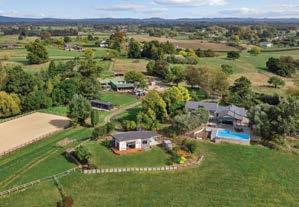
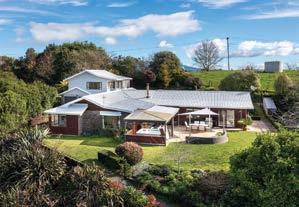
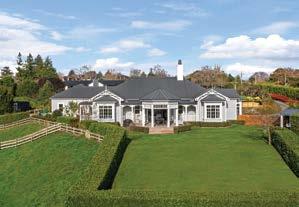



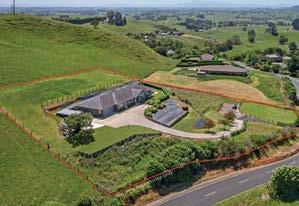
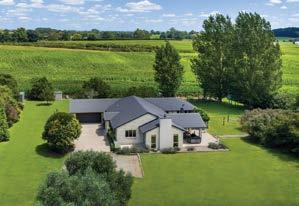



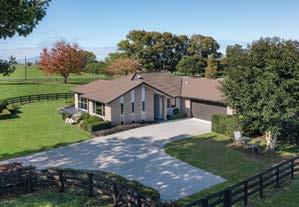
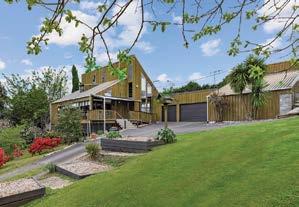


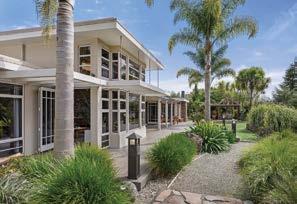




Ohaupo
Victoria Rd
Te Tahi Rd
Glen Ida Way
Mill Rd
Ohaupo Rd
Maungatautari Rd
Victoria Rd






MARK KEESOM
Principal 027 533 7661



Licensee Salesperson
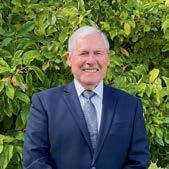
RON BRADLEY
Branch Manager 027 496 7004


DYLAN LAUBSCHER
Licensee Salesperson 022 436 8153

ELAINE WANG
Licensee Salesperson 21 041 9168
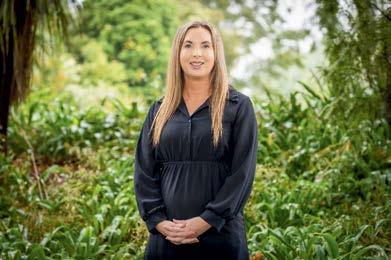
ALICE EKETONE
Accounts Manager/Trust Account Management 839 7060
REBEKAH
Licensee Salesperson 22 361 9879
Ray White Cambridge 07 827 0222
cambridge.nz@raywhite.com


VIOLET TANGAROA
Licensee Salesperson 27 485 2853


SHANNON GORDON
Executive Assistant to Mark Keesom (07) 839 7060
READY TO TAKE YOUR CAREER TO THE NEXT LEVEL? CALL US NOW!


Know your real estate agency
Lifestyle trends
Lifestyle block demand in the Waipā district has remained a defining feature of the local property market during the past year, driven by a combination of affordability, location, and changing lifestyle preferences.
Buyers are increasingly seeking a balance between rural living and urban accessibility, and Waipā offers a compelling mix of both.
One of the primary reasons people are choosing lifestyle blocks in Waipā remains the district’s strategic location within the Waikato, and it’s close ties to the fastest growing city in the country, Hamilton.
Cambridge and Te Awamutu provide easy access to major employment and services hub that the city is, while still offering a quieter, semi-rural environment. This makes the district particularly attractive to professionals and families who want space and privacy without sacrificing connectivity to work, schools, and amenities.
Affordability relative to larger urban centres has also been a key driver.
While prices have softened slightly during the past year, they remain significantly lower than comparable properties in Auckland.
This allows purchasers to upgrade their living situation - often moving from a standard suburban home to a larger house on several hectares of land - while maintaining or even reducing overall debt levels.
The shift toward flexible and remote working arrangements has further accelerated this trend.
Since the COVID-era changes to workplace norms, more people have the ability to work from home either full-time or in hybrid arrangements. This has reduced the importance of living close to central business districts and increased demand for properties that offer space for home offices, gardens, and lifestyle activities such as hobby farming or keeping animals.
Buyers are also drawn to the lifestyle and environmental qualities of the Waipā District. The area is known for its rolling countryside, productive farmland, and strong community feel. Lifestyle blocks offer opportunities for greater self-sufficiency, outdoor living, and a slower pace of life, which has become increasingly appealing amid the pressures of urban living and the changing face of the geopolitics. For families, the perceived safety, open space, and access to quality schooling options are additional motivating factors.
In terms of where buyers are coming from, there are two dominant groups. The first is out-ofregion purchasers, particularly from Auckland, as well as some from Tauranga and Wellington, seeking more affordable or spacious living options. The second group is local or regional movers, including residents from Hamilton and surrounding Waikato towns, who are upsizing from urban homes to lifestyle properties within commuting distance.
The popularity of lifestyle blocks in the Waipā District reflects the broader national trends toward space, flexibility, and quality of life, with the district remaining well positioned to attract both local and out-of-region buyers seeking a semi-rural lifestyle.
“The popularity of lifestyle blocks in the Waipā District reflects the broader national trends toward space, flexibility, and quality of life.”
Commercial & retail
Commercial and retail property trends in the Waipā district have reflected a mixed but gradually improving environment, shaped by economic headwinds, population growth, and the resilience of key local centres such as Cambridge and Te Awamutu.
Infometrics data shows commercial property sales activity has remained relatively subdued compared to pre-2022 levels, while elevated interest rates and tighter lending criteria have continued to constrain investor activity, particularly for smaller private buyers who are more sensitive to borrowing costs.
As a result, transaction volumes have been lower, and due diligence periods have lengthened. However, yields have adjusted upward over the past year, making commercial property more attractive to investors with available capital.
This repricing has helped to re-establish some market equilibrium after the sharp yield compression seen during the low-interest-rate period.
Retail property performance in Waipā is being underpinned by steady population growth and strong local spending patterns, particularly in Cambridge, which has benefited from its proximity to Hamilton and its appeal as a lifestyle destination.
Foot traffic in both town centres has remained relatively consistent, supporting occupancy levels in prime retail locations.
While some secondary retail spaces have experienced
higher vacancy rates, particularly where businesses are more exposed to discretionary spending, there has not been a widespread downturn in occupancy.
Rental growth across both commercial and retail sectors has been modest but generally positive. Landlords have faced some pressure from tenants dealing with increased operating costs, including wages, insurance, and utilities.
As a result, lease negotiations have often focused on retention, with incentives or flexible terms used to maintain occupancy. Prime retail and well-located commercial properties have still achieved incremental rental increases, while less desirable properties have seen rents remain flat or, in some cases, soften slightly.
The industrial sector, though smaller in Waipā compared to larger urban centres, has been a relative bright spot.
Demand for warehousing, trade-related premises, and service-based commercial space has remained steady, supported by local business growth and the district’s strategic location within the Waikato region. This has helped sustain both occupancy and rental levels in this segment.
Development activity has continued but at a measured pace. Rising construction costs and financing constraints have delayed or scaled back some commercial projects. Nevertheless, targeted developments in growth areas - particularly those aligned with residential expansion - have proceeded,
reflecting confidence in the district’s long-term fundamentals.
Retail business performance has been mixed, according to available data. Essential services and hospitality have generally remained stable, while discretionary retail has faced more challenging conditions due to cautious consumer spending. Inflationary pressures over much of the year reduced household purchasing power, impacting smaller retailers more significantly. However, toward the latter part of the period, easing inflation and interest rate expectations have begun to support a gradual recovery in consumer confidence.
Overall, commercial and retail trends in the Waipā district over the past year can be characterised as stable but subdued, with moderate rental growth, adjusted yields, and cautious investment activity.
“Yields have adjusted upward over the past year, making commercial property more attractive to investors with available capital.”
While challenges remain, particularly around financing and consumer spending, the district’s population growth and strategic location continue to provide a solid foundation for gradual improvement in the commercial property market.
knowledge






global reach






Our team delivers exceptional real estate services across the Waikato. Our deep local knowledge and networks ensure we are expertly informed on all property matters in the region.
The global reach afforded to us as part of the Sotheby’s International Realty network is unmatched in New Zealand. It means your property is seen by more potential buyers –regionally, nationally, and globally.
With two strategically placed offices in your region, our experienced team is ideally positioned to maximise the marketing reach of your property, bringing you our best possible results.
We understand that every home is one of a kind. Like you. Like us.
Discover your 1 of 1.

Manager
+64 7 464 0186
Victoria Street, Cambridge
7 464 0184 65 Devine Road, Tamahere

OFFICE PHONE 07 823 1540
Mike Gascoigne Branch Manager 027 430 8311 mike.gascoigne@bayleys.co.nz
Amanda Partington
Residential and Lifestyle Sales 021 475 475 amanda.partington@bayleys. co.nz
Amanda Merrington
Residential and Lifestyle Sales 021 646 447 amanda.merrington@bayleys. co.nz
Andrew Kay
Residential and Lifestyle Sales 027 564 1642 andrew.kay@bayleys.co.nz
Jess Rose Residential Sales 027 444 9546 jess.rose@bayleys.co.nz
Jessie Hodges
Residential and Lifestyle Sales 027 850 2040 jessie.hodges@bayleys.co.nz
Jonte Wright Residential and Lifestyle Sales 027 621 2424 jonte.wright@bayleys.co.nz
Karen Grootscholten
Residential and Lifestyle Sales 021 062 6319 karen.grootscholten@bayleys. co.nz
Karen Rutherford
Residential and Lifestyle Sales 027 279 5930 karen.rutherford@bayleys.co.nz
Khali Bishop Residential and Lifestyle Sales 027 759 3398 khali.bishop@bayleys.co.nz
Natalie Kirk
Residential and Lifestyle Sales 021 277 9720 natalie.kirk@bayleys.co.nz
Nigel Thrush Residential and Lifestyle Sales 021 192 2655 nigel.thrush@bayleys.co.nz
Rachael Paine
Residential and Lifestyle Sales 021 574 710 rachael.paine@bayleys.co.nz
Sacha Webb Residential Sales 021 363 387 sacha.webb@bayleys.co.nz
Willem Brown
Commercial and Industrial Sales and Leasing 021 161 4066 willem.brown@bayleys.co.nz
Dave Peacocke Country, Farm and Lifestyle Sales 027 473 2382 dave.peacocke@bayleys.co.nz
Dave Kilbride Country, Lifestyle and Farm Sales 027 436 7082 dave.kilbride@bayleys.co.nz in the next home


OFFICE PHONE 07 823 1945
Amy de Clifford
Residential & Lifestyle Sales 021 0226 6622 amy@cambridgerealestate.co.nz
Debbie Towers
Residential & Lifestyle Sales 027 689 8696 debbie@cambridgerealestate. co.nz
Eilish Russell
Residential & Lifestyle Sales 027 300 0002 eilish@cambridgerealestate. co.nz
Graham Ban
Residential & Lifestyle Sales 027 448 7658 graham@cambridgerealestate. co.nz
Kane Jacobson
Residential & Lifestyle Sales 027 389 0301 kane@cambridgerealestate.co.nz
Kevin Russell
Residential & Lifestyle Sales 021 227 5482 kev@cambridgerealestate.co.nz
Lenie Senekal
Residential & Lifestyle Sales 027 247 1900 lenie@cambridgerealestate.co.nz
Lisa Dudfield
Residential & Lifestyle Sales 021 272 2755 lisa@cambridgerealestate.co.nz
Paulette Bell
Residential & Lifestyle Sales 021 245 6888 paulette@cambridgerealestate. co.nz
Rachael Seavill
Residential & Lifestyle Sales 027 722 4235 rachael@cambridgerealestate. co.nz
Trevor Morris
Residential & Lifestyle Sales 027 205 3246 trevor@cambridgerealestate. co.nz
David Soar
Rural & Lifestyle Sales 027 284 9755 david@cambridgerealestate. co.nz
Matt Seavill
Rural & Lifestyle Sales 027 444 3347 matt@cambridgerealestate.co.nz
Cambridge
OFFICE PHONE: 07 827 8815
Kevin Deane
Business Owner 021 970 902
Kevin.deane@harcourts.co.nz
Andrea Deane
Business Owner 021 281 0068
Andrea.deane@harcourts.co.nz
Rose Einkamerer
Client Experience / Operations Co-ordinator 027 312 0797 kdrepa@harcourts.co.nz
Gary Stokes
Agents direct
Rural and Lifestyle Sales Consultant 021 351 112
Gary.stokes@harcourts.co.nz
Cassie Emmett
Residential and Lifestyle Sales Consultant 027 215 9334
Cassie.emmett@harcourts.co.nz
Maria Van Der Merwe
Residential and Lifestyle Sales Consultant 021 106 9003
Maria.v@harcourts.co.nz
Nicola Fitchett
Residential and Lifestyle Sales Consultant 027 228 0825
Nicola.fitchett@harcourts.co.nz
Bevan Higgins
Rural and Lifestyle Sales Consultant 027 471 2424
Bevan.higgins@harcourts.co.nz
Michael Morton Property Manager 027 279 1849 kdrepm@harcourts.co.nz

OFFICE PHONE 07 827 7188
Gerda Venter AREINZ
Residential/Lifestyle Sales & Director 027 311 3722 gerda.venter@ljhooker.co.nz
David Chisholm
Residential/Lifestyle Sales 021 346 063 david.chisholm@ljhooker.co.nz
Manish Khetarpal
Residential/Lifestyle/Commercial Sales 0274 052 941 manish.khetarpal@ljhooker.co.nz

OFFICE PHONE 07 823 2300
Peter Tong
Residential/Lifestyle Sales 021 987 867 petert@more-re.co.nz
Wendy Tong
Residential/Lifestyle Sales 027 555 0633 wendyt@more-re.co.nz
Lily Tong
Residential/Lifestyle Sales 027 870 3317 lilyh@more-re.co.nz
Jason Tong
Residential/Lifestyle Sales 027 755 2902 jasont@more-re.co.nz
Rebecca Napier
Residential/Lifestyle Sales 020 404 74120 rebeccan@more-re.co.nz
Harry Singh
Residential/Lifestyle Sales 022 045 0554 harrys@more-re.co.nz
Rod Fox
Residential/Lifestyle Sales 027 276 3369 rodf@more-re.co.nz
Karlene Bhai
Residential/Lifestyle Sales 021 135 5466 karleneb@more-re.co.nz

OFFICE PHONE 07 823 0647
Camron Meade Central Region Sales Manager 027 420 1881 camron.meade@pggwrightson. co.nz
Scott Borland Lifestyle/Rural Sales 027 486 4893 scott.borland@pggwrightson. co.nz
Gavin Brewster Lifestyle/Rural Sales 027 555 2404 gavin.brewster@pggwrightson. co.nz
Martin Lee
Lifestyle/Rural Sales 027 497 0830 martin.lee@pggwrightson.co.nz

OFFICE PHONE 07 595 0835
Alan Copeman
Branch Manager & Commercial Manager 021 874 222
Alissar Boudreau-Turner
Residential 022 514 6622
Holly Hunt Residential 027 594 1491
Jessica Dalton
Residential 027 379 7222
Kate Allen Residential 021 608 816
Malinda Chandrasekera Residential 0210 293 6907
Rachael Hunt
Residential 027 589 8797
Chris Moore Lifestyle 027 288 0563
Teresa Moore Lifestyle 027 288 0553
Alice Best
Rural/Lifestyle 021 979 108
Campbell Turner
Auctioneer & Commercial 021 990 978
Tony Wakelin Commercial 021 569 299
David McGuire
Rural/Lifestyle 027 472 2572

OFFICE PHONE 07 827 0222
Mark Keesom Principal 027 533 7661 mark.keesom@raywhite.com
Ron Bradley AREINZ
Branch Manger 027 496 7004
ron.bradley@raywhite.com
Brooke May Licensee Person 0277869422 brooke.may@raywhite.com
Rebekah Bloodworth Licensee Salesperson 0223619879 rebekah.bloodworth@raywhite. com
Dylan Laubsher Licensee Salesperson 0224368153 dylan.laubscher@raywhite.com
Violet Tangaroa Licensee Salesperson 0274852853 violet.tangaroa@raywhite.com
Elaine Wang Licensee Salesperson 0210419168 elaine.wang@raywhite.com

Aimee Belton
Residential & Lifestyle Sales 021 0277 2426 aimee.belton@nzsir.com
Kristen Gould Residential & Lifestyle Sales 021 279 4949 kristen.gould@nzsir.com
Abbey Gould Residential & Lifestyle Sales 022 031 1658 abbey.gould@nzsir.com
Catherine Hayward
Residential, Lifestyle & Rural Sales 027 562 4598 catherine.hayward@nzsir.com
Rachel Hooker
Residential & Lifestyle Sales 027 460 4676 rachel.hooker@nzsir.com
Aimee Maxwell
Residential & Lifestyle Sales 027 336 8216 aimee.maxwell@nzsir.com
Neve McGregor
Residential & Lifestyle Sales 028 405 1224 neve.mcgregor@nzsir.com
Janine McWhannell
Residential & Lifestyle Sales 021 487 112 janine.mcwhannell@nzsir.com
Tony Mills
Residential & Lifestyle Sales 021 35 34 34 tony.mills@nzsir.com
Marisa Payne
Residential & Lifestyle Sales 021 170 0728 marisa.payne@nzsir.com
Lorenzo Scartozzi
Residential, Lifestyle & Rural Sales 027 436 3531 lorenzo.scartozzi@nzsir.com
Melodee Tribe
Residential & Lifestyle Sales 027 673 0873 melodee.tribe@nzsir.com

Lions Club of Cambridge Charitable Trust
Lions Club of Cambridge Charitable Trust
Opening Hours 8.30am -12pm
Thursday & Saturday
We sell 2nd hand Furniture, Kitchenware, bric a brac, clothing, hardware, electrical appliances, gardening/outdoor equipment linen/ bedding and much more at very reasonable prices.
Lions Club of Cambridge Charitable Trust
The Lions Club of Cambridge Charitable Trust gives out Grants monthly to many organisations.
Lions Shed
Lions Shed
Opening hours 8.30am -12pm Thursday & Saturday kitchenware, Bric a brac Clothing, Hardware, Whiteware, Electrical appliances, Furniture, Gardening/outdoor equipment and much more at very reasonable prices. and visit us at 26 Vogel Street Cambridge or check our Facebook page for weekly specials.
Opening hours 8.30am -12pm Thursday & Saturday
The grants for April 2026 totalled $30,250.
We sell kitchenware, Bric a brac Clothing, Hardware, Whiteware, Electrical appliances, Furniture, Gardening/outdoor equipment and much more at very reasonable prices.
Come and visit us at 26 Vogel Street Cambridge or check out our Facebook page for weekly specials & events.
Trash ‘n’ Treasure Market
Every 2nd Sunday of the month. Cambridge Memorial Park (Rugby Grounds) Open from 8.30am - 1pm
Lions Trash & Treasure Market
Lions Trash & Treasure Market
This month’s grants were given to the principals
Come and visit us at 26 Vogel Street Cambridge or check our Facebook page for weekly specials.
We accept donations of goods in clean working condition, pick up of items can be arranged by calling 027-693-7953
Lions Club - Grants
Come along to enjoy the many market stalls selling a variety of goods. Food caravans and entertainment. For stall bookings contact: cambridgemarket.nz
Every 2nd Sunday of the month. Cambridge Memorial Park (Rugby Grounds) Open from 8.30am-1pm
Every 2nd Sunday of the month. Cambridge Memorial Park (Rugby Grounds) Open from 8.30am-1pm
Stalls priced at $20 All stall profits go back to the community through grants.
Come along to enjoy the many market stalls selling a variety of goods. Food caravans and entertainment. For stall bookings contact Cambridge@lionsclubs.org.nz
We accept donations of goods in clean working condition, pick up of items can be arranged by calling 027-693-7953
Pick up times Tues, Thurs & Sat between 8.00am -12pm
Pick up times Tues, Thurs & Sat between 8.00am -12pm
Association for local primary schools, a childcare center, a local choir, Rock & roll club, Waikato Sunrise Trust for 40 Diabetic Cambridge children to attend the Circus Quirkus & Ko Wai Au trust for Booklets and program resources for local 11- 24 year olds. Applications for grants are open all year round on a monthly basis so if your club, organization or sporting individual has a project that we may be able to help with let us know. To apply, please email: cambridgegrants@lionsclubs.org.nz for an application form.
Come along to enjoy the many market stalls selling a variety of goods. Food caravans and entertainment. For stall bookings contact Cambridge@lionsclubs.org.nz
Stalls priced from $20.00
Stalls priced from $20.00
DID YOU KNOW?
What to do with your old/unused spectacles?? Give them to Cambridge Lions Club!
Lions Club Christmas Cakes
Get
Lions Club Christmas Cakes
Get excited for Christmas by enjoying our deliciously fruity Lions Clubs’ Christmas Cakes.
Support your local Lions Club by purchasing our famous traditonal Christmas Fruit Cake. And they come with a guaranteed shelf life of at least two years! Full of fruit, 1 kilo & delicious. Order on-line at www.lionschristmascakes.org.nz Cakes will be delivered to your door.
We accept donations of goods in CLEAN WORKING condition.
Lions Club - Grants
Pick up of items can be arranged by calling Diane on 027-693-7953 between 9am & 5pm. Pick up times: Thurs/Sat 8am -11.30am.
Club of Cambridge Charitable Trust gives out Grants monthly to organizations. They include most charities, local schools, local sporting individuals who are participating in sporting activities plus many deserving people. We also give Grants to individuals who need special equipment to help lead their lives in comfort. year the Lions Club of Cambridge Charitable Trust gave over $350,000.00 to many through our Projects – The Lions Shed, The Lions and T & T Market. Most of this money comes from locals who, with volunteers, care for our community. To apply please email: cambridgegrants@lionsclubs.org.nz for an application form
The Lions Club of Cambridge Charitable Trust gives out Grants monthly to many organizations. They include most charities, local schools, local sporting clubs, and individuals who are participating in sporting activities plus many more deserving people. We also give Grants to individuals who need special equipment to help lead their lives in comfort.
Last year the Lions Club of Cambridge Charitable Trust gave over $350,000.00 to many through our Projects – The Lions Shed, The Lions Caravan and T & T Market. Most of this money comes from locals who, with our volunteers, care for our community. To apply please email: cambridgegrants@lionsclubs.org.nz for an application form





Cambridge Lions in conjunction with the Fred Hollows Foundation NZ is a collection point for old or unused spectacles. They are collected at the Lions shed or Membership stand at Trash N Treasure markets then sent to the Fred Hollows Foundation NZ in Auckland to be redistributed around 15 pacific countries. They are given out to patients, by trained optometrists in these countries, to those patients who do not have the means or where resources are not available in their area. This amazing charity has been around for the last 30 years & is a living legacy to a man who simply wanted to help people.

12-packs @ $25 per cake freight free
Lions Club to nominate when ordering cakes: Lions Club







Cambridge
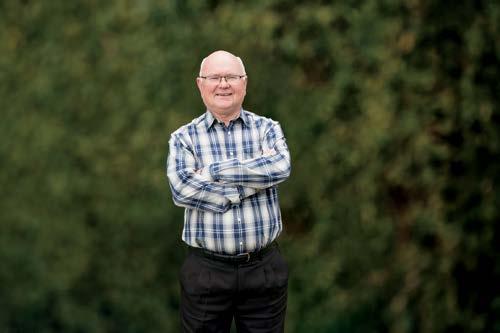









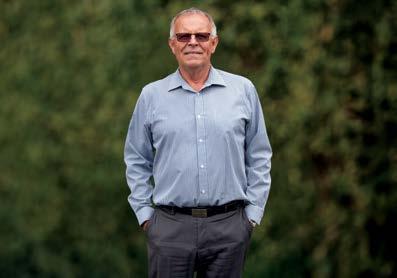

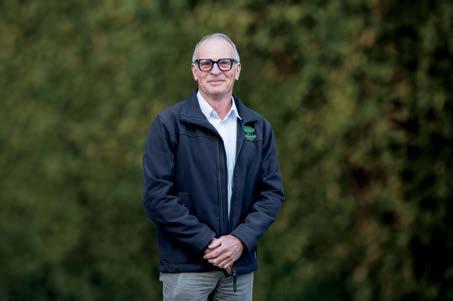



71B Scott Street, Leamington
- Separate studio-creative space, gym or work-from-home office.
- Outdoor living that has been built for fun-filled entertaining.
- Practical touches include an automatic garage plus a carport.
Open Homes Saturday 11 - 11.30am & Sunday 2 - 2.30pm
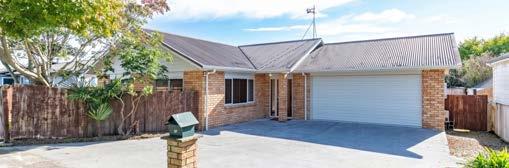
57 Byron Street, Leamington
- 3 Bedrooms, 2 Bathrooms- master with en-suite & walk-in robe.
- Solid brick construction, fully insulated & double-glazed throughout.
- Fully fenced for pets, kids or grandkids. Open Homes Saturday 12 - 12.30pm & Sunday 11 - 11.30am Refurbished, Private & Walk to Schools

- Featuring a brand-new kitchen, new family bathroom, updated ensuite, new flooring, fresh paint, new curtains, and ceiling insulation.
- Comfort is assured year-round with ducted heating, DVS, retrofit double glazing and LPG gas hot water.
Open Homes Saturday 12 - 12.30pm & Sunday 11 - 11.30am

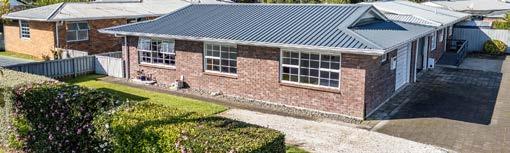
- Sun-soaked and light-filled, the home offers generously sized rooms and an easy, practical layout.
- Recent upgrades including a new roof and guttering, new rear fencing, and a freshly painted garage door.
Saturday 1.00 - 1.30pm
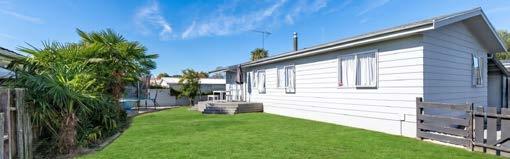


the landscape above Lake Karapiro.
- Layout of the home services growing families, with a separate wing that provides private space when needed.
- Superb flow to outdoor living – complete with a pizza oven zone. Open Home Sunday 2.00 - 2.30pm











































Enoch’s Plumbing Solutions






Freeview Installations
Freeview Installations Satellite Installations
Waipā dominance continues
By Jesse Wood
It was another high scoring weekend for the Waipā club rugby teams.
Highlights included Pirongia scoring 219 unanswered points across 1A and 1B divisions, while Hautapu scored 142 across their two senior matches, winning all four of their games.
Hautapu trounced United Matamata Sports 81-5 at Cambridge Memorial Park.
The impressive Nathan Stephens helped himself to a hattrick, while number 10 Rangiwai Lunjevich grabbed a double and kicked seven conversions.
Fellow Hautapu scorers included Waisake Salabiau (2), Quentin Hill (2), Harry Chittick, Pita Anae-Ah Sue and Rui Farrant.
In the earlier match, Hautapu B defeated Matamata B 61-12 with left winger Josh Brunger crossing the chalk on four occasions.
First five-eighth Callum Beckett kicked eight conversions and grabbed a try himself.
Te Awamutu Sports’ premier side won by default as they were drawn to play the removed Melville.
Te Awamutu Sports premier development beat Melville B 43-12 at Collins Road in Hamilton.
Four George Poolman conversions were added to the tally alongside tries from John Salinas, Kahu Boyd, Gelestino Kiutau, Sosaia Fonua, Kahn Martin, Daniel McGillivray and Connor Moore.
In the women’s premiership, Melville-Hautapu combined (Meltap) beat Suburbs 62-15 at Flagstaff Park.
Fullback Keira Russell grabbed a hat-trick and kicked four conversions.
Fellow outside back Dawn Hohua crossed for two fivepointers in the 10-try to three victory.
In division 1A, Leamington travelled down the road and pipped Ōhaupō 18-17 at Ōhaupō Memorial Park.
Winger Robert Day scored all of the visitors’ points – two tries, two penalties and a conversion – to add to his impressive 2026 points tally.
Fullback Hateni Tafolo and Chris Johnson were the Ōhaupō try scorers, while pivot Dean Fullerton added seven points off the tee.
Pirongia hosted Kereone and buried them 130-0.
The mountain men scored 20 tries with Jason Hill converting 15 of them.
Winger Ruban Maniapoto-King scored four tries as did flanker Ty Demler-Findlay.
Reserve Jeke Lesuma and vicecaptain Callum Hall got three tries apiece.
In the 1B division, Leamington B lost 29-19 to Ōhaupō B. Hayden Thomas and co-captain Cameron Torr scored braces for the victors, while veteran Brent Smith sealed the deal with his side’s fifth.
Pirongia B thrashed Kereone B 89-0 – 15 tries and seven conversions. Kingston Grant scored 19 of the Pirongia points including a hat-trick.
Kirwyn Ellis had a 15-point haul, while Ben Rush, Tom Kirkbride and Kayden Moorfield registered two tries each.
The Waipā women’s

championship matches were both under mountains.
Pirongia were pipped by Waitete 36-33 at Pirongia Domain.
Fullback Sarah Moorhouse grabbed a double for the home team and added four conversions.
Other Pirongia try scorers were openside Georgia Packer, centre Katie King and Grainne Walsh
Kihikihi lost 50-0 to Taupiri-Te Kauwhata combined at Murphy Lane in North Waikato.
Former Waikato FPC representative Calista Ruruku
grabbed two tries for the home team.
In the colts grade, Hautapu thumped Suburbs 48-0 including a Mason Baker double, as well as 13 points for first five-eighth Johanson Tamala.
Other scorers were Sean Burgess, Luke Goodman, Brooklyn King, Mason Grice and Sam Fowler.
Pirongia colts lost 34-0 to Fraser Tech and Leamington under-21 lost 52-12 to Morrinsville Sports.
Winger Hunter Ward and prop Ambrosio Reidel were the sole
Leamington scorers, with Will Lord adding a conversion.
Te Awamutu Sports beat United Matamata Sports’ under-21 team 33-24 at Bedford Park – a penalty try and a penalty goal were the difference.
Former Te Awamutu College first XV reps Teina Beets, Ryan Baillie, Kainan Kelly and Kiarn Collett all crossed the chalk for the visitors.
Jaoquin Burke slotted two conversions and Braith Tangohau one.
ROBERT: Leamington winger Robert Day scored all of his side’s points on Saturday. Photo: Leamington Rugby Sports Club




CAMBRIDGE OPEN HOMES





Notice of Meeting
Fonterra Hautapu Public Meeting
We would like to invite you to our annual meeting which will be held at:
Fonterra Hautapu Training Rooms, Gate 5 Bruntwood Rd at 6.00 pm - 8:00pm on Tues 26th May 2026.
At the meeting we will:
• Provide you with an update on the activities and operations at the Hautapu Site;
• Overview of the Site projects; and
• Discussion on the site environmental performance and activities in the local community.
Light refreshments will be provided.
To confirm your attendance please RSVP by Wednesday 20 May to Hautapu.community@fonterra.com
We look forward to seeing you.

Gayle Melrose Funeral

2 Albert Street, Cambridge 07 827 7649 www.cambridgefunerals.co.nz
WILSON, Albert Bryce (Bryce) – Peacefully at Bupa St Kilda, Cambridge on Saturday 2nd May 2026, aged 85 years. Much loved father and father-in-law of Sara and Ian Brownlie, Katie Wilson and John Willders (England). Adored Grandad of Gabriella and Annabel, Liam and James. Loved brother of Kelvin and the late Barbara, Murray and Russell, and brother-in-law of Cos Fell and Mary Wilson. A loved and devoted community man and a friend to many. In accordance with family wishes, a private cremation has taken place. A memorial service for Bryce will be announced at a later date. Communication to Bryce’s family c/- 2brycewilson41@ gmail.com
LAWRENCE, Oliver Charles Edward (Ollie) –Hazel, Peter, Mark, Nicole, and the grandchildren wish to sincerely thank everyone who offered their support following Ollie’s passing. We greatly appreciate the cards, phone calls, texts, visits, and the many expressions of love, sympathy, and kindness shown to our family during this sad time. Please accept this as a personal acknowledgement of our heartfelt thanks.
30 Gillies Street, Cambridge 07 827 2026 www.gibsonfunerals.co.nz
2026 Ownership Review


PUBLIC CONSULTATIVE PROCEDURE
In accordance with the Deed of Trust under which the Waipā Networks Trust has been constituted, the Trustees and the Directors of Waipā Networks Limited have prepared a joint report considering proposals and available options for the future ownership of Waipā Networks Limited.
The Trustees and the Directors propose that the Ownership of the Company should continue to remain 100% Trust owned on behalf of the Community.
The Trustees hereby implement a Public Consultative Procedure. Notice is given that the Ownership Review will be available for inspection by the public from the 1st May 2026, from the Trusts website www.waipanetworkstrust.co.nz or during normal business hours at the following location:
Waipā Networks Ltd 240 Harrison Drive TE AWAMUTU
Persons interested in the proposals are invited to make written submissions to the Trustees.
All mail submissions should be addressed to:
Submissions to the Trustees
Waipā Networks Trust PO Box 34 TE AWAMUTU 3840
All email submissions should be addressed to: info@waipanetworkstrust.co.nz
Persons wishing to make submissions should ensure that those submissions are received at the above address no later than 5pm 30th June 2026 (“the due date”). Submissions received by the due date will be made publicly available.
In due course, any persons who make written submissions by the due date will be offered an opportunity to be heard by the Trustees at a meeting open to the public.
KM Heeringa Trust Manager
WAIPA NETWORKS TRUST



827 6037 3 Hallys Lane, Cambridge www.grinters.co.nz



TRACEY, Coleen Rae (née Archbold) – Passed away peacefully at Te Awa Lifecare on Wednesday, 29th April 2026, aged 93 years. Much loved wife of the late Raynor. Loved and respected mother and mother-in-law of Ian, Sheron & Peter, Neil, Leigh & Tony, Mark & Claire. Cherished Nan of Brent, Steven, Andrei, Valeria, Nicholas, Mason, Ben, Josh, and Jacob, and great nan of Vanessa, Elliot, Lara, Libby, Sasha, Sasha, and Myles. The family wish to extend their sincere thanks to the staff of Te Awa Lifecare for the love and care shown to Coleen over the past few years. A Requiem Mass for Coleen will be held at St Peter’s Catholic Church, Anzac Street, Cambridge, on Friday, 8th May 2026 at 12:00pm, followed by interment at Hautapu Public Cemetery. Messages to the Tracey Family may be sent c/- 3 Hallys Lane, Cambridge 3434, or left in Coleen’s online tribute book at www. grinters.co.nz.

MONKS, Dawn Shirley –Peacefully at Resthaven on Vogel, Cambridge on Saturday 2 May 2026. Aged 91 years. Much loved and loving wife of the late Colin. Loved mother of Kevin and Gillian, Stephen and Fiona. Adored Nana and greatnana of Rebecca, Josh, Melanie, Ethan, Hamish, Aaron, and their families. Sincere thanks to the staff at Resthaven on Vogel for their compassionate care of Dawn. A celebration of Dawn’s life will be held at Trinity St Paul's Union Parish, 43 Queen Street, Cambridge today, Thursday 7 May at 11:00am. Communication to Dawn’s family C/- Gibson Funerals, PO Box 501, Cambridge 3450.
FLOYD, Peter Grant –Passed peacefully at Waikato Hospital on Saturday, 2nd May 2026, aged 86 years. Very dearly loved best friend of Gillian. Loved father and father-in-law of Kareen and Adrian, Kelvin, Brettan, and Garrick. Much loved grandad of Grace and Baxter, and great grandad of Bowie and Ari. A memorial celebration of Peter’s life will be held at Te Awamutu Bible Chapel, Chapel Drive, Te Awamutu, on Thursday, 7th May 2026 at 11:30am. Special thanks to the staff of Resthaven on Burns for their exceptional care and kindness shown to Peter. Messages to the Floyd Family may be sent c/3 Hallys Lane, Cambridge 3434, or left in Peter’s online tribute book at www.grinters. co.nz
HOLGATE, Neville Victor – Peacefully on Saturday 2 May 2026, after a short time in Waikato Hospital. Beloved life partner of Thelma Johnson. Adored uncle and great-uncle of Alison and Joanne. Loved family member of Stephen, Sarah, Rhian and their families. Epic cyclist. A celebration of Neville’s life will be held at The Kowhai Room, Raleigh Street Christian Centre, 24 Raleigh Street, Cambridge on Saturday 9 May at 1:00pm.

HUGHES, Brett – Passed peacefully at home surrounded by his family on Friday 24 April 2026 after a courageous battle with cancer. Loving brother of Jimmy, Dale and Erin, brother-in-law of Ian and Les. Adored, loved and respected by all. Please join Brett’s family and friends on 12th May, at 2pm, to celebrate and reminisce his life at Cambridge Cosmopolitan club, 88/94 Burns St, Leamington.