
Flushed with pride
By Mary Anne Gill
Waipā’s biggest infrastructure project has been handed over with a simple but heartfelt request.
“Please take great care of the baby.”
Chief executive Steph O’Sullivan’s words drew smiles from the crowd gathered at the new Cambridge Wastewater Treatment Plant this week as the $108.5 million plus facility opened and was then promptly passed from council ownership to Waikato Waters.
There was pride too. This was a project years in the making, delivered on time, and built not just with concrete and steel but with relationships, patience and shared purpose.
Mayor Mike Pettit called it a foundation for a “healthy, growing and successful district”, designed to give Cambridge, Leamington, Hautapu and Karāpiro the capacity and confidence to grow while
protecting the Waikato River.
But O’Sullivan’s speech revealed a deeper story.
She went off script to recall the early days of the project in 2009 when she and iwi representatives were first talking through the idea.
Back then, she was working in an environmental role alongside Ngāti Korokī Kahukura representatives including Poto Davies. The technology they were considering did not stack up.
“If we’d gone ahead with what we were thinking then, it wouldn’t be compliant today,” she said.
Taking time, pausing and waiting for the right solution proved critical.
For O’Sullivan, the project has always been as much personal as professional. Her earlier work with the Waikato River Authority and through Treaty settlement discussions shaped her view of the river not as policy but as a living relationship. The partnership with mana whenua,

including Ngāti Hauā and Ngāti Korokī Kahukura, has been central from the outset.
Pettit said their input helped shape the project at every stage, ensuring cultural knowledge sat alongside technical expertise.
“Technical knowledge matters deeply,” said O’Sullivan. “But the knowledge that comes from generations of living with the environment matters just as much.”
The project is one of the first in the region where mātauranga Māori and engineering have been woven together in the design and delivery.
Behind the scenes, a long list of people carried the work through.
Among them was Lorraine Kendrick of Beca, whose connection with O’Sullivan stretches back years. O’Sullivan singled her out.
Kendrick’s involvement dates back to the original project team and continued through to oversight as the plant took shape, ensuring consistency

through design changes, consenting and construction.
Project manager Marie McIntyre was also recognised, her role described by O’Sullivan as career defining.
Across years of planning, consenting and delivery, McIntyre helped carry the responsibility of getting the project to completion in what was a complex and highly scrutinised environment.
While it was easy to see the finished product as a series of tanks and pipes on the edge of town, O’Sullivan reminded the crowd the real story lay elsewhere.
“It’s the site meetings, the late reviews, the conversations, the trust, the challenge,” she said. “That’s what got us here.”
Now, as Waikato Waters takes over, the plant moves into its next phase. It will operate largely unseen, quietly doing its job.
• Waikato Waters chief named – See page 3


The council listened…
By Roy Pilott
Waipa district councillors have been applauded for listening to concerns about plans for the use of Lake Karāpiro.
The new long term plan and masterplan for lake use – initially geared to favour non-motorised users –presented a significant threat to the Karāpiro Water Ski Club, as did a plan to realign the Taipa Stream.
But the council’s Strategic Planning and Policy Committee has come up with a recommendation to council which has those issues removed.
Ski club president Tim Barns-Lawton told The News the initial plans contained elements which were not thought out well and consultation had been poor.
But the hearing process was the opposite. Councillors were courteous, listened and were proactive. He said it had been necessary to “shout from the roof tops” to alert people to the changes proposed but the result had been all the club had hoped for.
He said another bonus as a result of the consultation process had been the establishment of a boating alliance involving users and stakeholders of the lake.
“Collectively we can support the harbour master, bio security and issues going forward,” he said.
• See story page 7.


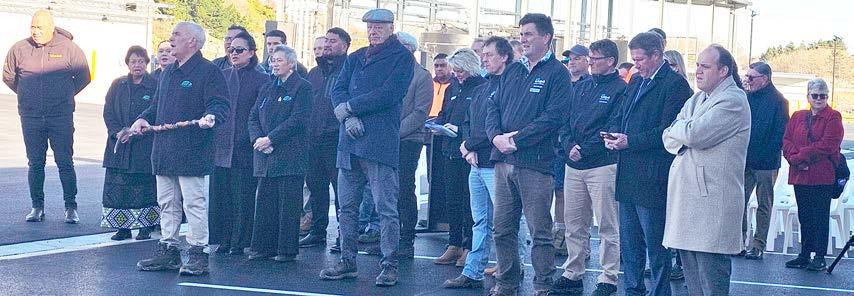
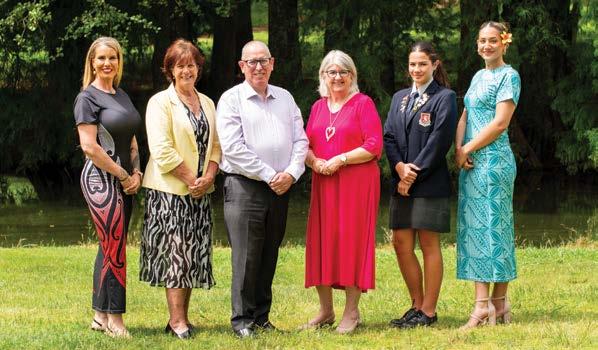
Waipā District Council elected members, staff and iwi welcome guests to the opening of the Cambridge Wastewater Treatment Plant.
Photo: Mary Anne Gill
CHANGE OF DEADLINES
16 July 2026 ISSUE
RUN OF PAPER ADVERTISING
Booking & Copy Setting
Noon Thursday, 9 July
Finished Artwork
11am Tuesday, 14 July
CLASSIFIED ADVERTISING
Booking, Copy Setting & Payment
5pm Monday, 13 July


are members of the NZ Independent Community



CONTACTS
News/Editorial
Roy Pilott editor@goodlocal.nz
027 450 0115
Mary Anne Gill maryanne@goodlocal.nz
021 705 213
Viv Posselt viv@goodlocal.nz
027 233 7686
Advertising Director
Janine Davy janine@goodlocal.nz
027 287 0005
Owner/Publisher
David Mackenzie david@goodlocal.nz
Office/Missed Deliveries
07 827 0005 admin@goodlocal.nz
In the business news
A six-year-old Waikato boy gazing skyward at balloons has inspired thousands of children around the world through a career that began at Balloons over Waikato and led to classrooms in more than 80 countries.
It is a reminder of how Waikato stories often start small and grow into something much bigger. That thread runs through the latest Waikato Business News, where growth, change and quiet confidence sit alongside the region’s everyday realities. There is momentum in tourism and investment, but also a recognition that opportunity has to be worked for. Farmers talk cautiously about better returns while keeping an eye on rising costs. Community efforts sit alongside that, with a Hamilton choir helping raise funds to strengthen St Peter’s Cathedral, showing how local support continues to underpin the region’s institutions.
Elsewhere, questions are being asked about the long-term value of major assets like Hamilton Airport and how regions position themselves for the next phase of growth.
Across the hill, Bay of Plenty Business News reflects a similar moment. Tauranga’s skyline is full of cranes, but the challenge now is bringing people and life back into the city centre. Plus columnist Todd Muller reflects on Kane Williamson’s “quiet leadership” and we meet the man who pioneered the Ruby Red kiwifruit.
• More: goodlocal.nz


Trio face action following burglaries
Last week brought the end of a longrunning investigation into a retail burglary, along with several attempted and completed car thefts that occurred around Leamington back in February.
After officers executed two search warrants on Thursday, three young people are now working their way through the youth aid and youth court process.
Staff were called to a crash on Tīrau Road, Karapiro. The driver, who was already disqualified, subsequently blew almost four times the legal breathalcohol limit. He faces associated charges in court.
Te Awamutu police dealt with a similar situation when a man decided to drive home after drinking in town. His breath alcohol reading came back at more than three times the limit, and he too will be appearing in court. If you’re planning a night out or even just a couple of drinks after work, please also plan a safe, legal way to get home.
Last week police also responded to a family harm incident in Te Awamutu where two people reported being assaulted. A Police Safety Order (PSO) was issued to a male involved, but he breached it soon after and was rearrested. He now faces charges
for all related offending.
Next, a call for information. Many in Waipā will know the Urban Miners. They are a volunteer group offering environmentally friendly ewaste recycling. Their base on Arnold Street, Leamington has been hit by burglars three times in the last six weeks, causing significant damage and loss. It’s disheartening for the volunteers. If you know anything about who may be responsible, please contact Police (file 260625/5227). And if you live nearby and spot anything suspicious, please call 111 straight away.
Finally, a small reminder about selfpay systems. Apps like BPMe make paying for petrol easy.
Unless you’re using prepay, please do doublecheck the transaction has actually gone through before driving off.
Police periodically receive theft reports that turn out to be simple payment glitches. The same goes for selfservice supermarket checkouts — customers tap their card, make the assumption it has processed, and walk out, only for the store management to find it didn’t complete. A simple rule: ensure you pay, then walk away.
A winter issue
Long term complaints to council about the inadequate winter leaf collection in Leamington and the burden put on older people like me who have to spend a great deal of time clearing our gardens, berms and gutters and having to dispose of them have fallen on deaf ears.
Until recently, when I voiced my concerns personally to some council representatives. They made placatory comments but mainly , and not unexpectedly, excuses about the lack of resources and the difficult job the contractors had. During maximum leaf fall I spend an average of 2.5 hours a day, mostly on my hands and knees, picking up leaves.
At 75 years of age that is becoming increasingly onerous. To add insult to injury council are now planting more non-native sapling deciduous tree species in the area which over time will drop more and more leaves thereby exacerbating an already impossible situation. Is this not an example of lunacy? Surely the logical sensible thing to do was/is to plant New Zealand natives that don’t drop leaves and have wider benefits for wildlife. But its obvious council continues to fall short in the logic department.
Kelvin Dunn Leamington
Poor timing
Even an old man like me can see the folly in the promises Labour is making. Three free doctors’ visits, a cap on bus fares, and there will be many more to come. They say they will fund some of this from the proceeds of their proposed capital gains tax. The folly is that they will wish to bring these handouts in their first year in power when there is no timeline for the proceeds from the capital gains tax to start flowing, which will be at least three to five years.
How will they pay for this largesse? Borrow.
Max Brown Cambridge

PUMP SPECIALISTS
Air Conditioning Group Waikato are the specialists for Heating, Cooling, Ventilation, and Air Purification for Homes, Rentals, Businesses, and Commercial Buildings.
Conditioning Group Waikato are the specialists for Cooling, Ventilation, and Air Purification for entals, Businesses, and Commercial Buildings.








Waikato Business News and Bay of Plenty Business News, July editions.
School award
Goodwood School staff were in Wellington last week to collect the award for 2026 New Zealand Educational Excellence Award for educational leadership. The category was one of four, and the schools receive $20,000. The school was described as a “lighthouse” for structured literacy.
Stewart retires
Cambridge cyclist Campbell Stewart, who has been a world, Olympic and Commonwealth champion, has announced his retirement at the age of 28. Palmerston North born Stewart plans to continue living in Waipā. He won his first elite world title in Polland in 2019.
Dirt bikes
Three weeks after the issue was raised in Deb Hann’s weekly On the Beat column, Hamilton Police have impounded another dirt bike as part of an ongoing enforcement operation to target illegal and dangerous dirt bike behaviour. To date, 16 dirt bikes have been seized as part of the operation.
Trust election
Wel Energy Trust voters have elected four members of the Your Discounts Team to the seven seats available on provisional results. They are Geoff Booth, Matt Silverton, Michael West and Adrian Yamunanathan. The group’s rival, under the More Grants, Discounts and Impact flag got two on – sitting chair Rachel Afeaki and Alan Chew. Former Hamilton mayor Paula Southgate, an independent, completes the trust,
Boundary calls
Hamilton City Council is evaluating six scenarios for local government reform and initial analysis favours mergers with one or two neighbouring councils –specifically Waikato and Waipā.
Growth debate goes rural
By Mary Anne Gill
A long running battle with growth and traffic spilled out into the countryside last week, when Cambridge Connections dominated discussion at a community board rural tour stop at Roto-o-Rangi.
While the project is focused on the town and its transport connectivity, it drew strong interest from rural residents, many of whom see its outcomes flowing onto their roads.
Maungatautari ward councillor Mike Montgomerie made it clear the scope of the project goes far beyond a single piece of infrastructure.
“It’s not just about the bridge,” he said. “It is about the whole network, how Cambridge works.”
He told residents the project work had moved into a technical phase. Modelling was well advanced and decisions loomed later this year. The aim is to produce a transport plan looking 30 to 50 years ahead.
But from the floor, the conversation quickly returned to the familiar flashpoint of a third river crossing and how best to deal with heavy traffic.
Some residents argued for an eastern corridor to divert through traffic, while others questioned whether current data truly reflected future patterns. They also discussed how much busier rural roads had become.
Montgomerie acknowledged the challenge.
“We can’t tell the future, but we’ve got to do the best we can to try and estimate what it’s going to look like,” he said.
Mayor Mike Pettit said the bridge was important, but “a lot of the other issues are right here and now.”
Parking, intersections and congestion all needed attention sooner rather than later, he said.
The discussion set the tone


for the rest of the morning, where a range of issues were aired under clear winter skies at a farm owned by former All Black Richard Myers.
His son, Cambridge Community Board deputy chair Andrew Myers, hosted the event and reminded those attending why the rural tour mattered, describing the board as a conduit between council and community.
Waipā deputy mayor Jo Davies-Colley spoke about the Lake Karāpiro reserve management plan, which has attracted nearly 800 submissions.
“It really speaks to the strong connection people have with that area,” she said.
Pettit used the opportunity to update residents on a broad sweep of council activity, from plan changes affecting rural land use through to rates and longterm planning.
He acknowledged rising concern around costs and rates increases.
Growth pressures were also front of mind, particularly the proposed Rider Park development on the southeastern edge of Leamington off


Maungatautari Road. Pettit said submissions were still being worked through, and hearings were to come.
Storm damage from earlier this year also featured. Pettit outlined a district repair bill approaching $40 million and said the effects would flow into council budgets.
Water reform, rural halls
and local government amalgamation were all touched on, reflecting what Pettit described as one of the busiest periods for change in recent memory.
Before questions wrapped up, police constable Chris Aspin provided a practical reminder of issues closer to home, warning of a rise in
fuel thefts targeting farm vehicles.
“Just report it. Even if you think nothing will come of it, it helps us build the picture,” he said.
The rural tour later moved on to Fencourt where it was attended by Waikato regional councillors Liz Stolwyk and Garry Reymer.
Waikato waters chief named
The chief executive of the Energy Efficiency and Conservation Authority has been named chief executive of Waikato Waters.
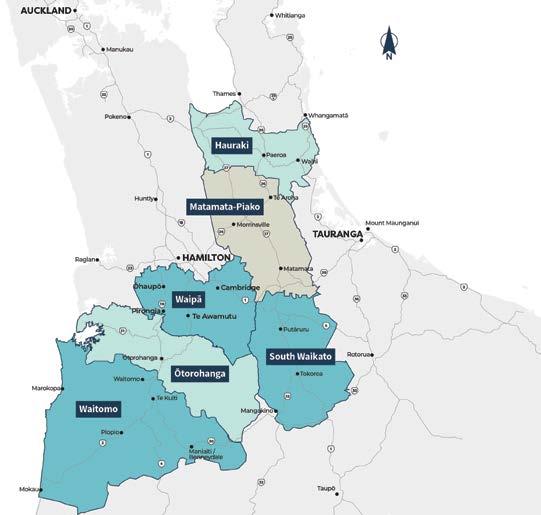
Marcos Pelenur will join the organisation in October. Waikato Waters is a council-controlled organisation jointly owned by Waipā, Ōtorohanga, Waitomo, South Waikato, Hauraki and Matamata Piako district councils. It began operations yesterday when Waipā, Waitomo and South Waikato councils passed over their water and wastewater
services.
Board chair Elena Trout said Dr Pelenur had extensive leadership experience in a highly regulated environment and was known for building strong teams and enduring relationships with key stakeholders.
Auckland based Trout already works with Pelenur – she also chairs the Energy Efficiency and Conservation Authority.
Interim Waikato Waters chief executive Neil Brennan will stay on in an advisory role for another year –

through to July 2027 - when the remaining councils will have transferred their water and wastewater services.
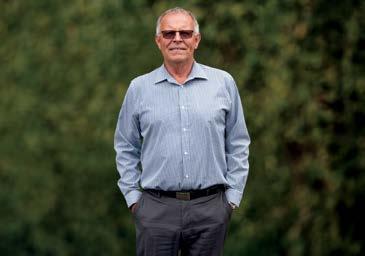
Marcos Pelenur
Mike Montgomerie, left, and Waipā deputy mayor Jo Davies-Colley at the rural tour shed meeting in Roto-o-Rangi.
Photo: Mary Anne Gill









One tower makes lots of rings
By Mary Anne Gill
A 25-metre-high mobile phone tower east of Cambridge is helping close long standing coverage gaps for communities, including the Hobbiton movie set which draws about 600,000 visitors a year.
Further towers are planned within the next 12 months for Cambridge West in Kelly Road and Gorton Road, Karāpiro.
One in Frontier Road, Te Awamutu was among the first six new sites completed
in the last year, improving coverage in the western part of Waipā.
The work forms part of a wider push to improve connectivity across the region and is critical infrastructure, Waikato MP Tim van de Molen said at the Hobbiton site launch this week.
Reliable mobile coverage was now expected, particularly along state highways, he said.
The new tower would help fill a black spot along State Highway 29, a key
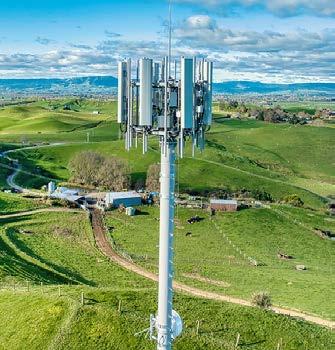
freight route linking Waikato with the Bay of Plenty and the Port of Tauranga.
“If you can have reliable connectivity through what is a really busy state highway corridor, that is a massive safety gain.”
The structure sits on a 93-hectare farm owned by James Hailwood and Kylie Perry, about 24 kilometres east of Cambridge overlooking Hobbiton and State Highway 29. For the couple, the impact has been immediate.
“There were spots on the farm where you could get coverage, but most places you couldn’t,” James said.
The surrounding landscape is the same rolling farmland that led film makers to choose the area for Hobbiton more than two decades ago. Its uninterrupted green hills and natural contours, largely free of modern structures, created the perfect setting for the Shire.
That elevated, open terrain also makes it ideal for a telecommunications site, with clear line of sight across the Waikato.
The couple have strong links with Cambridge through their children’s schooling and social
connectivity makes rural life easier and safer.
The tower is one of a series being rolled out across the Waikato by infrastructure company Fortysouth in partnership with mobile network operators including One New Zealand and Spark.
Together, work at the sites is aimed at improving coverage along key transport routes and in rural communities where service has been patchy for years.
Van de Molen said the investment would also support economic growth. Better digital access opened up opportunities for farming technology, tourism and business.
“Alongside safety, it’s a huge economic opportunity,” he said.
One New Zealand chief technology officer Kieran Byrne said mobile networks were now essential to daily life.
“People rely on them every day for safety, business and staying connected,” he said.
“Strengthening coverage across Waikato supports growth and helps communities operate more effectively.”
The network upgrades come as the wider

Cambridge and Te Awamutu areas continue to expand, and housing and traffic places pressure on infrastructure.
For Te Awamutu residents, the Frontier Rd site has already improved reliability in the west.
Fortysouth chief commercial officer Steve Rieger said the Waikato remained a priority because of its rapid growth and its role within the Golden Triangle between Auckland, Hamilton and Tauranga.
The Hobbiton location also highlights the role
tourism plays. Visitors expect seamless mobile service.
Matamata-Piako mayor Ash Tanner brought some humour to the issue, recalling how he once struggled with reception at home in Te Aroha.
“If I wanted to make a call, I had to sit in a certain seat and look out the window at just the right angle,” he said. “Now I can tell you it works. It’s brilliant.”
While that drew laughs, the message was clear. Reliable coverage is no longer a luxury.

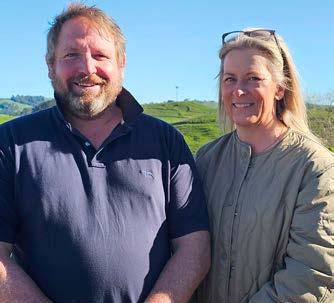
James Hailwood and Kylie Perry at Hobbiton Hub with the cellphone tower in the distance between them on the highest point of their farm.
Photo: Mary Anne Gill
Kia ora and welcome to Waikato Waters
Your council is one of six district councils across the region who have joined forces to create a new organisation to deliver future-fit water and wastewater services to Waikato communities.
As your council was among the first to transfer you may have already noticed our staff working in your neighbourhood. For the most part, the people haven’t changed – they’re simply wearing different uniforms and have our branding on their vehicles.
We’re

Our relationship with you
When you become a customer of Waikato Waters, you are automatically covered by our customer contract. It outlines what you can expect from us, and what we need from you as a customer.

keeping things simple in year one
In our first year, day-to-day services will feel the same. You will keep paying your council for your water and wastewater services. Current water and wastewater charges were set by your council. We will set charges from 1 July 2027.
You can find our customer contract on our website waikatowaters.co.nz by searching ‘customer contract’.
Our focus for the first year
Set strong foundations
Build trusted relationships
Ensure a smooth transition
Take stock of our performance, and asset condition
Understand
first, act second
By taking the time to get this right, we’ll be in a better position to invest wisely, manage costs responsibly and deliver better outcomes for our communities.
We’re responsible for:
Your council is responsible for:
Council drops threat to skiers
A clause which would have favoured non-motorised sport over water-skiing and power boating in the draft Karāpiro Lake Domain Reserve Management Plan and Masterplan won’t be recommended.
A Waipā District Council committee which considered almost 800 submissions on the draft has decided to amend the wording to recognise the domain as a premier venue for a range of aquatic sports.
The amended plans will be considered by the full council later this year.
Last year Karāpiro Water Ski Club member Les Atkinson said the move to make the lake “primarily non-motorists” would have a devastating impact on the sport.
The Karāpiro club has more than 250 members and was established in the 1960s. It’s base is at the north end of the lake while the Piarere Water Ski Club has a base at the southern end. Clubs from other regions also use the lake for interclub and national competitions.
In 2024 the Booklyn Water Ski Club, based at Taumatawiiwii Reserve since the early 1960s, was left homeless after its new landlord announced their lease had been taken up by Karāpiro Waka Ama.
The Strategic Planning and Policy Committee made amendments to the plans in response to community feedback.
Committee chair, deputy mayor Jo Davies-Colley says the scale of the response and the goodwill behind it, stood out.
Whether the plans should favour non-motorised sport, such as rowing and waka ama, over activities like water-skiing and power boating was one of the most contested issues.
Prompted by input from Ngāti Koroki Kahukura and Ngāti Hauā, changes were made to strengthen cultural values throughout both documents, as well as making provision to investigate the expansion of Te Manawa o Matariki Room in the Sir Don Rowlands centre building as a river and research centre.
Plans for a new swim zone and jetty were dropped in favour of retaining the existing swim zone, and proposals to terrace the grassed embankment for seating were also removed.
A range of smaller amendments were also agreed, including improved accessibility wording, biosecurity measures, extending event parking, and technical corrections.

Cambridge’s creative crews
By Viv Posselt
Last week’s Cambridge Creative Fibre exhibition was a celebration of thousands of fingers that never sit idle.
Crafters from around the region joined Cambridge members in displaying and selling pieces in a variety of fibre art disciplines, including lace knitting, fine wool throws and shawls, creative knitted creatures, felted hats and bags, and more.
A month-long yarn-bombing through the town alerted Cambridge residents to the upcoming event.
Exhibition convenor Anne Curtis told The News the hundreds of











pieces displayed through the town centre were something of a labour of love for Cambridge Creative Fibre members. Putting them up and taking them down is no mean feat. As they come down this week, the acrylic items (so chosen to withstand the elements) will be washed and packed away ready for next year.
She said the exhibition had been as busy as ever this year, and the Fibre Fair on Saturday has been packed with traders from many centres.
Making a visit this year was the Hokitika-based president of Creative Fibre New Zealand, who was impressed with Cambridge’s

efforts. She will be giving a talk on felting today (Thursday) at the Taylor Made community centre. Among those recognised with awards were Beverley Beetlestone (Bess Aston award for weaving); Inga Bockholt (Joy Mahood award for spinning); Erica Guicherit (Selector’s Choice and Domestic Excellence); Te Awamutu’s Annette Whittle (Best Use of Fleece, and Best Use of Colour); Rhonda Plews (Outside the Square); Gillian Goldring (New Skill); and Andrea Davies (First Time Exhibition entrant). Work by other entrants was highly commended.






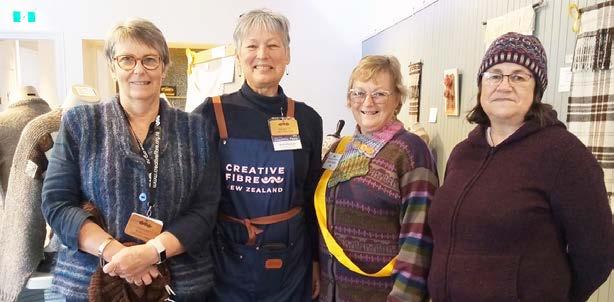
Creative Fibre New Zealand president, Hokitika-based Vicki Klemm (second from left) was
Creative Fibre exhibition and fair. She was pictured with, from left, area delegate Kathy Mitchell, exhibition convenor Anne Curtis, and Cambridge Creative Fibre president Tracey Sparke.
Photo: Viv Posselt
ON SHAKY GROUND
Deep-sea volcanism
By Janine Krippner
Over the past few columns, we have explored submarine eruptions near the surface. Once a volcanic edifice is high enough, with lava and rock stacking higher and higher from the sea floor through repeated eruptions, it can become explosive. We can also see it. We can see the waterrich, heavy ashfall that collapses towards the ocean, the white steam plumes from seawater evaporating, and the pyroclastic surges that can race across the ocean.
What is much more common, though, happens far deeper below the surface, where sunlight does not reach. The majority of our broad ocean floors were initially formed by volcanic activity over many millions of years. Much of this occurs at mid-ocean ridges.
Mid-ocean ridges are where tectonic plates pull apart and new seafloor is formed. The rate at which these plates rift apart varies. Faster - and slower-spreading centres form new seafloor in different ways, with varying amounts of volcanic activity and faulting.
Here, lava flows ooze out of fractures or vents, producing pillow lavas that are rounded like toes or fingers. These can stack up to build volcanic ridges or small cones. Lavas can also build steep “haystacks” that may be five to 150m high and 30 to 330m wide. These steep features can collapse to produce talus, which is a pile of sharp, broken, glassy rock.
Sheet lava flows can also cover the sea floor, forming flat surfaces. These can have lava tubes like we see on land, and they can break apart through fractures or collapse pits that produce more sharp edges.
A beautiful, peaceful, and still hazardous environment.
Very slowly, sediment can drift down through the water column to coat the glassy rock, allowing researchers to estimate relative ages.

If one group of lavas has 5cm of fine sediment, and a pile next to it has 1cm, the one with less sediment is likely to be younger.
It may take a thousand years, or longer, to accumulate just a few centimetres.
Because of how volcanic activity occurs, scattered across many kilometres, we do not always simply define one clear feature as “a volcano”.
There may be many cones, fractures, and vents surrounded by more faults that form as the seafloor breaks to accommodate tectonic plate movement.
These areas are also where we can have hydrothermal activity, where life can thrive in darkness under enormous pressures and at high temperatures. Tall chimneys can eventually grow, with fluids shooting out the top.
We do not just learn about geology in these areas, we learn more about life itself.
It is uncommon to witness eruptions at these depths. Much of the seafloor, under thousands of metres of water, has not been seen through a remotely operated vehicle camera.
It is expensive and logistically challenging to collect data out in the middle of an ocean. When I am doing research in these locations, I look at every scrap of information from the area, as well as from similar areas, to piece together the puzzle of the deep.
There are still many discoveries ahead of us.
A ‘cross’ road…
By Murray Smith, Bridges Church
A friend living in the centre of Cambridge enjoys walking. His favourite route includes the pathway around Lake Te Koo Utu.
Lighting up that area at night, the town cross rises high above the lake. It is readily visible from its position adjacent to the main Victoria Road roundabout, but it’s lit from behind too, therefore highly visible from the lake.
Knowing of my involvement with those sponsoring the cross, my friend recently sent this note: “Just wanted to let you know how much your cross of light is a comfort to me as I walk the park at night. I see it from nearly everywhere.
Sometimes when I see it, I’m convicted in myself but mostly I’m blessed by the light shining in the dark!”
He’s so right. The cross is both ‘comforting’ and ‘confronting.’
It offends some… for countless millions, it speaks of hope and saving grace. Jesus Christ was crucified on a cruel Roman cross thus it became a symbol of Christian faith. He rose again three days later, attested to by hundreds of eyewitnesses.
Rome executed countless guilty criminals and rebels by crucifixion, yet Jesus was innocent.
He questioned a crowd, “Which one of you can accuse me of any sin?” Nobody could. It took false accusations to condemn Him.
Jesus came as God’s sacrificial substitute - the punishment we deserved for sin was borne by Jesus the eternal, righteous son of God.
The death penalty for our sin and humanity’s evil was atoned for. Rising again, He vanquished the power of death
and hell. It’s now on us, whether we’ll choose the gift of salvation - freedom from guilt and shame, restored relationship with God.
Years ago, I was doing visitation in Mt Eden prison.
A young man related how despair had propelled him to end his life in a cell. He twisted a crude rope and noose from a bedsheet, then standing atop a chair on a table, attached it to a ceiling fitting.
He hesitated before kicking the chair away and the sight of a cross on nearby St Peter’s College beyond the tiny cell window caught his eye.
Staring at the cross, he became transfixed… he remembered hearing Jesus loved him and died in his place. ‘Seeing’ the cross melted his heart, igniting a flicker of hope.
He climbed down - knelt there on the cell floor, turning his life over to God.
A high-board diving champion was once restless, struggling to sleep one dark night. He got up to go down to the pool.
Climbing high to where he regularly practiced diving from, he walked to the end of the board.
Standing in soft moonlight, with arms outstretched he steadied himself to dive. He became riveted by the ‘cross-shape’ his body caste as a shadowy, elongated silhouette spreading below.
Staring, arrested by ‘the cross’, saved his life…alerting him the pool had been drained hours earlier.
Everything changes when someone ‘sees’ and receives the message of the cross.


Is bigger better?
By Peter Nicholl
The Cambridge News in its last few issues has published a full-page advertisement setting out five options for Waikato local government reorganisation.
Four of them would see Waipā joining other Waikato councils to create larger unitary areas. The fifth option is ‘do nothing’. But this option added that after the 2028 local body elections, the government might impose amalgamation anyway.
There is an assumption behind these proposals that being bigger is better for efficiency, costs, and for implementing large or long-term projects. The example that is generally used to back this idea is the Auckland Supercity which saw eight councils amalgamate in 2010. The government often says it takes an ‘evidencebased approach’ to policies. But there is little or no ‘evidence’ that bigger local authorities are more efficient than smaller ones. The policy seems to be based on assumptions rather than evidence.
Some evidence I have seen casts doubt on the assumption. In 2022, the New Zealand Infrastructure Commission put out a report under the title Does Size Matter? They looked at impact of council size on the efficiency of road maintenance, building consent processes and overhead costs, over a 15-year period. Their main conclusion was the size of the local authority is neutral for cost efficiency. That is, the council size on its own does not decrease or increase cost-efficiency.
John Chapman, a consultant who lives in Cambridge, earlier this year published a report headed ‘Auckland’s amalgamation didn’t save money’. He said when the supercity was created the promise was clear: merge the councils, eliminate duplication
and tens of millions in savings will be unlocked.
Sixteen years later it is clear that Auckland hasn’t received these promised savings.

The Mayor of the Tasman region is opposing amalgamation with Nelson City. He made two very good points. Firstly, most of the advantages relating to finances, efficiency of service delivery and consistency of rules and regulations can be achieved without political amalgamation. The recent establishment of Waikato Waters seems to be an example of that.
Secondly, amalgamation would have a very detrimental impact on representation.
Three of the five options for the amalgamation in the Waikato would involve Waipa and a number of other smaller councils joining a larger body that included Hamilton City. The population of Hamilton is close to 200,000. Cambridge, with 22,000 people, is the second biggest Waikato town. The total population of the 12 largest Waikato towns outside Hamilton is just over 100,000. The Waikato is not a super-city like Auckland. It has separate towns with separate needs and interests.
I think amalgamation would be a disaster for representation and there is no evidence that it will lead to increased efficiency and lower costs. The only thing we know for sure is that there will be substantial front-end costs implementing the amalgamation.
Waipā should adopt Option E: do nothing. If the government wants to impose something on the Waikato after the 2028 election, they should be asked to provide evidence to back up their proposal.
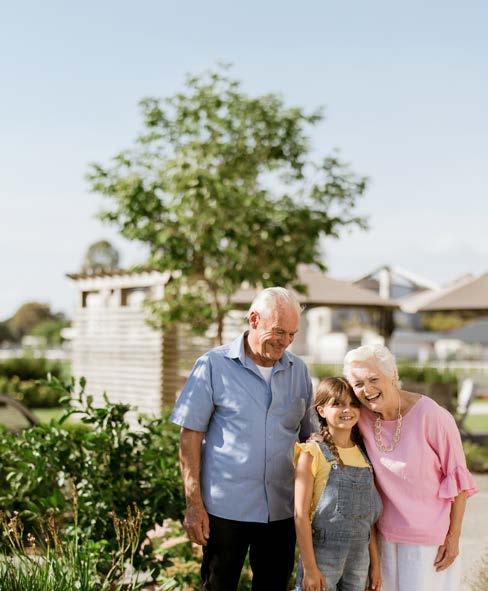

to evolve with your needs over time, our serviced apartments with assisted living offer FREE daily bed making, weekly clean, weekly linen laundry and sheet change, plus 10 meals each week**. We also offer additional support options.

One and two bedroom villas From $595,000^ Our one and two bedroom villas offer a warm, spacious home and lock up and leave lifestyle. You’ll enjoy a modern kitchen, open plan living, patio and garage, and emergency alarm system for peace of mind.



Recycling Tokanui
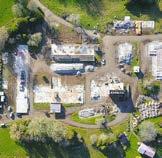
More than 81 tonnes of metal have been recycled as part of the demolition and remediation of the former Tokanui Psychiatric Hospital. And enough rimu timber panels to cover about half a tennis court have been salvaged. The recycled metal can be used to make new products.
Toitū Te Whenua Land Information New Zealand is four months into the project and demolition of the industrial area. Work has started on former ward buildings and foundations will be removed in September. The site is crisscrossed with underground services including water and steam pipes and communications and electricity cables. Contractors will remove all these services down to a depth of 800mm.
They have started work on the underground services by removing old concrete ducts that once carried steel pipes used to move high-pressure steam around the site. This steam was used to heat the buildings.
The next stage of works will also focus on the upgrade of the closed landfill.
Briefs…
New leader
South Canterbury farmer
Colin Hurst is the new national president of Federated Farmers and Gisborne farmer Sandra Faulkner is vice president. Hurst succeeds Golden Bay’s Wayne Langford and called him a “phenomenal leader”.
Little time to choose
By Crystal Beavis,Tamahere-Woodlands Ward
Councils have been scrambling to ‚consult’ on regional merger proposals to meet the August deadline for joining the Government’s “head start” process for local government reform.
According to minister Chris Bishop it’s a choice: “Lead your own reform or we will do it for you”. But local choice may prove illusory: cabinet will decide whether local proposals are acceptable and stood up for the 2028 local body elections or rejected and moved into a mandatory “back stop” process for a central government decision after that.
In the three-month head start timetable there has been no time to develop cross-boundary proposals in a consistent way, supported by proper analysis of financial efficiency, effective delivery of key regional functions, or democratic voice.
Every Waikato council has produced different proposals, except for a common one-Waikato regional solution. Consultation is therefore reduced to asking citizens to be a sounding board for decisions based on general principles. There is little time to settle the detail between outline proposals in August and final proposals next March.
The process bypasses the statutory role of the Local Government Commission, which oversaw the 1989 reforms, and it is yet to be supported by legislation. Because it sidesteps the commission, it appears to bypass the community’s right to petition for a binding poll on any merger.
A head start proposal will be judged on five principles: whether it is deliverable, supports the new regional planning system (replacing the Resource Management Act), simplifies local governance, provides economies of scale, and maintains local voice. It must also provide a ‚unitary’ solution combining local and regional functions. Sub-regional proposals are only

Shop
Plan your new build or reno from the comfort of your own home.
Visit our new website which showcases our outstanding range of tiles as well as offering trend and design inspiration, valuable tips and advice on FAQs.

likely to be approved if key regional functions, such as catchment management, are not fragmented. Notably, a proposal based on the western Waikato-Waipā and eastern WaihouPiako river catchments is now emerging.
Reconciling concerns already raised in the Waikato requires careful attention. There are significant differences in council debt, which may need ringfencing for rating purposes for a period. How a proposal maintains local voice — for example by turning existing councils into local boards under a regional umbrella — is undetermined. Auckland’s Super City is a cautionary example: analysts say the promised savings proved elusive and local boards were left with limited budgets and delegated power. Bigger councils also widen the gap between citizens and decision-makers.
While reform is desirable, the tight deadline risks poor execution.
As the Taxpayers’ Union says, “scale alone is no guarantee of efficiency, accountability, or improved service delivery… amalgamation… must be guided by clear principles and measurable ratepayer outcomes rather than blind optimism”.
From another perspective, the Parliamentary Commissioner for the Environment, the Simon Upton, says fragmenting regional council responsibilities for catchment management would be the biggest step backwards in environmental management for more than half a century, warning it would put primary sector productivity and public safety at risk, citing overseas examples of poor management of floods, water extraction and water quality.
Waikato District Council is still seeking your feedback until July 10.



•
• Our caring team are here to help you enjoy the things you love, whether it is gardening, baking, trips to town, hobbies, or simply a quiet afternoon
• Our commitment to affordability means there is no premium daily room charge at Resthaven on Burns.


The site as it looks after the industrial area demolition. Photo: Linz.
Indian history and myths
By Viv Posselt
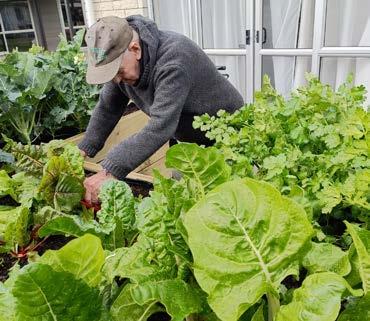
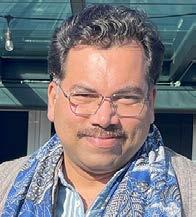
The history of Indian settlement in New Zealand, from its little-known beginnings in 1769 to the present day, was outlined in a talk to the Cambridge U3A.
Senior Radio New Zealand reporter Gaurav Sharma addressed the topic, ‘From margins to mainstream: How Kiwi-Indians helped shape modern New Zealand’.
He spoke to the contrasts between perception and reality around Indian migration, covering off their earlier-than-realised arrival here and their integration into New Zealand communities. Over the years, the Indian community has grown to account for six percent of New Zealand’s population.
“Now the third-largest ethnicity, Indian New Zealanders are among the nation’s most prosperous, earning 20 per cent more than the median income,” he said. “They are woven into the very fabric of our national history. From the first colonial ships in the 1700s and the trenches of Gallipoli, to the Waikato dairy farms and Pukekohe market gardens, their footprint is deep.”
He said over 1000 Indians died fighting with British forces at Gallipoli, yet it took years for the New Zealand government to recognise their contributions.
Many came to the Waikato between 1890 and 1918, initially working to clear scrubland to create arable farmland. They later purchased some of that farmland,
and today, more than 100 Indian families are dairy farming in the Waikato, contributing over 20 percent of New Zealand’s milk supply.
Indians also settled in the Pukekohe area where they became successful market gardeners, yet for years faced open discrimination. Those issues still exist, Sharma said, citing markedly inequal representation in corporate leadership and difficulties experienced around the recognition of qualifications held by migrant professionals.
He came to New Zealand from Singapore in 2014, following his scientist wife whom he said was ‘poached’ from her job with the Singapore government for a job with a 20 per cent drop in earnings. Sharma worked in various centres then launched his own publications, The Migrant Times, and Multicultural Times, essentially, he said, to strengthen ethnic representation in New Zealand media. More recently he has been covering news around the Asian community in Auckland.
Indian migrants have been here for 250 years – a contrast to political rhetoric that suggests they ‘have just come from the airport’, he said.
They first arrived in 1769 when two Indian sailors came here aboard a French ship at the same time Captain Cook was leaving New Zealand. The first recorded Indian to discover gold here, in Otago in 1857, was Edward Peters from Goa.
Between 1890 and 1918 Indians from Punjab began arriving, working initially to clear land for farming. They saved hard and bought their own farms.
The first recorded Indian owned dairy farm was in Kihikihi.
Despite the deep history they have here, many Indian families continue to face misunderstanding and cultural clichés. One is that they own ‘corner dairies’ as some sort of lifestyle choice when those were decisions made because jobs were difficult to get.
Another misconception, he said, was that Indians were regarded as ‘one family’.
“There are more than 100 official languages in India and lots of different religions,” he said. “Such diversity means that most people now speak English as a way of connecting with one another.”
June jammies for winter
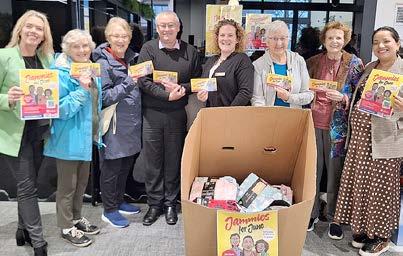
Several big-hearted Cambridge folk got together last week to purchase and donate 108 new pairs of pyjamas to make the winter nights warmer for Kiwi children.
Residents and staff at Arvida Lauriston Park’s care centre and retirement village came together in support of the ‘Jammies for June’ winter charity campaign.
This was the first year that the initiative, led by the Middlemore Foundation and star Olympian and ‘Jammies for June’ ambassador Dame Valerie Adams, has extended beyond Auckland. The 2026 campaign partnered with the
Wellington Hospitals Foundation to provide pyjamas for 25,000 children.
The Lauriston Park crew, led by the facility’s clinical manager Kaitlyn Rattenbury, bonded over a desire to ensure that every child going through the Auckland and Wellington hospitals went home with a warm pair of pyjamas.
The group shopped for the PJs locally then dropped them off at the local collection centre, situated at Westpac Cambridge.
Since 2011, the campaign has delivered more than 130,000 pairs of pyjamas to children.


New Zealand journalist Gaurav Sharma spoke in Cambridge on the misconceptions around Indian migration.
Photo: Viv Posselt
Pictured after donating their ‘Jammies for June’ items are, from left, Arvida Lauriston Park resident service co-ordinator Sandi Baker, residents Dot Harding and Pauline Rees, Westpac Cambridge manager Paul Evans, Lauriston Park clinical manager Kaitlyn Rattenbury, residents Jean Riley and Maryanne Burkett, and Lauriston’s wellness leader Prerana Thapa.
Hautapu to China, and back
By Mary Anne Gill
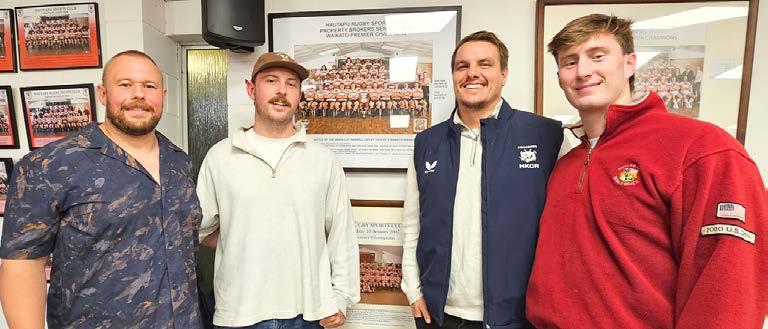
When Hong Kong China flanker Tyler McNutt walked into the Hautapu Sports Club with some of his teammates last week, he made a beeline for a photo hanging on the wall.
It was the Waikato championship-winning Hautapu premier rugby team of 2023, with McNutt pictured alongside current All Black Simon Parker.
The two are now on track to line up on opposite sides when Hong Kong China meets New Zealand in its Rugby World Cup pool match in Melbourne next year.
The side has been drawn with New Zealand, Australia and Chile for its World Cup debut. Its opening match against host nation Australia in Perth will kick off the tournament.
McNutt’s return to Cambridge came the night after Hong Kong China’s 24-22 win over Waikato in Te Awamutu in difficult winter conditions.
The visit to Hautapu gave the touring side a chance to experience a traditional New Zealand club environment. They took time to look through the honours boards, jerseys and photos on display, including Parker’s All Blacks jersey which now hangs in the clubrooms. Parker made his international debut against Argentina in Buenos Aires last year.
McNutt, 23, was born in Hong Kong but came through the New Zealand system, playing for Hamilton Boys’ High School and Hautapu. He studied psychology at Waikato University.
He first represented Hong Kong China at age-grade level, making his debut at the 2023 World Rugby Under-20 Trophy in Kenya, where the side faced teams including Spain, Samoa and host nation Kenya.
His selection came about by chance.
Hong Kong China coach Logan Asplin had coached him at Hamilton Boys’ High School but was unaware of his birthplace.
“He had no idea I was born in Hong Kong until he was having a beer with someone else from New Zealand who just happened to mention it,” McNutt said.
The call-up meant he missed Hautapu’s push for the championship title, something he followed from a distance, but he was back in time to be included in the official team photograph.
He now plays for Hong Kong Football Club in the Hong Kong Premiership, and his first test came in the 58-12 loss to Portugal in Lisbon in November last year.
For McNutt, it was a familiar setting, but
for many of his teammates it was something new.
Technical director Andrew Douglas, who coached the 2023 Hautapu team and previously managed the sports’ club, said the visit showed his players a side of rugby they do not often see.
“It’s a place I’m really proud of,” he said.
“It’s the people who make it. I’ve got a lot out of being part of this club.”
Douglas said clubrooms like Hautapu’s are rare in Hong Kong.
“The boys walk in and go straight to the photos and jerseys,” he said.
“That history and sense of community is something New Zealand is lucky to have.”
Waipā mayor Mike Pettit welcomed the team, and caught up with Asplin whose wife
THE DENTURE MAN
Anna taught at Cambridge Primary School when Pettit was principal.
The team presented two signed jerseys, one to Pettit and one to Hautapu Rugby Club, along with a plaque.
Douglas said the squad had enjoyed reconnecting with New Zealand, where many of the players have links through schooling or time spent playing the game.
The Hong Kong China side has built momentum in recent seasons, culminating in qualification for the World Cup.
From Cambridge, the team travelled on to South America to face Samoa, Chile and Uruguay in the Nations Cup.
For McNutt, the international tour was a chance to reconnect with the club where part of that global journey started.
WARM WINTER JUNE









Tyler McNutt, second left, in front of the 2023 championship winning Hautapu photo, with Hong Kong China teammates Zacceus Cinnamond, Tommy Hill and Max Threkeld.
Photo: Mary Anne Gill
Lift, hold… and gold
By Jesse Wood
Waipā powerlifter Delwyn Evans, 62, overcame adversity to win gold at the IPF (International Powerlifting Federation) World Bench Press Championships in Warsaw, Poland last month.
The Cambridge High School educated, Pirongia-based athlete rescheduled her flights from the Middle East route to the long way around - going via Hong Kong and Amsterdam to the Polish capital.
Her bags arrived five days later.
“This wasn’t my first rodeo but in all the years I’ve been travelling, that was the toughest situation I’ve had to deal with,” Evans said. “I had a sixhour delay in Hong Kong. I got put up in a hotel which meant I missed my connection in Holland to Poland.
“I was meant to land in Warsaw at midday on Monday and ended up arriving there at midnight. My luggage was not there on the carrousel – it had gone to Bangkok.
“My hotel bookings were also mucked up. I got sent to three hotels before arriving back at the original hotel. The guy just hadn’t understood me.”
Luckily, Evans had packed her lifting gear and a few essentials in her carry-on luggage.
“For me to go out and win like I did was a pretty great feeling. Once that stress level had peaked, I thought, ‘oh well just come to do what you’re here to do’.”
There were 797 athletes lifting in the classic category and 518 in the equipped, some doing both.
Evans was in her 66th competition. In the masters’ three under 76kg category,
she lifted 22.5kg more than the second placed competitor.
“I lifted 22.5kg heavier than her but it’s never about that. It’s always about your own personal best and beating yourself,” Evans said.
“I opened on 80kg which, not that long ago, was my personal best. Then I went to 82.5kg and had a go at 85, but it wasn’t quite there.
Her son Brad Mayo watched her compete.
“Brad flew from Limerick, Ireland to come and watch me lift. It was great to spend a couple of days with him before he went back.”
After two weeks in Poland, Evans arrived in Auckland on June 1 and got straight back into training.
She is preparing for competition 67 in Winnipeg, Canada in September. – it will be her third event in that country.
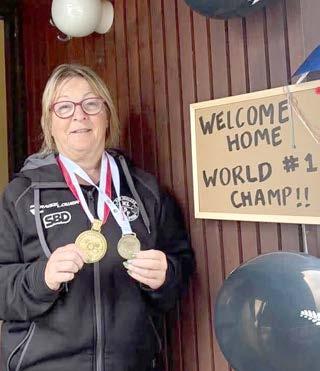

Delwyn Evans had a warm welcome from husband Mark.
Photo: Supplied
Opening up Beethoven
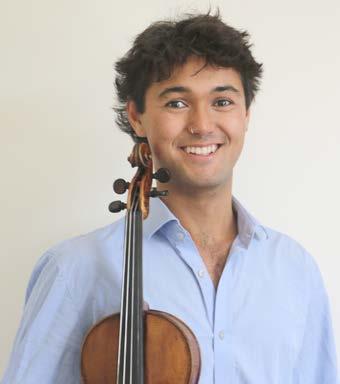
Cambridge violinist Indiana Williamson will take the stage as part of a regional orchestra’s concert series this month.
The orchestra will present Beethoven Unwrapped in Hamilton, Rotorua and Tauranga in a format that combines explanation with performance.
Williamson, 20, was a fellow this year at the Michael Hill International Violin competition and is studying towards a Bachelor of Music at Waikato University under the tutelage of Lara Hall.
He began playing the violin at the age of four and, at 11, won a performance scholarship from the Royal Overseas League in London.
Williamson served as associate concertmaster of the New Zealand National Youth Orchestra last year and appeared as guest concertmaster of St Matthew’s Chamber Orchestra.
The Sir Edmund Hillary Scholar has been recognised for his artistic and academic work and has won the University of Waikato Composition Prize and the Emerging Talent in the Creative Arts Award.
He performs regularly with Opus Orchestra and is active as both a soloist and chamber musician, with a particular interest in collaborative performance.
Guest conductor Michael Joel, who is based in Hamilton, will lead the concerts.
festival
Cambridge will host the Italian Film Festival from the middle of next month.
The festival runs through the year and will be at the Tivoli Theatre for three weeks.
It is organised by film enthusiasts Paolo Rotondo and Renee Mark who live in Hawke’s Bay and is in its eleventh year.
“We use popular films from the previous year’s Italian releases as a starting point when curating the festival programme,” festival co-founder and artistic director Rotondo said.

Cambridge violinist Indiana Williamson. Photo: Supplied


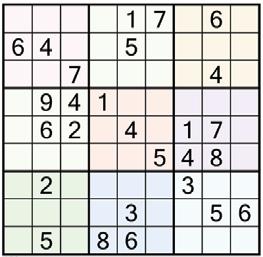
Across 1. Stolen goods (6) 5. Underground rail (6)
8. Canister (3) 9. Betting organiser (6) 10. Relating to the stars (6) 11. Arm or leg (4) 13. Crooked (8) 14. Scene of an event (5) 15. Difficult, testing (5)
Last week
19. Excessive confidence (8)
21. Defect (4)
22. Unoccupied (6)
23. Sluggish (6)
25. Mineral (3)
26. Unpowered aircraft (6)
27. Disorder, havoc (6) Down 2. Pledge (7) 3. Tattoo (inf) (3)
4. Reek (6) 5. Grab (6) 6. According to the rules (2,3,4) 7. Saying (5) 12. Avenue (9) 16. Authentic (7)
Across: 1. Clang, 4. Refuse, 7. Ode, 8. Embryo, 9. Garlic, 10. Blissful, 12. City, 13. Impale, 15. Anoint, 16. Info, 17. Playsuit, 19. Cavern, 20. Orphan, 22. Gum, 23. Gyrate, 24. Amble.
Down: 1. Complimentary, 2. Air, 3. Go off, 4. Regalia, 5. Ferocious, 6. Spitting image, 11. Soap opera, 14. Expunge, 18. Aroma, 21. Pub.
Proudly
Rooted in community, we are known for creating bespoke services that honour each life in a way that feels authentic. We also specialize in prearrangements, offering the ability to tell your story, exactly how you would like it told.


Jono Gibson Funeral Director
Athletes provide an insight
By Mary Anne Gill
The Cambridge business audience expected to hear about medals, marginal gains and what it takes to win on the world stage.
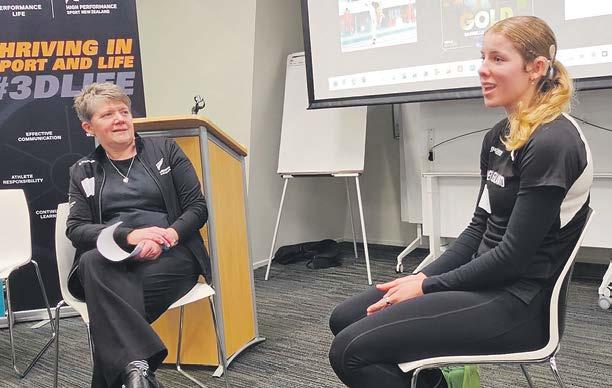
Instead, three High Performance Sport New Zealand athletes spoke at the National Performance Centre in The Velodrome about the realities behind elite sport.
Their focus was less on results and more on what sits around performance. Planning, setbacks, study, family and what comes next when a sporting career ends.
The three athletes brought a mix of backgrounds, from Waikato’s Morrinsville and Patetonga to Taupō and Christchurch, and are now based within New Zealand’s highperformance system.
Senior performance life coach Christina Jacklin set the tone. Her role sits largely outside competition, supporting athletes in the hours beyond training and helping them manage life off the track, the water or the road.
Training centres in Auckland, Cambridge, Karāpiro, Wellington, Christchurch, Dunedin and Wānaka provide environments where athletes and coaches can access facilities and support to reach their potential.
Cyclist Anna Taylor said success at that level is not individual.
“If you’re training for four, maybe six hours a day, that still leaves most of the day,” she said.
“For us it’s about wellbeing, personal development and career development. The one thing you can guarantee is your sporting career is going to end.”
Her comments reflected the experiences of sprinter Danielle Aitchison and rower Kathryn Glen.
Aitchison, 24, who was born in Morrinsville and grew up in nearby Patetonga, came to highperformance sport without a background in para sport. Growing
up she played mainstream sport before discovering what is now a central part of her life.
Seven years into the system, and aiming for at least another six, she spoke about the discipline needed to keep improving.
“It’s not just turning up and training every day. It’s structured and it changes.”
Training cycles vary across seasons and campaigns, and when motivation drops, the approach shifts.
“When I hit harder blocks where I’m not enjoying it, it’s about finding new goals and a new target.”
After the Paralympic Games she trialled running for six months before returning to sprinting with renewed focus.
Away from competition she has completed a Bachelor of Social Science and is now studying for a Master of Sport, Health and Human Performance. Her interest is in improving pathways for other paraathletes.
“We’re looking at the barriers and enablers. I’d love to see more paraathletes on the pathway,” she said.
Her advice to younger athletes is simple.
“It can feel overwhelming coming in. Just take it one day at a time.”
Taylor, 34, who was raised in Taupō and is now based in Cambridge, shows how the system adapts as life changes. The Paralympic silver medallist has returned to training with her eightmonth-old son, Henry.
“It takes a village to raise a baby, and it takes a village to raise an athlete,” she said.
“It probably takes even more when you’re doing both.”
Support from Cycling New Zealand and High Performance Sport New Zealand has allowed her to train largely from home. She can balance training with caring for Henry by using a gym setup and indoor trainer.
Her partner Franz looks after their son while she trains.
“When I go to training, Henry is with his dad and I can be fully present.”
The decision to start a family came with uncertainty.
“I knew I wanted a family. If I didn’t come back to competition, I was okay with what I’d achieved,” she said.
Removing that pressure helped her return.
She has built trust within her support team through years of selfdirected training.
“I’ve shown that I’ll do the work whether someone is watching or not.”
Like Aitchison, Taylor is also preparing for life beyond sport. She holds degrees in sport management and public health and works with ACC on injury prevention, focusing on increasing participation for women and girls.
Glen, 25, who started rowing
Thanks Cambridge…
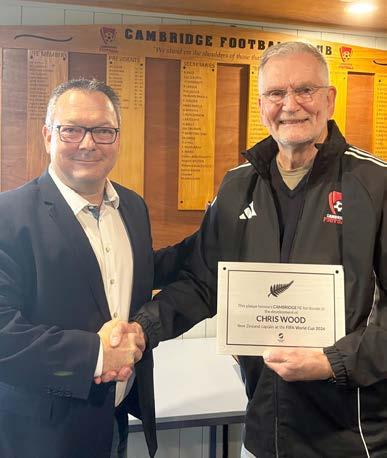
Cambridge Football Club was presented with a plaque from New Zealand Football on Saturday to recognise the role the club played in the early development of an All Whites captain.
At the same time, Chris Wood was leading New Zealand in a match against Belgium in the World Cup – a game which ultimately saw his side eliminated from the tournament.
WaiBop Football Chair Mark Browning presented plaques to both Cambridge and Hamilton Wanderers on behalf of New Zealand Football.
They are part of a series honouring clubs connected to All Whites who have captained New Zealand at FIFA World Cups.
Club president Harry Bomans accepted the plaque on behalf of the Cambridge club in a packed clubrooms as players and supporters reflected on the first half of the Belgium game.
Wood scored as a 14-year old on his senior debut for Cambridge in 2006. The Nottingham Forest striker is now New Zealand’s all-time leading goalscorer.
in Christchurch and continues to train within New Zealand’s highperformance programme, followed her older sister into rowing, initially for fun.
“I didn’t start with a big plan. I started because my sister was doing it,” she said.
Over time, that changed. A message from her father on her mirror pushed her to think bigger, but her definition of success has shifted.
“Success doesn’t happen overnight. It comes from small goals that build confidence.”
Her achievements include national titles and world championship bronze medals, but she focuses on process rather than results.
“Those results came from focusing on what I could control day to day.”
Setbacks have been part of that. A stress reaction in her ribs ruled her out of this year’s World Cups just days before departure. She has also experienced missed seasons and
missed Olympic qualification.
“Missing a goal isn’t failure, it’s feedback,” she said.
Glen is completing a business degree and has gained experience through the Prime Minister’s Scholarship and internships. She sees a clear link between sport and business.
“The same things show up. Consistency, preparation, accountability and taking feedback.”
High Performance Sport New Zealand aims to support that transition beyond competition, with programmes that include education, internships and wellbeing services.
As Jacklin told the audience, sporting careers are only one part of a much longer working life.
For the Waipā business community, the lessons were familiar. Planning, resilience and support networks matter as much in the workplace as they do in sport. Success is built over time, both on and off the field.
What a difference a Day makes
By Jesse Wood
Robert Day proved the differences as Leamington pipped Ōtorohanga Sports 34-31 at Island Reserve on Saturday in the premier championship Lone Star Cup division.
Ōtorohanga gold scored five tries to three, but winger Day slotted five penalties and two conversions as well as grabbing a try. Midfielder Jackson Neels and blindside flanker Matthew Lyttle were the other Leamington try scorers.
Leamington, up from the second tier for the current round, are third on the ladder behind University and Hamilton Old Boys and ahead of Ōtorohanga and Matamata.
Te Awamutu Sports beat Morrinsville Sports 36-19 at Albert Park in the premier men’s Breweries Shield division where second placed Hautapu had a bye.
Fresh off his Wednesday appearance for a Waikato XV against Hong Kong China, centre Tairoa Crean crossed the chalk for Te Awamutu.
First five-eighth Takoha Lunjevich, front-rower Albert Nadan, fullback Logan Karl and lock Lau Arona also scored tries for the home team. Karl added two conversions and a penalty try was also registered. Hautapu-Melville combined (Meltap) in the women’s premiership. In the championship WRU Trophy division match, the Ōtorohanga blues beat Leamington B 38-7. Hautapu colts visited Waihī Athletic Rugby Club, beating Rugby United under-21 22-7.
Winger Flynn Morey grabbed a brace of tries, while loose forward Jack Mathis and second five-eighth Haitz Aiartza also got on the scoresheet. Number 10 Johanson Tamala kicked one conversion.
Danielle Aitchison, right, with senior performance life coach Christina Jacklin at Cambridge Velodrome. Photo: Mary Anne Gill
Mark Browing presents the plaque to Harry Bomans, right.
Cambridge Real Estate
Saturday 4 July
7 Vogel Place $999,000 11:00-11:30am
58A Bryce Street $645,000 11:00-11:30am
19 Kelly Road $1,199,000 11:45-12:15pm
8A Hall Street PBN 12:00-12:30pm
Sunday 5 July
18A Wordsworth Street PBN 10:15-10:45am
6 Woodstock Crescent PBN 11:00-11:30am
7 Vogel Place $999,000 11:00-11:30am
9 Hehan Close $1,229,000 11:00-11:30am
11A Hall Street PBN 11:00-11:30am
20 Oneone Street $859,000 11:00-11:30am
58A Bryce Street $645,000 11:00-11:30am
76 Addison Street $994,000 11:00-11:30am
95B Williams Street $639,000 11:00-11:30am
1/1873 Mauntautari Rd Deadline Sale 11:00-11:45am
2/1873 Mauntautari Rd Deadline Sale 11:00-11:45am
55 Robinson Street PBN 11:30-12:00pm
2 Frances Hunt Lane $929,000 11:45-12:15pm
52 Norfolk Drive $1,199,000 11:45-12:15pm
68A Hamilton Road PBN 11:45-12:15pm
5 Carnation Court PBN 12:00-12:30pm
9A Bourke Drive
$1,075,000 12:00-12:30pm
9B Bourke Drive $975,000 12:00-12:30pm
10E Bourke Drive $1,149,000 12:00-12:30pm
12 Bourke Drive
31 Terry Came Drive
$1,200,000 12:00-12:30pm
$1,199,000 12:00-12:30pm
139B Burns Street $625,000 12:00-12:30pm
8A Hall Street PBN 12:00-12:30pm
51 Spencer Street PBN 12:15-12:45pm
5 Watkins Road PBN 12:30-1:00pm
3/39 Maungakawa Rd $1,390,000 12:30-1:00pm
CAMBRIDGE OPEN HOMES
17 Mike Smith Drive
$2,149,000 12:45-1:15pm
51 Stafford Street $889,000 12:45-1:15pm
163b Victoria Street PBN 12:45-1:15pm
2A Mackenzie Place PBN 1:00-1:30pm
39 Ruru Street
$1,189,000 1:00-1:30pm
65 Moore Street PBN 1:00-1:30pm
93 Thompson Street
19 Kelly Road
$1,170,000 1:00-1:30pm
$1,199,000 1:30-2:00pm
168 Victoria Street $899,000 1:30-2:00pm
443 Scotsman Valley Rd
77 Baxter Michael Cres
$1,390,000 1:30-2:00pm
$1,699,000 1:45-2:15pm
164A Victoria Street PBN 1:45-2:15pm
6A Hilliard Place PBN 2:00-2:30pm
45 Stafford Street
$959,000 2:00-2:30pm 2/45 St Kilda Road BEO $2,350,000 2:30-3:00pm
50 Watkins Road PBN 2:30-3:00pm
9C Williams Street $1,019,00 2:45-3:15pm 191 Racecourse Road $790,000 2:45-3:15pm 4/191 Racecourse Road $960,000 2:45-3:15pm 11C Whitespire Way PBN 3:30-4:00pm
LJ Hooker





































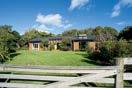
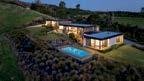

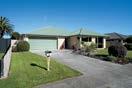










Looking For Location?
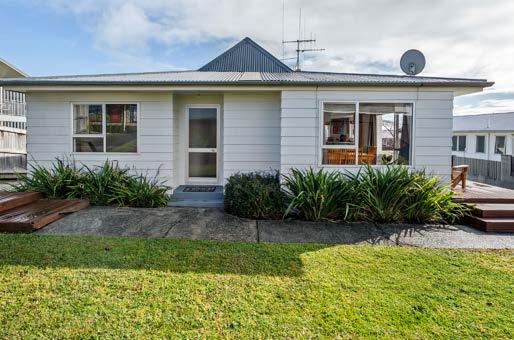
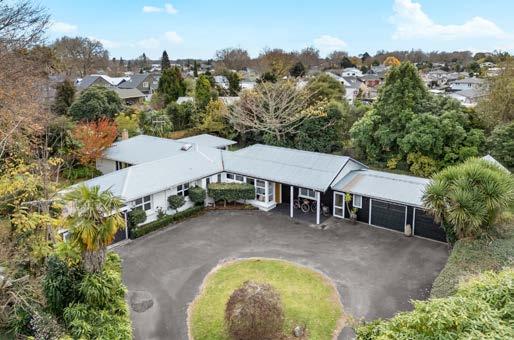
- Easy care section, directly opposite the entrance to the Village at Leamington Shopping Centre as well as close to transport and local primary school.
- Sunny North facing deck off the living area.
- Well laid out 3 bedroom home with separate double garage plus sleepout.
- Great property for a first home buyer or investor.
- Don’t take too long to think about this one as it won’t last long.
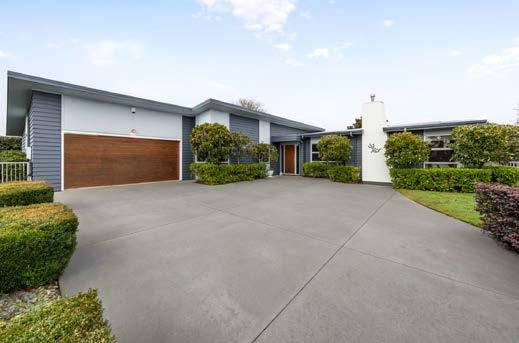
- Tranquil and generous 824sqm (more or less) section.
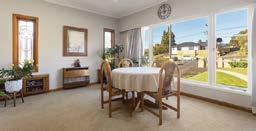
- Sunlight pours through the high-stud living areas, creating a wonderful sense of openness, while large sliders connect seamlessly to two covered patios.
- Substantial 238sqm (more or less) floorplan.
- Four well-sized bedrooms, two tiled bathrooms (heated floors), include a master suite thoughtfully positioned away from the remaining, with ensuite, four bay wardrobe and its own outdoor access.


- Beautiful character home that has been thoughtfully blended with modern upgrades showcasing comfortable, spacious and private living.
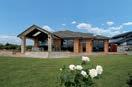
- Privately tucked away in one of Cambridge’ most convenient locations on a rare 1,831m2 (more or less) section.
- Large deck, heated pool, pool house, designed for privacy and easy entertaining.
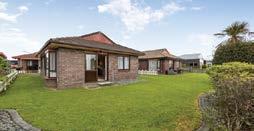
- Brick construction, with welcoming circular driveway.
In A League Of Its Own
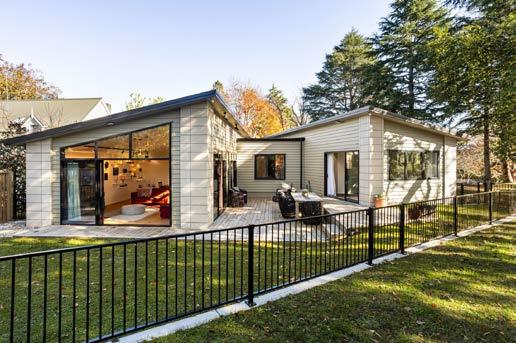
- Perfectly positioned in a sought-after location close to
this beautifully designed 2024-built home offers a unique layout.
- Three generous bedrooms, including a beautiful master bedroom complete with an ensuite featuring stunning tiled shower detailing, a walk-in wardrobe, and make-up area.
- Designer kitchen with scullery flows seamlessly through the openplan dining and living spaces.
- Cosy coffee/reading nook provides the perfect spot to unwind.
- Stacker doors open onto the expansive deck.


























jonbedford87@gmail.com









with Jan Bilton
Open sesame
Subtropical sesame plants produce small, elongated pods which, when dried, burst open, releasing hundreds of tiny seeds. While most sesame seeds are a creamy white colour, some varieties can be yellow, reddish or even black. The tiny seeds pack an impressive nutritional punch. They’re rich in heart-healthy fats, plant-based protein, and antioxidants such as sesamin, making them a small but mighty addition to your diet.
Sesame seeds can be eaten raw, but toasting them brings out a delicious nutty flavour with a hint of sweetness. In the Middle East, sesame seeds are ground into tahini, a creamy paste that is a key ingredient in hummus. In Japan and Korea, they’re often used in seasonings, dressings and a variety of cooked dishes.
Sesame oil is made by crushing the seeds. It has a rich, distinctive aroma and flavour. Lighter sesame oil is commonly used in dressings, while the darker oil, made from toasted seeds, has a stronger taste and is best used sparingly to add depth and flavour to dishes.
Because the seeds contain a high amount of oil, they can become rancid quickly. Buy them in small quantities and store in the refrigerator for up to three months. Or freeze for longer storage.
Black
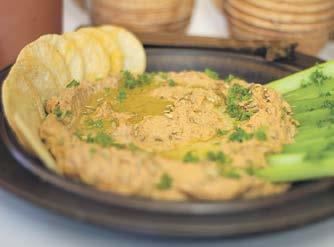
Chickpea Hummus
Black chickpeas (also known as desi chana) are a smaller, darker and more robust variety of the standard chickpea. Purchase from Indian food stores or some supermarkets. Add leftover cooked chickpeas to salads or use them as an accompaniment to stews.
1/2 cup dried black chickpeas
1 1/2 cups water
4 tablespoons tahini
3 tablespoons lemon juice
4 cloves garlic, sliced
1/4 cup thinly sliced, drained sun-dried tomatoes
5 pitted black Kalamata olives, sliced
4 tablespoons icy water
To advertise phone Janine 027 287 0005 or email janine@goodlocal.nz
5-6 tablespoons extra virgin olive oil
Garnish: 2-3 tablespoons extra virgin olive oil
freshly ground black pepper and salt to taste
1-2 teaspoons whole fennel seeds finely chopped parsley
Rinse the chickpeas under cold water in a sieve. Place the chickpeas in a medium saucepan and cover with the water. Bring to a boil, then simmer for about 40 minutes, until very soft. Drain and place aside.
Place 1 cup of the cooked chickpeas, plus the tahini, lemon juice, garlic, sun-dried tomatoes, olives, and water, in a blender or food processor and blend until very smooth. With the motor running, slowly pour in the olive oil. Stand for 2-3 hours to let the flavours develop. Loosen with a little water if too thick.
To serve, spread onto a plate. Drizzle with a little more olive oil before serving. Sprinkle with black pepper, salt, fennel seeds and parsley. Serve with crisp veggies and crisps as a dip. Makes about 1 1/2 cups.
Sesame Dressing 1/4 cup each: soy sauce, rice wine vinegar, canola oil

2 tablespoons sesame oil
1-2 teaspoons brown sugar or to taste
Place all the ingredients in a small blender and whizz until well combined. Alternatively, place in a jar and shake well.
Great served with a variety of salads and warm potatoes. Makes about 3/4 cup.
Korean Ribs
1kg pork spareribs
Bulgogi Sauce: 3 tablespoons soy sauce
2 teaspoons sesame oil
2 tablespoons each: water, orange juice
1 teaspoon toasted sesame seeds
1/2-1 teaspoon chilli sauce
1 clove garlic, crushed
Ask your butcher to cut full spareribs in half. Place in a plastic bag with the combined sauce ingredients. Move the ribs around to ensure they are well coated. Refrigerate for at least 2 hours, turning the ribs occasionally.
Preheat the oven to 180°C.
Place the ribs on a rack over a roasting pan containing a little water. Cook for 45 minutes or until tender, basting occasionally. Serve hot or cold. Serves 4.
Black Chickpea Hummus
Sesame Dressing
BAY OF PLENTY
CONTACT GOOD SPEED CONSTRUCTION for all your building and project needs. Call Ross 021 063 2268
WANTED TO BUY. Any ute, van, 4WD, truck or car. Any
doesn’t have to be going. Cash paid. Ph/txt Kevin 027 299 6165


CALF MILK WANTED

CAMBRIDGE
• Lawn Mowing & Edging
• Garden Tidy Ups
• Hedge & Shrub Trimming CALL PETER 021 968 629

Bocock ’s Calf Rearing
Pete 027 433 1440 Mark 0274746917


buy milk! Got reject or surplus milk? Call us today on 027 871 5075
We collect within 1.5 hours drive from Te Awamutu.
CARS FOR SALE
2016 Holden Cruze Wagon
Small practical, safe wagon in good condition. Perfect first car or workhorse.
1.8L petrol engine, 6-speed automatic, 8.2L/100km. Summit white, alloy wheels, cargo barrier in the boot. Has new WOF, 12-month Rego, and 4 new tyres. Travelled 176,000 km, mostly on open roads, ex-fleet car. Selling as is.
$5,000 ono. Phone 027 287 0005


Come along to our church service and Cambridge Kids 9.30am Sunday Come along to our church service and Cambridge Kids 9.30am Sunday
LOCAL, RELIABLE SERVICE
OF SATISFIED CLIENTS LOCAL
• ROOF TREATMENTS
• MOSS & LICHEN REMOVAL
• PRE-PAINT ROOF CLEANING
• TILE ROOFS
• COLOURSTEEL ROOFS
• DECRAMASTIC TILE ROOFS

WALKER,
Colleen Mary (Colls)
14/08/1947 - 05/07/2025
We see Your True Colours
Shining through, We see You’re true colours & that’s why we love You..
So don’t be afraid
To let them show Your True Colours.. True colours… Are Beautiful..

Like A Rainbow Xx

Love and miss You Mama, Mother, Pal & Sweetheart, Always

WALKER, Colleen Mary
DOBSON, Gillian Elizabeth (Liz) – Passed away peacefully on Tuesday evening, 23 June 2026, surrounded by love, following a courageous battle with cancer. Dearly loved wife of George. Much-loved Mum of Marg and Chris. Adored Granny of Emelia, George, Campbell, and Olivia. A strong, determined, and generous matriarch who touched many lives and will be deeply missed by all who knew and loved her. A private family service has been held. Details of a celebration of Liz's life will be advised at a later date.

INSTANT CASH
$$$$$ Up to $5000

WE BUY ANY JUNK VEHICLES
CONDITIONS APPLY CARS, TRUCKS,





*Hari Matariki Mama* Friday 10/7/26
Merry 78th Birthday” Friday 14/8/26
All our Love & Loads more, Amie, Lary & Hero Xox

WALKER,
Colleen Mary (Collywobbles)
KING, Paul Emmerson. –
Peacefully passed away at Waikato Hospital on Friday, 26th June 2026, aged 83 years. Born in the United States, Paul made New Zealand his home, where he quietly lived out his later years. A dedicated and respected music teacher, he shared his love of music with many throughout his career. A loved uncle and friend. In accordance with Paul’s wishes, a private farewell has taken place. Messages to the King Family may be sent c/- 3 Hallys Lane, Cambridge 3434, or left in Paul’s online tribute book at www.grinters. co.nz.

“Hey Dolly!!” cheers!

Get Your Deno out Nana

“They’re prayin’ for rain in California”… Love, Your Rat Pack Xxx

Gone too soon, Never Forgotten


STANAWAY, Peter Allen – Passed away peacefully at home, surrounded by his family, after a short illness on Wednesday, 24th June 2026, aged 80 years. Peter faced his illness with great courage. Beloved husband of Nevis, and dearly loved by Tracey, Kylie, Trudi, Paul, Arron, Rene, Emily, Bridget, Reuben, Maya, Clare, Connor, and Peyton. Will be sadly missed by Mal, Evelyn, and Bobbie. Nevis and the family sincerely thank Hospice Waikato for their kindness, care, and support, and Cliff from Comins Pharmacy for his assistance and compassion. A memorial service to celebrate Peter's life will be held at Woodside Estate, Woodside Road, Matangi, on Thursday, 2nd July 2026 at 1.00pm. In lieu of flowers, donations to Hospice Waikato would be appreciated and may be left at the service. Messages to the Stanaway Family may be sent c/- 3 Hallys Lane, Cambridge 3434, or left in Peter's online tribute book at www.grinters.co.nz.

Jono Gibson Funeral Director