
Bishop’s Waikato trifecta
By Mary Anne Gill
For a Cabinet minister based in Wellington, Chris Bishop seems to have acquired an unusually large footprint in the Waikato.
In the space of a few weeks, the minister, who holds six portfolios in the coalition government, has found himself at the centre of three of the region’s biggest and most contentious issues.
One involves horses, one involves highways and one
involves farmers. Between them, they touch on housing, economic growth, environmental regulation and transport. In other words, just another month in the Waikato.
First is the proposed Waikato Thoroughbred Racing greenfield racing hub at Tamahere, which cleared an important hurdle last week when it was accepted into the Government’s fasttrack approvals process. The proposal includes racing and training facilities,
retirement living, housing, commercial activities and supporting equine services across about 164 hectares.
The Government says it could generate hundreds of millions of dollars in expenditure, support more than 1100 jobs during development and help secure the future of the racing industry in the region. The fast-track decision was made under legislation overseen by Bishop in his infrastructure role. The project still has a long way
to go and is not approved, but it showed how major Waikato developments increasingly find their way onto the minister’s desk.
Then there is Plan Change 1, the seemingly neverending Waikato farming saga that has consumed lawyers, planners, councils and farmers for more than a decade.
At a Federated Farmers meeting last week, Bishop listened to concerns that farmers could find themselves complying




with a plan developed under the Resource Management Act just as the Government replaces that same legislation. He openly acknowledged the awkward timing.
His concern is simple. Why force farmers and growers through one regulatory system only to replace it with another shortly afterwards?
Bishop repeatedly stressed that Cabinet was looking closely at the issue and made it clear he does not want people spending time, energy and money adapting to one set of rules only for the system to change again. Whether that leads to a pause, a transition arrangement or something more dramatic remains to be seen.
As he fielded questions from farmers at Mystery Creek last week, it was a reminder that many of the Waikato’s biggest issues now intersect on the desk of one Wellington minister. Another is Southern Links.
Few projects have generated as much anticipation and frustration as the proposed Southern Links roading network south of Hamilton. Land has been purchased and planning work undertaken, yet the project remains some distance from construction.
Asked a month ago about Southern Links after announcing the Cambridge
to Piarere extension, Bishop was cautious. He said the project was not constructionready and that the Government’s programme involved sequencing major infrastructure projects rather than building everything at once. Pressed repeatedly on timing, he offered little certainty beyond saying more would be announced later.
And so it was last week when Southern Links again appeared to be some way off construction.
That answer will not satisfy everyone. Southern Links has become a litmus test for those wondering when Roads of National Significance become more than lines on a map.
The racing industry wants progress. Farmers want certainty. Businesses want a road.
One decision fast-tracks a racing hub. Another could reshape environmental rules affecting thousands of hectares of farmland. A third remains waiting for funding and a start date. For someone whose office is hundreds of kilometres away in Wellington, Bishop currently has a remarkable influence on what happens in the Waikato.
This winter, whether the issue is racehorses, waterways or highways, much of the conversation seems to lead back to Chris Bishop.
Waters






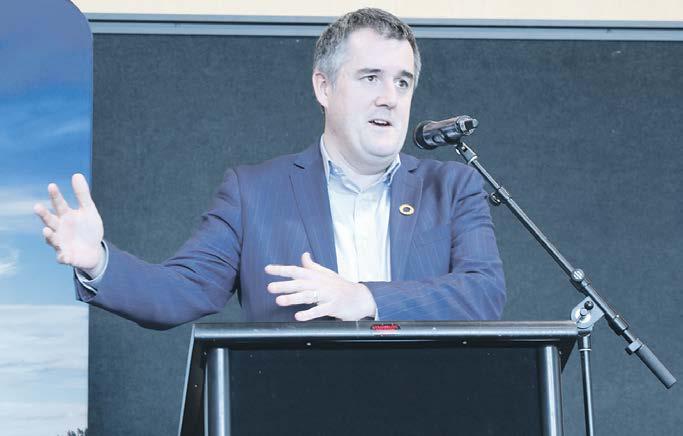
Chris Bishop back in the Waikato last week for the Plan Change 1 meeting.
Photo: Mary Anne Gill
advertising is prepaid prior to publication.
*Late bookings after deadline are subject to space available.


Family’s tribute as inquiry continues
An immensely proud Te Awamutu grandparent, and a devoted husband to



editor@goodlocal.nz 027
maryanne@goodlocal.nz
viv@goodlocal.nz
janine@goodlocal.nz
admin@goodlocal.nz
an incredible ability to make people feel welcome.
The family of Brent Horsburgh summed him up in a statement this week as an investigation continues into his death on June 30.
The 54-year-old had gone to Waikato Hospital’s Emergency Department on June 29. He was found unresponsive in a toilet about nine hours later.
“We are still navigating the shock and sadness of losing Brent and trying to understand how his death could have occurred. Many questions remain unanswered, and we will seek those answers through Health New Zealand’s investigation,” the family statement read.
In the wake of his funeral service at the Te Awamutu Presbyterian Centre, his family released the statement to express their “heartfelt thanks to everyone who has reached out with messages of support, kindness and sympathy”.
“…we have been reminded just how many lives he touched through his kindness, generosity, and willingness to help others. The stories people have shared, the memories they have recounted, and the affection with which
Disrupting the chain
In 2025, Cambridge was reported as having one of the highest per-capita cocaine usage rates in New Zealand according to wastewater drug testing data. In 2026, it was Te Awamutu. There is known to be a strong causal link between drug use and crime. These range from manufacture or possession through to crimes committed whilst under the influence or in order to meet the financial burden of addiction. It is a community issue with wide ranging impacts. By working together, we can disrupt the supply chain.
I would like to acknowledge the steady flow of information already being provided to local police around those responsible for drug supply and distribution in Waipa. Keep it coming! Every piece of information we receive about a supplier or distributor; be it person or location, completes part of the evidence puzzle, enabling us to take positive enforcement action. The more detail that is provided, the better. Any information may be reported anonymously to Crimestoppers on 0800 555 111 or via 105.police.govt.nz .
That said, we all know that supply doesn’t exist without demand. By also connecting those addicted with support services, we can positively impact downstream offending and reduce community harm. If you or someone you know is struggling with drug addiction, please reach out to Cambridge
Community House. They can assist with free Drug and Alcohol counselling services to help.
In other news this week, the past week in Cambridge brought a few burglaries around the Milton Street – Cowley Drive – Grace Avenue area of Leamington. If you live in those areas and notice anything suspicious, or may have relevant CCTV footage, do get in touch. Cambridge staff dealt with 10 burglaries in the seven days prior to writing, while Te Awamutu staff dealt with eight.
Finally, when speaking to a business in Leamington this week, I was asked to remind people to adhere to the 40kph speed limit through the Leamington shopping area. It is a busy part of Shakespeare Street, and it is not the first time we have had locals complain about people speeding through. This area has a high level of foot and vehicular traffic, being home as it is to two medical practices, other associated health services and multiple retail shops and food outlets.
Excess speed is particularly worrying given the busy nature of the central pedestrian crossing and the patronage of the area by some of our oldest and youngest community members. Drive to the speed limit, to the conditions and be aware of pedestrians and other road users.
they speak of him have reinforced that Brent was loved and respected by so many people.
“To us, Brent was first and foremost a devoted husband to Tracey, father and fatherin-law, an adoring poppa, a son, brother and friend. Family meant everything to him.
“He worked hard throughout his life to provide for those he loved and was always happiest when surrounded by family, whether that was around the dinner table, supporting his children, spending time with his grandchildren, or simply sharing a laugh.”
The family said they hoped “Brent will be remembered not for the circumstances of his passing, but for the life he lived, the great times shared, the people he helped, and the love he gave to those around him”.
Health New Zealand says a Serious Adverse Event Review is expected to be completed next month.
Pirongia track
The Pirongia Mountain Bike Park and forestry road network is now fully open following extensive repair work to February storm damage. Several lower trails reopened in March thanks to the work of the Pirongia Mountain Bike Club, and club president Les McKenzie said it was great to see the full network open again for riders.
Bridge work
Construction of a replacement Mangati Bridge between Ōtorohanga and Pirongia is set to start before the end of the month. A temporary bridge was put in place following storm damage earlier this year.













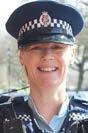
On the beat with Senior Constable DEB HANN
Tracey with
Brent Horsburgh
Sahara’s single
Sahara Stanton, who as a Cambridge High School student won the solo-duo category of the Smokefree Rockquest last year, has released her first single. Turcot – a song which explores mental health – was released on Monday and a video is out tomorrow. Stanton is now studying music in Wellington.
Three wins
There were celebration in Waipa when apprentice jockey Hayley Hassman rode a winning treble for the second time last weekend. The Matamata rider started Ruakākā by riding home Cowboy to record the first win for Cambridge trainers Maija Vance and Josh King, before striking again in the next race for Maija’s parents, Bob and Jenny Vance, aboard Nicconi County. She then took out the Whangarei Gold Cup on Drop of Something for trainers Wayne Hillis and Reece Cole.
Auction details
Contact details for an online auction dropped off the bottom of last week’s story about a fundraiser for the Cambridge RSA’s Poppy Trust fund. Two paintings, by Cambridge’s Carole Hughes, have Cambridge’s sister city Le Quesnoy as a theme. They can be viewed until July 21 at Cambridge Paper Plus, and from July 22 to August 5 at Cambridge Library. The online auction will close at 5pm on Friday August 7. Bids should be directed to treasurer@ cambridgersa.nz See further story, Page 7.
Squad named
The 30-man Waikato Divisional XV rugby squad for 2026, including 12 Waipā players. Josh Evans, Apirana Hongara, James Knowles, Thomas Medley (Leamington), Dean Fullerton, Bronson WilsonBeech (Ōhaupō), Daniel Belk, Mathew Findsen, Austin Frederick, Jason Hill, Liam McPherson and Sunia Ragede (Pirongia) have made the cut. Leamington’s Wayne Bootten is the head coach. The team has been selected from the 11 clubs that started the season in division one.
Life and times of Naomi

By Viv Posselt
A celebratory lunch last Saturday marked the 100th birthday of one very stylish and sprightly Cambridge resident, Naomi Broadbent. The centenarian reached her landmark last Friday, but it was on Saturday that family and friends gathered at Cambridge Resthaven, where Naomi has lived for the past few years. Prior to that, she spent eight years on a Kaipaki Road lifestyle block where she continued to indulge a lifelong love of horses and all things rural.
Aside from close family members that included daughter Elizabeth Stevens,
son Alan Broadbent and their families, a special guest was Naomi’s cousin and bridesmaid 97-year-old Jean McConnell. She had been at her side when Naomi married Cliff Broadbent in January 1950.
Several guests came from Auckland’s Red Beach for the occasion.
Catching up for a quick chat before getting her birthday hair done, Naomi mused on being quite a feisty youngster who wasn’t shy of doing things entirely her own way.
Born in Edendale, Southland, to parents Allon and Dorothy Squires, her life unfolded on a farm.
“I’d be on the farm a lot with my father, but I did wander quite a lot,” she smiled. “When I was three or four, I ran off through the bull paddock… it was a particularly unfriendly bull. I was saved only by the dog chasing him off, but from then on, my father tied a rope on to me, with one end tied to me and the other to the fence. I could go up and down the fenceline but no further.”
She remembers riding her pony to and from school in her early days, then the family moving to Invercargill where Naomi attended Waihopai School before going on to do two years at Southland Technical College.
She left school early to help her mother who was unwell, and remembers the streets of Invercargill filled with revelry at the end of World War Two. She worked for a time for the editor of The Southland Times, summarising key facts for the editor, then worked at a shoe store. The family moved to Taranaki in 1945 where Naomi worked in a bookshop, became a proofreader at a newspaper in New Plymouth, then took a job in a draper’s shop. She met returned serviceman Cliff Broadbent in 1948 at a Christmas camp, and the couple married two years later, honeymooning
under canvas at a Northland beach. When the children came along, Naomi could be seen cycling along gravel roads with the children in a wooden box on the back. The family expanded to include three children, and they moved first to Whangārei and then to Auckland.
“We shifted around a bit,” she said.
Naomi, whose husband died in 2001 and who has also lost a son, was acknowledged by her family as a hospitable wife, a loving mother, grandmother and great-grandmother, a fabulous gardener - and a terrific cook.
Paewira – back to square one
By Roy Pilott
Global Contracting Solutions says it remains committed to its bid to build a waste to energy plant in Waipā.
The company broke a prolonged silence last week after The News revealed it had been placed on a list of companies which would cease to exist after July 15.
Spokesperson Adam Fletcher said the notice related to the timing of



the submitting of annual returns, a point confirmed this week by the Companies Office.
In fact, the notice to remove posted by the New Zealand Gazette had itself been removed by Thursday when The News hit the streets.
The company wants to build a thermal waste conversion plant on Racecourse Road, Te Awamutu and the Environment Court spent two weeks hearing evidence with a view to releasing a decision on August 28
last year.
The National Manager of the Companies Office, Bolen Ng, said Global Contracting Solutions Limited did not file its annual return by April 30, triggering the Registrar of Companies to commence removal action, “as the Registrar deemed that the company had ceased to carry on business”.
He said that removal action has ceased as the company had complied with their obligations to
complete their Annual Return.
Company Office records show the company filed its return on June 5, before the New Zealand Gazette notice was posted. It remains unclear why the company’s name remained on the list until last week when The News raised the issue.
The company’s resource consent applications remains on ice, though, over an issue of outstanding costs. The News has invited the company to discuss the issue.
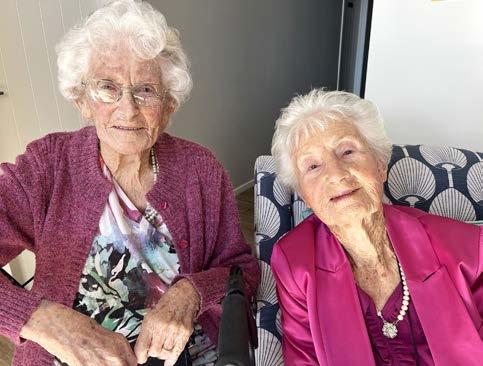
Now and then - Newly-minted centenarian Naomi Broadbent, right, with Jean McConnell – and the cousins together as bride and bridesmaid on Naomi’s 1950 wedding day.













Farm leaders say hit pause
By Mary Anne Gill
Two of Waipā farming’s longestserving environmental advocates say the government should pause Plan Change 1 rather than put farmers through a compliance process that could soon be overtaken by resource management reforms.
Cambridge farmer Graham Pinnell and Maungatautari’s Bill Garland were among those who spoke at last week’s packed farmer meeting at Mystery Creek. More than 350 people gathered to discuss the future of the Waikato Regional Council’s long-running water quality plan.
Both men have spent decades championing environmental improvement alongside productive farming.
Garland has spent more than five decades farming at Maungatautari while holding leadership roles in farming, conservation and environmental organisations, including Federated Farmers, the Waikato Conservation Board and the Maungatautari Ecological Island Trust.
“The country requires a culture change. We’ve got to change our mindset.”
Garland said farmers had shown they were willing to make environmental improvements, but regulation should support practical action rather than create unnecessary complexity.
Pinnell, who has followed the Plan Change 1 process for years through
submissions and hearings, asked why farmers should commit to a system that could soon be replaced.
The Whitehall sheep, beef and dairy support farmer has long advocated for improved water quality but argues effort and money should be directed into environmental improvements rather than compliance systems that may soon be superseded.
He said farmers were looking for certainty.
Many at the meeting shared that concern, arguing Plan Change 1 had become caught between a court process spanning more than a decade and a Government determined to rewrite the rules that underpin it.
Pukekohe grower Peter Reynolds, whose family business produces vegetables, kiwifruit and livestock across more than 200 hectares, warned overly prescriptive rules could affect employment in the vegetable sector, where many Pacific Island workers support families back home through money earned in New Zealand.
Whether the two ministers, Todd McClay and Chris Bishop, can convince their Cabinet colleagues to pause the plan remains to be seen. What was clear at Mystery Creek was that farmers who have spent years fencing waterways, planting trees and improving environmental performance do not want to invest in a planning regime they fear may soon be replaced.
• See: Caught in limbo, page 11
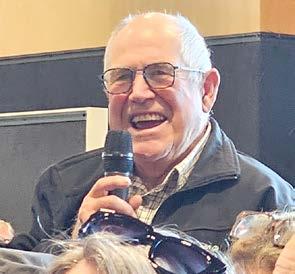
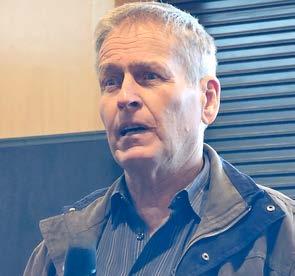
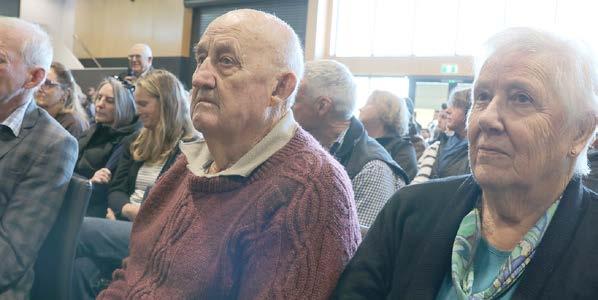

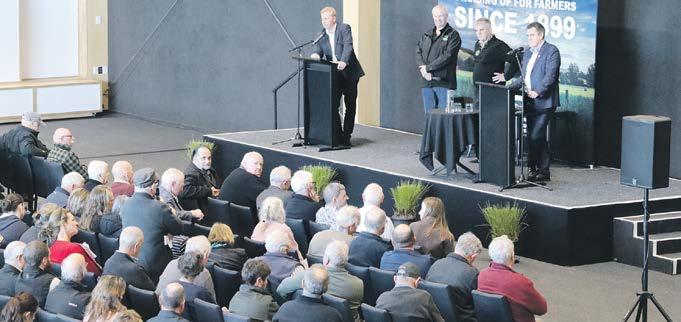
Tamahere farmers Ian and Michele Alexander listen as in the background Cambridge farmer Bill Garland, a long-time environmental pioneer, puts the case for Plan Change 1 to be paused.
Photos: Mary Anne Gill
Maungatautari farmer Bill Garland called for a culture change. Whitehall farmer Graham Pinnell wrapped up the questions from the floor.


Experienced professionals. Local specialists. Quality advice. COMMERCIAL
Experienced professionals. Local specialists. Quality advice.
Cambridge | 07 827 5147
Hamilton | 07 848 1222
www.lewislawyers.co.nz
Experienced professionals. Local specialists. Quality advice.
Cambridge | 07 827 5147
Cambridge | 07 827 5147
Hamilton | 07 848 1222
Hamilton | 07 848 1222 www.lewislawyers.co.nz
www.lewislawyers.co.nz
A healthy change
A Māori-led social service system in Hamilton is being heralded as a model for social investment reform.
The non-government organisation has 87 staff supporting more than 4000 tamariki and their whānau through a network of housing, child protection, justice, disability, and family harm services.
Its new public identity, Tamariki Tū Tamariki Ora – healthy thriving children - was unveiled at a function last week in Hamilton.
Tamariki Tū Tamariki Ora, operated by Kirikiriroa Family Services Trust, brings together 14 integrated services in a single connected system. It extends across Waikato communities including rural areas such as Kawhia, Pirongia, Ōtorohanga, and Kihikihi.
“This is what happens when tamariki are truly placed at the centre, when services are designed around whānau pathways, rather than constrained by institutional silos,” chief executive Jaye Wainui said.
More than 4000 referrals flow through Tamariki Tū Tamariki Ora each year. The organisation says more than 2000 tamariki are engaged in services and
more than 1400 are achieving sustained outcomes. In high-demand areas, services are operating well above contracted levels, including statutory intervention services at 115 percent and court-based support for victim-survivors of sexual violence at 162 percent.
Wainui says the figures reflect earned service provider trust by the users, not a system breakdown.
The model includes a housing component - 43 transitional housing
TALKING ECONOMICS
Time to bite the bullet
On July 2 I wrote about the government’s proposals for local authority amalgamations.
They are intent on pushing through changes even though there is little or no evidence that large local authorities are more efficient than small ones.
This column is about an issue where the situation is the opposite. Despite overwhelming evidence that a change needs to be made, no political party has had the resolve to propose change. The area is national superannuation.
The data on the future trends in national superannuation payments has been widely published by the New Zealand Treasury and others. The picture the data paints is clear. The structure of our national superannuation system is unsustainable. Changes have to be made and if the changes are left to later, they will need to be bigger.
National superannuation payments cost around $25 billion a year. This is as much as New Zealand spends on all the other welfare benefits added together – and with the number of beneficiaries growing rapidly as our
population ages, it is rising by another $1.5 billion every year. When the scheme was introduced, there were seven people of working age in New Zealand for every person receiving national superannuation., Currently, the ratio is four to one and on current trends could be as low as two to one in 2065. The system will become unsustainable long before then.
What are the options for change?
One is to raise the entitlement age. That has been done before. But it is unlikely to be enough to solve the looming spending problem. The second is to means test national superannuation payments. Every other welfare benefit in New Zealand is means tested. New Zealand established a Retirement Commission in 1993, and it concluded recently that income testing is a fairer way to reduce expenditure on superannuation compared to raising the age of eligibility.
Many retirees say that they have paid taxes all their working livessome of their taxes went to pay the superannuation benefits and it is now their turn to be on the receiving
homes provide whānau with structured progression from crisis accommodation into longer-term stability. Those present at the function last week in Hamilton included former chairperson and now Member of Parliament Mariameno Kapa-Kingi, fellow MP Hana Maipi-Clarke, Lady Tureiti Moxon, Aboriginal leader Antoinette Braybrook and cabinet minister Tama Potaka, who closed the evening with an address.
By Peter Nicholl
end. There is some truth in that view.
That is how our superannuation system was supposed to work.

But we must accept the world doesn’t stay the same. Demographic trends have made that model unsustainable. If the government had plenty of money it might be possible to maintain our system of universal and untargeted national superannuation. That’s unfortunately not New Zealand ’s situation. We have a large infrastructure deficit; we have shortages of funding in areas like health and education. We have rising debt levels. Someone (I don’t remember where I saw it) said recently that this means our national superannuation has turned into a reverse Robin Hood scheme. We are underspending in key areas, taxing low incomes and keeping lids on benefits to people who need them in order to continue giving a universal benefit to people who don’t need it. Will this become an election issue this year? It should. But I doubt it will.
CAMBRIDGE HEAT PUMP SPECIALISTS
CAMBRIDGE HEAT PUMP SPECIALISTS
Air Conditioning Group Waikato are the specialists for Heating, Cooling, Ventilation, and Air Purification for Homes, Rentals, Businesses, and Commercial Buildings.
Conditioning Group Waikato are the specialists for Cooling, Ventilation, and Air Purification for entals, Businesses, and Commercial Buildings.








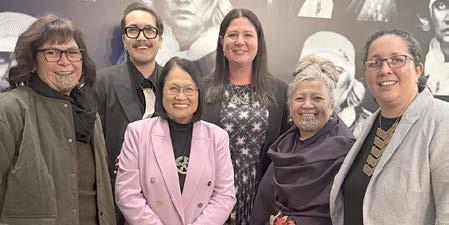
Pictured from left, Nanaia Mahuta, Tamariki Tū Tamariki Ora chief executive Jaye Wainui, Te Kōhau Health Tumuaki Tureiti Moxon, MPs Willow-Jean Prime and Mariameno Kapa-Kingi, and Te Kōhao Health chairperson Te Rangi Martell.
Tours mark Le Quesnoy link
By Viv Posselt
Cambridge’s annual nod to France’s Bastille Day on July 14 took on an unusual slant this year.
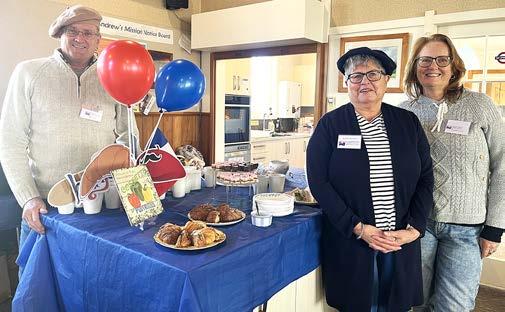
As well as a café lunch on the day, there was a series of guided Cambridge/Le Quesnoy tours at St Andrew’s Anglican Church last Saturday.
Organised jointly by the Cambridge/Le Quesnoy Friendship Association and St Andrew’s Church, the tours celebrated the historic connection that links the church to both towns.
Tours were led by Cambridge author and musician Holly Cramer-Roberts and included
an address by Canadian-born Cambridge resident Thomas Fuller.
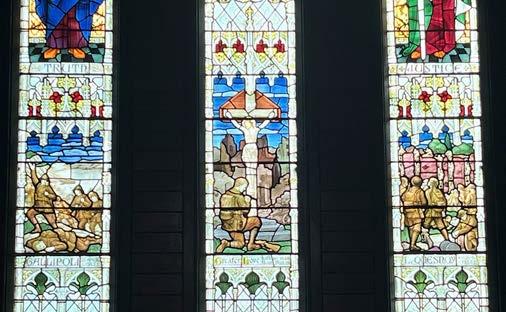
They related the Le Quesnoy liberation story and showed visitors the stained-glass windows honouring Kiwis killed in World War One.
The three panels depict the World War One battles of Gallipoli, Ypres, and Le Quesnoy.
They heard how the Rev Clive Mortimer-Jones, who was St Andrew’s second vicar from 1912 to 1926, elected to go to the Western Front during WW1 to assist the troops.
During his time overseas he sent regular witness accounts back to St Andrew’s, and on his return, he
commissioned the three stained glass windows in recognition of the men who fought and died in Europe.
Those on Saturday’s tours also saw where the ashes of Colonel Lawrence ‘Curly’ Blythe are buried in the church’s French garden.
While Blythe was not involved directly in the final assault on Le Quesnoy, he served on the Western Front, and received both French and New Zealand honours a couple of years before his death in 2001, aged 105.
Cambridge/Le Quesnoy Friendship Association chairperson Heather Wellington said this was the first time a collaborative event
had been held with St Andrew’s Church to highlight the links between Cambridge, Le Quesnoy and the church itself.
“People often don’t realise the strength of the connection between the church and the story of Le Quesnoy, and the symbols on the church site that tie it together,” she said.
The walled French town of Le Quesnoy was liberated from German occupation on November 4, 1918, by the New Zealand Rifle Brigade. No civilian lives were lost in the action. First over the ladder that was used to enter the walled town was Leslie Averill, who is often claimed to be from
Cambridge. He was born in Christchurch but had links to this town through his brother Walter Averill who was second clergyman to Rev Clive Mortimer-Jones for a brief period after the liberation of Le Quesnoy. Leslie Averill’s father. Alfred Walter Averill, was archbishop and primate of the Anglican Church in New Zealand and was present at the unveiling in 1923 of the memorial window in St Andrew’s Church.
Those on Saturday’s tours were also told of the Le Quesnoy sculpture on the Cambridge domain, crafted by New Zealand sculptor, the late Fred Graham, and unveiled in November 2019.

Cambridge/Le Quesnoy Friendship Association chair Heather Wellington, front, with former Cambridge Rotary president David Partis and his wife Suzanne pictured on Saturday.
Photo: Viv Posselt.
The unique stained-glass windows in St Andrew’s depicting WW1 battles at Gallipoli, Ypres and Le Quesnoy. Photo: Viv Posselt
ON SHAKY GROUND
Colossal breakups
By Janine Krippner
Many years ago I had my time living in Perth. A lack of jobs in New Zealand drove much of my graduating year to Australia, and family ties pulled me across the ditch too.
At the time, I was working with seismic data. This is information collected by sending energy waves through the layers beneath the seafloor (in this case). Waves travel downwards, bounce off boundaries between rocks and sediments and return to the surface where they are detected.
The energy source can be a little like an underwater explosion or a powerful pulse of compressed air. Once the returning signals have been recorded and heavily processed, they become images that geologists can use to interpret what lies below the seabed. To me this looked like a stack of red, white and blue squiggles.
These images can be combined with samples collected in sediment and rock cores and we can begin to work out what the buried layers are made of, how old they are, and how they formed. The strength and character of the returning signal can also reveal clues about the properties of those layers. This is part of the field of geophysics.
One of my projects involved trying to understand how a basin offshore southwestern Australia had formed millions of years ago, and how sediment had gradually poured into it, filling the enormous, bowl-like depression.
Using computer software, I traced buried layers of rock and sediment across many kilometres of seismic data. Then I noticed something. There were “tiny” triangular shapes in the data, along with long, bright, continuous layers.
In seismic images, a bright layer means that

a large amount of energy is being reflected back. That can indicate a strong contrast between layers, including the presence of hard volcanic rock. Long, bright layers can sometimes represent huge lava flows. The triangular shapes were buried volcanoes. Something enormous had happened. I was looking at evidence connected to a continental breakup.
Around 130 million years ago, southwestern Australia was still connected to parts of what are now India and Antarctica. As these landmasses began to pull apart, the crust stretched, fractured and thinned. Simply put, magma rose through the weakening crust, volcanoes erupted, and eventually a new ocean began to open between the separating continents.
India later continued moving northwards and collided with the Eurasian tectonic plate, helping to build the Himalayas. Talk about dramatic.
Continental breakups unfold over millions of years through repeated faulting, stretching, subsidence of the crust and volcanic eruptions. Vast amounts of magma may rise towards the surface, but not all at once. Seen in the compressed record of geological time the whole process can look sudden and intense. This is one aspect of submarine volcanism. This is one of the ways geologists piece together fragments of evidence, like detectives, to understand the history of our Earth.
I much prefer working on present-day or recent volcanic activity, but studying these ancient processes gave me a much better understanding of where volcanism fits into the colossal breakups that reshape our planet.


CARE*
Looking for quality, affordable care for yourself or a loved one? Give our friendly team a call. Our difference:
• As a community charitable trust, we are committed to providing affordable care for seniors in Cambridge.
• No Occupation Right Agreement (ORA) required for rest home, continuing, and memory care in our care centres.*
* Rest home, continuing, & memory care are subject to a needs assessment.
For better... or worse
By Murray Smith, Bridges Church
What would be your response to the question, “Is the world a better place to live in today, compared with how they had it say, 150 years ago?”
This was the basis of an interesting group discussion recently among people whose opinions were thrown around, none of whom, of course had personal experience of what life was like back then!
Many held to the perception (almost wistfully and ‘romantically’), that to scroll back through the decades, you’d have experienced far more simplistic, caring, community-minded ideals undergirding society than today’s society.
Others emphatically ticked ‘yes,’ to believing that the world is a vastly improved place to what it was years ago. They postulated that the world is just improving all the time and the only thing needed for our planet to achieve ‘utopia’ is more time. People insisting this to be the case cited evidence such as the increase of global life expectancy, reduction in world poverty, conquering disease, advances in technology which have made life longer, ‘easier’ and more enjoyable, aided by improving healthcare and education. Just having more options and better living conditions generally, it was asserted, have put life on an up, up-and-away trajectory that we should all be very positive about.
A decidedly different perspective was presented by those seeing a general trend over the passage of time, of the earth spiralling towards ‘entropy’ - in simple terms, a slippery slope downwards into chaos and disorder. The supporting evidence was the global escalation of wars, atrocities, selfish greed that has failed to steward the earth decently with its natural resources and beauty - polluting the planet,

disregarding animal life leading to loss of habitat and extinction. That’s on mankind to a great extent. Literally at the heart of all the problems was human beings. In spite of many wonderful accomplishments and inventions leading to so-called ‘improvements’ of life, there’s this lingering brokenness in humanity that perpetuates escalating decline and disorder.
I’m inclined towards the ‘entropy’ view. What informs me clearly in that direction are the perspectives that Jesus gave us 2000 years ago. He gave very specific indications of world events at the ‘end of the age...’ describing precisely an increase of darkness and evil that would unfold before His return to earth.
Yet in it all, His words offer wonderful hope and a glorious future for those who place their trust in Him.
Things are convulsing on planet earth as the nations heave under burdens of uncertainty from within and without. You can count on tomorrow’s headlines consisting of wars and rumours of wars, plagues, pestilences, hatred and violence… just as Jesus foretold (Matthew 24, Mark 13).
Without His peace and help in guiding our perspectives, this generation faces troublesome times. A fear-filled plethora of destablising influences is engulfing multitudes of troubled hearts struggling to find meaning in the face of loneliness, estrangement, hopelessness, and loss of true purpose and identity.
Will we heed Jesus’ warnings of increased deception, global conflict, natural disasters and be prepared?
CountryLife
CountryLife
CountryLife
Reach a targeted rural & lifestyle audience each month by advertising your business in CountryLife; featured inside the Cambridge News & Te Awamutu News
Reach a targeted rural & lifestyle audience each month by advertising your business in CountryLife; featured inside the Cambridge News & Te Awamutu News
Reach a targeted rural & lifestyle audience each month by advertising your business in CountryLife; featured inside the Cambridge News & Te Awamutu News

Distributed to EVERY rural & urban letter box across the Waipa region each month.
Distributed to EVERY rural & urban letter box across the Waipa region each month.
Distributed to EVERY rural & urban letter box across the Waipa region each month.
Next Publication Date: Thursday 20 August
August Deadlines: Booking: Monday 10 August


Copy Setting: Wednesday 12 August Finished Artwork: Friday 14 August TO BOOK YOUR SPACE: Daniel Davy Advertising Sales Consultant daniel@goodlocal.nz • Ph 0204 023 8018



By Mary Anne Gill
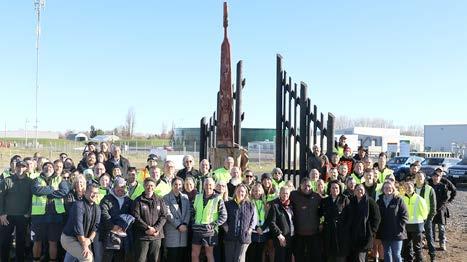
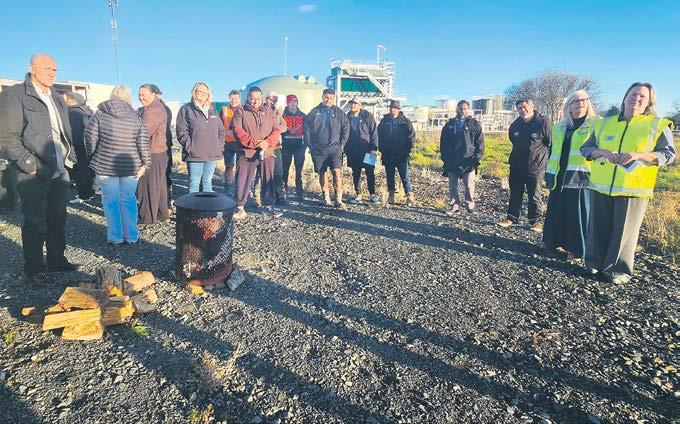
A pou carved from silver beech and anchored by the remains of a centuryold tōtara was unveiled at Fonterra’s Wai Mahea water treatment plant at Hautapu last week.
The carving, created by Bodie Taylor on behalf of Ngāti Korokī-Kahukura and Ngāti Hauā, stands at the entrance to the new $85 million facility as a symbol of guardianship, environmental responsibility and the enduring connection between people and water.
Its unveiling formed part of a Matariki ceremony which brought together mana whenua and Fonterra staff.
The pou tells the story of the Waikato River, the waterways that sustain the district and the connection between people and the natural world.
During the unveiling, Taylor described the carving as a wero, or challenge.
“When you come up that driveway, it’s doing a haka to us,” he said. “It challenges us to do the right thing. It challenges us to remember the environment is only as good as
how we look after it.”
Taylor spent six months developing the design and completing the carving. He worked with iwi representatives and Fonterra staff to ensure the finished work reflected both cultural values and the purpose of the new treatment facility.
“It has got to be a collective,” he said. “As much as I love to take credit for some things, actually it’s the collective whole.”
The base of the pou was created from a tōtara tree that grew on the site and was estimated to be around 100 years old.
Taylor said the choice of
materials also reflected a desire to look at alternatives to slow-growing native timbers, hence the use of silver beech or tawhai.
The carving incorporates a range of traditional symbols reflecting the relationship between people, water and place.
A figure representing Waikato Awa sits at the base, while a tata, or bailing implement, symbolises water being taken and returned. Manaia figures represent the guardianship of local iwi. A moon symbol acknowledges the relationship between water, nature and people, while another
figure, Parawhenuamea, represents streams and freshwater systems that have sustained the district for generations. The pou faces towards landmarks including Maungatautari, Maungakawa and Pukemoremore.
For Taylor, the pou and the treatment plant are inseparable.
One reflects cultural values passed down through generations. The other represents a modern investment in improving the quality of water returned to the Waikato River.
• See: Working for water, page 13.

High notes for festival
By Viv Posselt
What turned out to be the biggest concert band festival in the event’s recent history, held in Cambridge for the first time last month, has been declared a massive success.
The weekend event, held annually by the New Zealand Concert Band Association (NZCBA), ran at St Peter’s Cambridge.
Festival organiser and NZCBA president James Bevin told The News the number of musicians blew out beyond the anticipated 1000 to closer to 1200, representing around 28 bands, 450 soloists and 37 small ensembles from Whangārei to Wellington.
The event focuses on participation and enjoyment rather than competition, Bevin said. Expert-led workshops throughout the weekend provided an opportunity for participating musicians to learn from the best.
“Every band was graded based on their performance – gold, silver and bronze. But this festival isn’t about winning the big awards… it is about musicians participating, engaging with other musicians and going home feeling inspired,” he said. “The really cool thing about music, and this festival, is that it covers such a wide range in terms of

musicians’ age and ability.”
Among this region’s participants was the St Peter’s School concert band, the Waikato Schools Symphonic Band, and the Waikato Symphonic Band.
Mary Lin, director of performing arts with hosts St Peter’s School, was delighted with how the event turned out.
“It’s been a great success in terms of the number of bands attending,” she said. “Two professional ensembles’ evening performances, workshops led by industry musicians, and the audience in attendance on both days. The venue turned out great as there was good collaborative, performance, rehearsal and social space … my students were great hosts.”
Waikato Schools Symphonic Band, Waikato Symphonic Cand and the host band, St Peter’s Petra Aeros Concert Band, received silver for their performances.
Also taking part and getting a silver was the All-Comers Band, conducted by Cambridge’s Simon Brew. He describes it as a group of musical ‘orphans’, musicians not affiliated to any official band.
Gold award recipients included the West City Concert Band, North Shore Winds, St Kentigern College Concert Band, Wellington City Concert Band, Macleans College Concert Band, and Manukau Concert Band.

Fonterra staff, Ngāti Korokī-Kahukura and Ngāti Hauā and community representatives in front of the pou. Behind them is Hautapu’s Wai Mahea water treatment plant.
Photo: Mary Anne Gill
Hautapu seal final spots
By Jesse Wood
Both Hautapu men’s premier sides have found their way into Waikato Club Rugby grand finals.
Hamilton Marist will host Hautapu this Saturday afternoon in a one v two play-off for the Breweries Shield.
Hautapu beat Fraser Tech 47-12 at Cambridge Memorial Park on Saturday and while Marist defeated Te Awamutu Sports 59-12 to book their spots in the finale.
Right winger Quentin Hill scored a brace in front of the home fans, while Jacob Carmichael, Rory Blyth, Konelio Burgess, Karlan Mosaati, lock Dylan Eti and winger Nathan Stephens also crossed the try line. Fullback Patrick Hedley kicked seven points off the tee.
Te Awamutu Sports’ sole try scorers in Hamilton were George Poolman and Bronson van der Heyden. Poolman also added a conversion.
Te Awamutu College alumni Shauncy Waho and Te Kapa Crown were among the nine Marist try-getters. Waho slotted a conversion too.
Leamington exited the premier championship Lone Star Cup semi-finals, falling 48-3 to University. Robert Day kicked Leamington’s penalty goal.
Hautapu B dealt to Te Awamutu Sports B 99-0 in Cambridge to go through to a home Premier B Men’s Rowe Cup final against Fraser Tech B this weekend.
Hamilton Old Boys B beat Leamington B 40-11 and will face United Matamata Sports B in the Premier B Championship WRU Trophy final.
Pirongia lost their Division 1A Mooloo Shield semi-final to Putāruru 27-17 as Dylan Hanning played his 100th game for Pirongia A.
Ōhaupō beat Suburbs 37-27 in their home semi-final and now face Southern United in Tokoroa in the Division 1A Championship Captain Compost Cup final clash.
Pirongia B will face Te Rapa B in the Division 1B WRU Trophy final at home this Saturday after beating Putāruru B 49-5 in the semi-final in captain Sam Kirkbride’s 100th match.
Greer’s Friday night fight
By Jesse Wood
Cambridge boxer Greer Hall is heading to the Commonwealth Games.
The granddaughter of 1970 Junior All Black Graham Falconer and cousin of BMX star Leila Walker is one of seven New Zealand boxers named to compete in Glasgow.
Hall, 20, fights out of Hamilton’s Hit Fitness HQ gym run by Cairo George in the 54kg bantamweight division. The Games start next week, and Hall is scheduled to fight at 10pm New Zealand time on July 24.
It’s been a fast rise - she was a BMX world titleholder and New Zealand age-group representative before starting at Cambridge High School.
At 15 and after a spell in football, she turned up to Eastside Boxing at the Cambridge Velodrome and was sold on the sport straight away.
She made her professional début last December – getting a first-round knockout win over Masterton’s Sarah Linton – and is recognised as a rising talent having won national titles, the 2025 Queen of the Ring and 2025 Brisbane International Golden Gloves.
She secured a bronze at the 2024 Youth World Championships, underlining her potential against international competition.
Boxing New Zealand president Josh Wharehinga said the Glasgow team highlights both experience and the next generation progressing through the system.
“There’s real excitement around this team. We’ve got experienced athletes alongside a group of younger boxers who are coming through strongly and gaining valuable international experience,” Wharehinga said.
“The Commonwealth Games are an important part of our pathway. They give athletes the opportunity to test themselves against quality opposition and take the next step in their development.”



From BMX to boxer – Games hope Greer Hall. Photo: Boxing New Zealand
CountryLife
Caught in limbo…
For more than a decade, Waikato farmers have lived with the uncertainty of Plan Change 1. Mary Anne Gill was at Mystery Creek to hear what two senior ministers had to say about its future.
Few farmers attending last week’s Plan Change 1 meeting at Mystery Creek could match the environmental credentials of Graham Pinnell, Bill Garland and Peter Reynolds.
That is why their concerns carry weight.
None of the men are arguing against cleaner waterways. They have spent years investing time, money and effort into environmental improvements on farms and in their wider communities. What troubles them is whether the current process is delivering the best outcome.
Pinnell’s involvement with Plan Change 1 stretches back to its earliest days. The Cambridge farmer has spent years studying the proposal, lodging submissions, sitting through hearings and trying to understand how environmental gains can be balanced with the realities of farming businesses.
His own property at Whitehall reflects that commitment.
He and his wife began riparian fencing about 20 years ago, well before such work became commonplace. Their 124-hectare dry stock farm includes more
than three kilometres of waterways.
But environmental work does not always follow a straight line.
A severe localised flood destroyed almost all of the fencing along the main stream on the property, causing damage that cost tens of thousands of dollars to repair.
That experience shaped Pinnell’s thinking. He supports better water quality but believes regulations need to recognise the practical challenges farmers face on the ground.
At Mystery Creek he questioned why farmers should commit to a compliance regime when the Government is replacing the Resource Management Act.
The timing has become central to the debate. The Environment Court has largely upheld Plan Change 1, subject to amendments, while the Government is simultaneously replacing the Act.
That leaves many farmers wondering whether they should invest in a system that could soon look very different.
Garland sees the issue

What is Plan Change 1?
Plan Change 1 is a Waikato Regional Council plan aimed at improving water quality in the Waikato and Waipā river catchments by reducing contaminants such as nitrogen, phosphorus, sediment and E. coli entering waterways. It introduces new farming rules, farm environment plan requirements and, for some farmers, resource consent obligations. Last month, the Environment Court largely upheld the plan, directing the council to make 20 changes before the plan becomes operative.
through the lens of a lifetime in farming and conservation.
The respected Maungatautari farmer has spent decades promoting sustainable land management while helping establish organisations that have become central to environmental protection in the region.
His involvement has ranged from Federated Farmers through to the Waikato Conservation Board, the Queen Elizabeth II National Trust, the New Zealand Farm Environment Trust and the Maungatautari Ecological Island Trust.
Recognition followed, including a Royal Forest and Bird Old Blue award for conservation work.
For Garland, environmental improvements are not optional.
But he believes lasting results come from winning hearts and minds rather than imposing rules from above.
That was the message he delivered to ministers.
“The country requires a culture change. We’ve got to change our mindset.”
The meeting also heard from Pukekohe grower Peter Reynolds, whose family business operates more than 15 blocks across the Pukekohe and Tuakau districts.
The enterprise includes potatoes, onions, pumpkins, kiwifruit orchards and cattle.
Reynolds has been recognised for championing sustainable land management practices across more than 200 hectares of farm land.
He warned highly prescriptive rules could create consequences far beyond farm boundaries.
The vegetable industry relied heavily on Pacific Island workers, many of whom supported families back home through earnings made in New Zealand.
He also reminded the audience of the important role Pukekohe growers play in supplying fresh vegetables to consumers throughout the country and the Pacific.
The concerns were heard by ministers Todd McClay and Chris Bishop.


Waikato, Ōtorohanga and Waitomo mayors Aksel Bech, Rodney Dow and John Robertson were in the front row and listened as Whangamarino Catchment farmer Malcolm Lumsden asks a question of ministers Todd McClay, left, and Chris Bishop, right while
Farmers officials Chris Woolerton and Colin Hurst look on.
Photo: Mary Anne Gill
on page 12
Caught in limbo…
McClay, whose ministerial duties include Agriculture, acknowledged farmers wanted cleaner waterways but said they also needed certainty about the rules they were being asked to follow.
With a replacement for the Resource Management Act on the way, he questioned whether it made sense for farmers to spend time and money working through a system that could soon disappear.
Bishop, who is driving change as Resource Management Act Reform minister, delivered a similar message. He said the Government did not want people operating under one set of planning rules only to have those rules changed again a short time later. Neither minister ruled out the possibility of pausing Plan Change 1 while the wider reforms are worked through.

Continued from page 11
That message offered some reassurance to farmers who have lived with uncertainty for more than a decade.
For Pinnell, Garland and Reynolds, the conversation is about more than one plan change.
All three have spent years advocating for environmental improvement. Their concern is ensuring regulation helps achieve those goals rather than distracting from them.
As debate over Plan Change 1 enters another chapter, they remain convinced progress is best achieved when environmental ambition is matched by practical, workable policy.
The challenge now is whether the Government can provide the certainty farmers say they need.
Your Trusted Local Engineering Specialist in Cambridge, Waikato We specialise in general engineering & farm machinery repairs, offering expert welding and maintenance alongside specialised fabrication, milling, turning, & custom jobs.
NZ Designed Filtration Systems for the Removal of iRon and Manganese and Other Rural Problems
Expect government to act
By Liz Stolwyk
The release of the Environment Court decisions on Plan Change 1 has left many farmers and rural communities wondering what comes next.
they found it.
My personal view is that it would make little sense for the government to allow Plan Change 1 to continue unchanged while it is fundamentally reforming New Zealand’s resource management system. The government has been clear that the Resource Management Act is being replaced with a new planning framework and to expect it before the election. Allowing one of the country’s most significant freshwater plans to collide with those reforms would create uncertainty, inconsistency and unnecessary cost. This is a view also shared by many rural advocacy groups who are currently lobbying MPs – a no brainer surely!
I would be surprised if we didn’t see a government announcement very soon. Whatever happens next, we must not lose sight of the environmental progress already being made on the ground.
Recently, Cr Keith Holmes and I had the privilege of visiting the Waipā Rere Noa Catchment Restoration Group with Matt Holwill and Rosemary Davison. Seeing their work firsthand was both inspiring and encouraging. Thank you to Matt and Rosemary for taking the time to show us around the catchment and the impressive results being achieved through local leadership and community commitment.
The numbers speak for themselves. More than 350,000 native trees have now been planted throughout the catchment, with an incredible 200,000 planted by farmer members. These are not projects being imposed from above. They are being driven by people who live, work and farm in the catchment because they genuinely want to leave their environment in better shape than
•
• Results guaranteed

This success has also been made possible through the ongoing support of the Waikato Regional Council, whose funding and technical assistance have helped community groups turn good intentions into measurable environmental outcomes.
But restoration is only half the challenge.
Protecting the millions of dollars already invested in native planting means confronting the growing threat of invasive weeds. Left unchecked, weeds can quickly undo years of hard work, choking out native species and reducing the health of our waterways.
Waipā Rere Noa’s funded weed control programme is a great example of how practical action delivers results. Through weed control demonstrations, education and community involvement, the group is changing attitudes, building knowledge and giving landowners the confidence to tackle invasive species before they become an even greater problem.
This is exactly the role councils should be playing — enabling communities, supporting local leadership and investing where it delivers real environmental gains.
The debate around Plan Change 1 has often become polarised. Yet what I saw in the Waipā Rere Noa catchment reminded me that the best environmental outcomes come through partnership, not simply regulation.
As the government considers the future of freshwater policy alongside its wider RMA reforms, I hope it recognises what is already working. Community-led initiatives like Waipā Rere Noa are proving that environmental improvement, productive farming and prosperous communities can go hand in hand.
That’s the future we should be building on.


•
•
• Fully automated
•
•
• NZ designed systems tailored to suit your water needs
•
•
•
•
•
• Latest in electronic technology , wireless & alert systems
•
•
•
• Servicing the Waikato, Bay of Plenty, Taranaki & Gisborne
•

•
• Servicing the Waikato, Bay of Plenty, Taranaki & Gisborne
•
•
•
TODAY FOR YOUR NO OBLIGATION FREE SITE ASSESSMENT AND QUOTATION*

(*water test report costs not included) Phone: 0800 109 202 www.ironfiltration.co.nz







Working for water
By Mary Anne Gill
Behind Fonterra’s new Wai Mahea water treatment plant lies a story of environmental innovation, cultural partnership and a shared commitment to the Waikato River.
For carver Bodie Taylor, the significance of Wai Mahea extends well beyond the pou that now stands at the entrance to the site.
The $85 million plant has been designed to improve the quality of water leaving the Hautapu dairy processing facility before it returns to the Waikato River. Its name, gifted by mana whenua, reflects the transformation of water through the removal of impurities.
Taylor said the purpose of the plant became clear as discussions progressed during the design and carving process.
One aspect was the treatment of water before its return to the river.
Another was Fonterra’s ability to reuse treated water for practical purposes such as dust suppression on roads.
The reuse of treated water was one example of the practical thinking behind the project, reducing waste while supporting other activities on site.
“There is innovation to be had,” he said.
Taylor said the project represented
an opportunity to balance environmental responsibility with the realities of modern industry.
The collaborative approach particularly impressed him.
He reserved special praise for Hautapu environmental manager Jude van Bommel, whose willingness to engage with mana whenua throughout the project helped build strong relationships.
“I think when I look at Fonterra environmental manager Jude van Bommel, she’s a typical Dutchy hard worker, loves to work as a team,” Taylor said.
Her Dutch heritage also prompted Taylor to reflect on the Netherlands’ long history of living with water and managing its challenges.
“Holland is lower than the ocean. The majority of it is lower than sea level,” he said.
“So they really understand what it means.”
Taylor said generations of Dutch people had learned the importance of collective effort in managing water, and he saw similar values reflected in the Wai Mahea project.
He said van Bommel and her colleagues embraced working alongside local iwi, creating a partnership that went beyond consultation and focused on shared outcomes.
The project also highlighted the growing connection between cultural values and environmental management.
Waikato-Tainui’s Norm Hill said the event marked the first Hautapu celebration held at the site and expressed hope similar ceremonies might be adopted at other Fonterra locations.
The ceremony brought together mana whenua, Fonterra staff and guests to acknowledge the past year, celebrate achievements and look ahead to the future. Hautapu is a traditional Matariki ceremony centred on gratitude for the gifts of the environment and recognition of the relationship between people, land and water.
For Taylor, those themes align closely with the purpose of Wai Mahea.
He believes projects such as the Hautapu treatment plant demonstrate how environmental stewardship, industry and cultural knowledge can work together rather than in opposition.
The result is more than new infrastructure or improved wastewater treatment.
It is an example of how different perspectives can contribute to a common goal: protecting the health of waterways while supporting one of the region’s most important industries.

“Sale
and Purchase Agreements - more important than
ever
to get advice before you sign”
In today’s fast-paced and increasingly complex property market, sale and purchase agreements (SPA) have never been more important. Whether purchasing a first home, upgrading to a new property, acquiring an investment property, or buying commercial real estate, purchasers face a range of financial, legal, and market-related risks that can have significant consequences if not properly managed.
SPA’s are the legally binding contract between a vendor and a purchaser that outlines the terms and conditions of a property transaction. When carefully prepared, it provides clarity, protection, and certainty for all parties involved.
In most cases, these agreements are prepared by real estate agents, who also coordinate the signing of the agreement. While agents play an important role in facilitating the transaction, they aren’t responsible for providing legal advice to either party.
The agreement becomes legally binding once signed, so, it is crucial to obtain legal advice before you sign. Your lawyer can ensure the agreement contains appropriate conditions for your particular circumstances, identify any clauses that should be amended or removed, and provide advice on any potential risks. Seeking legal guidance at this stage helps ensure you fully understand your obligations and protects your interests throughout the purchasing process.
One of the primary reasons sale and purchase agreements have become increasingly important is the significant rise in property values. As buyers commit to larger financial investments, the cost of making a mistake can be substantial. A well-drafted agreement clearly defines the expectations, obligations, and conditions of the transaction, helping to minimise uncertainty and reduce the risk of disputes.
Equally important is the role these agreements play in preventing costly, time-consuming legal conflicts. Property transactions can quickly become complicated when expectations are unclear, or key issues have not been addressed from the outset. By clearly documenting the rights and responsibilities of each party, a SPA reduces ambiguity and provides a framework for resolving issues should they arise.

Ultimately, a SPA is much more than a preliminary document. It is a vital risk-management tool that helps safeguard your investment, provides greater certainty throughout the transaction process, and supports a smoother path to successful property ownership. In an environment where the stakes are higher than ever, ensuring the agreement is properly drafted and reviewed before signing is one of the most important steps a purchaser can take.
Georgia Ellen

Participants, including environmental manager Jude van Bommel, right, and master carver Bodie Taylor, centre, gathered around braziers to remember loved ones who had died, reflect on the year gone by and share hopes for the future during the ceremony preceding the pou unveiling.
Photo: Mary Anne Gill
11:00-11:30am
76 Addison Street PBN 11:00-11:30am
139B Burns Street $625,000 11:00-11:30am
18 William Paul Street PBN 11:15-11:45am 31 Terry Came Drive $1,199,000 11:30-12:00pm
6 Sewell Place PBN 11:45-12:15pm
2 Frances Hunt Lane $929,000 12:00-12:30pm
6A Hilliard Place PBN 12:00-12:30pm 8A Hall Street PBN 12:00-12:30pm
14 King Street Deadline Sale 12:00-12:30pm 95B Williams Street $639,000 12:00-12:30pm
3/398 Luck at Last Road $1,790,000 12:00-12:30pm 24 Tulip Drive PBN 12:00-12:45pm
68A Hamilton Road PBN 12:15-12:45pm
55 Robinson Street PBN 12:30-1:00pm
2A Mackenzie Place PBN 1:00-1:30pm
5 Watkins Road PBN 1:00-1:30pm
5 Fisher Road
$1,249,000 1:00-1:30pm
34 Edwards Wells Road PBN 1:00-1:30pm
CAMBRIDGE OPEN HOMES
42 West Thompson Street Deadline Sale 1:00-1:30pm
69 Kelly Road PBN 1:00-1:30pm
298 Kaipaki Road $1,585,000 1:00-1:30pm
91 Redoubt Road Deadline Sale 1:00-1:45pm
443 Scotsman Valley Road $1,390,000 1:15-1:45pm 11C Whitespire Way PBN 1:30-2:00pm
45 Stafford Street $959,000 1:45-2:15pm
164A Victoria Street PBN 1:45-2:15pm 22B Campbell Street PBN 1:45-2:15pm
17 Mike Smith Drive
$2,149,000 2:00-2:30pm
629 Tauwhare Road $1,895,000 2:00-2:30pm
2/45 St Kilda Road BEO $2,199,000 2:15-2:45pm 18A Wordsworth Street PBN 2:30-3:00pm
168 Victoria Street $899,000 2:30-3:00pm 14 Tulip Drive PBN 2:45-3:15pm 6 Woodstock Crescent PBN 3:00-3:30pm 191 Racecourse Road $790,000 3:00-3:45pm 4/191 Racecourse Road $960,000 3:00-3:45pm
LJ HOOKER















Retire Here With Independence & Comfort

- Whether you’re downsizing, investing, or searching for a place to simply enjoy life.
- Bathed in sunshine thanks to its prized north-facing aspect.
- Well-designed layout includes a master bedroom with ensuite, family bathroom with wet-floor shower.
- Light-filled living and conservatory.
- Offered on a delightful, tidy and low maintenance 350m² (more or less) freehold title. just enough outdoor space to enjoy.
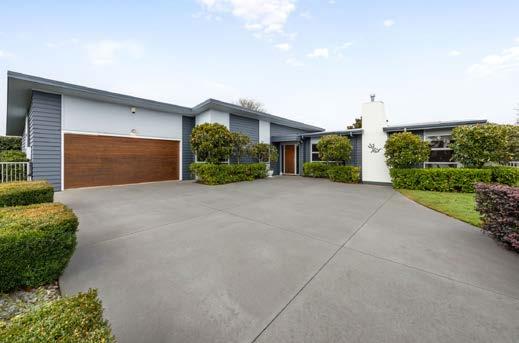
Spellbinding Rural Outlook

- Architectural & design excellence.
- Stunning country horizon views.
- Expansive high stud open-plan living flows out to the view captivating Garapa deck creating the perfect platfrom to relax.
- Spacious garage with attic storage is complemented by a carport and a super impressive four-bay shed including a dedicated workshop.
- Bathrooms evoke a luxury retreat experience.













































EXPERTS







Shaking up the berry harvests
from their existing machinery, writes Jesse Wood.
Thomas Hocking knows firsthand how small adjustments to harvesting equipment can have a big impact on fruit quality and orchard returns.
The 20-year-old Waikato University mechanical engineering student has worked in commercial blueberry harvesting and, rather than accept the problem, set about solving it.
He has developed a system that uses artificial intelligence to assess blueberry ripeness in real time and automatically adjust harvester settings to optimise the mix of fruit being collected.
The technology aims to help
growers harvest more ripe berries while reducing the number of green or damaged berries entering the packhouse.
“I worked in harvesting for several years and saw how much depended on the operator making constant adjustments throughout the day,” Hocking says.
“Drivers can be working long hours and small changes in machine settings can have a significant impact on the crop that’s picked.”
The idea was born after Hocking analysed the harvesting process while working at Blueberry Country in Ōhaupō.
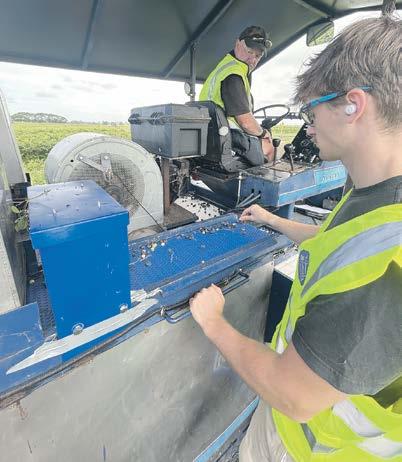
He assembled a team with engineering, software and mechatronics expertise to develop the concept, building and testing a series of prototypes over the past year.
The team showcased the technology in the Innovation Tent at Fieldays last month.
Their system retrofits onto existing harvesters, using an AIpowered camera module mounted above the conveyor belt.
The camera scans berries as they are harvested, identifying whether fruit is ripe, unripe, damaged or overripe.
That information is fed into an algorithm which automatically adjusts the harvester’s shaking intensity.
“If the machine is shaking too hard, it can bring off too much green fruit and damage the plant. If it’s too soft, you’re leaving fruit behind,” Hocking says.
“The goal is to keep the harvest operating in the optimal zone without the driver needing to constantly intervene.”
The technology is designed to improve efficiency without replacing workers.
“This doesn’t replace jobs. It just makes people’s jobs easier and helps improve harvest performance.”
A major advantage is that growers can continue using their existing machinery rather than investing in a fully automated harvester, which can cost hundreds of thousands of dollars.
“Most growers can’t justify the
cost of replacing harvesters, so we’re focused on providing a more affordable upgrade path,” Hocking says.
He believes practical industry experience has been essential to developing the technology.
“Working on farms and understanding the challenges operators face every day has been really important. Equipment needs to be reliable, rugged and simple
to use.”
The team hopes to have the product commercially ready for next season.
Beyond harvesting, Hocking sees opportunities to expand into wider farm technology services including connectivity, analytics and on-farm monitoring tools.
“I’d like to keep helping growers become more efficient. That’s what motivates me.”
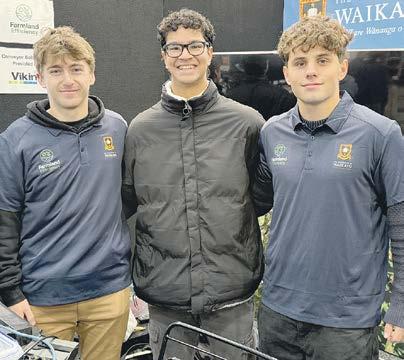
Thomas Hocking, left, with Caleb Fernades (mechanical engineering) and George Dixon (mechatronics engineering) in the Fieldays innovation tent. Photo: Jesse Wood
Thomas Hocking’s product uses Ai to assess berry ripeness in real time
automatically adjusts harvester shaking intensity

WANTED TO BUY






CAFFELL, Pauline
Elizabeth – Peacefully at the Moxon Centre on Wednesday 8 July 2026, aged 86 years. Loving wife of the late John. Cherished mother and mother-in-law of John and Derienne, Peter and Trudi, and stepmother to Kim and Sharon. Adored Nan and great-nan of Melissa, Shaun and Belle, Zoey, and Oscar. Pauline was a wonderful cook, a devoted follower of Eastenders and the Royal Family, she was wonderfully social and lit up any room she entered. Above all, it was her grandchildren who brought her the greatest joy. Funeral prayers will be held at Our Lady of Lourdes Catholic Church, 7 Glendale Road, Glen Eden, Auckland today, Thursday 16 July at 11:00am. A memorial service will be held in Cambridge at a later date.












COOK, Graeme David –Passed away suddenly at Waikato Hospital on Friday, 10th July 2026, aged 63 years. Dearly loved husband of Veronica. Cherished father of Desiree and Jamie, and much-loved Poppa to Zeke. A gifted musician with a lifelong love of music, Graeme found great joy at the piano and keyboard, sharing his talent with family, friends, and many others over the years. Special thanks to the wonderful medical team at Waikato Hospital for the compassionate care and support given to Graeme in his final days. A celebration of Graeme's life will be held at All Saints Community Church, 191 Sandwich Road, St Andrews, Hamilton, on Thursday, 16th July 2026 at 11.00am, followed by a private burial. Messages to the Cook family may be sent c/- 3 Hallys Lane, Cambridge 3434, or left in Graeme's online tribute book at www. grinters.co.nz.























(6)
(7)
(5)
(3,2)
Interrupt (7)
Deprive of
Across: 1. Costs, 4. Exhume, 7. Pin, 8. Cicada, 9. Stuffy, 10. Necessary evil, 14. Elude, 15. Odour, 18. Sleight of hand, 23. Malign, 24. Prissy, 25. Nil, 26. Snotty, 27. Entry.
Down: 1. Chime, 2. Scale, 3. Sparse, 4. Ensure, 5. House, 6. Mufti, 10. Needs, 11. Crude, 12. Viola, 13. Lurid, 16. Whinny, 17. Couple, 19. Learn, 20. Idiot, 21. Hoist, 22. Nasty.
Proudly family-owned, experienced and qualified, Gibson Funerals, located in Cambridge, serves the Waikato region with
dignity, and
care. Rooted in community, we are known for creating bespoke services that honour each life in a way that feels authentic. We also specialize in prearrangements, offering the ability to tell your story, exactly how you would like it told.


Jono Gibson Funeral Director