
Big response to lake plan
By Chris Gardner
Waipā District Council is being questioned over its plans to relocate and naturalise part of the Taipa Stream as it flows into Lake Karāpiro.
“Relocating a stream seems serious and is something that no one else in the community is allowed to do,” Cambridge Community Board’s submission on the Karāpiro Lake Domain Reserve Management Plan, which acknowledges the current location and state is not the natural form of the stream, says.
The stream flows into the north western end of the lake, having been diverted as part of the Karāpiro dam construction more than 70 years ago
The submission was one of more than 630 submissions received from lake users, recreational groups, neighbours and people out of district before the consultation period ended last month.
The council wants to enhance the environmental health, resilience, and the lake domain amenity through a series of actions –which also include upgrades to the lake edge, refurbishing facilities and reviewing recreational access.
Moving the Taipa Stream towards the northern
boundary would slow and filter water entering the lake, provide for fish passage, increase native biodiversity, and significantly improve visual amenity, the plan says.
It would also create a larger area of contiguous flat land, enabling more multi-use space in the lower campground of the domain, reducing flood risks, and distancing public access from the adjacent water treatment plant.
The community board submission, written by deputy chair Andrew Myers, reminded the council its remit was the domain and questioned the plan’s intention to protect and restore the health and

wellbeing of the Waikato River and Lake Karāpiro.
“The health and wellbeing of the river has much more to do with the regional council and the Waikato River authority,” he said.
The board welcomed the objective to ensure transparent, collaborative management with clear communication, stakeholder engagement, and sustainable cost-recovery
“These are great and should be the cornerstone top objective.”
The board supported proposed upgrades to the central lake edge area between the public boat ramp and Rowing New Zealand’s facility so long as the council considered it a
funding priority.
“The Cambridge Community Board would like to see further community engagement and input into the proposed design before it is finalised.”
But it questioned whether retaining and refurbishing the Rob Waddell Lodge and chalets should be core business a debt-laden council should be involved in.
“With events the area required for parking takes up all available space,” Myers said. “This masterplan only deals with the domain site, however integration with other council spaces or land holders to deal with the issue needs further consultation.”

Waipā District Council property manager David Varcoe said submitters want continued access to the lake and ongoing use of the domain for motorised water sports.
Karāpiro Waterski Club had raised concerns with The News after the draft plan proposed mainly rowing based water sport.
“Some raised concerns about the impact on long-term leases and the consolidation of club facilities,” Varcoe said.
Both Waka Ama New Zealand chief executive Lara Collins and Karāpiro Waka Ama told The News they were keen to work with other lake users. Their events require powered
safety boats that are used in case of emergency.
The Karāpiro club accepted Brooklyn Waterski Club members after Brooklyn’s lease ended and was handed to Karāpiro Waka Ama Club.
Myers said, “Further detail for the community regarding the prioritisation on non-motorised craft would be beneficial for all parties.”
The plans will guide the future use and development of the domain and inform decisions around sport, recreation, accommodation, events, activities, and facilities. Community feedback gathered in 2024 helped the council shape the draft plans.
Council staff hosted three drop-in sessions at the domain to collect feedback.
“Many submissions support protecting the natural environment and the Waikato River, recognising mana whenua kaitiakitanga, values, and partnership,” Varcoe said.
“There is also strong support for keeping the reserve as a community and sporting destination. Other feedback focused on development costs and the need to balance these with creating a safe and accessible reserve. There was support for replacing ageing or failing assets, such as retaining walls.”


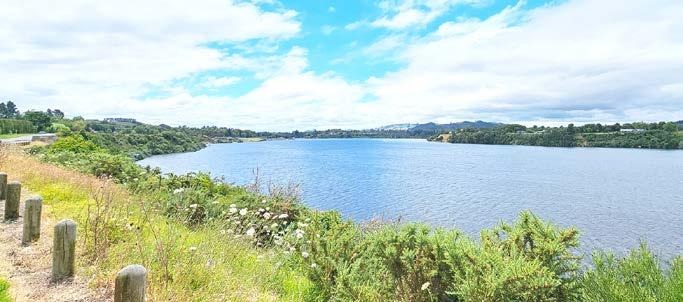
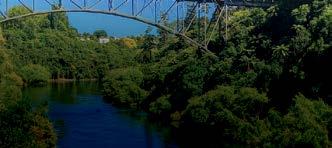
Lake Karāpiro and its domain are the focal point for water-based sports.
Photo: Mary Anne Gill

Talking Tamahere








CONTACTS
News/Editorial
Roy Pilott editor@goodlocal.nz
027 450 0115
Mary Anne Gill maryanne@goodlocal.nz
021 705 213
Viv Posselt viv@goodlocal.nz 027 233 7686
Chris Gardner chris@goodlocal.nz
Advertising Director
Janine Davy janine@goodlocal.nz
027
Owner/Publisher
David Mackenzie david@goodlocal.nz
Office/Missed Deliveries
07 827 0005 admin@goodlocal.nz
Change makers in spotlight
Two women with long careers in the public sector feature on the covers of Good Local Media’s business publications this month.
Former Hamilton mayor Paula Southgate appears in the Waikato Business News, while Lake Tarawera advocate Libby Fletcher graces the Bay of Plenty Business News.
Southgate spent 24 years in local government, beginning at Waikato Regional Council and then serving six years as Hamilton mayor.

She has recently taken up a part-time role as a senior fellow at the Helen Clark Foundation, where she is encouraging discussion about the future of local government.
Speaking to senior writer Mary Anne Gill, Southgate said she wants to promote debate around council structures.
“Do we really need more than 60 councils?” she asks.
Fletcher, who was awarded a King’s Service Medal in the New Year Honours for her environmental work, led efforts
to school
I would like to begin by expressing my sincere condolences to all those affected by the recent tragic events at Mauao, Mount Maunganui. I recognise that the emotional impact and sense of loss are being felt deeply across our community. My thoughts are also with the emergency responders and community volunteers whose compassion and dedication supported others during this difficult time.
Here in Waipa, school is back after summer holidays. It is a great time for some reminders to help keep our younger community members safe. While summer weather is here, many students will be walking, scootering and cycling to and from school. It is important that we drive defensively, be aware of our surroundings and give way at pedestrian crossings.
Young people can be unpredictable and don’t always demonstrate the best road sense. If you are a parent, please ensure your child is equipped with appropriate safety and visibility equipment, especially helmets and have the necessary skills and experience to make the commute safely. It is a good idea to periodically ride or scoot the school route with your child, to observe first hand how they cope in different situations. Every child has a different skill level.
Please also educate your children around appropriate behaviour around

other road users especially pedestrians. Cyclists should keep to designated cycle lanes or dismount and walk their bicycles on the pavements through town. Too often, students speed through our towns on the pavements, sometimes doing wheelies or weaving in and out of pedestrians. It is illegal to ride a bicycle on footpaths (unless a child’s trike or small bicycle with small diameter wheels). The risks posed by speeding or weaving demonstrate the reasoning why.
On the topic of road users, in the past week, the teams in Cambridge received four reports of traffic crashes and stopped one person driving with excess breath alcohol. Te Awamutu staff received seven reports of traffic crashes and two people were caught driving with excess breath alcohol.
The crashes ranged from fender benders to collisions with inanimate objects and stock. Failing to maintain sufficient following distance, especially in slow moving queued traffic featured in a few cases.
Distraction through use of a mobile phone, also common in slow moving traffic, was a factor in one case. If you connect you phone to your car via Bluetooth, you will be a safer driver, able to be aware of your surroundings, and less importantly, avoid a fine and demerit points.
to improve the health of Lake Tarawera. She rallied residents, supported scientific research and helped build momentum for a new reticulated sewage system to reduce pollution in the lake.
The two business publications - sister titles to Cambridge News, Te Awamutu News, King Country News and King Country Farmer - also examine housing and commercial real estate trends, signs of an economic upturn, the use of unmanned aerial vehicles in forestry, and provide an update on the Iawai water company. Both editions are available online at goodlocal.nz.
Safety warning
I’m writing about the growing issue surrounding Norfolk Drive roadway and surrounds. As a resident of two years on Norfolk Drive I as many others have noticed an increase in antisocial behaviour in terms of driving. Cars travelling up to and in excess of 100km an hour are now not uncommon for this road. A cycle lane, retirement village, families and schools interact with this road. Other roads and schools have had traffic management initiatives implemented on or near them by the council. If we don’t have the resources to police this road effectively the council needs to step up before people start getting killed.
Kel Kilgour
Cambridge



Senior Constable DEB HANN
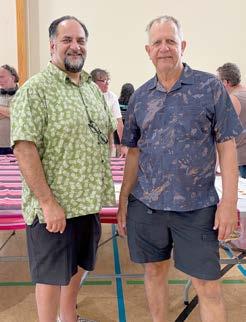
Waikato district mayor – and Tamahere resident –Aksel Bech was pictured with Tamahere-Woodlands ward councillor Mike Keir (right) on Saturday at a community open day. Issues aired at the Tamahere Community Centre included plans for a huge equine hub in the area, the future of the Tamahere reserve and issues around the figure of eight roundabout being constructed on Morrinsville Rd. See Mike Keir’s column on 6.
Car in lake
Police say enquiries are “ongoing’ after a vehicle was driven off the ramp at Lake Karāpiro Domain and into the lake on Sunday afternoon.
St John stats
Hato Hone St John ambulance crews responded to 50,907 incidents in the Waikato region last year, up 2.7 percent from 49,577 in 2024, and up 15.4 percent from 44,129 in 2020. The most common reasons for calling 111 for an ambulance included referrals from a health practitioner, breathing problems, chest pain, falls and people feeling generally or medically unwell. Water related incidents were significantly up last year.
Te Huia protest
Approximately 300 supporters attended an event in support of the Te Huia passenger rail service in Hamilton on Sunday. The event marked the launch of a petition calling on the government to expand the service into network linking Auckland, Waikato, and the Bay of Plenty.
Sister update
An update on Le Quesnoy’s New Zealand Liberation Museum Te Arawhata will be led at Cambridge’s Resthaven Community Centre next Wednesday by the museum’s Kiwi marketing manager, Jacob Siermans. The museum opened in the French town in October 2023 and Le Quesnoy is one of Cambridge’s sister cities. The update has been arranged in conjunction with the Cambridge-Le Quesnoy Friendship Association.
Harness awards
Waipā featured in two major categories at harness racing’s Horse of the Year held at Addington on Saturday. Benjamin Butcher of Cambridge won the Newcomer to Training award for his eight winners last year in his second season of training. He also drove 300 winners. Ōhaupō breeders Ken and Karen Breckon picked up the Outstanding Contribution to Harness Racing gong.
Traders fear hours review
By Chris Gardner
Mobile traders who set up shop at Victoria Square are concerned their permitted hours of trading could be cut following a council review of permits.
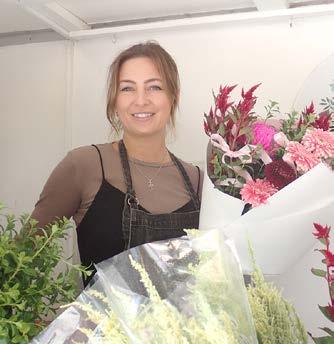
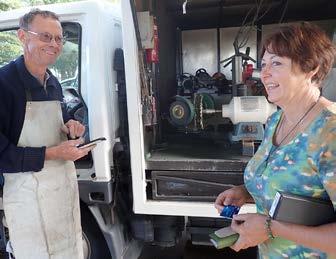
Frankie and Flora flower truck florist Claudia Campbell and Sharp-Az mobile blade sharpener Dave de la Cour were surprised to hear of the review.
“Hopefully there’s no scary changes coming up,” said Campbell.
She occupies the site Tuesday to Friday from 9am until 4pm, missing the occasional Friday to cater for a wedding and adding the occasional Saturday or Sunday if it includes Valentine’s Day or Mothers’ Day.
A reduction in hours would be disastrous for Campbell who renewed her licence late last year.
“It’s my only job,” she said. “I am quite busy in the mornings and in the afternoons,” she said.
“I love it here, I have got my regulars, and it’s good to me outside all day.”
De la Cour has a permit from 9am until 5pm on
Mondays, Wednesdays, and Fridays.
Asked how any reduction in hours would impact his business, de la Cour said: “It definitely would impact it. Some days I work all day without a break and keep going until 5pm,” he said.
“I love it here, I have got my regulars, and it’s good to me outside all day,” she said.
Cy Co Coffee owner and operator Miriam Ellis had a steady stream of regulars passing the time of day with her, having clearly built up a following.
“We come here just about every day, but I pike out if it’s raining,” said one man as he clutched his coffee.
“This is our little slice of community, a vital life line, and I have met a lot of people here.”
Wild Kiwihearts founder Tricia Rabarts enjoyed a coffee while she waited for her knives to be sharpened, insisting de la Cour charge her twice his going rate for his work.
The area regularly hosts a fish truck and in the lead up to Christmas became congested with the addition of berry and Christmas cookie stalls.
Waipā District Council
transport manager Bryan Hudson told The News demand was growing so a permit review was underway.
The layby, between parallel parking spaces on Victoria Street, could hold three traders at a time and the council had applications for 12 traders, Hudson said.
“We are doing this review and once we have asked for their input we will make some decisions,” Hudson said.
“It’s a positive thing. It’s a busy town, people want to be in a high-profile place.”
Heat on in wetland
By Viv Posselt
Close on 200 people were at Ōhaupō’s Rotopiko wetlands to mark Sunday’s World Wetlands Day.
The celebration this year carried the theme ‘Wetlands and traditional knowledge: Celebrating cultural heritage’.
Spearheaded by the National Wetland Trust (NWT), it brought together various agencies and organisations that included Landcare Trust, the Te Awamutu Rotary Club, Waipā District Council and the Waikato Regional Council, DOC, Go Eco, and Sanctuary Mountain Maungatautari.
The event is held across New Zealand to coincide with World Wetlands Day, which has been marked internationally on February 2 since the 1971 signing of the Convention on Wetlands Treaty. It serves to raise awareness about the importance of wetlands and highlight the work being done to preserve them in communities around the world.
The Rotopiko wetland forest and lake has been the hub of this region’s celebrations
over the past six years and the annual event has turned into an informationpacked family day, complete with activities, giveaways and refreshments, and a host of wetland education.
In line with this year’s theme, the NWT invited Ringi Morgan-Fifield, who works part-time with Sanctuary Mountain Maungatautari, to offer up information and products linked to the rongoā, or traditional Māori herbal medicine, found within the wetlands.
National Wetlands Trust deputy chairman Don Scarlet said the purpose of the day is to get people into wetlands, both physically and emotionally.
“I would say something like this collaboration of all those taking part has enabled us to take a fantastic step forward to get more Kiwis involved.”
Work at Rotopiko over the past year has centred on removing rats from within the wetlands fence, managing the exotic birds and planting up areas outside the fence that drain into the wetland.


Your funeral plans in the hands of people you trust.
Grinter’s Funeral Home is locally owned, long-established, and committed to the highest professional standards.
If you want the assurance that your arrangements will be honoured with dignity and care, our experienced team is here to help. Pre-planned funeral arrangements can be transferred to us easilywe’ll take care of everything, and honour your loved ones wishes.
Grinter’s Funeral Home - a name Cambridge has trusted for decades.
A cut in trading hours could be disastrous for Frankie and Flora flower truck florist Claudia Campbell. Photos: Chris Gardner
Wild Kiwihearts founder Tricia Rabarts, right, insisted Dave de la Cour charge her twice his going rate for his work.
Mason Corin, 3, from Leamington gives the corn hole a try. He was at the Go Eco stand with dad James Ranstead.
Photo: Viv Posselt



















MP wants ‘common sense’
By Chris Gardner
Waikato MP Tim van de Molen has written to internal affairs minister Brooke van Velden raising concerns over the beaching of the region’s swift water rescue craft.
Fire and Emergency New Zealand (Fenz) banned Huntly and Ngāruawāhia fire stations from using rapid response vessels after Maritime New Zealand told Fenz it was not certified to task fire stations to make water rescues.
Fenz decided not to complete a safety management plan to become compliant.
“I would like to see common sense prevail,” the Tamahere-based MP said.
Fire fighters have been told not to respond to calls for help in the river, despite having been involved in 81 rescues since 2019.
“They have been doing it for decades,” van de Molen said.
As a member of the Governance and Administration Select Committee, he pushed back against Fenz chief executive Kerry Gregory’s claim last week that it would cost millions to build watercraft capability in New Zealand.
Fire fighters had fundraised for the Waikato River craft, completed training, and operated the vessels for decades, he said.
“It’s unacceptable,” van de Molen told The News. “Fenz is putting a health and safety check
list ahead of the safety of the community.”
In his letter to van Velden, van de Molen said he had asked Fenz for an outline of the issues relating to the use of the vessels.
“Their response to my enquiry is pending,” he said. “My concerns are that with geographic considerations, staffing, resourcing, and operational challenges, the suspension of these vessels may result in rescue delays, potentially leading to loss of life.
“It would be extremely disappointing to discover that the perception of risk on a health and safety register was taking priority over the proven community safety benefits these vessels deliver.”
Asked whether Fenz would rethinks its position after the death of a 25-year-old man in the river in January, Megan Stiffler said in a statement: “my thoughts and deepest sympathy are with the family of the deceased. Fire and Emergency wants everyone to be safe on the Waikato River, but we cannot support our brigades operating their motorised watercraft because we don’t as an organisation have the capacity or capability to support motorised watercraft being deployed safely”.
Stiffler said she understood and acknowledged the wish of volunteer fire fighters to use their own watercraft to serve their communities in an emergency.
“Such incidents need to be responded to by the most appropriate agency,” she said.
“Police, Surf Lifesaving NZ, and Maritime NZ are the lead agencies

and organisations for operation and oversight of this activity.
“We are continuing to work with the relevant organisations including local councils to find
a
solution as to who could own the capability for Waikato River rescues and ensure it is delivered safely, legally and effectively in an emergency.”
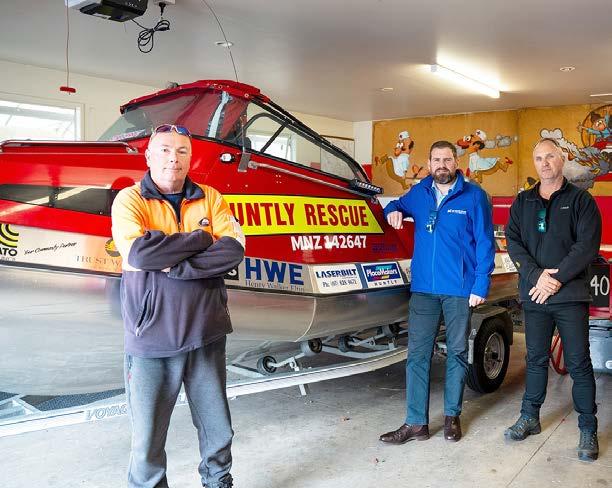
Waikato MP Tim van de Molen, centre, with Huntly Chief Fire Officer Kerry Holland, left, and Ngāruawāhia Chief Fire Officer Karl Lapwood, right, with one of their grounded rescue boats.
When things heat up
By Peter Carr
As I write this we are just rolling into the normally balmy month of February.
Not to be confused with the other barmy when the antics of February 6 erupt north of Auckland.
I say this advisedly, not because I am critical of the ethos of Waitangi Day celebrations, but the general aura of unruliness when senior politicians become targets of abuse.
Sadly, those of a more responsible and courteous nature (and there are many of them) are drowned out by antics akin to some MPs in the big building in Wellington.
That this latter group appears to be on the cusp of imploding sadly negates the excellent political and social work undertaken several years ago by MP Tariana Turia.
But it is still summer. It is for enjoyment, release, good health and relaxation.
Sandy beaches and gentle surf are calling, embracing the changed peak of good weather that used to be guaranteed in January.
The drift of seasons towards later enjoyment is said by some the result of global warming.
At the other end of the planet the spectre of Greenland looms large in the mind of the current incumbent of 1 Pennsylvania Avenue. He of the strangely coloured locks and facial skin.
It appears to me that he has been viewing the importance of Greenland through tinted spectacles – or at least using a chart or map that is laid out in the form of a Mercator projection.
As a (past) professional navigator I

appreciate the northsouth elongation of land approaching the Poles is stretched beyond its normal parameters, thus appearing far larger than it is.
Clearly the aspirant to own and run this lump of (mainly) ice has been looking at the ‘big’ version and perceives it to be far larger than its actual parameters. The proud owners in Denmark will be fully aware of this phenomenon and are showing huge patience and tact in dealing with his ever-changing needs.
It beggars me that those of a Republican or GOP nature in the United States follow his dictates so slavishly.
Yet in watching recent Senate hearings from Washington there is a chink in their armour where reality (the upcoming state elections) is looming large as states lurch towards the left.
However, like it or not, the sheer volume of energy, trade and armed forces in the descendants of 1776 begats us to take notice of what is happening and, more importantly, how it may come to direct at least a portion of our lives.
Here we are in a dilemma. Our Foreign Minister is forever cautious of treading a fine and ‘keep them on board at any cost’ line while those less leaning towards diplomacy are hell-bent on ignoring or deriding the value of the US in world terms.
Our Prime Minister is generally cautious while his two partners are ramping up the ante to upset the applecart as November 7 approaches. We are in for an interesting ride.


After more than 25 years in retail, Stacey Murray knows the industry inside out, but it was loss, resilience, and a deep commitment to sustainability that shaped the heart of her now-beloved business, JeanandPete Collective.
Originally from Whakatāne in the Bay of Plenty, Stacey moved to Cambridge four years ago, bringing with her a wealth of experience and a passion for fashion with purpose.
That purpose sharpened dramatically when her original store was destroyed in a ram raid. Every single garment, every hanger, every fixture was sent to landfill. Seeing that level of waste firsthand was a turning point. Stacey knew there had to be a better way, a way to keep beautiful clothing in circulation, reduce environmental impact, and offer people a more conscious way to shop. And so, JeanandPete Collective was born - a curated consignment store built on the principles of reuse, recycling, and slow fashion.
Tamahere - a new year
By Mike Keir, councillor, Tamahere Woodlands Ward
I hope your year has started well and I am sure we all share concerns for those less fortunate, whether due to weather (Mt Maunganui disaster) or other concerns. Life is a challenge, how we meet those challenges defines us.
Being a local councillor is definitely a challenge, particularly if you believe, like I do, that we could be doing this better and want to change a system that is inflexible and resistant to change. However, I am optimistic and like a challenge.
The start of 2026 has been a mixed bag for the Tamahere Ward. Many will have the challenge of a four month closure of Morrinsville Road, for the construction of a new roundabout at the Matangi and Silverdale Rd intersection. This road closure was poorly communicated to affected Matangi and Tamahere residents by Hamilton City Council. Businesses will be particularly impacted. Work starts on this project on February 16.
There are also other issues of significance on the table for Tamahere. Last Saturday the Tamahere community participated in a wellattended open day to consider a number of issues.
One was the New Zealand Thoroughbred Racing proposal to centralise their Waikato operations on a 150ha site south of Pencarrow Road. This is a big development and will have both positive and negative impacts for our area. It was great that NZTR fronted up to answer questions and let people know what they were thinking. Most concern seemed to be around increased traffic and NZTR has some work to do for this project to be viable.
Also discussed was the development of

the Tamahere Reserve, between the expressway and Woodcock Road, as a community space, including a potential dog walking area, providing increased access to gully trails and native plantings carried out by the Tamahere Mangaone Restoration Trust, who are doing great work in our gully systems.
Future plans for the development of Tamahere look out 50 years. How will our community grow? What influence does the current community want to have in this process? Things like could parts of Tamahere become part of Hamilton or Waipa, amalgamation of councils, consenting process, section sizes are some of the discussion points.
Titoki Sand Quarry, adjacent to the Tamahere Reserve, is coming to the end of its life as a quarry. The owners were on hand to discuss options to develop this large area in the middle of Tamahere, with connection to the proposed Hamilton Southern Links Expressway.
It was disappointing that the New Zealand Transport Agency was not on hand to answer Southern Links project questions. Hamilton City Council provided posters for alternate routes, while Morrinsville Rd closes access to Hamilton from Matangi Road, but were also not present.
The Tamahere Community Open Day was well organised and run by the Tamahere Community Committee and a good day for the community. Thanks to all its members, particularly to Charles Fletcher as chair of the Committee, who put a huge effort into making this such a successful event.
What began online quickly grew into a physical space on Empire Street, a tiny 3x3 nook tucked at the back of Ampersand. But Cambridge embraced the concept wholeheartedly. Sellers came forward. Shoppers returned again and again. The racks filled with high-end pieces, each with its own story. And before long, Stacey had outgrown the space entirely.
Now, JeanandPete Collective is stepping into an exciting new chapter with a recent move to a 41sqm store at 32 Victoria Street, a bright, welcoming space that reflects the scale, spirit, and ambition of the brand.
The growth of her business has been remarkable. Stacey started with just 12 customers consigning their clothing. Today,
JeanandPete Collective is open from 10.30am to 4.30pm


she has just over 85 sellers from across both the North and South Islands, each contributing to a constantly refreshed collection of clothing, jewellery, handbags, shoes, and accessories. Every item is hand-selected, beautifully presented, and given a second life, a curated treasure trove for shoppers who value quality, individuality, and sustainability.
Sustainability isn’t a marketing line for Stacey; it’s a lived philosophy. She hasn’t purchased a new item of clothing in over a year, “well, apart from underwear and socks,” she laughs, and the new store itself is a testament to her values. Every fixture, shelf, and fitting has been salvaged and repurposed from Madisons when it closed last year. Nothing


wasted. Everything thoughtfully reused. Stacey believes deeply in the future of retail in Cambridge.
“There’s room for everyone,” she says. “People want choice, they want connection, and they want to shop in ways that feel good.” Slow fashion, she believes, is not just a trend, it’s a movement that aligns perfectly with Cambridge’s community-minded spirit with several pre-loved clothing stores and op shops to visit.
With the new store, Stacey is excited to expand into styling evenings, personal one-on-one sessions, and community-focused events that help people rediscover the joy of dressing well, consciously.
Stacey steps out in style
JeanandPete Collective owner Stacey inside the new shop
Booting up on computers
By Viv Posselt
Eight ‘tweens’ have completed a two-week videogame programming bootcamp at Cambridge Library that has left them all fizzing at the bung for more. The bootcamp – so-
called because the man running it didn’t feel the word ‘workshop’ properly conveyed what he was trying to achieve – is the brainchild of Waipā District Libraries’ outreach man, Joe Poultney. His idea was to teach kids about coding to
the point where they could design and create their own retro arcade space-shooter.
A few of the youngsters had some experience of coding at primary school, others had none.
“They have all surprised me,” he told The News on





Friday, the programme’s final day. “It’s been interesting watching them collaborate over problems they’ve come up against. They’ve all helped each other … I get called in only if they can’t solve it themselves. That’s been great to see.”
The bootcamp is a first for Poultney, a self-confessed computer nerd who joined the council over a year ago, bringing with him a comprehensive knowhow on all things techno related.
Early on, he applied his skills to creating an erosion table for an eco-exhibition that demonstration how water erosion impacts differently sized sediment particles.
Theorising that libraries should be spaces where technology sits comfortably next to books for the spread of information, he then created programmes incorporating robotics and 3D printing.
He ran his first videogaming bootcamp at Te Awamutu Library early last month, with six participants; this is his first in Cambridge.
The kids are mostly at intermediate or early highschool level. They needed no prior programming experience; Poultney




introduced them to coding in the Lua programming language and covered topics such as tables, functions and loops.
By the end, they were able to make sprites and particle effects from scratch and make sound effects and chiptune music, ending up with games in the ‘shmup’ genre, a side-scrolling arcade game involving waves of enemy attacks.
Much to the delight of the boys involved, there were plenty of explosions, powerups, loads of enemies and multi-stage boss battles. They have all had great fun and learned heaps, almost by osmosis.
When The News popped over on Friday, they were playing and testing each other’s games. Poultney then uploaded the games to the internet with a view to making them available to library users through his Raspberry pi robots, portable robots that run off a USB stick.
The bootcamps between Te Awamutu and Cambridge libraries have consumed most of Poultney’s January, so while there is sure to be a re-run down the line, it likely won’t be until next year.



Briefs…
Off to Harvard
Cambridge High School graduate and top young swimmer Olivia Emmett will attend Harvard University in the US this year. Primarily a pool swimmer, Karāpiro based Emmett achieved the first criteria to represent New Zealand at the World Junior Open Water Championships in Argentina this year by winning last month’s national open water championship 10km event on Lake Taupo.
Road closure
The Desert Road will be closed overnight between February 15 and March 9 to allow the completion of surfacing in the area known as the Three Sisters. Three sites, Mangamate, Oturere Hill and Mangatoetoenui, spanning a total of 3.5km, are affected. The road was closed for two months early last year.
Hornets found
Ten more yellow-legged hornet nests have been destroyed on Auckland’s North Shore- thanks to the use of radio tracking devices which have been attached to worker hornets. The technology combined with more than 1000 traps has resulted in 49 queens and 51 nets bring destroyed.









Karamea Bedside Table in Ash Natural
Karamea 6 Drawer Lowboy in Ash Natural
Joe Poultney is Waipā libraries’“outreach man”.
Cambridge Connections: it’s time for solutions
Cambridge Connections is a project that will shape transport for the next 30 years.
Last year, your feedback helped us define the key transport problems Cambridge is facing. Now it’s time for solutions. This is an exciting phase in the project, where we get to brainstorm transport ideas as a community.
Stage One: Defining the issues
In October 2025, we received 254 pieces of feedback and these were the top themes that emerged:
Another bridge:
Balance access between Leamington and Cambridge. Strong support from the public for another bridge.
Manage congestion:
Ease pressure on main roads, intersections and parking in the CBD.
Preserve town character:
Maintain a liveable town and retain its character.
Growth and planning:
A strong long-term vision. Planning and aligned infrastructure.
Ease freight pressure:
Alternative routes for heavy transport and through traffic.
Transport options:
Safe and accessible cycle, walking, public transport and other options.
It’s important to understand the problems so we can find the best solutions. Your feedback informed the first stage of the NZ Transport Agency business case, which was defining the key issues for Cambridge.
GIVE FEEDBACK:
Scan the QR Code:
Go to: waipadc.govt.nz/cc-feedback
We want to hear your transport ideas – big and small, for now and for the future. What will we do with feedback?
Email: cambridgeconnections@waipadc.govt.nz
Pick up a form from Council offices or libraries
Feedback closes 8am on Monday, March 9
Join the Ideas Forum
If you want to go deeper, join the online Ideas Forum for weekly topics and discussion threads.
Sign up to the Ideas Forum:
Scan the QR Code:
Go to: www.waipadc.govt.nz/ forum-signup

Like any brainstorm, not all ideas will go further – we need to think about what’s actionable, affordable, and what will work best for Cambridge. The common themes that emerge will inform the ‘long list’ of transport options, required for building a business case to seek funding from the NZ Transport Agency. Elected Members will make decisions about how we assess the transport ideas, and the final long list of options.
We’ll be covering:
Setting ourselves up for success: how to get the most out of feedback
Heavy weight issues: the importance of freight to Cambridge transport What does it take to build a bridge?
Is public transport within Cambridge possible? What is the future of transport?
Cambridge leads growth
By Mary Anne Gill
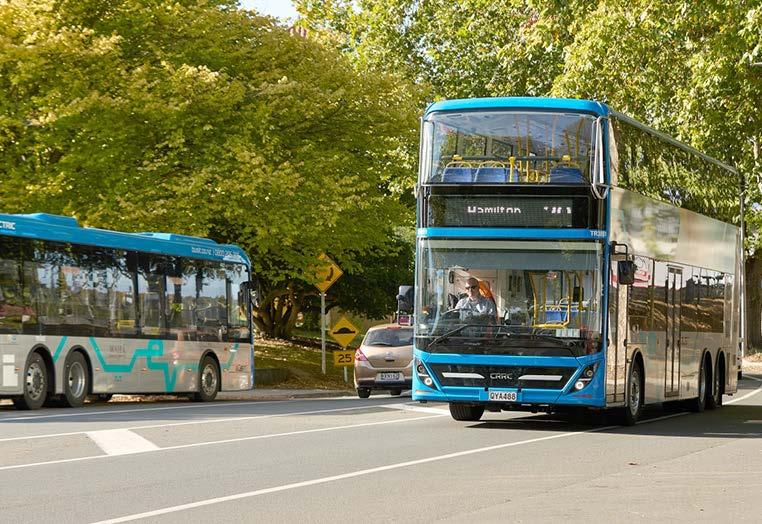
Cambridge has overtaken Te Awamutu to become Waipā’s fastest growing bus market.
Patronage jumped almost 28 per cent in 2025 as more people - particularly students - took to public transport.
New figures from Waikato Regional Council show Cambridge recorded nearly 150,000 passenger trips on the No 20 route last
year, edging ahead of Te Awamutu for the first time.
March was a standout month, when a record 14,419 passenger journeys were made.
The introduction of additional schooltime services, used by Cambridge High School students, drove much of the growth.
Extra buses before and after school helped meet a rising demand from students living in Leamington and travelling to the school stop
Cambridge figures
• Patronage up 27.97 per cent on 2024
• First time Cambridge service has surpassed Te Awamutu
• Growth strongest during school terms
• Increased use linked to students travelling from Leamington to Cambridge High School
in Taylor Street. Te Awamutu bus patronage also rose, up 13.67 per cent to 142,575 trips. March, when 14,495 passengers were recorded,
was its busiest month,.
The regional council says the figures paint a mixed but encouraging picture for public transport across the region and Cambridge is emerging as a clear growth area - particularly during school terms.
Regional councillor Liz Stolwyk was thrilled with the Waipā and King Country figures.
“The data certainly confirms that public transport is becoming a trusted and practical travel choice across the region and I don’t see this as a shortterm spike.
“The numbers show a sustained shift in travel behaviour which is fantastic. When reliable and wellconnected services are provided, people will use them,” she said.
According to Sandra SestoDekic, team leader Customer Focus at the council, the impact of
additional school services in Cambridge has been especially noticeable.
Cambridge’s patronage growth is strongest during the school term, reflecting how important reliable and welltimed services are for students and their families, she said.
While longer commuter routes are performing well, the council says journeys within Cambridge itself - as well as within Te Awamutu and Kihikihi - remain relatively low, providing a focus area for improvement in the year ahead.
Elsewhere in the region, smaller commuter services in the Waikato district - including routes from Tauwhare Pā and Tamahere/ Mātangi - completed their first full year of operation and showed steady growth. Their popularity has been driven by the appeal of a direct public transport link to Waikato University.
In contrast, patronage on the Route 32 Tokoroa service declined over the year.
SestoDekic said several factors contributed to the downturn, including significant roadworks on State Highway 1 and within Tokoroa itself, which
affected service reliability.
“Our team has been working closely with South Waikato District Council to address these challenges and reduce their impact,” she said.
The Tokoroa service, which travels through Cambridge, has continued to attract some users from the town, particularly those who prefer the faster journey along the Waikato Expressway to Ruakura rather than travelling through Hillcrest.
In an attempt to rebuild South Waikato patronage, the council had developed more promotional material.
“The service operator has also brought forward a proposal aimed at resolving the operational challenges and futureproofing the service,” said SestoDekic.
For Te Kūiti, stable patronage between 2024 and 2025 has provided what the council describes as a solid platform for future growth.
A targeted promotional campaign is being developed to raise awareness of the service across the Ōtorohanga and Waitomo districts, with the goal of increasing usage and strengthening the longterm viability of the route.



The Cambridge single and double decker buses pass each other near the Town Clock.
On the trail – be prepared to overnight
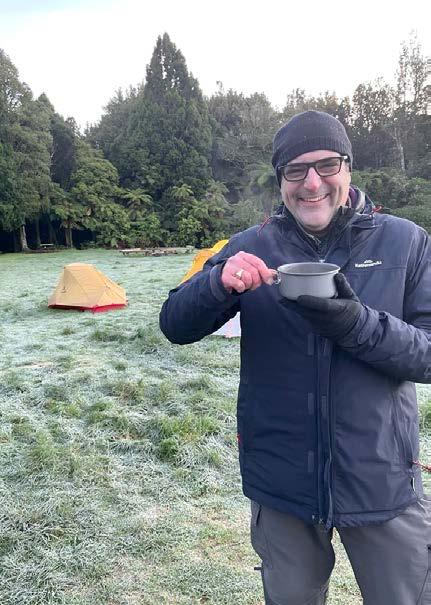
New Zealand Outdoor Instructors’ Association bush leader and senior writer Chris Gardner, pictured, continues his On The Trail series by discussing shelter and sleeping bags.
Be prepared to overnight every time you go for a hike or a tramp.
Weather is unpredictable. Rivers rise. Slips could block your path. A trip could leave you with an injury and unable to walk.
Always take a survival bag. A plastic pack liner, keeping rain and the river out of your gear, can double as a survival bag. Crawl into a water and wind resistant aluminium-coated emergency bag to become insulated from the elements and prevent hypothermia.
A survival bag can be cut open to make the roof of an emergency shelter or make an emergency shelter from fallen branches. Dry ferns and leaves make springy beds and piled 30 cm high are good insulation.
Practice making an emergency shelter in the hope you may never need to build one under pressure in a real-life emergency situation. It could save lives. Take a tent or emergency shelter on a multi-day tramp, even if you plan to stay in a Department of Conservation hut.
Great, lightweight, tramping tents are expensive, but worth the investment if you plan to use them regularly. You won’t get change from $1000 if you want a one-person tent weighing less than one kilogram. Add another $500 for a two-person tent. Cheaper and heavier tents are available from mainstream outdoor retailers.
Lighten your load by splitting a multi person tent between those who will sleep in it. The disadvantage is if one of those people becomes lost on the trail, they will not have a full tent, and neither will those they become separated from.
Shelter is only half the equation – staying warm through the night requires the right sleeping system. Sleeping bags have comfort, lower limit,
and extreme ratings. The comfort rating is the temperature a standard woman can sleep comfortably in, the lower limit is the temperature at which a standard man can sleep without waking, and the extreme rating indicates the temperature where hypothermia is unlikely for a few hours.
Down sleeping bags are the tramper’s choice, compressing well into a backpack. Never put anything on top of a down bag you are sleeping in, as it reduces the down loft and the insulation. A wet down bag will lose its insulation too.
Synthetic sleeping bags, usually filled with polyester, are cheaper than down filled bags. But they are a lot bulkier too. They are still warm when wet.
A good compromise is a hybrid sleeping bag filled with a mixture of down and synthetic material.
I have one of each I use for different scenarios. I default to a bag rated for subzero temperatures and sleeping in it opened out when I am too warm.
I always take a sleeping bag liner to add another layer of warmth and protect my sleeping bag from my trail weary body. A merino wool liner is great in summer, and cotton silk blend in other seasons.
A good sleeping mat, also rated for your conditions, is essential. Without this you’ll freeze in the best sleeping bag and liner.
Closed cell foam mats are bombproof, but they are bulky.
Inflatable mats are popular. But, as I found out in subzero temperatures last year, they can leak, and you can wake up shivering on the ground. Reinflating a mat in a cramped tramping tent at 3am when it is -3 degrees is not fun.
A survival bag, emergency shelter, tent and reliable sleeping system could mean the difference between danger and discomfort.
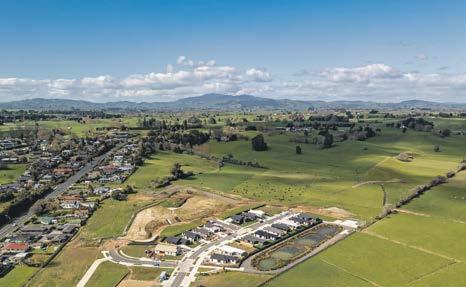
We’re excited to welcome you to Waipiko Landing on Sunday 22 February, where you’ll have the chance to explore our completed homes, meet the team, and experience the vision for this growing neighbourhood in Te Awamutu.
Just a 30-minute drive from Hamilton and 20 minutes to Cambridge. Waipiko Landing o ers easy access to major centres while maintaining the charm of life in a vibrant community.
Homes are being delivered by trusted build partners Venture Developments, Progressive Projects, and Generation Homes, o ering a mix of completed and customisable home packages to suit are available, o ering flexibility in design, size and price point.
Neighbourhood entrance at 952 Cambridge Road, Te Awamutu 12:00pm - 2:00pm Sunday 22 February 2026
































Dairy farmer Mike Montgomerie swapped his gumboots for agendas in 2022, diving headfirst into life as a Waipā District Councillor - a role he has found both rewarding and challenging
Mike says one of the biggest learning curves has been getting to grips with Council s finances from the funding streams unique to local government to the many funding demands that come with it “It quickly became apparent that Council manages a very large asset base with a relatively small annual budget Farming has some similarities, but Council is next level ”
Mike chairs the Strategic Planning and Policy Committee, and is deputy chair of the Finance and Corporate Committee While the workload is high, his motivation for entering local government is grounded in community service “It ’s important who we have acting as guardians of the assets Council looks after, and who helps guide the collective investments that shape the place we live I can hardly believe how much Waipā has changed over the past few decades Like everyone, I want to maintain the best parts of the small-town rural life as we continue to grow ”
Mike is really enjoying being part of something bigger than just his own business, working with fellow councillors and especially Council staff
The Maungatautari ward representative and Cambridge Community Board member enjoyed
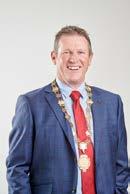


his first term learning from the established councillors and says it is refreshing to see so many new faces around the table this triennium They bring new energy, skills and perspectives, he says
Looking ahead, Mike says a lot is happening across the district “I am looking forward to completing the Cambridge Connections project, helping shape what Council looks like once waters transitions to Waikato Waters Limited, and ensuring Waipā is well placed in the changing local government scene ”
Originally from a farm near Cambridge, Mike spent three years working as a lawyer in a large commercial firm in Wellington before returning to farming 30 years ago His wife, Luci, was a GP at Cambridge Medical Centre before going on to specialise They have four sons who have all left home but still love returning to the family farm
“We are now beginning to travel, and as we move through countries, cities and towns, my Council role has really focused my attention on the way things work in other places I'm always thinking what works better than how we do things and what is worse ”
Outside Council and the farm, Mike loves getting out on his bike around Waipā Growing up in the 1970s, cycling was a big part of daily life “While roads are busier now, Te Awa River Ride and growing urban cycle networks are giving today’s kids some of the freedom I had growing up ”




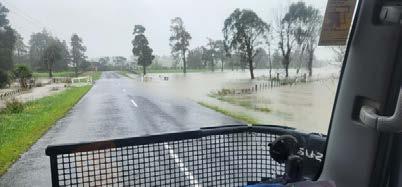
When flooding struck the Thames–Coromandel District recently, the impacts were felt well beyond district boundaries In response, three Waipā District Council staff stepped forward to support those affected, reinforcing the importance of collaboration and preparedness across local government
Cathie Shaw, Gina Scott and Harry Baxter assisted with welfare coordination and operations support, working alongside Thames–Coromandel District Council, emergency management teams, and community organisations Their mahi included supporting affected residents with information and practical needs, and contributing to coordination efforts during a challenging and fast-moving situation
Follow us on Facebook or sign up for Antenno to keep up-to-date with weather warnings and other news!

Waitangi Day long weekend activities
Waitangi Day is tomorrow, Friday, February 6, bringing with it another long weekend If you’re staying local and looking for something to do, take your whānau to Te Whare Taonga o Te Awamutu Museum or Cambridge Museum, where hands-on Te Tiriti displays, resources and a kids’ activity book will be available from February 5–9
Recycling collections will continue as usual, just remember to have your bins out by 7am on your scheduled day!





Mike Pettit Mayor Jo Davies-Col Deputy Ma
Roger Gordon Aidhean Camson Pip Kempthorne Clare St Pierre Les Bennett Shane Walsh Dean Taylor Marcus Gower Mike Montgomerie
Your Elected Members
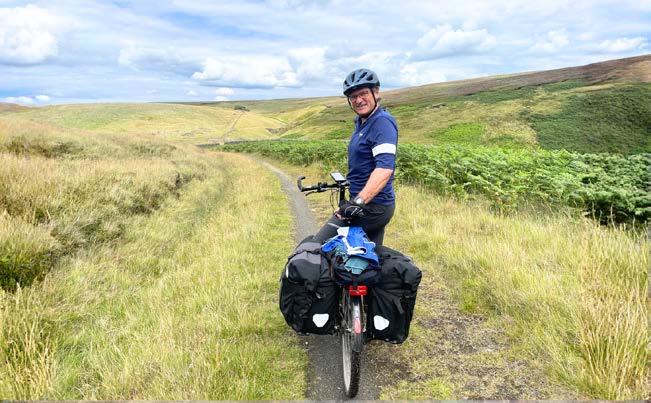
Being on Council has changed how Mike sees the places he visits: a recent cycling trip to the UK
Dale-Maree Morgan

Alys Antiques & Fine Art


Moving house to save a home
By Chris Gardner
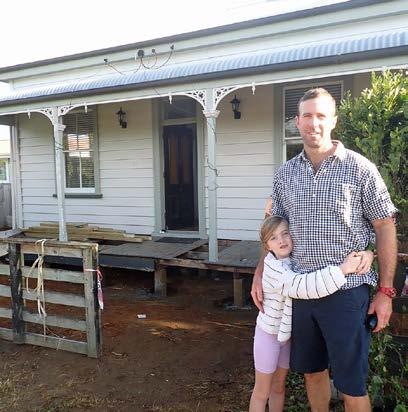
Faced with losing the neighbouring historic villa to an out-of-town buyer, Andrew and Christiane Myers decided to buy it and move it onto their Leamington section.
Christiane had just given birth to the couple’s third child, Albert, in October when they were given weeks to move the villa onto their Shakespeare Street section by the owners.
“They were going to sell it online, and we wanted to keep it in town,” said Andrew, the deputy chair of Cambridge Community Board.
They bought it for an undisclosed sum and began the process of moving it over the boundary.
While the Myers are yet to research the age of the three-bedroom villa, it is at least a century old and may have been built as early as the late 1800s.
“I plan to visit Cambridge Museum to see what I can find out about it,” Andrew said.
The couple do not yet have any plans for the villa which is being worked on by a small team of tradesmen.
The district was seeing significant growth, and Andrew said he preferred infill and subdivision over the development of rural land.
The couple are dairy farmers at Roto-o-Rangi.



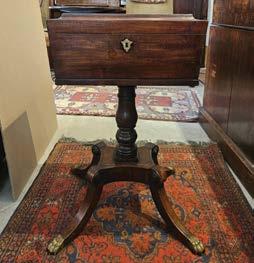
Chest of Drawers, Mahogany, Finely moulded Ogee Feet, 104cm high, 119 wide, 52 deep, End 18th, early 19th C, good condition.TEAPOIRegency1820s.
Jules Duffart, French, 1924- French Town View, Oil on Board, Signed
87A Victoria St, Cambridge P: 07 827 6074 Mob: 021 65 19 49 W: www.alysantiques.co.nz











Andrews Myers, with his daughter Clara, seven, saved an old Leamington villa from leaving town.
Photo: Chris Gardner
ON SHAKY GROUND
Safety around our railways
By Janine Krippner
As we have sadly been reminded over the past couple of weeks, we have a country that is susceptible to hazards like landslides that impact people, homes, and lifelines (for example, transport, water and power). People and communities around the country work to have plans for what to do when something hits, to keep people safe where we can, and recover faster.
In Aotearoa, we have freight and passenger trains, and even as you read this there will likely be at least one train running from Hamilton, passing Taumarunui, or collecting milk products around the south Waikato. This is through some very diverse terrain.
To make this possible, a lot has improved with rail operations and safety, but vigilance and improvements are critical to keep our country running.
Our most severe example of this has been mentioned in this column before – the Christmas Eve 1953 Tangiwai disaster, where over 150 lives were lost. A lahar from Ruapehu had destroyed the bridge at Tangiwai shortly before the evening express arrived. Every year before Christmas, rail staff remember this tragedy by stopping and laying wreaths at the site.
We cannot, and many would argue, should not stop nature from doing its thing, but there is a lot we can do to keep people safe and reduce impacts.
There have been great advancements in technology so that when another lahar occurred in 2007, automated systems alerted authorities and rail and road networks were closed for safety. Two similar events, two very different outcomes.
Accidents and disasters still happen. Last month with the severe weather impacting the country, train services were stopped on the



East Coast to prevent harm.
Slips, derailments, and collisions sadly still happen, as we saw in Spain last month, so for all of us as community members it is handy to know what to do. Just in case.

If we encounter something wrong within the rail corridor, what can we do?
Something wrong may include loose wires, broken rail tracks, landslides, or anything else that seems unusual, even cattle that have wondered onto the track as we have seen in recent years in Te Awamutu.
Please call 0800 808 400 and let Train
Control know. If you encounter an accident or derailment and there aren’t already emergency services on site call 111 immediately. Even though this is tough, please don’t go to the site as you don’t know if there is live electricity, fuel, or hazardous chemicals that may put you in danger as well. Even when there hasn’t been an accident, there are always hazards present. Rules are there for a reason, and when they aren’t observed, casualties can happen. If the bells are ringing and the arms are down, waiting is critical. Trains cannot slow down very quickly and can be moving faster than they appear. Many rural crossings don’t have bells, so at these places we are to stop and check both ways first.
Every day, hundreds and thousands of tonnes pass through the region on trains, helping keep the country running. But like being aware of our natural landscape, respecting rail corridors and knowing how to respond if something does happen is critical to making our community safer.




Visiting the past
By Murray Smith, Bridges Church
In August 2025 I wrote to Waipā District Council about an important sign that had gone AWOL (absent without leave). This Council sign situated along Maungatautari Road, just before Lake Karāpiro Dam, pointed southwest up the hillside. It read, “Confiscation (Aukati) line”. An emailed response from Council said the sign was removed because it had been ‘vandalised’ and no reinstatement was planned.
My point in reply, appealed to the sign’s significance as a ‘marker’ of our local history. It’s presence provided a potent reminder of events at the end of the Waikato Land Wars in 1864 when colonial forces arbitrarily seized almost 500,000ha of prime land from Māori. This ‘Aukati Line’ further enforced the dispossession Māori felt. Imagine armed patrols warding tangata-whenua off their own lands - that was the case in Waikato, northwards all the way from the Firth of Thames across to Maungatautari and then on to Ōrākau.
It’s good to see council have reinstated the sign. I’ve been reflecting on this saga as our nation prepares to commemorate Waitangi Day on February 6. On that day in 1840, representatives of the British Crown and over 500 Māori chiefs on behalf of their people, signed New Zealand’s founding document. Looking back 186 years to when Te Tiriti ō Waitangi was signed, the numerous breaches this covenantal document has suffered under Crown indifference are unfathomable. Soon after the signing, blatant dishonouring of the Treaty began… how this ‘Aukati Line’ was ever inaugurated within about two decades of the Treaty’s signing, beggars belief - especially in the light of its stated intentions. (Article 2 of Te Tiriti guarantees that Māori will have “unqualified exercise of their chieftainship over their lands, villages and all their




treasures”).

Many New Zealanders have little idea of what brought the Treaty about, its purpose and that historically the Christian missionary influence was instrumental in gathering support throughout Aotearoa for Māori rangatira to sign the Treaty. Their motivation was to protect Māori from the negative aspects of British colonialism - greedy settlers and unscrupulous traders who lacked understanding or interest in honouring Māori culture.
Back in February 1934 New Zealand’s Governor General, Lord Bledisloe, inaugurated components in that year’s Waitangi Day celebrations that have become something of a pattern for subsequent events. The ceremonial aspects involved important sites including the Treaty House grounds and Te Tiii marae close by - in addition, organisation was consultative with Māori, Pākehā and government conferring. Significantly, Lord Bledisloe’s prayer carried impact that has continued. He prayed that, ‚the sacred compact made in these waters may be faithfully and honourably kept for all time to come.’ He continued with a prayer that Māori and pakeha would find unity, affirming the place that Christian faith had in achieving the goal of ‘one-ness’. The Treaty connects us to history and anchors us to what was promised. The majority of those Christian pioneer missionaries cared enough to try and ‘get it’… at least to a reasonable degree. Their relationship and credibility with Māori stemmed from mutual respect and honour… values inherent in the Treaty. This instrument of reconciliation remains a living document for today - though abused and damaged, it’s not too late for healing to take place in Aotearoa.








Join us for a Village Talk at 11am, explore the nature reserve, learn about options for future care, and chat with residents to hear first-hand about the lifestyle you can look forward to.























NZ Post passes the parcel
By Jesse Wood
Young and Susie Yeo are in disbelief. They’re heartbroken for their community after the announcement that NZ Post will withdraw from their Kihikihi Bookshop.
NZ Post has announced the withdrawal of their services from 142 urban retail stores including three in the Waipā – at Hautapu, Kihikihi and Leamington – from June 26.
The nearest alternative stores are about 4km away in the case of Kihikihi and Hautapu and1300 metres for Leamington.
The announcement follows an update to the Deed of Understanding, an agreement between NZ Post and the Government, resetting the minimum store requirements for the first time in about 40 years and allowing the service to change its retail network.
Young and Susie have owned the Kihikihi Bookshop and NZ Post Centre for 16 years.
“About six months ago, NZ Post announced that they were reducing the nationwide retail network. Then we had a representative from NZ Post come,” Young said.
“He said, they will mainly close the small rural area shops with not much around, not like us. Don’t worry, you are safe because it’s quite a big community. There are so many houses.
“We are very sad. We’ve been with NZ Post for the last 16 years, since 2010. Also, a previous owner is a friend of ours, Jack Knight, he did 22 years in this shop.
“It’s just a shock… we had no idea at all. Everything is out of our control.”
NZ Post says its network is significantly larger than what’s needed for today’s mail volumes.
“Instead of sending letters, we’re seeing more and more customers sending parcels, picking up online orders, and returning items,” a post on the company website states.
“With this growing customer need for more parcel-focused services, we’re adapting what we do to give Kiwis the right offerings in the right locations.”
The company, which recently made significant changes to its rural delivery services, says it will upgrade some NZ Postowned stores and introduce retail hubs in “key locations”.
“These hubs will bring multiple services together in one convenient spot, making it easier for customers to send, collect and return parcels in a single visit.”
Susie said it’s been a tough six months for them.
“It’s a very hard time. My husband spent all of August in hospital, because of his heart. Then a few months later, this situation. It’s a bit sad. Kihikihi has lost a very good thing.”
Young said their shop will still be open, minus the postal services.
He’s still processing what is happening and hopes to have a new plan of what to sell alongside lottery tickets.
“We just enjoy associating with many, many good people. Some people come past, call into the shop to say hello and have a daily talk, but that could be gone,” Young said.
“If somebody knows a good idea. These days with online, retail is struggling. We need a brilliant idea to keep the shop running.”
The pair feel sorry for the Kihikihi community and the shop’s previous owners.
“Every customer says they’re shocked to have heard the news. They give us many good will messages,” Young said.
Hon Louise Upston MP for Taupō
Constituent appointments are available in Cambridge Friday 13 February 2026
To book, call or email: 07 827 5572 or upston.cambridge@parliament.govt.nz 11.00am - 12.30pm






CAMBRIDGE HEAT PUMP SPECIALISTS
Air Conditioning Group Waikato are the specialists for Heating, Cooling, Ventilation, and Air Purification for
Conditioning Group Waikato are the specialists for Cooling, Ventilation, and Air Purification for entals, Businesses, and Commercial Buildings.








Susie and Young Yeo are sad for their community.
Photo: Jesse Wood
Karaka backing paid off
Brendan and Jo Lindsay supported the 100th edition of the National Yearling Sale at Karaka with 100 percent of Cambridge Stud’s yearlings that were for sale this season.
It was a commitment rewarded richly with a memorable Book 1 triumph.
Across two days of selling at Karaka, Cambridge Stud sold 50 of the 54 yearlings it offered and earned an aggregate of $10.64 million from an average price of $212,800.
Cambridge Stud finished
$4.74 million ahead of second-placed Waikato Stud to be crowned leading vendor – their second such title since the Sir Brendan and Lady Jo Lindsay bought the nursery from 31-time leading vendors Sir Patrick and Lady Hogan a decade ago. The Lindsay-owned Cambridge Stud was also the leading vendor in 2021, when it sold 45 yearlings for a total of $5.7 million at an average of $126,667.
The highlight came towards the end of the Book 1 session on Monday with the
sale of Lot 513, a colt from the second crop of Cambridge Stud stallion Sword Of State. The half-brother to four-time Group One winner Ceolwulf was purchased by Sanxiong Gao and Ciaron Maher Bloodstock for a sale-topping $1.1 million.
“It means a lot, because there’s a whole lot of things going on here,” Sir Brendan said. “John Foote bought the dam (Las Brisas) for us, and he was helping us even before we had Cambridge Stud. And since then, he’s bought horses for us in England and France.
“And then David Ellis was the underbidder. We bought Sword Of State off David.
“It’s an awful lot of money and it tells the industry that, from a $15,000 service fee, you can actually turn it into $1 million.
“And it’s encouraging for New Zealand. You know, we’re a great country and we breed the best horses. It’s great for New Zealand, because it gives everybody a leg up. This is great for our country and our breeding industry.
He said more important from his point of view was what it means to Henry Plumptre, Scott Calder, Cameron Ring, Ben
Tappenden “and the whole crew” – all the people that do the long hours and the hard hours.
“They were over there crying their eyes out. They are so emotional and relieved. It’s a moment that they’re going to remember for the rest of their lives.
“Sir Patrick always celebrated other people’s success as well as his own, and I’d like to think he would have been proud. And Lady Justine and their family have been so supportive of Jo and I.”
Along with the $1.1 million sale-topper, five other Cambridge Stud yearlings sold for $400,000 or more.
A colt by Snitzel out of Amarelinha was bought by Chris Waller Racing and Mulcaster Bloodstock for $850,000, while Mulberry Racing paid $650,000 for an Anamoe colt out of Save The Date. Shijiazhuang Hongtao Horse Breeding secured a Savabeel colt out of Allemande for $550,000, Scott Cameron and Cameron Cooke went to $475,000 for a Sword Of State filly out of Fuld’s Bet, and Stephen Marsh Racing and Dylan Johnson Bloodstock paid $420,000 for a filly by Sword Of State out of Botanic.
Four of those six toppriced lots in the Cambridge draft were purchased by Australian buyers. Visitors from across the Tasman combined for a total of 184
purchases on Sunday and Monday - 35 percent of the total number of yearlings sold - for an aggregate of over $39 million. – NZ Racing Desk.














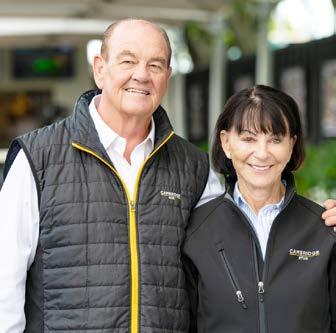
Brendan and Jo Lindsay pictured at Karaka. Photo: Roger Laxon
Milk taste without the waste
By Mary Anne Gill
On a lush 200-hectare block midway between Cambridge and Te Awamutu, a quiet revolution in New Zealand’s dairy industry is underway.
At the heart of this movement is Kaipaki Dairies, a company blending tradition, technology, and sustainability to deliver milk as nature intended - pure, fresh, and local. Whole milk, just as it comes from the cow. Paul and Sue Bardoul have farmed on Kaipaki Road, Ōhaupō since the mid-1980s.
Three years ago, they built a factory on the farm to process milk from their 600 Friesians intent on introducing a zero-waste packaging system by offering swap-a-bottle for retailers and 10- or 20-litre pails for cafés, businesses, and workplaces.
They secured a government grant to help cut the environmental impact of plastic waste.
“I think we’ve got a really good product and I think we’ve got a really good model around sustainability,” says Paul Bardoul.
In the past year, Kaipaki’s closedloop system has prevented more than two million plastic bottles from being produced, while supplying thousands of litres of milk in reusable containers.
Glass milk bottles largely disappeared in the 1980s and were replaced by cartons first and then plastic bottles. Deregulation meant supermarkets could sell milk and by the 1990s, home deliveries had ceased.
The Bardoul farm produces around five million litres of milk annually, but the 390 square metre factory processes less than half – the rest goes to Open Country.
The idea was simple: give New Zealanders access to premium, unadulterated milk, delivered in a way that respects both the environment and the consumer. Nothing is added, and nothing is taken away.
Every morning, milk flows directly from the cows in the shed to the factory through a 100-metre underground stainless steel pipeline.
Within hours, it is pasteurised using cutting-edge technology, bottled, chilled, and ready for delivery – often within six hours of leaving the cow shed.
This process preserves the milk’s natural flavour and nutritional integrity, setting Kaipaki apart from standardised supermarket milk.
Unlike homogenised milk, Kaipaki’s cream rises naturally to the top – just as it should. It is true whole milk, untouched and unstandardised.
Only barista blends receive light homogenisation to prevent café equipment blockages from cream.
“Technically speaking, we’ve got a way better product. Our cows are fed a complete balanced diet, and their mineral requirements are met daily. So, nutritionally, it’s superior,” says Bardoul.
“People taste the difference.”
Sustainability is not a buzzword
at Kaipaki Dairies - it’s a guiding principle.
From the outset, the Bardouls –named north west Waikato farmers of the year in 2002 - set out to create a model that was as good for the planet as it was for the palate.
Their two herds are managed through a split calving system to sustain all year round milking.
And the cows enjoy a carefully balanced diet of pasture, maize, barley straw, soy, and grass silage.
“Most cows in New Zealand are underfed,” says Bardoul.
“We make sure ours have the right balance of starch, protein, and fibre every day.”
But Kaipaki’s sustainability credentials shine brightest in its packaging. The company has pioneered a closed-loop system using reusable glass bottles and pails.
Customers – cafés, hotels, businesses, and households – return their empties, which are collected, washed, sanitised, and reused.
Operations manager Kirsty Parkes says one of the biggest challenges is ensuring they have enough bottles and pails.
“We’ve collectively reduced the production of hundreds of thousands of plastic bottles, with local cafés and businesses playing a key role in that impact,” she says.
They rely on retail customers returning the empties. There is a cash incentive, $1 off the price of the full bottle.
What sets Kaipaki Dairies’ milk
apart is its taste - a quality that comes from its purity and freshness.
The company’s journey began at places like farmers’ markets, where the milk’s taste quickly won over customers.
Word spread, and soon the company was supplying households, cafés, hotels, and businesses across Hamilton, Waikato, Bay of Plenty, Wellington, and Auckland.
Today, three delivery trucks make regular runs to these regions. In places like Hobbiton, tourists from around the world are introduced to the taste of real New Zealand milk –fresh, creamy, and unstandardised.
While the process is rooted in tradition – milk straight from the cow, minimal processing – the factory combines hands-on care with modern technology.
Bottling is still largely manual, with a small team filling, dating, and


stacking bottles.
Kaipaki has invested in new equipment to improve efficiency and maintain the highest standards of hygiene and shelf life.
Every step, from pasteurisation to bottling, is designed to preserve the milk’s natural qualities and ensure it reaches customers at its freshest.
Kaipaki Dairies is more than a business – it’s a community effort. Its success is built on customers who embrace the old-fashioned returnand-reuse model and spread the word about the milk’s quality. With plenty of capacity and milk available, the company is poised for growth.
“I’d just like to think that we could get more local people using our local product,” says Bardoul.
Kaipaki Dairies proves what’s possible when tradition, technology, and sustainability unite - delivering milk as nature intended.

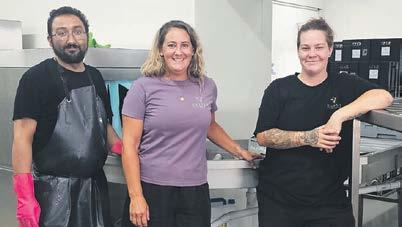
Ramesh Parajuli, Kirsty Parkes and Courtney Lock inside the factory waiting for the bottles to come through the cleaner.
Photos: Mary Anne Gill


‘n’ Treasure”
Book
WEEKLY ADVERTISING DEADLINES
St John Cambridge Health Shuttle
Providing transport to medical and health related appointments between Cambridge, Hamilton and return.
0800 846 9992
Bookings are

Blunder (5)
Clever (5)
Across: 1. Swamp, 4. Brassy, 7. Loo, 8. Trauma, 9. Utopia, 10. Seventh heaven, 14. Evoke, 15. Argue, 18. Traditionally, 23. Uneven, 24. Novice, 25. Cat, 26. Settle, 27. Solid.
1.
3.
4.
5.
6.
DVGMAOESOUDMJNEDZN PDSDYTNYVNUGUGZVEU QEOBUULSEDMHDAURAO UKSLGSEGRAVOMDUOVR SAEYODALYIDXDEFLEZ ZPJTEWHILLMANIOLQU OKBCSBCTNIKUWVSSHM YRRKKXTOYOTAIYIRQO LELHUMBERAMDRVMOFR MOSUBARUCHUHLQCYOR VAUXHALLSACAXUACRI



Down:
Spree, 2. Abuse,
Plaits,
Bought,
Aroma,
Spite, 10. Sleet, 11. Viola, 12. Vigil, 13. Needy, 16. Stance, 17. Points, 19. Range, 20. Duvet, 21. Anvil, 22. Lucid.
CAMBRIDGE OPEN HOMES









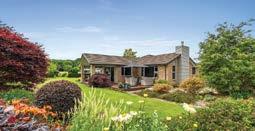
Tamahere 8 September Grove


Ada Close
Tamahere 76a Newell Road
Grosvenor Street

- Open-plan design flows beautifully to a generous deck and BBQ area.
- Master (ensuited & deep wardrobe) is away from the family wing, and enjoys a “town lights” view corridor, purposely designed.
Home Sunday 10.00 - 10.30am
Number 6 - Your Lifestyle Fix

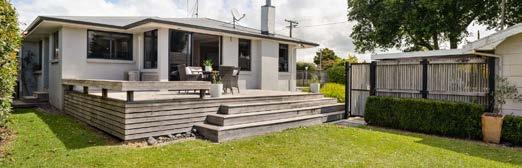
- Open-plan living, with a separate lounge offering a quieter retreat.
- The living area flows effortlessly to the deck - an extension of the home for entertaining alfresco or unwinding.
- Kitchen is generous, stylish and practical with a walk-in pantry.
Open Homes Saturday 12.00 - 12.30pm & Sunday 11.00 - 11.30am
-
a
environment.
- Set on a fully fenced 804m² (more or less) section. Open Home Sunday 10.00 - 10.30am
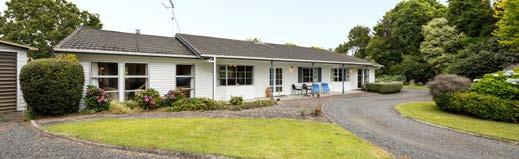
Delightful Bungalow - Private, Secure
- Modern comforts- lawn irrigation, solar panels and ducted aircon. Open Home Sunday 11.00 - 11.30am You Won’t Find Another Like This!



$829,000
58 Scott Street, Leamington
- A welcoming surprise is discovered outside with a dedicated, private spa pool, covered alfresco entertaining area, lush and manicured lawns with attractive gardens, and parking galore. Open Homes Saturday & Sunday 11.00 - 11.30am
Location, Lifestyle in Central Cambridge
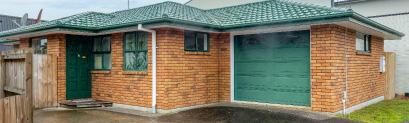
22A Milicich Place, Cambridge
- Positioned in the vibrant heart of the town center, this solid 3-bedroom brick home and a single internal access garage for security and convenience.
- Enjoy the security and long-term value of a freehold title. Open Home Saturday 11.00 - 11.30am
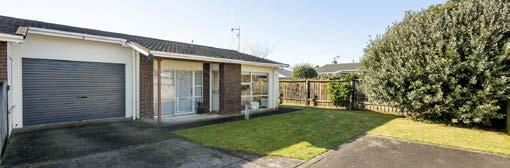
garden.
Home Sunday 11.00 - 11.30am
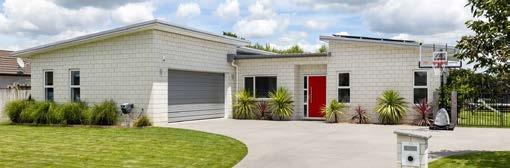
13 Tiaki Way, Cambridge
- Step inside to a welcoming separate lounge, offering a cosy retreat.
- Light-filled kitchen is an entertainer’s dream - complete with a spacious scullery and super handy second sink.


















































































MEETING NOTICE




Pursuant to Section 46 of the Local Government Official Information and Meetings Act 1987 notice is hereby given that a meeting of Nga Pae Whenua the Joint Management Body for the Taumatawiiwii, Ngati Koroki Kahukura ki Hinuera, Waikaukau and Te Reti Reserves will be held on Thursday 19 February at 2pm in the Kaipaki Meeting Room, Waip-a District Council, 23 Wilson Street, Cambridge.
A copy of the agenda will be available two days before the meeting at the Cambridge Public Library.
Section 101, Sale and Supply of Alcohol
Act 2012
PUBLIC NOTICE
of an application for Renewal Off Licence
LS & NJ McKenzie Ltd has made application to the Waipa District Licensing Committee for the renewal of a off-licence in respect of the premises at 14 Anzac St, Cambridge known as New World Cambridge. The general nature of the business to be conducted under the licence is Grocery Store. The days on which and the hours during which alcohol is sold under the licence are: Monday to Sunday 7am-10pm.
The application may be inspected during ordinary office hours at the office of the Waipa District Licensing Committee, 101 Bank Street, Te Awamutu or 23 Wilson Street, Cambridge.
Any person who is entitled to object and who wishes to object to the issue of the licence may, not later than 15 working days after the date of the publication of this notice, file a notice in writing of the objection with the Secretary of the District Licensing Committee at: Waipa District Council, Private Bag 2402, Te Awamutu 3840.
No objection to the issue of a renewal licence may be made in relation to a matter other than a matter specified in section 131 of the Sale and Supply of Alcohol Act 2012. This is the first publication of this notice.
PUBLIC NOTICES
Trevor Clifford MARTIN
8th February 2024
Two years ago today, you quietly slipped away. You left so many wonderful memories of a cherished husband, father and grandfather. Forever in our hearts
Your loving wife Pearl and family



DAVIES, Christopher David – Passed away after a long battle with illness on Monday, 26th January 2026, aged 78 years. Much loved husband of Sally. Adored father and father in-law of Katherine & Karl and Gary & Zara. Special thank you to the Cancer Society, Hospice Waikato and the District Nurses for their support and care that was received. “Time to say goodbye” Following Christopher's wishes a private service has been held. Messages to the "Davies" Family can be sent c/- 3 Hallys Lane, Cambridge 3434 or in Chris's online tribute book at www.grinters. co.nz


Heavy Motor Vehicle Regulations 1974, Regulation 11
NOTICE is hereby given that pursuant to regulation 11(3) of the Heavy Motor Vehicle Regulations 1974, the Waipā District Council has fixed the following maximum mass and speed limits for heavy motor vehicles and combinations including a heavy motor vehicle on the bridge(s) described hereunder:
FOLLAS, Joan Winifred (née Howell) – Peacefully passed away in her sleep at Cambridge Oakdale on Friday, 30 January 2026, in her 90th year. Much loved and adored mother and mother-in-law of Peter & Rose, Mark & Yana, Matthew & Monique, and Michelle & Kevin. Treasured Nana to Harriett-Rose, Seb, ClaraJane, Hugo, Zoe, Georgia, Bailey, McKenzie, and RubyJean, and a dearly loved great-grandmother to Bella and Lola-Jean. Beloved daughter of the late Peter and Alice. The family extend their heartfelt thanks to the staff of Cambridge Oakdale for the compassion, love, and care shown to Joan over the past years. A private family farewell has been held. A memorial service to celebrate Joan’s life will be held at a later date. Messages to the Follas family may be sent c/3 Hallys Lane, Cambridge 3434, or left in Joan’s online tribute book at www.grinters. co.nz.
LAUREN, Veronica, "Roni" – Passed away on Saturday, 31st January 2026. Aged 79 years. Much loved wife of Michael. Adored mother of Michael, Nicole and Tony. Heartfelt thanks to the staff of St Kilda Retirement Village, St Kilda for the care that Roni received while there. Following Veronica's wishes a private service has been held. Messages to the "Lauren " Family can be sent c/- 3 Hallys Lane, Cambridge 3434 or in Veronica's online tribute book at www.grinters. co.nz