FREE cambridgenews.nz




Cambridge Velodrome is entering what its chair describes as a “turning point in our history”, with a transformation that will see the venue rebranded and operating under the name Cambridge Arena.
The trust behind the Grassroots Trust‑sponsored facility is signalling the shift from Velodrome New Zealand’s Home of Cycling as part of a change in direction, expanding its role beyond elite track cycling to operate as a multi‑purpose regional arena and events centre.
The transformation includes the relocation of the New Zealand Sports Hall of Fame from Dunedin, the introduction of an interactive Play Lab experience aimed at young people, and the installation of screens that will increase the venue’s ability to host sporting events, awards ceremonies, conferences, school programmes and community activities alongside cycling.
Velodrome chair Simon Perry said the developments marked a strategic evolution.
“We’ve had a fantastic run with cycling here, and that will absolutely continue,”
Perry said. “But we’re now opening the doors to a much wider range of users. For us,

it’s about getting more kids off the couch and into sport. This really is a turning point in our history.”
The Sports Hall of Fame, which has been based in Dunedin for more than three decades, will move to the Cambridge venue this year. The hall will be integrated around the concourse, allowing visitors to engage with New Zealand’s sporting heritage while still being connected to live activity on the track.
General manager Miff

Macdiarmid said the Hall of Fame experience would be interactive and strongly focused on education –not just about looking at trophies behind glass.
The velodrome attracts about 180,000 visitors a year and supports a range of community uses from boxing, martial arts and fitness training to walking groups, seniors’ programmes and corporate events.
Macdiarmid said the upgrades were expected to lift visitor numbers and
bring economic benefits to Cambridge, Waipā and neighbouring districts.
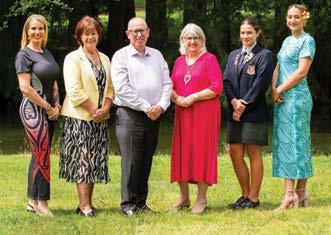
Waikato mayor Aksel Bech, Hamilton city councillors Emma Pike, Robbie Neha and Jamie Strange attended the announcement last week alongside former Waipā mayor Alan Livingston who played a key role in seeing the velodrome built and opened by Catherine, Duchess of Cambridge, in 2014.
Speaking as the

Oceania Track Cycling Championships were under way, with hundreds of competitors on the track, Macdiarmid said the facility already had a strong economic footprint.
“What we’re probably most proud of is the community use the velodrome has on a daily basis,” she said.
“Inspiration isn’t enough without action,” Smith said.
The Play Lab is being developed with Sport Waikato, the Waikato University and the New Zealand Olympic Committee and programmes will align with school curricula.
Perry said the venue’s location made it ideally placed to serve as a regional hub.
“We’re within 30 minutes of two thirds of the Waikato region,” he said. “Schools can come here for a whole day, immerse themselves in sport, and then we can help connect kids back to clubs in their own communities.”
A small number of spectator seats will be removed to accommodate the Hall of Fame. The trust has resource consent to expand the velodrome, but that’s been shelved because of the multi‑million‑dollar cost.
Planning and fundraising is largely complete and the upgrades will roll out over the coming months. Perry is confident the shift to a Cambridge Arena concept will futureproof the facility.
A key part of the transformation is the Play Lab, an interactive sport and movement space. Transition manager Tony Smith said the lab would combine physical activity with technology and storytelling to engage young people in new ways.




By Viv Posselt
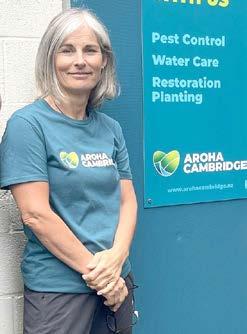
Today marks the start of a 3000km cycle ride being undertaken by Cambridge’s Di Tocker to raise funds to help secure the town’s environmental future.
Tocker is co chair of Aroha Cambridge, a charitable trust working to restore and protect the natural environment.
She is biking the self supported Tour
Aotearoa Brevet 3000km from Cape Reinga to Bluff. Through early efforts to raise $3 for every kilometre cycled, she has already raised around $4000 for Aroha Cambridge – covering off most of the North Island leg. She hopes to average 100km a day.
“I believe caring for our environment means committing time, energy and responsibility,” she told The News. “This ride is a personal commitment, turning every kilometre into support for the local environment and the community we care about.”
Tocker, who is a glass artist, is expecting to pass through Cambridge on February 26 when she will pause at the Aroha Cambridge shed on Thornton Rd around lunchtime. Residents wanting to catch up with her can do so then, or



News/Editorial
Roy Pilott editor@goodlocal.nz
027
maryanne@goodlocal.nz 021
viv@goodlocal.nz
chris@goodlocal.nz
Janine
David
I’d like to start by acknowledging the loss of life in Pirongia and destruction to property across the region following the serious flooding and weather events impacting our area this past week.
The effects, I know, are deeply felt and ongoing. At the time of writing, Waipā District Council advise everyone to stay alert, avoid flooded areas and take note of road closures in place. If you need help, call the council’s call centre on 0800 924 723. If it is an emergency, call 111. As always, look out for each other and stay safe. The weather is unpredictable and conditions can change quickly.
Last Friday afternoon saw Putāruru, Cambridge and district road policing staff arrest three youth after they decamped in a stolen vehicle from an aggravated robbery in Putāruru. Their vehicle was successfully spiked and stopped on Tīrau road and two youth have appeared in Youth Court on associated charges.
In Te Awamutu last week, a male was arrested following a family harm incident and faces three associated charges in court. When police are involved in family harm matters to the level of prosecution, it is an important step in breaking the cycle of violence. Research shows that without intervention, the seriousness of family harm only increases over time, ultimately
at 6.30am the following day opposite the town hall when she will grab a coffee before setting off.

escalating to a risk of serious or grievous bodily harm or even death. Prosecution ensures the offender is held to account for their actions and is an opportunity for change to be initiated.
Last weekend, Te Awamutu police identified a motorbike and its rider who had been the subject of numerous reports of dangerous and reckless driving in the area. The male rider now faces related charges in court and the bike has been impounded. While it is a positive outcome, more information is sought as this behaviour is not isolated to one bike and rider.
If you see dangerous driving, motorbikes or trail bikes weaving or doing wheelies in traffic, note full details of the bike and rider, including descriptions and call 111 at the time. If it is safe to do so, recording a video of what you are witnessing is also helpful. Finally this week, a reminder to continue to be scam and fraud aware. In one reported instance recently, it appeared that lending a mobile phone to an associate resulted in access being gained to online banking, making an unauthorised transaction being possible. Be aware that saving login and credit card details to your phone increases the risk of unauthorised access if your phone falls into the hands of an opportunistic offender.
By Chris Gardner
Rookie Ōtorohanga mayor Rodney Dow hasn’t had time for media training – but he won praise for his television appearances in the wake of the storms.
“I’ve never been so emotional in my life,” Dow said as he broke down in front of television cameras over the weekend.
Emergency Management minister Mark Mitchell placed a reassuring hand on his shoulder.
Dow, who was elected mayor in October after serving the district as councillor, told The News he was yet to receive media training, but he had been advised to place the tongue on the back of his teeth if he were to become emotional in an interview again.
“I don’t want to become known as the crying mayor,” he said.
His partner of six years and fiancée Michelle Erikson said she had received many messages of support after he showed he was human.
Waitomo mayor John Robertson called Dow on Monday offering support.
“It’s normally Waitomo that gets weather events, we dodged a bullet, Ōtorohanga got it hard,” he said. “We are supporting in any way we can.”
Waitomo District Council staff also assisted their Ōtorohanga and Waipā colleagues in the Civil Defence response.
Meanwhile, Dow is inviting the community to a free truck and ute show in Ōtorohanga on Saturday.
“I am hoping the weather stays fine, and the community can get together at Island Reserve and put this weekend behind them,” he said. Saturday is expected to be sunny, according to the weather forecast.
“We have just got to get through this.”
Dow is hoping this year’s truck and ute show will be slightly bigger than the show two years ago which attracted 100 trucks and utes.





New chief
Waipā Networks has named chartered engineer Damien Whiffen as its next chief executive. He will take over from acting chief Tom Bromfield in April and moves from a senior role at Mainpower. Previous chief Sean Horgan stepped down after three years in December.
Balloon inflation
The reasoning behind Waipā District Council’s decision not to host an evening of the Balloons over Waikato this year has become clearer. The council says it would have faced a near 30 per cent increase in costs to host an event – up to about $25,400. Most of the increase was due to higher costs for traffic and waste management. Many of the costs cannot be recovered if the event is cancelled at short notice.
Arrowing in
Bowhunter Gary Keoghan will be a guest at the Mt Pirongia Lions’ market on Sunday when the winner of a Predator Free Te Awamutu and Pirongia Kids Koi Carp Challenge will be announced. Koi have caused considerable biodiversity loss and water quality decline. They can grow to 75cm and weight 12kg.
Feedback sought
Waipa district councillors have backed Waka Kotahi proposals to introduce 60km/h zones to slow traffic on State Highway 29 at the crossroad with Taotaoroa and Totman roads near the Piarere roundabout and on State Highway 39 at the intersections with Tuhikaramea and Livingstone roads.
Groups established
Cambridge Community Board discussed establishing thee working groups – for Anzac and Armistice days and Bihoro and Le Quesnoy sister cities – at its meeting on Tuesday night. It was recommended Chris Minneé chair the Anzac/Armistice group, Andrew Myers the Bihoro and Gerda Venter the Le Quesnoy groups.
By Jesse Wood
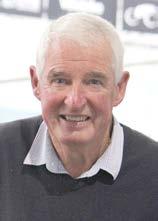
Alan Livingston has been a Te Pahū resident for about 70 years and has never seen anything like the deluge of water and debris that descended from Mt Pirongia last weekend.
“We’ve had big floods and a bit of debris, but nothing like this before,” the former Waipā mayor said.
“This was exceptional due to a bow wave of water coming down plus logs, slash and sediment.”
The storms claimed the
life Pirongia’s Brent Knowles on Friday after his car was submerged by floodwaters on State Highway 39 north of Ōtorohanga as he returned from a fishing trip.
Waipā mayor Mike Pettit declared a state of emergency on Saturday – the morning after Ōtorohanga had done the same.
It was also announced on Monday that a mayoral relief fund had been established in Waipā.
Pettit said recent events highlighted the growing challenges facing the district.
“Unfortunately, these events are not isolated. They follow a series of severe weather incidents in our district,” he said.
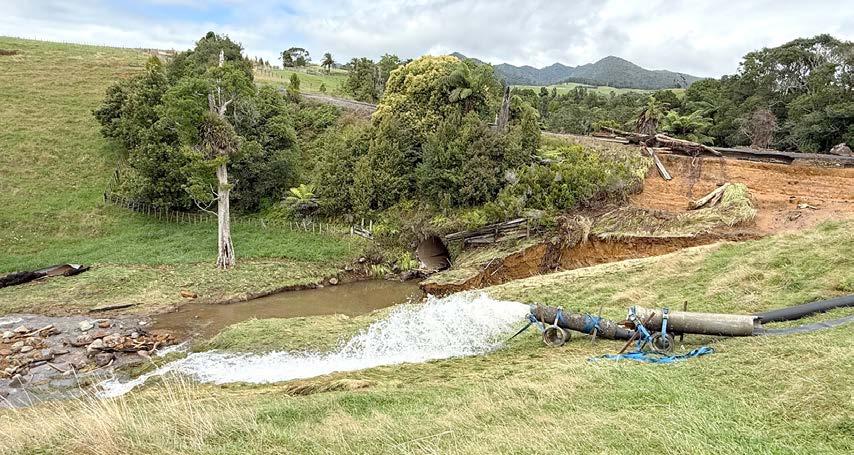
At Te Pahu, flooding beside the Corcoran Rd causeway across the Rangitukia Stream caused the 3.5m culvert to be blocked by logs and rocks, backing up the water and creating a lake.
“This created the risk that the causeway might fail and send a deluge down, hence
the evacuation of 10 homes further down,” Livingston said.
Three streams with mountain catchments were affected - on Corcoran, Grey and Limeworks Loop roads.
“Elsewhere in the district, there was approximately 40mm of rain and nothing out of the ordinary occurred.”
Downer Group and Waipā District Council staff have been pumping water from the “lake” to relieve pressure on the causeway.
Livingston said Te Pahū residents could hear the rumble from the mountain, many thought it was a jet crash.
“Looking up Corcoran Rd, you can see where the slips are on the mountain. You can understand why logs have come down,” Livingston said.
“It’s just an extreme event. It was just the volume of water. It wasn’t a buildup it just suddenly happened.
“The slips were at the top of the mountain, going all

the way down.”
Livingston said many farmers had problems due to the deluge and the community pitched in to help fix cow sheds, clear debris off roads and other remedial work.
“People have been staying with other folk too. Don’t underestimate that local aspect. That community spirit and community mindedness certainly comes to the fore [in a situation like this].”
Slips on the mountain also washed away a water treatment plant supplying Pirongia.
The council has established an emergency supply from the Te Awamutu Treatment Plant, but water conservation is critical if the stopgap measures are to keep servicing Pirongia.
A joint Civil Defence Emergency Operations Centre operating from the Ōtorohanga District Council offices is supporting Waipā and Ōtorohanga councils
after States of Emergency were declared on the weekend.
Welfare support and property inspections continue in Wharepapa South, Kāwhia, Aotea and Corcoran roads as well as urban areas.
As this edition went to press, Waikato Regional Council data showed the extent of rainfall in the last seven days – 103.5mm at its Te Kūiti Mangaokewa Stream monitoring site, 219.5mm on the Waipā River and Otewa, 120.5m at the Awaroa River Hauturu Trig site and 172mm at Barton’s Corner Rd Bridge over the Puniu River near Te Awamutu.
The recording at the Puniu River at Tolley Rd, Ngaroma was the second highest in the region – 206.5.
Hamilton city recorded just 22.2mm – and that figure would not have been much different to what was recorded at Cambridge.
• See Storm wreaks havoc, Page 19


















By Chris Gardner
Justin Bertrand has replaced Mike Pettit as principal of Cambridge Primary School. Bertrand, who has lived in Cambridge since 2008, applied for the job after Pettit was elected Waipā mayor and handed temporary leadership of the school over to his wife Nic Pettit.
Bertrand said Mike Pettit, who was in the role for 17 years, was a mentor to him.
It’s the fourth school Bertrand has served as principal. He handed in his notice at Te Aroha Primary School late last year to take up the new role. “I have been pinching myself since I got the role here,” Bertrand said. He previously served as
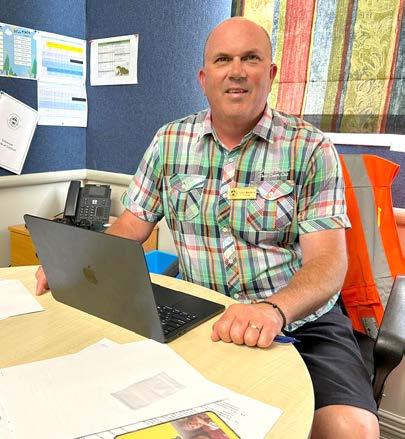
principal of Kaimai Primary School, Motumaoho School near Morrinsville and Whitehall Primary School.
“Over the years we have had friends’ kids go through here. It’s just one of those schools that I have admired from afar and that we thought was wonderful.”
Cambridge Primary School has a school therapy dog, a cat that has adopted the school, trees which pupils are allowed to climb, and bush where pupils are encouraged to play and build shelters at break and lunchtime. School houses are named after famous horses, teaching teams are named after famous people.
“It’s such a well oiled machine, with really high expectations for everybody,” Bertrand said.
He also appreciates the open plan nature of the school, with its low hedges marking the boundary.
“Everyone understands their role and what we are here for. Because of that whole tradition, it’s a matter of seeing where I can add value.”
On the school uniform debate, and whether it’s an unnecessary expense, Bertrand agreed it was not cheap, but it did prevent parents from going overboard on their spend.
The school is Cambridge’s oldest and will celebrate its 160th anniversary later this month. The school is at capacity, starting at 380 pupils at the beginning of the year and growing to 450 by the end.
Bertrand was born in New Plymouth and his dairy farming family moved to Te Aroha in his youth. He went to teacher training college in Wellington where me met his future wife, Claire who is now teaching at Goodwood School in Cambridge. The couple have two daughters, one attending Cambridge High School and the other about to start teacher training at university.
Since his arrival in town the population has grown from 10,000
Footpath angst
to 20,000 people and roads have become congested.
“The mornings are not so bad, but it’s that concentrated pick up time at the end of the day that is a problem,” he said.
“We have people parking on the yellow line. That high level bridge is dynamite; you can sit there for ages waiting to cross that.”
Outside of school, Bertrand is involved in netball, both playing the sport and coaching teams He is also a keen cyclist.

There are no plans by Waipā District Council to prohibit bikes and scooters in high volume pedestrian areas of Cambridge as part of an updated bylaw, Cambridge Community Board chair Charlotte FitzPatrick says in her report to the board this week. Courtesy signs in Victoria and Duke streets could still improve pedestrian safety and the council should consider implementing it, she said.
Community groups and organisations are being encouraged to apply for their share of a $27,500 discretionary fund from Waipā District Council. The final decision about allocation would be made by Cambridge Community Board and would include up to $6000 for the Anzac Day service.
Waikato District Council has launched a Community Voice Panel to enable residents to take a more direct role in shaping the future of the district. The panel is made up of residents who will take part in short, online surveys throughout the year. Mayor Aksel Bech says the panel will be built in at the start of council’s processes so it can help shape the decisions.
Claudelands will host one of the regional finals of the Kapa Haka nationals, in mid-April. The first was held at Waipukurau last weekend and is followed by another 12, including one on the Gold Coast, through to mid June.
-





























































MONDAY 23RD - ST ANDREWS - 85 HAMILTON ROAD - CAMBRIDGE - 10-3PM.

TUESDAY 24TH - PRIVATE HOUSECALLS - CAMBRIDGE / HAMILTON / TE AWAMUTU - (BOOK NOW).
WEDNESDAY 25TH - TE AWAMUTU BAPTIST CHURCH - 106 TEASDALE STREET - 10-3PM.
THURSDAY 26TH - ST ANDREWS - 85 HAMILTON ROAD - CAMBRIDGE - 10-3PM.
PLEASE NOTE: AFTER 3PM HAMISH IS ALSO AVAILABLE FOR HOUSECALLS (BOOK NOW). (ONSITE SECURITY. PLEASE HAVE YOUR BANK ACCOUNT NUMBER HANDY FOR A FASTER BANK TRANSFER) HOUSECALLS ARE BY APPOINTMENT

By Mary Anne Gill
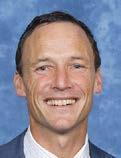
Cambridge High School’s new uniform rollout has hit snags and some students are wearing donated clothing as a result of stock shortages.
The supplier is blaming “forecasting” errors for the shortfall and is air freighting stock to speed up delivery. SAS Sports’ chief executive Tim Connolly said the company took full responsibility for the impact it was having.
Some parents say they paid between $200 and $500 during pre-sales. Uniforms did not arrive in time for the new term and some that did were the wrong size. In a notice to families, principal Greg Thornton apologised for the delays and the challenges the school has faced with the uniform rollout.
“We have had members of the community, staff and the Cambridge Community House come forward with donated items of clothing to help bridge the gap between delivery dates for the new items,” Thornton said.
“It has really made a difference to our students and is very much appreciated.”
The new uniform was split into a junior uniform with navy shirts and blouses for students in years 9 11, and a senior uniform with light blue shirts and blouses for year 12 and 13 students.
Parents The News spoke to said compounding the issue, students in years 9, 12 and 13 are not permitted to wear the previous school uniform.
One parent said she had disposed of her daughter’s old uniform last year and paid $250 for two shirts, a skirt and a physical education (PE) T shirt, but was then told the items would not be delivered until the end of March.

SAS Sports told parents in a notice stock was expected to arrive next month. Tim Connolly said the company valued its relationship with Cambridge High School and looked forward to seeing students, leaders and sports teams representing the community in the new uniform.
“Despite our best intentions and planning, we made a forecasting error which led to the current supply shortfall,” Connolly said.
“Our teams are working extra hours, and we have been air freighting stock where possible to speed up delivery.”
SAS Sports has already provided blazers for school leaders and kits for sports teams.
Connolly said the transition to the new uniform had been a complex process.
“Part of the handover involved careful negotiations to ensure the best outcome for the school and the community, especially in this challenging economic climate,” he said.
“We reached an agreement on timelines and the phasing out of old stock that was designed to have no financial impact on the school and allow us to offer generous support to families.”
• Have you been affected? Email editor@ goodlocal.nz and put “uniform” in the subject line.
By Viv Posselt
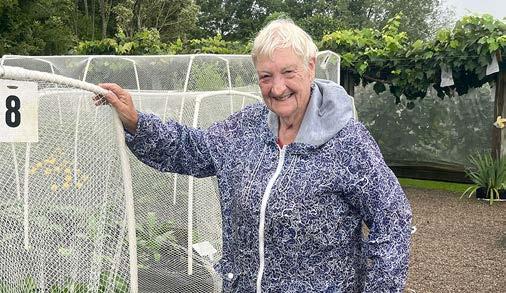
Saturday’s steady rain might have affected turnout at Cambridge Community Garden’s first Valentine’s open day, but it didn’t worry Alison Hucke.
“Well, we won’t need to do any watering for a while,” she smiled, dodging the showers as she pegged down more netting. “We have to make sure these are tight or the blackbirds will find their way in.”
Alison, one of the founding volunteers when the Cambridge Community Garden started formally in 2012, told The News Saturday’s open day was
the first one they had held to mark Valentine’s Day.
The idea was to show folk around, see what’s being done there, share a cup of tea in the shed and look through the old photo album.
Alison, who is also the Cambridge Community Garden’s secretary Philip Coles is the chair said there are about 10 regular volunteers at the Vogel St site, but more are always needed.
They get to do whatever garden chores take their fancy, with the reward being a hot cuppa and access to the abundance of vegetables and fruit grown there.
The Sharing Shed –version two of that was built by the Cambridge Lions a few years ago – offers some of the garden’s pickings to members of the public who either volunteer their help, or who swap produce out for some of the fruits of their own gardens.
Groups like the guides, pippins and others are regulars and engagement with businesses is terrific, she said.
Alison is keen on doing more school visits this year to ramp up engagement with that side of the community and help those schools who are developing their own vegetable plots.

By Viv Posselt
Efforts to bring the shade back to St Peter’s Catholic School play areas were recognised last week when parish priest Father Philip Billing blessed new shade sails and pupils.
The removal of a tree over the junior playground a while ago meant that even with hats on, pupils have been scorching under the hot summer sun. The shade sails, installed during the holiday break, cover the junior and senior play areas and has brought welcome relief.
Principal Nicole Higby said everyone was delighted to finally have the sails in situ. The cost of around $55,000 was met largely by money raised over the last couple of years of Waipā Fun Runs, key community events held annually to fundraise for the school and its charity partner, Cambridge Lifeskills. She said there had also been input from the Catholic Diocese and the PTFA, who topped
up the play areas with bark.
“We had the newly installed sails blessed by Father Philip Billing,” Nicole said. “It was good to have him doing that and it’s great to have some shade back.”
Preparations for this year’s Waipā Fun Run in Victoria Square next month are now at the pointy end. The school’s office manager and Waipā Fun Run co-ordinator, Donna Warwick, has been mobilising those involved to make sure the event runs smoothly, despite recent irritation around the vandalism of some of the 10 signs she and her husband carefully put up around town.
“That is massively annoying,” she said. “We just put one up down by the low level bridge and within hours it was pushed over and lying flat on the ground. The same thing has happened to the sign on Hamilton Rd. We’ve no idea why they’re being targeted, but the signs cost us a lot and that comes from whatever we raise at the Fun Run, a portion of which

goes into Cambridge Lifeskills. We don’t want to see that money wasted by vandals.”
This year’s Fun Run including a 10km run/walk, 5km walk/run,
teams and school Challenges will have a new category for Year 1 and 2 children. Until now the races have started with Year 3s. The event has taken place in
most weathers over the past 14 years. Donna said the only time it is stopped is if there are serious weather conditions that raise safety concerns.



Air Conditioning Group Waikato are the specialists for Heating, Cooling, Ventilation, and Air Purification for Homes, Rentals, Businesses, and Commercial Buildings.
Conditioning Group Waikato are the specialists for Cooling, Ventilation, and Air Purification for entals, Businesses, and Commercial Buildings.








By Janine Krippner
We really don’t hear much about what lies below our oceans. Sure, we hear about a fraction of the incredible life down there, and sometimes about the amount of damage humanity is inflicting. I have touched on how much of a mystery the deep oceans are, largely because of a lack of data. It is technically difficult and expensive to collect the data and it is either driven by research, which requires funding, or industry, where we often don’t see the results.
A brilliant colleague of mine with decades more experience looking at the seafloor exclaimed how active it is down there. We were looking at giant canyons and enormous channels, forged by ocean currents, landslides or rockfalls, and turbidity currents – powerful and damaging sediment flows that can travel hundreds of kilometres from where they start.
Below our oceans, the seafloor is an incredibly dynamic place. The landscape doesn’t have wind or rain like we do on the surface, the processes that shape much of our landscapes, but it does have water currents and geologic processes.
The movement of sediments – worn down bits of rock plus biological material… and increasingly, our trash, is a critical process across our planet.
Below the sea are our longest mountain chains, mid ocean ridges, where tectonic plates pull apart. This is driven by fault activity and volcanism to slowly but steadily create extensive new surfaces. As the thick layers of rock cool and move away from the ridge they become denser and slowly sink.
The seafloor is where volcanic islands begin to form, building edifices kilometres high that tower above the ocean surface.
There is geothermal activity, which may give clues to how life started on our beautiful planet.

There is a lot of seismicity, sometimes as enormous earthquakes along plate boundaries or where stresses accumulated in the crust. These can trigger massive landslides and tsunamis.
Water can become heavier because of temperature, salinity, or increased sediment from a storm, causing it to dive down across the seafloor. This can scour out those giant canyons or channels.
Extremes of hot and cold exist. Minerals form below kilometres of water as I covered last week, or at geothermal areas that also become hotspots for life. Methane ice (hydrate) forms within sediments, then can melt to destabilize the seafloor and trigger landslides across continental slopes.
When ice covered much of our planet, it scoured the seafloor and also transported sediment into our ocean basins. When sea level was much lower, landscapes stretched further outwards and carved some of those giant canyons.
Today, we have enormous river deltas that continue some of these processes. So much sediment moves seaward from these systems that the seafloor can become unstable. Storms can flush out even greater amounts of sediment (like when we see brown plumes forming where rivers meet the sea) triggering turbidity currents there too.
I didn’t know how much I didn’t know before I started my current job, and every day I am learning something new. I love that I get to share it with you here.
By Murray Smith, Bridges Church
A young man left his rural Thai village, attracted to Bangkok’s ‘bright lights’. Instead he encountered dark depravity there, and quickly went astray. Soon after arriving, Sawat visited a hotel unlike anything he’d ever seen.
Each room had a window facing into the hallway, and in every room sat a girl. The older ones smiled and laughed. Others, just 12 or 13 years old or younger, looked frightened.
That visit initiated Sawat into Bangkok’s world of prostitution. Things escalated and soon he was selling opium to customers and propositioning tourists in hotels. Sawat’s reputation as an up and coming young “businessman” grew.
Amidst such corruption his downfall was inevitable.
Fearful and broke, living on a rubbish dump, Sawat thought of home, especially his father, whose parting words echoed within. “I am waiting for you.”
Accounts of Sawat’s lifestyle had long ago filtered back to the village, and Sawat wrestled over whether his father could still be waiting for him after everything he’d done. He wrote a letter anyway.
“Dear father, I don’t know if you can still receive me as I have sinned greatly. Please forgive me. I want to come home. On Saturday night I will be on the train that goes through our village. If you are still waiting for me, will you tie a piece of cloth on the po tree in front of our house?”
He spent the train ride reflecting on his dreadful choices. Nearing the village, Sawat agonised over what to do if there was no white cloth on the po tree.
Sitting opposite him, a stranger had









noticed the increasing agitation of his fellow passenger.

Sawat told his story in a torrent of words, following the stranger’s gentle prompting. As the train entered the village, Sawat buried his face between his knees blurting out, “Oh, sir, I cannot bear to look. Can you watch for me?
“Young man,” the stranger replied. “Your father did not hang just one piece of cloth. The whole tree is covered!”
White cloths were on every branch. An old man jumped up and down joyfully waving a cloth, then running alongside the halting train coming to a stop at the station. As Sawat emerged, this father embraced his son with tears of joy. “I’ve been waiting for you!” he exclaimed.
This life story reminds me of one of Jesus’ parables. He used stories to illustrate important lessons. ‘The parable of the prodigal son,’ is found in the Bible. (Luke’s Gospel Chapter 15.)
After insisting his father hand over his inheritance, a son left for a far country to foolishly squander everything on riotous living.
Deserted and at rock bottom, the destitute son came to his senses, resolving to return home to seek his father’s forgiveness. The waiting father saw his wayward son coming and ran to receive him. This message is beautifully clear God our Father, patiently awaits our ‘return’.
Upon acknowledging our need of forgiveness, He welcomes us prodigal children home with extravagant love and tender mercy.










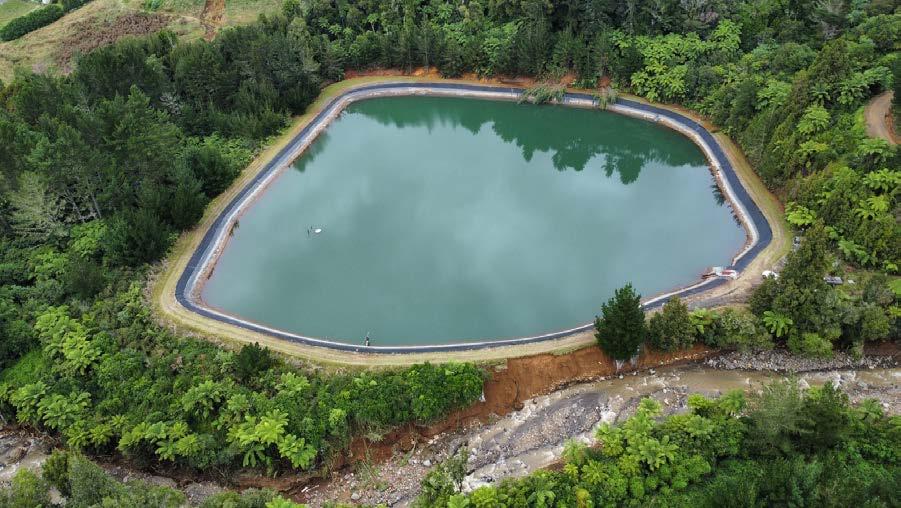
Waipā District is under a State of Emergency declaration, following severe flooding, slips, and damage to roads and infrastructure in the western side of the district
The declaration allows Civil Defence and emergency services to respond quickly and support affected communities
Mayor Mike Pettit, in consultation with Civil Defence, will make a decision on whether to lift or extend the declaration on Friday, February 20
"The weather hit hard and fast, and its impacts aren’t the same everywhere Some areas are getting back to normal, but just a few kilometres away, people are still cut off, roads are damaged, and bridges, pipes, and culverts are at risk," he says
"Right now, our biggest focus is Pirongia’s water supply The supply all runs on a single pipe We’ve got water tankers ready if we need them, but the best thing residents can do is conserve water Short showers, less toilet flushing, and no washing cars - every drop saved helps make the supply last "
"I’ve been out in Pirongia and Te Pahu talking with residents who’ve been affected We drained the Te Tahi reservoir to have a good look, and experts are working on what needs to be done next
“And Council teams are on the ground, checking damage, keeping an eye on infrastructure, and doing everything we can to get things sorted and keep people safe "




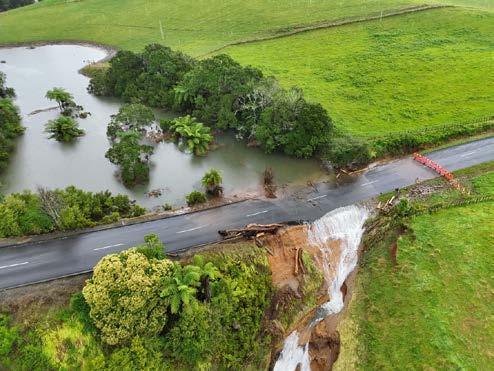
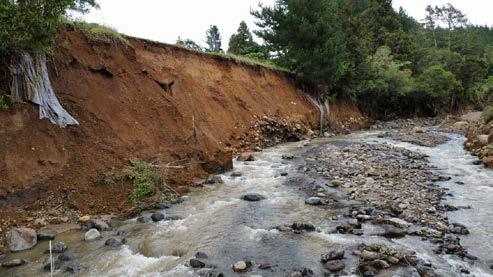
Heavy rain can trigger landslides for several days Warning signs include new cracks, tilting fences, leaning trees or walls, and debris in areas where it hasn’t appeared before Move to safety immediately if you notice these signs
Road safety reminder
Road closures are updated frequently on our Facebook page and website Do not drive, walk, or swim through floodwaters, and obey all road closure notices
Mayoral Relief Fund
The Mayoral Disaster Relief Fund is being set up to help those affected
This will allow us to receive and distribute Central Government funding and other donations It ’s a way of channelling the appropriate support to our community members and those who need it most
More information about the criteria and how to apply for assistance will be available on our website and from Council offices
Contacts:
Emergency: 111
Council enquiries: 0800 924 723
Website: www.waipadc.govt.nz
Facebook: Waipā District Council
Email: info@waipadc govt nz







Join us for the
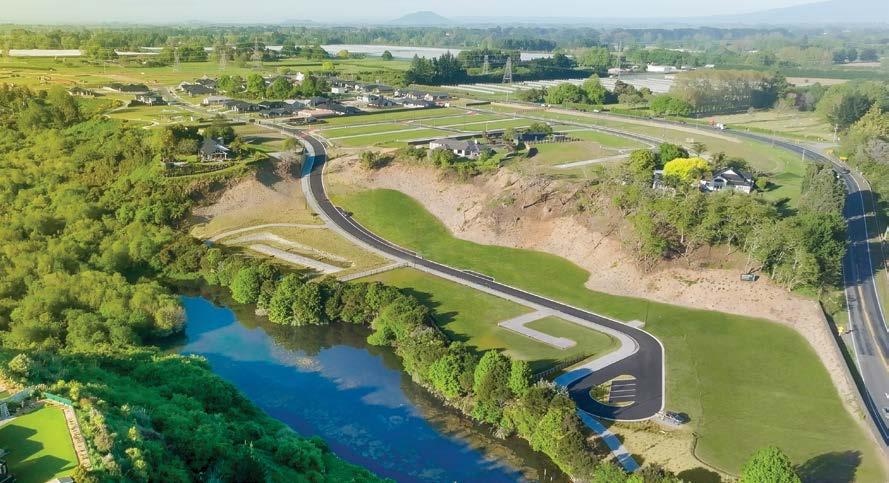
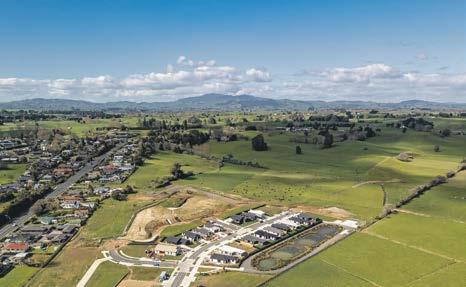
We’re excited to welcome you to Waipiko Landing on Sunday 22 February, where you’ll have the chance to explore our completed homes, meet the team, and experience the vision for this growing neighbourhood in Te Awamutu.
Just a 30-minute drive from Hamilton and 20 minutes to Cambridge. Waipiko Landing o ers easy access to major centres while maintaining the charm of life in a vibrant community.
Homes are being delivered by trusted build partners Venture Developments, Progressive Projects, and Generation Homes, o ering a mix of completed and customisable home packages to suit are available, o ering flexibility in design, size and price point.
Location: Time: Date:
Neighbourhood entrance at 952 Cambridge Road, Te Awamutu 12:00pm - 2:00pm Sunday 22 February 2026
Find out more at www.waipikolanding.co.nz
Our trusted build partners:

By Peter Carr
In a conversation this morning with a Canadian he revealed that the temperature at his home in Ottawa was minus 27 degrees Celsius.
And he was revelling in the balmy plus 33 degrees we are enjoying at Aitutaki in the Cook Islands. Or to be more exact while anchored very close to the outside of the sharp toothed reef that guards Aitutaki.
So, the sharp eyed among you will by now have realised that I have temporarily deserted Cambridge (where I believe it has been rather wet) for the balmy airs of the South Pacific.
We are back with our usual cruise company and have, so far, transited the Bay of Islands, Savusavu, Nukualofa and arrived off Aitutaki this morning as we devoured breakfast on the open air deck. Very pleasant.
Hence this week is mainly about the Cook Islands a subject that appears in our news regularly. The 15 islands embrace (locally) about 20,000 people but a further 94,000 are enjoying (mainly) Auckland and a few in Australia. And why will be revealed shortly.
Captain Cook sited the Cook Islands in 1773 but, contrary to public opinion, did not name them after himself but attributed the nomenclature to his boss the First Lord of the Admiralty. Away from Rarotonga he also sited Aitutaki but did not land and left it to another Englishman, several years later, to go ashore and meet with the Polynesian natives who stretched back to 900AD. He was Captain Bligh of Mutiny on the Bounty fame.
In about 1962 Sir Robert Muldoon (who may then not have been knighted) offered

several alternatives to Albert Henry (PM of the Cooks) being four options of “care”. The wily Henry also later knighted then stripped of the title, and in 2023 posthumously pardoned grabbed the most attractive of the four being that the Cooks would self govern with a Westminster style parliament but that New Zealand would look after, in the main, Foreign Affairs and Defence.
Winston Peters has been hot on those issues very recently.
But Albert Henry seized swiftly on the real kicker this being that Muldoon also offered New Zealand passports to every Cook Islander hence the imbalanced drift to Auckland. The geographical shift of many brought with it employment and a huge monthly movement of financial remittances back to the Cooks.
Aitutaki hosts the most beautiful lagoon in the world. Bar none. Snorkelling is both delightful and exciting.
Our visit included a visit to One Foot Island where thousands of tiny crabs emerge to the surface of the beach when a loud whistle is sounded. It is just over an hour by plane from Rarotonga and I used to visit regularly on business. I ran across Prime Minister David Lange one day and found out that Aitutaki was his regular hideaway when he wanted a break from the lunacy of the Beehive.
So French Polynesia beckons. My (could be improved) French will have to be dusted off as there are nine island calls ahead.
bientôt!
























































































By Viv Posselt
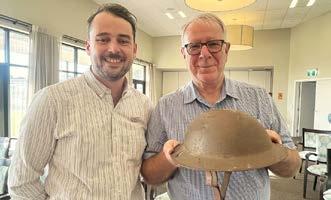
Over 11,000 visitors have been through the Te Arawhata New Zealand Liberation Museum in Le Quesnoy since it opened in October 2023.
Pleasing as that is, efforts are underway to grow those numbers. Helping lead the charge is Jacob Siermans, who has been the museum’s marketing and operations manager for the past 18 months.
The former Auckland lawyer, who now lives in Le Quesnoy having netted what he considers his dream job, spoke to the Cambridge Le Quesnoy Friendship Group last week on day two of a three week New Zealand speaking tour taking in Cambridge as Le Quesnoy’s sister city, the army museum at Waiouru, Wellington, Christchurch and six schools. He also spoke at Cambridge High School.
He said that of those 11,000 visitors, 400 involved school visits, and about 20 were New Zealand schools.
“We are averaging around 4500 visitors a year. It’s a nice stat, but we have ambitions to go bigger than that.”
Siermans, who is of Dutch heritage and speaks fluent
French, said 26.6 per cent of visitor numbers were Kiwis, about two thirds were French and the rest from other countries. Efforts are ongoing to promote the museum to French schools.
Te Arawhata differs from many other war related museums in that it offers an interactive visitor experience to tell the story of Le Quesnoy’s liberation from the Germans on November 4, 1918.
Le Quesnoy is one of a string of historically walled fortress towns in the northeast of France.
When New Zealand troops liberated it in the dying days of World War One, they set off a smoke screen to deter German troops, scaled the massive walls using a


ladder (hence the name Te Arawhata, which is Māori for ladder or bridge) and liberated the town and its 1600 citizens with no civilian fatalities – a rarity when civilian casualties were high as towns were liberated from the Germans. First over the ladder was Cambridge’s Lt Leslie Averill.
Almost 200 New Zealanders died in the operation and the connection between Le Quesnoy and New Zealand has strengthened with each passing year.
Siermans promotes interaction with the Le Quesnoy community. He does visitor tours of the town and its ramparts, organises dramatisations and re enactments of the
liberation story, gives talks and holds school holiday programmes that introduce locals to Māori culture and language, and takes Kiwi visitors under his wing.
One memorable visit, one he describes as 'particularly touching and rewarding', was of Kirsty Garner. The senior from Lawrence in Central Otago discovered her uncle Walter McIntyre’s wartime letters and was determined to visit his grave at Fontaine au Bois just outside Le Quesnoy.
Manawatu born Walter had enlisted a month after his 20th birthday in November 1916, and died in the Le Quesnoy action.
Kirsty, who doesn’t use cellphones or computers, made the long journey to pay her respects, and Jacob Siermans was there to help her.
Siermans said he was delighted with his Cambridge audience.
“The talks I give are to people who typically don’t know much about Le Quesnoy,” he said, describing the audience as testament to the sister city relationship. “Even better, you all know how to pronounce Le Quesnoy. Most people I meet call it Le Quez..noy.”
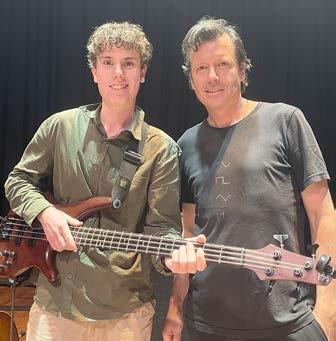
Eight Cambridge High School students were among more than 60 involved in a jazz workshop organised by Waikato based music educator Paul Norman at Waikato University on Saturday.
The tutors were bass player and New Zealand ex pat Matt Penman and pianist Aaron Goldberg, both from New York, and Auckland pair Dixen Nacey (guitar) and Adam Tobeck (drums).
The workshop focused on the jazz standard Caravan which is the required piece for the New Zealand Youth Jazz Festival this year. A concert followed in the evening.
The Cambridge students included Blake Williams, who plays bass in the Cambridge High School Jazz band and is one of the head students and Hunter Davis, who plays guitar in the band and learned this month that he has won a New Zealand Qualifications Authority music scholarship. Hunter, who plans to study jazz at university next year has also been selected as the only guitar player for the NZ Youth Big Band.










Waipā Dental is new to town, but we’re locals. Unrushed
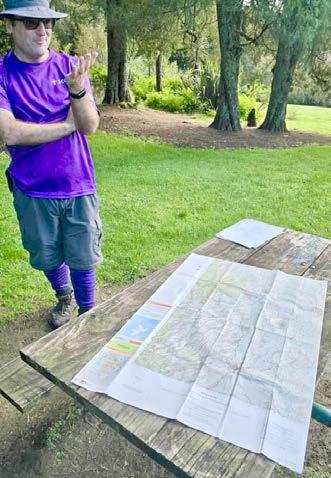
New Zealand Outdoor Instructors’ Association bush leader and senior writer Chris Gardner continues his outdoor series by discussing the seven principles of Leave No Trace.
Every walker and tramper knows to take only pictures and leave only footprints, but it is just one of seven principles that encourages us to minimise our environmental impact.
Plan ahead and prepare is the first Principle of Leave No Trace. “If you fail to plan, you plan to fail,” the founder of Scouting, Sir Robert Baden Powell, 1st Lord Baden Powell of Gillwell, once said. Today we use the five Ps to say the same thing. Prior Planning Prevents Poor Performance. Either way they are great reminders that we should never step on the track without a plan.

Experienced professionals. Local specialists. Quality advice. COMMERCIAL
Experienced professionals. Local specialists. Quality advice.
Cambridge | 07 827 5147
Hamilton | 07 848 1222 www.lewislawyers.co.nz
Experienced professionals. Local specialists. Quality advice.
Cambridge | 07 827 5147
Cambridge | 07 827 5147
Hamilton | 07 848 1222 www.lewislawyers.co.nz
Hamilton | 07 848 1222 www.lewislawyers.co.nz
We’ve talked at great length, in these columns, about the NZ Mountain Safet Council’s minimum gear list. You should always be prepared to overnight, even if you are planning a short walk. The media is full of reports of walkers or trampers who were not prepared. Making a mistake here can be fatal.
Travel and camp on durable ground is the second principle of Leave No Trace. Walking on unstable ground could damage flora and fauna, dislodge soil and rock, and lead to slips, trips, and falls.
Dispose of waste properly is the third principle. Or
pack it in, pack it out, as I prefer to say. I follow this to the point that I will avoid using rubbish bins on the trail. Rubbish attracts pests like possums and rats who negatively impact our environment, and you never know when the bin will next be emptied.
This principle also covers toileting. I always use the toilet before starting a track to minimize my chances of having to dig a bush toilet otherwise known as a cat hole. Before considering toileting off track, check whether it’s appropriate as in many places it is culturally inappropriate.
Cat holes should be dug between 15 and 20 cm deep in organic soil between 50 and 70 metres from campsites, huts, tracks, and water. I always carry a tramping trowel, but a tramping boot can also do the job. Once you’ve finished, dispose of your waste properly by burying it so vermin cannot get at it. Leave what you find is the fourth and simplest principle. Minimise the effects of fire is the fifth principal. I always prefer to cook with a gas stove and cannister. It’s quick, cheap, and works in any weather. I might light a fire at a campsite at night for warmth if there is a firepit
and it is allowed. Many Department of Conservation campsites have a permanent fire ban or, at least, a fire ban in the summer. Fire and Emergency New Zealand run a simple, three step, tool at www.checkitsalright.nz, which tells you whether you can light a fire and whether you need a permit. I carry aluminium foil to save having to dig a pit if I do light a fire.
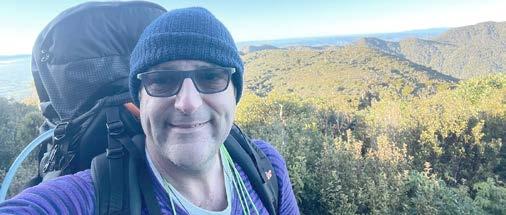

The sixth principle is respect wildlife and farm animals. Wildlife and farm animals should be given a wide berth by walkers and trampers. If your presence is impacting their behaviour, then move away to a place where it is not.
The seventh is to be considerate of others. For me this extends to caring for other track users. I may ask how they’re going, where they are off too, and if I can offer any help. This could be useful if, further down the track they fail to check in. My intelligence could help police


Managing your trees will help prevent power outages and keep everyone safe. Check your trees regularly and keep them trimmed so they stay clear of power lines.
Trimming trees near power lines can be extremely dangerous, and even deadly.
Contact with a power line can cause:
• Injury or death to yourself, family, community members or livestock
• Damage to property
• Damage to power supply facilities and electrical appliances
• Damage to third parties.
Before attempting to clear tree foliage near live conductors you should contact us for advice.
Branch movement: Although tree foliage can sometimes appear to be at a safe distance from the lines, once you begin the work, the tree may move due to pressure placed on branches, random gusts of wind and other external factors. Be aware of any tree branches that may flick up as they are trimmed or as surrounding branches are cleared.
Wet weather: Branches often hang lower when the leaves are wet, so if it starts to rain, or if the leaves are already wet you should expect some movement. Debris: Ensure there is clear space to allow for debris when tree trimming.
Growth Limit Zone: any tree growing in the Growth Limit Zone (see diagram) must be trimmed by a Waipā Networks authorised arborist.
The Electricity (Hazards from Trees) Regulations 2003 set out the responsibilities of tree owners and lines companies in relation to trees and power lines. Waipā Networks has developed procedures to meet these regulations, summarised below:
• If we become aware of a tree that you are responsible for within the Notice Zone, you may be issued with a Hazard Warning Notice.
• If we become aware of a tree you are responsible for within the Growth Limit Zone, you will be issued with a Cut or Trim Notice.
• You must have the tree trimmed so that it no longer encroaches the Notice Zone or Growth Limit Zone. Dispensation can be applied for if there is a valid reason for the tree to be allowed to grow within the Notice or Growth Limit Zones.
• We’ll trim a tree free of charge provided it is the first trim. Any further trimming is the responsibility of the owner.
• At any stage, you can declare ‘No Interest’ in a tree on our network and we will meet the costs of any future trimming, or may decide to remove the tree altogether.
• Where we become aware of a tree close to the lines and likely to cause danger to the public or property we have the ability to remove the tree or branch causing the hazard.
If you receive a ‘Cut or Trim Notice’ you must use an approved Utility Arborist to trim or fell the trees. If you repeatedly ignore them, you could be fined up to $10,000 plus $500 per day for every day the offence continues.
In October 2024, The Electricity (Hazards from Trees) Regulations 2003 were updated to increase the minimum safe distances between trees and power lines, and a new ‘clear to the sky’ requirement for some trees. The regulations define four zones:
Growth Limit Zone: This is the minimum distance that trees must be kept clear of overhead power lines.
Cut-Back Zone: This zone ensures vegetation is trimmed back far enough to prevent it from quickly growing into the Growth Limit Zone.
Notice Zone: We will issue a notice if vegetation is in this zone to give property owners time to address the risk earlier before it becomes urgent.
Clear to the Sky: This is the area above 33kv and high voltage lines that must be kept clear.
Fall Hazard Zone: Trees present a hazard if they fall and damage power lines. A tree’s fall hazard zone is the height of the tree plus 4 meters.
Note: Fall Zone trees are not currently covered by regulatory requirements. But if you own a tree that is within the fall zone and you have concerns about its health or safety, please notify us to discuss your options.
The size of the growth limit zone varies depending on voltage level:
The Notice and Growth Limit Zone requirements increase if the adjacent power line span is greater than 150m. In these cases, we will notify you of your obligations.
Cambridge Connections is a project that will shape transport for the next 30 years.
We want your ideas!
Scan the QR Code:
Go to: waipadc.govt.nz/cc-feedback
Share your solutions – big and small, for now and the future
Email: cambridgeconnections@waipadc.govt.nz
Pick up a form from Council offices or libraries
Feedback closes 8am on Monday, March 9
Remember you can make as many submissions as you like, so if you have further thoughts, feel free to jump back into the chat!
In feedback last year, 58 percent of people said they want another bridge for Cambridge. We heard you, and by the end of this year, Elected Members will have identified a potential bridge corridor – that’s the general area where a bridge might go.
But that’s really just the beginning - a bridge can take decades to plan and millions of dollars to build. So, it’s really important that a new bridge effectively solves our biggest transport issues, including freight pressure and easing congestion as we grow.
We need to think about what we prioritise: if we really want to get trucks and traffic out of town, we would plan for a bypass bridge. But most people in Cambridge are using the town centre and making trips across town – in which case, a more central bridge might better serve the community.
Victoria (high level) Bridge has about 20 years before we will need to put a new deck on it if we want to keep it open for cars, which is another high-cost option. And the Fergusson (low level) Bridge is over 60 years old, so that’s ageing too. So, what should we do with these bridges and how do we make the most of what we’ve currently got?
What are your ideas for another bridge, as well as keeping traffic flowing through on current bridges?
Go online to watch a video with more information on building bridges – out today!

Question three of our survey asks for your ideas on bridges. Make sure you share your feedback!
This diagram shows the main steps involved in planning and building a bridge, and why it takes so long. The exact timeline will depend on how long technical work takes at each stage, and importantly, whether funding is approved. This will be the biggest project Cambridge Connections is putting forward for NZ Transport Agency funding.
While Cambridge escaped the worst of the weather, farms on the western side of Waipā were hit hard, with a Pirongia farming family and Federated Farmers telling Jon Rawlinson about widespread flood damage and costly repairs.
Cambridge largely dodged the worst of the weekend’s wild weather, but just over the hill it was a very different story where a State of Emergency was declared.
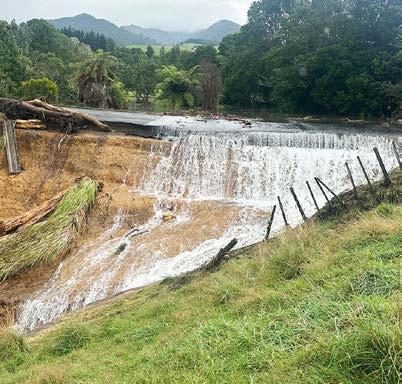
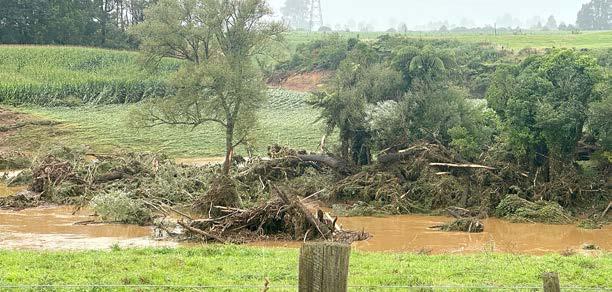
On the western side of Waipā, floodwaters tore through farms near Pirongia and Te Pahu, washing out bridges, fences and vital infrastructure and leaving families facing a long and costly clean-up.
Further south, Ōtorohanga was also hard hit.
Federated Farmers have launched a “farming army” in response.
For the Reymer farm on Ormsby Road in Pirongia, replacing a bridge knocked out by the Valentine’s Weekend storms is top priority.
“We’ve never seen anything like it,” Jodi Reymer said.
“Our high bridge is gone, completely gone – we’ve never
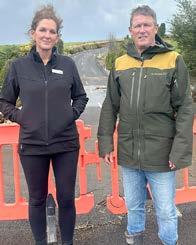
had water up to that level before.”
Near the bridge, water rose to approximately eight metres above its usual height.
“It sounds like the only thing insurance will cover is our boundary fence, so replacing the bridge is going to be a major expense for us,” said Jodi.
“Another urgent problem was our water supply system. The pipes were blown out. It’s not completely fixed, but at least we had water going again by Monday.”
Winter feed may be in short supply for some farmers due to the weather bomb but fortunately the Reymers were lucky.
“Our feed is grown and stored on higher ground and we don’t grow a lot of maize, only a little to use here, so no losses there either, thankfully.
“Heaps of logs were washed down – including some massive trees – but it’s all native bush above us so it didn’t include pine,” said Jodi.
Although his farm wasn’t affected, another member of the Reymer family has been helping others, primarily in the shadow of Mount Pirongia.
Jodi’s uncle Andrew Reymer –who is the Te Awamutu Federated Farmers president - said support networks were quick to spring into action but they will still be needed over the coming weeks.
“Farmers have got on with it, with mates calling mates and neighbours calling neighbours. They’re all supporting each other,” he said.
“We’ve been putting together a ‘farming army’ to help, and
there is support through the Rural Support Trust – if people are really struggling, there are numbers to call.
“Not everybody was hit hard, but up the mountain, Pirongia, people were pretty badly affected.
“They had some big washouts with about 200mls of rain that tore out bridges and took everything along with it.”
Stock losses have been negligible and even infrastructure – especially fences – can be repaired. However, some damage can’t be fixed.
“Maize and some vegetable growers may have lost 100 per cent of their year’s income in just one storm. Some had a crop of maize about a month away from harvest that’s now been flattened. They’ll be hit hardest financially so they’re the ones I’d be most concerned about,” said Reymer.




Many people have heard of a “power of attorney” but are unsure what it means or why it matters. An Enduring Power of Attorney (EPA) is an important legal document that allows you to appoint one or more trusted people to make decisions on your behalf if you lose the capacity to do so. Loss of capacity can occur because of mental illness, serious injury, stroke, or the natural effects of ageing.
There are two main types of Enduring Powers of Attorney: personal care and welfare, and property. A personal care and welfare EPA covers decisions about your health, medical treatment, living arrangements, and overall wellbeing. A property EPA allows your attorney to manage your financial and legal matters, such as paying bills, accessing bank accounts, managing investments, or dealing with property. Having both types in place ensures that all areas of your life can continue to be managed if you become unable to do so yourself.
One of the greatest benefits of an EPA is the control and flexibility it provides. You decide who will act for you, when they can act, and what authority they will have. You can also include conditions or limits to reflect your personal wishes. This provides reassurance that decisions will be made by someone you trust, who understands your values and will act in your best interests.
An Enduring Power of Attorney can also help prevent uncertainty and family conflict. Without a legally appointed attorney, family members may disagree about who should make decisions or what actions should be taken. An EPA provides clear legal authority, reducing confusion and helping ensure that decisions align with your wishes. This clarity can be invaluable for loved ones during stressful and emotional times.
If you lose mental capacity without an EPA in place, your family may need to apply to the court for permission to manage your affairs. This process can be costly, time-consuming, and emotionally draining, often adding pressure to an already difficult situation. Courtappointed arrangements may also require ongoing reviews.

For these reasons, an Enduring Power of Attorney is something every adult should consider, regardless of age. Incapacity can happen unexpectedly, and having an EPA in place is about being prepared. Ultimately, it ensures that if you cannot speak for yourself, someone you trust can step in, providing security, clarity, and peace of mind.
Georgia Ellen

Dairy Women’s Network has partnered with AgriHealth, an animal health company, to support farmers with practical education.
The partnership will see AgriHealth deliver a programme of workshops and webinars for network members, focusing on everyday animal health issues faced on farm.
Topics will include mastitis, on-farm diagnostics, reproduction, cow and calf health, and improving productivity through on-farm efficiencies.
Network chief executive Jules Benton says animal health plays a key role in running a successful and sustainable dairy business.
“Making good decisions on farm has never been more important. Having access to reliable, practical animal health information helps farmers take action with confidence,” she says.
AgriHealth head of marketing and technical, Lyndsay Lawrence, says the company is looking forward to working alongside network members.
One of New Zealand’s biggest equine events will be closer to home for Waipā riders and horse enthusiasts, with Equifest moving to Hamilton for at least the next three years.
The three-day festival, previously held in Taupō, combines education, competition, shopping and entertainment, and attracts equestrian competitors and spectators from across the country.
More than 16,000 people attended Equifest last year, with almost 200 exhibitors and more than 460 horses involved.
Equifest will be held at Claudelands Events Centre in October, using the full facility including the Oval, Arena, exhibition spaces, and the on-site barns and stables.
“We enjoy sharing knowledge and working with people who are keen to learn. Being part of the Dairy Women’s Network community allows us to connect directly with farmers and support better outcomes for herd health and productivity,” she says.
Workshops will be held in key dairy regions over the coming months, with online options available to ensure farmers can take part regardless of location. – Mary Anne Gill

By Garry Reymer, Waipā-King Country regional councillor
In my last column I addressed the significant local government reform that was recently announced by the Coalition government.
They didn’t stop there. Wellington has quickly followed that with a plan to change the Resource Management Act and introduce rates capping bill.
At the end of January your regional council got together to work out how we would respond to the proposed shakeup of local government roles and responsibilities. I want to share with you some of the discussion we have had to date.
Local Government: A Mayoral Forum now exists, and it includes regional council chair, Warren Maher.
The forum has responded to the minister and spelt out the complexity of what is being proposed. What we are certain about is that the regional council needs to be part of the
discussion to shape what the new structure will look like. How we govern, elect and manage the new entity will be critical to its success.
Rates Capping: In a nutshell this is the government telling all councils to focus on the basics - which I’m sure is a sentiment many would echo. It is clear to me that the introduction of a rates cap goes hand in hand with local government reform. If we hand the responsibility for some of our most costly infrastructure, such as what has happened with Waikato Water Done Well, roading, flood protection, and potentially urban transport, back to the Crown, or Council Controlled Organisations (CCOs) rates become more of a community fund for community projects.
Alternatively, they could be run by a CCO with a commercial board type governance structure.

RMA reform: This is the big one. It will impact everything we do. The draft legislation (Natural Environment and Planning Bill) looks to rebalance the protection of the environment with property rights. The aim is to reboot productivity and to relieve landowners of burdensome consenting if they want to change their land use. This is an extremely simplistic statement to summarise the draft submission we have been working on this past week. As with any change there are trade-offs, but we are trying to get the balance right while being wary of unintended consequences. The impacts on Plan Change One, our region and its economic prosperity will be great, and we must make sure that the greater Waikato region is able to maximise it potential while respecting the environment.


Contractors are busy - but not blind to the pressure. Rising operating costs and tight margins sit alongside a season of strong growth and unusually high demand for services, reports Chris Gardner.
Agricultural contractors are having their best season in more than a decade.
A wetter than average spring and summer has created ideal growing conditions, giving agricultural contractors more work than is usual for the time of year.
They are flat out with grass silage and bailage, maize crop work, pasture and crop spraying, and late-summer cultivation as dairy farmers prepare autumn feed.
Pirongia based Reymer Ag’s Mike Reymer said his business was 20 per cent busier than normal for the time of year and it was the busiest they had been since 2012.
“Any rain after November
is good,” Reymer said “Compared to last year it is about 50 per cent busier.”
The last two seasons have been unseasonably dry.
“At this time last year we had pretty much shut up shop, we were doing nothing,” Reymer said.
Ōtorohanga based MF Agri’s Davin Mudford has also seen a 20 per cent increase in business.
“The grass growth is making it all happen a lot more at the moment,” he said.
“It’s just the conditions.”
Mudford, who is also a dairy farmer, was cautious about getting too excited about the boom.
“Operating costs are just



& custom jobs.
through the roof,” he said.
Mudford said $8 per kg of milksolids was break even on his farm,
Fonterra’s forecast Farmgate Milk Price for the current season is between $8.50 to $9.50 per kg.
Miahihi based Disher Contracting’s Neville Disher said the weather meant grass had been growing.
“Everything has been busy, we are doing hay and sileage,” he said.
“It’s turned out to be a good season compared to last year,” said Ōtorohanga based Hall & Wilson’s Nathan Wilson.
He was initially concerned this season might mirror the last two.
“It started off quite wet, so it’s been a good growing season, and we have done more work than normal,” he said.
Piopio based Bryant Contracting’s Nik Bryant said his business was about 30 per cent busier than they would normally be, putting about 20 per cent of the extra work down to growth and 10 per cent down to the favourable weather.
“It was not busy for a while, but we have picked up more work, so we need more people” he said.
His team had been kept busy with work farmers had deferred, such as race maintenance, he said.
“It’s pretty busy.”

Summer is a high-pressure, weather-dependent season for agricultural contractors as they juggle multiple time-critical tasks across dairy, arable, and mixed-farming systems.
Milk production lifted 2.5 per cent nationally in December due to favourable growing conditions, Fonterra said this month, while production for the 12 months to December was up 1.9 per cent.
In the North Island milk collections in December were 99.9 million kilograms of milk solids, 0.1per cent higher than December last season.
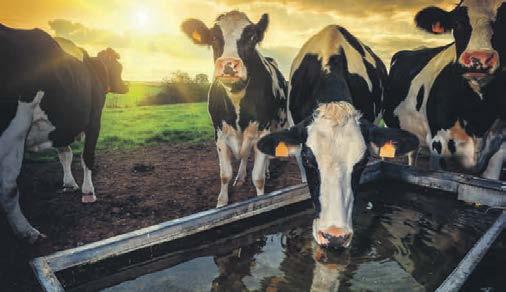
“The increase was mainly due to favourable pasture
conditions, supported by higher soil moisture along the East Coast and parts of the West Coast, partially offset by hotter, drier conditions in Northland, Bay of Plenty and central areas,” Fonterra’s Global Dairy Update said.

NZ Designed Filtration Systems for the Removal
NZ Designed Filtration Systems for the Removal of
NZ Designed Filtration Systems for the Removal of
• Results guaranteed
and Manganese and Other Rural Problems
and Manganese and Other Rural Problems








• Results guaranteed
• Fully automated
•
• Results guaranteed
• Fully automated
• Results guaranteed
•
• Fully automated
• NZ designed systems tailored to suit your water needs
• Fully automated
•
• NZ designed systems tailored to suit your water needs
• Latest in electronic technology , wireless & alert systems
• NZ designed systems tailored to suit your water needs
• Latest in electronic technology , wireless & alert systems
• Servicing the Waikato, Bay of Plenty, Taranaki & Gisborne
• Latest in electronic technology , wireless & alert systems
• Servicing the Waikato, Bay of Plenty, Taranaki & Gisborne
• Servicing the Waikato, Bay of Plenty,

Providing transport to medical and health related appointments between Cambridge, Hamilton and return. 0800 846 9992 Bookings are required by 3.00pm the working day prior to appointment. Donations appreciated.


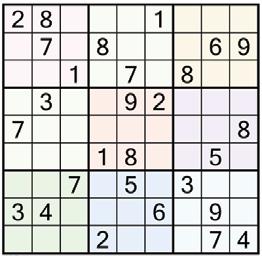
Across 1. Sturdy (6)
4. Entertained (6)
9. Style of film or book (5)
10. Put in place (7) 11. Cost (7)
13. Wicked (4) 14. Focus on something (11) 17. Teller of untruths
Last week
Lustre (5)
(5)
(6)
Bland (4) 8. Children’s game (4-3-4)
Important or
(9)
Sweet drink (7) 16. Uncoordinated (6) 19. Sign up (5)
Piece of data (9)
Across: 1. Mall, 4. Lounge, 8. Chaotic, 9. Caste, 10. Torn, 11. Fabulous, 13. Miniature, 17. Jealousy, 19. Mail, 21. Close, 22. Collide, 23. Brutal, 24. Peep.
Down: 2. Anagram, 3. Lots, 4. Lackadaisical, 5. Unctuous, 6. Gusto, 7. Heist, 8. Cute, 12. Innocent, 14. Evasive, 15. Eject, 16. Glee, 18. Amour, 20. Slip.


Waipā Networks says it handled 146 fault calls over the Christmas period.
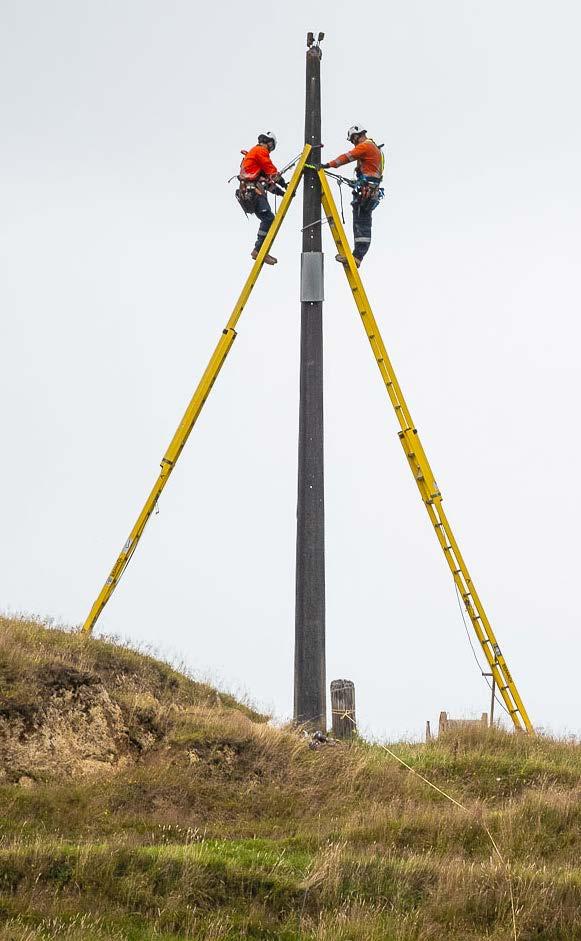
Equipped with a headcam and dashcam, Te Awamutu faultperson Ben Parrott spent his Christmas and New Year’s Eve responding to multiple faults, covering parts of the network in and around Te Awamutu, Ōhaupō, Pirongia, and Kāwhia.
From climbing poles on Christmas Eve to navigating dirt roads in Kāwhia during stormy weather, Ben had an insight into how varied and unpredictable fault response can be.
He restored power in the middle of maize fields, responded to a power loss in the centre of Te Awamutu, and a fault near Kāwhia following severe winds. A large tree fell, snapping a power pole in half. Line crews then spent the next few days working through difficult conditions to replace the pole and restore power.
Waipā Networks had six fault staff and several lines and utility arborist crews on deck during a windy and rainy period.
On call fault staff respond to initial customer calls, and if they cannot resolve the fault on their own, larger line crews and even utility arborists are called in.
Challenging weather conditions have continued to keep crews busy as further faults occurred across the network.
“Unfortunately, electricity faults don’t take holidays, and with more people at home spending time with their families, it’s even more critical for us to be ready to respond and get the power restored quickly and safely,” Faults and Event Manager Eric Everiss said.
“Our teams know this, and they respond with a sense of urgency knowing that when they’re done, they can get back to their families too,” he said.
“Electricity is dangerous and, if handled incorrectly, can cause serious harm or electrocution. That’s why our teams need to be rested and ready when the call comes in. To do this, we run a flexible roster that includes first responders like Ben, line crews, and arborist teams called in if required, and people to manage the teams and work schedules.”
By Chris Gardner
Waipā District Council has been warned to expect negative feedback on its Economic Wellbeing Strategy after failing to engage with its commerce chambers.
Te Awamutu ward councillor and former Te Awamutu Business Chamber chief executive Shane Walsh told a recent council workshop he had always been disappointed that the council’s process was wrong.
“The chambers weren’t involved,” he said.
“Now, you say that they’re involved in in 2019, 2020, but that’s five years ago. Life’s changed, and it would have been very useful.
“I’m suspecting that some of the feedback’s going to be quite negative because of that… so just bear that in mind.”
The council can also expect to get negative feedback over its decision to withdraw tourism funding.
“The other negative feedback will be about tourism given that destination Cambridge and Destination Te Awamutu were doing a fine job and now they’re no longer around,” Walsh said.


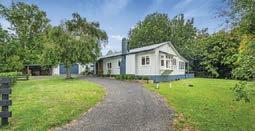






“As an anchor institute we should be thinking more about how those organisations should be working with council, not council to set up their own organisation.
“I’m just giving you that a heads up that you’re going to get some negative responses from that.”
Acting deputy chief executive and strategy group manager Kirsty Downey said there was economic development themed engagement through Waipā’s Community Spatial Plan, Ahu Ake.
“But you’re absolutely right. This is an opportunity now to directly engage with those key stakeholders and to hear from them um in terms of the further shaping of the strategy. So, we take that on board.”



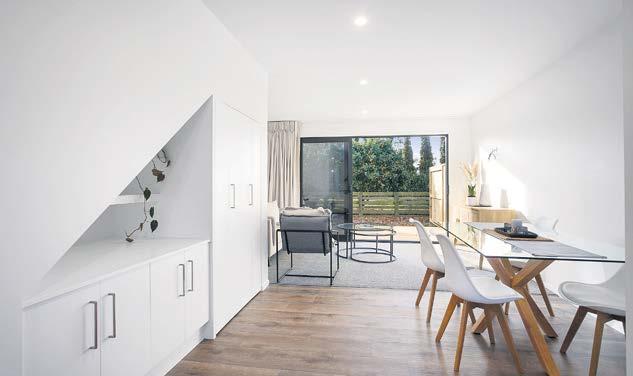
Welcome to 11b Whitespire Way, part of the thoughtfully planned Peake Mews community. This stylish twobedroom townhouse is move-in ready. The lower level centres around easy living, featuring an open-plan kitchen, dining and lounge area that captures plenty of natural light. Sliding doors open to a private courtyard, giving you a sunny spot to relax without the upkeep of a large section. Bosch appliances, quality fixtures and a heat pump ensure comfort and convenience throughout. Upstairs, both bedrooms are generously sized with great storage, accompanied by a well-appointed bathroom. Get in contact for more information. bayleys.co.nz/2351051

2 1 1
Tender (unless sold prior)
Closing 2pm, Wed 11 Mar 2026
Lakewood, Unit 1, Block C, 36 Lake Street, Cambridge View 11-11.30am Sun 22 Feb or by appointment
Jessie Hodges 027 850 2040
jessie.hodges@bayleys.co.nz SUCCESS


Big on style, sensible on size!
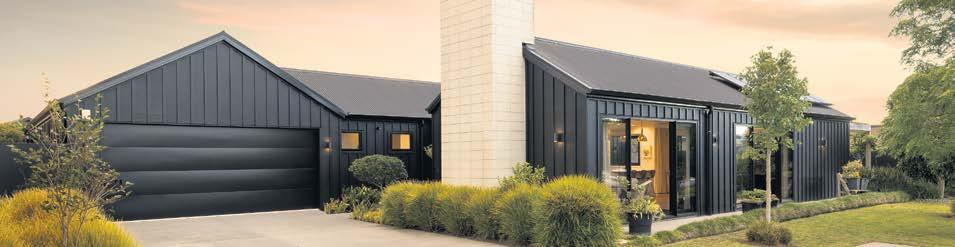
We have the wish list ticked off in one stylish, modern, easy care, and energy efficient package! A manageable 233sqm (more or less) footprint on 760sqm (more or less) yet with dedicated ensuited guest quarters, a luxurious master with a private courtyard, and multiple indoor and outdoor living spaces all opening to the leafy, private surroundings. On a quiet cul de sac in St Kilda, Cambridge, where the streets are wide and tree lined, and a central bistro, is comfortably close for a daily change in scenery or a morning coffee after walking the landscaped boardwalks through the native planted reserves. Two living areas under cathedral ceilings, one with a cosy gas fireplace, flank a central kitchen and walk in pantry. Large double garage offers space beyond the vehicles! bayleys.co.nz/2351052

3 2 2 2
Tender (unless sold prior)
Closing 4pm, Thu 19 Mar 2026
Lakewood, Unit 1, Block C, 36 Lake Street, Cambridge
View 12.30-1pm Sun 22 Feb & Sun 1 Mar
Amanda Merrington 021 646 447
Natalie Kirk 021 277 9720 SUCCESS















- French doors open from the living area to sunny courtyard & deck.
- The kitchen is a standout feature, showcasing a beautiful farmyard sink, stainless steel appliances with a large gas top.
- Bedrooms are light-filled, comfortable, and generously sized.
- Master suite enjoys dual access to a stylish ensuite featuring a deluxe bathtub.
- This is a home guests would absolutely adore, making Airbnb a very appealing option
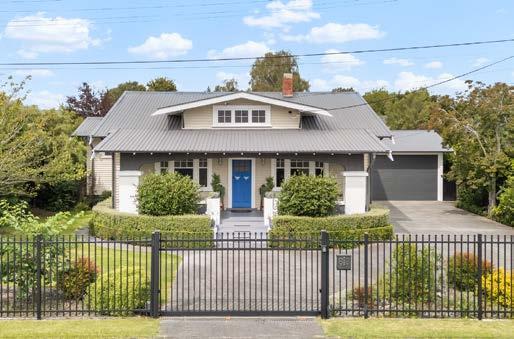
- Set on a generous 1,012m² section.
- Modern upgrades-ducted Daikin air-conditioning for year-round comfort, gas hot water and Solar panels with inverter.
- French doors open onto a private garden setting - fully fenced.
- Powered pergola creates a sunny outdoor entertaining area.
- Character-filled standalone cottage featuring an inviting studio space along with its own shower and toilet, opening a world of options: guest accommodation, studio, office or Airbnb potential.

- A bespoke, entertainer’s kitchen; spacious open plan dining and living with copious indoor-outdoor flow, large separate lounge.
- Four generous bedrooms including master suite with its own ensuite, walk-in robe and garden access.
- The main living area is the hub of the home – extra welcoming, a place for family to gather, doors open wide to the outdoors. A covered terrace has hosted long summer evenings.
- Modern family bathroom; dedicated office and laundry room.


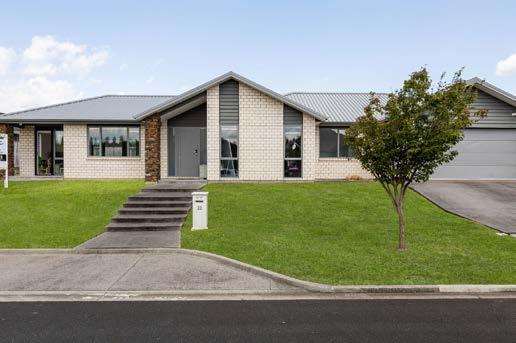
HOMES SAT 2 - 2.30PM & SUN 3.30 - 4.00PM
- Modern 4-Bedroom Family Home – Investor or Owner Occupier Opportunity in Cambridge
- Built in 2021, this well-maintained home is situated in a quiet cul-de-sac.
- 4 spacious bedrooms
- Double internal-access garage
- A large separate living room
- Open-plan living/dining area
- Low maintenance section Family Home Or Investment Opportunity






The phones are ringing and buyers are back. 2026 has kicked off with a hiss and a roar, and the lifestyle market is showing renewed momentum. Buyer confidence is lifting, enquiry is strong, and we have motivated purchasers actively searching right now. If you’ve been sitting on the fence about selling, this could be your moment - we may already have a buyer for your lifestyle property.
Get in touch with your local trusted lifestyle specialists, Team Moore and let’s talk about what your next move could look like.
Rural/Lifestyle Sales Consultants
Chris 027 288 0563 | chris.moore@pb.co.nz
Teresa 027 288 0553 | teresa.moore@pb.co.nz




















































































Property owners and lake users are advised that the herbicide diquat will be applied to control lake weed (hornwort) by boat and helicopter at the following locations:
• Horahora Domain
• Lake Karāpiro/Mighty River Domain
• Navigation Safety Zones 3 through 12
• Little Waipa Reserve
Operational Period
• The operation will take two days to complete and may occur any time between Monday 23 February 2026 and Friday 27 March 2026.
• Exact dates will be posted at www.linz.govt.nz 24 hours before operations commence.
• Operations are dependent on suitable weather conditions.
• Work will not take place on public holidays or weekends.
Precautionary Measures
• Label recommendations are not to gather food, consume water, use it for irrigation or swim in the treatment area for 24 hours after spraying.
• Warning signs will be placed at authorised public boat ramps during treatment and removed 24 hours after completion.
Further Information
• Hazard classification for diquat: 6.1C, 6.3A, 6.9A, 8.1A, 9.1A, 9.3C.
• Full details of LINZ’s annual weed control programme: www.linz.govt.nz (under “Crown Property”).
• Contact Boffa Miskell Ltd: 0800 638 943 (office hours), biosecurity@boffamiskell.co.nz, or PO Box 110, Christchurch.
Weed control in Lake Karāpiro is supported by the Waikato Regional Council, Waipa District Council, Mercury Energy and Land Information New Zealand.
Scan the QR code for the latest updates.


Pursuant to Section 46 of the Local Government Official Information and Meetings Act 1987 notice is hereby given that:


2 Albert Street, Cambridge 07 827 7649
www.cambridgefunerals.co.nz


HUTTON, Benjamin Raymond (Benny) - Passed away peacefully on Thursday 12 February 2026 with his family by his side, at Auckland City Hospital after a courageous battle with cancer. Loved son of Ray and Katrina. Adored brother of Amy, Sophie, Georgia, Emily, Ingrid, Aurelia, Sam, Matt and Jaimie, and doting uncle to Isla. Loved grandson of his Nanny Rose and nephew to Uncle Steve and Uncle Paul. Requiem Mass will be celebrated at St Peter’s Catholic Church, Anzac Street, Cambridge tomorrow, Friday 20 February at 11:00am. In lieu of flowers, please make a donation to Ben’s givealittle page where Bens family can distribute funds to relevant charities givealittle.co.nz/cause/helpben-fight-cancer-a-fourthtime. Communications to the Hutton family C/- Gibson Funerals, PO Box 501, Cambridge 3450.




Regulatory Committee
Council Chambers
101 Bank Street
TE AWAMUTU
The following meetings will be held in March 2026:
Wednesday, March 11, 2026
Friday, March 13, 2026
Monday, March 16, 2026
Tuesday, March 17, 2026
The following meeting was cancelled in February 2026: Wednesday, February 2, 2026
Workshop and Briefings Day
10.00am
Council Chambers
101 Bank Street

TE AWAMUTU
9.15am



Wednesday, March 25, 2026
Wednesday, March 25, 2026
Wednesday, March 25, 2026
Workshop and Briefings Day
Council Chambers
101 Bank Street


TE AWAMUTU
Risk and Assurance Committee
9.15am



Council Chambers
101 Bank Street TE AWAMUTU
Cambridge Community Board
6.00pm
Cambridge Town Hall
Victoria Street
CAMBRIDGE

Tuesday, March 24, 2026 Te Awamutu and Kihikihi Community Board
6.00pm
Council Chambers
101 Bank Street TE AWAMUTU
Road Closure Sub-Committee
8.15am
Council Chambers
101 Bank Street
TE AWAMUTU
Council 9.15am
Council Chambers
101 Bank Street
TE AWAMUTU
Finance and Corporate Committee
1.00pm
Council Chambers
101 Bank Street
TE AWAMUTU
All meeting information and electronic copies of Council agendas are available at waipadc.govt.nz/agendasandminutes
Steph O’Sullivan Chief Executive