
Here we grow again
Plans for a significant new subdivision southeast of Leamington have been unveiled.
Waipā District Council’s Strategic Planning and Policy Committee learned of Milan Park Stud’s proposed private plan change of almost 100 hectares off Maungatautari Road in the Rider Park Structure Plan area from district growth and regulatory services manager Wayne Allan.
“Part of it has already been identified as a Cambridge growth cell,” Allan said.
The application includes 52.89 hectares in the rural zone, and 45.71 hectares in the deferred residential zone. Most of the land is used for equine and grazing.
It is expected the proposal will deliver around 1250 new houses, and two new neighbourhood centres.
Allan said he did not want to exercise his delegated authority to authorise the
processing of the private plan change given its significance.
“I wanted to ensure elected members, and the public, are aware that this application has been lodged, and that you as elected members authorise the processing of it,” he said.
“I know it’s easy to jump to the rights and wrongs of this plan change, or positives and negatives, but it’s a procedural decision.”
Allan said the council wished to submit on the private plan change and sought the application to be determined by independent hearing commissioners.
While there are no legal grounds to reject the plan change, a council report said staff had identified a number of significant matters that would be tested through the public plan change.
The council is concerned about traffic impacts and unplanned roading

upgrades, uncertainty about achieving proposed housing densities of 25 dwellings per hectare, ecological effects, particularly bat habitat loss, and the loss of highly productive soils.
Limiting public access to the Waikato River and limited public open space are also a concern alongside uncertainty around how future development would integrate within the wider structure plan area, particularly relating to
internal roading networks.
Cambridge ward councillor Aidhean Camson compared the number of dwellings in the plan change to Leamington, guessing the suburb was about 3500 dwellings.
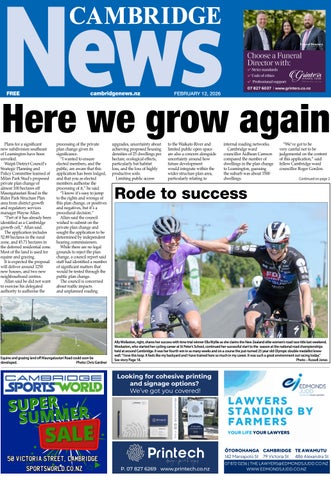
Rode to success
“We’ve got to be very careful not to be judgemental on the content of this application,” said fellow Cambridge ward councillor Roger Gordon.
Continued on page 2

and
See story Page







Ally Wollaston, right, shares her success with time trial winner Ella Wyllie as she claims the New Zealand elite women’s road race title last weekend. Woolaston, who started her cycling career at St Peter’s School, continued her successful start to the season at the national road championships held at around Cambridge. It was her fourth win in as many weeks and on a course the just-turned 25 year old Olympic double medallist knew well. “I love this loop. It feels like my backyard
I have trained here so much in my career. It was such a great environment out racing today.”
18.
Photo – Russell Jones
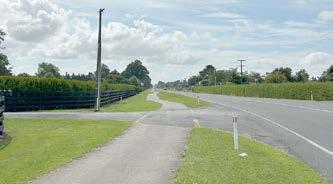
Equine and grazing land off Maungatautari Road could soon be developed. Photo: Chris Gardner





News/Editorial
Roy Pilott editor@goodlocal.nz
027 450 0115
maryanne@goodlocal.nz
viv@goodlocal.nz
chris@goodlocal.nz
janine@goodlocal.nz
David Mackenzie david@goodlocal.nz
Office/Missed Deliveries 07 827 0005 admin@goodlocal.nz
Two honours for Irene
By Viv Posselt
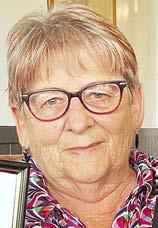
Waipā resident Irene Wardlaw (pictured) has been awarded the Royal New Zealand Returned Services Association Gold Star Badge, and the President’s Appreciation Certificate. Both were presented by Cambridge-based national president Tony Hill.
The Gold Star Badge recognises outstanding honorary service at national and/or district level to RSA personnel, complemented by service to the community, while the President’s Appreciation Certificate affirmed Irene’s role as a key part of the nationwide restructuring of the provision of veteran support.
Tony Hill told The News that the latter linked Te Awamutu based Irene to a new RSA support services strategy started in 2015,
known as the ‘Race to Trieste’ project.
“It has been extremely challenging as the level of change required was immense,” he said. “The result is that all our veterans, including younger contemporary veterans and their families, are now far better supported and advocated for.”
He said Irene has supported veterans and their families for over 26 years, at all hours of day and night and is still actively involved in support at all levels of the RSA’s Waikato-King Country/Bay of Plenty district.
“Irene is a passionate advocate for veteran welfare, ensuring veterans and their families receive the support they are entitled to. She has been a mentor to many new RSA local support advisors and was active in getting support to veterans during
In my column, I like to give you a snapshot of the types of crimes that are keeping us busy, good catches and arrests made by the Cambridge and Te Awamutu teams.
It is true that police can spend a lot of our shift responding to 111 calls for assistance. In most cases these calls come from members of the public being either directly victim of or witness to a crime. We can equally be called upon by other agencies or emergency services requiring our assistance.
This week, I want to look at the other tasks keeping us busy and the community safe, when we are not attending such jobs.
During day shifts, besides 111 calls, we assist with crimes that are reported in person to the station. You will also however find us out walking the beat. This is a good opportunity to connect with our community whilst also acting as a deterrent to would be shoplifters.
Policing is often about being in the right place at the right time. Where crime patterns are observed, we will also conduct targeted proactive mobile patrols in areas presenting as hotspots at hot times for burglary or car crime, again to deter and apprehend offenders and gather information.
Whenever patrolling, we are also looking to enforce the traffic laws including through

the Covid shutdown.”
She and husband Ross also spent years in the Scouts movement, and Irene was awarded her Silver Tiki award after 21 years with them. They also spent several years successfully running two Cookie Time vans.
Irene now works with a small team to support and advocate for veterans across one of the largest districts in the country.
Here we grow again
Continued from page 1
He wanted to know how the council could control the pace of growth.
“Here we have an example of an application that is trying to increase our growth supply outside of what our established definitions are,” he said.
“How do we control the pace of growth of Cambridge? Because there is concern over there.”
Allan said Government direction was about the supply of more housing capacity.
“We will deal with it through its merits,” he said.
“It’s very difficult to stop growth, in fact the Government is encouraging growth and we’re having to respond to it.”
Milan Park Stud first lodged a private plan change request in 2023, but it did not progress.
The committee resolved to publicly notify proposed Private Plan Change 37 – Rider Park Structure Plan.
The News sought comment from Milan Park Stud.
checkpoints.
Bail checks are another daily occurrence. When a person is facing criminal charges, they may be released on court bail conditions pending their next hearing.
These almost always include a residential condition and may include a curfew. A curfew is put in place requiring the bailee to remain at home, typically this would be set during the time frames in which they have previously been committing crime. A police bail check may be conducted by an officer anytime between the curfew hours, to ensure compliance.
The person on bail (bailee) must be home and present themselves to police at the front door. Curfews are most commonly in place overnight, but can be 24hrs - both require regular checks.
If you think that keeps us busy, you'd be right. Sometimes however we are at the station, as there is always case work to be done. Each investigation requires enquiry work, phone calls, statements and follow up.
Our resulting arrests then require detailed file preparation for court. Altogether, the nature of policing ensures no two days are ever the same, which is one of the reasons we enjoy it.
Earlier in the meeting Cambridge Connections Transport Plan executive director Katie Mayes had spoken of the need to solve Cambridge’s transport problems with a long list of potential transport ideas as part of the project’s reset.
• Getting Cambridge connected – Page 7


Boh speeds up
Cambridge athlete Boh Ritchie, at Penn State University in the US on a scholarship, was named freshman of the week after running the second fastest indoor 800m time in the school’s history. Her 2:01.6 time came a fortnight after she blitzed her 600m personal best, running 1:28.21 on an indoor track. The former St Peter’s School student broke Lorraine Moller’s junior 800m record in December when she ran 2:03.14 in Sydney before heading Stateside to take up the scholarship.
Busy birthday
Cambridge’s Busy Bees Op shop will celebrate its fifth birthday next week. It has gone from a pop up op shop open once a fortnight to a three day a week operation which has donated more than over $100,000 into the community.
Dry days
Forecasters on Tuesday were predicting a wet end to the week in Waipā – rain was expected tomorrow and Saturday and temperatures would continue to peak in the mid-twenties.
Traffic delays
Traffic through Karāpiro was reduced to a crawl on Monday. The New Zealand Transport Agency is carrying out shoulder and drainage maintenance, work expected to take two weeks.
Cycling champs
The UCI Oceania Track Cycling Championships are being staged in Cambridge this week. The championships provide a platform towards the series of UCI World Cup competitions in Australia, Hong Kong and Malaysia which form the key qualification process to the world championships and 2028 Olympics. See earlier story, page 18.
Vicar moves
Te Awamutu St John’s Anglican Church reverend
Julie Guest – who has penned the Faith in Waipā column for our sister paper – has stepped down to concentrate on her role as Archdeacon of Waitomo.
Pastor’s kid is parish leader
By Chris Gardner
The Reverend Stephen Black grew up in a very exclusive club. As the son of the Rev Monty Black, he was what church communities affectionately call a PK – a Pastor’s Kid – a title that carries both expectation and scrutiny.
Yet throughout his childhood, he kept his father’s public role to himself and resisted any suggestion that he might one day follow the same path.
“At school I resisted any suggestion that I might one day be ordained,” he said.
This month, however, Rev Black was installed as the new vicar of St Andrew’s Anglican Church in Cambridge, stepping into a position his father briefly held in 2015.
Around 300 people attended the February 1 service, including staff and students from Waikato Diocesan School for Girls, where the 47-year-old previously served as chaplain and teacher.
“They were incredibly good to me,” he said. “I found working with young people was incredibly life-giving.”
One of his fondest memories from that time was accompanying students to ring the school bell in celebration of achieving NCEA results.
Rev Black was ordained in 2010 as a deacon assistant at Onslow Anglicans in
Khandallah while also working as managing editor for Thomson Reuters in Wellington.
He was born in Feilding and spent his childhood following his father’s ministry across several lower North Island towns and attended Hereworth School in Havelock North and Hastings Boys’ High School. He later studied English literature at the Canterbury University, earned an honours degree at Victoria University in Wellington, and completed a theology degree at Otago University.
His role as director of ministry education and vocation for the Anglican Diocese of Waikato and Taranaki brought him –along with his wife Melanie and sons Alex and James –to Hamilton in 2015. Melanie teaches in the learning enhancement department at St Paul’s Collegiate School. Rev Black’s job is no secret to his sons’ friends; he’s even been known to coach their sports teams straight from work, still in his clerical collar.
A strong advocate for the poetic language of the King James Bible, Rev Black nevertheless prefers using the New Living Translation in church for its accessibility. He cites American pastor Richard Foster’s book Prayer as a key spiritual influence: “It was the most significant exploration of prayer that I have experienced. I

encountered a man in deep relationship with God.”
As he settles into his new parish, Rev Black says his first responsibility is simple but essential: to “listen, ask, learn, think, and pray.” It would be “a bold vicar,” he said, who outlines the future of a parish in his first weeks. “Ultimately, the purpose
of a parish is to serve the needs of her community. So, what are they? How are we already responding? What are the gaps? What are we good at? Where can we collaborate?”
Outside of ministry, Rev Black enjoys playing the banjo, op-shopping for shirts to pair with his clerical
collars, and science fiction.
Ronald
Frank
a model ornithopter sits proudly on his office shelf –Star Trek, and Star Wars all rank among his favourites. He will remain based in Hillcrest while his youngest son finishes high school.
Balloons pop off for a year
Waipā has opted out of the Balloons Over Waikato event.
The district council’s group manager customer and community services Sally Sheedy said Waipā District Council valued its long-standing relationship with the Balloons Over Waikato Trust organisers and would continue discussions about future opportunities for the event to be



held in Waipā.
The decision not to host an event in 2026 followed the consideration of factors including change of day, rising delivery and operational costs and the high level of weather dependency associated with balloon events, which carried financial and delivery risk.
The event has been held on a Friday in Waipā for the last three
years – in Karāpiro in 2023 then Albert Park, Te Awamutu for the last two years.
“Balloons visit Waipā has been a popular and well-supported event in previous years, despite some challenges with weather and council acknowledges the enjoyment and value it has brought to the Waipā community,” Sheedy said.
“It was not a decision taken lightly
and we are thankful to organisers for their understanding.”
The long running balloon fiesta – launched in 1999 - will run from March 21 to 28 and venture outside of Hamilton just once, for an evening visit to Tokoroa’s Memorial Park. There will be a nightglow at Waikato University and an evening at The Base. The balloons will be at Innes Common on all other days.
D. Moore’s Battlestar Galactica,
Herbert’s Dune series –
Stephen Black works from an office at St Andrew’s Anglican Church, Cambridge.
Photo: Chris Gardner



















Widow exposes failings
By Chris Gardner
A coroner has commended the widow of a Tamahere man for helping expose gaps in care provided by Health New Zealand after her husband’s death.
Nigel Dring, 65, a retired Windscreens Direct manager, died at Tamahere Eventide Home and Village on July 22, 2023, eight days after being diagnosed with atrial fibrillation at Waikato Hospital and two days after being seen at the hospital’s pilot atrial fibrillation clinic.
Nigel was awaiting an echocardiogram ordered at that clinic when he died.
His widow, Lynn, raised several concerns about his early care, prompting coroner Ian Telford to widen his inquiry. It was Mrs Dring who alerted him that Health NZ was reviewing the clinic and its safety, prompting further investigation.
Telford criticised HNZ Waikato for poor processes and inadequate documentation.
The atrial fibrillation clinic’s initial assessment sheet had never been formally adopted and was kept in a nurse’s desk file. It was inaccessible to other clinicians and not part of the official record.
He found multiple deficiencies, including a non-robust assessment form with no clinical governance approval, a heavy workload placed
on a 0.6 FTE nurse covering two specialist roles, undocumented verbal oversight by a cardiologist, and inadequate recording of assessments and reasoning. Clinical information was also not electronically visible to other providers, posing risks to patient safety. There was no structured quality assurance process for the clinic.
Telford emphasised that Mrs Dring brought crucial issues to light and helped drive systemic reviews and changes aimed at improving safety.
“It is noteworthy that Mrs Dring’s advocacy was instrumental in alerting me to the issues that have become central to my inquiry,” the coroner said.
“Her complaints to HNZ
Waikato have led to systemic reviews that have led to changes to clinical practice that are designed to enhance patient safety. It is my fervent hope that real change now flows from this tragic incident that has left a family traumatised and living with the loss of a man they cherished.”
He recommended strengthening governance of nurse led, and clinical nurse specialist led clinics, including consistent use of approved documents, clear assessment records, reliable escalation pathways, explicit supervision, and adequate staffing and administrative support. He also urged Health New Zealand to work with professional bodies to ensure nurses in advanced roles understand scope limits and that expectations for medical oversight and collaboration are clearly defined.
The coroner highlighted the urgent need for a shared digital record, saying many failures could have been avoided with real time access to clinicians’ assessments and plans.
“My doctor rang me and said I should be proud of myself,” Mrs Dring told The News. She felt the coroner had been more understanding of the emergency department than he could have been, as they could have done more tests, but his concerns with the atrial fibrillation department were justified.
Festival back with a bang
Organisers have raised their glasses to the return of the annual Kāwhia Kai Festival at the weekend.
Festival chair Bruce Brendon estimated the crowd numbers to have been as high as 3500.
A wide variety of stalls, many featuring traditional crafts as well as plenty of kai also kept spirits high.
The festival had been off the menu since 2021 due to substantial increases in costs due, in part, to the Covid pandemic. However, it now looks like the show is back on the road.
“We’re definitely looking forward to putting on future events and interest is already coming in from folks wishing to be involved,” Brendon said.
Ōtorohanga district councillor Kit Jeffries applauded the efforts of all involved.
“It was an amazing day –thousands of festival goers were treated to a great family day out,” the Kāwhia-Tihiroa Ward rep said. “After an absence of five years, the organising group did a magnificent job in reinstating this iconic festival, which augers well for 2027.”


Lynn Dring received coronial praise after advocating for change following the death of her husband Nigel.
Sculpture park at the double
By Viv Posselt
The Sculpture Park at Waitakaruru Arboretum is in celebratory mode after winning two significant awards, one national and the other international.
The 17.5ha park in Tauwhare has attained a five-star rating from the New Zealand Gardens Trust as a Garden of National Significance, placing it among the country’s most outstanding gardens and acknowledging its excellence in design, plant collections, and its distinctive art-in-nature trail experience. Judges also recognised the significant transformation of the quarry over the past 34 years.
In January, the park also received an international accreditation as an Arboretum of International Standing with grade two status, reflecting internationally recognised standards in tree conservation, collection management, education, and long- term stewardship.
That was awarded through the USA-based ArbNet, an international network dedicated to the interests of tree-focused professionals, founded in 2011 by The Morton Arboretum in Illinois, in collaboration with the American Public Gardens Association and Botanic Gardens Conservation International.
They described Waitakarururu Arboretum’s story as one of
renewal … ‘a model of land rehabilitation, showing that even the most damaged landscapes can be restored to life and purpose’.
When Dorothy and John Wakeling developed The Sculpture Park and Arboretum from a disused quarry in Scotsman’s Valley Road 34 years ago, they made the best of its natural features to turn the space into an art-innature trail that displays more than 20,000 trees and shrubs from around the world. It is recognised both for its global biodiversity and as one of New Zealand’s largest outdoor galleries, attracting thousands of visitors annually, many of them international.
In 2020, a new charitable trust, the Art-in-Nature Arboretum Trust Board was established to recognise the park’s value and take it into the future. It manages the tree collection for carbon sequestration and global diversity, curates the sculpture collection, offers educational and creative opportunities and provides ongoing management of the site. The trust is owned by a stewardship foundation and supported by staff, volunteers, artists and visitors.
When the Wakelings spoke to The News last week, they said the double award honoured the dedication of those with a shared commitment to guardianship of the park, and marked an important milestone in the life of
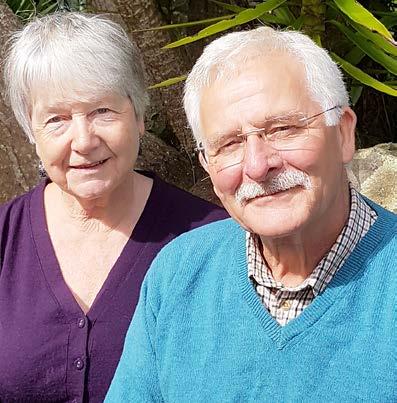
Dorothy and John Wakeling
the arboretum.
“They recognise the evolution of what began as a vision for rehabilitating a damaged landscape into an accessible woodland park where imaginations are inspired, creative exploration encouraged and mental and physical health nurtured,” Dorothy said.
The Garden of National Significance award celebrates the arboretum’s contribution
Local firm expands legal offering via strategic partnering
Local firm expands legal offering via strategic partnering
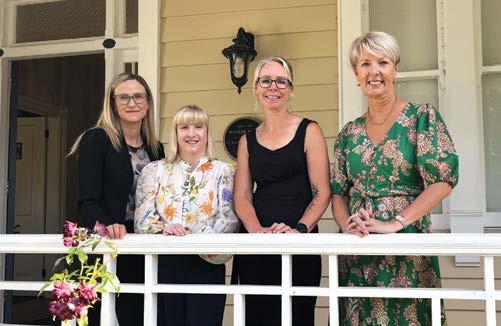
Emma Cooney leads the newly opened Cambridge office of established Waikato firm, Norris Ward McKinnon (NWM).
Emma Cooney leads the newly opened Cambridge office of established Waikato firm, Norris Ward McKinnon (NWM).
A co-brand, Cooney&, has been adopted to reflect the importance of the Cooney name and connections in Cambridge, while supported by the expertise of NWM and its existing Partners and staff, located in Hamilton.
Michelle Way and Jenny Nemaia – who all previously worked with Emma in Cambridge.
to New Zealand’s cultural and horticultural heritage, they said, while the international arboretum accreditation confirms its role within a global community committed to the preservation and celebration of trees.
The park, which is open yearround with its evolving landscape and sculpture collections, marked Waitangi Day last Friday with the usual trails and a special ‘Find the Ruru’ game for children.
Kaimai closure
A large rock on the top of a bluff will be removed during a five-night closure of the road over the Kaimai Range this month.
The road will close for seven and a half hours each day at 8pm from February 22 to 26. It will add considerable time to journeys for drivers who would usually use the State Highway 29 corridor at that time.
NZ Transport Agency Waka Kotahi says the closures are necessary to continue urgent remedial work on the Ruahihi Bluffs, near the Ruahihi Power Station, and carry out maintenance work at other sites along the road.
System Manager for the Bay of Plenty, Sandra King says work was carried out on bluffs late last year when it was identified that further works would be required.
“The next phase involves removing a large rock from the top of the bluffs, along with strengthening and reinforcement work. The operation will involve a helicopter, crane and abseilers. Due to the risks involved, a full overnight road closure is necessary to ensure everyone’s safety. It also helps us to complete the work much quicker - benefiting both road worker crews and road users.”
The work will coincide with other maintenance including asphalt pavement works, drainage work, road marking and surface repairs.
and there are many clients who trust the firm with multiple generations of family members.
A co-brand, Cooney&, has been adopted to reflect the importance of the Cooney name and connections in Cambridge, while supported by the expertise of NWM and its existing Partners and staff, located in Hamilton.
A co-brand, Cooney&, has been adopted to reflect the importance of the Cooney name and connections in Cambridge, while supported by the expertise of NWM and its existing Partners and staff, located in Hamilton.
Emma, daughter of David and Jocelyn, is a specialist family lawyer, who spent 20 years working in Wellington firms before she relocated back to Cambridge in 2021. With her own family now happily established in Cambridge, Emma is excited to focus on helping clients through the variety of challenges presented in family law. Emma has experience across the full range of family law matters, with a particular interest in relationship property law. Her significant court experience has been recognised by her appointment as both Lawyer for Child and Lawyer for Subject Person, work she finds particularly rewarding. Since starting with NWM in December, Emma has been joined by Amanda Doyle,
Emma, daughter of David and Jocelyn, is a specialist family lawyer, who spent 20 years working in Wellington firms before she relocated back to Cambridge in 2021. With her own family now happily established in Cambridge, Emma is excited to focus on helping clients through the variety of challenges presented in family law. Emma has experience across the full range of family law matters, with a particular interest in relationship property law. Her significant court experience has been recognised by her appointment as both Lawyer for Child and Lawyer for Subject Person, work she finds particularly rewarding.
Emma, daughter of David and Jocelyn, is a specialist family lawyer, who spent 20 years working in Wellington firms before she relocated back to Cambridge in 2021. With her own family now happily established in Cambridge, Emma is excited to focus on helping clients through the variety of challenges presented in family law. Emma has experience across the full range of family law matters, with a particular interest in relationship property law. Her significant court experience has been recognised by her appointment as both Lawyer for Child and Lawyer for Subject Person, work she finds particularly rewarding.
Since starting with NWM in December, Emma has been joined by Amanda Doyle,
Since starting with NWM in December, Emma has been joined by Amanda Doyle, Michelle Way and Jenny Nemaia – who
all previously worked with Emma in Cambridge.
Michelle Way and Jenny Nemaia – who all previously worked with Emma in Cambridge.
Cambridge clients will see familiar faces and experience the same warmth and service they previously enjoyed, but now with added access to all of NWM’s lawyers, meaning a “one stop shop” approach which takes care of all their legal needs. Clients will be able to meet with any of NWM’s lawyers, in the Cambridge office, in Hamilton if they prefer, or via virtual meetings. The scope of experience available is due to a highly leveraged business model, with junior lawyers supporting senior lawyers - ensuring the most cost-effective service for clients. Whether a transactional query or a complex governance issue, Cooney& NWM can assist, with practical and plain English advice. No client is the same, and every client is treated with respect and importance. Relationships are created and protected for the long-term,
and there are many clients who trust the firm with multiple generations of family members.
Cambridge clients will see familiar faces and experience the same warmth and service they previously enjoyed, but now with added access to all of NWM’s lawyers, meaning a “one stop shop” approach which takes care of all their legal needs. Clients will be able to meet with any of NWM’s lawyers, in the Cambridge office, in Hamilton if they prefer, or via virtual meetings. The scope of experience available is due to a highly leveraged business model, with junior lawyers supporting senior lawyers - ensuring the most cost-effective service for clients. Whether a transactional query or a complex governance issue, Cooney& NWM can assist, with practical and plain English advice. No client is the same, and every client is treated with respect and importance. Relationships are created and protected for the long-term,
Cambridge clients will see familiar faces and experience the same warmth and service they previously enjoyed, but now with added access to all of NWM’s lawyers, meaning a “one stop shop” approach which takes care of all their legal needs. Clients will be able to meet with any of NWM’s lawyers, in the Cambridge office, in Hamilton if they prefer, or via virtual meetings. The scope of experience available is due to a highly leveraged business model, with junior lawyers supporting senior lawyers - ensuring the most cost-effective service for clients. Whether a transactional query or a complex governance issue, Cooney& NWM can assist, with practical and plain English advice. No client is the same, and every client is treated with respect and importance. Relationships are created and protected for the long-term, and there are many clients who trust the firm with multiple generations of family members.
With growth in the Cambridge and wider region predicted to continue, Cooney& NWM see an increasing need for commercial and business lawyers in town.
With growth in the Cambridge and wider region predicted to continue, Cooney& NWM see an increasing need for commercial and business lawyers in town.
This is one of the firm’s strength areas, as clients build their commercial interests to include employees, premises, financing, contracts, and intellectual property.
This is one of the firm’s strength areas, as clients build their commercial interests to include employees, premises, financing, contracts, and intellectual property.
The firm also has a large team experienced in structuring and administering family and corporate trusts. There is deep knowledge of succession planning and asset protection, alongside advice on wills, enduring powers of attorney, and looking further ahead to estate planning.
With growth in the Cambridge and wider region predicted to continue, Cooney& NWM see an increasing need for commercial and business lawyers in town. This is one of the firm’s strength areas, as clients build their commercial interests to include employees, premises, financing, contracts, and intellectual property. The firm also has a large team experienced in structuring and administering family and corporate trusts. There is deep knowledge of succession planning and asset protection, alongside advice on wills, enduring powers of attorney, and looking further ahead to estate planning.
The firm also has a large team experienced in structuring and administering family and corporate trusts. There is deep knowledge of succession planning and asset protection, alongside advice on wills, enduring powers of attorney, and looking further ahead to estate planning.
As a full-service firm NWM has lawyers and legal executives with experience across a broad range of industries. Their client base includes individuals, first-home buyers, couples and families, trusts, charitable
As a full-service firm NWM has lawyers and legal executives with experience across a broad range of industries. Their client base includes individuals, first-home buyers, couples and families, trusts, charitable
As a full-service firm NWM has lawyers and legal executives with experience across a broad range of industries. Their client base includes individuals, firsthome buyers, couples and families, trusts, charitable organisations, larger businesses and corporates. The firm also offers pro-bono services and is a staunch advocate for community projects and
organisations, larger businesses and corporates. The firm also offers pro-bono services and is a staunch advocate for community projects and partnerships. NWM has a longstanding reputation dating back to 1919, when Carthew (Car) Norris returned from WW1 and started his legal practice in Hamilton. Since then the firm has grown in size and expertise significantly, with 75 staff in its main Hamilton office, and an office in Huntly.
organisations, larger businesses and corporates. The firm also offers pro-bono services and is a staunch advocate for community projects and partnerships. NWM has a longstanding reputation dating back to 1919, when Carthew (Car) Norris returned from WW1 and started his legal practice in Hamilton. Since then the firm has grown in size and expertise significantly, with 75 staff in its main Hamilton office, and an office in Huntly.
partnerships. NWM has a longstanding reputation dating back to 1919, when Carthew (Car) Norris returned from WW1 and started his legal practice in Hamilton. Since then the firm has grown in size and expertise significantly, with 75 staff in its main Hamilton office, and an office in Huntly.
Continuing the Cooney brand in Cambridge was an intended part of integrating Emma and the team into the larger NWM business, also honouring past connections and recognising the value of future growth in the region.
Continuing the Cooney brand in Cambridge was an intended part of integrating Emma and the team into the larger NWM business, also honouring past connections and recognising the value of future growth in the region.
Continuing the Cooney brand in Cambridge was an intended part of integrating Emma and the team into the larger NWM business, also honouring past connections and recognising the value of future growth in the region.

The team at Cooney & NWM in Cambridge. They are, from left, Emma Cooney, Michelle Way, Amanda Doyle and Jenny Nemaia
The team at Cooney & NWM in Cambridge. They are, from left, Emma Cooney, Michelle Way, Amanda Doyle and Jenny Nemaia
Getting Cambridge connected
By Chris Gardner
Cambridge residents will have no excuse to have not engaged with Waipā District Council’s reset Cambridge Connections Transport Plan, says mayor Mike Pettit.
Cambridge Connections Transport Plan
executive director Katie Mayes outlined a plan to collect a long list of solutions to the town’s transport problems at February’s Strategic Planning and Policy Committee. The communications and engagement plan includes a letterbox drop to every household in the Cambridge and Maungatautari wards, posters with QR codes at bus stops, newspaper advertising and an online presence.
The data collection phase runs until March 1
It is a concerted effort to improve communication following the “blue blob” disaster when residents learned, through the Cambridge News, that their homes could be in the path of a road to a new Waikato River bridge.
“Many of us have given people a damn good listening to,” Pettit said,
“There will be no excuse for people not to feed into this, so the challenge for the community is to engage, as this is going to affect us all. Get into this and get engaged.”
Pettit paid tribute to his predecessor, Susan O’Regan, for leading the reset last electoral term.
“I’d rate our progress nine out of 10, there’s always room for improvement.”
The council is inviting submissions on how to solve the problems of high growth and impacts on transport networks, through and across town traffic and heavy vehicles accessing through residential areas and the town centre, and limitations and resilience of river crossing.
Mayes said the council hoped to collect a long list of community ideas, supplement them with community input, and bring them back to the
Strategic Planning and Policy meeting on April 1.
She is starting with 500 pieces of feedback sent to the council before the project was reset following the blue blob controversy.
“Everyone will see that list,” she said. “We will then start to filter, and filter and filter until we get to a draft programme at the end of the year,” she said.
Mayes, who spent eight years working for NZ Transport Agency Waka Kotahi, said the council was using standard methodology for an NZTA business case including an early assessment sifting tool known by its initials - East.
The timeline includes a council workshop in March.
“We will develop a more granular assessment criteria to be able to take it to the next phase,” Mayes said. “To get us to that long list there’s really extensive community engagement proposed. We are going to get really good reach.”
Chair Mike Montgomerie described the community engagement as an important step for Cambridge Connections.
Pirongia ward councillor Claire St Pierre was concerned with outcomes for emergency services.
“Fire and ambulance are concerned that sometimes the sheer gridlock, the amount of congestion that’s on those main routes really extends the length of time that they can get to an incident, which is a concern to them and could even have negative outcomes for the people involved,” St Pierre said.
“We’ve specifically committed to engaging with the emergency services to make sure that their voices are heard through this phase of the project.”
Cambridge chief fire officer Dennis Hunt complained to Cambridge Community Board in December that speed humps were impacting on
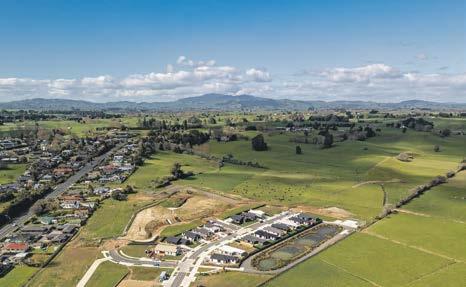
We’re excited to welcome you to Waipiko Landing on Sunday 22 February, where you’ll have the chance to explore our completed homes, meet the team, and experience the vision for this growing neighbourhood in Te Awamutu.
Just a 30-minute drive from Hamilton and 20 minutes to Cambridge. Waipiko Landing o ers easy access to major centres while maintaining the charm of life in a vibrant community.
Homes are being delivered by trusted build partners Venture Developments, Progressive Projects, and Generation Homes, o ering a mix of completed and customisable home packages to suit are available, o ering flexibility in design, size and price point.
Location: Time: Date: Find out more at www.waipikolanding.co.nz
Neighbourhood entrance at 952 Cambridge Road, Te Awamutu 12:00pm - 2:00pm Sunday 22 February 2026
emergency response times.
Cambridge ward councillor Roger Gordon asked for origin and destination data collected by navigation system TomTom to be made available to the public as part of the project. He also suggested a whiteboard be erected in a public place to collect feedback, as had once occurred in Empire Street for another project.
“We will certainly try and pick it up,” Mayes said.
Snapped…
Police say CCTV cameras in Tamahere village helped in the arrest of two people following a burglary last week.
A couple returned home to find their house has been broken into, and items – and a vehicle –stolen.
Investigators from the Waikato Tactical Crime Unit attended the Monday incident and identified a “local address of interest”.
The CCTV cameras have a number plate recognition system which identified a suspect and the stolen vehicle.
The stolen vehicle was identified in several thefts in Te Rapa later that night and the driver crashed it into a fence while attempting to elude police.
Police went to the local address and found stolen items in a vehicle parked at the rear of the property and spoke with people at the house.
A 29-year-old woman and 34-year-old man have appeared in the Hamilton District Court for breaching court release conditions. The 29-year-old next was remanded to appear again on February 19, and the 34 year old on April 20, both on bail. Police expect to lay further charges.
Waikato District Council announced in the middle of last year it had secured funding to install CCTV cameras in Tamahere last year.

us during our open days to experience our caring culture and beautiful rural setting. Independent living in Villas and
available.

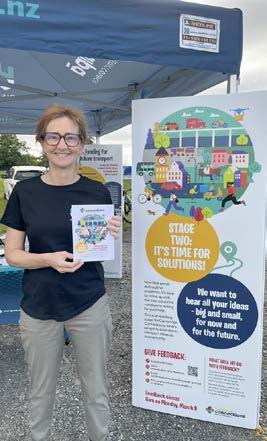
Cambridge Connections Transport Plan executive director Katie Mayes with a copy of the brochure being distributed to Cambridge and Maungatautari residents.
TREES AND POWERLINES
EVERYTHING YOU NEED TO KNOW TO KEEP YOU SAFE.
Managing your trees will help prevent power outages and keep everyone safe. Check your trees regularly and keep them trimmed so they stay clear of power lines.
TREE TRIMMING DANGERS
Trimming trees near power lines can be extremely dangerous, and even deadly.
Contact with a power line can cause:
• Injury or death to yourself, family, community members or livestock
• Damage to property
• Damage to power supply facilities and electrical appliances
• Damage to third parties.
Before attempting to clear tree foliage near live conductors you should contact us for advice.
Branch movement: Although tree foliage can sometimes appear to be at a safe distance from the lines, once you begin the work, the tree may move due to pressure placed on branches, random gusts of wind and other external factors. Be aware of any tree branches that may flick up as they are trimmed or as surrounding branches are cleared.
Wet weather: Branches often hang lower when the leaves are wet, so if it starts to rain, or if the leaves are already wet you should expect some movement. Debris: Ensure there is clear space to allow for debris when tree trimming.
Growth Limit Zone: any tree growing in the Growth Limit Zone (see diagram) must be trimmed by a Waipā Networks authorised arborist.
ELECTRICITY REGULATIONS
The Electricity (Hazards from Trees) Regulations 2003 set out the responsibilities of tree owners and lines companies in relation to trees and power lines. Waipā Networks has developed procedures to meet these regulations, summarised below:
• If we become aware of a tree that you are responsible for within the Notice Zone, you may be issued with a Hazard Warning Notice.
• If we become aware of a tree you are responsible for within the Growth Limit Zone, you will be issued with a Cut or Trim Notice.
• You must have the tree trimmed so that it no longer encroaches the Notice Zone or Growth Limit Zone. Dispensation can be applied for if there is a valid reason for the tree to be allowed to grow within the Notice or Growth Limit Zones.
• We’ll trim a tree free of charge provided it is the first trim. Any further trimming is the responsibility of the owner.
• At any stage, you can declare ‘No Interest’ in a tree on our network and we will meet the costs of any future trimming, or may decide to remove the tree altogether.
• Where we become aware of a tree close to the lines and likely to cause danger to the public or property we have the ability to remove the tree or branch causing the hazard.
If you receive a ‘Cut or Trim Notice’ you must use an approved Utility Arborist to trim or fell the trees. If you repeatedly ignore them, you could be fined up to $10,000 plus $500 per day for every day the offence continues.
THERE ARE RULES ABOUT SAFE DISTANCES BETWEEN TREES AND POWER LINES In the Zone
In October 2024, The Electricity (Hazards from Trees) Regulations 2003 were updated to increase the minimum safe distances between trees and power lines, and a new ‘clear to the sky’ requirement for some trees. The regulations define four zones:
Growth Limit Zone: This is the minimum distance that trees must be kept clear of overhead power lines.
Cut-Back Zone: This zone ensures vegetation is trimmed back far enough to prevent it from quickly growing into the Growth Limit Zone.
Notice Zone: We will issue a notice if vegetation is in this zone to give property owners time to address the risk earlier before it becomes urgent.
Clear to the Sky: This is the area above 33kv and high voltage lines that must be kept clear.
Fall Hazard Zone: Trees present a hazard if they fall and damage power lines. A tree’s fall hazard zone is the height of the tree plus 4 meters.
Note: Fall Zone trees are not currently covered by regulatory requirements. But if you own a tree that is within the fall zone and you have concerns about its health or safety, please notify us to discuss your options.
What are the Minimum Safe Distances?
The size of the growth limit zone varies depending on voltage level:
The Notice and Growth Limit Zone requirements increase if the adjacent power line span is greater than 150m. In these cases, we will notify you of your obligations. For further information contact our Vegetation Team
or trees@waipānetworks.co.nz
Staged rates cap sought
By Chris Gardner
Waipā District Council has asked the Government for a staged implementation of a rates cap.
The majority of councillors sitting on the council’s Strategic Planning and Policy Committee approved a council submission this month supporting the Government’s objectives to cap local government spending at four per cent.
Tier 1 growth councils, including Waipā, were not operating in a ‘steady state’ environment, so applying a steady state rating model too early created material financial, infrastructure delivery, and service delivery risks, the council submission said.
“Depreciation costs arising from rapid asset base expansion, largely driven by national policy and growth obligations, are the largest and least flexible cost driver for high growth councils.
“Core infrastructure costs are unavoidable, often driven by external requirements, and should be explicitly recognised or appropriately
exempted within any rates target framework for example, stormwater.”
“Given these factors, a slower and staged transition to the proposed rates target model should occur before binding caps are applied, supported by monitoring and adaptive mechanisms to respond to emerging impacts.”
Pirongia ward councillor Clare St Pierre, who proposed the submission be sent to the Government, said she had reservations about whether it would achieve its intent.
She described the Government’s proposal as “half-baked”.
Chief executive Steph O’Sullivan told the committee council had been told the Government would review the submissions using AI “and they will move at a pace”.
Mayor Mike Pettit said the council was “not that far away” from achieving the Government’s target of four per cent.
“The four per cent is challenging, but anything is possible,” he said.
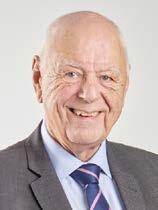
Roger Gordon
Cambridge ward councillor Roger Gordon was the only committee member to vote against the submission.
“I don’t think that all of the time I have been in council there has ever been a steady state,” he said. “There’s always something that comes out of the woodwork. I don’t think that waiting for a steady state is critical.
“I am in favour of rates capping because I think that something has to be done to stop the incredible history of rates increases, and we’ve been as much to blame, an average of 10 per cent over the last five years I think is unsustainable.”
Chair reflects on Waitangi
By Jon Rawlinson
It was her first Waitangi Day as chair of the Waitangi National Trust, but far from her first overall.
A board member for almost nine years and former deputy chair, Tania Simpson was well within her element at Waitangi last week.
“We had events throughout the week,” she told The News. “The dawn ceremony was beautiful and I did the opening welcome. After that, there were other events, the waka were out on the water and, overall, it was a very happy, festive day.”
Compared with some previous years, there were no major controversies on the day.
“During the dawn ceremony, David Seymour was heckled, largely because it’s a church service and his address was more like electioneering,” Simpson said.
“The congregation kept reminding him that he should be giving a karakia, a prayer, and that it’s not a platform for political statements.”
Originally from Ōtorohanga, Simpson lives in Mātangi and she has strong ties across Waipā and
the King Country. She is a professional director with almost 30 years’ experience in governance.
Simpson was named an Officer of the New Zealand Order of Merit in the 2024 New Year Honours for services to governance and Māori.
She stepped down from lengthy service on the Waitangi Tribunal before stepping up from her deputy chair role to lead the Waitangi National Trust board.
“As chair, you gain a deeper understanding of responsibilities,” Simpson said.
“The board as a whole is responsible, but you’re guiding a lot of what happens and making sure the board is fulfilling its obligations, so it is another layer of responsibility.”
Being the first wahine to chair the trust since it was established in 1932 added extra expectations.
“It’s made it even more of a responsibility, to be able to ensure other women are given opportunities to step into this role – it has been a big factor but I’ve also received a lot of support.”
Simpson will step down in June when her maximum term of nine years on the trust is complete.
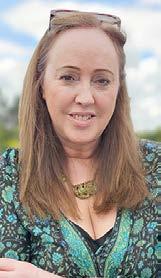
“I’m really mindful that I only have a short term, so I’m doing as much as I can to make a strong contribution.”
Until then, Simpson may sit at the top of the table but administering the trust is a group effort, she said.
“Ngāpuhi in particular and the hapū that affiliates with the land have a very deep relationship, but there’s a myriad of stakeholders to liaise with,” she said.
“I’m not doing it on my own, though – there’s a big team around me. As long as we nurture relationships, listen, treat everybody with respect and collaborate, then it all works out pretty well.”


Waitangi National Trust chair, Tania Simpson







Backpack to the future On the Trail
New Zealand Outdoor Instructors’ Association bush leader and senior writer Chris Gardner continues his outdoor series by discussing choosing and packing a backpack.
Tramping with an enormous backpack overflowing with gear will kill your enjoyment.
The total load of your backpack should never exceed one third of your body weight and, for young people, 15kg is the absolute maximum.
On a multi-day trip, a wet shelter or tent and wet clothes will add weight to your backpack.
Backpacks come in all shapes and size and, like clothes, should be tailored for the walk or tramp you are undertaking.
Day walkers should pack their outdoor essentials in a 30-litre daypack, including hat, gloves, emergency shelter, and survival bag in the event that they spend an unplanned night outdoors.
A 65-litre backpack is perfect for a short tramping trip when a sleeping bag and tent are necessary
Long-stay expeditions warrant a 100-litre backpack, mostly because of the additional clothes and food needed.
When backpack shopping it is important to buy a backpack that fits you. Reputable outdoor gear retailers will have staff trained in fitting packs.
Some manufactures make male and female models as, generally, men tend to have longer backs than women. In many cases a women’s model pack will suit tweens and teens better than the alternatives. Some backpacks have adjustable backs, to allow you to adjust the harness as you grow.
Look out for well-padded and easily adjustable shoulder straps.
A well-padded and easily adjustable hip belt with a quick release feature is also essential. This will ensure that the weight is carried on your hips and not your back. A quick release belt buckle is essential for the emergency removal
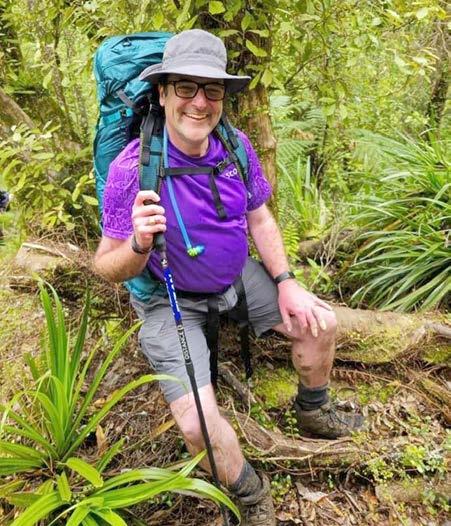
of the pack in a river crossing, should it go wrong.
Features, like pockets and side opening zips, are down to personal taste but they do enable quick access to the likes of first aid kit, food, raincoats, thermals, and water.
While many manufactures claim their backpacks are waterproof, most will not keep your gear dry in pelting rain, and no backpack will be dry inside after a river dunking. Always use either a pack liner or dry bags inside your backpack. Sealed properly, these can add buoyancy to your backpack. But if they are not sealed, a pack liner can fill with water and drag your pack down.
A good rule of thumb when packing a backpack is first in, last out, meaning the last thing you should pack is the first thing you might need in a hurry. Sleeping systems, sleeping bags, sheets and mats, should sit at the bottom of your backpack, followed by clothes.
Your tent will most likely be your heaviest piece of gear and should sit in the middle of your pack and hug your back. This will help you to maintain your centre of gravity.
You’ll want your cooking gear, food, and water near the top along with a water and wind proof top and bottom. If your stove runs on liquid fuel, you’ll want to keep the fuel in a sealed bag or three, in case of leakage, and store it as low as possible, in case it breaches the barriers. For this reason, I favour gas cookers and cartridges.
If you are not carrying a sleeping system and tent, because you are on a day trip, remember to include an emergency blanket and shelter in case you get caught out by an accident or sudden change in the weather.
It’s best practice to keep all of your equipment and gear in your pack, rather than strapped to the outside. It helps keep it secure and dry. Many times, I’ve seen tampers carrying billies or cups dangling from their packs, like tinkers, with the vessels swinging and filling with water as it rained. On swinging the pack off they get drenched,
Take it from me, a well-chosen and packed backpack can make the difference between a successful hike or tramp and a disaster.


Chris Gardner’s backpack at Mount Pirongia’s Central Campsite, packed and ready to go after a wet day and night.
Photo: Chris Gardner
Jury finds dentist not guilty
A Hamilton District Court jury has found a dentist not guilty of molesting a woman he invited to his home
The charges against Rahul Gautam, 51, stemmed from a series of incidents at his Tamahere home in March 2024. The Crown alleged that, after he took the woman to his home, he grabbed and squeezed her and forced her to kiss him.
A jury of six men and six women took just under four and a half hours to reach a verdict in the case, heard by Judge Tini Clark last week
Earlier, they listened to the closing arguments of Crown prosecutor Amy Alcock and defence counsel Philip Morgan KC. Alcock said the case involved a power imbalance, which in part reflected that the alleged victim had found herself in an unfamiliar environment with no
apparent way of extricating herself.
The woman “thought she was with a person she was able to trust, and everything was going to be okay.”
The woman had thought she was going to be getting a tour of Gautam’s very large house. Instead, he took her directly to his upstairs bedroom.
“She was trying to avoid sitting down, and keep the conversation going in a situation that she found uncomfortable.”
There was “nothing complicated about proof beyond reasonable doubt,” Alcock said. “It just means you must be sure... sure she did not consent to these acts. A lack of protest or physical resistance does not amount to consent.”
him not to touch her in that way. He said sorry, stopped,

COMMERCIAL PROPERTY • FARMING EMPLOYMENT PERSONAL
COMMERCIAL
but has then done it againrepeatedly”.
In his summation to the jury, Morgan asked the jury: “do you really think... this man was deliberately exploiting a power imbalance to be able to molest her in this way?”
“Or do you just think he was a silly fool... mistakenly but genuinely in pursuit of some romantic idea he thought the complainant shared?
“Has the Crown really proved ... that he knew that his behaviours were offensive in this way?
Morgan said he wanted to focus on the behaviour of both Gautam and the woman.
“Both of them have behaved very oddly,” Morgan said, and referenced
25 minutes during a trip from Hamilton to his home “without pulling her hand away”.
There was also “the oddity of the two of them ending

PROPERTY • FARMING EMPLOYMENT PERSONAL

Experienced professionals. Local specialists. Quality advice.
Cambridge | 07 827 5147
Hamilton | 07 848 1222 www.lewislawyers.co.nz
Experienced professionals. Local specialists. Quality advice.
Experienced professionals. Local specialists. Quality advice.
Cambridge | 07 827 5147
Cambridge | 07 827 5147
Hamilton | 07 848 1222 www.lewislawyers.co.nz
Hamilton | 07 848 1222 www.lewislawyers.co.nz
up in his bedroom at all. The oddity of these two on the bed, sipping their wine”. It was simply a case of “two socially inept people, and unfortunately the two of them ended up in the same room”.
If the woman had a desire not to be there, it was “not expressed, and certainly not exercised”. - Waikato Times
NOW IN TE AWAMUTU!
Visit our new office at 80 Market Street
Trusted advice in Property, Farms, Family & Estates.
Contact: Gina.Nesbitt@eth.co.nz

We have offices in Hamilton and Cambridge and NOW Te Awamutu and Papamoa

Website : www.eth.co.nz

CAMBRIDGE HEAT PUMP SPECIALISTS
CAMBRIDGE HEAT PUMP SPECIALISTS
Air Conditioning Group Waikato are the specialists for Heating, Cooling, Ventilation, and Air Purification for Homes, Rentals, Businesses, and Commercial Buildings.
Conditioning Group Waikato are the specialists for Cooling, Ventilation, and Air Purification for entals, Businesses, and Commercial Buildings.








Deep sea minerals
By Janine Krippner
It is astounding how quickly our technology has advanced in recent years. This is a topic I love chatting with Dad about over breakfast. We rapidly went from horses and carts to cars, and now households often have more than one. The industrial age took off, and hydrocarbon products like oil became central to machinery, transportation, and a plethora of products that most of us aren’t aware of.
Advancing computer power and battery technology increases demand for materials formed deep below our planet’s surface. Many of these require mining, and the various levels of care involved often raise difficult and important ethical and environmental questions.
We all benefit from these technologies, including through transport, food production, and life-saving medical advancements. We also know that damage has been done in the process. It is not an inherently evil system, but a complex one, which we must continue to do better as a species.
One issue we may hear more about in the future is the proposed mining of seafloor minerals. So, what are they?
One example is polymetallic nodules, or manganese nodules. These are rock-like concretions containing elements such as iron, manganese, nickel, copper, cobalt, and molybdenum. Ferromanganese nodules can also include silicates alongside iron and manganese. In simple terms, they are naturally occurring mineral accumulations that underpin technologies modern societies increasingly rely on.
These nodules often resemble metal balls, typically around 2-8 cm across, reaching 20cm. Nodules can be less round and more complex shapes, and crusts can form over other surfaces like rocks.

Polymetallic nodules form on the ocean floor, generally at depths of 3500–6000 m. These extreme depths are technically challenging to work in, and there is still a great deal we do not understand about deep-ocean ecosystems.
They are also ancient. These nodules grow slowly, taking millions of years to form.
The International Seabed Authority is mandated to “organise and control all mineralresources-related activities in the Area for the benefit of humankind as a whole.” The “Area” refers to international seabed regions beyond national jurisdiction, covering roughly 54 per cent of the ocean floor. Many countries are members of this body, including us, and its work and responsibilities are publicly documented.
Research is underway on the impacts of min-ing this resource, and so far, the impacts are, unsurprisingly, concerning. Limited results indicate test mining impacts can persist over decades. It is important to note that much of this evidence comes from early experimental retrieval methods, and I am not up to date on whether newer approaches reduce these impacts.
As with any activity that affects our planet, there is still much to learn about how human actions damage land and seafloor environments, and the life they support. My hope is that sufficient time and care are taken to ensure that, if this is a path we choose, it is pursued with respect, understanding, and responsibility. Given that much of this activity would occur in international waters, this also means applying these values across nations, including those with less political and economic power.
The gravity of our situation
By Murray Smith, Bridges Church
My brother liked defying gravity. Attempts to get airborne and achieve ‘manned flights,’ involved crazy experiments - like crafting a dodgy home-made parachute using the lining of an old sleeping bag. As a gullible younger sibling, I meekly submitted to being his ‘crash-dummy’. After scaling a tall tree, we got positioned on an extending branch. He tied me to his contraption and said, “just jump, it’ll be fine.” My reluctance was overridden by a forceful push.
I was tangled in string and fabric, plummeting earthward when a lower branch broke my fall. Bruises, trust issues and heightanxiety resulted.
My brother’s airborne pursuits progressed. He was conscripted into compulsory military training and his army division trained him to jump out of planes with real parachutes. Later hang-gliders followed - as well as involvement with pioneering parasailing.
I remain happily appreciative of gravity. Though its absence might seem fun, without gravity, life would be impossible. Without gravity sucking everything inwards to the centre of the earth, life on earth wouldn’t be sustainable. Losing this force which the earth exerts on everything around us, from pebbles to skyscrapers - even briefly, would unleash devastating impact on our lives. With nothing ‘anchored’ to the ground, cars, bikes, food, garbage, cows, horses, trees, your pets and you, would get pulled upwards, chaotically tumbling above the earth. Around the equator where the earth’s spinning is felt to the greatest extent. It would be disastrous. Earth’s atmosphere and its gasses would float into outer space, leaving a drastic change of air pressure. It would rupture the inner ears of every living being on earth… and

with no oxygen, we would suffocate. Earth is held together by gravity like a protective band - without this force exerting inward pressure, the earth’s core would expand outward, resulting in earthquakes and volcanic eruptions being triggered. With gravity’s critical role in sustaining the earth’s orbit around the sun, its absence would result in the earth racing off into space away from its crucially aligned ‘life-giving’ pattern in relation to the sun.
We owe a lot of understanding about gravity to Issac Newton. In 1665 this young maths and physics student in England observed an apple falling from a tree. It prompted him to ponder why objects always fell straight to the ground. This observation inspired his understandings and explanation of universal gravitation.
However, a much greater debt of gratitude is owed - to God. Behind the perfect order and balance within creation, is design and intentionality. It’s absurd to attribute everything to random, arbitrary events happening, which could then sustain our planet’s placement in the universe. Planet Earth exhibits intentionality, pointing clearly to the Creator. The Bible explains that through visible creation, God shares and reveals His invisible qualitiesHis eternal power and divine nature. So, no legitimate excuse exists for not knowing God. Significant gravitas surrounds this issue… trivialising any of God’s gifts, especially the unparalleled treasure of freely given salvation, is seriously the wrong thing to get wrong.


Cambridge Connections Update
We want your ideas!
Cambridge Connections is a project that will shape transport for the next 30 years. Share your solutions – big and small, for now and the future
GIVE FEEDBACK:
Scan the QR Code:
Go to: waipadc.govt.nz/cc-feedback
Email: cambridgeconnections@waipadc.govt.nz
Pick up a form from Council offices or libraries
Feedback closes 8am on Monday, March 9
Remember you can make as many submissions as you like, so if you have further thoughts, feel free to jump back into the chat!
Setting ourselves up for success Spotlight: Heavy weight issues
Every
time we buy

To set ourselves up for success as we seek funding, the NZ Transport Agency gives guidance on what we should think about first, and what we should plan for later.
1
2
First we plan to reduce congestion:
So, if new homes are being built, we think about providing bus stops, footpaths, and shops nearby. This means more trips can be done without cars.
Second we manage demand:
This helps people travel at different times, in different ways - or not have to travel at all. Businesses can encourage carpooling or have flexible work hours. We can also think about how we manage parking to free up spaces and keep things moving.
3
something, we use freight. It’s vital to our economy, but how do we manage trucks rumbling through town?
4
Third we make the most of what we’ve got:
This could mean connecting our cycleways or thinking about how we keep traffic moving, especially over Victoria Bridge.
Finally we build new infrastructure:
New projects can be costly and take time - so they come last. This will include a potential new bridge – we want to hear ideas about that!
One of the key themes from feedback last year was easing freight pressure through Cambridge. In Waipā, freight is a vital part of our economy and relies on arterial routes that can handle heavy vehicles. But over time we’ve built houses on some of our arterial routes –such as Pope Terrace and Shakespeare Street. This causes a real tension, as these roads need to be safe and liveable for the people who call them home.
LEARN MORE GOT IDEAS
Go online to watch a video with more information on freight - out today! on how we can manage freight through town?
Make sure you share your feedback!
Accountability again
By Peter Nicholl
My column two weeks ago was about the accountability, or more accurately lack of accountability, of the Reserve Bank of New Zealand for its poor performance over the last several years.
It was only after I submitted my column that I realised that this problem is much more wide-spread in New Zealand. The lack of accountability has become a weakness almost everywhere in the public sector
If a private sector organisation fails the accountabilty test it disappears – it goes bankrupt.
In the year ended December 31, 2867 New Zealand companies were placed in liquidation, the highest for 15 years. There is nothing equivalent in the public sector. I remember a governor of the Central Bank of Ireland saying at a conference “there is no end to the ingenuity of politicians and public servants when it comes to spending someone else’s money”.
New Zealand tried to set up an accountability model similar to the private sector in our public sector back in the 1990s. Most government operating agencies were set up as state-owned corporations with their own capital and their own board. The heads of government departments were put on term contracts with detailed performance criteria.
This structure was good and the performance of many State Owned Enterprises and other public sector organisations improved significantly.
This model for trying to introduce private-sector accounbtabilty mechanisms to the public sector gained a lot of global attention. I was asked to give speeches about it in many countries overseas.


What a long way we have fallen. I was out of New Zealand from 1995 to 2015. I don’t know how the clarity and strength of the public sector accountability processes New Zealand had back in the 1990s got lost – but lost they certainly are.
Examples of poorly-performing public sector agencies are everywhere today. Examples of organisations or individuals being held accountable for those failures are hard to find. The usual first response is to make excuses. If the failure was a big one the second response is often so set-up a commission of enquiry. The main recommendation from most of these enquiries is often restructuring. Does that work? Of course not. The problems are almost always ones of attitude, incentives, focus and a lack of clear accountabality. In other words, they are personnel issues not issues of structure.
I have also been reminded of the vagueness that we now seem to have in New Zealand about accountability by the initial responses to the terrible recent event in Mt Maunganui.
Several organisations, including the Tauranga City Council, have said they are going to set up inquiry bodies to find out who is responsible and accountable for what happened. They do need to have an inquiry to find out what went wrong but if they don’t know in advance what the responsibilities of the various agencies and people involved were, that suggests that the real problem was we no longer seem to have a clear idea of who is responsible and accountable.
When fixes devour us
By Mary Anne Gill
When I was a kid, I loved the song There Was an Old Lady Who Swallowed a Fly sung by the delightful Burl Ives.
It tells the story of an old lady who swallows increasingly larger animals - a fly, spider, bird, cat, dog, goat, cow, and horseto catch the previous one.
It was often a feature song on the Sunday morning children’s request radio programme on 1ZB sandwiched in by stories like Peter and the Wolf, Diana and the Golden Apple, Old Yella and Flick the Fire Engine. The song concludes with the inevitable, “There was an old lady who swallowed a horse... she’s dead, of course!”.
I was reminded of the song last week when the Asthma and Respiratory Foundation welcomed the first medically approved quit vaping product and renewed calls for tougher laws.
The product will support New Zealanders hooked on vaping, the foundation said.
A friend of mine had been smoking since she was 13 – in her 50s she had tried everything to quit – hypnosis, cold turkey, patches, gum and even counselling as she had some childhood issues which contributed to her starting in the first place.
Within weeks vaping had worked, she told me proudly as she sucked on a vape which then produced a thick cloud of fog which dissipated but left a scented aroma in the air.
To me it seemed she had the vape in her mouth much longer than she ever had a cigarette, probably because it was more socially acceptable. But she had given up smoking.
Vaping, of course, came about to help New Zealanders quit smoking.

Nicotine is addictive and giving up was problematic for most people, particularly those who started when there was less education about the dangers.
Think wars when military leaders actively encouraged soldiers to smoke to boost their morale, combat boredom and ease stress. So, issuing smokes was as important as food and water.
Think of the movie stars of the dayJohn Wayne, Marilyn Monroe, Humphrey Bogart. Smoking wasn’t just accepted; it was glamourised.
Peer pressure or social influence is the major reason people started smoking and that developed into addiction.
We’ve always been quick to normalise harmful habits when they suit us.
Like the old lady in the song, each time we tried to fix one problem, we swallowed something bigger and hoped it would sort itself out.
Vaping was meant to be the bird that caught the spider - a tidy solution to an untidy habit. Instead, it has become its own creature, growing far beyond what anyone intended.
The truth is, we didn’t just watch it happen; we opened the door, stocked the shelves, cut the ribbons, and pretended the consequences wouldn’t follow.
If our teenagers are now choking on a new addiction, it’s because we handed it to them - and we’ve only ourselves to blame. Now we’re shocked the horse has arrived.
Lions Club of Cambridge Charitable Trust
The Lions Club of Cambridge Charitable Trust gives out Grants monthly to many organisations.
Lions Shed
Lions Shed
Opening hours 8.30am -12pm Thursday & Saturday kitchenware, Bric a brac Clothing, Hardware, Whiteware, Electrical appliances, Furniture, Gardening/outdoor equipment and much more at very reasonable prices. and visit us at 26 Vogel Street Cambridge or check our Facebook page for weekly specials.
Opening hours 8.30am -12pm Thursday & Saturday
No grants were given in January as Lions takes a break in January.
We sell kitchenware, Bric a brac Clothing, Hardware, Whiteware, Electrical appliances, Furniture, Gardening/outdoor equipment and much more at very reasonable prices.
Come and visit us at 26 Vogel Street Cambridge or check our Facebook page for weekly specials.
We accept donations of goods in clean working condition, pick up of items can be arranged by calling 027-693-7953
Pick up times Tues, Thurs & Sat between 8.00am -12pm
Lions Club - Grants
Every 2nd Sunday of the month. Cambridge Memorial Park (Rugby Grounds) Open from 8.30am - 1pm
Lions Trash & Treasure Market
Lions Trash & Treasure Market
Applications are open all year round on a monthly basis so if your club, organization or sporting individual has a project that we may be able to help with let us know.
Every 2nd Sunday of the month.
Come along to enjoy the many market stalls selling a variety of goods. Food caravans and entertainment. For stall bookings contact: cambridge@lionsclubs.org.nz
Cambridge Memorial Park (Rugby Grounds) Open from 8.30am-1pm
Every 2nd Sunday of the month. Cambridge Memorial Park (Rugby Grounds) Open from 8.30am-1pm
Stalls priced at $20 All stall profits go back to the community through grants.
Come along to enjoy the many market stalls selling a variety of goods. Food caravans and entertainment. For stall bookings contact Cambridge@lionsclubs.org.nz Stalls priced from $20.00
Come along to enjoy the many market stalls selling a variety of goods. Food caravans and entertainment.
Lions Wallace Scholarship - 9 scholarships totalling $14,000.00 were given out to various applicants who are heading into Tertiary education & trade qualifications.
Pick up times Tues, Thurs & Sat between 8.00am -12pm
The Scholarship will be available again towards the end of 2026 for those wishing to apply for 2027 tertiary year.
For stall bookings contact Cambridge@lionsclubs.org.nz Stalls priced from $20.00 Lions
Club - Grants
Club of Cambridge Charitable Trust gives out Grants monthly to organizations. They include most charities, local schools, local sporting individuals who are participating in sporting activities plus many deserving people. We also give Grants to individuals who need special equipment to help lead their lives in comfort. year the
Trust gave over
Antiques Container
Lions Club Christmas Cakes
Cakes
Get excited for Christmas by enjoying our deliciously fruity Lions Clubs’ Christmas Cakes.
now up & running at the Cambridge Lions shed.
your local Lions Club by purchasing our famous traditonal Christmas Fruit Cake. And they come with a guaranteed shelf life of at least two years! Full of fruit, 1 kilo & delicious. Order on-line at www.lionschristmascakes.org.nz Cakes will be delivered to
Come along to see all those treasures from a bygone era. Bag a bargain while re-living those memories of well loved household items.
Open Thursday & Saturday 8.30am – 12pm.

From roots to research
By Mary Anne Gill
When Hannah Rogers wanders through Waikato University’s shade house, she moves with the quiet confidence of someone who has spent years listening to plants.
The 26-year-old former Tamahere Model Country School student is now in the final stages of her PhD. Her research has already drawn national attention and sits at the heart of a major $5 million gift to the university this week.
The funding, from the wind-up of the George Mason Charitable Trust, will support environmental and biological research for generations to come. But for students like Hannah, it’s much more personal.
“Without funding like this, doing a PhD simply wouldn’t be an option for many of us,” she says.
Hannah, who went on to attend Hillcrest College, met Mason early in her doctoral studies. She remembers him as warm, curious and deeply invested in the next generation of scientists.
“He was incredibly passionate about research, particularly in the Taranaki region. I was grateful to meet him and discuss my plans at the beginning of my PhD.”
Those plans have since grown into a sophisticated study of epiphytes -the plants that grow on other plants - and how they cope with the pressures of urban environments. Her work is already helping councils and restoration groups understand which species will survive in warmer, drier cities like Hamilton, and which need the shelter of gullies and mature forests.
Hannah’s path began close to home. Raised near Cambridge, she credits her parents and a string of inspiring science
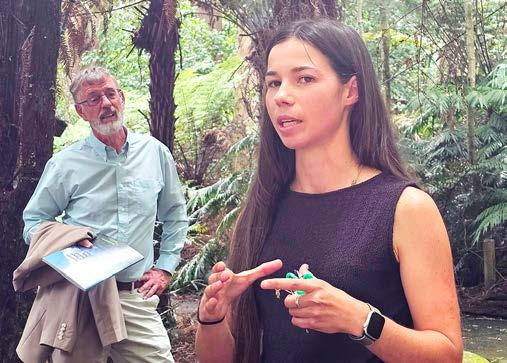
teachers for sparking her interest in ecology.
“My parents were always pointing things out, asking questions about the environment. And I had a whole group of science teachers who were really encouraging.”
After completing a Bachelor of Science and a Master of Science (Research) with First Class Honours at Waikato, she moved straight into her PhD - supported by a George Mason scholarship.
Her research is as intricate as the plants she studies. Over 11 months she collected epiphyte seedlings, grew them in carefully controlled conditions, and then ran a 12-week experiment testing how different
species respond to drought and varying light levels.
In the shade house, she gestures to the remnants of the experiment - rows of pots, shade cloths, and the last surviving ferns.
“Some of them are incredibly resilient,” she says.
“Even after 12 weeks without water, they bounced back. Others really struggled. Understanding those differences is crucial for restoration work.”
Her findings are already helping explain why cities like New Plymouth, with older forests and more sheltered habitats, support richer epiphyte communities than Hamilton.
The $5 million endowment to Waikato ensures that research like Hannah’spractical, applied, and deeply connected to place - will continue to honour Mason.
He died in 2024 at age 94, having spent his life supporting environmental research across New Zealand.
He was known for his sharp intellect, his generosity, and his habit of turning up to meet the very students he funded.
“He loved talking to the students,” says Prof Bruce Clarkson, who worked with Mason for nearly 50 years. “He wanted to know the details - the genetics, the adaptation mechanisms, everything.”
Trust chair Barry Upson, says the wind-up and transfer of funds was part of Mason’s long-term plan.
“By transferring responsibility back to the university, that’s exactly what this gift will achieve.”
For Hannah, the timing feels symbolic. She is close to finishing her PhD, but her work - and the questions it raises - will continue long after she hands in her thesis.
“We’re seeing warmer, drier cities. Some species will cope, others won’t. Understanding that now helps us plan for the future.”
What survives in the canopy, she says, will increasingly determine how liveable urban environments remain.
And for the Tamahere community that watched her grow from a curious student into a nationally recognised young scientist, the $5 million gift ensures that many more will follow in her footsteps.
“It’s pretty special,” she says, looking around the shade house where her research took shape.
“I feel very grateful.”

Hannah Rogers, watched by Professor Bruce Clarkson, explains her research work in Waikato University’s fernery. Photo: Mary Anne Gill




Enviro trust to grow
By Viv Posselt
Seven months after establishing itself as a registered charitable trust, Aroha Cambridge wants to build its volunteer base and broaden awareness of the work it is doing to protect the town’s natural habitat.
The Aroha Cambridge Charitable Trust was set up last July to educate and connect people interested in restoring and protecting Cambridge’s natural environment.
It is building on the success of Predator Free Cambridge in that its activities go beyond predator control to include other rehabilitative measures such as pest plant control, native replanting and water quality restoration.
At the heart of it is connecting like-minded people who want to be included, said Aroha Cambridge co-chair Di Tocker.
“We want to encourage community engagement… create an awareness around what we’re doing,” she told The News. “We already have 70 volunteers and would like more as we’re in the process of establishing more roles, outside trustee roles, within our organisation.”
She said volunteers have previously worked predominantly in silos. Aroha Cambridge wants people to work more effectively together
to ensure wider pest control coverage.
“We open the first half hour of our monthly meetings to the public. We want to work in collaboration with any established conservation group that has the same goal as us. As we see it, this needs to be a team effort.”
Trustee Peter Russell said the formation of the Aroha Cambridge charitable trust effectively expands funding support. “We don’t know what environmental concerns we will face in the future. This work needs to be for future generations.”
Tocker said much had already been accomplished since Aroha Cambridge was formed.
Five trustees have been appointed, a website launched, the renovation of the group’s storage shed-workshop, and Aroha Cambridge’s presentation at Pestival in Hamilton, an event held last November by Go Eco and the Waikato Environmental Centre.
The group has also completed an audit of 23km of existing public traplines, the first in eight years, and has work started on the group’s first environmental restoration project being done in partnership with Waipā District Council.
The latter is a community-led environmental restoration project
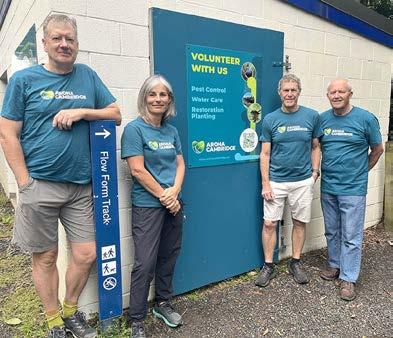
around the transformation of 1.4 hectares of land. It began last July, replacing invasive weeds with native plant species along the walkway between Payne Park and the Te Awa River Ride. The project will aid in the expansion of the Te Puna Marama, or Moon Spring, ecosystem.
The shed has two main areas, one filled with traps and other items while the other is a locked space for the safe storage of bait. The group has a loan library of traps; it offers support around predator control and runs a
detailed database on predator numbers caught.
Fellow Aroha Cambridge trustee Keith Scarlett said work done by Predator Free Cambridge, who formed in 2017, succeeded in reducing possum numbers at Lake Te Koo Utu from 180 in their first two years of operation to just one last year.
The group is keen to talk to schools about their work and get younger people involved as part of a longer-term succession plan to secure the town’s natural habitat for future generations.
Autumn fest plans revealed
Just as the ginko leaves show early signs of yellowing, so this year’s Cambridge Autumn Festival kicks off with tickets going on sale this week to many of the associated concerts and shows.
The 2026 chairperson John Drummond said the full programme is now available and tickets for concerts went on sale on Tuesday.
He said the line-up for the March 20 to 29 festival will see new additions join popular favourites, with a key free event being the Main Street Carnival. There is a comprehensive range of concerts, featuring singers, blues musicians, a boogie pianist, a three-generation band, jazz and swing, and an orchestral event.
Besides those, there will be a comedy night, a 50th anniversary celebration of the Rocky Horror Show with a movie night and best-costume competition, plenty of activities for younger festival goers, and the return of Repair Revolution Waipā with several handson workshops teaching household repairs.
Two art exhibitions and sales, one at the town hall and the other the openstudio event at artists’ studios will be featured, as will an exhibition of photographs and quilts.
Drummond also told The News that a record 600 entries have come in for this year’s short story competition, an impressive jump on the last record of 285.



Aroha Cambridge’s Di Tocker, flanked at the Thornton Rd shed by Peter Russell, David Griffith and Keith Scarlett. Photo: Viv Posselt
George, Ally celebrate
Nelson professional George Bennett claimed the New Zealand Elite men’s road cycling championship following Waipā’s Ally Woolaston’s win in the women’s event.
The series concluded at the weekend after three days of racing around Waipā.
New Zealand’s world medal winning Para-cycling team also enjoyed success on the first day with class wins for Rory Mead, Devon Briggs, Nicole Murray and Emma Foy.
Bennett, 35, attacked off the front of the small lead group with three of the 20 laps remaining. The World Tour rider was never threatened from that point as he powered to an emotional victory, after a challenging 2025 season.
“This win means a lot. I have had a really rough 18 months so this means the world. To finally win a race again – with my friends, my family, my teammates and Bewls [NSN team sports director Sam Bewley] all here.”
It proved a battle of attrition with 28 riders of the 71 starters pulling out.
Woolaston, who had won the under-23 national road race title on two occasions, outkicked her rivals, including several UCI World Tour riders, to snatch her first New Zealand elite women’s title.
A select group of seven riders, comprising all the kiwi current or former World Tour riders, pushed clear early in the 130km race over 13 laps.
“It was a tight-knit group and no-one was skipping turns. Kudos to the girls who all threw the kitchen sink at it today and I was blown away that I was there for the final two laps,” Woolaston said.
Several riders, who double over to the track, regrouped for this week’s Oceania Track Championships at the Grassroots Trust Velodrome.

THE DENTURE MAN










Home win in polo
By Jesse Wood
Waipā men John-Paul Clarkin and Dean Fullerton shone on home soil as New Zealand beat a Rest of the World team 8-7 at Mystery Creek Polo Club late last month.
Captain Clarkin knocked in a penalty goal in the closing seconds to pip the visitors and claim the Rose Bowl for the first time since 2020 – right in front of his house.
The Rest of the World side hit their stride in the early chukkas but New Zealand searched relentlessly for victory.
After being pipped by England on the same pitch a year ago, the Kiwi side had a point to prove.
Last year’s England captain Jimbo Fewster led the Barbarian-like side and played well, as did fellow Englishman Will Harper, but it wasn’t to be.
“It was a really nice high-level game. The highest level game that’ll be in the country this year,” Fullerton said.
“It was a strong Rest of the World team and they started really well. We took a couple of chukkas to get going. George Cronin started well for us and scored the first two goals.
“After about the third chukka we got into our rhythm and began to shut them down. John Paul got a lot of control at the back and we started going much better as a team.
“At the end, we were very lucky to get a penalty and John Paul hit the winning penalty from the 60-yard line.
“We had a really good crowd and it was a super day for it all. It was really nice to be a part of.”
In the earlier match, the New Zealand women were beaten 3-1 by South Africa in a close encounter.
New Zealand player, and well-known musician, Greta van den Brink said it was a tough game.
“The South African girls were strong and great to play against.”








George Bennett wins the national road title.
Photo – Russell Jones.






Shop at Cambridge Tiles and support a locally owned business, and your local tradespeople. Visit our new website which showcases our outstanding range of tiles as well as offering trend and design inspiration, valuable tips and advice on FAQs. Ph 07 827 5686 | 57 Alpha Street Cambridge | hello@cambridgetiles.co.nz


Quick crossword Sudoku
NZLBKPPAFAJCRAANTM LDBEAMRMDICOEAFKHE IAHTAGAEGAMNEMTBON TYRHOMYNFMYRKVBILT KBOIYYSTHLITSCREEN FRLBIWEHWFELIQTNRJ XEGLOWLFSEACAMOKSN HACDCGLIMMERTREDUU

Across 21. Nearby (5) Come together violently (7) Savage (6) Quick look (4)
Word formed from Many (colloq) (4) Lacking spirit or liveliness (13)

5. Ingratiating (8) 6. Zest (5) 7. Robbery (5) 8. Endearingly pretty (4) 12. Free of blame (8) 14. Shifty (7) 15. Throw out (5) 16. Cheerfulness (4) 18. Love, affection (Fr) (5) 20. Petticoat (4)
1. Burka, 4. Bullet, 8. Contact, 9. Robot, 10. Amend, 11. Endorse, 12. Defend, 14. Scroll, 17. Obscene, 19. Music, 21. Taper, 22. Pro rata, 23. Starve, 24. Tithe. Down: 1. Back and forth, 2. Rinse, 3. Abandon, 4. Butter, 5. Lurid, 6. Embargo, 7. Steeplechase, 13. Fusspot, 15. Comfort, 16. People, 18. Error, 20. Smart.
DUKE STREET, CAMBRIDGE Friday 9:30 - 5:00, Saturday 10:00 - 2:00 541 905 E info@elephantollie.co.nz www.elephantollie.co.nz









CAMBRIDGE OPEN HOMES









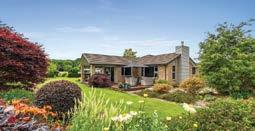
Tamahere 8 September Grove





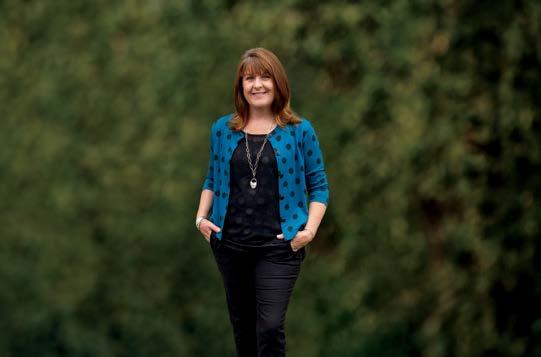

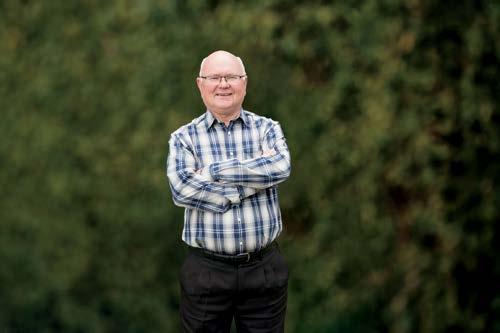
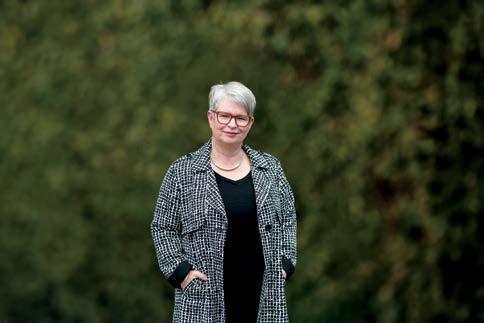




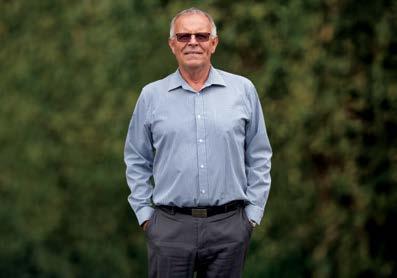


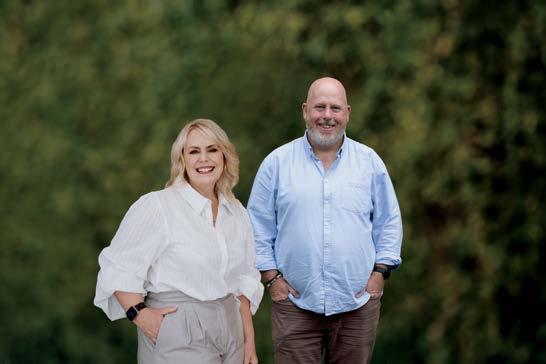

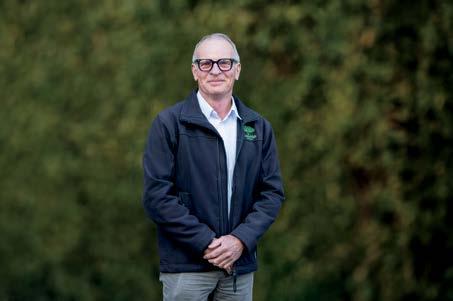






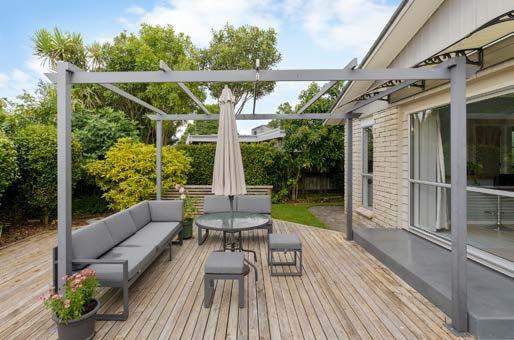
- Well-appointed kitchen, sunny living space with flow to a deck.
- Three good-sized bedrooms, main family bathroom and ensuite with large modern shower that services the master suite.
- Large auto garage complemented by workshop and office space –hobbies room, working from home, or extra storage.
- Set in a private, peaceful setting, the home offers a true connection to the outdoors with lush gardens, established trees, and an abundance of birdlife.

- Fully double glazed and featuring ducted air conditioning
out, plus a heat pump in the family room.
- open-plan kitchen, dining and living areas flow seamlessly, complemented by a separate family room.
- kitchen is well-appointed with a walk-in pantry.
- master suite, with walk-in robe and ensuite, is cleverly positioned away from the other bedrooms for a true retreat.
- Ranch sliders open to a concrete patio, creating an ideal space for outdoor dining and entertaining.



- Separate lounge, offering a cosy retreat for relaxing.
- Light-filled kitchen is an entertainer’s dream - complete with a spacious scullery and a super handy second sink.
- Stacker doors create effortless flow to the outdoors, making alfresco dining and summer gatherings a breeze.
- Master suite is a true sanctuary, featuring a Jack-and-Jill basin, a generous tiled shower, and a huge walk-in wardrobe.
- Modern comforts- solar panels and ducted heating and cooling. Walk in... Relax







19 FEBRUARY 2026
We have 35 great properties to auction at our Waikato Bid Day Out!
The BID DAY OUT auction extravaganza is the best way to buy your property this summer! Don’t miss out!

Scan the QR code, or visit pb.co.nz/bdo for all the details
19 February 2026 from 11.00am Cambridge Town Hall, Victoria Street, Cambridge 3434


Te Awamutu and surrounding areas












































Wood’s gold moment
Progressive three-year-old That’s Gold never left the inside rail as he stormed home to collect his richest career win in the Sir Patrick Hogan Karapiro Classic (1600m) at Te Rapa on Saturday.
The Chris Wood-prepared son of Lucky Vega hasn’t shied away from tackling the best of his age group in his current preparation having taken out the Gr.3 Bonecrusher Stakes (1400m) three starts ago before finishing fifth to Well Written in the Gr.2 Auckland Guineas (1400m) and third behind Gr.1 Al Basti Equiworld Dubai New Zealand Oaks (2400m) contender Chilling Out at his most recent performance.
Wood has made no secret of his regard for his charge and gave rider Sam Collett a clear plan before the race, which she followed to the letter.
“I thought drawn (barrier) one he had to be hard to beat,” Wood said.
thanked his owners and stable staff for the contribution they have made to the horse.
“It’s a huge, huge thrill and I’m over the moon,” he said. “His work this week has been exceptional. He has a great syndicate of owners and I have to thank them, my staff at home who are incredible, and my farrier.
“I have a lot of good people around me who are a big help and it was also a lovely ride by Sam.”
Wood noted the horse would now head to the Gr.2 Eagle Technology Avondale Guineas (2200m) at Ellerslie on February 21 before contesting the Gr.1 Trackside New Zealand Derby (2400m) a fortnight later.
Collett was delighted with the run given her mount was up against quite a few older runners.
“He is only a three-year-old and there were quite a few four-year-olds in the race with more experience,” she said.




“I said to her don’t dig him up too much as he will get over-racing as we are trying to get him to settle as we head towards those 2000m and more races.”
Bounced away quickly at the start by Collett, That’s Gold enjoyed a perfect trail behind Thorax before sticking hard against the running rail turning for home.
“He showed what he can do and he is a much better chaser, so I had a bunny to follow today, the rail opened up and he did the rest.
“He quickened really well and he has just kept improving on his Derby path.”
Eventual runner-up Rambling On issued his challenge wider out as That’s Gold hit the front at the 200m and the pair went to the line locked together, with That’s Gold securing the line by a head at the winning post.
Wood wasn’t afraid to shed a tear as he



That’s Gold was purchased by Wood alongside Paul Moroney Bloodstock and Catheryne Bruggeman for A$57,500 out of the Yulong draft at the 2024 Inglis Premier Sale.
He has now won three of his 14 starts and over $287,000 in prizemoney.
– Kevin Robertson, Loveracing NZ








Win streak extended
Trelawney Stud’s Australian import Miss Jones continued her faultless New Zealand form at Te Rapa on Saturday when extending her unbeaten sequence to four with victory in the Horses & Henley Park 1200.
Purchased as a yearling by the farm’s former manager Kevin “Millie” Walls, under his KPW Bloodstock banner, Miss Jones began her career in Australia for the Cambridge farm with trainers Richard and Will Freedman, for whom she placed in six of her 10 starts.
Trelawney Stud principals Brent and Cherry Taylor
thought she may be better placed in New Zealand and decided to bring her across the Tasman and entrusted her to the care of Matamata trainer Cody Cole last spring. She has thrived in the rural environment of his Waikato property and showcased that first-up when clearing maidens at Ellerslie in December. She has been perfectly placed in her subsequent outings, contesting three MAAT races and she has brought home a winning cheque on each occasion.
The daughter of Deep Field was backing up just a week after her last start at
Trentham and that was her connections only concern heading into Saturday, but she was able to hold off the late challenge of a luckless Sarti, who was hampered early in the race, to win by a head.
Miss Jones will now head to the spelling paddock on a high, while her connections hatch a plan to tackle some stakes targets with their mare as they set their sights towards her future broodmare career.
Miss Jones has a connection to Trelawney Stud’s current manager, Callum Jones – she was named after his daughter. –Joshua Smith, Loveracing NZ]
collect his richest career win the Sir Patrick Hogan Karapiro Classic (1600m) at Te Rapa.




and reliable Class 5 bulk tipper truck and trailer drivers – we want to hear from you!
Phone 07 827 1869 or email office@ curincontractors.co.nz for more information.
Workshop Manager/ Technician Wanted
We’re on the lookout for a Workshop Manager to join our friendly team!
If you’re looking for a change, or the next step in your career, we would love to hear from you. Please call or email us on 07 827 3880 office@lakestauto.co.nz

PLAN CHANGE 14 TO THE WAIPĀ DISTRICT PLAN
Notice of Temporary Road Closure
Schedule
10, Local Government Act 1974
Waipā District Council will close the following road(s) at the following period(s) to ordinary vehicular traffic for: Whakamaumahara Rangiaowhia
Rangiaowhia Pahuatanga Commemoration Day21st February 1864
Road(s): Rangiaowhia Road: from Mandeno Road to Puahue Road
Time: between 5am and 1pm
Road(s): Puahue Road: from Hairini Road to Long Road
Time: between 5am and 7am
Date: Saturday 21st February 2026
There will be detours in place during the temporary road closure. Access for emergency vehicles will be permitted in the event of an emergency.
Steph O’Sullivan CHIEF EXECUTIVE

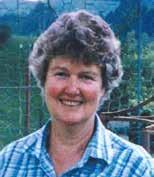
DROMGOOL,
BENNISON, Audrey Mary – It’s been twelve years and you are still greatly missed. We love you Mum – Tom, Craig, and Daryl. PUBLIC
The Waipā District Council gives public notice that Plan Change 14: rezoning of part of C10 Growth Cell from Rural Zone to Industrial zone shall become operative on 19 February 2026
The Environment Court issued a consent order for PC14 on 03 February 2026. This consent order can be viewed at any time on the Council website, www.waipadc.govt.nz/planchanges. The Waipā eplan will be updated in accordance with Appendix A of the consent order on 19 February 2026.
Any person wishing to obtain further information about this plan change, may write to Waipā District Council, Private Bag 2402, Te Awamutu 3840, or send an email to districtplan@waipadc.govt.nz
Steph O’Sullivan Chief Executive
For and on behalf of the Waipā District Council
PUBLIC NOTICE
of an application for Renewal Off Licence
LS & NJ McKenzie Ltd has made application to the Waipa District Licensing Committee for the renewal of a off-licence in respect of the premises at 14 Anzac St, Cambridge known as New World Cambridge. The general nature of the business to be conducted under the licence is Grocery Store. The days on which and the hours during which alcohol is sold under the licence are: Monday to Sunday 7am-10pm.
The application may be inspected during ordinary office hours at the office of the Waipa District Licensing Committee, 101 Bank Street, Te Awamutu or 23 Wilson Street, Cambridge.

Any person who is entitled to object and who wishes to object to the issue of the licence may, not later than 15 working days after the date of the publication of this notice, file a notice in writing of the objection with the Secretary of the District Licensing Committee at: Waipa District Council, Private Bag 2402, Te Awamutu 3840.
No objection to the issue of a renewal licence may be made in relation to a matter other than a matter specified in section 131 of the Sale and Supply of Alcohol Act 2012.
This is the second publication of this notice. This notice was first published on February 5, 2026


2 Albert Street, Cambridge 07 827 7649
www.cambridgefunerals.co.nz

Edward Stuart (Stu) – Stu has crossed the finish line peacefully on Sunday, 8th February 2026, aged 90 years. Riding alongside him for an incredible 70 years was his devoted and much-loved wife, Daphne. Loved father and father-inlaw of Stewart & Lyn, Neil, Michael & Lorenza, Susan, Shaun & Kellie, and the late Lynn. Proud and cherished grandad and great-grandad to his grandchildren and great-grandchildren. A lifelong lover of the track, the crowd now stands as Stu lines up for his final race at Cambridge Raceway, Taylor Street, Cambridge on Friday, the 13th of February 2026 at 12:00pm. All welcome to attend and farewell a true sportsman as he rides on. Messages to the Dromgool family may be sent c/- 3 Hallys Lane, Cambridge 3434, or shared in Stu’s online tribute book at www. grinters.co.nz.








Raewyn Calvert Celebrant