BAY OF PLENTY
SLOW HARM
Burnout prevention isn’t about fixing people, it’s about fixing conditions.
Page 2
EXPLORING AI Using AI technology responsibly and effectively because it’s not a fad. Page 5
SLOW HARM
Burnout prevention isn’t about fixing people, it’s about fixing conditions.
Page 2
EXPLORING AI Using AI technology responsibly and effectively because it’s not a fad. Page 5
Strong pre-conflict confidence is now being tested by mounting global uncertainty, writes David Porter.
Amajor survey of Western Bay of Plenty businesses completed days before the outbreak of the Iran conflict painted a picture of a regional economy entering the year with confidence, strong fundamentals and a willingness to invest.
Priority One executive director Dave Courtney says the results of the organisation’s business confidence survey showed businesses across the region feeling positive about both their own prospects and the local economy, even as cost pressures and workforce challenges persisted.
“A key caveat is timing,” Courtney says.
“We had finalised the survey and then, about a week later, the Iran war kicked off.”
Even so, he says the underlying confidence reflected in the results was grounded largely in regional conditions rather than global sentiment.
“The bigger businesses around town came into the year confident and ready to invest their capital,” Courtney says.
“Of course the impact of the war on supply chains may affect the outlook going forward, but much of that confidence was based on what was already happening locally.”
The survey, which involved 169 businesses ranging from large enterprises to
small and medium‑sized firms across the Western Bay of Plenty, found more than three‑quarters of respondents were confident about the future of their own business. Confidence in the local economy was also strong, with more than 75 percent expressing optimism a sharp lift from the previous year.
A clear majority of businesses believed confidence in the region was improving and that the Western Bay economy was outperforming much of the rest of the country.
Confidence in the national economy, while positive, remained notably lower than confidence in local conditions.
Courtney says key regional economic drivers, including kiwifruit and other export sectors, have not fundamentally changed.
“What has changed are things we have no control over,” he says.
“But most local fundamentals including a solid pipeline of work remain in place.”
The survey also highlighted that confidence does not mean the absence of pressure. Businesses continue to grapple with rising operational costs, including wages, insurance, energy and rates, as well as ongoing difficulty attracting skilled staff and navigating regulatory complexity.
Smaller businesses, in
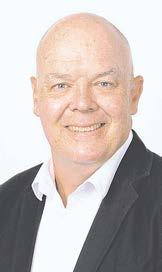
Dave Courtney
particular, reported lower confidence levels.
Workforce movement remained active. Around a third of businesses reported reducing staff in the past year, while two‑thirds hired new employees and the same proportion plan to hire again. Many also expect automation or artificial intelligence to affect their operations over the next 12 months.
“What this survey tells us is that businesses are confident in their own fundamentals and see strength locally,” Courtney says.
“But escalating global tensions, potential supply chain disruption and energy price volatility may weigh on confidence as the year unfolds.”
TIME FOR A CHANGE Retirement in Tauranga looks good for advertising industry stalwart. Page 8
OUT AND ABOUT Gongs galore, a night at the trots and women in business at Rotorua Library. Pages 10 and 11
Editor
David Porter editor@goodlocal.nz 021 884 858
Senior Writer
Mary Anne Gill maryanne@goodlocal.nz 021 705 213
Advertising Director
Janine Davy janine@goodlocal.nz 027 287 0005
Owner/Publisher
David Mackenzie david@goodlocal.nz 021 684 304
To Advertise sales@goodlocal.nz
News Tips editor@goodlocal.nz
Office/Accounts admin@goodlocal.nz
Website goodlocal.nz
To Subscribe admin@goodlocal.nz
Readers’ contributions of articles and letters are welcome. Publication of contributions are entirely at the discretion of editorial staff and may be edited. Contributions will only be considered for publication when accompanied by the author’s full name, residential address, and telephone number. Opinions expressed are not necessarily those of the publishers. Bay of Plenty Business News is published by Good Local Media Limited.
Also publishers of

By PAUL JARVIE
For many employers, burnout still feels like something that happens to people, rather than something created by systems. We talk about resilience, self care, and work–life balance, often with good intent. But too often those conversations stop just short of where the real responsibility sits: how work is designed, allocated, and led.
In a recent episode of the EMA’s podcast, The Health and Safety Hub, my colleague Peter Simunovich put it bluntly: burnout is a form of “slow harm”. It doesn’t arrive suddenly like an accident. Instead, it accumulates quietly, often invisibly, until one day a highly capable worker simply can’t function.
“People break slowly,” Peter told us. “Because there’s a gradual deterioration, we don’t see it even when it’s happening right in front of us.”
That insight alone should give leaders pause. Workplaces are generally good at responding to immediate risks. We are far less equipped to notice harm that builds incrementally, especially when it’s masked by competence, commitment, and a strong work ethic.







One of the most confronting points Peter made is that burnout rarely strikes the weakest performer. Statistically, it hits the hardest worker.
“If you have an ethical worker, someone who is honest, diligent, accurate, and meets deadlines, the manager will give their work to the person who will get the job done,” he said. “What managers don’t always see is that by doing this, we’re steadily loading risk onto the very people we most want to keep.”
This isn’t about blaming managers. It’s human behaviour under pressure. But the cost is cumulative and, eventually, unavoidable. High performers take work home, disengage from relationships that matter, and see their productivity fall even as they work longer hours.
Humans are wired to normalise slow change. We stop noticing warning signs and accept overload as “just how things are”.
“The monsters only hide in the dark,” Peter said. “We can’t fix something we don’t acknowledge.”
The Health and Safety at Work Act is clear that those who create harm must manage that harm. Psychosocial risks are
By TODD MULLER
A TV backdrop from the war zone in the Middle East stopped me in my tracks this week.
It was of Beirut a dense expanse of concrete high rises stretching to the horizon, the blue Mediterranean Sea just visible beyond. Beautiful in its own way, but overwhelming. Greater Beirut is city roughly comparable in footprint to our own Tauranga, yet home to around 2 million people. At the moment, that number is swelling further, with hundreds of thousands of people displaced from southern Lebanon seeking safety.
All of it set against the backdrop of conflict. The ongoing tensions between Hezbollah and Israel not abstract geopolitical debates for those living there. They are immediate, daily realities sirens, smoke, bombs and the horrifying uncertainty of what is going to happen to me and my family tomorrow.
It’s hard to comprehend from my sofa in Pyes Pa our lives are so very different.
We wake to space. To air that feels clean. To streets that are not crowded beyond capacity. Even our local and national debates, important as they are, play out in the context of relative abundance. We talk
about congestion, but we still move. We talk about housing pressure, but we still have room to expand. We talk about cost of living, but we do so within a system that, by global standards, is well better than average.
I don’t make this point to minimise our own challenges, rather to provide some perspective.
We are, by almost any measure, fortunate. At the core of that fortune is our environment. But that raises an important question: what do we do with that good fortune?
One of the more interesting tensions I see is where environmental priorities sit when household budgets are under strain. It’s often said that when the cost of living bites, environmental concerns fall away that people simply can’t afford to care.
There’s some truth in that. When the weekly shop rises sharply, or interest rates squeeze, the horizon narrows. Immediate needs take precedence.
I have always felt that sells us short.
Because the very things that make this place special, our space, our coastlines, our climate, our natural environment, are not luxuries. They are foundational to our quality
no exception. While employers are not responsible for every stressor in a person’s life, they are responsible for ensuring work itself does not add unreasonable pressure. That’s why leadership culture matters so much. An open door policy means little if workers sense that raising concerns is inconvenient or unwelcome. Trust is foundational without it, no survey, policy, or wellbeing initiative will change behaviour. This is exactly where structured support can make a real difference. The EMA’s Safety Culture Programme is a 12‑month, advisor led initiative delivered in partnership with Safe365.
Its focus aligns squarely with what the evidence shows matters most: everyday behaviours, engagement, and practical decision making that reduce harm long before incidents, or burnout, occur. Because burnout prevention isn’t about fixing people. It’s about fixing the conditions in which people work.
• Paul Jarvie is Manager Employment Relations and Safety, Employers and Manufacturers Association (EMA)




of life and, increasingly, to our economic future. Tourism, primary industries, talent attraction all depend on it.
Protecting that environment isn’t an optional extra to be traded off in tougher times. It’s part of the long term bargain we must have with ourselves.
The challenge, then, is not to choose between economic resilience and environmental stewardship, but to hold both at once. Beirut starkly reminds us that stability, space, and security are not universal.
They are privileges, And like all privileges, they carry responsibility.
We have to get that balance right because if we protect what makes this region special while continuing to grow and adapt, then future generations will look back and say we did ok.
And in a world that feels increasingly uncertain, that would be no small achievement.
• Todd Muller is a long term Tauranga resident, former MP and current chair of Priority One. All views are his own.



A major New Zealand work telling the story of the Mataatua wharenui will be heard in concert this month, when Opus Orchestra brings The Journey of Mataatua Whare to stages in Rotorua and Tauranga. Opus Orchestra will perform at the Sir Howard Morrison Centre in Rotorua and a matinee concert at Baycourt in Tauranga.
Rail charms
Tickets for the first passenger train to run through the Kaimai Tunnel in 14 years, sold out in two days. Run by Glenbrook Vintage Railway, the carriages will be hauled by heritage diesel locomotives and carry travellers from Auckland to the Bay of Plenty on a one off return service. The route forms part of the golden triangle freight network, which links the nation’s biggest port to the country’s largest city. Once in Tauranga, two local short excursions will run to showcase the city’s freight network.
Top apprentice
Taylor Forrest, 24, secured victory as the top Rotorua apprentice at the 16th annual New Zealand Certified Builders Apprentice Challenge regional heat last month. Taylor took home a $1000 prize package, courtesy of Mitre 10 Trade and Makita. Manaia Hapi, 23, finished runner up, while Joshua Gifford, 20, was third. Scott Davies from Pāpāmoa won the national title last year.
Duo win
Paige Nicholls from Sugo claimed both titles at this year’s Battle of the Snack during the Flavours of Plenty Festival last month. Nicholls secured the Judge’s Choice and People’s Choice awards for the two snack platters she created much to the delight of her mentor Ian Harrison, chef patron at The Grocer.
Confidence thwarted
Just before fresh global tensions rattled markets, there were growing signs Bay of Plenty was preparing to turn a corner. The year brought signs of something that has been in short supply recently – confidence. It was tentative and conditional, but enough for farmers and exporters to begin looking beyond immediate survival and toward the next season. Read more goodlocal.nz
New sculpture
A newly installed sculpture at the Wāhi ō Waipapa Wetland in Ōmokoroa invites people to connect with the taiao (environment) and reflect on their role as kaitiaki (guardians) of the landscape. Designed by Que Bidois, Te Hokinga Mai o te Kākā (The Return of the Kākā) celebrates the connection Pirirākau has with the landscape, as mana whenua hapū.
Kevan Wong has added law to a career shaped by curiosity, discipline and a refusal to stop learning. Mary Anne Gill meets the Tauranga dentist.
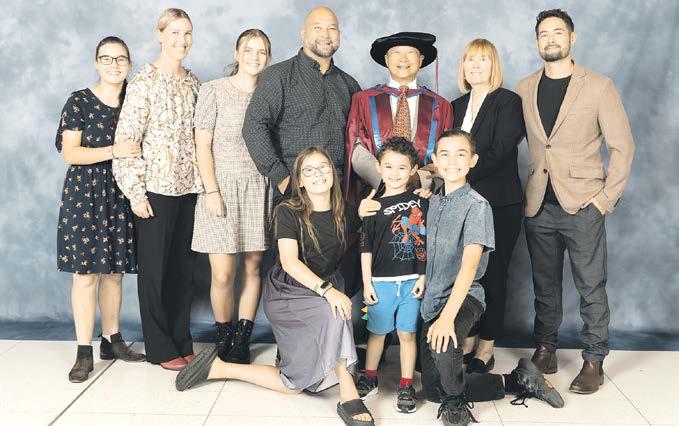
When Kevan Wong walked across the stage at The Pā in Hamilton last month to receive his Bachelor of Laws from the University of Waikato, the crowd noticed three things immediately: his age, his gown and the beaming smile.
Wong, 77, was one of the oldest graduates in the ceremony, smiling broadly as he accepted his degree from Chancellor Susan Hassall. He was dressed in a deep claret‑coloured gown that reflected his PhD from the University of London rather than the qualification he was collecting that day.
For Wong, the moment was less about ceremony than continuity. With degrees in science, dentistry, a PhD in dental implantology and now law, the Tauranga‑based dentist and researcher who has practised in the city for the past 20 years is described by his family, with a mix of pride and bemusement, as a lifetime student.
Wong agrees the label fits.
“I just follow my interests,” he says.
“And once something catches my attention, I want to understand it properly.”
That curiosity, he says, has shaped every major decision of his working life.
Born in Guangzhou in southern China, Wong arrived in New Zealand at the age of two after his father who had emigrated here in 1920 returned to China to marry his mother. The family settled in Timaru, where Wong grew up, attended Timaru College and absorbed what he describes as a very New Zealand childhood.
For a time, his ambitions were less academic than athletic.
“My whole ambition in life was to be an All Black,” he says, proudly recalling two seasons playing No 8 for South Canterbury representative teams. His professional life, however, would head in a very
different direction. Wong began his working career as an aircraft engineering apprentice with the National Airways Corporation, now Air New Zealand. Stationed at Harewood in Christchurch, he filled his lunch breaks with reading and became fascinated by early discoveries in DNA and molecular biology.
That curiosity prompted a decisive shift. Wong gave up engineering, enrolled at the University of Otago and completed a Bachelor of Science, followed by a dental degree. Dentistry appealed because it was vocational and practical, and because it offered a way to solve problems directly.
After qualifying, Wong chose deliberately to work where he was most needed. He spent a decade in rural practice in Taumarunui and later established the first dental practice in Ohakune in the late 1970s, balancing long clinical days with his love of
skiing.
The work was busy and rewarding but eventually limiting.
“I realised I’d almost done as much as I could for everyone I’d seen,” he says.
A Taumarunui farmer approached Wong ahead of his daughter’s wedding, asking for white, straight teeth. Wong initially refused.
The man’s teeth, while crooked, were healthy and functional, and Wong was reluctant to remove them. But after months of persistence, he agreed.
The man got his smile for the wedding. Years later, however, the farmer returned.
“He couldn’t keep his dentures in,” Wong says.
“They just didn’t work properly.”
That led Wong into the emerging field of dental implants.
He travelled to the United Kingdom, enrolled at the University of London and completed a PhD in dental
implantology, specialising in jaw reconstruction and bone regeneration.
Returning to New Zealand in the early 2000s, Wong settled in Tauranga, where he developed a group dental practice that grew to include five dentists and multiple hygienists before being incorporated into the Lumino Dentists Group. Alongside clinical work, he spent more than two decades training dentists in implantology, helping lift capability across the profession.
Semi‑retirement brought restlessness. Watching the news at night, Wong found himself frustrated by how little he understood of the science, policy and legal frameworks underpinning climate change.
So, he enrolled at the University of Waikato’s Tauranga campus, initially to study climate change science. Nearing completion, he encountered papers on how law is applied to
environmental policy. Once again, interest took over.
“I follow what intrigues me,” he says.
“And law, as it relates to climate change, was fascinating.”
That decision led him onto the graduation stage once more, this time collecting a Bachelor of Laws. He is now preparing for professional legal studies and admission to the Bar, to the amused disbelief of his family. Wong and his wife Jan have seven children between them and 14 grandchildren.
“Everyone thinks I’m crazy,” he says.
But for Wong, continual learning is not an indulgence. It is a responsibility.
“There is so much more to do,” he says. “People don’t realise that until they start looking properly.”
Approaching his 80s, and still asking questions, Kevan Wong shows that curiosity does not retire and neither does learning.
Bay of Plenty honey exporter Comvita says its recent capital raise is about backing its long‑term strategy rather than reacting to a difficult period, following several challenging years marked by margin pressure, shifting offshore demand and balance‑sheet strain.
Chief executive Karl Gradon (pictured) says while Comvita is a global business, its roots are still firmly in the Bay of Plenty.
“Many of our loyal shareholders are local, and the structure of this raise gives them the opportunity to participate.”
The capital raise, announced last month, is designed to reduce bank debt and support refinancing, while also
bringing Singapore‑based consumer group Fraser and Neave onto the register as a strategic investor. Gradon says management’s focus is less on the mechanics of the offer and more on what it enables.
“The aim is to support the execution of our strategic plan,” he says.
“It gives us more flexibility to invest in the areas that matter for long‑term growth.”
Comvita has spent recent years reshaping its operations after a prolonged period of earnings pressure, including a failed takeover approach late last year that confirmed the company would remain independently listed. Since then, management has worked to simplify the business,
improve cash flow and refocus on core value drivers.
Gradon says the involvement of Fraser and Neave aligns with that reset, particularly as Comvita looks to deepen its presence in Asia.
“They bring potential opportunities for collaboration, especially in markets where they already have distribution strength and consumer insight,” he says.
“That’s highly relevant as we look at future growth regions in Southeast Asia.”
Despite its global footprint, Gradon says Bay of Plenty remains central to Comvita’s identity, workforce and supplier base.
“Our people, suppliers and broader
community here all have a stake in our success,” he says.
“A stronger balance sheet benefits everyone connected to the business.” –David Porter
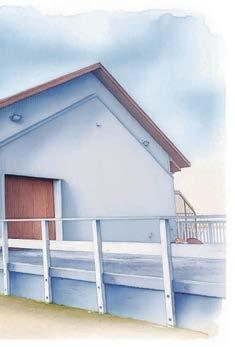
Planning an event often comes down to two key factors: how much control you have, and how far your budget needs to stretch. At The Cargo Shed, both are firmly in your hands.
With capacity for up to 250 guests, this venue is highly adaptable. A variety of table sizes, chairs and bar leaners are included in the hire cost – all of which are set up for you according to a pre-agreed layout. “You just need to come in and add any extra decorations you would like,” explains venue manager Reena Snook. “It’s a blank canvas set up to your specifications.”
Hirers can use their own caterer, run their own bar, and book their own entertainment, giving you full control over suppliers, style and the amount of money you spend. Self-catering is entirely possible, although Snook recommends having people on hand to serve food, pour drinks and clear dishes. “Housekeeping is all included. You just have to remove whatever you bring in. That flexibility is a really big draw card.”
Standard audio equipment and lighting is included. For an extra fee, people can hire a projector and screen plus arrange coloured or moving lighting displays. People can simply ‘plug and play’ or pay to hire an in-house technician if they want expert help during the event.

With heritage charm, industrial-chic character, and the functionality of a versatile modern venue, The Cargo Shed is the perfect location for your next unique event – delivered your way.
Learn more or speak with one of our venue specialists today – visit www.cargoshed.co.nz or scan the QR code →
“They will take care of the music, presentation, lighting changes, everything.”
Four to six weeks prior to an event, experienced venue staff meet with hirers to discuss their requirements and confirm all details. While candles and gazebos are not allowed inside The Cargo Shed, almost anything else is possible.
“It’s about hosting unique events, your way. It’s got lots of its own charm and natural beauty but you can make it your own. Every single event here is different and that’s what’s so appealing.”


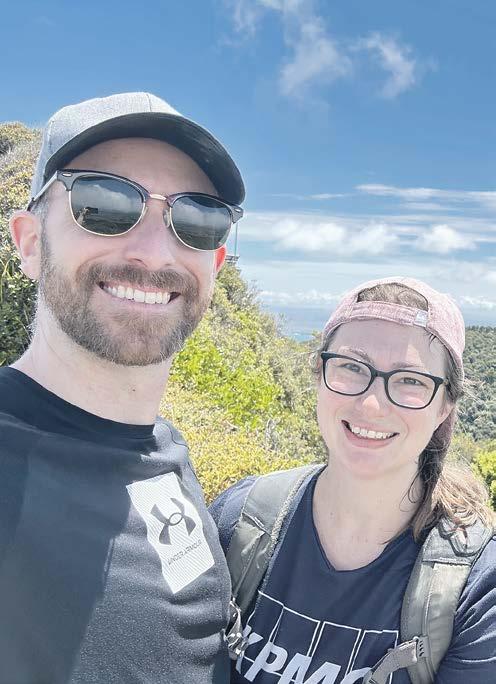
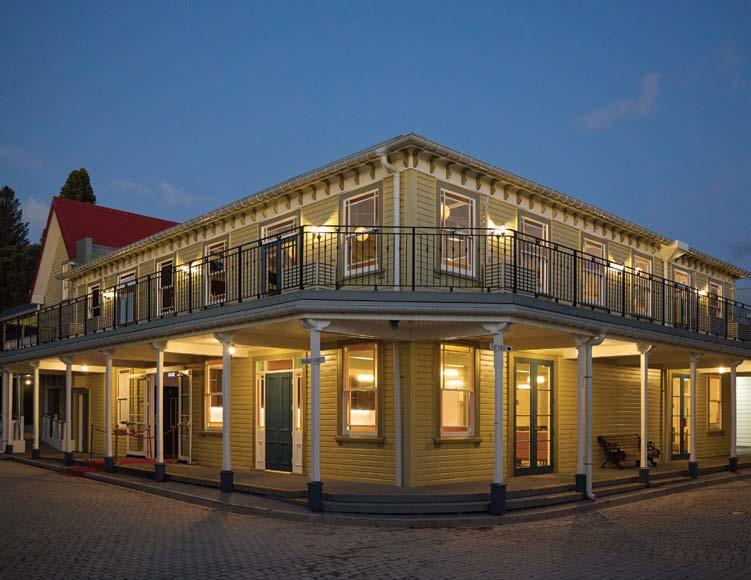
As head of artificial intelligence at KPMG New Zealand, Morgan Clearkin is helping shape how one of the country’s largest professional services firms builds capability and uses AI responsibly, writes Monique Balvert-O’Connor.
As a school leaver, Morgan Clearkin had no chance of foreseeing where his career would take him – his job was just too futuristic.
Today, the former Mt Maunganui College student is head of AI at KPMG New Zealand.
The Hamilton based 33 year old leads a team of eight developing niche AI solutions for the firm, driving continuous learning across the business and strengthening KPMG’s AI capability to better position it in the market. The focus is on leveraging the technology to create value for both people and clients.
Morgan has been with the global company for four years, initially as a business analyst working on a variety of projects and “cottoning on” to the benefits of ChatGPT for work when it came onto the scene in 2023.
He led several large initiatives to roll out AI solutions and campaigns across 2024 and 2025, becoming the go to person for those (in a firm of over 1500 at the time) starting to use the technology.
Morgan says his varied workdays involve encouraging staff in their AI journeys and identifying new development opportunities for his team to work on. He also engages at governance level, working with senior leaders in considering how risk is managed and how AI is used safely with best practice.
He heads up the internal facing work –looking at how to make the NZ team better at what it does.
“That involves finding where AI can unlock automation opportunities, where it can go
beyond being a transactional chat in, chat out to being able to complete an entire process, with our people bringing their professional expertise to the draft output, a collaboration between human and AI. We look at where we can augment our people with the tools and capabilities to free up their time and give them more value in the roles they have,” Morgan says.
He praises KPMG’s attitude to AI, how the company has an appetite to be curious about how AI can benefit people.
Morgan says AI adoption across New Zealand is mixed, with some organisations moving quickly and others still building confidence in how the technology can be used responsibly and effectively.
“What I’ve seen is a lack of understanding still in some areas regarding what AI can and cannot do. It’s definitely not a fad – although that sentiment’s out there.”
He says AI needs to be explored and embraced.
Morgan concedes his career path could have been so different. The Waikato University graduate planned to major in International Management and French. He acquired a double major in Supply Chain Management and International Management with First Class Honours.
His potential was recognised in his senior college years when he was selected to attend a BOP Education Trust Future Leaders’ Programme.
Morgan is married with two young children. His wife, Megan, also works at KPMG.



A Bay of Plenty rural leader’s work in dairy, governance and sustainability is earning national recognition,
writes Monique Balvert-O’Connor
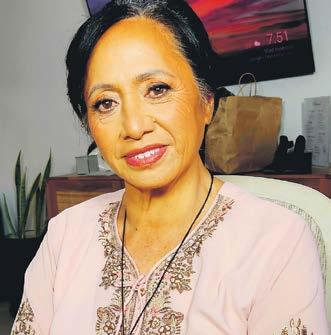
Hinehou Timutimu has had quite the last six months, with successes including being nominated a Fonterra Dairy Woman of the Year finalist.
The 60 year old, who lives on the outskirts of Whakatāne, is “humbled” to be one of three finalists in line for the prestigious award, with results announced this month.
It’s an honour that’s come hot on the heels of a few recently for the Te Tawa Kaiti Lands Trust general manager. At that BOP Trust, Timutimu (Tuhoe, Whakatohea, Te Atiawa) leads a dual enterprise model combining dairy farming and maize on a 424 hectare block.
In November last year Timutimu was selected to represent New Zealand as an expert speaker at the APEC Technical Cooperation Workshop in Bangkok, contributing to international discussions on women’s economic empowerment and sustainable agriculture. At that event she was shoulder tapped to take her wisdoms to Thailand this year to speak at an annual international training course focused on
food sustainability.
Late last year Timutimu also heard she had been selected for this year’s Kellogg Rural Leadership Programme.
This partner, mother, grandmother and university graduate (Bachelor of Education) says these opportunities align with her hopes for sustainable agriculture for future generations.
She serves at both governance and ground level with a leadership style described as anchored in purpose.
“That description aligns with what drives me,” she says attributing much to her late mother, Mina Timutimu (MNZM) a midwife and recipient of The Order of Merit award.
“At her investiture she spoke of the two taonga that drove her her hands and her heart. These are things she held closely and they speak to me. I am grounded and led by strong values, following her example.”
Timutimu’s heart and hands are also busy ones, as she beavers away on projects bringing together mātauranga Māori and western science
to deliver climate resilience, biodiversity restoration, and dairy performance improvements.
She is a leader of Project Te Aroha, which accelerates dairy productivity and emissions reduction through herd genomics and regenerative farming. Kua
Āmio ki Tōna Tīmatanga also thrives under her leadership, creating bilingual resources embedding cultural knowledge into environmental action.
In addition, she plays a leadership role in a project close to her heart - He Whāriki mō Paekoau, which adheres to her guiding philosophy of whakataukī ‘Ka ora ai te whenua, Ka ora ai te tangata’ (when the land thrives, the people thrive).
“This is an ongoing catchment restoration programme born out of Cyclone Gabriel engaging schools and hapū. We are seeing the return of native taonga species, including ones on the at risk list. It is so positive,” Timutimu says.
She holds governance credentials spanning the Institute of Directors Company Directors’ Course,
Fonterra Governance Development Programme, LIC leadership programmes, MPI Governance Essentials, and is Bay of Plenty Ballance Farm Environment Awards Management Committee deputy chair.
The Fonterra Dairy Woman of the Year award recognises an outstanding woman who has contributed to the dairy sector with passion, drive, innovation, and leadership.
Dairy Women’s Network trustee and head judge Jenna Smith applauds Timutimu’s “deeply grounded perspective, authentic leadership
anchored in purpose” and her strong connection between people, whenua and long term outcomes.
Finalists will be assessed on a range of factors including commitment, drive, passion for the dairy sector, role model qualities, demonstrated leadership and circle of influence.
The other finalists are LeAnne Blakelock a Taranaki dairy farmer, sharemilker and chartered accountant; and Rachel Short, a dairy farmer and leading voice in organic and regenerative dairy farming.
Rebecca Steens – a succession and estate planning lawyer with more than 12 years’ experience has been promoted to partner at Holland Beckett. A Tauranga local, Steens graduated from Waikato University with a Bachelor of Laws and Communication Studies in 2013. Kevin Lavery has been appointed Establishment Chief Executive of the new joint Water Organisation being established by Western Bay of Plenty District Council and Tauranga City Council. Pim Borren is the chief executive of Toi Ohomai Institute of Technology, bringing extensive leadership experience across the public sector and vocational education. He has previously been chief cxecutive at Toi Ohomai legacy institute, Waiariki Institute of Technology, as well as Southbank Institute of Technology, Masterton District Council, OSPRI, and the Otago Regional Council.
We have had to trim some stories and run others on our website this month to get all the Bay of Plenty business news published. Extended versions are on our website goodlocal.nz click on the Bay of Plenty tab.

The question of whether a worker is an employee or a contractor is one that businesses keep coming back to!
Employees receive minimum entitlements such as holiday pay, benefit from protections as set out in employment legislation (such as the right to take personal grievances) and must have PAYE deducted from their pay. Contractors, by contrast, do not receive those employment benefits, must manage their own tax affairs, and can usually claim deductions for expenses incurred in earning their income. The recent Uber case has pushed that age-old question back into the spotlight and has shown just how significant the consequences can be when worker status is challenged.
In November 2025, the Supreme Court ruled that four Uber drivers were employees while logged into the Uber app, ending a four year dispute about their legal status. The Court focused on the real nature of the relationship, not just how they described themselves in the contracts. The Court found Uber had significant control over the drivers through fare-setting and performance management, and that the drivers were integrated into the business rather than running their own businesses. This decision had the ability to seriously disrupt the ride share and delivery sectors. The Government’s response to this has been two fold. Firstly, changes to the Employment Relations Act 2000, effective from 21 February 2026, introduce the new concept of a “specified contractor”. Where workers meet all requirements of the gateway test, they are considered a contractor for legal purposes
and this cannot be challenged. If a worker doesn’t meet all requirements of the gateway test, they will not be a specified contractor and common law should be used to determine if the worker is a contractor.
Even after the employment law change, there was still the question of whether tax law would respect the legal status of a specified contractor, leading to the second legislative response, with tax legislation was amended in March to deal with this problem. The amendment ensures that workers who meet the new definition of “specified contractor” and who are treated as contractors for employment law purposes, are also treated the same way for tax purposes. The changes are backdated and take effect from 21 February 2026, the date that the definition of specified
contractor was enacted.
For businesses engaging with specified contractors, this should give both the workers and the businesses greater confidence that the tax treatment they are following is correct, at least on a prospective basis. Whether someone falls within the new specified contractor rules will still depend on the facts and on whether the gateway test is met in full. Businesses should not assume that every contractor arrangement will operate in exactly the same way and there will be many contractor relationships where the individual will not be a specified contractor. In such situations, it will still be necessary to consider the common law tests above and determine whether the person is truly an independent
contractor.
If you have concerns about any contractor relationships you have, you should seek professional advice.
> “The Government’s response to this has been two fold. Firstly, changes to the Employment Relations Act 2000, effective from 21 February 2026, introduce the new concept of a “specified contractor”
ascatchard@deloitte.co.nz
Rotorua teenager Toby Christensen has earned a place on the national stage after a standout performance at the Waikato-Bay of Plenty Young Farmer of the Year regional final, writes Jesse Wood.
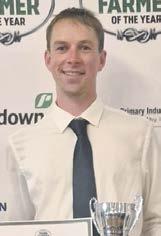
Hard work in the classroom is translating naturally to success on the farm for Rotorua teenager Toby Christensen and his teachers are not surprised.
John Paul College principal Justin Harper says Christensen’s approach to learning has been reflected beyond school, after the Year 10 student secured the Waikato‑Bay of Plenty FMG Junior Young Farmer of the Year title at Te Teko Racecourse in late March.
“Toby is a conscientious and hard‑working student in all of his classes, so
seeing this reflected in his performance on the farm is no surprise,” Harper says.
Christensen claimed the regional title alongside teammate Benjamin Barbour, of Putāruru College, with both now qualifying for the national finals to be held in New Plymouth in July.
“I was pretty confident that we might get first or second place, but when second was read out, my hopes started to fade,” says Toby.
“After it was announced that we won, I was pretty
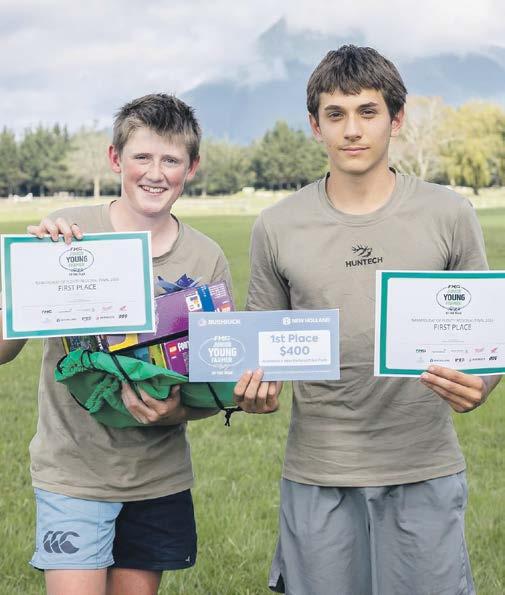
happy with myself and Ben because I knew that he wanted this win over anything else, because of last year’s defeat.”
Alongside the junior competition, the regional finals also crowned a senior winner, with Te Aroha‑based sheep and beef farmer Cam Clayton taking out the Waikato‑Bay of Plenty Young Farmer of the
Year title in his final year of eligibility.
“To pick up the regional title was pretty awesome,” Clayton says.
Representing the region at the national finals brings pressure, but also pride.
“You’re not just doing it for yourself you’re doing it for your supporters, your family and the region,” he says.




Western Bay of Plenty District Council and Tauranga City Council have agreed to establish a joint water organisation. The decision follows months of collaborative due diligence under the Government’s Local Water Done Well reforms.
Farm worker pay growth has levelled off in the last few years, after a post pandemic period of rapid growth, a new report shows. The 2026 Federated Farmers Rabobank Farm Remuneration Report shows the average salary for a farm worker increased by $1367 to $72,778, or a weighted average rise of 3%.













After nearly 40 years in the advertising business, Judy Coulter has stepped into retirement, moving from Hamilton to Tauranga as an industry she helped hold together continues to change. Mary Anne Gill reports.
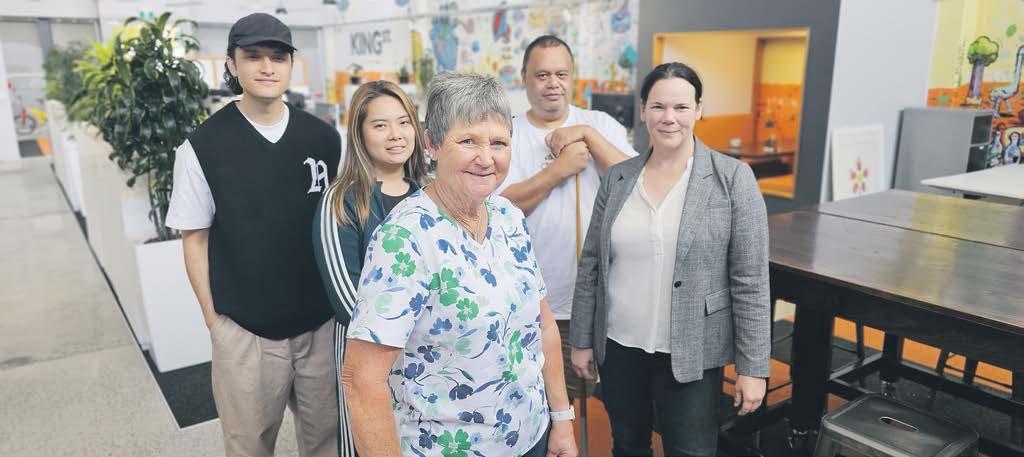
For more than two decades, Judy Coulter has been the person behind the scenes at King Street Advertising responsible for the systems, finances and processes that kept the agency functioning as the industry around it changed.
Her working life has coincided with a period in which advertising shifted from typewriters, darkrooms and print dominated media to cloud based systems, digital platforms and analytics driven campaigns.
Coulter and her former business partner Chris
Williams first met in 1999 when he came from Auckland to check out the Hamilton advertising agency at 9 King Street in Frankton where she was working.
His father Hamilton accountant Dick Williams suggested his son who had been working at big city agencies including Colenso in Wellington and Saatchi & Saatchi in Auckland have a look at his client Rimmington Advertising. A deal was struck Williams secured 80 per cent and Coulter 20 per cent.
“It just worked,” Coulter says of the partnership. While Williams led the agency’s creative and external profile, Coulter provided stability through finance, systems, compliance and governance the internal structures that allowed the business to grow, contract and evolve without losing its footing.
Raised in Hamilton, Coulter attended Frankton Primary School, Melville Intermediate and Fraser High School before completing shorthand and typing at what was then Waikato Polytech. Those practical skills proved pivotal.
After spending nine years overseas, largely in the United Kingdom working in travel and tour operations, Coulter returned home at the age of 28. She joined Rimmington Advertising in January 1987, working for legendary Hamilton advertising veteran Russ Rimmington as a shorthand typist and personal assistant, but her role expanded quickly as she moved into media planning and account management.
They worked together for 13 years, witnessing both the height of traditional agency influence and the early signs of an industry on the verge of transformation. When Rimmington became mayor of Hamilton in 1998 and began stepping back from the business, change followed swiftly.
In July 1999, Coulter and Williams took ownership, initially operating as Rimmington Advertising from the same premises at 9 King Street before rebranding to King Street Advertising within months.
The new name signalled a break from the past and the start of a new chapter at the beginning of the millennium.
King Street Advertising went on to become one of the Waikato’s most established agencies, at its peak employing 24 staff and running an additional office in Tauranga. Long term clients included Fieldays, Waikato Rugby, the Chiefs and tertiary institutions, alongside a wide range of regional businesses.
Some of Coulter’s clearest memories are of how different the agency world once was. Agencies were highly social, well resourced environments, backed by strong print revenues and generous media commissions. That model has disappeared, she says.
“Advertising agencies used to be fun. Their Christmas parties used to be legendary.”
As media economics shifted, the financial foundations of agencies changed dramatically. Commission rates fell, print volumes dropped, and digital platforms rewrote how advertising performance was measured and billed. Clients became more hands on, more data focused and, in some cases, more inclined to take advertising functions in house.
Coulter was closely involved in guiding King Street Advertising through that upheaval. About a decade ago, the agency made the decision to bring digital capability fully in house. She later spearheaded the transition to integrated agency management software that combined project management, media
planning and accounting.
That evolution proved critical during Covid 19.
King Street Advertising already had remote access in place, allowing staff to continue operating without interruption. In recent years, the business has also completed its move to cloud based systems.
“I was never ahead of the eight ball. I let everybody else do something first, then I follow.”
Over time, Coulter deliberately narrowed her focus within the business. As the agency grew, specialist staff took on media and account management roles, allowing her to concentrate almost entirely on finance, compliance, systems and internal operations.
“I was the mum,” she says. That shift also allowed her to progressively reduce
her hours. By her early 60s, Coulter was working part time, structuring her week to include regular golf a sport she embraced after a knee injury ended her competitive squash career. A former C1 squash player, Coulter had been heavily involved in both squash and golf administration, serving on committees and boards during major facility developments in the Waikato. Today, she plays golf twice a week at Omanu Golf Club in Tauranga. Two years ago, Coulter relocated full time to Tauranga, building a house in Ohauiti close to her twin sister Robyn and their older sister Judy, while continuing to support King Street Advertising remotely. Hamilton had long been Coulter’s base. Growing up
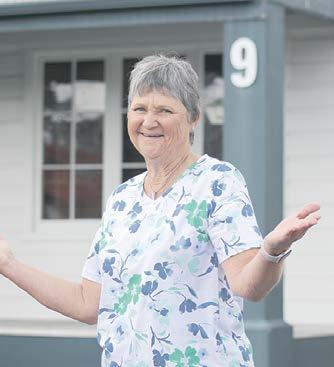
and working on the city’s west side she lived on Ellicott Road where she could look out from her home towards Pirongia, the hospital and the river a sense of place she says mattered.
In Ohauiti, she has found something similar. From her home she can see Mount Maunganui, a view that was a non‑negotiable when she decided to build.
“I sit in my lazyboy and if I can’t see the mount, it’s raining …. the same in Hamilton if I couldn’t see Pirongia, it was raining. A view is good for your health,” she says.
Earlier this year, she sold her 20 per cent shareholding to Williams, while agreeing to remain available during a handover period.
“I just knew. I can’t do it anymore.”
Now 66, Coulter is off to pursue three of her great loves gardening, golf and travel.
Travel features prominently in her plans, including an extended international journey combining Japan, Alaska and North America.
Looking back, she reflects on how much both the industry and the world have changed during her working life and why leaving now feels right.
“I’m glad I’m at this end. The pressures on young people now are huge.”
As King Street Advertising

continues without her day to day involvement,
Coulter remains quietly satisfied with what she leaves behind: a business that adapted, survived and
evolved without losing its core values.
“The world just keeps changing,” she says.
“You either change with it, or you don’t.”
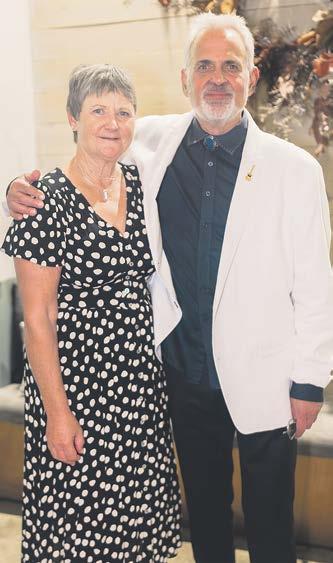
Brent Bastin is quick to downplay his success, but the numbers tell a different story.
The 36 year old real estate agent ranked 26th nationally among New Zealand’s Top 50 listing agents last year and was the only Bay of Plenty agent recognised in OneRoof’s 2025 Super Listers.
For Bastin, the recognition reflects consistency rather than anything flashy.
“I just turn up to work every day,” he says.
That steady approach has translated into significant volume. In the 12 months to August last year, Bastin and his team brought nearly $140 million worth of property to market, completing 144 listings an increase of more than 16 percent on the previous year.
Momentum has continued, with strong results across growth areas such as Pyes Pā and Ōhauiti.
Despite the figures, Bastin resists the idea that his name alone explains the results. He attributes much of the performance to the people around him at Bower Real Estate and the systems they follow.
The make up of that team is deliberate. Many share a background in competitive sport, including Bastin himself, who spent six years representing New Zealand
internationally in kayaking before completing a Bachelor of Commerce and Property with honours. He says the parallels between sport and real estate are obvious once you’re in it.
“Real estate is the closest high I can get to racing,” he says.
Away from the office, Bastin’s responsibilities are no less demanding. He is a father to two young children aged three and 10 months and says balancing a high pressure career with family life requires structure more than sentiment.
“I try to be present in the intentional moments that I am in. When I’m at work, I’m at work. When I’m at home, I’m at home,” he says.
Alongside managing his own listings, Bastin oversees a team of about six agents and mentors a similar number again. His phone regularly rings with calls from agents around the country seeking advice something he sees as a responsibility rather than a burden.
“It takes a lot of courage to ask for help,” he says.
“The least you can do is extend the same courtesy.”
He believes that approach has broader benefits for the industry.
“You look after people the best you can and hopefully it

comes back to you,” he says. When it comes to the wider market, Bastin takes a measured view. He describes the start of 2026 in the Bay of Plenty as cautious, shaped by uncertainty around interest rates, employment, and the impact of recent weather events.
Even so, he says performance varies widely depending on location and price point.
“There are pockets of the market that are going really well,” he says.
OneRoof’s Super Listers list ranks the top 50 residential listing agents in New Zealand based on the volume and value of property brought to market over a defined 12 month period. The latest list analysed listings to the end of August 2025.Supplied





















1000,sofdo ars ofshowdiscounts,specials, giveawaysonsite duringtheshow















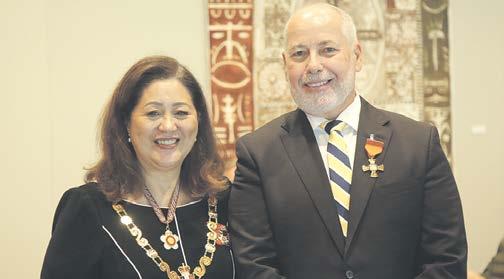
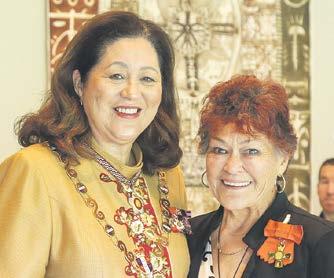
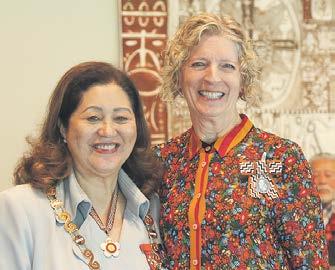
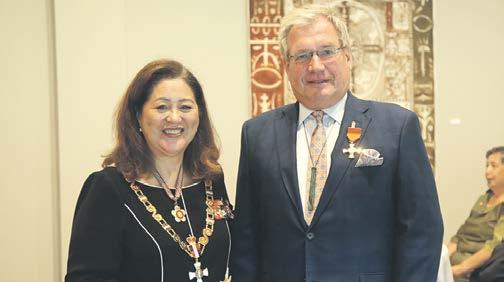
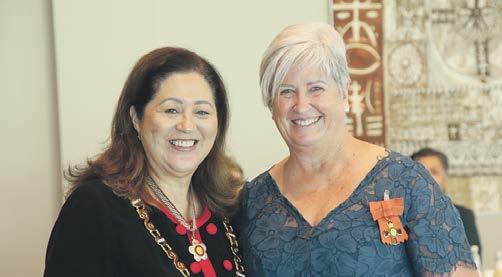
Governor-General The Rt Hon Dame Cindy Kiro hosted 12 investiture ceremonies at Government House in Auckland last month.
Eight Bay of Plenty recipients were honoured and pictured with Dame Cindy.
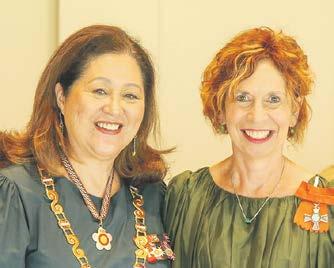
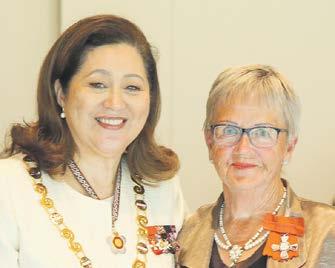
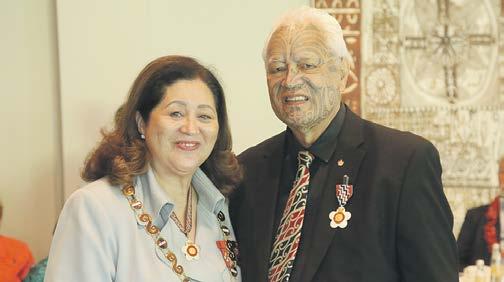
Night out
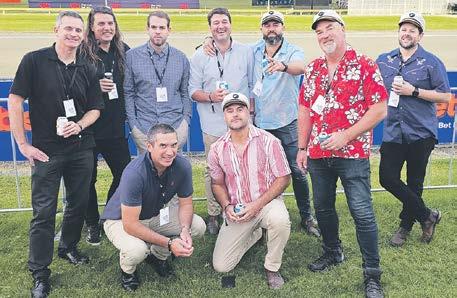
O’Connor Warren Insurance Tauranga were celebrating the end of the cricket season at Cambridge Raceway.
Location: Rotorua Library Date: Thursday 23 April 2026
Photography: Michelle Cutelli Photography
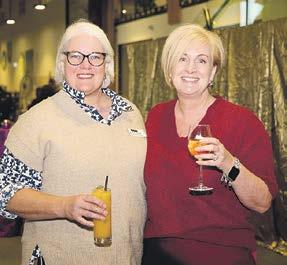
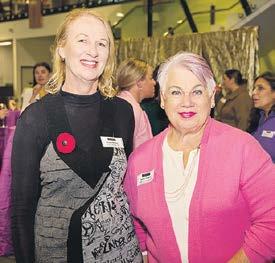
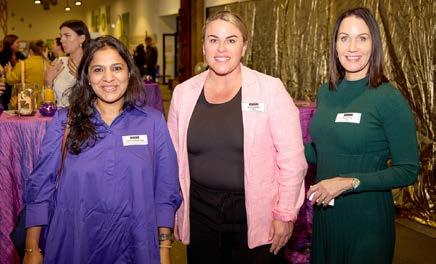
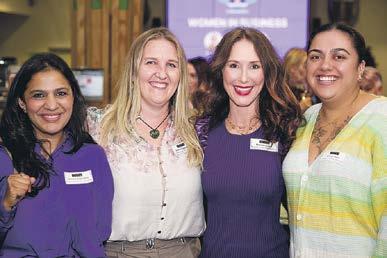
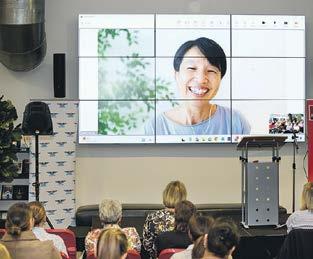
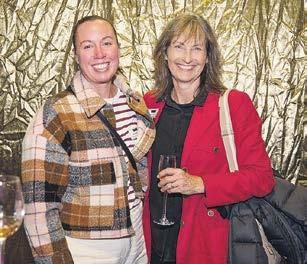
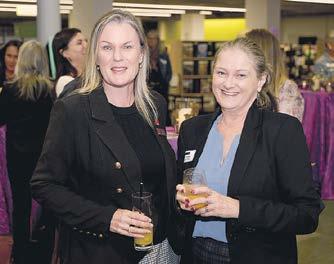
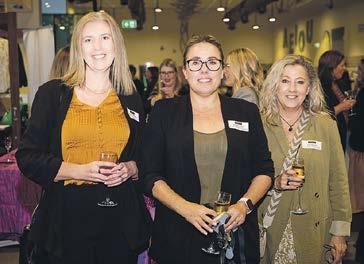
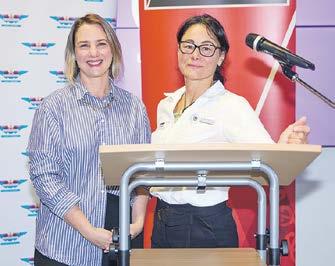
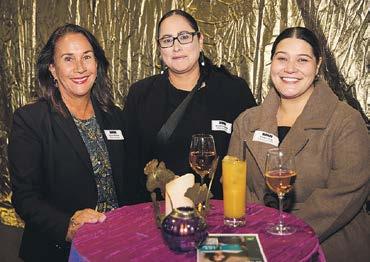
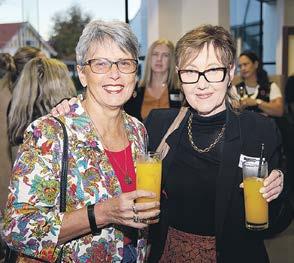
Rotorua Library hosted a vibrant BurgerFuel Fairy Springs Women in Business event where guests heard reflections on heritage, collective impact, and resilience, while supporting Dress for Success through clothing donations in a warm, generous atmosphere.#BetterTogether