BAY OF PLENTY
OUR
SACRED MAUAO
There will be a time when we can reconnect physically to Mauao, writes Todd Muller.
Page 2
EXPORT LED RECOVERY
Bay of Plenty will continue outperforming the country as the economy resets.
Page 3
SACRED MAUAO
There will be a time when we can reconnect physically to Mauao, writes Todd Muller.
Page 2
Bay of Plenty will continue outperforming the country as the economy resets.
Page 3
As NCEA reforms gather pace, educators warn rushed change could widen inequities and undermine workforce readiness, reports senior writer Mary Anne Gill.
New Zealand’s debate over education reform is often framed around credits, standards and league tables.
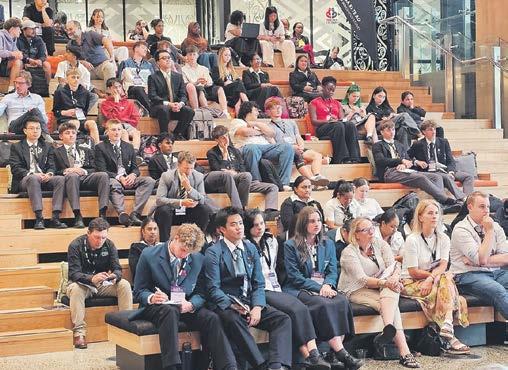
But at the New Zealand Economics Forum hosted by Waikato University’s Management School last month, one message cut through clearly: what happens in classrooms today will shape the country’s economic resilience for decades.
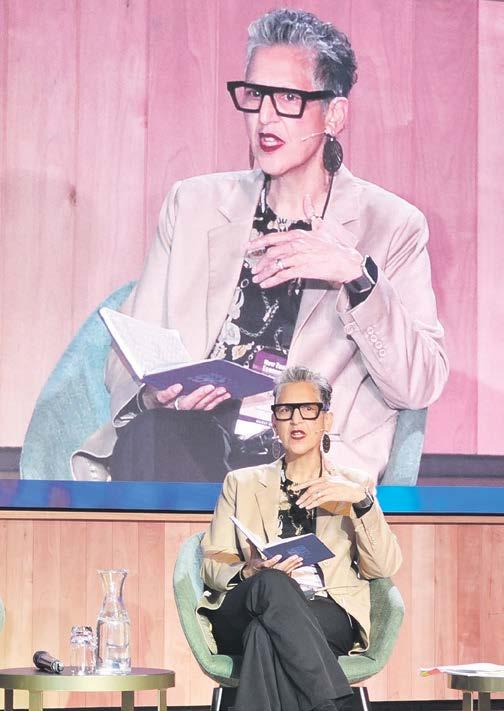
In a wide-ranging discussion on the future of NCEA, Tauranga Girls’ College principal Tara Kanji delivered one of the forum’s most grounded and confronting perspectives, speaking from “the chalk face”.
Kanji welcomed a review of the national qualification system, saying that literacy and numeracy matter.
But she warned that the pace and design of the proposed reforms risk creating new inequities and destabilising schools at a time when stability is essential.
“Schools can’t operate in a vacuum,” she says.
“If we’re serious about preparing young people for work, society and citizenship,
we need coherence across curriculum, assessment and resourcing.”
For regional economies like Bay of Plenty and Waikato, the stakes are high. Employers already struggle to find job ready staff, while schools are being asked to implement new qualifications for which key details are still unclear.
Kanji told the audience that current Year 9 students will sit entirely new qualifications at Years 11, 12 and 13, yet schools still lack the information needed to plan coherently.
“I cannot currently backward map my Year 9 students to best prepare them,” she says.
“We’re building the plane while flying it.”
Kanji says previous rushed reforms led to teacher burnout and migration overseas, compounding workforce shortages in already stretched regions.
Beyond academics, schools play a critical economic role by building social cohesion, a skill increasingly valued by employers but rarely measured.
CONTINUED ON PAGE 3
With heritage charm, industrial-chic character, and the functionality of a versatile modern venue, The Cargo Shed is the perfect location for your next unique event – delivered your way.
Learn more or speak with one of our venue specialists today – visit www.cargoshed.co.nz or scan the QR code →
A kaupapa Māori internship programme is delivering long‑term capability for iwi.
Page 9
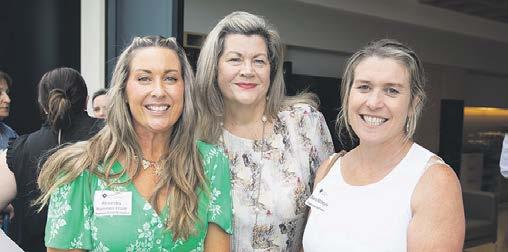
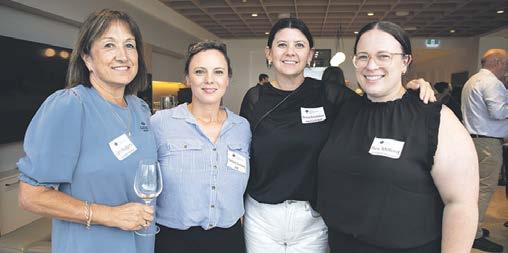
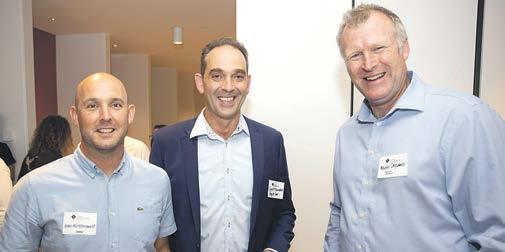
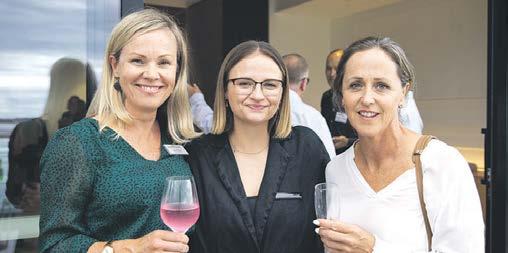
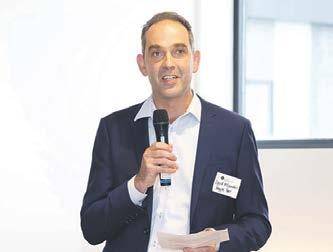
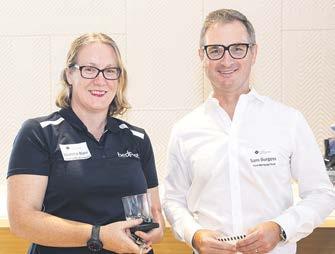
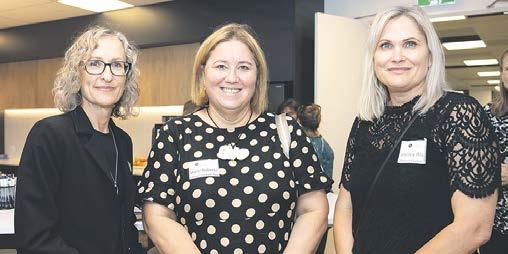
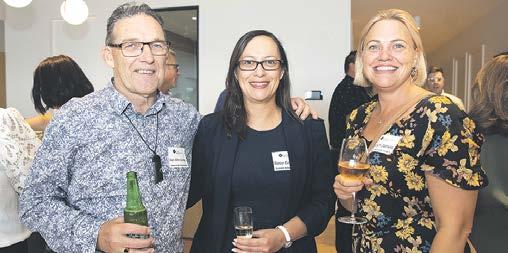
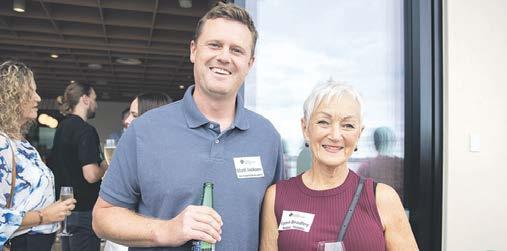
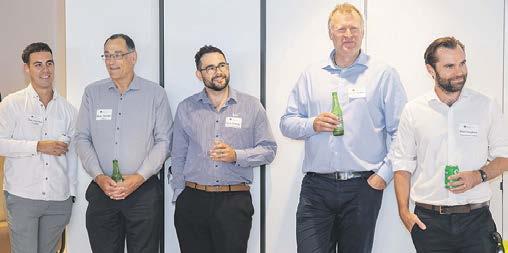
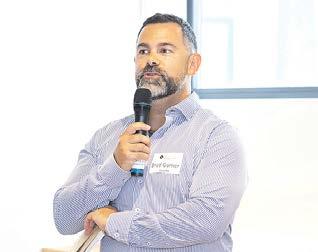
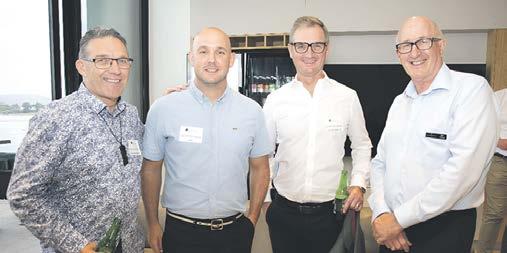
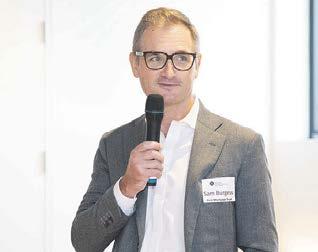
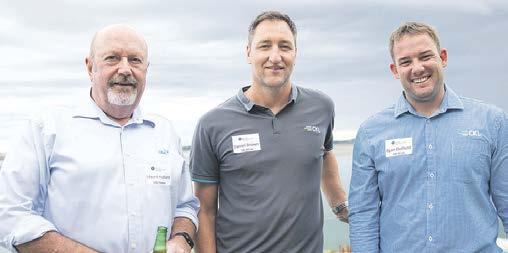
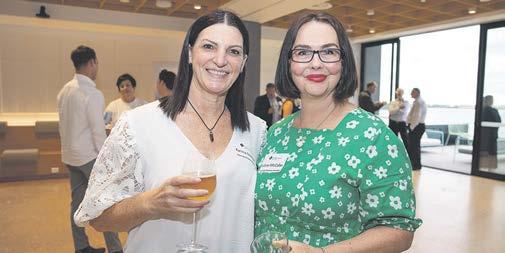
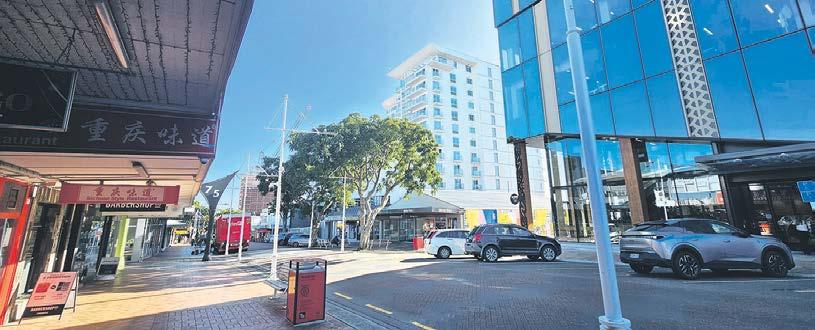
OUT AND ABOUT We were at The Northern Quarter with Tauranga Business Chamber.
Pages 14 and 15


Editor
David Porter editor@goodlocal.nz 021 884 858
Senior Writer
Mary Anne Gill maryanne@goodlocal.nz 021 705 213
Advertising Director
Janine Davy janine@goodlocal.nz 027 287 0005
Owner/Publisher
David Mackenzie david@goodlocal.nz 021 684 304
To Advertise sales@goodlocal.nz
News Tips editor@goodlocal.nz
Office/Accounts admin@goodlocal.nz
Website goodlocal.nz
To Subscribe admin@goodlocal.nz
Readers’ contributions of articles and letters are welcome. Publication of contributions are entirely at the discretion of editorial staff and may be edited. Contributions will only be considered for publication when accompanied by the author’s full name, residential address, and telephone number. Opinions expressed are not necessarily those of the publishers. Bay of Plenty Business News is published by Good Local Media Limited.
Also publishers of

By DAVID PORTER
It was no great surprise to see recent news coverage highlighting the NZ Post Office’s decision to shrink its network.
We cannot be alone in conducting most of our personal and business communication online. To quote a recent news report, NZ Post Chief Executive David Walsh said: “Quite simply the way New Zealanders communicate just continues to change and evolve and NZ Post has had to keep responding to that change.”
The latest change has seen NZ Post announce the reduction of its retail footprint by more than 140 stores.
I sympathise with NZ Post’s position. But I could not help feeling sad about this decline in traditional services. These changes seem likely to impact New Zealanders. And especially those older members of society who have not fully embraced the internet or do not wish to.
My feelings were undoubtedly influenced by the very satisfying couple of months I spent as a temporary postman near the end of my high school years many decades ago.
Family connections secured my acceptance as holiday relief at the main post office in Porirua. It is now one of the four cities






that constitute the Wellington Metropolitan Area, just a few rail stops up from my then childhood home.
I dutifully turned up at 7am, to be thrust into an astonishingly friendly, efficient - and for me - very unusual workplace. Although I had briefly held a few office and factory vacation jobs during earlier school holidays, I had never been exposed to anything like the environment I encountered.
The first thing that struck me was how amazingly fast and efficient the group of posties I was thrown in amongst were.
I had not appreciated until then, that in those days individual posties were given a pile of mail for their general “run”. They then had to quickly sort them into pigeonholes that reflected the exact distribution of the mail around their rounds.
To my teenage amazement, this was done by rapid-fire hand sorting with the individual letters being flung into the correct pigeonhole. The sorted mail then got packed into the leather bags mounted on the front of the posties’ bicycles and off we went. As I recall parcels were generally handled by a different system.
I was heavily dependent for the first
week on the postie who had been dedicated to assist amateur me while I learned the system. And she was brilliant. Like all of the posties I recall – who were at the time mostly married women – she was blindingly fast and exceedingly kind to this neophyte. We then proceeded outside to collect our bicycles, which were as I recall female and had simple manual three speed gears, which worked only intermittently.
Porirua was, to put it mildly, rather hilly. I was much younger and fitter then, but it still took me several days to get myself up to speed.
It exposed me to the growing population of what was then a developing suburban area, and to many of the challenges residents faced at the time.
Aside from two memorable encounters with dogs – one of which leapt from the side of the road and sunk its teeth into my thigh as I rode past – I generally found those I delivered to. to be friendly and encouraging. Indeed after the dog bite incident, a friendly householder took me in for a calming cup of coffee.
• David Porter is an experienced journalist and a former foreign correspondent.
By TODD MULLER
The images have been confronting. Hillsides disappearing, homes inundated, roads torn away, and most tragically, lives lost. The recent weather events across New Zealand - especially here in the Bay of Plenty, where eight people died - have left a mark on our region that will endure long in our memory.
Community is all about people, and yet again, when our neighbours do it tough, we show our humanity. It’s been moving to see our local response in the immediate aftermath of the tragedy focused so much on caring for our people.
I have also been touched by how the events on Mauao have impacted us all. I was deeply shocked by seeing the images of the land falling away. I couldn’t believe it had happened here and my reaction was mirrored by everyone I spoke to.
causing such a loss of life was very painful. Māori often have beautiful language for the deep connections that develop between peoples and their precious land and spaces. It’s taken a while for me to really understand how Aotearoa the place creates those connections with all who live here. It’s not surprising then that those who have lived here the longest have the deepest reverence. But those who have shorter whakapapa feel connections too, we just sometimes don’t have the vocabulary to capture it.
There is a Māori proverb ‘ko au te whenua, te whenua ko au’ meaning ‘I am the land and the land is me’. I believe Mauao perfectly exemplifies that whakatauki - it is as connected to us and we are to it.
centuries old in the retelling, but we all have a deep need to connect with our sacred place, our Mauao.
This will make the next few months challenging. We want to return, even more so now there has been a tragedy. But it will take time, not only to physically recover the walking tracks, but to appropriately acknowledge the loss in a more spiritual context. I hope as locals we understand the need for that.
There will be a time when we can reconnect physically to Mauao. I hope there is an appropriate memorial that allows us to connect with those that have lost their lives. I hope it is something that allows us to physically connect with the memorial –maybe something like the pounamu at the summit.

It was if we all realised in that shocking moment, that Mauao is a vital part of why we live here, part of what has drawn us to this place, this Tauranga moana, this safe harbour, and to see it so damaged and


There is a large pounamu at the summit of Mauao that I place my hand on every time I climb. There is no sign saying we should or shouldn’t, but I have never been up there and seen it left alone. It grounds me and I sense it does for all who make it up there.
We all bring memories, both joyful and reflective to that place, some recent, some
I think we all need it, we are the land and the land is us.
• Todd Muller is a long term Tauranga resident, former MP and current chair of Priority One. All views expressed are his own.
• See: Mount faces long rebuild, page 12
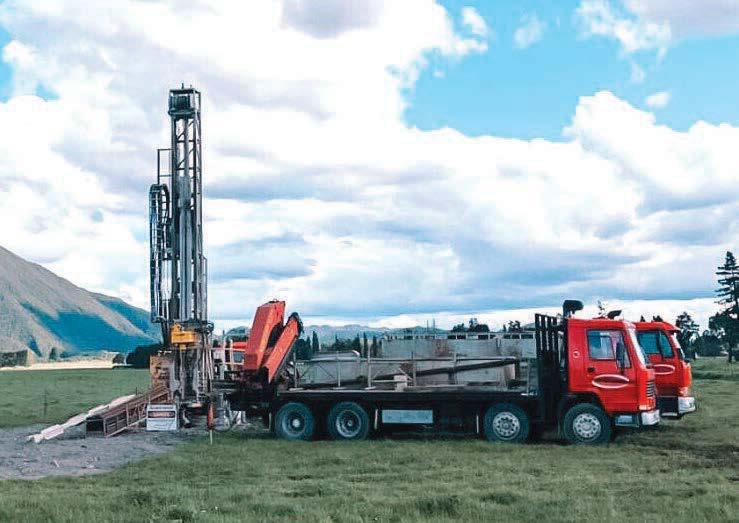

The Future is Rail lobby group is renewing calls to extend passenger rail beyond Hamilton to Tauranga and establishing a connected Golden Triangle rail service between Auckland, Waikato and the Bay of Plenty. This follows the New Zealand Transport Authority’s decision to extend the Te Huia train trial from Hamilton to Auckland by 12 months with 60 per cent funding assistance.
Western Bay of Plenty District Council has appointed Annika Lane as its new general manager Strategy and Community. She was previously Policy and Planning general manager from 2006-2010 and then worked at Bay of Plenty Regional Council, Auckland City Council, Waikato Regional Council, and the Cook Islands National Environment Service. Lane lives locally in Tanners Point and rejoins the council later this month.
Major Tauranga law firm Holland Beckett has completed its move to the new Northern Quarter Building in the central business district. Former partner and now consultant Bill Holland Jnr, whose father founded the firm in 1937, said the firm’s leadership had been contemplating redeveloping for some time. With all the building going on downtown, the firm felt that it should be part of it, he said.
Philips Search and Rescue Trust - the charity responsible for fundraising and promotion of the North Island’s largest pool of community rescue helicopters, including the Greenlea Rescue Helicopter - sent out an urgent appeal asking the Central Plateau and Lakes community to help purchase three new pairs of state-of-the-art E3 Night Vision Goggles. Greenlea Premier Meats donated $50,000 and 290 individuals, businesses and community groups donated $47,000 toward the new goggles.
Export strength is helping to anchor New Zealand’s uneven recovery, with local businesses better positioned than many as global demand lifts and major reforms loom for employers, Mary Anne Gill reports.
The Bay of Plenty is emerging as a relative bright spot in New Zealand’s slow and uneven economic recovery, driven by strong export performance rather than domestic demand, according to the Employers and Manufacturers Association (EMA).
Speaking at the EMA’s summer briefing in Tauranga last month, head of Advocacy Alan McDonald said sectors central to the region - including red meat, dairy, kiwifruit and wider horticulture - are benefiting from improving global conditions, feeding record export values through the Port of Tauranga.
While major cities continue to grapple with higher unemployment and weak consumer spending, McDonald says the export-led nature of the recovery places Tauranga, and the wider Bay of Plenty, in a stronger
position as employers navigate a year of economic adjustment and significant regulatory change.
That export momentum is being reflected across several of the Bay’s key industries. Red meat is experiencing sustained global demand, underpinned by supply shortages in the United States that are expected to take years to correct.
Dairy prices have rebounded after a preChristmas dip, prompting Fonterra to lift its forecast payout, while kiwifruit producers are reporting both a record crop and record returns.
Horticulture more broadly continues to expand, with apples and pears exceeding $1 billion in export earnings for the first time.
The Port of Tauranga remains a critical enabler of that growth. New Zealand’s total exports have surpassed $80 billion for the first time,
and the port is handling a significant share of that volume. Its proposed expansion, now back in the fast-track consenting process, would further strengthen the region’s ability to support export-led growth.
In contrast, the domestic picture remains subdued, with unemployment sitting above five percent nationally and higher again in the main centres while retail spending has yet to recover in a meaningful way.
Consumer confidence is improving, but households remain cautious as higher living costs and interest rates continue to bite.
Regions with a strong primary sector base, such as the Bay of Plenty, are therefore faring better than urban economies reliant on discretionary spending.
Employers face a crowded policy and legislative agenda in an election year. Major reforms are progressing
across the Resource Management Act, health and safety, employment relations and the long-awaited overhaul of the Holidays Act.
Much of the reform direction is positive for business but the pace and volume of change will require careful navigation, particularly for small and medium-sized employers, he says.
Energy costs also remain a concern, especially for manufacturers, with electricity prices expected to rise further as New Zealand grapples with tight supply and the need for new generation and backup capacity.
User-pays charges are likely to become more common as councils and central government seek to fund infrastructure in a constrained fiscal environment.
Despite those challenges, McDonald says there are reasons for cautious
optimism. Business confidence, hiring intentions and investment plans are all improving from low levels, suggesting a gradual recovery is under way.
The strength of the export sector provides a degree of insulation, positioning Tauranga and the wider Bay of Plenty to continue outperforming as the national economy works through a slow and uneven reset.
CONTINUED FROM PAGE 1
“Empathy, teamwork, understanding differences, these are not ‘soft extras’,” she says.
“They’re fundamental capabilities that allow people to function in workplaces and communities.”
Fellow panel member, innovation leader Colin Kennedy of Creative HQ, says productivity growth will increasingly depend on problem solving, adaptability and ethical use of AI - skills he believes current reforms underplay.
“We’re preparing students for an economy that’s already moved on,” he says.
Waikato University Pro Vice - Chancellor Claire McLachlan says literacy and numeracy challenges are not primarily a secondary school problem.
“They start much earlier, and high-stakes exams alone
will not fix long-standing issues,” she says.
For business leaders, the message was sobering: education reform is not just a sector issue, but an economic one.
Kanji says Education Ministry documents themselves acknowledged the proposed reforms would initially lower achievement rates for students already over - represented in underachievement, particularly Māori and Pasifika learners.
“I can’t accept a system that knowingly perpetuates disadvantage,” she says.
“Education has to be accessible and meaningful for all.”
Panellists all agreed that how New Zealand reforms NCEA will shape not just schools, but productivity, equity and economic confidence nationwide.





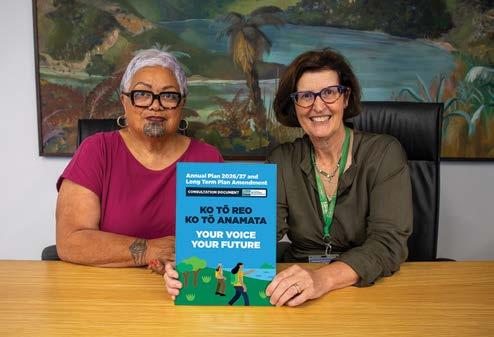
Bay of Plenty Regional Council is embarking on one of its most significant financial consultations, proposing changes to the management of its $3 billion investment portfolio.
The changes are contained in a proposed Long Term Plan Amendment, which is available for consultation alongside the Annual Plan 2026/27.
Regional Council Chair Matemoana McDonald says the scale and importance of the investment discussions make this year’s consultation particularly consequential.
“Any changes to our investment approach must be made openly, carefully, and with the support of the people these assets belong to – the people of the Bay of Plenty.”
The consultation comes at a time of major disruption and reform in the local government sector, as councils nationwide navigate rising operating costs, infrastructure demands, and greater expectations around value for ratepayers.
Chair McDonald says this environment requires disciplined, future‑focused financial planning.
“We’re working in an uncertain environment, and we need to safeguard the long‑term wellbeing of our region. That means making disciplined decisions now, so that future generations benefit
from the work we do today.”
Central to the Long Term Plan Amendment is a proposal to continue implementing decisions made in the Long Term Plan 2024–2034, including the managed, partial sell down of the Regional Council’s shareholding in the Port of Tauranga. The aim is to diversify holdings and reduce risk in a portfolio currently heavily weighted toward a single asset.
The next stage of this work examines how the Regional Council can optimise returns while maintaining the intergenerational integrity of its assets.
With the portfolio’s value exceeding $3 billion, even small changes to structure or risk spread have significant implications for regional balance sheets, dividends, and long‑term financial
“These investments were built over decades,” says Chair McDonald. “They represent foresight and stewardship. We want to ensure they continue to strengthen the region for decades more.”
resilience.
“These investments were built over decades,” says Chair McDonald. “They represent foresight and stewardship. We want to ensure they continue to strengthen the region for decades more.”
Alongside the Long Term Plan Amendment, the consultation seeks feedback on the draft Annual Plan 2026/27.
The Regional Council is asking whether it should create a Regional Benefit
Fund to support local city and district councils and community organisations to deliver region‑enabling infrastructure with economic, environmental, social or cultural benefits. It is also consulting on whether to increase, maintain or reduce investment in regional ecosystems.
The consultation runs from 25 February to 2 April 2026, with opportunities for residents and businesses to have their say online or at in‑person events.
Full information is available at www.boprc.govt.nz/consultation2026
First - home buyers are continuing to play a significant role in New Zealand’s housing market, and the Bay of Plenty is no exceptionthough local dynamics mean the story here looks slightly different.
New data from Cotality shows first-home buyers made up 28.4 per cent of purchasers in the final quarter of 2025, as falling interest rates and subdued house prices opened a window of opportunity for those able to act.
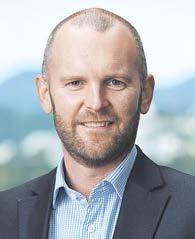
Cotality chief property economist Kelvin Davidson says buyers at the entry end of the market have been quick to respond to improving affordability.
“Interest rates have been down, house prices have been down and first-home buyers have been tapping into that,” he says.
While Tauranga’s share of first-home buyers sits slightly below the national average, Davidson says that does not signal weaker demand. Instead, it reflects the Bay of Plenty’s distinct mix of wealth, migration and demographics.
“First-home buyer numbers in Tauranga are always a little lower than in some other cities. Wealth plays a bigger role here than income alone, with capital coming in from other parts of the country.”
That flow of external equityoften tied to downsizers and retirees - can intensify competition at the lower end of the market, particularly as the Bay of Plenty has one of the country’s highest proportions of older homeowners. For local employers, that
dynamic has implications beyond housing statistics. Competition for entry-level homes affects workforce stability, staff retention and the cost of living pressures faced by younger workers.
Davidson says first - home buyers have been supported by a combination of factors, including KiwiSaver withdrawals, low-deposit lending and a narrowing gap between rental and mortgage costs.
“In many cases, servicing a mortgage has become cheaper than paying rent, but that’s only one part of the equation. There’s still a strong desire to own, particularly where people see long-term
security.”
Nationally, the Reserve Bank’s series of Official Cash Rate cuts through 2025 helped restore borrowing confidence, supporting transaction volumes without triggering rapid price growth. With house values still below their post-pandemic peak, buyers have been able to act without the pressure of runaway competition.
Looking ahead, Davidson expects conditions to tighten gradually. The Reserve Bank is widely expected to lift the OCR later this year, with mortgage rates and house prices likely to follow - though modestly.
“The outlook for 2026 is for rising house prices and sales, but
not a return to the extremes we saw after the pandemic,” he says.
For Bay of Plenty businesses, the message is one of timing. The current window for first-home buyers may not remain open indefinitely, particularly in a region where population growth, retirement migration and limited housing supply continue to shape the market.
“Home ownership has never been easy.
“Renting is a legitimate long-term option for many, but ownership remains the goal for most New Zealanders and that aspiration is still driving behaviour.” – Jon Rawlinson





By PETER NICHOLL
I regularly write about the accountability, or more accurately lack of accountability, of the Reserve Bank of New Zealand for its poor performance over the last several years.
I now realise that this problem is much more wide-spread in New Zealand. The lack of accountability has become a weakness almost everywhere in the public sector
If a private sector organisation fails the accountabilty test it disappears – it goes bankrupt. In the year ended December 31, 2867 New Zealand companies were placed in liquidation, the highest for 15 years. There is nothing equivalent in the public sector. I remember a governor of the Central Bank of Ireland saying at a conference “there is no end to the ingenuity of politicians and public servants when it comes to spending someone else’s money”.
New Zealand tried to set up an accountability model similar to the private sector in our public sector back in the 1990s. Most government operating agencies were set up as state-owned corporations with their own capital and their own board. The heads of government departments were put on term contracts with detailed performance criteria. This structure was good and the performance of many State Owned Enterprises and other public sector organisations improved significantly.
This model for trying to introduce privatesector accounbtabilty mechanisms to the public sector gained a lot of global attention. I was asked to give speeches about it in many countries overseas.
What a long way we have fallen. I was out of New Zealand from 1995 to 2015. I don’t know
how the clarity and strength of the public sector accountability processes New Zealand had back in the 1990s got lost – but lost they certainly are.
Examples of poorly-performing public sector agencies are everywhere today. Examples of organisations or individuals being held accountable for those failures are hard to find. The usual first response is to make excuses. If the failure was a big one the second response is often so set-up a commission of enquiry. The main recommendation from most of these enquiries is often restructuring. Does that work? Of course not. The problems are almost always ones of attitude, incentives, focus and a lack of clear accountabality. In other words, they are personnel issues not issues of structure.
I have also been reminded of the vagueness that we now seem to have in New Zealand about accountability by the initial responses to the terrible recent event in Mt Maunganui. Several organisations, including the Tauranga City Council, have said they are going to set up inquiry bodies to find out who is responsible and accountable for what happened. They do need to have an inquiry to find out what went wrong but if they don’t know in advance what the responsibilities of the various agencies and people involved were, that suggests that the real problem was we no longer seem to have a clear idea of who is responsible and accountable.
• Peter Nicholl was formerly Reserve Bank of New Zealand deputy governor, World Bank Board executive direction and Centre Bank of Boxnia and Herzegovina governor. He is now retired.

By REBEKAH STEPHENS
Policies can set expectations, but it’s trust that shapes behaviour.
Across industries, the most reliable predictor of early reporting, faster learning and fewer harms isn’t what’s written in the safety manual - it’s the pattern of everyday leadership micro-behaviours that either build or erode trust
You can see this clearly when comparing two sites with almost identical risks, training and audit results. One reports near misses early and resolves issues quickly; the other stays quiet until problems escalate. The difference isn’t procedure - it’s whether people believe that telling the truth is both valued and safe. In high trust environments, weak signals surface early. In low trust ones, they’re buried until they appear as downtime or harm.
This matters in a national context where the scale of harm remains sobering. In 2024, 70 workers lost their lives to work related injuries, more than 37,000 injuries resulted in over a week away from work, and an estimated $5.4 billion in economic cost was tied to workplace harm. Sixty percent of workers report work related stress.
These figures underline why New Zealand businesses must move beyond compliance alone and focus on the conditions that allow people to speak up early.
Trust is operational. Leaders who spend time where work happens gain context that dashboards can’t provide - but presence without curiosity becomes theatre. Replacing inspections that hunt for non-compliance with conversations that seek understanding is one of the fastest ways to build credibility.
Credibility, in turn, shapes the speed and quality of information flow.
Another powerful signal is consistency. When leaders follow through on small commitments - closing the loop on actions, explaining shifting priorities, publicly owning mistakes - they make it safer for others to speak candidly about what isn’t working.
As organisations look for practical ways to strengthen these foundations, new initiatives are emerging to support them. One example is the EMA’s Safety Culture Programme, a 12 month, advisor-led initiative delivered in partnership with Safe365 to help members understand, measure and strengthen culture across both leadership and frontline teams. Its focus aligns squarely with what evidence shows matters most: behaviours, engagement and everyday practices that reduce harm before incidents occur.
Early participants, such as Red Badge Group, report reduced LTIs (lost time injuries), fewer ACC claims and stronger engagement after six months - outcomes that reflect what can happen when trust and behaviour become central to safety improvement
When trust rises, reporting often rises with it. That spike isn’t a setback - it’s a sign of health. It means reality is surfacing sooner, giving organisations the chance to intervene earlier and prevent more serious harm. If leaders make trust their leading indicator, the improvements in safety, performance and wellbeing will follow.
• Rebekah Stephens is Health and Safety Advisor with the Employers and Manufacturers Association (EMA)
Sponsored Content
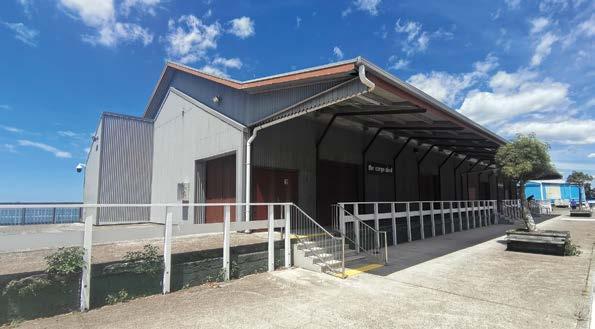
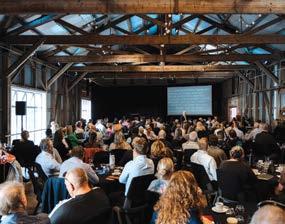
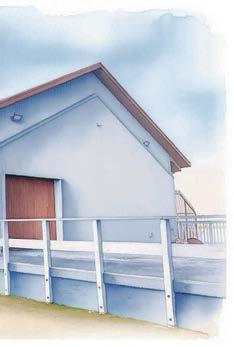
Set on the edge of Tauranga Harbour, The Cargo Shed is entering an exciting new chapter as one of our city’s most distinctive event venues.
Thoughtfully revitalised, this landmark building blends its rich heritage with contemporary style and modern amenities, offering a space that’s fresh, vibrant and ready to host any event.
The Cargo Shed was originally constructed in the mid-1920s, and its character has been carefully retained and reimagined. Exposed timber beams, corrugated iron walls and polished concrete floors honour its industrial past, while expansive picture windows capture views across the water towards Matapihi and the Papamoa Hills. By day, natural light fills the interior; by night, customisable lighting creates an atmosphere that’s perfect for any occasion.
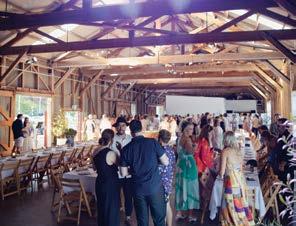
Designed to host up to 250 guests, The Cargo Shed can accommodate a wide range of events – from corporate dinners and conferences to community fundraisers, cultural performances, markets, weddings,
exhibitions, workshops, hui and fono.
Flexible seating layouts and staging are available alongside lighting, audio visual equipment and a commercial kitchen. Organisers can choose their own caterer and beverage supplier, or selfcater to suit their budget and style. Marquees can also be erected at either end of the venue to extend your event space outdoors. Greenery and decorative touches can also be brought in to transform this space.
Convenience is central to this venue’s appeal. There are 150 parking spaces directly across the road and parking is free after 5pm and on the weekend. With accommodation, eateries and bars a short walk away, guests can arrive and depart with ease. Accessibility features include ramps, level floors and wheelchairaccessible facilities, ensure the space is welcoming to all.
Jointly owned and managed by Tauranga City Council and Otamataha Trust, The Cargo Shed continues to shine as a place for gathering, connection and celebration on Tauranga’s waterfront.
No rooms, no growth. That is why Tauranga’s university campus needs more beds, reports Mary Anne Gill
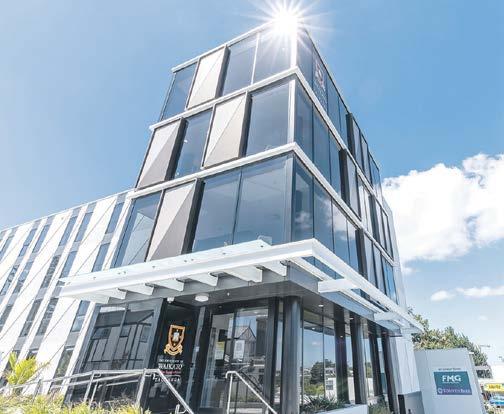
As Waikato University’s Tauranga campus continues its rapid expansion, student accommodation is emerging as a critical constraint and a central part of the city’s broader economic development story.
The university currently operates around 100 beds of purposebuilt accommodation in Tauranga, spread across Selwyn Street Studios and Durham Mews, both within walking distance of the campus. Demand is strong, and capacity is tight.
Selwyn Street Studios, located directly across from the campus, provides 88 standard self-contained studio rooms and three accessible studios, while Durham Mews offers six three bedroom flats aimed at students seeking a more independent, apartment style living arrangement.
Together, they form the backbone of the university’s Tauranga accommodation offering but university leaders acknowledge
that supply is under pressure as enrolments climb.
Tauranga’s campus has grown steadily since opening in 2019 and now hosts more than 1000 students across a range of disciplines including business, health, engineering and applied computing. That growth has sharpened the focus on housing, particularly as Tauranga’s private rental market remains tight.
From a business perspective, student accommodation is no longer a side issue. It plays directly into Tauranga’s ambitions to grow as a knowledge city, anchoring young people in the CBD and supporting retail, hospitality and transport services yearround.
Accommodation contracts offered by the university in Tauranga are structured on a 50-week, full-year basis, providing cost certainty for students and their families.
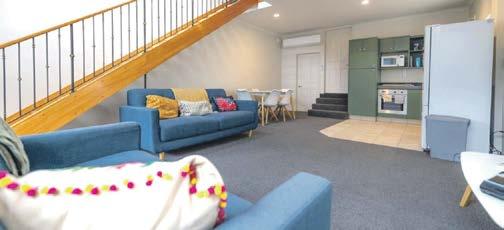
Weekly rates sit at $323 for Selwyn Street Studios and $276 for Durham Mews, with electricity, internet and pastoral care included.
University chief operating officer Jim Mercer says accommodation has become a decisive factor in student choice.
“If students can’t find somewhere affordable and close to campus, they will look elsewhere,” he says.
“That has implications not just for the university, but for the city.”
The university has previously signalled the need for additional accommodation capacity in Tauranga as enrolments continue to rise and has explored options with development partners. While no new facilities have yet been confirmed, the direction of travel is clear.
For Tauranga, student accommodation is now firmly part of the economic infrastructure conversation - linking education growth, workforce development and CBD revitalisation.



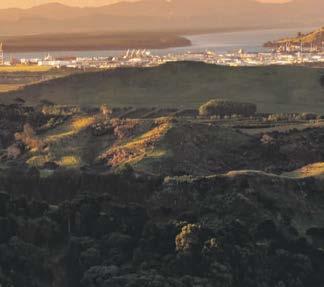




New details on the strategy and motivations behind the creation of Australasia’s largest independent forest management company have been outlined by PF Olsen executive Ross Larcombe.
Talking to The News six weeks after the merger between Olsen and Forest 360 was announced, Larcombe says the focus of the combined business is now firmly on delivering a broader, more efficient service for forest and landowners.
It would strengthen environmental capability and longterm partnerships, he says.
“We wanted to create a comprehensive service and a highly resourced team for forest and landowners.
“We also wanted to improve efficiencies for our business and our clients and allow some of our longstanding retired shareholders to sell some of their shareholding.”
Larcombe says environmental outcomes remain central to the business model.
“It is important to understand that a big part of what we currently do, and will continue to do, is provide forestry capability, analysis and implementation of indigenous forest establishment, biodiversity improvement and environmental protection.”
PF Olsen is based in Rotorua and Forestry360 in Feilding.
Their announcement in December means the combined group is understood to be the largest
independent forest management service provider in Australasia, managing about 480,000 hectares of forest and supporting more than 1000 clients, ranging from major institutional investors to familyrun businesses and private landowners.
Larcombe says the two businesses had complementary regional coverage and service offerings across New Zealand.
“This gives us additional capability in areas such as biodiversity services, Forest Stewardship Council (FSC) certification, tree stock supply and product marketing,” he says.
“That will continue to improve under the new business and include new partnerships with landowners.”
The merged entity is being led by existing executives, with Forestry360 managing director Dan Gaddum appointed group chief executive, Larcombe taking the role of group chief commercial officer, and Forestry360’s Marcus Musson named group chief operating officer.
The transaction is valued at an estimated $70 million to $80 million and includes Adamantem Capital as an investment partner, alongside existing PF Olsen cornerstone shareholder Quayside Holdings.
Gaddum says the combined skills of the two organisations strengthen the group’s ability to support clients across the entire forest management value chain. – David Porter

By SANDRA FAULKNER
At Federated Farmers, we support greater restraint in local government spending. What we don’t support is so tightly straight-jacketing council budgets that essential infrastructure upgrades and maintenance are delayed or cancelled.
That may sound like wanting a bob each way on the government’s proposed 2-4% cap on council rates, but it reflects a genuine tension between the need for fiscal discipline and the real cost pressures councils face.
Most people, councils included, would agree the current trajectory of rates increases is becoming unaffordable for growing numbers of families and businesses. However, the government’s proposed rates cap, intended to be in place by 2029, is a blunt tool that risks unintended consequences.
The Government itself acknowledges the scale of under-investment in critical infrastructure. Charges for waste, drinking water and stormwater are exempt from the cap, with an estimated renewal backlog of up to $47.9 billion nationally. That recognition is welcome, but it raises questions about other infrastructure councils are responsible for — particularly roading, bridges, drainage and flood protection, which are vital to rural communities and already suffering from long-term under-investment.
When rising interest costs on council debt are combined with soaring
contractor and materials costs, a rates cap creates real pressure. Councils may be forced - or tempted - to delay or cancel important capital works simply to stay within the limit.
Federated Farmers believes targeted road and infrastructure rates should be exempt from the cap, in the same way three waters charges are proposed to be treated. Without that flexibility, the risk is that councils will struggle to fund core services.
The theory behind a rates cap is that it will force councils to focus on “must-haves” rather than “nice-to-haves”. In practice, many smaller rural councils already run lean operations. A blanket cap, particularly for districts managing large visitor or tourist populations, could end up cutting into the very services communities rely on most.
Another likely response to a rates cap is an increase in fees and charges elsewhere. Rates make up, on average, 57% of councils’ operating revenue. While some councils have income from trading entities such as ports or airports, those assets are usually held by metropolitan councils rather than smaller districts.
Councils also charge fees for services ranging from building consents and liquor licences to parking and pool entry, many of which are currently subsidised by general rates. Under a cap, those fees could rise. While “user pays” can sound appealing in principle, it tends to be less popular
1 April marks the start of the tax year for employees and you should see some changes in your take home pay. While there are no personal tax rate changes happening then, there are a couple of things to be aware of that do take effect from 1 April.
Each year the ACC levy that is deducted with PAYE from your salary or wages increases a little bit. This year, the levy increases from $1.67 per $100 of earnings to $1.75, an increase higher than the current inflation rate. For someone on $80,000 a year, this will be an additional deduction of just over $5 a month. The second change will impact your pay more. Budget 2025 introduced a series of KiwiSaver changes that will impact the nearly 3.5 million New Zealanders with KiwiSaver accounts. From 1 April the default employer and employee contribution rates start increasing, with the goal of us all increasing our retirement savings.
If you have a tight budget, or
Efective Date
just want to use your money elsewhere, it’s been possible to apply for a temporary rate reduction from 1 February 2026. This allows you to continue to contribute at the 3% rate when the default rate increases on 1 April 2026. A temporary rate reduction can be for a set period of 3 to 12 months and can be renewed as often as needed. Just remember that while your employer can choose to raise the employer contributions to the new default rate, they do not have to
and can keep their contribution matched to yours at 3%.
If you want to apply for a temporary rate reduction, log in to your MyIR account and follow the prompts. Inland Revenue will issue a letter showing the start and end dates of the reduction, which you will need to give to your employer.
Considerations for employers
Employers should ensure payroll systems are updated to apply the new default rate from 1 April 2026 and that they have
when people are the users, particularly when it comes to compliance costs faced by farmers and businesses. There is also a misconception that a rates cap would limit any individual property’s rates increase to 4%. In reality, the cap applies to a council’s total rates revenue. Individual bills would still rise or fall depending on changes in property values relative to the district average.
Federated Farmers will raise two further points in its submission. First, we believe residents should have a say on major spending on commercial facilities such as stadiums or conference centres, through referenda where spending exceeds a set threshold. Second, improved nationwide benchmarking of council costs would give councillors better tools to challenge spending and drive efficiencies.
With rates now one of the largest household costs - and a major line in farm budgets - the proposed cap deserves careful debate ahead of the general election. Federated Farmers will continue to make sure rural priorities are part of that conversation. • The column has been abridged. The full version is online.
• Sandra Faulkner is a former Gisborne city councillor and is now Federated Farmers local government spokesperson. She and husband Rob own Wairakaia - the family farmrunning sheep, beef, cropping, citrus and farm forestry.

processes to correctly apply deductions for employees with approved temporary rate reductions.
Employers should also make sure they review the ESCT withholding rates for each employee at 1 April. Some employees will need to move up (or down) to a higher (or lower) ESCT rate based on their pay history.
Contributions for 16 and 17year olds
Also taking effect from 1
April is the extension of compulsory employer KiwiSaver contributions to eligible 16 and 17-year olds. If your school aged kids are working, this is a great time to discuss whether they should join KiwiSaver if they haven’t already. It’s never too early to start saving for their retirement.
> If you want to apply for a temporary rate reduction, log in to your MyIR account and follow the prompts.
Andrea Scatchard is a Tax Partner at Deloitte, based in the Bay of Plenty. She can be contacted on ascatchard@deloitte.co.nz
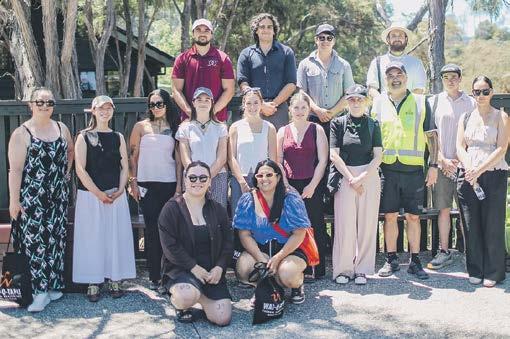
A kaupapa Māori internship programme is delivering long‑term capability for iwi, employers and the regional economy, reports Awhina Ngatuere.
Developing a Geospatial Information System (GIS) for her iwi was a dream come true for Bay of Plenty university student Reitemanava (Rei) Walker.
Rei is a third-year student studying a double major in Marine Science and Aquaculture at Waikato University’s Tauranga campus. This summer, she was selected as an intern for Ngāti Pūkenga Iwi ki Tauranga Trust through the Toi Ki Tua programme, run by Māori economic development agency Toi Kai Rawa in partnership with Te Awanui Huka Pak.
“It’s been a steep learning curve,” she says.
Rei worked alongside GIS technical expert Sam Vernon from SV GIS, as well as her Ngāti Pūkenga uncles and aunties, to translate a newly developed Iwi Management Plan into a digital GIS platform managed by the iwi.
She says the GIS skills and experience gained will be valuable in her studies and future career, supporting marine and terrestrial mapping that informs resource management decisions and strengthens kaitiakitanga across the region.
For Ngāti Pūkenga, the
internship has delivered immediate and long-term benefits.
Manu Caddie, Ohu Taiao (environmental committee) coordinator for Ngāti Pūkenga Iwi ki Tauranga Trust and Rei’s internship supervisor, says this was the first time the iwi had hosted a Toi Ki Tua intern and the results exceeded expectations.
“Rei has worked closely with our Ohu Taiao to translate key information from the Iwi Management Plan into a digital mapping platform.
“The feedback from our whānau has been hugely positive. The GIS platform enables the iwi to pull all our environmental monitoring data into one place and Rei is now our in-house expert.”
While the internship runs for just 10 weeks, Caddie says selecting an intern from within the iwi means the benefits extend well beyond the programme.
“The skills and knowledge gained don’t just benefit the individual. The whole tribe has ongoing access to the technology and someone who knows how to use it,” he says.
Over the past five years, the Toi Ki Tua programme
has reshaped pathways for Māori talent into high‑value professional careers across the Bay of Plenty.
What began as a kaupapa Māori professional internship initiative has grown into a regionally significant workforce development programme, linking Māori tertiary students with leading local employers linking Māori tertiary students with leading local employers.
This summer, 13 interns like Rei were placed in paid, 10-week roles.
For employers, the programme provides an opportunity to invest directly in the region’s future talent pipeline. Unlike many internship programmes, Toi Ki Tua asks employers to commit to wages and supervision.
Toi Ki Tua lead Ash Day says this reflects a genuine investment in developing future talent.
“We sincerely appreciate our partner employers, who take their hosting responsibilities seriously and are committed to delivering high-quality experiences,” she says.
The Toi Ki Tua model extends well beyond a standard summer job,
combining meaningful workplace projects with wānanga, mentoring and industry tours.
Since its inception, the programme has supported nearly 100 interns and partnered with more than 30 local employers, with many participants securing
ongoing employment as a direct result of their placements.
The Bay of Plenty faces rapid economic growth alongside looming skills shortages, Toi Ki Tua offers a proven response - investing early in Māori talent while asking employers to play an
active role in mentoring and development.
As the 13 interns wrap up their summer roles, the legacy of Toi Ki Tua is already clear: confident young professionals, stronger employers, and a workforce pipeline grounded in place, people and possibility.
Sponsored Content
> By MAHÉ DRYSDALE, Mayor of Tauranga
Our Council-initiated external review is underway following the landslide at the Mount Maunganui Beachside Holiday Park on 22 January 2026, in which six people tragically lost their lives.
This review is examining the circumstances leading up to the landslide, with the goal of establishing the facts, timeline, and decision making processes prior to the event, along with the adequacy of risk assessments and monitoring systems. It will provide an independent account of what occurred and identify any lessons or improvements that may help strengthen future safety.
I appointed Hon Paul Davison KC to lead this review. Mr Davison is a retired judge of the High Court who, since retiring from the High Court in 2023, has resumed practice at the Bar as a mediator, arbitrator, and provider of litigation and consultancy advice. He has
appeared as counsel before several major commissions of inquiry, notably including the Royal Commission of Inquiry into the Air New Zealand DC 10 accident at Mt Erebus.
Last year, he undertook the government-appointed role of Independent Arbiter responsible for determining financial redress for survivors of the Lake Alice Psychiatric Hospital Child and Adolescent Unit.
Mr Davison’s independence, extensive experience, and reputation for rigorous analysis gives me and our Councillors full trust and confidence in the integrity of the review, and we expect his appointment has offered assurance to our community as well.
While the Terms of Reference for the review are focused on the immediate period prior to the landslide, the scope allows all relevant information to be considered if Mr Davison believes it is appropriate.
We expect the review to be completed by the middle of this year, and it’s separate from any reviews, investigations
or inquiries undertaken by central government or associated agencies.
Meanwhile, the recovery of our treasured mountain, Mauao, local businesses and our wider community continues.
We acknowledge that the landslide has created challenges for some people and businesses, particularly those in the affected area. We’ve worked hard to reduce cordons and limit restrictions as soon as it was safe to do, understanding the priority to get businesses open as quickly as possible.
At the time of writing, Mauao remains closed due to safety risks, with recent assessments identifying 42 landslides across the walking tracks. Safety is our top priority, and any decisions about reopening Mauao will be guided by expert safety advice and will happen alongside the Mauao Trust. With around one million people walking up or around Mauao each year, its closure has inevitably affected trade during what would normally
be a peak trading period.
Tauranga City Council has a business support team which is liaising directly with businesses, with Councillors also working alongside them. We continue to advocate strongly with central government and associated agencies regarding the financial support available and assist business owners to navigate the application processes required for that support.
Businesses that had to close due to the cordons put in place immediately after the landslide have received a financial contribution through the Mayoral Relief Fund. We appreciate that the sums involved are relatively small compared to the losses sustained, however they do provide an immediate boost to help with expenses through the period they were forced to close. Mauao is closed, but importantly, the rest of Mount Maunganui
is open. I encourage locals and visitors alike to support nearby businesses, enjoy the Marine Parade Coastal Pathway, make the most of our beaches, and experience everything else the area has to offer. Ongoing support will play an important role in helping businesses, the community, and our city recover from this tragic event.


Jesse Wood talks to Kent Currie about Super Rugby's first formal alumni and community club.
For 30 years, the Chiefs Super Rugby franchise has captivated rugby fans across the region, with 380 players and countless staff contributing to the jersey.
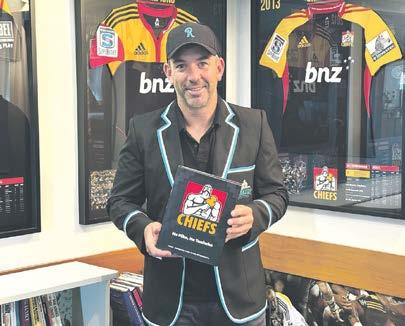
Now, the franchise has launched Super Rugby’s first kindred club: the Ruakura Rugby Football Club (RFC) - a formal alumni and community structure designed to retain institutional knowledge and connection.
Kindred clubs - associations that preserve connection and shared identity - are common at development level but new to the professional game. For longtime Chiefs employee and Ruakura RFC manager Kent Currie, the club formalises something many former Chiefs already feel.
“It is something we’ve put together to ensure that when people do their time with the Chiefs, they graduate into our club and keep a connection with the Chiefs forever,”
Currie says.
The club already has more than 100 members, the majority former players, following a soft launch before Christmas.
“They’ve bought into rekindling old friendships, getting together, telling stories and creating new ones within the Chiefs family,” he says.
“A lot of people have made important decisions throughout our history and it’s important we don’t forget them.
“The players earn the right
to represent the Chiefs, and it’s the same for coaches, office staff and administrators who’ve come through club and provincial systems.”
While Ruakura RFC is a Super Rugby club first, Currie points to a long tradition of kindred clubs across New Zealand rugby.
“They’ve been around for years - the New Zealand Harlequins, Auckland Barbarians, Wellington Centurions, Bay of Plenty Wasps and Counties Cavaliers,” he says.
“Locally, the Harlequins have done brilliant work supporting Waikato clubs and age-group rugby.”
Former players, coaches, staff, board members and shareholders receive complimentary legacy membership, while 250 paid foundation memberships are available to the wider public.
“Foundation memberships are for people who see value in what we’re doing and want to be part of something special.”
Early members include highprofile former Chiefs and All Blacks including Sir Wayne Smith, Sam Cane, Aaron Cruden, Richard Kahui, Liam Messam, Brad Weber and Brodie Retallick.
“Players understand what we’re trying to do. It’ll take time to build the culture, but the willingness is there.”
Beyond alumni engagement, the club provides a new bridge between professional rugby and the community game.
“We want to be seen supporting grassroots rugby and giving back to the game we love,” Currie says.
“These Chiefs are household names, but they’re also humble New Zealanders who like giving back to the communities they came from. This club creates a platform for that.”
The club’s home at the Ruakura Campus & Squash Club, within the Ruakura Research Centre, made the name an easy choice.
“These clubrooms are something tangible people can come to - to reconnect, have a drink, a meal and reminisce.
“When people hear Ruakura, they think of the Chiefs headquarters and training base. It’s our spiritual home.”
The Campus & Squash Club president Peter Clough welcomed the partnership.
“They’ve come on as a sub-club like squash, swimming and darts.
“It’ll attract younger members, which excites us, and it’ll be good for the bar and kitchen. We’re keen to support their events - it’ll be fantastic.”
Ruakura RFC has established a formal governance structure, including a new constitution and a regionally representative board.
Former Chiefs captains Errol Brain and Mike Collins are president and board member respectively, alongside Jennifer Kerr, former New Zealand Rugby Union board member; Movember New Zealand country director Robert Dunne and
Hamilton Marist’s Howie King as treasurer.
“Our former players are great storytellers with vast experience and knowledge of the game. We hope we can use that to inspire the next generation of Chiefs,” says Currie.
To reflect the Chiefs’ diverse regional roots, Ruakura RFC colours are black and turquoise.
“We didn’t want to use the Chiefs colours of red, yellow and black.
“Our alumni come from everywhere - Northland and North Harbour. Some of our best


players are from outside of the region. Black was obvious, and the turquoise is inspired by the Huka Falls - part of the Waikato River, which is important in our story.” In its first year, the club’s focus is on growing membership and re-engaging former Chiefs, with plans for a full calendar of events and community fundraising. Ruakura RFC could become a long-term conduit between professional rugby and the grassroots game, formalising relationships that have traditionally relied on informal networks.

Rising superannuation and healthcare costs are forcing a long‑delayed reckoning over savings, productivity and intergenerational fairness, reports senior writer Mary Anne Gill.
New Zealand’s ageing population is often described as a “silver tsunami” but the wave is already breaking.
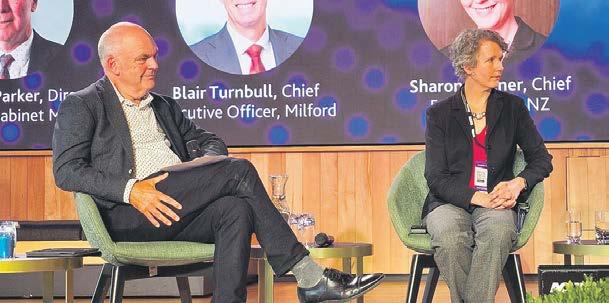
Speaking at the University of Waikato Management School’s Economics Forum last month, ANZ chief economist Sharon Zollner said spending on New Zealand Superannuation had already climbed sharply.
“On Treasury’s numbers, it’s already increased from just under four per cent of GDP 20 years ago to just over five per cent now and
under current settings, we’ll go to around eight per cent of GDP over the next 40 years.
“That’s obviously a lot of money we’re not spending on something else,” she says.
In the Bay of Plenty, the issues raised in Hamilton resonate.
An ageing population, rising healthcare demand and a tightening labour market are reshaping regional businesses and councils, while younger workers face the growing cost of supporting a larger retired cohort.
Superannuation was only
part of the challenge. Health costs associated with an ageing population would rise even faster.
“The people over 85, the health care costs are five times those of 65-year-olds.”
Former cabinet minister David Parker said the superannuation debate could not be separated from New Zealand’s poor productivity performance.
“For me, it’s most important ambit is its relationship to productivity,” he says.
“I see no credible way forward for New Zealand to lift our
productivity unless we match the Australians in their better savings rate.”
Australia’s stronger performance reflected deeper capital markets and higher levels of retirement saving.
“They apply more capital to their labour and where does that capital come from? Largely from their retirement savings.”
Milford Asset Management chief executive Blair Turnbull delivered one of the starkest warnings.
“In 1970, you had seven workers to every person over the age of 65. Today that’s about four workers to every person over the age of 65. And by 2060, it’ll be two workers every person over the age of 65.
“The truth is, as hard as we don’t like this, we just cannot afford the superannuation system because we don’t have the workers,” he says Raising the retirement age alone would not solve the problem.
Aged Care Association chief executive Tracey Martin said the issue was far more complex than a single age threshold.
“Fifty three per cent of over 65-year-olds are women. In the next 25 years, 660,000 New Zealanders will be renters over the age of 65.
“This is too simple a conversation to just say, should we raise the age of super or not?”
Panellists agreed there was a
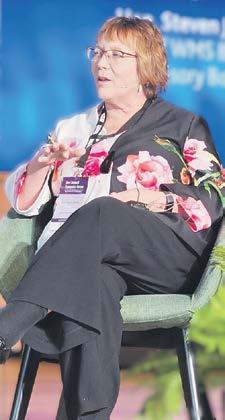
need for stronger private savings – likely through changes to KiwiSaver – alongside a universal public pension that prevented poverty in old age.
“The longer we put off things because they’re difficult, the worse the set of options will be and the harsher the transition will be,” says Zollner.
For regional economies, the implications are significant.
Labour’s finance spokesperson argues stability in housing, infrastructure and retirement policy matters more than speed when the costs of getting it wrong are borne for decades, reports Mary Anne Gill.
Barbara Edmonds does not pretend economics is abstract.
For her, it is personal. It is about whether families can stay in their homes, whether children can remain at the same school, and what stability means when life does not go to plan.
That perspective shaped everything the Labour Party’s finance spokesperson had to say during her visit to Waikato, where she addressed business
leaders, economists and community organisations at the University of Waikato Management School Economics Forum last month.
At a time when certainty feels in short supply, Edmonds, 45, a specialist tax lawyer, the MP for Mana since 2020 and mother of eight, says she is not offering simple answers.
“Ultimately, for me, it’s around stability. We don’t want huge depreciation. We
don’t want huge spikes.”
Housing is where that philosophy is most evident.
Asked whether allowing KiwiSaver funds to be used for firsthome deposits was a mistake, Edmonds is unequivocal: no.
For her, housing is both an investment and something far more fundamental.
“I’m a child that was brought up on a benefit whose parents bought their first home through a government scheme,” she
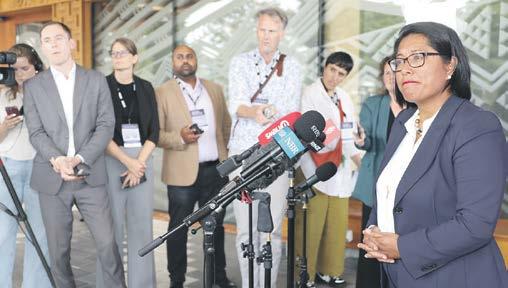
says. “When my mother died, the fact that we had a roof over our head stopped us being homeless. It meant we could build a community around us.”
That lived experience underpins her resistance to extremes - whether dramatic house price falls or runaway growth. Stability matters not just for homeowners, but for retirees, business owners and first home buyers trying to plan their futures, she says.
It is far harder for families like her own to buy a home today.
Even at seven or eight times household income, affordability is “really difficult”, particularly for first time buyers, she says. Supply, land use, infrastructure and climate resilience all need to be part of the solution, not just price signals.
Edmonds applies the same longview thinking to infrastructure, including the Government’s proposal for a liquefied natural gas (LNG) import terminal. Business wants certainty, she says, but certainty has to be grounded in evidence.
“Certainty on a business case that hasn’t been drafted, on contracts that haven’t been drafted. We can’t provide that certainty in hypothetical situations,” she says and points to reports that ranked LNG as the least favourable option.
For Edmonds, bipartisanship works best when governments engage early and transparently.
Waiting until late in an election cycle undermines the very certainty businesses say they are seeking.
On banking, Labour wants fees to be “fair and reasonable”, but policy must again be evidencebased. With reviews under way, Edmonds is unwilling to rush to conclusions - a contrast to electionyear rhetoric that is more about positioning than reform, she says.
That caution extends to retirement policy. While Labour has committed to keeping the superannuation age at 65, Edmonds says retirement security is about far more than a single lever.
“There’s a lot more to retirement than just the age.”
Any changes, she believes,
Barbara Edmonds
should be discussed across Parliament, not imposed by one party alone.
Edmonds’ Waikato visit was not just about policy. She was visibly energised by the mix in the room - business leaders, academics, social services and community groups.
“You need different voices and different people in the room. It’s not just business, it’s not just economists.”
There was lighter relief too. Edmonds says she and National’s finance minister Nicola Willis both live in Wellington and, between them, have a dozen children, enough for any sporting team.
Edmonds regularly returned to the same themes: evidence, certainty and the cost of getting it wrong.
“We don’t want half information, half analysis,” she says.
“Because then it costs us longer, it costs us more, and we still don’t have the outcome we need.”
Widespread instability on Mauao has forced prolonged access restrictions, disrupting Mount Maunganui’s visitor driven economy and challenging local businesses to adapt, writes editor David Porter.
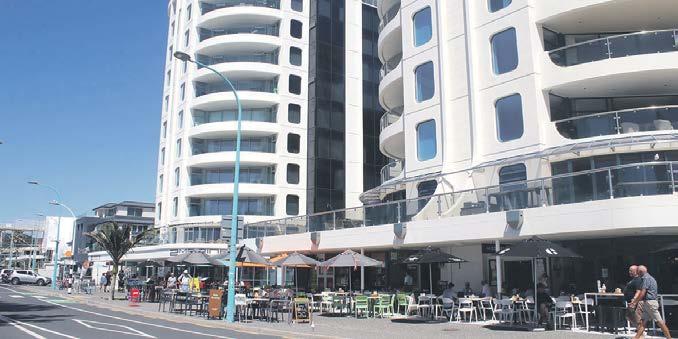
The slips on Mauao have reshaped more than the Mount Maunganui landscape. They have disrupted a local economy built on access, movement and visitors and the path back will be neither quick nor simple.
Six people lost their lives in late January after a major slip on the iconic maunga. Since then, geotechnical assessments have confirmed widespread instability across the reserve, forcing extended closures and compounding pressure on surrounding businesses.
Tauranga mayor
Mahé Drysdale says the engineering picture is now clear. More than half of the 42 landslips identified on Mauao will require substantial intervention before tracks can safely reopen.
“This is not a short-term fix. Some of these areas will require significant engineering solutions, and that takes time.”
Risk management measures are now a permanent feature of the landscape. Protective tarpaulins have been installed across vulnerable faces of the maunga, forming part of an evolving response
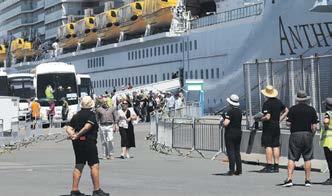
plan that is triggered by weather conditions, particularly heavy rainfall.
“As risk levels change, our response will change. But this is the reality we are dealing with now. We’re having to adapt to a different operating environment.”
Those controls will continue to affect access around the Mount, including nearby roads and facilities, under certain conditions. The surf club and boat ramp remain priorities for reopening, but only when safety thresholds are met.
At the same time, Drysdale is keen to reinforce that the commercial heart of Mount Maunganui remains open.
“While Mauao itself is closed, local businesses are very much operating and need support,” he says.
For Mount-based businesses, the loss of foot traffic has been immediate and tangible.
Glenn Dougal, a long-time Mount business owner and regional councillor, says the temporary closure of Mauao and the campground has removed a critical flow of customers.
“Access to the maunga is
part of the Mount’s daily rhythm,” he says.
“When that stops, the impact ripples right through hospitality, retail and accommodation.”
Dougal says the community understands why restrictions are in place, but the economic consequences are real.
“This has been a tough period for businesses that rely on regular visitors and locals moving through the area. There’s no getting around that.”
Support mechanisms are beginning to take shape. The Mount Maunganui Business Association has been coordinating assistance, and the Mayoral Relief Fund has provided some financial relief for those most severely affected.
“The business community here is resilient. Historically, when we’ve faced disruption, we’ve pulled together and that’s happening again.”
He says collaboration, rather than competition, will be key over the coming months.
“As business owners, we’ll support each other, share information and do what
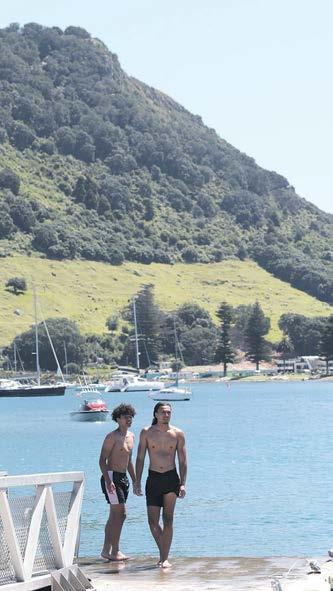
we can to help those who’ve taken the biggest hit,” he says.
Regional economic development agency Priority One is also part of the broader response, working alongside councils and government agencies.
Chief executive Dave Courtney says while others are leading the immediate recovery, Priority One is listening closely to its members.
“There’s a strong desire from businesses to helpwhether that’s through direct support, partnerships or finding practical ways to keep economic activity moving,” he says.
Courtney says reduced foot traffic remains the dominant concern,
By confirming and placing advertising in Good Local Media Ltd publications, products and platforms you are agreeing to our terms and conditions of trade.
CANCELLATION DEADLINE: Cancellation deadline is two weeks prior to publication. If cancellations are received after the booking deadline, then full charge applies. Advertising setting is free for use in Good Local Media Ltd publications only. If used elsewhere charges will apply, pricing available on request. Advertising space only is purchased, and all copy made up by Good Local Media Ltd remains the property of Good Local Media Ltd. If supplied ready to print, copy is owned by the advertiser. Publication day is first week of the month.
RATE CARD: Rates are based over a 12-month period starting from the date the first ad publishes. The rate bracket e.g. six insertions, 12 insertions etc. chosen allows ad sizes to vary within the rate bracket. If the number of insertions chosen is not met, then a bulk charge will be applied at the end/cancellation of your schedule based on correct rate reflective of the number of ads actually published e.g. if you have chosen the 12 insertion rate and only publish six insertions
etc., the bulk charge will be the difference in price between the six insertion rate and the 12 insertion rate multiplied by the number of ads published. You pay the rate reflective of the number of ads you actually published.
PRICING: All prices quoted are ex GST, per insertion, including full colour and are non-commission bearing. Commission rates are to be added on top. Rates are based over a 12-month period. The 12-month period starts from the date of your first insertion. Annual rates are based on 12 insertions.
INVOICING AND PAYMENTS: For advertisers on a regular schedule and have completed a client information form, invoices will be sent at the end of the month and payment is due by the 20th of the following month, otherwise payment is required prior to advert publishing. Accounts in arrears (+60 days) may be subject to a $95 + GST late payment fee per advert per month. Advertiser is responsible for any and all debt collection fees. Payment options are via internet banking (account number 02-0316-0510007-000), credit card, debit card, or EFTPOS at the office.
particularly if access restrictions extend longer than anticipated.
Police have now formally taken over the operation from Fire and Emergency New Zealand, marking a transition from emergency response to longer-term management.
For Mount Maunganui, recovery will be measured in months and years rather than weeks. For local businesses, the challenge is to remain viable while the landscape - physical and economic - slowly stabilises. The Mount has weathered disruption before. The question now is how the community adapts to a future where access, safety and resilience are no longer taken for granted.

A Bay of Plenty based PhD student is turning children’s letters into a national digital storytelling platform with implications for how literacy, creativity and confidence are built.
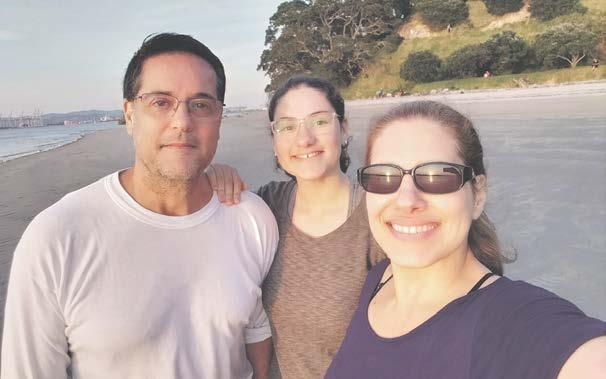
When Brazilian writer and theatre practitioner
Gisela de Castro arrived in Mount Maunganui in mid-2023, she brought with her more than a suitcase and a PhD ambition.
She brought a deeply held belief that storytelling - especially when shaped by digital tools - can build confidence, creativity and connection.
Less than three years later, that belief has taken tangible form in A Flight Over Aotearoa New Zealand, a nationally scaled digital storytelling project that is now live online and attracting attention from educators, researchers and creatives alike.
At its core, the project transforms children’s handwritten and typed letters into short, animated films. But viewed through a business and innovation lens, it also offers a compelling case study in creative collaboration, digital capability and the value of investing in platforms that give voice to emerging perspectives.
De Castro, a PhD candidate in Screen and Media Studies at Waikato University developed the platform as part of her doctoral research into how digital storytelling is reshaping children’s
literacy.
The website features 22 animated stories based on 70 letters written by children aged between four and 15, representing 15 regions across New Zealand. The letters explore climate change, local environments, hometowns and hopes for the future - offering what de Castro describes as an “affective map” of the country.
Now based in Mount Maunganui with her husband Julio Silva and teenage daughter Lara, de Castro says the Bay of Plenty has become both home and creative anchor.
Lara animated four of the films on the platform, turning the project into a family collaboration that mirrors its broader ethos of participation and shared authorship.
“I didn’t know anyone when we arrived,” de Castro says.
“We came because of the university. The Brazilian community here is huge and very friendly, and even without family nearby we’ve built strong connections. When I first met my supervisor, I felt so welcomed and confident. She understood our culture, and that gave me real trust.”
That sense of trust and inclusion extends to the project itself. Rather
than interpreting children’s ideas through an adult lens, A Flight Over Aotearoa New Zealand places young voices front and centre. Each animation combines text, illustration, narration and sound, encouraging children to see reading and writing not as tasks to complete, but as expressive acts with real audiences.
Delivering the platform required a multidisciplinary production approach more commonly seen in the creative industries than in traditional academic research.
De Castro worked with seven animators, three musicians, an editor, a crochet artisan and a web designer - coordinating a distributed creative team to bring the letters to life. For business readers, it’s a reminder that research, like innovation, increasingly sits at the intersection of disciplines. The letters themselves reveal how perceptive children are about place and responsibility. Some imagine new attractions or improvements for their towns; others focus on protecting environments that matter to them. Together, they paint a picture of a generation already grappling with environmental uncertainty and

technological change.
De Castro’s research asks a question highly relevant to educators, employers and policymakers alike: as reading and writing move further into digital spaces, how do we ensure that shift expands participation rather than narrows it?
“When children saw their stories animated, they began to see themselves as writers and artists,” she says.
“Confidence is part of literacy too.”
The platform also reflects how children are encountering emerging technologies. One participant rewrote a letter initially generated using artificial intelligence, refining it to better reflect his own perspective — a small but telling example of how digital tools can prompt critical thinking about authorship and authenticity.
Alongside the animations, the site features a handcrafted crochet mascot representing the tara iti, the New Zealand fairy tern. The choice symbolises both environmental care and the blending of digital and handmade creativity - themes that resonate strongly in many of the children’s letters and in de Castro’s own experience as a migrant building a new sense of home.
With further academic analysis to follow ahead of her thesis submission in 2026, A Flight Over Aotearoa New Zealand already stands as a polished, publicfacing outcome. For Bay of Plenty readers, it’s also a reminder that globally relevant ideas can take shape locally - and that innovation doesn’t always start in a boardroom, but sometimes with a child, a letter and the courage to listen. - Supplied, additional reporting Mary Anne Gill

Hosted by Deloitte, Holland Beckett, First Mortgage Trust, Forsyth Barr 4 February 2026, Northern Quarter Building
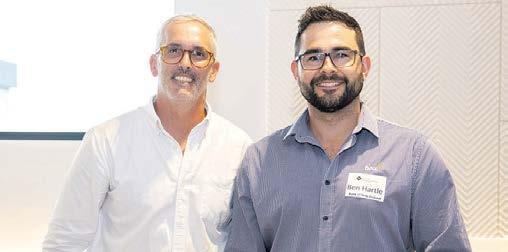
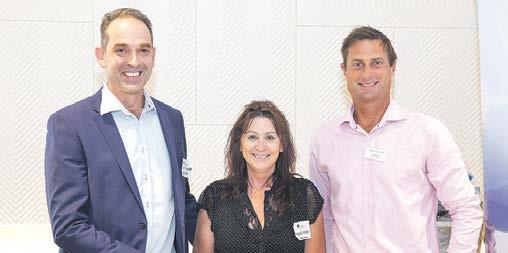
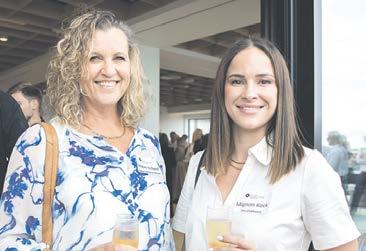
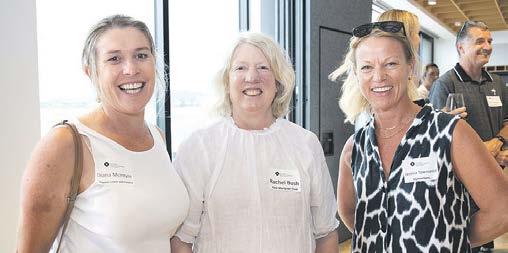
The Tauranga Business Chamber kicked off the year with a vibrant Business After 5 at The Northern Quarter, Tauranga’s newest office space development. Hosted by Chamber members Deloitte, Holland Beckett, First Mortgage Trust and Forsyth Barr, the evening gave attendees the opportunity to explore the impressive new building while reconnecting with fellow professionals. With a strong turnout and generous hospitality, the event set the tone for a productive and forward focused year across Tauranga’s business community.