Tax crackdown gathers pace Page 7
BAY OF PLENTY

Council's infrastructure triumph Page 9
The voice of Bay of Plenty
Gongs awarded Page 10
High-flying farm chief
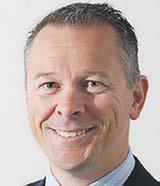
Mike Siermans leads one of the country’s most influential farming organisations. Monique Balvert-O’Connor speaks to the Tauranga-based Federated Farmers chief executive.
As a teenager Mike Siermans thought he might become a pilot. Instead, he has become a senior leader in a sector grounded firmly in the land.
His appointment as Federated Farmers chief executive was confirmed in January after he spent several months in an interim capacity and coincided with severe weather that brought devastation to parts of the country, including in Tauranga where he and his wife Emily live.
Siermans replaced Terry Copeland and his first job was supporting his community coming to terms with landslides on Mauao, Mt Maunganui and in Welcome Bay that had claimed eight lives and led to such widespread damage.
At the same time, Federated Farmers provincial presidents were reporting damage in other regions such as Northland and Tairāwhiti.
Through it all he learnt, first hand of the value of Federated Farmers in times of strife.
“We have a different perspective from emergency services as we know our farmers and can ring those provincial heads to ask what is needed. The collective knowledge that brings the community is incredible.
“Federated Farmers is not just about productivity in farming; it’s about helping in adverse times. We can be the voice of our rural communities. This was demonstrated and is becoming increasingly
important given climate change,” Siermans says.
From his seat at the helm during those trying times he worked with agencies to restore access so food and stock could move and spoke with farmers to ensure they stayed connected. Resilience and maintaining connections quickly became priorities.
It was a demanding start to the role and proved useful preparation for future weather events.
With the storms behind him, his focus has shifted to travelling to as many provincial annual meetings as possible.
“There are 24 provinces and each has an AGM and I have tried to get to as many as I can, to meet people and work to identify their
Where trails begin

needs,” Siermans says.
Next on the agenda there’s Fieldays, where Federated Farmers will co-host an advocacy hub. Then, hot on the heels of Fieldays comes the Primary Industry Awards, staged by Federated Farmers on behalf of NZ primary industries this month.
He has been busy from the outset and says the role suits him.
“Within my career I have always looked to work for companies wanting to grow NZ Inc. I have worked for big, multinational companies and have a thing about putting my efforts and talents into making NZ successful.
“Working within the biggest export sector in NZ provides the biggest opportunity and prospect to grow NZ Inc forward. I am working in alignment with NZ farmers to do good work every day,” Siermans says.
The current Federated Farmers focus? In a nutshell, he says that would be financial and organisational stability and membership growth. The current membership of about 12,000 is strong but says 14,000 would allow greater investment in advocacy and support.
“Advocacy is our game; our strength is our fraternity,” is his mantra.
“We are across the provinces, understanding what the issues are, and then we go to bat for our farmers. There is good, robust discussion and an impact on local regulations and national legislation. I love that we are making a positive difference for them,” says Siermans who urges non-members to pick up the phone, sign up and support the good work Federated Farmers does.
Siermans says the call he received suggesting he apply for the Federated Farmers position was perfectly timed. He’d been interested
in moving into another field and the agricultural sector was in his line of vision.
Federated Farmers president Wayne Langford acknowledges Siermans’ extensive senior leadership and commercial experience. Siermans, in return, considers it an “absolute privilege” to head an organisation highly respected by local and central government and farmers in general – one that’s highly influential when it comes to the future of NZ farming.
Before joining Federated Farmers, Siermans’ career spanned fastmoving consumer goods, pharmaceuticals, and technology, with senior roles at Douglas Pharmaceuticals, Pfizer Animal Health, and most recently at Taura Natural Ingredients.
It was for the Taura position that he, and family, moved to Pāpāmoa’s Coast subdivision nine years ago.
Emily is Waipuna Hospice director of clinical services in Tauranga. Their son Jacob is marketing and operations manager of the NZ Liberation Museum in Quesnoy, France. Daughter Eloise is an auditor with the Ministry for Social Development, and Charlotte a Royal Melbourne Hospital pharmacist.
Home now is near the Tauranga city centre.
“I have a group of friends from my University of Otago days who have been telling me I should move to the Bay. Great advice. It only took me about 20 years,” he says.
Those last 20 years were spent based in Whangaparāoa , very much the other end of the Auckland he grew up in. Otara was initially home, with his family moving to a lifestyle block in the rural community of Alfriston (also South Auckland) when he was 13. Holiday jobs on local chicken farms and at

market gardens ensued. His 15th birthday present was a flying lesson. But university beckoned, and the idea of becoming a pilot morphed into being a oneday leisure activity; that’s still on the cards, he says.
“I decided to pursue business. I thought that would be a good way to influence outcomes and do good work,” says Siermans who has both a Bachelor of Commerce (economics major) and an MBA from Otago University.
Beyond work and family time, Siermans enjoys fishing, swimming (time by the beach in general), entertaining, gardening, and helping out at Good Neighbour whenever he can. He also confesses to being a bit of a “techie”.
At Fieldays this month he’ll be making a beeline for the drone section.
“Such technology is changing farming too. My vision is that a drone can go up with a very small amount of herbicide and give ragwort etc a quick squirt, using technology to maximise effect and minimise the environmental impact.”
He points to increasing productivity, reducing environmental impact and embracing new technology as other key priorities.
There is plenty to keep him motivated as he settles into the role and looks to the future of New Zealand farming.
Mike Siermans
The Small Project Architecture winner at this year’s Te Kāhui Whaihanga New Zealand Institute of Architects’ Waikato and Bay of Plenty Awards has put a student-led design centre stage. Summerhill ’23 & ’24 in Pāpāmoa, by Andrew Barrie Lab with Gregory Mann and Billy Pengelly, stood out for its ambitious yet practical response to place. The project features two timber structures within a recreational park – one marking the start of mountain bike trails, the other forming a gateway to a forest walking track. Drawing on traditional wedged joints, the design allows for natural movement in the timber while delivering a refined, lightweight result. Judges praised the project’s fresh approach to construction and its response to climate challenges using simple, sustainable materials. It was one of 22 projects recognised across the region, highlighting the growing impact of smaller, innovative works. Photo: Sam Hartnett.
Editor
David Porter
Senior Writer
editor@goodlocal.nz 021 884 858
Mary Anne Gill maryanne@goodlocal.nz 021 705 213
Advertising Director
Janine Davy janine@goodlocal.nz 027 287 0005
Owner/Publisher
David Mackenzie david@goodlocal.nz 021 684 304
To Advertise sales@goodlocal.nz
News Tips editor@goodlocal.nz
Office/Accounts admin@goodlocal.nz
Website goodlocal.nz
To Subscribe admin@goodlocal.nz
Readers’ contributions of articles and letters are welcome. Publication of contributions are entirely at the discretion of editorial staff and may be edited. Contributions will only be considered for publication when accompanied by the author’s full name, residential address, and telephone number. Opinions expressed are not necessarily those of the publishers. Bay of Plenty Business News is published by Good Local Media Limited.
Also publishers of

Law a vexed question
By DANIEL CHURCH
On 21 February this year, the Employment Relations Amendment Act 2026 came into force. It made changes to the way in which the Employment Relations Authority and Employment Court must approach cases where an employee has a personal grievance claim, but there is contributing behaviour by the employee, giving rise to the situation causing the grievance.
The amendment mandates that the Authority or Court must not award any remedies if there has been contributory conduct amounting to serious misconduct. In other cases involving contributory conduct, reinstatement and ‘hurt and humiliation’ compensation cannot be awarded, although other remedies, like lost remuneration, remain available.
This is to ensure that employee claimants are not ‘rewarded’ for their own bad behaviour.
While these changes do not apply retrospectively, how they work in practice remains a vexed question. The Court held in Board of Trustees v LGY that the applicable law was that which applied when circumstances giving rise to the case arose. This means that the new changes would







By TODD MULLER
During my decade as a local MP, one issue reliably surfaced at public meetings: frustration with local government. Rates, road cones, planning rules, spending priorities, everyone had a view.
As a central government MP, it was easy enough to nod along, and at times I did. But with a little more distance, I’ve come to think the operating model of local government is under genuine strain.
One of my favourite parts of history, the American Revolution was driven in part by the cry of “no taxation without representation.” Local government faces almost the opposite problem: plenty of representation, but increasingly constrained taxation.
Our councillors, in my experience, are not short on accountability. They are visible, accessible, and often on the receiving end of strong community opinion. The real challenge is structural. Councils are being asked to do more, with ageing infrastructure, rising compliance costs, climate resilience demands, and in regions like the Western
only apply if the circumstances giving rise to the personal grievance occurred after 21 February.
More recently, in McMillan v Qube Ports NZ Limited, the Authority indicated, in the context of an interim reinstatement, that the tests for contribution and available remedies were those available at the time of the employees’ termination. That would mean that the changes would apply if the employee’s termination occurred after 21 February, even if other circumstances of that termination may have occurred beforehand.
Although we now have some rulings on when and how the new law applies, they may raise more questions than answers. What of a termination where the employer’s process started before the law change, but concluded after?
What of a performance management process which started before the change and continued after? What about a termination where notice was given before the law change but took effect after?
What of constructive dismissal claims where a series of events occurring both before and after the commencement is relied on? What about subsequently discovered
misconduct that occurred before the law change, or spanned a period both before and after?
Emerging case law should provide some clearer answers to these questions over time. In the meantime, employers should not feel falsely emboldened to circumvent fair process, assuming employees will receive no or only few remedies due to contribution. It is far from guaranteed that that will be the case. While these changes may strengthen employee accountability, they do not absolve an employer’s obligations to act in good faith and justifiably.
EMA members can contact our AdviceLine for expert guidance on employment relations, human resources, and health and safety issues, including restructuring, disciplinaries, and dispute resolution. In addition, our legal team and consultants provide advice and support regarding employment relations processes and employee conduct.
• Daniel Church is senior associate at the Employers and Manufacturers Association (EMA)


Bay, the relentless pressure of growth.
Of course, everyone can point to examples of spending they disagree with. Every council has projects that attract criticism. But I suspect those arguments sit at the margins of the bigger issue, especially here in the Bay of Plenty.
The more important question is this: how do we build a responsive and efficient layer of local government with the governance capability to manage increasingly complex balance sheets, while giving it revenue tools that fairly reflect who uses the services?
That is where the debate becomes uncomfortable.
The Government’s preferred answer appears to be structural reform; potentially through amalgamation. Bigger entities, fewer councils, more scale.
As Chair of Priority One, I am confident the business community will engage constructively with that conversation. Business understands the value of scale, efficiency, and fit-for-purpose governance. But support for reform should not mean
blind acceptance of simplistic solutions. If change is coming, we need to be clearminded about the revenue tools available to fund growth fairly. We need confidence that local communities will continue to have a meaningful voice in the decisions that shape their neighbourhoods. We need to work carefully through significant regional implications; including strategic assets such as port ownership. And we should approach this debate with respect for those who currently serve in local government, often under intense scrutiny and with genuine commitment to their communities. Structural reform may well be necessary. But if we are going to redraw the map of local government in the Western Bay, let’s make sure we are solving the right problems and not simply creating a different set of them.
•Todd Muller is a long-term Tauranga resident, former MP and current chair of Priority One. All views expressed are his own.












Sunny side up
The Sunny Side Up Children’s Film Festival, a film festival designed to introduce primaryaged children to the magic of cinema in a fun and inclusive way, will be held in Tauranga at the Graham Young Youth Theatre next month. The creator and director is Milli Banbury, 15, who started the festival in Tauranga four years ago and took it on the road last year to Auckland, Christchurch and Hamilton bringing award-winning short films, interactive games, prizes, and laughter to children and families.
Long term plan
Bay of Plenty Regional Council has adopted its draft Annual Plan 2026/27 and a proposed amendment to its Long-Term Plan. Chair Matemoana McDonald says the process comes at a time of national local government reform and is one of the most significant in recent years, with community input needed to help shape the region’s future.
Shipping warning
Boaties in Tauranga Harbour are being reminded to keep clear of large vessels after several incidents involving smaller craft. Harbourmaster Jon Peters says ships over 500 gross tonnes have limited ability to manoeuvre, especially in shipping lanes, and safety depends on smaller vessels staying well out of their path.
Deal concluded Regional leaders have welcomed a new deal aimed at supporting growth in the Western Bay of Plenty. Announced by Government ministers and local councils, the deal backs investment in transport, housing, health and education to help unlock development and strengthen the area’s role as a key export hub.
Landslides plan
Tauranga City Council has released its recovery plan following January’s fatal landslide at Mauao. The plan outlines work with partner agencies and steps toward reopening affected areas. Several investigations are ongoing, while some facilities remain closed. Rehabilitation work has begun on Mauao’s summit track and the Pilot Bay boat ramp is expected to reopen soon.
Answering the call
From birthday surprises to deeply personal turning points, nursing students are stepping up to meet the growing demand for compassionate care, writes Mary Anne Gill.
As birthday presents go, Bay of Plenty student nurse Upuia Richel’s was pretty special.
A $30,000 scholarship from Southern Cross Health Trust for her nursing studies at Waikato University.
“Yes, I got an email the night before my birthday,” Richel says of the notification, which arrived on March 15, on the eve of her 18th birthday.
Richel, who has Māori, Samoan and European ancestry and is named after her Samoan grandmother, attended Glenholme, Rotorua Intermediate and Rotorua Girls’ schools, where performing arts helped balance study demands.
She took part in productions such as Legally Blonde and In the Heights, as well as choir and Shakespeare performances.
But since moving from Rotorua to Hamilton, those opportunities have been limited.
“It’s my outlet, I really miss it now,” she says.
Nine Waikato University students are supported by the Southern Cross Trust scholarship programme, which provides $10,000 a year for each student, as well as mentoring and professional development opportunities.
Richel applied for it while working a summer job at Lady Jane’s ice cream parlour in Rotorua to save for university.
She is already taking on leadership opportunities, recently attending a national Māori nursing hui and stepping into a representative role for Māori nursing students.
The scholarships were formally recognised at a morning tea last month at Southern Cross Hospital in Hamilton, where recipients and their whānau met staff and university leaders backing the programme.
But for some students, the pathway into nursing comes from deeply personal experiences and a desire to care for those closest to them.
For Richel, the decision to pursue nursing was shaped by a personal experience. She had initially planned to study environmental engineering, but changed direction after her uncle became critically ill and was hospitalised in Rotorua, where he
died four days later.
“The way the nurses looked after him, and my family as well, really changed my perspective,” she says.
“It had a big impact on the kind of nurse I want to be.”
Third year nursing student
Anastacia Cuthers of Te Awamutu is also a recipient and made a similar decision after her father suffered a stroke during Covid.
“I saw a gap that I saw myself being able to fill, and that was to come and be a nurse,” she says.
Helping care for him gave her firsthand insight into the pressures facing the health system and cemented her decision to move into a more hands-on role after previously working in administration.
For Cuthers, who is raising two children while juggling study and placements, the financial support has made an immediate difference.
“I’m so grateful. That scholarship helped take that financial pressure off tremendously,” she says.
At the morning tea event, Southern Cross Hamilton general manager Marlise van Staden told students the funding was more than financial support and came with expectations.
“Be curious, ask questions, don’t be afraid to speak up,” she says.
“Habits you build now are habits that you’ll carry with you for the rest of your career.”
Students were stepping into a profession that needed fresh thinking and confidence.
“You’re an ambassador for a profession that needs to carry its head up and stand a little stronger,” she says.
The scholarships are part of a partnership with Waikato University’s School of Nursing and Midwifery, aimed at building the future workforce and easing some of the financial pressure that comes with clinical training.
Head of school Ange Stewart says the programme opened doors well beyond the $10,000 annual payments.
“This extends far beyond financial assistance,” she says.
“It provides professional development opportunities, mentoring and networking connections that open doors and support future career pathways.”


The emphasis on equity meant the scholarships could be life-changing for some students.
“This equity-focused scholarship makes a significant difference in the lives of our students,” she says.
Clinical placements are a major part of the degree, and Southern Cross staff say they are committed to giving students hands-on experience from day one.
Clinical nurse educator Nita Lorigan, who has worked at the Hamilton hospital for more than two decades, says students would be encouraged to take part in all aspects of patient care.
“There is no bad question. The only bad question is the question that wasn’t asked.”
The hospital prides itself on creating a learning environment while maintaining a strong patient focus.
“We want to give the best for our patients, and to do that we need to train the people who are going to give that care,” she says.
Students work alongside preceptors, follow patients through their surgical journey, and build confidence in real clinical settings.
The scholarships also come with mentoring and potential parttime work opportunities, helping
students gain experience while they study.
For Richel, the support has eased the pressure of leaving home and committing to a demanding programme.
Moving to Hamilton straight from school has been a shift.
“I’ve lived with my family my whole life, so coming here has taught me independence,” she says. She is looking forward to developing her skills and hopes to work in community health, particularly with Māori and Pasifika communities.
“I want to do more than just clinical work. I want to be involved in the community and eventually move into leadership and advocacy,” she says.
In the longer term, she also hopes to take her skills overseas, including to Samoa.
The morning tea gave recipients a chance to meet each other and start building the connections that organisers say will be just as important as the financial backing.
Van Staden encouraged them to make the most of those relationships and to challenge the system where needed.
“That’s how we learn,” she says.
“It’s all about feedback.”







Upuia Richel changed to nursing after the death of her uncle and now has a Southern Cross Health Trust scholarship. Photo: Mary Anne Gill

















Developers challenge levy rises
Tauranga City Council’s growth funding team says freezing Tauranga’s development levies would result in rate rises.
Tauranga’s Urban Task Force (UTF) is calling for the development levy freeze, warning that council charges, now about $43,000 per new dwelling, are pricing first-home buyers out of the market.
The task force, which represents developers, builders and construction professionals, has lodged a formal submission opposing council’s Development Contributions Policy.
Development contributions are fixed charges paid by developers when new dwellings are consented, intended to help fund infrastructure such as roads, pipes, parks and stormwater systems.
UTF chair Scott Adams says higher development charges are passed straight on to homebuyers. The group wants the council to hold off on further increases until the government completes its growth charging reforms.
Council Growth Funding team lead Ben Corbett –ahead of a final decision from councillors this month - says freezing the levies is not a viable solution.
“This would result in rates’ rises and stray from TCC’s strongly held principle that our existing community
should not pay for the cost of growth,” he says.
Corbett says the steep increase in development levy costs is not an issue faced solely by Tauranga residents.
“Development contributions have risen significantly over the last five years reflecting the very high costs of delivering new infrastructure.
Tauranga’s development contribution charges for new growth areas are very similar to those in similar areas of Auckland and Hamilton.
“The rising costs of building, including increases in development contributions, have made it more expensive to build everywhere in New Zealand and this is a challenge TCC is working with the government and the development community to address,” Corbett says.
UTF’s submission says the development levy was $12,000 per dwelling five years ago.
“This year it is $43,000 following a 15 percent rise last year, including the proposed 7.3 percent council increase this year.
“That is a whopping 258 percent increase, and more than $30,000 extra to the cost of a new home in five years, before land, construction costs or interest rates enter the picture,” says Adams.
UTF’s submission challenges not just the scale of the increases but what the money is being used for. Under the Local Government Act,
development contributions must have a direct link to infrastructure demanded by new growth, the submission says.
“New home buyers are subsidising infrastructure for everyone else. TCC is including costs that fail that test - among them, upgrades to indoor courts and aquatic centres used equally by existing residents across the city,” Adams says.
The council’s Development Contribution Policy says it is lawful and common practice across New Zealand to collect development contributions towards community infrastructure like pools and indoor courts.
“As our population grows so does demand for these types of assets. It is equitable that new development makes a contribution towards funding a share of the cost of building these facilities,” the policy says.
Population and urban growth are the reasons much of council’s capital expenditure needs to be undertaken.
“As the cause of this expenditure, it is fair that a significant portion of this cost is recovered directly from the development community through the collection of development contributions.”
Council’s view is that such an increase would impose “an unfair financial burden” on city ratepayers.
The UTF submission
asks council to defer any further increases until the government’s new national development levy framework is in place; shift to funding tools such as Special Purpose Vehicles and targeted rates that spread costs equitably across the communities that benefit, and strip from the development contribution schedule any items that do not meet the legal nexus test.
“Tauranga needs more homes and it needs them
to be attainable,” Adams says. “That’s what UTF is advocating for on behalf of the professionals working to deliver housing in this city, and the people who need to live in them.”
The council reviews its Development Contributions Policy each year and will meet this month to consider feedback and decide on changes, which would take effect from July 1. - Monique Balvert-O’Connor
Brioche double crown

The
Commercial property is different
In commercial property, success is often measured in square metres, rent rolls, and capital gains.
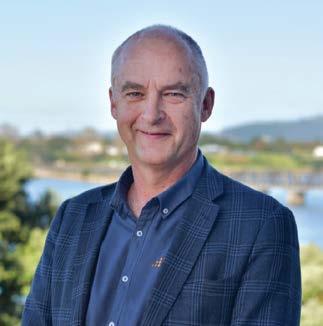
But after more than 20 years managing some of the country’s largest retail assets, David Hill saw an opportunity to offer something different and better for commercial owners.
That’s why he founded Commercial Property Partners (CPP). For David, the job of managing commercial property has always been about something deeper: strong relationships, accountability, and adding long-term value.
“Commercial property is totally different to residential property,
“With residential property, the landlord pays everything, while with a commercially property tenant, depending on the lease, the tenant pays most of the outgoings,” he says.
David notes that a lot of landlords take on the role of managing commercial property as a job and then don’t “work the asset”. They hire people to buy a commercial property, then want to take over the running of it themselves, perhaps not realising that the hard work has just begun.
But he notes that in his years of managing commercial property, he has come to accept that every single lease is different and each lease requires an indepth understanding of implications of each clause. This is where David and the team add real value.
Some owners and managers in the market are treating the asset as residential property and missing out on the value added opportunities that make Commercial Property such an attractive asset class. But the two are very different.”
David notes that a lot of the business his new firm has picked up over the past year has involved
unscrambling different interpretations of the responsibilities within the leases – “this is our specialist area” enthuses David.
David notes that his wife and co-director Helen is an experienced property accountant.
“We love commercial property because we have found so many ways to add value to every transaction for every landlord and tenant we’ve picked up,” he says.
“Our clients used to see the property management fee as a cost, but we can explain to them it’s actually an investment. Because we save them thousands of dollars in just communicating, doing simple maintenance,
making sure the building warrant of fitness is up to date and basic things like that.”
David says he has seen firsthand how big corporate firms often overlook non-corporate commercial landlords, focusing on the “easy wins” while ignoring real opportunities.
“That’s why I started Commercial Property Partners—to bring a locally owned, people-
first approach to property management,” says David.
“We’re not about onesize-fits-all solutions— we’re about customised strategies that maximise returns, reduce hassle, and keep your investments ticking along nicely. Whether you’re an experienced investor or moving from residential to commercial property, you deserve a property manager who’s in your corner.”
David Hill
Scott Adams
Plates of Plenty Challenge double-title winners, from left Somethin’ Somethin’ owners Nathan and Ash Turley, front-of-house manager Kirsty Stuart and chef Ants Watkins celebrate at Heath Street after their Somethin’ Clucky chicken brioche burger took both Judge’s Choice and People’s Choice. It’s the first double win in the challenge’s five-year history, with the Mount Maunganui café topping a field of 20 festival dishes served across the Bay of Plenty during Flavours of Plenty.
burger’s crumbed chicken, chorizo-and-curd patty, bacon, egg, chilli onion jam and hot maple-kawakawa mayo proved a knockout with diners and judges. Photo: Tourism Bay of Plenty.
Discover distinctive venues that set your event apart
From breakfast conversations to after-hours celebrations,
The Historic Village offers a range of distinctive venues within a vibrant, character-filled setting, designed to make your event stand out.
Located just minutes from the city centre on 17th Avenue, The Historic Village is central and easy to access.
With six unique indoor venues and four outdoor spaces, along with quality onsite catering, The Village provides flexible options - from meetings and workshops to celebrations and functions, catering for up to 175 guests.
Each venue brings its own charm and atmosphere, allowing you to choose a setting that best reflects your event style, whether you’re after something intimate and character-rich or open-air and relaxed.
At The Historic Village, you’re not just booking a venue, you’re partnering with a team that genuinely cares about delivering high-quality, personalised experiences.
The Village offers a suite of services with everything in place to ensure your event runs smoothly from start to finish, including:

• Quality on-site catering and licensed bar services, with custom menu options available
• Reliable AV setups, Wi-Fi, and venues equipped with projection capabilities and screens
• On-the-ground support staff to assist with setup, logistics and smooth delivery
• Accessible amenities, including lift access to The Balcony Room, and inclusive restrooms
Surrounded by heritage buildings, leafy spaces and a lively village atmosphere, your event becomes more than just a booking, it becomes part of a destination that inspires connection and conversation.

Whatever the occasion, The Village provides a distinctive backdrop that helps you create events that feel considered, engaging and truly set apart.
Connect with The Historic Village team today to discover your next event space, or plan ahead and book in your end-ofyear celebration.
historicvillage.co.nz/venue-hire


Rural uncertainty grows
The Iran War’s disruption to global fuel markets is starting to push up costs and create uncertainty for Bay of Plenty rural businesses, reports David Porter.
Rural contractors, orchardists and farmers across the Bay of Plenty are starting to see rising costs from global disruption.
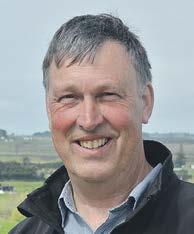
“We’re all still watching and waiting,” says Tauranga Federated Farmers president Brent Mountford.
The Iran War and closure of the Strait of Hormuz are already affecting world trade and New Zealand exporters.
“What’s most probably helped at this stage to cushion the blow is that most of us have been getting reasonable returns on our products,” says Mountford.
“But we are still concerned and it just seems to be going on and on. It is a concern, especially for arable farmers who are very reliant on fertilisers and machinery. Mostly what’s cushioned it slightly at the moment is you’ve had the Fonterra payout, plus sheep and beef farmers have been getting some of their best prices for a long time. But that could turn down very quickly.”
Mountford says the risk for farmers is that if the situation offshore worsens, New Zealand exporters may struggle to get product to market even when demand is strong.
Infometrics chief economist Brad Olsen says fuel supply chains
may take time to settle, with elevated prices likely to persist in the short term.
“The fuel side could stay higher for a while,” he says.
“For inputs like fertiliser, the impact may not be immediate because there’s already supply in the system, but the next season is where costs could really start to bite,” says Olsen.
The lag effect means farmers may feel a more significant squeeze later in the year as higher-priced inputs begin feeding through.
For now, many are focused on preparation for the next production cycle, balancing current conditions with uncertainty about what lies ahead.
There are also broader questions around demand for New Zealand exports as global economic conditions react to the conflict.
Former Waikato Federated Farmers president Phil Sherwood says the conflict has unsettled global fuel markets, with knock-on effects beginning to show across agricultural supply chains.
“We’re expecting fertiliser prices to go up and supply to tighten because of basic supply and demand,” he says.
Mountford says if farmers were getting the lower returns of a couple of years ago, they would be in deep trouble right now.
“At the moment the markets are not bad and interest rates are quite low. And the other thing is a lot of farmers over this good period have used that time to reduce debt, a lot of debt. And that is partially to insulate ourselves against things like this.”
Some of the increased costs are being absorbed further up the chain, he says.
“We could all of a sudden have high inflation and then interest rates start to go up and we will be back in square one again. People will then start to worry.”
Many farmers have now
spread their fertiliser and will be looking towards spring for the next application when prices are expected to be even higher.

“We’re all aware of what’s going on and we’re watching and wondering where it’s all going to land,” says Mountford.
Tax crackdown gathers pace
Businesses are being warned to stay on top of their taxes as Inland Revenue steps up enforcement after its softer Covid-era approach.
Speaking at a recent Chartered Accountants Australia and New Zealand roadshow in Tauranga, tax leader John Cuthbertson said Inland Revenue was refocusing on overdue tax, backed by more funding, stronger data and targeted compliance. The department is returning nearly $12 for every dollar spent on enforcement.
Overdue tax debt runs into billions, with small businesses
and the self-employed carrying much of the burden. Many fell behind during Covid when Inland Revenue took a supportive approach, allowing debt to build. That stance has shifted.
Businesses are facing more calls, letters and, in some cases, site visits. Failure to respond can quickly escalate to deductions, legal action or liquidation.
Cuthbertson said Inland Revenue expected early engagement. “You get a lot of chances,” he said. “But if you ignore it, they will escalate.”
Employee share schemes, less “tax-without-cash” for unlisted companies
BY
Liquidations are rising, particularly in construction and hospitality, where cashflow pressures remain.
Businesses that act early still have options, including repayment arrangements and tax pooling. Inland Revenue has also introduced a pilot programme offering structured repayment plans.
Attendees were also reminded to stay on top of technical issues such as fringe benefit tax, where complex rules can easily catch businesses out. –
Mary Anne Gill
Sponsored Content

ANDREA SCATCHARD
“Tax-without-cash” is an issue that arises in several areas of our tax system, but thanks to a new set of tax rules, this issue can be solved for employees in unlisted companies receiving shares, where Employee Share Scheme (ESS) income can arise before the employee has any real ability to sell their shares and fund the tax.
From 1 April 2026, the new Employee Deferred Shares (EDS) regime is intended to narrow that gap by deferring the employee taxing point until a defined liquidity event, bringing the tax outcome closer to when cash is available.
The standard rule for taxing ESS income for employees is that when shares are provided to the employee for less than market value and with no material conditions attached, the discount offered is taxable to the employee and the employee must pay tax on the shares. Putting aside the complication of how to value some private company shares, if the company is an unlisted company this often means that employees have no ability to
sell a portion of the shares to cover this tax and must make other arrangements to meet their obligations.
From 1 April 2026, unlisted companies can designate certain ESS shares or options as EDS. To qualify for this treatment:
• The company offering the shares must not be listed, nor can any other company in the group; and
• The employer must make a designation of shares as “employee deferred shares” and notify the employee and Inland Revenue within 20 days after the date of issue or transfer of the shares.
Once elected in to the EDS regime, the consequence is
the that the share scheme taxing date for the shares, which is the date that any taxable income for the employee is measured, is deferred to the “liquidity event date”. This is defined as the earliest of the following dates:
• the date the issuing company becomes a listed company
• the employee sells the shares to someone not associated with them
• the date the shares are cancelled.
The benefit of the EDS change is the deferral of the payment of the tax due by an employee to a future date (when the shares become liquid). The flipside however is that any increase in
the share price, from the time the employees are provided with the shares to when they subsequently become liquid, will be taxable.
For unlisted companies, these rules provide practical optionality for structuring employee rewards. However, the core trade-offs remain and should be assessed before making an EDS designation.
The designation of shares as EDS would hopefully not be a unilateral decision made by the employer, and discussions with employees should be had in most cases before deciding to designate shares as EDS, which would mean, in practice, employees would be involved in the designation decision.
As always, you should seek
tax advice as part of planning any employee reward scheme involving shares or options.
> “The benefit of the EDS change is the deferral of the payment of the tax due by an employee to a future date (when the shares become liquid).”
Andrea Scatchard is a Tax Partner at Deloitte, based in the Bay of Plenty. She can be contacted on ascatchard@deloitte.co.nz
Brent Mountford
Brad Olsen
Backing new varieties
Recent government moves to bolster plant variety rights are expected to lift the value of horticultural exports, particularly kiwifruit, reports David Porter.
Industry leaders say proposed changes to plant variety rights will support the Bay of Plenty’s kiwifruit sector by protecting investment in new cultivars and backing future exports.
Kiwifruit Breeding Centre chief executive Matt Glenn says the changes recognise the significant commitment needed to develop commercially viable cultivars.
“Fewer than one percent of the potential varieties in our breeding programme will result in a commercial cultivar,” he says.
“Developing a new kiwifruit variety requires millions of dollars of investment and can take up to 20 years of research, selection, field testing and commercial validation before it can be successfully released.”
The centre, a joint venture between the Bioeconomy Science Institute and Zespri, has invested heavily in developing high value varieties that build market demand and help growers respond to rising costs and climate pressures.
Glenn says extending protection terms will better align New Zealand with international settings and help safeguard existing value and support future export growth.
Trade and Investment and Agriculture
Minister Todd McClay and Commerce and Consumer Affairs Minister Cameron Brewer say targeted amendments to the Plant Variety Rights Act will give exporters stronger protection for premium cultivars and support long term growth.
Brewer says robust intellectual property
settings are essential for an industry that relies on significant and sustained investment to bring new varieties to market.
Plant variety rights already underpin a large share of export earnings, with about 75 percent of the $3.5 billion kiwifruit export revenue in 2024 coming from protected varieties.
Under the changes, protection terms will be extended by five years to help preserve the value of premium cultivars. Provisional protection will also be restored, allowing breeders to enforce their rights from the time an application is filed rather than when it is granted.
The aim is to reduce the risk of new varieties being commercially exploited during the approval process, which can take years.
The reforms are particularly relevant to the Bay of Plenty, where an estimated 80 percent of New Zealand’s kiwifruit crop is grown.
Kiwifruit returned more than $3 billion directly to growers and their communities in the 2024-25 season, with about three quarters of export sales coming from protected varieties. This underlines the importance of a strong intellectual property framework.
Port of Tauranga chief executive Leonard Sampson says the move helps the wider export sector.
“This provides greater certainty for Zespri, growers, other industry participants and the broader horticulture sector, allowing them

to invest with confidence and encouraging innovation,” he says.
“The success of the kiwifruit industry and Port of Tauranga are closely linked. This announcement supports our plans to increase capacity and invest in infrastructure to handle growing export volumes.”
Sampson says the port’s focus is on ensuring it has the capability to support the industry’s growth efficiently and reliably.
Priority One chief executive Dave Courtney says the changes are positive for the region and the wider economy.
“In the end it gives those investing in intellectual property a greater ability to capture value from that investment,” he says.
“That is particularly relevant in the Bay of Plenty, given the central role of plant variety rights in the kiwifruit industry. But it also applies more broadly wherever innovation is taking place.”
Courtney says stronger protections should encourage continued investment in new varieties and support long term growth in the sector.
Canadian game changer
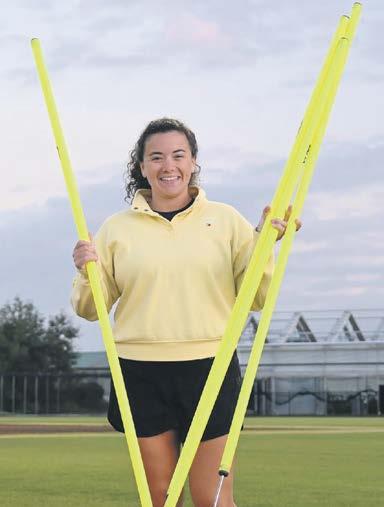
When Lara Bargone arrived in Tauranga earlier this year, she brought with her a strong academic grounding in kinesiology but little practical experience in rugby.
Now, as she prepares to return to Canada after completing her Master’s internship through Waikato University, the University of Montreal student says her biggest discovery has not been about strength programmes or performance data but about people.
“The biggest thing I found is that communication with the athletes is the most important part,” she says.
Bargone, 29, has been based at Bay of Plenty Rugby Union, working primarily with the development female squad, a group of players aged between 15 and 18 who are on the cusp of entering formal academy pathways. Her role focused on introducing strength and conditioning, alongside injury prevention.
While the science behind training plans was important, it quickly became clear that technical knowledge alone was not enough.
“You can give the best plan, the most tailored to scientific knowledge, but if it’s not what the athlete needs, or if it’s something they can’t do, it won’t add up to much,” she says.
Instead, the key lay in understanding what motivates each player and building programmes around their situation.
“That’s really the main takeaway. How the athlete reacts and how it responds to their needs.”
Bargone arrived with no real background in rugby and no predefined ideas about the sport. She had seen it on television but had never coached or trained rugby players.
That, she said, turned out to be an advantage.
“I didn’t have preconceived perceptions,” she says.
“Everything was new, but the people at the union were very helpful. They really taught me what I needed to know.”
Her work also highlighted the differences involved in training adolescent female athletes compared with adults. While her project did not specifically examine hormonal development, she said the stage of physical growth was always a factor in planning training interventions.
“You have to consider their development level. It’s very different than adult athletes.”
She also observed issues that can affect young women’s participation, including physical discomfort and injury risks that are not always openly discussed.
The internship came through a connection between the University of Montreal and Waikato University professor Kim Hébert-Losier, who is also from Montreal.
That connection helped open the door for Bargone to complete the international placement at the Adams Centre for High Performance in Mount Maunganui.
Since arriving in January and starting work in February, Bargone has embraced both the professional and personal aspects of her time in New Zealand,
describing her experience in the Bay of Plenty as “amazing”. She has travelled widely, attended Super Rugby matches and spent time exploring the country. Professionally, she plans to submit her final portfolio shortly, marking the completion of her Master’s degree. After three years of study, she intends to return to
Briefs…
Business awards
The Rotorua Business Awards were officially launched last month. The event brought together sponsors, partners, judges, and members of the Rotorua business community to celebrate the beginning of the 35th anniversary awards season. Rotorua Mayor Tania Tapsell and Kate Sullivan of sponsor Tompkins Wake cut a ribbon to mark the opening.
Racecourse action
New Zealand racecourse managers and industry specialists gathered in Tauranga for the New Zealand Racecourse Managers Association national conference, focused on maintaining safe, high-performing racing and training surfaces for New Zealand racing. Held over three days, the conference brought together the people working behind the scenes to ensure racecourses continue to meet the high standards required for racing across both thoroughbred and harness codes.
Sold out
All available exhibitor sites at this month’s Fieldays are full which underscores that the industry sees the event as an essential agricultural event and signals strong confidence from the agricultural sector, says spokesperson Brett Beagley. More than 1115 exhibitors over 1335 sites will showcase their products and services.
Forestry hub
The Fieldays Forestry Hub returns to Fieldays for the fifth consecutive year, highlighting the important role forestry and wood processing play in supporting New Zealand’s economy, environment, and regional communities. The hub will highlight the role forestry and wood processing play in New Zealand’s economy, alongside the sector’s ongoing focus on innovation, workforce development, and environmental management.
Finalists found
The Primary Industries New Zealand Awards finalists reflect a sector overflowing with talent. Three finalists in each of nine categories have just been announced, with the winners to be named at an awards ceremony in Auckland this month. Respected agricultural commentator Alan Emerson, a judge in multiple PINZ awards, says he was deeply impressed by the calibre of this year’s nominations.
Get cracking
Federated Farmers is telling local government to get on with putting forward proposals to simplify and strengthen their regions. New Zealand’s local government structure simply isn’t working for farmers, says spokesperson Sandra Faulkner. It’s contributing to rising costs, infrastructure pressure, and declining civic engagement, she said.
Have a chat
Fieldays Tent Talks, in association with the University of Waikato, features 20-to 40-minute “drop-in” sessions on topics such as sustainability in the food and fibre sector, solar energy, regenerative practices, and more. The Fieldays Rural Advocacy Hub, in collaboration with Federated Farmers, provides a space for farmers to stop by for a chat or share thoughts and concerns on farming-related issues. Beyond the Hubs, the expertise shared by exhibitors provides a valuable opportunity for conversations that can lead to practical, on-farm solutions.
Indonesia link
her role as a physical exercise specialist with the Canadian Army while considering her next step, which may include doctoral study.
For now, it is the lessons learned on the Bay of Plenty training field that will stay with her.
“In the end, it’s about the athlete as a person,” she says.Mary Anne Gill
LIC has confirmed a distributor in Indonesia, establishing its entry into the market and securing its first genetics sale. The agreement comes as Indonesia looks to increase domestic milk production, supported by a government-backed programme to provide nutritious meals, including milk, to school children and reflects LIC’s growing demand to support Indonesia’s dairy industry through improved herd performance.
• Read more goodlocal.nz – Bay of Plenty tab.
Matt Glenn
Leonard Sampson
Lara Bargone at a rugby session at Bay of Plenty Rugby. Photo: Supplied
Council’s infrastructure triumph
Award-winning infrastructure approach highlights smarter asset management while national debate turns to how major projects will be paid for, reports Mary Anne Gill.
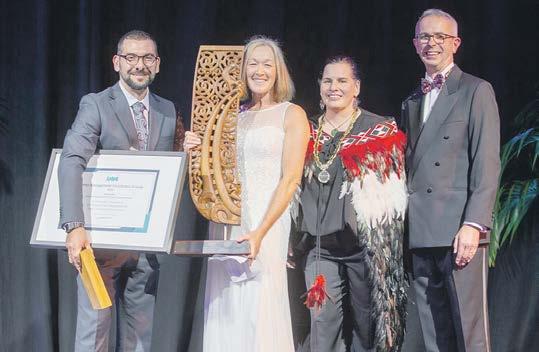
Tauranga City Council is at the centre of a national infrastructure success story after a data-driven approach to managing assets helped secure the top prize at this year’s Āpōpō Asset Management Excellence Awards.
The awards were held at the Āpōpō Congress in Hamilton, where questions are growing about how future projects in the Bay of Plenty and Waikato will be funded.
The council, working alongside GHD Group NZ, took out the Supreme Asset Management Excellence Award for a project that is reshaping how infrastructure decisions are made. The recognition reflects a growing focus on getting more value from existing assets rather than relying solely on building new ones.
At the heart of the achievement is what is known as the Wedge Model, which emphasises improving data quality from the earliest stages of design and handing capability over to asset owners. By embedding reliable information into systems earlier, councils can make better decisions, reduce costly delays and avoid expensive fixes later.
The approach is already being seen as scalable beyond Tauranga, with industry leaders pointing to it as a way to lift infrastructure performance nationwide. With ageing assets and tighter budgets affecting councils across New Zealand, the ability to plan smarter using high-quality data is becoming increasingly important.
Āpōpō chief executive Murray Pugh said the awards highlight work that often goes unnoticed but is essential to keeping communities functioning. He said recognising excellence helps set benchmarks for the sector and builds confidence in how to manage infrastructure.
Meanwhile, Labour infrastructure spokesperson Kieran McAnulty says pressure is mounting on the pipeline of major transport projects, with uncertainty over funding, labour shortages and political priorities weighing on decisions.
In an interview at the same Hamilton congress, McAnulty pointed to a widening funding gap for the government’s Roads of National Significance programme, estimating the shortfall at about $30 billion. That gap is forcing difficult choices about which projects will proceed and how they will be financed. One option under discussion is greater use of tolling, a model that already has a foothold in the Bay of Plenty.
New Zealand currently has only three toll roads, two of them in Tauranga, putting the city firmly in the spotlight as policymakers consider whether tolling should play a bigger role elsewhere.
McAnulty said Labour would honour projects that are already funded and underway, such as Cambridge to Piarere, but stopped short of backing unfunded proposals like Southern Links between Hamilton and the Waikato Expressway. The broader challenge is ensuring commitments
Reform lacks employer input
A sweeping overhaul of New Zealand’s senior secondary school qualifications is facing resistance from educators, who say the government is moving too quickly without fully explaining how the changes will work in practice.
The proposed reforms would replace the current NCEA structure with a more rigid system requiring students to sit exams in every subject each year and pass at least three subjects annually to graduate.
Education minister Erica Stanford says the changes are designed to restore credibility and clarity to school-leaving qualifications, but teachers say key details remain unresolved.
Business reaction appears limited. One Tauranga industry figure says there had been little feedback from employers, either for or against the proposals.
Under the new system, senior students would take at least five subjects in Years 12 and 13, with three to four assessments in each subject each year. To pass, they would need to achieve at least a C grade. Year 11 students would be required to take science alongside
maths and English or Te Reo Rangatira and pass a foundational literacy and numeracy benchmark.
Stanford says the changes address what she sees as an overly flexible system, where some students have been able to “game” credits across a mix of subjects.
Her aim is for students to leave school with qualifications that are clear and widely understood by employers, parents and tertiary providers.
School leaders say the ambition is not matched by clarity around implementation. Renay Jones, acting principal at Tauranga Girls’ College, said educators were still waiting for critical information.
“The devil will be in the details and that’s something the sector’s still waiting on.”
Schools have been briefed through webinars, but much of what they know is limited to what has already been announced publicly.
Questions remain about resourcing, the pace of change and how the reforms will align with curriculum changes still being finalised, she said.
“There is concern over the pace of change and the lack of clarity about resourcing.”
The proposals also change
are realistic and backed by secure funding, he says.
He acknowledged tolling could form part of the solution but said it must be clearly signalled from the outset and include a genuine free alternative route for motorists.
Beyond funding, uncertainty is also affecting the workforce, with skilled workers leaving New Zealand for more stable opportunities overseas. That trend, combined with rising construction costs, is adding to concerns across the infrastructure sector.
For the Bay of Plenty, which is positioning itself as a major logistics hub, the stakes are high. Reliable transport connections are essential for supporting growth, but without
clear funding pathways, businesses face ongoing uncertainty.
The contrast between Tauranga’s awardwinning data innovation and the unresolved funding challenges elsewhere underscores a broader shift in the infrastructure debate. While smarter asset management is delivering measurable gains, the question of how to finance future projects remains unresolved.
As the sector looks ahead, the lesson from Tauranga may be that better information can stretch existing resources further. But as McAnulty’s comments suggest, even the smartest systems cannot replace the need for clear, sustainable funding to keep New Zealand moving.
Collaboration that moves

how student performance is judged. Results across all five subjects will be visible to universities and employers, even if a student focuses on three.
The government has pointed to international comparisons to justify the reforms. Prime Minister Christopher Luxon said New Zealand cannot afford for its students to fall behind countries such as Singapore, Canada and Ireland.
Educators say comparisons alone do not guarantee better outcomes, particularly if changes are introduced without clear planning or support. –
David Porter


Growing






Supreme award winners, from left Juan Martinez (Tauranga City Council) and Theresa Wells (GHD) with Nicola Chisnall (Āpōpō president) and Murray Pugh (Āpōpō chief executive). Photo: Supplied
Renay Jones
Grounded in research
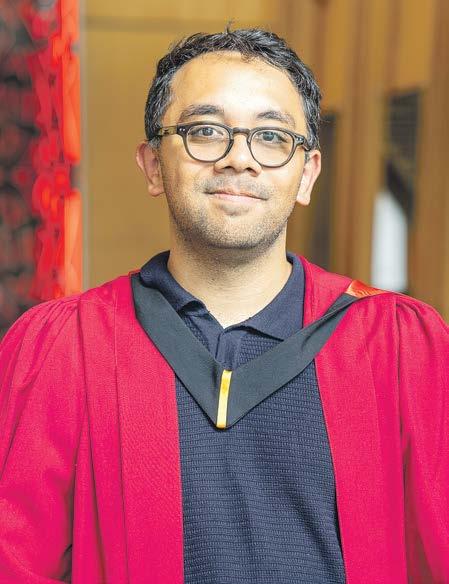
Fresh from completing his PhD, Akuhata Bailey-Winiata is applying his expertise to help Māori communities navigate the growing challenges of climate change, writes Monique Balvert-O’Connor.
For many communities facing rising seas, flooding and shifting landscapes, the hardest questions are no longer theoretical; they are immediate, practical and deeply personal.
It’s those questions, what to do, how, and when, that Tauranga-based researcher Akuhata Bailey-Winiata is now helping answer with hapū and iwi across the Bay of Plenty.
The Waikato University graduate’s PhD research looked at how Māori communities are navigating climate change and what supports are most useful for decision-making.
It’s been an ongoing topic of interest. His Master’s degree thesis looked at the national exposure of coastal marae and urupā to sea level rise - for this he gained First Class Honours in his Master of Science (Research) degree in Earth Sciences.
The Rotorua-raised academic, who started his education at Rotorua’s Nga Mokai a Koko Kohanga Reo (in Whakarewarewa) followed by Western Heights High School, is the first in his whānau to get a doctorate.
Speaking to The News a month after his most recent graduation, the 27-year-old, shares how the transition from university studies to working life has been a smooth one.
Bailey-Winiata (Tūhourangi, Ngāti Whakaue, Ngāti Tutetawha) is a consultant with leading environmental consultancy company Pattle Delamore Partners. He started part-time work at the company’s Tauranga office halfway through his PhD studies. Not only is his workplace familiar, so too is his work focus. He tells how he still considers himself a researcher; an outlook that’s embraced by his employers.
Bailey-Winiata’s current research project addresses the fact that while we are adept at devising climate-changerelated adaptation plans, the process of implementing the options outlined in such plans isn’t always that clear cut.
“I’m trying to understand what the gaps are, why they are happening, and what we have to do to resolve them. Adaptation exists to protect people, in this case in the face of climate change and natural hazards, it is important more than ever,” he says.
People are urgently asking, ‘what do we do, how, and when,’ he says. And so, the main focus of his mahi involves working with hapū, iwi, community and local councils to support climate adaptation decision-making.
“Specifically, we are looking at the impact of sea level rise on Māori infrastructure and communities and the opportunity for redress. While some of the research projects I am working on are at the national level, I’m working mainly with hapū throughout the Bay of Plenty to identify what their on-the-ground hazards are and what do they do about them. My job is to connect science with hapū on the ground to try and figure out pathways forward with climate adaptation.”
This is in relation to a multitude of things, namely urupā, marae and papakāinga (housing), quite a lot of which are in low-lying areas.
Bailey-Winiata explains the hazards can be very different depending on location and that diversity adds to decision-making challenges. Some are near rivers, some may be near a slope where landslides can be an issue, some are coastal.
He cites marae in flood-impacted areas like Tairāwhiti that have relocated - no small matter, he acknowledges, given a marae is a
place of deep cultural significance and connection to land and place. How do you maintain connection if you have moved away from it? He has noted many communities are pragmatic in the face of such overwhelming decisions. What’s critical is iwi and hapū lead what is practical to do to safeguard marae and community for the future.
Nature-based solutions are part of the resilience discussions. Dune revegetation to strengthen dunes, for example, and wetlands restoration to act as a buffer during storm surges.
He tells how one challenge raised consistently through his work is resourcing – not only funding, but also equitable access to information, technical capability, and trusted expertise when it’s needed.
“Hapū I speak to often say they need geotechnical information gathered or flood modelling done, but it can be hard to access the right technical contacts and support. We’re working to strengthen connections between tangata whenua and the expertise they choose to draw on, to support their decision-making.”
Bailey-Winiata says questions around resourcing also apply to marae and community centres that open their doors during significant weather events.
“This is a growing space. We only have to look at recent weather events and states of emergencies and marae are always at the front in terms of opening their doors. It’s an innate response. We come together and do what we need to do.
“Marae and community hubs are increasingly going to be called upon and conversations around better and proper resourcing is a discussion we
Gongs awarded
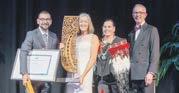
Bay of Plenty recipients of King’s honours were announced this month while those honoured earlier in the year headed to Wellington to receive their awards from Governor General Dame Cindy Kiro. King’s Birthday honours went to:
Reuben Tuwhakahekeao Collier (CNZM) – Rotorua, for services to Māori and education. Dr Collier (Horouta, Mātaatua, Te Arawa, Tainui) is a nationally recognised custodian of Māori war commemoration, particularly as a member of the Ngarimu VC and 28th Māori Battalion Memorial Fund Board since 2021 and deputy chair of the 28th Māori Battalion B Company History Trust.
Russell George Lowe (ONZM) – Te Puke, for services to horticulture and the kiwifruit industry. Lowe spent more than 51 years working with the Department of Scientific Industrial Research and Crown Research Institutes, where he pioneered significant innovations in the kiwifruit industry. He was integral to the selection of the Hort16A vine and its polleniser cultivars, which would create the first Zespri Gold kiwifruit.
Mark Robert Fraundorfer (MNZM) – Mount Maunganui, for services to health, particularly men’s health. Dr Fraundorfer has substantially contributed to urology and men’s health and is head of the Urology Department at Tauranga Hospital. He has advanced surgical practice in urology by pioneering minimally invasive techniques that have now become standard practice in New Zealand and worldwide.
Janice Kuka (MNZM) – Tauranga, for services to Māori health. Kuka (Ngāti Ranginui, Ngāi Te Rangi) has been a leading figure and advocate for Māori healthcare in New Zealand for more than 40 years. She was involved in the Kohanga Reo movement and through her role as a social worker in Tauranga Hospital contributed to the establishment of Kaupapa Māori services within the hospital in 1989.
Kathleen Margaret (Kathy) Webb (KSM) – Tauranga, for services to the community. Webb has contributed substantially to community service organisations locally in Tauranga and nationally. She was part of a small group that chartered the Tauranga Zonta Club and in 2012 she co-founded SociaLink, an organisation that supports the community sector with training, development and advocacy.
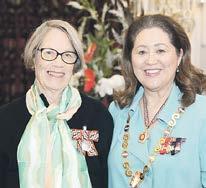
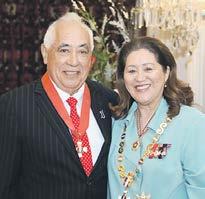
Meanwhile three Bay of Plenty recipients travelled to Wellington for their investitures last month.
need to have,” he believes.
Bailey-Winiata says the impacts of climate change involve many complex conversations. In an ideal world, the topic of his studies wouldn’t be so topical, he says.
New Zealand’s first National Climate Change Risk Assessment had just been released when he began his post graduate Master’s study.
“So, for me, it has unfortunately been right time, right place in terms of my research. But, I have found the ability to connect my research with planning and progression, and it is growing momentum, which is good to see.
“Between when I started my Master’s to now, there has been so much progress in terms of research happening by Māori academics, councils, hapū, and iwi on the ground. Adaptation plans in response to climate change are being created, emergency plans have been innovated, and climate change resilience is growing.
“Across the board there has been progress and people working in partnership has been key to that success - it’s what we need to achieve long-term resilience. As a result of these blossoming partnerships, I am seeing findings from my studies growing legs and being put into use.”
It’s validating. So too is the fact he received the University of Waikato’s 2026 Koko Kairangi Prize for Best Doctoral Thesis, in recognition of the impact of his findings.
He says his chosen path has its challenges, but, ultimately, he has always wanted to help people… “and this is where I have ended up”.
“When I see the impact, the progress and strengthened resilience, then I know it’s all so worthwhile.”
Kate Milford (MNZM)Tauranga for services to people with aphasia. She was the single driving force behind the creation, development and governance of Aphasia New Zealand Charitable Trust, providing support to those living with or affected by aphasia, a language disorder resulting from brain injury.
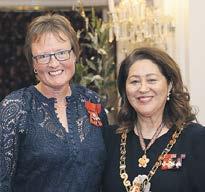
Libby Fletcher (KSM) - Rotorua, for services to the community, particularly wastewater advocacy. Under her leadership of the Lake Tarawera Ratepayers’ Association, the organisation established volunteer environmental groups and took pest control under the umbrella of Lake Tarawera Landcare.
Leith Comer (CNZM)Rotorua, for services to Māori, governance and education. Comer (Te Arawa –Ngāti Rangitihi, Ngāi Tahu, Ngāti Māmoe, Ngāti Pāhauwera) as chair of Ngāti Rangitihi, led negotiations culminating
Receiving his PhD at Waikato University’s Tauranga campus, Akuhata Bailey-Winiata is now concentrating on helping Bay of Plenty iwi. Photo: Supplied
NZ Chambers Conference - Welcome Event
Location: Te Puia Date: Wednesday 20 May 2026
Photography: Michelle Cutelli Photography
The Rotorua Business Chamber was proud to host the 2026 NZ Chambers Conference, welcoming chamber leaders and representatives from across New Zealand to Rotorua for three days of keynote speakers, workshops, business discussions, and networking. Delegates were officially welcomed with a spectacular evening at Te Puia, showcasing the very best of Rotorua’s culture, hospitality, and manaakitanga
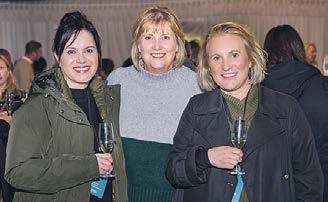
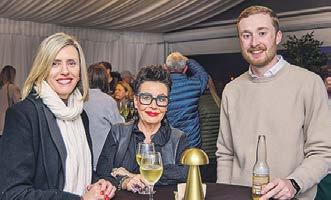
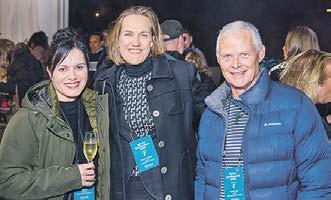
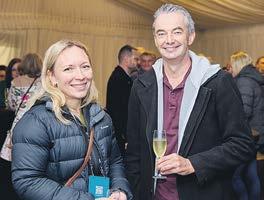
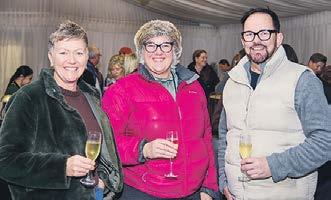
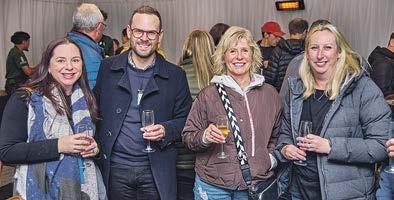
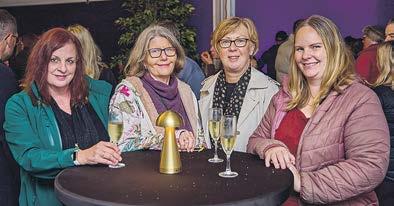
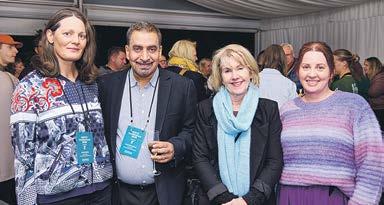
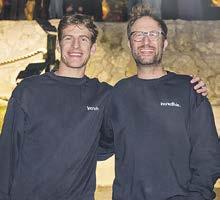
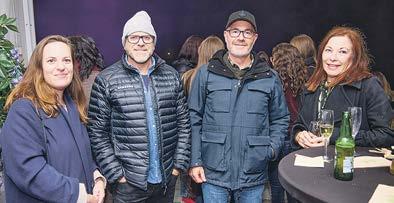
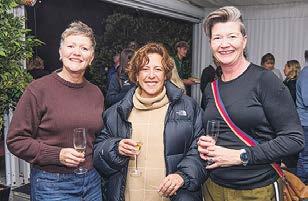

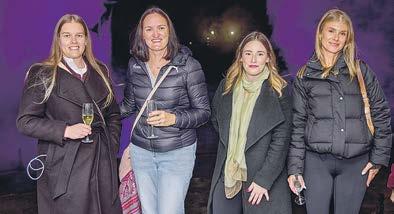
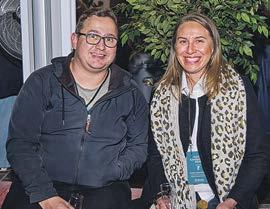
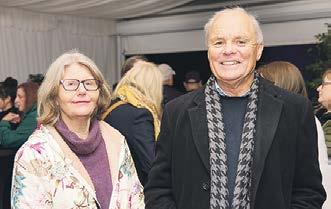
Stephen Johnson & Matt Browning, Incredible AI
Karla Lee, Hawke’s Bay Chamber; Jessica Parker, Taranaki Chamber; David Trim, Hawke’s Bay Chamber
Leeann Watson, Business Canterbury; Amanda Nicolle, Ministry of Social Development; Tait Dench, Business Canterbury
Candice Pretorius, Kapiti Chamber; Alastair McGregor, Noel Leeming
Aly Bennett & Michelle Urquhart, Rotorua Chamber; Shaughan Woodcock, Auckland Chamber
Jodie Stuart, Wanaka Chamber; Josh Beddell, Auckland Chamber; Wendy Smith, South Canterbury Chamber; Yvette Hellyer, Auckland Chamber
Amanda Linsley, Manawatu Chamber; Liane Anderson, Manawatu Chamber; Lennie Clothier & Alice Albright, Matamata Chamber
Julia Collins & Arun Chaudhari, Taranaki Chamber; Maura Young, Taranaki Chamber, Jessica Mende, Taranaki Chamber
Karla Lee, Hawkes’ Bay Chamber; Melanie Short, Rotorua Chamber; Sharon Fifield, Queenstown Chamber
Donna McEwen, Julian Smith & Richard Hann, 2degrees; Christine Johnston, Hutt Valley Chamber
Aly Bennett, Rotorua Chamber; Terry Shubkin, Business Wairarapa; Beth Aldridge, Taupo Chamber
Rebekah Carter, Air New Zealand; Denise Emery, Te Puia
Kacie Lewton, Wellington Chamber; Esther Gilchrist, Air NZ; Delta Houghton, Rotorua Chamber; Alex Bernsten, Eastern Bay Chamber
Ashley Fisher & Anna-Liese Komene, Gisborne Chamber
Liane Anderson, Manawatu Chamber; Steve Wilson, NZ Product Accelerator

2026 AWARDS. PROJECTS TO CELEBRATE








We entered six projects into the 2026 New Zealand Commercial Project Awards. We won seven awards...
The National Value Award (for projects $10-25M) for the Horotiu Head Office.
Gold for the Horotiu Head OfficeCommercial Category.





Wins like this showcase the strength of regional business. In a tough market, we’ve delivered six award-winning projects. And it’s thanks to the unwavering commitment of our team to delivering value, with the backing of our strong local partners and supply chain, that we can achieve this level of excellence.

Gold for 100 First Avenue (Tauranga)Commercial Fitout Category.
Gold for Kinfields Village Stage 2Retail Category.
Gold for the Kohia WarehouseIndustrial Category.
Silver for Activate Church Stage 1Commercial Fitout Category.
Silver for Harvard Industrial DevelopmentIndustrial Category.
Celebrating successful partnerships, collaboration, innovation, building excellence, and the teams that make it happen.
Activate Church, Hamilton
Leonard Gardner, Commercial Director Foster Construction Group Ltd
Head Office, Horotiu
100 First Ave, Tauranga
Kohia Warehouse, Hamilton
Harvard Industrial Development, Tauriko
Kinfields Village, Hamilton