Shaping tomorrow Page 3
BAY OF PLENTY
Silent running Page 5
Time for a bed tax Page 6
The voice of Bay of Plenty

Honours shine on trailblazers Page 8-9
Revival gains pace
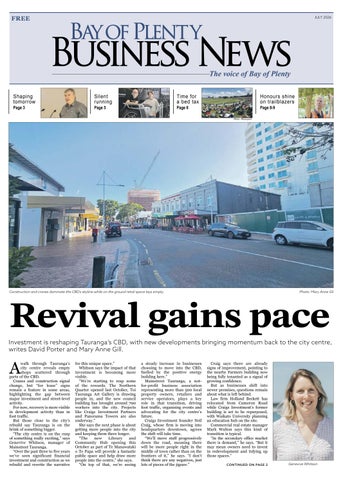
Investment is reshaping Tauranga’s CBD, with new developments bringing momentum back to the city centre, writes David Porter and Mary Anne Gill.
Awalk through Tauranga’s city centre reveals empty shops scattered through parts of the CBD.
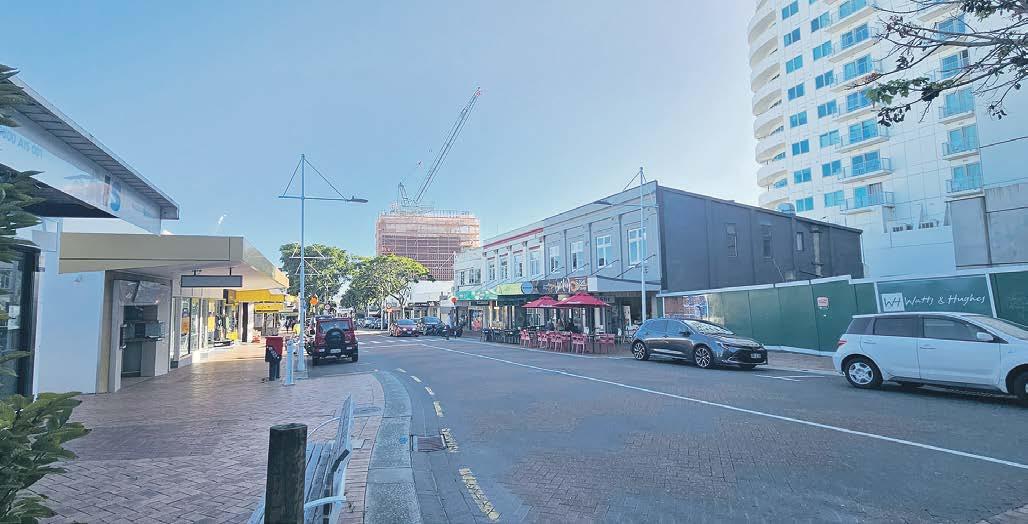
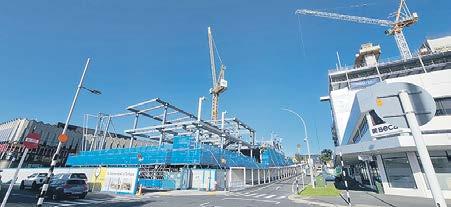
Cranes and construction signal change, but “for lease” signs remain a feature in some areas, highlighting the gap between major investment and street-level activity.
For now, recovery is more visible in development activity than in foot traffic.
But those close to the city’s rebuild say Tauranga is on the brink of something bigger.
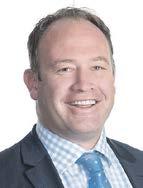
“The city centre is on the cusp of something really exciting,” says Genevive Whitson, manager of Mainstreet Tauranga.
“Over the past three to five years we’ve seen significant financial investment and construction as we rebuild and rewrite the narrative
for this unique space.”
Whitson says the impact of that investment is becoming more visible.
“We’re starting to reap some of the rewards. The Northern Quarter opened last October, Toi Tauranga Art Gallery is drawing people in, and the new council building has brought around 700 workers into the city. Projects like Craigs Investment Partners and Panorama Towers are also underway.”
She says the next phase is about getting more people into the city and keeping them there longer.
“The new Library and Community Hub opening this October as part of Te Manawataki o Te Papa will provide a fantastic public space and help draw more people into the centre,” she says.
“On top of that, we’re seeing
a steady increase in businesses choosing to move into the CBD, fuelled by the positive energy building here.”
Mainstreet Tauranga, a notfor-profit business association representing more than 500 local property owners, retailers and service operators, plays a key role in that transition, driving foot traffic, organising events and advocating for the city centre’s future.
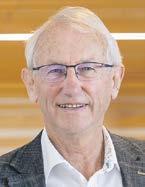
Craigs Investment founder Neil Craig, whose firm is moving into headquarters downtown, agrees the shift will take time.
“We’ll move staff progressively down the road, meaning there will be more people right in the middle of town rather than on the frontiers of it,” he says. “I don’t think there are any negatives, just lots of pieces of the jigsaw.”
Craig says there are already signs of improvement, pointing to the nearby Farmers building now being fully tenanted as a signal of growing confidence.
But as businesses shift into newer premises, questions remain about what is left behind.
Law firm Holland Beckett has relocated from Cameron Road while Craigs Investment’s former building is set to be repurposed, with Waikato University planning an education hub on the site.
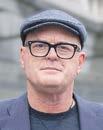
Commercial real estate manager Mark Walton says this kind of transition is typical.
“In the secondary office market there is demand,” he says. “But it may mean owners need to invest in redevelopment and tidying up those spaces.”
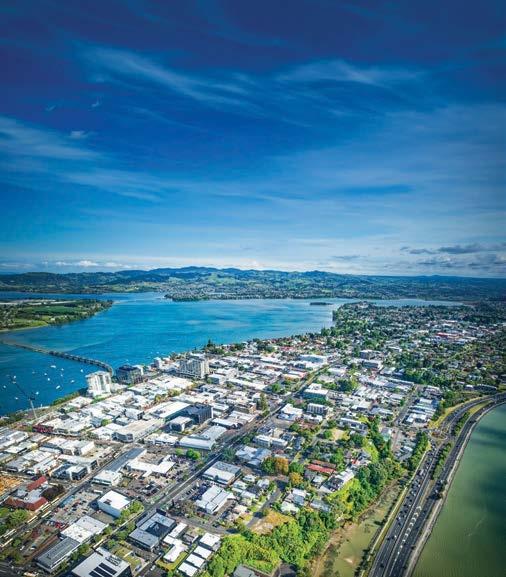
Construction and cranes dominate the CBD’s skyline while on the ground retail space lays empty.
Photo: Mary Anne Gil
Genevive Whitson
Photo: Photosport
Editor
David Porter
Senior Writer
editor@goodlocal.nz 021 884 858
Mary Anne Gill maryanne@goodlocal.nz 021 705 213
Advertising Director
Janine Davy janine@goodlocal.nz 027 287 0005
Owner/Publisher
David Mackenzie david@goodlocal.nz 021 684 304
To Advertise sales@goodlocal.nz
News Tips editor@goodlocal.nz
Office/Accounts admin@goodlocal.nz
Website goodlocal.nz
To Subscribe admin@goodlocal.nz
Readers’ contributions of articles and letters are welcome. Publication of contributions are entirely at the discretion of editorial staff and may be edited. Contributions will only be considered for publication when accompanied by the author’s full name, residential address, and telephone number. Opinions expressed are not necessarily those of the publishers. Bay of Plenty Business News is published by Good Local Media Limited.
Also publishers of
Revival gains pace
Some buildings will be reoccupied in their current form, while others may be redeveloped or repositioned to meet changing demand.
Mayor Mahé Drysdale says the CBD is in a stronger position than it was two or three years ago, with a cluster of major developments complete or nearing
completion.
“There’s a lot better space now to start to bring people back into the city,” he says.
Priority One chief executive Dave Courtney says while the investment signals confidence, the next stage of recovery is less certain.
“Undoubtedly lack of foot traffic will be





REGIONAL VIEW
having an impact on the hospitality sector,” he says. “You need the small stuff to follow the big investment. It’s chicken and egg.”
That tension is visible on Tauranga’s streets, where new developments sit alongside vacant shopfronts.
But for advocates like Whitson, the direction is clear.
“This is about more than buildings. It is about creating a vibrant, connected city centre people want to spend time in,” she says.
For the Bay of Plenty’s largest city, the rebuild story is no longer just about construction. It is about whether people and spending return in enough numbers.
• Let us know what you think. Email editor@ goodlocal.nz
Quiet leadership legacy
By TODD MULLER
Every now and then someone retires and you realise they have been part of your life for much longer than you thought. For me, Kane Williamson is one of those people.
Like many in the Bay of Plenty, I have followed his journey from the promising young Tauranga cricketer making his NZ debut in 2010 through to becoming arguably our greatest ever player.
Across all cricket formats he has provided moments of joy, pride, heartbreak and inspiration. We have watched him score runs in every corner of the world, captain New Zealand through triumph and disappointment, and establish himself as one of the most respected figures in international sport.
His record speaks for itself. The statistics will place him among the very best cricketers New Zealand has ever produced.
Yet when I reflect on Kane Williamson’s career, it is not the runs, centuries or records that stay with me. It is his leadership.
As I’ve watched public life, politics, business and social media over the past decade, I’ve often wondered whether we have started to confuse visibility with leadership.
measured by who can attract the most attention.
Williamson has always seemed to represent something different, a quiet rebuttal to the dominant modern ethos.
He has led without demanding the spotlight. He has spoken without seeking headlines. He has carried success with humility and disappointment with grace. Whether celebrating victory or absorbing defeat, his focus has consistently been on the team rather than himself.
That is remarkably rare.
One of the things I have admired most is the perspective he has maintained throughout his career.
Despite operating on one of the world’s biggest sporting stages, he has always appeared grounded in what matters most; his family, teammates, preparation, character and contribution. There has never been any sense that cricket defined him entirely as a person.
leaders I have encountered over the years share qualities that look remarkably similar to Williamson’s. They listen more than they speak. They remain calm when others are losing theirs. They focus on collective success rather than personal recognition. They understand that trust is earned over time through consistent behaviour rather than powerful speeches.
The leaders who leave the deepest impression are not always those who dominate the room. Often they are the ones who create confidence, bring people together and quietly lift the performance of everyone around them.
Kane Williamson’s career reminds us that greatness and humility are not opposing qualities. In fact, they often go hand in hand.
As he steps away from international cricket, I simply want to acknowledge the immense pride he has brought to Tauranga, the Bay of Plenty and New Zealand. More importantly, I want to acknowledge the example he has set. His achievements will be remembered for many years.
His character may prove to be his greatest legacy.
CountryLife

We live in a time that often rewards the loudest voice in the room. Social media encourages instant opinions. Public life increasingly values visibility, self-promotion and personal branding. Success is frequently

Perhaps that is why his example resonates so strongly to me. There have been times in my professional life that I allowed what I did to define my sense of self. I am reminded by Kane’s example that professional and personal achievement matters, but how you carry yourself through it all matters more.
There is a lesson in that for all of us.
Leadership is often portrayed as charisma, certainty and visibility. Yet many of the best

• Todd Muller is a long-term Tauranga resident, former MP and current chair of Priority One. All views expressed are his own.


Neil Craig Mark Walton
Te Manawataki o Te Papa, with its new library and community hub, takes shape.
Photo: Mary Anne Gill
Orchard Penalties
Two Bay of Plenty companies have been fined a combined $63,500 for sediment discharges from kiwifruit orchard earthworks at Pukehina. The breaches, occurring in 2024, contravened resource consent conditions. Both parties admitted multiple charges relating to contaminants entering waterways, according to an Environment Court ruling.
Seeka Forecast
Seeka expects net profit before tax of $38 million to $42 million for 2026, down on last year’s $47.5 million. Production also eased slightly, although SunGold volumes reached a record. Despite this, the company says the result will be its second highest earnings performance on record.
CBD Struggles
Tauranga CBD hospitality businesses are facing rising costs, reduced spending and tight margins. Recent closures, including a long-running Strand venue, highlight ongoing pressures from inflation, Covid-19 impacts and declining patronage, according to sector commentary.
Storm Recovery
Storm damage across Western Bay of Plenty is expected to cost $28.6 million. The district council has released a recovery plan following severe weather events earlier this year, including rainfall described as up to one-in-500-year levels in some areas.
Kiwifruit Success
Mātai Pacific Iwi Collective has won the 2026 Ahuwhenua Trophy for excellence in Māori horticulture. The group has grown its asset base to more than $130 million since 2018, demonstrating strong collective ownership and commercial performance.
Employment Paradox
Bay of Plenty employment data shows declining workforce numbers but rising wages and hours worked. Employment Hero figures reveal a 7.1 percent annual drop in employment alongside wage growth and increased hours, suggesting businesses are retaining staff rather than hiring amid economic uncertainty.
Shaping tomorrow today
Strong turnout and generous support at a Tauranga AI summit are helping fund student scholarships while exploring how emerging technology is reshaping business and education, writes Monique Balvert-O’Connor.
Artificial intelligence and its growing impact on business, education and innovation took centre stage in Tauranga last month.
Business leaders, innovators and interested professionals were among the 80 or so attendees at the second annual Tauranga AI Business Summit Scholarship Fundraiser.
The event raised about $13,000, with proceeds going toward an annual scholarship and supporting study related opportunities for Mount Maunganui College students.
Co-organiser and the college’s earth and space science teacher Jim Critchley says the feedback
from the summit was along the lines of “highly enjoyable and highly informative”.
The summit combined practical workshops and networking opportunities as well as presentations by two keynote speakers - Dr Amanda Williamson and Glen Willoughby.
Williamson is director of the Deloitte New Zealand AI Institute and senior lecturer in Innovation and Strategy at the University of Waikato. She has advised corporate boards on AI governance and investment, led enterprise AI deployment to more than 2000 staff, and developed AI solutions delivering up to 76 percent
Award fuels ambition
Davi Vogel-Brayner, pictured, is the inaugural winner of the University of Waikato Tauranga Campus AI Summit award.
The first AI Summit held last year funded his $15000 scholarship. Funds from this year’s summit will finance the second scholarship, with the recipient announced at the Mt Maunganui College prizegiving at the end of the year.
Davi,18, is in his first year of studies towards a Bachelor of Science majoring in Marine Science.
He recalls starting to use AI at college, back in 2023 “when it was in a more primitive state compared to now”. And it’s proving to be a valuable tool at university, says Davi who

finds it’s great for helping him pan out ideas, for research, and for enabling him to do many things more quickly.
The keen surfer lives in Mt Maunganui and is happy that studying at the university’s Tauranga campus enables him to stay close to the coast.
productivity gains across multiple sectors.
Her address covered how artificial intelligence is shaping industries, communities and the future of innovation and the associated opportunities and challenges.
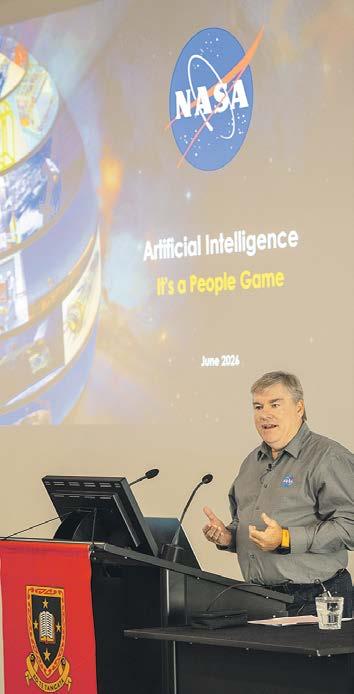
Willoughby is a global technology and innovation executive with more than 25 years’ experience across health, infrastructure, and space exploration sectors. He spoke of NASA’s technological journey and shared observations around how artificial intelligence has evolved during the past decade and where it is heading. He told those gathered that, rather than presenting AI as a people replacement, he likes to consider it as IA –intelligent assistance.
It is technology that helps humans interpret complex data, make better decisions, work more safely and achieve goals beyond normal human limits –solving the “previously unsolvable,” he says.
His session looked at what this means for organisations, communities and industries, with opportunity risk, trust and responsible adoption part of the discussion.
The event organisers, Critchley and colleague Richard Cameron (a social studies teacher) say the high calibre of speakers impressed those gathered.
“We very much appreciate the support from the community and the fact the presenters gave up their time for free,” Critchley says.
The practical workshops were led by industry professionals from organisations including Zespri, Parallo, The AI Assembly, LawVu, Wave Agency, and Datacom.
The Summit was hosted at the University of Waikato Tauranga Campus on June

12. Earlier in the day, a 2026 Tauranga Innovative Education Summit was also held on campus.
Run in partnership with Mount Maunganui College and Priority One, that summit brought together an inspiring lineup of educators sharing practical, forward-thinking approaches to teaching and learning.
One of the addresses was also AI focused, with the session covering how AI-driven tools can be created to meet specific learning needs. The session shared practical examples designed to empower teachers to become co-creators of customised virtual manipulatives.







Glen Willoughby speaking at the summit. Photo: Supplied
Investing in future generations
At the University of Waikato, we see firsthand how education, research and innovation can strengthen communities, support economic growth and create opportunities for future generations. That is why our Tauranga campus is committed to becoming a city-integrated university, where education, research and civic engagement intersect with industry, iwi, schools and community organisations.
This direction is about much more than simply investing in infrastructure for campus growth or even growing student numbers. It is about investing in our people.
Tauranga as an integrated university city
In June, the University of Waikato and Tauranga City Council signed a strategic partnership agreement aimed at developing Tauranga into a city with an integrated university presence.
The agreement reflects our intent to create a study environment that is culturally vibrant, globally connected, and aligned with international opportunities and challenges – one that will deliver sustainable growth to our campus and city.
As an internationally ranked University, we see significant opportunities to position Tauranga as a city with global relevance and reach, attracting domestic and international students, researchers and partners.
Student growth is a key part of this vision, and the agreement formalises Council’s commitment to contribute up to $2.4 million to support us in delivering education and increased student presence at the University’s Tauranga campus through student accommodation.
Connecting research with business for real impact
Our new innovation hub for Tauranga’s city centre is


EDUCATION BY PROFESSOR ALISTER JONES
on track to open its doors at 143 Durham Street this year. Through our partnership with the region’s economic development agency, Priority One, this will connect businesses and communities with our researchers and the wider regional innovation ecosystem. We’re drawing on the successes of a similar model at our Hamilton campus, Hiko Hub, to develop the innovation hub and deliver positive impacts for Tauranga’s unique business ecosystem.


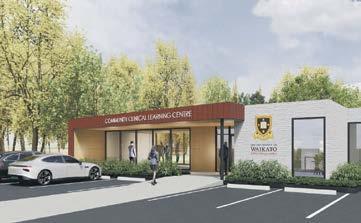
Artist impression of a Community Clinical Learning Centre
Meeting the health needs of our communities
The Bay of Plenty will also play an important role in the delivery of the University of Waikato’s New Zealand Graduate School of Medicine when it opens in 2028.
As a graduate-entry programme, students will complete their first year at the University of Waikato Hamilton campus before embarking on the threeyear clinical placement programme in one of five regions – including the Bay of Plenty.
Tauranga Hospital will host medical students in a shared arrangement with University of Auckland students. Waikato University students will then continue their training
through clinical placements in the western Bay of Plenty or Rotorua. Community Clinical Learning Centres will support this training and strengthen connections between students, healthcare providers and regional and rural communities.
These strategic milestones show the real momentum that we are experiencing in 2026. We are committed to investing in the people of the Bay of Plenty, to deliver outcomes that we will all benefit from for generations to come.
Professor Alister Jones is the Deputy Vice-Chancellor of the University of Waikato. He can be contacted at alister.jones@waikato.ac.nz
Silent running
A new electric farm bike developed in the Bay of Plenty is gaining interest from dairy farmers after a strong response at Fieldays, reports David Porter.
Bay of Plenty inventors
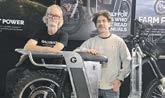
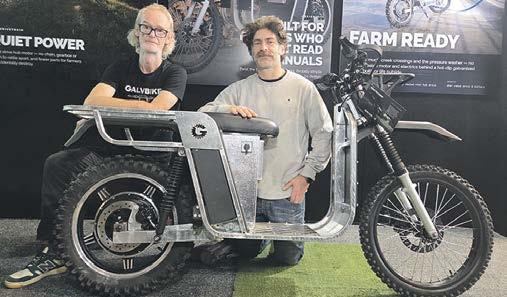
Anthony Clyde and Daryl Neal have developed an electric farm bike designed specifically for dairy operations, with durability a central focus.
Early research showed farmers were modifying and galvanising existing bikes to extend lifespan, prompting the decision to use a galvanised steel frame for the new model.
The pair are known for UBC0, an electric bike popular with consumers and adapted for postal delivery. They have since shifted attention to creating a purpose-built farm vehicle. “It’s brutally simple and tough,” Clyde says.
Clyde and Neal are shareholders in Ampify, trading as Galvbike, and assemble the bikes in Pāpāmoa. Development has involved hands-on trials with New Zealand dairy farmers to ensure practicality in real farm conditions.
The bike has been
A forestry business with long-standing connections to the Bay of Plenty has emerged from a merger with a new name and a larger footprint.
The change follows completion of a deal first signalled last year, with PF Olsen and Forest360 now operating as Stand, backed by Adamantem Capital and with Tauranga-based Quayside Holdings remaining involved.
For a region where forestry is a major employer and export earner, the move is more than a rebrand. It reflects ongoing consolidation and a push to build scale as land use, carbon and market pressures shift.
The combined business manages about 480,000 hectares of forest across New Zealand and Australia and employs more than 200 people. Many of those roles, directly and indirectly, tie back to regional forestry hubs including the Bay of Plenty.
Chief executive Dan Gaddum said the name Stand was chosen deliberately, linking both to the forestry
designed from scratch with fewer moving parts than traditional farm bikes, reducing maintenance. It is also built to handle regular washdowns, mud, and harsh farm environments.
Ampify is working with a manufacturing partner in China, which has taken a stake in the business. Scaling production efficiently, particularly for the galvanised frame, remains a priority.
“We intend to scale up to international markets including the United States, Australia and China,” Clyde says, noting manufacturing will likely expand as volumes increase.
The Galvbike is designed with strong load-carrying capability, combining features of a two-wheeler and a sideby-side, with a step-through frame for ease of use.
Reliability and serviceability have been key priorities throughout development.
term and the idea of taking a position.
That positioning is increasingly important as the industry navigates changing expectations around environmental performance, land use and returns.
While forest management remains the core business, there is a growing focus on carbon. Stand has introduced a joint venture model to help farmers and landowners access Emissions Trading Scheme expertise.
That will resonate in the Bay of Plenty, where landowners continue to weigh forestry, pastoral farming and carbon as competing or complementary land uses. The region has already seen significant debate around land conversion and long-term impacts on communities.
The merger also brings together two established company cultures at a time when forestry firms are adapting to new technology, ownership models and increasing scrutiny from
Local
The bike was previewed at Fieldays, where Clyde says farmer response was strong and the initial production run sold out.
“Farmers at Fieldays immediately understood the concept,” he says.
The first units are due for delivery next month, with pre-orders open for a second production run later this year.
Clyde says much of the development focused on simplifying the design to improve reliability.
“We stripped back anything that could create problems and focused on keeping it simple to operate.”
He believes there is a clear market gap for purpose-built electric farm bikes.
Meanwhile, Velduro, an electric mountain bike created by Clyde with Dan Wallace and Dick Lai, won gold in the Creative Award category at the Shanghai Bike Fair, the world’s largest bike exhibition.
regulators and the public.
The Stand name will be rolled out across the business in coming months, marking what the company says is its next phase of growth.
For the Bay of Plenty, the significance lies less in the branding and more in what follows, as one of the sector’s larger players looks to shape the next chapter of forestry in the region. – Additional reporting by Mary Anne Gill
There is broad agreement that local government can be made simpler and more efficient. The real question is what changes will deliver better long-term outcomes for the Bay of Plenty. Reform should be judged not just on structure, but whether it improves how the region plans, funds and delivers the services that support growth, resilience and confidence.
A well-functioning local government system should deliver more than just costsavings. True efficiency also means clearer accountability, consistent standards, strong coordination during emergencies, and better alignment between strategy, investment and delivery. When systems are fragmented, it can lead to uncertainty, duplication and uneven decision making.
The Bay of Plenty already depends on services that work best at a regional level, not within district boundaries. This includes flood protection, river and water management, biosecurity, regional planning, public transport and environmental monitoring. Splitting these functions across smaller organisations risk duplication, weaker resilience and uneven funding, especially where risk, assets or specialist expertise are concentrated in parts of the region.
As councils consider what change may lie ahead, several structural models are being discussed. Each has trade-offs, but highlevel analysis suggests a single, region-wide model could deliver long-term efficiencies than fragmented approaches. It may also better support fair funding, consistent service, risk management and decisions making at the right scale.
Whatever shape reform takes, it must
leave the region as strong as, or stronger than it is today, and it must work fairly for all communities. It needs to keep the regional scale required to deliver joined-up services, while still protecting a meaningful local voice. Getting that balance right is critical for the Bay of Plenty.
While Toi Moana Bay of Plenty Regional Council is not the decision maker on the Government’s Head Start pathway, we play an important role in providing evidence and supporting informed discussion focused on long-term outcomes for the region. We encourage people to share their views on what matters most in shaping the future of local government.



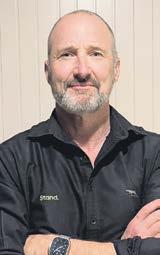
Dan Gaddum
Daryl Neal, right, and Anthony Clyde behind the Galv bike.
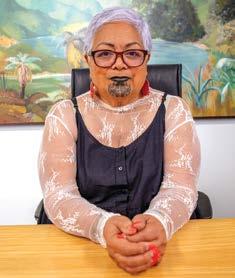
Matemoana McDonald is the Chair of the Bay of Plenty Regional Council.

Determining Ai success
By LISA DEAN
Across New Zealand, generative artificial intelligence (AI) is already part of how work gets done.
New research from the EMA, presented in our Workforce 2030 White Paper, shows that 83 percent of Kiwi businesses are already using AI in some form and a further 10 percent are planning to adopt it.
At first glance, that looks like strong progress. But a closer look tells a different story. The gap between adoption and readiness While AI adoption is accelerating, readiness is not keeping pace. Two-thirds of businesses using AI remain in the experimentation or pilot stage, with only one-third embedding it into regular business processes. Governance is uneven, workforce capability is still developing, and leadership ownership is often unclear.
In our survey of more than 200 Kiwi businesses, one in five reported having no clear owner of AI within their organisation.
That gap is where value is lost. Businesses invest in tools and expect productivity gains, but employees are often left to figure them out alone. The result is uneven uptake, unmanaged risk, missed opportunities and weaker returns on AI investment.
Our research, backed up by international studies, shows that successful AI adoption is determined by how well businesses enable, support and empower their people to use it effectively.
We believe businesses are entering a period where multiple pressures are converging at once. AI is accelerating the pace of work, skills requirements are shifting, workforce expectations are changing and productivity
demands are increasing.
The businesses that will succeed by 2030 will not be those that adopt AI the fastest, but those that prepare their people the best.
One of the most significant findings from our research is that many small and mediumsized businesses are not yet prepared for the workplace changes AI is bringing.
New Zealand SMEs risk being caught in a two-speed AI economy, where access to tools is widespread but the capability to use them well varies significantly.
Our findings also indicate that many SMEs are focused mostly on short-term productivity gains without fully considering the workforce implications, allowing change to happen to them rather than leading it.
This is the focus of the EMA’s Workforce 2030 programme, launching later this month.
Workforce 2030 is designed to help organisations bridge the gap between AI investment and workforce readiness, supporting leaders to build the capability, confidence and clarity needed to navigate this transition.
Our year-long programme of workshops, webinars, peer stories and business case studies is built around a simple idea: if AI is changing work, leaders need a deliberate strategy to change with it.
For many businesses, the starting point is asking fundamental questions. Where does AI actually add value? What work should change? What skills matter now? Where does human judgement need to remain central?
• Lisa Dean is EMA Head of Marketing and Transformation.

Time for a bed tax
By OSCAR NATHAN
It’s time for a nationwide accommodation levy.
New Zealand’s regional tourism organisations (RTOs) are taking a stand on one of the sector’s most pressing issues: how to sustainably fund visitor infrastructure, amenities, and promotion in a way that best supports local growth.
Regional Tourism New Zealand (RTNZ) is now urging the government, and all major parties that could form the next government, to introduce a nationwide user-pays levy on accommodation.
In my role as a board trustee for RTNZ, we’ve long considered the need to better fund the tourism system. Increasing rates is not the solution. However, a ‘user-pays’ levy (not a tax) is a viable solution, and now it’s crunch time for consideration. This would ensure funding is reinvested in place and in the communities where visitors spend their time and money.
Tourism has reclaimed its position as New Zealand’s second-largest export earner, following the disruptive Covid border closures, and continues to generate vital jobs and investment.
For the year ending April 2026, tourism employed 6370 people in Tauranga and 2130 in the Western Bay of Plenty. In the 12 months to May 2026, international visitors spent $117.9m and domestic visitors spent $467.8m while they were in our region.
These figures show tourism’s value to our economy but also highlight a challenge. Tourism Bay of Plenty is expected to continually attract more visitors to our region, and these visitors understandably need suitable facilities and services. Yet sustainable funding strategies for building and maintaining this much-needed
infrastructure are neither clear nor consistent.
Local communities are often left to finance this through residential and commercial rates. As inflation and cost-of-living pressures continue to bite, councils are rightly trying to limit rate increases. Yet boardwalks, cycle trails, transport routes, event venues, and well-maintained outdoor spaces are valued by visitors and residents alike. A great place to visit is a great place to live and vice versa.
Accommodation levies are already widely used in Australia, Europe, Canada, and the United States. Visitors make a modest contribution through their accommodation provider, with that revenue invested back into the destination.
This revenue needs to be ring-fenced for tourism purposes and returned to the region where it was collected, to complement and ultimately increase local council investment while enabling community aspirations to better manage growth through the visitor economy.
This new levy will need to be consistently applied across all accommodation types, including short-term rentals such as Airbnb, to ensure a fair playing field. RTNZ wants Inland Revenue to collect the levy via its existing GST framework.
If New Zealand wants world-class destinations, thriving communities, and a resilient tourism sector, visitors need to contribute directly to the places they come to experience.
Political parties now have an opportunity to show leadership by committing to a sustainable solution that will benefit visitors and host communities for decades to come.
• Oscar Nathan is General Manager at Tourism Bay of Plenty
Shaping the future of local government in our region
> By MAHÉ DRYSDALE, Mayor of Tauranga
Change to local government is coming - the Government has made that clear.
The choice for councils is just as clear: we can either help shape that change, or have it shaped for us.
Through its ‘Simplifying Local Government’ programme, the Government is aiming to reduce the number of councils across the country and simplify how they are structured and governed.
Putting aside the process being followed, and whether it could have been done differently or over a longer timeframe, I’m a big believer in controlling what we can control. I’ve said for some time that the current system is no longer fit for purpose, so I support change, and I believe this is our opportunity to get it right.
Across the Bay of Plenty, seven councils currently operate with overlapping responsibilities.
In Tauranga City alone, we are home to three council head
offices, along with the associated systems and overheads. That inevitably leads to duplication and inefficiencies, which, ultimately, impacts cost and outcomes. For businesses, this can translate to added complexity, delays, higher costs and inconsistent processes across council boundaries. We can do better.
The reality is our region already functions as one.
People live in one district and work in another. The Port of Tauranga underpins the wider regional economy, and critical infrastructure spans across council lines. Yet our governance model doesn’t always reflect that reality. Reform gives us the opportunity to rethink that.
From a business perspective, the potential benefits are clear: simpler rules, more consistent decision-making, and a more efficient consenting environment. It also provides an opportunity to improve longterm planning and the delivery of infrastructure needed to support growth.
Councils have until 9 August to either take the lead and
submit a proposal, or wait and accept a model developed for us at a later date. Any proposal submitted under Head Start will still require Government approval, with councils then having until March 2027 to further refine it into a full plan, which would take effect after the 2028 local elections.
Our council has been working alongside councils across the Bay of Plenty and further afield, including Thames-Coromandel and Taupō, to explore a range of potential models. We’re keeping an open mind about what could work best for our region.
Unitary authorities - bringing together the functions of city, district and regional councils - are central to that discussion. I do want to reiterate; this isn’t about Tauranga City Council absorbing another. It’s about working together to design a model that is fit for purpose and delivers better outcomes not just for people living in Tauranga, but for communities right across the Bay of Plenty –whether that structure is as a whole or in parts.
That doesn’t mean everything
becomes centralised. Local services and decisions must remain close to the communities they serve. However, the systems and support behind those services could be delivered more efficiently at a regional or subregional level.
I also recognise the concerns that come with change. The potential loss of local voice is a common one, and a fair one. But if we lead the design, we can ensure strong local representation remains at the heart of any future model.
There are also questions around council debt and financial fairness. With the right approach, including options like ring-fencing existing debt, we can address such challenges through careful design.
This is a significant moment for the Bay of Plenty. It’s a chance to take a longterm view and build a system that better supports growth, investment and community outcomes.
The decisions we make now will shape how this region operates for decades to come. But we won’t get there alone. Input from businesses, iwi and communities across the region will be critical in shaping what comes next.
Change is coming - ready or not. My view is we’re better off leading it. If we work together, we can design a system that delivers better outcomes for our region well into the future.


Opening up Beethoven
Opus Orchestra’s upcoming regional tour is taking a fresh approach to classical performance, blending insight with entertainment across Waikato and Bay of Plenty.
A regional orchestra is taking a more accessible approach to classical music, with a series of concerts designed to break down one of Beethoven’s best-known works for local audiences.
Opus Orchestra will present Beethoven Unwrapped in Hamilton, Rotorua and Tauranga this month, offering a format that combines explanation with performance.
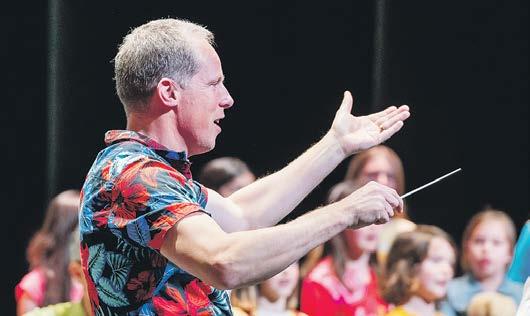
Guest conductor Michael Joel, who is based in Hamilton, will lead the concerts. He will guide audiences through Beethoven’s Symphony No. 4 in the first half, highlighting themes, rhythms and structure, before the full work is performed after the interval.
The concept, developed by the orchestra last year, aims to make classical music more approachable for new and returning audiences.
Joel has built a reputation for engaging performances and community outreach, including work with libraries across the region.
He says the format is designed to remove some of the barriers people may feel when attending orchestral concerts.
Rather than presenting the music as a formal lecture, the first half is intended to be conversational and interactive, offering insight into Beethoven’s composition style and the ideas behind the symphony.
The full performance in the second half allows audiences to experience the work with a deeper understanding of its structure and themes.
The orchestra draws strongly from Waikato and Bay of Plenty musicians, including University of Waikato students who bring a mix of emerging talent and contemporary perspective to the ensemble.
Among them is Cambridge based violinist Indiana Williamson, alongside Hamilton musicians Nrusingha Rath, William Ziyue Zhang, Samara Nation and trumpeter Sitiveni Palei. Many of the players balance music with study, teaching or other professional roles, reflecting the diverse background of the group.
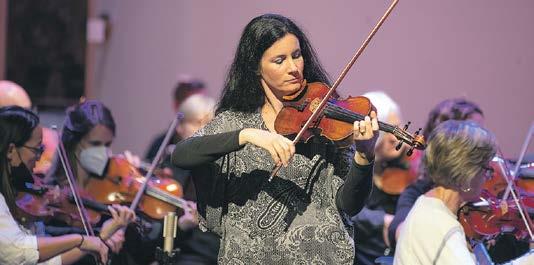
Leadership within the orchestra also reflects local connections. Concertmaster Lara Hall is a violin lecturer at the University of Waikato, while general manager Rebecka Beetz is based in Tauranga and also performs with the orchestra.
The organisation has positioned itself as a community focused ensemble, aiming to make orchestral performance more visible and relevant across the central North Island.
Performances will be held at the Gallagher Academy of Performing Arts in Hamilton, followed by concerts in Rotorua and Tauranga on consecutive days.
Supported by a range of regional funding bodies, the tour continues Opus Orchestra’s focus on building audiences outside main centres while offering opportunities for local musicians.
- Additional reporting Mary Anne Gill
Going the extra mile
Tauranga volunteer Sandra Leong has been recognised at this year’s SPCA Volunteer Awards for her long-standing contribution to animal welfare.
Leong received the Volunteer Impact award, reflecting her years of dedicated service working with dogs at the organisation’s local centre.
Initially involved in dayto-day care, including feeding and cleaning, her role has developed over time into a more specialised focus. She is now a key figure in dog training and behavioural support, working closely with canines to improve their temperament, socialisation and responsiveness.
Her work has had a measurable impact, with SPCA noting clear progress in the behaviour and adoptability of dogs she has trained.
Leong is also regarded as an important source of knowledge within the volunteer team, regularly sharing her experience with new recruits and helping build capability across the organisation.
In addition to her technical skills, she is recognised for her consistency and willingness to contribute, maintaining a regular presence as a volunteer dog walker while continuing to look for ways to improve
animal welfare outcomes. SPCA says her dedication and compassion set a strong example, both in the quality of care she provides and in her commitment to going beyond day-to-day requirements.
Her award was announced as part of the Nestlé Purina Volunteer Awards, which acknowledge the contribution of volunteers supporting SPCA centres
New Zealand. – Mary Anne Gill
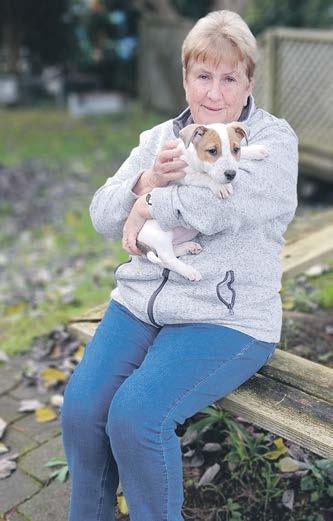
Volunteer Sandra Leong

Local insight national strength


Our expanded Tauranga leadership team reflects Deloitte’s commitment


across
Conductor Michael Joel in action.
Photo: Supplied
Concertmaster Lara Hall.
Photo: Supplied © 2026. Deloitte Limited (as trustee for the Deloitte Trading Trust).
Honours shine on trailblazers
Three Bay of Plenty changemakers — a kiwifruit breeding pioneer, a Māori health advocate and a lifelong community volunteer — have been recognised in the King’s Birthday Honours for decades of impact across their fields. David Porter and Monique Balvert O’Connor meet them.
Breeding success story
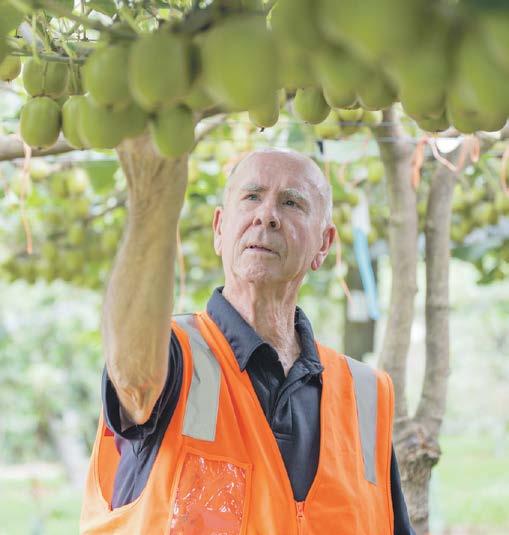
A Bay of Plenty scientist behind the commercialisation of RubyRed kiwifruit has been recognised for his decades of innovation.
Russell Lowe has been awarded an Officer of the New Zealand Order of Merit (ONZM) in the King’s Birthday Honours.
“I’m very, very honoured,” he says.
“And it’s also a recognition of the great breeding team we have.”
Te Puke-based Lowe spent more than 51 years working with the Department of Scientific and Industrial Research and Crown Research Institutes.
He has been widely recognised throughout the industry as a pioneer of significant innovations in kiwifruit breeding, including spearheading the development of the commercialised Zespri RubyRed variety.
In particular, Lowe was integral to the selection of the Hort16A vine and its polleniser cultivars, which led to the creation of the first Zespri Gold kiwifruit.
Lowe describes the honour as recognition not just for him, but for the entire industry.
His impact on New Zealand’s horticultural sector includes the co-development of Hort16A, the country’s first commercial gold kiwifruit. This later led to the breeding of
the PSA-resistant Zespri SunGold, which became a major global export success.
He also led the development of the Zespri SunGold cultivar Zesy002 after commercial crops of Hort16A were wiped out by bacterial canker PSA (Pseudomonas syringae pv. actinidiae) in 2010.
His contribution following that disaster was acknowledged when he received the Plant Raiser’s Award from the Royal New Zealand Institute of Horticulture last year.
In presenting the award, institute president Keith Hammett said Lowe was widely considered to have saved New Zealand’s kiwifruit industry after it was devastated by the disease.
More than two out of every three kiwifruit exported from New Zealand are derived from Lowe’s cultivars.
Alongside his latest honour, Lowe has also received the inaugural Hayward Medal and a share of the Prime Minister’s Science Prize.
“A breeder can’t achieve these results on their own,” Lowe said.
“They need good people in the field to raise the plants and the technical people to manage the data and plant identification.” –
David Porter
FBT changes ahead for motor vehicles
Big changes are coming to how FBT is calculated on motor vehicles. For many employers, particularly those navigating the practical challenges of logbooks and exempt days, the reforms will be welcome.
Budget 2026 confirmed that new rules will apply from 1 April 2027, aimed at simplifying compliance and delivering fairer outcomes for employers.
While the detail is still to come, and there will be opportunities for provide feedback through the consultation process, below is a high level summary of what is known so far.
The proposed framework takes a markedly different approach to the current rules. Vehicles will be classified based on how they are used, with each category linked to an “inclusion rate”, which is the portion of the vehicle benefit subject to FBT. Once set, this classification should only need to change where there is a material change in use of the vehicle. Importantly, the new approach places less emphasis on a vehicle’s
Vehicle category
Vehicle mainly for private use/part of salary package
Vehicle mainly for business use, private use allowed on non-work days, must be branded
Farm vehicles used by shareholder employees in a close company
Vehicle for business use, only private use commuting to single workplace, must be branded
Vehicle for business use, only private use commuting to multiple workplaces, must be branded
Pool vehicles, exclusive business use
physical features, meaning a standard passenger vehicle may still achieve a lower FBT outcome where it is genuinely used for business purposes and the relevant conditions are met. The work related vehicle exemption will no longer apply and there will not be a distinction between utes and passenger vehicles per se – how the vehicle is used is the key.
The reforms also include changes to the quarterly percentage used in the FBT calculation, including differentiation by fuel type. The current 5% quarterly rate for the cost price method will move to 5.7% for petrol/diesel vehicles, while hybrid and electric vehicles will have lower rates of 4.9% and 4.25% respectively, reflecting differences in running
Inclusion Rate

to discussion on whether vehicle branding and/or private use restrictions might need to be changed ahead of the April 2027 start date. If your business provides vehicles to employees, or you are considering changes to your fleet, speaking with your accountant or tax adviser will help you understand how the new rules could apply and identify opportunities to manage compliance and cost outcomes.
costs. Corresponding changes are being made to the tax book value quarterly percentage. Although 1 April 2027 may feel some time away, employers should start thinking about their vehicle fleets now - how vehicles are allocated, how they are used in practice, and what the expected FBT liability under the new rules might be. This could lead
> Budget 2026 confirmed that new rules will apply from 1 April 2027.
Russell Lowe.
Photo: Bioeconomy Science Institute.
Sponsored Content TAXATION
Andrea Scatchard is a Tax Partner at Deloitte, based in the Bay of
Championing Māori health
Janice Kuka attributes her giving nature to growing up in a community of people who contributed.
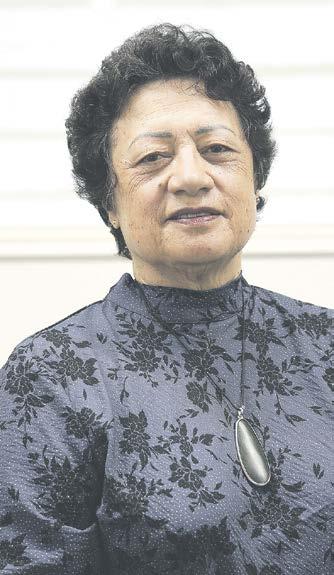
The Welcome Bay woman, whose formative years were spent in Te Puna, has been awarded a King’s Service Medal in recognition of her services to Māori health. Kuka (Ngāti Ranginui, Ngāi Te Rangi) has been a leading figure and advocate for Māori healthcare in New Zealand for more than 40 years.
She was involved in the Kohanga Reo movement and, through her role as a social worker in Tauranga Hospital, contributed to the establishment of Kaupapa Māori services within the hospital in 1989.
In 2010, she became the managing director of Ngā Mataapuna Oranga, a position she still holds and is happy to do so, given it’s in line with what she has passionately advocated for. Ngā Mataapuna Oranga is a Māori Primary Health Organisation (PHO) and Whānau Ora Hub.
“I have always wanted to do something meaningful,” Kuka says, adding that was what was modelled at home.
“I was brought up in a Te Puna community that worked and contributed. My Dad, Charles Kuka – like his father before him – believed in fairness and contributing to his community. Dad contributed to his community, with marae, rugby club and tribal committees, for example, all benefitting.
“I feel I got directed into a very satisfying and long career doing something of value that I believe in and am passionate about,” says Kuka who is in her early 70s.
Armed with a Master’s degree in social work she began her career as a medical social worker. Within less than three years she was moved into a leadership role. She thrived and the BOP benefitted.
She’s proud of being actively involved in the establishment of Māori nursing wards and mental health services at the hospital in 1989.
“A few beds grew into a ward – a Kaupapa ward. This also encouraged young Māori nurses and doctors. A nurse described it as a service with aroha. Compassion was at play. It was so successful it developed and other services resulted, and we have a strong and robust system that remains today,” she says.
Great things have also been achieved during her time at Ngā Mataapuna Oranga. She has led the organisation to provide healthcare, social services and cultural support to about 30,000 people and operate four GP clinics in Te Puna, Gate Pā, Pāpāmoa and Te Puke with more than 12,500 enrolled patients.
The clinics have been able to “scale up”, utilising resources more efficiently.
“We now support dental oral health to all schools, we have nurses and mental health services, we are the conduit for a network of hauora.”
Great things have been achieved under Kuka’s watch, but she’s not sure about receiving an Order of Merit. It’s humbling, she says.
There’s every chance success stories will continue to roll out as retirement plans are not on the near horizon. She’ll continuing role-modelling, as her father did before her.
“I still sit on quite a few boards on top of all this. But, in some aspects, is it time to bring through the younger ones. Maybe I will reduce the commitments and concentrate on strategic and governance aspects… and less on operational,” she says.
Two daughters and two mokopuna bring her joy. One of her daughters is Puawai Cairns the Director of Audience and Insight at Te Papa. – Monique Balvert-O’Connor
Helping others to thrive
Less than one month after receiving royal praise for services to the community, Kathy Webb has her finger in another voluntary pie.
The 76-year-old woman behind some of Tauranga’s best-known community initiatives, says her King’s Service Medal honour still feels unfamiliar. What has been familiar for decades is helping out; and she’s about to flex her overactive volunteering muscle yet again.
The latest is helping establish a Tauranga branch of Super Gran Skills. The national organisation works to team up skilled people (grans and grandads) with people who need a helping hand.
“This could be a young mum struggling with a baby, it could be someone requiring cooking lessons, it may be someone needing help with managing a budget,” she says. She’ll be able to add that to an already impressive amount of community involvement spanning many decades. For more than 35 years, Webb has strengthened volunteer networks and connected thousands of people.
She says it’s hard to pinpoint when her commitment to volunteering kicked in, largely because she didn’t think she was doing that. “I just thought: ‘here’s a good project, let’s put some energy into that’.”
Project number one arguably involved the Alzheimer’s Society Tauranga where she initially had a paid job. She left for another employment opportunity but didn’t farewell the society – remaining as a volunteer helping at board level (including the national board), and with running events. In Tauranga, she helped the organisation grow from solely herself and a field worker to a team of 15.
Webb cites helping establish SociaLink in 2012 as one of her proudest achievements.
“That was a huge success and a great project,” she says of the organisation that supports community groups and charities across the Western Bay of Plenty with funding, governance and operational advice.
The idea grew out of seeing organisations start with good intentions but struggle with the administrative work required to keep them going.
Webb concedes she’s “a good person to help start things” like the Tauranga Toastmasters club and a local Zonta branch.
“I get motivated by other peoples’ enthusiasm. If a project aligns with my values and principles, I get very motivated,” she says.
That motivation saw her serve on the Graeme Dingle Foundation Board in the early 2000s, and then in 2011 she joined the Rotary Club of Tauranga where she remains as secretary and helps organise fundraisers.
Keeping her busy is her role of WBOP Neighbourhood Support chair. She leads a network connecting around 14,500 homes across the region, spurred on by the belief that communities are safer if you know your neighbours.
In reflecting on years of service Webb uses expressions such as: “helping others has never felt like a burden”; “somebody’s got to do this thing so it might as well be me”; ”being involved in community service often involves gaining as much as you give”; “seeing organisations thrive is deeply rewarding” and “I am a willing worker”.
She can’t imagine life without volunteering; it’s just second nature, she says, “and it’s not like it’s been a huge effort”.
“Me time” involves gardening, reading, and enjoyed time with her husband (Andrew) and family – they have four grandchildren and two great grandchildren. – Monique Balvert-O’Connor
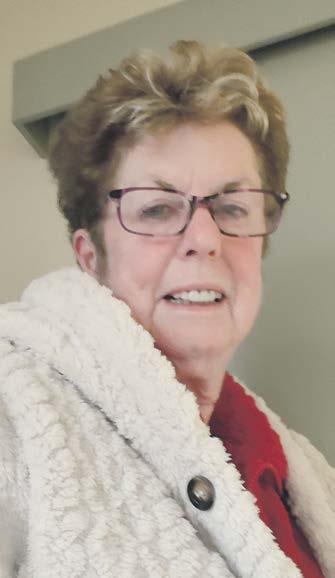
Kathy Webb
Gallagher
Appt Gallagher has appointed Rob Clayton as chief executive of its Animal Management division. The business has seen strong international growth in agritech. Clayton brings extensive industry experience and is expected to help strengthen the company’s position in connected farm technology.
Scholarship Support
A new Māori and Pasifika Business Scholarship at the University of Waikato will support final-year students with leadership potential. Valued at $5000 annually, the award aims to encourage future business leaders committed to contributing to their communities and broader economic development.
Rural Wellbeing
A nationwide study led by Massey and Lincoln universities is seeking input from women in farming on mental health and wellbeing. The research aims to address gaps in New Zealand data and better inform policy and support services for rural communities.
Employment shift
Bay of Plenty’s employment landscape is showing a unique shift, with job numbers declining but wages and hours worked increasing. Employment fell 7.1% year-on-year, while wages rose 4.6% and hours worked led the country. The data suggests businesses are retaining staff and increasing workloads rather than hiring, reflecting ongoing economic pressures.
Innovation win
Bay of Plenty-based Truss House has won the Growth and Scale category at the 2026 Fieldays Innovation Awards. The company’s patented timber building system combines floor, wall and roof structures into a single factory-made frame, offering a faster, more efficient construction solution using existing manufacturing networks and locally sourced plantation pine.
Store expansion
Four Square Te Puna has opened a significantly larger new store to meet growing demand, nearly doubling in size. Owners Pritesh and Dipti Bhikha say the development strengthens the store’s role as a community hub while expanding product range, fresh food options and local employment opportunities, with up to six new roles created.
Succession planning
Bennetts Proactive has demonstrated a structured approach to business succession as director Lance Ewens retires after 40 years. The Te Puke firm highlights the importance of early planning and clear communication, with leadership transitioning to Maria Livingstone and Amanda Hodder as part of a staged process supporting long-term stability.
Janice Kuka
Reform threatens biodiversity work
A leading Bay of Plenty farming spokesman fears environmental gains could be a casualty of proposed local government restructuring, writes Monique Balvert-O’Connor.
Brent Mountfort is concerned conservation work could suffer if the Bay of Plenty Regional Council is disbanded.
Biodiversity is a core function of the regional council and must be protected, he says.
The Federated Farmers Bay of Plenty provincial president is speaking out a month ahead of the August 9 deadline for council submissions on local government reform.
Councils have been asked to submit restructuring proposals by that date as the Government looks to replace regional councils with fewer, larger unitary authorities. These would combine local and regional responsibilities to simplify governance.
Mountfort supports keeping the Bay of Plenty Regional Council.
“Our regional council has worked really well, and proactively, with landowners over the years and achieved great success in the biodiversity space through working with people, rather than trying to regulate.
“We have a good thing going and don’t want biodiversity to be nudged into a nice-to-have. It is more than that. After all, the environment does underpin our exports and who we are,” Mountfort says.
The BOP Regional Council currently spends about $21 million a year on biodiversity, including biosecurity monitoring.
Mountfort fears biodiversity funding could be cut if new unitary councils come under pressure to reduce rates.
“We need to make sure biodiversity - which is about way more than putting plants in the ground - is not seen as an easy way of reducing rates, when in fact it is very important to New Zealand now and for future generations,” he says.
Flood control, drainage, and pest and weed control are all funded through the biodiversity budget.
“If a deadly weed gets out of control, or there’s an incursion from pests, that will cost a lot more in terms of eradication, and lost production which will impact the export dollar,”
Mountfort points out.
Mountfort says the proposal raises another concern.
“There is a concern, within the regional BOP, that one, big, mega council will potentially be dominated by Tauranga. There’s a concern rural communities will lose their voice and potentially their local identities.”
What has been pleasing, however, Mountfort says, is the National government’s recently announced intention to significantly add to QEII Trust coffers.
Federated Farmers – led by Mountfort – has been spearheading a campaign for government base funding of the QEII Trust to be lifted from $4 million – a level that hasn’t been changed since 2015. Last
month, National announced it would double baseline funding if re-elected. He hopes the funding goes ahead regardless, saying it has cross-party support.
“This increase is excellent news. It will enable QEII to keep doing the great work it is doing. This trust is a quiet achiever. For every $1 invested in the QEII Trust, a $7 return occurs, according to a Waikato University study.”
He says the funding will allow more investment in pest control and support existing covenants.
Up to 186,000 hectares, on more than 5500 farms, are protected through QEII covenants.
Mountfort and his family also back this work on their own farm, including land under a QEII covenant.
He is a second-generation sheep and beef farmer at Matatā, north of Whakatāne where he and his wife Antonia have two areas of native bush under QEII covenant, meaning they are permanently protected, even if they were to sell the farm.
Mountfort said on-farm covenants worked on multiple fronts.
“We’ve got the DOC estate in New Zealand and that’s awesome. But these covenanted areas dotted all over farmland create corridors so that our birds and all the other native species can move around. Covenants benefit everyone. Native plants and birds don’t recognise land
ownership, they just want the best spot to survive and thrive.
“Protected bush and wetlands are part of farmers’ brands as committed stewards and food producers,” he says.
As well as the 29 hectares under covenant, the Mountforts have planted out other gully and marginal areas of land. About 45,000 native trees, including rātā, rimu, pukatea and kohekohe, have been planted, 80ha of the 267ha farm have been fenced offincluding 6ha of deer-fenced land for natives to thrive and a further 32ha planted out in pine. The family has restored wetlands, reduced erosion and fenced out pests.
Mountfort says he is continuing the work started by his parents Chris and Antoinette. They’re united in their belief that profitable farming and environmental stewardship go hand in hand.
“Farming and conservation work so well together that it’s a natural thing to be involved in and rewarding on so many levels. It’s great when you are out there and the kererū and other birds are doing their thing,” he says.
He assures other farmers that environmental endeavours on his farm have not compromised productive land in any way.
The Mountforts actively support their wider community by welcoming visiting groups to their
farm for projects and demonstrations of good farming practices.
Mountfort says the regional council, the QEII Trust and local help had been key to helping his mission to get his land back to its original condition.
He is quick to add he is one farmer doing what many other New Zealand farmers do.
He says many Kiwi farmers do not get enough credit for their environmental work.
“In New Zealand, 24 percent of our native vegetation is on sheep and beef farmland. New Zealand also has one of the smallest
environmental footprints of any red meat producing country internationally.
“Kiwi sheep and beef farmers have reduced their absolute greenhouse gas emissions by 35 percent since 1990, and there is significant investment going into further reducing emissions.”
The New Zealand sheep and beef sector has a goal of net carbon neutrality by 2050. Mountfort says his sector is already a long way towards achieving this while it continues to invest in further emissions reduction initiatives.

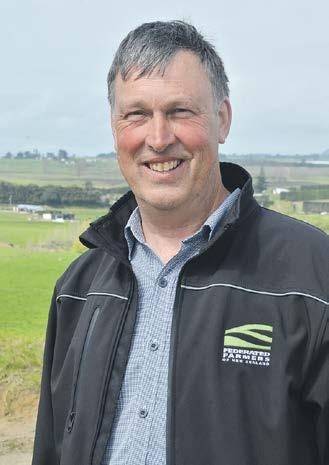
Brent Mountford supports keeping the Bay of Plenty Regional Council. Photo: Supplied.
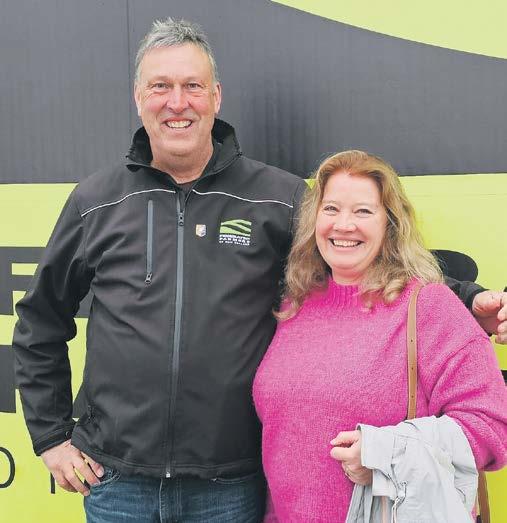
Brent Mountford, a second-generation sheep and beef farmer at Matatā, north of Whakatāne with wife Antonia at Fieldays last month. Photo: Mary Anne Gill
Rotorua apprentice Taylor Forrest, pictured, was second in the New Zealand Certified Buildings Apprentice Challenge, cementing his place among New Zealand’s top emerging builders. Competing in the national final last month, Forrest faced two days of demanding practical tasks, scenario-based questions and a live presentation to industry professionals. His strong performance earned him a $7000 prize package sponsored by Mitre 10 Trade and Makita. Caidan Brien of Mangawhai was first while Canterbury’s Joe McFadyen was third. The competition highlights skill, resilience and professionalism among apprentices, with Forrest’s result reflecting both his technical ability and dedication to his trade. His achievement is a standout moment for the Bay of Plenty building community.
Tauranga Business Chamber – Business After 5
Hosted by Tauranga Business Chamber
Photographer:
Salina Galvan
Photography
Highlights from BA5 with Cooney Lees Morgan, connecting local business through conversation and collaboration.
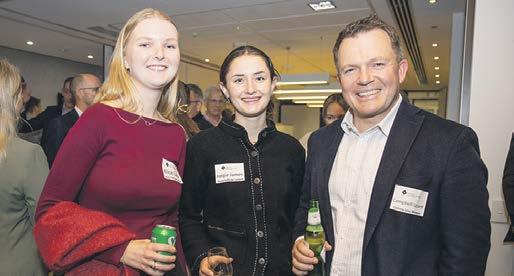
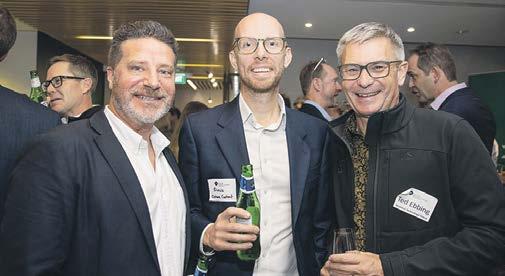
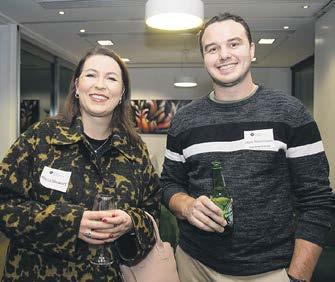
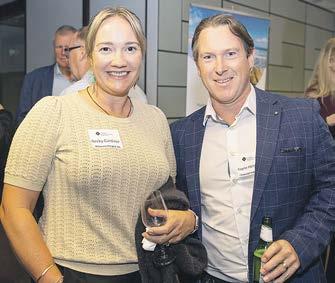
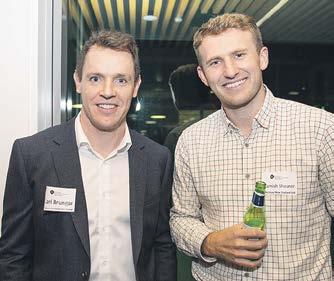
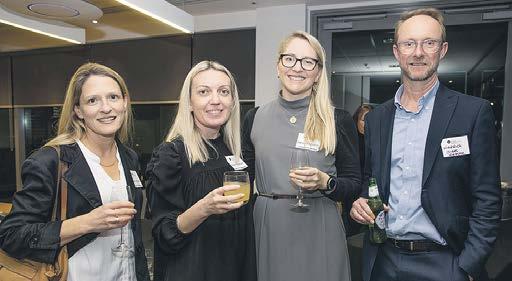
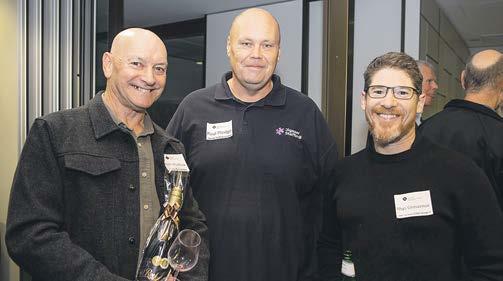
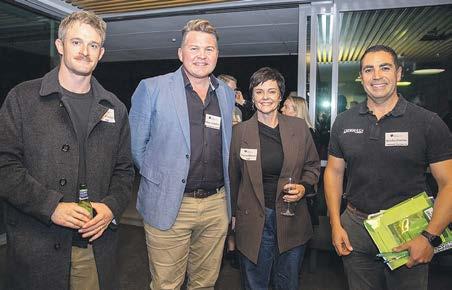
Alice Lane, Jorgia James, Campbell Izzard
Alicia Stewart, Dom Theunissen
Becky Gardiner, Kayne Henderson
Carl Brungar, Hamish Shearer
Grant Armstrong, Dave Hearn, Ted Ebbing
Jeanna Wharton, Melanie Forsman, Sarah Eriksson, Warrick Gibbs
Keith Woodcock, Paul Pledge, Rhy Grosvenor
Michele Wilson, Dan Allen-Gordon
Sam Gordon, Campbell Izzard
Sam Vincent, Matt Cowley, Sharee Munro, Nicolas Eneros