The road to reinvention
3
The road to reinvention
3



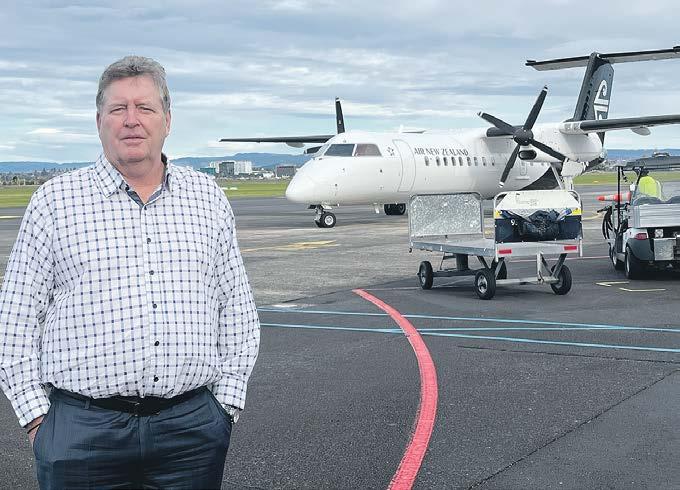
Five months into the fuel crisis, Tauranga Airport is managing reduced schedules, softer demand and an uncertain path back to full operations, writes Monique Balvert-O’Connor

Commuters using Tauranga Airport face at least another month of reduced flight schedules as the aviation industry grapples with the ongoing fuel crisis.
Flight reductions introduced on March 16 due to the current fuel crisis are scheduled to remain in place until the end of next month, says airport manager Ray Dumble.
What happens beyond then will depend on fuel supplies being able to transit through the Strait of Hormuz.
Exactly when regular scheduling will return is “the million-dollar question,” Dumble says.
“It’s all around fuel prices getting back to the normal ranges. And demand will dictate prioritisation of flights.”
Dumble recalls being “disappointed but not surprised” when he realised how the fuel crisis would hit the airport he has managed for nearly 25 years. All airports across the country have been negatively impacted and similar flight reductions have been introduced in many overseas countries, he says.
Since March 16 - and continuing until the end of the forecast period - flight reductions at Tauranga Airport have varied between six and nine per cent, Dumble says.
“An example being one four-week period when we had 750 flights, down from the original schedule of
794,” he says. No set destination has been eliminated. Flights are still operating from Tauranga to the usual Auckland, Wellington and Christchurch destinations, and commuters from those cities can still fly to Tauranga.
The six to nine per cent reduction in flights applies to all those locations and has been concentrated on off-peak and lower-demand services, Dumble says.
“So, it has meant not always being able to travel at the ideal time and having to take, for example, an earlier flight if connecting to another flight.
“In general commuters are totally understanding, albeit they are sometimes a little inconvenienced by the reduced schedule.
“There is not really anything the airport can do apart from monitor the situation and work with Air New Zealand, which we are doing,” he says.
In Tauranga, the fuel crisis has impacted the whole of the airport’s communitythe likes of Sunair, Island Air and the flight training schools. Sunair and Island Air flights are operating on an as-required schedule.
Staff numbers at Tauranga Airport have remained the same since the reality of the fuel crisis unfolded. The airport authority directly employs three people, with that number ballooning to about 150 when all those working at the airport precinct are taken into
account. This includes Air New Zealand ground and air crew, air traffic control, rental car agents, cleaners, groundsmen, rescue fire service staff, security, and café workers.
While it is solely the fuel crisis that has altered the airport’s flight schedule, ticket sale reductions have been noted since the cut in public service jobs. There has been a reduction in
passengers travelling to Wellington, although that is not “too significant,” Dumble says.
The financial cost to the airport since March equates directly to the percentage reduction in flights/ passengers. Airport revenue has fallen broadly in line with the reduction in flights and passengers, Dumble says.
The current disruption
comes against a backdrop of decades of growth. From its beginnings as a modest flying field at Mount Maunganui in 1937, and its wartime role training Royal New Zealand Air Force personnel, the airport has steadily evolved into one of New Zealand’s busiest regional airports.
A major milestone came in 1968 with the opening of a sealed runway and the
first stage of a passenger terminal, paving the way for the airport’s modern expansion.
When Dumble became airport manager 25 years ago, annual passenger numbers were about 76,000. Before the current fuel crisis, the airport was handling more than half a million passengers a year, with up to 21 daily services
Editor
David Porter
editor@goodlocal.nz 021 884 858
Senior Writer
Mary Anne Gill maryanne@goodlocal.nz 021 705 213
Advertising Director
Janine Davy janine@goodlocal.nz 027 287 0005
Owner/Publisher
David Mackenzie david@goodlocal.nz 021 684 304
To Advertise sales@goodlocal.nz
News Tips editor@goodlocal.nz
Office/Accounts admin@goodlocal.nz
Website goodlocal.nz
To Subscribe admin@goodlocal.nz
Readers’ contributions of articles and letters are welcome. Publication of contributions are entirely at the discretion of editorial staff and may be edited. Contributions will only be considered for publication when accompanied by the author’s full name, residential address, and telephone number. Opinions expressed are not necessarily those of the publishers. Bay of Plenty Business News is published by Good Local Media Limited.
Also publishers of

By TODD MULLER
Immigration debates often begin with one deceptively simple number: net migration. When it rises, governments are accused of losing control of the border. When it falls, employers warn of labour shortages.
But what does the number mean and what does it tell us about the Western Bay of Plenty?
Net migration is migrant arrivals minus migrant departures. If 150,000 migrants enter New Zealand during a year and 125,000 leave, the net gain is 25,000.
The word “migrant” can mislead. In these statistics it describes somebody’s movements, not their passport or visa.
Stats NZ broadly counts an arrival as a migrant if the person spends at least 12 of the following 16 months here. A departure is counted when somebody who had been living here spends at least 12 of the following 16 months overseas.
A New Zealand citizen returning from Australia may therefore be a migrant arrival, while a citizen moving there may be a migrant departure. Someone on a temporary work visa can count as a migrant. Conversely, a holder of a Permanent Resident Visa can be counted as a departure if they relocate







overseas.
That also means recent numbers are estimates, revised as people’s travel histories become clear.
The national picture has swung dramatically. New Zealand recorded net losses of about 16,100 in 2011 and 10,400 in 2012. Gains then approached 63,000 in 2016. Covid contributed to another loss of around 15,000 in 2021, before reopening drove a record gain of approximately 128,300 in 2023.
That fell to 27,100 in 2024 and about 14,200 in 2025, although the latest rolling figures indicate the gain is increasing again.
The Western Bay experiences these movements differently. Stats NZ estimated Tauranga’s population at 161,000 in June 2025, up from 115,800 in 2010. Western Bay District grew from 44,800 to 60,100. Together, the subregion added more than 60,000 residents in 15 years.
Most were not international migrants. Local population change also reflects births, deaths and people moving from elsewhere in New Zealand. Someone shifting from Auckland to Ōmokoroa does not alter national net migration, but still needs
housing, roads, water and healthcare here.
That is the backdrop to the Western Bay of Plenty Regional Deal signed with the Government in May. The agreement establishes a 30-year vision and a more detailed 10-year partnership covering transport, housing, water, health, education and economic development.
That makes accurate population analysis essential. Net migration tells us whether international movement is adding to New Zealand’s population. It does not tell us where people settle, whether their skills match local shortages, or how quickly infrastructure demand will emerge. Part of a dynamic partnership with the Crown is that the month-by-month reality of population movement can be more directly fed into shared investment decisions.
The regional deal acknowledges that Western Bay growth is real. Its success will depend on whether funding and construction now keep pace with the people behind the statistics.
• Todd Muller is a long-term Tauranga resident, former MP and current chair of Priority One. All views expressed are his own.
By MARY ANNE GILL
Tauranga knows toll roads better than anywhere else in New Zealand.
We have two of the country’s three toll roads and, by and large, we’ve accepted them. People grumble, of course.
But most motorists understand the bargain. Pay a small charge, use a quicker route and help fund infrastructure the region needs.
That’s why the latest debate about tolling feels different.
Anyone who uses Takitimu Drive regularly knows it has become part of a giant construction zone as work progresses on the Takitimu North Link.
If motorists are continuing to pay tolls, should they also be expected to put up with years of speed restrictions, traffic management and disruption caused by a major infrastructure project?
New Zealand Transport Authority’s answer is the road remains open. Alternative routes are available. The works are necessary. The long-term benefits will be worth it.
All of which misses the point.
Nobody is arguing against progress. The North Link cannot come soon enough. What rankles is being charged as though nothing has changed.

NZTA says the disruption is minor. That depends entirely on whether you’re the person using the road every day.
Ask commuters who travel between Bethlehem, Tauriko and the city. Ask tradies who lose valuable time sitting in traffic instead of being on site. Ask business owners trying to get staff and customers where they need to be.
Their reality may differ from the view from Wellington.
In fact, patience has become a defining feature of life for Tauranga motorists. Cameron Road may be finished but the memory of years of cones, delays, disrupted businesses and cost blowouts remains fresh.
Many residents felt they were putting up with the pain while being repeatedly told the gain would come later.
That sentiment is resurfacing on Takitimu Drive. People can accept inconvenience when there is a clear payoff. What tests their goodwill is being asked to keep paying while the inconvenience becomes the new normal.
Local MP Sam Uffindell has raised the issue with NZTA. In his view, the agency is wrong.
That is quite a statement from the local National MP about a Crown agency.
Tauranga City councillor Steve Morris has
highlighted figures showing the proposed Pāpāmoa East toll could see a substantial chunk of revenue disappear into administration before a cent reaches the purpose most people assume they are paying for.
That raises a question.
At what point does tolling stop being about infrastructure and start being about maintaining the system that collects the toll?
Public support for user-pays models depends on trust. People need to believe there is a clear connection between the fee charged and the benefit received.
Right now, many Tauranga motorists are looking at roadworks, reduced speeds, mounting costs and bureaucratic explanations and wondering whether that connection still exists.
It’s a question worth asking and one NZTA is yet to answer convincingly.
What do you think? Let us know editor@goodlocal.nz
• Mary Anne Gill is an award-winning journalist of 40 years and a Tauranga ratepayer who works as a senior writer for Good Local Media, publishers of Bay of Plenty Business News.











As Tauranga’s skyline continues to evolve and businesses head towards the revitalised city centre, a question is increasingly being asked of Cameron Road, writes David Porter.
Long before cranes crowded the skyline and commercial tenants weighed up the benefits of a central city address, Cameron Road was Tauranga.
It was the route that carried shoppers into town, the backdrop for parades and community celebrations, and the road along which the city’s commercial ambitions steadily expanded.
For generations, it was Tauranga’s unquestioned commercial heart, the address where professional firms, retailers, banks and corporate offices wanted to be seen.
Is the city’s traditional commercial spine being left behind, with a growing number of vacant buildings and the legacy of years of roadworks? Or is it simply evolving into something different?
Few streets have reflected Tauranga’s growth as clearly as Cameron Road.
Established in 1871 and named after General Sir Duncan Cameron, the road has shaped Tauranga’s growth for more than 150 years.
As the city expanded beyond its compact town centre, businesses followed the road south, creating
a commercial strip that became one of the Bay of Plenty’s best-known addresses. Successive generations watched the road evolve from a traditional main street into a bustling urban corridor linking the CBD with the city’s expanding suburbs.
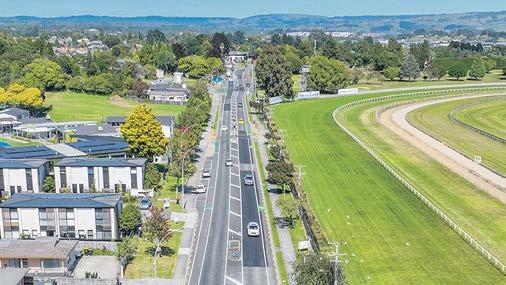
Stretching approximately 6.2km from the city centre to Greerton, Cameron Road is more than a business address.
It remains one of Tauranga’s most important roads, linking major institutions including Tauranga Hospital, Tauranga Girls’ College, the Tauranga Racecourse and Tauranga Golf Club.
Thousands of people use the toll-free road daily not only for business and commuting, but for healthcare, education, sport and recreation. The answer is not as straightforward as either argument suggests.
Recent months have seen a number of high-profile businesses relocate closer to Tauranga’s Central Business District. Law firm Holland Beckett is among those that have made the move, leaving its long-time Cameron Road headquarters for new premises in the city centre.
Yet the move does not necessarily signal decline.
Bill Holland, son of the firm’s founder, notes the timing of the move coincided with the end of a lease agreement on the firm’s former building at the corner of 11th Avenue and Cameron Road. The property itself remains occupied by other tenants, suggesting vacancy is not the inevitable outcome when established occupants move on.
While some established occupiers head off, the buildings they leave behind are not automatically becoming obsolete.
Commercial property specialists say Cameron Road continues to retain significant advantages. Positioned between the CBD and the city’s suburban growth areas, it remains one of Tauranga’s most recognisable business addresses and a key transport link. Property owners are increasingly looking at refurbishment, repurposing and incentives to attract new occupants.
Owners and tenants are looking for modern premises with good amenities, says Mark Walton, Bayleys director for commercial and properties.


“They want bits and pieces for their staff and a good lunchroom or café nearby,” he says.
“I think there’s a strong driver for companies to move into more modern fit for purpose buildings, whether they are downsizing or upsizing, and really getting fit for purposes premises.”
Yet the commercial property market is also adjusting to a wave of new supply.
New office developments and refurbished commercial premises have expanded the range of options available. There is only a finite pool of tenants seeking space, particularly in the current economic environment.
Property Brokers commercial sales consultant Mark Gordon says he is seeing increasing numbers of office-based businesses, consultants and financial service firms gravitating back towards the CBD. Student accommodation developments and more tertiary education facilities are also bringing new activity into the city centre.
At the same time, Cameron Road is showing signs of resilience.
One example is Milford Asset Management, which has recently expanded its Tauranga presence by relocating into larger, newly refurbished premises on Cameron Road. Rather than viewing the corridor as a location to leave, the investment firm sees it as a place worth investing in.
Milford chief executive Blair Turnbull says Tauranga is rapidly becoming one of New Zealand’s key growth centres. With a population now around 160,000 and strong links developing between Auckland, Waikato and the Bay of Plenty, he believes the city sits within an increasingly important economic triangle that will drive future productivity.



The firm has approximately 10,000 clients across the wider region and says demand was a major factor behind the move. Having first established an office in Tauranga five years ago, Milford had simply outgrown its previous premises in Grey Street.
Wealth management adviser Darin Whitehead says the company was looking for a more welcoming space where clients could comfortably discuss investment and financial planning opportunities. He points to Tauranga’s combination of business growth, a strong primary sector, a major port and an attractive lifestyle as reasons for confidence in the region’s future.
Milford is not alone.
While some businesses are heading towards the CBD, others continue to see value in locations along Cameron Road, particularly in refurbished buildings that offer accessibility, visibility and proximity to both the city centre and suburban populations.
The road is also benefiting indirectly from broader urban change. Waikato

University continues to expand its Tauranga footprint, with plans being explored for the former Craigs Investment Partners building at 158 Cameron Road. Nearby, the sale of the former Kale Print property is set to pave the way for student accommodation, bringing a different type of activity and investment into the area.
Rather than a story of winners and losers, Tauranga’s commercial property market increasingly resembles a city reshaping itself. Some traditional office users are consolidating in the CBD. Some older buildings are being repositioned. Others are attracting new occupiers prepared to take advantage of improved leasing terms and refurbished premises. Cameron Road may no longer hold the unquestioned dominance it once enjoyed as Tauranga’s premier commercial address, but reports of its decline appear premature. Businesses may move and buildings may change hands, but Cameron Road remains woven into Tauranga’s economic and civic life.




Tauranga continues to grow as an increasingly important economic hub – featuring New Zealand’s largest port and a
Samantha Roy –Helping businesses grow through change
Samantha has more than 12 years’ experience in audit, assurance and advisory services, working with clients across a wide range of industries.
“Every organisation has its own story. Taking the time to understand a client’s goals, challenges and ambitions helps us provide advice that is practical and relevant to their situation.”
Her career began in South Africa, where an entry-level
population which is forecast to surpass Wellington by 2050, becoming our third largest city.
“As our business community’s needs and
role in a small audit firm developed into a long-term career. She progressed through larger firms, gained broader experience and, four years ago, moved to New Zealand to start a new chapter.
“It meant adapting to a new environment, building new relationships, and learning different ways of working. It challenged me in many ways, but it also gave me the opportunity to grow and develop beyond what I thought was possible.”
She is known for her
economic impact grow in complexity and scale, our focus is on ensuring our accounting and advisory services keep pace. BDO Tauranga has experienced
practical approach, strong technical capability and ability to build lasting relationships. While audit is often viewed as a technical profession, Samantha believes the strongest outcomes come from understanding what matters most to each client.
“Technical capability is important, but relationships are what make the process work well,” she says. “When clients feel informed, supported and comfortable having open conversations, the audit becomes far
significant growth in recent years, increasing its team by 50% since 2023. To support this growth, the firm is enlarging its footprint at 525 Cameron Road to cater
more valuable than just a compliance requirement.”
Samantha most enjoys helping organisations navigate change, from new reporting requirements and governance matters to changing compliance obligations. Her focus is on helping clients understand what those changes mean in practice and prepare early.
“Many people think audits are only relevant for large organisations, but ownership structures, funding arrangements and reporting obligations can all
for its expanding team and expertise in helping clients across audit, assurance and business advisory services.” – Paul Manning, Managing Partner, BDO Tauranga.
create audit requirements,” she says. “Getting advice early can save a lot of time and stress later on.”
Her advice to clients is simple:
“Work with advisers who take the time to understand your business. An audit shouldn’t be a box-ticking exercise. The more your adviser understands your business, the more value they can bring.”
To learn more about BDO’s Audit and Assurance services, contact Samantha at Samantha.Roy@bdo.co.nz.
hands. More experience. More people to help.






Sarah Goldsbury –Sharing expertise in trusts, estates and succession planning
Sarah may describe herself as an accidental accountant, but her career journey has led her to become a trusted advisor helping clients navigate some of life’s most important financial decisions.
After graduating from the University of Waikato, Sarah returned to New Zealand in 2010 and applied to join BDO Tauranga in an administrative role. Her capabilities were quickly recognised, and her responsibilities expanded across accounting, IT
support and school audit work, laying the foundations for a successful career in business advisory.
Today, with 16 years of experience, Sarah is a valued member of BDO’s Business Advisory Services team, specialising in trusts, estates and succession planning for individuals, families, trustees, executors and business owners across the Bay of Plenty.
“A lot of people know they need to get their affairs in order, but they’re not always sure where to start,” she says. “My role is to help simplify the process, put the right structures in place, and give clients confidence that
everything has been taken care of.”
One area Sarah regularly advises on is the role of family trusts.
“There’s a perception that trusts have become too complicated or no longer offer value, but that’s not always the case. For many clients, a trust remains an effective structure for protecting assets, managing family wealth, and supporting succession planning objectives.”
Rather than taking a one-size-fits-all approach, Sarah works with clients to assess their circumstances and determine the most appropriate path forward.
She also sees firsthand the challenges that arise when affairs are not regularly reviewed.
“It’s usually not the big things that create problems, it’s the small details that haven’t been reviewed for years,” she explains. “By the time an estate needs to be administered or someone steps in to manage affairs, those oversights can create unnecessary stress, delays and costs.”
Planning ahead can make a substantial difference when it comes to protecting family assets and ensuring a smooth transition between generations. Sarah encourages clients to:
• Keep important documents, financial information, and key contacts in one accessible location.
• Regularly review trusts, wills, and ownership structures.
• Seek professional advice before a death, incapacity, or family event forces action.
One of the most rewarding aspects of Sarah’s role is helping clients gain peace of mind. By making complex estate and succession planning matters easier to understand, she helps clients feel confident that their wealth, wishes and family legacy are protected.
Bay of Plenty’s kiwifruit industry has delivered another powerful injection into the regional economy, with a record crop and strong export returns underlining the sector’s importance to the region.
More than 225 million trays of kiwifruit were packed this season, driven by the continuing success of the SunGold variety. For growers, packhouses and the wider regional economy, the harvest reinforces kiwifruit’s position as one of New Zealand’s most valuable horticultural exports.
For Tauranga-based Seeka, the bumper industry season does not necessarily translate into record earnings.
The company, one of the country’s largest integrated kiwifruit businesses, is scheduled to release its six-month result later this month.
Chief executive Michael Franks says Seeka is limiting media comment ahead of that announcement.
Investors and growers will be watching closely because Seeka’s recent market guidance suggests

that, while the industry remains in robust health, the company is operating in a more challenging environment than headline harvest figures might suggest.
Seeka reported that New Zealand Class 1 kiwifruit volumes for 2026 were slightly below the previous year, reflecting what it described as a return to more normal growing conditions after exceptionally strong yields in 2025. The company also reported a smaller Australian crop following hotter and drier growing conditions.
Those figures highlight an important distinction within the kiwifruit sector. Industry success is driven not only by volumes, but also by fruit quality, international demand, orchard productivity and the costs associated with growing, harvesting and packing fruit.
While industry leaders have praised the season as another example of the sector’s collaborative model delivering value to growers, businesses throughout the supply chain continue to face higher operating costs than in previous years.
For Seeka, one response has been continued investment in automation and post-harvest efficiency. The company says those investments are helping offset ongoing cost pressures, an issue facing many businesses in the wider horticultural sector.
The significance of Seeka’s upcoming result extends beyond its shareholders. As one of the Bay’s largest horticultural employers and a major participant in the kiwifruit value chain,
The right audience. The right message. The right place. We specialise in advertising solutions. Our well-known publications, print and online, promote your business to an engaged audience.
Publishes the first week on every month.

Physical ads — in local newspapers build higher brand trust, are free from ad blockers, and command deeper engagement. When combined with digital marketing, they can significantly increase overall response rates.
For more information please contact Janine Davy Advertising Director 027 287 0005 janine@goodlocal.nz





its performance provides an important indication of the health of the regional economy.
The broader outlook for kiwifruit remains positive. SunGold continues to deliver strong returns and international demand remains supportive. However, the season has also demonstrated that record industry volumes do not automatically guarantee record profits for every participant.
When Seeka reports, attention is likely to focus less on harvest numbers - which are already largely known - and more on margins, costs and how effectively the company has converted another strong kiwifruit season into earnings growth. – David Porter
Te Puke has recognised the businesses and people who have provided the town’s financial foundation over the last 20 years with the first three Business Immortals named - the late Stan Williamson and Shirley and the late Des McGregor.
Te Arawa production Tērā te Auahi will return to the Sir Howard Morrison Centre in Rotorua for an extended summer season. Created by Māori performing arts collective Te Whare Tapere o Te Arawa, the contemporary production blends theatre, music, movement and kapa haka to tell the story of the 1886 Tarawera eruption through the experiences of those who lived through it.
The Papamoa Residents and Ratepayers Association says an independent economic analysis comparing chipsealing over existing hotmix roads with retaining hotmix surfaces refutes Tauranga City Council’s claim hotmix is six times more expensive than chipseal. Rather than hotmix costing six times as much as chipseal, the analysis indicates the true difference is approximately 1.25 times.






















CONTINUED FROM PAGE 1
connecting Tauranga with Auckland, Wellington and Christchurch.
While the last five months have been a challenging low, Dumble’s years on the job have included highs such as the completion in 2019 of a $12.7m upgrade and expansion
55,000 – Flight movements in 2025
of the airport’s terminal.
After five months of disruption, Dumble is hopeful Tauranga Airport can return to full schedules by October, but says the industry’s flight path remains tied to events far beyond the Bay of Plenty.
505,000+ – Passengers arriving and departing on domestic services each year
21 – Daily services to Auckland, Wellington and Christchurch before the current fuel crisis
1268 – Seats available daily on Air New Zealand Dash 8 Q300 and ATR aircraft
76,000 – Annual passengers when Ray Dumble became airport manager 25 years ago
$18m – Annual airport revenue from landing fees, parking and commercial leases
$8m – After-tax and depreciation surplus in the past financial year
2 million+ – Passengers the airport could handle annually, according to the Airport Masterplan
50 years – Estimated capacity of the airport’s current site
1000 – Car parks today, up from 150 before major expansions
77 – Aircraft hangars, up from 18
1939 – The year Tauranga Airport opened, with commercial services beginning three months later
1945 – Commercial flights resumed after World War II, following RNZAF use of the airfield
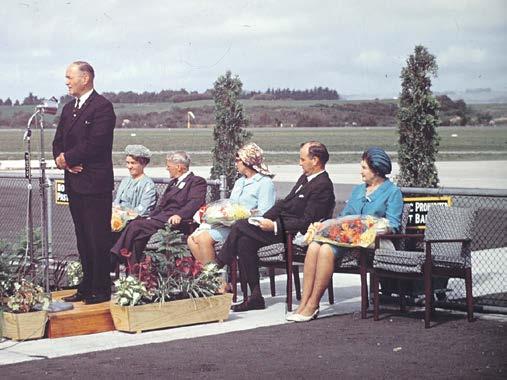


There’s something special happening in the Bay of Plenty, and it’s not just the kiwifruit industry.
From horticulture, agriculture and forestry to logistics, construction, manufacturing, tourism, technology, healthcare, property and professional services, the Bay has a diverse economy. Across these sectors, businesses are spotting opportunities, challenging established thinking and building organisations whose impact reaches well beyond the region.
That entrepreneurial energy is exactly what the Deloitte Fast 50 celebrates. Now in its 26th year, the programme recognises New Zealand’s fastest-growing businesses and the people behind them. This year’s theme, “Tuned into the future”, celebrates businesses that listen
closely to their customers and markets, recognise the signals that matter, and act when opportunity appears.
The programme has a rich history. Fast 50 alumni include some of New Zealand’s most recognisable growth stories, including Trade Me, 2degrees, 42 Below, Delivereasy and Legend Story Studios. Each began with ambition and the determination to grow. The next name to join that legacy could come from right here in the Bay of Plenty. Our region is already making itself heard.
In 2024, Mount Maunganui’s Rice Rice Baby placed 45th nationally after achieving 118% revenue growth and was named the Central North Island’s Fastest Growing Retail or Consumer Products
Business. Tauranga-based Hiko Electrical Services followed at number 48 with 114% growth. Pinnacles Civil was also recognised as the Central North Island’s Fastest Growing Services Business. The momentum continued in 2025, when four Bay businesses secured places on the national index.
Flicket ranked 15th with 234% growth and won the regional technology award. Kiwi Artisan placed 18th with 204% growth and received the regional food and beverage award. Tiny Pools ranked 43rd with 130% growth and claimed the regional manufacturing award, while Collab Realty placed 48th with 122% growth. These businesses operate in different markets,
but their stories share familiar qualities: a deep understanding of the customer, the courage to do things differently, strong teams and the discipline to turn good ideas into sustainable growth. They prove a business can be based in the Bay and still build a national or international market. Fast 50 is about more than rankings. It is an opportunity to celebrate your team, share your story, raise your profile and connect with ambitious business leaders.
Entries close on Friday 28 August 2026. Regional winners and qualifiers will be announced on 14 October, followed by the national celebration on 12 November. If your business is growing strongly, this is your
moment. If another Bay business comes to mind, share this article and encourage them to enter. Our region has the ambition and talent. Let’s make sure New Zealand hears about it. Ready to put your growth story on the national stage? Enter now at fast50.co.nz.
> “That entrepreneurial energy is exactly what the Deloitte Fast 50 celebrates.”
The digital networks underpinning the Bay of Plenty economy are becoming as important as the roads and freight routes they support, reports Mary Anne Gill.
When businesses talk about infrastructure in the Bay of Plenty, the conversation usually centres on roads, rail and the Port of Tauranga.
Less attention is paid to the mobile networks carrying everything from freight data and logistics tracking to Teams meetings, farm monitoring systems and tourist selfies.
Yet as population growth accelerates across the Golden Triangle, telecommunications companies are quietly investing millions in the digital infrastructure needed to support one of New Zealand’s most important economic corridors.
The latest investment sits along State Highway 29, the critical freight route linking businesses with Tauranga and the country’s busiest export port.
A new mobile site near Hobbiton is one of 12 sites being developed across the wider region as infrastructure provider Fortysouth and network operators work to close longstanding coverage gaps and improve network reliability.
While a cellphone tower may not attract the same attention as a new highway interchange, the role connectivity plays in the modern economy is becoming increasingly important.
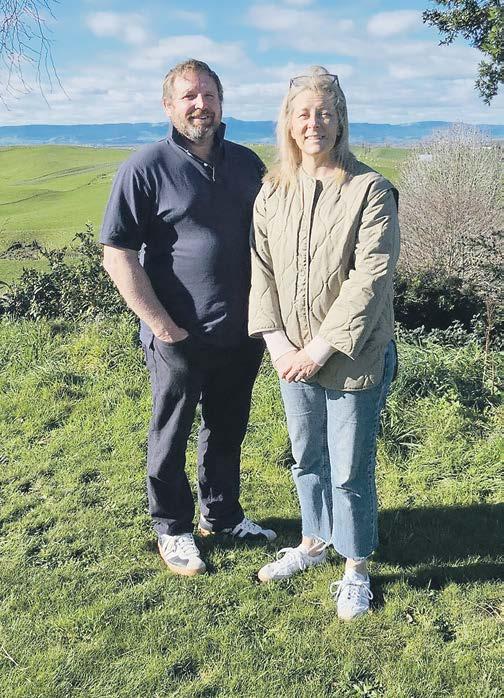
The structure sits on a 93-hectare farm owned by James Hailwood and Kylie Perry, about 24 kilometres east of Cambridge
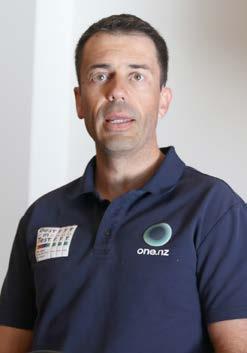
overlooking Hobbiton and State Highway 29. For the couple, the impact has been immediate.
“There were spots on the farm where you could get coverage, but most places you couldn’t,” James said.
The surrounding landscape is the same rolling farmland that led film makers to choose the area for Hobbiton more than two decades ago. Its uninterrupted green hills and natural contours, largely free of modern structures, created the perfect setting for the Shire.
That elevated, open terrain also makes it ideal for a telecommunications site.
More freight operators rely on real-time data. Rural businesses operate cloud-based systems. Visitors expect seamless coverage wherever they travel. Emergency services depend on reliable communications during incidents and accidents.
One New Zealand chief technology officer Kieran Byrne says mobile networks have evolved into critical infrastructure.
“Over two million New Zealanders rely on our network every day for safety, security, connecting with friends and family and businesses to operate in this modern age,” he says.
The investment comes as the upper North Island continues to absorb a significant share of New Zealand’s population growth.
Waikato MP Tim van de Molen says the Auckland-Hamilton-Tauranga corridor will continue to place increasing demands on infrastructure providers.
“The Golden Triangle region is going to see two-thirds of all of New Zealand’s population growth,” he says.
For Bay of Plenty businesses, that growth story inevitably leads back to State Highway 29.
The route is one of the country’s most important freight corridors, moving goods between Waikato manufacturers, Auckland distribution centres and the Port of Tauranga. It is also used by thousands of commuters, tourists and commercial vehicles every day.
The new site near the highway addresses a coverage blackspot that has existed for years.
Van de Molen says improved connectivity is as much about safety as convenience.
“If you can have reliable connectivity through what is a really busy state highway corridor, that is a massive safety gain,” he says.
For tourism operators, better coverage has become part of the visitor experience.
The new site improves mobile service

around Hobbiton, one of New Zealand’s best-known tourism attractions, which attracts about 600,000 visitors annually. Visitors increasingly expect to be connected from the moment they arrive, whether they are sharing photos, navigating their journey or keeping in touch with family overseas.
For the rural sector, connectivity is increasingly a productivity tool.
Modern farming relies heavily on digital connectivity, from environmental monitoring and reporting systems to livestock technology and remote management tools.
Van de Molen says better access to data can drive significant productivity gains for farmers.
“Being able to access that more efficiently, use in real time that data, that information, can lead to a real step change in productivity,” he says.
Behind the scenes, the telecommunications sector is changing how infrastructure is delivered.
Historically, competing mobile operators often built separate infrastructure. Increasingly, networks are sharing towers and facilities, reducing duplication and lowering costs.
The SH29 site is shared by both One New Zealand and Spark, with capacity available for additional operators.
Fortysouth chief commercial officer Steve Rieger says planning is now taking place across the wider corridor from South Auckland through Waikato to the Bay of Plenty.
Keeping pace with that growth requires the telecommunications sector to think years ahead of demand.
Fortysouth, formed in 2022, now manages about 1700 telecommunications sites nationwide and continues to expand its
footprint in growth areas.
The conversation around infrastructure in the Bay of Plenty will continue to focus on highways, rail upgrades and port capacity. But as freight volumes grow, businesses become more data-driven and visitors expect seamless connectivity wherever they travel, another type of infrastructure is becoming just as important.
The next stage of growth in the Golden Triangle will depend not only on moving people and goods efficiently, but on keeping the region connected every step of the way.
What started as a classroom experiment has grown into a nationwide agribusiness programme introducing students to the opportunities that exist beyond the farm gate. In the Bay of Plenty, Aquinas, John Paul, Katikati, Mount Maunganui, Ōtūmoetai and Pāpāmoa colleges, Tauranga Boys’, Tauranga Girls’, Te Puke, Western Heights and Whakatāne high schools provide the subject. Read more goodlocal. nz
Tauranga residents strongly support local government reform, including council mergers and a single Bay of Plenty council, according to an independent survey. More than 78% backed reducing council numbers, while 85% supported a regional council. Western Bay of Plenty District Council was the preferred merger partner.
The Bay of Plenty Regional Council has paused plans to restructure its $3 billion investment portfolio after Local Government Minister Simon Watts requested significant decisions on regional asset ownership and governance be deferred until local government reform outcomes are clearer. The council has confirmed it will follow the minister’s direction.
A record 73 tertiary students completed internships with Bay of Plenty businesses last summer. Tauranga Business Chamber chief executive Matt Cowley said the programme highlights the value of connecting skilled students with innovative companies and demonstrates the potential for further growth in business–education partnerships.
The Midland Health region Trauma Service - Te Manawa Taki – has celebrated 20 years. More than 50,000 trauma admissions to hospitals in the region over two decades, more than 100,000 records in a worldclass trauma registry and an estimated 640 lives saved. It has gone on to become New
Zealand’s only verified Level One Trauma Centre. Read more goodlocal.nz
Tauranga charity House of Science, which delivers science kit programmes nationally, returns $21.90 for every dollar invested in the form of better lives, higher incomes and reduced government costs, an independent social impact assessment has found. The government is investing $39.9 million over four years to roll out science kits to all state and state-integrated schools and kura in New Zealand.
The kiwifruit industry recorded a record season, packing 225 million trays and generating $356 million in returns. SunGold accounted for nearly 162 million trays and led earnings growth. While only small harvest volumes remain, green kiwifruit growers face a more uncertain outlook after yields fell more than 14% from last year.
A $3 million government grant will support geothermal exploration in Mount Maunganui and Te Puke, including two test wells. Announced by Regional Development and Resources minister Shane Jones, the initiative forms part of the Government’s strategy to expand geothermal activity and strengthen regional economic development.
Tauranga Mayor Mahe Drysdale has been selected for the Bloomberg Harvard City Leadership Initiative, joining 45 other mayors from 15 countries. One of only two New Zealand mayors chosen, Drysdale said Tauranga’s rapid growth presents significant opportunities as well as complex challenges for the city.
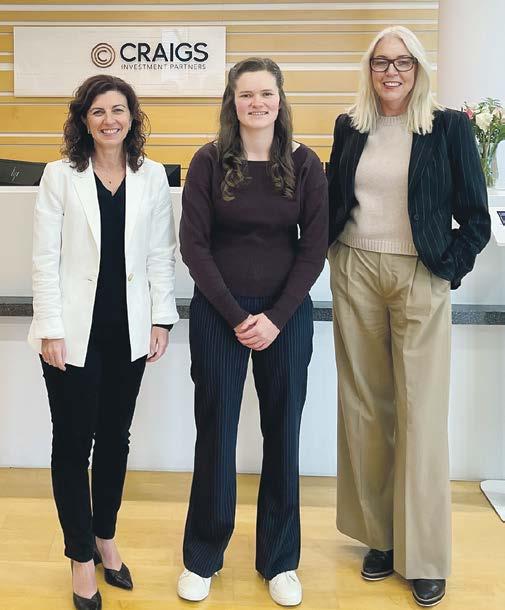
The recipient of a prestigious scholarship for students urges young people to do what she has done – start investing while in their teens. Rachael Coleman, 21, who has been awarded a Craigs’ Investment Partners Women in Business 2026 Scholarship, tells how she started investing when at high school. Read more goodlocal.nz
“Is Your Business Writing

When you look beyond the numbers, what are you really looking for?
The numbers are the evidence. Curiosity investigates. Every business has a story, and I love following the clues. Sometimes I’m uncovering financial leakage, sometimes hidden opportunities, and sometimes simply connecting the dots.
What has working with different business owners taught you? Understanding people is every bit as important as understanding the numbers. Once I understand how someone works, we build systems that work for them. I’ve seen incredibly talented people flourish once they stop trying to fit someone else’s way of working.

What do you think business owners value most in a bookkeeping relationship?
My clients often tell me they appreciate that I care for their business as though it were my own. They’re right. I’m genuinely invested in their success. Through trusted financial oversight, I steward their finances and keep them informed so they can focus on leading their business.
How do you continue to grow professionally?
Each client encourages my professional growth. Serving on the Executive Committee of the Institute of Certified New Zealand Bookkeepers immerses me in New Zealand’s most knowledgeable bookkeeping community. We thrive on collaboration over competition through professional development and sharing knowledge, technology, and practical experience, because stronger bookkeepers create stronger businesses.
How has your leadership journey shaped the way you work with clients?
The leaders who’ve influenced me most have led with humility, respect, and self-compassion. They created environments where people felt safe to ask questions continue learning and play to their strengths. That’s the environment I strive to create for my clients.










What does a usual day look like?
I’m usually across several campaigns at once - an eDM being drafted here, a donor stewardship plan being reviewed there, a meeting about a new corporate partnership in between. A lot of what I do sits at the intersection of storytelling, strategy, and relationship management. I spend more time than people might expect thinking about what a donor feels when they read something we have sent - and whether that feeling is the right one.
Did you have any mentors throughout your career and how did

they influence your decisions?
I’ve learned a lot from the people we fundraise for: the crew, the patients and families. They remind you what’s at stake in a way no strategy document can.
What support do you have to help you be successful?
Our team is small but exceptionally capable. But the most important support we have is the trust of our donor community.
What goals have you set for yourself?
I want to build a corporate giving programme that feels less like an annual ask and more like an ongoing partnership. The businesses in our region have so much to offer beyond a donation - connections, expertise, visibility, advocacy. I’d love to see more of that energy channelled toward the service.
When did you know this was the career you wanted?
The moment I realised that good writing could change someone’s mind, and that changing minds could change outcomes. In fundraising, those two things converge constantly. It’s a rare kind of work, and I love it!



What is the most interesting part of your work/business day?
your work/business day?
customer has a different story and every day is completely different.
another is searching for the perfect gift, while someone else needs to thank a client or celebrate a milestone.
I love that The Flower Crate has become a place where people come to browse, be inspired and hopefully leave with something they didn’t even know they were looking for.
It’s definitely the people. Every customer has a different story and every day is completely different. One person might be buying flowers, another is searching for the perfect gift, while someone else needs to thank a client or celebrate a milestone. I love that The Flower Crate has become a place where people come to browse, be inspired and hopefully leave with something they didn’t even know they were looking for.
How long have you been in business and what drives your success?
How long have you been in business and what drives your success?
Alex Bedford, Owner / Director
I took over The Flower Crate in March 2020, so we’ve just celebrated six years. Looking back, I think what drives us is keeping things genuine. We’ve created a shop that feels welcoming, smells amazing and offers something for almost everyone. We’re always evolving, always looking for beautiful products and local makers to bring into the shop, and we never lose sight of the experience we want people to have when they walk through the door.
I took over The Flower Crate in March 2020, so we’ve just celebrated six years. Looking back, I think what drives us is keeping things genuine. We’ve created a shop that feels welcoming, smells amazing and offers something for almost everyone. We’re always evolving, always looking for beautiful products and local makers to bring into the shop, and we never lose sight of the experience we want people to have when they walk through the door.
What is the most challenging thing about your work?
What is the most challenging thing about your work?
Probably trying to wear all the hats! Running a small business means no two days are the same, but that’s also what I enjoy most. While I’m often the one steering the ship, I’m incredibly lucky to have a fantastic team. Phoebe
Probably trying to wear all the hats! Running a small business means no two days are the same, but that’s also what I enjoy most. While I’m often the one steering the ship, I’m incredibly lucky to have a fantastic team. Phoebe

and Sam are a huge part of what makes The Flower Crate what it is. They keep me grounded, keep things moving and make the impossible look easy.
and Sam are a huge part of what makes The Flower Crate what it is. They keep me grounded, keep things moving and make the impossible look easy.
What is a usual day for you at your business?
What is a usual day for you at your business?
There’s no such thing as “usual”, and I wouldn’t have it any other way. You’ll find me working alongside the team, sourcing new products, chatting with customers, helping local businesses with thoughtful gifting or simply making sure the shop feels just as welcoming at 4pm as it did when we opened the doors that morning.
There’s no such thing as “usual”, and I wouldn’t have it any other way. You’ll find me working alongside the team, sourcing new products, chatting with customers, helping local businesses with thoughtful gifting or simply making sure the shop feels just as welcoming at 4pm as it did when we opened the doors that morning.
Thank you for coming along for the journey.
Thank you for coming along for the journey.


Whether you’re welcoming new homeowners, thanking valued clients, recognising your team, or celebrating milestones, The Flower Crate makes corporate gifting simple, thoughtful and memorable. Contact our team for bespoke solutions to suit your business requirements.
We can help with:
We can help with:
• Client settlement gifts
• Client settlement gifts
• Thank you gifts
• Thank you gifts
• Staff recognition & celebrations
• Staff recognition & celebrations
• Sympathy & bereavement flowers
• Sympathy & bereavement flowers
• New baby & milestone gifts
• New baby & milestone gifts
• Curated gift boxes
• Curated gift boxes
• No Vase Needed bouquets
• No Vase Needed bouquets
• Gifts for one (or 100)
• Gifts for one (or 100)
Locally curated. Beautifully presented. Delivered throughout Hamilton
Locally curated. Beautifully presented. Delivered throughout Hamilton The Flower Crate

Whether you’re welcoming new homeowners, thanking valued clients, recognising your team, or celebrating milestones, The Flower Crate makes corporate gifting simple, thoughtful and memorable. Contact our team for bespoke solutions to suit your business requirements.


1/394 Grey St (Lovegrove Lane), Hamilton East, 3216 | 07 856

The end of an employee’s employment is a natural and unavoidable stage of the employment lifecycle. With many organisations recently completing or continuing restructuring processes, and with increasing disciplinary and attendance-related issues, employment termination remained one of the top three enquiry topics for EMA’s AdviceLine in June.
When an employer concludes a formal employment process and confirms the decision to terminate employment, it is easy to assume that the process is complete. However, one of the most critical steps comes after the termination decision: the offboarding process.
Effective offboarding is just as important as onboarding. During their employment, many employees will have had access to confidential information, commercially sensitive data, and intellectual property.
To protect these valuable business assets, employers must take proactive steps before employment ends to ensure that all company property, information, and equipment are returned in good condition.
Employers should also verify that no copies of company information have been made or sent to an employee’s personal email address or any third parties.
Irrespective of the reason for termination, employers should take the following steps before an
employee leaves the organisation:
• Ask the employee to return all company equipment and inspect its condition. If there is a return-of-property clause in the employment agreement, it is best practice for the clause to require the return of company property not only upon termination of employment but also at any time at the employer’s request.
• Ensure the departing employee’s supervisor manages the employee’s inbox and sent items to facilitate an effective handover and maintain business continuity. The supervisor should inform key business contacts of the employee’s departure and take appropriate steps to ensure ongoing business relationships continue without disruption.
By SARAH LIM
• Check whether any hard-copy or electronic copies of company information have been retained, duplicated, or stored elsewhere. Employees may unintentionally retain information or property belonging to the employer. If company information has been retained, employers should require the employee to return or permanently delete it while the employment relationship is still in place.
Poorly managed offboarding can lead to serious issues, including the failure to recover company equipment and the misuse of confidential information, intellectual property, and trade secrets.
Once the employment relationship has ended, recovering
the costs associated with damage to company property can become more challenging. Likewise, if a former employee refuses to return or delete confidential information, employers may incur substantial legal costs in obtaining urgent court orders to prevent the unauthorised use or disclosure of that information.
If issues of this nature arise, employers should seek legal advice promptly.
In situations where urgent legal proceedings are required, delays could undermine the employer’s position and limit the remedies available.
• Sarah Lim is Senior Associate, Employers and Manufacturers Association (EMA)
Seven Bay of Plenty organisations that focus on worthwhile endeavours to benefit youth have had their coffers boosted thanks to a local education trust.
The BOP Education Trust is gifting just shy of $80,000 this year in supplementary grants to seven varied organisations.
Those organisations, in the Western Bay are: Deaf Club Tauranga (that will receive $10,500), Life Education Trust ($10,000), Mana Motuhake Programme ($10,500), STEAMEd ($4685), and PiPS. ($5000). Recipient organisations working to benefit Eastern Bay youth are the Graeme Dingle Foundation ($16,000) and Edge/ICONZ ($18,000).
BOP Education Trust chairman Nick Earl says the grants are an investment in organisations that focus on life skills for youth. These include building self-esteem and resilience, encouraging teamwork, problem solving and sound decision making, and fostering positive attitudes.
Earl says it is exciting when the annually gifted supplementary grants can enable organisation to continue/expand their good works, and can also aid the creation of a programme – for example, the launch of a Tauranga Girls’ College “Mana Motuhake” Senior Equity & Transitions Programme. This is a high-impact, culturally-grounded programme for a cohort of Year 12-13 Māori and Pasifika students. Spokesperson Madeleine
Lambert says Mana Motuhake will deliver four workshops focused on identity, leadership, financial capability, and career pathway design.
It will provide direct mentorship from Māori and Pasifika business leaders and tradespeople and sets out to connect students to local employment and training opportunities through partnerships. Its intention includes building practical capability (CVs, interviews, communication, workplace readiness) alongside confidence and identity as future leaders.
This year’s allocation includes other newcomers such as, for example, Deaf Club, Tauranga.
One of the club’s board members, Leah Procter, says the grant will enable local attendance at a NZ Sign Language Camp for deaf and hardof-hearing.
She says it has been disheartening to note that deaf and hard of hearing children in the BOP area currently lack the opportunity to experience the transformative benefits of attending a camp. The BOP Education Trust grant will change that.
“By participating in a camp, these children can develop their confidence, cultivate lasting relationships, and foster a sense of belonging and identity. Furthermore, they can gain valuable insights into Deaf culture and New Zealand Sign Language (NZSL).”
The value of the grant will go beyond solely the camp experience, she says.
“By championing the rights of all deaf members in the Bay of Plenty, we aspire to lay a solid foundation within the deaf community. Together, we can create a brighter future for all.”
Other charitable trusts receiving first-time funding, and adding to the variety of recipients, include STEAM-ED and PiPS.
STEAM-ED, a well-established education provider, will use its allocation to upgrade its ‘Generation one VEX IQ’ robot ‘brains’ and controllers. The intention then is expansion of robotics classes into high schools, using up-to-date technology.
PiPS, meanwhile, delivers in-school, seed-to-table gardening programmes to primary and intermediate schools. The programme enhances education through real-world, experiential learning. Students get their hands dirty tackling organic gardening practices such as seed saving, composting, worm farming, and companion planting… learning how to grow and prepare healthy kai in a sustainable way.
The grants are another way in which the BOP Education Trust helps young people in the coastal Bay of Plenty, with the Trust best known for its annual Science, Technology and Emerging Industries Scholarships for those beginning tertiary education.
Applications for next year’s supplementary grant funding round will open late this year. –Monique Balvert-O’Connor.



Date: Thursday 23 July 2026 – Location: Regent of Rotorua
Photography: Michelle Cutelli Photography
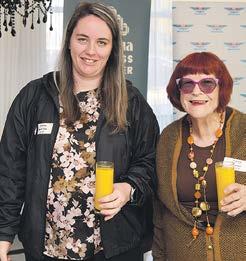
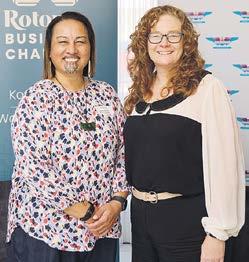
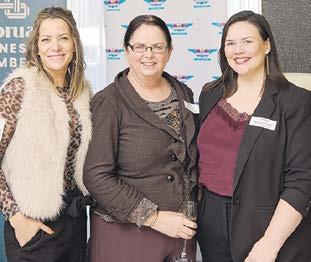
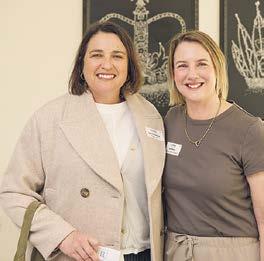
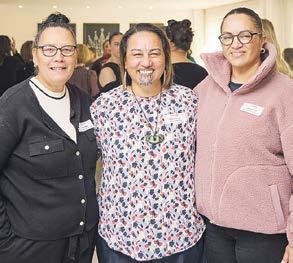
The Regent welcomed a full house for the latest Women in Business event, where Karen Vercoe and Jacky James delivered a candid discussion about resilience, friendship, and navigating the demands of work and life. Guests enjoyed exceptional hospitality while spending time with other local businesswomen. All photos, from left.














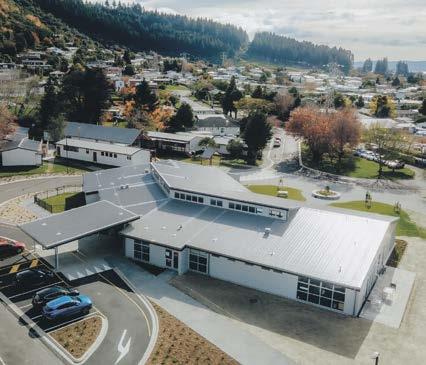
Te Maru is a purpose-built learning environment designed to support students with diverse and complex needs at Western Heights High School in Rotorua. It doubles the capacity of the Te Maru department to 55, with multiple learning spaces, a sensory room, and advanced accessibility features.
The project represents both a significant investment in specialist education by the Ministry of Education, and the culmination of more than 25 years of community advocacy for improved facilities.
Western Heights High School Principal James Bracefield described the Fosters delivery team as “great to work with”.
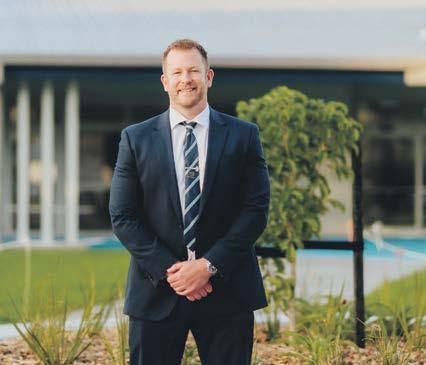
“They had good ideas and were always willing to support the school through various stages of the build.
“Onsite communication, consideration for the needs of our Te Maru students, mitigating risk to people onsite, and accommodating the various demands of our school’s daily operations – these are the things that stood out in Fosters’ management of this project” he said.
“So, too, did the commitment of this team to doing a good job for our Te Maru students” he added. “While proactively including the children in the project, they set high expectations for themselves and subcontractors to deliver an outstanding facility.”
#BuiltByFosters
Onsite communication, consideration for our Te Maru students, mitigating risk, and accommodating our school’s daily operations – these are the things that stood out in Fosters’ management of this project.
James Bracefield, Principal Western Heights High School
Te Maru HOD Chris Brewer echoed these sentiments.
“Fosters were amazing” she said. “They got things done with as little disruption to us as they could possibly manage. They built relationships with staff and students, even presenting one student with high vis gear for his birthday, and attending our prizegiving at the end of the two-year project.
“We marvelled from the old Te Maru as our new building grew and changed, daily and weekly.
“The final product is an asset to the school, making these students feel centre-stage - valued and important.”