The voice of Bay of Plenty
DRIVING LUXURY
Coombes
Coombes
Central government’s recent decision to sign a draft Memorandum of Understanding with the Western Bay of Plenty has the potential to be transformational, writes David Porter.
Abold new approach to regional infrastructure planning is taking shape, as the central government moves to formalise draft Memorandums of Understanding (MOUs) with the Western Bay of Plenty, Auckland, and Otago/Central Lakes.
These agreements, which aim to establish long-term strategic partnerships between local and central government, are being hailed by business and civic leaders as a potential gamechanger - offering greater certainty, improved coordination, and a pathway to unlocking economic growth across key regions.
The MOUs - once signed into fully operating agreements - will affect the way that infrastructure is provided to the regions and the general partnership between regions and the government, outgoing Priority One chief executive Nigel Tutt says.
“Around infrastructure development, the relationship clearly doesn’t work,” says Tutt.
“That’s why we have problems and deficits now. The whole idea is to improve that. It will
provide massive benefits to the region.”
Tutt says one of the most valuable aspects of the final MOUs will be the creation of 10-year plans between the region and the government. Proposed changes
Draft agreements have already been signed with Auckland and Otago/Central Lakes, as well as Western Bay of Plenty. In the view of some business observers, the shape of the proposal at this stage reflects: the inclusion of New Zealand’s largest city; the tourism industry clustered around Queenstown; as well as the Western BOP as an expanding local urban region, as well as Tauranga’s role as one of New Zealand’s busiest ports.
The MOUs will be transformed into strategic 10-year partnerships between local and central government. These will aim to progress joint priorities, including economic growth, enabling abundant housing, better management and utilisation of local assets, and closing the infrastructure deficit, says Infrastructure Minister Chris Bishop.
But one of the most significant outcomes of the government proposal, assuming it goes ahead as envisaged, will result in us seeing less of the sometimes extreme changes of policies that often come about as a result of changes in government.
Tauranga deputy mayor Jen Scoular speaking to The News while attending the recent Small Government of NZ Conference, says there was cross-party recognition that long-term projects benefit from stability.
“For projects it would be a lot better for everyone if there was an ability to carry those on across government changes.”
Long-term willingness
Priority One chair and former Tauranga MP Todd Muller says there appears to be a genuine willingness for the Crown to commit to long-term funding and regulatory support for the region over the next decade. He also noted a desire to remove political interference from the planning process.
“I think the MOUs announcement is quite
significant.”
According to the government announcement, the programme has five key objectives:
Better coordination between central government and regions, including how we work together and align our priorities
Unlocking regions’ unique potential and lifting economic growth, including regional employment opportunities
Making room for housing growth
Ensuring local governments do a better job at managing and utilising their asset base and make significant progress to close their infrastructure deficits – without new funding from Central Government.
Ensuring Local Governments comprehensively adopt Central Government priority reforms such as Local Water Done Well, Resource Management Act reform, and Going for Housing Growth.
Bay of Plenty Regional Council chair, Doug CONTINUED ON PAGE 2

Editor
David Porter dwp@davidporter.co.nz 021 884 858
Advertising Director
Janine Davy janine@goodlocal.nz 027 287 0005
Owner/Publisher
David Mackenzie david@goodlocal.nz 021 684 304
News Tips editor@goodlocal.nz
Office/Accounts admin@goodlocal.nz
Website goodlocal.nz
To Subcsribe admin@goodlocal.nz
Readers’ contributions of articles and letters are welcome. Publication of contributions are entirely at the discretion of editorial staff and may be edited. Contributions will only be considered for publication when accompanied by the author’s full name, residential address, and telephone number. Opinions expressed are not necessarily those of the publishers. Bay of Plenty Business News is published by Good Local Media Limited.
Also publishers of

By DAVID PORTER
It would be churlish not to mention that the government has been making attempts to improve the state of the national highways under its care.
As a regular motorist, like many, I have observed evidence of roadside activity on our highways.
This has been accompanied, of course, as always, by impressive arrays of – usually orange – road cones signalling roadside works activity.
But as Transport Minister Simeon Brown revealed in a release late last year, the challenges the government faces are huge. According to Brown late last year, the New Zealand Transport Agency (NZTA) spent a staggering $786 million of taxpayers’ money on road cones and temporary traffic management (TTM) over the previous three years.






This newspaper is subject to NZ Media Council procedures. A complaint must first be directed in writing, within one month of publication, to the editor’s email address.
If not satisfied with the response, the complaint may be referred to the Media Council P O Box 10879, The Terrace, Wellington 6143. Or use the online complaint form at www.mediacouncil.org.nz Please include copies of the article and all correspondence with the publication.
“When I became Minister, I was surprised to learn that that NZTA did not know how much taxpayer money had been spent on road cones and TTM as it wasn’t recorded,” acknowledged Brown.
And of course, those proliferating cones are only one part of a vast empire of conic endeavour. Aside from
government-administered highways, virtually every local body in New Zealand, and the various local and regional service providers that maintain everything from buried pipes to power pylons, has its own set of cones to warn the public that activity – potentially risky – is afoot.
Averting risk
I am not saying that the public does not need to be alerted about potentially risky works in progress. I am suggesting that perhaps - as the increasing public clamour on this subject suggests – they may be exceeding the basic needs of alerting passing motorists.
We can leave to one side the fact that the kinds of activity I am describing are seldom difficult for drivers and pedestrian passers-by to notice, since they invariably involve difficult to pass parked vehicles and several workers wearing hazard jackets.
More worrying, given it is usually extremely obvious that hazards are involved, is what has been an increasing trend. The effected areas are not only “fenced” off by lines of road cones. But the road cones themselves seem to be placed increasingly
Good Local Media Ltd has acquired the Bay of Plenty Business News from founder Alan Neben.
The News was originally a sister publication to Good Local Media Ltd’s monthly Waikato Business News.
This adds a fifth masthead to our stable of newspapers which includes weekly community papers in Cambridge, Te Awamutu and the King Country.

We are also pleased to announce the appointment of longtime Bay of Plenty Business News columnist and feature writer David Porter as editor of the paper.
Our expanded team will work together to redesign and reposition The News to meet our readers’ evolving needs for factual, useful and entertaining business information.
David Mackenzie Good Local Media Ltd Publisher and Director
By confirming and placing advertising in Good Local Media Ltd publications, products and platforms you are agreeing to our terms and conditions of trade.
near to each other.
It is no longer sufficient to place cones a few metres apart, thus discouraging any drivers who might wish to indulge in difficult and unlikely attempts to cross into the hazard area. I increasingly have seen rows of cones that were barely a foot or so apart.
In my estimation their placement would defeat the skills of a circus trick cyclist who might wish to race zig zaggedly down the line of cones on a bicycle.
As minister Brown put it: “Maintaining our road, water and electrical infrastructure is essential, and some level of TTM
is unavoidable. But the current approach is out of control. Excessive use of road cones and temporary speed limit reductions - sometimes left in place when work is complete - simply increases cost, forces people to slow down, and frustrates drivers.”
According to Brown, further work was underway to provide public reporting and benchmarking of expenditure for local councils, in addition to the reporting made by NZTA. I look forward with interest to seeing the results of this additional monitoring.
CONTINUED FROM PAGE 1
Leeder says a deal would provide certainty for new infrastructure that is critical to the region’s continued prosperity.
“That certainty would create confidence, attract investment, improve productivity and drive growth, all of which would strengthen our nation’s trade gateway via the Port of Tauranga.”
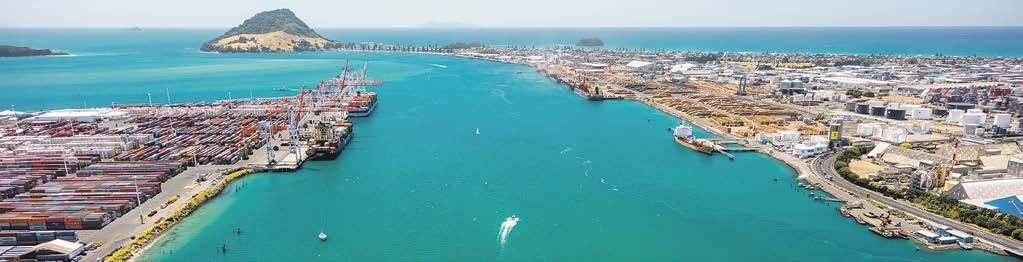
Port of Tauranga chief executive Leonard Sampson says the port, New Zealand’s busiest, handles almost half of all exports by value and volume.
“So, its economic resilience is important for the whole country. The Regional Deal will get everyone working together to ensure the region has the core infrastructure to support economic and population growth, and will ensure the focus and investment is in areas that will have the most impact.”
At this stage neighbouring region Waikato has missed out on funding and resources under the initial phase of the regional deals scheme.
However, Waikato Mayoral Forum chair and Hauraki mayor Toby Adams says the region is still committed to progressing its economic and housing goals.
“While it’s disappointing the Waikato region has not received central government support for its Regional Deals proposal, it will not stop the work going ahead,” he says.
Tauranga’s Jen Scoular remains optimistic about the Bay
etc., the bulk charge will be the difference in price between the six insertion rate and the 12 insertion rate multiplied by the number of ads published. You pay the rate reflective of the number of ads you actually published.
of Plenty’s prospects under the proposed partnership.
“I’m very confident that it’s good for the Bay of Plenty and the area. And I’m very confident it’s going to happen,” emphasising the importance of government certainty in planning infrastructure such as roads and schools.
“We absolutely need growth and certainty from government on issues such as on roading and where schools are going to go. We certainly think it’s encouraging. It’s not just about housing but housing close to industrial areas and we need to know where schools are going to go because that enables us to know where roads need to go to.
“From Tauranga city council’s perspective, we believe that a regional partnership and also a partnership with the government gives us certainty to enable our renewed growth,” she says.
CANCELLATION DEADLINE: Cancellation deadline is two weeks prior to publication. If cancellations are received after the booking deadline, then full charge applies. Advertising setting is free for use in Good Local Media Ltd publications only. If used elsewhere charges will apply, pricing available on request. Advertising space only is purchased, and all copy made up by Good Local Media Ltd remains the property of Good Local Media Ltd. If supplied ready to print, copy is owned by the advertiser. Publication day is first week of the month.
RATE CARD: Rates are based over a 12-month period starting from the date the first ad publishes. The rate bracket e.g. six insertions, 12 insertions etc. chosen allows ad sizes to vary within the rate bracket. If the number of insertions chosen is not met, then a bulk charge will be applied at the end/cancellation of your schedule based on correct rate reflective of the number of ads actually published e.g. if you have chosen the 12 insertion rate and only publish six insertions
PRICING: All prices quoted are ex GST, per insertion, including full colour and are non-commission bearing. Commission rates are to be added on top. Rates are based over a 12-month period. The 12-month period starts from the date of your first insertion. Annual rates are based on 12 insertions.
INVOICING AND PAYMENTS: For advertisers on a regular schedule and have completed a client information form, invoices will be sent at the end of the month and payment is due by the 20th of the following month, otherwise payment is required prior to advert publishing. Accounts in arrears (+60 days) may be subject to a $95 + GST late payment fee per advert per month. Advertiser is responsible for any and all debt collection fees. Payment options are via internet banking (account number 02-0316-0510007-000), credit card, debit card, or EFTPOS at the office.
Limitation of Liability: Good Local Media Limited (including its employees, officers, or agents) shall not be liable for a failure or breach arising from anything beyond their reasonable control e.g. an act of God, fire, earthquake, strike, explosion, electrical supply failure, unavoidable accident

Tauranga City Council has postponed its decision to confirm a preferred delivery model for future water services until August 5. The decision came after Thames Coromandel District Council signalled it wished to progress alongside Tauranga and Western Bay of Plenty councils. Meanwhile Waitomo, Ōtorohanga, Waipā, Hauraki, MatamataPiako, South Waikato, and Taupō district councils have established Waikato Waters Ltd which will be responsible for delivering drinking water and wastewater services across their communities, in line with the Government’s Local Water Done Well mandate.
Businesses throughout Bay of Plenty and Waikato will this month support the one in three New Zealanders affected by cancer by painting the regions yellow. The fundraising challenge culminates in Daffodil Day on August 29. In the lead up, the Cancer Society wants businesses to create or promote something yellow - cupcakes, clothing, cars, calendars, candles – and then donate a portion of those yellow-inspired sales to the Cancer Society.
Port of Tauranga Limited, Zespri and Tauranga Kiwifruit Logistics have signed a fiveyear partnership to grow cargo volumes through the port. Kiwifruit exports are expected to increase more than 2% a year through to 2029. Port chief executive Leonard Sampson said the partnership put the kiwifruit export industry in the perfect position for growth.
A new medical school in Hamilton is expected to bolster the number of medical professionals in the Bay of Plenty. Based at the University of Waikato’s Hamilton campus from 2028, the school will prioritise clinical placements in regional communities. The university will work with communities and primary healthcare providers to finalise where clinical placements will take place from 2032.
A new passenger service between Auckland and Tauranga is a viable option, says a rail advocate with more than a passing interest in making it happen. David Porter and Mary Anne Gill find out whether the Golden Triangle rail link is gaining traction.
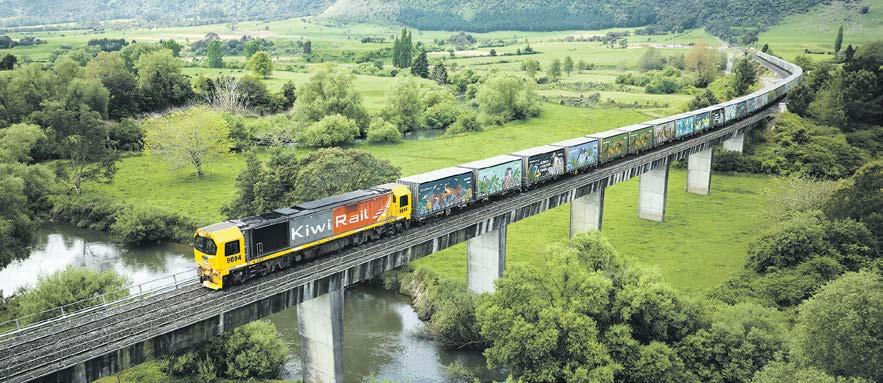
Frequent travel between Tauranga and Auckland for work and family has made Lindsey Horne a passionate advocate for better regional rail connections.
Horne, a spokesperson for The Future is Rail, a national passenger rail advocacy group, believes it wouldn’t take much to revive the old Kaimai Express service.
“Our perspective is that yes, it is feasible,” she told The News.
“We’ve seen trains going through [to new destinations] all around the country, such as the Capital Connection, and the return of The Southerner,” she says.
Auckland and Wellington and remains deeply invested in the future of passenger rail, particularly a service linking the Golden Triangle: Auckland, Waikato, and Bay of Plenty.
The group supports the Green Party’s proposal to establish the new passenger rail service and is calling the service a vital link that would serve nearly half of the nation’s population and build on the proven success of inter-regional rail.
“We’re providing people with another transport option to be connecting people – not only socially, but also to connect our economies,” says Horne.
children, and especially those over 65.”
Strong demand for weekend and midday services shows the need for more than just a commuter train.
“At the moment trains just run to Hamilton so we want to see it expanding through Tauranga and connecting the Bay of Plenty,” she says.
“And then we get really excited as well when we think about connecting stops along the way, ie to Matamata, Omokoroa, Tauranga central, the Mount or Bay Park.”
completed in about two and a half hours.
One of the biggest challenges is the Kaimai Tunnel—New Zealand’s longest at 8.9km. While it currently handles over 20 freight trains daily, safety concerns remain following a 2012 incident involving toxic fumes.
However, solutions exist: the Otira Tunnel under the Southern Alps uses a fan system to extract fumes, and TranzAlpine trains close observation car windows during transit.

New Zealand First and leader Winston Peters are big fans of rail.
“We understand there will be a cost involved, and it will have to go through all the right processes. And that includes the business case as well as safety requirements. But if the government wants to get behind this, we absolutely believe that this will be possible.”
Horne also points to Waikato University’s Tauranga campus as another compelling reason to invest in passenger rail.
Group chair Roger Blakely says the proposal was both logical and vital.
Sorry, just a couple more minor changes…
Horne says there is a huge demand outside commuting hours.
• Under the Tauranga heading, change QUEST to “QUEST – DURHAM STREET”
Horne was brought up in Tauranga, still works in the city as well as in
• Under Whakatane heading, add another drop point “BNZ Centre”
“It’s popular with concertgoers, students, families with young
The proposed service would complement and extend the existing Te Huia train, which connects Hamilton and Auckland seven days a week. Sundays were added last month following a 42 per cent increase in the Saturday services and an increase in total passenger numbers by 16 per cent.
With upgrades like passing loops and double tracking through Whangamarino Swamp near Mercer, the 225km journey could be

It was Peters’ backing which got Te Huia on the lines and last month he praised the expansion into Sunday services and KiwiRail’s management of it.
“Investing in passenger rail has wide and growing support from across the political spectrum, and this (Golden Triangle) project is a perfect opportunity to deliver what New Zealanders are asking for,” says Horne.

Kiwis still crave the dream of homeownership, but when it comes to pricing, sellers might be aiming a little too high. New data reveals where expectations outpace reality - and where vendors are pleasantly surprised, reports editor David Porter.
New Zealanders still have home ownership in their DNA.
But whether vendors’ pricing aligned with market expectations varied significantly across the country.
In regions like Bay of Plenty and Waikato, sellers were asking more than buyers were willing to pay.
According to Vanessa Williams, marketing and

media general manager Vanessa Williams at realestate.co.nz - the industry’s longest-standing property website - there was evidence that sellers often have higher expectations for sale prices than buyers do.
Between January 1, 2024, and May 31, 2025, eight of realestate.co.nz’s 19 regions recorded higher average selling prices than asking prices.
However, Bay of Plenty and Waikato were among the more optimistic than realistic regions.
Bay of Plenty homes sold for an average of $876,578 - $6058 below the asking price - while Waikato homes sold for $774,268, falling short by $8399.
Realestate.co.nz is the major online marketing platform created several years ago and co-owned by the Real Estate Institute of New Zealand (REINZ) and

several major New Zealand real estate companies.
The analysis, which compared the asking and selling prices of more than 53,000 residential homes listed and sold on realestate. co.nz showed that by the time a home sold, people were getting more than their final asking price.
During this period, New Zealand homeowners asked for an average of $894,915 for their properties, but achieved an average selling price of $898,845, putting an

T : 07 777 0025
E: help@aviationitservices.co.nz
W: www.aviationit.co.nz

extra $3,930 in their pockets, according the the analysis.
Williams said sellers were meeting the market and exceeding their own expectations.
“The last 18 months have been tough for sellers, but we are seeing that by the time their home sells, vendors are getting realistic with their price expectations. This seems to be having a surprisingly positive outcome, as they are ending up with slightly more than they bargained for.”
“While we always want to see a deal taking place, the property market only functions when buyers and sellers are prepared to negotiate and make sacrifices,” said Williams.
“With more properties on the market and prices holding steady, successful transactions often come down to pricing that both parties can agree upon and open negotiation.”
Sellers in Wellington had the biggest positive variance between asking and selling
prices, with vendors getting, on average, $17,185 more for their homes than what they originally asked for.
Canterbury followed suit with an average of $13,721 more in the hand for vendors. Meanwhile, Coromandel stood out as the region where vendors received notably less than their expectations. While New Zealand has the largest home ownership ratio in the world, its current level is still estimated by online sources at around 64.5 percent of housing stock.

By PHIL MACKAY
First Kmart, now Temu. It’s never been easier to buy cheap stuff than right now.
But do cheap things actually cost less over time, or represent value for money; or is it a false economy? A relatively quick Google or AI search would suggest not. Unsurprisingly, most cheap goods don’t last well, and so investing in quality products with a longer useful life generally provides better value for money in the long run.
We see a similar thing play out with design fees in the Architecture, Engineering and Construction sector. Again, it is typically a false economy when clients accept a ‘cheap’ fee or try to delay or minimise the involvement of design consultants. Unfortunately, no-one wins when the outcome is additional re-work or extra costs during the construction phase of a project.
Thinking again about business in general, in financially constrained times there is extra impetus to be certain that spending is providing good value. Equally, efforts to reduce costs need to be focused where they will have the greatest effect.
My view remains that businesses are better focusing a limited budget on a few highquality investments, rather than scattering spending across a greater number of lowquality products or services.
It’s perhaps unrealistic, however, to expect that we always choose to buy the more expensive or high-quality option, as businesses or as individuals. Rather than advocate for just buying less stuff (also a good idea), I’d like to share a concept that I came across some years ago.
That concept, as described by its originator, Chris Baca, was to ‘Feed Your Culture’. Chris is a skateboarder and specialty coffee enthusiast, and co-owner of Cat & Cloud Coffee in Santa Cruz, CA. As an active participant in both skateboarding and coffee sub-cultures, Chris saw a lot of artisans and innovators, creating original products and contributing to their culture and industry. But for every original creation, there were multiple ‘knock-off’ copies produced cheaply overseas.
Chris advocated that, while lots of young skateboarders or baristas probably couldn’t afford premium products in every sphere of their lives, they should prioritise supporting those artisans and creators who were contributing to the sub-cultures they loved.
So, at a time when many businesses are operating in a challenging environment, my challenge to you is to think about whether your own spending is ‘feeding your culture’.
If you are a business producing a premium product or service, do you intentionally support other businesses who share your values? Are you willing to spend a little more to support a local business producing a quality product and contributing to the local community and economy?
That local café, restaurant, or retailer you would be disappointed to see go out of business?
Visit them before they do.
Phil Mackay is Business Development Manager at PAUA, Procuta Associates Urban + Architecture and has a strong interest in sustainability and productivity.
Pioneering Bay of Plenty electric bike company Ubco has emerged from liquidation, reports David Porter.
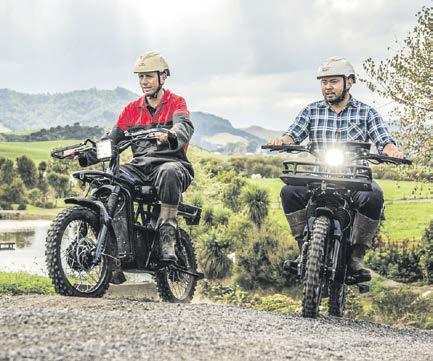
Ubco, the Taurangabased electric utility bike company once teetering on the brink of collapse, has been given a second lease on life thanks to a group of committed original shareholders.
After entering liquidation earlier this year with debts nearing $36 million, the company has emerged with a new ownership structure, a leaner workforce, and a renewed focus on its core missiondelivering rugged electric vehicles
for fleet and utility use.
Grant Thornton liquidator David Ruscoe, who, along with Stephen Keen, was appointed in January, told The News they had achieved salvation for Ubco.
“We went through a full sales process and identified the buyers, who were current shareholders at the time.
“And that’s why we worked really hard with them throughout the period to get us through to this great outcome that is allowing

Ubco to keep going. It’s a great story that will allow Ubco to go forward.”
The new owner, Utility Fleet Vehicles, includes some of Ubco’s original backers: Sir Stephen Tindall’s K1W1, and companies associated with investors Peter Goodfellow, and the Holdsworth family.
Chief executive Oliver Hutaff said in a statement the company was getting back to its roots of delivering robust, durable electric vehicles.
“We’re focused on building electric utility vehicles for fleets like postal services, agriculture, conservation, law enforcement and military applications,” said Hutaff.
The acquisition also includes Ubco’s Australian subsidiary, and local finance subsidiary, which services fleets on subscription, neither of which were placed into receivership.
The deal was structured as an asset sale and no official sale price was released.
The receivers were appointed by Goodfellow’s Avalon to claw back money owed through a General Security Agreement.
The new business will have 21 staff, who cover research and customer support. Manufacturing was previously done in Taiwan.
Ubco fleet manager Grant Payton told the NZ Herald that the 21
currently employed staff will work for the reborn company which, after a series of restructures, was down to 31 employees by the time of the receivership, from 109 last year.
The firm will stay at its Mount Manganui base while Taiwan’s TPK will return as the contract manufacturer.
Ubco was founded in 2015, and sold more than 6000 of its electric motorcycles, but reportedly was caught in an endless series of capital-raising rounds.
Some reports have suggested the firm tried to expand too far
and too fast. In its reborn form, sources have suggested it will be less ambitious in its international goals, with a pruned down workforce.
Shortly before its receivership, the firm sold 175 of its new “Duty” model to Australia Post, plus three to NZ Post in a more modest pilot. Domino’s was also a marquee customer. Farms and conservation agencies will also be points of focus.
And Payton emphasised that the military was absolutely a focus. “Anywhere that needs a utility bike.”







By DAVID CHRISTIANSEN
At Momentum, we grow endowment funds that provide perpetual support for local charities and communities, to realise our forever goal.
‘Forever’ is quite a long time, and the ultimate long-term view when it comes to succession planning.
It is not just businesses, farms or families that need to plan beyond their current people’s lifetimes - incorporated societies and charitable trusts, sometimes decades old, often struggle to see how their mission can be continued into the future.
Under the new Incorporated Societies Act passed in 2022, all existing incorporated societies must re-register by 5 April 2026. This comes with new requirements, which are generally reasonable, but may add more complexity and responsibility than some are willing to take on, such as new rules on dispute resolution and membership management.
If a society’s registration lapses next April, it will no longer be a legal entity, which will expose its committee and members to personal liability for its debts and other obligations, and possibly lose them control of its assets.
Faced with this, some societies’ committees may decide they cannot continue, especially if they are also facing other challenges such as a dwindling and ageing membership or rising operational costs.
These same challenges have also been affecting charitable trusts for some years.
Similar law changes a decade ago requiring greater accountability by trustees prompted an uptick in the already growing flow of
trusts closing down.
Whether it’s caused by increased legal responsibilities or a lack of successors, a committee disestablishing its trust or incorporated society needs to ask itself –how can its capital and other assets be used to continue its purpose after the legal entity is gone?
Answering that question is one of the key roles for community foundations like Momentum Waikato – through receiving trust and society transfers or ‘re-settlements’.
What happens is, through a Deed of Gift, the expiring organisation’s realised capital becomes a ‘community fund’ endowment at Momentum, which will grow its income and therefore grant-making capacity faster than the entity’s own previous investments, due to the scale of our total portfolio.
For a closing-down trust that has existed to make charitable grants, Momentum then simply continues that purpose.
For an incorporated society coming to an end, transferring its assets to open a new Fund at Momentum will generate perpetual income that can then be granted out for whatever charitable purpose the outgoing board chooses, such as maintaining the community infrastructure it created, or resourcing a similar group’s activity, or providing scholarships or other support to now-former members.
David Christiansen is Executive Officer at Momentum Waikato which also operates in the Coromandel.

By PETER NICHOLL
The Reserve Bank of New Zealand will announce its next Official Cash Rate decision on August 20.
Lots of people are giving them advise. Most expect the bank to lower the cash rate again by 25 basis points – and some are saying they should lower it by as much as one per cent - 100 basis points. A lot of points being made in the debate are being misused and some important points are being left out altogether.
First, current interest rates are invariably described as high.
They are only high in relation to the very low interest rates that existed at the time of two recent crises: the global financial crisis and the Covid crisis. It is these rates that were unusually low.
The average interest rate on mortgages in New Zealand over the last 20 years was similar to the current interest rates. People with longer memories, like me, will know that mortgage interest rates in the 1980s and 1990s were much higher. We need to stop describing current interest rates as high – they are average.
Second, the discussion about the impact of lower interest rates on household disposable incomes focuses on only one side of the impact: the disposable income of mortgage borrowers. It does go up when interest rates come down.
I have not seen anyone do a calcualtion of what happens to the disposable incomes of savers when interest rates come down. But clearly, their disposable income drops. Total household debt in New Zealand is about $390 billion. Total savings and time
Sponsored Content
Ashcroft Mitchell McGregor officially opened its doors on Friday 1August, bringing a fresh, clientfocused approach to workplace law across New Zealand.
Founded by Kate Ashcroft, Myriam Mitchell, Christie McGregor and newly appointed partner Shi Sheng Cai (Shoosh), the firm offers employers a powerful combination of top-tier legal capability with the responsiveness and personal connection of a boutique practice.
Locals Kate Ashcroft and Christie McGregor are well established in the Bay already, with Kate saying her intent in setting up here was to offer a better alternative to the large out of town firms who in her view did not deliver the on the ground service the business community here deserves.
She describes the team “geeks” about their work because they are passionate about it, but without taking themselves too seriously.
Adding to this, Christie says “The depth of knowledge we have in our ever-evolving areas of practice is strong. We know our clients care most about what the law means for their business, and we’re always innovating pointy solutions.”
Ashcroft Mitchell McGregor is a specialist workplace law firm operating throughout New Zealand with offices in Auckland, Tauranga and Hawke’s Bay. The firm advises employers on employment law, health and safety, immigra-
tion and workplace relations – combining big-firm standards with boutique agility and genuine care.
Ashcroft Mitchell McGregor’s founding team has worked together for years on complex employment, health and safety, and immigration matters. Their shared experience – including time at Copeland Ashcroft and at top six Auckland firms – ensures continuity for existing clients and a strong foundation for new ones.
“It’s not just personal grievance claims employers are facing with staff now,” notes Christie McGregor. “We’re seeing more disputes around privacy and human rights. The landscape is shifting, and we’re helping clients stay ahead, including through our popular helpline and training services for teams.”
Myriam Mitchell adds, “As well as the typical WorkSafe matters, in the health and safety space mental health is very much still a major area employers are needing to be across, both in day-today management and in disputes”.
“Our vision is simple,” say the partners. “Whether you’re a manufacturer, orchard, or a retailer, service business or head office – we want you to feel supported by advisors who understand your world and deliver advice that works.” ammlaw.co.nz

deposits in banks is around $310 billion. So when the disposable incomes of mortgage holders goes up when interest rates fall, most of that is a transfer of disposable incomes from savers to borrowers.
Third, some are saying that the reserve bank has got interest rates wrong again by leaving them too high.
John Key for example made this claim and recommended the bank lower the cash rate by a full one per cent. The implication is that the bank is dragging the chain compared with other Central Banks. That simply isn’t the case.
The bank has lowered the cash rate further this year than its peers in Australia, Canada, the UK and US.
Only Canada has a lower official interest rate than New Zealand and their inflation rate is also significantly lower. Australian and US inflation rates are currently similar to New Zealand and their official interest rates are higher.
I see absolutely no scope for the Reserve Bank to lower its rate by one per cent on August 20. If they do, the value of our dollar will sink.
That might be good for exporters but it would be lousy for inflation.
I don’t think the bank should lower the cash rate at all - but they probably will by another 25 basis points to three per cent.
Peter Nicholl was formerly Reserve Bank of New Zealand deputy governor, World Bank board executive director and Central Bank of Bosnia and Herzegovina governor. He is now retired.

By JOSH MOORE
In today’s digital world, trust is one of the most valuable currencies in businessand one of the fastest ways to build it is by putting yourself on camera.
Social media is filled with polished designs, slick animations, and carefully curated content.
But what if you want to be top of mind for your audience, and grow in awareness and trust, what really cuts through the noise is video - specifically, when you speak directly to the camera
Speaking directly to camera can feel a bit scary, but it helps people connect with the real you.
It gives them a sense of your personality, your values, and what you stand for. You don’t need to be a professional presenter or have a studio setup. In fact, sometimes the more “real” the video feels, the more effective it is.
When people see your face and hear your voice, they begin to feel like they know you. That sense of familiarity is what builds trust.
I’ve seen this firsthand. Recently, my business expanded into a larger space, doubling the size of our office.
During the renovation, I started posting short video updates on LinkedIn and Facebook.
These weren’t slick productions - just quick clips showing the progress, the paint going on, and even the messy piles of boxes as we were moving in.
While the online engagement was good, what stood out to me was how many people mentioned it to me in person.
Friends, clients, and even acquaintances mentioned the videos and commented on the growth. They were watching. They remembered.
That’s the power of showing up on video. It creates awareness and builds credibility, more than you may realise. And this strategy isn’t limited to business owners.
If you lead a charity or are running for local council roles in the upcoming election, video is a game-changer. Talking to the camera helps people get a feel for who you are, as well as what you do.
So, here’s a practical challenge: This week, film a short video and post it on LinkedIn. It doesn’t need to be long.
Just share what you’re working on, something you’re excited about, or even a challenge you’re navigating. Be real, be present, and don’t overthink it.
I’ve found that my natural tendency is to want everything to be perfect - but that mindset often gets in the way of taking action.
When we’re willing to embrace imperfect action, we make far more progress than if we let perfectionism keep delaying us from putting anything out there.
In an age of digital distance, the most human thing you can do is let people see and hear from you. Show up, speak up, and start building trust - one video at a time.
Josh Moore is the managing director at Duoplus, an online marketing agency with clients in Australia and New Zealand.
Port of Tauranga is to trial New Zealand’s first electric straddle carrier in a push to cut emissions and boost efficiency, reports David Porter.
The Port of Tauranga is taking a bold step toward reducing carbon emissions with the launch of New Zealand’s first all-electric container straddle carrier trial.
Supported by the Government’s Low Emission Transport Fund and administered by the Energy Efficiency and Conservation Authority (EECA), the initiative will see the port invest over $3.5 million in a Kalmar electric straddle carrier and the necessary charging infrastructure. EECA is contributing $447,000 to help fast-track the project.
As New Zealand’s largest and busiest container terminal - handling approximately 39 per cent of the nation’s shipping containers annually - the port plays a critical role in the country’s logistics network. This significance was a key factor in the Bay of Plenty being selected as one of three regions to pilot new infrastructurefocused Memorandums of Understanding with the government.
Evaluating the future
The trial will assess a range of operational factors including charging times, driver experience, training needs, reliability, safety, and maintenance. Port of Tauranga chief executive Leonard Sampson says the findings will be shared with other ports across New Zealand.
Diesel-powered straddles are the port’s largest source of carbon emissions, accounting for around 54 per cent of its Scope 1 emissions.
“Until now, we have only had the option of hybrid straddles as a lower emission alternative.
“We hope the trial will give us confidence in operational efficacy, emissions reduction and technology reliability,” he says.
Hybrid options
The Port currently operates a fleet of 54 straddle carriers, around a third of the New Zealand port fleet. Seven are hybrid models, introduced since 2020 following a pilot. The hybrids are around 25 per cent more fuel efficient than the port’s older diesel
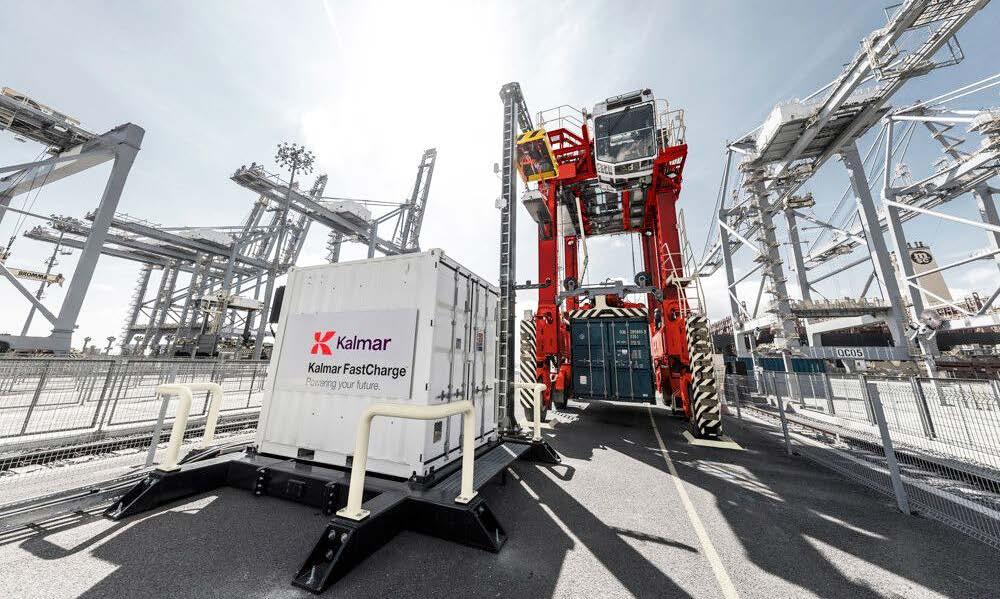
electric models.
The electric straddle trial, if successful, could lead to the rollout of electric straddles in the port’s purchase and retirement programme, Communications general manager Rochelle Lockley told The News.
The port estimated a full rollout could see an absolute reduction in combined Scope 1 and 2 emissions of approximately 43 per cent on today’s emissions.
The trial of the electric straddle carrier and associated charging infrastructure
This August, businesses across Tauranga and the Western Bay are being invited to embrace the yellow — all in support of a brighter future for those affected by cancer.
Paint It Yellow brings together local business and community spirit in a month-long fundraiser that leads into Daffodil Day on Friday 29 August The idea is simple: do something yellow, donate a portion of sales, and challenge others to do the same. Whether it’s selling lemon cupcakes, decorating a storefront, hosting a yellow-themed morning tea, or launching a limited yellow product — every effort helps fund cancer support and research right here in our region.
“Paint It Yellow is a powerful way for businesses to increase their impact and contribute to something local,” says Cancer Society Bay of Plenty Partnership Lead, Tracey Wood. Hume Pack-N-Cool is already on board, hoping to repeat the success of their yellow-themed morning tea fundraiser with their staff last year.
“Supporting Daffodil Day is our way to support our locals and do our bit for those in our community affected

by cancer,” says a spokesperson for Hume.
Participating businesses are also encouraged to pass the baton and challenge others in their network to out-yellow them in a bit of friendly, feel-good competition. It’s not just about raising money — it’s about showing up for your community in a visible and meaningful way.
The Cancer Society provides everything you need to get started, including posters, social media assets, and support to bring your idea to life.
“The Cancer Society is not directly government funded and relies on community donations to provide its free services — including transport to treatment, advice from experienced navigators and accommodation when people need to travel for care.”
will go live in late 2027.
The port has had a lot of success with its hybrid straddles, first introduced in 2020, says Lockley.
“They are about 25 per cent more fuel efficient than our diesel-electric straddles and are popular with drivers because of the smooth and quiet operation,” she says.
“We currently have seven hybrids, with another three due next year. In the meantime, electric straddles are starting to be used more widely internationally, so we worked with EECA to set up the




first trial here.”
The trial would help the port figure out if it could utilise the emissions reduction without losing productivity (due to charging times or any other issues).
“However, our biggest opportunity to make significant impacts on our emissions profile will be the introduction of fully electric automated stacking cranes (ASCs).
“They will allow us to intensify the number of containers within the existing footprint,” says Lockley.








Sign your business up to Paint It Yellow and help support the 1 in 3 with cancer in the


For tools and help to Paint It Yellow this August, email supportus@cancersociety.org.nz or visit daffodilday.org.nz to find more ways to support. daffodilday.org.nz
Thirty years ago, as the New Zealand car industry started to go through major restructuring and upheaval, Tauranga motorists got the chance to sample the latest in European luxury car technology with the opening of Johnston BMW on Hewlett’s Road.
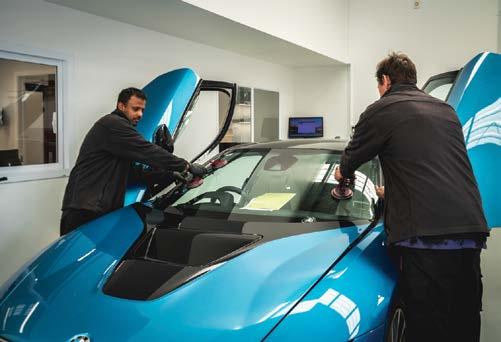
Today Coombes Johnston BMW, still on Hewlett’s Road, has marked 30 years in the Bay with a showroom makeover and remodeling that matches the sophistication and style of the vehicles it houses.
Coombes Johnston general manager Kevin Pead is rightly proud of the showroom’s new look, only the second in New Zealand to have benefited from BMW’s global “Retail.Next” concept layout.
“It’s taking a completely new approach to how we retail our vehicles and the environment we present them to our customers, and potential customers, in.
“It’s a very warm, inviting environment to enter right from arriving at the front door, combining the latest in digital technology with comfortable seating and warm lighting.
“Of course, this is matched with a focus on a friendly welcome and treating every person who comes through the door as a welcome guest,” he says.
The showroom includes new digital buyer experience, the Emotional Virtual Experience (EVE), which enables customers or potential customers to tailor their particular vehicle choice on screen to give them a realistic impression of what their vehicle looks like allowing for colour, accessories, body style and wheel type.
“With the wide variety of vehicle types we offer, EVE makes it a lot easier to see exactly what it is you are ordering, knowing you will be getting exactly the style of vehicle you anticipated,” says Kevin.
> With the wide variety of vehicle types we o er, EVE makes it a lot easier to see exactly what it is you are ordering, knowing you will be getting exactly the style of vehicle you anticipated.”

He says today’s customers are generally well informed about their potential purchase, having done some research online and keen to get the finer points once in the showroom on design and details. The EVE system nails down the vision of their vehicle accurately.
Coombes Johnston BMW can boast a very high level of repeat business, a testimony to the dealership’s long-standing time in the Tauranga community and the efforts its staff have taken over the years to know and understand their customer base.
Kevin says their longest repeat customer has just purchased a BMW 7 series, almost thirty years after buying his first BMW, a second generation E30.
“We have always focused on going that extra mile when it comes to clients. We are fortunate to have a service manager who
has been here 20 years and knows our client’s vehicles inside out.
“Our service staff will even collect someone’s car from their home and bring it in for a service if they are unable to do so themselves- it’s just about being able to make such things simple and stress free. Our clients really appreciate that.”
The technical team at Coombes Johnston offer full service from headlight to taillight, capable of carrying out all major and minor service requirements without having to send the vehicle out of town to a larger dealership.
“Our service staff are regularly travelling to BMW’s service training center in Australia to be upskilled on all areas of servicing, in a field that is evolving rapidly in terms of electronics and technology with each new model release.”

Any inconvenience of having your car serviced is also turned into a pleasing experience, thanks to the thought taken in the design of the showroom and customer service center.
“You can set yourself up in a special office space with Wi-Fi and get some work done while you wait, with coffee on hand of course.”
Given the aspirational nature of BMW vehicles, Kevin and his team will work hard to see first time buyers behind the wheel of a secondhand vehicle if it is more affordable step in their BMW ownership journey.
“We go to exactly the same efforts with the customers buying second hand as we do with new, ensuring they have a really positive, enjoyable experience, of course with the hope they stick with the brand, and come back to buy their new BMW from us.”




This can also be helped by offering very generous finance packages at highly competitive interest rates. At present the dealership is offering a zero percent interest deal, exclusive to Coombes Johnston BMW customers.
Kevin says the team at Coombes Johnston are also excited about the prospect of BMW’s new vehicle concept, the Neue Klasse range
> You can set yourself up in a special o ce space with Wi-Fi and get some work done while you wait, with co ee on hand of course.”

being launched next year. The range will adopt the leading-edge technologies in the automotive sector, focusing upon electrification, digitalization and circularity as BMW continues leading the industry for design, efficiency and sustainability.
BMW is now New Zealand’s number one selling luxury brand, having held the posi-
tion for 18 months after regaining it for the first time in a decade. Kevin says this makes it an exciting time to be retailing the marque.
“When you combine the new range coming, and our new look premises, the timing is great, and we look forward to bringing BMW to even more Bay of Plenty customers.”
Host: Coombes Johnston BMW - Tauranga | Event Location: 113 Hewletts Rd, Mt Maunganui | Date: July 2nd, 2025
Photography: Kevin Degutis
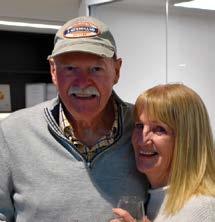
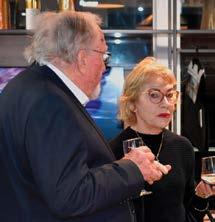
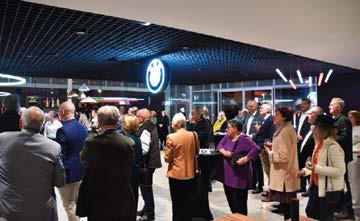
Reopening its doors as part of BMW Group’s Retail.Next refurbishment, this timely celebration coincides with the dealership’s 30th year. The donation of an ambulance to St John’s will help continue their support in the region for another 30 years.

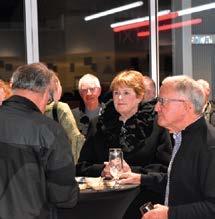
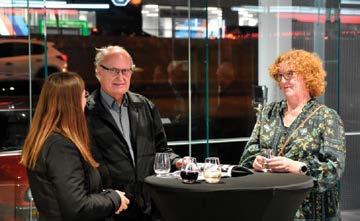
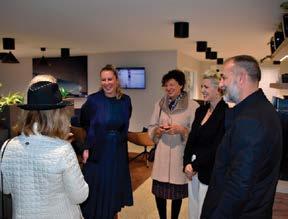
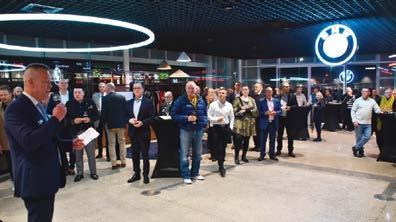

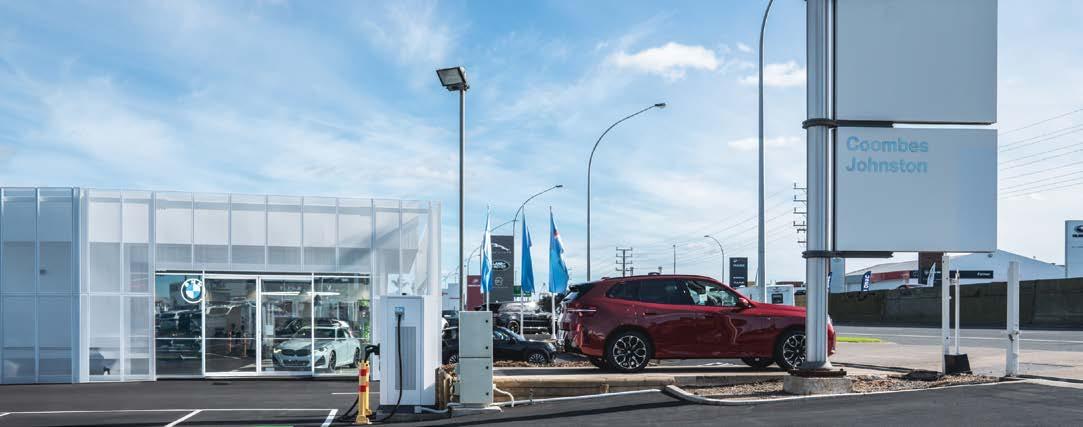
Completing the Coombes Johnston BMW showroom has been a highlight of the year so far and a big point of pride for Watts and Hughes project manager Luke Tyrrell whose team were tasked to construct the marquee’s new brand showroom.
Expectations for the Hewlett’s Road project were high. The showroom was required to meet the standards of a prestige client, one where showroom design and layout aligned with BMW’s global expectations for its new “Retail.Now” showroom look.
The showroom recently re-opened after its rebuild and has set a new standard for automotive customer experience, one soon to be repeated in all the brand’s showrooms around New Zealand.
“Initially we were going to just be engaged in the construction aspect of the project, but as this progressed we became more involved with the client in having some design influence upon the showroom’s outcome as well,” says Luke.
The Coombes Johnston project was BMW’s second complete showroom reworking under the new global look in New Zealand. The aim was to deliver showroom visitors a warm, welcoming experience, one that encourages them to stay longer, whether to consider a potential purchase or
to wait while their BMW is being serviced.
Lighting, materials and textures all play a vital part in helping lift those visits to a sensory experience, rather than simply being just another showroom box.
“One of the key features of the showroom design is the bespoke tiled ceiling. We had done quite a bit of due diligence on the material which has not been seen here in New Zealand before.
“Because we had, we were able to quite quickly work out how to incorporate the special lighting technology BMW required as part of the brief, working the tiles smoothly around them.”
Similarly, they had also worked hard to seamlessly integrate the air conditioning systems throughout the showroom via the suspended ceiling.
“Every job has its particular challenges. In this case we just thought outside the box on how best to approach those challenges, and the client certainly appreciated that,” says Luke.
Throughout the project the Watts and Hughes team’s ability to keep friendly, open communications with the client ensured a “no surprises” flow to the job, with challenges and options always well signaled.
Coombes Johnston manager Kevin Pead says the end result is a showroom that


takes a completely new approach to how they retail their vehicles and the environment they present them into customers and potential customers.
Attention to detail was a key part of the premium project. That included Luke’s team taking care in areas like the showroom floor that required cut concrete channels for electrical cabling being worked in to appear as part of the original design look.
Their work also included assembling the especially imported Jensen furniture that adds to the space’s warm, exclusive atmosphere.
Thinking more broadly than simply the showroom-office space in the project, Luke’s team also worked to enhance the workshop-technician area to include a twotone repaint of the facility.
“We realised with the tech staff often having greasy hands, a darker shade along the lower half of the walls made more sense, to avoid the grease showing up. We also installed three pre-cast concrete panels to delineate the grooming bay and define a better space, with full drainage and water supply.”
The complete project has caught the attention of BMW NZ with strong interest in Watts and Hughs engaging in other showroom projects around New Zealand.
Thanks to Watts and Hughes’ national presence, it is well positioned to take advantage of the continuing showroom upgrade programme.
Luke confirms the construction industry as a whole has had a tough couple of years. But for Watts and Hughes it has been an exceptionally busy period, with major government and private projects being completed.
“As a company we have been around since the eighties and established here in Tauranga since 2004, now employing 160 staff.
“We have worked hard to build a trusted, respected reputation in a tough industry. That gives people peace of mind when they are looking to embark on what are very significant projects.”
Watts & Hughes are proud to currently have two tower cranes operating simultaneously in downtown Tauranga. One is on Hamilton Street Panorama Towers Development project, the other on the Northern Quarter office and hospitality precinct.
“It’s a really busy time for construction in Tauranga at present, and we are particularly proud to be front and center of it, both for the downtown urban projects and commercial projects like Coombes and Johnston,” says Luke.



















> By MAHÉ DRYSDALE, Mayor of Tauranga
Tauranga’s elected council has just chalked-up one year in the job and is looking forward to continuing to deal with the city’s infrastructure deficit and growth challenges.
Mayor Mahé Drysdale says that after being sworn in in August last year, the Council’s collaborative approach is working well and benefitting the city.
“Elected councils in Tauranga have had a chequered history in recent times, but we’ve put that behind us and are working collaboratively with important stakeholders like central Government and community organisations to deliver affordable progress towards our goal of being the best city in New Zealand,” Mahé says.
“We have a four-year term and that gives us a great opportunity to crack-on and really get to grips with the issues Tauranga has been grappling with for some time – a dire housing shortage and the country’s least affordable homes; traffic congestion; and inadequate community facilities.”
Mahé cites the recent Government announcement that the Western Bay of Plenty is one of three areas chosen to negotiate a city or regional deal as evidence

that there is a broad understanding of our importance to the national economy.
“Tauranga has been New Zealand’s fastest-growing city for much of the last 10 years, with much of this rapid expansion driven by the presence of the country’s largest export port and the opportunities and lifestyle the region offers,” he adds.
“Regrettably, we haven’t always invested in the infrastructure required to facilitate that growth and that’s evidenced in our housing issues and congested roading network. But we’re now making good progress on a number of fronts.
“Securing a regional deal will be an important advance and will mean we have an agreed set of priorities and funding commitments in place with the Govern-
ment, providing all stakeholders with the certainty they need to make investment decisions that will drive confidence in our local and national economies.”
Key projects underway include the NZ Transport Agency-led Takitimu Northern Link state highway improvements and Tauriko West enabling works, which will lead into the SH29 upgrade, paving the way for significant housing (circa 4,000 new homes in the medium term) and industrial development (generating an estimated 3,000 new jobs), as well as improved road access across the city and to and from the port.
Work is also progressing well on the Pāpāmoa East Interchange (PEI) on the Tauranga Eastern Link motorway, which will see the eastbound offramp opened by the end of August, nine months
early, greatly improving access to the area and easing congestion at the Domain Road interchange.
When completed in early2026, the PEI will not only deliver improved access for Pāpāmoa residents to and from the rest of the city, but will facilitate further residential, commercial and community facility development in the city’s east.
Also making good progress are civic precinct and waterfront developments designed to reinvigorate the city centre.
The Te Manawataki o Te Papa investment will see the construction of a new library and community hub facility, civic whare (meeting place) and museum and exhibition gallery in the area bounded by Willow, Wharf, Hamilton and Durham Streets, linking through the upgraded Masonic Park to the revamped waterfront area.
approach to the city centre, improving access to and from Welcome Bay and the city’s south-eastern suburbs.
“Investments on this scale do have an impact on rates, but we’re working hard with staff to cut the Council’s operating costs to keep rates increases to manageable levels,” Mahé concludes.
“That will be an ongoing focus for all of us, because we know rates affordability is a significant issue in the current economic climate. Over the next three years, our attention will be firmly fixed on ensuring that every Council project and service delivers great value for money for our community.”

Council’s investment in the city centre has been a catalyst for more than $1 billion of private development and combined, these projects will see a significant increase in the number of people living, working, learning and visiting the city centre.
city centre has been a catalyst billion vate development and combined, these projects will see a significant increase in the number of people living, working, learning and visiting
Also in the wings are improvements to the Turret Rd/15th Avenue


This year we’re celebrating 25 years of the Fast 50. That’s 25 years of recognising epic Kiwi businesses and entrepreneurs who have innovated through challenges, disrupted industries, and redefined fast growth.
Since its inception in 2001, the Deloitte Fast 50 has been the premier showcase of the best in Kiwi enterprise and entrepreneurship.
With a legacy of past winners that have become some of the country’s most successful and recognised names, the Fast 50 programme is as strong as ever, shining a spotlight on the businesses and entrepreneurs pushing the limits of what’s been done before – and what’s possible in the future.
The programme focuses on innovation and rapid growth across all types of industries while comprising two indices: the Fast 50 and the Master of Growth.
The Fast 50 index ranks companies based on revenue growth percentages over the past three years.
The Master of Growth index also uses revenue growth percentages but focuses on slightly larger businesses that have sustained growth over a five-year period. Category winners are also recognised across a number of industries, and in an exciting development, the Deloitte Fast 50 has added healthcare, Māori and Pasifika owned, and food and beverage categories to this year’s lineup.
The 2024 results highlighted significant shifts in the challenges faced by our entrepreneurs, with the top three challenges impacting businesses being regulation, domestic competition, and interest rates.
Despite these hurdles, the Fast 50 cohort demonstrated resilience and innovation, with the overall winner, Halter, achieving remarkable 1539% revenue growth in just three years.
This AgriTech company has revolutionised farming operations with its innovative cow collar, which allows farmers to control cow movements and monitor pasture growth via a smartphone app that also tracks various metrics such as cow location, health, fertility, and behaviour.
Halter’s success story demonstrates how strategic innovation can drive substantial growth even in challenging economic landscapes.
Learn more about Halter’s growth journey in the 2024 Deloitte Fast 50 ezine, Insights from Innovators.
New startups understandably focus their resources on profitable growth, yet it’s crucial to establish strong foundations for tax compliance and governance early in a new business’ lifecycle. Investing in expert tax advice during these initial stages is money well spent, and outsourcing can be cost-effective while providing access to experienced advisors who set robust compliance systems for the future.





Is your
After a 6-year hiatus, the ExportNZ ASB Bay of Plenty Export Awards 2025 gala was held at Mercury Baypark Stadium Lounge, in Mount Maunganui, on Friday 18th July to honour and celebrate the accomplishments of companies exporting goods and services to overseas markets from the Bay of Plenty region.
This year’s ExportNZ ASB Bay of Plenty Export Awards 2025 recognised exporting excellence from throughout the region, including Tauranga, Mount Maunganui, Whakatāne, Kawerau, Ōpōtiki, Rotorua and Waihi.
The ExportNZ ASB Bay of Plenty Export Awards 2025 promoted the benefits of exporting, as well as showcased export success stories and the contribution exporting makes to the local economy.
Trimax Mowing Systems, a manufacturer and exporter of premium mowing equipment, won the ExportNZ ASB Bay of Plenty Exporter of the Year Award 2025.
Trimax has sold more than 33,000 lawn mower decks worldwide from its base in Tauranga, with revenue having tripled in the last five years. The New Zealand-made lawn mowers are trusted by groundskeepers in locations as varied as Windsor Castle in the UK to multiple PGA golf courses in the United States.
Oasis Engineering, a manufacturer of highpressure control devices for gases, won the Excellence in Innovation Award
Oasis Engineering first rose to fame in the 1980s by developing a ball valve for CNG (Compressed Natural Gas) tanks, which became the industry standard.
Today, Oasis Engineering operates a spe-

cialist high-precision turning and machining factory in Tauranga, from where it exports control devices to more than 40 countries.
The company is recognised as an exemplar in the use of automation and robotics, and for outstanding product development in the global alternative fuel market.
Carepatron, a provider of cloud-based workspaces for US healthcare professionals, won the Best Emerging Business Award
Carepatron, a provider of secure, cloudbased healthcare workspaces for clinicians to manage clients, appointments and payments uses technology, and AI in particular,
Congratulations to all the winners and nominees of the 2025 ExportNZ ASB Bay of Plenty Awards. Your hard work and global focus keep our region thriving We’re proud to once again support the Awards and the Bay’s exporting community
Trusted legal partners to the Bay’s Export sector for over 125 years


in its customer support and product development. Founded in 2021, today Carepatron is hyper scaling exports into the US market, where it is growing rapidly.
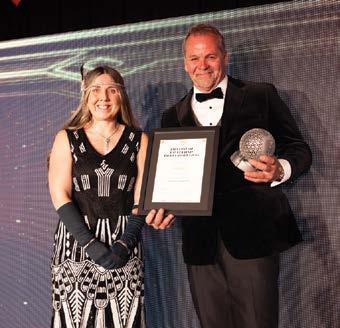
There were two joint winners of the Export Achievement Award, which recognises an individual who has made a material contribution to the export success of a business. These were Sarah Webb of LawVu and Karl Stevenson of Bluelab.
Sarah Webb has been a founding force behind LawVu, which provides cloud-based legal workspaces for in-house legal teams. Currently, the Chief Operating Officer, Webb
has been instrumental in transforming LawVu into a globally recognised legal tech platform.
Karl Stevenson is the Head of Product at Bluelab, a manufacturer of precision instruments for measuring pH, electrical conductivity and temperature in controlled agricultural environments.
Stevenson is recognised as a champion of design thinking in New Zealand’s export sector. He has also made a lasting impact on the Tauranga business community, having co-founded local Design Thinking Meetups, which foster a culture of innovation and collaboration, and are open to everyone from entrepreneurs to engineers.
Tauranga entrepreneur
Steve Saunders recognised with Services to Export Award
Finally, the Services to Export Award was presented to Steve Saunders for his outstanding contribution to the exporting success of the Bay of Plenty region.
The co-founder of Robotics Plus, and numerous other exporting businesses, Saunders has served for 12 years on Priority One, the economic development organisation for the Western Bay of Plenty.
He co-founded the Newnham Park Innovation Centre, as well as Mount Pack & Cool, one of the largest and most technologically advanced packhouses in the Bay of Plenty.
Saunders champions Māori investment in agriculture and innovation, and is a longtime supporter of the Young Innovators Awards for Year 7-13 students.


JamieFrewandDavidPene,Carepatron,receivetheBest EmergingBusinessAwardfromAshleeSullivan,AirNZCargo.
The awards are organised by the EMA on behalf of ExportNZ. The event is proudly supported by principal sponsor ASB, as well as Sharp Tudhope Lawyers, Air NZ Cargo, Page Macrae, Zespri, and Orbit Travel, and supporting partners NZTE, Comvita and Port of Tauranga.
EMA Chief Executive John Fraser-Mackenzie says, “The EMA is an integral part of the Bay of Plenty business community, so we’re delighted these awards showcase the inspiring businesses and individuals from the region who are succeeding in offshore markets. Well done to all the winners!
“The awards are more than just recognition, they’re a platform for sharing insights, fostering collaboration, and strengthening the network of export-focused companies that drive the region’s economic success.”
The awards celebrate the exceptional achievements of Bay of Plenty businesses and individuals who export goods and services to markets around the world.






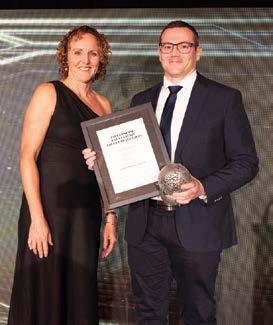
BenKidd,LawVu,receivesExport Achievement Award on behalf of Sarah Webb, fromTracyMcCarthy,ZespriInternational.
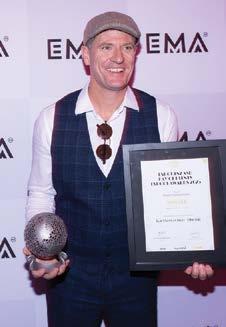


Saunders, Robotics Plus, receives Services to ExportAwardfromKateRawnsley,OrbitWorldTravel.
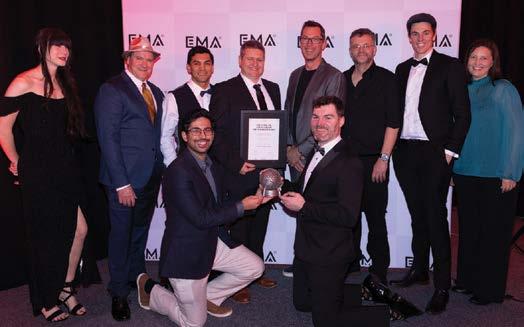
TheteamfromOasisEngineeringwhowontheExcellence inInnovationAwardpresentedbyPageMacrae.
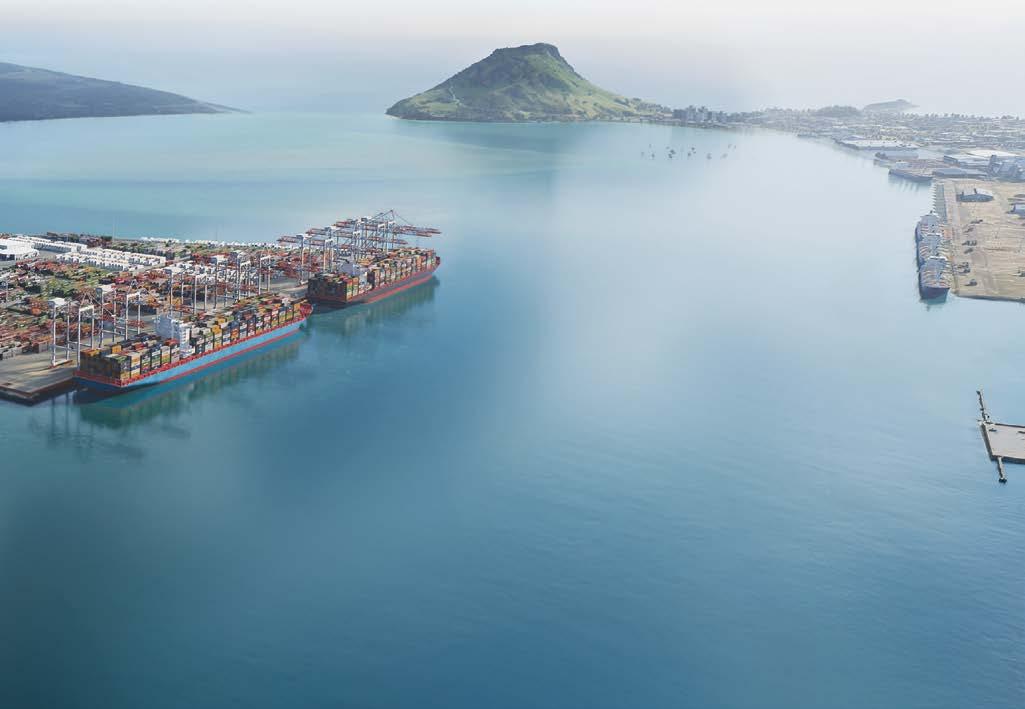
Port of Tauranga is investing for the future to ensure New Zealand has a resilient, efficient and low carbon gateway to and from international markets.
In June, Qantas became the latest high-profile airline to suffer a cyber attack, with the personal data of up to six million customers exposed via a thirdparty platform used by one of its offshore contact centres.
While no passwords or financial data were accessed, the breach revealed names, phone numbers, dates of birth, and frequent flyer numbers – raising serious concerns about vendor security and the unseen risks within everyday business systems.
The breach didn’t come through Qantas’s core systems. It came through an external vendor. This distinction is critical. Many businesses, especially in regions like the Bay of Plenty and Waikato, assume that securing their internal systems is enough. It’s not.
Every tool you use – whether for customer support, data storage, or document management – is a potential entry point for attackers if not properly secured. Cybercriminals now target the weakest link in your supply chain, not just your network.

TECH TALK
BY TIM TAYLOR
You don’t need to be Qantas to be at risk. Small to medium enterprises are often seen as easier targets, with fewer resources and less formal cyber protection in place. If your systems connect to the cloud, use third-party apps, or store sensitive client data, you’re vulnerable.
More than ever, cybersecurity is not just a technical issue. It’s a
strategic one. It affects customer trust, business continuity, and even your reputation.
A single breach can trigger regulatory investigations, legal costs, and long-term reputational damage.
At Aviation IT, we work with aviation operators and SMEs across New Zealand and Australia. Here are five proactive steps we recommend:
• Audit all third-party platforms you use. Know who has access to your data and whether they meet NZ cybersecurity standards.
• Enforce multi-factor authentication (MFA) across every user and system, including remote tools.
• Educate your team. Most breaches start with a phishing email. A well-trained team is your first line of defence.
• Have a clear incident response plan. Know who will act – and how – if something goes wrong.

• Monitor everything. Realtime monitoring tools can flag unusual activity before it escalates.
In aviation, we treat safety as non-negotiable. Cybersecurity should be no different. Whether you’re running a charter operation, a law firm, or a growing trades business, the Qantas incident reminds us all: you can’t outsource
responsibility for data security.
At Aviation IT, we make it our mission to help businesses soar with confidence. Let’s make cybersecurity part of your flight plan. Soaring to new heights in I.T. Experience better I.T.
Tim Taylor is the Managing Director at Aviation IT, based in the Bay of Plenty. He can be contacted on 07 777 0025 or 021 222 6455, tim@aviationitservices.co.nz www.aviationit.co.nz
Sponsored Content
Environmental due diligence is recommended for mergers or acquisitions of certain businesses as well as purchases or occupation of certain land which might give rise to potential environmental risks. This article looks at some of the key environmental risks parties should be aware of.
It is important to consider what it is you wish to do with or on land (or in the coastal marine area) and whether this is provided for in the relevant regional and district plans.
If you are wanting to carry out a different activity to that currently undertaken, identifying and understanding the relevant plan rules is key. Plan rules regulate what you can and cannot do in terms of the use or development of land, water and the coastal marine area as well as discharges into the environment. Resource consent may be required if an activity is not otherwise identified as a permitted activity.
If you wish to expand or intensify an existing activity, you will first need to check the scope of any existing resource consents.
Depending on the scope, you may need to apply to vary the conditions of an existing resource consent authorising that activity

LAW BY KAHLIA GOSS
under the district or regional plan or obtain a new resource consent. Failure to check the district and regional plan rules first, as well as the conditions of a relevant existing resource consent, may result in a subsequent breach of those rules or existing consent conditions.
When acquiring a business or land subject to existing resource
consents, it is also important to check whether these consents need to be transferred.
While land use consents attach to, and run with the land, and can be exercised by both landowner and occupier, resource consents granted under regional plans (discharge, water and coastal permits) are typically issued to a person or entity and will need to be transferred to a new business or landowner wanting to continue the consented activity.
Transferring a resource consent to a new consent holder is largely an administrative exercise, with both parties signing a transfer form and sending this to the relevant council to complete. A fee is usually payable for this service.
Once a resource consent is transferred to another party, that party becomes the consent holder and, as such, is liable for all charges associated with the resource consent (e.g. ongoing

administration fees and monitoring charges).
Ensuring that there are no outstanding charges prior to transfer will avoid any costly surprises for a new consent holder.
Another important matter to look at, preferably before transfer, is the previous consent holder’s compliance history. Councils are required by law to monitor compliance with resource consent conditions. Non-compliance may give rise to enforcement action by council which, in some circumstances, can involve new consent holders.
Parliament is currently considering a Bill which would allow councils to consider compliance history when considering new resource consent applications.
Completing environmental due diligence before finalising a transaction ensures fully informed decisions are made, avoiding or reducing the risk of subsequent, costly surprises.
While this article draws attention to a number of key issues arising in environmental due diligence, there are many other environmental considerations which may need to be considered.
If you have any questions regarding this article or any other matters, please contact the Environment team at Tompkins Wake.
Kahlia Goss is an Associate at Tompkins Wake, Rotorua. She can be reached on 07 929 9992 or kahlia.goss@tompkinswake.co.nz
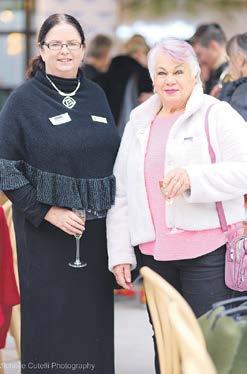
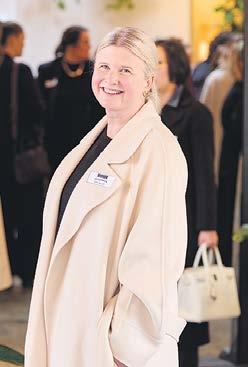
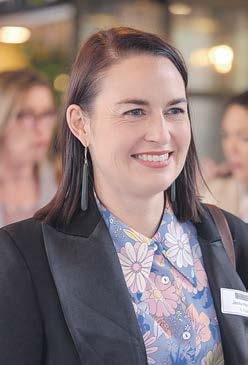
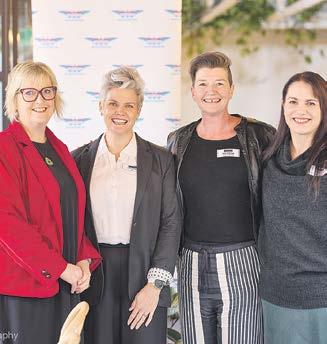
Host: Rotorua Business Chamber
Event Location and date: Terrace Kitchen - Thursday 17th July
Photography: Michelle Cutelli Photography
A vibrant gathering of local wāhine creating meaningful connections, sharing business journeys, and uplifting one another over lunch. Celebrating leadership, collaboration, and the strength of Rotorua’s women in business #BetterTogether









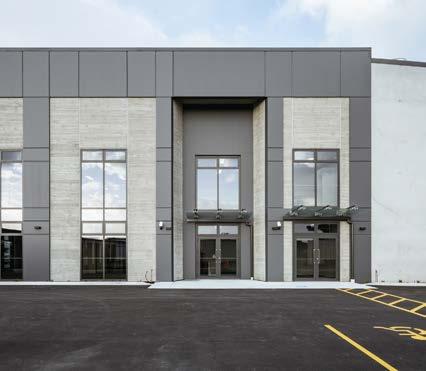
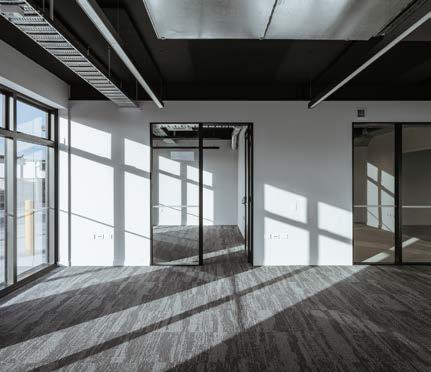
Harvard Investments is a property development company based in the Bay of Plenty. Since 2005, the company has been progressively developing commercial and industrial land along Harvard Way in Mount Maunganui. Its most recent project, completed in June 2025, adds three new tenancies to the site, bringing the total number of businesses operating in the location to nine.
Fosters delivered the latest 5,079sqm design and build project, comprising two large warehouse units with office
space, in eight months. It was three weeks ahead of schedule and under budget.
“We chose Fosters for their reputation, competitive pricing and their open transfer approach” said Mark Yortt, Director of Harvard Investments, “and they didn’t disappoint.”
Mark noted that as lead contractors, Fosters conducted a thorough process. With input into design, the result was an efficient and robust construction. However, what impressed him most was the team.
Fosters’ people are their number one strength; they are very good to work with.
Mark Yortt Director, Harvard Investments
“Fosters’ people are their number one strength; they are very good to work with. Throughout planning and implementation, communication was excellent, and the process was completely transparent” he said. “Any subcontractor issues were dealt with quickly and efficiently by an excellent management team.
“Compared to previous experience, and my tenancy manager would concur with this, working with Fosters was an extremely positive experience.”
Looking for a purpose-built solution? Let’s work together.