

Siren’s final call
By Mary Anne Gill
The fire siren on top of Cambridge Town Hall has been silenced after 102 years.
Its distinctive high-pitched air raid sound will be heard in the hall and around town no more unless the hall’s general manager Simon Brew is unable to find a booking for the fire brigade’s next Gold Star awards ceremony.
Fortunately for Brew – who reports the Town Hall is booking up months ahead – can pencil Peter Wright’s 25 year service in as it is not until 2030.
A new siren has been installed at the top of a new eight metre pole outside the brigade’s Duke St station with other newly-installed communication antennae.
And while renters of the Town Hall are happy the very loud siren will no longer disrupt concerts, weddings, funerals, exhibitions and shows, the amount of negative feedback the workers who installed the new pole copped suggests some are unhappy at the move away from the Town Hall.
Fire chief Dennis Hunt says they needn’t worry – the new siren will still summons volunteer firefighters and let townsfolk know to clear the streets for fire trucks.
The deal was finally sealed between Hunt and Brew after years of controversy. They had trialled several instances where the alarm was turned off in the last year during concerts in the hall.
Hunt’s predecessor, the late Don Gerrand was vehemently opposed to its move saying the siren was part of the culture of the town.
Weeks before his death in May 2022, he told The News he was not budging but his son Richie, who recently received his gold bar marking more than 35 years’ service in the brigade, said behind the scenes he had started accepting it was inevitable.
“We won’t have the symphony orchestra complaining anymore,” said Hunt.
The Cambridge Volunteer Fire Brigade was formed in 1904 – five years before the Town Hall was built but 15 years after Duke Street was devastated by fires.
The original alarm was a bell at the station.
However, according to Cambridge Museum researcher Karen Payne, it became too difficult for the public to find the rope at night to ring the bell. The clapper was too small and the bell too low to rouse firemen from their beds.
The new fire siren – in fact an air raid siren – was installed atop the Cambridge Town Hall in 1922 after public fundraising.
The Siren Fund raised more than enough for the £52 siren which with switches, postage and installation came to nearly £93 or about $6000 in today’s money.
Deputy fire chief Glenn Philip revealed Fire and Emergency New Zealand (Fenz) took the siren down from the Town Hall about a decade ago but Don Gerrand was unhappy he could


no longer hear it from his house near the High Level Bridge.
So, he found the siren, got it fixed and “obtained” a crane to have it put back up on the Town Hall. “I don’t know who paid for it,” said Hunt.
The siren is still there – it can be activated in the case of a Civil Defence emergency from FENZ’s
Auckland head office or there is a button in Hunt’s office which, with some insider knowledge, could get it going.
But Hunt quickly reassures Brew that is not about to happen unless he can’t find a spot in the Town Hall’s busy calendar for a Fire Service event.
Continued on page 2

Cones kept in cupboard
By Mary Anne Gill
Two trials where Waipā District Council uses fewer road cones and signs at worksites have resulted in reduced worksite congestion and less disruption to road users and residents.
Fire main replacement in Te Awamutu – at Palmer, Fraser, Bradey, Jackson, Redoubt and Vaile streets – and the Grey St pathway in Cambridge are the guinea pig projects, Human Resources Operations manager Clark Collins told the Finance and Corporate committee this week.

“This innovative approach ensures that traffic management decisions are based on an assessment of actual risks encountered at each worksite, rather than following a purely compliance focused method as outlined in the Code of Practice for Temporary Traffic Management,” he said.
The two trials are continuing but an earlier trial, implemented during watermain replacement work in Cambridge and Te Awamutu, used another risk-based approach.
Workers reduce controls in localised areas in contrast to the code’s approach which typically requires the full traffic management setup until the whole job is completed.
The code approach is well established in New Zealand and it will take time for the “risk-based method” to gain broader acceptance, he said. Waipā District Council would continue to collaborate with contractors for other projects the approach could be used, Collins told the committee.
Waipā has been a cone zone.
The 8m tower with Cambridge’s new fire siren on top and fire fighters, from left Dennis Hunt, Glenn Philip and Richie Gerrand joined at front by Cambridge Town Hall general manager Simon Brew. Photo: Mary Anne Gill.
Waipā’s Tron man in print
The life and comics of a Waipā artist who suffered a debilitating disease are being celebrated in two volumes of his work.
Dean Ballinger, who died at age 48 in 2022 after enduring Motor Neuron Disease, produced cartoon strips and comic zines for more than two decades.
They ranged in style from new mythology
That bill
Finally, we can all see that the three part Treaty Principles Bill is no threat to anyone and does nothing to diminish or alter the treaty signed by Hobson on behalf of the Crown and the 500-plus tribal chiefs throughout New Zealand. Anyone claiming otherwise lacks an understanding of our history or is influenced by misinformation. Many possibly have a vested interest as well.
The true treaty, recognised by international law was the one written in Māori. Sadly, that document is not recognised within New Zealand law today as by legislation enacted in 1975 the English version only is recognised and all subsequent legislation stems from it. The English version, of which there are many differing copies bears little resemblance to that signed by the chiefs. It is lengthy, uses flowery language and contains many words absent in the signed treaty, such as forests and fisheries.
My wish would be for democracy to run its course in the select committee process, which should not require six months. I don’t think a referendum is the final answer. What I would like is for the coalition government to promise, with specific detail, to revisit the 1975 Treaty of Waitangi Act. That Act is the root cause of the much of today’s unrest.
Murray Reid Leamington
maryanne@goodlocal.nz
and sci-fi, to conceptual art jokes and toilet humour.
Ballinger, from Te Awamutu. was credited with coining the title ‘Hamiltron’ and ‘The Tron’ to describe Hamilton in the late 1990s alongside fellow radio DJ Greg Page and

Police are aware a few counterfeit $50 notes have been recently presented around Cambridge.
If you work in retail in Waipa, please be sure to train your staff on what to look out for, especially when handling larger denominations.
In newer (series 7) bank notes, there is a metallic stripe visible in the bird, that moves up and down when a genuine note is tilted. You should also see a fern showing through the bird when you hold it to the light. In older (series 6) notes with the oval and fern shaped clear windows, a watermark of Queen Elizabeth II is present when it is held up to a light source. UV responsive patches are present on all genuine bank notes of all denominations (regardless if series 6 or 7).
Counterfeit notes also usually have a white edge when seen side on (for example in a stack). Genuine notes do not. If you detect a counterfeit note and the person tendering it is still in store or has just left, call 111. Provide as much information as possible in relation to the person and any vehicle involved.
Handle the note with gloves once detected and immediately place in a paper envelope
“call-in-listener Brian”.
A group of his friends are publishing two books of his comics.
Mark Servian, editor and project manager, says the two volumes present three artistic genres.
“OHU is the never-before-seen graphic novel written and pencilled by Dean, and then inked and coloured to completion by Aaron Christiansen. It is a fun story that will appeal to adults and kids alike.
“The other volume is actually two books in one - the Dean Ballinger Anthology is two collections back-to-back, reflecting Dean’s two very different bodies of work, the art and the comedy” Servian said.
OHU is a 116-page graphic novel about three friends on a quest across a psychedelic Waikato.
“Think of it as a Yellow Submarine in the Waikato, in the format of an Asterix book,” Servian said.
Ballinger began working on OHU in 2014, with Aaron Christiansen then working with him on the art over the last year of his life.
“I got to know Dean over a few years through us both contributing comics to Waikato student mag Nexus, and zines Bristle, Sonic Comic and Dean’s group anthology Hamiltron: City of the Future,” said Christiansen.

for storage. Resist the urge to pass it around amongst staff and hand in to police.

On to a good catch this week.
Police received a report of a male making threats to a local charitable organisation, this was then followed by aggressive behaviour a short time later at a second charitable organisation. Police attended and the male continued to be aggressive and threatening. He resisted and assaulted attending staff but was arrested and has appeared in court on several charges.
Also in the last seven days in Cambridge, police dealt with five assaults, six traffic crashes, two mental health jobs, three drug related jobs, 12 burglaries, seven incidents of vehicle crime, four thefts, seven family harm incidents, three bail breaches, two drunk drivers and a fleeing driver.
In Te Awamutu, calls for service included five assaults, threatening behaviour, three mental health incidents, four traffic crashes, two missing people, 13 burglaries, eight family harm incidents, two trespass incidents, three bail breaches, four thefts from cars and three fraud matters.
from page 1
Meanwhile Hunt said the brigade was on the lookout for more volunteers after three people recently left the brigade, two who headed overseas and one to police college. The brigade has 20 members but always needed more, he said, as call outs continue to increase. Cambridge – which had 359 calls in the year ended June 30 - has a higher number of motor vehicle crashes compared with most other volunteer brigades.
• See: Designed with maunga in mind, page 12.




Dean Ballinger’s work is being published in two books.
Christmas parade
Santa Claus is coming to town. The annual Cambridge Christmas Parade will be held on Sunday with the first of the floats leaving from the Town Clock shortly after 2pm. The theme this year is Recycled Christmas and prizes will be given in four categories: Business, School, Pre-School and Community Group/Organisation. Despite it being his busiest time of the year, Santa will be available for photos at the Christmas Festival in the Town Hall afterwards.
Pathway traffic
The Hamilton Road pathway had 8002 users last month with cyclists representing more than half of them. The busiest day was October 24 with 352 users, Waipā District Council’s counter recorded near its new bus shelter. The counter does not count cars travelling along the pathway.
Hire charges up
Rates to hire Cambridge Town Hall will increase by 10-20 per cent from July next year. Community groups and charitable organisations will still be eligible for a discount. The Town Hall Community Trust tabled the changes at Waipā District Council’s Finance and Corporate committee this week as part of its Statement of Intent. It will cost $1320 to hire the hall for a full day and $180 to rent the refurbished Edwardian and Victorian rooms for two hours during the day.
Traffic talk
Transportation manager Bryan Hudson briefed Waipā councillors at a workshop this week on traffic calming measures in place across the district. The initiatives reduce excessive speed, provide safe crossing places, reduce rat running (taking shortcuts), create attractive urban spaces and reduce crashes and injury severity, he told councillors. Cambridge councillor Roger Gordon disputed how speed bumps had been installed in areas where no consultation had taken place with the community.
One hour parking or two? Retailers to the call
By Mary Anne Gill
Cambridge retailers will decide later today if they want a two hour parking trial introduced before Christmas.
Cambridge Chamber of Commerce pressured Waipā District Council last week following its decision to relax parking times in Te Awamutu after approaches from Grey Power, Te Awamutu Business Chamber and the Te Awamutu-Kihikihi Community Board.
Chief executive Kelly Bouzaid was furious and asked the council for a quick response saying she and her members had been agitating for parking changes for months yet the calls in Te Awamutu were only recent.
“The perception of selective treatment between our towns undermines the principle of fairness that Waipā District Council has always emphasised,” Bouzaid told The News.
She said retailers were feeling disgruntled and disappointed.
In February she told a public meeting while there were 3000 public car parks
in Cambridge, the town had more than 3000 workers utilising them.
More than 1000 business employees were also parking in town, she said.
A year ago, the council clamped down on motorists who ignored time limits and put a parking warden on the beat in both towns using a new digital ticketing system rather than chalk on tyres.
Wardens scan vehicle number plates and issue a ticket on the spot with motorists getting an immediate notification. The wardens have issued a record number of fines last financial year.
Parking in Waipā is free but there are time restrictions in place in the Te Awamutu and Cambridge central business districts from 8am – 6pm Monday to Saturdays.
Transportation manager Bryan Hudson said Cambridge retailers should think very carefully before adopting the same two-hour time limit in the town as Te Awamutu had done.
“Cambridge, being bigger, busier and with a fastergrowing population, has
significantly more parking pressure in its CBD than Te Awamutu experiences.
“It also has added pressure from the larger number of out of town visitors and tourists, which means there is more need for quicker turnovers in parking.
“Extending the parking time limits in Cambridge would likely shrink the availability of free spaces to an unacceptable level,” he said.
“While extending parking
time restrictions does allow more time for people to shop, socialise and run errands, it also means there are likely to be fewer free spaces available at any given time, and therefore can lead to more traffic congestion as people drive around searching for an available parking spot.”
As part of the Cambridge Town Plan refresh five years ago, the council developed an approach to actively manage a high turnover of cars.
A retailers’ meeting is being held later today to discuss extending the trial into the Cambridge CBD.
“We have provided this background and advice in terms of the impact on available parking to the Cambridge Chamber of Commerce, and if there is wide support for a trial taking the above issues into consideration, then we could also conduct a trial in Cambridge,” Hudson told The News.
Staff negotiate through issues
By Mary Anne Gill
A former police crisis negotiator and personal protection officer has been delivering conflict management training to Waipā District Council staff and elected members.
Lance Burdett, who now works for Wellness, Awareness, Resilience and Negotiation (Warn) International was described as “the most qualified and highly skilled negotiator within NZ Police” when he left after 22 years to start his own business.
He trained with the FBI
and now runs workshops on how to overcome workplace pressure and stress.
News of his work with Waipā was included in a Human Resources report to the council’s Finance and Corporate committee this week after The News went to print.
Waipā employs 332 full time equivalent staff members in 46 business units.
The report also revealed there was a higher percentage of council staff who access the free and confidential Employee Assistance Programme (EAP) for help with workload, relationships
You and your family
with co-workers and working conditions than other workplaces using the service.
Issues such as career concerns and relationships with managers were lower than other EAP registered workplaces, said Human Resources Operations manager Clark Collins.
Just under a quarter of the issues the EAP provider dealt with were work-related, the rest were personal.
“In terms of personal issues, anxiety remains the most common concern, although it is now reported at a higher level than among other clients of our EAP provider.”
A Service to Remember Our Loved Ones
The council also uses Rongoā Māori support services to provide additional support for staff.
Rongoā Māori is a traditional Māori healing system that encompasses a wide range of practices, focusing on the holistic nature of health and wellbeing.
Health and wellness at Waipā came under the spotlight last year when the council revealed staff had been threatened by the public which prompted security measures at its Te Awamutu and Cambridge offices.

Earlier this year mayor Susan O’Regan was the subject of threats on social media. An effigy of her in a wheelbarrow was left on the corner of Wilson and Victoria streets. Staff underwent safety training.

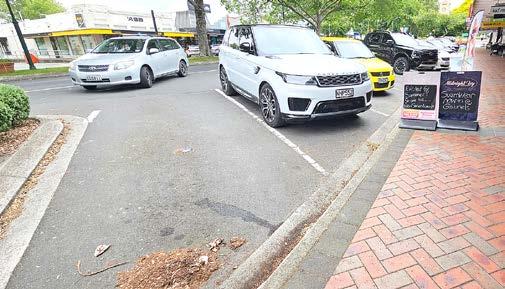
Council says one hour limits in the main street and greater enforcement encourages quick parking turnover.
Photo: Mary Anne Gill.
Lance Burdett


Treading water to one council?
By Chris Gardner
Forming a multi councilcontrolled organisation for water services is the first step to creating a unitary authority in the Waikato.
That’s the view of Waipā District Council Cambridge Ward member Mike Pettit who shared his views in a November 20 workshop on a council-controlled authority Heads of Agreement document being drawn up for the Waikato Mayoral Forum.
Waipā District Council agreed, on Tuesday, to enter into the Heads of Agreement relating to Waikato Water Done Well with other councils in the region. The motion passed unanimously and was proposed by Te Awamutu councillor Andrew Brown with mayor Susan O’Regan seconding it.
Ōtorohanga, Waitomo, Taupō, South Waikato, Matamata Piako, Hauraki and Thames-Coromandel district councils are exploring co-designing an assetowning council-controlled organisation to manage water and wastewater.
Waikato District Council and Hamilton City Council are creating their own councilcontrolled organisation.
“This is the start of one region, one council, one mayor, here we go” Pettit said in the workshop. “Just putting it out there. This is the seed.”
Pettit’s comments prompted laughter in the chamber from fellow councillors.
The Waikato Chamber of Commerce has been among organisations to debate the creation of a unitary authority to save ratepayers’ money.
“Brilliant,” replied Susan O’Regan. “Mike Pettit will be the emperor of the region, right?”
Pettit, who is in his second council term after serving on Cambridge Community Board for three terms, told The News, after the meeting, he was serious.
“It’s a discussion that I think is worth having,” he said. “It’s a discussion that I have been having in other political circles. It’s not a here and now thing. This whole council-controlled organisation discussion needs to happen first. After that’s done, sometime at the end of next year, it would be good if we can get together and start a discussion on the benefits, or otherwise, of a unitary authority. There’s


SWIMMING POOLS

enough work to be done.”
Kāhu Manawa managing director Vaughan Payne, who provides management services to local government, is leading Water Done Well on behalf of the Waikato Mayoral Forum and local iwi chairs.
Payne has spent 18 months discussing establishing a council-controlled organisation with the region’s mayors.
“There are some challenges, but also so many really significant opportunities,” Payne said of council collaboration. “This is a piece of work that is pretty central to this region. It’s not easy to make waters work. It just makes sense to have local ownership.”
The organisation would be governed by a board with delegated authority with input from a shareholders’ forum. Non tradeable shares would be apportioned by the number of connections.
“The main benefit of shares is influence,” Payne said.
Pirongia-Kakepuku Ward councillor Clare St Pierre was concerned connection was being used to apportion shares and wondered if there was a more equitable way.
Payne said the organisation needed to keep things


St Pierre was also concerned that the voice of the consumer, or ratepayer, was heard and local contractors did not miss out on work.
O’Regan spoke in favour of the proposal.
“You can’t underestimate the message it sends in terms of that regional collaboration and leadership,” she said.
Te Awamutu-Kihikihi
councillor Marcus Gower advised council to get communications right to ratepayers on the project.
“It does not mean cheaper water or a reduction in costs,” he said.
Pensioner flats in demand
By Mary Anne Gill
Fifty four Waipā residents are on the waiting list for one of the 93 pensioner housing units owned by the council.
The biggest number is in Te Awamutu where there are 23 on the list for the 14 the council owns, two for 14 homes in Kihikihi, 16 in Cambridge for 54, 12 in Leamington for 69 and one for anywhere.
Two on the list are waiting for one of the four two-bedroom units available in Leamington and Kihikihi.
There are also 31 non-residents on the list.
Waipā residents get priority.
Two new tenants have moved into refurbished pensioner units in Cambridge and Kihikihi in the last three months.
Waipā is one of few councils in New Zealand which still provides housing for older people in the community. The council reviewed its pensioner housing policy in 2017 and recommitted to providing and growing its housing for the elderly stock.
The council’s housing for the elderly units are self-funded, not subsidised by rates, and market rental rates for the units are reviewed independently each year.


Mike Pettit
Susan O’Regan Marcus Gower simple.
Resonate Health is now the only company in NZ that o ers a hearing aid subscription service.
Resonate Health is now the only company in NZ that o ers a hearing aid subscription service.
Resonate Health is now the only company in NZ that o ers a hearing aid subscription service.
When we talk with New Zealanders who need help with their hearing, we won’t ask you to spend many $1,000s on hearing aids.
When we talk with New Zealanders who need help with their hearing, we won’t ask you to spend many $1,000s on hearing aids.
When we talk with New Zealanders who need help with their hearing, we won’t ask you to spend many $1,000s on hearing aids.
Instead, for just $90 a month you can join Resonate Unlimited, which includes:
Instead, for just $90 a month you can join Resonate Unlimited, which includes:
Instead, for just $90 a month you can join Resonate Unlimited, which includes:
• your own pair of top quality hearing aids, the Resound Nexia 9s, upgraded every three years
• your own pair of top quality hearing aids, the Resound Nexia 9s, upgraded every three years
• your own pair of top quality hearing aids, the Resound Nexia 9s, upgraded every three years
• no hidden charges, deposits or contracts to worry about; tuning and fitting consultations, and on going support are all part of the service
• no hidden charges, deposits or contracts to worry about; tuning and fitting consultations, and on going support are all part of the service
• no hidden charges, deposits or contracts to worry about; tuning and fitting consultations, and on going support are all part of the service
• complimentary ear cleaning every six months and comprehensive hearing diagnostic assessments each year
• complimentary ear cleaning every six months and comprehensive hearing diagnostic assessments each year
• complimentary ear cleaning every six months and comprehensive hearing diagnostic assessments each year
To find out why you don’t need to buy hearing aids to hear better, contact Resonate Health or pop into one of our local studios for a chat. There will be one near you, from Whangārei to Invercargill.
To find out why you don’t need to buy hearing aids to hear better, contact Resonate Health or pop into one of our local studios for a chat. There will be one near you, from Whangārei to Invercargill.

To find out why you don’t need to buy hearing aids to hear better, contact Resonate Health or pop into one of our local studios for a chat. There will be one near you, from Whangārei to Invercargill. is dedicated to democratising New Zealanders’ access to affordable top quality hearing aids and ongoing support.
is dedicated to democratising New Zealanders’ access to affordable top quality hearing aids and ongoing support.
Our nation-wide team of hearing health professionals is dedicated to democratising New Zealanders’ access to affordable top quality hearing aids and ongoing support.
Contact our audiologists: 0800 737 662
Contact our audiologists: 0800 737 662
Contact our audiologists: 0800 737 662
resonatehealth.co.nz
resonatehealth.co.nz
resonatehealth.co.nz
James Whittaker Founder of Resonate
James Whittaker Founder of Resonate
James Whittaker Founder of Resonate
Tainui executive in the running
By Sigrid Christiansen
Waikato-Tainui executive
Glenda Taituha-Toka, originally from Piopio is a finalist in the Young Executive of the Year category of the Deloitte Top 200 Awards.
The winners will be announced on December 5.
The Rahui-Pōkeka (Huntly) based Taituha, also a PhD candidate and mother to Arnika (19) Hikoi (7) and Niwha (4) has been recognised for her work as general manager of Heritage and Identity at the WaikatoTainui post governance settlement entity (PGSE) a position with responsibility for “tribal narratives, tribal archives and the taonga and carving collections of the Kīngitanga”.
She’s known for practical support of whānau – such as her work towards a 2022 partnership with Southern Cross enabling 14000 kaumātua to get access to health insurance.
“We want to protect our valuable kaumātua and help them to stay with their tamariki and mokopuna for longer,” she said.
“Our kaumātua guide us, and without them we would be lost, so we have huge aspirations to care for and protect them by increasing access to preventative healthcare.”
Taituha-Toka said when
growing up “the aunties” were her biggest inspiration–such as when they ran the show at Ōparure and Napinapi Pā, Piopio and Te Kotahitanga, Ōtorohanga.
“Those aunties could run rings around most business leaders.”
She says an upbringing as a pā child at Ōparure provided her with plenty of examples of how to “get in there and do things together… just get stuff done.
“These days, I don’t get home as much as I’d like, but I keep in touch with cousins and am able to contribute to things like funding applications.”
She’s no fan of being interviewed about herself:
“I’ll avoid that if I possibly can,” but agreed to chat with The News’ sister paper the King Country News, because she had had “so many messages of support” from whānau back home.
“It’s always difficult to be pulled out of your team – it’s never one individual [doing the work].”
Taituha-Toka hesitates to describe herself as a “leader” instead saying her life’s motto is to find a kaupapa, a purpose to support and then “be the first follower.”
She’s always enjoyed working for Māori organisations – and worked for Te Wānanga o Aotearoa in the past before coming to

Waikato-Tainui.
She wanted to reach out to young people who like her, are also drawn to the same pathway: iwi governance in post-settlement times, and put the word out there that she was there to offer her support.
Taituha-Toka is the daughter of weaver Dr Gloria Taituha, who for 25 years has been a kaiako at Te Wananga o Aotearoa and is a kaiarahi, a leader, of its (weaving) programme at Apakura campus, Te Awamutu.
She is the youngest daughter of Perry Taituha, and she’s found much inspiration in his fourdecade stretch on the committee of Ōparure Pā: “he taught me how to work hard.”
Her grandfather, Kīngitanga orator Pumi Taituha, was one of the speakers of the late Māori queen, Te Atairangikaahu.
Twenty for Karen

Waipā-based Progress to Health chief executive Karen Covell celebrated 20 years with the community support organisation last week.
She is now one of the longest-serving CEOs in a sector where chair Mark Brown says the average tenure is around six years. Covill started with the Hamilton organisation in 2004 when it was known as New Pathways or New Progress Enterprises. It was established to provide a broad range of support services in the community
following the closure of Tokanui Psychiatric Hospital.
“Others here today represent organisations set up at similar times and will identify with the challenges for any organisation staying true to the mission while being agile adaptable and able to reinterpret that mission in the light of our understanding today,” Brown said at a celebratory function. Progress to Health has team members in Hamilton, Taranaki, Tokoroa and Taupō.
Chefing in a Michelin 3 star Paris restaurant is a bit like being an All Black.


You’re there because you’re the best. Only an elite few ever make the grade. You’ve trained to the absolute top of your profession. You have prepared, cooked and plated some of the world’s finest meals. Literally.
Remarkably one such chef has landed in, of all places, a tea farm in rural Gordonton.
Jean-Baptiste (JB) Pilou learned his trade at Paris’ Guy Savoy restaurant, rising to sous-chef in that celebrated kitchen. Go on, google it.
Now JB and wife Valentina Avecilla are running Camellia Restaurant at the Zealong Tea Estate. Valentina’s a celebrated pastry chef in her own right, and her signature is across many of Camellia’s dishes.
If you’ve been to France you’ll know people there are absorbed with the origin of their daily diet. Wine is labelled by region rather than grape variety.
As for food – be it beef, poultry, tomatoes, fruit, even salt –where it comes from is of supreme importance.
JB brings this to Camellia. He’s spent months combing

Waikato and beyond for remarkable ingredients to base his menu. From a tiny producer of olive oil (he takes their total production) to a local artichoke grower, he’s making Camellia’s menu unique and extraordinary. The presentation. The flavours. The subtlety. The freshness. The creativity. Also extraordinary.
He’s brought on board a sommelier from Spain to manage Camellia’s cellar. Hey, why not be guided by an expert when you’re choosing wine for dishes as good as these?
Dear reader, over the next few weeks we’ll be trying some of JB’s exceptional dishes together with wine pairings, and describing them in mere words.
Watch this space.
Meantime we suggest heading over to Camellia’s website and getting acquainted with the place. The menu’s there to peruse, also some background on JB and Valentina, and lovely photos of the venue and dishes.
Bon appetit.
CAMELLIA
Glenda Taituha-Toka is a WaikatoTainui executive member.
Karen Covell cuts her 20th anniversary cake.
Photo: Supplied.
Sistaz are doing it…
By Mary Anne Gill
Gaylene Geary always calls her good friend Glenys Carter “sister” so when the two of them hatched an idea to hold a women’s only bowls tournament in Cambridge, the name was a no brainer.
“It had to be Sistaz,” says Carter of the tournament which will be held next week at Central Cambridge Bowling Club for the 14th time.
The first tournament started slowly with 11 teams of four players turning up for the two days.
“The girls who said they would support us at the beginning, did so,” says Carter.
Now it is at its limit – 32 teams of four entered for the tournament which is always held on the first Thursday and Friday of December. Unfortunately, two of the teams had to withdraw but Carter and fellow organiser Alison Winter are unperturbed.
“The clubhouse will still be full,” says Carter who will be joined by Chris Denton, Kaye Bunn and Judy Swetman in her team this year.
“Some teams take it very seriously,” she said while others just use it as an opportunity to get away from home.
Entrants come from across the Waikato, Bay of Plenty, Taranaki and there have even been South Island entries.
Players are encouraged to wear theme shirts – pink being the predominant colour of course.
Out of towners book their accommodation for the next year as they’re walking out the door while shopping excursions around Cambridge are a must for many.
They do not tend to burn the midnight oil. “We’re normally too knackered after the bowls,” laughs Carter.
Entrants play two games of fours and two games of pairs, each game lasting two hours.
Entry fee includes a free lunch both days and so popular has the tournament become that Carter, Geary and other members no longer have to dip into their purses to cover the $4000 prize money. Ryman Healthcare’s Patrick Hogan Retirement Village is now the major sponsor.
And the men know their place during the tournament, in the kitchen, behind the bar and always subservient, says Carter.
The Sistaz tournament starts on Thursday December 5 and finishes later the next day.
Alys Antiques & Fine Art





Jules Duffart, French, 1924- French Town View, OilonBoard,Signed

Antique Mahogany Reading/Lectern Table. Adjustable height and angle, very substantial. William IV: 1830s Cope Patent, Castors.
Chest of Drawers, Mahogany, Finely moulded Ogee Feet, 104cm high, 119 wide, 52 deep, End 18th, early 19th C, good condition.
87AVictoriaSt,Cambridge P:078276074Mob:021651949 W:www.alysantiques.co.nz












Jack and Kitty, named after the game’s smaller white or yellow bowls, are the tournament mascots which always take pride of place greenside at the Sistaz tournament, from left Glenys Carter, Chris Denton and Alison Winter.
Photo: Mary Anne Gill.
Incinerator site ‘wrong’
By Chris Gardner
Waipā District Council is drafting a submission against the building of the Paewira waste to energy plant in Racecourse Road in Te Awamutu.
Councillors who debated the plan last week said they believed the wrong site was being looked at.
A board of inquiry is to decide Global Contracting Solutions’ resource consent application to build the plant near homes, a childcare centre, college, Fonterra dairy factory and Mangapiko Stream.
Te Awamutu-Kihikihi General Ward councillor Andrew Brown summed up the council’s position towards the end of a submission workshop for elected members last Wednesday.
“Even if I was completely reassured as quality of emissions, which I am not, this is surely in the wrong place.”
The proposal would see the facility burn around 480 tonnes of car bodies, plastic, tyres, commercial and industrial waste every day. Steam from the waste would be used to generate electricity.
Cambridge Ward councillor Roger Gordon agreed with Brown.
“My main concern really is that it is new technology, and while there are many statements being made about the quality of emissions it’s unproven, and we don’t know

what the future impact is going to be,” he said.
Council strategy group manager Kirsty Downey told elected members the council submission should be focussed on location, placemaking, community interest and community wellbeing.
“The point we should be communicating to the board is that there is not enough evidence that the proposed waste to energy plant will actually uphold our community wellbeing,” she said.
“A social impact assessment was requested from the applicant back in December of 2023 and that hasn’t yet been provided. So, as part of that submission, we would also be recommending that we request a social impact assessment be provided by the applicant.”
Pirongia-Kakepuku councillor
Clare St Pierre suggested there may be more appropriate sites.
“I am quite concerned about its proximity to Fonterra because it’s a food processing plant.”
Downey said council staff recommended the submission discussed the possibility the location of the proposed plant may adversely affect the amenity and character of the adjacent residential area, as well as Te Awamutu and Waipā being a desirable district to live, work, invest in, recreate in.
Fonterra submitted against the construction of the plant, before the application was called in by the board.
Waipā district mayor and dairy farmer Susan O’Regan looked at a worst-case scenario, and the longterm impacts on an agricultural
sector scale.
“The stakes are extremely high, and I want to make sure that the inquiry around those negative impacts isn’t just limited to the neighbouring streets.”
Around 800 submissions have already been received regarding the application, the majority in opposition. Submissions close on December 18 and the board will have nine months to decide.
Carbon emissions fall
Waikato Regional Council says it is continuing to reduce its core corporate emissions and progress partnerships on responses to climate change.
At last week’s Climate Action Committee, a presentation on the council’s eighth year of monitoring carbon emissions showed corporate emissions for 2023-24 were 1195 tonnes of carbon dioxide equivalent (tCO2e).
A kilogram of carbon dioxide would inflate a large beachball.
The emissions recorded by the council are 29 per cent down on the baseline year – 2016-17 - and 38.5 per cent lower than in 2022-23.
The target had been a 45 per cent reduction, and the council would have achieved that if not for a restock of diesel for flood pump generators and having to run pumps for five months during a station upgrade.
Climate Action Committee Chair Jennifer Nickel said the council was confident it would meet a 68 per cent target reduction in emissions by 2030.
“The previous year, you’ll see we
Showhome now open!


had unusually high rainfall which led to a massive increase in flood pumping hours and corresponding increases in electricity and diesel,” she said.
“But we know what we can control from an emissions perspective, so we’ll continue to decarbonise our vehicle fleet and investigate energy efficiency opportunities with regards to our infrastructure, particularly when it comes to our flood protection assets.”
In 2023-24, the council’s most significant emissions sources were diesel, electricity, and gas. Emissions from diesel were down 17 per cent, electricity down by 58 per cent and from gas up 43 per cent.
Nickel said progress was being made on the council’s aim to offset hard to reduce emissions to net zero by 2050.
The committee also saw a presentation by Taranaki Offshore Partnership about plans for an offshore wind farm along the Waikato’s west coast.

A 3D digital model of the proposed waste to energy plant development published in a landscape and visual assessment report.
AGE OF REASON
Marching to a different beat
In 1975 the frail, though determined, figure of Whina Cooper hobbled the length of the North Island at the head of a slow-moving hikoi of many, predominantly Māori, people, to make a case at the highest political venue in this country.
It was for a greater degree of justice with regard to the ownership and management of indigenous land. That the good lady was eventually knighted for her sterling effort was rightful justice.
What we witnessed last week was something entirely different.
Putting aside the alleged reason for a moment, the now-recognised ‘car hikoi’ was a far cry from what had transpired many years ago.
There were common themes in the physical sense as to banners, a flag adopted by Māori and occasional bursts of song and dance recognised as historical displays reaching back many years.
Watching the 40,000 or so people who surrounded the bottom end of Molesworth Street in the capital it was clear that there was a marked support for the cause of the mainly motorised ‘march’ by citizens other than Māori.
The target of their concern verging on anger
was a strange display of unnecessary tilts at the 1840 founding document. That piece of history does not need revising nor being meddled with.
By Peter Carr
aided and abetted the whole sorry spectacle.
Witness the view of the Prime Minister of this proposal where he, caught between a rock and a hard place to affect a working coalition, cobbled together a triumvirate of parties to undertake the desired governance that the MMP mess created 30 years ago.
But there was something far more sinister than the ridiculous prancing on the floor of the House.
Where a very young MP commenced a show of deliberate dissatisfaction with the author of the proposed legislation. She later publicly admitted she was not the one planned to commence the proceedings.
Planned? Commence? Clearly that performance was very much planned even if the lead actor was to be someone else.
So, what degree of planning was there and just how deep and wide was it drawn up?
The subsequent parliamentary rhetoric of Winston Peters and Shane Jones revealed all. It was not only planned for a long time but also led by a family member of the Māori Party political leader with preparatory work undertaken by government paid staff who

There is nothing wrong with well organised, peaceful and well managed demonstrations of a political nature where the cause is just and well balanced and where grievances can be displayed when proper means of gaining justice and ‘rights’ are being denied.
Witness the upcoming group thrust by the nurses coming up shortly. If ever there was injustice, political lies and cold-hearted pressure by senior government officials and politicians then the nurses cause is very just and proper.
Promises made (think Dunedin Hospital) were clearly broken at a very high level, yet those at the forefront in hospitals are working bravely on and becoming increasingly weary as the months pass.
This is a time for brave and sensible leadership of a type that the current three-year parliamentary term will never achieve. It’s time for all the parties to come together and find common ground for the sake of the nation and not for the retention of died-in-the-wool beliefs that are well out of date.
Craft fair
A St Andrew’s Cambridge Craft Fair is being held at the church on Saturday. The addition to the usual Giant Craft Fairs organised annually by church verger Ian Dunn will mark St Andrew’s Day and Christmas. The Greater Waikato Railway Modellers and their miniature trains will be an attraction.
Cakes for sale
Cambridge Lions Club members Gay Geursen and Beth Robinson spent a few hours last Saturday selling Christmas cakes at the BNZ corner in Victoria St. The packaged 1kg cakes are being sold for the first time this year as a Lions’ club fundraiser, and proceeds from sales will go towards those in need in and around Cambridge.
Hotel to open
The former Masonic Hotel in Duke St, now a 29-room historic boutique hotel known as The Clements Hotel, will open early next year. Capstone Hotel Management will manage the property which includes a speakeasy bar, conference facilities, restaurant and bar.
Get Gardening
Get Gardening
A monthly gardening column, courtesy of Amber Garden Centre With Christmas literally just around the corner its time to get the garden, hanging baskets and pots refreshed so you have a glorious display for Christmas day. If you get them planted before December they will be in full display. We love alstroemerias, bacopa, petunias, zinnias, begonias, impatiens, gaura, pelargoniums and daisies. Keep maintaining flowering plants by deadheading to keep them looking their best. Moving into December it will be time to dig out new potatoes, these will be a favourite on Christmas day. As the sun gets more intense vegetable plants will need to be watered well at least three times a week. Keep on top of regular picking of beans, peas, cucumbers and zucchinis to encourage new healthy growth. Happy gardening!

TREEWORK BY FLORIDA TREES


CAMBRIDGE
MONDAY
WEDNESDAY
6:33pm, Backyard fire, Burns Street
9:55am, Cardiac Arrest, Bryce Street
TUESDAY
1:09pm, Building Alarm and evacuation, Ruakura Road
9:15am, Building alarm and evacuation, Alan Livingstone Drive, 4:46pm, Fire alarm sounding, Hall Street
11:56pm, Building Alarm and evacuation, Hautapu Road
WEDNESDAY
FRIDAY
7.42am, Shed fire, Kaipaki Road
THURSDAY
8:42am, Building Alarm and evacuation. Maungatautari Road
1.25pm, Tractor fire, Kairangi Road
SUNDAY
SUNDAY
3:53am, Medical assistance, Karapiro Road
6:47am, Building alarm and activation, Alpha Street 11:36am, Medical, cardiac arrest, Kahui Avenue




COMMUNITY BOARD COMMENT
Looking long term
By Jo Davies-Colley, Chair, Cambridge Community Board
Waipā District Council is preparing its 2025-34 Long Term Plan (LTP).
The plan is a comprehensive and complex strategic document which sets the direction for the district over a 10 year period and is formally reviewed every three years. It describes the activities of council and directs how those activities are managed, delivered and funded for the following 10 years. This time around the LTP is for nine years only, as the council adopted an Enhanced Annual Plan this year.
I have been attending the LTP workshops on behalf of the community board to improve the board’s partnership with council on the LTP. It has been evident during the workshops that council staff working on this project are doing their utmost to ensure that the current levels of service and infrastructure are of a standard that we have come to expect and enjoy in Waipā.
It is, however, a tough time economically for many organisations and households and council is not immune to that either. We will see this reflected in rates, the deferral of many community projects such as a new Cambridge library and community hub, and a reduction in community funding and grants.
At our community board meeting on Wednesday, we invited Ken Morris, chief financial officer, to come and provide further clarity on some questions we had on the current draft LTP budget. We had a good discussion and I would encourage you to watch our meeting online for further details. Our first question was around rates increases. Factors pushing our rates up include, but are not limited to, an increase in gas prices (up 96 per cent), increased operating costs in core council services,

increased maintenance costs on council buildings, our Cambridge pool and Town Hall, as well as servicing the high interest expenses, mostly relating to current debt levels.




Work on the LTP continues and elected members will be asked to approve the draft document which will provide more clarity for the community. In March and April, the Waipā community will also have an opportunity to provide feedback on the plan.
In 2023, the council began working on the Leamington Domain Masterplan with significant community engagement. The board has been involved both at the early community engagement phase as well having the opportunity to input into the design process. In February 2024, the Council endorsed the final masterplan and while there is no allocated funding for the master plan to be implemented in its entirety, council did allocate funding for a destination playground in the current LTP.
The great news is that the draft design for this playground is nearly complete with construction expected to start in early 2025. The community board submission on the playground design included recommendations for water play and accessible equipment, as well as retaining the key features that are loved by our community. The design is shaping up to be an incredible play space with improved seating, shade and a diverse range of inclusive equipment as well as strong storytelling around the heritage of the area and connection to mana whenua. As we look towards an austere LTP, this will be a welcome project for our community to enjoy.





3 FEBRUARY 2025





Designed with maunga in mind
By Mary Anne Gill
Through Antanas Procuta’s well-trained eyes, Cambridge is an architectural masterpiece.
Speaking at the Cambridge Historical Society’s annual meeting last week on The Pattern of Cambridge: An Architectural and Urban Design Perspective, Procuta acknowledged the town’s benefactors and champions who made the town what it is today.
“Cambridge township owes a hell of a lot to our forebears who created this place and I guess the key message is that it did not happen by accident. There was a lot of design intent that happened generation after generation by individual people and groups of people
that have made this the place it is.”
Planning started as early as 1863, at the start of the New Zealand Land Wars, when surveyors mapped out the town and created green belts long before renowned English town planner Ebenezer Howard founded the garden city movement, blending towns and cities with nature.
“It’s poignant from the point of view that this place that we love so much Cambridge…. much of the land was confiscated which is still distressing to Māori.
“We’ve got this wonderful place which at the same time caused so much hurt.”
What Procuta finds interesting from the maps produced at that time and later is the town grid is

almost facing north, but not quite. It is about five degrees off.
“I would love to have the rationale for that,” he said giving a possible answer with a drone shot looking from the Town Hall and Town Clock towards Maungatautari and Pukeatua and Victoria Street follows it directly. I think that’s a marvellous clue.”
He recalls when he returned to Cambridge 30 years ago. There were lots of empty shops and it was an older village type place.
He showed the audience a photo he took with a telephoto lens in 1996 of the Town Clock with Maungatautari and Pukeatua in the background. At the time a woman accused him of manipulating the image.
“A lot people overlook that (view) and don’t see it.”
The Town Clock is one of his favourite buildings in Cambridge and he produced a watercolour drawn prior to its construction after the 1931 earthquake.
That original view or even the one he photographed 38 years ago showing Maungatautari cannot be seen now because there is a golden elm in front.
Under council policy, the tree cannot be removed unless it is dead or dying.
Procuta, the son of architect Viktoras Procuta who retired in the mid-1990s and died three years ago, started his architect’s practice in Cambridge but is now based in Hamilton as Paua Architects.
He has a particular passion for restoration and reuse of Waikato historic buildings and his firm has been involved in several highprofile developments both in Hamilton and the greater Waikato and in Cambridge including Le Quesnoy Place, Cambridge Park, Papillon Townhouse in Hamilton Road and the Police Station.
Cambridge has been fortunate so many developers have wanted to leave a lasting legacy for the town, he said.
Recent projects like the Police Hub have incorporated modern design elements while respecting the town’s heritage and cultural significance.
“We’re at a huge changing point in Cambridge,” said Procuta pointing to recent developments like the velodrome and usage at Lake Karāpiro as “transformational”.
“The velodrome is a great piece of architecture which brings in lots and lots of young people as teenagers

to Cambridge, then they stay here and have their own families.”
The challenges of urban development will include the need for higher-density buildings to accommodate growth while preserving the town’s character.
“There’s a challenge here. What does the future of Cambridge look like?” he said.
“We’ve typically got single storey and two storey buildings in the main centre of town,” he said while development was eating into neighbouring farmland.
“I think that’s got issues.”
It meant more people had to travel by car or bus into town.
“We need to be thinking is
it okay to do three stories or four storey (buildings). It’s going to be quite challenging but if you look at European towns, old historic towns and actually we’ve got the width across the streets…. It’s something we need to seriously contemplate and probably embrace.”
Procuta praised the community response to saving Cambridge’s heritage – despite the financial challenges - pointing to the Town Hall, Clock Tower and the Water Tower as examples.
“I think that really shows the power of people understanding heritage but also using their power as citizens to say: ‘actually this is really important to us’.” • More cambridgenews.nz





Architect Antanas Procuta points to the Town Clock, his favourite building in Cambridge. Photo: Mary Anne Gill.
The road to Maungatautari from the Town Clock showing why the grid laid out in 1863 might be five degrees out. Photo: Brian Holden.
Val presses the rewind button
By Viv Posselt
Almost everything about Sunday’s book launch at Ōhaupō School of Valerie Millington’s ‘Ellen of Denniston’ was intended to deliver a sense of time and place.
And deliver it did, in spades.
The hall, creaking with some 200 visitors, had been decorated to within an inch of its life in deference to the challenging, often gloomy environment that was, back in the day, the coal mining township of Denniston on the South Island’s west coast. Lights were dimmed and windows blacked out.
The book itself is a biography of Val Millington’s mother Ellen and, said the author, a moving testimony to her strength and resilience through extraordinarily difficult circumstances.
“I always wanted mum to write a book,” she told guests, “but she would always say, ‘I’m far too joyful in the present to push the rewind button’. I used to think a lot about my mother’s mental health, but where other people saw the ugly rock face that dominated the area, she would see miniature fir trees in the cracks. She saw lichen like skeins of wool.”
The book chronicles Ellen’s life… a childhood tested by poverty, then an accident at 17 that resulted in three years in hospital and 30 operations. Her return to Denniston as the ‘disabled girl’ created different challenges,

but a new life, love and family eventually found her.
Ellen moved to Ōhaupō with her husband Les and their children. It was there she received numerous accolades for her role in developing the National Fieldays at Mystery Creek, turning the event into a multi-million-dollar export earner for New Zealand. The book is said to be as much about her story and that of New Zealand at the time, as it is about the way Ellen endured and rose through her challenges to live a
long and productive life.
“My sister once told me she thought mum had found the secret to a happy life,” Millington told the crowd. “I didn’t understand it then, but I did later, and I agree with her.”
Guests of honour at the launch were Sir William and Lady Judi Gallagher who supported the book’s production. Lady Judi described Ellen as a brave woman who overcame many obstacles in her life.
“I hope this work will be an


7 days 9am – 4.30pm
organic blueberries in season now. Available from Café Irresistiblue. Looking for a great place to have your Christmas function? Café Irresistiblue have great Day & Evening options available. Visit www.cafeirresistiblue.co.nz for more details.
Signposted off the Cambridge-Te Awamutu Road Only 15-minute drive from central Te Awamutu bookings@cafeirresistiblue.conz www.cafeirresistiblue.co.nz


no. We thought we were too old for it. But eventually Val, who is not exactly backward in coming forward, persuaded us and once we read it, we realised it was very special. Now we just hope we will be around for the reprints.”
The event was emceed by Waikato politician and former Hamilton mayor and regional council chair Russ Rimmington. He reminisced through his years of knowing Millington, recalling her earlier media days and her success in pushing through a wall of deep tradition to become chief executive of NZ National Fieldays for several years.
Among numerous other roles, Millington became a valued teacher-tutor at Ōhaupō School; one of her former students was there to thank her for a job well done.
inspiration for others,” she said.
“I hope it will show how even the most difficult situations can be overcome.”
Sunday’s launch was unusual in other ways, too. Publisher Ian Grant of Fraser Books said book launches were not as common as they once were. He and his wife and colleague Diane Grant have launched books at numerous venues over time, but never in a venue quite like this.
“When we were first asked if we would publish the book, we said
Guests heard that Millington first started the book some seven years ago. She was waylaid, however, by writing a book charting the history of the district and of Ōhaupō School’s 150 years. In 1996, she penned a book marking the history of European settlement in Ōhaupō, titled ‘Winds of Change’.
Music at the launch was provided by Blair Stanbridge playing Il Silenzio (The Silence) on the cornet – a piece particularly loved by Ellen – as well as fitting songs by opera singers Grace McCarthy-Sinclair, Faamanu Fonoti-Fuimaono, and Taylor Wallbank.
Cambridge Tree Trust
Cambridge Tree Trust
www.treetrust.org.nz
www.treetrust.org.nz
Five-finger (Neopanax/ Pseudopanax arboreum)
Cambridge, Town of Trees?


Five-finger (Neopanax/ Pseudopanax arboreum) There’s nothing like travel to broaden the mind. My recent holiday in the South Island/Te Waipounamu was very instructive. In small town after small town I was so impressed by the amount of tree planting, old and new. Geraldine was lovely as always, with the beautiful mature trees of its central park and also its many treed gardens. Ashburton has not only its fabulous Domain, which almost rivals Hagley Park in Christchurch, but also has the approaches to the town beautifully planted for a kilometre or so with a variety of conifers and deciduous trees. Fairlie is distinguished by the spacious rows of grand old lime (tilia) and plane trees that line the approach from the west for several kilometres. Oamaru


not only has a similar avenue of oaks on its southern approach, planted in memory of its fallen soldiers, but has recently planted its central business area with deciduous trees, a move that will continue to enhance this gracious precinct for centuries to come. Little Waimate is a picture, and even Te Anau, once so bleak, was resplendent with flowering cherries stretched, tip to tip, across its main shopping area and the lakeside graced by large conifers, birches and many other species.
It left me wondering about Cambridge. Yes, we have some nice big trees near the centre of town, although there seem to be fewer each year, but could we not also enhance our suburban streets with more trees, plant big trees in roundabaouts, grace the roadsides on the approaches to our town with tall avenues. We could do so much better!
Cambridge Tree Trust would like to thank Mitre 10 for their support for these monthly articles which are intended to raise interest and awareness of trees in Cambridge.
Cambridge Tree Trust would like to thank Mitre 10 for their support for these monthly articles which are intended to raise interest and awareness of trees in Cambridge.

Val Middleton, front, with guests Sir William and Lady Judi Gallagher, left, and Russ and Edwina Rimmington. Photo: Viv Posselt
Advertorial
When ash and roads don’t mix
By Janine Krippner
There have been flight cancellations in Indonesia recently following the eruption of Lewotobi Laki-laki, reminding us that volcanoes can impact areas far away from the eruption location.
Volcanic ash is the most far-reaching hazard that can extend across oceans and countries, with impacts depending on where the ash is blown, how much ash falls to the ground, and the size of the particles – remembering that volcanic ash is pulverised rock, and what is in the way – air transportation routes, shipping, and infrastructure and life on the ground. This includes us, right here.
Much of our modern life here is reliant on vehicles on roads, and it is our reliance that leads to greater impacts. When it comes to road traffic there are several ways ash can impact us. Visibility is a big issue. Eruptions can turn day to night as ash plumes can block out the sun and the ash falls to the ground. If you have ashfall occurring, seeing through this cloud of rock particles falling from the sky is a problem. This can continue long after the eruption ends if there is resuspension of the ash where it is blown around by wind, traffic, or other human activity. Headlights and brake lights can become next to useless and barely visible to others on the road.
Road markings can be covered by less than 1 mm of ash. Thankfully we tend to have marker posts along the side of our roads, but depending on the conditions these could be difficult to see.
Gritty ash on roads can also make them a bit slippery (reduced traction) in both wet and dry conditions.
If you have a 2WD vehicle you likely won’t be able to use a road with more than 10 cm of ash cover.
All of these mean that there could be an increased chance of accidents on our roads.
During the 1980 Mount St Helens eruption it is estimated that hundreds of road accidents followed.

This is yet another reason why volcano monitoring is so important, even if we don’t live near a volcano as the ashfall often occurs hundreds of kilometres downwind.
After this, there is the impact to the vehicles themselves. Ash is highly corrosive and can damage windscreens, engine components, metal surfaces, and paint. Using windscreen wipers to clear the ash can scratch the glass and reduce visibility. If you are ever in this situation, use water to wash it off. This includes the glasses on your face. I have destroyed glasses by cleaning them on volcanoes. Ash can also clog air filters and radiator systems, although this could take longer in newer vehicles. Humid conditions can make this worse.
Volcanic ash plumes are blown by the wind. Where volcanic ash goes is dependent on the style and size of the eruption, and wind direction and speed. These can all change during an eruption. When we have large ash plumes they can even interact with different wind directions at different altitudes, blowing the ash in different directions.
The bottom line here is that we can be impacted by this, it’s a good idea to know what to do and how it could affect us. Thankfully, we have advice for road network operators in Aotearoa so that this can largely be managed for us, you can search for the “Volcanic ashfall advice for road network operators” poster online.
It’s only a millimetre or two
By Murray Smith, Bridges Church
Being ‘precise’ has importance for good reasons. Multiple areas of life demonstrate how a ‘near enough will do’ approach can result in disaster. Engineers and builders understand why it’s important not to take liberty with measurements. Doctors shouldn’t prescribe medication without careful regard for dosages. Contractors know securing jobs on the basis of loose quoting could cost them dearly. Hunters know a bullet just a millimetre or two off-target when departing a gun barrel, follows an ever widening trajectory to miss an intended target by a ‘country mile’ once it’s travelled 300 metres.
In September 2020, while riding a motorbike, I was ‘T-boned’ by a vehicle whose driver failed to stop at a stop sign… (my first bike mishap in over 50 years following getting a bike licence upon turning 15). It was traumatising with my daughter, in the early stages of pregnancy riding pillion, getting catapulted over my head. We were out riding one more time, in her words, “…before I get too big.” Tiffany experienced whiplash but miraculously she and baby were otherwise unharmed. I’m grateful that God spared our lives although I sustained significant injuries. I lay on the road barely able to breathe as one of twelve broken ribs punctured and collapsed my lung - a broken right shoulder, a smashed hand which surgeons described as ‘a bag of bones,’ a hip injury and painful bruising, also resulted.
Later I learned that a fractured rib had stopped “just a millimetre or two” short of rupturing my aorta, the largest artery in our bodies. I’d experienced God’s precise intervention in preventing a life-threatening situation beyond medical help.
There’s a saying, “Big doors swing on little

Keeping a focus on light
Regularly checking your car’s headlights is essential for safe driving, particularly at night or in poor weather conditions. You need to be able to see well while at the same time, not blinding someone coming toward you.
Headlights allow you to see clearly in low-light conditions, making them vital for night driving and navigating fog, rain, or other adverse weather. Dimming, lights that are set too high or conversely, too low, or malfunctioning lights, reduce your visibility, increasing the risk of accidents.
Working headlights make your car visible to other drivers and pedestrians. Without properly functioning lights, other road users may not notice you, especially in low-visibility conditions.
In New Zealand, it’s a legal requirement that your vehicle’s lights are all operational. Driving with faulty lights can result in fines and may cause you to fail your Warrant of Fitness (WoF) check.
It’s easy to check your headlights at home. Turn on your lights and walk around the car

Pop into see Jarrod at Tyre & Wheel Solutions (behind 4WD Solutions) for your free tyre check.
hinges.” The calamitous ‘O-ring’ seal failure that spelt tragedy for the 1986 Challenger Space Shuttle confirms that statement.
To me, it’s also relevant to the cavalier way many people live out their lives overlooking really important issues.

I’m referring to contemporary culture’s increasingly thoughtless ‘near enough is good enough’ attitude, setting people up for disaster which could be averted. Bad choices made with reckless abandonment and callous indifference to wrongdoing is an ever-present reality. The rising tide of permissiveness and evil - selfishness, theft, cheating, greed, drunkenness, lust, violence, immorality, dishonesty… escalates around us daily.
A young man recently asked, ‘How much can I sin, with it being okay?’ The question, ‘what can I get away with?’ misses the point that we’re flirting with destruction allowing any sin in our lives. That ‘millimetre or two’ can mean life or death. Justifying lying as innocent little ‘white lies’ and calling it okay, we deceive ourselves. It’s no more okay than ‘white adultery’, or ‘white murder’… it’s all sinful junk we cannot trivialise.
Cynics knock the mention of sin as an irrelevant outdated concept -nonetheless its consequences remain potent for time and eternity. “The penalty for sin is death…” the Bible states, explaining that means eternal separation from God. To save people from this fate, Jesus mercifully provided a pathway to forgiveness for our helpless state, “the gift of God is eternal life through Jesus Christ.”
Heeding that inner voice -admitting and forsaking sin, we find freedom.
to inspect both low beams and high beams. Ensure they are equally bright and focused correctly. Pay attention to any flickering, which could indicate electrical issues.
If you notice a bulb isn’t working, replace it immediately. Modern LED and halogen bulbs last longer but should still be checked periodically for wear.
Maintaining your headlights is a simple yet crucial task to ensure your safety and compliance on the road.


Spotlight on Cambridge
Spotlight on Cambridge
FIVE STAGS
Five Stags at 9 Campbell St in Leamington is styled on a hunting lodge; where you can enjoy the warmth of a fire, catch the game with mates over a few drinks or enjoy their well-known menu featuring some of the best foods New Zealand has to offer from slow roasted beef, venison burgers, pork ribs, to southern fried chicken, and the best fresh fish.
FORAGE
Forage customers love the healthy range of cold pressed juices, kombucha, tonics, nut milk, smoothies and raw slices with no additives, sugar, gluten or dairy used. Gut health is hugely important so a range of fermentation kits and culture starters are available. Explore Forage’s full range of products, at 21 Empire St, or foragejuice.co.nz
HERITAGE TRADING CO
The Heritage Trading Company in Cambridge, is where you’ll find French and English vintage and antique homewareseverything from kitchen curios, elegant furniture, vintage jewellery as well as sustainable clothing clothing. The Heritage Trading Company at 40 Duke St, is open seven days a week, from 9.30am until 4.30pm and on Sundays from 10am until 3pm.
JOE’S GARAGE
Joe’s Garage, at 107 Swayne Rd – “halfway between the high school and the motorway,” is part of a nation-wide franchise. From cooked breakfast, a good range of burgers, fish and chips, pizza, steak meals to a wide variety in the cabinet of sweet and savoury, hot and cold foods, Joe’s Garage open seven days a week, will have something to suit.
MOSEN WELDING
Manufacturing and repair
Whenever you need something to be welded, Brad Mosen from Mosen Welding in Cambridge is your go-to man. Whether working on heavy equipment like concrete mixers, or light sheet metal work, Brad has years of experience behind him. Always best to be contacted at 021404814 or mosenbrad@gmail.com.
PAWS & CLAWS
International qualifications International pet groomer Lisa Byrne from Claws and Paws at 9b Anzac St in Cambridge understands small animal grooming like no other. With many years’ experience (and qualifications) behind her, Lisa will ensure your cat or dog is in the best possible condition after coming to her and her team. Open Monday to Friday, it always pays to book in.


PIJJAS PIZZA
Pijjas Pizza brings Neapolitan and Margherita pizzas to Cambridge pizza afficionados, using specialised flours, and the freshest mozzarella to basil, olive oil to truffle oil. Fresh herbs and vegetables, seafood and dedicated delicatessen meats, with a variety of sizes. From sides like breads to marinara, a kids menu -they will deliver within the Cambridge urban area.


Where every bite is a delight!
MARGHERITA POMODORO, MOZZARELLA, BASIL $20
SPUTA FUOCO (FIRE BREATHING) POMODORO, MOZZARELLA, SPICY SALAMI, NDUJA, MASCARPONE $25
TARTUFOSA MOZZARELLA, MUSHROOM, TRUFFLE PASTE, ROCKET, TRUFFLE OIL $25 VERDUROSA POMODORO, MOZZARELLA, SEASONAL VEGES, EVO $22
PORCA POMODORO, MOZZARELLA, SALAME, HAM, SAUSAGE, EVO $26
ORTO DI MARE MOZZARELLA, ZUCCHINI, GARLIC PRAWNS, ROCKET, PARMESAN $25
PIEDINA ROMAGNOLA PROVOLONE, PARMESAN, ROCKET, PARMA, HOT HONEY, GORGONZOLA $26
SMALL SHARE
PUFFY BREAD EVO, FLAKY SALT $13
MARINARA BURNT BUTTER, POMODORO, ANCHOVIES, OREGANO $17
GARLIC BREAD GARLIC GINGER CHILLI,
$17
0800 PIZZAS


Across 1. Allege (6) 4. Hesitates (6) 9. Freight (5) 10. Colour/fruit (7)
(4)
Last week
21. Bewildered (2,1,4) 22. Modify (5) 24. Most
Across: 1. Fees, 4. Upside, 8. Pea soup, 9. Tiara, 10. Note, 11. Reprieve, 13. Carpenter, 17. Intruder, 19. Bait, 21. Exile, 22. Trading, 23. Bested, 24. Seer. Down: 2. Elastic, 3. Shop, 4. Unprecedented, 5. Saturate, 6. Drake, 7. Cadet, 8. Pant, 12. Argument, 14. Realise, 15. Biped, 16. Stag, 18. Twine, 20. Dais.
EHCEIRNAWRAWVCACIC HWLCFECTIUYKOCACMO CGEVBLTLKNONHROOIP HOECYDPSOFCADICNNI PCIHLAEMVEMBNEUVOO ALKZMRRWREOCMCEOLU
TAOTECCNLAIMAUNYOS OVOULDTERDHTCORKGY NICNTQODEYACICQCYC ENZOSNYNDPWHESAHCO CRYCATCHUASRCWVAHM UAZOCEQLLUTOCGCRAB GCPCUQTCCIUALPFGZI NIATPACXFGLRUCKEGN CLASSIFYHDCREVICEE
CAPTAIN CARDBOARD CARNIVAL CASTLE CATAPULT CATCH CENOTAPH CERTIFY CHAIN CHAMELEON CHARGE CHARISMA
CHARM CHASE CHERRY CLASSIFY CLAW CLEAN CLOAK CLUE COCONUT COGWHEEL COINCIDENCE COMBINE

COMIC CONCERN CONVOY COOKIE COPIOUS COUGH COVE CRAB CRADLE CREPT
CREVICE CRIMINOLOGY
CROWN CRUMB CRUSH CUE CURL CUSHION CYCLE CYLINDER


hunt

•
•





Wherever your spring-cleaning ventures take you, please consider donating to Hospice Shops. We simply could not do it without you.















Buy the Gift of Movies


this Christmas Buy 8 get 2 free Buy 5 get one free


e can customize to your requirements oming to tivoli in


Grab a Moana 2 Activity pack and enter our colouring comp - 4 Child passes to g e ive aw-ayEntries in by 18 Dec- Drawn on the 20 Dec Mufasa Lion King, Moana 2, Radical, Sonic the Hedgehog 3, The Problem with People, A Real Pain , Paddington in Peru, Better Man, Anora, Conclave


we can customize to your requirements


rab a Moana 2 Activity pack and enter our l uring comp - 4 Child passes to giv away Drawn on the 16th Dec


u he Gift of Movies th upcominng events


oana 2 colouring comp
moana 2 colouring comp


ufasa Lion King, Moana 2, Radical, Sonic Hedgehog 3, The Problem with People, A Real Pain , Better Man, Anora, Conclave, Paddington in Peru, Conclave Check out the trailers on our website


*Check out the trailers on our website


pcoming





Fabulous
Chat





Lily Pad Cafe
Lily Pad Cafe





Alicia & Courtney are now here in our CAMBRIDGE Hair Queen team. Courtney is an exceptional Senior Stylist and true blue Cambridge Local, Courtney loves creating lived in blondes and fiery coppers and is an exceptional Precession Cutter!
Now let me introduce Alicia!
One night while was sitting in my office finally got a message from Alicia to say her VISA had been accepted so it was all go!
Alicia has recently moved over from South Africa and is so excited to get started with us!
We truly are blessed to be bringing two talented hairdressers into our team just before Christmas. Speaking of Christmas Enjoy $100 Cash Back on your account when you purchase any of our GHD Christmas stock !
Switch your camera on and scan the QR Code to see the beautiful Christmas Packs we have in stock this year they are selling super fast!

38 Thornton Road Cambridge $50 OFF YOUR








FRIDAY 29TH NOVEMBER 8AM











WELCOME TO THE DELI ON THE CORNER!
Caterings big or small are no issue for us!
Functions, morning/afternoon tea, sta parties, lunches plated or packaged ready to go.
All dietary requirements are accommodated, such as gluten free, dairy free, vegetarian and vegan. We can also work with keto, low carb, fodmap. We are relatively exible and happy to work with your needs!
With the holiday soon approaching, leave it up to us!
Heart warming food at a reasonable price Holiday season soon approaching. We are a family cafe. We are child and animal friendly with books, crayons and paper, dog bowls, treats and cappuccinos.
Delivery optional within Cambridge.


Mon-Thu 8am-3pm, Fri-Sat 7am-3pm

The Deli managers Allysha and Georjeana extend a warm welcome!








Elevate your home with superior double glazing
Elevate your with superior
Elevate your home with superior double glazing.
If you’re tired of cold winter mornings and mopping up condensation, then you need to speak to our team of double glazing professionals today! Whether it’s retrofitting into your existing timber or aluminium joinery - we can do it all.
If you’re tired of cold winter mornings and mopping up condensation, then you need to speak to our team of double glazing professionals today! Whether it’s retrofitting into your existing timber or aluminium joinery we can do it all.
Join the community of satisfied clients across the stunning Waikato and Bay of Plenty region – get in touch with us today!
your home superior double glazing. cold
Join the community of satisfied clients across the stunning Waikato & Bay of Plenty region get in touch with us today!
of cold winter mornings up condensation, then you speak to our team of double
and condensation, then you need team of double glazing today! Whether it’s retrofitting timber or
joinerycommunity of satisfied clients across Waikato & Bay of Plenty region –us today!


Dante’s food lovers paradise...
... some of the nest Foods on earth, all right here in Cambridge! e shelves are brimming with Christmas treats & mouth-watering foods making this the cornucopia of the nest avours. If you are wanting to indulge your tastebuds this Xmas or you’re looking for a gi for any occasion, you’ll de nitely Love Dante’s Fine Foods.


Owner Kelly Mita-Skeet and her team


ARE OPEN 7 DAYS A WEEK ORDER





foods sourced from 30+ countries around the


Locally owned and Operated for the past 15+years






CAMBRIDGE OPEN HOMES
HARCOURTS


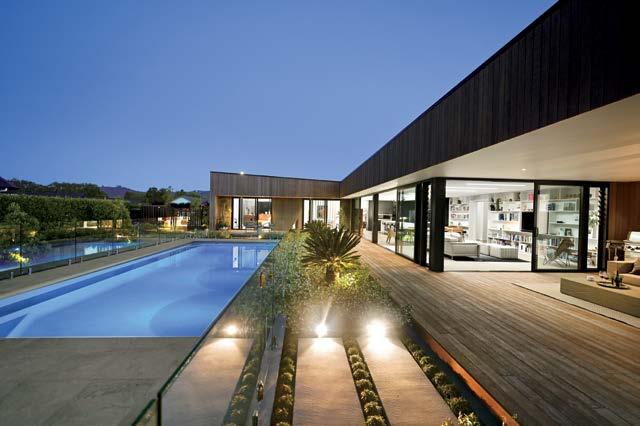


St Kilda Stunner - Family, Executives

- Open plan dining with flow to
- Four bedrooms including master bedroom with ensuite bathroom and exit to the deck.
- For added flexibility, the rumpus room at the end of the double car garage provides space for a games room, office or guest bedroom.
- Boasting a versatile kitchen with large servery window which opens to the rear entertainer’s deck; good-sized living room.
- A generous 837m² (more or less) fenced, freehold section. Bungalow Beauty - Great Location
Home So Great, They Bought It Again!

- Light-filled, warm kitchen with beautiful engineered stone benchtop, premium appliances and spacious scullery.
- Four generous bedrooms with good storage systems plus office.
- Tremendous master bedroom with walk-in robe & modern ensuite.
- Appreciate relaxation and alfresco dining in the outdoor settings, Summer fun by the pool.
- Luxurious main bathroom with tiled walk-in shower.

- Unique, one-of-a-kind home is built with love, designed for family fun, and crafted for lasting beauty.
- Modern, open plan kitchen with breakfast bar, with flow to one of the living areas. separate office with charming stable door.
- Second living area is a light-filled step down lounge featuring large window seat, made extra cozy by an open wood fire.
- Three spacious bedrooms, one of which opens to a Juliet balcony overlooking the heated, saltwater pool.


- Main Residence - Four generous bedrooms, stylish, newly tiled bathroom, chef’s dream kitchen complete with a walk-in pantry, light-filled second living area seamlessly flowing to the outdoors through bi-fold doors.
- Cottage - self-contained one-bedroom , private living area and full bathroom.
- 2 concrete patios, designed for year-round enjoyment.
- Spacious single internal-access garage, perfect for storage or as a workshop space.


Home Sweet Home - Options Galore

- Featuring 4 bedrooms upstairs and 2 bathrooms, this residence is perfect for those seeking space, functionality, and privacy.
- Expansive kitchen is the heart of the house, featuring generous storage space & seamlessly flowing into the open-plan dining area.
- Spacious lounge with a gas fireplace extends to a deck area complete with a spa and privacy blind, creating a serene setting.
- A portable cabin with a kitchenette, ranch slider, and deck — ideal for guests or a home office.
Your Secluded Sanctuary

- This stunning four-bedroom, two-bathroom plus powder room home is ready to welcome its new owners.
- Step outside to your private fully fenced backyard oasis, where you’ll find an expansive entertainers deck.
- Spacious kitchen is a chef’s dream, featuring a large island with sink, double oven, gas cooktop and ample cabinet space.
- Double garage with larger than normal attic storage and the laundry is conveniently tucked away out of sight.
Sparkling Pool

- Three relaxing living spaces; formal dining room; four bedrooms; beautiful and spacious main bathroom and ensuite; impressive spa and sauna room.
- Four paddocks, loading dock, fruit trees, private golfing green, pool, 3-bay shed all set on this 2.1 hectares (more or less) property.
- Modern secondary, removeable two-bedroom dwelling, offering options for extended family, guests or potential income.
- Expansive deck built to capture all day sun – a tranquil paradise perfect for alfresco dining and gatherings. Tamahere, Paddocks, Golf &
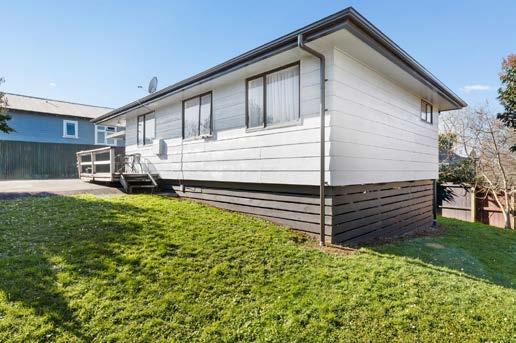
- Whether you are a small family, a retiree, or a savvy investor, here is an opportunity that you don’t want to miss.
- Delightful 3-bedroom, 1-bathroom property offers a perfect blend of comfort, style, and convenience, making it an ideal choice.
- Generous living areas bathed in natural light create an inviting atmosphere.
- Equipped with a wood burner with wetback for those cold nights.
- Enjoy outdoor entertaining or relaxation in the backyard in a fully fenced section.
Looking for a new place to call home?

Originally from Quebec, Canada, I’ve spent 16 years in New Zealand’s real estate industry. Partnering with Campbell Turner - commercial expert and auctioneer - we cover all your commercial and residential property needs in Hamilton.
As a natural people-person with a passion for helping others, I bring strong real estate knowledge gained from years of experience. Together, the Cam & Ali team offers 47 years of industry expertise, backed by a commitment to excellence. Proud to work in Hamilton’s second-largest privately owned real estate company, we’re dedicated to achieving the best results for our clients. We look forward to meeting you!
Contact Alissar at any time to discuss your next property move.
Alissar Boudreau
Residential Sales Consultant M 022 514 6622 P 07 595 0835 E alissar.boudreau@pb.co.nz

Pukete 159A Totara Drive

Property ladder purchase
Our vendors are purchasing their forever dream home and need this one sold - a lovely property that's been made super tidy, in a great Pukete location just a short drive to The Base, and walking distance to Braithwaite Park and the Waikato River walkway. Set back from the street on a rear section, the home offers privacy and a secluded outdoor courtyard with freshly stained deck and newly laid lawn. Inside, the new gleaming white kitchen has soft-close cabinetry and complements the open plan living, made comfortable year-round with a heat pump. Downstairs also features a separate laundry room, separate toilet, and internal access to the single garage. Upstairs, two comfortable bedrooms share a bathroom; the north-facing master bedroom has a ranch slider that lets in plenty of sun, and opens to a newly rebuilt balcony overlooking the courtyard below.
Cambridge 17 Alpers Ridge

Vendor relocating - must sell!
If a life of comfort and convenience is what you've been searching for, 17 Alpers Ridge might be your dream come true. Nestled in River Garden in the heart of Cambridge, this family home, built in 2013, contains 4-bedrooms, 1 main bathroom, and an ensuite and walk in robe in the master bedroom. The open plan living, dining and kitchen flows seamlessly into the beautiful alfresco outdoor entertaining area, perfect for year-round hosting with the well-planned weatherproof design. The kitchen is a culinary haven, featuring modern appliances, generous storage, and a large island that also serves as a breakfast bar. A spacious master bedroom offers comfort and ease with its ensuite and walk-in wardrobe, while three additional bedrooms makes this home perfect for a larger family, guests or even a home office.


Welcome to this tranquil property! Situated on 5.0845 hectares, this 3-bedroom, 2-bathroom residence o ers the ideal combination of modern comfort and tranquil country living. Built in 2011, the 120 sqm house is thoughtfully designed for both convenience and lifestyle enjoyment. Come see what life could be like at 115 Puketirau Road. Book a viewing today and explore the endless possibilities that await in this exceptional home!


Cambridge 14/2 Grace Avenue
Set in a quiet and friendly neighborhood, this home is ideal for first-home buyers, downsizers, or retirees seeking a low-maintenance lifestyle. With highly regarded Cambridge schools just a short distance away, families will find the location perfect for easy daily routines. Outdoor enthusiasts will love the proximity to the stunning Lake Karapiro, o ering a range of recreational activities, from rowing to leisurely lakeside walks. 3 1 1 1

Cambridge 201/14 Terry Came Drive
Nestled within the sought-a er over 50’s Freedom Lifestyle Village of Cambridge Oaks, this ‘Victoria’ Villa presents an architecturally designed sanctuary. This villa boasts a spacious designer kitchen with stone benchtops and so -close drawers. The striking raked ceiling frame in the open-plan north-facing living area, seamlessly extends to a fully enclosed, louvered conservatory which ensures all year-round enjoyment. According to the Retirement Villages Act 2003, the purchase price covers a beneficial interest in the house only, excluding the land.


Cassie Emmett M 027 215 9334
Rebekah Bloodworth M 022 361 9879


Gordonton 1905C Gordonton Road
Tirau 115 Puketirau Road


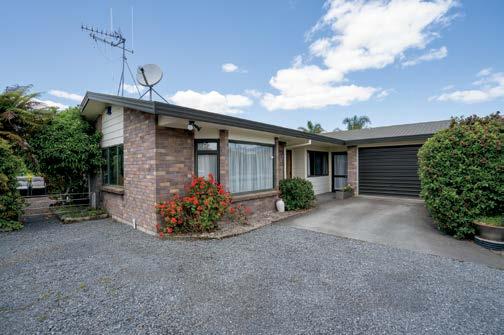





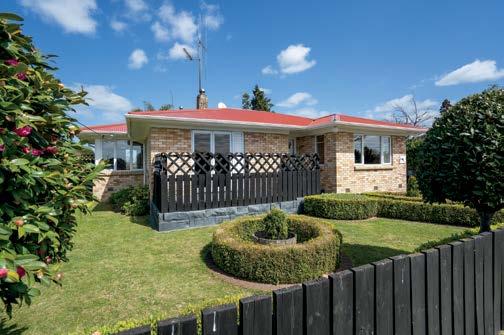





STERN, Gary Raymond –Passed away suddenly on Tuesday, 19th November 2024 at home. Aged 52 years. Dearly loved husband of Christine. Loved son of Raymond & Joyce. The service for Gary has been held. Donations to bank account No:12-3497-0007489-00 to assist with funeral costs would be appreciated. All
to the Stern family, c/- 3 Hallys Lane, Cambridge 3434.




• In Memoriam etc Call Janine 027 287 0005 or email janine@goodlocal.nz


CAMBRIDGE
CHAMBER OF COMMERCE INC AGM
Thursday, 5th
December 2024
5.30pm - 7pm
Taylor Made Community Space 22a Taylor Street, Cambridge Registrations essential
To all Members of the Cambridge Chamber of Commerce Incorporated (trading as Cambridge Business Chamber)
Notice is hereby given that at the AGM on 05 December 2024, it is the intention of the Board to propose changes to the constitution to ensure compliance with the Incorporated Societies Act 2022. A copy of the proposed constitution can be viewed at via the QR code below

or a hardcopy can be obtained from the Chamber Offices at Suite 6, National Hotel, 47 Alpha Street Cambridge. For further information please contact the Chamber Office on 07 823 3460

CAMBRIDGE
Section 101, Sale and Supply of Alcohol Act 2012 PUBLIC NOTICE
Of an application for On Licence Te Awa Lifecare Village Ltd, 1866 Cambridge Road, Cambridge has made application to the Waipa District Licensing Committee for the renewal of an on-licence in respect of the premises at 1866 Cambridge Road, Cambridge, and known as Te Awa Lifecare.


CHANGE IN VENUE: Baptist Church Hall, Queen Street
Chris�mas Meeting For enquiries: E: greypower.cambridge@gmail.com
Visitors aged 50+ keen to become Greypower members are welcome to attend. NEW MEMBERS WELCOME
FARM Employment – Weed sprayers required on large farm. Experienced in knapsack, truck reel and hose spraying. Otorohanga district txt or Ph 0274 781783.
The general nature of the business conducted under the licence is Retirement Village and Café. The days on which and the hours during which alcohol is sold under the licence are: Monday to Sunday 10am to 11pm.
The application may be inspected during ordinary office hours at the office of the Waipa District Licensing Committee, 101 Bank Street, Te Awamutu or 23 Wilson Street, Cambridge.
Any person who is entitled to object and who wishes to object to the issue of the licence may, not later than 25 working days after the date of the publication of this notice, file a notice in writing of the objection with the Secretary of the District Licensing Committee at: Waipa District Council, Private Bag 2402, Te Awamutu 3840.
No objection to the issue of a renewal licence may be made in relation to a matter other than a matter specified in section 131 of the Sale and Supply of Alcohol Act 2012.
This is the first publication of this notice.
LAND INFORMATION NEW ZEALAND
Notice of Weed Spraying in Lake Karāpiro
Property owners and users of Lake Karāpiro, including for recreation, are advised that the herbicide diquat (Reglone) in gel form will be applied via boat to the following sites at Lake Karāpiro:
• Horahora Domain
• Lake Karāpiro/Mighty River Domain
• Navigation Safety Zones 3 through 9
• Little Waipa Reserve
The work is scheduled to take place between Monday 2 December 2024 and Friday 13 December 2024 as weather, weed and water conditions permit. Treatment will not occur during weekends or public holidays and is expected to take up to two days to complete.
As a precautionary measure only, Land Information New Zealand advises users not to take water from Lake Karāpiro to consume or for irrigation purposes from the vicinity of the treatment area until 24 hours after treatment has been completed.
Notices will be placed at www.linz.govt.nz 24 hours before the planned spray dates. Warning signs will be placed at authorised public boat ramps before and during treatment and will be removed 24 hours after treatment. Changeable weather conditions may result in delays in weed spraying. Please scan the QR code below to access the most up-to-date information.
The Hazard classification for diquat is 6.1C, 6.3A, 6.9A, 8.1A, 9.1A and 9.3C.
Weed control in Lake Karāpiro is supported by the Waikato Regional Council, Waipa District Council, Mercury and Land Information New Zealand.
A copy of the Spray Plan is available at www.linz.govt.nz, which can be accessed via the QR code below. Further information is available from Boffa Miskell Ltd during office hours by phoning 0800 638 943, writing to PO Box 110, Christchurch 8140, or emailing biosecurity@boffamiskell.co.nz


