
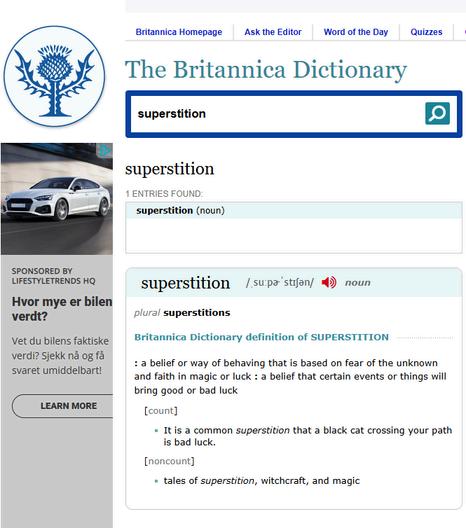
SUPER STI TION






WHAT IS S C I E N C E
& S U P E R S T I T I O N ?
SCIENCE is the systematic study of the natural world based on observation, experimentation, and empirical evidence. It seeks to explain natural phenomena through testing, analysis, and logical reasoning In contrast, SUPERSTITION rooted in tradition, fear, and the supernatural. It is based on beliefs that lack scientific support and often stems from cultural or historical traditions passed down over generations.
Science is built on facts, research, and repeatable experiments that lead to technological advancements, medical discoveries, and a better understanding of the universe. Superstitions, on the other hand, rely on myths, folklore, and anecdotal experiences that influence behavior without scientific backing While science aims for progress and understanding, superstitions often arise from fear of the unknown and attempts to explain events beyond immediate comprehension.
HISTORICAL PERSPECTIVES
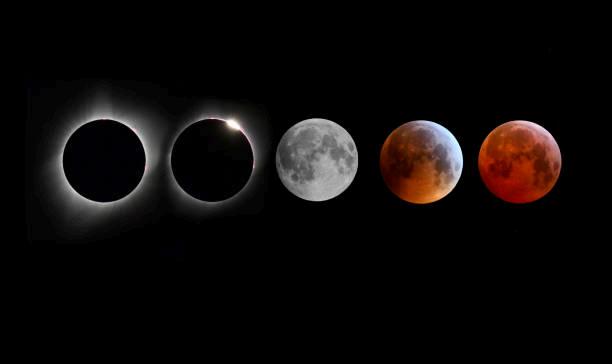
Throughout history, superstitions have played a significant role in shaping human behavior Ancient civilizations often attributed natural events to supernatural forces For example, SOLAR AND LUNAR ECLIPES WERE ONCE FEARED AS OMEN OF DISASTER, while comets were seen as harbingers of doom In many societies, illnesses were believed to be the result of curses or divine punishment rather than germs or viruses.
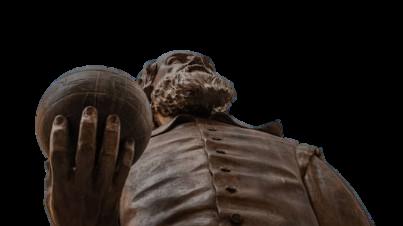
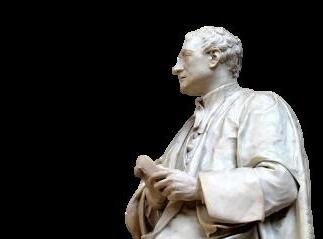
The scientific revolution, beginning in the 16th century, marked a turning point in human understanding. Scientists like GALILEO GALILEI AND ISAAC NEWTON used systematic observations and mathematical principles to challenge long-held superstitions. Galileo's heliocentric model of the solar system debunked the belief that Earth was the center of the universe, a notion that had been deeply ingrained in religious and cultural teachings.
solar eclipse, the Moon coming between Earth and the Sun so that the Moon’s shadow sweeps over Earth’s surface. This shadow consists of two parts: the umbra, a cone into which no direct sunlight penetrates; and the penumbra, which is reached by light from only a part of the Sun’s disk. See also eclipse; lunar eclipse
To an observer within the umbra, the Sun’s disk appears completely covered by the disk of the Moon; such an eclipse is called total. To an observer within the penumbra, the Moon’s disk appears projected against the Sun’s disk so as to overlap it partly; the eclipse is then called partial for that observer. The umbral cone is narrow at the distance of Earth, and a total eclipse is observable only within the narrow strip of land or sea over which the umbra passes. The maximum duration for a total solar eclipse is only 7 ½ minutes. A partial eclipse may be seen from places within the large area covered by the penumbra. Sometimes Earth intercepts the penumbra of the Moon but is missed by its umbra; only a partial eclipse of the Sun is then observed anywhere on Earth.





C O M M O N
S U P E R S T I T I O N S
S C I E N T I F I C E
X P L A N A T I O N S
A N D
.

PAGPAG (Avoiding Going Home After a Wake) → Many Filipinos believe that going straight home after attending a wake allows spirits to follow them In reality, this tradition may have developed as a psychological coping mechanism or as a way to show respect for the dead.


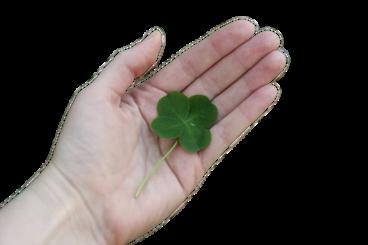
FOUR - LEAF CLOVER Brings Good Luck → A rare sight, four-leaf clovers are believed to bring good fortune. While their rarity makes them special, there is no scientific evidence linking them to luck, aside from cultural beliefs.
FULL MOON Causes Strange Behavior → Some believe that a full moon leads to increased crime, mental instability, or erratic behavior. However, numerous studies have found no concrete evidence linking the full moon to such effects.
FRIDAY THE 13TH Brings Misfortune → This superstition stems from cultural and religious origins, leading people to attribute accidents and failures to this date. Psychologists argue that this is a form of cognitive bias where people remember unfortunate events on this day more than on others.
THE PSYCHOLOGY OF SUPERSTITION
Superstitions persist due to psychological factor including cognitive biases, fear, and cultural conditioning People tend to find patterns in randomness, a phenomenon known as APOHENIA tendency leads individuals to associate unrelated ev and form false correlations.


ARTICLE 1II.
The placebo effect is when a person’s physical or mental health appears to improve after taking a placebo or ‘dummy’ treatment
Placebo is Latin for 'I will please' and refers to a treatment that appears real, but is designed to have no therapeutic benefit. A placebo can be a sugar pill, a water or salt water (saline) injection or even a fake surgical procedure


The placebo effect is triggered by the person's belief in the benefit from the treatment and their expectation of feeling better, rather than the characteristics of the placebo ‘Impure placebos’ are medications that have an active effect on the body, but not on the condition being treated.
Placebos are often used in clinical trials to help understand the real effect of a new treatment – both positive benefits and also possible side effects
Another psychological factor is the PLACEBO EFFECT, A placebo is any treatment that has no active properties, such as a sugar pill
There are many clinical trials where a person who has taken the placebo instead of the active treatment has reported an improvement in symptoms
Belief in a treatment may be enough to change the course of a person's physical illness



MPACT OF SUPERSTITIONS IN MODERN SOCIETY
HEALTH RISK → People who rely solely on ALBULARYOS may delay seeking proper medical treatment, leading to worsened conditions.
ECONOMIC CONSEQUENSES → Some businesses AVOID CERTAIN NUMBERS or locations due to beliefs in bad luck, potentially affecting sales and investments.
EDUCATION AND MISINFORMATION → Social media has amplified the spread of superstitions, often without verification The rapid dissemination of conspiracy theories and myths online REINFORCES UNFONDED FEARS AND MISBELIEF. Encouraging media literacy and critical thinking is crucial in combating misinformation and promoting rationality.
ARTICLE 1V.
Traditional healing is a part of the Filipino culture that has been passed down through many generations, and is continuously being practiced, especially in far-flung barrios and barangays in the country
From the old name babaylan, the traditional healers now operate under various names, such as albularyo, manghihilot, mangluluop, mangtatawas, and faith healers They become instrumental in ensuring that their kapwa (fellow) receives the health care a person needs regardless of gender and social status In this context, this study traced the existence of traditional n the fourth district of the province of es Sur known as Partido area. It was found ent parabulong in Partido area is commonly bularyo which is considered as the “general ner” knowledgeable in most of the folkloric es, usually versed in the use of medicinal herbs tual/supernatural interventions
ocedures and rituals were observed with es on performing oràsyon, hilot, and himolso; with their common healing paraphernalia ana and kandilâ Although there are noted ces and similarities on the description of their s and procedures, these key informants’ practices are all centered to God with a pure n to cure one’s illnesses and to be of help to ople. Hence, further studies on the ogical effects of albularyos and exploring the atures of traditional healing of Partido area e conducted and be preserved as part of the ulture and tradition
DEBUNKING SUPERSTITIONS
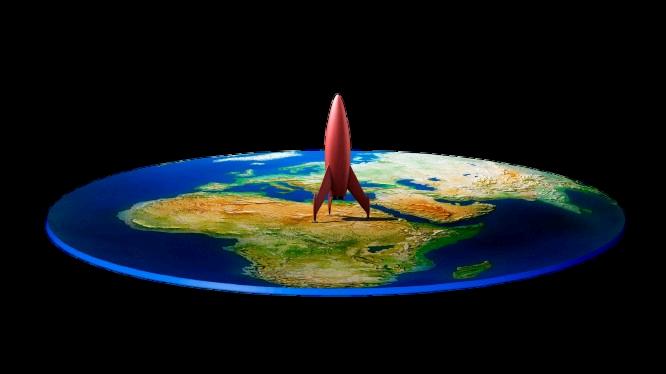

Superstitions, such as ASTROLOGY, lack scientific backing Despite claims that celestial bodies influence human personalities, rigorous studies have found no correlation between birth dates and individual traits. Similarly, the idea that the EARTH IS FLAT has been disproven through centuries of astronomical observations and satellite imaging.
Science provides tools to test and evaluate superstitious claims. The scientific method based on hypothesis testing, experimentation, and empirical evidence helps uncover the truth behind myths. For example, scientists have repeatedly debunked the idea that vaccines cause autism, a false claim that originated from a now-discredited study.


zodiac,abeltaroundtheskyextending9°oneithersideoftheecliptic,theSun’sapparentannualpath,whichcontains12constellationsorastrologicalsigns In astrology,theoutcomeofanevent(mostnotably,someone’sbirth)isaffectedbythezodiacalpositionsoftheSun,theMoon,andtheplanetswhenthatevent happened TheorbitsoftheMoonandofthenaked-eyeplanetsalsolieentirelywithinthezodiac Thezodiacwasdividedinto12astrologicalsigns,eachoccupying1/12(or30°)ofitsgreatcircle,bytheBabyloniansabout500bce ManyoftheBabyloniansigns(for example,theTwins[Gemini],theCrab[Cancer],theBalance[Libra],amongothers)arestillusedtoday Sincemostoftheconstellationsthroughwhichtheecliptic passesrepresentanimals,theancientGreekscalleditszonezōdiakoskyklos,“circleofanimals,”ortazōdia,“thelittleanimals”TheChinesezodiacsystemsimilarly involvesacycleofanimals;however,eachoftheChinesezodiac’ssymbolicanimalsrepresentsoneyearinarepeatingcycleof12years,andthelistandorderofanimals isbasedonafoundationalmythofagreatraceratherthanconstellations


D i d y o u k n o w t h a t
h u m a n s ? U n l i k e d o g
r a r e l y m e o w a t e a c
t h e i r u n i q u e m e o w
h u m a n s a l m o s t a s t h a n
A n o t h e r i n c r e d i b l e
s i g n o f h a p p i n e s s
S t u d i e s h a v e s h o w n
w h i c h r a n g e s b e t w e
h e a l i n g a n d t i s s u e r
u p a n d p u r r s n e x t t o b e t t e r
D i d y o u k n o w t h a t h u m a n s c r a v e c h o c
r e c e p t o r s n e e d e d t o e
f e l i n e f r i e n d i s n ’ t
d e s s e r t t h e y s i m p l
S p e a k i n g o f s p e