PERENNIAL Fall 2024 |

THE UNDERGRADUATE ENVIRONMENTAL JOURNAL OF BERKELEY


If a tree falls in a forest and no
We would argue that this is not simply a philosophical musing, figured under algorithmic control, the sound of that falling tree
Propaganda does not always come best-dressed in lies; sometimes it drips in When science proves injustice, redaction retaliates as a violent blade. Journalism is the tenet of Perennial.
When our innovative writers and designers push the boundaries of journalism one that works alongside communities that are women, people of color, low-income, migrants, and transgender. To address the environment with disillusionment
Environmental justice is not a flimsy opinion. It is a quantifiable, observable, can change that. We are witnessing firsthand an assault on our environment: are faltering. Marginalized communities are being surveilled,
So readers, we urge you: Be wary of the hand that feeds you sweet fruit—and quered in polish, falsehoods, and silver platters. Let the violent and unconstitutional often touted as fair, is functioning exactly as it was constructed.
We urge to write like Joan Didion—leave no napkin unmarked, no fleeting idea Read banned books. Cite them. Speak their ‘poisonous’ titles aloud. Wield your is complicity—and rhetoric is resistance.
Because journalism is a defiant tool that cannot—and will not—be silenced. Because a catalyst for reckoning.
- Ben &
no one is around to hear it, does it make a sound?
musing, but a warning. In an epoch where truth is smothered, twisted, and distree may be forever silenced—when integrity does not fit the throne’s design.
in the honey of omission. In censorship under the guise of “neutral- ity.” Journalism is nurtured to be a field of honesty and integrity. This Perennial.
journalism on the natural world, they do not labor in silence but low-income, first-generation, student parents, disabled, imdisillusionment of these people is to commit a ecological fallacy.
observable, timely—and no amount of abhorrence and censorship environment: land and liberty. Our constitutional rights and principles surveilled, exploited, and suppressed.
even more vigilant of those that offer you plastic replicas of it, lacunconstitutional arrest of Mahmoud Khalil be a reminder: the system so constructed. It was built this way—and not for you.
idea ignored. Overflow your notebooks with radical clarity. your language to argue, assert, and agitate because silence resistance.
Because your words are a vessel of your experiences and reckoning.
& Colin

“The Myth of the American Wild” by Claire Roach
“Climate Refugees” by Sofia Berman
“UC Berkeley Squirrels: From Intervention to Admiration.” by Milo Davis-Bonk
“Greener Gigs” by Donovan Brasch
“How Ecological Warfare has Targeted Palestinian Agriculture” by Gabriella Chao
“Green is the New Orange” by Tiva Gandhi
“Reduction, Interuppted” by Elliott Turner Kordis
“Combating Climate Nihilism” by Elizabeth Dally
“The Perception Problem” by Reva Gokhale
“The Movement of Architecture towards Sustainability” by Shagun Juthani
“Diseases by a Thousand Cuts: Autoimmune Diseases and Climate Change” by Kathryn
“More Fish in the Sea? Large-scale Commercial Fishing is Harming Local Communities
“Subterranean Synergy” by Vyas Chipalkatti
“Powering Artificial Intelligence: The Energy Crisis Behind the Tech Revolution” by “Māori Urban Indigeneity and Resistance” by Kaisheng Wu
“How a Frog-Free Future Could Reshape California” by Samantha Murphy
“The Story of Strawberry Creek and its Restoration Efforts” by Saira Ahmed
“Queering Floral Phenology and Human Impact: Investigating the Effects of Urbanization on Reproductive Timing in Eschscholzia californica” by Benjamin Bartlett
“Tracing Patterns of Whispering Bell Distribution Through Wildfire Zones” by Emma Mott
“Life Stage Variability of Skeletonema Costatum’s Potential as a Biofuel and Impacts on Ecological Well-being” by Abby Wilber
“Assessing the Impact of Farmlands and Native Plant Diversity on Bombus occidentalis’ and Diadasia enavata’s Population Stability and Health” by Esther Suh
“The Chuquicamata Mine: Should Land and People be Sacrificable?” by Sarah Ansell
“Visual Insights into Amazonian Biodiversity: A Scientific Exploration Through Photography” by Yichen Gao Research
Kathryn Conley
Communities in Chile” by Amelia Jarolim by
Emma Mott



designed by CATIE KUEHL
by CLAIRE ROACH
The creek glistens as the sun illuminates the water. Butterflies and waterbugs dance across the water’s surface, which moves as little fish dart back and forth. Moss, rocks, and rich vegetation create a kaleidoscope of greens, browns, and grays. A tremendous stand of blue gum eucalyptus trees tower over the creek, and sunlight wafts through their floating leaves, making shadows of half moons and stars in patterns. Sometimes the breeze extends wafts of a cold and earthy scent, but it’s almost overwhelmingly rich with eucalyptus. When I close my eyes, I can hear birds chirping and insects buzzing and the steady babbling as water rushes over rocks.
This opening paragraph was written on the bank of Strawberry Creek inside of the Eucalyptus Grove on UC Berkeley’s campus. It’s surprisingly easy to experience natural sublimity within the 200 acres that the university rests upon. In my two, almost three semesters at Berkeley, I’ve seen a family of raccoons help their struggling sibling to catch up when her paw was causing her to lag behind them, countless skunks meandering on
Euclid, deer, and bucks with full horns by the Greek Theatre, two great horned owls hooting above the Clark Kerr Fire Trail, comically large rats prowling between restaurants on Durant, cockroaches scuttling underneath the stalls in the Main Stacks bathroom, monarch butterflies landing on flowers on my daily walk home from class.
When the constant hum of the city escapes nature a burning need more than an elusive wish, we quickly diminish and forget the accessibility of nature that is within reach of our hands, or, more realistically, in our distant view beyond a library window.
In The Trouble With Wilderness, William Cronon declares the state of nature to be false – that it’s only a reflection of what humans want to see rather than being born from and flourishing by its own volition. In truth, wilderness is a human creation; a concept produced by civilization to escape from the disease of humanity. Cronon’s central point offers that it’s not just the destruc-
tive extraction and depletion of the environment that continues our incessant war on nature, but also the very principles upon which we value and consider the natural world.
“As we gaze into the mirror it holds up for us, we too easily imagine that what we behold is Nature when in fact we see the reflection of our own unexamined longings and desires,” wrote Cronon. “For this reason, we mistake ourselves when we suppose that wilderness can be the solution to our culture’s problematic relationships with the nonhuman world, for wilderness is itself no small part of the problem.”
The perception that true nature can only be found away from humanity is detrimental to the care and treatment of the natural world and perpetuates the existing structures that claim that the two should be apart. In truth, most of the land that we perceive as wild has been cultivated by humans for thousands of years. Because the environment is remarkably interconnected, I don’t believe it’s possible to find a part of nature that’s not impacted by humans. The atmosphere thousands of feet above our heads is filled with the carbon that we emit; coral reefs are dying as a direct result of ocean acidification; microbes must adapt or die in defense against fertilizers that leach into their soil.
Despite our reputation of violence against nature, it’s the recognition that humanity can have positive impacts on the natural world that is most crucial to the preservation of a beautiful, diverse, complex Earth. Human stewardship can oftentimes be necessary for the survival of animal and plant life, especially where the consequences of industry have already altered the functioning of natural systems.
Perhaps the most significant case of land stewardship in California’s history is that of the Ohlone or Costanoan peoples. For 10,000 years before the Spanish arrived and colonized the area, indigenous tribes inhabited the East Bay. Due to thin soils and harsh bay winds making the land inhospitable to agriculture, Bay Area Indigenous groups were hunters, gatherers, and fishers. They maintained villages throughout the pasture and marshes and managed the land with routine burning.
The Costanoan tribes used fire to renew food and medicinal resources while simultaneously mitigating future risks for wildfires. Every five to ten years, indigenous tribes would burn forests to clear grasses and small shrubs while leaving the larger trees. Burning prevents overgrowth in the understory, allowing native plants to access sunlight, water, and nutrients that are necessary for their survival, as well as revitalizing crucial food sources for wild animals.
Then, when the Act for the Government and Protection of Indians outlawed man-made fire in 1850, a nationwide fight against fire began. Forests that indigenous tribes carefully managed for thousands of years were logged and replanted in dense groves that spread fire much quicker. The frantic cadence of commercial timber practices didn’t have the patience for consider of what the forests might need; from both ecological and anthropocentric perspectives, health and safety were sacrificed to meet the demands of America’s growing industries.
The popularity of fire suppression–including the iconic and virtuous Smoky Bear–exacerbated the current issues with wildfires and climate change. In recent history, California’s wildfires are burning increasingly more land at faster rates. They’ve been renamed “mega-fires” because of their devastating impact, and they’re only worsened by drought and extreme heat. When such vast amounts of forests burn, hundreds of years worth of carbon stores are added into the atmosphere alongside the loss of our beloved trees.
When colonial powers traveled to the Bay Area, they were quick to disregard indigenous land practices as primitive. They saw vast expanses of pasture lands and a bay in a prime location for a port, both dramatically below their full utility potential by the standards of European societies. First the Spanish and later the westward expansion of America wielded paternalism and Manifest Destiny to justify the forced removal of tribes from their lands and ultimately construct an ideological separation of civilization and wilderness.
The Spanish missions and colonists of the frontier justified their conquering of the East Bay lands with the belief that they were morally obligated to enhance the welfare of all people: the basis of modern utilitarianism. However, the basis of colo-
nial ideologies fails to recognize the environment with value outside of transactional utility. A government and people founded on economic expansion see production and innovation as a solution to inequality but don’t respect the limits of natural resource extraction required to achieve endless production.
Instead of listening to the pleas of nature, we intend to separate the destiny of humanity from the constraints of our physical world. Many theorists have long determined that wilderness is a human creation designed to alleviate and deflect the guilt of overconsumption and resource depletion. By claiming that nature isn’t in close proximity to humanity, we can pretend that daily buying, driving and burning fossil fuels doesn’t harm those spaces.
The myth of wilderness was constructed alongside colonial ideologies that believe more production will solve global poverty. However, expansion economics fail to fully comprehend the devastation of nature’s exploitation furthering inequities and exacerbating most of the issues we so desperately wish to solve.
Furthermore, colonialism drives an American cultural hierarchy of nature that situates [white, European, male] humans on top. In the Bible, there’s a stark vertical hierarchy between earth and divinity called the scala naturae. Deriven from the works of Aristotle, Plato, and Plotinus, complexity and value increases as the ladder stretches towards the divine. Rocks and plants are at the bottom with humans and spiritual beings closest to God. Though the theory was most popular only in 17th-century Greece, it had an immense impact on Western thought and values.
If humans are given special orders by God, then this means that they have a divine right to carry about their agendas for the sake of all. Under the scala naturae, the employment of human power to help ‘lower’ beings quickly looks much like the justification of paternalism. The subjugation of nature leads to the disregard for essential land stewardship practices.
Giving extra care and attention to the natural world in our everyday lives can be a solution to mend the separation of nature and humanity. And just as the concept of wilderness was once
created, the reconception of what the environment means to us will lead to a better connection and understanding of humanity’s situation and role as a hopeful, diligent steward of Earth.
If we treat this world as precious as the wilderness that we so desperately worship, hold sacred, and preserve, then we can continue to experience the awe of the natural world in our daily lives. Preserving the accessibility that all people have to nature in cities and communities helps to dissolve the standard that only the wealthy can escape to wilderness in their leisure. One doesn’t have to take a weekend trip to Yosemite to appreciate the beauty of nature if we protect the nature that we live with as dearly as that far away and that we deep “wild.”
Trust for Public Land (TPL) is a nationwide non-profit organization, headquartered in San Francisco, that works on land conservation for public access as well as park development. The land protection team protects from development and promotes public recreation and access to natural spaces by acquiring privately owned land for public agencies. On the other hand, the park team focuses on improving equitable park access in urban areas through schoolyard renovation and the building and development of parks.
Kira Maritano, a senior program manager on the San Francisco Bay Area Development Team, has a special regard for schoolyard projects, where TPL renovates or builds green spaces at schools in the Bay. They’ve completed projects in the Tenderloin, a neighborhood of San Francisco with a very high population density and lack of urban green spaces.
“These projects have major environmental benefits; they cool the neighborhood, they help mitigate urban heat island effect, they support native species and pollinators, they absorb stormwater and can help reduce the impact on stormwater treatment systems and reduce localized flooding in some of these areas,” explained Maritano.
We know that green spaces are incredibly important to the flourishing of all. Trees and parks alleviate some of the stress of urban heat islands, causing the surface temperature of an area to lower and therefore mitigating some of the most extreme impacts of climate change on vulnerable
communities. However, after the implementation of these projects, the great duty of community engagement remains. Fostering connections between nature in urban areas can heal the divide between society and the natural world.
Maritano noted, “Environmental stewardship, environmental education programming is really, really critical to the success of these projects. If we improve a park or renovate a schoolyard but there’s no connection from the community user group to the improvements, they’re not very likely to be successful. They have environmental benefits but they do absolutely require a kind of community buy-in and community care.”
This community care that she is talking about is the collective duty to care about the environment around us. On the scale of the greater environment, if we are talking about stewardship of Berkeley and California, and the planet, it’s important that the community buy-in is coming from all of us.
Humanity’s impact on the natural landscape can look different than one of manicured cultivation. Land can still look “wild” and have been touched by people. By dismantling the myth of the wilderness, we are confronted with true responsibility for our actions and their consequences on wildlife.
In reconstructing our concept of wilderness, humans must be understood as natural ourselves. If we follow Darwin’s theory, man has evolved alongside every other form of life. Most animals, including humans, create structures that they live and play in. If you truly look, it’s not so hard to compare Unit 3 to a beaver den or Wheeler to a rabbit’s burrow.
designed by SOPH
by SOFIA BERMAN
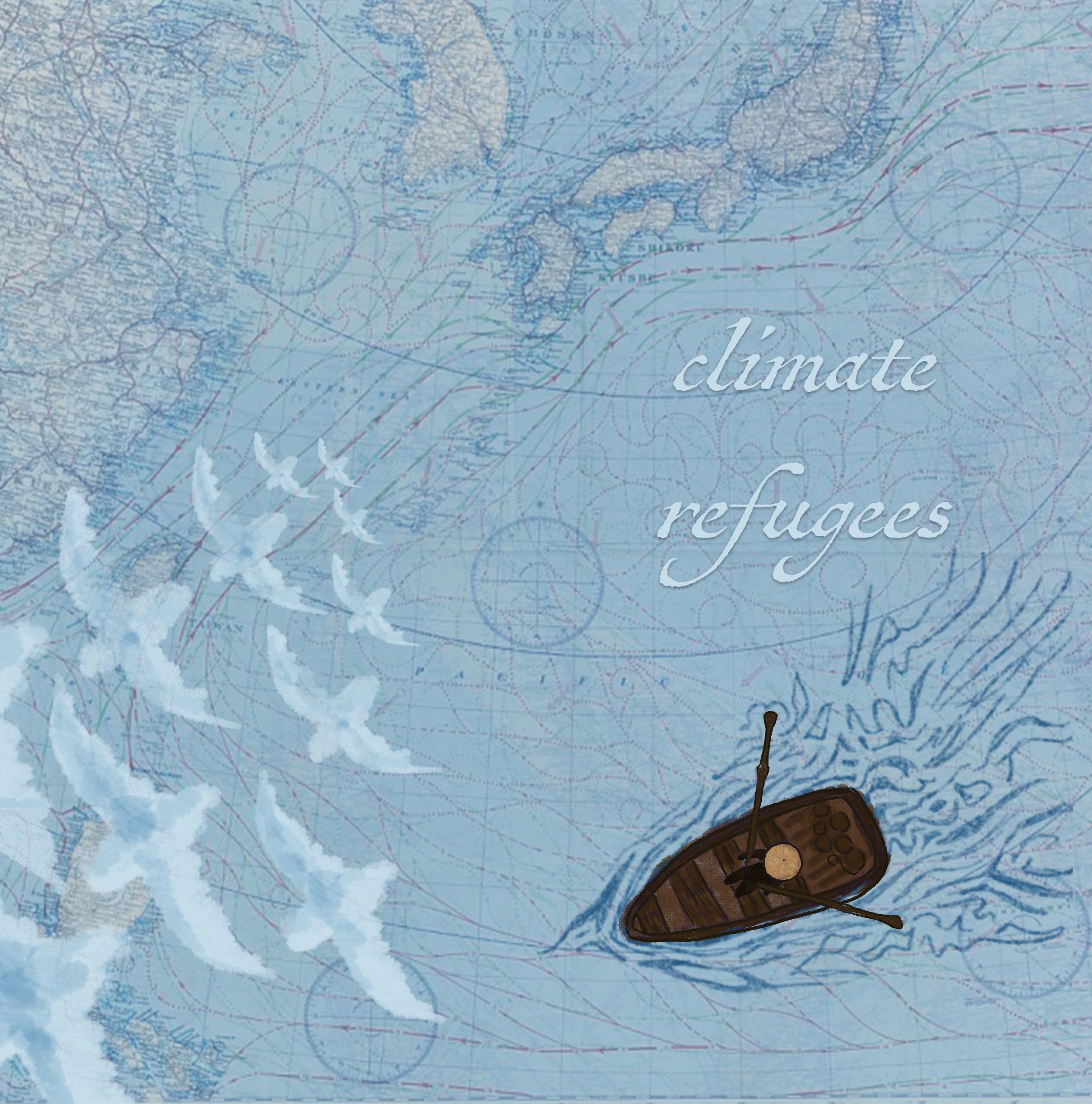
The term “refugee” is widely used throughout history books and news outlets, often referring to those forcibly displaced from their homes due to war. This usage of the word does not fully encompass what the term actually refers to, though. Oxford dictionary defines the word as “a person who has been forced to leave their country in order to escape war, persecution, or natural disaster.”
Despite being defined as refuges, a “climate refugee” isn’t actually a term that is supported by international law; those displaced from their homes due to climate change experience very real struggles that aren’t often talked about. The lack of recognition of climate refugees poses a large problem, as without awareness, climate refugees are under-acknowledged and cannot access proper help or resources.
Furthermore, addressing the root causes of the
issue must be prioritized and emphasized in political and public dialog. Only by having these conversations and raising awareness about climate refugees and climate crises can we make progress toward resolution in both modern and future contexts.
What are the climate crises, and where are they most prevalent?
According to the Internal Displacement Monitoring Centre (IDMC), climate-related disasters displace approximately 20 million people every year, and the numbers are climbing as climate issues continue to intensify. The International Organization for Migration (IOM) reported that by 2050, these numbers could increase to 200 million people globally. According to a World Bank Report “Groundswell - Preparing for Internal Climate Migration,” without immediate action of addressing climate crises, Sub-Saharan Africa, South Asia, and Latin America could have over 140 million people migrate by 2050.
Climate crises that have given rise to climate refugees span from fires, to droughts, to floods and hurricanes. Rising sea levels, water shortages, and decreased crop productivity are among other contributing factors.
Not only do many who are affected need to leave their homes, they are also faced with the difficulty of finding other places to go. Many relocate internally, meaning that they remain in their country; others leave their country entirely.
Climate refugees also face the legal issue of exclusion from refugee definitions. António Guterres, UN Secretary-General and former UN High Commission for Refugees says, “Climate change [is] now found to be the key factor accelerating all other drivers of forced displacement [...]. But if they cross a border, they will not be considered refugees. These persons are not truly migrants, in the sense that they did not move voluntarily. As forcibly displaced [are] not covered by the refugee protection regime, they find themselves in a legal void.”
Those who must leave their countries due to climate change or natural disaster do not quali-
fy for protection under international law. While the 1951 Refugee Convention offers protection to many, it does not include those fleeing climate crises or natural disasters. The legal exclusion of climate refugees poses yet another obstacle they must overcome.
Regional refugee instruments such as the 1984 Cartagena Declaration and the 1969 OAU Convention are more encompassing, giving protection to refugees who may be fleeing conditions that are beyond their control. While these regional instruments were made before climate crises became a public issue, it is clear that they were intended to address issues such as these.
Another powerful way that Climate Refugees brings awareness to the issue is through documenting case studies. By bringing in perspectives from climate refugees themselves, and hearing and reporting about their experiences, they are able to have a strong impact, highlighting their realities. Climate Refugees states, “We lack understanding on [climate change’s] contribution to displacement, details on issues faced and the number of people displaced across borders as a result of climate change in all its forms - from environmental degradation to climate disasters.”
The Climate and Migration Coalition does similar work to Climate Refugees, making the voices of climate refugees heard in hopes of emphasizinghighlighting the gravity and reality of the issue. One climate refugee from Mexico states, “...times have changed. The rain is coming later now, so that we produce less. The only solution is to go away, at least for a while.”
This testimony speaks to the fact that climate refugees come from a variety of backgrounds. Some environmental challenges cause them to lose their main sources of income, and for others, their homes have become uninhabitable.
Organizations/ efforts to help resolve this issue
There exist several organizations that are actively addressing the issue of climate crises leading to increasing numbers of climate refugees. They aim to raise awareness about climate refugees
and their situations and give them the help and resources they need and deserve.
Climate Refugees, one of these organizations, plays a prominent role in addressing this issue. Founded in 2015, Climate Refugees is an independent and non-profit organization that brings both attention and action to people displaced by climate change. The organization states, “Our reports that identify climate change as a driver of displacement provides a human lens on climate change, documenting human rights conditions side-by-side with political, social, economic, and conflict risk analysis. We identify cases, trends, gaps and policy recommendations, which we leverage [...] to advance changes in policy and practice that promote better understanding and safeguard rights and protections.”
Another organization that is working toward addressing this issue is the World Bank Group. Founded in 1944, the World Bank Group states, “Internal climate migration may be a reality but does not have to become a crisis.”
Climate Refugees approaches the issue of climate refugees through both an environmental and human rights perspective. also brings up an interesting perspective, that not only is the issue of climate refugees an environmental one, it is also concerned with human rights. The organization high- lights that climate change dispropor- tionately impacts the impoverished people in the world who have played minor roles in the environmental issues that are affecting them the most. For this reason, the organization states, “We use the term ‘climate refugees’ to provoke conversation, [to] emphasize the political responsibility of climate change [and] to raise awareness of its ability to impact, one might even say, ‘persecute some more than others.’”
Current policies exist addressing the climate refugee crisis exist on national and international levels. Specific solutions that are being implement-
ed include the Strategic Plan for Climate Action 2024-2030, released by the United Nation High Commissioner for Refugees (UNHCR).
These efforts can largely contribute to the solution, but they are not sufficient in combating the problem entirely. A greater awareness, a political shift, and public motivation to address the problem are what can inspire and create lasting change.
by Milo Davis-Bonk
My first true friends at UC Berkeley were the campus fox-squirrels; I was far more interested in their unflinching eyes than any of the traditional campus landmarks, with an extensive camera roll full of squirrel pictures to prove it. The campus squirrels proved fascinating, with their gutsy tendencies to reach out towards my hands and frequent consumption of leftover food across campus. Intrigued by this abnormal behavior, I embarked on a journey to learn more about these beacons of light in the UC Berkeley community.
Historically, the UC Berkeley fox-squirrels have served as a point of interest for students, an intrigue demonstrated through established hunting traditions including a supposed slapstick peanut-ona-string method in the early 2000s and prominence on UC Berkeley’s official merchandise and social media pages. The squirrels have even garnered academic attention, functioning as test subjects for UC Berkeley researchers in the psychology and biology departments, as well as starring in DeCal course “Squirrel Biology”. Fox-squirrels (sciurus niger) are a subspecies of tree-dwelling squirrels native to the Eastern and Central United States, introduced in
California around 1904.
To understand the cultural impact of the campus fox-squirrels, I spoke with the UC Berkeley Squirrels (@ berkeleysquirrels) Instagram account holder about their experience documenting campus wildlife. After establishing the account in 2019, the anonymous founder of @berkeleysquirrels has remained the account manager, in addition to functioning as its primary photographer. This wholesome account involves the Berkeley community by posting student photography submissions, and has amassed over 4,000 Instagram followers, including many of UC Berkeley’s official Instagram accounts.
This voice for the squirrels expresses that they have received a widely positive reception, citing the “expressive, quirky, and incredibly cute” natures of campus squirrels and their proximity to “real-life Pokémon” as a key reason for the account’s popularity. The account holder mentions the particular appeal of fox squirrels to the international student population at UC Berkeley, who may not have encountered squirrels prior to their time here. They describe @berkeleysquirrels as a “worthwhile passion project”, a means of lovingly sharing this “[helpful]
palate cleanser; Berkeley students have so much stress going on with academic demands and global affairs – sometimes it’s just nice to see a cute squirrel.”
@berkeleysquirrels encourages students to be “mindful about not littering and not feeding them processed foods that are very far outside of their natural diets,” and emphasizes the importance of keeping dogs on-leash when on campus, urging pet owners to prevent their domestic animals from “terrorizing” squirrels.
Despite their historical, continual, and unavoidable presence at UC Berkeley, the university itself has not provided any formal instructions or information for students regarding the treatment of campus fox squirrels. This absence of any formal teachings may contribute to the mistreatment of campus squirrels, from overfeeding to the presence of unleashed dogs, to the common, unfortunate reality of roadkill surrounding UC Berkeley’s on-campus housing structures.
As our annual admission rates rise and the city of Berkeley becomes even more densely populated and denaturalized, campus squirrels are at great-
er risk of human-related harm in an increasingly urbanized, anthropocentric environment. Dr. Robin, a biologist at UCLA and self-proclaimed squirrel gazer, classifies fox-squirrels as “scatter-hoarding animals, meaning they’re going to store food by putting one thing in one place and the next thing in another place: ev erything is scattered about.” Although scatter-hoarding is not uncommon for fox squirrels across the country, “their physical environ ment [accelerates] the evolution of the hoarding strategy that they’re using”, and with a space as unpredictable as UC Berkeley, for aged tree nuts, acorns, etc., are widely dispersed. Dr. Robin de tails the conse quences of scat ter-hoarding: squirrels are of ten incapable of defending their food, easily losing track of it in vast places such as Berkeley. Thievery and territorial defensiveness thrive within fox-squirrel communities. In an effort to hide their food, a campus squirrel might also
partake in riskier behavior, storing food “in a place that is more dangerous because it’s less likely to be stolen from, but might get eaten or run over by a car along the way.”
Dr. Robin states that, though the Berkeley squirrels hold a very special place in her heart, “They are invasive, and they successfully colonized areas where they aren’t native”. Robin attributes this to both a boldness and willingness to explore, as well as their habitualized state as “members of the [UC Berkeley] community” due to student interaction.

Despite their incorporation into the community, Robin states that overall, the UC Berkeley squirrels are “still incredibly normal, reliant on eucalyptus and oak [trees]...their diets are not revolving around human food. If humans left Berkeley today, all of our campus squirrels, if our trees were there, would be there and enjoying themselves… they’re behaving like squirrels behave in urban environments.”
rels are capable of fending for themselves, humans notwithstanding, Dr. Robin notes that human impacts like traffic, unleashed dogs, and the unclear barriers between wild and domesticated animals certainly affect these creatures. These factors are particularly harmful considering that a squirrel’s instinctual “fear tactic” involves freezing in place, “Because the things that usually predate them based on movement are less likely to see them”. Dr. Robin’s advice for appropriate human interaction includes instructions to “be careful with your trash” and “not intentionally bait squirrels by feeding them”-she emphasizes that “you’re doing a kindness by keeping a human-wildlife boundary.” However, this should not deter students from “appreciating how intelligent and innovative these little animals are”. “Although it might feel sad that you can’t feed them, spending time [and observing] what they’re doing is really cool! [The squirrels] are a major point of beauty and excitement for the campus, my main message is just to appreciate them [without disturbing them].”
As for practical guidance on how to protect community fox-squirrels, Dr. Robin says, “if you see a squirrel crossing the street, honk at it, you might actually do the [animal] service and scare it into moving before it freezes,” – despite a honk seeming contradictory in its aggression, Robin states that many squirrels’ lives have been saved through this tactic. In a glance towards the future of Berkeley’s fox-squirrels, I designed by
CATIE KUEHL
Although the squir-
spoke with Ashley Damm, an animal rehabilitation specialist with 12 years of experience with wildlife restoration in the Bay Area, including the local Peninsula Humane Society in Burlingame. Damm is an experienced Wildlife Rehabber –meaning she works with “sick, injured, or orphaned wild animals” in hopes of improving their survivability and eventually reintroducing these creatures back into their natural habitat; she specializes in rehabilitating birds and squirrels – at the time of speaking with Damm, she was bottle-feeding a trio of orphaned fox-squirrels.
Damm categorizes the majority of the fox-squirrels she encounters as “orphaned babies, usually [found] on the ground by themselves, flea-ridden, cold, and emaciated…this gives us a sign that they need some sort of medical attention.”
Damm cites the second most prominent reason that squirrels require rehabilitation are cats in urban and suburban regions: “being touched by a cat can be a death sentence for an animal, so it’s better to prophylactically treat them. The second we see the animal, we move quickly; [cat-caught squirrels] can pass within the first 24 hours if infection sets in, there are very low odds for survival in these situations.”
On certain occasions, Damm also encounters “squirrels that have been hit by a car, those ones will usually come in with neuro symptoms, spinning in circles, we’ll give them anti-inflammatory medications and lots of fluids to try to help with that. Those cases are a little difficult because they’re
adults, not only are they dangerous to work with, but you don’t know what you’re going to get with that animal.”
Regarding the effects of human interaction on wild squirrels, Damm shares an experience she had last year, where her organization encountered, “a lot of squirrels who were losing their inhibition to hate humans…We were trying to figure out how to convince them to not like humans so much, and return to running away,” as squirrels who are not cautious around humans are difficult to safely release back into their natural habitats. In addressing the root of this human-seeking behavior, Damm says, “I understand people love to feed squirrels… …but it’s not safe to habituate them to equate us with delicious nuts.” in addition to the steps one should take in helping physically debilitated squirrels, Damm offered the following guidelines on human intervention:
“If [a squirrel is] comatose and you feel like you can throw a towel on it and get it into a box without handling it, I would do that. I would take it to WildCare in San Rafael, your local animal control, or a nearby Humane Society– some of these [organizations] can come out for the squirrel [retrieval]. If the squirrel is aggressive or fully mobile, you won’t be able to do anything, because if you can’t capture it, [in these situations], it’s probably better to call animal control, so you don’t get bitten. But, if for whatever reason, you needed to touch a baby [squirrel], I would suggest using a t-shirt or something soft to gently move it; the little babies have their eyes closed for about the first four weeks of
their life, so they don’t really know what’s going on. As long as you wash your hands afterwards, you should be totally fine, you just need to wash your hands properly: that goes with all wild animals, always wash your hands!”
Due to their sociable nature, UC Berkeley’s fox-squirrels have always attracted student attention yet, within their affections, students have a responsibility to these stellar creatures to interact with them without disturbing their lifestyle and survivability. This is not to suggest that we are forbidden from admiring the squirrels, but we should acknowledge that our actions as humans may disenfranchise them, and our entertainment is not worth devaluing another being’s life. Although it is tempting to feed and pet these lovely animals, for the well-being of the squirrels, human involvement should be limited to appreciation unless you are participating in a guided, scientific study or a wildlife rescue situation.
by Donovan Brasch
Concerts are an unforgettable experience, and live music is an integral part of many people’s lives. But have you ever considered the environmental cost? In the United States, concert-goers produce over 116 million pounds of waste each year, while each large music festival consumes roughly 30,000 megawatts of energy.
In response, the Bay Area has made significant strides toward reducing waste and promoting sustainable practices. Iconic venues like the Greek Theatre in Berkeley, The Fillmore in San Francisco, and the Outside Lands Music Festival lead the way with reduced-waste events, reusable cups, innovative energy solutions, and waste-sorting volunteers. As awareness grows, the Bay Area is setting a new standard for sustainability in live music.
Until the 2010s, the environmental footprint of
live music events went largely unnoticed, leaving a trail of waste and inefficiency in its wake. Today, a transformation is underway, driven by innovative practices and technologies that aim to make live music a more sustainable form of entertainment. While small changes, like replacing single-use plastic cups with reusable steel pints, compostable dishware, or even implementing energy-efficient batteries, may seem minor on their own, collectively, they signal a significant movement towards sustainability.
Large-scale events are synonymous with convenience, often at the cost of sustainability. Cheap, single-use plastics typically offer venues an easy profit margin, but they contribute massively to waste levels. This doesn’t have to be the case. With companies such as TURN
that offer reusable cups with a comprehensive capture-sanitize-and-reuse system, profits and sustainability can find a happy compromise. The Fillmore in San Francisco has implemented this system. According to SF Environment, the venue now eliminates 176,200 single-use cups annually and achieves a net annual savings of $1400 through reducing their waste-management service fees. These changes show how even simple adjustments can have both environmental and financial benefits.
Morgan Fitzgibbons, Director of Sustainability and Community Engagement for Outside Lands, has also led efforts to address these issues in the festival sphere. Since 2019, he has helped launch impactful initiatives, like the pint cup program in partnership with Steelys, aiming to make reusable cups an accessible, affordable option. Unlike many venues that price these cups at $15 or more, Outside Lands intentionally keeps them affordable at $6 each, following Fitzgibbons’ philosophy to “try to get them in people’s hands.”
Additionally, Outside Lands has tested energy-efficient smart batteries through the help of companies like REVERB and switched some power sources to biodiesel, although challenges remain in fully integrating renewable energy due to limited feasibility for solar power in Golden Gate Park.
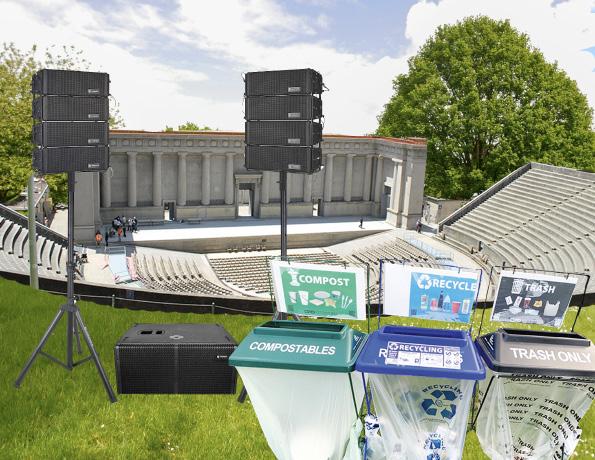
Did you know UC Berkeley’s own Greek Theatre became the first major music venue to implement a venue-wide composting program in 2007? This pioneering effort set the stage for sustainability in live music, showcasing how large-scale venues can lead the way in environmental responsibility.
Green Team volunteers at the Greek Theatre educate concert attendees on recycling and composting, ensuring proper waste sorting while promoting sustainability within the UC Berkeley community. This culture of environmental stewardship unites students and local volunteers to support waste reduction efforts. The Bay Area is certainly lucky to have a fanspace that collectively tries to properly sort their trash and support environmental initiatives, but hopefully in the future more communities will catch on to these types of programs.
Supporting this movement, organizations like Clean Vibes and Eco-Products provide invaluable resources. Clean Vibes specializes in waste sorting at events nationwide, while Eco-Products supplies renewable and post-consumer recycled plates, cups, and utensils. As Morgan Fitzgibbons of Outside Lands remarks, “They’re really the best at what they do.” These services, along with falling costs for sustainable products, make it easier for other venues to follow in the Greek Theatre’s footsteps.
Artists and fans alike are increasingly backing these initiatives. Musicians such as Jack Johnson and Coldplay are at the forefront of green touring, integrating eco-friendly merchandise, partnering with sustainable venues, and creating nonprofits that raise millions for ocean conservancy and sustainable food systems. Their leadership and efforts inspire fans to consider the environmental impact of concerts, reinforcing the need for collaboration between venues, artists, and audiences to make live music both memorable and sustainable. Sustainable concert practices also extend beyond major venues. UC Berkeley’s Surfrider Chapter leads the #NoSolo initiative, an anti-single-use cup campaign for college music events. Attendees of these #NoSolo Band Nights can either bring their own reusable cups or purchase Surfrider-branded Steelys cups to fund ocean conservation efforts. Sam Torres, President of Berkeley’s Surfrider Chapter, explains that the initiative began with the idea that a very small change made by individuals across an entire university, can produce monumental results.
Torres emphasizes the importance of accessibility and community in this movement, noting that, “We normally get those cups back so we can reuse them long-term for many events.” It is crucial that grassroots initiatives like Berkeley Surfrider’s #NoSolo continue to expand beyond UC Berkeley and the Bay Area. Sam Torres shares that their chapter is now creating a “how-to” guide for other colleges and communities interested in adopting #NoSolo’s waste-reduction model.
However, as venues and live music events grow more ambitious in their sustainability efforts, they encounter unique challenges, particularly
with energy needs. Concerts and festivals rely heavily on consistent and high-capacity energy to power lighting, sound systems, stage setups, and vendor operations.
According to Morgan Fitzgibbons, Outside Lands has made notable strides in addressing these demands through renewable solutions, such as biodiesel-powered generators and digital diesel technology. These options represent an important step away from traditional fossil fuels, helping to reduce emissions and set a precedent for other large-scale events. Yet, achieving fully clean energy remains a challenge. While renewable technologies like solar and wind show promise, they often require costly infrastructure and lack the reliability or scale for large events. Furthermore, remote festival locations without grid connections rely on generators, and battery storage for multi-day festivals is expensive and logistically impractical.
Despite these challenges, Fitzgibbons remains optimistic, stating, “I expect that efficient renewable energy for festivals is a space that people will be innovating a lot in the next five years.” Festivals like Outside Lands are paving the way for live music with minimal carbon impact, but achieving this vision will require collaboration among organizers, energy companies, and innovators to address financial and logistical barriers.
As sustainability increasingly becomes a competitive advantage, more venues and festivals are likely to adopt these green practices. The Bay Area, with its proactive community and innovative approaches, could serve as a model for other regions aiming to green their music scenes. With continued efforts, the future of live music promises to be both enjoyable and sustainable, benefiting both concert-goers and the environment. There is still progress to be made, and the potential for what lies ahead is truly exciting.

Gabriella Chao designed by CATIE KUEHL
When I was a young girl in Hebrew school, I was introduced to the concept of the Tzedakah box, where Jewish children like me could raise money to plant trees. I never expected that 10 years later, I would be learning that this charity money was going to bring invasive species to Israel, depleting water resources and creating monocultures.
The words ecocide and genocide share the same Latin suffix, derived from the word “caedere” which means to kill. These words are entangled in history and social significance. For the Palestinian people, the systems of violence and devastation that target their ethnicity are tied to the same powers that eradicate their ecosystems.
bridges the separation between political and climate crises. Amidst the war on culture and land is another battle; the fight for Earth’s resources. As Palestinian people protest their occupation, they are also protesting the degradation of their environment. While this is an uphill battle, it is not an impossible one. For many Palestinians, the implementation of small-scale agriculture using traditional ecological knowledge represents a larger movement towards resistance and resilience.
Palestine is already placed in a vulnerable position to climate change as a region with limited access to arable land and water and many coastal areas prone to flood. Military occupation has only exacerbated these issues for both Palestinians and Jews as well as other groups living in the region through the destruction of water infraby
The movement Free Palestine is intrinsically connected to the fight for climate justice and
structure. However, those in Palestinian territories such as Gaza have been most acutely impacted, where 50-75% of cropland has been destroyed, leaving 96% of people with food insecurity.
The disproportionate impact on marginalized communities qualifies this conflict as what scholars call a “climate apartheid,” where those in power have the means to escape the apocalyptic environmental conditions they have caused.
Shreya Chaudhuri is an undergraduate student at UC Berkeley who created the decal course “Decolonizing Environmentalism,” which explores the relationship between global decolonial movements and indigenous sciences. She explains other instances of climate apartheid, saying, “The sustainable energy industry is fueled by exploitation of the Congo, batteries are getting dumped in Chile and India, and the Marshall islands still face the impact of nuclear testing… it is a repeating story that is true even in the Bay Area with redlining on stolen land.”
To understand how this phenomenon is unfolding in Palestine, it’s crucial to frame that the issue did not start in the past decade or even century. Zionism has been around since the 1800s, paralleling the persecution of Jews and the rise of imperialism. In 1917, Britain issued the Balfour Decla ration, expressing their support of a Jewish state in Palestine, partially to help them gain control of the Middle East for financial reasons and partially to gain the support of Amer ican and Russian Jews in World War 1. The state of Israel was officially de clared several decades later in 1948.
This heavily helped Europe unjustly absolve themselves of responsibility for the tragedy of the Holocaust while furthering their political agenda of controlling oil in the Middle East and asserting Western dominance in the region. Hamas was then created in 1987, and although it is just one politi cal faction in Palestine, it governs Gaza, where the war is currently centered. Hamas invaded Israeli territory on Octo ber 7th, following 76 years of battle for land. In the past 8 months, the conflict became more intense, more violent, and more devastating for all sides, including the earth.
As of 2023, 83% of trucks carrying food, medicine and goods have not been able to enter Gaza. People in Gaza lost 97% of their average daily water consumption, and 83% of West Bank water resources became controlled by Israel.
The region of Gaza is projected to experience climate change greater than the rest of the world, with projected warming of 4.8°C by 2100, a 22% decrease in precipitation, and a sea level rise of up to 1m. Combined with the emissions and land degradation associated with occupation, Palestinians are at urgent risk of extreme weather events, food and water insecurity, and more. The agricultural sector has faced the worst strain on natural resources. According to Oxfam’s Middle East Director, Sally Abi Khalil, starvation is being used as a weapon of war. Despite Resolution 2417 condemning the use of starvation of civilians as a warfare strategy, which was adopted by the UN Security Council in 2018, Gaza has 5% of their normal water, making cooking the little available food like rice and lentils nearly impossible. In addition, more than 15,000 farmers have lost their cropland due to Israeli bulldozers targeting Palestinian fields and orchards, along with bakeries and grocery stores.

Despite the massive environmental justice implications of this imperial regime, Israel proclaims itself as an environmentally conscious state through extensive greenwashing. For example, Israel claims that they “made the desert bloom” and improved the ecological health of Palestine. In reality, most Palestinians were farmers before the creation of Israel, and were successful cultivators of a fertile and vibrant Mediterranean landscape.
Since the occupation, Israel has pushed to replace native vegetation including the culturally significant olive trees with plants such as pines and eucalyptus. This artificially produced European landscape has come at the cost of the region’s biodiversity, which is veiled by the Jewish National Fund. These
plants also require frequent flushing with water to reduce the salinity.
Dr. Barzin A. Moradi, the Center for Analytical Chemistry chief at the California Department of Food and Agriculture, has extensively researched soil and salinity dynamics in crops. He illustrates how this salinity builds up, stating, “When you get water from the river and apply it to your land, the water gets taken up by the plants or evaporated, and then there is some remaining salt in the water that builds up in the soil over tens of thousands of years. If that continues, it will take productive land out of production.”
Natural springs have been depleted by Israelis who have unlimited access to water pipelines and use 5x more water than Gaza and the West Bank combined, despite being half the population size. Furthermore, blockades have stopped desalination plants from functioning, making crops nonviable. The water crisis severely worsened this past year. Israel has privatized the water, intentionally making freshwater unaffordable for Palestinian irrigation. They also require permits for transporting goods, and have control over the border, allowing them to export goods grown in Palestine as Israeli products, depriving farmers of their share of profits.
One farmer, Youssef Abu Rabieh, has taken to planting crops in recycled containers in between bombed buildings. Others, like The Dalia Association, a community foundation in Palestine, advocate especially for women and youth to implement these strategies. Ms. Lina Isma’il, their Community Programs Officer, even mentioned that members of agroecological farms partake in grassroots organizing to achieve community-wide food freedom and share resources and revenue with each other.
“Community engagement and traditional ecological knowledge are tools of liberation and adaptation to a changing climate.”
This is crucial because even if the war-damaged cropland was replanted today, there would need to be alternative ways of growing food while farmers wait for those plants to be profitable. Dr. Barzin A. Moradi comments on the benefits of this strategy, expressing, “Look at tree crops for example, they need five, six, seven, eight years to be able to start to bear fruit, so it’s a longer-term type of investment. If you have a garden of olives, and there is a war, it will take another 10 years to get back to where you were. Do you have the stability or support to get there?”
Amidst this tragedy, Palestinians have demonstrated remarkable traditional ecological knowledge that has enabled them to persevere, proving that ancestral skill and community engagement are the keys to survival. NGOs are the primary source of funding for farmers resisting land grabs and communal food projects. In addition, principles of agroecology, a form of sustainable farming that works with nature, are being utilized.
This looks like home gardens growing squash and eggplants that do not require plowing, solar-powered irrigation, and rubble nurseries.
The path to this stability, peace, and self-sovereignty for oppressed nations remains unclear and the road ahead is undeniably difficult. However, it is clear that community engagement and traditional ecological knowledge are tools of liberation and adaptation to a changing climate. Whether that be the result of war under imperialism or ecocide from global warming, understanding nature and the role humans play is essential.
Chaudhuri shares her belief that a Free Palestine can lead the way for other movements globally. She expresses, “[Palestine] is an example of present-day active colonization. It is an opportunity to reject this colonial narrative that has dominated our world for centuries because our struggles are always connected in so many ways.”
A Free Palestine means a step closer to collective liberation and a healthier planet. The strength of the Palestinian people is a reminder that just as plants can grow out of the rubble and human spirits can be revitalized, our ecosystems can do the same. The return of nutrients to the soil and water to the reservoirs in Palestine is deeply intertwined with the return of land to oppressed people all over the world. Solidarity movements with those in Palestine are about more than their individual freedom, but the collective liberation of all creatures of nature and a future beyond colonization.
by Tiva Gandhi
Orange is the New Black follows the stories of inmates in a minimum security prison, Litchfield Penitentiary. This groundbreaking show covers a multitude of systemic struggles faced by people in prisons while highlighting the various imperfections of correctional officers, prison personnel, and incarcerated individuals. Orange is the New Black humanizes the inmates while acknowledging that some crimes deserve punishment through nuanced character arcs and rich backstories.
Throughout the seasons, Litchfield is characterized as an unsanitary and hazardous environment, starting in the pilot when Piper resorts to wearing pads as shoes in the shower to avoid foot fungus. Eventually, the writers draw from real-life events at the Riverhead facility when portraying the flooding of fecal waste seeping from toilets to shower pipes. Ruth Margalit from the New Yorker writes, “People housed in the Riverhead facility, according to the lawsuit, are forced to live with overflowing sewage and amid black mold, rust, and rodent infestations.” Such conditions make an alarmingly unsafe and dehumanizing environment to live in, day in and day out. The prison’s built environment further emphasizes its bleakness. The walls are painted a drab light yellow, separated by cloudy, translucent windows that obscure the connection to the outside world. In the same way, the outside area has little reprieve; a black fence and patches of dried grass surround the inmates. Confined within the fences are slabs of concrete that stretch most of the prison grounds. There are no trees, no plants other than sparse grass, and no semblance of nature to break the monotony of confinement.
Season 3, Episode 13 titled “Trust No Bitch” highlights a distinct moment of humanization. In the season’s final scene, nearly all the inmates rush out of a missing fence panel towards a lake. The sequence begins with a character, Norma, finding the hole in the fence, and what follows this mo-
ment signifies hope within the confines of prison life. However, it is important to recognize what the hope is. It is neither about escaping the harsh conditions of the prison nor avoiding accountability for their crimes. The inmates knew that true freedom wasn’t on the other side of the fence, evidenced by Janae Watson, who marveled, “Nah, nah! It’s the lake! It’s not escapable or nothin’.” This declaration wasn’t met with despair, but rather hope as Suzanne, known as Crazy Eyes, cheered, “It’s a miracle.”
So, if the goal wasn’t to escape, then what was the miracle? I argue the miracle was access to humanity, something intrinsically found in nature. Access to humanity was freedom from oppressive prison conditions that treated the inmates as less than human. Representative of the prison system of the incarcerated women of Litchfield are subjected to a litany of abuses: rape, the hardships of a transition to privatization, arbitrary confinement in the Special Housing Unit (SHU) for solitary isolation, suicide attempts, gloppy meals, prison slave labor, institutional and interpersonal racism, transphobia, and much more. Beyond these egregious offenses, the incarcerated women of Litchfield are routinely dehumanized. They were often called solely “inmate” rather than by their names, got ‘shots’ (documented infractions) to fulfill a fabricated quota, and were forced to live in incredibly cramped spaces.
The crimes committed by these women are often used to justify their treatment, no matter how inhumane it may be. Even if we were to ignore the socio-economic circumstances that drove them to commit these crimes and disregard the true impact of those actions, how can we justify stripping away their humanity? How can we justify dehumanizing people when the goal is for them to reintegrate into society eventually? While serving their time, all these women want to feel human, and many of them want the tools to be productive members of society. However, the prison robs the
incarcerated people of their individual identity and dignity. Poussey best expresses the desire for dignity when convincing Taystee to join her at the lake: “Let’s just be free for a second. It’s gonna be the last time in a long time.”
Therefore, I argue that the true miracle of nature lies in its ability to offer healing from the relentless oppression of the prison system. Throughout the final scene, healing is explored in various lights; I will explore healing with community and religion through a lens of nature. Together, these elements reveal how even the most confined and dehumanized individuals can find moments of renewal and connection, especially through time with nature.
Healing through Community Building within Nature
Nature brought a sense of mindful peace, communal connection, and childlike wonder into the lives of the women at Litchfield, offering solace amidst their struggles. Generally, spending time in nature has positive mental health benefits. Prisons are filled with people who struggle with mental health issues, but their struggles go unheard as there is a serious lack of proper treatment for those struggling. Jamie Wallace, an incarcerated person who struggles with bipolar disorder and schizophrenia, testified that was given a razor blade from a corrections officer when he revealed his struggles with mental health. Later it was found that he committed suicide in the prison’s mental health facility’s highest level of mental health care the “stabilization unit.” In Riverside County, there were 19 deaths
in one year attributed to prison staff neglect, access to drugs, and unsafe bunk assignments. Many of these deaths were suicides. Unfortunately, this is not an isolated incident as many incarcerated people are told to just take their own life.
Often, solitary confinement is used as a punishment within prisons; the impact of solitary confinement on mental health is severe. Those who stay in long-term solitary confinement experience anxiety, paranoia, perceptual disturbances, and deep depression. Even though 8% of the prison population is in solitary confinement, 50% of all prison suicides occur in isolation. Mental health is a concern within prisons that is heavily ignored, leading to fatal and depressing outcomes.

The Annals of the American Association of Geographers published a finding that prison locations closer to natural vegetation saw lower levels of self-harm and violence between prisoners and staff. Contact with nature produces calming effects, reduces stress, and improves general health among people in prison. Even images of nature implemented through prisons have been found to have a calming effect on people in prison. Additionally, programs that engage incarcerated people in forms of environmental stewardship have been shown to decrease recidivism rates, improve mental health struggles, build a sense of community, and reduce violence.
The incarcerated women of Litchfield experienced nature in a variety of ways. For long-time friends
Flaca and Maritza, the natural setting was a haven to embrace the child-like joy of their friendship after taking a deep breath in their sublime surroundings. However, the power of healing and nature was stronger for characters who had been facing more adversity during their time in Litchfield.
Pennsatucky, grappling with the trauma of being raped by Corrections Officer (CO) James Coates and her estranged relationship with her friends Angie and Leanne, found fleeting moments of introspection beyond the prison fences. Boo initially attempts to get revenge on Pennsatucky’s behalf, but Pennsatucky expresses discomfort with payback. Her experiences in prison leave her with much to learn from. Leaving the prison fences allows her to be free from inmate drama and the emotional scars inflicted by CO Coates. In a poignant moment, she plays chicken with Boo, Angie, and Leanne in the lake — signifying her acceptance of her difficult past and willingness to develop a new perspective with those she comes to love. While much of Pennsatucky’s growth comes from inner strength, it was the time to go outside of prison that allowed her the freedom to process her pain, and ultimately heal.
Another story of healing and growth unfolds through the relationship between Poussey and Soso. Brook Soso is a young biracial woman imprisoned for a political demonstration, initially expecting a women’s prison facility to reflect communal living. On the contrary, she is immediately disgusted by the appalling conditions and hurt by the attitudes of the other Litchfield women. Being half-Asian and half-white isolates her further, as the few Asian women at Litchfield denied her acceptance, and the white community subjected her to slurs and exclusion. Brook’s attempts to build a community with a new counselor fail, as the program is shut down, leaving her once again with no community. Eventually, Counselor Healy prescribed her antidepressants. Poussey finds Soso in the library after she attempted suicide by overdosing on antidepressants. If any of the staff discovered the attempt, Soso would be subjected to the cruel conditions of life in a psychiatric ward. To protect her, Poussey and her friends take care of Soso, offering community support and care. This newfound connection becomes most apparent during a pivotal moment when Soso and Poussey hold hands in the
lake, cementing the start of a romantic relationship. In the lake’s serene freedom and peace, far away from the oppressive confines of the prison, Soso regains the humanity she lost by not having a community.
One of the most compelling moments is the scene of Cindy’s immersion in the river. Earlier in the season, many inmates began claiming Judaism as a means to access Kosher meals to evade the unappetizing meals they were served. The high cost of providing Kosher prompted private companies to test the sincerity of people’s faith. Determined to maintain her Kosher meals, Cindy studied movies with Jewish-themed focuses, but despite her efforts, she failed the test. Undeterred, Cindy continues to study to become Jewish, resulting in an unexpected spiritual awakening.
While her initial intentions are seen as a joke for Kosher meals, Cindy’s growing faith becomes apparent during a heartfelt exchange with a rabbi. When questioned, Cindy vulnerably reveals, “I was raised in a church…where I was told to believe and pray. And if I was bad, I’d go to hell. If I was good, I’d go to heaven. And if I’d ask Jesus, he’d forgive me, and that was that. And here y’all saying ain’t no hell…ain’t…sure about heaven. And if you do something wrong, you got to figure it out yourself. And as far as God’s concerned, it’s your job to keep asking questions and to keep learning…It’s like a verb. It’s like... you do God.” This revelation emphasizes a pivotal moment in Cindy’s character development, where before she had a history of running away from her problems. This moment instead provides her with a new outlook on life and truly develops her character. However, she wouldn’t officially be Jewish until her immersion which had to take place in a mikvah or a ritual bath essential for formal conversion to Judaism.
For Cindy, the discovery of an opening in the fence was an opportunity–not only to officially embrace Judaism but also to accept a transformative new path in her development. Water in nature becomes a symbolic and essential part of her growth. Rabbi Dana Sharon, the head of the Rabbis’ Network for Rabbis for Human Rights, explained “Water is seen as a liminal element — powerful for both good and bad…Because of this duality, water is central to major transformations, like those in-
volving life, death, or a change in personal status, such as marriage or conversion…Water is deeply embedded in the faith as a symbol of transformation and purity.” It is important to recognize that without the seemingly miraculous absence of a missing fence panel, Cindy’s evolution might never have happened. This underscores a larger systemic issue: prisons are structured to inhibit rehabilitation and true growth. Rabbi Dana Sharon adds, “Religious and spiritual needs are frequently overlooked, even though they can be essential to personal growth…Denying these needs undermines the purpose of incarceration, which should be rehabilitation and reintegration into society. Judaism teaches that everyone carries a divine spark, a reflection of God. Recognizing and nurturing that spark is vital for human dignity. Prisons should support this process by providing spaces for spiritual and personal growth, not just doing the bare minimum to keep people alive.” Leaving the prison was an attempt to feel more human so that Cindy could find deeper means of growth to help Cindy move past the behavior that landed her in prison and broke her personal life.
Through various methods of growth and healing, their time in the lake revealed that the incarcerated women had no intention of escaping their prison sentences. These women wanted to escape the lack of humanity they were subjected to daily. Time in nature gave the women time to reflect and feel at ease which provided them the ability to finally feel human again.
The overflowing happiness in this scene does little to hide the obviously murky, polluted water. When asked why she avoids the lake, Chang explains, “That lake (is) probably another Crestwood project. Storage for fracked gas or crude oil, full of salt brine run-off.” More importantly, she asserts, “They don’t let nice things next to prisons” raising a string of questions. How does this polluted water impact incarcerated people? Why are prisons frequently located in environmentally hazardous locations? Who is deemed deserving of polluted water? And, fundamentally, how can we expect rehabilitation while simultaneously dehumanizing people?
After spending time in the lake, various characters referenced the adverse effects on their health. In the following episode, Angie divulges, “I’m not sure how clean that water was ‘cause I’m starting to get a gnarly itch on my thighs.” Her friend, Leanne, affirms, mentioning similar discomfort. For inmates, exposure to a hazardous environment is not uncommon. The report “America’s Toxic Prisons: The Environmental Injustices of Mass Incarceration” demonstrates the pervasiveness of this issue. A GIS analysis conducted in 2010 found that at least 589 prisons were located at least three miles of a Superfund clean-up site on the National Priorities List, with 134 of these prisons situated just one mile from such sites. To understand the gravity of this statistic, it’s important to know what a Superfund Cleanup site entails. The EPA defines these sites as areas contaminated by hazardous materials or improperly disposed of such as manufacturing facilities, processing plants, landfills, and mining operations. Sites on the National Priorities List are particularly severe due to their level of hazardous waste.
The proximity of building prisons close to polluted land is directly evidenced by the numerous health issues experienced by incarcerated individuals. At SCI Fayette, incarcerated people were exposed to drinking water with overwhelming levels of Total Trihalomethanes (TTHMs), a chemical linked to cancer. In some facilities, the water supply contains arsenic levels exceeding safety limits. In states like Texas, where heat waves are often fatal, the only means to mitigate the heat is water–but when it contains arsenic levels 2.5–4.5 times the EPA’s maximum, it becomes a double-edged sword. To survive, incarcerated people are forced to drink gallons of polluted water, leading to a host of health issues, including coronary artery disease, type II diabetes, hypertension, bladder/ kidney issues, untreatable stomach diseases, and high cholesterol.
Unfortunately, access to clean water was virtually impossible for many incarcerated individuals. To drink safe water, incarcerated folks were forced to purchase bottled water from the prison commissary or in-prison store–an expense few could afford. Instead of being provided with clean water, incarcerated people were advised to boil their
water. However, the only equipment available for purchase was hot pots, which merely warmed water rather than boiled water. While this article emphasizes water pollution as a form of environmental injustice, prisons are susceptible to nearly every form of it. Specifically, Angola Prison is located in “Cancer Valley,” an area plagued by extreme air pollution that contributes to respiratory issues and cancer among residents. Additionally, the prison’s inadequate infrastructure fails to mitigate the danger of intense heat waves. These environmental justice issues emphasize the inhumane treatment of incarcerated individuals and reinforce the urgency of addressing those systemic failures.
Why are prisons located in environmentally hazardous locations?
Once land becomes hazardous, using it for most purposes is considered inhumane. Yet, leaving the land unused is viewed as wasteful. According to “America’s Toxic Prisons: The Environmental Injustices of Mass Incarceration,” the conclusion is that repurposing the land is the only ‘acceptable’ option, which leads to the prison project. As Tracy Huling asserts, the timing of the prison boom coincided with the loss of manufacturing jobs, which left this land as the cheapest option for development. Furthermore, prisons are kept far away from cities, serving as a psychological tactic to disconnect society from incarceration; this leads to society forgetting about incarcerated people and incarcerated people disconnecting from their lives outside of prison. Dr. Jonathan Simon, a professor of law and legal studies at UC Berkeley who teaches courses on the punishment system, asserts, “This neglect isn’t a bug — it’s a feature of how we think about punishment. Prisons are often located in wastelands, far from cities and communities, so we can forget about them.” Instead, Dr. Simon suggests that prisons “should be at the center of our communities, where they’re visible and connected to resources like medical care and families, not in remote, degraded areas.”
them. For example, a men’s prison in San Luis Obispo was “fined $600,000 for spilling 220,000 gallons of raw sewage into a creek.” The spills continued for many years after this fine. Many prisons have been caught falsifying environmental records and only 1000 of 6000 jails and prisons are properly monitored; this means that the true environmental hazards caused by prisons are not fully documented nor understood, but need to be explored more thoroughly.
The current purpose and ideologies that drive the United States’ prison system foster an atmosphere that not only allows but encourages poor treatment of incarcerated people. No one deserves polluted water, yet environmental justice cases consistently reveal that communities of color, low-income communities, and incarcerated individuals are disproportionately subjected to pollution. This reality compels us to examine how society justifies forcing certain people, incarcerated people in this case, to endure water pollution.
In The New Jim Crow, Michelle Alexander examines society’s reliance on prisons and how incarceration is a tool to create a new form of second-class citizen. Specifically, Alexander argues that mass incarceration enforces a racial caste system, which, while predominantly affecting African Americans, also encompasses some white people. Alexander writes, “In the system of mass incarcerations, a wide variety of laws, institutions, and practices — ranging from…political disenfranchisement and legalized employment discrimination — trap African Americans in a virtual (and literal) cage.” The normalization of political disenfranchisement, or the loss of voting rights, and employment discrimination illustrates how easily the label of ‘criminal’ justifies the removal of rights.
Additionally, prisons are polluters of the environment. So not only are they built on hazardous land, but they actively exacerbate the environmental concerns for the incarcerated people living within them and the environment around
Similarly, in Are Prisons Obsolete? Angela Davis writes, “We thus think about imprisonment as a fate reserved for others, a fate reserved for the ‘evildoers,”...Because of the persistent power of racism, ’criminals’ and ’evildoers’ are, in the collective imagination, fantasized as people of color” (16). Because imprisonment is characterized as Davis explains, this leaves room for cruel punishment sentences. Locked far away, these people
are stripped of all of their humanity. It no longer matters why they committed a crime. The possibility of their rehabilitation is fully in their hands as opposed to the responsibility of the state. Not being able to see or hear the stories of the incarcerated people, we imagine the worst and therefore allow ourselves to collectively forget the people behind bars and the struggles they face. If we are unable to humanize people, their humanity no longer matters. So, egregious health and environmental concerns can easily be brushed to the side and forgotten about. Ultimately, our entire conception of environmental justice issues relies on our preconceived notions of incarcerated people.
How can we expect rehabilitation of people who are actively dehumanized?
The goal of prisons has evolved; however, the mere fact that prison sentences end means we expect people to grow and evolve from their crimes. Unfortunately, prisons are not conducive to rehabilitation. Recidivism rates, or the rate at which formerly incarcerated people fall back into criminal behavior, are generally understudied, but expose how many formerly incarcerated people end up back in prison. A study of 24 states revealed that 82% of released people are rearrested within 10 years and 43% within 1 year. Given the disparity in pay between a formerly incarcerated person in their first year of release and the general population, it is clear why 43% of released people are rearrested.
There are many reasons why formerly incarcerated people are rearrested. The Prison Policy Initiative heavily focuses on unemployment, low pay, and homelessness as issues that push for formerly incarcerated people to commit crimes again. Orange is the New Black visualizes this issue in an earlier season when Taystee is released, only to end up in prison because of her inability to find stable housing. The dehumanization of incarcerated people enforces a system that denies them the chance to create a life outside of prison. As explained above, our societal image of incarcerated people justifies slave labor in our prisons, which leaves prisoners with nearly no money when they are back into society. They gain little to no skills that can be applied to a job in an ever-evolving society that relies on a highly skilled labor force. However, outside of systemic issues that halt rehabilitation, dehumanization makes humans lose
their ability to grow and heal into people who choose the right path. In a previous episode, Gloria Mendoza had a part in spreading transphobic rhetoric about Sophia Burset which led to her getting put in solitary confinement for “her own safety.” In “Trust No Bitch”, Gloria expresses guilt and then confesses, “It’s this place. We’re locked up, all of us in a cage. And it brings out, man… it brings out the worst, most selfish parts.” This theme is heavily prominent in Orange is the New Black; many characters, including the lead Piper Chapman, reveal how prisons brought out a buried evil within them that could have gone undiscovered. Now, these characters hold one of two fates. First, they have to live the rest of their life knowing the evils they are capable of, as shown through Piper Chapman. Secondly, their sentences increase which magnifies a persona built off of the dehumanized version of themselves; this is evidenced by Dayanara Diaz who starts in prison for some undisclosed drug charges and ends up in Maximum Security with a life sentence for killing a guard and as a drug dealer. Many times within this show I wondered How many of these characters would have moved on to live non-criminal, productive lives if they had been given a second chance?
Environmental injustices in prisons highlight how incarcerated people are dehumanized which leads to an insufficient method of rehabilitation and reintegration. Two schools of thought offer various solutions to our broken prison systems. First, there is prison reform vaguely defined as various changes to the prison system that improve the lives of incarcerated people, increase rehabilitation, decrease recidivism rates, and improve the prison system. Secondly, there is abolitionism defined as removing the oppressive prison system and replacing it with redemption and reconciliation. Patrisse Cullors delivers various stories of hope and redemption in “Abolition And Reparations: Histories of Resistance, Transformative Justice, And Accountability.” Through her stories, Cullors expresses that abolition relies on the following principles: “(1) have courageous conversations; (2) commit to response versus reaction; (3) experiment: nothing is fixed; (4) say yes to one’s imagination; (5) forgive actively versus passively; (6) allow oneself to feel; (7) commit to not harming or abusing others; (8) practice accountability
for the harm caused; (9) embrace non-reformist reforms; (10) build community; (11) value interpersonal relationships; (12) fight the U.S. state and do not make it stronger.”
Angela Davis has argued that prison reform and abolition cannot work together as reform creates a prison system that is harder to abolish given its better conditions. Dr. Simon argues that there are reforms that work towards abolition. Dr. Simon explains, “Abolitionists consider whether a reform is likely to improve the dignity of the lives of incarcerated people. Anything that improves dignity — providing education, adequate medical care, nutritious food, or access to nature — can be seen as an abolition reform.” As an example of an abolitionist reform, Dr. Simon examined California’s Proposition 57, which allows sentence reductions for participating in rehabilitative programs.”
Keeping the well-being of incarcerated people at the forefront, and pushing for reforms that lead to abolition is important for our society as a whole. Moving from punishment to a method focused on the hope of human kindness and rehabilitation will be a marker of human development and progress.

designed by ALEX KAMRAS
by ELLIOTT TURNER KORDIS
UC Berkeley, the number 1 public university in the world, is incapable of reaching its own carbon reduction goals. While over the past 30 years carbon emissions at UC Berkeley have decreased, we have to
question if these reductions are enough to create significant changes in the surrounding community. In 1990 UC Berkeley’s carbon emissions were at 151,942 metric tons (MT) for two specific measures, Scope 1
and Scope 2. These measures include direct emissions, such as “natural gas from the campus cogeneration (heating and cooling) plant, purchased natural gas, emergency generators, campus fleet [vehicles],
emissions from refrigerants”, and indirect emissions, such as “purchased electricity”, respectively (Greenhouse Gas Inventory). These emissions represent 72% of all of UC Berkeley’s emissions. In 2016, UC Berkeley created a Carbon Neutrality Planning Framework hoping to lower Scope 1 and 2 emissions by 80%, or just below 50,000 MT, by 2025. In 2023, UC Berkeley’s Scope 1 and 2 emissions registered at 138,185 MT, or an 11% reduction since 1990 — not quite reaching the goals that the university was hoping to achieve.
Since the 1990s the United States’ carbon emissions have decreased by 1.5% in 2022 (EPA- US Greenhouse Gas Inventory). However, to meet the standards of the Paris Agreement, an international climate change treaty, the U.S. needs to reduce all of its gas emissions by 50-52% from its 2005 emission levels by 2030 (National Climate Task Force). This goal is steadily becoming a dream due to continued partnerships with Big Oil, the conglomerate that includes ExxonMobil, Chevron, ConocoPhillips, and others, that use propaganda to glorify their practices. Using the state of California and UC Berkeley, the world’s #1 public university, we can take a snapshot of America and learn why there are struggles to significantly lower carbon emissions. So why did we stagnate? How is our continuance of these levels of emissions harming the surrounding communities? And most importantly, how can we overcome challenges we may have faced to reach our goals? In the 2016 framework, created for the purpose of outlin-
ing a multitude of emission reduction methods as well as their pros and cons, UC Berkeley acknowledged anticipated challenges during the efforts to reduce emissions. They listed concerns about financial constraints, the age of the buildings on campus, as well as the size and location of the campus (Stoll et al. 2016 [see Sustainability Planning]). Additionally, they addressed problems related to pressure from partners and stakeholders in UC Berkeley’s energy resources. Sparse information available when researching leads to concerns from community members about the success of the projects. Lack of public updates, no progression in the climate framework, and struggles with contacting people in charge of carbon reduction projects challenge individuals interested in learning more about how to help advocate for carbon reduction teams. The concern arising from a lack of information generated about the efforts is that UC Berkeley might not be being fully honest about its efforts to reduce carbon emissions. As a student and proponent of carbon reduction programs, I want to know what I can do to help lower emissions, but with gaps in understanding, there is little I can do other than hope that UC Berkeley is doing its best. While an information void is present, there are observable efforts, such as the greenware in dining areas, the categorized trash containers, and the electric vehicles. If intentional lack of transparency or information exists on behalf of UC Berkeley then it is impossible to truly engage with these solutions and harness their positive impact. The university needs
to make consistent public updates about the carbon reduction process in order to prove that these changes are worth the money and effort. Yet still, if these efforts are helping, to what extent? How are the surrounding communities continuously affected by the carbon emissions of UC Berkeley and on a bigger scale, the nation?
Carbon emissions, especially excessive emissions, directly correlate to and cause increases in global warming, actively fueling dangerous climate crises. In California, carbon emissions have been linked to more forest fires due to the hotter and drier weather we’ve been experiencing (NOAA). Additionally, people of color, specifically Native peoples, unhoused people, and elderly people are at higher risk for heat related illnesses (WHO). And with longer heatwave seasons, these communities struggle to find reprieve from the vicious weather. The Native people that live in the UC Berkeley area are part of the Ohlone tribe. The Amah Mutsun Tribe, a band of the Ohlone Tribe, recognizes and addresses the effects of climate change on their land and on their cultural practices. In 2022, the Amah Mutsun Tribal Band and the California Office of Environmental Health Hazard Assessment (OEHHA) recognized that “climate change is causing loss of culturally important plant and bird species due to the drought, wildfire, and increasingly variable rainfall” (OEHHA). These crises occur throughout California and the nation as a consequence of excessive carbon emissions. “Institutional barriers” have also been attributed to not
only the inability of Native peoples to decide how to help their land, but also to the inability of people in general to get the help they need when dealing with the effects of climate change (EPA- Health of Indigenous Populations). Unhoused people face brutal heat waves with little to no protection or resources. In 2022, Fresno, CA had 99 days of temperature at or above 90*F (Vanessa Rancano, KQED). These temperature extremes result from carbon clogging up the ozone layer and trapping in heat rather than releasing back into the atmosphere. This layer of ozone sits in the troposphere where it “can trigger a variety of health problems” (EPA- Ground Level Ozone Pollution). Health problems, such as asthma, negatively affect at-risk populations; children, unhoused, and elderly people, for instance. Additionally, the heat trapped by the tropospheric ozone leads to dehydration, heat stroke, kidney and heart disease, and a myriad of other conditions (EPAHealth of Older Adults). These already challenging conditions are further exacerbated by the lack of housing, financial assistance, medical care, and social support, making the dangers faced by unhoused individuals even more severe. Elderly people also face similar complications. Older adults may have “limited mobility… compromised health system…and may depend on others for medical care and assistance” putting strains on their body that heat and the ozone can worsen (EPA- Health of Older Adults). Knowing who is affected and acknowledging realistic challenges to significantly low-
er carbon emissions helps us study, create, and implement solutions to help these communities. In 2022, California implemented a clean energy plan that involves the “carbon removal/ carbon capture of 20 million metric tons of emissions by 2030 and 100 MMTCO2e by 2024” (State of California, 2022). Additionally, efforts already in practice at UC Berkeley include “expanding the use of low and non-carbon energy supply for power and thermal needs… reducing energy use through building level energy efficiency projects… curbing growth-related emissions… increasing the efficiency and using less carbon intensive fuels in the vehicle fleet… [and] reducing water use and waste sent to the landfill” (Climate). However, we can do more as an institution. In Europe, Bioenergy with Carbon capture and Storage is a technology that is seen as necessary for countries to meet their net-zero emission goals. Additionally, a study released in 2020 reveals numerous natural solutions to reducing carbon emissions such as “reforestation of site disturbed by wildfire”, “Grassland restoration at sites cultivating annual row crops”, “Compost amendments to grasslands (including range lands) and crop lands”, and “planting perennials” (Baker et al. 2020). It is imperative to take these studies and implement them with the surrounding communities at the forefront of change. If we create solutions without taking into account the people who will be affected by the outcomes then the potential carbon reduction success will lead to a community failure. While these methods operate
at state and institution levels, individuals can still take part in reducing emissions. Reducing food waste, disengaging with fast fashion, using reusable items, and traveling with public transport are all simple steps to reduce an individual’s carbon footprint.
As students, it is crucial to engage with the communities around us and advocate for effective action. Joining or creating climate advocacy groups, supporting student-driven projects, and investing in low-emission events and initiatives are all ways to contribute. Engaging with student representatives to lobby for university climate policies elevates student experience demonstrating that we are not willing to compromise on climate concerns. The fight to lower carbon emissions and combat climate change involves everyone—from UC Berkeley, the world’s leading public university, to each individual working toward a more sustainable future. Joining or creating climate advocacy groups, uplifting student voices and projects, and investing in low emission events and items are all avenues to start doing more for the UC Berkeley community.
by ELIZABETH DALLY
The results are in; the United Nations does not believe we are at all on track to curb emissions to meet the 1.5°C heating budget that was established in the 2015 Paris Agreement. In 1995, the United Nations established the Conference of the Parties (COP), an annual meeting to combat climate change.
During COP21 of 2015, the Paris Agreement was signed by 196 nations. The United Nations website states, “To limit global warming to 1.5°C, greenhouse gas emissions must peak before 2025 at the latest and decline 43% by 2030”. 2025 has arrived, and the world has certainly hit a high of emissions. COP 29, which concluded on November 24, 2024 in Baku, Azerbaijan, closed with an agreement to hold developed countries liable for 300 billion dollars per year in order to aggres-
sively combat climate change.
As of right now, the Earth is set to exceed pre-industrial temperatures by an entire degree more than agreed upon in 2015. The ramifications of surpassing this target will be catastrophic. Though climate scientists are working diligently to fight climate change, the world does not seem to be changing fast enough. As such, people are bracing themselves for the worst. Climate change anxiety and “doomerism”, a feeling that no action will make a difference, is on the rise.
Two experts, Dr. Gale Sinatra and Dr. Thomas Doherty, weigh in on how to take care of one’s mental health while fighting climate change and combating “doomerism”. Dr. Gale Sinatra is a Distinguished Professor of Psychology at the designed by: ALEXA
University of California and has spent her career fighting for the acceptance of science. Dr. Thomas Doherty is a Climate Change Psychologist and has published many research papers on Climate Psychology, including “The Psychological Impacts of Global Climate Change” (2011). Both experts maintain that it is integral to stay positive in the face of adversity. Though things might seem grim, it is never too late to get involved in curbing greenhouse gas emissions.
As it turns out, the best way to stay positive is to be involved in fighting climate change. This looks different for everyone. Making a plan is important. To make a plan, take inventory of what needs to be changed. What can be done at a small scale, what can be done at a large scale, and what barriers are preventing action? It is important to keep in mind that small changes can make an impact. Dr. Sinatra explains,
“…psychology research on climate anxiety shows that the most effective way to deal with climate anxiety is to become active; become an activist. But if that’s not your jam, you can just take action in your community, in your home. You can change the way you know you use electricity, power, gas in your own home to the best extent that you can. You can work in your neighborhood or your community, or you can literally become a climate activist. People who engage in these mitigating activities and or activism experience less climate anxiety. So it just helps to take action. It helps to improve your spirits and make you feel a little less doomed.”
Taking action can feel daunting, but getting involved will provide personal relief while also affecting change. No action is too small, and not everyone is able to take the same level of action. However, if everyone in a community contributes what they can to fighting climate change, mitigating effects will add up.
Additionally, Dr. Sinatra is confident that the growing amount of green energy initiatives will catch up to the destruction that humanity has caused and soon start to make a difference. She explains,
“Technologies are being developed, solar and wind are being adopted at a huge rate, and I just remain hopeful as much as I can that, yeah, we’ve
sort of missed that target. But at the same time that the climate is warming, we’re building an infrastructure of green energy, and at some point, yeah, those bars are going to cross, and at some point, we’re going to be producing enough green energy and reducing enough fossil fuel consumption that those things are going to cross.”
Green energy is on the rise; local, state, and federal governments are pushing initiatives to implement renewable energy. California’s Executive Order N-79-20 signed by Governor Gavin Newsom requires that all vehicles sold in California must be zero emissions by 2025. The City of Berkeley’s Climate Action Plan established in 2006 aims to curb Berkeley’s emissions to 80% than they were in the year 2000 by 2050.
Though these plans have excellent intentions, they can feel incongruent with some of the actions taken on a larger scale. President Donald Trump famously pulled out of the Paris Agreement during his first term as president. As he assumes the Oval Office once again, fears arise as citizens worry that climate change action will be stymied.
Climate Change Psychologist Dr. Thomas Doherty offers some advice for keeping calm and carrying on during these tumultuous times.
“…it’s normal to be despairing at times. There’s a lot of rhetoric these days about doomism and toxic positivity and all these there’s a lot of politicization of our emotions and a lot of normal conflict and arguments about what’s the right approach, because people do feel that this is an emergency. But I think the key is, all emotions are welcome in climate change, and so don’t we want to bring all the emotions to the party? So if you’re feeling despairing, that’s normal. It would be hard not to feel despairing. But when you start to educate yourself, there’s also good information out there, and there’s also positive information, and there’s great people doing great things.”
Taking the weight of the world is impossible for any individual, and it is important to be kind to ourselves and one another while we figure out realistic actions and solutions. Dr. Doherty explains that it is okay to take time to make a plan of action. Feeling despair is normal. Fear can be quite jarring, but it is in place for a reason. Instead of
trying to repress these feelings of fear, it can be helpful to feel them. Dr. Doherty advises,
“If we just keep rushing, then we just actually just continue the fight or flight response. The best way to cope in terms of action is to learn, at least temporarily, to do nothing and to be present and let our fight or flight go down, practicing stress reduction, meditation, relaxation, yoga, exercise, and positive experiences in the outdoor social support. That allows us to be a little more creative, and then we can think about taking action that’s much more sustainable… Let’s be sustainable in our own bodies, and let them build a foundation for action, because we are part of the earth. So when we help ourselves, we’re helping the earth.”
Climate action looks different for everyone. What matters the most is that actions are taken in any capacity and individuals and communities stay unrelenting. Becoming overwhelmed is understandable, but it does nothing to help. Falling prey to “doomerism” only serves those who are on a trajectory to contribute to passing the 1.5 degree Celsius heating budget. Dr. Sinatra states,
“It’s important to remember that doomerism is promoted by the oil companies. They want you to feel doomed because then you are less likely to take action. If you’re doomed, why take action? So when people feel doomed, they have to do two things, remember, who’s promoting that? Who wants them to feel doomed? And two, if they try to take action, any action at all, the chances are they will feel a little bit better. And of course, all the actions we take make a difference.”
“Doomerism” can feel like the only way to face the dangers of climate change. The world is currently facing massively destabilizing climate occurrences and it will continue to get worse if action is not taken. The problem has grown so cataclysmicly horrifying that it can feel impossible to look at it head-on. Keeping an open mind to the possibilities, accepting fears, and leaning on communities for support can instill motivation to fight for the planet.
Things are getting worse, but they do not have to. Fighting climate change is not in vain; even if individual actions seem to not add up immediately, they can ease climate-related anxiety. It is difficult to function under intense feelings of uncer-
tainty and stress. Releasing negativity within the body by taking steps to fight climate change will provide relief on an individual level. Individuals who are ready and willing to fight climate change comprise a larger community that is not ready to go down without a fight. Together, climate change can be mitigated.

by REVA GOKHALE
In the nineteenth century, California scientists solved the earthquake problem step by step. When the 1868 earthquake destroyed cities all along the Hayward Fault, they decided to simply rebuild in the same places. The hypothesis at the time was that faults would lie dormant after erupting once. Earthquakes inevitably struck again, so they cleared out the rubble of brick buildings and rebuilt using flexible wood. And that’s when they ran into yet another issue: fire.
The Great San Francisco Earthquake of 1906 was cataclysmic. Wood isn’t earthquake-proof, only resistant, and once a wooden building collapses from the shaking, it turns into the perfect firestarter. Amidst the shaking and destruction, large swaths of San Francisco became kindling: 28,000 buildings were destroyed, and the fire burned for days.
California has a recorded history of battling natural disaster after natural disaster. But not all of these disasters are handled with the resources and attention they require. The difference between the state’s wildfire and earthquake management systems reveals a deeper underlying danger.
Following the 1906 disaster, the California Department of Forestry and Fire Protection was established, gaining the support of the State Highway Commission and the National Forest Service. The department and its efforts have remained a legislative priority for over a century. CAL Fire’s budget in 2023 was approximately $4 billion. On the other hand, the California government’s response to the earthquake threat has been a collaboration with the “publicly managed, privately funded” California Earthquake Authority. Research & development of an earthquake early warning system did not progress to the point of public utility until 2006; the app version of this early warning system was not even available to download until ten years later. (Note: the app, MyShake, was actually developed by UC Berkeley’s own Dr. Richard Allen.)
It is clear that California has prioritized wildfire management over earthquake preparation and response. This disparity can be explained by historical amnesia, or the tendency of society to forget even the most disruptive events as time passes. Wildfires happen
so frequently—there have been around 70,000 annually since the 1980s—that society seldom needs an active reminder of the presence of the threat; on the other hand, dangerous high-magnitude earthquakes are so few and far between that all the lives lost and communities destroyed shine as a beacon of hope for change for only a few weeks or months before they are back to being heralded as tragedies rather than being internalized as lessons.
However, this quick shift in attitude toward earthquakes necessitates an analysis more comprehensive than historical amnesia because in downplaying the danger of an earthquake, humans are also deliberately shifting the blame away from themselves and onto the environment, revealing a critical power imbalance between the two. We cannot predict earthquakes. As such, we characterize earthquakes with the term “natural disaster,” which has the connotation of being a sudden, but ultimately evanescent, destruction. The fact to consider is that when cities are destroyed and buildings turned to rubble during the shaking, is the fact that they were there not a testament to human arrogance and stubbornness? We
cannot know when an earthquake will occur, but we definitely know which areas will be affected; should we not treat this information with the gravity it is warranted? And to take it one step further, if we know exactly what will be destroyed and how, and we do nothing to prevent it, how much of the aftermath of a tectonic event is natural disaster as opposed to our own technological failing— as opposed to being a human disaster?
This instrumentalist ideology with which humans justify their treatment of the natural world can be said to be the root cause of this disaster response disparity. Rather than viewing humankind and the natural world as coexisting, we tend to separate the two, to contain nature to specific places. We bring greenery into our destructive urban expansion processes rather than building with respect for the space nature is already taking up. We have a warped view of natural occurrences like weather events or “natural disasters,” preferring to characterize them as dangerous interferences on human society rather than building infrastructure that protects from these events that have been happening for millennia. We feel that our actions are separate from nature’s and undermine any direct causal relationship: humans will continue to advance and consume, and the natural world will continue to exist in the stagnant way we believe it does, occasionally proving to be a hindrance to human advancement but nothing more.
At its core, instrumentalism
concots a hierarchy of natural order and falsely declares humankind’s triumph at the top of it. This then allows for the justification of environmental destruction for the sake of economic gain.
Timber is a valuable economic resource in California. In 2022, its market value was just under $300 million. It is therefore no coincidence that, according to the California Forest Foundation, California is the “most highly regulated and costly state to grow timber” due to the profusion of protective legislation in the state.
Relatedly, wildfires are especially damaging to forested areas because the prevalence of wood to burn within close proximity causes fires to spread quickly, growing in strength and destruction. Thus it follows that the commodification of natural resources at least assures the protection of California’s incredible forests in the form of robust wildfire management.
The same cannot be said for earthquakes. There is a 72% chance of an M6.7 (or stronger) earthquake in California within the next 30 years. There is a 33% chance that this earthquake will occur on the Hayward Fault. Yet UC Berkeley’s own Memorial Stadium lies directly on top of this fault line; there is a visible crack running along the stadium that shows exactly where it will get—and already has gotten—torn apart. Additionally, over 30 buildings on campus have seismic performance ratings of V or VI, meaning they are, dangerously, not seismic policy compliant.
These buildings include Doe Library, Sproul Hall, and the RSF.
What is the reason for this almost goading lack of preparedness? Perhaps it is that under a profit-hungry government, it is far more difficult to justify spending billions of dollars properly retrofitting cities and homes to prepare for an eventual threat than it is to build cities in a way that prioritizes short-term financial gain and then to blame the resulting (financial and social) destruction on “nature.” The environment becomes the villain, becomes something for humans to overpower and use. The instrumentalist ideological cycle continues.
It is imperative that we recognize the fallacy of building a seismic safety non-compliant campus directly on top of a fault line almost guaranteed to rupture in the near future and then almost certainly referring to the catastrophic event as a “natural” disaster. This time, as was the case countless times before, humans are in the way of nature. We have put ourselves in the position of being the ones overpowered, and our defense—which costs us lives, communities—is to claim that we cannot minimize the damage caused by natural disasters. Where is all that human arrogance here, where is the confidence that we are capable of building communities to be resilient against nature’s most terrifying phenomena?
That is the fatal flaw of natural resource commodification: we think ourselves invulnerable to what nature might have in store, and we isolate inci-
dents of destruction by nature through our language and our uncompromising social infrastructure. Ethically speaking, nature, as an entity, is not at fault. These are human disasters, not natural ones.
Fortunately, in recent years, the prioritization of wildfire management has led to a more intersubjective outlook towards nature. Intersubjectivity emphasizes the coexistence of humans and the environment and leads to more productive and efficient resource management solutions. For example, the U.S. Department of Agriculture’s Forest Service has introduced prescribed fires as a way to allow fire to burn as an integral part of a forest ecosystem, thus preventing larger-scale wildfires without significantly disrupting the environment. An environmental preservation effort that may have started in part to protect the timber industry has now evolved into an organization that strives to understand and nurture our national forests.
We are undeniably becoming much more diligent in curbing human arrogance and taking steps to truly understand the environments we live in. California’s earthquake laws are certainly more comprehensive today than they were 50 years ago. But the diligence with which we manage wildfires compared to the lackluster attention to seismic safety on campus and throughout California reveals the alarming ideology that continues to inform how we interact with nature today. There is no doubt that we will make progress—the question is whether we can do
so in time to minimize the destruction from the “Big One” we are awaiting. Much work still remains in reshaping our collective understanding of environmental disasters and the role we play in causing them.
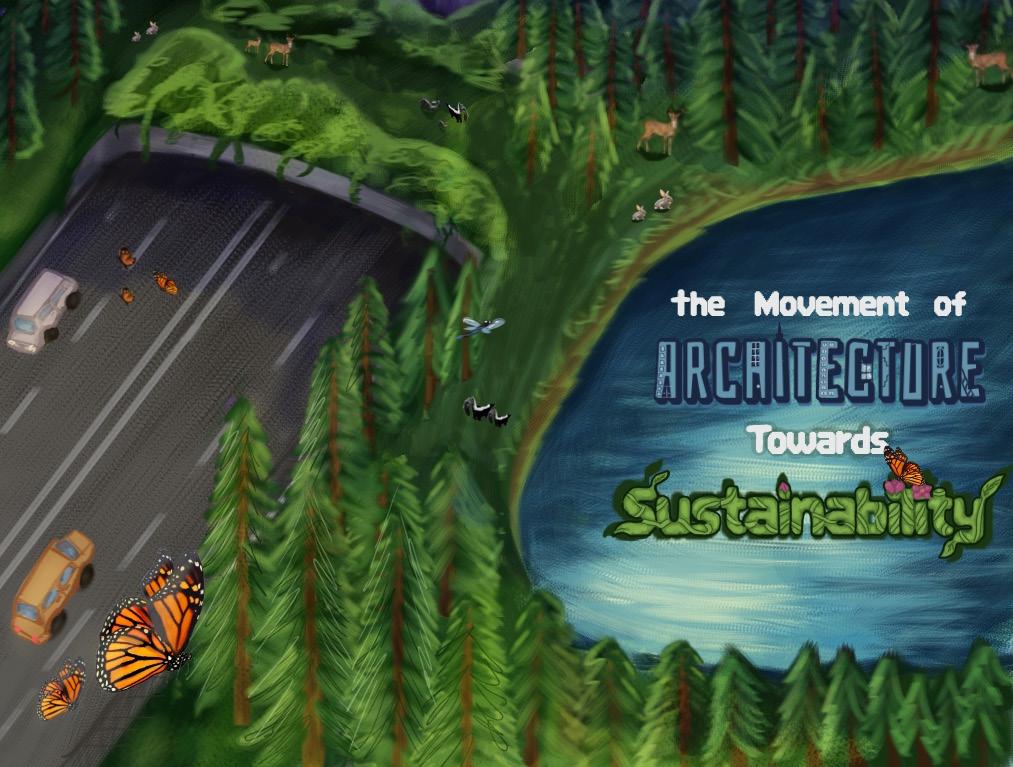
by SHAGUN JUTHANI
Climate change has been accelerating at an alarming rate as a result of greenhouse gas emissions from anthropogenic activities like mass industrialization. This ongoing environmental degradation threatens not only the future of ecosystems, but also the global economy, as diminishing resources makes survival increasingly difficult.
A main contributor to this crisis is the clearing of forests in order to accommodate urban expansion and a growing population. But what if we try to work with the environment and create infrastructure that utilizes regional natural resources to our advantage instead of damaging the environ-
ment in irreversible ways?
Sustainable architecture offers a powerful solution, utilizing natural resources efficiently while preserving pre-existing landscapes. Traditionally, we have viewed nature as a resource to be used for human benefit. This was partially triggered by–as Professor Victor J. Jones of Cal Poly Pomona says–our fear of its unpredictability and urge to create less uncertainty.
That has led to countless environmental problems and instead, if we considered nature as a living system that humans share a reciprocal relationship with, we could foster a sense of stewardship and respect. By
prioritizing this approach, we can meet the demand of housing for a growing population while minimizing our carbon footprint in order to create a future where human progress and ecological health coexist.
Over time, architecture has shifted from more environmentally attuned blueprints to ones that are the most efficient for cities to mass produce. Emeritus Professor Dr. Luis Hoyos suggests that in the past, homes were designed to optimize the natural landscape out of necessity as not many external resources were available. This resulted in environmentally efficient designs.
For example, traditional “Turk-
ish housing [was equipped with] wind catchers” which served to ventilate them. Moreover “Arabic housing [had] courtyards everywhere” to keep the areas cooler amidst “their [broiling] climate”.
But in today’s society, we don’t feel compelled to optimize our surroundings because we have access to various exotic resources that simply provide us with synthetic alternatives to sustainable local materials that we could instead use to our benefit. This trend is generally symptomatic of the pressure to prioritize short-term monetary gains at the expense of long-term urban sustainability driven by our increasing population and demand for housing. For instance, neglecting the right insulation materials based on the expected natural variability of seasons or by placing windows in the most advantageous locations to optimize natural light and ventilation, we end up exacerbating our carbon footprint. On the contrary, the appeal of mass-production may be compelling, due to cost-effectiveness and ability to address urgent housing shortages in high demand areas, where it reduces homelessness and improves accessibility.
Additionally, mass production stimulates economic growth by providing construction workers with a steadier income and generating broader employment opportunities, which in turn, boosts the local economies.
The pressure to mass-produce infrastructure can lead to reckless technocratic decisions and
engineering failures that harm both the environment and human lives. For example, dredging up swamps and building homes not only decreases Earth’s resilience to climate change, but it can also result in liquefaction during earthquakes.
Haiti is a prime example of such architectural failures, where the combination of political instability and the absence of a national building code have led to inadequately constructed infrastructure. The country has struggled to recover from repeated earthquakes that require special construction, which is undermined by unreinforced buildings made of stacked bricks rather than solid vertical columns capable of withstanding seismic forces. Haiti’s immense deforestation compounds the devastation, therefore leading to secondary hazards like landslides. Without vegetation to stabilize the soil on steep slopes, erosion continues to trigger these deadly landslides.
Although most countries are not as extreme as Haiti–with building codes and safety procedures typically in place–architecture often lacks thoughtful design when mass production becomes the primary goal.
Dr. Hoyos, emphasizes that politics plays a significant role in why more sustainable ways of planning do not end up occurring and that community-based planning is the best way to mitigate this challenge. For instance, a lot of times even though there are better ideas in place, it “gets voted
down at the ballot box” leading to a lot of unsustainable measures where there are “smaller houses and a lot more distance from work to home” when instead there could be better urban planning with more public transportation.
There is a growing movement toward sustainable architecture that can significantly increase Earth’s resilience, reduce our carbon footprint, and allow biodiversity to thrive. One notable example is rewilding, an architectural movement that emphasizes coexisting with natural landscapes and actively contributing to Earth’s natural recovery process. A key innovation within rewilding is habitat connectivity–the creation of habitat corridors that allow wildlife to move between habitats that were previously fragmented by human activity. For example, if forest lies on either side of a road, a habitat corridor can bridge this gap, allowing animals to cross safely to the other side while maintaining essential features of human infrastructure.
Moreover, sustainable practices like using local materials can make a significant difference. Building with local timber sequesters large amounts of carbon from the atmosphere and stores it within buildings for as long as they stand. Similarly, employing reusable construction materials not only minimizes waste, but also gives pre-existing components a new life. This is similar to the concept of upcycling because it uses materials that were already created in more innovative ways as opposed to creat-
ing new ones–fueling a system of waste.
This aligns with retrofitting and “adaptive reuse”, which Dr. Hoyos aptly describes with the motto, “the most sustainable building is the one that’s still standing” because “you keep the buildings that you have and adapt them.” People can upgrade their homes to higher energy efficiency standards to reduce dependence on carbon-heavy sources of heating/cooling.
An example of this is the Passivhaus energy performance standard, which encourages buildings to have high levels of insulation to minimize artificial heating and cooling needs. Additional strategies to optimize building performance include increasing ventilation and utilizing passive solar heating tactics. For instance, architects often follow the principle that “southern exposures get big overhangs” to shield against excessive sunlight, while “northern exposures… get more glass” to maximize light and warmth.
Many, including Professor Victor J Jones of Cal Poly Pomona, argue that architecture can never truly achieve sustainability because it is inherently a “critically destructive… force onto the environment.” Even though there are ways to utilize more efficient technologies to reduce one’s carbon footprint, there will never truly be a way to keep up with the human population while reducing our impact unless “we reposition ourselves to care for the environment, and [put] that at the top of our priorities,
rather than building for economics or building or personal expression.”
He further warns that the notion of sustainability in architecture risks exacerbating environmental harm, through greenwashing, a deceitful tactic used to market products as if they are good for the environment, even when they have the opposite effect.
Dr. Jones likens this phenomenon to the sustainable automobile movement, which “has only inspired more movement, more transportation, more cars, more economic growth with regard to automobiles”, promoting more harm to the environment. Essentially, adding the term “sustainability” before “architecture” is often used as a marketing tool as opposed to promoting a genuine commitment to ecological preservation.
by KATHRYN CONLEY
The changing climate has brought about a whole slew of issues, one of which has flown under the radar of many people. Autoimmune diseases are on the rise as a result of changing climate, lifestyles and environmental factors.
The term “autoimmune disease” is used to describe more than 100 diseases that have the “presence of self-reactive immune elements” as well as clinical indicators.
A team of researchers published a paper that found that climate change can “trigger complex immune responses.” This has led to an uptick in the development and diagnoses of these diseases. Dr. Frederick Miller, former head of the Environ-
mental Autoimmunity Group at the NIH, has devoted much of his career to examining the link between autoimmune diseases and the environment. Dr. Miller refers to these illnesses as “diseases by a thousand cuts,” a phrase that encapsulates the environmental, lifestyle, and other factors that exacerbate and trigger autoimmune diseases.
A presentation by Dr. Miller asserts that “environmental agents may initiate, advance, or sustain disease.” Environmental factors can influence all stages of an autoimmune disease and these illnesses develop as a result of “a thousand cuts,” defined by the many environmental exposures that can trigger or exacerbate them over
years or decades.
Some of these environmental factors can simply be the climate a patient lives in or more specific factors like exposure to natural disasters, such as wildfires which are common here in California.
Dr. Mary Johnson, Principal Research Scientist at Harvard School of Public Health discussed these potential regional differences in environment with a specific focus on California wildfires. Much of her research focuses on air pollution and how it affects immune response.
Dr. Johnson cited a study that “found that for every 10 unit increase in PM10, so 10 micrometers per cubic meter increase, it’s associated with a 7% increased risk of developing autoimmune disease.” PM10 is airborne particulate matter that is 10 micrometers or less in diameter. This exposure to particulate matter is striking especially, as Dr. Johnson notes, “if you think about the fact that with the wildfires, it’s a lot more than a 10 unit increase in pollutants, and people are getting exposed more and more to them.”
Just as Dr. Miller calls autoimmune diseases “diseases by a thousand cuts,” you could call climate change an ‘environmental crisis by a thousand cuts.” Dr. Johnson was “surprised when you think about all the different aspects of climate change, almost every aspect has some type of impact on the immune system. So it’s really a compounding effect.”
This “compounding effect” of climate change encapsulates much more than just air pollution. If particulate matter exposure can cause a steep increase in diagnosis, what else is the changing environment doing in terms of autoimmunity?
From wildfires to rising sea levels to changing infections, and the increased psychosocial stress that all these create, all aspects of our changing climate are impacting these illnesses. Future disease management, often a combination of lifestyle choices and medications, will have to go hand in hand with environmental management.
Beyond the physical health impacts there are socioeconomic considerations of this issue as well.
Olivia Casey, Senior Programs Director at the Au-
toimmune Association, discussed the monetary stress some families may be under just to get their child tested for autoimmune diseases. She mentioned one case in which, “it was like $10,000 or $12,000 that they had to get to get this young man tested.”
This cost is just what was associated with diagnosis for this patient. Autoimmune diseases can be managed but none have been cured meaning this patient may incur a lifetime of costs associated with disease management and lost labor opportunities due to illness.
The increase in autoimmune diseases due to climate change is both an environmental and public health issue, but it is also an economic one.
More and more people and families may be facing costs like this with autoimmune diseases on the rise, but families with children might be receiving the brunt of this issue.
Casey remembered reading a paper that stated a “300% increase in antinuclear antibodies, called ANA, over 25 years” in children. ANA are possible signs of autoimmune diseases like systemic lupus erythematosus (SLE), scleroderma, Sjögren’s syndrome, and more.
Upon first seeing this statistic Casey was shocked saying “I remember, I was like, I gotta be reading that wrong. It’s got to be a typo. It must be 30% No, it’s 300% Wow.”
When discussing her work at the Autoimmune Association and how their organization spreads awareness she came back to this statistic. Casey said, “There is not a person out there who has a child who is not thinking, oh my god, right. This is not like something they’re going to get over. We have no cures for this, so they will be living with a lifetime of a chronic illness that generally gets people to sit up and listen, because it could be your child, right?”
Dr. Miller, Dr. Johnson, and Casey all emphasized the importance of furthering research and awareness of this issue.
Casey shared a survey created by Rheumatology Engaged in Action for Climate Health (REACT Rheum) and led by Dr. Iazsmin Bauer Ventura
at the University of Chicago. The study “aim[s] to study how extreme weather events (e.g., wildfire, heatwaves, hurricanes, etc.) affect people with autoimmune and other rheumatic diseases in the US.”
This research initiative is just one way in which experts are working to spread awareness and improve understanding in this field.
It is clear that climate change and autoimmune diseases are inextricably linked and are both exacerbated by and creating a host of issues from health and environmental effects to social and economic ones.

designed by JANE GRUMANN
by Amelia Jarolim
Chile is home to a wide range of species and is considered a global biodiversity hotspot. Home to around 30,000 species, 25% of those which are endemic, Chile’s ecosystems range from the driest desert in the world, the Atacama in the country’s northernmost region, to lush temperate rainforests in the south. The marine biodiversity of Chile is also very rich, including endemic species such as the Chilean seabass, jack mackerel, hake and anchovy.
However, this marine biodiversity is increasingly
at risk, as fisheries and fish farms have been overexploited. In the past two decades, ecosystems located in the coastal zone of Maule and Bio Bio lost about 26% of their coverage. In addition, 97% of fishers depend on small-scale fisheries (SSFs) for livelihood as well as food security.
In the past, rising global temperatures and natural disasters have left many fishing communities devastated. In addition to climate change, Chileans are now facing the effects of overpopulation, urbanization, and development. Some of these ef-
fects include a higher demand for food, which has specifically put a strain on the fishing industry and small-scale fisheries, leading to high rates of overfishing and overexploitation.
Overfishing along Chile’s coast has sparked the conflict between commercial and artisanal fisheries, as both groups are competing for a depleted resource. This has highlighted a need for effective management of fishery resources.
Many Chilean communities depend on stocks from artisanal fishers. These fishermen are part of fishing unions, which have the right to benthic resources. Many small-scale fishing unions have protested the Chilean government over the uneven distribution of quotas for commercial species. Due to competition with industrial fishing and a lack of market regulation, the amount of fish available to catch is so small that many artisanal fishers cannot make a living.
“The reality now is that the few artisanal fishers that are still trying to go out and fish, it’s extremely hard for them because their quotas are small and competing with the industry,” said Diego Undurraga, director of Future of Fish, a Chilean organization focused on capacity building for smallscale fisher associations. “They [artisanal fishers] are competing with the economies of scale of the industry, within markets that don’t really differentiate what is industry resource from artisanal resource.”
“It’s not a problem of industrials or the richer people versus the artisanals — it’s a matter of human ambition. The problem is the scale of their impact [industrials] is often much larger than the scale of the artisanals,” Undurruga said. “It’s super hard for them [artisanal fishers] to be able to survive or to make a living just from fishing. Most of them cannot make a living only from fishing, and they have to do some other activities.”
Juan Andrés Silva, sociologist and Cornell University’s Coastal Solutions Fellow, focuses his work on coastal marine conservation solutions. He points to the tensions between small-scale fishing and industrial fishing, due to fishing zones and quotas.
“The main problem in Chile that has created tensions between small-scale fishing and industrial
fishing is the zones in which they can fish,” he said. “Small scale [fishing] is just the first 5 miles of the coast, and then the industrial fishing is from the limit of those 5 miles to the limit of the exclusive economic zone, which is like from the coast 200 nautical miles of the coast. The quotas that they [industrial fishing] have been assigned, it’s like… way more… but it’s very unequal,” he explains. “In some fisheries and some regions it’s like 10 fold what industrial fishers [catch] and those massive fishing boats can extract versus skilled fishers.”
These quotas are not unique to Chile and also apply to other countries in South America. In addition, the quotas can be assigned by a number of different groups, making the process confusing and not very transparent for small-scale fisheries. One group that sets up quotas in Chile is the scientific community.
“Quota is set up by the scientific community that collects the data and makes a decision of a range of quotas based on maximum sustainable yield,” said Rodrigo Oyanedel, researcher and marine biologist in Chile, working with a diverse set of stakeholders. “Proportion is split between artisanal and industrial, and is set by law. In some fisheries, the impacts are quite negative, have lots of overexploitation by the industrial fleet that will affect the stocks of artisanal fish and specific fisheries.”
While there is tension between small-scale fisheries and industrial fishing, small-scale fishing is very commercial in Chile as well. Many smallscale fishers sell their catch for profit that relying on commercial fishing. This emphasizes the mutual dependencies between small-scale and industrial fishing that are present.
Industrial plants process the fish the artisanal get,” Rodrigo says. “If you close the industrial ones, the artisanal are screwed. It would be much more expensive to process and have economic costs.”
Diego Undurraga provides insight on the mutual dependencies between artisanal and industrial fishing. Both groups have contributed to the overexploitation and the collapse of fisheries in Chile, highlighting the complexity of the issue. Overexploitation of fisheries in Chile is very case specific, and often there is an underlying issue at hand.
“The artisanals are maybe a little bit less but also responsible for the collapse of some of these fisheries, so it’s all this game of blaming and responsibility… It’s usually much more complicated than just saying the industrials are the bad guys,” he said. “The problem in Chile is there is no particular regulation that can promote or support the artisanal sector. They are sent out there to the market to compete with the industrials, and there’s no way the artisanals, with their own costs, are able to compete with the industrials in equal terms…In Chile in general, there’s no culture of trying to promote and buy from the artisanal sector, and there’s no…market incentive driven by regulation that helps promote the artisanals… or at least try to level the field a little bit for the artisanals competing with the industrials.”
Chile is now working towards developing context-based solutions that are both transparent and participative of fishing unions, while providing protection to the natural ecosystem and maintaining sustainable fishing.
One potential solution to these tensions is TURFS, which stand for Territorial Use Rights for Fishing. TURFS are a management strategy used around the world to help sustain small-scale fisheries. In Chile, TURFS have been effective in the recovery of benthic resources, particularly with the Chilean loco. TURFS also empowers social cohesion of coastal fishing communities and allows Indigenous groups to regain authority over the management of the resource they depend on. This solution helps support small-scale fisheries while also prioritizing long-term conservation efforts.
“TURFS are temporary rights given to fishing communities. Once you do that, [fishing communities can] request a portion of the ocean to be managed by that community only,” Rodrigo said. “TURF’s fishers can have to provide reports of what they are fishing… It’s supposed to provide more tools for transparency, enforcement, and monitoring,” Juan said. “Capital Azul works with the fishers…to insight the turfs create no-take zones… relatively small, like 15 ha…yet very important. And, provided with scientific evidence, [they are] important areas for the recovery of fishing areas, and inside those areas you start to see higher biodiversity and higher biomass.”
However, illegal poaching and illegal fishing are two issues common in Chile that are arising in and around TURF communities. TURFs can be used for other benefits that don’t directly come from fishing. While TURFs are very important to promoting coastal stewardship, they also bring up major problems within the system.
“Evidence that fishers would use organizations [TURFS] they created to apply for other things,” Rodrigo said. “So they might have a restaurant or parking. In a very productive turf, the fishing community won’t want new members to come in because you have to split the catch. Poaching is a huge problem that can get quite violent. It’s a major problem of the system and not near fixing that issue,” Juan says, “we have a lot of illegal fishing… almost 80 percent of the catches of Loco, which is one of the most important commercial species in Chile…was non-reported.”
Moving forward, it is crucial to consider the needs and preferences of local communities in conservation management. Additionally, developing solutions that will include and support both large and small-scale fisheries is necessary for a sustainable future. Making sure local communities are aware of the status of small-scale fisheries is important to providing market incentives. Finally, proper regulation and enforcement are beneficial in preventing illegal practices in Chile.
“Good leadership and good organization within the community,” Rodrigo said. “It’s hard to include communities that have no representation, there’s no voice, and nothing to say. Quite challenging when you get to a community with no real leadership. Everyone has a different view and solution to the problem.”
“Proper regulation and proper enforcement,” Diego said. Chile has very good regulations but very limited enforcement capacity. Regulation enforcement, market incentives… are super important. In Chile, don’t have a lot of market incentives…there’s no differentiated market for what’s legal, what’s traceable, what’s artisanal, what’s industrial, like people don’t really know don’t really care. People don’t really care because they don’t really know more than half of our fisheries are considered overexploited or collapsed, or that in general, small-scale fishers only receive a tiny price of the selling of the product.”
The issues Chile is facing are the result of a complex issue that is being experienced across the world. As we continue to deplete our resources, we must find a solution that still serves local communities while ending overexploitation by largescale fisheries, before it’s too late. We must prioritize conserving our oceans today for a sustainable future tomorrow. Juan Andrés Silva says it best: “Maybe its [change] not immediate. You cannot see the results within one, three, or maybe even five years, but maybe in ten, twenty years, maybe their kids are gonna be able to or their grandsons are gonna be able to keep fishing.”
by VYAS CHIPALKATTI
The forest’s breath pulsates the ground, soft earth upheld by dense webs of root systems. Among jungles, grasslands, temperate forests, and any ecosystem with flora, a mysterious organism links the chaotic ecology. Mycorrhizal fungi are integral to the health and resistance of an ecosystem, from budding flowers to stands of ancient trees. As plants grow and expand root networks, their photosynthesized sugars are exchanged with strands of mycorrhizal fungi, which provide natural pest resistance, sentient fertilization, and adaptive irrigation.
As the global population exploded after the Second World War, the international community decided to conduct a massive experiment to increase food production. They synthesized varieties of crops supposedly geared toward productivity. This productivity was contingent upon the application of fertilizers and the repeated spraying of pesticides, herbicides, and fungicides. In this period, farm labor became mechanized and the perspective of agriculture completely changed to welcome artificial inputs.
Connecting diverse networks of flora, mycorrhizae speak to the underlying unity of natural systems. This key symbiosis dates back hundreds of millions of years. Mycorrhizal research continues to grow,
and this crucial symbiotic relationship has the potential to be part of the remedy to the current state of agriculture. Structures of fungi communicate and interact with plants, revealing a complicated and promising relationship among a trend of environmental degradation.
Linking the root systems of various plants, the presence of mycorrhizae in ninety percent of all land plants is attributed to the powerful properties of underground fungi. Mycorrhizae act symbiotically with plants, drawing key carbohydrates from plant roots. Dense mycelial hyphae networks are formed, decomposing organic matter, relaying chemical signals, and providing diverse nutrients, like nitrogen, phosphorus, and manganese, that help plant growth.
In the rhizosphere, or the root soil layer, millions of intricate processes determine the productivity of the plant system. Fungi are multi-celled organisms with huge influence in the rhizosphere, making up three times the biomass of bacteria in the layer. Mushrooms on top of the soil layer decompose organic matter in a variety of terrestrial ecosystems, across the world in temperate and tropical climates. Submerged in the soil, mycorrhizal fungi drive many processes that allow plants and trees to flourish, advancing ecosystem health.
There are two variations between these fungi: endomycorrhizal fungi penetrate the inside of plant roots, and ectomycorrhizae form on the exterior root. Forming on 2% of all land flora, the exterior ectomycorrhizae colonize woody plants and help them to thrive. Amanita muscaria is an iconic fungus with an ectomycorrhizal ecology.
Endomycorrhizae, classified more specifically into the orchid, ericoid, and arbuscular categories, are organisms prevailing over the rest of the terrestrial plant world. Research surrounding the orchid and ericoid fungi is ongoing and limited, while the benefits of arbuscular mycorrhizae are heavily documented. Exchanging nutrients and information, the fungal arbuscules penetrate the plant root.
“The word mycorrhiza for me is one of the best words in biology,” microbial ecologist and UC Berkeley professor Ignacio Chapela shared. However, Chapela stands as a skeptic of the tailored utilization of organisms in human systems and discusses his view on the current mycorrhizal soil inoculants on the market. Chapela points out the need for “specific systems and specific soil conditions,” that would need to be researched, before implementing a “specific mycorrhizal inoculant.”
Arbuscular mycorrhizae can be a key player in the development of sustainable agriculture. Fungi such as Rhizophagus Irregularis kickstart a crop’s inducible resistance, the antibiotic capability that allows plants to ward off herbivores and pathogens. Mycorrhizae have many natural powers, defending plants and spreading nutrients in a synthesized harmony.
Crop systems are ecosystems, and arbuscular mycorrhizae can be crucial to organic agriculture. Inoculating these powerful microbes means identifying the key crops they can nurture, and assessing the soil conditions for potential implementation. Small-scale operations of corn, flax, strawberries, and nearly any industrially cultivated crop have seen benefits in productivity, after providing a mycorrhizal inoculant. The feasibility of endomycorrhiza in mammoth agricultural operations is disputed, underlining a contrast between our current human cultivation and the scales of nature.
forming, and a crucial member of this community is the mycorrhizae. Glyphosates and other pesticide chemicals stop mycorrhizal colonization, severing the systems of genetic information that allow plants to develop a natural pest resistance. The harsh tillage methods of agricultural machinery also destroy mycorrhizae in soil. Instead of allowing an or-
costs. The reliance on artificial pesticides and fertilizers, in opposition to various organic methods of cultivation, is a problem originating from the green revolution. Traditional, organic cultivation methods were exchanged for chemical and industrial-based processes to meet the increasing global hunger.

“Instead of allowing an organic agricultural system to thrive, farming operations degrade and poison soil with artificial inputs.”
The blight of artificial inputs severs the likelihood of a diverse microbial community
designed by: YICHEN GAO
ganic agricultural system to thrive, farming operations degrade and poison soil with artificial inputs.
The lack of education surrounding the benefits of fungi leads to farmers trapping themselves in both diminished soil quality and massive input
“Industrial agriculture is just one of many different ways of doing agriculture. There have been many different agricultures” Professor Chapela provided insight into the history of agriculture, detailing the wide variety of cultivation methods that mankind has used. Mycorrhizae stand as a representation of the powerful natural symbiosis that can accelerate productivity organically, and mycorrhizal properties are eliminated when exposed to the methods of industrial agriculture.
Throughout modern human history, a severe disparity has manifested. Powerful natural properties have existed for millennia, with pre-industrial
groups utilizing them to grow food and support their societies. Prevalent mycorrhizal associations supported plants, which were now being cultivated for the benefit of humans.
Population booms set the stage for waves of uninformed industrial activity, introducing pesticides, synthetic fertilizers, and fossil fuel machinery to food systems.
Today, the vast properties of powerful natural microbes can provide a viable remedy for the widespread environmental degradation stemming from global industries. Supported by tenured experts, continued research into specific agricultural applications of mycorrhiza will be an instrument in the fight against ecological destruction. Provided the further exploration of these prominent life forms, diverse beneficial properties of fungi can combat and remedy damages to the shared systems between man and nature.

by EMMA MOTT
When was the last time you used a Large Language Model such as Chat GPT or Meta AI? Have you ever considered the amount of energy required to drive this almost instantaneous computation?
Abi Gómez-Torres, a UC Berkeley undergraduate student, stated, “I use Chat GPT quite often, mostly for note taking. If I have the professor’s slides beforehand, I’ll upload those and ask Chat GPT to write me an outline of the material so I can better structure my notes. Af-
ter class, I’ll upload the lecture transcript and ask it to fill in any informational gaps, which helps me avoid rewatching a 90 minute lecture just to catch a couple of details I might have missed”. With teachers beginning to accept the use of Large Language Models as a reality of student life, their use is becoming ever more widespread.
The International Energy Agency estimated that data centers, cryptocurrencies, and artificial intelligence consumed around 2% of global
electricity demand in 2022. This is estimated to double by 2026, equivalent to the electricity consumption of the entire country of Sweden.
The use of artificial intelligence is snowballing as many companies begin to integrate open-source search engines within their software, including Google, Meta, and Snap Inc. Training and running a large language model (LLM) consumes thousands of megawatt hours of electricity, and this varies depending on the
stage of AI development and the hours required for training. This increased demand has led to higher energy consumption, carbon emissions, water usage, and resource extraction, straining the USA’s limited electricity infrastructure and access to other natural resources.
The data centers currently used to compute AI are equipped with computing resources capable of training and deploying machine learning and the algorithms necessary to drive AI, but not to the extent needed for the current demand. And, the present energy infrastructure in the US is not expansive enough to support the huge amount of electricity used in these data centers.
Data centers get most of their energy from fossil fuels, accounting for 2.5-3.7 percent of global greenhouse gas emissions. These emissions, expected to increase as demand for AI expands, are a major issue when our current global temperature is already 2.11 F higher than 19th-century averages. Additionally, data centers use large amounts of water to cool their servers, up to 5 million gallons of water per day while 2 billion people currently do not have access to clean water globally. Data centers also rely on critical metals and rare elements for the microchips that power the computers which are often mined unsustainably and sourced unequally by a select few countries.
Another problem associated with data centers is their unbalanced distribution across
the country. Virginia has a region dubbed the “data center alley” because it was the site of 70 percent of the world’s internet traffic in 2019. Data centers get outsourced to this location because of its expansive fiber infrastructure, low energy costs, and good tax incentives. However, this creates an environmental justice issue as certain communities are impacted at greater rates than others by the expanding demand for AI, having to compete with data centers for basic resources like clean air and water.
Recently, Elon Musk’s company xAI has discussed plans to build a 150 Megawatt data center in Memphis to power its computations. He brags that it will be the largest and most powerful supercomputer, using 400,000 Graphics Processing Units (GPUs), all of which require a large demand of electricity to run and water to be cooled with.
Though many may think of AI as a new development, its history goes back seventy years. The first machine learning algorithm was created in 1952. In the 90s, funding for AI increased, and new research emerged focusing on GPUs, reducing bias during the training of models, and recurrent neural networks. In the 2010s, the use of virtual “assistants” and chatbots made their first mainstream appearance in the form of iPhone’s Siri.
This brings us to where AI is now. In 2022, OpenAI introduced Chat GPT, a large language model now used by over 180 million users. Many other companies are implementing
LLMs into their software, expanding the demand for data centers and the natural resources used within them.
Despite the use of AI technology growing rapidly within the past 2 years, there are currently very few restrictions or regulations globally on how AI is used, especially within the private sector. However, some countries are working on legislation surrounding the ethics and impacts of artificial intelligence. Currently, 190 countries have adopted non-binding recommendations by the United Nations Educational, Scientific and Cultural Organization.
Recently, the US passed a bill “Artificial Intelligence Environmental Impacts Act of 2024” which requires the EPA to carry out a study on the environmental impacts of AI. Then the Director of the National Institute of Standards and Technology (NIST) must convene an association on the impacts and develop a reporting system for the impacts.
Another promising solution is to improve environmental issues through the private sector. Sam Altman, the owner of OpenAI, the software company powering Chat GPT, has been discussing deals with nuclear fusion and solar companies in a commitment to make his data centers run on clean energy. This would be a massive step in making this technology more sustainable, and as a leader in the industry, it could encourage other companies to follow suit.
Additionally, some experts ar-
gue that once these large AI models have been built, they don’t require as much energy to run each new question asked into them, as they are accessing cloud data rather than performing new computations. Professor Eric Van Dusen is the Outreach & Tech Lead for UC Berkeley’s College of Computing, Data Science, and Society and a lecturer for undergraduate data science studies. He spoke about his opinion on AI models and said, “Each individual query after [creating the model] …you’re just accessing a computer in the cloud, and the computer’s generating your answer and sending it to you. But how do I differentiate that from just a Google result, where they’re still serving me a web page full of information... My understanding is they don’t need a ton of compute to use it afterward, it’s a ton of compute to generate the model.”
Other scientists believe that AI can be a powerful tool for solving environmental problems. For example, companies such as Climate Change AI are exploring the use of AI to research solutions to the climate crisis.
The United Nations Environment Programme (UNEP) has outlined five key actions to mitigate AI’s environmental impacts in their issue note “Artificial Intelligence end-toend.” These include establishing standardized procedures for measuring AI’s ecological footprint, implementing regulations requiring companies to disclose the environmental consequences of AI products, and improving the energy efficiency of AI algorithms while prioritizing resource recy-
cling. Additionally, companies should transition data centers to renewable energy and offset carbon emissions, while governments integrate AI-focused policies into broader environmental regulations.
The future trajectory of AI legislation remains uncertain, particularly with the political changes anticipated in 2025. Potential shifts promised by Trump, such as reduced funding for clean energy, withdrawal from the Paris Agreement, or repeals of existing AI-related executive orders, could challenge progress toward sustainable AI practices.
However, the growing influence of AI highlights the urgency for robust data ethics and environmental policies. By adopting UNEP’s recommendations, we can pave the way toward a more sustainable future. Though uncertainty persists, decisive action today will lay the foundation for long-term solutions that balance technological innovation with ecological responsibility.
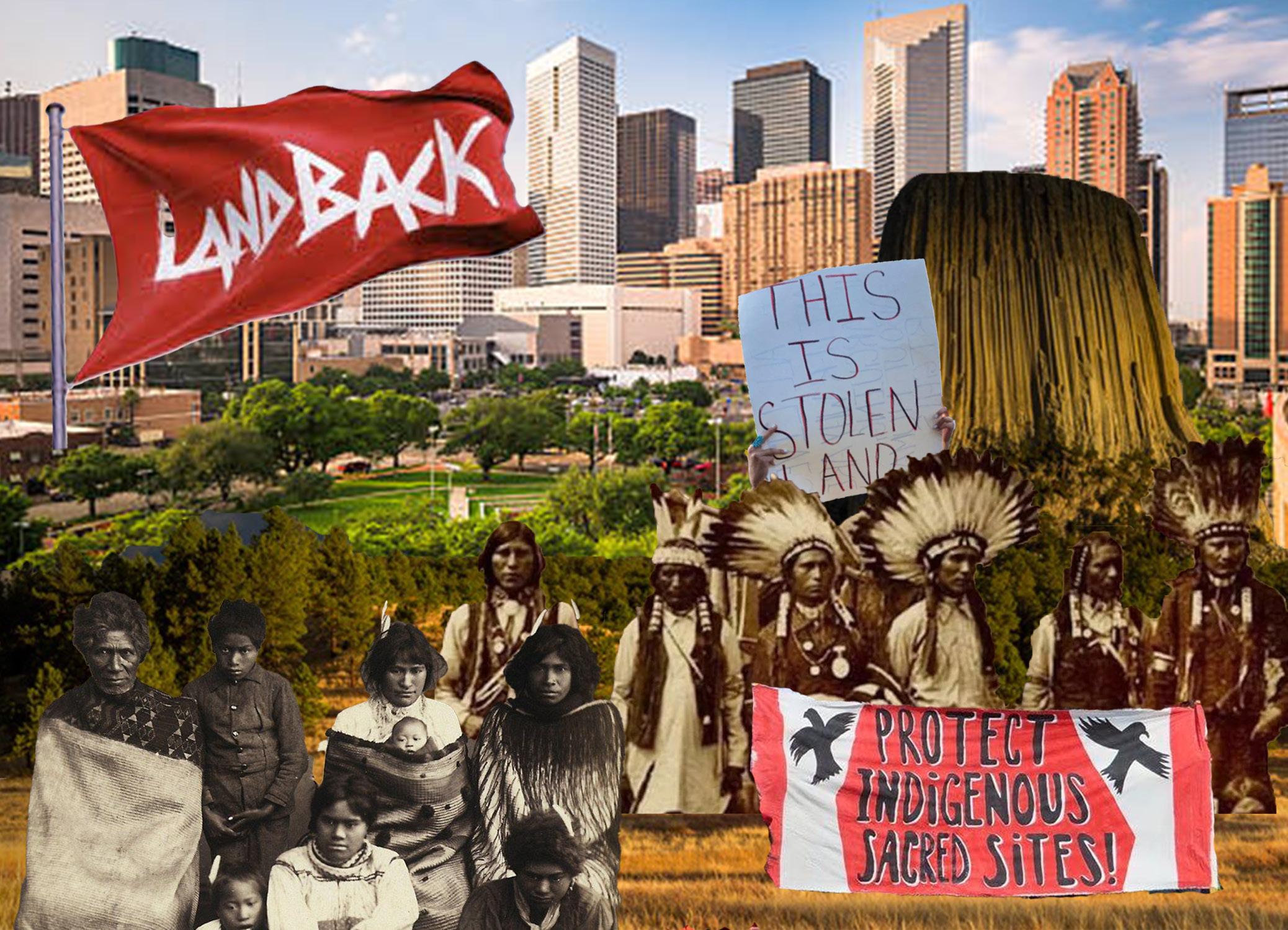
designed by SOPH PADUA
by KAISHENG WU
In 1890, historian Hubert Bancroft of Bancroft Library fame described the Californian genocide as, “one of the last human hunts of civilization, and the basest and most brutal of them all.” What enduring impacts has such a calamity left on society, culture, and our understanding of justice today?
Freshly arriving in California from New Zealand, I was struck by a cultural difference: land acknowledgements were a practice at Berkeley but contrasted with my home country despite a mirrored history of displacement and land confis-
cation occurring to New Zealand’s native Māori population.
In New Zealand, outward expressions of Māori culture and language have been a ubiquitous part of ‘Kiwi’ culture–though often in a tokenistic manner. For example, my home university recently inaugurated a new arts building to widespread praise for its integration of Māori and Pasifika architectural and cultural elements. In Berkeley, however, the recognition of historic indigenous forms in cities seems nascent, like the recent return of sacred Ohlone land at the West Berkeley Shellmound.
The discrepancy is not simply coincidental but reflects the interplay between histories of displacement in each context—and the impact those histories have had on urban spaces ever since. This raises a critical question: How do our basic understandings of Indigenous histories shape how we perceive and engage with indigeneity today?
What does it mean to be Indigenous in a city?
Native American PhD student at the UC Berkeley Center for the Science of Psychedelics (BCSP), Marlena Robbins, reflects on her experiences of growing up in the Navajo Reservation and navigating between urban and rural worlds. Marlena is Diné, or Navajo, which translates to “the people”.
Robbins challenges the pervasive “great misconception of Native people as being all mystical Indians based on Hollywood stereotypes. Hollywood movies, old country, Western cowboys versus Indians. Just a narrative that’s been regurgitated over and over of who and what Native people are.”
These stereotypes often present an idealized, caricatured image of Native Americans as deeply attuned to nature. Robbins acknowledges, it’s “like a caricature of being “ ‘one with nature, one with the trees, [talking] to the birds. And it’s true–we can do those things. But that’s not all of us. For those who [can], they’ve been able to remain in direct contact with their language, with their culture, with their ceremonies, with their lineages. And that’s a beautiful thing.”
These stereotypes depict Native Americans as possessing a fantastical singular relationship to nature, often detached from urban and modern life. The limited narrative overshadows this reality that the majority of Indigenous peoples live in urban environments, engaging in professions like teachers, builders, students, lawyers, scientists, and more.
Robbins emphasizes that being Native incorporates a multiplicity of identities at once a ‘pan’ experience that carries the weight of displacement and injustice. From the legacy of “boarding schools” and “the introduction of Christianity,” to “the Indian Relocation Act,”Native identity is
rooted in resilience and complexity.
The diversity of Native experiences naturally leads to variations in identity: “Some Natives are more Christian, some are more militarized,” Robbins notes. Some “don’t connect to the land, don’t have any relationship to their language… not all Natives have that direct relationship to their culture…some might even support Trump.”
Robbins brings up an important point of Indigenous identity– the connection between being Indigenous and land stewardship. . At its core, indigeneity is inextricably tied to a specific, geographically defined land, encompassing traditions, practices, cultures, and languages that are inseparable from that place.
Displacement of Indigenous people is inherently traumatic to an Indigenous way of life. Modern urban living, with the emphasis on cosmopolitanism and assimilation into a ‘melting pot,’ often entails to be subsumed into a monoculture. In this context, urban Indigeneity becomes an act of resistance against that ideal–- proof that maintaining a connection to Indigenous identity despite strong countervailing pressures.
As Robbins shares her journey of navigating life both in and off the reservation since childhood, the diversity of Indigenous experience becomes increasingly evident. .
Robbins grew up in Window Rock, the capital of the Navajo Nation. Reflecting on her upbringing, she says,: “I had a very profound sense of belonging to a culture, a specific culture, and language and identity, which is Diné culture.” This culture, she notes, has “evolved over time due to colonization, the introduction of Christianity”, and the “continual protection of Navajo traditional culture”.
It strikes me that Indigenous identity is tied to place and the experience of place within the community. I ask, “How does your experience with being connected to your culture differ when you were growing up on reservation versus when you moved into cities? How does moving into the city impact your experience of indigeneity?”
Robbins moved to Albuquerque at 10, a transition that she describes as a fight to “really hang on to [whatever I learned within those nine years], whether it was language, practice, food… stories, songs.”
Living in a city inevitably exposes one to a wide array of religions, ethnicities, and peoples of all backgrounds, making the urban environment a quintessential ‘melting pot.’ For indigenous communities, the experience of indigeneity in an urban setting is a balance: simultaneously conforming to urban life, but also striving to resist assimilation and preserving Indigenous ways of life.
Marlena describes this duality as learning to “keep those practices and that identity tucked away, but, and protected as much as possible… while also being able to adapt to my surroundings in an urban city.”
However, indigenous urban resistance is not a universal or straightforward response. Robbins says, “I’m trying my best to find that urban, Native connection. And knowing that there’s other natives out there who come from different tribes–there’s 574 tribes, and they all have different languages, cultures. And we all kind of make up this pan-indigenous community within an urban setting. And we kind of learn from each other. And we adopt, and we adapt, and we evolve our cultures to support each other.”
represent “a resistance to submitting to [a white Anglo-Saxon Protestant society].”
Robbins reflects on how in the raising of her son, rotating between Albuquerque, Sante Fe, Phoenix, she would always end up returning back to reservation: “the home base. No matter how far in the world we go, we can always go back there,” where her son will have “direct exposure to language, song, stories and prayer.”
People are not monolithically urban or rural. It exists in the margins, which is a common experience for migrants and Indigenous peoples to live life in between both worlds. Sociologists refer to it as circular migration–the continuous journey between a native homeland and a city, where individuals often are pressured to adapt to distinct professional and working roles in order to navigate each space.
Historic traumas
“To be Indigenous in a city is to resist.”
Indigenous societies across the Americas were forcibly de-urbanized through European colonization, which dismantled sprawling metropolises of pre-colonial America, such as Tenochtitlan and Cuzco.
In the 21st century, Indigenous life is overwhelmingly urban–albeit under vastly different terms. Globally, there are 477 million Indigenous peoples in 90 different countries, with urbanization rates reaching 71% in the United States, and 84% in New Zealand.
A recurring theme emerges: resistance. To be Indigenous in a city is to resist. I reflect on how, in the cultural discourse of immigration, it is often seen as a mark of acceptance. In American conceptions of nationality and citizenship, cultural assimilation is closely tied to belonging.
Robbins shares her perspective: “In terms of keeping my language intact … It has to do with technology, like the ability to zoom with elders who have those stories, text call, chat”, or by connecting to the “urban native community … asking them for their insights.” She also describes tools like “hearing the language, listening to KTN, which is an apple radio station doing Rosetta Stone (a language revitalization tool).” For her, these efforts
This shift to urban living exists within a legacy of displacement and racism, which continues to be exemplified in patterns of environmental racism today. In my home city of Auckland, Māori face disproportionately exposure to particulate matter and water pollution. The ancestral lands of a local tribe, Ngāti Whātua Ōrākei, has been exposed generationally to coastal sewage outflows, which have disturbed local ecosystems and polluted tribal fishing beds. Similarly, in the United States, the Apache Nation’s lands in New Mexico have been subjected to nuclear weapons testing, including the Trinity Weapons testing project, reflecting a broader pattern of environmental exploitation affecting Indigenous and Pacific island communities.
Robbins articulates how the legacies of racism, displacement and capitalism intersect to shape Indigenous experiences. Assimilating in the United States, she explains, often means “to lose ourselves and lose our cultures, our languages, our practices, our stories, our identities, and just become an empty vessel, a consumer.”
The history of racism continues to impact Indigenous ways of being today, as reflected in her own experiences: “Growing up on the reservation and being told that I’m too dark”, or having a “grandma who internalized oppression and really wanted her children to marry white.” Robbins also suggests how educational spaces like Berkeley intersect with racial identity. Upon arriving, she felt “self-sabotage… questioning if [she’s] worthy being here,” a reflection of how systemic inequities and personal histories converge.
Popular conceptions of urban identity–or lack thereof–are deeply intertwined with the liberal and universalist ideals of the modern citizen. On closer inspection, these ideals often reveal the consequences of r obscure, unacknowledged histories and complexities of life on the margins. At first glance, the notion of being Indigenous in a city may seem contradictory. However, this perception only exposes our own misunderstandings about Indigenous realities.
Entering this article and my conversation with Robbins, I carried my own preconceived ideas about indigenous history and urban space. While it is true that Indigenous people now overwhelmingly live in cities, popular imagination frequently rejects this reality. Do Indigenous people seamlessly and autonomously preserve their identity in cities? In New Zealand, Māori culture is superficially woven in our landscapes, language, and governance. Yet, this is not the result of an inevitable march of progress but rather of sustained effort and resistance.
I have come to realize that the preservation of a way of life is not contingent–it depends on the intentional, everyday experience and resistance of people like Robbins, who maintains a consciousness and intentionality in remaining connected to her land and her people. Healing from past trau-
mas begins with a critical first step: understanding how historical forces intersect and continue to shape with personal experience.

designed by TIFFANY HO
by SAMANTHA MURPHY
Creeping in from the Pacific Ocean through the Golden Gate Bridge, fog has long defined life along the California coast. In San Francisco, this fog is affectionately known as “Karl,” a name that has become synonymous with the city’s cool, mysterious atmosphere. Blanketing towns with its chill and mystery, Karl shapes and sustains ecosystems, from plants and animals to humans. Acting as a natural air conditioner, fog breathes life into the coast, prompting some Northern Californians to grab a jacket even on summer days. As the planet warms, scientists are studying how climate change will affect fog patterns, and many agree: a future with less fog could spell disaster for all.
California’s coastal fog is the result of various atmospheric and oceanic phenomena—a delicate
dance of forces. The creation of this fog is partly due to the California Current—cold water that moves along the coast from British Columbia to Baja California. This current creates an upwelling of cold water, which gets sucked into warmer inland areas.
While researchers have observed changes in fog patterns, there remains significant debate about the causes of these variations. Alicia Torregrosa, a scientist and current program officer at USGS, explains, “We don’t have enough data or data analysis to really say that there has been a trend.” Many scientists are cautious in drawing conclusions, noting the limitations of current data. Daniel Fernandez, a professor at Cal State Long Beach, shared, “Yes, I have seen shifts, but
it’s hard to say that there are shifts due to something like climate change. I see differences year to year in some places”
Fog supports a vast ecological network, from banana slugs and fungi to mountain lions and elk. To humans, animals, and plants alike, coastal fog is extremely important. It’s part of the reason why redwood trees can reach up to 350 feet tall, and why creek beds stay nourished even in the dry summer months. Fog plays a significant role in agriculture by providing cooler, more stable conditions that benefit crops. Fog also contributes to why the average daily high temperature in San Francisco remains below 70 degrees year-round.
One of fog’s many benefits can be seen in California’s towering redwood trees. Stretching along the rugged coast of California to the southern tip of Oregon, redwoods provide sanctuary for humans and animals alike. To survive the almost rainless California summers, Coastal redwoods rely on fog. Their needle-like leaves are excellent at capturing water, which condenses and drips down to their immense root systems. In addition to capturing water by drip, redwoods can absorb moisture directly into their leaves, through pores called stomata. These strategies are key in making sure there’s enough moisture to survive when rain is limited and fog is ample.
In a paper by Alicia Torregrosa, Lorraine E. Flint, and Alan L. Flint, it was found that “fog and low cloud cover (FLCC) and late summer recharge increase stream baseflow and decrease stream temperature during arid Mediterranean climate summers, which benefits salmon especially under climate warming conditions.” Coastal fog contributes to increasing watershed hydrologic resilience by enhancing cool water discharge and stabilizing late-summer stream temperatures, which Coho Salmon need to survive.
Fog also has a large impact on agriculture, with strawberries, artichokes, and many other crops thriving under foggy conditions. Sara Baguskas, a professor at San Francisco State University, conducted research in Salinas Valley and found that strawberries have higher water efficiency during fog events, using sunlight more effectively.
Fernandez, further believes that “fog collection could aid in reforestation,” especially in regions
lacking groundwater access. “Without trees, moisture in the air just evaporates, but fog nets could be set up in those areas to capture water and support new tree growth,” he says.
Fernandez also suggests fog collection could play a role in fire suppression by funneling moisture into tanks that could be tapped during wildfires. Fog itself acts as a natural fire retardant, adding moisture to the landscape and reducing fire risk. Without it, he warns, many more areas would be vulnerable to megafires. “There would be less water available in the ecosystem, which many plants and animals rely on, potentially leading to significant impacts on various species, including coastal redwoods, certain types of manzanita, and other animals that inhabit those unique climates,” he adds.
While the exact trends in fog patterns remain unclear, the potential impact on ecosystems like the coast redwood forests is undeniable. The lack of moisture during dry summer months could be detrimental to redwood survival—from saplings and seedlings to fully grown giants. Unable to sequester enough moisture, these trees will be unable to reach their immense heights, threatening their survival. Coastal redwoods are influential allies in the fight against climate change, capturing more carbon dioxide than any other tree species in the world. Torregrosa warned, “We have already seen a lot of vegetation decline, we have already seen the southern ranges of some of our species like the redwood be in inhospitable areas, and their ranges are contracting.”
Torregrosa believes that the loss of fog would be a tragic change, one that would have us “mourning and grieving for Karl the Fog.”



From a former open sewage system to a pristine flowing stream, Strawberry Creek has played an essential role on campus – being the reason UC Berkeley is where it is.
In the 1770s, the creek was used as a water source and sewage conveyance system, culverted for convenience while affecting the natural habitat, according to Creeks of UC Berkeley. Although much of the creek is still underground, the 1984 successful daylighting effort (one of the first in America) helped uncover part of the creek that flows through Strawberry Creek Park.
Founded in 1987 by then-graduate student Robert Charbonneau’s management plan, the Strawberry Creek Restoration Program aims to “identify harmful releases from the Campus, eliminate these harmful releases and re-introduce native fish species to the creek,” according to Creeks of UC Berkeley. At least three native fish were reintroduced in 1988: the Sacramento sucker, California roach minnow and three-spine stickleback, all still living in the creek today.
ence has told us that when you try to shoehorn trees that aren’t supposed to be there into an area, you’re guaranteeing that you have to spend a lot of time and resources to keep that artifact going,” Pine adds. “And what we noticed on campus, especially during that record-setting drought, was that they really suffered if they weren’t right on the creek.”
Juniors Alessandra Lucchesi and Loulou Ziegler started interning with the Restoration Program their freshman year. They help with community outreach and managing natural spaces on campus by cleaning the creek, watering native plants, weeding around them and mulching. In earlier years of the program, Pine says they would host ivy-pulling events where around 100 students help remove the invasive plant by hand.
“But you are not exempt from your environment just because your major isn’t about it. Everybody is completely reliant on their environment. No one is not implicated, and everybody is responsible, whether they think they are or not.”
“A lot of people might assume that it’s the university doing that,” Ziegler says, “but it’s actually us showing up on a Saturday morning bringing the mulch and the water because they’re not going to irrigate it for us.”
Retired Environmental Protection Specialist at Berkeley Tim Pine was also the staff adviser for the program. Although overseeing the program was not his main job, Pine says this was a project he was dedicated to.
“I’m so passionate about restoring habitat that I had to have an outlet where I could get my hands in the soil and plant a baby tree and see it grow in real-time,” Pine adds.
The many redwoods along the creek are a defining feature of the campus creek, however, they are not native to the area. They hold the bank in, but there are better trees more suited to the creek, like Bay trees and buckeyes, Pine says.
“Everyone loves redwoods, which I get, but sci-
A Strawberry Creek DeCal was first introduced in 2011, but for the last decade, no one taught it –until now. Lucchesi and Ziegler revamped the DeCal curriculum this semester, helping 24 students learn about the creek’s history, importance and restoration efforts while bringing multiple guest speakers.
“Teaching is a really great way to further your learning,” Ziegler says. “No matter how much you think you know, once you teach it to someone, you realize all the gaps in that knowledge. But it’s also been really fun because it feels like the culmination of all the connections we’ve made with faculty, other students, community members and professionals…I had no idea that there were this many people taking a particular interest in Strawberry Creek.”
Getting more people to even know what Strawberry Creek’s name is could make a difference, Pine says. He fought for putting more interpretive signage around the creek, labeling it at different parts of campus so students and faculty could learn more about it.
“People just don’t know and they’re literally stepping over it,” Pine adds. “I mean it’s gratifying—I do see a lot of students coming out here on a nice day on their break, or having lunch with their friends. I see faculty and staff here, high school kids, tourists, but there could be so much more.”
Through their work in the program and the DeCal, Ziegler says her perspective on the creek has changed from something that exclusively symbolizes pristine nature to something more complex. She says she wants to encourage everybody to have a more reciprocal understanding of humans’ relationship with nature.
“Any amount of knowledge gained, especially with environmental subjects, encourages us to see natural beauty as more than just natural beauty,” Ziegler adds. “It’s the context, implications, our well-being, our history, what it has provided for us and the ways we have failed to give back in equal respect for everything it has offered us.” Lucchesi says she feels she has a better understanding of the creek intellectually but has grown more frustrated.
“You put in all this work, you tell all these people, and for some people, it just doesn’t get past them or it goes over their head,” Lucchesi adds. “But it’s also given me a more powerful voice, learning and having more knowledge about the creek and being able to spread that knowledge.”
Lucchesi says she hopes students can walk away with a better understanding of the campus’ complex relationship with the creek and protecting its urban watershed. But, even for everyday students who have not taken this DeCal, it is important to care for the creek and its health. Picking up your own or others’ trash makes a big difference, Ziegler adds.
“You take it for granted that your environment looks the way it does and operates the way it does,” Ziegler says. “But you are not exempt from your environment just because your major isn’t about it. Everybody is completely reliant on their
environment. No one is not implicated, and everybody is responsible, whether they think they are or not.”
To follow or contact SCRP’s work, visit @calcreeks on Instagram.
The problem with compostable plastics: What are they?
by Summer Rella Hamzeh
While terms like “compostable” and “biodegradable” plastics are often used interchangeably and commonly applied to various plastic materials, they are distinct and react differently when disposed of. Biodegradable plastics are tested under controlled laboratory conditions– including factors such as oxygen levels, UV exposure, temperatures, and more–to ensure they break down. In nature, these controlled conditions rarely exist, meaning that the biodegradable plastics may not decompose the way they’re expected to. Without these defined conditions, they behave like conventional plastics, breaking down into microplastics, polluting ecosystems, and harming wildlife.
Compostable plastics, on the other hand, are designed to decompose into non-toxic organic matter if disposed of and treated properly. They are often made of renewable, organic materials such as corn starch, sugarcane, potatoes, and cellulose. While some compostable plastics are suitable for home composting (and likely are labeled as such), most–including the kinds provided by UC Berkeley–require processing through commercial or industrial composting facilities. Specifically, these establishments are capable of proper decomposition due to reaching high temperatures that reach up to 160° F. Unfortunately, not all
composting facilities are capable of reaching these specific conditions, and therefore, much of the “compostable” plastic ends up in a landfill. What happens to compostable plastics in landfills? Like regular plastics, they often end up remaining there for a very long time because they are trapped between layers of trash and a lack of oxygen which prevents them from breaking down effectively. Instead,over several decades, they decompose anaerobically, potentially widening the carbon footprint than conventional plastics. Compostable plastics release significant methane–a greenhouse gas that is 30 times more potent than carbon dioxide–compounding an already intensive agricultural carbon footprint associated with growing these crops, such as corn and sugarcane, these compostable plastics originated from. If compostable plastics are neither composted properly nor disposed of in a landfill, then they can pose a similar issue to conventional and biodegradable plastics, by polluting ecosystems and harming wildlife.
Another significant issue with both biodegradable plastics and compostable plastics is the toxicity they pose. While these “eco-friendly” plastics are made with plant materials, what makes them plastic-like can be traced to several chemicals. A 2020 study by scientists
in Germany and the Netherlands suggests that most plant-based plastics contain toxic chemicals, with samples containing up to 1,000 chemical features–and in some cases, as many as 20,000. Their findings indicate that plantbased plastics and conventional plastics have comparable levels of toxicity.
One particular concern is the presence of PFAs (polyfluoroalkyl substances) in compostable plastics. FAs are a class of “forever chemicals” that are linked to serious health problems, including increased risks of some prostate, kidney, and testicular cancers; reproductive issues such as decreased fertility; developmental issues in children like low birth weight and accelerated puberty; elevated cholesterol levels and obesity; interference with the natural hormone functions reduced vaccine response; and more. Despite these risks, the FDA continues to allow companies to use PFAs in food packaging. Research has shown that PFAs can leach into compost when packaging materials containing these chemicals are tossed in composting bins. As a result, these compostable plastics do not add valuable nutrients to compose and have a net negative impact on the final composted soil due to these contamination.
Many composing facilities reject plant-based plastics because of these issues. This is further aggravated by general confusion around what is truly compostable, which often leads to non-compostable plastics mistakenly thrown in compost bins. Many commercial composting facilities in California do not accept bioplastics at all, and some have entirely stopped accepting foodware at all.
Why is this a problem at UC Berkeley?
Currently, UC Berkeley uses compostable plastics for items like drinking cups and fruit cups. During a Signatory Training for a club, I came across this statement by UC Berkeley on a sustainability module: “UC Berkeley’s composting facility is currently not able to process #7 PLA (compostable plastic) products, so they are typically sent to the landfill. We encourage the use of compostable plastics over regular single-use plastics, but reducing and reusing are much better for the planet.” This excerpt is misleading to students, as it causes confusion about proper disposal for these compostable plastics.
them because they have a #7 symbol–a symbol that is not exclusive to compostable plastics but serves as a catchall for any plastics that don’t fit into the first six recycling products–even though compostable plastics are not meant to be recycled? Or do we send them to the landfill, treating these compostable plastics exactly like conventional plastics and condemning them to contribute to plastic pollution, methane emissions, and a global waste crisis? Furthermore, many composting facilities refuse to accept foodware at all, largely due to confusion over what

plastics are compostable, leading to people improperly disposing of waste. Conventional plastics end up contaminating organic material in compost bins. As a result, Berkeley students, like many others, have and will continue to improperly dispose of waste, perpetuating the issue.
Should we place them in a compost bin, despite the fact they will not be composted anyways and are possibly contaminating other compostable material with PFAs and other toxic chemicals? Should we recycle
These misleading practices contradict Berkeley’s culture of environmentalism and its pledge in eradicating all non-essential single-use plastics by 2030. Furthermore, they erode trust in Berkeley’s sustainability commitments and damage its
reputation as a leader in environmentalism. Compostable plastics have demonstrated clear negative impacts on the environment, particularly when disposed of improperly. For Berkeley to uphold its position as a sustainability leader, the institution should invest in alternatives to compostable plastics, focusing on locally available, 100% organic materials that do not require industrial composting. Examples include paper, hemp, straw, bamboo, beeswax, and similar resources. Berkeley has demonstrated they are capable of adopting more sustainable packaging. For example, the switch from compostable plastic cutlery to bamboo cutlery in the Eateries is a commendable step forward and should be implemented to all dining areas, including the dining halls. Berkeley could replace the plastic fruit cups at Brown’s with similar materials to this and list the fruits provided on the menu instead of relying on transparent compostable plastic for visibility.
For drinking cups, switching to compostable paper cups could be a better alternative to break down more readily than compostable plastic. However, many paper compostable cups are lined with PLA, which shares similar drawbacks as compostable plastic, such as requiring industrial facilities for proper breakdown. While compostable paper cups ubiquitously contain
less plastic and fewer harmful leaching chemicals than their compostable plastic counterparts, they still are not perfect solutions.
This is why transitioning to 100% organic materials without PLA linings offers a better approach to ensuring sustainable practices that Berkeley has promised and often been a leader in. By adopting this alternative, UC Berkeley can continue o lead by example in the fight against single-use plastics and uphold its reputation as a pioneer in sustainability.
In addition, in the New Student Survey & First Semester Schedule course, UC Berkeley could introduce a module on sustainability efforts implemented by the university, including guidance on how to properly dispose of waste on campus. This module could also provide information on different kinds of utensil materials that Berkeley uses, including compostable plastics and their disposal struggles. Such education could help mitigate the issue of improper waste management on campus, encouraging students to adopt more sustainable practices–such as bringing reusable utensils or opting to dine in instead of taking food to go at places like Brown’s Cafe–and foster a better understanding of environmental literacy within the student body. Furthermore, waste management could be integrated into the Golden Bear Freshman Orientation, either as part of the event, or during discussions with the orientation leaders.
While transitioning to more environmentally friendly materi-
als for the food containers and utensils would be optimal, encompassing sustainability education for incoming students would still yield positive environmental change and encourage better waste management.. Another potential approach to the compostable plastic issue is transitioning entirely to reusable options, yet this is not standardized across eateries, cafes, and markets on campus. To expand this initiative, I propose investing in infrastructure that allows for a deposit system for cups and food containers that Berkeley students could borrow and return at all campus eateries. For students who need to take food to go, such as from the MLK Student Union or Golden Bear Cafe, they could use reusable containers and return them later. Drop-off bins for these reusable containers could be strategically placed near pre-existing waste receptacles, where they could be collected and cleaned for reuse.
A challenge with this approach is reinforcing that students return the reusable containers rather than keeping them. To address accountability, RFID (“Radio Frequency Identification”) tags could be embedded in each utensil and container, linking them to the distributed individual at time of purchase, like any standard rental gear. Drop-off bins provisioned with RFID readers can confirm when each utensil or container, associated with individual users, is returned. Through a systematic procedure using Student ID cards, users could be allowed a certain number of containers checked out at any given time ensuring accountability and prohibiting access to addition-
al containers if prior sets are not returned.. By linking the system to individual payment methods and campus infrastructure, this schema could facilitate adoption of reusable utensils and containers campus-wide, diminishing single-use waste.
Transporting compostable plastics to a facility that accepts them is another viable option that is seemingly straightforward. Despite there being few composting facilities that process compostable plastics, Recology San Francisco does accept compostable cups, plates, bowls, and utensils, as well as bags labeled “compostable” or BPI-certified. The facility is about 30 minutes away from the UC Berkeley campus. Establishing a collaboration could design an effective solution to dispose of the current compostable plastics–currently sent straight to the landfills–to Recology for adequate processing. landfill. This multimodal approach offers a pragmatic way to address the problem of compostable plastic waste on campus with minimal disruption to current practices.
There is some potential pushback for these solutions. For example, some may argue that the choice to switch to reusable containers and utensils could be water intensive, and thus have more of an adverse environmental impact than just continuing to use the compostable plastic materials we already have. How-
ever, one must also remember how much water and energy it takes to grow the crops that are used for this compostable plastic. For example, it takes 680,000 gallons per acre to grow an acre of corn, one of the crops that is often used to make compostable plastics. Sugarcane, another crop used for compostable plastics, is also very water intensive, taking about 55 gallons of water to grow one kilogram of sugarcane. It also accounted for contributed 4% to the total water footprint of crop production in the world from 1996-2005. Therefore, as compostable plastics are already water intensive and have other negative impacts such as contributing to climate change, leaching of contaminants, and plastic pollution, it could be argued that the choice to switch to reusable containers is still more environmentally friendly. However, one could measure how much water it takes to wash these containers in a year, and then compare that to how much water it takes to create these plastics, to see which is a more water efficient choice.
Another reason for potential pushback is that switching to alternatives such as reusable containers, using 100% organic materials, or hiring a service to take our commercially compostable plastics could be expensive. However, let’s consider the overall increase in waste management efficiency, such as as less time spent on separating actual compostable organic material and non-compostable materials that end up in the same green bin. In addition, there would be less issue with non-compostable things improperly disposed of. Thus,
I would argue that it’s worth it to make these switches. These solutions provide better options for reducing environmental impact from the production of these plastics to the end of their life, and stops serving as a way to greenwash a problem that continues to grow larger and larger everyday. As a university invested in producing and discovering environmental solutions everyday, UC Berkeley should acknowledge that settling for a band-aid, greenwashed quick fix to the plastic pollution crisis on their own campus is not solving anything. To invest their money into more sustainable solutions shows where Cal’s values lie and encourages consistency with their many environmental and sustainability goals, pledges, and the image they portray as a college.
Finally, it’s important to note that the plastic pollution crisis is an overall systemic issue, and while UC Berkeley should absolutely play a part in reducing their environmental impact as much as they can, it is not the fault of individual universities or student bodies that plastic pollution has destroyed the environment, nor that the alternatives to plastic are not as beneficial as they seem. It is an issue with system-wide infrastructure that many compost facilities do not accept commercially compostable cutlery, and that these compostable plastics cannot break down without them, showing that this was not a well-planned out solution, but rather an attempt to further greenwash the plastic pollution crisis. While
there are genuinely people trying to make a difference in the world by working on compostable, plastic-like alternatives to regular plastics that break down more easily, it’s often hard to differentiate between these different products, and which are truly harmless to the environment or not. Thus, we as a university must do what we can to be as environmentally harmless as we possibly can, while also acknowledging that small changes alone aren’t enough to challenge the multiple environmental and climate disasters we face today, but rather that we also must continue to hold large corporations accountable for forcing us to be in these difficult situations where it is harder and harder to find real solutions. UC Berkeley must embody both lessons, and make a difference wherever we can by setting an example and starting with making differences on our own campus to encourage others to follow suit. I think one great step we can take is to reject greenwashing and truly embody a zero-waste spirit.
AUTHOR: Ben Bartlett
Introduction
Queer theory is a field that came into prominence in the late 20th century, focusing on issues related to sexuality, gender identity, and the social constructs upholding them (Ghaziani et al., 2019). The theory directly challenges the binary understandings of gender and sex, specifically questioning the stringent categorization of male and female, heterosexual and homosexual, and exploring the fluidity of intersecting identities (Veenstra, 2011). As a practice, queer theory aims to divest societal belief from hegemonic power structures and ciswhite patriarchal social norms that marginalize non-normative identities (Logie & Marie-Jolie, 2014).
The separation of the human and natural spheres was a phenomenon that emerged during the Enlightenment era and gained momentum, notably through white supremacism, which ignited industrialization and modernization processes. Anthropocentrism, a precursor to Enlightenment philosophy, emphasized that human beings were centered in the middle of the universe, viewing nature as existing for resources. This was induced through commodification and exploitative practices (Goralnik & Nelson, 2012). The era fostered the pseudo-intellectualist ideology of Manifest Destiny. European colonialism in the Americas emphasized that the ‘untamed’ wilderness must be conquered without regard for ecological consequences or indigenous sovereignty (Ferdinand, 2022).
Nature in itself possesses non-binary conformation, where natural phenomena defy liminal and colonial definitions of gender roles and reproductive strategies (Ardiles et al., 2022). Tied with nature pre-colonialism were indigenous sovereignty and traditional ecological practices. In many indigenous cultures, the concept of ‘Two Spirit’ was prominent, where the individuals did not conform to traditional masculinity-femininity roles
(Kachel & Steffens & Niedlich, 2016) and served as mediators of their communities and ecosystems (Wilson, 1996).
The ecological systems and indigeneity defy traditionalist binary classifications, such as variations in reproductive strategies, expression, or ecological roles that do not fit comfortably with binary categories such as male/female or predator/prey. The research emphasis is on the examination of case studies of flowering phenology events where the timing and characteristics of flowering, gender expression, and reproductive timing deviate from conventional patterns (Marshall et al., 2010). The phenomenon is catalyzed by anthropogenic urbanization, where there is a notable alteration in ecological dynamics, prompting paradigm shifts in plant reproductive strategies and gender expression towards greater resilience. The case study being examined is Eschscholzia californica, more colloquially known as the California poppy. California poppies are wildflowers known for their orange hue and versatility in various climatic regions. The reproductive structure of California poppies exhibits a non-binary mechanism emphasized by their intersex floral morphology. A model flower contains a ‘male’ (e.g. stamen) and ‘female’ (e.g. pistil) reproductive organ within the same structure. These organs are coupled with the fact that the plant can promote both self-pollination and cross-pollination mechanisms depending on select pressures (Li et al., 2023).
There are trade-offs for both methods of pollination. Self-pollination increases the homogeneity within a population, as there is only one parent. On the other hand, cross-pollination emphasizes genetic exchange between two individuals in a population, with a greater amount of genetic variability. Selfing and outcrossing modes alternate the uniformity and diversity of a population based on external environmental stressors (Ramirez & Hokche, 2019).
Ozone (O3) is a reactive gas that has implications for human health issues such as asthma, bronchitis, and chronic obstructive pulmonary disease (COPD) (Vanderplanck et al., 2021). Outside of the human sphere, higher levels of ozone concentration have demonstrated plant susceptibility in pollination rates (Aizen et al., 2019).
For example, exposure to ozone can lessen the reproductive success of California poppies (Kaylor, 2023). A research study stimulated elevated ozone levels resembling European urban environments, extrapolating those findings to those analogous to California. The research found that ozone exposure negatively hindered various aspects of flower development and reproductive function in California poppies, leading to the decline of poppies (Bassin et. al 2007). Within high ozone gradients, California poppies were not blooming. Summer months with dry climates often were completely deficit or inactive due to inducing more ozone capture compared to cooler, ambient ranges (Baldwin et al., 2012).
Zone pollution additionally obstructed pollen viability and germination (Kelley, Gasser 2009). The reduction in viable pollen grains could significantly impair the plant’s ability to achieve successful pollination and therefore have male and female gametes (pollen and ovules) self-pollinate instead of relying on external pollinators. Furthermore, ozone concentration modulates floral volatiles, which in turn affect processes like photosynthetic abilities, antioxidant defense, and stomatal conductance (Saunier & Amelie & Blande, 2019).
In regards to the pollinators themselves, a study found that insect motility and behavior had a negative correlation with an increase of exposure to ozone. An experimental group of fig wasps were placed in a chamber of ozone (120 to 220 ppb) and were observed to have impaired ability to distinguish VOCs from clean air gradients, therefore reducing their instinctual ability to locate host plants. Another model, polylectic buff-tailed bumblebees, displayed that olfactory signaling was disrupted from the presence of ozone (Vanderplanck et al., 2021). In particular, the bumblebees had discriminatory behavior towards their host plants or were incapable of host-plant recognition (Burger et al., 2010).
Ozone has been shown to affect the morphology
of flowering plants as well. While California poppy morphology has not been as studied, similar case studies have exhibited altered morphological differences. The high levels of these pollutants distort precursor flower buds, inhibit floral organs, and reduce petal size (Plackett 2018).
A limitation of the research is that ozone’s adverse effects are more known within the human sphere, rather than the broader ecological context. The study of fig wasps, for instance, demonstrates that in order to fully comprehend plant-pollinator interactions, it is necessary to understand biochemical components of the insects.
The research emphasizes the necessity to quantify anthropogenic impact of flowering phenology events, emphasizing the unknown confounding variables to ensure the validity of the experiment. The adverse effect of ozone pollution on California poppies demonstrates the adaptability and non-binary nature of self-pollination amid the phenological perturbations. Selective pressures from ozone on flowering plants reflects the imposition of binaries and how colonial legacy controls the natural world. A queer theoretical lens deconstructs the hegemonic categorization of ecological systems and intersects human activities’ unintended consequences. The anthropogenic impact of ozone pollution is not linear among ecosystems and therefore exerts stress on reproductive success, genetic diversity, and resilience.
Flowering plants’ adaptive strategies, as a result, offers the broader ecological context of how there can be a development of conservation strategies that effectively address nonbinary sustainability practices in the face of rapid climate change.
I hypothesize that protracted exposure to ozone levels within urban gradients will significantly change the reproductive timing of California poppies. I predict that with the increase in ozone concentrations, there will be diminished pollen viability, impaired pollinator-plant relationships, delayed flowering initiation, and overall a decrease in reproductive success. I additionally hypothesize that drawing upon insights from queer theory, the California poppy will demonstrate non-binary mechanisms in order to combat environmental stressors. I specifically anticipate a higher amount
of self-pollination in supplement of cross-pollination due to perturbations affecting both pollinators and plants. These changes in floral phenology disrupt the synchrony of reproductive events in comparison with non-urban areas with less ozone concentration. I aim to see how anthropogenic stressors affect plant reproductive biology stochasticity through (1) hormone disruption, (2) genetic damage, (3) and nutrient imbalance sampling.
My questions in order to address potential limitations: What methodologies can be employed to quantify zone levels and reproductive timing in California poppy populations? What potential interactions between ozone pollutants and confounding environmental stressors should be potentially added into the research? What seasonal patterns affect ozone patterns and in turn, diminish California poppy populations? How can self-pollination be compared to self-pollination in California poppy populations, and what morphological changes will quantify this? Are there any ethical considerations to consider when doing sampling?
Hormone disruption: Pollution obstructs hormonal pathways for flowering plants. Ethylene signaling, an essential regulator of flower senescence development, has been shown to have aberrations in floral phenology due to prolonged ozone exposure (Wynne-Edwards 2001). The elevated ozone levels have obstructed ethylene biosynthesis and signaling cascades, and as an effect, impaired the phenology of California poppies (Pearson et al., 2021). Through molecular analysis of ethylene-developmental gene expression and profiles of hormones, there can be a constructive model of how pollution impacts hormonal pathways and flowering.
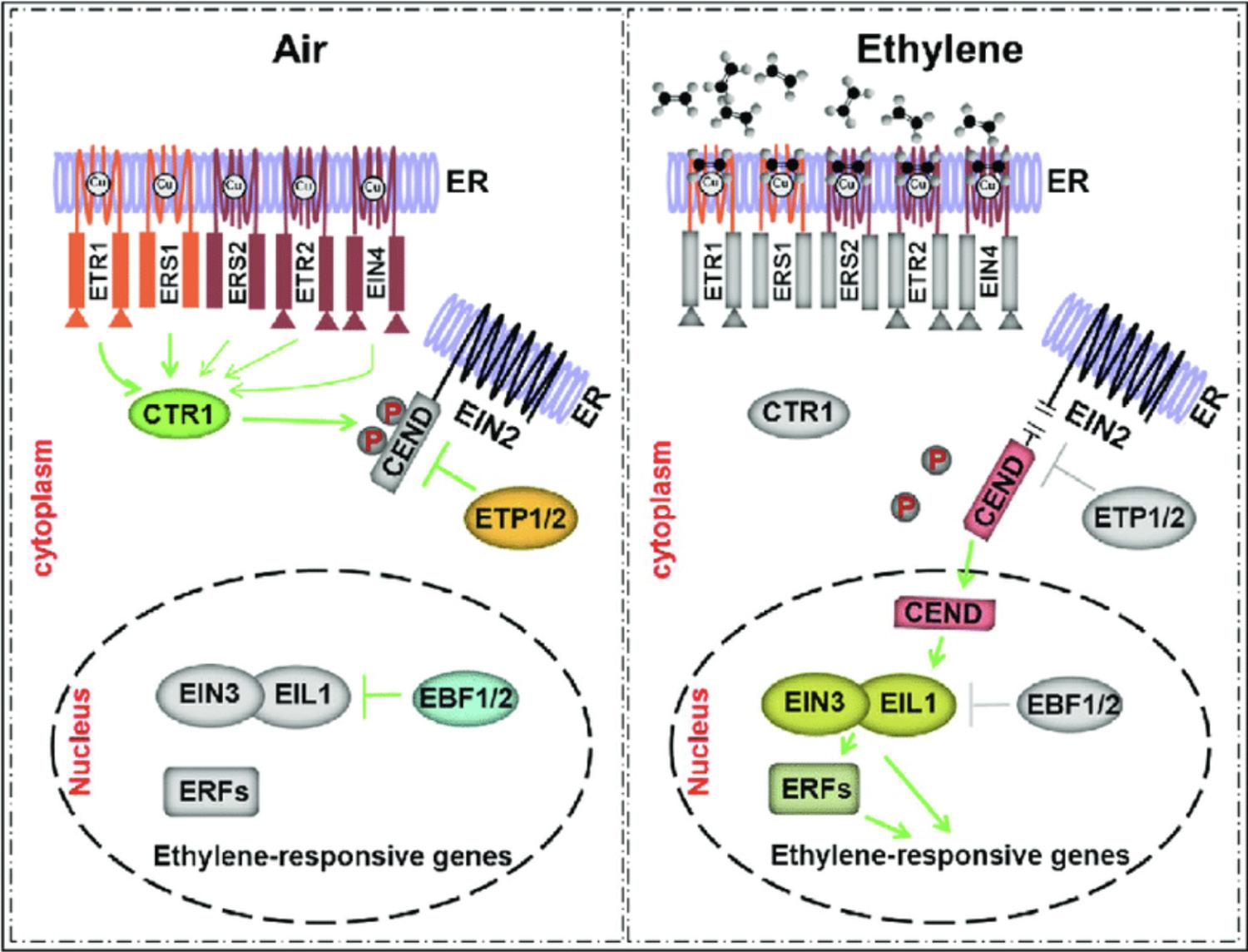
Figure 1: The figure shows how ethylene-responsive genes work. In summation, ethylene gas is perceived by receptors at the plant cell. When those molecules bind to the ethylene receptors, the receptor protein has a conformational change. That leads to activation. Then, the activated receptors transduce the signal within the cell through molecular interactions. The ethylene signal acts as a precursor in influencing the expression of genes in the ethylene responses, balanced by ethylene-responsive transcription. The gene expression transcription activates the physiological responses in which the plant reacts to stressors through adaptive growth and development for ethylene disruption in rice and arabidopsis.
Genetic Damage: Air pollutants such as ozone, UV radiation, ionizing radiation, radiations, and chemical mutagens inflict adverse effects to the plant genome. This damage can detriment the expression of genes involved in flower development and sex determination, leading to abnormalities in flower morphology and function (Tuteja et al. 2001). DNA strand breaks and chromosomal aberrations can be negatively correlated with zone-induced oxidative stress (Ensminger et al., 2014). Investigating the development of genomic damage can help with the underlying development fitness and stability of the ecosystems.
Nutrient Imbalance: Air pollution can directly influence the chemistry of the soil and nutrient availability, which can in turn affect flower development and sex expression. Elevating the concentration of the nitrogen deposition from air pollution can lead to drastic nutrient fluctuations in soil, displacing the nutrients crucial for flower development (Webey & Anderson, 2002). Ozone
disrupts the natural soil pH and accelerates nutrient leaching. This affects the flower development and sex expression of flowers due to exacerbated lead, cadmium, and mercury obstructing nutrient uptake. Oxidative stress cascades physiological responses that disrupt floral morphogenesis and overall reproductive success (Goyer et al., 1995).
In order to gauge the timing of the flowering events, I will calculate the average onset, duration, and peak abundance of flowering for common milkweed and California poppy across survey locations. With calculating average onset of flowering at each survey location, I would do the mean date of the first flower observed across all of the individual plants of each site. To determine the duration, I would calculate the first and last observed flowering events for each plant through a time interval. To determine abundance, I would calculate the average number of flowers observed per plant during the peak flowering period. For those overall metrics (onset, duration, peak abundance), I would use t-tests or ANOVA to assess differences between sites. I would use regression analysis to calculate the temporal trends in flowering timing along the surveying period.
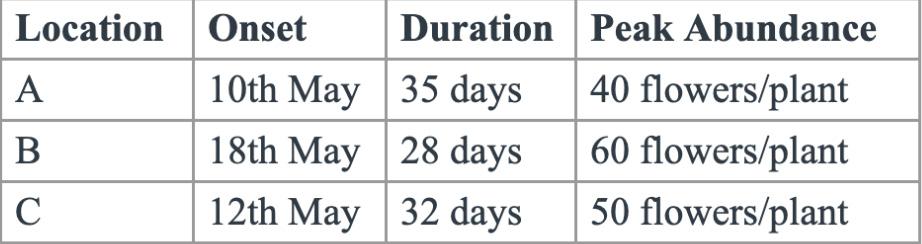
Figure 2: Theoretical data, where for the California poppy, the ANOVA test reveals a significant difference in peak abundance of flowers among all three locations (p < 0.05). The statistical analysis could reveal that there are timing and abundance differences based on urban gradient locations for surveying.
I would also gauge the percentage of plants in each flowering stage (bud, bloom, senescence) for California poppy populations. I would use statistical methods to analyze differences in stage distribution between sites and identify any correlations with environmental confounding variables.


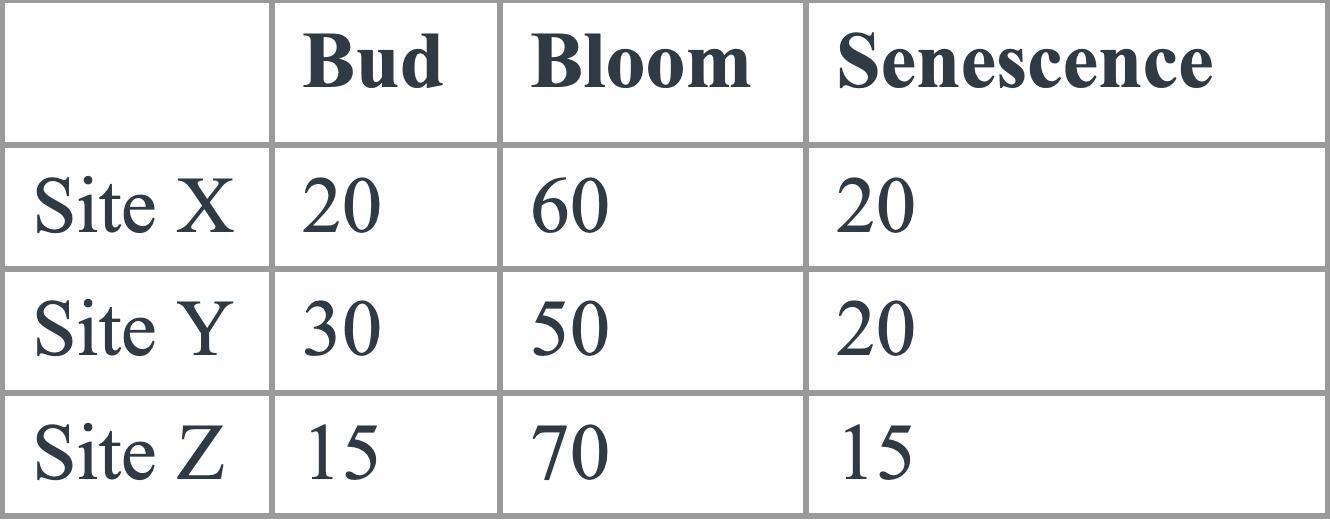
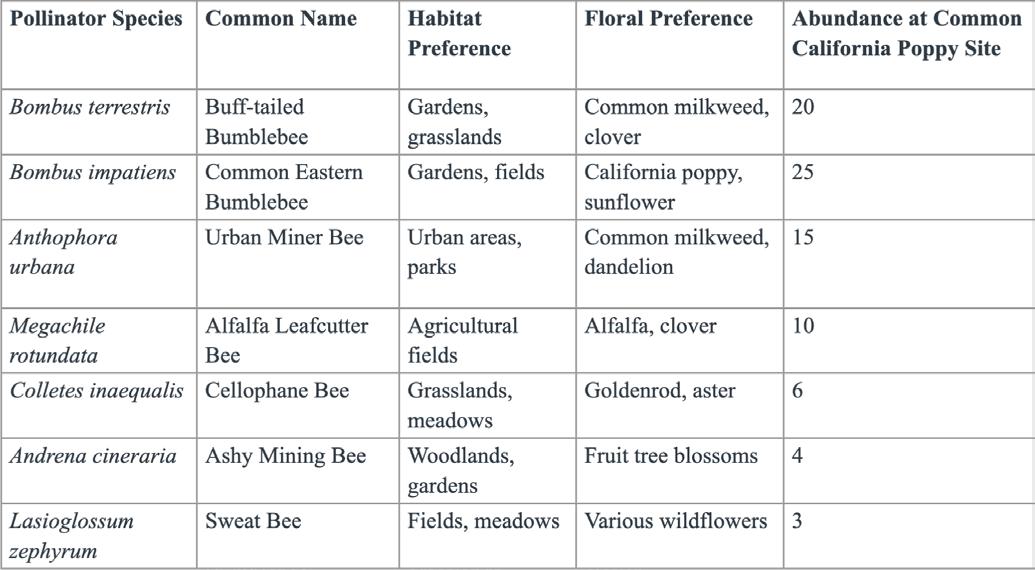
Figure 3: Theoretical data, with contingency table generated. Would use the chi-square test of independence in order to determine significant differences in sites. Pollinator-plant relationships highlighted with abundance of floral preferencing.
In order to gather qualitative and quantitative data considering habitat type in regards to pollution gradient, I would conduct analyses on California poppy populations on their color, shape, structure, and size. For color, I would use a spectrophotometer to obtain RGB values. For flower size, I would measure the diameter using a caliper. For flower shape, I would use image analysis software, ImageJ, to get parameters like area, perimeter, and aspect ratio. For flower structure, I would do field work to determine structural characteristics like petal count and specialized structures (ex. nectar guides).
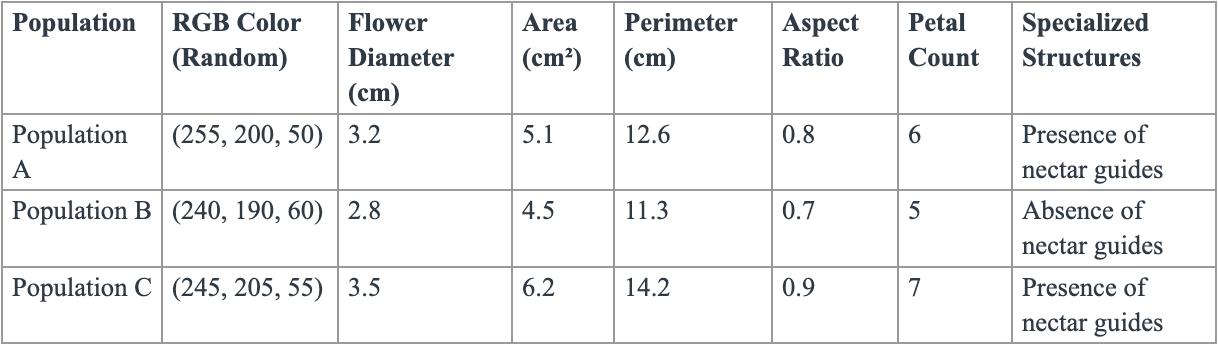
Figure 4: Theoretical data, summation of data for California poppy populations in terms of habitat
gradient with RGB color values, shape parameters, Image J, and petal count/specialized structures.
Calculating the effect on soil chemistry and nutrient availability has the potential to deprive vital nutrients for flower development and sex expression of California poppies. Disturbances have the ability to exacerbate nutrient deficiencies and suppress reproductive functions.
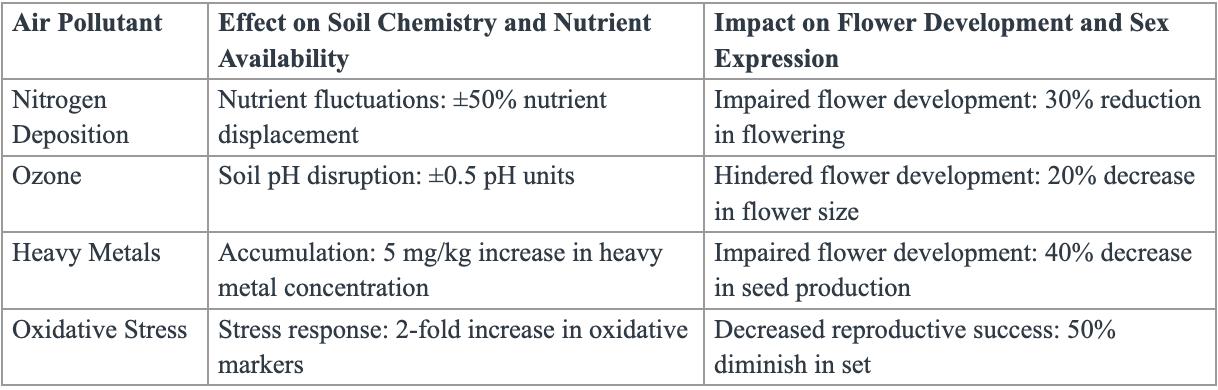
Figure 5: Theoretical data, with soil chemistry, nutrient availability, and sex expression and flowering development in plants. Quantifying air pollution and plant health.
Surveying Regions
Mildred E. Mathias Botanical Garden (UCLA); UCR Botanic Gardens (UC Riverside); California Native Plant Society (CNPS); Theodore Payne Foundation for Wild Flowers & Native Plants; Los Angeles County Arboretum and Botanic Garden; Orange County Parks and Nature Preserves; San Diego Botanic Garden; Channel Islands National Park; Santa Monica Mountains National Recreation Area; California Department of Fish and Wildlife (CDFW); South Coast Air Quality Management District (SCAQMD); Los Angeles Audubon Society; Riverside-Corona Resource Conservation District; San Diego County Native Plant Society; California State Parks - Southern California Districts.
I would analyze the site-specific environmental factors in order to correlate California poppy phenology and pollinator-plant correlation. Then, I would utilize the multivariate analyses to address the significance of environmental variables in shaping ecological dynamics. I would gather qualitative data as well through interviews with staff at the specific sites. I would use mapping systems in order to gauge the temporal analysis of meteorological data, which will illuminate weather-related effects on plant and pollinator behavior. There could be the potential to have time-series analysis and correlation tests to evaluate relationships between weather vari-
ables and ecological responses.
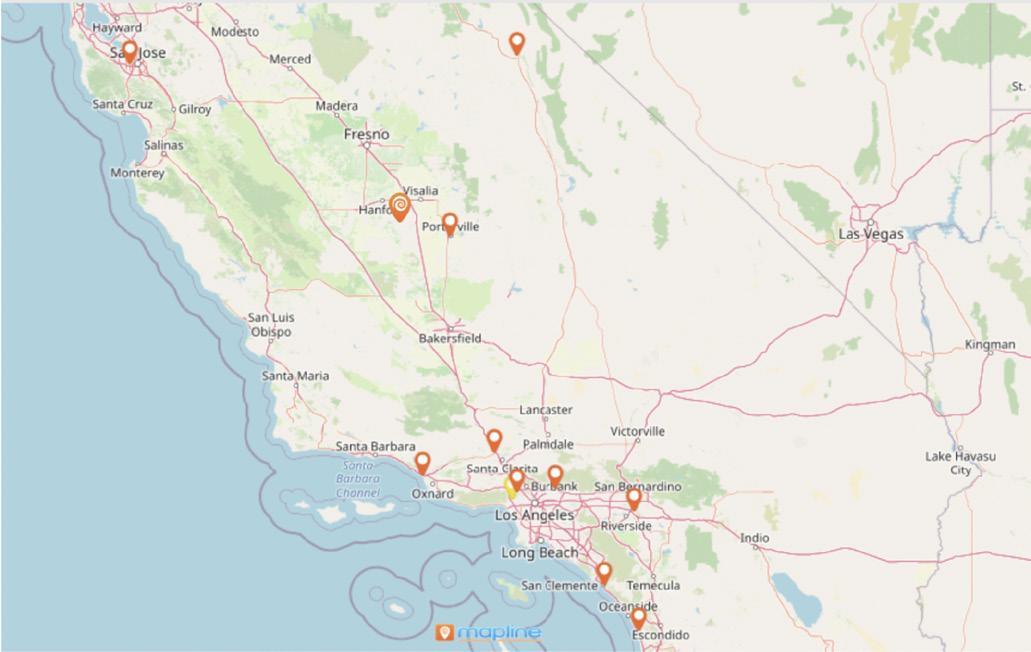
Figure 6: Configuration of ecological sites using Mapline.
The application of the queer theory lens intersects plant reproductive systems, environmental justice, and gender fluidity within the context of anthropogenic ecosystems. Using the theoretical framework of the California poppies, ozone pollution generated in urban gradients exhibits that there is a worldwide ecosystem impact. Being able to comprehend the harmful effects of those pollutants on plant reproductive systems within the context of gender fluidity is necessary for developing effective mitigation strategies.
Physiological indicators of environmental stress, such as photosynthetic rate and morphology, display the reproductive outcomes and long-term viability of California poppy populations in polluted environments. Alongside this, genetic and molecular research, such as gene expression analysis, stress-responsive genes, and epigenetic changes, provides insights into plant communities involving chronic ozone exposure.
Funding should be prioritized for this project because ozone exposure is unknown in various aspects of the natural world in comparison to human health. Indicator species quantify parameters of physiological changes and also display adaptive strategies in resistance to environmental alterations. Therefore, ozone urban gradients promote environmental justice, encompassing equitable treatment and involvement within ecological systems.
By recognizing that there is an environmental health issue through breaking the binary within
the context of ozone pollution, the project seeks the critical knowledge gap in environmental research. Being able to acknowledge the non-binary relationship of both ecological systems and human identities, the project challenges hegemonic frameworks perpetuated by settler-colonialism as well.
Community-led stakeholder engagement would be a priority for the project, with an emphasis on indigenous traditional sustainability practices and sovereignty. Through the incorporation of community workshops and oral knowledge sharing, the facilitation of information between researchers and indigenous communities can allow a greater emphasis on inclusivity within the scientific field.
Indigenous gender expression has been a key component of traditional ecological practices, with a spectrum of identities that are intertwined with the natural world. The multiple gender categories beyond the binary of male and female, including ‘Two-Spirit,’ hijra, and fa’afafine, recognizes the relationships of humans and the land, plants, animals, and spirits. The lack of gender roles reflect the flowering plants and their non conformational expression, illustrating between human identity and natural environment.
Urban gradients disproportionately affect people of color and low-income communities, so by using the case study of the flowering plants can indicate the future health of an area and have coalition-oriented, mitigative strategies. With environmental justice at the forefront, the project can investigate the confounding variables of ozone elevation and empower communities to advocate for healthy environments, rights to clean air, and safe spaces.
1. Aizen, M. A., et al. “Global agricultural productivity is threatened by increasing pollinator dependence without a parallel increase in crop diversification.” Global Change Biology, vol. 25, no. 10, 2019, pp. 3516–3527. doi: https://doi. org/10.1111/gcb.14736.
2. Ardiles, T., et al. “Nature Is Nonbinary: Gender and Sexuality in Biology Education in Chile.” WSQ: Women’s Studies Quarterly, vol. 51, no. 3, 2023, pp. 59–75. Project MUSE, https://doi. org/10.1353/wsq.2023.a910067.
3. Baldwin, B. G., & Goldman, D. H. (Eds.). (2012). The Jepson manual: vascular plants of California. Univ of California Press.
4. Bassin, S., et al. “Factors affecting the ozone sensitivity of temperate European grasslands: an overview.” Environmental Pollution, vol. 146, no. 3, 2007, pp. 678–691. doi:10.1016/j.envpol.2006.06.010.
5. Burger, H., Dötterl, S., & Ayasse, M. “Hostplant finding and recognition by visual and olfactory floral cues in an oligolectic bee.” Functional Ecology, vol. 24, 2010, pp. 1234–1240. doi: 10.1111/j.1365-2435.2010.01744.x.
6. Ensminger, M., et al. “DNA breaks and chromosomal aberrations arise when replication meets base excision repair.” Journal of Cell Biology, vol. 206, no. 1, 2014, pp. 29–43. doi: 10.1083/ jcb.201312078.
7. Ghaziani, A., & Brim, M. (Eds.). (2019). Imagining Queer Methods. New York University Press.
8. Goralnik, L., & Nelson, M. P. “Anthropocentrism.” Encyclopedia of Applied Ethics, edited by R. Chadwick, 2nd ed., Academic Press, 2012, pp. 145–155. https://doi.org/10.1016/B978-0-12373932-2.00349-5.
9. Goyer, R. A. “Nutrition and metal toxicity.” The American journal of clinical nutrition, vol. 61, no. 3 Suppl, 1995, pp. 646S–650S. doi:10.1093/ ajcn/61.3.646S.
10. Kachel, S., Steffens, M. C., & Niedlich, C. “Traditional Masculinity and Femininity: Validation of a New Scale Assessing Gender Roles.” Frontiers in Psychology, vol. 7, 2016, article 956. doi: 10.3389/fpsyg.2016.00956.
11. Kaylor, S. D., et al. “Estimates of biomass reductions of ozone sensitive herbaceous plants in California.” Science of The Total Environment, vol. 878, 2023, article 163134. doi:10.1016/j.scitotenv.2023.163134.
12. Kelley, D. R., & Gasser, C. S. “Ovule development: genetic trends and evolutionary considerations.” Sexual Plant Reproduction, vol. 22, no. 4, 2009, pp. 229–234. doi:10.1007/s00497-0090107-2.
13. Logie, C. H., & Rwigema, M.-J. “‘The normative idea of queer is a white person’: understanding perceptions of white privilege among lesbian, bisexual, and queer women of color in Toronto, Canada.” Journal of Lesbian Studies, vol. 18, no. 2, 2014, pp. 174–191. doi:10.1080/1089416 0.2014.849165.
14. Malcom, F. “Behind the Colonial Silence of Wilderness: ‘In Marronage Lies the Search of a World’.” Environmental Humanities, vol. 14, no. 1, March 2022, pp. 182–201. doi: https://doi. org/10.1215/22011919-9481506.
15. Marshall, D. L., et al. “The impact of plant and flower age on mating patterns.” Annals of Botany, vol. 105, no. 1, 2010, pp. 7–22. doi:10.1093/ aob/mcp260.
16. Nicole E. Rafferty, Jeffrey M. Diez, C. David Bertelsen. “Changing Climate Drives Divergent and Nonlinear Shifts in Flowering Phenology across Elevations.” Current Biology, vol. 30, no. 3, 2020, pp. 432–441.e3. https://doi.org/10.1016/j. cub.2019.11.071.
17. Pearson, K. D., et al. “Phenological trends in the California poppy (Eschscholzia californica): digitized herbarium specimens reveal intraspecific variation in the sensitivity of flowering date to climate change.” Madroño, vol. 68, no. 4, 2021, pp. 343–359.
18. Pinto, D. M., et al. “Plant Volatile Organic Compounds (VOCs) in Ozone (O3) Polluted Atmospheres: The Ecological Effects.” Journal of Chemical Ecology, vol. 36, no. 1, 2010, pp. 22–34. doi: 10.1007/s10886-009-9732-3.
19. Plackett, A. R. G., et al. “The early inflorescence of Arabidopsis thaliana demonstrates positional effects in floral organ growth and meristem patterning.” Plant Reproduction, vol. 31, 2018, pp. 171–191.
20. Ramírez, N., & Hokche, O. ``Outbreeding and inbreeding strategies in herbaceous-shrubby communities in the Venezuelan Gran Sabana Plateau.” AoB Plants, vol. 11, no. 4, 2019, article plz032. doi: 10.1093/aobpla/plz032.
21. Saunier, A., & Blande, J. D. “The effect of elevated ozone on floral chemistry of Brassicaceae species.” Environmental Pollution, vol. 255, 2019, article 113257.
22. Vanderplanck, M., et al. “Ozone Pollution
Alters Olfaction and Behavior of Pollinators.” Antioxidants, vol. 10, no. 5, 2021, article 636. doi: 10.3390/antiox10050636.
23. Veenstra, G. “Race, gender, class, and sexual orientation: intersecting axes of inequality and self-rated health in Canada.” International Journal of Equity Health, vol. 10, no. 3, 2011. https:// doi.org/10.1186/1475-9276-10-3.
24. Wilson, A. “How we find ourselves: Identity development and two-spirit people.” Harvard Educational Review, vol. 66, no. 2, 1996, pp. 303–318.
25. Yan, L., et al. “Breakdown of self-incompatibility due to genetic interaction between a specific S-allele and an unlinked modifier.” Nature Communications, vol. 14, no. 1, 2023. doi: 10.1038/ s41467-023-38802-0.
AUTHOR: Emma Mott
A prevalent biome in Northern California is the grassland chaparral biome. This biome is impacted by dry climates and high flammability of vegetation, causing it to frequently be exposed to crown fires (Barro, S.C.; Conard, S.G. 1991). While crown fires are naturally occurring for this environment, there has been evidence that recent rapid anthropogenic changes have led to increased frequency of wildfires (Syphard, A.D., et al. 2007.) Changes to our global environment, including ongoing drought, fuel ignitions, and drier conditions due to global warming have been found to increase the extremity and longevity of natural wildfire seasons (Pausas; Keeley, 2021). Additionally, the Intergovernmental Panel on Climate Change identified: global increases in average temperatures, increased frequency, intensity, and extent of heatwaves, and regional increases in frequency, duration, and intensity of drought as significant contributors to fire weather (Jones, M.W., et al. 2020). Overall, a shortened/more frequent fire cycle with more extreme and longer fire seasons has developed as a result of compounding anthropogenic environmental stressors.
These longer and more extreme conditions are having direct effects on surrounding biotic communities. The distribution of vegetation and wildlife is shifting with patterns of wildfire (Brown, et al. 2014). This is because altered fire regimes drive soil properties through heating, ash incorporation in topsoil, changes in organic matter contents, and changes to pH, all of which directly impact the diversity and abundance of plant species by affecting nutrients uptake (Hrelja, I., Šestak, I. & Bogunović, I. 2020). Additionally, wildfire smoke is affecting public health for humans, as well as attributing to chronic health issues in wildlife and influencing animal behavior (Sanderfoot, et al. 2021).
Wildfires act as positive feedback loops within our world; global warming leading to increased rates of wildfires, and wildfires contributing to
warming of the environment. As this issue continues to worsen, we can expect to see the distributions of many plant species being impacted and fragmented by wildfires.
The impact of wildfires on the environment is a complicated issue, as there are some benefits despite the dangers they can pose to wildlife, plants, and humans. Wildfires can thin and prune chaparral, releasing nutrients and allowing for environmental opportunity for new growth. Many species of plants actually thrive in the years following wildfires, as there is new opportunity for sunlight on shorter woody plants while taller species take longer to regrow and the forest canopy is disturbed (Clarke, P.J., et al. 2013). Wildfires also promote nutrient cycling and incorporate new organic matter, increasing plant abundance (Fisher, R.F., Binkley, D. 2022).
Still other plants are prevalent only in the years following a fire, as they require certain mechanisms to promote their germination and growth. One such plant is the whispering bells flower, Emmenanthe pendiflora. The Emmenanthe pendiflora is named a “fire-follower” species, meaning it is present most often in the spring after a fire, as well as the year following (Keeley, J.E. 2018). Smoke increases the levels of nitrogen in the plants’ roots, which promotes seed germination. The mechanism by which this occurs is called “nitrate signaling”, which allows for regulation of growth parameters as a transcription factor acting downstream of the nitrate signal induces gene expression necessary for seed germination (Khatoon, A., et al. 2020). The whispering bells’s characteristics as a fire-follower make it the candidate for our study.
Whispering bells are ecologically important as fire-following plant species because they support other plant communities through nutrient cycling and cascading effects. These plants are often accompanied by herbaceous perennials with bulbs, corms, and rhizomes. Additionally, nitrogen in the soil which was converted to vapor form from the fire may then be replaced by nitrogen-fixing plants such as lupine and leguminous plants, alder, and
ceanothus. Litter from these herbaceous shrubs decomposes, feeding fungal/microbial communities and stimulating growth of fungi, which further produce fruiting bodies. This burst of new growth provides seeds, nectar, and foliage to attract insects, moths, birds, and small mammals. Reptiles are drawn by heat and light (Longstreth, C. 2014). In sum, whispering bells are a crucial part of a biodiverse seral ecosystem that functions within the chaparral biome.
Our specific region of interest for this study is Sugarloaf Ridge State Park, which had significant wildfires in both 2017 and 2020. Causes of these wildfires were debated to be from negligence of Pacific Gas and Electric Company (PG&E), after powerful winds knocked over tree limbs onto power lines, creating sparks that eventually spread further from this wind, resulting in what was deemed a “firestorm”. Further, fire suppression tactics led to increased fuel load and build up of dry vegetation that sparked and spread quickly (Rosenthal A, et al. 2021). The negligence of this company even led to a series of lawsuits. Ultimately, these wildfires were the result of increased weather extremity from climate change, increased fuel load and anthropogenically altered landscapes, as well as unnatural/human fuel ignitions.
In the years following each of these wildfires (the Nuns Fire and Glass Fire, respectively), the whispering bells plant was observed in portions of the park. This was the first known presence in the park since 1964. This plant was listed as “rare” in a 1999 floristic study of Sugarloaf Ridge State Park (Bowcutt, F.S. 1999), however, it has been more prevalent in recent years as wildfires have grown more frequent for the park.
To determine the changing distribution of the whispering bells plant across Sugarloaf Ridge State Park, we will gather local records of the plant in three time periods: (1) prior to the first 2017 fire, (2) in the spring of 2018, after the 2017 Nuns wildfire, and (3) now, 4 years after the 2020 Glass Fire. We will also sample any current standings of whispering bells plants at various regions of the park where wildfire was known to be more intense, compare it to an area without wildfire presence, and observe characteristics of any surviving plants.
The goal of this study is to answer the question: How has the increase of wildfires in the grassland chaparral environment of Sugarloaf Ridge State Park impacted the distribution of the fire-follower plant species, Emmenanthe pendiflora (common name: whispering bells)? From this research, we hope to gain a better understanding of how wildfires may begin impacting plant species and the significance within their greater ecosystems.
Our hypothesis is that there will be a significant increase in the abundance of whispering bells plants present in Sugarloaf Ridge State Park in 2018, the year after a wildfire, when compared to the abundance prior to 2017 and the current abundance. If this hypothesis proves true, this may raise concerns that fire-follower plants can overtake native annuals, having cascading effects on local ecosystems.
To analyze impacts on the Emmenanthe pendiflora, we will look at historical records of the plant’s presence in Sugarloaf Ridge State Park, as well as collect data on the current distribution of the plant. Additionally, in order to determine an association between burn intensity and abundance and health of the plant, we will sample portions of the park with known varied degrees of intensity of wildfire and observe differences between stem count, flower count, flowering status, and plant height.
Objective 1: Gather data on the distribution of whispering bells across Sugarloaf Ridge State Park from the spring of 2018 after the first recent occurrence of wildfire, to 2020 before the most recent wildfire.
Objective 2: Gather data on the distribution of whispering bells across the park prior to 2017 using park records and utilizing the CalFlora database.
Objective 3: Gather current records of the distribution of the whispering bells plant, and observe the park first-hand for sightings of the plant.
Objective 4: Sample portions of the park with varied intensities of wildfire to observe a pattern among abundance and health of the plant com-
pared to the intensity of wildfire at that site.
Site 1: In 2017, the Nuns Fire burned much of the Southern area of the park, below the campgrounds. We will sample whispering bells plants from this area, specifically the lower Bald Mountain trail.
Sample 2: In 2020, the Glass Fire burned much of the northern part of the park, the McCormick Addition. We will sample whispering bells found at a vista point along the Grandmother Oak Trail within this region.
Sample 3: The park made an effort to prevent the wildfires from ever burning the campgrounds, so this area was not burned during either period of time. We will sample this area as our control.
In gathering this data, we hope to observe a significant pattern between the intensity and frequency of wildfires, and the habitat range and health of the whispering bells plant.
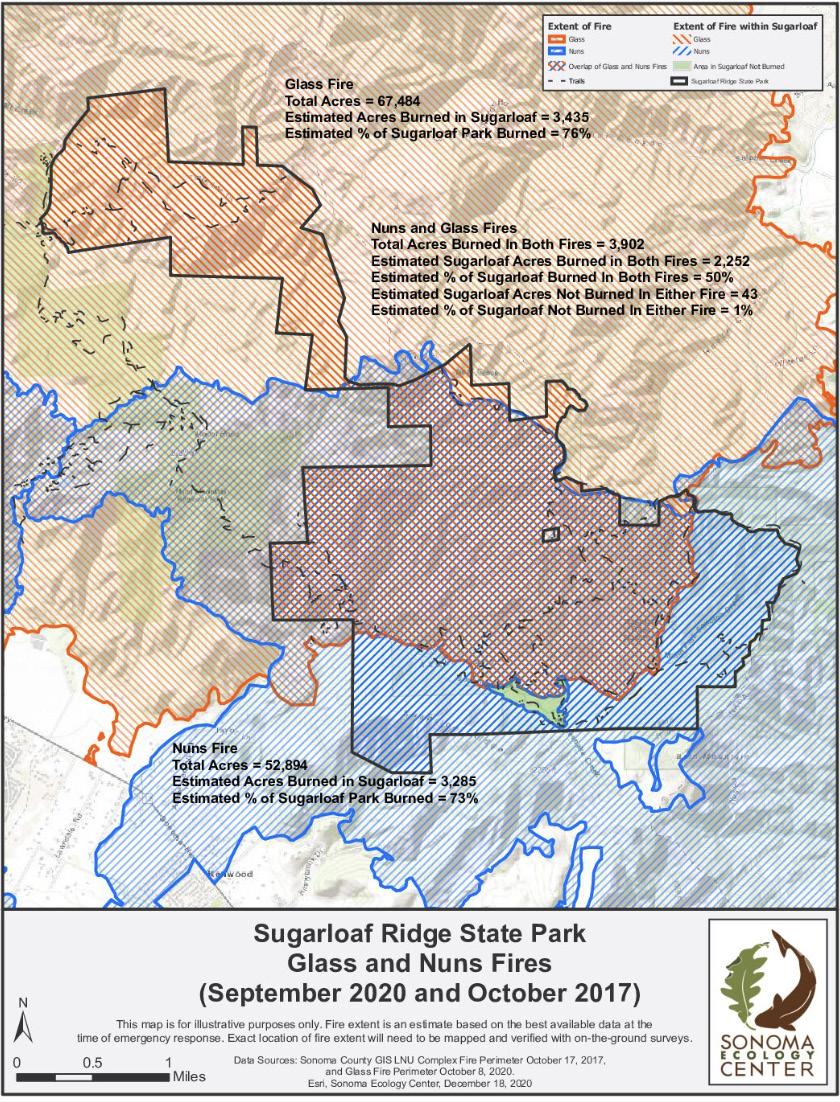
Figure 1: Map of Glass and Nuns Fires in Sugarloaf Ridge State Park in Sept 2020 and Oct 2017. Sourced from Sonoma Ecology Center
CalFlora is a non-profit database which provides information on wild California plants. It benefits from open-source observations by citizen scientists. One of its features allows users to search for plants by name and view all observations stored in the database. From here, you can view visual maps of California and observe specific regions/ counties where the plant is prevalent. It also allows you to filter a range of observation dates in order to explore historic data.
iNaturalist is another database in which citizen scientists photograph and report sightings of plants and animals. This website allows you to view numbers of observations, as well as visual bar graphs of seasonality and history, and plant phenology associated with historic observations, such as classes like “flowering”, “flower budding”, or “fruiting”.
1. Using the CalFlora database, iNaturalist observations, and park records, we will gather records on the abundance of the whispering bells flower in Sugarloaf Ridge State Park prior to 2017. Through the CalFlora database, we can filter the time periods of sightings, and limit our search from 1965 (after the last historic fire prior to 2017) through 2017.
a. To quantify the data, we will tally sightings and observe a visual map of the range of the plant for further statistical analysis.
b. Using the iNaturalist database, we can filter by plant species and look at bar graphs of abundance through years, as well as plant phenology such as “fruiting”, “flower budding”, and “flowering” recorded by citizen scientists.
2. Using the CalFlora database and park records, we will gather records on the abundance of the whispering bells flower in Sugarloaf Ridge State Park since 2017. Through the CalFlora database, we can filter the time periods of sightings, and limit our search from 2018 (after the Nuns fire in 2017), through 2020 (prior to the Glass Fire in 2020).
a. We will then follow the same process outlined in steps a and b above to quantify the data we collect.
3. Using the CalFlora database and park records, we will gather current records on the abundance
of the whispering bells flower in Sugarloaf Ridge State Park since 2020. Through the CalFlora database, we can filter the time periods of sightings, and limit our search from 2021 (after the Glass Fire in 2020) through 2024.
a. We will follow the same process as above to quantify the data we collect.
4. As the historic records may be limited by the accuracy of citizen scientists’ observations, we will also do our own sampling of current standings of the plant. We will sample portions of the park with varied intensities of wildfire to observe a pattern between abundance and health of the plant in comparison to extremity of wildfire.
a. Sample sites: (1) Lower Bald Mountain, which was burned during the 2017 Nuns Fire (2) Vista point along the Grandmother Oak Trail, which was burned during the 2020 Glass Fire, (3) the campgrounds Camp Butler, which was not impacted by either fire.
b. At each of these sites, we will take three measurements to quantify the abundance and health of the plants present.
i. For abundance, we will measure stem count.
ii. For health, we will measure flower count, plant height, and identify each standing as either: “fruiting”, “flower budding”, or “flowering”, to compare to the phenology traits identified in the CalFlora database.
Using the whispering bell flower as an indicator species can help us further understand how increased wildfire frequency will impact the overall diversity and distribution of wildlife throughout California. As the whispering bell is a natural fire-follower, its habitat range can inform us on the frequency and issues posed by wildfires.
Further, if the results of this study indicate that an increase in frequency of wildfire from anthropogenic changes has led to an increase in historically rare plant species such as the whispering bells, it raises the concern that these plants may overtake native annual plants, which can have cascading effects on local ecosystems.
This is particularly significant when considering how wildfires act as a positive feedback loop
within our world; global warming leading to increased rates of wildfires, and wildfires contributing to warming of the environment. As this issue continues to worsen, we can expect to see the distributions of more and more plant species being impacted and fragmented by wildfires.
Additionally, whispering bells are ecologically important as fire-following plant species because they support other plant communities through nutrient cycling and cascading effects. Nitrogen in the soil which was converted to vapor form from the fire may then be replaced by nitrogen-fixing plants such as lupine and leguminous plants, alder, and ceanothus which often accompany fire-follower plant species. Litter from these herbaceous shrubs decomposes, feeding fungal/microbial communities and stimulating growth. This burst of new growth provides seeds, nectar, and foliage to attract insects, moths, birds, and small mammals. Whispering bells are a crucial part of a biodiverse seral ecosystem that functions within the chaparral biome.
Furthermore, preserving the natural flora and fauna of Sugarloaf Ridge State Park is a worthy goal, as it holds cultural and historical significance as a historic Indigenous site for the Wappo Indian village of Wilikos. Many of the mentioned plants which whispering bells support ecologically were used historically by the Wappo tribe, including lupine and ceanothus, which were eaten as starch-rich foods (Chesnut, V.K. 1902).
Today, the park serves as a recreational site, drawing families and activities including school field trips, hiking groups, campers, and even star-watchers to their Robert Ferguson Observatory.
1. Barro, S.C.; Conard, S.G. 1991. Fire effects on California chaparral systems: an overview. Environment International. 17: 135-149.
2. Bowcutt, F.S. 1999. A floristic study of Sugarloaf Ridge State Park, Sonoma County, California. Aliso: A Journal of Systematic and Floristic Botany. 18(1): Article 12
3. Brown, D.; Duarte, A;, Mali, I.; Johnes, M.C.; Forstner, M.R.J. Potential Impacts of a High Severity Wildfire on Abundance, Movement, and Diversity of Herpetofauna in the Lost Pines Ecoregion of Texas. Herpetological Conservation and Biology. 9(1):192-205. Chesnut, V. K. 1902. Plants used by the Indians of 4. Mendocino County, California. Systematic and geographic botany and aboriginal uses of plants, 295–408. Contributions from the United States National Herbarium. Washington, DC: Government Printing Office.
5. Clarke, P.J., Lawes, M.J., Midgley, J.J., Lamont, B.B., Ojeda, F., Burrows, G.E., Enright, N.J. and Knox, K.J.E. (2013), Resprouting as a key functional trait: how buds, protection and resources drive persistence after fire. New Phytol. 197: 19-35. https://doi.org/10.1111/nph.12001
6. Fisher, R. F.; Binkley, D. 2000. Ecology and management of forest soils. John Wiley and Sons. 3(18).
7. Hrelja, I., Šestak, I. & Bogunović, I. 2020. Wildfire Impacts on Soil Physical and Chemical Properties - A Short Review of Recent Studies. Agriculturae Conspectus Scientificus. 85 (4), 293-301.
8. Jones, M.W.; Smith, A.J.P; Betts, R.; Canadell, J.G.; Prentice, C.I.; Le Quere, C. 2020. Climate Change Increases the Risk of Wildfires. ScienceBrief Review.
9. Keeley, J.E. 2018. Drivers of Chaparral Plant Diversity. In: Underwood, E., Safford, H., Molinari, N., Keeley, J. (eds) Valuing Chaparral. Springer Series on Environmental Management. Springer, Cham. https://doi. org/10.1007/978-3-319-68303-4_2.
10. Khatoon A, Rehman SU, Aslam MM, Jamil M, Komatsu S. Plant-Derived Smoke Affects. Biochemical Mechanism on Plant Growth and Seed Germination. International Journal of Molecular Sciences. 2020; 21(20):7760.
https://doi.org/10.3390/ijms21207760.
11. Longstreth, C. 2014. , Journal of the California Native Plant Society. 42(3): 7-14.
12. Pausas, G., Juli; Keely, Jon. 2021. Wildfires and global change. Frontiers in Ecology and the Environment. 19(7): 387–395, doi:10.1002/ fee.2359.
13. Rosenthal A, Stover E, Haar RJ. 2021. Health and social impacts of California wildfires and the deficiencies in current recovery resources: An exploratory qualitative study of systems-level issues. PLoS One. 2021 Mar 26;16(3):e0248617. doi: 10.1371/journal.pone.0248617. PMID: 33770088; PMCID: PMC7997008.
14. Sanderfoot, O.V.; Bassing, S.B.; Brusa, J.L.; Emmet, R.L.; Gillman, S.J.; Swift, K.; Gardner, B. 2021. A review of the effects of wildfire smoke on the health and behavior of wildlife. Environmental Research Letters. 16 123003.
15. Syphard, A.D., Radeloff, V.C., Keeley, J.E., Hawbaker, T.J., Clayton, M.K., Stewart, S.I. and Hammer, R.B. 2007. Human Influence on California Fire Regimes. Ecological Applications. 17: 1388-1402. https://doi. org/10.1890/06-1128.1
AUTHOR: Abby Wilber
Anthropogenic climate change causes harm to marine ecosystems on a community scale, as well as the ocean system as a whole. One of the ways in which its effects are shown are through its exacerbation of the negative effects and overproduction of microalgae. As the world’s average temperature and oceanic water temperature rises, so too does the presence of microalgae species that bring harm on their surrounding organisms by depriving them of essential resources needed for survival (Brosnahan et. al. 2020). In an ocean already threatened by acidification and imbalanced nutrient cycling as a result of rising atmospheric, and consequent oceanic, CO2 levels, microalgae worsens and perpetuates these negative effects.
Algae is one of the first living organisms to emerge on Earth, and did so around 3.5 billion years ago (Anderson 2012). Microalgae has interesting and multifaceted implications for aquatic ecosystems around the world. In freshwater, “algal blooms” refers to the abundance of microalgae such as cyanobacteria. In salt water, the term can refer to either the mass presence of either microalgae or macroalgae, also known as seaweed. An estimated 50k species of microalgae exist, but only 30k have been studied. They dwell in varying degrees of environmental turmoil, as their unicellularity makes it easy for them to withstand environmental stressors (Mata et. al. 2010).
Microalgae often does harm to the other organisms in its habitat by way of eutrophication. With the right conditions, microalga cells reproduce extremely quickly, causing their population in a habitat to grow rapidly (Graneli et. al. 2008). Because they are photosynthetic, microalgae thrive in CO2-rich environments—a trait now globally present as a result of the fossil fuel reliance that characterizes human society worldwide. In this state of overabundance, algae creates a physical barrier that blocks sunlight
from marine organisms that require it for their survival. In a phenomenon called an algal bloom, it overtakes the ocean’s surface in a large, sheetlike appearance (Hallegraeff et. al. 2021). As it dominates aquatic habitats in this way, microalgae consumes high volumes of organic compounds and nutrients in limited supply, depriving other organisms of these resources for whom they are equally crucial for growth and survival. Specifically, the depravity of oxygen is what the term eutrophication refers to. Their respiration and decomposition is what causes oxygen depletion to other organisms, especially those in the benthic zone (Graneli et. al. 2008).
As a method of competition when resources are scarce, microalgae responds by emitting its own bodily chemicals that are to the detriment of the health of the other organisms that share its community. Specifically, the mechanism by which algae poses a danger to the other organisms in its environment is allelopathy. Allelopathy is the production of biochemicals from an organism that negatively affect the growth and survival of a nearby organism. In the case of algae, these chemicals include polysaccharides, nitrogen compounds, and proteins. Algae’s production of harmful chemicals is the highest when it is decomposing, implying that their ecosystem harm may depend on the stage of their life they are in (Mengchen et. al. 2021). Allelopathy inhibits organismal function on a cellular level by damaging cell membranes and altering the structure of the contents within cells. On a chemical level, allelopathy is damaging to the organisms that allelochemicals are subjected to (Tan et. al. 2019). This causes an imbalance in the nitrogen and phosphorus supply in ecosystems, throwing off the nutrient cycling and nutrients that species in the entire ecosystem have access to.
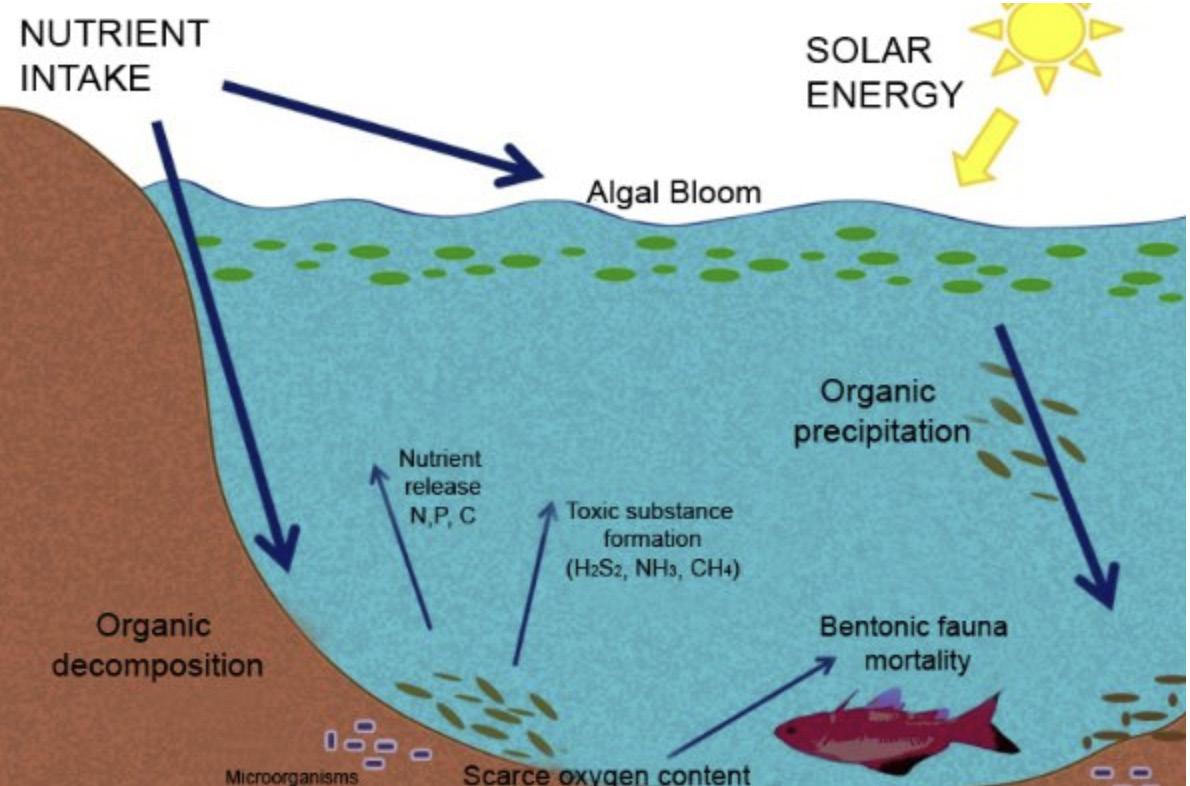
Figure 1: Algal blooms alter the natural course of nutrient cycling in the ocean by overproducing components like nitrogen and carbon, simultaneously depriving its surrounding organisms of oxygen.
In a 2021 study, the types of chemicals predominantly produced by microalgae were found to be fatty acids (Hallegraeff et. al. 2021). Though extremely harmful to organisms in its vicinity, the very same chemicals are what give it immense potential as a biofuel (Mata et. al. 2010). The lipid content in microalgae is composed of triglycerides, free fatty acids, phospholipids, etc. Together when distilled, these chemicals serve a similar purpose as the hydrocarbons that characterize the usefulness of fossil fuels like crude oil. Because algae biodiesel doesn’t contain sulfur, its emissions of carbon, nitrous oxide and other pollutants are dramatically decreased, making it a clean fuel. Though there are current cost barriers to the large-scale production of biofuel from this source, the harvesting of microalgae for biofuels has been proven by the U.S. National Renewable Energy Laboratory and in subsequent research to be a feasible method of energy production (Morales et. al. 2021).
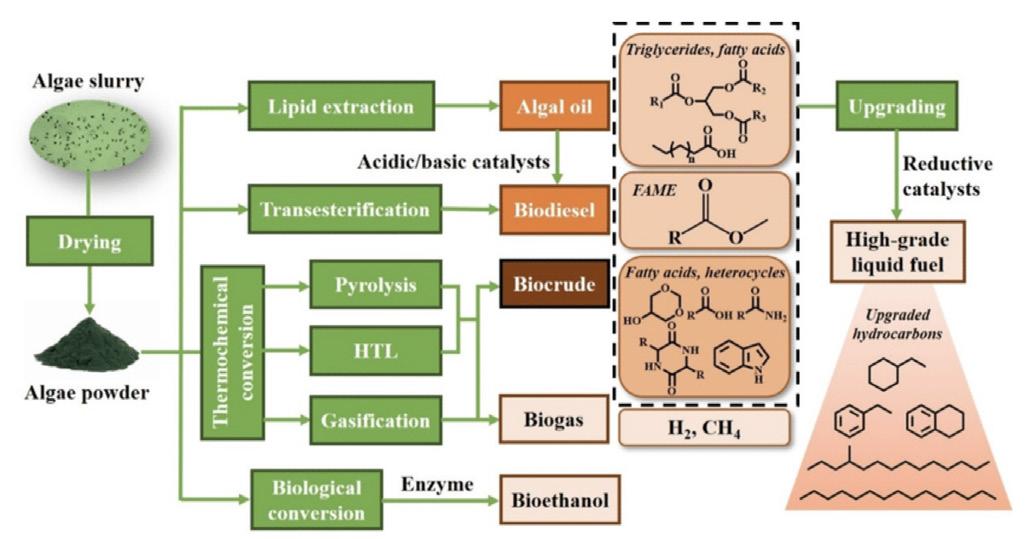
Figure 2: The process of converting algae to biofuel is outlined in more detail above. The composition of fatty acids within microalgae are what allows them to become effective biofuels,
and must be distilled and processed in order to be used for this purpose. Not pictured, the byproducts of algal biofuel can be very useful and include materials that can be used as food ingredients and plant fertilizer.
Its carbon consuming properties also allow microalgae to be a carbon sink, and thus holds an avenue to significantly contribute to the lessening of harmful climate change effects by mitigating CO2 presence on Earth. Algae can potentially be used to harness CO2, and then derive the fatty lipids from it in order to create a green biofuel. Overall, this operation has a net intake of carbon dioxide, meaning that algae could potentially be used to create an overall decrease in atmospheric CO2 (Tan et. al. 2020). If taken from its natural habitats where it leeches the surrounding air and ocean of CO2 for the purpose of energy production, microalgae harvesting can become a carbon capture and use method.
Skeletonema costatum is a species of microalgae found in marine ecosystems, most abundantly along the coasts of Rhode Island and Hakozaki, Japan. This species is known to inhibit the growth of its surrounding organisms through eutrophication and allelopathy, making it a good representative of the many microalgae species that play this role worldwide (Graneli et. al. 2008). Quantified by its lipid productivity, volumetric productivity, and areal productivity, this species is found to have potential as an energy source. Skeletonema costatum is an antagonist to many organisms with which it shares a habitat—in particular native fish and shrimp species. Epinephelus awoar the banded grouper, is one fish species found in the Wenjiao Estuary in China which is adversely affected by the toxin production and eutrophication of Skeletonema costatum (Herbeck et. al. 2013). The interactions between these species is indicative of the relationship between microalgae in general and the species which they harm. Microalgae is also harmful in particular to zooplankton, which are small organisms often considered foundational for aquatic life and food chains.
The overall objective of this experiment will be to determine the impacts of removing microalgae populations from the aquatic environments
in which they naturally occur for the purpose of biofuel production. Because microalgae is prone to great abundance and great harm to its surrounding organisms through eutrophication and allelopathy, this experiment in part will be done in order to test the hypothesis that microalgae removal will prove beneficial to ecosystem health. The experiment will consider the ecological impacts of removing large quantities of microalgae from their habitats, as well as the effectiveness of microalgae, once extracted, as a biofuel. Both of these implications of microalgae will be tested at various stages of microalgae’s development, with the aim of determining an optimal point in the algae’s lifespan, in terms of both energy production and ecological health, at which to remove algae from its habitat for energy use. As it’s been previously determined that microalgae is most harmful during the decomposition process, this experiment can be done with the hypothesis that microalgae removal at earlier stages of its lifespan will help to avoid its harmful effects and lead to a healthier marine habitat.
The other ecological purpose of experimentally removing algae from its natural environment at various stages in its life is to observe how well the antagonized species are able to recover, and how the amount of time and at which life stage these species are exposed to microalgae will influence this. The removal of an organism from its environment often has complex and cascading effects on the rest of the ecosystem, which this aspect of the experiment seeks to address.
The species Skeletonema costatum is one of many species of microalgae that causes oceanic algal blooms—this experiment is meant to give a general idea of the implications of this same process were it to be used with various microalgae species around the world. The end goal of intersecting these two sets of metrics will be to determine if algae can be harvested from its natural environment to produce energy and minimize the harm done by organisms that are typically subjected to nutrient and carbon deprivation at the hand of microalga. This experiment fulfill this objective by experimentally seeking to answer the following questions:
A. What impact does the microalgae species Skeletonema costatum have on other organisms
in its habitat, in terms of species abundance and wellness?
B. How effectively is the ecological well-being of Skeletonema costatum’s natural habitat able to recover from its negative impacts in the event that the microalgae population is suddenly removed?
C. How effective is Skeletonema costatum as a biofuel when extracted from habitats where it lives naturally?
D. Finally, how do each of the above questions vary along different points of Skeletonema costatum’s life cycle?
To mimic marine habitats affected by algal blooms, six saltwater tanks will be set up. Across each tank in each of the different mimicked environments, the control variables will be the size of the tank in which the algae is cultivated and the quantity and biomass of the algae in each sample at the start of the experiment. To establish a positive and negative control in the experiment, there will be one tank with no algae introduced, and one where algae is not removed from the tank at any indicator points. This will allow us to observe the simulated ecosystems with no harm, and to see an extreme case where algae is free to continuously reproduce unrestricted—a close approximation to natural algal blooms. The experiment can be broken down into the following components:
I. Abiotic components of tank
The tanks involved in the experiment will be set up with the goal in mind of mimicking a marine ecosystem in which the study species or a similar microalgae may be found. In order to achieve this, the salinity and temperature of the tanks will be controlled and monitored. These aspects also have a significant effect on algal growth, making it important that they are identical across all the tanks. The tanks will be closed and imbued with an amount of CO2 into the air in an imitation of the atmospheric CO2 that ocean surfaces are exposed to, and from which microalgae sequester carbon.
II. Skeletonema costatum monitoring Skeletonema costatum is the specific species of microalgae that will be observed for the purpose of the experiment, as it is a prime example of
a microalgae that’s both ecologically harmful and potentially an excellent source of biofuel. The biomass of Skeletonema costatum will be monitored throughout the experiment in order to track the algae’s life cycle progression, reproduction, and growth as a population. The method of epifluorescence microscopy will be used to determine the concentrations of microalgae throughout the experiment in the tanks. This will be conducted using a light source for maximized effectiveness, as well as a microscopy apparatus.
Using continuously taken data on the abundance of the algae, this growth will be monitored in order to determine the growth rate, in biomass accumulated per time. This will provide a variable to compare with the times after cultivation of microalgae and possibly draw a conclusion between this and the environmental harm being done by the algae.
The basis of when to remove the biofuels from the tank at a given time will be determined based on two factors: the amount of algae biomass found to be present by microscopy, as well as the content of chemicals in the water of each tank. During the decomposition process, microalgae is known to emit chemicals at a higher rate. The first three tanks in the experiment will have their algae removed at various points in time based on their algae biomass, and the fourth will be removed right when these chemicals spike in indication that the decomposition process is beginning. The purpose of this is to determine whether decomposition is the part of Skeletonema costatum’s life cycle where it is most harmful to its surrounding organisms. In order to determine the concentrations and identities of the allelochemicals produced by algae, the experiment will employ the methods used in the experiment done by Mengchen et. al (Mengchen et. al. 2021). Methanol extraction and n-butanol extraction will be used to distill the algae samples, and chromatography to determine concentrations and chemical structures. In the intermediate stages of the experiment, before the algae can be removed from its sample enclosures and observed using chromatography, this experiment will use cell density measurements.
The species introduced to the stimulated marine
habitats as Skeletonema costatum’s co-inhabitants will be the fish species Epinephelus awoar and the zooplankton species Daphnia magna. These species have been chosen on the basis that their relationship with Skeletonema costatum is similar to many relationships between various microalgae species and other species in their vicinity. These species will be placed into each of the six tanks in equal amounts at the beginning of the experiment. In order to monitor the health and abundance of the fish, their abundance will be visually counted on a daily basis and plotted against the chemical content of their tank. To monitor the zooplankton, due to their microscopic nature, DNA metabarcoding will be used so as to determine the concentration of plankton per volume of water (Xiong et. al. 2020).
Using the method of membrane microfiltration, a mesh device will be used to capture the algae from the tanks. The device used will have the ability to filter very small amounts of biomass from the tanks, ensuring that all the algae can be retrieved from the samples without being damaged.
Once retrieved using microfiltration, thermal drying will be used to evaporate the water from the algae samples and distill them to only their biomass.
Fatty acids and lipids must then be extracted from the algal samples, as they are the parts of the alga on a cellular level that are able to produce energy. In order to do this, the use of an ultrasound or microwave device will apply irradiation to extract the necessary oils composed of these useful compounds.
To measure the effectiveness of the different algae samples as fuel, this experiment will employ the methods of Ramaraj et. al. and perform a fuel performance test called “carbon mass balance method” (Ramaraj et. al. 2014). Weight to biomass ratio, as well as mass of co2 consumed per unit of microalgal biomass will be measured.
As anthropogenic climate change becomes a more prominent issue with increasingly no-
ticeable detriments, it’s ever-imperative to be mindful and innovative when it comes to thinking about the future of energy production. The use of microalgae as an energy source provides an option for clean energy production that, even better than carbon neutral options, can have a net carbon intake due to algae’s properties as a carbon sink. Fossil fuels are the primary driving force behind greenhouse gas emissions, which in turn contribute to a huge portion of anthropogenic global climate change, and algae provides an alternative to this as it does not emit any harmful greenhouse gasses as a byproduct of its use as a fuel.
The possibility posed by this experiment of finding a method of microalgae harvesting that’s non-obtrusive to surrounding organisms is significant, as it could potentially signify the ability to use existing, natural coastal stores of algae, without having to use the resources to harvest it from scratch, in order to create clean energy and capture carbon from the atmosphere. This is also important for ecosystem interactions: if there were to be discovered a point in microalgae’s life where its harm to other organisms greatly increases, this harm could be stopped by habitual extraction of algae from its environment, restoring the health of species that have experienced population declines as a result of algae’s negative effects.
Microalgae has many benefits to humans beyond its energy potential. Many microalgae species have nutritional value due to their high mineral concentrations, and are effective flavor enhancers as a result of their glutamic acid content. They also have been found to have potential as disease preventative agents and other pharmaceutical uses. Many microalgae species are already used on a large scale for food production, and prove promising in the future for this purpose as more and more terrestrial land becomes depleted and non-viable for crop growth. Thus, even beyond energy production and effectiveness as a biofuel, microalgae harvesting for human use has the potential to be immensely useful on a broad scale.
1. Anderson, D. M., Cembella, A. D., & Hallegraeff, G. M. (2012). Progress in understanding harmful algal blooms: Paradigm shifts and new technologies for research, monitoring, and Management. Annual review of marine science. https://www.ncbi.nlm.nih.gov/pmc/articles/ PMC5373096/
2. Brosnahan, M. L., Fischer, A. D., Lopez, C. B., Moore, S. K., & Anderson, D. M. (2020, January). Cyst-forming dinoflagellates in a warming climate. Harmful Algae. https:// www.sciencedirect.com/science/article/pii/ S156898831930201X?via%3Dihub
3. Graneli, E., Weberg, M., & Salomon, P. S. (2008, December). Harmful algal blooms of allelopathic microalgal species: The role of eutrophication. Harmful Algae. https://www.sciencedirect. com/science/article/pii/S1568988308001054?casa_token=ZqQAp9Dfqh0AAAAA:9RIpag4vXiVJ8FWD_9tAnB_xh6kg11FtRO83-iknfAuhP7ZrAjTctzkN5FgradpGd1VqE8fk7g8
4. Hallegraeff, G., Anderson, D., Belin, C., Bottein, M.-Y., Bresnan, E., Chinain, M., Enevoldsen, H., Iwataki, M., Karlson, B., McKenzie, C. H., Sunesen, I., Pitcher, G. C., Provoost, P., Richardson, A., Schweibold, L., Tester, P. A., Trainer, V. L., Yñiguez, A. T., & Zingone, A. (2021). Perceived global increase in algal blooms is attributable to intensified monitoring and emerging bloom impacts. Communications earth & environment. https://www.ncbi.nlm.nih.gov/pmc/articles/ PMC10289804/#:~:text=In%20addition%20to%20 toxic%20species,the%20environment%20and%20 human%20activities
5. Herbeck, L., Unger, D., Wu, Y., & Jennerjahn, T. (2013, April). Effluent, nutrient and organic matter export from shrimp and fish ponds causing eutrophication in coastal and back-reef waters of NE Hainan, tropical China. Continental Shelf Reach. https://www.sciencedirect.com/science/article/pii/S0278434312001288
6. Mata, T. M., Martins, A. A., & Caetano, N. S. (2010, January). Microalgae for biodiesel production and other applications: A review. Renewable and Sustainable Energy Reviews. https://www.sciencedirect.com/science/article/ pii/S1364032109001646?casa_token=WuWbGyHfBn8AAAAA:19nTPpFQ66q4rHpg1Qfj3YMFaV6_ m25adge25IN4YzkwWILzKtdaqdHcnPWVRcjRn1at2igvZTM
7. Mengchen, L., & et. al. (2021, Septem-
ber). Allelopathic effects of Ulva linza on marine phytoplankton and identification of the allelochemicals. ProQuest. https://www. proquest.com/docview/2561133718?parentSessionId=GXf9C5Y%2Byl4YRCqrle0Ajglc%2Bqy2dd5VpZU8eVqcPQ4%3D&pq-origsite=primo&sourcetype=Scholarly%20 Journals&parentSessionId=MCa8v09H53AEI1HcHXtPYHUtBgQTZ92sptJqjHprl8o%3D
8. Morales, M., Aflalo, C., & Bernard, O. (2021, July). Microalgal lipids: A review of lipids potential and quantification for 95 phytoplankton species. Biomass and Bioenergy. https:// www.sciencedirect.com/science/article/pii/ S0961953421001458
9. Ramaraj, R., & et. al. (2014, July). Freshwater microalgae niche of air carbon dioxide mitigation. Ecological Engineering. https:// www.sciencedirect.com/science/article/pii/ S0925857414001189?via%3Dihub
10. Tan, J. S., Lee, S. Y., Chew, K. W., Lam, M. K., Lim, J. W., Ho, S.-H., & Show, P. L. (2020, December). A review on microalgae cultivation and harvesting, and their biomass extraction processing using ionic liquids. Bioengineered. https://www.ncbi.nlm.nih.gov/pmc/articles/ PMC6999644/
11. Tan, K., Huang, Z., Ji, R., Qiu, Y., Wang, Z., & Liu, J. (2019, January 28). A review of Allelopathy on microalgae. microbiologyresearch.org. https://www.microbiologyresearch.org/content/journal/micro/10.1099/mic.0.000776#tab2
12. Xiong, W., & et. al. (2020, January). Zooplankton biodiversity monitoring in polluted freshwater ecosystems: A technical review. Environmental Science and Ecotechnology. https://www.sciencedirect.com/science/article/pii/S2666498419300080#:~:text=There%20 are%20two%20strategies%20of,%5D%2C%20 %5B63%5D%5D
AUTHOR: Esther Suh
Bombus occidentalis was established as a species in 1837 by naturalist Edward Doubleday. The original classification established it as a distinct species within the genus Bombus, based on its unique morphological characteristics and geographic distribution in western North America, such as its distinct white patch on the last segment of its abdomen (Jepson 2013). Since then, Bombus occidentalis has been recognized as a key species in pollination ecology, particularly in western regions of the United States and Canada. Bombus Occidentalis’ decline over the past couple decades has raised conservation concerns, prompting increased research into its biology and habitat needs. Similarly, Diadasia enavata is declining in population stability but unlike Bombus occidentalis, they feed almost exclusively on the sunflower family, such as asters, daisies and sunflowers. In 1872, Ezra Townsend Cresson, an entomologist, was the first to formally describe and name Diadasia enavata, also known as Sunflower Chimney Bees. Similar to Bombus occidentalis, Diadasia enavata are found in Western North American regions such as California, Washington, and Canada (Sipes 2001).
Both Bombus occidentalis and Diadasia enavata play vital roles as native pollinators, supporting agriculture. However, their differing foraging behaviors offer insight into their adaptability to environmental pressures. Bee species, like Bombus occidentalis, are generalist feeder bees capable of foraging on a wide range of plants through behaviors like nectar robbing (Jepson 2014). This flexibility may provide it with a survival advantage in environments with limited native plant species. In contrast, Diadasia enavata are specialist, oligolectic species that rely only on sunflowers and plants closely related to the family Asteraceae, preferring Helianthus annuus pollen (Sipes 2001). Diadasia enavata has a mutually beneficial relationship to sunflowers: the bee uses the flower as a primary food source and the
sunflower benefits from the effective pollination. Thus, Diadasia enavata’s dependence on a narrow range of host plants makes it more vulnerable to habitat changes, such as the decline of sunflower populations or the introduction of non-native plant species.
However, both Bombus occidentalis and Diadasia enavata face environmental pressures like habitat loss and the introduction of non-native plants. The population declines of both species underscore the urgency of studying their ecological roles in different environments. This raises questions about whether a generalist bee like Bombus occidentalis’ will have a better ability to sustain populations in low native plant species farmlands, such as the high agricultural regions in California. With there being a dominance of monoculture crops, such as almonds and canola, that provides only temporary food resources for pollinators, there is often a lack of plant diversity essential for sustaining bee health (Goulson et. al, 2022). It is important to note that pollinator diversity is critical for efficient crop pollination and ecosystem resilience. Thus, relying on a few single species, like honey bees who “benefit from such highly clumped resources more than other bee species,” may limit pollination efficiency (Goulson et al 2022). Understanding if Bombus occidentalis will not just survive but thrive like honey bees in farmland areas would be crucial in supporting increasing demand for crops and food resources and in bettering future conservation efforts. This research directly connects the species’ generalist trait to population resilience, addressing whether generalist feeding compensates for habitat changes and examining how specialists like Diadasia enavata respond to similar pressures. By studying these two species, we can better inform conservation efforts, improve ecosystem resilience, and support the growing demand for crop pollination in agricultural regions.
Museum data is crucial for this research: the
analysis of museum specimens allows us to observe changes in the foraging patterns of Bombus occidentalis and Diadasia enavata, revealing how populations have adapted to agricultural versus non-agricultural landscapes. The museum data collected about these specimens, such as collection dates, pollen loads, and geographic distributions, enable comparisons across decades, increasing our knowledge of Bombus occidentalis’ and Diadasia enavata’s adaptation in farmland regions. Furthermore, museum collections help identify long-term trends in bee populations and in bee health. We can compare the morphology of the bees by identifying changes in wingspan or mean size in farm areas (California’s Central Valley) and non-farm, native plant rich regions (Sonoma County) over the years. The historical museum data would provide a basis of comparison for understanding how environmental pressures, such as habitat loss and reduced native plant diversity, have influenced the physical health and population numbers of Bombus occidentalis and Diadasia enavata.
How do farmlands with reduced native plant diversity and non-farmland areas with rich concentrations of native plants affect the population stability and health of Bombus occidentalis and Diadasia enavata? Does the generalist feeding trait of Bombus Occidentalis help its ability to use non-native species in farmland regions, while maintaining a high population density and overall physical health over the years in comparison to Diadasia enavata?
Bombus occidentalis, due to its generalist feeding behavior, will show no significant difference in population stability and physical health between farmland regions with reduced native plant diversity (California’s Central Valley) and non-farmland areas with high native plant species diversity (Sonoma County). Diadasia enavata, due to its specific feeding behavior, will show a significant difference in population stability and physical health between farmland regions with reduced native plant diversity (California’s Central Valley) and non-farmland areas with high native plant species diversity (Sonoma County).
Bombus occidentalis, despite its generalist feeding behavior, will exhibit reduced population numbers, genetic diversity, and poorer health metrics in farmland regions with lower native plant diversity compared to non-farmland areas. However, in non-farmland areas rich in native plants (Sonoma County), Bombus occidentalis populations may exhibit greater health and foraging efficiency, showing a preference for native species like sage (Salvia spp.) and milkweed (Asclepias spp.). Furthermore, Bombus occidentalis and Diadasia enavata will exhibit similar reductions in population numbers and physical health.
The primary sources will include the Global Biodiversity Information Facility (GBIF), the USDA Plants Database, and data from institutions like the Essig Museum of Entomology and the UC Berkeley Herbarium.
From Essig’s entomological collections, metadata on Bombus occidentalis and Diadasia enavata specimens will include collection dates, locations, and pollen loads. These data provide critical insights into historical and contemporary foraging behaviors, allowing comparisons of native and non-native plant use. For example, pollen and nectar samples attached to museum specimens will be analyzed to identify plant species and assess changes in dietary diversity over time in the farmland regions. Farmland bees’ choice of plants – indicated by the pollen samples on their bodies or the nectar in their proboscis – will be compared to bees from native plantrich, non-farmland regions. This will potentially indicate whether there is a particular preference for a certain plant by the bees for native species, such as sage and milkweed, and sunflower for Diadasia enavata. We can also note the quality and diversity of the nectar. As stated previously, plant diversity plays a large role in the health of bees (Goulson et al 2022). Since there is generally more diversity of plants in non-farmland regions, there might be more diversity of plants shown in the nectar and pollen samples of the bees. However, since Bombus Occidentalis are generalist feeders, the quality of the nectar may not affect Bombus Occidentalis bees in farmland regions
and non-farmland, plant diversity-rich regions, as they may be capable of utilizing the different nectars in the same capacity. This likely cannot be said for Diadasia enavata since they are specialists, and the quality of the nectar from the sunflower family directly affects the physical health of Diadasia enavata. This effect of the difference in quality and diversity of the nectar can be tested through body condition metrics, such as size and wing wear measurements, and will indicate the health and foraging efficiency of bees in these two habitats. If there is no difference in the quality and diversity of plants in farmland regions and non-farmland regions, then the body condition metrics will have no statistically significant difference. The values will be run in a t-test to determine if the two groups are significantly different from each other by comparing the means of the two sets of data.
Furthermore, Global Biodiversity Information Facility (GBIF) will provide a digitized comparison of the population changes, including collection dates and locations, of Bombus Occidentalis and Diadasia enavata in California’s Central Valley and Sonoma County. Specimen collection frequency may reveal population decline or stability. Citizen data from iNaturalist will help to see how often these bees are spotted using non-native plants in farmland areas and native plants in non-farmland regions in real time. Compiling data and creating geographic distribution trends will allow us to see spatial map changes in population over time, indicating the degree of population loss due to habitat. While we can expect to see an overall decline of the species in both regions, if there is a significantly greater decline over a few decades in the farmland regions, that would indicate that a generalist feeder trait of Bombus Occidentalis does not help its ability to simply use non-native species while maintaining its population. Furthermore, if there is a significantly greater decline of Diadasia enavata in farmland regions than Bombus Occidentalis in farmland regions, this would suggest that its specialist feeding trait limits its adaptability in habitats dominated by non-native or monoculture crops.
Plant data from the herbaria will include flowering periods, geographical distributions, and shifts in the prevalence of native and non-na-
tive plants in farmland and non-farmland regions. For example, common California farmland plants, such as clover (Trifolium spp.) and sunflowers (Helianthus spp.), will be compared with native plants like sage (Salvia spp.) and daisies (Bellis perennis). Understanding these plants’ availability and floral resources is going to help assess how farmland habitats impact bee populations. The results will clarify how habitat type influences Bombus occidentalis’ and Diadasia enavata foraging strategies and population stability. We will map historical and current population distributions across California’s Central Valley and Sonoma County. By combining entomological data with herbarium records, the spatial overlap between bee populations and native or non-native plant communities can be analyzed. Using Geographic Information Systems (GIS) will reveal how much changes in plant diversity will align to Bombus Occidentalis and Diadasia enavata population trends.
For historical analysis of the specimens, we have access to bees from Essig’s entomological collections from the years 1884 to 2024 (the years following the formal naming of Diadasia enavata). To gather data about Bombus Occidentalis and Diadasia enavata, we will extract nectar by placing minimally invasive microcapillary tubes into the bees’ proboscis. The nectar and/ or samples collected will be chemically analyzed in order to identify the plant the bee utilized. Isotope ratio mass spectrometry (IRMS) will distinguish between C3 and C4 plants based on carbon isotope signatures, narrowing the plants utilized by Bombus occidentalis, specifically, since they have a wider range of plants they may have used as generalist bees. This is because C3 and C4 plants are distinct in their characteristics: C3 plants are prevalent in colder and wetter environments, while C4 plants, like corn, are in drier and warmer weather. While bees primarily utilize C3 plants for foraging, depending on the environment and the types of plants available, bees can use C4 plants. Since agricultural landscapes utilize C4 plants, the analysis of the pollen will show us the shift in usage of C3 compared to C4 plants in agricultural regions and non-agricultural regions. Then, mass spectrometry can be used in tandem, identifying the unique chemical compounds present in the pollen of the plant. We
can compare pollen samples from those in the herbarium for accurate identification. Identifying the plant and its characteristics that the bee utilized is the first step to analyzing the change in population density and physical health over the 140 years.
Pollen grains from bee specimens will then undergo microscopic analysis, providing clues about historical foraging behaviors. The strong and chemically stable walls of pollen grains allow them to be preserved over time, offering insights not only into plant selection by bees but also into historical ecosystem responses to climate change. Nitrogen isotope values in pollen can provide insights into soil conditions and the use of fertilizers in the plant’s environment, while hydrogen and oxygen values in pollen grains can reflect the water source and climatic conditions of the plant’s habitat. By comparing pollen records with modern specimens, we can identify shifts in vegetation, foraging patterns, and ecosystem stability. Relatedly, the amount of pollen of the bees in the two regions – agricultural versus non-agricultural – would indicate the amount of floral access for bees: a low pollen load could indicate low floral resources or declining foraging efficiency. These data provide critical context for understanding how Bombus occidentalis and Diadasia enavata populations have adapted—or struggled to adapt—and how the health and abundance of the flora may have affected the bees’ physical health as well.
To evaluate the physical health of Bombus occidentalis and Diadasia enavata, observations on the wing wear, body size, and even fat body condition will be considered. Wing wear can be evaluated under a microscope to score damage levels. More damage indicates more significant wear and could have been a result of reduced foraging efficiency. Body size, measured laterally, and body fat percentage will give insight into overall developmental conditions, nutrition, and an indicator of energy reserve. A decline in body size and fat reserves, particularly in specimens from farmland areas, would indicate that these bees are struggling due to a lack of nutritious food sources. The specimens from the Essig Museum will be grouped by habitat type—farmland versus non-farmland—and grouped by collection decade. Statistical methods, such as t-tests and regression analysis, could help to determine if
factors like habitat loss or reduced plant diversity have correlated with declining body size, fat percentage or increased wing wear over the 160-year-long period. By grouping specimens by collection decade, the analysis could show whether bee health has declined over the past 160 years, and if so, how this decline correlates with the increase in agricultural land use or other environmental changes.
Then, the DNA from the bee can be extracted to compare the genetic changes over time. This can show how agricultural expansion and habitat loss have impacted genetic structure and diversity over 160 years. In order to extract the DNA for analysis, tissue tub sampling is a great tool that utilizes a small amount of the bee specimen. The process involves protein digestion at 55°C, sodium chloride precipitation and centrifugation to isolate the DNA, purification, and drying of DNA utilizing ethanol, yielding visible pellets. The DNA can then be analyzed using Sanger sequencing, focusing on the mitochondrial and nuclear markers to assess genetic relationships and potential population bottlenecks. As lecturer Lydia Smith mentioned, both mitochondrial and nuclear DNA provide details into a species genome: mitochondrial DNA will reveal maternal lineages and historical genetic diversity, while nuclear DNA provides insights into broader genetic health. Thus, sequencing will ultimately help determine if farmland populations exhibit reduced genetic variability compared to those from native plant-rich regions, which will either support or reject my null hypothesis.
In order to do a complete, contemporary, and temporal analysis of Bombus Occidentalis, researchers could collect current specimens from California’s Central Valley and Sonoma County. First, a permit, consulting campus environmental health and safety resources (ie. first aid kits and CPR training) will be necessary to ensure safety for both the bees and the researchers. Then, researchers can utilize the least minimally invasive and effective traps that we learned about in class: aerial nets. It would be the most efficient method since it is selective and non-invasive to non-target species. Using aerial nets would help preserve the physical integrity of captured bees since we want to observe the morphology, pollen type, and isotopic tissue data. The same process of DNA and isotopic signatures
can be analyzed and then compared to the historical specimens, between the two specimens, and across the two regions – California’s Central Valley and Sonoma County, which I will cover further. All the collected specimens will have to be stored properly to preserve their condition, avoiding ethanol for the hairy Bombus Occidentalis and Diadasia enavata, and using freezer storage to prevent dermestid beetle damage on the collected bees during travel. They can then be kept in the lab using storage boxes, like how they do in the UC Berkeley Urban Bee Lab. By comparing bee records with modern specimens, we can identify shifts in vegetation use, foraging patterns, and overall health of Bombus occidentalis and Diadasia enavata.
We will then evaluate population density trends of Bombus occidentalis and Diadasia enavata by utilizing georeferenced specimen records from databases such as GBIF and museum collections like the Essig Museum of Entomology. These records will provide the number of specimens collected per unit area over time, allowing us to estimate relative population densities in farmland versus non-farmland regions. Statistical tools like linear regression will reveal if there is a decline or stability in population numbers over the years and whether farmland regions with reduced plant diversity show sharper declines compared to non-farmland regions with abundant native plants, analyzing these trends over time and regions.
To spatially examine changes in the geographic distribution of Bombus occidentalis and Diadasia enavata, specimen collection locations will be mapped using GIS software. By plotting historical and modern records, we can visualize shifts in the range of Bombus occidentalis and Diadasia enavata across California, focusing on key regions – Central Valley and Sonoma County. The observed habitat health (observed from the pollen extraction) and plant diversity (from the herbaria) will be overlaid and toggled onto the maps to find correlations between distribution patterns and various environmental variables. Niche modeling, using tools like MaxEnt, will predict the species’ suitable habitats over time, revealing if farmland areas, characterized by monoculture crops and reduced native plant diversity, are less suitable for Bombus occidentalis and Diadasia enavata, compared to non-farm-
land regions with rich native plant populations. Understanding these patterns will provide crucial insights into the resilience and adaptability of the species under the various conditions over time.
Identification of Bombus occidentalis from other species is a challenge that we may face in its research. This is because “[s]ome scientists consider Bombus occidentalis (the western bumble bee) to be the same species as Bombus terricola (the yellow banded Bumble bee), whereas others consider them to be two separate species” (Jepson 2013). Thus, some databases such as the Essig Museum of Entomology or GBIF may have categorized the two species as one. The research may be affected in different ways such as skewing population distribution analyses, affecting genetic health analysis, and erroneous interpretations about foraging behavior. In order to mitigate this issue, it would be beneficial to confirm the specimens identity through genetic tools, such as DNA barcoding, or by distinguishing the characteristics of the two species. For example, one variation of pattern seen in Bombus Occidentalis is “yellow hair on the front part of its thorax”, “[t]he lower edge of the fourth abdominal segment and segment 5 are whitish” and “[t]he sixth segment often has sparse, whitish hairs, but may still appear black” (Jepson 2013). These distinct characteristics should help identify the species, prior to analyzing the data in order to prevent any data skewing. Furthermore, for future research, we can switch out the identification label with the correct information since it is separate from the other information.
Mass spectrometry is used in pesticide detection for “faster analysis for a greater number of pesticides” (Fernandez-Alba 2014). As pesticides are mainly found in farmland plants and are toxic to bees, it will likely be linked to the decline of the species and may be a confounding variable to the research (since the paper is not on the effect of pesticides on bees but the effect of the lack of plant diversity and its effects on Bombus Occidentalis and Diadasia enavata). The presence of pesticides can independently affect the decline and health of Bombus Occidentalis and Diadasia enavata (University of Georgia 2024), making it difficult to attribute the observed results solely
to the lack of plant diversity. Thus, in order to account for this confounding variable, I could separate the data into groups of bee specimens that have shown pesticide residues to bee specimens that have no pesticide residues from California’s Central Valley and analyze the groups independently.
Another caveat to account for is lack of digitization. Even though the Essig Museum of Entomology provides a hefty amount of valuable information necessary for the study of Bombus Occidentalis and Diadasia enavata, not all of it has been digitized. This creates challenges in accessing information on collection dates, geographic location and measurements necessary in assessing the physical health of the collected specimens. This will cause significant gaps in the data that may affect the quality of analysis for certain periods of time or region, affecting the understanding of population changes and foraging behavior over time. With full access to the specimens in person, full digitization may not be necessary but the issue of DNA degradation may arise.
Some specimens kept in the Essig Museum of Entomology are over a century old, especially the time frame I want to study, from 1884 to 2024. Over time, DNA breaks down due to factors like temperature fluctuations, humidity, and exposure to light. DNA in old specimens, especially those that have been stored improperly or without correct preservation methods specifically for protecting genetic material, will become fragmented or degraded to the point where it becomes difficult or impossible to extract usable genetic data. This genetic data is important in genotyping or sequencing to understand if there is a change of genetic health over different environments and time.
Furthermore, it would be more difficult to analyze the wing wear to see the foraging efficiency with the older specimens that may have physically degraded due to the long period of time and even with the more recently collected specimens if there was damage caused during collection, storing and handling. There could be damage or loss of the pollen found on bee specimens over time, hindering the full representation of the diversity of plants a bee visits. Characteristically, Bombus Occidentalis participates
in nectar robbing, which means they may get nectar from the plants by “chew[ing] in the base of flowers with long corollas to obtain nectar without actually facilitating plant pollination” (Jepson 2014). The lower amount of pollen due to nectar robbing may mislead the findings of the overall diet of Bombus Occidentalis over time and the plant species it utilized. These issues may reduce the accuracy of the conclusions regarding the effects of plant diversity on Bombus occidentalis’ foraging behavior in relation to farm versus non-farm habitats.
Insights into the foraging behavior and dietary needs of Bombus occidentalis and Diadasia enavata can help with effective interventions and support systemic changes in farming practices. Target audiences include farmers, urban planners, and citizen scientists.
Workshops for farmers will emphasize practical interventions, such as incorporating native plants and reducing pesticide use. Regenerative approaches – like using legume cover crops, increasing crop diversity, and reducing pesticide use – are critical to sustaining resilient wild pollinator communities essential for crop and wildflower pollination (Goulson 2022). Furthermore, to reduce pesticide impact on bees, farmers can also apply treatments in the evening when bees are not foraging and beekeepers can protect colonies by placing apiaries at least four miles from pesticide-treated crops or relocating hives from high-pesticide areas (University of Georgia 2024).
For urban planners, presentations will focus on designing pollinator-friendly spaces, highlighting case studies like the Seychelles restoration project. In the Seychelles, removing invasive species from mountaintop areas led to a 20% increase in pollinator interactions, resulting in more flowers and fruit production (Pensinii 2022). This highlights the benefits of restoring native plant populations to help pollinators, something to consider for urban planners.
In addition to workshops, I hope to create creative outreach initiatives, such as escape rooms for children and friendly community farms. Escape rooms will be hands-on and initiate critical thinking, an idea brought up by Lecturer Lisa
White. The main theme will be related to bees but some questions will include biology and chemistry topics, allowing a space for the child friendly escape room to feel like a quest rather than memorization of facts. It provides an alternative method of interacting with children, who may be new to topics such as climate change, pollination, DNA, and museum species. The goal is to leave a positive impression on these topics and it will hopefully lead to more questions about bees and science in general. Discovery can often lead to more questions. There can also be a segment on natural history museums and how to be more involved by introducing them to iNaturalist or identification related activities, like we did with Lecturer Michelle Koo. Partnerships with institutions like local agricultural extensions and museums, such as the Essig Museum of Entomology, will enhance credibility and broaden the reach to communities to engage in being involved in these escape rooms and eventually in collecting more data on Bombus Occidentalis sightings. Additionally, leveraging social media and online forums will help disseminate this opportunity to a wider audience.
As for the community farm initiative, we should emphasize the inclusivity, accessibility and hands-on educational aspect by making sure to open up multiple locations in lower-income areas. The farm will feature pollinator-friendly gardens, a lecture area, and places of collaboration between farmers, educators and community members. This will allow a natural flow of conversation regarding pollinators and sustainable farming practices. Farmers can share their practical experience of maintaining their crops and creating a profit, while environmental educators can discuss ways for sustainable farming practices to benefit pollinator populations and yield crops for the farmers. There can be community banquets that allow a time for people to get closer through food and fundraisers for the bees. This will bring a stronger connection between these individuals and members of the community as they tackle a common problem. Overall, educating the public and farmers will contribute to healthier ecosystems and more resilient food systems.
References
1. Fernández-Alba, A. R., & Teodosiu, C. (2014). Applications of triple quadrupole mass spectrometry in pesticide residue analysis. TrAC Trends in Analytical Chemistry, 54, 22–31. https://doi.org/10.1016/j.trac.2013.10.011
2. Goulson, David, et al. “The Decline of the Honey Bee and the Future of Pollination.” Science, vol. 378, no. 6619, 2022, pp. 981-983. https://doi.org/10.1126/science.abn0185.
3. Goulson, Dave. “The Insect Apocalypse, and Why It Matters.” Science, vol. 376, no. 6590, 2022, doi:10.1126/science.abn0185.
4. Jepsen, Sarina, et al. Prepared by: Sarina Jepsen, Xerces Society for Invertebrate Conservation; Map and Land Ownership Analysis by Sarah Foltz Jordan, Xerces Society for Invertebrate Conservation. Edited by Sarah Foltz Jordan, Xerces Society for Invertebrate Conservation, 2013. Final Edits by Rob Huff, FS/BLM, Feb. 2014. FWS-R6-ES-2016-0023-0006_attachment_22. pdf, file:///Users/esther/Downloads/FWS-R6ES-2016-0023-0006_attachment_22.pdf.
5. Pennisi, Elizabeth. “Removing Invasive Plants Is Good for Birds and Bees.” Science, 11 May 2022, www.science.org/content/article/removing-invasive-plants-good-birds-and-bees.
6. Sipes, S. D. (2001). Phylogenetic relationships, taxonomy, and evolution of host choice in Diadasia (Hymenoptera: Apoidea) (Publication No. 250178562) [Doctoral dissertation, Utah State University]. ProQuest Dissertations and Theses Global.
7. University of Georgia College of Agricultural and Environmental Sciences. (n.d.). Pollination: Protecting pollinators from pesticides. University of Georgia. Retrieved December 7, 2024, from https://bees.caes.uga.edu/bees-beekeeping-pollination/pollination/pollination -protecting-pollinators-from-pesticides.html
AUTHOR: Sarah Ansell
From above, Chuquicamata captivates the eye—a mesmerizing labyrinth of spirals plunging ever deeper into the Earth’s core. Situated 2,850 meters above sea level in the Andes Mountains, this immense mine lies in the heart of Chile’s Atacama Desert, one of the driest and most desolate regions on the planet (Katwala 2019). Chuquicamata is not just an open pit copper mine; it is among the largest of its kind globally, employing the conventional “truck-and-shovel” method to extract and transport vast quantities of soil and rock (Mining Technology 2024). Since large-scale operations began in 1915, the mine has grown to staggering dimensions: 4 kilometers long, 3 kilometers wide, and a full kilometer deep (Katwala 2019).
The immense scale of Chuquicamata exemplifies the global mining industry’s far-reaching impacts. This case study seeks to explore the mine’s social and environmental consequences, delving into its history, its position within the unique heritage and ecology of the Atacama Desert, and the effects of mining waste on the displaced company town of Chuquicamata. Additionally, it examines the labor struggles that have shaped the mine’s operations, providing a framework for improving mining practices worldwide. The questions at the heart of this study are: Can Chuquicamata’s location in such an arid, desolate place justify the scale of extraction? What types of places, if any, are “expendable” for the benefits of global technological progress? And can global efforts to transition to a carbon-free economy ever truly be sustainable without fundamentally rethinking resource extraction?
From the analysis in my case study, I argue that the case of Chuquicamata illustrates the inherent unsustainability of mining and its devastating costs to both communities and ecosystems. To create a sustainable future, we must confront the true costs of resource extraction and re-
imagine global systems that prioritize recycling, efficiency, and equitable development over the relentless exploitation of “sacrifice zones.”
A deep vein of copper runs through the Andes in Northern Chile. The reserves at the Chuquicamata mine, which lies here, are estimated at 751 million tonnes as of 2022 (Mining Technology 2024). While small-scale mining operations began as early as 1882, large-scale mining operations were initiated in 1912 with the incorporation of the Chile Exploration Company (Katwala 2019, Finn 1998). This American company, owned by the infamous Guggenheims, was quickly sold to Anaconda, another American company, which operated the mine for nearly 50 years (Finn 1998). Under Anaconda’s leadership, Chuquicamata grew to be the largest open pit copper mine in the world and employed more than ten thousand workers (Finn 1998).
Anaconda’s influence extended beyond the mine, shaping Chilean politics through payments to politicians, commission appointments, and election interference (Finn 1998). Over time, resentment over foreign corporate control of Chile’s natural resources grew, culminating in the nationalization of the copper industry under Salvador Allende’s Popular Unity government in 1971 (Finn 1998). Soon after, power was transferred to Augusto Pinochet’s military dictatorship. Although nationalized control continued, labor leaders, executives, and workers in the copper mines were among the thousands of Chileans executed, imprisoned, or “disappeared” under the brutally repressive leadership (Francaviglia 2018). Despite this repression, many of Chuquicamata’s copper miners mobilized against Pinochet’s government until democracy was restored in 1989 (Finn 1998). Today, Chuquicamata is still run by Chile’s Codelco. Recently, operations have been shifting from open-pit mining to underground mining to access newly identified reserves of copper that have been found under-
neath existing excavations (Mining Technology 2024).
The Atacama Desert, one of the driest places on Earth, provides a harsh yet stunning backdrop for Chuquicamata. Rain only falls a few times a year, and the intense sun and harsh conditions make life almost nonexistent (Basilio 2024). Historically, the Atacama served strategic purposes: from 1530-1700, Spanish colonizers used it as a corridor to transport riches from the Andes to coastal ports (Francaviglia 2018). In the 18th century, its identity evolved into that of a desert as scientific exploration and map-making expanded (Francaviglia 2018). By the mid-19th century, its image evolved into one of opportunity as nationalists and international corporations began to exploit its mineral wealth. Today, Atacama is sensationalized for its stark beauty and marketed as a must-see destination for tourists.
Atacama’s sensationalization has caught on in off-roading, where hundreds of racers from around the world gather in all-terrain motorcycles, jeeps, quads, and buggies to race in circuits of hundreds of miles through the desert (Basilio 2024). However, these racers come into direct conflict with the desert’s other identity—as a home and a canvas for indigenous communities who carved large animals, humans, and objects into its slopes (12). These carvings, alongside the remnants of ancient settlements, have marked the long history of humanity in Atacama. Now they stand forever marked with tire tracks, demonstrating how present interests confront heritage in a stark, visual way. Like the tracks, from above Chuquicamata scars the desert, like an ever growing wound in the heart of the Atacama.
The desert’s value has shifted with changes in political power. In Fresh Banana Leaves, Hernández describes that, “for Indigenous people, our environment is so intertwined with who we are. It carries our memories—both ancestral and those we are currently creating.” Yet here, global economic systems and political regimes have come into direct opposition to the values of indigenous communities. From the lens of political ecology—a field of research predicated on the assumption that any tug on the strands of the
global web of human-environmental linkages reverberates throughout the system as whole—we can see how this contextualizes the systematic degradation of natural spaces and human health described below (Robbins 2011).
Mining’s most visible consequence is the alteration of landscapes, but its ripple effects are equally damaging. At Chuquicamata, the extraction process generates immense amounts of waste: for every 100 kilograms of material extracted, only 1 kilogram of copper is usable (Francaviglia 2018). This means that even in one of the richest copper reserves in the world, a vast majority of excavated materials goes to waste— an estimated 400,000 tonnes everyday (Lahrichi 2014). Material is dug out from the hilltop, processed, and then fed into a smelter where it is heated to extremely high temperatures to separate the copper from other materials. Unfortunately, after this process the earth cannot be returned as it was—the landscape is forever changed. Instead, the industry practice is to pile the waste from this process, known as slag and tailings, into big heaps. By the early 2000s, the mine had grown so large and the piles of waste so high that the company town of Chuquicamata had to be relocated. Once home to 25,000 people, the city is now a ghost town. Former residents have been displaced due to health and safety concerns from mine dust and smelting plant gases that make this area unsafe for human habitation (USGS 2016). Eventually, this town is planned to be buried under mining wastes (USGS 2016).
Copper extraction also requires large amounts of water, which is a significant burden on resources in one of the driest places on Earth (Lahrichi 2014). Since 1952, when Anaconda introduced a copper sulfide treatment plant, water usage in the region has surged (Galaz-Mandakovic and Rivera 2022). The U.S. company prioritized industrial needs over local communities, building a huge metal pipeline to bring water from the Tocone River to the area despite this water being naturally poisoned with arsenic (Galaz-Mandakovic and Rivera 2022). Chronic high-dose exposure to arsenic can have neurological, dermatological, reproductive, pulmonary, vascular, and carcinogenic effects, increasing the risk of skin, lung, and bladder can-
cer (Galaz-Mandakovic and Rivera 2022). Before any corrective action could be taken, regional doctors found a “pathological explosion” of infant mortality (Galaz-Mandakovic and Rivera 2022). As Estes describes, “settler agricultural interests in water, because they are so insatiable, have always outweighed the bare survival of Indigenous peoples.” Here, again, an American company chose their own self interest over the health and sustainability of native Chileans. As of now, it seems that mining’s water demands will continue to exacerbate the desert’s natural scarcity, threatening both human and ecological systems.
Additional health risks extend to the miners themselves. Extraction and refining have caused asthma, weakened immune systems, and silicosis—a progressive, irreversible, and sometimes fatal lung disease caused by inhaling crystalline silica dust (Lahrichi 2014, NHS 2019). Others have died in severe accidents because of insufficient safety norms (Lahrichi 2014). In this way, mining hasn’t just sacrificed physical spaces, but people too. Thankfully, the continuous labor struggles in Chuquicamata give us inspiration for how we can advocate for better conditions. Since mining began here, decade after decade, miners and their families went on strike and organized to fight for a mining industry that protected their health. We can learn from their persistence and their ideals.
This case study has brought me to the conclusion that there is no such sustainable mining. The very act of extracting materials from the Earth is inherently destructive and unsustainable. While the global transition to renewable energy may reduce reliance on fossil fuels, it shifts environmental degradation to mining for metals like copper, lithium, and rare earth elements. As Finn describes in her book Tracing the Veins, “an insatiable demand for the copper, lithium, and rare metals required to fuel the consumer electronics and electric vehicle industries is leaving an indelible scar on our fragile planet.”
The Atacama Desert should not be sacrificed for the “greater good” of green energy. If we truly want to create a sustainable future, our
efforts to reduce carbon emissions cannot ignore the in-supportability of endless mining and extraction. Justifying destruction in the name of “sacrifice zones” ignores the reality that our current approach to resource procurement is fundamentally flawed. More than a hundred years of extraction at Chuquicamata and across the world have not satiated our desire for more minerals, and in contrast, demand is growing. The demand for minerals will not end with the exploitation of one site or even two; it is a cycle of continuous extraction with no ultimate appeasement.
Rather than consciously sacrificing one community or another—allowing the abandonment of cities, contamination of water, and endless piles of mine waste—we need to change the system that asks us to sacrifice so much. To move forward, we must design technologies that minimize reliance on newly mined materials and maximize recycling and efficiency. Recycling infrastructure must improve to reclaim more of the materials already extracted. Mining practices must evolve to reduce waste and adopt hydrogen technologies to decarbonize processes. Global consciousness must shift to acknowledge the origins of the materials we depend on and advocate for systemic change.
Only by confronting the true costs of extraction can we hope to create a sustainable and equitable future.
1. Basilio, Humberto. “Desert Racers Demolish Art Carved by Ancient People in Chile.” Nytimes.com, The New York Times, 24 Sept. 2024, www.nytimes.com/2024/09/24/science/geoglyphs-atacama-desert-rallies.html.
2. “Chuquicamata Copper Mine.” Mining Technology, 3 May 2024, www.mining-technology.com/projects/chuquicamata-copper/?cf-view.
3. Estes, Nick. Our History Is the Future. Haymarket Books, 2024, pp. 1–23.
4. Finn, Janet L. “Tracing the Veins.” University of California Press EBooks, University of California Press, Dec. 1998, https://doi. org/10.1525/9780520920071. Accessed 12 Dec. 2024.
AUTHOR: Yichen Gao

Painting 1: A collection of life-sized beetles inspired by the theme of a chess set. Each beetle has a different chess piece associated with it, representing the hierarchy in insects.

Painting 2: A compilation of legless lizards, a species completely different from snakes. The painting contains members from most of the lizard lineages with independent leg loss, including a snake.

Painting 3: A painting of the extinct giant flightless owl Ornimegalonyx hunting under moonlight in Cuba.
Photography
“I was in the Amazon rainforest during the break. I went to Peru to visit my zoology friend, and we explored the jungle together.
Before we got to the jungle, though, we were in Lima for a few nights to get ready. During that time, we went to a local college and found many different animals. There were scorpions, black hole spiders, Chilean recluse, green iguanas, cormorants, turkey vultures, black crowned night herons, and in my opinion, the coolest animal, the six-eyed sand spider.
Six-eyed sand spiders are, drop by drop, the most venomous spiders in the world. They are extremely understudied due to their reclusive nature, but the few bite reports all ended terribly. Good thing they have zero interest in hurting people. All they want to do is to hide in the sand and eat small bugs
The jungle was filled with wandering spiders(Ctenidae) and their relatives, like tracheids and wolf spiders. They don’t build webs but rather chase down their prey. They are extremely athletic and come in every size. The most common member of the group is the famous Brazilian wandering spider, often considered to be the most dangerous spider in the Americas. However,
I found that just like the sand spiders, they have zero interest in biting people if they are left alone.
There are a variety of other animals as well, like birds, frogs, insects, and other invertebrates. However, there was a strange lack of reptiles, as we were only able to find house geckos and a brilliantly colored male bridled forest gecko.”
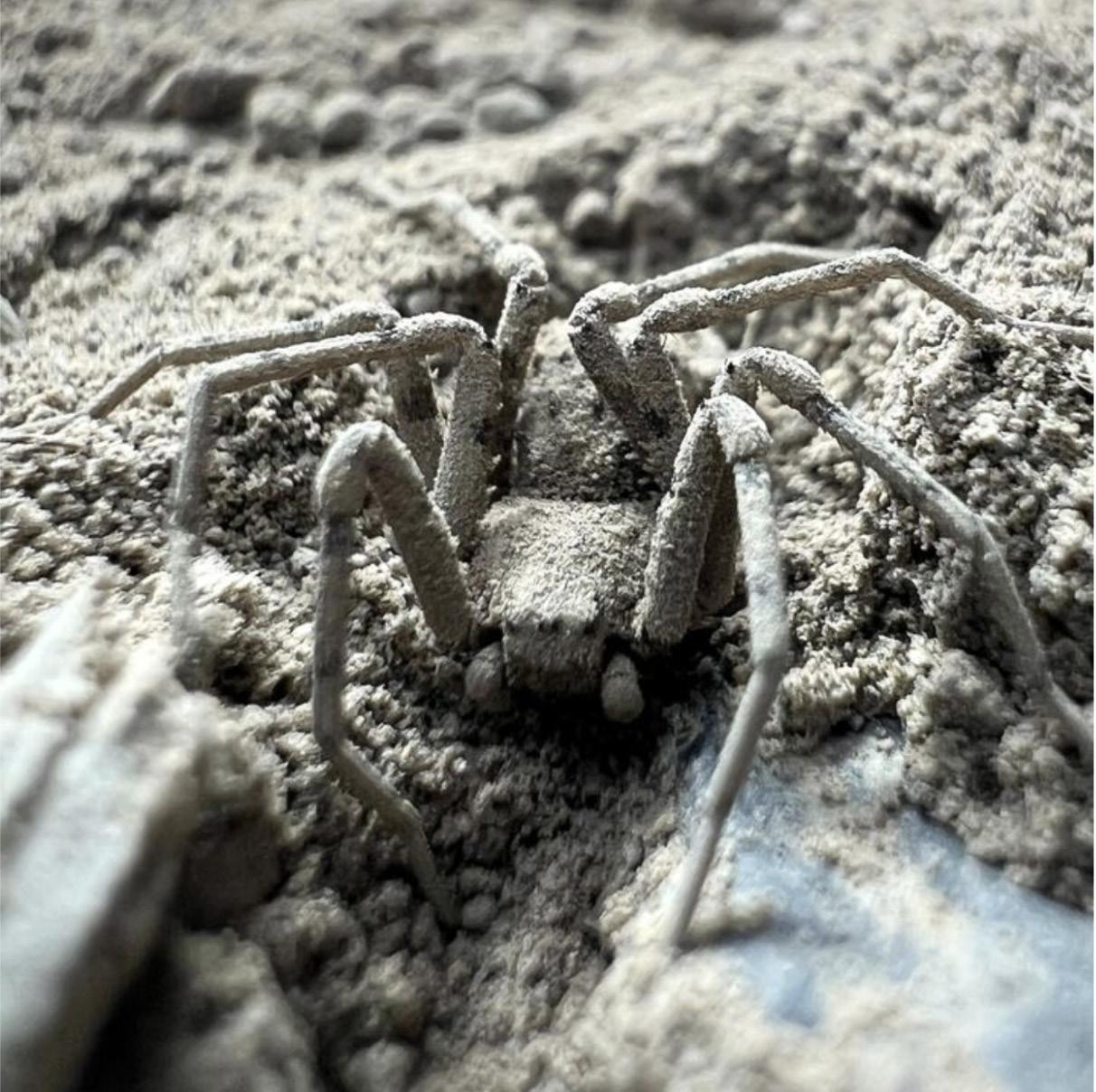

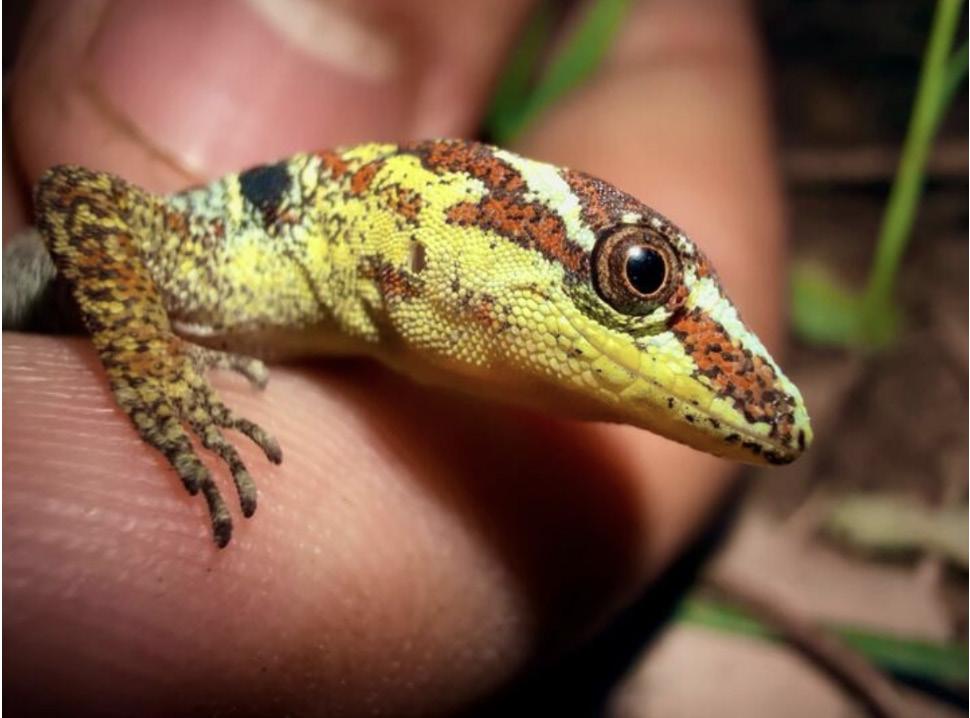
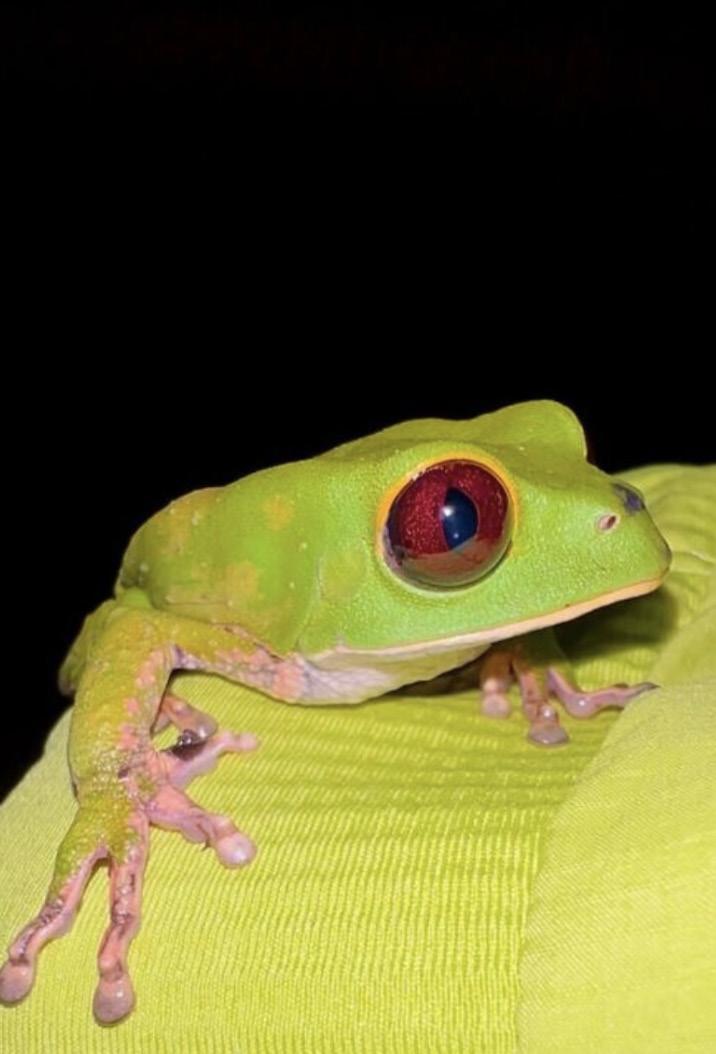

Amazon thorn spider (Micrathena schreibersi)
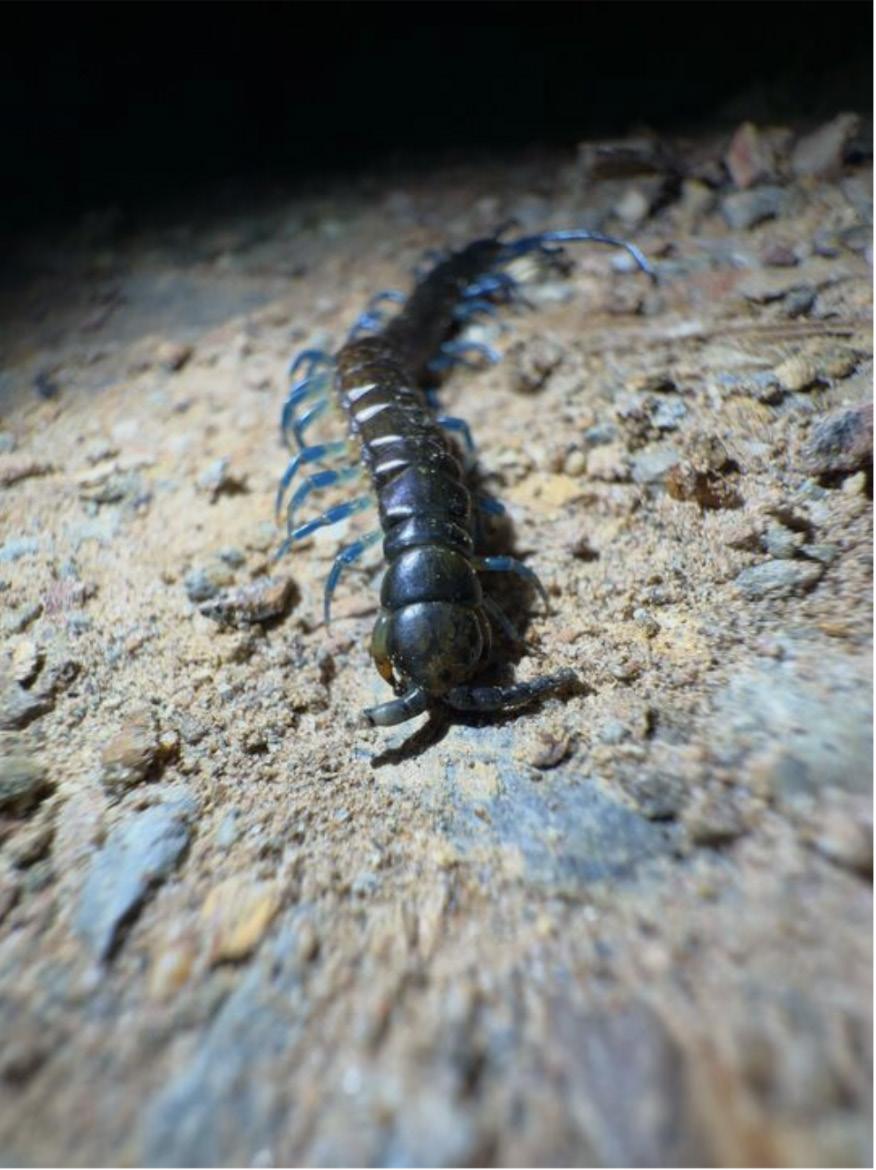

Editors in Chief:
Benjamin Bartlett
Colin Mequet
Design Directors:
Catie Kuehl
Tiffany Ho
Senior Editors:
Abby Wilber
Amelia Pinto
Indra Deshmukh
Mona Holmer
Research Editors:
Halaysa Malladi
Megan Mehta
Website Director:
Michael West
Design Staff:
Alex Kamras
Alexa Duque
Anjaline Singh
Clara Keough
Francesca Marchetti
Jane Grumann
Jess Zhao
Rui Tong Khor
Samantha Carrillo
Soph Padua
Yichen Gao
Staff Writers:
Amelia Jarolim
Bella Young
Charlotte Peterson
Claire Roach
Donovan Brasch
Elizabeth Dally
Elliott Turner
Emma Mott
Gabriella Chao
Kaisheng Wu
Kathryn Conley
Milo Yasuko Joy Davis-Bonk
Reva Gokhale
Saira Ahmed
Samantha Murphy
Shagun Juthani
Sofia Berman
Tiva Gandhi
Vyas Chipalkatti