
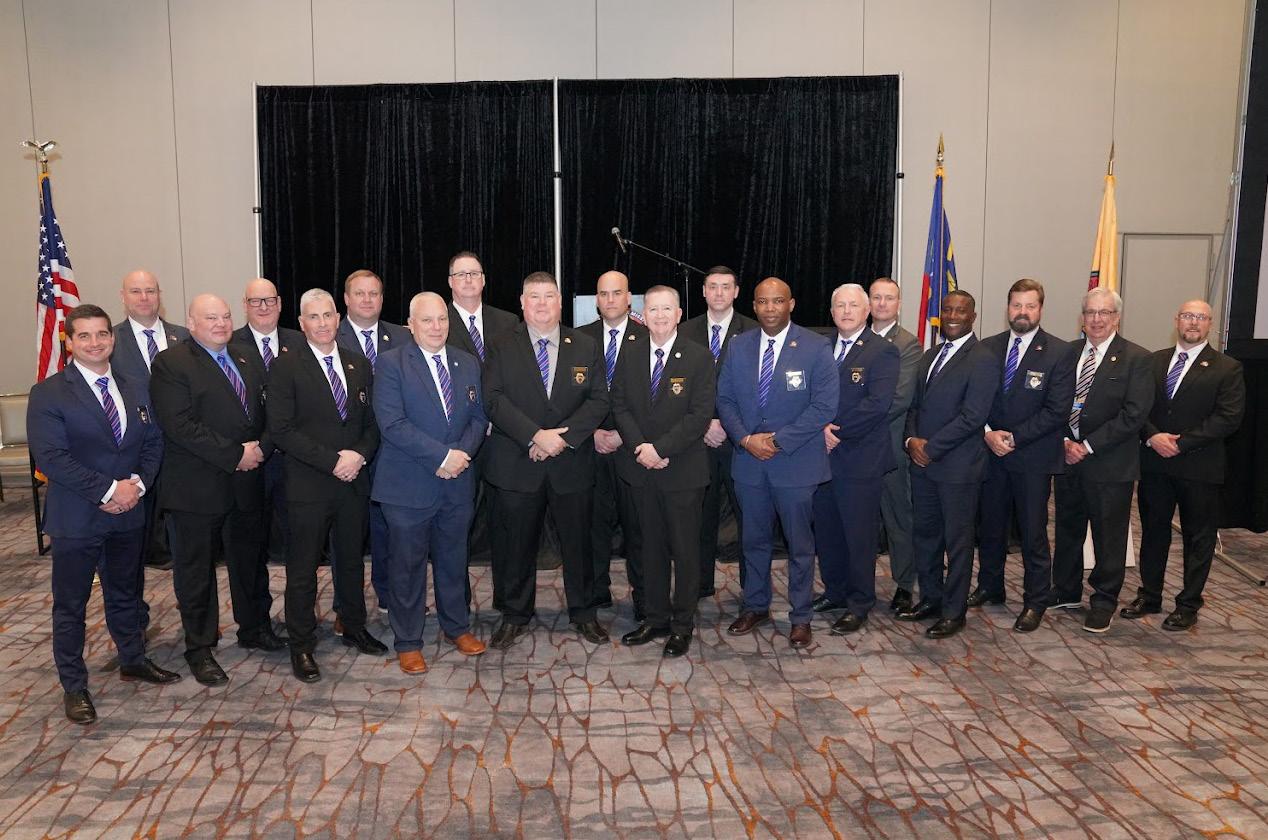
Immediate Past President
Dir. Roger “Chip” Hawley State Bureau of Investigation chip.hawley@ncdps.gov
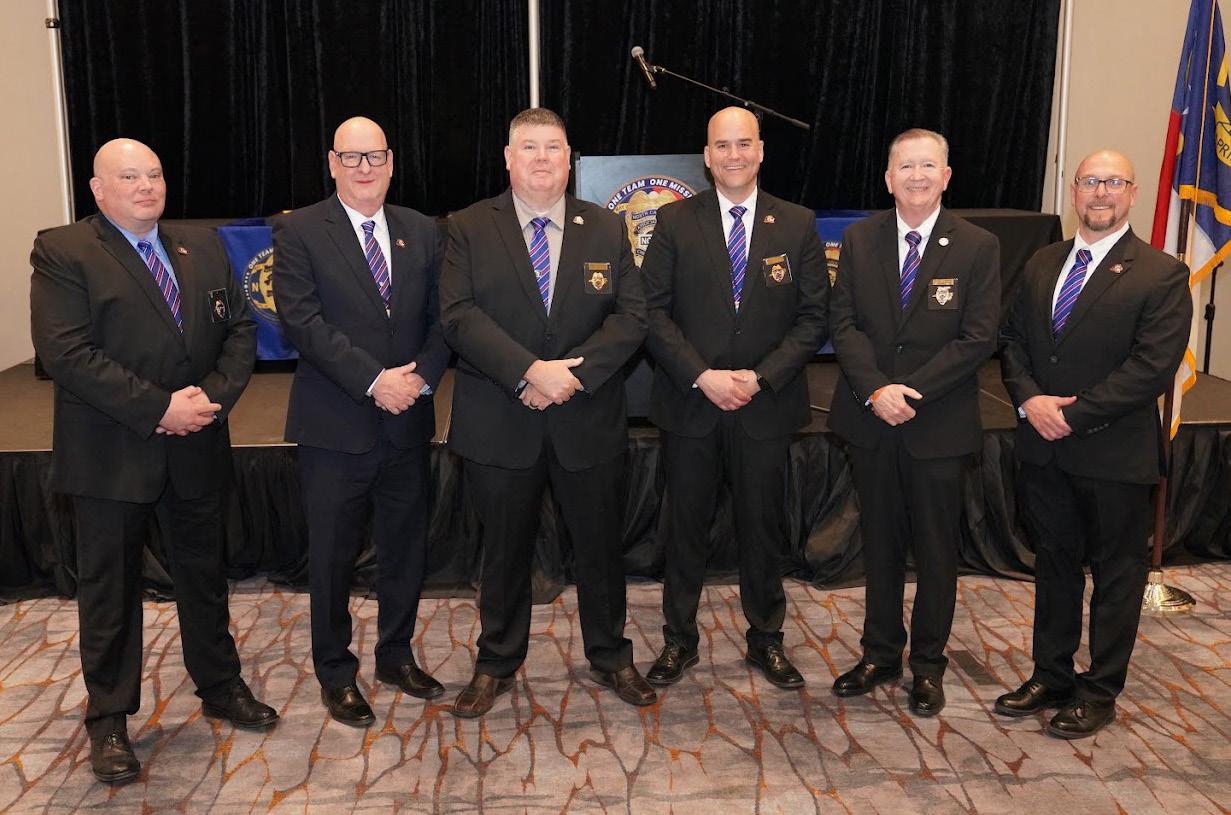
President
Chief Toby Harrison Haw River tharrison@townofhawriver.com
First Vice President
Chief Paul Burdette, Jr. Beaufort P.D. p.burdette@beaufortnc.org
Second Vice President
Chief Jeremy Dixon Shallotte P.D. jdixon@townofshallotte.org
Secretary
Chief Chris Beddingfield Biltmore P.D. cbeddingfield@biltmoreforest.org
Sgt.-At-Arms
Chief Jeff Ackerman Town of Duck P.D. jackerman@ducknc.gov


Region I
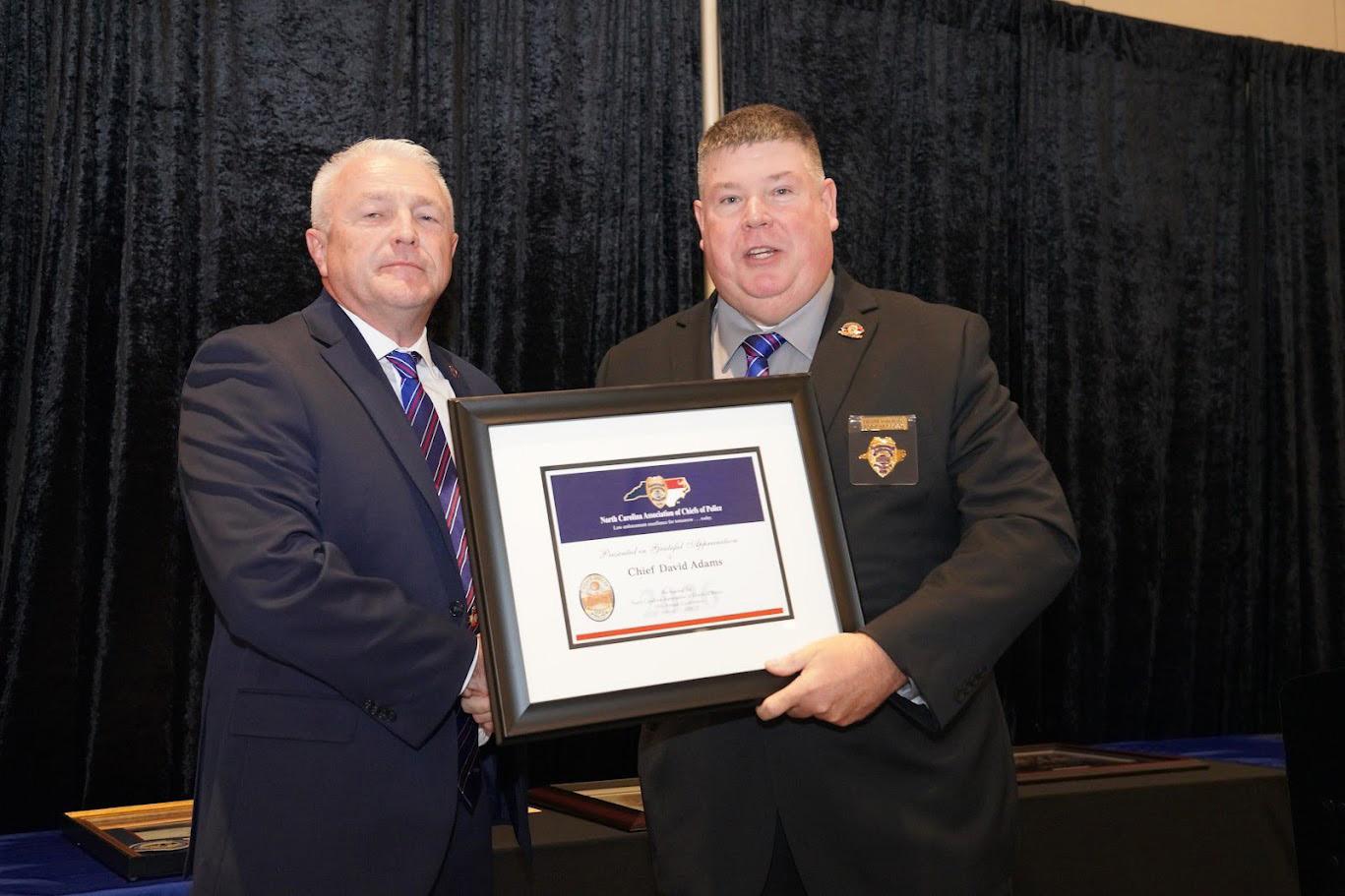
Chief David Adams Waynesville P.D. dadams@waynesvillenc.gov
Region II
Chief Tyler E. Whisenant Maiden P.D. twhisenant@maidennc.gov
Region III
Chief Gerald Childress Kings Mountain P.D. gerald.childress@cityofkm.com
Region IV
Chief Bobby Rummage Lexington P.D. rdrummage@lexingtonnc.gov
Region V
Chief Mitch McKinney Mebane P.D. mmckinney@mebanepd.com
Region VI
Chief Ken Klamar Sunset Beach P.D. kklamar@sunsetbeachnc.gov
Region VII
Chief Lawrence Capps Knightdale P.D. lawrence.capps@knightdalenc.gov
Region VIII
Chief Ryan Thompson Pine Knoll Shores P.D. rthompsonpn@townofpks.com
Region IX
Chief David LaFon Edenton P.D. david.lafon@edenton.nc.gov
Region X
Chief Jeff Ackerman Duck P.D. jackerman@townofduck.com
Region I
Chief Steve Parker Black Mountain P.D. steve.parker@tobm.org
Region II
Chief Andrew Deal China Grove P.D. adeal@chinagrovenc.gov
Region III
Chief Brian James UNC P.D. brian.james@unc.edu
Region IV
Chief Roberto Bryan, Jr. Fayetteville P.D. robertoebryan@fayettevillenc.gov

Chief B. L. Porter Mecklenburg Co PD, 1976-77
Chief Robert F. Goodwin Raleigh PD, 1978
Chief Darryl L. Bruesti Wilmington PD, 1979
Chief C.M. Gilstrap Goldsboro PD, 1980
Chief John A. Faircloth High Point PD, 1981
Chief B.J. Hamrick Morganton PD, 1982
Chief Floyd Lucas Hickory PD, 1983
Chief Roger Halbert Jacksonville PD, 1984
Chief C.C. “Buck” Elmore Gastonia PD, 1985
Chief Larry Hesser Hendersonville PD, 1986
Chief James K. Festerman Reidsville PD, 1993
Chief Vic Orr Mecklenburg Co PD, 1994
Chief Gerald Galloway Southern Pines PD, 1995
Chief John Crone Washington PD, 1996
Chief Jack Conner Spindale PD, 1997
Chief Bob Cansler Concord PD, 1998
Chief Tom Moss Garner PD, 1999
Chief Randall Aragon Lumberton PD, 2000
Chief Greg Harrington Wake Forest PD, 2001
Chief Robert Williams Morganton PD, 2002
Chief Merl Hamilton Concord PD, 2009
Chief Tim Ledford Mint Hill PD, 2010
Chief Pat Norris Winston Salem State Univ, 2011
Chief Tim Hayworth Zebulon PD, 2012
Chief John Letteney Apex PD, 2013
Chief Tom Adkins Hickory PD, 2014
Chief Bence Hoyle Cornelius PD, 2015
Chief Robert Hassell Reidsville PD, 2016
Chief Mike Yaniero Jacksonville PD, 2017
Chief Brandon Zuidema Garner PD, 2018
Chief Raymond Shelton Burlington PD, 1987
Chief Jerry H. Welch Madison PD, 1988
Chief David Fortson Cary PD, 1989
Chief Joe Puett Mooresville PD, 1990
Chief John Stevens Indian Beach PD, 1991
Chief Ronald Hansen Fayetteville PD, 1992
Chief Frank Palombo New Bern PD,2003
Chief Larry Murdock Thomasville PD, 2004
Chief Glen Allen Henderson PD, 2005
Chief Tom Younce NC State University PD, 2006
Chief Don Fisher Laurel Park PD, 2007
Chief John Hodges Hope Mills PD, 2008
Chief Dan House Wrightsville Beach PD, 2019
Chief David Hess Roxboro P.D.
Chief Damon Williams N.C. Central P.D.
Chief Henry King Edenton P.D.
Director Roger “Chip” Hawley State Bureau of Investigation


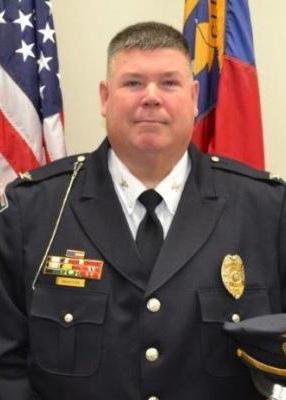
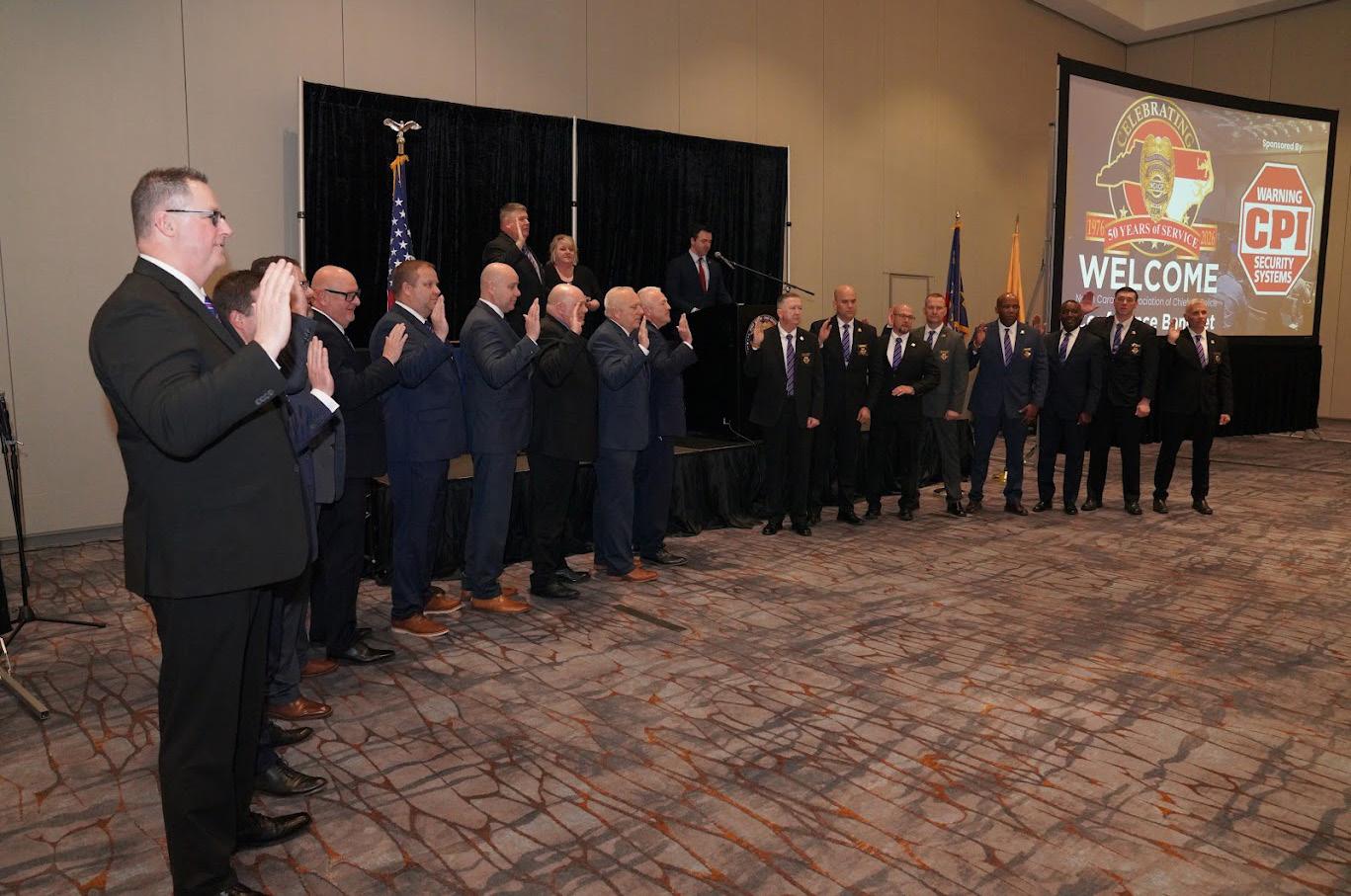
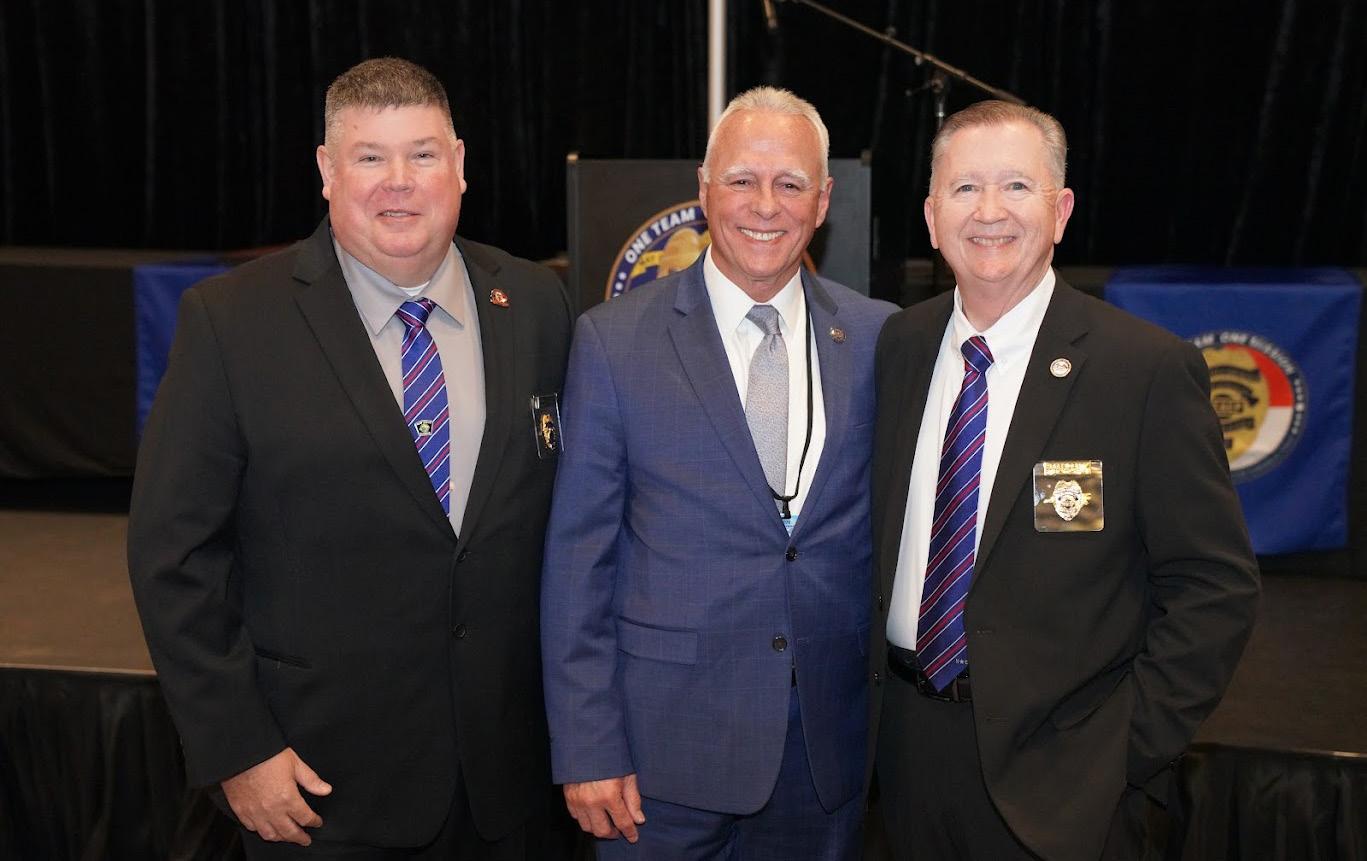
Members of the Association, Chiefs, Directors, Sheriffs, Community Partners, association sponsors. I’m honored to serve as your 51st President of the Association. I first want to thank all the members of our Association for placing your trust in me. Along with all our past presidents who paved the way for our professional association.
As we continue to grow our Association, I want to assure all members, we’ll continue to work with every member and Association partner. It’s important for us to continue to strengthen and grow our relationships with the North
Carolina Sheriffs Association, North Carolina Police Executives Association, and the North Carolina Conference of District Attorneys. While working alongside our profession ambassadors NCPBA, and NCFOP.
Furthermore, I want to personally thank our Immediate Past President, Chip Hawley, for being able to increase our working footprint with North Carolina Emergency Management. This Association partnership led to grant funding to provide a mobile Badger trailer for use in disaster areas to assist organizations across our state needing additional
public safety resources.
My continued commitment to our membership is to work with all legislators and state partners to improve our honorable profession. So that our law enforcement professionals of North Carolina can focus on their day-to-day professionalism, health, and wellness.
We as an Association must continue to strive to improve our profession by improving training, technology, wellness, mental health, recruitment, and retention initiatives. Whether we work with local, state, or federal partners. We must all remember we truly are one mission, and one team. Always working for you!
My best, Humbly your 51st Teammate Toby Harrison President, NCACP Chief, Haw River P.D.
One Team ... One Mission



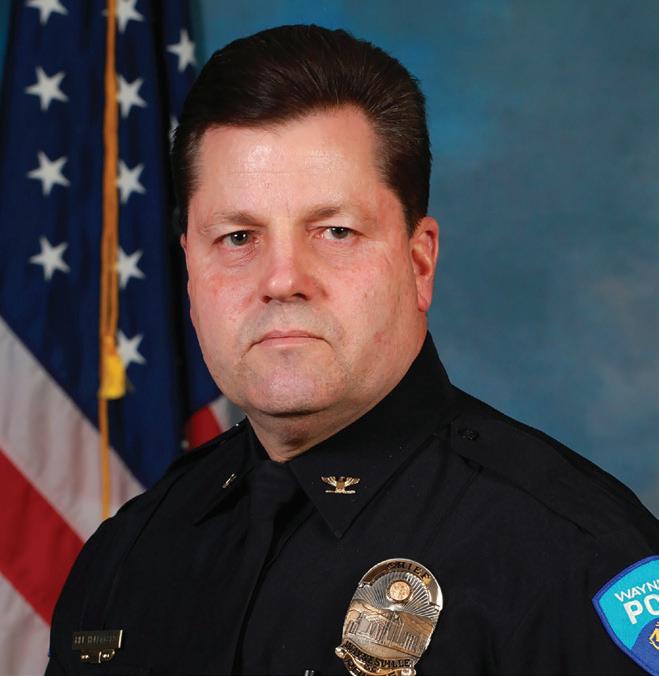
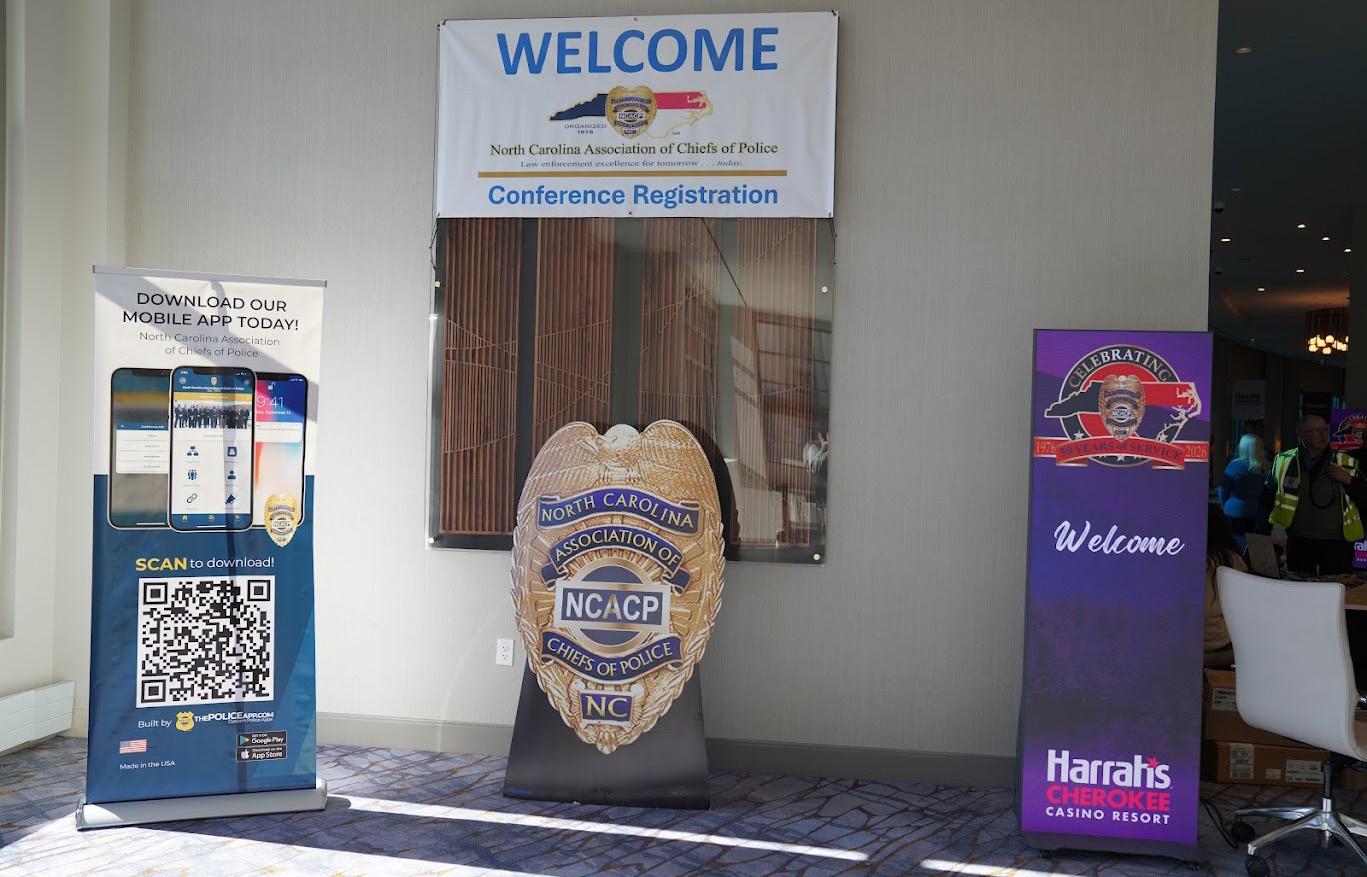
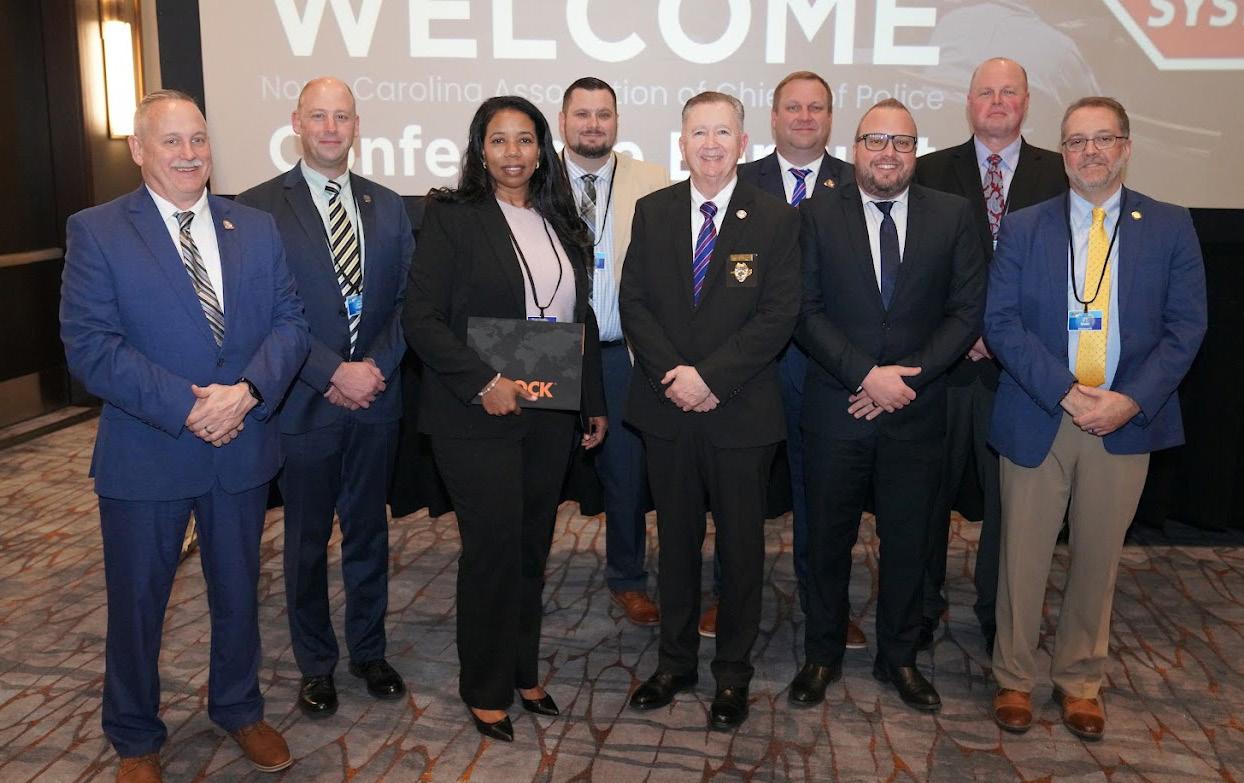
We began 2026 with our 50th Annual Training Conference in Cherokee. We had a record number of attendees, with 400 registered Chiefs, staff members, and guests. We also saw a variety of vendors, in which over 135 individual companies and businesses had booths in our Exhibit Hall. We were able to welcome and host 17 of our Past Presidents at this year’s Conference. We truly appreciated their attendance. We received some great feedback on the training topics and the opportunity to once again meet, network, and train with each other.
The Association has also continued to focus on Officer Wellness and Performance. We participated in the NCLM City Vision Conference to discuss how Officer Wellness and taking care of our people played a key role in retaining good Officers.
Our second year of funding the Wellness and Performance Grant has just concluded. We hope that we are able to continue this important initiative in coming years. “The wellness and safety oflaw enforcement officers is critical not only to themselves, their colleagues, and their agencies but also to public safety.” The NCACP is committed to providing resources and information to our Chiefs to help meet the needs of our Officers into the future.
I also want to remember those law enforcement officers in North Carolina that have made the ultimate sacrifice this past year. We have also lost officers due to suicide. Ensuring that officers return home safely at the end of each shift is a paramount concern for all law enforcement leaders. The NCACP recognizes that one of the tougher challenges facing any police executive is handling a line-of-duty death within a department. In addition to providing training in this area, the Association works closely with COPS and other organizations to assist our Chiefs throughout the state when the unthinkable happens. We are also committed to analyzing trends and continually providing updated training to prevent future line-ofduty deaths and to address Officer wellness.
We are also grateful to RANC, who has provided funding for our Officer Assistance Fund. In 2025, the RANC provided over $20,000 to our fund to assist Officers and their families in their time of need. We truly appreciate the our partnership with RANC to allow us to do this.
We are looking forward to the 2027 NCACP Conference, which will be the 51st anniversary of the Association. We have a great training agenda planned which will focus on Artificial Intel-
ligence (AI) and the effects on Law Enforcement. The dates of the Conference are January 11-13, 2027.
I am proud of the work that your Board of Directors do on a daily basis and for the leadership that is shown to represent our profession throughout the state. I am also appreciative of Fred Baggett, our Legislative Liaison, for his efforts on behalf of the Association. I also want to thank each of you, as police leaders, for your commitment and dedication to advancing the ideals and high standards oflaw enforcement to each of your respective communities. I look forward to working with each of you in the coming year.
Sincerely,
Bill Hollingsed NCACP Executive Director
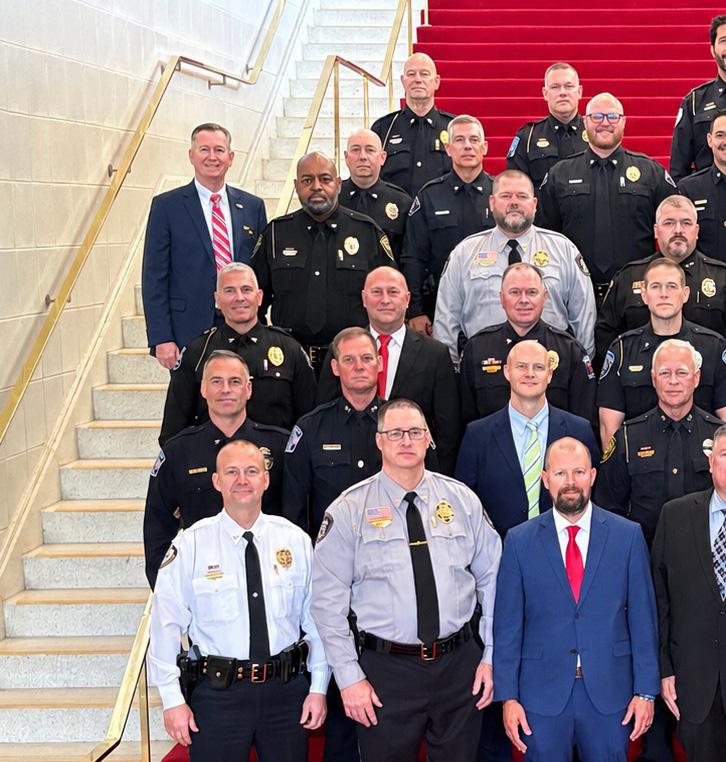
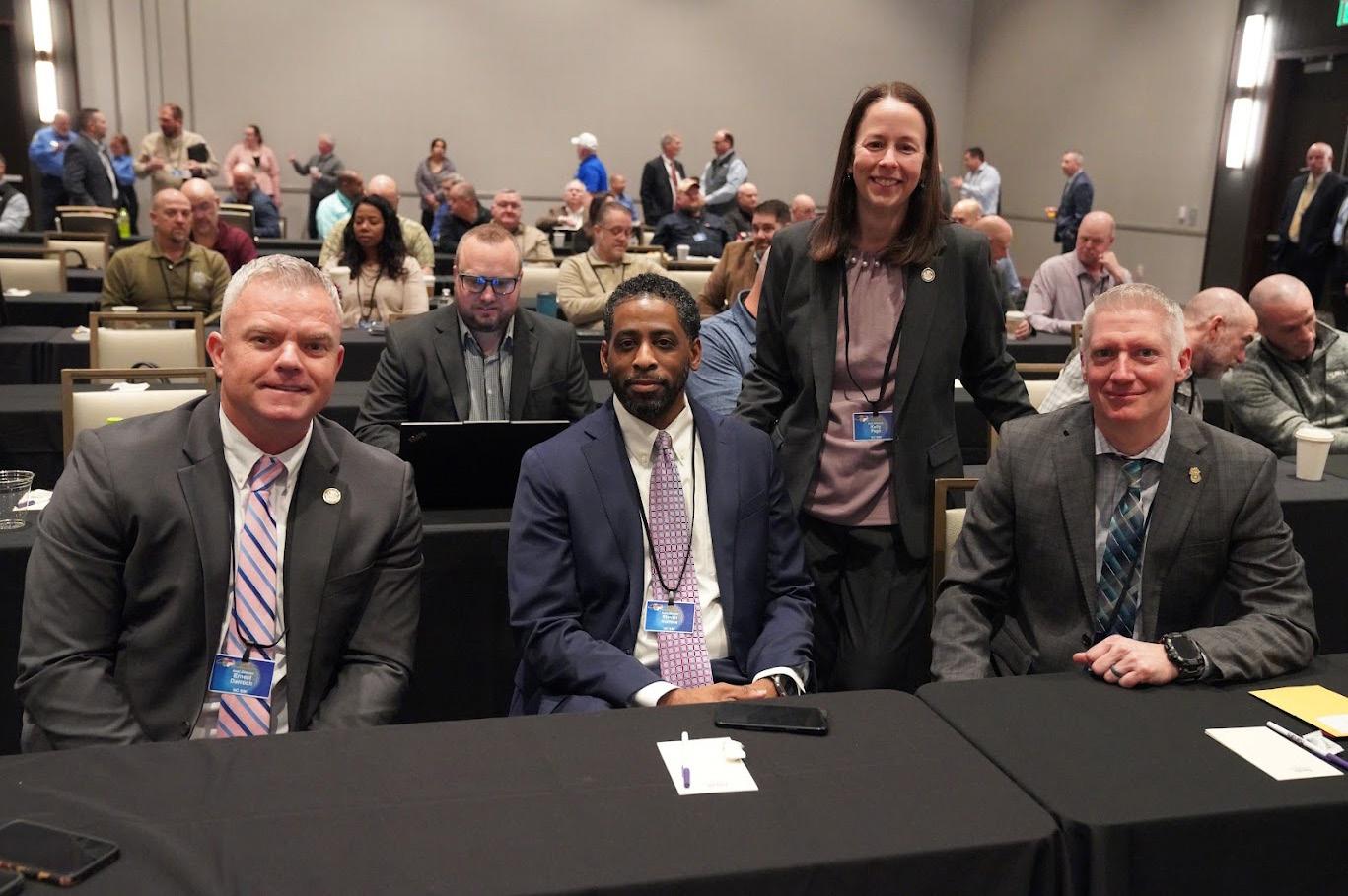
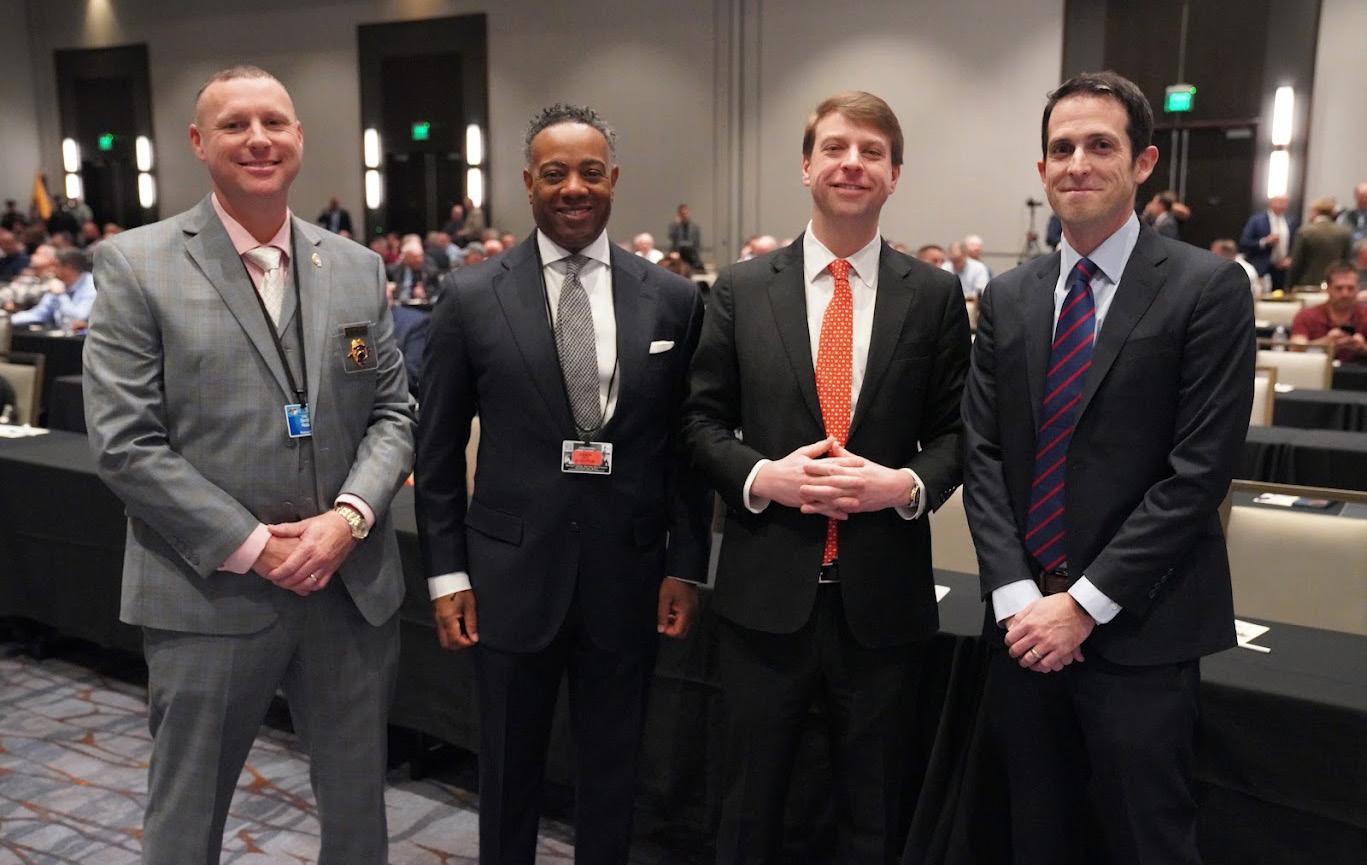
Members of the North Carolina Association of Chiefs of Police gathered in Raleigh for their annual Legislative Day. Police Chiefs cate for policies that support public safety and strengthen our communities. These conversations are critical in ensuring lawmakers informed decisions that impact agencies, officers, and the citizens we serve every day.
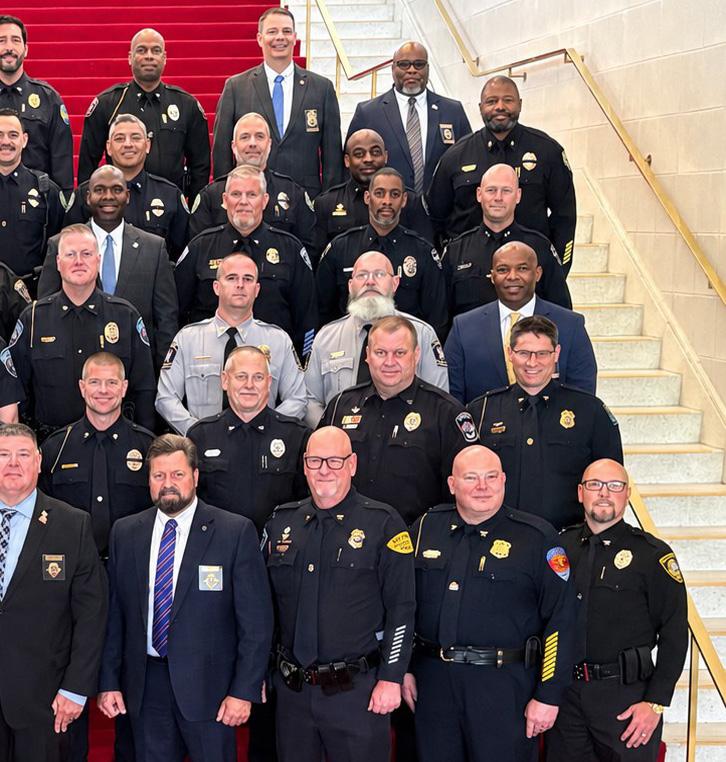
Chiefs from across North Carolina met with members of the General Assembly to share insights, discuss challenges, and advolawmakers hear directly from those on the front lines. Collaboration between law enforcement and our state leaders helps shape



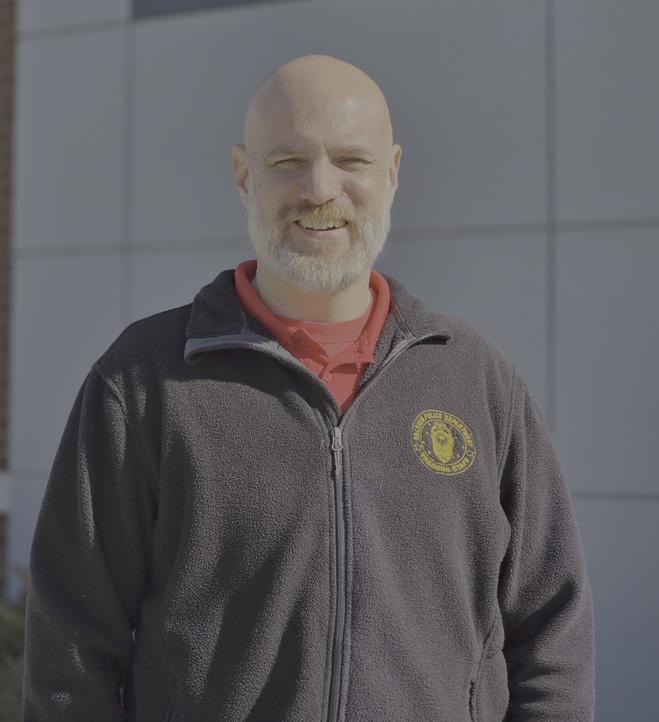
submitted by Harvey Slade Senior Officer
SCAT Coordinator
Use of Force Training and Analysis Unit,
Raleigh P.D.
“You can’t arrest your way out of a problem.”
That saying has stuck with me since my days in the academy. A sergeant later explained what it meant: If you only punish people for what you catch them doing and don’t address the root cause of the problem, you’ll never make a difference. If you’ve ever read Left of Bang by Patrick Van Horne and Jason A. Riley, you’ll recognize that arrests happen “right of bang,” or after the bad thing has happened. Arrests, by nature, are reactive.
Nearly everyone involved with law enforcement understands the need to be proactive to create positive outcomes; many departments have community squads, school resource officers, citizen academies, and other ways to interact and intervene with the public besides applying handcuffs. It’s not a new concept, but I was nine years into my career before I realized that we apply this sort of thinking to everyone … except our fellow police officers.
In 2018, I attended the Force Science Certification Course in Knoxville, TN. After 40 hours of training, I came back with a notebook full of information and my brain on fire. I’d learned so much in such a short period of time, but one idea in particular captured my attention. I’d met a very talented instructor who’d
started a unit in his department that analyzed every use of force from every officer, not to punish the officers, but to improve training. His example inspired me to try implementing a similar unit at my agency.
At the time, my department (like most police departments across the country) only looked at a use of force incident to see if the officer violated policy or law. When no policy or legal violation occurred, or the officer was lucky instead of good, we said things like, “Lawful and within policy,” and moved on. If the officer violated a policy, the only departmental response was punitive. Yes, there was mandated remedial training, but it often consisted of the offending officer having to sit in a room for eight hours and stare at the policy they had violated. That’s not training - that’s punishment. What we weren’t doing was looking to see what we could do better. We weren’t trying to prevent future catastrophes. We were “left of bang,” in every sense.
I returned from the training and presented the idea of a unit tasked with reviewing all uses of
force in the entire department. I wanted to look at the bad ones. I wanted to look at the average ones. Most of all, I wanted to look at the good ones. What could we learn? What could we do better? What could we prevent? The last was the idea that gained the most traction.
Call to mind any use of force that has made the national news. Pick one at random that has tarnished the image of our profession or cost an officer their life. Do you think that was that officer’s first time making a bad decision, or using the wrong technique, or being overwhelmed? What if someone had seen a need for improvement earlier and never addressed it? What if instead of asking, “Did the officer violate policy?”, their department asked, “What can we give this officer that will make them successful next time?”
This was the seed that eventually grew into the Raleigh Police Department’s Use of Force Training and Analysis Unit (UFTA). We are a training unit staffed by instructors and subject matter experts. While the department’s command staff and internal affairs unit investigate uses of force to see if there is a violation of policy or law, UFTA works in a parallel silo. We are not part of the discipline process. Our purpose is to improve training with the goal of improving future outcomes. Here is how we do it:
1. When we look at the use of force and see an officer doing a great job, we tell them. Sometimes it’s a phone call, but usu-
ally we drive out to the officer’s district and meet in-person to recognize their good work. Not only does it allow us to learn directly from them, but in a day and age when officers only receive feedback about their mistakes, it can mean a lot to have an instructor take the time to recognize their good work.
2. When we see an officer doing something that can be improved, we teach them. If an officer has gotten lax with their searching style or the way they handcuff, we get together and work on it. Again, there is no discipline from our unit, so there is no need to be defensive. We are sincerely concerned about that officer’s safety, and the officers know that.
3. When we learn of something that we didn’t prepare an officer to deal with, we develop a new technique or tactic. Not just for that officer, but for the whole department. Officers face new threats every day, and we often find ourselves working from a twenty-year-old playbook. By examining current, real-world, officer-involved uses of force, we make sure the training is relevant to the world they are working in.
4. When we see that what we’ve taught doesn’t work, we fix it. Staffing the UFTA unit with competent instructors allows us to see the outcomes of our training. What may work well in the gym with a fifteen-year veteran who has two blackbelts and four hours a day to train may ultimately fail an officer in the street who doesn’t have the same background. Or maybe the technique
we are teaching (or the way we’re teaching it) doesn’t come to mind when officers are under stress. The analysis process allows us to constantly examine and update our curriculum by actively seeking to avoid making the same mistakes just because “it’s the way we’ve always done it.”
Raleigh’s UFTA Unit officially commenced in February 2025, but it was not a direct process. Initially, the department formed a “Use of Force Committee” staffed by various captains and police attorneys. Because the committee was comprised of administrators, the focus naturally leaned more towards protecting the department from liability rather than finding training opportunities. Each selected use of force was presented to the committee via remote meeting software by the involved officers’ lieutenant (who was almost never on scene for the use of force itself). The review consisted of the lieutenant reciting the facts of the case (predictably in a defensive manner) directly from the report and the assembled captains pointing out things that could have gone better. Because of staffing demands at the command level, it was months before the cases were reviewed. Often, the officers had forgotten about the use of force long before they received the typical negative feedback – or feedback never came and it was assumed that “no news is good news.”
We learned a great deal from the Use of Force Committee experiment. Firstly, the new UFTA unit now reviews uses of force every day. In most cases, we
can debrief and provide training to officers within a week of the incident. We are staffed entirely by working instructors, so we are up to date on exactly what has been taught and are usually already familiar with each officer’s strengths and weaknesses. Finally, we talk with the involved officer(s) with focus on the thought process that led to their actions, and not just on the facts of the case. We are very careful not to confuse process with outcomes, as outcomes can depend on luck while process predicts future results.
In the year since Raleigh’s UFTA unit started, we have not experienced conflict with either the professional standards teams (Internal Affairs or Inspections) or the command staff because we all recognize the importance of the separation of our roles. As with anything a police department does, accountability is still an essential part of the review process, and the professional standards paradigm is crucial for public trust; however, we are no longer trying to simply “arrest our way out of a problem.”
The UFTA unit is proactive and works to teach, not discipline. If we do our job well, we ultimately mitigate the risk to both the officer and the department by focusing on making the next use of force as lawful, safe, and effective as possible.


by Policing Researchers
Ethan Humphrey and Narelle Hickmon
Police agencies across the United States are in a staffing crisis. As a result, many agencies are forced to conduct less proactive forms of policing, reduce opportunities for community engagement, respond less quickly to calls for service1 and more.
To combat staffing challenges, agencies typically focus on recruitment methods to fill positions, which often produce favorable results in terms of increasing the overall staff level with new officers. However, recruiting and training new officers is very time-consuming and expensive. Police agencies may benefit from considering supplementary solutions to address either staffing shortages or increased workload.
There are numerous staffing benefits and differences between 8-, 10-, and 12-hour schedules.2 For example, 8-hour schedules typically allow for set-off days and, because they are shorter, enable officers to stay more alert throughout their shift. These factors may be considered most beneficial for improving officer safety or work-life balance.
On the other hand, 10-hour shifts may be preferable for an agency with a large number of calls during certain hours, as they can create a 6-hour overlap in which two shifts can strategically respond during this peak.
Finally, 12-hour schedules may be preferred by officers due to the number of consecutive off days they provide, or by agency leadership because they typically
require fewer staff to operate. When resources are already strained, the main focus may shift towards efficiency. While “efficiency” can be perceived in multiple ways, 8- and 12-hour shifts fit within a 24-hour period, requiring fewer staff than 3 10hour shifts, which would require 30 hours’ worth.3
There are many other factors to consider when modifying or maintaining a work schedule. One of the most important reasons may be that officers simply prefer it. However, it should be noted that it can be challenging to please all staff or ensure that a new shift won’t create more problems than before.
Consider metrics as an alarm system; without systematic staffing metrics in place, red flags could



go up, and you may not be aware of them until your staff have already expressed a desire to leave. Furthermore, the insights gained from these measures allow agency officials to identify “tried and true” tactics or specific issues that need to be addressed and prioritize them.
Agencies that employ multiple strategies to increase staffing, such as social media posts, in-person outreach, or financial incentives, may not be aware of which is most effective at attracting staff and is cost-efficient. That is why it is crucial to measure where applicants are coming from and the costs associated with each strategy.
It’s also beneficial to probe further into what made a particular staffing strategy stand out and how. For example, in-person outreach may be more successful at connecting with individuals who would not normally consider a career in law enforcement (e.g., college majors outside criminal justice), whereas social media advertising may be more effective for recruiting youthful applicants, but not lateral hires.
Furthermore, metrics can be used to go beyond numbers alone and measure specific staffing aspects. For instance, examining where turnover is most problematic can inform leaders about who is most likely to leave, not just that there is a retention problem. If it is determined that early-career staff are contributing most to turnover, then providing mentorship or ensuring new candidates receive realistic job previews may be helpful.
Conversely, if more middle- to senior-level officers are leaving,
then offering more opportunities to advance their careers or specialize in a particular area may be beneficial.
Metrics can also help identify the actual cause of staffing issues, which may be completely separate from recruitment initiatives or concerns. Through metrics such as climate surveys or exit interviews, staff may indicate that they feel they are not treated fairly, are not given opportunities to advance, or believe that the agency’s culture or reputation is negative.
Conversely, officers may highlight the agency’s effective attributes, enabling leaders to refine and optimize those strategies or characteristics. These measures are great for hearing directly from staff about what is contributing to staffing issues. Furthermore, they
enable leaders to be proactive in responding to issues, with the hope of mitigating staffing challenges in the future.
In summary, the more metrics you can use to better understand your staffing context and respond to staffing issues, the better.
3. Consider a “2-for-1 Special” Some staffing approaches can achieve multiple goals simultaneously. For example, agencies can aim to accomplish recruitment and selection (R&S) together or recruitment and retention (R&R) together.
R&S strategies often serve both to entice candidates (recruitment) and to influence the criteria that determine whether they can be hired (selection). For example, modifying tattoo and facial hair policies would likely serve to
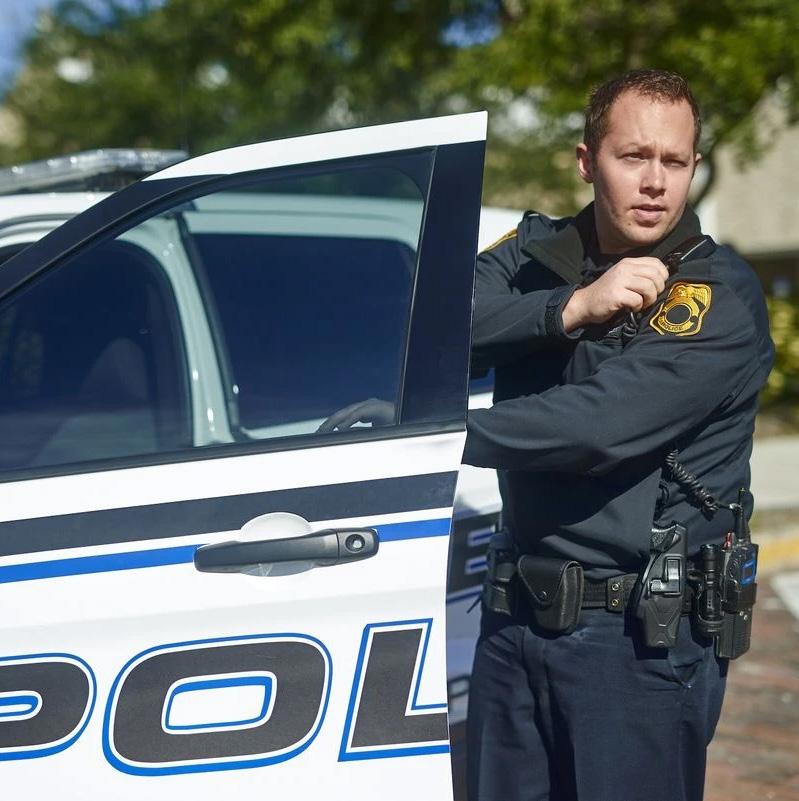


attract those with those features, while also broadening the number of candidates who meet the minimum requirements. Nonetheless, it is crucial to consider modifying hiring requirements only when they are deemed “outdated” or “unreasonable” by the agency and the community in which the agency resides. Additionally, agencies should ensure they are not compromising quality for quantity through this approach.
R&R strategies entice new candidates (recruitment) and retain the officers you already have (retention). Some common methods to achieve this include providing more overall compensation, more opportunities, more support, or mentorship. However, there are many ways to do this, and strategies that generally improve the overall organization may accomplish both goals.
The primary reason for suggesting these strategies is that they don’t require every last resource and dollar to be put into action. Too often, staffing recommendations are proposed to police agencies without sufficient consideration for context, resulting in success for some and detriment to others.4 For the most part, the strategies outlined in this article involve simply restructuring with already available resources, recording and using staffing metrics for proactive responses, or optimizing existing strategies without reinventing the wheel.
Furthermore, we intentionally refrain from stating a specific schedule, metric, or strategy as the sole solution, as only an agency can determine what is most beneficial to their specific
needs. Instead, we aim to emphasize these strategies as potential avenues that can be customized and applicable to almost any agency.
1Mourtgos, Scott M., Adams, Ian T., & Nix, Justin. 2024. Staffing levels are the most important factor influencing police response times. Policing: A Journal of Policy and Practice, 18, 1-9.
2Humphrey, Ethan. & Hickmon, Narelle. 2025. How 8-, 10- and 12-hour police shifts really affect staffing and wellness. Police1.
3Wilson, Jeremy M., and Weiss, Alexander. 2014. A performance-based approach to police staffing and allocation. Washington, DC: Office of Community Oriented Policing Services.
4International Association of Chiefs of Police. 2024. The state of recruitment & retention: A continuing crisis for policing.




by Bryan House Director, NC ALE
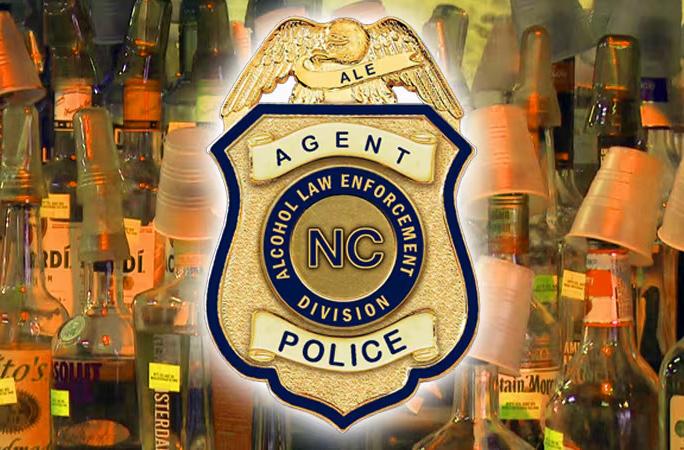
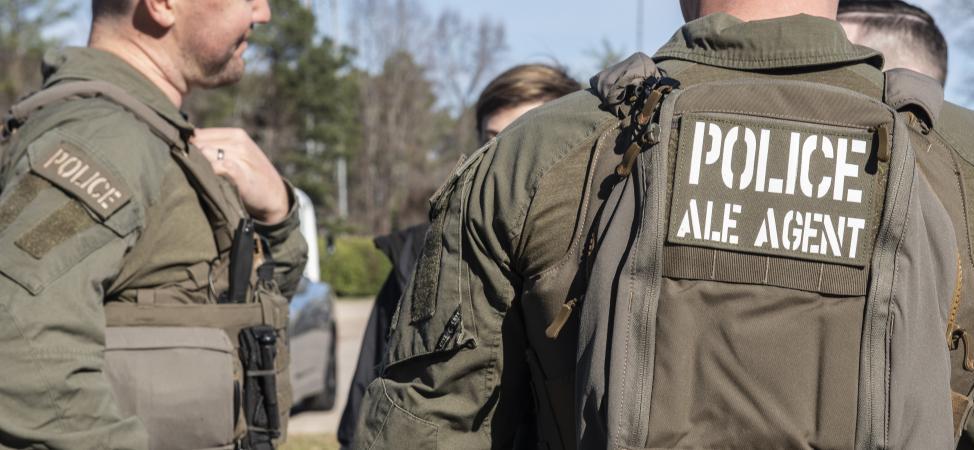
Alcohol Law Enforcement (ALE) Special Agents are responsible for safeguarding the public at approximately 20,000 ABC permitted establishments across North Carolina. Alcohol is involved in roughly 40% of violent crimes, so agents take an “all-crimes” approach, focusing not only on the lawful sale and service of alcohol, but also on making these businesses as safe as possible. This mission is carried out in close partnership with local police departments and sheriff’s offices to proactively address criminal activity and nuisance conditions.
In addition to regulating
ABC permitted businesses, ALE is tasked with identifying and disrupting illegal alcohol sales, operations that frequently serve as catalysts for broader criminal activity. Over the course of my career as an ALE agent, I have witnessed these illicit enterprises take many forms from traditional “shot houses” and speakeasies to illegal moonshine operations and private residences hosting recurring “birthday parties” several nights a week. Regardless of the name or setting, these operations have consistently been associated with violence, disorder, and community disruption.
While illegal alcohol activity is not new to North Carolina, its scale and sophistication have evolved significantly. Today,
large scale events are often organized and promoted through social media, drawing hundreds and sometimes thousands of attendees. These gatherings present substantial public safety risks and can quickly spiral out of control.
A growing trend across the state involves these large unpermitted alcohol events occurring at locations such as farms, open fields, short term rental properties, and private residences. In many cases, promoters recruit property owners with promises of shared profits, further complicating enforcement efforts.
These events are frequently associated with serious public safety concerns including violent crime, weapons violations, alcohol poisonings, drug over-



doses, impaired driving including underage drivers, and blocked roadways that hinder emergency response access for first responders. In one situation, an expecting mother could not get out of her driveway to get to the hospital because event attendees had blocked her driveway and road. In another event during the summer of 2025, a mass shooting occurred resulting in more than 80 rounds fired, leaving one person dead and 11 injured.
When feasible, ALE emphasizes a proactive, preventionfocused approach. By monitoring social media platforms, law enforcement can identify planned events in advance and engage with property owners to prevent violations before they occur. Officers can educate property owners that selling alcoholic beverages without an ABC permit is a criminal offense, and that possession of alcoholic beverages above a certain threshold may constitute prima facie evidence of intent to sell under NCGS 18B304.
Additionally, property owners and promoters can be advised that providing alcoholic beverages to underage individuals is a crime under NCGS 18B-302 and may result in civil liability if it leads to property damage, serious injury, or death.
When preventive efforts are unsuccessful or enforcement becomes necessary, ALE agents may conduct undercover operations to gather evidence and take appropriate action, often using an anticipatory search warrant based on specific information and, when possible, before large crowds arrive. Post-event investigations are also used to hold promoters accountable and deter future violations. Additionally, ALE enforces statutes to address the growing presence of unlicensed and at times armed security personnel operating at these events, further mitigating potential threats to public safety.
As illegal alcohol operations continue to evolve, ALE remains committed to adapting its strategies, working together with other
law enforcement agencies, and protecting the citizens of North Carolina from the risks these activities pose. For assistance or to report suspected activity, please contact your local ALE agent.




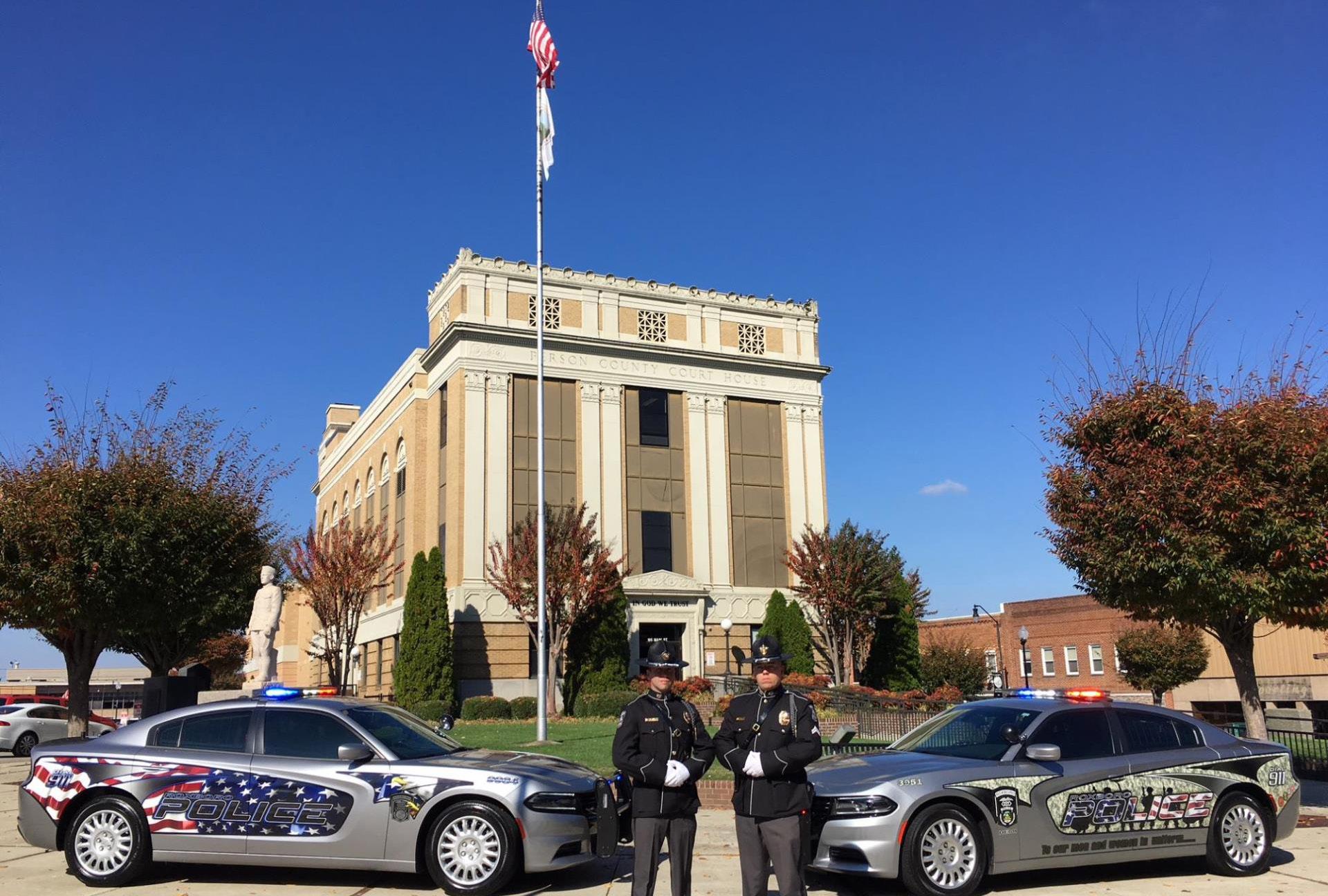
Maintaining a track record of implementing best practices, constitutional policing, and risk reduction, have led to maintaining historic low crime rates in the City of Roxboro. These efforts demonstrate the department’s commitment to remaining on the forefront of transparent policing that builds trust and legitimacy with the community.
In January 2017, the Roxboro Police Department began a selfassessment period with the North Carolina League of Municipalities (NCLM) to review industry best practices, police policies from across the state and nation, and ways to reduce liability. The NCLM is the insurance provider for over hundreds of towns and cities across the state, including Roxboro. One of their services is a law enforcement risk reduction program known as Shield Services. This program offers resources to municipal police departments for policy review, training, and risk reduction to enhance professionalism, strengthen
community trust, and adherence to best practices.
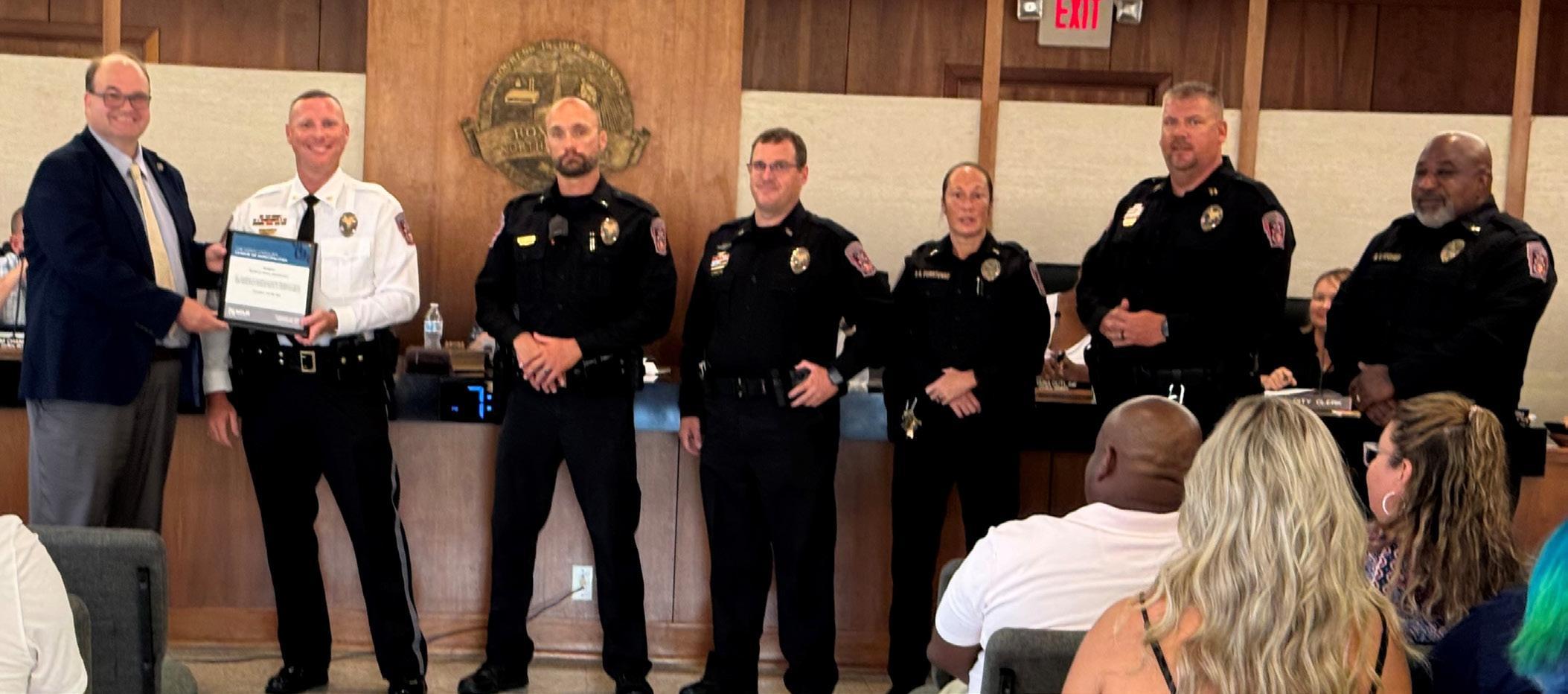
First awarded to the Roxboro Police Department in 2019, the NCLM Shield Service Risk Review set the standard for policy and training requirements to reduce liability for staff, citizens and the City. That year, Roxboro became one of the first 25 agencies in the state to earn the Shield Service Risk Review. An on-site audit and interview of staff to validate compliance with the Shield Service Review. Achieving this standard, then placed the agency on a three-year cycle to maintain compliance and re-review in 2022, which was earned.
This cycle set the department on path for re-review again this last year, but with more best practices and new standards added, raising the bar from 35 best practice standards to 41, with subsets requiring legal frameworks from state law changes and court rulings. The on-site review for the 2025 cycle, proved the department

continued to the standards for the third consecutive review, meaning for the past nine years Roxboro Police have met or exceeded the NCLM Risk Review standards.
I commend staff for their diligent efforts to implement these best practices. Some of the changes were not easy. Some of the best moments were when proposed state law or national narrative conversations about police reforms occurred, our department’s policies or training requirements were implemented years prior. A testament to our vision of policing excellence through best practices and constitutional policing. These commitments also helped our department become the first agency in North Carolina to earn the North Carolina Department of Justice Law Enforcement Accreditation; a separate set of 116 standards reviewed annually by the North





Carolina Department of Justice to ensure compliance with best practices.
Maintaining these standards adds additional workloads to our already overburdened staff. Yet, their resiliency and steadfast dedication to trust building with the community continues to show dividends as our crime rates have remained at historic lows over the past 10 years. Personally, I’m very thankful for our staff. Between their love for one another and the community support, serving in law enforcement in Roxboro is a blessing.
I share this story as a call to action for newly appointed police chiefs in our state or agencies seeking a tangible display of professionalism for your community
using established best practices to maintain and support public trust. Both the League of Municipalities Shield Service Risk Management and North Carolina Law Enforcement Accreditation (NCLEA) are free resources. The dividends far exceed the amount of staff time dedicated to maintaining compliance. When national trends arise, your agency, no matter the size, will have a policy or training in place that will help you quickly navigate, what are often emotionally charged public comments, because your department did the hard work up front to earn one or both of these accreditations. They also help you mitigate liability in a litigious society. When a frivolous lawsuit is dismissed because your de-
partment was able to prove you upheld policy and accredited best practices, your elected officials and manager will appreciate your leadership protecting the town. More intrinsically, you get the benefit of knowing you are leading from the front in a space that not all your peer police chiefs are accomplishing. Now is the time to step forward into the leader of tomorrow ... today.




by Karen Ashley NCLEA Program Manager
We are proud to announce another new program to advance the professionalism of law enforcement agencies in North Carolina. The Essential Standards Program (ESP) is designed to be a “gateway to accreditation” and introduces small and rural law enforcement agencies to the concepts of accreditation.
The ESP has been approved by both Commissions and will begin to take applications this summer. The ESP is comprised of twenty (20) critical standards to reduce risk and litigation within law enforcement agencies. Completion of this program will result in a professional certificate of completion from the agency’s Commission.
Since the approval of the North Carolina Law Enforcement Accreditation (NCLEA) program in June of 2023, seventeen (17) law enforcement agencies have completed the 116-standards program to receive their first NCLEA certificate from their respective Commission. State accreditation is voluntary and offered at no charge
to all law enforcement agencies. To date, 95 agencies in North Carolina are enrolled in NCLEA.
In addition to the law enforcement accreditation program, the North Carolina Public Safety Communications Accreditation Program (NCPSCAP) launched on March 2, 2026, and thus far five (5) agencies have enrolled their communications centers in this voluntary program, also offered free of charge. Many thanks to the members of this Advisory Group for their hard work and efforts in creating the manual for this program, which is comprised of 56 standards. For more information on this program, please follow the link on the NCLEA webpage.
standards are provided at no cost to agencies who desire to pursue accredited status.
If you would like additional information on any of these stateapproved programs or the NCLEA Mentor program, which assigns a veteran accreditation professional to your agency to coach you through the process, please reach out to Program Manager, Karen Ashley at kashley@ncdoj.gov.
The Detention Advisory Group (DAG) continues to work on developing a detention standards manual for North Carolina. This group of subject matter experts from across the state have been meeting monthly and making progress on drafting a standards manual. Like the law enforcement and communications programs, this program is voluntary, and
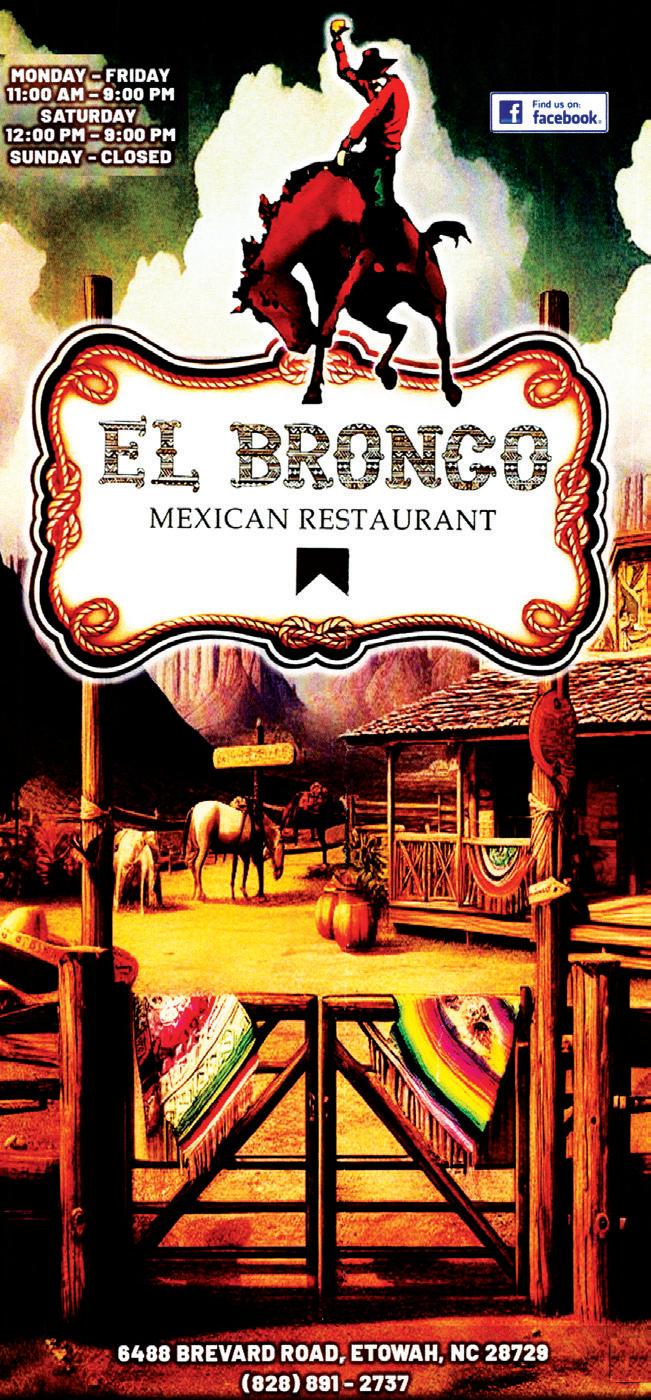





Earlier this year, during celebrations and festivities honoring Dr. Martin Luther King Jr., Wilmington Police Corporal Michael Scott was honored and awarded with the Lt. Mary C. Green Award.
This annual award recognizes a Wilmington Police Department employee who consistently goes above and beyond in service to our community. Lt. Mary C. Green was a Wilmington Police Department Lieutenant who passed away several years ago. She was affectionately known within the department and throughout the community as “Mama Mary.” Her
commitment and dedication to the community and the impeccable leadership skills she displayed within the agency spoke extremely high volumes to her love and devotion to the profession.
This reflects Cpl. Scott’s commitment to service, leadership, and making a positive impact in our community — values that Lt. Green embodied and that continue to inspire us all.
Corporal Scott also plays a vital role in a “Teen Night” program that is being facilitated in conjunction with the Wilmington Police Department's Police Ath-
letic League (P.A.L.) program. The WPD “Teen Night” has been in existence for the past 27-plus years. Over the years, the program's success has been prevalent and meaningful for hundreds of youths in the City of Wilmington. The program not only provides a safe and secure environment where "kids can be kids" but also affords the opportunity for law enforcement employees to extend wisdom and mentorship for the next generation of great leaders.
A huge “Thank You” and “Congratulations” to Corporal Michael Scott!














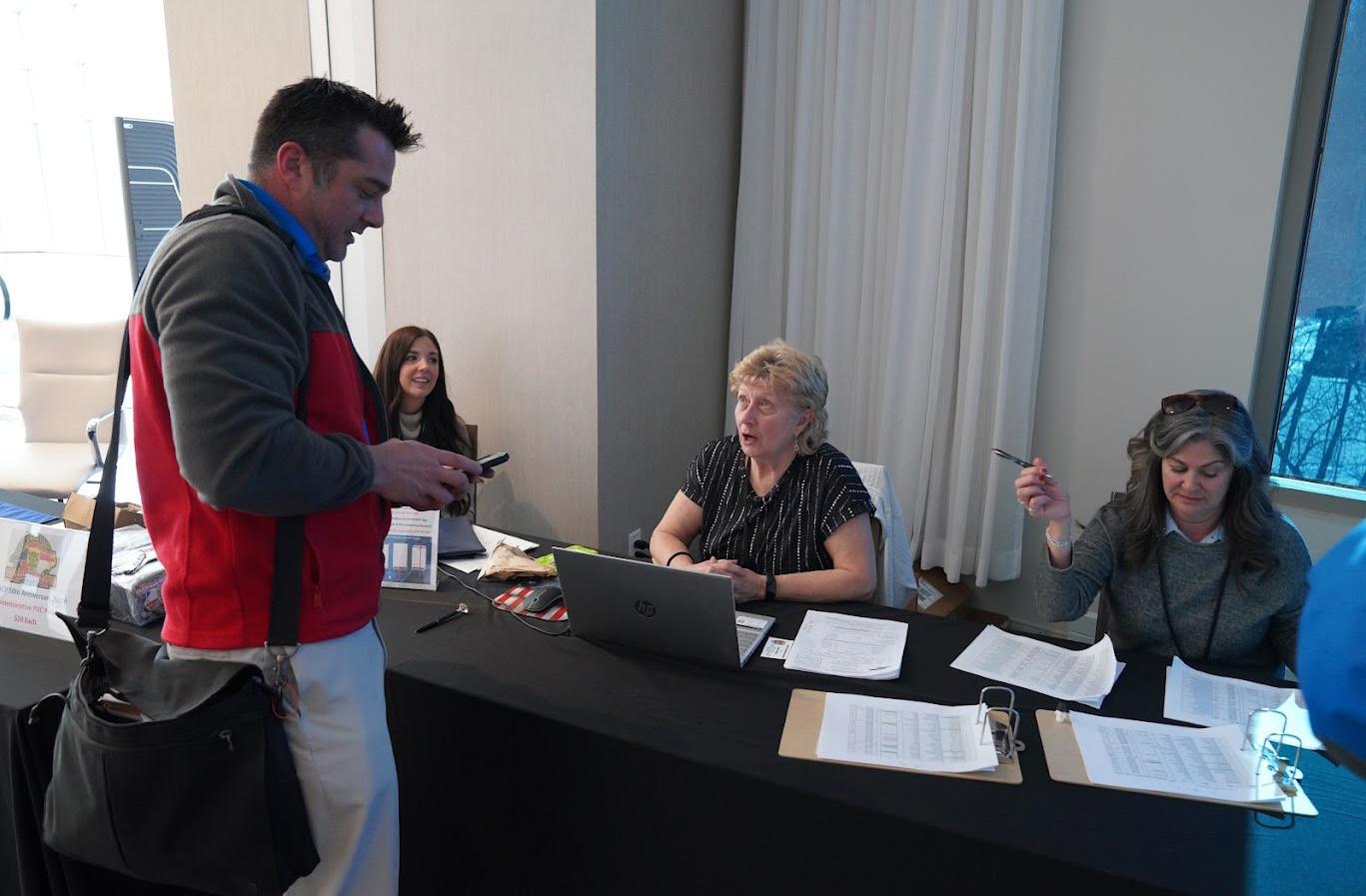






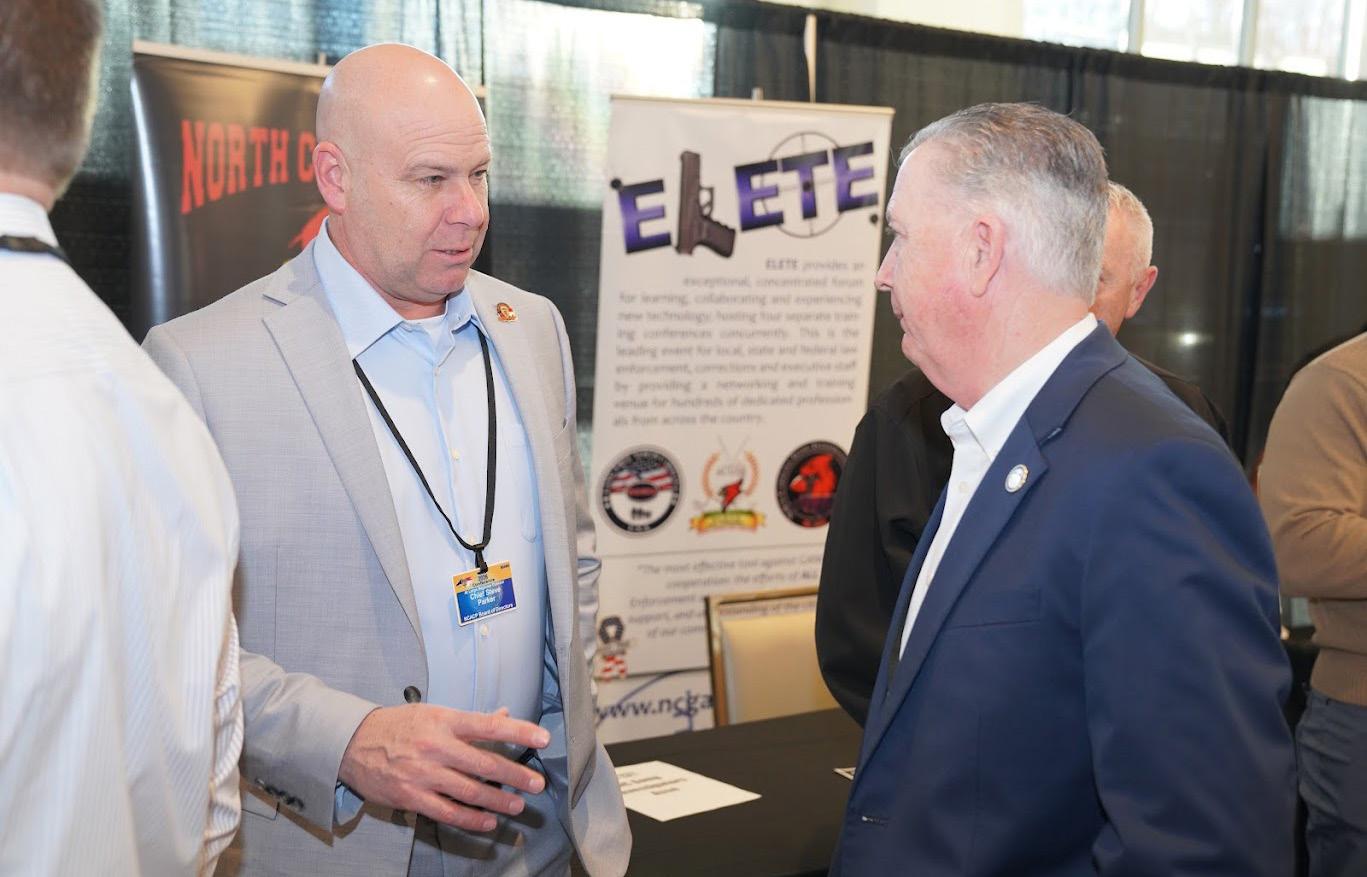
























































































We are pleased to offer our readers this easy reference guide to additional businesses. We urge you to patronize these advertisers, as well as those who have purchased display space in this magazine.
3.0 SUPERMARKET & GRILL
1032 S CHURCH STREET 252-822-4554…ROCKY MOUNT
3 REYES
247-B E PLAZA DRIVE 980-444-0413… MOORESVILLE
301 MART INC.
2824 US HWY 301 S. 252-292-7186…WILSON
5 STAR
2709 NEUSE BLVD
252-607-7487…NEW BERN
ASSAEDIS TOBACCO OUTLET
1316 W GRANTHAM STREET 919-734-1901… GOLDSBORO
BS BBQ
751 BS BBQ ROAD 252-758-7126… GREENVILLE
BEACHES BURGERS
6551 BEACH DRIVE 910-575-7777…OCIAN ISLE BEACH
BLAKE’S AUTOMOTIVE
215 W GRAHAM STREET 704-476-5509…SHELBY
BURNEY’S SWEETS & MORE 517 OUTLET CENTER DRIVE 913-300-1691…SMITHFIELD
CAMELOT INN
2828 S. MEMORIAL DRIVE 252-756-1150… GREENVILLE
CAN DO AUTO SALES 1516 SPARTENBURG HWY 828-693-4011… HENDERSONVILLE
CAROLINA AVENUE 76 710 CAROLINA AVENUE 252-946-4401… WASHINGTON
CHITO’S TIRE SHOP
311 AIRPORT ROAD 252-629-4435… GREENVILLE
COMPUTER GURUS
6412 BEACH DRIVE
910874-8787…OCEAN ISLE BEACH
COTTAGE RESTAURANT
6701D N. TRYON STREET
704-598-8868…CHARLOTTE
CRYSTAL NAILS
2956 OWEN DRIVE, STE 108 910-485-1826… FAYETTEVILLE
DD MART
111 ATLANTIC AVENUE 252-212-5862…ROCKY MOUNT
DARLING NAIL SPA
420 E ARLINGTON BLVD, STE D 252-417-0335…GREENVILLE
DAY DREAM TOBACCO & VAPE
1002 N. CHURCH STREET
252-316-8509…ROCKY MOUNT
DISCOUNT AUTO INC.
2729 S MEMORIAL DRIVE
252-756-9951…GREENVILLE
DRAGON CHINA 1341 PARKWOOD AVENUE 828-255-0777…ASHEVILLE
DREAMS TOBACCO MART
501 S. MEMORIAL DRIVE 252-215-0323…GREENVILLE
EL PALACIO DE LOS SABORES 613 JOHN SMALL AVENUE 252-495-2072…WASHINGTON
EAST
125 N MAIN STREET 415-690-6180… MOORESVILLE
EL REY DE PROS RESTAURANT 264 MCGILL AVENUE NW 980-255-8426…CONCORD
EZ PASS MINI MART
309 US HWY 70 E 919-351-0451…SELMA
FAIRVIEW MINI MART
301 N. FAIRVIEW ROAD 252-977-1304…ROCKY MOUNT
FIVE POINTS FOOD MART
1210 BROAD STREET 252-617-2588…NEW BERN
FLORE AFRICAN HAIR BRAIDING
402 S. MEMORIAL DRIVE 252-551-3889…GREENVILLE
FUNNY BONE EMBROIDERY 829 PLAZA LANE 704-663-4711… MOORESVILLE
GTI ENTERPRISES INC 836 W MARKET STREET 919-938-8080…SMITHFIELD
GARDEN NAIL BAR 3461 AIRPORT BLVD A-B NW 252-230-3098…WILSON
GILL COMPANY 1029 BENVENUE ROAD 252-314-4333…ROCKY MOUNT
H MART
1207 FORREST HILL ROAD 252-294-0011…WILSON
HARVEST CAFÉ 14212 STATESVILLE ROAD 704-274-5360… HUNTERSVILLE
HAYESVILLE GRILL 18 CREEKSIDE UNIT 10 828-415-1648…HAYESVILLE
HOLLEY’S OPEN AIR MARKET 716 S BRIGHTLEAF BLVD 919-934-0811…SMITHFIELD
HUTNERSVILLE CLEANERS 9815 K SAM FURR ROAD 980-889-5300…HUNTERSVILLE
IRON WOK 33 RECTOR STREET 828-488-9553…BRYSON CITY
JOEY O’S PIZZERIA 1637 SEASIDE ROAD SW 910-575-3322…OCEAN ISLE BEACH
K9 STYLES PET SALON 4808 RAMSEY STREET, STE 107 910-482-4555…FAYETTEVILLE
K-TOWN CARS 280 S CANNON BLVD
704-933-0033…KANNAPOLIS
KAW LAH INC. 2015 VILLAGE PARK DIRVE 919-641-1239…KNIGHTDALE
KINGS DISCOUNT DELI 1601 E ASH STREET 252-254-0906…GOLDSBORO
LA’S NAIL & SPA 57 WESTRIDGE MARKET PLACE 828-667-9559…CANDLER
LE NAILS 5091-B MORGANTON ROAD 910-868-1119… FAYETTEVILLE
LOS AMIGOS 62 OVERBROOK STREET 828-456-7870… WAYNESVILLE
LUPITAS
232 CABARRUS AVENUE W 704-787-4072…CONCORD
MAD FLAVORS 2730 BRAGG BLVD 585-465-7163…FAYETTEVILLE
MAMA’S PIZZA 416 HWY 64 EAST 252-793-4773…PLYMOUTH
MI REFUGIO SUPERMARKET 476 CHURCH STREET 980-248-1318…CONCORD
MIDDLE EAST GROCERY
3105 WARD BLVD STE A 347-513-0635…WILSON
MOXIE MERCANTILE 159 N. TRADE STREET 980-875-7827…MATTHEWS
N1 NAILS SALON
2801 WARD BLVD STE 3M 252-291-9196…WILSON
NEW IMAGE AUTO IMPORTS
395 E PLAZA DRIVE
207-450-7722… MOORESVILLE
NINJA JAJPAN
1249 N BRIGHTLEAF BLVD 919-938-0506…SMITHFIELD
P.I. NAILS 1252 N WESLEYAN BLVD 252-442-8448…ROCKY MOUNT
PACOS TIRES
284 CABARRUS 704-425-5066…CONCORD
PANADERIA “LA CHINA 1112 S POLLOCK STREET 919-331-1764…SELMA
PHARAOHS VILLAGE 2425 HOPE MILLS ROAD 910-323-2425…FAYETTEVILLE
PREMIER BEAUTY
2724 BRAGG BLVD
585-465-7163…FAYETTEVILLE
PRINCESS NAILS
635 DELLWOOD CITY ROAD 828-454-1944… WAYNESVILLE
QUICK PASS 1120 TILGHMAN ROAD N 252-373-8898…WILSON
ROCKSIDE TIRE
101 S BRIGHTLEAF BLVD 919-934-8880…SMITHFIELD
SAFEWAY MART 1901 N WILLIAMS STREET 919-739-0000… GOLDSBORO
SAIGON BISTRO 1040 BRAGG BLVD 910-920-3578…FAYETTEVILLE
SAIGON CUISINE
4205 W. TATE CITY BLVD 336-294-9286… GREENSBORO
SALT N PEPPER 155 BONANZA DRIVE 910-229-2062…FAYETTEVILLE
SHARPSBURG GROCERY
4240 S HATHAWAY BLVD 252-407-8078… SHARPSBURG
SHELL
101 S. BROAD STREET 336-723-5791…WINSTONSALEM
SIMPLY NAILS
1269 N BRIGHTLEAF BLVD 919-938-1577… SMITHFIELD
SMOKECLASS VAPE LLC
300 SW GREENVILLE BLVD, STE E 252-258-0906…GREENVILLE
SUNNY FOOD MART 600 WARD BLVD 252-243-4415…WILSON
SUNSHINE INN 1621 N WESLEYAN BLVD 252-446-7195…ROCKY MOUNT
SWAN’S TIRE HOUSE 226 NEW LEICESTER HWY 828-255-1829…ASHEVILLE
TAQUERIA EL KORA RESTAURANT 412 S OLD TAR ROAD 252-864-0165…WINTERVILLE
THE WRIGHT GROUP 1935 N. MEMORIAL DRIVE 252-327-6695…GREENVILLE
TROPICANA SUPERMARKET
1126 S POLLOCK STREET 919-202-5820…SELMA
UNITED FOOD MART 50 CABARRUS AVENUE W. 704-336-9656…CONCORD
VAPE MD
1230 S GLENBURNIE ROAD 252-649-1835…NEW BERN
VIP NAILS 118 TOWN CENTER 980-729-3789… MOORESVILLE
WASHINGTON MOTEL 1011 CAROLINA AVENUE 252-946-5161…WASHINGTON
In addition to the advertisers who have display and directory space in this issue, these merchants and firms are cooperating to make this magazine a successful and valuable publication.
3 REYES
30’s QUICK MART
A-1 SMALL ENGINES
D&H MART
APSARA ASIAN\CHI BAKERY
DIAZ JEWELRY & PAWN
EL RANCHO MEXICAN RESTAURANT
EMMA’S BAKERY
EXPRESS MART
JA CONVENIENCE STORE
JOSHUA’S TOBACCO & HOOKAH
KWALI T STUFF
LA CABANA
LAS CAROLINAS GROCERY
LUNES A SABADO
MOE TOBACCO
NANCY’S MARKET
NEOTERIC BREWING
QUICK STOP
RAMALLAH FOOD MART
REGGIE’S AUTO REPAIR
S.C. NUTRITION
SAMS TOBACCO
TAQUERIA GUERRERO
THE BAKERY SHOP
TINT WORLD
TOBACCO SHOP
US NAIL