#FUNDS4YOUTH: YOUTH LEADERS BATTLE FOR STABILITY
www.calyouthconn.org
About this Report
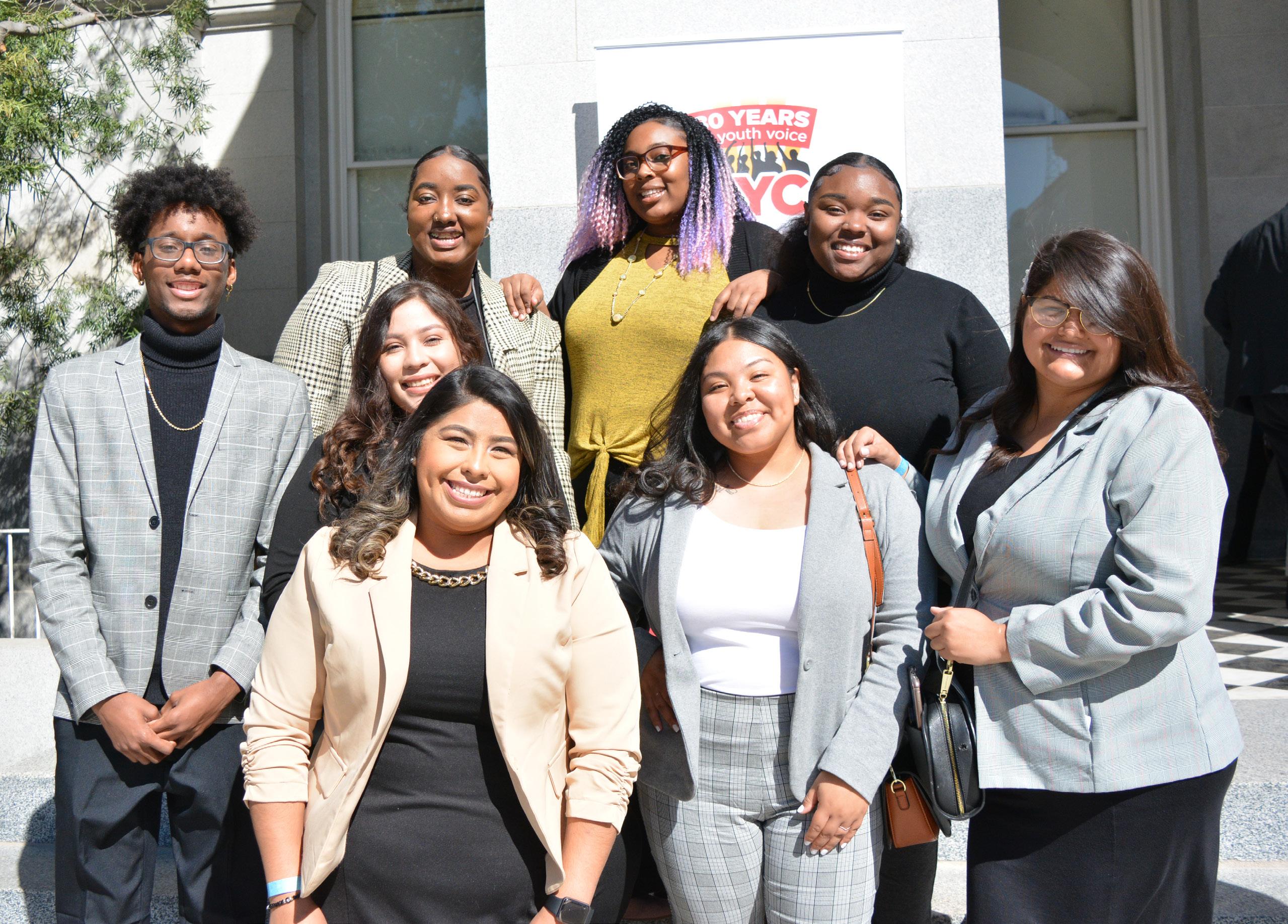
The mission of California Youth Connection (CYC), a youth-led organization, is to develop leaders who empower each other and their communities to transform the foster care system through legislative, policy, and practice change. Every year, the CYC membership elects regional representatives to advocate on behalf of current and former foster youth to advance their legislative and policy priorities. This group of representatives serves as the Policy and Legislative Committee, a highly esteemed cohort of child welfare experts that partner with the California Legislature, State Agencies, and community partners to promote stability within the foster care system. This report is dedicated to the 2020-2021 Policy and Legislative Committee Members and Policy Staff who showed the utmost diligence, vulnerability, and persistence in making sure that foster youth were not forgotten during the COVID-19 pandemic.
INTRODUCTION
For the past 34 years, California Youth Connection (CYC) has served as a platform for foster youth voices throughout California. CYC was founded in 1988 by a group of foster youth dedicated to fierce advocacy along with a committed group of adults who believed the youth were the experts. This youth-led organization set out on a mission to develop leaders who empower each other and their communities to transform the foster care system through legislative, policy, and practice change. Today, the current and former foster youth leading CYC are on a journey towards stability in all aspects of their lives and the lives of other young people impacted by the child welfare system now and in the years to come. Each year the CYC membership elevates the most urgent needs within the foster care community and addresses them head-on
through CYC’s policy and legislative agendas. CYC’s past achievements for foster youth include access to driver’s licenses, the creation of the State Foster Care Ombudsperson’s Office, extended eligibility for Medi-Cal, the establishment of the Foster Care Bill of Rights, and the extension of Foster Care services to age 21, just to name a few. As a grassroots organization, CYC has elevated and addressed many barriers that foster youth face. Our statewide membership has challenged, motivated, and educated local and state policymakers, and dismantled institutions that put limitations on the success of foster youth. The battles that CYC has endured in the pursuit of stability for young people experiencing foster care have strengthened the organization in many ways, but just like the rest of the world, we were nowhere near ready for what unfolded in 2020.
THE BEGINNING OF A MOVEMENT FOR STABILITY
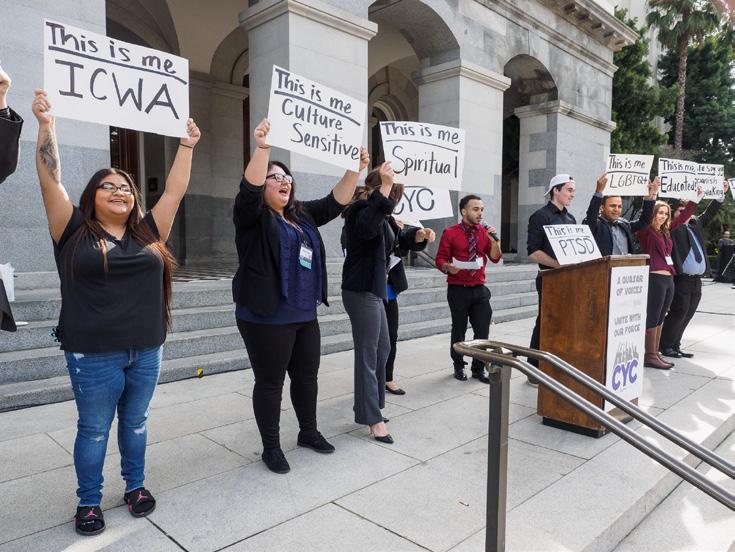
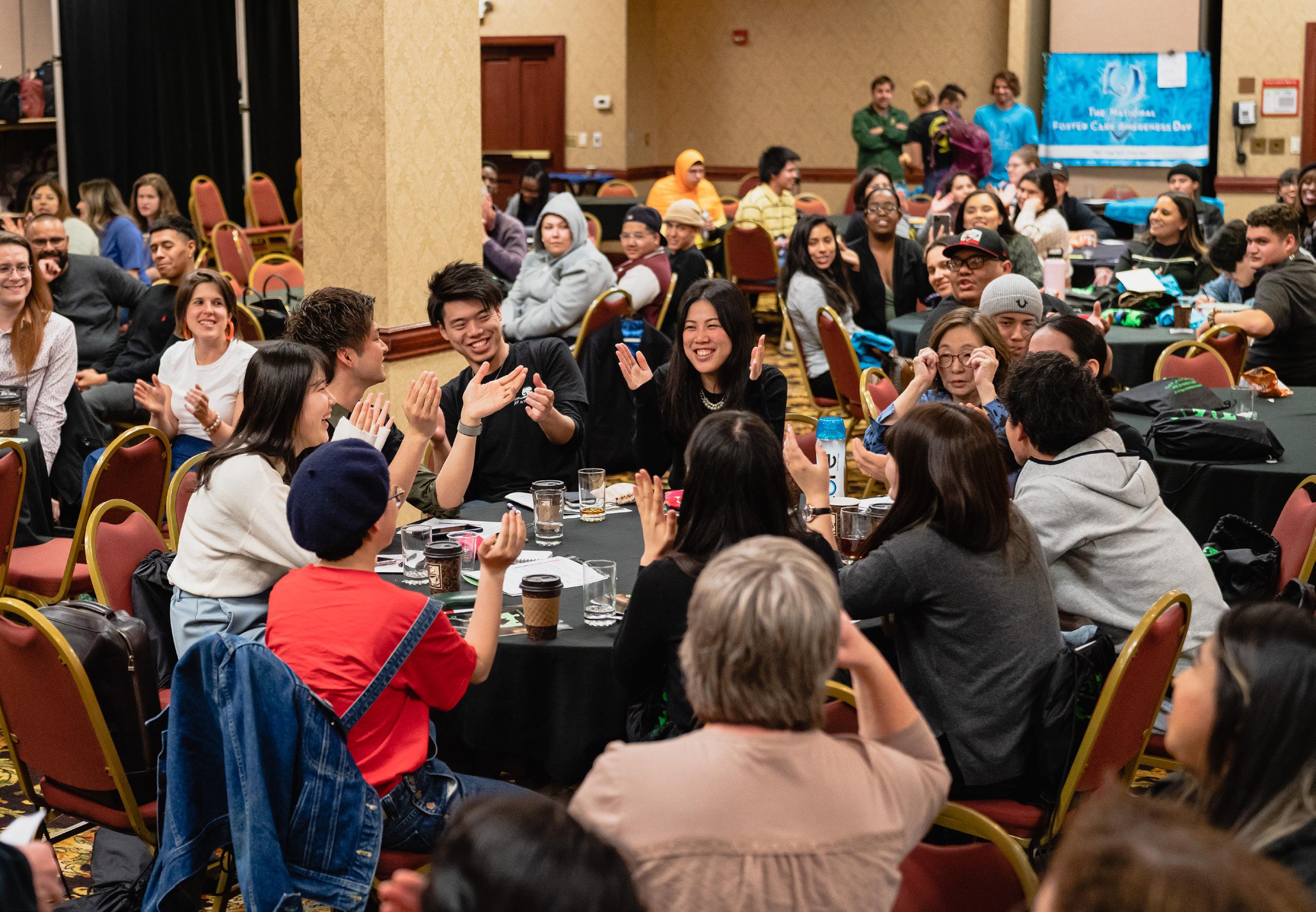
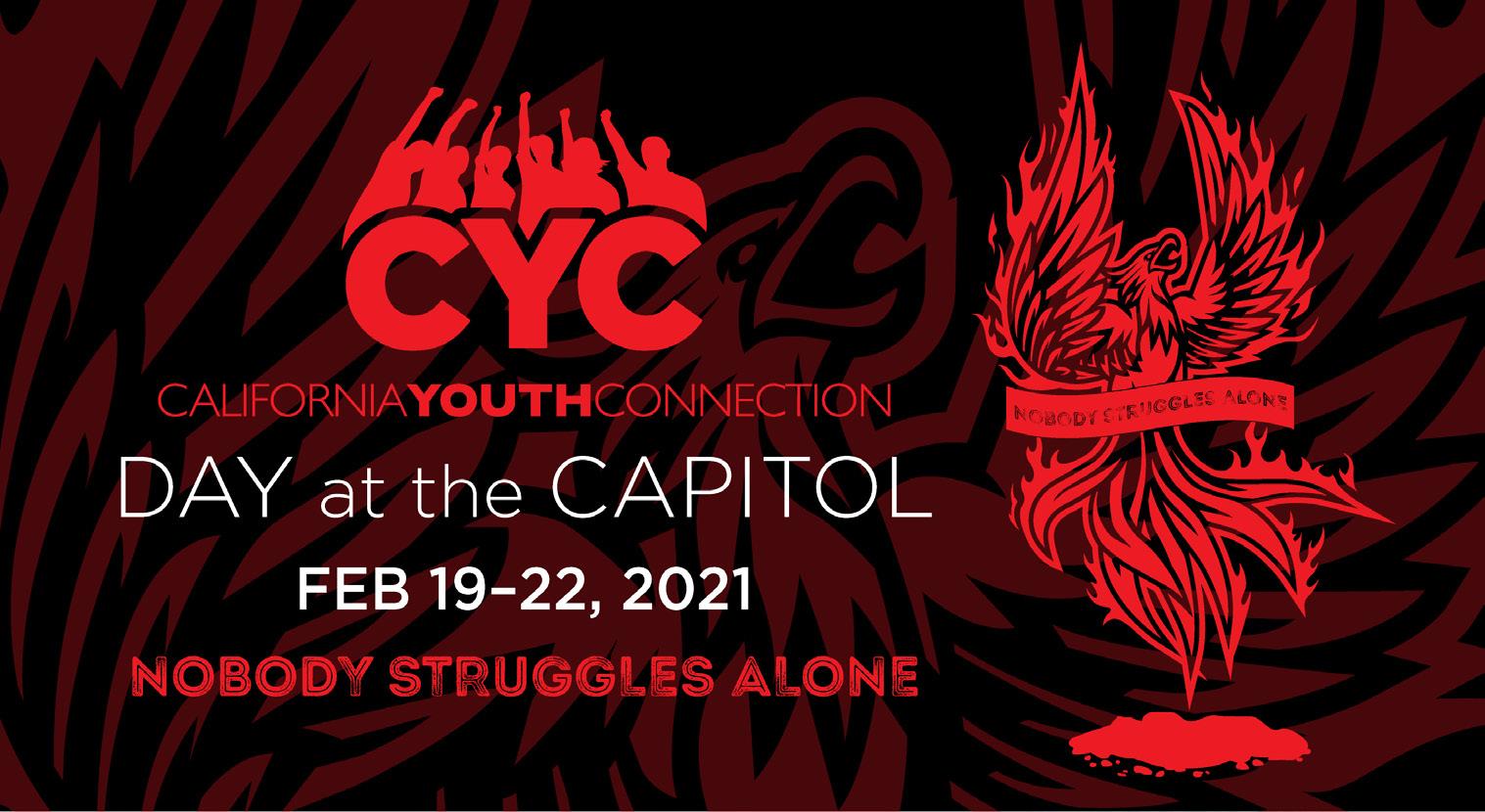
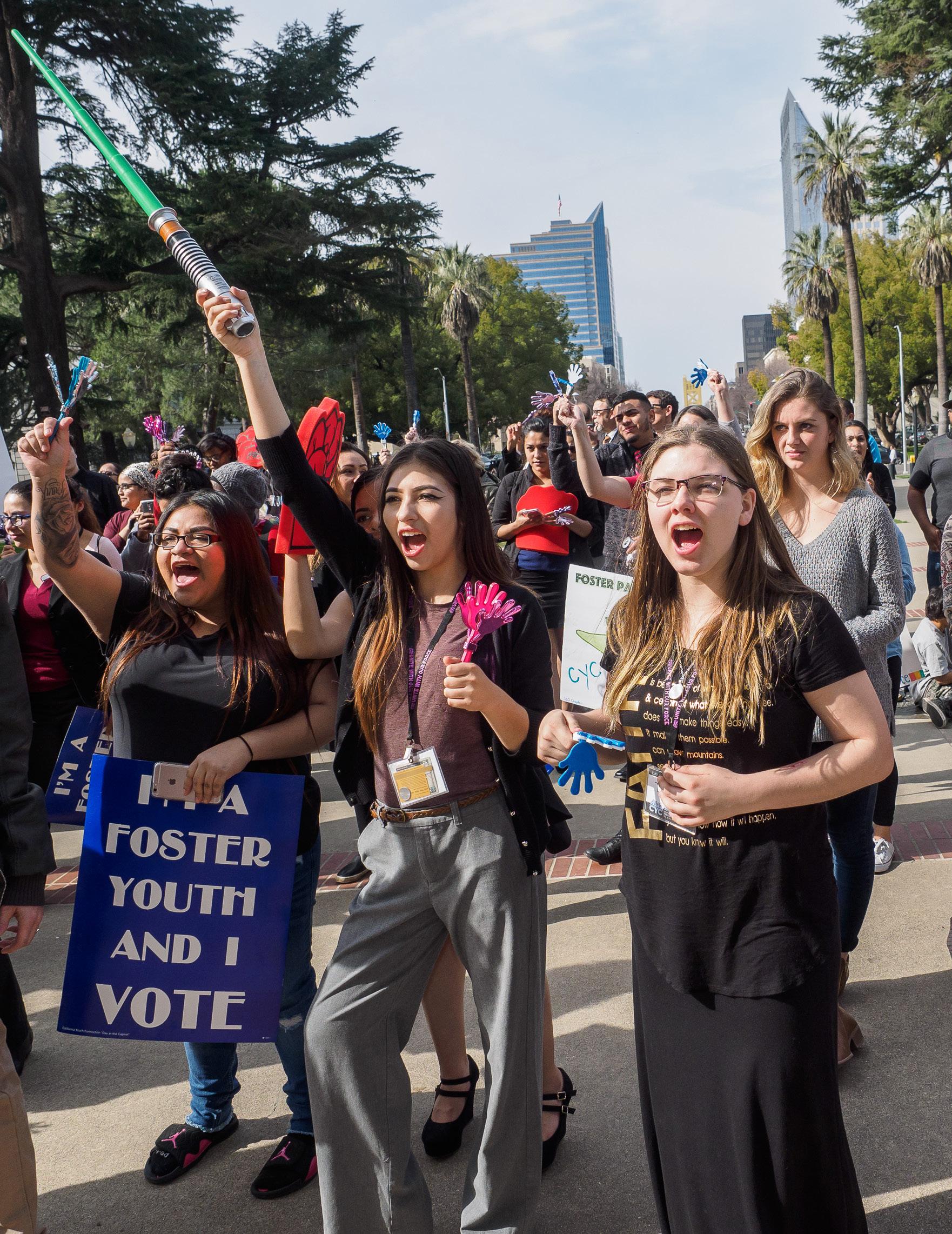
Each year in February, CYC hosts our annual Day at the Capitol Conference. This four-day in-person event is held in California’s State Capitol, Sacramento, and attracts hundreds of young advocates, supporters, and legislators from around the state to join our efforts in advocating for legislative change. The year 2020 was no different except that we were hearing whispers of this new word no one had heard before: Coronavirus (COVID-19). As the conference came to a close, the first COVID case had been confirmed in California, and weeks later, we entered our first stay-at-home order marking the last time we would see the people within our CYC community in person for years to come.
As an organization, for the first time in our history, we were at a loss for words. On the one hand, as the pandemic uprooted our day-to-day lives with almost no notice, the average American was getting an inside look at the struggles foster youth in this country had been facing for decades. Together, we all had limited to no access to our family members who lived outside our homes. Together, we all had to patiently wait for guidance to be released that allowed us access to normal activities. Together, we all worried about what the future would look like in regards to our housing and financial stability. EVERY DAY for decades, these have been the worries at the forefront of the minds of foster youth. Although these struggles were not new within our community, they were exacerbated by the pandemic. On the other hand, we understood that now, more than ever, it was vital to take immediate action to ensure the safety and well-being of foster youth.
So advocacy organizations throughout the nation started talking, and something magical began to happen.
People started listening…
#FUNDS4YOUTH: YOUTH LEADERS BATTLE FOR STABILITY • 4
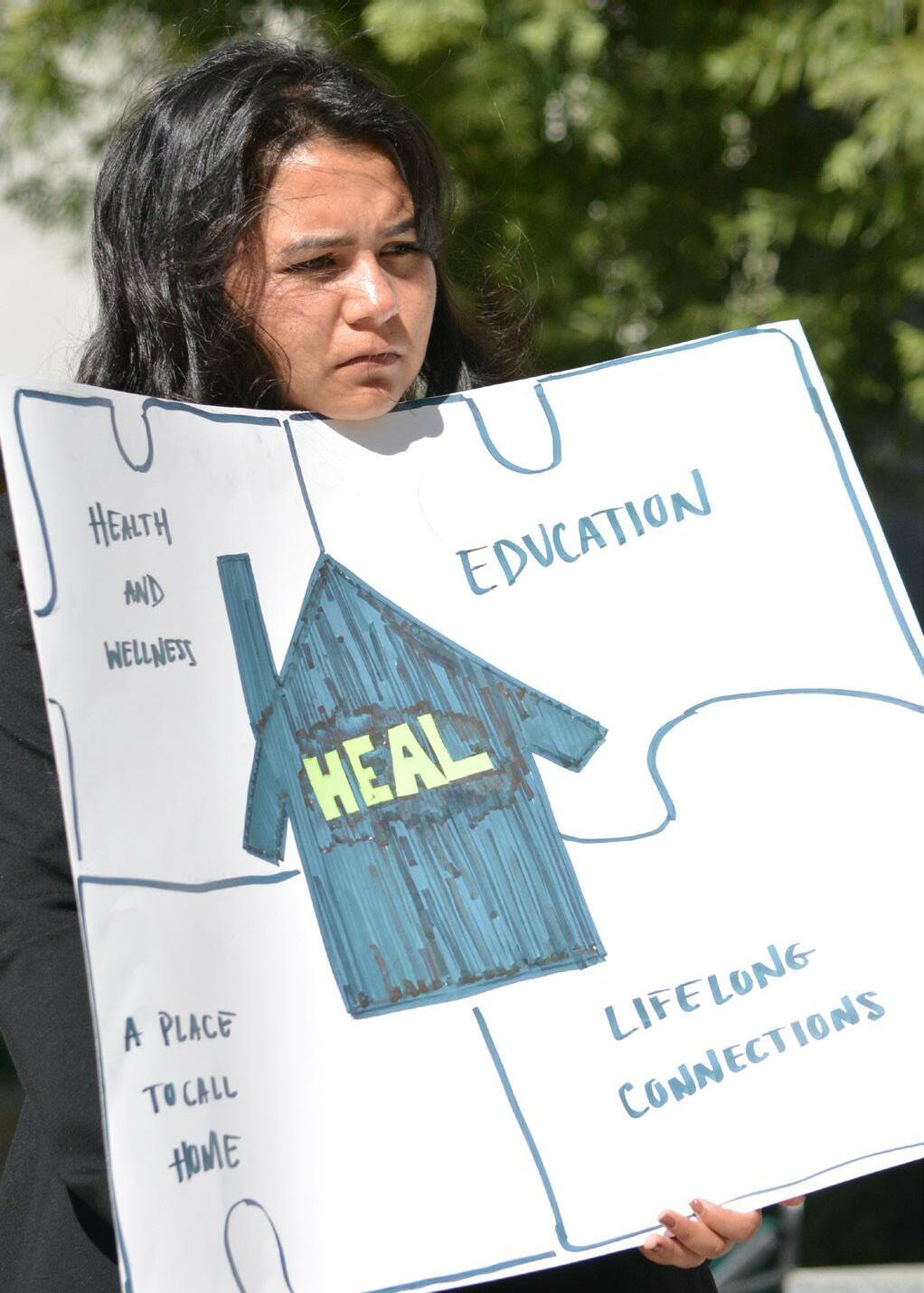
HEAL DAY at the CAPITOL FEB 29–MARCH 2, 2020 20/20 Vision ACCOUNTABILITY FOR STABILITY
DEFINING THE PATH FORWARD
CYC has been known for working from the motto of paving new roads when the right ones do not exist. As the pandemic began, we were unsure what the path forward looked like, but our membership was determined to define it. We sprung into action by forming a CYC COVID-19 Task Force that consisted of 12 current and former foster youth who would lead the way in fighting for the needs of our community on the federal, state, and local levels.
While we knew that foster youth were struggling, no data had been published to tell us exactly what young people needed most urgently. This prompted the immediate release of CYC’s #FosterStability COVID-19 survey. A total of 141 current and former foster youth who had spent time in the California child welfare system responded to the survey. Our findings identified the top three areas that foster youth were currently struggling with: housing, school stability, and unmet dental health needs. Although this information was essential to begin to paint a picture for advocates, it’s national applicability was limited because of the relatively small number of participants. In the United States, roughly 400,000 youth are currently in the foster care system—66,000 of them reside in California. We needed more data, and we needed it fast.
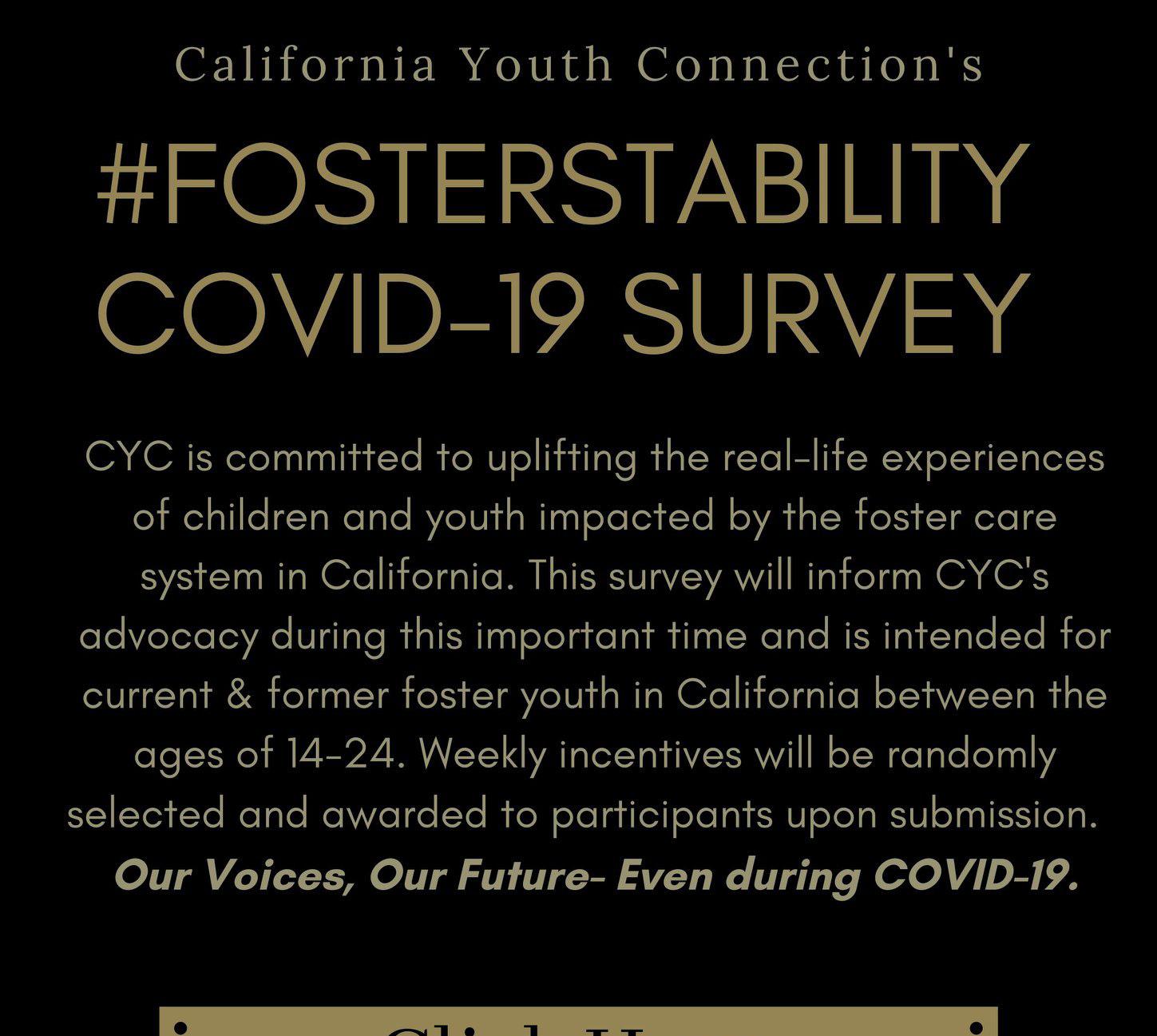
In the following weeks, Think of US, a national advocacy organization, conducted a survey that engaged 27,342 current and former foster youth from across the United States. The questions were fairly similar to those of the earlier CYC survey, but a major difference was that respondents who completed the survey were entered into a drawing for multiple MicroCash grants of up to $1,000. This survey revealed the hidden costs of the pandemic for current and former foster youth everywhere. 72% of respondents said their financial situation
would be stable for no more than one month,1 an alarming statistic given that pre-pandemic, one in four foster youth in California became homeless after leaving foster care.2 This new data proved that foster youth nationwide were in a financial crisis. They needed help, and as foster youth had no one to turn to during a global pandemic, organizations such as CYC were terrified of the potential outcome.
Young people who have aged out of foster care during the pandemic have made up the most vulnerable group of transition-age youth we have ever seen. Many of the young people did not—and still do not—have support systems they can count on if they lose their job, are forced to leave their dorm, or run out of food. These are individuals who are one paycheck away from becoming homeless. One clerical error from not having enough food. One pandemic away from losing everything they have worked so hard for. They are your neighbors, your students, your friends. They are embedded throughout your community, and they are demanding that we listen.
1 Think of Us. (2021) Think of US COVID-19 Microcash Grant Application Data Briefing. https://drive.google.com/file/d/1OxrEI00cowLljDiyCvwOoCEp4XI9_PSw/view?ts=60d22dc1
2 Courtney, M. E., Okpych, N. J., Harty, J., Feng, H., Park, S., Powers, J., Nadon, M., Ditto, D. J., & Park, K. (2020). Findings from the California Youth Transitions to Adulthood Study (CalYOUTH): Conditions of youth at age 23. Chicago, IL: Chapin Hall at the University of Chicago
#FUNDS4YOUTH: YOUTH LEADERS BATTLE FOR STABILITY • 5
Federal Advocacy
Members of the Transition-Age Youth Federal Coalition, a dedicated group of child welfare advocates and nonprofit organizations from across the country dedicated to uplifting the needs of transition-age youth impacted by the child welfare system, heard those demands and began to act swiftly. The coalition began urging Congress to prioritize transition-age foster youth in the COVID-19 relief bill that was being proposed. The group quickly identified the Chafee Foster Care for Successful Transitions to Adulthood Program, a well know federal funding stream that priorities services and financial assistance for successful transitions out of foster care, as the most immediate action step. They recommended that Congress #UpChafee by $500 million to provide relief to foster youth experiencing hardship due to COVID-19. The coalition encouraged young people, supporters, community partners, and advocacy organizations to email their local congressional representatives to ensure that support for current and former foster youth would not be forgotten during a time of national crisis. Once the emails were sent, the letters of support were signed, and the social media posts disappeared, there was nothing we could do but wait.
On December 27, 2020, people throughout the country received notice that the Consolidated Appropriations Act (PL 116-260) had been passed. Within this act was the Supporting Foster Youth and Families through the Pandemic Act (H.R. 7947). Congress had officially acted on the recommendations from members of the Transition-Age Youth Federal Coalition. This bill included $400 million in federal aid that would be disseminated to states throughout the country. One of the most surprising components of this bill was that it temporarily expanded eligibility and program flexibility. Why is this so important? It means that states have the ability to determine what current and former foster youth have the most urgent need for and utilize federal aid to provide assistance to meet those needs. The caveat was that all of the money needed to be spent before September 30, 2021. This is when the race against the clock began.
#FUNDS4YOUTH: YOUTH LEADERS BATTLE FOR STABILITY • 6
Once the Supporting Foster Youth and Families through the Pandemic Act was passed, federal advocates began to lean on statewide advocacy organizations to begin collaborating with their state agencies to ensure these funds were spent in a way that would benefit the greatest number of current and former foster youth as possible. CYC had already been strategizing in preparation for the bill’s passage, and we knew exactly what foster youth in California needed: DIRECT CASH ASSISTANCE.
A coalition of statewide child welfare advocates, led by John Burton Advocates for Youth, quickly released a set of recommendations to the California Department of Social Services, the Office of Governor Newsom, and the California Department of Finance, marking the official start of the #funds4YOUth campaign. Using the campaign platform, our coalition urged California to provide immediate assistance to current and former foster youth by:
1. Issuing assistance within 45 days of receipt to meet the urgent needs of current and former foster youth and prevent homelessness, housing instability, academic disruption, and hunger. To ensure timely distribution of emergency assistance, California advocates recommended that the funds be distributed through a Section Letter, issued by the Governor’s Administration and reviewed by the State Assembly and Senate Legislative Budget Committee. This process has been used effectively in the past to provide foster youth with immediate support during the pandemic, including access to technology and cash payments to families.
2. Prioritize immediate direct payments to current and former foster youth. Older youth with experience in the foster care system have faced considerable challenges during the pandemic. CYC Members shared personal experiences of facing barriers to accessing services that they were eligible for during the pandemic. Our recommendation is that at least 70% of available funding should provide direct payments to both youth currently participating in extended foster care (including those without a current placement) and those ages 18 to 26 who were no longer eligible for foster care support, including older youth who aged out of foster care before the state’s moratorium on discharging youth who turned 21 and youth ages 18 to 21 who qualified for the Chafee program but were not eligible for extended foster care.
3. Utilize prepaid cards for fund disbursements. Prepaid cards were used successfully by the California Department of Social Services (CDSS) to disburse more than $27 million to support families staying together during 2020. The Statewide Coalition advocated that a similar mechanism be used to disburse these funds directly to youth.
4. Create fund disbursement policies that provide equitable, low-barrier access to emergency relief and develop robust outreach strategies. We recommended that no means test or application be required. The responsibility for verifying eligibility for funding should be on the agencies distributing the funds through the state’s Child Welfare Services/Case Management System rather than on the youth.
#FUNDS4YOUTH: YOUTH LEADERS BATTLE FOR STABILITY • 7 CYC
#FUNDS4YOUTH
APPLIES PRESSURE TO CALIFORNIA TO PROVIDE
With the strict turnaround time for the use of these funds working against us, CYC began to pave the roadmap for our #funds4YOUth advocacy. With the pandemic impacting so many lives throughout California, we knew we would have to work harder than ever before to ensure that foster youth were not overlooked during this crisis. Decisions being made in the coming months would be crucial to the survival of young people in our community.
Moving into the strategizing phase of the #funds4YOUth campaign was essential to ensure that CYC’s recommendations were not only being heard but were also being embedded within the decision-making process. An outline of our advocacy strategies included:
� Letter to Governor Newsom
� Collaborative meetings with the California Department of Social Services (CDSS)
� The official release of the #funds4YOUth advocacy video
� OP-ED workshop sessions for CYC members
� CYC’s #funds4YOUth Day of Action
Issuing a Letter to the California Governor Gavin Newsom
Shortly after the passage of the Supporting Foster Youth and Families through the Pandemic Act, a coalition of child welfare advocates provided recommendations to California Governor Newsom for how the funds should be utilized by the state once they were received from the federal government. This letter highlighted the importance of our first process recommendation that urged the state to issue the funds within 45 days of receipt to ensure timely distribution.
With the expiration date of September 30th, 2021, for the use of these federal funds being only seven months away, California advocates pushed for an expedited decision-making process for how these funds would be disseminated to allow enough time to distribute the funds.
Collaborative Meetings with the California Department of Social Services
Within CYC’s existing policy framework, the statewide membership has the opportunity to meet directly with the California Department of Social Services quarterly to update the department on CYC’s policy and legislative priorities, address urgent issues/implementation, and participate in open discussions with the state. A key component of CYC’s advocacy strategy was to utilize the Quarterly Director’s Meeting to elevate the urgent and increased needs of foster youth resulting from the pandemic. As we were involved with the federal advocacy efforts to #UpChafee, we knew Congress would be voting on the funding increase, and we wanted California to be devoted to using those funds for direct cash assistance as soon as the federal government delivered California’s $41 million allotment.
At the CDSS Director’s Meeting, CYC members shared the challenges they had been facing since the beginning of the pandemic. Clarissa Pena, from the Long Beach CYC Chapter, shared about the uncertainty she was facing as she waited patiently for her college campus to decide if they would open the dorms for her first year in college, which was her only housing option. Another member shared her experience of being forced to leave her apartment unexpectedly due to COVID-19. With apartment agencies requiring two months of rent upfront, plus a hefty deposit, finding affordable housing was not possible. CYC members drew attention to making sure that these funds were accessible within communities of color who have been historically left out of similar programs and who were being hit the hardest by the effects of the pandemic. The message was loud and clear: racial economic inequity was not going to be ignored in this decision-making process.
#FUNDS4YOUTH: YOUTH LEADERS BATTLE FOR STABILITY • 8
#funds4YOUth Advocacy Video
Both the Governor’s Office and the California Department of Social Services gave their verbal support to our recommendations—a great start to the #funds4YOUth campaign.
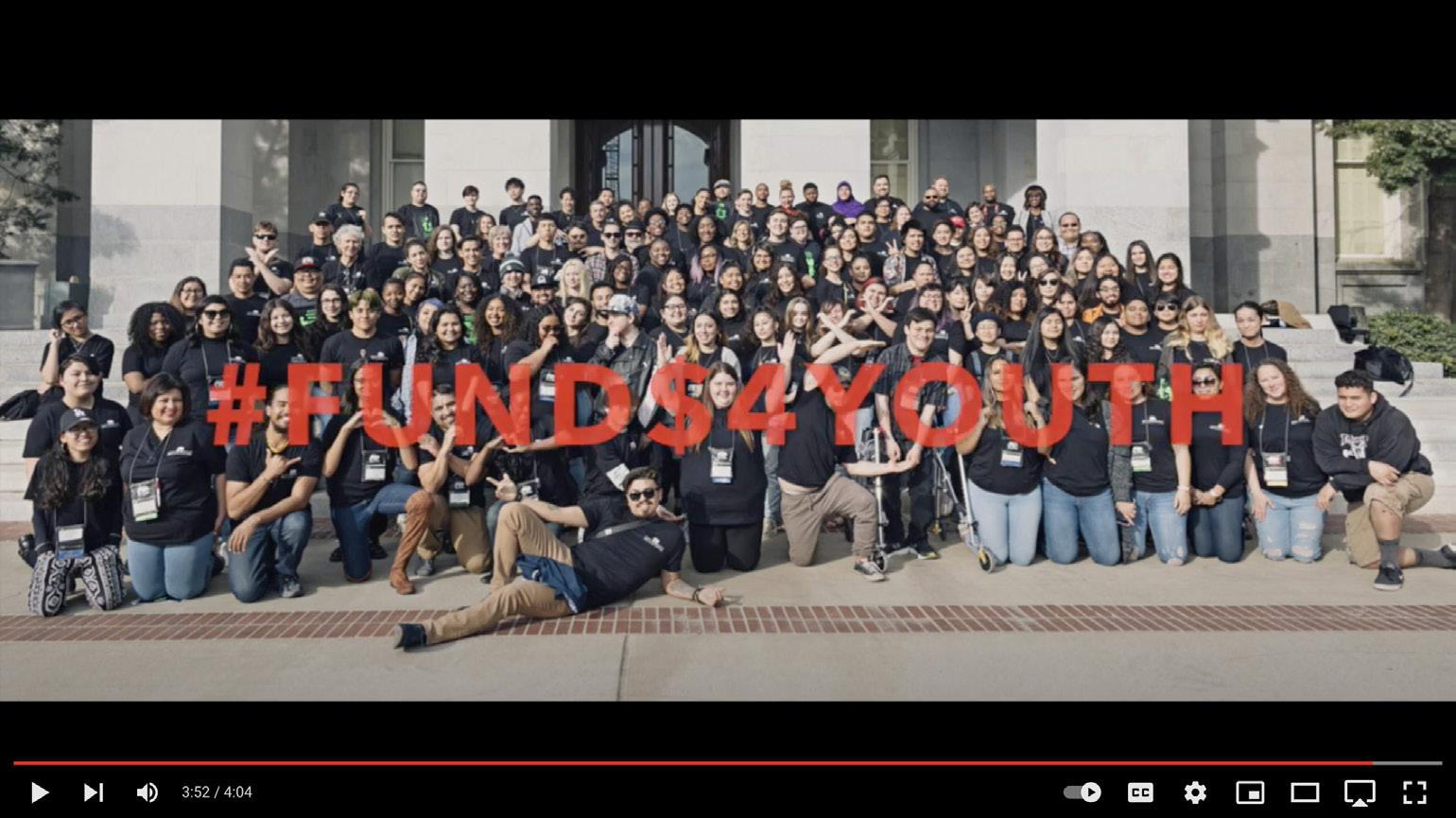
Yet we knew if we wanted to be successful we would need to get the investment of the public. So what better outlet to use than the country’s most utilized video streaming site, Youtube? In an effort led by CYC’s Policy and Legislative Committee member Anjru DeLeon, members created a video outlining the immediate need for direct cash assistance among the foster youth community. The strategy was to draw people’s attention to the decline in available jobs for young workers and highlight how this fact, mixed with the lack of support systems, put foster youth in an extremely vulnerable position. If these funds were prioritized for direct cash aid, current and former foster youth explained that they would use these one-time funds to cover costs for housing, higher education, transportation, credit card debt, and moving expenses.
As this message began to circulate on the internet, we began receiving emails from current and former foster youth throughout the country telling us their own stories about why they, too, needed financial assistance during this time of economic hardship. The message was clear: foster youth need help, and as they stated in the video, “We need help NOW.”
This was more than just an effort to gain support from the public. This was a message of solidarity to all foster youth who were struggling. CYC members wanted all foster youth to know that they had not been forgotten and that we would keep fighting for them. They were not in this alone.
OP-Ed Workshops and Publications
The next phase of our advocacy strategy was to gain the attention of news outlets. CYC staff members Jordan Sosa and Kate Teague hosted a series of workshops to provide support to members in writing op-eds. The ultimate goal of these written pieces was to provoke thought and discussion among anyone reading them in the hopes that they would join our movement and take action in supporting direct cash assistance for foster youth. Current and former foster youth spent countless hours doing one of the most vulnerable tasks: putting their stories down in writing. It is my privilege and honor to be sharing those stories with you on the following pages.
#FUNDS4YOUTH: YOUTH LEADERS BATTLE FOR STABILITY • 9
Special Note: Click here to view this video. Or visit CYC’s Youtube channel: CalYouthConn and click on the video titled #funds4youth
Young adults from the foster care system need COVID relief funds
released NOW.
By Jasmine Harris
2020 was a year like no other, especially for young people who are a part of the child welfare system in California.
For many, being in quarantine was a time to pick up new hobbies, finish the series they’d always planned to watch, and spend more time with family or on the internet with friends.
But, for me, it was a time when I aged out of the foster care system.
I turned 21 on March 26, 2020, ten days after California’s original stay-at-home order.
Of course, during those first two weeks, I was barely home because I had been asked to leave the home I was renting due to the pandemic.
I was told there would be a private and safer location as long as I paid three months’ rent upfront—an unexpected cost that would challenge anyone.
As I scrambled to get together the money to move into new housing, I tried to get excited about this “fresh start.” At the same time, I was told I needed to meet with a social worker to successfully exit extended foster care.
At first, I thought nothing of it; I was more concerned with how I was going to get a new bed and fix up a place to live in the middle of a pandemic when many stores were closed or shut down early.
After many dysfunctional trips to Walmart to furnish my new studio apartment, buy food and get other basics, I realized my savings were quickly being depleted with no future source of income.
At the time, no one was sure what the quarantine would entail or how long it would last. I wasn’t officially laid off from a job so I couldn’t collect unemployment, I was just in between.
And that is where I’ve been ever since, in between— what some people say, between a rock and a very hard place. I’m 21, on my own, to navigate a very complicated and often unfriendly system that does not include young people like me.
Any plan I may have had for my future outside of the foster care system was immediately put on hold due to Covid-19. Now I had no social worker, no roommates, no guidance, and no idea of what was to come.
It was just me alone in my room with Zoom University. Month after month, counting the days, waiting for some kind of sign of when things may get better. And unfortunately, they didn’t. The two-week quarantine quickly became six months. Eventually, my landlord could no longer afford to rent to me at the lowered “COVID rates,” and I was told to pay up or go.
This is the reality for people all across the country, especially young people and especially current and former foster youth.
Like many, I turned to government resources like unemployment and stimulus funds. Being a 21-year-old student-worker didn’t leave many options available to me.
No family to turn to, friends all quarantined away, and the social worker who had so diligently cared for me was nowhere to be seen. Isn’t it supposed to be about helping people help themselves?
In late December 2020, the United States Congress passed legislation on COVID relief that made aid available for young people who have been in foster care and desperately need help making a transition into living as an independent, self-sufficient adults.
The State of Oregon quickly took advantage of the new funding and announced last week that expanded funds would be made available to support higher education for young people who are experiencing or experienced foster care at age 14 or older and who are not yet 27. And additional funds of up to $7,000 per student are available to help eligible young people access housing, transportation costs, and technology needs through the pandemic. Some of these funds will be by direct payment to qualified young adults in the state.
The state of California has already received over $47 million in education funds, under what is called the Chafee grant program. Of this, $5.8 million would go to foster youth students in the form of ETV or Education Training Vouchers. The rest should go directly to the youth so they can spend in a manner that best suits their needs.
Oregon put together a plan, and now California has an opportunity to act. Direct cash payments would allow youth to have some autonomy while maneuvering through this year-long pandemic experience.

#FUNDS4YOUTH: YOUTH LEADERS BATTLE FOR STABILITY • 10
Direct Stimulus Payments for Former Foster Youth Needed NOW!
By Carolyn Travis
As a former foster youth, I can attest to the need for direct cash payments and for fund distributions to go directly to youth, especially amidst this ongoing pandemic. The purpose of this editorial is to urge the Governor’s Office, DCFS, and Department of Finance to use general CHAFEE funds provided by H.R. 7947 Supporting Youth and Families Through the Pandemic Act to directly assist current and former foster youth.

At the beginning of March 2020, I was being forced out of my converted garage studio in Inglewood due to slum-like conditions and a landlord indifferent to a toxic mold situation. Not only did I have to try and find housing on short notice, but I was also in my senior year at UCLA attempting to finish finals. Then the pandemic hit. And while most of my colleagues and friends were debating between staying in Westwood or returning “home,” I had no such options. For the second time in my college experience, I ended up couch surfing, only this time normal support services were made even more scarce with the way COVID-19 impacted in-person assistance.
I put most of my belongings in storage and only carried with me a few essentials. If I were to have had access to a direct stimulus at this time, much of my stress could have been alleviated and I could have managed to find stable housing sooner. Unfortunately, housing insecurity is something that many current and former foster youth struggle with and it complicates youths’ ability to access food, healthcare services, and other basic needs. Having funds sent directly to youth would allow us to have agency over our needs and would be effective
in helping bridge many of the disparities youth encounter when trying to live independent and healthy lives.
Given that youth needs vary on a case-by-case basis, direct cash payments are the best way to ensure that the funds are used to the most effective degree. A recent 2020 CalYOUTH study conducted by the University of Chicago found that for every instance of abuse experienced by foster youth, their risk of homelessness increased by 18 percent3. Additionally, the study found that over 50 percent of foster youth experienced homelessness or couch surfing between ages 17 and 21. This number far surpasses the number of youth experiencing housing insecurity among the general population, particularly because former foster youth are often left to reconcile extenuating circumstances most people their age do not have to struggle with.
While this data represents grim outcomes, CalYOUTH also found that extended participation in after-care services (AB12) reduced the risk of homelessness by 30 percent compared to no support services after emancipation. This shows that financial investment in former foster youth even after age 21 would have a huge impact in changing housing outcomes and trajectories towards safe and stable permanency. For this reason, I urge not just the social welfare agencies responsible for these CHAFEE funds to distribute them to former foster youth ages 14-27, but to the larger community and anyone reading this to get behind those most heavily impacted by COVID-19 and California’s ongoing housing crisis.
#FUNDS4YOUTH: YOUTH LEADERS BATTLE FOR STABILITY • 11
3 Feng, H., Harty, J., Okpych, N. J., & Courtney, M. E. (2020). Memo from CalYOUTH: Predictors of homelessness at age 21. Chicago, IL: Chapin Hall at the University of Chicago.
DAY OF ACTION: OUR FINAL PUSH TO THE FINISH LINE
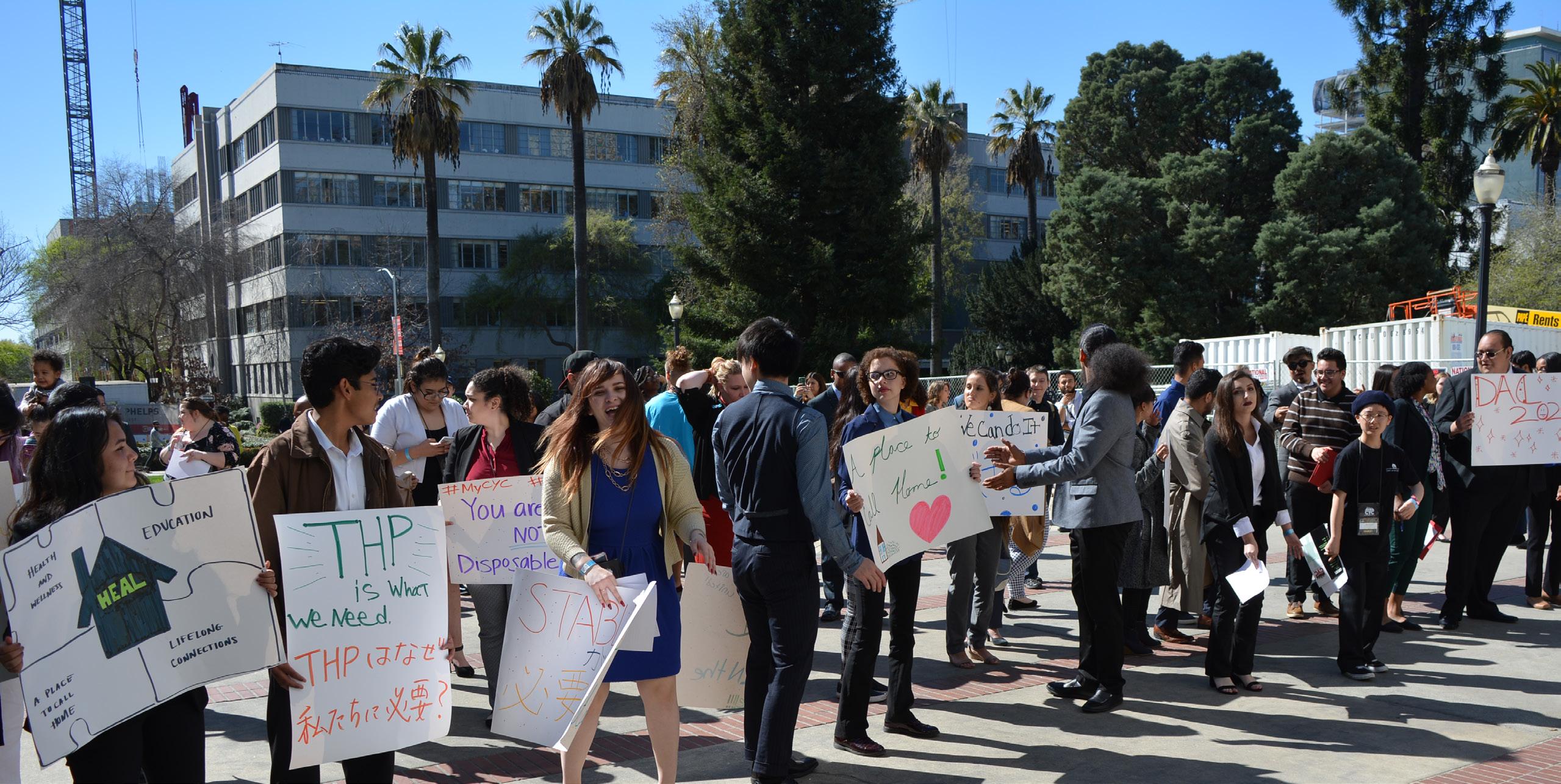
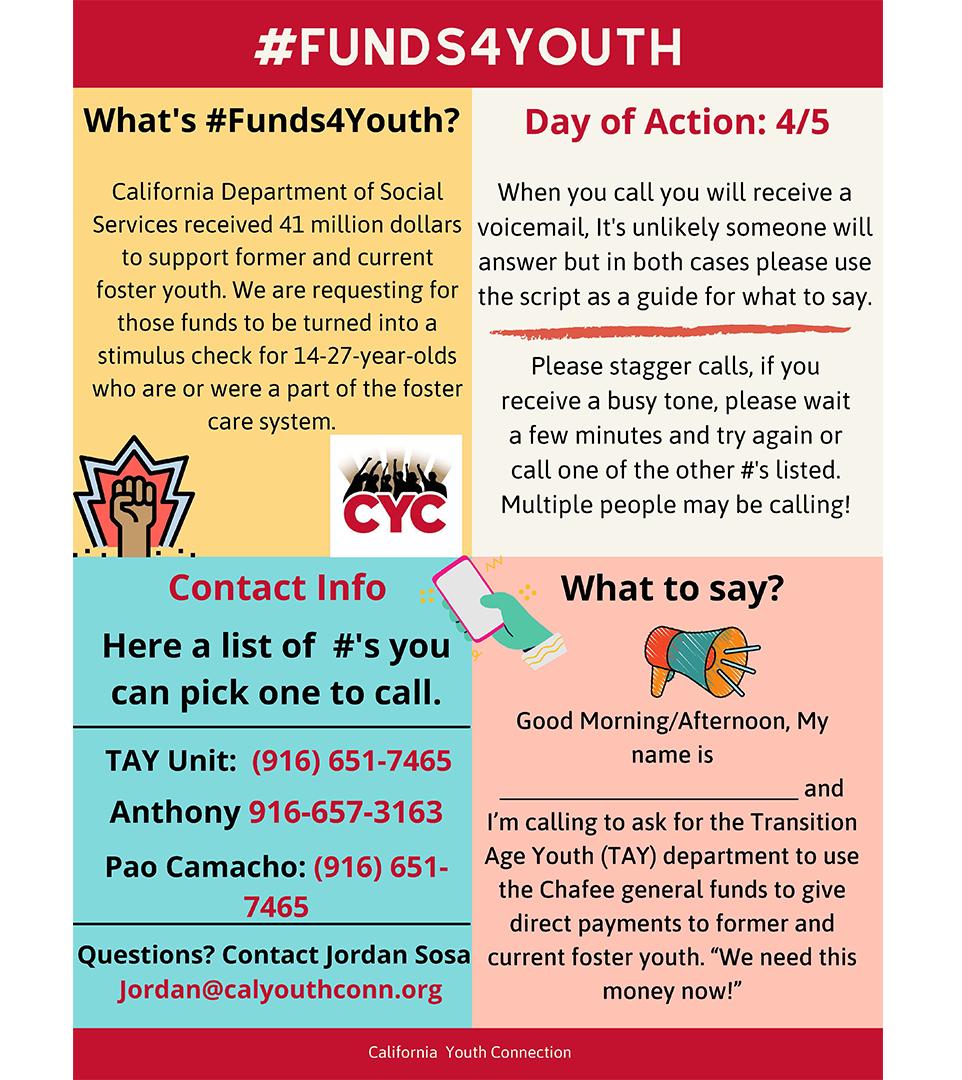
By this time, we were closing in on the month of April, and had yet to hear back with an official decision from the California Department of Social Services about what they intended to do with the federal funds. With roughly five months to disseminate these funds, we made a final push to apply pressure with a Day of Action on April 5, 2021. This event was intended to be our last call for immediate action by flooding the phone lines with calls for support, sending out mass emails educating people on the issue, taking over CYC’s Instagram account by hosting live videos addressing why this was needed NOW, and encouraging people to post on their own social media accounts showcasing the #funds4YOUth tag. During this event, we received an outpouring of support from members, supporters, and community partners standing alongside our advocacy efforts.
Next came the hardest part: the waiting game. Were our advocacy efforts enough? Were the voices of current and former foster youth being heard?
We would find out soon enough.
#FUNDS4YOUTH: YOUTH LEADERS BATTLE FOR STABILITY • 12
DECISION DAY: WERE OUR ADVOCACY EFFORTS ENOUGH?
Alittle over a week after our #funds4YOUth Day of Action concluded, we received official written confirmation from the California Department of Social Services that they would indeed begin using a portion of the increased Chafee funds as direct cash assistance for current and former foster youth, up to age 26, who aged out of the system. California advocates were thrilled. All of the hours and dedication that the advocacy community had poured into this effort had paid off. The state with the largest foster care population would be giving direct cash assistance to current and former foster youth with no strings attached—and no follow-up responsibilities that would add barriers for young people. No court appearance was needed to prove that a young person deserved these funds. Help was on the way for thousands of young people struggling to survive.
Looking back, in the world of CYC, that day is a bit of a blur. In the spirit of advocacy, our work is never complete. There is always another issue that needs attention; another hardship going unheard; another fire that needs to be put out. Rarely do we allow ourselves to stop and celebrate. Naturally, we jumped right into implementation. Getting the official “yes” was just the beginning of what would be a long journey to accessibility, one that ended up being extremely difficult. What we needed to do was pause—pause and celebrate the present moment we were in. Pause and celebrate the success of all of the individuals who had stepped into the vulnerability that had a positive outcome.
In a way, this report is our delayed effort to pause and celebrate. To acknowledge the journey we took and all of the advocacy that made this monumental movement possible. This issue bridged efforts from federal child welfare advocates to Congressional representatives, into the hands of the State of California—and directly impacted the lives of foster youth. As of January 2022, a total of 27,267 current and former foster youth in California have received direct cash assistance from federal dollars issued from the Supporting Foster Youth and Families through the Pandemic Act. This one-time cash assistance payment has opened doors to conversations around how we can continue to fight against economic inequality within the foster youth community.
The #funds4YOUth campaign has turned into a movement for financial stability within all aspects of the lives of foster youth. None of this would have been possible without the leadership of people with lived experience. In a time of global uncertainty, young people across the country came together to demand that their voices be heard—to demand that they would not be forgotten. We applaud every individual who joined this movement and made these demands a reality. It is my hope that you take a moment to acknowledge your greatness, your patience, your vulnerability, and your love for yourself and your fellow leaders. Big love, y’all.
#FUNDS4YOUTH: YOUTH LEADERS BATTLE FOR STABILITY • 13
About the Author
MAKAYLA JAMES (she/hers) is currently employed with California Youth Connection as the Statewide Policy Manager. As a former foster youth and former CYC Member, she has been a longtime advocate for change within the child welfare system. Makayla aspires to continue to elevate the need for the voices of people with lived experience to have equal decision-making power within all aspects of their lives.
2020-2021 Policy & Legislative Committee Members
April Barcus
Alexis Obinna
Alexandra Frame
Amal Amoora
Anjru Jaezon
Cesar Sosa
Christina Torrez
Clarissa Pena
Djulia Sekariyongo-Koita
Ethan Benabides
Galilea Carrasco
Jasmine Harris
Kristina Tanner
Ricardo Ortega
Sasha Bel
Savannah Licano
Timmy Phillips
Jordan Sosa, Statewide Legislative Manager
Makayla James, Statewide Policy Manager
www.calyouthconn.org
