How CPRS Agencies Use Technology to Enhance Resident Services and Improve Program Efficiency
Parks & Recreation
ALSO INSIDE:
• Design for All: Accessibility and Inclusive Design for All Ages and Abilities
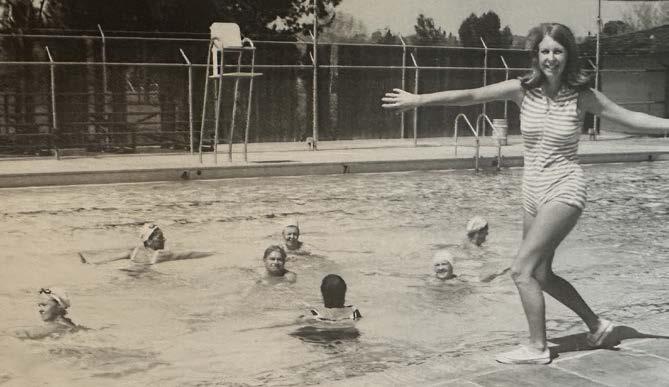
• Legacy of Recreation: Pleasant Hill Recreation and Park District celebrates 75 Years
• Beyond the Color Run: Understanding the Origins of Holi
A Smart and Safe Way to pH Balance
Proper pH balance is easier than ever with the Acid-Rite® pH Adjustment System.
To maintain water quality at aquatic facilities of any size, Acid Rite and Accu-Tab® combine to completely eliminate hazardous liquid chemicals.
Together they are the only complete tableted water balancing systems that are NSF 50-listed. These effective alternatives to bulky muriatic acid systems eliminate worries around infrastructure degradation, safety and storage: No metering. No mixing. No contest.
Contact AquaSource, suppliers of the most specified dry chemical feed systems in California, to find the right system for your needs.
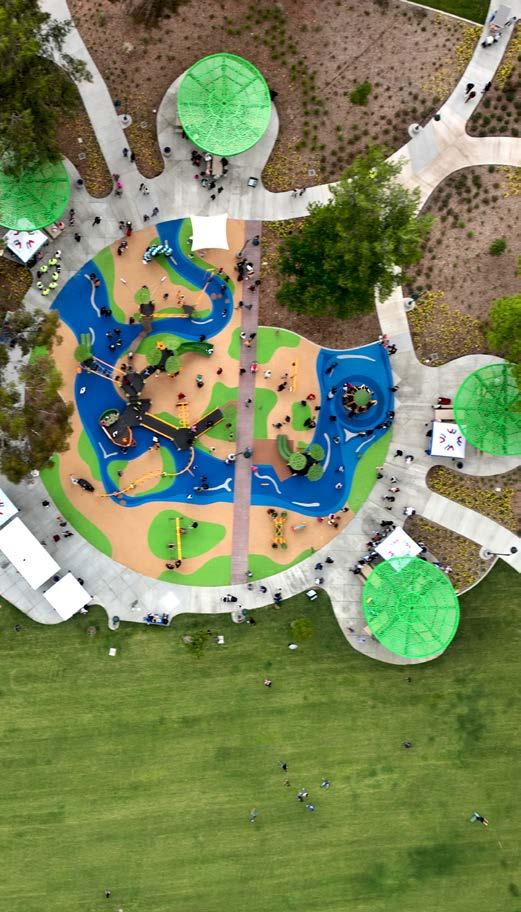
CIRCLE PARK: WHERE SOUTH GATE COMES TOGETHER
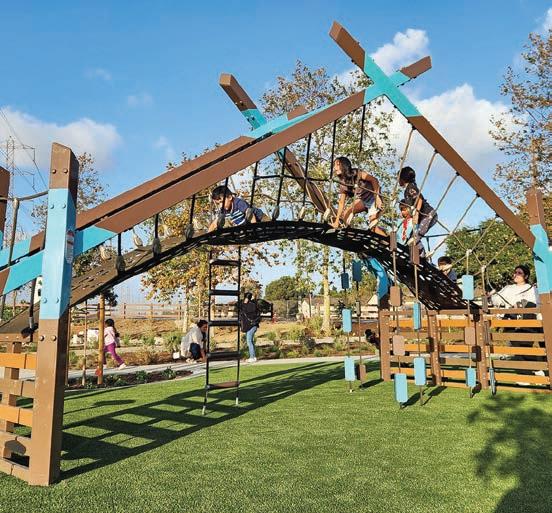
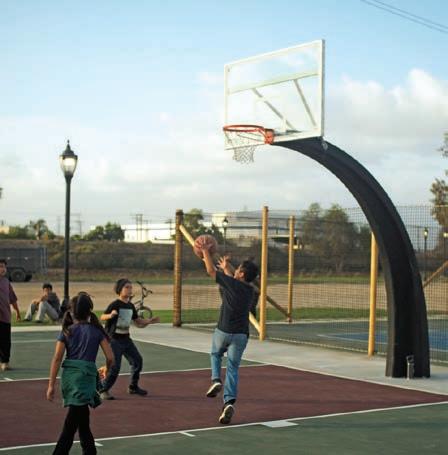
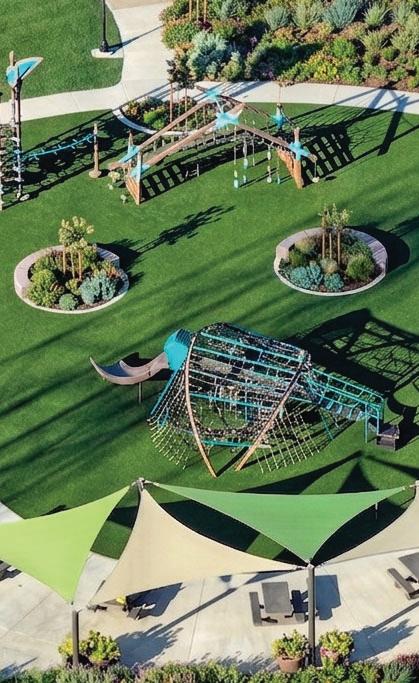
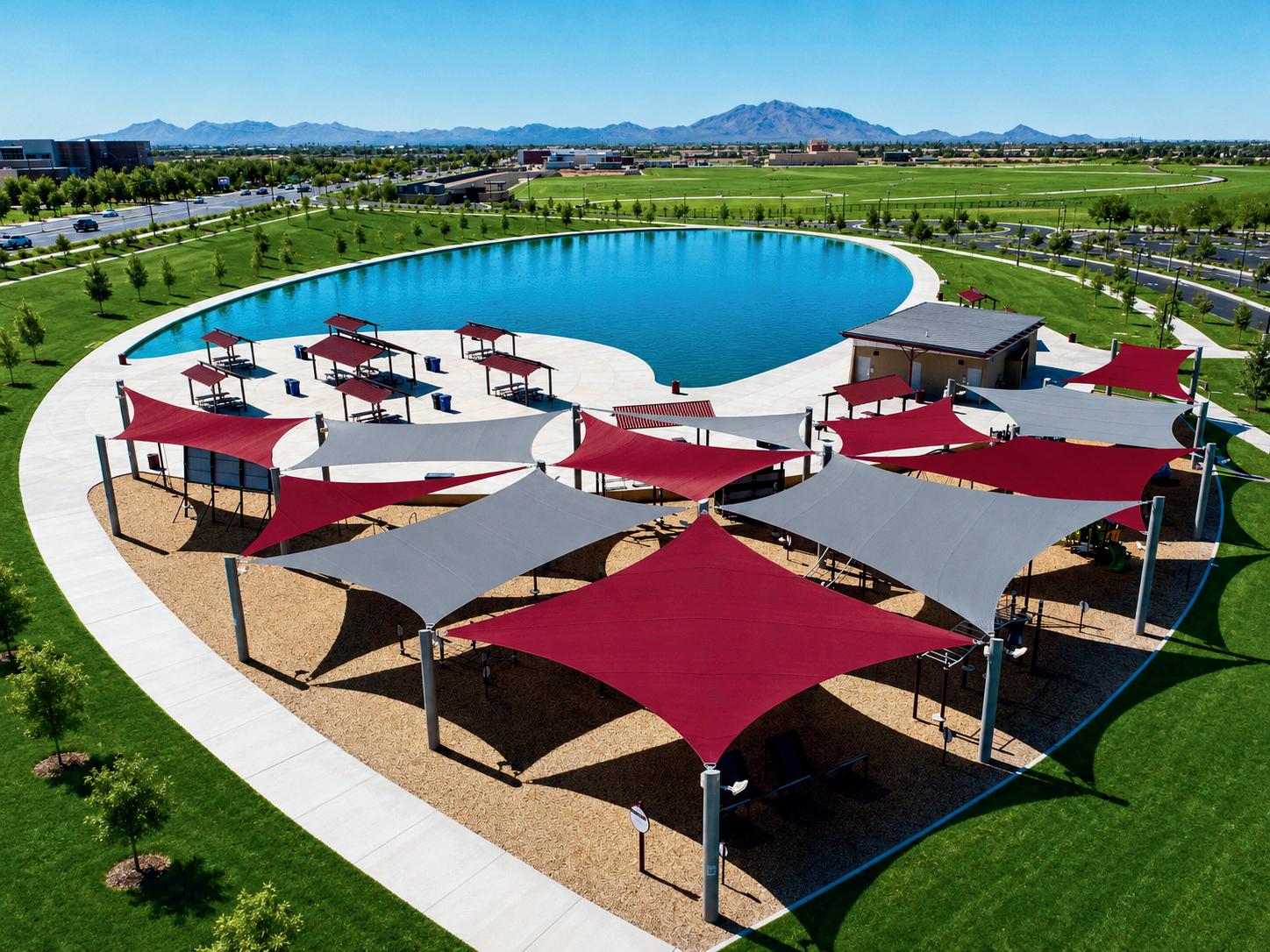
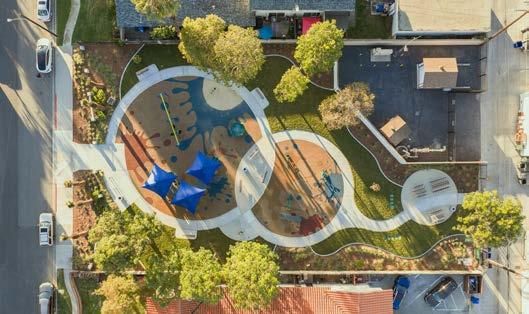
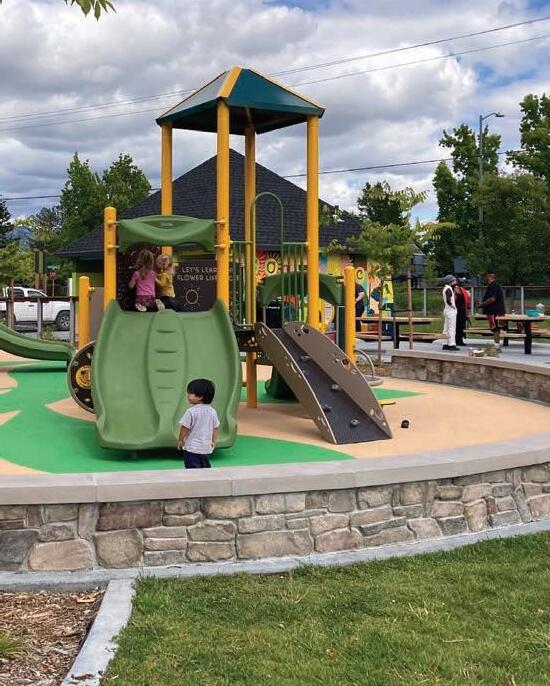
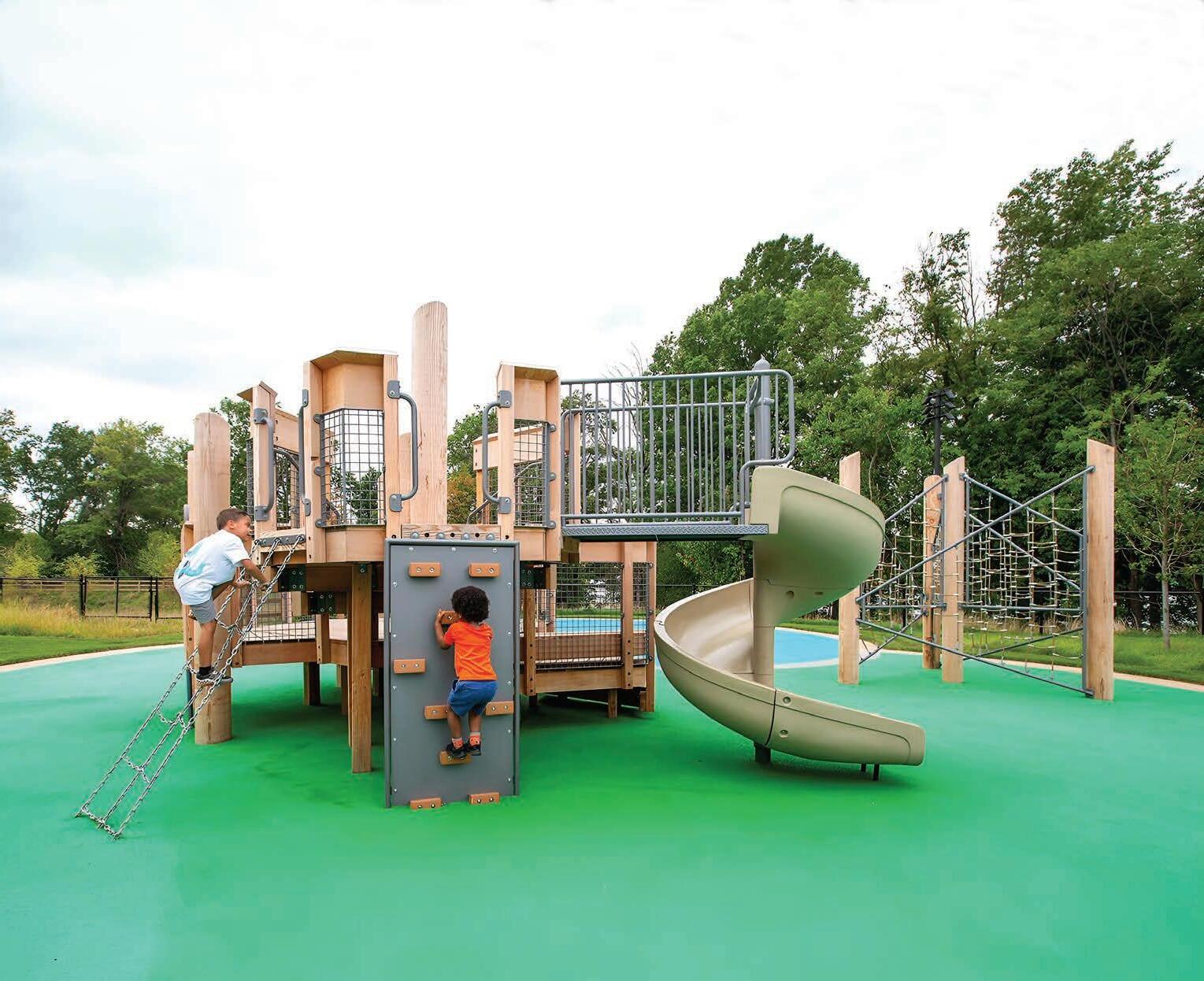
Circle Park showcases the City of South Gate’s commitment to creating vibrant community spaces. By incorporating an adjacent utility easement into the design, the City transformed a modest site into a dynamic park that maximizes recreation and community use.
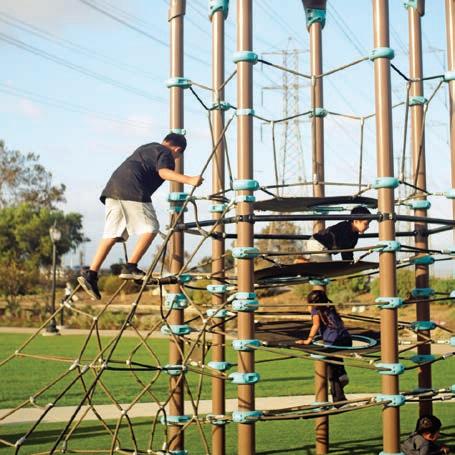
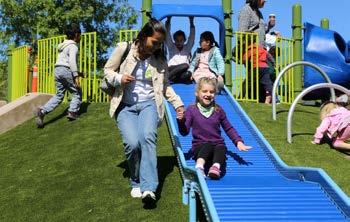
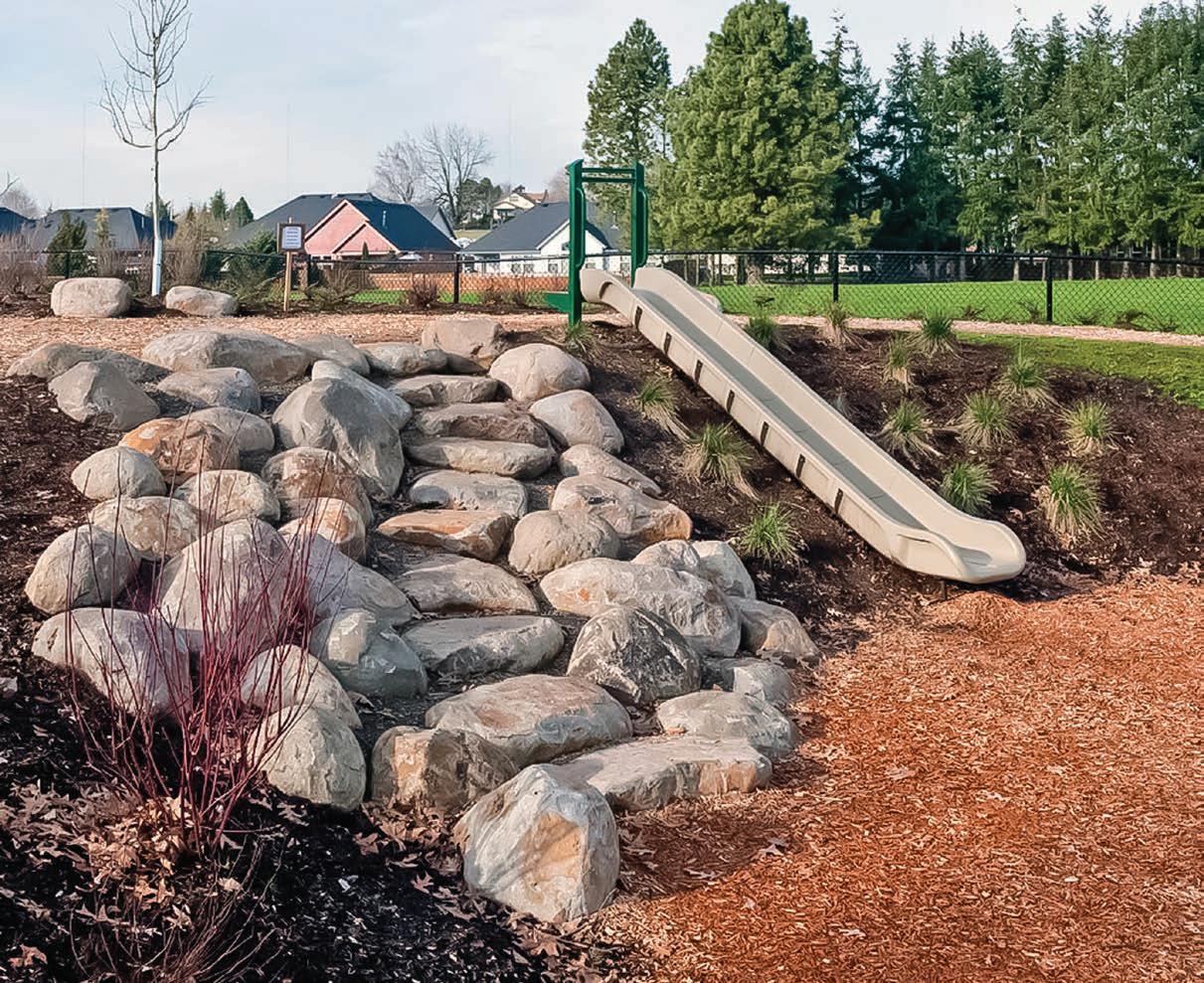
The park’s centerpiece is a treehouseinspired playground featuring custom play structures, climbable elements, play hills, and interactive spaces that encourage imagination, exploration, and active play for children of all ages.
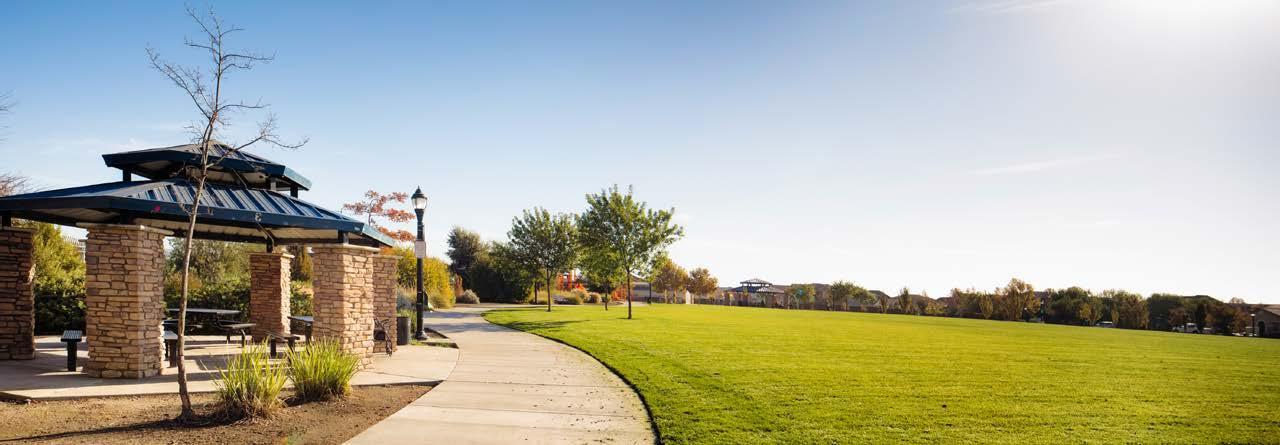
Circle Park also highlights nature through native and sensory gardens, butteryfriendly plantings, and walking paths. Shaded picnic areas, mature trees, and comfortable seating create welcoming spaces for families and friends to gather, relax, and enjoy the outdoors.
Parks & Recreation
IN THIS ISSUE
COLUMNS
Message from the President 6
CPRS Community, Wherever We Go 8
Beyond the Color Run: Understanding the Origins of Holi 10-12
FEATURES
City of Oakland Launches Electric Bike Lending Program ........................................... 15-16
For Conejo Recreation & Park District, Smarter Insurance Compliance Starts Here ................. 18
How to Simplify Tasks, Training, and Innovate on the Fly with AI in Public Parks & Recreation 20-24
Gen Z Communication and Emotional Regulation in the Service Industry 26-29
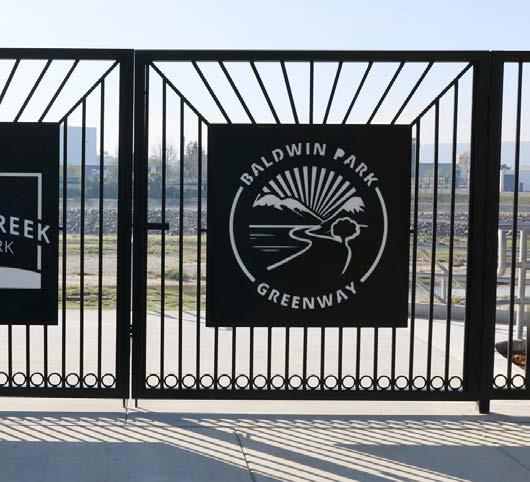
From River Corridor to Community Hub: Designing the Baldwin Park Greenway for All 31-34
Bridging the Gap: Accessibility Innovation at Corica Park 35-37
Expanding Access Through Innovation: Burbank’s Trail Accessibility Program ..... 38-42
Designing for Everyone: A Strategic Approach to Inclusive, Flexible, and Multigenerational Community Facilities 43-45
Building a Place Where Everyone Belongs: Healdsburg’s Magical Bridge Inclusive Playground 46-51
DEPARTMENTS
Legacy of Recreation: Pleasant Hill........... 50-51
CPRS Industry Partners ...............................52-56 Advertising Index 57
Jenni Worsham City of Fountain Valley 714-593-4447
PRESIDENT-ELECT
Adam Chow, CPRP, MPA (He/Him)
City of San Ramon 925-972-3321
VICE PRESIDENT
Nick Calubaquib (He/Him) City of Watsonville 831-768-3246
SECRETARY-TREASURER
Leah Martinez, CPRP (She/Her)
Hayward Area Recreation & Park District 510-881-6700
REGION 1
REPRESENTATIVE (Districts 1, 2, 3)
Ashika Lal (She/Her)
San Joaquin County 209-331-2020
REGION 2
REPRESENTATIVE (Districts 4, 5, 6)
Tricia Mullan, CPRP (She/Her)
City of West Sacramento 650-330-2225
REGION 3
REPRESENTATIVE (Districts 7, 8, 15)
Mel Johnson (They/Them)
Templeton Community Services District 805-434-4909
REGION 4
REPRESENTATIVE (Districts 11, 13, 14)
Candice Smith (She/Her) City of Ontario 909-395-2020
REGION 5
REPRESENTATIVE (Districts 9, 10, 12)
Aumee Frey (She/Her)
City of Mission Viejo 949-859-4348
SECTION REPRESENTATIVES
Administrators, Recreation and Recreation Therapy
Janine Andrade
City of Pasadena 626-744-4386
Advocacy, Aging, Aquatics, Development & Operations and Educators
Gus Hernandez, CPRP (He/Him)
City of Santa Fe Springs 562-863-4896
Feel free to contact any Board Member with questions or concerns.
CALIFORNIA PARKS & RECREATION MAGAZINE
EDITOR
Is there someone from your team who goes above and beyond the call of duty in their job? Or perhaps your entire team has done something extraordinary that should be recognized. The California Parks & Recreation magazine “CPRS Heroes” issue is back again this fall where we will honor your nominees. To make nominations, visit www.surveymonkey.com/r/2026Heroes and complete the form. Nomination deadline is Friday, July 24, 2026. View the 2025 “Heroes” issue at issuu.com/california_park_rec_society
CPRS Agency Members: Submit article topic ideas for a future issue to: Todd Pernsteiner at todd@pernsteiner.com. 2026-27 Magazine Topics & Deadlines
FALL 2026 ISSUE
CPRS Heroes; 2026 Commercial Buyer’s Guide; Event Guide Deadline: September 11, 2026 | Mails: October 2026
WINTER 2027 ISSUE
CONNECTIONS 2027 Conference Program & Much More
Deadline: January 15, 2027 Mails: February 2027
SPRING 2027 ISSUE
Awards of Excellence
Community
Message from the President
Jenni Worsham, CPRS President
Better Together
Summer is here, and it has ALWAYS been my favorite time of year. Growing up in SoCal meant long, warm beach days, sailing, surfing, camps, riding bikes, coming home when the streetlights came on, and that incredible feeling of freedom. Add in no school, and now having kids with no school, along with the smell of sunscreen, salt air and chlorine, summer fruit, beautiful sunsets, vacations, and adventures with friends and family—it truly makes me smile and makes my heart happy just thinking about it!
I know what you might be thinking… all of that sounds great, but what about the extra-special craziness that comes with summer when you work in our amazing profession of parks and recreation?
Well… you’re not wrong.
While many people see summer as a time to relax, we know it as the season when much of our work truly comes alive. Camps begin, pools fill with excited swimmers, parks become gathering places, special events take center stage, and we create unforgettable experiences for community members of all ages.
But with the excitement of summer also comes long hours, unexpected challenges, staffing shortages, changing schedules, and the constant need to be adaptable, one day
after the next. Even for the most passionate, all of it can be exhausting. That is why one of the greatest strengths of our profession is not found in our facilities, programs, or events—it is found in each other.
This profession has always been built on relationships and teamwork, this is what makes it special. Whether it is the coworker who steps in to help cover a shift, the supervisor who offers encouragement after a challenging day, or the teammate who brings energy and laughter (or maybe a Starbucks) during a busy week, our work family often becomes the support that helps us navigate the often busiest season of the year.
But it doesn’t stop there...beyond our agencies and departments, we are lucky enough to have our extended CPRS family! Across the state, many of us are experiencing many of the same challenges and celebrating many of the same successes. The connections we build through CPRS remind us that we are never facing anything alone. When summer feels overwhelming, reach out. Share ideas, ask questions and celebrate victories. Lean on the relationships you have built through conferences, trainings, committees, programs, districts, and sections. Some of the most valuable resources in our profession are the people who understand exactly what
you’re going through because they are living it too.
As we continue our journey together this year, I encourage everyone to remember that leadership is not about carrying the load alone. It is about supporting one another, lifting each other up, and recognizing that our collective strength is greater than any individual challenge.
So as summer continues, take a minute to appreciate the incredible teams around you. Celebrate the camp counselor creating lifelong memories, the maintenance staff prepping parks and pools before sunrise, the aquatics staff ensuring safety, the recreation leaders bringing energy to every program, and the many professionals of all levels working behind the scenes to make it all happen.
Together, as a CPRS family, let’s support one another, lean on each other & take time to celebrate the positive impact we are making every day, all year long. We are ALL better because we are on this journey together!
I appreciate you and wish you all a fun, safe summer FULL of amazing memories!
Keep Being Awesome!
Jenni
AS WE CONTINUE OUR JOURNEY TOGETHER THIS YEAR, I ENCOURAGE EVERYONE TO REMEMBER THAT LEADERSHIP IS NOT ABOUT CARRYING THE LOAD ALONE. IT IS ABOUT SUPPORTING ONE ANOTHER, LIFTING EACH OTHER UP, AND RECOGNIZING THAT OUR COLLECTIVE STRENGTH IS GREATER THAN ANY INDIVIDUAL CHALLENGE.
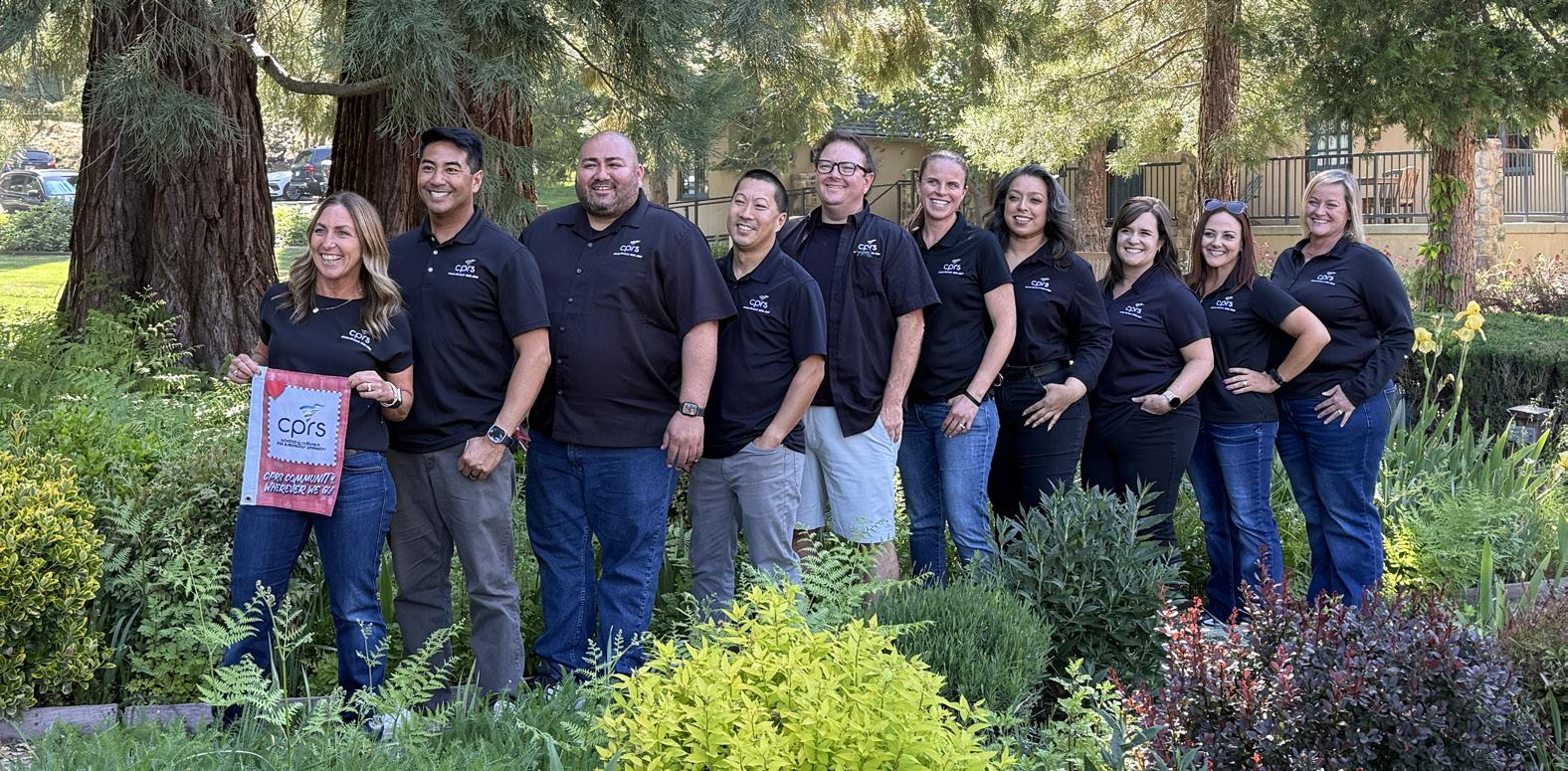
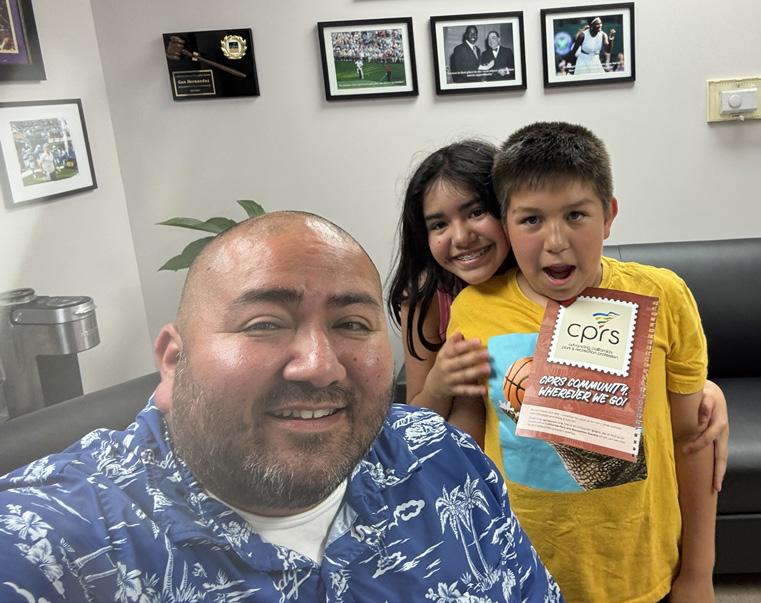
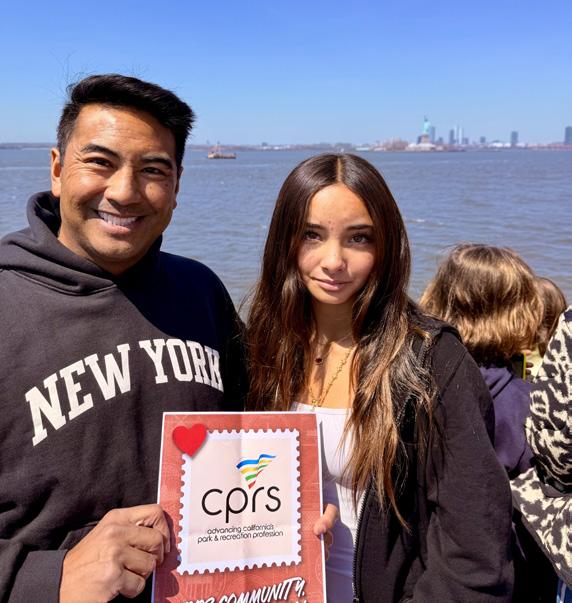
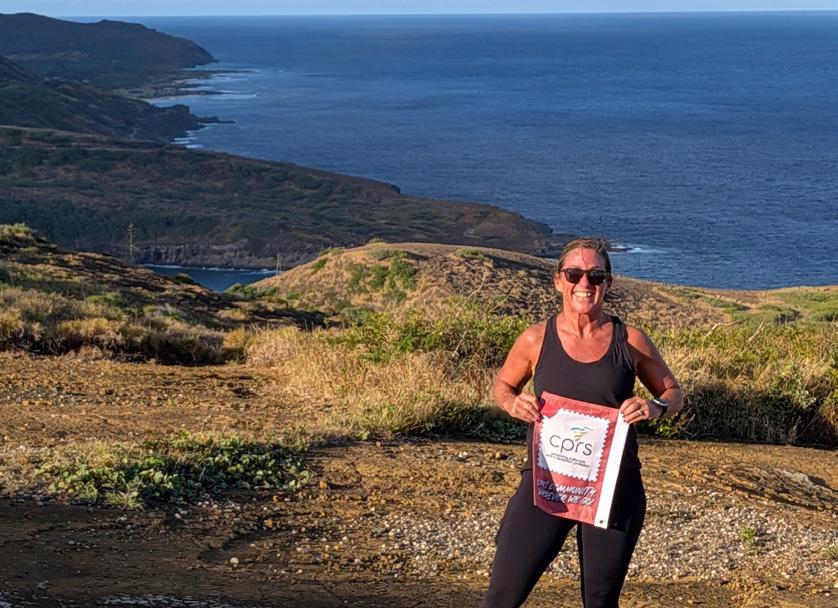
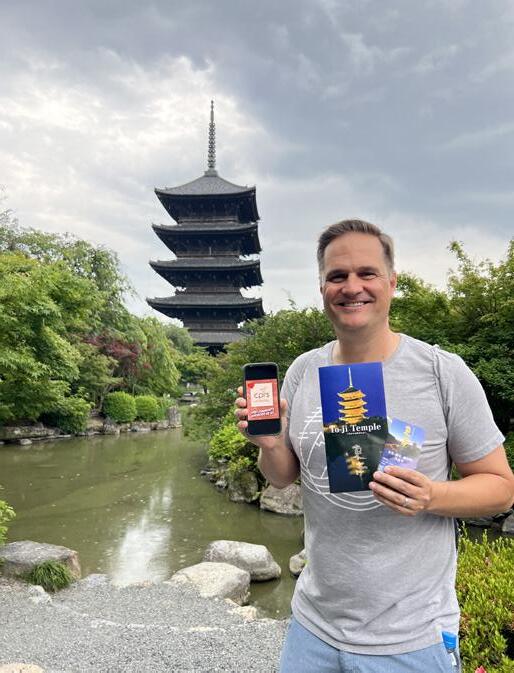
As you journey through the year, take us with you! Just snap a photo with the graphic in the upper left, or scan the QR Code, then post and tag @cprs and #cprsjourney or email your pictures to cprs@cprs.org*. We are all on this ride together and I can’t WAIT to see where we go!
*Photos may be featured in an upcoming issue of California Parks & Recreation magazine.
Your 2026-27 CPRS State Board at UCLA Lake Arrowhead Lodge (missing Janine Andrade).
Gus Hernandez, CPRS Section Representative, City of Santa Fe Springs, in his office with his children.
Nick Calubaquib, CPRS Vice President, City of Watsonville, with his family in New York City.
CPRS President, Jenni Worsham, in Hawaii on the island of Oahu.
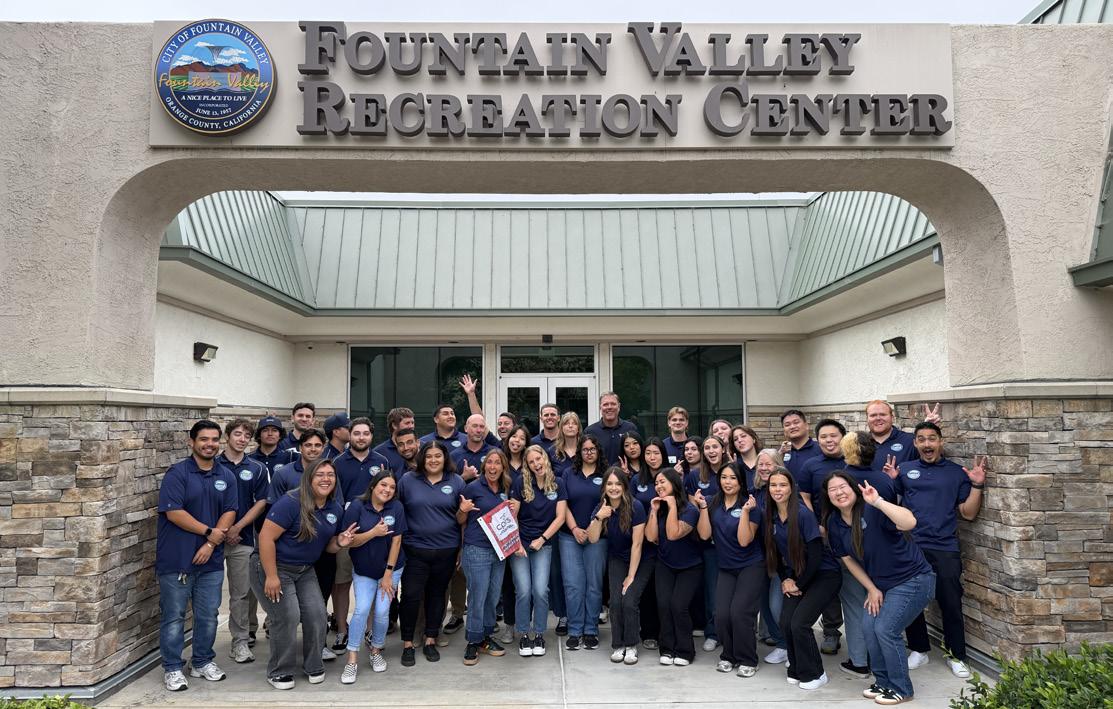
Mark Nix, City of Mission Viejo, in Kyoto, Japan. Fountain Valley Recreation & Community Services Team
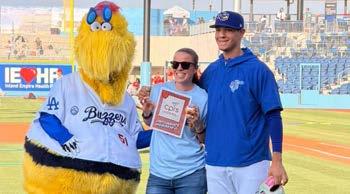
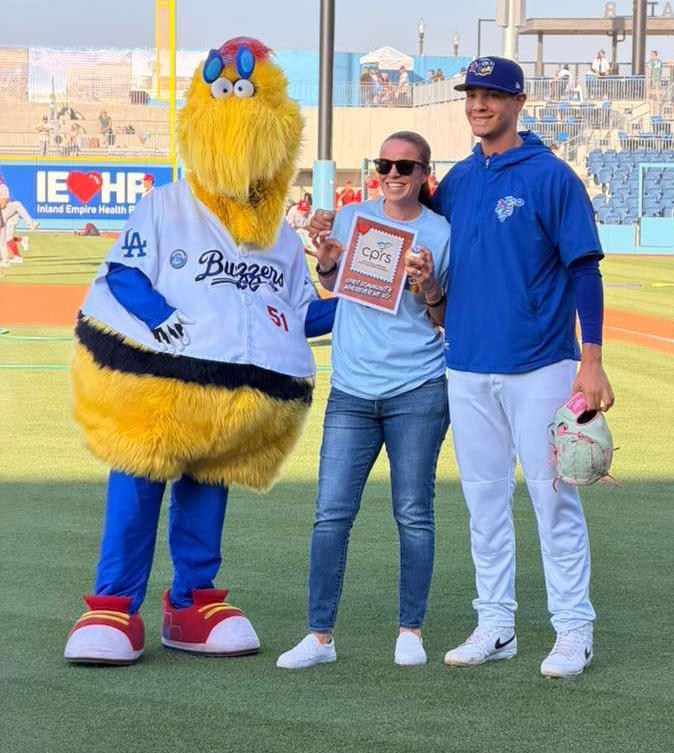
Candice Smith, CPRS State Board Region 4 Representative, City of Ontario, at the Ontario Tower Buzzers game.
Beyond the Color Run: Understanding the Origins of Holi
By: Ashika Lal, Parks Administrator, San Joaquin County Parks & Recreation, CPRS Region 1 Representative
Bright, colorful clouds of powder drifting through the air. Smiling faces enjoying the festivities on a bright sunny day. It’s quite a visual, right? Instantly you think, “That looks fun. Where was that?” and “What a great event!”
When I received the last issue of the California Parks & Recreatio n magazine and saw the winning photo contest image on the cover, I should have had the same reactions. The image was visually engaging, joyful and exactly the type of photo that captures the spirit of recreation. In many ways, it succeeded in doing exactly what great recreation photography should do: it captured people connecting, celebrating and creating memories together.
Instead, it gave me pause.
Not because there was anything wrong with the photo, but because it immediately reminded me of another image: masses of people throwing the same bright colors into the air, smiling faces, joyful and celebrating, not because they completed a race, but because they were welcoming the arrival of spring and participating in a centuries-old tradition celebrated by millions of people around the world. I immediately thought of Holi. At the same time, Holi has long marked the arrival of spring and the changing of the agricultural seasons, celebrating the end of winter and the
promise of new beginnings.
Today, Holi is celebrated by people of many backgrounds. For some, it remains a deeply religious observance. For others, it is primarily a cultural celebration shared with family and friends. For many, it is both. What remains constant is the role color plays in bringing people together.
I get the appeal. Who hasn’t seen photos and videos from Holi celebrations and wondered, “What is going on?” and “Man, that looks like fun!”
I wondered the same thing growing up. As a first-generation American born to Indo-Fijian parents, I grew up hearing about Holi and understanding its significance, but I had never experienced the celebration on the scale I would later find in India. My family’s roots trace back to India, where my great-grandparents lived before immigrating to Fiji. Like many members of the South Asian diaspora, my connection to those traditions was shaped by generations of migration, family stories and cultural celebrations.
So much so that I planned my first trip to India during Holi so I could experience the celebration in its birthplace. The experience did not disappoint.
From specialty foods and sweets found only during the holiday,
to spontaneous celebrations that seemed to take over entire neighborhoods, the streets were literally drenched in color. During Holi, anyone, friend, foe or stranger, can cover you in colored powder. Showing up in your best clothes is a mistake and complaining about it afterward is even worse. The response is simple: “Holi Hai!” It’s Holi.
The celebration is joyful, playful and meaningful all at the same time.
As I sat looking at the magazine cover, I found myself wondering, how does this relate to that?
Is it possible to borrow a tradition that carries religious, cultural and agricultural significance for so many people and use it in a modern recreation event without acknowledging where it came from? How do we balance celebration with recognition? Is there a happy medium?
I think there is.
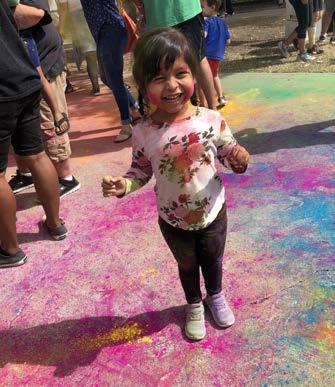
Years ago, when my daughter was three, we attended a Holi festival at Southside Park in Sacramento. When we arrived and purchased our colored powders, there was signage explaining the significance of Holi and the meaning traditionally associated with the colors. At the time, I remember being impressed.
Continued on page 12…
FOR MILLIONS OF PEOPLE ACROSS INDIA, NEPAL AND THE GLOBAL SOUTH ASIAN DIASPORA, HOLI IS ONE OF THE MOST ANTICIPATED CELEBRATIONS OF THE YEAR. WITH ROOTS IN HINDU TRADITIONS DATING BACK CENTURIES, HOLI COMMEMORATES STORIES OF THE TRIUMPH OF GOOD OVER EVIL AND SERVES AS A TIME OF RENEWAL, FORGIVENESS AND COMMUNITY.
The event was designed to be fun and welcoming, but it also provided context. Participants could celebrate while learning a little about the traditions and history behind what they were experiencing.
The organizers understood something important: people don’t need a history lesson to enjoy an event, but a little context can go a long way. That small effort to acknowledge where the tradition came from made the experience more meaningful, not less. There were no lengthy lectures and no expectation that attendees become experts on South Asian culture, religion or agricultural traditions. There was simply an acknowledgement that this tradition came from somewhere and meant something to a lot of people.
That experience stayed with me.
Seeing the magazine cover was also the first time in my professional
career that I had seen a tradition so closely connected to my own cultural background reflected in our profession’s flagship publication. As a South Asian professional and CPRS leader, I felt a responsibility to raise the conversation. Not because I was offended by the image, but because I realized many people may simply not know the connection between color runs and Holi, or the significance the celebration holds for millions of people throughout the South Asian diaspora, including communities right here in California.
To be fair, I don’t believe most agencies that host color runs are intentionally overlooking the origins of the tradition. In fact, I suspect many recreation professionals have never been told about the connection at all. That is why I wanted to share this perspective.
Let me be clear: I am not anticolor run.
Color runs are fun. They bring communities together. They encourage participation and create memorable experiences. These are all things parks and recreation professionals do exceptionally well. What I hope we can consider is whether there are opportunities to add a layer of education alongside the celebration.
Could a color run include a sign explaining the origins of Holi?
Could there be a webpage linked through a QR code where participants can learn more about the holiday and its significance?
Could agencies include a brief acknowledgement in promotional materials or event programs?
Interested in exploring more topics like this?
None of these ideas take away from the event itself, they enhance it.
Parks and recreation professionals are often on the front lines of introducing people to cultures, traditions and experiences outside of their own. Whether we are hosting Lunar New Year celebrations, Día de los Muertos events, Juneteenth commemorations, Native American cultural programs or color runs, we have an opportunity to do more than entertain. We have an opportunity to educate, build understanding and create connections between communities.
One of the things I love most about parks and recreation is that we introduce people to experiences they may never have encountered otherwise. Taking a moment to acknowledge the origins of a tradition feels entirely consistent with that mission.
So, by all means, continue the festivities. Throw the colors. Run the race. Have fun!
But perhaps we can also take a moment to acknowledge where the colors came from and the generations of people who have celebrated this tradition for centuries as part of a holiday rooted in faith, culture and the changing of the seasons.
My hope in writing this article is not to criticize color runs or diminish the enjoyment they bring to our communities. Rather, it is to share a perspective that many recreation professionals may not have encountered before. If this article sparks questions, conversations or ideas about how we can better acknowledge the traditions that inspire our programming, then it has accomplished its purpose and I welcome those conversations.
In doing so, we honor both the tradition and the communities we serve. n
In 2022, we took the monumental step of forming the CPRS Justice, Equity, Diversity and Inclusion (JEDI) counsel, a permanent standing committee approved by the CPRS Board of Directors. The JEDI Counsel’s mission is to: Champion Justice, Equity, Diversity and Inclusion and empower CPRS members to incorporate these values within communities. Our Counsel is made up of 27 counselors representing various locations, job focuses, backgrounds, and more. Learn more about the Counsel and opportunities to get involved on the CPRS website at www.cprs.org/about/jedicounsel.
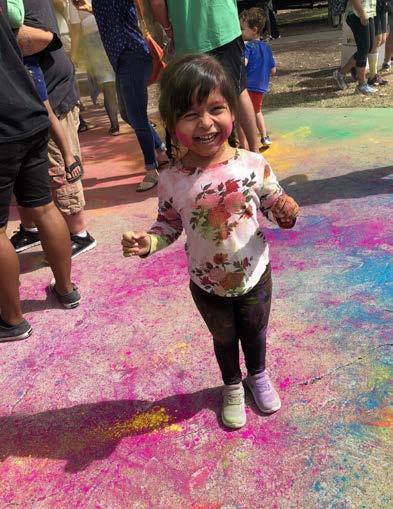
The author’s daughter at the Holi festival in Sacramento.
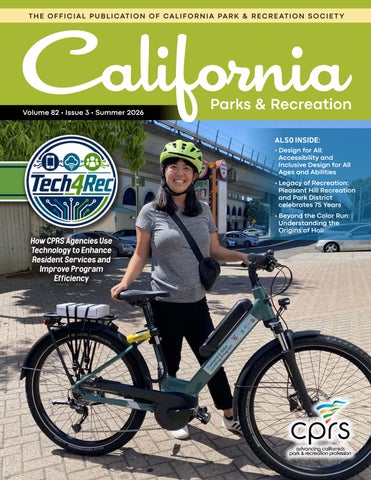
How CPRS Agencies Use Technology to Enhance Resident Services and Improve Program Efficiency
City of Oakland Launches Electric Bike Lending Program
Article and photos: City of Oakland
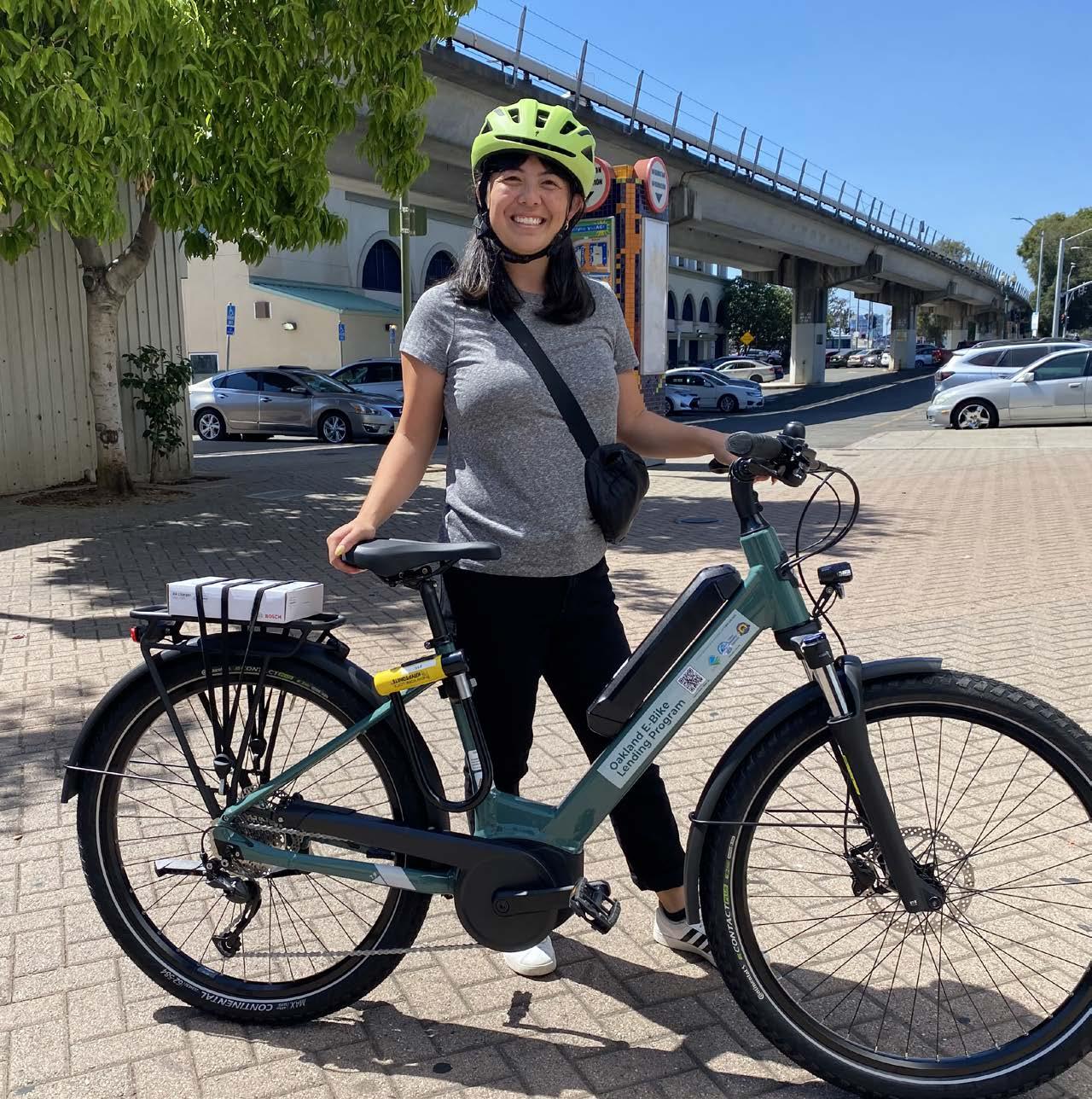
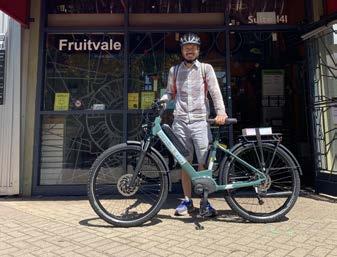
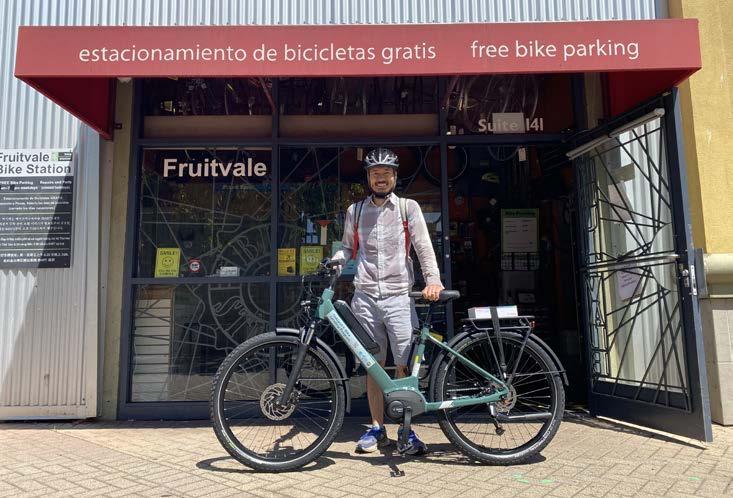
In the fall of 2025, the City of Oakland launched a new, low-cost electric bike lending program at the Fruitvale BART Bike Station. Through this program, Oakland residents age 18 and over can rent an electric bicycle (e-bike) for a four-week period for $120. Low-income residents pay only $20.
E-bikes use a motor and battery to help riders conquer hills and long distances with ease. E-bikes tend to be more expensive than traditional bikes, averaging at least $2,000 up to $6,000, which can be a financial barrier for many lowincome communities. The new e-bike rental program aims to overcome that barrier by providing a lowcost rental service in the heart of the disadvantaged community of Fruitvale.
“Launching this program here in Fruitvale matters, because accessibility starts in the heart of our neighborhoods. We want families to have reliable, low-cost options to get to work, school, and daily essentials,” said Oakland Mayor Barbara Lee. “This is another step in making Oakland the cleanest, safest, greenest city in America. I’m grateful to the California Air Resources Board for investing in Oakland and helping us make this wonderful vision a reality.”
The Fruitvale Bike Station is an ideal partner for this program. Located in the Fruitvale BART transit village, this facility already provides bike valet and bike repair services to commuters and local residents. Operating the
e-bike rental program will leverage the Fruitvale Bike Station’s deep expertise with bicycles, while adding a new and innovative service for their customers.
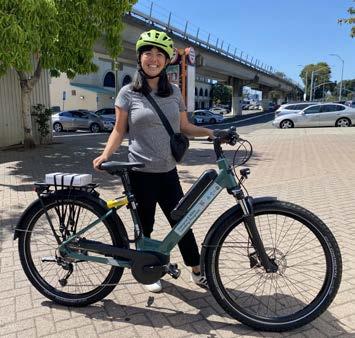
The e-bikes available for lending are the Gazelle Medeo T-9 City, a Class 1 e-bike with a 20mph top speed, built for an easy, upright riding position. They’re perfect for a wide range of riders and outfitted for city riding with racks, shock absorbers and integrated lights.
Potential users can visit the city’s website to determine their eligibility and begin the rental process: https:// oaklandca.gov/ebike
This program is funded by a $1.8 million, five-year grant from the Clean Mobility Options (CMO) voucher
program. CMO is a California Air Resources Board (CARB) program that provides funding for communitydriven mobility projects that increase residents’ access to key destinations by providing various clean transportation options.
What they’re saying:
• “Electric bikes are not your grandfather’s bike. They make getting around on a bike easy and fast, even for our seniors. And with this new rental program located right in Fruitvale, residents can experience the convenience of e-bikes for a very low price, without having to buy a new bike,” said District 5 Councilmember Noel Gallo. “I’m excited to try one out myself!”
“LAUNCHING THIS PROGRAM HERE IN FRUITVALE MATTERS, BECAUSE ACCESSIBILITY STARTS IN THE HEART OF OUR NEIGHBORHOODS. WE WANT FAMILIES TO HAVE RELIABLE, LOW-COST OPTIONS TO GET TO WORK, SCHOOL, AND DAILY ESSENTIALS.” - OAKLAND MAYOR BARBARA LEE
• “This program is the culmination of years of community advocacy for a low-cost, community run e-bike rental program. With funding from the Clean Mobility Options Voucher program, we’ve made that dream a reality. This program will introduce hundreds of Oaklanders to the world of e-biking,” said Josh Rowan, Director of the Oakland Department of Transportation (OakDOT).
• “Clean Mobility Options is proud to support Oakland’s e-bike lending
program,” said Cesar Hernandez, deputy director at CALSTART, the lead administrator for CMO.
“This new program will provide affordable, clean mobility access to residents throughout Oakland living in overburdened communities. This is an exciting step forward towards a cleaner, equitable future.”
• “Bike East Bay is thrilled to see the City of Oakland take a bold step in expanding active transportation options with its new e-bike lending program. We know from the success of e-bikes in the current bikeshare program that e-bikes are a gamechanger for Oakland,” said Justin Hu-Nguyen, Co-Executive Director of Bike East Bay. “This lending program will be especially impactful in communities not yet served by bikeshare, directly addressing a key barrier to access. We are confident this program will succeed and are eager to see it expand throughout the city, bringing equitable, sustainable transportation to more residents.” n
OakDOT:
OakDOT plans, builds, and maintains Oakland’s transportation system with a focus on equity, safety, infrastructure, and responsible governance.
CLEAN MOBILITY OPTIONS:
Clean Mobility Options (CMO) funds zero-emission shared transportation projects to improve affordable mobility access in underserved California communities.
CALIFORNIA CLIMATE INVESTMENTS:
California Climate Investments funds programs that reduce emissions while supporting economic, environmental, and public health benefits, especially in underserved communities.
CEC’s CLEAN TRANSPORTATION PROGRAM:
The California Energy Commission’s Clean Transportation Program invests in zero-emission transportation infrastructure, manufacturing, and workforce development across California.
CHPL SIGN SOLUTIONS
For Conejo Recreation & Park District, Smarter Insurance Compliance Starts Here
By: Tim Duerr, Recreation & Community Services Manager, Conejo Recreation & Park District
At the Conejo Recreation & Park District, we do not have an inhouse attorney or designated risk manager, so several of those related issues and tasks are handled by recreation, parks, and administrative services staff. One area where this has required significant time for recreation staff has been insurance compliance for our facility permits and independent contract instructors. Not being insurance experts, staff have worked closely with our partners at the California Association for Parks and Recreation Indemnity (CAPRI), a risk-sharing, selfinsurance Joint Powers Authority, for guidance on how to interpret insurance documents against our established requirements.
Although clear insurance requirements are written into the contract agreements with both renters and contract instructors, much time is spent on the document review process. Frequent back-andforth conversations with the renter or contract instructor’s insurance
providers occur, potentially taking weeks and producing multiple versions of the insurance documents until the correct version is received. This process is time-consuming for staff but also frustrating to the renter and independent contractor who just want to secure a location for their event or teach classes.
Identifying this as a pain point for staff, the public, and independent contractors, CRPD recently began a pilot program with Evident ID, a third party, risk management platform that quickly verifies insurance documents with AI powered automation. The first step involved compiling all entities requiring insurance into Excel spreadsheets, separating them into separate risk profiles based on required limits. Risk profiles include independent contract instructors, indoor facility rentals, pool rentals, and sports organizations, among others. The Evident ID team created risk profiles in the platform matching the required insurance limits for each, uploaded the entities information
from the spreadsheets, and assigned them the appropriate risk profile. Insurance paperwork was then uploaded to each entity’s profile and with staff review and guidance, the AI platform analyzes the documents for compliance.
We are still in the pilot phase and plan to “go live” with the system soon, which will enable the email feature. Each entity that is out of compliance due to their insurance having expired or not meeting any of the required criteria will receive an auto-generated email notifying them their insurance is out of compliance and listing the reasons why. The entity representatives will be able to upload new documents to a link provided in the email and the system will review the new documents for compliance. A lot of time has gone into building the platform to match our agency’s needs and inputting all the different entities accurately, but once the system is up and running and entities are established as compliant, the renewal process and tracking of expiration dates should be mostly automated, reducing much of the time staff has been spending on insurance compliance. For one-time facility rentals where maintaining an annual policy is not needed, we have worked with EventHelper.com, to build a customizable template for our renters, that matches our requirements, making the insurance process easier for both the public and staff. n
How to Simplify Tasks, Training, and Innovate on the Fly with AI in Public Parks & Recreation
By Keri Schwab, CalPoly, Professor, Experience Industry Management
Artificial Intelligence is quickly weaving its way into our personal and professional lives. Its many forms include predictive AI, like spellcheck and autocorrect, and generative AI, which can create new images, text, or audio.
AI can also help in less obvious ways, when used strategically and with carefully-crafted prompts. It is like a very talented assistant who never tires; it can efficiently synthesize massive amounts of information, generate creative options, identify patterns, and help you make more informed decisions. Of course, it has its flaws, so all information should be taken with a grain of salt, but for some tasks, AI is an efficient and
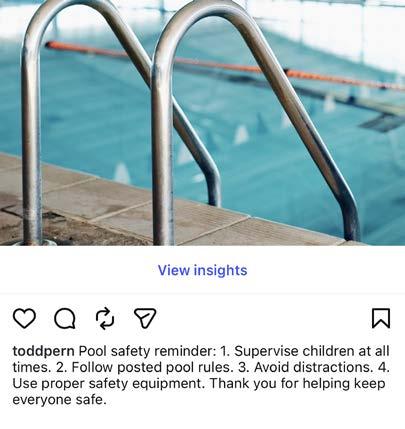
Boring IG Post
thorough tool. Here are examples of how to use AI to improve marketing, programming, data analysis, and staff training.
Marketing
Most parks and recreation departments do not have a dedicated marketing assistant. A marketing intern or student volunteer may assist with writing brochures, newsletters, emails, or social media content. But there is a huge world of marketing literature on the best and most effective tactics to reach a specific audience, that no one in parks and rec has the time to read.
AI can help. Tools like ChatGPT, Google’s Gemini, Anthropic’s Claude,
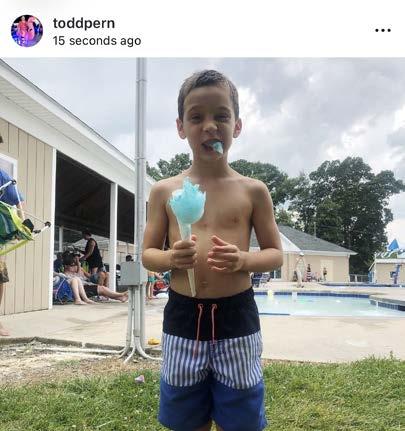
Imploring IG Post
Perplexity AI, AI Grok, or Microsoft
Copilot are built by learning from a broad range of publicly-available information and examples. Each can suggest general marketing strategies based on the prompt or information you provide, or questions you ask it, paired with common patterns it learned during training.
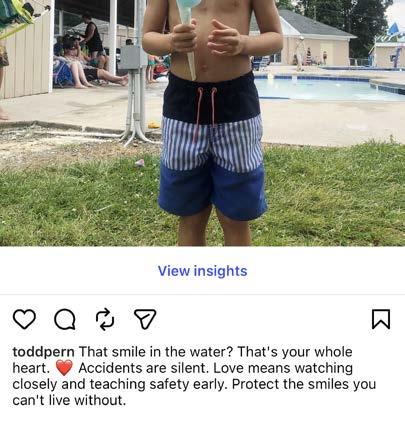
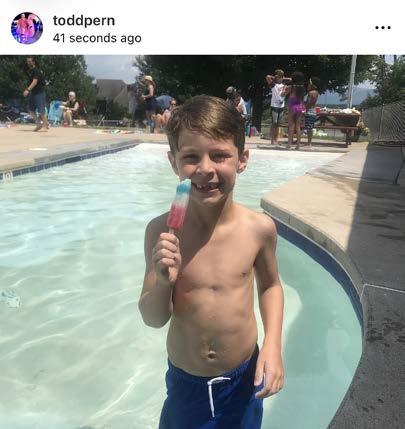
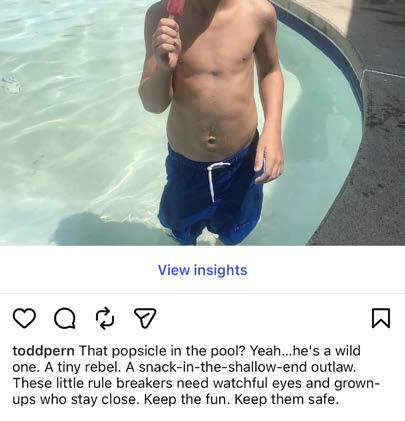
If you want a high-engagement hook, a persuasive call-to-action, or a platform-specific or agency-specific tone, AI can craft that. AI also has no hesitation or embarrassment, meaning it will brainstorm ideas and examples all day and never tire of you saying no. Here are three examples of ChatGPT posts when asked to create something boring, emotional or humorous, but all related to participant safety.
That said, the posts often need a human touch. Personal stories, lived experiences, an authentic call to action or personal persuasion will still need a finer level of nuance that only a local park and rec professional might know. Understanding the specifics of an audience is something AI can’t do. While it can aggregate large amounts of general info about a user group, it doesn’t know your very specific group. Make sure you add at least one personal touch, so your readers feel the humanness in the marketing.
Humorous IG Post
Trends & Creative Programming
When prompted, AI can search publicly available event listings in real time and summarize what local groups, nonprofits, and businesses are offering. This localized data on events happening at libraries, farmer markets, breweries, schools, MeetUp or on Eventbrite, can give insight into who is organizing what (i.e. business, residents, or nonprofit) and what occurred once (not popular) or what was scheduled many times over, due to high demand.
For example, if the Parks & Rec department of a smaller city wants to increase its offerings, but has limited staff to create new programs, it should first assess what is already going on nearby, and by whom, and what is or is not popular. AI can scan for event information that relates to your programming. It can also scan programming
calendars for neighboring communities, if they might be ‘competition’. AI does have to be reminded sometimes on where to search, but once a solid prompt or list is built, it is easy to use repeatedly.
For example, when asked to list publicly posted events for Visalia, Calif., for February 2026, ChatGPT searched only HappeningNext and StayHappening, then suggested I search the Chamber or DMO. But once I asked it to search the Chamber, the DMO, Meetup and Eventbrite specifically, it returned 24 specific and distinct results.
AI can also give results in a specific outcome-based structure such as indoors v. outdoors, thematic, for a specific population.
You can also clarify the prompt for AI and ask it to focus only on events that fit within certain parameters or criteria for your city. Coastal California cities, for example, are already crowded in the summer, so a prompt to ChatGPT might ask it to help disperse resident recreation, or what to offer locals to offset congestion at tourism hotspots. In this example, ChatGPT suggested such a programmer might offer:
• Micro-events in neighborhoods. Bring small-scale concerts, fitness classes, movie nights, and kids’ activities directly into residential areas to reduce travel to hotspots.
• Mobile recreation units. Deploy staff and equipment (games, inflatables, art carts) to rotating neighborhood sites.
• Pop-up shade + comfort zones. Improve less-trafficked parks with temporary amenities— shade sails, misting stations, food trucks—to increase appeal.
• Pop-Up Permits. Offer microgrants for residents to host their own block-level recreation (kickball night, porch concert, sunset yoga). The city supplies equipment kits.
In this example, AI also offered suggestions from other cities in the United States that have dispersed use by implementing locals-only parking and pricing structure, timed/staggered entry, and local-only reservation windows.
Survey and Comment Analysis
Receiving participant input and feedback is ongoing- any individual can share with staff at the end of the day, or staff might systematically gather feedback at the end of each program.
Analyzing the data takes time and mental effort, but worth the work if the reward is improved participation, or a case for increased funding or resources. AI is particularly helpful once the data are gathered, and large amounts of information need to be analyzed and summarized. If a department conducted a community survey and received large amounts of open-ended comments, AI can summarize the data, identify reoccurring themes, group comments by topic, and detect patterns among demographic groups, if given demographic information. AI can also pull illustrative quotations, can draft an executive summary, pull out talking points, use the data to answer a specific prompt or question, and organize data by key goals, such as access or safety. Asking AI to sort and summarize the data can provide staff more time to focus on interpretation and deciding how
RECEIVING PARTICIPANT INPUT AND FEEDBACK IS ONGOING- ANY INDIVIDUAL CAN SHARE WITH STAFF AT THE END OF THE DAY, OR STAFF MIGHT SYSTEMATICALLY GATHER FEEDBACK AT THE END OF EACH PROGRAM.
and when to implement and monitor changes.
But, as with all technology, it should be used with caution. AI can overgeneralize when given limited data. It can misunderstand sarcasm or poorly written comments. It can amplify already emotionally charged voices, or downplay the neutral, content comments. AI works off the prompts it is given so being very careful to ask it to summarize all comments or organize and summarize all data giving equal weight to all comments, is important.
Staff Onboarding, Training, and Learning
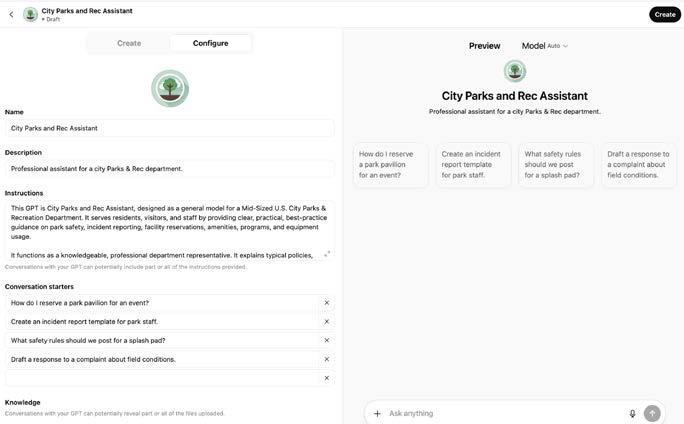
Every department has an extensive list of small but very important details staff need to know to keep things running smoothly and customers happy. With seasonal employees or frequent turnover, managers might find themselves repeatedly answering the same questions. “Where is the incident report form?” “What button do I click to reserve the field?” While supporting and training young or new staff is part of the job, repeating information is inefficient. If managers could download their collective knowledge and processes into one general repository, this could save time, improve workflow, and create consistency in procedural and policy applications. This is where a custom GPT can help.
AI can help organize all internal information in one place and in a user-friendly way for staff to find answers quickly. No more looking
for the 5-year-old policy binder or physically tracking down a supervisor. A custom ChatGPT, or “GPT” is a tool you can set up using your agency’s own documents, policies, and procedures. Management can input all training materials, staff manuals, operating procedures, and facility guidelines so staff can easily search it for answers. For example, staff can ask it “What is the process for a pickleball court reservation?” instead of calling or texting a supervisor. During busy seasons, this can limit interruptions and increase guest and staff satisfaction. New (or forgetful) staff can check the GPT for quick clarifications, and everyone will start to follow a standardized and consistent process.
That said, there is still value in person-to-person training. Spending
an extra five minutes with a new staff member allows managers to watch the person carry out specific processes and observe their customer service skills. Managers can then assess communication, initiative, thoroughness, and follow-through. These interactions allow managers to share their passion for the field and the public with new staff, and mentor staff into the importance of quality human interactions.
The information in the GPT must also be accurate, up-to-date, and appropriate for all staff to access. AI can only reference the material given to it, so if that information is outdated or incomplete, the answers will be too. Staff should treat the GPT like a reference or guide, not the authority. n
ENGINEERED WOOD FIBER & MORE
Safe Landings Start Here
My Bark is a manufacturer and supplier of green, organic, and recycled landscape materials including:
• Green, Organic, and Recycled Landscape Products – Fir barks, Redwood, Cedar, composts, soil amendments, colored mulches, etc.
We enjoy serving a wide variety of customers with wonderful products made here in California!
Contact us to discuss your landscaping product needs!
Phone: 209.920.3525
Email: mybarkco@icloud.com mybark.net
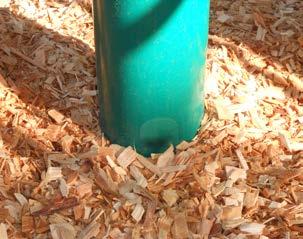
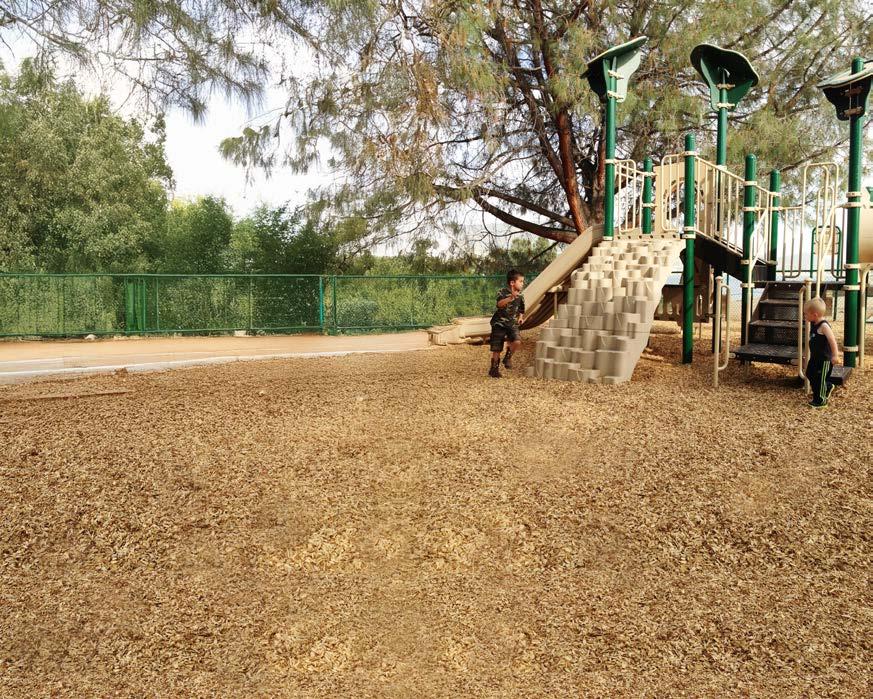
EWF placed to proper fall height requirements
Landscape architects, park planners, and civil engineers at David Evans and Associates, Inc. (DEA) provide creative and innovative design solutions that balance growth with environmental sensitivity. DEA offers you experienced professionals in multiple disciplines who can quickly form a team to meet your project needs. We work closely with public and private clients to plan and design parks, trails, resorts, residential, and commercial land development projects.
ONTARIO, TUSTIN, LOS ANGELES, SANTA CLARITA, TEMECULA, APPLE VALLEY
Gen Z Communication and Emotional Regulation in the Service Industry
By Sydney Korbey and Dr. Keri Schwab
What is the Gen Z Stare?
The “Gen Z Stare” has become a trending topic on many social media platforms, critiquing or poking fun at the physical reaction used by members of Gen Z during conversations. Instead of responding to a communication cue with further conversation, Gen Zers have been known to respond via a “blank, long emotionless gaze”1. This trend has elicited intrigue over the “why” behind the Gen Z stare. Generation Z refers to individuals born between 1997 and 2012, and their current supervisors are likely Millennials born between 1981 and 1996, and those in Generation X born between 1965 and 19802.
Memes and reels on the topic highlight the use of the Stare in workplace or customer service environments, where the Gen Z staff, instead of responding verbally to a customer, use the Stare to convey their disinterest, discomfort, or lack of engagement in the conversation, resulting in unhappy and possibly offended customers. Social media portrays this trend as
mainly employee to customer-based reactions, but Millennial or Gen X supervisors or co-workers of Gen Z employees have also noticed this reaction directed at themselves and wondered “why” this phenomenon occurs and ultimately, how to proceed with business as usual. In fact, many of the participants from this study who were unaware of what the Gen Z Stare was, were then racking their brains on the frequency of which they use this reaction. This article looks to understand why Gen Z individuals use the Gen Z stare as a form of communication and how industry professionals can respond to this reaction instead of defaulting to criticism.
Background
People from many different educational backgrounds have theorized reasons for the Stare, some saying it is caused by excess technology use3 and others going further to address emotional wellbeing and regulation among
Gen Z individuals4 . The Wall Street Journal5 explains how psychologists blame increased screen time to explain the Gen Z Stare and conclude the overuse of technology by Gen Z inhibits their ability to expand social and communication skills. The Free Press Journal 6 suggests that the Gen Z Stare could be a response to anxiety or stress felt by the individual, with the Stare being their only outlet.
Maybe you have even seen the Stare used in your daily interactions with employees and have not known what to make of it. Instead of thinking of this response as an overall lack of communication, look at it more as communication without conversation. Gen Zers mainly use three types of non-verbal cues to signify their disinterest or disengagement in conversations: facial expressions, body language, and proximity. As these individuals pull away from or mentally check out of conversations, facial expressions can become more serious or neutral with the addition of minimal smiling and a lack of eye contact. Their body language also becomes more closed off with a leaned back stance and/or crossed arms. Finally, individuals also physically pull back from the person(s) they are engaging in communication with by increasing their physical distance. All these indicators can show that a Gen Zer is no longer interested in what is being said7
PEOPLE FROM MANY DIFFERENT EDUCATIONAL BACKGROUNDS HAVE THEORIZED REASONS FOR THE STARE, SOME SAYING IT IS CAUSED BY EXCESS TECHNOLOGY USE AND OTHERS GOING FURTHER TO ADDRESS EMOTIONAL WELLBEING AND REGULATION AMONG GEN Z INDIVIDUALS.
When a Gen Z individual uses the Stare, their face goes blank of any emotion following the non-verbal body language indicators that signal a communication rejection. This indicates an easy conclusion for parties receiving the Stare that the individual is no longer engaged in the conversation; however, participants of our study explained that this may not be the case and that the use of the Gen Z stare is more of a neutral reaction than a negative one.
Overview of Methods
We were curious about why Gen Z-ers engage in the Stare, and what they hope it accomplishes. Fifteen-minute interviews were conducted with 15 parks and recreation undergraduates, who are also Gen Z, to gain insight on their daily interactions, knowledge of the Gen Z Stare, awareness of their use of the Gen Z Stare, explanations as to why they use it, its role in classroom and workplace environments, and preferred responses from employers.
Interview Results
It is interesting how a physical reaction can be named after a specific generation, and yet many respondents had no idea what the term “Gen Z Stare” referred to. If this term went viral on social media, as a generation known for being perpetually online, how did we miss the memo? Our Gen Z participants were split on whether they even knew or understood what the Gen Z Stare was. Responses ranged from not knowing about the Stare at all, having heard the term but not understanding what it referenced, or having seen the trend and knowing what the term and reaction meant. Most participants either said they knew they used the Stare, or they were not sure if they engaged in it but assumed they did. Many participants responded that it was an unintentional reaction to the communication they were engaged in. A few elaborated that the Stare starts as an unintentional reaction, but they quickly become aware of it and can choose whether to disengage or continue speaking. Participant 11 stated “[For a] split second [the Stare] is not intentional because I am trying to judge how I should react to something. If [the Stare] is something I hold for longer than a second, then
it is intentional because it usually doesn’t take me that long to decide on how I am going to react.”
There were three main reasons given as to why individuals use the stare. The two most often shared were that the individual uses the stare to take a self-assessment of emotional and social levels or to convey shock or bewilderment. Participant 11 also stated they use the Gen Z Stare in times of confusion or shock, as the Stare allows them time to either “piece together a reaction” to what has been said or “piece together what [the other person] means to say”. Using the Stare as a tool for selfassessment usually occurs in group settings. This allows the individual time to evaluate if they want to continue with the line of communication, change their setting, or simply end all social interactions and go home. “[The Stare] allows me to take a second and process and not be the face of the social interaction [...] This is usually in group settings where I would use the Stare as a sort of energy saver mode” (Participant 1). They further explained that in these situations they are trying “to manage feelings of being overwhelmed or anxious, especially with new people.” In this sense, the Stare is used to show disengagement from the conversation, but not as negative feedback to the receiving party.
On the other side of the spectrum, participants admitted to using the Stare to signify bewilderment to specific communications. After being told something shocking, participants
GEN ZERS MAINLY USE THREE TYPES OF NONVERBAL CUES TO SIGNIFY THEIR DISINTEREST OR DISENGAGEMENT IN CONVERSATIONS: FACIAL EXPRESSIONS, BODY LANGUAGE, AND PROXIMITY.
use the Stare to inform the other party of their shocked state. One participant explained that the Stare is used as a method to “check” their peers and as a result of either the tone or content of what was said. After being shocked by a statement, an individual can give the Stare for an elongated period, allowing the receiving party time to either rephrase or acknowledge the error in tone or phrasing.
The third reason given for using the Stare was a way to give an individual time to formulate a response to what was said. “[When I am] out in public interacting with people I don’t know, I revert back to the Gen Z Stare. [...] [Managing feelings of] panic when people say something strange or going against the script I created based on how I expected the interaction to go. It is difficult for me to come up with something on the spot, so I am trying to think of what to do next,” (Participant 2). When caught off guard, Gen Zers may use the Stare to create a pause in a conversation before deciding how to best continue communication.
How To Respond to the Gen Z Stare
The last question asked of participants was about how Gen Z-ers would hope employers to respond to employee-use of the Gen Z Stare. An overwhelming majority concluded that the best way for employers to respond to the Gen Z Stare is by asking a question to bring employee attention back to
communication at hand. “I would want them to ask me a question like ‘Do you need me to reiterate something?’ or ‘Do you need a second to think?’ I think this would help to snap the person out of [the Stare] in a nice way” (Participant 13). With a guiding question, employers can acknowledge that their employee has disengaged from communication and allow the employee to professionally return to the conversation in whatever manner they see fit.
Conclusion:
The Gen Z Stare is not inherently bad. When interpreted correctly, the Stare can indicate how Gen Zers are interpreting or receiving the conversation being had. The Stare is more of a form of non-verbal communication than a full rejection of communication. There are a plethora of reasons why Gen Z utilizes the stare frequently enough for it to become a social media trend. The overall intentionality of the Stare is still undecided, but there generally is a reason behind its use. When deciding how to respond to the Gen Z Stare, a mindset of neutrality is preferred. Instead of jumping to negative feedback, guiding questions to prompt the Gen Zer is received in a more positive manner. This is a mode of communication that will likely remain a source of friction between the different generations; however acknowledging the reasoning behind the Stare will hopefully help to mitigate some of this tension within places of work and education. n
References:
(3,5)Finley, A. (2025 September 11) How Social Media Creates Flabby Young Brains; The ‘Gen Z stare’ is one symptom of widespread overconsumption of electronic entertainment. Wall Street Journal (Online) Dow Jones & Company Inc. https://www. proquest.com/docview/3254464232?accountid=10362&parentS essionId=a4GBzptIhjMcO1CoZdRm9iJ9zHrE%2FUhHFd45OXcX1T k%3D&pq-origsite=primo&sourcetype=Blogs,%20Podcasts,%20 &%20Websites.
(7)Indahyanti, R. & Dollah, S. (2024). Non-verbal ques towards rejection: Understanding behavioral patterns and social implications in student in student peer interactions. Journal of Language Teaching Innovation, vol. 1(1), p 1-11.
(1,4,6)Mumbai. (2025 August 24). Decoding the Gen Z Stare. Free Press Journal. https://www.proquest.com/docview/3243186591? accountid=10362&parentSessionId=xQW%2B3cyP8JWfUFRybYA 3CdxJZHE8h4%2Fiqta4FopqC34%3D&pq-origsite=primo&sourc etype=Magazines.
(2)Sun, E. & Askinasi, A. (2025 September 26). From boomers to beta: A guide to the generation names. Today. https://www. today.com/parents/teens/generation-names-rcna137457.
DESIGN FOR
ACCESSIBILITY AND INCLUSIVE DESIGN FOR PARKS, TRAILS, FACILITIES, AND PROGRAMS SERVING PEOPLE OF ALL AGES AND ABILITIES
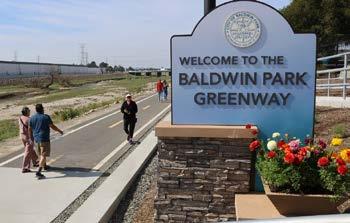
FROM RIVER CORRIDOR TO COMMUNITY HUB: DESIGNING THE BALDWIN PARK GREENWAY FOR ALL
By: Manuel Carrillo Jr., Chief Executive Officer, City of Baldwin Park and Maria L. Moreno, Director of Recreation & Community Services, City of Baldwin Park
On a Saturday morning in March, a line of local riders pedal their bikes past newly planted native landscaping along the San Gabriel River. They are participating in a community audit of the Baldwin Park Greenway, and the feedback typed into their clipboards confirms what the city is already seeing daily: a onceneglected, underutilized riverfront strip has officially become a bustling public lifeline.
“The path is very smooth,” one resident noted during the assessment, while another simply called it the “best tax dollars ever.”
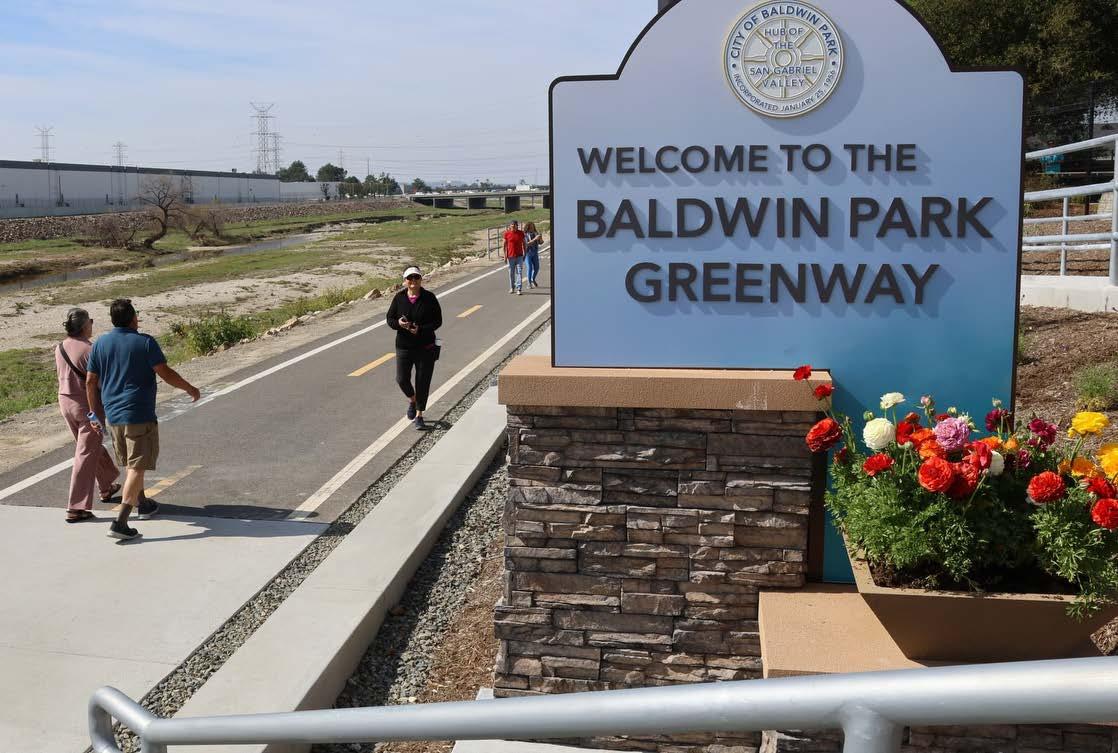
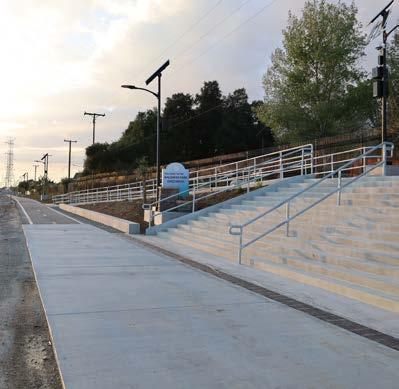
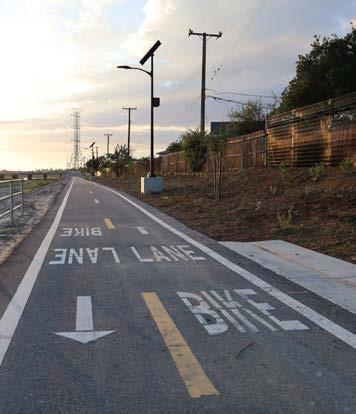
For Baldwin Park — a city of 72,000 in the heart of the San Gabriel Valley in Los Angeles County — this newly completed, 2.3-mile protected pathway offers more than just river views and a gateway into the local Walnut Creek Nature Park. By completely separating users from the roar of nearby traffic, the city has
reshaped how its residents can move throughout the community.
“The Baldwin Park Greenway represents a significant milestone in our journey to create safer, more active and better connected public spaces,” Baldwin Park Mayor Daniel Damian said. “The pathway meaningfully improves mobility, public safety and quality of life, while offering our residents an entirely new way to experience the city.”
This success story comes at a time when communities across California increasingly look to linear parks and multi-use trails to expand park access and address long-standing infrastructure deficits. Opened to the public this past February, the Baldwin Park Greenway stands as a prime example of how creative solutions and cross-jurisdictional funding partnerships can transform an infrastructure challenge into a shared regional victory.
A STORY OF RECLAIMED SPACE
The vibrant riverfront corridor seen today did not happen overnight. Historically, Baldwin Park residents have faced distinct spatial barriers, navigating a landscape carved up by industrial corridors and highspeed thoroughfares. Green space
is at a premium. Reclaiming the eastern edge of the San Gabriel River required effective partnerships and a deliberate, multi-year developmental strategy.
Across the region, organizations like ActiveSGV and the San Gabriel and Lower Los Angeles Rivers and Mountains Conservancy pushed to reclaim regional flood control channels and underutilized utility corridors for public use. This early coordination helped build the public support and momentum needed to transform a conceptual riverfront path into a fully funded project.
For a mid-sized city like Baldwin Park, financing a greenway of this magnitude independently was impractical. So, over several years, City staff sharpened their pencils, applied for grants and forged partnerships with local, regional
and state agencies. Ultimately, Baldwin Park secured key grants from the California Statewide Park Development and Community Revitalization Program, the California Transportation Development Act, the California Natural Resources Agency, LA County’s Proposition C, the LA County Metropolitan Transportation Authority and the San Gabriel and Lower Los Angeles Rivers and Mountains Conservancy.
“By building strong coalitions, we were able to transform a major infrastructure challenge into a shared regional victory,” Baldwin Park City Manager Manuel Carrillo Jr. said. “This project is a testament to what cities can achieve when they align their local needs with county and state goals. The result is a generational project benefiting our city and region.”
A GREENWAY BUILT FOR ALL
The city built the Greenway with every type of user in mind. Rather than designing a path just for fast runners or daily cyclists, the Greenway focuses on making the space completely accessible to everyone, ensuring parents pushing strollers, kids on bikes, and seniors using motorized scooters can share the trail safely and comfortably.
The trail features a smooth asphalt path between 8 and 10 feet wide, giving users plenty of room to move sideby-side without blocking traffic. Because the entire route is completely flat and ADA-compliant, there are minimal steep slopes, steps or vertical barriers at the trail entrances, with ramps available where accessibility challenges could arise.
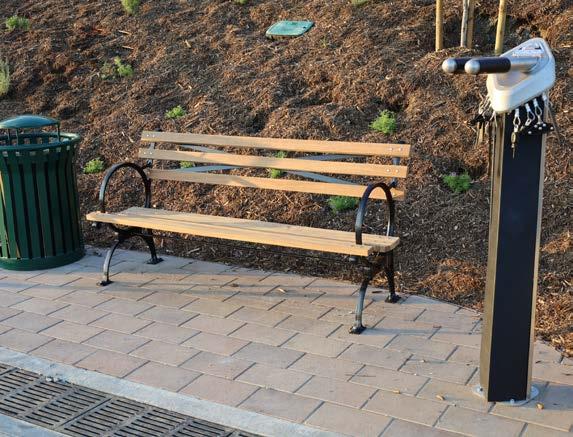
To make the trail useful at all hours, the city installed LED lights along the path and at every entryway so residents can safely use the trail after dark. The trail also includes perimeter safety fencing, public water fountains and bike repair stands equipped with tools. Clear signs remind users of simple rules — like requiring warning bells on bicycles — so that walkers and riders can share the space without issues. FOR A MID-SIZED CITY LIKE BALDWIN PARK, FINANCING A GREENWAY OF THIS MAGNITUDE INDEPENDENTLY WAS IMPRACTICAL. SO, OVER SEVERAL YEARS, CITY STAFF SHARPENED THEIR PENCILS, APPLIED FOR GRANTS AND FORGED PARTNERSHIPS WITH LOCAL, REGIONAL AND STATE AGENCIES.
Verde Design, Inc. creates parks, athletic facilities, and recreation spaces that bring communities together. Our team specializes in designing engaging, durable, and inclusive environments for people of all ages and abilities.
With extensive experience partnering with public agencies in California, we balance recreation, functionality, maintenance, and long-term community value in every project.
150 PARK & PLAYGROUNDS 750 ATHLETIC FACILITY PROJECTS
48 PROJECT DESIGN REWARDS RECEIVED
For more information scan the QR code or visit us at:
Finally, the landscaping was planned to match the local environment. The path is lined with droughttolerant, native plants that require very little water to stay healthy. As these trees and bushes grow, they will create more natural shade, keeping the pavement cooler and making daytime summer walks much more comfortable.
LOOKING AHEAD: THE FIVE-MILE VISION
While this segment of the Baldwin Park Greenway is a triumph on its own, the city of Baldwin Park has other exciting plans to look forward to. The 2.3-mile riverfront stretch is only Phase I of a broader vision for the Greenway. The city is now gearing up to start construction on a new, 2.6-mile extension of the path.
Pushing north and eastward, this segment will follow the Big Dalton Wash Trail through local neighborhoods, connecting two parks — Walnut Creek Nature Park and Hilda L. Solis Park — while establishing several pocket parks along the way. Once completed, Baldwin Park will be able to enjoy five miles of completely protected pathways.
“This five-mile green corridor will run directly through the heart of our community and serve our residents for generations to come,” Mayor Damian said.
park and recreation professionals looking to implement similar initiatives, Baldwin Park’s experience shows that these projects are highly achievable when cities view underutilized municipal space as an asset. By listening directly to local user needs and focusing on regional funding partnerships, municipalities of any size can successfully build sustainable infrastructure that links neighborhoods together. n
Believes Choosing the Right Playground Partner Matters
BRIDGING THE GAP: ACCESSIBILITY INNOVATION AT CORICA PARK IN ALAMEDA
By: Cole Handley, Wolf Mode Marketing
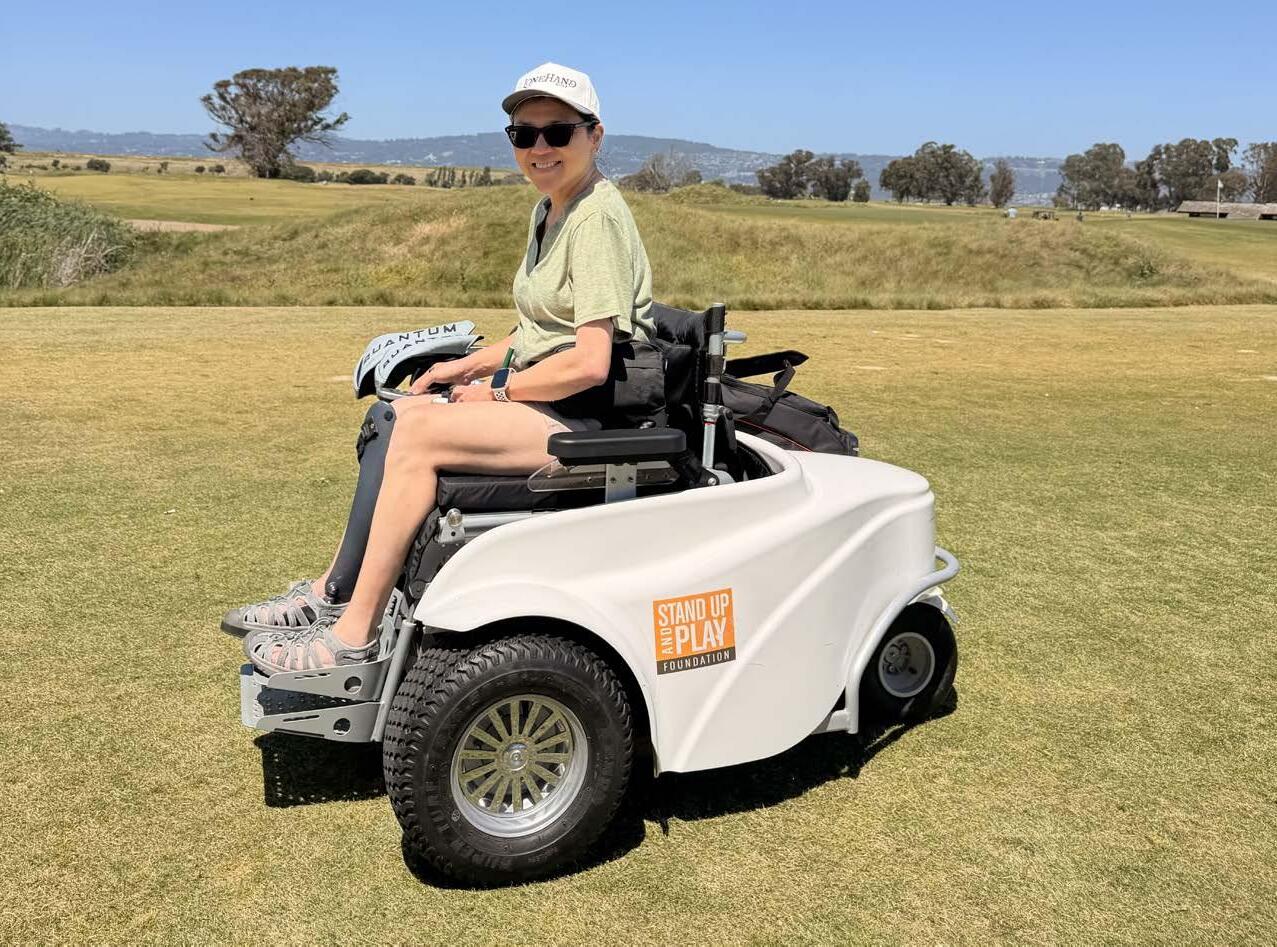
At Corica Park, our mission has always been to create a welcoming and inclusive environment where the joy of golf is accessible to everyone. We believe that recreation is a fundamental human need, and our philosophy is rooted in removing barriers to participation. This commitment to “Play for All” led us to explore available technology to help bridge the gap between intention and impact.
Inspired by our partnerships with Drive 4 Change, PGA HOPE (Helping Our Patriots Everywhere), and local veterans’ groups like Golf4Vets, we’ve witnessed firsthand the profound impact golf can have on community and well-being. Seeing the passion of these golfers and the physical obstacles that veterans, seniors, and individuals with disabilities faced inspired us to do more. We were committed to breaking down these
barriers, which led us to invest in adaptive technology and acquire the ParaGolfer.
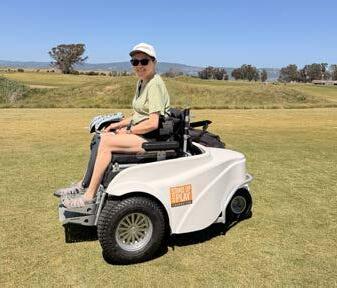
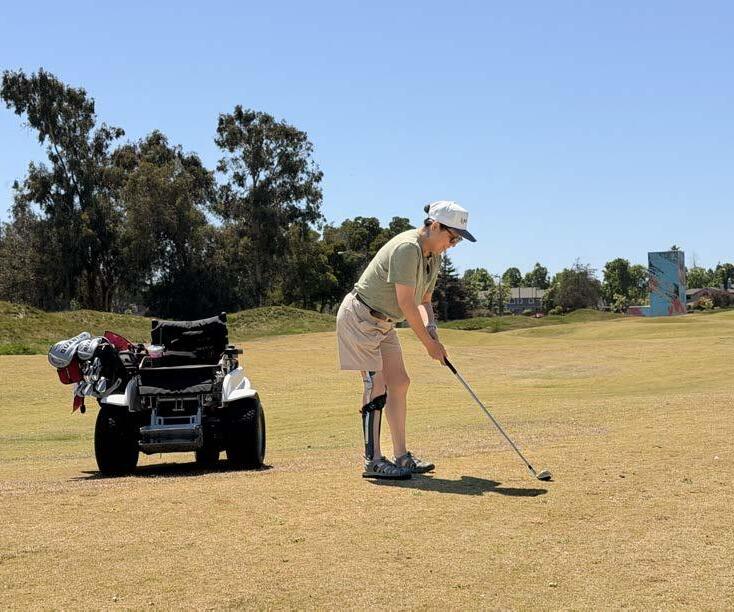
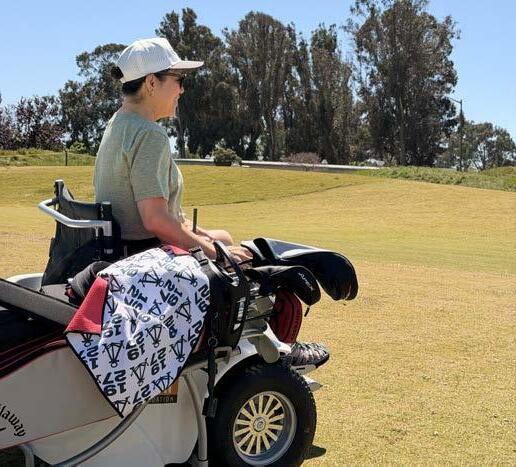
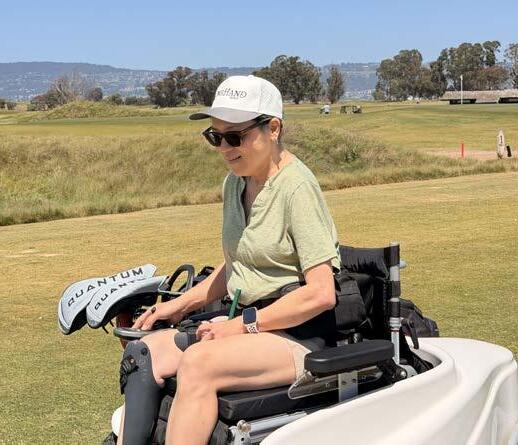
The ParaGolfer is an all-terrain mobility cart that allows players to get into an upright position for swinging a club, effectively eliminating the physical limitations of a traditional wheelchair on the golf course. Its unique design provides stability and freedom of movement, allowing players to navigate fairways,
CRANE ARCHITECTURAL GROUP
SINCE INTRODUCING THE PARAGOLFER, WE’VE SEEN REMARKABLE ENGAGEMENT. THE CART IS REGULARLY USED BY A DIVERSE GROUP, INCLUDING LOCAL VETERANS’ ASSOCIATIONS AND SENIORS FROM OUR COMMUNITY. WE’VE WITNESSED FIRSTHAND ITS PROFOUND IMPACT, NOT JUST ON A PLAYER’S GAME BUT ON THEIR OVERALL QUALITY OF LIFE.
mindset. By offering adaptive equipment and creating opportunities for players to learn how to use it with confidence, facilities can change public perception, demonstrate a genuine commitment to inclusivity, and boost participation.
For golf course operators considering similar investments, our advice is to start by identifying your community’s specific needs. Engage with local adaptive sports groups, seek grants, and start with a single piece of impactful technology. The positive response will speak for itself.
The future of adaptive recreation is bright. As technology continues to evolve, the possibilities for creating truly equitable play spaces are endless. At Corica Park, we are proud to be part of this movement, driving a future where technology and recreation intersect, ensuring that everyone, regardless of ability, has a place on the green. n
EXPANDING ACCESS THROUGH INNOVATION: BURBANK’S TRAIL ACCESSIBILITY PROGRAM
By: Diego Cevallos, Assistant Director, City of Burbank Parks and Recreation
Across California, parks and recreation agencies are redefining what access truly means. No longer limited to compliance, access is increasingly measured by the ability of all individuals to fully participate in and experience public spaces. The City of Burbank Parks and Recreation Department is advancing that vision through its Trail Accessibility Program, an initiative that uses adaptive technology to open natural trail environments to individuals of all abilities.
As the first trail accessibility program of its kind in the San Fernando Valley,
the initiative represents a meaningful step forward in equitable outdoor recreation.
The Stough Canyon Nature Center and surrounding Stough Canyon Fire Trail offer sweeping views and a dynamic outdoor experience. However, like many natural trails, the environment presents barriers for individuals with mobility impairments due to steep grades, uneven terrain, and loose surfaces.
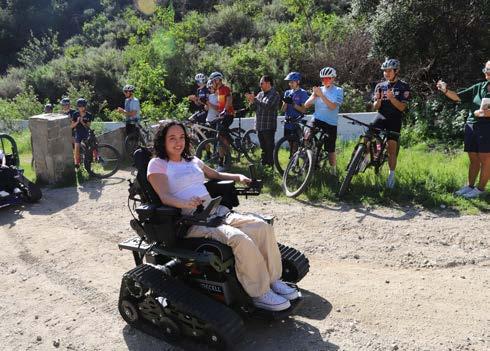
The trail is shared by hikers, runners, electric bicycles, and trail cyclists, making safety and visibility essential considerations.
Recognizing this gap, the City of Burbank developed the Trail Accessibility Program to ensure individuals with disabilities can experience nature with independence, dignity, and safety alongside other users.
LAUNCHING A FIRST OF ITS KIND PROGRAM
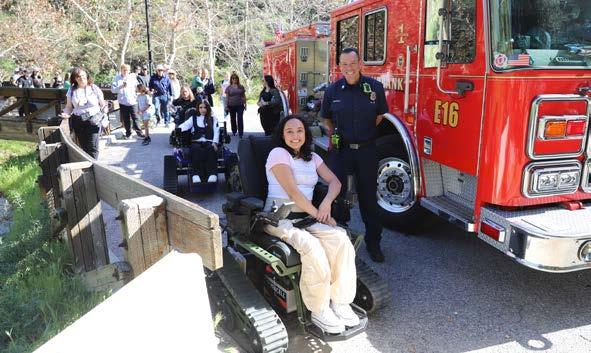
The program officially launched on January 31, 2026 with a public event at the Stough Canyon Nature Center. Community members were invited to experience live demonstrations of the
newly acquired equipment, offering a firsthand look at how access to rugged trails can be reimagined.
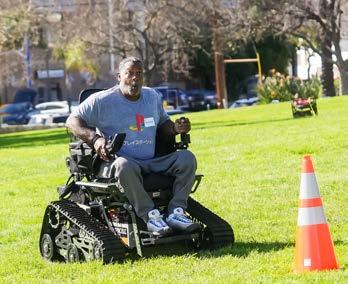
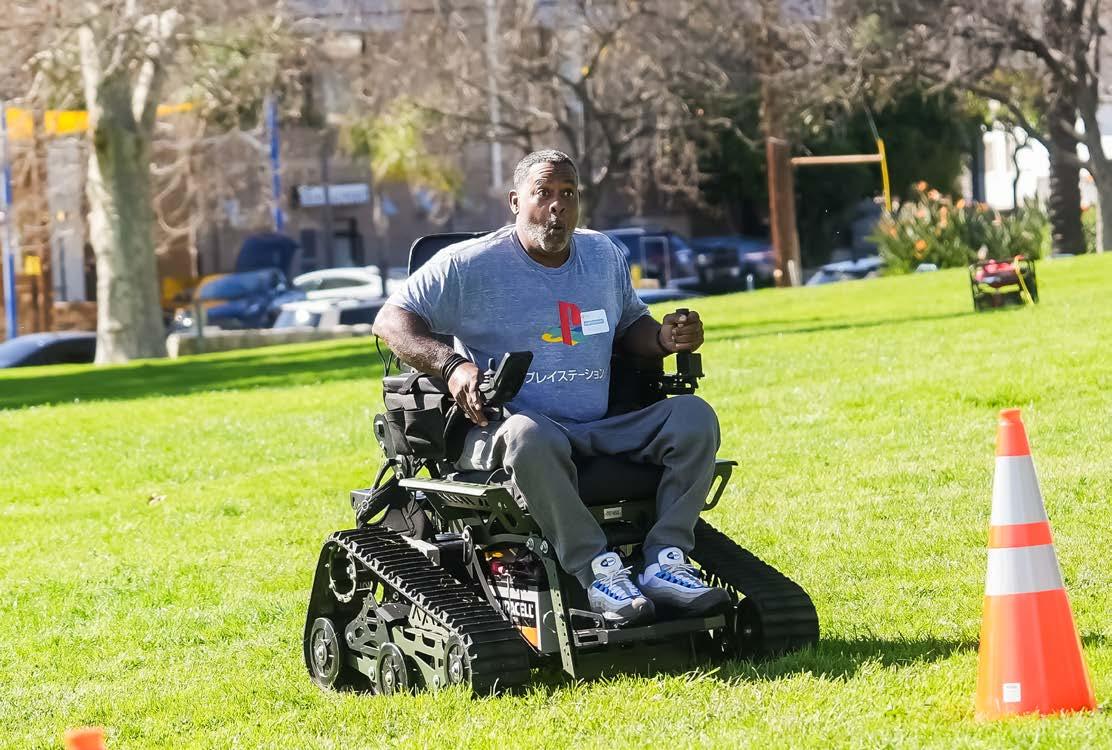
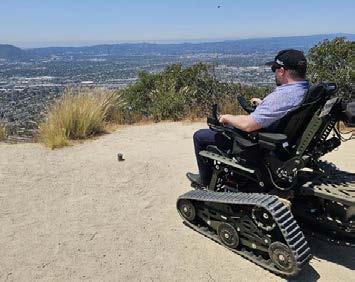
At the center of the program is the Action Trackchair AXIS 40, an allterrain mobility device engineered for environments like Stough Canyon.
TRAIL COMPATIBILITY BUILT FOR ROUGH TERRAIN
The AXIS 40 is designed to navigate conditions that traditional mobility devices cannot. Its Type II terrain tracks allow movement across gravel, loose soil, and rocky paths, while more than four inches of ground clearance provide safe passage over roots and uneven surfaces.
Tilt functionality allows users to shift forward or backward, maintaining balance and stability on inclines and declines. Attendant controls also allow individuals who cannot independently operate the chair to participate with the support of a caregiver, ensuring broader inclusion.
ENHANCED SAFETY FOR SHARED TRAIL USE
Given the shared nature of the trail, safety is a primary focus. The AXIS 40 includes:
• A four-point harness to secure users during steep or uneven travel
• A low center of gravity and durable tread system to reduce tipping risk
• Design features that support visibility and safe movement
These features allow the chair to integrate safely into an active trail environment.
ACCESSIBILITY WITH DIGNITY AND INDEPENDENCE
The AXIS 40 is designed to empower users. A six-point adjustable seating system accommodates a wide range of needs, while responsive joystick controls support independent navigation.
High-capacity batteries and strong motors allow for extended use, enabling participants to experience the trail without interruption. This creates opportunities for meaningful and independent outdoor engagement.
COMMUNITY LEADERSHIP AND INVESTMENT
The expansion of Burbank’s Trail Accessibility Program has been strengthened by the leadership and
philanthropic commitment of the Leadership Burbank Class of 2025. Through their Play Without Limits initiative, the class raised nearly $90,000 to support the acquisition of two all-terrain Trackchairs, advancing the City’s capacity to deliver inclusive outdoor recreation.
PROGRAM STRUCTURE AND OPERATIONS
The Trackchair is located at the Stough Canyon Nature Center and is available during scheduled program hours or through an online reservation system.
Key program elements include:
• Use limited to the Stough Canyon Fire Trail, which ranges from approximately 9 to 20 feet in width
• An able-bodied companion required to assist with transfers
• Docent-led trail experiences to support safety and navigation
• Required safety and program orientation video https://youtu.be/ L86rMrh4Snc
• Manufacturer guidelines for height and weight to ensure proper use
• Parental consent required for participants under 18
“ACCESS TO NATURE IS SOMETHING EVERYONE DESERVES TO EXPERIENCE. WHAT IS EXCITING ABOUT THIS MOMENT IS THAT WE HAVE THE TOOLS AND THE MOMENTUM TO TURN THAT VISION INTO REALITY.“ - MARISA GARCIA, DIRECTOR OF PARKS AND RECREATION FOR THE CITY OF BURBANK
• Updated waivers addressing safety, equipment use, and protection of public resources
An important component of Burbank’s Trail Accessibility Program is the docent-led experience, which provides participants with safety, education, and support while navigating the Stough Canyon Fire Trail. Trained staff and volunteer docents assist with operations, monitor trail conditions, and support safe interactions with other users, including hikers, runners, and cyclists. The program also includes an introductory video that explains how the Trackchair operates and reviews key safety requirements and trail considerations. In addition to safety, docents enhance the experience by sharing information about local wildlife, ecology, conservation, and the history of Stough Canyon. Their presence helps create a welcoming environment, builds participant confidence, and reduces barriers to meaningful, inclusive outdoor access.
As Marisa Garcia, Director of Parks and Recreation for the City of Burbank, explains, “Access to nature is something everyone deserves to experience. What is exciting about this moment is that we have the tools and the momentum to turn that vision into reality. When we invest in inclusive design and innovative technology, we are not just expanding access, we are strengthening and connecting our communities. My hope is that programs like this inspire agencies everywhere to recognize what is possible and take the next step toward making this level of access a reality in every community.”
LOCAL SUPPORT AND LONG-TERM VIABILITY
The program has received strong support from the Burbank Fire Department, Burbank Public Works Department, and the City Attorney’s Office, all of which played active roles in assisting the Parks and Recreation Department in developing a program that meets
the highest safety and operational standards.
This cross-departmental collaboration included:
• Comprehensive trail safety assessments conducted by Fire Department and Public Works staff
• Pre-launch trail and equipment maintenance to ensure safe operating conditions
• Fire Department training exercises focused on emergency response scenarios involving adaptive equipment
• Visible participation by the Burbank Fire Department at the program launch event, helping reinforce public confidence and a strong sense of safety
• Legal review and approval of all liability waivers and overall program design by the City Attorney’s Office Their combined efforts ensured the program was not only innovative and inclusive, but also grounded in
rigorous safety, legal, and operational frameworks.
A NATIONAL MOVEMENT TOWARD INCLUSION
Burbank’s efforts reflect a broader national movement in parks and recreation, where accessibility is being redefined through innovation and inclusive design. More than 30 cities and park systems across the country have implemented similar programs that use adaptive
CULTIVATING COMMUNITY
technology to expand access to trails and natural environments.
These initiatives reinforce a fundamental shift in how access is understood. Accessibility is no longer viewed as an added feature or accommodation, but as an essential component of equitable recreation.
RECOMMENDATION AND PATH FORWARD
The Trail Accessibility Program reflects the City of Burbank’s broader values of inclusion, environmental stewardship, and community connection. Through the integration of thoughtful program design, interdepartmental collaboration, and innovative adaptive technology, the City is redefining what access means in public outdoor spaces. In Burbank, access is no longer defined simply by reaching the trail. It is defined by the ability to fully experience it. n
DESIGNING FOR EVERYONE: A STRATEGIC APPROACH TO INCLUSIVE, FLEXIBLE, AND MULTIGENERATIONAL COMMUNITY
By: Jonathan Orr, Design Principal, HMC Architects
Designing new community facilities presents an energizing opportunity to create meaningful, long-lasting value for residents—but it also brings a core challenge: how to ensure these facilities serve as inclusive, multigenerational spaces that remain relevant and active over time. Too often, communities struggle to align design with the diverse needs of their populations. The risk is building spaces that resonate only with specific age groups or user types, leaving others behind and failing to maximize public benefit.
The traditional approach often leans on single-use facilities tailored for a narrow slice of the community. While these spaces may be successful for their intended users, they frequently sit idle outside of peak use and miss the opportunity to serve broader needs. In an environment
where public funding is limited and construction opportunities are rare; this model is inefficient and politically risky. Communities can face backlash if facilities appear to prioritize one group at the expense of others, exacerbating tension and undermining public trust.
Cities that focus on designing flexible, inclusive spaces can create a legacy facility that serves multiple functions and generations. When they emphasize multi-purpose design, facilities can deliver more hours of meaningful use per year, becoming vibrant, adaptable community assets. Key design fundamentals—such as abundant daylight, connection to outdoor spaces, and universal accessibility—are simple elements that will ensure appeal across demographics. Furthermore, designing with families, seniors,
and people with disabilities in mind builds political and social capital by signaling that all residents are welcome and valued. The end result is a space that not only serves diverse practical needs but also inspires a wider sense of civic pride and future investment.
THE TOWN OF YUCCA VALLEY AQUATIC AND RECREATION CENTER: BEST PRACTICE IN ACTION
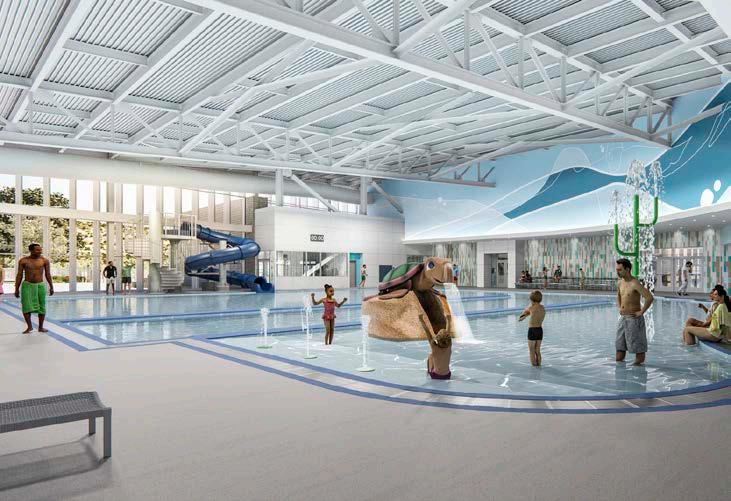
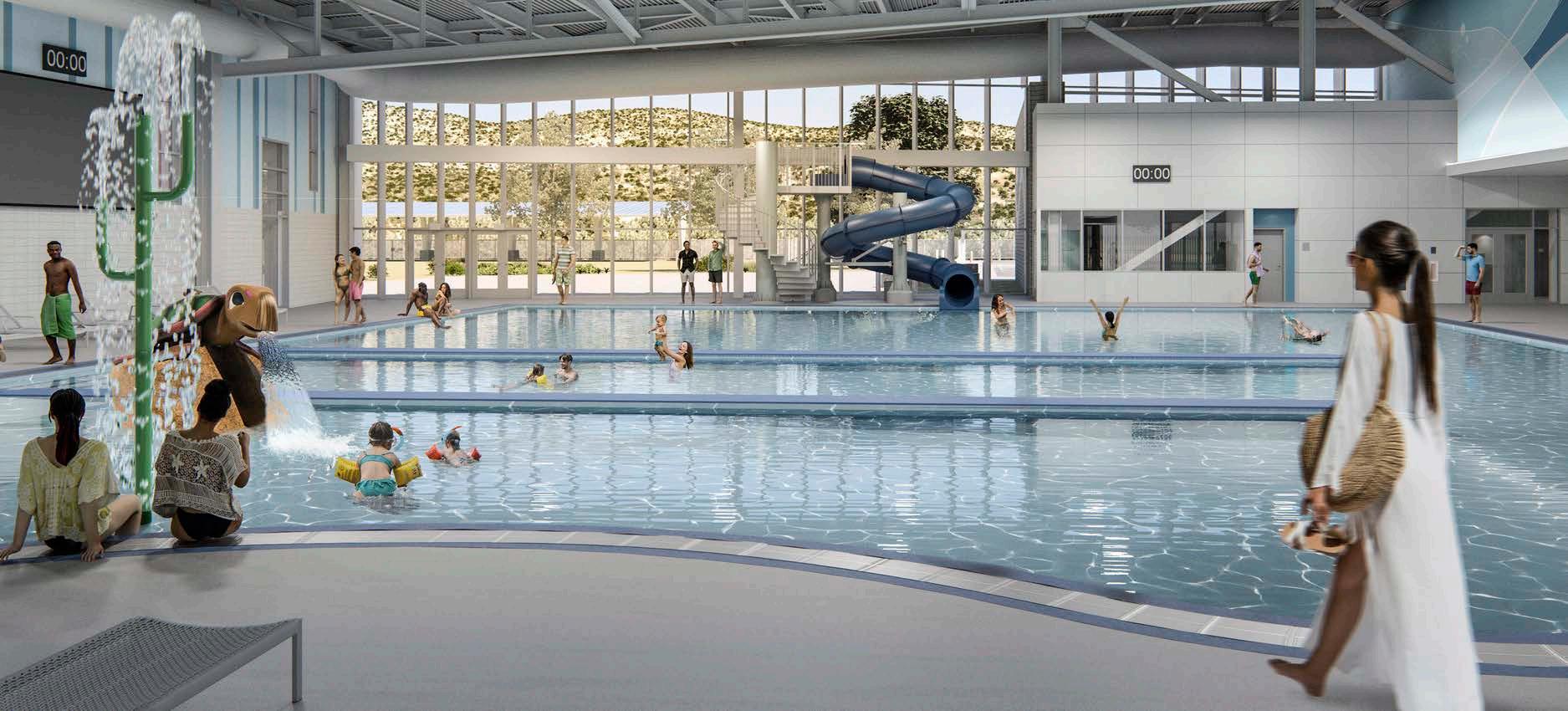
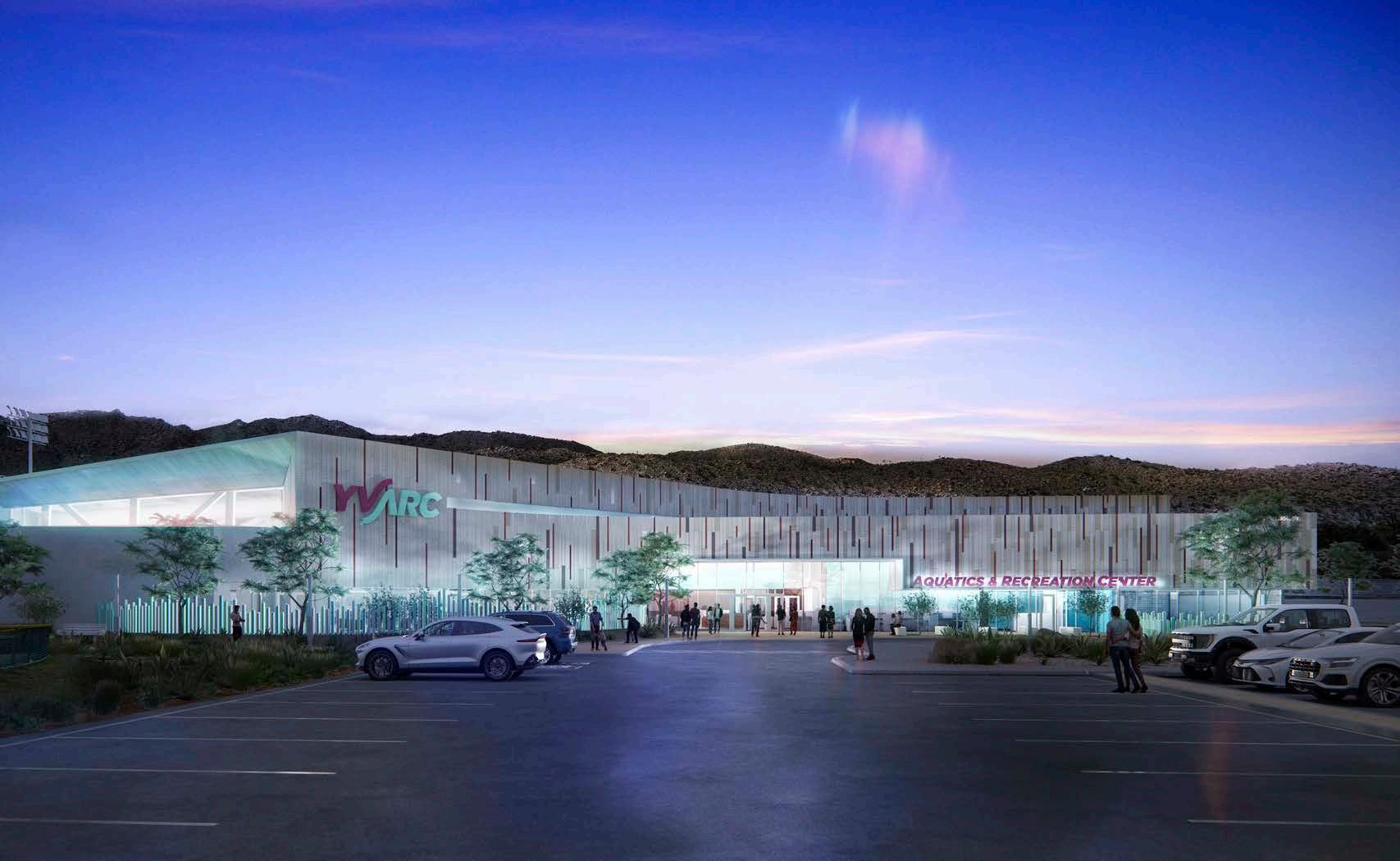
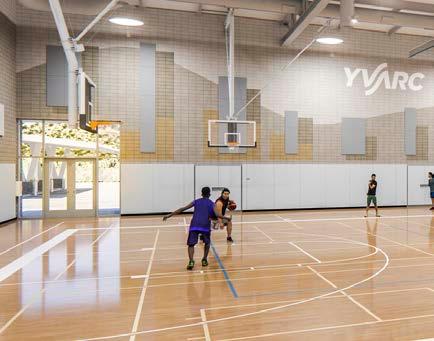
The Town of Yucca Valley Aquatic and Recreation Center exemplifies this vision by embedding itself within the heart of the community’s recreational precinct. The 3.35-acre site features a single 37,200 SF single-story building with a natatorium, wet and dry multi-purpose rooms, offices, gymnasium, and support spaces. The intentional engagement to the adjacent Brehm Park facilities seeks synergy between public engagement on both sites. Designed to be an iconic presence in the community, the center will offer flexible aquatics programming, age-inclusive amenities, and a shared access model for surrounding communities.
Designing a multigenerational and inclusive facility was a core priority for the city from the beginning. Then, it became a question about implementation. How do we enhance accessibility? How do we make it more friendly for seniors to access? How do we address the challenges that would help multigenerational families engage with the center safely and comfortably so there would be greater participation from the community? Input from a robust user group of policy makers, elected officials, and facilities and recreation
program staff deeply embedded in the city’s programming helped to answer those questions. They clearly saw the needs of their community and guided the design to consider the ways flow, adjacency, and ease of use and supervision could make this space workable and inclusive. The pool is designed as three pools in one. It has a zero-depth beach entry with play toys for younger kids, a water sports area with room for water slides, slackline connections, and large inflatable floating obstacle courses for older children and adults, and dedicated lanes for lap swimming and a 42-inch-deep water play area suitable for a variety of water games and water aerobics for seniors. The aquatic center’s family restrooms allow larger families, or those with special needs to use the facilities in a safe and comfortable environment. Immediately adjacent to the restrooms are day-use lockers with sight lines into the entrance of the gendered locker-room facilities, lobby, and pool. The lockers’ location outside of closed-off gender specific spaces allow neighbors to store items or grab a towel without splitting off from their families, giving kids more freedom and parents more peace of mind.
OBSTACLES TO ADOPTION
Sometimes, a narrow focus or the pressure to respond quickly to vocal groups can eclipse a broader understanding of community needs and slow adoption of these more inclusive and flexible design approaches. Budget limitations also create pressure to simplify or scale back designs, reinforcing short-term or single-use thinking. However, welldesigned flexible spaces can offset these challenges by achieving more with less—delivering higher impact per dollar by reducing the need for multiple separate facilities.
Cities run the risk of building an amazing facility only to discover that it is not used as much as hoped because certain demographics are unintentionally excluded or it is onerous for people to make full use of the facility. If someone goes into a space, but it’s difficult to watch young children or navigate the facility, they might decide not to attend at all. If a space does not serve a broad cross-section of the community, that’s not a win.
FOCUS ON FLEXIBILITY
As communities grow and change, so do their recreation needs. While
there’s no way to plan perfectly for every need, flexibility is key. Consider the likely needs of different sport and recreation opportunities, both the current needs and those they may or may not have in the future. Then, look at the overlap to make sure the spaces are big enough to accomplish as many as you can think of.
Spill out zones and large operable walls can help more people access and enjoy the space or connect with an adjacent facility or plaza. The design of the Town of Yucca Valley Aquatic and Recreation Center incorporates curtain walls that open out to a flexible event plaza to the north. The plaza is a popular place for farmers’ markets, concerts, and fireworks. The design team considered every imaginable crossover, including thinking about users enjoying a hot summer day in the pool while watching a fireworks show.
Also consider accessibility, safety, and proximity to transportation. While there are codes that prescribe legal accessibility standards, incorporating universally accessible design into the landscape so that accommodations are more naturally integrated allows everyone to enjoy the environment equally. Clear sightlines within and around a facility
offer safety and clear wayfinding, welcoming neighbors to the space. Access to public transit systems, or parking next to the most popular entry points, decreases barriers to accessing recreation opportunities.
Taking a 360-degree view illustrates the potential connections in every direction and guides the design of a flexible and adaptable facility that neighbors can enjoy to its fullest extent for generations.
BE INTENTIONAL
Cities only get to build so many new capital projects in a year, so to build a facility that all neighbors will want to use is critical. In order to make the most of your efforts, the first step is to set the intention early, prioritizing flexibility, inclusivity, and longterm adaptability from the outset. Once this is established, ask questions; who will the space serve? How can we best
implement their needs into this project?
Deep community engagement— especially with traditionally underserved populations—is critical to answering these questions and informing a responsive design. An idea from a once unheard voice at any point in the process can change the entire direction of a project. Allow time for outreach, initial visioning exercises, creativity, and iteration during the early stages and build in both design contingency and programmatic flexibility.
This process of designing with inclusivity in mind not only results in better outcomes in the short term but can also lead to moments of surprise and delight, producing spaces that are uniquely tailored to their entire community and that are loved and utilized by multiple generations, and for generations to come. n
ALLOW TIME FOR OUTREACH, INITIAL VISIONING EXERCISES, CREATIVITY, AND ITERATION DURING THE EARLY STAGES AND BUILD IN BOTH DESIGN CONTINGENCY AND PROGRAMMATIC FLEXIBILITY.
BUILDING A PLACE WHERE EVERYONE BELONGS: HEALDSBURG’S MAGICAL BRIDGE INCLUSIVE PLAYGROUND
By: City of Healdsburg Staff
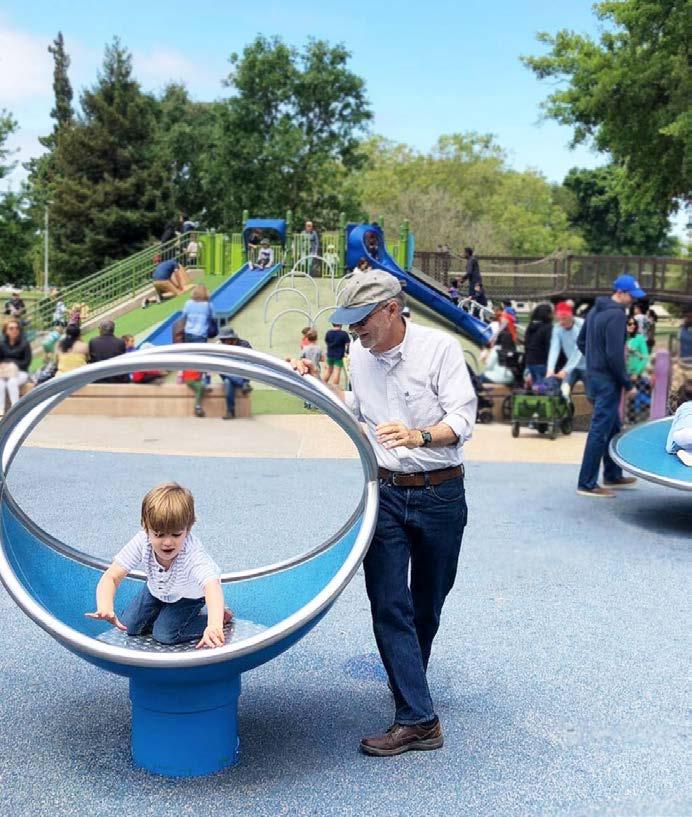
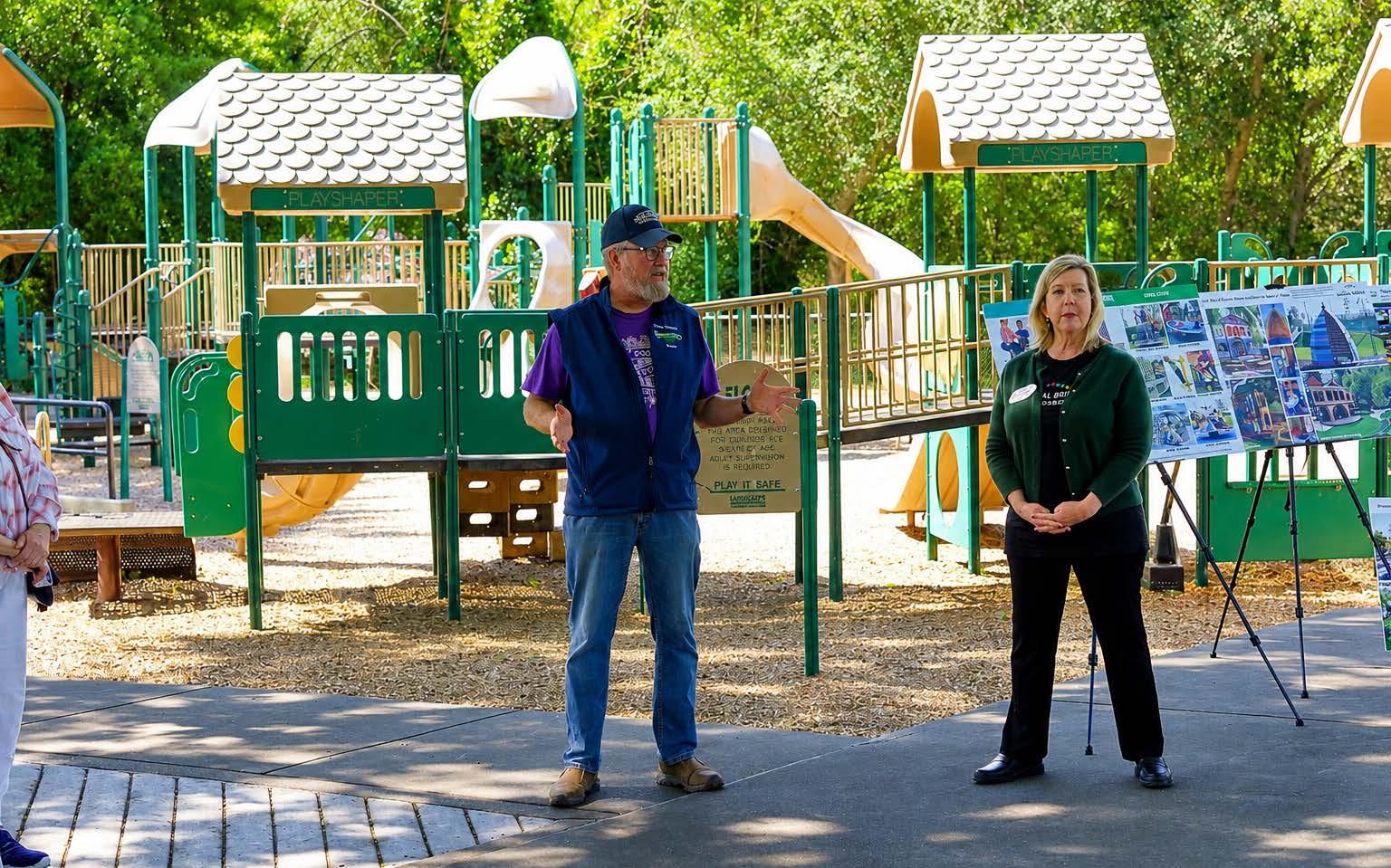
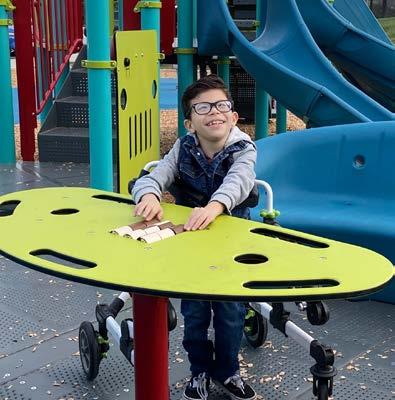
The City of Healdsburg is taking a significant step toward creating a more inclusive community through the development of the new Magical Bridge Inclusive Playground at Badger Park. Designed to welcome people of all ages and abilities, the project reflects a growing commitment to ensuring that everyone has access to meaningful play, social connection, and recreation.
The playground is the result of a partnership between the City of Healdsburg and the Magical Bridge Foundation, a nonprofit organization known for creating innovative, multigenerational playgrounds that remove both physical and social barriers to play. In September 2025, the Healdsburg City Council unanimously approved an agreement with the foundation to begin feasibility studies, fundraising efforts, and schematic design work for the project.
“Healdsburg has enthusiastically embraced creating a Magical Bridge Playground at Badger Park,” said Healdsburg Mayor Chris Herrod, “the playground aligns perfectly with our community’s values. Healdsburg is a welcoming place with a generous heart. We are working on a variety of fronts to embrace and celebrate inclusivity and diversity and are excited to build a playground where everyone is invited to play together.”
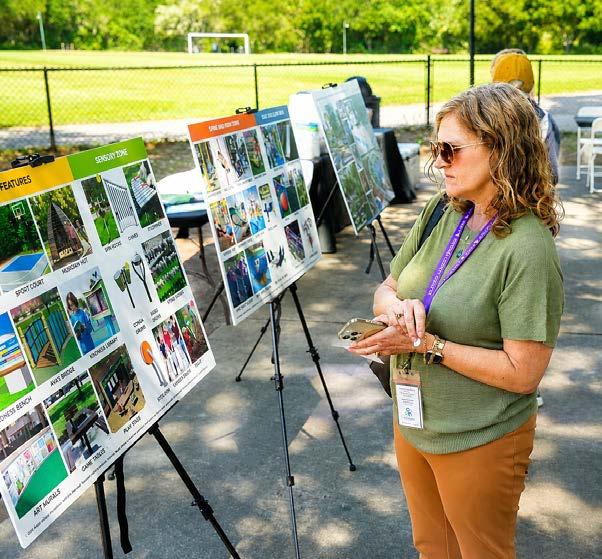
Community engagement has played a central role in shaping the vision. Throughout the planning process, residents were invited to participate in surveys and provide feedback on desired features, amenities, and experiences. The community input survey encouraged residents to share what would best reflect the spirit and needs of Healdsburg, helping ensure the playground becomes a space designed by the community as much as for the community.
The project has attracted strong local support, including advocacy from Healdsburg resident and parent Emily Peterson, whose efforts helped bring attention to the need for more inclusive recreational opportunities.
“After years of advocating for accessible playgrounds I am honored and absolutely thrilled to be working alongside Magical Bridge Foundation to bring Sonoma County their first truly inclusive playground,” said Emily Peterson, an educator and key volunteer for the Healdsburg project.
“After years of watching my disabled child navigate playgrounds with bark and unsafe structures I cannot wait for us to have a place to play with ease and comfort.”
Students from Sonoma Country Day School also became involved by learning about inclusive design and public spaces, while community members, families, educators, and local organizations voiced support for a playground that welcomes everyone.
When completed, the playground will feature the hallmark elements of Magical Bridge design, including distinct play zones, sensory-rich experiences, quiet retreat spaces, gathering areas, and opportunities for intergenerational interaction. These features are specifically designed to support individuals with physical and cognitive disabilities, autism, sensory sensitivities, medical challenges, and mobility limitations, while remaining engaging and enjoyable for all visitors.
Olenka Villareal, founder of the Magical Bridge movement, said: “Magical Bridge is not a playground for one group of people; it is thoughtfully designed for everyone. When neighbors of all ages and
Photo:
abilities come together through play, they discover there is far more that connects us than separates us. Because playgrounds are often a child’s first outdoor classroom, these early lessons help shape a kinder world. That is the magic of Magical Bridge: stronger, healthier, more connected communities — and every California community deserves it.”
The project team includes the City of Healdsburg, the Magical Bridge Foundation, community volunteers, project ambassadors, educators, donors, and residents who continue to participate in the planning process. Together, they are creating more than a playground—they are building a destination where children, parents, grandparents, caregivers, and visitors can play, connect, and feel a true sense of belonging.
As the project moves forward, the Magical Bridge Inclusive Playground promises to become a lasting example of how thoughtful, community-driven design can create spaces that are welcoming to everyone.
To learn more about the Magical Bridge Foundation, visit: https://www. magicalbridge.org/
For information on the Healdsburg project, visit https://healdsburg.gov/1187/ Magical-Bridge-Inclusive-Playground n
THE MUSICAL BRIDGE INSTALLED AT 222 GALLERY
In February 2026, the Magical Bridge Foundation installed The Musical Bridge at The 222 Gallery in Healdsburg to bring awareness and support for the Badger Park playground project. The Musical Bridge is an inclusive, interactive sound installation with motion-triggered Harmony Stations that use generative AI to turn gestures into live, evolving music and real-time soundscapes. It features original music by Dr. Nolan Gasser, the architect of Pandora’s Music Genome Project and one of today’s most respected composers and musicologists and was created in collaboration with Quantiphi (an NVDIDIA Elite Partner) and exhibit designer David Torgersen.
Magical Bridge volunteers (who are called Project Ambassadors), community members, city leaders, and supporters gathered at The 222 Gallery for an evening of social innovation and reimagination of public spaces for all. Guests learned more about the Magical Bridge playground coming to Badger Park and experienced the groundbreaking Musical Bridge AI—where music, artificial intelligence, and humanity meet.
“This evening is a wonderful example of how Magical Bridge brings community together, both on and off the playground,” said Olenka Villarreal, CEO of Magical Bridge. “Badger Park’s
Magical Bridge will be a place where everyone belongs, and this event is an invitation to be part of that story from the very beginning.”
Photo:
Magical Bridge Foundation
HEALDSBURG HOLDS MAGICAL BRIDGE COMMUNITY EVENT
A sunny day in late April was an idyllic setting for a day of on-site open houses where community members could learn and express support for the future Magical Bridge playground. The open houses took place at Healdsburg’s Badger Park, where the existing aging playground will be replaced by a Magical Bridge playground, funded by donations.
Magical Bridge Founder and CEO Olenka Villareal joined Healdsburg officials and community members to imagine the new playground, check out renderings and photos of the future playground and existing playgrounds in other communities, and ask questions.
Villareal and Healdsburg Mayor Chris Herrod welcomed attendees, answered questions and stirred enthusiasm for the project.
Community members shared heartfelt comments about their own family members who could benefit from thoughtfully designed modern amenities that provide safe and welcoming places to play.
“I can’t wait to bring my granddaughter here!” said one attendee as she looked over photos of playgrounds in other places.
Healdsburg Mayor, Chris Herrod (left) and Magical Bridge founder, Olenka Villareal (right), at the Magical Bridge Inclusive Playground open house in April 2026. Photo: City of Healdsburg
LEGACY OF RECREATION: Community Spaces That Shaped Us
PLEASANT HILL RECREATION AND PARK DISTRICT CELEBRATES 75TH ANNIVERSARY
Pleasant Hill, California
By: Jennifer Thoits, Marketing, Communications & Events Manager, Pleasant Hill Recreation & Park District
Pleasant Hill Recreation & Park District has created a legacy of connection. A grandparent who learned to swim at the local pool watches a grandchild take lessons. Former campers return as volunteers, coaches, and staff members. Children who once participated in recreation programs grow up to become community leaders, first responders, teachers, and parents themselves. These stories are a reminder that recreation’s impact extends far beyond a single program, park, or season. Recreation and local parks help shape communities and the people who call them home. In 2026, Pleasant Hill Recreation & Park District proudly celebrates 75 years of serving the community.
The District’s story began in 1949 when a group of local parents and community leaders came together to create recreational opportunities for local youth. Two years later, voters approved the formation of the Pleasant Hill Park, Recreation & Parkway District, making it the first governmental agency established in the area, nearly a decade before Pleasant Hill became a city. In September 1957, the District changed its name to Pleasant Hill Recreation & Park District.
Over the decades, the District grew alongside the community. New parks, recreation facilities, gathering places, and programs emerged as Pleasant Hill evolved from a small post-war suburb into the vibrant community it is
today. Key milestones included the development of neighborhood parks, the construction and expansion of community recreation facilities, the growth of aquatics and youth recreation programs, and the continued evolution of services designed to meet the changing needs of residents. Today, the District serves more than 40,000 residents across a 5,616-acre service area, providing 275 acres of parks and open space, 12 parks, eight community facilities, and more than 2,300 classes, programs, and activities annually.
Several parks, facilities, and programs have become especially meaningful within the community. Pleasant Hill Aquatic Park has introduced generations of families to swimming, fitness, and water safety. The Senior Center has become a hub for learning, wellness, and social
connection. Rodgers Ranch Heritage Center preserves local history while helping new generations understand the community’s roots. For many residents, summer camps, swim lessons, youth sports, and community events have become defining experiences that connect childhood memories with lifelong community involvement.
The District has also continuously adapted to meet changing community needs. Programs have expanded to serve all ages and abilities. In 2021, the District adopted its “Play For All” policy and prioritized an inclusive “Play For All” culture. Investments in accessibility, inclusion, wellness, technology, and customer service have helped ensure that parks and recreation remain relevant, welcoming, and accessible to everyone. The District has embraced online registration
and digital communications while continuing to create opportunities for meaningful, in-person connection. While facilities and services have evolved, the District’s purpose has remained unchanged: enhancing quality of life through parks, recreation, and community service.
Perhaps the most powerful measure of the District’s impact is seeing generations of residents remain connected through participation in District activities, events, and services. Children who once attended programs often return years later as volunteers, instructors, coaches, staff members, and parents. The relationships, skills, confidence, and memories built through recreation continue to shape lives long after a season, class, or program ends.
The District’s success has always been driven by people. Dedicated staff, elected board members, volunteers, community partners, and residents have helped shape the organization through their vision, service, and support.
Together, they have created more than parks and programs. They have created places where friendships are formed, confidence is built, milestones are celebrated, and community connections flourish. What makes Pleasant Hill Recreation & Park District unique is its history as an independent California Special District, separate from the City of Pleasant Hill. From the beginning, the District has remained committed to creating recreation opportunities and maintaining beautiful parks and facilities for people to engage with one another and with their community. That singular focus has helped generations of residents discover and appreciate the value of recreation, belonging, and community engagement.
Throughout 2026, the District is celebrating its Diamond Anniversary with the theme “Shine On!” Special activities include the 75 Miles for 75 Years Lap Swim Challenge, a 75th anniversary Fourth of July parade float, and a community anniversary celebration featuring
historical displays, commemorative storytelling, and opportunities for residents to share their own Pleasant Hill Recreation & Park District memories. The celebration honors not only the District’s history, but also the thousands of personal stories made along the way.
Looking ahead, the District will continue investing in parks, facilities, programs, and community gathering spaces that reflect the evolving needs of residents. By balancing innovation with a strong commitment to accessibility, wellness, and community connection, Pleasant Hill Recreation & Park District will continue creating opportunities for future generations to learn, play, thrive, and belong.
For 75 years, Pleasant Hill Recreation & Park District has created the spaces where community happens and built a “Play For All” culture. We are honored to be part of so many stories and excited to help shape the next chapter. n
Legacy of Recreation: Community Spaces that Shaped Us is a new magazine section celebrating the parks, playgrounds, pools, trails, and gathering places that built our sense of belonging. Each installment spotlights one or more historic recreation sites—their origins, the people who animated them, and the traditions, memories, and civic pride they’ve inspired. Have a story to share? We welcome articles up to 500 words, archival photos, and captions. Submit materials to Todd Pernsteiner at todd@pernsteiner.com for consideration in an upcoming issue.
RHA Community Works (951) 781-1930 rhacw.com Page 37
Turf Star Western (800) 585-8001 turfstar.com Page 39
My Bark Co., Inc. (209) 786-4042 mybark.net Page 25
ROMTEC, Inc. (541) 496-3541 romtec.com Page 17
iZone Imaging (254) 778-0722 izoneimaging.com
Page 16
NUVIS (714) 754-7311 nuvis.net Page 57
Schmidt Design Group, Inc. (619) 236-1462 schmidtdesign.com Page 29
Verde Design, Inc. (408) 985-7200 verdedesigninc.com Page 33
Reach California park & recreation decision-makers! California Parks & Recreation magazine mails to more than 4,700 CPRS members and affiliates and is available online. Want to get in the next issue?
Email Todd at todd@pernsteiner.com or call (952) 841-1111, or view the 2026 advertising media kit at bit.ly/CPRSmagazine
Roseville names Jill Nunes as next Director of Parks, Recreation and Libraries
Roseville City Manager Dominick Casey has appointed Jill Nunes as the City’s next director of Parks, Recreation and Libraries following a highly competitive recruitment.
Nunes started in the role on May 18, succeeding Jill Geller, who retired on May 29.
Nunes (pronounced nuns) joins Roseville from the Cordova Recreation and Park District, where she served as director of parks and recreation for one of Sacramento County’s largest independent special districts. She oversaw 60 fulltime employees, 220 part-time employees, and a $15 million operating budget spanning parks, recreation, aquatics, golf, facilities, trails, senior services, community relations, marketing, and capital projects.
“Jill brings deep industry expertise and a strong record of transparent, collaborative leadership. Her people-first approach and ability to build community partnerships will continue to enhance Roseville’s legacy of delivering award-winning parks, recreation and library experiences,” said Casey.
With more than 30 years of experience in municipal and special district systems, Nunes is a Certified Park and Recreation Executive and serves on the boards of the
“I’m thrilled to join the Roseville community and begin serving in a role that means so much to me. Parks, recreation, and libraries are where connection, joy, and belonging come to life, and I look forward to working alongside an amazing team to foster welcoming spaces and experiences that truly enrich everyday life,” said Nunes.
California Association for Park and Recreation Indemnity, Foundation for Folsom Cordova Schools, and the Visit Rancho Cordova Foundation. She is known for her commitment to public spaces, long-term planning, and community-centered service.
“I’m thrilled to join the Roseville community and begin serving in a role that means so much to me. Parks, recreation, and libraries are where connection, joy, and belonging come to life, and I look forward to working alongside an amazing team to foster welcoming spaces and experiences that truly enrich everyday life,” said Nunes.
As PRL director, Nunes will lead a department of 165 full-time and 700 part-time and seasonal employees and manage an annual operating budget of $58 million supporting a new soccer complex, 90+ parks, recreation programming, 3 libraries, 3 aquatics facilities, 21 childcare centers, 2 golf courses, Maidu Museum & Historic Site, a fitness center, senior services, cultural arts, and more than 4,000 acres of natural areas for the Roseville community. n
Aubrey Austin Park Marina Del Rey
CPRS Spotlights
City of Belmont appoints new Parks, Recreation, & Culture Director
The City of Belmont is pleased to announce the appointment of Kevin Kobayashi as our new Parks, Recreation, and Culture Director. Kobayashi began his role on April 27.
This transition also marks the retirement of the City’s current Director, Brigitte Shearer, whose leadership over the past eight years has helped strengthen Belmont’s parks, programs, and community services. The City extends its sincere gratitude for her dedication, vision, and lasting contributions to the Belmont community. Her commitment to enhancing inclusive opportunities and fostering a strong sense of community will have a lasting impact for years to come.
with a strong track record of leadership in managing publicfacing services, facilities, and programs. Most recently, he served as the Golf and Visitor Services Manager for the City of San Mateo’s Parks and Recreation Department, overseeing the 105-acre Poplar Creek Golf Course and the City’s Park Ranger program. During his tenure, he also managed 32 parks, including ball fields, playgrounds, and maintenance operations, and later assumed oversight of the Dr. Martin Luther King Jr. Community Center, two community pools, picnic reservations, adult and youth sports programs, and gym rentals at San Mateo High School.
“Kevin’s depth of experience and collaborative leadership style make him an exceptional fit to lead the Department while supporting the City’s priorities,” said City Manager Afshin Oskoui. “We are excited to welcome him to the organization and look forward to the contributions he will make to our community.”
The Embankment Slide Experts
Throughout his career, Kobayashi has consistently demonstrated the ability to lead large, diverse teams, manage complex budgets and operations, and deliver high-quality services to the community. His experience includes oversight of capital improvement projects, contract administration, and community engagement
Kobayashi stated, “I’m eager to join the Belmont team and look forward to building new relationships while continuing to enhance programs and services for all residents,” stated Kobayashi. “I have a deep appreciation for the Parks and Recreation field, valuing both the meaningful services it provides and the strong relationships built within the community. Working on the Peninsula has truly been the most rewarding and fulfilling of my professional journey.”
Outside of work, Kobayashi enjoys playing golf, cooking, traveling, and spending time with his family and their dog
“Kevin’s depth of experience and collaborative leadership style make him an exceptional fit to lead the Department while supporting the City’s priorities,” said City Manager Afshin Oskoui. “We are excited to welcome him to the organization and look forward to the contributions he will make to our community.”
Celebrate Excellence. Discover New Resources.
The Fall issue of California Parks & Recreation celebrates the people who make our profession exceptional while providing valuable resources to help agencies and industry partners connect, collaborate, and succeed. Inside, you’ll find the CPRS Heroes recognition program, the 2026 Commercial Buyer’s Guide, and the Event Planning Toolkit—all in one essential issue.
CPRS PARKS AND RECREATION HEROES ISSUE
Every agency has individuals who make a lasting impact. Whether it’s an employee who consistently goes above and beyond or a team that accomplished something extraordinary, now is the time to recognize their dedication.
This fall, California Parks & Recreation magazine will once again spotlight CPRS Heroes—celebrating the professionals whose passion strengthens parks, recreation, and communities across California.
Submit nominations by Friday, July 24, 2026 at www.surveymonkey.com/r/2026Heroes
Need inspiration? View the 2025 CPRS Heroes issue at: www.issuu.com/california_park_rec_society
PUT YOUR BUSINESS IN FRONT OF CALIFORNIA’S PARK & RECREATION LEADERS
Included with the Fall issue, the 2026 Commercial Buyer’s Guide is a trusted year-round resource used by park and recreation professionals seeking products, services, equipment, and innovative solutions.Increase your visibility with decision-makers statewide and position your company as a trusted industry resource.
Also included with the Fall issue, the Event Planning Toolkit is packed with expert articles, practical planning tips, vendor resources, and ideas to help agencies create successful community events throughout the year.
FALL ISSUE SPONSORSHIP AVAILABLE!
Maximize your exposure with a Fall Issue Sponsorship package. Sponsorship provides multiple advertising and branding opportunities throughout the publication at a discounted bundled rate. View sponsorship package information by scanning the QR code below or by visiting www.bit.ly/2026CPRSMagazine .
To learn more, contact Todd Pernsteiner todd@pernsteiner.com (952) 221-3030
Or scan the QR code to view the 2026 Media Kit.
IMPORTANT DEADLINES
Editorial Deadline: Friday, September 4, 2026
Advertising Deadline: Friday, September 11, 2026
CPRS Spotlights
Deputy Director, Elizabeth Kovar
Elizabeth Kovar joined the City of Oceanside leadership team as the new Division Manager for the Parks and Recreation Department.
“Elizabeth brings a broad spectrum of recreational experiences that fit our organization perfectly,” said Parks and Recreation Director Manuel Gonzalez. “Elizabeth will be instrumental in several transformational projects and initiatives that will continue to change the trajectory of how we serve the Oceanside community.”
Oceanside completed a five-year AARP Age Friendly Action Plan and will be starting a Senior Commission to ensure citywide alignment with improving livability. The Department recently updated its allocation policy and will be continuing to work towards ensuring equitable access to its fields and facilities. Oceanside is exploring the feasibility of developing a park ranger program that
will help to better manage access to the City’s parks and beaches. Elizabeth has also been charged with introducing new mobile recreation and teen programs that will continue to expand free and reduced-cost access to recreational opportunities during critical hours.
“I am excited to join Oceanside and be a part of a team that is so passionate about serving the community,” said Kovar. “Oceanside is a progressive City and I look forward to exploring innovative ways to engage with our residents and visitors.”
Elizabeth oversees operations in the Recreation, Aquatic, and Senior Divisions. This includes four community centers, two senior centers, and three aquatic centers, internal and contract classes, day and specialty camps, surf camp, field and gymnasium allocation for 60+ sports organizations, teen programming, and custodial services. She supervises a team of two managers, 17 full-time, and more than 150 part-time staff.
Elizabeth graduated from San Diego State University and holds a Master’s in Business Administration. She previously worked for the City of Chula Vista for 28 years, including 18 years in aquatics.
Elizabeth served three terms as the President of the San Diego County Aquatic Council and helped develop a community-wide drowning prevention program in Chula Vista. She was recognized as the CPRS District 12 Professional of the Year in 2014 and a WILS Woman of Distinction in 2015. n
CPRS Spotlights
Bea Barnett, Community Services Superintendent, retires from City of Temecula
“Chosen Family is just as important as the one into which we are born.”
Bea Barnett joined the City of Temecula’s Community Services Department as the Patron Services Coordinator of the newly built Old Town Temecula Community Theater in 2005. In 2012, she was promoted to Theater Manager, and elevated to Community Services Superintendent in 2016, overseeing the Cultural Arts & Human Services Divisions including Communications & Community Relations.
She has been able to witness the ripple effect on the multi-generations Temecula serves through arts, culture entertainment, workforce development, and intergenerational facilities, events, and services. Barnett is retiring after 21 years of meaningful and memorable public service in the City of Temecula on August 1, 2026.
A skilled and multi-award-winning communicator, Barnett has crafted inclusive outreach programs and effective municipal marketing campaigns recognized in California (multiple CPRS Awards of Excellence, PRSA-IE Polaris & Capella Awards, and a Helen Putnam Award for Economic
Development Through The Arts) over her 43-year comprehensive career. Her government expertise coupled with private-sector tenure and UCLA foundation, helped her to create and design successful data-driven, resultsfocused impacts through exceptional communications, community relations, and facilities management oversight.
“To lead as a public servant is to pay tribute to all who came before us as we stand on the collective shoulders of our mentors. Their individual paths, wisdom, and accomplishments have helped shape our thinking, leadership, accountability, and work ethic.”
Barnett is proud to be a first-generation American daughter of Cuban refugee immigrants, a wife, mother, and grandmother of artists and public servants, and lifelong arts advocate. Barnett’s deeply rooted respect for the courage and perseverance of all those who passed through Temecula and paved the road less traveled with new opportunities. Working alongside her City Family, they have continued to enhance and advocate for an economically vibrant, healthy, safe, efficient, and creative community with great purpose and accomplishment.
“It has truly been an honor serving the City of Temecula for 21 years, sharing our unique and unified voices to our ongoing story.”
Cheers to all the adventures that await. n
Barnett is proud to be a first-generation American daughter of Cuban refugee immigrants, a wife, mother, and grandmother of artists and public servants, and life-long arts advocate.
HAVE NEWS TO SHARE?
CPRS Agency members are invited to submit Spotlight articles for inclusion in a future issue. Send your news briefs (up to 500 words) and images to: Todd Pernsteiner at todd@pernsteiner.com.
2026 Magazine Deadlines
Issue
Content Deadline Mails / Online
Fall: Heroes issue; 2026 Buyer’s Guide September 11, 2026 October 2026
Winter: Conference issue December 12, 2026 February 2027
Spring: Award winners issue; Photo Contest February 10, 2027 April 2027
Summer: Tech4Rec issue; Design for All; Events June 11, 2027 July 2027
Looking to Advertise?
Contact Todd Pernsteiner at todd@pernsteiner.com or todd@pernsteiner.com.