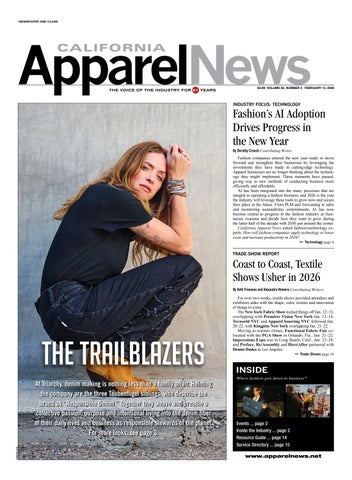

The Trailblazers
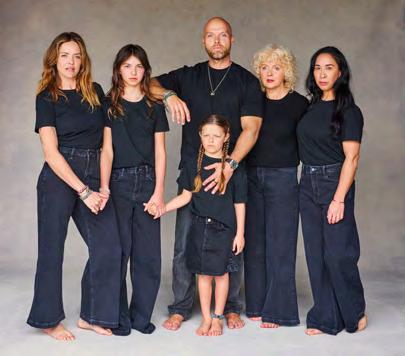
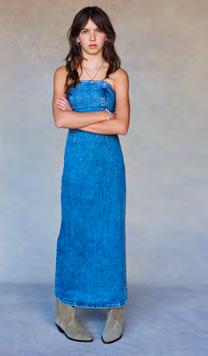
At Triarchy, denim making is nothing less than a family affair. Helming the company are the three Taubenfligel siblings, who describe the brand as “Responsible Denim.” Together they weave and breathe a collective passion, purpose and intentional living into the denim fiber of their daily lives and business as responsible stewards of the planet. For more looks, see page 3.
Fashion’s AI Adoption Drives Progress in the New Year
By Dorothy Crouch Contributing Writer
Fashion companies entered the new year ready to move forward and strengthen their businesses by leveraging the investments they have made in cutting-edge technology. Apparel businesses are no longer thinking about the technology they might implement. Those moments have passed, giving way to new methods of conducting business more efficiently and affordably.
AI has been integrated into the many processes that are integral to operating a fashion business, and 2026 is the year the industry will leverage these tools to grow now and secure their place in the future. From PLM and forecasting to sales and monitoring sustainability commitments, AI has now become central to progress in the fashion industry as businesses examine and decide how they want to grow during the latter half of the decade with 2030 just around the corner. California Apparel News asked fashion-technology experts: How will fashion companies apply technology to lower costs and increase productivity in 2026?
Coast to Coast, Textile Shows Usher in 2026
By Kelli Freeman and Alexandra Romero Contributing Writers
For over two weeks, textile shows provided attendees and exhibitors alike with the shape, color, texture and innovation of things to come.
The New York Fabric Show kicked things off Jan. 12–13, overlapping with Première Vision New York Jan. 13–14. Texworld NYC and Apparel Sourcing NYC followed Jan. 20–22, with Kingpins New York overlapping Jan. 21–22. Moving to warmer climes, Functional Fabric Fair colocated with the PGA Show in Orlando, Fla., Jan. 21–22. Impressions Expo was in Long Beach, Calif., Jan. 21–24, and Preface, Re/Assembly and Here|After partnered with Denim Dudes in Los Angeles.

GUESS JEANS Opens Los Angeles Homecoming Flagship





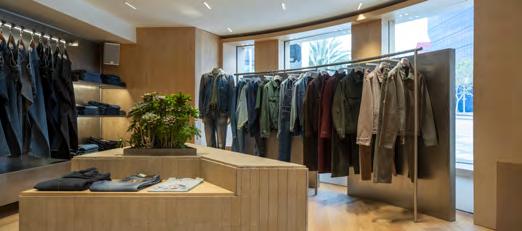
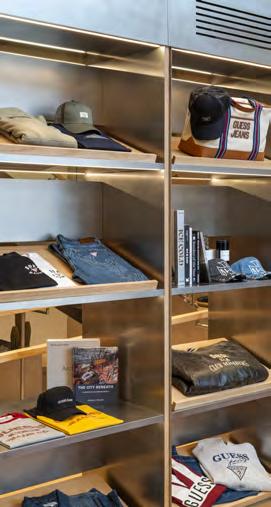
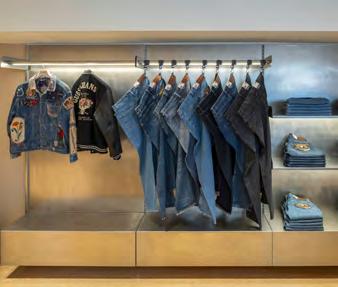
GUESS JEANS opened its Los Angeles Homecoming Store at Melrose Avenue and San Vicente Boulevard Jan. 31, signaling a return to the brand’s California roots and the next phase of its global retail strategy. Led by Chief New Business Development Officer Nicolai Marciano, the two-story, 3,000-square-foot flagship is positioned as more than a retail location, blending product, design and community engagement.
Built as a stand-alone structure, the store features sustainable materials and a flexible layout designed to support customization, creative collaboration and live programming. The space reflects a shift toward experiential retail, with architecture and storytelling playing a central role in the customer journey.
The Los Angeles opening joins GUESS JEANS flagships in Tokyo, Amsterdam and Berlin, reinforcing the brand’s expansion as a global lifestyle platform. As GUESS approaches its 45th anniversary, the Homecoming Store underscores a renewed focus on heritage-driven innovation and culturally relevant retail experiences — Alexandra Romero




Inside the Industry
Fit3D, according to the body-scanning tech firm, isn’t always about innovation but rather about unlocking more value in the product. SNAP by Fit3D now runs on the Samsung Galaxy Tab A9+, making it more affordable and more available. By designing SNAP as software first, hardware constraints are removed while ROI is increased. No proprietary machines also means no shipping delays nor hardware maintenance. Designed primarily for fitness industries, Fit3D’s scanning technology can now also be used by apparel designers due to the precision of its measurements such as waist, chest, hip and more. Its sister company, WAIR, uses fit tech to reduce return rates and lead to conversions, meaning the days of multiple samples and tight margins are long gone.
Otis College Fashion Design juniors and seniors are paired with professional mentors each year who provide the students with insight into the future of fashion. Juniors focus on casual and active sportswear in the moderately priced market, including a sustainable design project, while seniors work on tailored garments and eveningwear for the luxury market. This year, seniors are leading a groundbreaking sustainability project in collaboration with modern fashion brand FRAME and the Salvation Army. At the beginning of the academic year, mentors provide design direction to their group of mentees. The recently announced mentors include six Fashion Design alumni. Juniors mentors include: Vera Neumann, Nike, Vuori and Wilsons Sporting Goods. Seniors mentors include: David Meister, St. John, Vince and Activision.
NuORDER by Lightspeed announced a new product launch at the recent NRF’s Big Show, where it introduced Marketplace, a centralized destination that lets retailers shop across brands in one consistent, intuitive experience. Built on NuORDER’s network of 500-plus global brands and retailers, Marketplace helps retailers respond to shifting demand without slowing the buying process. With buying cycles quickening as retailers try to keep pace with unpredictable demand, and with many moving away from seasonal planning in favor of month-by-month buying, Marketplace closes the long-standing gap in wholesale buying by allowing retailers to react to real-time demand without juggling multiple brand portals. “We are closing the loop from supply to store to sale,” said Dax Dasilva, founder and CEO of Lightspeed.
The AAFA recently released the 26th edition of the Restricted Substance List. The RSL covers 16 categories with more than 300 chemicals and is updated to reflect additions or changes to regulations and laws that restrict or ban certain chemicals in finished apparel, footwear, accessories and home textile products. “Getting dressed is a universal task. With full to-do lists and everyday responsibilities, Americans don’t want to stress about whether their clothes are safe or ethically made—they want to trust that they are,” said AAFA president and CEO Steve Lamar. “Resources like the RSL help American companies uphold strong due diligence and compliance programs so we all can feel confident that our clothing meets high standards for quality and responsibility.”





By Kelli Freeman Contributing
The two brothers and one sister behind family-owned Triarchy are trailblazers known for introducing responsible denim with a clear conscience to the market, transforming the denim industry one pair of jeans at a time.
“To me, plastic is future garbage we’re not going to make,” said Adam Taubenfligel, co-founder, creative director and responsibility lead at Los Angeles–based Triarchy.
Disgusted by the amount of pollution going into local waterways and trash in landfills caused by the denim industry, siblings Adam, Ania and Mark Taubenfligel tuned into “mindful consumption” and radical transparency, creating the first and only plastic-free stretch denim that allows the jean to biodegrade in under two years.
Continued Adam, “My brother, Mark, had a degree in business, our sister, Ania, was modeling at the time, so we could tick a lot of boxes just among the three of us. And the name was kind of a given—three heads of state as it were.”
“We all wear all the hats but also very different hats, so we lean into everything for all major decisions, but we all do very different things. And since we relaunched, my brother’s wife, Andrea Holmes, who was my best friend in high school, came in and is our CFO, so it’s a real family affair with the
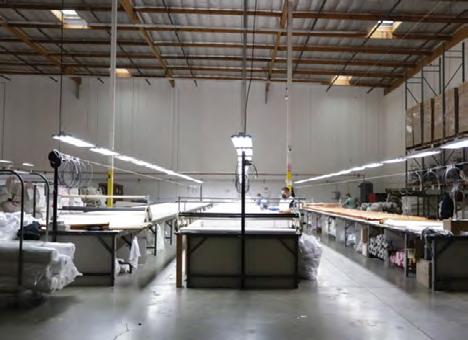
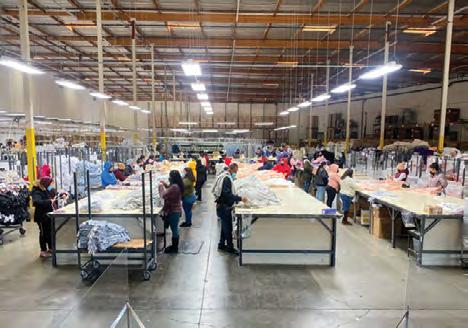
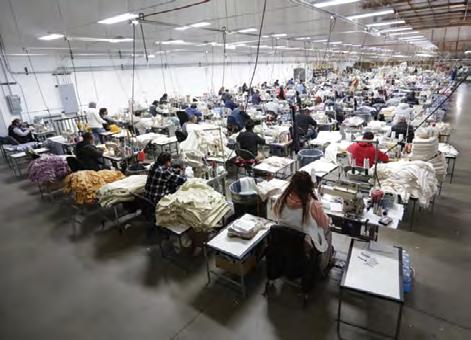
A peak on another higher mountain for Triarchy’s view of responsibility is new technologies that enable them to print and digitally dye jeans on demand with non-toxic inks that remove the entire wash process completely. A new lab in Los Angeles allows for stateside production again.
“We can literally do all this amazing stuff with partners that understand the mission we have and bring to market something that still gives each customer a garment that they love without any of the harmful offsets,” continued Adam.
“At the end of the day, I love storytelling more than anything, and, really, Triarchy is a vehicle to do incredible storytelling with positive benefits, from all of us doing the design and manufacturing to the people in the factories to the people who own the product.
“I laugh every day with my team; whenever we have a family call we’re always in a good mood. I don’t know how we manage that—it’s like we keep the vibe so high and I think it’s because of the alchemy that we’re creating with what we’re doing at Triarchy. It’s just nice. ●
Writer
How will fashion companies apply technology to lower costs and

increase productivity in 2026?
Shahrooz Shawn Kohan Chief Executive Officer AIMS360

Fashion companies will lean heavily on automation, real-time data and AI-driven decision-making to reduce costs and increase productivity across the entire supply chain. The biggest shift will be eliminating duplicate manual work—especially across purchasing, production, inventory and order fulfillment—by connecting systems into one unified workflow.
Brands will use AI to forecast demand more accurately, reduce overproduction and optimize reorders based on sell-through, open orders and vendor lead times. At the operational level, warehouse productivity will improve through smarter picking, barcode scanning, mobile workflows and fulfillment automation tailored to apparel’s complexity of colors, sizes and multi-location inventory.
On the sales side, companies will focus on omni-channel execution: keeping inventory accurate across retail, wholesale and ecommerce while automating order routing and fulfillment decisions to ship from the best location. This reduces split shipments, shipping costs and late deliveries while improving customer experience and reducing returns.
The most productive brands will also treat costing as a real-time discipline: tracking landed cost, labor and material changes instantly to protect margins. When brands can see profitability by style, channel and customer in real time—and take action quickly— they gain a major advantage.
Ultimately, technology in 2026 will be about faster execution with fewer people, fewer mistakes and greater control over cash flow, inventory and margin.
Alain Tessier Director of Product Management
Aptean

Fashion companies will operate in a world where AI is as essential as fabric. Technology will no longer be an add-on—it will be the backbone of every process, from design to delivery. The real transformation won’t come from experimental projects but from embedding AI into everyday workflows, eliminating friction and accelerating decisions.
When AI is contextualized for fashion and integrated into purpose-built applications, it becomes a catalyst for creativity and efficiency. Teams will spend less time chasing data or fixing errors and more time shaping collections, building supplier partnerships and elevating customer experiences.
This is the future we’re enabling with our AppCentral platform. By bringing contextaware chat and agent-led workflows into fashion solutions, we help automate routine tasks and move from insight to action instantly. The result: shorter cycle times, fewer mistakes and more output per person—powered by technology that understands the apparel industry.
Paul F. Magel President Computer Generated Solutions, Inc.

In 2026, the fashion companies that lower costs and improve productivity won’t be the ones chasing the next shiny technology headline. They’ll be the ones doing the unfashionable work of getting prepared.
There’s a lot of talk about AI in our industry—but AI only delivers value if the foundation beneath it is strong. That starts with data governance: cleaning up fragmented data; replacing aging, disconnected systems; and creating a single, trusted operational backbone across design, sourcing, production and finance. Without that foundation, automation only accelerates inefficiency. Productivity gains will also come from giving teams modern, intuitive tools that help them do their jobs. That includes tools like Copilot that surface the right information at the right time—to reduce manual work, speed decisions and allow experienced teams to focus on higher-value tasks instead of chasing spreadsheets.
Equally important is learning from each other. Fashion has always been a relationshipdriven business, and that matters more than ever. The brands that move faster in 2026 will be those actively networking, sharing best practices and exchanging real-world lessons with peers and partners.
Looking ahead, we’re focused on building on the partnerships we’ve developed through the BlueCherry community and continuing to work side by side with brands and partners across the industry. By combining modern, connected software with the real-world experience of teams who understand how fashion operates, we can help companies drive meaningful productivity gains and operational efficiency—not in theory but in practice.
Roy Avidor
Co-founder and Chief Executive Officer Cymbio

Fashion companies will transform productivity by adopting agentic commerce. This technology empowers AI agents to discover, recommend and sell products autonomously. It turns every digital conversation into a direct revenue stream.
Here is how this shifts the industry:
1. Becoming agent ready. Brands will lower operational costs by automating data preparation. Instead of optimizing for traditional search engines, technology will structure product data specifically for large language models. This ensures AI agents like ChatGPT or Gemini can accurately read and promote inventory without manual human intervention.
2. Zero-click transactions. Efficiency will soar as sales funnels become instantaneous. Fashion companies will enable zeroclick purchasing. Consumers will buy products directly within an AI conversation. This frictionless approach drastically reduces customer acquisition costs and creates a faster
path to purchase.
3. The agentic backbone. Cymbio acts as the essential bridge for this new economy. By automating the flow of inventory and orders between brands and AI platforms, we remove technical barriers. This allows fashion leaders to scale their presence on these new channels effortlessly.
Ultimately, technology in 2026 will evolve AI from a passive tool into an active seller. Brands that build this infrastructure will reduce overhead, maximize reach and maintain a competitive advantage in a market driven by intelligence.
Colin Marks Chief Executive Officer DeSL

Businesses within fashion will increasingly utilize technology in moretargeted, practical ways to lower costs and improve productivity, with AI embedded directly into everyday workflows rather than layered on as standalone tools.
Design smarter by using generative AI for image creation, 3D prototyping and digital fabric libraries. These tools allow teams to ideate faster and explore more options early in the design phase without relying on repeated physical samples. By visualizing products digitally and linking 3D assets to bill of materials data, brands can reduce material waste, shorten development timelines and eliminate costly rework before production begins.
Automate compliance by using AI document reading to automatically process supplier certifications, test reports and audit documents, extract key data, and update PLM records in real time. This reduces manual data entry, minimizes errors and strengthens traceability, helping brands prepare for evolving sustainability regulations and digital productpassport requirements.
Optimize workflows with built-in copilots. AI copilots embedded within PLM systems can summarize design feedback, draft specification sheets, flag anomalies in costings and respond to natural-language questions using trusted product data. By handling routine administrative tasks, copilots save time, improve data quality and allow teams to focus on higher-value work such as design, sourcing strategy and innovation.
Together these technologies enable fashion companies to work faster, operate more efficiently and scale responsibly in an increasingly complex global market.
Petersen Zhu President and Chief Executive Officer DigitBridge

Inventory risk, volatile demand, rising expenses and shrinking margins are forcing brands and retailers to fundamentally rethink how work gets done across merchandising, operations and distribution.
With so many factors at hand, incorporating technology can feel like a challenge that adds complexity. This isn’t true, however, as fashion companies should increasingly apply
technology not to add complexity but to remove it.
When incorporating technology, it’s important to “see the forest through the trees.” It’s easy to adopt point solutions to address specific challenges, but leading companies employ a wiser approach, consolidating fragmented workflows into unified operating systems that connect inventory, orders, vendors and customers in real time. This reduces manual reconciliation, eliminates duplicated efforts and allows smaller teams to manage higher volumes with greater accuracy. These cost savings have significant impact on the bottom line.
The right use of technology unlocks another key benefit: automation. Routine tasks such as order routing, replenishment decisions, vendor communication and content creation are handled by intelligent systems that respond dynamically to demand signals, allowing fashion operators to use live data to adapt pricing, allocation and fulfillment strategies as conditions change.
Productivity gains also expand beyond just newfound operational efficiencies. Digital sales operations across B2B, B2C and dropship can also be enhanced, as well as making marketplace, consignment and 3PL partnerships possible without adding operational head count.
The companies that excel in 2026 won’t be those with the most technology but those with the most integrated technology, driving simplicity, automation, lower costs and higher productivity.
Tim Check
Senior Product Manager, Professional Imaging
Epson America, Inc.

As the apparel industry continues to shift, fashion companies can turn to digital workflows to stay efficient, flexible and competitive. Today’s textile printers—whether direct-to-garment or transfer-based, such as dyesublimation and direct-tofilm printing—help create custom textile pieces on demand such as T-shirts, sweatshirts, socks and more efficiently and cost effectively.
Digital textile printing enables made-toorder production, eliminating excess inventory and reducing the risk of overproduction. It therefore reduces storage costs and avoids profits being tied up in products that may never sell. This approach minimizes waste, supports a healthier cash flow and ensures every product created already has a buyer.
Dye sublimation introduces a new dimension by allowing designers to precisely align patterns across panels and seams. This capability reduces fabric waste, eliminates manual alignment during cutting and sewing and ensures premium-quality garments such as dresses, activewear and uniforms. The result is a streamlined process that saves labor, minimizes errors and delivers visually stunning products.
By removing manual steps and setup time, digital workflows accelerate production from design to finished product, enabling businesses to fulfill more orders faster while maintaining consistent quality. With minimal








How will fashion companies apply technology to lower costs and increase productivity in 2026?

ogy to simplify operations, improve decisionmaking and build more-efficient, resilient businesses.
equipment, companies can expand into new markets—such as home décor or promotional products—and capitalize on seasonal trends, driving profitability and growth.
Tirsa Parrish Co-founder and Managing Partner Fashion Index

The technology that will lower costs in 2026 isn’t new—it’s finally integrated. And it’s agentic AI.
Most brands are utilizing AI for isolated tasks: enhancing searches, generating individual designs or drafting copy. The real shift is from generative to agentic AI—systems that execute complete workflows across platforms without human handoffs.
This means supplier matching based on real capacity and compliance history, not self-reported claims. Inventory allocation is driven by actual demand signals, not seasonal forecasts. All of the data are pulled from previously siloed systems—PLM, ERP, supplier databases, logistics platforms—that used to require days of manual reconciliation.
Fashion has been using specialized department-specific technology for years. Agentic AI is how the whole company finally connects into production workflows.
The productivity gains come from eliminating friction, not adding features. The brands that lower costs in 2026 won’t be chasing the flashiest tools. They’ll be the ones letting technology handle the workflows humans were never efficient at in the first place and redirecting that time toward the strategic decisions only humans can make.
Integration isn’t the future. It’s the unlock.
Ulla Hald Founder and Chief Executive Officer FAVES

In 2026, fashion companies will use technology to eliminate inefficiencies, not chase experimentation. With margins under pressure and teams stretched thin, the focus will be on tools that deliver immediate operational clarity.
Companies are moving away from disconnected systems and manual processes toward centralized visibility across buying, inventory and order management. When teams can see what they’ve ordered, what’s arriving and what’s selling in real time, they reduce overbuying, avoid costly mistakes and respond faster to demand.
Automation will further increase productivity by replacing spreadsheets, email chains and manual data entry with streamlined workflows. This allows lean teams to spend less time managing information and more time making strategic decisions that drive revenue. Usability will be a key driver of adoption. Fashion companies are prioritizing intuitive, easy-to-implement solutions over complex enterprise systems that require heavy training or IT support.
Ultimately, the brands and retailers that win in 2026 will be those that use technol-
Ana Friedlander Industry and Solution Strategy Director for North America Fashion Retail Infor

Modern retailers need to strategize against today’s market volatility, from rapid customer taste swings to global supply interruptions, more than ever before—and, often, more than their current tech stacks were built to handle.
The era of waiting is over, as technology innovation becomes a profitability strategy and means for cost-reduction in 2026. Brands looking to make a fast, meaningful impact on costs and productivity this year should prioritize their production and people.
Fashion companies must transition their generative AI technology outside of pilots or innovation labs: Industry-specific agents and processing mining tools are capable of so much more when embedded directly into business-critical systems. PLM, ERP and planning workflows imbued with advanced technology will automate decisions around material choices, replenishment and demand sensing that once required large teams. That kind of cross-organization automation means less labor per product and fewer manual handoffs, allowing you to increase your speed to market while decreasing error-driven production lags.
True advantage, however, comes from your people. Legacy systems and fragmented digital landscapes create cross-organization inefficiencies, especially when paired with fashion’s shrinking, highly specialized workforce. The industry’s talent spends disproportionate time on manual processes: Eliminate costly information siloes by migrating your workforce to a unified, cloud-based platform and, in parallel, explore agentic AI solutions to automate time-draining routine tasks that steal employee attention away from valuedriving projects.
The fashion industry’s pace isn’t slowing down. But by deploying technology, your business can have the insight-backed capability to turn 2025’s challenges into 2026’s opportunities.
Scott Pearson Vice President of Sales and Marketing
Jesta I.S.

By 2026, after years of experimentation and occasional hype, AI and digital tools are finally delivering tangible, practical value in fashion retail— moving beyond pilots to core operations that drive real cost savings and productivity gains amid ongoing supply-chain volatility. The focus is on precise demand alignment, efficient inventory management and reduced waste through two proven trends: in-store mobility with unified commerce and mature AI-driven supply-chain optimization.
The first trend equips store associates with mobile devices fully integrated into unified commerce platforms, delivering a real-time,
single view of inventory and orders across all channels. This empowers seamless tasks such as mobile checkout, instant inventory checks and omni-channel fulfillment directly on the sales floor. Real-time updates on fulfillment requests and order status ensure complete visibility for associates and customers alike. Tools like RFID-enabled mobile scanning accelerate inventory counts and receiving by up to 10 times with near-perfect accuracy, dramatically boosting labor productivity in stock management. By eliminating inventory silos, unified commerce prevents duplications, imbalances, stockouts—and associated lost sales—and excess holdings that inflate carrying costs while significantly improving sellthrough rates.
The second trend harnesses mature AI and machine learning for superior demand forecasting, automated purchase orders, precise allocation and dynamic replenishment—both pre-season and in-season. Pre-season, AI integrates historical sales, trend data and external signals, for example, weather and market trends to determine accurate initial buy quantities and channel-location allocations. Inseason, agentic AI continuously refines forecasts, automates replenishment triggers and— keeping a human in the middle—prescribes adjustments to delivery timings to mitigate disruptions while optimizing stock transfers for hyper-local demand. The result: leaner inventories, lower holding costs, fewer markdowns, faster decision cycles and proactive, data-driven agility that enhances margins.
Through these proven technologies, fashion companies align supply precisely with demand, unlocking substantial efficiency gains and strengthened profitability in a highly competitive landscape.
Alison Bringé Chief Marketing Officer Launchmetrics

In a challenging economic climate, marketing investment is often one of the first areas put under intense scrutiny. Brands are reassessing how they allocate campaign spend by scaling back on broad ambassador strategies and large-scale activations in favor of more-targeted, performance-driven approaches.
What’s critical in this moment is access to the right data technologies. Decision-makers need clear visibility into which channels, voices and tactics are truly driving impact so they can confidently double down where it matters and pull back where it doesn’t. At Launchmetrics, we focus on equipping brands with actionable insights that bring clarity to marketing performance—empowering teams to optimize processes, make smarter investments and maximize results in an increasingly competitive landscape.
John Brearley President of the Americas Lectra

In 2026, fashion companies will use technology to lower costs and boost productivity in two major ways.
First, they need to embed digital tools and AI across their entire value chain as these have become non-negotiables to remain competitive. From design and production to collaboration, traceability and marketing, AI is streamlining workflows through automated data collection, categorization and content generation, reducing the reliance on manual efforts and enabling brands to operate more efficiently, productively and with greater agility.
By giving technology greater access to data across the organization, brands can produce better, not more. With technology able to identify trends earlier in the process and surface clearer insights, companies can better avoid overstock, refine their assortments and optimize their omni-channel distribution. Not only does this directly lower costs but it also reduces the amount of wasted goods and the need to rely on markdowns.
Second, using technology to reconfigure a brand’s supply chain will deliver significant productivity gains. As brands work to diversify production hubs and respond to geopolitical and regulatory pressures, AI can be used to help manage complex environments, improve flexibility and traceability, and reduce operational risks. These tools allow companies to better anticipate disruptions, optimize sourcing decisions and operate closer to end markets.
Ultimately, productivity gains and cost reductions will come from producing smarter rather than producing more, reducing excess inventory and optimizing distribution. Brands that invest early in digitalization strategies, traceability and AI to optimize their value chains will be best positioned to succeed.
Frank Maeder President NedGraphics and Optitex

In 2026, fashion companies have a tremendous opportunity to significantly reduce costs and increase productivity by rethinking how technology connects the entire product-development process across the full value chain. For too long, textile design, pattern development and production have operated in silos, creating inefficiencies, reworks and unnecessary expenses.
At NedGraphics and Optitex, we see clear momentum toward fully integrated, end-toend workflows that unlock both operational and creative value. By seamlessly connecting production-ready textile design with advanced 2D pattern development and 3D simulation, brands and their suppliers can ensure that accurate data flows from concept to manufacturing, eliminating duplication, reducing errors and accelerating development.
This connected approach also makes sustainability actionable. Digital sampling and virtual prototyping significantly reduce

EXPERIENCE COUNTS.
As one of the nation’s leading providers of factoring and financing, we match our 100-plus years of experience with flexible solutions and actionable insights. Our team has the financial savvy to help companies unlock liquidity and manage credit risk so they can fulfill business demands and keep growing stronger. Let’s explore how we can put our experience to work for you.

How will fashion companies apply technology to lower costs and increase productivity in 2026?
physical samples, material waste and transportation, allowing brands to deliver highquality, creative collections with a smaller environmental footprint. Real-time data shared through the NedGraphics and Optitex cloud solution delivers greater visibility and enables faster, smarter decision-making.
Just as importantly, globally integrated workflows empower people. Designers, patternmakers and manufacturers can collaborate more easily, experiment freely and bring ideas to life faster. Creativity thrives when barriers are removed. Cloud-based solutions such as licensing, nesting or asset sharing enable greater flexibility and efficiency where speed to market is critical.
The real productivity gains in 2026 will come from breaking down silos and adopting connected digital ecosystems. An integrated NedGraphics and Optitex workflow empowers fashion and apparel companies to work smarter, scale efficiently and respond faster to market demands while lowering costs and improving overall product quality.
Preston Plowman Co-founder and Chief Executive Officer Onbrand

For years most fashiontechnology investment has gone toward sales, marketing and commerce. Design and product development teams, where the majority of cost and complexity originate, have been left largely untouched. In 2026, that imbalance is finally being corrected, and it represents one of the biggest opportunities to lower costs and increase productivity across the industry.
The combination of AI and modern product-life-cycle management is transforming how products move from idea to production. AI is dramatically accelerating design ideation and iteration, allowing teams to explore more concepts, refine details faster and make decisions earlier.
When those AI outputs connect directly into PLM—feeding tech packs, materials, costing and timelines—brands eliminate manual work, reduce errors and collapse long development cycles.
The most tangible savings are coming from fewer physical samples and fewer sample rounds. Better digital visualization, clearer data and real-time collaboration across design, development and sourcing enable teams
to align earlier and get closer to right-firsttime execution. That reduces material waste, air freight and weeks of calendar time per style. Brands investing in AI-enabled PLM are empowering smaller teams to manage more products with greater confidence, speed and control.
Paul Bentham Chief Product and Technology Officer Oritain

Fashion companies will increasingly rely on technology to lower cost and increase productivity by creating supply chains that are more transparent, reliable and data driven.
What we’re seeing is a shift toward tools that turn complex information into practical intelligence. At Oritain, our forensic origin verification and advanced data science help leading brands and manufacturers streamline decision-making, reduce uncertainty and strengthen confidence in their sourcing. The ability to verify raw materials and finished goods with forensic accuracy means fewer delays, fewer disputes and greater trust across supplier networks, ultimately reducing operational friction and cost.
To support this, we’ve introduced the Oritain Membership Program, creating a trusted network of origin-verified buyers and suppli-
ers with a shared commitment to transparency. Each member receives a tailored verification program, with samples collected, tracked and analyzed under consistent forensic standards. Results are delivered in real time through a secure digital platform, giving members immediate clarity and enabling them to act faster and more efficiently.
Oritain uses AI models and advanced statistical techniques to efficiently evaluate large amounts of data, streamline decision-making and balance the need to catch anomalies without disrupting genuine supply chains, supporting faster and more informed risk assessments. Importantly, AI strengthens, not replaces, the scientific expertise that underpins our methodology. By combining analytical testing with AI-driven modeling, we enable scalable, efficient origin verification that supports both responsible sourcing and operational productivity.
This ability to pair science with intelligent technology and data systems is becoming central to driving cost-effective, resilient performance in apparel manufacturing. ●
Responses have been edited for clarity and space.











New York Fabric Show Provides High-Quality Offerings
By Kelli Freeman Contributing Writer
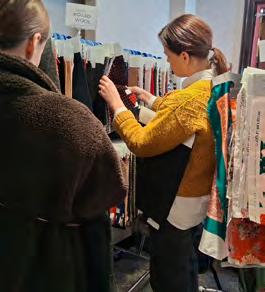
A who’s who of designers, costumers, event planners, online and bricks-and-mortar fabric stores from over 35 states attended the New York Fabric Show (produced by The Fabric Shows) Jan. 12–13 at the New Yorker Hotel in Manhattan.
Offerings included a vast range of quality textiles—“We are the little show with the best suppliers!” said show producer Susan Power—and this was born out by pleased buyers.
“I found an iridescent chiffon at [Mountain View, Calif–based] Exotic Silks . I use the fabric frequently, and recently it has been very difficult to source,” said highend designer Maria Barraza of BarrazaStyle in Stonington, Conn.”
Other exhibitors, including a contingent from Los Angeles, filled the bill as well.
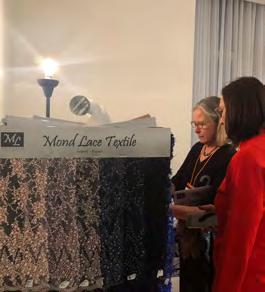
“Our best-selling items are lace and embroidery tulle, intricate, decorative textiles in fashion and bridalwear,” said Hanna Niku, owner and president of Mond Lace Textile, Inc
“Customers want something different, not
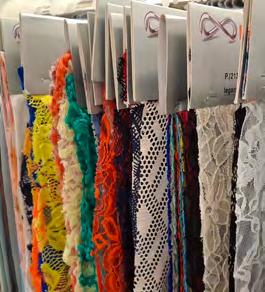
something you see every day. Our top products are the woven and jacquard knits, mostly novelties,” said Menny Shaoulian, owner of Legacy Textile Inc.
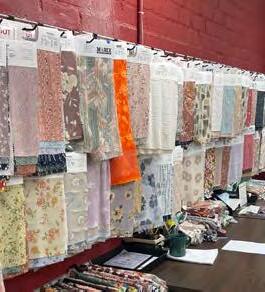
“Our printed apparel fabrics are unique because they combine breathable and durable premium-quality materials with high printing technology to achieve and maintain vibrant, long-lasting colors and sharp
details after repeated wear and washing,” said Abraham Yadegaran, president of MOREX Fabrics
According to Eugenia Pak, marketing director of the Ermani Group Inc. in New York, “[The New York Fabric Show] is a must-attend event for professionals in the fashion and textile industries.” Ermani specializes in sustainable apparel textiles with a luxurious
Trends and Innovation at Première Vision New York
By Kelli Freeman Contributing Writer
A globally vibrant mix of over 2,100 professionals from the fashion and textile industries came together at Première Vision New York Jan. 13–14 at Tribeca 360°
Key players shared their interest in the latest developments, trends, textile innovations, sustainable materials and exceptional craftsmanship.
Brands included Alexander Wang, Anna Sui, Anthropologie, Favorite Daughter, John Varvatos, Loveshackfancy, Macy’s, Monique Lhuillier, Nordstrom, PVH and Rebecca Taylor
Two days of programming highlighted topics from “Innovations in Fashion Circularity” to “Trends x AI Innovation” and “Spring/ Summer ’27 Colors.”
Les Tricots Élégant Inc. proudly pro -
duces high-quality versatile technicalperformance fabrics in Montreal. “Our top-selling products are our jacquard fabrics designed for the fashion, activewear,
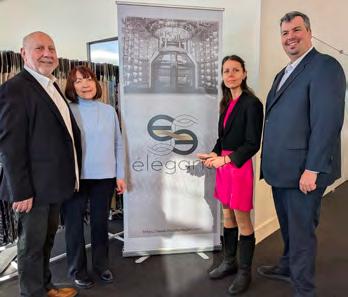
swimwear and intimate-apparel markets. This includes our double-knit and singleknit jacquards, laces and mesh,” said CEO Maxime Theriault.
Global Innovation and Technology Featured at Texworld NYC


By Kelli Freeman Contributing Writer
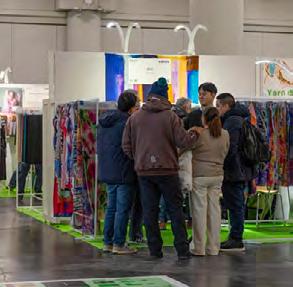
Thousands of global textile and apparel professionals braved the winter storm for three days of sourcing, discovery and industry exchange at the winter editions of Messe Frankfurt ’s Texworld NYC , Apparel Sourcing NYC and the colocated Printsource, held Jan. 20–22 at the Javits Center
Exhibitors from 18-plus countries participated in the premier textile sourcing event in New York. Dozens of product categories
were represented across the show floor. Five country pavilions—Bangladesh, Taiwan, Korea, Mexico and Uzbekistan—highlighted the global participation.
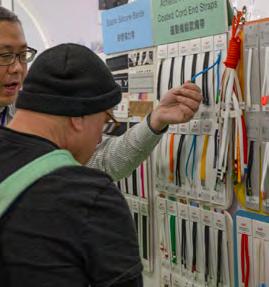
The newly expanded Innovation Hub demonstrated how technology solutions, next-generation materials, industry services, solutions supporting digital transformation and AI can be applied across product development and production workflows.
“This was my first time exhibiting at Texworld NYC as an innovator, and it was truly an amazing experience,” said Mari Medina,
hand and performance fabrics from the finest mills in Italy and France. Said Pak, “Fabrics such as Ecovero, FSC-certified viscose, BCI and organic cotton and recycled wool have become some of our strongest sellers.”
The show also included an off-site New York manufacturing tour and presentations that focused on the benefits of AI for fashion designers. ●
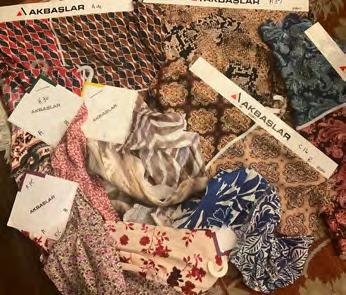
Akbaslar Tekstil from Bursa, Turkey, provides fabrics and garments for soft dressing including dresses, tops and skirts. “We’ve been a Turkish Fortune 500 company for many years,” said Ron Sheridan, president of STC Textile Inc., U.S. sales representative for Akbaslar Tekstil. “We’re the largest European textile printer, producing fabrics and garments for Europe’s biggest fashion retailers and brands from Turkey, China and Morocco.”
“The strong attendance and the high quality of visitors over these two days clearly demonstrate the relevance of Première Vision New York within the current market landscape,” noted Thierry Langlais, vice president of operations. “Despite a challenging global context, the show proved to be a true place for business exchanges and forwardlooking dialogue,” added Langlais. ●
founder and creative director of April Knit Studio. “I met so many new entrepreneurs who are just starting their brands and are strong potential clients for my business. Texworld NYC is a great platform to connect, build relationships and grow internationally.”
There was strong interest in how artificial intelligence is shaping the future of the textile industry. “With this momentum, we are proud to further roll out Texpertise Focus AI as a global program focus throughout our more than 60 textile shows in 13 countries worldwide to
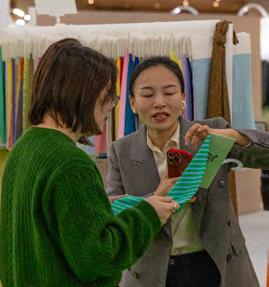
foster orientation on AI in the industry,” said Olaf Schmidt, vice president textiles and textile technologies at Messe Frankfurt GmbH. Texworld and Apparel Sourcing Los Angeles will take place July 21–23 at the California Market Center , immediately followed by the New York editions July 29–31 at the Javits Center. “We look forward to welcoming the industry back on both coasts this July and continuing the progress seen at this winter edition,” said Jennifer Bacon, vice president of fashion and apparel, Messe Frankfurt Inc. ●
Les Tricots Élégant Inc.
Legacy Textile Inc.
Akbaslar Tekstil
Ermani Group Inc.
Mond Lace Textile, Inc. MOREX Fabrics
Innovation Hub Korea Pavilion

Kingpins New York Cultivates Storytelling in Denim
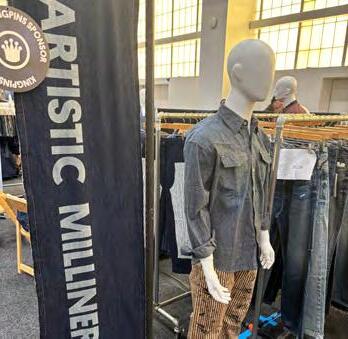
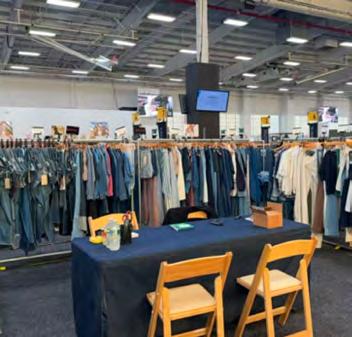
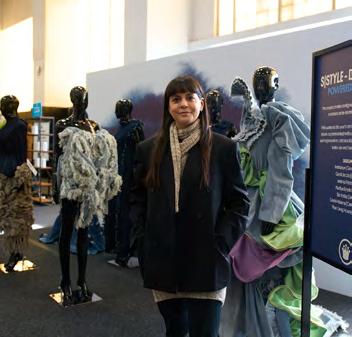
Nearly 70 high-caliber and innovative mills, manufacturers and suppliers in the international global denim supply chain exhibited at Kingpins New York, held at Pier 36/ Basketball City Jan. 21–22.
The invitation-only denim-sourcing show saw 584 attendees representing large retailers, brands and designer labels including Marc Jacobs, Karl Lagerfeld, Levi’s, Calvin Klein , Ralph Lauren and American Eagle Outfitters
“Kingpins is about storytelling, fresh ideas and bringing the global denim community together in a meaningful way,” said Vivian Wang, CEO of Kingpins.
“We’re excited to showcase innovation merging performance with creative freedom,” said Katie Tague, SVP global market-
ing and sales, Artistic Milliners. “We highlighted our limitless digital print capability and functional stretch innovations, including Lycra’s FitSense technology. We’re also seeing rigid, non-stretch fabrics continue to gain momentum as authenticity remains a key driver.”
Show highlights included “The Lil Denim Show Presents General Experiment,” an installation showcasing recent work of Laurence Wei, designer of New York–based General Experiment. Wei’s collection tells a deeply personal story about “shared moments, fragmented memories, decay and emotional erosion” inspired by Wei’s experience watching how Alzheimer’s affected his grandfather.
“S|STYLE—Denim Lab powered by Kering,” an installation curated by Giorgia Cantarini, featured designers working with Ker-
ing, the luxury powerhouse that owns such brands as Gucci, Saint Laurent and Balenciaga. Project designers experimented with advanced dyeing, washing and regenerativecotton solutions.
Kingpins Denim Talks seminars and new initiatives inspired creative, outside-the-box thinking about what’s next for the industry.
The Vintage Showroom’s Doug Gunn returned to the show with an installation exploring the influence of artist Jackson Pollock.
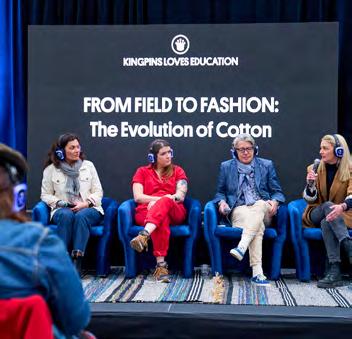
Cotton Incorporated’s Jennifer Lukowiak led a discussion “From Field to Fashion: The Evolution of Cotton” with a trio of industry experts including Avalo’s Tricia Carey, Artistic Milliners’ Katie Tague; Supima’s Buxton Midyette and Tonello’s Alice Tonello.
“One of the key takeaways is that cotton, as a natural fiber, offers a wide range of op-
Functional Fabric Fair Colocates with PGA Show
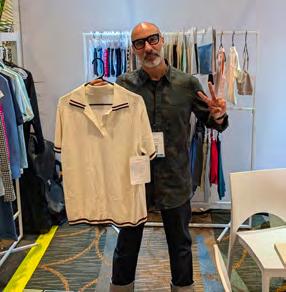
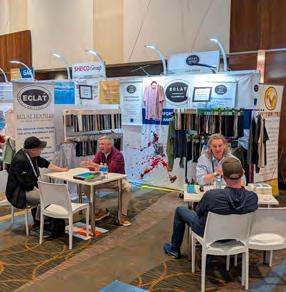
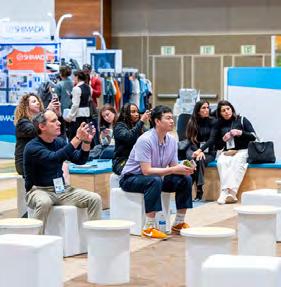
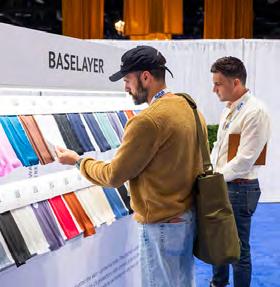
With much anticipation, Functional Fabric Fair powered by Performance Days successfully launched its winter edition colocated with the PGA Show, the world’s largest global business gathering for the golf industry, at the Orange County Convention Center in Orlando, Fla., Jan. 21–22.
Attendees were comprised of more than 1,100 sourcing professionals plus golf, lifestyle, performance and athletic brands. Exhibitors showcased the latest innovations in high-performance functional fabrics, trims, components, sustainability and accessories.
“I saw more brands in the golf/tennis/
pickle ball arena this season,” said Jay Wetherald, international sales, at Los Angeles–based Eclat Textiles, whose best-selling fabric is the Heather and solid Moss Jersey with a high spandex content and buttery hand for performance and breathability.
“I personally like the show colocated with the PGA. I love golfing, and I think we can help PGA brands with their sourcing needs,” said Ray He, business director at JOOYA Textile in Irvine, Calif., whose top-selling fabric is a navy seersucker with breathability, a soft hand and UV protection.
CASLA , an American company headquartered in Medellín, Colombia, “specializes in swim out of Colombia but also
tions for apparel—and denim in particular— due to its comfort, breathability, durability and circularity,” said Lukowiak. “Selecting the right cotton requires careful consideration of fiber type, yarn construction and finishing processes,” added Lukowiak, director of supply-chain marketing at Cotton.
Sustainable denim mill Freedom Denim focuses on eco-friendly, conscious manufacturing in China, utilizing recycled materials to create innovative, high-performance denim.
“For the Spring 2027 season, our top-selling products are blended mid- to top-weight fabrics with strong storytelling through performance, texture and hand feel,” said Michael Morrell, CEO and president, Western hemisphere and Europe. “These include seeded and PFD in light weights and textures and heritage-inspired bottom and top weights with added texture,” said Morrell. ●
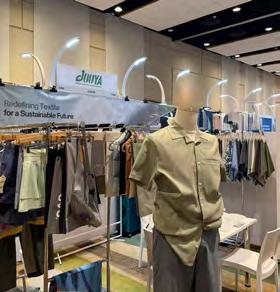
cut-and-sew knits,” said Adnan “Addy” Jinnah, director of partnerships at California Apparel Services Los Angeles. Its top seller is a machine-knit Pima-cotton shortsleeve sweater polo with an elevated hand feel and fiber traceability.”
The event also delivered two days of Expert Talks and Trend Forum programming, reinforcing its role both as a sourcing destination and an education and thought-leadership platform.
“The response exceeded expectations,” said Steve McCullough, event vice president of Functional Fabric Fair. “Launching in Orlando alongside the PGA Show allowed us to connect brands exactly where critical
sourcing and material decisions are being made. The level of engagement on the show floor confirmed there is strong demand for a focused sourcing event dedicated to performance and sustainability, especially within the golf and activewear markets.”
Said PGA Show Vice President Marc Simon, “The launch of the Functional Fabric Fair at the PGA Show is both a natural evolution and a full-circle moment for our industry.” Functional Fabric Fair originated at the PGA before evolving into a successful stand-alone event. Its return as a colocated experience reinforces the PGA Show’s role as a catalyst for innovation across the golf apparel ecosystem.” ●
Freedom Denim
Denim Talks Artistic Milliners
S|STYLE—Denim Lab powered by Kering
JOOYA Textile
Functional Fabric Fair color exhibit
CASLA Eclat Textiles Expert Talks
By Kelli Freeman Contributing Writer
By Kelli Freeman Contributing Writer
Impressions Expo Goes Beyond the Basic Blank


By Alexandra Romero Contributing Writer
The Jan. 21–24 edition of Impressions Expo in Long Beach, Calif., reflected an industry evolving beyond “basic blanks” toward premium foundations, vertically integrated manufacturing and decoration technologies that enable speed and customization.
Next Level Apparel, with production in Central America and a transition toward exclusively U.S.-sourced cotton, is a premiumstyle blanks apparel company serving decorators, promotional-product distributors and retail brands. “The company’s focus is to elevate blanks beyond basics into fashionforward essentials,” emphasized account executive Michael Brennan.
American Apparel highlighted its Fine Jersey Collection as a core product line, with the 1301 tee remaining its top-selling style. Garments are produced in Central America and Bangladesh using U.S. cotton. Georgia Stone, brand specialist, noted that “music companies and lifestyle brands continue to drive demand for affordable, recognizable styles.”
LA Apparel differentiates itself through complete vertical integration at its South Los Angeles factory. All cutting, sewing and distribution occur on-site, with woven pieces and 100 percent cotton garments representing top sellers. Heavyweight and oversized tees remain strong trends, while lighter, more-fitted silhouettes are also
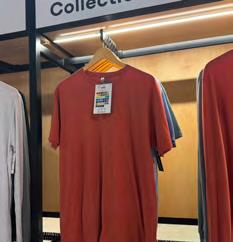
gaining traction.
US Blanks in Vernon, Calif., produces 100 percent U.S.-made garments with custom-dye and -print capabilities. “Our value proposition centers on domestic production and customization flexibility,” said account executive Lisa Davidson. The brand serves high-end retailers and music-merchandise companies, offering sustainable options such as organic cotton jerseys.
Bella+Canvas sources fabric internationally, assembles it in Central America and dyes it in Los Angeles. The company manufactures blanks exclusively for wholesale B2B customers and offers more than 300 colors. “Our blank is the blueprint,” explained VP of Sales and Marketing Megan Spire. Bella+Canvas encourages creating fully private-label products.
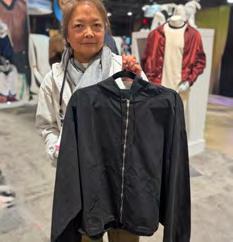
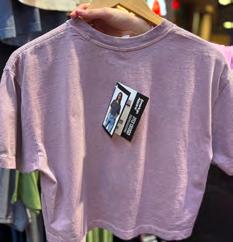
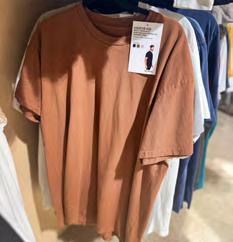
USA Standard Apparel offers privatelabel programs and blank collections built on vintage-inspired aesthetics. The company knits its own fabrics in-house, outsourcing only garment dyeing. “Quality and reliability separate us,” said CEO Sean Sassounian. Top styles include rocker tees and cropped rocker tees, widely used for music merchandise.
Supacolor presented heat transfers not as a one-size-fits-all solution but as a customizable system designed for diverse garment types and production environments. It specializes in apparel adhesives, inks, powders and transfer media engineered for durability. “The ink and glue don’t fade or scratch,” explained commercial director Haziel Mitchell. Supacolor serves primarily B2B clients such as contract decorators and sports-uniform producers.
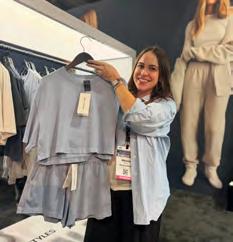
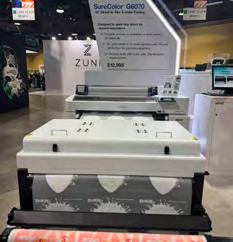
Epson showcased its newest roll-to-roll DTF printer, the SureColor G9070, designed for high-speed production. “We pride ourselves on reliability, quality and consistency, especially when it comes to color and highfidelity detail,” said product manager Paul Morales. Epson’s customers include apparel decorators, high-volume transfer facilities and small businesses using earlier-generation machines.
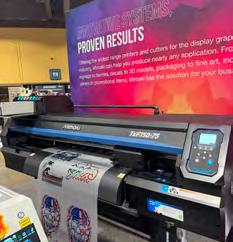
Mimaki highlighted its TxF300-75 sustainable-fabric printing solution. The printer is 32 inches wide and can print skin-friendly textiles. “We have a mission to help small businesses grow and large businesses increase production,” said training and applications supervisor Carissa Terwey. The company supports apparel brands and print labs.
Kornit offers entry-level systems to platforms capable of printing 400 shirts per hour. Its low-temperature curing inks allow printing on blends without dye migration. “We’re seeing strong adoption because major brands need solutions that combine speed, reliability and print quality at scale,” said Ilan Elad, president of the Americas at Kornit Digital.
As brands increasingly treat blanks as brand foundations and technology as growth infrastructure, the industry continues to shift toward higher-value, higher-margin B2B solutions. ●
Preface, Re/Assembly, Here|After, Denim Dudes Form Practical Pathways
By
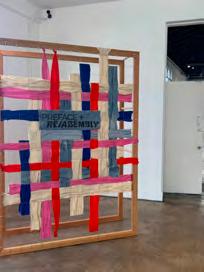
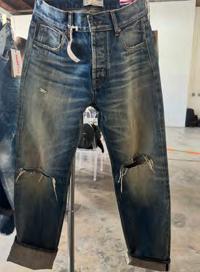
Preface, Re/Assembly and Here|After partnered with Denim Dudes to host an event in Los Angeles Jan. 28–29 to explore how fashion can move from sustainable concepts to sustainable production.
“This isn’t just a marketplace, it’s a community,” said Betsy Franjola, founder and president of Preface, which was created to promote sustainability-focused suppliers. “The brands coming here want to be educated. They want to understand how to make changes for the better.”
Denim Dudes founder Amy Leverton said the partnership reflects a growing demand for industry-wide connections. “It’s about bringing the community together. We noticed there
was a need for that.”
Trend forecaster Shannon Reddy framed the event around Denim Dudes’ 2026 Denim Overview Report, outlining ten forces shaping denim’s future, including manufacturing under pressure, retail compression and a “circularity stall.” Reddy noted that recycling alone cannot keep pace with production volume, signaling a shift toward pragmatic, scalable material solutions rather than experimental concepts.
For example, NAIA produces both fiber and yarn exclusively in Tennessee and distributes globally. According to Joy Gruver, business development leader for North America, NAIA’s value lies in consistency and education. “We want customers to understand that
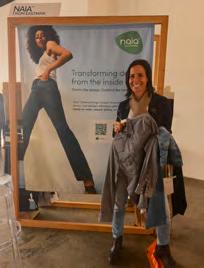

we are a special fiber,” Gruver said.
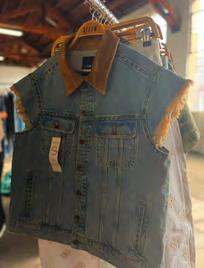
Turkish manufacturer Strom Denim showcased water- and energy-reducing machinery capable of cutting water usage by 80 to 90 percent. Founder and CEO Omer Mert said, “The majority of sustainability comes from fabric,” pointing out their use of organic materials and non-harmful chemicals such as sodium hydrosulfite or synthetic indigo.
Los Angeles–based Vector Apparel Projects highlighted a domestic, hyper-local model. Fabrics are dyed and knit locally with a supply chain roughly ten miles and an emphasis on California-grown regenerative cotton. “It’s about people,” said founder and CEO Dana Weinstein.
Desert Studios , a Dubai-based denim
manufacturer and the region’s only jeans producer, sources fabrics globally and operates with Italian machinery. Managing Director Khurram Razaq said Desert Studios supplies both European and U.S. brands, underscoring how geographically diverse manufacturing hubs are becoming essential to risk mitigation and scale.
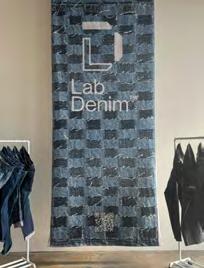
Swiss-owned Lab Denim introduced “New Blue” bio-based dyes designed to color only natural fibers at the fiber stage rather than the finished garment. Chairman Dr. Mheidle described the process as the world’s most sustainable denim-dyeing method, eliminating water waste and toxic chemistry while achieving wear patterns comparable to traditional indigo. ●
American Apparel
LA Apparel
USA Standard Apparel
Strom Denim
Next Level Apparel
Supacolor
Desert Studios NAIA
Epson
US Blanks
Juki
Vector Apparel Projects
Bella+Canvas
Mimaki
Lab Denim
Alexandra Romero Contributing Writer
RESOURCE GUIDE
Switzerland-based Livinguard Technologies Shapes the Future of Sustainable Textiles
Breakthrough innovations that allow for tangible progress toward more-sustainable manufacturing practices are more vital than ever as the apparel industry faces mounting environmental challenges and increasing public scrutiny.
In this exclusive conversation, California Apparel News speaks with Sanjeev Swamy, founder and Chief Executive Officer of Livinguard Technologies. The Swiss materialsciences company is working on the forefront of innovation to shape a more sustainable future for textiles.
What do you perceive as the biggest environmental challenges in the textile industry today?
It is difficult to choose where to start—there are so many. First, the industry consumes absurd amounts of water. Furthermore, it is responsible for 20 percent of industrial wastewater. Moreover, the carbon footprint of the sector trumps emissions from even the aviation industry. Consumers washing clothes uses again unthinkable amounts of water and energy, and on top of that releases countless microfiber and microplastic particles into waterways. Finally, massive amounts of textiles land in the trash every year and continue to pollute the environment for centuries.
It sounds like it would be time to rethink how we produce and consume textiles. What is the holdup?
Transforming cellulose dyeing
Livinguard EFD is an additive that enables sustainable saltfree dyeing of cellulose fabrics with significantly lower water and energy consumption. This innovative system has the potential to reduce energy and water consumption by up to 50 percent and drastically lower the chemical burden in the effluent. At the same time, the technology increases operational efficiency and the cost position of the manufacturers that adopt it.
Fashion
CIEBON
www.ciebon.com
CIEBON is a Los Angeles contemporary brand known for its boldly artistic prints, playful embroideries and designs that feel like wearable art. Their unconventional aesthetic is especially popular among women who make bold, thoughtful style choices that elevate their daily lives. The brand is well known for balancing sophistication and creativity in their fashion forward designs. Visit CIEBON at MAGIC Las Vegas, Booth #60400.
FRNCH
www.frnch.fr/en
www.jijistudio.fr/en
Through its authentic approach, FRNCH captures the particular essence of the independent woman who breaks free from conventions. She dares to use color and prints, blurring the lines between chic and casual. Its goal: to cultivate curiosity and originality. With its contemporary and elegant style, JIJI empowers every woman to embrace simplicity, elegance, and modernity. Visit FRNCH at MAGIC Vegas: FRNCH: 60716, JIJI: 60916 and MAGIC New York: FRNCH: 602, JIJI 7915
Finance
CIT Commercial Services
solely count on consumers to reshape the industry through their demand but need technological innovations like those that we are working on.
What makes these solutions from Livinguard Technologies unique?

Sanjeev Swamy Livinguard Technologies Founder and Chief Executive Officer
It would be all our responsibility to change our purchasing behaviors and buy fewer clothes that are used longer. Unfortunately, the opposite is happening. Fast-fashion is booming. We produce more and cheaper textiles, which are worn less and discarded quicker. Hence, I don’t believe we can
Fighting microplastic pollution
Livinguard Better Fresh is a textile finishing chemistry that provides both wash-durable, biocide-free odor-control functionality while reducing the shedding of microfiber fragments by up to 80 percent. This solution allows brands to reduce the plastic pollution of their materials during the consumption phase at scale and cost efficiently. At the same time, the solution allows customers to adopt more-sustainable laundry practices as our powerful odorneutralization mechanism allows them to wear their clothes longer and wash less and at lower temperatures.
All too often, unfortunately, sustainable innovations require significant capital investments upfront— for which there is no capital available. In other instances, they result in higher operating costs that cannot be absorbed by an industry that already now operates on razor-thin margins. Our approach to innovation stands out because we enable progress on sustainability in a minimally invasive, scalable, and cost-neutral or even costbeneficial way. All our technologies are drop-in solutions that are compatible with existing equipment and hence can be easily adopted at scale.
What drives you personally to take on such challenges?
I have two wonderful daughters living in India. As a father, I want to make sure the world they live in and the world many other daughters grow up in will be a better place. Livinguard therefore has a very clear mission— to use our technology platform to safeguard the well-being of people and the environment. With a mission as important as ours, giving up is simply never an option.

info@livinguard.com livinguard.com linkedin.com/company/livinguard-technologies
middlemarket companies between $1 million and $30 million. WOCF’s solutions include asset-based lending, full-service factoring, invoice discounting, supply-chain financing, inventory financing, U.S. import/ export financing, trade credit-risk management, accounts-receivables management, and credit and collections support. WOCF is an affiliate of White Oak Global Advisors, LLC, and its institutional clients.
Services
Alejandra’s Fashion
www.alejandrasfashion.com
Alejandra’s Fashion provides the best factory direct apparel solutions for various recognized brands. The company works with corporate clients to convey the most astounding quality clothing and customer satisfaction delivering 100 percent American labor. With a production capacity of 35,000 items per weekly, Alejandra’s Fashion has a wide range of experience with simple through high-end garments. Where stringent approval processes exist that require extreme attention to details, Alejandra’s Fashion has an impressive and proven track record.
Supplier
La Lame
www.lalame.com
info@lalame.com
www.cit.com/commercial-services
CIT Commerical Services is a subsidiary of First Citizens Bank and one of the nation’s leading providers of working capital solutions, factoring, credit protection, accounts-receivable management, and lending services to consumer-product companies, manufacturers, dealers, importers, and resellers. Our customized financial solutions can help improve cash flow, reduce operating expenses, and manage credit risk.
White Oak Commercial Finance, LLC
www. whiteoaksf.com
White Oak Commercial Finance, LLC (WOCF), formerly Capital Business Credit/Capital Factors, is a global financial products and services company providing credit facilities to
La Lame is a leader in swimwear textiles, merging advanced performance and sustainability. Their fabrics offer superior stretch, quick-drying, UV protection, and resistance to saltwater and chlorine for lasting comfort and color. Eco-friendly materials include recycled polyester and nylon, sourced ethically to minimize environmental impact. The company uses low-water dyeing, biodegradable finishes, and responsible manufacturing practices. These sustainable choices maintain durability and aesthetic quality. Brands can select from bold prints, vibrant colors, and unique textures—metallics, mattes, digital prints, and jacquards—with customization and small-batch production for distinctive collections.
Technology Livinguard Technologies
www.livinguard.com
Livinguard Technologies is a Swiss materialsciences company active in the textile industry and beyond. The company develops gamechanging textile finishings and processing aids that allow brands and manufacturers alike to radically decrease the environmental impact of their products and make meaningful progress toward their sustainability goals. Livinguard’s sustainable dyeing chemistries Livinguard +DYE and EFD reduce water and energy consumption in cellulose dyeing by up to 50 percent while improving operational efficiency. Livinguard Better Fresh is a leading biocide-free odor-control solution that at the same time reduces microfiber shedding by up to 80 percent.
Trade Shows Bharat Tex 2026
https://register.bharat-tex.com/register Bharat Tex 2026, slated for July 14–17 in New Delhi, is set to revolutionize the Indian textile industry. Showcasing over 5,000 exhibitors in a 2.2 million-square-foot space, this event will attract more than 6,000 international buyers and notable domestic leaders. As the sector targets a $350 billion valuation by 2030, Bharat Tex 2026 offers essential networking opportunities, a showcase of cutting-edge innovation.
IFJAG
www.ifjag.com
IFJAG trade shows feature fashion jewelry and accessories from around the world with over 100 manufacturers or direct importers showing exclusive designs to IFJAG’s unique venue of private showrooms which offer buyers a professional environment. The upcoming Las Vegas Show at a NEW HOTEL LOCATION — Embassy Suites By Hilton, Las Vegas Convention Center, 3600 Paradise Road, on Feb. 15–18, 2026 should not be missed! Pre-register at the IFJAG website. Buyers are offered complimentary lunch.
SPONSORED C ONTENT

www.apparelnews.net/classifieds
WE BUY ALL FABRICS & GARMENTS
Excess rolls, lots, sample yardage, small to large qty's. ALL FABRICS! fabricmerchants.com
Steve 818-219-3002 or Fabric Merchants 323-267-0010 Email: steve@fabricmerchants.com
* CLOTHING, TEXTILE ARTS & TECHNOLOGY: CONTRACT INSTRUCTOR-NON CREDIT **
The San Diego Community College District is seeking a dynamic and passionate Contract Tenure-Track Faculty member in Clothing, Textile Arts and Technology at San Diego College of Continuing Education. This position focuses on high-quality instruction in clothing and textile arts, including sewing, patternmaking, fabric selection, sewn product construction, with a strong emphasis on computer-aided patternmaking and digital construction technologies. Faculty teach across multiple modalities and may be assigned to various SDCCE campuses, with day, evening, weekend, and off-campus responsibilities. Responsibilities include curriculum development, program review, student support, shared governance, and staying current with industry trends while fostering an inclusive learning environment for a diverse adult student population. Competitive salary, comprehensive benefits, and STRS retirement included. Applications due February 6, 2026. For more information, visit: http://apptrkr.com/6839741
Reach more than 50,000 brands, buyers and decisionmakers in all categories of B2B fashion- and apparelrelated industries.
California Apparel News serves the largest apparel center in the country with the highest quality reporting and targeted outreach to the marketplace.
March 6 issue
Cover: Fashion Industry Focus: Sustainability
Pickleball New Showrooms and Lines
Fashion Advertorial Sustainability Advertorial Active/Athleisure/Golf/ Pickleball Advertorial