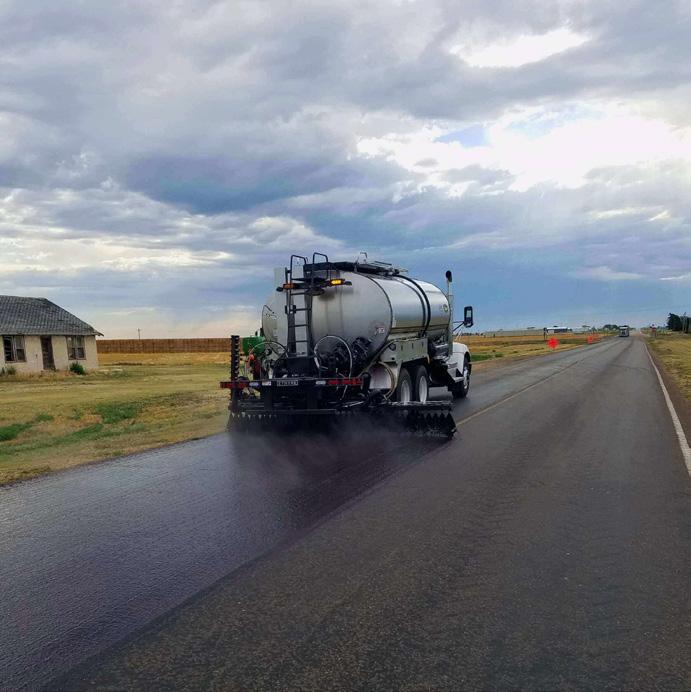
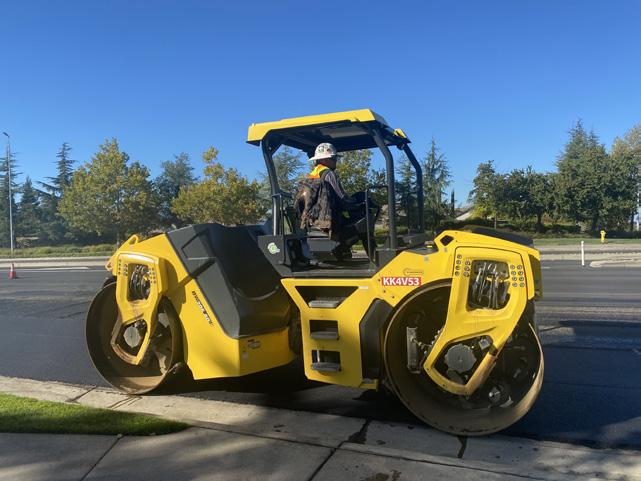
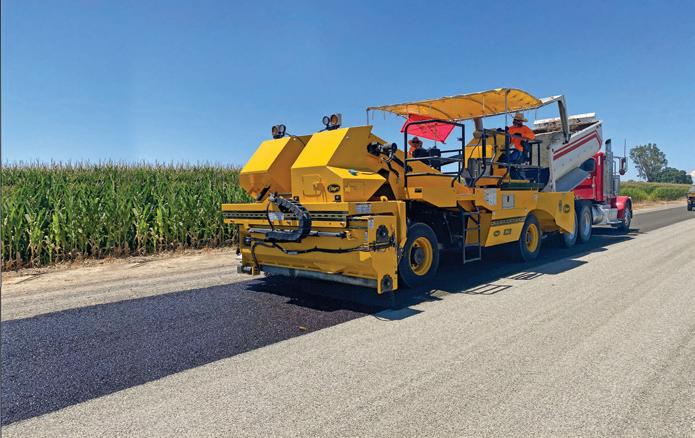
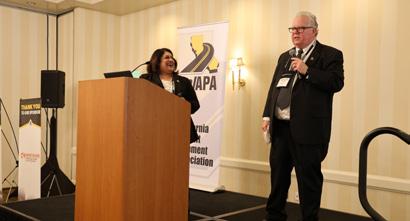
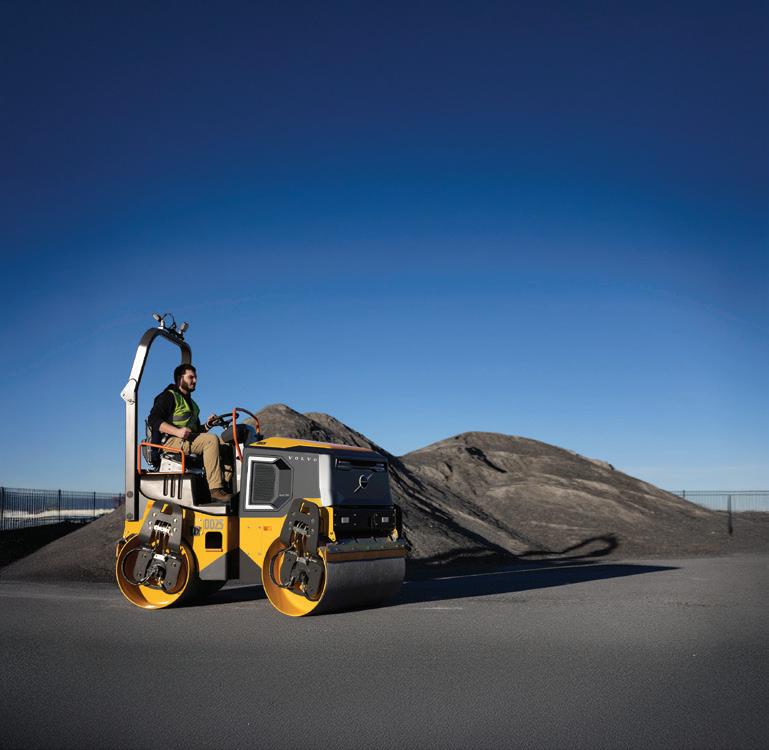
You don’t compromise on your values and neither do we. That’s why every Cat® soil compactor is engineered with durability and dependability at its core. You can trust your machine will perform consistently, even in demanding applications – gain uptime and peace of mind. With Cat soil compactors, get the reliability you need, so you never have to settle for less. Choose Cat soil compactors for the true support of your California Cat® dealer network.
THE RIGHT MACHINES FOR EVERY PASS.
Publisher’s Letter
The CalAPA value proposition
All of us have limited time and money, and demands for both seem to grow with each passing week. Why should we invest some of this precious capital in CalAPA? I have chosen to do so for a simple reason: I get a solid return on my investment.
Since its founding in 1953, the California Asphalt Pavement Association has thrived because it is laser-focused on helping those in the asphalt industry succeed. Think about that for a moment. Who else in your world is dedicated ONLY to your success? That’s CalAPA’s entire reason for existence.
CalAPA has grown over the years because it provides unique insight and services available nowhere else. In fact, most CalAPA members belong to more than one association. But come renewal time, they return to CalAPA year after year because of the exclusive benefits that are only possible through CalAPA membership. In short, that’s what differentiates CalAPA from everyone else – our asphalt expertise, influence and credibility.
Of course, CalAPA is very generous in making valuable information widely available to the asphalt industry and our agency partners. This magazine is just one example. Our weekly electronic newsletter, the “California Asphalt Insider,” is also free for anyone to receive, and many public works professionals tell us it is a valuable resource. Similarly, many of our technical training events, and our Asphalt Conference & Expo are open to everyone. This is in alignment with CalAPA’s educational mission to elevate the profession.
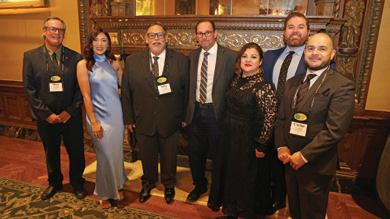
But I’ve only scratched the surface of what CalAPA has to offer, particularly for member companies. There is our exclusive Asphalt Market Forecast for California, which provides insight into market trends that are essential for anyone making buying or hiring decisions. Then there are our “power networking” events, including our Annual Awards Dinner at the prestigious Jonathan Club in Downtown Los Angeles that is featured in this issue of the magazine. Our festive “Day at the Races” at Del Mar Race Track, and our family-friendly “Summit at the Summit” Executive Leadership Forum at Lake Tahoe have become “circle the date” events not to miss. Even our “Fly-in” to the State Capitol, held every year at the historic Sutter Club in downtown Sacramento, is an asphalt-focused way to influence our elected officials and tell our story of local jobs in local communities producing an essential product that contributes to everyone’s quality of life.
Finally, attending CalAPA events enriches all who participate, not only in building and maintaining those vital relationships that are critical to success in our industry, but also gaining insight into the dynamic forces bombarding us on a daily basis. Gaining a greater understanding of those threats and opportunities is always worth my time and attention.
Everyone likes to say their people are their most important asset. I challenge you to back that up with action – invest in your people by sending them to CalAPA meetings and events. This is especially important for the next generation of leaders. I promise you your employees will return to you more valuable and more productive, and be richer for the experience. That’s a solid Return on Investment anyone can feel good about.
Sincerely,
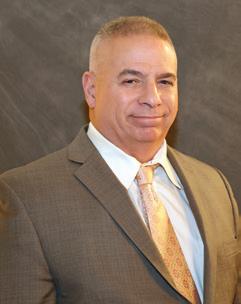
Frank Costa Martin Marietta (& 2026 CalAPA Chairman)
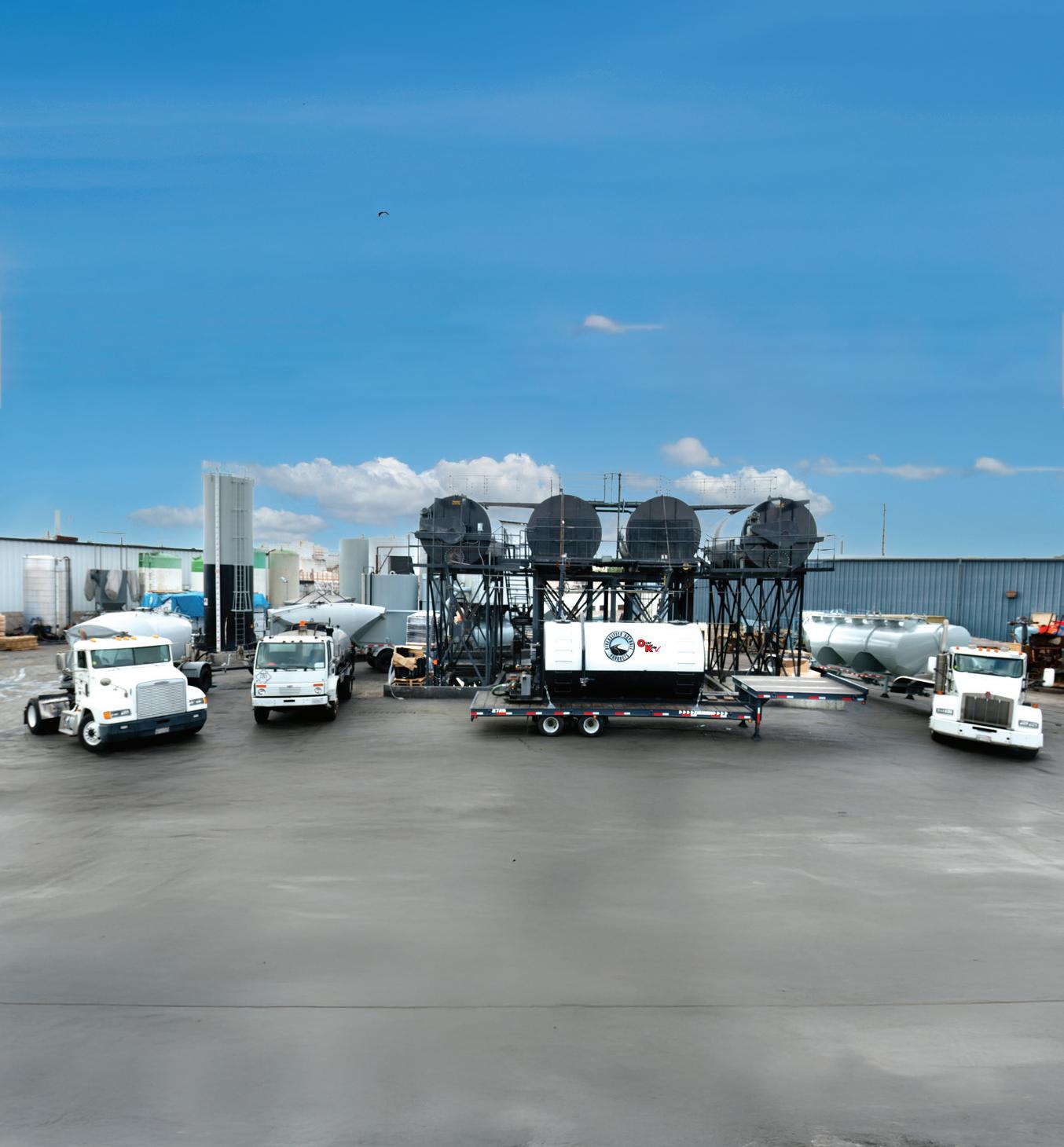
SUBCONTRACTING
• Full-service oil spreading
• Paving fabric installation
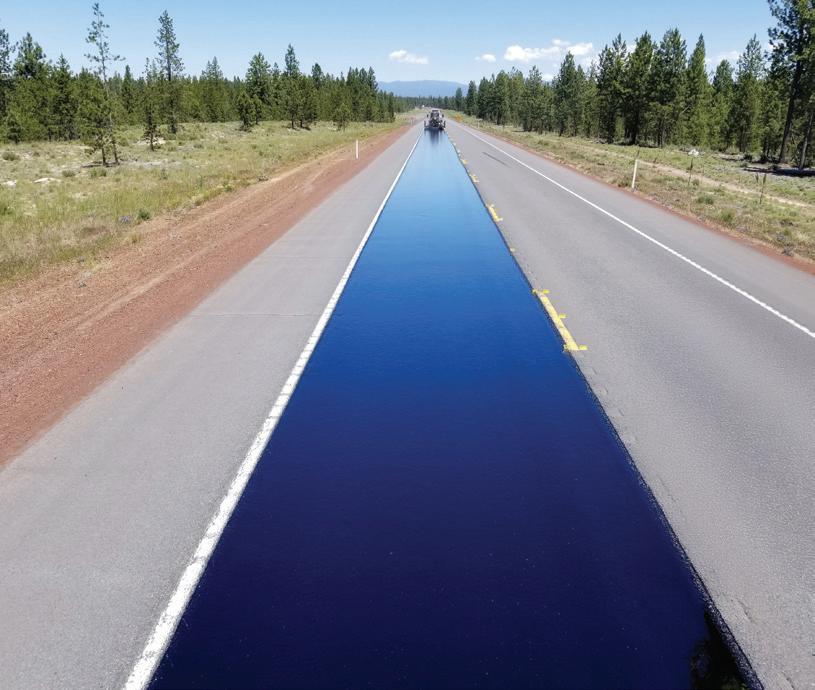
• Prime coat, fog seal & tack coat
• HPS (High-Performance Seal) — No Track Tack
MANUFACTURING
• OverKote® Asphalt Pavement Sealer
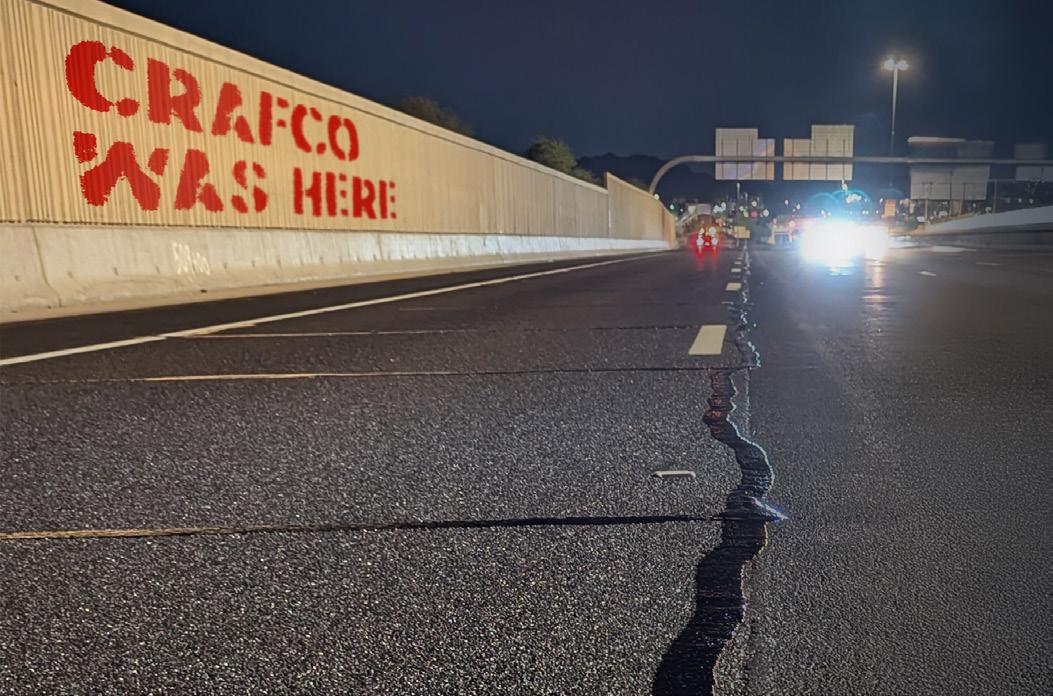
• OverKote® Crack ller
EQUIPMENT RENTAL
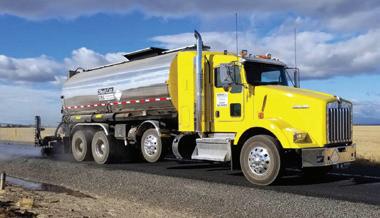
• 6,000-gal jobsite tank drop deliveries
• 600-gal seal tank trailers
• SS-1h tank trailers
• Hot crack ller machine trailers
DISTRIBUTION
• SS-1h emulsion
• Paving fabric rolls
• Petrotac & geotextiles
• Hot soup buckets
• Oil Flo & oil-spot sealers
• Latex additives
• Diamond Shield Forti er
The UCLA Anderson Forecast for the nation In the Crosswinds of AI and Tariffs
The UCLA Anderson Forecast for California Dead Reckoning and the California Forecast
CalAPA’s ‘Better-Worse’ survey
Pessimism returns with a vengeance in CalAPA’s 16th annual ‘Better-Worse’ survey; workforce, inflation, funding continue to be a concern for many
Association News
Asphalt industry comes together to celebrate important milestones at CalAPA Annual Dinner in Los Angeles
Rene Vercruyssen Jr. inducted into CalAPA’s asphalt industry Hall of Fame
the Cover: Cover illustration by Aldo Myftari, Construction Marketing
LLC.
www.calapa.net
2026 CalAPA Board of Directors
Frank Costa (Chairman) Martin Marietta
Chris Gerber (Vice Chair) G3 Quality
Scott Bottomley (Treasurer) Sully-Miller / Blue Diamond Materials
Phil Reader (Secretary) Reed Family Companies
Scott Metcalf (Immediate past chair) Ergon Asphalt & Emulsions
Ron Criss Hat Creek Construction
Tim Denlay Knife River
Scott Fraser Pavement Recycling Systems
Chris Handley Tullis, Inc.
Gary Houston Valero
Robert Jarvis Century Paving
Kevin Jeffers Albina
Kody King Mercer-Fraser
Pete Lambert McGuire & Hester
John Reid CRH Companies
Eric Richard Reed & Graham
HEADQUARTERS: P.O. Box 981300 • West Sacramento • CA 95798 (Mailing Address) 1550 Harbor Blvd., Suite 120 • West Sacramento • CA 95691 • (916) 791-5044
EXECUTIVE DIRECTOR: Russell W. Snyder, CAE, rsnyder@calapa.net
TECHNICAL DIRECTOR: Brandon M. Milar, P.E., bmilar@calapa.net
MEMBER SERVICE COORDINATOR: Jackie Henry, MBA, jhenry@calapa.net
GUEST PUBLISHER: Frank Costa, Martin Marietta (& 2026 CalAPA Chairman). PUBLISHED BY: Construction Marketing Services, LLC • (909) 772-3121 P.O. Box 892977 • Temecula • CA 92589
GRAPHIC DESIGN: Aldo Myftari
CONTRIBUTING WRITERS: Clement Bohr, Senior Economist and Jerry Nickelsburg, Director Emeritus, Senior Economist, UCLA Anderson Forecast, December 2025 and Russell W. Snyder, CAE, CalAPA
Please visit the link below or scan the QR Code. https://www.calapa.net/contact-us.html
JCB POTHOLE PRO
The award-winning JCB Pothole Pro is a unique 3 in 1 solution specifically designed to mechanize jobs previously done by pothole gangs and sort out repairs and large reinstatement operations. With 3 dedicated attachments to cut, crop and clean, there’s no need for additional specialist equipment or extra manpower, saving you both time and money. And with a typical pothole repaired in 8 minutes, the JCB Pothole Pro is up to four times quicker than traditional pothole repair methods, at half the cost of current solutions. All you need to do is add the tar.
In the Crosswinds of AI and Tariffs THE UCLA ANDERSON FORECAST FOR THE NATION
By Clement Bohr, Senior Economist, UCLA Anderson Forecast, December 2025
Even on its surface, the current economic situation presents a puzzle with strong Gross Domestic Product (GDP) growth and a weakening labor market coinciding with one another. Since we are still years away from any artificial intelligence (AI) driven productivity growth, the core question is which of these two trends will ultimately prevail. The answer is most likely a bit of both. Costs from tariffs are still being passed through the domestic supply chain from businesses to consumers, and the policy environment regarding tariffs remains uncertain, preventing small firms from making long-term investments. Additionally, consumption by higher-income households has been boosted by large AI-driven financial wealth gains, and they are unlikely to see gains of the same magnitude going forward. These factors point toward weaker GDP growth ahead. At the same time, however, financial conditions continue to be accommodative, and there are no signs that the large stimulus provided by AI capital expenditures will dissipate anytime soon. This robust growth in incomes, paired with incoming fiscal stimulus in 2026 by way of the One Big Beautiful Bill Act (OBBBA), implies that the overall economic conditions are unlikely to take a sharp turn for the worse either. On balance, we do not expect the economy to reaccelerate immediately. Rather, it will likely continue to face some strain over the next two quarters before reaccelerating in 2026.
THE MAIN FACTORS AFFECTING THE ECONOMY Capital Expenditures on Artificial Intelligence
One of the defining narratives of 2025 remains the massive buildout of AI-related infrastructure led by the large technology firms. While many continue to look at their projected future capital expenditures (CapEx) with disbelief, those projections are still consistently being revised upwards, cementing the technological transformation currently underway in the economy. For instance, an initial $250 billion estimate for AI-related CapEx in 2025 has ended up above $405 billion. At this point, it is highly probable that the massive projected capital expenditures for 2026 will be realized, if not exceeded. Moreover, the investment boom is poised to receive additional stimulus from both monetary policy (via lower short-term interest rates) and fiscal policy (through the various investment provisions in the OBBBA). Consequently, 2026 should be another year of explosive growth in high-tech investment expenditures. This investment trajectory, however, will eventually be tempered by several critical constraints and uncertainties. Physical infrastructure limits, particularly concerning electricity production and grid capacity, will eventually place tangible restrictions on the scale of the AI infrastructure buildout. Significant uncertainty persists regarding the future revenue stream of AI applications and the actual cost associated with the rapid depreciation of the specialized
microchips upon which the technology depends. For the time being, such concerns have been widely disregarded due to a prevailing “whatever it takes” mentality driving the AI race. Nevertheless, it will become clearer exactly how much profit-generating capacity this new technology possesses, and therefore harder to ignore. While we maintain confidence in the capital expenditure projections over the next year, it is not clear whether this pace is feasible going into 2027 and 2028. Our baseline forecast therefore assumes not that these investments will abruptly dissipate, but rather that their continued rate of growth will moderate after 2026.
Tariffs
The actual price impact of the current tariff regime has, so far, been less severe than what many expected, primarily due to three mitigating factors. First, the statutory tariff rate that was ultimately enacted is lower than the peak levels initially threatened after “Liberation Day”. Second, the realized tariff rate, that is the actual tariff revenue collected as a share of import value, is significantly lower than the statutory rate due to a combination of inventory build-up, payment delays, product exemptions, and evasion tactics by importers and exporters. In 2024, 38% of Canadian imports were certified compliant with USMCA and are therefore duty-free. As of June 2025, the share has jumped to 81%. Third, domestic businesses have been absorbing
a much larger share of the cost burden than is viable in the long run.
The underlying tariff uncertainty is set to continue as the policies remain in flux. Recent actions include a new China trade truce that lowered tariffs on Chinese goods by 10 percentage points, and a targeted rollback of tariffs on food items like beef and coffee by the administration. Furthermore, the Supreme Court will more likely than not rule against the validity of the IEEPA Tariffs (International Emergency Economic Powers Act), though the specific scope of the ruling remains highly uncertain. A broad ruling would invalidate a substantial portion of the current tariffs and drastically change the administration’s legal pathway for implementation. However, the administration retains numerous other trade acts through which to pursue its tariff agenda. This means that while the specific shape, form, and level of tariffs will continue to vary, the policy of imposing substantial tariffs is here to stay.
This absorption dynamic notwithstanding, the tariffs have demonstrably increased consumer prices. The HBS Pricing Lab estimates that as of September the Consumer Price Index (CPI) is already 0.7% higher than it would have been in the absence of the tariffs. This cost transmission is ongoing as businesses reduce their absorption. Considering that half of the passthrough to consumer prices has taken place and that the tariffs will be diminished marginally due to the recent policy changes, we expect tariffs to add another 0.5% to headline inflation.
THE FORECAST Employment
The labor market is currently characterized by a state of paralysis and therefore gradual deterioration, marked by low levels
of both hires and fires. The most recent employment report from the Bureau of Labor Statistics, covering September, indicated that the labor market, while weak, is not collapsing. It showed that employment growth remained positive with a three-month moving average of 62,000 employees added per month. However, the headline unemployment rate continued its gradual upward creep, reaching 4.4%. The deterioration in employment growth throughout 2025 is
consistent with an only modestly rising unemployment rate, due to the restrictive immigration policies and retiring baby boomers. This dynamic is reinforced by unemployment insurance claims that remain at a healthy, low level. We expect this pattern of mild, gradual weakening to persist over the next quarter with the unemployment rate rising to 4.5% by the end of 2025. The market is then expected to begin recovering with the confluence of fiscal and monetary stimulus in 2026.
Inflation
The September Consumer Price Index (CPI) inflation report indicated that prices rose by 0.3% over the preceding month, raising the year-over-year inflation rate to 3.0%. An inspection of the components driving this inflation shows a clear acceleration in prices, particularly for goods, beginning in the Spring. This trend is consistent with the ongoing effect of recently implemented tariffs, which are steadily being passed through to consumer prices. Concurrently, non-shelter services inflation has also stopped reverting toward its 2% target. More likely, it exposes a persistent pocket of strong demand in the economy.
The shelter component of inflation remains on a declining trend. It is important to note that the CPI’s shelter price index is a backward-looking measure of the average cost of housing across all households and does not reflect the current market rate for new leases. Therefore, this mitigating force on the headline inflation rate represents past cooling, not current cooling, in market prices.
We do, however, expect that the past tariffs which remain will continue passing through into consumer prices, contributing another 0.5 percentage point increase to headline inflation. We
expect CPI inflation to peak at 3.5% SAAR (Seasonally Adjusted Annual Rate) in the first quarter of 2026 and to come down gradually thereafter. Despite the expected eventual decline, we forecast inflation will remain above the target in the mid-twos throughout 2027.
Interest Rates
Throughout the first half of the year long-term interest rates remained elevated as the Federal Open Market Committee (FOMC) paused its rate cutting cycle in the wake of fundamental shifts in public policy. By mid-July, the 10-year treasury yield was hovering
just below 4.5%. This changed with the release of the July employment report, which featured large negative revisions to payroll growth numbers. Futures markets quickly priced in a series of rate cuts, and longer rates declined accordingly.
Subsequently, long rates have hovered around 4.1%, as markets recognized their overly optimistic pricing of future short-term rate cuts. Our forecast for the path of the Federal Funds Rate remains consistent with our Fall outlook.
We then expect the Federal Funds Rate to continue coming down slowly through 2026 to the 3–3.25% band.
The discussion above suggests that long term interest rates are close to or may have already bottomed out. We expect long-term rates to rise modestly to 4.4% by the end of 2027 as fiscal and structural pressures continue to mount.
Output
GDP growth in Q3 appears to have been robust, driven primarily by growth in consumption expenditures and continued investment in AI infrastructure. This strength masks underlying weakness across the economy. Poorer households and small businesses are struggling with higher costs of goods due to factors like tariffs as they face a volatile and uncertain economic environment. Outside of AI-related investment, capital expenditures are on net contracting.
The anticipated strong third quarter GDP growth also follows a more robust second quarter than was initially estimated. While this suggests only a modest slowdown in economic growth from 2024 to 2025 so far, it remains the case that a substantial portion of this growth is directly attributable
to capital expenditures by large technology firms on Artificial Intelligence infrastructure.
We expect the final quarter of 2025 and the first quarter of 2026 to still feature notable strain on consumption and on business investment outside of AI, as we reach the apex of the price impact from the tariffs. Fourth quarter GDP growth will look worse on its surface than it is, due to the temporary economic drag from the record-setting 43-day government shutdown.
We expect the tide to decisively turn in early 2026. Continued large-scale investment in AI infrastructure will be spurred on by fiscal stimulus via provisions in the OBBBA. While growth will remain steady in 2027, it will not feature
as much private stimulus from the AI infrastructure expansion, which we expect to begin tapering off then.
Conclusion
We continue to live in an era of elevated uncertainty regarding the economic trajectory. Not only does economic policy continue to fluctuate, but the longest government shutdown in history means that we have been partially blind as to how the economy has been unfolding. Moreover, the presence of such strong, opposing economic forces implies a greater scope for the forecast to miss in either direction. However, we still do not view extreme scenarios as the most likely outcome, maintaining the baseline forecast outlined above. CA
Editor’s Note: This report was edited slightly from the original to conform with this publication’s style and usage guidelines and to accommodate space constraints.
Jerry Nickelsburg is the director of the UCLA Anderson Forecast and an adjunct professor of economics. The UCLA Anderson Forecast is published quarterly and is a unit of the UCLA Anderson School of Management.
THE UCLA ANDERSON FORECAST FOR CALIFORNIA
Dead Reckoning and the California Forecast
By Jerry Nickelsburg, Director Emeritus, Senior Economist, UCLA Anderson Forecast, December 2025
Introduction
In the 19th Century, schooners that plied the California coast with goods and gold used a method of navigation called Dead Reckoning. Basically, they knew where they were, or thought they did; they knew something about the speed and direction they were traveling, and they inferred (forecasted) where they had sailed to and where they were headed. With the lack of data from the U.S. government shutdown, that is an apt metaphor for our December California economic outlook.
As of the time of this forecast, we are still dealing with a dearth of economic data. We knew where we were at the time of the September 2025 forecast, and there is some data that helps us understand the speed and direction of the economy. Taken together, the data strongly suggest that the September forecast of muddling through 2025 and early 2026 before a resumption of superior growth forecast is a good dead reckoning forecast.
California has now entered another bifurcated economy phase, not one between East and West, but one between Artificial Intelligence (AI), aerospace, and the like, and the rest of the economy. Investment in technology remained strong as evidenced by the disproportionate Venture Capital (VC) investment in the State. In the first half of 2025,
almost 70% of all venture capital funding came to California and this continues into the 3rd quarter with seven of the top 10 investments in the Americas being made in California, representing 90% of the dollar value of these 10.
The employment recession we described three months ago has likely continued and is expected to continue through the early part of 2026. Yet, the state continues to grow faster than the U.S. with high productivity sectors receiving the bulk of venture capital investment and business contracts.
On the other side of the economy are the sectors that are hardest hit by reductions in Federal Government spending, tariffs, immigration policy, and state and local government deficits. In this California report, we will review what we know about the employment picture from the available official data and then take a deeper dive into the prospects for further deterioration due to current immigration policy. Over the first eight months of the year, the state lost payroll jobs and the unemployment rate increased to 5.5%. There has not been any indication, either in non-governmental data nor any anecdotal data that there has been a qualitative change since then. Once past the current weakness, expected late next year, a tech, durable goods manufacturing, and construction resurgence should lead to superior growth in the Golden State once again.
Immigration Policy and Labor Markets
To gain some perspective on how immigration policy might affect our interpretation of labor market data, let’s look back at history. There have been three episodes of restrictive immigration policy in the last 100 years: The FDR deportations of the 1930s, the Eisenhower deportations of the 1950s, and the Secure Communities Program from 2008 to 2014, each of which provides insight into the implications for employment, housing, education, and public finance. What happened to the labor force during the three most recent episodes of mass repatriation immigration policy? From 1930 to 1934, somewhere in excess of 400,000 Mexican and Mexican-Americans were deported. This represented around 0.35% of the U.S. population or the equivalent of 1.25 million today, the target of current immigration policy. In the 1950s, approximately 1.3 million mostly Mexican nationals were deported. This was followed by the Bracero program that allowed many of the deportees to return to work, particularly in agriculture, as seasonal workers. The Bracero program ended in 1964, resulting in a loss of about 500,000 from the effective labor force. From 2008 to 2014, the U.S. instituted the Secure Communities Program, resulting in the deportation of about 300,000 individuals.
[ Continued on page 14 ]
Each of these cases has been studied by economists to ascertain the impact on employment, wages, and housing demand. The results are almost always unambiguously negative: higher unemployment among U.S.-born Americans and immigrants with legal status, lower wage growth, and less housing demand. The three most important factors were the absence of income and hence spending by those who were no longer in the local community, the impact on complementary jobs performed by those with legal status, and the implementation of labor-saving automation.
Those deported are, obviously, not going to local stores or theaters. And, for example, a reduction in agricultural production means less work in food processing, including supervision and back-office work. In other words, today’s immigration policy, however much the ultimate change it will bring is desired, will have near-term negative consequences for communities that are intimately tied to foreign-born workers.
This is already seen in the data through August for 54 counties in California. Those with a higher percentage of foreign-born residents and within which have a larger percentage of jobs in agriculture, construction, and leisure and hospitality, have already begun to see elevated unemployment relative to other counties in the state.
The Administration’s immigration policy was slow in rolling out in California. The data on employment is, of course, delayed or nonexistent due to the government shutdown. Nevertheless, we learn something by looking at unemployment rate changes across counties in the State. Since each county has a little different economic structure, the measurement will be the deviation from the 8-month trend
of the previous year. For example, in Los Angeles, the unemployment rate increased by 1.1 percentage points between January and August 2024. Between the same months in 2025, it was 0.5 percentage points or a -54.5% change. This is compared to an average for all counties of -16.9%. The question we asked was, can any of that differential from the state average be explained by the size of the foreign-born population weighted by the amount of employment in the county in sectors with employment believed to be disproportionately undocumented workers?
The results are not very strong (an R-Square of .28), but in the case of construction and farming, they indicate the beginning of an impact. Construction exhibits the largest change with a 1% increase in foreign-born for a county with the state average percentage of construction workers yielding a .78 percentage increase in the percentage change in the unemployment rate – a relatively small amount. That statement is hard to interpret, but suffice it to say that with the exception of leisure and hospitality, we are beginning to see the impact of deportations on the unemployment
rate. Agriculture and leisure and hospitality are likely affected by the Administration’s directive for ICE to avoid farms, hotels, and restaurants.
These very preliminary results lead to two observations. First, the impact of deportations on those with legal status will be uneven across California’s counties. Second, the rapid reduction in the unemployment rate that has been characteristic historically, and which was built into our recent forecasts, is likely to be too optimistic. Consequently, we have adjusted the reduction in the unemployment rate in the current forecast.
Employment Retrospective
One of the consequences of the government shutdown is that we are still working with mostly the same employment data as in the September 2025 report. The pattern of applications for unemployment insurance in the state, which we have on a weekly basis, is not too different from the past couple of years. The number of applicants is higher but only slightly so. Anecdotal evidence, however, suggests a moderation of the unemployment forecast. Absent the September and
October data on the labor force, unemployment, and payroll jobs, we are repeating this employment retrospective section from the September California Report.
California’s unemployment rate has been over 5.0% during the 19 months ending August 2025, and as of August 2025 is at 5.5%. In the first eight months of this year, there has been a decline of 21,200 payroll jobs, the first sustained decline in payroll jobs since the pandemic. Another measure of employment, the survey of households, which includes independent contractors and gig workers, shows an increase in employment, but not enough to keep up with labor force growth. By either measure, employment growth in California in 2025 has not only slowed to a crawl but likely declined.
The payroll job growth metric is considered a better measure of labor markets than the total employment metric, as the total employment numbers include a variety of individual employment situations, such as part-time UBER drivers and individuals working in family restaurants, and is based on a very small sample of households. These two measures of employment, considered when analyzing labor markets in California come from two different surveys: the Household Survey, which counts the number of people employed, and the Enterprise Survey, which counts the number of payroll jobs.
The Household Survey reported that the number of people employed in August 2025 was slightly above the number employed at the pre-pandemic peak. California’s non-farm payroll jobs now exceed the prepandemic peak by 338,600 jobs. The difference between the two metrics can be partly explained by the difference in the definition of employment in the two surveys. The Household Survey is a
measure based on the domicile of the worker. If a former San Francisco office worker is now remote in Phoenix, then they would not be counted in the labor force and employment numbers for California in the Household Survey. This would represent a decrease in the state’s aggregate labor force. However, if their job were still at an enterprise in San Francisco, they would remain in the Enterprise Survey as employed in San Francisco. They are working in San Francisco (virtually) and living in Phoenix (in true life). This, at least in part, explains the large decline in San Francisco’s labor force.
In addition, part-time gig and 1099 workers are included in the Household Survey, but not in the payroll jobs numbers. It is important to keep in mind that these two metrics, which measure different aspects of the state of labor markets, are not interchangeable, and that both are indicating weakening labor market demand through the first seven months of the year.
As of August, the California unemployment rate was 1.2 percentage points higher than the United States. In recent UCLA Anderson Forecast Reports, we have explored this difference and
found that a 0.3 percentage point difference is typical, as California, on average, is more entrepreneurial and younger than the average for the nation. Approximately half of the remaining can be traced to the decrease in employment in the entertainment industry. And the balance is mostly due to the cutback in employment in big-tech, a reduction in durable goods manufacturing employment, and a reduction in couriers post-COVID and post-increases in minimum wages. This is the background upon which deportations of some of California’s workforce will happen. Over the last year, the sectors with growth in payroll employment have been healthcare and social services, education, farm, and government. There is no expectation of growth in education and government in the coming three years, as budgetary shortfalls and declining K1-12 enrollment constrain further growth in these sectors. Deportations and reductions in federal support for health care will disproportionately affect health care and social services, farm, retail, and leisure and hospitality. They will also impact construction, warehousing, and non-durable goods manufacturing.
For the California economy to grow faster than the U.S. economy, as it is accustomed to doing, durable goods manufacturing, including aerospace and technology-laden sectors, will have to rebound strongly. In manufacturing, transportation equipment and related navigational equipment, and semiconductors were the subsectors with the largest job loss. Aerospace should benefit from the return to normal production at Boeing and Airbus and increased emphasis on space exploration and satellite production. The recovery at Boeing is not expected to be adversely impacted by tariff-based retaliatory action by China and India in the near term, as Boeing has a 10-year backlog of aircraft orders which include many aircraft that would have been manufactured over the three years of an FAA mandated slowdown in production. Nevertheless, California and the Nation have experienced a general decline in manufacturing employment, and the timing of a turnaround in this sector remains uncertain. For technology, the issues are the issuance of a large number of H1B visas and the rapidly changing skill set, now emphasizing AI development, demanded by employers.
Two large sectors to be impacted by deportations are food processing (non-durable goods manufacturing) and agriculture. These will be disproportionately felt in the inland parts of the state and the agricultural coastal valleys. During the 1950s deportations, a Bracero program of guest workers was set up to bring in seasonal farm workers. The H-2A visa program is already in place to do this. However, there is no sign from the Trump administration indicating that bringing back the undocumented agricultural workers is in the works. Rather, it is believed that U.S. residents with
legal status will take jobs in the fields and in the meat processing plants that are now occupied by undocumented workers. Although temporary worker visas could make up for some of the loss of labor, the visas would likely be available only for the subset of workers who are seasonal. Temporary worker programs are designed for partial-year entry into the U.S. and not permanent entry.
In addition to the direct impact on the production of goods and services in California, there will be an indirect impact. The Secure Communities Program (2008-2014) resulted in the deportation of 400,000 undocumented immigrants nationwide. A number of studies of this program have found that the multiplier effect on the removal of a significant population decreased the level of employment of the remaining population. This was a result of two factors. First, the absent undocumented workers as well as the reduction in income of those who were not deported but withdrew from the labor force, decreased local consumption. Second, the productive activities of the undocumented and the rest of the labor force are often
complementary. For example, home building could be delayed because of a reduction in skilled roofers. In both cases, there will be a consequent increase in unemployment for the remaining workforce.
Employment growth, or the lack thereof, in California is, of course, geographically variable. Over the past 12 months (July to July), slower than U.S. job growth has been experienced in each region with the exception of the North Bay, the East Bay, Los Angeles, and Orange County. In the balance of the Bay Area, this reflects slow to negative growth in the demand for technologically sophisticated equipment and software, and the demand for software engineers who engage in traditional coding.
A breakdown of the sectors in the regions which had aggregate job losses (Silicon Valley, San Joaquin Valley, Sacramento & the Delta, San Diego, and the Inland Empire). The greatest losses in four of the five regions were in Business Services. This is where much of tech lives, but also includes temp workers, consultants, lawyers, accountants, and architects. Second is the
[ Continued on page 18 ]
California Regional Job Gain (December 2024 to Aug 2025, SAAR)
Astec/Carlson
construction, mining, and logging sector. The San Joaquin Valley had the largest number of job losses, which included 900 jobs in oil and gas extraction in Kern County. Though the California legislature passed a new energy bill to reverse the decline in Central Valley oil and gas extraction employment, the impact on employment in this sector will not be immediate. Third, manufacturing losses were widespread. It is important to note that state and local government employment were strongly positive. These two sectors, which are on the verge of contraction, kept the job market picture from being considerably worse. With a great deal of continued uncertainty, a weakening national job market, deportations, and a reduction in national funding for infrastructure, education, and healthcare, the forecast for employment for the balance of the year is for continued contraction.
Goods Movement
The good news is in goods. After a long, slow secular decline, goods movement through California’s airports has begun to increase. These data are a reasonable indicator of economic growth as they reflect package delivery to households and businesses. Increasing income leads to increasing purchases of both goods and services. During the first half of 2025, GDP in California grew 0.5 percentage points higher than the U.S. This is in part a reflection of the disproportionate activity in AI development in the State. In Southern California, the decline in goods movement has now ended at 2015 levels, and in Northern California, air cargo increased back to 2019 levels. These data and the expectation of increased manufacturing and tech in the coming year have led to a modest boost in the personal income forecast.
CALIFORNIA MEDIAN SF HOME PRICE (Jan. 2016 to Oct. 2025, SA)
Monthly California New Residential Permits (3 Mo. Moving Average, No. of Units 2010 to Aug. 2025)
Existing Single Family Home Sales ( Jan. 2016 to Oct. 2025, SA)
Housing Markets
Even though the legislature has made it easier to build new homes in California by superseding local restrictions, the number of new permits issued through the summer remained subdued. If the national numbers are any indication, the Census permits issued by the state, when updated, will show little to no change from August. With the horrific wildfires of December and January, the need for new home construction is even more critical. There are three important factors that are going to make meeting this need more challenging.
First, deportations will deplete the construction workforce. For single-family and smaller (non-high rise) multi-family development the loss of workers installing drywall, flooring, roofing, and the like will directly diminish the level of production. The total number of payroll jobs in construction declined through the summer, reflecting the national wait-andsee perspective of home builders who, without a firm grip on costs, are not likely to increase home production. When they do, recovering the workforce in the face of largescale deportations might be challenging. Even though the unemployment rate in California is elevated, not everyone is suited or interested in this kind of work, and significant new entrants to the sector will be needed if the production of homes is to accelerate to the mid-100,000s.
The second factor relates to the presence of persistent inflation in the U.S. The Federal Reserve lowered the federal funds rate even by 25 basis points in September and October, even though the trend in inflation has been moving away from their 2% target. However, the market has been predicting such a reduction, and there has been little change in the 10-year Treasury bill rate in
response to the Federal Reserve’s actions. Thus, lower short-term interest rates have, thus far, had a marginal impact and will not create a dramatic increase in home building.
The third factor relates to the tariff policy of the Trump Administration. The sources of building materials include a significant level of imports from China, Mexico, and Canada. A 10% or more increase in the cost of these inputs will increase the cost of construction. Nearly 70% of all lumber imports come from Canada, and 71% of all gypsum imports (a primary component of drywall) come from Mexico. Recently, lumber prices have fallen from a high of $692/1000BoardFeet to $534 because of the rush to export from Canada prior to the tariffs going into effect, as well as a year-overyear decline in national permits for new home building. These spot prices are less of an issue for long-term increases in home construction than the uncertainty surrounding trade conditions when inventories diminish, and the economy picks up steam.
That the home construction sector is in the doldrums is evidenced by the continuation of depression level sales volume for single-family detached housing and continued increases in median prices. This should be a recipe for increased home building. The Summer Allen Matkins/UCLA Anderson Forecast California Commercial Real Estate Survey of developer sentiment in the multi-family space, taken in May, is quite optimistic across the state. The latest survey, due to close in December and be released in January, will give us more insight into the prospects for residential construction over the next 12 months. But permits to date have remained flat for the reasons enumerated above.
The Forecast
The current forecast is substantially the same as September, as the location, speed, and direction of that forecast, given the limited data, does not indicate a significant deviation in the economic outlook. A recovery begins in late 2026, and growth is then faster in 2027. The unemployment rate is expected to hit a peak of 5.9% early next year. The average for 2025, 2026, and 2027 is expected to be 5.5%, 5.5% and 4.6% respectively. Our forecast for 2025, 2026, and 2027 is for total employment growth rates to be 0.6%, 0.7%, and 2.0%. Non-farm payroll jobs are expected to grow at a 0.0%, -0.1% and 1.9% rate during the same three years. Real personal income is forecast to grow by 1.8% in 2025, 1.1% in 2026, and 2.6% in 2027. Higher interest rates, shortages of construction labor, and the rebuilding of damaged and destroyed homes lowered our residential construction forecast from March. Our expectation is for permitted new units to be 101K this year and grow to 121K by the end of 2027. Like all dead reckoning projects, we need to be watchful for the shoals that this forecast could land on. CA
Editor’s Note: This report was edited slightly from the original to conform with this publication’s style and usage guidelines and to accommodate space constraints.
Jerry Nickelsburg is the director of the UCLA Anderson Forecast and an adjunct professor of economics. The UCLA Anderson Forecast is published quarterly and is a unit of the UCLA Anderson School of Management.
The information provided in this article is only a small excerpt of the UCLA Anderson Forecast for the Nation and California. Visit www.uclaforecast.com to review the UCLA Anderson Forecast in its entirety. For information regarding sponsorship of the UCLA Anderson Forecast, please call (310) 825-1623.
2026 CALIFORNIA ASPHALT CONFERENCE
Learn. Network. Have FUN!
Three industry-leading events!
One convenient Southern California location!
March 10 – 11, 2026
Starts: Mar 10 • 9:00 AM Ends: Mar 11 • 4:30 PM
Sheraton Fairplex Suites & Conference Center
601 W. McKinley Ave., Pomona, CA 91768
WHY ATTEND?
THREE great asphalt events! ONE great location!
Join us in Pomona for the California Asphalt Conference, California Asphalt Expo, and two in-depth training sessions — all under one roof at the Sheraton Fairplex Suites & Conference Center.
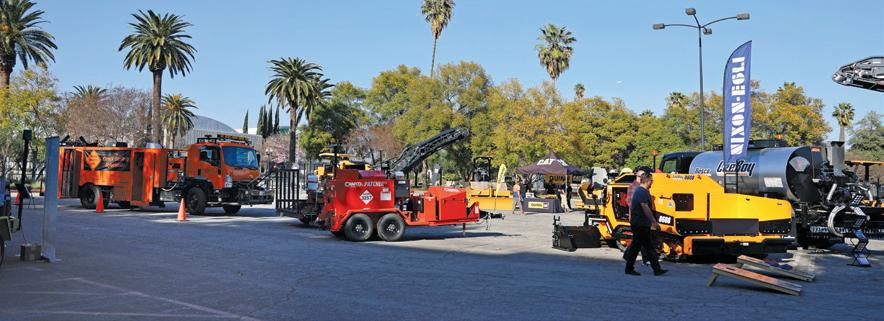
Explore California’s largest indoor asphalt Expo with heavy equipment, technology, and live demonstrations. Hear from top policymakers and industry experts at the Conference. Strengthen your expertise with comprehensive training on asphalt materials, construction, and pavement management.
The most ef cient and economical way to stay current in an ever-changing eld. What you don’t know can cost you!
WHAT’S NEW FOR 2026? CHOOSE YOUR EXPERIENCE!
Multiple pricing options are available. Choose a pass that meets your needs, your schedule and your budget. You can select an Expo Pass, Master Pass, or Training Pass. Choose your experience!
The Expo will take place indoors! Our expanded indoor Expo will feature all of the latest heavy equipment and pavement technologies.
Knowledge Share Sessions, available to ALL attendees, will provide attendees with technical information on construction best practices and latest technologies. These 30 minute sessions will take place throughout both days. Topics will include paver setup, parking lot construction, technologies to improve pavement performance, etc.
• Updated standards, testing & construction practices
• Best practices for design, construction & maintenance
• Live equipment demos & eld-focused workshops
Expo Includes:
• Expo Hall access
• Knowledge Share Sessions
Training-only options available.
• Targeted exposure to asphalt industry professionals
• Heavy equipment display space available
• Vendor booth options
• First-come, rst-served placement
• Contractors & asphalt producers
• Engineers, designers & inspectors
• Suppliers & estimators
• Consultants & public works professionals If you design it, build it, inspect it, supply it, or maintain it – this event is for you!
Technical training sessions
Conference reception
Pessimism returns with a vengeance in annual ‘Better-Worse’ survey; workforce, inflation, funding continue to be a concern for many
By Russell W. Snyder
You might need a good chiropractor after reading this story.
The heady optimism of last year’s annual CalAPA annual survey of Asphalt Insider newsletter readers did a sharp U-turn one year later, with the mood returning to COVID-era gloom.
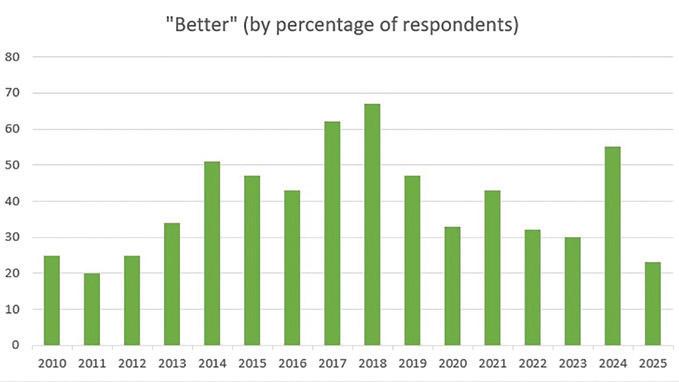
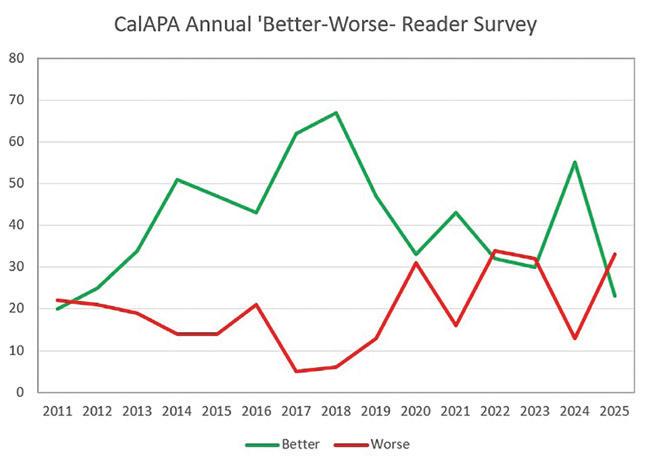
The 16th annual CalAPA “Better or Worse” survey found only 23% of respondents predicted 2026 would be better than 2025, a precipitous drop from the 55% who were feeling optimistic when answering the same question a year ago.
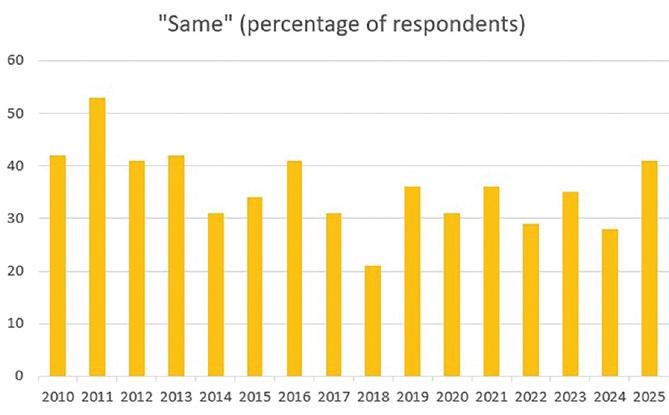
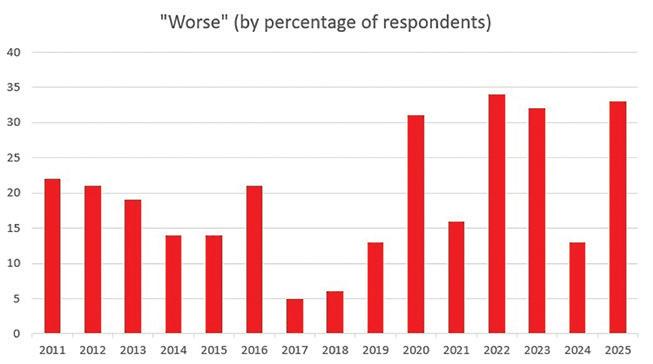
Those who believed the coming year would be “worse” than the year prior registered at 33%, compared to only 13% who felt that way a year ago. As for the “About the Same” group, the largest percentage of respondents, 41%, said they believed the coming year would be similar to 2025, compared to 28% who chose that answer a year ago. In other words, the optimists in last year’s survey clearly moved to the pessimist category or “same” group, ranking the number of “Better” respondents at near the lowest level in the history of the survey.
The head-snapping poll results are among the most striking in the history of the survey.
The brief, non-scientific poll of more than 2,600 Asphalt Insider newsletter subscribers, conducted at the end of last year, also found that survey respondents worried about workforce availability, the impact of tariffs, government dysfunction, inflation and logistical issues. The survey respondents represented
a wide swath of the industry and prominent stakeholders, including asphalt producers, refiners, paving contractors, consultants, testing labs, government agencies and academia.
“It appears the economy is slowing, and new project startups are down,” one city official noted. Added a prominent contractor, “Backlog is down and competitiveness of bidding is up.” A representative from an engineering consulting firm noted: “I don’t see anything that would indicate there will be any increase in the amount of projects or work.”
Last year’s jump in optimism was the largest year-over-year increase in the survey’s history, and many of the survey respondents referenced the outcome of the presidential election in their answers. That made the disappearance of the optimists even more striking, with many also citing unwelcome developments in Washington. This finding is also mirrored by recent national public opinion polls that gauge the mood of the electorate.
“Our market has leveled out with current tariffs that are in place,” one respondent, representing an equipment manufacturer, wrote. Added another equipment manufacturer: “Supply chain disruptions caused by worker shortage at vendor caused by ICE enforcement raids as well as a major spike in raw material costs caused by Chinese rare-earth restrictions.” ICE is the acronym for the U.S. Department of Homeland Security’s Immigration & Customs
Enforcement branch, which has conducted high-profile sweeps at workplaces and elsewhere looking for immigrants in the country not in possession of proper documentation. The arrests, and subsequent deportations, have received prominent media attention and inflamed politics across the nation.
The all-time high for the “Worse” number in the CalAPA survey was recorded in 2022 when 34% of respondents said they believed 2023 would be worse than 2022 as the state and the nation continued to recover from COVID-19 pandemic disruptions. This year’s 33% “worse” figure was not far behind.
If there is a silver lining to the survey results, it is that the levels of pessimism in recent years have not approached the dire numbers recorded in surveys taken during the depths of the last major economic downturn in California. In 2011 the share of survey respondents who said the coming year was going to be better was just 20%, the lowest ever recorded in the survey. Still, this year’s “better” figure came in at 23%, plenty dour.
Workforce issues, a persistent theme in the survey in recent years, plus concerns about the regulatory environment, were once again on the minds of many who responded to this year’s annual survey. Several cited the inability to recruit and retain qualified workers, in the field and in the office, as a major challenge.
The increasingly complex working environment motivated
one survey respondent, a prominent asphalt producer, to portray the challenging landscape this way: “Regulatory environment; high regulatory costs and an unpredictable federal trade policy environment that creates uncertainty for businesses, discouraging investment and job creation.”
Lack of funding for road improvements was cited by many survey respondents, with several remarking about the worrisome trend of declining SB1 fuel-tax revenues. Senate Bill 1, the “Road Repair & Accountability Act of 2017,” was expected to generate about $50 billion over 10 years with an emphasis on road repairs. The arrival of the scene of Electric Vehicles and high-mileage hybrids has put the state’s highway fund under duress.
“Underfunded public funding mechanism and consistent use of those funds,” was flagged as a major challenge by a prominent asphalt producer. A prominent paving contractor put it this way: “2025 was a dip from 2024,” and added the impact of “less state regulations due to federal actions.”
A prominent producer member commented, “The project delays with owner issues will have a lesser impact on our performance.” A consultant who expressed no opinion on the direction in the coming year blamed “too much political uncertainty.”
State and local agency professionals also remarked about the uncertainty, but many said dollars seemed to be trending down. “County funding going down,” said one government official. But another city public works official from Northern California noted a positive development that “prices have stabilized.”
For the first time in the history of the survey, several respondents referenced the difficulty in obtaining timely payments for invoices, and other cash-flow issues.
“Less contracts and slow pay on invoices,” on consultant remarked. A material supplier added a similar sentiment: “Uncertainty of contracts and long time to collect on invoices.”
For the 10th year in a row, the survey added an optional question, “What is the No. 1 challenge where you work?” That question elicited more than 72 written responses. As it has in recent years, work force
issues continued to dominate the comments. Next were supply chain issues, the economy and inflation, and the regulatory environment.
The main CalAPA survey question was purposefully vague: “For your company or organization, how do you think 2026 will compare to 2025?” However, most of the voluntary comments offered up by survey respondents to justify their opinion centered around how much work is expected in the coming year. The answer varied by company, agency and region, reflecting the size and diversity of California’s massive economy and the economic micro-climates that are spread across the vast state.
A total of 103 people took part in in its fifth year, is filled with data
REFERENCE:
Snyder, R. (2025) Optimism returns in CalAPA’s 15th annual ‘Better-Worse’ survey; workforce issues continue to
Asphalt industry comes together to celebrate important milestones at CalAPA Annual Dinner in Los Angeles ASSOCIATION NEWS
By Russell W. Snyder
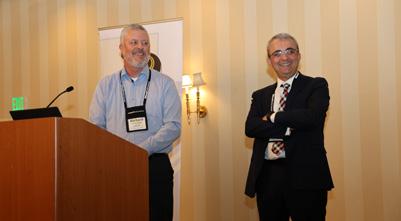
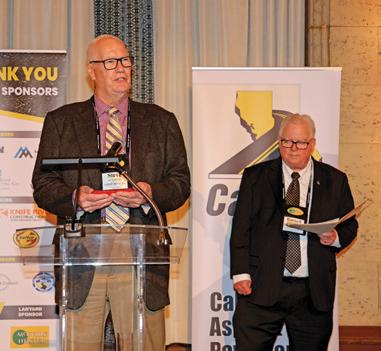
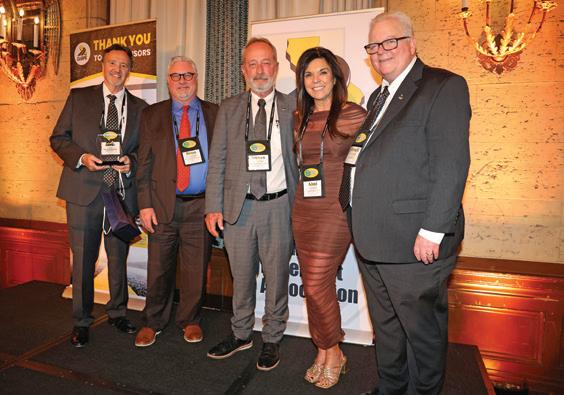
Steve Marvin of LaBelle Marvin, left, gives the invocation as Russell Snyder looks on at the CalAPA Annual Dinner, held January 15 at the
In a decades-long tradition that has become the must-attend event of the year, the asphalt industry in California came together once again in January for another memorable CalAPA Annual Meeting, Awards Dinner and Installation of Officers at the regal Jonathan Club in downtown Los Angeles.
The annual event held Jan. 15 boasted a near-record turnout and featured insightful remarks from state Sen. Tony Strickland, vice chairman of the Senate Transportation Committee. Longtime CalAPA Board Member and past Legislative Committee Chair Rene Vercruyssen (see sidebar) was inducted into the CalAPA “Hall of Fame” as his proud family looked on, and the association presented the officers and Board of Directors for the coming year with pomp and ceremony befitting of one of the most elegant and historic venues in Southern California.
Earlier in the day, former Los Angeles Mayor Antonio Villaraigosa, a leading candidate for governor, met with the association’s leadership for more than an hour to outline his vision for protecting and enhancing
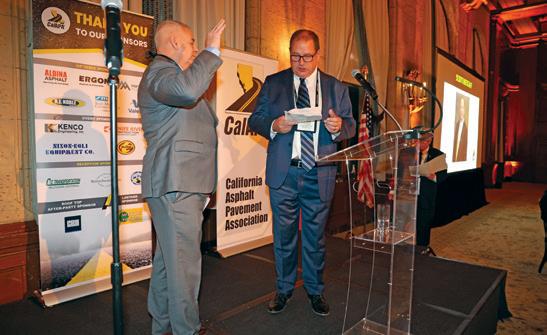
Outgoing CalAPA Chairman Scott Metcalf of Ergon Asphalt & Emulsions, right,administers the oath of office to 2026 Chairman Frank Costa of Martin Marietta at the CalAPA Annual Dinner.
California State Senator Tony Strickland, left, was presented with a CalAPA asphalt knit scarf by Russell Snyder, CalAPA executive director.
California’s vital roadway network, so essential to the safe and efficient movement of people, goods and services around the Golden State. His campaign theme of getting things done resonated with the CalAPA leadership and a constructionindustry ethos of solving problems rather than creating them. His backstory of being raised by a single mom who was a revered mentor to many at the Caltrans regional office in Los Angeles office lent “street cred” to his remarks. So, too, did his rise to leadership positions in the Legislature and eventually being elected mayor of Los Angeles, where he oversaw one of the largest street
maintenance programs in the nation, currently more than 23,000 lane-miles.
The evening kicked off with a poignant invocation delivered by longtime CalAPA member Steve Marvin with LaBelle Marvin as the association remembered those who passed away last year or could not attend this year’s dinner. Marvin talked about CalAPA as an extended family. Hall of Fame member Len Nawrocki, who served his country with distinction in the military during the Vietnam War, led the group in the Pledge of Allegiance to the Flag of the United States, which received one of the loudest cheers of the evening.
historic Jonathan Club in downtown Los Angeles.
Outgoing CalAPA Chairman Scott Metcalf with Ergon Asphalt & Emulsions took on the duties of passing on the chairman’s gavel to incoming Chairman Frank Costa with Martin Marietta, and thanked CalAPA members for their support that helped the association notch several historic achievements during his time as chairman. He encouraged all members to be active in association affairs, noting that the experience is rewarding and also helps advance the industry.
The slate of Board candidates was presented to the membership, including the nominated officers for
the coming year, and they were approved by acclimation. The meeting marked the last as a board member for Jeff Benedict with Valero, a past chairman, who announced he was retiring. He was replaced on the board by Gary Houston, who has been active on several committees and also is a trustee overseeing the association’s charitable arm, the California Asphalt Research & Education (CARE) Foundation. One of the beneficiaries of the CARE Foundation, the Women of Asphalt California Branch, was represented at the dinner by Cathrina Dmytrow, who is co-chair along with Sarah Hartz of Caltrans.
The 2026 CalAPA Officers, including Chairman Costa, included Vice Chair Chris Gerber with G3 Quality, Treasurer Scott Bottomley with Sully-Miller/Blue Diamond Materials, and Secretary Phil Reader with Reed Family Companies. Metcalf will become Immediate Past Chair and continue to serve on the Executive Committee.
The remainder of the board elected last week to two-year terms included Metcalf, Houston, Reader and Gerber, plus Kody King with Mercer-Fraser, Eric Richard with Reed & Graham, Chris Handley with Tullis, Inc., and Scott Fraser with Pavement Recycling Systems. John
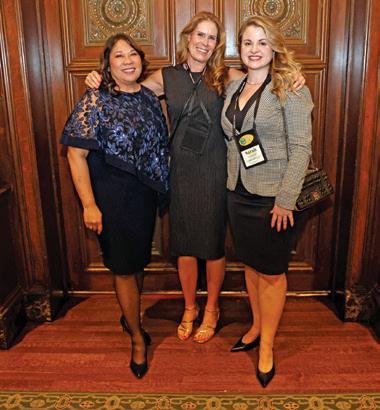
Right: Cathrina Dmytrow of Pavement aces Dmytrow of Pavement ACES, left, Cindy Metcalf, and Sarah Sisson of All States Materials.
Above: Patrick LaPaglia of Nixon-Egli Equipment, left, Steve Cota of Acrisure, Robert Jarvis of Century Paving, and Matt Mendenhall of Nixon-Egli Equipment.
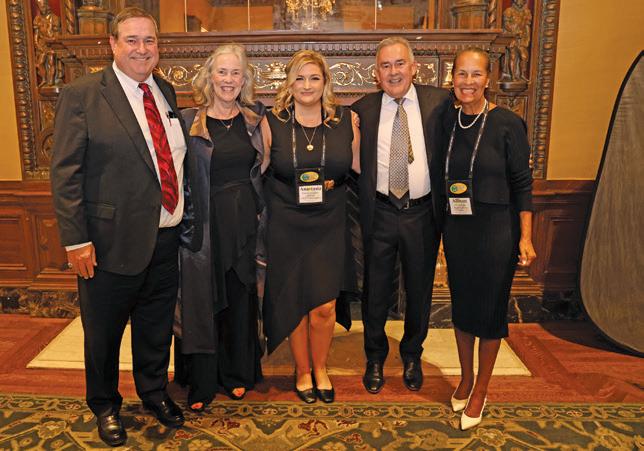
Jeff Benedict of Valero, Deb Benedict, Anastasia Crandall-Henning of C&C Transportation, John Todorovich of All American Asphalt, and Allison Ragan of Black Diamond Asphalt.
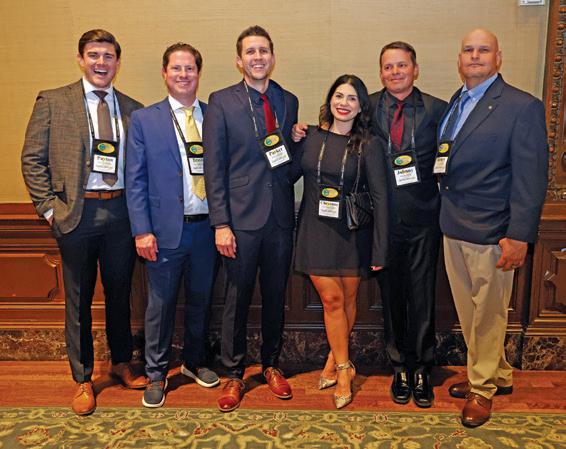
Martin Marietta team members Payton Thomas, left, Travis Ponchetti, Parker McBeath, Cheyenne Gould, Johnny Miller, and Henry Bejjani.
Reid with CRH was elected as an Advisory Board Member replacing Jeremiah Lemons, who was commended for his service to the board.
Vercruyssen, who noted the recent passing of former U.S. Rep. Doug LaMalfa, was welcomed into the Hall of Fame by past inductees Nawrocki, Bob Humer and Pascal Mascarenhas.
The evening’s keynote speaker, Strickland, a veteran Republican who represents parts of Los Angeles and Orange counties in the state Senate, also spoke of the loss of a longtime colleague and friend in LaMalfa. They both were passionate advocates for common-sense policy development and cutting waste and bloat in government that saps time and attention away from achieving important state goals on energy, housing, mobility, the economy and a myriad of other issues that contribute to, or diminish, the quality of life for millions of Californians.
“Most of the money that is spent in transportation does not go to roads and highways,” Strickland told the CalAPA audience, many of whom responded with knowing nods. “I will tell you that we need to have more oversight and follow the money. You worked hard on (SB) 1. You deserve to be able to look and see where that money is going.”
It was fitting that a prominent member of the state Senate witnessed another changing of the guard, the passing of the leadership mantel on the CalAPA Legislative Committee. Vercruyssen, a past Legislative Committee Chair, passed the gavel to Steve Ward, who served until his announced retirement late last year. The CalAPA Board of Directors approved Aimi Dutra with Dutra Materials/CRH, as the Legislative Committee Chair for 2026, and Vercruyssen, Ward and Dutra joined longtime Political Action Committee Chair Brian Handshoe with Kenco Engineering on stage to facilitate the transition. In the audience was CalAPA’s legislative advocate, Jeff Sievers with the firm of Carpenter Garcia Sievers, recently named by the Sacramento Business Journal as one of the top lobbying firms at the state Capitol.
Following the formal program and dinner, the group retreated to a festive “after-party” on the Jonathan Club rooftop with a sweeping view of downtown Los Angeles that was a fresh reminder that big things can happen when Californians dream big and then work together to make those dreams a reality. CA
Russell W. Snyder, CAE, is executive director of the California Asphalt Pavement Association (CalAPA).
Rene Vercruyssen, CalAPA Hall of Fame inductee, left, Brian Handshoe of Kenco Engineering, Steve Ward, PRS-retired, Aimi Dutra of CRH Materials, and Russell Snyder, CalAPA executive director.
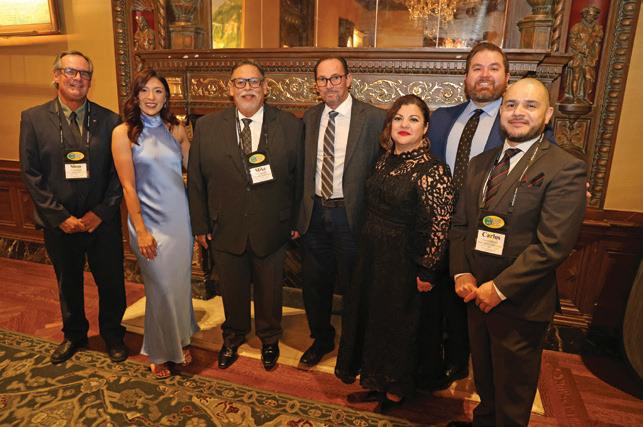
Sully-Miller team members Shon Esparza, left, Alma Cortez, Mike Acosta, John Rogers, Lucy Romero, James Michaud, and Carlos Benitez.
Your Mobile Commercial Equipment A/C Specialists Serving
California & Arizona
At G3 Equipment AC Specialists, we provide expert AC repair services for commercial fleets. Our skilled technicians ensure your systems operate safely and efficiently— keeping your vehicles running smoothly and your drivers safe and comfortable.
RED DOT Roof Top
Air Central
Mobile AC Hoses
Expert Support and Service
Rene Vercruyssen Jr. inducted into CalAPA’s asphalt industry Hall of Fame
You know it’s a big deal when your daughter blurts out,
“That’s my dad!”
Longtime CalAPA board member and road-repair champion, Rene Vercruyssen, was inducted into the association’s Hall of Fame in January with all the pomp and ceremony befitting of a career spent elevating people and an industry.
A larger-than-life figure who was a strident champion for focused and collective action on roads, Vercruyssen officially announced his plans to retire in a June 10 internal e-mail to his employees titled, simply, “A grateful farewell.”
“It has been the highlight of my career to play a small role in something much larger than any one of us,” he wrote. “Over the decades, through our shared commitment, we have materially improved the quality of life in our community—enhancing road safety, modernizing runways and taxiways, preparing the ground for retail centers, homes, and hospitals. It’s incredibly meaningful work, and I carry great pride in what we’ve accomplished together.
“Construction is a profession like no other. It demands a rare combination of vision, discipline, and resolve,” Vercruyssen wrote. “It requires people who see through obstacles, who finish what they start, and who can turn two-dimensional plans into three-dimensional reality—imagining every carefully planned sequence, every step, and executing with safety, efficiency, and craftsmanship. It takes people exactly like you.”
He noted that, “I know it is the right time to step away because I can clearly see this team is continuing to improve upon its
Rene Vercruyssen Jr.
already exemplary performance without me in the corner office. That’s a deeply reassuring feeling — and a clear sign that my work here is complete.”
A licensed civil engineer who also holds a master’s degree in business administration, Vercruyssen followed in the footsteps of his father, Rene Vercruyssen Sr., into the roadbuilding business, although his path was a bit circuitous by his own admission. A story about his father, who passed away in 2022, previously appeared in CalAPA’s Asphalt Insider newsletter. But as the younger Vercruyssen’s knowledge and confidence grew over the years, he leaned into association leadership positions, including serving on the CalAPA Board of Directors for many years and helping to inspire several elements of the CalAPA strategic plan that continue to be central to the association’s strategy today.
As Legislative Committee chairman, he was known for sweeping away bureaucratic gobbledygook to drill down to a policy’s impact on pavements, always keeping the impact to the taxpayer and motorist top-of-mind. In doing so, he often railed against transportation spending too often spread around to “anything but roads.” Recently he inspired a recent analysis by CalAPA of Caltrans data that revealed that asphalt consumption and asphaltrelated pavement projects, as well as concrete pavement projects, were flat or declining in recent years despite billions of new money generated by fuel-tax increases included in Senate Bill 1, the Road Repair & Accountability Act of 2017. In his spare time, Vercruyssen was a licensed pilot and avid aviation enthusiast. Having flown warbirds and other exotic aircraft for decades, he recently took up
Tim Denlay of Knife River Construction, left, with Rene, Christine, and Summer Vercruyssen at the CalAPA Annual Dinner.
flying gliders. His gripping eyewitness account of a deadly 2011 Reno Air Races crash was one of the most commented-on stories ever to appear in the CalAPA industry newsletter. “I knew something was terribly wrong,” Vercruyssen recounted to Asphalt Insider at the time before describing how he dived for cover in the grandstands as a doomed plane headed in his direction. The modified P-51 crashed into the stands nearby in spectacular fireball, killing the pilot, 10 spectators and injuring 74. The annual air show eventually shut down for good in 2023 over safety concerns.
Vercruyssen also was a tireless supporter of developing the next generation of leaders in the industry. In just one of many examples, his company earlier this month conducted a tour of their Chico asphalt plant for students participating in a CSU Chico summer asphalt workshop sponsored by CalAPA.
The CalAPA Board of Directors, meeting June 18 in Incline Village, NV, voted unanimously to induct Vercruyssen into the association’s “Hall of Fame” in recognition of his many contributions to the industry. The induction ceremony took place Jan. 15 at the Jonathan Club in downtown Los Angeles, an event the modest Vercruyssen had never
attended. His wife, Christine, and daughter, Summer, joined him at the VIP table along with state Sen. Tony Strickland.
When Vercruyssen finally took to the state to receive his award, his daughter could hardly contain her glee, blurting out “That’s my dad!” to the delight of nearby dinner attendees.
Noting it was his first time at the Jonathan Club, Vercruyssen joked that “I couldn’t believe they would let a paving contractor in this building. Does the management of the Jonathan Club know what we do for a living? Do they have any idea what is stuck on the bottom of our shoes?”
Turning serious, he said he wanted to talk about the politics of roads and the importance of conveying our good-road message clearly.
“Look where we are today,” he said. “When it comes to our product, we are the entity that speaks for our industry. There’s no second place. There’s just us. And I want to congratulate this room for getting this done. We’ve brought the state together to make a more impactful voice, and we’ve done an outstanding job. You’re not a company that actively participates in this association unless you’re a stand-up company that cares about your brand.”
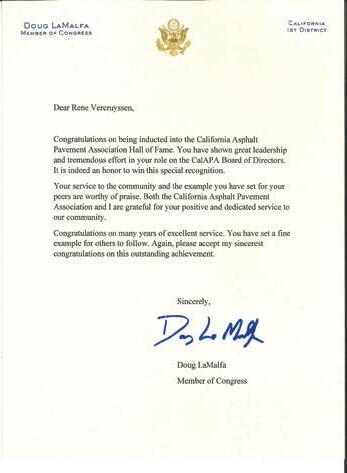
Turning to concerns about dwindling fuel-tax revenue, driven largely by the advent of electric vehicles in the state, Vercruyssen said the association needs to keep pressing elected official to ensure “they are 100% committed to roads, because the word ‘transportation’ in Sacramento has come to mean anything but roads.” His remark was met with thunderous applause. He also made a point to speak for rural communities, which often come up short when it comes to road-improvement dollars. “In those rural parts of our state, our misplaced priorities kill people.” By way of example, Vercruyssen recalled how he met Doug LaMalfa, the longtime legislator and member of Congress who passed away unexpectedly just prior to the dinner. In one of his last official acts, LaMalfa wrote a letter commending Vercruyssen for his induction into the CalAPA Hall of Fame.
“When you live where I live, and you do what I do for a living, and you see that we don’t make our roads safer because of our misplaced priorities, that is a passion. We need to get our priorities straight: roads first.” CA
Russell W. Snyder, CAE, is executive director of the California Asphalt Pavement Association (CalAPA).
Shortly before he died unexpectedly, longtime U.S. Rep. Doug LaMalfa wrote a letter of commendation noting Rene Vercruyssen’s induction into the CalAPA Hall of Fame.
Rene Vercruyssen (left) chats with U.S. Rep. Doug LaMalfa at a 2015 event in the district.
In his own words: Rene Vercruyssen
Editor’s Note: In requesting biographical information from Rene Vercruyssen for a story about his retirement, he sent in the following e-mail that exemplifies his wit, style and insight. It is published word-forword as it was received, even though he labeled it “first draft.”
I entered the construction world as a skinny 18-year-old basketball player the moment I made the mistake of telling my father and grandfather I had no plans for the summer after high school graduation. That was on a Friday afternoon. By Monday at 7 a.m., I was in a ditch with a shovel in my hands.
That summer taught me the value of a dollar — and that I didn’t want to spend my life at the bottom of the ditch. I set my sights on working at a higher level. Maybe even up where the foreman stood. I saved what I could and went to college. Then, in a fit of youthful arrogance, I dropped out — convinced I was the smartest guy in the room. A few more years of hard construction work and a sore back convinced me otherwise. I’d been the dumbest guy in the room for walking away.
I went back, earned my engineering degree, and in 1985 began working for PG&E at the Diablo Canyon Nuclear Power Plant. By 1989, I heard there was real money to be made building infrastructure for the concrete tilt-up warehouses during the industrial park boom in Sacramento. I made the leap. Then came 1992 and the crash of the Savings and Loan market — and just like that, the bottom fell out.
That experience taught me that the real lever in construction
isn’t just tools and material — it’s money. I took a job managing a small general engineering company in Sacramento and went to school at night to earn my MBA. With a bit more business acumen, I joined my father at Baldwin Contracting Company and became a thirdgeneration road builder. My grandfather ran operations for Granite Construction in Sacramento; my father led Baldwin in Chico. I was proud to continue their legacy.
In 1996, Knife River acquired Baldwin. In 2008, I was promoted to manage Knife River Construction – Chico. Over the years, I came to understand the importance of engaging in our industry’s associations. At first, I sat quietly at the back of the room, trying to absorb the flood of issues I didn’t even know I didn’t know. But it quickly became clear: the most effective associations are built on the shoulders of passionate members willing to give their time, energy, and talent. The leaders ahead of me didn’t preach — they inspired by example. Their actions guilted me into stepping up. I felt a duty to assist with the heavy lifts.
Enlightened by the mentorship so gratuitously extended to me by industry leaders in our associations I began to find my voice in Sacramento and Washington, D.C. I became a vocal advocate for what really matters: roads. Not “transportation,” a word that’s been stretched and tortured to include everything but roads. We need ROADS, not euphemisms. I often felt that in some venues the word road was considered a curse word it being
so rarely uttered by lawmakers. I began to use it exclusively in conversations about infrastructure and transportation. I used the “r” word to restate politicians’ vocal commitments to supporting “transportation.” Got it, so you’re all in on roads. That’s why a good deal of my energy has been invested with CalAPA — one of the few associations laser-focused on advocating specifically for roads without being diluted by other special interests. CalAPA is where I met Russ Snyder. Russ became our first Executive Director without a technical background. A journalist by trade, he brought something our association of engineers desperately lacked: the ability to communicate. We may know how to build roads, but we often struggle to communicate their importance and the necessity of partnering with all industry stakeholders to deliver the best value per invested taxpayer dollar. Russ helped us tell our story, build our brand, and increase our influence.
This industry is essential to keeping the wheels of our economy turning. It’s on us — the builders, leaders, and advocates — to keep Sacramento and Washington focused on making consistent, sustained investments in road construction and maintenance. Only with that long-term commitment can the private sector confidently plan, invest, build, and maintain the roadways so fundamental to the efficient movement of people and products necessary to sustain our quality of life. CA
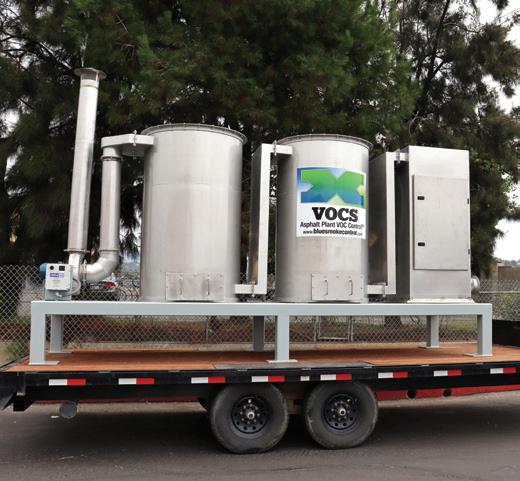
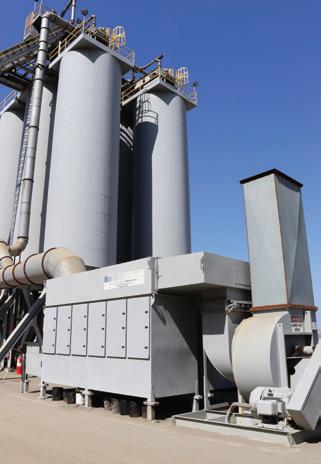
Custom-engineered systems for new and existing plants
Turnkey installation, service, and ongoing support
Proudly engineered and built in the USA
Dynapac’s range of small and medium-size vibratory rollers are used to compact all types of soil. The rollers are suitable for most types of road construction, airfields, dam construction, harbor projects and industrial construction. Heavy-size vibratory rollers are used for a very wide range of applications. A special version with a padfoot drum (PD) is available for compacting cohesive soils.
BETTER FROM THE GROUND UP
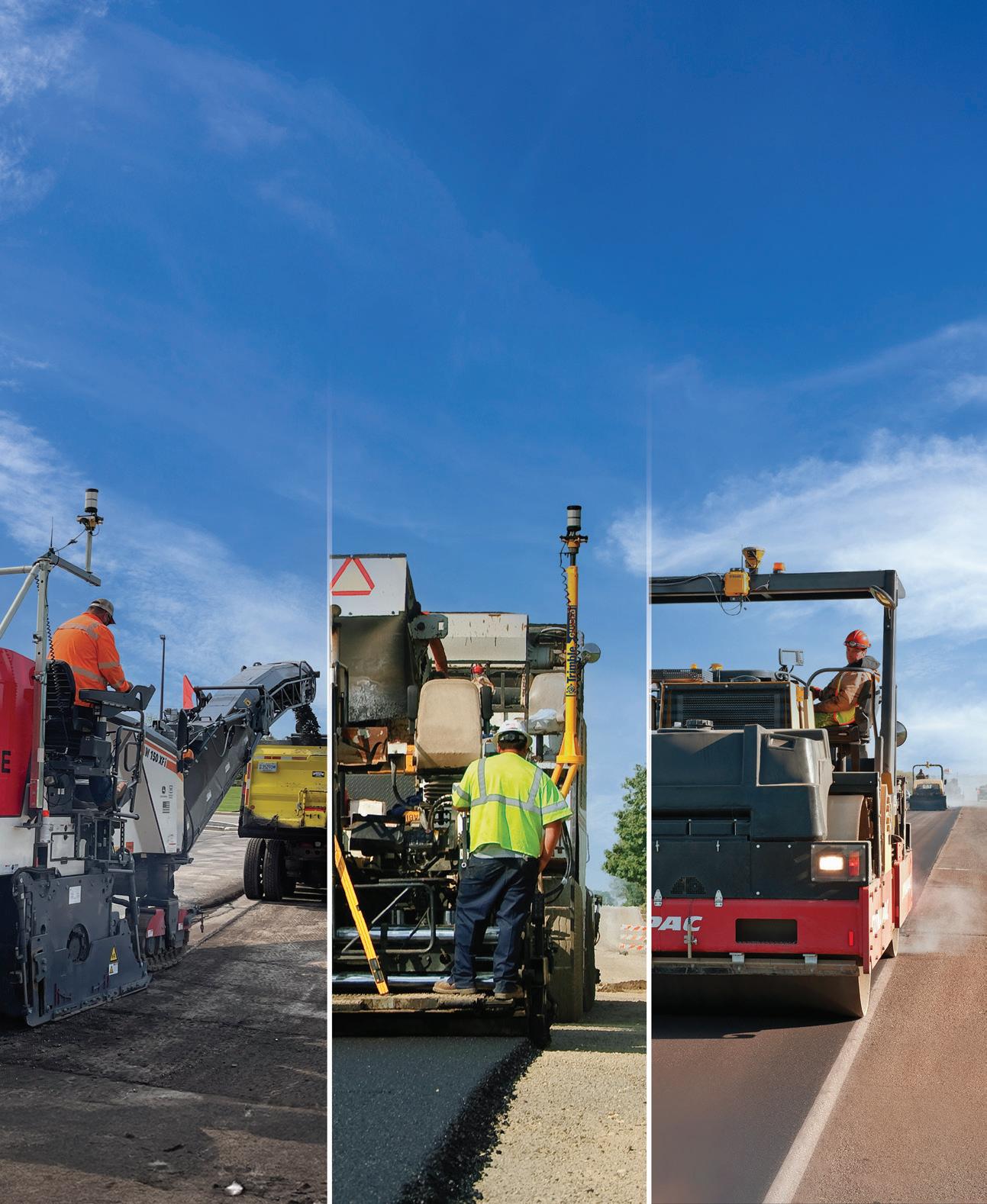
With Trimble® Roadworks Paving Control Platform
Now available for all machines involved in the road creation or renovation process. Whether you are building a new road or resur facing an old one, Trimble Roadwork s will help you build a bet ter sur face, reduce material use, and significantly improve your produc tivit y. The more you use Trimble paving solutions, the more produc tive and profitable your paving operation will be.