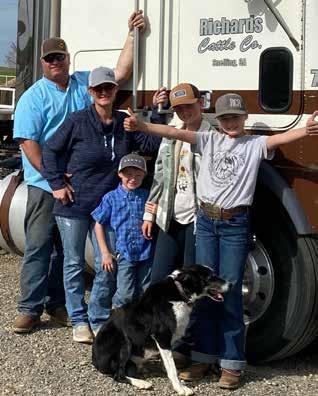
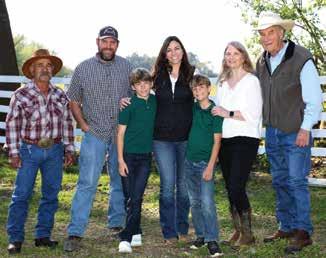
Website/Market Report .......... www.clmgalt.com Web Broadcast .................. www.lmaauctions.com California’s livestock marketing leader The Parnell family
Top Consignments from throughout California and Nevada will be Showcased in these Specials:
CLM FEEDER SPECIALS Join Us Ringside at 12 p.m. WEDNESDAYS APRIL 15 • APRIL 29 MAY 13 • MAY 27 • JUNE 10 • JUNE 24
CATTLEMEN’S FEEDER SPECIALS sponsored by the Amador-El Dorado-Sacramento Cattlemen Consignments Welcome from All CA Cattlemen’s Associations with a Donation Being Made Back to the Local Association MONDAYS MAY 4 • MAY 18 • JUNE 1
PAIR & BRED COW SALES
WEDNESDAYS: MAY 20 • JUNE 17
CALL TO CONSIGN TO THESE WESTERN VIDEO MARKET SALES:
April 10 – Harris Ranch Resort, Coalinga, CA CONSIGNMENT DEADLINE: APRIL 1
May 1 – Paso Robles Inn, Paso Robles, CA CONSIGNMENT DEADLINE: APRIL 23
May 20 – Cattlemen’s Livestock Market, Galt, CA JOIN US ON THE SEATS OR ONLINE LIVE FROM Cattlemen’s Livestock Market CONSIGNMENT DEADLINE: MAY 12
CALIFORNIA CATTLEMEN’S ASSOCIATION
3841 North Freeway Blvd., Suite 130 Sacramento, CA 95834
Matt Macfarlane | (916) 803-3113 m3cattlemarketing@gmail.com
BILLING SERVICES
Lisa Brendlen lisa@calcattlemen.org
SERVING CALIFORNIA BEEF PRODUCERS SINCE 1917
Bolded names and businesses in editorial represent only current members of the California Cattlemen’s Association or California CattleWomen, Inc. For questions about membership status, contact the CCA office at (916) 444-0845. The California Cattleman (Publication #8-3600) is published monthly except May/June is combined by the California Cattlemen’s Association, for $20/year, or as part of the annual membership dues. All material and photos within may not be reproduced without consent of publisher.
Periodical postage paid at Lubbock, Texas, 79402. Publication # 8-3600
National Advertising Group: McFarland AdVantage | 334-652-9080 222 Shady Valley Road, Autaugaville, AL 36003
POSTMASTER: Send address changes to: California Cattleman, 3841 North Freeway Blvd., Suite 130 Sacramento, CA 95834
Inyo/Mono/Alpine Cattlemen's Meeting
April 11 | Lone Pine
Calaveras County Cattlemen’s Meeting
April 25 | Angels Camp
Glenn-Colusa Spring Social
May 8 | O'Connell Ranch, Colusa
California Cattlemen's Association
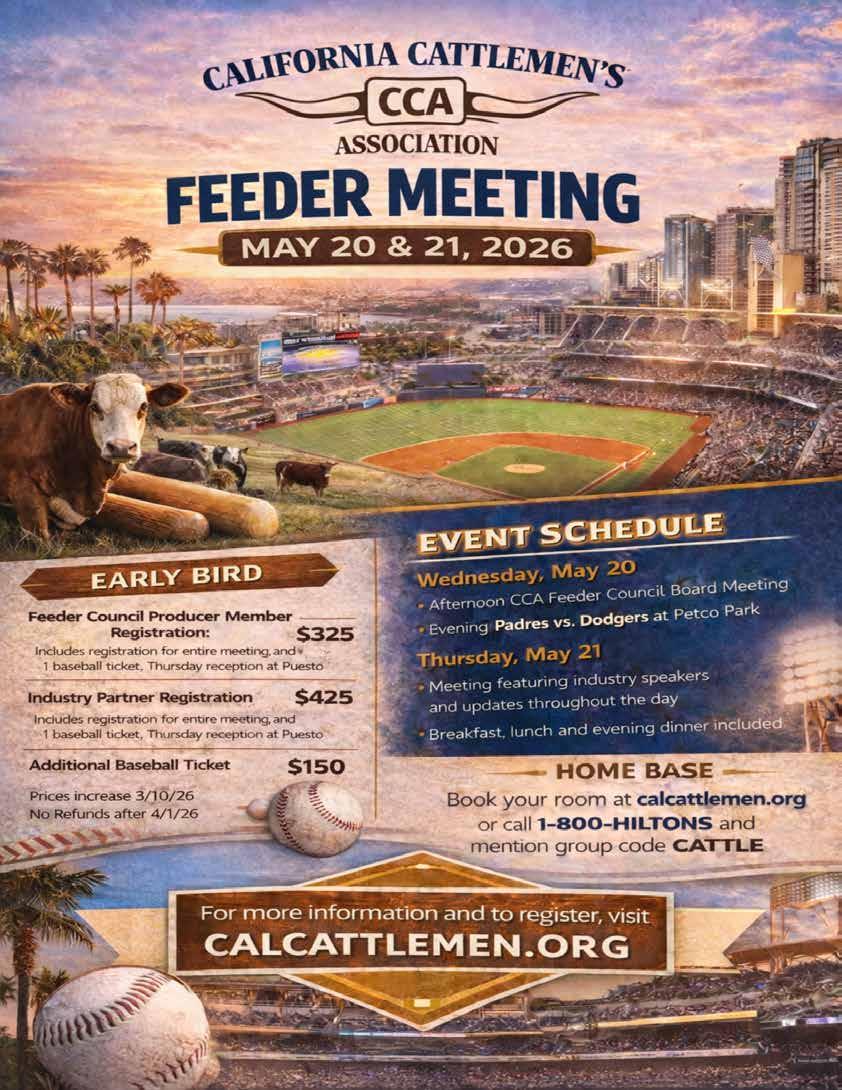
Feeder Meeting
May 20 & 21 | San Diego
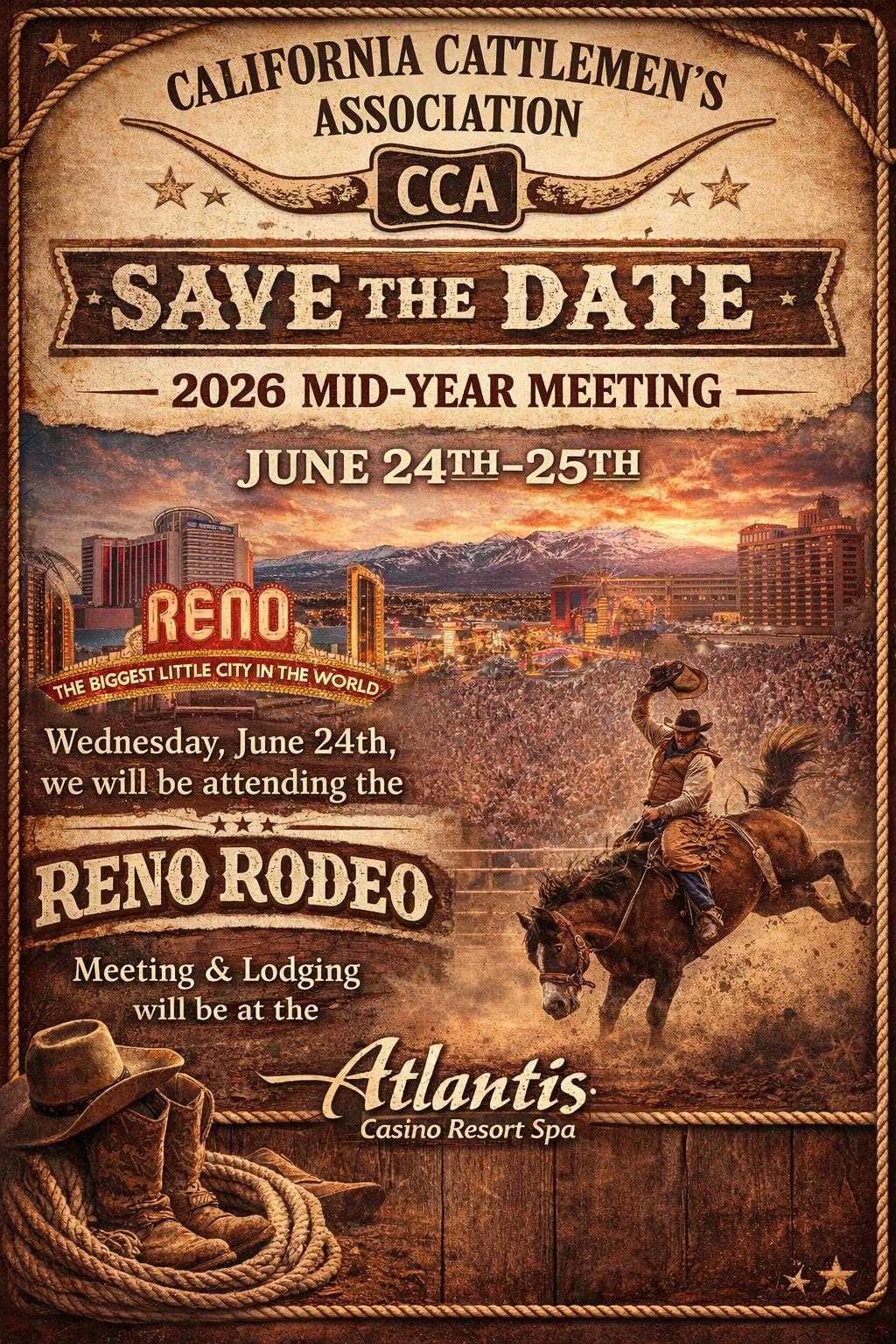
CCA & CCW Midyear Meeting
June 24 & 25
Atlantis Casino Resort | Reno, Nev.
CCA & CCW Annual Convention
December 2-4 | Reno, Nev.
ASSOCIATION PERSPECTIVES
CATTLEMEN’S COLUMN
8 10 30 14 24 26 32 36 EARTH DAY April 22
The back porch views have changed over the years
BUNKHOUSE
Celebrating with you
YOUR DUES DOLLARS AT WORK
The legislative climate in the first quarter of 2026
HERD HEALTH
The right drug for the bug
COUNCIL COMMUNICATOR
Cattle Council dollars working to benefit cattle producers across state
NATIONAL PERSPECTIVE
A firm foundation leads to success for all U.S. producers
BEEF ABROAD
Variety cuts up despite China not being at the table
RANGELAND TRUST TALK
Continuing heritage at Dry Creek Ranch
CATTLEMEN’S COLUMN
LOOKIN' OUT MY BACK DOOR THE UP-CLOSE CHALLENGES ON TODAY'S RANCHES
by CCA President Rick Roberti
Growing up in the '70s was something special. I know that may sound like the perspective of a teenager, but it really was an amazing time. Logging and the lumber industry provided jobs and funding for our schools. Ranchers ranched, even though cattle prices weren’t all that good. Maybe the issues at hand were bigger than I remember but it felt like a great time to be in California agriculture.
Back then, my dad served on the Soil Conservation District, dedicated to protecting the soil and promoting production agriculture. He served for years, until the term "conservation" took a far-left turn. Dad and three other ranchers gave up their positions only to be filled mostly by part-time farmers and so-called "educated" '60s hippies who knew what was best for farmers, ranchers and our rural communities.
Eventually, the name was changed to the Resource Conservation District (RCD). It took some time, but my local RCD is once again led by predominantly farmers and ranchers as we strive to do what's best for our area.
Radio was another big thing growing up in my day. Eight-track tapes were new, but radio stations played music, not just talk shows. One of my favorite groups at the time was Credence Clearwater Revival, and their song "Lookin' Out My Back Door," became a big hit. I didn’t really know what some of the lyrics meant, and that didn’t seem to matter coming out of the '60s, but maybe today I understand them better.
In the song, a guy’s imagination is going wild, and maybe he smoked something to relax. Animals are going wild, dancing together on the land; a giant is doing cartwheels; and a tambourine and elephants are playing in the band. Maybe one of the weirdest things is that a dinosaur is listening to music by Buck Owens. The singer of the song says that he’s locking the front door because beyond it lies everyday reality. I admit, I sometimes just want to sit on my back porch and imagine what I want, and maybe we all need to do that from time to time.
Today, there seems to be a lot more backyard dreaming that is becoming reality. How about we bring back a giant wolf, put wolverines and gray wolves in places they have never been before, and top it off with a grizzly bear for each
county with or near a forest, and throw in a few thousand mountain lions, just to be fair. I wish these things were a fantasy, or just lyrics in a song, but they’re not. They are right out our front door. Many livestock producers in California are not living a fantasy but a nightmare reality with the mismanagement of apex predators in the state.
This is politics, and there is no common sense in the backyard. It is an election year, and it’s time to vote and speak up for change. Most of us know we need a change in our state, starting at the top. Support those running for office who want to stop the craziness in Sacramento and our own counties.
I don’t know if my dad did the right thing getting off the old Soil Conservation Board. They had their challenges back then, but today animal rights activist groups are among ours. We know who they are and their intentions are not good for agriculture or our business as livestock producers.
A reminder of that was at last month’s CCA Steak and Eggs Legislative Breakfast. Outside the doors of the Sutter Club, a group was protesting our industry, and one protestor wore a cow mask and acted like a calf that had been abused. These groups will do whatever it takes to stop us.
As the song concludes, the lyrics offer more guidance: Bother me tomorrow, today, I’ll buy no sorrows. I think that means don’t bother me now, I’m okay, but this attitude just postpones the reality coming down the road.
We’ve always had challenges in this business; it’s just part of our way of life. Sitting on the porch is good sometimes, but maybe we should remember and encourage others that the front porch is a better place to be than the back one these days, so we can clearly see what’s going on and meet today's challenges. I’m just leaving you with something to think about. Maybe we're the crazy ones, or not crazy.
TURLOCK LIVESTOCK AUCTION YARD
CALIFORNIA’S CATTLE MARKETING CENTER
CONTRA COSTA- ALAMEDA & SAN JOAQUIN-STANISLAUS CATTLEMEN’S
SATURDAYS | APRIL 25 • MAY 9 • MAY 23
ALSO SELLING CATTLE FROM THESE CATTLEMEN’S ASSOCIATIONS: MERCED-MARIPOSA, SANTA CLARA, NAPA-SOLANO, MADERA, CALAVERAS, TUOLUMNE, FRESNO-KINGS, SAN BENITO & MONTEREY
FEATURING A SPECIAL SECTION OF NHTC-CERTIFIED, ANGUS-SIRED CALVES AS WELL AS A RED ANGUS AND CHAROLAIS SECTION
THESE EVENTS WILL INCLUDE SOME OF THE BEST CALVES CALIFORNIA HAS TO OFFER. WHETHER YOU ARE ENROLLED IN A SPECIAL PROGRAM OR NOT, THESE SALES ARE FOR YOU!
APRIL SPECIALS | TUES., APRIL 7 & 21
SPRING FEEDER SALES FEATURING CALVES AND YEARLINGS
MAY MADNESS | TUES., MAY 5, 12, 19 & 26
EVERY TUESDAY IN MAY IS A SPECIAL!
DEDICATED TO CONSIGNMENTS OF 50 HEAD OR LESS! TLAY
BUNKHOUSE MEMORABLE MILESTONE CELEBRATING 40TH BIRTHDAY IN MUSIC CITY
by CCA Vice President of Government Affairs Kirk Wilbur
As my 30s began to fade, my dad suggested pulling my family together from every corner of the country for a destination celebration of me and my twin sister’s 40th birthday.
My sister initially proposed Las Vegas, but when my aunt suggested Nashville I was immediately on board: I would already be in town for the 2026 Cattle Industry Convention & NCBA Trade Show, or CatttleCon, and would be thrilled to simply extend my stay.
CattleCon kicked off on Monday, Feb. 2 (if you want to read about the business of CattleCon, see “Raising the Bar in Music City” in the March edition of California Cattleman – this is a birthdaythemed column!). After a day of meetings, I was unwinding over a beer with current and former coworkers when CCA Executive Vice President Billy Gatlin let me in on an early birthday surprise: we had tickets to that evening’s Nashville Predators game!
Hockey is easily my favorite sport. I grew up playing it in Idaho, and while I haven’t followed the National Hockey League in a few years, there’s nothing quite like live hockey –it combines the fast pace of basketball with the hard hits of football, but with the added challenge of ice.
I worried that perhaps I was the only one in our party who’d enjoy the game, but that concern quickly melted away. I’ve known Justin Oldfield, Elk Grove, for 13 years, but I don’t think I’ve ever seen him so gleeful as he was shouting “Do the Flying V!” as the Predators advanced
the puck down the ice. (It’s worth noting that Disney’s The Mighty Ducks – seemingly Justin’s only cultural touchpoint for hockey – released two years before CCA Director of Communication Katie Roberti, also in attendance, was even born.)
Katie and CCA Director of Finance Lisa Brendlen also seemed to enjoy themselves. Nearby fans taught them chants routinely lobbed at opposing goalies when the Predators score. They seemed to relish hollering “Hey! You suck!” and “It’s all your fault!” whenever the Predators hit their mark, and they got good practice as the Preds netted six goals in a one-goal victory over the St. Louis Blues.
A few days later, as hundreds of cattlemen converged on Nashville International Airport to return to ranches across the country, I stayed put to welcome family from Massachusetts, New York and Idaho. “Family” here has a broad meaning: in addition to my dad, my brother and sister and my siblings-in-law, we were joined by a family of friends I’d grown up with in Idaho. A day later my girlfriend flew in from Sacramento.
I’m not much of a country music fan – if anything I consider it a bit of an occupational hazard – but of course I make an exception when in Nashville. On Friday night, the 13 of us occupied an entire row at the Grand Ole Opry, and the following morning we got to hear a trio of songwriters take turns playing their tunes during an intimate brunch at the Listening Room Café. Even if I’m not much of a country music fan, I am a fan of time spent with loved ones, and it was a bonus to see them moved by the music.
We also made sure to hear some “good” music; on the final day of the trip we camped out at JBJ’s on Broadway, where my brother paid the cover band to serenade us with several nostalgic'90s alternative rock hits to sooth our aging millenial souls. The best part of the trip though was just huddling around our Airbnb (a Taylor Swift-themed house intended more for bachelorette parties than
ON PAGE 11
Katie Roberti and Kirk Wilbur visiting ranches and member meetings in style, while not always practical, is always entertaining.
300 FANCY FRONT END FEMALES
FALL CALVING, FIRST-CALF COMING 3-YEAR-OLDS. ANGUS/ANGUS-CROSS, RED ANGUS/RED ANGUS CROSS. ALL ARE ULTRASOUND CONFIRMED TO CALVE BETWEEN SEPT. 10 AND OCT. 20. HAND SELECTED FROM THE TOP END OF 1,400 REPLACEMENTS. ORIGINATED FROM REPUTATION RANCHES. ALL FOOTHILL & ANAPLAS VACCINATED AND ON A COMPLETE YEARLY MODIFIED-LIVE VACCINATION AND MINERAL PROGRAM. THEY HAVE BEEN RUNNING IN THE SIERRA FOOTHILLS FOR TWO SEASONS!
PLUS: COMPLETE HERD DISPERSAL!
85 FALL CALVING RUNNING AGE COWS
FOOTHILL AND ANAPLAS VACCINATED AND EXPOSED. FULL VACCIATION AND MINERAL PROGRAM. BRED TO HIGH-END LUDVIGSON STOCK FARM BULLS AND IRON-LORENSEN RED ANGUS BULLS.
OTHER FEATURED OFFERINGS:
HEIFERS
ANGUS/ANGUS CROSS BRED TO LOW BIRTH LINZ ANGUS BULLS TO CALVE SEPT./OCT. FULL YEARLY MODIFIED-LIVE VACCINE PROGRAM. BORN AND RAISED IN THE CENTRAL COAST MOUNTAIN RANGE.
40 HEAD 4-5 YEAR OLD FRONT END FALL CALVING COWS FOOTHILL VACCINATED AND ON A COMPLETE YEARLY VACCINATION PROGRAM. BRED TO HIGH-END ANGUS BULLS TO CALVE SEPT./OCT. ORIGINATED IN SOUTHERN OREGON
120 HEAD 3-4 YEAR OLD FALL CALVING COWS
ANGUS/ANGUS CROSS CALIFORNIA NATIVE COWS ON A COMPLETE VACCINATION PROGRAM AS WELL AS FOOTHILL VACCINATED. BRED TO ANGUS BULLS TO CALVE IN SEPT./OCT.
PLUS SEVERAL SMALLER CONSIGNMENTS OF YOUNG FALL CALVING COWS AND HEIFERS AS WELL AS SOME SMALLER GROUPS OF SPRING PAIRS AND CLOSE UP COWS.
VISALIA LIVESTOCK MARKET
...CONTINUED FROM PAGE 10
40th birthdays) watching Olympic hockey, drinking Bud Lights, giving each other hell and talking wistfully about the good ol’ days growing up together in Idaho.
My actual birthday was the following Tuesday: I took the day off work and spent it quietly relaxing at home, ending the day at pub trivia with a few of my friends. We took second place.
I don’t foresee myself suffering a mid-life crisis – the only sports cars you’ll see me in are the ones the rental agency assigns me despite being told I’ll be driving down dirt-and-gravel ranch
roads – but the reality that time is limited does seem to be seeping into my consciousness lately. I’ll cherish these memories. And I’m prioritizing creating new ones, with several concerts, sporting events and trips dotting my calendar in the months ahead.
The entirety of my 30s was spent at the California Cattlemen’s Association, and there is no shortage of memorable moments from the past decade spent with you all (most of them good!). I look forward to those ahead, whether in Nashville, Washington, D.C., Reno or at your local cattlemen’s meetings.
SWEET RANCH HONORED BY SOCIETY OF
RANGE
MANAGEMENT FOR STEWARDSHIP LEGACY
The Sweet Ranch and owners Karen Sweet and the late Darrel Sweet of Livermore, received the Chuck Jarecki Rancher Land Stewardship Award at the Society for Range Management’s 79th Annual Meeting in Monterey last month. The award was recently established thanks to a generous donation by its namesake, Montana rancher Chuck Jarecki, a Society for Range Management (SRM) life member. The award recognizes ranch operators who demonstrate outstanding rangeland stewardship and contribute to the ranching profession through local, state and national service.
The Sweets exemplify rangeland stewardship excellence through five decades of innovative conservation leadership on their fifth-generation California ranch. Operating within the intense development pressures of the San Francisco Bay Area, the Sweets transformed challenges into opportunities, demonstrating that productive cattle ranching and endangered species conservation are mutually beneficial.
The Sweet Ranch serves as critical habitat for four federally endangered species—California tiger salamander, California red-legged frog, Western burrowing owl and San Joaquin Kit Fox— while maintaining a viable commercial cow-calf operation. Through collaborative partnerships with federal and state agencies, the Sweets developed groundbreaking grazing management practices that protect San Francisco's drinking water supply, enhance riparian habitats, and maintain optimal conditions for endangered amphibians.
As a founding member of the California Rangeland Trust, Darrel helped establish an organization that has protected over 416,000 acres of California rangeland. Karen's leadership as Executive Director of the California Rangeland Conservation Coalition brings
together ranchers, environmentalists and policymakers, transforming endangered species conservation from conflict to collaboration.
The Sweets' educational philosophy, "There's no substitute for getting people out on a ranch to see what it really is," created a living laboratory that influenced conservation policy across the American West. Their approach helped direct millions in mitigation funding toward conservation easements on working ranches, proving that supporting private rangeland stewards provide the most effective path to ecosystem sustainability. Until Darrel's passing in February 2025, and continuing through Karen's ongoing leadership, the Sweets’ legacy demonstrates that land stewardship is "the right thing to do."
For their tremendous contributions to the management of rangeland ecosystems, it is with great honor the Society of Range Management recognized Darrel and Karen Sweet with the Chuck Jarecki Rancher Land Stewardship Award.
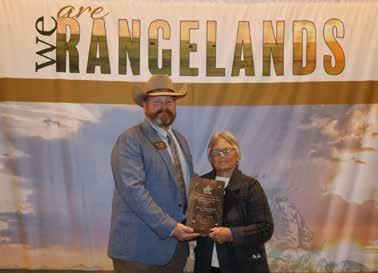
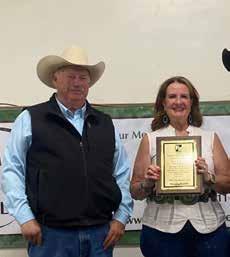
2025 SRM President Jeff Goodwin presents Karen Sweet with the Chuck Jarecki Rancher Land Stewardship Award at the 2026 Annual Meeting in Monterey, California.
YOUR DUES DOLLARS AT WORK
EARLY THEMES OF THE LEGISLATIVE YEAR PROPOSED
GRIZZLY RETURN, WILDFIRE AND ENVIRONMENTAL BILLS
ON THE AGENDA
by CCA Vice President of Government Affairs Kirk Wilbur
Legislators introduced 1,897 bills by the February 20 bill introduction deadline, roughly 600 fewer than were introduced in the first year of the 2025-26 Legislative Session. But while CCA staff has reviewed each of those measures, this year’s legislative outlook remains somewhat murky, as roughly one-third of those bills were introduced either as intent bills (bills stating an intention to address a particular policy issue via subsequent amendments) or spot bills (placeholder bills which make nonsubstantive changes to laws, also intended to be subsequently amended).
While the exact contours of the legislative year are still taking shape, some major themes are apparent. In the months ahead, CCA will share details of the Association’s bill positions and lobbying efforts. In the meantime, this month’s Your Dues Dollars at Work column highlights some of the major legislative themes that stand to impact cattle producers this year, as well as CCA’s early engagement.
APEX PREDATORS
On Jan. 27, the Assembly Water, Parks and Wildlife Committee convened an informational hearing on human-wildlife conflict, making it clear that legislators had intentions to address predator management policy.
And while gray wolves have commanded attention in the Legislature since at least
2021, when the Wolf-Livestock Compensation Program was created, other apex predators are beginning to encroach on their policy territory, with the Legislature poised to debate mountain lions and even grizzly bears in the months ahead.
These conversations are taking place on two separate but related tracks: Budget negotiations and policy bills.
On the Budget front, CCA is advocating for significant funding for the California Department of Fish and Wildlife’s Wolf Program. In recent years CCA has fought hard to obtain funding for the Department’s Wolf-Livestock Compensation Fund, securing $3 million for that purpose in 2021, $600,000 in 2024 and $2 million in last year’s Budget Act. While CCA is seeking additional funds for the Compensation Program in the 2026-27 Budget, the Association is seeking to more broadly support the Wolf Program in the next fiscal year.
Specifically, CCA has sought $30.8 million dollars for the Wolf Program. That request includes $25 million for the Wolf-Livestock Compensation Program, which would be sufficient to reinstate the non-lethal deterrence assistance and pay-for-presence prongs of the Program that lapsed due to insufficient funding in March of 2024.
In order for compensation to function properly, the state needs to fit more wolves with GPS collars, so CCA’s Budget ask contemplates $1 million for helicopter-assisted capture and collar efforts. It also includes $1 million to augment staffing within the Wolf Program, which currently has only three employees serving the whole of wolf territory, as well as $500,000 to fund UC Berkeley’s California Wolf Project and another $300,000 for UC Cooperative Extension research and community outreach. Finally, the Budget request asks to set aside $3 million in flexible funding for the Wolf Program to address novel funding needs as they arise.
CCA has also partnered with a broad coalition supporting renewed funding for the Department’s Human-Wildlife Coexistence Program, which was previously
funded (as the Human-Wildlife Conflict Program) between 2021 and 2024. The Program serves urban, suburban and rural communities alike, and would increase CDFW staffing to, for example, more expeditiously investigate mountain lion depredations. That funding request seeks $18 million in one-time funding for 50-60 wildlife staff, including regional wildlife conflict specialists, and $15 million in subsequent years to sustain the Program.
On the policy front, wildlife advocates are seeking to address both the Wolf Program and the Human-Wildlife Coexistence Program via SB 1135 (Blakespear). As of press time, that bill is merely an intent bill (stating the “intent of the Legislature to reestablish and enact a statewide program to manage and promote human and wildlife coexistence”), but CCA staff has been negotiating over potential bill language since late January. While the Human-Wildlife Coexistence Program provisions of the bill are likely supportable, CCA’s ultimate position on the bill will likely be determined by how willing the sponsors are to negotiate Wolf-Livestock Compensation Program provisions of the bill to ranchers’ liking.
Senator Alvarado-Gil (R-Jackson) has again introduced legislation to address mountain lions after a young man in her district was killed by a mountain lion in 2024. The Senator’s previous effort, a bill that would have authorized the proactive hazing of El Dorado County mountain lions with hounds, failed to gain traction in the Capitol last year. This year, the Senator has introduced SB 1397, a measure which would require CDFW to “continue and expand its scientific research effort to develop and evaluate methods to deter mountain lions.”
Alarmingly, there’s also an effort in the Capitol this year to initiate reintroduction of grizzly bears. SB 1305 (Richardson) would make it “the policy of the state to restore the grizzly bear…to California.” While it wouldn’t reintroduce the species immediately, it would direct CDFW to develop a ‘roadmap’ for reintroduction. Grizzly bear reintroduction would be disastrous for ranchers already contending with gray wolves, mountain lions and black bears and with state policy that limits effective management of those species. Perhaps less obviously, though, even requiring CDFW to conduct a feasibility study for reintroduction would be a disservice to Californians: the Department is chronically under-staffed and under-resourced to manage current wildlife species, and piling on additional studies would further hamstring the agency.
WILDFIRE RESILIENCE
CCA has a long track record of successful wildfire resilience advocacy in Sacramento. In 2021, CCA sponsored SB 332 (Dodd), which incentivized prescribed fire by immunizing
prescribed fire practitioners from liability for CAL FIRE’s suppression costs in the rare instances in which the agency must work to extinguish a burn that escapes containment lines. The following year, CCA supported another bill by then-Senator Dodd which established the Prescribed Fire Liability Claims Fund, again incentivizing prescribed fire by limiting practitioners’ liability. In every legislative year since, CCA has sponsored or supported legislation to further move the needle on ‘good fire.’
Two such bills have garnered the Association’s support this year. AB 1699 (Rogers) would open coverage for the Prescribed Fire Liability Claims Fund to resource conservation districts, volunteer fire departments, tribal governments and other qualified practitioners. The bill would also allow prescribed fire practitioners certified by the federal government or by other states to transfer those certifications and qualify as burn bosses in California. Finally, the bill cuts down on red tape by making CAL FIRE’s pre-burn site inspections discretionary (rather than mandatory, as they are under current law) and by providing that CAL FIRE’s support of community burns need not trigger onerous environmental reviews.
Another CCA-supported bill, AB 1891 (Connolly), would establish a Beneficial Fire Capacity Program at CAL FIRE to expand training, organizational capacity and support for prescribed fire programs and would provide that 10% of CAL FIRE’s Greenhouse Gas Reduction Fund allocations be earmarked to fund the Program.
SECOND (AND THIRD) CHANCES
Several legislators are taking fresh swings this year at policies which failed to gain traction in previous years. At least two bills introduced this year mirror bills supported by CCA in 2025 (though as of press time CCA had not yet formally taken positions on either of this year’s measures).
As legislators pursue an affordability agenda, AB 2366 (Ávila Farías) would require state regulatory agencies to analyze and disclose the cost-of-living impacts of proposed regulations. CCA supported a similar measure, AB 1232, last year. That measure was held in the Assembly Appropriations Committee amid fears that it would cost state agencies “millions of dollars to tens of millions of dollars annually.”
Sponsored by the California Rangeland Trust, AB 2627 (Hart) would allocate $90 million from the $10 billion Climate Bond approved by voters in 2024 to fund voluntary conservation easements through the California Rangeland, Grazing Land and Grassland Protection Program ...CONTINUED ON PAGE 16
...CONTINUED FROM PAGE 15
administered by the Wildlife Conservation Board. Last year, CCA supported a similar CRTsponsored measure, AB 1311 (Hart), with a much larger $400 million proposed allocation. That bill was also held in the Assembly Appropriations Committee.
Finally, AB 1900 (Kalra) is a third attempt to create the California Guaranteed Health Care for All Program, or “CalCare,” which would establish universal single-payer health care coverage and a healthcare cost-control system in the state. It has been estimated that the program would cost the state more than $400 billion, nearly
SHOULD YOU ORDER THE ANAPLASMOSIS VACCINE?
Anaplasmosis is an infectious parasitic disease in cattle, spread primarily by ticks and blood sucking insects like mosquitoes. The killed anaplasmosis vaccine protects cows and bulls of any age from infection and requires a booster given 4 to 6 weeks after the inital vaccination. Find out below if you should order the vaccine!
Do you own cattle?
doubling the size of California’s budget and necessitating hefty tax increases on California employers and workers. CCA opposed both prior versions of the bill, AB 1400 (2021) and AB 2200 (2024).
‘TRUMP PROOFING’ LEGISLATION
During President Donald Trump’s first term in office and the first year of his second term, state legislators filed numerous bills seeking to ‘Trump-proof’ California law, particularly in the environmental sector.
This year, amid concerns that national Republicans may authorize the sale of federal lands – Utah Senator Mike Lee has floated proposals to do just that –Assemblyman Rick Zbur (D-Los Angeles) introduced AB 1624, the Public Lands Protection Act. The bill would immediately subject any lands transferred out of U.S. ownership “to the most restrictive conservation-oriented zoning designation currently applied in the jurisdiction.” CCA’s advocacy on this measure will seek to ensure that valid multiple uses of federal lands – such as livestock grazing – would not be curtailed by any such zoning designations if federal land sales are authorized in the future.
You don’t need it, but should still support the California Cattlemen’s Association
Do they graze in areas where Anaplasmosis is a problem?
Do you want to prevent the effects of the disease including severe anemia, weakness, fever lack of appetite, depression, constipation, decreased milk production, jaundice, abortion and possibly death?
You don’t need to
CCA is also continuing to closely watch SB 601 (Allen), a ‘two-year’ bill the Association strongly opposed last year. SB 601 seeks to apply state law protections to all wetlands and other waters which lost federal protections as a result of the U.S. Supreme Court’s 2023 Sackett v. EPA decision. CCA welcomed the Sackett decision because it reduced regulatory and permitting barriers for agricultural producers, and the Association opposes SB 601 because it would reimpose those same bureaucratic obstacles at the state level. SB 601 narrowly passed out of the Senate last year before stalling in the Assembly. It is still rather early in the 2026 legislative year, and these bills and others have a long, challenging road ahead if they are to be signed into law by the end of September. Stay tuned to California Cattleman and CCA’s other publications for updates on CCA’s legislative advocacy throughout the year.
LONG LIVE THE AMERICAN CATTLEMAN
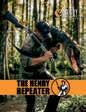
Introducing the American Cattleman Tribute Edition Rifle
From the wide-open ranges of the 19th-century Western frontier to the family ranches that have stood steadfast for generations, America’s story has always included the men and women who sweat and toil to raise the cattle that feed our nation. The American Cattleman Tribute Edition Rifle is our tip of the hat to this enduring way of life.
Built on our brass-framed .30-30 lever action platform, this rifle is made for those who put in the long, hard hours from sunup to sundown, and it stands as a testament to the animals and their stewardship at the heart of it all. Featuring genuine American walnut furniture paired with an engraved, highly polished brass receiver, every detail honors the grit and tradition that define the cattleman’s trade. Long live the American Cattleman.
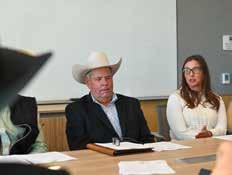
On March 10–11, California cattle producers once again brought the voice of ranching to the state Capitol as the California Cattlemen’s Association hosted its annual Executive Committee meeting, Steak & Eggs Breakfast, and Lobby Day in Sacramento.
The two-day event brought together CCA leadership, members from across the state, and key policymakers for conversations about the future of ranching in California and the role producers play in addressing the state’s most pressing challenges.
Leadership Aligns for the Road Ahead
The week began Tuesday with CCA’s Executive Committee and the chairs and vice chairs of the association’s policy committees gathering to align on priorities early in the 2026 legislative cycle. The meeting focused on ensuring CCA leadership is unified on strategic priorities, policy direction and advocacy efforts as the organization continues to represent ranchers at the Capitol. In addition to discussing near-term legislative priorities, leaders reviewed the association’s long-term planning efforts through its 2030 strategic plan.
A recurring theme throughout the discussion was the importance of grassroots engagement. CCA’s policy direction continues to be driven by ranchers themselves, and leadership emphasized that member involvement—both in shaping policy and advocating for it—is critical to achieving the industry’s goals in Sacramento.
Steak & Eggs Connects Ranchers with Policymakers
The following morning, nearly 100 CCA members joined more than 140 legislators, regulators and staff for the annual CCA Steak & Eggs Breakfast at the Sutter Club. The breakfast has become one of the most important opportunities each year for ranchers and policymakers to connect face-to-face. For many elected officials, particularly those representing
urban districts, it provides a rare chance to hear directly from the men and women who steward California’s rangelands.
In addition to visiting with their own representatives, ranchers were able to engage with lawmakers from across the state and share firsthand perspectives on the challenges and opportunities facing California agriculture.
Attendees also heard from several key leaders involved in the state’s natural resource and wildlife management efforts, including Wade Crowfoot, Secretary of the California Natural Resources Agency; Meghan Hertel, Director of the California Department of Fish and Wildlife; and Paul Souza, Regional Director for the U.S. Fish and Wildlife Service.
Speakers highlighted the significant conservation work being carried out by ranchers across California and the essential role grazing plays in maintaining healthy landscapes. Wellmanaged grazing, they noted, helps reduce wildfire fuel loads, maintain open space and preserve biodiversity, making cattle production a nature-based solution to many of the environmental challenges facing the state.
Ranchers Head to the Capitol
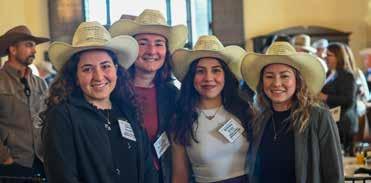
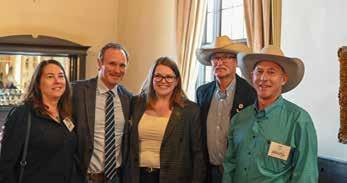
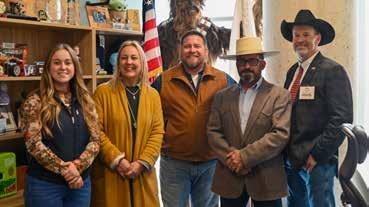
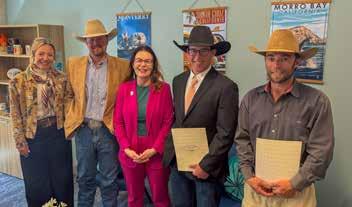
Following breakfast, attendees grabbed a cowboy hat on their way out the door and walked together to the Capitol for CCA’s annual Lobby Day. This year’s advocacy focused on two issues critically important to California ranchers: predator management and wildfire resilience.
Throughout the day, ranchers met directly with legislators and their staff to discuss the impacts of expanding predator populations and the importance of policies that support responsible land stewardship.
Funding Wildlife Conflict Programs
One of the primary topics discussed was the need for increased funding for the California Department of Fish and Wildlife’s Wolf Program
and a reinstated Wildlife Coexistence Program.
The Department of Fish and Wildlife is responsible for managing California’s diverse wildlife populations and reducing humanwildlife conflicts. In recent years, however, the department has been under-resourced to adequately fulfill that mission.
From 2021 to 2024, the department operated a statewide Human-Wildlife Conflict Program that provided outreach, technical assistance, and conflict prevention services to communities across California. The loss of that program and the staff who operated it has been felt by rural communities and livestock producers statewide.
CCA members urged lawmakers to reestablish and sustain a Wildlife Coexistence Program with dedicated staff to provide public education, technical assistance and timely response to predator conflicts involving livestock.
Managing Wolf Recovery
Ranchers also emphasized the need to properly fund California’s Wolf Program as the state’s gray wolf population continues to grow. Once absent from California for nearly a century, gray wolves have returned in recent years and now number at least 70 animals across nine known packs ranging from Siskiyou County to Tulare County.
The species’ rapid recovery has brought significant challenges for livestock producers. In the past year alone, wolves were confirmed to have killed or injured at least 196 livestock animals in California. Those losses threaten the viability of ranch operations and place significant strain on rural communities.
CCA members encouraged legislators to support funding that would expand wolf monitoring, support research and outreach efforts, improve tracking through additional collaring and fully fund the state’s Wolf-Livestock Compensation Program, including support for preventative non-lethal deterrence tools.
Opposing Grizzly Bear Reintroduction
Ranchers also voiced strong opposition to SB 1305, a proposal that would direct the state to develop a roadmap for reintroducing grizzly bears to California. CCA members explained that introducing another apex predator would place additional strain on already limited wildlife management resources and further complicate efforts to manage existing conflicts involving wolves, mountain lions and other predators.
They also highlighted concerns about the potential impacts on livestock, rural economies
and public safety. Even the Department of Fish and Wildlife has acknowledged the challenges such a proposal would present.
“We already have conflicts with mountain lions and livestock and humans…and now we’ve got wolves,” a department official has noted. “To think about bringing another predator into the state that we would have to manage does not seem feasible for us.”
Supporting Beneficial Fire
Wildfire prevention was the other major focus of this year’s Lobby Day. Ranchers urged lawmakers to support two pieces of legislation— AB 1699 (Rogers), the Good Fire Act, and AB 1891 (Connolly), the Beneficial Fire Capacity Act— designed to expand the use of prescribed and beneficial fire across California landscapes.
Beneficial fire is widely recognized as one of the most effective tools for reducing catastrophic wildfire risk, improving ecosystem health and protecting communities from smoke impacts. California has set ambitious targets to expand the use of beneficial fire to 800,000 acres annually by 2030 and 1.5 million acres annually by 2045. CCA members are already part of that effort, with ranchers and range improvement associations working toward a goal of burning 25,000 acres per year.
The proposed legislation would help remove barriers that currently limit the use of prescribed fire by expanding training opportunities, strengthening liability protections and investing in the capacity needed to safely scale these efforts across the state.
A Strong Voice for Ranching
For many attendees, the event was a powerful reminder of the importance of showing up and sharing the ranching story directly with policymakers.
As one member noted following the event, “It was a wonderful opportunity to interact with legislators and their staff. The event was incredibly well organized, and people truly enjoyed themselves. The speakers were perfectly on point. The CCA staff do a tremendous job balancing the challenge of working in Sacramento in a policy arena most of our membership don’t fully see—and that isn’t easy.”
By bringing ranchers directly into the policy conversation, CCA’s Steak & Eggs Breakfast and Lobby Day continues to ensure that the voices of California cattle producers are heard where it matters most.
Representing Los
and
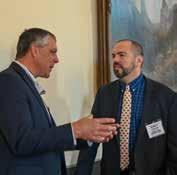
At left, CCA President Rick Roberti addressed CCA members, legislators and their staff. At right, he catches up with U.S. Fish and Wildlife Service Pacific Southwest Region Director Paul Souza, who also addressed the crowd.
Santa Clara County CCA member Justin Fields with his daughter, Jenna.
Assemblywomen Heather Hadwick with Siskiyou County’s Kylee Truax.
Inyo County’s Laura Talbot and Tulare County’s Nicky Henderson.
Sen. Steven Choi and his communications director Kelley Rooney both attended the breakfast.
Brothers Paul and Erik Roen with Asm. Caballero, Asm. Soria and Roen Ranches’ Haley Ponce.
Sierra County Rancher Carolyn Roberti with CCA Treasurer Bev Bigger.
Several legislative staffers enjoying breakfast at the Sutter Club.
UC Davis CLEAR Center’s Joe Proudman and Frank Mitloehner, Ph.D., with College of Ag Dean Ashley Stokes, DVM.
California Fish & Wildlife Director Meghan Hertel.
California Natural Resources Secretary Wade Crowfoot giving remarks at the 45th Steak & Eggs Breakfast.
Angeles
surrounding areas, Assemblymember Mark González and legislative aide Kyle Johnson attended this year's breakfast.
Assemblywoman Dawn Addis talking with Past CCA President Steve Arnold.
from the 2026 Steak & Eggs Breakfast + annual Lobby Day
Assemblymember David Tangipa, with CCA members Tom and Laura Talbot and Tony Toso.
Legislative Director Marisol Ibarra with Senator Melissa Hurtado and CCA member Jack Lavers.
Assemblymember Carl DeMaio’s staffer Dave Trick with San Diego County Cattleman John Austel.
Capitol staffers proudly posing in their new cowboy hats
CCA member Lorraine Marsh, Assemblymember James Gallagher, Asssemblymember Heather Hadwick and CCA members Willy Hagge and Joe Egan.
Merced-Mariposa’s Finley, Sandi and Davis Olson, Assemblymember Juan Alanis and Past CCA President Tony Toso met during Lobby Day.
Assemblywoman Dawn Addis discussed key ranching issues with Monterey Cattlemen’s Crystal Avila, Joe Janson, Clay Avila, and Justin Farr.
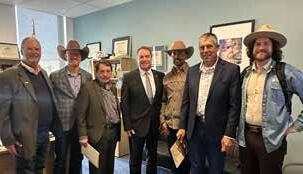
CCA President Rick Roberti, Jessica Vigil and other Northern California ranchers met with their representatives.
CCA member Martin Pozzi chats with Assemblyman Robert Garcia after breakfast.
District 12 Assemblymember Damon Connolly meeting with Marin and Sonoma CCA members.
MATCHING THE BUG TO THE DRUG TREATING RESPIRATORY DISEASE IN YOUR HERD HERD HEALTH
from Zoetis
“When it comes to any disease treatment, it’s imperative to match the drug to the bug — or in other words, use the correct class of antibiotic to control the disease-causing bacteria at hand,” says Shawn Blood, DVM, Zoetis Beef Technical Services Veterinarian. “The same holds for anti-infectives used to treat bovine respiratory disease (BRD).”
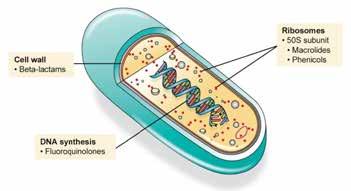
Currently, the four most common classes of anti-infectives used in cattle treatments are macrolides, beta-lactams, phenicols and fluoroquinolones. When it comes to controlling bacteria, each of these major classes of antiinfectives has a slightly different mode of action (MOA).
Four major classes of anti-infectives used for BRD treatment
Macrolides interfere with protein synthesis by reversibly binding to the 50S subunit of the ribosome and appear to bind at the donor site, which prevents the translocation necessary to keep the peptide chain growing.
Common active ingredients: Tilmicosin, gamithromycin, tildipirosin and tulathromycin
Works well against: BRD-causing bacteria such as Mannheimia haemolytica, Pasteurella multocida and Histophilus somni. In some cases, this class also may be effective against Mycoplasma bovis.
Beta-lactams impair the development of bacterial cell walls by interfering with transpeptidase enzymes. These enzymes are associated with a group of proteins in both Gram-positive and Gram-negative bacteria called penicillin-binding proteins, also called PBPs.
Common active ingredients: Penicillin, cephalosporin
Works well against: BRD caused by Mannheimia haemolytica, Pasteurella multocida and Histophilus somni
Phenicols work similar to the macrolide class and affect protein synthesis at the 50S ribosomal subunit of the bacteria cell.
Common active ingredient: Florfenicol
Works well against: BRD caused by Mannheimia haemolytica, Pasteurella multocida and Histophilus somni
Fluoroquinolones interfere with DNA synthesis within the bacteria cell, which prevents cell replication.
Common active ingredients: Danofloxacin, enrofloxacin
Works well against: BRD associated with
Mannheimia haemolytica, Pasteurella multocida and Histophilus somni
What does this mean for BRD treatment?
As you can see, all the major BRD-causing pathogens can be controlled with one or more of the four major classes of anti-infectives listed above. However, there are a few key instances in which choosing the right antibiotic class can make or break respiratory disease treatment outcomes. These include:
Re-treating cattle. The current paradigm in BRD therapy is to switch classes of anti-infective if an animal needs to be re-treated after metaphylaxis or initial treatment. This makes it important to know which anti-infectives are in which class and their MOA — because you don’t want to use the same MOA in both treatments.
Treating BRD caused by M. bovis. Because M. bovis bacteria lack a cell wall, and beta-lactams work by attacking the cell wall, this class of antiinfective will be ineffective against BRD caused by M. bovis.
“With the complex nature of BRD, choosing an anti-infective with the right MOA can be a contributor to better treatment results. However, this information sometimes is not available immediately when an animal, or set of animals, becomes ill,” says Dr. Blood. “Your veterinarian can help you diagnose and execute a treatment plan of action based on MOA, evidence-based medicine and clinical response.”
This can mean more successful first treatments of BRD, fewer doses of antibiotics, more responsible use of antibiotics and economically significant savings on your operation in both money and time.
“It’s also important to remember that respiratory disease is a complex disease system — and there are many outside variables that can negatively affect treatment outcomes,” says Dr. Blood. “Work closely with your herd veterinarian to establish sound prevention practices that limit the risk of BRD in the first place.”
COUNCIL COMMUNICATOR
CATTLE COUNCIL EDUCATION PAYING DIVIDENDS FOR PRODUCER INVESTMENT
by California Cattle Council Executive Director Justin Oldfield
As I write this, we are already in in the throes of spring. February and March brought the state much needed rain followed by some warm weather which has brought the grass on strong. The California Cattle Council is now entering its seventh year.
Falling cattle numbers have shortened our budget a bit, however the Cattle Council continues to make good use of the dollars entrusted to us to fund impactful projects that address the priorities raised by cattlemen and women across the state. While cattle markets have never been better, input costs have also steadily risen. Affordability, the financial health of our businesses and the opportunity to grow to support the next generation remain top of mind for myself and your producer board that directly oversees the investments made by the Cattle Council.
The Cattle Council is, in fact, an investment made by every producer who sells cattle in the state, and we recognize that investment will only continue with your trust and support.
We have some excellent projects that are lined up for 2026 along with a series of projects that have carried over from previous years. As one example, the Cattle Council teamed up with local cattle producers and the University of California Cooperative Extension in Santa Clara County to raise awareness of the environmental benefits ranchers provide at no cost to their neighbors.
Californians get to enjoy safe, nutritious and quality protein with the added benefit of protecting wildlife habitat, supporting fuel reduction and the aesthetic viewscapes afforded by grazed rangeland. These indirect benefits are easy to take for granted, which is why the Cattle Council paid to boost this narrative with the construction of a billboard along an extremely well-traveled section of Highway 101 in Silicon Valley. Our timing was great as the billboard highlighting the environmental benefits of grazing happened to be up during the Super Bowl which was held at Levi's Stadium in Santa Clara. Our billboard was located on the main travel route to and from the event.
At our March meeting held earlier this
month, we also had the pleasure to receive an update from the University of California, Davis and UC Cooperative Extension regarding research that was funded by the Council to evaluate grazing’s impact on federal lands over the past four decades.
Summer grazing on U.S. Forest Service and Bureau of Land Management land is extremely important to the health of many California cattle operations, and we’ve seen a steady decline in the number of AUMs grazed on an annual basis on federal lands for quite some time. Early research results are very promising and are demonstrating that grazing has not negatively impacted wet mountain meadows or riparian areas and in fact may suggest a positive association.
While many ranchers know this to be true, collecting and presenting this information by an academic third party is critical to help ranchers validate their viewpoint. Additional work is being done to capture these trends to better assist federal agencies and permittees to conduct appropriate range monitoring and, hopefully, reintroduce grazing to the numerous vacant allotments that exist up and down the state.
These are just two examples of projects that the Council has funded recently. There are dozens more that I simply can't describe in this article due to space. That said, you can always reach out to our office or visit our website at www.calcattlecouncil.org to learn more about what we are doing, share your feedback and get engaged.
Also, stay tuned to updates like this one from the Cattle Council that will be featured in future editions of the California Cattleman magazine. Remember, we work for you and your participation is critical to the long-term success of the Cattle Council and this industry – we certainly don’t forget that.
EARTH DAY Every Day
In California, Earth Day isn’t a once-a-year celebration marked by social media posts and tree-planting ceremonies. For ranchers, it’s a daily responsibility lived out across rangeland, foothills and valleys stretching from the North Coast down nearly 1,000 miles of Highway 101, from the Bay Area to the Sierra Nevada and in every valley and oak tree covered foothill in between.
Long before environmental stewardship became a trending topic, ranching families were caring for soil, water, grass and livestock with the understanding that the health of the land determines the future of their operations — and their communities.
California’s ranchers manage millions of acres of rangeland, much of which provides open space, wildlife habitat and watershed protection. These lands are not just grazing grounds; they are working landscapes that support biodiversity and protect natural resources in a state known for environmental complexity. Organizations like the California Cattlemen’s Association often highlight that ranchers are among the state’s largest stewards of open space.
SHARING THE LOVE
For Laura Talbot, Bishop, it has become a mission to share her family's story of land and livestock stewardship. What started as an effort of the local Inyo-Mono County CattleWomen has grown into a much larger effort that Talbot and other local CattleWomen and Owens Valley ranch families are planning for around the clock.
"We used to live in what felt like an off-thebeaten-path part of California," Talbot said. "But our community is now a popular escape for tourists from far more urbanized parts of the state. Ranch stewardship has always had a direct impact on the quality of life here but now we have a much larger opportunity and responsibility to share that."
Talbot said for many years the CattleWomen's unit has had a presence at the well-known Bishop Mule Days event and has also found it important to be available to passersby at the ever-growing Earth Day event, where environmental groups occupy the city park on Earth Day each April. In recent years, the CattleWomen's group has felt a need to do more beyond their usual events.
"As we saw an influx of weekend visitors, we saw a need and an opportunity for a larger ranch-
by Managing Editor Stevie Ipsen
focused event," Talbot said, "That is where the idea for the Owens Valley Ranch Round-up came from."
Now approaching its third year, Talbot said the demand by visitors is drastically increasing. The event hosted 100 guests at the Talbot Ranch in 2024 as well as at Eureka Livestock in 2025, and plans are being made to host more attendees at the Archularius Ranch in the fall of 2026. The funds raised by admission to the event fund agriculture scholarships for local students.
"There is an increasing desire by people all over our country to find educational experiences where can learn about the world around them, including where their food comes from and how it was raised," Talbot said.
The Inyo-Mono CattleWomen have worked directly wth the Chamber of Commerce to help people find their roundup event. Attendees sign up online and have come from as far as Chicago to get a taste of the ranching lifestyle.
Additionally, the group has published a educational brochure about cattle ranching in the Eastern Sierras. The brochure, which shares scientific facts about catttle production – from the ways beef production benefits the climate and natural resources to the nutrition benefits of beef – can be found year-round in places like hotel lobbies and grocery stores across the Owens Valley. The brochure helps maintain year-round exposure of the quality work ranchers do while garnering attention for the fall roundup event.
Many visitors to the Owens Valley do not know that a large portion of rangeland managers in the Owens Valley lease property from the City of Los Angeles for grazing purposes. Talbot sees the disconnect between consumers and ranchers but also sees the vital importance of helping consumers make the connection between what is in the pasture and what is on their dinner plate.
The Owens Valley Ranch Roundup helps bridge the disconnect by helping consumers learn the literal ropes of ranching life. The authentic educational and entertaining experience helps visitors to appreciate the lifestyle, those who manage the land and the products they raise.
"Bishop has a slogan, 'The Small Town with the Big Back Yard,'" Talbot said. "We want people to know who takes care of that yard. It’s the cows and the ranchers who keep these meadows green."
Talbot said when visitors get to the event,
SHARING RANCHERS' LOVE OF THE LAND AND LIVESTOCK ALL YEAR ROUND
no topic is off limits. Attendees learn about heritage and history, the biogenic carbon cycle and experience hands-on health and handling practices and much more. But Talbot says making the connection with ranchers and having real conversations is the most valuable part of the experience.
"Consumers crave information and faceto-face conversations about everything and anything they want to know converts them into supporters for our way of life," Talbot said. "Those conversations are irreplaceable."
She admits some topics are easier to approach than others but says consumers' concerns must be addressed before we can expect them to come to understanding, accepting or supporting what ranchers do for them.
"Transparency is vital. Explaining the purposes and practices on a feedlot or calf ranch generally leads to acceptance. Or when someone is concerned about the resources cattle use, a conversation based in fact helps them appreciate the benefits of cattle compared to the misunderstood impacts," Talbot said.
Aside from all the new friends local ranchers have gained, Talbot said the most rewarding part of their outreach efforts is when a visitor expresses joy in the ranching experience.
"They often tell us how fortunate we are to live where we do and do what we do," Talbot said. "Of course we already know we are lucky to live this life and that is why we are choosing to share it."
ALWAYS IMPROVING
In the small community of Boulevard, in San Diego County, John Austel of 4J Horse and Livestock Co., can attest to the situation ranchers find themselves in as they strive to raise cattle under the scrutiny of an information hungry public.
Cattle ranching isn't top of mind for most people when they conjure up ideas of San Diego County, but Austel says that gives his family, sons Jacob, Joshua and Jesse, as well as wife Liz, a unique opportunity to educate folks about the world that lies just beyond the city limits.
Though technically a first-generation rancher, John has been in agriculture most of his life. He learned the ropes of beef production as a young man working for legendary cattleman John Lacey in the Eastern Sierras and went on to work in the
farm credit system on the Central Coast before having a long career in the insurance business.
"It was actually our boys that brought me back to the cattle business as they got interested in 4-H and beef production," John said. "Boy, am I glad they did.
Having been witness to changes in the economy and beef business for decades, the Austel family was poised to begin their own operation. Due to a vast variation in climates across their Natural Angus and Quarter Horse operation, the Austels have been adaptive out of necessity.
"The success of our ranch is important to us but so is doing things the right way. When you combine those two efforts, success of a livestock operation is the natural result," Austel said. "Seeing your herd flourish because of your management practices is a great feeling but when you see the wildlife come back and the ecosystem thriving, that is how you know you are doing it right."
Austel says communicating their stewardship efforts to the public is not always easy but says it is always important.
"You have to share what you do in a way the public can understand. If a consumer wants to support beef production, we are giving them all the reasons to do so, but we have to share those reasons. Doing the work is only half of the equation, sharing the work we do is the other half," he said.
In an effort to communicate the benefits of ranch practices, John and Liz Austel not only invite groups of students, consumers and other ranchers to come see their work first-hand, but the properties they manage have also been visited by the Society of Range Management, U.S. Forest Service, the Bureau of Land Management, the Audubon Society and many others. John said it has been slow going but there is no doubt the needle is moving in a favorable direction.
"We've had to break through some obstacles that are largely due to old ways of thinking but through documentation and face-to-face interaction, the scientific community is taking notice of the win-win scenarios we create. When you do things right, everyone wins. The cattle, the consumer, the land and the rancher," he said
...CONTINUED ON PAGE 28
FRIENDS OF THE ENVIRONMENT
As ranchers well know, healthy rangelands depend on balanced grazing. When cattle are rotated strategically, they help reduce excess vegetation that can otherwise become wildfire fuel. In a state increasingly shaped by catastrophic fires, properly grazed land can serve as a natural fire mitigation tool. Many ranchers work alongside agencies and conservation groups to implement targeted grazing programs that lower fuel loads while improving forage health.
Water stewardship is equally central. In a region defined by drought cycles and water regulation, ranchers rely on careful monitoring of springs, creeks, ponds and irrigation systems. Maintaining riparian areas — the vegetation along streams and waterways — helps filter runoff, prevent erosion and support fish and wildlife habitat. Ranchers frequently install off-stream watering systems, fencing and rotational grazing plans to protect sensitive areas while still providing livestock access to necessary resources.
Soil health may be one of ranching’s most underappreciated environmental contributions. Well-managed rangelands act as carbon sinks, storing carbon in grasses and root systems. Healthy soils absorb and retain water more effectively, reducing runoff during heavy rains and preserving moisture during dry seasons. The growing conversation around regenerative agriculture reflects practices many ranchers have used for generations: avoiding overgrazing, maintaining perennial grasses and adapting stocking rates to environmental conditions.
Wildlife conservation is another integral piece of the story. California ranchlands provide habitat for deer, elk, upland birds, pollinators and countless native species. Because these lands remain largely undeveloped, they serve as ecological bridges between public lands and natural areas. Many ranchers voluntarily partner with conservation organizations to enhance habitat, restore wetlands, or protect endangered species — not because it is required, but because it aligns with their ethic of land stewardship.
The generational nature of ranching reinforces this long-term mindset. Unlike short-term land investments, most ranches are family-owned operations passed down through decades — sometimes more than a century. Decisions made today affect whether children and grandchildren can continue the operation tomorrow. That perspective shapes daily management choices, from grazing timing to fencing placement to water improvements.
California ranchers also face one of the most complex regulatory environments in the country. Environmental compliance, water quality standards and air quality regulations
are part of routine business planning. While navigating these systems can be challenging, it has also pushed innovation. Many ranchers adopt new technologies, conservation practices and monitoring systems to meet standards while sustaining production.
Importantly, ranching sustains rural economies and local food systems. When cattle are raised responsibly and marketed within the state, they contribute to food security and shorten supply chains. Consumers increasingly want to know where their beef comes from and how it was raised. Ranchers are responding with transparency, sustainability certifications and participation in environmental stewardship programs.
Earth Day messaging often centers on reducing impact. Ranching, at its best, goes a step further: it actively manages and improves land. Grazing animals recycle nutrients, stimulate plant growth and maintain landscapes that might otherwise face invasive species encroachment or increased fire risk. Properly managed cattle are part of the ecosystem, not separate from it.
That doesn’t mean challenges are absent. Drought, wildfire, urban encroachment, market volatility and shifting public perception create constant pressure. Yet those pressures reinforce why stewardship remains essential. Ranchers understand that degraded land cannot sustain livestock or livelihoods.
For California ranchers, environmental care is not an abstract ideal — it is a practical necessity. Fences must hold. Water must flow. Grass must regrow. Wildlife must coexist. The land must remain productive year after year.
That is why every day is Earth Day on a California ranch. It is visible in early-morning pasture checks, in conversations about rainfall totals, in investments in fencing and water systems, and in decisions to rest a pasture rather than push it too hard. It is seen in families who measure success not just by pounds of beef produced, but by the condition of the land they will hand to the next generation.
Earth Day may come once a year but as California cattle ranchers can attest, stewardship happens every single day.
It’s an extraordinary honor to step into the role of president of the National Cattlemen’s Beef Association. Not as a title, but as a responsibility, a calling and a covenant with each of you across this great country. My journey, rooted in nearly six generations of cattlemen and cattlewomen in southwest Virginia, has taught me early and often that the true strength of our industry comes from the grassroots, from producers who wake up each day committed to caring for cattle and stewarding the land.
This year, as I take the helm alongside an incredible team of officers, I carry a simple but steadfast philosophy: stay grounded in grassroots input, remain open-minded and focus relentlessly on profitability for our members. Our success as an industry depends on practical policy solutions that reduce costs, open doors to new opportunities, and keep demand for beef strong.
Over the past year, NCBA made meaningful strides on that front. Thanks to the hard work of our grassroots members and policy teams, we secured major wins that directly impact producers — from expanded estate tax exemptions to revised Waters of the U.S. rules to the rescission of the BLM Public Lands Rule. Each of these developments provides something producers desperately need more of: certainty. Certainty to plan, invest, grow and pass on operations to the next generation.
EMPOWER THE NEXT GENERATION AND STRENGTHEN THE INDUSTRY’S FUTURE
This point is incredibly meaningful to me and a key focus of my term as president. I’m very proud of my three kids, and I’m fortunate to work alongside my son, Will, on our operation. Ensuring he and his family are set up for success and able to carry forward the legacy built by generations before me has been at the forefront of my mind for a long time. Last summer, I had the opportunity to travel with participants in NCBA’s Young Cattlemen’s Conference, and that experience renewed my determination to strengthen our national position and create a clearer, more accessible path for the next generation.
I met first generation producers, multigeneration operators, people in corporate agriculture hoping to return to the family farm and producers representing every segment of our industry and nearly every state. One thing was unmistakably consistent: they are innovators. They are finding ways to make this life work and are deeply committed to preserving our way of life while pushing the industry forward. We must remove barriers standing in their way and invest in them as the leaders of tomorrow.
GROW STRONG DEMAND AND PROTECT PROFITABILITY
Beef producers have experienced strong market momentum, but volatility and margin pressures persist. We will continue advocating for
tools and policies to enhance and protect your bottom line. As many of you know firsthand, risk management isn’t optional, it’s essential. You also can’t talk demand and profitability without trade. Export markets matter. The recent expansion of duty-free beef access into Taiwan and a trade deal with Indonesia are major wins for producers, opening new opportunities for growth and helping to maximize carcass value. NCBA will continue pushing for strong, sciencebased trade agreements that enhance access, dismantle barriers and provide longterm certainty for U.S. cattle producers. We’ll also push to hold trade partners accountable to the same animal health and food safety standards we have in the U.S.
ADVANCE POLICY THAT SUPPORTS NCBA MEMBERS
A clear, forward-looking policy agenda is critical to the work we do as an association. This year, that includes reducing unnecessary federal regulations, bolstering animal health protections against emerging threats, expanding global market access for U.S. beef, defending science-based nutrition policy that keeps beef central in consumers’ diets and securing a resilient supply chain through improved transportation flexibility and a strong, stable workforce — all rooted in the policy direction you’ve developed through grassroots engagement.
LISTEN TO YOU — ALWAYS
If my family’s history in this industry has taught me anything, it’s that leadership doesn’t come from a title, it comes from service. My priority this year is to meet members across the country, listen to your challenges and success stories and make sure your voice is heard where it matters most. Your grassroots
input drives everything we do.
We’re not here simply to react to change, we’re here to shape it. Plant strong roots, keep costs manageable, advocate for workable policy, and build a future where every producer has the tools to prosper. Together, we will continue to not only sustain our industry’s momentum, we will grow it. Thank you for your trust in me and I hope to meet you down the road.
HAY • VET SUPPLIES
BEEF ABROAD
BEEF VARIETY MEATS SHINE DESPITE CHINA REMAINING ABSENT
from the U.S. Meat Export Federation
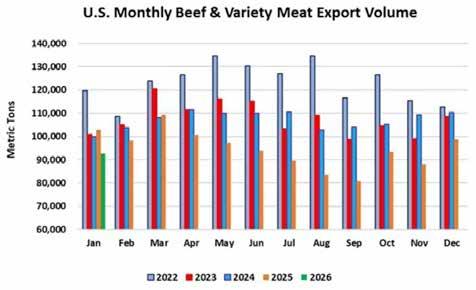
January exports of U.S. beef variety reached 27,511 metric tons (mt), up 6 percent from a year ago and the highest since September 2021, while export value reached a record $126 million (up 46 percent). Shipments to Japan soared 88 percent to 6,137 mt (also the highest since September 2021), while value climbed $54.7 million – up 84 percent and the highest since November 2021. Variety meat exports also increased year-over-year to Korea, Taiwan, Peru, Chile and South Africa. Exports to Mexico were down slightly in volume but still increased in value.
Total beef and beef variety meat exports to Japan reached 19,956 mt in January, up 5 percent from a year ago, valued at $149.5 million (up 7 percent).
The U.S. and Taiwan have completed a reciprocal trade deal that removes barriers for U.S. beef, though these favorable terms have not yet been implemented. Beef exports to Taiwan raced to an outstanding start to the year, reaching 5,631 mt valued at $63 million. This was 79 percent higher in volume and 63 percent higher in value than the low totals posted in January 2025.
January beef exports to leading value market Korea totaled 19,482 mt, up 4 percent from a year ago, while value increased 6 percent to $192.6 million. This marked the first month in which
U.S. beef entered the market dutyfree under the Korea-U.S. Free Trade Agreement, with tariffs having phased to zero over 15 years. PreFTA, Korea tariffed U.S. beef at 40 percent. Australia is expected to trigger its safeguard on exports to Korea by mid-year. Retailers are looking to secure more U.S. beef to minimize the impact of higher tariffs on Australian beef in the second half of this year.
OTHER JANUARY RESULTS FOR U.S. BEEF EXPORTS INCLUDE:
• Beef exports to the Middle East were down 12 percent from a year ago to 4,488 mt, mainly due to lower variety meat shipments to Egypt, but export value still increased 1 percent to $21.7 million. Exporters serving the region received positive news in early March when Saudi Arabia confirmed that it will eliminate burdensome regulations that have hampered U.S. exports for more than a decade. Saudi Arabia was once a $30 million per year market for U.S. beef with tremendous potential for further growth – possibly in the $100 million to $150 million range – but took less than $10 million in U.S. exports last year. The military conflict with Iran has impacted exporters’ options for shipping to the Middle East, which will be reflected in later months’ export results.
• Beef exports to Central America set a value record in 2025, topping $200 million for the first time despite a slight decline in volume.
This trend continued in January, as exports to the region soared 22 percent in value ($19.2 million) on slightly lower volume (1,910 mt, down 1 percent). January exports to Guatemala were nearly $10 million, up 33 percent.
• Led by growth in the Dominican Republic and the Bahamas, January beef exports to the Caribbean reached 2,962 mt, up 7 percent from a year ago, while value soared 30 percent to $32.1 million.
• Fueled by larger shipments to Indonesia and Vietnam, January beef exports to the 10 nations comprising the Association of Southeast Asian Nations, increased 24 percent from a year ago to 2,303 mt, while value was 7 percent higher at $16.8 million. While U.S. exports to Indonesia have recently rebounded after being effectively locked out of the market, the current level of business only scratches the surface of Indonesia’s tremendous potential. As USMEF has previously reported, a recently-announced reciprocal trade deal with Indonesia includes substantial market access gains for U.S. beef. More details are in an online statement from USMEF available at www. USMEF.org.
• Though small volumes of still-eligible pipeline product continue to be exported to China, U.S. beef remains effectively locked out of the world’s largest import market. January exports to China were minimal, down 94 percent from nearly 16,000 mt last year, while value was down 97 percent from $135 million. China’s newly-implemented beef safeguards will also have major effects in the global beef market later this year, likely pushing more Brazilian and Australian beef into the U.S. and international markets.
• Beef export value per head of fed slaughter averaged $415.15 in January, up 12 percent from a year ago and the largest since March 2025, prior to losing access to China. Exports accounted for 12.8 percent of total January beef production, up slightly from a year ago. The ratio of muscle cuts exported was 9.6, down from 10.2 in January 2025.
USDA AND ARMY CORPS COMPLETE PLANS FOR NEW STERILE SCREWWORM FLY FACILITY
The U.S. Department of Agriculture (USDA) and U.S. Army Corps of Engineers (USACE) announced on March 9 a construction contract with Mortenson Construction to build a new sterile fly production facility at Moore Air Base in Edinburg, Texas. This facility is a key component in Secretary Rollins’ sweeping 5-prong strategy to fight New World Screwworm (NWS), as it will expand USDA’s domestic response capacity, bolstering protection for U.S. livestock, wildlife and public health.
USACE is partnering with USDA and will provide oversight for the contract, design, engineering and construction of the facility.
“The Army Corps of Engineers is an essential partner in bringing this facility to life and further highlights the Trump Administration’s government wide effort to fight NWS threat in Mexico,” said U.S. Secretary of Agriculture Brooke L. Rollins. “The Army Corps is the best in the business and their engineering expertise and proven track record in delivering complex projects will help ensure we can build a modern, resilient facility that protects American agriculture from invasive pests for decades to come. This first of its kind facility on U.S. soil will ensure we are not reliant on other countries for sterile flies.”
A sterile fly production facility is a specialized biosecure complex where NWS flies are raised and sterilized using irradiation and then released into targeted areas. Female NWS flies only mate once in their lives, so if they mate with a sterile male, they lay unfertilized eggs that don’t hatch. This method, known as the Sterile Insect Technique, has been a cornerstone of proven screwworm eradication efforts for decades and is recognized worldwide as a highly effective, environmentally responsible approach to insect control. Sterile Insect Technique, paired with surveillance, animal movement restrictions and education and outreach, is a proven tool for controlling and eradicating NWS.
USDA currently produces about 100 million sterile flies per week at a facility in Panama and disperses them in and near affected areas in Mexico. In addition to the facility in Panama, USDA invested $21 million to support Mexico’s renovation of an existing fruit fly facility in Metapa, which will double NWS production capacity once complete. With ongoing support from APHIS technical experts, Mexico anticipates sterile fly production will begin at this facility in summer 2026. The new facility at Moore Air Base will be the only U.S.-based sterile fly production facility and will work in tandem with facilities in Panama and Mexico to help eradicate the pest and protect
American agriculture.
USDA and USACE will break ground on this new facility this spring, after initial planning and development meetings with the new contractor. By November 2027, the production facility at Moore Air Base is expected to reach its initial goal of producing 100 million sterile flies per week. After that, construction will continue at the facility to increase production with the long-term goal of producing 300 million sterile flies per week.
NWS is a parasitic fly whose larvae feed on warm blooded animals, causing severe animal health impacts and significant economic losses if not controlled. The United States eliminated the pest in 1966 and has maintained that freedom through the ongoing sterile fly program and international partnerships.
USACE, a command within the U.S. Army, is one of the world’s premier public engineering, design, and construction management organizations. With more than 35,000 employees worldwide, USACE delivers engineering solutions in support of military construction, water resources infrastructure, environmental stewardship and federal agency partnerships.
For more information about NWS and USDA’s efforts, visit Screwworm.gov.
May 30th 4pm-10pm
Announcing the new vaccine from Hygieia Labs:
Your Foothold Against Foothill Abortion.
Costing the industry more than $10 million annually, Foothill Abortion — formally known as Epizootic Bovine Abortion, or EBA — has robbed profits from ranchers for almost 100 years as the leading cause of calf loss in affected areas of the Western United States.
Until now.
After years in development and testing, the new Foothill Abortion Vaccine is available from Hygieia Biological Laboratories. The Foothill Abortion Vaccine has been shown to protect more than 95% of animals from the disease when administered as directed. Administration is safe, simple and proven to give your heifers a strong start for greater productivity.
Protect your investment and promote your profitability. Ask your local veterinarian if the Foothill Abortion Vaccine is right for your herd, or contact Hygieia Labs to learn more.
HYGIEIA BIOLOGICAL LABORATORIES
P.O. Box 8300, Woodland, California 95776 USA
Contact Jenna Chandler at Hygieia Labs for additional information.
by Madison Goss for the California Rangeland Trust
More often than not, conversations about land focus on what it provides: clean air, fresh water, local food, wildlife habitat and more. These benefits are visible, measurable and essential to the health and resilience of communities — a large part of why land conservation exists. Yet when ranchers are asked why they protect their land, their answers often go beyond the environmental benefits.
They speak of tradition and values, of a way of life shaped by hard work, horsemanship, family responsibility, and a deep connection to place. For many ranching families, these traditions are not simply cultural artifacts. They are the foundation of the stewardship that keeps working rangelands productive and intact.
By the late 1800s, as cattle operations spread across open rangelands throughout the American West, daily routines like riding fences and caring for livestock forged a culture defined by resilience, cooperation and respect for the land. Over time, these practices became a living heritage, passed from one generation to the next and grounded in practical knowledge and a long view of stewardship. That cultural inheritance does more than preserve tradition. It sustains the people and practices that have shaped California’s rangelands for generations and continue to care for them today.
For the Richards family of Dry Creek Ranch in Merced, ranching is both connection and commitment. It’s a daily link to past generations and a promise to those who will follow. Multiple generations have worked and continue to work side by side, gathering cattle on horseback, repairing fences, and passing down lessons learned in the saddle.
Dana Richards, the family matriarch, has been part of the ranching industry for as long as she can remember. Her grandfather was involved in the local cattle business, a connection
that ultimately led her parents to purchase what is now Dry Creek Ranch in 1975. After their passing, Dana and her husband, Roy, assumed responsibility for the operation, continuing the family legacy.
“My grandfather was a cattleman and had a connection to this area,” Dana said. “My parents and I lived out in Hopeton on a small ranch until this property became available, and they were able to purchase it.”
Today, Dana and Roy have stepped back from day-to-day management, allowing their son, Roy W., his wife, Breanne and their three children to take the reins. The family now lives on the ranch, carrying forward its heritage while raising their children in the traditions and realities of ranching.
“It is almost rare nowadays for a ranch to remain in the same family for more than three generations,” Breanne reflected. “It is hard work, but there is no other way we would want to be raising our kids.”
Over the years, the Richards family has watched rangeland in Merced County and across California, steadily give way to subdivisions and intensified agriculture. Witnessing that shift strengthened their resolve to protect the land they call home. Like many ranching families, they understood that once working rangeland is converted to development, it rarely returns. Safeguarding the ranch meant ensuring the landscape
Dry Creek Ranch in Merced County is part of more than 11,600 acres of rangeland stewarded by the Richards family and protected through partnership with the California Rangeland Trust. Roy and Dana Richards
could remain productive and intact for future generations.
Dana Richards often reflects on that reality when she considers the future of California’s open spaces.
“God is not in the business of making more land,” Dana said. “This land is what you think about when you think of the old West and it is important that we protect it for preservation of the Western culture. Once we lose it, it won’t come back.”
In 2002, the Richards family saw firsthand what protecting that landscape could look like when the Cunningham family of Merced County conserved the Cunningham Ranch in partnership with the California Rangeland Trust. After conducting their own research and discussions, the Richards family followed a similar path. In 2014 they partnered with the Rangeland Trust to place a 4,400acre conservation easement on Dry Creek Ranch. Earlier this year, they also completed conservation on the remaining 1,300 acres of Dry Creek Ranch. This recent effort was made possible from funding through the Bureau of Reclamation’s Central Valley Project Conservation Program and the California Department of Conservation through the Sustainable Agricultural Lands Conservation (SALC) Program.*
Beyond Dry Creek Ranch, the family has expanded the operation over the years by acquiring two additional properties already protected by Rangeland Trust easements: Cunningham Ranch and Nelson Ranch. Collectively, the family owns and stewards more than 11,600 acres of perpetually conserved rangeland.
The family expressed deep gratitude to the California Rangeland Trust and its partners for helping make the conservation of Dry Creek Ranch possible, noting the important role these partnerships play in protecting working lands throughout the region. For Dana, seeing the protection of these properties is about more than preserving open space, it is about ensuring the traditions tied to that land continue for generations to come.
“California is known as a produce state, but not all land can be farmed, and these rangelands are essential to the state’s history and productivity,” she said. “We still rope and ride horseback, and my brother still does an old-fashioned cattle drive so we can maintain a connection to past generations and pass those skills on to our grandchildren.”
Today, Roy W. and Breanne’s children are slowly finding their place on the ranch, learning the work and values that will one day guide them. The family plans to continue expanding operations when feasible and conserve more
acres, knowing it’s the right thing to do.
Breanne shared, “On a personal level, I appreciate knowing this land will always be this way for future generations. These easements are just the right thing, not just for our family but for the land itself. Once it’s developed, it doesn’t come back.”
In the end, conserving Dry Creek Ranch was about more than acres on a map. It was about ensuring that future generations will have the knowledge and privilege of knowing what it is like to saddle a horse, gather cattle and learn the quiet responsibility that comes with caring for land and livestock. Safeguarding a ranch and the history behind it allows those traditions to be experienced firsthand, carrying forward the lessons, work ethic and stewardship that will shape these landscapes long into the future.
Through their partnership with the California Rangeland Trust, the Richards family has secured not only the future of their land but also the continuation of a way of life rooted in responsibility to the land itself. It is a commitment that will remain written across the hills of Merced County for generations to come.
* SALC is part of California Climate Investments, a statewide initiative that uses Cap-and-Invest funds to reduce greenhouse gas emissions, strengthen the economy, and improve public health and the environment — particularly in disadvantaged communities.
Roy W. and Breanne Richards are raising the next generation on Dry Creek Ranch, where their children are growing up in the traditions and responsibilities of ranching.
CATTLEMEN’S REPORT
Only 2026 California Cattleman advertisers are represented in this sale report.
COLYER HEREFORD & ANGUS PRODUCTION SALE
Bruneau, Idaho • Feb . 23, 2026
Col. C.D. “Butch” Booker and Col. Kyle Colyer
North Powder, Ore. • March 4, 2026
Managed by Matt Macfarlane Marketing
Col. Rick Machado and Col. Jake Parnell
THOMAS ANGUS RANCH SPRING PRODUCTION SALE
Baker City, Ore. • Feb. 24, 2026
Managed by Cotton & Associates
Col. Rick Machado and Col. Trent Stewart
PRICE CATTLE COMPANY PRODUCTION SALE WITH MURDOCK CATTLE
Stanfield, Ore. • Feb. 25, 2026
Managed by Matt Macfarlane Marketing
Col. Rick Machado 42
BAKER ANGUS RANCH BULL SALE
Vale, Ore. • Feb. 28, 2026
Managed by Matt Macfarlane Marketing
Col. Rick Machado
HARRELL HEREFORD RANCH 47TH ANNIVERSARY SALE
Baker City, Ore. • March 2, 2026
Managed by United Livestock Brokers and Matt Macfarlane Marketing
Col. Rick Machado
DILLE RED ANGUS BULL SALE
Buhl, Idaho • March 3, 2026
Col. Trent Stewart
59 Red Angus bulls $5,878 ALLEN BROTHERS CATTLE BULL SALE
SPRING COVE RANCH BULL & FEMALE SALE
Idaho Falls, Idaho • March 9, 2026
Managed by Matt Macfarlane Marketing
Col. Rick Machado 158 Angus yearling bulls
DAL PORTO LIVESTOCK BULL SALE Anselmo, Neb. • March 9, 2026
Managed by Rance Long
Col. Greg Goggins
70 bulls $10,171
ROLLIN' ROCK GENETICS BULL SALE with High Desert Cattle Pilot Rock, Ore. • March 13, 2026
Col. Joe Goggins 134 Angus bulls $11,380
RIVERBEND RANCH ANGUS BULL SALE
Idaho Falls, Idaho • March 14, 2026
Managed by Cotton & Associates
Col. Rick Machado and Col. Trent Stewart
Angus bulls $12,939
IRON LORENZEN CATTLE CO. Madras, Ore. • March 21, 2026
Col. Trent Stewart
$11,488
IN MEMORY
Dwight Glenn Mebane was born on Oct. 28, 1959, in Bakersfield, to Lewis and Ruby Mebane. He passed away Feb. 24.
Dwight was raised in the Rio Bravo area, where his childhood was shaped by long days outdoors; catching frogs, fishing, and riding alongside his father on Breckenridge gathering wild cattle. They relied on good dogs to push cattle through thick brush, roping them and using whatever means necessary to get the job done. Those early years forged the grit, determination and character that defined Dwight’s life.
As a boy, Dwight developed a love for collecting treasures hidden in the land he cherished. He spent hours combing river bottoms for antique bottles, Indian beads, and arrowheads, and searching for shark teeth on Shark Tooth Hill. That appreciation for treasures and hidden beauty remained with him throughout his life.
From a young age, Dwight knew exactly what he wanted to do. At just 11 years old, he had already set his sights on building a life in cattle ranching and he never wavered. He spent countless hours drawing up cattle operations and pasture plans, seeking out experienced cattlemen, and asking questions. He loved all breeds; Angus, Brahmans, Charolais and Watusis but Longhorns held a special place in his heart. Over the years, he owned and admired nearly every breed.
At 18, Dwight secured his first lease and began building his cow herd. In April 1977, he met Helen Bowen at a branding. They married in 1979 and built a life together over the next 46 years, raising six children and creating a legacy rooted in faith, family, and hard work.
To support his growing family and cattle operation, Dwight worked hard. In his early years, he built fences, worked in the oil fields, and sold supplement for FSC; all while steadily growing his herd. In the early 1990s, he moved his family to Coyote Springs, northeast of Bakersfield, where ranch life flourished.
Dwight was a devoted husband and a great father. On the ranch, he was both teacher and example. He taught his children to ride horses, rope and work cattle, load trucks, drive dusty roads and feed hay. But more than ranching, he taught resilience. He taught that hard work is a privilege, toughness is built through perseverance, and no job should ever be left unfinished, no matter how long it takes. These lessons are a rare treasure and a lasting testament to his love and determination to raise
his children the right way.
Dwight had a deep love for the cattle business in every form, and few things brought him more joy than a good cattle auction. He never missed a Monday at the Western Stockman’s Market. Whether he was buying, selling, or simply studying the market, the sale barn was one of his favorite places to be. His passion extended far beyond home no matter where the road took him, he made sure to map out auction yards along the way. Even on family vacations, he knew exactly where the nearest sale barn was and made time to stop in.
His love of cattle was matched only by his love of land. Over the years, he ran cattle across beautiful country, northeast and south of Bakersfield on the San Emidio Ranch, at the Romero Ranch near Santa Nella, in Klamath Falls, Ore., and more recently in Lone Pine. There, with Mount Whitney rising in the background, he would sit outside under the stars, admiring the meadow and his cattle. During the summers, he and Helen would travel there weekly to irrigate and check cattle. It became one of their most treasured places.
Dwight’s life was defined by vision, grit, devotion and love for his family, his cattle, and the land he stewarded. The legacy he built lives on in the family he raised, the values he instilled, and the countless lives he touched.
Dwight is survived by his devoted wife of 46 years Helen Mebane, his six children Chet Mebane (Elizabeth), Rianna Mebane, Justin Mebane (Jennifer), Bennet Mebane (Lindsey), Alison Kulka (Ryan) and Amy Mebane. Four grandchildren Emma Mebane, Arthur Gorneault, Haley Mebane and Cash Mebane, sisters Judy Sholar (Emory) and Carol Wedding (Jim).
He will be deeply missed and forever remembered. In lieu of flowers, the family kindly requests that donations be made in Dwight’s memory to the American Cancer Society.
A Graveside Service was held at Hillcrest Memorial Park in Bakersfield on March 4.
DWIGHT MEBANE
Leonard "Carl" Grieb a native of Arroyo Grande and lifetime resident of the Central Coast passed away March 3, at the age of 97, in his home, surrounded by his loving family. He was looking forward to being reunited with his bride of 75 years, Barbara, who passed away in May 2025.
Carl was born July 27, 1928 to Fred and Gertrude (Haven) Grieb and was the eighth of nine children, all of whom have proceeded him in death.
Carl graduated from Arroyo Grande High School in 1947 and he married the love of his life, Barbara Lucille Decker, Feb. 12, 1950. They have three daughters, Wynetta (Kevin) McClain and Margie (Scott) Runels of Oregon and Connie (Stan) Willems of Arroyo Grande. They have nine grandchildren, 11 great-grandchildren, four greatgreat grandchildren and numerous nieces and nephews.
Carl was a dairy farmer in the 1950s, an operating engineer for 25 years with Engel and Gray, of Santa Maria and always a cattle rancher and horseman. He accomplished so many things that most people would never even attempt.
In the early years he loved to run his hound dogs and enjoyed hunting a few nights a week. After retirement he enjoyed team penning, pack trips, hunting, cowboying and helping others. He was a good provider and very generous. He had a very strong work ethic, which he passed on to his daughters at an early age and loved competition. Even as a young boy Carl loved to buy, sell and trade. The story is even told of him trading away his sister, Lorna's cat! Even up to a couple of years ago he was still buying, selling and trading goats, pigs and cattle.
Carl was an avid reader, did suduko and loved a good game of Sorry. He loved to laugh, he loved his caregivers and he always loved a good pratical joke. He was the best friend anyone could ever have and he always helped anyone who needed it. He loved his Lord and most of all his wife and family. The legacy of Carl Grieb will live on for many generations.
A celebration of life and barbecue will be held April 11 at 11 a.m. at Grace Bible Church, 100 Rodeo Drive, Arroyo Grande.
In Lieu of Flowers, donations to honor Carl, who love the youth and agriculture can be made to: Apela Foundation, Ag Adventure Day Camp, 4293 Lopez Dr. Arroyo Grande, CA 93420 Coastal Christian School, Ag Dept, 1005 N. Oak Park Blvd., Pismo Beach, CA 93449
BALD MOUNTAIN BRANGUS, SONORA (209) 768-1712 RUNNING STAR RANCH, LINCOLN (916) 257-5517 SUNSET RANCH, OROVILLE (530) 990-2580
SPANISH RANCH
Source for Brangus and Ultrablack Genetics in the West!
THE DOIRON FAMILY
Daniel & Pamela Doiron 805-245-0434 Cell doiron@spanishranch.net www.spanishranch.net
ADVERTISING INDEX
VINTAGE ANGUS RANCH
To a committed and long-time customer
DEL RIO
The Rancho Del Rio Family: Francisco Valdovinos; Jeff, Ben, Heather, and Lucas Sullivan; Michelle and Steve McDonald
“Our relationship with Vintage Angus Ranch goes back to 1988, when we went there to purchase a 4-H project heifer. We ended up coming home with six bulls and since then, it has become almost an annual tradition. Their genetics deliver what matters: sound structure, calving ease, performance, and consistency. The results are measurable—and repeatable. They are very professional and enjoyable to work with.
Year after year, their bulls provide the reliability and performance that keep our herd moving forward, bringing high weaning weights and top dollar. That consistency has strengthened the operation and remains the reason Rancho Del Rio continues to invest in their high-quality genetics.”