Heather Wiltshire, CCAM, CMCA, AMS, PCAM N.N. Jaeschke, Inc. – An Associa Company
EXECUTIVE DIRECTOR
Carissa Mace executivedirector@cai-sd.org
COMMUNITY INSIDER PUBLICATIONS COMMITTEE
CHAIR
Carrie Heieck, Esq. Roseman Law, APC
VICE CHAIR
Johanna Deleissegues, Esq.
Adams I Stirling, PLC
BOARD LIASON
Rei Takeda
Normal Heights Community Association
Jeffrey French, Esq.
Green Bryant & French, LP
Alma Galindo, CMCA, AMS
Action Property Management
Rhonda Goldblatt, Esq. Epsten, APC
Elaine Gower
The Naumann Law Firm, PC
Brian Kalmenson, CIRMS
Gemini Insurance Agency, Inc.
Tyler Kerns, Esq
Kriger Shuber
Anja Potenza
LaBahn’s Landscaping
Kumar Raja, Esq.
The Raja Law Center
Shannon Smith
AD Magellan
Vivian Tran, Esq. Roseman Law, APC
Emily Whittemore, PCAM
FirstService Residential
DESIGN & PRODUCTION
REY ADVERTISING & DESIGN
Editorial and advertisements represent the opinions of the authors and advertisers and not necessarily the opinion of Community Insider Magazine or CAI San Diego. Information contained herein should not be construed as a recommendation for any course of action regarding financial, legal, real estate, accounting or other professional services and should not be relied upon without consulting legal counsel, financial and accounting professionals, or other expert business advisors.
CAI San Diego Chapter encourages submission of news and articles, subject to space limitations and editing. All articles submitted for publication become the property of the CAI San Diego Chapter. Non-commercial reproduction of published articles or columns permitted with the following requirement of acknowledgement “Reprinted with permission from Community Insider Magazine, a publication of CAI San Diego.”
ADVERTISING AND CORRESPONDENCE
Community Insider Magazine
CAI - San Diego Chapter
9920 Pacific Heights Blvd., Ste. 150, San Diego, CA 92121 858-836-1119 | www.cai-sd.org
Summer often brings a renewed sense of connection within the communities and organizations we serve together. Neighborhood events, social gatherings, educational programs, and chapter activities all remind us that strong communities do not happen by accident; they are built through the dedication, energy, and service of volunteers.
Whether serving on a homeowner association board, participating on a committee, helping organize a community event, or volunteering within a professional organization like CAI San Diego, volunteers play an essential role in creating engaged, informed, and thriving communities.
One of the most important lessons successful organizations and communities learn is that volunteer development should begin early. Too often, volunteer recruitment begins only when there is an immediate need to fill a vacancy. This is a challenge our board has already faced several times this year. By planning ahead and creating opportunities for involvement before positions become critical, organizations can build stronger leadership pipelines, reduce burnout among existing volunteers, and create a more sustainable culture of engagement.
For community associations, this may mean encouraging residents to join a committee or assist with a community project before board positions become available. For our chapter, it may involve inviting members to support events and educational programs, serving on a specific committee, or participating in outreach efforts to foster future leadership and strengthen member connection. Sometimes, that planning effort looks like your Chapter President writing an article about the importance of volunteering in hopes that it encourages someone who may be on the fence about getting involved (consider this my subtle wink).
At CAI San Diego, we are continually grateful for the volunteers who help support our chapter’s mission and programs throughout the year. Their dedication allows us to continue providing education, resources, and connections for the professionals and leaders who serve our communities and membership. We encourage
anyone interested in becoming more involved to explore the many opportunities available to contribute and make a meaningful impact. For those of you who are already dedicating your time and exceptional talent to our Chapter, thank you.
I also encourage you to consider the opportunities ahead –specifically, throwing your name in the hat for the next board election. We will have multiple openings in the coming election, and we need dedicated and hardworking industry leaders who are willing to take the leap and continue investing in the success of the chapter.
I know it may feel far too early to be thinking about a fall election, but if you have ever considered running for the board, now is the time to start exploring what that opportunity could look like for you.
If you haven’t participated in a chapter committee (a requirement for board candidacy), please consider doing so. It is essential that we continue to build our committees up so they produce our future leadership team. At the risk of sounding too cliché, I’ll add by volunteering today you help shape stronger communities, and a stronger chapter, for tomorrow.
To learn more about volunteer opportunities, please reach out to chapter staff or connect with current volunteers to learn more about how you can get involved. We would love to welcome you to the next generation of chapter leadership.
Francis, CCAM-LS, CMCA, AMS 2026 Chapter President
Amanda Francis, CCAM-LS, CMCA, AMS 2026 Chapter President
Amanda
BY JACQUELYN E. QUINN, ESQ.
ARROYO V. PACIFIC RIDGE
Expanding the Reach of “Association Media”
Conducting an association election is complex, and the recent California Court of Appeal decision in Arroyo v. Pacific Ridge Neighborhood Homeowners Association reinforces that associations must prioritize fairness even if that means distributing opposing viewpoints.
In Arroyo, a recalled director, plaintiff Rachel Arroyo, challenged her removal from the board, arguing, among other things, that the defendant association failed to provide equal access to association media during the recall election as required by Civil Code section 5105.
After a recall petition to remove Ms. Arroyo was received, the board scheduled an election and invited candidate statements from individuals seeking to fill the potential vacancy. These statements were distributed with the election materials. Ms. Arroyo submitted a statement opposing the recall and requested it be included with the ballot. The Inspector of Elections denied Ms. Arroyo’s request because she was not a candidate. As a result, members received only the statement of a replacement candidate, not Ms. Arroyo’s defense.
Ms. Arroyo argued this violated the equal-access requirement under Civil Code section 5105(a) (1), which mandates that if any member is given access to association media to advocate a position related to an election, equal access must be provided to all members advocating a viewpoint.
Continued on page 10
CAI SAN DIEGO PRESENTS
CID Law Course
A COMPREHENSIVE VIRTUAL LEGAL COURSE FOR COMMUNITY MANAGERS & HOMEOWNERS
$75
Earn 8 CEUs for recertification. The course satisfies the 8-hour law requirement for CMCA certification in California.
Monday, March 16 | 9:00 - 11:30 am Wednesday, March 18 | 9:00 - 11:30 am Thursday, March 19 | 9:00 - 11:30 am
The CID Law Course was presented in March with a stellar faculty. This is the most comprehensive legal course available for professionals managing community associations. Faculty for this program: Johanna Deleissegues, Esq., Adams | Stirling PLC; Alison Greiner, Esq., Adams | Stirling PLC; Mark Guithues, Esq., Community Legal Advisors; Pejman Kharrazian, Esq., Epsten, APC; Dyanne Peters, Esq., Tinnelly Law Group; Bradley Schuber, Esq., Kriger & Schuber, APC.
bit.ly/3OmymPE
The most comprehensive legal course available for professionals managing community associations. Presented in three, 2.5 hour virtual sessions.
TITLE SPONSOR
www.cai-sd.org | 858-836-1119
You MUST attend ALL three live sessions to take the test and receive credit. Zoom recordings of sessions are not available. Registering for Day 1 registers you for all three days. You do not need to register for Day 2 or 3.
INDIVIDUAL SESSION SPONSOR
CLAC SPONSORS
Adams Stirling, PLC Kriger & Schuber
The Naumann Law Firm, PC
SERVPRO of Sorrento Valley
GIFT CARD SPONSORS
Heritage Bank of Commerce Labarre Oksnee Insurance
San Diego Roof Doctor SERVPRO of Sorrento Valley
WICR Inc. Waterproofing and Construction
WM of San Diego
Expanding the Reach of “Association Media’
Continued from page 8
The appellate court agreed. It held that the distributed candidate statement qualified as “association media” because it was a communication sent by the association during a campaign to influence voting. Therefore, the association was required to provide Ms. Arroyo equal opportunity to present her perspective. The court concluded that the association should have allowed Ms. Arroyo to include a statement defending herself against the recall with the election materials.
This decision offers important guidance for boards navigating election communications, particularly for those seeking to limit the association’s role in distributing member viewpoints during elections. Arroyo provides the following major takeaways that boards should carefully consider when holding elections:
1. “Association media” is interpreted broadly Any communication an association sends to members during an election that can influence voting may trigger equal-access obligations. In Arroyo, even a candidate statement distributed with election materials qualified. Boards should take care to limit election-related communications distributed by the association to strictly informational, unless they are prepared to provide equal access to all members who wish to express their point of view.
Ultimately, associations may want to reconsider whether to include advocacy materials (like candidate statements) in official election mailings at all, or adopt clear, neutral policies that provide equal opportunity for all viewpoints if they do.
2. The impact likely extends beyond recall elections
While Arroyo involved a recall, the reasoning is based on the language of Civil Code section 5105(a) (1), which applies to all association elections. This means the same equal-access principles could apply in director elections, special assessment measures, or other membership votes. Boards should review election procedures across the board, not just recall protocols, to ensure compliance.
Jacquelyn E. Quinn, Esq. is a Senior Attorney with Epsten APC. She can be reached at jquinn@epsten.com
SAN DIEGO TRADE SHOW & LUNCHEON
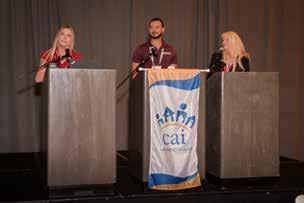
A full house gathered at the DoubleTree Mission Valley on February 19 for an important discussion on Enforcement in the Aftermath of AB 130. Presenters Robert DeNichilo, Esq. of DeNichilo Law, APC, Marisa McVey, CMCA, AMS of FirstService Residential, and Laurie Poole, Esq., CCAL of Adams Stirling, PLC shared valuable insights and engaged attendees with a lively and informative Q&A session.
THANK YOU TO OUR EXHIBITORS & SPONSORS!
PROGRAM SPONSORS
EXHIBITORS
(*CLAC Upgrade Sponsors)
A. Preman Roofing & Solar
AD Magellan
Advance Construction Technology
Alta Roofing & Waterproofing
Antis Roofing & Waterproofing
The Arbor Group
Ascent Roofing*
Bald Eagle Security, Inc.
Bar-B-Clean San Diego South
Bergeman Group Construction*
Management
Brightview Landscape Services, Inc.
Costa Roofing
Dunn-Edwards Corporation
Eagle Paving
Enterprise Coatings Inc.
Fenn Termite and Pest Control
Fenton Grant Kaneda & Litt, LLP
First Citizens Bank
Flanagan Law, APC*
Gothic Landscape
Horizon Lighting
LaBahn’s Landscaping
Labarre Oksnee Insurance
Major League Pest
Monarch Landscape Companies
O’Connell Landscape Maintenance
Pacific Backflow Corporation
Parking Squad
Pilot Painting & Construction
Pinnacle Financial Partners
Pipe Restoration Solutions, Inc.
Precision Construction and Painting
Premier Roofing CA, Inc.
PrimeCo
Rayco Exteriors
Rose Paving
San Diego Backflow Testing, Inc.
San Diego Roof Doctor
SavATree, LLC*
SBS Lien Services*
SCT Reserve Consultants*
Servpro San Diego City SW
Smartstreet powered by Banc of California
Tinnelly Law Group*
Tree Life CA
TWM Roofing, Inc.*
Western Fire Protection
Western Towing
RESERVED TABLE SPONSORS
Accurate Termite & Pest Control
CM2 & Associates
GuardTop, LLC by Sustainable Emulsions
The Management Trust
Nissho of California
NPG Asphalt
SAX Insurance Agency
EDUCATION SPONSORS
EmpireWorks Epsten, APC
PHOTOGRAPHY SPONSOR
MC Contracting
NETWORK SPONSORS
Ben’s Asphalt, LLC
Diamond Roofing
Knoc Technologies
Landscapes USA
Law Office of Laura V. Kwiatkowski
McKenzie Mena, LLP
The Naumann Law Firm, PC
Pro-Tech Painting
Riley Pasek Canty Seltzer LLP
Sherwin Williams Paint Vantaca, LLC
CLAC SPONSORS
Alliance Environmental Group
Groundworks
Kustom US
LaBarre/Oksnee Insurance
Modern Pipe Solutions
Pacific Standard Plumbing
Reconstruction Experts
New Chapter Members
MANAGERS
Donovan Ayub Boggeano, CMCA
Natalie Barrantes
Keystone
Veranice Berry
Walters Management
Matthew Bonnes
Walters Management
Kellee Bryan, CMCA
Chris Constantinou
Nathan Dolejs
Iconic Property Management
Tiana Dominguez
Southwest Association Management
Teresa Downey
Atlantic and Pacific Management
Mabel Garcia
Meissner Jaquet
Breanna Hamer
Castle Breckenridge Management
Rocio Hollis
Complex Managers, Inc.
Mary Kelly
The Prescott Companies
Anet Khoudian
Emily Mendoza
Walters Management
David Monaco
FirstService Residential
Teena Revlett, CMCA
Rescue Me Management
Patricia Stavros
MRoland Management Services
Saundra Sutton
April Van Zant
Keystone
BUSINESS PARTNERS
Arthur J. Gallagher & Co.
Davis Webb
Butter Gutters LLC
Adam Heard
City Wide Facility Solutions
Luke Ramsey
Diversified Asphalt Products, Inc.
Joseph Recinos
Flood Solutions, Inc
Amanda Montijo
HOA Plumbing Enterprises
Adam Harman
International Paving Services, Inc.
Chris Garcia
Knoc Technologies
Tyler Trowbridge
Landcare Logic
Mikayla Gerber
One Affordable Backflow
Alfredo Sanchez
Rolling Suds of San Diego
Andre Tann
Strata Landscape Services
Jorge Sanchez
Williams Mechanical Co.
Tyler Williams
HOMEOWNERS
Adrian Kwiatkowski
Alta Mar HOA
Lyn Lary
Ed Olejiniczak
Cimarron Homeowners’ Association
Susan Ray
Dieguenos Homeowners Association
David Cravens
Highland Estates Resort
Condominium Assoc.
Barbara Karle
La Mesa Village Plaza Residential Association
Kristen Anderson
Pat Bull
Nancy Huth
Cynthia Pilling
Paul Rosas
Lexington Community Association
Tasha McCloud
Madrid Manor Homeowners Association, Inc.
Marylou Belew
Perry Grossmann
Stonecrest Village Master Association
Patrick Ohrberg
The Crest At Del Mar HOA
Ramy Hassan
Yamile Lust-Sledzinski
Maria Talantova
Villa Maderia Property Owners Association
Art Ponce
Larry Wilson
Wintergardens Terrace Condominium Association
Dennis Faulkner
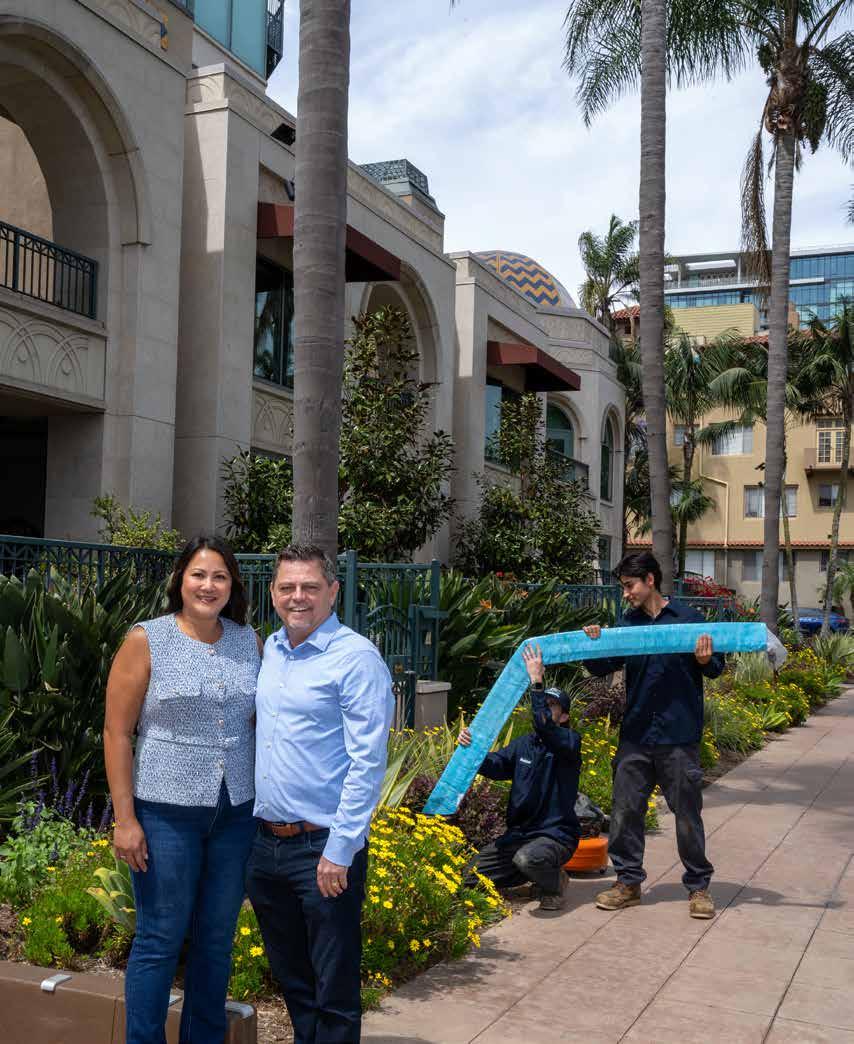
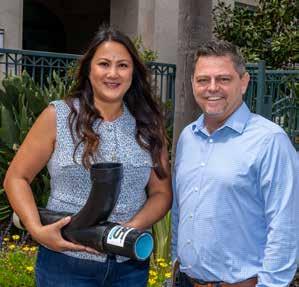
ON THE COVER Modern Pipe Solutions (MPS)
SERVING SAN DIEGO AND SOUTHERN CALIFORNIA FOR OVER 20 YEARS
Aproperly functioning plumbing system is essential to maintaining the quality of life within any community. Drain, waste, and vent systems play a critical role in wastewater management, directly impacting public health, resident safety, and everyday comfort. Unfortunately, many aging cast iron piping systems have exceeded their manufacturer-recommended lifespan and now require rehabilitation to ensure continued reliability and performance.
For associations facing failing plumbing infrastructure, the question becomes: which solution is the right one?
TRADITIONAL PIPE REPLACEMENT
Traditional pipe replacement has long been considered the standard solution for deteriorating plumbing systems, but it is also one of the most disruptive and expensive options for communities and residents alike. The process often requires homeowners or tenants to temporarily relocate during construction, leading to displacement costs, rent concessions, and significant inconvenience.
Before replacement can even begin, hazardous material testing and any required abatement procedures must be completed. From there, extensive demolition is typically necessary. Walls, ceilings, cabinetry, and even concrete floors containing plumbing lines are opened to access the failing system. The existing piping is then removed entirely and replaced with new pipe.
Once the plumbing installation is complete, affected units frequently require major reconstruction and finish restoration, including drywall, flooring, cabinetry, paint, and other interior repairs. In many cases, these restoration costs fall directly on homeowners, adding to the financial strain of loans, special assessments, or increased association dues already tied to the project.
While full pipe replacement can provide a long-term solution, it is labor-intensive, invasive, and timeconsuming. New piping systems generally carry an expected lifespan of approximately 50 years, with workmanship warranties commonly averaging around one year.
REHABILITATING EXISTING PIPES WITH STRUCTURAL DRAIN LINERS AND MODERN PIPE SOLUTIONS (MPS)
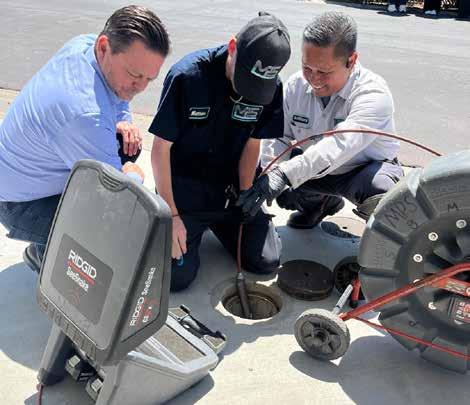
Advancements in trenchless technology have transformed the way aging plumbing systems can be rehabilitated. With Modern Pipe Solutions (MPS) and structural cured-in-place pipe (CIPP) lining technology, communities can often avoid full pipe replacement altogether — allowing residents to remain in their homes while preserving interior finishes and minimizing disruption.
Pipe lining solutions generally fall into two categories: structural cured-in-place pipe (CIPP) lining and non-structural liquid epoxy spray or brushon coatings. At MPS, we exclusively utilize structural
lining systems designed to restore the integrity of the piping system. Applying liquid epoxy coatings alone to severely deteriorated pipes can violate plumbing code requirements and may fail to provide a true structural repair.
Our structural lining process creates a seamless “pipe within a pipe,” eliminating gaps and restoring the system with a fully structural solution. MPS rehabilitates drain, waste, and vent piping systems in a wide range of materials, including cast iron, clay, copper, ABS, kitchen lines, and mainlines.
Using previously engineered access points, MPS trenchless technology can typically be installed from above ground, working from the top unit to the bottom unit with minimal disruption to residents. During the process, an epoxy-saturated felt liner is inserted into the existing pipe and cured in place, creating a seamless structural
liner capable of navigating bends and lateral connections.
MPS CIPP technology addresses many of the most common causes of pipe failure, including corrosion, root intrusion, vertical cracking, and system voids — all without the cost and disruption associated with extensive excavation and demolition. Once cured, the liner forms a fully structural epoxy pipe that will not corrode or biodegrade. The finished product performs similarly to a durable plastic pipe and carries an anticipated service life of approximately 75 to 100 years. MPS proudly backs this solution with a 20-year warranty.
Beyond performance, trenchless rehabilitation is also a more environmentally responsible option. Because the existing piping system remains in place, the process generates only a fraction of the waste associated with traditional replacement, significantly reducing landfill impact.
MPS cured in place pipe (CIPP) technology eliminates common pipe failures such as corrosion, root intrusion, vertical cracking, and voids within the system — all while avoiding the disruption and expense of extensive excavation.
In many cases, MPS can also provide substantial cost savings, with projects often totaling up to 50% less than full pipe replacement.
Damaged plumbing systems disrupt daily life and can create serious health and safety concerns for residents. When evaluating rehabilitation options, communities should consider solutions that are cost-effective, minimally disruptive, durable, and environmentally conscious.
Our team collectively brings more than 100 years of hands-on pipelining experience. We are not a general plumbing, HVAC, or remediation company — sewer and storm pipelining is our specialty.
Tackling Parking Shortages in Community Associations
If fines are not effective, towing is a potentially effective option for removing unauthorized parked vehicles.
BY DENISE THOMPSON
Throughout California, as developers continue building more community associations and apartments, we have seen less available parking. Street parking has been removed, bicycle lanes are put in, and many communities are now requiring permits to park on the streets.
With the cost of home ownership on the rise, people are looking for ways to bring in more revenue to cover mortgage and/or rent. ADUs have been added in many communities, creating parking issues in their neighborhoods. Roommates are brought in to offset housing costs in many associations, and their vehicles are coming with them.
Due to this increase in housing density, there is a growing need for boards to review parking restrictions in their association’s governing documents. Creating a strong parking policy that adequately outlines homeowners’ parking obligations and an association’s enforcement authority is a
community’s best bet to address parking shortages. But where and how does a board start?
Let us start with the characteristics of the community itself. Does the community require residents to use their garages for vehicle parking before utilizing other parking spaces? Are there deeded spaces, community parking, or permit parking? Are some spaces designated for guests or for accessible/ disabled parking? Can the association fine an owner? Does the association know who the owner of the vehicle is? Should registration of all vehicles be required in the community? Should warnings be given prior to fining the homeowner associated with a vehicle in violation of the parking rules? If so, how many times? Does providing more than one warning lead to effective enforcement? Do the CC&Rs limit rule making authority? All of these questions need to be answered before the association can adopt or amend their parking rules and the board should consult their general counsel on the matter.
If fines are not effective, towing is a potentially effective option for removing unauthorized parked vehicles.
California Vehicle Code (CVC) section 22658(a) sets forth the requirements to tow from private property under any of the following four circumstances.
(1) There is displayed, in plain view at all entrances to the property, a sign not less than 17 inches x 22 inches in size, with lettering not less than 1 inch in height, prohibiting public
SUBCONTRACTING
•Full-service oil spreading
•Paving fabric installation
•Prime coat, fog seal & tack coat
•HPS (High-Performance Seal) No
Track Tack
MANUFACTURING
•OverKote® Asphalt Pavement Sealer
•OverKote® Crackfiller
EQUIPMENT RENTAL
•6,000-gal jobsite tank drop deliveries
•600-gal seal tank trailers
•SS-1h tank trailers
•Hot crackfiller machine trailers
DISTRIBUTION
•SS-1h emulsion
•Paving fabric rolls
•Petrotac & geotextiles
•Hot soup buckets
•Oil Flo & oil-spot sealers
•Latex additives
•Diamond Shield Fortifer
Tackling Parking Shortages in Community Associations
Continued from page 16
parking and indicating that vehicles will be removed at the owner’s expense, and containing the telephone number of the local traffic law enforcement agency and the name and telephone number of each towing company that is a party to a written general towing authorization agreement with the owner or person in lawful possession of the property. The sign may also indicate that a citation may also be issued for the violation.
(2) The vehicle has been issued a notice of parking violation, and 96 hours have elapsed since the issuance of that notice.
(3) The vehicle is on private property and lacks an engine, transmission, wheels, tires, doors, windshield, or any other major part or equipment necessary to operate safely on the highways, the owner or person in lawful possession of private property has notified the local traffic law enforcement agency, and 24 hours have elapsed since that notification.
(4) The lot or parcel upon which the vehicle is parked is improved with a single-family dwelling.
To allow for ease of enforcement, an association should post a tow-away sign at each community entrance pursuant to applicable California law. The association will also need to contract with a towing company to provide lawful towing services. Consult with the association’s general counsel to confirm compliance with the vehicle code.
HOAs may also tow vehicles misusing designated parking spaces for people with disabilities. Vehicles parked in a legally designated accessible parking space— identified by a wheelchair symbol painted on the ground and a posted sign indicating the minimum $250 fine— without a valid disabled parking placard or license plate may be towed immediately. However, counsel should be consulted to ensure ADA, DFEH, and/or FEHA compliance. It is not uncommon for towing vendors to see the same vehicle utilizing a disabled/accessible space without giving other individuals equal access rights; therefore, adopting a time limit for these designated spaces may be a fair solution. Additionally, when providing a reasonable accommodation for a homeowner or resident, designating a reserved parking space is often preferable to assigning an accessible parking space. A reserved space can meet the individual’s needs while avoiding potential confusion, as accessible parking spaces are generally intended to
remain available for use by any person who possesses a valid disabled parking placard or license plate and is legally entitled to park there.
EV Station Signage Requirements Prior to Towing
CVC 22511(d)(1) set forth the posting required for an off street parking facility owned or operated by a local authority, which shall consist of a sign not less than 17 inches x 22 inches with lettering not less than 1 inch in height that clearly and conspicuously stating the following: “Unauthorized vehicles not connected for electric charging purposes will be towed away at owner’s expense. Towed vehicles may be reclaimed at [address of towing place] or by telephoning [telephone number of local law enforcement agency].” The sign may be posted in either of the following locations:
(A) Immediately adjacent to, and visible from, the stall or space.
(B) In a conspicuous place at each entrance to the offstreet parking facility.
The towing of vehicles by a homeowner from their deeded space, or towing from common areas by the community association or by a towing company usually comes well after warnings and notices have been issued. Boards and management should ensure there are clear posted signs and rules established for parking and towing enforcement. All towing companies should follow strict towing guidelines pursuant to California law, as towing disputes can end up in small claims court. It is sound practice to document parking violations via photos and other details that may facilitate ease of enforcement/towing (e.g., date/time/duration of violation, vehicle make/model/color, vehicle ownership). Most importantly, establishing a strong partnership with a licensed and insured towing company—one that understands applicable laws and prioritizes the community’s best interests—is essential to maintaining effective, compliant, and worry-free towing practices.
Denise Thompson is a Senior Sales Manager at Western Towing. She can be reached at deniset@westerntowing.com
Navigating Assembly Bill 1572 and the Non-Functional Turf Ban
A quick guide for community associations
BY ANJA POTENZA
Signed into legislation in 2023, the goal of Assembly Bill 1572 (AB 1572) was to provide a wider effort to reduce the use of potable (drinking) water in landscaped areas. The law simply prohibits, by the phased deadlines, the use of potable water to irrigate non-functional turf (NFT) on commercial properties – including community association common spaces – that are served by urban retail water suppliers (i.e., water districts) with 15,000 or more connections, which applies to most urban areas in the state.
What does that mean for community associations? By the deadline, a property would need to stop using potable water to irrigate turf areas that are deemed non-functional. Mowed grass that is ornamental, or has no use for recreation or human activity, is the targeted areas of water restriction.
Ban Includes:
• Entryways/monument signs
• Medians and parkways
• Clubhouse lawns
• Parking lot islands
• Unused turf for decorative purpose
Ban Exclusions:
• Tot lots and playgrounds
• Parks, picnic areas, & walking trails
• Homeowner front/back yards*
• Recycled or well-water irrigated areas
• Dog parks (enclosed)
Phased compliance is focused on the following areas:
• By January 1, 2027: State & Local Agencies
• By January 1, 2028: Commercial, Industrial, and Institutional sites
• By January 1, 2029: Residential, which includes homeowner associations & multi-family apartment communities
Enforcement will be handled by the local water agencies, municipalities, and the State Water Resources Control Board. At this stage, we do not have a clear picture of what type of certifications will be needed for compliance, however, property managers and homeowner boards should expect to document items like:
• Non-functional turf mapping throughout community
• Identifying efforts that have been made to remove or convert turf
• Record-keeping of irrigation system updates along with water source verification
Continued on page 20
Non-compliance may result in fees set forth by the water authorities of up to $500 per day per violation. This may also result in increased inspections as well as possibly being subject to water-use restrictions.
There are a few solutions that are common practice in moving towards the compliance deadline: recycled water retrofit, turf replacement, or simply discontinued irrigation for the turf areas. If your association has already tapped into recycled water, no further action is needed. If the community is looking to convert, there is a cost involved with converting to non-potable water, which varies greatly depending on access to recycled water sources. Contacting your commercial landscaper and your water district representative is a good place to start the conversation.
Can we just turn the water off? Yes, that is a solution to gain compliance. Specifically watering non-functional turf areas with potable water is the call to action of the assembly bill, so it is permissible to just stop watering. Planter beds and non-turf areas with plants and trees are still acceptable to irrigate. There are rebate incentives in place to help bring a community into compliance. Southern California programs like SoCal Water$mart and San Diego County Waterscape have traditionally offered incentives for converting turf to more drought tolerant landscape. Rebates have fluctuated over the last year; from $2 per square foot up to $7 per square foot, with up to 50,000 square feet of conversion eligible per application submitted. Funds are dwindling for fiscal year 2026, but it is possible that additional funds will be made available in July 2026 with the start of fiscal year 2027.
Turf replacement to a more drought tolerant landscape is a very viable long-term option to reduce water consumption, and taking advantage of rebate funds while they are still available is a great way to address the law and provide at least a modicum of return on investment.
Rebate requirements include:
• Plant density of 3 plants per 100 square feet of transformed areas
• Stormwater feature – at least one is required per rebate application
• Hardscape must be permeable if used within design
• Updating irrigation – replacing or modifying overhead spray sprinklers
Navigating
Planting drought-tolerant and native plant palettes (check out the ‘Nifty50’ guide for great ideas), using decorative rock or mulch, and drip conversions are all important considerations for reducing water consumption (goal of the assembly bill) and meeting the requirements of turf conversion rebates eligibility.
AB 2159 provides that associations may allow their inspector of elections to conduct an election by electronic secret ballot. Keep in mind that voting by email is not, and cannot, be secret. Electronic secret ballots must be cast via an internet-based voting system and the inspector of election must ensure this system conforms to the requirements set forth in Civil Code § 5110(c)(4).
Ultimately, AB 1572 affects more than landscaping – the effect on capital planning and long-term asset management is still in the early stages. Every community’s needs are different, and tasks like separating irrigation zones and evaluating water sources, let alone irrigation retrofits, can become quite costly depending on the age of the community.
Online voting is the way of the future. Online voting provides many advantages: enhanced participation; potential cost savings; real time results; and the ability to vote from anywhere from the device of the voter’s choice, just to name a few. In general, we find that in most communities, given the choice, at least 4 out of 5 members will vote online versus via paper ballot.
This article discusses the key topics we have discussed with associations as of the signing of AB 2159 into law, which became effective on January 1, 2025.
New Election Rules
The assembly bill represents a complete shift in landscape management expectations across California; early assessment and proactive planning can minimize non-compliance risks and can help improve budget forecasts. Use this time before the deadline as an opportunity to create a more sustainable, water-wise landscape that can improve the aesthetics of common areas, as well as getting ahead of ever-increasing water rates.
New Professional Designations
How is your community positioned for a more water-resilient future?
*This exclusion applies to single family homes where the homeowner pays for water use from the water district. If the association waters and maintains the turf areas, then it is the association’s responsibility to address it.
To implement online voting, associations must first update their election rules to include the option of voting by electronic secret ballot. Keep in mind that new election rules must be presented to the membership for a minimum of 28 days for member review and comment (Civil Code § 4360) and cannot be adopted less than 90 days prior to any election subject to Civil Code § 5100, except elections for assessment increases legally requiring a vote. Given other recent amendments to the Civil Code and Corporations Code, all associations should update their election rules regardless of whether they intend to permit members to vote by electronic secret ballot.
Anja Potenza is the Business Development Manager for LaBahn’s Landscaping. She can be reached at apotenza@labahns.com
Matthew Sutherland, CMCA, AMS FirstService Residential California, LLC
Angelica Villa, CMCA Prescott Companies
Shawn Ward, CMCA, AMS Vintage Group
BY ADDIE STATHATOS
ZONE
In California, forested areas neighborhoods research evolves, Zone 0. Whether want to protect could make
THE CRITICAL FIRST FIVE FEET
California, wildfire risk is no longer confined to rural or heavily areas and has become a growing concern for suburban neighborhoods and multifamily properties alike. As fire behavior evolves, one concept has emerged as especially important:
Whether you manage a large portfolio of properties or simply protect your home, understanding and maintaining this zone make the difference between survival and total loss.
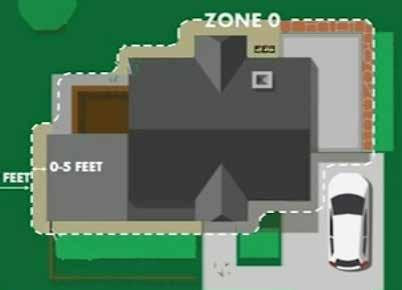
Zone 0 refers to the area within the first 0–5 feet immediately surrounding a structure. It is best understood as the building’s ‘defensible core.’ While traditional defensible space guidelines emphasized larger perimeters (like 30ft for Zone 1 or 100ft for Zone 2), it is very common for buildings to ignite from embers not direct flames.
These embers, carried by wind during a wildfire, can accumulate in vulnerable spots close to the structure. Zone 0 is where those embers are most likely to ignite materials and start a fire that spreads to the building itself.
Zone 0 matters more than ever as research from fire agencies and insurance groups has made one thing clear: even a well-maintained yard beyond 5-ft will not save a building if Zone 0 is neglected.
Common ignition points include:
• Dry leaves in gutters, as well as accumulation under shrubs
• Mulch beds with combustible wood chips
• Wooden fences attached to structures
• Patio furniture or doormats made of combustible materials
For property managers and homeowner associations, this is especially critical because liability and risk multiply across homes. One vulnerable unit can jeopardize an entire community.
In San Diego, implementation of Assembly Bill 3074 has increased focus on removing combustible materials within Zone 0 to reduce the risk of winddriven embers igniting structures (sandiego.gov). For new structures, compliance is mandatory in ‘Very High Fire Severity Zones (VHFHSZ) starting February 28, 2026. For existing structures, property owners
Continued on page 24
must meet Zone 0 guidelines by February 2027. The city anticipates proactive door-to-door education in midMarch 2026, with a focus on “progress, not perfection” to support compliance efforts.
Managing Zone 0 is not about aesthetics. It is about eliminating anything that can burn and keeping the area as close to non-combustible as possible. Avoid materials like bark mulch or wood chips, dry vegetation, firewood stacks, and plastic or resin furniture, to name a few. Recommended alternatives include gravel or stone, concrete or pavers, or simply bare soil where applicable.
Additional steps to harden the structure itself should be taken into consideration. Zone 0 is not just landscaping; it includes the building’s exterior. Products like fire-resistant siding (fiber cement, stucco, and metal) and tempered glass windows to resist heat breakage are items to consider. Covering or placing screens on vents can help prevent ember entry as well. Property managers and homeowner associations should prioritize retrofits during maintenance cycles or renovations.
Zone 0 is not a “set it and forget it” area. Routine maintenance should include:
• Clearing leaves and debris weekly during fire season
• Cleaning gutters and roof valleys
• Inspecting corners, edges, and under decks Attachments to structures can also act as fire bridges. Wooden fences that connect to a building, decks made from untreated lumber, and attached pergolas or trellises should all be evaluated as part of a Zone 0 review. Ways to reduce fire risk from these attachments include replacing combustible materials with non-combustible alternatives, installing metal barriers where attachments meet the building, and creating breaks so fire cannot travel directly to the structure.
It is also important to remember that even small items can ignite. Items like welcome mats, furniture cushions, storage bins, and door/entry decoration can pose a risk. During high fire weather, it is a good idea to remove these items and store indoors.
For property managers and HOA boards, it is important to establish a clear, property-wide policy for communicating Zone 0 standards throughout the community. Clearly identifying and communicating approved landscaping materials, issuing a list of prohibited items within 5ft of a structure, and updating maintenance schedules will help maintain consistency and transparency. Residents often unknowingly introduce risks.
Managing Zone 0 is not about aesthetics. It is about eliminating anything that can burn and keeping the area as close to noncombustible as possible.
Adding a reminder or talking point to a community newsletter/email, or bringing up during an open board meeting, especially approaching and during fire season, can help reinforce awareness and encourage compliance.
Zone 0 improvements are often low-cost but high impact:
• Replacing mulch with gravel
• Installing metal edging
• Upgrading vents
Compared to fire damage or insurance loss these are minimal investments.
Even well-intentioned efforts can fall short. For your landscaped areas, irrigated and healthy plants can burn under extreme heat and decorative mulch can be a major ignition source. Tree placement and maintenance within or near Zone 0 should be evaluated carefully in accordance with current local guidance and fire-safety standards. Limbs must be trimmed at least 5ft from roofs and exterior walls, and the tree canopy must be maintained at least 10ft from structures. Walls and fences matter just as much as the ground; ensure vertical surfaces receive the same protection measures.
Zone 0 is the simplest, most effective place to start when it comes to wildfire protection. It does not require large-scale landscaping or expensive equipment, just attention to detail and consistency.
For homeowners, Zone 0 is about protecting what is often their biggest investment. For property managers, it is about reducing risk across every unit, tenant, and structure under their care.
Addie Stathatos is the Vice President of Sales and Marketing for LaBahn’s Landscaping. She can be reached at astathatos@labahns.com
On March 5, the Social Event Committee welcomed members to the Chapter’s sold-out Shamrocks & Shenanigans event at Stone Brewing World Bistro & Garden in Escondido. Attendees enjoyed festive food and drinks, expanded their professional networks through a Mix & Mingle Bingo, and showcased their Irish spirit in the popular Most Spirited Dress Contest.
Drink Ticket Sponsors
Eagle Paving
Kriger & Schuber
Pacific Backflow Corporation
Western Towing
Photography Sponsors
Alta Roofing & Waterproofing
Heritage Bank of Commerce
MC Contracting
Parking Squad
Shenanigans Mix & Mingle Bingo
Card Sponsors
Costa Roofing
Enhanced Landscape & Arbor Management
NORTH COUNTY TRADE SHOW & LUNCHEON
VIEW THE ONLINE GALLERY
PROGRAM SPONSORS
EXHIBITORS
(*CLAC Upgrade Sponsors)
Advance Construction Technology
Agricultural Pest Control
Alta Roofing & Waterproofing
Antis Roofing & Waterproofing
The Arbor Group
Ascent Roofing*
Bar-B-Clean San Diego South
Bergeman Group Construction Management*
Brightview Landscape Services, Inc.
City Wide Facility Solutions
Dunn-Edwards Corporation
Eagle Paving
Enhanced Landscape & Arbor Management
Enterprise Coatings Inc.
Epsten, APC*
Fenn Termite and Pest Control
Fiore Racobs & Powers, A PLC*
A sold-out event at the Omni Carlsbad featured an insightful program on “Successfully Managing a Painting Project.” Presented by Kimberly Bahena, Vista Paint Corp.; James Hippolyte, EmpireWorks; and Christina Mercer, PMP Management, the program featured strategies on managing a project from start to finish.
Thank You to Our Sponsors!
Gemini Insurance Agency, Inc.
Generation Contracting & Emergency Services
Goldstar Asphalt Products
GuardTop, LLC by Sustainable Emulsions
LaBahn’s Landscaping
Labarre Oksnee Insurance
Mailboxes R Us
Major League Pest
McKenzie Mena, LLP
Moon Valley Nurseries
O’Connell Landscape Maintenance
Pacific Coast Construction & Waterproofing, Inc.
Pilot Painting & Construction
Precision Concrete Cutting
Precision Construction and Painting
Premier Roofing CA, Inc.
PrimeCo
Pro Star Mechanical Services
ProTec Building Services
Pro-Tech Painting
Riley Pasek Canty Seltzer LLP
Roseman Law, APC*
Saddleback Fence
San Diego Roof Doctor
SavATree, LLC*
SAX Insurance Agency
SBS Lien Services*
SCT Reserve Consultants*
Servpro San Diego City SW
Smartstreet powered by Banc of California
Tinnelly Law Group*
TWM Roofing, Inc.*
Western Towing
RESERVED
TABLE SPONSORS
CM2 & Associates
Diamond Roofing
EmpireWorks
Pacific Green Landscape
Prendiville Insurance Agency
Splash Plumbing
EDUCATION SPONSORS
A. Preman Roofing & Solar
Accurate Termite & Pest Control
PHOTOGRAPHY SPONSOR
MC Contracting
EDUCATION HANDOUT SPONSOR
Primus Paint Worx
The Sherwin-Williams Paint Company
NETWORK SPONSORS
Ben’s Asphalt, LLC
California Commercial Coatings Inc.
Landscapes USA
Modern Pipe Solutions
Monarch Environemental
SERVPRO of Sorrento Valley
2026 State of the Insurance Market for Community Associations
BY BRIAN KALMENSON, CIRMS
For many California community associations, the past five years in the insurance environment have felt less about strategy and more about survival. On the heels of historically high losses in 2017 and 2018, the property insurance market went into a downward spiral that we’ve been collectively navigating ever since. While it’s felt like an eternity to most, including those of us on the insurance side, the market is evolving in some very important ways.
Property Insurance Coverage
The property insurance side is finally starting to see signs of stability, despite the inflationary impact on claims and continued industry concerns around wildfire exposure. Does this mean that property insurance premiums are coming down? In some cases, yes, though for many, the softening property market is allowing for renewals with single-digit premium changes. There will always be exceptions, such as communities with heavier claim activity, high wildfire exposure, or faulty electrical equipment such as aluminum wiring or hazardous
electrical panels. In those cases, challenges will remain, but with improved results for property insurers in recent years, some semblance of stability has arrived at long last.
General Liability Coverage
On the other hand, we see the opposite in the general liability market. This is the area of an association’s insurance program that responds to allegations that the association is liable for bodily injury, third-party property damage, and/ or certain personal injuries. Familiar Continued on page 28
general liability claims include common area slip and fall incidents, damage to owners’ vehicles from downed common area trees, etc. Simply put, the frequency and severity of these claims have rapidly accelerated, driven in part by rising litigation costs and larger jury awards, causing several preferred insurance companies to stop offering general liability coverage to community associations. Less competition is resulting in more restrictive coverage, higher premiums, and a higher percentage of renewals going to the non-admitted insurance companies.
Umbrella / Excess Liability Coverage
While this policy used to be more of an afterthought, it’s becoming front and center as several insurers have exited the market in recent years. As primary limits of liability are exhausted more frequently, umbrella / excess liability carriers assume more of the risk. This has led to reduced availability, especially at the higher limits, and increased costs of coverage.
So, what does this all mean? It’s a mixed bag, but the silver lining is that, unlike property insurance which can be heavily reliant on geographic factors outside of the association’s control, some obstacles of the liability market are more addressable on the community-specific level. A well-maintained community will always position itself best for success, and now is the time to be diligent and deliberate in maintaining the community’s buildings and common areas.
Bottom line: while property insurance is stabilizing, liability coverage is becoming the primary pressure point for many associations.
Challenges remain, but navigating today’s insurance market requires working with a specialist in community association insurance. Experience and specialization are no longer optional—they’re essential to avoiding costly gaps in coverage. Brian Kalmenson,
Management Company Participants
Associa N.N. Jaeschke
Choice Management Solutions
Elite Community Management
Hammer Real Estate
Hudson Management Services, Inc.
Keystone Pacific
Moonstone Management
PCM Associa
ProActive Professional Management
Property Management Consultants, Inc.
Property Management Professionals
Seabreeze Management Company
Silverado Community Management Services
Southwest Association Management
Summit Property Management, Inc.
Synergy Management Group
Vintage Group
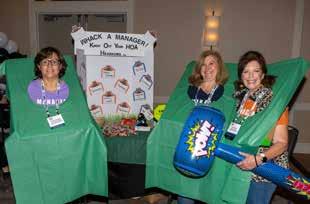
The Reverse Trade Show on April 15th at the DoubleTree Mission Valley featured a “Game On” theme, leading to some incredible décor from our management company participants.
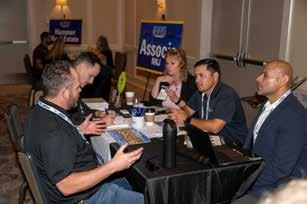
The event was sold out for Business Partner attendees, who met with a large variety of management companies for 6-minute “speed dating” appointments.
PROGRAM SPONSORS
Interaction Sponsors
A-1 All American Roofing Company of San Diego
A7 Group
Accurate Termite & Pest Control
The Arbor Group
Ascent Roofing
BRR Contractors
Bugarin Roofing & Waterproofing
Butter Gutters LLC
City Wide Facility Solutions
Clean Earth Restorations
Eagle Paving
Flanagan Law, APC
Gammill Pest Solutions Inc.
Golden Alliance Insurance
Kasdan Turner Thomson Booth LLP
LaBahn’s Landscaping
Landscapes USA
Modern Pipe Solutions
Nissho of California
One Structural dba Balcony 1
Pacific Standard Plumbing
Payne Pest Management
Pilot Painting & Construction
Procoat Painting San Diego
Reconstruction Experts
Rose Paving
San Diego Backflow Testing, Inc.
San Diego Roof Doctor
Sherwin-Williams
Trash Day Can Carriers
Vantaca, Inc.
Western Fire Protection
Western Towing
Lunch Sponsors
Alta Roofing & Waterproofing
CM2 & Associates
Fenton Grant Kaneda & Litt, LLP
Generation Contracting & Emergency Services
Life Deck Coating Installations
Monarch Landscape Companies
Drink Ticket Sponsors
EmpireWorks
Enhanced Landscape & Arbor Management
iMailTracking, LLC
Kriger & Schuber
Lloyd Pest Control
NPG Asphalt
Photography Sponsors
Remedy Rooter
Gemini Insurance Agency, Inc.
Major League Pest
Parking Squad
ProTec Building Services
Remedy Rooter
SavATree, LLC
The Downfalls of Artificial Intelligence in the HOA Industry
BY SIGRID GARVEY
As homeowners associations explore the use of artificial intelligence to improve efficiency, it is important to recognize the risks this technology can present in an environment that handles private and personal information and is governed by legal requirements and governing documents. Giving AI systems access to sensitive owner, financial, and enforcement data raises serious concerns around privacy and confidentiality if not properly controlled. Overreliance on AI can also reduce human judgment and discretion, both of which are essential to fair, consistent, and compassionate community management. Most importantly, the use of AI does not transfer responsibility or liability away from the board or management. Decisions generated or influenced by AI remain subject to the same transparency, accountability, and legal standards as any human decision.
Homeowners associations regularly handle sensitive and confidential information. This includes, but is not limited to, owner financial records, collections reports, payment histories, reserve account information, bank statements, tax returns, and audit reports. When this type of information is entered into AI programs to draft responses, summarize records, or analyze documents, there is a risk that the program was not designed
to meet HOA data protection standards. Privacy terms, retention settings, and training practices can vary by provider, plan, and user settings. In some consumer AI services, user content may be used to improve models unless settings are changed, while some business or enterprise offerings state that customer data is not used for training by default. Boards and managers should not assume that a paid subscription automatically means private or compliant, and should review the provider’s terms and controls carefully.
Continued on page 32
THE BEST PROFESSIONALS
The Downfalls of Artificial Intelligence in the HOA Industry
Continued from page 31
Overreliance on AI can also limit discretion and sound human judgment, which are essential in effectively managing a community association. AI programs cannot fully understand intent, history, or the unique circumstances behind individual situations. Many actions, such as rule enforcement, responses to complaints, and homeowner communications, require nuance, empathy, and experience. If AI begins to replace rather than support human reasoning, responses and decisions may become unfair, inconsistent, or impersonal.
Overall, AI can be a useful and efficient tool, but in the HOA industry it presents legal, privacy, and reputational risks if used without clear guardrails. Because this technology is still evolving and we are still learning its full capabilities, benefits, and limitations, boards and managers should tread carefully. AI should support, not replace, human reasoning, legal review, and board or management accountability.
Sigrid Garvey is a Project Manager for AD Magellan. She can be reached at sigridg@admagellan.com
Protecting Your Association’s Reputation Through Trademarks and Intellectual Property
BY CECILIA S. CHUNG, ESQ.
Whether you have thought about it or not, an association’s name and branding are more than just a sign on the gate or a logo on your newsletter. They shape how your community is perceived, bolster its reputation, support word-of-mouth recognition, and set the tone for everything from resident engagement to vendor interactions. Just like a strong personal brand helps a nationally recognized corporation like Disney or Coca-Cola stand out, a well-protected homeowner’s association brand ensures your community’s identity stays distinct, respected, and unmistakably yours. Branding also helps convey professionalism and pride in the community, making a positive first impression on prospective residents, vendors, and service providers.
One of the most effective ways to safeguard these assets is through intellectual property protections, particularly trademark registration.
Trademarks give your association exclusive rights to its name, logos, and other branding elements in connection with the services or activities it provides. By registering your association name as a word mark and any unique logos, the board can prevent unauthorized use, avoid confusion with other associations or entities, and ensure the community’s brand
Continued on page 34
Continued from page 33
remains legally recognized. This also establishes a clear legal foundation to enforce your rights if any misuse arises.
Securing trademark protection begins with a search and clearance process to make sure the proposed name or logo does not conflict with existing trademarks. Once cleared, the association can file for a word mark registration for its name and a design mark registration for any logos. Federal registration through the United States Patent and Trademark Office provides broad legal reach, priority nationwide, and strengthens the association’s ability to enforce its rights against misuse, misrepresentation, or unauthorized branding.
With a registered trademark, the association gains both a sword and a shield. It serves as a shield, protecting the community’s brand from dilution, confusion, or misrepresentation. For example, a developer cannot decide to name its community the same name, and a former vendor cannot create websites under the association’s name to spread false information. If either of
those issues occur, the association can wield its registered trademarks as a sword to pursue legal action for trademark infringement and related causes of action. This dual power allows the board to proactively maintain the association’s image, increases the intangible asset value of the association’s brand, and ensures the community’s reputation endures for years to come.
Think of it this way: a registered trademark does not just sit in a filing cabinet gathering dust, it’s your community’s personal bodyguard and megaphone rolled into one. It says to the world, “This is our name, our identity, our reputation, and it belongs to us.” Protecting your brand today ensures your association’s legacy tomorrow.
Cecilia S. Chung, Esq. is a Senior Attorney at Tinnelly Law Group. She can be reached at cchung@tinnellylaw.com
New Professional Designations
Kyle Black, CMCA, AMS Walters Management
Amanda Grandys, CMCA, AMS Property Advantage
Teena Revlett, CMCA Rescue Me Management
Donovan Ayub Boggeano, CMCA
Jared Chase, CMCA, AMS The Prescott Companies
Candace Baker, CMCA Elite Community Management
BUSINESS PARTNERS
CAI is the foremost authority in community association management, governance, education, and advocacy for the 380,000 homeowners associations, condominiums, and co-ops in the United States and millions of communities worldwide.
As a member of CAI, you are part of a global network of over 45,000 community managers, management company executives, homeowner leaders, and business partners.
BUSINESS PARTNERS
Membership conveys your commitment to the community association industry and the potential for expanding your client base!
Some of the Many Benefits of CAI Membership
• Membership in the CAI San Diego chapter
YOUR CAI MEMBERSHIP = VALUE
• Networking, educational and social events that connect you with local HOA decision makers
• Free listing in the online and printed Membership Resource Directory distributed to all chapter members
COMMUNITY MANAGERS
MAKE THE MOST OF YOUR MEMBERSHIP
Elevate your career and increase your salary with tailor-made education and credentials that give you a competitive edge in the growing community association business.
Visit cai-sd.org regularly for the latest CAI happenings and information.
MANAGEMENT
COMPANY EXECUTIVES
Communities count on you for professional management and guidance. CAI membership helps your company boost credibility and increase exposure to potential clients.
Get involved with our chapter – attend an education or networking event and maybe even join a committee, where you can network, learn with peers, or meet potential new clients.
HOMEOWNER LEADERS
Save time and money with CAI education and resources and lead your community to success!
We’re Here For You! Questions?
Email us at membership@cai-sd.org or call 858-836-1119
BUSINESS PARTNERS
• Exchange, CAI’s online members-only forum to ask questions, get answers, and share your expertise
• Legislative, regulatory, and media advocacy at national and local levels
Membership conveys your commitment to the community association industry and the potential for expanding your client base!
• Free subscription to CAI San Diego’s quarterly magazine, Community Insider
MAKE THE MOST OF YOUR MEMBERSHIP
Visit www.caionline.org regularly for the latest CAI happenings and information.
• Free subscription to Common Ground, CAI National’s award winning magazine
• Member rates for CAI education courses and certification opportunities and chapter events
• 40% off for on all books and merchandise from CAI Press
• Member discount programs on D&O insurance, energy solutions, and rental car service
Log in to the CAI website and your profile to ensure all contact information is current so you don’t miss out on CAI news, emails, and other important updates.
• CAI Job Market, the industry’s leading online recruitment service
Get involved with your local chapter—attend an education or networking event and maybe even join a committee, where you can network, learn with peers, or meet potential new clients.
• Free listing on CAI’s online Professional Services Directory
• The Directory of Credentialed Professionals, CAI’s online database of trusted companies and individuals who have earned industry designations and certifications