



The Community Associations Institute – Coachella Valley Chapter (CAI-CV), established in 1983, is a nonprofit organization dedicated to serving the educational, business, and networking needs of community association professionals and homeowner leaders throughout the Coachella Valley. As part of an international organization, CAI-CV provides vital resources, training, and legislative advocacy to help homeowners associations (HOAs) operate effectively and responsibly. Our mission is to build better communities by equipping board members, community managers, and business partners with the knowledge and tools necessary to lead with confidence, make informed decisions, and foster thriving, well-managed neighborhoods. Membership is open to all who serve HOAs. Board members can enroll up to 15 members of their community, including the Board of Directors, committee chairs, and committee members, with one low fee. This offer also extends to cities or other governing agencies that would like to connect with CAI.
If you are a manager or business partner, CAI offers many opportunities for education and credentialing, including the Educated Business Partner distinction, multiple designations, and specialty credentials for community managers.
To inquire about membership, visit www.cai-cv.org/join, call (760) 341-0559, or email admin@cai-cv.org
Members have access to our online directory, which contains contact information for all members within our chapter across all membership categories. Advertising opportunities are also available—please contact our office for details.
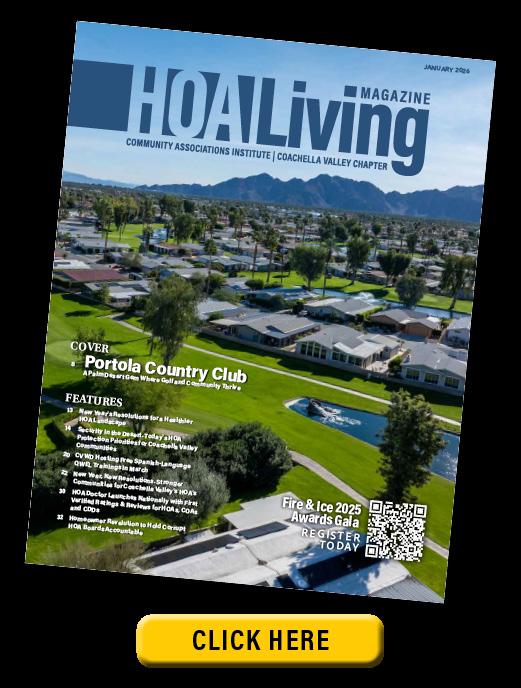
HOA Living is CAI-CV’s monthly magazine and the official publication of the chapter. Circulation is approximately 1,100 and growing. A digital copy is distributed free to all members, and a printed version is available with a paid subscription.
If you are interested in submitting an article or advertising, contact us at admin@cai-cv.org.
GENERAL INQUIRIES
Email: admin@cai-cv.org
Phone: (760) 341-0559
CAI-CV, 49950 Jefferson, Suite 130-117 Indio, CA 92201
MEMBERSHIP INQUIRIES AND UPDATES
Membership status/renewals cai-info@caionline.org
Address or information changes addresschanges@caionline.org
Recruiter credit addresschanges@caionline.org
PRESIDENT
BRUCE LATTA, CMCA, CFE Manager, Indio Properties
PAST PRESIDENT
MARK DODGE, CMCA, AMS
Branch President & CEO Associa – Desert Resort Management
DIRECTOR
JULIE BALBINI, ESQ.
Managing Attorney, CV Office, Fiore Racobs & Powers, A PLC
DIRECTOR DAVID SCOTT
Ranch Club Palm Estates
TREASURER
JOLEN ZEROSKI, CMCA
VP, Regional Account Executive First Citizens Bank
DIRECTOR
MICHAEL MARSHALL, VP
First Service Residential
DIRECTOR MIKE TRAIDMAN
Treasurer, Mira Vista at Mission Hills HOA Commissioner, CAMICB
SECRETARY DAN GOODRICH CCAM-LS, AR, AMS PCAM, LSM
Sierra Dawn Estates
DIRECTOR
LILY ORTEGA, CMCA
Office Manager, Pro Landscape
NATIONAL CONTACTS
National Corporate Member updates addresschanges@caionline.org
National Professional Directory Laura Mason, lmason@caionline.org
Dues or multi-chapter additions cashprocessors@caionline.org
JENNIFER JAMES, ESQ. CHAIR
Partner & Managing Attorney of the Coachella Valley, Roseman Law, APC
JAY JARVIS CO-CHAIR Homeowner Leader
SEAN ANDERSEN Association Reserves
FELICIA BUSTOS WICR Inc. Waterproofing & Construction
SIERRA CARR, CMCA, AMS, CCAM, PCAM Personalized Property Management
JOHNNY CONTRERAS Southwest Landscape & Maintenance
ROBERTO ANTONIO FLORES Hidroklear LLC
MIRANDA LEGASPI, EBP, MBA Platinum Security
JESSICA MCCONNELL HOA Invest
LILY ORTEGA Pro Landscaping Inc.
BRITAIN ROME Allied Universal
JASON SAVLOV, ESQ. Adams | Stirling, PLC
DAVID SCHUKNECHT, AMS, PCAM, MBA Personalized Property Management
JOHN SCHUKNECHT, CMCA, AMS LaBarre/Oksnee Insurance
STEVEN SHUEY, PCAM Retired Community Manager
CHRIS SIGLER, B.S.C.E, CDT C.L. Sigler & Associates, Inc.
CREATIVE DIRECTOR & GRAPHIC DESIGNER
RODNEY BISSELL
Bissell Design Studios, Inc. rodney@bisselldesign.com (714) 293-3749
PHOTOGRAPHY
MATTHEW LAWTON, CIC, CIRMS, EBP OCV Insurance Services matt@ocvinsurance.com 760-774-2099
HOLLY SMITH, PCAM Executive Director
The opinions and views expressed in editorial material are those of the individual authors or interviewees and do not necessarily reflect the views of CAI–CV, Community Associations Institute, its Board of Directors, members, or advertisers.
Unless expressly stated, CAI–CV does not endorse any individual, organization, product, service, political candidate, or opinion.
Information contained in this publication is provided for general informational purposes only and does not constitute legal, accounting, or professional advice. Readers are encouraged to seek the advice of qualified professionals before acting on any information contained herein.
HOA Living reserves the right to edit or reject submissions and advertising that do not meet its standards. Print colors may vary slightly due to the printing process.
BECOME AN EDUCATED BUSINESS PARTNER
Call the CAI-CV office or go to www.caionline. org/education-for-partners/ for more information. Business Partner Essentials is an online course that empowers CAI-member business partners to better serve community associations. Participants who complete the course earn the CAI Educated Business Partner distinction, highlighting their knowledge, professionalism, and commitment to excellence.
Julie R. Balbini, Esq., Fiore Racobs & Powers, A PLC
Micha Ballesteros, Cartwright Termite & Pest Control, Inc.
Roxi K. Bardwell, Advanced Reserve Solutions, Inc.
Rodney Bissell, Bissell Design Studios, Inc.
Gary Butler, Asphalt MD's
Linda Cardoza, Alliance Association Bank
Will Cartwright, Cartwright Termite & Pest Control, Inc.
Christopher Cellini, Flood Response
Todd Chism, PatioShoppers
Thomas Edelson, BPR Inc. Trip Hazard Repair
DJ Conlon, Poppin Promotional Products
Lori Fahnestock, Powerful Pest Management
Julie Frazier, Frazier Pest Control, Inc.
Victoria Germyn, Teserra
Elaine Gower, The Naumann Law Firm, PC
Michael Graves, SCT Reserve Consultants
Amanda Gray, Harvest Landscape, Inc.
Jennifer James, Esq., Roseman Law, APC
Jennifer Felder, Platinum Security
Erin Kelly, Banc of California
Megan Kirkpatrick, Kirkpatrick Landscaping Services
Jared Knight, Precision Construction & Painting
Katy Krupp, Fenton Grant Mayfield Kaneda & Litt, LLP
Matt Lawton, CIC, CIRMS, OCV Insurance Services
Larry Layton, Kirkpatrick Landscaping Services
Alison LeBoeuf, Sherwin-Williams
Mike Mastropietro, OCBS, Inc.
Chris Meyer, Asphalt MD's
Greg Morrow, Eagle Roofing Products
Fran Mullahy, Conserve LandCare
Bridget Nigh, BEHR Paints
Matt Ober, Esq., Richardson Ober DeNichilo LLP
Lily Ortega, Pro Landscape
Chet Oshiro, EmpireWorks
Mallory Paproth, SCT Reserve Consultants
Elisa Perez, Esq., Epsten, APC
Jay Powell, Ben's Asphalt
Dana Pride, Automation Pride
Mike Rey, LaBarre/Oksnee Insurance Agency
Kelly Richardson, Esq., Richardson Ober DeNichilo LLP
Brent Sherman, Animal Pest Management Services, Inc.
Liz Williams, AMS Paving
Taylor Winkle, Roof Asset Management
Bevan Worsham, AMS Paving
Jolen Zeroski, First Citizens Bank
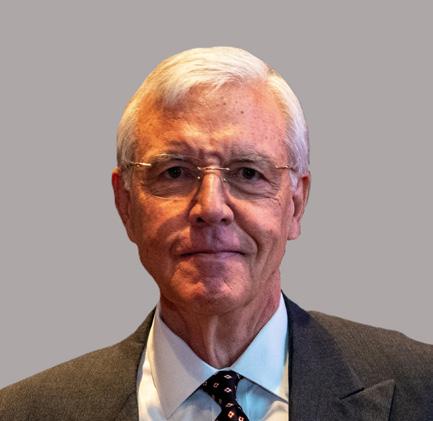
Bruce Latta, CMCA, CFE Manager, Indio Properties President, of CAI-CV
It is already March, known for the start of spring, which symbolizes new beginnings. It marks the arrival of warmer temperatures in the Coachella Valley and the start of the annual migration home of our seasonal residents from colder climates. The month also marks the return of Daylight-Saving Time.
We should all be pleased with the continued progress and growth of our Coachella Valley Chapter of the Community Associations Institute. It is gratifying to see membership increase. Our chapter added 39 new members for December and January. In addition to our members recruiting new members, our outreach efforts, including displays at city HOA workshops, chamber of commerce trade shows, and state-of-the-city and county events, are yielding results.
We will again be a major sponsor and have a display at the Palm Springs 1PS Annual Picnic & Community Expo at Ruth Hardy Park on Saturday, March 21, from 11 am to 2 PM. Come by and say hello. We also added Coachella Valley city leaders to our mailing list for the HOA Living magazine.
Our chapter events include the monthly educational luncheon and a mini-trade show at Sun City Palm Desert on March 19. This month will be a “big deal” because CAI National’s CEO, Dawn Bauman, will be our speaker. Make your reservations, as the luncheon may sell out.
We will also host a Board Member Workshop and a mini-trade show on Tuesday, March 10, at 3:00 PM at the Classic Club. The Cathedral City HOA Workshop is on March 12th, and the City of Palm Desert HOA Workshop is on March 25th. Both are designed to educate community homeowners about how the city and CAI operate and to clarify jurisdictions. Attendance is free.
New members have joined with enthusiasm, bringing valuable perspectives and fresh expertise that enrich our chapter. Equally commendable are our long-standing members, whose experience helps guide our new participants. Together, these contributions secure our chapter’s future.
Our recent programs and events have been well attended. These activities offer valuable opportunities for education, networking, and collaboration. Sponsorship opportunities may still be available for upcoming events. Contact our executive director, Holly Smith, who would love to discuss these opportunities with you.
This year has already demonstrated the exceptional dedication and professionalism of our members, volunteers, and staff. Together, we are advancing our mission to support and strengthen the homeowner community association industry in the CV.
I wish to express my sincere gratitude to our dedicated staff, committee members, and volunteers. Your tireless efforts in planning, coordination, and outreach make our chapter’s success possible. Your work continues to reflect CAI’s mission to foster professionalism, education, and effective community leadership throughout the Coachella Valley.
Looking ahead, I am confident 2026 will continue to be a year of growth, collaboration, and achievement. With your continued participation and partnership, our chapter will thrive.
Thank you for contributing your time, talent, and energy to our shared success. Together, we are building communities and professional relationships that create lasting impact.
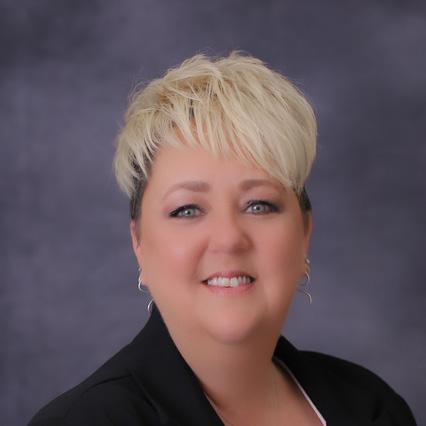
Holly Smith, PCAM Executive Director
As we move into the spring season, I’m proud of the momentum our chapter continues to build and the forward energy shaping CAI-CV in 2026. Together, we are creating experiences that strengthen our profession, deepen relationships, and reinforce the value of education and collaboration across the Coachella Valley.
February brought a standout success with our Educational Lunch Program at Dave & Buster’s, where education and connection came together in a dynamic and engaging environment. Industry professionals, board members, and business partners gathered not only to learn, but to build meaningful relationships — a reminder that when we create spaces for collaboration, our entire community grows stronger.
As highlighted in the President’s message, our chapter continues to see positive membership momentum alongside an exciting calendar of upcoming programs. These achievements reflect the collective dedication of our volunteers, leaders, and members who believe in the mission of education, advocacy, and professional development.
During my first year as Executive Director, I have intentionally embraced innovation and new approaches to engagement. Growth requires thoughtful experimentation, and with that comes the opportunity to evaluate, refine, and improve. Our commitment is not simply to host events, but to deliver experiences that are engaging, impactful, and meaningful for all members. Each initiative moves us forward as we continue shaping the future of our chapter.
We also recognize that ongoing improvements to our website have created some challenges with event registrations and payments. If you encounter any difficulties, please reach out directly to Stacy Atherton at admin@cai-cv.org for assistance. Your participation matters, and we are committed to making the process as seamless as possible while we continue enhancing our systems.
I also encourage a culture of direct and constructive communication. Feedback, ideas, and collaboration are always welcome, and open dialogue strengthens trust while preventing misunderstandings that can arise through indirect conversations.
Much of the work that supports our chapter happens behind the scenes. For Stacy and me, this role extends well beyond traditional working hours — it is truly a labor of love. We remain deeply committed to elevating the member experience and ensuring that our programs meet — and exceed — your expectations.
Thank you for your continued partnership, engagement, and support as we move forward together.
CAI-CV is one of 64 CAI chapters worldwide, representing a network of more than 50,000 professionals dedicated to strengthening community associations. Stay connected with local leaders, industry resources, and chapter news by following CAI-CV on social media and visiting us online. Build relationships, share knowledge, and grow your professional network within our community.
595 LIKES 734 FOLLOWERS
576 POSTS 752 FOLLOWERS
475 CONNECTIONS 527 FOLLOWERS
By John Schuknecht CMCA, AMS
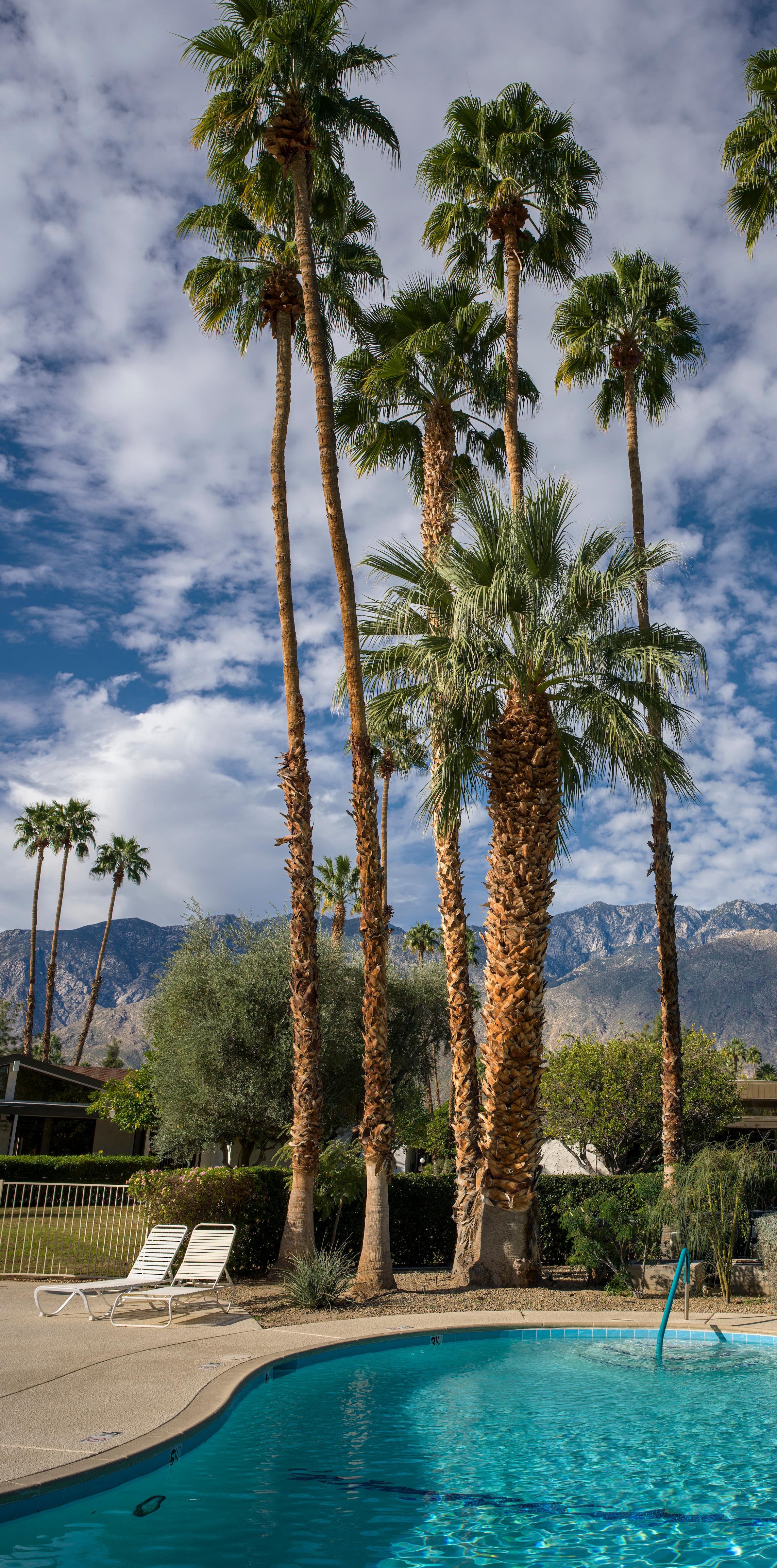
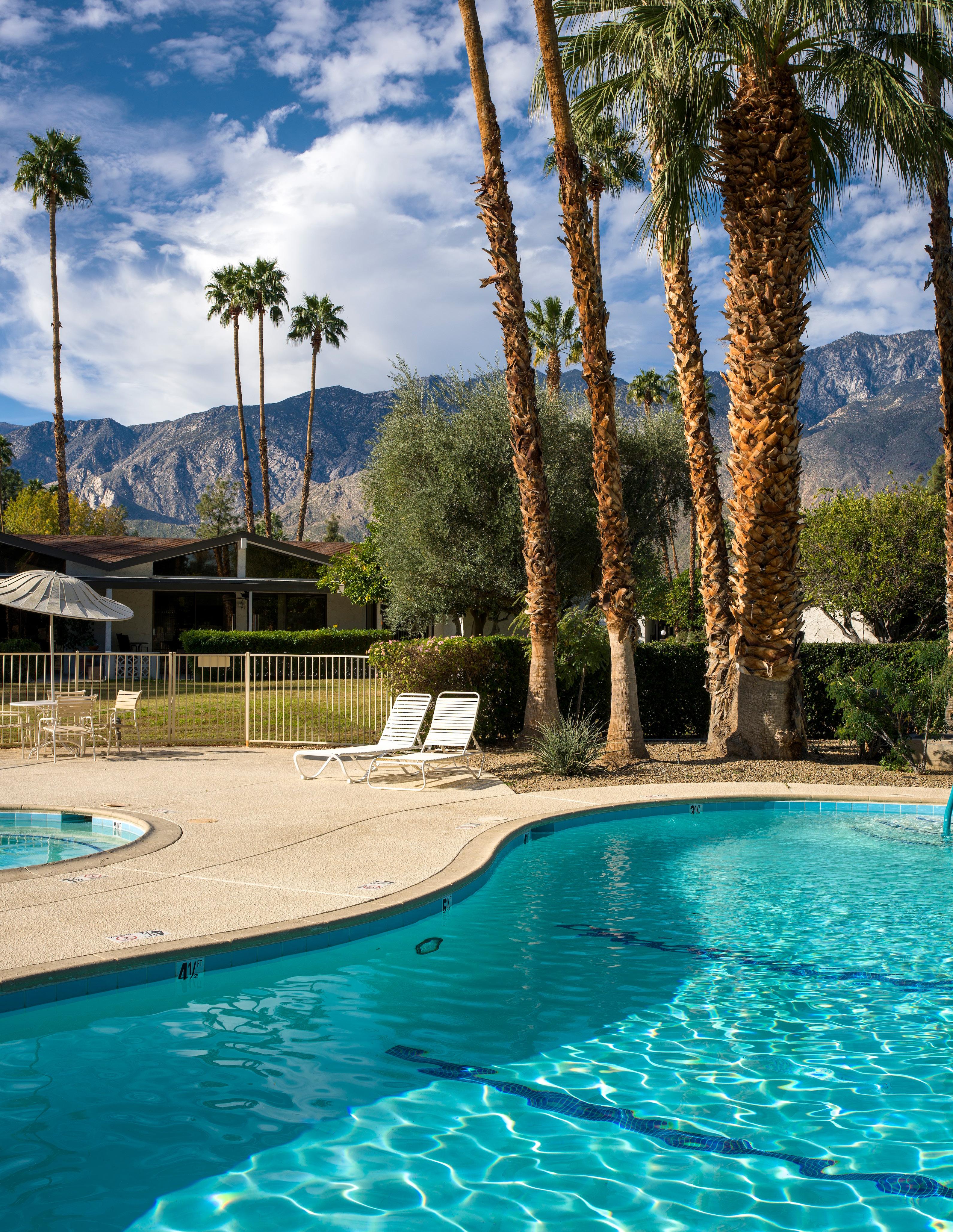
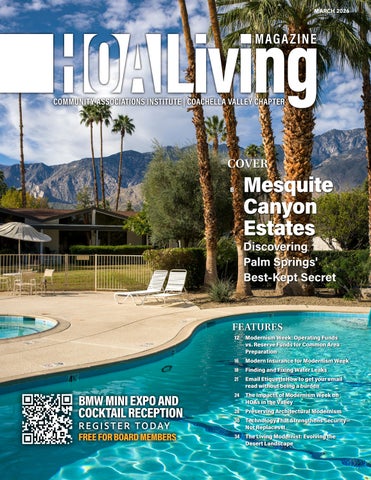
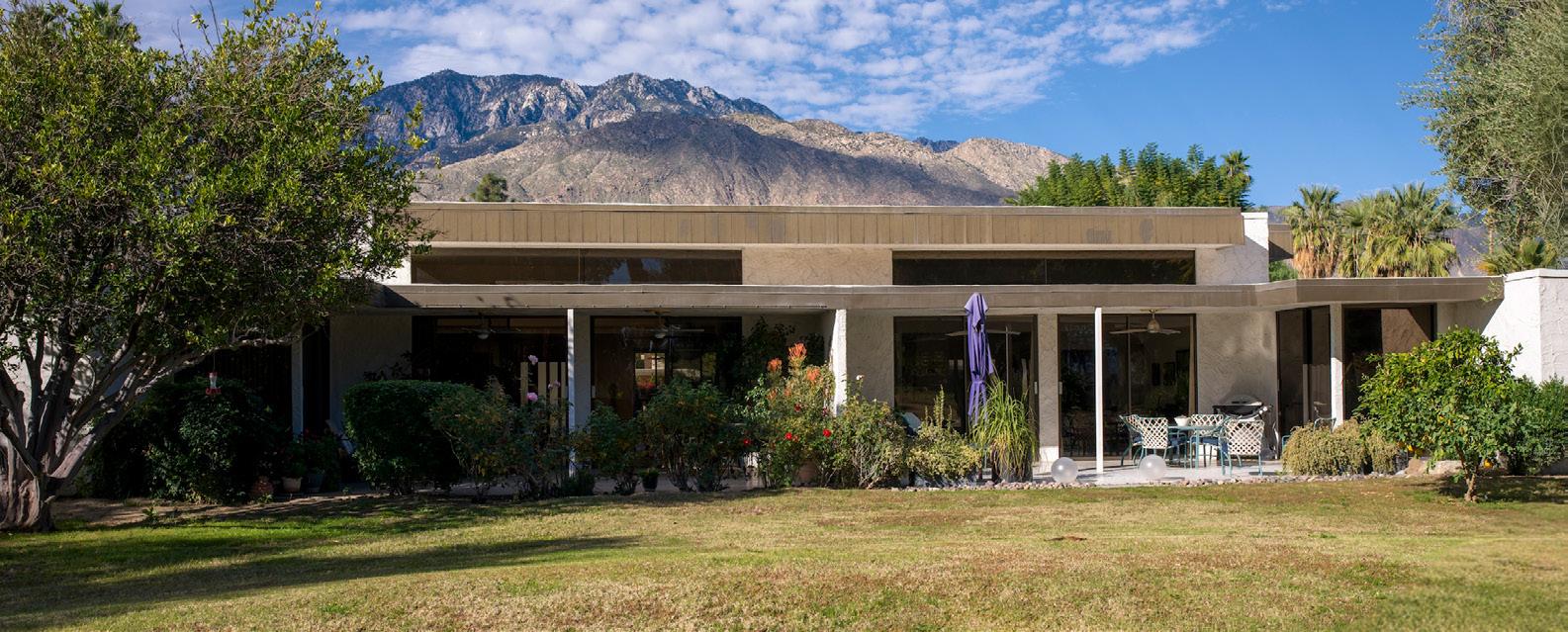
Behind a towering ficus hedge on Mesquite Avenue, between Farrell Drive and Sunrise Way, lies one of Palm Springs' most intriguing residential communities. With just a single entrance revealing its presence, Mesquite Canyon Estates embodies the concept of "hidden in plain sight," a peaceful sanctuary that many longtime residents don't even know exists.
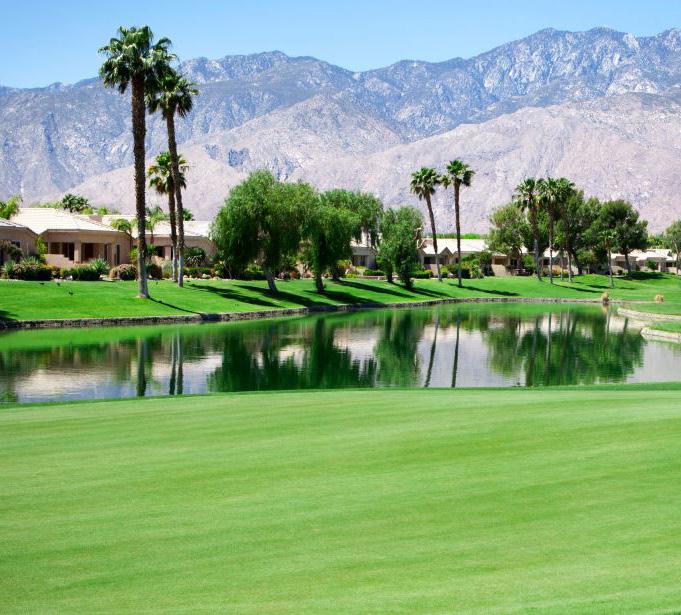
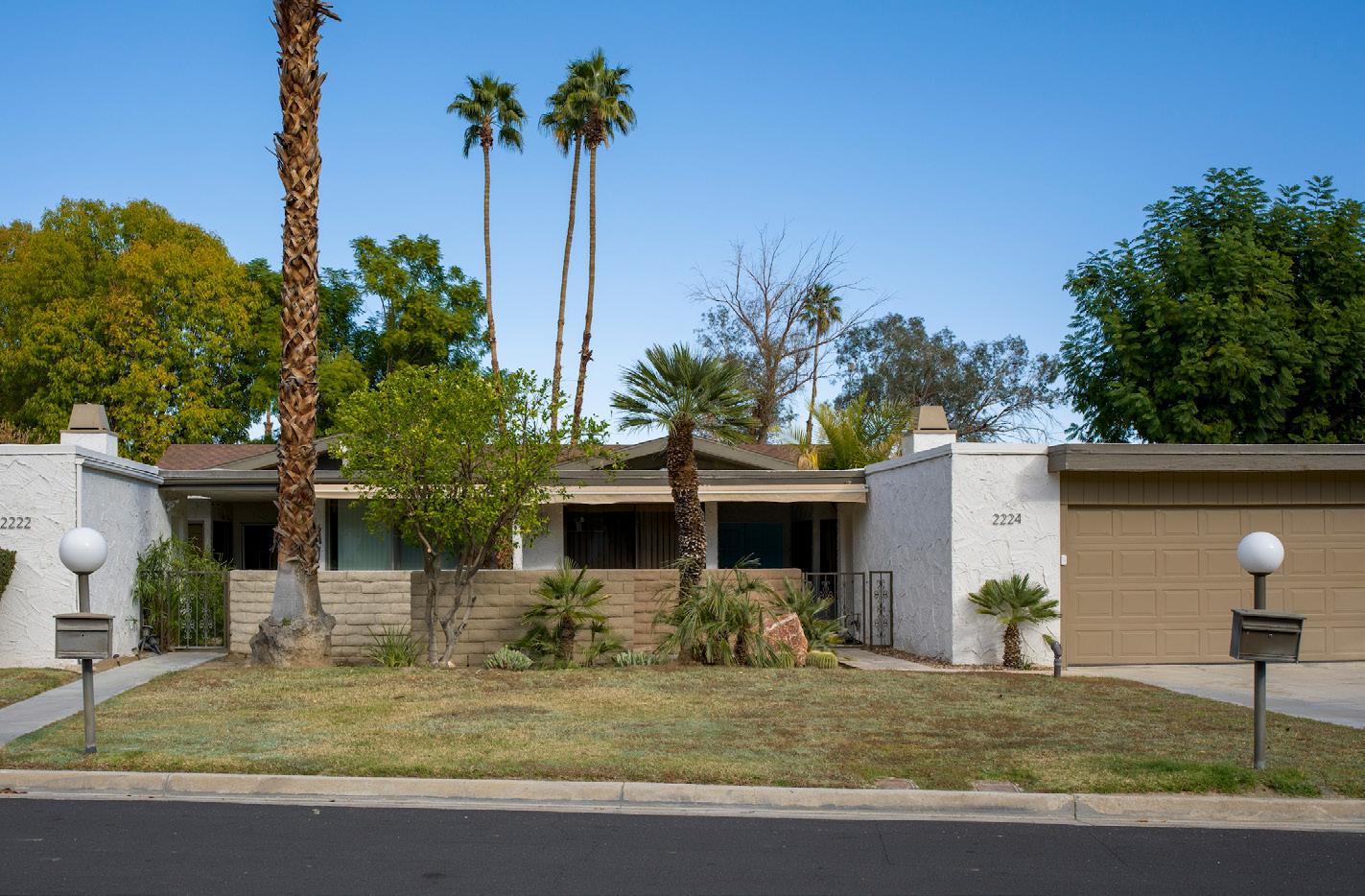
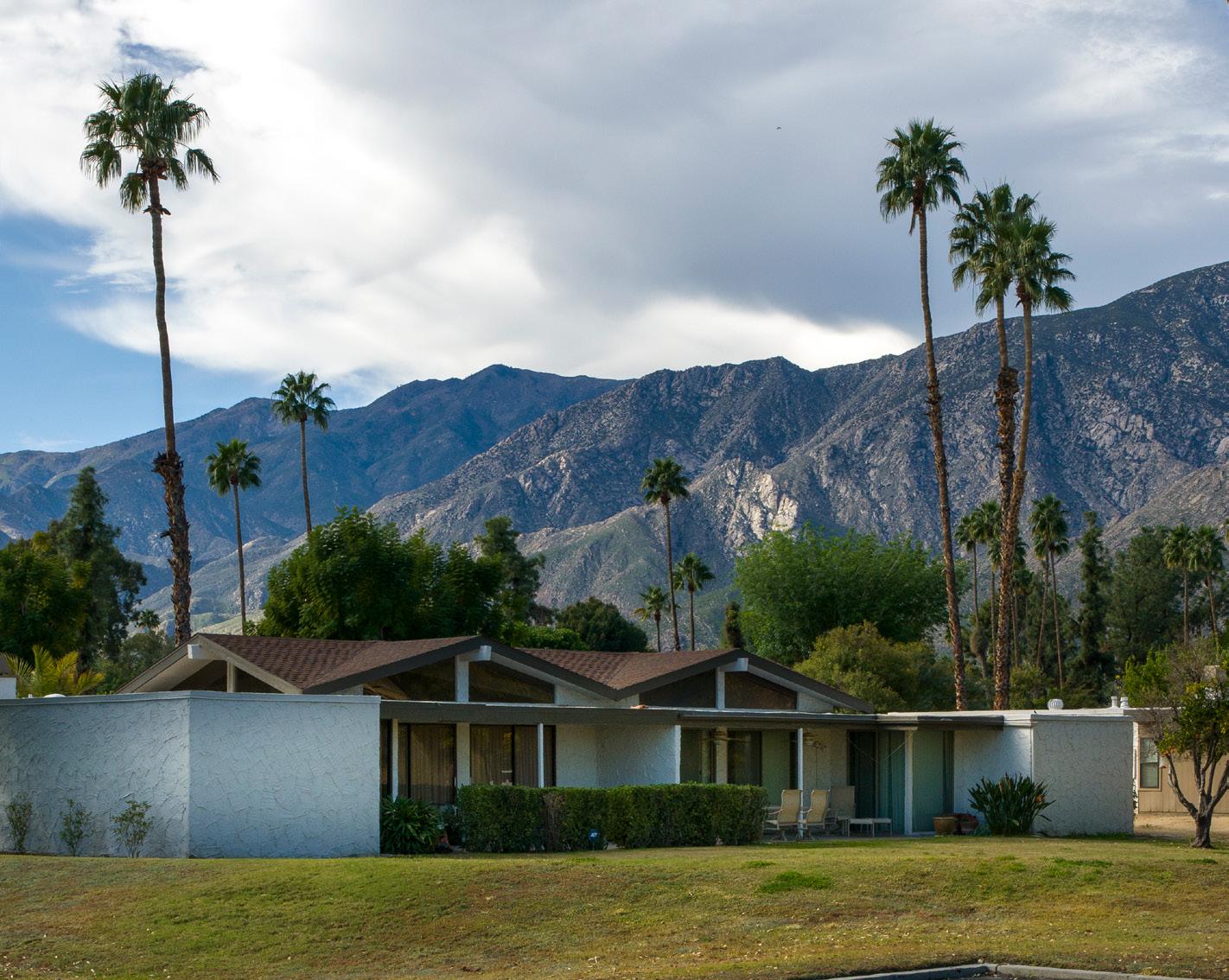
Spanning 16 lush acres with only 40 attached homes, this low-density Association offers an extraordinary ratio of open space to residences. This creates a level of privacy and tranquility increasingly harder to come by in central Palm Springs. Mature trees. Like jacarandas, olives, silk trees, citrus, tamarisks, and palms all provide generous shade throughout the grounds, while the community's position adjacent to the Mesquite Golf Course and Prescott Preserve ensures unobstructed mountain views that take your breath away.
Mesquite Canyon Estates represents the culmination of developer Roy Fey's distinguished career shaping Palm Springs' residential landscape. Constructed in 1978, the community showcases post-mid-century design at its finest, a fitting capstone from the man who introduced luxury condominium living to the desert in the 1960s.
Fey's portfolio in South Palm Springs reads like a who's who of Palm Springs living: Canyon Apartments, Canyon View Estates, Canyon West Estates, and Canyon Vista Estates. Often credited with pioneering the "executive home" concept, Fey drew inspiration from architects William Palmer and Dan Krisel to create spaces emphasizing three core principles: privacy, spaciousness, and seamless indoor-outdoor integration.
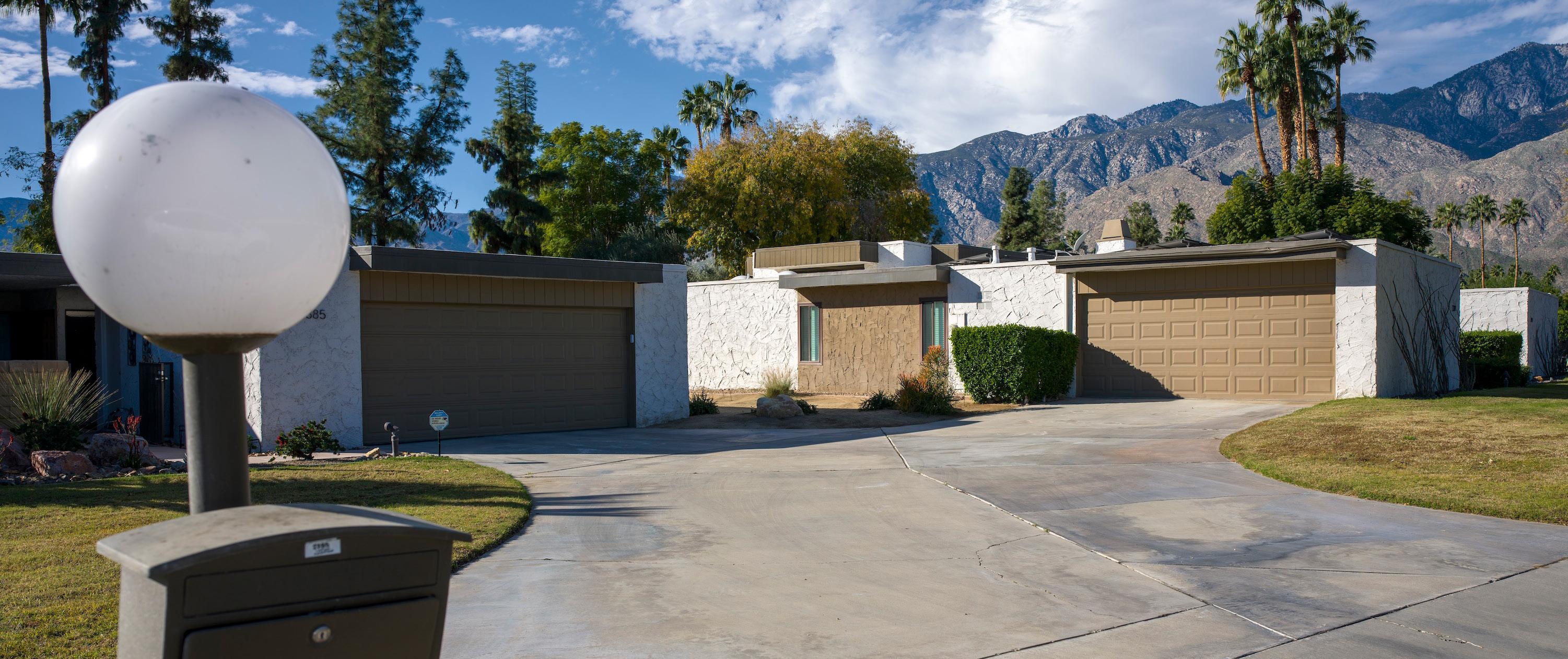
Each of the 40 single-family townhomes sits on fee-simple land (not leased) within a thoughtfully planned unit development. The homes deliver approximately 2,100 square feet of living space, featuring two bedrooms, a den, and two to two-and-a-half bathrooms.
The floor plans reflect the era's sophisticated entertaining lifestyle, with open layouts anchored by generous bar areas, spacious eat-in kitchens, and dual patios, front and back, that blur the boundaries between indoor and outdoor living. Private two-car garages complete each residence.
While the mid-century modern architectural vocabulary remains consistent throughout: clean lines, abundant natural light, and honest materials, subtle variations keep each home distinctive. Different bathroom
"The community's architectural significance hasn't gone unnoticed: Mesquite Canyon Estates has been featured on the prestigious Modernism Week Tour three times, cementing its status as an important example of Palm Springs' rich design heritage."

configurations, carefully placed clerestory windows, and varied rooflines ensure that no two homes feel quite the same.
The community's architectural significance hasn't gone unnoticed: Mesquite Canyon Estates has been featured on the prestigious Modernism Week Tour three times, cementing its status as an important example of Palm Springs' rich design heritage.
The $860 monthly assessment covers an impressive array of common elements across those expansive 16 acres. Residents enjoy three swimming pools and three spas strategically positioned throughout the property, each offering a different perspective on the stunning San Jacinto Mountains. Two tennis
and pickleball courts provide recreation opportunities amid the mature landscaping.
Rather than investing in a clubhouse or gym, the community prioritizes what matters most: meticulously maintained grounds, well-kept roads, and those spectacular common areas that make desert living special. The proximity to hiking and biking trails in the Prescott Preserve and CV Link means outdoor recreation is literally at residents' doorsteps.
Currently self-managed on a shortterm basis, with financial operations handled by CAFS in Rancho Mirage, Mesquite Canyon Estates benefits from a dedicated board and ad hoc committees that form as needs arise. The collaboration with CAI-CV business partners ensures professional landscaping and maintenance services keep the community looking its best.
As one board member eloquently puts it: "We didn't know this peaceful community was here. It's hidden in plain sight." That sentiment captures the essence of what makes this enclave special, discovering something extraordinary where you least expect it.
Positioned in the heart of South Palm Springs, residents enjoy easy access to shopping, restaurants, and Palm Springs International Airport. Downtown
"As one board member eloquently puts it: "We didn't know this peaceful community was here. It's hidden in plain sight."
Palm Springs' vibrant dining and entertainment scene is minutes away, while the surrounding desert's natural beauty offers endless opportunities for exploration.
Current home prices ranging from approximately $700,000 to $1.2 million reflect the market's recognition of this community's unique value proposition: mid-century architectural pedigree, generous living spaces, resort-style amenities, and that most precious desert commodity, peace and privacy.
For those seeking a blend of architectural significance, thoughtful design, and serene desert living, Mesquite Canyon Estates delivers on every level. It's proof that sometimes the best discoveries are the ones hiding in plain sight.
Lesley M. Cline, Treasurer Email: mce.lesleyc@gmail.com Phone: (661) 742-5921 Website: mesquitecanyonestates.com
John Schuknecht CMCA, AMS is a former community manager who currently works as an Account Executive for LaBarre/Oksnee Insurance. John can be reached at 657-207-4789 or JohnS@hoa-insurance.com















By Sean Erik Andersen, RS
Modernism Week highlights communities and can also put them under a microscope.
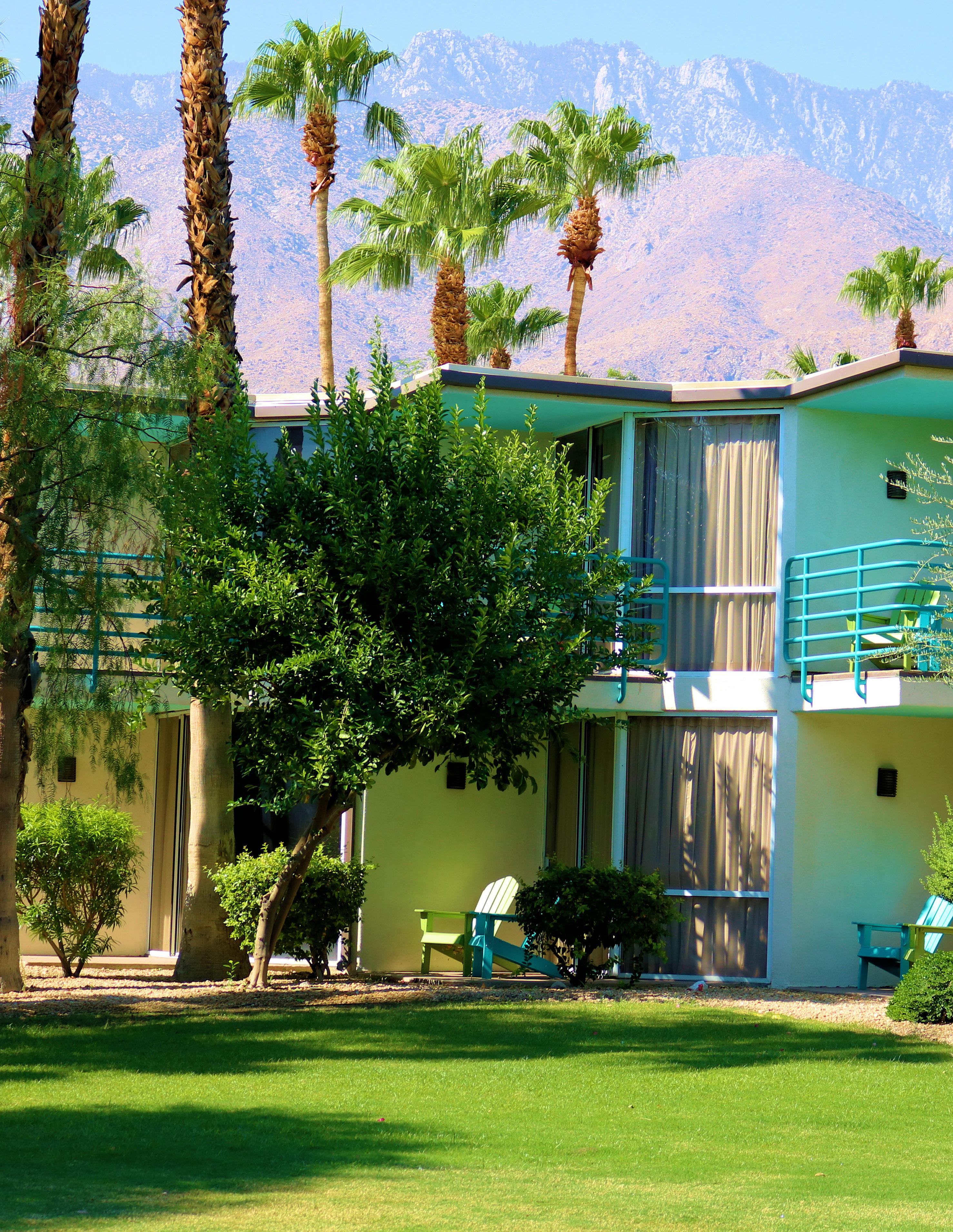
Unlike many special events, the audience Modernism Week attracts is generally highly visual, design literate, and detail-oriented. Architects, preservationists, real estate professionals, designers, and media walk neighborhoods slowly and deliberately. They look closely. They photograph freely. And they notice everything.
As professionals working with Community Associations, this leads to the question: How should an Association use its Operating Funds and Reserve Funds when preparing common areas for Modernism Week? This becomes especially important when addressing deferred maintenance.
Using the wrong funding source can undermine the strength of the Reserve fund, create audit issues, and expose the board to owner challenges.
During Modernism week, Operating Funds should be used for routine maintenance, appearance-based preparation, deferred operating maintenance, and short-term enhancements. If the work restores appearance or functionality without replacing a reserve component, it belongs in the operating budget.
"UNLIKE MANY SPECIAL EVENTS, THE AUDIENCE MODERNISM WEEK ATTRACTS IS GENERALLY HIGHLY VISUAL, DESIGN LITERATE, AND DETAIL ORIENTED."
Common expenses typically funded through Operating Funds include:
• Landscape refresh and enhanced maintenance
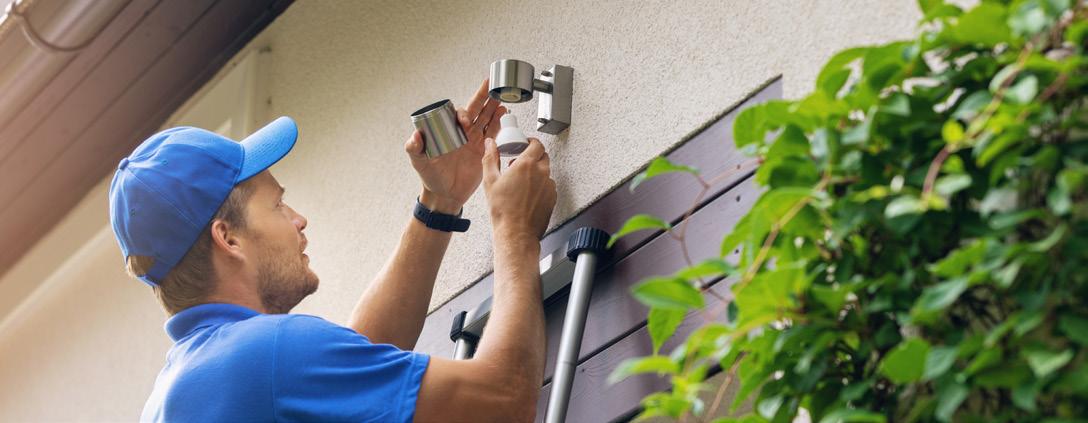
• Pressure washing and spot painting
• Lighting repairs, such as bulbs and timers
• Signage cleaning and repainting
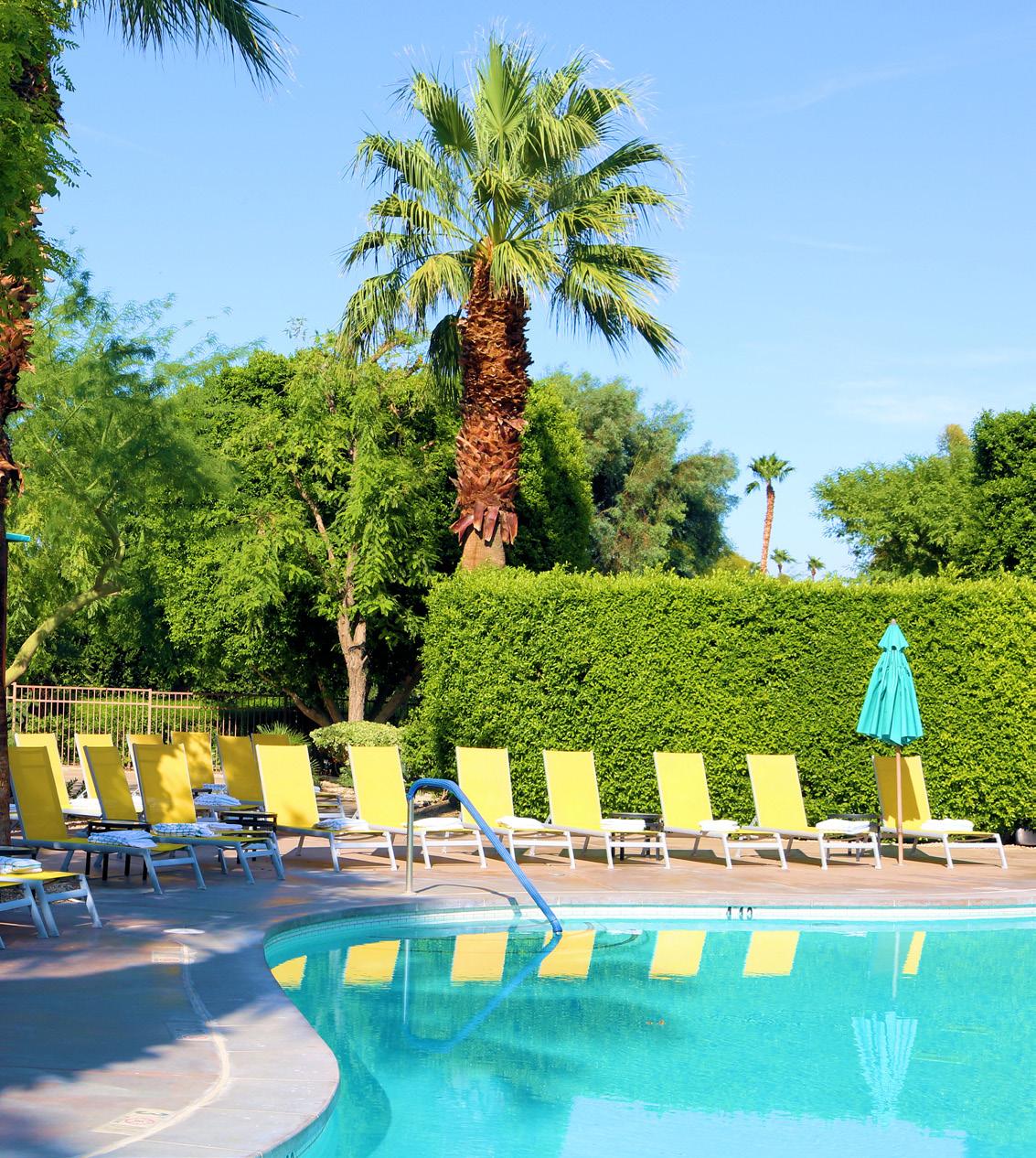
• Pool, clubhouse, and hardscape touch-ups
Reserve Funds should only be used if a component passes the National Reserve Study Standards three-part test. To be a Reserve Component, the project needs to be:
• The Association’s Obligation
• Reasonably anticipated
• A high cost to the Association


"RESERVE FUNDS SHOULD NOT BE USED SIMPLY BECAUSE AN EVENT IS APPROACHING BUT STRATEGIC PLANNING WITH COMPONENTS CAN HELP ELEVATE THE APPEARANCE OF THE COMMUNITY DURING MODERNISM WEEK."
That will ensure the funds are used for major component replacement, lifecycle-based expenditures, and projects specifically identified in the reserve study. Reserve funds should not be used simply because an event is approaching; strategic planning with components can help elevate the community's appearance during Modernism Week. If the Association has been planning a Monument refurbishment, doing that project in conjunction with landscape replacement would be an excellent use of Reserve Funds that would elevate the community's look for Modernism Week.
Handled correctly, Modernism Week preparation enhances the community image without compromising long-term financial health. Strategic use of funds will elevate the community's appearance during Modernism Week and improve its quality of life.

Sean Andersen is president of Association Reserves Coachella Valley. He has completed over 4,000 Reserve Studies for properties ranging from small community associations to large master planned communities. He earned the Community Association Institute’s (CAI) Reserve Specialist (RS) designation and has the distinction of being RS #68. Sean can be reached at (909) 906-1025 or by email at sandersen@reservestudy.com, www.reservestudy.com

By Felicia Bustos

As Modernism Week shines a spotlight on the Coachella Valley’s rich history, innovation, and sense of place, it’s the perfect time to reintroduce someone who embodies those same values: Nayeli Quintero.
Nayeli, a Community Manager with Vintage Group, has been part of the CAI-CV community for some time now, and her presence continues to make a meaningful impact. With more than a decade of industry experience, she brings both professionalism and heart to every community she serves.
Born and raised in the Coachella Valley, Nayeli has a deep-rooted connection to the region. A proud girl mom, she values family, friendship, and the relationships that turn neighborhoods into true communities. For her, community management goes far beyond budgets and governing documents; it’s about building trust, encouraging collaboration, and creating environments where residents feel supported and heard.
Since joining Vintage Group, Nayeli describes her experience as truly transformative. She credits her growth and success to a strong, value-driven team and the meaningful relationships she has built with homeowners, residents,
and industry peers. “Working alongside people who share your commitment to community makes all the difference,” she shares. “That shared vision is what allows communities to thrive.”
Within CAI-CV, Nayeli continues to expand her involvement and connections. While she remains focused on learning, growing, and engaging with fellow members, she has expressed particular interest in the Golf Committee, drawn to its emphasis on networking, collaboration, and relationship-building.
Nayeli’s approach reflects CAI-CV's core mission: strengthening communities through thoughtful leadership, local insight, and genuine care. Her roots in the Coachella Valley, combined with her industry expertise and enthusiasm, make her a valued and respected member of the chapter.
As we celebrate Modernism Week this month and the enduring spirit of the Coachella Valley, we also honor professionals like Nayeli Quintero, whose work helps shape strong, connected communities every day.
For more information or to connect with Nayeli, email her at nayeli@vintagegroupre.com.
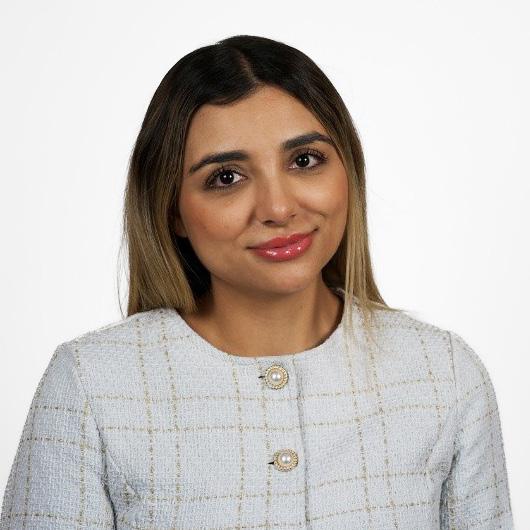
“Nayeli’s approach reflects the core mission of CAI-CV: strengthening communities through thoughtful leadership, local insight, and genuine care.”

Felicia Bustos is the Business and Development Liaison for WICR Inc. Waterproofing and Construction, serving the Coachella Valley and Inland Empire areas. She works closely with homeowners, HOAs, and property managers to ensure properties are ready for every season. Contact Felicia at Marketing@wicr.net or call 760-835-5674.
By John Schuknecht, CMCA, AMS
Every year, Palm Spring’s Modernism Week brings a lot of energy to the Coachella Valley. Architecture tours, cocktail parties, private home viewings, fundraisers, and social events can be found all over the area. Many of these activities take place on association property, using clubhouses, courtyards, pool decks, and other common areas.
For associations, Modernism Week is a great thing. It brings people together, highlights the character of the community, and gives residents a chance to showcase what makes their neighborhood special. From an insurance standpoint, however, it is also a time when risk quietly increases, and that risk is not always obvious.
Most HOA insurance policies are designed to cover normal, day-today association operations. They are not written to cover special events,

especially those tied to a larger organized festival. Once an association hosts or allows an event that includes outside guests, vendors, alcohol, or ticketed access, coverage can become unclear very quickly.
"For associations, Modernism Week is a great thing. It brings people together, highlights the character of the community, and gives residents a chance to showcase what makes their neighborhood special."
This is where many boards get caught off guard. An event may feel casual or routine, but from an insurance carrier’s perspective, it is no longer business as usual.
Think about how Modernism Week events typically work. Nonresidents are walking through common areas, vendors are setting up equipment, volunteers may be helping, and alcohol is often present at receptions or gatherings. Add higher foot traffic and multiple events over several days, and the chance of something going wrong increases. It does not have to be a major incident.
"A guest could trip and fall, a vendor could accidentally damage association property, or someone could get hurt during an event."
A guest could trip and fall, a vendor could accidentally damage association property, or someone could get hurt during an event. If that happens and the association does not have the proper coverage in place, the claim may not be covered under the HOA’s standard insurance policy. That can leave the association responsible for medical costs, legal defense expenses, repairs, or settlements. Ultimately, those costs can impact the association’s budget and the finances of the homeowners themselves.
This is where special event insurance becomes important.
A special event policy is designed specifically to cover these types of situations. It can provide coverage for injuries, property damage, legal defense costs, and vendor related claims that occur during the event. If alcohol is involved, liquor liability coverage can typically be added. These policies are usually written for a specific date or short period and are often very affordable compared to the potential exposure.
The good news is that Modernism Week events are planned well in advance. That gives a board of directors plenty of time to review what events are being hosted or allowed, who will be attending, and whether vendors or alcohol will be involved. With that information, an insurance professional can quickly confirm whether a special event policy is needed.

Modernism Week should be fun and memorable for the right reasons. Special event insurance is not about expecting problems. It is about recognizing that during high profile events, an association’s risk changes for a short period of time. Taking a simple and proactive step can help ensure the focus stays on the architecture, design, and community, not on an unexpected insurance issue after the event is over.
John Schuknecht CMCA, AMS is a former community manager who currently works as an Account Executive for LaBarre/Oksnee Insurance. John can be reached at 657-207-4789 or JohnS@ hoa-insurance.com
By Coachella Valley Water District

In celebration of World Plumbing Day on March 11, 2026, and the U.S. Environmental Protection Agency’s (EPA) Fix a Leak Week from March 16–22, CVWD invites you to help conserve water by checking your household plumbing fixtures and irrigation systems for leaks.
Every year, nearly 1 trillion gallons of water are wasted in the U.S. due to household leaks, according to the EPA.
Whether inside or outside your home, water leaks can cause problems and serious damage to your property. When leaky pipes go unnoticed or are left untreated, they can cause flooding and mold, produce poor water quality, warp walls, and deteriorate the foundation.
Even the smallest of leaks can have a significant impact on your water bill and local water conservation efforts.
One way to determine if you have a water leak is to review your water bill and check if it’s higher than usual. If this is the case, you can inspect your property for pooling water or drips. The most common leaks in the home are worn toilet flappers, dripping faucets, and other leaking valves, which are often easy to fix and require only a few tools.
ANOTHER WAY TO CHECK FOR LEAKS IS THROUGH YOUR WATER METER.
HERE IS HOW:
• First, turn off everything that uses water indoors and outdoors, including all appliances, faucets, hoses, and sprinklers.
• Then, locate your water meter to check for signs of usage. Meter readers are usually found near your residence's roadway curb or sidewalk.
• Look for a small colored dial on the meter face. If this is turning, you likely have a water leak somewhere in your home or yard.
Once a leak is identified, it is important to fix it immediately. Additionally, it is recommended to check for leaks regularly to help prevent future issues.
To learn more, visit cvwd.org/askCVWD, cvwd.org/Tips-for-Residents, worldplumbing.org, or epa.gov/watersense/fix-leak-week.

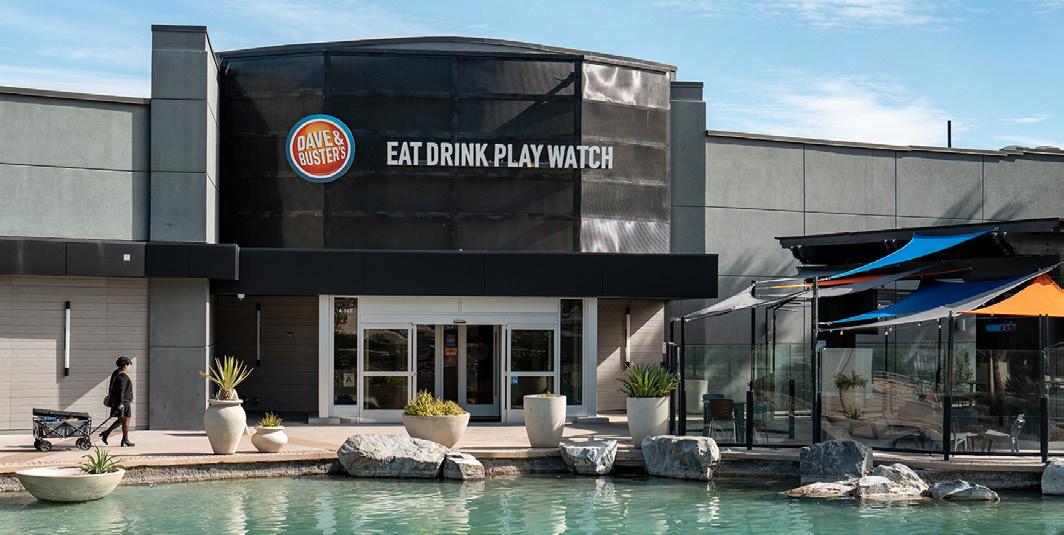
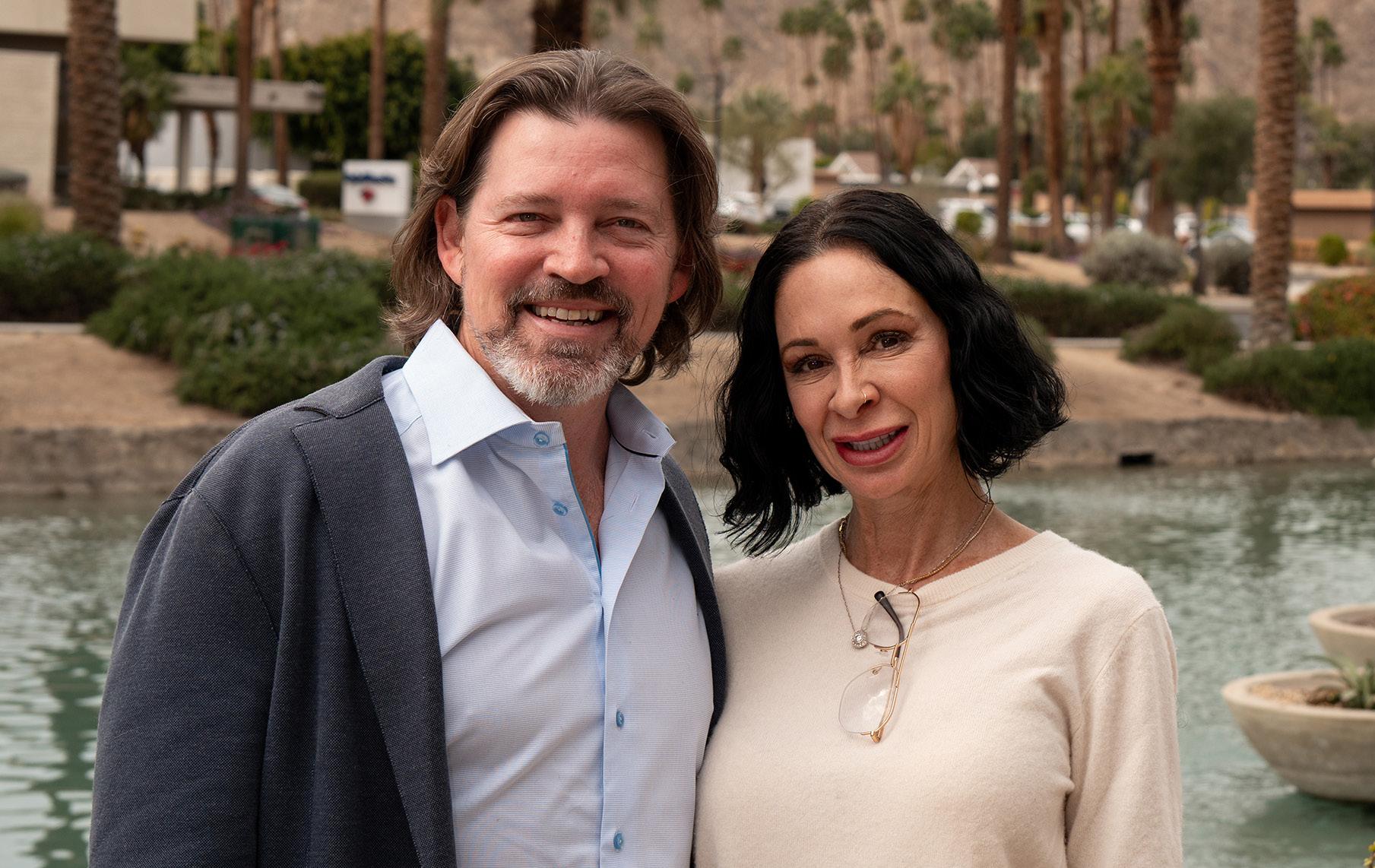
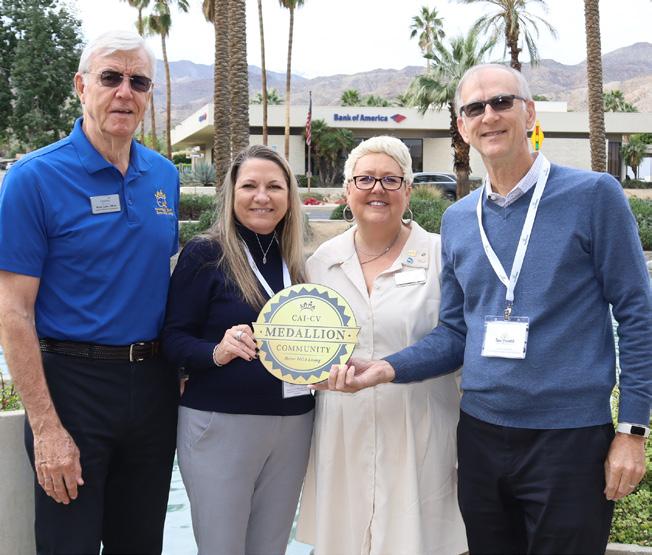
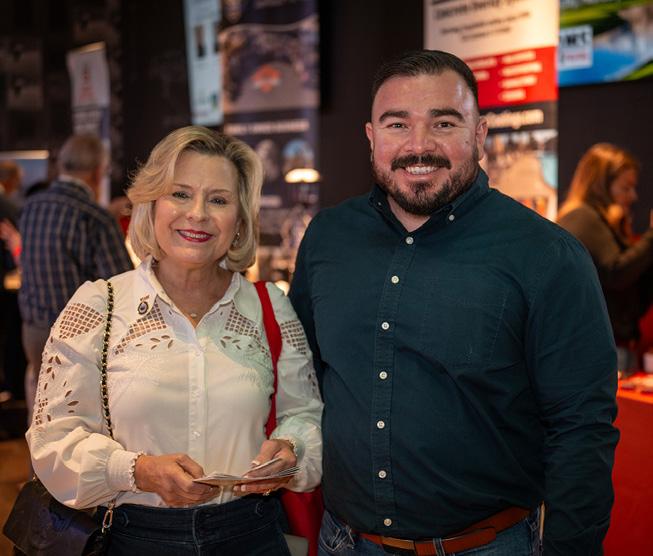
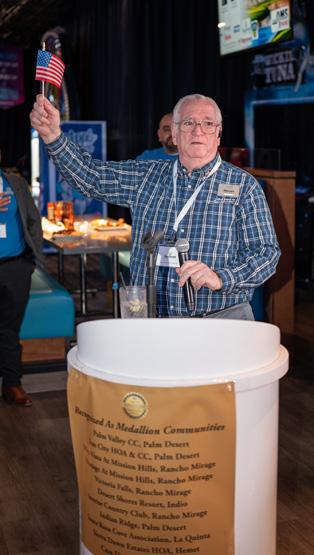
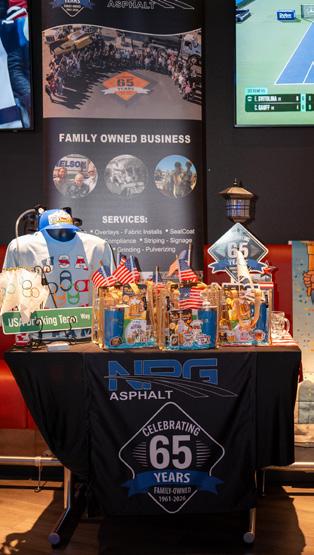
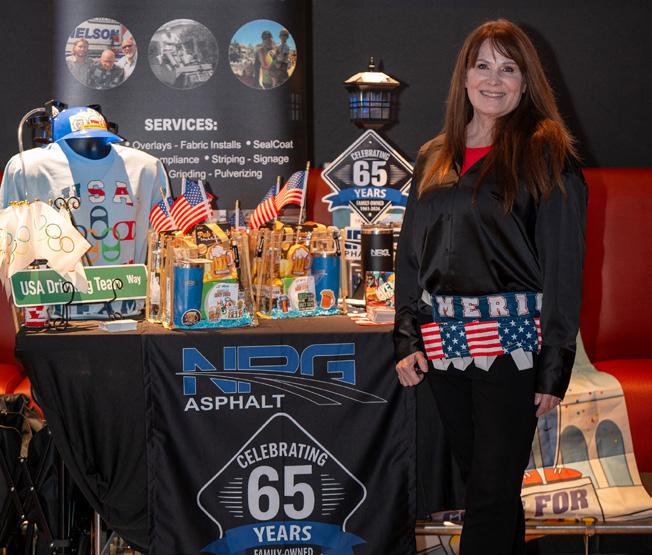
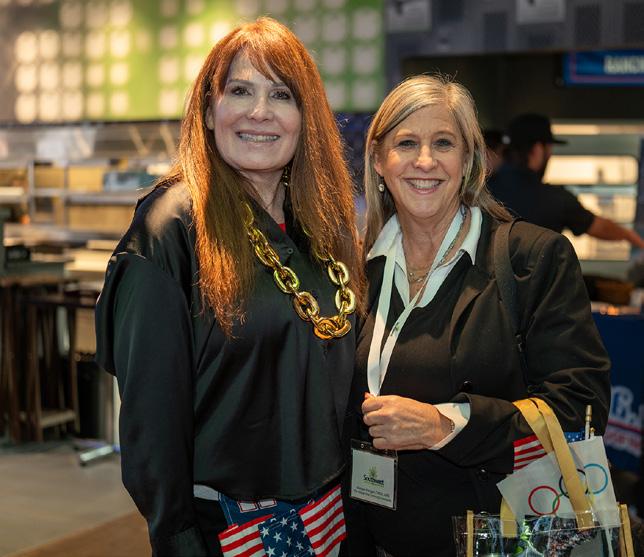
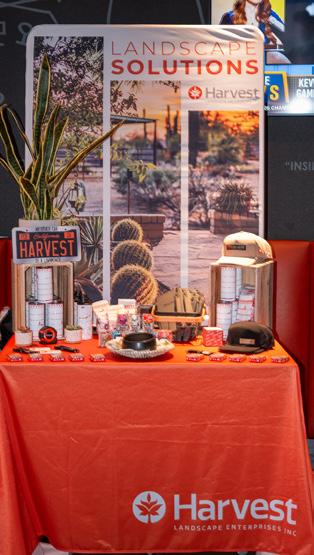
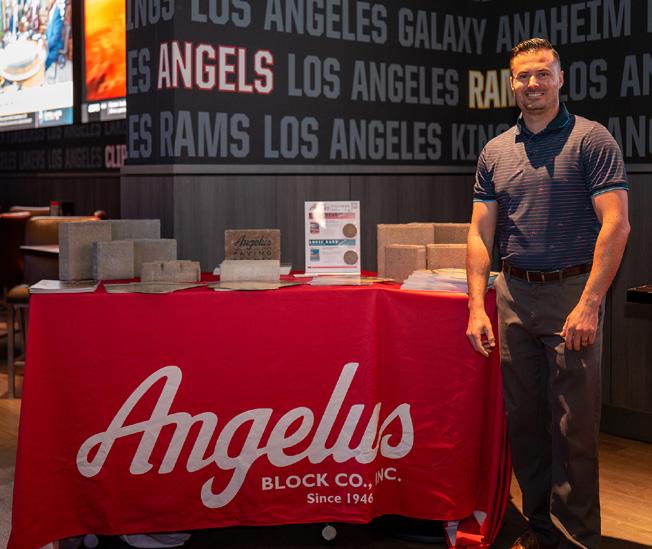
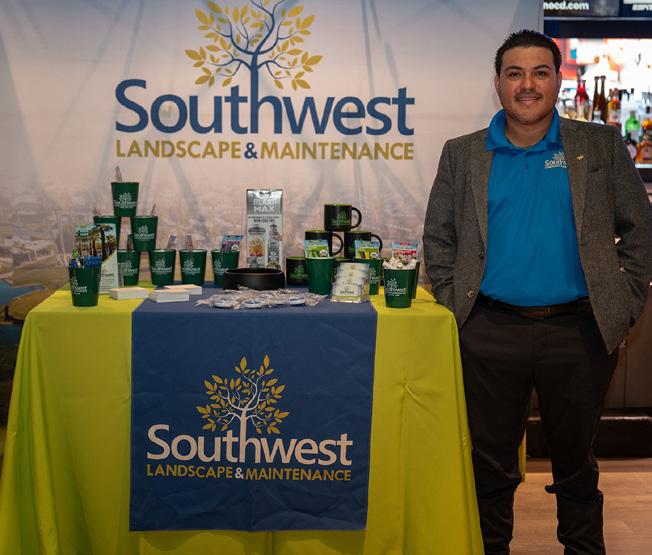
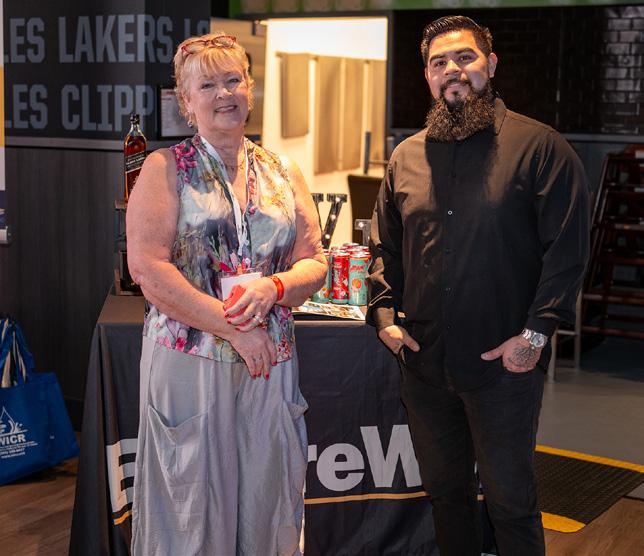
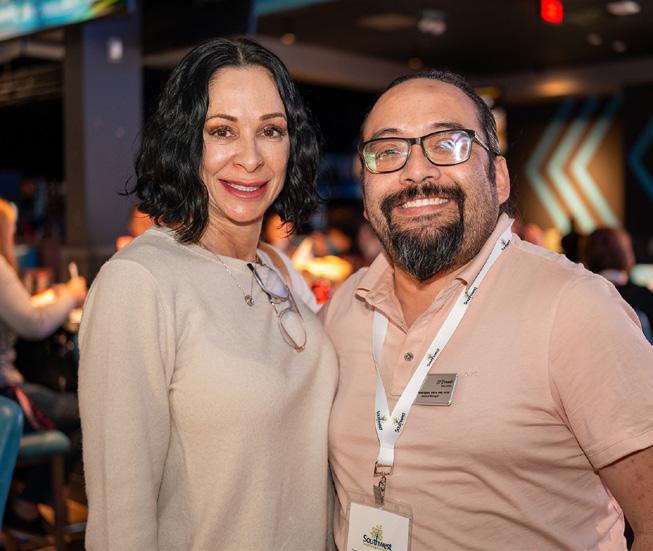
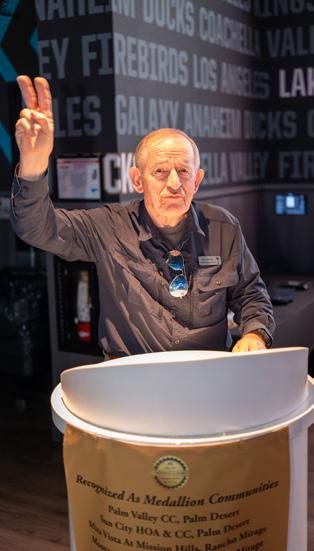
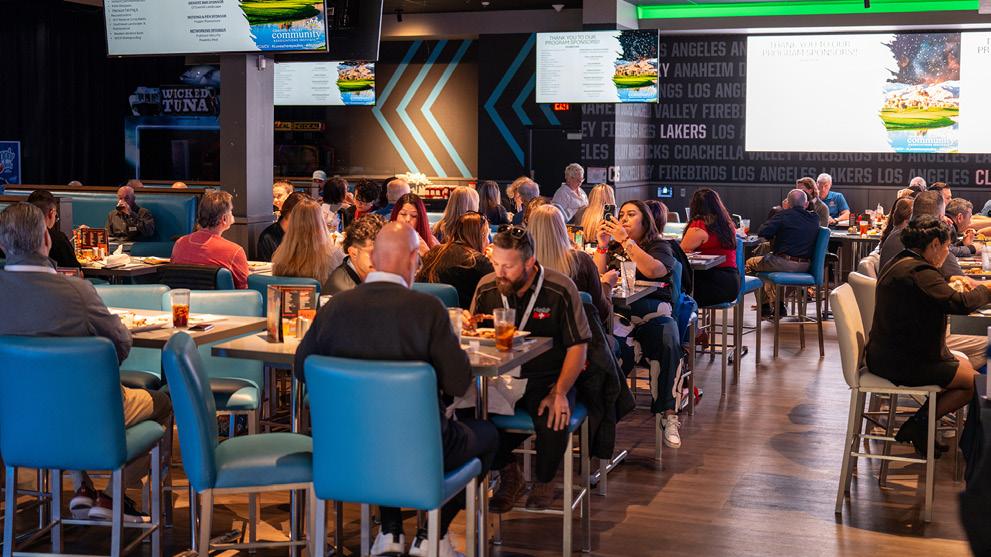
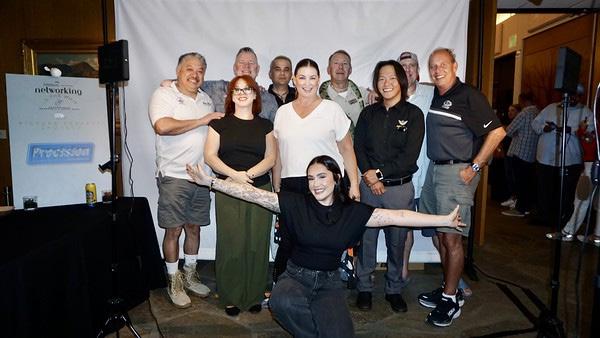
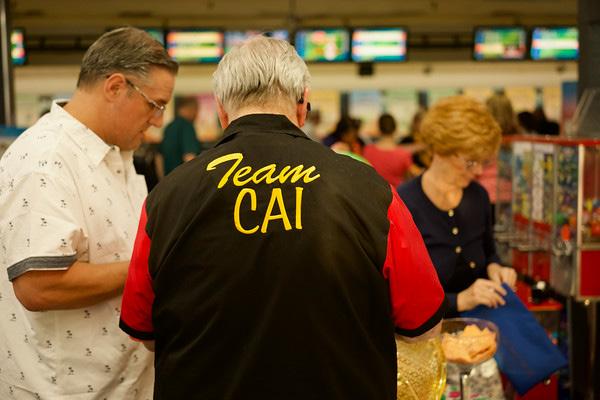
CAI-CV members recently gathered for a lively and engaging educational lunch program at Dave & Buster’s, where great food and great conversation set the tone for the afternoon. The private event space created an energetic yet comfortable environment for members to connect, learn, and enjoy a unique program format.
The presentation featured timely industry updates from Lisa Tashjian of Beaumont Tashjian and Ryan Gessel of Cline Insurance. Together, they provided valuable insight into emerging legal developments and evolving insurance trends affecting community associations. Their practical guidance and real-world examples sparked meaningful discussion among board members, managers, and business partners alike.
Attendees enjoyed a delicious lunch while gaining actionable takeaways designed to help communities stay proactive and informed. The setting encouraged thoughtful questions and collaborative dialogue, reinforcing CAI-CV’s commitment to delivering education that is both relevant and engaging.
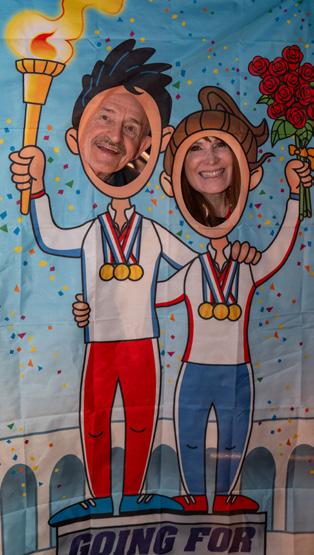
Following the program, members had the opportunity to stay, network, and enjoy the games in a relaxed, social atmosphere. Whether connecting over conversation or enjoying a little friendly competition, the afternoon reflected what CAI-CV does best — bringing professionals together to strengthen relationships and elevate community leadership across the Coachella Valley.









THANK YOU!
Guest Speakers
Lisa Tashjian, Esq
Beaumont Tashjian
Ryan Gessel
Cline Insurance
Trade Show Booth
Exhibitors
Accurate Termite and Pest Control
AMS Paving, Inc.
Angelus Block
Beaumont Tashjian
Balcony 1
C.L. Sigler & Associates
Cooper Coatings, Inc.
EmpireWorks Reconstruction and Painting
Golden Alliance Insurance
Harvest Landscape, Inc.
Hotwire Communications
NPG Asphalt
Patio Shoppers
Precision Painting & Reconstruction
SCT Reserve Consultants
Southwest Landscape & Maintenance
Western Alliance Bank
WICR Waterproofing
Lunch Name Badge and Lanyard Sponsor
Southwest Landscape & Maintenance
CLAC Upgrade Sponsor
SCT Reserves
Game Cards
Tinnelly Law
Drink Sponsor
Fiore Racobs and Powers
Dessert Sponsor
O’Connell Landscape
Notepad & Pen Sponsor
Poppin Promotions
Networking Sponsors
Powerful Pest
Platinum Security


How to get your email read without being a burden
Favorites
Inbox 3829
Archive 10
Drafts 59 Sent
Deleted 107
From: By Steven Shuey, PCAM, CCAM
To: CAI-CV
Members
Cc Bcc
Subject: Email Etiquette Imprtance

Steven Shuey is a retired community association consultant from Personalized Property Management in the Coachella Valley. He still serves on several committees for the CAI-CV chapter. He is a past chapter board member and maintains his designation as a certified professional community association manager (PCAM). He serves on the National Faculty of CAI and is a past board member of the APCM. He may be contacted at IslandMgr@aol.com.
Everyone receives lots of email communication. For some of us, it is far too many (I get well over 100 every day). Because of the overwhelming volume of email, most folks I speak to tell me they scan the inbox and pick out what they deem important. One question is: How can my email be seen as important enough to get opened?
When I look at my inbox list of communications, I want to know who it is from and what the subject matter is. Therefore, when sending an email:
• Make sure your name (the name identifying who it is from) is clear.
• Make sure the Subject line accurately reflects the issue in the body of the message.
• If you are changing the subject, start a fresh email or update the subject line for clarity. If you leave it blank, your message will likely go unread.
• Do not “flag as important” unless it truly is urgent. (I choose to ignore the flag because too many senders use it indiscriminately.)
Knowing when and how to reply to an email is important. Please do not burden the recipient with a response if it is not needed, and do not expect a response from anyone other than the person it is specifically addressed to. The three address boxes are “To, cc (carbon copy), and bcc (blind carbon copy). These come from the days before email, when folks had typewriters (if you don’t know what that is, ask someone over 50).
• Use the “To” box for the email address of those expected to respond. If you receive something, you are expected to respond if needed.
• Use the “cc” box for the email address of those who merely need to be aware (no response expected).
If you receive an email with your address in the cc box, you don’t need to respond and likely shouldn't.
• Use the “bcc” box for the email address of those who will not receive a response when a sender uses “Reply to All,” and no one else needs to know it was sent to them. Be aware that a person receiving an email in the “bcc” box can still respond; therefore, if you intend it to be sent confidentially, be sure they know how to use email properly, or send it in a separate message.
• Do not use “Reply to All” unless it is critical that every addressee (To and cc) absolutely needs to see the response.
• When replying to the sender with a simple “OK” or “Thank you”, please be courteous and recognize that no one else needs to see the response.
If we all follow a protocol like the one above, life with email could actually get better. Share a protocol like this with your staff and friends. You may find that they appreciate it.
By Chris Sigler, B.S.C.E., CDT
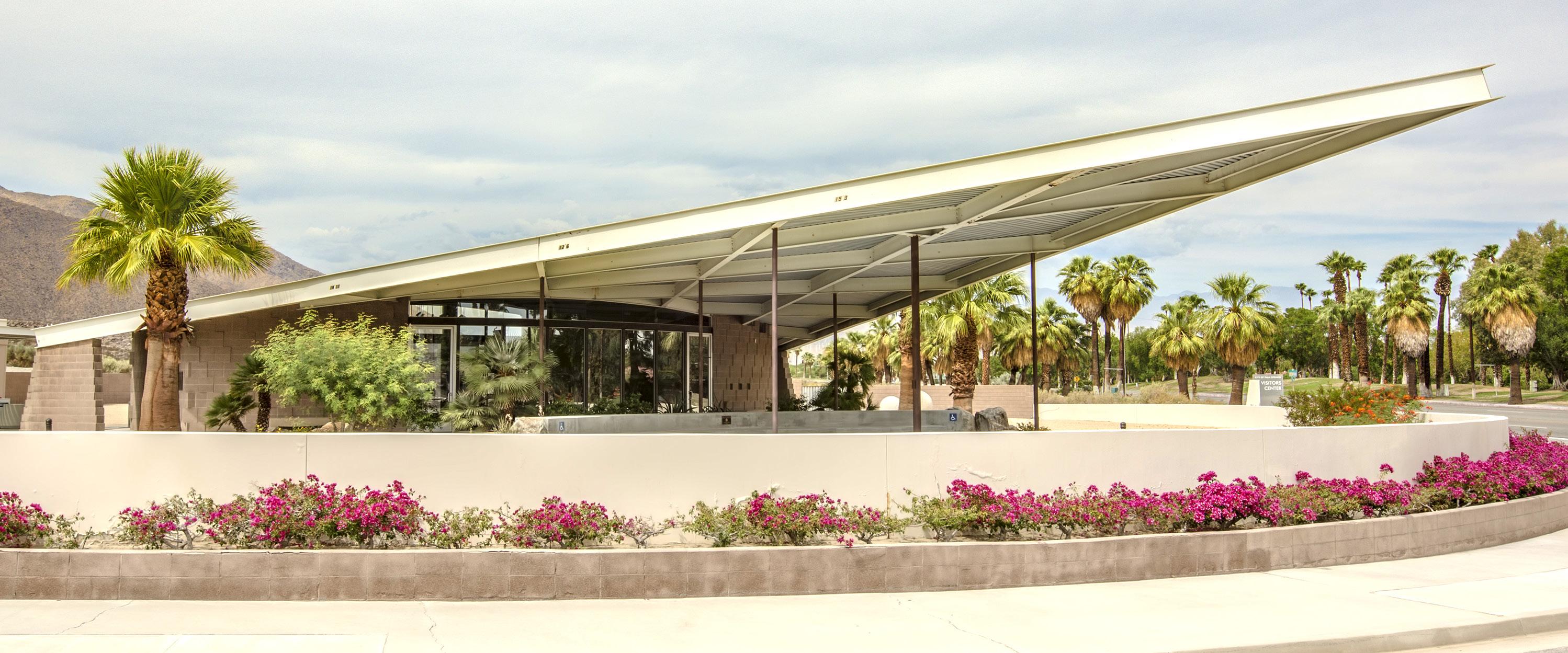
Each February, the Coachella Valley becomes a hub of design, culture, and community with Modernism Week — a multi-day celebration of midcentury architecture, design, art, and lifestyle. While the event draws thousands of visitors and brings significant cultural attention to the region, it also has direct and indirect effects on daily life within local Homeowners Association (HOA) complexes.
A number of our Coachella Valley communities participate in Modernism Week, showcasing their homes and the history of mid-century architecture and style, and others simply enjoy the local
history and the uniqueness of our area. Historical significance is often recognized through historical listings with our local City Planning Departments, which come with architectural restrictions and rules that must be followed and approved by the Planning Departments when renovations are permitted and performed.
Modernism Week is a festival centered on mid-20th-century design and architecture, particularly the iconic midcentury modern style deeply rooted in Palm Springs and the greater
Coachella Valley. The event typically features:
• Architectural home tours (many historic),
• Lectures and panel discussions,
• Design exhibitions and marketplaces,
• Walking tours and social events,
• Cultural installations and community programming.
The festival attracts architecture enthusiasts, design professionals, vacationers, media, and tourists from around the world.
Modernism Week has impacts –mostly positive ones, with a few minor inconveniences as well. Some of the positives of this celebratory week:
Property Exposure and Real Estate Interest
Modernism Week shines a spotlight on the area's architectural heritage — and this can have positive real estate outcomes. A few examples include:
overall cultural atmosphere, hosting informal gatherings or participating in local design talks.
Economic Boost for Local Services
There are various types of economic stimulus from Modernism Week – in some cases, directly for residents and
"Even
that should be considered. To ensure a smooth experience for residents, HOAs might need to consider additional Communications and planning related to traffic and parking. Additional signage to inform residents of these impacts is advisable to ensure a smooth, enjoyable experience.
complexes not officially included in tours may partake in the overall cultural atmosphere, hosting informal gatherings or participating in local design talks."
• Increased interest from buyers who appreciate midcentury architecture,
• Higher visibility for properties within or near featured tour routes,
• Potential uptick in property values driven by broader cultural prestige associated with Modernism.
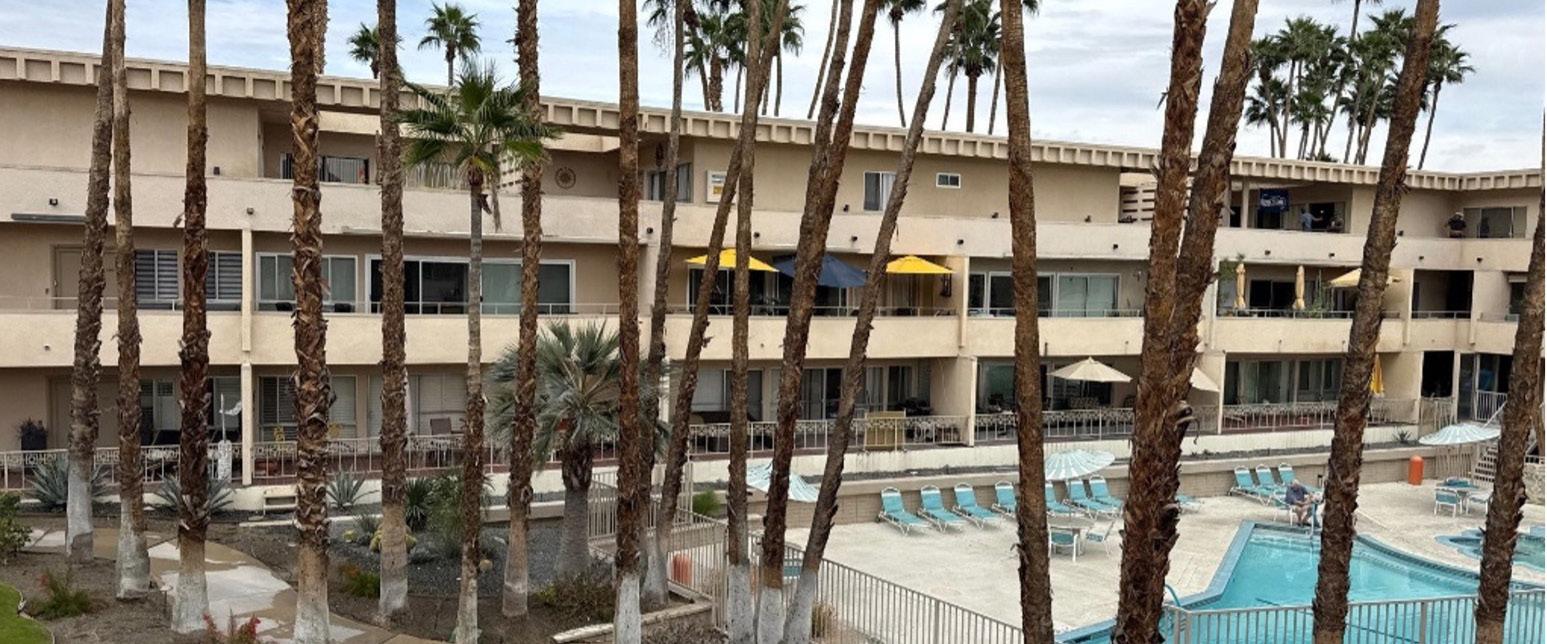
Some HOA complexes may benefit from newfound attention, particularly those with midcentury features or design elements. Even complexes not officially included in tours may partake in the
HOAs, and for the local economy. Local restaurants, retail, and service providers benefit from festival tourism, and there are many times when increased demand for short-term rentals can bring revenue to homeowners who participate. Some HOA communities have capitalized on this economic activity by hosting special events or collaborating with local businesses during the festival.
Potential Inconveniences to our Communities
There are other short-term minor inconveniences that our communities experience during Modernism Week
For Communities that are listed in some form as local or regional historic properties, there are several important considerations when maintaining the Community’s homes and structures.
Long-Term Considerations for Historically Listed Communities
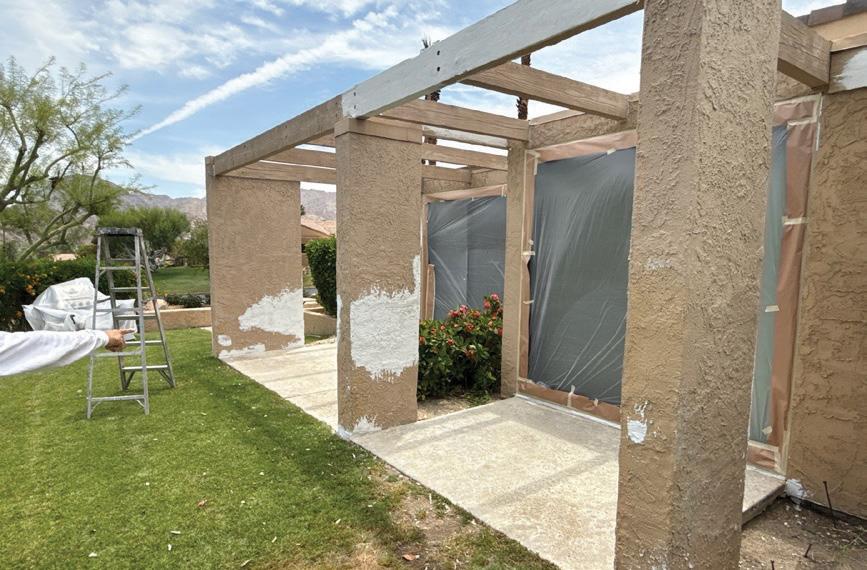
Architectural Restrictions: It is important to remember that renovations and repairs that affect the exteriors of HOA buildings should always be submitted to the local City Building Department for permitting before starting work. This is even more important,
and it comes with sensitivities, when a community is listed under a historical designation of some sort.
When designated as historical in nature of any kind, the Historical Preservation Planners within the City Planning Department will often have much to say regarding any visual changes that might be contemplated within a Community’s plans for
Other restrictions may be placed upon an HOA when permits are applied for as well, but each Community will have its own set of guidelines that the Historical Preservation Department might have. These will be based upon the Historical Designation level, visibility, and original architectural intent of the design. It is recommended that, prior to embarking on major renovations, a representative of
"It is recommended that prior to embarking upon major renovations, that a representative of the Community visit the local Planning Department to discuss these types of things with the Planners, to prepare for what is allowed and what might not be allowed in your Community."
FOR MANY HOA COMMUNITIES, MODERNISM WEEK IS MORE THAN AN EVENT — IT’S AN ANNUAL REMINDER OF THE REGION’S ARCHITECTURAL LEGACY AND THE UNIQUE LIFESTYLE THAT MAKES THE COACHELLA VALLEY A PLACE PEOPLE ARE PROUD TO CALL HOME.
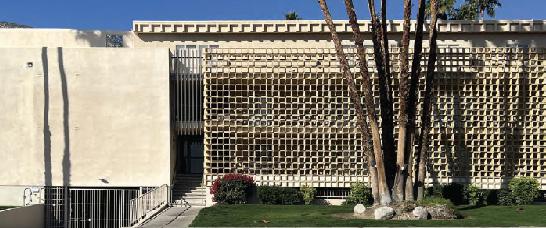
renovations. In general, major changes to the Architectural look of a building or set of buildings within an HOA community will not be allowed.
Examples of restrictions that might be placed upon a Community when renovations are being planned:
• Paint colors
• Exterior claddings
• Architectural accents or details
• Railings
• Signage
the Community visit the local Planning Department to discuss these matters with the Planners, to prepare for what is allowed and what might not be allowed in your Community.
Modernism Week brings energy, prestige, and attention to the Coachella Valley — and while it offers cultural enrichment and economic opportunity, it also introduces specific operational challenges for HOA complexes. Thoughtful planning, clear communication, and active community involvement help ensure that residents can enjoy the festival’s benefits while minimizing disruptions.
Chris Sigler is the President and Owner of C.L. Sigler & Associates, Inc., a Construction Management and Consulting firm that has exclusively served the HOA industry for 23 years. He is a Civil Engineer by trade with more than 35 years of Engineering and Construction experience, and is actively involved in projects throughout the Coachella Valley. Chris is certified with the Construction Specifications Institute (CSI) as a Construction Documents Technologist. Located in Palm Desert, his firm serves the Coachella Valley and Riverside County, and the San Francisco Bay Area in Northern California from its San Jose Corporate office.

By: Matthew T. Eisendrath, Esq.
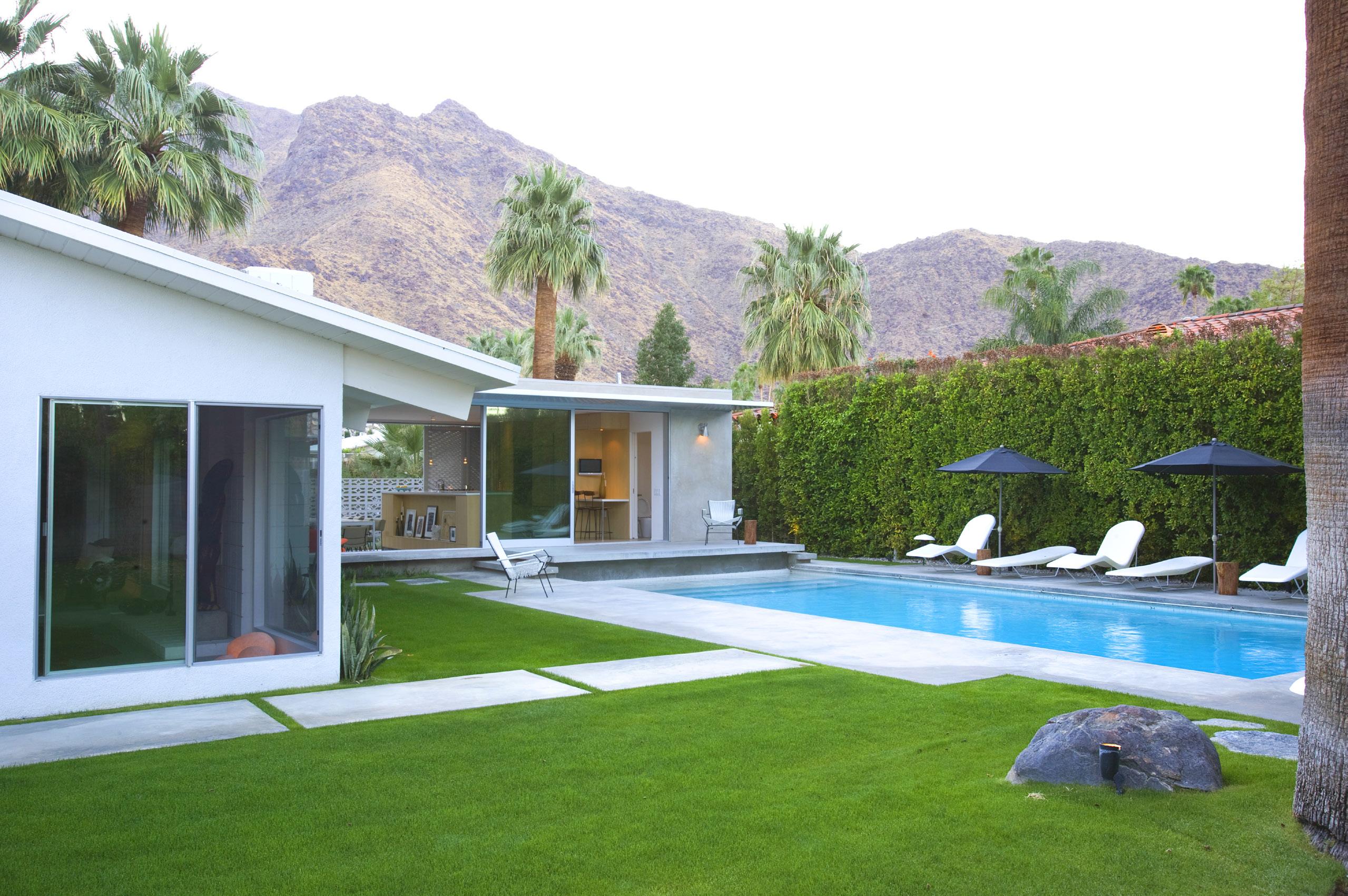
Modernist design is a staple of the Coachella Valley community. The design features steel, concrete, and glass. It allows for innovative structural designs with large open floor plans and expansive windows. Modernist architecture values function over form and focuses on clean, minimalist lines.
Many communities desire to preserve their modern aesthetic. Homeowners may wonder what they can do to protect their communities from losing their modernist style. Fortunately, if you live in a community with a homeowners association, you have the tools to protect your community's vibe.
Associations, through their boards, can adopt rules, commonly known as architectural guidelines, that establish policies and procedures for alterations,
modifications, and improvements to an owner's property. These guidelines usually provide more specific details regarding the architectural processes and criteria than the CC&Rs.
Associations that desire to preserve their modernist aesthetic should incorporate specific standards into the architectural guidelines that require a modernist design. Having clear guidelines will help preserve the community's aesthetic quality and property values.
Associations may appoint an architectural committee or entrust the board of directors with making decisions regarding architectural improvements to properties within the community. Given the importance of retaining their unique modernistic aesthetic, it may be wise to appoint an architectural
committee composed of members with experience in art or architecture. Alternatively, associations can consult with architects or designers who are familiar with preserving the modernist aesthetic.
Having an architectural control process and clear standards prevents homeowners from making alterations to their properties that clash with the existing style. Even if the homeowner strongly disagrees and believes that a four-story traditional Victorian-style home would fit within the community, clear architectural guidelines and processes should prevent such changes from occurring.
Associations may experience conflict with homeowners when rejecting submitted plans in their efforts to retain their modernist vibe. Many homeowners may believe that they are being targeted or singled out by the committee or board
members. This is another reason why communities, whether modernist or not, should have guidelines that clearly set forth the requirements for owners who desire to make alterations and the standards for such modifications. Failing to have clear guidelines can increase the likelihood that owners will claim they are being unfairly treated.
To preserve a modernist aesthetic, the guidelines should address the following:
Material – Modernist communities should specify which materials may be used when constructing or remodeling. Traditionally, modernist structural materials include steel, glass, and reinforced concrete.
Paint —Modernist structures often use a restrained or monochromatic
color scheme, combining white, black, grey, and other neutral tones. Your neighborhood may have other color schemes that match your unique community, and associations should feel free to adopt a palette they are comfortable with.
"BALANCING COMMUNITY AESTHETIC AND INDIVIDUAL HOMEOWNER ASPIRATIONS ISN'T ALWAYS EASY, BUT IT IS CRUCIAL TO PRESERVE THE ASPECTS OF YOUR COMMUNITY THAT MAKE IT UNIQUE."
Height restrictions —Although these restrictions are not necessary to maintain a modernist aesthetic, your community should still consider them

The California Legislative Action Committee’s (CLAC’s) primary objective remains constant: propose, monitor, evaluate, provide input, and take formal positions on state legislation affecting community associations. In 2023, CAI-CLAC achieved just this. CLAC was successful in the sponsorship of two bills and the integration of cleanup measures into the Housing Omnibus bill. Furthermore, they played a pivotal role in securing critical amendments for three additional pieces of legislation.
to preserve the overall attractiveness of the community.
Hardscape —Inanimate elements of landscaping, especially any masonry work or woodwork, should conform to the overall style of the community.
Balancing community aesthetic and individual homeowner aspirations isn't always easy, but it is crucial to preserve the aspects of your community that make it unique.

Matthew T. Eisendrath, Esq. is an attorney at Adams|Stirling PLC, with offices throughout California, including Palm Desert. You can reach Matthew at meisendrath@adamsstirling.com or (760) 620-0747.

By Andy Coleman
Modern HOA security is no longer just about gates, patrol routes, and guard presence. Communities today face higher resident expectations, increased visitor traffic, short-term rentals, package deliveries, and growing demands for transparency. Technology should strengthen policy—not replace it. The goal is not to remove human judgment, but to enhance existing procedures, support security professionals, and give HOA boards clear visibility into what’s happening across their communities.
Incident management systems transform individual reports into actionable information, helping boards and managers recognize recurring issues, improve response consistency, and make informed operational decisions.
• Centralized incident documentation
• Clear records of what happened, where, and when
• Visibility into recurring issues
• Better data for staffing and policy decisions
Moving From Reactive to Informed Security
Modern platforms help HOAs shift from responding after incidents to managing security proactively by providing real-time awareness and trend visibility. These tools allow leadership to understand activity across the community and address emerging risks earlier.
• Track patrol activity in real time
• Capture incidents with photos and timestamps
• Identify patterns before problems repeat
• Share meaningful insights with property management and boards
Guard tracking technology confirms patrol coverage and post compliance automatically, creating accountability while allowing officers to focus on resident engagement and safety rather than paperwork.
• Automated patrol tour verification
• Checkpoint logging without paperwork
• Time-stamped proof of coverage
• Protection for both the HOA and the officer
Board Visibility: Transparency Builds Confidence
Board dashboards provide leadership with clear, objective insight into security activity, helping replace anecdotal feedback with measurable data that supports planning, budgeting, and governance.
• Incident trends over time
• Patrol activity summaries
• Visitor and access patterns
• Areas of recurring concern
Today’s HOA boards oversee increasingly complex communities. Investing in technology that enhances security through incident management, guard tracking, and board visibility creates safer environments while improving accountability and resident confidence.
Technology Supports People—It Doesn’t Replace Them
Even the most advanced platforms cannot replace trained security professionals. Technology works best when it reinforces procedures, improves communication, organizes information, and supports leadership oversight.
Do we have centralized incident reporting?
Can we verify patrol coverage automatically?
Do board members have dashboard access?
Are recurring issues tracked and reviewed quarterly?
Is visitor access documented digitally?
Are post orders and procedures integrated into the platform?
Do we conduct annual system audits?
Is data used to guide staffing and budget decisions?
Strong HOA security programs combine clear policies, skilled personnel, consistent documentation, verified patrol coverage, and transparent reporting. Technology connects these elements into a proactive, sustainable operating model.

If you have any questions contact Britain L. Rome is the Business Development Manager with the Inland Empire Division, Allied Universal® Security Services. You can reach Britain at Britain.rome@aus.com or call (714) 453-7450.

The Legislature is currently holding policy committee hearings, with January 31 as the deadline for each house to pass bills introduced in that house during the odd-numbered year. The deadline for bills to be introduced is February 20. Once that deadline passes, we will have a clearer picture of the policy issues that will require our focus this year.
Several policy issues continue to be discussed in the Capitol, including manager certification, elections, reserve funding requirements and financial review thresholds. Bills continue to be introduced and amended. The CLAC Advocacy Team is meeting regularly with bill authors to advance legislation aligned with our top priorities, among them the need to fix AB 130.
Two early bill numbers for everyone to be aware of are AB 739 and SB 222. AB 739, was introduced in early 2025, was amended this year to require reporting of management fees paid by associations and to mandate board member education. CLAC has worked closely with the author, and the mandatory education requirement was recently removed from the bill, and we have removed our opposition. SB 222 would void any CC&R that prohibits
or effectively prohibits the installation of a head pump, or air conditioning (HVAC) system. The bill has passed out of the Senate Housing and Local Government Committee and is now in the Assembly waiting to be heard. The bill does not consider whether a building can reasonably accommodate such technology, which is why CLAC has taken an opposed position. We continue to engage with the author on this issue.
A similar bill is being introduced in the Assembly which would void any CC&R prohibiting the installation, upgrade, or replacement of a cooling system. CLAC has engaged with the authors office in the hopes of addressing our concerns.
It is also not too early to start planning to join us in Sacramento for CAI-CLAC Advocacy Days, April 7-8, 2026.
Registration and sponsorship information is available NOW and you can find it on CLAC’s website here or you can contact Wendy directly at office@caiclac.com for more information.
If you haven’t already done so, you are encouraged to follow CAI-CLAC on Facebook, X, LinkedIn, Instagram and YouTube for ongoing news, resources, events and legislative action. AND, feel free to LIKE, SHARE and COMMENT on CAI-CLAC posts. This helps to spread our message and show the strength of our community.

YOUR ASSOCIATION CAN MAKE A DIFFERENCE WITH THE BUCK A DOOR PROGRAM
Each February, the Coachella Valley becomes a global stage for Modernism Week. While much of the conversation centers on iconic butterfly rooflines and the breezeblocks of our mid-century architecture, the true spirit of Modernism doesn’t stop at the front door. For those of us managing the living environment, Modernism in the landscape is a celebration of our unique region—it is a commitment to modernizing our gardens, our infrastructure, and our relationship with the desert itself.
To truly embrace a Modernist landscape, we look toward a philosophy of inten tional, functional design. This begins with a shift in how we treat the plants themselves. For too long, the standard in many HOAs has been to shear shrubs into rigid, artificial shapes. A modern approach honors the plant’s natural, organic form. By allowing species to grow to their mature size and utilizing selective pruning, we reveal the architectural skeleton of the garden. This creates a landscape that feels sculptural and sophisticated, allowing the plant to thrive as nature intended.
By Johnny Dennis Contreras
However, the most vital part of a modern landscape is the intelligent system that supports it. Modernism has always been about using the best tools of the era to live better. In our industry, that means moving away from simple timers and toward high-intelligence resource management anchored by Evapotranspiration (ET) rates. By


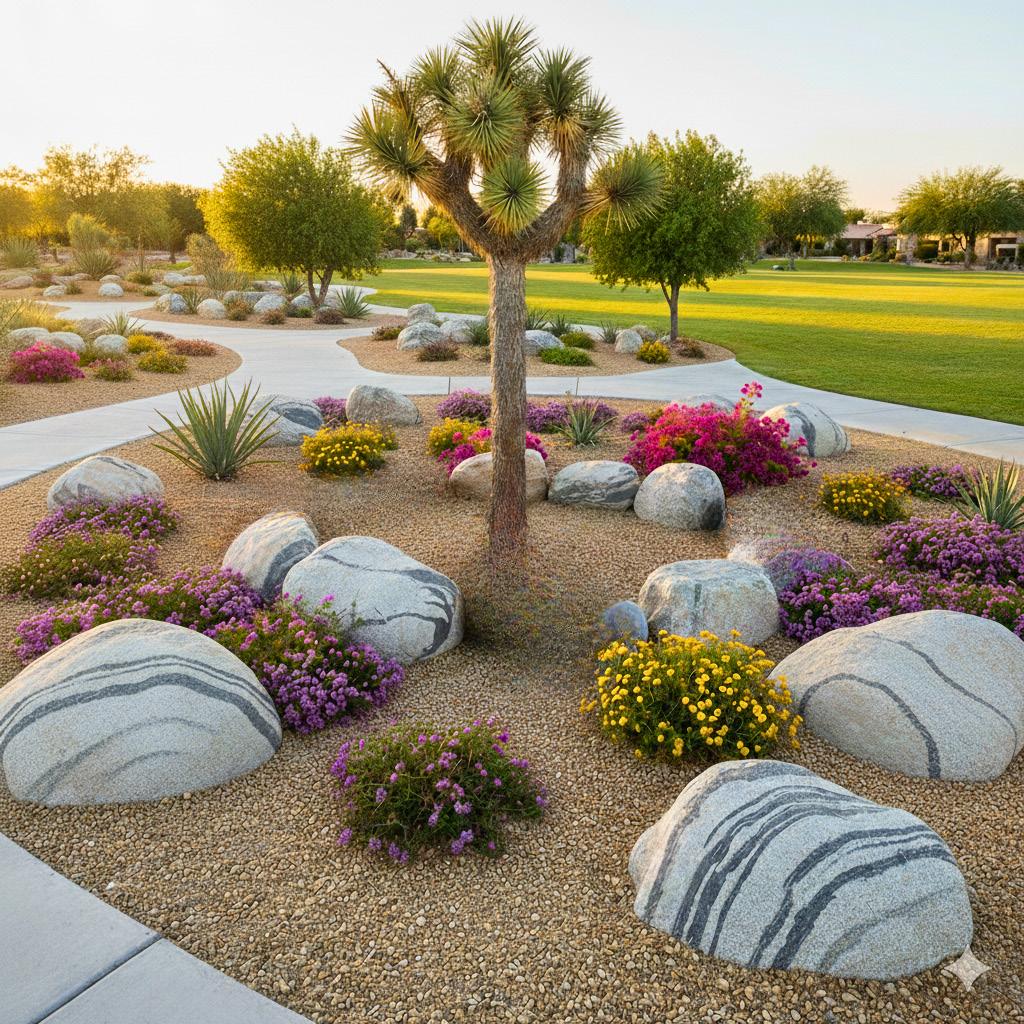
This sense of authenticity extends to the raw materials we choose. Modernism celebrates the beauty of the natural environment, which is why sourcing rocks and boulders from local quarries is so vital. When we use materials native to our own valley, the landscape feels grounded and permanent, mirroring the surrounding mountains and creating a seamless transition between the community and the desert floor.
monitoring ET—the combined amount of water lost through soil evaporation and plant transpiration—smart controllers calculate the exact "water budget" a landscape needs on any given day.
In our climate, ET rates fluctuate based on wind, humidity, and heat. A modern irrigation system uses these rates to automate schedules in real-time, but the human element remains essential. Professional landscape technicians now act as data managers, monitoring these automated tools and utilizing flow sensors to ensure every drop is used with
precision. This synergy of technology and professional oversight is the hallmark of a truly modern community. We see this balance of form and function in the plants that define the modern desert palette. The Ocotillo and the Joshua Tree, for instance, are local icons that offer striking, vertical silhouettes, acting as living art against the sky. They require very little intervention to look spectacular. Contrast these with the Sissoo Tree (Dalbergia sissoo).
Native to the Indian Subcontinent and the foothills of the Himalayas, it has become a staple of our modern gardens for its light, shimmering foliage and remarkable ability to provide shade in our extreme heat. These three species—two local heroes and one internationaltraveler—work in perfect harmony to create a landscape that is both lush and sustainable. Ultimately, modernizing our HOA landscapes is about paying closer attention to our environment. It is about choosing long-lasting, sustainable species and supporting them with the best technology available. When we design within the desert's unique parameters, we create communities that are not only beautiful but are built to endure for generations to come.
Johnny Dennis Contreras is the Business Developer, and Marketing Manager at Southwest Landscape & Maintenance and is a ISA Certified Arborist.Johnny can be reached by calling (909) 734-9743 or emailing johnny@swlandscape.net
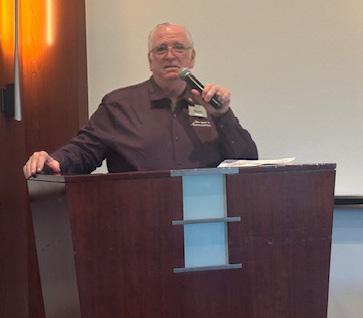
CAI-CV proudly partnered with the City of Indian Wells to convene an impactful HOA Workshop designed to strengthen collaboration between community associations and municipal agencies. With nearly 80% of the Coachella Valley residing in an HOA, alignment between local government, utilities, and association leadership is not just beneficial — it is essential. The program brought together industry and civic leaders to engage in meaningful dialogue about how these partnerships support thriving communities.
The distinguished panel featured Holly Smith, PCAM Executive Director of CAI-CV; Jennifer James, Esq. of Roseman Law; Mark Dodge, CEO of Associa Desert Resort Management; and Bruce Latta, CAI-CV Board President. The discussion was expertly moderated by
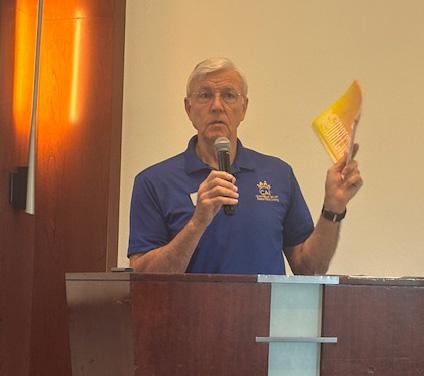
Steven Shuey, PCAM. Representatives from key service providers, including Coachella Valley Water District (CVWD) and Burrtec, joined city officials in addressing infrastructure coordination, service delivery, compliance considerations, and best practices for proactive communication.
By serving as the convener of these important conversations, CAI-CV continues to position itself as a strategic bridge between community associations and public agencies. The workshop reinforced a shared commitment to collaboration, transparency, and forward-thinking leadership — ensuring that the relationship between HOAs and city services remains strong, coordinated, and responsive to the needs of residents throughout the Coachella Valley.






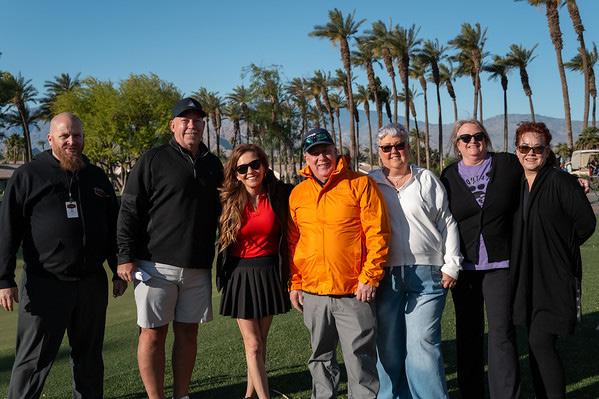


VOLUNTEER INFORMATION
Name:
Company/Organization:
Mailing Address:
Phone: Alternate Phone:
Email:
I understand there is a 2-to-3-hour monthly commitment in serving on a CAI-CV committee and I understand that if I miss 3 or more meetings, I may be removed from the committee.
Signature:
Date:
Complete the form, scan and email to admin@cai-cv org or go to www caicv.org/committee to read descriptions, review committee charters and complete your volunteer form You can use one form to sign up for multiple committees.
☐ Awards Committee (Meets 2 Thursday monthly at 12 PM)
Bowling Committee
(Meets 2 Wednesday monthly at 12 PM)
Business Partner Committee (Meets 1 Thursday monthly at 12 PM)
Education Committee st Meets 2 Thursday monthly at 4 PM)
Golf Committee (Meets 4 Friday monthly at 3 PM) th ☐ HOA Living Magazine Committee Meets 1 Wednesday monthly at 12 PM)
☐ Homeowner Leader Committee (Meets 2 Tuesday monthly at 8:30 AM) nd
☐ Legislative Support Committee (Meets 3 Thursday monthly at 12 PM)
☐ Marketing Committee (Meets 2 Monday monthly at 4 PM) ☐ Membership Committee
(Meets 3 Thursday monthly at 4 PM)
☐ Oktoberfest Committee (Meets 3 Wednesday monthly at 12 PM)
☐ Professional Managers Committee (Meets 1 Wednesday monthly at 3:30 PM)
☐ Social Media Committee (Meets 2 Tuesday monthly at 12 PM)
☐ Web & Tech Committee
(Meets 2 Tuesday Monthly at 12 PM)
☐ Corks for CLAC Committee (Meets 2 Wednesday monthly at 3:30 PM) nd
BMW Mini Expo and Cocktail Reception
WHEN: March 10, 2026, 3:30 PM
WHERE: Classic Club REGISTRATION TODAY
Educational Trade Show
WHEN: March 19, 2026, 11:00 AM
WHERE: Sun City Palm Desert REGISTRATION TODAY
CAI-CV is partnering with cities across the Coachella Valley to offer homeowners engaging, information-filled workshops.

These sessions connect HOA residents directly with city resources and clearly explain what the HOA handles and what the city handles. No jargon No confusion
April Board Member Workshop
WHEN: April 14, 2026, 8:30 AM WHERE: Zoom REGISTRATION TODAY
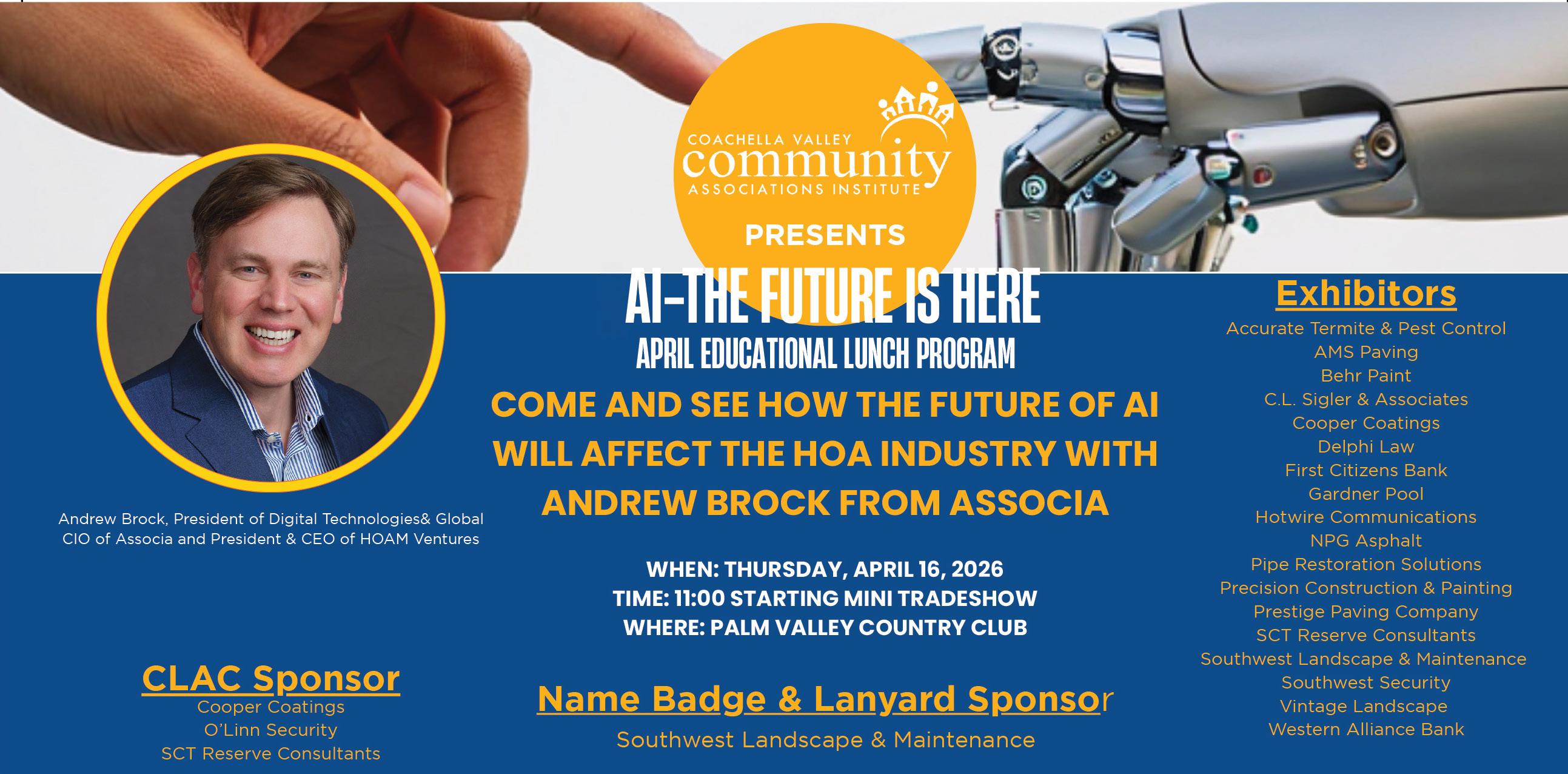
April 16, 2026 Educational Program and Mini Tradeshow - AI The Next Generation of Intelligence
WHEN: April 16, 2026, 11:00 AM
WHERE: Palm Valley Country Club REGISTRATION TODAY

and