Cahn’s Quarterly 2/2026 English Edition
Editorial Dear readers It is with a touch of melancholy that I present to you the final issue of Cahn’s Quarterly. The journal, published since 2013, initially in print and later in digital form, would not have been possible without the tireless and meticulous editorial work of Ms. Yvonne Yiu. We look back with pride on 44 issues. It has been a great honour and pleasure to present to you, through this periodical, a wide range of articles. I would also like to thank my former long-standing colleague Gerburg Ludwig, as well as the many distinguished archaeologists, colleagues, and legal experts
for their contributions, who, like the gallery’s in-house archaeologists, wrote for Cahn’s Quarterly. My own role, by contrast, was essentially to provide impulses and set broad guidelines.
to our exhibition collaboration with the Parisian gallery Jocelyn Wolff at our premises at Malzgasse 23. All three events await you this June here in Basel; we will inform you of opening hours in due course.
Despite the end of this format, I can reassure you that the gallery will continue to present exciting objects and inform you about the latest developments in the field, either in print or in digital form. I would already like to draw your attention to the two fairs Antike in Basel and MAZE Design, as well as
Until then, please enjoy the final issue of Cahn’s Quarterly and continue to let our contributions pleasantly surprise you in the future.
The Debate I
Ancient Objects Found in the Ground, the Hadrianic Division of Finds and the German Treasure Law (Schatzregal) (Part 2) By Horst Hammen In the first part of the article “Ancient Objects Found in the Ground, the Hadrianic Division of Finds and the German Treasure Law (Schatzregal)” (Cahn’s Quarterly 1/2025, pp. 5-9), it was shown that, apart from exceptional cases such as the Weekday Gods Stone from Sasbach, neither the landowner nor the finder acquires exclusive ownership of an ancient object discovered in the ground. Instead, German law provides for a specific legal framework to govern such cases: the Hadrianic Division of Finds.
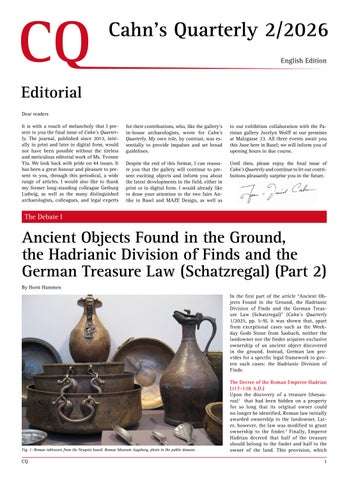
Fig. 1: Roman tableware from the Neupotz hoard. Roman Museum Augsburg, photo in the public domain.
CQ
The Decree of the Roman Emperor Hadrian (117-138 A.D.) Upon the discovery of a treasure (thesaurus)1 that had been hidden on a property for so long that its original owner could no longer be identified, Roman law initially awarded ownership to the landowner. Later, however, the law was modified to grant ownership to the finder.2 Finally, Emperor Hadrian decreed that half of the treasure should belong to the finder and half to the owner of the land. This provision, which 1