

Contents


Strategic Objectives
Defined by our heritage. Dedicated to the future
Cadogan is a family business which owns and manages an extraordinary property portfolio comprising mainly retail, residential and office assets in Chelsea and Knightsbridge. The business has a long heritage which provides a remarkable foundation upon which to base a contemporary, forward looking and dynamic business able to anticipate and respond swiftly to the changing needs of our customers and markets.
Cadogan’s long association with Chelsea began when Charles, Baron Cadogan, wed Elizabeth Sloane in 1717, some 300 years ago. Since that time, the family and place have grown together – today the Cadogan Estate is one of London’s most characterful and distinctive neighbourhoods.
Stewardship and community are central to our approach. Our long-term commitment comes with responsibility to ensure that we are making a positive contribution towards a sustainable environment, protecting the area’s unique heritage and supporting a thriving community.
OUR CORE OBJECTIVES
• We aim to protect and enhance the Estate’s position as one of the world’s leading locations in which to live, work and visit.
• We have a proud heritage and aim always to safeguard our future and protect the portfolio as a long-term investment – creating and maintaining outstanding buildings and environment.
• As long-term stewards of Chelsea, we have a responsibility to make a positive contribution towards a sustainable environment and a thriving community.
• Our reputation is paramount. We always select the best external advisers and recruit the strongest internal team to deliver excellent customer service, be good neighbours and ensure that integrity is at the heart of all business decisions.

Financial Highlights
£100.8 m 2021
Chairman’s Statement
After a year of despair and tragedy following the start of the COVID-19 pandemic, we entered 2021 with hope that the rollout of the vaccine programme would take the country out of lockdowns and public health restrictions. That hope was borne out by the successful reopening and trading of the many retail, leisure, hospitality and commercial businesses on the Estate and the return of people to London and to Chelsea which resulted in strong demand for our residential short-let properties.

Despite the many challenges, it was important to me and my family that we supported our local community during the pandemic and into the recovery stages.
The £20m Business Community Fund we established at the start of the pandemic in April 2020 provided financial assistance to the most vulnerable businesses and to the local community, contributing to the survival of many small businesses that might otherwise have failed and helping to maintain low vacancy rates in 2021. Other measures included supporting our contractors and suppliers by ensuring construction and refurbishment projects continued safely throughout the pandemic and paying them promptly to help with their cash flow, in addition to wider commitments to the NHS and creative industries. I was particularly proud when Cadogan was named winner of the ‘Best COVID Response’ at the Property Week Awards, in recognition of these efforts.
The pandemic has had a strong unfavourable impact on the business. Total income increased to £168.9m (compared to £161.1m in 2020) but
remains below the level of 2019 which was £171.0m. The value of the property portfolio has remained stable at £4.8 billion (2020: £4.8 billion) but this remains below the valuation in 2014 at £5.2 billion, underlining the damage wrought by the pandemic following Brexit and political uncertainty in the years prior.
We have been fortunate as footfall on the Estate has consistently outperformed the rest of Central London throughout the pandemic, underpinning the strong recovery of many of our commercial occupiers and demonstrating the resilience of Chelsea and its residential neighbourhood. Although the emergence of Omicron in November 2021 and subsequent restrictions introduced by government slowed the recovery, we have seen a strong bounce back in the first few months of 2022.
Despite the disruption of the pandemic, we announced last year our commitment to achieve Net Zero carbon emissions by 2030. This is ambitious, but we are making good progress on this and our other sustainability targets. The considerable investment that this strategy represents is in keeping with our very long-term business aims and desire to make a positive contribution to society.
This is an opportunity for me to acknowledge the support and encouragement of the Royal Borough of Kensington and Chelsea in helping to maintain the vibrancy of this area. Among other things, this resulted in the permanent pedestrianisation of the southern end of Pavilion Road, where small local artisanal food and hospitality businesses serving the local community are thriving; and a large increase in al fresco seating available outside the many restaurants and bars in the area which
VISCOUNT CHELSEA DL
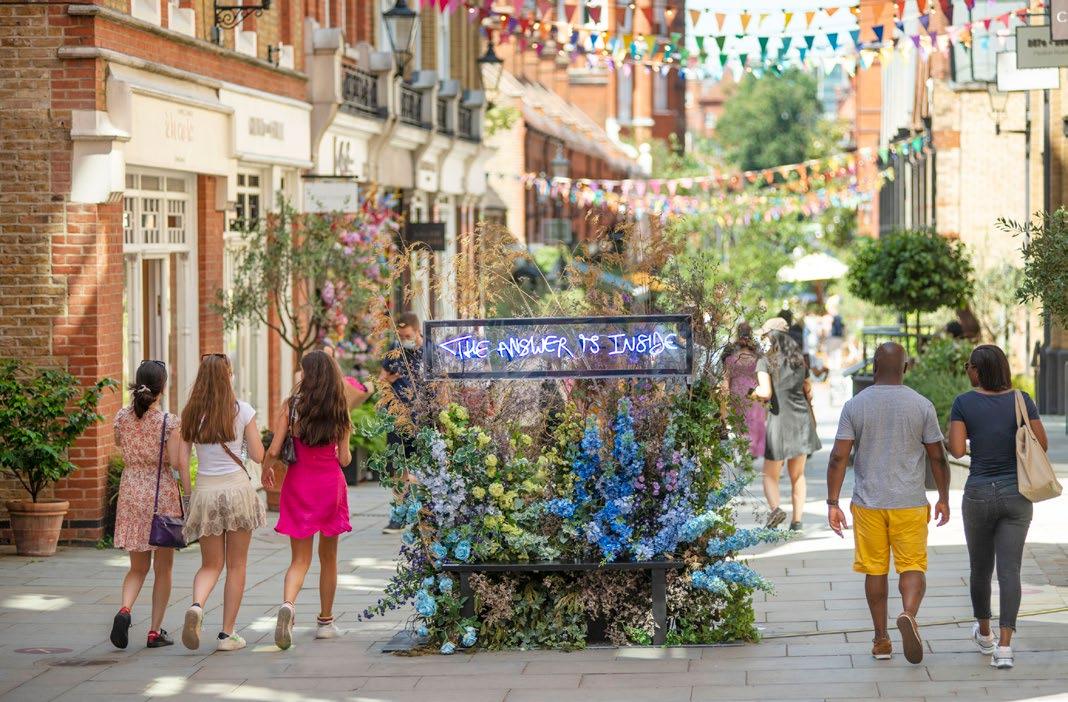
has been welcomed by local residents and visitors alike. These changes have contributed to the continued vitality of the area, which in turn has sustained local businesses that depend on footfall for spend.
As we build on the recovery of Chelsea following the pandemic, we are very aware of the macro risks resulting from the invasion of Ukraine, the high and increasing inflation and the impact these events have on business confidence and peoples’ lives. I am proud that we have maintained support at pre-pandemic levels to a wide range of charities both through the business and to a greater extent through the family charity chaired by my father, Earl Cadogan, with trustees including myself and other members of my family.
I enjoy living and working in Chelsea. One of the strengths of the Cadogan business is that we are based at the heart of the Estate that we manage. It is important to me that our employees are present on the Estate, walking the streets, meeting occupiers and residents in person, understanding the local dynamics
and living the experience of those who work, live in or visit Chelsea. In this way we all contribute to Chelsea and are enriched by its character on a daily basis allowing us to fine tune what we do as we contribute to this extraordinary community. I would like to express my deep gratitude to our team for ensuring our physical presence throughout the pandemic, whenever possible and always safely, and for their cooperation in ensuring a safe return to our offices.
I was delighted to welcome Dame Alison Nimmo as a non-executive director to the board in early 2022. Alison’s considerable property and board experience will complement the strong Cadogan board. As well as welcoming Alison, I would also like to thank all my fellow Board Directors for their continued wise counsel, their contribution to the business and support of the management team over the last year.
VISCOUNT CHELSEA DL
28 April 2022
Above Kensington + Chelsea Art Week 2021

Strategic Report

Chief Executive’s Review


HUGH SEABORN CHIEF EXECUTIVE
The year was one of recovery after the ravages of the pandemic, and in this context the business made very good progress in 2021.
In last year’s report, I identified reasons for optimism following the dark days of 2020 due to the impressive rollout of the vaccination programme. What followed was a revival in visitor numbers to the Estate following the end of the third national lockdown in April 2021, which in turn led to a remarkable renaissance in the fortunes of many of our commercial occupiers which was reflected in rent collection performance and leasing activity. This recovery accelerated after the ending of most restrictions on ‘Freedom Day’, 19 July 2021.
I am delighted that in the last weeks of March 2022, footfall on the Estate exceeded pre-pandemic levels. This reflects the strength of Chelsea as a captivating destination, supported by our pandemic strategy. Our approach has included helping the most vulnerable occupiers through a variety of rent reliefs and other concessions; maintaining high levels of occupancy; providing a wide range of marketing initiatives and events and enhancing the public and private spaces for people to enjoy. This approach was aimed at boosting local vibrancy, encouraging the return of visitors and increasing frequency and dwell time of loyal, local residents so that shops, restaurants, cultural establishments and leisure facilities all have the opportunity to flourish. Coupled to this we supported the local community, the NHS and charities at a time of great need for them.
This approach was recognised by the property industry when Cadogan was named winner of the ‘Best COVID Response’ at the 2021 Property Week Awards. I could not be more proud of this award as it recognises the enormous contribution of every single member of the Cadogan team in supporting our occupiers, suppliers, local community and the NHS through the pandemic, epitomising our central and
active role as a long term custodian of this historic, vibrant and immensely characterful part of London.
The result is that there is a renewed effervescence about Chelsea, the footpaths are bustling, restaurants are full and businesses busy. This is reflected in both commercial and residential occupancy which has returned to pre-pandemic levels. We are experiencing healthy levels of interest from a wide variety of retail and hospitality businesses for space, particularly on the King’s Road and Duke of York Square, and strong demand for rented residential accommodation. Our office portfolio remains largely fully occupied.
Consistent with our long-term business horizons and stewardship role, work is well underway to deliver the step change goals of our sustainability strategy – Chelsea 2030 – announced in 2021, including our commitment to emit Net Zero carbon by 2030. Detailed work is underway to improve the energy performance of our buildings alongside working in partnership to reduce emissions in our developments and supply chain, as we aim to achieve genuine carbon reduction over time.
Underlying this activity is a business that is increasingly positioned as a service provider, working in partnership with our occupiers to:
• Create value through strong direct customer relationships.
• Deliver high levels of customer service to strengthen brand loyalty.
• Forge a strategic collaborative approach to promoting and developing our destinations to drive their success.
• Collect trading data to advance our understanding of retail and hospitality performance and inform estate management strategies.
At the outset of the pandemic in 2020 we established a Business Community Fund to help businesses, the local community, charities and the NHS directly. This allowed us to provide support rapidly to the most vulnerable business and residential occupiers as well as to the pressing needs of local charities. This included becoming the principal supporter of the Kensington and Chelsea Foundation, meeting their running costs and allowing their team to concentrate on identifying and responding to those in the local community with the greatest need.
I am delighted that in the last weeks of March 2022, footfall on the Estate exceeded pre-pandemic levels. This reflects
the strength of Chelsea as a captivating destination, supported by our pandemic strategy.
Amongst the response to immediate needs such as the provision of laptops to help bridge the digital divide in the Borough, we also committed to funding the three year appointment of a new case officer for the St. Giles Trust, a charity which focuses on reaching young people who are at risk or involved in Child Criminal Exploitation and serious youth violence.
The arts and culture sector was particularly severely affected by the pandemic. These uses play an especially important role in shaping the destination and contributing to the character of the area. We have continued to provide increased financial and operational support most particularly to Cadogan Hall and the Saatchi Gallery.
We have increased investment in marketing and events to promote the area and encourage consumers back; strengthened the wider neighbourhood by leading the launch of two new Business Improvement Districts (The King’s Road Partnership and The Knightsbridge Partnership); enhanced public spaces including the provision of more al fresco seating – introduced during the pandemic and which we hope will become permanent – improved landscaping, expanded the food market and introduced attractions and events. Coupled to this we have maintained occupancy levels and continued our curation of the area, introducing new and exciting retail brands often as pop-ups, which contribute to the attraction and vitality of the area.
The successful vaccination programme has allowed us to focus on the future and we all hope that COVID-19 is behind us. However, we remain aware of the risk that new variants of the virus may emerge and cause further disruption.

Above Chelsea in Bloom September 2021
Opposite Pavilion Road café culture

Chelsea 2030 –a sustainable future
Cadogan has been part of the Chelsea community for over three centuries and, as an owner, manager and developer of extensive property holdings, has played an active role in shaping this remarkable neighbourhood. This long-term commitment comes with the responsibility to ensure a positive contribution towards a sustainable environment, protecting the area’s unique heritage and supporting a thriving community.
Over the course of the pandemic and in the year of COP26 we have seen a significant increase in momentum to create change to deal with the climate emergency, both nationally and around the world. There has been an increase in events made more frequent by climate change, such as the storms and surface water flooding we experienced directly in Chelsea in the summer and autumn of 2021.
Last year we published our commitment to achieving Net Zero carbon emissions by 2030, alongside 11 further ambitious targets supported by a multitude of initiatives, that build on existing work to target air quality, emissions, waste, water usage, green infrastructure and support of the local community.
Climate related risks and opportunities are considered as part of our strategic and financial planning approach. This year, we modelled our whole portfolio from the perspective of future Minimum Energy Efficiency Standards (“MEES”) compliance and decarbonisation, mapping out costs over the next decade. In 2022 we will build on this work, addressing decarbonisation and future MEES compliance on a blockby-block basis. Every development follows our new Design Standards, requiring both tough embodied carbon and in-use energy efficiency standards to improve building performance on a lifecycle basis.
We assess the climate risks of any property we acquire through the lens of long term ownership; considering impacts on the community together with our net zero targets and climate impacts.
Work is underway to meet the milestones set out in our strategy. Our governance arrangements for achieving these stretching goals and performance against targets are set out later in this report.
OVERVIEW OF 2021
The business has performed well in 2021 within the context of the pandemic. Total income increased by 4.8% to £168.9m (from £161.1m in 2020), just behind the pre-pandemic level of 2019 (£171.0m).
This is net of rental support, rent free periods and write-offs of previously amortised lease incentives as a result of the pandemic, amounting to £3.1m (2020 – £10.2m). Cost of sales includes provisions for doubtful debts mainly arising as a result of the pandemic, totalling £0.6m (2020 – £11.2m).
Operating profit before capital items (an indicator of underlying operating performance as it excludes profit on the sale of investment properties and revaluation movements), increased from £97.0m to £100.8m, up 3.9%. This was 4.8% behind the 2019 level of (£105.8m).
The capital value of our property was virtually static at £4.8bn with a like for like increase of just 0.7% (£34.6m). It is notable that this follows cumulative reductions over the previous two years (2019 and 2020) which reflected a like for like decline in values of 22.6%, equating to £1.40bn.


In 2021, we invested £43.7m in purchases and development which will produce further rental income over time. This represented a small decrease compared to 2020 and in both years we took actions to preserve liquidity in the face of the uncertain length and potential severity of the pandemic. The collection of rental income proved challenging through the pandemic. However, rental collection performance has improved in each quarter of 2021. Overall, we collected 96% of commercial rents due and 98% of residential rents reflecting the improving fortunes of our occupiers.
We are subject indirectly to significant periodic tax charges in addition to the usual UK corporate taxes. The trusts that are the ultimate owners of the business, are subject to a ten-yearly inheritance tax charge based on the capital value of the assets, the next charge becoming due in 2022. The trusts have needed over £200m of dividends since 2013 to fund the payment of this tax charge. We have a thorough strategy in place to ensure the substantial funding necessary to meet this tax charge is available and that it will continue to be so at ten year intervals in future.
Key financial highlights of 2021 are set out overleaf.
Forest’ on Pont Street
Chelsea in Bloom 2021
Royal Court pop-up bar on Sloane Square
Property Portfolio

Investment Performance
Highlights
Total property portfolio value of
£4.8 bn
Increase of 0.7% equating to £34.6m adjusting for purchases, sales and capital expenditure
Commercial portfolio value unchanged at
Retail portfolio decreased by 1.4% equating to £28.9m
Office portfolio increased by 0.7% equating to £5.4m
Leisure and other increased by 7.1% equating to £34.3m
Residential portfolio increased in value by
£3.3bn 1.7%
equating to £23.8m

Our principal sectors have performed differently over the pandemic, providing greater portfolio resilience.
Retail and hospitality, as consumer facing businesses, were most affected by the reduction in customer numbers and the resultant acceleration of consumer transactions moving online impacted our shops. Our experience has been that footfall and trading performance closely correlate and so the recovery of these businesses has been swift once consumers returned. This has been closely followed by improving market confidence for shop premises, with rents and lease terms strengthening.
The Chelsea office market has proved healthy and the market for space has been active with limited supply supporting pre-pandemic rental levels.
The residential letting market also proved robust, fettered only by our ability to return empty units to the market due to public health restrictions. Once these were lifted, we experienced strong demand as London returned to life.
The deeper challenges faced by retail are well documented, as are the rapid acceleration of these themes caused by the pandemic. Nationally, the changes in consumer behaviour have led to a reduction in long established retail brands, which has increased vacancy rates and challenged the level of sustainable market rents for shops.
Some retailers have resorted to Company Voluntary Arrangements (CVAs) and administrations to adjust their physical shop portfolios including discarding shops and reducing rents of those retained, at the expense of their landlords. Although unwelcome, this has advanced the necessary adjustments of the retail sector.
The business rates burden for shops, based on historical (2015) valuations, has become disproportionately onerous. This has been subject to Government review and an online sales tax is being considered. Change is urgently needed to reallocate the business rates tax burden to reflect the significant market shift that has taken place since they were last calculated.
In this context, the Cadogan retail portfolio has fared well and despite the headwinds I am confident about the outlook for our shops. The factors that have contributed to this confidence include:
• A flight to quality as successful retailers understand the value of having space in the best locations, coupled to a need of fewer, better quality stores and close proximity to complementary businesses and brands – at the heart of a strong residential community.
• Retailers (including native online businesses) recognise the importance of physical space combined and integrated with their online business to enhance the customer experience, brand development and capture sales.
• Successful brands recognise the value of working in collaboration with a property provider which is positioned to deliver a service, responding to their rapidly changing needs with a consistent management strategy finely tuned to the success of the area.
Retail, our largest sector at 43.2% of the portfolio gross value, had a modest decrease in value, down 1.4% to £2.1bn (after a fall of 24.6% in 2020). The fall was due to a softening of selected retail rental values, while overall yields and rentals were largely unchanged from the previous year. Retail gross rental income decreased by 5.5% to £80.6m per annum (48.8% of the total rent roll).
Offices, which represent 15.5% of the portfolio, have proved to be more resilient with a small valuation increase of 0.7% to £743.2m after a modest decrease (-1.8%) in the previous year. The portfolio has remained largely fully occupied through the year despite a number of lease expiries. Office rental income decreased by 5.6% to £33.7m per annum (20.4% of the total rent roll).
The residential sector represents 30.5% of the portfolio. It was subject to a valuation increase of 1.7% to £1.5bn, after adjusting for purchases, sales and capital expenditure. This is the first annual increase following five years of declines which started in 2016. Gross rents for the market let portfolio increased by 12.3% from £30.1m to £33.8m. The residential rent roll fell steeply in 2020 following a higher than average number of vacates, which subsequently took longer to return to market due to social distancing requirements slowing down the rate of refurbishments. However, demand increased quickly following the end of the third lockdown in April 2021 as workers and overseas students returned to London. Adding ground rents from long leaseholds of £2.7m, residential comprised 22.1% of the gross total rent roll.
Retail
Despite the small fall in value this year, retail remains our largest sector, accounting for 43.2% by capital value and 48.8% of income.
The fall in value was localised to a small reduction in selected rental values, while overall yields and values remained stable across the portfolio. The context for the stability of retail values in 2021 is that retail values fell by 34.1% over the previous two years (2019 and 2020) reflecting the change in the way people shop and the acceleration of this theme during the pandemic.
Works to improve the Sloane Street public realm, which were delayed by the pandemic, have commenced. This will create an elegant, greener and more beautiful thoroughfare from the north of the street in Knightsbridge all the way to Sloane Square – dramatically enhancing the pedestrian experience for residents and visitors, while having a neutral impact for vehicles. New planting schemes including 90 new trees will increase the amount of greenery, contributing to the environment and our 2030 sustainability goals. This environment will further complement the extraordinary line-up of luxury retail brands that trade on Sloane Street, cementing its position as one of the best luxury shopping destinations in the world.
The challenges of the pandemic have demonstrated the attractiveness of Chelsea as a safe and exciting destination, with the area attracting consistently better footfall than other Central London areas. We benefit from proximity to the centre of London, one of the world’s foremost global cities, while being situated within an established residential area with an affluent catchment.
Lettings activity rebounded markedly as we entered the second quarter of 2021 when we secured a strong line-up of new retail lettings. Amongst these were a


Retail remains our largest sector, accounting for 43.2% by capital value and 48.8% of income
* adjusted for purchases, sales and capital expenditure

London first flagship store for the luxury fashion house Balenciaga on Sloane Street; the first European store for Soho Home; the innovative Anya’s Village, a collection of five stores, including a ‘village hall’ and characterful café from renowned British designer Anya Hindmarch; highly sustainable super-cool, Danish fashion brand Ganni; the internationally renowned Ralph Lauren; exciting young emerging women’s fashion brand Rixo; independent luxury handbag brand Strathberry; British independent jewellery designer Daniella Draper; French children’s wear Beeboon; independent wine shop Mother Vine; and Organic Pharmacy. Several temporary occupiers converted to longer term lettings after trading successfully, including the sports shoe retailer Copit, Italian fashion brand Pinko and ski/ beach wear retailer, Hatch.
We experienced just one retail failure in 2021 following 16 in 2020. This improvement suggests that profitable trading is available for businesses located locally as well as the effectiveness of Government pandemic support and targeted financial and other support offered to vulnerable businesses by Cadogan.
The Estate was virtually fully occupied through 2021, finishing the year with a retail vacancy rate of 2.7% (eight units), exactly the same as at the start of the year. At the end of the year there were 14 temporary occupiers, a reduction of three since the start of the year. Temporary retailers – pop-ups – allow us to introduce new and emerging names and concepts as part of our wider curation of the occupier mix, contributing to vibrancy and excitement for consumers. This year, these included new brands such as fashion rental retailer – ‘more joy less waste’ – Hurr Collective, the Canadian outerwear brand Mackage, vintage-style dress brand Ghost and British clothing retailer JAM Industries.
Pavilion Road has been subject to high footfall growth following its permanent pedestrianisation by the Council after an extended trial over the pandemic, with businesses located there enjoying healthy trading. This artisan food street, now with extensive al fresco seating, provides a strong attraction and encourages longer visits as people dwell over food or a coffee while drinking in the atmosphere.
Above Shopping on Sloane Street Opposite, from top to bottom London Fashion Week flags fly on the King’s Road
The Anya Village
Offices account for 15.5% of the portfolio by capital value of £743.2m. By income, offices represent 20.4% of the total and gross rents fell by 5.6% over the year, primarily due to occupiers vacating following lease expiries on Cadogan Gardens and Burnsall Street. These have since been re-let.
Our offices remained virtually fully let through 2021 and continue to be so, with a year end vacancy rate of 0.4% (nine units). There were several vacates following lease expiries but, contrary to concerns about the health of the London office market following the pandemic, these were swiftly replaced with new occupiers, who typically value the proximity to residential areas,
animated environment and local lifestyle. Coupled with the limited supply of quality space, these characteristics support our market. The office sector contributes to our wider estate management by bringing an influx of workers to the area, adding activity as well as providing the business with a healthy growing income.
Activity in London is rapidly returning and it remains one of very few world capitals that offers a magnetic mix of access to talent, finance, culture and services which makes it a highly attractive location in which to live and work. We have seen little impact on our portfolio since the start of the pandemic, presenting a mix of high grade flexible space mostly in small units, at the heart of a mixed-use location.

Offices account for 15.5% of the portfolio by capital value of £743.2m

* adjusted for purchases, sales and capital expenditure
Right and Opposite Striking new office development on Cadogan Gardens

The gross value of our residential portfolio represents 30.5% (31.4% in 2020) of the total. Residential remains our second largest sector (after retail) and is an important part of the portfolio as it diversifies performance, drives our customer service capabilities and reflects our strong stake in a thriving local community.
The reduction in the size of the residential portfolio primarily reflects disposals of non-core properties during the year representing £70.0m by book value. 2021 is the first year we have experienced a rise in value – albeit small – since 2015 and this strengthening in the market was evident just prior to the pandemic and returned in 2021 with increased transaction volumes at improving prices.
Income from residential represents 22.1% (19.5% in 2020) of the portfolio. The lower relative income yield produced by residential compared to commercial, reflects the combination of reversionary long leases which produce little income (but provide a return when the long leaseholders choose to enfranchise), and the private rented sector portfolio which generates a rental yield that is lower than commercial property.
The proceeds from enfranchisement sales during 2021 were £26.3m compared to £22.4m in 2020, remaining significantly lower than the ten-year average prior to 2019 of £74m. These sales represent the disposal of interests in 29 units (2020 –23 units). Proceeds from 20 further discretionary sales totalled £55.9m (2020 – £16.4m) reflecting the return of a more active market from the second quarter of 2021.
In January 2021, the Government announced that it intended to review leasehold reform legislation relating to long leasehold residential property. The stated intention of simplifying this overly complex area of law is welcome.

However, amongst the proposals are two areas that cause us particular concern.
• Government has announced its intent to “abolish” marriage value. If enacted, this will result in a completely inequitable one-off transfer of this significant element of value from freeholders to leaseholders. Prior to these proposals, leaseholders would have had no reasonable expectation of such a windfall. The impact for Cadogan will be to reduce future enfranchisement proceeds. Although the financial impact over time will be significant, this future potential revenue is largely discounted in our valuations as the timing is unknown, and therefore only a small element is included within the balance sheet.
* adjusted for purchases, sales and capital expenditure
• In addition, the Law Commission has proposed to place development and management control of mixed use buildings in the hands of residential leaseholders. The proposal is to lower the percentage of residential space required for collective enfranchisement (the compulsory purchase of a freehold) claims from 75% to 50%. This will effectively deter investment in mixed use regeneration schemes. For Cadogan, it will fetter our ability to effectively curate the Estate and in so doing, discourage long term investment in the area.
Our hope is that Government recognises the combination of inequity and unintended consequences of these proposals and removes them from the reforms.
We also hold a private rented sector portfolio of approaching 700 houses and flats. A large number of vacates in the period following the lifting of the first lockdown, along with safety measures implemented in response to the pandemic, meant that our ability to undertake works to return vacated units to the market, was limited. Accordingly, the rental value of
vacant units subject to post-occupation upgrades at the start of the year was 15.5%. We made good progress in reducing this backlog during 2021, with the vacancy rate reducing by two thirds to 5.0% by the end of the year. The increase in available units coincided with rapidly strengthening rental demand leading to properties renting as soon as they were available at higher rents against previous rents (+14% in Q4).
We have maintained our approach of delivering high quality accommodation combined with exemplary customer service, with the aim of engendering strong customer loyalty and retention over time. In 2021 the average length of stay by departing customers reduced slightly from 3.4 to 3.3 years. New lettings (most of which will have been upgraded) achieved rental uplifts on average of 3% compared to the market valuation in 2021.
The performance of our residential properties through this challenging time has demonstrated again the value of having a diversified portfolio of property uses.


The gross value of our residential portfolio represents 30.5% (31.4% in 2020) of the total

Leisure and Other
This category comprises hotels, restaurants, pubs, our growing regional portfolio established in 2018, and a variety of other properties such as schools, cultural and artistic venues, car parks and medical uses. Leisure and Other accounts for 10.8% of the value of the portfolio, up from 7.7% in 2018. The main reason for this uplift is an increase in value of the regional portfolio and hotels.
The gross value of the regional portfolio was £104.4m at the year end (£84.1m in 2020). We adopted a cautious approach and postponed purchases in mid-2019 firstly due to Brexit and political uncertainty and subsequently, the need to conserve funds in light of the uncertainty as to length and severity of the pandemic. We re-started acquisition activity in 2022.
Rental income increased by 2.1% (2020: 17.5%) due to growth in income of the regional portfolio and, to a lesser extent, new lettings on the Estate. The strategic objective of the regional portfolio is to provide higher, secure income – this was evidenced during the pandemic by 100% rent collections and no tenant failures. We intend to grow this portfolio further over
the coming years as part of the strategy to help finance the ten-yearly inheritance tax liability paid by the trust settlements that ultimately own Cadogan.
The leisure sector is vital to our strategic estate management approach as these uses contribute immensely to the identity of Chelsea and the connection which residents and visitors feel for the area. For example, we own eight pubs in Chelsea. We do so because we consider them to be an important use for a compelling locality and to support the community, as elsewhere in the area many pubs have been lost to residential conversion. During 2021 The Cadogan Arms on the King’s Road reopened to strong reviews after an extensive re-fit.
Our strategic aim is to increase the extent and breadth of food and drink outlets in the area. The number of food and drink offers on the Estate has doubled over the last five years to 39 businesses, with further opportunities planned.
The
gross value of the regional portfolio was £104.4m at the year end

* adjusted for purchases, sales and capital expenditure

These businesses strengthen the holistic experience for visitors and residents and improve the attraction of Chelsea. 2021 saw several new lettings to highly rated food and drink operators including Leon on the King’s Road, Ottolenghi on Pavilion Road, Meat the Fish on Cadogan Gardens and Cantinetta Antinori on Harriet Street, which is due to open in 2022 as the first London restaurant for the esteemed Antinori family, renowned for producing some of Italy’s finest wines.
Our objective of increasing investment in the hotel sector is aimed at increasing the diversification of our income coupled to the estate management advantages of enhancing local hotel provision. This strategy is not completely reflected in this report because in 2019 we demerged two operating hotels (The Cadogan Hotel and No. 11 Cadogan Gardens) to the direct ownership of the trust settlements that ultimately own the Cadogan Group. In 2021 we opened two new venues. Our newest hotel and restaurant the Beaverbrook Town House on Sloane Street opened in August 2021 to critical
acclaim after an extensive construction programme. We also launched serviced apartments at 20 Cadogan Gardens after a significant refurbishment, to complement the hotel at No. 11 Cadogan Gardens.

Opposite Cantinetta Antinori
Above
A bedroom at the Beaverbrook Town House
Below
Courtyard at the Beaverbrook Town House
Developments
We continually invest in maintenance, refurbishment and redevelopment across the Estate, to deliver consistently high quality outcomes for our customers, respond to rapidly changing markets, enhance environmental credentials and the fabric of the Estate, including maintaining its historical character. In 2021 our total expenditure on redevelopment and major refurbishments was £51.1m (£54.4m in 2020).
We maintained construction activities safely throughout the pandemic with the exception of small residential schemes which were typically in confined spaces where social distancing was challenging. This was considered important to maintain the momentum of our projects and to support the wide range of contractors who we rely on to provide outstanding results. The majority of construction expenditure in 2021 was in respect of three schemes.
115–116 SLOANE STREET which was completed mid-year with the opening of the new hotel and restaurant, the Beaverbrook Town House, in August. This highly acclaimed venue is already contributing to the appeal of Sloane Street while providing more hotel and restaurant variety in the wider area.
1 SLOANE GARDENS involves the restoration and conversion of an Edwardian apartment block into a boutique hotel and restaurant. This new hotel, opening in late 2022, will be operated on our behalf by the celebrated Parisian hotelier and restaurateur Jean Louis Costes.
In 2021 our total expenditure on redevelopment and major refurbishments was £51.1m (£54.4m in 2020)


196/222 KING'S ROAD is a 100,000 sq ft redevelopment of a large site which will deliver flagship shops to King’s Road, community retail on Chelsea Manor Street and affordable and market let residential apartments, a Curzon cinema, rooftop bar, public house and an enhanced Waitrose supermarket. We have managed this complex scheme carefully to enable the Waitrose supermarket to remain open despite surrounding construction, due to its importance locally.
Our development pipeline at the end of 2021 comprised 68 projects of which 22 were active. Total committed expenditure was £233m (2020: £240m) and the overall pipeline of expenditure was £489m (2020: £492m).
We are very aware that our activities can and do impact upon those around us. As well as ensuring we respond to our neighbours during construction and mitigate the disturbance where possible, we aim to be exemplary in the way in which we consult and engage locally when preparing a scheme, to understand local concerns and consider how we can respond to them. A programme of regular communication ensures that people remain fully informed.
Our aim is to be the most trusted local developer and therefore to be able to adapt and respond to changing needs to ensure the area remains relevant and desirable to present and future generations of residents and visitors.
Opposite New restaurant development, 127–128 Sloane Street
Above
The completed Beaverbrook Town House
Below
Stylish interiors at Beaverbrook Town House

Outlook

It has been a year in which we have emerged from some of the most challenging trading conditions in most people’s memory.
Despite the setbacks to the Cadogan business as a result of the effects of the pandemic – a large part of our portfolio is after all consumer facing and therefore felt the impact of closures acutely – the business is in robust health with a strong balance sheet supported by tight cost control, high liquidity and long term funding. This allows us to drive forward our well established strategies aimed at enhancing Chelsea, strengthening the business and responding to opportunities as they arise.
The resilience of Chelsea as a destination, coupled to the prompt and decisive action we took to maintain occupation levels through targeted support of existing occupiers, introducing exciting pop-ups, installing external animations such as al fresco seating, staging events and extending marketing, all contributed to maintaining the vibrancy of the area.
The recovery of our occupational markets more recently, coupled with low vacancy rates and a strong rent collection performance, provides confidence for the sustainability of our cash flow and underpins current valuation levels.
There remains a risk of further variants of the virus emerging and there is greater uncertainty due to implications of the invasion of Ukraine and the socioeconomic impacts of high inflation and slowing economic growth due to labour shortages and global supply chain issues. However, I am confident that Cadogan is well placed to respond and adapt to the challenges presented.
The strong values and close and collaborative teamwork at Cadogan have proved more important than ever. I am immensely proud of the achievements of the Cadogan team. They have been willing to go the “extra mile” to provide our occupiers and suppliers with excellent service and support and they have adapted to the twists and turns of the pandemic, resulting in a complete return to Chelsea in July 2021, as well as all the preparation for recovery of the area. I would like to conclude this report by saying a very sincere thank you to all my colleagues.
HUGH SEABORN CHIEF EXECUTIVE
28 April 2022

Financial Review

SANJAY PATEL FINANCE DIRECTOR
The increase in rental income reflects mainly a reduction in the impact of rent concessions provided to occupiers in response to COVID-19, offset by a small fall in rental income principally caused by high residential vacancies at the start of the year.
Throughout the pandemic, rent support has been provided on a case-by-case basis. Concessions have taken various forms including monthly rents, turnover rents, rent deferrals, rent-free periods and other arrangements such as concessions linked to lease re-gears, lease extensions, participation in marketing initiatives or similar.
Where rent concessions were given directly as a result of COVID-19 and certain conditions set out in the FRC’s amendment to FRS 102 in respect of COVID-19 related rent concessions were met, the concessions are recognised as a reduction to gross rental income over the period that the change in lease payments was intended to compensate. The total value of concessions recognised in 2021 as a reduction in rental income was £3.1m (2020: £10.2m).
In relation to rent deferrals or rents outstanding, the rental income is recognised as normal with the deferred rent or rent receivable balance remaining in trade debtors until settled. Where there is a credit risk over recoverability of a balance that is contractually due, any impairment is booked as a cost in Cost of Sales. An impairment charge of £0.6m (2020: £11.2m) was booked in the income statement. This represents the net impact of a release of £3.4m impairment provisions created in 2020, offset by new impairment provisions of £4.0m in 2021.
Rent collections for residential tenancies averaged 98% throughout the year, with concessions mainly involving rent deferrals or delayed rent increases. This was in line with normal collection rates.
of 3.7%
property disposal proceeds increased to £82.2m
of 3.9% Profit on sale of investment properties
to £12.2m
of 43.6%
of 111.9% Profit on ordinary activities before taxation (including revaluations gains) of £113.8m Operating profit before capital items increased to £100.8m
on revaluation of investment properties £34.6m Increase of 0.7% in capital values on a like for like basis
Rent collections for commercial occupiers averaged 96% for collectable rents (net of concessions and write offs) and 89% for billed rents in the seven COVID-19 quarters starting March 2020 compared to a pre-COVID collection rate of nearly 100%. Commercial rent collections in 2021 averaged 96% for collectable rents and 92% for billed rents. Rent collections for the December 2021 quarter, the results of which will be included in the 2022 results, were 96% as at 21 April 2022.
Operating profit before capital items increased by £3.8m to £100.8m. The improvement in rental income, driven by a lower level of rent concessions, was partly offset by increased property and administration expenses as we caught up on maintenance, developments and the backlog of refreshes on residential short let properties vacated at the start of the pandemic.
The profit from the sale of investment properties in 2021, which includes profits from leasehold enfranchisements, contributed £12.2m compared to £8.5m in 2020. There was a higher number of transactions completed at 49 compared to 32 in 2020.
The consolidated income statement reflects the movement on the annual revaluation of the investment property portfolio. All portfolio categories, apart from retail, increased in value during the year resulting in a net revaluation gain of £34.6m (2020: loss of £795.2m).
The charge for current taxation in the year was £18.9m, an increase of £6.0m compared to 2020 and higher than the increase in operating profit, mainly because of an increase in profit from the sale of investment properties and a lower interest expense. The overall figure for taxation in the income statement for 2021 was a charge of £228.7m (2020: credit of £52.4m), due mainly to a deferred tax charge recognising an enacted future increase in the corporation tax rate from 19% to 25% in April 2023. The credit last year arose mainly as a result of the revaluation loss in 2020.
The dividend paid to shareholders in December 2021 was £34.1m. This was paid mainly to provide funds to the major shareholder so it can meet an upcoming ten-yearly inheritance tax charge due in 2022, and to a charitable trust to enable it to meet its charitable commitments.
Cadogan is mindful of its tax obligations and is liable for, and collects on behalf of HMRC, various taxes in its operations. The table below shows the tax paid by Cadogan and that collected and remitted to HMRC by Cadogan. As in previous years, the tax collected is significantly greater than the direct tax charge shown in our accounts, demonstrating our wider contribution to the UK economy.
In addition to the tax set out in the table, Cadogan Group’s dividends flow through to several family trusts and are (save in the case of a charitable trust) subject to income tax. Furthermore, a substantial proportion of the dividend is used to provide for the ten-yearly charge to inheritance tax in
relation to certain of the trust assets. In the case of the principal trust the next ten-yearly charge, due in 2022, is currently estimated at in excess of £135m before allowing for the tax charge on extracting the funds. We calculate that total dividends required by the family trusts from Cadogan to pay the inheritance tax charge due in 2022 amount to £205m.
Balance Sheet and Borrowings
The value of our properties at the end of 2021 was £4.804bn, a small increase on the previous year’s figure of £4.796bn. On a like for like basis this reflected an increase in value of 0.7% compared to a fall in 2020 of 14.2%. Despite this, Group shareholders’ funds reduced from £3.40bn to £3.26bn as a result of a deferred tax charge for a prospective increase in the rate of corporation tax. Net assets per share fell to £27.14 from £28.33, a decrease of 4.2%.
Cash flows from the Group’s property operations were lower than last year because of a £51m short term loan advanced to the parent company Cadogan Settled Estates Holdings Limited to enable the latter to make a capital distribution to the trust settlements that own the Group to fund the 2022 inheritance tax liability. The loan was repaid in April 2022. Cash flows from property operations were higher than 2020 after excluding the loan, mainly due to increased rent collections.
Year end borrowings, excluding overdraft of £2.4m (2020 – cash balance of £11.5m) decreased during 2021 from
£811.5m to £806.8m. During the year we received £55m in July from the third and final drawdown of a private placement completed in 2018; and £50m from the second and final drawdown on the £100m private placement completed in September 2020. The revolving credit facility was £35m drawn at the year end, a decrease of £55m compared to 31 December 2020. There were loan repayments in the year totalling £49m, comprising £45m in March in respect of maturing loan notes from the 2011 private placement and £4m on another loan. There was a reduction of £5.7m in 2021 after translating our dollar denominated borrowings at the year end exchange rate and recognising the fair value of the related cross currency swaps. At 31 December 2021 the average maturity of our debt was 12.28 years (2020: 10.57 years) and the average effective rate of interest across all loans reduced from 4.72% in 2020 to 4.44%. Apart from the revolving credit facilities, all our debt is at fixed rates.
There was an increase in year end balance sheet gearing to 24.9% from 23.5%. Gearing as measured under our loan covenants, increased by 0.1% to 20.5%, while interest cover increased to 3.4 times from 2.8 times, comfortably in excess of our financial covenants. At the year end we had total undrawn facilities available to the Group of £265m under revolving credit facility arrangements.
On 7 April 2022 we extended our revolving credit facilities, amounting to £300m in total, on unchanged terms, by one year to 3 April 2024.
In December 2021 and January 2022, we rate locked £300m of long term funding from three private placement deferred loans, taking advantage of low interest rates in anticipation of projected funding requirements over the next 5 years. £100m is deferred to December 2022, £50m to September 2024, £50m to March 2025, £50m to September 2025 and £50m to September 2026. The initial tranche of £100m matures in 2043 and the remaining tranches have maturities in 2060 and 2062.
Impact assessment of COVID-19
We have undertaken a stress test with a severe but plausible downside COVID-19 scenario of a further lockdown in Autumn 2022 similar to the first one in March 2020, due to the emergence of a new, virulent strain of COVID-19, to assess the potential impact on headroom for liquidity and loan covenant compliance, taking account of mitigations available. Details of the stress test are provided in the Going Concern section of the Directors’ Report on pages 70 to 71 and the conclusion is that, in the severe but plausible downside scenario modelled, we would have sufficient liquidity and satisfy all our loan covenants in 2022 and 2023.
Approach to Risk Management
Cadogan has a well-developed strategy and process for risk management. Overall responsibility for risk management lies with the Group board, which is responsible for
determining the Group’s risk appetite and ensuring that the Group’s risk management system properly identifies, understands and manages all relevant risks.
The Group’s risk appetite and processes for managing risk are regularly reviewed by the board. The Finance Director, supported by the senior management team, is responsible for compiling the Risk Register which is updated on a regular basis. The Risk Register identifies the principal risks impacting on the business and the Group’s financial position. It provides an assessment of the likelihood of the identified risks materialising and includes an estimate of the potential impact of each area of risk on the business. The Register is formally reviewed by the board at least annually and this forms an important part of the overall risk management process. The Group also makes use of appropriate external specialists to advise on compliance with established policies and external regulations.
Cadogan is a long-term property investor with a clear focus on high quality property assets located in central London. Because of its private ownership and long-term outlook, the Group aims for, and is able to achieve, a high level of resilience in all areas of the business.
Cadogan assesses risk under three principal headings:
- Strategic risk
- Financial risk
- Operational risk
The impact of COVID-19 cuts across all three risk headings that we consider. A summary of the impact of COVID-19 on the business, steps taken and outlook is included in the Chief Executive’s review on pages 10 to 11 and the results of stress tests on liquidity and borrowing covenants are summarised in the Financial Review on this page and Directors’ Report on pages 70 to 71 (Going Concern).
At the start of the pandemic our Operations Group, led by the Chief Executive and comprised of senior management responsible for operational activity, met at least twice a week to discuss COVID-19 related issues and agree decisions and actions quickly. The frequency was reduced to weekly meetings during the course of 2021 as conditions started improving. The Board receives regular updates and has held additional meetings when necessary.
STRATEGIC RISKS
Property market risks – the risks arising from property cycles and from shorter-term unexpected changes in the market for property investment, development and occupation. Retail is subject to structural changes, such as the ongoing shift to online transactions, accelerated by COVID-19, which increases the risks to retail property owners and which our close estate management strategy responds to. The move to more flexible working caused by COVID-19 has made the long-term demand for office space less certain, though Cadogan has not experienced a reduction in demand to date. COVID-19 could have a

short- and long-term impact on occupational demand for different uses. Cadogan has been preparing for many years for the shift of retail sales to online by having a diversified asset portfolio, positioning its Estate towards luxury and distinctive retail propositions, increasing non-retail leisure and food and beverage options to increase attractiveness and increase dwell time in the area, and minimising vacant units with short-term lets to on-trend retail and hospitality occupiers. Cadogan has led on the establishment of Business Improvement Districts (BIDs) on the King’s Road and Brompton Road in 2021. These will help promote these areas, enhancing their vitality and attractiveness.
Most property markets are cyclical, and this is particularly true of central London. As a long-term investor the Group is less reliant than others on predicting property market cycles and aims to manage the impact of the property cycle and any other short-term fluctuations in values or activity levels by ensuring a relatively high proportion of committed long-term loan finance, planning for significant headroom against external financial covenants and high levels of available liquidity. These factors also assist the Group in managing cash flow and liquidity risks.
Geographic concentration – the Group accepts the risks inherent in the small geographic area in which the Group’s properties are concentrated. The Group’s properties are primarily located in Kensington and Chelsea which for many years has been an area renowned for long-term prosperity and economic resilience. The Group also seeks to balance this geographic concentration through a diversified portfolio of uses and through close attention to the balance between sectors. The largest individual property represents 4.7% of the total portfolio value and the highest individual rent 3.9% of total annual rental income.
COVID-19 has reduced visitors to central London, impacting retail trade. Cadogan has carefully curated its Estate over many years to create a vibrant local neighbourhood where spending is dominated by its residents and less reliant on visitor footfall. This was evidenced by the comparatively smaller reduction in footfall during the pandemic than other central London areas.
The Group monitors and is actively involved in consultation with the Royal Borough of Kensington and Chelsea where it considers that it could be affected by changes or developments to local planning policies. The Group is committed to close liaison with stakeholders and the community to ensure that its strategy and developments are understood externally. In addition, there are statutory and regulatory risks which are closely monitored.
Development risks – Cadogan regularly undertakes substantial development projects, but carefully considers the timing to ensure that the Group's exposure to development risk is controlled, both relative to the overall portfolio and to potentially competing schemes in the same area. Cadogan consults widely on development schemes to ensure that schemes are designed to the
highest quality and to assist in obtaining the most appropriate planning consent.
COVID-19 has had a number of adverse effects on development activity. Some development projects have been delayed to preserve financing headroom in the face of uncertainty as to the length and severity of the pandemic. Compliance with social distancing guidelines means fewer workers allowed on some sites, affecting productivity. Materials shortages have led to delays and increased inflation in input costs, which may lead to cost overruns on some projects. There is a need to incorporate additional flexibility in future development projects to allow a wider range of end uses following recent changes in planning use guidelines and changing market demand over time. Movement of international labour caused by travel restrictions has impacted some projects relying on specialist skills from other countries. The impact on development projects may be felt for many years through changes in the supply chain, inflation and loss of expertise in key suppliers and contractors.
Risks associated with London's position as a global capital – London’s position as a global capital has been a significant factor in the overall prosperity of central London in recent years. There are risks to this position from several factors, most significantly from Brexit, from terrorism, from under-investment in infrastructure and from adverse changes to the tax regime, particularly affecting overseas investors. The Group cannot manage or control these risks but Cadogan takes an active role in lobbying through organisations such as London First and the British Property Federation, amongst others, to ensure that the longterm health of London is at the forefront of the minds of national and local government.
COVID-19 has reduced the number of international visitors to the UK which has adversely impacted retail on the Estate in the short-term. This has been exacerbated by the withdrawal of tax-free shopping by the Government, making the UK the only major European country that does not have a practical tax-free shopping scheme for overseas tourists. Inbound tourism showed a brief rebound during 2021 before the emergence of the Omicron strain of COVID-19 but is expected to resume now that most travel restrictions to the UK have been lifted and other countries follow. Cadogan is working closely with its retailers on enhanced marketing strategies for attracting more UK and international visitors to the area in 2022 and beyond.
FINANCIAL RISKS
Interest rate risk – The majority of long-term borrowings are at fixed rates of interest, achieved either by agreement with the lender, or through the interest rate derivatives market. The board requires at least 75% of long-term debt to be subject to fixed rates of interest. The Group does not undertake financial instrument transactions that are speculative or unrelated to trading activities. Board approval is required for the use of any new financial instrument. In December 2021 and January 2022,
the Group took advantage of low prevailing interest rates to raise £300m of fixed rate long term deferred borrowing which will be drawn in tranches in 2022, 2024, 2025 and 2026.
Inflation risk – The reopening of the world economy during 2021 has led to widespread shortages of labour, raw materials and energy leading to higher inflation. This has been exacerbated by the war in Ukraine. Central banks’ view before the war was that inflation would come down to target levels by the end of 2022, but the war in Ukraine could mean that high inflation persists for longer and increases the risk of stagflation (low growth, high inflation). High inflation often leads to higher interest rates, affecting our cost of debt and the economic outcome of investment decisions, impacting our investment strategy. Persistent inflation could also lead to increased operational costs. Rents on most of Cadogan’s commercial and residential leases are linked to RPI, mitigating against cost inflation. Construction costs on development projects can be locked at the outset through fixed price contracts, but in a high inflation environment it could lead to higher construction costs for new projects and projects where the costs have not been fixed as contractors seek to mitigate their risk. High inflation can help retailer profitability where they are able to pass on costs through higher pricing, providing retail tenants with a hedge against higher rents.
Refinancing risk – The Group seeks to manage refinancing risk using a spread of loan maturities. In normal circumstances, loan terms, other than bank loans, are for an initial period of ten years or more. The incidence of maturities is spread to ensure that major refinancing is spaced out over time.
Foreign currencies – Some of the private placings of debt which the Group has undertaken have included a significant proportion of US dollar borrowings. All exposure to US dollars in relation to both interest and capital repayments has been swapped into sterling on the date on which the loans were committed, and as a result there is no residual foreign exchange risk exposure to the Group. Operationally the Group has no foreign currency exposure.
Compliance with financial covenants – The Group has provided financial covenants to its lenders to support its unsecured borrowings. The Group’s financial position is regularly monitored against the covenant requirements to ensure that the Group has significant financial headroom and is not at risk of breaching any of the covenants. Scenario planning is used to assess the sensitivity of potential changes to the principal financial measures which might impact the ability to meet covenant requirements.
Customer creditworthiness – Prior to COVID-19, Cadogan had high rent collection rates and few occupier defaults or failures. COVID-19 resulted in a sharp fall in rent collection rates and an increase in defaults. Cadogan responded quickly through a number of initiatives. It identified a list
of the smaller and most financially vulnerable businesses and offered various financial support packages including deferrals, waivers, turnover only rents and monthly in arrears payments, the purpose being to enable them to survive the crisis and remain operational afterwards. The frequency of credit control meetings was increased from 8 to 12 times a year, and additional resource was recruited to liaise with customers to help assess and deal with their requests. These actions have resulted in minimising commercial vacancies and defaults and increased rent collection rates from the low level experienced at the start of the crisis. In recent months, collection levels have returned closer to pre-pandemic levels.
OPERATIONAL RISKS
Property loss and damage – All the Group’s properties are insured against loss or damage on a full reinstatement basis, including three years’ loss of rental income. Cover includes terrorism risk which is provided by a major insurer and member of Pool Re. COVID-19 illustrated the limitations of insurance cover and highlights the importance of maintaining a strong financial position and liquidity headroom to enable the business to withstand uninsurable or unknown future events.
Health and safety risks – The Group accords a high priority to health and safety issues. Health and safety issues are always discussed at the monthly Property Management Committee meeting and all incidents are reported and reviewed on a monthly basis. From time to time the Group undertakes external reviews and audits of its health and safety policies and procedures, the results of which have confirmed the quality and integrity of health and safety practices. An online health and safety system has been implemented in 2021 to enhance compliance monitoring.
COVID-19 resulted in most employees working from home in the first quarter of 2021, though staff have returned to full time working in the office since then, apart from a short period at the end of the year with the emergence of the Omicron variant, to help support activity and occupiers on the Estate. The Group’s offices, as well as tenanted buildings, which it manages have been COVIDsecure throughout the pandemic. Risk assessments were performed for all employees to ensure they could travel to the office and work safely in accordance with government guidelines. Managers consult with employees regularly to monitor their physical and mental wellbeing. Mental health awareness training has been provided for staff as well as access to confidential helplines with trained professionals.
Climate change – Climate-related risks are considered to be principal risks and their management is integrated with the overall risk management strategy.
There are four climate specific risks identified:
- Medium-term impact of climate change on our property and business, including the risk of damage caused by river or surface water flooding and the risk caused by rising

temperatures and extreme weather events. The Group works closely with its principal insurer and external experts to support physical and transition climate risk assessments and strategies to implement mitigations.
- Short-term changes in environmental and climate regulation including increasing building energy efficiency and reporting requirements. Changes in legislation are monitored internally, by trade bodies of which Cadogan is a member and our legal advisers, and suitable changes made where necessary.
- Medium-term, increasing energy and carbon pricing. Improved energy usage monitoring and management is intended to reduce consumption over time, alongside efficient equipment and renewable generation. Our energy prices were fixed under a three year contract which expires in October 2023. We fill face potentially higher energy costs following that date if current high energy prices persist. Our carbon offset hedging strategy will explore the potential for pre-purchasing offsets to reduce exposure to extreme price increases in the latter half of this decade.
- Loss of social licence to operate if we are perceived not to be acting in the wider interests of the area and the country. We actively engage with the local council, the Royal Borough of Kensington and Chelsea (“RBKC”) and stakeholders in the community.
Cadogan publicly announced its new sustainability strategy, Chelsea 2030, in 2021 following its approval by the board in December 2020. Chelsea 2030 seeks to address and mitigate all the above risks.
In 2021 we conducted a climate risk review in line with the TCFD recommendations:
- We worked with our insurers Zurich to understand the physical risks climate change poses to our Estate, taking a building-by-building approach to modelled global risks through qualitative and quantitative scenario analysis using climate data from Jupiter Intelligence’s Climate Score Global v2.3.
- We considered risk in the short term until 2030, and medium term up to 2050, with long term information to 2100 provided for context. Our analysis focused on two distinct climate scenarios (called “Shared Socio-economic Pathways” or “SSPs”) used by the Intergovernmental Panel on Climate Change (IPCC): a scenario where global average temperature increases by under 2 degrees by the end of the century (SSP 1-2.6), and a scenario where temperatures increase by over 4 degrees by 2100 (SSP 5-8.5). Following international pledges made at COP 26 in Glasgow, we look to be on track for a climate scenario between these two.
- The scenario analysis assessed the change over time of perils including fluvial flood, precipitation, wind, hail, thunderstorm, drought, heat and wildfire. These perils were considered in the context of building vulnerabilities,
including building height, presence of basements, tenant type and building structure. Together, risk was quantified by impact on building value and rental income.
- An increase in precipitation severity of approximately 6% is modelled between the baseline period and 2020-2030, and a more marked increase of 11–14% is projected by 2050 for both scenarios. These extreme precipitation events would see more than an average historical month’s total rain falling in 24 hours, potentially resulting in surface flooding, due to the capacity of drainage systems being exceeded.
- A small differentiation between properties regarding river flooding is observed due to terrain effects, with two properties showing a significant increase in flood risk by end of century. Properties with basements are generally more vulnerable to river and precipitation flooding, and account for over 40% of the total building value and annual rent on the Estate.
- The occurrence of severe drought conditions that impact soil moisture and reservoir storage is projected to increase by 2050 in both scenarios. Impacts of reduced soil moisture include subsidence, which affects buildings differently due to their age and type of foundations, potentially causing cracking and damage to pipes including water and gas. Other impacts of drought are felt through water availability.
- From the near-term out to the end of the century, heating is likely to remain an important requirement, although the number of hot days is also likely to increase over the century in both climate change scenarios. This is important to feed into the decarbonisation plan for the estate as heating is electrified and insulation protection provided against both extreme heat and cold.
- We are using the findings of the climate risk assessment to develop our understanding of, and scoping of specific adaptation projects. Over the coming year we will also carry out a review of transition risks and opportunities posed to Cadogan under different climate and enviroeconomic scenarios.
IT, telecommunications and business continuity risks –The Group ensures its IT and telecommunications systems are robust and fit for purpose, with an emphasis on the development of inherent resilience and backup capability. The Group has a detailed business continuity plan which is regularly reviewed and updated. The Group undertakes regular external cyber security reviews and implements any resulting recommendations for security improvements. Staff are regularly reminded of e-mail and IT security threats. Compliance with General Data Protection Regulations (“GDPR”) is embedded within the organisation, with GDPR Champions appointed for each team who undergo training every 6 months. As a result of its operational preparedness, Cadogan staff were able to transition seamlessly to working from home from the start of the first lockdown and IT systems have worked without any major downtime throughout the pandemic.

Our Community

Chelsea 2030 Update

Our commitment to a sustainable future
Contributing towards a flourishing and sustainable local community is central to our approach and consistent with our values as a very long-term family business – stewardship has always been at the heart of the business.
We launched “Chelsea 2030” in summer 2021, following extensive local consultation. It is our commitment to further reduce Cadogan’s impact on the environment, while also protecting Chelsea’s unique heritage and supporting its community. Our ambitious targets (see next page) will be reached through a multitude of initiatives to tackle priorities including carbon emissions, air quality, greening, waste and water usage.
To achieve this, we are working in partnership with many local stakeholders, key suppliers and partners, combining forces to achieve significant change by 2030.
Chelsea 2030 is our commitment to a more sustainable future – helping to improve local quality of life and provide a foundation for change over the next decade.
We intend to report our progress annually. The following pages contain an update on our performance since our baseline year of 2019.
Our Targets
CARBON EMISSIONS
NET ZERO EMISSIONS
Net zero emissions across Cadogan’s scope of influence
INFRASTRUCTURE
ZERO-EMISSION SUPPLIERS
ELECTRIC VEHICLE INFRASTRUCTURE
IMPROVED GREEN INFRASTRUCTURE
WASTE REDUCTION
WATER USE REDUCTION
At least 40% of commercial tenants join off-site consolidation scheme
80% of suppliers to deliver by zero-emission transport
All service bays and residential parking lots to have EV charging by 2025, and all new developments after 2021 to include EV charging
Improve quality and quantity of green infrastructure, including 25% increase in Urban Greening Factor
Send zero commercial operational and nonhazardous construction waste to landfill
Reuse or recycle over 90% of commercial operational and construction waste
Reduce absolute mains water consumption by 50% WELLBEING AND CULTURE
EMPLOYMENT AND SKILLS
HEALTH AND WELLBEING
Increase local employment and skills development
Make a measurable improvement to our communities’ health and wellbeing
Enhance community cohesion between local stakeholders CHARITY
TWINNING PROJECT
Deliver one twinning project a year
GIVING PROGRAMME Facilitate increase in charitable giving
Carbon Emissions
Minimising carbon emissions is critical to mitigating climate change, and our commitment to achieving a net zero Estate by 2030 lies at the heart of the Chelsea 2030 strategy.
Target 1 Net Zero Emissions by 2030
Our detailed Net Zero Pathway sets out our delivery plan, taking into consideration Chelsea’s historic nature, conservation area requirements and development pipeline. The greatest focus is on the areas with maximum impact potential: our supply chain, embodied carbon in developments and occupier operations. Cadogan’s greatest reduction in emissions will come from efficient and low-carbon retrofit and refurbishment, retaining materials where possible, and preserving heritage whilst also enabling and promoting efficient operations.
We have signed the Better Building Partnership Climate Change Commitment and recognise our role as one in which we can bring people together, support innovation and act as a catalyst for change. In the wider context of the changing high street, evolving consumer demands and increasing regulation, we are building on the strength of our longterm view to use our asset management and facilities management strategies to address the impacts of climate change.
The past year has seen progress on all elements of the Net Zero strategy, creating a strong foundation of effective and streamlined processes across the business which will enable us to scale up swift and impactful delivery over the coming years.
From a baseline of 94,998 tCO2e in 2019, we have achieved a 10% saving on our journey towards net zero. Whilst only 4% of our total footprint, we have seen total landlord energy consumption increase by 5% since our baseline, driven by increasing gas demand. In future, a focus on efficiency management, electrification of heating and onsite renewable installation should deliver reductions.
2021 saw continued COVID-19 disruption to occupier operations, which together with the 60% reduction in the carbon factor of water, led to a 10% reduction in total emissions compared with 2019. Throughout 2021 we introduced new fitout standards, and a new data platform to facilitate more targeted engagement with occupiers across Chelsea, using data to incentivise improved performance.
Development emissions comprised 62% of our total footprint in 2021, decreasing in line with a reduction in development spend.
To gether the p athway is intended to deliver a 2030 fo otprint reduc tion of more than 40% comp ared to to p arameters set out in Pathway Ac tion 4
As we look to 2022, actual embodied carbon measurement will replace cost estimates, which together with our Sustainable Design Standards will continue to inform low carbon design. In addition, our de-carbonisation strategy to quantify and programme widespread estate retrofit (including electrification and increased efficiency), with the continual ratcheting up of Design Standards, will deliver significant carbon reductions.
It is expec ted that this pathway will evolve over the coming decade, as the industr y bet ter understands the intricacies of net zero accounting, technolo gy develops, and pro cesses adapt to a low-carb on economy
REDUCTION PATHWAY
The p athway is intended to deliver an emissions reduc tion of more than 40%
Over 20% of emissions come from our suppliers. 2021 saw the introduction of a supplier engagement programme, which we will continue and ramp up during 2022 – supporting our significant network of small and medium sized businesses in measuring their footprint and taking control of emissions.
Embo died carb on: developments
Embo died carb on: supply chain
Landlord carbon
Occupier operations
EMBODIED CARBON: DEVELOPMENTS
Remainder
EMBODIED CARBON: SUPPLY CHAIN
LANDLORD CARBON
OCCUPIER OPERATIONS
REMAINDER




STREAMLINED ENERGY AND CARBON REPORTING (SECR)
TOTAL CARBON FOOTPRINT
SCOPE 1
Landlord gas†
Landlord refrigerant gas†
Landlord diesel†
Total (Scope 1)†
SCOPE 2
Landlord electricity†
Total (Scope 2)†
Total (Scopes 1 and 2)†
SCOPE 3
Developments
Water (landlord)
Other purchased goods and services
Capital goods
Fuel and energy related activity
Waste
Business travel
Employee commuting
Tenant operations
Investments
Upstream transport and distribution
Tenant refrigerant gas
Total (Scope 3)
TOTAL EMISSIONS
Ernst & Young LLP has provided limited independent assurance over the 2021 metrics marked with ‘†’. Please see page 60 for a link to their Assurance Statement.
1 See ‘Methodology and Governance’ on page 60 for an explanation of the restated 2019 and 2020 comparatives.
CASE STUDY DECARBONISING A HERITAGE ESTATE
One of the biggest barriers facing Cadogan and our peers is how to decarbonise historic buildings in conservation areas. Alongside planning challenges, heritage buildings are diverse, making consistent approaches to decarbonisation complicated. We are tackling this through a buildingspecific approach, such as our retrofit of a nineteenth century mews house to Passivhaus standards.
Recognising the enormous variation in building construction methods, materials and performance, we are reviewing opportunities for decarbonisation block by block, working in partnership with asset strategy and long-term planning to ensure sustainable decarbonisation that meets our targets. Together with portfoliowide renewable energy initiatives and immediate focus on net zero development, this approach will enable us to maximise the benefits of broad programmes in the short term whilst planning and delivering targeted reductions in the longer term.
Air Quality
During initial public consultations, air quality was clearly identified as the most important environmental concern for our community. We are tackling it through a threepronged approach: reducing vehicle journeys, encouraging vehicle owners to switch to zero-emission, and supporting this with relevant infrastructure.
Targets 2-4
Supplier consolidation, zero-emission transport and EV charging infrastructure by 2030
In 2021 we saw air pollution continue to improve in Chelsea. Whilst the annual maximum level of nitrogen dioxide fell by 18% year on year, there was a small increase in maximum daily mean back towards 2019 levels2
In order to reduce traffic in Chelsea and improve air quality, we have been particularly focussed on commercial vehicles. Through exploring and supporting supplier consolidation for Duke of York Square office occupiers, hotels and waste carriers, we are tackling different elements of commercial vehicle use, to ultimately reduce journeys.
To support our suppliers’ transition to zero-emission vehicles, we have been exploring the feasibility of electric vans through a data-informed approach to vehicle selection and charger location. In addition, we continued our trials of e-cargo bike deliveries with a free ‘shop & drop’ service at the King’s Road Christmas Lights Switch-On event. We will continue to review and trial cargo bike delivery services for local deliveries across the Estate.

CASE STUDY
HEALTHY STREETS EVERYDAY: KING’S ROAD PEDESTRIANISATION
For the first time, we pedestrianised part of the King’s Road for an event – the annual Christmas Lights Switch-On in November 2021. This was possible as part of Cross River Partnership’s Healthy Streets Everyday programme, in partnership with RBKC. As a direct result, we saw a 9% decrease in nitrogen oxides compared to the previous week.
CASE STUDY BREATHE LONDON
In order to improve air quality monitoring and contribute to London’s greater understanding of air quality patterns, causes and improvements, we sponsored
a Breathe London sensor, which was installed on north Sloane Street. Together with additional sensors we intend to introduce across the Estate, this network will provide a great understanding of the impact of our
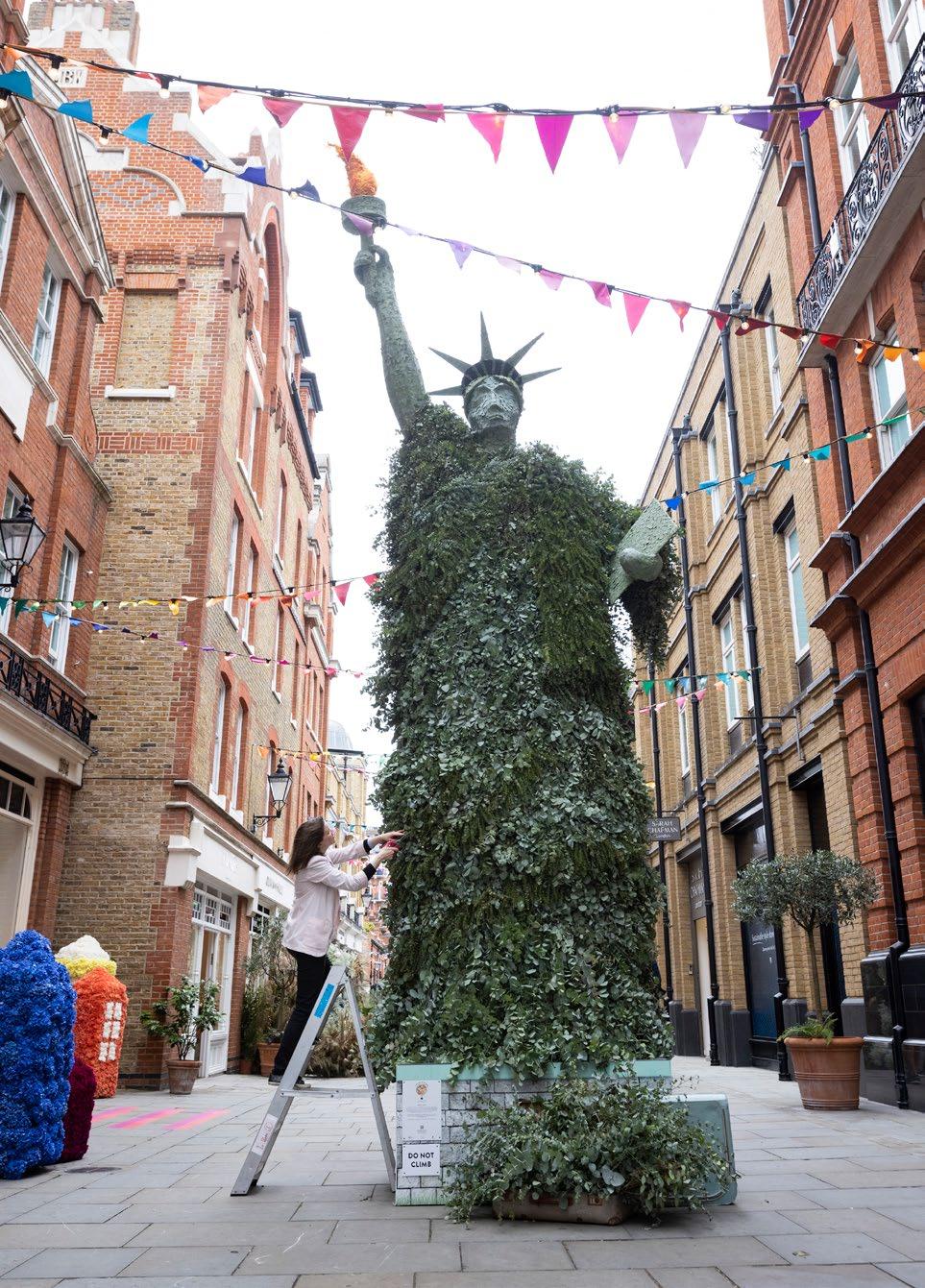
Green Infrastructure
Improving the quality and quantity of greening across Chelsea is a core target of Chelsea 2030, due to the range of environmental and social benefits provided by access to nature – including improved air quality, carbon absorption, flood regulation, pollination support as well as significant mental health benefits3.
Target 5
25% increase in Estate Urban
Greening Factor by 2030
From a baseline of an estate-wide Urban Greening Factor4 of 0.18, in 2021 we saw a 12% increase to 0.2 and an additional 300m2 of green space. This was achieved through a combination of groundcover planting in Gardens, biodiverse tree-pit replanting in Duke of York Square and Pavilion Road, and Pont Street’s ‘pocket forest’.
Our garden management is inherently biodiversity-friendly; from the absence of chemicals to the focus on native
species, wildflowers and fruit and nut trees, bird boxes and bug hotels. To find out more about the biodiversity of our grass lawns and soils, we are proud to be taking part in a project led by the Natural History Museum, using the innovative approach of eDNA testing5 to build greater understanding of the biodiversity value of urban lawns.
Future projects will include retrofitting green roofs to our Estate, increasing biodiverse planting and integrating greening into our developments: from 1,600m2 green roof in the new development at 196-222 King’s Road, to planting over 90 trees on Sloane Street as part of the public realm improvement works.

England’s Green Infrastructure Framework.
CASE STUDY CHELSEA’S HERITAGE FOREST
A recent rewilding project in collaboration with Louis Vuitton and SUGi created 240m2 of biodiverse shrubs and trees on Pont Street, Chelsea. The project aims to restore biodiversity, reintroduce native species, reconnect people with nature and demonstrate an innovative way for businesses and landowners to
work together and make an impact with environmentally responsible planting in small urban spaces. The “pocket forest” has over 630 native trees and 77 species planted in total, and is intended to become self-sustaining within three years, alleviating the need for irrigation, pesticides and artificial plant foods. This example of urban rewilding and ecological sustainability is providing inspiration for further similar projects.
Below
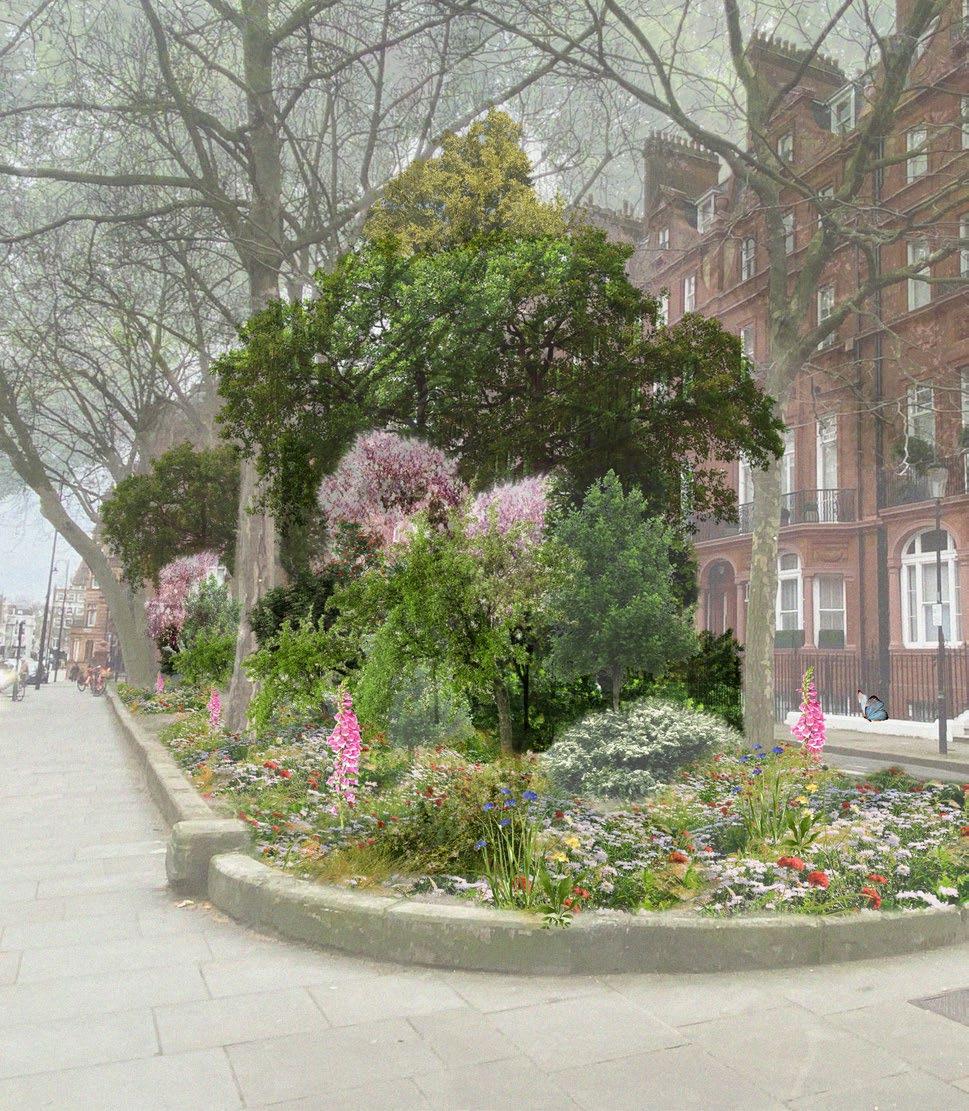
Opposite Duke of York Square in Autumn
‘Heritage Forest’ on Pont Street
Waste
Our overarching approach to waste is one of resource circularity; from tackling waste at the end of tenancies through reuse platforms and challenging standard industry dilapidation practices, to ensuring our food market at Duke of York Square is single-use plastic free.
Target 6 Zero non-hazardous waste to landfill and 90% recycling by 2030
Waste management is split between development activities and estate operations. Volumes of waste vary much more in construction, with a very high recycling rate easily achievable. Here, we are focusing on increased data quality reporting from smaller contractors and development sites and reducing waste generation overall through investment in reuse.
Recycling rates in operations are much harder to improve, with the waste coming from our occupiers and public realm. Here, we are focusing on education and engagement, and provision of the most suitable waste streams to each location –especially targeting food waste as a major source of emissions.
In 2021 we saw a 7% increase in the Estate’s operational recycling rate to 45% and maintained a 98% recycling rate for construction waste. We expect to see significant improvements in our recycling rate in 2022 with an overhaul of our waste management strategy, introduction of new waste streams and increase in retailer and restaurant engagement.
OPERATIONAL WASTE VOLUMES OVER TIME BY DESTINATION (TONNES) CONSTRUCTION WASTE VOLUMES OVER TIME BY DESTINATION (TONNES)
CASE STUDY
DUKE OF YORK SQUARE SINGLEUSE PLASTIC FREE MARKET
Working in partnership with our local retailers and market traders, Duke of York Square Fine Food Market has reduced the use of single-use plastic to become virtually single-use plastic free. In conjunction with providing suitable waste disposal facilities and guidance on what materials to use, we are taking learnings from this project into supporting our occupiers on Pavilion Road move towards a single-use plastic free environment.
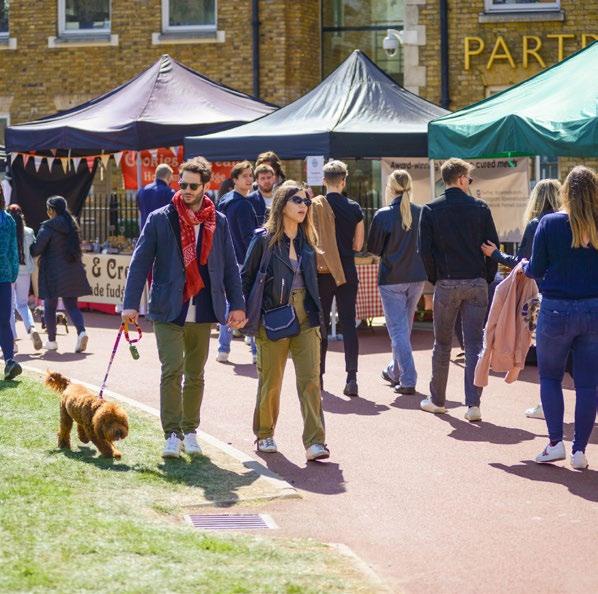

CASE STUDY EXPLORING REUSE
To improve resource circularity and minimise material loss from retailer fitouts and redevelopment works, we trialled a community reuse platform to donate items of furniture for local reuse. In 2021 we disposed of over a tonne of waste through this route: 41 items which supported over 80 people, predominantly in education and training sectors.
Challenges included public access to a live construction site, lack of interest in items beyond furniture, and time intensive management, which made this a very useful learning experience. As a result, we have engaged with a panel of reuse facilitators to suit different situations, and tackled waste arising from leases by adjusting dilapidation processes and proactively addressing potential waste through tenant engagement and our green leases. We look forward to continuing to innovate with partners across our value chain to improve circularity.
Right Duke of York Square Fine Food Market
Below Dr Bike at Duke of York Square
Reducing water is one of the most challenging targets in our Chelsea 2030 strategy, as 70% is consumed by occupier operations and outside our control. However, as a precious resource under threat from climate change, addressing water use and conservation is becoming increasingly urgent.
Target 7
50% reduction in mains water consumption by 2030
From a baseline of 408,594m3 in 2019, we have already achieved a saving of 47% – largely due to the impact of COVID restricting occupier operations and impacting data quality. We will continue assessing performance for another year, and improving data quality, before deciding if we should adjust our 2030 target.
Reductions in landlord water consumption have been driven by efficiency measures and leak detection – which will be further supported through 2022 with waterefficient design and the installation of smart meters to accurately measure water consumption. We are also reviewing the possibility of greater provision of water for irrigation and non-potable uses from rainwater and greywater harvesting – something that is challenging on an historic estate.
Occupier engagement is key to realising water savings – with the vast majority of data estimated, better data quality is essential to informing opportunities to improve.


Employment and skills
Wellbeing and Culture
Target 8
Maximise local employment and skills development
In 2019, unemployment in RBKC was 5.7%. Despite the economic disruption of Brexit and COVID since then, unemployment is decreasing – to 5.1% in 20216 (albeit disproportionately across different groups – unemployment was still 8% for minority ethnic communities). This is contributing to a widely reported challenge in recruitment, particularly in retail and hospitality sectors. We have identified three potential causes: lack of awareness of the roles available, lack of interest in retail and hospitality sectors and lack of skills to meet the job requirements.
With such a concentration of retail and hospitality jobs in Chelsea, we are in an excellent position to support recruitment. Working in partnership with RBKC, we have together recruited an Employment Opportunities Coordinator. The aim is to proactively create employment opportunities for local residents – including marginalised communities, young people and the long-term unemployed – by understanding the needs of individuals, communities and employers and finding creative ways to bring them together. This includes identifying transferable skills and opportunities to reskill and upskill, helping to achieve potential and identifying good quality, sustainable opportunities.
By building extensive networks and facilitating connections between local businesses and potential candidates, this role can support local quality recruitment in a targeted way. Following this appointment, the final quarter of 2021 saw 14 employers across hospitality and retail engaged, 29 local opportunities shared and approximately 40 candidates submitted for these roles.
In addition, we encourage more diversity in the property industry through participating in the Pathways to Property initiative by the Reading Real Estate Foundation, providing work experience and guidance to young people who might otherwise not have access to such opportunities. Together with our school engagement, 75 individuals were engaged in targeted skills development and access to work in 2021.
We will continue to focus on tackling the challenges identified above, scaling up pre-employment skills training to build customer service, confidence and employability skills to meet the needs of local businesses
CASE STUDY
ST GILES TRUST JOB CLUB
St Giles Trust is a charity that uses expertise and real-life past experiences to empower and engage people held back by poverty, exploited, abused, dealing with addiction or mental health problems, or caught up in crime. Through Cadogan and the Kensington + Chelsea Foundation’s
sponsorship, St Giles Trust created a new Job Club in RBKC in 2021, supporting clients to get into work placements and education, as well as applications for Universal Credit and identification (such as passports or driving licenses). These workshops have seen incredibly high levels of interest, with young people very eager to engage. In 2021, 28 people were supported into employment through this service.

Health and wellbeing
Target 9
Make a measurable improvement to our communities’ health and wellbeing
With particular focus on the health and wellbeing issues affecting RBKC, Chelsea 2030 focuses on creating healthy spaces and supporting community wellbeing.
Our baseline was created using publicly available datasets which do not change regularly: AHAH7, Local Authority Health Profile, and Index of Multiple Deprivation.

These provide great insight into community needs and opportunities for Cadogan to positively impact RBKC’s health and wellbeing, with 2,600 people positively impacted by health interventions in 2021.
Over 2,500 individuals used the Duke of York Square running track in 2021, for everything from yoga to running, to children’s playtime and youth club sports. Together with our extended and improved cycling infrastructure, including parking and free cycle servicing through Dr Bikes, we will continue to promote active travel and diversified access to physical activity.
We also hosted the borough’s Vaccine Bus in 2021, bringing unbiased facts and information about COVID to the community and administering over 100 vaccinations.
Our collective awareness of the impact our surroundings have on our physical and mental health has never been more acute. To this end, we are integrating the recommendations of FitWel and WELL healthy building standards into our developments, targeting full certification in conjunction with occupiers. We manage our public realm, gardens and open spaces to improve local air quality and enable community connection with urban nature (see ‘Green Infrastructure on page 46).
In late 2021, we engaged with SMART (St Mary Abbots Rehabilitation and Training) to provide mental health support through CASE STUDY NURTURING MENTAL HEALTH
gardening. By using our greenhouse to grow seedlings to sell and food to use in SMART’s café, local vulnerable people have the opportunity to develop skills, build connections and enjoy light exercise in a nurturing environment.
Opposite Duke of York Square’s weekly run club
Below
Local school children help with planting

Community Cohesion
Target 10
Enhance community cohesion between local stakeholders
RBKC is one of the most diverse communities in the country8, with incredible opportunities and significant challenges. The borough is usually associated with affluence, yet a quarter of RBKC’s working residents earn less than the London Living Wage.
Our strategy for supporting and delivering social value in Chelsea is framed around creating inclusive and accessible spaces and supporting Chelsea’s creative culture – which together encourage meaningful connections with Chelsea and each other.
In 2021 we began a review of the Estate, creating publicly available accessibility information and identifying opportunities to work with RBKC and other partners to

improve the accessibility of the physical Estate.
We actively seek ways to contribute to thriving local communities and work closely with local groups, charities, educational and religious bodies as well as supporting cultural attractions.
Aside from supporting local cultural icons such as the Saatchi Gallery and Royal Court Theatre, Cadogan owns and operates the 900 seat Cadogan Hall, which in addition to being home of the Royal Philharmonic Orchestra, hosts a diverse programme of music, debate and performance each year. This is a philanthropic enterprise aimed at contributing to the broad and varied cultural offer of Chelsea.
Our programme of over 60 complimentary events for the community this year included a trail of 50 life-size elephant sculptures to raise awareness and funds for wildlife charity CoExistence, and a Chelsea Christmas Lights Switch-on in support of the Kensington & Chelsea Christmas Collective (a group of frontline charities who reach residents in financial hardship or facing a lonely and isolated Christmas). As Principal Supporters of K&C Art Week and Summer Festival, we funded and curated a public art trail from experimental artist Lauren Baker entitled “Light Messages for Your Soul” with a series of neon installations inspired by iconic locals such as Vivienne Westwood, Oscar Wilde and The Beatles. Weekends throughout summer saw pop-up performance hubs at Duke of York Square, King’s Road and Pavilion Road welcome live performances –from musicians, poets, singers and recordbreaking Bubbleologists – to cheer local residents and visitors alike.
Kensington + Chelsea Foundation Impact Report 2020-21 8
CASE STUDY ST GILES TRUST SOS PROGRAMME
Since 2020 we have funded a case worker at St Giles Trust, focused on reaching young people who are at risk or involved in Child Criminal Exploitation and serious youth violence. Through intensive mentoring and dedicated support in moving away from criminal activity, St Giles Trust help young people find positive alternatives and reintegrate into mainstream education. Of the 41 clients the Cadogan-sponsored
case worker supported in 2021, 36 clients were supported into employment, training or mainstream education, 7 clients safely exited gangs and 20 reported improved wellbeing. In addition, a summer programme organised and run by the case worker offered direct and targeted support to young people at risk of mental health struggles and negative lifestyle choices – resulting in a reduction in local youth violence and crime rates, and 9 clients supported into education, apprenticeships or employment.
Opposite ‘Strawberries and Screen’, part of the community events programme Below Duke of York Square

Charity
Delivering social value has been Cadogan’s central stewardship ethos for over 300 years.
Targets 11-12
Facilitate increase in charitable giving and deliver twinning programme
In recent years, community impact is measured through the B4SI Framework. In 2021, Cadogan’s total direct and indirect social contribution was £291,500 benefitting over 3,600 people – a 200% increase on 2019.
This was delivered through community investment initiatives benefitting local schools, youth clubs and religious institutions, and supporting charity fundraising events from Glassdoor’s annual sleep out in Duke of York Square to emergency clothes collections for refugees arriving in Kensington & Chelsea. In addition, Cadogan colleagues have spent their time supporting local charity events, mentoring local people, and volunteering with the NHS.
Over £1.1 million is also committed each year as rental subsidies for affordable, community and key worker housing. This allows many people who support our local community to live here, including NHS staff, police, transport workers, firefighters and teachers.

The Cadogan Charity
The Cadogan Charity is managed by the Cadogan family separately from business operations and has continued to grant donations to both local and national charities – over £12m over the last five years to causes including London’s Air Ambulance service, The Children’s Trust, Wellbeing of Women, Glassdoor, Prince’s Trust and Alzheimer’s UK, in addition to national cultural icons such as the Natural History Museum and Royal Hospital.
In addition, the family also supports and chairs the London Playing Fields Foundation which transforms lives through sport and physical activity by protecting and promoting London’s playing fields; running social inclusion projects and directly managing several grounds across the capital.
CASE STUDY REACHING THOSE WHO NEED IT MOST, KENSINGTON + CHELSEA FOUNDATION
With our principal sponsorship of the K+C Foundation in its third year, we are able to support grassroots initiatives across the borough and deliver meaningful change. Recent projects delivered with the K+C Foundation include:
• Tackling the digital divide through provision of laptops to local youth organisations, offering young people additional educational support after school and during school holidays. Whilst young people are in school, the laptops are used to build digital skills and confidence in marginalised communities.
• Bringing joy to isolated and disadvantaged local residents through the Christmas Collective. Christmas hampers reached over 10,800 people, including giving a gift to over 3,000 children.
In 2021, the K+C Foundation published research on the borough’s often stark inequalities; despite Kensington and Chelsea featuring in the top 10% of UK local economies, 1 in 5 neighbourhoods are amongst the 20% most income deprived and 24% of children live in poverty. The research findings have shaped the K+C Foundation’s priorities: improving mental health, addressing educational inequalities, and increasing skills and meaningful employment. These align perfectly with our Chelsea 2030 goals and we are looking forward to continue working in partnership with K+C Foundation to deliver lasting change.
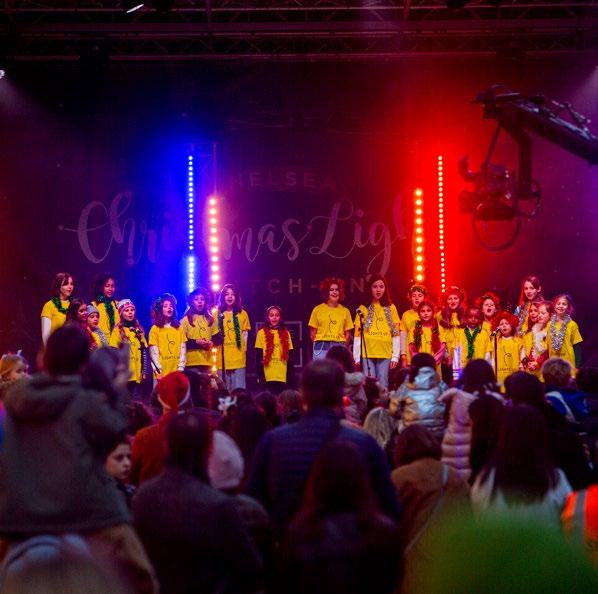
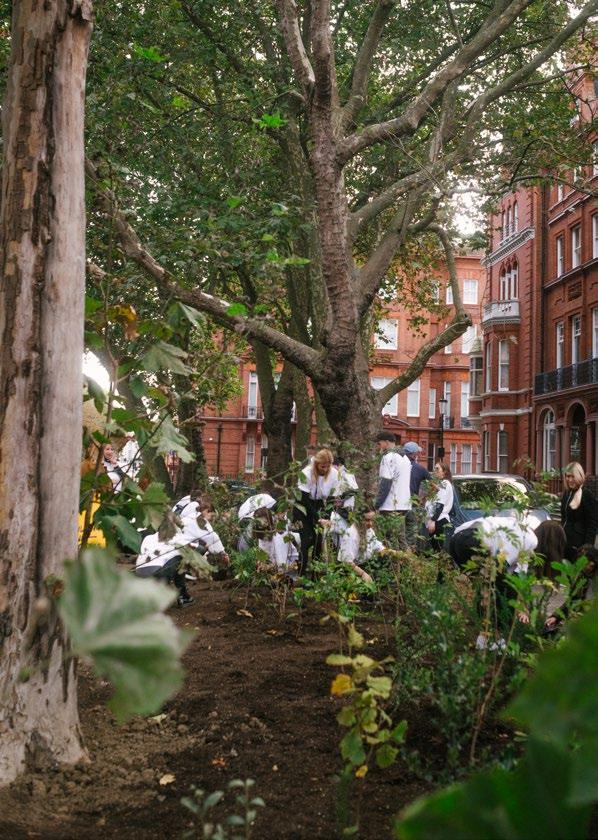
Opposite Kensington + Chelsea Foundation. Credited to P3 Play Services
Top Chelsea Christmas Lights switchon in support of the Christmas Collective
Right Greening project volunteers
Methodology and Governance
This GRI-compliant report, for the 2021 reporting period, follows UK Green Building Council and Better Buildings Partnership Climate Change Commitment frameworks for carbon reporting, specifically Scope 3. Calculation methodologies have remained the same as the baseline, with three exceptions. Firstly, we have used actual embodied carbon data in place of estimates based on cost, where this information is available. Secondly, we have included diesel (stationary fuels) in landlord energy and calculated this through an estimation of equipment run time. Thirdly, we have recalculated tenant emissions based on more robust Building Energy Efficiency Survey (BEES) benchmarks and included all commercial and assured shorthold tenancies. This has led to the restatement of 2019 and 2020 emissions data.
The GRI Standard Disclosure References can be found on page 106.
DEFRA 2021 emissions factors have been used. All environmental targets reflect the boundary of The Cadogan Estate, including all Estate-owned buildings and investments. Where Cadogan has operational control or purchases fuels, these emissions are reported as landlord, in Scopes 1 and 2. Tenant purchased utilities are reported in Scope 3. In 2021, two new properties were added and none were removed from the reporting scope.
Energy consumption is reported as kWh and no normalisation technique is applied. Carbon emissions are reported as tonnes of carbon dioxide equivalent (tCO2e), and electricity emissions are reported on a location-based basis. For the first time we have obtained external limited assurance for our Scopes 1 and 2 carbon emissions – please see more details below. We also intend to obtain limited assurance for principal Scope 3 categories next year. Since the Board’s approval of our ten-year sustainability vision, “Chelsea 2030”, there has been increasing focus on the costs associated with not only meeting a tightening legislative landscape, but decarbonising to meet our net zero ambition, and responding to the physical impacts of climate change.
Our Chief Executive has overall responsibility for climaterelated risks and opportunities. The Board is updated on our sustainability and climate-related performance at least once a year and has overall responsibility for oversight of risk, undertaking an annual assessment of the principal risks, which include climate-related risks. Key performance indicators of Chelsea 2030 are reported internally on a quarterly basis, updating the full Board every six months on progress.
Ongoing oversight of climate-related issues is led by our Head of Sustainability with support from all departments. Our commitment to address climate change risks is embedded across the business with all teams owning climate-related targets.

The Board recognises the regulatory drive towards Taskforce for Climate-Related Financial Disclosure (“TCFD”), and this report documents how Cadogan has incorporated TCFD recommendations where possible and continues to develop its reporting.
TCFD PILLAR RELEVANT INFORMATION
GOVERNANCE Our Community, page 60
STRATEGY
RISK
Property Portfolio, pages 14 to 15 Strategic Report, pages 38 and 60
Approach to Risk Management, pages 30 to 35
METRICS & TARGETS Our Community, pages 39 to 42
Over the past year, a climate risk study has been carried out, assessing Cadogan’s resilience in different climate scenarios. More information on the results from this assessment can be seen on pages 33 to 35.
Independent Assurance Statement to the Directors of Cadogan Group Limited
Ernst & Young LLP have provided limited independent assurance over the published metrics, identified by †, in accordance with the International Standard on Assurance Engagements (ISAE3000). Ernst & Young’s full unqualified assurance statement can be found at EY Independent Assurance Statement.
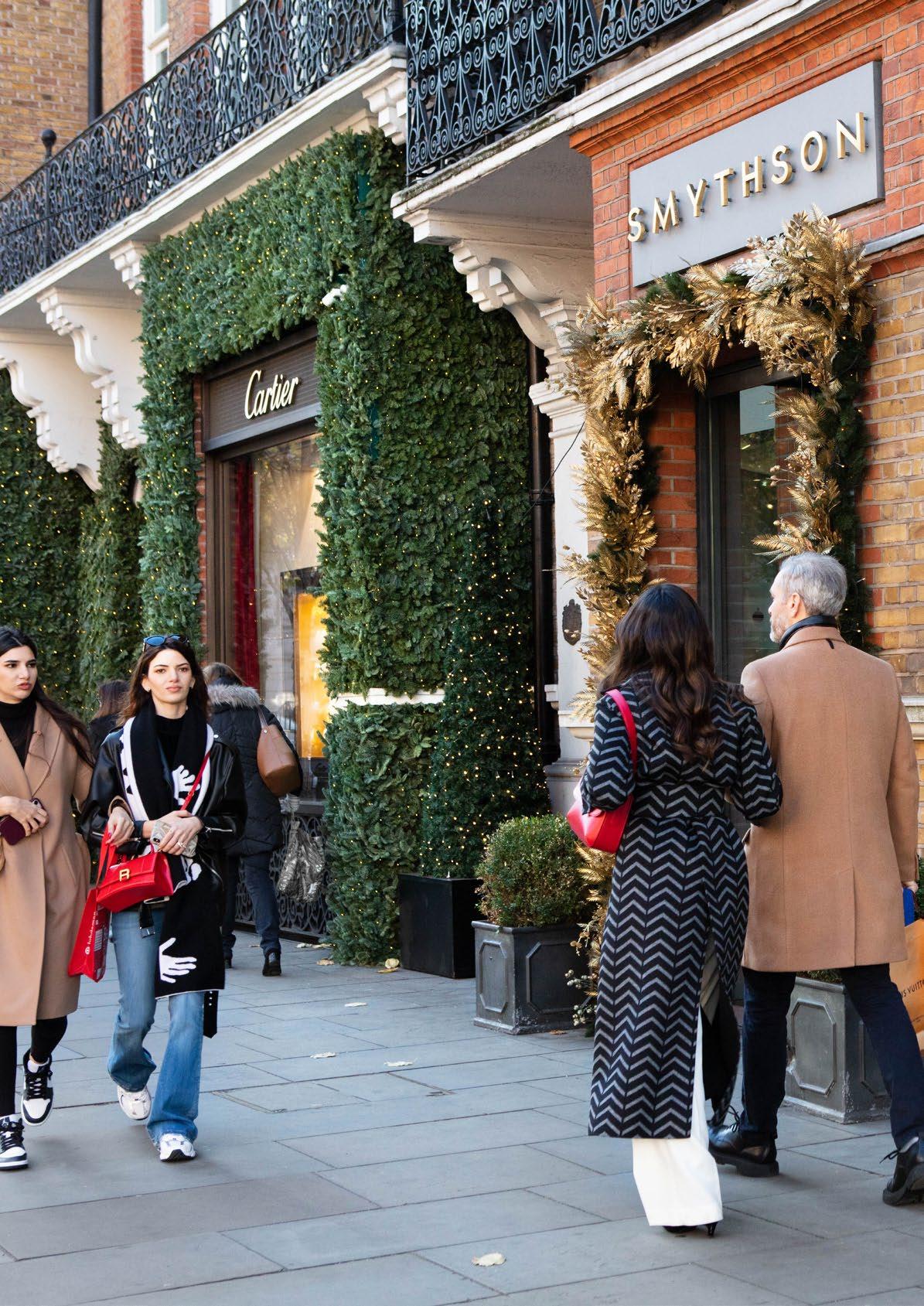
Customer Commitment

We are committed to delivering an outstanding experience for our customers, both living and working on the Estate, to ensure long lasting relationships. This contributes towards a strong sense of community across the neighbourhood, as well as supporting the business.
We listen carefully to feedback from our customers and respond accordingly where we can. We receive realtime feedback through our customer research partner RealService* which provides us with the means to continually improve the customer experience and helps shape our business strategy.
Communication and engagement
We seek to maintain a regular dialogue with our customers, neighbours and the wider community throughout the year. This helps us to understand their priorities and work in partnership, as well as keeping them informed.
Local engagement
We are constantly investing in upgrading the Estate through maintenance, restoration, refurbishment and redevelopment activities. This allows us to enhance the wider environment and deliver homes and business space that meets the needs of our customers.
Our aim is to be exemplary in the way in which we consult and engage locally, because it is crucial to understand local views and keep the community informed. Through this approach we aim to be the most trusted local developer, able to adapt and respond to the changing needs of society, customers and markets. This helps to ensure the area remains relevant and desirable to both residents and visitors, now and for the future.
84% Overall Customer Satisfaction
91% Responsiveness
85% Ease of working
Customer and stakeholder communication
From the ‘welcome pack’ received on arrival to the Estate, we communicate frequently with our retail customers. This includes regular newsletters and seminars to update them on neighbourhood news (from footfall trends to new openings, public realm investment and lobbying campaigns) and working alongside them on a destination marketing and events programmes.
Both our residential and commercial customers receive complimentary access to our premium concierge service, Cadogan Concierge, which assists with day to day demands as well as bringing our community closer together – retail customers benefit from reaching an exclusive residential audience, while our residents enjoy invitations and exclusive offers from the array of shops, restaurants and cultural attractions on their doorstep. Our newsletters, magazines and digital channels ensure that we keep audiences across the Estate informed. From Sloane Square magazine to Cadogan VIP and destination websites, newsletters and social feeds from Sloane Street, King’s Road, Duke of York Square and Pavilion Road, each works independently to reach a combined audience of over 230,0009 both locally and beyond, keeping followers up to date and creating continual reasons to enjoy the local area, or visit Chelsea.
The team “on the ground” includes multilingual Welcome Ambassadors to provide a friendly face to visitors who may need assistance – and Area Supervisors who live locally and are key to our customer facing service provision. The latter are first responders, central to our 24/7 emergency response capability and carry out regular inspections of all buildings. The regular feedback on this team consistently highlights how approachable, friendly, helpful and knowledgeable they are.
This extensive information helps customers become familiar with the area and with their new home or business space, as well as informing them of the services that we provide.
Our suppliers
We work with a wide range of external advisors, contractors, suppliers and partners – and particularly value long-term relationships with people and organisations who share our values and desire to deliver excellent results. They are expected to operate ethically and responsibly, ensure high standards of health and safety and support a positive relationship with our customers and the communities within which we operate. We pride ourselves on being a good client that consistently treats our suppliers fairly and transparently, while expecting commercially competitive outcomes.
We host events and webinars for groups such as construction contractors, through which we can share
knowledge and best practice on topics including health and safety, environmental management, heritage and community engagement. In particular, through 2021 we offered our suppliers tangible support and pilot projects on carbon footprinting and environmental assessment, transition to electric vehicles and improved resource circularity. This partnership approach receives much positive feedback, especially at turbulent times such as the last year.
Our suppliers are selected carefully because we see them as an extension of our own team, working in genuine collaboration, motivated by the same values and highest of standards.
Statement of Compliance with Section 172 of Companies Act 2006
Throughout 2021, the Directors have performed their duty to promote the success of the Company under section 172 of the Companies Act 2006, taking consideration of:
- the likely long-term consequences of decisions - the interests of stakeholders, including amongst others: employees, customers, suppliers, local authorities and local communities, by engaging with them to understand the issues to which they must have regard - the impact of our actions on our local communities and the environment
- the company’s purpose and values including maintaining a reputation for high standards of business conduct - the need to act fairly between members of the company
The Cadogan Group has an association of over 300 years with Chelsea, where it has been and remains the largest landowner. The Group has always taken a long-term view, promoted by its members who see it as their duty to hand over the business to the next generation in a better condition than they inherited it, and strongly supported by the Board. The Group’s success is judged by its members not only on measures of commercial returns but also its reputation, based on the way it deals with and treats its stakeholders and local communities.
Our core objectives, set out in page 2 of this report, encapsulate the above.
More information on the Group, its purpose and relationships with stakeholders is provided in the Strategic Report on pages 8 to 35, Our Community on pages 36 to 65 and our website www.cadogan.co.uk
SANJAY PATEL FINANCE DIRECTOR
28 April 2022
RealService is a leading independent customer experience consultancy. 9 *
Combined audience of Cadogan owned channels across print, digital and social as of March 2022.
Awards and Recognition
OUR RECENT AWARDS AND RECOGNITION INCLUDE:



PROPERTY WEEK AWARDS “ BEST COVID RESPONSE ” CADOGAN
A GREAT BRITISH BRAND CADOGAN
AJ ARCHITECTURE AWARDS “ LEISURE ” CATEGORY
For the Duke of York Restaurant
LABC BUILDING EXCELLENCE AWARDS “ BEST NON-RESIDENTIAL CONVERSION ” For 193-195 Sloane Street
LABC BUILDING EXCELLENCE AWARDS “ BEST MEDIUM VOLUME NEW HOUSING DEVELOPMENT ” For Colette Court
LABC BUILDING EXCELLENCE AWARDS “ BEST INDIVIDUAL NEW HOME ” For 189 Pavilion Road
LABC BUILDING EXCELLENCE AWARDS
“ BEST NON-RESIDENTIAL EXTENSION OR ALTERATION ” For 189 Rossetti Studios

BUILDING INNOVATION AWARDS “ COMMERCIAL BUILDING OF THE YEAR ” For the Duke of York Restaurant
RIBA AWARDS SHORTLIST
For the Duke of York Restaurant



LONDON LIFESTYLE AWARDS
SHORTLISTED FOR “ LONDON'S FAVOURITE LIFESTYLE STREET ” For the King's Road and Duke of York Square
CIVIC TRUST AWARDS HIGHLY COMMENDED For the Duke of York Restaurant
LUXURY LIFESTYLE MAGAZINE
SHORTLISTED FOR “ BEST BOUTIQUE HOTEL” AND FOR “ BEST HOTEL FOR FOOD ” For The Cadogan Hotel


Governance and Financial Statements

LIFE PRESIDENT
DIRECTORS
* Non-executive
Directors and Secretary
SECRETARY
REGISTERED OFFICE
COMPANY NUMBER
AUDITOR
THE EARL CADOGAN KBE DL
VISCOUNT CHELSEA DL* Chairman
THE HON. JAMES BRUCE* Deputy Chairman
HUGH SEABORN CVO Chief Executive
SANJAY PATEL Finance Director
CHARLES ELLINGWORTH*
JOHN GORDON*
HARRY MORLEY*
DAME ALISON NIMMO DBE*
FRANCIS SALWAY*
PAUL LOUTIT
10 DUKE OF YORK SQUARE , LONDON SW3 4LY UNITED KINGDOM
2997357
ERNST & YOUNG LLP 1 MORE LONDON PLACE, LONDON SE1 2AF

Directors’ Report
The directors present their report and the financial statements for the year ended 31 December 2021.
Principal Activity and Review of the Business
The principal activity of the Group during the year continued to be property investment. The Group’s other activities include the operation of a concert hall and hotels. A review of the Group’s business during 2021 and its future prospects is contained in the Strategic Report on pages 10 to 35.
Dividends
Interim dividends of £34,119,000 (2020 – £17,409,000) were declared and paid during the year.
Risk Management
A summary of the principal risks and uncertainties has been included in the Strategic Report on pages 30 to 35.
Directors
Of the directors listed on page 68, all held office for the financial year and up to the date of this report except Dame Alison Nimmo who was appointed to the board on 10 March 2022.
The ultimate holding company maintains liability insurance for its directors and officers and for those of its subsidiaries in respect of proceedings brought by third parties, subject to the conditions set out in section 234 of the Companies Act 2006. Such qualifying third party indemnity provision remains in force as at the date of approving the Directors’ Report.
Charitable Contributions
The Group’s direct charitable contributions for the year were £273,000 (2020 –£497,000). In addition, the Cadogan Charity, a shareholder in the company, makes donations to a variety of local and national charities.
Going Concern
The Group’s business activities, together with the factors likely to affect its future development, its financial position, financial risk management objectives, details of its financial instruments and derivative activities, and its exposures to price, credit, liquidity and cash flow risk are set out in the Strategic Report on pages 10 to 35.
The Group has considerable financial resources derived from an established investment property portfolio in prime central London. The Group has substantial long-term committed financing arrangements and has access to overdraft and revolving credit facilities from its bankers. The overdraft is renewed annually and therefore not committed for the full review period.
The directors have considered the appropriateness of adopting the going concern basis in preparing the financial statements for the year ended 31 December 2021 taking into account the continuing impact of COVID-19 and new inflationary pressures on the economy, consumers and our occupiers. The assessment is based on the Group’s experience of COVID-19 on its business over the last two years and financial forecasts for the periods to 30 June 2023 overlaid with a severe but plausible downside COVID-19 scenario.
The budget for 2022 has been prepared prudently based on actual experience during 2021 as a result of the pandemic, but assuming an improvement in leasing and rent collection experience. Rent receipts reflect our experience of the most recent quarters, which shows improved, but not back to pre-pandemic, levels of collection, development and investment activity increases. Property values are assumed to stay flat in 2022.
The Group has also assessed a severe but plausible downside scenario based on the occurrence of a new variant of the virus resulting in a lockdown of the scale of the first one in March 2020. This would disrupt trading for our retail, leisure and hospitality occupiers, damaging their cash flow and ability to pay rent. Trading would take at least 12 months to recover. The main impacts would be a further fall in
property values, a steep decline in rent collections during the lockdown period, with a slow recovery thereafter and an increase in impairments and rent concessions.
For both years, we have assumed there would be no new financing activity other than repayments of maturing private placement loan notes of £15m in December 2022 and £11.6m in August 2023, annual payments in March of £4m on a long term loan and the receipt of £100m in December 2022 from the delayed drawdown of a private placement undertaken in 2021.
The severe but plausible downside scenario modelled demonstrates that over the period to 30 June 2023 the Group has significant liquidity to fund its ongoing operations and is operating with ample headroom above its debt financing covenants without the need to rely on raising new financing. Asset values would have to fall by 39% from 2021 closing values when the covenant is measured as at 31 December 2022 and by 36% from closing 2021 values over two years as at 31 December 2023 to breach the gearing covenant. To breach the interest cover covenant, operating profit before capital items would have to fall by 45% compared to budget in 2022 and by 55% compared to the forecast for 2023.
Based on these considerations, our experience of the actual impact of COVID-19 on the business over nearly two years and the directors’ knowledge of Cadogan’s property portfolio and the market in which we operate, the directors have a reasonable expectation that the group has adequate resources to continue in operational existence for the review period to 30 June 2023. Accordingly, they continue to adopt the going concern basis in preparing the annual report and financial statements.
Directors' Responsibilities Statement
The directors are responsible for preparing the annual report and financial statements in accordance with applicable law and regulations.
Company law requires the directors to prepare financial statements for each financial year. Under that law the directors have elected to prepare the financial statements in accordance with United Kingdom Generally Accepted Accounting Practice (United Kingdom Accounting Standards and applicable law), including FRS 102. Under company law the directors must not approve the financial statements unless they are satisfied that they give a true and fair view of the state of affairs of the Group and the company and of the profit or loss of the Group for that period. In preparing those financial statements, the directors are required to:
- select suitable accounting policies and then apply them consistently;
- make judgements and estimates that are reasonable and prudent;
- state whether applicable UK Accounting Standards have been followed, subject to any material departures disclosed and explained in the financial statements; and
- prepare the financial statements on the going concern basis unless it is inappropriate to presume that the company will continue in business.
The directors are responsible for keeping adequate accounting records that disclose with reasonable accuracy at any time the financial position of the Group and to enable them to ensure that the financial statements comply with the Companies Act 2006. They are also responsible for safeguarding the assets of the Group and hence for taking reasonable steps for the prevention and detection of fraud and other irregularities.
The directors are responsible for the maintenance and integrity of the corporate and financial information included on the Group’s website. Legislation in the United Kingdom governing the preparation and dissemination of financial statements may differ from legislation in other jurisdictions.
Disclosure of Information to the Auditor
So far as each person who was a director at the date of approving this report is aware, there is no relevant audit information, being information needed by the auditor in connection with preparing its report, of which the auditor is unaware. Having made enquiries of fellow directors and the Group’s auditor, each director has taken all the steps that he is obliged to take as a director in order to make himself aware of any relevant audit information and to establish that the auditor is aware of that information.
Auditor
A resolution concerning the re-appointment of Ernst & Young LLP as auditor will be proposed at the forthcoming annual general meeting.
By order of the board
PAUL LOUTIT SECRETARY
28 April 2022
Independent Auditor’s Report
To the Members of Cadogan Group Limited
Opinion
We have audited the financial statements of Cadogan Group Limited (“the parent company”) and its subsidiaries (the “group”) for the year ended 31 December 2021 which comprise the Consolidated Income Statement, Consolidated and Company Statements of Comprehensive Income, Consolidated and Company Statements of Changes in Equity, Consolidated and Company Statements of Financial Position and the related notes 1 to 23, including a summary of significant accounting policies. The financial reporting framework that has been applied in their preparation is applicable law and United Kingdom Accounting Standards including FRS 102 “The Financial Reporting Standard applicable in the UK and Republic of Ireland” (United Kingdom Generally Accepted Accounting Practice).
In our opinion, the financial statements:
• give a true and fair view of the group’s and of the parent company’s affairs as at 31 December 2021 and of the group’s loss for the year then ended;
• have been properly prepared in accordance with United Kingdom Generally Accepted Accounting Practice; and
• have been prepared in accordance with the requirements of the Companies Act 2006.
Basis for opinion
We conducted our audit in accordance with International Standards on Auditing (UK) (ISAs (UK)) and applicable law. Our responsibilities under those standards are further described in the Auditor’s responsibilities for the audit of the financial statements section of our report. We are independent of the group in accordance with the ethical requirements that are relevant to our audit of the financial statements in the UK, including the FRC’s Ethical Standard, and we have fulfilled our other ethical responsibilities in accordance with these requirements.
We believe that the audit evidence we have obtained is sufficient and appropriate to provide a basis for our opinion.
Conclusions relating to going concern
In auditing the financial statements, we have concluded that the directors’ use of the going concern basis of accounting in the preparation of the financial statements is appropriate.
Based on the work we have performed, we have not identified any material uncertainties relating to events or conditions that, individually or collectively, may cast significant doubt on the group and parent company’s ability to continue as a going concern for a period to 30 June 2023.
Our responsibilities and the responsibilities of the directors with respect to going concern are described in the relevant sections of this report. However, because not all future events or conditions can be predicted, this statement is not a guarantee as to the group’s or company’s ability to continue as a going concern.
Other information
The other information comprises the information included in the annual report, other than the financial statements and our auditor’s report thereon. The directors are responsible for the other information contained within the annual report.
Our opinion on the financial statements does not cover the other information and, except to the extent otherwise explicitly stated in this report, we do not express any form of assurance conclusion thereon. Our responsibility is to read the other information and, in doing so, consider whether the other information is materially inconsistent with the financial statements or our knowledge obtained in the course of the audit or otherwise appears to be materially misstated. If we identify such material inconsistencies or apparent material misstatements, we are required to determine whether this gives rise to a material misstatement in the financial statements themselves. If, based on the work we have performed, we conclude that there is a material misstatement of the other information, we are required to report that fact.
We have nothing to report in this regard.
Opinions of other matters prescribed by the Companies Act 2006
In our opinion, based on the work undertaken in the course of the audit:
• the information given in the strategic report and the directors’ report for the financial year for which the financial statements are prepared is consistent with the financial statements; and
• the strategic report and directors’ report have been prepared in accordance with applicable legal requirements.
Matters on which we are required to report by exception
In the light of the knowledge and understanding of the group and the parent company and its environment obtained in the course of the audit, we have not identified material misstatements in the strategic report or directors’ report.
We have nothing to report in respect of the following matters in relation to which the Companies Act 2006 requires us to report to you if, in our opinion:
• adequate accounting records have not been kept, or returns adequate for our audit have not been received from branches not visited by us; or
• the parent company financial statements are not in agreement with the accounting records and returns; or certain disclosures of directors’ remuneration specified by law are not made; or
• we have not received all the information and explanations we require for our audit
Responsibilities of directors
As explained more fully in the directors’ responsibilities statement set out on pages 70 to 71, the directors are responsible for the preparation of the financial statements and for being satisfied that they give a true and fair view, and for such internal control as the directors determine is necessary to enable the preparation of financial statements that are free from material misstatement, whether due to fraud or error.
In preparing the financial statements, the directors are responsible for assessing the group’s and the parent company’s ability to continue as a going concern, disclosing, as applicable, matters related to going concern and using the going concern basis of accounting unless the directors either intend to liquidate the group or the parent company or to cease operations, or have no realistic alternative but to do so.
Auditor's responsibilities for the audit of the financial statements
Our objectives are to obtain reasonable assurance about whether the financial statements as a whole are free from material misstatement, whether due to fraud or error, and to issue an auditor’s report that includes our opinion. Reasonable assurance is a high level of assurance, but is not a guarantee that an audit conducted in accordance with ISAs (UK) will always detect a material misstatement when it exists. Misstatements can arise from fraud or error and are considered material if, individually or in the aggregate, they could reasonably be expected to influence the economic decisions of users taken on the basis of these financial statements.
Explanation as to what extent the audit was considered capable of detecting irregularities, including fraud
Irregularities, including fraud, are instances of noncompliance with laws and regulations. We design procedures in line with our responsibilities, outlined above, to detect irregularities, including fraud. The risk of not detecting a material misstatement due to fraud is higher than the risk of not detecting one resulting from error, as fraud may involve deliberate concealment by, for example, forgery or intentional misrepresentations, or through collusion. The extent to which our procedures are capable of detecting irregularities, including fraud is detailed below. However, the primary responsibility for the prevention and detection of fraud rests with both those charged with governance of the entity and management.
Our approach was as follows:
• We obtained an understanding of the legal and regulatory frameworks that are applicable to the company and determined that the most significant are those that relate to the reporting framework (United Kingdom Accounting Standards including FRS 102 The Financial Reporting Standard applicable in the UK and Republic of Ireland and the Companies Act 2006).
• We understood how Cadogan Group Limited is complying with those frameworks through enquiry with management, those responsible for legal and compliance procedures and the Company Secretary to understand how the group and the parent company maintains and communicates its policies and procedures in these areas. We corroborated our enquiries through our review of the Board meeting minutes and noted that there was no contradictory evidence.
• We assessed the susceptibility of the group’s and parent company’s financial statements to material misstatement, including how fraud might occur by
meeting with management to understand where they considered there was susceptibility to fraud; determining which account balances are subjective in nature; understanding the key performance indicators; and considering the processes and controls which the group and the parent company have established to prevent and detect fraud, and how those controls are monitored.
• Based on this understanding we designed our audit procedures to identify noncompliance with such laws and regulations. Our procedures involved enquiry of members of senior management, and when appropriate those charged with governance regarding their knowledge of any noncompliance or potential noncompliance with laws and regulations that could affect the financial statements and reading minutes of meetings of those charged with governance.
A further description of our responsibilities for the audit of the financial statements is located on the Financial Reporting Council’s website at www.frc.org.uk/ auditorsresponsibilities. This description forms part of our auditor’s report.
Use of our report
This report is made solely to the company’s members, as a body, in accordance with Chapter 3 of Part 16 of the Companies Act 2006. Our audit work has been undertaken so that we might state to the company’s members those matters we are required to state to them in an auditor’s report and for no other purpose. To the fullest extent permitted by law, we do not accept or assume responsibility to anyone other than the company and the company’s members as a body, for our audit work, for this report, or for the opinions we have formed.
BOB FORSYTH SENIOR STATUTORY AUDITOR
For and on behalf of Ernst & Young LLP, Statutory Auditor London
11 May 2022

Financial Statements
Consolidated Income Statement For the year ended 31 December 2021
Notes 1 to 23 form an integral part of these financial statements.
Statements of Comprehensive Income
For the year ended 31 December 2021
Consolidated Statement of Comprehensive
Company Statement of Comprehensive Income
Notes 1 to 23 form an integral part of these financial statements.
Statements of Changes in Equity
For the year ended 31 December 2021
Consolidated Statement of Changes in Equity
Company Statement of Changes in Equity
Consolidated Statement of Financial Position 31 December 2021
28 April 2022 Notes 1 to 23 form an integral part of these financial statements.
Company Statement of Financial Position
31 December 2021
Viscount Chelsea DL Director Hugh Seaborn Director
28 April 2022
The group financial statements consolidate the financial statements of Cadogan Group Limited and all its subsidiary undertakings drawn up to 31 December each year. No income statement is presented for Cadogan Group Limited as permitted by section 408 of the Companies Act 2006.
Notes 1 to 23 form an integral part of these financial statements.
Consolidated Statement of Cash Flows
For the year ended 31 December 2021
Notes 1 to 23 form an integral part of these financial statements.
Notes to the Financial Statements
FOR THE YEAR ENDED 31 DECEMBER 2021
1. Accounting Policies
(A) STATEMENT OF COMPLIANCE
Cadogan Group Limited is a private company limited by shares incorporated in England (registered number 2997357). The Registered Office is 10 Duke of York Square, London, SW3 4LY.
The financial statements of Cadogan Group Limited were authorised for issue by the Board of Directors on 28 April 2022.
(B) BASIS OF PREPARATION
The Group’s and company’s financial statements have been prepared in compliance with FRS 102.
The financial statements have been prepared on a historical cost basis except investment properties and derivative financial instruments that have been measured at their fair value. The financial statements are prepared in sterling which is the functional currency of the Group and rounded to the nearest £000.
Through the Group’s risk management process a number of material risks to the business were identified including climate risk. By their nature these risks were not identified as a material factor to going concern during the relevant period. However, climate related factors will increasingly influence investment property valuations as relevant property characteristics are valued by the market. To the extent that these exist and are significant they will be embedded in the external valuation provided to the Group and held on the consolidated statement of financial position.
Going concern
The Group’s business activities, together with the factors likely to affect its future development, its financial position, financial risk management objectives, details of its financial instruments and derivative activities, and its exposures to price, credit, liquidity and cash flow risk are set out in the Strategic Report on pages 10 to 35.
The Group has considerable financial resources derived from an established investment property portfolio in prime central London. The Group has substantial long-term committed financing arrangements and has access to overdraft and revolving credit facilities from its bankers. The overdraft is renewed annually and therefore not committed for the full review period.
The directors have considered the appropriateness of adopting the going concern basis in preparing the financial statements for the year ended 31 December 2021 focusing on the continuing impact of COVID-19 and new inflationary pressures on the economy, consumers and our occupiers. The assessment is based on the Group’s experience of COVID-19 on its business over the last two years and financial forecasts for the periods to 30 June 2023 overlaid with a severe but plausible downside COVID-19 scenario.
The budget for 2022 has been prepared prudently based on actual experience during 2021 as a result of the pandemic, but assuming an improvement in leasing and rent collection experience. Rent receipts reflect our experience of the most recent quarters, which shows improved, but not back to pre-pandemic, levels of collection, development and investment activity increases. Property values are assumed to stay flat in 2022.
The Group has also assessed a severe but plausible downside scenario based on the occurrence of a new variant of the virus resulting in a lockdown of the scale of the first one in March 2020. This would disrupt trading for our retail, leisure and hospitality occupiers, damaging their cash flow and ability to pay rent. Trading would take at least 12 months to recover. The main impacts would be a further fall in property values, a steep decline in rent collections during the lockdown period, with a slow recovery thereafter and an increase in impairments and rent concessions.
For both years, we have assumed there would be no new financing activity other than repayments of maturing private placement loan notes of £15m in December 2022 and £11.6m in August 2023, annual payments in March of £4m on a long term loan and the receipt of £100m in December 2022 from the delayed drawdown of a private placement undertaken in 2021.
1. Accounting Policies (continued)
The severe but plausible downside scenario modelled demonstrates that over the period to 30 June 2023 the Group has significant liquidity to fund its ongoing operations and is operating with ample headroom above its debt financing covenants without the need to rely on raising new financing. Asset values would have to fall by 39% from 2021 closing values when the covenant is measured as at 31 December 2022 and by 36% from closing 2021 values over two years as at 31 December 2023 to breach the gearing covenant. To breach the interest cover covenant, operating profit before capital items would have to fall by 45% compared to budget in 2022 and by 55% compared to the forecast for 2023.
Based on these considerations, our experience of the actual impact of COVID-19 on the business over nearly two years and the directors’ knowledge of Cadogan’s property portfolio and the market in which we operate, the directors have a reasonable expectation that the group has adequate resources to continue in operational existence for the review period to 30 June 2023. Accordingly, they continue to adopt the going concern basis in preparing the annual report and financial statements.
Basis of consolidation
The Group financial statements consolidate the financial statements of Cadogan Group Limited and all its subsidiary undertakings drawn up to 31 December each year. No income statement is presented for Cadogan Group Limited as permitted by section 408 of the Companies Act 2006.
Subsidiaries are consolidated from the date of their acquisition, being the date on which the Group obtains control and continue to be consolidated until the date that such control ceases. Control comprises the power to govern the financial and operating policies of the investee to obtain benefits from its activities.
(C) JUDGEMENTS AND KEY SOURCES OF ESTIMATION UNCERTAINTY
The preparation of the financial statements requires management to make judgements, estimates and assumptions that affect the amounts reported for assets and liabilities as at the balance sheet date and the amounts reported for revenues and expenses during the year. However, the nature of estimation means that actual outcomes could differ from those estimates.
The following judgement (apart from those involving estimates) has had the most significant effect on amounts recognised in the financial statements.
Operating lease commitments
The Group has entered into commercial property leases as a lessor on its investment property portfolio.
The classification of such leases as operating or finance lease requires the Group to determine, based on an evaluation of the terms and conditions of the arrangements, whether it retains the significant risks and rewards of ownership of these assets and accordingly whether the lease requires an asset and liability to be recognised in the statement of financial position.
Service charge agency arrangements
Under contractual arrangements the Group provides services to tenants on a passthrough basis with the tenants liable for all such costs. Management has evaluated whether these contractual arrangements mean that the Group is acting as agent or principal by considering the balance of risks and the passing of control between provider of the service and the tenant. As the services are predominantly provided by third parties and are recharged at full cost with no price discretion, management have concluded that the arrangements mean that the Group is acting as an agent and have accounted accordingly on a net bases.
(D) ESTIMATES AND ASSUMPTIONS
The key assumptions concerning the future and other key sources of estimation uncertainty at the reporting date, that have a significant risk of causing a material adjustment to the carrying amounts of assets and liabilities within the next financial year, are described below.
The Group based its assumptions and estimates on parameters available when the financial statements were prepared. Existing circumstances and assumptions about future developments, however, may change due to market changes or circumstances arising that are beyond the control of the Group. Such changes are reflected in the assumptions when they occur.
Revaluation of investment properties
The Group carries its investment property at fair value, with changes in fair value being recognised in the income statement. The Group engaged independent valuation specialists to determine fair value at 31 December 2021. The valuers used market value, in accordance with the Appraisal of Valuation Manual of the Royal Institution of Chartered Surveyors. The determined fair value of the investment property is most sensitive to the estimated yield and estimated rental values. Investment properties under construction are measured based on estimates prepared by independent real estate valuation experts. The key assumptions used to determine the fair value of investment property are further explained in note 11.
Estimation of net realisable value for properties under development
Development property is stated at the lower of cost and net realisable value (“NRV”).
1. Accounting Policies (continued)
NRV for completed development property is assessed by reference to market conditions and prices existing at the reporting date and is determined by the Group, based on comparable transactions identified by the Group for properties in the same geographical market serving the same real estate segment.
NRV in respect of development property under construction is assessed with reference to market prices at the reporting date for similar completed property, less estimated costs to complete construction and an estimate of the time value of money to the date of completion.
Capital gains tax and deferred tax liability
The Group establishes provisions based on reasonable estimates of the expected tax liability under the legislation. The amount of such provisions is based on various factors, such as experience with previous tax audits and takes into account uncertain tax positions where tax authorities could have differing interpretations of tax regulations.
Management estimation is required to determine the amount of deferred tax assets that can be recognised, based upon likely timing and level of future taxable profits together with an assessment of the effect of future tax planning strategies. Further details are contained in note 7.
Impairment of lease receivables
The Group makes an assessment over the recoverability of its lease receivables on a lease by lease basis. Estimation of recovery is judgemental and is based on the Group’s detailed knowledge of the sector in which the tenant operates and the credit risk of the tenant.
Cash flow forecasts
As part of the Group’s assessment of going concern, monthly cash flow forecasts are prepared using estimates and assumptions based on management’s knowledge of the business and the experience of rental receipts, tenant default and expenditure.
Pension and other post-employment benefits
The cost of defined benefit pension plans is determined using actuarial valuations. The actuarial valuation involves making assumptions about discount rates, future salary increases, mortality rates and future pension increases. Due to the complexity of the valuation, the underlying assumptions and the long-term nature of these plans, such estimates are subject to significant uncertainty. In determining the appropriate discount rate, management (as advised by its actuaries) considers the interest rates of corporate bonds in the respective
currency with at least AA rating, with extrapolated maturities corresponding to the expected duration of the defined benefit obligation. The underlying bonds are further reviewed for quality, and those having excessive credit spreads are removed from the population bonds on which the discount rate is based, on the basis that they do not represent high quality bonds. The mortality rate is based on publicly available mortality tables for the UK. Future salary increases and pension increases are based on expected future inflation rates for the UK. Further details are given in note 19.
(E) TURNOVER AND REVENUE RECOGNITION
Revenue is recognised to the extent that the Group obtains the right to consideration in exchange for its performance. Revenue is measured at the fair value of the consideration received, net of VAT and comprises gross rents including reverse premium received on early lease termination, commissions and other fees receivable. Turnover in the hotel and concert hall operations represents amounts derived from the provision of goods and services, stated net of VAT.
The following criteria must also be met before revenue is recognised:
Rental income
The Group is the lessor in operating leases. Rental income arising from operating leases on investment property is recognised in the income statement on a straight-line basis over the lease term, except for contingent rental income which is recognised when it arises.
Lease incentives are recognised as a reduction of rental revenue on a straight-line basis over the term of the lease. The lease term is the non-cancellable period of the lease together with any further term for which the tenant has the option to continue the lease, where, at the inception of the lease, the directors are reasonably certain that the tenant will exercise that option.
Amounts received from tenants to terminate leases or to compensate for dilapidations are recognised in the income statement when the right to receive them arises.
Rent concessions directly because of COVID-19
The FRC has amended FRS 102 in respect of COVID-19 related rent concessions. The Group has granted a number of concessions in the year to tenants, typically in the form of a rent waiver. Where there is a change in rental income arising from rent concessions the Group has granted as a direct result of the COVID-19 pandemic, and all of the following three conditions are met, the concession is recognised as a reduction to revenue over the periods that the change in lease payments is intended to compensate:
1. Accounting Policies (continued)
— the change in rent payments results in revised consideration for the lease that is less than the consideration for the lease immediately preceding the change;
— any reduction in rent payments affects only payments originally due on or before 30 June 2021; and
— there is no significant change to other terms and conditions of the lease.
The total reduction in revenue recognised for rent concessions directly as a result of COVID-19 was £3.1m (2020 – £10.2m).
In addition, the impact of COVID-19 has been assessed on recoverability of the Group’s lease receivables. The review considers the risk profile of tenants based on the detailed knowledge of the asset managers and finance department, including the sector in which the business operates and the credit risk of the tenant.
The Group has recorded an impairment charge in cost of sales on the income statement of £0.6m (2020 – £11.2m) where the result of this review has indicated that there is increased risk over the recoverability of any of these receivables.
Interest income
Interest income is recognised as it accrues using the effective interest rate (“EIR”) method. The EIR is the rate that exactly discounts the estimated future cash receipts over the expected life of the financial instrument or a shorter period, where appropriate, to the net carrying amount of the financial asset. Interest income is included in finance income in the income statement.
(F) TANGIBLE FIXED ASSETS
Plant and equipment are stated at cost less accumulated depreciation and accumulated impairment losses. Such cost includes costs directly attributable to making the asset capable of operating as intended.
Depreciation is provided on all plant and equipment, at rates calculated to write off the cost, less estimated residual value, of each asset on a systematic basis over its expected useful life as follows:
Plant and equipment 7% to 20%
The carrying values of tangible fixed assets are reviewed for impairment when events or changes in circumstances indicate the carrying value not to be recoverable.
(G) LAND AND BUILDINGS
Land and buildings represent owner occupied properties and are initially recognised at cost which includes purchase cost and any directly attributable expenditure of a capital nature only. They are included in the financial statements at fair value at the year end.
The surplus or deficit on revaluation is recognised in the non-distributable reserve and accumulated in the reserve unless a deficit, or its reversal, is below original cost in which case it is recognised in the income statement for the year.
(H) INVESTMENT PROPERTY
Investment property comprises completed property and property under construction or re-development that is held to earn rentals or for capital appreciation or both. Property held under a lease is classified as investment property when it is held to earn rentals or for capital appreciation or both, rather than for sale in the ordinary course of business or for use in production or administrative functions.
Investment property is measured initially at cost, including transaction costs. Transaction costs include transfer taxes, professional fees for legal services and initial leasing commissions to bring the property to the condition necessary for it to be capable of operating. The carrying amount also includes the cost of replacing part of an existing investment property at the time that cost is incurred if the recognition criteria are met.
Subsequent to initial recognition, investment property is stated at fair value, which reflects market conditions at the reporting date. Gains or losses arising from changes in the fair values of investment properties are included in the income statement in the period in which they arise, including the corresponding tax effect. For the purposes of these financial statements, in order to avoid double counting, the fair value reported in the financial statements is reduced by the carrying amount of any accrued income resulting from the spreading of lease incentives.
Transfers are made to (or from) investment property only when there is a change in use. For a transfer from investment property to owner-occupied property, the deemed cost for subsequent accounting is the fair value at the date of change in use.
Investment property is derecognised either when it has been disposed of or when it is permanently withdrawn from use and no future economic benefit is expected from its disposal. The difference between the net disposal proceeds and the carrying amount of the asset is recognised in the income statement in the period of derecognition.
1. Accounting Policies (continued)
(I) PROFIT ON SALE OF INVESTMENT PROPERTIES
Profits or losses on the sale of investment properties are calculated by reference to the book value at the end of the previous year, adjusted for any subsequent capital expenditure. Such transactions are recognised on the exchange of contracts, providing that no material conditions remain outstanding.
(J) INVESTMENTS
Investments in subsidiary undertakings are included at cost, less a provision for impairment in value where applicable.
(K) LEASES
The determination of whether an arrangement is (or contains) a lease is based on the substance of the arrangement at the inception of the lease. The arrangement is, or contains, a lease if fulfilment of the arrangement is dependent on the use of a specific asset or assets or the arrangement conveys a right to use the asset or assets, even if that right is not explicitly specified in the arrangement.
Group as a lessee
A lease is classified at the inception date as a finance lease or an operating lease. A lease that transfers substantially all the risks and rewards incidental to ownership to the Group is classified as a finance lease.
An operating lease is a lease other than a finance lease. Operating lease payments are recognised as an operating expense in the income statement on a straight-line basis over the lease term, except for contingent rental payments which are expensed when they arise.
Group as a lessor
Leases in which the Group does not transfer substantially all the risks and rewards of ownership of an asset are classified as operating leases. Contingent rents are recognised as revenue in the period in which they are earned.
(L) CASH AND CASH EQUIVALENTS
Cash in the statement of financial position comprises cash at bank and in hand and is stated net of outstanding bank overdrafts.
(M) LOAN NOTES
All interest-bearing loans and borrowings which are basic financial instruments are initially recorded at the present value of future payments discounted at a market rate of interest for a similar loan. After initial recognition, interest
bearing loans and borrowings are subsequently measured at amortised cost using the effective interest method.
(N) SHORT-TERM DEBTORS AND CREDITORS
Debtors and creditors with no stated interest rate and receivable or payable within one year are recorded at transaction price. Any losses arising from impairment are recognised in the income statement in administrative expenses.
(O) TAXATION
Current taxation including UK corporation tax is provided at the amounts expected to be paid (or recovered) using the tax rates and laws that have been substantially enacted at the balance sheet date. Deferred tax is recognised in respect of all material timing differences between taxable profits and total comprehensive income that arise from the inclusion of income and expenses in tax assessments in periods different from those in which they are recognised in the financial statements.
Deferred tax is measured on an undiscounted basis at the tax rates that are expected to apply in the periods in which timing differences reverse, based on tax rates and laws enacted or substantially enacted at the balance sheet date. Deferred tax relating to investment property that is measured at fair value is measured using the tax rates and allowances that apply on the sale of the asset.
(P) FOREIGN CURRENCIES
Transactions in foreign currencies are initially recorded in the entity’s functional currency by applying the spot exchange rate ruling at the date of the transaction. Monetary assets and liabilities denominated in foreign currencies are retranslated at the rate of exchange ruling at the balance sheet date. All differences are taken to the income statement.
(Q) DERIVATIVE FINANCIAL INSTRUMENTS AND HEDGE ACCOUNTING
The Group uses forward foreign currency contracts to reduce exposure to foreign exchange rates. The Group also uses interest rate swaps to adjust interest rate exposures. Such derivative financial instruments are initially recognised at fair value on the date on which a derivative contract is entered into and are subsequently re-measured at fair value. Derivatives are carried as financial assets when the fair value is positive and as financial liabilities when the fair value is negative.
The criteria for forward foreign currency contracts are:
— the instrument must be related to a firm foreign currency commitment; — it must involve the same currency as the hedged item; and
1. Accounting Policies (continued)
— it must reduce the risk of foreign currency exchange movements on the Group’s operations.
The Group’s criteria for interest rate swaps are:
— the instrument must be related to an asset or a liability; and
— it must change the character of the interest rate by converting a variable rate to a fixed rate or vice versa.
At the inception of a hedge relationship, the Group formally designates and documents the hedge relationship to which it wishes to apply hedge accounting and the risk management objective and strategy for undertaking the hedge. The documentation includes identification of the hedging instrument, the hedged item or transaction, the nature of the risk being hedged and how the entity will assess the effectiveness of changes in the hedging instrument’s fair value in offsetting the exposure to changes in the hedged item’s fair value or cash flows attributable to the hedged risk. Such hedges are expected to be highly effective in achieving offsetting changes in fair value or cash flows and are assessed on an ongoing basis to determine that they actually have been highly effective throughout the financial reporting periods for which they were designated.
Cash flow hedges
For the purpose of cash flow hedge accounting, hedges are classified as cash flow hedges when hedging exposure to variability in cash flows that is either attributable to a particular risk associated with a recognised asset or liability or a highly probable forecast transaction or the foreign currency risk in an unrecognised firm commitment.
The effective portion of the gain or loss on the hedging instrument is recognised in the Statement of Comprehensive Income (“SOCI”) in the nondistributable reserve, while any ineffective portion is recognised immediately in the income statement. Amounts recognised as other comprehensive income are transferred to the income statement when the hedged transaction affects profit or loss, such as when the hedged financial income or financial expense is recognised.
If the forecast transaction or firm commitment is no longer expected to occur, amounts previously recognised in the SOCI are transferred to the income statement. If the hedging instrument expires or is sold, terminated or exercised without replacement or rollover (as part of the hedging strategy), or if its designation as a hedge is revoked, or when the hedge no longer meets the criteria for hedge accounting, any cumulative gain or loss previously recognised in SOCI remains separately in equity until the forecast transaction occurs or the firm commitment is met.
When a derivative is held as an economic hedge for a period beyond 12 months after the end of the reporting period, the derivative is classified as non-current consistent with the classification of the underlying item. A derivative instrument that is a designated and effective hedging instrument is classified consistent with the classification of the underlying hedged item.
(R) PENSION BENEFITS
For defined benefit schemes, the regular cost of providing pensions to employees during the year is charged to operating profit in the year. The full cost of providing amendments to benefits in respect of past service is also charged to operating profit in the year.
The net interest element is determined by multiplying the net defined benefit liability by the discount rate, at the start of the period taking into account any changes in the net defined benefit liability during the period as a result of contribution and benefit payments. The net interest is recognised in profit or loss as other finance revenue or costs.
Re-measurements, comprising actuarial gains and losses, the effect of the asset ceiling and the return on the net defined benefit liability (excluding amounts included in net interest) are recognised immediately in other comprehensive income in the period in which they occur.
The defined net benefit pension asset or liability in the statement of financial position comprises the total for each plan of the present value of the defined benefit obligations (using a discount rate based on high quality corporate bonds), less the fair value of plan assets out of which the obligations are to be settled directly. Fair value is based on market price information and in the case of quoted securities is the published bid price.
For defined contribution schemes, the value of amounts charged to the income statement in respect of pension costs is the value of the contributions payable in the year. Differences between contributions payable in the year and contributions actually paid are shown as either accruals or prepayment in the statement of financial position.
2. Turnover and analysis by class of business
Turnover, group profit/(loss) before taxation and net assets are analysed as follows:
All operations take place within the United Kingdom. The Group operates in two principal areas of activity, property investment and hotels and concert hall activities.
3. Profit on sale of investment properties
4. Interest payable and similar expenses
5. Operating profit/(loss)
Non-audit remuneration for the company is not disclosed in the individual financial statements as the consolidated financial statements are required to comply with regulation 5(1)(b) of Companies (Disclosure of Auditor Remuneration and Liability Limitation Agreements) Regulations 2018 and present this information on a consolidated basis.
6. Directors and employees
Included within directors’ remuneration above are contributions to money purchase pension schemes for one director amounting to £40,000 (2020: one director – £38,000).
The remuneration, excluding pension contributions, of the highest paid director was £1,067,000 (2020 – £1,155,000). Pension contributions of the highest paid director were nil (2020 – nil).
The average monthly number of persons employed by the Group, including executive directors, during the year was 91 (2020 – 93). 76 (2020 – 71) persons were employed within the property investment business and 15 (2020 – 22) persons were employed within the hotels and concert hall business.
Staff costs for the company were in respect of directors’ remuneration and amounted to £432,000 (2020 – £432,000). There were no pension contributions made by the company in the year (2020 – nil).
7. Taxation
(a) Tax on profit/(loss)
The tax charge/(credit) is made up as follows:
(b) Tax included in statement of total comprehensive income
The tax charge is made up as follows:
7. Taxation (continued)
(c) Factors affecting tax charge for the year
The tax charge for the current year is higher than (2020 – lower than) the current standard rate of corporation tax in the UK of 19.00% (2020 – 19.00%). The difference is explained as follows:
(d) Deferred tax
The deferred tax included in the statement of financial position is as follows:
liability/(asset) for deferred tax comprises the following:
656,700 The company expects no deferred tax liabilities to reverse in 2022.
7. Taxation (continued)
(e) Factors that may affect future tax charges
The UK corporation tax rate for the whole of 2021 was 19%. Accordingly, the Group’s result for the accounting period is taxed at an effective rate of 19.00% (2020 – 19.00%).
The corporation tax rate is due to increase to 25% from April 2023. At the balance sheet date, the setting of the rate of 25% from April 2023 had been substantially enacted and hence in accordance with accounting standards, the impact of the rate of 25% has been reflected in the Group’s financial statements at 31 December 2021.
Any future rate changes will also impact the amount of future tax payments to be made by the Group.
8. Dividends
on 17 December 2020
9. Retained profit/(loss) for the year
The profit/(loss) for the year has been retained by:
The parent company’s profit before dividends for the financial year was £93,332,000 (2020 – £62,693,000).
10. Loss per share
The calculation of loss per ordinary share for 2021 is based on the deficit attributable to ordinary shareholders of £114,825,000 (2020 – deficit of £674,410,000) and on 120,000,000 ordinary shares (2020 – 120,000,000 ordinary shares) being the effective number of such shares in issue during the year.
This calculation relates to both the basic and diluted loss per share as there is no potential future shares or share options in the company.
11. Tangible fixed assets
The valuation of the Group’s freehold properties at 31 December 2021 was carried out by CBRE and Colliers (commercial properties) and Cluttons (residential properties), the firms are independent and regulated by the Royal Institution of Chartered Surveyors (“RICS”), on the basis of fair value, in accordance with the version of the RICS Valuation – Global Standards (incorporating the International Valuation Standards) and the UK supplement (“The Red Book”) as at the Valuation Date. The key assumptions used to determine the fair value of investment property are set out on the following page.
11. Tangible fixed assets (continued)
Residential 1,463 1,505 Direct capital comparison, investment & residual
Commercial 3,340 3,290 Income capitalisation
• Freehold vacant possession values per square foot
• Discounts for nature of occupation
• Capitalisation and deferment rates
• ERV per sq. ft. Office/medical Retail (Zone A)
• Equivalent yields
£23–£98 £85–£975 2.1%–6.9% (4.13%)
£25–£98 £88–£975 2.1%–6.9% (4.03%)
The historical cost of freehold properties at 31 December 2021 was £2,223,991,000 (2020 – £2,193,997,000). These amounts are stated after the deduction of accumulated impairment losses of £2,611,000 (2020 – £2,611,000).
12. Fixed asset investments
Details of the investments in which the company holds 20% or more of the nominal value of any class of share capital are as follows:
All of the above investments are holdings of ordinary shares. All companies are registered in England.
Location of Registered offices
Companies marked * – 10 Duke of York Square, London, SW3 4LY
Hugo House Limited – Hugo House, 178-180 Sloane Street, SW1X 9QL 13/14 Herbert Crescent Residents Limited – 6 Sloane Street, London, SW1X 9LF
Cadogan House Residents Limited – 2 Tower Centre, Hoddesdon, EN11 8UR 76 Sloane Street (Management) Limited – 76 Sloane Street, London, SW1X 9SF 15/16 Herbert Crescent Residents Association Limited – 15/16 Herbert Crescent, London, SW1X 0HB .
14. Trade and other creditors
15. Borrowings
(a) Bank loans and other borrowings
At 31 December 2021 the Group had committed but undrawn credit facilities of £265m (2020 - £210m) under revolving credit facility arrangements expiring in April 2023. On 7 April 2022 the Group extended its revolving credit facilities, amounting to £300m in total, by one year expiring in April 2024.
b) Bank loans and other long-term borrowings
b) Bank loans and other long-term borrowings (continued)
The commercial mortgage loan is secured by fixed charges over specific freehold investment properties of the Group. £858,145,000 (2020 – £ 799,958,000) of the total bank loans and long-term borrowings is subject to fixed rates of interest to maturity which average 4.44% (2020 – 4.72%).
All the interest payments and principal repayments relating to the loan notes issued in US dollars were swapped into sterling at fixed exchange rates. This currency swap has the effect of reducing the effective interest rate on the US dollar loans from the rates shown above to an average effective rate of 5.72% (2020 – 5.72%). This, combined with the fixed interest rates payable on the sterling loans gives an overall effective interest rate across all the series of notes, fixed until maturity, of 4.26% (2020 – 4.52%).
16. Called up share capital
17. Reserves
Non-distributable reserve
This reserve is used to record:
Increases in fair value of freehold and leasehold investment properties and decreases to the extent that such decreases relate to the increase on the same asset. This is offset by the removal of any historic fair value relating to leasehold investment properties which have been disposed in the year. These figures are stated net of the associated deferred tax asset or liability;
Increases and decreases in fair value of freehold land and building unless a deficit, or its reversal, is below original cost in which case it is recognised in the profit and loss account; and
Increases and decreases in the net fair value of derivative financial instruments. The figure is stated net of the associated deferred tax release or charge.
Profit and loss account
This is the distributable reserve represented by the retained profit and loss.
(a) Reconciliation of profit/(loss) to net cash inflow from operating activities
(b) Cash and cash equivalents
19. Pension arrangements
The Group operates both defined benefit and defined contribution funded pension schemes for its employees. The assets of these schemes are held separately from those of the Group in independently administered funds.
Defined benefit scheme
The Group’s defined benefit pension scheme, which is closed to new members in 1994 and was closed to future accrual for active members on 31 March 2014, is called the Cadogan Pension & Assurance Scheme (“the Scheme”). The following disclosures exclude any allowance for defined contribution schemes operated by the Group. The liability value does not include allowance for any discretionary benefits.
The Scheme is subject to the Statutory Funding Objective under the Pensions Act 2004. A valuation of the Scheme is carried out at least once every three years to determine whether the Statutory Funding Objective is met. As part of the process the Group must agree with the Trustees of the scheme the contributions to be paid to address any shortfall against the Statutory Funding Objective.
The most recent comprehensive actuarial valuation of the Scheme was carried out as at 25 December 2019 and the next valuation of the Scheme is due at 31 December 2022. In the event that the valuation reveals a larger deficit than expected the Group may be required to increase contributions above these set out in the existing Schedule of Conditions. Conversely, if the position is better than expected, it is possible that contributions may be reduced.
Under the current Schedule of Contributions, no contributions are required from the Group to be paid into the Scheme in the year to 31 December 2022 (2021 – £630,000).
The Group is committed to supporting the Scheme in the long term on a basis more prudent than the Scheme Funding basis used in the formal actuarial valuation as at 31 December 2019 but wants to avoid overfunding the Scheme, and therefore an Escrow Account has been established to provide additional security to the Scheme. Details regarding the Escrow Account are set out in a separate Framework Agreement. At the Review Date the Escrow Account balance was £435,000 (paid in by the Group during the year to 31 December 2021), which has not been included in the disclosures below. If the Escrow Account balance was included in the Scheme’s assets, the deficit in the Scheme would be reduced by the amount of the Escrow Account balance to £4,411,000.
There were no plan amendments, curtailments or settlements during the period.
Risk Mitigation Strategies
Over the financial year the Scheme has altered its investment strategy and now invests a proportion of its assets in LDI funds which are designed to hedge the interest rate risk within the Scheme.
Disclosures
Figures for disclosure in accounts for period ending 31 December under FRS 102 are set out below. Results are shown in pounds, rounded to the nearest £000.
Assumptions
The principal assumptions used to calculate Scheme liabilities include:
Retirements
Post retirement mortality assumption
All members retire at age 60
80% of the S2NxA tables with CMI 2020 projections using a long-term improvement rate of 1% per annum. The 2020 weight parameter is nil
80% of the S2NxA tables with CMI 2019 projections using a long-term improvement rate of 1% per annum
Tax-free cash No allowance
The major categories of assets as a proportion of total assets are as follows:
Real Return Fund (28%, 2020 – 26%)
Asset Growth Fund (22%, 2020 – nil)
LDI Funds (27%, 2020 – nil)
Absolute Return Bond Fund (13%, 2020 – nil)
Buy and Maintain Credit Fund (10%, 2020 – nil)
Corporate Bond Fund (nil, 2020 – 34%)
Over 15 year Gilt Index Fund (nil, 2020 – 40%) Total
The actual return on the Scheme’s assets was a decrease of £903,000 (2020: increase of £3,967,000). The assets do not include any investment in shares or property of the Group.
Amounts recognised in the statement of financial position:
The projected charge to the income statement for the next period is £92,000.
19. Pension arrangements (continued)
Recognised in other comprehensive income over the year:
(4,388)
Reconciliation of assets and defined benefit obligation
The change in fair value of assets over the year was:
The
Defined contribution schemes
The pension charge in respect of defined contribution schemes represents contributions payable by the Group to such schemes and amounted to £620,000 (2020 – £651,000), of which nil (2020 – nil) was unpaid at the balance sheet date.
20. Hedging activities and derivatives
The Group has entered into foreign currency and interest rate swap contracts with notional amounts of $321m (2020 – $321m) whereby it pays a fixed rate of interest of between 5.25% and 7.40%. The swaps are used to hedge the exposure to the variable foreign currency and interest rate payments on the US dollar variable rate unsecured loans (note 15).
The loans and interest rate swaps have the same critical terms and are fully effective. Cash flows are expected to occur between August 2023 and June 2051 and will be recognised through the income statement at that time.
The aggregate fair value of the interest rate swaps at the end of the reporting period was an asset of £86,360,000 (2020 – £78,431,000).
The Group enters into foreign currency and interest rate swap contracts with various counterparties, principally financial institutions with investment grade credit ratings. The valuation techniques applied to fair value these derivatives employ the use of market observable inputs and include swap models which use present value calculations. The model incorporates various inputs including the credit quality of counterparties and forward rates.
As at 31 December 2021, the marked-to-market value of derivative asset positions is net of a credit valuation adjustment attributable to derivative counterparty default risk. The changes in counterparty credit risk had no material effect on the hedge effectiveness assessment of these derivatives designated in hedge relationships recognised at fair value.
21. Capital and other commitments
There were no outstanding commitments for capital expenditure in the company at either year end.
The Group had the following future minimum operating lease receivables under non-cancellable operating leases in respect of investment properties at the year end:
22. Related party relationships and transactions
Viscount Chelsea DL, Chairman and director of Cadogan Group Limited, rents residential property owned by the Group. The rent paid by Viscount Chelsea in the year totalled £289,437. At 31 December 2021 the outstanding balance owed to the Group was £2,600 (2020 – £5,200). The annual rental charge is at market rate.
23. Ultimate ownership
The ultimate holding company is Cadogan Settled Estates Holdings Limited, which is registered in England and Wales and which is ultimately controlled by The Eighth Earl Cadogan’s 6 December 1961 Settlement. The consolidated financial statements of Cadogan Settled Estates Holdings Limited may be obtained from The Registrar of Companies, Companies House, Crown Way, Cardiff, CF14 3UZ.
Key financial ratios
Global Reporting Initiative Standard Disclosure References
Material Aspect: Water (GRI 303:2018) 103-1
Material Aspect: Emissions (GRI 305:2016)
Material Aspect: Local Communities (GRI 413:2016) 103-1
413-2
10 Duke of York Square