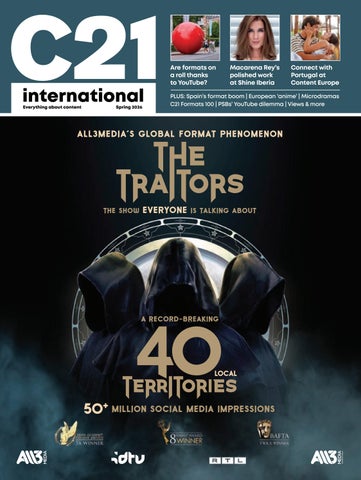
Macarena Rey’s polished work at Shine Iberia
PLUS: Spain’s format boom | European ‘anime’| Microdramas C21 Formats 100 | PSBs’ YouTube dilemma| Views & more Are formats on a roll thanks to YouTube?

Connect with Portugal at Content Europe
















Macarena Rey’s polished work at Shine Iberia
PLUS: Spain’s format boom | European ‘anime’| Microdramas C21 Formats 100 | PSBs’ YouTube dilemma| Views & more Are formats on a roll thanks to YouTube?
Connect with Portugal at Content Europe
TV execs have taken plenty of flak of late. Branded a “mediocre set of humans” and blamed for the industry’s glacial pace, commissioners in particular have become an easy target. Plenty of producers, privately at least, will have daydreamed about a world without them.
That world may be closer than it looks, if the posts on LinkedIn are to be believed. No more ignored emails, no more baffling notes, no more last-minute meeting cancellations. All thanks to the ever-growing dominance of the creator economy, YouTube and social media.
gatekeeper entirely and you don’t get a utopia, you get a free-for-all. Increasingly, that means a feed clogged with AI slop, insufferable influencers and bad actors (not just those in microdramas).

But spend a few minutes watching Fruit Love Island on TikTok, or the latest AI-generated microdrama about a sexy step-brother/CEO/ werewolf, and you get a glimpse of what happens when the algorithm is left to programme.
Of course, there is extraordinary work on YouTube and brilliant creators on TikTok doing genuinely inventive things, don’t get me wrong. It’s just when YouTube CEO Neal Mohan says “it’s presumptuous for us to tell people what is high quality or low quality,” it feels worth defending the idea that someone, somewhere, should.
‘Gatekeeper’ has become a dirty word and not without reason. Parts of this industry have been slow, insular and resistant to change, to the detriment of representation on and off screen. Clearly, having fewer gatekeepers is helping creativity blossom in some quarters of the internet.
But we still need curators. Remove the

Taste is a mysterious thing; it can’t be bought and it can’t be synthesised using AI. It is the difference between something that fills time and something that moves people: the heart-swelling drama, the hilarious comedy, the (factchecked) documentary that changes how you see the world. Those rarely emerge by accident. They are backed by commissioners who trust instincts honed for years.
Meanwhile, YouTube remains at pains to describe itself as a video-sharing platform, not a publisher of content, with no obligation to prefinance. Europe’s regulators may be tiring of that stance. It did try commissioning, back in the YouTube Red days, and quickly discovered how hard it is. As former Endemol Shine exec Justine Ryst, MD of YouTube in France, told the TV industry recently, the revenue-share model is the “new magic circle you guys have to crack.”
But magic isn’t real. Sustainable, high-end content, across genres and for audiences of all ages requires someone to put money behind it, and someone to decide what’s worth backing.
Which is why it’s great to be in Lisbon for C21’s inaugural Content Europe, where TV execs from around the world have gathered to do exactly that: negotiate, take risks and, occasionally, get it right. Long may it continue. By Nico Franks
C21INVESTIGATES: YouTube and gameshows
Are creator-led versions of classic TV formats a valuable new revenue stream for distributors or a short-term fix?
AHEAD OF THE CURVE: Microdrama
With the market for this genre booming, notably in the US, a broader trend towards vertical content is spreading.
COUNTRYFILE: Portugal
As Lisbon prepares to host C21’s inaugural Content Europe event, we look at Portugal’s growing use of copros and generous production incentives.
THOUGHT LEADERSHIP: Macarena Rey
Shine Iberia’s CEO discusses how the company has almost doubled its production volume since 2023 despite a tough European TV landscape.
C21 FORMATS 100: Julien Degroote
Kicking o a series of interviews with high-profile format execs, Julien Degroote of TF1 talks about YouTube, AI and risk aversion in the sector.
AHEAD OF THE CURVE: European studios embrace anime
As Europe cra s its own interpretations of this Japanese animation style, producers sound a cautionary note.
COUNTRYFILE: Spanish unscripted Spain is now the world’s second-largest importer of formats – so how is this impacting local producers?
PRESENT IMPERFECT FUTURE TENSE
Noel Curran of the EBU on the growing dilemma PSBs face as YouTube evolves from a promotional pla orm into a key part of the TV ecosystem. 8 13 17 23 27 31 35 38 8 31 35
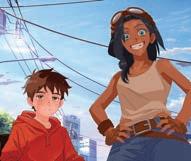


With creator-led versions of classic TV formats such as Family Fortunes, Supermarket Sweep and Jeopardy! finding new audiences on YouTube, has a healthy new revenue stream for distributors emerged – or is it a short-term fix for an industry in flux?

By Clive Whittingham
Few examples better illustrate how the industry has fundamentally changed than UK YouTube collective The Sidemen’s two versions of Family Fortunes, published eight years apart.
The first, released in 2018, is a rough-and-ready bootleg with dodgy audio, while the second, released on YouTube a few months ago, is a glossy, professional remake that wouldn’t look wildly out of place on ITV (though certainly not in the same pre-watershed slot the Fremantle show once occupied, thanks to the group’s trademark bawdiness).

“ Increasingly, people will stop calling it YouTube-first, or digital-first, and it’ll just be content. Luci Sanan
The Sidemen have since put their own spin on another classic ITV/ Fremantle format with Supermarket Sweep, as well as ITV Studios’ The Chase, drawing millions of views online. Victor Bengtsson, Sidemen Entertainment’s managing director, says this highlights a shift in the TV industry away from working with online creators in a superficial way towards greater collaboration.
leaner, faster. Bengtsson says The Sidemen can turn around an episode of Family Fortunes from production to air in about four days.
“Since Covid, people are not looking to be blown away by production value. They want connection and community,” he says. “What’s great about gameshows [on social video] is that you can play along in the live chat. The interactivity of YouTube is very di erent and actually lends itself better to TV formats than TV itself.
“In the 1980s and 90s, you’d sit at home as a family on Friday night and play along. We launched a reality show on YouTube to see what happens if 350,000 people tune into an episode together. Turns out it’s quite chaotic and fun.”
Among The Sidemen’s recent YouTube videos are Try Not To Piss 2, Sidemen Last To Leave The Circle Wins $100,000 and We Made YouTube’s Biggest Talent Show, so it’s not all reboots of old TV IP (though the latter shares more than a few similarities with Britain’s Got Talent, on which The Sidemen’s KSI has been a judge since last year).

“When we did The Chase, they wanted to be part of that and invited us to use their studios and collaborate. One of the things we had been pushing against was that TV wanted us as talent, not as partners. That’s now changing,” he says. “It started a journey where we saw what it was like to build a gameshow format, and that has led us to develop our own IP.”
This includes Inside, The Sidemen’s Big Brother-esque reality show, season three of which launched on Netflix in March and went straight to number one.
Meanwhile, The Sidemen’s versions of Family Fortunes and Supermarket Sweep perhaps show where the unscripted entertainment industry is heading: louder,
Bengtsson is clear that he believes TV distributors need The Sidemen more than they need them. “It’s more of something that we do for fun, paying homage to what the boys remember from their youth,” he says.
“The videos that are important for us are the things that we can build our own IP on the back of. We’re a 90-man company with a two-storey base on Old Street. We sell out Wembley Stadium – I don’t need to pick up an old format to change what the bottom line is for us. It’s more the boys getting something in their heads they’d like to try – The Chase, Family Feud, Supermarket Sweep – and thinking, ‘Wouldn’t that be fun?’”
But how about the companies that own these shows? Is licensing them to creators rather than a cable channel like Game Show Network (GSN) a potentially lucrative new source of income?
GSN owner Sony Pictures Television (SPT) recently launched a spin-o from Jeopardy! for YouTube, marking the first time a season of the iconic gameshow has been made exclusively for the Google-owned platform. The


show features YouTube creators and viral sensations Monét X Change, Rebecca Black and Brennan Lee Mulligan.
SPT’s president of gameshows Suzanne Prete believes it’s “too early” to tell whether embracing YouTube will become a major new revenue stream for format owners, but it is undoubtedly a way to reach di erent generations.
“This is a one-o stunt event for now that marks the beginning of our bigger expansion into the digital native space,” Prete says. “It’s a way to resonate with the audience on YouTube that has a love for the brand. We know that people grew up with Jeopardy! They recognise it instantly and they’re connected. It’s a show that resonates across generations.
Banijay Entertainment, believes it’s a way to revive “dormant formats with great legacy value” and is pleased to see these arrangements becoming more formalised, given the amount of IP infringement that was going on.
“It’s not a finance model like traditional broadcasting. We’re all learning about attaching brands, how you split revenues, whether it lives on their channel or a Banijay channel, what platform it sits on,” Green says.

“These are really important learning experiences to grapple with and refine new business models. It’s not as simple as ‘produce the show, stick it on YouTube, clock up hundreds of thousands in instant revenues.’ You need a lot of views and a lot of brand funding to get to that.”
“ What’s great about gameshows [on social video] is that you
lot of brand funding to get to that.”
Nevertheless, Green says there are mutual benefits beyond the money. “Creators know
quickly understand what their audience likes and adapt to it,” he says.
Nevertheless, Green says there are mutual benefits beyond the money. “Creators know their audiences well, speak to their audiences well and are able to put content out there and quickly understand what their audience likes and adapt to it,” he says.
can play along in the live chat. The interactivity of YouTube is very di erent and actually lends itself better to TV formats than TV itself.
Victor Bengtsson Sidemen Entertainment
“They use that data instantly to tweak we from that. They’re reaching that younger audience traditional TV platforms are really struggling to bring in front of a TV screen at
which is a digital spin-o from we Latin it cannibalise your audience – it supplements the
“They use that data instantly to tweak content and there’s a lot we can learn from that. They’re reaching that younger audience traditional TV platforms are really struggling to bring in front of a TV screen at home. We’ve seen with MasterChef Creators, which is a digital spin-o from MasterChef we do in Latin America, that it doesn’t cannibalise your audience – it supplements the main show.
“It’s much better to work together. TV production companies like Banijay, Fremantle, ITV Studios and BBC Studios have expertise in
“It’s much better to work together. TV production companies like Banijay, Fremantle, ITV Studios and BBC Studios have expertise in being responsible. We know about compliance if there is money at stake, as well as health and safety if you’re doing big stunts.
“Even if you’re just doing a gameshow then participant welfare is important. There’s a lot we can learn from each other to produce better content that can be really sustainable. It’s much better to collaborate than see it as a threat.”

“This is part of an overall franchise strategy for Jeopardy! and Wheel of Fortune across digital, social, linear and streaming. I don’t think it’s a knee-jerk reaction to audiences tuning into YouTube. It’s just another spoke on the wheel.”
Lucas Green, chief content o cer, operations at
Furthermore, Green sees YouTube and creators as a source of IP that companies like his can take the other way, as in the case of Dutch format Let’s Play Ball, which started on YouTube via StukTV before airing on SBS6 in the Netherlands. Banijay Rights is now shopping the format globally, with a UK version in the works with Last One Laughing UK producers Initial and Zeppotron.
“You can spot things, look at the data and use that to prove to broadcasters there’s an appetite for it,” he adds.
That’s a point with which Prete at SPT strongly agrees: “The landscape of entertainment is evolving very quickly and anything’s possible. It can work in either direction


and it makes it a very exciting time to be in television, especially gameshows.”
Formats industry expert Siobhan Crawford, however, is sceptical. Could TV distributors be selling their prize assets to the competition, who has a bit of fun with it for a week and then moves on to something else?

“For me, I still struggle to understand if digital creators really respect established IP – are they acquiring rights or just doing take-o s of old shows ‘uno cially’?” she asks.
“When we hear that people make digital content for as little as US$10,000 an episode, how do you do that with a format? If you’re producing established IP that’s surely impossible below US$50,000 and for a 5% format fee the distributor and format owner basically get buttons.”
When it comes to embracing new business models, Luci Sanan of 53 Degrees North Media and Cowshed Ventures does see potential. She’s helped companies such as Tresor, Krempelwood and Propagate set up YouTube channels that are a mix of original content and library titles.
“Quality content that audiences want will find an audience if it’s packaged and published in the right way,” she says. “In terms of catalogue content finding homes on YouTube, it’s just an incredibly exciting space because it’s by and large a non-exclusive environment, where producers can earn incremental revenue on a long-term basis without really any sort of cap. You can be licensing that content to channel after channel after channel after channel, and it’s all incremental because the audience is very fragmented.
“Meanwhile, it’s an interesting journey to discover what original content works alongside aggregated third-party. There are legacy pioneers like [All3Media-owned] Little Dot that have set up very established aggregated channels, and then there are those running really successful originals channels, but not many in the middle. It’s quite early days on that and every day is a school day.”
Like Prete at Sony, Sanan says it’s a mistake to view content as either/or, YouTube or linear, digital or traditional. It’s increasingly all just one thing.
“It’s part of a broader IP ecosystem and the content is either good or it’s not,” she explains. “Some things you might want to start on YouTube and see if it has potential in format or tape or onward licensing. It’s part of stacking revenues. Sometimes it might work the other way. You might be looking at a produced piece of content and envisaging how that can be monetised on YouTube and socials.
“We used to be in a very simple supply chain of broadcaster, production company, distributor. Now it’s a mad ecosystem commercially, and that’s really exciting because there’s loads of di erent ways to fund it and there’s loads of di erent ways to exploit it. Increasingly, people will stop calling it YouTube-first, or digital-first, and it’ll just be content.”

Matt
Campion, founder and creative director of
Matt Campion, founder and creative director of London-based digital and TV producer Spirit Studios, recently launched an initiative called IP360 that aims to transform creative ideas into multi-platform content brands.
to transform creative ideas into multi-platform content would be the
He says: “Who knew Family Fortunes future of YouTube? Well, The Sidemen did. As a producer in this space watching


the landscape shift, this is a masterclass in modern IP strategy.
“The Sidemen will have definitely grown up watching Family Fortunes and so it’s quite interesting when people talk about TV dying and it feeling old. It clearly doesn’t to these creators. They are having fun with it, almost spoofing it, but they’re willing to put enough money into it to make it look more polished than a lot of creator stu . So that begs the question, is the format still king?
“Spirit has been in digital for a long time and we also make television. Over the years it feels like anyone working in digital has been watching TV budgets shrink and as they’ve seen a table or a chair get kicked out they’ve thought, ‘Oh, we’ll have that over here.’ It’s like they’re rebuilding television over there in a di erent way, as the money moves.
“As this generation of self-producing people and creators are growing up they’re seeing the value in a format, because formats are built for retention, which you need online. You just need to dress them in a bit of a di erent way.”
Speaking of which, long-running modelling competition format SupermodelMe is getting the microseries treatment and will be relaunched as a vertical show on microdrama platform FlareFlow later this year, marking the beginning of a potential trend.
FlareFlow’s owner, China’s COL Group, and producer Singapore-based Refinery Media have teamed up to reimagine the reality franchise, which was created by Karen Seah and launched in Asia in 2009, later moving to Netflix.
Refinery Media and COL said the deal, announced at FilmArt in Hong Kong in March, marks the first time an established reality IP has been fully “re-engineered” for mobile-first episodic storytelling on a large scale.
For Danny Rowlands, senior VP of global development at Fremantle, doing deals with creators is a key part of the TV industry’s evolution. “If you’ve got strong IP and you’re willing to let creators have the freedom to revive and take control of the direction, there is a true opportunity for success,” he says.
“For some people, there is a mindset shift needed to let this happen. This is not only an opportunity from a commercial standpoint, but a vital opportunity to understand audiences and creativity to allow the industry to continue to deliver entertainment for the next wave of consumers.”



“ Creators know their audiences well, speak to their audiences well and are able to put content out there and quickly understand what their audience likes and adapt to it.
Lucas Green Banijay Entertainment


Microdramas started out as a Chinese phenomenon but have quickly spread around the globe, with the US market now booming and a broader trend towards vertical entertainment spreading. By
Jonathan Webdale
Click on Netflix in March and, if you have kids, you were likely greeted by a tile offering KPop Demon Hunters Bonus Content. For fans of the platform’s most successful movie of all time (and there are hundreds of millions), here was something new to fill the HUNTR/X girl band-shaped void in their lives since the Oscar-winning film’s June 2025 release.

The shape of the content itself may have surprised some, however: four shortform videos of under 10 minutes and, rather than being behind-the-scenes clips or some other established bonus material, these were social media fandom compilations. TikTok-style user-generated content served up in vertical format, even on the Netflix connected TV app.
For Gen Z ‘Hunters,’ the format aligns with the spiralling number of hours spent each day consuming entertainment on mobile phones.
“

very distinct category of vertical video – on dedicated apps than they do watching Netflix, Disney+ or Amazon’s Prime Video on mobile.
Accordingly, the Mouse House is also making vertical moves, recently rolling out its own shortform vertical video product, called Verts, via its streaming service. The company last year also chose Chinese-Singaporean vertical entertainment app DramaBox as a beneficiary of its ‘accelerator’ programme through which it invests in startups and shares its expertise.
Jeffrey [Katzenberg] was incredibly prescient, and nobody could say he wasn’t right about the fact people were going to be holding phones, scrolling, watching content that way. But that wasn’t yet consumer behaviour.
Jana
For widescreen landscape cinema stalwarts, it is a surefire sign of how vertical shortform entertainment is taking over and how seriously the likes of Netflix are taking it. As indeed they must.
Winograde MicroCo
Global microdrama revenues reached US$11bn last year and will grow to US$14bn by the end of 2026, according to UK research firm Omdia. Meanwhile, microdrama platforms are touting the speed at which they can churn out content, each having released literally thousands of shows already as they prioritise quantity over quality.
A report from Omdia recently suggested US consumers now spend more time each day watching microdramas – a
DramaBox is a microdrama provider in the sense it is a dedicated app that offers the first few instalments of each series for free and then requires the viewer to pay for the rest, either via tokens on a perepisode basis or through weekly or annual subscriptions. It is one of many such companies originating out of Asia, where TikTok parent ByteDance first popularised the form through a domestic app named Douyin. It has recently taken the model to the US and Brazil with a new app, PineDrama. This lines up against the likes of ReelShort, operated by San Francisco-based Crazy Maple Studios, which was established by Beijing-based COL Group, owner too of FlareFlow, Sereal+ and UniReel. Then there’s MyDrama, part of Ukraine-based Holywater, in which Fox Entertainment invested last year. There’s also Singapore-headquartered GoodShort, FlickReels, DramaWave and many more. Barely a day passes now without another new entrant, with many fully embracing AI to produce their shows.
In the US, former Miramax CEO Bill Block has debuted GammaTime, a microdrama service aiming at the premium end of the market, with initial content including two series from CSI creator Anthony Zuiker: Lust Cop and Temptress Both play to the core ‘romantasy’ audience the form has initially found favour with, made up of mostly women u




















































aged 30-55 who spend a lot of time on social media and who are seeking escapism via soap operas and melodrama that veers into soft porn. Buff billionaires, steamy betrayals, secret identities, forbidden love, revenge and cliffhanger endings are all writ large, with a healthy helping of DILFs and werewolves thrown in for good measure.
GammaTime counts Kim Kardashian and Kris Jenner among its backers and has Alex Montalvo as chief content officer – a one-time exec at ill-fated Jeffrey Katzenberg shortform mobile video venture Quibi, which launched at the height of the Covid-19 pandemic and then, just months later, spectacularly imploded.
MicroCo is the stealth-mode name for another Hollywoodbased vertical entertainment start-up that has pledged to launch soon, the brainchild of Disney veterans Jana Winograde, Susan Rovner, Lloyd Braun and Chris McGurk, the last of whom founded streaming specialist Cineverse.
MicroCo is no Quibi, Winograde is eager to point out. “Jeffrey was incredibly prescient, and nobody could say he wasn’t right about the fact that people were going to be holding phones in their hands, scrolling, watching content that way. But that wasn’t yet consumer behaviour,” she says.
“What Jeffrey was doing was not microdramas. What he set out to do was create premium television you could watch in shorter pieces. Microdramas, on the other hand, are a completely different thing – highly formatted, highly serialised, gamified in order to engage a consumer in a cliffhanger loop-based hooked way that keeps them watching.”
MicroCo is pitching itself more broadly, offering “microseries” that go beyond the genres which have, to date, made the medium so popular among women on social media. “We plan to honour and serve that audience, but we also want to expand it,” Winograde says, expressing a refrain familiar among the latest breed of market entrants.
100 Zeros, the production joint venture between YouTube owner Google and Hollywood agency Range Media Partners, recently linked up with seasoned TV execs like Mike Fleiss and Simon Fuller to develop its own array of vertical series for distribution via the Google TV app on Android phones, encompassing microdrama but also spanning “music, youth culture and breakout talent stories.”
There is a booming production sector in this space, flourishing in part because of the attractive economics fostered by the Asian microdrama pioneers, but also because Hollywood has been floundering in the aftermath of peak TV and the dual strikes.
“In 2017, 2018 John Landgraf, who runs FX, started doing a lot of doomsaying about the industry, and that sort of sunk in with me,” says Brandan Dennehy, a veteran Hollywood creative producer and content strategist who has worked with the likes of Michael Mann, Kevin Feige and David Ellison.
“Netflix was changing everything. It redefined for everybody how to expect entertainment, and because of that, the rest of the industry was going to have to go in that direction. To do that, they were going to have to kill their own revenue streams and spend billions of dollars to get into that business. At that point, I was firmly entrenched in Hollywood, and it was impossible to get anything made –even then, even working with major filmmakers and talent – and so I started looking outside.”
Serendipitously, an Indian company positioning itself as the ‘Netflix of audio’ reached out to Dennehy as it was looking to launch in the US. He joined Pocket FM, becoming its stateside content chief, and over several years

“The same people that are watching Netflix on their phones are watching our content – they’ve just turned their device in a different direction.
Lily Darragh Harty
Inkitt
“learned a whole new business model that does not exist in mainstream entertainment.” He adapted web novel-style storytelling into audio series, converting successful titles into shortform video, offering the first few episodes for free and then charging users micropayments for subsequent instalments.
“That was the microdrama business model,” says Dennehy, these days CEO and head of vertical drama at his own consultancy, Stratagem Vertical. “The storytelling is still the same. The emotions are the same. The audience connection is the same, but it’s a very different user behaviour in terms of how people consume it.”
Just as Dennehy was helping Pocket FM build a bridge from Asia to America, ReelShort emerged on the scene and the sector started to explode. Established via California-based Crazy Maple Studios, Chinese digital publisher COL Group brought its model of owning and adapting millions of web novels for video to the US. And it’s doing the same elsewhere, with Latin America a market of particular interest, given the region’s long tradition of telenovelas and melodramas ideally suited to shortform transition.
“Microdrama is going to be a tremendous category in the growth of our industry and will transform how people view and how studios produce content. It reminds me of the days when streaming was disrupting traditional TV,” says Pierluigi Gazzolo, the former chief of TelevisaUnivision’s ViX, the world’s biggest Spanish-language streamer which debuted its own microdrama offering earlier this year.
Gazzolo cites ReelShort and GoodShort – an app spun out of Singapore-based digital publisher Inknet – as ones to watch.

“These global players have expanded their footprint from Asia to all over the world, including Lat Am, and I truly believe this is the future,” says Gazzolo, noting that Colombia’s Caracol TV has partnered with ReelShort to move into this space, while Endemol Shine Brasil and A Fábrica, both part of Banijay Americas, recently teamed to create a slate of vertical shortform dramas for partners including Globoplay.
Other players, such as Inkitt, founded in Germany but these days located in San Francisco, have tapped into the same opportunity, taking its web novel publishing catalogue and converting applicable properties into microdramas via a dedicated app called Candy Jar TV. Lily Darragh Harty is the service’s director of physical production.
“It’s inevitable that Hollywood begins to take the space seriously, and it’s already starting to happen,” she says. “It’s just a new way of consuming content and it’s way more similar to Netflix, Prime Video or Hulu than it is to TikTok or Instagram, because it’s scripted. The same people that are watching Netflix on their phones are watching our content –they’ve just turned their device in a different direction.”
Will Europe’s TV elite answer the call to raise the ‘shocking’ standard of microdramas? Find out in C21Media’s recent C21investigates report from Series Mania 2026 by scanning here:






C21’s inaugural Content Europe will highlight how a long history of telenovelas and independent film has combined with momentum from increasingly generous production incentives and broadcaster/streamer copros to put Portugal in the spotlight. By Pina Mezzera

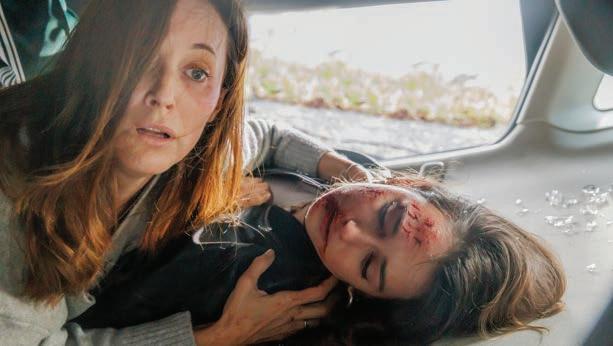
Have you noticed Portugal popping up on your radar more than before? I’m not talking about the latest Nations League tournament. Maybe you watched Glória or Rabo de Peixe (Turn of the Tide) on Netflix. The vibrant yellow of its film commission branding may have caught your eye at industry events. Or you’re likely reading this at the first edition of Content Europe in Lisbon in April. Whatever it is, suddenly Portugal is making noise.
These kinds of shifts are rarely accidental. A closer look at how the local audiovisual market has evolved over the past decade, and the lens through which its players are now looking ahead (and, crucially, outward), makes it safe to say that Portugal is approaching a potential turning point.
“After people discovered our incredible landscapes, gastronomy and lifestyle, they started asking, ‘Why not tell stories there? Why not shoot a series there?’ I feel we’re at that moment that changes everything for a country, and as a producer, that’s very exciting,” says Joana Domingues, founder of indie prodco Caracol Studios.
Historically, Portugal’s relatively modest population of just 10 million shaped the development of its audiovisual industry, which was built around two clearly defined poles.
“In Portugal, you had on one side a very strong tradition of auteur cinema and, on the other, telenovelas,” explains Pedro Lopes, general director of prodco SP Televisão and its international-facing sister company SPi. “In recent years, a third path has been emerging: series. Film and TV professionals are coming together on projects for platforms and international coproductions. That has created a new way of working and thinking – a new industry.”

That new industry is made up of a diverse ecosystem. At its core sit public broadcaster RTP as a key engine and commercial networks TVI and
“Audiences are looking for new stories, different landscapes, surprising flavours. Portugal offers that. It remains a territory to be discovered. And we’re starting to gain the confidence to show what we can do.
Joana Domingues Caracol Studios
SIC, the latter also with its streaming platform, Opto. Then there’s the global streamers and local prodcos, with a sizeable indie sector grouped under the Associação de Produtores Independentes de Televisão (APIT) and the Instituto do Cinema e do Audiovisual (ICA), whose incentives have become decisive and are set to grow further with increased investment in 2026.
“It’s the result of years of work. We began supporting the audiovisual sector in 2014 with selective funding, in 2019 we launched the cash rebate and in 2024 the cash refund,” says Manuel Claro, VP of the ICA.
The cash rebate has distributed a total of €103.7m (US$120m) across 293 projects u
over eight years (189 films and 104 series, documentaries and animated titles), reimbursing between 25% and 30% of spending in Portugal. The minimum thresholds are €500,000 for scripted and animation, and €250,000 for documentaries and post.
The cash refund, aimed at more ambitious productions, returns 30% of the first €2m and 25% thereafter, capped at €6m per project or €3m per episode, with a minimum spend of €2.5m. Despite its short lifespan, it has already supported 16 projects, including series such as the thriller Lisbon Noir, from See My Dreams for TVI and Amazonowned Prime Video; films like Love of Your Life from Amazon MGM; and animated titles Nutri Ventures, O Filme and Tchaboom from Portuguese prodco Watermelon Productions.
“It’s been a growing investment as part of a joint strategy. Portugal’s current position wouldn’t be possible without RTP, without ICA’s tax incentives and without APIT’s work on internationalisation,” Claro adds.
It is hard to find anyone in the local industry who does not highlight RTP’s role. With 10 to 12 scripted series per year, the pubcaster has become a kind of backbone for the system, crucial to the development of Portugal’s independent creative sector.
Global platforms’ commitment to local content remains limited, while private networks SIC and TVI continue to focus almost exclusively on telenovelas, with two or sometimes three primetime and late-evening slots dedicated to the genre. Most of SIC’s productions are handled by SP Televisão, while TVI relies on its in-house label Plural Entertainment.
Both channels, like RTP, also operate entertainment slots filled with both international formats and paper formats, where production companies such as Banijay Iberia’s Endemol Portugal and Shine Iberia come into play.
“ Portugal is undeniably European in its aesthetics, but with a Latin romantic and emotional sensibility. That differentiates both us and our stories.
Carlota Vieira SIC
of the main drivers of that model, producing around 600 hours of telenovelas annually for TVI. Currently on air are Terra Forte and Amor à Prova, an adaptation of Chilean broadcaster Mega’s format Te Doy la Vida.
SIC, meanwhile, has revived its push into scripted formats, with recent titles such as Chapters of Life and Vitória – based on Globo’s Brazilian hit Páginas da Vida and Turkish drama Gülperi respectively. The latter is distributed by Global Agency.
“We are strongly returning to the adaptation and localisation of formats, and we promise not to stop,” says Carlota Vieira, content sales deputy director at SIC, which revived this strategy in 2024 after over a decade with A Promessa (Broken Promise), a local version of Kanal D’s Turkish drama Ruthless City.
This push has been accompanied by new distribution strategies. SIC launched Chapters of Life in collaboration with Prime Video, while Vitória premiered simultaneously across SIC, its Opto platform and Disney+, in what Vieira describes as a historic deal that

Understanding Portugal’s telenovela tradition and recognising its value are key to explaining why the sector is now experiencing this moment in the international spotlight.
Unlike most European countries, which traditionally dubbed international content, Portuguese free-to-air TV never dubbed and subtitling also failed to resonate. The solution was to offer content in Portuguese, whether locally produced or acquired from Brazil, with which there is a long history of telenovela imports.
The result is a strong relationship between audiences and local storytelling, which has sustained a robust industry around telenovelas for decades, with significant volume, talent and production capacity. Today, it also remains fertile ground for collaboration with streamers and international partners.
Plural Entertainment is one
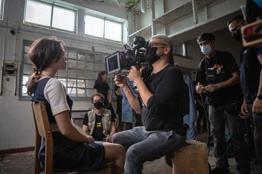

“significantly amplified” the show’s international visibility.
TVI is also active in these alliances. “The telenovelas we produce with Prime Video allow us to shoot substantial parts in countries such as Angola or Brazil. Production value increases and that translates into travelability. Terra Forte and Cacau were shot in Brazil, and Cacau was sold into more than 90 countries,” says Piet-Hein Bakker, general director of Plural Entertainment and CEO of See My Dreams.
“Portugal is undeniably European in its aesthetics, but with a Latin romantic and emotional sensibility. That differentiates both us and our stories,” Vieira adds.
The industrial strength built around telenovelas has combined with the film business’s experience in international coproduction to enable Portugal to pursue that third path described by SP Televisão’s Lopes, one that commercial groups are also capitalising on in different ways.
In SIC’s case, its streamer, Opto, has been commissioning original drama, thriller and young adult fiction for several years, with titles such as PRAXX and A Lista from SP Televisão, O Clube (The Good Girls Club) from Santa Rita Filmes and upcoming dystopian climate drama Azul, from Blanche Filmes, SIC Esperança and Terra Amarela.

“In the past, to travel you had to produce in English. That’s no longer the case. The platform distribution model has brought greater centrality to peripheral countries and nonEnglish languages,” says Lopes, who experienced this with the espionage thriller Glória, Netflix’s first Portuguese original production, produced by SPi. “It was a game changer. Overnight, we were in 193 countries.”
Glória launched in 2021. In 2023, Netflix followed with Turn of the Tide, a thriller produced by Ukbar Filmes that has just premiered its third and final season, alongside a documentary about the real story behind the drama from Portocabo Atlántico, part of Spain’s Portocabo. That is the extent of Netflix’s involvement for now. Other platforms are operating mainly on acquisition models, retaining only local or Iberian windows.
For many Portuguese producers, that is not enough.
“We would like to see streamers more involved and, above all, more present, with a better understanding of what is being done here. Our meetings with them are usually via Zoom because they are based in Spain,” says Domingues.


















“Today, audiences are looking for new stories, di erent landscapes, surprising flavours. Portugal o ers that. It remains a territory to be discovered. And we’re starting to gain the confidence to show what we can do,” adds the executive producer behind series such as Águas Passadas (Past Waters), coproduced with Spain, and the multilingual drama Jones, starring Portuguese actor Rafael Morais and Amanda Abbington from the UK.
Both titles are among the three or four series RTP backs each year through international copros, which tend to be more ambitious projects with global reach.
José Fragoso, programme director at RTP, explains that to take part in its annual call, held in April, international producers must partner with a Portuguese company. If they do not have a local partner, they can submit via APIT, which connects them with a selection of its 56 member prodcos.
“Last year we received 160 series proposals. We selected 15 to 20 for pitching and then they enter a financing cycle that takes at least a year,” the executive adds.
Portugal’s natural partners remain Brazil and Spain. With the former, RTP has coproduced titles such as Codex 362, partnering Globoplay, which was a “very positive experience” Fragoso reiterates.
Spain. With the former, RTP has coproduced titles pubcaster to back multiple series, , from Coral Europa and Atlantia Media), Auga Punto Nemo , from Volf (Coral on Spain’s RTVE and TVG
As for Spain, geographic proximity and industrial integration have led the pubcaster to back multiple series, including Sequía (The Drought Coral Europa and Atlantia Media), Seca (SPi and Portocabo), (Ukbar Filmes and Ficción Producciones), O Grito (The Scream Entertainment) and Lume and Setemedia), with windows on Spain’s RTVE and TVG or streamers such as Prime Video and HBO Max.




distribute more than €30m annually across film, scripted, documentary and animation projects, as well as the financial incentives mentioned earlier.
The local sector is watching closely after the Portuguese government announced in December that investment will increase in 2026, with the cash rebate rising from €14m to €15m annually and the refund up from €20m to €35m per year.
“We are waiting for the final guidelines, but it’s great news for the sector,” says Ana Marques, director of the Portugal Film Commission. “It’s a clear signal from the government: we want to keep investing to attract more and larger-scale productions to our country.”
Claro reinforces that point by highlighting Portugal as one of the first countries to sign the Council of Europe’s series coproduction convention at Series Mania in March. “It’s another sign of strong commitment,” he says.
Behind the increase in incentives lies ongoing dialogue between the government and APIT, which aims to “defend producers’ needs with a single voice,” according to its executive president, Susana Gato.
“Portugal needs big productions, but we must also remember the importance of mid-sized and smaller projects. The diversity of producers and projects is key to a healthy market. Together we are stronger,” she adds.
Another key issue in the negotiations is the need to rebalance public support, which is still tilted towards film (70%), at a time when series have gained ground across Europe. “We need a balance that better reflects market reality,” Gato notes.
That said, the global industry knows that incentives alone, however generous, do not sustain an industry. When discussing what underpins those millions, two words come up repeatedly in Portugal: quality and competitiveness. “The world can see us as a partner that, with a smaller budget than others, can deliver high quality. That makes us very competitive,” says Maia Abreu.
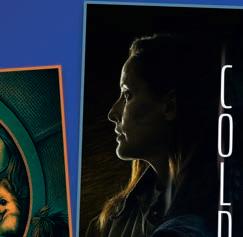
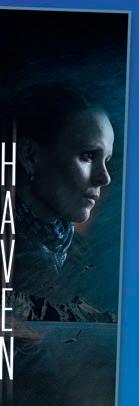
But part of the shift lies in opening up to new territories. The clearest example came in 2025 with the thriller Cold Haven, a copro between RTP and SPi in Portugal and Iceland’s Síminn and Glassriver.
But part of the shift lies in The clearest example came , a copro between Iceland’s Síminn and Glassriver.


“It’s a coproduction that couldn’t have been done
“It’s a coproduction that couldn’t have been done with Azerbaijan or Ukraine. The story involves Portugal and Iceland,” says João Maia Abreu, director of business and coproductions at
director of business and coproductions at SPi.
Lopes sees

Cold Haven as a roadmap: “We are trying to build unlikely partnerships. For me, that is the future of coproduction.
For me, that is the future of coproduction.
Coproducing with Spain or Brazil is the natural path, but I believe that from unlikely combinations between countries and creators come unlikely stories. And that’s where the hits come from.”
International coproduction is, in Maia Abreu’s words, one of the three main funding pillars for Portuguese indie producers today, alongside RTP and public funds.
Those funds include ICA’s selective support schemes, which
natural path, but I believe that from International coproduction funding selective support schemes, which
Behind that equation lies top-tier technical and creative talent, along with strong production and business capabilities. Marques also points to diverse locations, almost 300 days of sunshine and Portugal’s seventh-place ranking in the Global Peace Index as additional reasons why major projects choose to shoot in the country, as seen with large-scale productions such as HBO’s House of the Dragon and Disney+’s Star Wars: The Acolyte. For turning points to truly become part of history, improvements must be sustained over time. At Content Europe in April, many eyes will be on Portugal. Making the most of that attention could be key to ensuring this opportunity becomes a new reality.
For more on the financial incentives on o er to international and local producers in Portugal, read C21Media’s recent report, part of its Fundamentals strand, by scanning here:





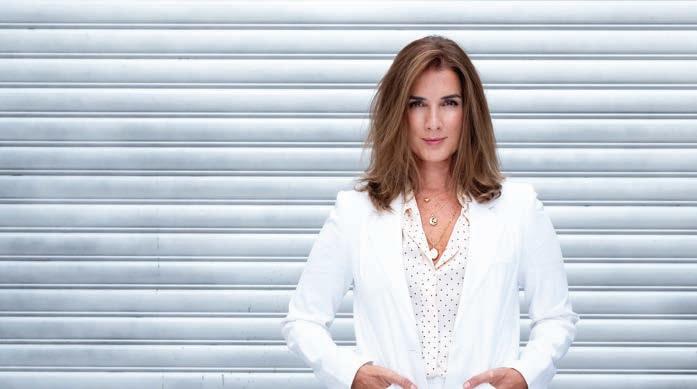









During a turbulent period for the European industry, Shine Iberia has almost doubled its production volume since 2023. CEO Macarena Rey unpacks the causes of that growth and explains what the Spanish market could learn from Portugal. By Pina Mezzera
“We haven’t lived through a quiet period. There has always been something going on.”
For anyone working in today’s audiovisual industry, it’s hard not to agree with Shine Iberia CEO Macarena Rey. Yet while the whirlwind of recent years has paralysed many or even pushed them out of business, she sees it as a source of motivation.
“Our job has one particularity: everything is constantly changing. It’s impossible to relax and settle in one place. And that need to adapt is something very beautiful,” she says. “Obviously, the speed at which everything is moving is unsettling, but for me the future is also very exciting.”
That mindset helps explain Shine Iberia’s current position, which contrasts with the overall contraction a ecting the industry. With an average of 24 productions per year across Spain and Portugal over the past six years, the company has significantly accelerated its activity: from around 850 hours in 2023, it has grown to more than 1,600 hours in 2025, an increase of close to 90%.
Today, that output is split between 70% entertainment, 15% factual, 10% scripted and the remainder across galas, events and digital-first content.
It might seem like an easy path with the backing of a parent company as large as Banijay and its global scale. But a closer look at Shine Iberia’s slate, financing routes and strategic investments reveals that this growth is also the result of a pertinent reading of where the market is heading.
“We are facing a brutal structural shift in the audiovisual industry, which no longer revolves around big productions but is fragmenting into many small formats, tailored to di erent moments, devices and, above all, to today’s attention spans,” says Rey.
As a result, the company’s strategy is to be as multiformat and multi-platform as possible. In the unscripted space for traditional broadcasters, its recent productions include Banijay catalogue flagships such as MasterChef in Spain and Portugal (more than 30 seasons across all editions) and Big Brother in Portugal. It also produces third-party formats such as singing competition The Voice (ITV Studios, for RTP), relationships show Married at First Sight (Seven.One Studios International, for SIC)





and interview-led format The A Talks (Can’t Stop Media, for Mediaset España).
But one project that best reflects its ambition is DecoMasters, which recently aired on Spanish pubcaster RTVE. The home design talent show is original Shine Iberia IP and provides a clear example of the strategic importance the company places on development.
“As a producer, what you want is to create IP that travels and generates returns. That is the asset and the core of any production company,” says Rey. This leads to one of the executive’s main concerns about the Spanish market. “In Spain there are few broadcasters willing to take risks. Who does? The platforms, but they keep all the rights, and that is something that should be regulated, because producers are left completely exposed,” she argues.
“In free-to-air, I would say the only one taking risks is RTVE,” adds Rey, pointing to the home of other original Shine Iberia formats such as singing competition
“ Portugal, despite being smaller, is a braver market than Spain. Commissioners and broadcasters there take risks and are more willing to back paper formats.
Macarena Rey Shine Iberia






“
Microdramas are not a passing trend, they are a completely logical adaptation of audiovisual storytelling to the digital environment. They are a clear derivative of infinite scroll.
Macarena Rey
Shine Iberia







Cover Night and Prodigios, focused on children with talent in classical and lyrical music.
The comparison with neighbouring Portugal is immediate: “Portugal, despite being smaller, is a braver market. Commissioners and broadcasters there take risks and are more willing to back paper formats.”
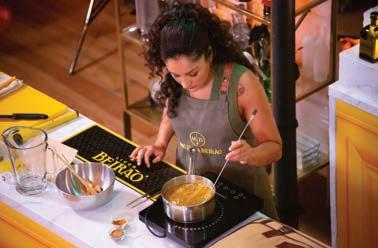
The company’s original IP in Portugal includes entertainment shows Rir para Ganhar and I Love Portugal for RTP, factual format Amigos Improváveis for SIC, and several brand-funded formats such as bartending competition-reality show Mistura Beirão for TVI, backed by liqueur brand Licor Beirão.
However, in the context of declining ad revenues and tightening budgets, Rey believes original formats could gain ground. “Papers make sense because it is cheaper to buy a new idea than an established format. And there is also saturation of global formats – audiences are starting to tire of clones and are demanding novelty,” she says.
Rather than waiting for this shift to fully materialise, Shine Iberia has long viewed YouTube and platforms such as TikTok and Instagram as much more fertile ground for innovation. Beyond enabling “simpler, faster formats with more interaction,” Rey believes these platforms and their mobile consumption are reshaping audiovisual language. That also applies to scripted –which is why one of the company’s biggest focuses is the industry’s hottest topic: microdramas.
“Content adapts to how we live, and today we live very fast,” Rey says. “TikTok, Instagram and YouTube Shorts have trained audiences to consume fast, vertical, fragmented content. For me, microdramas are not a passing trend, they are a completely logical adaptation of
audiovisual storytelling to the digital environment. They are a clear derivative of infinite scroll.”
Instead of “judging the ethical framework” of the microdrama business, Rey prefers to focus on the opportunities the sector provides for writers, who must use direct plots, rapid twists and cli angers to hook viewers in seconds; for emerging talent, who find a new path outside traditional circuits; and for production, which becomes more democratised as projects can be created “with a smartphone, emerging actors and direct distribution on social platforms.”
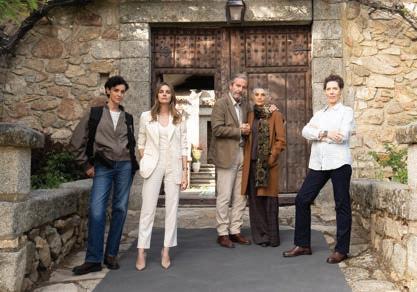
As a result, one of Shine Iberia’s main goals, as a company rooted in entertainment and particularly talent shows, is to zero in on its scripted business, from shortform to longform. In premium series, Spain’s Telecinco has just concluded the run of thriller and family drama Pura sangre, marking the company’s first scripted launch since 2022’s Bosé, a series about artist Miguel Bosé coproduced with VIS, Elefantec Global and Legacy Rock.
“Streamers in Spain have stopped commissioning entertainment, because the algorithm says documentary and fiction work better for them. So for us, fiction is a priority growth avenue,” Rey explains.
For larger-scale projects, coproduction has become essential, having “shifted from a way of sharing costs to a strategy.” This includes partnerships between platforms and free-to-air broadcasters that have been “forced to understand each other,” as well as international collaborations, with Latin America emerging as a key region.
Unlike many Spanish peers who highlight the challenges of working with Lat Am, Rey describes it as a “natural market” for Shine Iberia. “We have a lot in common with Latin America in terms of tastes. Spain, Portugal and Southern Europe share major themes and sensibilities,” she says. “We need to move from purely local to exportable local.”
The coming months could also prove decisive in this regard. The confirmed merger between Banijay Entertainment and All3Media will create a company valued at around US$8bn, with a stable of more than 170 production labels and a catalogue over 260,000 hours of content. “For us, it is great news, because we will have more catalogue. And All3Media is a great production company,” says Rey, while openly acknowledging the competitive advantage this will give Shine Iberia and its sister companies in Spain and Portugal, where All3Media has no production footprint.
“Obviously, mid-sized and smaller local producers will face tougher competition. We will have greater negotiating power with broadcasters and platforms and a stronger ability to capture international projects,” she says. “And all of this is good for Iberia.”











100 – a series of interviews with high-profile execs in the format business – Julien Degroote of France’s TF1 talks to C21 ahead of his appearance at Content Europe, tackling YouTube, AI and risk aversion in the sector.
By Ed Waller
Julien Degroote is comfortable with risk. The executive VP of content development at French commercial broadcaster TF1 Group believes the future of the format business belongs to those who can balance franchise security with ambitious new ideas.
“Regarding risk and risk diversity, I would say that at TF1, we balance reassuring brands with bold innovation,” he says. “We have long-running franchises like The Voice, Dancing With the Stars, Star Academy and The Masked Singer. All these shows allow us to take creative risks with new shows, such as Sea Battle and Focus – two French paper formats – or new international formats like Nation’s Dumbest and The Box.”
This portfolio strategy underpins TF1’s entire unscripted slate. “That mix between long-running franchises, very well-known brands and new shows, new formats, paper formats and international formats, I would say it keeps both audiences and partners confident and curious,” Degroote explains. “For new shows, the risk is managed by a known brand, like the well-known board game Sea Battle or with the A-list casting we have in Nation’s Dumbest.”
Game and quizshows, in particular, remain central to this equation. “We know the gameshow genre allows us to limit the risks and guarantee a fairly large audience, because we know that everyone loves quizshows – kids, parents and grandparents,” he says. “The IP, the brands, are also a good way to take a risk, because we are not starting from
good way to take a risk, because we are not starting from scratch. We start with an IP from a well-known brand.”
This thinking is evident in TF1’s collaboration on Sea Battle, created by Moe Bennani, the former Talpa exec and co-founder of France-based Dreamspark, and coproduced with Arthur Essebag’s Satisfaction Group.
“The great idea was to
“ Over the past 20 years in our industry, the shi from linear to on-demand viewing and the globalisation of IP have transformed everything. Formats are no longer local curiosities, they are global storytelling, and they are designed for multi-pla orm lifecycles.
Julien Degroote TF1

reinvent a board game that everyone knows. Everyone knows the rules, the purpose of the show, the concept,” Degroote notes. “So then it was the idea to turn it into a TV quizshow with some cultural knowledge questions and all that, in order to keep the spirit but to make it like a large IP or large TV format.”
Across the market, Degroote sees clear demand patterns. “The genres that are hot right now are quizshows and serialised on-location competition and dating formats. I would say these are leading the wave,” he says. “Regarding countries, the US, UK and Netherlands remain the key exporters, but Norway is emerging fast with inventive concepts like The Box and Nation’s Dumbest, and both formats are proving they have international appeal. TF1, by the way, is producing both.”
the way, is producing both.”
He argues that the last two decades have seen the format business fundamentally reshaped. “Over the past 20 years in our industry, the shift from linear to on-demand viewing and the globalisation of IP have transformed everything. Formats are no longer local curiosities, they are global storytelling, and they are designed for multiplatform lifecycles,” he says. “At the same time, we have had major consolidation among production groups that has reshaped the landscape: fewer players, but much larger and more powerful ones.”
He argues that the last two decades have seen the

Deal-making has evolved in parallel.
“Deals have become more collaborative and cross-border from day one; co-development and shared ownership align incentives and accelerate roll-out,” he says.
“Co-development and joint ownership are now key to sharing


creative risks and ensuring worldwide roll-out from day one. Data sharing frameworks help learnings move across territories.”
Cost pressure is also pushing broadcasters towards shared infrastructure, he says. “We are also more and more exploring the idea of using hubs shared by many countries and many producers in order to finance the production of formats in a world where we have to make more and more savings,” Degroote says. “It’s a good way to save money, to share the cost with a counterpart, with another broadcaster, with another production company.”
The rise of streaming has forced TF1 and others to rethink what formats need to deliver. “The growth of streaming and the idea of streaming change the way audiences consume entertainment, and we must adapt to that,” he says. “We now design more serialised and story-driven formats that encourage replay and on-demand viewing, while still delivering strong live moments for linear broadcast.”

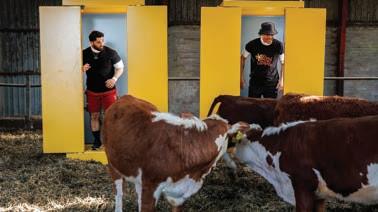

This means maintaining quizshows for live family coviewing while pushing into serialised, on-location brands. “Even if we still want to do some quizshows, we know that quizshows are not great for catch-up and replay, but they deliver big figures on linear and for the live ratings,” he notes. “More and more, because we have to speed up the growth of our digital platform, we also commission serialised on-location shows.”
If streaming has changed consumption patterns, YouTube has frequently been presented as a new engine for IP creation. But Degroote is cautious about that claim. “I’m sorry, but if I’m honest I’m not sure. I don’t believe YouTube is a real source of IP for television. It’s often the opposite,” he says. “Many creators, YouTube creators, actually draw inspiration from iconic TV formats and their mechanics.”
“I’m not stupid; I watch YouTube. I watch YouTube content because it’s a good way to see what is in the zeitgeist, and as I said, for the tone. But I won’t say that YouTube is a good way to get IP because a lot of producers now see YouTube as a good way to test concept, maybe to improve the concept and then to come back to us.”
On artificial intelligence, Degroote’s line is even clearer. “For sure, AI is not more creative than the human brain, not even close,” he insists. “Hopefully, the best ideas still come from talented producers from my team. We understand emotion and nuance. We understand our audience and what the audience and the viewers want to watch.
“AI is a helpful tool for visualisation, marketing or layout. But the human creative engine remains irreplaceable. We simply cannot replace the human brain with AI.” Technology overall, however, is clearly expanding what formats can do. “For the format business, technology is key in order to improve our IP, to be more interactive, to make sure that people are able to play along,” he says. “Interactivity, real-time data and virtual production tools open new creative doors. Technology now lets us design formats that live across TV, social and digital ecosystems at the same time.”
“ The growth of streaming and the idea of streaming change the way audiences consume entertainment, and we must adapt to that.
Julien Degroote TF1
Even so, he mines the platform for insight. “It’s a fascinating space to observe for tone editing, rhythm and new audience engagement codes. At the end of the day, we are not in the same business as YouTube. They are not a broadcaster; they are not an editor. It’s just a platform for creators.”
He notes that creator ambition and budgets are increasing, however. “Maybe they are getting more ambitious or have more money, and so they do some bigger stuff.” And he does see a pragmatic role for YouTube as a potential place to develop TV projects.
Yet again, he brings it back to human creativity. “Technology stretches the canvas and story fills it. So at the core, it’s still the idea. It’s still the idea from a producer, from a human brain, and not AI. And so technology is just a tool, maybe to go further, but at the core that’s the idea from a human brain.”
Taken together, Degroote’s views on partnerships chime with TF1 Group’s recent strategy of collaborating with competitors such as Netflix, with whom it struck a landmark distribution deal last year. Many see such agreements as risky, but like Degroote, the French media giant knows that it must roll the dice if it’s going to hold on to its audiences and reach new ones.
Catch Julien Degroote speaking at C21’s inaugural Content Europe event in Lisbon on the panel Content Strategies: How to Get Your Show on ZDF, TF1 and TV4 on Tuesday April 21.
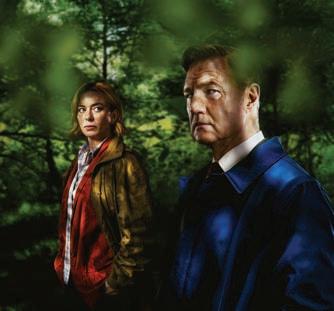












As demand for anime continues to grow among European buyers, producers in markets such as France are cra ing their own interpretations of the iconic Japanese style while cautioning against opportunistic bandwagoning.

By Karolina Kaminska
The Japanese art form of anime has enjoyed global success for decades, with its popularity only increasing in the streaming era. Moreover, future growth is predicted in Europe, where producers operating in a challenging animation market have started launching anime-inspired production divisions.
These include TeamTO, the French studio that was saved from bankruptcy a few years ago. In March it revealed TeamTOKO Animation, a new arm producing 2D and 3D animated series and feature films developed through collaboration between European and Japanese talent.
“Every broadcaster we’ve reached out to in Europe has asked, ‘What do you have in the anime space?” says TeamTO CEO and president Marco Balsamo, adding that the success of recent anime series like Demon Slayer: Kimetsu no Yaiba has pushed the medium further into the mainstream.
“There were a few big projects that came out [recently] that were really successful, and now the people, studios and broadcasters know there’s an appetite for it. It’s like the new cool thing, but it was never new to begin with. It was always cool, and it was always there, now there’s just a wider lens on it,” he says.
TeamTOKO’s strategy is to work with Japanese studios but to maintain a sense of European identity in its projects to avoid laying claim to an animation medium that is inherently Japanese. “The last thing we want to do is claim something that’s not ours, and that’s why we’re very careful to say we’re ‘anime-inspired.’ We love anime and we want to pay homage to it, but we’re not recreating it. We want to do something that has its own life, and that’s where the European-Japanese styles come into play,” Balsamo says.
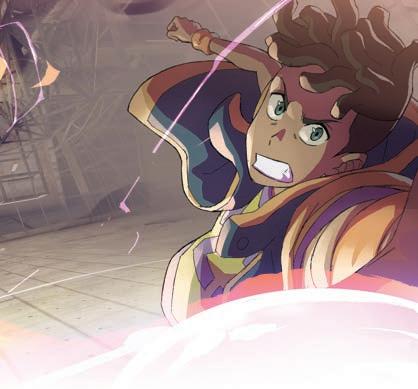
Studio Ghibli and coming up with fantastical worlds,” Sibel Demren says.
The first two productions on TeamTOKO’s slate are shōnen (male-focused manga) series Shadow Soccer (26x22’), directed by French filmmaker Slimane Aniss, and feature-length project Akira’s Flying Wheelchair, developed with French, Italian and Japanese talent.
TeamTO’s Tara Sibel Demren and Marco Balsamo

Tara Sibel Demren, TeamTO’s chief operations officer, adds: “There’s something unique about a French animator and their touch. And we also have some Italian animators. It’s never meant to rip off anime; it has its own flavour. The Japanese studios are so open to collaboration and they respect the flavour we can give as a European studio to an anime look.”
According to Sibel Demren, Japan’s anime studios are looking to “break out” of their local market by “internationalising” some of their IP to give it more global appeal. In light of that, TeamTOKO is planning an animeinspired slate encompassing both existing IP adaptations and original ideas. With the former, the company is currently collaborating with “a big studio in Tokyo” to coproduce a project based on a manga series, while it is also in negotiations on a “big video game IP.”
“At the same time, we also want to give a platform to original works. We are kind of tired of IPs being squeezed, so we’re following in the footsteps of a Hayao Miyazaki or
Balsamo points out that even major US animation studios that haven’t traditionally branched out into the anime space, like Disney and DreamWorks, are looking for a piece of the pie. This trend is only set to continue following the phenomenon that is Sony Pictures Animation and Netflix’s KPop Demon Hunters and its anime-inspired visual style.
“Because of Japan being so busy, basically completely booked until 20282030, and because of European supportive structures with the subsidies and rebates, we’re being approached by major US players that want to commission us for several different projects,” Sibel Demren says.
One active buyer of anime content in Europe is MédiaParticipations’ Animation Digital Network (ADN), a Francebased streaming
One active buyer of anime content in Europe is MédiaParticipations’ Animation Digital Network (ADN), a Francebased streaming platform dedicated to animated films and series, with a particular focus on anime. As well as France, ADN is available in Belgium, Switzerland, Austria, Germany and, most recently, Poland, and is targeting a launch in Italy by the end of the year.
“Demand [for anime] is








“ Now, demand for anime is not only bound to dedicated services such as ADN or Crunchyroll, but the big pla orms like Ne lix, Prime Video and Disney are all getting into it.
Julien Lemoine, Animation Digital Network
growing and that’s why we’re expanding,” says ADN’s CEO Julien Lemoine. “It’s been rising for more than 10 years, but the real acceleration would have been just after the Covid period. Now, demand for anime is not only bound to dedicated services such as ADN or Crunchyroll, but the big platforms like Netflix, Prime Video and Disney are all getting into it, producing their own projects and buying much more content to strengthen their offering.”
Although ADN isn’t available in the UK, since US platforms tend to dominate English-speaking markets, Lemoine points to the BBC’s acquisition of more than 1,000 episodes of Toei Animation’s One Piece as testament to growing demand in the UK too. The BBC, meanwhile, is among the 11 Euro pubcasters to have backed tweenskewing My Life is a Manga, from Blue Spirit Studios and Brain Comet in France.







As well as Japanese anime, ADN is acquiring animeinspired content from China and Korea, in addition to local productions from France. But with the latter, Lemoine says they are not yet performing to the same standard as their Asian counterparts. One local series is Le Collège Noir, produced by French prodco Studio La Cachette and Toei Animation; another is Dead Cells, produced by Bobbypills and adapted from a French video game. In October, ADN will launch Dreamland, an anime-inspired series from Studio La Cachette and Ellipse Animation, adapted from a French manga.



Lemoine believes European-produced anime-style content is having a harder time achieving success because the anime audience isn’t familiar with the IP. Japanese mangas and video games, which are often the source of anime series, have huge fan bases, whereas European anime-inspired content tends to be original IP or adapted from lesser-known European or US IP.





medium globally, Ellipse set up a production arm in 2024 to adapt certain webtoons into animated series.
“Demand is rising sharply as global streamers expand their webtoon-based slates,” says Caroline Duvochel, head of audiovisual and innovation at Média-Participations and MD of Ellipse Animation. “Platforms like Netflix, Prime Video and Crunchyroll are driving visibility by investing heavily in webtoon IP, widening audience appetite across Europe. At the same time, Europe is seeing a growing webtoon readership, especially among younger audiences who naturally gravitate toward mobile-first, serialised storytelling.”
According to Duvochel, Média-Participations’ webtoon platform Ono is experiencing “fast-growing adoption, showing that European readers are increasingly embracing the format.” Additionally, the range of webtoon stories being adapted is becoming more diverse, Duvochel says, expanding from action-fantasy to romance, “slice of life,” comedy, horror and character-driven drama.
“This broader spectrum opens new creative opportunities for French and European publishers and studios, whose artistic sensibilities can bring fresh perspectives to both webtoon storytelling and webtoon-inspired animation. Europe is well positioned to bring distinctive talent, craft and innovation to the next wave of adaptations,” the exec says.
So what does the future hold for Europe’s anime-inspired ambitions? Despite European anime-style content being some way off the success of original Japanese anime, ADN’s Lemoine says European works will eventually take off thanks to their unique European touch. “When it comes, it will be very, very powerful, because in the oversaturated landscape of the anime business, that European touch will provide something unique that will help it to grow internationally. This is something we are already achieving with Dreamland,” he says, noting that the show will be broadcast on national TV in Japan. “It is one of the rare cases where you have European animation that broadcasts in Japan, so that is a big win for us.”
As well as branching into anime-style content with Dreamland, Paris-based Ellipse Animation (also part of Média-Participations) is expanding into webtoons – a type of online comic that originated in South Korea and adopts anime-style animation. In response to rising demand for the










For TeamTO’s Balsamo, the demand for anime and anime-style content in Europe will continue to grow. Sibel Demren concurs that the anime community in Europe “is here to stay,” but warns that buyers may retract from the market in the future as their content needs evolve. Noting that “a lot of other studios” are also expanding into the anime space, she warns against jumping on the bandwagon.






“The more the merrier, but it’s important it’s not a bandwagon situation and that companies create sustainable pipelines that can support anime but not depend on this anime explosion to save the animation industry,” she says. “There needs to be a good balance, because the pendulum could swing this way where all broadcasters are now commissioning anime, but then maybe in a couple of years it’s going to shift back. And you don’t want to have companies that have built their entire teams around anime.”























With Spain now the world’s second-largest importer of formats, what are broadcasters looking for and how do local producers feel about channels spending big on international shows? By Gonzalo
Larrea
Last September, with Mipcom approaching, BBC Studios presented Wisdom of the Crowd to the international market, a new format from Decano Nabarro and Andy Auerbach, the creators of global hit The 1% Club. So far, nothing out of the ordinary.
But alongside its launch came the revelation that its worldwide premiere would not be on the BBC but on Spain’s Telecinco.
While it is an extreme case, given there wasn’t even a pilot to review, what Wisdom of the Crowd highlights is the current level of demand for international formats in Spain.
Driven by a highly competitive domestic market and a free-to-air (FTA) sector that still enjoys relatively strong health, Spain has become the world’s second-largest importer of formats, according to consultancy firm K7.
Although Germany remains the leader, the gap with Spain is narrowing, with K7 reporting a 13% increase in Spain’s format imports over the past year, while Germany saw a 19% decline over the same period.
“While in other countries the producers are struggling and say nobody is buying anything, here, aside from the streamers, which have slowed down, the FTA channels are still buying,” says experienced unscripted producer Javier Pérez de Silva, who recently stepped down as CEO of Beta Entertainment Spain.
Indeed, Spain’s three main FTA groups are currently among the most active in Europe: pubcaster RTVE is currently renewing its schedule, which has meant multiple new commissions; Mediaset España is fighting to regain the audience leadership it lost in 2021; and Atresmedia is looking to hold on to the crown.
C21’s sister publication Cveintiuno has spoken to numerous Spanish industry insiders to take the temperature of the market.
“At RTVE, there is money, at Mediaset, there is demand and at Atresmedia, they are still leaders but looking for innovation,” says one producer.
This competitive tension is increasing the pressure to find new formats and, in turn, limiting the options available to rivals.
“Every time I identify an interesting format that is performing well in ratings, I take the initiative and try to be the first to acquire the rights,” says Carmen Ferreiro, director of entertainment at Atresmedia. “We have bought quite a lot, even more than we can fit into the schedule, but we remain active, evaluating everything that is being produced and, if we see something very good, we buy it.”
Atresmedia currently airs international formats such as Wheel of Fortune, The Alphabet Game, The Million Pound Drop Live and The 1% Club, and regularly launches new seasons of titles including Masked Singer, The Voice, Drag Race and The Quiz with Balls
Among its latest acquisitions are formats such as The Traitors, Parents’ Evening, Gordon Ramsay’s Secret Service, A Party to Die For and breakout Nordic format The Box

Javier has keep
television that isn’t predictable.”
According to Ferreiro, Atresmedia is focused on broad, family entertainment, with one key requirement: “I don’t go out looking, I find. But the word I repeat the most is novelty. It has to feel like something new, something audiences haven’t seen before, and something that allows us to keep making television that isn’t predictable.” Its traditional main rival, Mediaset
“
While in other countries the producers are struggling and say nobody is buying anything, here, aside from the streamers, which have slowed down, the FTA channels are still buying.
Javier Pérez de Silva
España, is also maintaining a strong pace of acquisitions. Its channels hold the rights to formats such as The Price is Right, Deal or No Deal, Got Talent, Survivor, Temptation Island, The A Talks, Big Brother, Married at First Sight and Dancing with the Stars.
In recent months, it has also announced new titles including Wisdom of the Crowd, The Honesty Box, Hold On to Your Seat, Guinness World Records, Michael McIntyre’s Big Show and Chain Reaction. According to industry sources, the company is looking to complement that slate with entertainment formats, particularly gameshows.
“Mediaset needs entertainment and is asking for it, both in primetime and in daily slots. That is what they are asking for, but then the only thing that works for them is reality, so they end up buying reality,” says one unscripted producer who regularly works with the group.
The Spanish arm of Media For Europe is also seeking factual content built around strong characters and dating titles, in line with its longrunning series Mujeres, hombres y viceversa, while it is also producing pilots to test new ideas. “The search is for big entertainment; that is the challenge. But with a show like Got Talent barely delivering an 8% share or less, you cannot sustain it,” the same producer warns.

RTVE, meanwhile, is also in the market for entertainment. The public broadcaster airs formats such as DecoMasters, The Floor, Top Chef VIP: Just Desserts, Trivial Pursuit and The Chase, and has recently announced new international titles including And the Rest Is History, Sort Your Life Out, The $100,000 Pyramid and Baggage
However, amid growing domestic political tension, its schedule has recently leaned further towards magazine formats, current a airs and late-night shows.
A producer who has sold several titles to the broadcaster adds that current gaps lie in factual content and certain forms of “popular entertainment,” in the vein of celebritycentred talent show Your Face Sounds Familiar
“It’s a moment to bring them genres they do not have, especially big musical entertainment. That is something they are missing. In fact, it’s something everyone is missing and that is not available in the international market,” they say.
Yet this buying frenzy is beginning to show signs of strain.
On the one hand, streamers have largely stepped back from the formats market after a period of experimentation. That includes local platform Movistar Plus+, which restructured its entertainment division and, more than a year on, has yet to commission its first format.
On the other hand, FTA television is under pressure from declining advertising investment (down 4.4% in 2025, according to Infoadex), with several local producers warning that the current pace is unsustainable.
“The economics of the Spanish television market no longer allow for buying very expensive formats for short runs. It’s one thing with Temptation Island or Survivor, which can run for four months. But it’s a di erent story with The Traitors, which is only eight episodes,” says another local producer.
“Advertising investment keeps falling and there is no way to sustain that. Channels will have to incorporate more daily live entertainment, which is much cheaper. It’s unsustainable to keep buying international formats at
€250,000 [US$287,000] per episode,” the producer adds.
In the case of Atresmedia, that shift is already beginning to take shape through a significant change in strategy. For the first time in a long while, the group is not only open to paper formats but has made them one of its top priorities for this year.
“We still have work to do when it comes to backing our own ideas and being capable of generating our own brands. It is a creative necessity, but also a business one: we need to generate returns from our own IP,” Ferreiro explains.
“There is enough creativity in Spain, but we need to build creative structures that generate not just ideas on paper, but slightly more developed concepts,” she adds.
“
The word I repeat the most is novelty. It has to feel like something new, something audiences haven’t seen before, and something that allows us to keep making television that isn’t predictable. Carmen Ferreiro and the visual identity. It’s key to develop all three
The Atresmedia unscripted commissioner says it is looking for advanced ideas with strong, distinctive elements already in place. “They need to come fully formed, as I like to say, with clearly defined components. In the Netherlands, they are years ahead of us and what they present is not just an idea, but a concept with a strong visual identity. In the end, what makes a format often comes down to three things: the concept, the mechanics and the visual identity. It’s key to develop all three together.”
However, she admits that since signalling this to the local industry last year, no standout idea has emerged, and most pitches she receives are still tied to projects already launched in other markets and channels.
However, she admits that since signalling this to the local industry last year, no standout idea has emerged, and most pitches she receives are still tied to projects already

According to Macarena Rey, CEO of Banijay-owned Shine Iberia, who o ers more of her thoughts on pages 23-24 of this issue, RTVE is going through a similar process. “The return of paper formats is one of the most interesting trends in entertainment across all markets. It’s true that it is closely linked to the adjustment the industry is going through, but in Spain there are very few broadcasters willing to take risks,” she
According to Macarena Rey, CEO of Banijay-owned Shine Iberia, who o ers more of her thoughts on pages 23-24 of this issue, RTVE is going through a similar process. “The return of paper formats is one of the most interesting trends in entertainment across all markets. It’s true that it is closely linked to the adjustment the industry is going through, but in Spain there are very few broadcasters willing to take risks,” she says.
“In the case of FTA broadcasters, the only one that is really taking risks is RTVE. I say
it’s the duty of public television to support
“In the case of FTA broadcasters, the only one that is really taking risks is RTVE. I say this from experience because I have made at least three major formats that are our own IP. It’s indeed more di cult, but I believe it’s the duty of public television to support content created by Spanish talent.”













For much of the past decade, YouTube occupied a relatively straightforward place in the digital strategies of public service media (PSM): a shop window in which to place clips that might drive audiences back to its own platforms.
That era is over. But for PSM organisations built on the principle of universality, YouTube’s ubiquity presents a strategic dilemma. Is YouTube a reach partner? Or is it becoming the gatekeeper of Europe’s media future?
Maintaining a presence on YouTube is no longer about promotion; it is increasingly about public service delivery itself. Nearly all our members are now active on the platform. Two-thirds intend to expand their activity, with 55% producing dedicated YouTube-native content and 60% live streaming, according to the European Broadcasting Union (EBU)’s Media Intelligence Survey 2025.
In recent months, we have seen broadcasters across Europe launch topic-specific YouTube channels focused on youth, education and explanatory journalism. Increasingly, they are commissioning creator-fronted news formats and short daily updates designed specifically for social viewing environments.
This year’s landmark partnership between the BBC and YouTube – which will see the creation of original content for the platform, including news formats designed to combat misinformation – is significant. Other broadcasters will be watching closely.
From a public value perspective, there is a strong argument PSM’s presence on YouTube can help fulfil its core remit: ensuring trusted, regulated journalism is visible within an online information environment often dominated by unverified or misleading content. The platform is also very effective at connecting specialist public-interest content with large, highly engaged niche communities.
At the EBU, we are engaged in a constructive and responsive dialogue with YouTube, working together to identify approaches that help our members reach new audiences while protecting the values at the heart of PSM.
At the same time, we know partnerships with YouTube do come at a cost.
Under standard agreements, the platform retains about 45% of ad revenue generated around hosted content. This creates an uncomfortable paradox: PSM invests heavily in producing high-quality, public-interest content, only for the monetisation of audience attention to take place largely within the platform’s own commercial ecosystem. Content that is not monetisable risks not performing as well because the algorithm favours content that can generate revenue.
At a time when many broadcasters face declining ad income and, in some cases, falling licence-fee contributions, the migration

EBU directorgeneral Noel Curran examines the growing dilemma public service media face as YouTube evolves from a promotional pla orm into a key part of the TV ecosystem.
of both audiences and revenue to global digital platforms raises serious questions.
There are also editorial implications. Platform algorithms are not designed to reflect public service obligations. Trusted journalism competes on identical terms with influencer commentary, political propaganda and foreign state-backed media. Visibility, and therefore impact, may depend less on editorial merit than on optimisation for engagement metrics. Distribution through YouTube can also weaken the direct relationship between public service media and their audiences. Data, discoverability and user journeys are increasingly mediated by platform infrastructure, contributing to broader debates within Europe around digital sovereignty and strategic autonomy. Platforms like YouTube must also play their part by properly implementing their obligations under the European Media Freedom Act.
And as younger audiences consume a growing proportion of non-national content via global platforms, some have raised concerns about the erosion of shared cultural experiences – a cornerstone of PSM’s role.
Despite this, for PSM, YouTube is no longer a tactical distribution decision; it is a longterm public value question. What was once used primarily to drive audiences back to public services is now used as a platform in its own right: commissioning content, hosting journalism, live-streaming major events and enabling international monetisation.
PSM must therefore strike a careful balance, working with global platforms to remain relevant and visible in a fragmented digital world while ensuring these partnerships do not undermine the economic sustainability, editorial independence or cultural mission that define their public value.
We shouldn’t forget traditional TV viewing is far from over. According to the EBU’s survey, PSM is still reaching over 80% of European citizens every week – and nearly 70% of young people. We remain the most trusted source of news across Europe and the single biggest investors in European content. We have much to build on. But the question is no longer whether PSM should engage with YouTube – it’s on what terms.
EDITORIAL
Editorial director Ed Waller ed@c21media.net
Editor of C21Media.net
Jonathan Webdale jonathan@c21media.net
Chief sub-editor Gary Smitherman gary@c21media.net
Head of design John Winfield john@c21media.net
Senior sub-editor Steve Warrington steve@c21media.net
News editor Clive Whittingham clive@c21media.net
Channel21 International editor Nico Franks nico@c21media.net
DQ editor Michael Pickard michael@c21media.net
Research editor Gün Akyuz gun@c21media.net
C21Kids editor Karolina Kaminska karolina@c21media.net
North American editor Jordan Pinto jordan@c21media.net
Senior reporter Neil Batey neil@c21media.net
Special projects editor Louise Bateman louise@c21media.net
EVENTS
Event programming director Adam Webb adam@c21media.net
Event programming manager Stephanie Boffa stephanie@c21media.net
Head of events Gemma Duke gemma@c21media.net
Events manager Lily Miller lily@c21media.net
Events coordinator Adele Faldeta adele@c21media.net
Operations director Lucy Scott lucy@c21media.net
Group CFO (consultant) Ravi Ruparel ravi@c21media.net
Founding partner and commercial director Odiri Iwuji odiri@c21media.net
Sales director Peter Treacher peter@c21media.net
Business development director Patricia Arescy patricia@c21media.net
Senior sales executives Richard Segal richard@c21media.net
Yasmin Connolly yasmin@c21media.net
C21TV
Head of television Jason Olive jason@c21media.net
Video editor/motion designer Adrian Ruiz Martin adrian@c21media.net
FINANCE
Finance director Susan Dean susan@c21media.net
Finance assistants Marilyn Assan marilyn@c21media.net
Marianne Peng marianne@c21media.net
PRODUCTION
Head of digital Laura Stevens laura@c21media.net
Production manager Courtney Brewster courtney@c21media.net
Team assistants Sashka Wickramasinghe sashka@c21media.net
Gema Angulo gema@c21media.net
Production and events assistant Caitlin Wren caitlin@c21media.net
Production assistant Rory Mullan Wilkinson rory@c21media.net
Office manager Katie Reilly katie@c21media.net
Executive director Mark Rowland mark@c21media.net
Editor-in-chief & managing director David Jenkinson david@c21media.net
24 - 2 6 N o vember 2026
B r u s s e ls





FINDING TOGETHER THE BEST GROWTH MODELS FOR AND WITH ANIMATION