
From the New World
Shawn Smith, conductor
Vanese McPherson, graduate conductor
Marcelo Jardim, guest conductor
7:30 PM | APR. 11, 2026 | CONCERT HALL | MUSIC BUILDING
Tragic Overture JOHANNES BRAHMS 1833–1897
Vanese McPherson, conductor
Chôros No. 6
HEITOR VILLA-LOBOS 1887–1959
Marcelo Jardim, conductor
—INTERMISSION —
Symphony No. 9, “From the New World” ANTONÍN DVOŘÁK 1841–1904
Shawn Smith, conductor
PERSONNEL
Flute
Rhianna Brunson*
Lillie Gardner
Rebekah Payne, piccolo
Kalina Rencher, piccolo
Oboe
Sydney Schaff*
Rachel Johnson
Miles Moore, English horn
Clarinet
Reuben Allan*
Seth Rugg
Melissa Coulter, bass clarinet
Soprano Saxophone
Jonathan Crane
Bassoon
Brayden Holdaway*
Zach Smith
Madeline Wickard, contra-
bassoon
Horn
Kyle Bishop*
Julianna Hollenbach
Ian Patterson
Brooke Babcock
Trumpet
Luke Gunnerson*
Tommy Eskelsen
Kylee Bergstresser
Emma Rugg
Trombone
Carter Babcock*
Rees Riska
Daniel White, bass trombone
Tuba
Emma Hogge*
Percussion
Raiden Sasaki*
Trevor Kroff
Ben Smith
Clay Battles
Luke Banks
Johannes Bowman
Harp
Emily McLain+
Monet Wilson+
Piano
Jill Smith*
Violin I
Leandro Balderrama*
Madi Bowen+
Clara Gunnerson
James Thiriot
Amur Bashirov
Lydia Peterson
Rylie Pence
Makenzy Lopez
Mayci Cornaby
Sydney Stuart
Lexi Romerill
Katherine Fisher
Asia Glenn
Savanna Cannon
Brynn Heaton
Camryn Olsten
Ginny Hansen
Olivia Washburn
Michelle Petersen
Jane Marriott
Violin II
Alexa Knaupp*
Lindsay Rust+
Taya Tippets
Maylee Robins
Eva Rhodes
Audrey Baldwin
Eliza Anderson
Makenzie Brown
Emma Hafen
Sage Oto
Olivia Brown
Maren Dewey
Lizzie McMullin
Georgia Fenton
Anna Kimber
Bella Gillete
Katie Olsen
Isabel Pugsley
Rachel Call
Viola
Cade Singleton*
Lauryn Lee+
Mason Bean
Emily Lambert
Annika Acevedo
Eli Wilson
Caleb Sherman
Zoe Merkley
Josh Weber
Eva Zemp
Hannah Cleavinger
Katie Lee
Ben Herrera
Cello
Shae Cliften*
Ellie Wirthlin+
Matthew Bailey
JD Alexander
Claire Mortensen
Sequoya Lee
Samuel Aston
Grace Snow
Emily Bruno
Ethan Grundvig
Grant Hill
Amanda Maxwell
Jessica Elmer
Isabella Cahoon
Double Bass
Neal Baird*
Joseph Rasmussen+
Jacob Gunnell
Chance Smithson
Josue Marin
Ross Pope
*Indicates principal +Indicates coprincipal
Program Notes
Tragic Overture
Johannes Brahms
Although Antonín Dvořák’s Symphony No . 9, “From the New World,” carries the title of tonight’s performance, were it not for the kindness and mentorship that Johannes Brahms showed him early on, Dvořák may never have made it to the international stage . As a young father trying to make his way as a composer, Dvořák applied for the Austrian State Stipendium and won 5 years in a row from 1874 to 1878 . The prize money was certainly a welcome addition to the Dvořáks’ annual income . More importantly, it was through this competition that Brahms, who was on the jury for the stipendium, met Dvořák and was first exposed to his music . Brahms was so impressed by Dvořák’s talent that he put the young composer in contact with his German publisher, Fritz Simrock . Simrock published Dvořák’s first set of Slavonic Dances in 1878 . With Brahms’s support and Simrock’s distribution of the Slavonic Dances throughout Europe, Dvořák’s compositions soon gained international popularity . Dvořák’s fame even made it across the ocean to the United States of America, leading to his 3-year stay in the new world and the premiere of his “From the New World” Symphony in 1893 .
Tonight’s concert, which ends with Dvořák’s Symphony No . 9, fittingly begins with Brahms . Just as Brahms was Dvořák’s champion and mentor, Robert and Clara Schumann were pivotal in jump-starting Brahms’s career . After hearing Brahms perform on the piano during a visit to the Schumanns’, Robert wrote an article entitled “Neue Bahnen” (“New Paths”) in his music periodical, Neue Zeitschrift für Musik (New Journal for Music) . Robert Schumann introduced Brahms to the world as the heir to Beethoven, describing Brahms as “a musician who would reveal his mastery not in gradual stages but like Minerva would spring fully armed from Kronos’s head .” Such a powerful recommendation placed Brahms squarely in the public’s view . Writing the article was a blessing for a young composer, but it
also became a curse . The fear of falling short of Schumann’s high opinion led Brahms to take 21 years to finish his first symphony . Unfortunately, Robert died just 2 years after his prophetic article, and he never saw its fulfillment .
Though Brahms did not have a large output of symphonic works, his perfectionism meant that everything that made it to publication was gold . Additionally, Brahms was a staunch advocate for absolute music, which is music for music’s sake, not intended to paint a picture or tell a story . He believed there was still much innovation to be done within the classical forms Haydn, Mozart, and Beethoven spent their lives developing . Where others turned their focus to opera and music with programs or stories to guide the listener, Brahms mostly chose to avoid descriptive text with his music, opting instead to name them by the genre (concerto, symphony, trio, etc .), key, and number . Since concert overtures generally are intended to portray a story or certain emotion, it is no surprise that Brahms wrote only two of them . Both his Tragic Overture and Academic Festival Overture were composed during the summer of 1880 . As he put it, “One of them weeps, the other laughs .” Brahms wrote the Academic Festival Overture to acknowledge his honorary doctoral degree from University of Breslau; however, as the deeply emotional composer that he was, he needed to complement this mirthful, lighthearted overture, based on student drinking songs, with the sorrow of his Tragic Overture .
Although the music in the Tragic Overture is not propelled by a set story, it aligns itself well with its emotional title . The overture opens with two striking minor chords, which return throughout both in their original power and as reminiscent sighs . The first main melody following the opening chords begins dejectedly as a whisper in the strings before growing to include the entire ensemble . However, just as most emotions are complicated and constantly in flux, the robust sonorities do not last long . Over the course of this piece, Brahms guides the listener through various moods, all grounded in an underlying sense of tragedy .
Chôros No. 6
Heitor Villa-Lobos
Heitor Villa-Lobos was a Brazilian composer from the early 20th century . His compositions encompass a vast range of Brazilian classical music, including symphonies, operas, chamber music, solo piano works, and his famous set of chôros .
In Brazilian music, chôros are a broad genre of Brazilian folk music with European influences . Many chôros are identical to European popular marches and dances, but with a syncopated Brazilian twist . They are often played by a loose ensemble consisting of a seven-string guitar, a violin, a flute, a clarinet, a cavaquinho (an instrument similar to the mandolin), and a pandeiro (an instrument similar to the tambourine) .
Throughout the 1920s, Villa-Lobos wrote eleven chôros, with each one covering a variety of musical styles and musical instruments . For example, Chôros No . 1 is written for solo guitar, whereas Chôros No . 10 is written for orchestra and chorus . Chôros No . 6 is the only chôros that is written solely for orchestra . Villa-Lobos uses many unique musical instruments, such as the soprano saxophone, and Brazilian percussion instruments, such as the surdo (a Brazilian bass drum), the reco-reco (a metal scraper), and two bamboo sticks called tambù and tambí .
The piece is quite rhapsodic, meaning that it does not have a specific form but rather a variety of contrasting musical sections, much like Queen’s “Bohemian Rhapsody” or Gershwin’s Rhapsody in Blue . Throughout this 25-minute work, Villa-Lobos synthesizes his many musical influences, with each section being completely different from the others . There are moments reminiscent of Ravel’s Daphnis and Chloe, Stravinsky’s Firebird, a traditional samba, a waltz, a ballad, or at the end of the piece, a contrapuntal finale inspired by Bach and injected with dissonance . Despite each change in style, each section has a certain Brazilian flair that makes the piece undeniably unique and memorable .
Symphony No. 9, “From
the New World”
Antonín Dvořák
Antonín Dvořák came to the United States in the fall of 1892 to take over the directorship of the newly created National Conservatory of Music . Jeannette Thurber, classical music patron and founder of the National Conservatory of Music, sought out Dvořák because she believed he had the capacity to create symphonic music that was distinctly American sounding . Dvořák was versatile as a composer . He was constantly adding to his musical vocabulary . As described by Michael B . Beckerman in New Worlds of Dvořák, Dvořák’s Pan-Slavonic style in his Slavonic Dances mixes “a Serbian round dance called the kolo with a Polish polonaise or Slovak odzemek”; for the English, he brought out an oratorio style modeled after Handel and Mendelssohn, creating a “sort of contemporary archaism .” As a young 20-year old, he “became obsessed with the dramatic power of Wagner and Liszt”; thus, his early symphonies and chamber works reflect the style of Wagner . If anyone had the ability to create a national musical language for the United States, it was Dvořák . It may be astonishing to learn that Dvořák began work on his Symphony “From the New World” just three months after arriving in New York . How could he have discovered the American musical language that quickly? Although he did not begin composition on this symphony before living in the United States, stepping foot on American soil was not the beginning of his journey in the American artistic lexicon . As a young man, he read Josef Vaclav Sladek’s Czech translation of The Song of Hiawatha by Henry Wadsworth Longfellow and fell in love with the idea of America . The beauty of the wide-open spaces and native peoples as portrayed in Longfellow’s epic poem tugged at Dvořák’s imagination . Upon arrival in the United States, Thurber gifted him an English copy of the poem with the suggestion that he make the first great American opera based off the tale . Despite Dvořák also having this goal, the opera unfortunately never came to fruition . In his Symphony “From the New
World,” however, we get a sneak peek into some of his musical interpretations of Longfellow’s poem . Dvořák mentioned in an interview with the New York Herald on December 15, 1893, that the second movement of his Symphony “From the New World” is “a study or sketch for a longer work . . . which will be based upon Longfellow’s Hiawatha . . . . The Scherzo of the symphony was suggested by the music at the feast in Hiawatha where the [Native Americans] dance, and is also an effort which I made in the imparting of local color of [Native American] character in music .” Following are passages from The Song of Hiawatha that served as the inspiration for the second and third movements of the Symphony “From the New World . ”
Pleasant was the journey homeward, Through interminable forests, Over meadow, over mountain, Over river, hill, and hollow. Short it seemed to Hiawatha, Though they journeyed very slowly, Though his pace he checked and slackened To the steps of Laughing Water.
— X . Hiawatha’s Wooing
First he danced a solemn measure, Very slow in step and gesture, In and out among the pine-trees, Through the shadows and the sunshine, Treading softly like a panther. Then more swiftly and still swifter, Whirling, spinning round in circles, Leaping o'er the guests assembled, Eddying round and round the wigwam, Till the leaves went whirling with him, Till the dust and wind together
Swept in eddies round about him.
— XI . Hiawatha’s Wedding Feast
In addition to Native American influences, Dvořák incorporated the essence of African American spirituals . Dvořák was
introduced to these songs through his student Harry Burleigh, who was a baritone singer and arranger of spirituals . Although it is often cited that the exposition’s closing theme in movement one carries a distinct likeness to the spiritual “Swing Low, Sweet Chariot,” Dvořák did not purposely incorporate any folk tunes . Rather than using preexisting folk songs in his work, Dvořák’s Symphony No . 9 has added to the folk music of America . The Largo theme from the second movement is commonly used in beginning music books for all instruments . It was also adapted for voice by William Arms Fisher in the song “Goin’ Home . ”
Symphony No . 9 “From the New World” was premiered on December 16, 1893, by the New York Philharmonic Orchestra with Anton Seidl conducting .
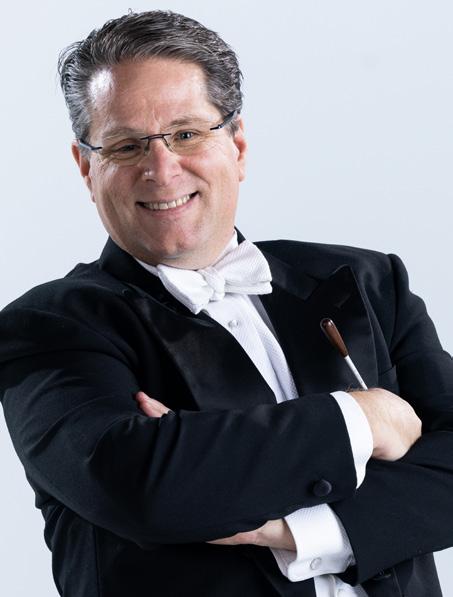
Shawn Smith, conductor Shawn Smith serves as the director of the Brigham Young University School of Music, as well as professor of conducting and director of bands . Prior to his appointment at BYU, he spent sixteen years as director of bands at the University of North Carolina at Charlotte and Texas A&M-Corpus Christi .
Smith holds a doctor of musical arts degree in instrumental conducting from Arizona State University, and master of music and bachelor of music education degrees from Louisiana State University and Boise State University, respectively .
In high demand as a band and orchestra conductor, clinician, and adjudicator, Smith has been invited to conduct professional and educational ensembles throughout the United States, South America, Central America, and Europe, including concerts with world-renowned trombonist Joseph Alessi, Grammy Award–winning chamber ensemble Eighth Blackbird, Tony-nominated Broadway and television star Derek Klena, “The President’s Own” United States Marine Band, and the United States Air Force Band .
Equally at home with opera and musical theater productions, Smith has conducted pit orchestras for The Marriage of Figaro and a 6-week run of Les Misérables . His performances have been heard numerous times on American Public Media’s Performance Today, the most popular classical music radio program in the United States . In 2015 Smith was awarded second place for the American Prize in Conducting— Professional Band Division .
In the area of research, Smith has been published in the Journal of the World Association for Symphonic Bands and Ensembles and in Alta Musica, and he has presented his
research at national and international conferences in the United States, Europe, and South America . Smith has also presented numerous educational clinics, workshops, and speeches, most notably at the International Midwest Band and Orchestra Clinic in Chicago, Illinois, and at state music conferences throughout the United States .
As a public school teacher, Smith served as director of bands and orchestra at one of the largest high schools in Idaho, where he administered a very successful comprehensive instrumental music program .
An accomplished trumpeter, Smith has performed with the Corpus Christi Symphony (Texas), the Boise Philharmonic Orchestra (Idaho), the Acadiana Symphony (Louisiana), Keith Brion’s New Sousa Band, and the Temptations .
During his tenure as director of bands at Texas A&M-Corpus Christi, Smith received the Texas A&M System Teaching Excellence Award twice . Smith holds honorary memberships in Phi Mu Alpha Sinfonia, Sigma Alpha Iota, and Kappa Kappa Psi . He also holds memberships in the Utah Music Educators Association, the National Band Association, the College Band Directors National Association, and the World Association for Symphonic Bands and Ensembles .
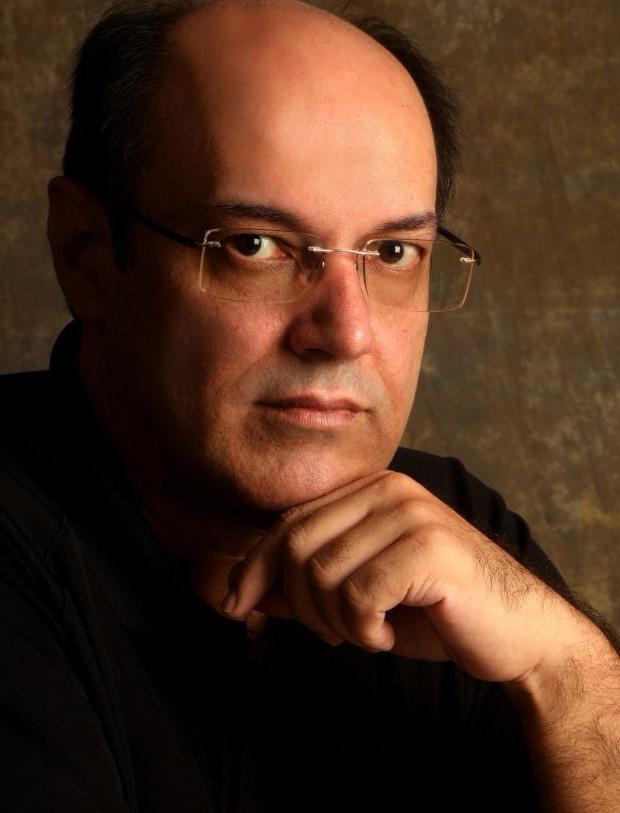
Marcelo Jardim, guest conductor
Marcelo Jardim is a professor of band conducting and orchestral practice at the Federal University of Rio de Janeiro (UFRJ), where he plays a central role in institutional management as vice-director and artistic director of the School of Music . As the music director of the UFRJ Wind Orchestra, he leads the institution’s premier wind ensemble and serves on the faculty of the Professional Master’s Program in Music (PROMUS) . He holds a doctorate in interpretative practices from UNIRIO, alongside master’s and bachelor’s degrees in conducting from UFRJ . His academic and artistic career is deeply rooted in the study of Heitor Villa-Lobos, with both his master’s and doctoral research focusing on the composer's works for wind band, symphonic band, and wind ensemble .
As the coordinator of the Arte de Toda Gente extension program—a strategic partnership between UFRJ and the National Foundation of Arts (FUNARTE)—Jardim oversees a nationwide ecosystem of cultural initiatives . This includes SINOS (National System of Social Orchestras), Projeto Bandas, Bossa Criativa, Um Novo Olhar, Projeto Ópera, and Arte em Circuito . His expertise in curation and cultural development was further established through his executive coordination of the XXIV, XXV, and XXVI Biennials of Contemporary Brazilian Music (2021–2025) and his role as pedagogical coordinator for the Funarte Wind Band Panels (2011–2019) . His work is a benchmark in the recovery, editing, and recording of Brazilian repertoire for symphonic bands, with productions and collaborations spanning Brazil, Latin America, the United States, and Europe . As a professor and conductor, he performs at some of the most prestigious festivals in the country, such as the SESC International Music Festival in Pelotas and the
Curitiba Music Workshop (Oficina de Música de Curitiba) . Having previously directed the Pará International Music Festival (2014-2018) and the Music of the Americas Festival (20132017), he maintains an intensive schedule as a guest conductor for major orchestras and symphonic bands across Brazil and abroad . A prominent figure on the international stage, Marcelo Jardim currently serves as chairman of the Local Organizing Committee for WASBE 2026 (World Association for Symphonic Bands and Ensembles), positioning Rio de Janeiro as a global hub for symphonic bands and wind ensembles .
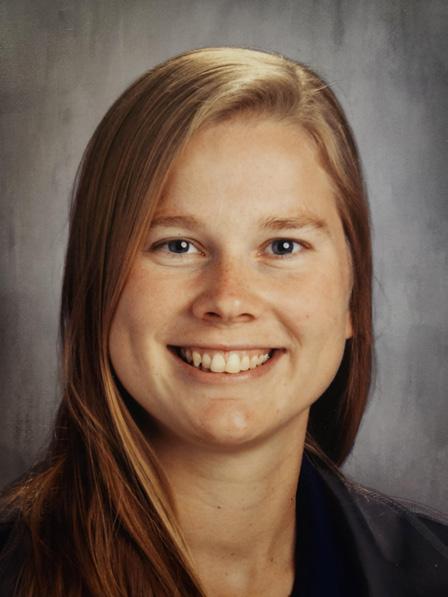
Vanese McPherson, graduate conductor
Vanese McPherson is a conductor, violist, and dedicated music educator with a passion for inspiring the next generation of musicians . She earned her bachelor of music education degree from Brigham Young University and is currently pursuing a master of music in instrumental conducting with plans to graduate this year .
Prior to returning to BYU for the master of music program, Vanese was the director of orchestras at Lone Peak High School and Mountain Ridge Junior High School in Highland, Utah . As part of her current graduate assistant duties, she enjoys conducting BYU’s University Orchestra, University Strings, and Studio Orchestra classes .
A versatile instrumentalist, Vanese has served as principal violist of both the BYU Chamber Orchestra and BYU Baroque Ensemble . She also plays string bass and has held principal positions in community ensembles, including performing the bass solo in Lt. Kijé by Sergei Prokofiev .
Beyond the classroom and the concert hall, Vanese shares her passion for music education through her YouTube channel, String Nation, where she engages string learners on a global level . She is an active member of the College Orchestra Directors Association and the American Viola Society . As the third-place winner of the 2025 David Dalton Research Competition, she recently published an article in the Journal of the American Viola Society .
Her conducting teachers include Dr . Nathan Haines and Dr . Sonja Poulter . She looks forward to continuing her education at the University of Utah this fall, where she will pursue a doctor of musical arts degree in instrumental conducting .